
 Login
Login Register
 Submit a Paper
 Propose a Special lssue
 Open Access
ARTICLE

A Hybrid Wasserstein GAN and Autoencoder Model for Robust Intrusion Detection in IoT
1 Department of Computer Science, College of Computer Science and Information Systems, Najran University, Najran, 61441, Saudi Arabia
2 Department of Information Systems, College of Computer and Information Sciences, Princess Nourah bint Abdulrahman University, P. O. Box 84428, Riyadh, 11671, Saudi Arabia
3 Department of Informatics and Computer Systems, College of Computer Science, King Khalid University, Abha, 62521, Saudi Arabia
4 School of Computing and Creative Technologies, University of the West of England, Bristol, BS16 1QY, UK
5 School of Computing, Engineering & The Built Environment, Edinburgh Napier University, 10 Colinton Road, Edinburgh, EH10 5DT, UK
6 Cybersecurity Center, Prince Mohammad Bin Fahd University, Al Khobar, 31952, Saudi Arabia
* Corresponding Author: Mohammed S. Alshehri. Email:
(This article belongs to the Special Issue: Emerging Technologies in Information Security )
Computer Modeling in Engineering & Sciences 2025, 143(3), 3899-3920. https://doi.org/10.32604/cmes.2025.064874
Received 26 February 2025; Accepted 23 April 2025; Issue published 30 June 2025
 View Full Text
 Download PDF
Abstract
The emergence of Generative Adversarial Network (GAN) techniques has garnered significant attention from the research community for the development of Intrusion Detection Systems (IDS). However, conventional GAN-based IDS models face several challenges, including training instability, high computational costs, and system failures. To address these limitations, we propose a Hybrid Wasserstein GAN and Autoencoder Model (WGAN-AE) for intrusion detection. The proposed framework leverages the stability of WGAN and the feature extraction capabilities of the Autoencoder Model. The model was trained and evaluated using two recent benchmark datasets, 5GNIDD and IDSIoT2024. When trained on the 5GNIDD dataset, the model achieved an average area under the precision-recall curve is 99.8% using five-fold cross-validation and demonstrated a high detection accuracy of % when tested on independent test data. Additionally, the model is well-suited for deployment on resource-limited Internet-of-Things (IoT) devices due to its ability to detect attacks within microseconds and its small memory footprint of kB. Similarly, when trained on the IDSIoT2024 dataset, the model achieved an average PR-AUC of % and an attack detection accuracy of % on independent test data, with a memory requirement of kB. Extensive simulation results demonstrate that the proposed hybrid model effectively addresses the shortcomings of traditional GAN-based IDS approaches in terms of detection accuracy, computational efficiency, and applicability to real-world IoT environments.Keywords
Intrusion detection systems (IDSs) play a very important role in protecting IoT networks from a number of cyberattacks that are mainly targeted at device and network vulnerabilities such as the use of insecure communication protocols or weak authentication mechanisms [1]. Most of these attacks are launched through malicious software or firmware updates that may result in unauthorized access to the network or control of IoT devices [2]. Cyberattacks can violate the confidentiality, integrity, and availability of the network and may result in data breaches, unauthorized access to sensitive information, and denial of service [3,4]. The main challenge in this regard is the resource-constrained nature of IoT devices that pose a challenge to implementing advanced and robust security frameworks. The increasing complexity of security algorithms results in system outages, reduced performance, or poor service quality in IoT networks [5].
Over the past few years, GANs have received great attention because of their ability to learn data distribution and generate synthetic data that can mimic possible attack patterns [6]. Traditional signature-based approaches are also ineffective in identifying new and unexpected cyberattacks, whereas GANs learn to generate adversarial examples to identify outliers [7]. However, there are several shortcomings of the traditional GAN variants as well. For example, vanilla GAN [8] has some drawbacks such as model collapse and training instability that limit its effectiveness in generating diverse and representative samples. Conditional GANs [9] are more context-sensitive than their counterparts but they need labeled data. CycleGANs [10] are very efficient in the domain translation task, even in the absence of paired data, but they are usually slow and not very accurate in identifying small anomalies. The Wasserstein GAN [11] also improves the stability and diversity but at the expense of increasing the model complexity.
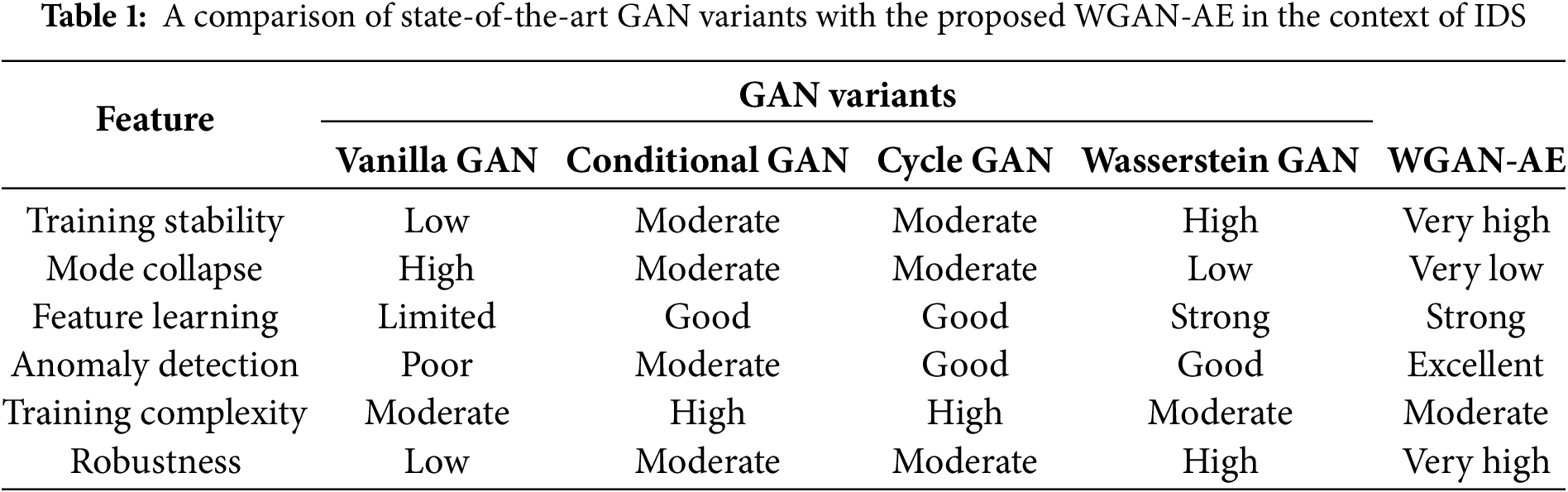
To overcome these issues, this paper proposes a Wasserstein GAN with Autoencoders (WGAN-AE) that integrates the best aspects of WGANs and autoencoders to develop a more efficient and effective intrusion detection system for IoT networks. The WGAN-AE can produce stable and diverse samples by leveraging the Wasserstein distance, which measures the difference between two probability distributions. Unlike traditional distance metrics, it provides a smoother and more meaningful way to compare real and generated data, leading to better training stability and improved detection of various attack types [12]. Autoencoders assist in detecting the changes that are likely to be a sign of a cyberattack by learning the detailed patterns of the normal IoT traffic [13]. This approach is less dependent on large datasets suitable for dynamic IoT environments. Furthermore, the WGAN-AE offers a complete solution that entails the reconstruction and anomaly identification of any input by comparing it with the learned normal behavior. This makes training more stable and enhances the novel attack detection rate that may not be detected by other models. A comparison of the proposed WGAN-AE with state-of-the-art GAN variants is presented in Table 1. The major contributions of the article are summarized as follows.
1. A hybrid intrusion detection framework, WGAN-AE, is proposed by utilizing the key strengths of WGAN and AE. The model enhances the detection of emerging attack vectors by using Wasserstein distance for more stable training and autoencoder-based feature extraction.
2. The research introduces an unsupervised GAN-based approach that learns the normal operation of the system and identifies changes as possible cyberattacks. It also achieves this by properly distinguishing between the normal and attack behaviors through the use of adversarial training of the generator to generate diverse attack types.
3. A comprehensive evaluation framework is developed to assess the computational efficiency and effectiveness of the proposed scheme by using two advanced and comprehensive IDS benchmark datasets.
The remainder of the article is organized as follows. In Section 2, we present some latest contributions related to GAN-based IDS frameworks and describe some preliminaries. In Section 3, we elaborate on the research methodology and the design of the proposed framework. In Section 4, we present a brief discussion of the experimental setup and outcomes. Finally, in Section 5, we conclude the research with future research directions.
This section overviews some significant contributions related to GAN-based IDS architectures. Rahman et al. [6] explored the potential of GAN for intrusion detection in IoT. The proposed scheme significantly decreased the dependency on real-world data. To analyze the effectiveness of designed model, the authors conducted extensive experiments on three open-source datasets including UNSW-NB15, NSL-KDD and BoT-IoT datasets. Message Queuing Telemetry Transport (MQTT) is a widely adapted network protocol in IoT infrastructures because of its lightweight and flexible nature. Boppana and Bagade [14] proposed a novel unsupervised GAN and autoencoder-based model GAN-AE, to detect unknown intrusions in MQTT-based IoT applications. The experimental results demonstrate the effectiveness of the proposed method against various modern IDS approaches. In another study, Li et al. [15] proposed a hybrid IDS model to detect Denial of Service (DoS)/botnet attacks in IoT systems. The authors designed an anomaly-based detection model called CL-GAN (CNN-LSTM GNN), combining a Convolutional Neural Network (CNN) and Long Short-Term Memory (LSTM) with GAN to define a baseline of normal activity and identify malicious traffic. The proposed architecture was evaluated with NSL-KDD, CICIDS2018, and Bot-IoT datasets.
de Araujo-Filho et al. [16] presented a novel fog-based unsupervised IDS using GANs. The proposed IDS was developed for a fog architecture to meet the low-latency requirements of cyberphysical systems. Experimental outcomes indicated the higher detection rates and superior performance of the proposed approach over baseline models using three datasets. Zeghida et al. [17] proposed GAN-based methods to achieve a balanced dataset for greater attack detection accuracy. Additionally, they introduced three dedicated IDSs for attack detection using the MQTT protocol based on hybrid deep learning (DL) algorithms: Convolutional Neural Network with Recurrent Neural Network (CNN-RNN), CNN with Long Short-Term Memory (CNN-LSTM), and CNN with Gated Recurrent Unit (CNN-GRU). The experimental results demonstrated that the generated dataset had a superior performance in multiclass configuration. In another study, Das et al. [18] proposed two models: a Feedforward Neural Network (FNN) network and a CNN. The proposed models have been trained and tested on standard datasets as well as synthetic datasets. The generation of this synthetic data employs a Conditional Tabular Generative Adversarial Network (CTGAN). The experimental outcomes indicated less training time and memory utilization than several baseline models.
Wang et al. [19] proposed a Multi-Critics GAN to address the data imbalance issues in IDS systems. The authors analyzed the generated data quality by using Principal Component Analysis (PCA) plots and correlation heatmaps. Subsequently, they incorporated a hybrid CNN-LSTM model to analyze the clusters to achieve the promising performance of IDS systems. The experimental results confirmed the higher attack detection rate with better generalization. Dong et al. [20] presented a novel IDS framework MasqueradeGAN-GP (Generative Adversarial Networks with Gradient Penalty), for 6G networks by integrating a WGAN with a Gradient Penalty. In the proposed architecture, a generator transforms the anomalous traffic into a semblance of benign activity and the discriminator discerns the genuine and adversarial traffic. The efficacy of the designed models was investigated by conducting extensive experiments using two open-source datasets. Brabin et al. [21] presented a Cycle-Consistent GAN-based attack detection and secure data transmission framework for smart cities. The designed framework incorporated a Wild horse optimizer for feature extraction. Subsequently, the selected features are provided to the cycle-consistent GAN classifier to distinguish normal and malicious traffic. Furthermore, to ensure a secure data transmission, the authors incorporated Advanced Encryption Standard (AES) with Chameleon Swarm Algorithm.
The aforementioned works present a significant contribution towards GAN-based IDSs. However, the existing studies have a few shortcomings, including reliance on outdated datasets that fail to capture real-time IoT security challenges and a primary focus on attack detection accuracy while neglecting critical constraints such as memory requirements and computational efficiency. While some approaches address data imbalance using advanced GAN variants like Multi-Critics GAN, CTGAN, and WGAN with Gradient Penalty, others integrate federated learning for enhanced security in Fog-assisted IoT networks. However, these studies lack a holistic evaluation framework. To overcome these shortcomings, this article proposes a WGAN-AE, which is trained and evaluated using two real-time benchmark datasets. The proposed approach ensures a comprehensive performance analysis, including accuracy, memory consumption, system latency, and cross-validation, making it a more robust solution for modern IoT-based IDS.
3 Research Methodology and the Proposed Framework
This section briefly describes the dataset description, the design of the proposed architecture, and the training process. The workflow of the proposed architecture is presented in Fig. 1.
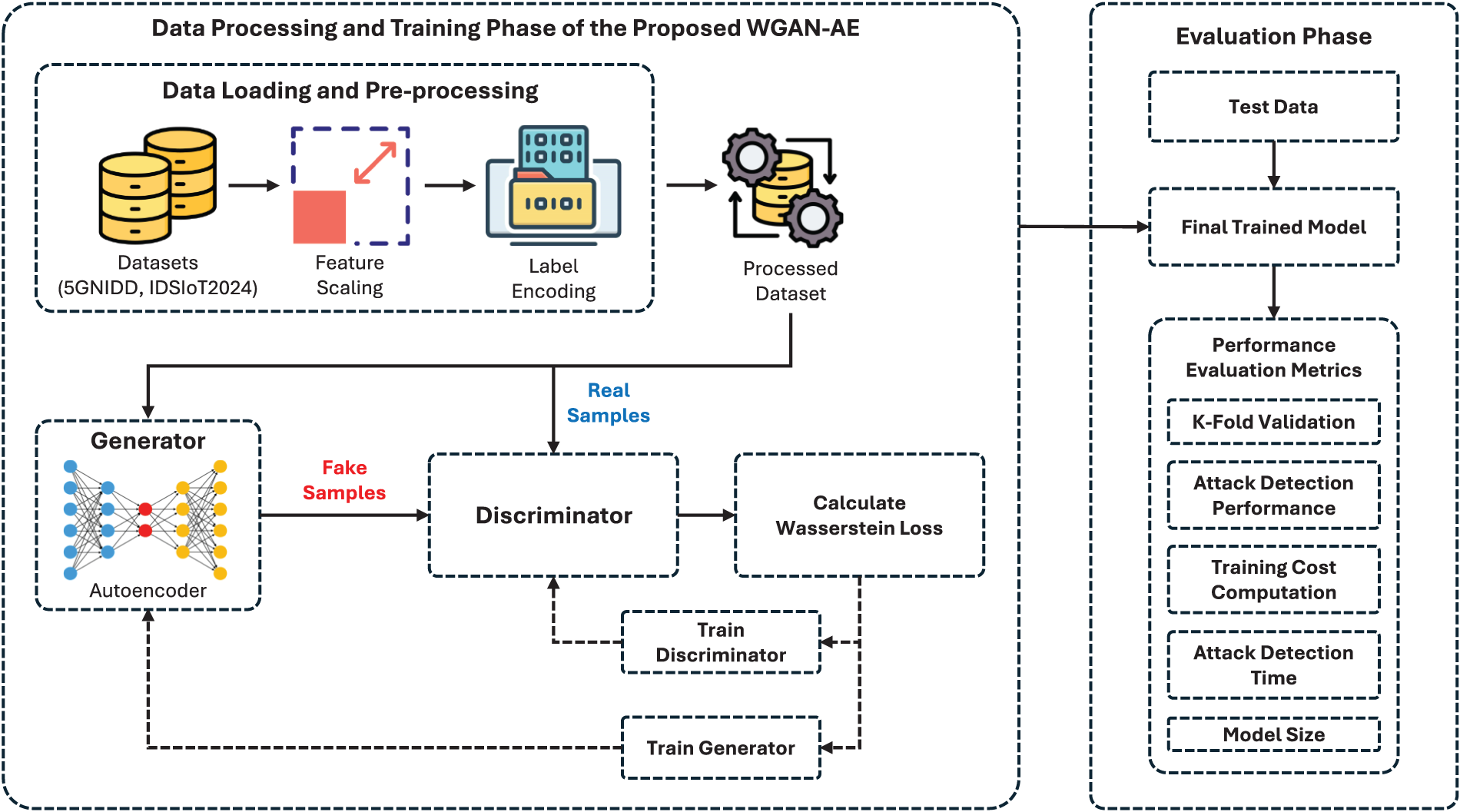
Figure 1: Block diagram of the proposed architecture
To train and evaluate the proposed architecture’s performance, we utilized three of the latest and most comprehensive datasets. The following provides a detailed description.
The 5G-NIDD dataset is a fully labeled collection of network traffic data generated from a functional 5G test network at the University of Oulu, Finland [22]. The dataset includes various attack scenarios, such as Denial of Service (DoS) attacks, Internet Control Message Protocol (ICMP) Flood, synchronize (SYN) Flood, User Datagram Protocol (UDP) Flood, Hypertext Transfer Protocol (HTTP) Flood, and Slowrate and port scans, including Transmission Control Protocol (TCP) Connect Scan, SYN Scan, and UDP Scan. The detailed distribution of the 5G-NIDD dataset is presented in Fig. 2.
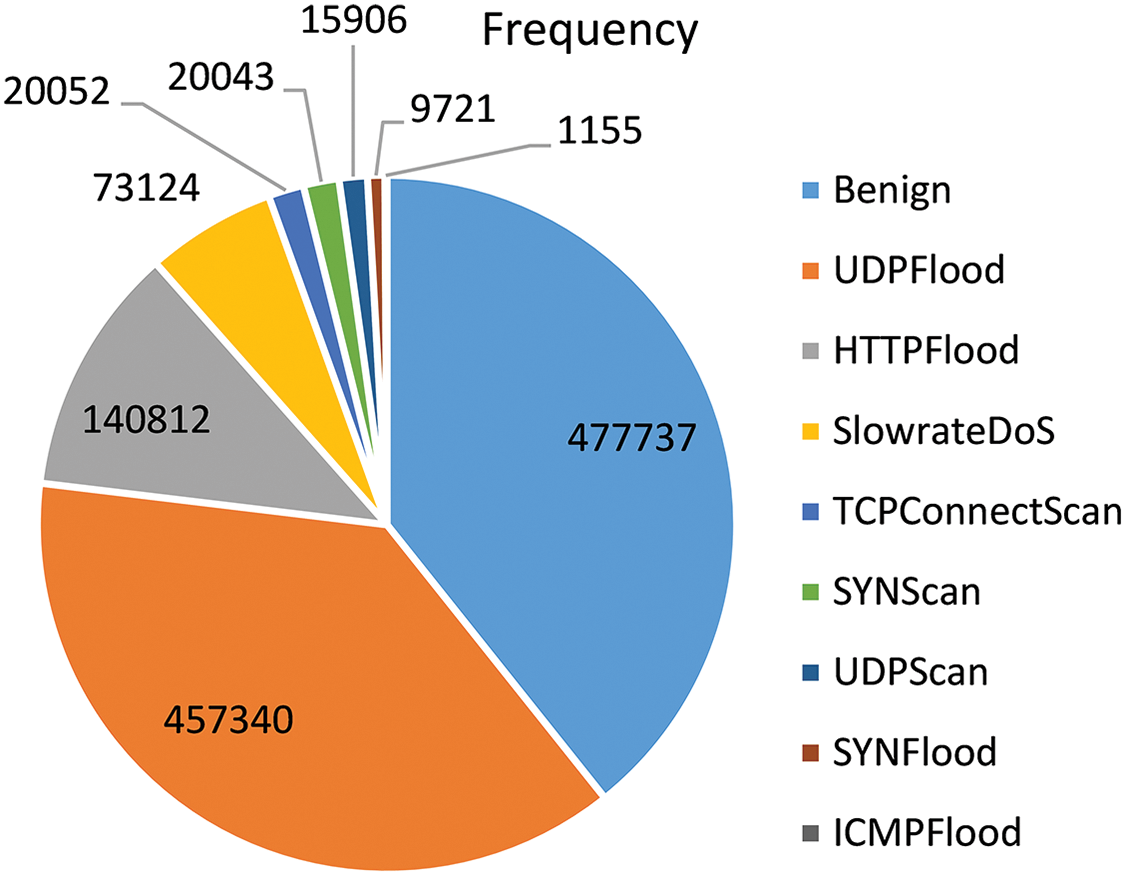
Figure 2: Distribution of 5G-NIDD dataset
The IDSIoT2024 dataset [23] is a comprehensive, real-time collection of network traffic data from an Internet of Things (IoT) environment comprising seven diverse smart devices: a smartwatch, surveillance camera, smartphone, laptop, smart vacuum, smart TV, and smart light. In this setup, the laptop serves a dual role: continuously monitoring and logging network traffic for analysis and actively executing various network-based attacks to simulate potential security threats. The dataset includes seven main categories: DoS, Injection, Man-in-the-Middle (MITM), malware, normal, routing, and vulnerability analysis. The detailed distribution of the IDSIoT2024 dataset is presented in Fig. 3.
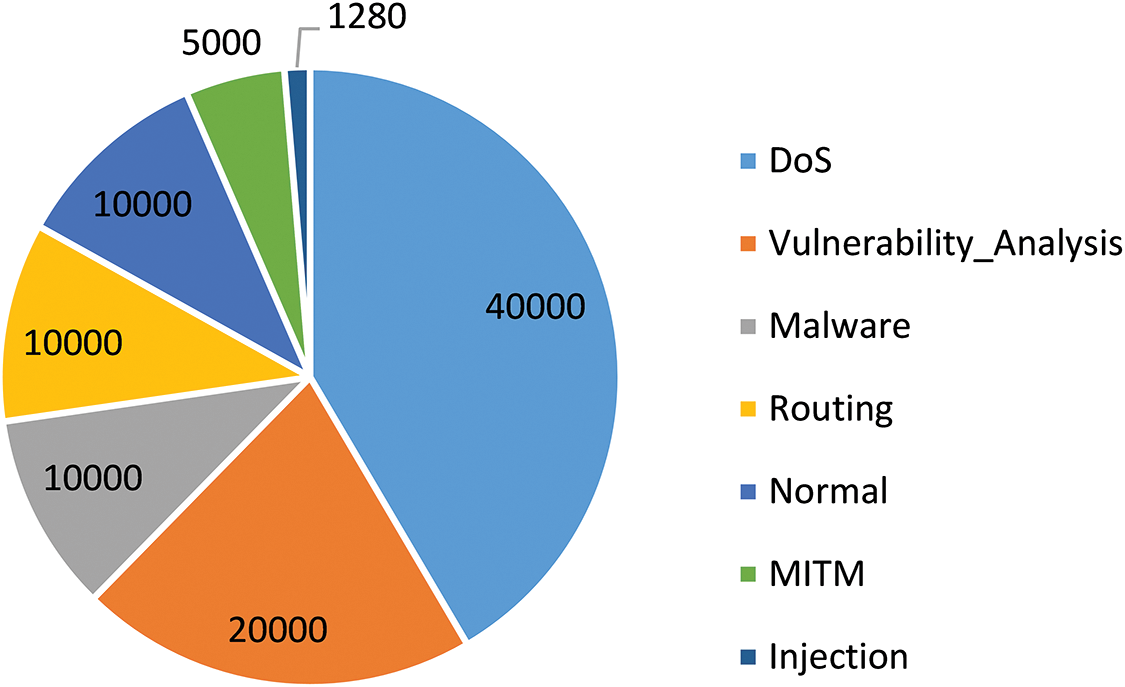
Figure 3: Distribution of IDSIoT2024 dataset
This section provides a detailed description of each module of the proposed architecture.
The preprocessing of the dataset
Feature Scaling (Standardization): The first step is to normalize the feature data so that each feature has zero mean and unit variance. This ensures that all features contribute equally during training, preventing features with larger ranges from dominating the optimization process.
Given a feature matrix
where:
•
•
This process ensures that the scaled feature
The entire feature matrix
Label Encoding: In classification tasks, the target labels are often categorical, so we need to convert the labels into a numerical form that can be used by machine learning models. Label encoding is a common method for transforming categorical labels into integers.
Let
where
The resulting encoded labels are stored in a vector
One-Hot Encoding: While label encoding is a simple way of converting categorical labels into integers, for many classification tasks, especially in neural networks, it is more effective to represent each class label as a one-hot encoded vector. In one-hot encoding, each class label is represented as a vector where only the index corresponding to the label is 1, and all other indices are 0.
For a given encoded label
where the 1 appears at the index
The entire matrix of one-hot encoded labels is represented as
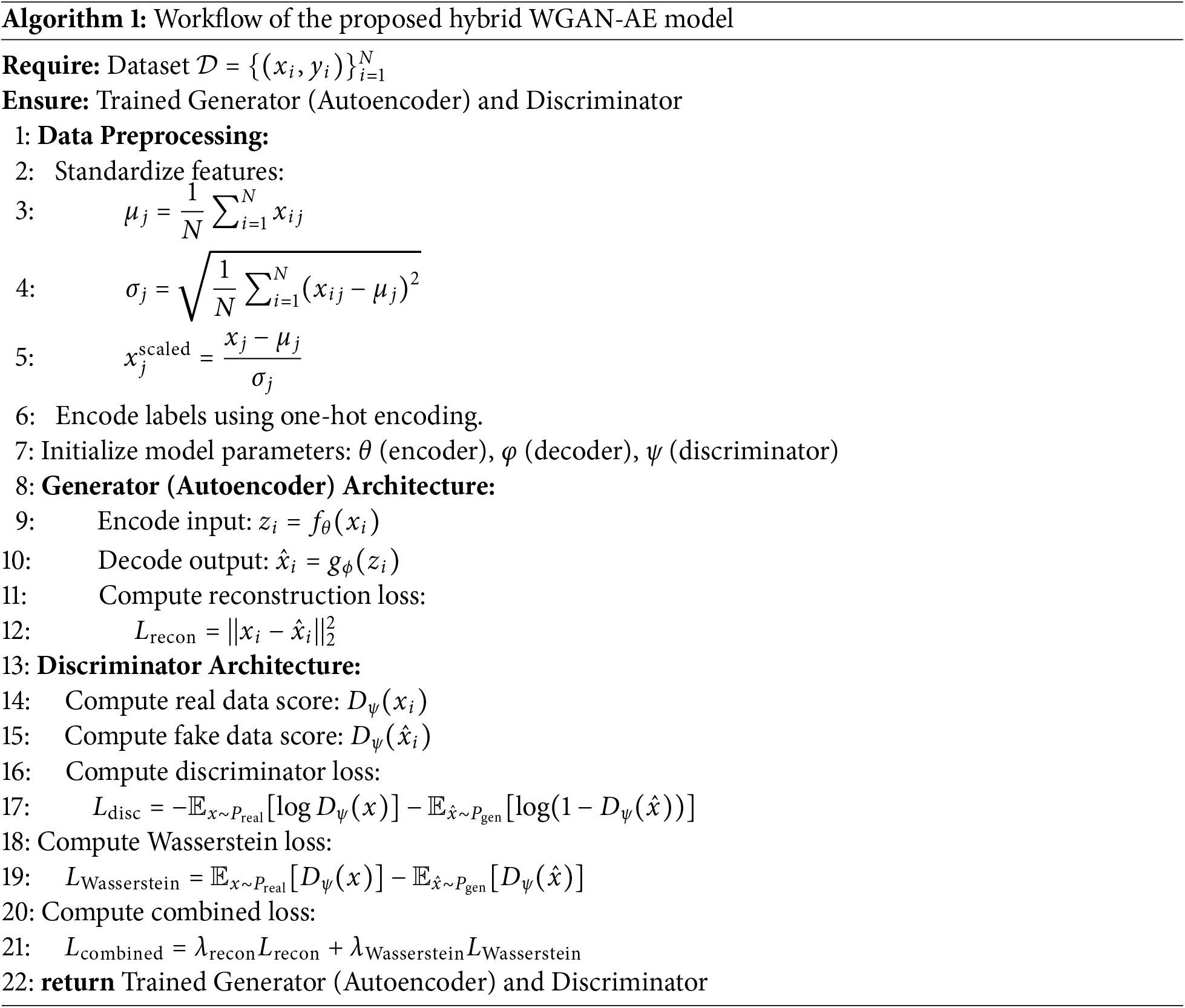
The WGAN-AE is an upgraded model that combines the best features of autoencoders with GANs to offer superior attack detection in IoT networks. The model has two main modules: Autoencoder and Discriminator. In addition to that, the Wasserstein loss helps improve the training stability since the overall model learned to reconstruct the input data and distinguish between real and that which has been simulated. Mathematical formulation of the Hybrid WGAN-AE model is presented in this section.
A. Generator Architecture (Autoencoder)
A combination of an encoder and a decoder module constitutes the generator using the autoencoder structure. The autoencoder learns to accurately compress/input data into a low-dimensional representation, able to reconstruct the same input data from low-dimensionality space.
• Encoder: The encoder maps the input data
where
• Decoder: The decoder is responsible for reconstructing the original input
where
The loss function for the autoencoder is typically the reconstruction loss, which measures how well the decoder can approximate the original input
where
B. Discriminator Architecture
The discriminator is a neural network that distinguishes between real data (from the dataset) and fake data (generated by the autoencoder). It is defined as a binary classifier
For the input data
where
The goal of the discriminator is to correctly classify real data as 1 and fake data as 0, minimizing the above loss function.
C. Wasserstein Loss for WGAN-AE
A key component of the Hybrid WGAN-AE is the Wasserstein loss, which is used to stabilize the training process, and to generate better samples.
The Wasserstein loss [24] for the discriminator is given by (6):
This loss function trains the discriminator to give high values to real data and low values to the generated data, thus trying to increase the distance between the two distributions. The Wasserstein loss has smoother gradients and solves the vanishing gradient problem that is typical for standard GANs.
The generator is trained to minimize the Wasserstein loss in the opposite direction, i.e., to minimize
D. Combined Model
In the Hybrid WGAN-AE, the combined model is trained alongside both the generator and the discriminator. The purpose of the combined model is to train the generator to create data that looks realistic enough to fool the discriminator. Nevertheless, the generator tries to minimize the reconstruction error as well so that the produced data is both realistic and consistent with the input data.
The total loss for the combined model is a weighted sum of the reconstruction loss and the Wasserstein loss. The combined loss can be written as follows:
where
E. Training Procedure
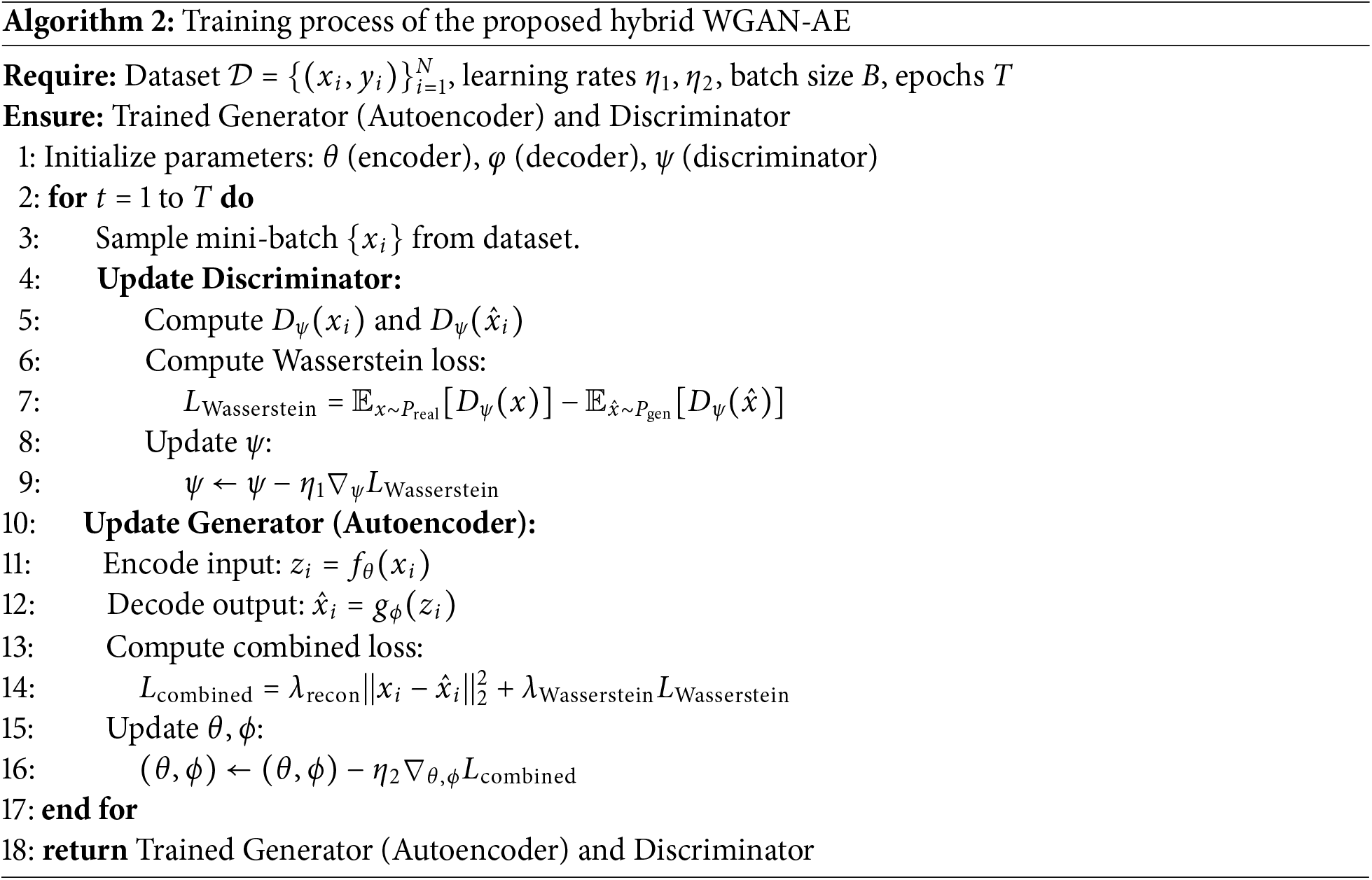
The training procedure alternates between updating the discriminator and the generator:
1. Discriminator Update: The discriminator is trained to distinguish between real and fake data by minimizing
2. Generator Update: The generator is updated to minimize the combined loss
The discriminator’s parameters
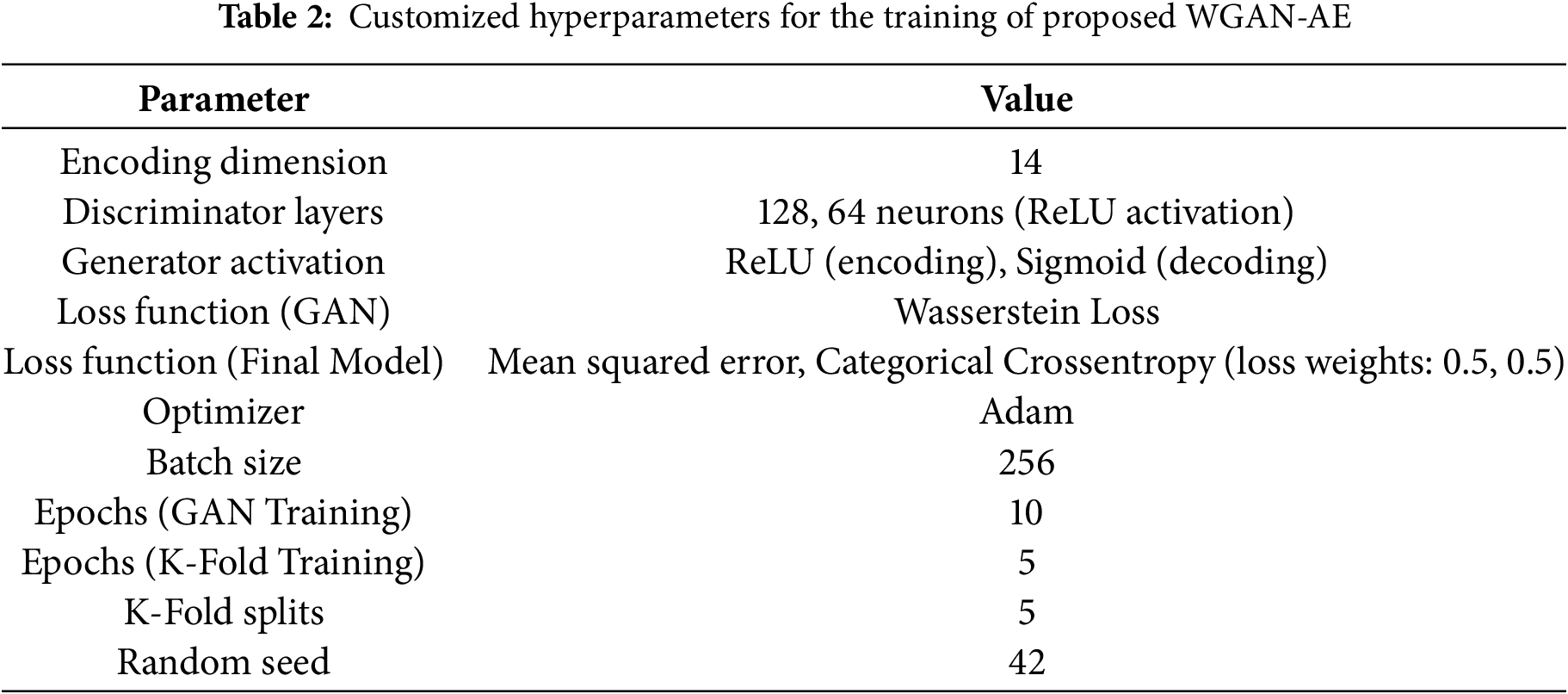
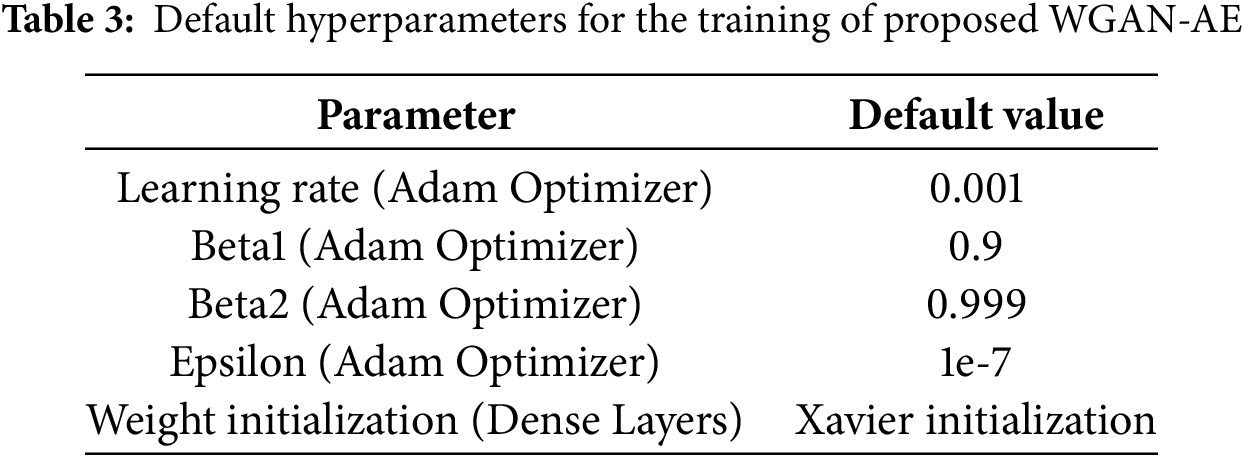
The proposed WGAN-AE architecture is implemented and evaluated in the Google Colab Pro platform. To ensure the optimal training of WGAN-AE, we selected the range of suitable hyperparameters through the hit and trial method. The customized and default hyperparameters utilized in training are presented in Tables 2 and 3, respectively. The following provides a brief discussion of the experimental procedures and an in-depth analysis of experimental outcomes.
4.1 Performance Evaluation with 5G-NIDD Dataset
The 5G-NIDD dataset is an important benchmark for evaluating the performance of intrusion detection systems in next-generation 5G-enabled IoT networks, characterized by speed, low latency, and a variety of threats. The following presents a brief discussion of the experimental results.
4.1.1 Cross-Validation Performance
To ensure robustness, the model was subjected to five-fold cross validation to prevent overfitting on a single dataset. The five-fold cross-validation results are shown in Fig. 4. The experimental outcomes delivered quite impressive Precision-Recall AUC scores ranging from
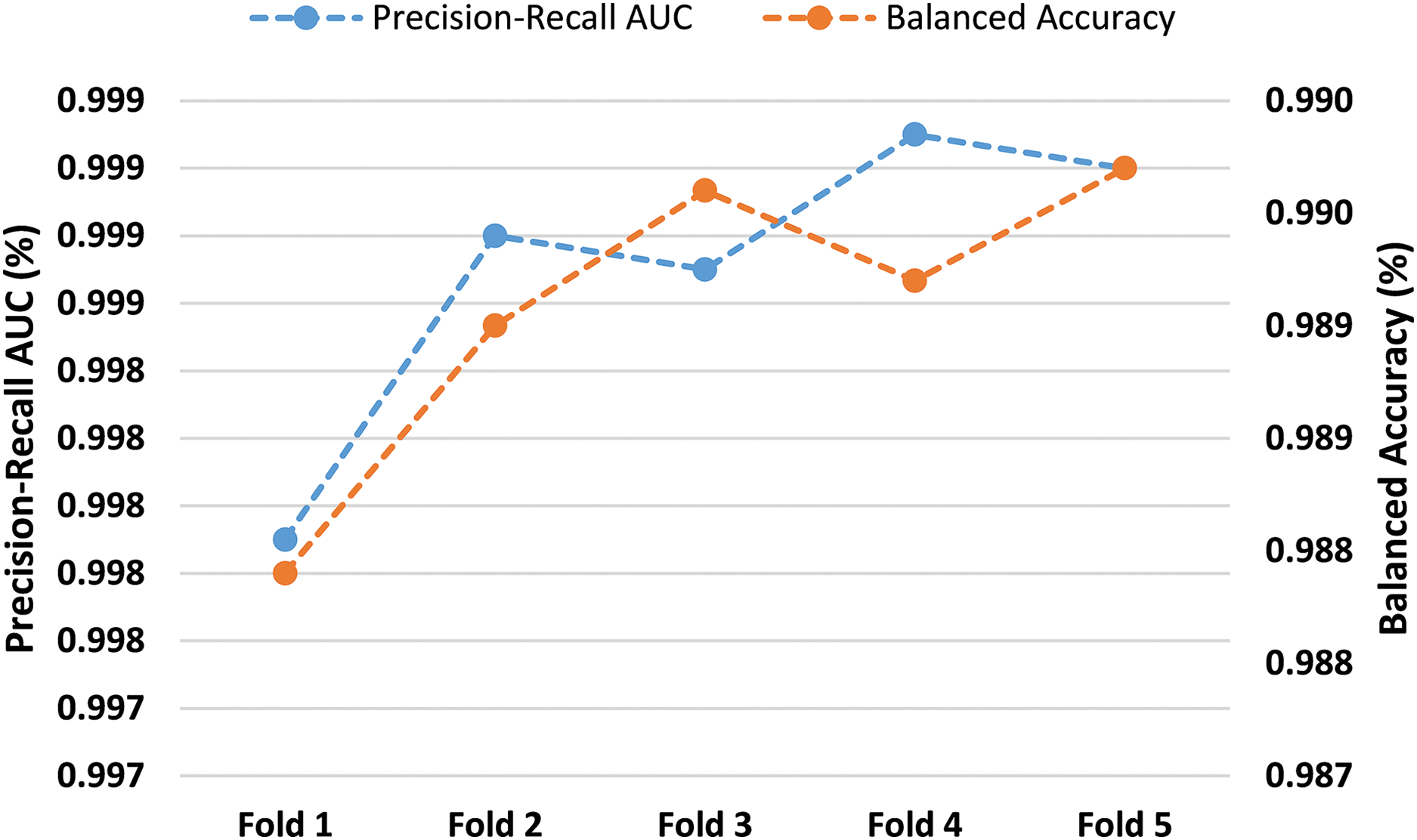
Figure 4: 5-fold cross validation with 5G-NIDD dataset
To further assess the model’s effectiveness, it was evaluated on an independent test set, where it achieved a notable performance score. The accuracy was
4.1.3 Multiclass Performance Analysis
The confusion matrix presented in Fig. 5 provides deeper insights into the model’s classification performance. It shows that the model made few misclassifications, particularly for well-defined attack patterns such as UDP Flood, HTTP Flood, and SYN Scan. However, some minor misclassifications were observed between attacks with similar characteristics, such as SYN Flood and TCP Connect Scan, where the model occasionally confused connection-based attacks due to their similar network behavior profiles. Despite these minor misclassifications, the overall error rate was low, reinforcing the model’s high reliability. Fig. 6 presents a detailed multiclass performance evaluation.
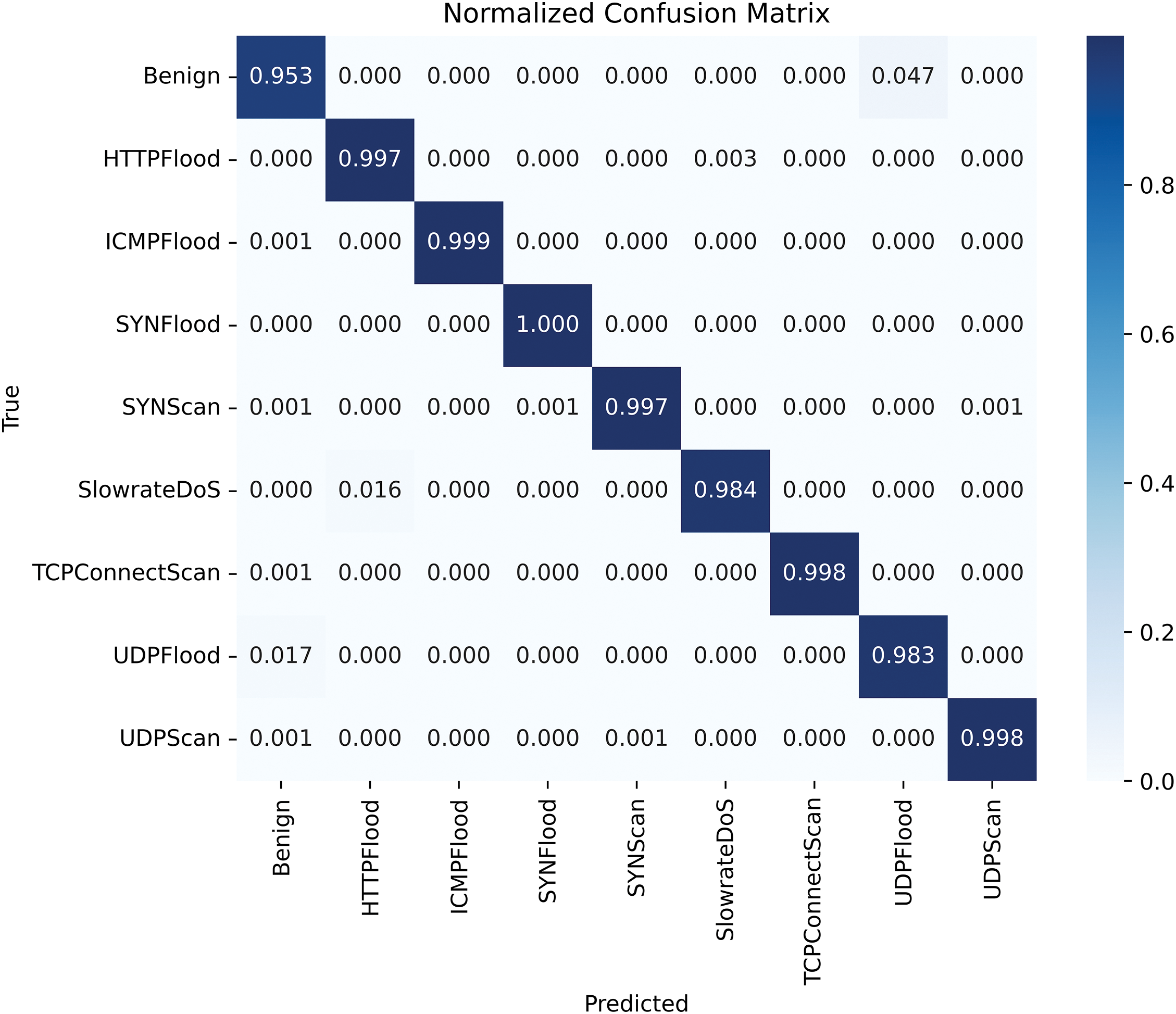
Figure 5: Confusion matrix for 5G-NIDD dataset
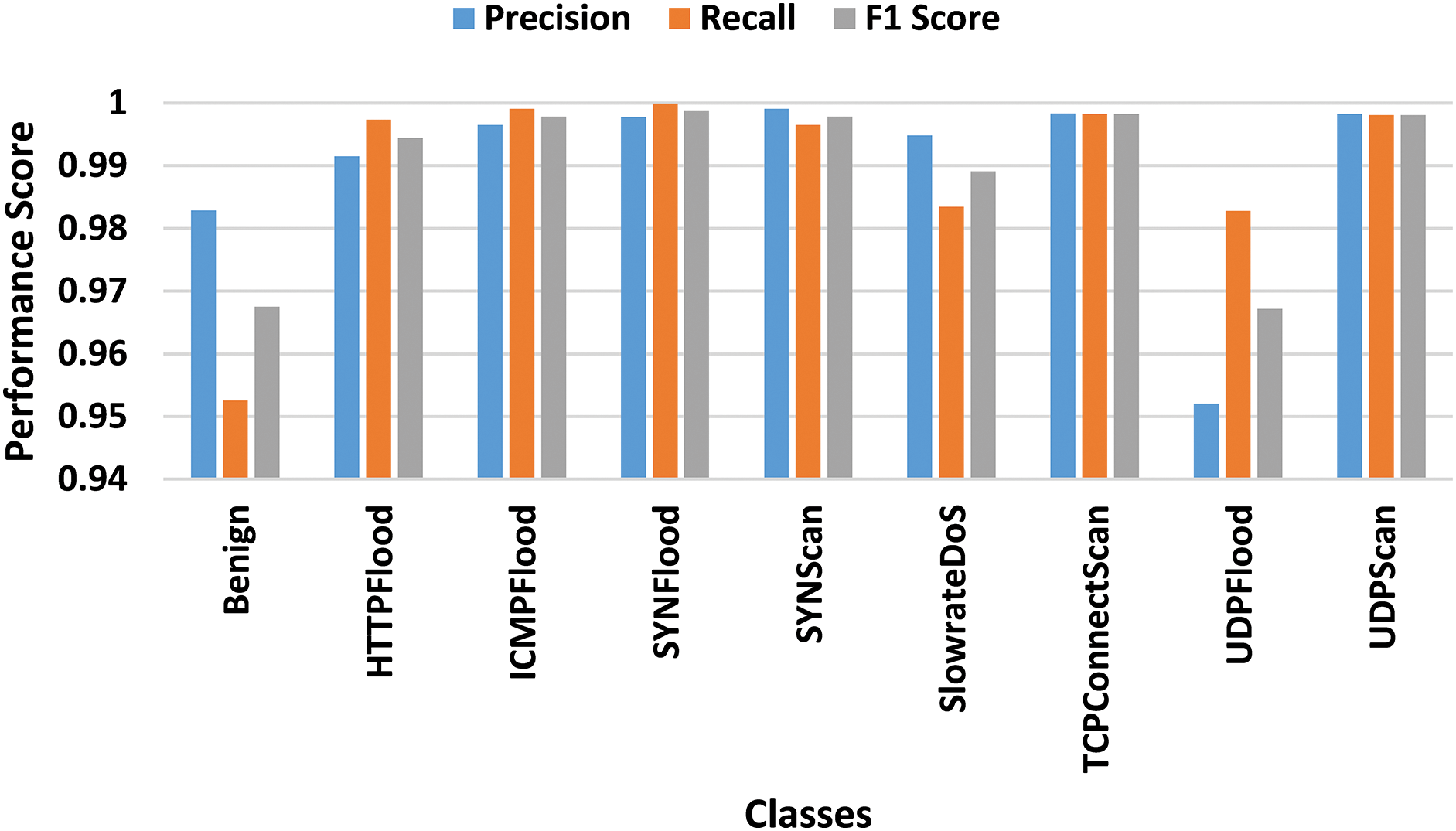
Figure 6: Multiclass performance evaluation with 5G-NIDD dataset
4.1.4 Computational Performance Analysis
The computational performance analysis of the proposed WGAN-AE model on the 5G-NIDD dataset demonstrates efficient processing capabilities. The training phase was completed in
4.1.5 Attack Detection Time Analysis
In real-world applications, fast detection of attacks is crucial to mitigate threats in real time. The proposed model demonstrated impressive low-latency performance across various attack types, processing most attacks within
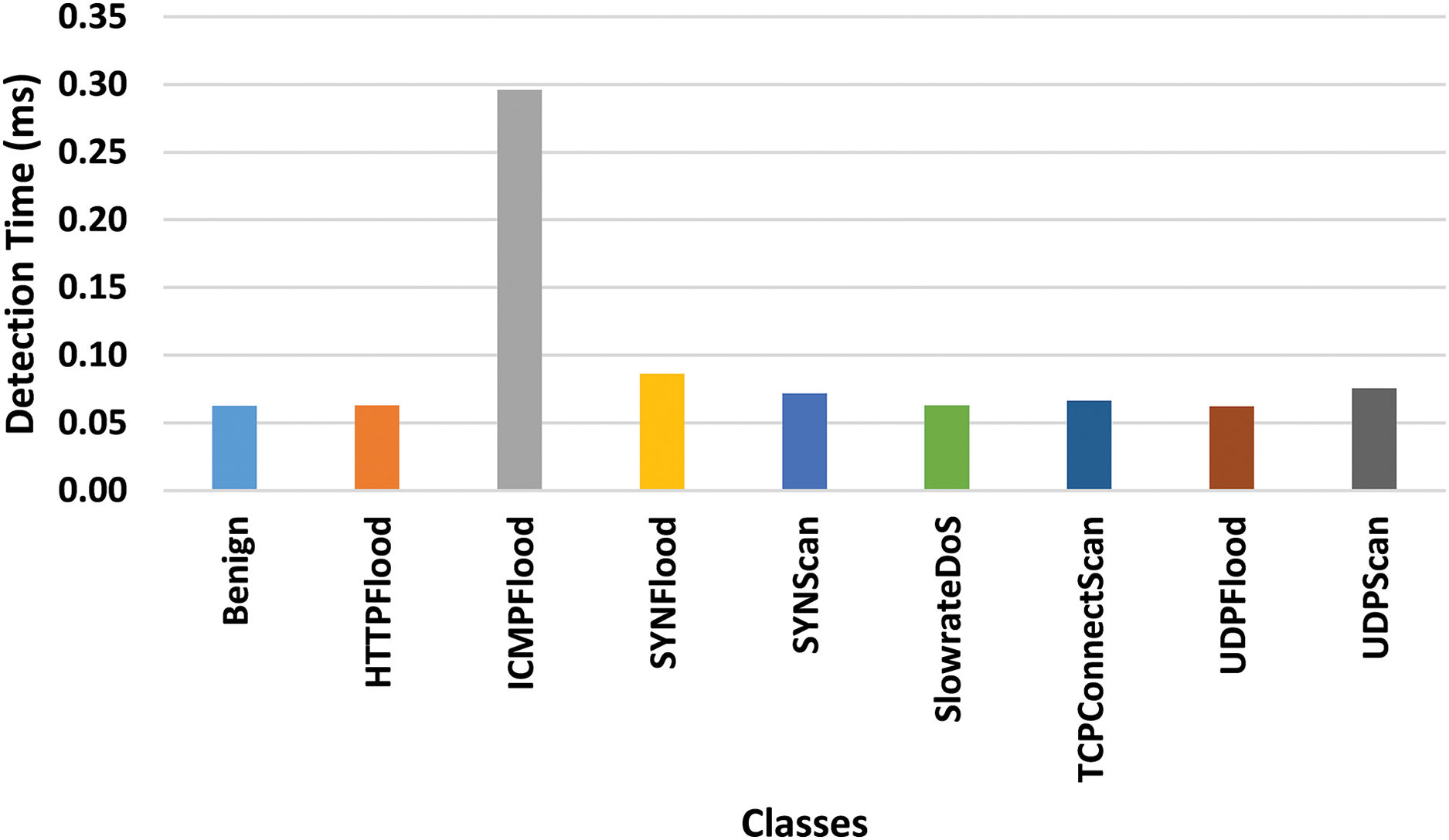
Figure 7: Detection time of each individual class in 5G-NIDD dataset
4.1.6 Model Size and Deployment Feasibility
Considering the limited storage and computational resources available on many IoT devices, the model’s memory footprint is a key factor for deployment feasibility. The proposed model has a compact size of just
4.2 Performance Evaluation with IDSIoT2024 Dataset
The IDSIoT2024 dataset contains diverse IoT traffic data to evaluate IDSs in dynamic and resource-constrained IoT networks. The following provides a detailed analysis of experimental results with the IDS IoT 2024 dataset.
4.2.1 Cross-Validation Performance
The five-fold cross-validation results are presented in Fig. 8. The Precision-Recall AUC scores for the five folds were very high, with an average of
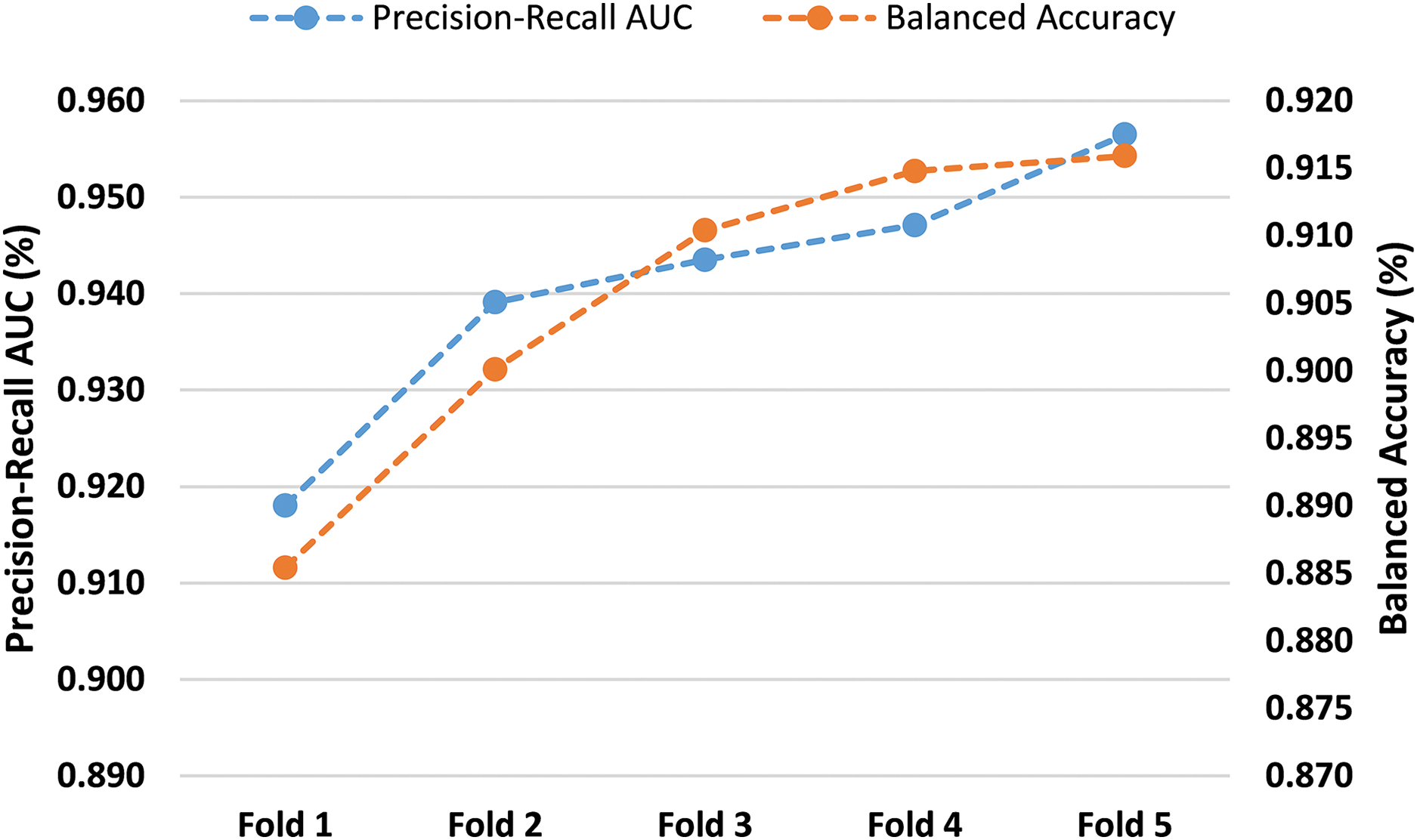
Figure 8: 5-fold cross validation with IDSIoT2024 dataset
After training the model using the training dataset and validating its efficiency using the validation set, it performed exceptionally on an independent test set with high accuracy of
4.2.3 Multiclass Performance Analysis
The confusion matrix in Fig. 9 gives a more accurate view of the model’s classification accuracy. When the multi-class evaluation was performed, the model’s performance was found to be consistent across all the other classes except the ‘Injection’ class. This means that although the model is very good at identifying different attacks, there could be some difficulties in distinguishing between some of the attacks, especially Injection attacks, which may have attack patterns that are similar to those of other malicious activities. The low performance in this case can be ascribed to the characteristics of Injection attacks which are often quiet and their traffic is not easily distinguishable. Nonetheless, the general multiclass performance is good which indicates that the model is well positioned to deal with different kinds of attacks. The multiclass performance is detailed in Fig. 10.
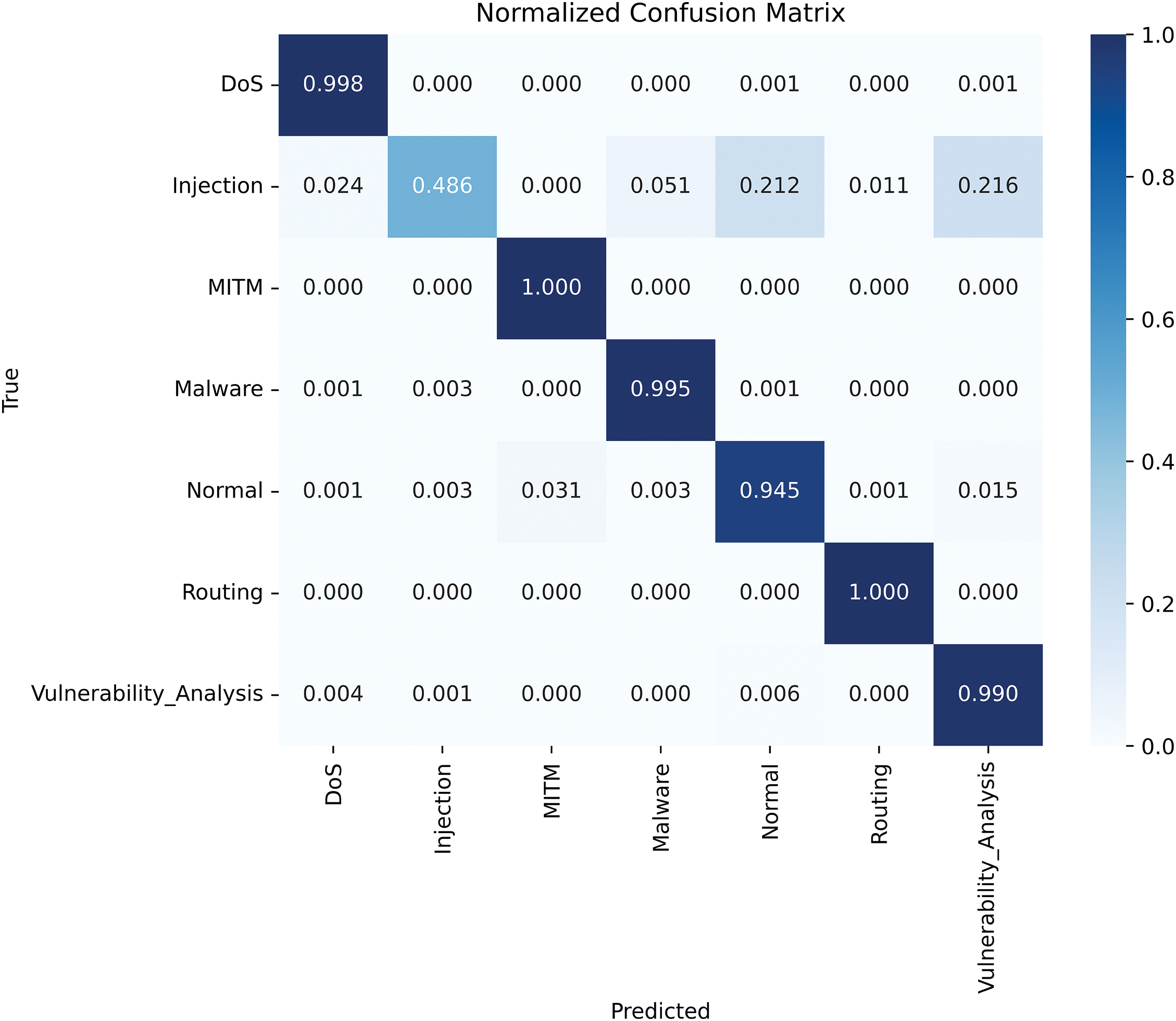
Figure 9: Confusion matrix for IDSIoT2024 dataset
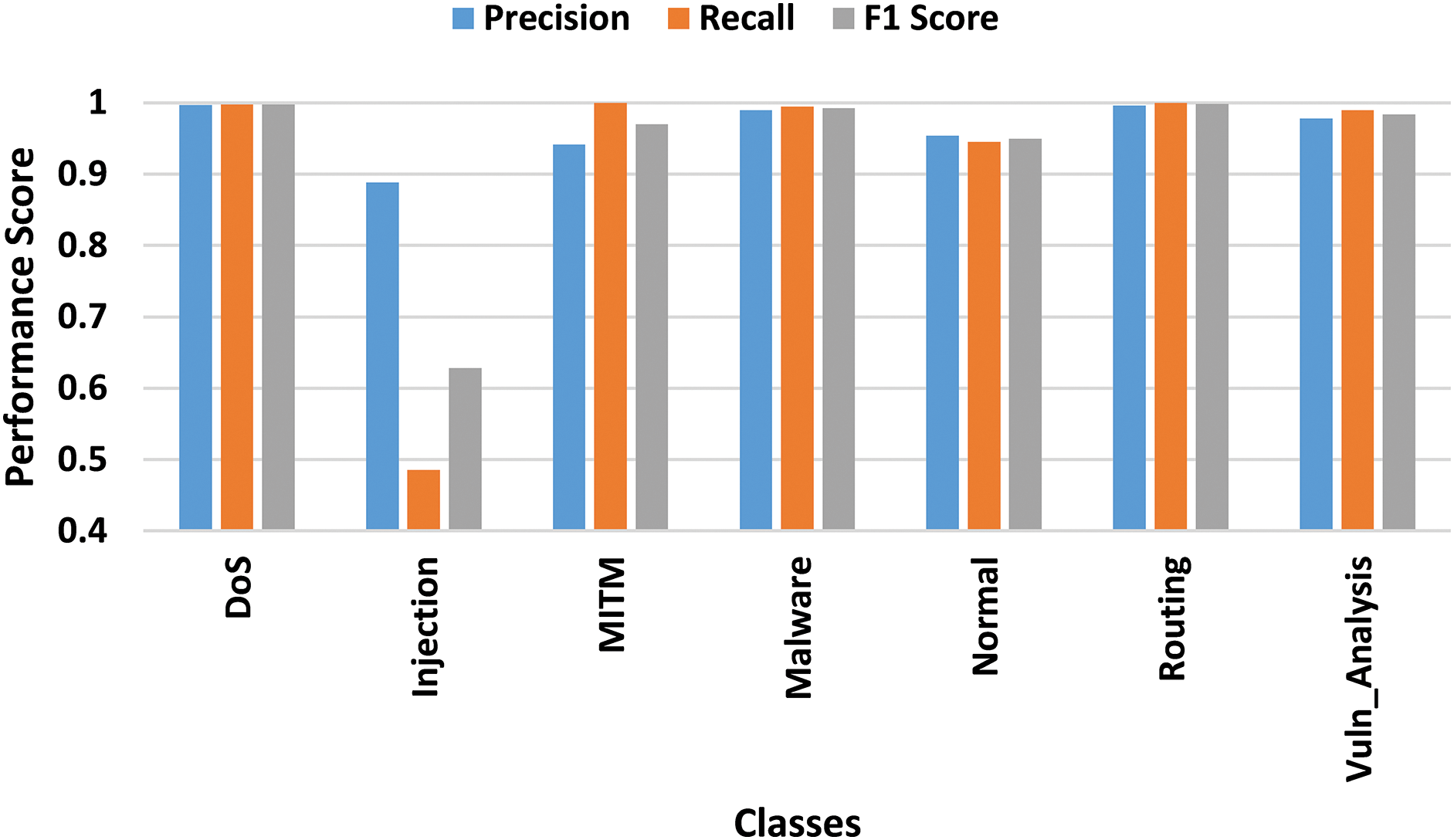
Figure 10: Multiclass performance evaluation with IDSIoT2024 dataset
4.2.4 Computational Performance Analysis
For the IDSIoT2024 dataset, the proposed WGAN-AE model exhibited a significantly lower training time of 10.67866 s, suggesting that the model adapts efficiently to this dataset. The inference time for the complete test set was remarkably fast at 6.43554 s, emphasizing the model’s ability to handle large-scale IoT data effectively. The latency per sample was recorded at 0.06684 ms, demonstrating minimal delay during prediction. Additionally, the throughput achieved was 14,960.67771 samples per second, reflecting a high data processing rate, which is crucial for real-time IoT applications. These results affirm that the WGAN-AE model is computationally efficient across diverse datasets, making it well-suited for high-throughput environments.
4.2.5 Attack Detection Time Analysis
The model demonstrated impressive efficiency with attack detection times, processing most attacks in sub-millisecond times, ranging from
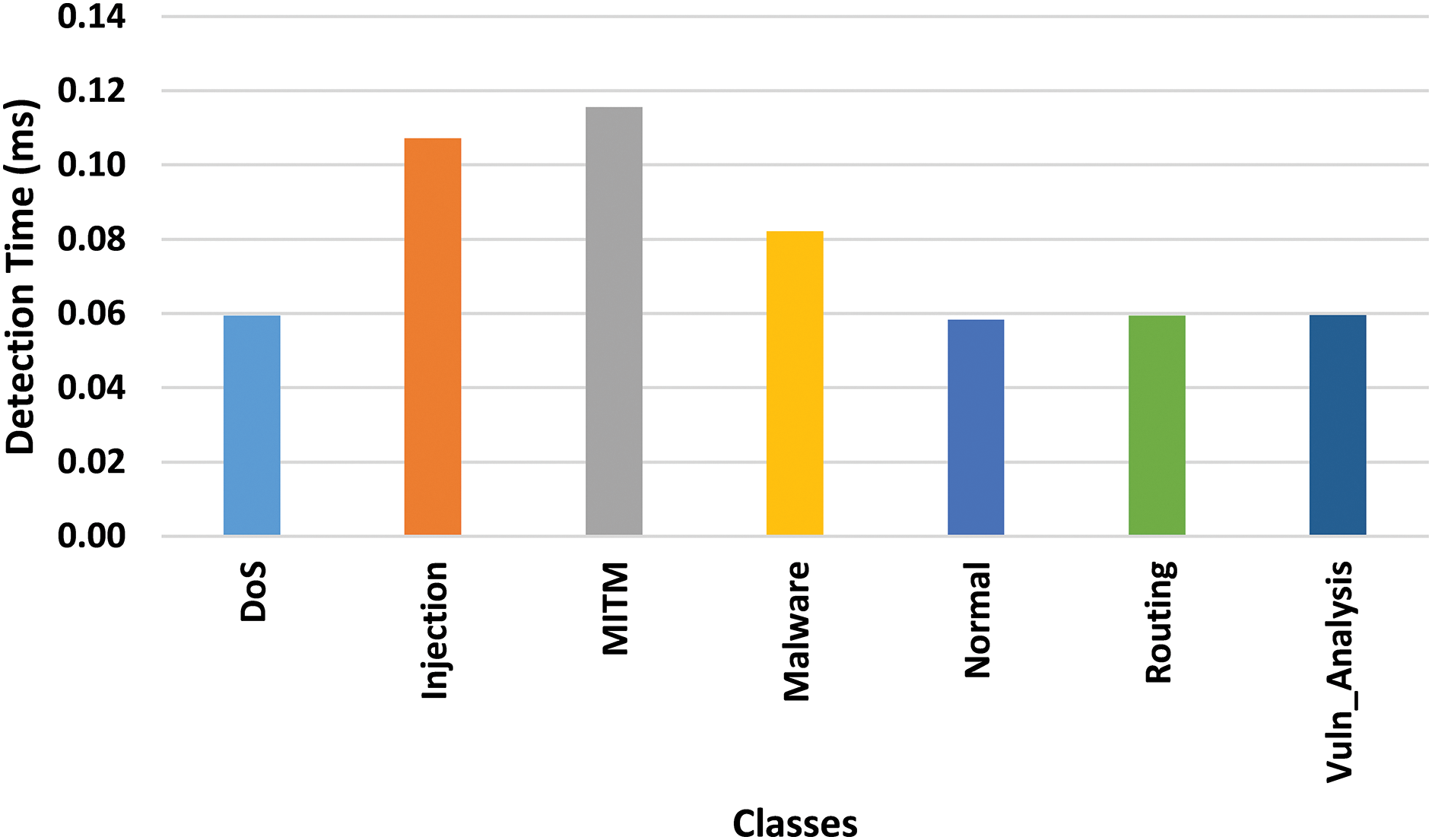
Figure 11: Detection time of each individual class in IDSIoT2024 dataset
4.2.6 Model Size and Deployment Feasibility
The model’s compact size of 61.84 kB makes it highly suitable for deployment in resource-constrained IoT environments. This small memory footprint ensures that the model can be easily integrated into IoT devices with limited computational resources. The model’s lightweight nature, high detection accuracy, and low detection latency demonstrate its potential for deployment in real-world IoT networks, where both efficiency and security are critical. Given the increasing demand for effective and resource-efficient intrusion detection in IoT systems, this model offers a promising solution for ensuring the security of IoT devices.
4.3 Performance Comparison of Proposed WGAN-AE with State-of-the-Art GAN Variants
To analyze the efficacy of the proposed WGAN-AE, we compared the performance with state-of-the-art GAN variants, including vanilla GAN, conditional GAN, least square GAN, Information Maximizing Generative Adversarial Networks (info GAN), and boundary equilibrium GAN. To ensure a fair comparison, we implemented all these GAN models on similar experimentation platforms with similar datasets. The following presents a detailed comparative analysis.
4.3.1 Detection Rate and False Alarm Rate
The WGAN-AE consistently outperforms other GAN variants in detection accuracy while maintaining lower false alarm rates across different attack classes. Table 4 presents comparative evaluation results for the 5G-NIDD dataset. The proposed scheme achieved a remarkable 100% detection rate for ICMPFlood attacks with zero false alarms, a stark contrast to Vanilla GAN’s 29.69% detection rate. Similarly, for SYNFlood and SYNScan attacks, WGAN-AE achieves near-perfect detection, significantly surpassing alternatives such as Least Squares GAN and Boundary Equilibrium GAN. The improvement is also evident in benign traffic classification, where WGAN-AE attains a detection rate of 95.84% with a reduced false alarm rate of 1.93%, demonstrating its robustness in distinguishing normal and attack traffic.
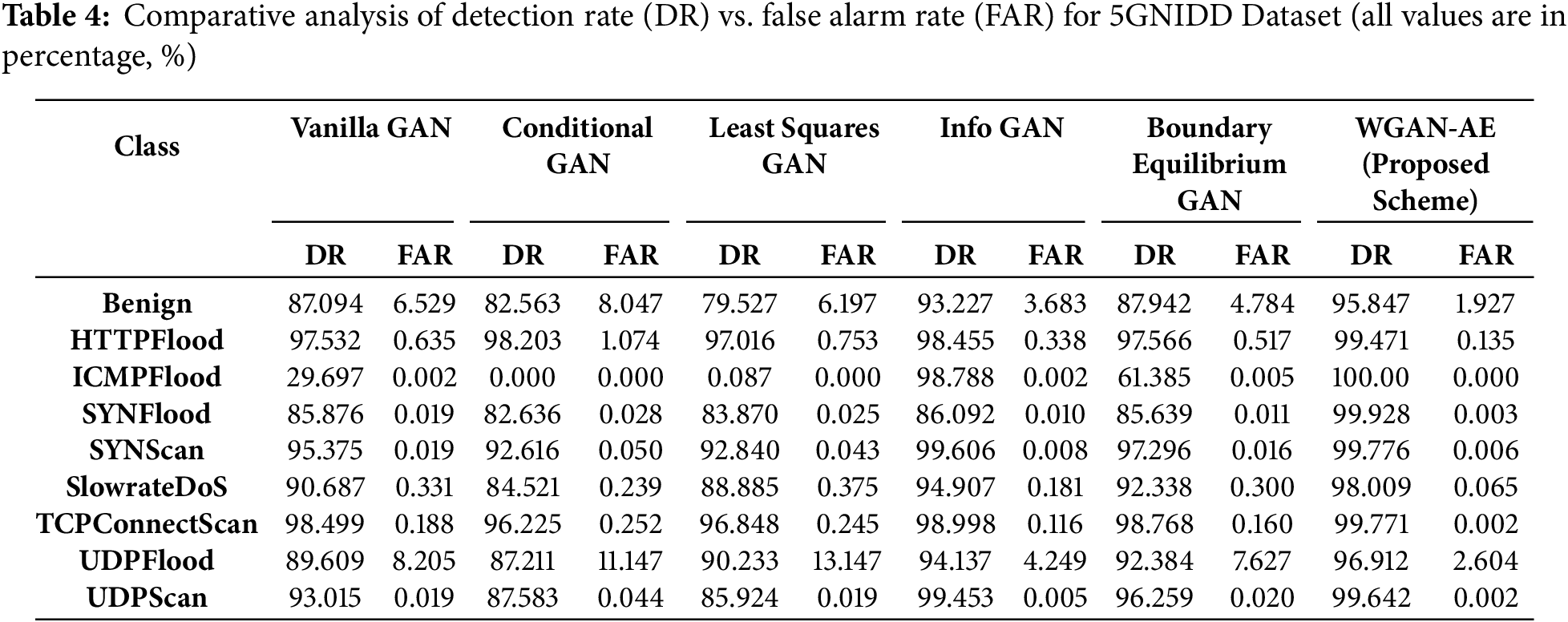
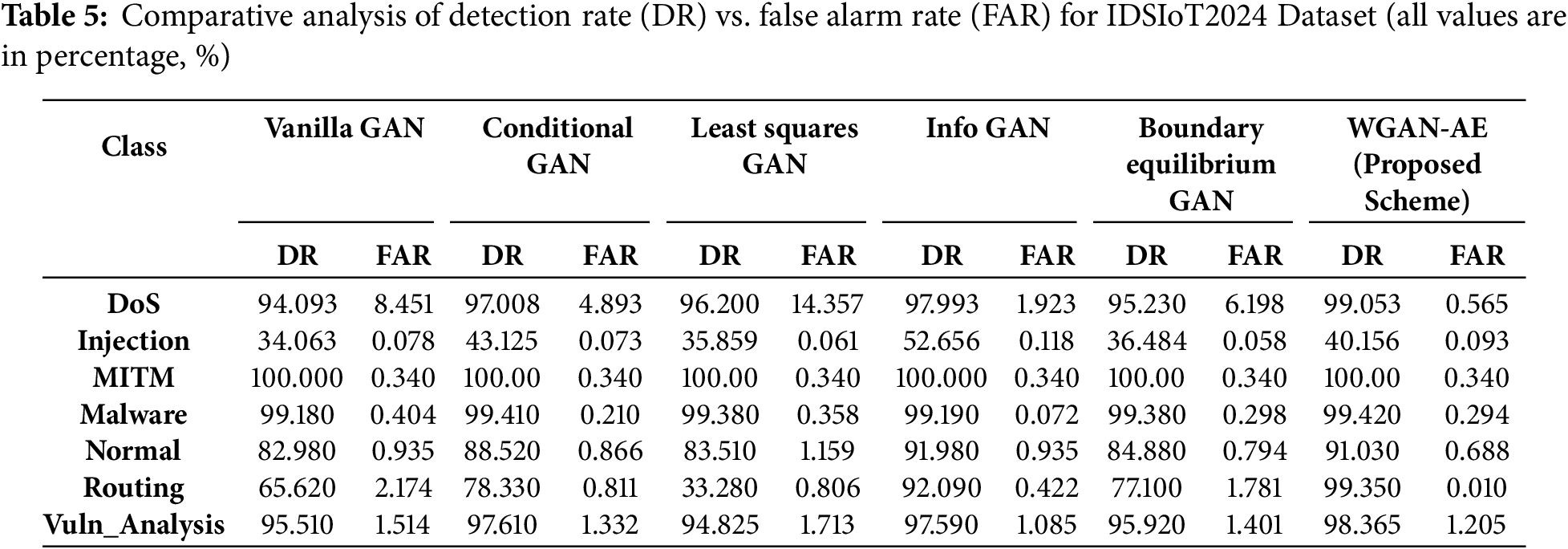
Table 5 presents the comparative analysis for the IDSIoT2024 dataset. A similar trend is observed in the IDSIoT2024 dataset, where WGAN-AE exhibited high detection rates for Routing (
4.3.2 Computational Efficiency and Resource Utilization
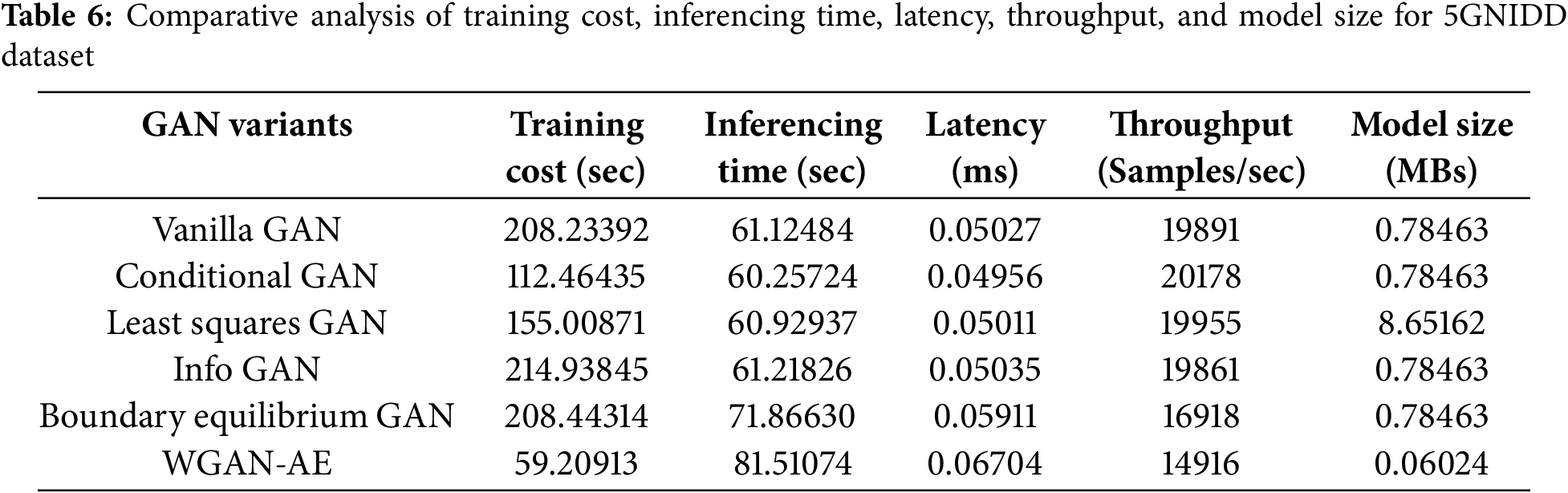
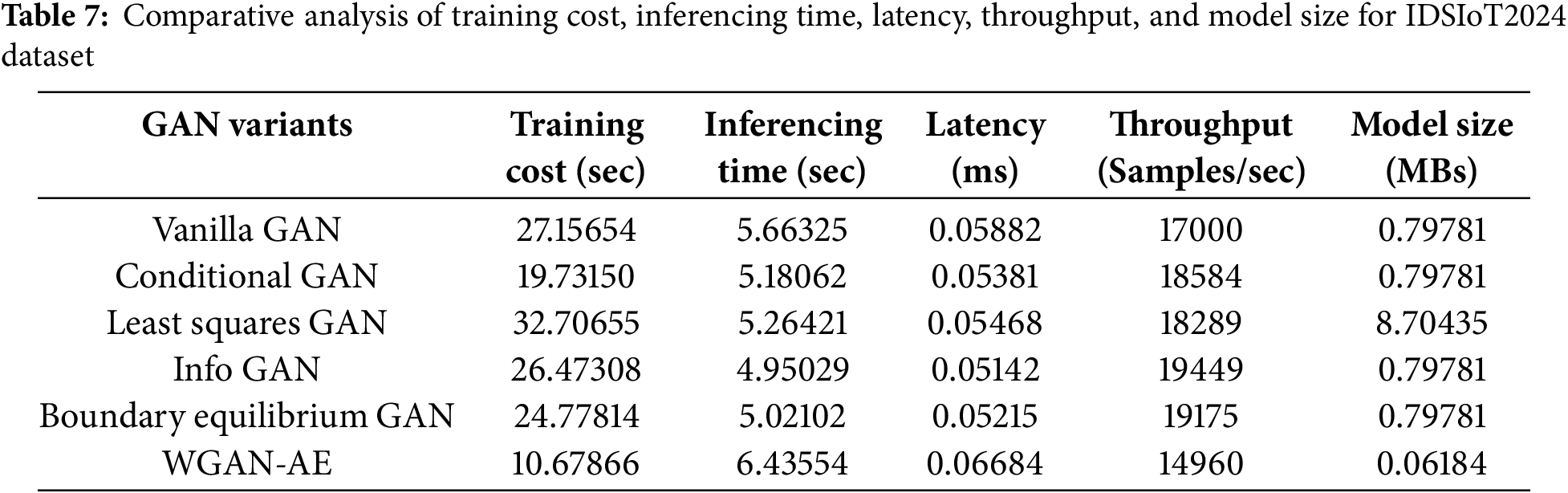
One of the promising features of WGAN-AE is its efficient training process, which is significantly faster than traditional GANs. The computational efficiency and resource utilization comparison are presented in Tables 6 and 7 for 5G-NIDD and IDSIoT2024 datasets, respectively. On the 5G-NIDD dataset, the training time is reduced to
4.4 Trade-offs and Limitations: A Balanced Perspective on WGAN-AE’s Promising Performance
The WGAN-AE model demonstrates remarkable performance in terms of detection accuracy and false alarm reduction, significantly outperforming state-of-the-art GAN variants across diverse attack classes. While a detailed evaluation reveals some trade-offs in inferencing time and throughput, these differences are relatively minor compared to the notable improvements WGAN-AE brings in detection performance.
4.4.1 Latency and Inferencing Time: Minimal Trade-Offs for Superior Detection
A closer analysis of the inferencing time and latency highlights that although WGAN-AE incurs a slightly higher latency (
4.4.2 Throughput: Prioritizing Accuracy over Speed in High-Stakes Scenarios
Similarly, while WGAN-AE demonstrates slightly lower throughput (around
4.4.3 Detection Superiority and False Alarm Reduction: WGAN-AE’s Competitive Edge
The strength of WGAN-AE lies in its ability to consistently achieve higher detection rates across a wide range of attack types, including difficult-to-detect threats such as ICMPFlood, SYNFlood, TCPConnectScan, and UDPScan, while simultaneously maintaining a significantly lower false alarm rate. For example, on the 5G-NIDD dataset, WGAN-AE achieves a
4.5 Future Directions: Enhancing WGAN-AE for Greater Efficiency
While WGAN-AE has already set a high standard in intrusion detection, a few strategic enhancements could further refine its performance regarding inferencing time and throughput. The following two recommendations can help address these minor trade-offs:
4.5.1 Model Pruning and Lightweight Architectures for Faster Inferencing
Model pruning and lightweight architectures can be employed to minimize inferencing time and latency without sacrificing detection accuracy. Pruning reduces model complexity by removing redundant connections and neurons, leading to a lighter and faster network while retaining essential feature representations. Additionally, incorporating quantization techniques can further reduce model size and computation requirements, making WGAN-AE more efficient for real-time applications. This approach can maintain the model’s detection superiority while ensuring faster inferencing in large-scale or latency-sensitive environments.
4.5.2 Parallel Processing and Distributed Inference for Higher Throughput
Implementing parallel processing techniques and distributed inference frameworks can significantly improve performance in high-speed networks, enhancing throughput and enabling real-time intrusion detection. WGAN-AE can process a larger volume of samples concurrently by partitioning incoming network traffic across multiple computational nodes, thereby increasing overall throughput. Additionally, leveraging edge-cloud hybrid architectures can offload preliminary anomaly detection to edge devices, reducing the computational burden on central servers while maintaining accuracy and reliability.
This paper proposed a hybrid framework for an efficient IDS for IoT networks using GAN and autoencoder architectures. The proposed WGAN-AE successfully identified a range of cyberattacks with higher accuracy. The performance of the designed IDS framework was evaluated using two open source datasets, 5GNIDD and IDSIoT2024. The experimental outcomes confirm the higher attack detection accuracy in both 5-fold cross-validation scenarios and with respect to independent testing data. The microseconds attack detection time for each class and the low memory footprint makes it suitable for deployment in resource constrained IoT devices and networks.
Acknowledgement: The authors extend their appreciation to the Deanship of Research and Graduate Studies at King Khalid University for funding this work through Large Group Project under grant number (RGP.2/245/46). This work is funded by Princess Nourah bint Abdulrahman University Researchers Supporting Project number (PNURSP2025R760), Princess Nourah bint Abdulrahman University, Riyadh, Saudi Arabia. The research team thanks the Deanship of Graduate Studies and Scientific Research at Najran University for supporting the research project through the Nama’a program, with the project code NU/GP/SERC/13/352-1.
Funding Statement: The authors extend their appreciation to the Deanship of Research and Graduate Studies at King Khalid University for funding this work through Large Group Project under grant number (RGP.2/245/46). This work is funded by Princess Nourah bint Abdulrahman University Researchers Supporting Project number (PNURSP2025R760), Princess Nourah bint Abdulrahman University, Riyadh, Saudi Arabia. The research team thanks the Deanship of Graduate Studies and Scientific Research at Najran University for supporting the research project through the Nama’a program, with the project code NU/GP/SERC/13/352-1.
Author Contributions: Mohammed S. Alshehri: Writing an original draft, Visualization, Validation, Software, Project administration, Methodology, Investigation, Formal analysis, Conceptualization. Oumaima Saidani: Writing an original draft, Visualization, Methodology, Investigation, Formal analysis, and Conceptualization. Wajdan Al Malwi: Writing, review & editing, Writing an original draft, Visualization, Validation. Fatima Asiri: Writing, review & editing, Visualization, Validation. Shahid Latif: Writing an original draft, Software, Methodology, Formal analysis. Aizaz Ahmad Khattak: Review & editing, Visualization, Methodology. Jawad Ahmad: Review & editing, Software, Project administration. All authors reviewed the results and approved the final version of the manuscript.
Availability of Data and Materials: We are happy to share the processed datasets and Jupyter Notebooks of the proposed scheme for research purposes upon request, subject to the approval of our research group.
Ethics Approval: Not applicable.
Conflicts of Interest: The authors declare no conflicts of interest to report regarding the present study.
References
1. Mehedi ST, Anwar A, Rahman Z, Ahmed K, Islam R. Dependable intrusion detection system for IoT: a deep transfer learning based approach. IEEE Trans Indus Inform. 2022;19(1):1006–17. doi:10.1109/TII.2022.3164770. [Google Scholar] [CrossRef]
2. Shafiq M, Gu Z, Cheikhrouhou O, Alhakami W, Hamam H. The rise of “Internet of Things”: review and open research issues related to detection and prevention of IoT-based security attacks. Wirel Commun Mob Comput. 2022;2022(1):8669348. doi:10.1155/2022/8669348. [Google Scholar] [CrossRef]
3. Jarwar MA, FREng JWC, Ali S. Modelling industrial IoT security using ontologies: a systematic review. IEEE Open J Commun Soc. 2025;6(3):2792–821. doi:10.1109/OJCOMS.2025.3532224. [Google Scholar] [CrossRef]
4. Latif S, Huma Z, Jamal SS, Ahmed F, Ahmad J, Zahid A, et al. Intrusion detection framework for the internet of things using a dense random neural network. IEEE Trans Indus Inform. 2021;18(9):6435–44. doi:10.1109/TII.2021.3130248. [Google Scholar] [CrossRef]
5. Alwaisi Z, Soderi S. Towards robust IoT defense: comparative statistics of attack detection in resource-constrained scenarios. In: EAI International Conference on Body Area Networks; 2024 Feb 4–5; Milan, Italy. p. 272–91. [Google Scholar]
6. Rahman S, Pal S, Mittal S, Chawla T, Karmakar C. SYN-GAN: a robust intrusion detection system using GAN-based synthetic data for IoT security. Internet of Things. 2024;26(7):101212. doi:10.1016/j.iot.2024.101212. [Google Scholar] [CrossRef]
7. Lin R, Qiu H, Wang J, Zhang Z, Wu L, Shu F. Physical layer security enhancement in energy harvesting-based cognitive internet of things: a GAN-powered deep reinforcement learning approach. IEEE Internet of Things J. 2024;11(3):4899–913. doi:10.1109/JIOT.2023.3300770. [Google Scholar] [CrossRef]
8. Karthika S, Durgadevi M. Generative Adversarial Network (GANa general review on different variants of GAN and applications. In: 2021 6th International Conference on Communication and Electronics Systems (ICCES). Coimbatre, India: IEEE; 2021. p. 1–8. [Google Scholar]
9. Fetaya E, Jacobsen JH, Grathwohl W, Zemel R. Understanding the limitations of conditional generative models. arXiv:190601171. 2019. [Google Scholar]
10. Cabezon Pedroso T, Ser JD, Díaz-Rodríguez N. Capabilities, limitations and challenges of style transfer with CycleGANs: a study on automatic ring design generation. In: International Cross-Domain Conference for Machine Learning and Knowledge Extraction; 2022 Aug 23–26; Vienna, Austria: Springer. p. 168–87. [Google Scholar]
11. Hasan MN, Jan SU, Koo I. Wasserstein GAN-based digital twin-inspired model for early drift fault detection in wireless sensor networks. IEEE Sens J. 2023;23(12):13327–39. doi:10.1109/JSEN.2023.3272908. [Google Scholar] [CrossRef]
12. Cai Z, Du H, Wang H, Zhang J, Si Y, Li P. One-dimensional convolutional wasserstein generative adversarial network based intrusion detection method for industrial control systems. Electronics. 2023;12(22):4653. doi:10.3390/electronics12224653. [Google Scholar] [CrossRef]
13. Alrayes FS, Zakariah M, Amin SU, Khan ZI, Helal M. Intrusion detection in IoT systems using denoising autoencoder. IEEE Access. 2024;12:122401–25. [Google Scholar]
14. Boppana TK, Bagade P. GAN-AE: an unsupervised intrusion detection system for MQTT networks. Eng Appl Artif Intell. 2023;119(11):105805. doi:10.1016/j.engappai.2022.105805. [Google Scholar] [CrossRef]
15. Li S, Cao Y, Liu S, Lai Y, Zhu Y, Ahmad N. HDA-IDS: a hybrid DoS attacks intrusion detection system for IoT by using semi-supervised CL-GAN. Expert Syst Appl. 2024;238(15):122198. doi:10.1016/j.eswa.2023.122198. [Google Scholar] [CrossRef]
16. de Araujo-Filho PF, Kaddoum G, Campelo DR, Santos AG, Macêdo D, Zanchettin C. Intrusion detection for cyber-physical systems using generative adversarial networks in fog environment. IEEE Internet of Things J. 2020;8(8):6247–56. doi:10.1109/JIOT.2020.3024800. [Google Scholar] [CrossRef]
17. Zeghida H, Boulaiche M, Chikh R, Bamhdi AM, Barros ALB, Zeghida D, et al. Enhancing IoT cyber attacks intrusion detection through GAN-based data augmentation and hybrid deep learning models for MQTT network protocol cyber attacks. Cluster Comput. 2025;28(1):58. doi:10.1007/s10586-024-04752-5. [Google Scholar] [CrossRef]
18. Das S, Majumder A, Namasudra S, Singh A. Intrusion detection using CTGAN and lightweight neural network for Internet of Things. Expert Syst. 2025;42(2):e13793. doi:10.1111/exsy.13793. [Google Scholar] [CrossRef]
19. Wang H, Kandah F, Mendis T, Medury L. Clustering-based intrusion detection system meets multi-critics generative adversarial networks. IEEE Internet Things J. 2025. doi:10.1109/JIOT.2025.3533918. [Google Scholar]
20. Dong B, Wang H, Luo R. MasqueradeGAN-GP: a generative adversarial network framework for evading black-box intrusion detection systems. Internet Technol Lett. 2025;16(8):e640. doi:10.1002/itl2.640. [Google Scholar] [CrossRef]
21. Brabin DD, Kumar KK, Sunitha T. Strengthening security in IoT-based smart cities utilizing cycle-consistent generative adversarial networks for attack detection and secure data transmission. Peer Peer Netw Appl. 2025;18(2):79. doi:10.1007/s12083-024-01838-0. [Google Scholar] [CrossRef]
22. Samarakoon S, Siriwardhana Y, Porambage P, Liyanage M, Chang SY, Kim J, et al. 5G-NIDD: a comprehensive network intrusion detection dataset generated over 5G wireless network. IEEE Dataport. 2022. doi:10.21227/xtep-hv36. [Google Scholar] [CrossRef]
23. Manasa K, Leo Joseph LMI. A real time dataset “IDSIoT2024” for machine learning/deep learning based cyber attack detection system for IoT architecture. In: 2025 3rd International Conference on Intelligent Data Communication Technologies and Internet of Things (IDCIoT). Bengaluru, India: IEEE; 2025. doi:10.21227/gfaz-t124. [Google Scholar] [CrossRef]
24. Arjovsky M, Chintala S, Bottou L. Wasserstein generative adversarial networks. In: International Conference on Machine Learning. Sydney, Australia: PMLR; 2017. p. 214–23. [Google Scholar]
Cite This Article
 Copyright © 2025 The Author(s). Published by Tech Science Press.
This work is licensed under a Creative Commons Attribution 4.0 International License , which permits unrestricted use, distribution, and reproduction in any medium, provided the original work is properly cited.
 Downloads
 Citation Tools
