Autonomous mobile robots need low-latency connectivity, edge compute and simulation-based training, yet these are rarely combined on one platform. This work integrates...
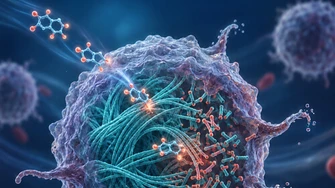
Targeting the cytoskeleton offers a promising strategy for disrupting cancer cell functions involved in metastatic spread. This study examines the effects of combretastatin...
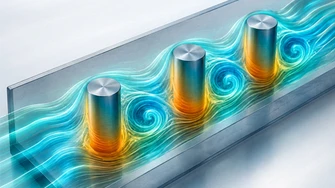
This study explores pulsating-flow heat transfer enhancement over a pin fin array in a rectangular channel. Experiments and CFD analyses show that heat transfer...
Guangzhou, China – September 2026 – Dr. Dany Xiang, Head of the Biomedical Journals Department at Tech Science Press (TSP), delivered a seminar on scholarly publishing and manuscript submission...
Hong Kong and Guangzhou, China – September 2026 – Dr. Dany Xiang, Head of the Biomedical Journals Department at Tech Science Press (TSP), visited universities, hospitals, and research institutions...


Quantum computational fluid dynamics (QCFD) is an active but still immature research area, and quantum lattice Boltzmann methods (QLBM) provide a natural...

The fusion of GNNs and SSMs is creating a new era in the realm of dynamical learning with structures. Graph-Mamba is one of the most promising works in...

Autonomous navigation poses a key challenge in Artificial Intelligence (AI), necessitating agents to plan and execute actions in complex, partially visible...

Large Language Models (LLMs) have rapidly evolved into general-purpose systems with broad applicability across information access, reasoning, decision...

Lattice-based post-quantum cryptographic standards such as Module-Lattice Key Encapsulation Mechanism (ML-KEM) and Module-Lattice-Based Digital Signature...

Increasing digitalization exposes critical infrastructure to sophisticated cyber threats, requiring new approaches to improving security and resilience....

Semiconductors represent the most complex production activities and stand at the forefront of smart manufacturing. In particular, the yield of advanced...

The design of steel and alloy materials is of critical importance across a wide range of industrial applications; however, effective intelligent agent-based...

Large Vision-Language Models (LVLMs) have achieved strong performance in multimodal perception, understanding, and generation, but their ability to perform...
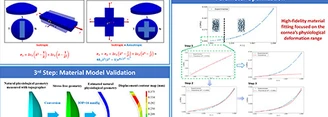
The development of accurate digital twin models of the human cornea is a key factor for planning and monitoring eye treatments and clinical supervision....
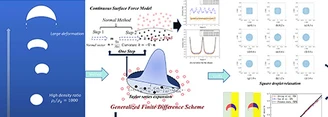
Due to the complex and dynamic nature of multi-phase interfaces, accurately capturing interface evolution remains one of the key challenges in multi-phase...
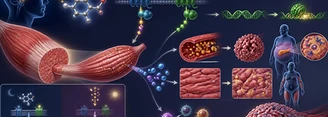
Obesity and metabolic syndrome promote malignancies through chronic inflammation and sustained activation of insulin and insulin-like growth factor-1...

Non-coding RNAs (ncRNAs) and cholesterol metabolism have independently been recognized as critical regulators of cancer progression. NcRNAs modulate various...
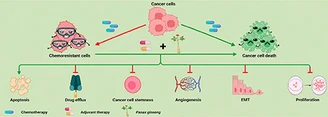
Despite the advancements achieved in chemotherapy, cancer continues to remain a formidable and lethal global threat, ranking as the second leading cause...

Connected automated driving increasingly relies on cooperative perception from onboard sensors, roadside units (RSUs), smart traffic lights, and vehicle-to-everything...
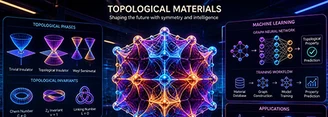
The unique topological properties of the electronic band structures in topological materials have increasingly attracted attention in both fundamental...

The rapid evolution of chemical biology, medicinal chemistry, and molecular pharmacology continues to drive the discovery of innovative anticancer compounds...

Cancer development and therapeutic response are governed not only by genetic alterations but also by dynamic regulatory mechanisms at the epigenetic and...

The transition toward decentralized smart grids is reshaping the way energy is generated, exchanged, controlled, and consumed. The increasing penetration...
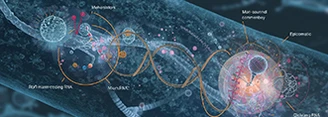
Cancer remains one of the leading causes of morbidity and mortality worldwide, and its onset and progression are closely linked to dysregulated epigenetic...
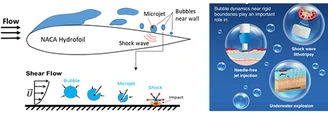
Welcome to the Special Issue on "Modeling and Applications of Bubbles and Droplets in Engineering and Sciences". This fascinating field...

The tumor microenvironment (TME) plays a crucial role in cancer progression, metastasis, and resistance to therapy, prompting a shift in focus from targeting...

Tumor biomarkers have become an essential foundation for advancements in cancer diagnosis, prognosis, and targeted therapy. As oncology moves towards...

Artificial Intelligence of Things (AIoT) is considered a collaborative application of artificial intelligence (AI) and the Internet of Things (IoT). The...
Quantum computational fluid dynamics (QCFD) is an active but still immature research area, and quantum lattice Boltzmann methods (QLBM) provide a natural...
The fusion of GNNs and SSMs is creating a new era in the realm of dynamical learning with structures. Graph-Mamba is one of the most promising works in...
Autonomous navigation poses a key challenge in Artificial Intelligence (AI), necessitating agents to plan and execute actions in complex, partially visible...
Large Language Models (LLMs) have rapidly evolved into general-purpose systems with broad applicability across information access, reasoning, decision...
Lattice-based post-quantum cryptographic standards such as Module-Lattice Key Encapsulation Mechanism (ML-KEM) and Module-Lattice-Based Digital Signature...
Increasing digitalization exposes critical infrastructure to sophisticated cyber threats, requiring new approaches to improving security and resilience....
Semiconductors represent the most complex production activities and stand at the forefront of smart manufacturing. In particular, the yield of advanced...
The design of steel and alloy materials is of critical importance across a wide range of industrial applications; however, effective intelligent agent-based...
Large Vision-Language Models (LVLMs) have achieved strong performance in multimodal perception, understanding, and generation, but their ability to perform...
The development of accurate digital twin models of the human cornea is a key factor for planning and monitoring eye treatments and clinical supervision....
Due to the complex and dynamic nature of multi-phase interfaces, accurately capturing interface evolution remains one of the key challenges in multi-phase...
Obesity and metabolic syndrome promote malignancies through chronic inflammation and sustained activation of insulin and insulin-like growth factor-1...
Non-coding RNAs (ncRNAs) and cholesterol metabolism have independently been recognized as critical regulators of cancer progression. NcRNAs modulate various...
Despite the advancements achieved in chemotherapy, cancer continues to remain a formidable and lethal global threat, ranking as the second leading cause...
Connected automated driving increasingly relies on cooperative perception from onboard sensors, roadside units (RSUs), smart traffic lights, and vehicle-to-everything...
The unique topological properties of the electronic band structures in topological materials have increasingly attracted attention in both fundamental...
The rapid evolution of chemical biology, medicinal chemistry, and molecular pharmacology continues to drive the discovery of innovative anticancer compounds...
Cancer development and therapeutic response are governed not only by genetic alterations but also by dynamic regulatory mechanisms at the epigenetic and...
The transition toward decentralized smart grids is reshaping the way energy is generated, exchanged, controlled, and consumed. The increasing penetration...
Cancer remains one of the leading causes of morbidity and mortality worldwide, and its onset and progression are closely linked to dysregulated epigenetic...
Welcome to the Special Issue on "Modeling and Applications of Bubbles and Droplets in Engineering and Sciences". This fascinating field...
The tumor microenvironment (TME) plays a crucial role in cancer progression, metastasis, and resistance to therapy, prompting a shift in focus from targeting...
Tumor biomarkers have become an essential foundation for advancements in cancer diagnosis, prognosis, and targeted therapy. As oncology moves towards...
Artificial Intelligence of Things (AIoT) is considered a collaborative application of artificial intelligence (AI) and the Internet of Things (IoT). The...

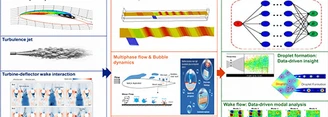
Guest Editors: Van-Tu Nguyen; Ould el Moctar; Anh Dinh Le; Hemant J. Sagar Deadline: 30 September 2027

Guest Editors: Jin-Gyun Kim; Hee-Sun Choi; Seongji Han Deadline: 30 September 2027
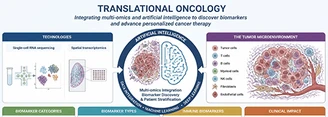
Guest Editors: Hung-Yu Lin; Hsing-Ju Wu Deadline: 31 May 2027

Guest Editors: Carlos Vargas-Salgado; Dácil Diaz-Bello Deadline: 30 April 2027

Guest Editors: Leonardo Di G. Sigalotti; Carlos A. Vargas; Carlos E. Alvarado-Rodríguez Deadline: 30 April 2027

Guest Editors: Sabrina Tosi; Annabelle Lewis Deadline: 30 April 2027

Guest Editors: Antonella Petrillo; Fabio De Felice Deadline: 15 April 2027

Guest Editors: Wenlong Sun; Mengyao Li Deadline: 31 March 2027

Guest Editors: Wenbing Zhao; Pan Wang Deadline: 31 March 2027

Guest Editors: Wenfeng Zheng; Choon Kit Chan; Kyungtae Kang; Chao Liu Deadline: 31 March 2027

Guest Editors: Joanna Zawitkowska; Małgorzata Mitura-Lesiuk; Maciej Dubaj Deadline: 28 February 2027

Guest Editors: Wenfeng Zheng; Lirong Yin; Shan Liu Deadline: 15 February 2027

Guest Editors: Wei-Chiang Hong; Yi Liang; Ming-Wei Li; Zhong-Yi Yang Deadline: 15 February 2027

Guest Editors: Jungpil Shin; Yong Seok Hwang Deadline: 31 January 2027

Guest Editors: Denise Mafra; Jessyca Sousa de Brito Deadline: 31 January 2027
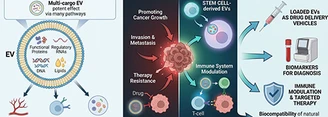
Guest Editors: Qi Chen; Yunhui Tang Deadline: 31 December 2026



 Login
Login Register