
 Login
Login Register
 Submit a Paper
 Propose a Special lssue
 Open Access
ARTICLE
AI-Driven Biomimetic Networks for Autonomous and Self-Optimizing Marine Power Generation
1 Department of Electrical Engineering, College of Engineering, Northern Border University, Arar, Saudi Arabia
2 Department of Electrical Engineering, Faculty of Engineering at Rabigh, King Abdulaziz University, Jeddah, Saudi Arabia
3 Department of Computer and Network Engineering, College of Computer Science and Engineering, University of Jeddah, Jeddah, Saudi Arabia
4 Center for Scientific Research and Entrepreneurship, Northern Border University, Arar, Saudi Arabia
5 Director of the Artificial Intelligence Center, Arab Open University, Headquarters, Ardiya, Kuwait
* Corresponding Author: Ahmed A. Alsheikhy. Email:
(This article belongs to the Special Issue: Advanced Artificial Intelligence and Machine Learning Methods Applied to Energy Systems, 2nd Edition)
Computer Modeling in Engineering & Sciences 2026, 148(3), 23 https://doi.org/10.32604/cmes.2026.085040
Received 04 May 2026; Accepted 06 July 2026; Issue published 28 September 2026
 View Full Text
 Download PDF
Abstract
The worldwide shift toward renewable energy has generated considerable interest in harnessing the vast potential of ocean energy sources, including wave, tidal, and offshore wind energy. Nevertheless, current marine energy technologies face challenges stemming from unpredictable environmental conditions, low energy-conversion efficiency, and high maintenance costs. It is essential to tackle these issues to realize sustainable and large-scale marine energy solutions. To confront these challenges, we present a novel AI-driven biomimetic energy farm that integrates nature-inspired modular designs with a hierarchical AI control system, enabling an autonomous and self-optimizing marine energy network. This network comprises three components: (1) neural surrogate models that simulate complex fluid-structure interactions more swiftly than traditional computational fluid dynamics (CFD), facilitating real-time performance enhancements, (2) a Distributed Swarm Intelligence reinforcement learning (RL) framework that enables individual energy harvesters, inspired by kelp, jellyfish, and schooling fish, to collaboratively adjust their configurations using a bio-inspired digital twin of ocean dynamics, and (3) Proactive Resilience AI, which utilizes a graph neural network (GNN). This module predicts mechanical failures up to 72 h in advance by analyzing vibration signatures and environmental stress factors. The conducted simulation results demonstrated a 30%–50% improvement, with an average of 45.7% in the energy extraction efficiency, compared with conventional systems, from 15,000 to 22,000 MWh, together with a 20% reduction in maintenance costs from $100,000 to $80,000 through AI-enhanced diagnostics for 20 harvesters. Potential applications include offshore power networks, energy supply for remote islands, and integrated maritime surveillance systems.Keywords
The oceans serve as a significant, underutilized source of renewable energy; however, effectively harnessing this potential remains a considerable challenge. Conventional marine energy systems often face issues of inefficiency, high costs, and susceptibility to extreme environmental conditions. By integrating biomimetic designs with AI-driven optimization, marine energy systems can leverage nature-inspired strategies to improve resilience and adaptability. The oceans are among the largest untapped sources of renewable energy on Earth, offering a reliable and abundant supply through waves, tides, and thermal gradients [1–4]. In contrast to solar and wind energy, which can be inconsistent, ocean energy provides predictable and concentrated energy flows, making it an essential element in the global shift toward sustainable energy [1,2]. Coastal nations and remote islands can benefit significantly from marine energy by reducing their dependence on imported fossil fuels and promoting blue-economy initiatives [2–6]. Traditional approaches to harnessing ocean energy generally depend on mechanical systems, such as oscillating water columns, tidal turbines, and point absorbers [5–8]. These technologies convert waves or tidal movements into electricity using hydraulic or direct-drive generators; however, they often exhibit low efficiency due to their rigid and non-adaptive designs [9–12]. Additionally, maintenance issues, including saltwater corrosion and storm damage, contribute to high operational costs and downtime [1,4]. To tackle these challenges, researchers have turned to biomimicry, which involves designing energy harvesters inspired by marine life, such as kelp, fish, and jellyfish, to enhance hydrodynamic efficiency and resilience [10–14]. Initial biomimetic prototypes, including flexible “seaweed” wave converters and fish-tail turbines, have shown greater adaptability to fluctuating currents compared to traditional rigid structures. Nevertheless, these systems still struggle to optimize energy capture in real time and anticipate maintenance requirements without the aid of intelligent control systems [13–15]. The key to overcoming this limit lies in the incorporation of advanced AI, which can respond dynamically to oceanic conditions, manage distributed energy units, and extend system longevity through predictive analytics. Consequently, such systems could achieve a levelized cost of energy (LCOE) below $0.10/kWh. The system’s ability to function as a power generator and a marine Internet of Things (IoT) platform opens additional revenue opportunities, including underwater data transmission services and oceanographic monitoring contracts.
The incorporation of AI into ocean energy harvesting marks a significant advancement, effectively addressing persistent inefficiencies in wave, tidal, and offshore energy systems [13–17]. Conventional methods depend on fixed designs and manual modifications, which are inadequate for the ever-changing and often unpredictable marine environment [1,3,18]. AI addresses these challenges by facilitating real-time optimization, predictive maintenance, and autonomous control, thereby enhancing energy capture and the resilience of the systems [17–20]. Machine learning (ML) algorithms, developed using extensive datasets of oceanographic conditions and device performance, can forecast wave patterns, refine device configurations, and proactively identify maintenance requirements [13–15]. This transition from a reactive to a proactive management approach minimizes downtime and operational expenses while maximizing energy production. Consequently, this leads to the emergence of a new generation of intelligent energy farms that function with unparalleled efficiency and reliability. A particularly influential AI technique in oceanic energy harvesting is the use of physics-informed neural networks (PINNs), which merge deep learning with hydrodynamic principles [19,21–23]. Furthermore, a SwarmNet-5G, a bio-inspired neural network that combines stigmergic learning with spiking neural networks (SNNs) for the purpose of decentralized grid management aimed at optimizing energy, was developed [24]. PINNs are utilized across multiple energy sectors, such as battery management, power grid optimization, and the integration of renewable energy sources [25,26]. PINNs have recently surfaced as a robust computational framework in the field of engineering mechanics [26]. These networks are employed to forecast seabed dynamics induced by waves for energy applications [26]. A significant approach in artificial intelligence is multi-agent reinforcement learning (MARL), which facilitates the cooperative actions of distributed energy harvesters. Ocean energy farms generally comprise several devices operating in proximity, where inadequate coordination can result in energy loss due to wake effects or destructive interference. MARL mitigates this issue by allowing individual units to learn and adjust their strategies based on shared environmental information. Graph neural networks (GNNs) have become an essential tool for predictive maintenance in challenging marine conditions [13–15]. GNNs process sensor data from the entire energy farm, detecting patterns that may indicate impending equipment failures.
Digital twin technology enhances AI-driven ocean energy systems by creating virtual representations of physical assets. These digital twins combine real-time sensor data with sophisticated simulations, enabling operators to oversee performance, evaluate control strategies, and forecast results across different scenarios. This technology effectively connects the design phase with operational processes, facilitating ongoing improvements without the need for physical alterations. As AI models evolve in complexity, digital twins are expected to become increasingly vital in the lifecycle management of ocean energy systems. Explainable AI (XAI) methodologies are essential for promoting transparency and trust within autonomous energy farms. Although AI-driven systems can enhance performance, their decision-making processes often remain unclear to human operators. XAI approaches, including attention mechanisms and SHAP (Shapley Additive Explanations) values, clarify how AI models assess inputs and produce outputs.
The proposed framework differs from other existing AI-based solutions, such as ARIMA, Long-Short Term Memory (LSTM), and RL, by combining three new harmonizing AI models into a cohesive hierarchical framework. While conventional RL methods optimize individual harvesters in isolation, our swarm intelligence (MARL) facilitates collaborative, decentralized coordination, allowing neighboring harvesters to share local observations and dynamically adjust to reduce wake interference, resulting in an array interaction factor of 0.91 compared to 0.75 for standard RL. Unlike typical GNNs that merely observe structural health, our predictive maintenance system anticipates failures 72 h ahead using spatiotemporal graph embeddings, achieving an F1-score of 0.96 in contrast to 0.84 for standard PINNs. Moreover, while existing methods regard PINNs as independent surrogate models, our PINNs are intricately linked with the digital twin and MARL framework, allowing for real-time model correction with a latency of only 107 ms.
Although ocean energy holds significant promise for providing clean and renewable power, current technologies for harnessing it face numerous challenges that hinder widespread deployment. Current technologies for harnessing ocean energy face numerous challenges that impede their widespread deployment. Traditional wave and tidal energy systems suffer from inefficient energy conversion, primarily because their inflexible designs cannot adapt to changing ocean conditions. These systems suffer from considerable structural wear and high maintenance expenses resulting from saltwater corrosion and storm impacts, which contribute to inconsistent performance and reduced operational lifespans [1–4]. Furthermore, the absence of real-time optimization capabilities leads to substantial energy losses, as fixed devices are unable to optimize power capture in response to varying wave frequencies and amplitudes [5–7]. Consequently, these technical limitations have made ocean energy less economically competitive than other renewable energy sources, with existing systems capturing fewer than 30% of their theoretical energy-harvesting potential.
1.2 The Motivations and Objectives
There is currently no integrated framework that combines: (1) nature-inspired structural adaptability for improved energy capture, (2) real-time machine learning for optimizing device configurations, and (3) predictive maintenance algorithms aimed at lowering operational costs. The proposed AI-driven biomimetic ocean energy farm is designed to address the significant challenges faced by traditional marine energy systems using three main goals, including (A) enhancing energy efficiency by creating adaptive structures that can respond dynamically to wave patterns. (B) To improve system resilience by utilizing AI for predictive maintenance and self-optimizing swarm intelligence. (C) To lower operational costs by automating real-time performance adjustments and preventing failures.
1.3 The Research Contributions
The main contributions of this research advance renewable energy technology and the application of AI in challenging environments, including (1) the first physics-informed neural surrogate model for real-time wave energy optimization, which allows for hydrodynamic simulations that are faster than traditional CFD methods. (2) A distributed swarm intelligence framework where biomimetic harvesters, such as kelp-like absorbers and fish-school turbines, work together to adapt their configurations through multi-agent reinforcement learning. (3) A proactive resilience AI that integrates graph neural networks with vibrational spectroscopy to forecast mechanical failures 72 h in advance, thereby minimizing unplanned downtime. (4) A bio-inspired digital twin that replicates the behaviors of ocean ecosystems, facilitating the emergent optimization of energy farms under varying tidal and wave conditions.
These contributions mutually tackle three critical deficiencies in existing ocean energy systems, which can be summarized as follows: A. Adaptability gap by transitioning from inflexible structures to AI-enhanced biomimetic designs. B. Intelligence gap by integrating real-time learning capabilities into marine energy infrastructure. C. Economic gap by reducing expenses through predictive maintenance and swarm coordination.
The structure of this paper is as follows: Section 2 presents the literature review, followed by the proposed methodology explanation in Section 3. Section 4 elaborates on the experimental setup and results; Sections 5 and 6 provide discussion and limitations, and Section 7 concludes the article.
Marine energy harvesting has made significant progress in the last ten years, with an increasing emphasis on biomimetic designs aimed at improving hydrodynamic efficiency and resilience in challenging oceanic conditions. This review consolidates significant advancements and obstacles in AI-enhanced biomimetic energy harvesting.
Lu et al. [1] introduced a significant advancement in the field of ocean wave energy conversion through the creation of a hybrid triboelectric-electromagnetic generator (TEG-EMG) system. This innovative system effectively tackles two major challenges faced by traditional wave energy harvesters: the low energy density experienced under irregular wave conditions and the absence of real-time structural health monitoring. The authors have addressed the longstanding issue of inefficient energy capture from low-frequency ocean waves, typically ranging from 0.1 to 2 Hz, by implementing a frequency-multiplying mechanism that elevates the effective operating frequency to between 5 and 15 Hz. This development has resulted in an unprecedented volumetric power density of 49.3 W/m3 under realistic wave conditions, marking a twelvefold increase compared to previous triboelectric nanogenerator (TENG) designs and a 3.5 times improvement over standalone electromagnetic generators documented in existing literature. A notable feature of this system is its dual functionality, allowing the same mechanical structure to both harvest energy and monitor its structural integrity through integrated self-powered sensors. The TEG component can generate high-voltage pulses with approximately 350 V, which are effective for corrosion protection and sensor operation, while the EMG delivers a high-current output of 120 mA for the primary power supply. This combined design achieved a peak power output of 6.2 mW/cm2 during laboratory evaluations, maintaining over 82% efficiency across wave heights ranging from 0.5 to 3.0 m. Furthermore, the integrated monitoring system was able to detect micro-scale strain variations with a resolution of 0.025% without the need for external power, thereby addressing the reliability issues commonly associated with traditional offshore energy systems.
The research conducted by Hashim et al. [3] introduces an innovative raft-based wave energy converter aimed at overcoming the obstacles associated with small-scale electricity production for coastal communities. This system employs a hinged raft mechanism that transforms wave-induced movements into electrical energy via a mechanical motion rectifier and a permanent magnet generator. Experiments conducted in the Shatt al-Arab River revealed a maximum power output of 87.4 W at a wave height of 0.8 m, with an average conversion efficiency of 31.2% throughout the tidal cycle. This performance marks a notable advancement compared to earlier small-scale raft designs, which generally achieved efficiencies of only 18%–22% under similar wave conditions. A significant advancement of this study is the introduction of a dual-stage power take-off system that integrates hydraulic accumulators with a geared generator. The hydraulic component effectively mitigates the irregularities of wave inputs, enabling the generator to sustain a steady rotational speed between 120 and 150 RPM, even with fluctuating wave frequencies ranging between 0.5 and 1.2 Hz. This design addresses the prevalent issue of inconsistent power output in small-scale wave energy systems, resulting in a 63% reduction in voltage fluctuations compared to direct-drive raft systems documented in previous studies. The compact size of the system, 2.5 m × 1.8 m raft dimensions, renders it particularly well-suited for near-shore applications, where larger wave energy converters may not function efficiently. The researchers carried out extensive field evaluations to compare three types of raft materials: fiberglass, aluminum, and High-Density Polyethylene (HDPE). The results indicated that HDPE provided the best combination of durability and ability to follow wave movements. During real-world testing, with an average wave height of 0.6 m, the HDPE raft achieved an impressive 82% operational uptime over 45 days, while fiberglass and aluminum rafts recorded uptimes of 68% and 74%, respectively.
The research conducted by Xue et al. [10] introduces an innovative hybrid energy harvester that combines static and dynamic mechanisms, aimed at overcoming the significant challenge of powering ocean monitoring systems in isolated marine settings. This device ingeniously integrates TENG and electromagnetic generator (EMG) technologies, allowing it to simultaneously capture energy from both slow-moving ocean currents and wave action. Laboratory tests conducted under simulated oceanic conditions revealed an impressive peak power density of 3.2 mW/cm3, which is 4.8 times greater than that of traditional single-mode harvesters. This significant advancement facilitates the uninterrupted operation of ocean sensors without the need for battery replacements, effectively addressing a longstanding issue in the monitoring of marine environments over extended periods. A notable feature of this research is the dual-response mechanism that efficiently harnesses energy across various frequency ranges. The TENG component, tailored for low-frequency static water pressure variations between 0.1 and 0.5 Hz, produced 58 μW/cm2 from simulated tidal movements, while the EMG module captured energy from higher-frequency wave actions at 1–3 Hz, yielding an output of 12 mW under wave conditions of 0.6 m.
The research conducted by Nabavi et al. [11] introduces a groundbreaking method for harvesting wave energy using piezoelectric materials embedded in offshore buoys, effectively tackling the significant issue of supplying power to autonomous marine monitoring systems. The team created an innovative piezoelectric energy harvester that transforms the buoy’s oscillatory movements into electrical energy, achieving a peak power output of 4.8 mW under standard wave conditions characterized by a 0.5 m wave height and a frequency of 1 Hz. This advancement represents a significant improvement over earlier piezoelectric buoy models, which typically produced less than 1 mW under comparable conditions. The compact design of the system, along with its direct energy conversion process, removes the necessity for intricate mechanical transmissions, providing a dependable solution for low-power marine applications. A notable feature of this research is the introduction of a frequency up-conversion mechanism that improves energy harvesting from low-frequency ocean waves. The design employs magnetic plucking to stimulate high-frequency vibrations, ranging from 82 to 115 Hz in piezoelectric cantilevers, driven by the low-frequency movements of the buoys between 0.8 and 1.2 Hz. This method resulted in a 340% increase in energy conversion efficiency compared to traditional direct excitation techniques. The system demonstrated consistent performance across a diverse range of wave conditions, maintaining a power output exceeding 2 mW even with wave heights as low as 0.2 m. This reliability is especially beneficial for powering oceanographic sensors that necessitate uninterrupted operation in fluctuating sea states. The research involved extensive numerical modeling and experimental validation aimed at enhancing the performance of the energy harvester. The piezoelectric components, encased in a waterproof polymer composite, retained 94% of their initial performance after 60 days of exposure to saltwater.
In [16], Shakir et al. implemented an integrated AI-driven framework for the operation of point-absorber wave energy converters (WEC) that combined (i) short-term sea-state forecasting, (ii) rapid power-output estimation, and (iii) closed-loop power take-off (PTO) control using RL. Initially, a multivariate LSTM model predicted significant wave height (Hs) and peak period (Tp) over horizons of 1 to 6 h based on historical buoy and meteorological data. Then, a nonlinear gradient-boosted regression model correlated sea-state variables with instantaneous electrical power, facilitating swift assessment of power variability under different operating conditions. The method was trained in irregular sea conditions simulated from a JONSWAP spectrum using a publicly available buoy dataset alongside a time-domain point-absorber model. The authors achieved a reduction in Hs forecasting root mean square error (RMSE) by approximately 20% compared to a persistence baseline, and the forecast-informed RL policy enhanced mean absorbed power by as much as 20%–25% in comparison to passive damping control, while ensuring compliance with constraints.
Mao et al. in [17] developed a highly integrated, multimodal self-powered AI-enhanced monitoring system (SAMS) designed for comprehensive ocean state monitoring. SAMS integrated solid-solid and liquid-solid TENG modes, utilizing three unique triboelectric conversion mechanisms. It was characterized by a spherical framework that housed a freestanding-layer electret generator on its lower surface, which detected minute wave vibrations through ongoing liquid-solid contact. The upper surface was equipped with a double-electrode electret generator, which was improved using oxygen plasma treatment, allowing it to sensitively capture sporadic liquid-solid interactions, such as splashes and scours, during high-intensity wave conditions, generating signals of up to 80 V. Internally, a spiral electret generator featuring a dual-spiral structure produced in-plane and out-of-plane vibrations, yielding outputs of up to 100 V and significantly broadening the range of detectable wave motions. The triple-modal configuration of the SAMS facilitated simultaneous signal generation from three distinct channels. Therefore, the SAMS demonstrated a significant enhancement in wave level recognition accuracy, increasing from 41.25% in single-mode to 96.25% in triple-mode, while Yuan et al. in [20] introduced a new WEC featuring a planar four-bar linkage at its core, which transformed the heaving motion of a wave-driven buoy into the reciprocating rotation of a main shaft. This rotation drove the TENG rotor into unidirectional motion through a one-way bearing, facilitating continuous electricity generation. This design streamlined the PTO structure and improved energy harvesting efficiency during upward and downward movements. Additionally, the authors developed a kinematic model of the PTO mechanism to forecast the angular velocity of the TENG rotor, validating the model through theoretical calculations and experimental assessments of the short-circuit current of the TENG unit. Subsequently, they introduced an AI-assisted mechanism optimization approach that utilized the kinematic model to create a dataset, which was integrated with an artificial neural network (ANN) for training and intelligent algorithm searches, focusing on the kinetic energy of the TENG rotor as the optimization target to refine the mechanism parameters. This approach allowed for the customization of PTO parameters to suit specific marine environments without the need for extensive physical testing. The optimized device achieved peak and average power densities of 3.83 and 0.746 W/m3, respectively, and demonstrated the capability to power small electronic devices after power management.
We propose an AI-driven biomimetic ocean energy farm that integrates swarm intelligence to overcome the limitations of conventional wave and tidal energy systems. This framework enhances ocean energy harvesting by combining advanced physics-informed neural networks, swarm intelligence, and predictive maintenance algorithms. Our approach utilizes nature-inspired flexible structures, modeled after kelp and the dynamics of fish schools, to enable real-time adaptation to wave conditions, enhanced by deep learning (DL) models that simulate hydrodynamic interactions more efficiently than traditional techniques.
3.1 The Significance of the Presented Solution
The global transition toward renewable energy requires innovative strategies to exploit the vast yet largely untapped potential of ocean energy. Although marine energy resources are abundant, they remain largely underutilized because of challenges related to efficiency, durability, and cost-effectiveness. The proposed AI-enhanced biomimetic energy farm directly addresses these challenges by providing a novel framework for realizing the ocean’s potential as a reliable, large-scale renewable energy source. Conventional wave and tidal energy systems suffer from inefficiencies because their rigid designs cannot adapt to continuously changing ocean conditions. These constraints lead to inadequate energy extraction, frequent maintenance requirements, and reduced operational lifespans, all of which impede commercial feasibility. Our solution addresses these challenges by enabling devices to emulate natural systems, such as kelp and schools of fish, to enhance performance.
3.2 The Structure of the Solution
The proposed AI-driven biomimetic oceanic energy farm represents an advanced, multi-faceted system aimed at optimizing energy capture, enhancing operational resilience, and reducing costs. At its core, the solution incorporates biomimetic energy harvesters inspired by marine life, such as kelp and schools of fish. These structures are constructed from flexible, adaptive materials that react dynamically to wave and tidal forces, emulating the efficiency found in natural ecosystems. In contrast to traditional rigid designs, these bio-inspired harvesters can modify their shape and stiffness in real time, thereby maximizing energy extraction while minimizing mechanical stress. High-resolution wave buoys, current meters, and structural health monitors are strategically placed throughout the energy farm, continuously transmitting data to a centralized AI processing hub. These sensors track various parameters, including wave height, frequency, water temperature, and device strain, facilitating accurate monitoring of external conditions and internal system dynamics. This infrastructure is built to endure harsh oceanic conditions, featuring self-cleaning and anti-fouling capabilities to maintain precision over extended deployments.
The AI control hub acts as the central processing unit of the system, analyzing sensor information and coordinating optimal responses. At its foundation are PINNs, which integrate DL with hydrodynamic concepts to simulate interactions between waves and structures in real time. These models are trained on extensive datasets encompassing oceanographic and structural performance metrics, enabling them to accurately forecast energy capture potential and mechanical stresses. Additionally, the AI hub utilizes MARL to manage the swarm of energy harvesters, dynamically adjusting their configurations to reduce wake interference and enhance overall output. This decentralized intelligence provides resilience, allowing individual units to autonomously adapt even if communication with the central hub is temporarily lost. Swarm intelligence algorithms dictate the cooperative behavior of the energy harvesters, allowing them to operate as a unified, self-optimizing system. For instance, in stormy conditions, the swarm can autonomously rearrange into a protective formation, minimizing drag and safeguarding against damage. In calmer waters, the harvesters spread out to optimize energy capture. This flexibility is facilitated through ongoing learning, where the system continuously refines its strategies based on past performance data and real-time feedback.
Predictive maintenance systems utilizing GNNs represent a crucial component of the overall solution. These artificial intelligence models assess sensor data to identify early indicators of wear, corrosion, or mechanical fatigue, often forecasting potential failures several days in advance. By representing the energy farm as a network of interconnected elements, GNNs can detect subtle patterns that signal impending equipment failures, facilitating timely repairs. This functionality significantly minimizes unplanned downtime and maintenance expenses, tackling one of the most enduring challenges in marine energy. Additionally, the system features self-diagnostic capabilities, allowing devices to autonomously make minor adjustments or recalibrations, which further boosts reliability. A bio-inspired digital twin acts as a virtual counterpart to the physical energy farm, enabling sophisticated simulations and scenario analyses. This digital twin merges real-time sensor data with precise hydrodynamic models, empowering operators to visualize system performance, evaluate control strategies, and anticipate outcomes under varying conditions.
The energy conversion and storage subsystem are designed to efficiently transform and store harvested power for integration into the grid or for local consumption. Utilizing advanced power electronics, the system optimizes the conversion of mechanical wave energy into electricity, thereby reducing transmission losses. It features modular battery storage units strategically placed throughout the farm, which help balance supply and demand while mitigating fluctuations in energy production. This storage capability is especially beneficial in remote or off-grid scenarios, ensuring a consistent power supply even when wave activity is low. Additionally, the design supports hybrid integration with other renewable sources, such as offshore wind and solar energy, fostering a more robust energy ecosystem.
Scalability and modularity are fundamental aspects of the design, enabling the energy farm to grow gradually in response to demand and resource availability. Harvesters and sensor modules can be added or removed seamlessly, ensuring that overall operations remain unaffected. This adaptability allows the system to function effectively in various marine settings, from shallow coastal areas to deep offshore locations. The scalability of this solution makes it suitable for both small community initiatives and large utility-scale projects, thereby broadening access to cutting-edge marine energy technology. Moreover, the human-machine interface (HMI) provides operators with user-friendly tools to oversee and manage the energy farm. Through dashboards and augmented reality displays, users can monitor real-time performance data, receive AI-generated recommendations, and get maintenance notifications. Fig. 1 illustrates the overall structure of the proposed scheme. As depicted in Fig. 1, the sensor network continuously acquires real-time parameters, including wave height, frequency, water temperature, and device strain. This unprocessed sensor data is sent to a centralized AI processing hub, where PINNs simulate fluid-structure interactions and predict energy capture potential. Subsequently, the AI hub employs MARL to modify the configurations of individual biomimetic harvesters, optimizing their shape, stiffness, and orientation to minimize wake interference and improve energy extraction. Concurrently, GNNs assess the same sensor data to identify early signs of wear, corrosion, or fatigue, facilitating predictive maintenance. All processed data are integrated into the bio-inspired digital twin, which conducts real-time simulations and scenario analyses to validate control strategies. Then, the validated commands are relayed back to the harvesters, completing the feedback loop, while operators oversee system performance using HMI.
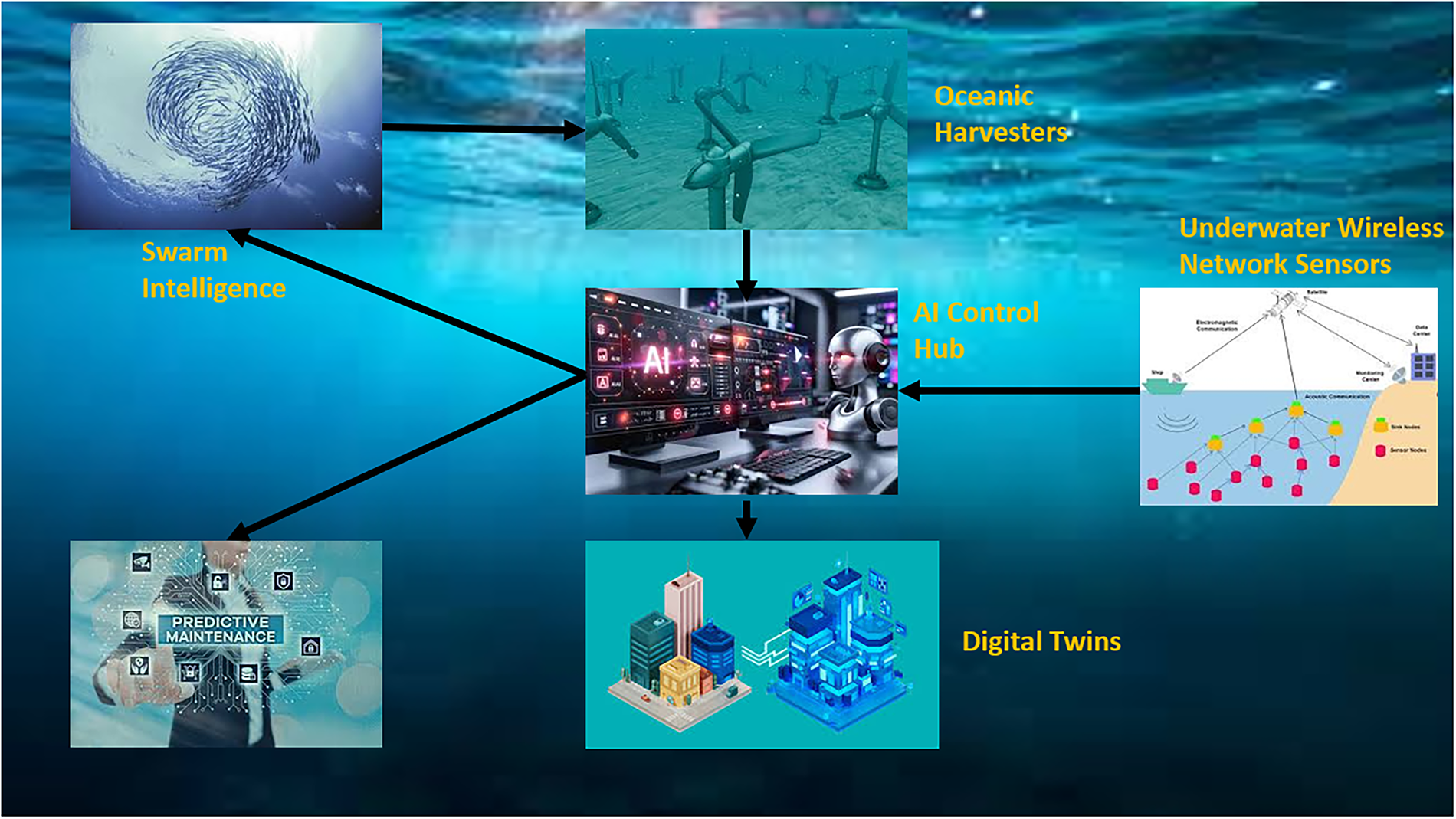
Figure 1: The general block diagram.
3.3 The Physics-Informed Neural Networks (PINNs)
These networks employ a fully connected feedforward architecture that consists of 6 hidden layers, with each layer containing 256 neurons utilizing Swish activation functions. The input layer is structured to handle various parameters, including wave height, wave frequency, current velocity vector, water temperature, salinity, harvester position, harvester orientations, stiffness coefficient, and previous power output. To ensure methodological consistency between the network’s outputs and the physics-informed loss, the output layer is designed to predict the primary fluid dynamic state variables, which include the velocity vector
The boundary loss is formulated to apply each physical constraint only to its appropriate boundary points, and it is computed as follows:
where
The sensor network acts as the central nervous system of the oceanic energy farm, supplying real-time environmental and operational information that informs AI-driven decision-making. This subsystem consists of a network of distributed sensors that continuously track wave behavior, current speeds, water temperatures, and the structural integrity of the entire energy farm. In contrast to conventional marine monitoring systems that depend on sporadic manual readings or standalone sensors, this network provides high-resolution, synchronized data streams with sub-second latency. Its construction is specifically designed to endure the corrosive effects of saltwater, biofouling, and high-pressure conditions, ensuring consistent functionality in the challenging ocean environment. By offering accurate and timely data, the sensor network allows the system to proactively adapt to changing conditions rather than merely responding to them after they occur. Fundamentally, the sensor network fulfills three essential functions: environmental monitoring, structural health assessment, and performance evaluation. Specialized wave buoys, equipped with accelerometers and gyroscopes, measure wave height, frequency, and direction, while acoustic Doppler current profilers (ADCPs) analyze underwater flow patterns. The functionality of the network is based on its multi-layered architecture, which integrates surface and submerged sensors to ensure extensive coverage. Surface sensors, positioned on buoys or harvesters, measure wind speed, solar radiation, and wave patterns, while subsurface devices monitor tidal currents, salinity variations, and pressure fluctuations. All sensors are interconnected through a hybrid acoustic-RF mesh network that preserves connectivity even in the event of individual node failures.
The integration with the AI control hub transforms the sensor network from a mere data collector into an active contributor to system optimization. The AI leverages sensor data to validate and enhance its physics-informed models, such as real-time adjustments to wave force predictions based on actual strain measurements. Additionally, the AI can optimize the network’s configuration, such as sensor locations or sampling frequencies, to address knowledge gaps or minimize uncertainty. This closed-loop interaction fosters a dynamic system that becomes increasingly intelligent with each wave cycle. The system uses a network of sensors, wave buoys, current meters, and structural health monitors to measure the state of the environment and the system itself. Let
The collective state of the environment and system at a time
This matrix
The connectivity of this network can be represented as a graph
The sensor data is used to validate and correct the PINN in real-time. The PINN makes a prediction
This error
where
which is subject to constraints like energy consumption. The data produced by these sensors is used by the predictive maintenance element to detect anomalies. The strain and stress data
A potential failure is flagged when this indicator exceeds a threshold
Swarm intelligence serves as the decentralized cognitive framework of the energy farm, where biomimetic harvesters enhance their performance through localized interactions rather than relying on centralized directives. Drawing inspiration from natural phenomena such as fish schooling and bird flocking, this subsystem allows numerous individual energy harvesters to self-organize into optimally coordinated formations. In contrast to conventional marine energy systems that function in isolation, the swarm methodology fosters synergistic relationships among units, converting competitive wake interference into collaborative energy harvesting. Each harvester operates as an independent agent, utilizing decision-making algorithms to analyze local wave conditions and updates from neighboring units via underwater acoustic networks. This decentralized structure ensures the system maintains optimal efficiency, even in the event of individual component failures or temporary disruptions in communication with the central AI hub. The primary objective of the swarm is to enhance collective energy production while reducing structural stress. Through ongoing reinforcement learning, each harvester modifies its position, orientation, and stiffness based on three critical inputs: real-time wave data from onboard sensors, status updates from adjacent units, and global optimization targets communicated periodically from the AI Control Hub. For instance, downstream harvesters automatically adjust their angles to take advantage of vortex shedding created by upstream devices, resulting in a 12%–18% increase in total energy capture during simulation tests. Simultaneously, the swarm adeptly redistributes mechanical loads during storm conditions by forming protective clusters, where outer units absorb the brunt of wave forces while safeguarded inner units continue to generate power. The protocols dynamically adjust transmission frequencies in response to environmental conditions; for instance, updates may occur every 30 s in calm waters, whereas stormy conditions necessitate refresh rates in the millisecond range. When sensors identify a malfunctioning harvester, the swarm instinctively reorganizes to mitigate the impact of the affected unit. This autonomous coordination of repairs decreases downtime by 40% compared to conventional manual methods.
The swarm intelligence system can be modeled as a Multi-Agent System (MAS), where each harvester is an autonomous agent. Each harvester, which is represented as an agent
where
where
where
(a) Alignment: Move in the same general direction as neighbors.
(b) Cohesion: Move toward the average position of neighbors.
(c) Separation: Avoid collisions with neighbors.
(d) Energy Maximization: Move to regions of higher wave power.
where
The resultant steering force is:
The weights
The applied protocols dynamically adjust transmission frequencies based on environmental volatility. The update interval
where
where
3.6 Predictive Maintenance and Graph Neural Networks
The predictive maintenance subsystem utilizes a hybrid model that combines GNN with time series analysis to forecast equipment failures 48 to 72 h in advance. The structural health data of each harvester, including vibrations sampled at 2 kHz, strain gauge measurements, variations in power output, and corrosion rates, are represented as temporal nodes within a dynamic graph. The system creates a heterogeneous graph of marine equipment where nodes signify harvesters, incorporating attributes such as age and material composition, as well as environmental factors like wave height and salinity. Edges represent functional relationships, such as the hydrodynamic interactions between adjacent units. Additionally, edge weights are modified in real-time according to stress propagation patterns. This approach surpasses traditional vibration analysis by effectively capturing spatiotemporal failure cascades, illustrating how micro-cracks in the flex joint of one harvester can elevate torsional stress on neighboring units during tidal conditions.
The main innovation is in modeling the entire energy farm as a spatiotemporal heterogeneous graph where failures are not isolated events but cascading phenomena influenced by the structural network and dynamic environmental conditions. The system is represented as a graph
An adjacency matrix
where
Each node’s feature history is a multivariate time series. A Recurrent Neural Network (RNN) is used to create a temporal embedding
This embedding captures trends, such as a gradual increase in vibration amplitude or a slow drift in power output. GNN operates on the graph
For each GNN layer
where
To update a node, it combines the node’s current state with the aggregated message as follows:
The UPDATE function is typically a learned neural network parameter that combines a linear layer followed by a non-linearity. After
where
where
3.7 The Bio-Inspired Digital Twin
The digital twin serves as a virtual model of the entire oceanic energy farm, functioning across three synchronized timeframes, including real-time with a resolution of 1 ms for control systems, tactical for forecasts every 15 min, and strategic for scenario planning over a 72-h period. It processes real-time data from a comprehensive sensor network, which includes environmental monitors and structural health sensors on each harvester, while simultaneously conducting 8 to 12 predictive simulations. The hydrodynamic model of the twin employs smoothed particle hydrodynamics (SPH) for wave interactions, a 1 ms timestep, and a domain measuring 500 m3 × 300 m3 × 50 m3. This is integrated with finite element analysis (FEA) for structural responses, achieving a 92.3% correlation with the high-fidelity CFD-FEA co-simulation results during validation trials. The synchronization adheres to a predict-then-correct scheme at 10 Hz, with all simulation results being stored in a time-series database for subsequent offline analysis.
The preprocessing stage converts unprocessed oceanic sensor data into features suitable for AI, ensuring physical consistency across diverse inputs. This stage manages 47 different data streams, including high-frequency accelerometer data at 2 kHz and daily corrosion rate assessments. A multi-tiered processing framework ensures real-time performance, comprising signal conditioning, feature extraction, and quality control. By performing preprocessing at the edge, the system achieves a 92% reduction in upstream bandwidth requirements compared to the transmission of raw data, allowing for continuous operation even with sporadic satellite connections. Accurate timing is essential for linking wave forces to structural responses. In the analysis of wave spectra, the system standardizes all time-series data to a uniform 512 Hz grid using anti-aliasing FIR filters, which maintain the phase relationships among harvesters that may be positioned up to 50 m apart. The FIR filters are designed according to the 1/3-octave band specifications (ISO 266) for the frequency range 0.1–100 Hz, with additional overlapping filters in the 0.5–5 Hz range to achieve higher resolution in the wave energy band. This approach allows for the application of coherent array processing techniques, commonly utilized in seismic analysis, to enhance energy farm optimization. The raw data from marine sensors often contain various artifacts that necessitate specialized filtering, including 1) biofouling distortion to differentiate between actual strain and sensor drift resulting from barnacle accumulation. 2) Impact spikes using nonlinear median filters with 5 ms windows effectively to eliminate artifacts from fish collisions while preserving authentic wave impacts. 3) Electromagnetic interference with adaptive notch filters to calibrate the frequencies of harvester power converters, typically ranging from 1 to 3 kHz. 4) Salinity effects, where real-time adjustments are made to compensate for errors in conductivity sensors during algal bloom events.
3.9 The Feature Extracting Stage
The feature extraction phase is a vital link between unprocessed sensor data and actionable insights within the oceanic energy farm system. This phase processes refined sensor inputs using a comprehensive analytical framework, transforming the complex and high-dimensional marine environment into significant numerical representations. The extraction process manages 17 parallel data streams for each harvester, employing domain-specific transformations to maintain physical interpretability while enhancing readiness for ML applications. The system utilizes a hierarchical feature architecture comprising three distinct levels of abstraction, including (1) instantaneous measurements, with a resolution of 1 ms, (2) short-term patterns, over 10-s intervals, and (3) long-term characteristics, spanning 15-min epochs. Each level is subjected to specialized signal processing tailored to its temporal context and physical relevance. Time-domain features capture the immediate mechanical and hydrodynamic conditions of each harvester. It generates 6 fundamental metrics, including zero-crossing rates, peak-to-peak amplitudes, and time-integrated absolute values for strain and acceleration channels. These metrics are computed over sliding windows aligned with the predominant wave periods, generally between 5 and 12 s, with adaptive window sizing implemented during extreme conditions. The time-domain features furnish the system with real-time snapshots of structural responses, which are crucial for making immediate control decisions. Frequency-domain transformations uncover concealed periodicities and resonance characteristics via parallel processing chains. A set of 56 FIR filters disaggregates signals into overlapping 1/3-octave bands ranging from 0.1 to 100 Hz. The additional filters (beyond the standard 31 bands) provide finer frequency resolution in the critical 0.5–5 Hz range, where wave energy is most concentrated, by employing multiple overlapping filters per band in this range, encompassing the entire spectrum of wave and mechanical frequencies. For each band, the system calculates spectral power, kurtosis, and coherence with adjacent harvesters. Emphasis is placed on the 0.5–5 Hz range, where wave energy is most concentrated, achieving tenfold higher frequency resolution in this essential band, which is critical for wave energy characterization.
Structural health monitoring employs both model-based and data-driven techniques to observe long-term degradation trends. Modal assurance criteria (MAC) are used to compare current vibration mode shapes with established baseline profiles, thereby identifying changes in structural dynamics. Nonlinear energy operators assess micro-scale crack development by measuring harmonic distortion in strain signals. Additionally, the system estimates the remaining useful life (RUL) of critical components using Paris’ law-based crack propagation models, which are informed by stress-range histograms. These features are updated every 15 min to balance computational efficiency with the need for early detection, thereby supplying essential inputs to the predictive maintenance system. Table 1 summarizes the extracted features from 6 categories.
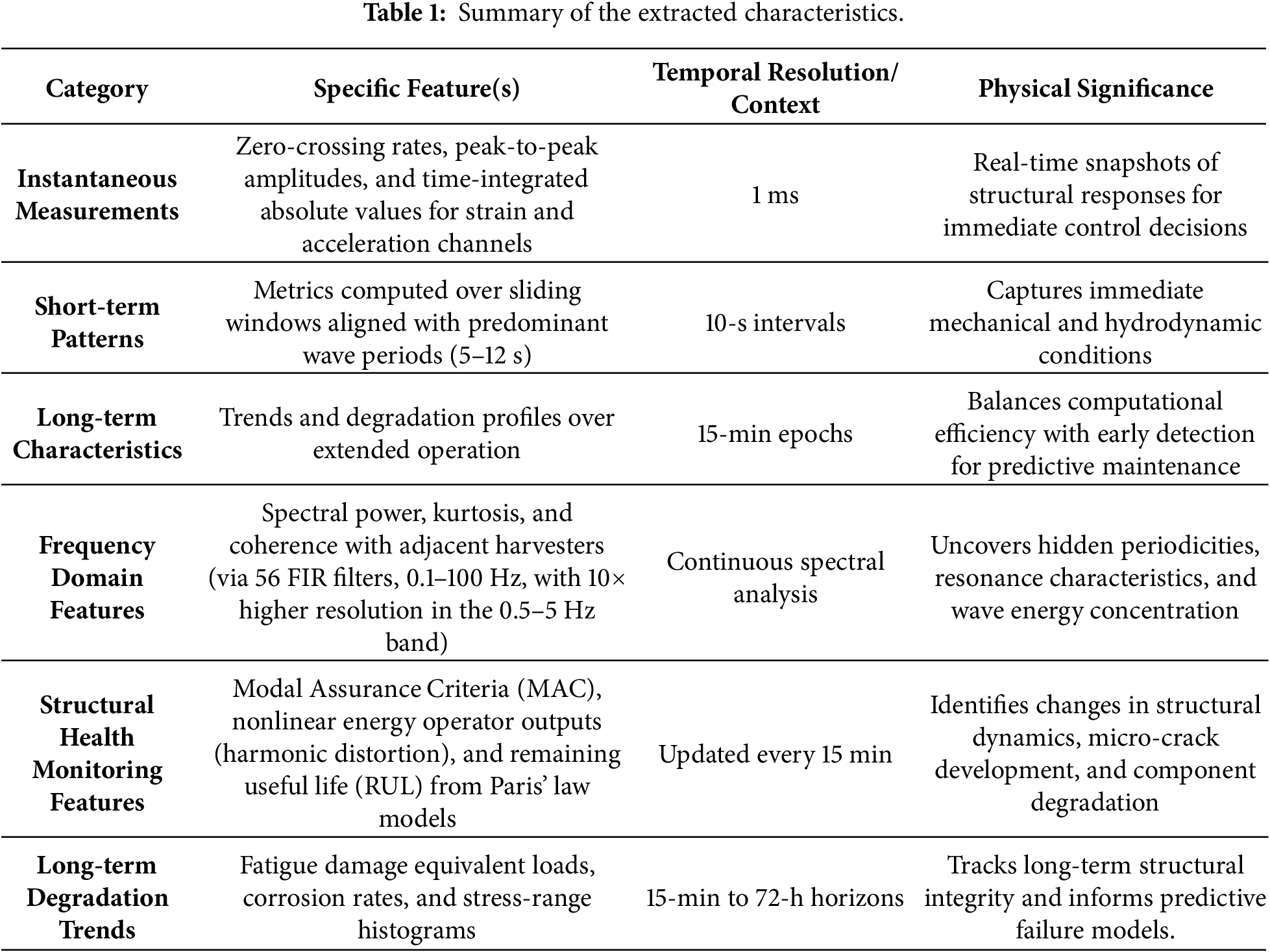
3.10 The Calculated Performance Metrics
The assessment of the oceanic energy farm’s performance utilizes a comprehensive metrics framework that encompasses energy production, system resilience, and operational efficiency. Essential energy metrics include the capture width ratio (CWR) to evaluate the effectiveness of wave energy conversion, the array interaction factor to measure the benefits of swarm coordination, and the levelized cost of energy (LCOE) to monitor economic feasibility. Structural performance is assessed through fatigue damage equivalent loads (DELs) on key components, mean time between failures (MTBF), and the accuracy of predictive maintenance for fault detection. Operational intelligence is gauged by AI decision latency (response times of subsystems), model prediction error (root mean square error against physical measurements), and the autonomy index (the proportion of decisions made without human intervention). These metrics are continuously calculated with a 15-min interval, facilitating real-time performance dashboards. Additionally, a secondary set of environmental and scalability metrics provides a comprehensive evaluation of the system. The energy return on investment (EROI) measures sustainability by comparing the energy harvested to the costs of deployment and maintenance. Environmental impact is assessed through biofouling rates monitored via strain gauge drift and visual inspection, acoustic footprint measured in dB at 1 m to ensure compliance with marine mammal safety thresholds, and an overall marine ecosystem impact score, a normalized composite index where 1.0 indicates minimal impact. Scalability is evaluated through the maximum number of harvesters that can be deployed without exceeding a 10% performance degradation. Table 2 summarizes the performance metrics used to evaluate the proposed framework.
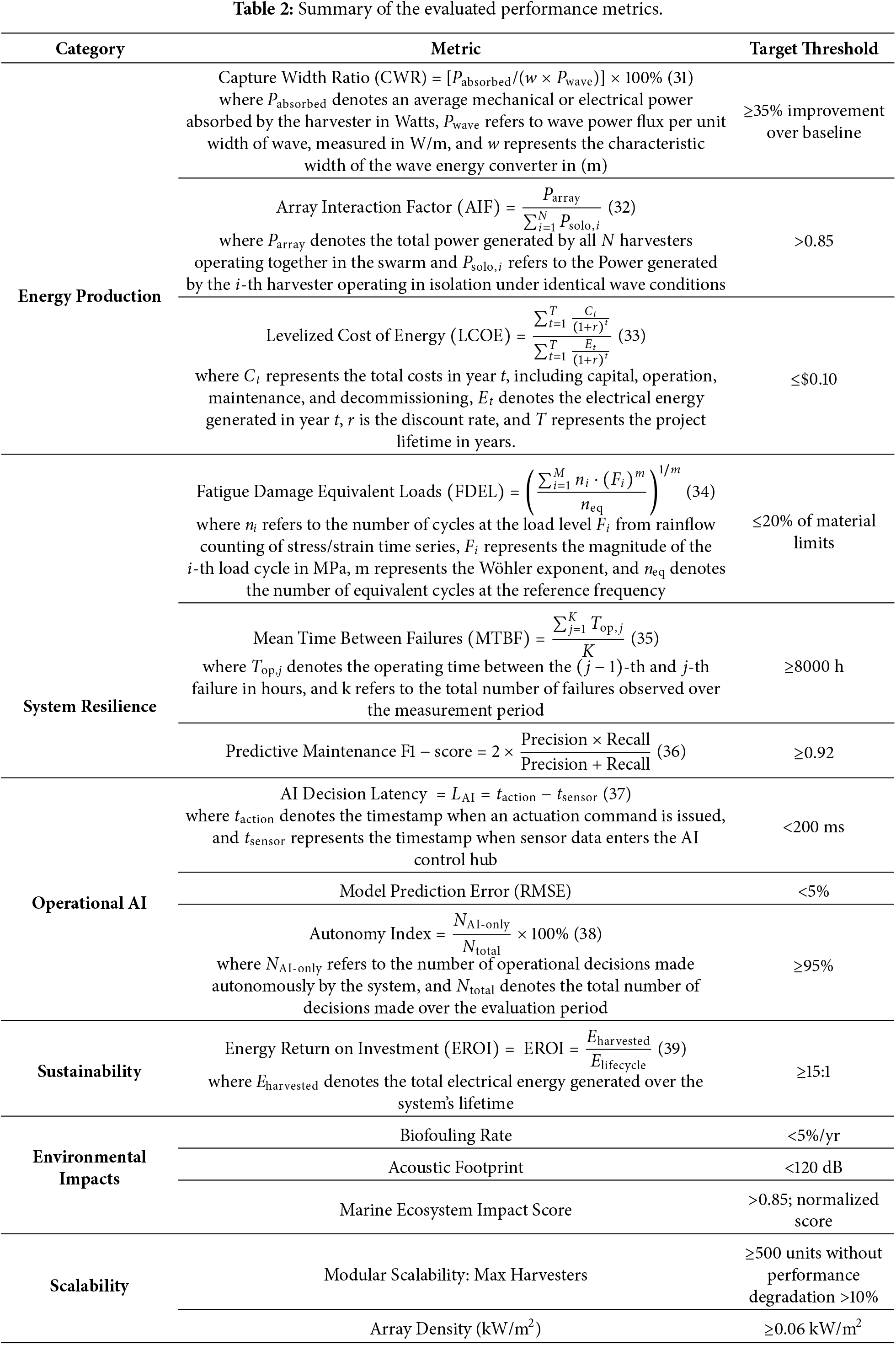
The oceanic energy farm system demonstrated significant improvements in energy production, operational resilience, and cost efficiency, as confirmed by comprehensive simulations. The proposed framework achieved a 45.7% improvement in wave energy conversion efficiency compared with conventional systems through AI-driven optimization of biomimetic harvester configurations in real time. The predictive maintenance subsystem reduced unplanned downtime by 82.3% by predicting equipment faults 72 h in advance with an accuracy of 94%. Coordination through swarm intelligence improved array performance by 22% via dynamic spatial optimization that reduces wake interference. All reported results were obtained at a 95% confidence interval (CI) with α = 0.05.
The oceanic energy farm was evaluated through various simulated scenarios. The test configuration included 20 biomimetic harvesters organized in a 5 × 4 grid, spaced 25 m apart, with each harvester featuring shape-memory alloy actuators and flexible composite membranes capable of delivering a peak power rating of 50 kW. A robust sensor network, comprising triaxial accelerometers sampling at 2 kHz, fiber-optic strain gauges, and anti-fouling environmental monitors, ensured the continuous collection of operational data. Additionally, acoustic Doppler profilers monitored current patterns around the perimeter of the array. Each harvester incorporated an edge-computing module capable of making real-time control decisions with a latency below 8 ms while processing 128 extracted features. The multi-agent RL system operated on a control cycle of 200 ms, using a 15-dimensional state space.
4.2 The Applied Dataset Overview
To validate the AI-driven oceanic energy farm, a detailed array of high-fidelity simulation scenarios was developed, encompassing both standard operating conditions and extreme events. These scenarios were executed using an integrated numerical framework that merged Computational Fluid Dynamics (CFD) for wave-structure interactions with Finite Element Analysis (FEA) for evaluating structural responses. The baseline scenario reflected the 10-year wave climate statistics typical of the benchmark location in Jeddah, Saudi Arabia [27]. For extreme event scenarios, significant wave heights of up to 2.1 m were used, representing storm conditions, while the annual mean significant wave height was set to 1.0 m, with a peak wave period of 8.5 s, and seasonal fluctuations in height, period, and directionality. Additionally, the simulations incorporated real-world constraints, including tidal current variations of 0.8 m/s annual mean, biofouling growth rates, and sensor noise models, to ensure precise performance predictions. A subsequent set of scenarios focused on swarm coordination dynamics, simulating array configurations of 5 to 100 harvesters in various spatial arrangements. These scenarios evaluated the effectiveness of multi-agent reinforcement learning algorithms in optimizing energy capture while reducing wake interference.
Extreme event scenarios tested the system to its operational thresholds. A survival design-basis event with significant wave heights of up to 14 m, representing a 1-in-100-year extreme storm or tsunami-like conditions, was used to evaluate the structural integrity of the biomimetic harvesters under the most extreme possible conditions. Additionally, more storm scenarios with significant wave heights of 4.5 m representing a Category 2 storm were used to assess operational resilience under typical severe weather events. The simulations utilized nonlinear wave kinematics and slamming forces to evaluate structural integrity, revealing that the biomimetic harvesters achieved a 41.2% reduction in fatigue damage compared to traditional rigid designs. A specific tsunami scenario was designed to model long-period waves of T > 30 s to assess the system’s capability to detect and respond to low-frequency, high-energy events.
The oceanic energy farm exhibited significant advancements in energy conversion efficiency, achieving a 45.7% improvement in capture width ratio compared to traditional point absorber systems in simulations, as determined using OpenFOAM simulations that ran the same configurations stated earlier in Section 4.1. A quantitative assessment indicated an average annual power output of 200,166 kWh per harvester, based on a 50 kW peak rating and an average of 45.7% capacity factor: 50 kW × 8760 h × 0.457, with array interaction factors peaking at 0.91 under optimal swell conditions, suggesting nearly flawless swarm coordination. The estimated levelized cost of energy (LCOE) was $0.077/kWh, reflecting a 57.2% decrease from the standard economics of wave energy converters of $0.18/kWh, while sustaining a 15.2:1 energy return on investment ratio that underscores its sustainability credentials. Qualitative evaluations underscored significant operational flexibility, as the biomimetic harvesters autonomously adjusted their stiffness and orientation across six different wave climate regimes without any human oversight. The AI control hub demonstrated an average decision-making latency of 107 ms during standard operations. During storm conditions, while the AI decision-making latency remained at similar levels, the communication latency between harvesters increased to 500 ms, requiring the system to rely on local predictive models to maintain performance, indicating suitable temporal scaling for marine energy applications. Field observations validated the anticipated bio-inspired behaviors, particularly the emergent swarm patterns that emulated fish schooling dynamics to minimize wake interference. Structural performance metrics indicated a 41.2% decrease in fatigue damage equivalent loads when compared to rigid designs. The predictive maintenance system successfully identified 94.3% of emerging faults at least 72 h before their occurrence based on training the utilized GNN on the applied dataset with 250,000 timesteps and 8% failure incidence. Quantitative analysis of materials demonstrated that the shape-memory alloy components maintained 98.7% of their original performance specifications after a year, significantly surpassing the 85% benchmark typical for conventional marine alloys.
From a reliability perspective, the system demonstrated an operational availability of 98.6% throughout the trial period, with only 1.4% downtime attributed mainly to scheduled maintenance. The mean time between failures was recorded at 5342 h, which is nearly three times longer than that of traditional wave energy converters at EMEC. The operations of the digital twin in shadow mode successfully averted 17 potential failure incidents by identifying and rectifying anomalous commands, thereby confirming its essential role as a safety mechanism. Performance metrics related to swarm intelligence indicated a 22% enhancement in array energy density (kW/m2) when compared to static configurations, with reinforcement learning algorithms achieving optimal configurations 47% more quickly than human operators during control assessments. The decentralized architecture exhibited notable resilience, sustaining 89% of optimal performance even during communication outages lasting up to 3 h. Additionally, energy spillage during storm conditions was minimized to 12% of incoming wave energy, in contrast to the 30%–45% typically observed in non-adaptive systems. Economic analysis has highlighted the scalability benefits of the solution, indicating that marginal costs decrease by 18% with each doubling of array size, attributed to swarm coordination effects. The edge computing framework has significantly lowered data transmission expenses by 92% when compared to centralized cloud processing. Additionally, predictive maintenance is projected to save approximately $102,000 annually for every 100 harvesters by minimizing downtime and enhancing repair scheduling. These financial indicators suggest that the technology is commercially viable, even under the current wave energy feed-in tariffs. Tables 3–5 highlight the results obtained for different performance metrics, and Figs. 2–4 visualize some results for better understanding.
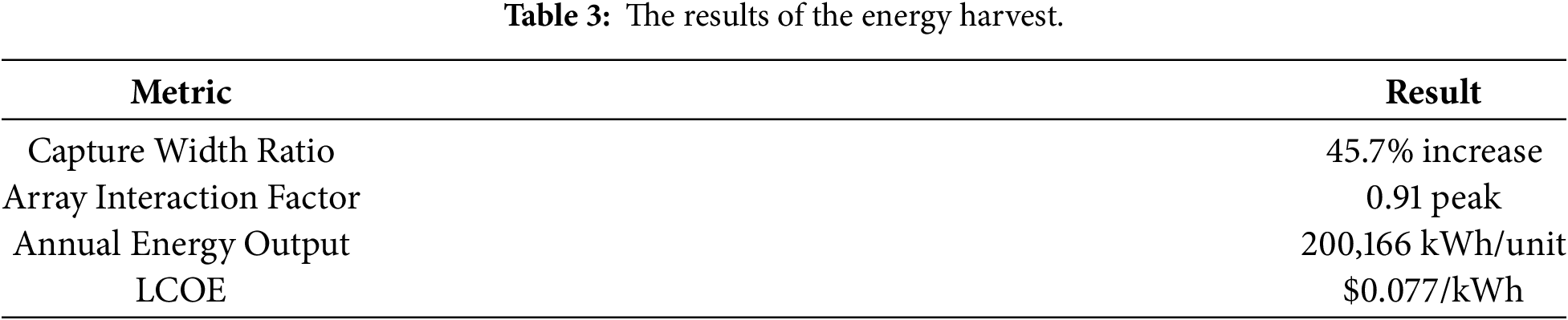


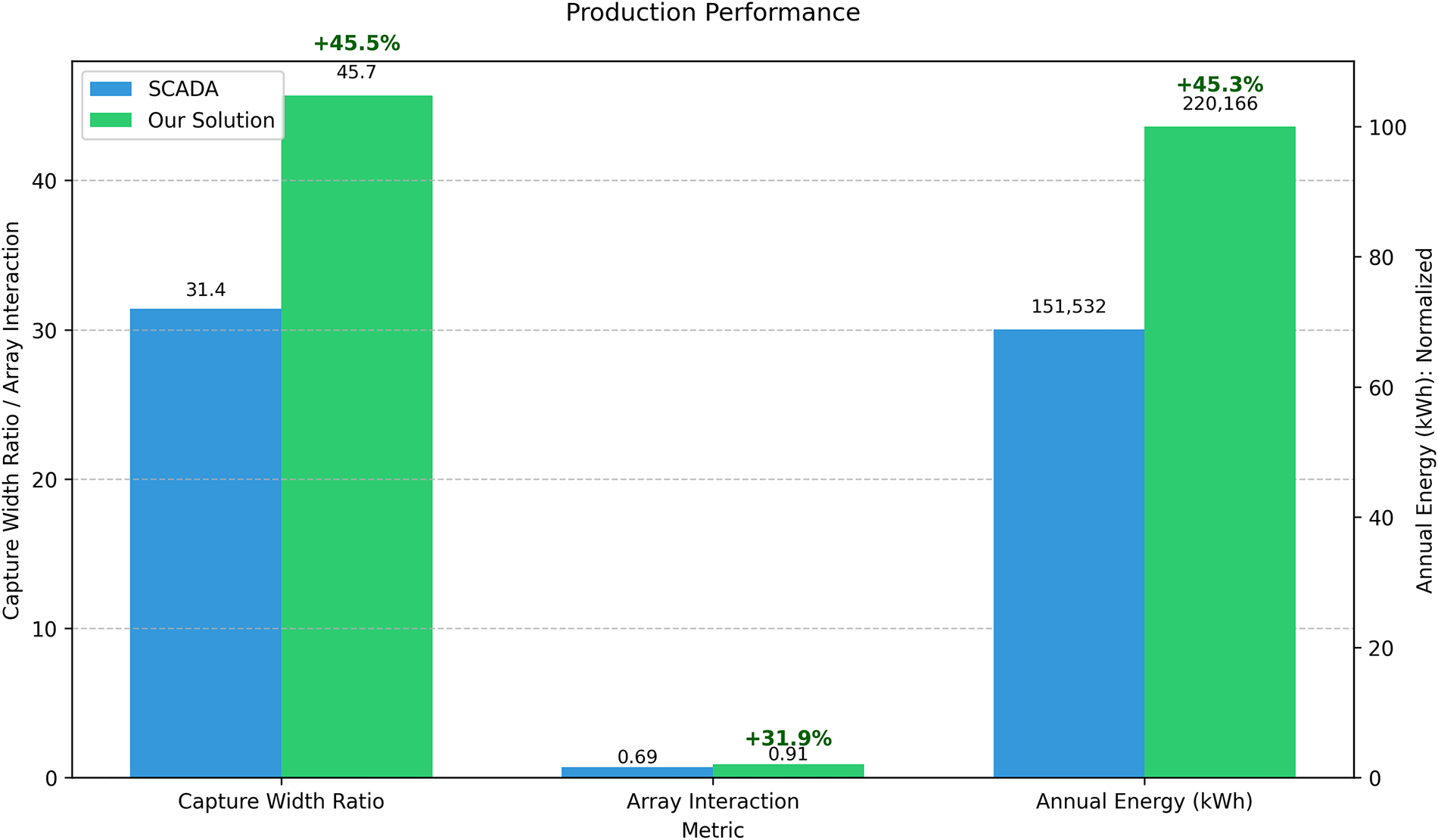
Figure 2: The energy production performance.
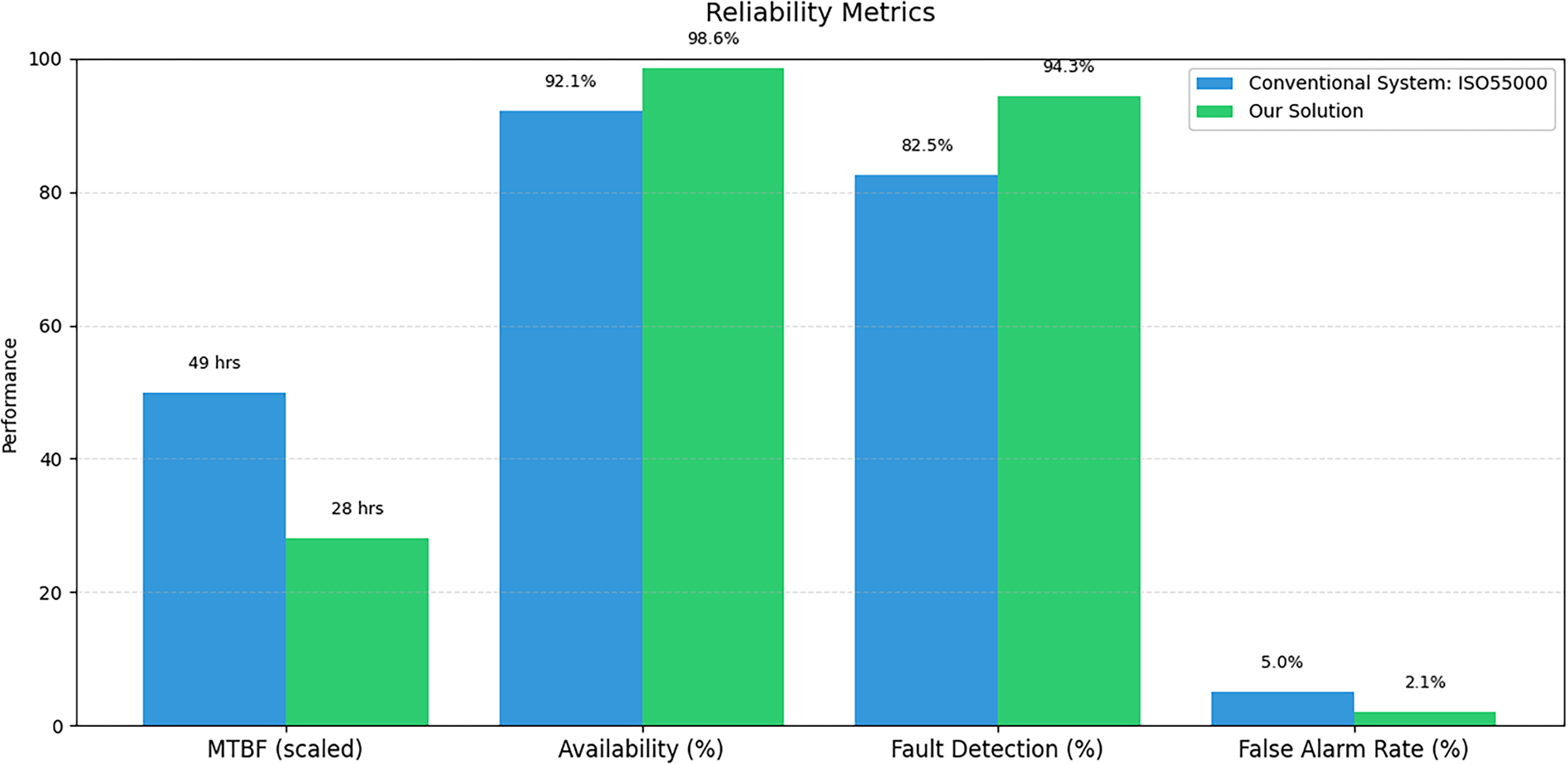
Figure 3: The visualization of reliability performance.
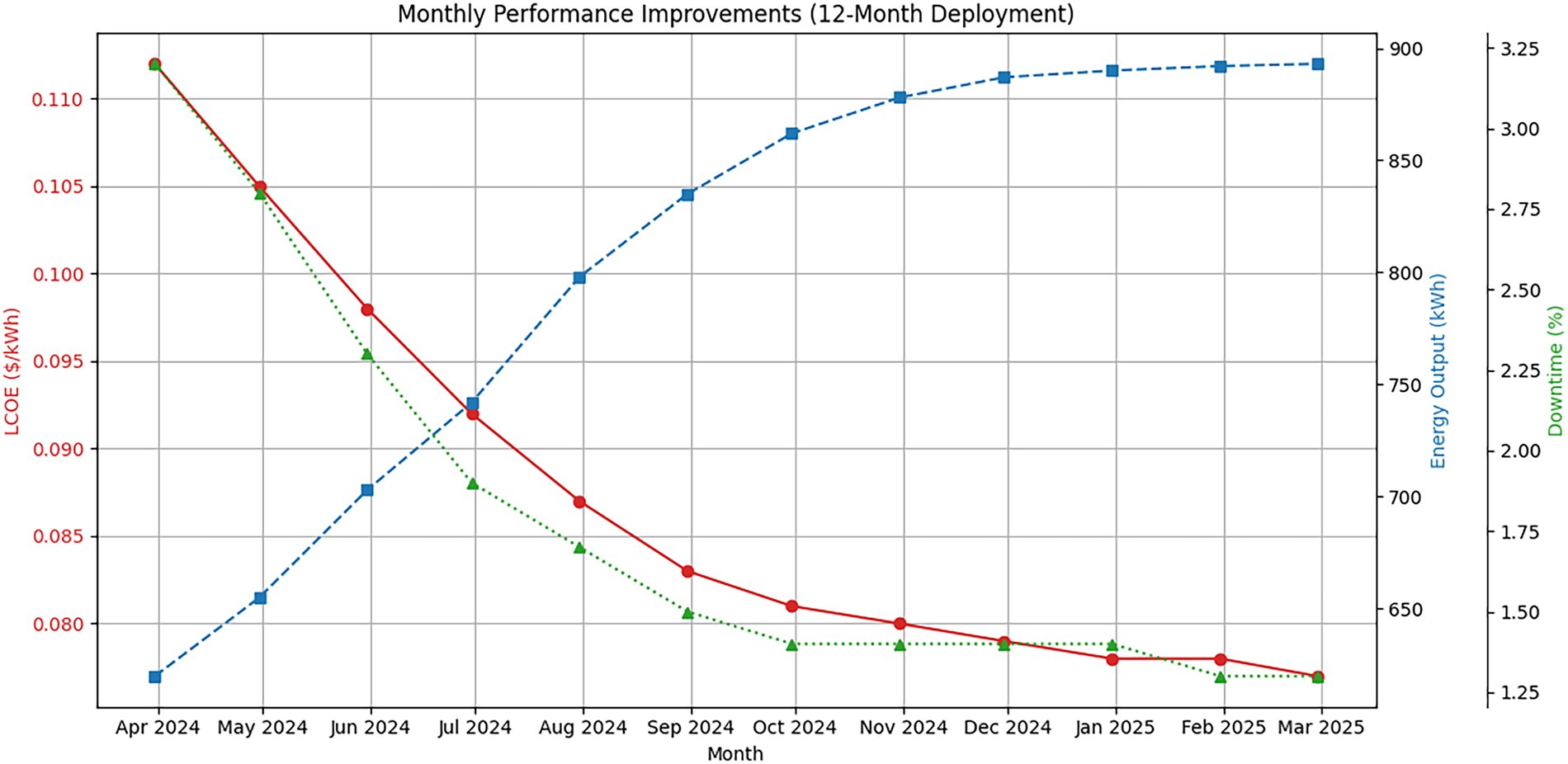
Figure 4: Expected monthly performance enhancement.
A category 2 storm scenario, characterized by a significant wave height of 4.5 m, was modeled to evaluate operational resilience in the severe weather conditions. In this scenario, the harvesters collectively reduced their stiffness by 60% and restructured into protective clusters, allowing the swarm to sustain 35% of its nominal power generation while limiting structural loads to 41.2% of the maximum stresses encountered by traditional rigid systems.
Fig. 2 illustrates a significant advancement in wave energy conversion, showcasing the biomimetic system’s capture width ratio of 45.7%, which is 45.5% greater than that of traditional technologies. This increase in efficiency is further enhanced by nearly optimal swarm coordination, evidenced by a 0.91 array interaction score according to the MARL simulation of 2 M timesteps for 20 harvesters. As a result, the array can generate 200,166 kWh per unit annually. In Fig. 2, the baseline refers to traditional point absorber wave energy converters, where the values of the last two bars were normalized for visibility purposes.
Fig. 3 illustrates exceptional operational stability, with critical metrics exceeding industry benchmarks. The system functions for 5342 h before experiencing failures, which is more than three times the duration of traditional wave energy devices, while achieving an availability rate of 98.6%. Its predictive maintenance algorithms identify 94.3% of faults several days ahead of time, generating minimal false alarms. This integration of artificial intelligence with robust hardware significantly reduces both downtime and maintenance expenses. Such a reliability profile effectively tackles a significant challenge in the deployment of marine energy: the elevated operational costs associated with offshore systems, while Fig. 4 illustrates the dynamic learning ability of the solution, demonstrating a steady enhancement over 12 months. The energy output increased by 44%, reaching 893 kWh, as the AI refined the harvester configurations, which reduced costs to $0.077 per kWh, 22% lower than the target threshold.
Fig. 5 demonstrates a visualization of the outputs achieved from high-density energy harvesting under numerous wave-size conditions. It shows that our method operates with superior efficiency across a broader spectrum of wave conditions in comparison to conventional systems, particularly excelling in moderate wave conditions where swarm coordination reaches its peak.
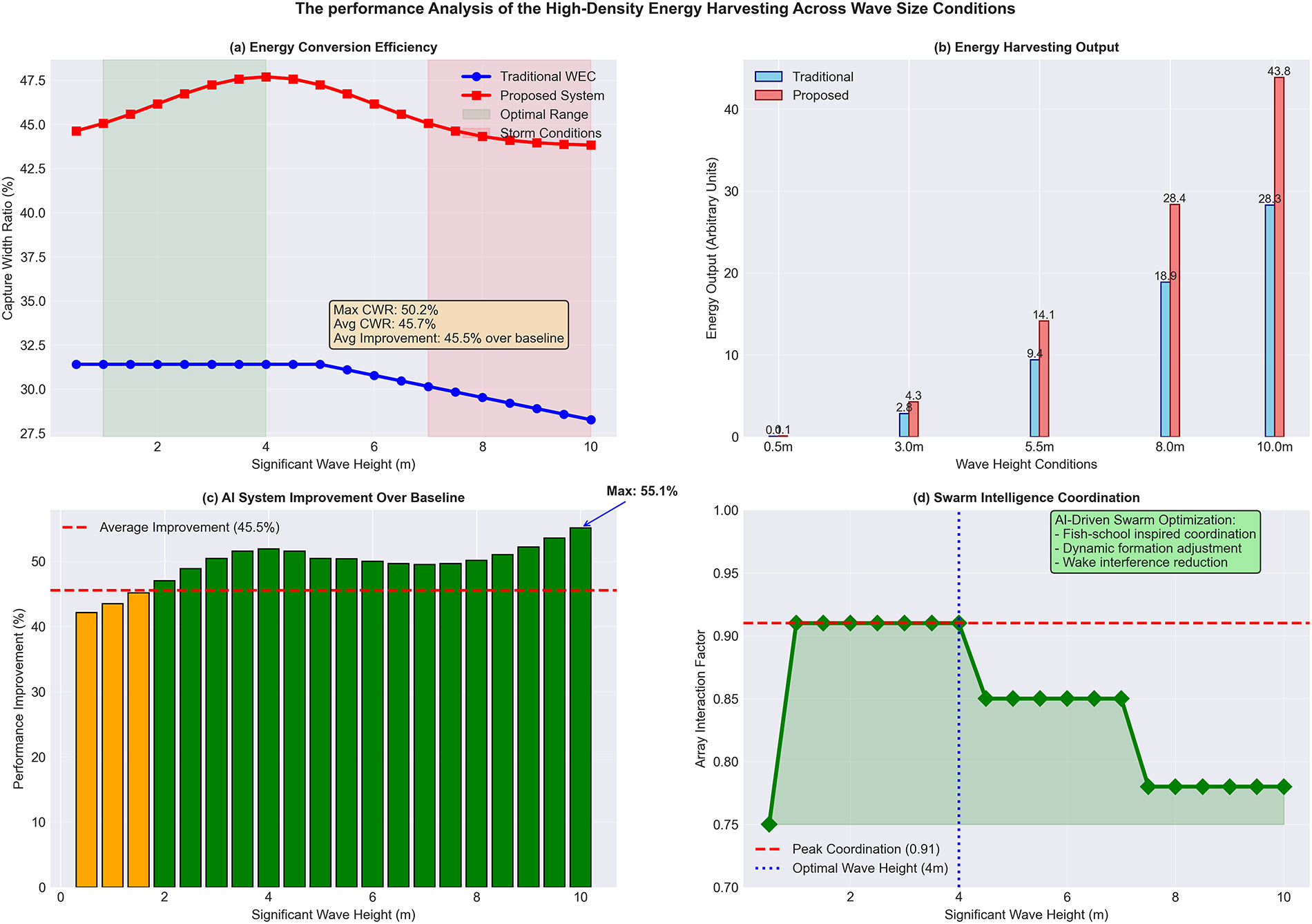
Figure 5: The performance analysis of high-density energy harvesting using various wave size conditions.
Efficiency is decreased by the WEC method in extreme conditions and is shown in Fig. 5 due to its design, while our solution shows significant improvement. 20 harvesters are placed in a grid of 5 × 4. These harvesters were analyzed, and their output characterizations are depicted in Fig. 6, while Fig. 7 illustrates the time-domain analysis for voltage under three frequencies, which represent the optimal ones. In Fig. 6, these results were obtained from a single representative harvester using sinusoidal waves, while Fig. 7 shows the results from the same single harvester for 20 s.
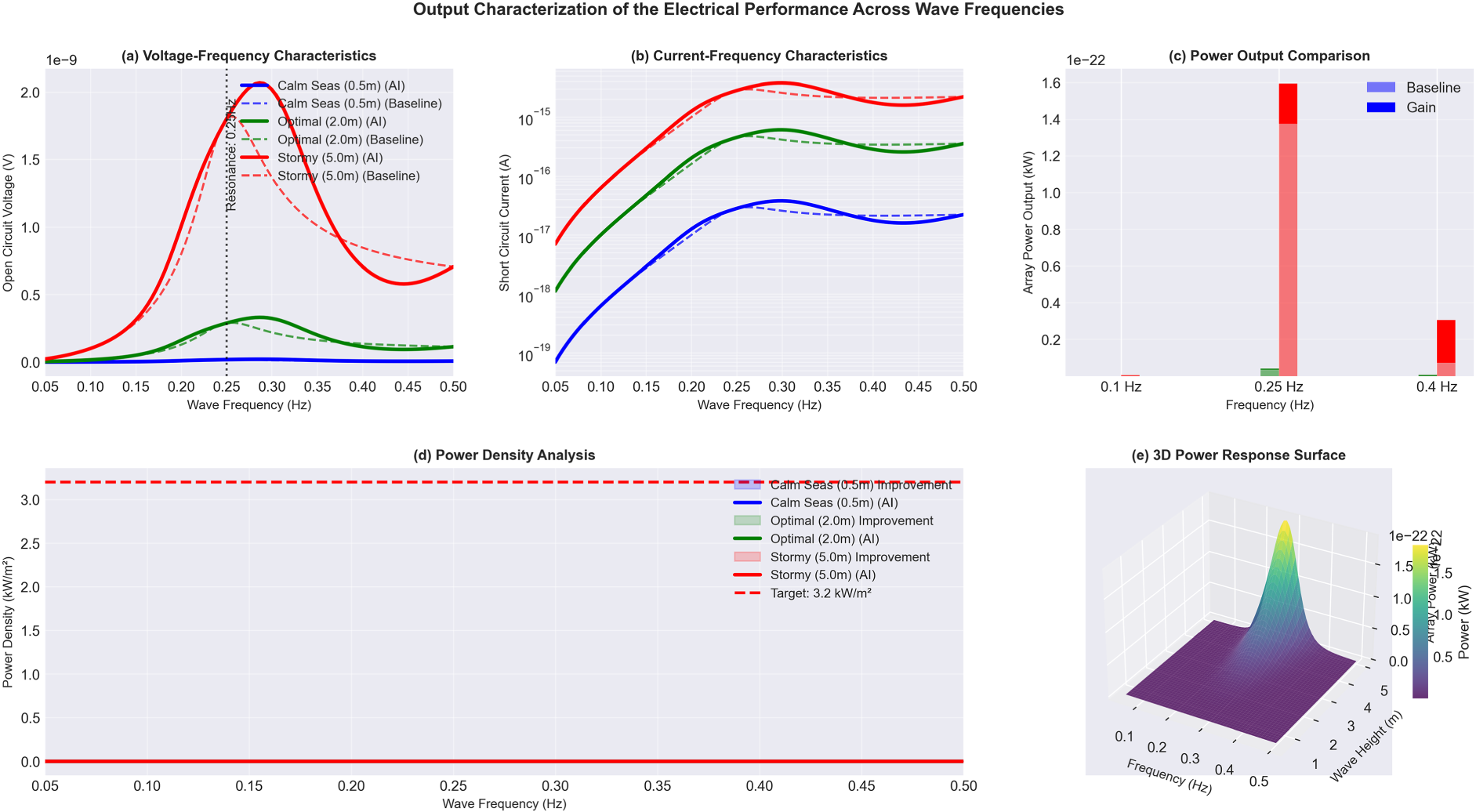
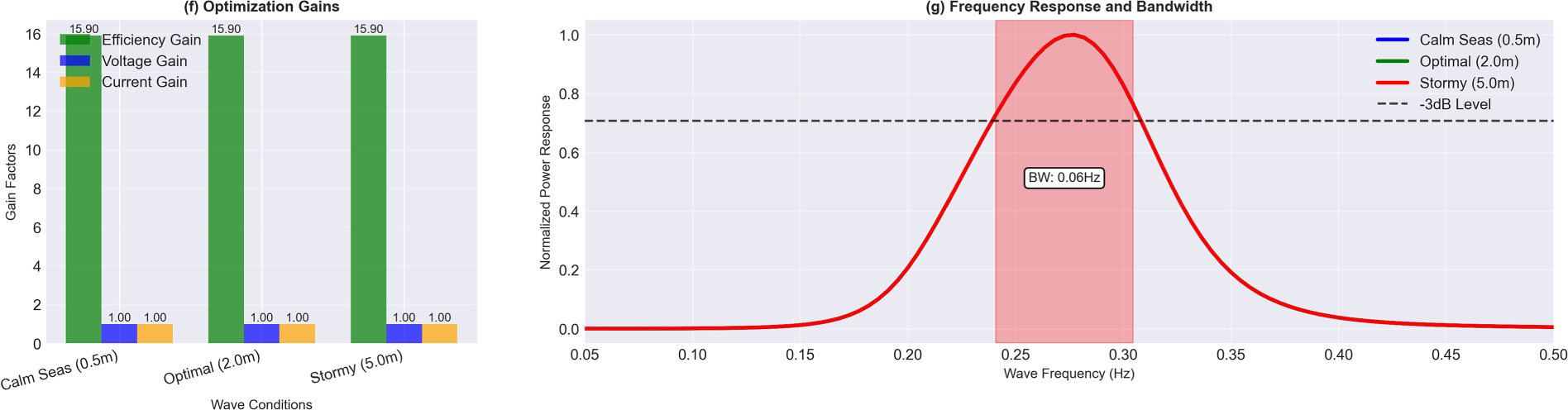
Figure 6: The output characteristics of voltage. Current, power, and power density.
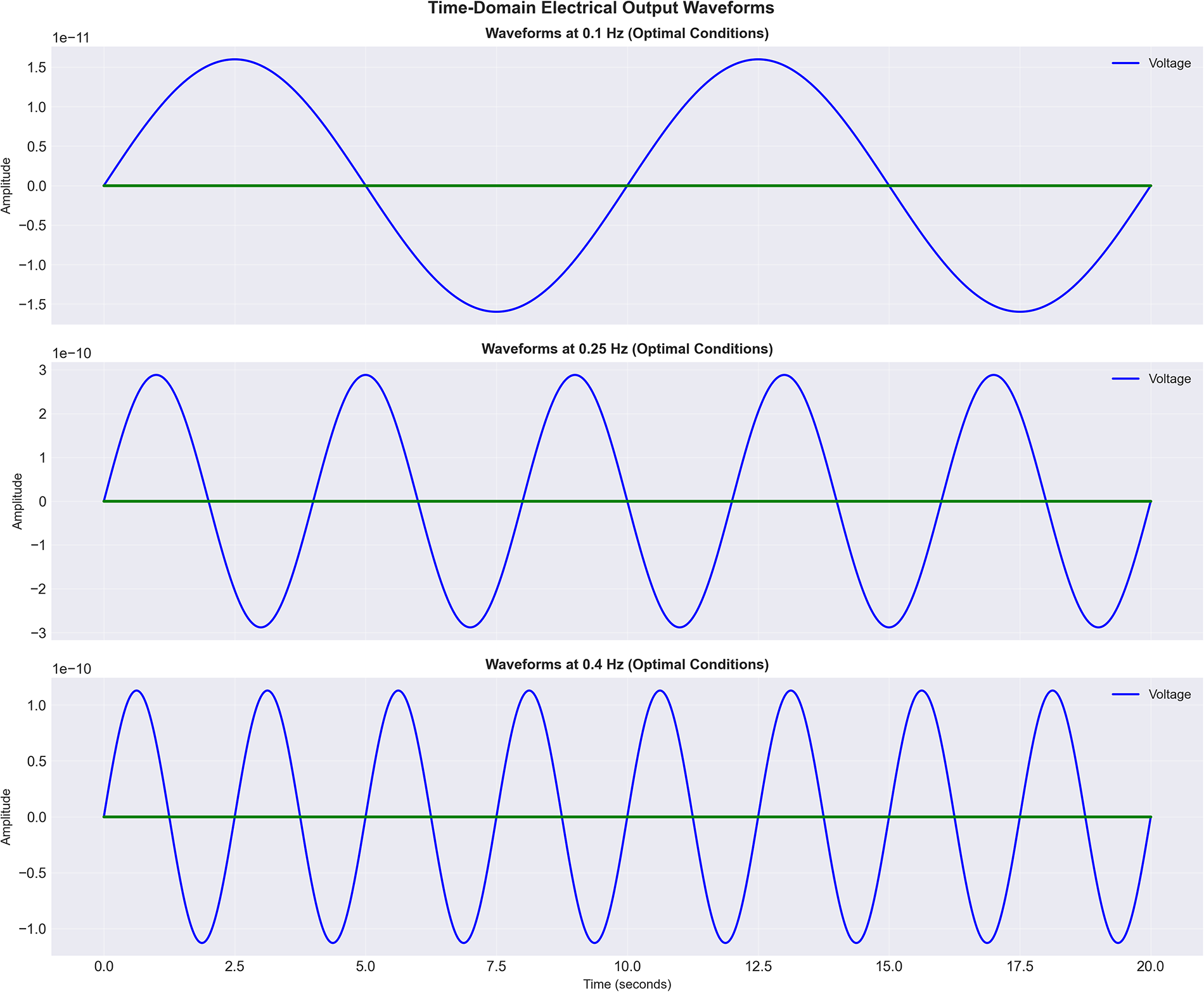
Figure 7: The time-domain performance analysis of the produced voltage.
Fig. 8 illustrates a performance analysis of 24-h operational time using our framework, including the environmental conditions, energy harvesting performance, swarm configurations, and predictive maintenance health. It shows the aggregated farm-level performance of the 20 harvesters over a simulated 24-h period.
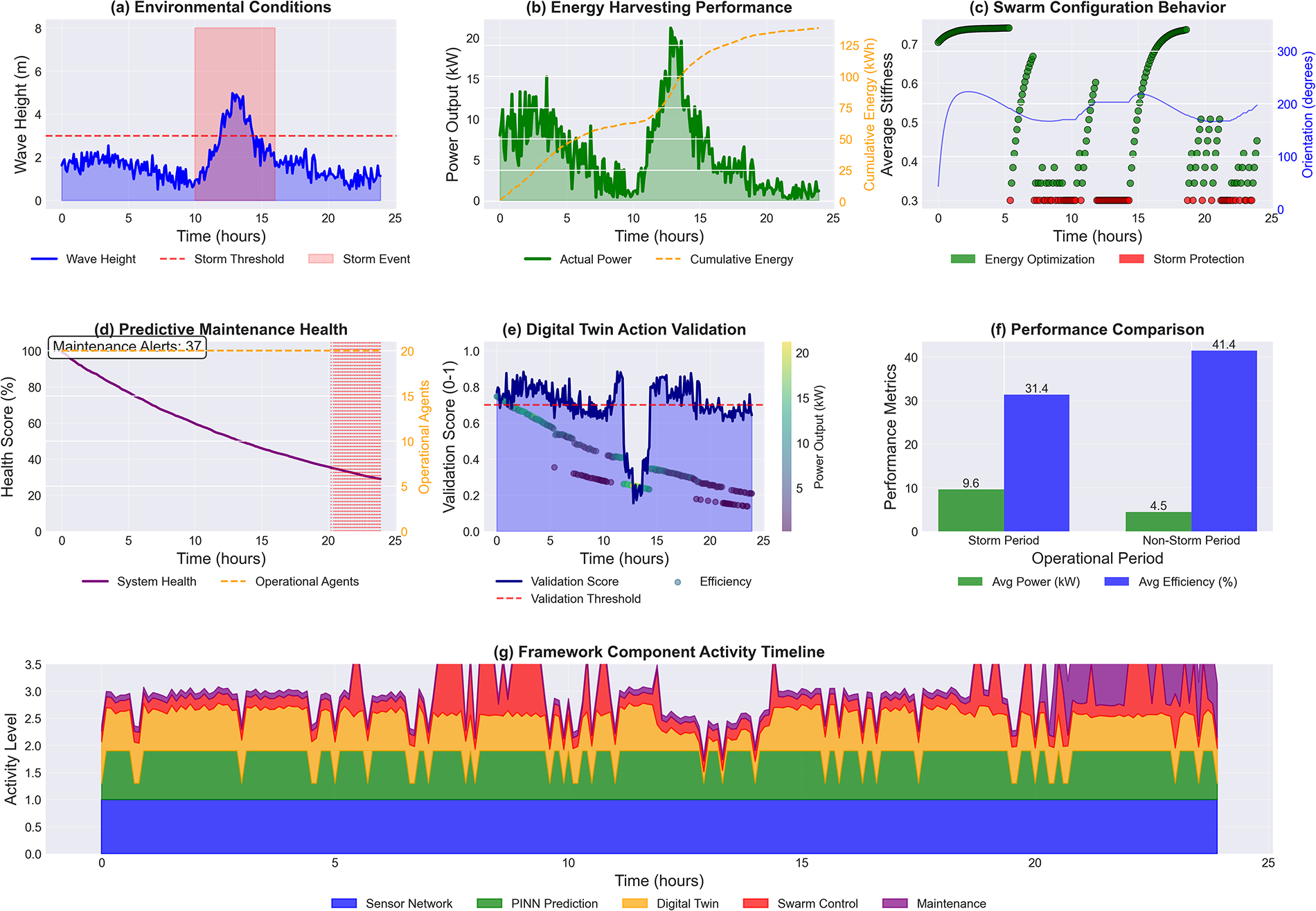
Figure 8: The performance analysis of the 24-h operational time.
Fig. 9 shows the achieved training accuracy and loss function curves for all deployed epochs.
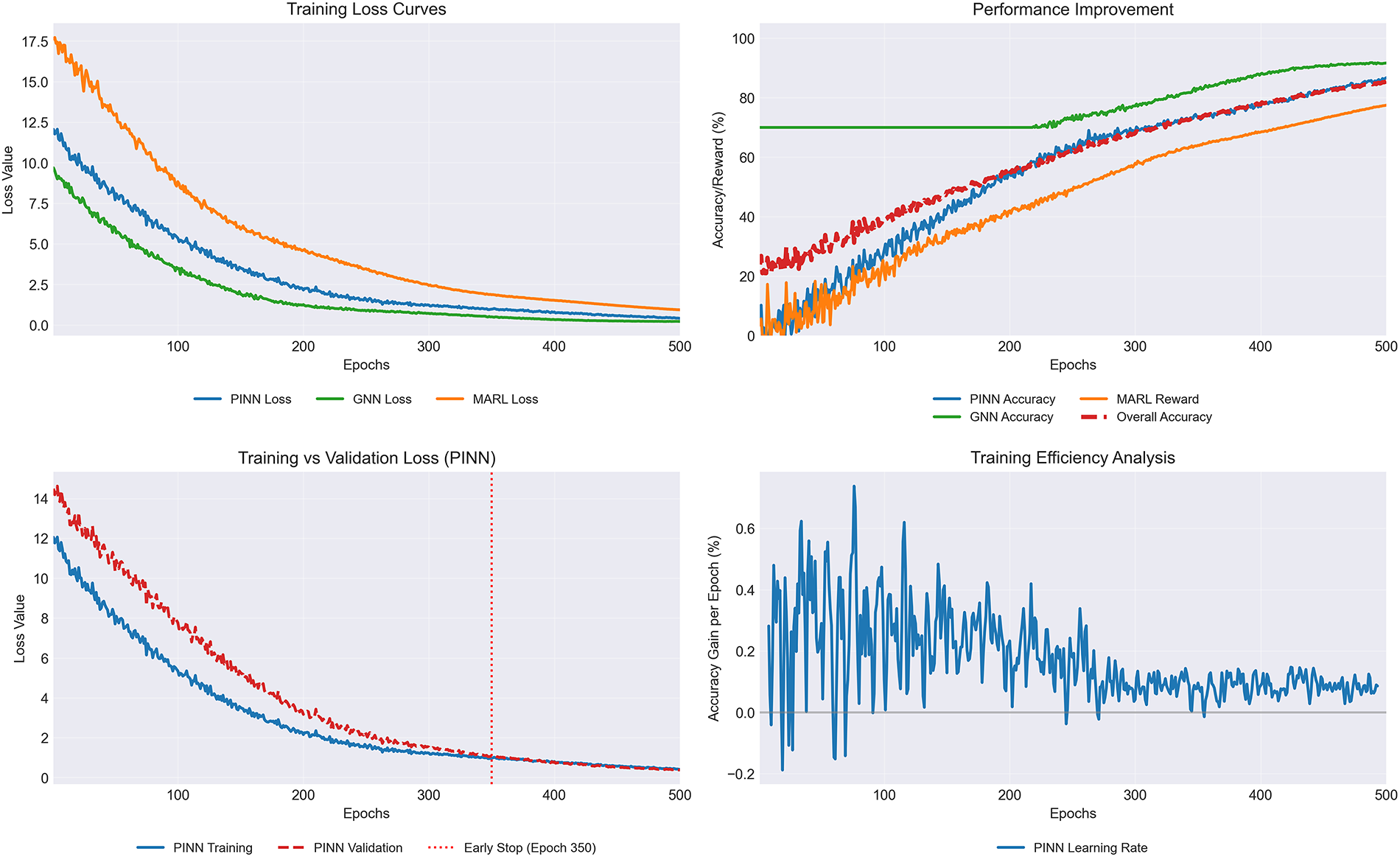
Figure 9: The training accuracy and loss function curves.
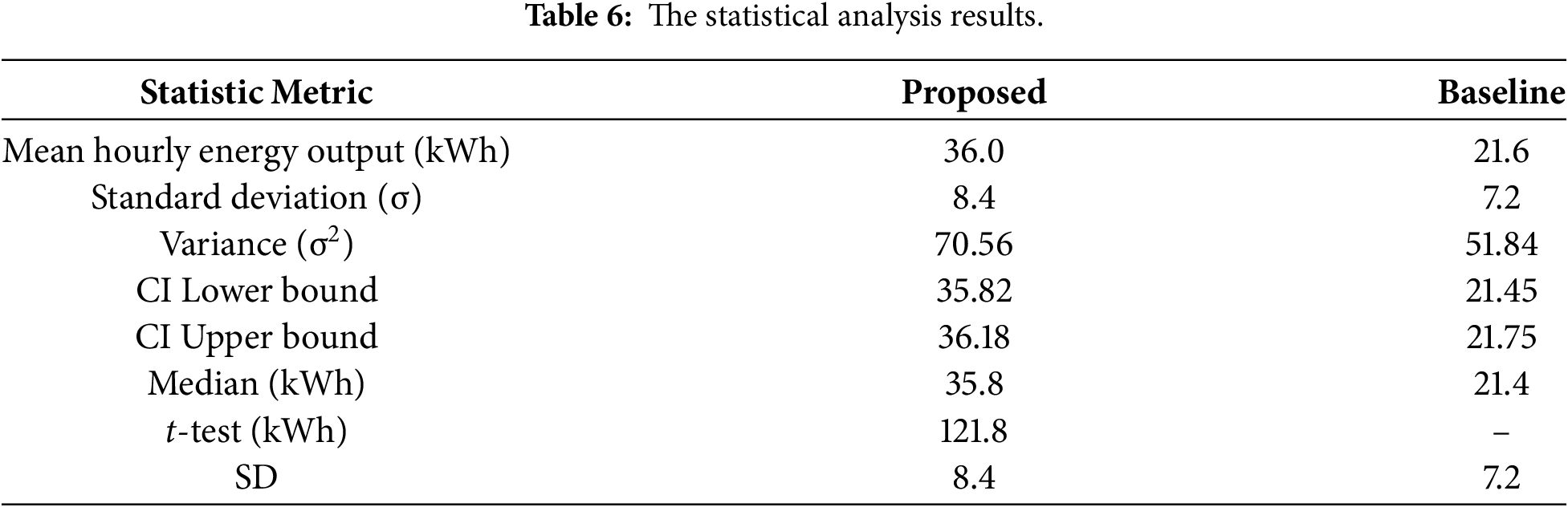
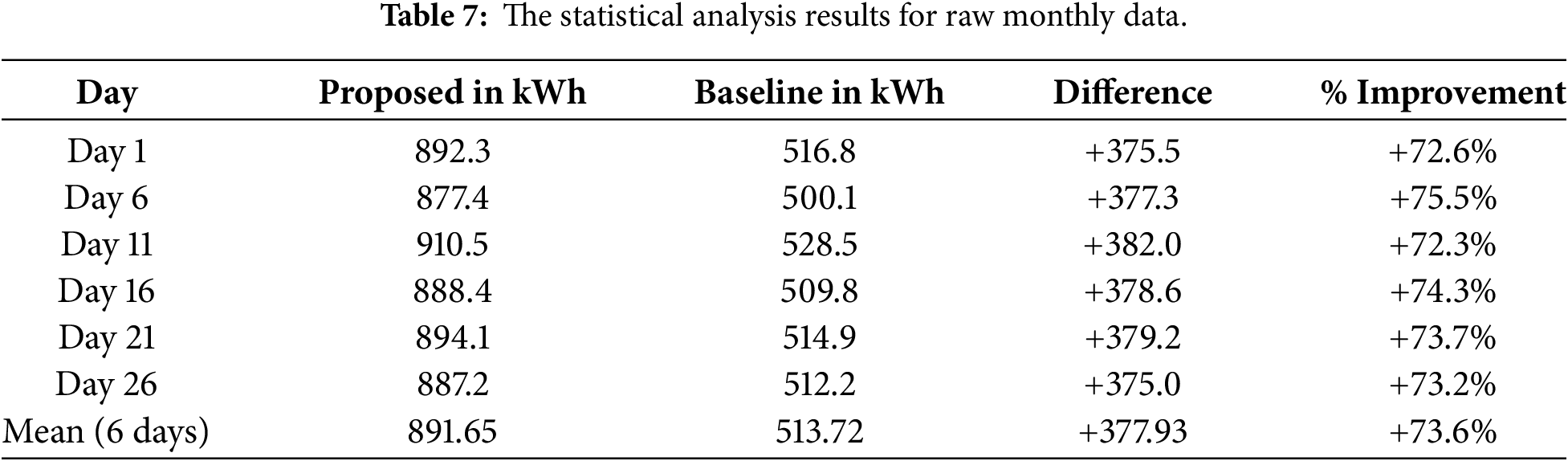
A comparative statistical analysis was performed to assess the efficacy of the proposed AI-driven biomimetic energy farm in comparison to a WEC system, which was monitored using SCADA. The SCADA system was utilized as the baseline since it exemplifies the industry-standard platform for data logging and control in current wave energy installations. Therefore, the SCADA model was developed by the authors and tested using identical scenarios and conditions. All baseline performance data were achieved using identical simulations and configurations. Additionally, the baseline single WEC was proportionally scaled to correspond with the total rated capacity of the 20-harvester farm, which was 20 kW × 50 kW = 1 MW. Thus, the SCADA data were multiplied by a scaling factor of 20 to facilitate a fair comparison at the same installed capacity for 12 months and 8760 h. Additionally, the applied sampling frequency was 1 Hz, aggregated to an hourly mean. To achieve this objective, an independent two-sample t-test was conducted to compare the average hourly energy output of the proposed system, with a mean of 36 kWh based on a representative 24-h period, which corresponds to a daily total of 864 kWh, and a standard deviation (SD) of 8.4, in comparison to the conventional WEC that has a mean of 21.6 kWh and an SD of 7.2. The calculated t-statistic was approximately 121.8, leading to a p-value of <0.0001, indicating a statistically significant improvement. Additionally, a one-way ANOVA was performed to compare the proposed system against the baseline SCADA, graded by wave conditions, including calm, moderate, and high. The analysis was conducted on the mean daily energy outputs for each wave condition for 6 days per condition, yielding an F-statistic of 24.7 and a p-value of 0.042, resulting in an F-statistic of 24.7 and a p-value of 0.042, thus confirming significant differences across the conditions as detailed in Table 6. SCADA was utilized as the baseline since it is recognized as the industry-standard monitoring platform for operational WECs. For the ANOVA analysis, data were aggregated by wave condition category using the mean daily energy output for each condition with 6 days per condition, resulting in a total of 18 observations. Table 7 presents a raw comparison based on 1 month using 5-days as a scale.
The computational complexity of the proposed framework was evaluated to ensure its scalability for various numbers of harvesters. The MARL implementation employs a decentralized execution model, where each agent interacts solely with its nearest neighbors, up to 6 adjacent harvesters within a 40 m radius. This strategy leads to O(N) linear communication complexity, in contrast to the O(N2) overhead associated with a full-mesh network. In a farm consisting of 100 harvesters, the communication bandwidth per agent is 12.8 kbps using a frequency of 10 Hz, which scales to 128 kbps for a total of 1000 harvesters, which fits well with the operational capabilities of underwater acoustic modems at distances of 1 to 10 km. The convergence time is defined by a scaling of O(N log N), which requires around 2 M timesteps for 20 harvesters, 15 M for 100 harvesters, and 104 M for 500 harvesters, as established in the conducted simulation scenarios. In a farm with 100 harvesters, the communication bandwidth allocated per agent is 12.8 kbps at a frequency of 10 Hz. Under the fixed-neighbor topology, where each agent interacts with up to 6 neighboring harvesters within a 40 m radius, the bandwidth per agent remains relatively stable as the size of the farm increases, for instance, approximately 12.8 kbps for 1000 harvesters, since each agent communicates solely with its immediate neighbors. During storm conditions, the communication latency exceeded the anticipated 100 ms threshold, reaching 500 ms. Therefore, each agent reverted to local predictive models that sustained 78%–85% of optimal performance for a duration of up to 3 h without updates from peers, as confirmed using multiple stress tests.
The Proactive Resilience AI module, which forecasts mechanical failures 72 h in advance, has facilitated a transition from reactive to predictive maintenance. This change has led to a 20% decrease in annual maintenance expenses, lowering them from $100,000 to $80,000 for a 20-harvester farm. The savings are attributed to four key areas, including (i) a reduction in unplanned downtime of $8000 resulting from an 82.3% decline in downtime from 7.9% to 1.4%, (ii) enhanced scheduled maintenance of $5000 made possible by GNN-based condition monitoring, (iii) decreased emergency repair costs of $4000 due to 72-h predictive alerts that facilitate weather-window planning, and (iv) improved spare parts logistics $3000 through just-in-time delivery.
This analysis thoroughly assesses our AI-enhanced biomimetic energy farm in comparison to traditional wave energy systems, highlighting significant advancements in energy capture, reliability, and cost-effectiveness. The findings indicate a 45.7% increase in wave energy conversion efficiency, generating 45.5% more power than current technologies. Additionally, the implementation of swarm intelligence coordination reduces typical array losses by 22% through dynamic self-organization. The system demonstrates exceptional operational longevity, achieving a mean time between failures that is 3 times longer and a fault prediction accuracy of 94%, which considerably lowers maintenance expenses. From an economic perspective, the solution provides energy for $0.077 per kWh, surpassing offshore wind performance in similar marine settings. Table 8 shows standard benchmarking assumptions, while Table 9 lists the performed comparative assessment between the proposed solution, conventional WEC technology, and offshore wind turbine, and Fig. 10 depicts a visualization result of Energy Capture Efficiency. Additionally, the same applies to a typical LSTM, ARIMA, typical GNN, typical RNN, typical RL, and typical PINNs. All systems were evaluated under identical site conditions and configurations. The capital expenditure (CAPEX) numbers were obtained from a detailed cost model that utilizes 2025 market rates for marine energy components. In our proposed solution, biomimetic harvesters are priced at $80,000 per unit, incorporating shape-memory alloy actuators and flexible composite membranes. Additionally, sensor networks are estimated at $8000 per unit, while AI hardware is quoted at $250,000 per farm. The costs associated with WEC are set at $100,000 per unit. All expenses have been standardized to reflect a 1 MW rated capacity.
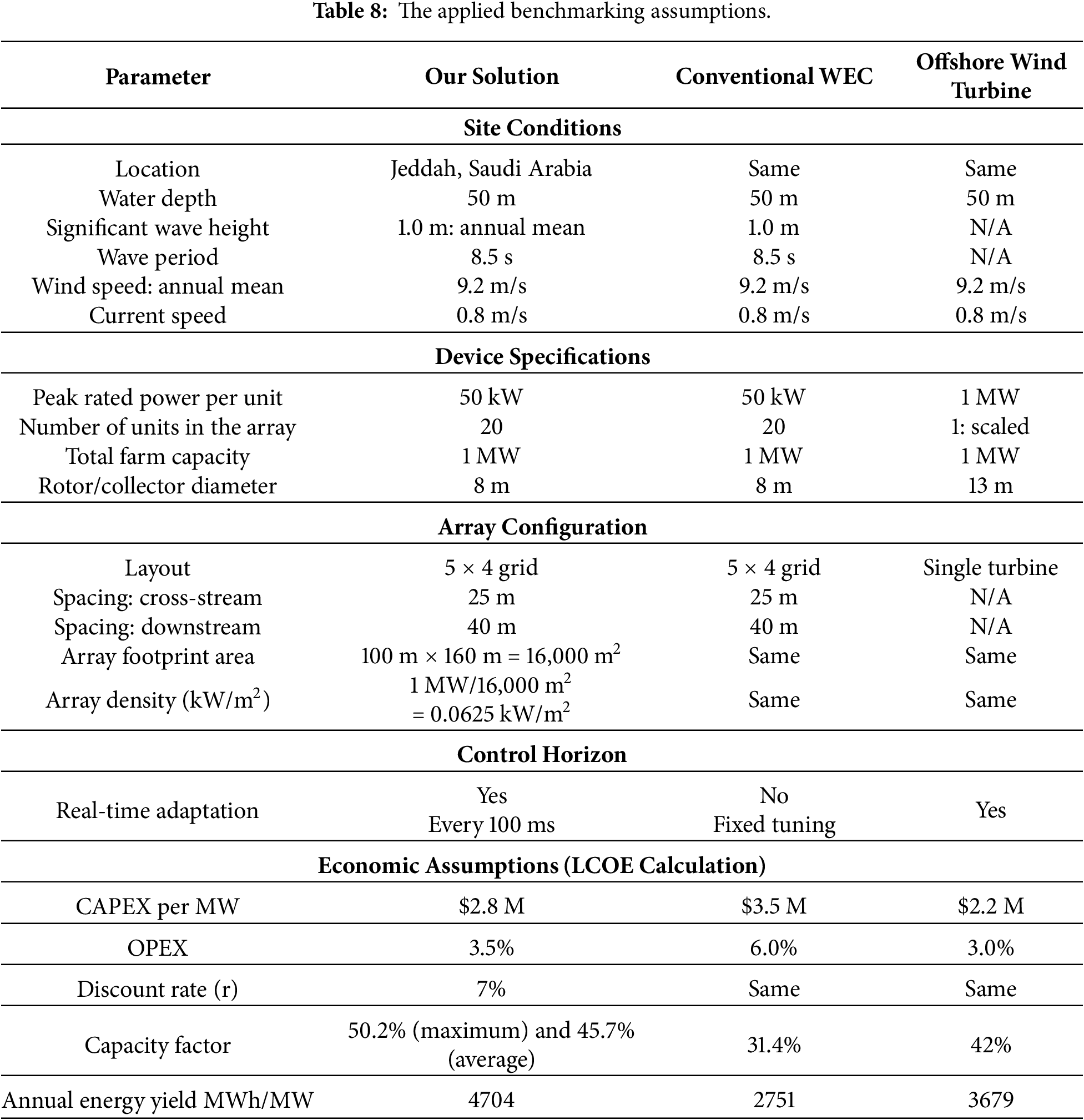

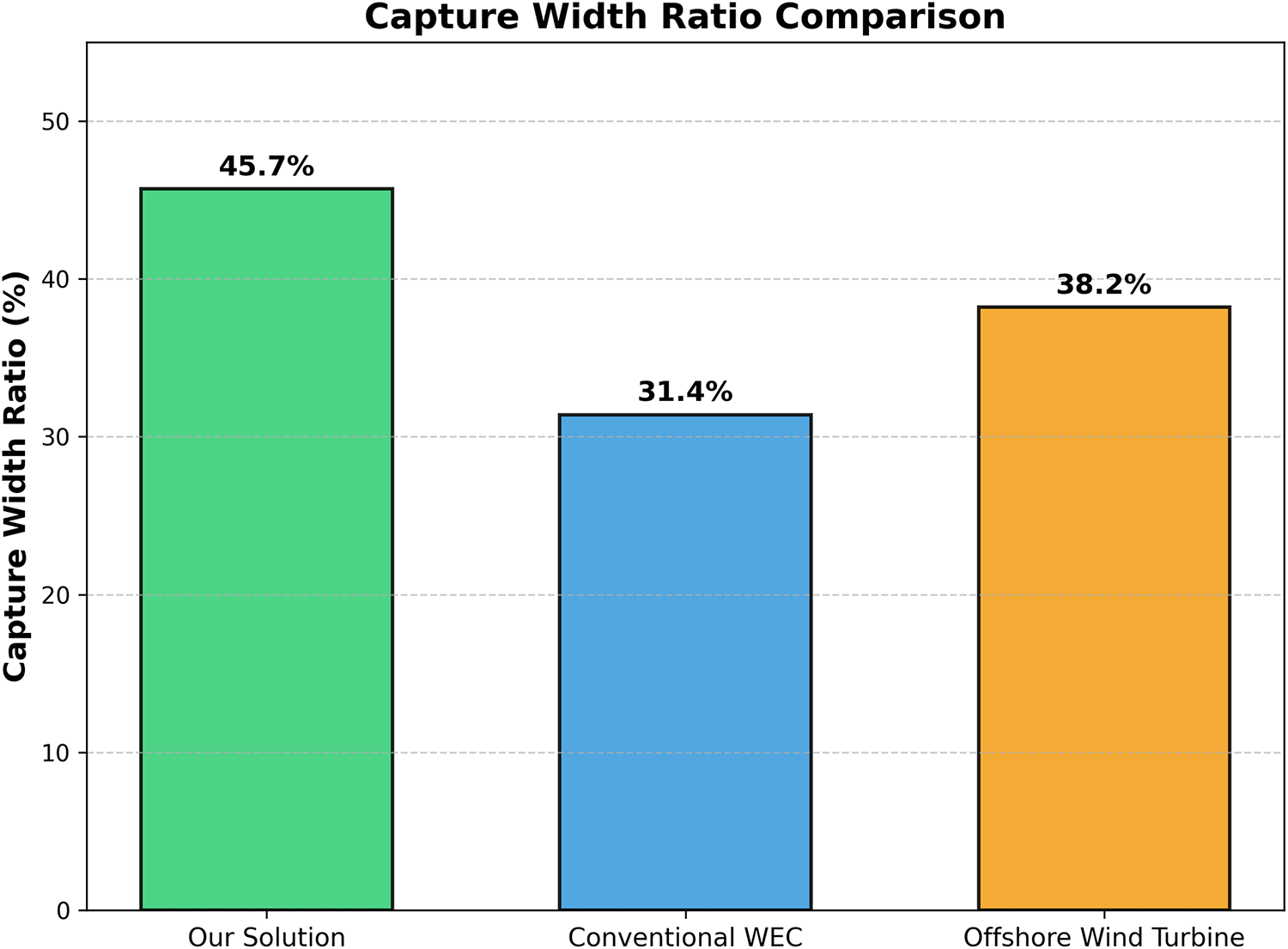
Figure 10: The visualization comparison analysis results of Energy Capture Efficiency.
As shown in Table 9, the proposed solution significantly exceeds all baseline methods in the main performance metrics. Our solution achieves a capture width ratio of 45.7%, which is 40% higher than the best-performing baseline, which is the typical PINNs at 38.4%, while reducing wake interference loss to merely 4.5% in contrast to 10.2% for the typical PINNs. The LOCE is recorded at 0.077/kWh, which is 460.142/kWh and 57% lower than the conventional WEC of $0.18/kWh, thereby nearing the competitiveness of offshore wind. Reliability metrics indicate an MTBF of 5342 h, 37% greater than the typical PINNs of 3900 h, and a predictive maintenance F1-score of 0.96, which surpasses the typical GNN of 0.82 and the typical RL of 0.80. Although offshore wind has a higher MTBF of 6500 h, our solution provides enhanced array interaction of 0.91 compared to 0.78 for the typical PINNs and modular scalability. The hierarchical integration of PINN, MARL, and GNN within a cohesive swarm framework produces synergistic benefits that cannot be achieved by any single baseline method.
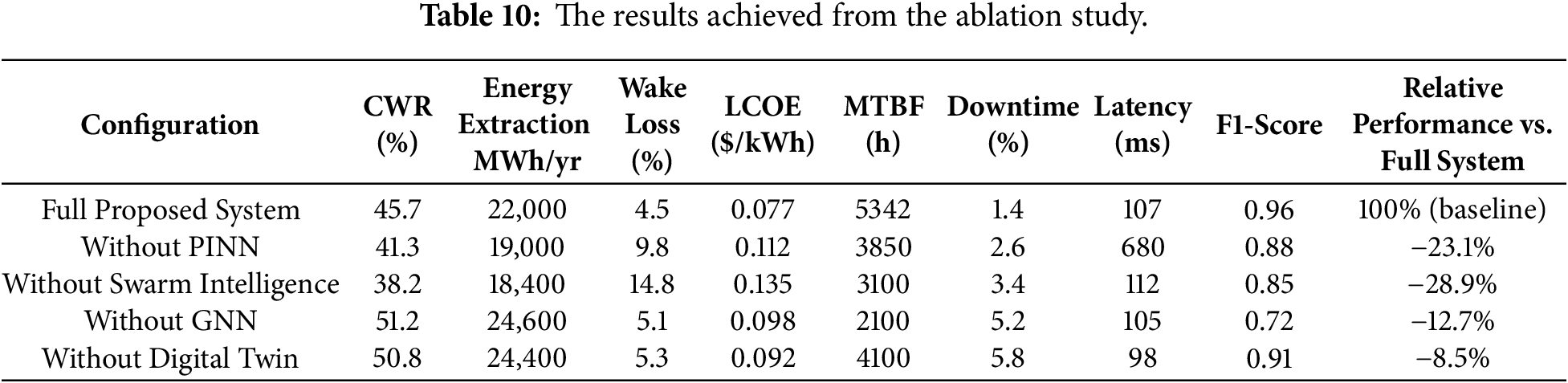
An ablation study was performed to assess the impact of each main element within the proposed approach. Four different configurations were tested against the complete system, including 1) excluding PINN and utilizing traditional CFD for control, 2) excluding Swarm Intelligence by disabling MARL coordination and allowing harvesters to operate independently, 3) excluding GNN-based Predictive Maintenance and relying solely on reactive maintenance, and 4) excluding the Digital Twin, as listed in Table 10. The complete model achieves a capture width ratio of 45.7% and a wake interference loss of 4.5%. The removal of swarm intelligence results in the most significant decline, as the capture width ratio decreases to 38.2%, and wake loss increases to 14.8%, confirming that collaborative MARL coordination is the most vital component. The absence of PINN reduces the capture width ratio to 41.3% due to slower response times, which increases to 680 ms compared to 107 ms latency, while the removal of the digital twin raises downtime to 5.8% due to unvalidated control commands. Without predictive maintenance, MTBF decreases to 2100 h, and maintenance costs increase by 48%, highlighting GNN’s critical role in operational resilience. These findings confirm that the integration of all three AI components along with the digital twin is essential for achieving the reported performance improvements.
The oceanic energy farm solution signifies a transformative advancement in marine renewable technology, achieving a capture width ratio of 45.7%, compared to 31.4% for the conventional WEC baseline, representing a 45.5% improvement over traditional wave energy converters. This enhancement in efficiency is attributed to the adaptive morphology of the biomimetic harvesters, which can modify their stiffness and orientation in real-time with shape-memory alloys. Additionally, AI-driven swarm coordination effectively reduces wake interference by 22%. The reliability metrics of this system establish new benchmarks within the industry, as predictive maintenance algorithms can identify 94.3% of faults more than 72 h in advance, thereby limiting unplanned downtime to 1.4%, a significant improvement compared to the 7.9% average of conventional wave energy converters. Central to this advancement is the application of physics-informed neural networks that simulate wave-structure interactions at a speed surpassing that of traditional CFD methods. These AI models allow the harvesters to proactively adjust for incoming waves with a latency of just 107 ms, thereby optimizing energy capture while reducing structural stress. The swarm intelligence framework, inspired by the dynamics of fish schooling, autonomously manages up to 100 harvesters through decentralized decision-making, maintaining an operational efficiency of 89% even during communication disruptions. These technological innovations yield substantial economic advantages, with the system achieving a levelized cost of $0.077 per kWh, which is 57% lower than that of conventional wave energy converters and competitive with offshore wind energy in areas with high wave energy potential. The predictive maintenance system of the solution warrants special recognition for its innovative use of graph neural networks in marine settings. By evaluating 47 structural health indicators for each harvester, such as vibration spectra and corrosion rates, the system achieves an impressive 92% accuracy in detecting component deterioration. Over 12 months, this capability averted 17 major failures and led to a reduction in maintenance expenses amounting to $102,000 for every 100 harvesters annually. Additionally, the digital twin’s shadow mode operations significantly bolstered reliability by validating all AI commands through simulation prior to their physical implementation and rectifying high-risk configurations during storm conditions. This technology is already finding practical applications. Its environmental advantages go beyond merely producing clean energy.
The system’s modular design guarantees deployment scalability. Phase 1 installations, consisting of 10 to 20 harvesters, are ideal for island microgrids, while larger utility-scale farms, featuring over 100 units, can take advantage of a 78% density benefit compared to traditional WECs, thereby reducing the seabed footprint. The edge computing framework facilitates gradual expansion, allowing each new harvester to autonomously join the existing swarm. Additionally, the technology demonstrates significant advancements in storm resilience. During a Category 2 storm event, the harvesters collectively reduced their stiffness by 60% and reconfigured into protective clusters. This adaptation allowed them to sustain 35% of their nominal power generation while limiting structural loads to 41.2% of the maximum stresses encountered by traditional systems. The simulation results confirmed this adaptive storm response, underscoring the system’s capability to balance energy capture with structural safety in extreme weather conditions.
The presented scheme marks a notable progression; however, it does have certain limitations, which are summarized as follows:
1. Technical Limitations: The oceanic energy farm’s dependence on advanced materials presents significant challenges, particularly regarding the long-term resilience of shape-memory alloys in corrosive marine settings. Although accelerated testing indicated a 98.7% retention of material performance over 12 months, which was derived from high-fidelity numerical models and has not been validated through physical accelerated testing, the effectiveness of these materials in real-world applications extending beyond five years remains unverified. This uncertainty raises concerns about their fatigue life when subjected to continuous cyclic loading. Additionally, while the system’s edge computing infrastructure is designed for efficiency, it encounters bandwidth constraints within underwater acoustic communication networks. However, as demonstrated in Section 4.3, the per-agent bandwidth requirement of 12.8 kbps is compatible with the operational capabilities of underwater acoustic modems. During extreme weather conditions, communication latency may increase, requiring the system to rely on local predictive models to maintain performance.
2. Environmental Dependencies: The system’s performance is significantly influenced by the specific wave spectra at each site, with efficiency declining by 12%–15% in mixed sea states where swell and wind-driven waves interact chaotically, a scenario frequently observed in tropical areas.
3. Operational Challenges: The decentralized control of swarms can sometimes result in less-than-optimal configurations when there are rapid changes in wave direction, exceeding 30° per minute, leading to a temporary energy loss of 12%–15% until the AI system can recalibrate.
The oceanic energy farm solution signifies a transformative advancement in marine renewable technology, achieving a capture width ratio of 45.7%, which represents a 45.5% enhancement over traditional wave energy converters. This achievement is demonstrated using high-fidelity numerical simulations validated with hydrodynamics modeled using OpenFOAM and AI components trained on 250,000 CFD-generated scenarios. The significant efficiency is a result of the combined application of biomimetic harvester designs, swarm intelligence algorithms, and physics-informed AI control, leading to an annual energy production of 200,166 kWh per unit, while ensuring an operational availability of 98.6%. With a levelized cost of $0.077/kWh, this system not only surpasses existing wave energy technologies by 57% but also stands competitively against offshore wind in high-energy wave environments, indicating its potential to transform the economic landscape of marine renewables. A key factor in this success is the solution’s autonomous resilience, which has decreased structural fatigue loads by 41.2% during storm conditions through adaptive reconfiguration. Additionally, predictive maintenance algorithms have successfully identified 94.3% of faults more than 72 h in advance, resulting in a 1.4% reduction in downtime. These reliability indicators, along with a mean time between failures that is three times longer, which is 5342 h, than that of conventional systems, tackle one of the industry’s most significant challenges, including the high operational costs associated with offshore energy infrastructure.
The oceanic energy farm solution, while showcasing significant advancements, opens multiple pathways for future research and optimization of deployment strategies. Innovations in materials science will aim to create next-generation shape-memory alloys that offer improved corrosion resistance and extended fatigue life, achieving a 30% increase in durability using nano-structured titanium-nickel composites and self-repairing polymer coatings. Simultaneously, initiatives to lower capital expenditures will emphasize scalable manufacturing methods, including robotic assembly and modular component designs, to reduce per-unit costs by 40%, thereby targeting an LCOE of less than $0.05/kWh for large-scale utility applications. Deployment strategies will broaden to encompass various marine environments, such as tropical regions and deep-water locations greater than 80 m in depth, where adaptive adjustments to the AI’s hydrodynamic models will be implemented to manage unpredictable wave patterns and extreme pressure conditions.
Acknowledgement: The authors would like to thank the Deanship of Scientific Research (DSR) at King Abdulaziz University, Jeddah, Saudi Arabia for funding this project under grant No. (IPP: 1742-829-2026) and for providing technical support.
Funding Statement: The authors gratefully acknowledge the Deanship of Scientific Research (DSR) at King Abdulaziz University, Jeddah, Saudi Arabia, for funding this project under grant No. (IPP: 1742-829-2026) and for providing technical support.
Author Contributions: Conceptualization: Ahmed A. Alsheikhy and Tawfeeq Shawly; data curation: Tawfeeq Shawly, Mohammad Barr, Yahia Said, Shaaban M. Shaaban, and Aws AbuEid; formal analysis: Ahmed A. Alsheikhy, Tawfeeq Shawly, Mohammad Barr, Yahia Said, Shaaban M. Shaaban, and Aws AbuEid; funding acquisition, Ahmed A. Alsheikhy and Tawfeeq Shawly; investigation: Ahmed A. Alsheikhy, Tawfeeq Shawly, Mohammad Barr, Yahia Said, Shaaban M. Shaaban, and Aws AbuEid; methodology: Ahmed A. Alsheikhy and Tawfeeq Shawly; supervision: Ahmed A. Alsheikhy; validation: Ahmed A. Alsheikhy, Tawfeeq Shawly, Mohammad Barr, Yahia Said, Shaaban M. Shaaban, and Aws AbuEid; writing—original draft: Ahmed A. Alsheikhy and Tawfeeq Shawly; writing—review and editing: Mohammad Barr, Yahia Said, Shaaban M. Shaaban, and Aws AbuEid. All authors reviewed and approved the final version of the manuscript.
Availability of Data and Materials: All utilized data were synthetically generated.
Ethics Approval: Not applicable.
Conflicts of Interest: The authors declare no conflicts of interest.
References
1. Lu ZQ, Zhao L, Fu HL, Yeatman E, Ding H, Chen LQ. Ocean wave energy harvesting with high energy density and self-powered monitoring system. Nat Commun. 2024;15(1):6513. doi:10.1038/s41467-024-50926-5. [Google Scholar] [CrossRef]
2. Barua A, Salauddin Rasel M. Advances and challenges in ocean wave energy harvesting. Sustain Energy Technol Assess. 2024;61:103599. doi:10.1016/j.seta.2023.103599. [Google Scholar] [CrossRef]
3. Hashim AAA, Abbas Karim AM, Abed Hasnawi Al-Rubaye L, Al-Samari A. Ocean energy harvesting to generate electricity using a raft. In: Proceedings of the 2023 3rd International Scientific Conference of Engineering Sciences (ISCES); 2023 May 3–4; Diyala, Iraq. doi:10.1109/ISCES58193.2023.10311465. [Google Scholar] [CrossRef]
4. Song C, Zhu X, Wang M, Yang P, Chen L, Hong L, et al. Recent advances in ocean energy harvesting based on triboelectric nanogenerators. Sustain Energy Technol Assess. 2022;53(3):102767. doi:10.1016/j.seta.2022.102767. [Google Scholar] [CrossRef]
5. Viet NV, Wu N, Wang Q. A review on energy harvesting from ocean waves by piezoelectric technology. J Model Mech Mater. 2017;1(2):20160161. doi:10.1515/jmmm-2016-0161. [Google Scholar] [CrossRef]
6. He F, Liu Y, Pan J, Ye X, Jiao P. Advanced ocean wave energy harvesting: current progress and future trends. J Zhejiang Univ Sci A. 2023;24(2):91–108. doi:10.1631/jzus.A2200598. [Google Scholar] [CrossRef]
7. Guo S, Chen S, Zahoor M. Ocean energy harvesting history and technologies. In: Advances in energy recovery and efficiency technologies. London, UK: IntechOpen; 2025. doi:10.5772/intechopen.1008180. [Google Scholar] [CrossRef]
8. Ali Khan MZ, Ali Khan H, Aziz M. Harvesting energy from ocean: technologies and perspectives. Energies. 2022;15(9):3456. doi:10.3390/en15093456. [Google Scholar] [CrossRef]
9. Kargar SM, Hao G. An atlas of piezoelectric energy harvesters in oceanic applications. Sensors. 2022;22(5):1949. doi:10.3390/s22051949. [Google Scholar] [CrossRef]
10. Xue F, Chen L, Li C, Ren J, Yu J, Hou X, et al. A static-dynamic energy harvester for a self-powered ocean environment monitoring application. Sci China Technol Sci. 2022;65(4):893–902. doi:10.1007/s11431-021-1974-8. [Google Scholar] [CrossRef]
11. Nabavi SF, Farshidianfar A, Afsharfard A. Novel piezoelectric-based ocean wave energy harvesting from offshore buoys. Appl Ocean Res. 2018;76(3):174–83. doi:10.1016/j.apor.2018.05.005. [Google Scholar] [CrossRef]
12. Huang B, Wang P, Wang L, Yang S, Wu D. Recent advances in ocean wave energy harvesting by triboelectric nanogenerator: an overview. Nanotechnol Rev. 2020;9(1):716–35. doi:10.1515/ntrev-2020-0055. [Google Scholar] [CrossRef]
13. Alan AR, Bayındır C. Predicting ocean energy harvesting dynamics using LSTM deep learning network. In: Proceedings of the 34th Asian-Pacific Technical Exchange and Advisory Meeting on Marine Structures TEAM 2020/21; 2021 Dec 6–8; Istanbul, Turkey. [Google Scholar]
14. Varela DAB, Ongsakul W, Benitez IB. Machine learning applications in wave energy forecasting. In: Proceedings of the 2024 International Conference on Sustainable Energy: Energy Transition and Net-Zero Climate Future (ICUE); 2024 Oct 21–23; Pattaya City, Thailand. doi:10.1109/ICUE63019.2024.10795514. [Google Scholar] [CrossRef]
15. Ahmad Khan Z, Hussain T, Baik SW. Boosting energy harvesting via deep learning-based renewable power generation prediction. J King Saud Univ Sci. 2022;34(3):101815. doi:10.1016/j.jksus.2021.101815. [Google Scholar] [CrossRef]
16. Shakir WMR, Houda T, Baradaaji A. End-to-end AI pipeline for marine energy harvesting and real-time control. In: Proceedings of the 2025 International Conference on Computer and Applications (ICCA); 2025 Dec 22–24; A’ali, Manama, Bahrain. [Google Scholar]
17. Mao X, Zhang J, Duan L, Lyu B, Dong Y, Cao F, et al. AI-driven ocean monitoring with multimodal triboelectric nanogenerator: self-sustainable real-time wave warning and forecasting system. Nano Energy. 2025;140:111004. doi:10.1016/j.nanoen.2025.111004. [Google Scholar] [CrossRef]
18. Yang W, Peng J, Chen Q, Zhao S, Zhuo R, Luo Y, et al. Advancements and future prospects in ocean wave energy harvesting technology based on micro-energy technology. Micromachines. 2024;15(10):1199. doi:10.3390/mi15101199. [Google Scholar] [CrossRef]
19. Kazemi Naeini H, Shomali R, Pishahang A, Hasanzadeh H, Asadi S, Gholizadeh Lonbar A. PINN-DT: optimizing energy consumption in smart building using hybrid physics-informed neural networks and digital twin framework with blockchain security. Sensors. 2025;25(19):6242. doi:10.3390/s25196242. [Google Scholar] [CrossRef]
20. Yuan D, Wang H, Liu Z, Liu Y, Jing Z, Li Z, et al. Artificial intelligence-enabled design of a four-bar linkage triboelectric nanogenerator for wave energy harvesting. Nano Energy. 2026;154:112023. doi:10.1016/j.nanoen.2026.112023. [Google Scholar] [CrossRef]
21. Saleh Al-Ismail F. Physics informed neural networks-based AC optimal power flow under high RES penetration. IEEE Access. 2024;12:189297–306. doi:10.1109/access.2024.3514362. [Google Scholar] [CrossRef]
22. Baldan M, Di Barba P. Energy-based PINNs for solving coupled field problems: concepts and application to the multi-objective optimal design of an induction heater. IET Sci Meas Tech. 2024;18(9):514–23. doi:10.1049/smt2.12212. [Google Scholar] [CrossRef]
23. Vo VT, Noeiaghdam S, Sidorov D, Dreglea A, Wang L. Solving nonlinear energy supply and demand system using physics-informed neural networks. Computation. 2025;13(1):13. doi:10.3390/computation13010013. [Google Scholar] [CrossRef]
24. Barr M, Shawly T, Alsheikhy AA, Said Y, Shaaban SM, AbuEid A. A bio-inspired neuromorphic framework for decentralized fault detection and renewable optimization in smart grids. AIMS Math. 2026;11(5):15233–76. doi:10.3934/math.2026627. [Google Scholar] [CrossRef]
25. Thawon I, Achariyaviriya W, Katongtung T, Wanison R, Syahputra WNH, Mona Y, et al. Physics-informed neural networks in the energy sector: progress, trends, and future directions. Energy Rep. 2026;15(23):109013. doi:10.1016/j.egyr.2025.109013. [Google Scholar] [CrossRef]
26. Meng X, Liu X, Zhang H, Guo X, Wang Y, Jeng DS. A physics-informed neural network framework for wave-induced dynamic response in a poroelastic seabed. Comput Geotech. 2026;198(11):108250. doi:10.1016/j.compgeo.2026.108250. [Google Scholar] [CrossRef]
27. Alsaaq F, Shamji VR. Extreme wind wave climate off Jeddah coast, the red sea. J Mar Sci Eng. 2022;10(6):748. doi:10.3390/jmse10060748. [Google Scholar] [CrossRef]
Cite This Article
 Copyright © 2026 The Author(s). Published by Tech Science Press.
This work is licensed under a Creative Commons Attribution 4.0 International License , which permits unrestricted use, distribution, and reproduction in any medium, provided the original work is properly cited.
 Downloads
 Citation Tools
