Five TSP Journals Included in China’s 2025 List of World’s Leading Sci-Tech Journals
CJU Editor-in-Chief Receives 2026 AUA Lifetime Achievement Award
Canadian Journal of Urology Now Indexed in Clarivate’s BIOSIS Databases
Revue Internationale de Géomatique Accepted for Inclusion in Scopus
Tech Science Press Announces the Latest Enhancements to the Intelligent Journal System (IJS)

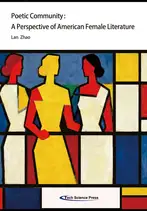
Authored by: Lan Zhao
ISBN: 979-8-9989030-4-5 (Hbk)
ISBN: 979-8-9989030-1-4 (PDF)
https://doi.org/10.32604/books979-8-9989030-1-4
Review Mode
This monograph has been reviewed by two (or more) external single-blind reviewers. The opinions expressed in the book do not reflect the view of the publisher.
Summary
Poetic Community: A Perspective of American Female Literature reimagines American women’s writing as a luminous continuum, where imagination, ethical inquiry, and technological insight intertwine. Traversing the layered histories of the American South, the book illuminates how writers—from Flannery O’Connor’s grotesque yet transcendent moral vision, Eudora Welty’s meticulous ethnographies of domestic life, Alice Walker’s womanist reclamation of voice, Carson McCullers’s haunting portraits of marginality and Gothic solitude, to Anne Tyler’s intricate domestic poetics and relational architectures, and Jesmyn Ward’s impassioned narratives of ecological justice and racial resilience—reshape the inherited edifices of gender, culture, and space into vibrant, ethically charged communities. They reveal how aesthetic form, narrative imagination, and social consciousness converge, intertwine, and resonate across time, space, and tradition.
At the heart of the study lies a sustained integration of digital humanities. Here, poetic community emerges not only as thematic aspiration but as methodological enactment: computational tools, corpus-based analyses, and network modeling unveil patterns of voice, dialogue, and spatial relation otherwise veiled to conventional reading. Chapters Two through Four focus on Anne Tyler, where fiction constructs subtle architectures of kinship, care, and domestic space, maps relational networks, choreographs social rhythms, and reveals the intimate choreography of everyday life. Digital modeling illuminates gendered conversational dynamics, narrative textures, and relational intricacies, preserving ethical fidelity and hermeneutic sensitivity. Chapter Five frames computation explicitly as a feminist lens, extending understanding, amplifying nuance, and deepening interpretive engagement without displacing literary insight.
Concluding chapters extend these threads into transnational and comparative perspectives, showing how Southern women’s literature resonates with global feminist discourses on empathy, resilience, repair, and ethical imagination. By weaving historical scholarship, thematic analysis, and digital methodologies, “Poetic Community” presents literature as archive and instrument, memory and imagination, repository and horizon—an ongoing exploration of how American women writers continually redefine relation, identity, and community, charting luminous avenues for communal imagination, ethical reflection, and narrative innovation in the digital age.

 Login
Login Register