
 Login
Login Register
 Submit a Paper
 Propose a Special lssue
 Open Access
ARTICLE
A Fuzzy Multi-Objective Framework for Energy Optimization and Reliable Routing in Wireless Sensor Networks via Particle Swarm Optimization
1 Department of Computer Science, College of Computer and Information Sciences, Jouf University, Sakaka, 72341, Aljouf, Saudi Arabia
2 Department of Computer Engineering and Networks, College of Computer and Information Sciences, Jouf University, Sakaka, 72341, Aljouf, Saudi Arabia
3 Faculty of Artificial Intelligence, Kafrelsheikh University, Kafrelsheikh, 33516, Egypt
4 Faculty of Computer Science & Engineering, New Mansoura University, Gamasa, 35712, Egypt
* Corresponding Author: Medhat A. Tawfeek. Email:
Computers, Materials & Continua 2025, 83(2), 2773-2792. https://doi.org/10.32604/cmc.2025.061773
Received 03 December 2024; Accepted 07 March 2025; Issue published 16 April 2025
 View Full Text
 Download PDF
Abstract
Wireless Sensor Networks (WSNs) are one of the best technologies of the 21st century and have seen tremendous growth over the past decade. Much work has been put into its development in various aspects such as architectural attention, routing protocols, location exploration, time exploration, etc. This research aims to optimize routing protocols and address the challenges arising from conflicting objectives in WSN environments, such as balancing energy consumption, ensuring routing reliability, distributing network load, and selecting the shortest path. Many optimization techniques have shown success in achieving one or two objectives but struggle to achieve the right balance between multiple conflicting objectives. To address this gap, this paper proposes an innovative approach that integrates Particle Swarm Optimization (PSO) with a fuzzy multi-objective framework. The proposed method uses fuzzy logic to effectively control multiple competing objectives to represent its major development beyond existing methods that only deal with one or two objectives. The search efficiency is improved by particle swarm optimization (PSO) which overcomes the large computational requirements that serve as a major drawback of existing methods. The PSO algorithm is adapted for WSNs to optimize routing paths based on fuzzy multi-objective fitness. The fuzzy logic framework uses predefined membership functions and rule-based reasoning to adjust routing decisions. These adjustments influence PSO’s velocity updates, ensuring continuous adaptation under varying network conditions. The proposed multi-objective PSO-fuzzy model is evaluated using NS-3 simulation. The results show that the proposed model is capable of improving the network lifetime by 15.2%–22.4%, increasing the stabilization time by 18.7%–25.5%, and increasing the residual energy by 8.9%–16.2% compared to the state-of-the-art techniques. The proposed model also achieves a 15%–24% reduction in load variance, demonstrating balanced routing and extended network lifetime. Furthermore, analysis using p-values obtained from multiple performance measures (p-values < 0.05) showed that the proposed approach outperforms with a high level of confidence. The proposed multi-objective PSO-fuzzy model provides a robust and scalable solution to improve the performance of WSNs. It allows stable performance in networks with 100 to 300 nodes, under varying node densities, and across different base station placements. Computational complexity analysis has shown that the method fits well into large-scale WSNs and that the addition of fuzzy logic controls the power usage to make the system practical for real-world use.Keywords
Abbreviations
| WSN | Wireless Sensor Network |
| PSO | Particle Swarm Optimization |
| ACO | Ant Colony Optimization |
| ABC | Artificial Bee Colony |
| DRL | Deep Reinforcement Learning |
| EGA | Enhanced Genetic Algorithm |
| SNR | Signal-to-Noise Ratio |
| LQI | Link Quality Indicator |
| BER | Bit Error Rate |
| PDR | Packet Delivery Ratio |
A wireless sensor network (WSN) is a critical tool for studying and interacting with the physical world. As illustrated in Fig. 1, a sensor network typically comprises numerous small sensor nodes. Each sensor node contains one or more sensing components to sense environmental factors such as temperature, humidity, and pressure. It also contains a processing component to perform simple basic operations on the data and communicate with its neighboring nodes. Sensor nodes are distributed over a large area and communicate with each other via wireless links [1]. Control nodes called base stations process the data collected from sensor nodes, collect control commands for sensor nodes, and connect this network to other networks such as the Internet. The base station forms the core of WSN. It implements various programs ranging from critical signal processing and routing protocol configuration to application programs. Sensor nodes are typically deployed randomly and then form a sensor network in an ad hoc manner to perform specific tasks. There is usually no infrastructure support for WSNs [2].

Figure 1: The architecture of WSN communication
A large number of applications based on WSNs have emerged and been deployed in different geographical areas such as scientific exploration, military surveillance, traffic monitoring, marine surveillance, environmental protection, object tracking, and other valuable applications. So it is natural to talk about special cases in WSN, which usually include sensor node failure or communication failure due to power outages [3]. Besides, there are many other problems that they suffer from such as low reliability of wireless communication systems, how to balance the loads on the available nodes, limited available power, and instability of nodes. These limitations are mainly caused by the limited resources of sensor nodes and the variability of network scenarios. Solving such problems requires the development of new routing protocols that improve energy utilization, network lifetime, load balancing, and reliability [4,5]. Numerous research studies have been conducted to explore various optimization algorithms aimed at addressing the challenges associated with WSNs. Routing strategies can be classified into two categories, namely the traditional approach and the swarm intelligence-based approach. Previously implemented techniques such as Low Energy Adaptive Clustering Hierarchy (LEACH) work on the hierarchical clustering algorithm to improve the network lifetime problem by using balanced power distribution [6]. These techniques have been useful in static, small, and less tangled environments. However, they suffer from obvious drawbacks when applied to dynamic or large networks. Swarm intelligence techniques are known to enhance flexibility and increase throughput in wireless sensor networks, which will be reviewed here. These techniques have been useful in small, less tangled, and static environments, but they have obvious drawbacks when applied to dynamic or large networks. Swarm intelligence techniques are known to enhance flexibility and increase throughput in wireless sensor networks, which will be reviewed here. In 2015, Umadevi et al. applied ACO to optimize the placement of sensor nodes in an attempt to achieve the best possible stability of the overall network and reduce path failures [7]. Similarly, in 2016, Mohajerani et al. also used ACO in wireless sensor networks to extend the network lifetime by prioritizing paths with the highest remaining energy [8]. A fault-tolerant routing based on PSO has been proposed to increase the reliability of the network architecture, showing great compatibility with WSNs [9]. An improved genetic algorithm is used to select an energy-efficient multi-hop path, showing significant improvements in network lifetime and energy utilization [10]. Similarly, a chaotic genetic algorithm is introduced for clustering and routing, which effectively balances the energy consumption across nodes while enhancing load balancing [11]. An improved ABC algorithm has been used to improve data transmission in power-constrained WSN environments [12]. The multipath adaptive routing techniques discussed in [13] use genetic algorithms to find reliable multiple paths with higher data throughput and fault tolerance. A new DRL routing protocol for WSNs has been proposed in [14]. This approach improves the traditional decision-making approach because it adapts to changes in network conditions. A PSO-based routing protocol was proposed in [15] to achieve better energy efficiency and load balancing by dynamically adjusting routing decisions. A dynamic routing algorithm based on distributed neural networks has been developed to increase the flexibility and energy saving in different WSNs [16]. To alleviate the packet reordering problem in lossless data centers, an innovative load balancing method that encapsulates intra-network recirculation has been proposed to improve network performance and availability [17]. Thus, the development of new efficient heuristic techniques, including techniques based on combining swarm intelligence, machine learning, and adaptive techniques that mimic natural processes, has been shown to improve both the convergence rate and solution quality of more complex optimization problems in recent years [18]. A self-healing path approach was proposed in [19] to enhance fault tolerance in WSNs. This approach is based on a path selection method that changes its path in case of a node or some links that pose a hindrance to communication processes. A new ACO-based routing protocol specifically designed for WSNs in the IoT environment is presented in [20].
Based on these works, the proposed study presents a PSO-fuzzy algorithm specifically designed for WSNs. Unlike ACO, genetics and DRL deal with one or two objectives and face problems such as slow convergence or high resource consumption. For example, adaptive DRL protocols exhibit some slow convergence in the training process, which is time-consuming. Also, using a different number of nodes or changing the spatial configuration also requires retraining the DRL model, which is computationally expensive. Although ACO is effective at optimizing a single objective, it has difficulty managing multiple conflicting objectives. It requires separate heuristics for different objectives, which can lead to inefficiency. The combination of PSO and fuzzy in the proposed PSO-fuzzy directly addresses these issues. PSO can converge faster without the need for prolonged training. Fuzzy logic is incorporated to guide particle updates, dynamic weight adjustment, and multiple fitness evaluations to optimize routing. These improvements address multiple conflicting objectives together in a single protocol, which were missing in previous studies. The proposed routing method is designed to achieve operational gains in case of minor failure of some of its components, especially in hard-to-reach environments.
The rest of this paper is organized as follows: Section 2 outlines the mathematical modeling of the problem, including the formulation of all objectives and the fuzzy system along with its membership functions. Section 3 provides the methodology in detail. Section 4 describes the experimental setup, simulation environment, and parameter settings, followed by an analytical study of the results. Finally, the conclusions of this study and future trends are stated in Section 5.
This section presents the mathematical model for routing optimization in WSNs based on multiple objectives, including minimizing the path length, reducing energy consumption, maximizing routing reliability, and achieving load balancing. Together, these objectives aim to reduce node failure and connectivity loss. Consider a WSN comprising a certain number of sensor nodes (NoS). Each node X ∈
Network connections (C) represented by Eq. (2) are defined as a measure of the number of active sensors that can communicate within the network. In fully connected networks, it is necessary to achieve at least one path between sensors to ensure data flow between them.
where C represents the WSN connections, S is the sensor node,
where 1 indicates connections between two sensors, while 0 indicates no connection between them.
2.1 Formulating the Main Objectives Mathematically
Reducing power consumption remains a critical concern in WSNs, as the majority of sensor nodes rely on limited battery power. It has been observed that edge nodes, which forward or broadcast messages, as well as those positioned within efficient network architectures, tend to consume more energy. Consequently, these nodes experience significant battery degradation, increasing the likelihood of network failures and reducing duty cycles. The energy consumption of a sensor node i is denoted as
where
From Eqs. (4) and (5), which quantify energy consumption, we establish a foundation for evaluating the energy efficiency of WSNs, as well as for designing and comparing more energy-efficient network configurations. To achieve efficient energy utilization, equal energy consumption should be achieved by all nodes. Therefore, the next goal is to reduce the variation in energy demand across sensor nodes to promote equal energy utilization across the network using Eq. (6).
where
To improve routing efficiency, choosing the shortest path to use for data transmission is always vital. This effectively addresses the issues of power drain and latency. Eq. (8) calculates the total path distance.
where
The performance related to routing reliability is essential for the ability of data packets to pass through the network from source nodes to the base station or sink. The quality of service in WSN applications is directly determined by this metric which is measured by Eqs. (9) and (10).
where R is the total path reliability,
The product Π represents the probability of a path’s reliability based on the reliability of each link within it. The reliability of a link depends on sundry factors. Key factors include a signal-to-noise ratio (SNR), Link Quality Indicator (LQI), Bit Error Rate (BER), Packet Delivery Ratio (PDR), and Residual Energy of Nodes (REN). REN represents the remaining energy of the transmitting and receiving sensors in the link. The link constructed from node to node has more reliability if the sensor node has high residual energy [21].
2.2 Fuzzy Multi-Objective Model Formulation
Fuzzy multi-objective models have attracted increasing attention in the recent past due to their suitability for dealing with the complexities of uncertain and multi-objective problems. These models use the concept of fuzzy logic to address the ambiguity and imprecision present in a real-world system. In contrast to classical optimization techniques, multi-objective models under fuzzy theory are exceptionally efficient because they allow for degrees of membership in the criteria at hand [22]. Fig. 2 illustrates an example of three membership functions related to the “height” level. They indicate the level of activity of each input within a given fuzzy set. In particular, it places weights on the inputs, measures the degree of intersection between them, and determines the influence provided to generate the output response [23]. In this paper, multi-objective fuzzy models are used for a WSN routing protocol. When fuzzy logic and PSO are combined, several trade-offs can be analyzed and suitable solutions can be provided. The multi-objective fuzzy routing scheme aims to minimize energy consumption, balance load, maximize data transmission reliability, and find the shortest path. We employ fuzzy membership functions for each objective.

Figure 2: Three membership functions for “height” level
These functions enable the transition between different levels of the performance metrics, which provides flexibility together with stability in decision-making processes. Below, we present the mathematical model for each membership function, justify their selection, define their bounds, and explain how they are combined to guide optimization. The membership for the shortest path (
where
The membership for energy minimization (
where
The proposed PSO-fuzzy scheme enhances energy consumption in WSNs by prioritizing energy-efficient nodes and distributing energy consumption equitably among all nodes, particularly those with the least remaining energy. This is done using a fuzzy logic scheme that evaluates other parameters such as the potential remaining energy of any node, the distance to be traveled to make the connection, or the size of the data packet to be sent. Since energy-intensive nodes get a higher order in terms of paths, the overloading problem of low-energy nodes is solved, thus prolonging their life cycle. Therefore, providing energy in this more stable way means that they are ready to adapt to different conditions in the long run. Furthermore, the PSO mechanism continuously optimizes the path selection in energy aspects to ensure a reliable and sustainable selection of energy-efficient paths. The routing reliability membership function is given by Eq. (13). It is represented by a piecewise linear increasing function. This membership function would represent the logical progress toward the routing paths that have greater reliability. It prioritizes routes with higher reliability but without degrading the performance.
where
The load balancing membership function is given by Eq. (14). It is represented as a routing reliability membership function. In this way, we can ensure that the load distribution across the nodes is essential and should not allow the formation of heterogeneous loads, which would cause premature failure within the system.
where
Table 1 summarizes the fuzzy membership functions in this study. Each membership function is designed to address a specific routing objective, allowing the proposed model to prioritize the optimal solutions to the WSN routing problem.

The proposed PSO-fuzzy uses fuzzy membership functions to improve routing by addressing four main objectives. Based on pre-defined thresholds, these functions determine satisfaction levels to optimize path selection and energy consumption to extend the network lifetime. The shortest path function ensures that the shortest paths are prioritized. The energy minimization function takes care of the energy-efficient nodes. The reliability membership function ensures reliable communication paths to eliminate the possibilities so that performance and data delivery are guaranteed. Finally, the load balancing function prevents traffic inequality that leads to network node failure and premature node failure. The overall fuzzy score
where
These weights should be chosen based on considerations of the level of importance of each objective. This would add more flexibility due to the difference in application needs to create suitable solutions. The above overall fuzzy score that integrates the contribution of all objectives follows the following fuzzy logic rule.
IF path length is Low, path energy consumption is Low AND
Consequently, the defuzzification process identifies the best solution from the aggregated results. The solution that achieves the highest overall satisfaction in terms of power, reliability, shortest path, and load distribution with the fewest faults is selected. This fuzzy score leads to a more flexible and dynamic decision-making process that is appropriate in the many different WSN settings.
This section introduces the process of using the PSO algorithm in conjunction with a fuzzy multi-objective system. It includes a description and modification of the PSO algorithm, the inclusion of fuzzy logic control, and a general analysis of the computational requirements. Fig. 3 depicts the velocities and positions of the PSO algorithm. Each particle in the PSO algorithm consists of a position and a velocity coming from the decision space that determines the direction of the particle’s flight. At each iteration, the particle moves from one position to another within the space in its search for the best solution. The two parameters used in PSO are the global best solution (

Figure 3: Velocities and positions of the PSO algorithm
The velocity of a particle in the flock is scaled concerning the distance to the destination point. This velocity is supported using the relationship shown in Eq. (16).
where
After that, each particle jumps to a new position in the search space depending on the calculated velocity as shown in Eq. (17). Such repeated exploration and exploitation occurrence allows particles to obtain better solutions.
where
Fig. 4 shows the pseudo-code of the proposed multi-objective PSO-fuzzy to improve routing for WSNs that rely on several routing objectives.

Figure 4: Pseudo-code of the proposed multi-objective PSO-fuzzy model
First, the WSN is initialized with

Figure 5: Pseudo-code of the proposed routing module
The complexity analysis of the proposed routing module, shown in Fig. 5, can be explained by studying the pseudo-code. The complexity can be divided into two phases: initialization and iterative optimization. In the initialization phase, in order to exclude a failed node, (
Some of the limitations when using the fuzzy PSO model in real-time include: computational time delay and environmental variability. The delays are inherent in the computation of the underlying PSO algorithm which often requires multiple iterations. This can be compensated for either by using concurrent computing or simply running the model on a boosted computing device. Fuzzy contributes to overcoming the challenge of unpredictability. There are inherent physical limitations of sensor nodes including limited memory capacity and computing power. Hence, relatively low-complexity and energy-efficient algorithms should be used which are addressed by the proposed fuzzy PSO model.
The simulation environment of NS-3 in [24,25] was designed to evaluate the performance of the proposed PSO-fuzzy model in various WSN scenarios. Tables 2 and 3 summarize the environmental settings of the NS-3 simulation and PSO parameters. The network topology used in the simulation of this model is a grid where nodes are placed at equal distances and in equal numbers to achieve connectivity across the area of interest. Node densities are set as medium and high as a way to create variation in scalability and performance. In the traffic scenario, both constant bit rate and variable bit rate sources are used to simulate a wide range of traffic characteristics for connectivity requirements.
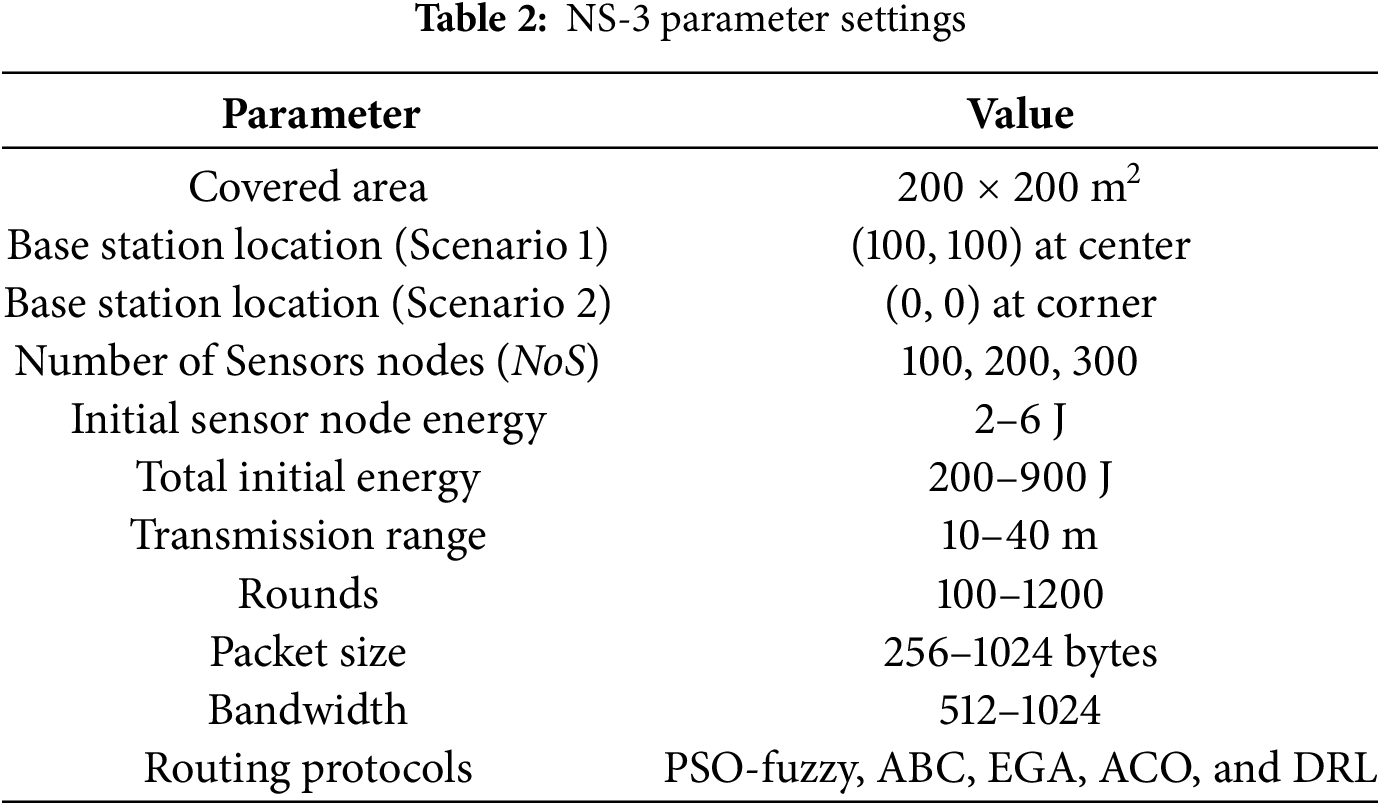

The simulation settings in Table 2, include a covered area of 200 × 200 m2, with two base station placement scenarios: centrally located at (100, 100) and at the corner in (0, 0). The central base station is particularly suitable in the agricultural sector where many sectors use sensor nodes to measure variables such as humidity, temperature, and moisture. In particular, a central base station allows the data received from all nodes to be collected and reduces the timing delay and energy consumption of the entire network. Essentially, this format allows for precision agriculture by ensuring that the large distance for data transmission to the base station is optimized. In urban environments, the central base station may operate nodes that will track various parameters including traffic flow. The distribution of nodes will be uniform and the reduction in energy consumption makes the system more sustainable and responsive. Sometimes, it may be necessary to place a base station in the corner to reduce exposure to hazardous areas due to physical security needs during natural disasters. Although this design is physically reasonable, it makes the power consumption of the remote nodes high.
The proposed PSO-fuzzy model will be demonstrated to work successfully on these two different network topologies. The network contains 100 to 300 sensor nodes with an initial energy of 2 to 6 J per node and a total initial energy of 200 to 900 J. The transmission range ranges between 10 and 40 m with the rounds between 100 and 1200. Various routing protocols such as PSO-fuzzy, ABC, EGA, ACO, and DRL are tested and evaluated. The selected parameters for the proposed PSO-fuzzy in Table 3 are as follows. The swarm size is therefore between 50 and 150 with the maximum iteration count of
• Real-time applications should have a higher λ3 weight to ensure network reliability.
• Energy-Constrained Networks should have a higher λ2 weight to prioritize energy conservation.
• Long-lifetime networks increase the weights of λ2 and λ4 to ensure that the network does not suffer from premature node failure or energy drain.
• General Purpose Networks assign equal weights to
So, we assume that

Figure 6: Network Lifetime metric of the proposed PSO-fuzzy vs. four other methods in scenario 1

Figure 7: Network lifetime metric of the proposed PSO-fuzzy vs. four other methods in scenario 2
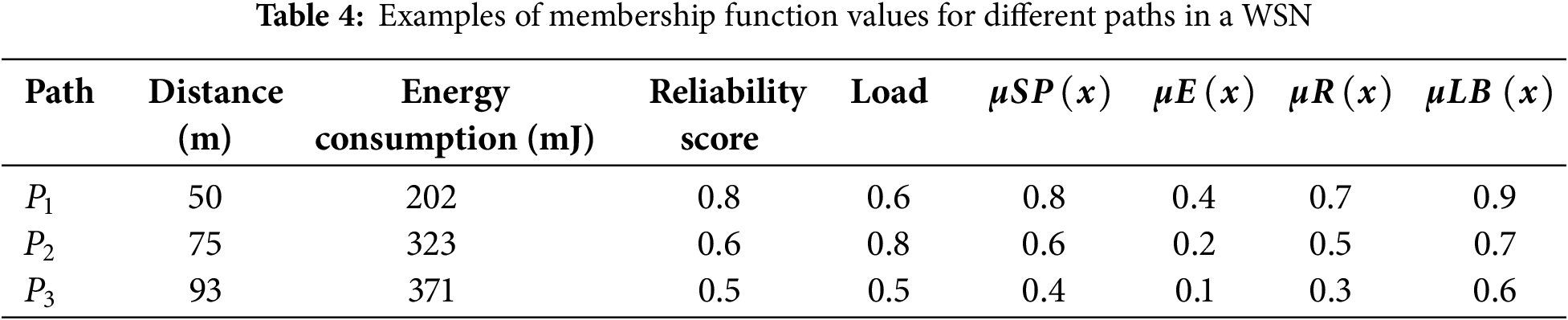
Table 4 summarizes the computed values of
The stabilization time for the two scenarios is illustrated in Figs. 8 and 9 shows how long all nodes of the network will perform without energy exhaust. The proposed PSO-fuzzy algorithm significantly outperforms the other methods in terms of maximum stability time where up to 1000 cycles are realized with 100 sensors and also high efficiency when network size is increased.
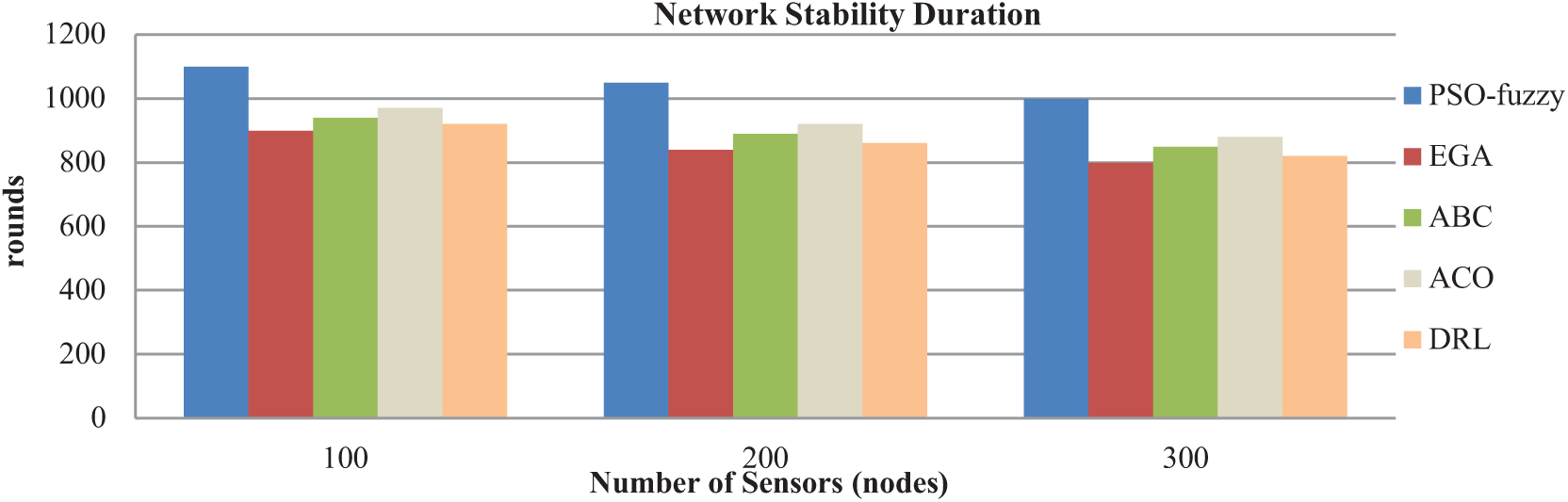
Figure 8: Stabilization time measurement of scenario 1

Figure 9: Stabilization time measurement of scenario 2
Figs. 10 and 11 summarize the total remaining energy for the two scenarios. Each figure contains three charts clarifying the remaining energy levels for networks with 100, 200, and 300 nodes, respectively.

Figure 10: The total residual energy measurement for scenario 1. (A) WSN with 100 sensors. (B) WSN with 200 sensors. (C) WSN with 300 sensors

Figure 11: The total residual energy measurement for scenario 2. (A) WSN with 100 sensors. (B) WSN with 200 sensors. (C) WSN with 300 sensors
This metric can be used to gain an understanding of the energy consumption patterns of network protocols and to estimate the remaining lifespan of the network. In the initial round, each algorithm begins with the same total available energy for a specified number of sensors reducing the impact of energy differences between algorithms in the evaluation of the energy consumption patterns during the construction of the network. In terms of energy consumption, the PSO-fuzzy algorithm shows better performance than other algorithms.
Figs. 12 and 13 illustrate the standard deviation of load for the two scenarios. It is possible to observe an increase in standard deviations as the rounds continue in two scenarios, due to the decreasing balance in energy levels and workload distribution between nodes over time. The proposed PSO-fuzzy model demonstrates significant advantages over the four compared methods (ABC, EGA, ABC, and DRL). Although ABC and ACO are widely used optimization algorithms for path finding and energy utilization in wireless sensor networks, their effectiveness decreases while working with multiple conflicting objectives.

Figure 12: The standard deviation of the load for scenario 1

Figure 13: The standard deviation of the load for scenario 2
ABC and ACO often select one or two objectives. They only deal with energy efficiency in routing without any decision-making capability for reliability and load balancing in a dynamic environment. Similarly, EGA enhances multi-hop routing but lacks the multi-objective adaptability that the proposed method relies on. Conversely, Deep Reinforcement Learning (DRL) for policy-based methods is a moderate method for learning the best approaches and choices to make regarding decision-making problems, but it entails a large number of samples and computational costs. On the other hand, the routing method applies a framework of PSO, which is in fact, more efficient in terms of offering a more straightforward approach to achieve the real-time balance of multiple goals. In general, the proposed routing method demonstrates the best performance in terms of various measurements compared to other algorithms.
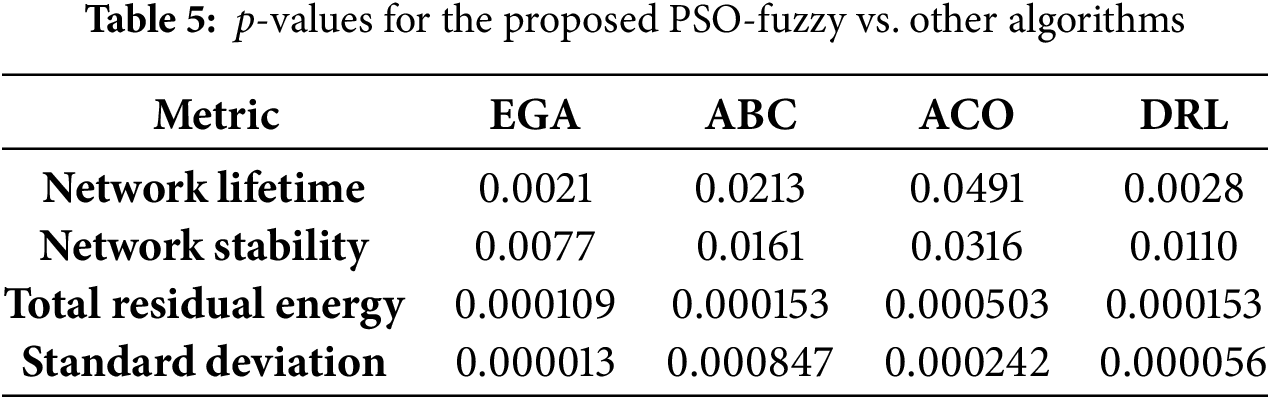
Table 5 presents the p-values for the comparative performance of the proposed PSO-fuzzy vs. the EGA, ABC, ACO, and DRL algorithms across four key metrics. Lower p-values (typically less than 0.05) indicate significant differences between the proposed PSO-fuzzy and the respective algorithms in the given metrics. Table 5 demonstrates that the proposed PSO-fuzzy algorithm exhibits statistically significant improvements in most of the evaluated metrics compared to the other algorithms. This suggests that PSO-fuzzy is a promising approach for optimizing WSN performance in terms of lifetime, stability, energy efficiency, and load balancing.
It is pertinent to mention that based on all the comparisons, the decision-making process in the proposed PSO-fuzzy model involves and benefits from the adaptive integration of multiple objectives in WSN to monitor the environment. For example, when sensor nodes need to send data to a central node with certain objectives, the model uses fuzzy logic to summarize several fuzzy variables and calculate their membership values. These values are then combined until a distinct path that addresses the desired objectives is chosen. For example, there may be two paths that are equally energy efficient but have different degrees of reliability. In this case, the model will prioritize reliability. This decision is then optimized by PSO which runs along the selected path and provides the best solution through an iterative system. The proposed fuzzy PSO framework shows great real-world relevance in extreme potential situations, e.g., disaster relief, and environmental conservation. It is best suited where there is dynamism and where the solution must include variables within the emergency environment. In disaster recovery, it determines the resource efficiency of environmental monitoring and how to manage the energy required to support a long-term wireless sensor network. The fuzzy logic component allows for handling changing priorities or unexpected conditions. These capabilities have proven effective in a range of simulation tests such as lifetime, stability, etc. These results qualify the model to respond to various real-time applications such as fire monitoring, autonomous driving systems, etc.
This paper proposes a comprehensive solution for routing optimization in WSNs by combining PSO and a multi-objective fuzzy framework. A mathematical model of multi-objective and fuzzy systems in WSNS is presented. The proposed model successfully addresses critical challenges, including minimizing energy consumption, shortest path, maximizing routing reliability, and achieving load balancing to ensure reduced node failure and communication loss. Simulation results show that the proposed PSO-fuzzy model can outperform other techniques using different criteria in energy efficiency metrics, load standard deviation, network lifetime, and routing stability.
For future work, the proposed multi-objective PSO-fuzzy model will be tested using more advanced algorithms and other metrics. Case studies simulating real-world environments such as flood response operations and urban pollution tracking can be validated to verify the model’s adaptability to complex and evolving conditions. This helps to demonstrate the potential of the proposed model to enhance operational efficiency and decision-making in these real-world domains. IoT-enabled WSN technologies can also be used to demonstrate their applicability. Other optimization methods can be combined with PSO to enhance the scalability and convergence factors of the result.
Acknowledgement: This work was funded by Deanship of Graduate studies and Scientific Research at Jouf University.
Funding Statement: This work was funded by Deanship of Graduate studies and Scientific Research at Jouf University under grant No. (DGSSR-2023-2-02038).
Author Contributions: The authors confirm contribution to the paper as follows: study conception and design: Medhat A. Tawfeek; analysis and interpretation of results: Madallah Alruwaili; manuscript preparation and writing: Ibrahim Alrashdi; programming: Fatma M. Talaat. All authors reviewed the results and approved the final version of the manuscript.
Availability of Data and Materials: The authors confirm that the data supporting the findings of this study are available within the article.
Ethics Approval: Not applicable.
Conflicts of Interest: The authors declare no conflicts of interest to report regarding the present study.
References
1. Kingston Roberts M, Ramasamy P, Dahan F. An innovative approach for cluster head selection and Energy Optimization in wireless sensor networks using Zebra Fish and Sea Horse Optimization techniques. J Ind Inf Integr. 2024;41(4):100642. doi:10.1016/j.jii.2024.100642. [Google Scholar] [CrossRef]
2. Savithri G, Sai NR. Dynamic deep learning for enhanced reliability in wireless sensor networks: the DTLR-net approach. Comput Mater Contin. 2024;81(2):2547–69. doi:10.32604/cmc.2024.055827. [Google Scholar] [CrossRef]
3. Roberts MK, Thangavel J, Aldawsari H. An improved dual-phased meta-heuristic optimization-based framework for energy efficient cluster-based routing in wireless sensor networks. Alex Eng J. 2024;101(1):306–17. doi:10.1016/j.aej.2024.05.078. [Google Scholar] [CrossRef]
4. Nanthini S, Nithya Kalyani S, Sengan S. Energy efficient clustering protocol to enhance network lifetime in wireless sensor networks. Comput Mater Contin. 2021;68(3):3595–614. doi:10.32604/cmc.2021.015038. [Google Scholar] [CrossRef]
5. Zhang Z, Zhao H, Yao X, Xing Z, Liu X. Metro timetable optimization for improving regenerative braking energy utilization efficiency. J Clean Prod. 2024;450(1):141970. doi:10.1016/j.jclepro.2024.141970. [Google Scholar] [CrossRef]
6. Palan NG, Barbadekar BV, Patil S. Low energy adaptive clustering hierarchy (LEACH) protocol: a retrospective analysis. In: 2017 International Conference on Inventive Systems and Control (ICISC); 2017 Jan 19–20; Coimbatore, India. p. 1–12. doi:10.1109/ICISC.2017.8068715. [Google Scholar] [CrossRef]
7. Umadevi M, Devapriya M. An enhanced ant colony-based approach to optimize the usage of critical node in Wireless Sensor Networks. Procedia Comput Sci. 2015;47(2):452–9. doi:10.1016/j.procs.2015.03.229. [Google Scholar] [CrossRef]
8. Mohajerani A, Gharavian D. An ant colony optimization based routing algorithm for extending network lifetime in wireless sensor networks. Wirel Netw. 2016;22(8):2637–47. doi:10.1007/s11276-015-1061-6. [Google Scholar] [CrossRef]
9. Abba S, Lee JA. Bio-inspired self-aware fault-tolerant routing protocol for network-on-chip architectures using Particle Swarm Optimization. Microprocess Microsyst. 2017;51(6):18–38. doi:10.1016/j.micpro.2017.04.003. [Google Scholar] [CrossRef]
10. Al-Shalabi M, Anbar M, Wan TC, Alqattan Z. Energy efficient multi-hop path in wireless sensor networks using an enhanced genetic algorithm. Inf Sci. 2019;500(3):259–73. doi:10.1016/j.ins.2019.05.094. [Google Scholar] [CrossRef]
11. Wang C, Liu X, Hu H, Han Y, Yao M. Energy-efficient and load-balanced clustering routing protocol for wireless sensor networks using a chaotic genetic algorithm. IEEE Access. 2020;8:158082–96. doi:10.1109/ACCESS.2020.3020158. [Google Scholar] [CrossRef]
12. Wang Z, Ding H, Li B, Bao L, Yang Z. An energy efficient routing protocol based on improved artificial bee colony algorithm for wireless sensor networks. IEEE Access. 2020;8:133577–96. doi:10.1109/ACCESS.2020.3010313. [Google Scholar] [CrossRef]
13. Wang S. Multipath routing based on genetic algorithm in wireless sensor networks. Math Probl Eng. 2021;2021(2):4815711. doi:10.1155/2021/4815711. [Google Scholar] [CrossRef]
14. Zhang A, Sun M, Wang J, Li Z, Cheng Y, Wang C. Deep reinforcement learning-based multi-hop state-aware routing strategy for wireless sensor networks. Appl Sci. 2021;11(10):4436. doi:10.3390/app11104436. [Google Scholar] [CrossRef]
15. Ghawy MZ, Amran GA, AlSalman H, Ghaleb E, Khan J, AL-Bakhrani AA, et al. An effective wireless sensor network routing protocol based on particle swarm optimization algorithm. Wirel Commun Mob Comput. 2022;2022(17):8455065. doi:10.1155/2022/8455065. [Google Scholar] [CrossRef]
16. Hu J, He Y, Luo W, Huang J, Wang J. Enhancing load balancing with in-network recirculation to prevent packet reordering in lossless data centers. IEEE/ACM Trans Netw. 2024;32(5):4114–27. doi:10.1109/TNET.2024.3403671. [Google Scholar] [CrossRef]
17. Liu Z, Liu Y, Wang X. Intelligent routing algorithm for wireless sensor networks dynamically guided by distributed neural networks. Comput Commun. 2023;207(6):100–12. doi:10.1016/j.comcom.2023.05.018. [Google Scholar] [CrossRef]
18. Taheri A, RahimiZadeh K, Beheshti A, Baumbach J, Rao RV, Mirjalili S, et al. Partial reinforcement optimizer: an evolutionary optimization algorithm. Expert Syst Appl. 2024;238(3):122070. doi:10.1016/j.eswa.2023.122070. [Google Scholar] [CrossRef]
19. Guo C, Su M, Cui F. A route self-repair method for wireless sensor networks. In: Proceedings of the 2024 International Conference on Computer and Multimedia Technology; 2024 May 24–26; Sanming, China. p. 129–34. doi:10.1145/3675249.3675273. [Google Scholar] [CrossRef]
20. Han H, Tang J, Jing Z. Wireless sensor network routing optimization based on improved ant colony algorithm in the Internet of Things. Heliyon. 2024;10(1):e23577. doi:10.1016/j.heliyon.2023.e23577. [Google Scholar] [PubMed] [CrossRef]
21. Harinisree R, Nagaraj R. LQI-per-based range adaptation for enhanced communication range in wireless networks. J Namib Stud Hist Politics Cult. 2023;33:5127–46. [Google Scholar]
22. Lodwick AW, Elizabeth AAU. Fuzzy optimization. In: Granular, fuzzy, and soft computing. New York, NY, USA: Springer US; 2023. p. 755–91. [Google Scholar]
23. Alsini RA, Tawfeek MA. Power consumption and temperature minimization in cloud computing. IOSR J Eng. 2017;7(3):49–62. doi:10.9790/30210-0703014960. [Google Scholar] [CrossRef]
24. Lavacca FG, Salvo P, Costantini L, Mammi E, Pompei S, Rea L, et al. Studying and simulation of a NS3 framework towards a 5G complete network platform. In: 2019 International Workshop on Fiber Optics in Access Networks (FOAN); 2019 Sep 2–4; Sarajevo, Bosnia and Herzegovina. p. 62–7. doi:10.1109/foan.2019.8933704. [Google Scholar] [CrossRef]
25. NS-3 simulation, [cited 2022 May 1]. Available from: https://www.nsnam.org/releases/ns-3-40/. [Google Scholar]
26. Rahmati V. Near optimum random routing of uniformly load balanced nodes in wireless sensor networks using connectivity matrix. Wirel Pers Commun. 2021;116(4):2963–79. doi:10.1007/s11277-020-07829-7. [Google Scholar] [CrossRef]
Cite This Article
 Copyright © 2025 The Author(s). Published by Tech Science Press.
This work is licensed under a Creative Commons Attribution 4.0 International License , which permits unrestricted use, distribution, and reproduction in any medium, provided the original work is properly cited.
 Downloads
 Citation Tools
