
 Login
Login Register
 Submit a Paper
 Propose a Special lssue
 Open Access
ARTICLE

Individual Software Expertise Formalization and Assessment from Project Management Tool Databases
1 Department of Automation and Applied Informatics, Politehnica University of Timisoara, V. Parvan 2, Timisoara, 300223, Romania
2 Department of Computer and Information Technology, Politehnica University of Timisoara, V. Parvan 2, Timisoara, 300223, Romania
* Corresponding Authors: Traian-Radu Ploscă. Email: ; Daniel-Ioan Curiac. Email:
(This article belongs to the Special Issue: Emerging Machine Learning Methods and Applications)
Computers, Materials & Continua 2026, 86(1), 1-23. https://doi.org/10.32604/cmc.2025.069707
Received 29 June 2025; Accepted 13 October 2025; Issue published 10 November 2025
 View Full Text
 Download PDF
Abstract
Objective expertise evaluation of individuals, as a prerequisite stage for team formation, has been a long-term desideratum in large software development companies. With the rapid advancements in machine learning methods, based on reliable existing data stored in project management tools’ datasets, automating this evaluation process becomes a natural step forward. In this context, our approach focuses on quantifying software developer expertise by using metadata from the task-tracking systems. For this, we mathematically formalize two categories of expertise: technology-specific expertise, which denotes the skills required for a particular technology, and general expertise, which encapsulates overall knowledge in the software industry. Afterward, we automatically classify the zones of expertise associated with each task a developer has worked on using Bidirectional Encoder Representations from Transformers (BERT)-like transformers to handle the unique characteristics of project tool datasets effectively. Finally, our method evaluates the proficiency of each software specialist across already completed projects from both technology-specific and general perspectives. The method was experimentally validated, yielding promising results.Keywords
In the context of today’s rapidly evolving technological landscape, the precise identification of software experts has become a critical factor when assembling effective development teams, improving productivity, and optimizing development timelines. However, it remains a core issue, especially in large companies where individual skills and contributions are not always visible.
Well-structured teams contribute to creating a collaborative and innovative work environment [1]. The traditional approach of finding experts through the human resources department is a time-consuming task that requires substantial resources from organizations [2]. Automatic software approaches can improve the detection of patterns and relationships that are often difficult to observe otherwise. This enables a more objective evaluation of the skills and experiences of team members. In addition, it can be continuously refined and adjusted as new data become available. This capacity for ongoing learning ensures that teams are consistently optimized to meet future needs and goals. Notable research works in this field include collaboration graphs from email lists [3], locating expertise within organizations through recommendation systems [4], and semi-automated methods for assessing expertise using Machine Learning (ML) techniques to analyze the types of bugs developers have resolved [5].
In this paper, we propose a method for evaluating the software specialists’ expertise by leveraging metadata from project management tools like Jira, Trello, Asana, and Azure DevOps. Our approach begins by formulating two mathematical models to evaluate specific technology expertise and general expertise. We then develop a technique that automatically identifies the relevant skills for each developer, using an ML model trained on labels extracted from the StackOverflow dataset and transferring the knowledge to the task-tracking tool dataset. This allowed us to profile developers across different technology stacks without the need for manual analysis of their tasks. We also estimate the task complexity based on metadata recorded by task-tracking tools, such as issue type, connections to other tasks, priority, number of comments, and story points, which enabled us to accurately assess the prior work of each software specialist. Finally, we calculate the expertise-related individual scores for each possible candidate for a team position.
Our contributions are as follows:
• We formalize two mathematical models to calculate specific technology-related expertise and generalized expertise of a software developer based on task metadata recorded by project management tools.
• We propose an automated method to identify the skills and programming languages associated with already-completed tasks using BERT-like models. We confirm that models trained on software engineering data are more efficient in identifying technical details than models trained on general language.
• In the experimental section, we validate the proposed system.
The rest of the paper is organized as follows. In Section 2, we provide an overview of the related work in the field. Section 3 describes the features that need to be extracted from project management tool databases to effectively formalize the expertise, as well as our mathematical models to evaluate technology-related and overall expertise. In Section 4, we present the proposed methodology in detail. Section 5 presents the experimental validation and discusses the results. In Section 6, we outline the main research implications of our work. Section 7 describes the threats to validity. Finally, we conclude with Section 8.
Previous research on identifying and assessing individual expertise has been focused on two specific areas. The first focus was placed on automatically identifying the skills and technologies related to a software specialist, while the second was centered on evaluating the level of expertise from available data.
2.1 Automatic Assessment of Programming Skills
Software engineering teams rely on project management tools to organize their day-to-day tasks. Generally, the tasks do not include metadata about the programming language or technology used. Although it is possible to manually add labels or tags to indicate the technologies, they are often omitted.
In this particular context, predicting team roles from available data can increase our understanding of workflows. In their pioneering study, Martens and Franke [6] demonstrated that machine learning techniques could be used to extract individual roles from software repositories. They classified team positions such as developer, architect, scrum master, product owner, and team manager based on data collected from task-tracking systems. This research highlights the potential of using machine learning to analyze existing software engineering data for role identification, which may improve team dynamics and resource allocation.
In our research, we are using StackOverflow and Jira datasets to understand and identify the technical skills of developers, based on multiple metrics. The use of StackOverflow data has already been studied for classification tasks. Alreshedy et al. [7] developed a Multinomial Naive Bayes classifier, named SCC, trained on StackOverflow posts to predict programming languages, which achieved an F1 accuracy score of 75%. In their newer study [8], they utilized an improved version called SCC++, built on top of XGBoost and the Random Forest algorithms, that achieved an accuracy of 88.9% across different programming languages.
A recent paper proposes the automatic classification of issues by their type, using large language models (LLMs), particularly GPT-like models [9]. Another study proposes CaPBug, a framework for automatically classifying bugs using machine learning techniques such as Multinomial Naive Bayes, Random Forest, Decision Trees, and Logistic Regression [10]. Though this framework outlines the task type, we aim to conduct a more in-depth analysis of the specific technology involved in the issue.
Another branch of research employs pre-trained models to improve the accuracy of source code comprehension. Karmakar and Robbes [11] compared several pre-trained models (i.e., BERT, CodeBERT, CodeBERTa, and GraphCodeBERT). Their findings indicate that GraphCodeBERT outperforms other models in coding tasks, while BERT performed well in some other instances. This suggests that models pre-trained solely on natural language can still capture some software engineering semantics. Moreover, one relevant study demonstrated that CodeBERT, when specifically trained on source code, outperforms natural language models like RoBERTa in detecting software errors [12]. The results show the importance of task-specific pre-training in improving code understanding. Our approach builds upon these findings by utilizing BERT-like models for tasks that involve both source code and natural language inputs, such as task descriptions. By combining specialized terminology with code examples, we aim to improve the accuracy of programming language classification.
Before the pre-trained models, classical natural language processing techniques predominated in code-related tasks. From this perspective, a relevant study utilized statistical models, including n-grams, skip-grams, and Multinomial Naive Bayes (MNB), to classify programming languages from code fragments within GitHub data [13]. Similarly, Odeh et al. [14] used MNB classifiers for automatic programming language detection, demonstrating their effectiveness in editors such as Visual Studio Code or Notepad+. The authors of [15] used Support Vector Machines (SVMs) to classify source code into programming languages, demonstrating that traditional machine learning techniques can successfully perform this kind of task.
Another relevant study uses Long Short-Term Memory (LSTM) networks to automatically classify programming languages, receiving increased accuracy compared to the MNB method [16]. However, as noted by the authors of [17], such methods still exhibit lower efficiency in the absence of a natural language description accompanying the code. Our work addresses this limitation by integrating textual context in the form of task descriptions and summaries alongside code fragments. By this, our approach enables more accurate classification compared to the methods that rely only on code.
This paper provides an improved model for identifying programming skills used in tasks from our previous study [18], increasing the F1 score and incorporating additional classification labels.
2.2 Data-Driven Expertise Level Assessment
Understanding the expertise of a developer depends on the type of task he has worked on. Wysocki et al. [19] introduced a new concept for classifying project tasks to optimize management support systems within the software engineering industry. Their work suggests the importance of task-related data and presents a classification method for categorizing tasks. Another similar study highlights the importance of metadata used to classify Jira tasks [20]. Here, the authors managed to automatically assign Jira issues to developers. They utilized Latent Dirichlet Allocation (LDA) to perform topic modeling on the Apache dataset. A mathematical method is proposed in [21], where the authors implement an expertise recommender based on task descriptions from Jira. They use the term frequency-inverse document frequency (tf-idf) method to recommend experts. In our study, we also focus on classifying expertise based on task categories utilizing the available metadata recorded by project management tools.
Two relevant studies highlight the benefits of systematically analyzing project repositories to obtain insights into software development processes [22,23]. They emphasize that issue tracking platforms contain rich metadata that can be mined to characterize developer activities and collaboration patterns. By utilizing this information, project monitoring can be improved, and behavioral trends among developers can be identified. Such insights provide a valuable foundation for our study to identify relevant attributes for assessing expertise.
Beyond software tools, an interesting method for identifying experts within the multisensor data fusion framework was proposed by Moreira and Wichert [24]. They define three sensors, each operating independently and presenting different candidates. The results from all sensors are combined using Shannon’s Entropy formula to produce a final list of experts.
In social networks, the authors of [25] propose a method for identifying social media application users who can offer professional answers to questions posed by other users. They create dynamic profiles for each user based on data obtained from social network applications, as well as other metrics such as user quality and trust, using mathematical methods. McLean et al. [26] expand expertise identification to organizations by using corporate data, more specifically documents, as evidence of expertise. They extract data from the web to create a profile for each user. This data is then used to calculate a score for each individual. ExpFinder is another expert recommender system that utilizes datasets from the academic field [27]. Here, the authors use both an N-gram vector space model and
Rather than concentrating solely on programming languages or bug categorization, we analyze a wider range of inputs, including communications, comments, and task metadata, to create a comprehensive algorithm for calculating the expertise-related scores of each developer.
3 Software Development Expertise Formalization
Individual expertise in the software development industry can be perceived from two different points of view:
(i) expertise in a specific technology, which indicates the level of in-depth knowledge and skills related to a specific area, such as Java programming, data science, database management, computer vision, cybersecurity, mobile development, WordPress, etc. This type of expertise is essential for solving specific technical tasks.
(ii) generalized expertise, which refers to a wide range of skills, knowledge, and experiences that are applicable across various fields. It encompasses a broad knowledge base and abilities such as analytical thinking, problem-solving, adaptability, creativity, flexibility, etc.
Both components are essential in building high-performing teams for new projects. Expertise in a specific area can enable the solving of complex problems, the application of best practices based on technicality, and the optimization of processes. Having solid experience in specific technologies is beneficial for working with the latest technologies and addressing industry requirements. On the other hand, generalized expertise can contribute to adaptability across various themes and integrate diverse knowledge to develop innovative solutions. It may allow professionals to work efficiently in interdisciplinary teams and understand the broader context of a project.
The two types of expertise can be evaluated from historical data stored in company databases. By analyzing tasks from past projects, organizations can evaluate the expertise level of their employees to make informed decisions when forming teams.
The first step in developing expertise models involves identifying the relevant fields within historical data that should be considered. Table 1 presents the relevant features (i.e., fields) we identified in this respect within four project management tools: Jira, Trello, Asana, and Azure DevOps. The first column presents the features, while each subsequent column indicates whether these fields are available in the respective project management tool. If the field name differs from the specified one, we provided the tool’s annotation for clarity.

We then modeled the expertise of a developer based on a set of carefully designed mathematical formulas that incorporate the various features we identified inside the issue-tracking tools. We specifically targeted information extracted from Jira, but the obtained expertise model can be easily adapted to other tools, including Trello, Asana, or Azure DevOps. These formulas consider key metrics such as task connections, the total number of task reopens, the size of the changelog, the number of comments exchanged between developers, the count of subtasks, the time spent on the issue, the task’s priority, and the technology or programming language utilized in the task. By analyzing these parameters, we aimed to classify the developers based on their expertise in a particular area as ‘novice’, ‘intermediate’, or ‘master’, and based on their general expertise as ‘junior’, ‘mid’, or ‘senior’.
3.1 Features Relevant to the Assessment of Expertise
We have identified nine features that may be used when formalizing the expertise of a developer. These features are underlined in Table 1 and briefly presented in Section 3.1. To maintain consistency across different scales, each value corresponding to these attributes will be normalized using a normalization method. We selected specific normalization methods best suited for the characteristics of each feature, but the approach is flexible and can support alternative normalization strategies.
The field Comments contains an array of JavaScript Object Notation (JSON) objects, each object storing information related to a comment between the developers involved in the given task. A higher number of comments may indicate increased task-related activity, and by this, a higher complexity. To express this variable, we used Eq. (1):
where
The Subtask field contains an array of JSON objects that encompasses information about the subtasks of the current task (e.g., ID, name, project ID, description, type), while Parent is a JSON object with information regarding the parent task. Analyzing the content of both the Subtask and Parent we devise the

Afterward, the
In this case, a proper selection is the min-max normalization function.
The Type field contains a string that describes the category of the task that, in our view, can be associated with a precise value of a complexity-related parameter, denoted by

The
a suitable choice in this regard being the min-max normalization.
The Priority field describes the urgency of a task using predefinite strings. Most projects use the following priority levels: none, low, medium, and high. These correspond to 0, 1, 2, and 3 priority-related values
In order to rescale the
where a suitable selection for the normalization function is the hyperbolic tangent, because a nonlinear scale might better reflect the escalating impact of the priority levels.
The Connections field is an array of JSON objects containing information about connected tasks or issues, such as issue links (e.g., the task is blocked by a specified task), parent-child relationships with other tasks, connections with external tools. The number of connections obtained by counting the number of JSON objects indicates the level of dependency other tasks have on the completion of task i. This integer, denoted by
In this case, an appropriate choice for the normalization function is min-max normalization.
The History field is an array of objects that records all changes made during task completion. We define a
where a suitable choice for the normalization function is the hyperbolic tangent.
From another perspective, a large number of updates or transitions recorded in the History field of a task indicates a higher complexity. In this context, we define a new complexity-related parameter, namely
where a proper selection is the sigmoid normalization function because it has a diminishing effect as it increases.
3.1.7 Time Spent & Story Points
Some projects enable time-tracking by allowing the developers to use the Time spent field. This field contains an integer that represents the total working time in seconds, which the developer logs while working on a task. To enhance clarity regarding the range, we convert the time spent to hours and denote this time parameter as
where the normalized value can be obtained using a sigmoid function.
Other projects utilize a story point methodology by recording the associated information in the Story point field. This field is an integer where a higher value assigned to a task may indicate a more complex task. In this case, we denote the complexity-related parameter as
A suitable selection of the normalization function is the min-max normalization.
We intend to devise formulas regarding the two facets of the developer’s expertise:
• Technology-specific expertise–refers to in-depth knowledge, skills, and experience within a specified field related to software development. Individuals recognized for such expertise are highly specialized in effectively solving problems within their domain by leveraging a deep understanding of complexities and nuances.
• Generalized expertise–covers a wide range of skills and knowledge spanning multiple technologies, rather than being confined to a single area. Professionals backed by such expertise excel at bridging ideas across fields, adapting to various contexts, and responding to problems with creative and flexible thinking.
Both these expertise forms can be assessed based on the developer’s historical performance within tasks previously recorded by project management tools.
In order to define the expertise, we introduce task complexity (TC) as a helping variable to capture the overall complexity of a task
where
3.2.2 Developer’s Technology-Specific Expertise
We aim to classify the developer’s level of expertise, denoted by TSEL (Technology-Specific Expertise Level) in three categories (i.e., novice, intermediate, and master), by considering both the number and complexity of tasks already completed and recorded in project management tool databases. Our proposed methodology is implemented in two steps: (i) finding the number of tasks corresponding to each category of task complexity that the developer had worked on; and (ii) assigning the developer’s level of expertise.
In the first step, we use a classic statistical approach to classify the tasks related to a given software technology in three categories, namely: easy, moderate, and complex. This approach groups the tasks based on how their complexity deviates from the mean [28], and starts by computing the mean
where
Then, each task
In the second step of the methodology we define the developer’s technology-specific expertise score
where
Finally, a developer can be classified as novice, intermediate, or master in the technology denoted by
where the thresholds
3.2.3 Developer’s Generalized Expertise
Our objective is to classify the developer’s overall expertise level, denoted by GEL (Generalized Expertise Level) in three categories (i.e., junior, mid, and senior), by considering two aspects, namely the average technology-related expertise score and the maximum technology-related expertise score.
In the first step, we calculate the developer’s technology-specific expertise scores
where p is the number of different technologies taken into consideration. It is noteworthy to mention that in order to have a clear perspective on the developer’s expertise, the number of technologies
The developer’s generalized expertise score is determined using Eq. (17)
where
Using the overall expertise score provided by (17), we classify a software specialist as junior, mid, or senior using two thresholds, namely
where the thresholds
The formation of competent software development teams or the replacement of existing members often depends on the ability to identify and utilize individual expertise. Within the teams, expertise is typically associated with different roles, such as junior, mid, and senior positions, each contributing at various stages of the software development process. However, role definitions are not always clearly stated in the project management tools, leading to challenges in team management and formation by the human resources team.
A significant challenge in this respect is identifying the skills and technologies associated with a software developer from recorded historical data. In order to achieve this, we have to classify the tasks a developer has worked on taking into consideration two different perspectives: (a) the technologies that were employed during task completion; and (b) the level of complexity the task has.
To determine the developer’s level of expertise in a given software technology or the overall expertise in the field, we have developed a carefully crafted methodology containing three stages that are presented in detail in the following Sections 4.1–4.3.
4.1 Stage 1: Identifying the Domains of Expertise from Project Management Tool Databases
Our methodology starts with identifying all software technologies that were employed during the completion of the tasks recorded by the project management tool database. The procedure, described in Fig. 1, utilizes Natural Language Processing (NLP) techniques (e.g., record filtering, field concatenation, transformer-based keyword extraction, knowledge transfer) to associate a software technology with each task, thereby providing a list of all previously used technologies.

Figure 1: Obtaining the set of technologies
The procedure starts with acquiring three fields corresponding to each task recorded in the database, namely ID, Title, and Description. The records containing at least one empty field are filtered out and, for the remaining records, the Title and Description string-type fields are concatenated. By using a carefully trained GraphCodeBERT model, we associate a single most relevant technology to each task. Finally, a list of previously employed technologies is output.
Details regarding the selection of the model to be employed in extracting the software technology from the task Title and Description (i.e., GraphCodeBERT) and its training process are provided in the following paragraph.
Finding the Best Model to Identify the Technologies
We have trained several ML models to better understand the programming languages and technologies relevant to each task a software developer has worked on in order to assess the expertise. The utilized models are: BERT—a bidirectional encoder that has been trained on diverse data [29]; ALBERT—builds on the BERT architecture to improve training speed while maintaining prediction performance [30]; RoBERTa—an optimized version of the BERT model [31]; CodeBERT—a variant of BERT that has been specifically improved for programming understanding [32]; GraphCodeBERT—further upgrades CodeBERT by utilizing data flow graphs [33]; and, XLNet—uses a different architecture and was introduced to compare the performance of BERT-like models against a different architectural approach in terms of prediction accuracy [34]. By doing this, we not only focused on programming-specific models such as CodeBERT and GraphCodeBERT, but we also explored the effectiveness of other general language models, including BERT-like models like BERT, RoBERTa, and ALBERT, as well as different architectures such as XLNet.
One of the main challenges we had to solve was to determine the type of classification the model has to face. There are two main classification methods: single-label and multi-label. The single-label classification can be categorized into binary and multi-class classification. In our case, binary classification, which involves selecting one result from two options, is not suitable because we have multiple possible outcomes. Therefore, we have to choose to focus on either multi-class classification, where we choose a single label from a set of tags, or on multi-label classification, where we can select multiple tags that fit the input [35]. By examining the records provided by the project management tools, since these records generally lead to single labels and the datasets are too imbalanced to be used for a multi-label classification, we concluded that a multi-class classification is more appropriate in our case.
Another challenge that has arisen is the imbalance of the dataset. Relevant studies recommend using the class weights method to address this problem [36,37]. Even with balanced datasets, there can still be discrepancies between certain labels. In this situation, we used the class weights technique to improve the precision of the classes that appear less frequently. Furthermore, we have incorporated a label smoothing methodology. As suggested by one study, we applied label smoothing to our models to make the labels more distinguishable [38].
To implement our study, we loaded the mentioned ML models using the Hugging Face Transformers library [39] and selected the cross-entropy loss function due to its effectiveness in multiclass classification tasks and the SoftMax activation function to convert the raw output into probabilities for each class. The models were then applied to a Stack Overflow dataset, described in detail in the following paragraphs, that was previously split as follows: 70% for training, 20% for validation, and 10% for testing. The data was then applied to the method “AutoTokenizer”, which automatically selects the appropriate tokenizer for each model. This process transforms the raw sequence from each text input into individual tokens. Since each of the loaded ML models has a maximum token length of 512 tokens and we have observed that more than half of the inputs exceed this token limit, we employed the sliding-window approach described in [40] to cope with higher numbers of tokens.
Since there are no available labeled datasets of project management tools with tasks linked to specific programming languages, we utilize a dataset of StackOverflow questions and answers, along with their associated tags, to fine-tune the ML models. The StackOverflow dataset contains 50.000 rows of questions obtained through the StackExchange API. For this, we used the endpoint https://api.stackexchange.com/2.3/questions (accessed on 12 October 2025) with the following parameters: ‘page’, ‘pagesize’, ‘order’, ‘sort’, ‘site’, and ‘filter’. A Python script was implemented to fetch 100 records per page in descending ‘desc’ order, sorted by ‘creation’, from the site ‘stackoverflow’, applying the filter ‘withbody’. Each entry includes a unique question ID, the title of the question, a description, tags that classify the question into specific topics, and the creation time, indicating when the question was first published. An illustrative example is presented in Table 4.

To create a balanced dataset and optimize the learning process, from the original Stack Overflow dataset, we retained a minimum of 150 and a maximum of 300 records for each tag (i.e., label). In the end, we are left with a dataset consisting of 10,031 records across 44 different tags represented as word cloud in Fig. 2: java, javascript, android, c, jquery, c#, ios, c++, scala, kotlin, mysql, python, php, r, node.js, html, asp.net, typescript, django, css, postgresql, angular, spring, ruby, sql, reactjs, go, ruby-on-rails, react-native, vue.js, oracle,.net, dart, amazon-web-services, azure, tensorflow, docker, wordpress, bash, firebase, powershell, jenkins, matlab, and laravel.

Figure 2: Classification labels
After fine-tuning the six ML models on the mentioned Stack Overflow dataset, we implemented a transfer learning approach by applying them to Apache, Atlassian, and Moodle projects from the Jira dataset (available at the following links: https://issues.apache.org/jira/, https://moodle.atlassian.net/jira/, https://jira.atlassian.com/projects/, acceessed on 12 October 2025). Our goal was to predict the technologies utilized in the tasks a developer has worked on and, for this reason, we manually labeled 2561 Jira records, an example containing only the relevant fields being presented in Table 5.
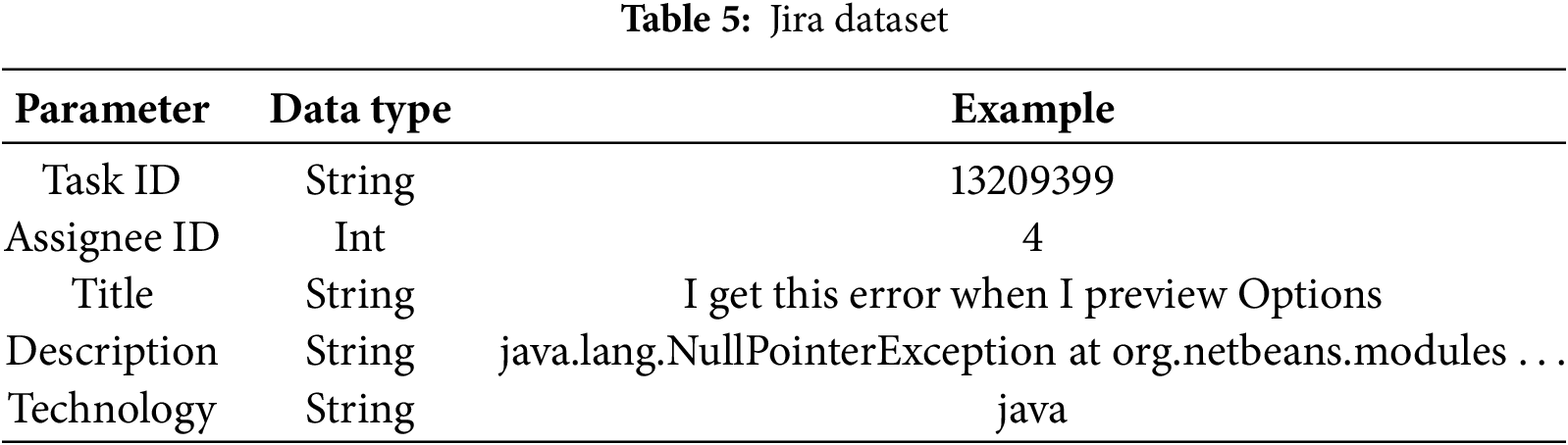
The comparative results of using the six ML models are presented in Table 6. The training and testing process was conducted using Python 3.11 and PyTorch Lightning library trainer, with a batch size of 64 and Adam optimizer, on a Lenovo Legion equipped with a 6-core i7 2.60 GHz processor, 32 GB of RAM, and an NVIDIA GeForce GTX 1650 Ti GPU. Each model was fine-tuned over thirty epochs, applying early stopping techniques.
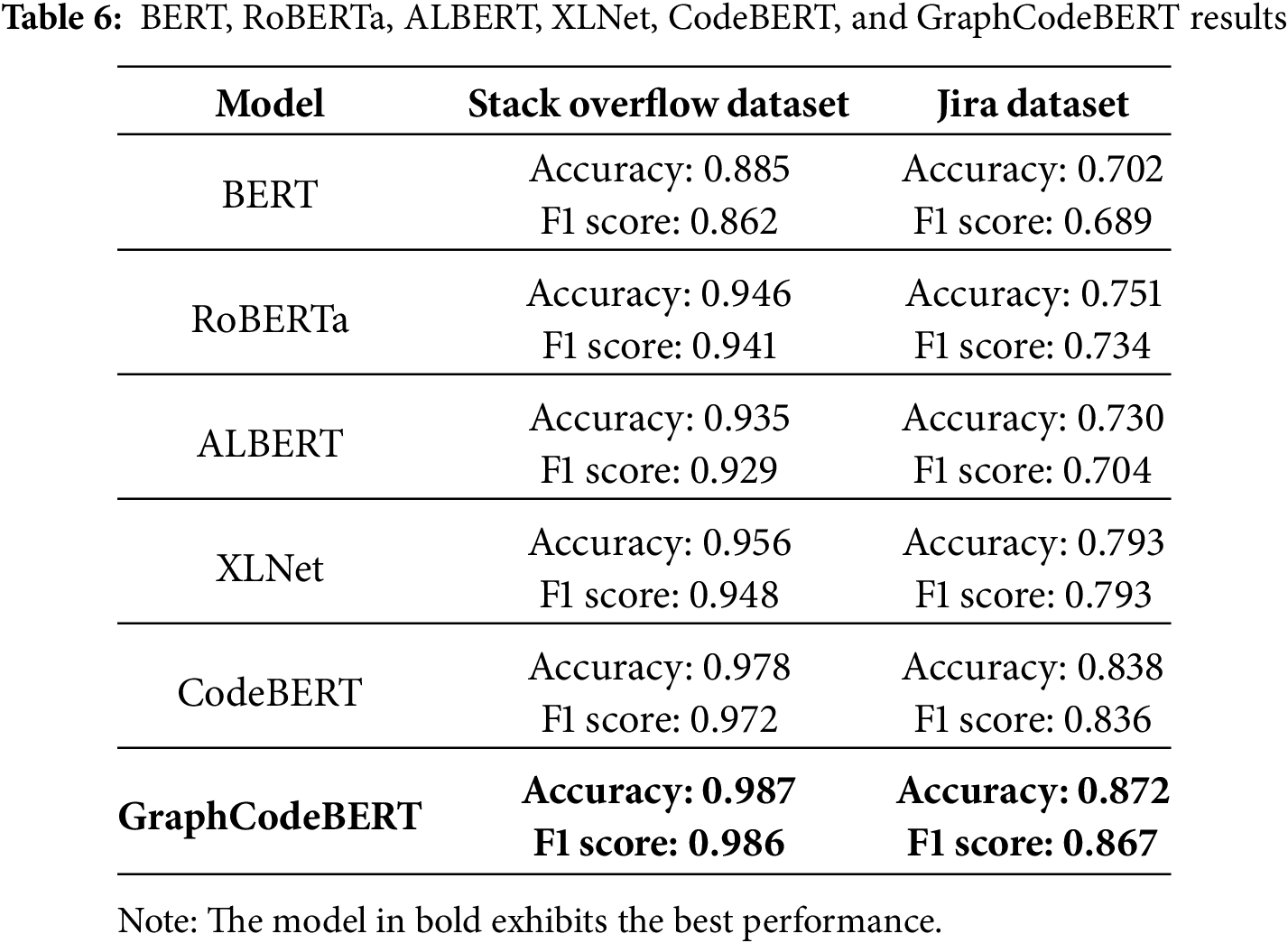
As shown in Table 6 and Fig. 3, all the models perform well on the training dataset. However, to determine the best-performing models, we had to test them on the Jira dataset. The table highlights notable differences in performance, with GraphCodeBERT achieving the highest accuracy, followed closely by CodeBERT. XLNet performs slightly worse than these two, but its results are still acceptable. The models with the lowest performance are BERT, ALBERT, and RoBERTa. On the other hand, they still achieve an accuracy of more than 70%, indicating that these base language models can successfully learn the technical content of software tasks.

Figure 3: Model F1 scores across datasets
4.2 Stage 2: Forming the De-Identified List of Developers
In order to obtain the list of developers that worked on already-completed tasks, a simple procedure, described in Fig. 4, can be used.
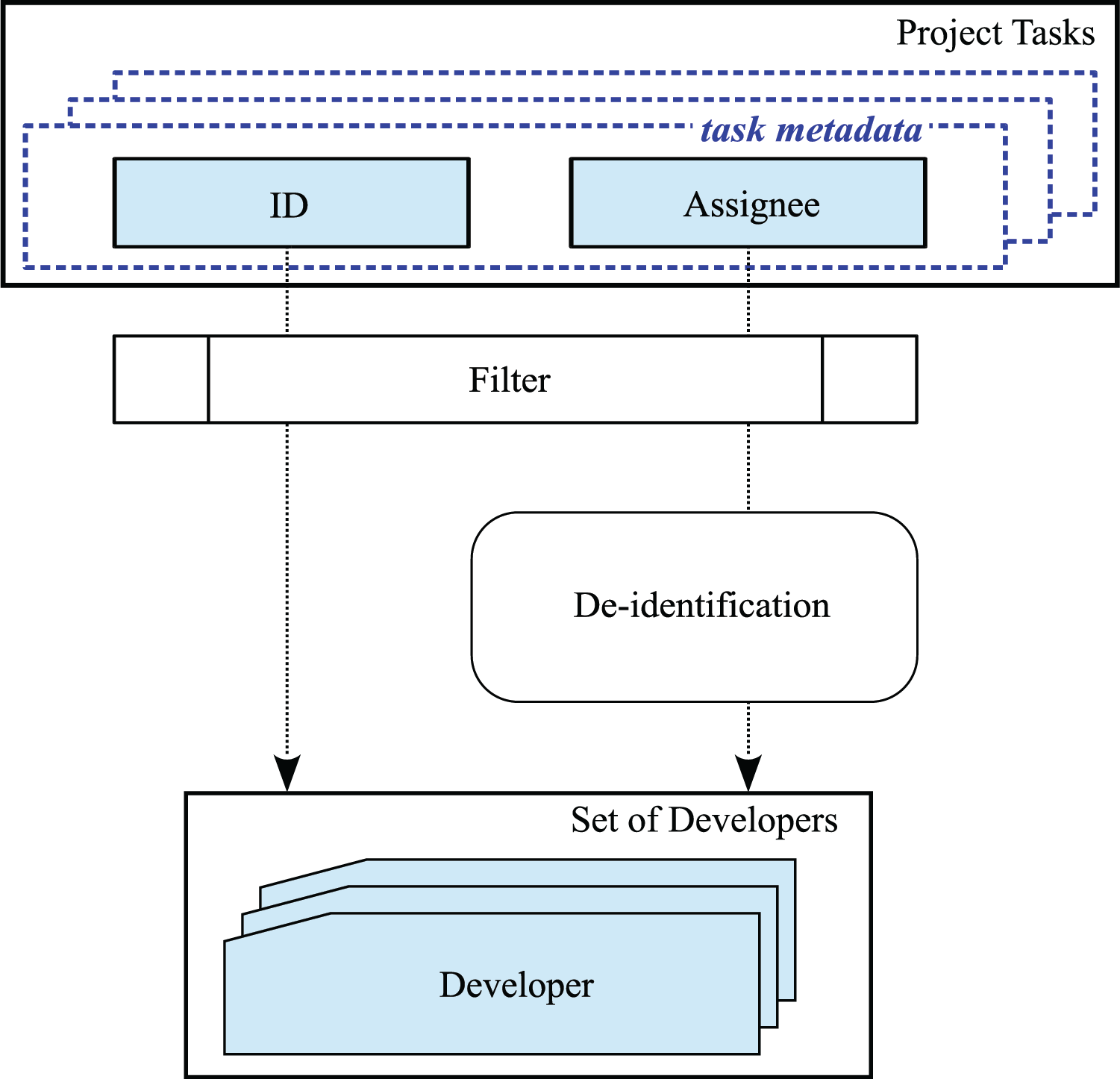
Figure 4: Obtaining the de-identified list of developers
After acquiring the task’s ID and Assignee fields for each recorder task, we filter out the records where the Assignee is unpopulated (i.e., ‘unassigned’). Individuals who have a track record of completing tasks are included in the list of developers, which must later undergo a de-identification process, where names are replaced with unique identifiers to comply with privacy protection policies.
4.3 Stage 3: Computing the Developers’ Expertise
This stage is the kernel of our methodology, computing the technology-related and generalized forms of expertise for each developer identified in the second stage. The procedure is presented in Fig. 5.
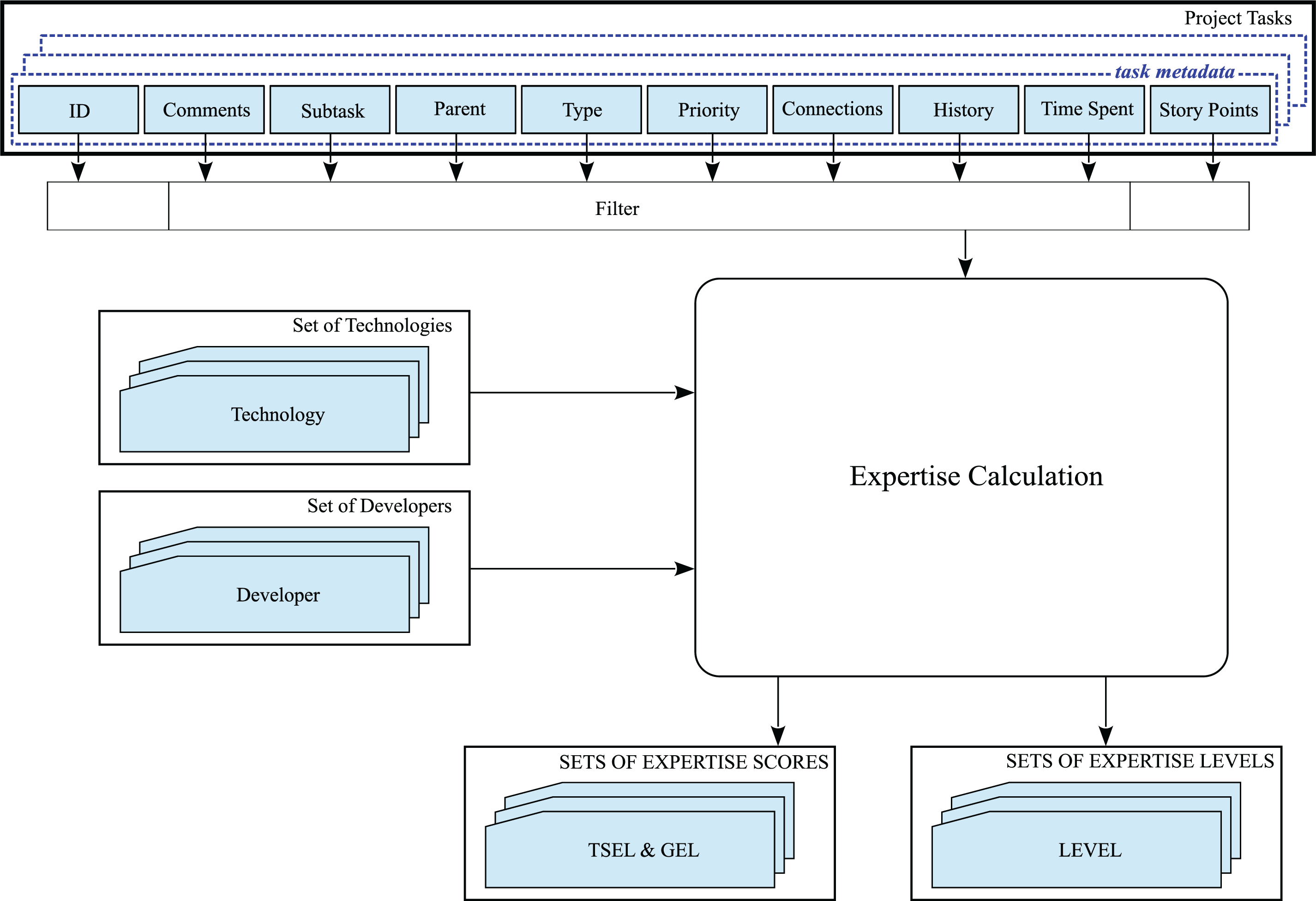
Figure 5: Developers’ expertise computation
For each task, a set of nine fields (i.e., Comments, Parent, Subtask, Type, Priority, Connections, History, Time spent, and Story points) is acquired. After filtering out the corrupted or inaccurate records, for each developer identified in the second stage, a set of expertise scores for each of the technologies identified in stage 1 and the generalized expertise score are computed using Eqs. (13) and (17). To this array of expertise scores we associate an array of expertise levels using Eqs. (14) and (18).
To illustrate the effectiveness of our approach for evaluating software developers’ skills, outlined in Section 4, we utilized a Jira dataset. For this, we collected all the 12,912 record data from the Apache project, specifically from the Apache Ignite subproject, which is a distributed database open-source project available at the following link: https://issues.apache.org/jira/browse/IGNITE-25788?jql=project%20%3D%20IGNITE (accessed on 12 October 2025). Additionally, we gathered 11,976 records from the Moodle project, focusing on the MDL subproject, which is an open-source learning platform available at this link: https://moodle.atlassian.net/jira/software/c/projects/MDL/issues (accessed on 12 October 2025).
In our practical example, we highlighted some features with higher weights because we believe they are more important due to their construction and logic. We excluded the Jira record fields (specified in Section 3.1) Time spent
Following the first step of the methodology, described in Section 4.1, we obtained a list of 18 software technologies (e.g., Java, Python, Javascript, SQL) that were employed in the completion of the recorded 12,912 tasks. Furthermore, we identified 10 software technologies (e.g., PHP, MySQL, Android, iOS) associated with the 11,976 tasks in the Moodle project. Supplementary, the complete list of developers containing 257 anonymized professionals for the Apache project and 31 for the Moodle project was provided at the end of the second stage of the methodology as presented in Section 4.2.
For each identified developer, a set of expertise scores
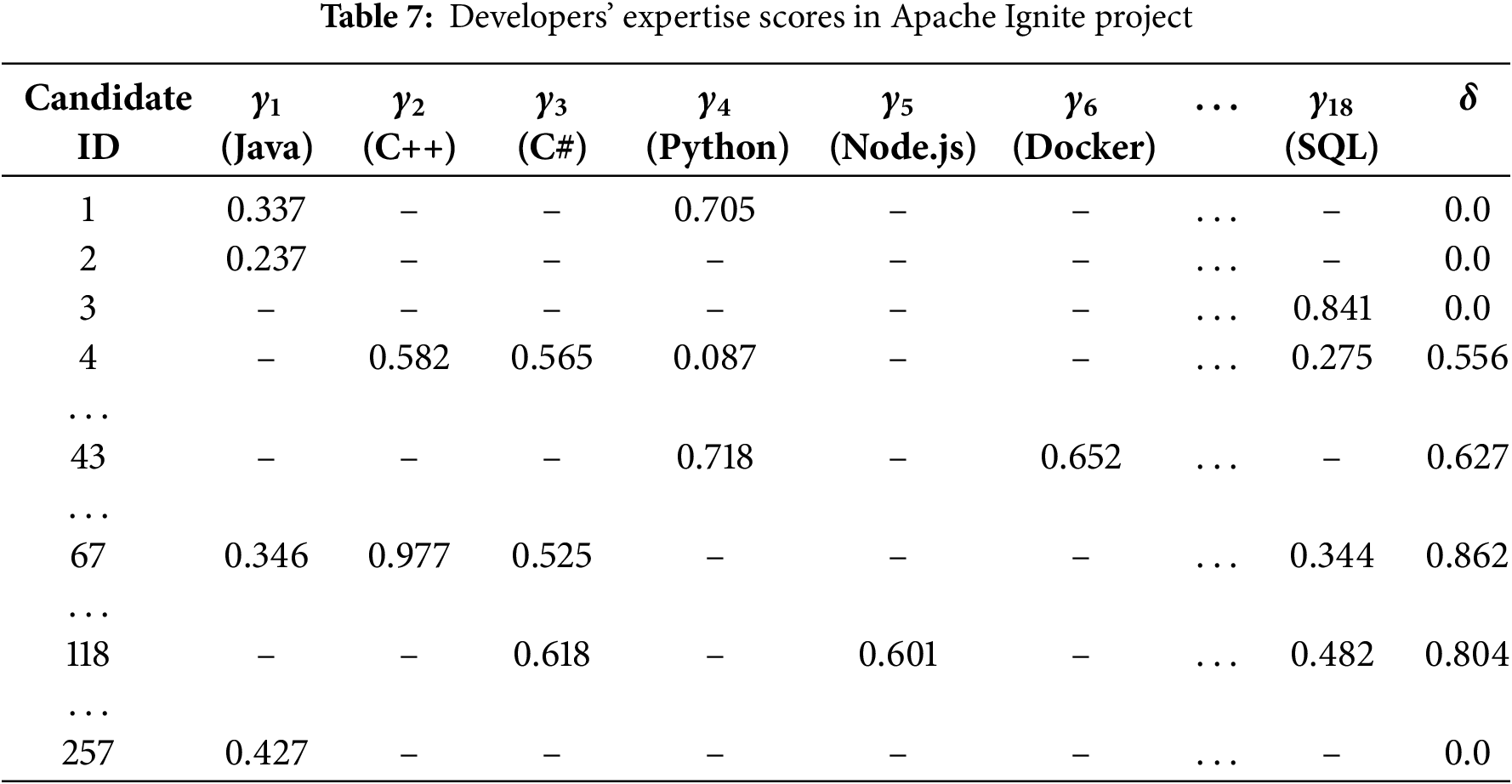
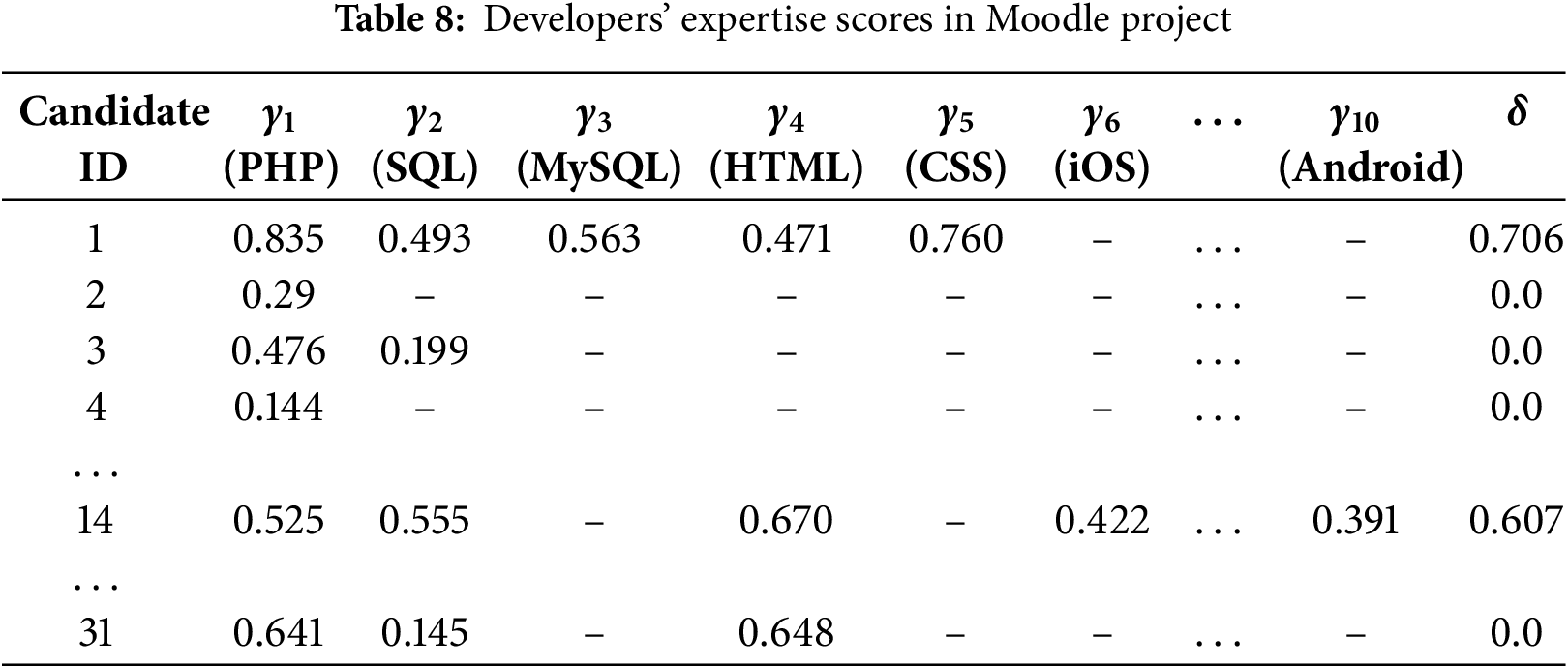
For example, in Table 7, the user with ID 5 has the following non-zero results:
By investigating the results presented in Tables 6–8, the following observations are worth mentioning:
(1) We successfully classified a task’s technology based on task descriptions. The machine learning model used in our study can accurately identify the programming languages associated with a given task’s title and description. In Table 6, we observe that the GraphCodeBERT model achieved an F1 score of 0.986 on the StackOverflow dataset and 0.867 on the Jira dataset. This demonstrates its high accuracy and its effectiveness in transferring knowledge across IT-related datasets.
(2) Models trained specifically on software engineering data demonstrate superior performance in classifying programming technologies. While BERT, ALBERT, RoBERTa, and XLNet can achieve a prediction confidence between 70% and 80%, they are outperformed by models that were specifically trained on software-related terminologies, such as CodeBERT and GraphCodeBERT. These models were pre-trained on six programming languages: Python, Java, JavaScript, PHP, Ruby, and Go [32,33]. As indicated by other studies, including [11], we have demonstrated that GraphCodeBert performs better on code-related assignments.
(3) We can distinguish between several types of developers. By analyzing both general knowledge and technology-specific expertise we can differentiate between various types of developers. A candidate with good general expertise but limited technology-specific knowledge is likely a versatile developer who can work across different projects but may need to specialize more in a particular technology. On the other hand, a candidate with high expertise in a specific technology but weaker general knowledge might struggle with wider software development projects. A balanced developer may excel in both areas, with a deep understanding of their primary technology while also being capable of solving complex, cross-domain problems efficiently. By applying this expertise evaluation methodology, developers are classified in a measurable and objective manner. Developers with the IDs 43, 67, and 118 from Table 7 and ID 1 from Table 8 have high general expertise, making them suitable for multiple roles. The same candidates also demonstrate a deep specialization in at least one particular technology, easily solving problems within the domain. Across the datasets, we found 16 developers having the ‘senior’ level from the overall expertise point of view according to (18), the rest having a ‘master’ or ’intermediate’ level in at least one domain according to (14).
We can also observe that the number of developers involved in creating distributed databases, such as Apache Ignite, is greater and spans multiple low-level technologies, including C++, Java, C#, and Docker. On the other hand, the Moodle platform has fewer developers, with a smaller pool of senior professionals. These developers focus on web programming languages like PHP and HTML, as well as mobile platforms such as iOS and Android. While the tasks in both areas may seem similar, the complexity of low-level applications makes them more challenging to maintain and develop, requiring a higher level of expertise and knowledge.
(4) The developers that worked in the considered project fall mostly between ‘senior’ and ‘mid’ level on the general knowledge scale, and between ‘intermediate’ and ‘master’ on the specific domain knowledge scale. This pattern might be because the analyzed project is open source, which usually attracts developers with a higher level of expertise, as they volunteer their contributions. On the other hand, the results could vary regarding seniority levels in a closed-source environment.
(5) To the best of our knowledge, this is the first formalization of expertise from project management tools databases within the software engineering domain. While our work draws inspiration from prior research in expertise identification and task metadata [20,22,23], we aimed to advance these approaches by offering a more quantitative and scalable solution. For example, ExpFinder is a modern tool designed to identify experts in scientific fields based on their publications, while tools like CaPBug categorize and prioritize bugs using the metadata associated with tasks. Although both tools utilize informative metadata, they differ from our approach, as we evaluate developers’ expertise based on metadata that reflects their actual interactions with the tasks. Also, instead of focusing solely on semantic similarity or expert rankings, we propose a methodology that combines programming technology identification, task complexity modeling, and mathematical formalization of expertise, enabling a more structured evaluation of software expertise.
The research implications provide the scientific relevance of this work and demonstrate how our methodology advances the formalization of developers expertise.
6.1 Implications for Researchers
Our study contributes to the research on data-driven expertise formalization by demonstrating how project management tools’ metadata can be efficiently utilized.
From a research point of view, this work provides a foundation for future studies on metadata expertise modeling, the inclusion of additional features relevant to expertise assessment, validation across different domains, or the implementation of real-world services such as Application Programming Interfaces (APIs), dashboard interfaces, and Human Resource (HR) tools. As a direct consequence, the results of this study should be further developed by considering the following future research directions:
• A sensitivity analysis demonstrating the impact of different weight distributions.
• Implementing a multi-label approach to facilitate the assessment of multiple technologies.
• Exploring newer transformer models, such as Bloom, Mamba, or DeepSeek.
• Characterizing seniority levels in more detail.
• Analyzing closed-source projects to identify evolution and differences compared to the proposed open-source method.
• Exploring extensions or tools that connect to project management systems to find additional metadata.
• Developing automatic team formation based on the metadata related to developer expertise.
By expanding the study in these ways, future work can provide deeper insights and help ensure that the proposed methodology remains relevant while supporting developer expertise formalization.
6.2 Implications for Practitioners
While the current version is just a proof of concept, the results suggest several promising possibilities for practical applications. In enterprise settings, this approach could improve team formation, task allocation, or development planning.
In team formation, the proposed methodology can balance the mix of senior, mid, and junior developers while improving productivity. Rather than depending on intuitions, team formation becomes a data-driven process that helps prevent skill shortages and avoids an overconcentration of expertise within a few individuals.
From a task allocation perspective, our method enables project managers to assign work to developers whose expertise scores reflect either their readiness or potential for growth. This strategy boosts efficiency by reserving complex assignments for experienced engineers, but also enables junior developers to solve more challenging tasks with proper supervision. The approach benefits both project success and individual career growth by ensuring employees receive tasks suited to their skill level.
Beyond evaluation and training, this methodology can also support development planning. By tracking expertise trends, managers can plan how teams adopt new technologies, forecast future hiring needs, and identify supplemental training. This method may also reveal which employees are developing competencies aligned with organizational goals, helping to close gaps between current workforce capabilities and future project needs. The resulting expertise scores can serve as advisory results to make HR department practices more transparent and evidence-based, benefiting both the organization and its employees.
To ensure transparency and rigor, we discuss the main threats to the validity of our study: internal, external, construct, and conclusion validity.
Internal validity threats may arise from incomplete, inconsistent, or malicious entries in project management tools. Our methodology assumes that developers or project managers consistently complete the fields, as missing or incomplete data can decrease the accuracy of the results. Properly maintaining project data is crucial for reusing historical information to generate reliable expertise assessments.
External validity may be affected by differences between open source and closed source projects, such as task allocation, task conventions, or contribution practices. Another challenge could be the evolution of project management tools, which might result in future task metadata differing from that used in our experiment. Additionally, as frameworks and technologies advance in the software industry, models trained on current technologies might struggle with new programming languages, terminology, or context. Therefore, while our expertise formalization works in the examined setting, its applicability to other projects, tools, or time periods remains uncertain.
Construct validity might refer to compromised data, such as incomplete or ambiguous task descriptions, leading the machine learning model to misidentify the technologies related to the tasks. Moreover, when task complexity is inferred from potentially inaccurate or misleading metadata, there is a risk that the measured complexity does not actually align with the true difficulty experienced in practice. If these intermediate constructs are unreliable, the resulting expertise scores may not align with real world proficiency.
Conclusion validity could arise from the incorrect categorization of junior, mid, and senior expertise levels because such a mapping doesn’t guarantee that those categories really correspond to actual professional seniority. For example, a developer can receive multiple complex tasks because of team allocation rules, rather than higher expertise, while another may appear as less expert simply due to the participation in activities that are not captured in project management tools.
In this paper, we introduced a new approach to quantify the expertise of software developers using task metadata from project management tools. We carefully selected a set of features from Jira databases to define mathematical models for both technology-specific and general expertise. By implementing a transfer learning procedure that utilizes a StackOverflow dataset to fine-tune BERT-like models and classify information from a Jira dataset, we achieved an accuracy of 87% and an F1 score of 0.867 in identifying the software technologies from the title and description of the tasks using the GraphCodeBERT model. We validated this method using a case study, where 288 software professionals worked across 24,888 tasks. Furthermore, we assessed the developers by calculating a domain-specific expertise score for each technology they were working with, and also their overall expertise. These insights can help project managers and HR departments better allocate resources, quickly identify experts, spot potential skill gaps, conduct a more objective evaluation of the employees, and form teams.
In the future, we want to improve our models to identify multiple technologies relevant to each task and to use advanced models such as Bloom, Mamba, or DeepSeek. Additionally, we plan to quantify the seniority levels of senior developers. Currently, developers are considered senior if they achieve a master’s level in at least one technology. In the future, we want to explore what differentiates senior developers from other seniors and how they can be a better fit for specific roles by applying bonuses based on the number of tasks, technologies used, or time worked within each project. Furthermore, we intend to adapt this identification module to enable the automatic formation of teams based on different provided inputs.
Acknowledgement: The authors would like to thank the Politehnica University of Timisoara for providing computational support and access to resources required for this research.
Funding Statement: The work of the first two authors, namely Traian-Radu Ploscă and Alexandru-Mihai Pescaru, was supported by the project “Romanian Hub for Artificial Intelligence-HRIA”, Smart Growth, Digitization and Financial Instruments Program, 2021–2027, MySMIS No. 334906.
Author Contributions: The authors confirm contribution to the paper as follows: Conceptualization, Traian-Radu Ploscă and Daniel-Ioan Curiac; methodology, Traian-Radu Ploscă and Daniel-Ioan Curiac; formal analysis, Traian-Radu Ploscă and Bianca-Valeria Rus; implementation, Traian-Radu Ploscă, Alexandru-Mihai Pescaru, and Bianca-Valeria Rus; validation, Traian-Radu Ploscă, Alexandru-Mihai Pescaru, and Bianca-Valeria Rus; writing—original draft preparation, Traian-Radu Ploscă and Alexandru-Mihai Pescaru; writing—review and editing, Traian-Radu Ploscă, Alexandru-Mihai Pescaru, and Daniel-Ioan Curiac; supervision, Daniel-Ioan Curiac; critical review, Daniel-Ioan Curiac. All authors reviewed the results and approved the final version of the manuscript.
Availability of Data and Materials: The data that support the findings of this study are available on request from the first author (Email: traian.plosca@aut.upt.ro).
Ethics Approval: Not applicable.
Conflicts of Interest: The authors declare no conflicts of interest to report regarding the present study.
References
1. Heerwagen JH, Kampschroer K, Powell KM, Loftness V. Collaborative knowledge work environments. Build Res Inform. 2004;32(6):510–28. doi:10.1080/09613210412331313025. [Google Scholar] [CrossRef]
2. Wi H, Oh S, Mun J, Jung M. A team formation model based on knowledge and collaboration. Expert Syst Applicat. 2009;36(5):9121–34. doi:10.1016/j.eswa.2008.12.031. [Google Scholar] [CrossRef]
3. Bird C, Gourley A, Devanbu P, Gertz M, Swaminathan A. Mining email social networks. In: Proceedings of the 2006 International Workshop on Mining Software Repositories; 2006 May 22–23; Shanghai, China. p. 137–43. [Google Scholar]
4. McDonald DW, Ackerman MS. Expertise recommender: a flexible recommendation system and architecture. In: Proceedings of the 2000 ACM Conference on Computer Supported Cooperative Work; 2000 Dec 2–6; Philadelphia, PA, USA. p. 231–40. [Google Scholar]
5. Anvik J, Hiew L, Murphy GC. Who should fix this bug? In: Proceedings of the 28th International Conference on Software Engineering; 2006 May 20–28; Shanghai, China. p. 361–70. [Google Scholar]
6. Martens B, Franke J. Identifying agile roles in software engineering projects using repository and work-tracking data. In: 2022 International Conference on Data and Software Engineering (ICoDSE); 2022 Nov 2–3; Denpasar, Indonesia. p. 83–8. [Google Scholar]
7. Alreshedy K, Dharmaretnam D, German DM, Srinivasan V, Gulliver TA. SCC: automatic classification of code snippets. arXiv:1809.07945. 2018. [Google Scholar]
8. Alrashedy K, Dharmaretnam D, German DM, Srinivasan V, Gulliver TA. Scc++: predicting the programming language of questions and snippets of stack overflow. J Syst Softw. 2020;162:110505. doi:10.1016/j.jss.2019.110505. [Google Scholar] [CrossRef]
9. Colavito G, Lanubile F, Novielli N, Quaranta L. Leveraging GPT-like LLMs to automate issue labeling. In: 2024 IEEE/ACM 21st International Conference on Mining Software Repositories (MSR); 2024 Apr 15–16; Lisbon, Portugal. p. 469–80. [Google Scholar]
10. Ahmed HA, Bawany NZ, Shamsi JA. Capbug—a framework for automatic bug categorization and prioritization using NLP and machine learning algorithms. IEEE Access. 2021;9:50496–512. doi:10.1109/access.2021.3069248. [Google Scholar] [CrossRef]
11. Karmakar A, Robbes R. What do pre-trained code models know about code? In: 2021 36th IEEE/ACM International Conference on Automated Software Engineering (ASE); 2021 Nov 15–19; Melbourne, VIC, Australia. p. 1332–6. [Google Scholar]
12. Briciu A, Czibula G, Lupea M. A study on the relevance of semantic features extracted using BERT-based language models for enhancing the performance of software defect classifiers. Procedia Comput Sci. 2023;225:1601–10. doi:10.1016/j.procs.2023.10.149. [Google Scholar] [CrossRef]
13. Van Dam JK, Zaytsev V. Software language identification with natural language classifiers. In: 2016 IEEE 23rd International Conference on Software Analysis, Evolution, and Reengineering (SANER). Vol. 1. New York, NY, USA: IEEE; 2016. p. 624–8. [Google Scholar]
14. Odeh AH, Odeh M, Odeh N. Using multinomial naive bayes machine learning method to classify, detect, and recognize programming language source code. In: 2022 International Arab Conference on Information Technology (ACIT); 2022 Nov 22–24; Abu Dhabi, United Arab Emirates. p. 1–5. [Google Scholar]
15. Ugurel S, Krovetz R, Giles CL. What’s the code? Automatic classification of source code archives. In: Proceedings of the Eighth ACM SIGKDD International Conference on Knowledge Discovery and Data Mining; 2002 Jul 23–26; Edmonton, AB, Canada. p. 632–8. [Google Scholar]
16. Reyes J, Ramírez D, Paciello J. Automatic classification of source code archives by programming language: a deep learning approach. In: 2016 International Conference on Computational Science and Computational Intelligence (CSCI); 2016 Dec 15–17; Las Vegas, NV, USA. p. 514–9. [Google Scholar]
17. LeClair A, Eberhart Z, McMillan C. Adapting neural text classification for improved software categorization. In: 2018 IEEE International Conference on Software Maintenance and Evolution (ICSME); 2018 Sep 23–9; Madrid, Spain. p. 461–72. [Google Scholar]
18. Ploscă TR, Rus BV, Pescaru AM, Curiac DI. Identifying developer positions in AGILE projects using BERT architecture. In: 2024 International Symposium on Electronics and Telecommunications (ISETC); 2024 Nov 7–8; Timisoara, Romania. p. 1–4. [Google Scholar]
19. Wysocki W, Miciuła I, Mastalerz M. Classification of task types in software development projects. Electronics. 2022;11(22):3827. doi:10.3390/electronics11223827. [Google Scholar] [CrossRef]
20. Diamantopoulos T, Saoulidis N, Symeonidis A. Automated issue assignment using topic modelling on Jira issue tracking data. IET Software. 2023;17(3):333–44. doi:10.1109/msr59073.2023.00039. [Google Scholar] [CrossRef]
21. Heyn V, Paschke A. Semantic jira-semantic expert finder in the bug tracking tool jira. arXiv:1312.5150. 2013. [Google Scholar]
22. Reszka Ł, Sosnowski J, Dobrzyński B. Enhancing software project monitoring with multidimensional data repository mining. Electronics. 2023;12(18):3774. doi:10.3390/electronics12183774. [Google Scholar] [CrossRef]
23. Dobrzyński B, Sosnowski J. Graph-driven exploration of issue handling schemes in software projects. Appl Sci. 2024;14(11):4723. doi:10.3390/app14114723. [Google Scholar] [CrossRef]
24. Moreira C, Wichert A. Finding academic experts on a multisensor approach using Shannon’s entropy. Expert Syst Applicat. 2013;40(14):5740–54. doi:10.1016/j.eswa.2013.04.001. [Google Scholar] [CrossRef]
25. Bok K, Jeon I, Lim J, Yoo J. Expert finding considering dynamic profiles and trust in social networks. Electronics. 2019;8(10):1165. doi:10.3390/electronics8101165. [Google Scholar] [CrossRef]
26. McLean A, Wu M, Vercoustre AM. Combining structured corporate data and document content to improve expertise finding. arXiv:cs/0509005. 2005. [Google Scholar]
27. Kang YB, Du H, Forkan ARM, Jayaraman PP, Aryani A, Sellis T. ExpFinder: an ensemble expert finding model integrating N-gram vector space model and μCO-HITS. arXiv:2101.06821. 2021. [Google Scholar]
28. William M, Sincich T. Statistics for engineering and the sciences. Saddle River, NJ, USA: Prentice-Hall International, Inc. USA; 1995. [Google Scholar]
29. Devlin J, Chang MW, Lee K, Toutanova K. Bert: pre-training of deep bidirectional transformers for language understanding. In: Proceedings of the 2019 Conference of the North American Chapter of the Association for Computational Linguistics: Human Language Technologies. New York, NY, USA: ACM; 2019. p. 4171–86. [Google Scholar]
30. Lan Z, Chen M, Goodman S, Gimpel K, Sharma P, Soricut R. Albert: a lite bert for self-supervised learning of language representations. arXiv:1909.11942. 2019. [Google Scholar]
31. Liu Y, Ott M, Goyal N, Du J, Joshi M, Chen D, et al. Roberta: a robustly optimized bert pretraining approach. arXiv:1907.11692. 2019. [Google Scholar]
32. Feng Z, Guo D, Tang D, Duan N, Feng X, Gong M, et al. Codebert: a pre-trained model for programming and natural languages. arXiv:2002.08155. 2020. [Google Scholar]
33. Guo D, Ren S, Lu S, Feng Z, Tang D, Liu S, et al. Graphcodebert: pre-training code representations with data flow. arXiv:2009.08366. 2020. [Google Scholar]
34. Yang Z, Dai Z, Yang Y, Carbonell J, Salakhutdinov RR, Le QV. Xlnet: generalized autoregressive pretraining for language understanding. In: Advances in neural information processing systems. Vol. 32. New York, NY, USA: ACM; 2019. p. 5753–63. [Google Scholar]
35. Er MJ, Venkatesan R, Wang N. An online universal classifier for binary, multi-class and multi-label classification. In: 2016 IEEE International Conference on Systems, Man, and Cybernetics (SMC); 2016 Oct 9–12; Budapest, Hungary. p. 003701–6. [Google Scholar]
36. Xu Z, Dan C, Khim J, Ravikumar P. Class-weighted classification: trade-offs and robust approaches. In: International Conference on Machine Learning. Westminster, UK: PMLR; 2020. p. 10544–54. [Google Scholar]
37. Madabushi HT, Kochkina E, Castelle M. Cost-sensitive BERT for generalisable sentence classification with imbalanced data. arXiv:2003.11563. 2020. [Google Scholar]
38. Gao Y, Si S. Label smoothing for enhanced text sentiment classification. arXiv:2312.06522. 2023. [Google Scholar]
39. Wolf T, Debut L, Sanh V, Chaumond J, Delangue C, Moi A, et al. Transformers: state-of-the-art natural language processing. In: Proceedings of the 2020 Conference on Empirical Methods in Natural Language Processing: System Demonstrations. New York, NY, USA: ACM; 2020. p. 38–45. [Google Scholar]
40. Zhang Q, Chen Q, Li Y, Liu J, Wang W. Sequence model with self-adaptive sliding window for efficient spoken document segmentation. In: 2021 IEEE Automatic Speech Recognition and Understanding Workshop (ASRU); 2021 Dec 13–17; Cartagena, Colombia. p. 411–8. doi:10.1109/asru51503.2021.9688078. [Google Scholar] [CrossRef]
Cite This Article
 Copyright © 2026 The Author(s). Published by Tech Science Press.
This work is licensed under a Creative Commons Attribution 4.0 International License , which permits unrestricted use, distribution, and reproduction in any medium, provided the original work is properly cited.
 Downloads
 Citation Tools
