
 Login
Login Register
 Submit a Paper
 Propose a Special lssue
 Open Access
ARTICLE
Adaptive Enhanced Grey Wolf Optimizer for Efficient Cluster Head Selection and Network Lifetime Maximization in Wireless Sensor Networks
1 Department of Networks and Cybersecurity, Al-Ahliyya Amman University, Amman, 19328, Jordan
2 Department of Data Science and Artificial Intelligence, Al-Ahliyya Amman University, Amman, 19328, Jordan
3 Department of Computer Information Science, Higher Colleges of Technology, Sharjah, 7947, United Arab Emirates
4 Department of IT, Al-Balqa Applied University, Al-Salt, 19117, Jordan
5 School of Computing, Horizon University College, Ajman, United Arab Emirates
6 Faculty of Information Technology, Abu Dhabi University, Abu Dhabi, 59911, United Arab Emirates
* Corresponding Authors: Omar Almomani. Email: ; Ammar Almomani. Email:
(This article belongs to the Special Issue: Heuristic Algorithms for Optimizing Network Technologies: Innovations and Applications)
Computers, Materials & Continua 2026, 87(2), 33 https://doi.org/10.32604/cmc.2025.075465
Received 01 November 2025; Accepted 23 December 2025; Issue published 12 March 2026
 View Full Text
 Download PDF
Abstract
In Wireless Sensor Networks (WSNs), survivability is a crucial issue that is greatly impacted by energy efficiency. Solutions that satisfy application objectives while extending network life are needed to address severe energy constraints in WSNs. This paper presents an Adaptive Enhanced Grey Wolf Optimizer (AEGWO) for energy-efficient cluster head (CH) selection that mitigates the exploration–exploitation imbalance, preserves population diversity, and avoids premature convergence inherent in baseline GWO. The AEGWO combines adaptive control of the parameter of the search pressure to accelerate convergence without stagnation, a hybrid velocity-momentum update based on the dynamics of PSO, and an intelligent mutation operator to maintain the diversity of the population. The search is guided by a multi-objective fitness, which aims at maximizing the residual energy, equal distribution of CH, minimizing the intra-cluster distance, desirable proximity to sinks, and enhancing the coverage. Simulations on 100 nodes homogeneous WSN Tested the proposed AEGWO under the same conditions with LEACH, GWO, IGWO, PSO, WOA, and GA, AEGWO significantly increases stability and lifetime compared to LEACH and other tested algorithms; it has the best first, half, and last node dead, and higher residual energy and smaller communication overhead. The findings prove that AEGWO provides sustainable energy management and better lifetime extension, which makes it a robust, flexible clustering protocol of large-scale WSNs.Keywords
Wireless Sensor Networks (WSNs) are autonomous distributed systems, which consist of many low-power micro-sensor nodes that have sensing, processing, communication, and storage functions [1]. WSNs are now mainstays of intelligent infrastructures in the modern world and can be used in a variety of applications, including environmental monitoring, precision agriculture, healthcare, industrial automation, and defense systems [2]. The sensor node is subject to very strict resource constraints, especially limited battery energy that is a core design issue in WSNs, in terms of energy efficiency and lifetime increase in the network [3]. The lapses in the energy depletion of nodes might provoke node premature death, lower connectivity, and the ultimate network partitioning which would drastically deteriorate the general performance of the whole system. Clustering-based communication protocols have been widely used to alleviate these problems. In this form of architecture, nodes are organized in clusters, each with a Cluster Head (CH) that collects local information and forwards it to the Base Station (BS). This hierarchical network will enforce less duplication of communication and ensure that there is load balancing within the network. Nevertheless, the efficiency of clustering is heavily reliant on the optimal choice of CH that directly correlates with energy consumption, latency, and the stability of the network in general [4]. Fig. 1 represents a standard WSN clustering scheme, with the emphasis made on the hierarchical communication between sensor nodes, CHs, and the BS.
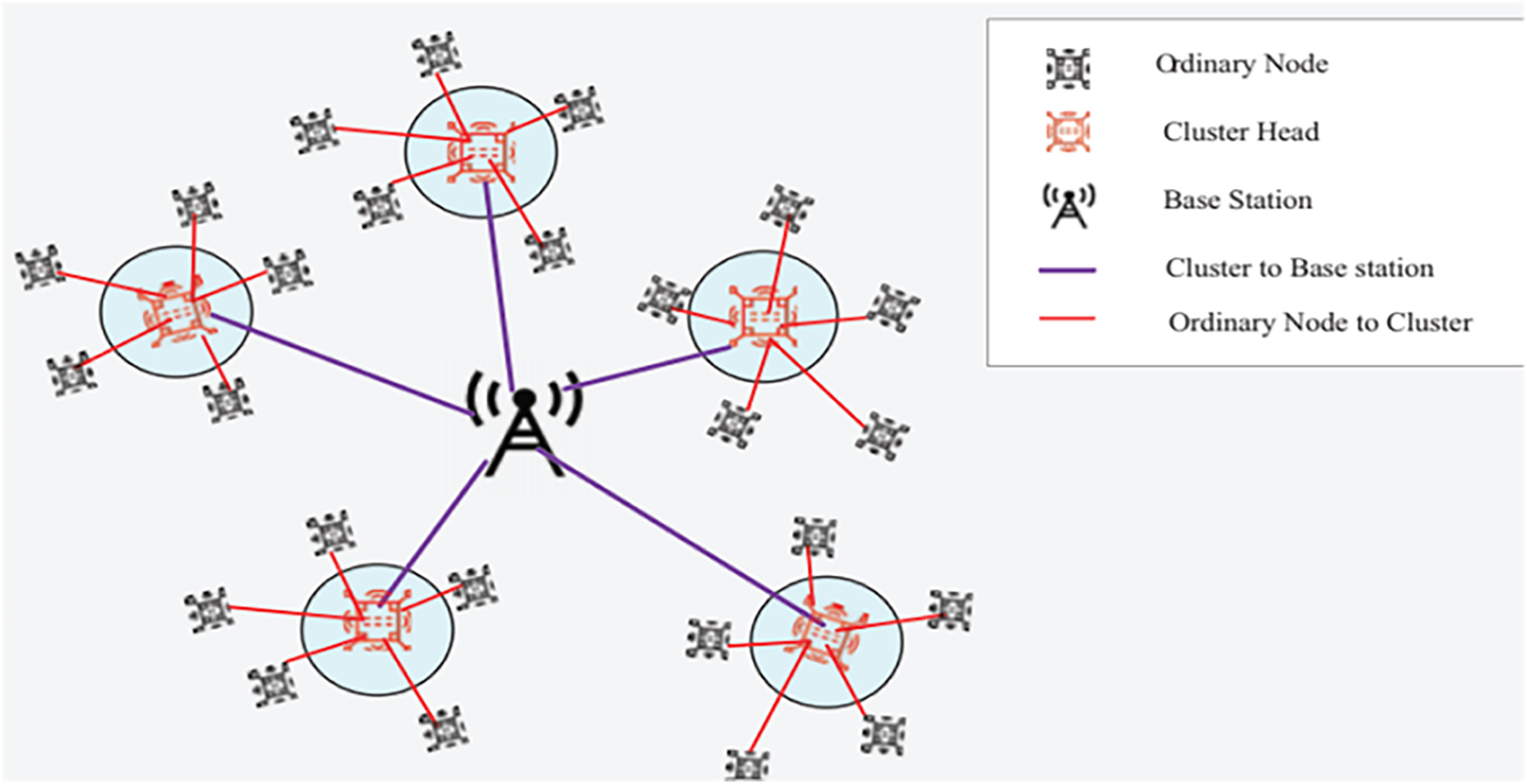
Figure 1: Wireless sensor clustering network model
Protocols like Low-Energy Adaptive Clustering Hierarchy (LEACH) [5], Hybrid Energy-Efficient Distributed (HEED) [6] and Power-Efficient Gathering in Sensor Information System (PEGASIS) [7] There were early protocols that formed the basis of energy-sensitive clustering. However, such protocols are based on random or probabilistic selection of CH, ignoring important parameters like residual energy, node density, and spatial distribution [8]. In turn, they have unbalanced network energy consumption and early deterioration of the network in large-scale or heterogeneous deployments. To address these shortcomings, scholars have considered metaheuristic optimization algorithms [9] that define CH selection as a nonlinear and multi-objective optimization problem [10]. Particle Swarm Optimization (PSO), Whale Optimization Algorithm (WOA), Genetic Algorithm (GA), and Grey Wolf Optimizer (GWO) are among the nature-inspired algorithms that have shown phenomenal ability when it comes to solving complex combinatorial optimization [11,12], owing to their flexibility and ability to balance between exploration and exploitation. In particular, the GWO, which is based on the hunting and leadership hierarchy of grey wolves, has been popular due to its simplicity, low parameter tuning, and effective global search behavior. Regardless of these strengths, standard GWO has several weaknesses in WSN applications, including premature convergence, reduced diversity in the population, and a lack of control parameters, resulting in suboptimal network choices and shorter network life. Several enhanced versions, such as Improved GWO (IGWO) [13], Hybrid GWO-PSO [14], and Adaptive GWO (AGWO) [15] have been proposed to improve the convergence behavior and diversity in search. Although these changes enhance performance in particular areas, most of them do not optimize a combination of several goals conflicting with each other, such as reducing energy use, balancing the load, and obtaining full coverage at a considerably high cost of computation. Therefore, there is an urgent necessity of an optimization system that preserves the balance between exploration and exploitation and is dynamically adjusted to the heterogeneity of the network state and energy.
In this regard, the current study presents an Adaptive Enhanced Grey Wolf Optimizer (AEGWO) to perform the energy-efficient selection of CH and maximize system lifetime in WSNs. The AEGWO algorithm introduces several new mechanisms into the usual GWO algorithm:
1. A control system with adaptive parameters to control the dynamics of exploration-exploitation.
2. A Hybrid momentum-velocity updated position inspired by PSO.
3. A clever mutation agent that wisely increases diversity and avoids stagnation.
4. Multi-objective fitness relying on a holistic algorithm that takes network lifetime, residual energy, load distribution, and coverage efficiency into consideration.
The design innovations enable AEGWO to offer a powerful design with a flexible structure that can dynamically adjust to different network conditions and achieve better clustering. The main contributions to this work are as follows: developed an AEGWO algorithm that proposes adaptive control, hybrid velocity learning, and mutation-based diversification to enhance exploration-exploitation behavior. Architecture to a multi-objective fitness function combining energy consumption, lifetime, load balancing, and coverage quality. Creation of a simulative structure that can be reproduced and used to undertake comparative performance analysis of AEGWO with traditional algorithms, including LEACH, GWO, IGWO, PSO, WOA, and GA [16], under the same experimental conditions. Introduction of a scaled and statistically proven platform of metaheuristic-driven CH optimization, to guarantee the model applies to heterogeneous WSN settings.
The rest of the present paper is organized as follows: Section 2 reviews the studies concerning energy-efficient clustering and optimization of WSNs through GWO. Section 3 describes the proposed AEGWO algorithm and its computation process. Section 4 is about experimental setup and performance evaluation, and Section 5 concludes the paper with the insights and future research directions.
Energy-efficient clustering and routing are also research topics in Wireless Sensor Networks (WSNs) where sensor nodes with batteries must work within severe energy limitations. Swarm-intelligent optimization algorithms: while a large amount of literature has been published on bio-inspired and swarm-intelligent optimization algorithms over the last decade, many studies have investigated this problem to enhance cluster-head (CH) selection, load balancing, and network lifetime. The most popular one of them is the Grey Wolf Optimizer (GWO) and its enhanced forms due to its balance of exploration and exploitation, less parameter reliance, and rapid convergence. More recently, there has been an appearance of improved hybrid metaheuristics, such as the Improved Squirrel Search Algorithm (I-SSA), that solve convergence stagnation and premature optimization in dynamic WSN environments.
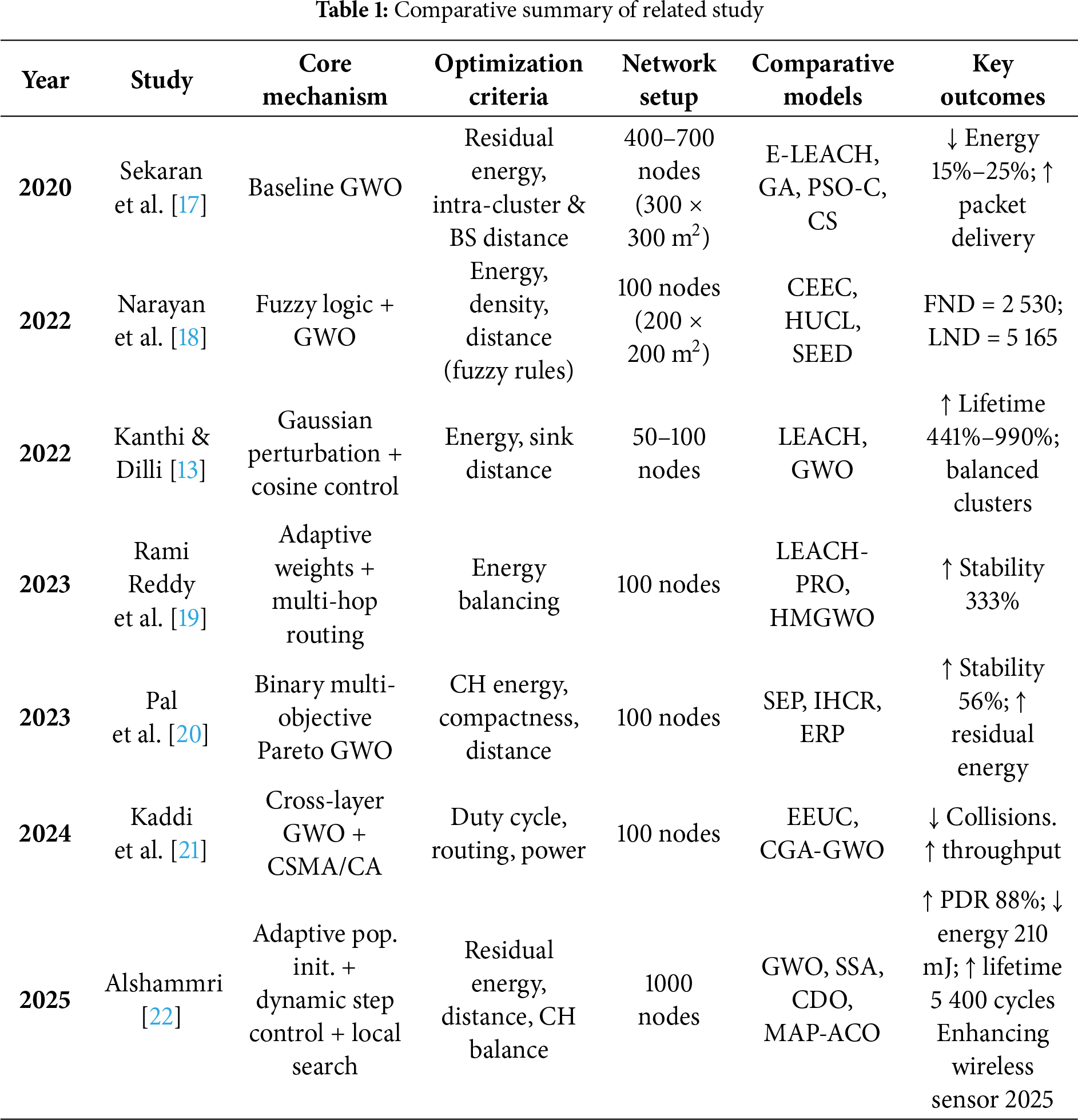
The initial work by Sekaran et al. [17] proposed the GWO-CH protocol, combining the leadership structure of GWO and energy-conscious fitness functions to pick the most suitable CH. Their findings proved an increment of 15%–25% on network lifetime over E-LEACH, GA, and PSO-C, which supported the appropriateness of GWO in multi-objective energy optimization. Continuing this, Narayan et al. [18] came up with a Fuzzy-GWO (FGWOA) framework, which utilized fuzzy membership functions to analyze node energy and distance when uncertain. It increased stability in networks FND = 2530, HND = 4491, and LND = 5165, which were better than the CEEC, HUCL, and SEED protocols.
Kanthi Hegde and Dilli [13] In the same an Improved GWO (IGWO) was suggested, which introduced the Gaussian perturbation and a cosine control factor, which greatly extended network lifetime by 441%–990% to LEACH and baseline GWO. Rami Reddy et al. [19] also developed this idea by proposing an adaptive weighting and multi-hop communication algorithmic framework called EECHIGWO, where stability was maximized by up to 333% when compared to LEACH-PRO and HMGWO. Pal et al. [20] Proposed a Multi-criterion Binary GWO (MOBGWO) that minimizes CH energy, compactness, and inter-cluster distance by using a Pareto-based fitness function, stating 56 percent enhanced stability and residual energy enhancement over other protocols, SEP, and ERP.
Moving to the cross-layer design, Kaddi et al. [21] introduced the EOAMRCL model, which combines both GWO and improved CSMA/CA to jointly optimize routing and transmission timetables and delays idle listening, better than EEUC, DWEHC, and CGA-GWO. Simultaneously. Other swarm-intelligent frameworks have also been created beyond GWO-based ones. A better (I-SSA) of CH selection was suggested by Alshammri [22] to increase the lifespan of a WSN. The I-SSA added Adaptive Population Initialization, Dynamic Step-Size Control, and Local Search Mechanism to enhance the exploration-exploitation balance. The suggested ISSA-C protocol recorded a Packet Delivery Ratio (PDR) of 88, energy consumption of 210 mJ, and CH-selection and formation time of 67 s and 82 ms, respectively. A comparative study with GWO, SSA, CDO, SSO, MOCRAW, EEWC, and MAP-ACO proved that I-SSA had superior throughput, energy usage, and lifetime compared to them, and thus is efficient in large-scale, high-density WSNs.
Overall, the literature review on 2020–2025 shows that the previously simple GWO-specific clustering has changed to a more dynamic, adaptive, and self-tuned metaheuristics. Balance between energy efficiency, scalability, and robustness has steadily advanced with the introduction of fuzzy reasoning, chaotic dynamics, binary representation, adaptive control, and cross-layer routing optimization. Nevertheless, research issues, including scalability of heterogeneous environments, automatic parameter tuning, convergence during mobility and noise, among others, remain current research topics, which drive the design of the next-generation hybrid model that will embrace the benefits of more than one intelligent paradigm towards sustainable and energy-aware WSNs. Table 1 is a summary of the related study comparison.
The collective findings from recent studies reveal a clear research trajectory toward adaptive, hybrid, and multi-objective metaheuristic frameworks for energy-efficient clustering in WSNs. GWO based models and their extensions have achieved remarkable improvements in load balancing and network longevity, they continue to face enduring limitations such as premature convergence, parameter rigidity, and insufficient adaptability under heterogeneous and dynamic network conditions. These limits indicate that more intelligent and self-regulating strategy is required to be able to sustain exploration/exploitation balance in different deployment conditions. Subsequently, this paper proposes a new strong and dynamically tuned optimization framework Adaptive AEGWO that addresses the failures of the conventional GWO with adaptive parameter regulation, hybrid velocity update options, and intelligent mutation strategies. Although several GWO versions have offered some isolated improvements, including adaptive coefficients, hybrid PSO-based updates or mutation operators, the suggested AEGWO is unique in that it combines those mechanisms into a single and mutually reliant optimization cycle specific to the selection of WSN cluster heads. AEGWO has (i) nonlinear adaptive parameter modulation, (ii) a momentum-assisted hybrid position update, (iii) a convergence-based intelligent mutation operator and (iv) four objective energy-sensitive fitness, with network lifetime, energy consumption, load balancing and coverage quality. This synergy allows us to gain a more stable search direction and significant improvements in the network lifetime of AEGWO relative to the incremental improvements observed in previous GWO versions. The next section contains the description of proposed AEGWO methodology with its system model, fitness formulation, adaptive mechanisms, and algorithmic workflow.
3 Methodology: Proposed Adaptive Enhanced Grey Wolf Optimizer (AEGWO)
The WSN to be used in this study will be composed of N uniform sensor nodes randomly distributed in a two-dimensional space of 100 × 100 m2. Nodes are defined by a low initial energy Eo, a short-range transceiver, sense capacity, and local processing power. There is one stationary BS located in the center of the deployment area to gather the aggregate data of the CHs. The network is grouped into clusters to reduce the communication range as well as equal energy consumption among nodes [23]. In every cluster, member nodes send their sensed information to the respective CH, which does the data aggregation and sends the compressed data to the BS. The assumptions are considered as follows:
1. The BS and all the nodes are stationary once deployed.
2. The nodes have a limited amount of energy, whereas the BS is considered to have infinite power.
3. All sensor nodes can know their residual energy and distance to the BS using the received signal strength.
4. The communications are not unidirectional, and the energy flow is determined by the distance between the receiver and the sender.
5. To avoid premature death of nodes, CHs are re-selected periodically with the proposed AEGWO.
Radio Energy Dissipation Model
The overall energy consumption of a node in transmitting and receiving data is of the first-order radio model. The energy consumed in the transmission of a k-bit packet distance is given by Eq. (1):
where
d is the distance
The energy consumed to receive a
and the energy required for data aggregation by the CH is given by Eq. (3):
where
The total energy consumed by a CH over one communication round is given by Eq. (4):
where,
In WSNs, network lifetime is measured with three metrics: FND (First Node Dead), the round at which the first sensor becomes inactive; HND (Half Nodes Dead), the round at which half of the nodes fail; and LND (Last Node Dead), the round at which the last sensor node dies. Collectively, these indicators encompass the stability interval, energy efficiency, as well as the total lifespan of the network. Based on this, these metrics are used in evaluating the proposed AEGWO against LEACH, GWO, IGWO, PSO, WOA, and GA.
3.2 Problem Formulation for Cluster Head (CH) Selection
The CH selection in WSNs is a multi-objective optimization problem that aims to identify a set of optimal CHs capable of minimizing energy consumption and maximizing the overall network lifetime and stability [24–26]. The energy dissipation of each node depends on its communication distance and role, CH or CM. An optimal CH selection ensures balanced energy utilization and avoids premature node death.
Let the WSN consist of
where each node
3.2.1 Minimization of Total Energy Consumption
The total consumed energy in a one communication round can be calculated as given by Eq. (6):
The
where
3.2.2 Maximization of Network Lifetime
The lifetime of a network depends on energy consumption of the nodes over time and is measured using the metrics FND, HND, and LND. The optimization objective to maximize the network lifetime can be formulated as shown in Eq. (8):
where a height
3.2.3 Load Balancing among Clusters
Load imbalances in radio energy consumption can occur because of unequal sizes of clusters or load distributions. To sustain a load balance in WSN, the used load balance factor is given by Eq. (9).
where
To provide sensing coverage and connectivity, it is necessary for every node to be located at the effective range of one CH at least. The coverage metric is given in Eq. (10):
where
Higher
3.2.5 Multi-Objective Formulation
The selection problem of the CH is consequently depicted as a composite fitness function that incorporates all the objectives, such as minimizing total energy consumption, maximizing network lifetime, balancing loads among clusters, and improving coverage efficiency as given in Eq. (11).
The weight coefficients
3.3 Overview of the Grey Wolf Optimizer (GWO)
GWO is a population-based metaheuristic algorithm introduced by Mirjalili et al. [27] which is inspired by the hierarchical leader and prey hunting behavior of the grey wolves in the wild. GWO is based on the conceptualizations of wolves, which move around, hunt, and attack the enemy in strategic circles to capture prey, converting these social hierarchies into global optimization mathematical models. It has been an effective optimization tool, especially in optimization problems that include wireless sensor clustering, energy-efficient routing, and have little parameter dependence, and high exploration exploitation balance. The GWO algorithm separates the population into four hierarchical roles alpha (α), beta (β), delta (δ), and omega (ω) wolves that are used to denote different levels of dominance in the social structure.
• The alpha (α) wolf is the most preferable candidate solution, and it determines the general direction of search.
• The beta and delta wolves (β) and (δ) are used to store the second and third most optimal solution, respectively, and help the alpha wolf in making decisions.
• The rest of the wolves, termed as omega (ω), take directions of the first three wolves, and consequently update their positions relative to α, β, and δ.
This high-level structure is such that the process of global search is constantly made finer by the influence of the most successful solutions and at the same time diversity is maintained in the population. Mathematically, the hunting behavior in GWO is modeled by modeling of encircling process around the prey (optimal solution). The position of search agent (wolf) is updated with respect to the positions of the best wolves based on Eqs. (12) and (13).
where
The
This cooperative movement provides an assurance that the wolves, instead of fainting in the search space, converge toward the most promising areas that are taken care of by the expected prey position.
At the beginning of the iterations where
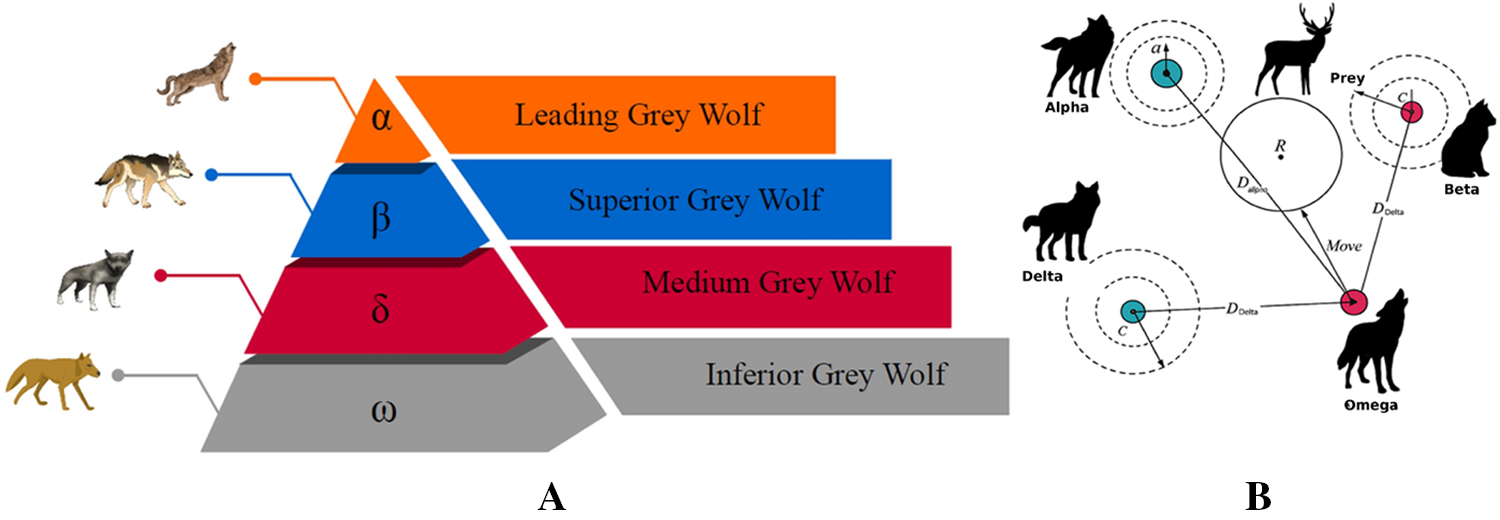
Figure 2: Leadership hierarchy and hunting mechanism of gray wolves. (A) Leadership hierarchy of gray wolves; (B) hunting mechanism of gray wolves
The original GWO is, however, prone to premature convergence and reduced diversity during subsequent iterations, which constrains its ability to leave the local optima [28,29], especially in nonlinear and high-dimensional problems such as energy-efficient CH selection. These constraints have led to the creation of more advanced versions like the Adaptive Enhanced GWO (AEGWO) as proposed in this paper.
3.4 Adaptive Enhanced GWO (AEGWO) Framework
The AEGWO aims to overcome the disadvantages of the original GWO in CH selections to prolog the network lifetime, which include among others the premature convergence, lack of adaptability and poor population diversity. The AEGWO incorporates adaptive control dynamics, hybridized position updating, and intelligent mutation to enhance the balance between exploration and exploitation and to guarantee a more robust and energy-efficient CH selection.
3.4.1 Adaptive Parameter Control
In The GWO, the control parameter
where:
To balance the impacted of α, β, and δ wolves as the population converges, ensuring better adaptability to dynamic energy landscapes in WSNs.
3.4.2 Hybrid Velocity-Momentum Position Update
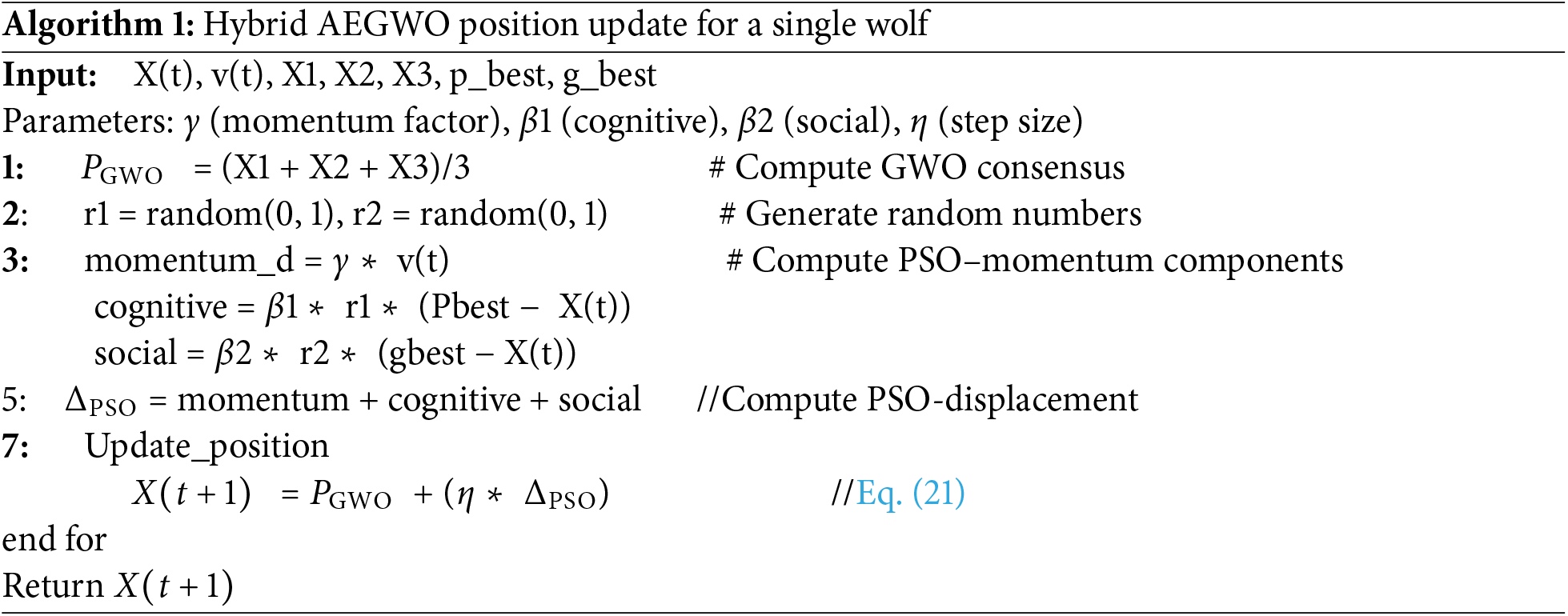
The proposed AEGWO combines GWO consensus position, PSO-inspired cognitive and social learning and a momentum stabilizer to better balance exploration and exploitation. The hybrid update equation is expressed as on Eq. (21):
where
The coefficient
This means the PSO block internally forms a weighted combination of the three reference vectors and therefore must be scaled by η before being added to the
3.4.3 Intelligent Mutation Strategy
To avoid stagnation and keep the diversification, AEGWO uses an adaptive Gaussian mutation mechanism, which is activated mainly in late iterations as given in Eq. (23):
where
The AEGWO algorithm starts with the initializing of the population according to the energy of the node and the distributional layout of the nodes to prefer those of high energy and those in the center. Fitness is assessed at every step based on the multi-objective formulation. The α, β, and δ wolves are updated, the adaptive parameters recalculated, the hybrid position calculations are performed, and mutation is selectively applied. The procedure is repeated until the maximum number of iterations or some convergence criterion is reached. A general flow is presented in Fig. 3 that summarizes the adaptive, hybrid, and mutation-enhanced flow of the proposed optimizer.
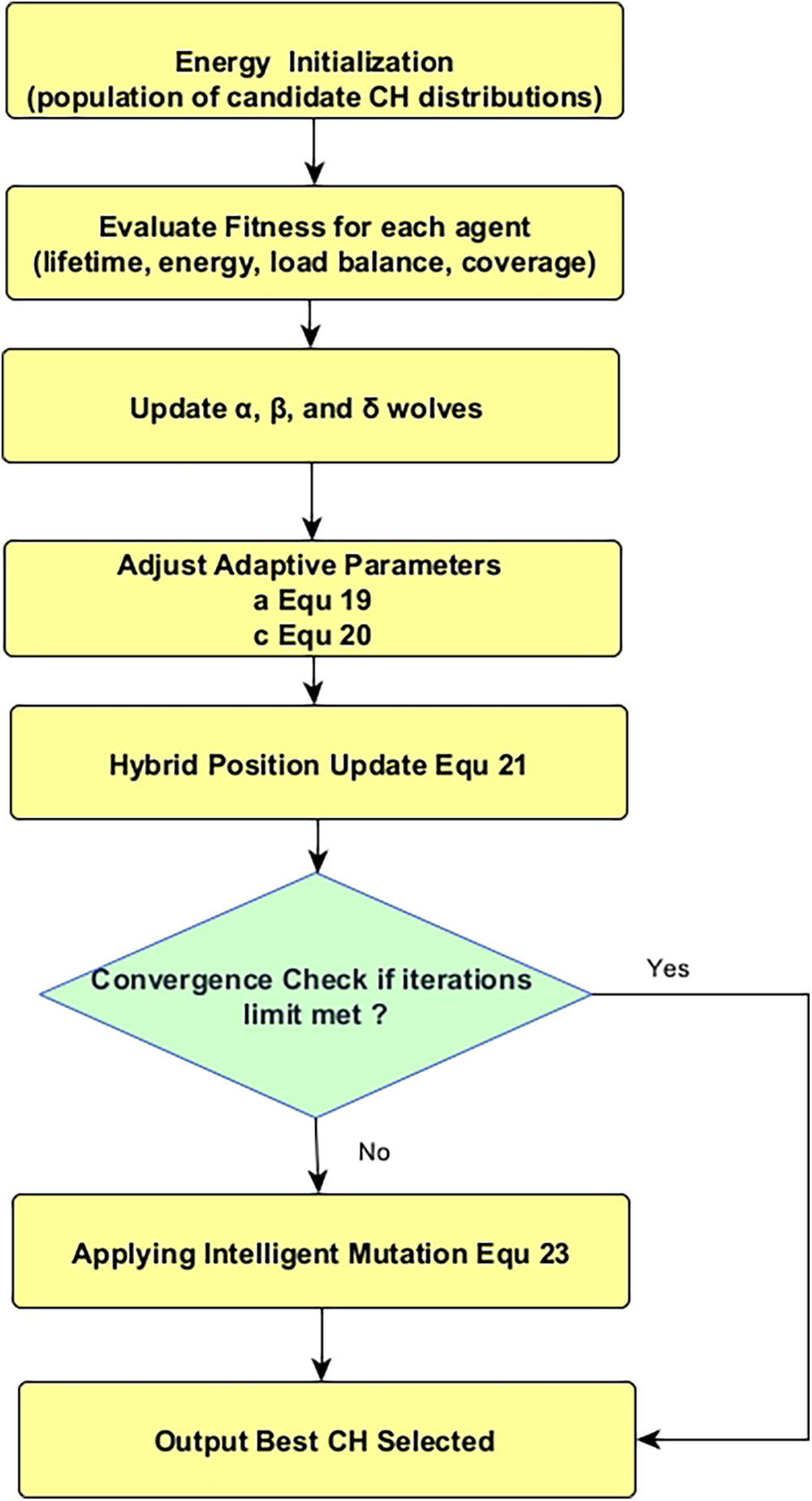
Figure 3: Workflow of the AEGWO
3.5 Multi-objective Fitness Function Design
The efficiency of the AEGWO in the context of CH selection is the result of the fitness function, the quality of the individual CH setup. Since the CH selection problem in WSNs is characterized by several and often conflicting objectives, including extending network lifetime, energy saving, load balancing in a cluster, and ensuring an appropriate coverage, the AEGWO is based on a multi-objective formulation of fitness, which unites all these aspects into a single normalized evaluation scale.
3.5.1 Fitness Function Definition
Each wolf represents a potential CH setup vector as given in Eq. (24)
where
where:
3.5.2 Objective 1: Network Lifetime Maximization
The first objective goal is to prolong network lifetime. It is inversely related to the rate of energy depletion as given in Eq. (26).
where:
Maximizing
3.5.3 Objective 2: Energy Consumption Minimization
The second objective aims to minimize the overall energy Consumption; it is achieved as given in Eq. (27).
where
3.5.4 Objective 3: Load Balancing among Clusters
The uneven size of clusters leads to the uneven consumption of energy and decreased stability. To achieve uniform distribution of loads, the balance factor is defined as given in Eq. (28).
where:
3.5.5 Objective 4: Coverage Efficiency Maximization
To maintain connectivity and minimize sensing distance, coverage efficiency is computed as given in Eq. (29):
3.5.6 Normalization and Adaptive Weighting
The process of normalization to [0, 1] is performed to normalize all the objectives before aggregation so that all metrics with different scales can be compared. AEGWO also uses adaptive weighting depending on the variation of every sub-objective as given in Eq. (30).
where:
The selected CHs are to guarantee an optimal compromise between energy efficiency, stability, and coverage. The fitness function design perfectly corresponds to AEGWO’s adaptive control and mutation mechanisms, and hence, a continuous synergistic optimization process that leads the search to globally efficient solutions is created. Algorithm 2 shows the Pseudocode of the Proposed AEGWO.
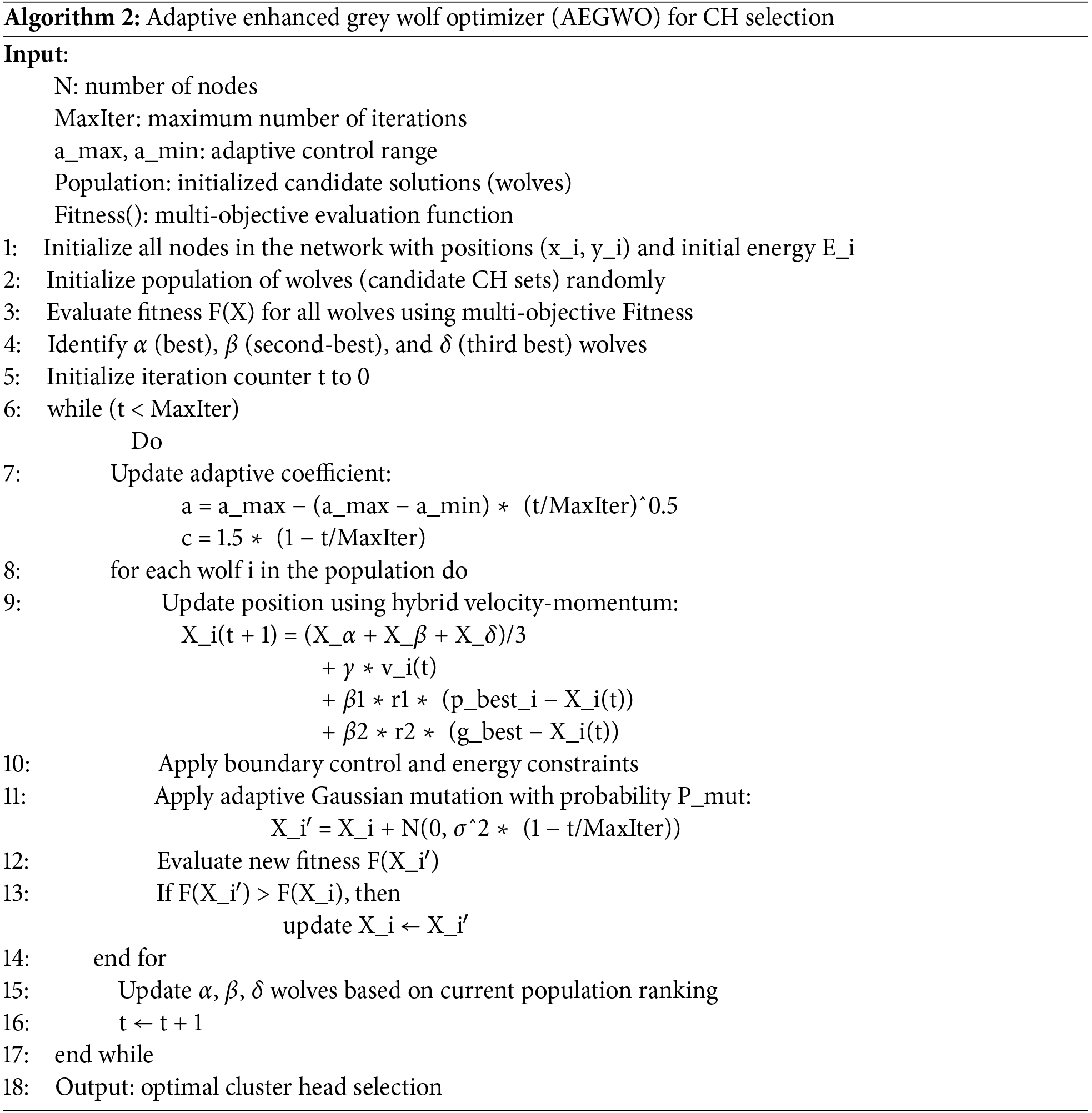
3.5.7 Adaptive Weight Evolution Analysis
To further explain the contribution of the adaptive multi-objective weighting mechanism, we compared the time development of the four weights
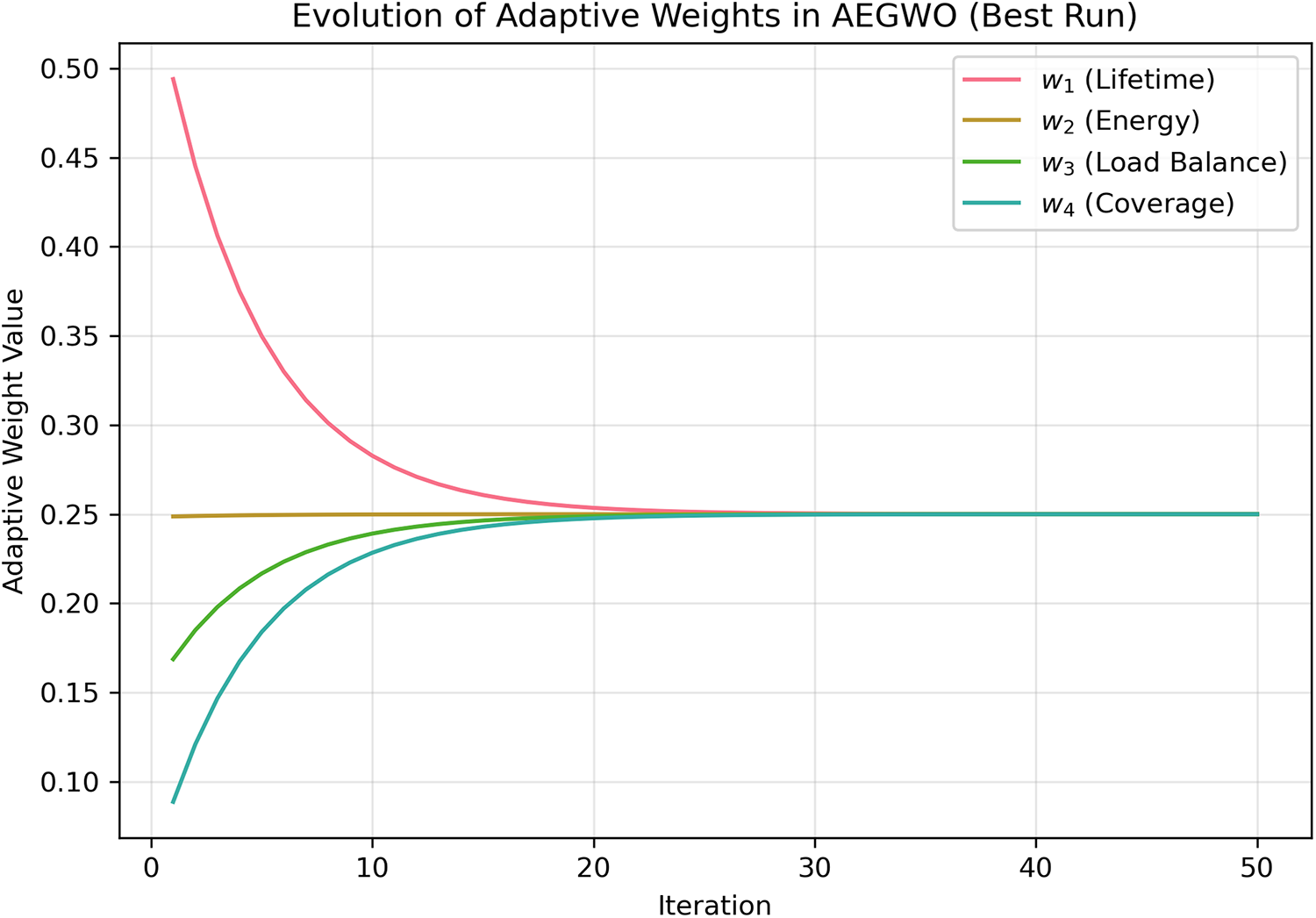
Figure 4: Adaptive weight evolution of AEGWO
3.6 Algorithm Complexity Analysis
The algorithm of cluster formation phase that uses AEGWO method is developed to select the best CHs according to their fitness values. The computational complexity of AEGWO algorithm can be represented as:
Initialization phase: creating the initial wolves’ population and calculating their fitness requires
Iteration phase: every single iteration includes the updates of adaptive parameters O(1), the updates of positions O(PopSize), and the evaluations of the fitness O(N × PopSize). The mutation and ranking operations add another
Total Complexity: Taking T_maxas the number of iterations in total, the overall complexity as expressed in Eq. (32) is
The linear relationship guarantees that the algorithm scales up to very large WSN deployments and thus AEGWO algorithm is suitable for real-time or dynamic re-clustering.
Conclusively, AEGWO has a powerful and adaptable metaheuristic framework of energy-efficient CH selection in WSN. Its adaptive parameter control, hybrid velocity momentum update mechanism, and intelligent mutation strategy help AEGWO to balance the exploration and the exploitation process dynamically, maintain the diversity of the population and avoid premature convergence. The multi-objective fitness function is carefully designed to guarantee the simultaneous optimization of energy consumption, network life, load balancing, and coverage efficiency which results in clustering performance which is sustainable. The workflow depicted in Fig. 4 and the pseudocode in Algorithm 1 together represent the entire optimization cycle of AEGWO from initialization to convergence. The subsequent section describes the experimental setup, simulation parameters, and comparative evaluation against established protocols, such as LEACH, GWO, IGWO, PSO, WOA, and GA, to validate the effectiveness of the proposed approach.
4 Experimental Setup and Simulation Results
4.1 Simulation Environment and Parameters
To assess how well the AEGWO works, many simulations were performed with the help of a custom-built Python framework that precisely mimics the energy dissipation of WSN, their clustering, and re-clustering operations. These simulations were done using the Python 3.11 language, making use of the numpy, matplotlib, and pandas’ libraries for the purposes of numerical computation and visualization. The PC used for simulations had the specifications as list in Table 2.
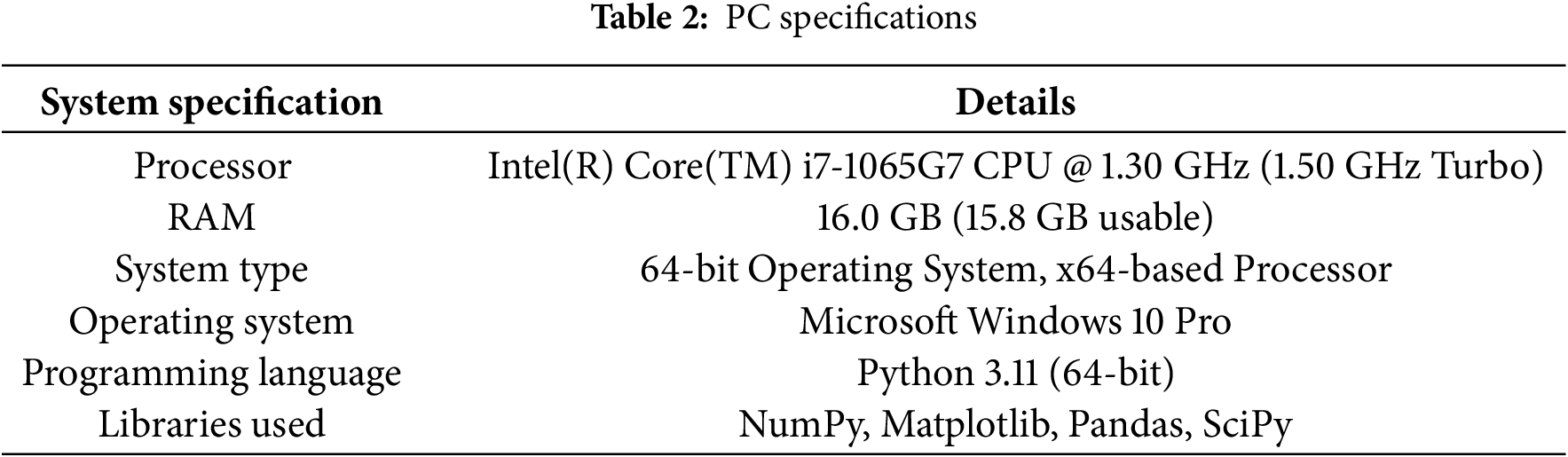
The simulation creates a homogeneous WSN with sensor nodes that are randomly deployed in a 100 × 100 m2 area. All nodes have the same initial energy and communication characteristics, and there is a single static base station in the middle of the network. The simulation parameters were determined according to the benchmarks set by the relevant literature and are given in Table 3.
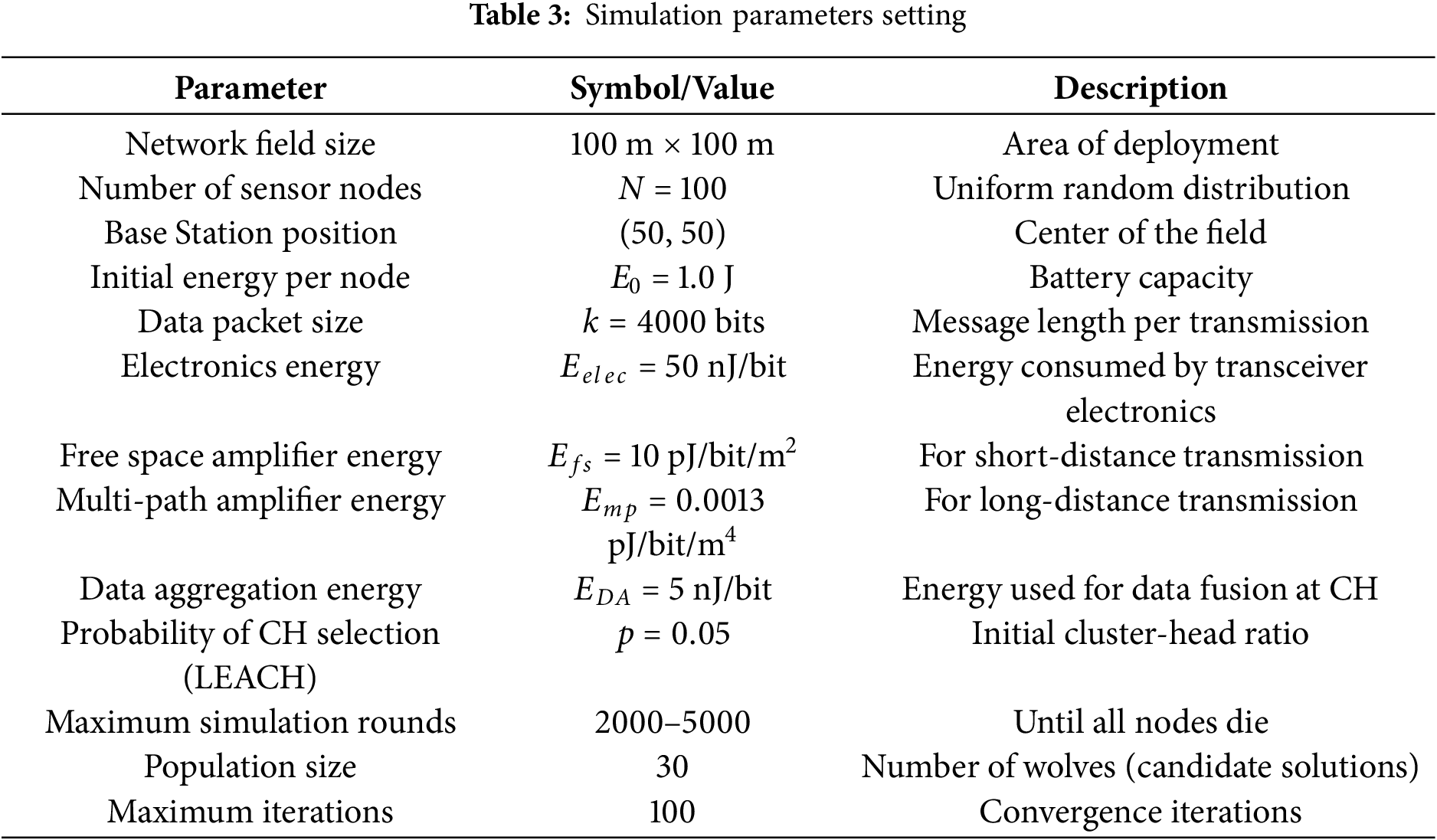
The parameters ensure fair comparison among all tested algorithms LEACH, GWO, IGWO, PSO, WOA, GA, and the proposed AEGWO under identical network and energy conditions. The energy model adheres to the first-order radio model presented in Section 3.1, while the stochastic node distribution guarantees generality and reproducibility of results. The general WSN topology used in this study is illustrated in Fig. 5, showing sensor distribution, CHs, and the BS.
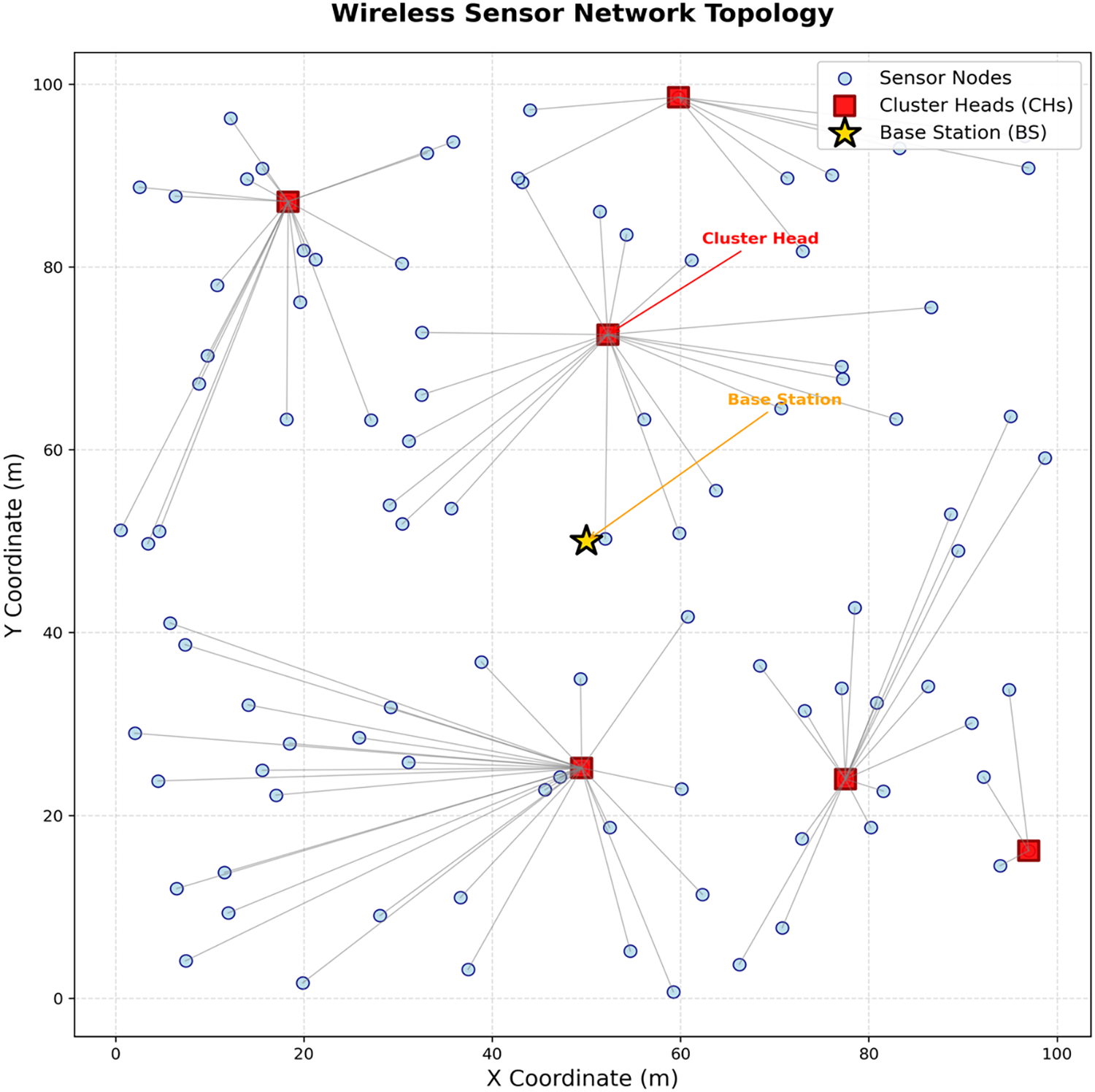
Figure 5: General architecture of the clustered wireless sensor network model
To evaluate strictly the efficacy of the AEGWO in the CH selection and energy efficiency, several performance measures that are commonly used were employed. These measures reflect the most important values of WSN such as energy efficiency, network stability, and longevity. All comparative algorithms are quantitatively measured in the same conditions each metric on simulation rounds.
The FND measure shows the round on which the first node will be drained. It indicates the stability duration of the network i.e., the time frame where all the nodes are functioning and can communicate. An increased FND value means energy depletion is delayed hence great stability. FND is computed as Eq. (33):
where Ei (r) = the remaining energy of node i at round r. The AEGWO will endeavor to maximize FND, where the distribution of energy between nodes is balanced and the CHs are chosen to reduce the intra-cluster communication cost.
The HND indicator points to the round when 50% of the nodes have depleted their energy [30]. It quantifies the balance-to-unbalance transition and gives a distinct sign of the resistance of a network. HND value is higher, indicating that it has more energy consumption by clusters and greater life span of the network. HND is computed as Eq. (34):
The
The round at which the final node in the network exhausts all its energy is called LND which is the total network lifetime. This measure indicates how strong the clustering protocol is as well as the capacity of the algorithm to be connected to the final operation steps. HND is computed as Eq. (35).
An increase in the LND value means that the network is working longer and there is an improvement in the usage of the available energy resources.
4.2.4 Average Energy Consumption (AEC)
The AEC metric represents the average leftover energy in all the alive nodes at the end of each round of simulation. It gives a summary of the energy balancing ability of the algorithm. It is expressed as Eq. (36):
where
4.2.5 Total Energy Consumption (TEC)
The TEC measure of the summation of energy dissipated in the sensing, data aggregation, and the transmission processes until round r: Eq. (37):
where
This action assists in determining the efficiency of an algorithm in avoiding unnecessary transmissions and minimizing the energy consumption in the process of delivering data.
This section discusses the quantitative and graphical analysis of AEGWO results and compared it to six other algorithms, namely LEACH, GWO, IGWO, PSO, WOA, and GA. All the algorithms were run in the same simulation conditions. Four major indicators were used to evaluate the performance of AEGWO in WSN, The FND, HND, LND and AEC, which combined are used to describe the stability, energy efficiency and longevity of the network.
The results of the simulation are summarized in Table 4, which also has statistical values of all performance measures in the form of mean among several runs. The AEGWO always has high scores in any measurement, which proves its capacity to balance the usage of energy and network stability.
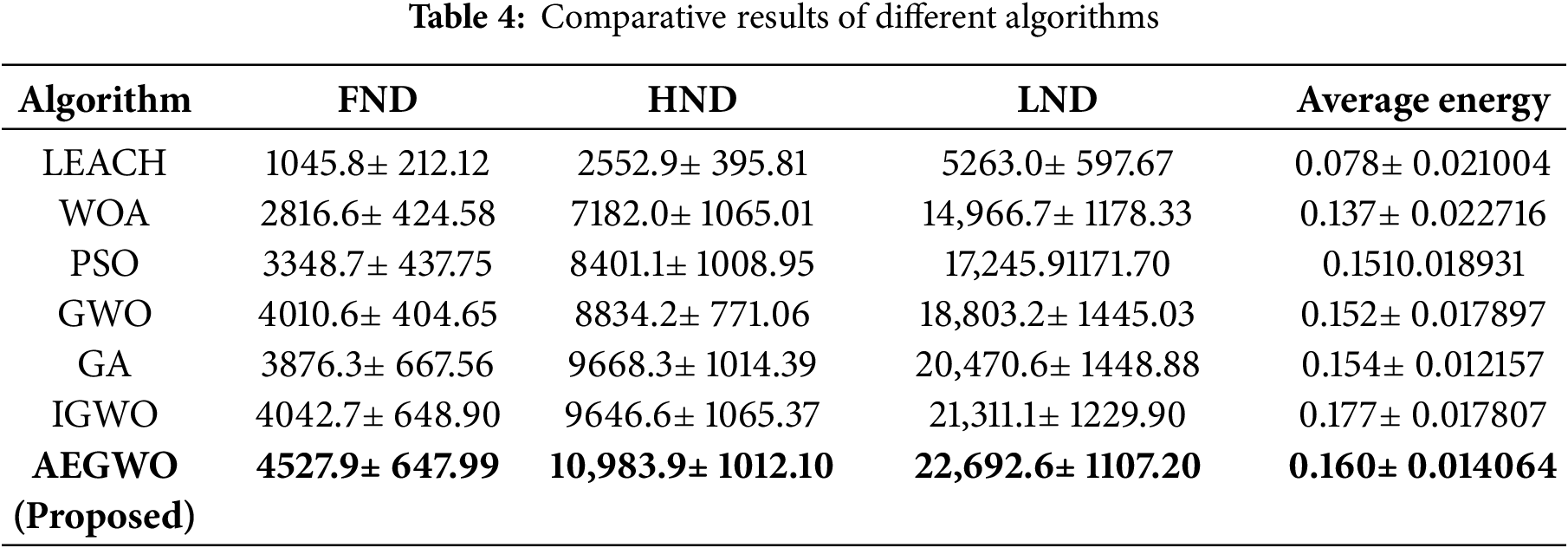
As the results show, AEGWO is clearly superior to other algorithms in terms of increasing the network lifetime and stability. The AEGWO outperforms the original LEACH by increasing operational lifespan up to 331%.
4.3.2 Network Lifetime and Stability Evaluation
Fig. 6 represents the LND comparison, which shows that AEGWO performs best; it has a network lifetime of 22,693 rounds, followed by IGWO (21,311 rounds) and GA (20,471 rounds). LEACH, in its turn, ends at 5263 rounds only, which proves its inefficiency in balancing energy.
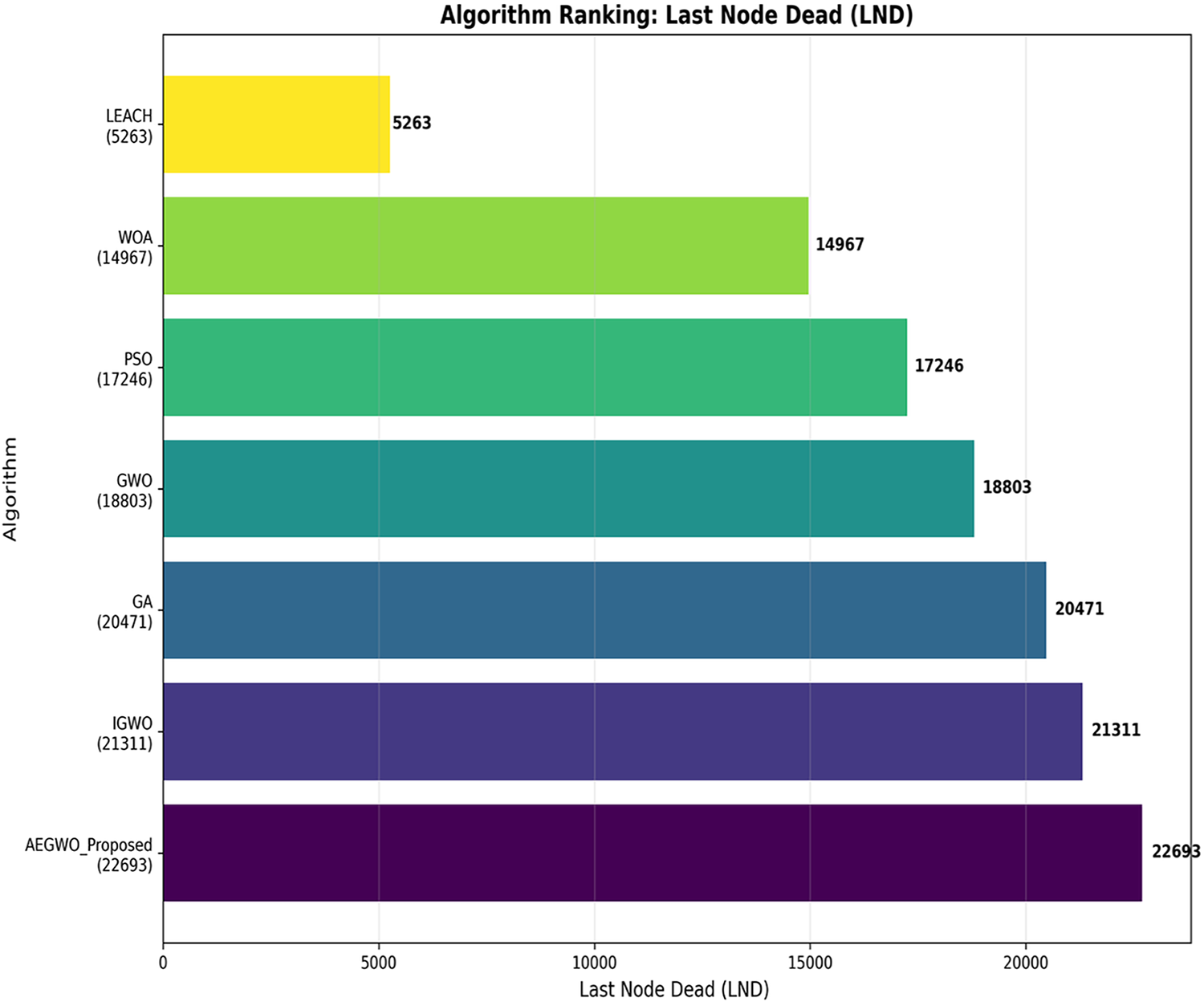
Figure 6: Network lifetime comparison (Last Node Dead—LND) among all algorithms
To have a more visual understanding of proportional gains, a radar chart in Fig. 7 is used to show the percentage improvements of each algorithm as compared to LEACH. AEGWO gains performance by the highest ratio of 331% and it beats IGWO 305%, GA 289%, GWO 257%, PSO 228% and WOA 184%.
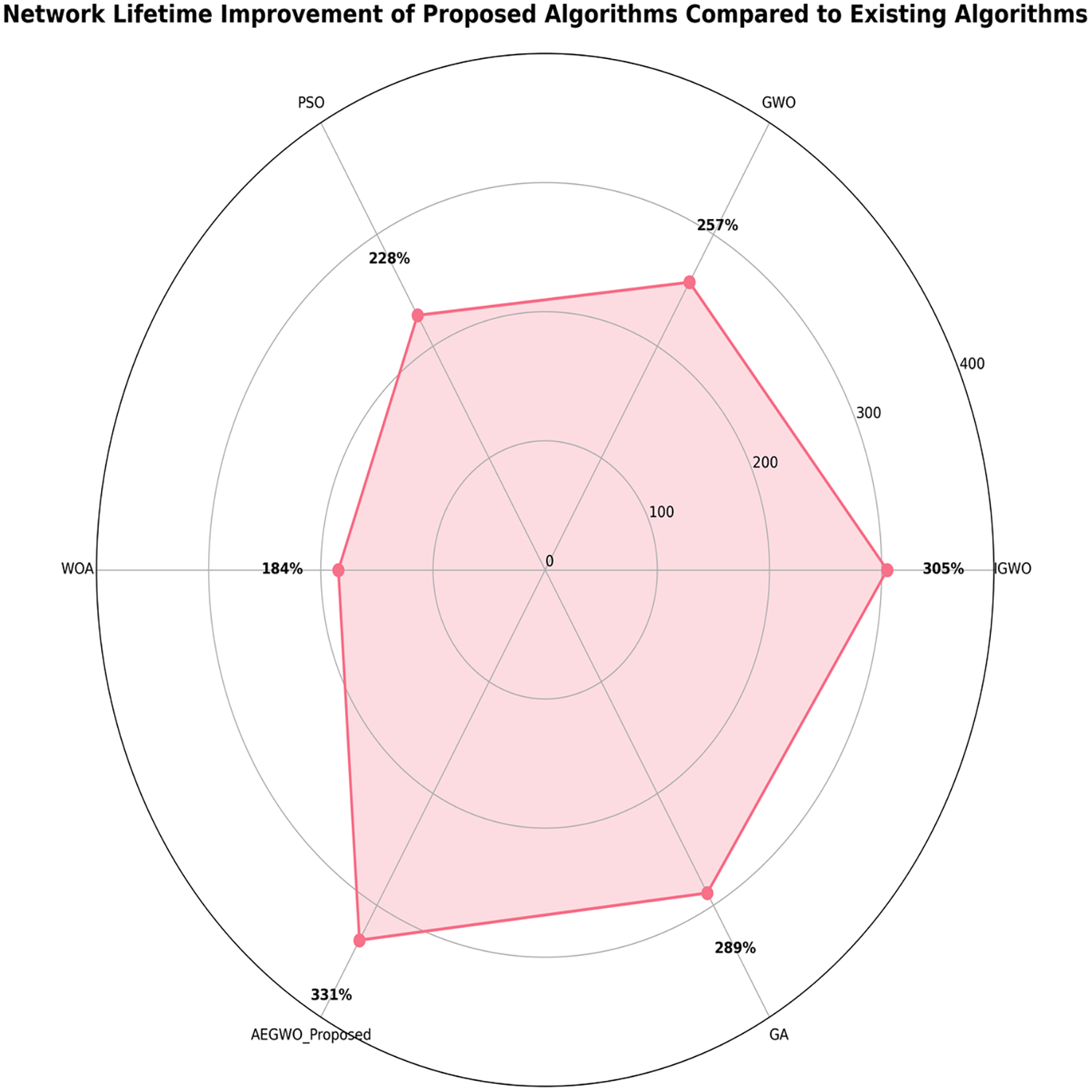
Figure 7: Network lifetime improvement of proposed and existing algorithms
4.3.3 Energy Consumption and Efficiency
One of the determinants that is critical to the sustainability of WSN is energy consumption. As the average energy ranking of Fig. 8 demonstrates the AEGWO and IGWO are the most balanced in terms of consumption per round and thus they keep an average residual energy close to 0.16 J much greater than the 0.078 J of LEACH. This result indicates the success of the multi-objective fitness function towards ensuring a balanced distribution of CH, and minimum redundant transmissions.
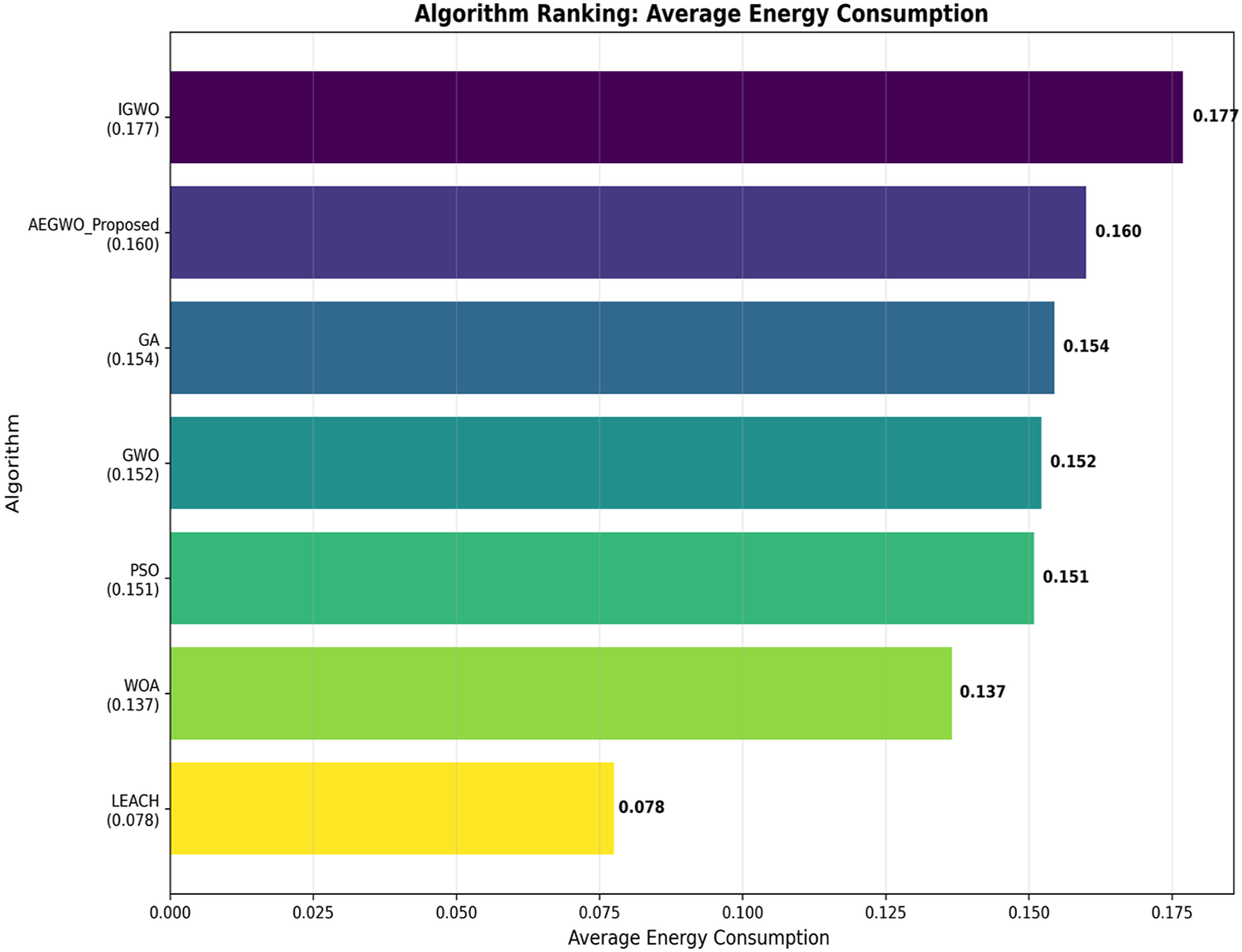
Figure 8: Algorithm ranking based on average energy consumption
4.3.4 Stability Period and Node Death Analysis
Figs. 9 and 10 of the FND and HND analysis show that AEGWO delays node death longer than any other competitors. FND: AEGWO dies at the first node at approximately 4528 rounds as compared to IGWO (4043) and GWO (4011). HND: AEGWO has 50% alive nodes to the 10,984 rounds, which is better than IGWO (9647) and GA (9668). These results prove that with the help of AEGWO, the dissipation between all nodes is balanced and does not contribute to the development of hotspots and the early depletion of energy reserves.
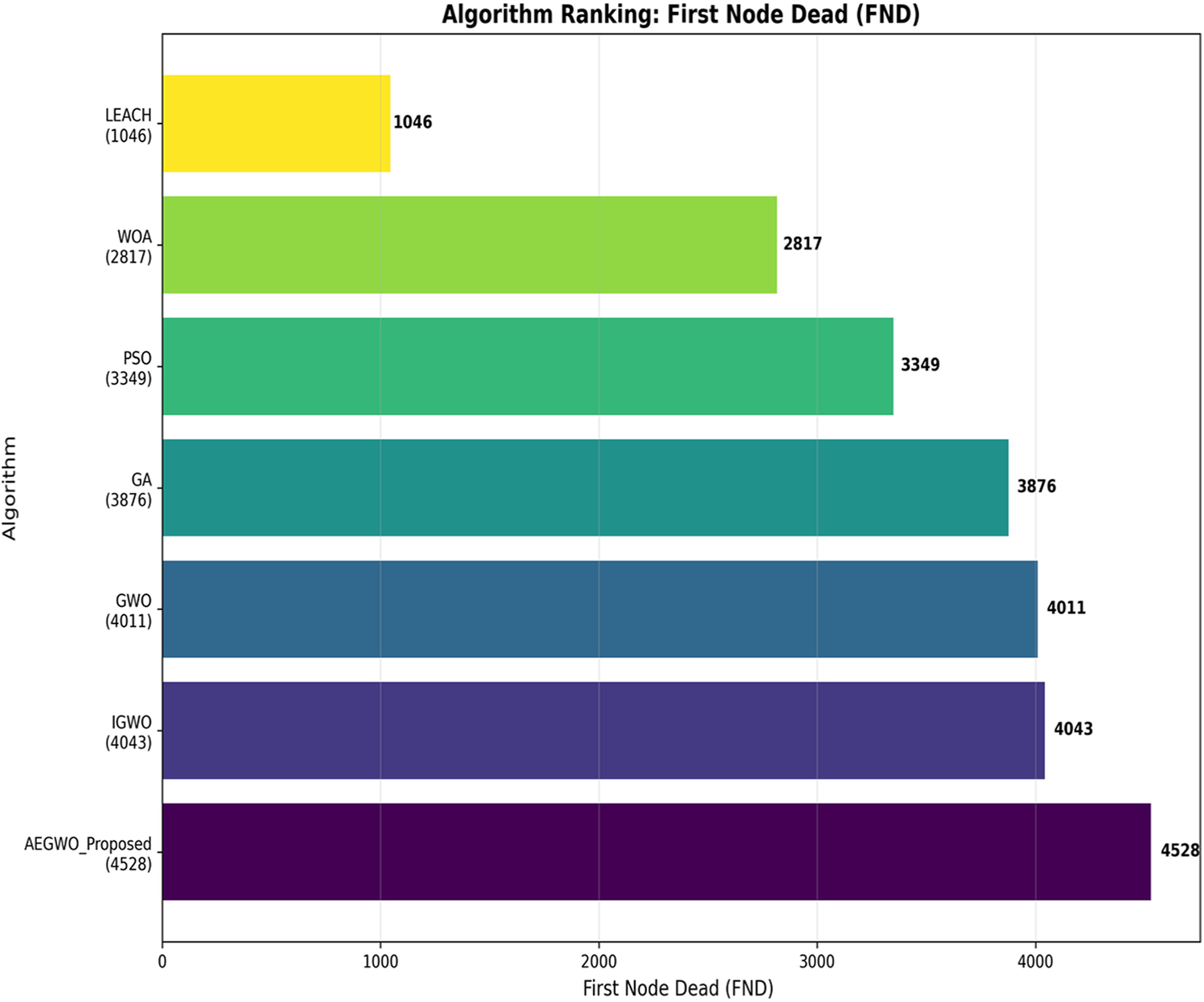
Figure 9: Algorithm ranking by First Node Dead (FND)
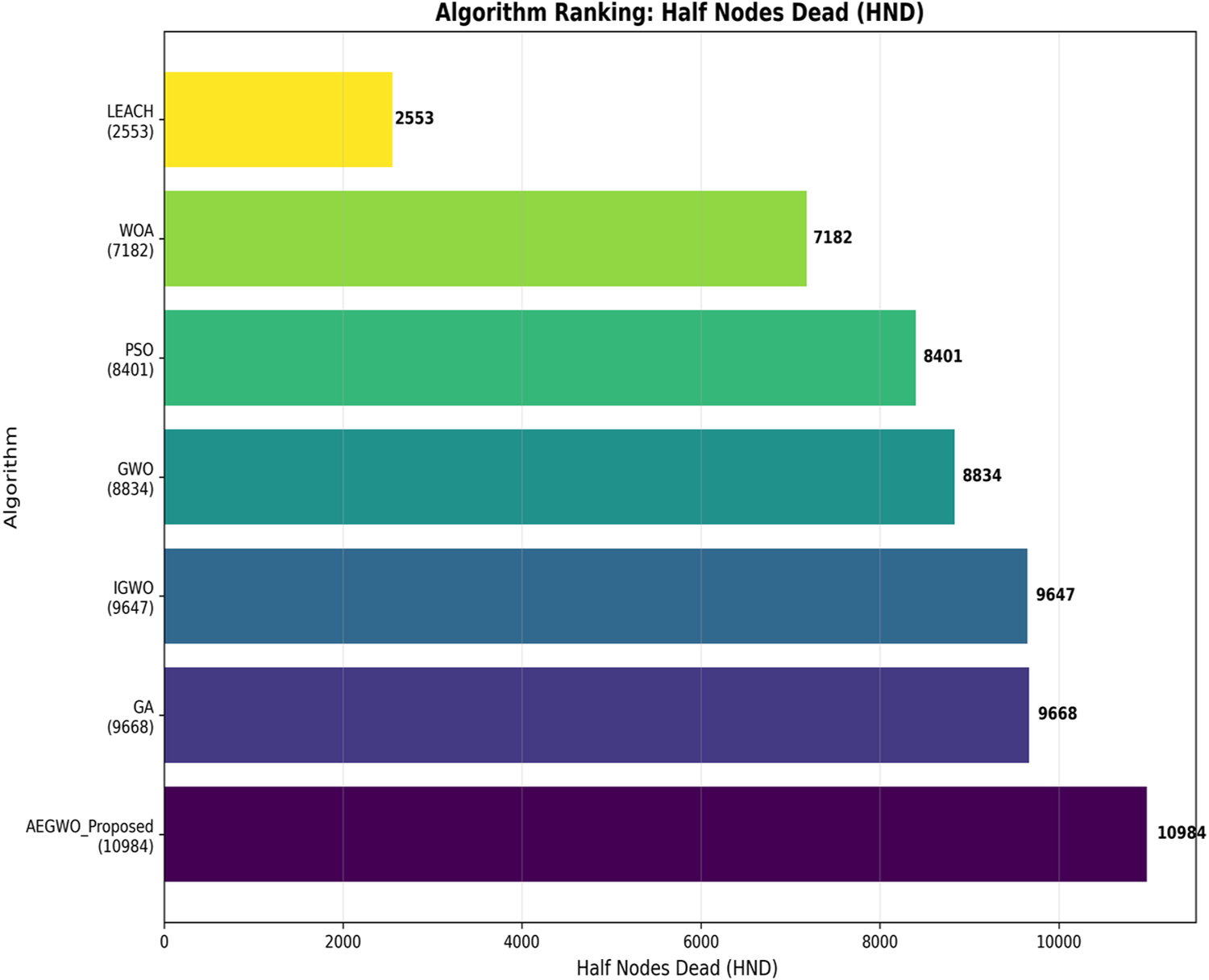
Figure 10: Algorithm ranking by Half Node Dead (HND)
4.3.5 Network Survival Analysis
Fig. 11 uses the network survival curve to show the percentage of alive nodes at each round of simulation. The AEGWO has a linear and slow decrease, which is a characteristic of efficient energy distribution and regulated rotation of CH. On the contrary, steep drop over LEACH beyond the 2000 round depicts similar high energy consumption with the random selection of CH. WOA and PSO are moderate about their stability but cannot support network connectivity after 17,000 rounds.
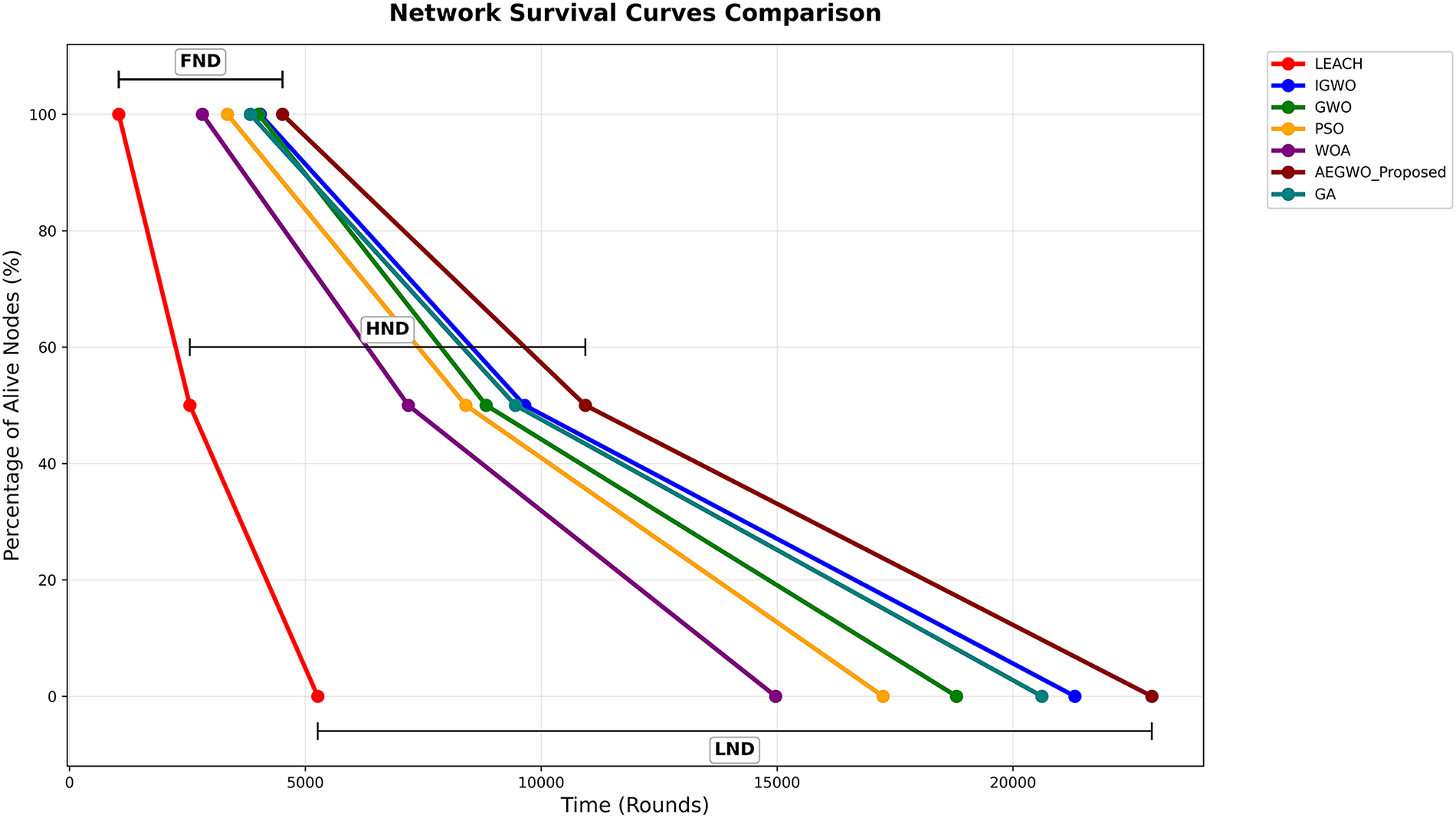
Figure 11: Network survival curve comparison for all algorithms
As is evident in the comparative analysis, AEGWO has a better balance between energy self-preservation, load balancing and convergence stability than both conventional and metaheuristic-based routing protocols, as illustrated in Fig. 12. In contrast to classical GWO and PSO, where exploration-exploitation balance depends on the fixed coefficients of control and linear position changes, in AEGWO, the exploration-exploitation balance is dynamically adjusted by non-linear adjustment of control parameters. This enables specifically diversifying at an early stage to ensure that CH prospects are found and diversifying at a late stage to feed local exploitation around the best areas. As a result, the oscillatory convergence that is common with WOA and GA does not occur in AEGWO, which results in smoother energy usage and longer network performance.
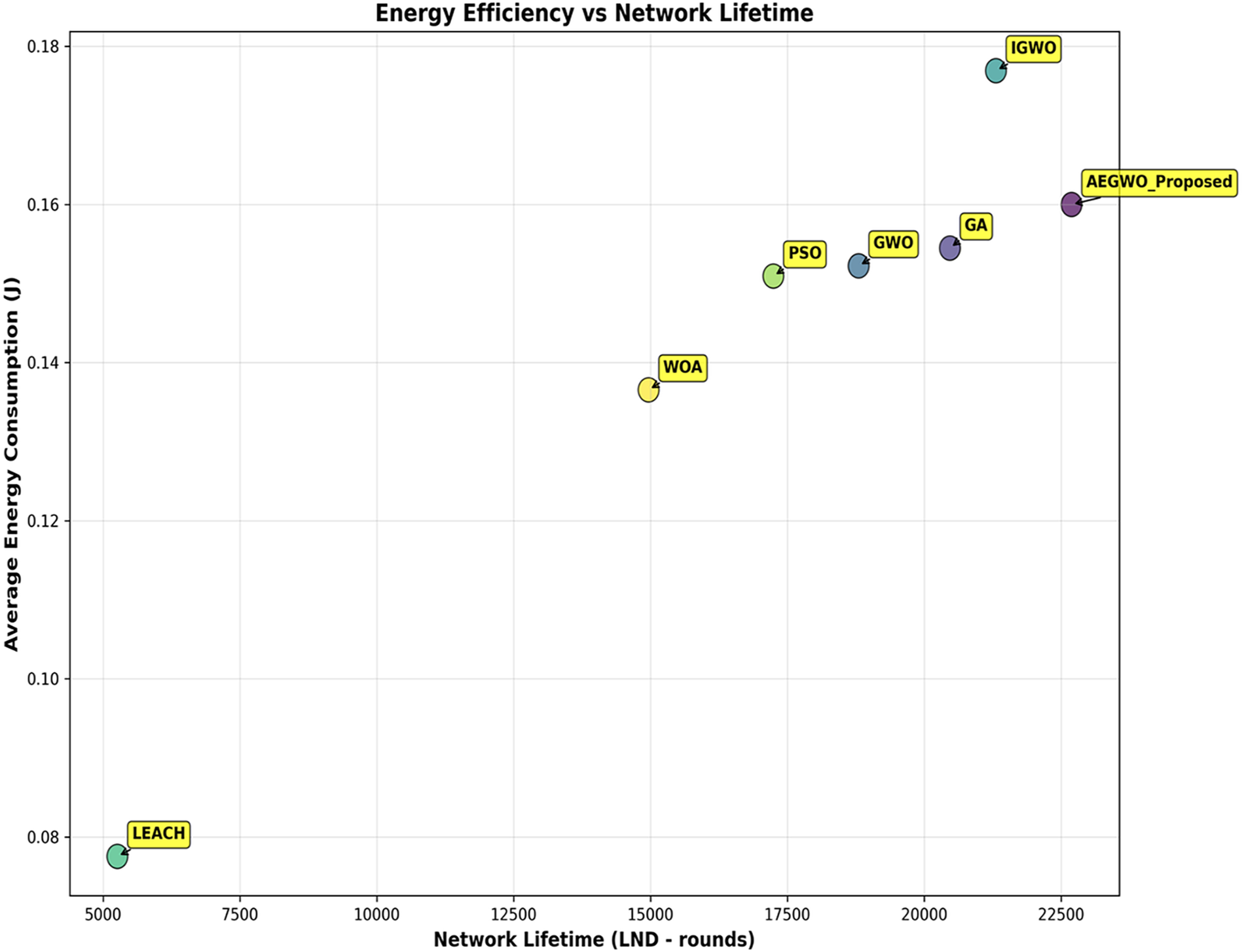
Figure 12: Energy lifetime tradeoff
The hybrid velocity-momentum component is also significant in increasing convergence without reducing diversity. The algorithm eliminates these erratic movements of search agents by adding momentum feedback, allowing speedy convergence to the optimal CH positions. This design implies that all the member nodes have a short distance of communication with their CHs and hence a low cost of transmission per round. The Gaussian-based Adaptive Mutation operator also guarantees strength by adding probabilistic disturbances during stagnation phases; by doing this, the algorithm can survive the local optima, which is a problem that limits the scalability of the traditional GWO and IGWO variants.
Energy-distribution wise AEGWO exhibits a steady trend of balanced consumption at all the nodes, as indicated by the high average residual energy and delayed FND/HND events. This uniform drain ensures no early collapses of clusters will occur, and the aggregation paths of the data remain stable all through the simulation process. The results of the survival-curve analysis indicate that the mortality of nodes in AEGWO advances slowly, which indicates fair distribution of energy and proper timing of CH rotation. Moreover, the adaptive learning algorithm provides a self-organized and resilient clustering behavior by making the algorithm continuously responsive to the changes in the network dynamics, including the spatial density variations and residual energy fluctuations.
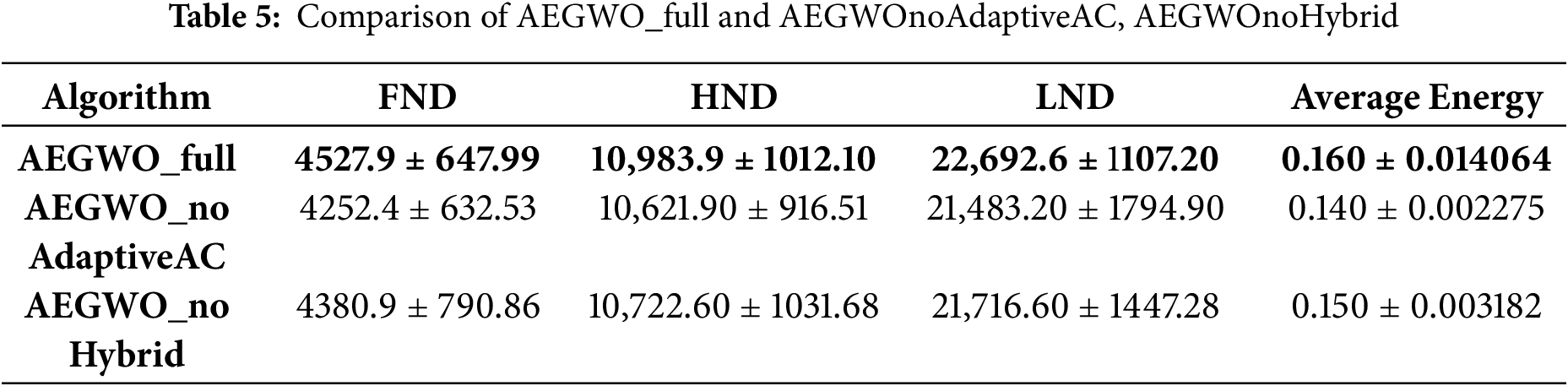
To measure the contribution of each of the proposed components, we performed an ablation experiment, in which we disabled the hybrid velocity-momentum update and the adaptive a, c controller, and all other settings remained the same. Table 5 is a comparison between the performance of the complete form of AEGWO and two forms of it that have been ablated, AEGWOnoAdaptiveAC and AEGWOnoHybrid. The AEGWOfull has the most desirable results on all metrics of lifetime and the average residual energy, FND =
Overall, the discussion shows that the benefits of AEGWO in the realm of performance are based on the synergistic combination of adaptive control, hybrid update dynamics, and intelligent mutation strategies. The combination of these elements allows maintaining optimization pressure and directly managed diversity conservation, which leads to a robust, scalable and energy conscious WSN clustering architecture. The results obtained justify the ability of AEGWO to be the basis of next-generation intelligent WSN protocols, which would enable the seamless integration of these protocols with real-time IoT and edge-computing environments.
This paper introduced an AEGWO, which is used to select CH in WSNs more energy efficiently and to maximize lifetime. Combining adaptive parameter control, a PSO-based hybrid velocity-momentum update, as well as an intelligent mutation strategy, the presented model provided an efficient way to enhance the exploration/exploitation ratio and the convergence behavior of the classical GWO framework. These innovations enabled AEGWO to sustain the diversity of the population and slow down premature convergence, which resulted in a more homogeneous distribution of CHs and equal energy use throughout the network.
Massive simulation findings asserted that AEGWO is always superior to benchmark algorithms LEACH, GWO, IGWO, PSO, WOA, and GA in all the measurements of key performance indicators. AEGWO improved network lifetime (LND) by more than 330% on average compared to the starting LEACH, as well as stability period (FND, HND) and average consumption energy. It was demonstrated that the adaptive search behavior of the algorithm allowed a long node activity and reduced the losses of early energy, and the computational complexity remained low enough to be used in resource-limited IoT scenarios. The findings support the claim that adaptive and hybrid metaheuristic optimization can significantly improve the reliability and sustainability of WSN operations. The future study will expand AEGWO in several ways. To begin with, the combination of deep reinforcement learning and chaotic maps control can even further optimize the parameters and the diversity of the search. Second, the proposed algorithm, when paired with IoT edge-computing models and heterogeneous node systems, will be able to accommodate scalable and real-time CH selection in mass sensor networks. Third, the implementation on actual WSN testbeds and the comparison to the new bio-inspired algorithms like Butterfly Optimization, Slap Swarm Optimization, etc., will give a better understanding of the strength and generalizability of AEGWO. In general, the introduced AEGWO framework provides a firm base of intelligent, energy-sensitive and adaptive clustering in the upcoming wireless sensor and IoT networks. This study assesses AEGWO based on a homogeneous and static WSN model, which is a typical benchmark in energy-efficient clustering literature. Although these situations are also applicable to most stationary IoT/WSN applications, physical networks can be heterogeneous, show uneven distribution of nodes, or mobile. Although AEGWO’s energy-conscious fitness feature and adaptive search processes are inherently extensible to these conditions, its performance in the context of heterogeneous and dynamic environments is an interesting direction of future research. Future research will thus include mobile sinks, multilevel energy models and time-varying topologies to further justify the strength of AEGWO.
Acknowledgement: Not applicable.
Funding Statement: The Open Access publication fee for this article was fully covered by Abu Dhabi University.
Author Contributions: The authors confirm contribution to the paper as follows: Conceptualization, Omar Almomani and Mahran Al-Zyoud; methodology, Omar Almomani and Ammar Almomani; software, Omar Almomani and Ahmad Adel Abu-Shareha; validation, Khaled Mohammad Alomari and Ammar Almomani; formal analysis, Said A. Salloum, Omar Almomani and Mahran Al-Zyoud; investigation, Ahmad Adel Abu-Shareha, Said A. Salloum and Khaled Mohammad Alomari; resources, Omar Almomani and Ahmad Adel Abu-Shareha; data curation, Ammar Almomani and Mahran Al-Zyoud; writing—original draft preparation, Mahran Al-Zyoud, Said A. Salloum and Khaled Mohammad Alomari; writing—review and editing, Omar Almomani, Ammar Almomani and Ahmad Adel Abu-Shareha; visualization, Mahran Al-Zyoud and Khaled Mohammad Alomari; supervision, Omar Almomani and Ammar Almomani; project administration, Omar Almomani and Ammar Almomani; funding acquisition, Khaled Mohammad Alomari. All authors reviewed the results and approved the final version of the manuscript.
Availability of Data and Materials: Not applicable.
Ethics Approval: Not applicable.
Conflicts of Interest: The authors declare no conflicts of interest to report regarding the present study.
References
1. Mahapatra RK, Kaliyath Y, Shet NSV, Mahapatro SR, Satapathi GS, Prusty SB, et al. A survey on wireless sensor network (applications and architecture). Int J Commun Netw Distrib Syst. 2024;30(2):136–201. doi:10.1504/ijcnds.2024.137085. [Google Scholar] [CrossRef]
2. Rani S, Taneja A. WSN and IoT: an Integrated approach for smart applications. Boca Raton, FL, USA: CRC Press; 2024. [Google Scholar]
3. Iskandarani MZ. Effect of intelligent reflecting surface on WSN communication with access points configuration. IEEE Access. 2025;13:13380–94. doi:10.1109/ACCESS.2025.3531637. [Google Scholar] [CrossRef]
4. Samara G, Hassan M, Zayed Y. An intelligent vice cluster head election protocol in WSN. Int J Adv Soft Comput Appl. 2021;13(3):202–22. doi:10.15849/ijasca.211128.14. [Google Scholar] [CrossRef]
5. Bagherzadeh Asl K, Alburaikan A. Survey on low energy adaptive clustering hierarchical protocol. Big Data Comput Vis. 2022;2(3):112–6. [Google Scholar]
6. Kour H, Sharma AK. Hybrid energy efficient distributed protocol for heterogeneous wireless sensor network. Int J Comput Appl. 2010;4(6):1–5. doi:10.5120/828-1173. [Google Scholar] [CrossRef]
7. Lindsey S, Raghavendra CS. PEGASIS: power-efficient gathering in sensor information systems. In: Proceedings of the IEEE Aerospace Conference; 2002 Mar 9–16; Big Sky, MT, USA. [Google Scholar]
8. Alı-Gburyı K, Shah AFMS. Performance comparison of PEGASIS, HEED and LEACH protocols in wireless sensor networks. Celal Bayar Üniversitesi Fen Bilimleri Dergisi. 2023;19(1):11–8. doi:10.18466/cbayarfbe.1165816. [Google Scholar] [CrossRef]
9. Masadeh R, Almomani O, Zaqebah A, Masadeh S, Alshqurat K, Sharieh A, et al. Narwhal optimizer: a nature-inspired optimization algorithm for solving complex optimization problems. Comput Mater Continua. 2025;85(2):3709–37. doi:10.32604/cmc.2025.066797. [Google Scholar] [CrossRef]
10. Houssein EH, Saad MR, Djenouri Y, Hu G, Ali AA, Shaban H. Metaheuristic algorithms and their applications in wireless sensor networks: review, open issues, and challenges. Clust Comput. 2024;27(10):13643–73. doi:10.1007/s10586-024-04619-9. [Google Scholar] [CrossRef]
11. Hamadneh T, Batiha B, Al-Refai O, Smerat A, Montazeri Z, Dehghani M, et al. Negotiators algorithm: a novel parameter-free metaheuristic inspired by human negotiation behaviour. Int J Intell Eng Syst. 2025;18(6):111–22. [Google Scholar]
12. Almomani O. A hybrid model using bio-inspired metaheuristic algorithms for network intrusion detection system. Comput Mater Continua. 2021;68(1):409–29. doi:10.32604/cmc.2021.016113. [Google Scholar] [CrossRef]
13. Kanthi Hegde M, Dilli R. Wireless sensor networks: network life time enhancement using an improved grey wolf optimization algorithm. Eng Sci. 2022;19(6):186–97. [Google Scholar]
14. Kumar P, Pandey S. Optimizing sensor node placement in wireless sensor networks using hybrid PSO-GWO technique. In: Proceedings of the 2024 IEEE 1st International Conference on Advances in Signal Processing, Power, Communication, and Computing (ASPCC); 2024 Dec 19–21; Bhubaneswar, India. p. 85–9. doi:10.1109/aspcc62191.2024.10881562. [Google Scholar] [CrossRef]
15. Yu X, Duan Y, Cai Z, Luo W. An adaptive learning grey wolf optimizer for coverage optimization in WSNs. Expert Syst Appl. 2024;238:121917. doi:10.1016/j.eswa.2023.121917. [Google Scholar] [CrossRef]
16. Gokilavani N, Bharathi B. Novel fuzzy based density based clustering algorithm for effective cluster prioritization in WSN. Int J Adv Soft Comput Its Appl. 2021;13(2):123–38. [Google Scholar]
17. Sekaran K, Rajakumar R, Dinesh K, Rajkumar Y, Latchoumi TP, Kadry S, et al. An energy-efficient cluster head selection in wireless sensor network using grey wolf optimization algorithm. TELKOMNIKA Telecommun Comput Electron Control. 2020;18(6):2822. doi:10.12928/telkomnika.v18i6.15199. [Google Scholar] [CrossRef]
18. Narayan V, Daniel AK, Chaturvedi P. FGWOA: an efficient heuristic for cluster head selection in WSN using fuzzy based grey wolf optimization algorithm. Preprint. 2022. doi:10.21203/rs.3.rs-1725228/v1. [Google Scholar] [CrossRef]
19. Rami Reddy M, Ravi Chandra ML, Venkatramana P, Dilli R. Energy-efficient cluster head selection in wireless sensor networks using an improved grey wolf optimization algorithm. Computers. 2023;12(2):35. doi:10.3390/computers12020035. [Google Scholar] [CrossRef]
20. Pal R, Saraswat M, Kumar S, Nayyar A, Rajput PK. Energy efficient multi-criterion binary grey wolf optimizer based clustering for heterogeneous wireless sensor networks. Soft Comput. 2024;28(4):3251–65. doi:10.1007/s00500-023-09316-0. [Google Scholar] [CrossRef]
21. Kaddi M, Omari M, Salameh K, Alnoman A. Energy-efficient clustering in wireless sensor networks using grey wolf optimization and enhanced CSMA/CA. Sensors. 2024;24(16):5234. doi:10.3390/s24165234. [Google Scholar] [PubMed] [CrossRef]
22. Alshammri GH. Enhancing wireless sensor network lifespan and efficiency through improved cluster head selection using improved squirrel search algorithm. Artif Intell Rev. 2025;58(3):79. doi:10.1007/s10462-024-11088-4. [Google Scholar] [CrossRef]
23. Iskandarani MZ. Effect of transmission range and grid dimensions on route cost in WSN using TABU search algorithm. In: Proceedings of the 2024 International Conference on Electrical, Communication and Computer Engineering (ICECCE); 2024 Oct 30–31; Kuala Lumpur, Malaysia. p. 1–6. doi:10.1109/icecce63537.2024.10823622. [Google Scholar] [CrossRef]
24. Ahmed EJ, Osman AA, Awadalkareem SD. Energy optimization approaches for CH in WSNs: a review. Int Res J Eng Technol. 2024;11(7):950–71. [Google Scholar]
25. Singh O, Rishiwal V, Chaudhry R, Yadav M. Multi-objective optimization in WSN: opportunities and challenges. Wirel Pers Commun. 2021;121(1):127–52. doi:10.1007/s11277-021-08627-5. [Google Scholar] [CrossRef]
26. Raghupathy M, Rajasekhar C. Deriving a multi-objective function using hybrid meta-heuristic approach for optimal CH selection and optimal routing in WSN. Cybern Syst. 2025;56(7):1085–126. doi:10.1080/01969722.2025.2468191. [Google Scholar] [CrossRef]
27. Mirjalili S, Mirjalili SM, Lewis A. Grey wolf optimizer. Adv Eng Softw. 2014;69:46–61. doi:10.1016/j.advengsoft.2013.12.007. [Google Scholar] [CrossRef]
28. Makhadmeh SN, Al-Betar MA, Abu Doush I, Awadallah MA, Kassaymeh S, Mirjalili S, et al. Recent advances in grey wolf optimizer, its versions and applications: review. IEEE Access. 2024;12:22991–3028. doi:10.1109/access.2023.3304889. [Google Scholar] [CrossRef]
29. Jain A, Nagar S, Singh PK, Dhar J. A hybrid learning-based genetic and grey-wolf optimizer for global optimization. Soft Comput. 2023;27(8):4713–59. doi:10.1007/s00500-022-07604-9. [Google Scholar] [CrossRef]
30. Zhang C, Wen Z, Xiong D, Li W. AEELD: an adaptive energy-efficient strategy based on location density awareness in wireless sensor networks. IEEE Syst J. 2025;19(3):825–36. doi:10.1109/JSYST.2025.3574744. [Google Scholar] [CrossRef]
Cite This Article
 Copyright © 2026 The Author(s). Published by Tech Science Press.
This work is licensed under a Creative Commons Attribution 4.0 International License , which permits unrestricted use, distribution, and reproduction in any medium, provided the original work is properly cited.
 Downloads
 Citation Tools
