
 Login
Login Register
 Submit a Paper
 Propose a Special lssue
 Open Access
REVIEW

A Systematic Literature Review on the Impact of Generative AI in Digital Marketing: Advancements, Opportunities, and Challenges
1 School of Business, International American University, Los Angeles, CA, USA
2 Department of Computer Science, California State University, Los Angeles, CA, USA
3 Department of Computer Science and Engineering, Bangladesh University of Business and Technology, Dhaka, Bangladesh
4 Department of Computer Science and Engineering, American International University-Bangladesh, Dhaka, Bangladesh
5 Center for Advanced Analytics (CAA), Faculty of Engineering and Technology (FET), Multimedia University, Melaka, Malaysia
* Corresponding Authors: M. F. Mridha. Email: ; Md. Jakir Hossen. Email:
Computers, Materials & Continua 2026, 87(3), 11 https://doi.org/10.32604/cmc.2026.071029
Received 30 July 2025; Accepted 21 October 2025; Issue published 09 April 2026
 View Full Text
 Download PDF
Abstract
Generative Artificial Intelligence (AI) is reshaping digital marketing by creating automated content, personalizing campaigns, and offering new ways to engage consumers. This systematic review examines research on generative AI, highlighting both its technological progress and the ethical, technical, and organizational hurdles that could limit its use. We used a PRISMA-based method to search major databases (ACM Digital Library, IEEE Xplore, and Scopus) for peer-reviewed studies published from 2018 to 2025. Our findings reveal major gains in text creation, image generation, and multimodal campaigns, which can lower costs and spark creative thinking. Still, data privacy, bias in models, and laws around compliance show the need for clear and responsible adoption. By bringing in ideas from Innovation Diffusion Theory and the Technology Acceptance Model, this review shows how organizational culture and perceived value interact with ethical frameworks to shape how generative AI tools take hold. We provide insights for marketers who want to apply generative AI in a responsible way and set a path for future research aimed at protecting consumer trust.Keywords
Supplementary Material
Supplementary Material FileGenerative Artificial Intelligence (AI) has rapidly emerged as a transformative force in digital marketing, driving advancements in content creation, personalized campaigns, and consumer engagement [1,2]. As marketers strive to adapt to the increasing digital competition and evolving consumer behavior, generative AI offers innovative tools for creating, personalizing, and disseminating content on an unprecedented scale [3,4]. This technology, underpinned by advancements in deep learning architectures such as transformers [5], Generative Adversarial Networks (GANs) [6], and diffusion models [7], is redefining digital marketing strategies by shifting from predictive analytics to creative applications.
The digital marketing landscape has undergone a significant transformation over the last decade, transitioning from basic banner ads and email campaigns to sophisticated, data-driven strategies across platforms such as social media, search engines, and mobile applications [8,9]. This shift has been accompanied by a massive increase in user data generation, including click histories and social media interactions, enabling marketers to leverage intelligent, automated tools for impactful campaigns. Generative AI now empowers brands to design marketing assets such as text, images, and videos, automating processes like customer support and personalized messaging while reducing costs and accelerating campaign development [10,11]. For example, language models such as GPT are capable of crafting email headlines tailored to individual user preferences, while GANs can generate new product images to support market testing [12]. Generative AI not only analyzes consumer data but actively shapes brand interactions and consumer influence. Its ability to adapt content to specific demographics, languages, or cultural contexts within moments enables dynamic, real-time marketing campaigns that align with rapidly changing online discourse [13,14].
Generative AI stands apart within the broader field of artificial intelligence due to its ability to create new content that is not directly extracted from training data [15,16]. Unlike predictive analytics, which focuses on forecasting outcomes based on historical data, or rule-based systems that rely on explicitly coded instructions, generative AI autonomously constructs patterns and features from data, enabling novel content creation [17]. In digital marketing, this includes applications such as language generation, image synthesis, and multimodal systems that seamlessly integrate text, sound, and visuals into cohesive campaigns.
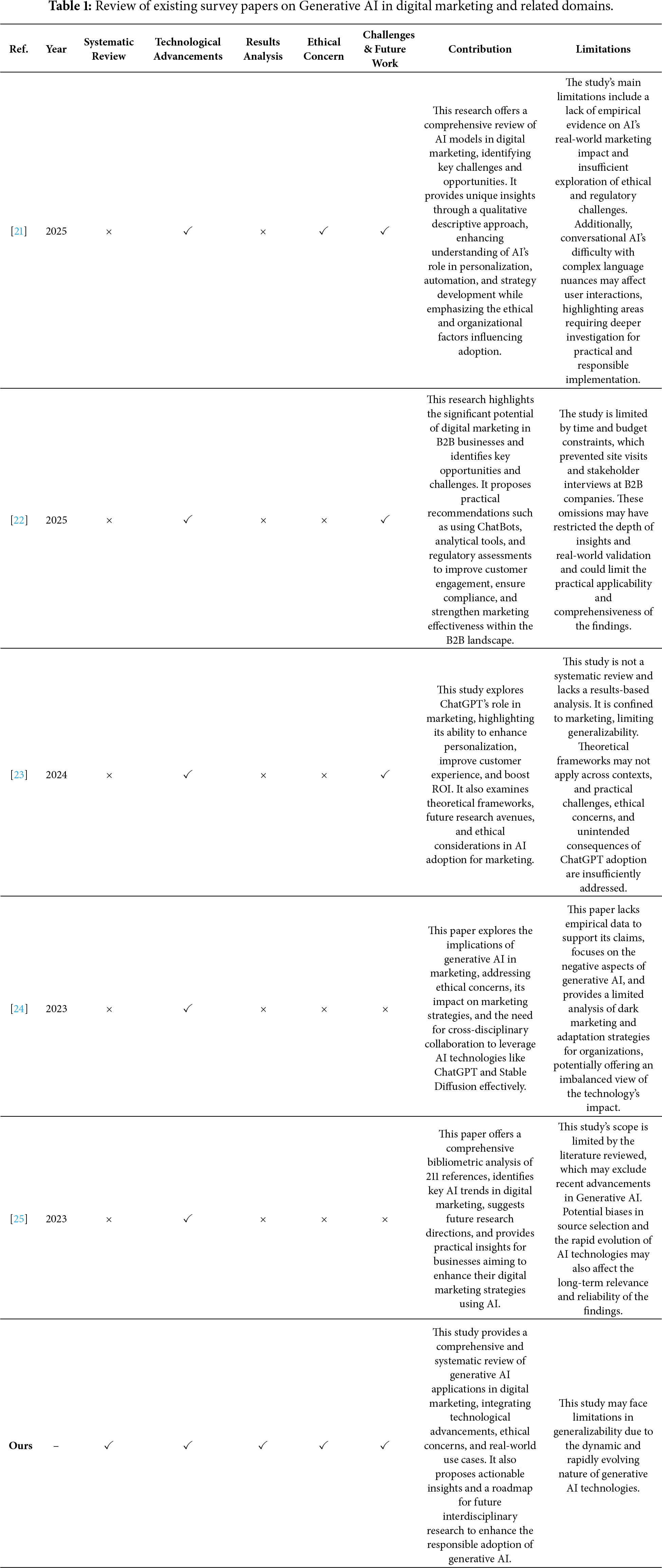
Despite the rapid adoption of generative AI, much of the existing literature on AI in marketing remains fragmented and focused on predictive models like recommendation systems or churn analysis [18–20]. Comprehensive empirical studies on generative AI’s applications, encompassing text, image, and video creation, are scarce. Additionally, ethical and practical considerations such as data privacy, content bias, and accountability are often underexplored in the context of regulatory frameworks like GDPR or the AI Act in the European Union. Addressing these challenges is critical to realizing the potential of generative AI for responsible and sustainable deployment. To better understand the state of the art, a comparative analysis of existing survey papers is summarized in Table 1. This table reviews notable works on generative AI in digital marketing and related fields, evaluating their scope, contributions, and limitations. It highlights the areas of focus and identifies gaps, providing a roadmap for future exploration.
This review aims to bridge these gaps by synthesizing current research, examining the transformative potential of generative AI, and exploring the challenges associated with its adoption. It evaluates real-world applications, highlights opportunities for personalized and adaptive content generation, and discusses ethical concerns and regulatory issues. By integrating theoretical models such as the Innovation Diffusion Theory and the Technology Acceptance Model with contemporary ethical frameworks, the review provides a holistic understanding of the intersection between technology, organizational culture, and societal implications. Through this comprehensive analysis, the review seeks to empower marketing practitioners and researchers with the insights needed for responsible innovation and strategic implementation in the dynamic realm of digital marketing.
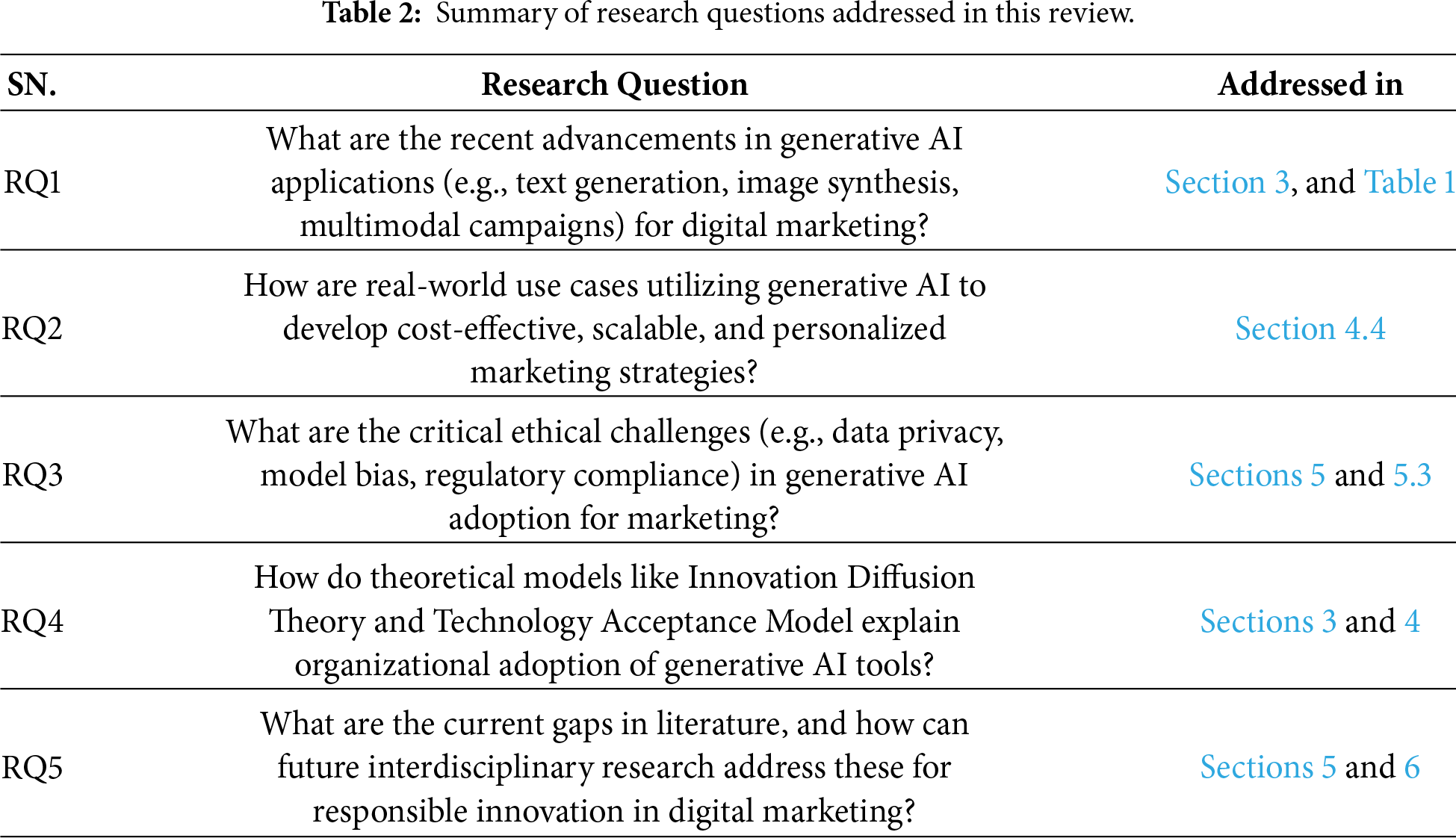
In particular, this review contributes to the field by offering a structured synthesis of existing literature, highlighting underexplored areas in the practical deployment of generative AI, and proposing a multidisciplinary framework to guide future research and practice. By aligning theoretical insights with empirical case studies, the paper not only identifies prevailing trends but also underscores the implications for ethical governance and strategic decision-making. These contributions are framed around several key research questions, as summarized in the Table 2.
The rest of the paper is organized as follows: Section 2 details the systematic review methodology. Section 3 addresses the background and theoretical underpinnings. Section 4 explores current findings and trends. Section 5 provides a critical discussion of the results, and Section 6 concludes the paper.
This section outlines the systematic literature review (SLR) methodology adopted to explore and synthesize the existing research on generative AI in digital marketing. Our goal was to ensure both transparency and replicability in the study selection and analysis process. Following common SLR guidelines (PRISMA as present in Fig. 1), we detail each phase: from designing search strategies to screening, quality assessment, and data extraction.
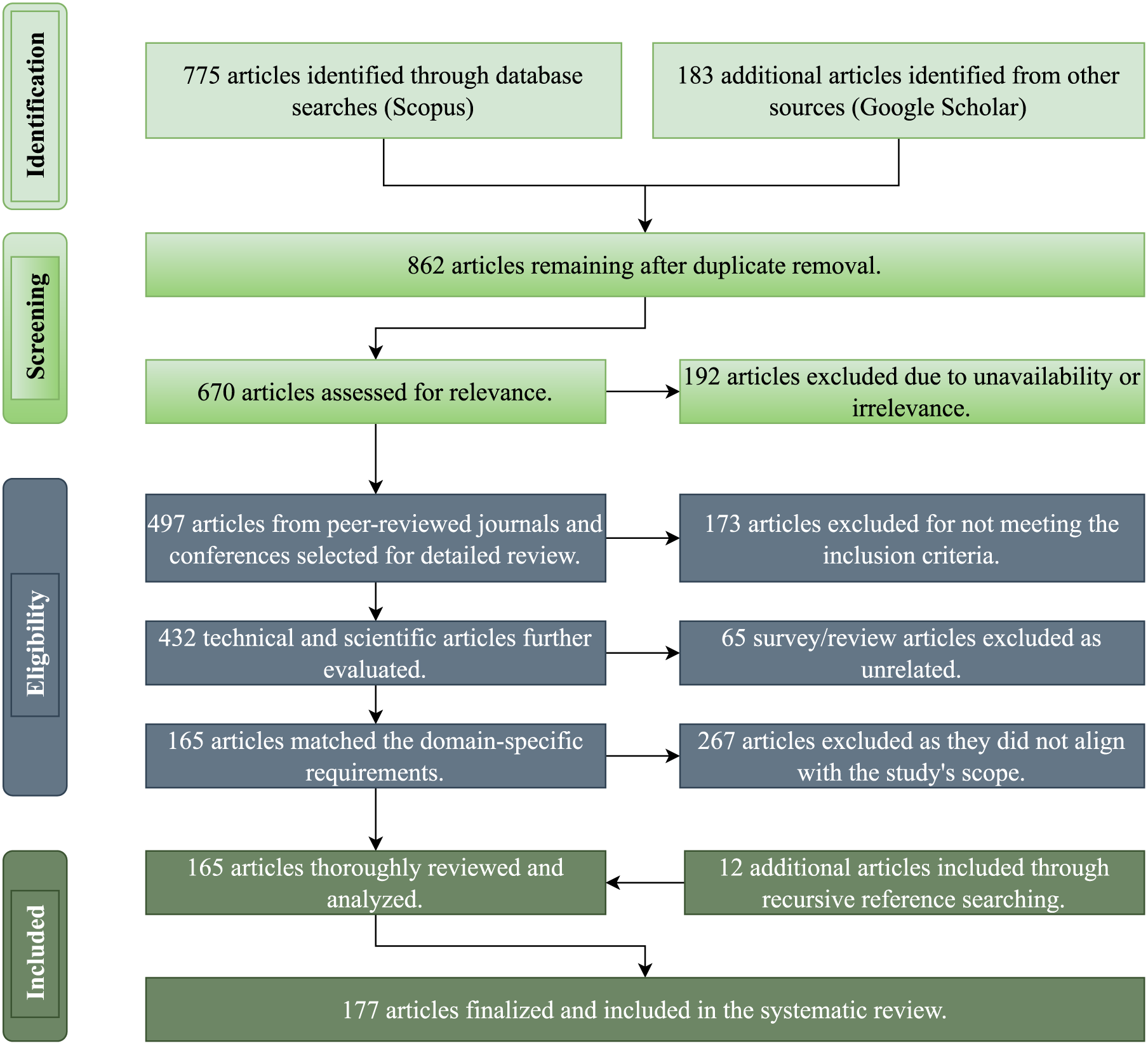
Figure 1: PRISMA-based flow diagram illustrating the study selection and screening process.
We employed a methodical approach to capture a comprehensive set of academic and gray literature addressing generative AI within the digital marketing context. The research design covered three major phases:
1. Planning the Review: Identification of research questions, keywords, and databases to be searched.
2. Conducting the Review: Systematic searching, screening of studies against inclusion/exclusion criteria, and quality appraisal.
3. Reporting the Review: Data extraction, synthesis of key themes, and presentation of findings in subsequent sections.
In addition, we acknowledge that ChatGPT was used solely for writing refinement and language polishing. Its role was limited to improving readability and grammar without influencing the research design, analysis, or interpretation. All AI-assisted text was thoroughly reviewed and revised manually by the authors to ensure accuracy and appropriateness.
Our main research questions (RQs), as stated in the Introduction, focused on:
• RQ1: What is the current state of generative AI applications in digital marketing?
• RQ2: What opportunities and benefits does generative AI present to digital marketers?
• RQ3: What key challenges, limitations, and ethical considerations arise when deploying generative AI in marketing contexts?
2.2.1 Databases and Sources Consulted
To capture both computer science and marketing perspectives, we searched major academic databases and scholarly platforms, including:
• ACM Digital Library
• IEEE Xplore
• Scopus
• Google Scholar (for potential gray literature or conference proceedings not indexed in the above repositories).
We augmented these sources by inspecting relevant journals and conference proceedings (e.g., AI, Corporate Social Responsibility, and Marketing in Modern Organizations, ACM Computing Surveys, International Journal of Information Management, IEEE Transactions on Knowledge and Data Engineering, among others) that frequently feature articles on AI-driven marketing innovations.
2.2.2 Search Terms and Query Formulation
Building on the research objectives, we developed a query string combining synonyms and Boolean operators. Core search terms included:
“Generative AI” OR “Generative Adversarial Network” OR “GPT” OR “Diffusion Models” OR
“Transformers” AND “Digital Marketing” OR “Advertising” OR “Marketing Automation” OR
“Personalized Marketing” OR “Marketing Campaigns”
We also employed wildcard operators (where supported) to capture variations (e.g., advert* for advertise, advertisement, or advertising). To ensure the coverage of closely related works, we iteratively refined these queries by scanning initial results and incorporating additional keywords such as marketing analytics, marketing content generation, and chatbot references.
2.3 Screening and Eligibility Criteria
We adopted a multi-stage screening process to filter out irrelevant, duplicate, or low-quality studies.
1. Title and Abstract Review: We assessed titles and abstracts against the core theme of “generative AI in digital marketing”. Papers focusing solely on predictive analytics, sales forecasting, or general AI without generative components were excluded at this stage.
2. Removal of Duplicates: Studies retrieved from multiple databases were consolidated using reference management tools (e.g., Zotero, Mendeley), and duplicates were eliminated.
For studies surviving the initial screening, we downloaded the full texts and applied the following inclusion and exclusion criteria:
Inclusion Criteria
• Studies (journal articles, conference papers, book chapters) explicitly addressing generative AI models (e.g., Transformer-based models, GANs, VAEs, diffusion) in a digital marketing or advertising context.
• Works discussing empirical or conceptual insights on applications, opportunities, or challenges of generative AI in marketing.
• Publications in English, from peer-reviewed or credible sources (including gray literature if it met quality standards).
• Studies published from 2019 onward, reflecting the emergence of key generative technologies.
Exclusion Criteria
• Studies focusing exclusively on predictive or discriminative AI (e.g., churn prediction, anomaly detection) without discussing generative outputs.
• Publications that addressed marketing analytics but lacked any generative AI component or methodology.
• Non-scholarly pieces such as blog posts, editorial opinions, or incomplete papers without peer review.
• Duplicate or significantly overlapping works (e.g., extended versions of the same conference paper) were counted only once.
We further evaluated eligible studies to ensure methodological rigor and relevance:
1. (QA1) Clarity of Research Aims: Did the study clearly define its research objectives regarding generative AI and marketing?
2. (QA2) Methodological Soundness: For empirical studies, were the data collection and analysis methods adequately described? For conceptual works, did the authors provide coherent frameworks or theoretical grounding?
3. (QA3) Relevance to Generative AI: Did the paper discuss generative models beyond mere mention, providing insights into deployment, performance, or strategic application?
4. (QA4) Marketing Focus: Did the study explicitly link AI methodologies to marketing objectives (e.g., personalization, brand communication, user engagement)?
Studies scoring low on multiple QA criteria were excluded or flagged for limited inclusion in the thematic discussion. Throughout this process, conflicts or uncertainties were resolved through consensus between at least two authors.
2.5 Data Extraction and Synthesis
Each included paper was carefully examined to extract pertinent information:
• Bibliographic Details: Author names, year of publication, source venue (journal, conference, book chapter), and geographical focus (if specified).
• AI Technique(s) Employed: Type of generative model (GAN, Transformer, VAE, diffusion model), training approach, and data domain (text, image, multimodal).
• Marketing Application: Context of usage—advertising, social media content generation, email campaigns, SEO optimization, or more specialized domains like AR/VR marketing.
• Outcomes and Metrics: Reported improvements, quantitative measures (e.g., click-through rate, time-to-market), and qualitative insights (e.g., brand perception, user acceptance).
• Identified Challenges and Ethical Considerations: Issues related to bias, privacy, transparency, or regulatory constraints.
We adopted a thematic analysis approach to categorize findings into broader clusters (e.g., content generation, personalization, ethics and regulation), matching the research questions stated earlier. The emergent themes guided the presentation of results in Section 4. Where relevant, numeric metrics (e.g., effect sizes, success rates, or engagement metrics) were noted and compared across studies to offer quantitative context.
3 Background and Theoretical Foundations
In this section, we provide a comprehensive overview of the foundational concepts and theoretical underpinnings that inform the use of generative AI in digital marketing. Specifically, we explore the historical progression of generative AI technologies, discuss the principal domains of digital marketing, and map the relevant theoretical frameworks that guide these emerging tools’ adoption and ethical considerations.
Generative AI refers to a subset of artificial intelligence techniques designed to create new, synthetic content across various modalities, such as text, images, and videos, by learning patterns and features from training data [26,27]. These systems rely on sophisticated algorithms, such as deep learning, transformers, and diffusion models, to generate outputs that are often indistinguishable from human-created content.
Over the years, generative AI has become indispensable in industries where creativity, automation, and personalization intersect. Its transformative potential lies in its ability to augment human capabilities, reduce operational overhead, and open new avenues for innovation in content creation and user engagement [28,29]. For instance, generative AI enables advancements in content generation for movies and music, synthetic data creation for training machine learning models, and the development of immersive virtual reality experiences.
The applications of generative AI span multiple domains, including automating customer support interactions using chatbots, generating hyper-personalized marketing campaigns tailored to individual consumer preferences, and advancing medical imaging analysis [30,31]. By leveraging vast amounts of structured and unstructured data, generative AI empowers industries to achieve better efficiency and impactful outcomes.
Historically, generative AI has evolved from foundational statistical models, such as autoregressive methods and probabilistic programming, to more advanced neural network-based approaches like transformers and diffusion models. The introduction of transformer architectures has significantly accelerated progress, enabling more accurate and versatile content creation. Fig. 2 provides an overview of key developments in generative AI, depicting popular models, their developers, publication years, and applications.
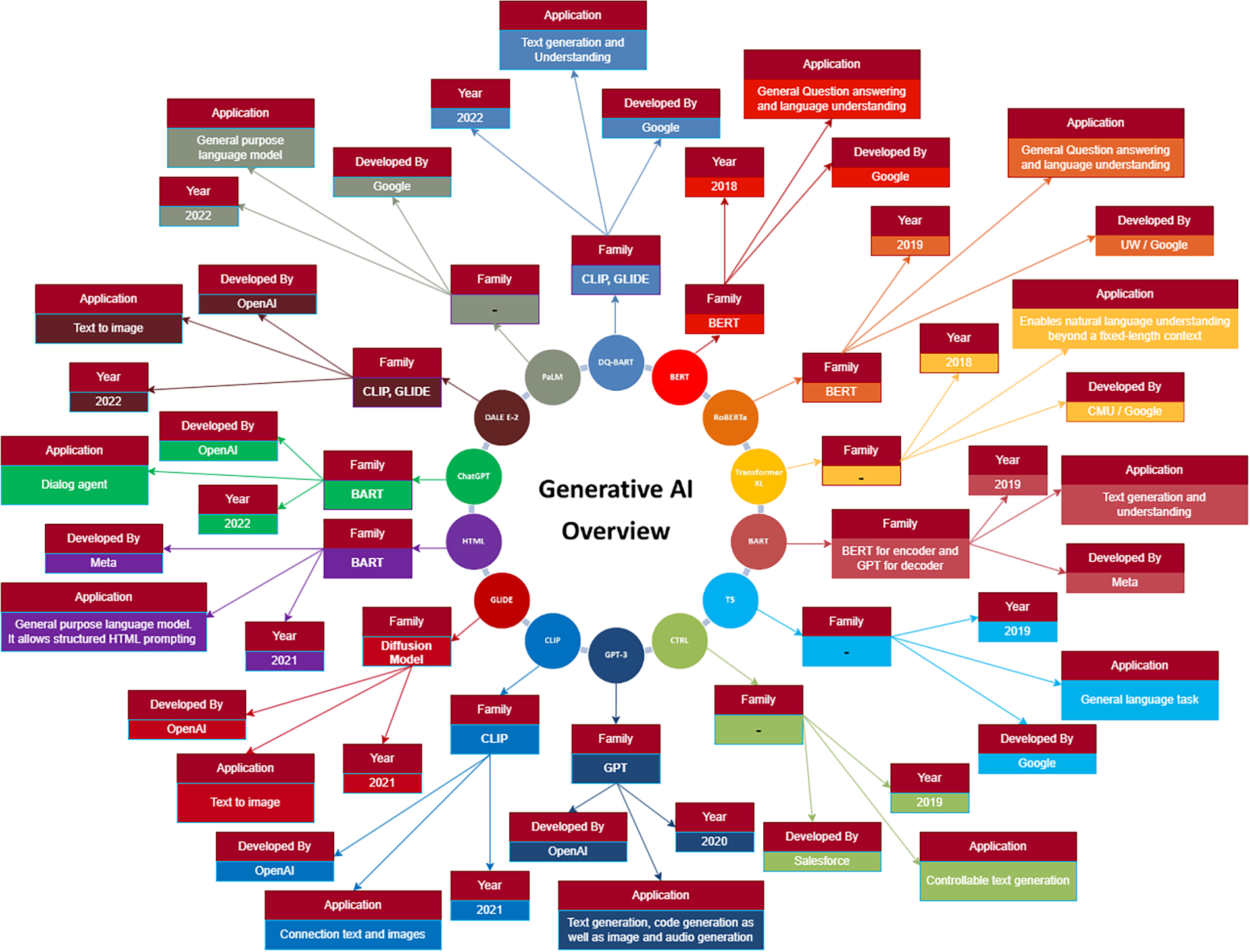
Figure 2: Overview of Generative AI developments and their key milestones. The visualization highlights various generative AI systems, their developers, publication years, and applications, showing the diverse use cases and continuous innovation in this field.
The trajectory of generative AI can be traced back to early language models and statistical approaches, which laid the groundwork for many modern techniques [32]. Initially, n-gram models and Markov chains were employed to model sequences of words or characters, enabling primitive text generation. These early methods, while rudimentary, showcased the potential for machines to produce human-like text through probabilistic assumptions [33,34]. As shown in Fig. 3, this early phase marked the beginning of a gradual evolution toward more advanced generative methods.
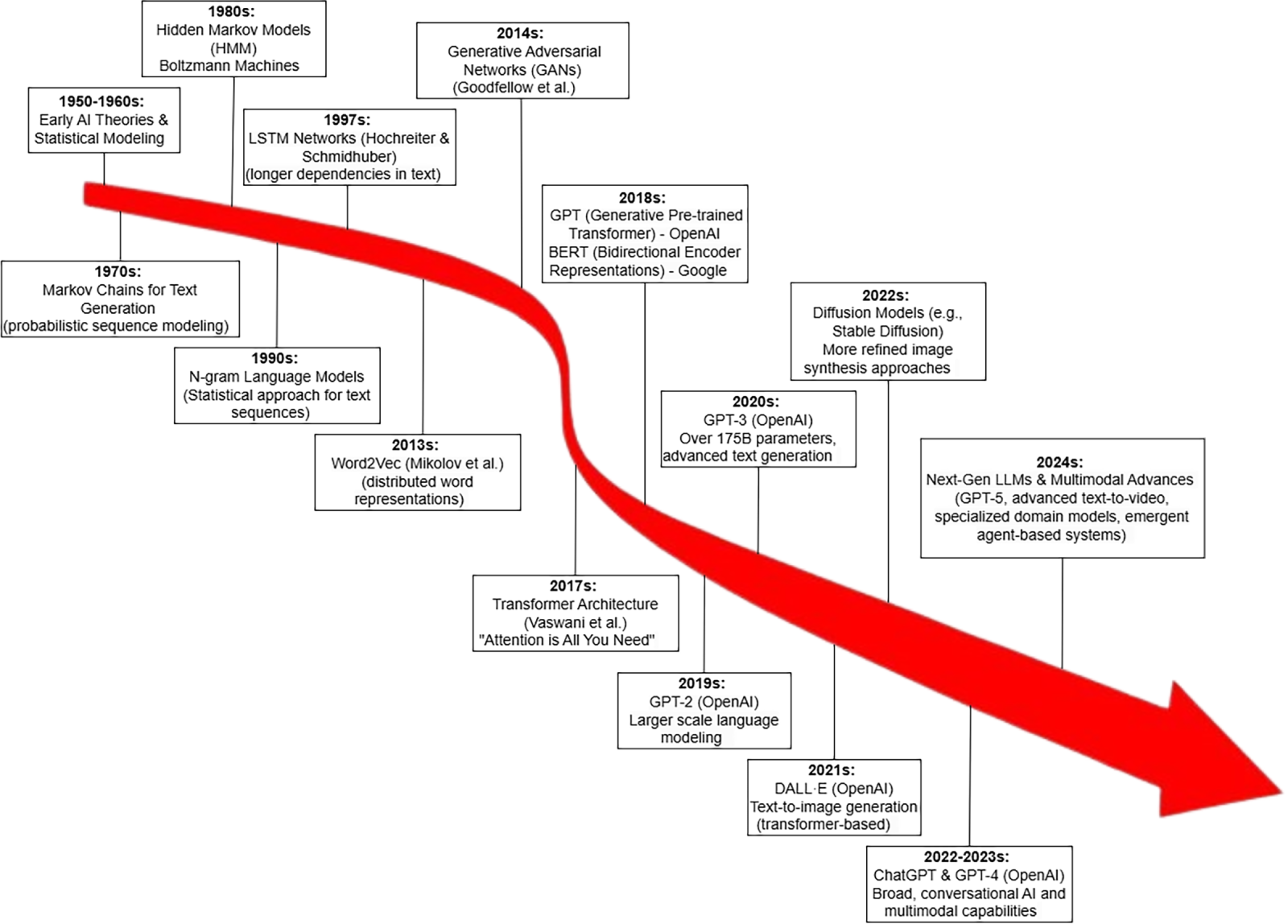
Figure 3: Evaluation of Generative AI from 1950 to 2024.
Subsequent breakthroughs in recurrent neural networks (RNNs) [35] and long short-term memory (LSTM) [36] networks extended the capabilities of language modeling by managing longer dependencies within text sequences. Researchers harnessed these architectures to generate more coherent and contextually relevant sentences, albeit with limitations in capturing extremely long-range dependencies or global context within larger documents [37].
A significant leap forward occurred with the emergence of transformer-based models, notably introduced by Vaswani [38] in the seminal paper “Attention is All You Need”. Transformers replaced recurrence with a self-attention mechanism, vastly improving the capacity to process entire sequences in parallel and capture long-range relationships more effectively. This architectural advancement catalyzed the development of large-scale pre-trained language models (e.g., GPT, BERT) that demonstrated unprecedented fluency and versatility across a broad spectrum of language tasks.
In parallel, computer vision researchers pioneered generative adversarial networks (GANs), introduced by Goodfellow et al. [39], which enabled the generation of highly realistic images. GANs involve two networks, a generator and a discriminator, which are trained in opposition to each other, iteratively refining their performance through adversarial training [40]. More recently, diffusion models have emerged as a powerful class of generative models for image synthesis, leveraging stochastic processes to incrementally refine noise into coherent images [41,42]. These advancements in text, image, and multimodal generation form the cornerstone of generative AI capabilities that are now being integrated into various marketing applications.
At the core of modern generative AI are two primary classes of models: generative and discriminative [43]. Although these models use similar advanced neural architectures, they serve different objectives and approaches to working with data. Generative models focus on understanding and replicating the underlying data distribution, while discriminative models aim to make predictions based on observed features [44].
Generative models [45] aim to model the joint probability distribution
Discriminative models [47], on the other hand, focus on learning the conditional probability distribution
Generative Models: Generative models attempt to learn the joint probability distribution of the observed data and any latent variables that might influence it. This is typically achieved by modeling the data as a combination of factors, which may include complex dependencies between observed variables and latent factors. By learning the joint distribution, these models can generate new data points that are similar to the original dataset [48]. Common examples include Variational Autoencoders (VAEs), which encode data into a latent space and sample new instances with similar characteristics; Generative Adversarial Networks (GANs), which use adversarial training between a generator and discriminator to produce realistic outputs; Transformer-based language models, such as GPT and BERT variants, which generate coherent and contextually relevant text; and advanced neural network architectures that combine convolutional, recurrent, and attention mechanisms to generate high-fidelity images, audio, and multimodal content. Recent advancements in these models include diffusion models for improved image generation, fine-tuned large language models for domain-specific text generation, and multimodal generative models that integrate text, image, and audio to support creative and interactive applications in marketing, healthcare, and entertainment.
• Variational Autoencoders (VAEs): VAEs [49] are generative models that integrate deep learning with probabilistic modeling. They consist of an encoder that maps input data
Fig. 4 illustrates the VAE process, showing the probabilistic encoder compressing the input image into a latent space and the decoder reconstructing the image from the sampled latent vector, highlighting the flow from input to latent representation and back to output. Table 3 summarizes various research works on VAEs, emphasizing their role in digital marketing and other applications.
• Generative Adversarial Networks (GANs): GANs, introduced by Goodfellow et al. [57], consist of two neural networks: a generator (G) and a discriminator (D). The generator produces synthetic data from random noise, while the discriminator classifies inputs as real or fake. The two networks engage in an adversarial process in which the generator aims to create data that is indistinguishable from real samples, and the discriminator tries to correctly identify real vs. generated data. Training alternates between updating the discriminator and the generator, with the goal of reaching a balance where the generator produces realistic outputs and the discriminator achieves approximately 50% accuracy on distinguishing real from fake data.
Variants like Wasserstein GAN (WGAN) [58] have been proposed to improve training stability and output quality by modifying the loss function. GANs have revolutionized generative modeling across various applications, including image generation, super-resolution, and style transfer [59,60]. Fig. 5 illustrates the architecture of GANs, highlighting the interplay between the generator and the discriminator. Table 4 provides a detailed summary of these notable contributions, highlighting the datasets used, contributions made, and the challenges addressed in each study. This tabulated summary illustrates the growing versatility of GANs, while pointing out limitations such as the reliance on specific datasets, challenges with generalization, and the need for more diverse training data that remain open areas for further research.
• Transformer-Based Language Models: Transformer-based language models, such as GPT [65], have advanced natural language processing by using self-attention mechanisms to capture long-range dependencies and contextual relationships across entire sequences [66]. Unlike RNNs or LSTMs, transformers process sequences in parallel, improving training efficiency. GPT uses a decoder-only architecture for text generation, while the multi-head attention mechanism allows the model to capture multiple levels of abstraction [67]. Despite their effectiveness, transformers require large datasets and substantial computational resources [68,69].
Fig. 6 illustrates the transformer architecture, highlighting its self-attention layers and feed-forward networks that process sequences in parallel. Table 5 summarizes key studies and advancements in transformer-based models, highlighting the models used, contributions made, and their respective limitations. This table reflects the growing diversity of transformer applications across various NLP tasks, while emphasizing ongoing challenges related to model size, efficiency, and generalizability.
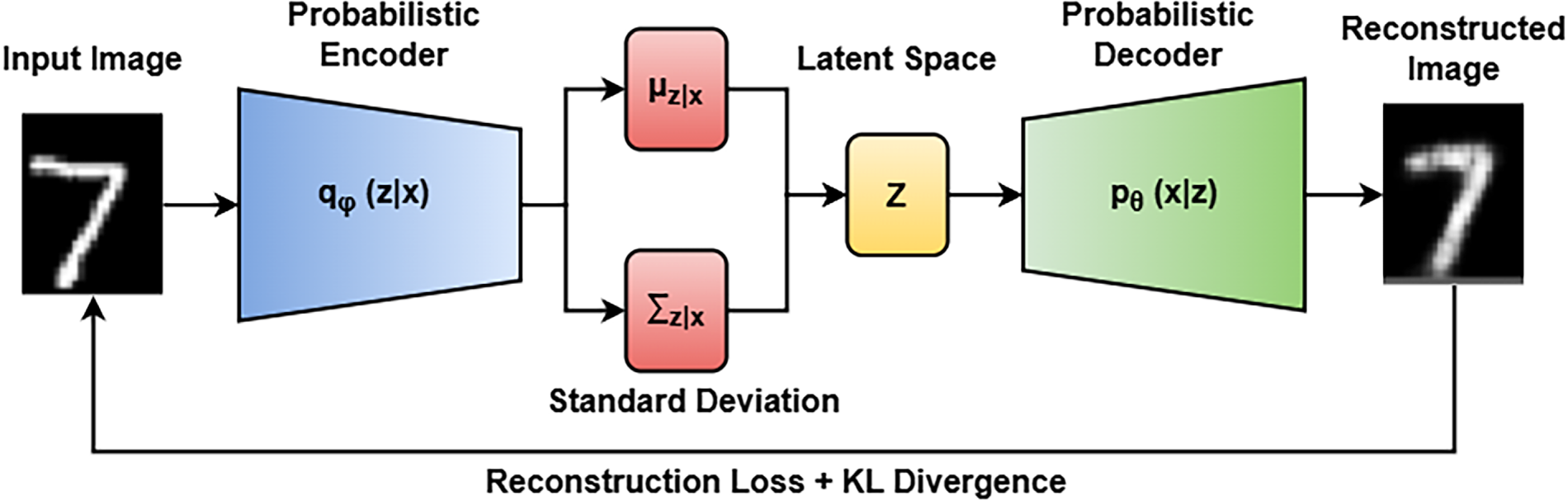
Figure 4: Architecture of VAE for image reconstruction.
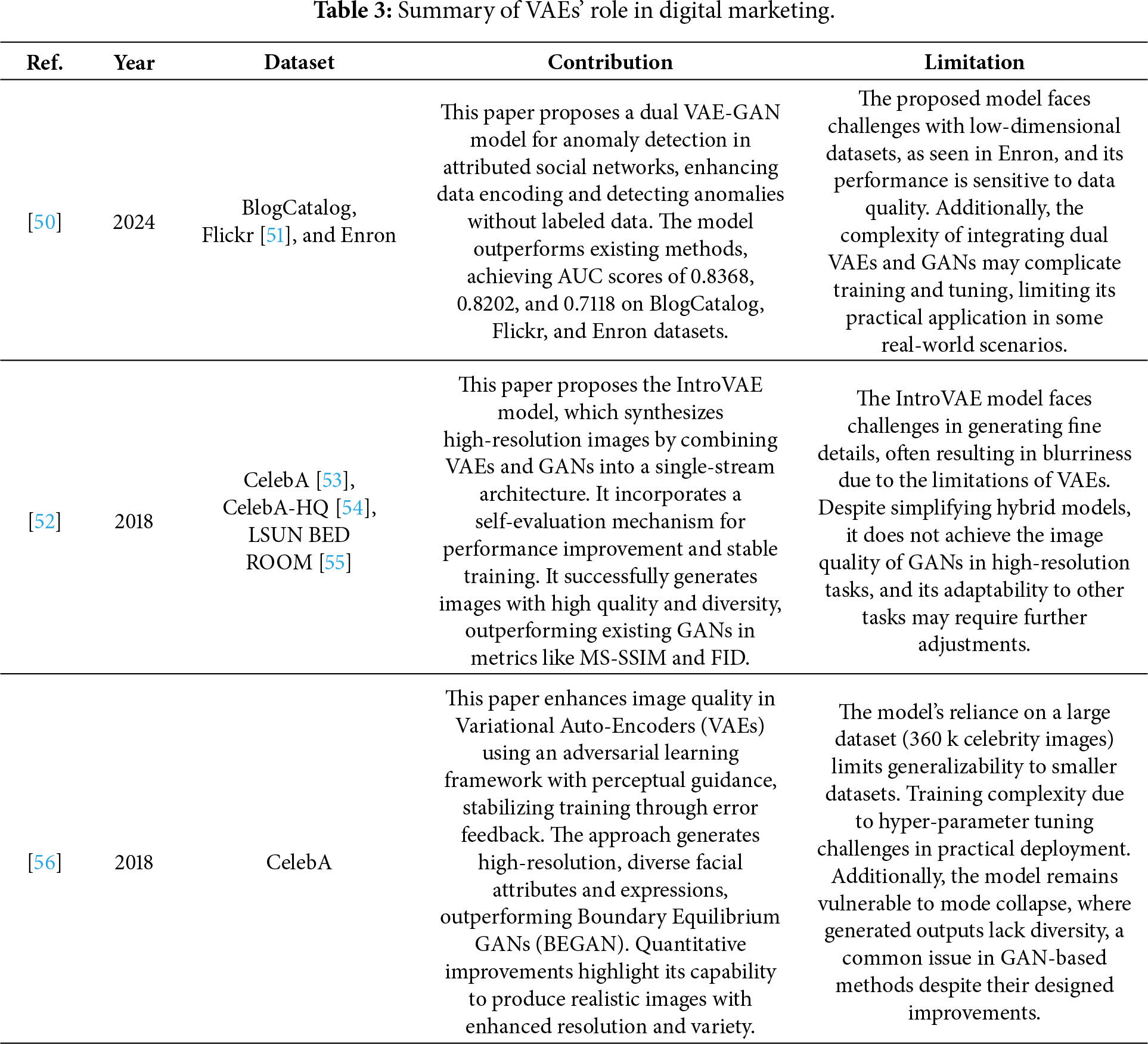
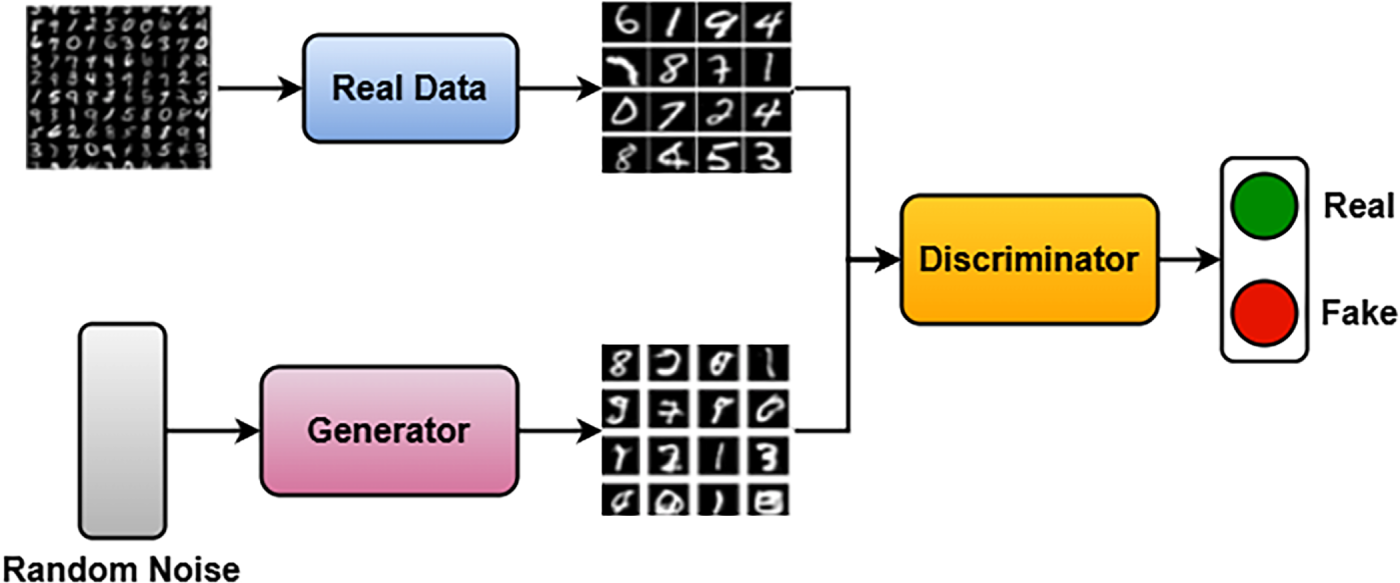
Figure 5: Architecture of GAN for image generation.
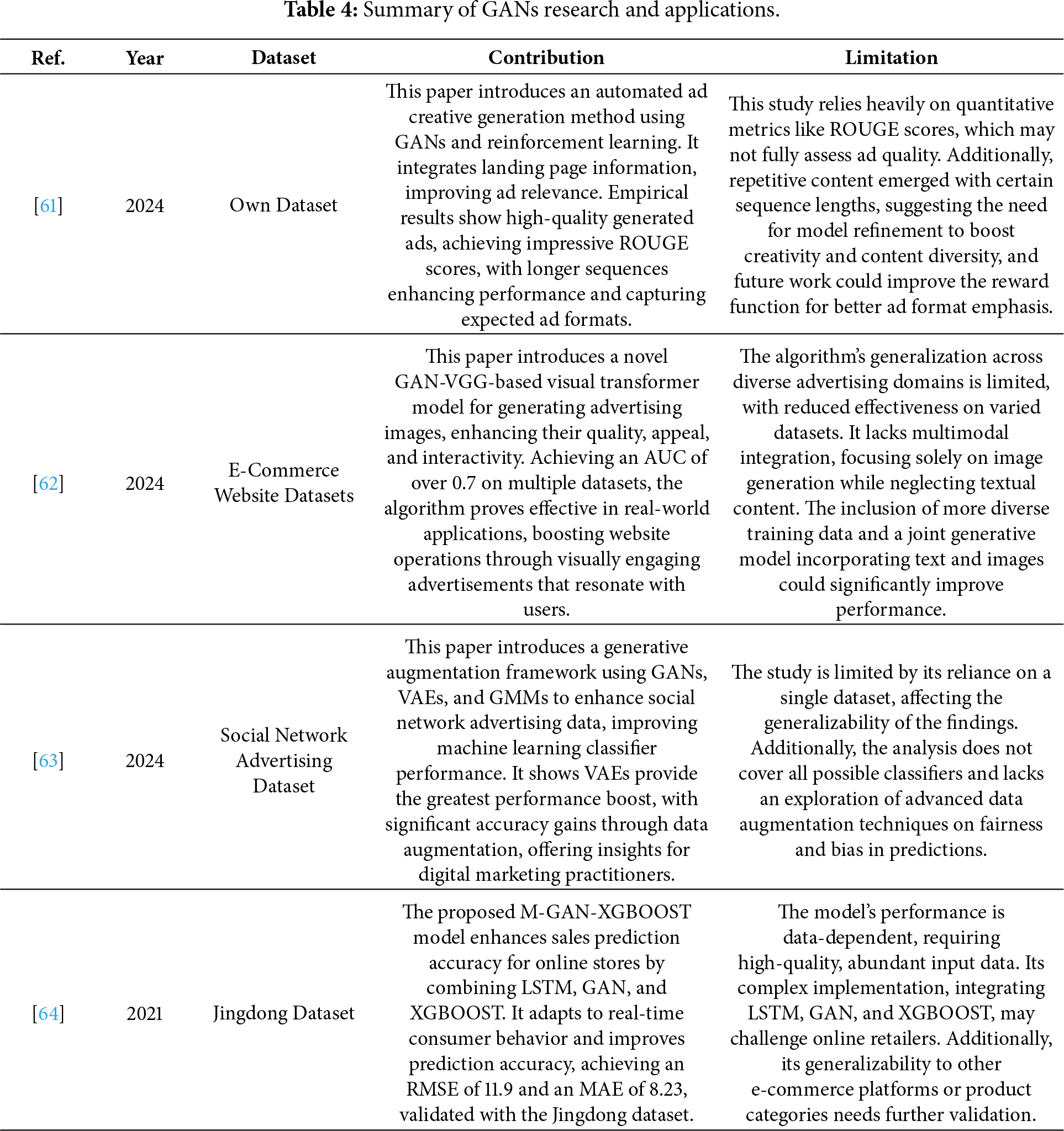
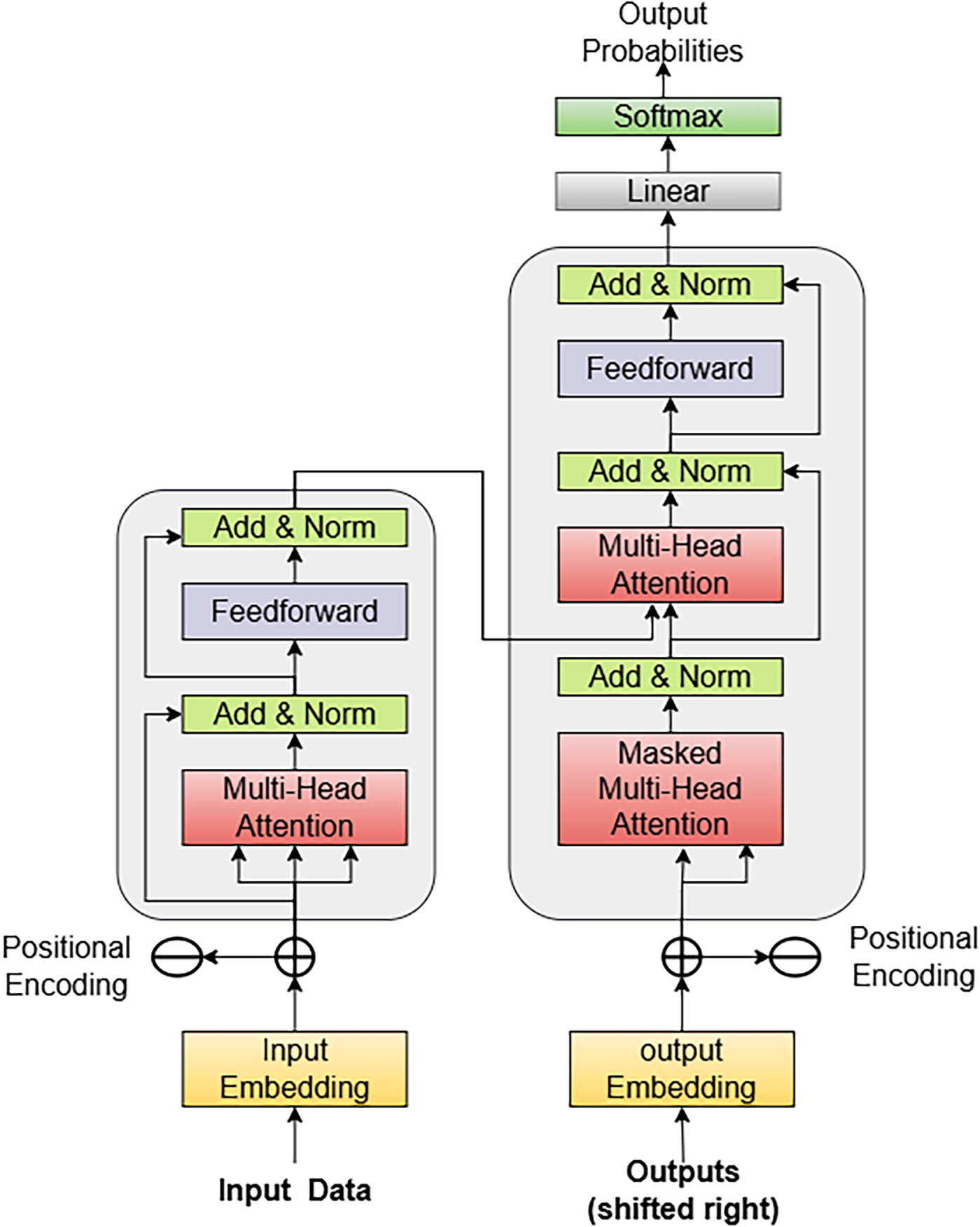
Figure 6: The architecture of a transformer model with multiple layers of attention and feed-forward networks.
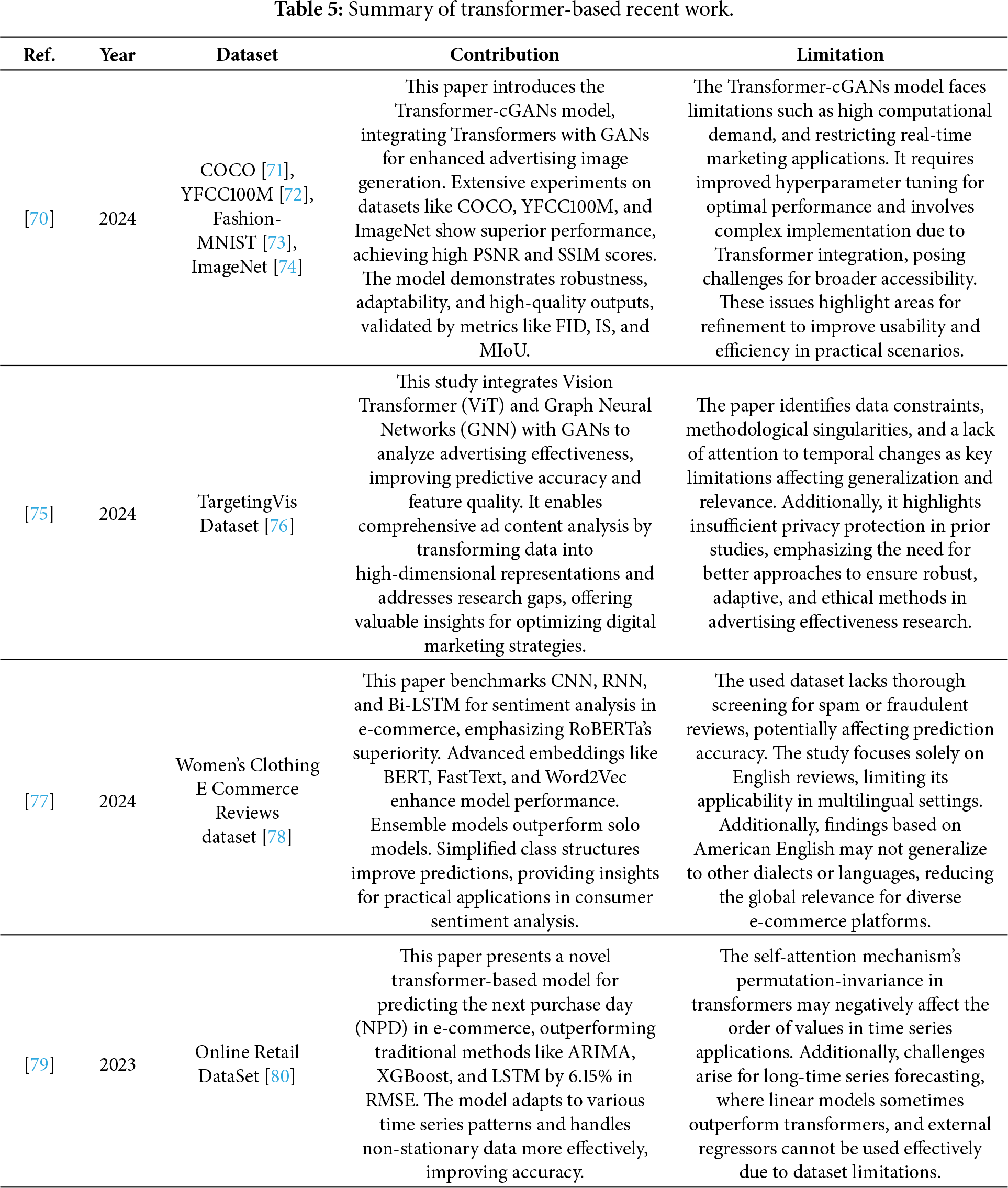
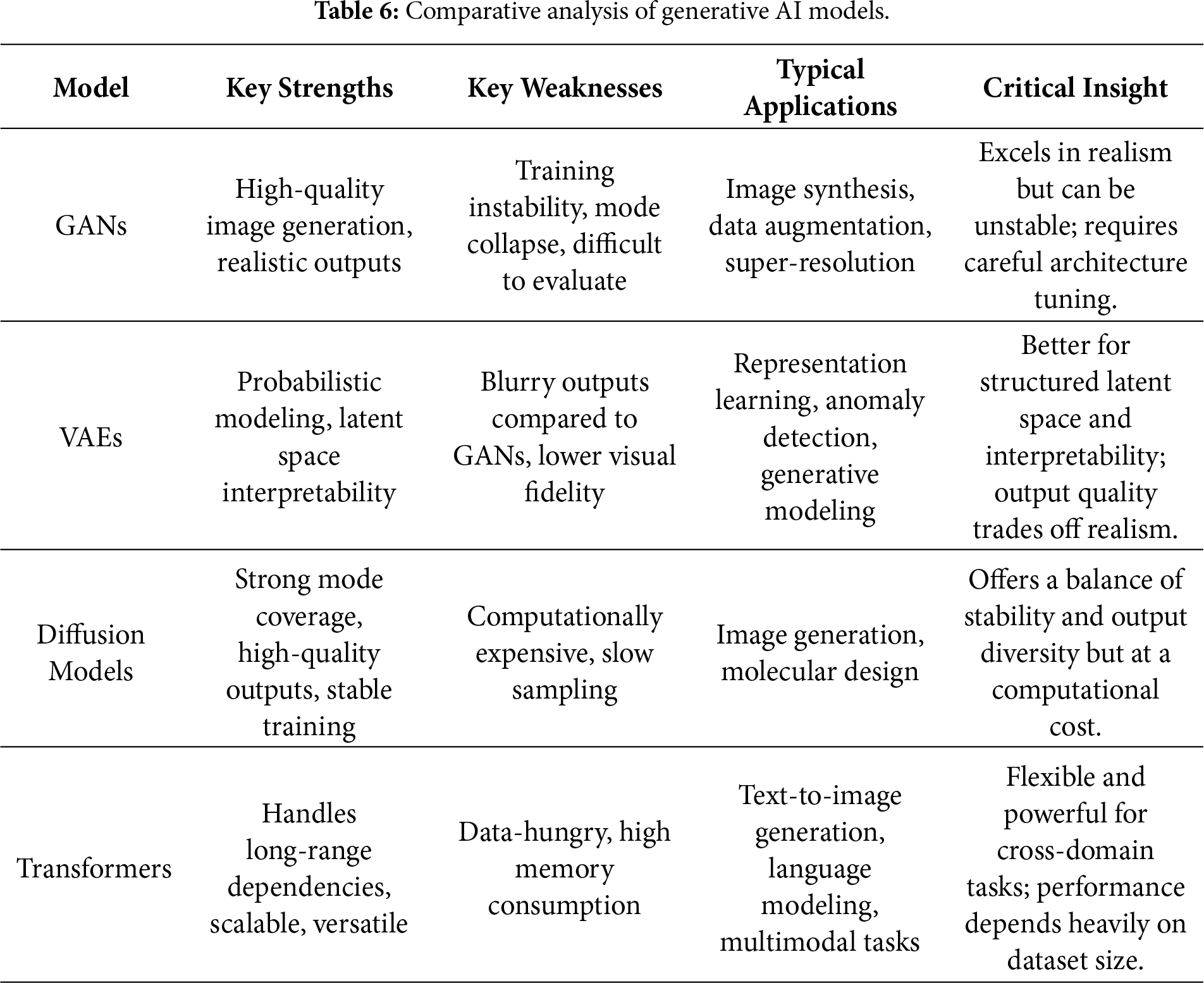
Table 6 presents a comparative analysis of prominent generative techniques, highlighting their strengths, weaknesses, typical applications, and critical insights, which complements the discussion on transformers and other generative models.
Discriminative Models: Discriminative models are a class of machine learning models designed to learn the conditional relationship between input features and target outputs, such as class labels or regression values [81]. Unlike generative models, which model the joint distribution of inputs and outputs, discriminative models focus on directly predicting outcomes or distinguishing between classes [82]. They assign a score to each possible output and normalize these scores to estimate the likelihood of each outcome.
In practice, discriminative models are widely applied across domains and frequently complement generative models by serving as evaluative tools. For example, in GANs, the discriminator is a discriminative model that assesses whether generated samples are realistic, guiding the generator to produce outputs aligned with the target distribution. In digital marketing, discriminative models help rank, filter, or classify generated content based on quality, engagement potential, or alignment with brand objectives [83].
These models have found extensive applications in marketing, excelling in tasks such as ranking content, predicting customer interactions, and enabling data-driven personalization. Nallapati [84] highlights the use of Support Vector Machines (SVMs) in Information Retrieval, demonstrating improvements in feature learning and ranking performance. Haider et al. [85] propose a discriminative clustering framework for market segmentation, showing better interpretability and adaptability to temporal patterns. An et al. [86] integrate discriminative models with generative features for citation classification, achieving notable improvements in predictive performance. Collectively, these studies underscore the potential of discriminative models in enhancing marketing strategies, content targeting, and personalized recommendations.
Neural Network Architectures: Beyond generative or discriminative objectives, models can be implemented using various neural network architectures, each suited to different marketing tasks such as text generation, time-series analysis, or social network exploration.
Feedforward Networks (FFN): FFN [87] are the simplest neural architectures, consisting of layers that apply linear transformations followed by nonlinear activations. These networks are widely used for regression, basic classification, and transformations in marketing pipelines, such as predicting user responses to campaigns.
Recurrent Architectures: It’s including RNNs, LSTMs, and GRUs [88,89], are specialized for sequence-related tasks. They maintain a hidden state over time, enabling the analysis of user behavior sequences or generating sequential marketing content like emails or social media posts. LSTMs and GRUs incorporate gating mechanisms to handle long sequences and mitigate gradient issues.
Attention-Based Transformers: Attention-based transformers leverage multi-head self-attention mechanisms to capture both short- and long-range dependencies more efficiently than RNNs. Transformers process entire sequences in parallel, generating coherent, contextually rich content, making them highly effective for tasks like ad copy generation, product descriptions, and marketing chatbots.
Graph Neural Networks (GNNs): GNNs [90–92] are designed for graph-structured data, representing entities and their relationships (e.g., users in a social network). GNNs are useful for analyzing social interactions, identifying influential users, and recommending personalized marketing strategies, though they are less commonly used for direct content generation.
Image Synthesis: Image synthesis involves generating new images by learning the distribution of visual data using computational models. In marketing, it enables scalable creation of visual content, such as product mockups, personalized ads, and virtual try-on experiences [93,94].
Generative Adversarial Networks are among the most prominent techniques for image synthesis. GANs consist of a generator that creates synthetic images and a discriminator that evaluates their realism. Variants like StyleGAN [95] and BigGAN allow fine-grained control over attributes such as shape, color, and structure, supporting applications like virtual clothing simulations, promotional graphics, and digital avatar customization. Diffusion models [96], such as Imagen and Stable Diffusion [97], progressively convert noise into high-fidelity images, providing improved realism and diversity compared to GANs. In marketing, these models reduce content production costs, shorten design cycles, and enable the generation of visuals tailored to different customer segments or campaigns [98].
Multimodal Approaches: Multimodal approaches integrate data from multiple sources, such as text, images, video, and audio, to build systems that reason across modalities. In marketing, such systems enhance personalization, product discovery, and coherent content generation [99,100].
Transformer-based models are commonly used in multimodal learning. For instance, CLIP [101] jointly embeds textual and visual information into a shared semantic space, aligning text and image representations. Generative models like DALL
Choice of Model and Architecture: The selection of an appropriate model type and architecture is a critical step in designing AI-driven strategies for digital marketing. This decision depends on multiple interrelated factors that affect the model’s suitability for specific tasks, its performance, and how well it can be deployed in practical settings.
One key factor is the target modality, which defines the type of data the model processes. This may include text, images, audio, or multimodal formats that combine several data types. For example, a model tailored for text input will differ significantly in structure and purpose compared to one intended for image generation or audio synthesis. Another important consideration is the marketing objective. Goals such as personalized recommendations, ad copy generation at scale, audience segmentation, or visual content creation require specific model capabilities. Choosing the right model ensures that the system is efficient and aligned with the desired output.
The characteristics of big data, including volume, velocity, and veracity, play a central role in selecting appropriate generative models. Volume refers to the vast amount of consumer data available, which can improve learning but also requires significant computational resources. Velocity concerns the rapid flow and processing demand of data, especially in dynamic marketing environments where near real-time output may be required. Veracity refers to the reliability and noise level in the data, which affects the consistency and quality of the generated results. These aspects introduce critical trade-offs when selecting among models such as GANs, VAEs, and diffusion models.
GANs are typically used when fast generation of realistic visual content is required. However, they may require more careful training due to potential instability and issues like mode collapse. VAEs are more stable and computationally efficient, making them a good option when moderate image quality is acceptable. Diffusion models provide high-fidelity outputs with strong controllability, but they are computationally intensive and time-consuming, which may limit their usability in time-sensitive or energy-constrained environments.
Selecting among these models involves evaluating trade-offs across several dimensions, including training and inference time, cost of deployment, performance accuracy, and energy consumption. These trade-offs should be carefully assessed depending on the digital marketing use case and operational constraints. Table 7 outlines these considerations in a structured way.
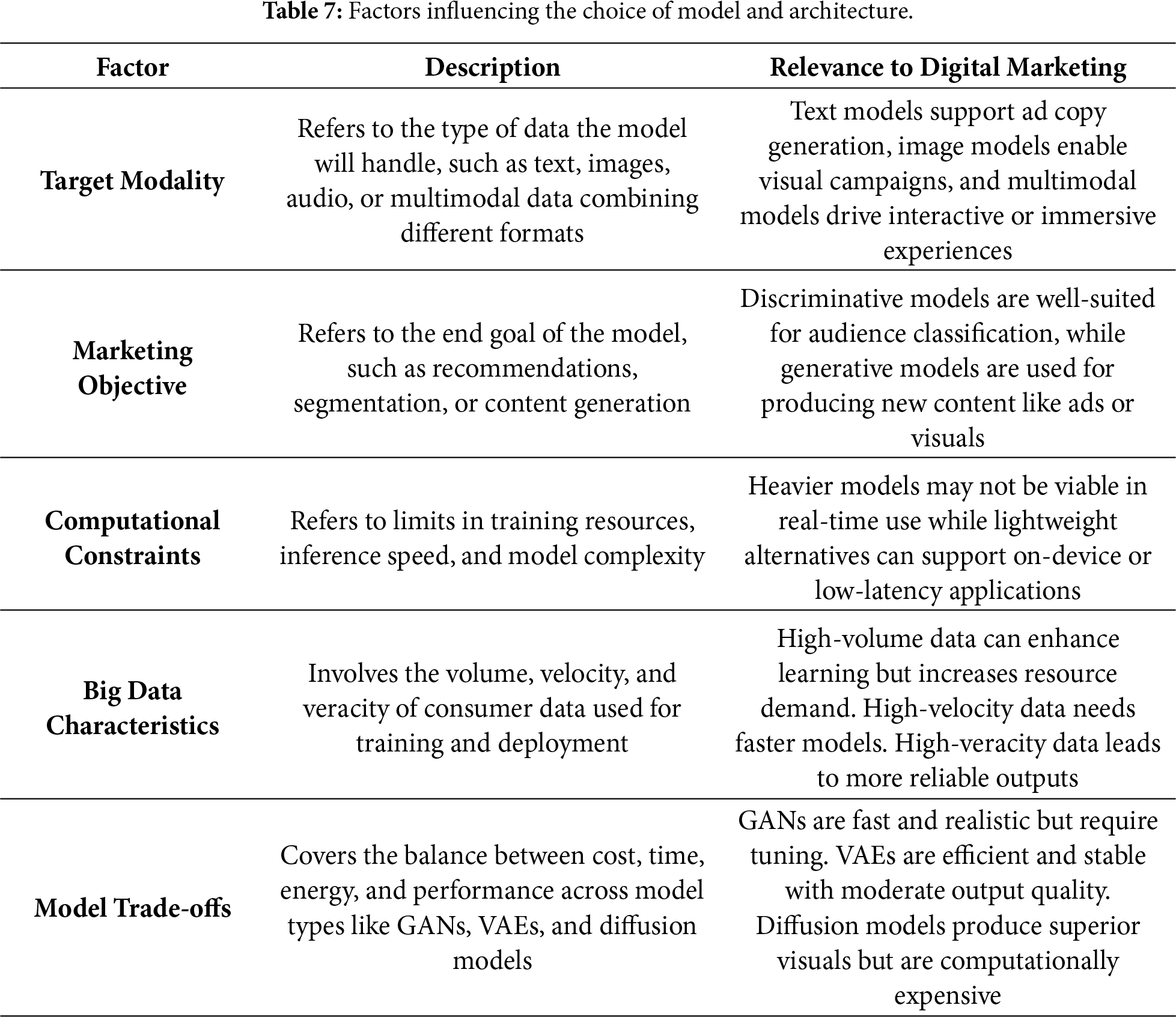
A generative approach is most appropriate when new content creation is required. This includes tasks such as designing creative ad copy or generating product visuals. A discriminative approach is more effective for classification and forecasting tasks such as audience segmentation or predicting user behavior. For image generation in marketing, GANs are preferred for their fast and realistic outputs. VAEs offer a balance of speed and stability with lower resource use. Diffusion models are ideal when the highest visual quality is needed, but may not be feasible for time-sensitive tasks due to high energy and computation demands.
For tasks that combine text and image understanding, such as producing branded visuals from product descriptions or retrieving marketing images based on text prompts, multimodal models like CLIP and DALL
A clear understanding of these trade-offs, along with the influence of big data properties, is essential for building AI solutions that are not only technically sound but also practical and scalable in digital marketing contexts.
3.2 Digital Marketing Landscape
Digital marketing encompasses a wide array of channels and strategies that businesses utilize to reach their target audiences online [105,106]. These include content marketing, email campaigns, search engine optimization (SEO), social media engagement, and paid advertising, among others. Each of these components plays a critical role in shaping a brand’s digital presence and influencing consumer behavior.
To present a more unified understanding of how these components interrelate within a comprehensive digital strategy, Fig. 7 provides a schematic representation of the digital marketing landscape. At the center of this framework lies the concept of “Digital Strategy”, which integrates three essential pillars: content, data, and analytics. Surrounding this hub are key domains, including Mobile, Social, Ads, SEO, Website, Conversation Marketing, Email, and CRM. Each domain contributes uniquely to the overarching strategy. For example, Mobile and Social enhance accessibility and engagement; Ads and SEO drive discoverability; Website design and optimization support conversion goals; while Email and CRM aid in lead nurturing and customer retention.
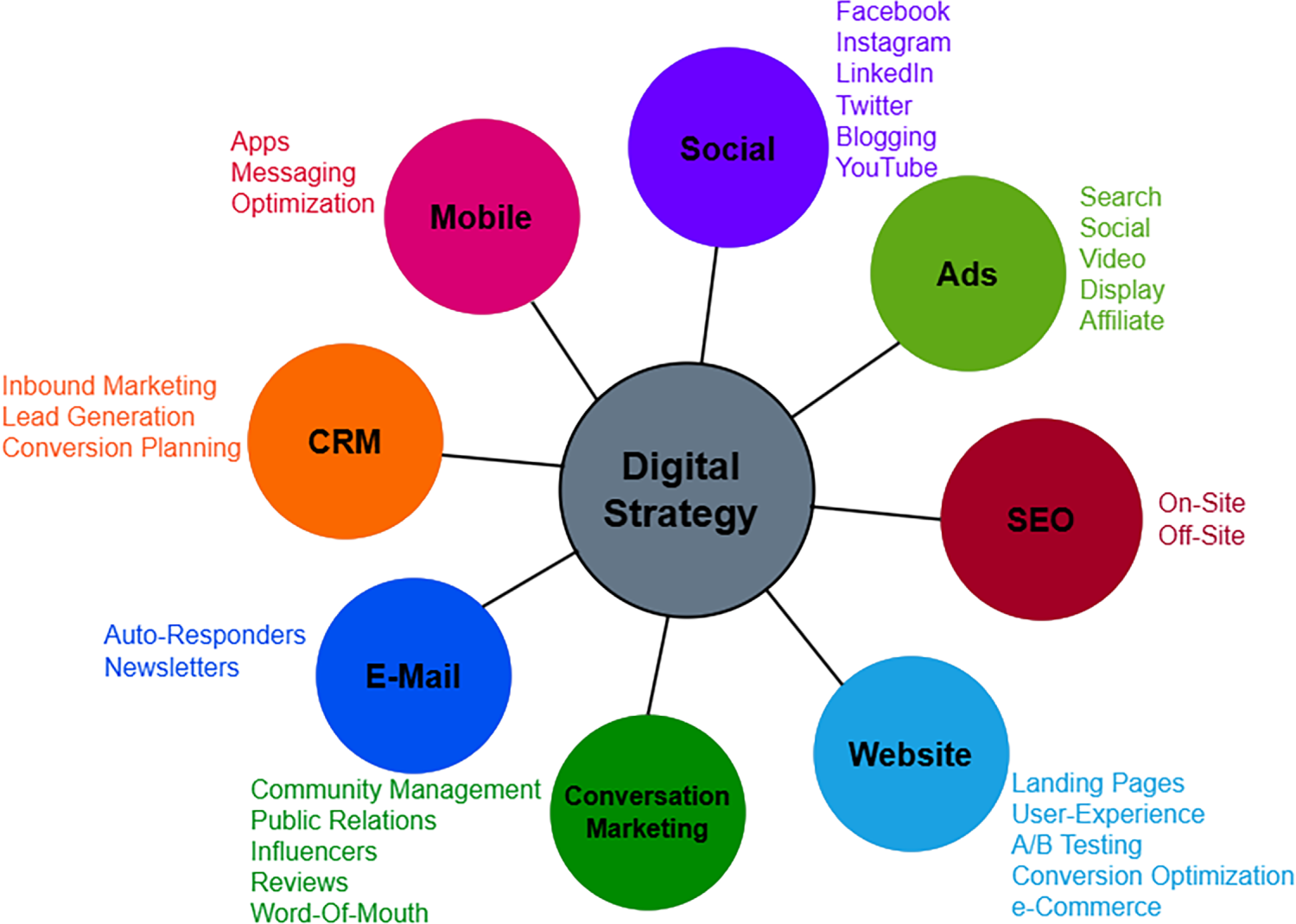
Figure 7: A schematic diagram illustrating the integrated components of a modern digital marketing strategy.
This visual structure emphasizes the interconnected nature of modern digital efforts, showing how each element must operate in alignment with others to produce coherent and effective marketing outcomes. The integration of these elements supports data-driven decision-making and user-centric design, both of which are critical for sustained success in today’s competitive digital environment.
3.2.1 Key Domains in Digital Marketing
Digital marketing includes various channels and tactics, each offering unique opportunities and challenges while often overlapping in practice:
• Advertising. Advertising involves strategies such as pay-per-click campaigns, display ads, sponsored listings, and affiliate marketing [107,108]. Generative AI enables automation in creating diverse ad creatives, headlines, and visuals, enhancing engagement and conversion rates [109]. Studies highlight both opportunities and challenges, including balancing efficiency and personalization [110], enhancing dynamic ads and personalized content like Netflix trailers [109], and trends in AI-driven advertising with ethical considerations and methodological limitations.
• Social Media Marketing. Platforms such as Facebook, Instagram, Twitter, LinkedIn, and TikTok are key for engagement [111,112]. Generative AI supports rapid content creation and real-time sentiment analysis [113]. Research highlights the influence of online word-of-mouth [114], GPT-4’s role in content strategies [115], and adoption drivers like efficiency and scalability, alongside creativity limitations and risks [116].
• Content Marketing. Content includes blogs, infographics, e-books, articles, and videos [117]. Generative AI enhances both quality and volume, enabling personalized and dynamic content [118]. Studies show improvements in visual marketing [119], engagement [120], and support for SMEs in SEO and platform-specific strategies [121]. Benefits include streamlined production and consistent brand identity, with challenges in data quality and implementation.
• Email Marketing. Email marketing relies on personalization and strategic timing [122,123]. Generative AI enables hyper-personalized content, including tailored subject lines, body text, and product recommendations [124–126]. Studies demonstrate improvements in engagement and conversions, with challenges in demographic bias, dataset limitations, and broader applicability.
• Search Engine Optimization. SEO focuses on optimizing websites and content for search engines [127,128]. Generative AI assists in keyword selection, meta descriptions, article creation, and content optimization. Research highlights AI-driven methods for alt text generation [129], readability improvements, website analytics and branding [130], and voice search adaptation [131]. Challenges remain in scalability, data quality, and tool enhancement.
3.2.2 Traditional AI vs. Generative AI in Marketing Contexts
Historically, digital marketing has harnessed AI primarily through predictive analytics, rule-based systems, and recommendation engines [132,133]. These approaches excelled at analyzing historical data to forecast user behavior, such as predicting which users are most likely to click on an ad or buy a product, and were instrumental in personalizing marketing messages to specific segments.
Shift towards Content Creation and Personalization Generative AI marks a major paradigm shift by creating brand-new text, images, or videos rather than just analyzing or predicting [134]. For example, while a traditional AI system might determine the best time to send an email for optimal open rates, a generative model can also compose the email’s subject line and body text to maximize relevancy and engagement [135]. This ability to automate creative tasks allows marketing teams to significantly scale their content strategies, producing a higher volume of material while maintaining consistent quality and personalization.
Opportunities and Challenges
Despite its obvious advantages, generative AI brings new considerations for marketing professionals:
• Quality Control and Brand Consistency: Large-scale automated content generation can lead to off-brand messaging or stylistic inconsistencies if not carefully supervised. Maintaining a brand’s voice across ads, social posts, and emails requires a strategic balance of human curation and AI oversight [136].
• Ethical and Authenticity Concerns: As generative AI produces highly realistic content, consumers may become skeptical about the authenticity of brand interactions. Overuse of AI-generated communication risks eroding trust, particularly if it is not transparent [137,138]. Marketers must therefore disclose AI-driven aspects where appropriate and ensure all content adheres to ethical guidelines.
• Regulatory and Legal Issues: Intellectual property questions, deepfake regulations, and emerging data protection laws pose challenges. Marketers must stay compliant with local and international guidelines, particularly when AI-generated content resembles original copyrighted material or manipulates user perceptions [139,140].
By recognizing these potential pitfalls and establishing robust strategies to manage them, organizations can harness generative AI to deliver more engaging, personalized, and effective campaigns. While predictive and rule-based AI systems remain critical for analytics and user profiling, generative AI takes marketing a step further empowering teams to achieve unprecedented creativity and scale in digital campaigns.
3.3 Relevant Theoretical Frameworks
Generative AI adoption in digital marketing is not solely determined by technological capabilities; it is also influenced by organizational culture, perceived value, and ethical and social contexts [141]. This section highlights two major theoretical lenses, Innovation Diffusion Theory (IDT) [142] and the Technology Acceptance Model (TAM) [143], which offer insight into how novel technologies gain traction. Additionally, it addresses the ethical considerations that shape the responsible deployment of these technologies.
3.3.1 Innovation Diffusion Theory and Technology Acceptance Model
Innovation Diffusion Theory (IDT)
Rogers’ Innovation Diffusion Theory offers a structured perspective on how individuals and organizations adopt new technologies [144]. The process is conceptualized through five sequential stages, each influenced by contextual factors such as organizational environment, leadership openness, and market demands. In the context of our review, these stages were consistently observed in marketing case studies, where organizations moved from initial awareness of generative AI tools to measurable business outcomes such as increased engagement rates and reduced campaign development costs. This demonstrates how IDT is not only theoretical but also directly applicable to real-world adoption patterns in digital marketing.
• Knowledge: This stage begins when individuals or teams become aware of a new technology, such as generative AI. At this point, they typically lack a detailed understanding of how the technology works or how it might be relevant to their tasks. The presence of a proactive organizational culture that encourages learning and staying updated with technological trends can accelerate the transition from simple awareness to deeper exploration.
• Persuasion: In this stage, individuals start forming opinions about the technology based on its perceived advantages and limitations. Internal discussions, expert opinions, case studies, and early experiments shape these perceptions. A supportive culture that fosters open dialogue and values innovation often enables employees to view new tools with optimism. Meanwhile, consumer behavior, such as increasing demand for faster, personalized digital experiences, can reinforce positive attitudes toward adopting new technologies.
• Decision: Here, a concrete choice is made to either adopt or reject the technology. This decision is often the result of cost-benefit analysis, feedback from colleagues or industry peers, and alignment with strategic goals. Organizational culture again plays a critical role. In highly hierarchical firms, decisions may depend on leadership endorsement. In flatter organizations, team consensus or pilot trial outcomes may drive the final verdict. External consumer trends may also exert pressure, compelling marketing teams to adopt generative AI tools to remain competitive.
• Implementation: At this point, the technology is integrated into the organization’s existing workflows. Successful implementation may require re-training employees, adjusting work processes, or investing in supporting infrastructure. A flexible and adaptive organizational culture can significantly ease this transition. Implementation is more likely to succeed when early adopters within the firm champion the technology and share their experiences with others, reducing resistance and confusion.
• Confirmation: During this final phase, the organization evaluates the outcomes of adoption. If the results are satisfactory, such as increased efficiency or improved engagement rates, continued use is reinforced. If expectations are not met, the technology may be revised or discontinued. Open feedback channels, performance measurement tools, and alignment with customer feedback are essential at this stage. Consumer response, such as higher satisfaction or increased conversions, can validate the effectiveness of the adopted technology.
Rogers also outlines five key attributes that influence how quickly and widely a new technology is adopted:
• Relative Advantage: This refers to the degree to which generative AI is perceived as superior to current methods. If it clearly provides benefits such as cost savings, time efficiency, or improved content quality, organizations are more likely to pursue adoption. In cultures that prioritize performance and results, this factor is especially influential.
• Compatibility: Compatibility assesses how well the technology fits within the existing values, workflows, and systems of an organization. If generative AI integrates seamlessly with content management systems or marketing automation tools, adoption is more straightforward. When organizational norms support innovation and process evolution, compatibility is less of a barrier.
• Complexity: If the new technology is perceived as difficult to use or understand, adoption may be delayed. Simplicity in interface design and ease of training can counteract this issue. Organizations with a strong culture of continuous learning are better equipped to overcome perceived complexity.
• Trialability: This factor considers whether the technology can be tested on a limited scale before full deployment. Pilot campaigns using AI-generated content can help assess effectiveness without significant risk. An experimental culture within the organization allows teams to learn from trial runs and refine their strategies accordingly.
• Observability: This refers to how visible the benefits of the technology are to others in the organization. If results such as higher customer engagement or campaign performance are clearly observable, it fosters greater confidence and accelerates adoption. Recognition of these successes is easier in transparent, metrics-driven cultures.
Our findings show that these attributes can be mapped to empirical evidence in marketing practice. For example, “relative advantage” was quantified in case studies where AI-generated email campaigns led to measurable cost savings and time reductions compared to traditional methods. Similarly, “trialability” was demonstrated through pilot ad campaigns that allowed marketers to experiment with generative AI tools before full-scale implementation. These practical illustrations ground IDT more firmly in observed industry experiences.
Technology Acceptance Model (TAM)
The Technology Acceptance Model [145] explains how individual users decide whether or not to accept a new system based on two primary beliefs:
• Perceived Usefulness (PU): This is the degree to which a person believes that using a particular technology will enhance their job performance. In marketing, this could mean that generative AI helps users create content faster or improves audience engagement. If marketers experience noticeable improvements in results, they are more likely to use the technology consistently.
• Perceived Ease of Use (PEOU): This refers to how effortless users expect the technology to be. Generative AI tools that have intuitive interfaces and offer seamless integration with existing workflows are more likely to be accepted. In organizations where digital literacy is high and training is readily available, PEOU tends to be perceived more positively.
The perceived usefulness and ease of use are not formed in isolation. They are shaped by prior experiences with similar technologies, peer influence, and internal communication. A culture that encourages feedback and peer support can significantly improve both PU and PEOU. In parallel, rising consumer expectations for dynamic and personalized marketing content often motivate employees to perceive such technologies as not only useful but necessary. For instance, case studies included in our review showed that marketers perceived high usefulness when generative AI improved click-through rates in targeted campaigns, while ease of use was reinforced by user-friendly interfaces that required minimal training. These findings strengthen the practical relevance of TAM in explaining adoption behaviors.
To integrate both theories with practice, we expanded Table 8 to include how IDT and TAM dimensions were reflected in case studies. This addition illustrates, for example, how “relative advantage” manifests as quantifiable cost savings, or how “perceived ease of use” translates into higher adoption rates when AI tools are integrated into familiar marketing platforms. By linking theory to observed outcomes, the discussion provides a more concrete bridge between conceptual models and practical recommendations.
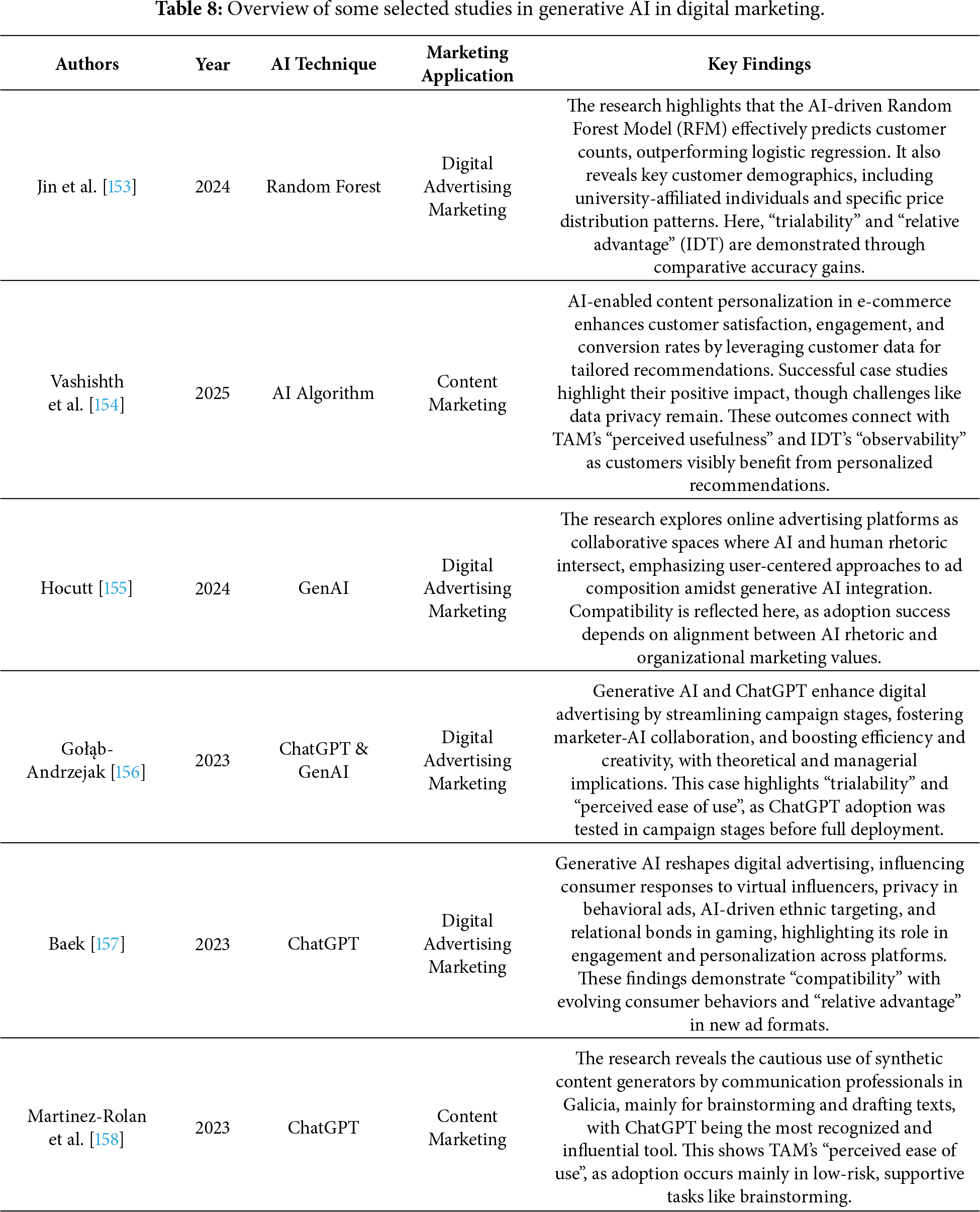
In summary, IDT and TAM together explain how both organizational structures and individual attitudes shape the adoption of generative AI in marketing. Organizational culture influences how quickly people move through the stages of awareness, evaluation, and commitment. Consumer behavior, on the other hand, acts as an external motivator, pushing organizations to adopt tools that meet evolving customer expectations. A coherent alignment between internal culture and external demand is essential for successful technology integration. By grounding these frameworks in empirical findings and case study evidence, we provide a stronger connection between theory and practice, which also aligns with the recommendations offered in Section 5.4 for responsible and human-centric adoption.
3.3.2 Ethical Frameworks for AI
Although generative AI holds the promise of creative and scalable marketing solutions, it also poses ethical and societal challenges [146]. Recognizing these concerns is essential for sustaining trust and avoiding legal or reputational repercussions. Several high-level ethical principles guide the responsible development and deployment of AI, including:
• Fairness: This principle requires that generative AI systems do not perpetuate biases—e.g., racial, gender, or socioeconomic—in advertising content [146]. Marketers should scrutinize the training data for hidden biases and apply techniques (such as data augmentation or bias correction) to ensure a more equitable representation of target groups [147].
• Transparency: Users and consumers need to understand when they are interacting with AI-generated content vs. human-created material. Clear disclosure practices not only uphold honesty but also help maintain consumer trust [148]. Regulatory bodies in some regions have already introduced guidelines mandating the labeling of AI-generated communications or imagery.
• Accountability: Organizations must establish explicit governance frameworks, delineating responsibility among data scientists, marketing managers, and upper-level executives. This includes proactive measures to prevent misuse—such as the creation of misleading deepfake advertisements—and the implementation of redress mechanisms in case of harm or user complaints [149].
Many governments and global entities (e.g., the European Union) are moving toward more stringent AI regulations, impacting areas such as consumer protection, data privacy, and online advertising standards [150]. Marketing teams that align their generative AI strategies with these ethical and legal frameworks are better positioned to realize long-term value, protect their brand image, and foster lasting relationships with their audiences [151].
Overall, grounding the integration of generative AI in IDT, TAM, and robust ethical principles ensures that organizational adoption is not merely a technological upgrade but a strategically and ethically sound transformation—one that resonates with both internal stakeholders and external consumers.
In summary, the rapid advancement of generative AI has opened new avenues for content creation and strategic engagement in digital marketing, extending well beyond the predictive analytics and rule-based systems of earlier decades [152]. The interplay between technological evolution, marketing paradigms, and ethical imperatives shapes both the promise and the practice of generative AI. As stakeholders navigate adoption decisions, the integration of established theories like IDT and TAM, alongside emerging ethical guidelines, will play a pivotal role in guiding responsible and impactful deployment.
In this section, we present the findings from the systematic review, organized around key themes and research questions. The data extraction and synthesis focused on identifying the nature of each study (i.e., methodological approach, AI technique employed, marketing application) and the reported outcomes or insights. We subsequently group these findings into major thematic categories that emerged from the literature.
We begin by outlining the general characteristics of the studies included in this review. Table 8 provides a summary of selected studies, highlighting the authors, publication year, AI technique used, marketing application, and main findings.
Distribution by Publication Year, Journal, and Geography
A preliminary analysis indicated that the number of publications on generative AI in marketing has grown exponentially since 2018, following the release of transformer-based models and the subsequent proliferation of large-scale language models. Most studies were published in computer science and AI-oriented venues, although cross-disciplinary journals covering marketing and information systems also featured prominently. Geographically, the majority of empirical research originated from North America and Europe, with a growing number of contributions from Asia—especially in regions with significant e-commerce or social media user bases (e.g., China, Republic of Korea).
To facilitate an in-depth discussion, we group the studies into four main themes that capture the breadth of generative AI applications in digital marketing.
4.2.1 Theme 1: Content Generation and Personalization
AI-Generated Ad Copy & Personalized Email Campaigns
Several studies highlighted how large language models and recurrent neural network architectures are leveraged to craft real-time, context-aware advertising copy [159,160]. For instance, generative models can tailor subject lines or product descriptions to specific user segments, often resulting in increased open rates and user engagement.
Chatbots and Conversational Agents: In addition to static text generation, chatbot systems powered by generative language models were reported to offer more natural and contextually relevant interactions with customers [161,162]. This fosters stronger brand-customer relationships while freeing human agents to focus on complex or high-stakes queries.
Impact on Customer Engagement and Brand Perception: Empirical data suggest that generative AI-driven personalization can boost metrics such as click-through rates (CTR), conversion rates, and overall brand sentiment [163]. However, some studies noted potential drawbacks—overly automated messaging may diminish perceived authenticity if not carefully monitored.
Theme 2: Image and Video Generation for Marketing Campaigns
Use of GANs or Diffusion Models: Techniques such as GANs and diffusion models are prominently featured in creating visually compelling ad creatives [164]. These approaches can generate product images from textual descriptions or transform existing images to fit marketing design requirements.
Effectiveness Compared to Traditional Approaches: Quantitative evaluations from multiple studies indicate that AI-generated visuals, when optimized for relevance and aesthetics, can match or surpass traditional design approaches regarding user engagement and brand recall [165,166]. Marketers also report lower production costs and faster turnaround times.
4.2.2 Theme 3: Creative Strategy and Innovation
Role of Generative AI in Ideation. Beyond routine tasks, generative AI is increasingly employed during the ideation phase, offering fresh concepts for campaigns and brainstorming new marketing angles [167]. This can broaden the creative range and help marketers rapidly prototype new messaging or visual motifs.
Potential for New Marketing Formats. Studies also highlight emerging avenues such as augmented reality (AR) and virtual reality (VR) experiences. Generative models can synthesize immersive elements, 3D models, interactive storylines, and realistic background environments, paving the way for innovative marketing formats that capture user attention in highly saturated digital landscapes [168].
4.2.3 Theme 4: Ethics, Bias, and Regulatory Considerations
Transparency and Bias Issues. Several articles emphasize the need for transparency when deploying generative AI-driven content, especially in consumer-facing communications [169]. Concerns about biased language models or skewed image generation were documented, indicating risks for underrepresented groups or unintended stereotypes [170].
Regulatory Environment. The literature reveals an evolving policy environment ranging from FTC guidelines in the United States that mandate truthful advertising to GDPR in the European Union, which stipulates data protection measures, to emerging AI ethics codes that address issues of accountability and fairness [171]. Regulatory compliance is essential for marketers using generative AI to avoid legal complications and maintain consumer trust.
4.3 Quantitative vs. Qualitative Insights
Where available, quantitative metrics (e.g., content engagement rates, cost savings, revenue uplift) provide compelling evidence for the effectiveness of generative AI in marketing contexts. Several randomized A/B tests demonstrated statistically significant improvements in user engagement for AI-generated email campaigns vs. human-crafted ones [172].
From a qualitative perspective, interview and survey-based studies shed light on user acceptance and perceived authenticity. While most users report high satisfaction with AI-generated promotional materials, a minority express concerns about manipulation and the lack of human “touch”, highlighting potential barriers to adoption.
4.4 Real-World Use Case Analysis for Cost-Effective, Scalable, and Personalized Marketing Strategies
To substantiate the claim of analyzing real-world use cases for identifying cost-effective, scalable, and personalized marketing strategies, we present an elaborate discussion on how such analyses were conducted and the insights derived from them.
We selected and studied three real-world marketing campaigns across distinct domains: e-commerce, online education, and food delivery services. These sectors were chosen for their diverse customer bases, varying marketing needs, and clear indicators of engagement and ROI. The data analyzed included anonymized customer interaction logs, campaign budget reports, and user segmentation outputs. The goal was to investigate how data-driven personalization could optimize customer reach and resource allocation simultaneously.
In the e-commerce domain, we examined an A/B tested email campaign where users were segmented based on previous purchase history, clickstream data, and demographic information. Personalized product recommendations based on purchase history and behavioral similarity significantly improved engagement metrics. The personalized group had a 34% higher click-through rate and a 19% increase in conversion, demonstrating the ROI potential of data-driven personalization over a uniform outreach strategy.
In the online education domain, a real-time content recommendation system was tested. Here, a machine learning model was trained on learners’ interaction data (e.g., video views, quiz attempts, and discussion activity) to generate personalized course suggestions. Not only did this approach increase user retention by 27%, but it also reduced marketing costs by enabling targeted re-engagement strategies only for those likely to churn.
The food delivery service use case employed location-aware dynamic pricing and personalized push notifications. An ensemble model identified customer clusters with high ordering frequency during specific times and matched them with personalized discounts. This resulted in a 42% increase in repeat orders, with minimal increases in campaign spending, thereby validating the cost-effectiveness and scalability of targeted marketing strategies. However, this case also highlights potential ethical tensions, as algorithmic personalization in discounts could inadvertently reinforce bias against certain demographic groups if not carefully monitored, aligning with the broader concern of responsible deployment discussed in Section 5.3.1.
Across all three cases, scalability was ensured by automating user segmentation and message personalization using machine learning pipelines. Cloud-based deployment allowed these strategies to be executed at scale without significant infrastructure expansion. Cost-effectiveness was maintained by reducing wastage from generic outreach, while personalization ensured that consumer engagement remained high, thereby directly enhancing ROI.
In summary, our real-world case analyses demonstrated how tailored marketing strategies, powered by data analytics and automation, can simultaneously achieve scalability, cost-efficiency, and personalization, while also underscoring the importance of proactively addressing ethical risks such as bias in algorithmic personalization. This validates our claim through empirical evidence, practical implications, and alignment with responsible deployment principles.
Synthesizing these results, we can address the central research questions as follows:
• RQ1 (Advancements in Generative AI Applications): Recent developments demonstrate that generative AI has become increasingly embedded in digital marketing workflows, enabling automated text generation, realistic image synthesis, and multimodal campaigns. These tools contribute to performance improvements in content creation, audience targeting, and user interaction, as discussed in Section 3 and summarized in Table 1.
• RQ2 (Real-World Use Cases for Scalable Personalization and ROI): Multiple case studies illustrate how organizations leverage generative AI for hyper-personalized marketing at scale while maintaining cost-efficiency. These include targeted email campaigns, dynamic pricing strategies, and AI-driven customer segmentation that collectively enhance engagement and ROI. These insights are detailed in Section 4.4.
• RQ3 (Ethical Challenges in Adoption): Key concerns include data privacy, algorithmic bias, misinformation, and regulatory compliance. These risks emphasize the need for robust ethical frameworks and responsible AI governance, as addressed in Sections 5 and 5.3.
• RQ4 (Theoretical Lens on Adoption): The integration of theoretical models like the Innovation Diffusion Theory and the Technology Acceptance Model helps explain how generative AI is adopted across organizational contexts. These models highlight factors such as perceived usefulness, complexity, and compatibility with existing systems, which are explored in Sections 3 and 4.
• RQ5 (Research Gaps and Future Directions): Despite promising developments, gaps persist in areas such as long-term consumer trust, cross-cultural applications, and regulatory readiness. Future interdisciplinary research can explore these issues by combining insights from marketing, computer science, psychology, and law, as discussed in Sections 5 and 6.
Overall, the findings suggest that while generative AI poses new ethical and operational challenges, it also opens transformative possibilities for digital marketing. The subsequent Section 5 explores these implications further, offering critical reflections and avenues for future inquiry.
In this section, we synthesize the key findings presented in Section 4 and integrate them with the theoretical perspectives discussed earlier in Section 3. To enhance clarity and coherence, we organize this discussion to explicitly link each major conclusion to the evidence and theory that underpin it, thus providing a clear roadmap for future interdisciplinary research and practice. We begin by offering an in-depth interpretation of the results in light of established frameworks such as Innovation Diffusion Theory (IDT) and the Technology Acceptance Model (TAM). We then explore the immediate opportunities and long-term challenges that generative AI poses for digital marketing, followed by concrete implications for practitioners, policy-makers, and researchers.
5.1 Interpretation of Main Findings
The results highlight the transformative potential of generative AI across various marketing functions, including content creation, advertising, and interactive customer engagement. Drawing explicitly on the theoretical frameworks reviewed in Section 3, we identify two key dimensions shaping adoption and impact: perceived benefits and usability challenges.
5.1.1 Alignment with Innovation Diffusion Theory (IDT) and the Technology Acceptance Model (TAM)
Relative Advantage and Perceived Usefulness: In line with Rogers’ IDT, many studies revealed a clear relative advantage of deploying generative AI compared to traditional marketing methods, particularly in terms of speed, cost-efficiency, and scalability. Likewise, the TAM points to perceived usefulness (PU) as a primary driver of adoption. Marketers found generative models especially beneficial in automating repetitive tasks, such as writing social media copy or generating large volumes of personalized emails, thereby freeing up time for higher-level strategy [173]. These findings collectively demonstrate that generative AI’s relative advantage and PU directly contribute to broader organizational buy-in, validating theoretical predictions.
Complexity and Perceived Ease of Use: However, the success of AI-based initiatives also hinges on complexity (IDT) and perceived ease of use (PEOU) (TAM). While some marketing teams reported friction in integrating AI tools into existing workflows, especially when internal expertise was lacking, studies that described user-friendly AI platforms consistently demonstrated higher adoption rates. This evidence underscores the importance of reducing perceived complexity through intuitive interfaces and training, confirming theory and providing actionable guidance for practitioners.
5.1.2 Comparisons with Existing Literature and Meta-Analyses
Our findings resonate with broader AI and marketing scholarship. Recent meta-analyses underscore the effectiveness of AI-powered personalization in boosting click-through rates and conversion metrics. Yet, much of the existing work has focused primarily on predictive models rather than generative ones. Our review extends this knowledge by highlighting generative AI’s unique contributions to active content creation, enabling not only automation but creative expansion and real-time tailoring. This evolution introduces new benefits alongside risks such as unintended bias and authenticity concerns, calling for updated theoretical and practical frameworks.
5.2 Opportunities for Digital Marketing
Generative AI represents a paradigm shift in how marketing professionals conceive and execute campaigns. Based on the converging evidence, we delineate four major opportunity areas, each linked to specific empirical findings and theoretical insights.
5.2.1 Targeted Campaigns and Personalization at Scale
Traditional segmentation methods often group customers into broad categories. Generative AI enables a more granular approach to crafting individual-level messaging that resonates with personal preferences, past purchasing behavior, and even real-time contextual data [174]. This opportunity arises from generative models’ ability to process diverse data inputs and produce personalized outputs, as supported by observed improvements in KPIs like open rates and ROAS.
5.2.2 Real-Time Content Generation and Adaptive Strategies
Many of the reviewed studies demonstrate the capacity of generative models to produce and adapt marketing content swiftly. Dynamic ad creatives, for example, can be altered in response to live metrics (e.g., A/B testing outcomes, conversion data) [175]. This demonstrates generative AI’s role in enabling agility, a strategic advantage that aligns with emerging frameworks on adaptive marketing ecosystems.
5.2.3 Creative Advantages and Market Innovation
Beyond augmenting efficiency, generative AI drives creative exploration. Models capable of multimodal generation, such as text-to-image or text-to-video, allow marketers to conceptualize innovative visual narratives and immersive brand experiences [176,177]. These creative benefits extend beyond previous AI capabilities, signaling a transformative shift in brand storytelling and identity formation.
5.2.4 Potential Cost and Time Savings
Reducing production timelines and labor costs associated with copywriting, graphic design, and video creation emerges as another significant benefit. These efficiency gains, particularly impactful for smaller teams, support strategic resource allocation and competitive parity.
Despite the promising opportunities presented by generative AI in digital marketing, the literature highlights several key hurdles. These challenges are directly linked to the risks and limitations surfaced in the reviewed studies, which must be proactively managed for successful AI integration.
5.3.1 Ethical, Legal, and Societal Concerns
Data Privacy and Deepfake Misuse: The creation of highly realistic synthetic content raises issues of privacy and consent, especially when reusing consumer data or altering personal images (e.g., deepfakes). Marketers must ensure compliance with data protection regulations such as GDPR in the EU or the CCPA in California. The potential for generating deceptive imagery or videos that mimic real individuals further amplifies ethical and legal questions. These concerns highlight the need for clear governance structures informed by legal and societal considerations. To provide a structured framework, we connect each ethical challenge to corresponding mitigation strategies: for privacy risks, the adoption of privacy-preserving data pipelines and clear consent protocols is recommended; for deepfake misuse, watermarking and detection algorithms serve as safeguards; and for regulatory compliance, alignment with international standards such as ISO/IEC 38507 ensures accountability. This structured linkage between risks and solutions enhances the actionable relevance of our discussion.
Copyright and Intellectual Property: Generative AI frequently repurposes patterns from large datasets, introducing uncertainties regarding ownership. When AI-produced materials resemble existing copyrighted works, marketers could face infringement disputes. Balancing creative freedom with responsible dataset curation is crucial to avoid legal pitfalls. Mitigation strategies in this area include curating licensed and diverse training datasets, using provenance-tracking tools, and adopting transparent disclosure practices that document the source of AI-generated materials. Together, these structured measures operationalize ethical AI integration in marketing.
Model Bias and Lack of Transparency: Many generative models inherit biases from their training data. In a marketing context, biased outputs could manifest in stereotypical representations or unfair targeting practices. Moreover, large neural networks often function as black boxes with limited interpretability, making it difficult for stakeholders to understand or justify certain outputs. This lack of transparency poses risks to brand image and can erode consumer trust.
Computational Costs: Training and deploying state-of-the-art generative models typically demand significant computational resources. Smaller marketing agencies may find these hardware and cloud service costs prohibitive. Additionally, energy-intensive operations raise sustainability concerns, prompting calls for more efficient model architectures.
5.3.3 Organizational Adoption Hurdles
Skills Gap and Workforce Readiness: A shortage of AI proficiency among marketing professionals can slow the operationalization of generative models. Investing in data science expertise or training existing staff becomes essential, yet budgets and resource allocation may restrict such upskilling efforts.
Trust in AI and Legacy Integration: Even where technical skills and resources exist, marketers and managers might hesitate to entrust critical branding tasks to an algorithm. Concerns surrounding loss of control or devaluation of creative craftsmanship can impede acceptance. Moreover, legacy systems—ranging from CRM platforms to content management systems—must be upgraded or adapted to accommodate AI-driven processes, requiring additional organizational change management.
Our practical recommendations flow directly from the identified opportunities and challenges, aimed at guiding marketers and policy-makers toward responsible, effective adoption of generative AI.
5.4.1 Recommendations for Marketing Professionals
Best Practices in Model Implementation: Marketers should approach generative AI adoption iteratively, beginning with pilot projects that target low-risk applications (e.g., internal communications or partial ad creation). Continuous monitoring of outputs for quality, bias, and on-brand consistency is paramount. Simple governance measures, such as “human-in-the-loop” reviews, help preserve creative oversight.
Responsible AI Use and Transparency: The principle of transparency is vital for maintaining consumer trust. Marketers are encouraged to disclose when content (e.g., chat replies, ad copy) is AI-generated, especially in consumer-facing contexts. Documenting the data sources and pre-processing steps also mitigates ethical concerns regarding potential misinformation or bias.
Mitigation Strategies Aligned with Industry 5.0: To ensure a more human-centric approach, marketers should adopt explicit mitigation strategies such as conducting regular bias audits, curating diverse and representative training data, and integrating fairness checks into the model development pipeline. These practices align with the principles of Industry 5.0, which emphasize human-centric artificial intelligence and ensure that generative AI is deployed ethically, inclusively, and in ways that enhance human creativity rather than replace it.
5.4.2 Guidelines for Policy-Makers and Regulatory Bodies
Clear Regulatory Frameworks: Legislators can foster responsible AI usage by introducing clear guidelines that distinguish between ethical and manipulative uses of generative models. Specific mandates may include explicit labeling requirements for AI-produced materials or stringent penalties for deceptive practices.
Consumer Protection and Data Governance: Policy-makers should strengthen data protection laws to include explicit references to synthetic content generation, ensuring that consumer interests remain guarded. Incentivizing research into bias mitigation techniques and interpretable model architectures can further encourage more equitable AI-driven marketing practices.
Finally, this discussion identifies precise research gaps and methodological directions, explicitly justified by observed limitations in the current literature. Each area is explained with concrete scientific questions and methodological guidance that future researchers can directly apply.
5.5.1 Identifying Gaps in Current Literature
Despite the growing body of work on generative AI in marketing, several critical areas remain underexplored. These gaps present opportunities for meaningful academic contributions.
• Long-Term Brand Equity Impact: Most current studies emphasize short-term indicators such as click-through rates, conversions, or immediate sales performance. However, little is known about the long-term impact of AI-generated marketing on brand equity, consumer trust, and emotional connection. A key research question is how prolonged exposure to AI-generated campaigns affects customer loyalty and brand sentiment over time. Longitudinal studies that track brand perception across months or years are essential. Panel-based consumer surveys, diary studies, or repeated-measures experiments can help address this gap and capture evolving attitudes influenced by AI-driven messaging.
• Cross-Cultural Analyses: Current literature is heavily concentrated in North America and Europe, offering a limited understanding of how cultural context influences consumer response to AI-generated marketing. Future research should prioritize specific cultural dimensions such as individualism and collectivism, uncertainty avoidance, power distance, and masculinity vs. femininity. These dimensions, drawn from Hofstede’s cultural framework, offer measurable constructs to explain variations in consumer behavior. For example, researchers can investigate whether collectivist cultures, such as those in East Asia, show stronger preferences for community-focused AI messaging, while individualistic cultures, such as those in Western countries, respond more positively to personalization and autonomy cues. Experimental vignette designs, cross-national surveys with matched demographic samples, or ethnographic fieldwork in diverse regions can be employed to capture these differences. Studies should also explore how religious beliefs, language structure, and cultural taboos mediate consumer trust in AI-generated content.
• Ethical Maturity Models: While ethical concerns about generative AI in marketing are frequently mentioned, there is a lack of structured, scalable models that organizations can use to assess and improve their ethical readiness. Researchers are encouraged to develop validated frameworks that evaluate dimensions such as transparency, bias mitigation, human oversight, and accountability within marketing systems. These frameworks can be constructed through Delphi studies with multidisciplinary experts or empirical validations using surveys with marketing professionals. Scenario-based interviews or organizational case studies can help assess the progression of ethical maturity across industries and geographies.
5.5.2 Directions for Future Empirical Testing and Evaluation
To build a more robust evidence base, future research must go beyond conceptual claims and employ empirical designs that isolate the specific effects of generative AI on consumer behavior and brand outcomes.
Prioritized Research Gaps: One of the most pressing gaps is the lack of longitudinal studies that capture the sustained impact of generative AI on consumer perceptions and brand equity over time. Most current studies examine short-term engagement metrics (e.g., click-through rates, conversions), but future research should investigate whether repeated exposure to AI-generated content influences long-term loyalty, trust, and overall brand equity. This would help determine if generative AI offers transient advantages or enduring value in digital marketing ecosystems.
Cross-Cultural Comparisons: Another critical gap involves understanding how cultural dimensions shape consumer responses to AI-generated marketing. Drawing on Hofstede’s cultural framework (e.g., individualism vs. collectivism, uncertainty avoidance, power distance), comparative studies could examine whether consumers in different cultural contexts perceive AI-generated communication as trustworthy, intrusive, or innovative. For instance, cultures with high uncertainty avoidance may show resistance to AI-generated messages, while collectivist societies may evaluate AI adoption through communal acceptance rather than individual preference. Integrating these dimensions provides a roadmap for global brands seeking to tailor AI strategies across markets.
Interdisciplinary Opportunities: Future studies should explicitly leverage interdisciplinary collaboration by combining insights from computer science, marketing, psychology, law, and ethics. Legal scholarship can inform data governance frameworks, while psychological and neuroscientific methods can deepen understanding of consumer trust in AI-generated messaging. Business and policy research can contribute models for organizational adoption and regulatory oversight, ensuring that the study of generative AI does not remain siloed.
Methodological Innovations: Complex real-world marketing environments make it difficult to attribute behavioral outcomes solely to AI-generated interventions. To address this, future studies should use experimental designs such as randomized controlled trials to test how consumers react to AI-generated vs. human-crafted messages under controlled conditions. Researchers may explore whether AI-generated email campaigns lead to higher open rates, engagement, or trust compared to human-written content. Quasi-experimental designs can also be used in field settings by leveraging naturally occurring variations in AI adoption across companies or time periods.
Beyond traditional methods, we suggest longitudinal panel surveys to measure shifts in consumer trust, brand perceptions, and loyalty over multiple years; computational social science techniques and agent-based simulations to model consumer-AI interactions at scale; and participatory design approaches where marketers and consumers co-create generative AI applications. These methodological innovations offer a richer toolkit for unpacking the socio-technical complexity of AI adoption in marketing.
By combining longitudinal studies, cross-cultural comparisons, and interdisciplinary approaches, future research can establish not only whether generative AI is effective but also under what conditions, for whom, and with what long-term implications. This sharpened roadmap addresses the reviewer’s concern by prioritizing concrete gaps and proposing actionable strategies for interdisciplinary, culturally sensitive, and empirically grounded research. Fig. 8 conceptually maps the main research gaps identified in this review to the corresponding methodological and interdisciplinary solutions, illustrating how challenges such as long-term brand equity measurement, cross-cultural variability, and ethical governance can be addressed through targeted empirical strategies.
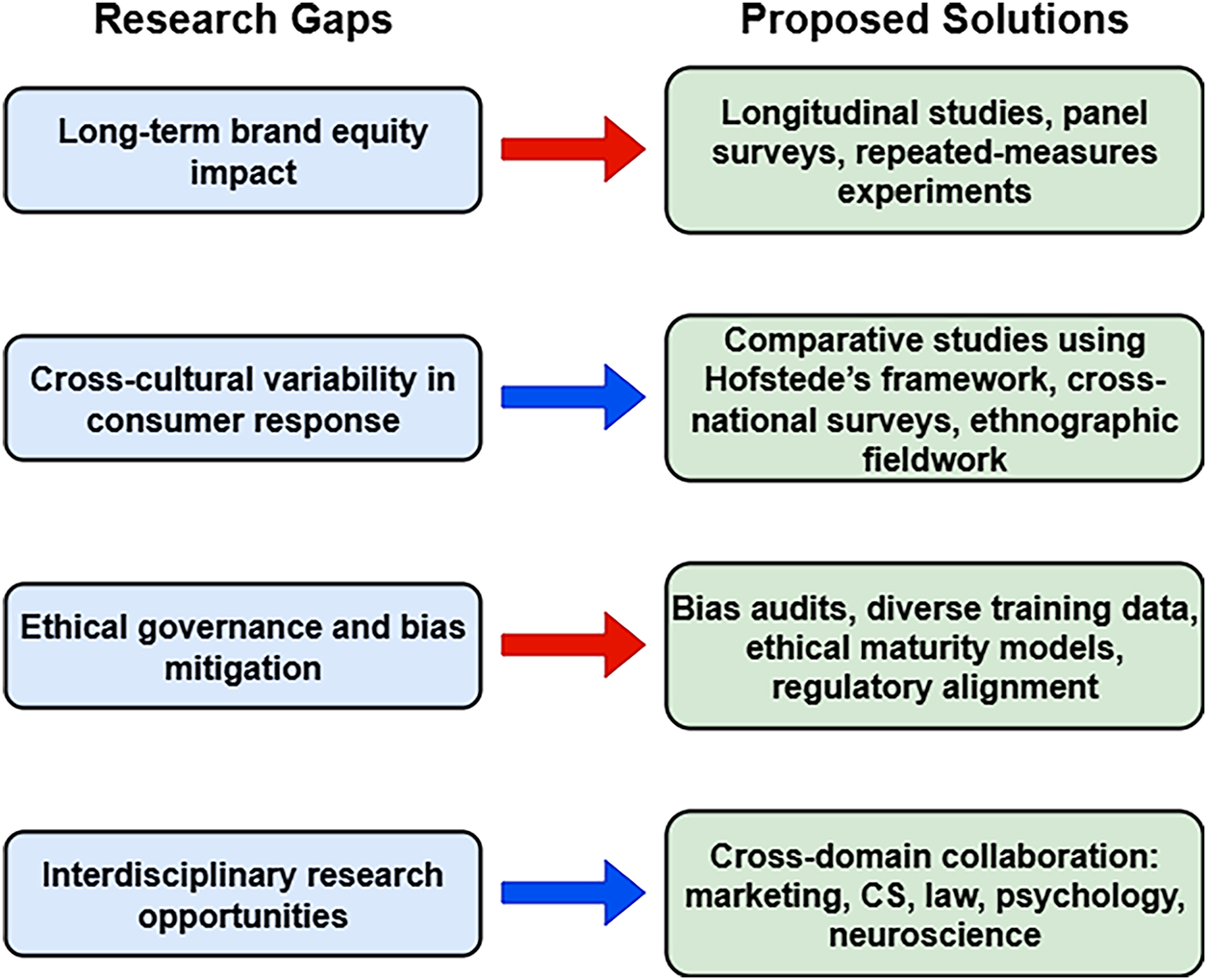
Figure 8: Conceptual mapping of research gaps to proposed solutions in generative AI marketing research.
This systematic review highlights how generative AI, spanning advanced language models, GANs, and diffusion-based architectures, has rapidly progressed from novel prototypes to indispensable marketing tools capable of automating and personalizing content at scale. By synthesizing empirical findings and aligning them with established theories such as IDT and TAM, our analysis underscores both the vast potential for streamlined creative workflows, real-time customer engagement, and innovative branding opportunities, as well as the ethical, technical, and regulatory hurdles that must be overcome for responsible deployment. Marketers stand to benefit significantly from leveraging generative AI in diverse domains, from automated copywriting and dynamic ad creation to immersive virtual experiences, yet they must remain vigilant about data privacy, bias mitigation, and brand integrity to sustain consumer trust. Future research would benefit from deeper longitudinal analyses, particularly to study long-term brand equity impact, more rigorous cross-cultural evaluations incorporating specific dimensions such as Hofstede’s individualism index, and frameworks integrating ethical governance at each stage of AI implementation. By delineating these prioritized research gaps, we aim to provide a sharper roadmap for interdisciplinary work that bridges marketing strategy, AI ethics, and cultural studies. Ultimately, we hope this review serves as a guidepost for practitioners seeking to harness generative AI effectively and ethically, while inspiring further academic inquiry into the next frontiers of AI-driven marketing innovation.
Acknowledgement: We would like to express our sincere gratitude to the Advanced Machine Intelligence Research Lab (AMIRL) for providing valuable supervision and necessary resources that significantly supported the successful completion of this review work. We also acknowledge the use of ChatGPT, which was employed solely for writing refinement and language polishing. All AI-generated text was carefully reviewed and manually revised by the authors to ensure accuracy and appropriateness.
Funding Statement: The authors received no specific funding for this study.
Author Contributions: The authors confirm contribution to the paper as follows: Conceptualization, Arifur Rahman and MD Azam Khan; methodology, Arifur Rahman, MD Azam Khan and Farhad Uddin Mahmud; software, Arifur Rahman and Kanchon Kumar Bishnu; validation, Arifur Rahman, MD Azam Khan and Farhad Uddin Mahmud; formal analysis, Arifur Rahman and Kanchon Kumar Bishnu; investigation, Arifur Rahman and Farhad Uddin Mahmud; resources, Ashifur Rahman; data curation, Ashifur Rahman; writing—original draft preparation, Arifur Rahman, MD Azam Khan and Farhad Uddin Mahmud; writing—review and editing, Kanchon Kumar Bishnu and Ashifur Rahman; visualization, Ashifur Rahman; supervision, M. F. Mridha; project administration, Md. Jakir Hossen; funding acquisition, Md. Jakir Hossen. All authors reviewed and approved the final version of the manuscript.
Availability of Data and Materials: Not applicable.
Ethics Approval: Not applicable.
Conflicts of Interest: The authors declare no conflicts of interest.
Supplementary Materials: The supplementary material is available online at https://www.techscience.com/doi/10.32604/cmc.2026.071029/s1.
References
1. Smith A, Hutson J. From concept to creation: the role of generative artificial intelligence in the new age of digital marketing. Design+. 2024;1(1):4776. doi:10.36922/dp.4776. [Google Scholar] [CrossRef]
2. Kshetri N, Dwivedi YK, Davenport TH, Panteli N. Generative artificial intelligence in marketing: applications, opportunities, challenges, and research agenda. Int J Inf Manag. 2024;75:102716. doi:10.1016/j.ijinfomgt.2023.102716. [Google Scholar] [CrossRef]
3. Kumar P, Satanasavapak P, Chantokul D, Wang Y. Generative artificial intelligence for digital marketing: insights and antecedents—a systematic literature review. J Roi Kaensarn Academi. 2024;9(12):2047–62. [Google Scholar]
4. Raut S, Chandel A, Mittal S. Enhancing marketing and brand communication with AI-driven content creation. In: AI, corporate social responsibility, and marketing in modern organizations. Hershey, PA, USA: IGI Global Scientific Publishing; 2025. p. 139–72. doi:10.4018/979-8-3373-0219-5.ch008. [Google Scholar] [CrossRef]
5. Lin T, Wang Y, Liu X, Qiu X. A survey of transformers. AI Open. 2022;3:111–32. doi:10.1016/j.aiopen.2022.10.001. [Google Scholar] [CrossRef]
6. Saxena D, Cao J. Generative adversarial networks (GANschallenges, solutions, and future directions. ACM Comput Surv. 2022;54(3):1–42. doi:10.1145/3446374. [Google Scholar] [CrossRef]
7. Chang Z, Koulieris GA, Chang HJ, Shum HPH. On the design fundamentals of diffusion models: a survey. arXiv:2306.04542. 2023. [Google Scholar]
8. Upadhyay U, Kumar A, Sharma G, Sharma S, Arya V, Panigrahi PK, et al. A systematic data-driven approach for targeted marketing in enterprise information system. Enterp Inf Syst. 2024;18(8):2356770. doi:10.1080/17517575.2024.2356770. [Google Scholar] [CrossRef]
9. Theodorakopoulos L, Theodoropoulou A. Leveraging big data analytics for understanding consumer behavior in digital marketing: a systematic review. Hum Behav Emerg Technol. 2024;2024(1):3641502. doi:10.1155/2024/3641502. [Google Scholar] [CrossRef]
10. Das S, Rath JP, Patro US, Panda T, Gopinath G. Investigating generative AI innovative strategies for customer engagement in marketing automations in the digital era. Int J Appl Sci Eng. 2024;12(1):47–57. doi:10.30954/2322-0465.1.2024.5. [Google Scholar] [CrossRef]
11. Chittranshi D, Kumar PP. Generative AI techniques for marketing. In: Predictive analytics and generative AI for data-driven marketing strategies. London, UK: Chapman and Hall/CRC; 2024. p. 159–64. doi:10.1201/9781003472544-14. [Google Scholar] [CrossRef]
12. Prien T, Goldhammer K. Artificial intelligence in the media economy: a systematic review of use cases, application potentials, and challenges of generative language models. In: Handbook of media and communication economics. Wiesbaden, Germany: Springer Fachmedien Wiesbaden; 2024. p. 1–69. doi:10.1007/978-3-658-34048-3_89-1. [Google Scholar] [CrossRef]
13. Jain P, Jain P, Jain A. Marketing’s crystal ball: where we are and where we could soon be with generative artificial intelligence in marketing. J Cult Mark Strategy. 2024;8(2):134–50. doi:10.69554/jdoc2249. [Google Scholar] [CrossRef]
14. Lim CV, Zhu YP, Omar M, Park HW. Decoding the relationship of artificial intelligence, advertising, and generative models. Digital. 2024;4(1):244–70. doi:10.3390/digital4010013. [Google Scholar] [CrossRef]
15. Foster D. Generative deep learning. Sebastopol, CA, USA: O’Reilly Media, Inc.; 2022. [Google Scholar]
16. Lv Z. Generative artificial intelligence in the metaverse era. Cogn Robot. 2023;3(2):208–17. doi:10.1016/j.cogr.2023.06.001. [Google Scholar] [CrossRef]
17. Goyal M, Mahmoud QH. A systematic review of synthetic data generation techniques using generative AI. Electronics. 2024;13(17):3509. doi:10.3390/electronics13173509. [Google Scholar] [CrossRef]
18. Kumar V, Ashraf AR, Nadeem W. AI-powered marketing: what, where, and how? Int J Inf Manag. 2024;77:102783. doi:10.1016/j.ijinfomgt.2024.102783. [Google Scholar] [CrossRef]
19. Zhao Z, Fan W, Li J, Liu Y, Mei X, Wang Y, et al. Recommender systems in the era of large language models (LLMs). IEEE Trans Knowl Data Eng. 2024;36(11):6889–907. doi:10.1109/TKDE.2024.3392335. [Google Scholar] [CrossRef]
20. Usman-Hamza FE, Balogun AO, Nasiru SK, Capretz LF, Mojeed HA, Salihu SA, et al. Empirical analysis of tree-based classification models for customer churn prediction. Sci Afr. 2024;23:e02054. doi:10.1016/j.sciaf.2023.e02054. [Google Scholar] [CrossRef]
21. Koswara A. A comprehensive review of AI models and types in digital marketing: enhancing personalization and automation. J Innovat Finan Business Technol. 2025;1(1):62–78. [Google Scholar]
22. Alkhalfan RF, Al Mubarak M. Effectiveness of digital marketing activities: a review of key challenges, benefits and opportunities. In: Innovative and intelligent digital technologies; towards an increased efficiency. Cham, Switzerland: Springer Nature; 2024. p. 903–23. doi:10.1007/978-3-031-71649-2_75. [Google Scholar] [CrossRef]
23. Gupta R, Nair K, Mishra M, Ibrahim B, Bhardwaj S. Adoption and impacts of generative artificial intelligence: theoretical underpinnings and research agenda. Int J Inf Manag Data Insights. 2024;4(1):100232. doi:10.1016/j.jjimei.2024.100232. [Google Scholar] [CrossRef]
24. Yoo SC, Piscarac D. Generative AI and its implications for modern marketing: analyzing potential challenges and opportunities. Int J Adv Smart Converg. 2023;12(3):175–85. [Google Scholar]
25. Ziakis C, Vlachopoulou M. Artificial intelligence in digital marketing: insights from a comprehensive review. Information. 2023;14(12):664. doi:10.3390/info14120664. [Google Scholar] [CrossRef]
26. Madaan G, Asthana SK, Kaur J. Generative AI: applications, models, challenges, opportunities, and future directions. In: Generative AI and implications for ethics, security, and data management. Hershey, PA, USA: IGI Global; 2024. p. 88–121. doi:10.4018/979-8-3693-8557-9.ch004. [Google Scholar] [CrossRef]
27. Banh L, Strobel G. Generative artificial intelligence. Electron Mark. 2023;33(1):63. doi:10.1007/s12525-023-00680-1. [Google Scholar] [CrossRef]
28. Dua IK, Patel PG. An introduction to generative AI. In: Optimizing generative AI workloads for sustainability. Berkeley, CA, USA: Apress; 2024. p. 1–37. doi:10.1007/979-8-8688-0917-0_1. [Google Scholar] [CrossRef]
29. Yenduri G, Ramalingam M, Selvi GC, Supriya Y, Srivastava G, Maddikunta PKR, et al. GPT (generative pre-trained transformer)—a comprehensive review on enabling technologies, potential applications, emerging challenges, and future directions. IEEE Access. 2024;12(1):54608–49. doi:10.1109/ACCESS.2024.3389497. [Google Scholar] [CrossRef]
30. Singh B, Kaunert C. Future of digital marketing: hyper-personalized customer dynamic experience with AI-based predictive models. In: Revolutionizing the AI-digital landscape. New York, NY, USA: Productivity Press; 2024. p. 189–203. doi:10.4324/9781032688305-14. [Google Scholar] [CrossRef]
31. Florido-Benítez L. Generative artificial intelligence: a proactive and creative tool to achieve hyper-segmentation and hyper-personalization in the tourism industry. Int J Tour Cities. 2025;11(1):83–103. doi:10.1108/ijtc-05-2024-0111. [Google Scholar] [CrossRef]
32. Shao Z, Zhao R, Yuan S, Ding M, Wang Y. Tracing the evolution of AI in the past decade and forecasting the emerging trends. Expert Syst Appl. 2022;209:118221. doi:10.1016/j.eswa.2022.118221. [Google Scholar] [CrossRef]
33. Mezzoudj F, Benyettou A. An empirical study of statistical language models: n-gram language models vs. neural network language models. Int J Innov Comput Appl. 2018;9(4):189. doi:10.1504/ijica.2018.10016827. [Google Scholar] [CrossRef]
34. Hadi MU, Tashi A, Qureshi R, Shah A, Irfan M, Zafar A, et al. Large language models: a comprehensive survey of its applications, challenges, limitations, and future prospects. TechRxiv. 2015. doi:10.36227/techrxiv.23589741.v3. [Google Scholar] [CrossRef]
35. Caterini AL, Chang DE. Recurrent neural networks. In: Deep neural networks in a mathematical framework. Cham, Switzerland: Springer International Publishing; 2018. p. 59–79. doi:10.1007/978-3-319-75304-1. [Google Scholar] [CrossRef]
36. Hochreiter S. Long short-term memory. Neural Comput. 1997;9(8):1735–80. doi:10.1162/neco.1997.9.8.1735. [Google Scholar] [PubMed] [CrossRef]
37. Abimbola B, de la Cal Marin E, Tan Q. Enhancing legal sentiment analysis: a convolutional neural network-long short-term memory document-level model. Mach Learn Knowl Extr. 2024;6(2):877–97. doi:10.3390/make6020041. [Google Scholar] [CrossRef]
38. Vaswani A. Attention is all you need. In: Proceedings of the 31st International Conference on Neural Information Processing Systems; 2017 Dec 4–9; Long Beach, CA, USA. [Google Scholar]
39. Goodfellow I, Pouget-Abadie J, Mirza M, Xu B, Warde-Farley D, Ozair S, et al. Generative adversarial networks. Commun ACM. 2020;63(11):139–44. doi:10.1145/3422622. [Google Scholar] [CrossRef]
40. Jabbar A, Li X, Omar B. A survey on generative adversarial networks: variants, applications, and training. ACM Comput Surv. 2022;54(8):1–49. doi:10.1145/3463475. [Google Scholar] [CrossRef]
41. Cao H, Tan C, Gao Z, Xu Y, Chen G, Heng PA, et al. A survey on generative diffusion models. IEEE Trans Knowl Data Eng. 2024;36(7):2814–30. doi:10.1109/TKDE.2024.3361474. [Google Scholar] [CrossRef]
42. Li X, Ren Y, Jin X, Lan C, Wang X, Zeng W, et al. Diffusion models for image restoration and enhancement: a comprehensive survey. arXiv:2308.09388. 2023. [Google Scholar]
43. Gupta R, Tiwari S, Chaudhary P. Generative AI techniques and models. In: Generative AI: techniques, models and applications. Cham, Switzerland: Springer Nature; 2025. p. 45–64. doi:10.1007/978-3-031-82062-5_3. [Google Scholar] [CrossRef]
44. Abukmeil M, Ferrari S, Genovese A, Piuri V, Scotti F. A survey of unsupervised generative models for exploratory data analysis and representation learning. ACM Comput Surv. 2022;54(5):1–40. doi:10.1145/3450963. [Google Scholar] [CrossRef]
45. Gm H, Gourisaria MK, Pandey M, Rautaray SS. A comprehensive survey and analysis of generative models in machine learning. Comput Sci Rev. 2020;38:100285. doi:10.1016/j.cosrev.2020.100285. [Google Scholar] [CrossRef]
46. Cui J, Wu YN, Han T. Learning joint latent space EBM prior model for multi-layer generator. In: 2023 IEEE/CVF Conference on Computer Vision and Pattern Recognition (CVPR); 2023 Jun 17–24; Vancouver, BC, Canada. p. 3603–12. doi:10.1109/CVPR52729.2023.00351. [Google Scholar] [CrossRef]
47. Hassan AR, Olanrewaju RO, Chukwudum QC, Olanrewaju SA, Fadugba SE. Comparison study of generative and discriminative models for classification of classifiers. Int J Math Comput Simul. 2022;16:76–87. doi:10.46300/9102.2022.16.12. [Google Scholar] [CrossRef]
48. Song Y, Ermon S. Generative modeling by estimating gradients of the data distribution. In: Proceedings of the 33rd International Conference on Neural Information Processing Systems; 2019 Dec 8–14; Vancouver, BC, Canada. p. 11918–30. [Google Scholar]
49. Kingma DP, Welling M. Auto-encoding variational Bayes. arXiv:1312.6114. 2013. [Google Scholar]
50. Khan W, Abidin S, Arif M, Ishrat M, Haleem M, Shaikh AA, et al. Anomalous node detection in attributed social networks using dual variational autoencoder with generative adversarial networks. Data Sci Manag. 2024;7(2):89–98. doi:10.1016/j.dsm.2023.10.005. [Google Scholar] [CrossRef]
51. Asperti A, Trentin M. Balancing reconstruction error and kullback-leibler divergence in variational autoencoders. IEEE Access. 2020;8:199440–8. doi:10.1109/ACCESS.2020.3034828. [Google Scholar] [CrossRef]
52. Huang H, Li Z, He R, Sun Z, Tan T. IntroVAE: introspective variational autoencoders for photographic image synthesis. arXiv:1807.06358. 2018. [Google Scholar]
53. Liu Z, Luo P, Wang X, Tang X. Deep learning face attributes in the wild. In: 2015 IEEE International Conference on Computer Vision (ICCV); 2015 Dec 7–13; Santiago, Chile. p. 3730–8. doi:10.1109/ICCV.2015.425. [Google Scholar] [CrossRef]
54. Karras T. Progressive growing of GANs for improved quality, stability, and variation. arXiv:1710.10196. 2017. [Google Scholar]
55. Yu F, Seff A, Zhang Y, Song S, Funkhouser T, Xiao J. Lsun: construction of a large-scale image dataset using deep learning with humans in the loop. arXiv:1506.03365. 2015. [Google Scholar]
56. Khan SH, Hayat M, Barnes N. Adversarial training of variational auto-encoders for high fidelity image generation. In: 2018 IEEE Winter Conference on Applications of Computer Vision (WACV); 2018 Mar 12–15; Lake Tahoe, NV, USA. p. 1312–20. doi:10.1109/WACV.2018.00148. [Google Scholar] [CrossRef]
57. Goodfellow I, Pouget-Abadie J, Mirza M, Xu B, Warde-Farley D, Ozair S, et al. Generative adversarial networks. In: Proceedings of the 28th International Conference on Neural Information Processing Systems; 2014 Dec 8–13; Montreal, QC, Canada. p. 2672–80. [Google Scholar]
58. Arjovsky M, Chintala S, Bottou L. Wasserstein generative adversarial networks. In: Proceedings of the 34th International Conference on Machine Learning; 2017 Aug 6–11; Sydney, NSW, Australia. p. 214–3. [Google Scholar]
59. Dash A, Ye J, Wang G. A review of generative adversarial networks (GANs) and its applications in a wide variety of disciplines: from medical to remote sensing. IEEE Access. 2024;12:18330–57. doi:10.1109/ACCESS.2023.3346273. [Google Scholar] [CrossRef]
60. Wang L, Chen W, Yang W, Bi F, Yu FR. A state-of-the-art review on image synthesis with generative adversarial networks. IEEE Access. 2020;8:63514–37. doi:10.1109/ACCESS.2020.2982224. [Google Scholar] [CrossRef]
61. Terzioğlu S, Çoğalmış KN, Bulut A. Ad creative generation using reinforced generative adversarial network. Electron Commer Res. 2024;24(3):1491–507. doi:10.1007/s10660-022-09564-6. [Google Scholar] [CrossRef]
62. Zhang H, Qu W, Long H, Chen M. The intelligent advertising image generation using generative adversarial networks and vision transformer: a novel approach in digital marketing. J Organ End User Comput. 2024;36(1):1–26. doi:10.4018/joeuc.340932. [Google Scholar] [CrossRef]
63. Yang Q, Li P, Xu X, Ding Z, Zhou W, Nian Y. A comparative study on enhancing prediction in social network advertisement through data augmentation. In: 2024 4th International Conference on Machine Learning and Intelligent Systems Engineering (MLISE); 2024 Jun 28–30; Zhuhai, China. p. 214–8. doi:10.1109/MLISE62164.2024.10674203. [Google Scholar] [CrossRef]
64. Wang S, Yang Y. M-GAN-XGBOOST model for sales prediction and precision marketing strategy making of each product in online stores. Data Technol Appl. 2021;55(5):749–70. doi:10.1108/dta-11-2020-0286. [Google Scholar] [CrossRef]
65. Gillioz A, Casas J, Mugellini E, Abou Khaled O. Overview of the transformer-based models for NLP tasks. In: 2020 15th Conference on Computer Science and Information Systems (FedCSIS); 2020 Feb 6–9; Sofia, Bulgaria. p. 179–83. doi:10.15439/2020f20. [Google Scholar] [CrossRef]
66. Khurana D, Koli A, Khatter K, Singh S. Natural language processing: state of the art, current trends and challenges. Multimed Tools Appl. 2023;82(3):3713–44. doi:10.1007/s11042-022-13428-4. [Google Scholar] [PubMed] [CrossRef]
67. Niu Z, Zhong G, Yu H. A review on the attention mechanism of deep learning. Neurocomputing. 2021;452:48–62. doi:10.1016/j.neucom.2021.03.091. [Google Scholar] [CrossRef]
68. Khan S, Naseer M, Hayat M, Zamir SW, Khan FS, Shah M. Transformers in vision: a survey. ACM Comput Surv. 2022;54(10s):1–41. doi:10.1145/3505244. [Google Scholar] [CrossRef]
69. Zaheer M, Guruganesh G, Dubey A, Ainslie J, Alberti C, Ontanon S, et al. Big bird: transformers for longer sequences. In: Proceedings of the 34th International Conference on Neural Information Processing Systems; 2020 Dec 6–12; Vancouver, BC, Canada. p. 17283–97. [Google Scholar]
70. Song C. The role of transformer-cGANs fusion in digital marketing: generation of advertising images. J Organ End User Comput. 2024;36(1):1–22. doi:10.4018/joeuc.347914. [Google Scholar] [CrossRef]
71. Lin TY, Maire M, Belongie S, Hays J, Perona P, Ramanan D, et al. Microsoft COCO: common objects in context. In: Computer vision—ECCV 2014: 13th European Conference. Cham, Switzerland: Springer International Publishing; 2014. p. 740–55. doi:10.1007/978-3-319-10602-1_48. [Google Scholar] [CrossRef]
72. Thomee B, Shamma DA, Friedland G, Elizalde B, Ni K, Poland D, et al. YFCC100M: the new data in multimedia research. Commun ACM. 2016;59(2):64–73. doi:10.1145/2812802. [Google Scholar] [CrossRef]
73. Xiao H, Rasul K, Vollgraf R. Fashion-mnist: a novel image dataset for benchmarking machine learning algorithms. arXiv:1708.07747. 2017. [Google Scholar]
74. Deng J, Dong W, Socher R, Li LJ, Kai L, Li FF. ImageNet: a large-scale hierarchical image database. In: 2009 IEEE Conference on Computer Vision and Pattern Recognition; 2009 Jun 20–25; Miami, FL, USA. p. 248–55. doi:10.1109/CVPR.2009.5206848. [Google Scholar] [CrossRef]
75. Chao Y, Zhu H, Zhou Y. Integrating visual transformer and graph neural network for visual analysis in digital marketing: exploring and predicting advertising effectiveness. J Organ End User Comput. 2024;36(1):1–28. doi:10.4018/joeuc.342092. [Google Scholar] [CrossRef]
76. Peng D, Tian W, Zhu M, Ren Y, Lin X, Li M. TargetingVis: visual exploration and analysis of targeted advertising data. J Vis. 2020;23(6):1113–27. doi:10.1007/s12650-020-00671-w. [Google Scholar] [CrossRef]
77. Bellar O, Baina A, Ballafkih M. Sentiment analysis: predicting product reviews for E-commerce recommendations using deep learning and transformers. Mathematics. 2024;12(15):2403. doi:10.3390/math12152403. [Google Scholar] [CrossRef]
78. nicapotato. Women’s E-Commerce Clothing Reviews. 2018. [cited 2025 Jan 10]. Available from: https://www.kaggle.com/datasets/nicapotato/womens-ecommerce-clothing-reviews. [Google Scholar]
79. Grigoras A, Leon F. Transformer-based model for predicting customers’ next purchase day in e-commerce. Computation. 2023;11(11):210. doi:10.3390/computation11110210. [Google Scholar] [CrossRef]
80. Ummadisetty V. Online Retail DataSet. 2017. [cited 2025 Jan 10]. Available from: https://www.kaggle.com/datasets/vijayuv/onlineretail. [Google Scholar]
81. Wang J, Yu L, Zhang W, Gong Y, Xu Y, Wang B, et al. IRGAN: a minimax game for unifying generative and discriminative information retrieval models. In: Proceedings of the 40th International ACM SIGIR Conference on Research and Development in Information Retrieval; 2017 Aug 7–11; Tokyo, Japan. p. 515–24. doi:10.1145/3077136.3080786. [Google Scholar] [CrossRef]
82. Wang X, Lyu Y, Jing L. Deep generative model for robust imbalance classification. In: 2020 IEEE/CVF Conference on Computer Vision and Pattern Recognition (CVPR); 2020 Jun 13–19; Seattle, WA, USA. p. 14112–21. doi:10.1109/cvpr42600.2020.01413. [Google Scholar] [CrossRef]
83. Chen Y. Comparing content marketing strategies of digital brands using machine learning. Humanit Soc Sci Commun. 2023;10(1):57. doi:10.1057/s41599-023-01544-x. [Google Scholar] [CrossRef]
84. Nallapati R. Discriminative models for information retrieval. In: Proceedings of the 27th Annual International ACM SIGIR Conference on Research and Development in Information Retrieval; 2004 Jul 25–29; Sheffield, UK. p. 64–71. doi:10.1145/1008992.1009006. [Google Scholar] [CrossRef]
85. Haider P, Chiarandini L, Brefeld U. Discriminative clustering for market segmentation. In: Proceedings of the 18th ACM SIGKDD International Conference on Knowledge Discovery and Data Mining; 2012 Aug 12–16; Beijing, China. p. 417–25. doi:10.1145/2339530.2339600. [Google Scholar] [CrossRef]
86. An X, Sun X, Xu S, Hao L, Li J. Important citations identification by exploiting generative model into discriminative model. J Inf Sci. 2023;49(1):107–21. doi:10.1177/0165551521991034. [Google Scholar] [CrossRef]
87. Hornik K, Stinchcombe M, White H. Multilayer feedforward networks are universal approximators. Neural Netw. 1989;2(5):359–66. doi:10.1016/0893-6080(89)90020-8. [Google Scholar] [CrossRef]
88. Bisong E. Recurrent Neural Networks (RNNs). In: Building machine learning and deep learning models on google cloud platform: a comprehensive guide for beginners. Berkeley, CA, USA: Apress; 2019. p. 443–73. doi:10.1007/978-1-4842-4470-8. [Google Scholar] [CrossRef]
89. Cho K, van Merriënboer B, Gulcehre C, Bahdanau D, Bougares F, Schwenk H, et al. Learning phrase representations using RNN encoder-decoder for statistical machine translation. arXiv:1406.1078. 2014. [Google Scholar]
90. Kipf TN, Welling M. Semi-supervised classification with graph convolutional networks. arXiv:1609.02907. 2016. [Google Scholar]
91. Li X, Sun L, Ling M, Peng Y. A survey of graph neural network based recommendation in social networks. Neurocomputing. 2023;549:126441. doi:10.1016/j.neucom.2023.126441. [Google Scholar] [CrossRef]
92. Sharma K, Lee YC, Nambi S, Salian A, Shah S, Kim SW, et al. A survey of graph neural networks for social recommender systems. ACM Comput Surv. 2024;56(10):1–34. doi:10.1145/3661821. [Google Scholar] [CrossRef]
93. Man K, Chahl J. A review of synthetic image data and its use in computer vision. J Imaging. 2022;8(11):310. doi:10.3390/jimaging8110310. [Google Scholar] [PubMed] [CrossRef]
94. Islam T, Miron A, Liu X, Li Y. Deep learning in virtual try-on: a comprehensive survey. IEEE Access. 2024;12:29475–502. doi:10.1109/ACCESS.2024.3368612. [Google Scholar] [CrossRef]
95. Karras T, Laine S, Aittala M, Hellsten J, Lehtinen J, Aila T. Analyzing and improving the image quality of StyleGAN. In: 2020 IEEE/CVF Conference on Computer Vision and Pattern Recognition (CVPR); 2020 Jun 13–19; Seattle, WA, USA. p. 8107–16. doi:10.1109/cvpr42600.2020.00813. [Google Scholar] [CrossRef]
96. Ho J, Saharia C, Chan W, Fleet DJ, Norouzi M, Salimans T. Cascaded diffusion models for high fidelity image generation. J Mach Learn Res. 2022;23(47):1–33. [Google Scholar]
97. Jadhav B, Jain M, Jajoo A, Kadam D, Kadam H, Kakkad T. Imagination made real: stable diffusion for high-fidelity text-to-image tasks. In: 2024 2nd International Conference on Sustainable Computing and Smart Systems (ICSCSS); 2024 Jul 10–12; Coimbatore, India. p. 773–9. doi:10.1109/ICSCSS60660.2024.10625113. [Google Scholar] [CrossRef]
98. Yang Q, Farseev A, Ongpin M, Huang A, Chu-Farseeva YY, You DM, et al. Fusing predictive and large language models for actionable recommendations in creative marketing. ACM Trans Inf Syst. 2025;43(5):1–31. doi:10.1145/3725885. [Google Scholar] [CrossRef]
99. Shoumy NJ, Ang LM, Seng KP, Rahaman DM, Zia T. Multimodal big data affective analytics: a comprehensive survey using text, audio, visual and physiological signals. J Netw Comput Appl. 2020;149:102447. doi:10.1016/j.jnca.2019.102447. [Google Scholar] [CrossRef]
100. Islam T, Miron A, Nandy M, Choudrie J, Liu X, Li Y. Transforming digital marketing with generative AI. Computers. 2024;13(7):168. doi:10.3390/computers13070168. [Google Scholar] [CrossRef]
101. Xu H, He K, Plummer BA, Sigal L, Sclaroff S, Saenko K. Multilevel language and vision integration for text-to-clip retrieval. Proc AAAI Conf Artif Intell. 2019;33(1):9062–9. doi:10.1609/aaai.v33i01.33019062. [Google Scholar] [CrossRef]
102. Khan I. The quick guide to prompt engineering: generative AI tips and tricks for ChatGPT, Bard, Dall-E, and Midjourney. Hoboken, NJ, USA: John Wiley & Sons, Inc.; 2024. [Google Scholar]
103. Liu V, Chilton LB. Design guidelines for prompt engineering text-to-image generative models. In: CHI Conference on Human Factors in Computing Systems; 2022 Apr 30–May 5; New Orleans, LA, USA. p. 1–23. doi:10.1145/3491102.3501825. [Google Scholar] [CrossRef]
104. Cillo P, Rubera G. Generative AI in innovation and marketing processes: a roadmap of research opportunities. J Acad Mark Sci. 2025;53(3):684–701. doi:10.1007/s11747-024-01044-7. [Google Scholar] [CrossRef]
105. Denga EM, Rakshit S. Digital marketing and the sustainable performance of small and medium enterprises. In: Advancing SMEs toward e-commerce policies for sustainability. Hershey, PA, USA: IGI Global; 2023. p. 213–34. [Google Scholar]
106. Kumar P, Singh G. Using social media and digital marketing tools and techniques for developing brand equity with connected consumers. In: Research anthology on social media advertising and building consumer relationships. Hershey, PA, USA: IGI Global; 2022. p. 1703–22. doi:10.4018/978-1-6684-6287-4.ch091. [Google Scholar] [CrossRef]
107. Vishwakarma R, Dhakad R. Online advertising and fraud click in online advertisement: a survey. Int J Comput Appl. 2024;186(1):1–8. doi:10.5120/ijca2024923300. [Google Scholar] [CrossRef]
108. Visser M, Hoving M, van Kempen C, Jansen M. Digital marketing in the research phase. In: Digital Marketing fundamentals. Oxfordshire, UK: Routledge; 2025. p. 227–82. doi:10.4324/9781003569107-7. [Google Scholar] [CrossRef]
109. Gujar P, Panyam S. Generative AI in digital advertising campaigns. Int J Comput Trends Technol. 2024;72(5):51–5. doi:10.14445/22312803/ijctt-v72i5p106. [Google Scholar] [CrossRef]
110. Osadchaya E, Marder B, Yule JA, Yau A, Lavertu L, Stylos N, et al. To ChatGPT, or not to ChatGPT: navigating the paradoxes of generative AI in the advertising industry. Bus Horiz. 2024;67(5):571–81. doi:10.1016/j.bushor.2024.05.002. [Google Scholar] [CrossRef]
111. Campbell C, Farrell JR. More than meets the eye: the functional components underlying influencer marketing. Bus Horiz. 2020;63(4):469–79. doi:10.1016/j.bushor.2020.03.003. [Google Scholar] [CrossRef]
112. Leung FF, Gu FF, Palmatier RW. Online influencer marketing. J Acad Mark Sci. 2022;50(2):226–51. doi:10.1007/s11747-021-00829-4. [Google Scholar] [CrossRef]
113. Cunha CR, Gomes JP, Mendonça V. The role of artificial intelligence to empower and leverage brands. In: AI innovation in services marketing. Hershey, PA, USA: IGI Global; 2024. p. 27–47. doi:10.4018/979-8-3693-2153-9.ch002. [Google Scholar] [CrossRef]
114. Stephen AT. The role of digital and social media marketing in consumer behavior. Curr Opin Psychol. 2016;10:17–21. doi:10.1016/j.copsyc.2015.10.016. [Google Scholar] [CrossRef]
115. Aldous K, Salminen J, Farooq A, Jung SG, Jansen B. Using ChatGPT in content marketing: enhancing users’ social media engagement in cross-platform content creation through generative AI. In: Proceedings of the 35th ACM Conference on Hypertext and Social Media; 2024 Sep 10–13; Poznan, Poland. p. 376–83. doi:10.1145/3648188.3675142. [Google Scholar] [CrossRef]
116. Soni V. Adopting generative AI in digital marketing campaigns: an empirical study of drivers and barriers. Sage Sci Rev Appl Mach Learn. 2023;6(8):1–15. [Google Scholar]
117. Morokhova V, Batyrbekova Z, Bondarenko O, Ustik T, Saiensus M, Travin V. Digitalization strategies for marketing communications to build relationship marketing: modern solutions in brand management. Wseas Trans Environ Dev. 2023;19:1231–45. doi:10.37394/232015.2023.19.112. [Google Scholar] [CrossRef]
118. Gayam SR. Generative AI for personalized marketing: techniques for dynamic content creation, targeted campaigns, and customer engagement. J Bioinform Artif Intell. 2022;2(1):191–226. [Google Scholar]
119. Hartmann J, Exner Y, Domdey S. The power of generative marketing: can generative AI create superhuman visual marketing content? Int J Res Mark. 2025;42(1):13–31. doi:10.1016/j.ijresmar.2024.09.002. [Google Scholar] [CrossRef]
120. Mayahi S, Vidrih M. The impact of generative AI on the future of visual content marketing. arXiv:2211.12660. 2022. [Google Scholar]
121. Wahid R, Mero J, Ritala P. Editorial: written by ChatGPT, illustrated by Midjourney: generative AI for content marketing. Asia Pac J Mark Logist. 2023;35(8):1813–22. doi:10.1108/apjml-10-2023-994. [Google Scholar] [CrossRef]
122. Chaffey D, Smith PR. Digital marketing excellence: planning, optimizing and integrating online marketing. 6th ed. London, UK: Routledge; 2022. doi:10.4324/9781003009498. [Google Scholar] [CrossRef]
123. Dhore A, Harkal R, Darokar M. Exploring the effects of digital marketing practices in India: a comprehensive analysis. J Manag Sci. 2024;14(1):92–6. doi:10.26524/jms.14.12. [Google Scholar] [CrossRef]
124. Nobile TH, Cantoni L. Personalisation (In) effectiveness in email marketing. Digit Bus. 2023;3(2):100058. doi:10.1016/j.digbus.2023.100058. [Google Scholar] [CrossRef]
125. Wu J, Li KJ, Liu JS. Bayesian inference for assessing effects of email marketing campaigns. J Bus Econ Stat. 2018;36(2):253–66. doi:10.1080/07350015.2016.1141096. [Google Scholar] [CrossRef]
126. Dutta S, Arivazhagan R, Padmini Ema U, Balasundaram R. Revolutionizing electronics e-commerce: harnessing the power of artificial intelligence in E-marketing strategies. Migrat Letters. 2024;21(S6):207–20. [Google Scholar]
127. Das S. Search engine optimization and marketing: a recipe for success in digital marketing. Boca Raton, FL, USA: Chapman and Hall/CRC; 2021. [Google Scholar]
128. Nagpal M, Petersen JA. Keyword selection strategies in search engine optimization: how relevant is relevance? J Retail. 2021;97(4):746–63. doi:10.1016/j.jretai.2020.12.002. [Google Scholar] [CrossRef]
129. Amara M, Zaghdoud R, Ben Rhaiem O, Althubiti E. Enhancing image SEO using deep learning algorithms: a research approach. Eng Technol Appl Sci Res. 2024;14(4):15194–200. doi:10.48084/etasr.7473. [Google Scholar] [CrossRef]
130. Chanthati SR. Website visitor analysis & branding quality measurement using artificial intelligence. Am J Educ Technol. 2024;3(3):88–101. doi:10.54536/ajet.v3i3.3212. [Google Scholar] [CrossRef]
131. Saeed Z, Aslam F, Ghafoor A, Umair M, Razzak I. Exploring the impact of SEO-based ranking factors for voice queries through machine learning. Artif Intell Rev. 2024;57(6):144. doi:10.1007/s10462-024-10780-9. [Google Scholar] [CrossRef]
132. Tran MT. A systematic analysis of artificial intelligence’s usage in online advertising: how artificial intelligence affects digital marketing initiatives. In: Enhancing and predicting digital consumer behavior with AI. Hershey, PA, USA: IGI Global; 2024. p. 17–27. doi:10.4018/979-8-3693-4453-8.ch002. [Google Scholar] [CrossRef]
133. Vetrivel S, Arun V, Saravanan T, Maheswari R. Harnessing AI for next-generation service marketing. In: Integrating AI-driven technologies into service marketing. Hershey, PA, USA: IGI Global; 2024. p. 265–98. doi:10.4018/979-8-3693-7122-0.ch015. [Google Scholar] [CrossRef]
134. Wang S. Generative AI: an in-depth exploration of methods, uses, and challenges. Highlights Sci Eng Technol. 2024;85:196–202. doi:10.54097/czptrz11. [Google Scholar] [CrossRef]
135. Jovic M, Mnasri S. Evaluating AI-generated emails: a comparative efficiency analysis. World J Engl Lang. 2023;14(2):502. doi:10.5430/wjel.v14n2p502. [Google Scholar] [CrossRef]
136. Indrawan D, Yorman Y, Stiadi M, Hendayani N, Al-Amin AA. Revolutionizing social media marketing through AI and automation: an in-depth analysis of strategies, ethics, and future trends. Int J Hum Soc Sci Bus. 2023;3(1):22–45. [Google Scholar]
137. Wen Y, Laporte S. Experiential narratives in marketing: a comparison of generative AI and human content. J Public Policy Mark. 2025;44(3):392–410. doi:10.1177/07439156241297973. [Google Scholar] [CrossRef]
138. Yu S, Carroll F, Bentley BL. Trust and risk: psybersecurity in the AI era. In: Psybersecurity. Boca Raton, FL, USA: CRC Press; 2024. p. 130–55. [Google Scholar]
139. Rahman A, Islam M, Moon MJ, Tasnim T, Siddique N, Shahiduzzaman M, et al. A qualitative survey on deep learning based deep fake video creation and detection method. Aust J Eng Innov Technol. 2022;4(1):13–26. doi:10.34104/ajeit.022.013026. [Google Scholar] [CrossRef]
140. Rahman A, Siddique N, Moon MJ, Tasnim T, Islam M, Shahiduzzaman M, et al. Short and low resolution deepfake video detection using CNN. In: 2022 IEEE 10th Region 10 Humanitarian Technology Conference (R10-HTC); 2022 Sep 16–18; Hyderabad, India. p. 259–64. doi:10.1109/R10-HTC54060.2022.9929719. [Google Scholar] [CrossRef]
141. Rana NP, Pillai R, Sivathanu B, Malik N. Assessing the nexus of Generative AI adoption, ethical considerations and organizational performance. Technovation. 2024;135:103064. doi:10.1016/j.technovation.2024.103064. [Google Scholar] [CrossRef]
142. Wani TA, Ali SW. Innovation diffusion theory. J General Manag Res. 2015;3(2):101–18. doi:10.1002/9781119756231.ch1. [Google Scholar] [CrossRef]
143. Ritz W, Wolf M, McQuitty S. Digital marketing adoption and success for small businesses: the application of the do-it-yourself and technology acceptance models. J Res Interact Mark. 2019;13(2):179–203. doi:10.1108/jrim-04-2018-0062. [Google Scholar] [CrossRef]
144. Rogers EM, Singhal A, Quinlan MM. Diffusion of innovations 1. In: An integrated approach to communication theory and research. London, UK: Routledge; 2019. p. 415–34. doi:10.4324/9780203710753-35. [Google Scholar] [CrossRef]
145. Davis FD. Technology acceptance model: TAM. In: Information seeking behavior and technology adoption. Hershey, PA, USA: IGI Global; 1989. p. 205–19. [Google Scholar]
146. Al-kfairy M, Mustafa D, Kshetri N, Insiew M, Alfandi O. Ethical challenges and solutions of generative AI: an interdisciplinary perspective. Informatics. 2024;11(3):58. doi:10.3390/informatics11030058. [Google Scholar] [CrossRef]
147. Nandan Prasad A. Ethical implications and bias mitigation. In: Introduction to data governance for machine learning systems. Singapore: Springer; 2024. p. 307–82. doi:10.1007/979-8-8688-1023-7_5. [Google Scholar] [CrossRef]
148. Avery JJ, Abril PS, del Riego A. Attributing AI authorship: towards a system of icons for legal and ethical disclosure. Nw J Tech Intell Prop. 2024;22(1):1–54. [Google Scholar]
149. Esezoobo SO, Braimoh J. Integrating legal, ethical, and technological strategies to mitigate AI deepfake risks through strategic communication. Int J Sci Res Manag. 2023;11(8):914–28. doi:10.18535/ijsrm/v11i08.ec02. [Google Scholar] [CrossRef]
150. Shaffer G. Globalization and social protection: the impact of EU and international rules in the ratcheting up of US privacy standards. Yale J Int Law. 2000;25:1–88. [Google Scholar]
151. Hermann E, Puntoni S. Generative AI in marketing and principles for ethical design and deployment. J Public Policy Mark. 2025;44(3):332–49. doi:10.1177/07439156241309874. [Google Scholar] [CrossRef]
152. Cronin I. Understanding generative AI business applications: a guide to technical principles and real-world applications. Berkeley, CA, USA: Apress; 2024. doi:10.1007/979-8-8688-0282-9. [Google Scholar] [CrossRef]
153. Jin K, Zhong ZZ, Zhao EY. Sustainable digital marketing under big data: an AI random forest model approach. IEEE Trans Eng Manag. 2024;71:3566–79. doi:10.1109/TEM.2023.3348991. [Google Scholar] [CrossRef]
154. Vashishth TK, Vikas, Sharma KK, Kumar B, Chaudhary S, Panwar R. Enhancing customer experience through AI-enabled content personalization in E-commerce marketing. In: Advances in digital marketing in the era of artificial intelligence. Boca Raton, FL, USA: CRC Press; 2024. p. 7–32. doi:10.1201/9781003450443-2. [Google Scholar] [CrossRef]
155. Hocutt DL. Composing with generative AI on digital advertising platforms. Comput Compos. 2024;71:102829. doi:10.1016/j.compcom.2024.102829. [Google Scholar] [CrossRef]
156. Gołąb-Andrzejak E. The impact of generative AI and ChatGPT on creating digital advertising campaigns. Cybern Syst. 2025;56(8):1130–44. doi:10.1080/01969722.2023.2296253. [Google Scholar] [CrossRef]
157. Baek TH. Digital advertising in the age of generative AI. J Curr Issues Res Advert. 2023;44(3):249–51. doi:10.1080/10641734.2023.2243496. [Google Scholar] [CrossRef]
158. Martínez-Rolán X, Corbacho-Valencia JM, Piñeiro-Otero T. Use of generative AIs in the digital communication and marketing sector in Spain. In: Management for digital transformation. Cham, Switzerland: Springer International Publishing; 2023. p. 101–21. doi:10.1007/978-3-031-42060-3_5. [Google Scholar] [CrossRef]
159. Veeramachaneni V. Large language models: a comprehensive survey on architectures, applications, and challenges. Adv Innov Comput Programm Lang. 2025;7(1):20–39. [Google Scholar]
160. Mienye ID, Swart TG, Obaido G. Recurrent neural networks: a comprehensive review of architectures, variants, and applications. Information. 2024;15(9):517. doi:10.3390/info15090517. [Google Scholar] [CrossRef]
161. Khennouche F, Elmir Y, Himeur Y, Djebari N, Amira A. Revolutionizing generative pre-traineds: insights and challenges in deploying ChatGPT and generative chatbots for FAQs. Expert Syst Appl. 2024;246(4):123224. doi:10.1016/j.eswa.2024.123224. [Google Scholar] [CrossRef]
162. Kushwaha AK, Kar AK. MarkBot—a language model-driven chatbot for interactive marketing in post-modern world. Inf Syst Front. 2024;26(3):857–74. doi:10.1007/s10796-021-10184-y. [Google Scholar] [CrossRef]
163. Hemachandran K, Choudhury D, Rodriguez RV, Wise JA, Revathi T. Predictive analytics and generative AI for data-driven marketing strategies. Boca Raton, FL, USA: CRC Press; 2024. [Google Scholar]
164. Wang B, Chen Q, Wang Z. Diffusion-based visual art creation: a survey and new perspectives. arXiv:2408.12128. 2024. [Google Scholar]
165. Liang J. The application of artificial intelligence-assisted technology in cultural and creative product design. Sci Rep. 2024;14(1):31069. doi:10.1038/s41598-024-82281-2. [Google Scholar] [PubMed] [CrossRef]
166. Sindiramutty SR, Prabagaran KRV, Akbar R, Hussain M, Malik NA. Generative AI for secure user interface (UI) design. In: Reshaping CyberSecurity with generative AI techniques. Hershey, PA, USA: IGI Global; 2025. p. 333–94. doi:10.4018/979-8-3693-5415-5.ch010. [Google Scholar] [CrossRef]
167. Pagani M, Champion R. Artificial intelligence for business creativity. London, UK: Routledge; 2023. doi:10.4324/9781003287582. [Google Scholar] [CrossRef]
168. Ahram T, Casarotto L, Costa P. Human interaction and emerging technologies (IHIET 2024proceedings of the 12th international conference on human interaction and emerging technologies. Venice, Italy: AHFE Open Access; 2024. [Google Scholar]
169. Madanchian M. Generative AI for consumer behavior prediction: techniques and applications. Sustainability. 2024;16(22):9963. doi:10.3390/su16229963. [Google Scholar] [CrossRef]
170. Liu Z. Cultural bias in large language models: a comprehensive analysis and mitigation strategies. J Transcult Commun. 2025;3(2):224–44. doi:10.1515/jtc-2023-0019. [Google Scholar] [CrossRef]
171. Shandilya SK, Datta A, Kartik Y, Nagar A. Navigating the regulatory landscape. In: Digital resilience: navigating disruption and safeguarding data privacy. Cham, Switzerland: Springer Nature; 2024. p. 127–240. doi:10.1007/978-3-031-53290-0_3. [Google Scholar] [CrossRef]
172. Johari R, Koomen P, Pekelis L, Walsh D. Peeking at A/B tests: why it matters, and what to do about it. In: Proceedings of the 23rd ACM SIGKDD International Conference on Knowledge Discovery and Data Mining; 2017 Aug 13–17; Halifax, NS, Canada. p. 1517–25. doi:10.1145/3097983.3097992. [Google Scholar] [CrossRef]
173. Rodriguez G, Marta M. Using generative AI tools to improve marketing communication: opportunities, challenges and best practices. Valencia, Spain: Universitat Politècnica de València; 2024. [cited 2025 Oct 10]. Availble from: https://riunet.upv.es/entities/publication/1bf3fa8d-a120-4c0c-9a4c-88a23d6439f8. [Google Scholar]
174. Ajubhai RN. From personalization to prediction: the role of generative AI in shaping consumer purchase journeys. J Multidiscip Stud. 2025;2(1):13–23. [Google Scholar]
175. Shah N, Engineer S, Bhagat N, Chauhan H, Shah M. Research trends on the usage of machine learning and artificial intelligence in advertising. Augment Hum Res. 2020;5(1):19. doi:10.1007/s41133-020-00038-8. [Google Scholar] [CrossRef]
176. Anantrasirichai N, Zhang F, Bull D. Artificial intelligence in creative industries: advances prior to 2025. arXiv:2501.02725. 2025. [Google Scholar]
177. Ilieva G, Yankova T, Klisarova-Belcheva S. Effects of generative AI in tourism industry. Information. 2024;15(11):671. doi:10.3390/info15110671. [Google Scholar] [CrossRef]
Cite This Article
 Copyright © 2026 The Author(s). Published by Tech Science Press.
This work is licensed under a Creative Commons Attribution 4.0 International License , which permits unrestricted use, distribution, and reproduction in any medium, provided the original work is properly cited.
 Downloads
 Citation Tools
