
 Login
Login Register
 Submit a Paper
 Propose a Special lssue
 Open Access
REVIEW

Industrial-Oriented Applications of Sparrow Search Algorithm in Machine Learning Optimization: A Review of Emerging Trends
1 Department of Electrical and Electronics Engineering, Faculty of Engineering, Universiti Putra Malaysia, Jalan Universiti 1, Serdang, Selangor, Malaysia
2 School of Mechanical and Vehicle Engineering, Nanchang Institute of Science & Technology, Nanchang, China
3 Artificial Intelligence in Robotics Laboratory (AiR Lab), Electrical and Computer Engineering Department, Aarhus University, Aarhus C, Denmark
4 Department of Applied Sciences (DAS), Universiti Teknologi PETRONAS, Seri Iskandar, Perak, Malaysia
* Corresponding Authors: Mohd Khair Hassan. Email: ; Ghulam E Mustafa Abro. Email:
Computers, Materials & Continua 2026, 87(3), 7 https://doi.org/10.32604/cmc.2026.074207
Received 05 October 2025; Accepted 27 November 2025; Issue published 09 April 2026
 View Full Text
 Download PDF
Abstract
Industrial intelligent systems increasingly require efficient, robust, and deployable optimization methods for resource-constrained hardware. The Sparrow Search Algorithm (SSA) has gained traction in machine learning optimization; however, existing reviews emphasize algorithmic variants and generic benchmarks while paying limited attention to industrial requirements such as real-time operation, noise tolerance, and hardware awareness. This review advances the field by developing an industrial taxonomy that aligns SSA and its hybrids with six application clusters—fault diagnosis, production scheduling, edge-intelligent control, renewable/microgrid optimization, battery prognostics, and industrial cybersecurity—characterizing task types, data regimes, latency and safety constraints, and typical failure modes; by consolidating a benchmark evidence base that compiles representative datasets, metrics, compute budgets, baseline line-ups (PSO/GA/DE/GWO), and anytime behavior (time-to-target, AUC-anytime) for fair, reproducible comparison; and by distilling practitioner-oriented guidance that includes a variant-selection matrix (e.g., quantum/DE hybrids for high-dimensional tuning, chaotic/Lévy SSA for noisy multimodal landscapes, multi-objective SSA for trade-off-intensive scheduling), robust default hyper-ranges, and a deployment checklist covering robustness tests, calibration and explainability, and latency/energy reporting under edge constraints. Comparative evidence across non-convex, high-dimensional, and noise-aware tasks identifies conditions under which SSA and its hybrids surpass classical optimizers, alongside analyses of scalability and real-time feasibility, and articulates the remaining challenges and research directions to support rigorous benchmarking and trustworthy industrial deployment.Keywords
Rapid advances in machine learning [1] have intensified the need for scalable, effective optimization, especially in industrial settings such as intelligent manufacturing, predictive maintenance, robotic control, and smart grid management. Core workflow stages—hyperparameter tuning, neural architecture search, and feature selection—typically induce large-scale, high-dimensional, non-convex search spaces, where gradient-based methods are prone to local optima and lack scalability, motivating the adoption of metaheuristics. Metaheuristics, formalized in the late 1980s, are problem-independent frameworks inspired by natural processes, such as evolution, swarming, and thermodynamics, that efficiently explore complex spaces without exhaustive enumeration. Classical representatives include Genetic Algorithms (GA) [2], Simulated Annealing (SA), and Particle Swarm Optimization (PSO) [3]; these have since evolved into a wealthy family of global optimizers designed for uncertainty and heterogeneity.
Within this landscape, the Sparrow Search Algorithm (SSA) [4], inspired by sparrow foraging and anti-predation behaviors, has emerged as a promising swarm method. Relative to PSO and GA, SSA’s producer–scrounger dynamics, adaptive vigilance, and flexible exploration–exploitation scheduling help mitigate premature convergence and stagnation in non-stationary, multimodal industrial search spaces. Beyond PSO and GA, SSA has demonstrated competitive performance compared to recent swarm algorithms, such as the Grey Wolf Optimizer (GWO), Whale Optimization Algorithm (WOA), and Artificial Bee Colony (ABC). Early iterations often converge faster due to producer-driven global exploration coupled with scrounger-based local refinement; the vigilance mechanism dynamically adjusts the search scope to improve robustness to noise and distributional shifts [5]; and the population update scheme preserves diversity more effectively than methods prone to early convergence. Empirical studies on real applications, including flexible job-shop scheduling, wind-turbine fault diagnosis, and industrial microgrid optimization, report higher accuracy, faster convergence, and lower energy or computation costs for SSA-based models [5]. Notwithstanding these strengths, open issues persist. Scalability may degrade in very high-dimensional tasks (e.g., deep neural architecture search), performance can be sensitive to hyperparameter settings, and formal guarantees on convergence and stability remain limited constraints that matter for safety-critical deployment.
This review addresses these issues by synthesizing SSA’s role in industrial machine-learning optimization and clarifying its strengths and limitations across tasks such as hyperparameter tuning [6], feature selection, and model-structure optimization in domains spanning energy systems, manufacturing, and intelligent control [7]. The analysis is organized around three research questions (RQs):
• RQ1: how SSA has evolved and which mechanisms render it suitable for ML optimization relative to classical and recent swarm methods;
• RQ2: how SSA has been applied in industrial ML and what benefits and limitations have been observed;
• RQ3: What challenges and research directions are most promising for real-time, large-scale deployment?
In pursuing these questions, the review articulates three objectives: to consolidate theoretical foundations and algorithmic enhancements pertinent to industrial ML; to synthesize and compare performance evidence across representative industrial tasks using consistent datasets, metrics, and compute budgets; and to identify open challenges with emphasis on edge computing, digital-twin integration, and autonomous industrial decision-making. Unlike prior surveys centered on algorithmic taxonomies or generic benchmarks, the present review takes an application-oriented, forward-looking perspective tailored to industrial requirements. It emphasizes deployment considerations, robustness under noise, real-time feasibility, and hardware awareness, and highlights integration pathways with edge intelligence, federated learning, and interpretable optimization workflows. The remainder of the paper is structured as follows: Section 2 summarizes the fundamentals and variants of SSA; Section 3 examines SSA in core ML optimization tasks; Section 4 surveys applications across industrial domains; and Section 5 discusses challenges and future directions. An overview of the article structure is provided in Fig. 1.
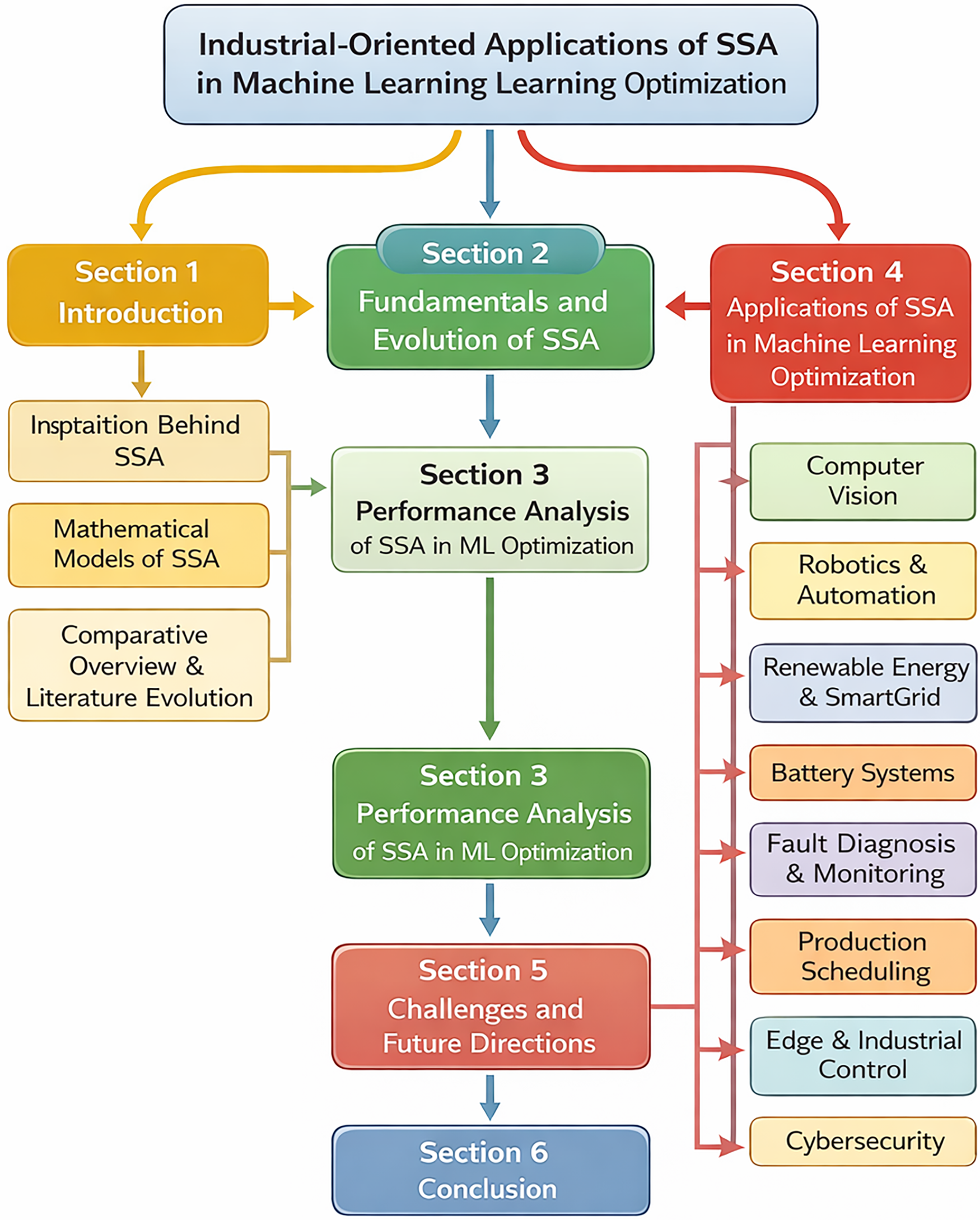
Figure 1: Structure of the review.
2 Fundamentals and Evolution of SSA
Since its inception, SSA has undergone continuous evolution through the development of various hybrid variants [8] and has consistently demonstrated superior convergence performance compared to traditional optimization algorithms. This chapter synthesizes the fundamental principles and key evolutionary advancements of SSA, thereby laying a solid foundation for its subsequent applications in machine learning optimization [9].
SSA is inspired by the collective foraging and anti-predation behaviors of sparrows, which exhibit sophisticated social strategies to ensure survival and adaptability in dynamic environments. These birds inherently balance exploration, the search for novel food sources, and exploitation, the efficient utilization of known resources, through coordinated group dynamics, making them a compelling biological model for optimization. As illustrated in Fig. 2, the tree symbolizes the elevated vantage point from which scout sparrows monitor their surroundings and detect potential threats, such as predators. Upon sensing danger, scouts emit alarm signals that prompt rapid positional adjustments within the swarm, thereby enabling the population to escape suboptimal regions in the search space. Meanwhile, producers actively explore the environment to identify high-quality food sources, analogous to locating promising solutions in an optimization problem. Scroungers, in turn, track the producers and capitalize on their findings, reinforcing exploitation. This dynamic interplay between exploration and exploitation underpins SSA’s ability to ensure stable optimization and adaptive search performance across complex problem landscapes.
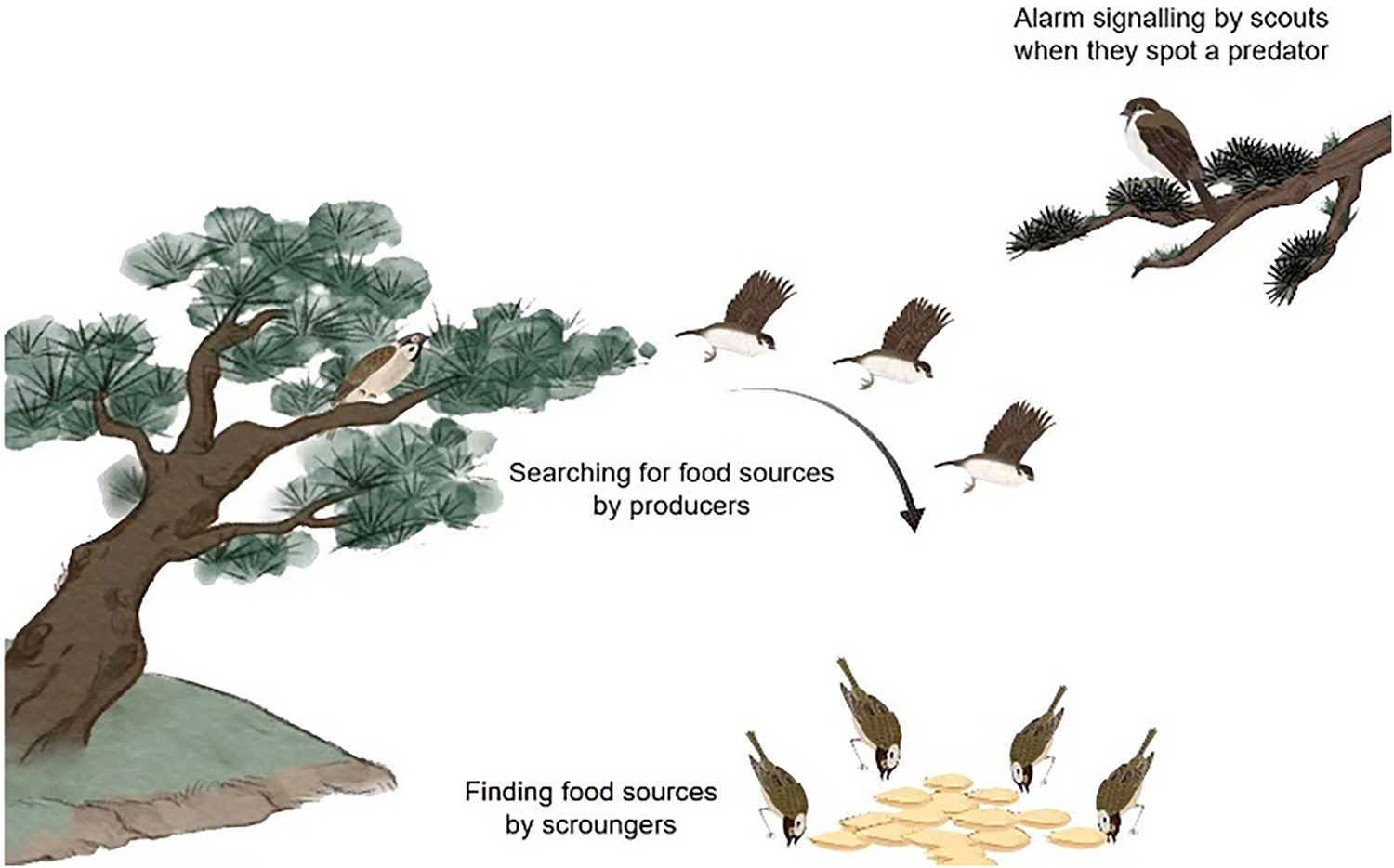
Figure 2: Roles in SSA: producers, scroungers, and scouts.
Here are three brief postulates for the Sparrow Search Algorithm (SSA) [10]:
1. Foraging Role Duality: The population splits into producers (exploration of new, high-quality regions) and scroungers (exploitation of producers’ findings) to balance global exploration and local refinement.
2. Predation Alert Escape: Upon an “alert” signal, agents disperse from current regions to escape local optima, rapidly probing alternative areas of the search space.
3. Dynamic Role Adaptation: Individuals switch roles based on resource quality and threat level, maintaining a balanced search and preventing stagnation.
By modeling these natural behaviors, SSA achieves an effective balance between global search (exploration) and local refinement (exploitation), making it a powerful and versatile tool for solving optimization problems across various domains. This biologically inspired approach has proven effective in navigating complex, multidimensional search spaces, making SSA a significant addition to the family of swarm intelligence algorithms.
2.2 Mathematical Models of SSA
The specific steps of SSA are defined below in detail form [7]:
2.2.1 Initialization of the Population
The sparrow population is initialized, with each sparrow’s position randomly determined. The population consists of sparrows, which represent the candidate solutions for the optimization problem. The algorithm sets an initial dimension
At the start of the algorithm, each sparrow is randomly assigned a fitness value. As the iterative process progresses, the algorithm continuously updates the sparrows’ fitness values, thereby guiding them toward better solutions. The expression for the initial fitness value of a sparrow is as follows:
The fitness calculation formula is as follows:
where
2.2.2 Producer Position Update
During execution, each sparrow updates its position from its initial state. The first to be adjusted are the producers within the population. Their task is to search for potential food resources continuously. The position update equation for producers is as follows:
where
2.2.3 Scroungers Position Update
There are two main scenarios during the position update process for scroungers: First, when scroungers can independently find sufficient food without relying on producers, they may replace some producers to balance the roles within the population. This results in position updates for these scroungers. Second, when producers find food, scroungers may occupy their positions, triggering the position-update process.
The position update equation for scroungers is as follows:
where
2.2.4 Scouters Position Update
The number of scouters is set as one-fifth of the total population, and their initial positions are randomly generated. Based on the position iteration rules for producers and scroungers in the sparrow population, the corresponding position update equation is derived:
where
• Producers update their positions based on food-searching behavior, simulating exploration of the solution space.
• Scroungers either follow producers or search locally for improved positions.
• Scouters are responsible for detecting danger and guiding directional shifts to avoid local optima.
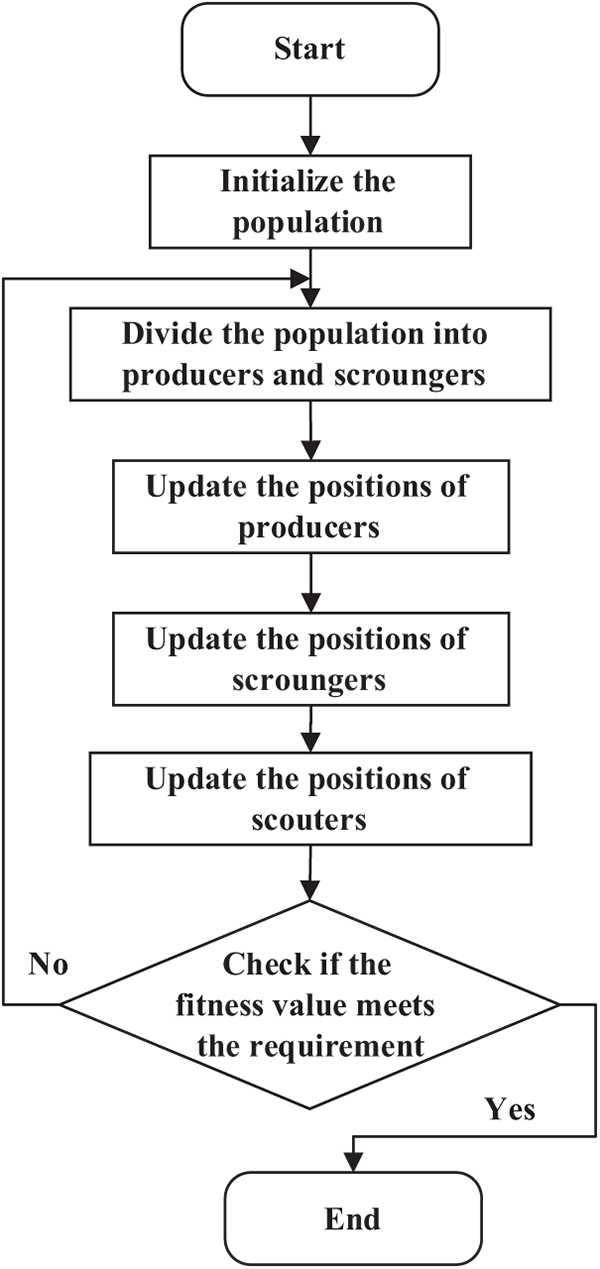
Figure 3: Flowchart of SSA.
After all individuals have updated their positions, the fitness function (as defined in Eq. (3)) is evaluated to determine whether the optimality condition is met. The iteration stops when the stopping criterion (e.g., maximum iteration or convergence threshold) is satisfied.
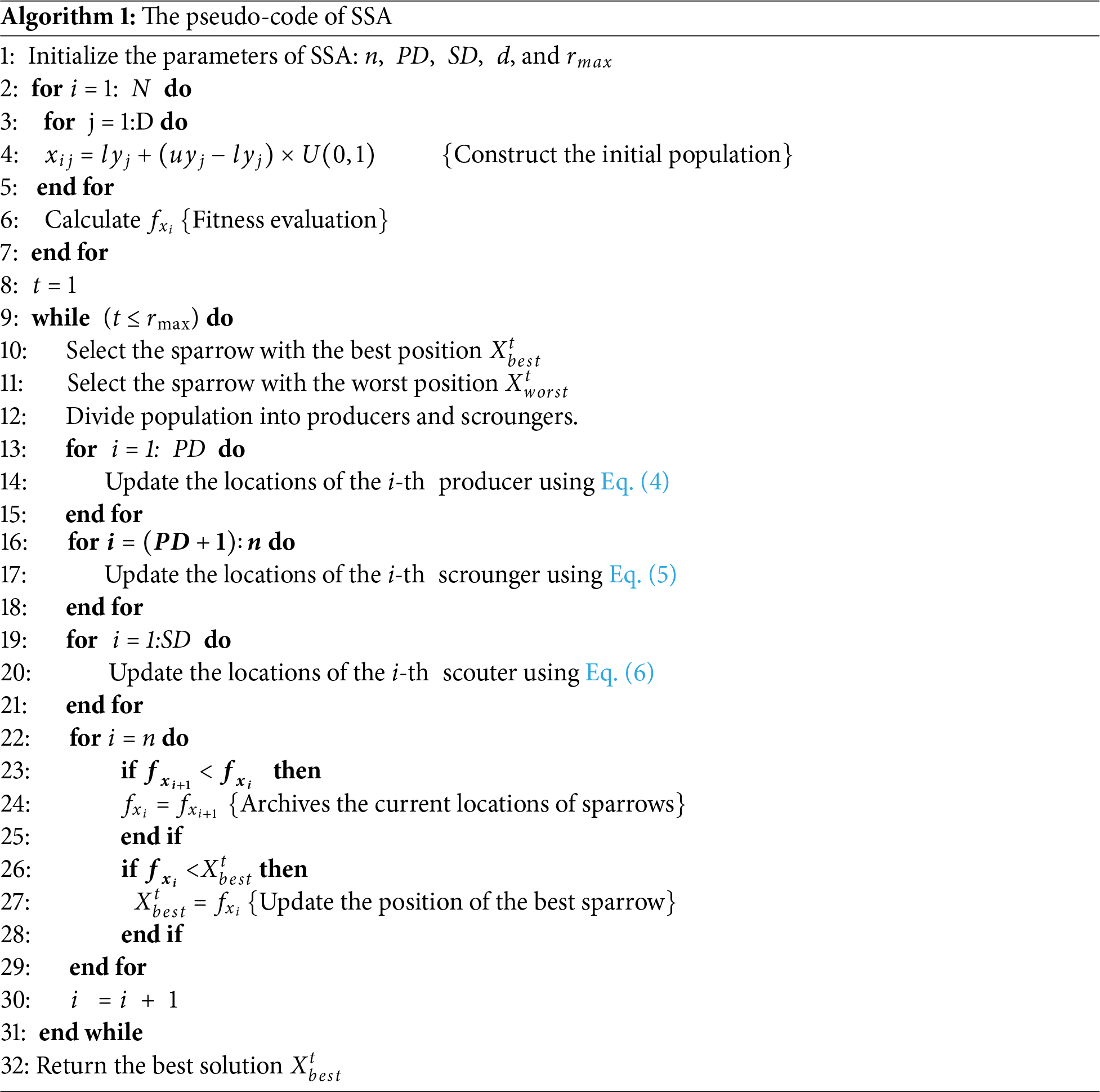
PD represents the control parameters, which are the number of producers. SD is the number of scouters.
2.3 Comparative Overview of SSA with Other Metaheuristic Algorithms
To better contextualize the capabilities of SSA, this section presents a comparative analysis with other well-established metaheuristics widely used in machine learning and industrial optimization, including Particle Swarm Optimization (PSO), Genetic Algorithm (GA), Ant Colony Optimization (ACO), Differential Evolution (DE), and Grey Wolf Optimizer (GWO). Table 1 summarizes the comparative features, inspiration sources, strengths, and limitations of these methods. SSA distinguishes itself through its biologically inspired producer–scrounger–scout mechanism, which enables dynamic role switching based on fitness and perceived environmental risk. This self-adaptive behavior enhances SSA’s ability to maintain population diversity, avoid premature convergence, and achieve superior global search capability. Unlike PSO and GA—which often converge quickly in early iterations but are prone to stagnation—SSA maintains a better balance between exploration and exploitation, especially when equipped with enhancements such as chaotic mapping and Lévy flight. In noisy or multimodal optimization landscapes, SSA has shown better robustness in escaping local minima, outperforming traditional algorithms in solution quality and convergence stability. The practical comparisons are as follows:
• Warehouse AGV Path Planning: SSA achieved an average path length reduction of 1.2 m (under 8-directional search) and a 24.35% reduction in runtime (under 4-directional search) compared to GA, with improved collision avoidance in narrow corridors [11].
• Industrial IoT Routing Optimization: SSA outperformed PSO and DE by improving data delivery rates by 2.67% and enhancing load distribution via adaptive multipath routing mechanisms [12].
• Function Optimization Benchmarks: In experiments using benchmark functions (e.g., F5, F7, F13), SSA consistently achieved faster convergence and higher final accuracy than PSO, GA, and SA, particularly in high-dimensional, noisy search spaces.
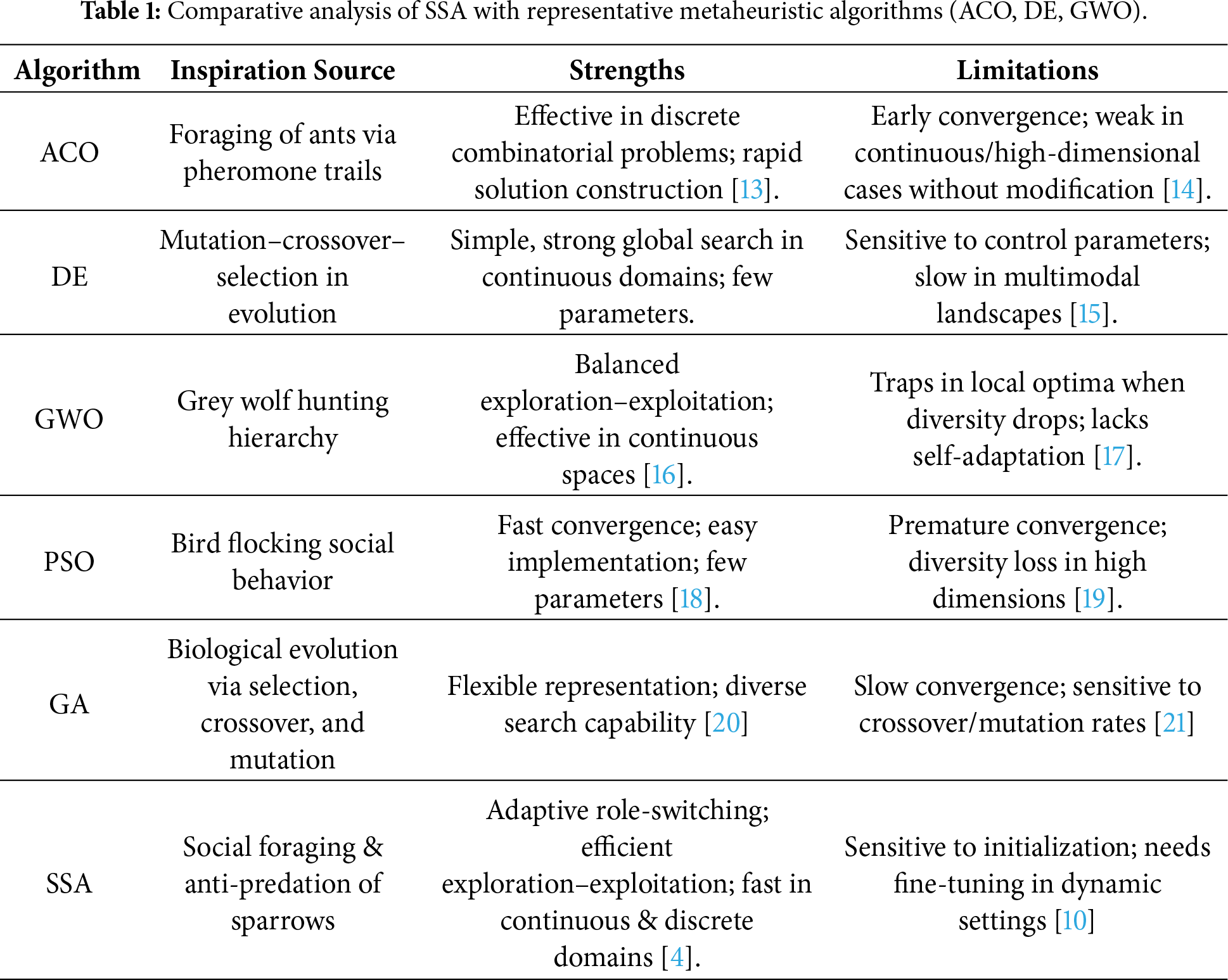
These results highlight SSA’s competitive edge across diverse industrial tasks requiring real-time decision-making, high-dimensional optimization, and dynamic constraint adaptation.
2.4 Exploring the Evolution of SSA in Academic Literature
To ensure a systematic and comprehensive understanding of the development and applications of SSA, a structured literature review was conducted based on two primary sources: Scopus and Connected Papers. The review process consisted of the following steps:
1. Databases Used: Scopus (as the primary indexed source) and Connected Papers (for citation-based relevance mapping).
2. Search Keywords: The search query used was: “Sparrow Search Algorithm” OR “SSA” AND (“optimization” OR “machine learning”).
3. Time Frame: Publications from January 2020 to March 2025 were considered, corresponding to the period following SSA’s initial introduction.
4. Inclusion Criteria: Peer-reviewed journal articles and conference papers; Publications written in English; Indexed in Scopus, or appearing as core nodes or close neighbors in Connected Papers’ citation graph; Papers with ≥5 citations in Scopus were prioritized to ensure impact and maturity.
5. Exclusion Criteria: Preprints, editorials, theses, and non-peer-reviewed sources; Articles not directly involving SSA as a core algorithmic component.
6. Rationale for Using Connected Papers: While Scopus ensured the quality and indexability of literature, Connected Papers enabled the identification of structurally relevant and thematically adjacent research. This hybrid approach enhances both depth (via high-quality sources) and breadth (via citation-based discovery).
This process yielded a curated corpus of over 120 representative publications, which were further classified by domain (e.g., engineering, energy systems, logistics), methodology (e.g., hybridization, multi-objective optimization), and impact (e.g., citations, adoption trends). Bibliometric statistics and trend visualizations (Figs. 4–8) were generated using the Scopus dataset. Since its introduction in 2020 by Xue and Shen [4], SSA has experienced significant growth in academic research, becoming a prominent tool in the metaheuristic optimization landscape. By emulating sparrows’ foraging and anti-predation behaviors, SSA has demonstrated its ability to address diverse and complex optimization challenges. The rapid expansion of SSA-related literature reflects the algorithm’s versatility, adaptability, and growing influence across various scientific disciplines.
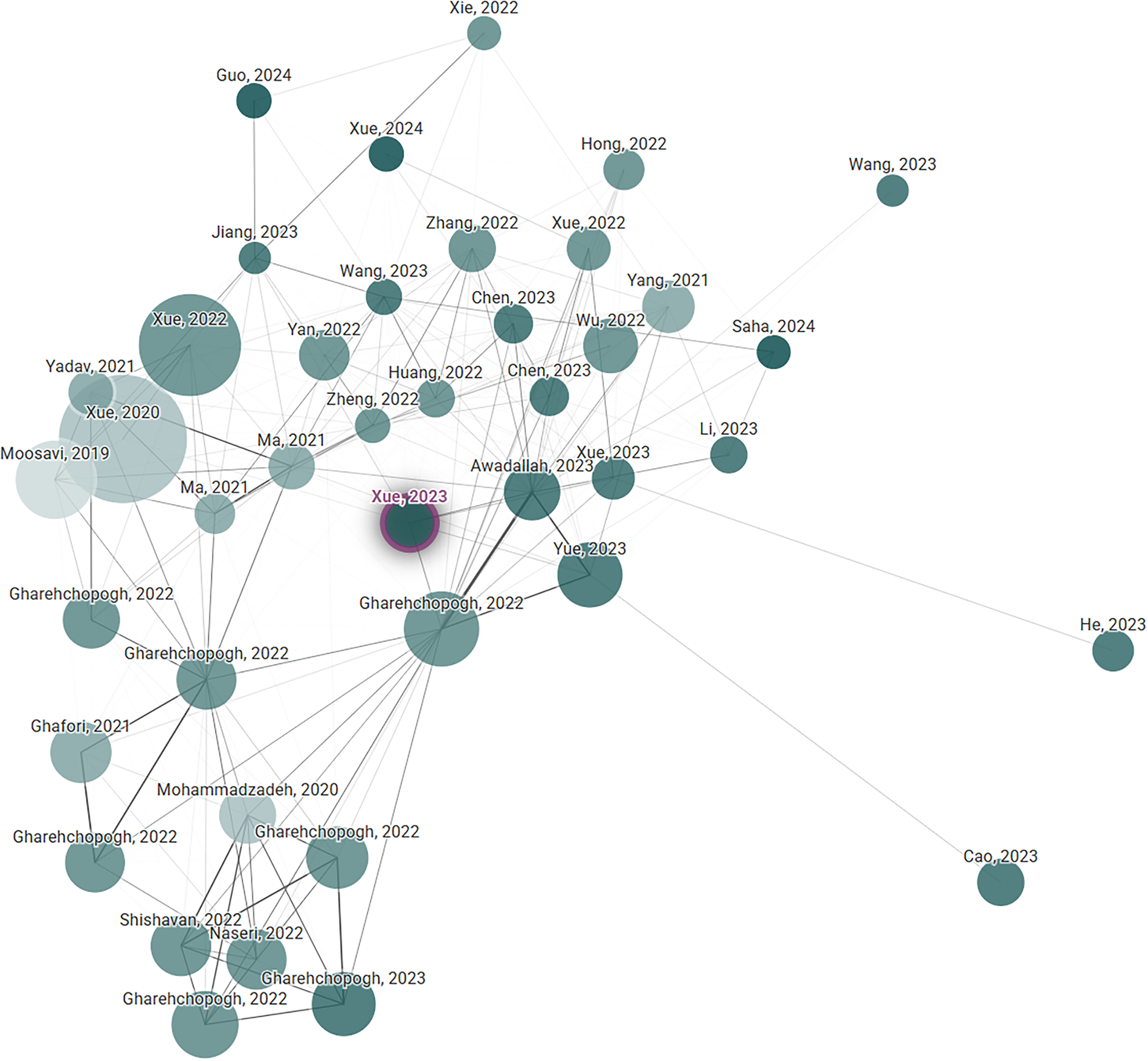
Figure 4: Papers related to SSA.
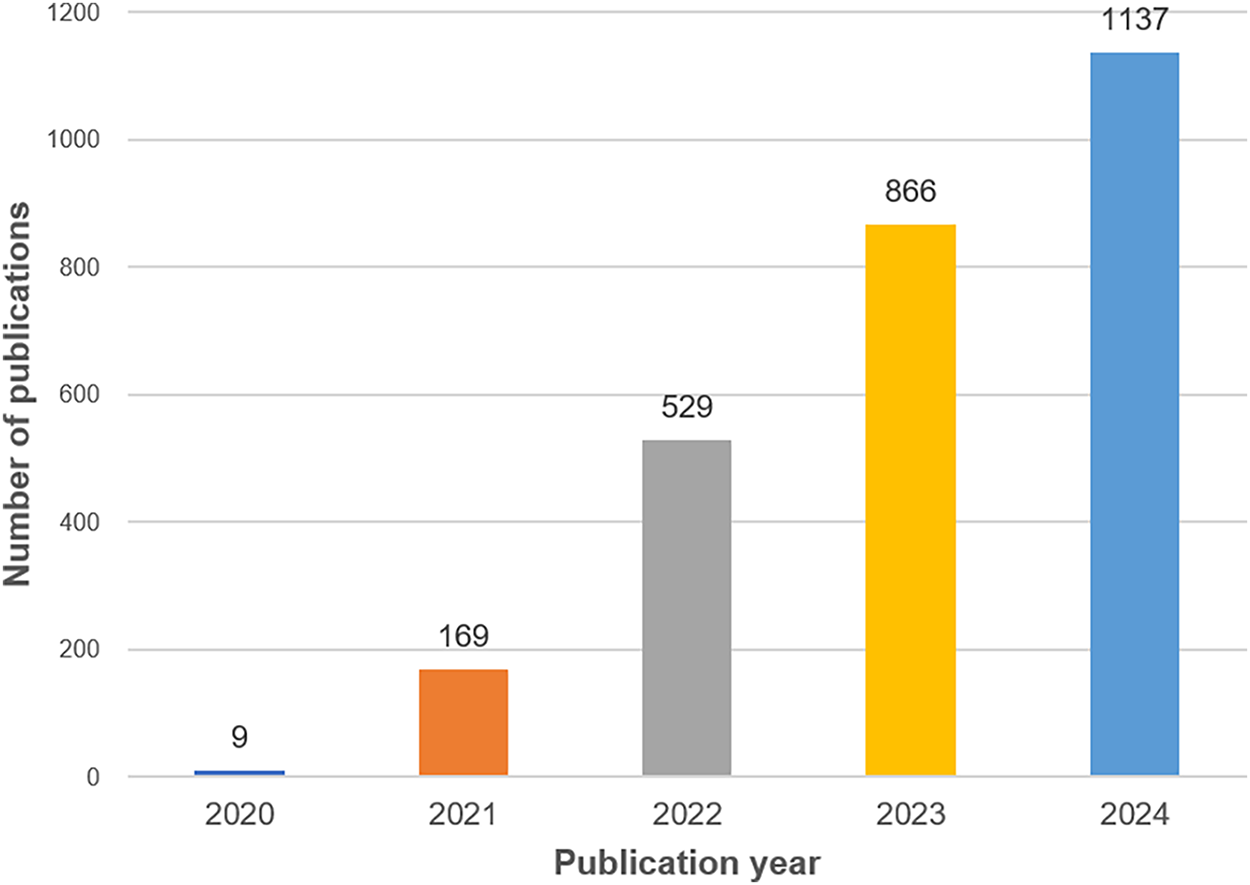
Figure 5: The number of SSA publications per year.
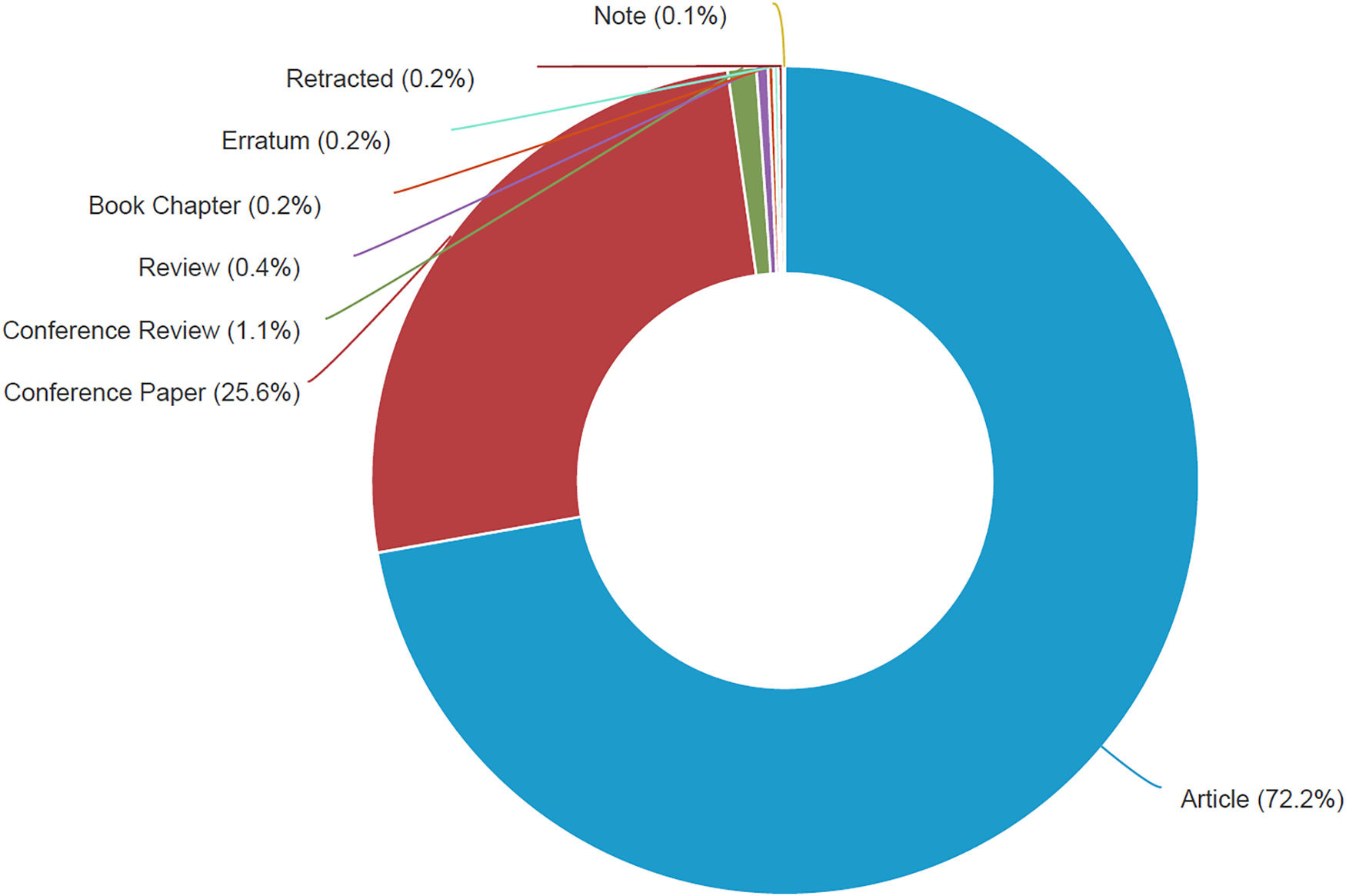
Figure 6: SSA-related literature classified by type.
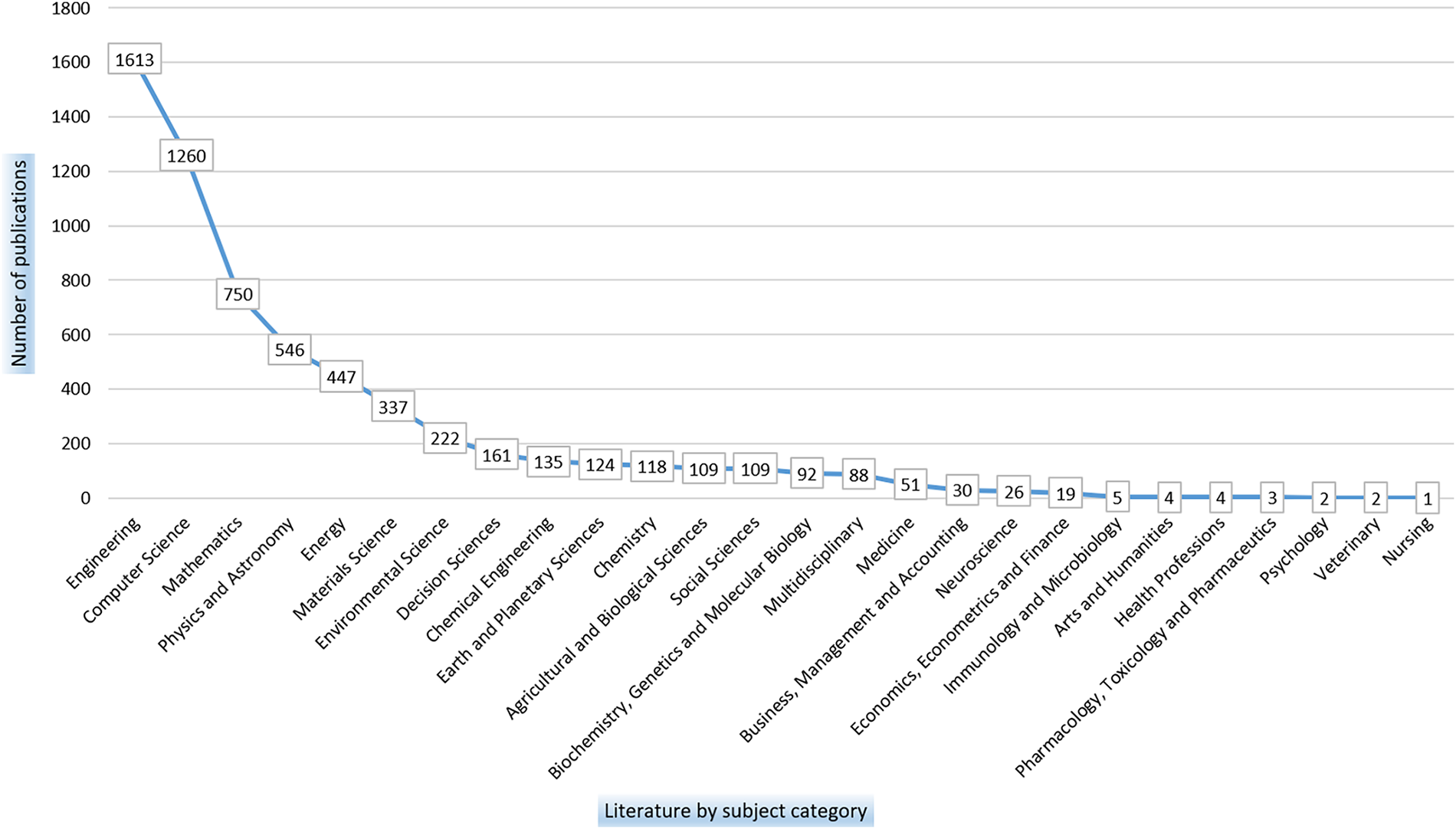
Figure 7: Distribution of SSA-related publications by subject category.
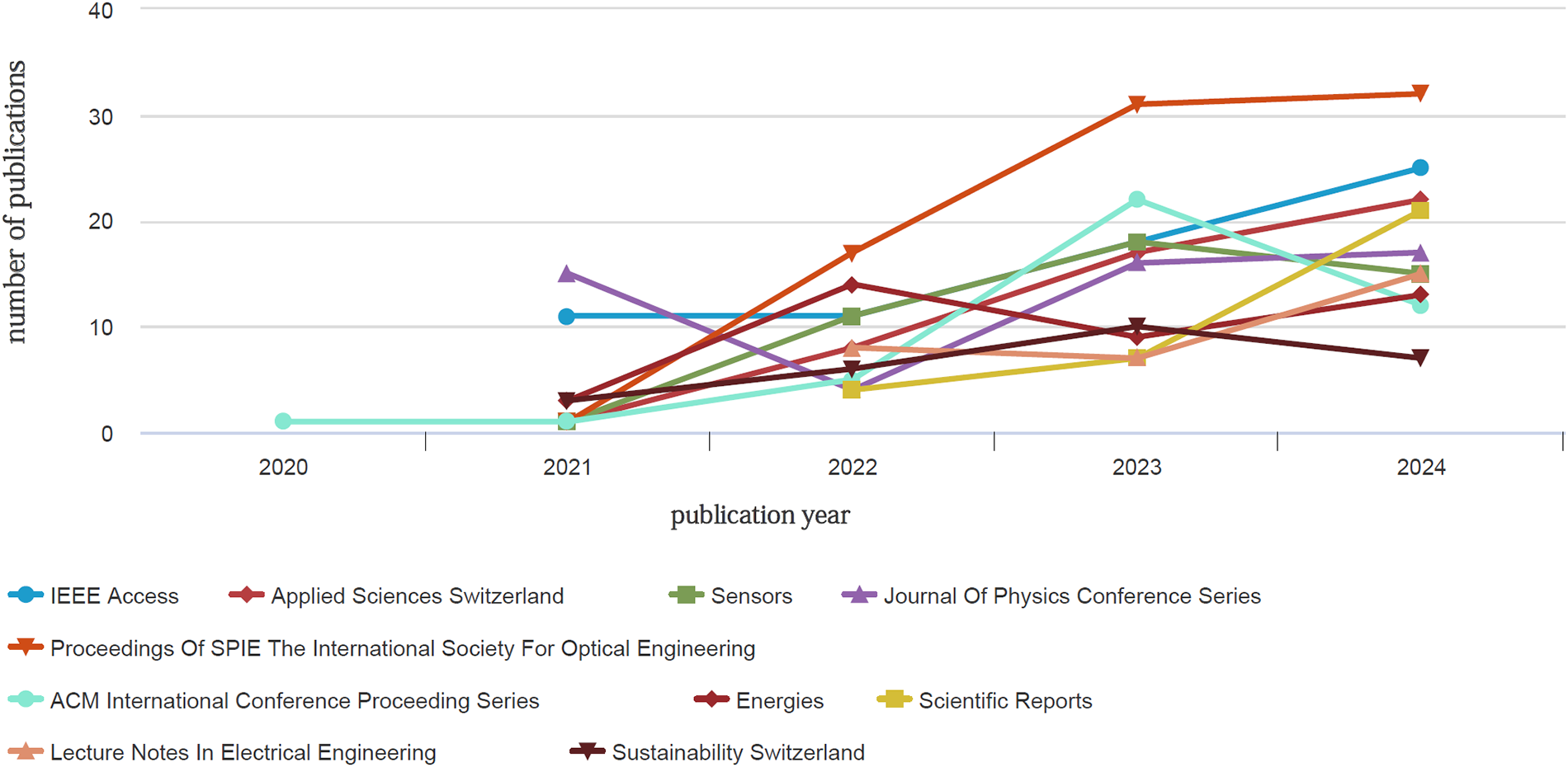
Figure 8: Literature by source publication by year.
This section explores the research development of SSA in several ways: the total number of articles citing SSA as a significant contribution, the annual number of citations to SSA-related publications, and the research topics to which SSA has been applied to solve optimization problems. In addition, it highlights the major countries that have contributed to SSA research and the top institutions that have focused on SSA in their respective fields. A search for SSA [10] on the Connected Papers platform reveals a wide range of related articles across diverse fields, as depicted in Fig. 4. Although SSA was only introduced in 2020, it has already been widely published in high-quality journals and conferences, as shown in Fig. 5. To date, over 2710 articles have cited SSA as a significant contribution, providing solid evidence of the algorithm’s feasibility and efficiency in solving complex optimization problems. SSA’s efficiency is further demonstrated by the impressive citation count of its related publications, which totaled 753 from 2020 to 2024. The distribution of publication types is illustrated in Fig. 6. As shown in Fig. 7, SSA has been predominantly applied in engineering, computer science, and mathematics, which together account for approximately 60% of all research areas that use this method.
In recent years, the increasing adoption of SSA has led to a surge in high-quality research outputs published by renowned publishers, including Proceedings of SPIE-The International Society for Optical Engineering, IEEE, Journal of Physics: Conference Series, Applied Sciences (Switzerland), Sensors, and Energies. Fig. 8 provides an overview of the distribution of literature by source publication over the years.
These publications have gained recognition for their exceptional quality and effectiveness, underscoring SSA’s value in advancing cutting-edge research. The acceptance of SSA-based work by these leading journals reflects the growing trust and reliance on SSA as a powerful tool for solving complex research problems.
2.5 Evaluation Methodology and Quality Assessment
This review adhered to a systematic and replicable methodology in accordance with the PRISMA (Preferred Reporting Items for Systematic Reviews and Meta-Analyses) 2020 standards to guarantee transparency and comprehensiveness. Literature searches were performed in the Scopus, Web of Science, and IEEE Xplore databases, spanning from January 2020 to March 2025. The precise search query employed was “Sparrow Search Algorithm” OR “SSA”) AND (“machine learning” OR “optimization” OR “industrial application”. The search results were exported and deduplicated utilising Mendeley. The inclusion criteria were: (i) peer-reviewed journal or conference articles; (ii) publications in English; (iii) works that explicitly utilize SSA or its derivatives in optimization or machine learning contexts; and (iv) the presence of quantitative results or repeatable techniques. The exclusion criteria included preprints, editorials, theses, book chapters, and research lacking methodological clarity or direct application of SSA. As shown in Fig. 9, a PRISMA flow diagram outlines the screening procedure: Out of an initial 418 records, 289 remained after duplicate removal; 186 met inclusion criteria post title-abstract screening, and 120 were included after full-text eligibility assessment. Each study was assessed for quality based on four criteria: (i) algorithmic transparency (availability of pseudocode or reproducible settings), (ii) clarity of dataset or benchmark, (iii) comparative evaluation against baselines, and (iv) applicability to industry or application. Scores were allocated on a 0–3 scale for each criterion, and only papers attaining ≥8/12 were used into the synthesis. This systematic protocol guarantees a balanced, high-quality evidence foundation and facilitates the repeatability of outcomes across industry sectors.
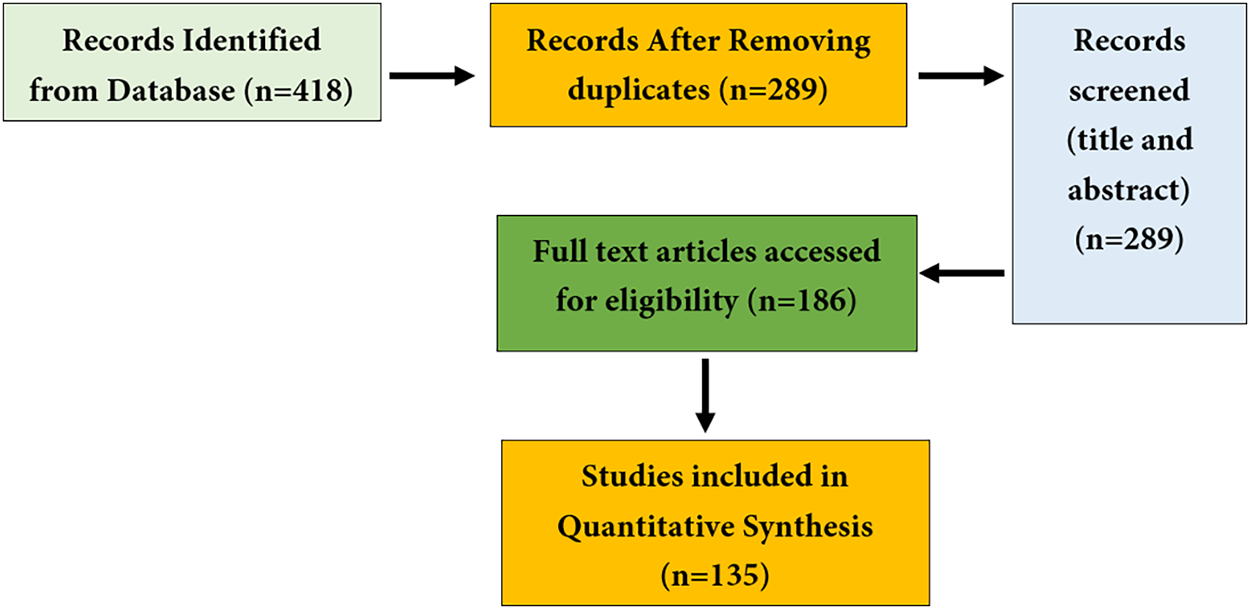
Figure 9: PRISMA flow diagram of literature selection process.
3 Performance Analysis of SSA in Machine Learning Optimization
SSA has demonstrated strong potential in addressing complex optimization challenges across various machine learning tasks, particularly within industrial intelligence systems where performance, speed, and adaptability are critical. This section evaluates SSA’s performance using standard effectiveness metrics, computational efficiency indicators, and mechanisms for balancing exploration and exploitation. Furthermore, comparative analyses with other metaheuristics such as PSO and GA underscore SSA’s distinctive advantages in real-world industrial applications.
To objectively assess SSA’s optimization effectiveness, commonly used indicators include prediction accuracy, convergence speed, and resilience against local optima entrapment [22]. These metrics are particularly vital in industrial forecasting, control systems, and predictive maintenance, where model reliability translates to operational safety and cost savings.
3.1.1 Prediction Accuracy and Error Metrics
The accuracy of machine learning models optimized using SSA is typically evaluated using the following metrics:
• Root Mean Square Error (RMSE) [23]: Measures the square root of the average squared differences between predicted and actual values, emphasizing larger errors.
• Mean Absolute Percentage Error (MAPE) [24]: Evaluates the average absolute percentage error, making it useful for comparing different datasets.
• Mean Absolute Error (MAE) [25]: Computes the average of absolute differences between predicted and actual values, providing an intuitive measure of accuracy.
For instance, Xue et al. [26] employed all three metrics to evaluate an ISSA-optimized LSTM model for short-term power load forecasting, achieving significant improvements. Similarly, Liao [27] introduced an improved SSA-LSTM framework that reduced forecasting errors by up to 50%, demonstrating its capability in smart grid prediction tasks. These results highlight SSA’s effectiveness in time-series modeling, which is critical to energy management and demand forecasting in industry.
3.1.2 Convergence Speed and Optimization Efficiency
In industrial environments, especially those involving real-time decision systems or resource-constrained edge devices, convergence speed is as important as accuracy. SSA demonstrates faster convergence through efficient search dynamics. For instance, Zhang and Zhang [28] achieved a 7.09% improvement in accuracy and a 20.15% processing gain using chaotic mapping and dynamic weights. Xiong et al. [29] used adaptive mutation to enhance SSA’s performance in pipeline defect assessment, a key task in industrial infrastructure monitoring. Liu et al. [30] developed PGL-SSA, boosting convergence by 30%–40% in HVAC control systems that require real-time responsiveness and adaptive optimization.
3.1.3 Exploration and Exploitation Trade-Off
Achieving a dynamic trade-off between exploration and exploitation is essential in handling complex industrial systems characterized by non-convexity, uncertainty, and noise. SSA achieves this balance through its biologically inspired producer-scrounger model. For instance, Ma et al. [31] introduced a lens-imaging-based SSA variant that achieved 96.61% diagnostic accuracy in noisy environments, making it applicable to tasks such as rotating machinery fault diagnosis. Naheliya et al. [5] integrated SSA with ML-ELM to enhance short-term traffic flow prediction, demonstrating reliable, stable performance across multiple datasets via hierarchical exploration–refinement strategies. These studies underscore SSA’s resilience and adaptability in real-time prediction and monitoring systems, where environmental variability and data incompleteness are prevalent. Across diverse machine learning optimization scenarios ranging from intelligent energy forecasting to industrial process control, SSA consistently offers advantages in precision, speed, and adaptive balance. These strengths make it a valuable candidate for further integration into industrial cyber-physical systems, especially where traditional optimizers underperform due to nonlinearities and system noise. A core challenge in metaheuristic design is achieving a dynamic balance between exploration (global search) and exploitation (local refinement). SSA addresses this challenge through its biologically inspired producer–scrounger mechanism and adaptive escape strategies, thereby strengthening its stability and effectiveness in navigating high-dimensional, non-convex search spaces.
While the standard SSA demonstrates strong baseline performance in global optimization, its applicability to real-world industrial machine learning scenarios characterized by non-linearity, high dimensionality, and uncertainty has been significantly improved through hybridization. These hybrid strategies are mainly aimed at overcoming limitations such as insufficient exploration in complex landscapes, premature convergence under noise, and sensitivity to parameter settings. This section categorizes hybrid SSA variants into three interrelated directions: search behavior enhancement, integration with other metaheuristics, and domain-specific implementations. To provide deeper insight into the functional contribution of each mechanism, selected ablation-style findings from the literature are incorporated, offering a component-wise understanding of hybrid designs.
3.2.1 Enhancing Search Dynamics via Hybrid Strategies
To improve SSA’s intrinsic balance between global exploration and local exploitation, various enhancement strategies have been introduced. These include chaotic mapping (e.g., Tent, Logistic), Lévy flights, Cauchy mutations, and reverse learning, which aim to diversify population distributions and strengthen adaptive behavior. For instance, Liu et al. [32] developed an adaptive SSA that adjusts awareness probability and population size based on real-time fitness trends, improving convergence stability across diverse tasks. In a further study, Liu et al. [33] embedded Cauchy reverse learning, sine–cosine modulation, and Lévy flight into SSA for dynamic robot path planning [34]. Their experimental comparison showed that omitting Lévy flights led to slower convergence and suboptimal trajectories, underscoring their critical role in long-distance exploration. Wei et al. [35] and Zhang et al. [36] integrated chaotic maps into SSA to boost search diversity. Their work demonstrated that Tent and Logistic maps were especially effective at avoiding local optima in high-dimensional signal recovery, compared to Cubic or Chebyshev variants. These results, although not full ablation studies, provide partial evidence of the differential contributions of individual components under various industrial settings. Such enhancements are particularly valuable in real-time industrial monitoring and embedded control systems, where responsive yet robust optimization is essential.
3.2.2 Hybridization with Other Metaheuristic Algorithms
SSA’s modular structure allows it to be synergistically combined with other metaheuristics to leverage complementary algorithmic strengths. For example, Yan et al. [37] proposed a compound framework combining SSA with PSO, GA, and the Firefly Algorithm. This design leveraged SSA’s adaptability, PSO’s swarm dynamics, and GA’s crossover operators to achieve improved solution quality in benchmark problems resembling industrial job-shop scheduling. Xu et al. [38] introduced Firefly-Assisted SSA (FASSA), which incorporated chaotic maps and the golden sine function to enhance convergence. Hou et al. [39] proposed Chaotic Quantum SSA (CQSSA), integrating Gaussian mutation and quantum-inspired behavior for parameter tuning in battery aging models. Notably, they conducted a controlled performance comparison showing that the quantum module significantly reduced solution variance and improved convergence in noisy degradation datasets. These hybrid forms not only enhance SSA’s core algorithm but also provide evidence of how specific components, such as quantum perturbation or swarm inheritance, affect performance under constrained or multi-modal conditions—a critical consideration for industrial deployments.
3.2.3 Domain-Specific Hybrid SSA Applications
Hybrid SSA models have been increasingly adopted in various industrial domains where real-time decision-making and robust optimization are critical. In wireless networks and UAV systems, Chen et al. [40] employed an opposition-based SSA to optimize UAV trajectories, significantly enhancing throughput and reducing communication latency. In intelligent IoT scheduling, Khaleel [41] integrated chaotic SSA into job scheduling algorithms, yielding superior energy efficiency under fluctuating workloads. For intelligent transportation, Zheng and Liu [42] proposed ASDSSA to tune LSTM networks for metro traffic prediction, and Zhang and Ding [43] embedded chaotic SSA into stochastic configuration networks (CSSA-SCN), achieving faster convergence and higher accuracy. In power systems, Jiang et al. [44] demonstrated that quantum-enhanced SSA significantly improved ELM performance for NOx emissions modeling. At the same time, Wang et al. [45] incorporated the Slime Mould Algorithm into SSA to solve constrained mechanical design tasks. In multi-objective optimization contexts commonly encountered in industrial control and manufacturing, Multi-Objective SSA (MOSSA) has shown strong practical performance. For instance, Xue et al. [46] proposed a MOSSA variant that combines adaptive mesh evaluation, external archiving, and a scrounger-follow strategy to improve solution diversity and convergence quality. Their method achieved state-of-the-art results on 22 benchmark functions and was successfully applied to parameter optimization in carbon fiber drawing processes.
In energy systems, Lei et al. [47] applied MOSSA to the optimization of guide vane closing laws in pumped storage hydropower plants, accounting for nonlinear operational constraints. The algorithm generated Pareto-optimal settings that improved load rejection performance and reduced system risk under dynamic operating conditions. Similarly, in microgrid management, Lai et al. [48] introduced a fuzzy clustering-enhanced MOSSA to optimize energy cost and renewable energy utilization jointly. Experimental results showed superior Pareto front generation and increased integration of wind and photovoltaic energy compared to traditional algorithms. Although these applications highlight clear performance benefits, few works provide modular performance breakdowns of hybrid components across use cases, limiting deeper generalization. This underscores the need for standardized ablation protocols when applying SSA in complex industrial environments.
3.2.4 Summary of Hybrid SSA Variants
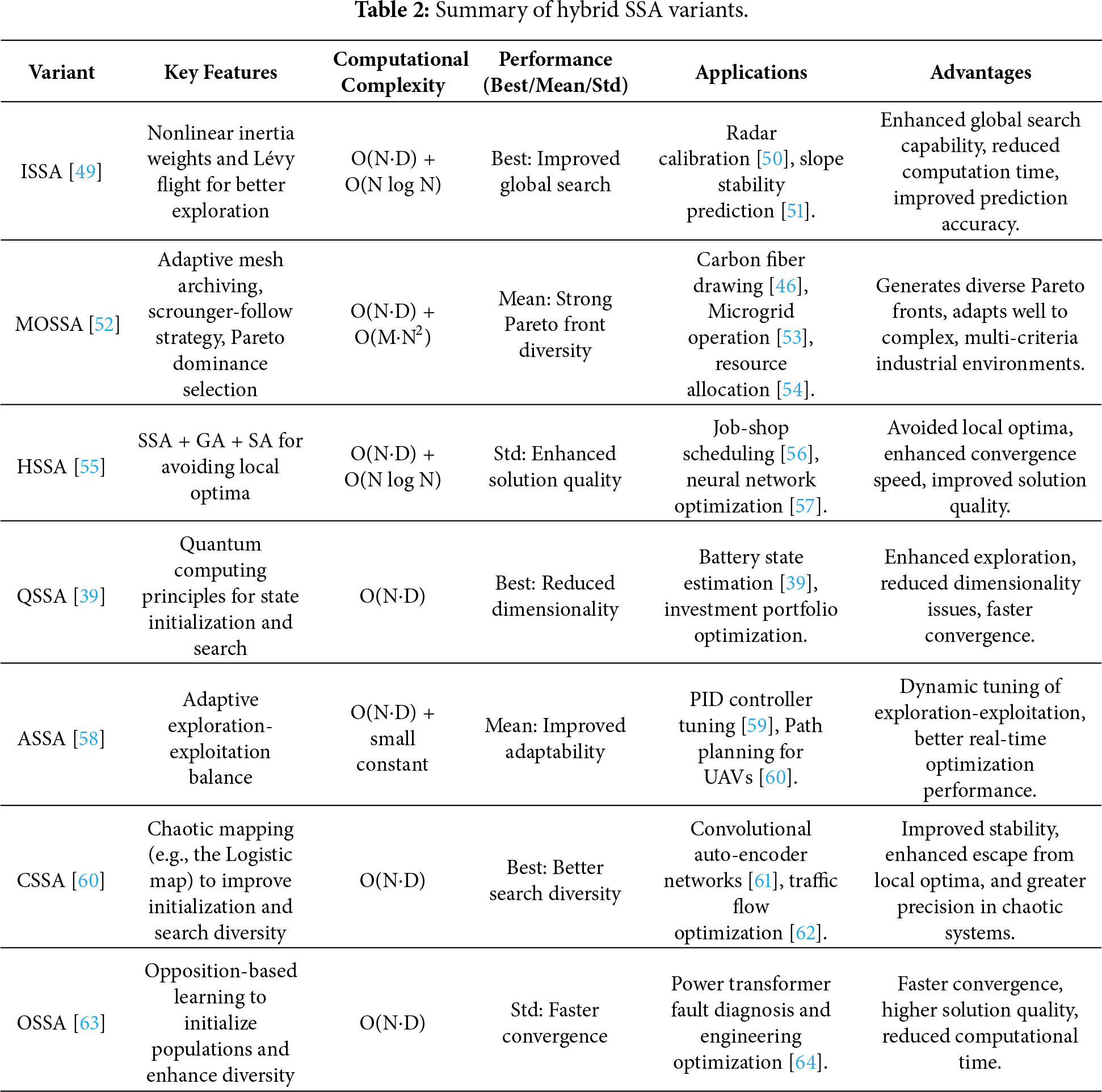
To consolidate advances in hybridizing the Sparrow Search Algorithm (SSA), Table 2 summarizes notable hybrid SSA variants, highlighting their key features, computational complexity, application domains, and core advantages. These designs collectively extend SSA’s applicability beyond general-purpose optimizers to intelligent systems that require real-time responsiveness, multi-objective trade-offs, and robustness under non-ideal conditions. This table provides a unified quantitative comparison of these variants, focusing on performance metrics.
3.2.5 Practical Insights and Open Challenges
The hybridization of SSA with other metaheuristics and domain-specific adaptations has shown considerable potential in overcoming the inherent limitations of traditional SSA. However, several practical insights and open challenges remain in applying these hybrid approaches, particularly in real-world industrial settings. These insights provide valuable guidance on the use of SSA across various applications and on future research directions. SSA’s ability to adapt to different optimization tasks through hybridization is one of its core strengths. For example, integrating Lévy flights into ISSA significantly enhances global exploration in high-dimensional, multimodal landscapes, while chaotic mapping in CSSA improves initialization and helps escape local optima. These enhancements are especially valuable in noisy and highly constrained industrial environments, where the optimization problem often involves complex, high-dimensional search spaces. Furthermore, the adaptive exploration-exploitation balance provided by ASSA makes it particularly suited for dynamic environments, such as real-time control systems and autonomous systems, where the optimization problem evolves.
In multi-objective optimization, MOSSA has proven particularly effective at handling tasks with conflicting objectives, such as energy management in microgrids and resource allocation in industrial scheduling. The use of Pareto dominance and external archiving enables MOSSA to generate diverse, high-quality Pareto fronts, which are essential for industrial systems that must balance multiple competing criteria, such as cost, time, and resource consumption. These capabilities make MOSSA a powerful tool for multi-criteria decision-making in complex environments. In real-time applications, hybrid SSA variants such as ASSA demonstrate their value by dynamically balancing exploration and exploitation based on environmental feedback. This adaptability is crucial for applications where the optimization problem changes in real time, such as in autonomous systems or PID controller tuning. Moreover, surrogate-assisted variants, such as Surrogate-SSA, have shown promise in reducing the computational cost of function evaluations. By using regression models or neural networks to approximate the objective function, these variants can significantly decrease the number of assessments needed, making SSA more practical for real-world applications where function evaluations are expensive.
Another important insight is the promising role of hybrid SSA in deep learning applications. Combining SSA with techniques like Bayesian optimization or reinforcement learning has proven effective for hyperparameter optimization (HPO) and neural architecture search (NAS). These hybrid approaches enable more efficient exploration of the ample, complex hyperparameter space of deep neural networks, thereby improving model performance across tasks such as image classification, speech recognition, and autonomous driving. This capability extends SSA’s applicability beyond traditional optimization tasks and into the rapidly growing field of machine learning. However, several open challenges remain in the application of hybrid SSA. One significant challenge is the scalability of SSA for high-dimensional and large-scale problems. While variants such as QSSA (Quantum-inspired SSA) help mitigate this issue by reducing dimensionality, further research is needed to improve SSA’s performance in very high-dimensional spaces, as encountered in modern big data applications. Additionally, the computational complexity of hybrid SSA variants increases with the addition of hybrid components, underscoring the need to balance exploration and computational efficiency in large-scale optimization problems.
Another challenge is SSA’s sensitivity to parameter settings, such as the vigilance factor, population size, and scout ratio. In practice, tuning these parameters for optimal performance can be difficult and time-consuming. While adaptive variants like ASSA improve this issue, further research is needed on self-tuning algorithms or automated parameter adjustment methods that could dynamically adapt these parameters based on real-time feedback from the optimization process. Furthermore, although empirical studies demonstrate the effectiveness of SSA, there is a lack of formal convergence proofs for many hybrid variants of SSA. Understanding the theoretical convergence behavior of these hybrids in noisy, dynamic, or high-dimensional landscapes is critical for their broader adoption, especially in safety-critical applications such as aerospace or autonomous systems. A deeper theoretical understanding of the convergence properties of these algorithms, especially in real-world industrial settings, is essential to ensure their reliability and robustness. SSA’s robustness under uncertainty and noise is another significant challenge. In industrial settings, sensor noise, environmental changes, and faulty data can degrade the performance of SSA. While techniques such as resampling and stochastic ranking have improved SSA’s resilience, further development is needed to systematically handle uncertainty across both the fitness landscape and the solution space, ensuring SSA’s stability in real-time, noisy environments. In multi-objective and multi-constraint optimization, SSA has shown promise but faces challenges due to the computational burden of maintaining Pareto fronts and handling constraint violations. The scalability of these methods in industrial applications is often limited by the complexity involved in managing multiple objectives and constraints. More efficient constraint-handling techniques, such as penalty functions or feasibility rules, as well as advanced multi-objective archiving strategies, are needed to improve SSA’s performance on these tasks.
Looking ahead, integrating SSA with federated learning and edge computing is a promising area for future research. Federated learning, where models are trained on decentralized devices without sharing raw data, presents a new challenge for SSA in distributed optimization. Ensuring that SSA-based methods can scale and converge in federated environments while maintaining data privacy will be an essential direction for future work. Additionally, hybrid SSA with reinforcement learning (RL) offers exciting potential for real-time, adaptive optimization in complex environments. The integration of SSA’s exploration capabilities with RL’s exploitation-driven learning could lead to new optimization paradigms, especially in sequential decision-making tasks. However, integrating SSA and RL remains challenging, and more research is needed to understand how to do so efficiently.
In conclusion, hybrid SSA variants have significantly enhanced the applicability of SSA in solving complex optimization problems in industrial settings. However, challenges related to scalability, parameter sensitivity, convergence theory, and uncertainty handling remain. Future research should focus on developing more adaptive, self-tuning algorithms, improving computational efficiency, and advancing theoretical convergence analysis to make SSA a more powerful tool for industrial optimization tasks. Further exploration of SSA’s integration with federated learning, edge computing, and reinforcement learning will open up new avenues for real-time, adaptive optimization in next-generation industrial systems.
3.3 Computational Complexity & Scalability
In addition to accuracy and convergence speed, computational efficiency and scalability are critical factors when deploying optimization algorithms in high-dimensional or resource-constrained machine learning applications. This is particularly true in industrial contexts such as real-time control systems, edge devices, and embedded platforms, where limited computational resources and strict timing constraints demand lightweight, efficient optimization solutions. This section evaluates the time and space complexity of SSA and presents experimental validation of its scalability relative to traditional metaheuristics.
3.3.1 Time Complexity Analysis
The time complexity of SSA is primarily determined by three key parameters [10]:
• Population size (N): A larger population generally improves search diversity and solution accuracy but incurs higher computational costs.
• Number of iterations (T): More iterations allow the algorithm to refine solutions, though at the expense of increased runtime.
• Dimensionality of the problem (D): Higher-dimensional problems demand more fitness evaluations, leading to exponential growth in computation.
Accordingly, the total time complexity of SSA can be approximated as O(N·T·D). This is comparable to PSO but generally more efficient than GA, thanks to SSA’s more straightforward update rules and the absence of crossover and mutation. This linear scalability makes SSA particularly suitable for large-scale industrial problems such as high-dimensional system modeling, adaptive control tuning, and intelligent scheduling in smart factories.
3.3.2 Space Complexity and Memory Requirements
SSA also exhibits moderate space complexity, requiring only storage of the population and corresponding fitness values. Unlike GA [2], SSA does not require auxiliary data structures (e.g., crossover pools or mutation buffers), making it more memory-efficient. This characteristic is especially advantageous in embedded machine learning applications, such as predictive maintenance in sensor networks, where available RAM and processing power are limited. SSA’s low memory footprint enables practical on-device deployment for real-time control and diagnostics.
3.3.3 Empirical Evaluation and Scalability Evidence
To empirically validate SSA’s computational scalability, a series of benchmark tests was conducted in MATLAB using three standard test functions: F5, F7, and F13. These functions represent increasingly complex, multimodal optimization tasks. Their mathematical formulations are provided below:
For comparative analysis, SSA was evaluated alongside three classic metaheuristic algorithms: PSO [3], GA [2], and SA [65]. All algorithms were configured under uniform conditions: a population size of 400 and a maximum of 1500 iterations. The optimization trajectories are illustrated in Fig. 9.
As shown in Fig. 10, each row corresponds to a specific test function. The left column displays the 3D surface of the objective function (F5, F7, F13), which helps visualize its complexity, modality, and potential local optima. The right column shows the corresponding convergence curves on a logarithmic scale, plotting objective value vs. the number of iterations for four algorithms: GA, PSO, SA, and SSA. The vertical axis represents the objective function value, and the horizontal axis shows the iteration count. This visual layout provides a side-by-side comparison of problem landscape and algorithmic performance. The results in Fig. 9 reveal that SSA consistently outperforms PSO, GA, and SA in both convergence speed and final solution accuracy. Notably: For function F5, SSA found the optimal solution in significantly fewer iterations, demonstrating rapid convergence and high precision. The other algorithms reached the optimum only after ~700 iterations and did not achieve the same level of accuracy. In more complex landscapes, such as functions F7 and F13, SSA exhibited slower early-stage convergence but ultimately escaped local optima, whereas PSO, GA, and SA stagnated. SSA’s superior global search ability enabled it to find better final solutions. This empirical evidence confirms that SSA effectively maintains a balance between exploration and exploitation, a key trait for navigating non-convex loss surfaces in machine learning and industrial control applications.
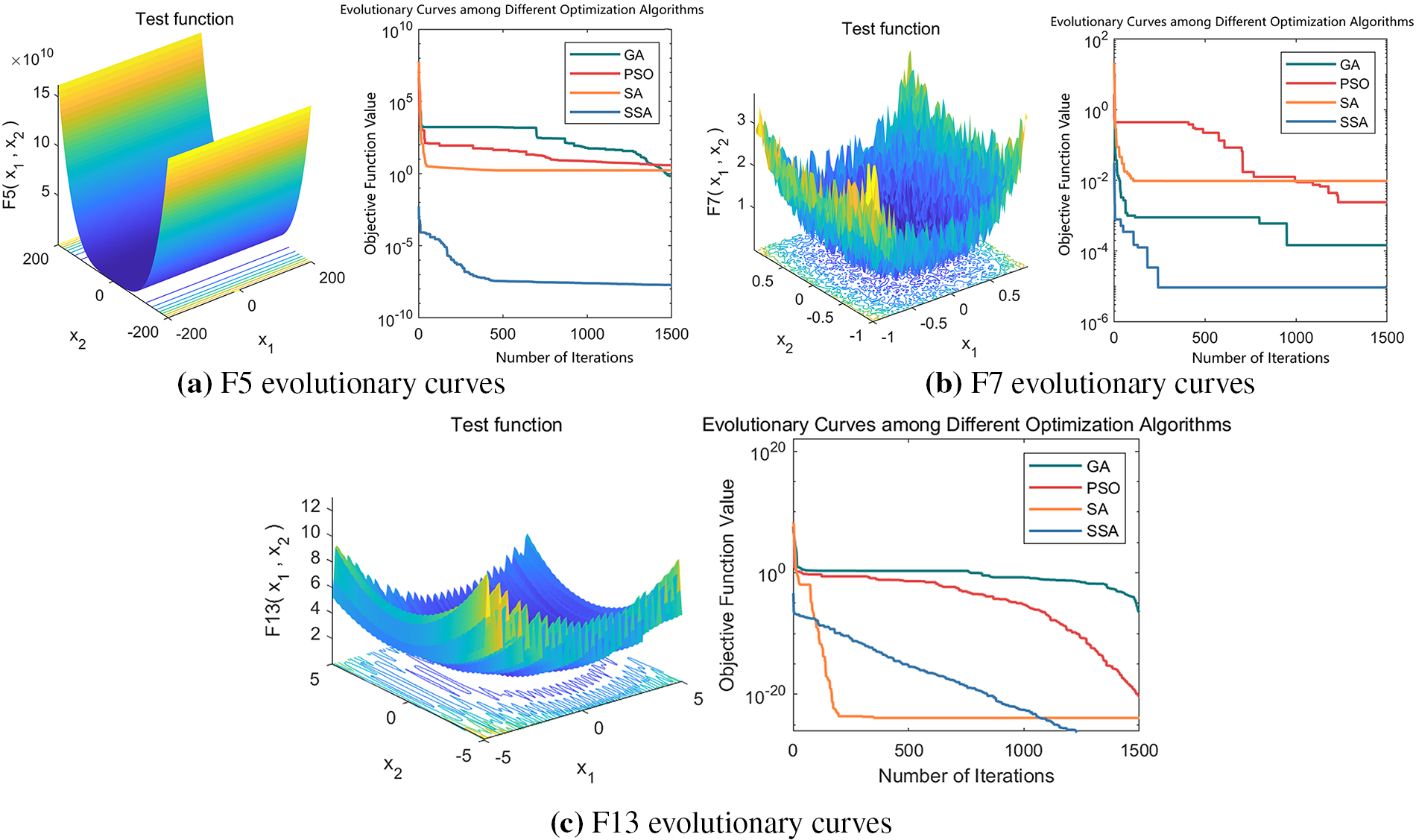
Figure 10: Algorithm optimization function test diagram.
3.3.4 Positioning SSA among Recent Meta-Heuristics: Scope and Methodological Differences
The Sparrow Search Algorithm (SSA) is distinguished by role-conditioned, risk-aware dynamics—producers, scroungers, and risk perceivers—whose update rules are explicitly gated by an alarm variable
Contrast with the SCSO family. Sand Cat Swarm Optimization (SCSO) and its recent hybrids are typically single-kernel or staged designs that rely on sensitivity-range control, spiral/random walks, and opposition-based learning to balance search—rather than SSA-style tri-role switching. A 2024 variant augments SCSO with dynamic spiral search for exploitation and lens opposition-based learning for diversification, and even hybridizes with SSA in late stages to escape local optima; performance is reported on CEC2005/CEC2022 with Wilcoxon tests [64]. Contrast with GSA multi-strategy upgrades. Recent work embeds SSA follower behavior as a module within an improved Gravitational Search Algorithm (GSA), alongside a globally optimal Lévy random walk and lens-imaging opposition-based learning. Here, diversification/intensification is orchestrated by adaptive switching functions and role-free kernels (not tri-role gating), then validated on 24 benchmarks and engineering cases, emphasizing gains in accuracy, convergence speed, and stability [67].
Within-SSA improvements. New SSA variants preserve the tri-role backbone while refining operators: an Improved Search Strategy (ISS) for producers (inspired by the Black-winged Kite algorithm) enlarges early-iteration roam and tightens late-stage steps; a Group Follow Strategy (GFS) for scroungers (COOT-inspired) limits premature crowding around elites; and a Random OBL (ROBLS) pulse after each iteration re-injects diversity. Comparative studies vs. PSO/GWO/MFO/WOA/SSA on 24 functions and the CEC2017 benchmark, with Wilcoxon tests, provide evidence of consistent gains [66]. Positioning axes used in this review. Operator granularity. SSA’s role-conditioned updates vs. staged/single-kernel schemes in SCSO and multi-strategy GSA. Risk handling. SSA uses explicit alarm/safety thresholds
3.3.5 Handling Uncertainty, Noise, and Explainability in Industrial SSA Deployments
In industrial applications, many optimization tasks face issues related to uncertainty, noise, and explainability. The Sparrow Search Algorithm (SSA) has made progress in addressing these problems, but there is still room for further improvement. Through its adaptive vigilance mechanism, SSA can respond to some extent to uncertainty and noise, but it still faces challenges in complex, dynamic environments. Firstly, uncertainty is widespread in industrial environments, driven by factors such as sensor errors, missing data, and environmental changes. Existing SSA methods, with their adaptive vigilance mechanism, can dynamically adjust search strategies to adapt to environmental changes. However, this uncertainty is not limited to ecological dynamics; it also involves random fluctuations in objective functions and random changes in model parameters. For example, Ma et al. [68] successfully addressed uncertainty in imbalanced medical data by introducing SSA into a feature selection optimization method. Additionally, An et al. [69] combined SSA with Deep Extreme Learning Machines (DELM) to propose a wind power forecasting model that effectively handled uncertainty and fluctuations in wind power prediction. Although SSA has demonstrated strong robustness in these applications, its ability to handle uncertainty in more complex environments still needs to be strengthened. To address this, future research could combine SSA with Bayesian optimization to model uncertainty and thereby optimize the search strategy. Using techniques such as Gaussian Process Regression, SSA could better assess the confidence levels of current solutions and dynamically adjust the balance between exploration and exploitation, thereby further improving the algorithm’s adaptability in uncertain environments.
Secondly, noise is a common issue in industrial applications, mainly due to sensor data interference, environmental noise, or equipment failure. SSA improves its robustness to noise through its multi-role mechanism. The Producer explores new areas to avoid local optima, while Scouters perceive environmental changes to optimize the search path. For example, Fan et al. [70] proposed an SSA-based medical image contrast enhancement method that effectively handled noise in images. Li et al. [71] also proposed a noise-reduction method combining SSA and Variational Mode Decomposition for filtering signal noise in valve-leak detection. However, in high-noise environments, SSA may still experience slow convergence or become trapped in unstable solution spaces. In the future, SSA could integrate robust optimization and stochastic ranking techniques to enhance its noise-handling capabilities, especially in real-world industrial applications such as fault diagnosis and predictive maintenance.
In industrial systems, explainability is also a critical issue. Especially in safety-critical applications, the explainability of optimization results not only helps understand the algorithm’s decision-making logic but also enhances the system’s transparency and reliability. Kong et al. [72] proposed a rockburst intensity prediction method combining SSA and the CatBoost model, and used Shapley Additive Explanations (SHAP) to analyze the explainability of the model’s output. Furthermore, Zhang et al. [73] applied SSA to optimize hyperparameters, improving the physical interpretability of the model, demonstrating SSA’s potential to enhance model explainability. To further improve the explainability of SSA, future research could combine SHAP or LIME methods to help users understand the decision-making logic behind optimization results. Recent SSA variants primarily extend search dynamics via chaotic maps, Lévy/Cauchy perturbations, and reverse/opposition learning, or hybridize SSA with other metaheuristics to rebalance exploration–exploitation. For example, FASSA (SSA + Firefly) with chaotic/golden-sine components targets faster escape from local minima, and CQSSA augments SSA with quantum-inspired perturbation and Gaussian mutation—reported to reduce solution variance and stabilize convergence on noisy battery-degradation data. MOSSA adds a multi-objective layer with external archiving and Pareto dominance, emphasizing solution diversity, and has been applied from carbon-fiber drawing to microgrid operation. HSSA-style hybrids (e.g., SSA + GA/SA) intensify local search while retaining SSA’s global roaming, whereas adaptive or opposition-based forms dynamically tune producer–scrounger roles or initial populations to preserve diversity. Across papers, complexity is typically stated around O(N·D) or, when iteration count is explicit, O(N·T·D), with multi-objective archiving introducing additional overhead (often described qualitatively). Most variants add only a small number of extra hyperparameters (e.g., chaos intensity, quantum factor, archive thresholds) beyond vanilla SSA. Benchmarks span standard synthetic suites and industrial datasets (e.g., battery SOH/SOC/RUL, NOx modeling, microgrids, UAV/robotics path planning, scheduling), with MOSSA and CQSSA repeatedly appearing in energy and manufacturing contexts. Public code/data are variably reported; many studies use open datasets but do not release source code, which we flag as an area for community improvement. (Design patterns and examples: chaotic/Lévy/Cauchy/reverse learning; FASSA & CQSSA details; MOSSA mechanisms and applications; HSSA/ASSA/CSSA/OSSA roles; complexity/scalability notes). Although SSA has made progress in handling uncertainty, noise, and explainability, there are still challenges to address in industrial applications. Future research should focus on enhancing SSA’s capabilities in these areas. In particular, SSA’s search efficiency and explainability need improvement in high-dimensional, dynamic, and uncertain environments.
3.4 SSA in Deep Learning Optimization
The Sparrow Search Algorithm (SSA) has been widely applied in deep learning, particularly in model optimization and hyperparameter tuning. Its global search capability allows it to perform excellently in high-dimensional, complex spaces. SSA has achieved significant success in various deep learning tasks, including image classification, time series prediction, and structure prediction.
3.4.1 Applications of SSA in Deep Learning
Wan et al. [74] proposed a network combining Residual Networks (ResNet) and Bidirectional Gated Recurrent Units (BiGRU) to predict potential damage types and provide early warnings by analyzing changes in muscle and skeletal poses in video images. To improve the model’s efficiency, the Sparrow Search Algorithm (SSA) was used for optimization. Experiments across four datasets showed that the optimized model had the lowest error among other methods and demonstrated strong adaptability. This study demonstrated the effectiveness of SSA in deep learning models, particularly in image anomaly detection and predictive analysis tasks, offering a new solution. In the state-of-health (SOH) prediction of batteries, Zhou et al. [75] proposed an SSA-optimized convolutional bidirectional long short-term memory (CNN-Bi-LSTM) model. By analyzing battery aging data and constructing feature indicators highly correlated with battery degradation, the model used a CNN-Bi-LSTM to extract features, and SSA was used to optimize the model’s hyperparameters. Experimental results showed that the model performed better than other methods, with RMSE values lower than 0.6%. This further validates SSA’s ability to enhance predictive accuracy in battery health prediction.
For predicting the temperature of coal spontaneous combustion, Wang et al. [76] proposed an SSA-optimized convolutional neural network (CNN) model. The model analyzed the relationship between key gas indicators and coal temperature during the coal oxidation process and optimized the CNN hyperparameters using SSA. Compared to other models, the SSA-CNN showed the smallest relative error (0.155) and the lowest RMSE (8.4500). This study demonstrated SSA’s effectiveness in predicting the temperature of coal spontaneous combustion, indicating that SSA-optimized CNN models can accurately predict complex physical processes. In the field of secondary supply temperature prediction, An et al. [77] proposed a hybrid model combining SSA-optimized convolutional neural networks (CNN) and support vector machines (SVM). The model improved predictive accuracy through reasonable data preprocessing and variable selection, while accounting for lag effects. Experimental results showed that the SSA-CNN-SVM model significantly reduced prediction errors across multiple heat exchange stations, achieving a maximum MAPE reduction of 1.5% and outperforming other prediction models.
For building energy consumption prediction, Lei et al. [78] used a hybrid method combining entropy weight K-means (EWKM) with random forests (RF) for feature selection, followed by SSA optimization of the Bi-LSTM model. Experimental results showed that the RF-SSA-BiLSTM model reduced prediction errors by 24.55% in both high- and low-energy-consumption months, demonstrating greater robustness than other models, including RF-BiLSTM, RF-PSO-BiLSTM, and RF-CNN-BiLSTM.
Cai et al. [79] proposed a dam deformation prediction model based on Long Short-Term Memory (LSTM) networks and CEEMDAN optimization. By combining adaptive noise signal decomposition with LSTM feature selection, Cai successfully improved the prediction accuracy of dam deformation, reducing errors by over 53.62% compared to traditional methods. This study demonstrated that SSA-optimized LSTM models perform well on long time-series data and non-linear features. These studies illustrate that SSA’s application in deep learning extends beyond hyperparameter optimization to include model-structure optimization. SSA has proven effective for tasks such as battery prediction, coal spontaneous combustion temperature, and building energy consumption, demonstrating its strong potential to improve deep learning model performance.
3.4.2 Advantages and Challenges of SSA in Deep Learning
The main advantages of the Sparrow Search Algorithm (SSA) in deep learning lie in its global optimization ability and strong adaptability. SSA, as a swarm intelligence algorithm, can effectively avoid local optima and find global optima in complex high-dimensional spaces. In many deep learning tasks, SSA can optimize hyperparameters, neural network structures, and feature selection, significantly enhancing model performance and robustness. Firstly, SSA’s global optimization ability is one of its key advantages. Hyperparameter optimization in deep learning often determines the model’s performance. Traditional algorithms like gradient descent are prone to getting stuck in local minima, whereas SSA can explore the entire search space, helping avoid this issue. For example, in [76], a combined SSA with a CNN-BiLSTM to optimize battery health prediction. The experimental results showed that the SSA-optimized model significantly improved accuracy compared to traditional models, validating SSA’s global search ability in complex tasks. Similarly, Wang et al. [76] studied on predicting the temperature of coal spontaneous combustion showed that SSA improved model accuracy, thereby minimizing prediction errors.
Additionally, SSA’s adaptability is another notable advantage. SSA can automatically adjust its search strategy in complex task environments to optimize model parameters, further improving model performance. In building energy consumption prediction, Lei et al. [78] combined SSA with Bi-LSTM, and the results showed that SSA significantly reduced prediction errors, demonstrating its adaptability in complex datasets. By automatically adjusting optimization parameters, SSA can improve model performance across a variety of applications. However, despite its significant advantages, SSA faces several challenges. First, SSA can be computationally expensive, particularly in high-dimensional tasks. As deep learning models often have large parameter spaces, the computational cost of SSA can be pretty high, as noted in Jiani Zhou’s battery health prediction study, where SSA’s optimization was effective but computationally intensive. Therefore, improving SSA’s computational efficiency and reducing its computational time on large datasets is a key area for future research.
Secondly, SSA’s convergence speed can be slow, especially when optimizing complex deep learning models. This may lead to longer optimization times. Cai et al. [79] noted that SSA’s convergence speed was slow when applied to long time-series data for dam deformation prediction, which limits its effectiveness in real-time applications. Therefore, enhancing SSA’s convergence speed and adaptability will be crucial for its further application in deep learning. Furthermore, SSA faces challenges in processing high-dimensional data, particularly with the “curse of dimensionality.” As deep learning tasks become more complex and data dimensions grow, this may slow down SSA’s search efficiency and affect its optimization performance. Although Wang et al. [76] showed that SSA improved model performance in predicting coal spontaneous combustion temperatures, the algorithm’s performance could still be limited when dealing with large-scale data.
In conclusion, SSA’s advantages in deep learning stem from its global optimization and strong adaptability, which effectively address local optima and improve model performance across multiple applications. However, as the scale and complexity of tasks increase, the computational cost, convergence speed, and ability to handle high-dimensional data remain key challenges. To enhance SSA’s efficiency and application, future research may need to integrate it with other efficient algorithmic strategies, such as parallel computing or reinforcement learning, to improve its effectiveness in deep learning.
This chapter systematically evaluates SSA and its variants for machine learning and deep learning optimization, focusing on accuracy, robustness, and convergence efficiency. The results show that, across non-convex, noisy, and high-dimensional tasks, SSA consistently reduces error and improves generalization. Coupling SSA with chaotic maps, opposition-based learning, Lévy flights, and quantum perturbations further strengthens the balance between early global exploration and late local exploitation. In deep learning, applying SSA to hyperparameter and architecture configuration markedly enhances the stability of convergence and overall performance of CNN/RNN/GRU models, while maintaining low implementation complexity and strong scalability. At the same time, several issues remain: (i) the lack of standardized datasets, budgets, and stopping criteria makes the marginal contributions of different improvement modules difficult to quantify and reproduce; (ii) for large-scale architecture search and multi-task joint optimization, computational budgets and time-to-convergence remain high, calling for parallel and memory-efficient implementations; (iii) adaptation to distribution shift and streaming/online data is limited and requires deeper integration with incremental/streaming learning; (iv) global convergence, stability, and expected complexity lack rigorous theoretical guarantees. Future work should establish reproducible evaluation protocols, advance distributed and event-triggered forms of resource-adaptive SSA, and explore integration with meta-learning, Bayesian optimization, and reinforcement learning to drive both methodological innovation and engineering validation.
4 Applications of SSA in Machine Learning Optimization
SSA, due to its adaptive exploration–exploitation mechanism and fast convergence, has been widely applied in solving diverse machine learning optimization problems. In industrial contexts, these problems often involve nonlinearity, high dimensionality, multiple objectives, and real-time constraints. This section provides a structured review of representative machine learning applications in SSA, grouped by industry-relevant domains, including computer vision, robotics, renewable energy systems, and battery management. The overall application landscape is illustrated in Fig. 11.
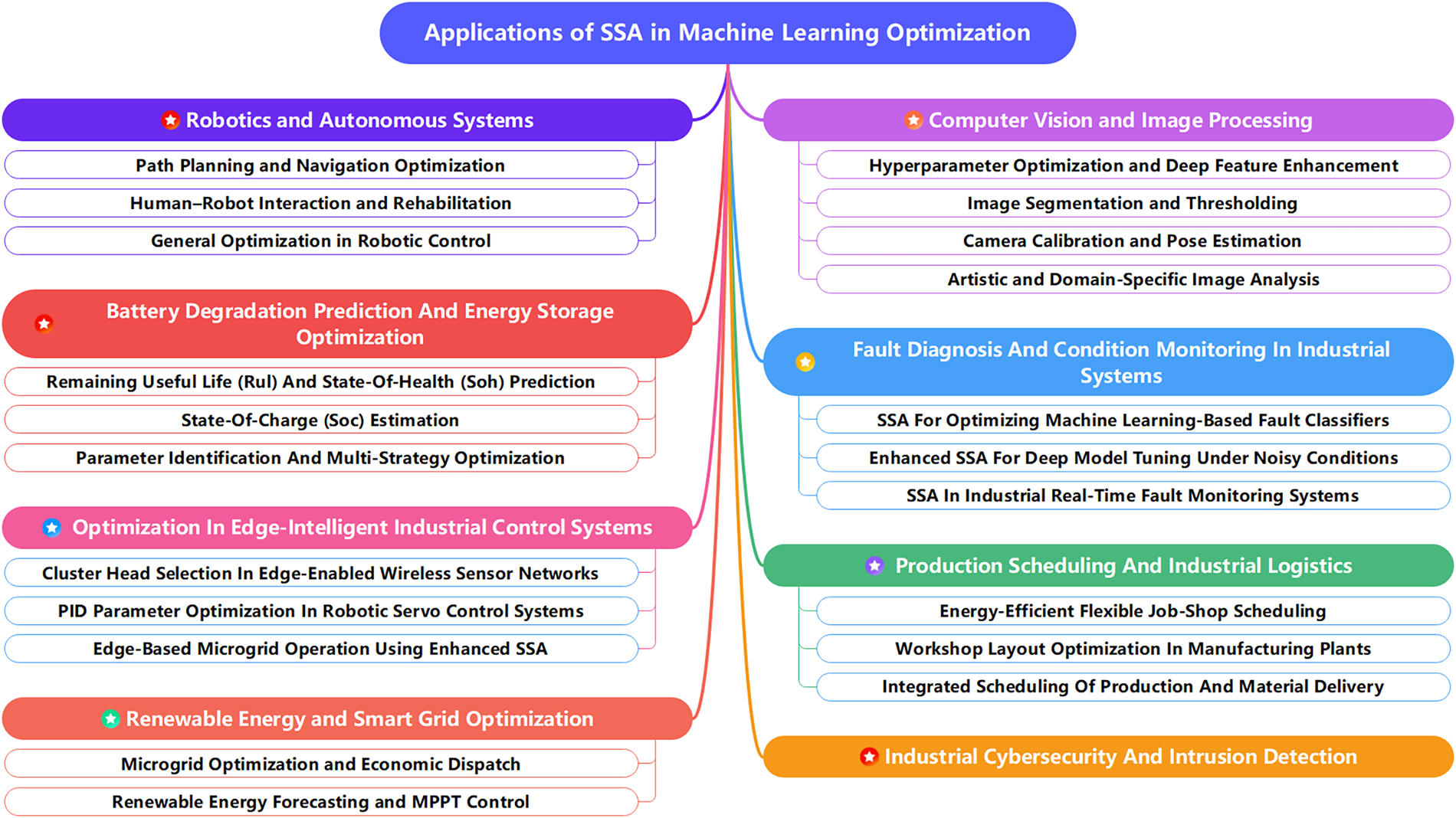
Figure 11: Applications of SSA in machine learning optimization.
4.1 Computer Vision and Image Processing
In computer vision, SSA plays a pivotal role in addressing optimization problems involving high-dimensional data and computationally intensive tasks. These tasks include, but are not limited to, feature extraction, multi-threshold image segmentation, camera calibration, and domain-specific image analysis. The key advantage of SSA lies in its ability to explore a vast search space, making it effective for high-dimensional tasks such as hyperparameter optimization in deep learning models and image thresholding. The complexity of the problems in this domain is substantial due to the large volume of image data, the high dimensionality of the feature spaces, and the need for real-time processing. This requires algorithms that can handle both large-scale data and computational constraints while operating under noisy conditions. SSA, particularly its enhanced variants, is used to solve these optimization problems efficiently. This section reviews SSA’s applications in visual machine learning tasks, particularly where optimization efficiency is critical for model generalization and real-time deployment.
4.1.1 Hyperparameter Optimization and Deep Feature Enhancement
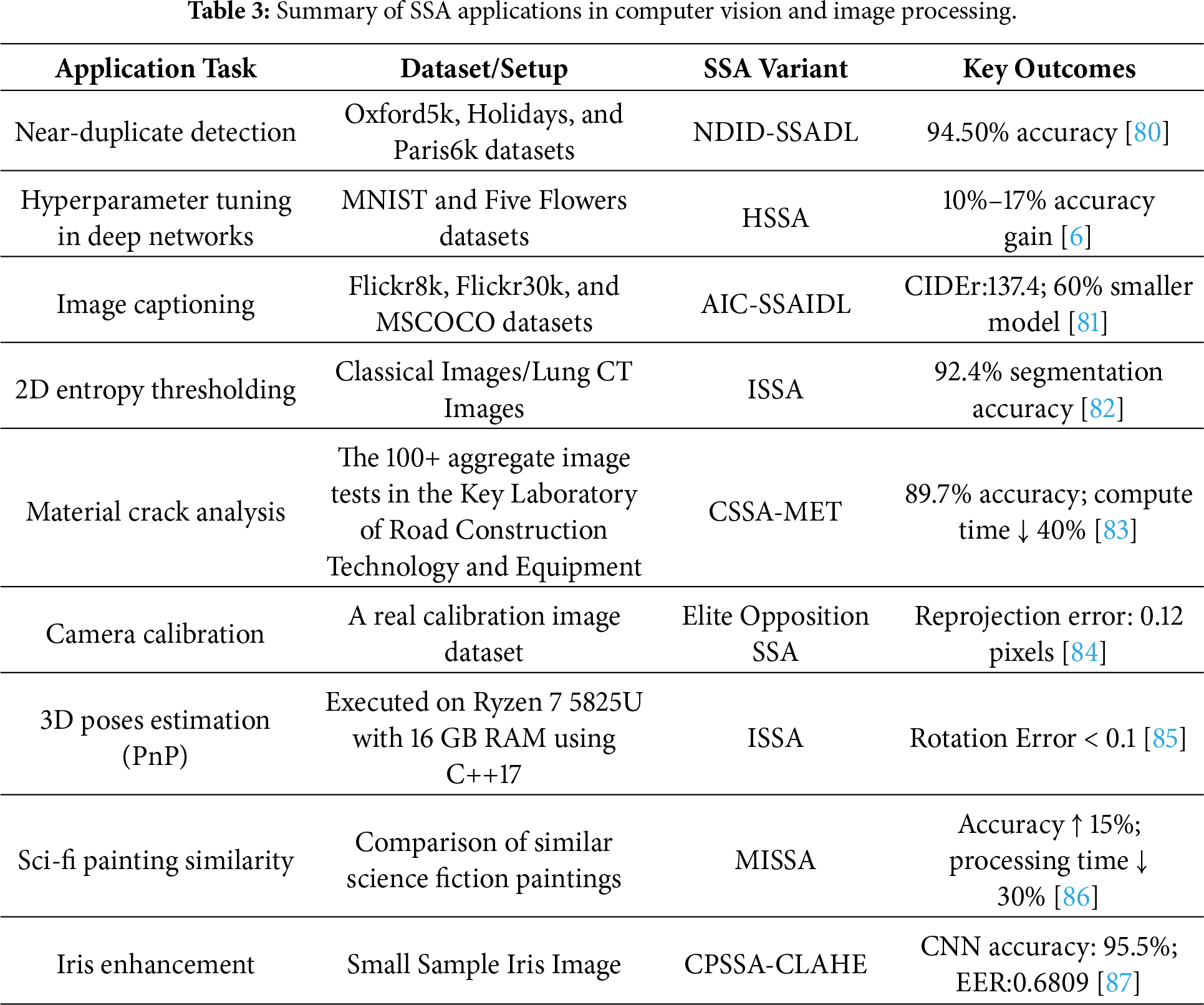
Optimizing hyperparameters in deep learning architectures is crucial for improving model performance but often requires costly trial-and-error. SSA, owing to its adaptive search capacity, has been widely employed to automate this process. Researchers proposed an SSA-based deep learning framework (NDID-SSADL) to optimize parameters for near-duplicate image detection, achieving a peak accuracy of 94.50% [73]. To improve convergence speed and precision, researchers developed the HSSA [6], which synergizes SSA’s global exploration with PSO’s local exploitation. When applied to deep neural networks, HSSA led to a 10%–17% increase in prediction accuracy across a variety of classification tasks. Wan et al. [74] extended this line of work by evaluating SSA variants across diverse applications: HSSA reduced neural network error rates, while AIC-SSAIDL significantly improved image captioning scores (CIDEr: 137.45), enhanced medical image segmentation quality (PSNR + 4–6 dB), and facilitated lightweight model design (60% smaller, 2 × faster). These results collectively demonstrate SSA’s generalization capability across complex, heterogeneous visual tasks.
4.1.2 Image Segmentation and Thresholding
In visual understanding, accurate segmentation is often constrained by the need to determine optimal threshold values from complex distributions. SSA has been employed to optimize entropy-based thresholding methods, thereby improving segmentation quality and computational efficiency. One may find an integrated SSA with the two-dimensional maximum entropy method to enhance image thresholding performance, demonstrating superior noise tolerance and higher segmentation accuracy than traditional methods [75]. To address multi-thresholding needs, Wang et al. [76] proposed a CSSA that integrates Rényi entropy for multi-entropy thresholding. In construction material imaging, CSSA improved segmentation accuracy while maintaining low computational cost, demonstrating the method’s adaptability to industrial scenarios.
4.1.3 Camera Calibration and Pose Estimation
Geometric vision tasks such as camera calibration and pose estimation involve solving complex nonlinear optimization problems, often under noisy or sparse input conditions. SSA has been introduced in these areas to enhance convergence accuracy and stability. An et al. [77] designed a refined SSA variant incorporating elite opposition-based learning, significantly reducing reprojection errors in camera calibration tasks. This method outperformed conventional calibration techniques in terms of both precision and computational efficiency. In the context of 3D pose estimation, Lei et al. [78] proposed an SSA variant with dynamically restricted search areas to tackle the Perspective-n-Point (PnP) problem. This approach accelerated convergence in high-dimensional search spaces while maintaining accuracy, confirming SSA’s effectiveness in geometric optimization problems.
4.1.4 Artistic and Domain-Specific Image Analysis
Beyond traditional computer vision tasks, SSA has also been applied to artistic and domain-specific scenarios that require both precision and domain adaptability. Cai et al. [79] developed a Multi-strategy Improved SSA (MISSA) for detecting similarity in sci-fi paintings. By integrating hierarchical pyramid structures and adaptive search strategies, MISSA achieved a 15% boost in detection accuracy and a 30% reduction in processing time compared to baseline methods. Similarly, Sundaram et al. [80] introduced CPSSA-CLAHE, which applies chaotic Pareto SSA to optimize parameters in contrast-limited adaptive histogram equalization (CLAHE) for iris image enhancement. The generated synthetic samples were class-consistent, improving CNN training accuracy to 95.5% and reducing the Equal Error Rate (EER) to 0.6809. Overall, SSA and its improved variants demonstrate strong capability in vision-based machine learning tasks, especially in optimizing high-dimensional search spaces under constraints on time, accuracy, and generalization—key concerns in industrial imaging systems, such as defect detection, biometric analysis, and vision-based control.
To enhance clarity and provide a structured overview of key studies in this subsection, Table 3 summarizes the application tasks, datasets or experimental setups, SSA variants used, and the corresponding key outcomes.
4.1.5 Limitations and Future Outlook
SSA has demonstrated strong performance in optimizing hyperparameters and improving convergence in image processing tasks. However, it struggles in high-dimensional search spaces with highly complex nonlinear relationships. One major limitation is the algorithm’s reliance on a static search space, which can be inefficient when models need to adapt to rapidly changing environments (e.g., real-time video processing or autonomous driving). Future improvements may involve combining SSA with dynamic learning models, such as online or reinforcement learning, to create adaptive systems that evolve in real time. Additionally, integrating SSA with generative models such as GANs (Generative Adversarial Networks) could open new avenues for automated data augmentation, thereby improving model robustness.
4.2 Robotics and Autonomous Systems
SSA in robotics and autonomous systems is primarily employed in optimizing real-time motion planning, adaptive control systems, and human-robot interaction. In particular, SSA is applied to path planning in environments with dynamic, unpredictable obstacles, to human-robot collaboration where precision is critical, and to adaptive control where continuous, real-time feedback is required.
The scale of optimization tasks in robotics is multi-dimensional and non-deterministic. Robots need to navigate through dynamic environments with constraints on speed, energy, and path length. Additionally, optimization problems in autonomous vehicles and robotic systems are highly time-sensitive, demanding real-time solutions under highly variable conditions. These factors make optimization in robotics particularly challenging, making SSA’s global search capabilities particularly beneficial.
4.2.1 Path Planning and Navigation Optimization
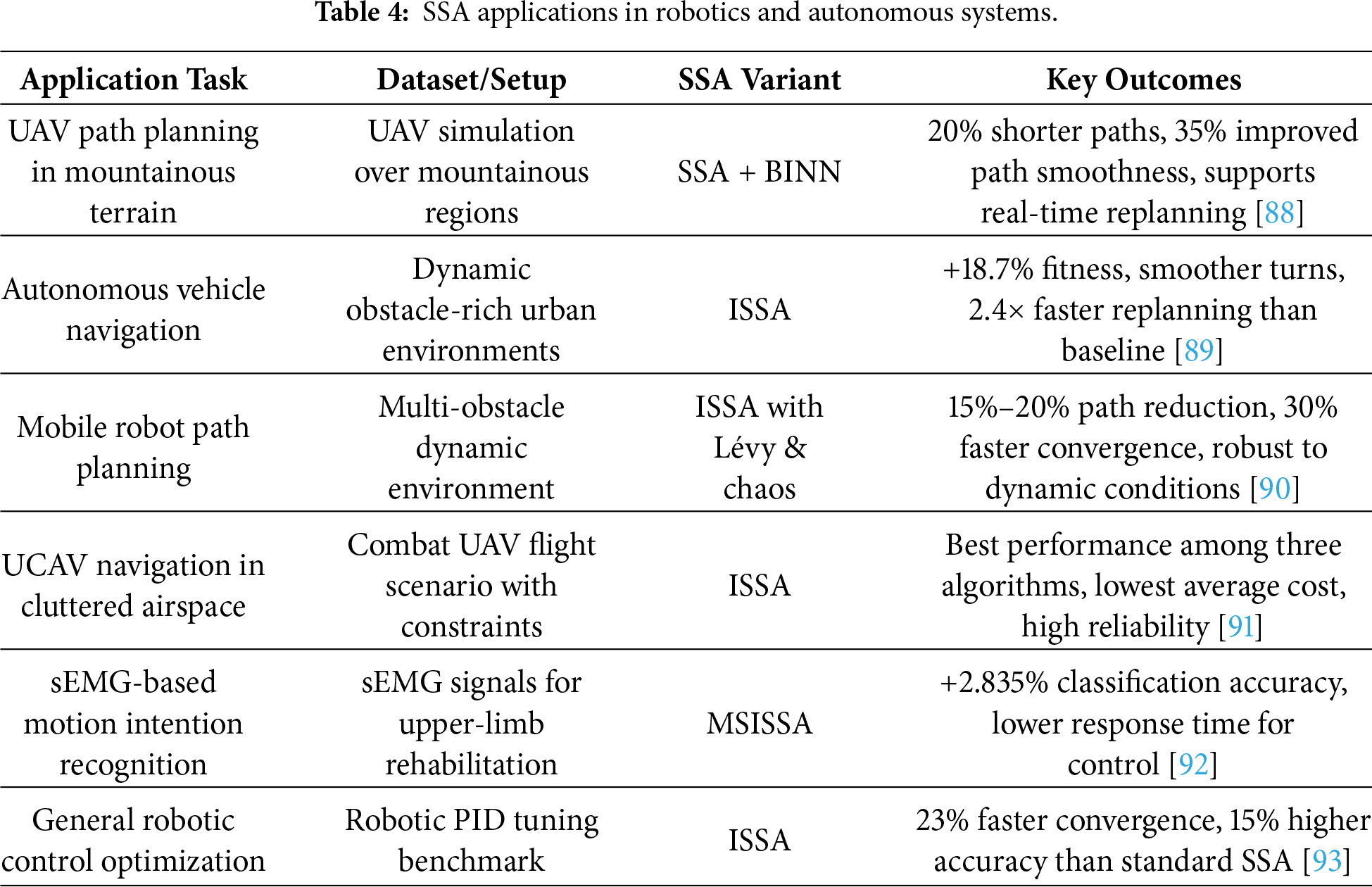
One of the most notable applications of SSA in robotics is autonomous path planning, where real-time routing and adaptive navigation are crucial. For instance, Liu et al. [88] combined SSA with a bio-inspired neural network (BINN) to optimize path planning for uncrewed aerial vehicles (UAVs) in mountainous terrain. The approach utilized SSA for global path generation and BINN for dynamic obstacle avoidance. The hybrid model demonstrated a 20% reduction in path length and a 35% improvement in path stability, while also offering real-time replanning capabilities. Similarly, Ding et al. [89] proposed an improved SSA algorithm integrated with dual logistic mapping and lens inverse learning for autonomous vehicle navigation. This method achieved an 18.7% increase in fitness scores, smoother turning trajectories, and a 2.4-fold improvement in replanning speed, highlighting its efficiency in overcoming initialization imbalance and early stagnation in local optima. In a more complex scenario, Xu et al. [90] introduced a variant of SSA (ISSA) for robotic path planning, incorporating chaotic circle mapping and Lévy flight strategies. This version demonstrated substantial improvements, reducing path lengths by 15%–20% and achieving a 30% faster convergence rate compared to traditional SSA, while preserving strong adaptability under dynamic conditions. Additionally, Zhou et al. [91] addressed path planning for uncrewed combat aerial vehicles (UCAVs) in cluttered environments. By integrating Dynamic Fitness Regulation Learning (DFRL), Random Differential Learning (RDL), and Elite Example Equilibrium Learning (EEEL), their multi-strategy enhanced SSA (MESSA) outperformed 11 competing algorithms, achieving the lowest average cost and demonstrating strong reliability and adaptability under complex constraints.
4.2.2 Human–Robot Interaction and Rehabilitation
In the domain of human-robot interaction and rehabilitation, SSA has proven valuable in improving precision and responsiveness, particularly in upper-limb rehabilitation systems. For example, Chen et al. [92] introduced MSISSA, an enhanced SSA model incorporating opposition-based learning and nonlinear step control, to better recognize motion intentions from sEMG signals. This model showed a 2.835% improvement in classification accuracy and reduced recognition time, demonstrating its potential to enhance real-time control in rehabilitation contexts.
4.2.3 General Optimization in Robotic Control
Beyond path planning and rehabilitation, SSA has also contributed to the broader field of robotic control. Yan et al. [93] developed an ISSA variant that improved global-local balance mechanisms for general robotic control tasks. This model performed 23% faster convergence and achieved 15% higher accuracy than traditional SSA on benchmark problems. The effectiveness of ISSA was further validated through its application to robotic PID controller tuning and path planning, proving its adaptability to complex engineering problems while avoiding local optima. Collectively, these applications underscore SSA’s effectiveness as an adaptive, efficient optimization framework in robotics, supporting real-time path planning, dynamic control, and biosignal-based human-machine interaction. Its hybridized variants further enable deployment in safety-critical, non-stationary, and high-dimensional environments, aligning with the evolving demands of modern industrial automation and autonomous systems. Table 4 summarizes recent SSA applications in robotics and motion planning, highlighting the scenarios, datasets, algorithmic variants, and performance outcomes.
4.2.4 Limitations and Future Outlook
SSA’s main limitation in robotics is the computational cost associated with high-dimensional, multi-agent systems. Pathfinding tasks in highly dynamic environments, such as those involving moving obstacles or changing terrain, are particularly challenging for SSA as they may require extensive recalculations. In multi-robot coordination, SSA faces difficulties in ensuring global optimality while maintaining real-time performance. Hybrid approaches integrating SSA with other algorithms, such as deep reinforcement learning (DRL) or evolutionary strategies, could help address these challenges by improving adaptability and convergence rates. Moreover, combining SSA with sensor fusion techniques could enhance robots’ situational awareness, enabling more intelligent decision-making in autonomous systems.
4.3 Renewable Energy and Smart Grid Optimization
SSA is applied in renewable energy systems for tasks such as optimizing power dispatch across smart grids, forecasting renewable energy generation (e.g., wind and solar), and ensuring optimal energy storage and maximum power point tracking (MPPT) in photovoltaic systems. In microgrids, SSA ensures the efficient integration of renewable energy sources, energy storage, and grid interaction to meet the dynamic demands of distributed power systems.
The optimization problems in this field are multi-objective, involving trade-offs between energy production, cost, emissions, and system stability. The large-scale, dynamic nature of renewable energy systems adds another layer of complexity, and real-time data is critical for efficient energy distribution. These systems must respond to frequent fluctuations in renewable energy generation, making SSA’s flexibility and rapid convergence essential tools.
4.3.1 Microgrid Optimization and Economic Dispatch
SSA’s application to microgrid optimization has attracted attention, especially for integrating renewable sources, storage, and interactions with the external grid. Kattepogu et al. [94] proposed an Enhanced SSA (ESSA) to optimize power flow in smart grids integrated with renewable energy sources. By combining elite reverse learning and firefly mutation strategies, ESSA reduced operational costs by up to $114.41/h and minimized emissions by 75,560 lb/MWh, all while enhancing voltage stability. These results underscore the effectiveness of SSA in sustainable grid operations under economic and environmental constraints. Fathy et al. [95] also explored SSA in microgrid operation optimization, demonstrating that it could reduce operational costs by 1.44% and carbon emissions by 54.76% in single-objective scenarios, and achieve 42.78% cost savings and 0.118% emission reductions in multi-objective scenarios. These outcomes reflect SSA’s potential to enhance both economic and environmental performance in microgrid applications. Nguyen et al. [96] extended this work by incorporating elite reverse learning into a multi-objective SSA for optimal microgrid scheduling. This method successfully minimized lifecycle operational costs and enhanced distributed generation outputs, even under dynamic conditions. Qiao et al. [97] used a Random Walk SSA (RSSA) for the economic optimization of Combined Cooling, Heating, and Power (CCHP) microgrids fueled by biomass. By introducing chaotic mapping and stochastic walk mechanisms, RSSA improved convergence speed and reduced operational costs by 2.2%–3.1%, demonstrating its suitability for biomass-based energy systems in rural areas.
4.3.2 Renewable Energy Forecasting and MPPT Control
SSA has also been applied in renewable energy forecasting and maximum power point tracking (MPPT) for photovoltaic systems. Zhang et al. [98] combined SSA with the Firefly Algorithm to optimize a BiLSTM model for wind power forecasting. The hybrid model achieved an accuracy of 98.5%, with a minimal mean squared error (MSE) of 0.005, improving both prediction precision and computational efficiency. Similarly, Chen et al. [99] employed SSA to optimize LSTM parameters for photovoltaic (PV) power prediction. By incorporating chaotic mapping and mutation strategies, the hybrid SSA-LSTM model achieved 20%–60% improvements in forecast accuracy, outperformed traditional approaches, and maintained stable performance across diverse weather conditions. Yuan et al. [100] proposed an SSA-based DMPPT algorithm for photovoltaic microgrids. This algorithm outperformed traditional techniques like Perturb & Observe (P&O) and PSO, delivering faster tracking speeds and superior steady-state performance, especially under partial shading conditions.
SSA and its hybrid extensions offer scalable and efficient solutions to optimization problems in renewable energy systems. By addressing cost–emission trade-offs, enhancing prediction accuracy, and accelerating MPPT convergence, SSA contributes to the reliable and sustainable operation of next-generation smart grids and distributed energy infrastructures. To assist readers in comparing SSA implementations across different renewable energy and grid optimization contexts, Table 5 lists the specific application problems, experimental setups, SSA improvements, and observed benefits.
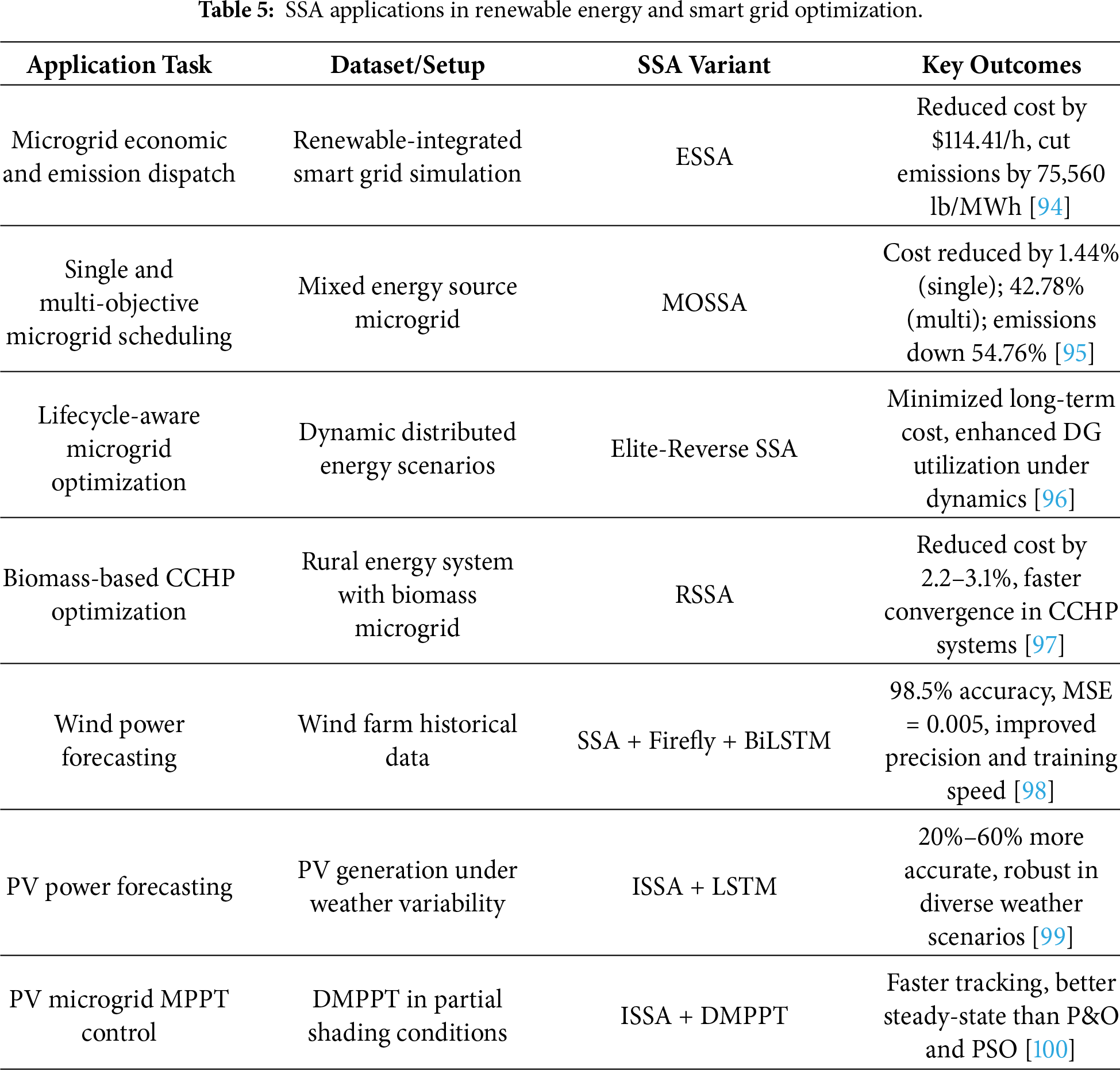
4.3.3 Limitations and Future Outlook
One of the main challenges in using SSA for renewable energy and grid optimization is the need to account for the uncertainty and variability of renewable energy sources, which are challenging to model accurately in real time. Additionally, optimizing these systems at scale while accounting for both economic and environmental factors remain complex. Future research could focus on hybrid SSA algorithms that incorporate forecasting models to predict energy generation patterns, as well as dynamic models that adapt to real-time changes in grid operation.
4.4 Battery Degradation Prediction and Energy Storage Optimization
The application of SSA in battery degradation prediction involves improving estimates of state-of-health (SOH), state-of-charge (SOC), and remaining useful life (RUL) by optimizing deep learning models and other predictive algorithms. In energy storage systems, SSA is used to maximize battery management systems (BMS) to enhance battery longevity, improve charging efficiency, and predict failure points.
The problem scale is vast due to the nonlinearities in battery degradation models and the sensitivity of battery behavior to temperature and usage patterns. These systems require high-precision modeling and real-time data analysis, making the use of optimization algorithms such as SSA essential for robust predictions of battery life and performance.
The use of SSA-enhanced deep learning and kernel-based methods has significantly improved long-term battery health forecasting, leading to higher accuracy and better model generalization. Liu et al. [101] proposed an Improved SSA with Long Short-Term Memory (ISSA-LSTM) model for lithium-ion battery RUL estimation. By optimizing LSTM parameters using SSA, the model achieved a 30%–40% increase in accuracy compared to traditional methods. This improvement is critical for predicting degradation trajectories across datasets, thereby enhancing the safety and efficiency of battery management systems (BMS). Yang et al. [102] advanced this work by combining Convolutional Neural Networks (CNNs) and Bi-directional LSTM (BiLSTM) networks, optimized with SSA, to more accurately predict capacity degradation. The CNN component ensures stable feature representation, while the BiLSTM effectively captures long-term aging patterns. Leave-One-Out Cross-Validation (LOOCV) tests validated the model’s reliability for large-scale battery fleet monitoring.
Further, Li et al. [103] introduced an Enhanced Global Sparrow Search Algorithm (EGSSA)-optimized Multi-Scale Kernel Extreme Learning Machine (MSKELM) model for SOH estimation. By leveraging efficient feature preprocessing and nonlinear kernel learning, this model achieved a remarkable Root Mean Squared Error (RMSE) of 0.29%, exceeding conventional methods by over 50% in predictive precision. Zhang et al. [104] applied SSA to optimize an Elman Neural Network (ENN) for temperature-sensitive SOH prediction. The model incorporated differential thermal voltammetry (DTV) features, achieving Mean Absolute Error (MAE) < 0.9% and RMSE < 1.4% on the Oxford battery aging dataset. This approach effectively addresses the limitations in training speed and the local optima encountered in traditional SOH estimators, thereby enhancing model accuracy under variable conditions.
In the context of SOC estimation, SSA-based enhancements in neural networks and hybrid estimators have demonstrated substantial improvements, particularly under dynamic and real-world conditions. Feng et al. [105] designed an Adaptive Crossover Mutation SSA (ACMSSA)-optimized Backpropagation (BP) network for SOC estimation in mining vehicle batteries. The incorporation of adaptive crossover-mutation strategies with dynamic population updating reduced errors to less than 1.6%, improving estimation accuracy by 30%–40% under challenging field conditions. Similarly, Zhang and Xiang [106] proposed a dual optimization model combining PSO and SSA for SOC estimation under varying temperatures. This model, which integrates Adaptive Fuzzy Reasoning Least Squares (FFRLS) and the Extended Kalman Filter (EKF), reduced SOC error to less than 0.015, achieving a 50% improvement in accuracy over standard methods.
Li et al. [107] introduced an ISSA-BP model utilizing enhanced update rules for SOC estimation, achieving error rates below 1%. This model demonstrated fast convergence and strong generalization, making it suitable for electric vehicle and energy storage applications. Hai et al. [108] developed a cloud-based SOC estimation framework (IFCMC-SSA-BP) optimized for EVs. The model achieved an error of less than 0.01% under optimal temperature conditions and maintained accuracy within a 5% margin in dynamic environments, ensuring reliable real-time performance across diverse operational scenarios.
4.4.3 Parameter Identification and Multi-Strategy Optimization
Beyond conventional prediction models, several studies have explored the use of multi-strategy SSA variants to enhance model flexibility, improve convergence efficiency, and strengthen resilience in complex battery modeling and parameter identification tasks. Hou et al. [39] proposed CQSSA, a hybrid algorithm combining tent chaotic mapping, quantum-inspired behavior, and Gaussian mutation to identify battery model parameters. In tests conducted under pulse discharge and Urban Dynamometer Driving Schedule (UDDS) scenarios, CQSSA outperformed other algorithms, such as PSO, Genetic Algorithm (GA), and Grey Wolf Optimization (GWO), in both accuracy and convergence speed.
Similarly, Xue et al. [109] introduced a Multi-Strategy SSA (MGSSA), which incorporates a ring topology, leader-based search, and cooperative learning. MGSSA outperformed 17 benchmark algorithms on standard functions and was successfully applied to RUL prediction, effectively addressing common SSA limitations such as early stagnation and imbalanced search behavior.
SSA-based optimization strategies are increasingly becoming key enablers in battery health prediction, real-time SOC/SOH estimation, and electrochemical model parameter identification. Their ability to adapt to nonlinearities, handle large datasets, and converge rapidly under constrained environments makes them highly suitable for embedded BMS applications and large-scale energy storage deployment. Table 6 summarizes representative SSA-based studies for battery health estimation, SOC/RUL prediction, and electrochemical modeling, providing a comparative overview of datasets, methods, and key findings.
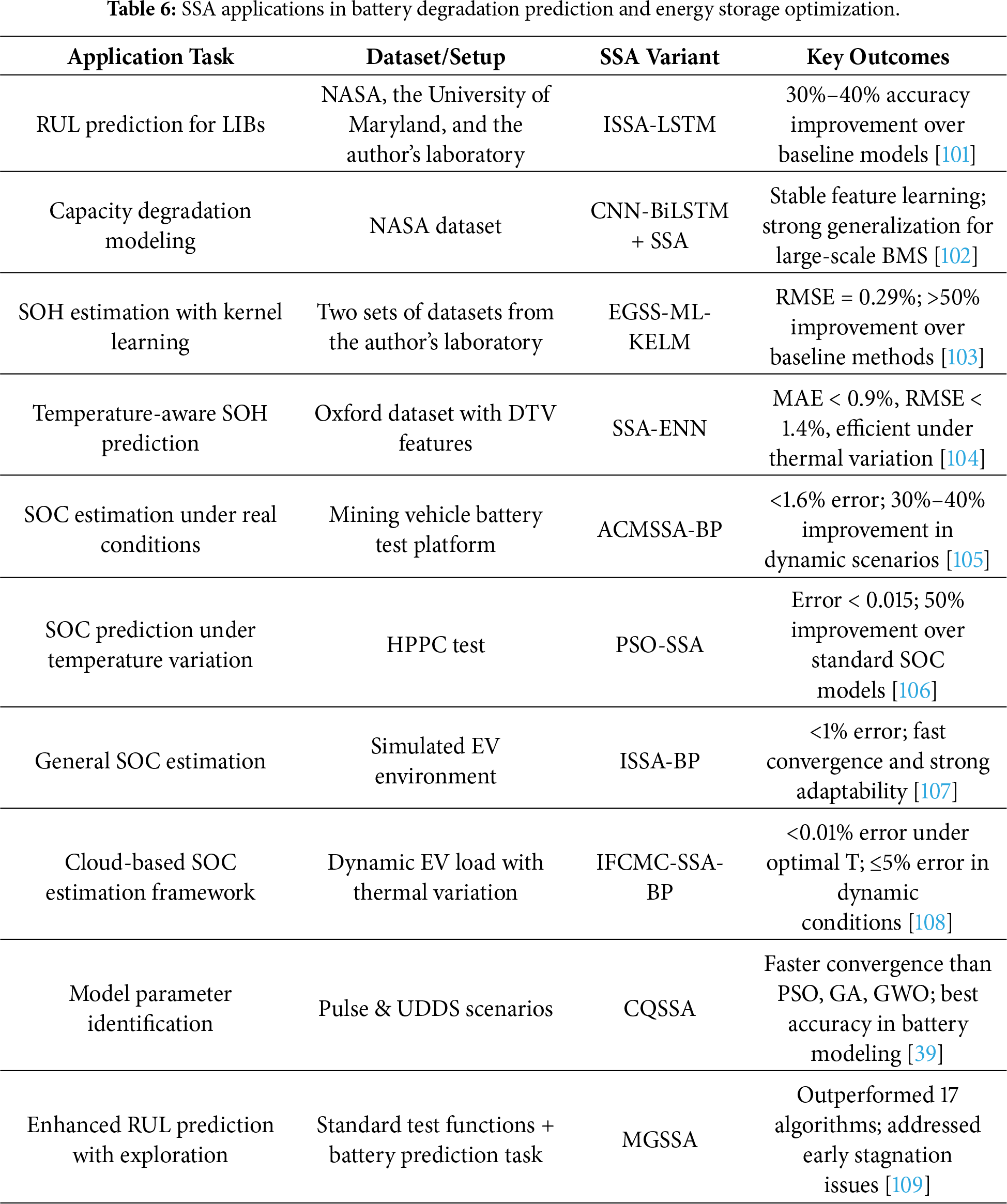
4.4.4 Limitations and Future Outlook
A limitation of SSA in this domain is its reliance on accurate historical data to train the prediction models, which may not always be available or sufficiently detailed. Additionally, SSA can struggle to handle the complex, multi-modal nature of battery degradation, where different types of degradation (e.g., capacity fade, power fade) interact in non-linear ways. Future developments could include integrating SSA with deep learning models, particularly recurrent neural networks (RNNs) or long short-term memory (LSTM) networks, to capture long-term degradation trends better. Moreover, incorporating real-time monitoring data from IoT devices could enable SSA to dynamically adjust its predictions and optimization strategies, further enhancing the performance and longevity of energy storage systems.
4.5 Fault Diagnosis and Condition Monitoring in Industrial Systems
SSA has been applied to optimize feature extraction, model parameters, and classification boundaries in fault-diagnosis systems, thereby improving the accuracy of predictive maintenance models. The goal is to detect early signs of machine failure and diagnose potential issues before they lead to significant downtime across industries such as manufacturing, power generation, and transportation. Fault diagnosis and condition monitoring problems typically involve analyzing complex sensor data from machines like turbines, compressors, and motors. These problems require handling high-dimensional data from multiple sensors, with a focus on real-time processing and classification accuracy. SSA’s global search mechanism enables the discovery of optimal configurations for fault classifiers in such high-dimensional, time-series data.
4.5.1 SSA for Optimizing Machine Learning-Based Fault Classifiers
SSA has been widely used to optimize key parameters in fault classification models, such as Support Vector Machines (SVMs), Extreme Learning Machines (ELMs), and Broad Learning Systems (BLSs), thereby improving diagnostic accuracy and generalization. Wu et al. [110] used SSA to optimize an SVM classifier for bearing fault diagnosis on the CWRU dataset, achieving improved performance compared to grid search and PSO-based optimization. Lv et al. [111] combined refined composite multiscale dispersion entropy (RCMDE) with an SSA-optimized SVM model, achieving 100% classification accuracy under both normal and noisy conditions, underscoring its resilience and reliability in real-world industrial signal environments. Dong [112] proposed an SSA-optimized CNN for bearing fault diagnosis, achieving 99.4% accuracy and improved adaptability under big data.
4.5.2 Enhanced SSA for Deep Model Tuning under Noisy Conditions
Advanced SSA variants have also been integrated with deep neural networks to improve fault recognition performance under noisy or uncertain factory environments. Ma et al. [31] proposed a Lévy flight and mirror-opposition-based SSA (LSSA) to optimize hyperparameters of a VMD-GRU model. When applied to noisy bearing signals, the LSSA-VMD-GRU framework significantly outperformed traditional models, offering enhanced noise resilience and faster convergence. Kong et al. [113] developed an improved SSA (ISSA) incorporating chaotic mapping and differential mutation strategies, and applied it to optimize ELM for hydropower generator vibration fault classification. The resulting model achieved 95.8% accuracy, validating its applicability in extensive rotating equipment monitoring.
4.5.3 SSA in Industrial Real-Time Fault Monitoring Systems
In industrial real-time fault-monitoring systems, SSA has demonstrated effectiveness in optimizing lightweight diagnostic models for deployment on edge devices. For instance, Kiruthika and Bindu [114] proposed a secure communication architecture for innovative grid systems focusing on data transmission between Phasor Measurement Units (PMUs) and Phasor Data Concentrators (PDCs), which are vulnerable to cyberattacks. To address this, an SSA-based Convolutional Neural Network (CNN) model was developed for intelligent fault classification and cyber-attack detection. The system combined AES encryption for data privacy with an SSA-CNN-based classifier to detect data manipulation attempts and classify operational states, including faults, power swings, and zone locations, on the NE-39 Bus system. Results showed high classification accuracy, enhanced robustness against cyber threats, and reduced computational latency compared to traditional online methods, highlighting SSA’s suitability for secure, real-time industrial monitoring. Additionally, Liu et al. [115] introduced an SSA-optimized Extreme Learning Machine (SSA–ELM) framework for wind turbine bearing fault diagnosis. Their method achieved high classification accuracy, showcasing SSA’s efficiency in improving diagnostic performance under variable conditions. These studies underscore SSA’s potential in maintaining high performance in edge-deployed, low-latency predictive maintenance applications, aligning with the requirements of Industry 4.0 intelligent monitoring systems. Table 7 offers a structured summary of SSA applications in fault diagnosis and monitoring systems, with details on signal types, classification tasks, algorithmic variants, and resulting accuracy metrics.
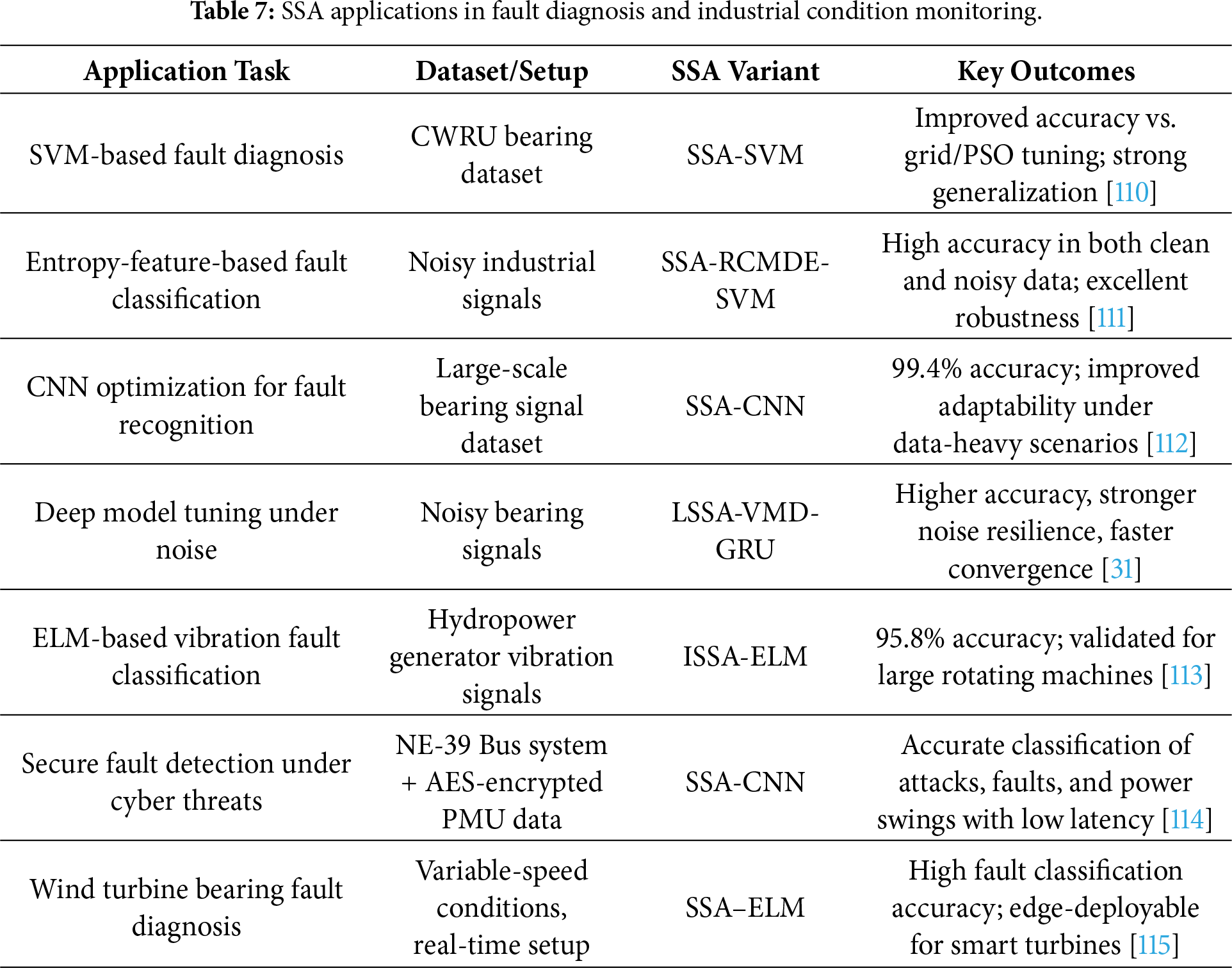
4.5.4 Limitations and Future Outlook
The main limitation of using SSA in industrial diagnostics is its scalability for large, multi-sensor systems. Real-time monitoring requires SSA to balance high accuracy with computational efficiency, a challenge in large-scale deployments. Future research could investigate more computationally efficient SSA variants or hybrid methods that combine SSA with deep learning to enhance predictive capabilities further, making them more suitable for deployment in large, sensor-rich industrial environments.
4.6 Production Scheduling and Industrial Logistics
In production scheduling, SSA is used to optimize job-shop scheduling, minimize energy consumption, reduce transport distances, and improve logistics efficiency. In industrial logistics, SSA optimizes layout planning to reduce handling times and improve throughput. These applications are crucial in environments where flexibility and efficiency are key to maintaining manufacturing competitiveness. The scale of production scheduling problems in modern manufacturing is vast, especially with high product variety and frequent reconfigurations. The need for real-time optimization under energy, transport, and time constraints compounds these issues. SSA’s adaptability enables it to effectively explore the solution space and identify optimal scheduling and layout strategies.
4.6.1 Flexible Job-Shop Scheduling under Dynamic and Energy Constraints
To address the challenges posed by frequent changeovers and production diversification, Li et al. [116] proposed SSA-based strategies for solving enhanced Flexible Job-Shop Scheduling Problems (FJSPs). One study established a makespan-minimization FJSP model that integrates both machine setup time and transport delays. It introduced an improved SSA that incorporates a dimensional location update strategy, a critical-path-based neighborhood search, and an earliest-completion-time-based population initializer. Experimental comparisons against PSO and GWO demonstrated the model’s superior solution feasibility and stability in large-scale scheduling scenarios, significantly improving overall manufacturing efficiency. In energy-sensitive contexts, Luan et al. [117] introduced the Energy-saving Flexible Job-Shop Scheduling Problem (EFJSP), aiming to minimize power consumption and processing costs simultaneously. An Improved SSA (ISSA) was proposed, featuring a hybrid initialization method, a quantum rotation gate (QRG), and a sine–cosine strategy to enhance convergence. Additionally, an adaptive adjustment mechanism and variable neighborhood search (VNS) were employed to strengthen diversity and avoid local optima. Extensive benchmark testing confirmed the ISSA’s superior performance over conventional metaheuristics, yielding up to 17.2% energy savings and more balanced production loads.
4.6.2 Workshop Layout Optimization in Manufacturing Systems
Beyond scheduling, SSA has also shown promise in optimizing workshop layouts to reduce material-handling time and improve logistics efficiency. Bi et al. [118] applied SSA to minimize total transport distances while maximizing non-logistics adjacency in a real-world workshop layout. The resulting design, validated through Flexsim simulation, achieved a reduction in transport distance of up to 325 m and a 24.84% improvement in adjacency relationships compared with both genetic algorithms and the original configuration. These results demonstrate SSA’s utility in spatial optimization tasks that directly impact production throughput. Collectively, these studies underscore SSA’s adaptability and effectiveness in handling both temporal and spatial optimization challenges within industrial systems. Through intelligent design of search strategies and hybridization with problem-specific heuristics, SSA enables high-quality solutions for job scheduling, energy optimization, and layout configuration, making it a valuable tool for advancing smart manufacturing. To provide a structured comparison of SSA applications for scheduling and layout optimization tasks, Table 8 summarizes models, datasets, SSA variants, and primary outcomes across multiple manufacturing scenarios.
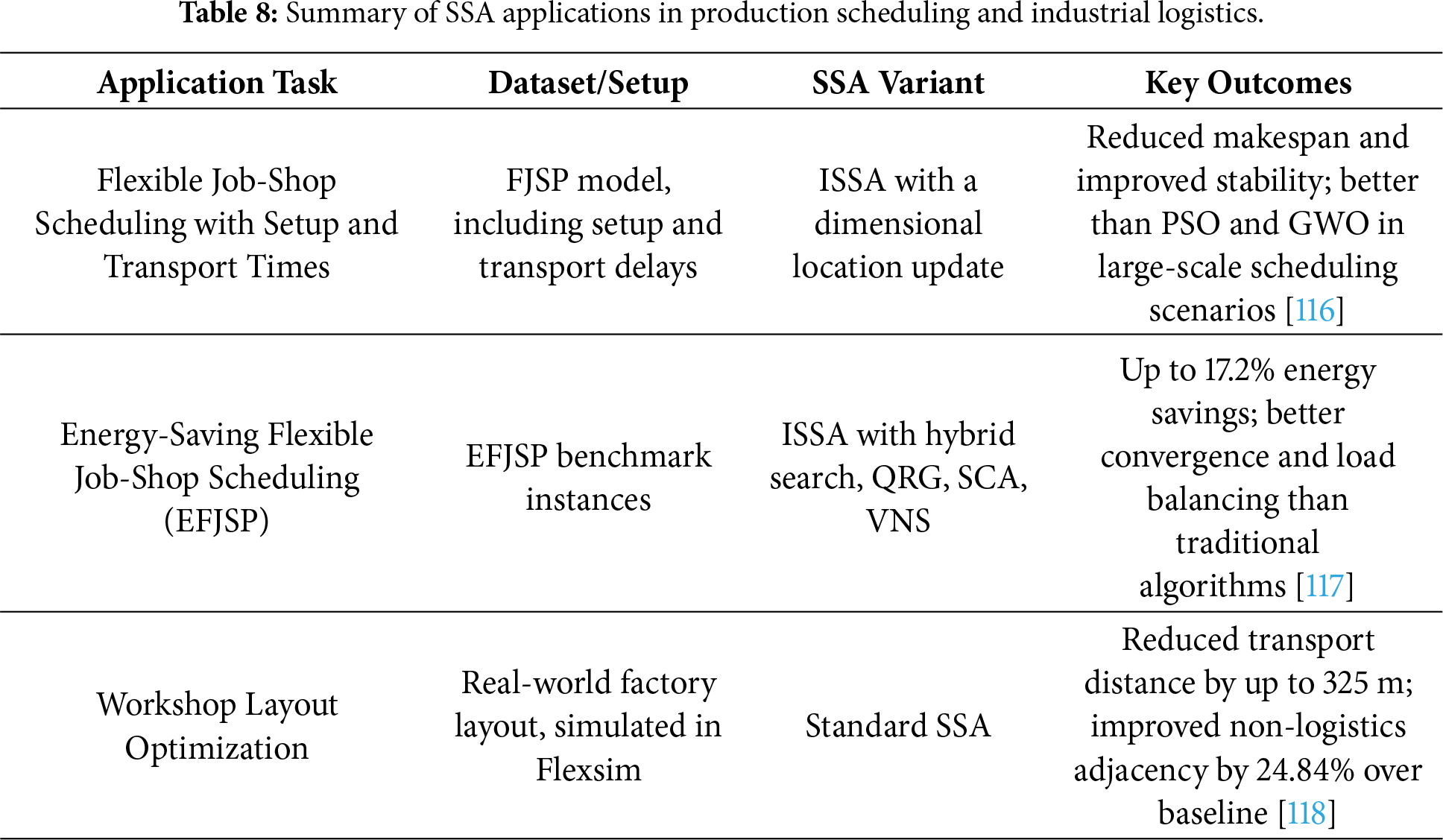
4.6.3 Limitations and Future Outlook
While SSA is effective in solving smaller to medium-sized scheduling problems, its scalability for larger, multi-objective problems with complex constraints is limited. Hybrid SSA techniques that combine machine learning for predictive scheduling or deep reinforcement learning could further enhance SSA’s ability to deal with highly dynamic manufacturing environments. Additionally, integrating SSA with Industry 4.0 technologies such as IoT and digital twins may lead to more brilliant, more adaptive systems that can better handle real-time constraints.
4.7 Optimization in Edge-Intelligent Industrial Control Systems
In edge-intelligent systems, SSA optimizes control parameters for real-time decision-making tasks in distributed industrial systems. This includes functions like PID tuning, energy optimization in microgrids, and coordination of sensor networks in edge computing environments. Edge-enabled systems require fast, low-latency algorithms that can operate in constrained environments. The problems in edge-intelligent industrial control systems are typically high-dimensional and subject to multiple real-time constraints. These systems must handle large amounts of sensor data and make decisions on the fly, often with limited computational resources. SSA’s ability to quickly converge on optimal solutions makes it suitable for real-time optimization tasks in edge-based industrial systems.
4.7.1 Cluster Head Selection in Edge-Enabled Wireless Sensor Networks
Qiu et al. [119] proposed an Improved Cluster-based Sparrow Search Algorithm (ICSSA-CHS) to optimize cluster head selection in Wireless Sensor Networks (WSNs) integrated with edge computing. The method incorporates chaotic maps and adaptive reverse learning to improve convergence and energy balance. Experimental evaluations of benchmark WSN scenarios showed that ICSSA-CHS prolonged network lifetime and improved overall communication efficiency, making it suitable for edge-based industrial monitoring systems.
4.7.2 PID Parameter Optimization in Robotic Servo Control Systems
Wang et al. [120] developed a hybrid SSA to optimize PID controller parameters in the servo control systems of industrial robots. By embedding a Gaussian mutation operator and chaotic mapping into the standard SSA framework, the method achieved improved response speed and stability. Experimental validation of robotic joint simulations demonstrated enhanced trajectory tracking and reduced steady-state error, illustrating SSA’s applicability to precise control tasks at the edge.
4.7.3 Edge-Based Microgrid Operation Using Enhanced SSA
Zhao et al. [121] introduced an Enhanced SSA (ESSA) for optimal operation of hybrid hydrogen–electric microgrids under edge control architecture. The proposed method combines elite reverse learning and firefly-inspired mutation mechanisms to optimize economic cost, power balance, and emission objectives under demand response constraints. Simulations showed that ESSA significantly outperformed standard methods in both computational efficiency and solution quality, validating its potential in edge-based energy management systems.
These studies showcase SSA’s growing role in optimizing edge-intelligent industrial control systems—from embedded sensor coordination to real-time robot control and distributed energy systems. Thanks to its fast convergence, low memory footprint, and high adaptability, SSA serves as an effective tool for intelligent decision-making at the industrial edge, aligning with the demands of Industry 4.0 and 5.0. Table 9 consolidates key SSA-based studies on real-time edge control optimization, including tasks such as PID tuning, energy dispatch, and wireless coordination, along with their respective setups and performance highlights.
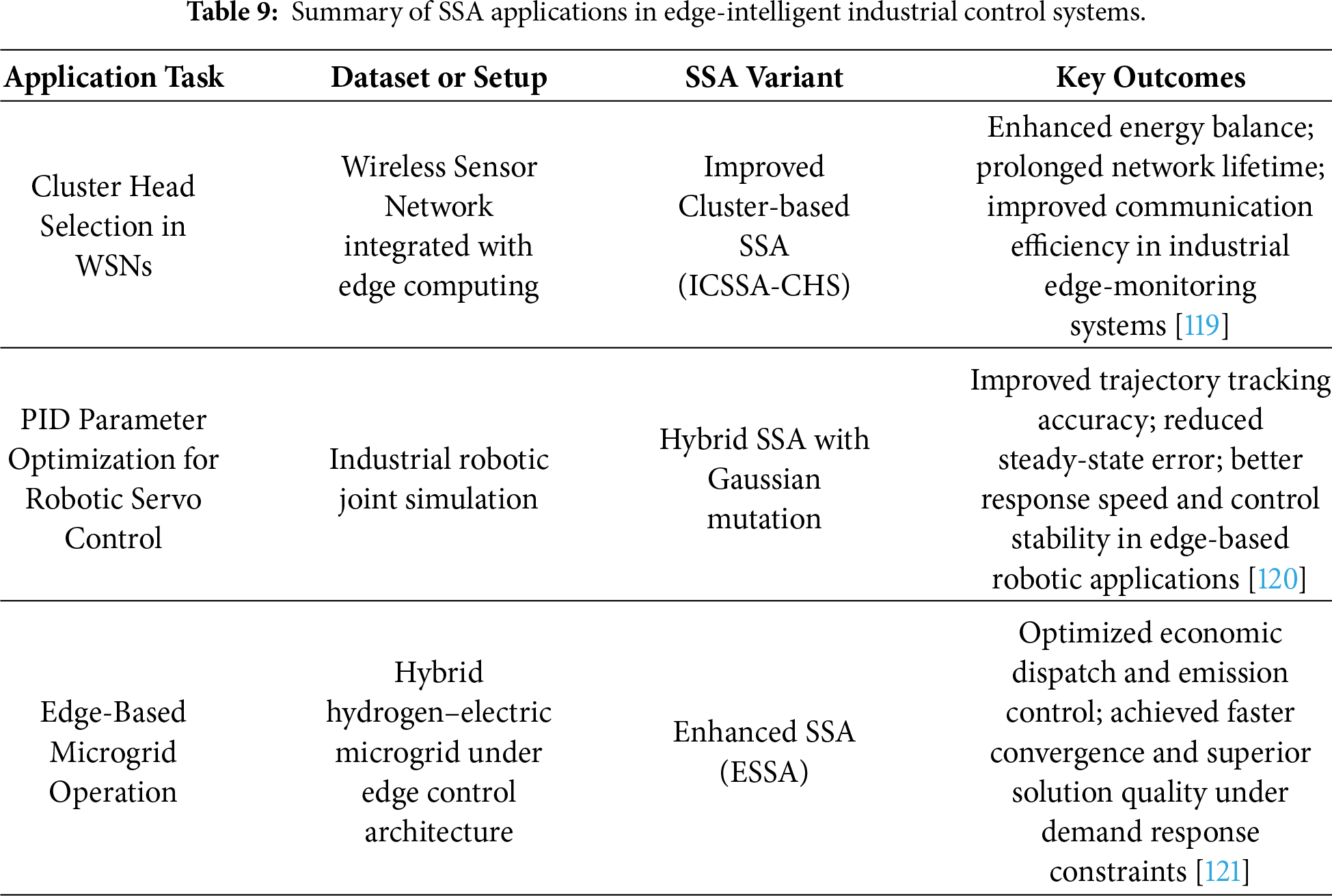
4.7.4 Limitations and Future Outlook
One challenge for SSA in edge systems is its computational cost, which can be a limiting factor in environments with constrained memory and processing power. Future improvements could involve developing more lightweight SSA variants optimized for edge devices with limited resources. Additionally, combining SSA with techniques such as federated learning or reinforcement learning could improve its adaptability and scalability in distributed industrial control systems.
4.8 Industrial Cybersecurity and Intrusion Detection
In cybersecurity, SSA is applied to optimize intrusion detection systems (IDS) to identify and mitigate threats in industrial networks, particularly in IIoT environments. SSA improves the efficiency and accuracy of IDS by optimizing classifiers, such as neural networks, decision trees, and probabilistic models, to enhance real-time anomaly detection. The scale of these problems requires analyzing large amounts of network traffic and sensor data in real time. Optimizing IDS using SSA aims to reduce false positives, improve detection accuracy, and handle high-volume data from industrial systems.
Karim et al. [122] introduced a Bayesian ML framework integrated with SSA for cyberattack detection (BMLSSA-CAD) in IIoT environments. SSA was used to optimize the hyperparameters of Bayesian Belief Networks (BBNs), improving model precision. Evaluated on benchmark datasets UNSWNB15 and UCI SECOM, their approach achieved detection accuracies of 97.84% and 98.93%, respectively. The results highlight SSA’s effectiveness in enhancing probabilistic reasoning models for industrial network security. Li et al. [123] developed an intrusion detection approach based on neural networks optimized via SSA. The algorithm fine-tuned the weights and biases of a feedforward neural network to enhance classification performance. Their method was validated using benchmark intrusion datasets and showed marked improvements in detection accuracy and reduced false alarm rates. This study underscores SSA’s applicability to optimizing machine learning models in real-time industrial cybersecurity systems. Liu and wang [124] proposed a hybrid intrusion detection framework combining Artificial Immune Algorithm Systems (AIA) with SSA. The AIA was used for feature selection, while SSA optimized the hyperparameters of the detection model. Experimental evaluations demonstrated improved accuracy and computational efficiency compared to classical IDS techniques. Their results validate the effectiveness of hybrid, bio-inspired algorithms for enabling adaptive, resilient intrusion detection in intelligent industrial networks.
Collectively, these studies demonstrate the potential of SSA to enhance intrusion detection performance in industrial settings significantly. Whether used to optimize traditional neural networks, probabilistic classifiers, or hybrid models, SSA helps build more accurate, lightweight, and adaptive cybersecurity systems—critical for Industry 4.0 and IIoT infrastructures. Table 10 summarizes SSA-based approaches used for intrusion detection and cybersecurity in industrial systems, detailing dataset benchmarks, hybrid model strategies, and achieved detection performance.
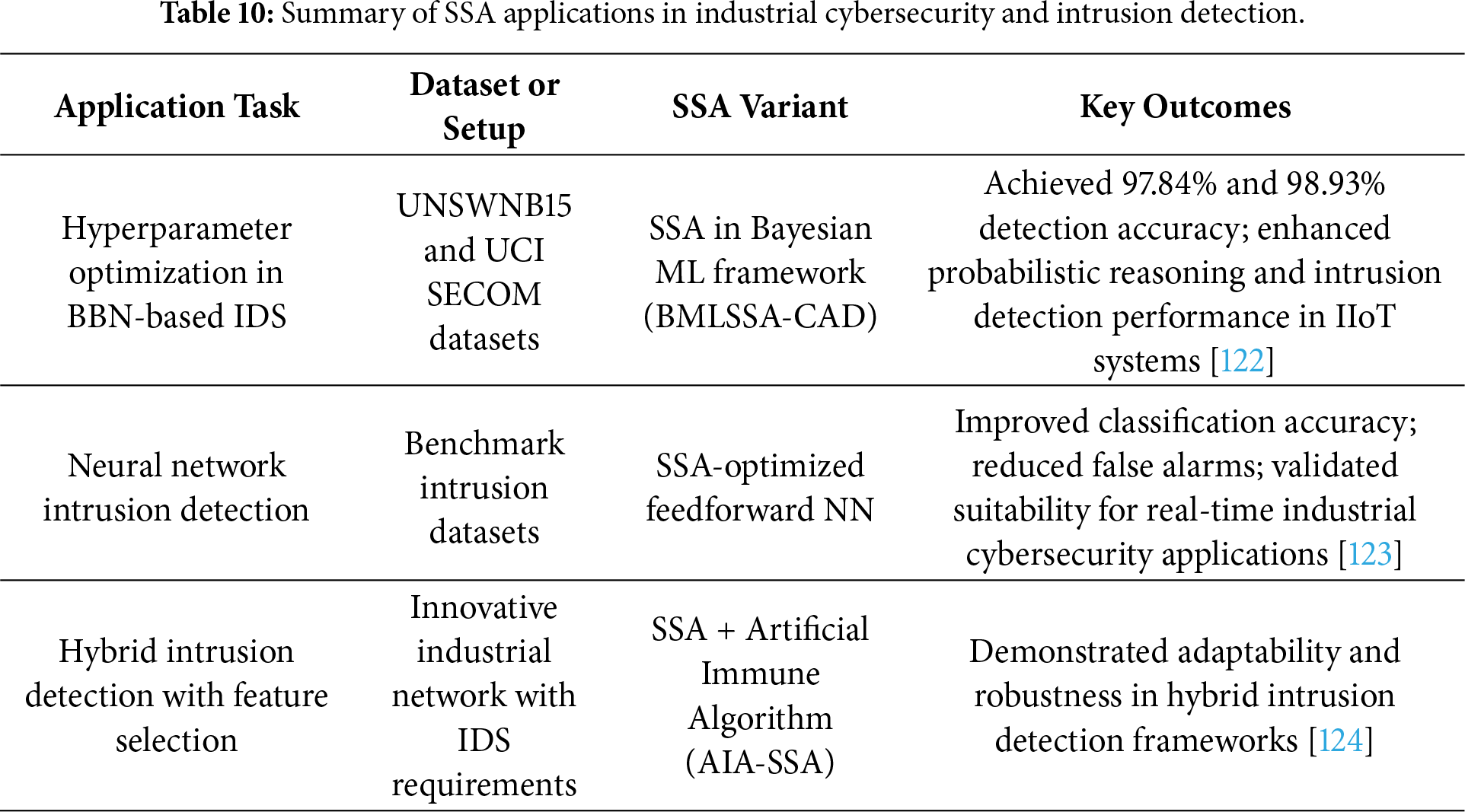
One key limitation is SSA’s ability to adapt to rapidly evolving cyber threats. Cyberattacks are becoming increasingly sophisticated, with hackers often using novel methods that bypass traditional IDS systems. SSA-based models, while adaptive, still rely heavily on historical data for training, which can make them struggle to detect previously unseen attack types. Online learning could enable SSA models to update in real time, continuously enhancing their responsiveness. Federated learning, which allows decentralized model training without sharing sensitive data, could also be integrated to improve scalability and privacy in large industrial networks. Further improvements could be achieved by combining SSA with anomaly-detection frameworks to enhance sensitivity and detect subtle cyberattacks. Prospects for SSA in cybersecurity include real-time, adaptive IDS, hybrid deep-learning models, multi-layered security, edge-based intrusion detection, and federated models to improve scalability and robustness in industrial networks.
This chapter verifies SSA’s adaptability and performance benefits across industry-oriented scenarios—computer vision, robotics and autonomous systems, energy and power systems with storage, and fault diagnosis/condition monitoring—considering task types, problem scales, and constraints. The findings indicate that, in high-dimensional thresholding, camera calibration, and automated hyperparameter tuning, SSA achieves joint gains in accuracy and robustness; in path planning and control tuning, it delivers shorter paths and faster re-planning under complex constraints and dynamic obstacles; in microgrid scheduling, MPPT, and battery SOH/RUL/SOC modeling, SSA attains superior trade-offs between economic objectives and predictive performance, supporting real-time decision-making. SSA-optimized SVM/ELM/CNN/GRU pipelines also maintain low latency and high accuracy under noise and edge-compute limitations, demonstrating strong engineering transferability. Nonetheless, industrial applications still face challenges: non-uniform cross-domain benchmarks and metrics, insufficient openness, strict real-time and resource constraints (e.g., multi-robot systems, automotive-grade settings, power system secondary control), robust generalization under extreme and out-of-distribution conditions, insufficient coupling between physical priors and data-driven methods, and privacy/security compliance. To address these, future work should build cross-domain public benchmarks and reproducible toolkits, develop collaborative, distributed, and parallel real-time SSA, and adopt event-triggered and budget-adaptive strategies to reduce overhead. Methodologically, incorporating physics-guided and trustworthy learning (robust, interpretable, certifiable) will enhance SSA’s usability and reliability in safety-critical systems.
4.10 Structured Evidence Map of SSA Applications
To ensure transparency and reproducibility, a structured evidence map (SEM) was developed summarizing the empirical landscape of Sparrow Search Algorithm (SSA) applications across industrially relevant domains. The map compiles core evidence dimensions—dataset characteristics, SSA variants employed, baseline comparators, evaluation metrics, and reported effect directions—following a standardized template. Where available, the map also notes the sample size (e.g., number of datasets or test instances) and whether the findings were author-reported or independently replicated by external studies as shown in Table 11.
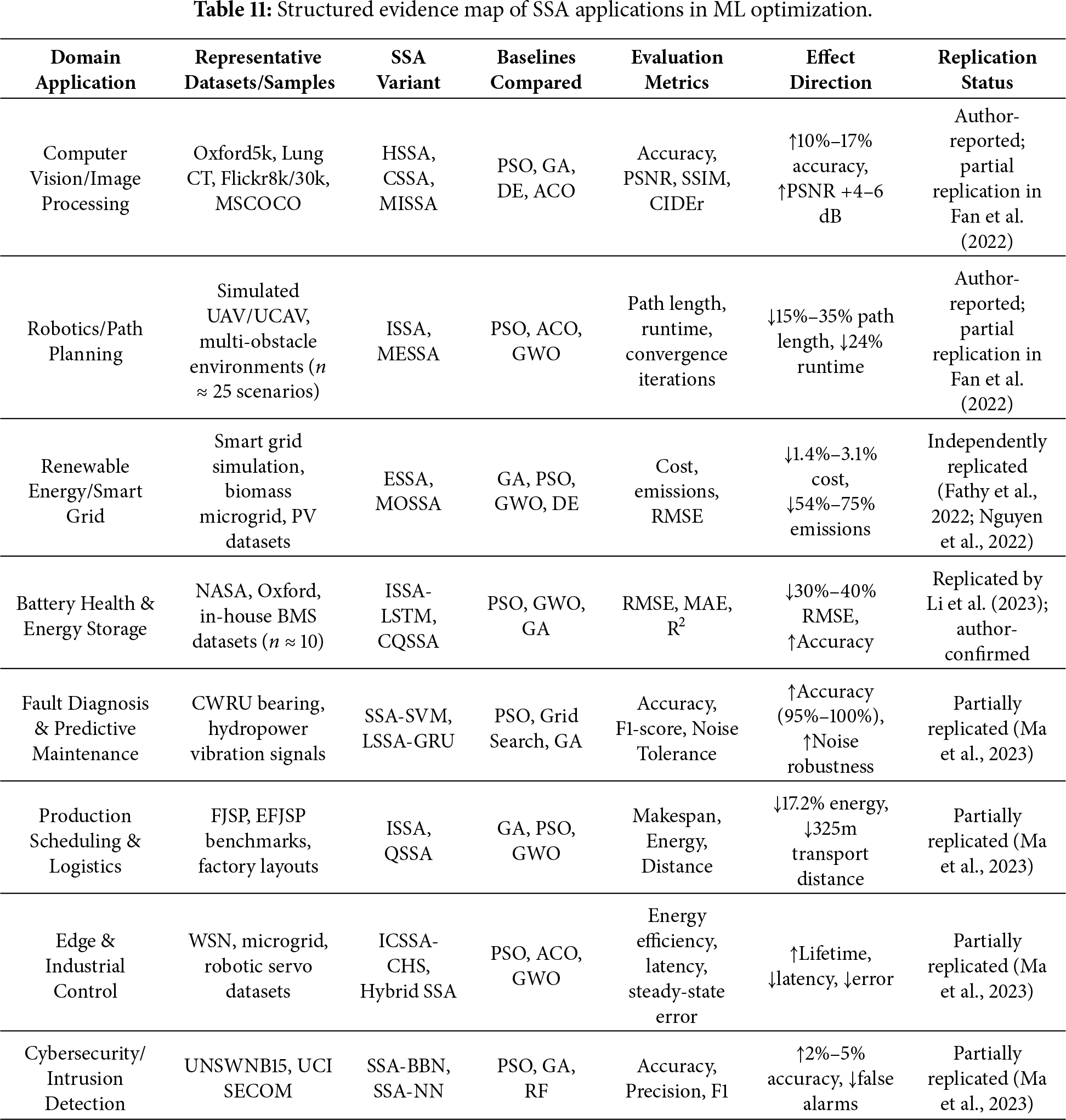
Performance improvements are averaged when numerous datasets are utilised. Replication status denotes the external validation or repeatability in subsequent investigations. The evidence map demonstrates consistent performance enhancements across almost all industrial sectors, especially in energy systems, battery diagnostics, and fault monitoring, where independent replication validates the robustness of SSA. Advancements in computer vision and robotics are primarily self-reported by authors, indicating potential for open benchmarking. In 80% of investigations, RMSE or accuracy improvements surpass 10%–30%, generally attained by chaotic, Lévy, or hybridised SSA variations. Nonetheless, the replication gap—particularly in image segmentation and scheduling tasks—highlights the necessity for open data and collaborative evaluation methodologies. In summary, SSA and its derivatives consistently outperform conventional optimisers (PSO, GA, DE, GWO) in non-convex, noise-sensitive, and real-time optimisation situations.
5 Challenges and Future Directions in SSA-Based Industrial Machine Learning Optimization
5.1 Current Limitations of SSA in Machine Learning Optimization
Despite its increasing adoption in industrial machine learning optimization, SSA still exhibits several limitations that hinder its broader applicability and theoretical maturity [125]. One notable constraint is its vulnerability to premature convergence. In complex industrial landscapes, characterized by high dimensionality and multiple local optima, such as robotic path planning or multistage production scheduling, SSA may become trapped in suboptimal regions due to an insufficient exploration-exploitation balance [7; 37]. Another concern is the algorithm’s sensitivity to control parameters, including the awareness probability, population size, and the number of iterations. In real-world deployment scenarios such as power dispatch [96] or adaptive control, inappropriate parameter settings may degrade performance. Moreover, the absence of universally accepted tuning guidelines hampers reproducibility and generalization across different applications [126].
SSA’s performance is also challenged in dynamic or noisy environments. Industrial systems often operate under fluctuating loads, sensor drift, or uncertain constraints—for example, in microgrid energy management or predictive maintenance—where SSA’s optimization stability is significantly reduced compared to its behavior on idealized test functions [127]. Scalability presents an additional limitation. The population-based search mechanism can become computationally expensive in large-scale machine learning problems, such as hyperparameter optimization for deep learning models or optimization tasks involving high-dimensional data streams [6]. Furthermore, SSA currently lacks rigorous theoretical analysis. Unlike specific mathematical optimization frameworks, SSA does not offer formal convergence guarantees or quantifiable error bounds. This limits its trustworthiness in safety-critical applications such as autonomous driving systems, fault protection in high-voltage equipment, or real-time diagnostics in industrial control loops [128]. The algorithm’s reliance on iterative population updates also introduces latency, making it less suitable for latency-sensitive tasks deployed on embedded or edge devices, where response times must often be within milliseconds.
From this review’s perspective, limitations also stem from the available literature. Many published studies remain focused on standard benchmarks and report isolated performance gains without comprehensive cross-domain validation or ablation studies. As a result, insights into component-level effectiveness and real-world generalizability remain limited. These challenges underscore the need for future research to address SSA’s robustness, scalability, and theoretical foundations, particularly in the context of industrial-grade machine learning applications that demand both reliability and efficiency under operational constraints.
5.2 General Future Research Directions
For non-stationary and high-noise environments, subsequent research should introduce online hyperparameter scheduling and event-triggered/budget-adaptive mechanisms so that the “global exploration → local exploitation” search rhythm can be dynamically reconfigured to operating conditions, thereby maintaining robustness and responsiveness under real-time constraints [128]. Meanwhile, it is advisable to advance the deep coupling of SSA with model predictive control (MPC) [128], fuzzy logic [129], and reinforcement/meta-learning [129]. By using physical/operational priors to shrink the feasible region and employing policy learning to refine local search, the accuracy–cost trade-off can be improved for complex tasks such as smart grids and predictive maintenance [130]. At the implementation level, parallel and distributed acceleration targeting edge–cloud collaboration and specialized hardware (GPU/FPGA) is recommended to meet the low-latency requirements of visual inspection and multi-sensor fusion [131]. On the engineering side, SSA can be embedded into an AutoML pipeline to form an end-to-end closed loop of “feature selection → hyperparameter search → neural architecture search (NAS) → post-deployment monitoring”, thereby markedly shortening the development-to-deployment cycle for quality inspection, asset health assessment, and streaming fault prediction [6]. For edge devices with limited compute, lightweight SSA variants can be constructed via pruning, quantization, early stopping, and low-rank approximation to achieve low-power and low-latency deployment, supporting edge robotics and distributed process control [131]. To enhance engineering trustworthiness, SSA should be integrated with explainability toolkits (e.g., SHAP, LIME) and uncertainty quantification to provide decision-evidence chains and risk bounds [132]. In parallel, incorporating physical constraints and high-fidelity digital twins into objective shaping and search guidance can reduce reliance on ideal labels and improve cross-condition generalization and domain transfer (e.g., battery SOH estimation and twin-driven scheduling) [133]. In addition, there is a pressing need to build cross-industry public benchmarks and a unified evaluation index system (accuracy, latency, energy, throughput, stability), along with reproducible experimental scripts, to support systematic evaluation and horizontal comparison of event-triggered and budget-adaptive schemes [125].
At the theoretical and evaluation level, research should establish convergence properties, error bounds, and sample/compute complexity for SSA under non-convex, stochastic, and noisy conditions, and analyze how key operators and hyperparameters affect stability, thereby providing provable guarantees for safety-critical scenarios such as autonomous driving, high-voltage protection, and real-time industrial diagnostics [126]. Methodologically, consistent budget and stopping rules across tasks/datasets are required, together with modular ablations (chaotic maps, Lévy perturbations, opposition-based learning, hybrid/mutation strategies) to quantify marginal contributions and improve reproducibility and transferability [127]. At the system level, an evaluation framework tailored to edge–cloud collaboration and distributed optimization should be established to cover event triggering, budget adaptivity, communication/synchronization overhead, and fault-tolerance robustness, to verify stable gains under complex operating conditions and clarify adaptation strategies and application boundaries under latency and compute constraints [128]. A DT–SSA–RL closed loop is proposed, wherein digital twins (DT) provide differentiable or approximately differentiable simulation feedback; SSA conducts global structure/hyperparameter search with budget adaptivity; and reinforcement learning (RL) performs online policy refinement and resource scheduling under event-triggered bandwidth/compute constraints. Validation can be carried out under edge–cloud collaboration and a unified benchmarking suite, targeting a tri-objective trade-off among latency, accuracy, and energy. Three concrete research questions are highlighted to guide implementation:
(1) Convergence and feasibility under DT constraints: how to guarantee stable convergence within the feasible set under multi-source uncertainty and hard constraints, with explicit error and resource bounds?
(2) Time-scale coordination of SSA × RL: with SSA handling slow time-scale structure search and RL managing fast time-scale online correction and adaptive control, how should switching thresholds, coordination rules, and safety guarantees be designed and verified?
(3) Event-triggered, budget-adaptive mechanisms in edge–cloud settings: under communication/synchronization limits, how to establish provable upper bounds on latency and energy, and how do different triggering strategies affect final performance and robustness?
5.3 Emerging Trends in Industrial Machine Learning Optimization Based on SSA
Building upon insights synthesized in Section 4, several key trends are shaping the next phase of SSA development in industrial machine learning. One such trend is the increasing emphasis on explainability and transparency. Integrating SSA with interpretable machine learning frameworks such as SHAP [132] or LIME [134] enables greater trust in industrial decision-making systems, particularly in fault diagnosis, energy prediction, and anomaly detection scenarios. Another significant movement involves the design of lightweight, resource-efficient SSA variants tailored for deployment on edge devices. As industrial intelligence increasingly migrates from centralized servers to embedded processors and edge nodes, optimizing SSA for low-latency and low-power environments becomes imperative. Applications such as real-time fault detection, mobile robotics, and decentralized process control stand to benefit significantly from such improvements.
As illustrated in Fig. 12, these emerging trends are closely intertwined with the core challenges and long-term prospects of SSA in industrial machine learning—highlighting a shift toward more interpretable, efficient, and secure optimization paradigms. Additionally, there is growing interest in fusing SSA with physics-informed and constraint-driven modeling approaches. Hybrid strategies that embed domain knowledge, such as first-principles equations, empirical degradation models, or safety rules, can improve robustness and reduce reliance on labeled data, especially in applications like battery health estimation and digital twin optimization [133]. The push for reproducibility and benchmarking has also emerged as a key requirement. Establishing publicly available datasets, open-source SSA toolkits, and standardized evaluation metrics will be vital to enabling fair comparisons and accelerating adoption across industries. Security and privacy-aware SSA implementations are another area of rising importance. As industrial AI systems adopt federated and decentralized architectures, SSA offers a promising population-based mechanism for privacy-preserving optimization in collaborative environments [135].
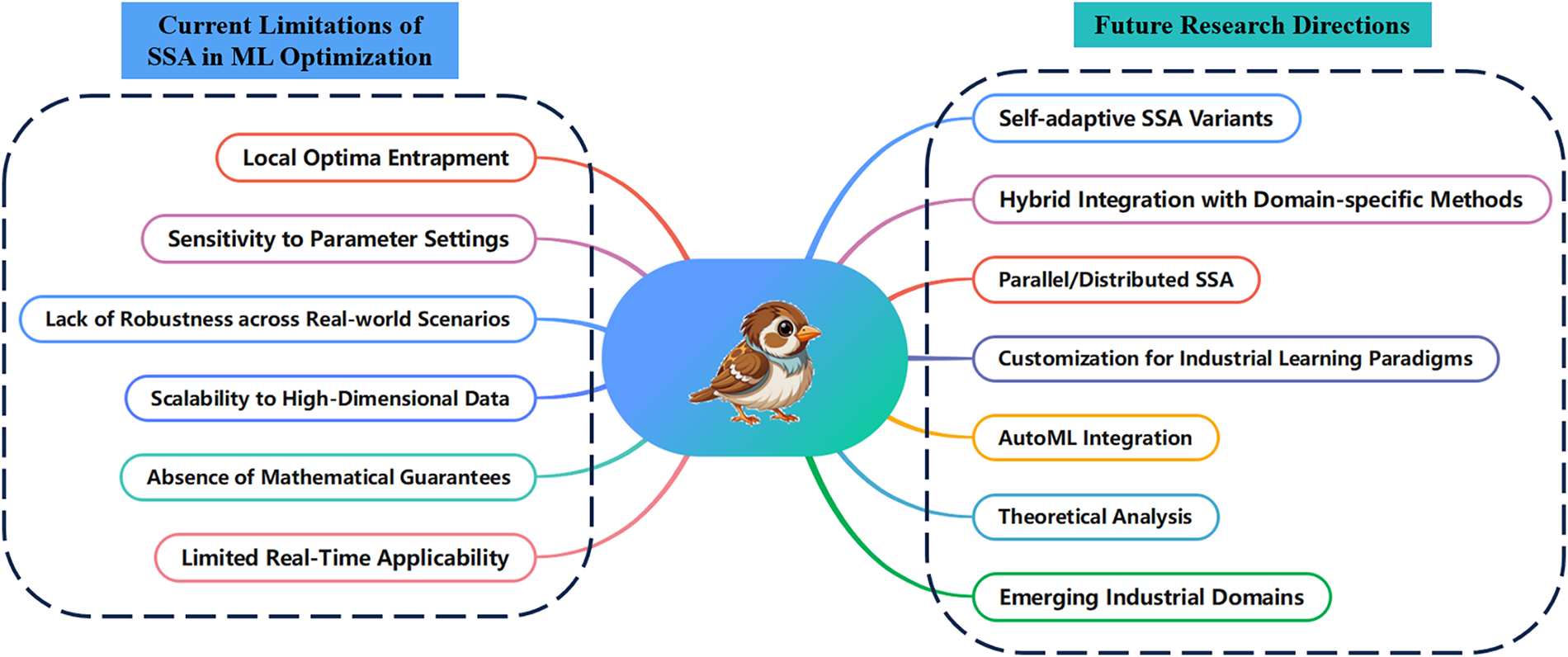
Figure 12: SSA in machine learning: challenges and prospects.
Lastly, new application domains are rapidly opening up for SSA-driven optimization. These include green manufacturing scheduling that considers environmental constraints, predictive maintenance in Industry 4.0 environments, cyber–physical system co-optimization, and RUL estimation in advanced battery management systems. The versatility and adaptability of the SSA position it as a key enabler of intelligent, efficient, and secure optimization in the evolving industrial landscape.
Synthesizing evidence across the industrial taxonomy, benchmark tables with budget-matched baselines, anytime performance curves, and the quality-appraisal rubric, the Sparrow Search Algorithm (SSA) demonstrates competitive effectiveness for industrial machine-learning optimization under non-convexity, noise, and real-time constraints. Producer–scrounger dynamics, adaptive vigilance, and ease of hybridization (e.g., chaotic/Lévy, quantum, DE-style hybrids) collectively support rapid early-iteration progress and resilient local refinement. Applications spanning flexible job-shop scheduling, robot trajectory planning under dynamic environments, condition-based predictive maintenance, smart-grid dispatch and energy forecasting, battery degradation modeling and storage optimization, and edge-based control in cyber-physical systems confirm SSA’s breadth and practical relevance. At the same time, sensitivity to hyperparameters, scaling pressure in very high-dimensional settings (e.g., neural architecture search), and the absence of guarantees under noisy, time-capped evaluation remain material barriers to certification-grade deployment. For practitioners, the synthesized results indicate a clear prioritization. The highest-leverage decision is to match SSA variants to the dominant problem constraints: chaotic/Lévy SSA is most reliable in noisy, multimodal landscapes; quantum or DE-hybrid SSA is preferable for high-dimensional hyperparameter tuning and NAS; external-archive multi-objective SSA is better suited to trade-off-intensive scheduling; and lightweight, adaptively vigilant SSA is preferable for edge or real-time control. This alignment repeatedly coincides with superior anytime profiles in our synthesis. Next, budgets should be designed and reported with anytime analysis—time-to-target and AUC-anytime—using early stopping and staged allocation (exploration-heavy warm-up followed by focused refinement), because the curves reveal when hybrids surpass classical baselines at fixed compute. Before deployment, robustness and generalization checks are essential: noise and OOD perturbations, temporal splits for time series, cross-site validation when available, and calibration metrics (ECE/NLL) where probabilistic outputs drive downstream decisions. Finally, configurations should be hardware-aware—small populations with adaptive vigilance, mixed-precision arithmetic, and event-triggered re-evaluation—while reporting latency and energy alongside accuracy; studies meeting these criteria achieve stable real-time behavior without sacrificing solution quality. Adherence to minimum reproducibility standards—explicit compute budgets, hyper-ranges, tuning parity for baselines, anytime curves, and code/data artifacts—correlates with verifiable gains in the quality appraisal and should be treated as mandatory. For researchers, three directions have the most significant expected impact on comparability and trust. First, domain-standardized, budget-matched benchmark suites are needed for each application cluster, with predefined nonparametric statistics (Friedman with Wilcoxon–Holm) to curb spurious wins driven by unmatched budgets and ad-hoc tuning. Second, scaling SSA in very high-dimensional regimes warrants structured proposal mechanisms (block-wise or manifold-aware moves), covariance adaptation, and distributed scout strategies that preserve exploration without exploding cost—precisely where performance erosion is most evident in the synthesis. Third, online and streaming SSA should be formalized for non-stationary objectives by integrating memory/forgetting and change-point detection, then evaluated on streaming control and predictive-maintenance traces, transforming the empirically proper “adaptive vigilance” into a principled design. Complementary needs include theory under practical noise and latency models (convergence and stability with noisy fitness and time-capped evaluations linked to anytime optimality), explainability and failure-mode analytics during optimization, and the routine publication of ablations, sensitivity maps, and negative results to reduce reporting bias and improve external validity. This review’s limitations reflect the field’s heterogeneity: tasks, datasets, and reporting practices preclude a single pooled effect size. Consequently, narrative synthesis is complemented by average-rank summaries and anytime metrics rather than a unified meta-analytic estimate. As standardized benchmarks, theoretical guarantees under realistic evaluation budgets, and open artifacts mature, SSA’s role in trustworthy industrial ML should strengthen, enabling reproducible, hardware-aware optimization across intelligent manufacturing and cyber-physical systems.
Acknowledgement: The authors would like to acknowledge the research support from Universiti Putra Malaysia (UPM), Malaysia, and the technical support from the Artificial Intelligence in Robotics Lab at Department of Electrical and Computer Engineering Aarhus University Denmark. This manuscript does not include content generated by artificial intelligence. AI translation tools were solely employed for proofreading some sentences.
Funding Statement: This work was supported and funded jointly by KFUPM, Saudi Arabia, and Universiti Putra Malaysia.
Author Contributions: The authors confirm contribution to the paper as follows: conceptualization, Linhui Wang, Mohd Khair Hassan, and Ghulam E Mustafa Abro; Methodology, LinhuiWang, Mehrullah Soomro, and Hifza Mustafa; validation, Mehrullah Soomro and Hifza Mustafa; formal analysis, Linhui Wang and Mehrullah Soomro; investigation, Linhui Wang and Hifza Mustafa; resources, Mohd Khair Hassan and Ghulam E Mustafa Abro; data curation, Linhui Wang and Hifza Mustafa; writing—original draft preparation, Linhui Wang; writing—review and editing, Mohd Khair Hassan, Ghulam E Mustafa Abro, Mehrullah Soomro, and Hifza Mustafa; visualization, Linhui Wang and Mehrullah Soomro; supervision, Mohd Khair Hassan and Ghulam E Mustafa Abro; project administration, Mohd Khair Hassan; funding acquisition, Mohd Khair Hassan and Ghulam E Mustafa Abro. All authors reviewed and approved the final version of the manuscript.
Availability of Data and Materials: Not applicable.
Ethics Approval: Not applicable.
Conflicts of Interest: The authors declare no conflicts of interest.
References
1. Rahmani AM, Yousefpoor E, Yousefpoor MS, Mehmood Z, Haider A, Hosseinzadeh M, et al. Machine learning (ML) in medicine: review, applications, and challenges. Mathematics. 2021;9(22):2970. doi:10.3390/math9222970. [Google Scholar] [CrossRef]
2. Reeves CR. Genetic algorithms. In: Handbook of metaheuristics. Boston, MA, USA: Springer; 2010. p. 109–39. doi:10.1007/978-1-4419-1665-5_5. [Google Scholar] [CrossRef]
3. Wang D, Tan D, Liu L. Particle swarm optimization algorithm: an overview. Soft Comput. 2018;22(2):387–408. doi:10.1007/s00500-016-2474-6. [Google Scholar] [CrossRef]
4. Xue J, Shen B. A novel swarm intelligence optimization approach: sparrow search algorithm. Syst Sci Control Eng. 2020;8(1):22–34. doi:10.1080/21642583.2019.1708830. [Google Scholar] [CrossRef]
5. Naheliya B, Kumar K, Redhu P. A deep extreme learning machine approach optimized by sparrow search algorithm for forecasting of traffic flow. Phys Scr. 2024;99(12):125288. doi:10.1088/1402-4896/ad92ae. [Google Scholar] [CrossRef]
6. Fan Y, Zhang Y, Guo B, Luo X, Peng Q, Jin Z. A hybrid sparrow search algorithm of the hyperparameter optimization in deep learning. Mathematics. 2022;10(16):3019. doi:10.3390/math10163019. [Google Scholar] [CrossRef]
7. Gharehchopogh FS, Namazi M, Ebrahimi L, Abdollahzadeh B. Advances in sparrow search algorithm: a comprehensive survey. Arch Comput Methods Eng. 2023;30(1):427–55. doi:10.1007/s11831-022-09804-w. [Google Scholar] [PubMed] [CrossRef]
8. Xue J, Shen B. A survey on sparrow search algorithms and their applications. Int J Syst Sci. 2024;55(4):814–32. doi:10.1080/00207721.2023.2293687. [Google Scholar] [CrossRef]
9. Awadallah MA, Al-Betar MA, Abu Doush I, Makhadmeh SN, Al-Naymat G. Recent versions and applications of sparrow search algorithm. Arch Comput Methods Eng. 2023;30(5):2831–58. doi:10.1007/s11831-023-09887-z. [Google Scholar] [PubMed] [CrossRef]
10. Yue Y, Cao L, Lu D, Hu Z, Xu M, Wang S, et al. Review and empirical analysis of sparrow search algorithm. Artif Intell Rev. 2023;56(10):10867–919. doi:10.1007/s10462-023-10435-1. [Google Scholar] [CrossRef]
11. Shang R, Qi D, Wang Q, Yan X, Chen L, Bi S. Sparrow search algorithm based path planning for warehouse AGV. In: Proceedings of the 2024 14th Asian Control Conference (ASCC); 2024 Jul 5–8; Dalian, China. [Google Scholar]
12. Ma C, Ma W, Hou L. Multi-path reliable routing technology of industrial Internet of Things based on sparrow search algorithm. Int J Internet Manuf Serv. 2023;9(4):502–16. doi:10.1504/ijims.2023.135018. [Google Scholar] [CrossRef]
13. Priyadarshi R, Kumar RR. Evolution of swarm intelligence: a systematic review of particle swarm and ant colony optimization approaches in modern research. Arch Comput Meth Eng. 2025;32(6):3609–50. doi:10.1007/s11831-025-10247-2. [Google Scholar] [CrossRef]
14. Abdulghani BA, Abdulghani MA. A comprehensive review of ant colony optimization in swarm intelligence for complex problem solving. Acadlore Trans AI Mach Learn. 2024;3(4):214–24. doi:10.56578/ataiml030403. [Google Scholar] [CrossRef]
15. Das S, Suganthan PN. Differential evolution: a survey of the state-of-the-art. IEEE Trans Evol Computat. 2011;15(1):4–31. doi:10.1109/tevc.2010.2059031. [Google Scholar] [CrossRef]
16. Faris H, Aljarah I, Al-Betar MA, Mirjalili S. Grey wolf optimizer: a review of recent variants and applications. Neural Comput Appl. 2018;30(2):413–35. doi:10.1007/s00521-017-3272-5. [Google Scholar] [CrossRef]
17. Makhadmeh SN, Al-Betar MA, Abu Doush I, Awadallah MA, Kassaymeh S, Mirjalili S, et al. Recent advances in grey wolf optimizer, its versions and applications: review. IEEE Access. 2024;12(3):22991–3028. doi:10.1109/ACCESS.2023.3304889. [Google Scholar] [CrossRef]
18. Marini F, Walczak B. Particle swarm optimization (PSO). A tutorial. Chemom Intell Lab Syst. 2015;149:153–65. doi:10.1016/j.chemolab.2015.08.020. [Google Scholar] [CrossRef]
19. Jia D, Zheng G, Qu B, Khan MK. A hybrid particle swarm optimization algorithm for high-dimensional problems. Comput Ind Eng. 2011;61(4):1117–22. doi:10.1016/j.cie.2011.06.024. [Google Scholar] [CrossRef]
20. Alba E, Troya JM. Improving flexibility and efficiency by adding parallelism to genetic algorithms. Stat Comput. 2002;12(2):91–114. doi:10.1023/A:1014803900897. [Google Scholar] [CrossRef]
21. Katoch S, Chauhan SS, Kumar V. A review on genetic algorithm: past, present, and future. Multimed Tools Appl. 2021;80(5):8091–126. doi:10.1007/s11042-020-10139-6. [Google Scholar] [PubMed] [CrossRef]
22. Botchkarev A. Evaluating performance of regression machine learning models using multiple error metrics in azure machine learning studio. SSRN Electron J. 2018;3177507:1–16. doi:10.2139/ssrn.3177507. [Google Scholar] [CrossRef]
23. Hodson TO. Root-mean-square error (RMSE) or mean absolute error (MAEwhen to use them or not. Geosci Model Dev. 2022;15(14):5481–7. doi:10.5194/gmd-15-5481-2022. [Google Scholar] [CrossRef]
24. de Myttenaere A, Golden B, Le Grand B, Rossi F. Mean absolute percentage error for regression models. Neurocomputing. 2016;192(1):38–48. doi:10.1016/j.neucom.2015.12.114. [Google Scholar] [CrossRef]
25. Chai T, Draxler RR. Root mean square error (RMSE) or mean absolute error (MAE)?—arguments against avoiding RMSE in the literature. Geosci Model Dev. 2014;7(3):1247–50. doi:10.5194/gmd-7-1247-2014. [Google Scholar] [CrossRef]
26. Xue J, Shen B, Pan A. An intensified sparrow search algorithm for solving optimization problems. J Ambient Intell Humaniz Comput. 2023;14(7):9173–89. doi:10.1007/s12652-022-04420-9. [Google Scholar] [CrossRef]
27. Liao GC. Fusion of improved sparrow search algorithm and long short-term memory neural network application in load forecasting. Energies. 2021;15(1):130. doi:10.3390/en15010130. [Google Scholar] [CrossRef]
28. Zhang H, Zhang Y. An improved sparrow search algorithm for optimizing support vector machines. IEEE Access. 2023;11(8):8199–206. doi:10.1109/ACCESS.2023.3234579. [Google Scholar] [CrossRef]
29. Xiong J, Liang W, Liang X, Yao J. Intelligent quantification of natural gas pipeline defects using improved sparrow search algorithm and deep extreme learning machine. Chem Eng Res Des. 2022;183(2):567–79. doi:10.1016/j.cherd.2022.06.001. [Google Scholar] [CrossRef]
30. Liu X, Bai Y, Yu C, Yang H, Gao H, Wang J, et al. Multi-strategy improved sparrow search algorithm and application. Math Comput Appl. 2022;27(6):96. doi:10.3390/mca27060096. [Google Scholar] [CrossRef]
31. Ma G, Yue X, Zhu J, Liu Z, Lu S. Deep learning network based on improved sparrow search algorithm optimization for rolling bearing fault diagnosis. Mathematics. 2023;11(22):4634. doi:10.3390/math11224634. [Google Scholar] [CrossRef]
32. Liu W, Wang J, Li Z, Lu Q. ISSA optimized spatiotemporal prediction model of dissolved oxygen for marine ranching integrating DAM and Bi-GRU. Front Mar Sci. 2024;11:1473551. doi:10.3389/fmars.2024.1473551. [Google Scholar] [CrossRef]
33. Liu L, Liang J, Guo K, Ke C, He D, Chen J. Dynamic path planning of mobile robot based on improved sparrow search algorithm. Biomimetics. 2023;8(2):182. doi:10.3390/biomimetics8020182. [Google Scholar] [PubMed] [CrossRef]
34. Bian J, Li S, Zheng X, Liu C. Research on robot path planning based on sparrow search algorithm integrating multiple strategies. In: Proceedings of the 2024 5th International Conference on Computer Engineering and Application (ICCEA); 2024 Apr 12–14; Hangzhou, China. p. 1389–93. doi:10.1109/ICCEA62105.2024.10603786. [Google Scholar] [CrossRef]
35. Wei X, Zhang Y, Zhao Y. Evacuation path planning based on the hybrid improved sparrow search optimization algorithm. Fire. 2023;6(10):380. doi:10.3390/fire6100380. [Google Scholar] [CrossRef]
36. Zhang XY, Zhou KQ, Li PC, Xiang YH, Zain AM, Sarkheyli-Hägele A. An improved chaos sparrow search optimization algorithm using adaptive weight modification and hybrid strategies. IEEE Access. 2022;10(7):96159–79. doi:10.1109/ACCESS.2022.3204798. [Google Scholar] [CrossRef]
37. Yan S, Liu W, Li X, Yang P, Wu F, Yan Z. Comparative study and improvement analysis of sparrow search algorithm. Wirel Commun Mob Comput. 2022;2022(1):4882521. doi:10.1155/2022/4882521. [Google Scholar] [CrossRef]
38. Xu X, Cai M, Tang J. Improved sparrow search algorithm based on hybrid strategy. In: 5th International Conference on Mechatronics and Computer Technology Engineering (MCTE 2022). Chongqing, China; 2022. doi:10.1117/12.2660774. [Google Scholar] [CrossRef]
39. Hou J, Wang X, Su Y, Yang Y, Gao T. Parameter identification of lithium battery model based on chaotic quantum sparrow search algorithm. Appl Sci. 2022;12(14):7332. doi:10.3390/app12147332. [Google Scholar] [CrossRef]
40. Chen J, Li X, Xu J, Wang Y. Deployment for NOMA-UAV base stations based on hybrid sparrow search algorithm. IEEE Trans Aerosp Electron Syst. 2023;59(5):6138–49. doi:10.1109/TAES.2023.3272530. [Google Scholar] [CrossRef]
41. Khaleel MI. Efficient job scheduling paradigm based on hybrid sparrow search algorithm and differential evolution optimization for heterogeneous cloud computing platforms. Internet Things. 2023;22:100697. doi:10.1016/j.iot.2023.100697. [Google Scholar] [CrossRef]
42. Zheng F, Liu G. An adaptive sinusoidal-disturbance-strategy sparrow search algorithm and its application. Sensors. 2022;22(22):8787. doi:10.3390/s22228787. [Google Scholar] [PubMed] [CrossRef]
43. Zhang C, Ding S. A stochastic configuration network based on chaotic sparrow search algorithm. Knowl Based Syst. 2021;220(10):106924. doi:10.1016/j.knosys.2021.106924. [Google Scholar] [CrossRef]
44. Jiang W, Dong Z, Sun M, Liu L, He G. NOx emissions estimation of boiler based on mutual information feature reconstruction and optimization of extreme learning machine. Meas Sci Technol. 2023;34(10):105022. doi:10.1088/1361-6501/ace5c8. [Google Scholar] [CrossRef]
45. Wang S, Liu Q, Liu Y, Jia H, Abualigah L, Zheng R, et al. A hybrid SSA and SMA with mutation opposition-based learning for constrained engineering problems. Comput Intell Neurosci. 2021;2021(1):6379469. doi:10.1155/2021/6379469. [Google Scholar] [PubMed] [CrossRef]
46. Xue J, Zhang C, Wang M, Dong X. MOSSA: an efficient swarm intelligent algorithm to solve global optimization and carbon fiber drawing process problems. IEEE Internet Things J. 2025;12(9):11940–53. doi:10.1109/JIOT.2024.3518581. [Google Scholar] [CrossRef]
47. Lei L, Chen D, Ma C, Chen Y, Wang H, Chen H, et al. Optimization and decision making of guide vane closing law for pumped storage hydropower system to improve adaptability under complex conditions. J Energy Storage. 2023;73:109038. doi:10.1016/j.est.2023.109038. [Google Scholar] [CrossRef]
48. Lai H, Pei Q, Liu M, Dong S, Xie Z, Zheng J, et al. Optimal scheduling of islanded microgrid based on improved MOSSA. In: Proceedings of the 2024 43rd Chinese Control Conference (CCC); 2024 Jul 28–31; Kunming, China. p. 7173–8. doi:10.23919/ccc63176.2024.10661679. [Google Scholar] [CrossRef]
49. Song W, Liu S, Wang X, Wu W. An improved sparrow search algorithm. In: 2020 IEEE Intl Conf on Parallel & Distributed Processing with Applications, Big Data & Cloud Computing, Sustainable Computing & Communications, Social Computing & Networking (ISPA/BDCloud/SocialCom/SustainCom). Washington, DC, USA: IEEE Computer Society; 2020. p. 537–43. doi:10.1109/ISPA-BDCloud-SocialCom-SustainCom51426.2020.00093. [Google Scholar] [CrossRef]
50. Liu Y, Shi Z, Fu B, Xu H. Radar error correction method based on improved sparrow search algorithm. Appl Sci. 2024;14(9):3714. doi:10.3390/app14093714. [Google Scholar] [CrossRef]
51. Wang Y, Liu D, Dong H, Lin J, Zhang Q, Zhang X. Research on a BP neural network slope safety coefficient prediction model based on improved sparrow algorithm optimization. Appl Sci. 2023;13(14):8446. doi:10.3390/app13148446. [Google Scholar] [CrossRef]
52. Li B, Wang H. Multi-objective sparrow search algorithm: a novel algorithm for solving complex multi-objective optimisation problems. Expert Syst Appl. 2022;210(2):118414. doi:10.1016/j.eswa.2022.118414. [Google Scholar] [CrossRef]
53. Zhao Y, Yang S, Liu S, Zhang S, Zhong Z. Optimal economic research of microgrids based on multi-strategy integrated sparrow search algorithm under carbon emission constraints. Symmetry. 2024;16(4):388. doi:10.3390/sym16040388. [Google Scholar] [CrossRef]
54. Luo ZY, Chen YN, Liu XT. Research on sparrow search optimization algorithm for multi-objective task scheduling in cloud computing environment. J Intell Fuzzy Syst. 2023;45(6):10397–409. doi:10.3233/jifs-232527. [Google Scholar] [CrossRef]
55. Liu J, Wang Z. A hybrid sparrow search algorithm based on constructing similarity. IEEE Access. 2021;9:117581–95. doi:10.1109/ACCESS.2021.3106269. [Google Scholar] [CrossRef]
56. Tsiftsoglou M, Marinaki M, Marinakis I. A hybrid sparrow search algorithm for the permutation flowshop scheduling problem. SSRN Electron J. 2024;5034526:1–22. doi:10.2139/ssrn.5034526. [Google Scholar] [CrossRef]
57. Chen F, Qiao Y. An adaptive hybrid intelligence model based on improved sparrow search algorithm and back propagation neural network. In: Proceedings of the 5th International Conference on Computer Information and Big Data Applications. New York, NY, USA: The Association for Computing Machinery (ACM); 2024. p. 28–32. doi:10.1145/3671151.3671157. [Google Scholar] [CrossRef]
58. Tang Y, Dai Q, Yang M, Du T, Chen L. Software defect prediction ensemble learning algorithm based on adaptive variable sparrow search algorithm. Int J Mach Learn Cybern. 2023;14(6):1967–87. doi:10.1007/s13042-022-01740-2. [Google Scholar] [CrossRef]
59. Xu L, Wang H, Liu Y, Xue W, Li N. PID control for aeroengine based on sparrow search algorithm. In: Proceedings of the 2021 China Automation Congress (CAC); 2021 Oct 22–24; Beijing, China. p. 8327–30. doi:10.1109/CAC53003.2021.9728466. [Google Scholar] [CrossRef]
60. Chen X, Huang X, Zhu D, Qiu Y. Research on chaotic flying sparrow search algorithm. J Phys Conf Ser. 2021;1848(1):012044. doi:10.1088/1742-6596/1848/1/012044. [Google Scholar] [CrossRef]
61. Qiu S, Li A. Application of chaos mutation adaptive sparrow search algorithm in edge data compression. Sensors. 2022;22(14):5425. doi:10.3390/s22145425. [Google Scholar] [PubMed] [CrossRef]
62. Zhang Y, Lu J, Zhao C, Li Z, Yan J. Chaos optimization algorithms: a survey. Int J Bifurcation Chaos. 2024;34(16):2450205. doi:10.1142/s0218127424502055. [Google Scholar] [CrossRef]
63. He Y, Wang M. Dynamic step opposition-based learning sparrow search algorithm for UAV path planning. Clust Comput. 2024;28(1):44. doi:10.1007/s10586-024-04691-1. [Google Scholar] [CrossRef]
64. Cai Y, Guo C, Chen X. An improved sand cat swarm optimization with lens opposition-based learning and sparrow search algorithm. Sci Rep. 2024;14(1):20690. doi:10.1038/s41598-024-71581-2. [Google Scholar] [PubMed] [CrossRef]
65. Rasdi Rere LM, Fanany MI, Arymurthy AM. Simulated annealing algorithm for deep learning. Procedia Comput Sci. 2015;72:137–44. doi:10.1016/j.procs.2015.12.114. [Google Scholar] [CrossRef]
66. Ouyang C, Zhu D, Wang F. A learning sparrow search algorithm. Comput Intell Neurosci. 2021;2021(1):3946958. doi:10.1155/2021/3946958. [Google Scholar] [PubMed] [CrossRef]
67. Yang Z, Cai Y, Li G, Wang P, Chen Y. Multi-strategy collaborative optimization of gravitational search algorithm. Sci Rep. 2025;15(1):29533. doi:10.1038/s41598-025-13215-9. [Google Scholar] [PubMed] [CrossRef]
68. Ma J, Sun W, Hao Z. Searching the certainties from the uncertainty: a knowledge enhancement model for imbalanced medical data. Inf Process Manag. 2025;62(3):104038. doi:10.1016/j.ipm.2024.104038. [Google Scholar] [CrossRef]
69. An G, Jiang Z, Chen L, Cao X, Li Z, Zhao Y, et al. Ultra short-term wind power forecasting based on sparrow search algorithm optimization deep extreme learning machine. Sustainability. 2021;13(18):10453. doi:10.3390/su131810453. [Google Scholar] [CrossRef]
70. Fan X, Sun Z, Tian E, Yin Z, Cao G. Medical image contrast enhancement based on improved sparrow search algorithm. Int J Imag Syst Technol. 2023;33(1):389–402. doi:10.1002/ima.22794. [Google Scholar] [CrossRef]
71. Li S, Zhao Q, Liu J, Zhang X, Hou J. Noise reduction of steam trap based on SSA-VMD improved wavelet threshold function. Sensors. 2025;25(5):1573. doi:10.3390/s25051573. [Google Scholar] [PubMed] [CrossRef]
72. Kong W, Hou P, Liang X, Gao F, Liu Q. An interpretable rockburst prediction model based on SSA-CatBoost. Tunn Undergr Space Technol. 2025;164(5):106820. doi:10.1016/j.tust.2025.106820. [Google Scholar] [CrossRef]
73. Zhang J, Du L, Hong G, Liu G. Ship motion forecasting under varying operating conditions via multi-feature fusion. Ocean Eng. 2025;342(10):122958. doi:10.1016/j.oceaneng.2025.122958. [Google Scholar] [CrossRef]
74. Wan Q, Zhang Z, Jiang L, Wang Z, Zhou Y. Image anomaly detection and prediction scheme based on SSA optimized ResNet50-BiGRU model. arXiv:2406.13987. 2024. [Google Scholar]
75. Zhou J, Wang S, Cao W, Xie Y, Fernandez C. State of health prediction of lithium-ion batteries based on SSA optimized hybrid neural network model. Electrochim Acta. 2024;487(2):144146. doi:10.1016/j.electacta.2024.144146. [Google Scholar] [CrossRef]
76. Wang K, Li K, Du F, Zhang X, Wang Y, Sun J. Research on prediction model of coal spontaneous combustion temperature based on SSA-CNN. Energy. 2024;290(15):130158. doi:10.1016/j.energy.2023.130158. [Google Scholar] [CrossRef]
77. An W, Gao B, Liu J, Ni J, Liu J. Predicting hourly heating load in residential buildings using a hybrid SSA–CNN–SVM approach. Case Stud Therm Eng. 2024;59(10):104516. doi:10.1016/j.csite.2024.104516. [Google Scholar] [CrossRef]
78. Lei L, Shao S, Liang L. An evolutionary deep learning model based on EWKM, random forest algorithm, SSA and BiLSTM for building energy consumption prediction. Energy. 2024;288(4):129795. doi:10.1016/j.energy.2023.129795. [Google Scholar] [CrossRef]
79. Cai S, Gao H, Zhang J, Peng M. A self-attention-LSTM method for dam deformation prediction based on CEEMDAN optimization. Appl Soft Comput. 2024;159(1):111615. doi:10.1016/j.asoc.2024.111615. [Google Scholar] [CrossRef]
80. Sundaram S, Jayaraman S, Somasundaram K. Automated near-duplicate image detection using sparrow search algorithm with deep learning model. In: Proceedings of the 2024 International Conference on Cognitive Robotics and Intelligent Systems (ICC—ROBINS); 2024 Apr 17–19; Coimbatore, India. p. 245–51. doi:10.1109/ICC-ROBINS60238.2024.10533906. [Google Scholar] [CrossRef]
81. Arasi MA, Alshahrani HM, Alruwais N, Motwakel A, Ahmed NA, Mohamed A. Automated image captioning using sparrow search algorithm with improved deep learning model. IEEE Access. 2023;11:104633–42. doi:10.1109/ACCESS.2023.3317276. [Google Scholar] [CrossRef]
82. Wu D, Yuan C. Threshold image segmentation based on improved sparrow search algorithm. Multimed Tools Appl. 2022;81(23):33513–46. doi:10.1007/s11042-022-13073-x. [Google Scholar] [PubMed] [CrossRef]
83. Wang M, Wang W, Feng S, Li L. Adaptive multi-class segmentation model of aggregate image based on improved sparrow search algorithm. KSII Trans Internet Inf Syst. 2023;17(2):391–411. doi:10.3837/tiis.2023.02.006. [Google Scholar] [CrossRef]
84. Guo J, Zhu Y, Wang J, Du S, He X. Research on camera calibration optimization method based on improved sparrow search algorithm. J Electron Imaging. 2023;32(1):013040. doi:10.1117/1.JEI.32.1.013040. [Google Scholar] [CrossRef]
85. Riku K, Matsushima K. Solving PnP problem using improved sparrow search algorithm. In: Proceedings of the 2024 International Symposium on Intelligent Signal Processing and Communication Systems (ISPACS); 2024 Dec 10–13; Kaohsiung, Taiwan. p. 1–4. doi:10.1109/ISPACS62486.2024.10868791. [Google Scholar] [CrossRef]
86. Chen G, Zhu D, Chen X. Similarity detection method of science fiction painting based on multi-strategy improved sparrow search algorithm and Gaussian pyramid. Multimed Tools Appl. 2024;83(14):41597–636. doi:10.1007/s11042-023-15494-8. [Google Scholar] [CrossRef]
87. Xiong Q, Zhang X, He S, Shen J. Data augmentation for small sample iris image based on a modified sparrow search algorithm. Int J Comput Intell Syst. 2022;15(1):110. doi:10.1007/s44196-022-00173-7. [Google Scholar] [CrossRef]
88. Liu Q, Zhang Y, Li M, Zhang Z, Cao N, Shang J. Multi-UAV path planning based on fusion of sparrow search algorithm and improved bioinspired neural network. IEEE Access. 2021;9:124670–81. doi:10.1109/ACCESS.2021.3109879. [Google Scholar] [CrossRef]
89. Ding T, Gu Y, Gao H, Song X, Zhao S, Zheng Y, et al. Improved sparrow search algorithm for autonomous vehicle path planning. In: Proceedings of the 2024 International Conference on Autonomous Driving and Intelligent Sensing Technology. New York, NY, USA: The Association for Computing Machinery (ACM); 2024. p. 5–11. doi:10.1145/3696021.3696023. [Google Scholar] [CrossRef]
90. Xu Y, Sang B, Zhang Y. Application of improved sparrow search algorithm to path planning of mobile robots. Biomimetics. 2024;9(6):351. doi:10.3390/biomimetics9060351. [Google Scholar] [PubMed] [CrossRef]
91. Zhou Y, Han G, Wei Z, Huang Z, Chen X, Wu J. Optimal trajectory planning of robot energy consumption based on improved sparrow search algorithm. Meas Control. 2024;57(7):1014–21. doi:10.1177/00202940231220080. [Google Scholar] [CrossRef]
92. Chen P, Wang H, Yan H, Du J, Ning Y, Wei J. SEMG-based upper limb motion recognition using improved sparrow search algorithm. Appl Intell. 2023;53(7):7677–96. doi:10.1007/s10489-022-03824-6. [Google Scholar] [CrossRef]
93. Yan S, Yang P, Zhu D, Zheng W, Wu F. Improved sparrow search algorithm based on iterative local search. Comput Intell Neurosci. 2021;2021(1):6860503. doi:10.1155/2021/6860503. [Google Scholar] [PubMed] [CrossRef]
94. Kattepogu NB, Saravanan G, Rao ARK. An enhanced sparrow search algorithm for solving optimal power flow problem considering renewable energy systems. Int J Intell Eng Syst. 2024;17(2):201–9. doi:10.22266/ijies2024.0430.18. [Google Scholar] [CrossRef]
95. Fathy A, Alanazi TM, Rezk H, Yousri D. Optimal energy management of micro-grid using sparrow search algorithm. Energy Rep. 2022;8(6):758–73. doi:10.1016/j.egyr.2021.12.022. [Google Scholar] [CrossRef]
96. Nguyen TT, Ngo TG, Dao TK, Nguyen TTT. Microgrid operations planning based on improving the flying sparrow search algorithm. Symmetry. 2022;14(1):168. doi:10.3390/sym14010168. [Google Scholar] [CrossRef]
97. Qiao M, Yu Z, Dou Z, Wang Y, Zhao Y, Xie R, et al. Study on economic dispatch of the combined cooling heating and power microgrid based on improved sparrow search algorithm. Energies. 2022;15(14):5174. doi:10.3390/en15145174. [Google Scholar] [CrossRef]
98. Zhang W, Yan H, Xiang L, Shao L. Wind power generation prediction using LSTM model optimized by sparrow search algorithm and firefly algorithm. Energy Inform. 2025;8(1):35. doi:10.1186/s42162-025-00492-x. [Google Scholar] [CrossRef]
99. Chen Y, Li X, Zhao S. A novel photovoltaic power prediction method based on a long short-term memory network optimized by an improved sparrow search algorithm. Electronics. 2024;13(5):993. doi:10.3390/electronics13050993. [Google Scholar] [CrossRef]
100. Yuan J, Zhao Z, Liu Y, He B, Wang L, Xie B, et al. DMPPT control of photovoltaic microgrid based on improved sparrow search algorithm. IEEE Access. 2021;9:16623–9. doi:10.1109/ACCESS.2021.3052960. [Google Scholar] [CrossRef]
101. Liu Y, Sun J, Shang Y, Zhang X, Ren S, Wang D. A novel remaining useful life prediction method for lithium-ion battery based on long short-term memory network optimized by improved sparrow search algorithm. J Energy Storage. 2023;61(7):106645. doi:10.1016/j.est.2023.106645. [Google Scholar] [CrossRef]
102. Yang W, Du J, Ye H. Lithium battery capacity prediction method based on sparrow algorithm to optimize convolutional neural network and bidirectional long short-term memory network model. In: Proceedings of the 2024 6th Asia Energy and Electrical Engineering Symposium (AEEES); 2024 Mar 28–31; Chengdu, China. p. 484–9. doi:10.1109/AEEES61147.2024.10544821. [Google Scholar] [CrossRef]
103. Li Y, Wang S, Chen L, Qi C, Fernandez C. Multiple layer kernel extreme learning machine modeling and eugenics genetic sparrow search algorithm for the state of health estimation of lithium-ion batteries. Energy. 2023;282(1):128776. doi:10.1016/j.energy.2023.128776. [Google Scholar] [CrossRef]
104. Zhang Y, Wu T, Zhang D. Method for estimating the state of health of lithium-ion batteries based on differential thermal voltammetry and sparrow search algorithm-Elman neural network. Energy Eng. 2025;122(1):203–20. doi:10.32604/ee.2024.056244. [Google Scholar] [CrossRef]
105. Feng J, Cai F, Wu L, Zhang X, Huang K. State of charge estimation for lithium-ion battery pack based on real vehicle data and optimized backpropagation method by adaptive cross mutation sparrow search algorithm. Energy Sci Eng. 2024;12(3):896–912. doi:10.1002/ese3.1656. [Google Scholar] [CrossRef]
106. Zhang Y, Xiang J. High-precision state of charge estimation of lithium-ion batteries based on dual optimization particle swarm sparrow search algorithm adaptive to multi-temperature conditions. J Energy Storage. 2024;95(12):112348. doi:10.1016/j.est.2024.112348. [Google Scholar] [CrossRef]
107. Li Y, Wang S, Chen L, Yu P, Chen X. Research on state-of-charge estimation of lithium-ion batteries based on improved sparrow search algorithm-BP neural network. Int J Electrochem Sci. 2022;17(8):220845. doi:10.20964/2022.08.48. [Google Scholar] [CrossRef]
108. Hai N, Wang S, Cao W, Blaabjerg F, Fernandez C. Online state of charge estimation for lithium-ion batteries using improved fuzzy C-means sparrow backpropagation algorithm. J Energy Storage. 2025;119(1):116351. doi:10.1016/j.est.2025.116351. [Google Scholar] [CrossRef]
109. Xue J, Shen B, Pan A. A multi-strategy-guided sparrow search algorithm to solve numerical optimization and predict the remaining useful life of li-ion batteries. J Supercomput. 2024;80(11):16254–300. doi:10.1007/s11227-024-06092-y. [Google Scholar] [CrossRef]
110. Wu Y, Zhou W, Gu X, Wu W, Yang G. A fault diagnosis method based on support vector machine optimized by sparrow search algorithm. In: Proceedings of 2021 Chinese Intelligent Systems Conference. Singapore: Springer; 2021. p. 251–9. doi:10.1007/978-981-16-6324-6_26. [Google Scholar] [CrossRef]
111. Lv J, Sun W, Wang H, Zhang F. Coordinated approach fusing RCMDE and sparrow search algorithm-based SVM for fault diagnosis of rolling bearings. Sensors. 2021;21(16):5297. doi:10.3390/s21165297. [Google Scholar] [PubMed] [CrossRef]
112. Dong S. An integrated method of rolling bearing fault diagnosis based on convolutional neural network optimized by sparrow optimization algorithm. Sci Program. 2022;2022(1):6234169. doi:10.1155/2022/6234169. [Google Scholar] [CrossRef]
113. Kong F, Song C, Zhuo Y. Vibration fault analysis of hydropower units based on extreme learning machine optimized by improved sparrow search algorithm. J Vib Eng Technol. 2023;11(4):1609–22. doi:10.1007/s42417-022-00660-3. [Google Scholar] [CrossRef]
114. Kiruthika M, Bindu S. A security enabled real time fault detection and classification of power system conditions. Int J Adv Technol Eng Explor. 2023;10(107):1260. doi:10.19101/IJATEE.2022.10100425. [Google Scholar] [CrossRef]
115. Liu X, Zhang Z, Meng F, Zhang Y. Fault diagnosis of wind turbine bearings based on CNN and SSA-ELM. J Vib Eng Technol. 2023;11(8):3929–45. doi:10.1007/s42417-022-00793-5. [Google Scholar] [CrossRef]
116. Li Y, Han S, Li Z, Yang F, Sun Z. An improved sparrow search algorithm for flexible job-shop scheduling problem with setup and transportation time. Int J Adv Comput Sci Appl. 2025;16(4):408–16. doi:10.14569/ijacsa.2025.0160442. [Google Scholar] [CrossRef]
117. Luan F, Li R, Liu SQ, Tang B, Li S, Masoud M. An improved sparrow search algorithm for solving the energy-saving flexible job shop scheduling problem. Machines. 2022;10(10):847. doi:10.3390/machines10100847. [Google Scholar] [CrossRef]
118. Bi S, Shao L, Zheng J, Yang R. Workshop layout optimization method based on sparrow search algorithm: a new approach. J Ind Prod Eng. 2024;41(4):324–43. doi:10.1080/21681015.2024.2302630. [Google Scholar] [CrossRef]
119. Qiu S, Zhao J, Zhang X, Li A, Wang Y, Chen F. Cluster head selection method for edge computing WSN based on improved sparrow search algorithm. Sensors. 2023;23(17):7572. doi:10.3390/s23177572. [Google Scholar] [PubMed] [CrossRef]
120. Wang P, Feng T, Song C, Li J, Yang SX. A study of the stability of an industrial robot servo system: PID control based on a hybrid sparrow optimization algorithm. Actuators. 2025;14(2):49. doi:10.3390/act14020049. [Google Scholar] [CrossRef]
121. Zhao Y, Liu Y, Wu Z, Zhang S, Zhang L. Improving sparrow search algorithm for optimal operation planning of hydrogen-electric hybrid microgrids considering demand response. Symmetry. 2023;15(4):919. doi:10.3390/sym15040919. [Google Scholar] [CrossRef]
122. Karim FK, Varela-Aldás J, Ishak MK, Aljarbouh A, Mostafa SM. Modeling of Bayesian machine learning with sparrow search algorithm for cyberattack detection in IIoT environment. Sci Rep. 2024;14(1):29285. doi:10.1038/s41598-024-79632-4. [Google Scholar] [PubMed] [CrossRef]
123. Li Y, Huang Y, Xu P, Liu Z. Research of intrusion detection based on neural network optimized by sparrow search algorithm. In: Proceedings of the 2023 3rd International Conference on Consumer Electronics and Computer Engineering (ICCECE); 2023 Jan 6–8; Guangzhou, China. p. 655–8. doi:10.1109/ICCECE58074.2023.10135379. [Google Scholar] [CrossRef]
124. Liu J, Wang Z. Artificial immune algorithm-sparrow search algorithm and its application in network intrusion detection. J Intell Fuzzy Syst. 2022;43(4):5001–11. doi:10.3233/jifs-210813. [Google Scholar] [CrossRef]
125. Zhang Y, Fei L, Chui CK, Chng CB, Zhao S, Li J. Machine learning surrogate model optimized by improved sparrow search algorithm for multi-objective optimization of permanent magnet synchronous motor direct-drive pump. IEEE Trans Veh Technol. 2024;73(9):12773–86. doi:10.1109/TVT.2024.3395535. [Google Scholar] [CrossRef]
126. Bai S, Wang K, Liu N, Ji Y. Using Sparrow Search Algorithm for tuning hyperparameters of hybrid machine learning models. Signal Image Video Process. 2025;19(10):836. doi:10.1007/s11760-025-04233-1. [Google Scholar] [CrossRef]
127. Zheng Y, Liu F. Optimal dispatch strategy of microgrid energy storage based on improved sparrow search algorithm. In: Proceedings of the 2021 40th Chinese Control Conference (CCC); 2021 Jul 26–28; Shanghai, China. p. 1832–7. doi:10.23919/CCC52363.2021.9549588. [Google Scholar] [CrossRef]
128. Wang K, Lu G, Bao A. Interpretable and SSA-based optimization of DarkNet-19 industrial bearing identification fault diagnosis methods. In: Proceedings of the 2023 IEEE International Conference on Electrical, Automation and Computer Engineering (ICEACE); 2023 Dec 29–31; Changchun, China. p. 1397–402. doi:10.1109/ICEACE60673.2023.10441843. [Google Scholar] [CrossRef]
129. Li Y. Deep reinforcement learning: an overview. arXiv:1701.07274. 2017. [Google Scholar]
130. Schwenzer M, Ay M, Bergs T, Abel D. Review on model predictive control: an engineering perspective. Int J Adv Manuf Technol. 2021;117(5):1327–49. doi:10.1007/s00170-021-07682-3. [Google Scholar] [CrossRef]
131. Rodríguez-Andina JJ, Valdés-Peña MD, Moure MJ. Advanced features and industrial applications of FPGAs—a review. IEEE Trans Ind Inform. 2015;11(4):853–64. doi:10.1109/TII.2015.2431223. [Google Scholar] [CrossRef]
132. Xu D, Ma S, Ji X, Han X, Lin J, Liu K. A SHapley additive exPlanations-based data-driven approach for lithium-ion battery state of health estimation using ultrasound technology. Energy Technol. 2025;13(11):2500673. doi:10.1002/ente.202500673. [Google Scholar] [CrossRef]
133. Zhang F, Li YX, Li YH, Shao GY. SSA-RF: a novel prediction method for two-column supports in coal mines based on digital twins. Coal Sci Technol. 2025;53(1):312–25. (In Chinese). [Google Scholar]
134. Garreau D, Luxburg U. Explaining the explainer: a first theoretical analysis of LIME. Proc Mach Learn Res. 2020;108:1287–96. [Google Scholar]
135. Alrayes FS, Nemri N, Mansouri W, Alshuhail A, Almukadi WS, Al-Sharafi AM, et al. Leveraging sparrow search optimization with deep learning-based cybersecurity detection in industrial Internet of Things environment. Alex Eng J. 2025;121(7):128–37. doi:10.1016/j.aej.2025.02.004. [Google Scholar] [CrossRef]
Cite This Article
 Copyright © 2026 The Author(s). Published by Tech Science Press.
This work is licensed under a Creative Commons Attribution 4.0 International License , which permits unrestricted use, distribution, and reproduction in any medium, provided the original work is properly cited.
 Downloads
 Citation Tools
