
 Login
Login Register
 Submit a Paper
 Propose a Special lssue
 Open Access
ARTICLE

An Adaptive Intrusion Detection Framework for IoT: Balancing Accuracy and Computational Efficiency
1 Department of Information Systems, Faculty of Computing and Information Technology, King Abdulaziz University, Jeddah, Saudi Arabia
2 Department of Information Technology, Faculty of Computing and Information Technology, King Abdulaziz University, Jeddah, Saudi Arabia
* Corresponding Author: Abdulaziz A. Alsulami. Email:
(This article belongs to the Special Issue: Advances in IoT Security: Challenges, Solutions, and Future Applications)
Computers, Materials & Continua 2026, 87(3), 48 https://doi.org/10.32604/cmc.2026.076413
Received 20 November 2025; Accepted 26 January 2026; Issue published 09 April 2026
 View Full Text
 Download PDF
Abstract
Intrusion Detection Systems (IDS) play a critical role in protecting networked environments from cyberattacks. They have become increasingly important in smart environments such as the Internet of Things (IoT) systems. However, IDS for IoT networks face critical challenges due to hardware constraints, including limited computational resources and storage capacity, which lead to high feature dimensionality, prediction uncertainty, and increased processing cost. These factors make many conventional detection approaches unsuitable for real-time IoT deployment. To address these challenges, this paper proposes an adaptive intrusion detection framework that intelligently balances detection accuracy and computational efficiency. The proposed framework integrates mutual information (MI) feature selection model, deep contextual embeddings, and an adaptive decision mechanism. The MI model identifies and retains the most informative features, which reduces dimensionality while maintaining high detection accuracy. The adaptive decision dynamically selects between multiple inference paths to ensure that additional computation is needed only when the uncertainty level is high. Experimental evaluations on benchmark IoT datasets namely RT-IoT-2022, CIC-IoT-2023 and CIC-IoMT-2024 show that the proposed framework achieves F1-score of 99.92%, 96.66%, and 99.84%, respectively, with an average inference time of approximately 0.105 ms per sample. These results demonstrate that the framework effectively adapts inference complexity to data uncertainty, which provides an intelligent, interpretable and efficient solution for real-world IoT intrusion detection.Keywords
The Internet of Things (IoT) is an emerging technology that is already gaining acceptance and has been used in a variety of application areas including wearables, smart homes, healthcare services, agriculture, logistics, smart cities, and automotive [1]. Because it supports efficient communication of information across real-world objects and accomplishes this without the need of user intervention. IoT is a ubiquitous, self-organized network that has the ability to significantly change our way of interaction with others and our environment [2]. The ability to remotely monitor and manage the environment has been made feasible by the connectivity of IoT devices, which improves the ability to make decisions and thus improves the life of individuals and communities [3].
There are around 20 billion connected devices around the world, and by the end of 2030, there will be around 31 billion [4]. Additionally, by 2030, the IoT is projected to generate 684.1 billion dollars in income yearly worldwide [5]. Individuals, businesses and community sectors could benefit from the widespread implementation of IoT in several asymmetrical environments and application domains. While IoT devices are becoming more accessible, they often lack strong security features [6]. The existing constraints on IoT devices cause them to be a target for attackers, which leads to a range of attacks such as man-in-the-middle attacks, and network scanning, spear phishing, malware infiltration, eavesdropping, selective forwarding, keystroke logging, SQL injections and tampering, physical damage [7]. A Denial of Service (DoS) attack can be of the most harmful attack type to IoT devices as it restricts genuine users from reaching services. A cyberattack of this kind can cause considerable damage to IoT services and smart ecosystem applications that operate within a network of IoT devices. As a result, protecting IoT systems has become a growing challenge [8].
In the context of IoT, intrusion is defined as any attack, malicious activity, or unauthorized access that threatens the availability, integrity, or confidentiality of connected devices or data across consumer and enterprise networks [9,10]. Because IoT systems are diverse, resource-constrained and reliant on lightweight standards, they offer a broader attack surface since they are widely deployed in critical sectors such as production, energy, healthcare, and transportation [11,12].
Conventional security systems were initially created for static, standard, and high power systems, but they are often not effective in the constantly evolving attack environment of IoT [13]. The IoT infrastructures have constraints including processing power, memory and real-time responsiveness that differentiate them against traditional networks. They are therefore particularly vulnerable to adaptive cyber threats, which provide a risk and have the ability to compromise system security and interrupt with important operations of the company. Furthermore, the growing number of autonomous and sensitive IoT systems requires the use of creative, intelligent, and context-aware security mechanisms [14,15].
The security of IoT networks and systems requires intrusion detection systems (IDSs) and intrusion prevention systems (IPSs). These systems are necessary to protect data, prevent cyberattacks, and respond to security regulations [16]. Utilizing a variety of techniques, including anomaly detection, behavioral analysis, and investigating existing attack patterns, IDSs identify potential security breaches and immediately alert users of any threats to ensure rapid responses of security concerns [17]. Since that many IoT devices lack adequate security features, IPSs helps in network protection by examining data packets and preventing known threats. Security of IoT devices can also be ensured by IPSs, which address vulnerabilities, encrypt communication for added safety, and act as an essential defensive mechanism in the complicated IoT system [16].
Because IoT environments are dynamic, distributed and diverse, intrusion detection is a challenging but essential task [18]. Since these platforms comprise a variety of devices with different processing capabilities, protocols of communication and data formats, which makes performing cybersecurity analysis a challenging task in such contexts. Furthermore, the large amount of real-time data and the absence of annotated attack instances particularly for undetected attacks, which limits the ability to identify threats in an adaptive way [19]. Class imbalance, noise and low-latency computing requirements make it more difficult to use traditional deep learning (DL) techniques that emphasizes the need for more specialized, flexible and resource-effective methods [20].
Sensor data reliability is a critical aspect in IoT security systems because IDS performance is heavily dependent on the quality and accuracy of data generated by heterogeneous sensors such as vibration, temperature, humidity and motion sensors. Faulty, noisy, drifting or spoofed sensor readings can introduce false patterns into the network, which affects both anomaly detection accuracy and model stability. Recent studies like [21] highlight that unreliable sensors significantly degrade the trustworthiness of IoT operations and can even mimic intrusion signatures. Therefore, incorporating reliability assessment or fault tolerant preprocessing techniques is essential for robust intrusion detection.
Existing machine learning (ML) and DL based intrusion detection systems are resilient and provide high accuracy in classification in conventional Internet environments. However, existing IDS methods can consume more resources and can be considered as unsuitable for IoT [22]. Furthermore, the latest developments in ML based IDS require more resources and computing power which can help improve accuracy. As a result, these methods need to be resource effective to be appropriate for IoT devices with limited resources [23]. Due to all the challenges that are above mentioned, there is a need to have an adaptive and cost effective IDS in IoT environments.
Our study aims to address the challenges of IoT environments characterized by limited computational resources, high feature dimensionality, and heterogeneous architectures. To overcome these limitations, we propose an adaptive intrusion detection framework that integrates mutual information (MI) model for feature selection, calibrated random forest classifiers, and deep contextual embeddings from the efficiently learning an encoder that classifies token replacements accurately (ELECTRA) transformer. The framework employs a Linear Upper Confidence Bound (LinUCB) algorithm as an adaptive decision mechanism that dynamically selects between multiple inference paths, effectively balancing detection accuracy and computational efficiency.
Our main contribution in this work is summarized as follows:
• We propose an adaptive IDS framework that dynamically balances detection accuracy and computational efficiency for IoT environments, supported by a mutual-information (MI) feature selection model that reduces dimensionality by removing redundant and less-informative features while preserving important content.
• We implement a parallel pipeline architecture using random forest classifiers: a Base Model trained on all features and a Reduced Model trained on the top MI-selected features. This setup enables adaptive decision-making during inference.
• We integrate a pretrained ELECTRA language model to generate deep contextual embeddings, which are combined with a logistic regression Teacher Probe to refine predictions under high uncertainty and enhance the understanding of complex IoT traffic patterns.
• We use a contextual LinUCB bandit algorithm to select among four inference actions namely Reduced Model, Base Model, large language model (LLM) Refinement and Escalation, which optimizes the trade-off between accuracy and computational cost. The framework is evaluated on three IoT datasets—RT-IoT-2022, CIC-IoT-2023, and CIC-IoMT-2024—achieving F1-scores of 99.94%, 94%, and 98%, respectively, with significant reduction in computational overhead.
The remainder of this paper is organized as follows. Section 2 reviews the related work. Section 3 describes the proposed method, including the system architecture and feature extraction. Section 4 presents the experimental results, compares them with existing benchmark models, and discusses the findings. Finally, Section 5 concludes the paper and outlines directions for future research.
In this section, we discuss an overview of recent related works that design advanced IDS models for IoT setting. Then, we highlight the used datasets, learning methods, feature selection techniques, processes, and findings. The discussion emphasizes the way that the previous research has attempted to improve detection accuracy, computational effectiveness, and flexibility of integrating the DL and ML methods. Table 1 discusses recent IDS methods in IoT environments including datasets utilized, approaches and techniques used, the accuracy achieved, the computational cost and research gap.
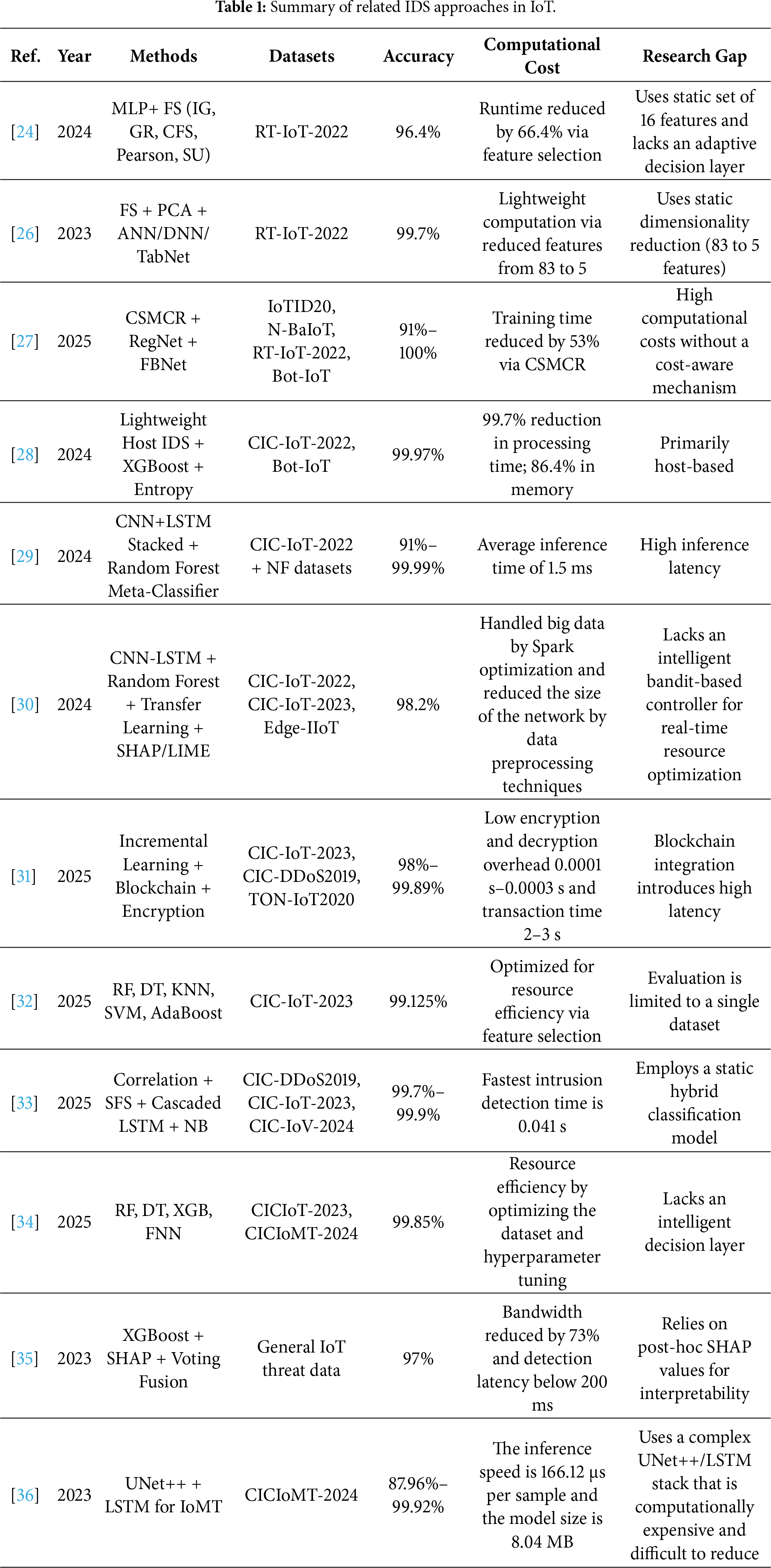
The authors in [24] proposed an anomaly IDS architecture that uses a Multi-Layer Perceptron (MLP) classifier on the reduced set of features and a combined feature selection strategy to find the optimal features for the detection of IoT attacks. They used information gain, gain ratio, correlation-based feature subset selection, pearson’s correlation analysis, symmetric uncertainty and MLP as a classifier. They evaluated their model using the RT-IoT-2022 dataset. The MLP achieved an accuracy rate of 93.5% with the original data with 83 features and 96.4% with all FS methods with 16 features. The study in [25] improved intrusion detection by introducing a semi supervised learning technique that uses a self-training loop and uncertainty filtering based on entropy. They have used XGBoost, random forest, extremely randomized trees (XRT), gradient boosting classifier (GBC), decision tree (DT), and entropy-based dynamic threshold filtering with self-training. In their evaluation, they used three datasets namely RT-IoT-2022, CICIoT-2023, and CICIoMT-2024 datasets. They achieved the highest overall accuracy of 100% with DT using the RT-IoT-2022 dataset, and the highest overall accuracy of 93% with XGBoost and XRT using the CICIoT2023 dataset, and achieved accuracy of 98% with random forest and XGB using CICIoMT2024. The researchers in [26] introduced an approach to maximize feature dimensionality for real-time intrusion detection in IoT contexts by integrating five feature selection techniques including gain ratio, correlation based feature subset selection, Pearson analysis, information gain, and symmetrical uncertainty with PCA and classifiers used such artificial neural networks (ANNs), deep neural networks (DNNs) and TabNet. They evaluated their approach using the RT-IoT-2022 dataset. They have achieved the highest accuracy rate of 99.7% by using Pearson–PCA with ANN that are applied on the RT-IoT-2022 dataset. According to the comparison table provided by the authors that their work outperformed other related works in the field. The work in [27] presented a method named cosine similarity based majority class reduction (CSMCR). It reduces duplicated majority class instances while maintains the integrity of the dataset. Despite traditional methods like synthetic minority over sampling technique (SMOTE) or random undersampling, they used CSMCR to ensure the retained majority samples remain diverse by evaluating similarity across features. This reduces information loss and avoids unnecessary data duplication. In addition, they created a hybrid DL model that improved feature extraction and classification performance by integrating the RegNet and FBNet architectures. In the evaluation process, they used four datasets including IoTID20, N-BaIoT, RT-IoT-2022, UNSW Bot-IoT. Their model achieved accuracy rates of 96.18% on the IoTID20 dataset, 100% on N-BaIoT, 98.40% on RT-IoT-2022, and 91.10% on UNSW Bot-IoT.
The article in [28] proposed a lightweight host-based intrusion detection system that can characterize communication activities with a variety of entropies. They used methods namely XGBoost, host-based intrusion detection systems, data aggregation and several entropies. They evaluated their methods using the Bot-IoT Dataset and the CIC IoT 2022 Dataset. The accuracy rating achieved by their approaches was 99.97%. According to the findings, the proposed approach can reduce the processing time by 99.7% (2916 ms) and memory usage by 86.4% (633 MiB). The study in [29] proposed a stacking ensemble IDS model called (StaEn-IDS). A CNN and a LSTM model are integrated with a Deep Intrusion Detection System (DIDS). To increase accuracy, the random forest algorithm is used as a meta-classifier throughout the stacking procedure. Their StaEn-IDS was evaluated toward other models in the literature using a range of datasets including NF-ToN-IoT, NF-BoT IoT, NF-UNSW NB15, NF-CSE CIC IDS 2018 and NF-UQ NIDS. They achieved accuracies of 91.58% on NF-ToN-IoT, 95.82% on NF-BoT IoT, 99.49% on NF-UNSW NB15, 98.44% on NF-CSE CIC IDS 2018, 97.72% on NF-UQ NIDS and approximately 99.99% on CIC-IoT IDS 2022. The results show promising accuracy among all benchmark datasets. The authors in [30] present an enhanced IDS for IoT security that uses transfer learning and multimodal big data representation. They have used LIME and SHAP, Deep IDS (DIDS), CNN and LSTM as base learners. In addition, they utilized random forest as a meta-classifier and for Feature Selection they used Correlation and MI. The CIC-IoT 2022, CIC-IoT 2023 and Edge-IIoT are three benchmark IoT-based datasets that are utilized to evaluate the proposed approach. The proposed CNN-LSTM method achieves an accuracy of 98.2% on CIC-IoT dataset 2022.
The researchers in [31] used blockchain, hybrid encryption and incremental learning in three steps to create an integrated framework that secures and enhances IDS performance in the IoT. First, a model was created using incremental learning including SGD Classifier to identify cyberattacks. In the second step, the model has the ability to retrain itself on new data. The information has signed and encrypted in digital manner. The encrypted data is stored using a blockchain model. The incremental model is retrained using new data taken from the blockchain in the third step. They used CIC-IoT-2023 dataset to train their model. After retraining, the model evaluated with data that can be considered as unseen data for the model namely CIC IDS2019 and TON IoT2020 datasets. Their method achieved accuracy rates of 99.7% on CIC-DDoS2019 dataset, 98.27% on TON-IoT2020 dataset and 99.89% on CIC-IoT-2023 dataset. The research in [32] introduces an IDS method that improves cyber threat recognition and mitigation in smart cities by using ML. They created and evaluated a number of models including random forest, decision tree, k-nearest neighbors (KNN), support vector machine (SVM), and adaptive boosting (AdaBoost) by utilizing the CIC-IoT-2023 Dataset. Their proposed IDS system focuses on real-time detection of threats and ensures to obtain a high accuracy and minimal latency. Their solution performs well in cyberthreat detection and prevention due to robust data preparation and precise model training. The results of this study demonstrate the power of using AI techniques by presenting significant improvements in privacy and security of smart city in IoT architectures. They achieved an accuracy rate of 99.125% with the KNN model in binary classification. The authors in [33] proposed a hybrid DL and ML approach that helps to identify DDoS and spoofing threats, lower false alarms and then put the required security in action. The first step of the proposed approach is to provide a feature selection that uses a correlation coefficient and a sequential feature selector. The second step involves a combination of DL neural networks with a cascaded LSTM and a Naive Bayes classifier. In the third stage, ports are restricted and network security measures are enhanced. The three datasets namely CIC-DDoS2019, CIC-IoT2023 and CIC IoV2024 were used in training and evaluating the performance of the proposed method and were balanced to provide useful outcomes. The method achieved an accuracy rates of 99.91% on CIC-DDoS 2019, 99.88% on CIC-IoT 2023 and 99.77% CIC IoV 2024 dataset. The test data was validated with cross-validation technique to ensure there was no overfitting.
The authors in [34] compared the performance of ML models that were trained on two datasets namely CICIoT2023 and CICIoMT2024, and they emphasized the importance of using domain specific data. Their results show that when models trained on single dataset are evaluated on another, the F1-score decreased significantly by around 66.87%. They evaluated in CICIoMT2024 and suggested baseline optimization methods such as appropriate train,validation and test splits, uniform windowing, modifying temporal dependencies for time series data and balance the imbalance dataset. For intrusion detection, they used three tree based ML classification methods: extreme gradient boosting (XGB), random forest (RF) and decision support (DT). They extended the scope of the research and emphasized the performance differences that a DL model could have in their situation, they also included a Feedforward Neural Network (FNN). Compared to other methods in the study, they achieved an accuracy rate of 99.85% and considered this a notable gain in IDS performance. The study in [35] proposed a high-performance cybersecurity framework that is interpretable and uses a precisely tuned XGBoost classifier to identify malicious attacks with high prediction accuracy. Their study compares the proposed approach with a baseline of regular logistic regression. They used SHAP (SHapley Additive exPlanations) to find important features that influenced predictions and examined the security cost trade-off while building ML systems for threat detection. They introduced a fusion technique based on max voting to effectively combine the advantages of the models. XGBoost outperforms Logistic Regression in terms of accuracy by achieving 97% and recall 100%, the results showed that the fusion model provided a more balanced performance with enhanced precision 98% and fewer false negatives. The researchers in [36] presented a DL method for analyzing Internet of Medical Things (IoMT) traffic and detecting malicious activity. They enhanced the prediction accuracy of current neural network models by using the CIC IoMT dataset. LSTM models and UNet++ are combined in their method to efficiently extract network traffic characteristics. The proposed approach outperformed conventional algorithms, according to experimental data, they achieved an accuracy rate of 87.96% in attack classification and 99.92% in anomaly detection.
Most existing studies on IDS for the IoT focused on improving performance by optimizing classifiers through techniques such as undersampling including CSMCR and dimensionality reduction such as PCA. However, these approaches have not fully explored the integration of deep contextual embeddings or adaptive decision mechanisms, such as bandit-based controllers. The reviewed papers employ ensemble tree models such as random forest, XGBoost or DL architectures like ANN, DNN, RegNet, FBNet and CNN without leveraging deep contextual embeddings such as ELECTRA for feature representation or utilizing adaptive selection strategies including LinUCB for dynamic model control. While existing studies achieve high accuracy, they typically rely on static computational costs, lack semantic context from deep embeddings and provide no adaptive paths for uncertain cases.
However, our study introduces an adaptive intrusion detection framework that works in IoT environments. The framework dynamically adjusts its behavior based on contextual factors such as computational power, classification accuracy, and security requirements. The adaptability behavior of our framework continuously optimizes the performance in real time by using deep contextual embeddings for feature representation and a bandit-based controller for classifier selection. This helps maintain high detection accuracy under the computational constraints of IoT devices.
In this section, we present the research methodology. We propose an adaptive intrusion detection framework for IoT environments that integrates feature learning, deep embeddings, and intelligent decision control. Within this framework, multiple models run in parallel, allowing the system to choose dynamically among four possible actions: Reduced Model, Base Model, LLM Refinement, or Escalation based on current conditions. This helps to balance high detection accuracy with computational efficiency. The framework uses an MI-based feature selection model with dynamic cumulative fraction policies to keep the most informative features. This reduces redundancy while preserving essential information. Calibrated random forest classifiers operate in both base and reduced configurations. The ELECTRA embedding pipeline is combined with a logistic regression (Teacher Probe) to refine predictions in uncertain cases. During inference, a LinUCB algorithm dynamically chooses the best action to balance accuracy and computational cost.
The overall architecture of the proposed adaptive intrusion detection framework is illustrated in Figs. 1 and 2, which depict the training pipeline and the adaptive inference and decision-making process, respectively.
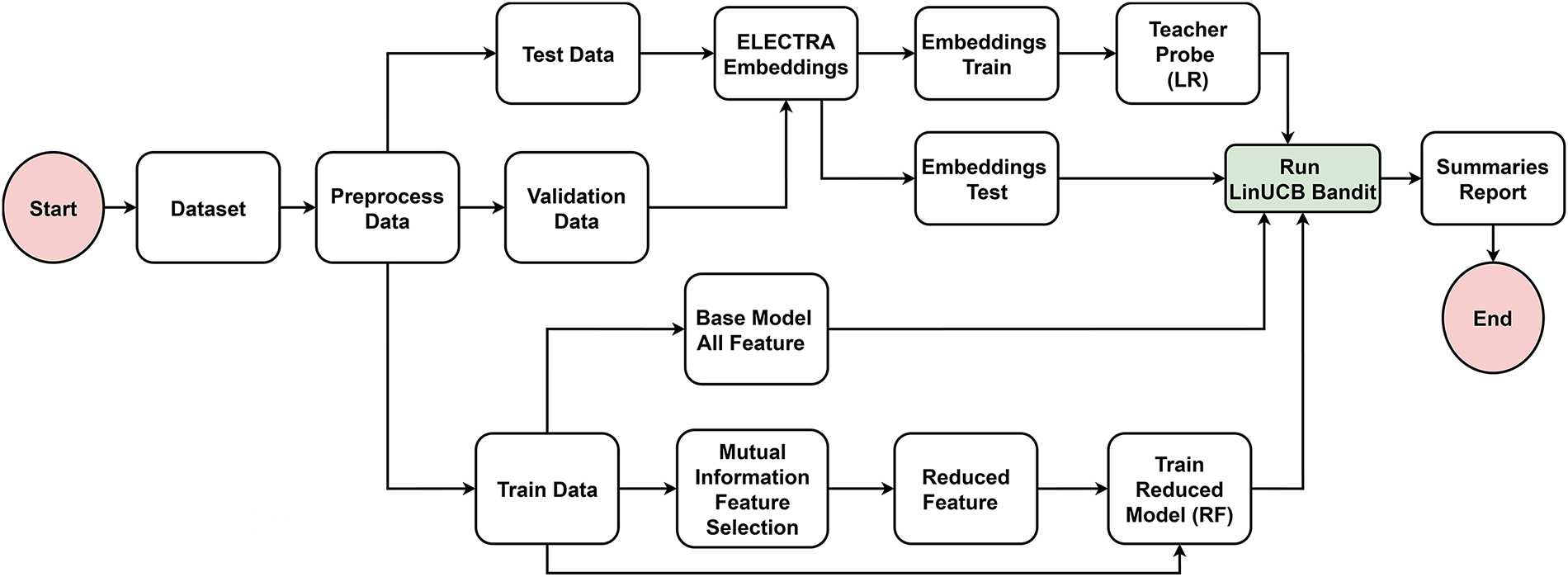
Figure 1: Architecture of the proposed IDS showing data preprocessing, MI-based feature selection, and training of the reduced and base models.
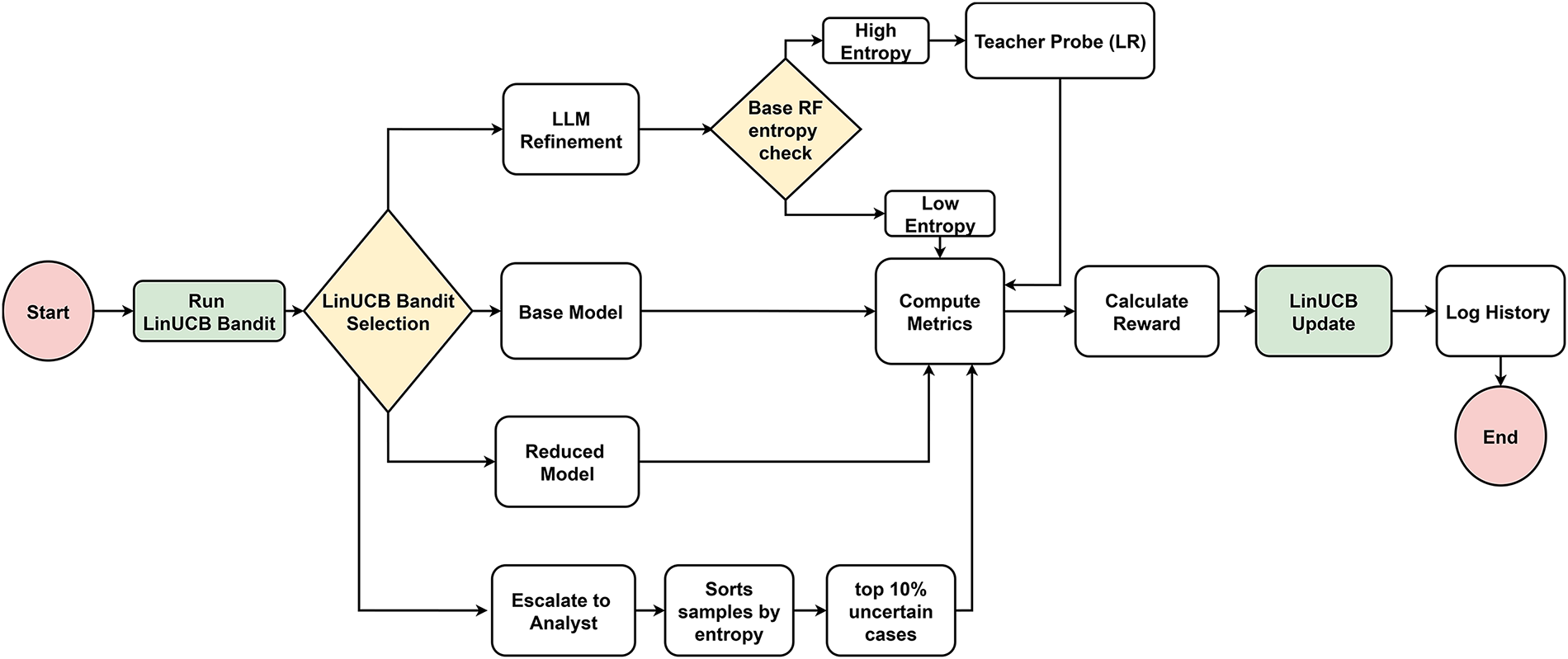
Figure 2: Adaptive inference workflow using a LinUCB controller to select inference actions based on uncertainty and computational cost.
As shown in Fig. 1, the framework begins with data preprocessing, where the dataset is divided into training, validation, and test subsets. Two parallel pipelines are then constructed for model training. In the first pipeline, MI with a cumulative fraction policy is applied to rank features according to their information contribution. Only features that collectively explain 90% of the total information are retained, and these features are used to train the Reduced Model, a lightweight random forest classifier designed to minimize computational cost during inference.
In parallel, the second pipeline trains the Base Model using the complete feature set. This model is implemented as a calibrated random forest to ensure reliable probability estimates, which are critical for downstream uncertainty assessment. In addition to these pipelines, both training and test samples are transformed into dense vector representations using the ELECTRA model [37]. These embeddings capture richer contextual relationships in the IoT traffic data and are used to train a logistic regression classifier, referred to as the Teacher Probe. The Teacher Probe serves as a refinement component that assists decision-making when model uncertainty is high.
Fig. 2 illustrates the adaptive inference process during testing. Instead of relying on a single static classifier, the framework employs a LinUCB contextual bandit to dynamically select the most suitable inference action for each batch of test samples. This ensures a balance between detection accuracy and computational cost. For each batch, a context vector is constructed using batch-level statistics, such as the mean and standard deviation of the input features, and provided to the LinUCB controller.
Based on this context, the controller selects one of four possible actions: (i) the Reduced Model for efficient low-cost inference, (ii) the Base Model when higher reliability is required, (iii) LLM-based refinement using the Teacher Probe when uncertainty remains high, or (iv) escalation for manual review under extreme uncertainty. Each selected action produces a prediction output, which is evaluated using accuracy and F1-score metrics.
The selected action, prediction performance, and associated computational cost are then used to compute a reward signal, defined as performance minus action cost. This reward is used to update the LinUCB controller, completing the feedback loop. Through this iterative process, the controller learns to select inference actions that achieve an optimal trade-off between accuracy and efficiency under varying operational conditions.
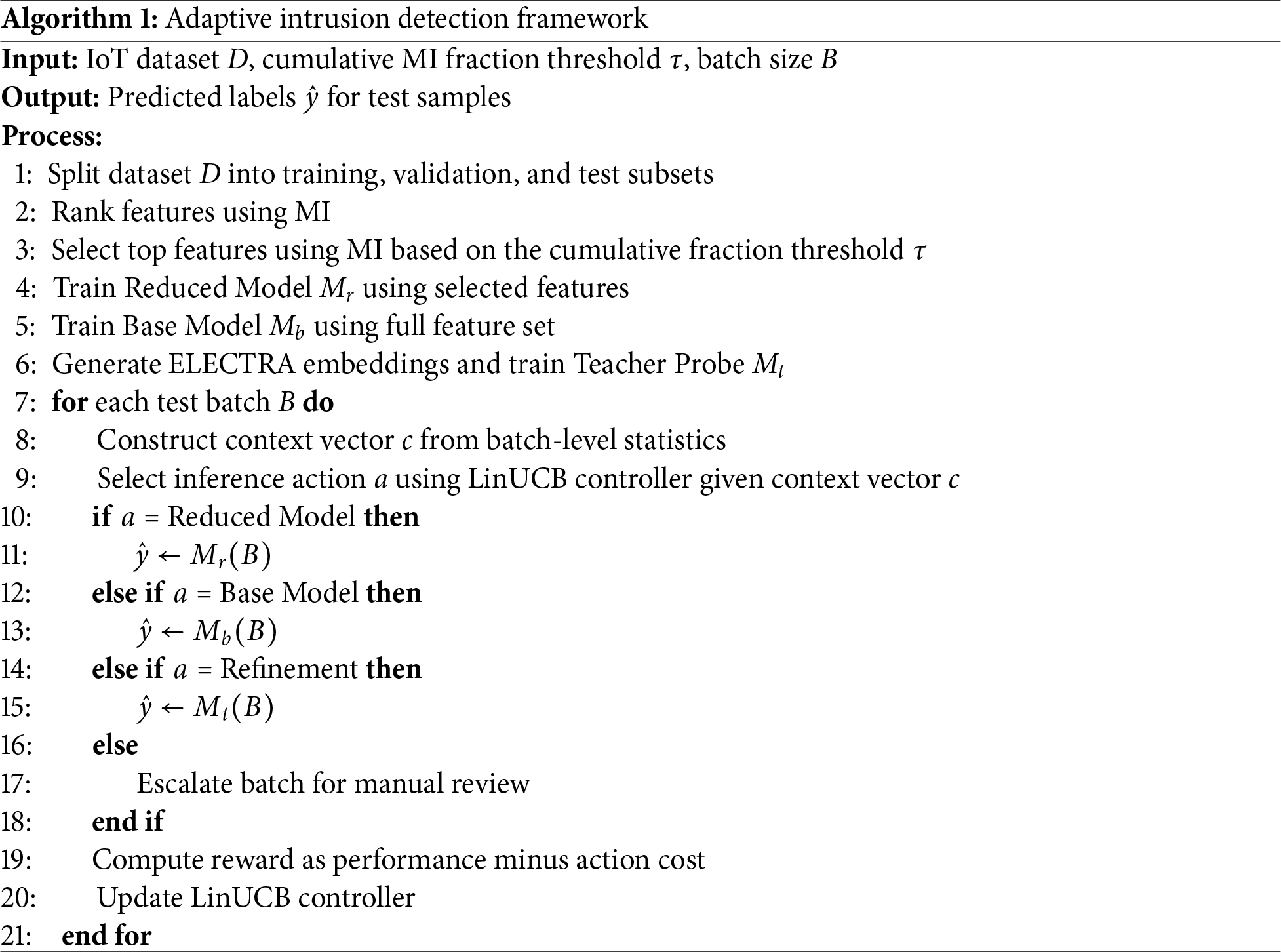
The overall operation of the proposed framework is summarized in Algorithm 1, which presents the end-to-end training and adaptive inference procedure.
3.2 Proposed Hybrid IDS Components
Balancing the classes of an imbalance dataset is a crucial step to eliminate biased decisions caused by major classes over minority ones. In this work, SMOTE is applied only to the training subset in order to avoid information leakage and preserve the integrity of the validation and test distributions. As illustrated in Fig. 3, the process begins with loading the training set, then class distribution is examined to detect imbalance between majority and minority classes. The dataset is then separated into features
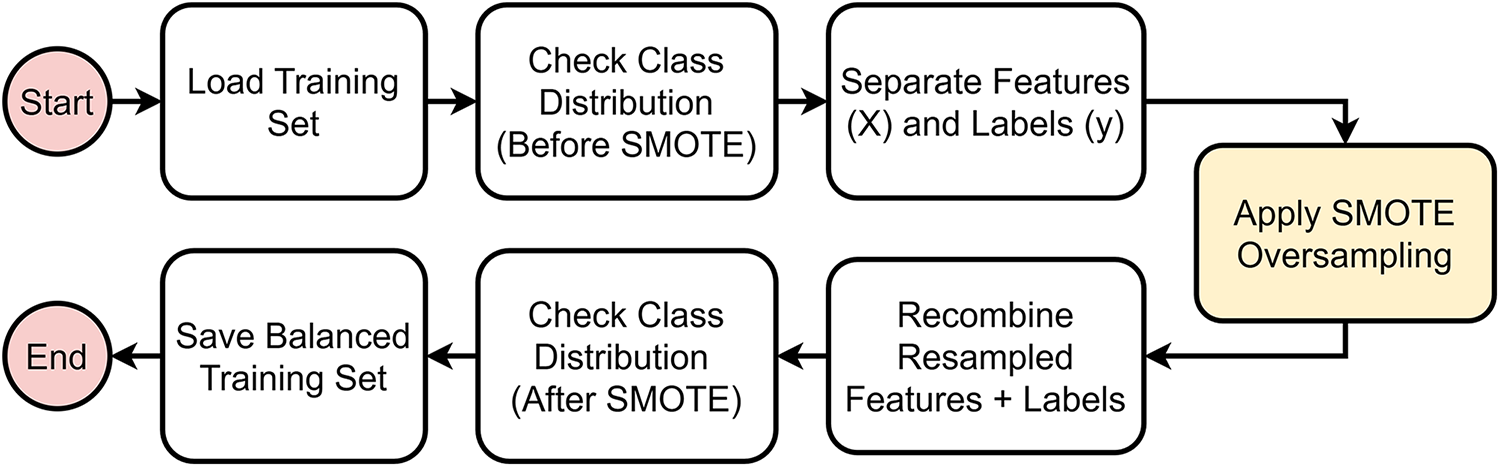
Figure 3: Data preprocessing workflow.
3.2.2 Mutual Information (MI) Feature Selection
MI between a feature
Eq. (1) defines the standard MI feature selection, which measures how much knowing a feature
The cumulative fraction policy (cumfrac) in Eq. (2) selects the smallest number of top features K such that their combined MI accounts for at least 90% of the total MI across all features. In practice, this means we first sort features by how much information they share with the label. Then we keep adding features, one by one, until the fraction of total information they explain reaches the threshold
where
The framework employs two random forest classifiers, which are a base model and a reduced model. The base model uses the entire feature set with dimensionality
The base model uses all
While the reduced model uses the top-K features is represented in Eq. (4):
Fig. 4 demonstrates the workflow of the base and reduced models. The base model directly uses all available input features, training a random forest followed by probability calibration without applying feature selection.

Figure 4: Workflow of base and reduced models.
In contrast, the reduced model applies MI feature ranking to the input features, retaining the top-K subset based on a cumulative fraction threshold of
3.2.4 ELECTRA Embeddings and Teacher Probe
Although IoT features are numeric, transforming each feature vector into a tokenized text sequence allows ELECTRA to model dependencies between features that traditional tabular methods treat independently. The transformer captures contextual relationships, feature combinations, and non-linear interactions that often characterize malicious IoT traffic. Using a lightweight logistic regression probe on top of these embeddings provides an efficient refinement step when the base model is uncertain, enabling richer representation learning with minimal additional cost. As shown in Eq. (5), each feature vector
Features are transformed to text and embedded with ELECTRA:
After the embeddings are created the Teacher Probe is implemented as a logistic regression classifier as represented in (6). The probe is trained on embeddings derived from the training set, making it computationally efficient while still leveraging the representational power of ELECTRA. At test time, when the base random forest model is uncertain, the Teacher Probe predicts labels using the test embeddings. This combination allows the framework to integrate deep language model representations into a classical ML pipeline without requiring fine-tuning of the large transformer itself.
A teacher probe (logistic regression) is trained on embeddings:
3.2.5 Entropy and Adaptive Thresholding
Entropy is used to to measure the uncertainty of a model or dataset [25]. Given a probability distribution
where
To decide when to trust the base model and when to move to a more expensive option (such as the Teacher Probe), an adaptive threshold T is used as in (8). This threshold is computed using the
where
The agent has four possible actions, each representing a different trade-off between accuracy and computational cost.
Reduced Model: The first action is using random forest that is trained only on the top-K features selected using the MI cumfrac policy. By focusing on the most informative features, the reduced model is faster and simpler, with no added cost. However, it may sacrifice some accuracy compared to the full model. Reduced Features action can be represented as in Eq. (9)
Base Model: This is the second action as defined in (10), which uses the calibrated random forest model trained on all
LLM Refinement: In this third action, the Base Model initially performs the prediction, and its confidence is quantified using the entropy of the predicted probability distribution, denoted as
Escalate to Analyst: The fourth action is used when predictions are highly uncertain. The top K samples with the highest entropy values are forwarded to an analyst. In practice, this means that the system does not assign a predicted label for these cases and instead marks them as unresolved pending manual verification. As shown in Eq. (12), if the sample
3.2.7 Adaptive Decision Agent Workflow
Fig. 5 illustrates the workflow of the adaptive decision approach, which controls the dynamic action selection process during inference. The input batch, which comes from the test set, is passed to MI model to perform feature selection using a cumulative fraction policy to identify the most informative subset of features. This step ensures that redundant or less relevant features are excluded.
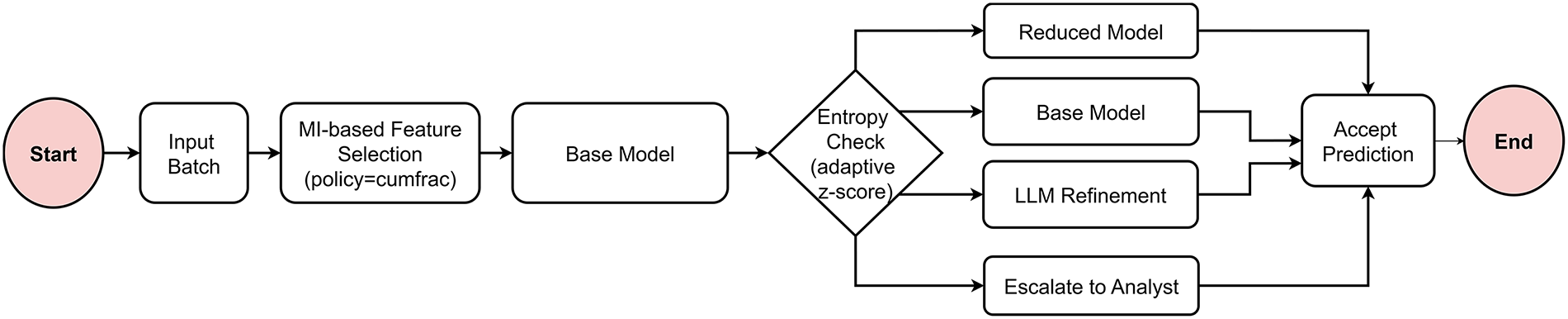
Figure 5: Adaptive decision controller.
The selected features are then submitted to the Base Model to produce class predictions along with confidence scores. These scores are checked using an adaptive entropy method to decide how reliable each prediction is.
As the figure shows, the model dynamically selects one of four decision pathways based on the evaluated entropy level. For instance, in case of low-entropy, the Reduced Model path is used after selecting the top-K most informative features. It is worth noting that this option is computationally efficient and suitable when predictions are already confident. The system switches to the Base Model when the entropy level increased to operate on the complete feature set. This enhances reliability in uncertain cases. The LLM Refinement process is activated by the framework when the entropy rises. This uses deep contextual representations together with logistic regression and ELECTRA embeddings to enhance predictions.
Finally, the agent initiates the Escalate to Analyst pathway when the entropy stays over a certain threshold. For manual verification, it sends the top-K highly uncertain instances. The process concludes at the Accept Prediction module where the result of the action selected is used to make the final decision of the system. This adaptive control improves accuracy, interpretability and computational efficiency by intelligent allocation of computational resources based on the uncertainty of each input sample.
Overall, these four steps allow the model to effectively balance computational costs toward predictive performance. In order to maintain efficiency without reducing accuracy, the framework is encouraged by the cost structure to keep the more costly choices (Actions 3 and 4) to only highly uncertain samples.
The reward function is designed to balance prediction accuracy with the computational or operational penalty of each action. The reward calculates the difference between the performance score of the model and the penalty of the chosen action as defined in Eq. (13). We use accuracy as the scoring function that measures the proportion of correctly classified samples. Actions that achieve high accuracy with minimal penalty will receive higher rewards. However, actions that are more expensive or less accurate will produce lower rewards. For instance, there is no penalty associated with the usage of the Reduced or Base models, therefore the accuracy is equivalent to the reward. By contrast, utilizing the Teacher Probe or forwarding the Top-K uncertain samples to the analyst incurs additional penalties, which reduces the reward even when accuracy is high. This design ensures that the system learns to prefer strategies that are not only correct but also efficient, reflecting a realistic trade-off between accuracy and resource usage.
Each action in the LinUCB algorithm keeps its own parameters, which are represented as a vector
The first term,
The action with the highest score is then selected as shown in Eq. (15):
where
Once the reward
These updates allow LinUCB to continuously refine its confidence estimates, gradually learning which actions yield higher rewards under different contexts.
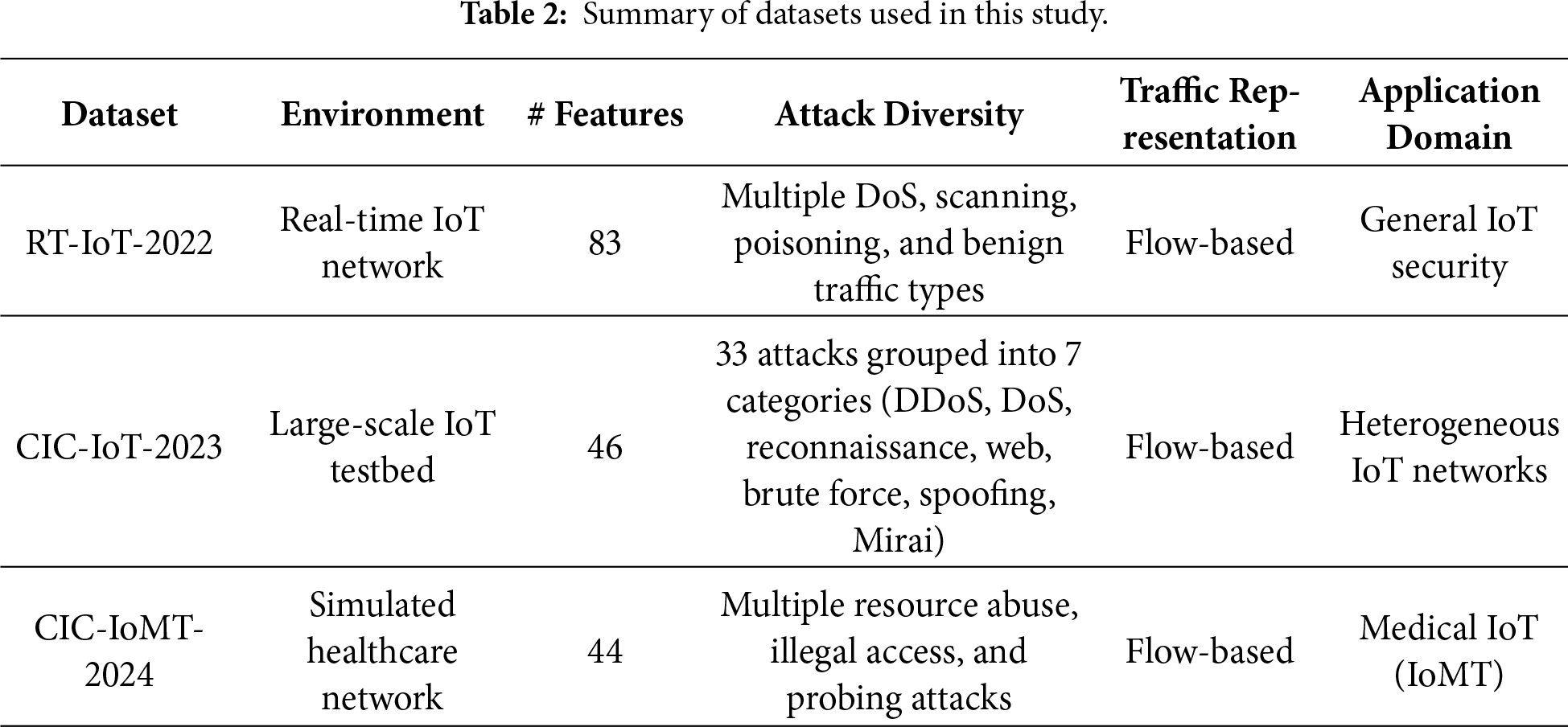
In this research, we evaluated our proposed adaptive intrusion detection framework on three benchmark datasets including RT-IoT-2022 [40], CIC-IoT-2023 [41] and CIC-IoMT-2024 [42]. We chose these datasets because they represent modern network behavior, diverse device types and unseen attacks in IoT and IoMT environments.
The first dataset used is RT-IoT-2022 and contains attack and normal traffic from a real-time IoT setup. It was designed for intrusion and anomaly detection research and provides 83 flow-based features such as packet statistics, payload details, timing and TCP flags [40]. The dataset has nine attack types that are SYN flooding, Slowloris distributed denial of service (DDoS), ARP poisoning and Nmap scans as well as three types of benign traffic. This variety makes this dataset a strong test for classification methods, particularly given the limited resources common in IoT systems.
The second dataset is CIC-IoT-2023 that also supports research on intrusion and anomaly detection and was developed using a network of 105 real IoT devices [41]. It has 33 attack types from compromised devices that are grouped into seven categories namely DDoS, DoS, reconnaissance, web attacks, brute force, spoofing and Mirai botnet variants. The dataset provides 46 features describing network flows, packet statistics and timing. This range enables us to evaluate our detection methods on a variety of new IoT attacks and takes various devices and protocols into account.
The third dataset is CIC-IoMT-2024 that was collected from a simulated healthcare network with typical medical IoT devices and protocols [42]. The dataset includes both benign and malicious traffic such as resource loss attacks, illegal access, and probing. It provides 44 flow-based features on protocol use, packet statistics and timing. This setup lets us test our detection methods in healthcare where device variety and the need for constant service add extra challenges.
Overall, the use of the aforementioned datasets to evaluate our intrusion detection framework helps to demonstrate its effectiveness and adaptability to diverse IoT and IoMT environments. The variety of attack types, device behaviors and protocol characteristics in RT-IoT-2022, CIC-IoT-2023, and CIC-IoMT-2024 enables a thorough evaluation of the classification performance of our model under realistic conditions. Table 2 summarizes the key characteristics of the datasets used in this study, highlighting their differences in environment, feature dimensionality, attack diversity, and application domain.
In this section, we present and discuss the experimental results of our proposed adaptive intrusion detection framework. We used three benchmark IoT datasets to evaluate the proposed framework that are RT-IoT 2022, CIC-IoT 2023 and CIC-IoMT 2024 datasets. First, we show the MI distribution of each dataset to highlight the most informative features selected for analysis. Next, we examine the usage proportions of the four decision pathways namely Reduced Model, Base Model, LLM Refinement and Escalate to Analyst to understand the way that the adaptive policy allocates computational effort. After that, we evaluate the per-action performance of the proposed framework by computing the well known evaluation metrics and calculating the corresponding reward for each action. Finally, we analyze the trade-off between accuracy and computational cost in the four decision actions of the proposed framework.
4.1 Evaluation on RT-IoT-2022 Dataset
4.1.1 Mutual Information (MI) Result on RT-IoT-2022 Dataset
MI was employed to estimate the relevance of each feature to the target class and to guide dimensionality reduction. Fig. 6 shows the ranked MI scores for all features in the RT-IoT-2022 dataset. Each bar represents a feature’s MI value, where higher scores indicate stronger dependence on the class label. Using the cumulative-fraction policy with a threshold of
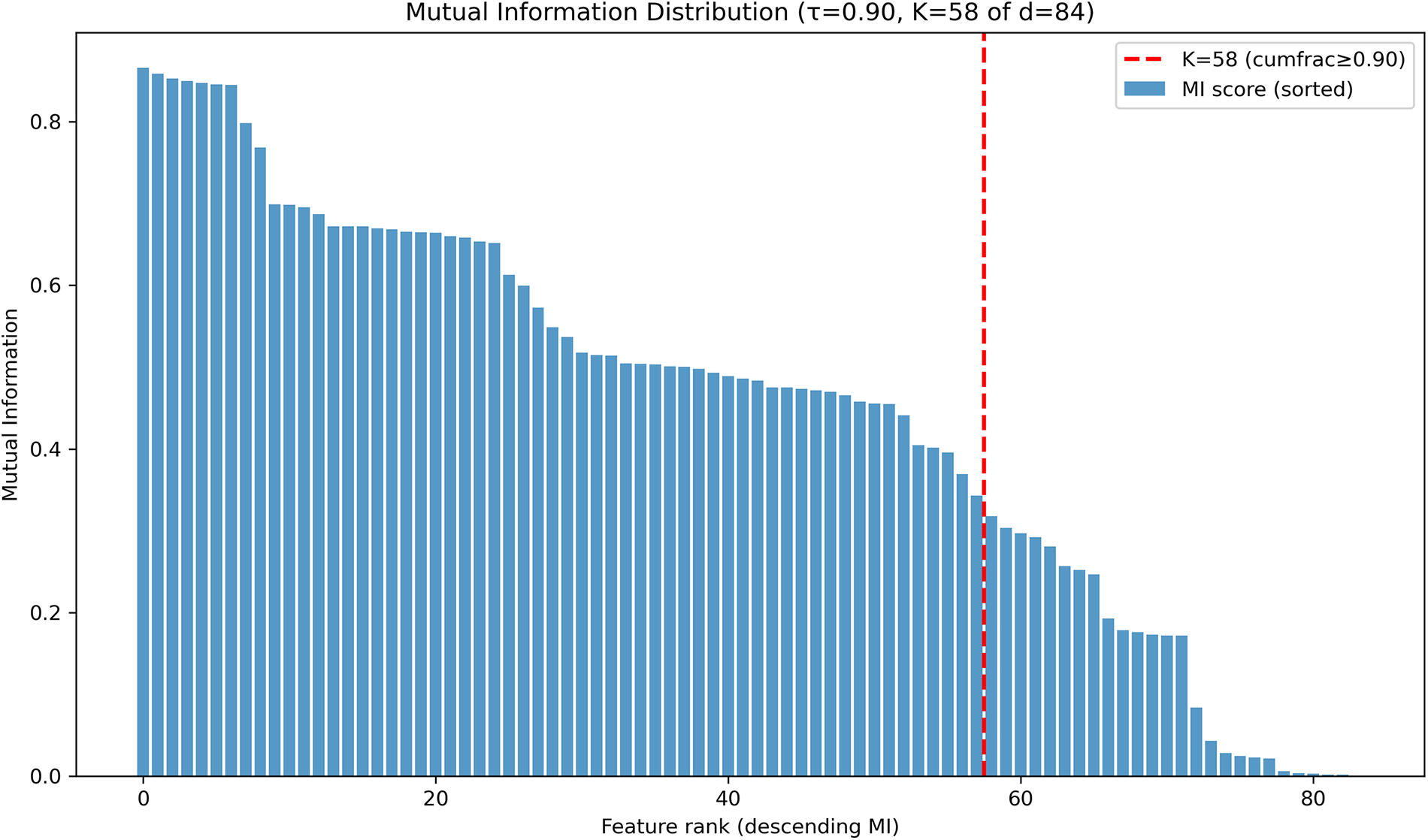
Figure 6: MI distribution of RT-IoT-2022 dataset.
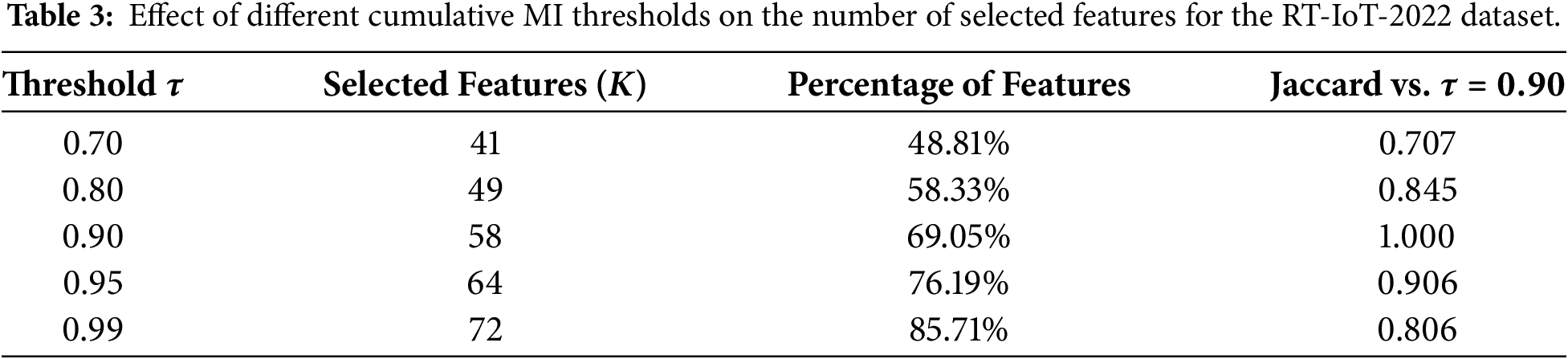
Jaccard similarity analysis also supports this choice. When using
4.1.2 Actions Usage and Performance Analysis on RT-IoT-2022 Dataset
The percentage of each action is calculated to determine action usage in the RT-IoT-2022 dataset. This helps identify which action dominates when the adaptive framework is used. As shown in Fig. 7a, the LinUCB controller can dynamically select among four possible inference actions based on prediction confidence and computational cost. There are four actions as mentioned in the methodology section named Reduced Model, Base Model, LLM Refinement, and Escalate to Analyst. The overall results demonstrate that the Reduced Model and Base Model together recorded
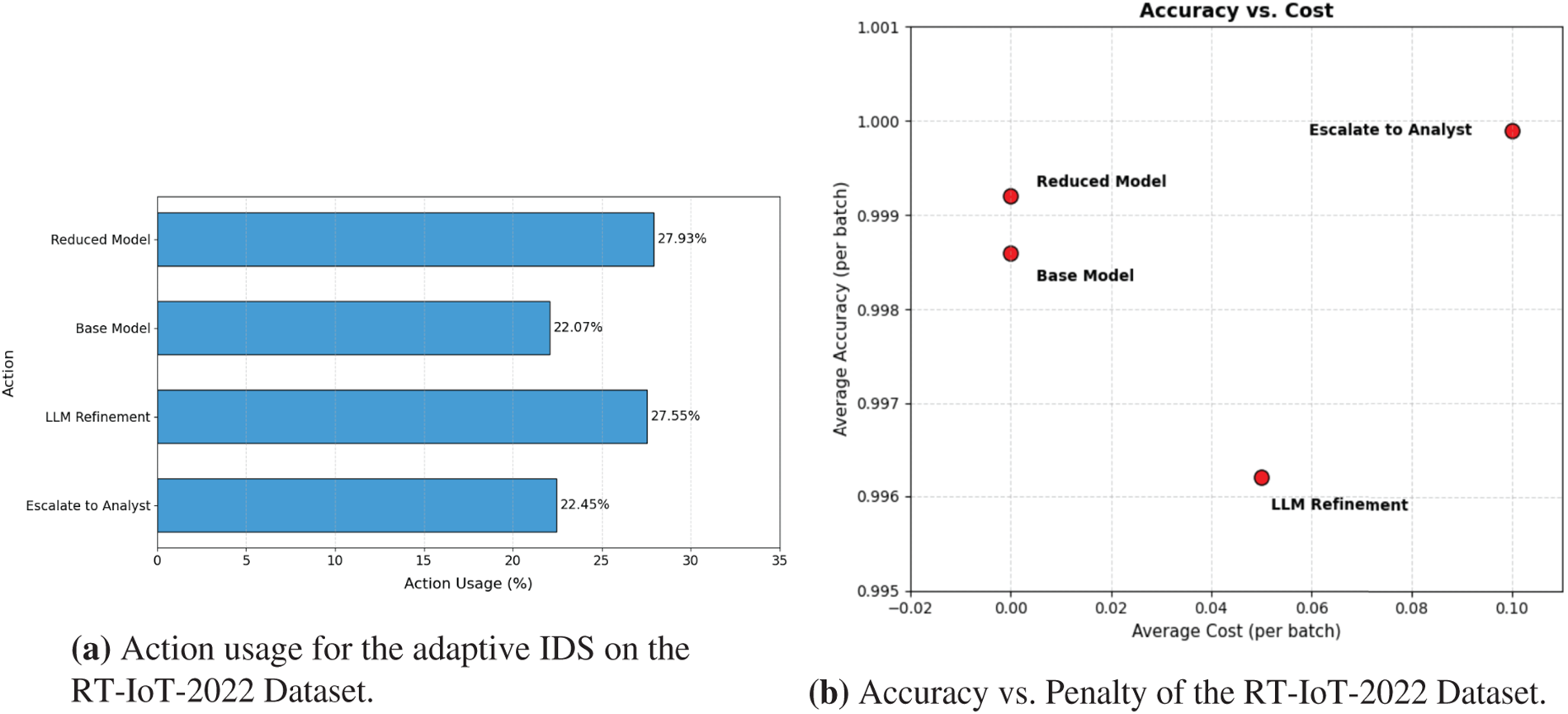
Figure 7: Adaptive IDS behavior on the RT-IoT-2022 dataset.
Therefore, the proposed framework reduces computation, as half of the actions involve no extra processing cost. The results also show that the Reduced Model being the most frequently chosen
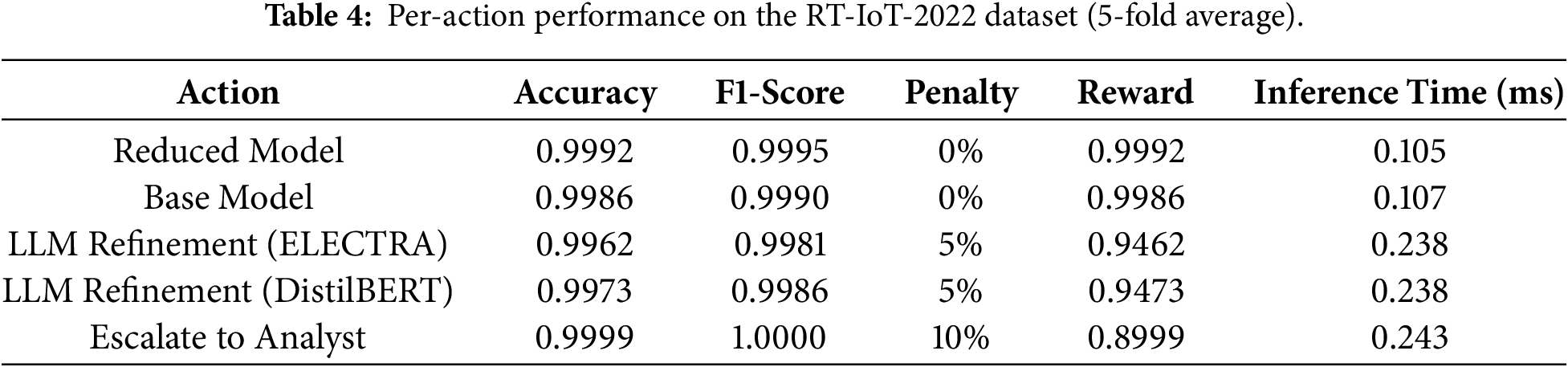
The per-action performance on the RT-IoT-2022 dataset using 5-fold average is shown in Table 4. The Reduced Model and Base Model achieve the best overall balance, with high accuracy at 0.9992 and 0.9986, zero penalty, and the lowest inference time per sample at 0.105 and 0.107 ms. These results confirm that lightweight actions handle most samples efficiently without compromising accuracy. For uncertain cases, the framework triggers LLM Refinement. ELECTRA reaches 0.9962 accuracy and 0.9981 F1-score, while DistilBERT achieves 0.9973 accuracy and 0.9986 F1-score. The two models deliver comparable refinement performance, with only minor differences in accuracy and F1, and both incur the same five percent penalty and inference time of about 0.238 ms per sample. Escalate to Analyst achieves the highest accuracy at 0.9999 and F1-score at 0.9948 but carries the highest penalty (10%) and therefore the lowest reward among the correct actions. Overall, the results show that the framework prioritizes fast, zero-penalty actions and uses costly steps only when uncertainty is high.
It is worth mentioning that each experiment uses 5-fold cross-validation. We used 5-fold cross-validation to balance statistical robustness and computational efficiency, as higher fold counts (e.g., 10-fold) substantially increase training and evaluation cost and are commonly reported to provide only marginal performance gains when sufficient data is available.
In each fold, the dataset is first split into 80% training and 20% testing. The training portion is then further divided into 80% training and 20% validation, resulting in final proportions of 64% training, 16% validation, and 20% testing. The validation set is used for model calibration, feature selection, and adaptive decision tuning, while the test set remains completely unseen until final evaluation.
Different split ratios mainly affect the bias–variance trade-off. Increasing the training portion may slightly improve fitting but reduces the reliability of validation and test estimates, whereas smaller training sets increase variance, particularly in imbalanced IoT traffic. The chosen configuration yields stable and consistent performance across folds.
We also analyzed the trade-off between accuracy and the action penalty across the four decision actions of the proposed framework on the RT-IoT-2022 dataset. The
4.2 Evaluation on CIC IoT 2023 Dataset
4.2.1 Mutual Information (MI) Result on CIC IoT-2023 Dataset
The MI distribution for the CIC-IoT-2023 dataset, which contains
The MI distribution of the CICIoT-2023 dataset reveals that among the total
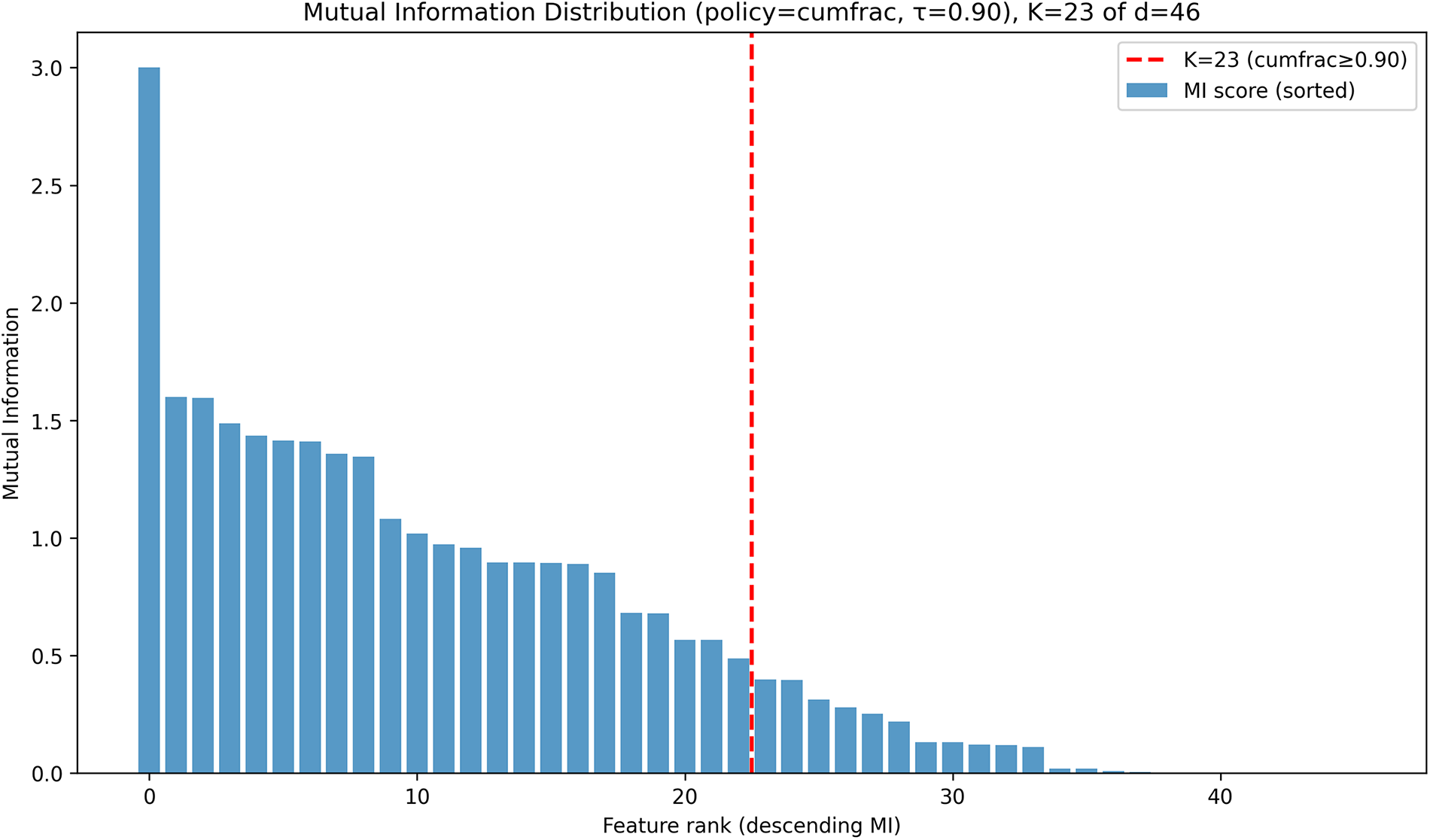
Figure 8: MI distribution of CIC IoT 2023 dataset.
4.2.2 Actions Usage and Performance Analysis on CIC IoT 2023 Dataset
The distribution of action usage within the proposed framework on the CIC-IoT-2023 dataset is analyzed in this research. Fig. 9a illustrates that the Reduced Model and Base Model account for around 37.52% and 36.70% of all forecasts, respectively and therefore lead the decision-making process. This highlights the preference of the framework for low-cost inference pathways, which confirms that most network traffic can be accurately classified using lightweight or full-feature models without the need for additional computation. The LLM Refinement action, which involves deeper semantic processing through ELECTRA embeddings and logistic regression, is used for only 9.72% of samples. This indicates that uncertainty levels in the baseline predictions are relatively low and the refinement mechanism is triggered selectively for uncertain cases. Finally, the Escalate to Analyst action was used for 16.06% of the cases, which represents that a small portion of samples had the highest prediction entropy. Overall, the adaptive framework successfully used the Reduced and Base Models for 74.22% of the cases and only about 25.78% were handled by LLM Refinement and Escalate to Analyst. This emphasizes that the model primarily relies on low-cost actions.
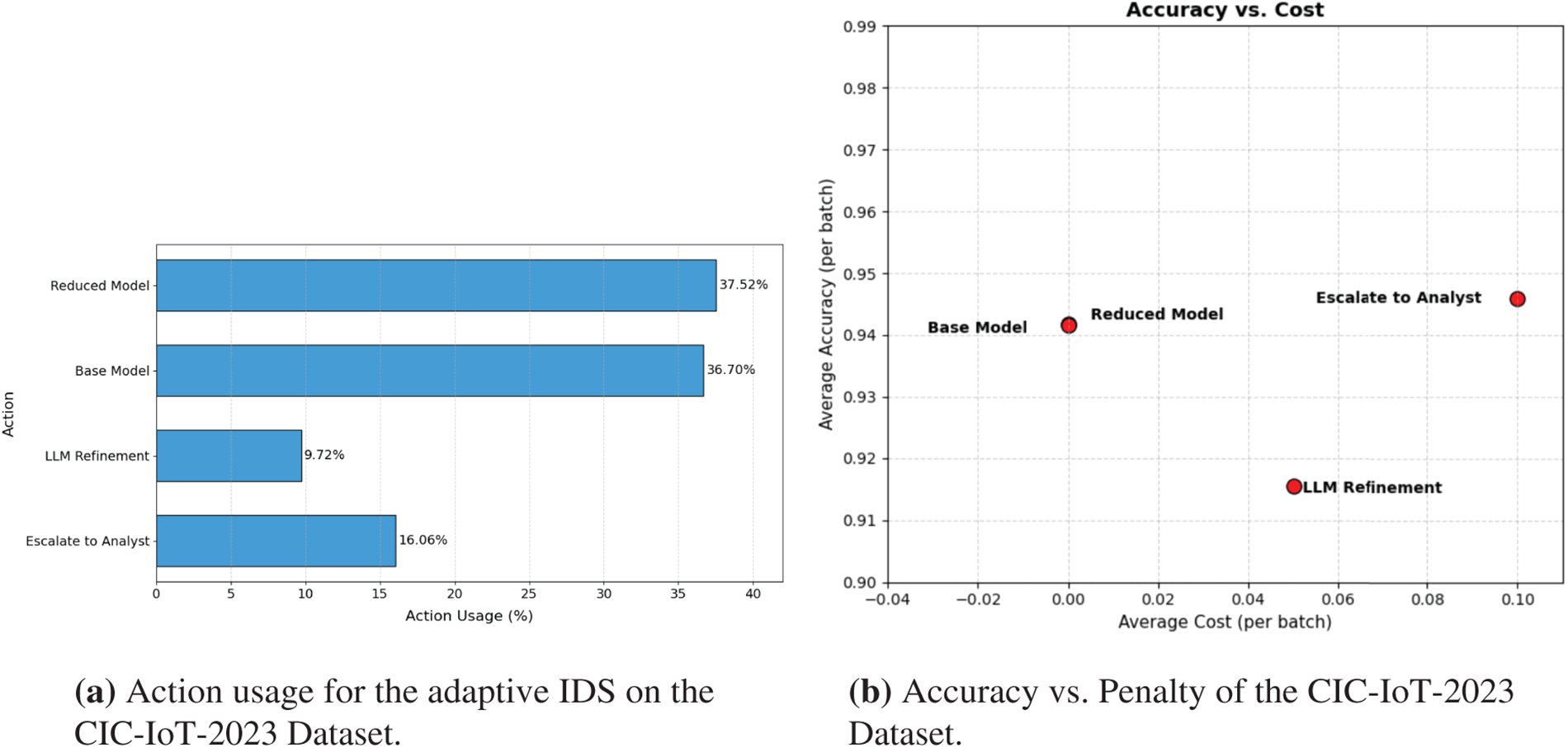
Figure 9: Adaptive IDS behavior on the CIC-IoT-2023 dataset.
On the CIC-IoT-2023 dataset,the Reduced Model and Base Model deliver almost identical performance with accuracies of 0.9417 and 0.9416 and very low inference time in the range of 0.1020 to 0.1110 ms as reported in Table 5. This indicates that the framework maintains strong predictive capability under both lightweight and full-feature inference without any penalty. The LLM Refinement actions powered by ELECTRA and DistilBERT produce closely matched results with accuracies near 0.916 to 0.919 and weighted F1-scores near 0.951 to 0.953. Both actions incur a five percent penalty, leading to rewards in the range of 0.865 to 0.869, and introduce a slightly higher latency of about 0.24 ms. The Escalate to Analyst action achieves the highest accuracy of 0.9459 and a weighted F1-score of 0.9698, though its ten percent penalty reduces the reward to 0.8459. Overall, the controller maintains a stable detection performance while using higher-cost actions only when uncertainty makes them necessary.
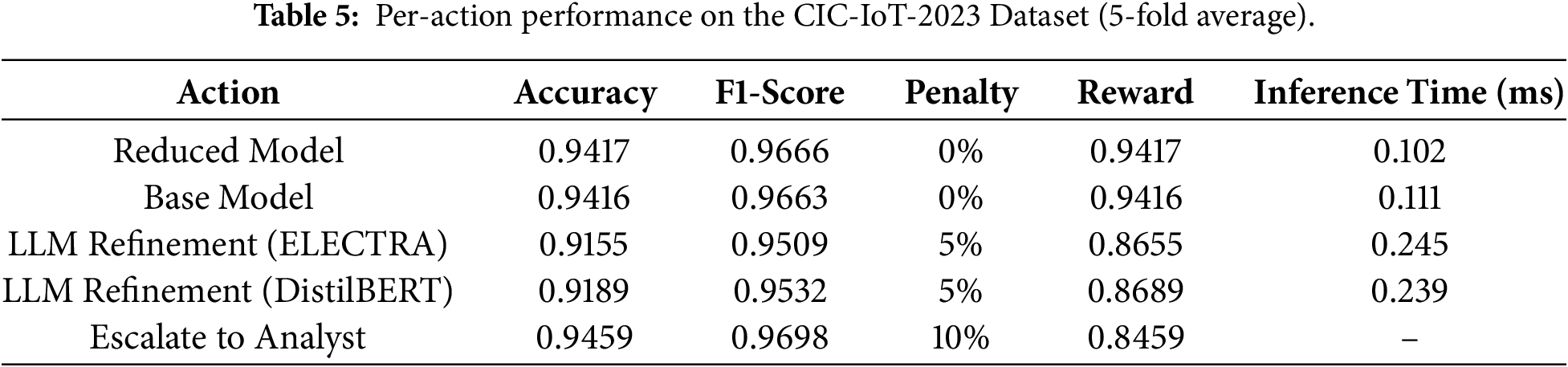
Fig. 9b shows the trade-off between accuracy and action penalty on the CIC-IoT-2023 dataset. The Reduced Model and Base Model appear in the top-left region, reaching about 0.94 accuracy with zero penalty, confirming their efficiency for most samples. LLM Refinement lies in the middle with a 5% penalty and lower accuracy (around 0.92), reflecting its selective use for uncertain cases. Escalate to Analyst action achieves accuracy around 0.945 but at the highest penalty (10%), indicating that escalation is reserved for the most difficult, high-risk samples.
4.3 Evaluation on CIC IoMT 2024
4.3.1 Mutual Information (MI) Result on CIC IoMT 2024 Dataset
Fig. 10 presents the MI distribution for the CIC-IoMT-2024 dataset, which has
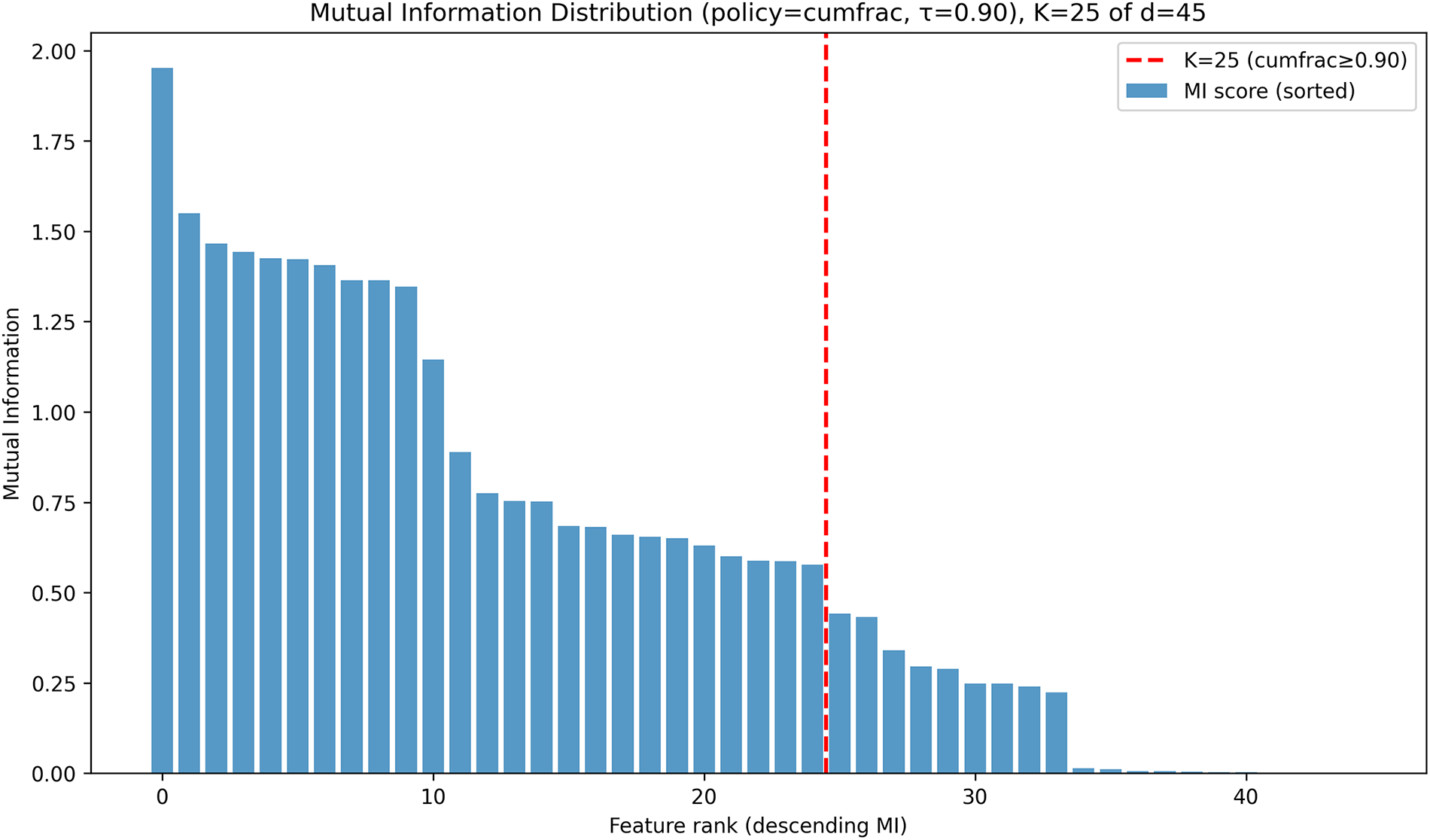
Figure 10: MI distribution of CIC IoMT 2024 dataset.
4.3.2 Actions Usage and Performance Analysis on CIC IoMT 2024 Dataset
The distribution of action usage for the proposed framework in the CIC-IoMT-2024 dataset is shown in Fig. 11a. The results show that the Reduced Model and Base Model together dominate the adaptive decisions as they accounted for 68.75% of all predictions. This reflects the framework’s strong preference for computationally efficient because most samples are confidently classified without the need for additional processing. The LLM Refinement action was triggered for 15.48% of instances, which represents uncertain samples where the confidence of the primary models falls below the adaptive entropy threshold. Meanwhile, the Escalate to Analyst action was invoked for 15.77% of the inputs, which corresponds to the most complex samples with the highest uncertainty levels. These cases are routed for expert-level or external analysis to ensure accuracy and reliability. The near-balanced distribution between low-cost and high-cost actions confirms that the adaptive policy dynamically optimizes the trade-off between efficiency and precision, which ensures that the system maintains high detection accuracy while minimizing unnecessary computation.
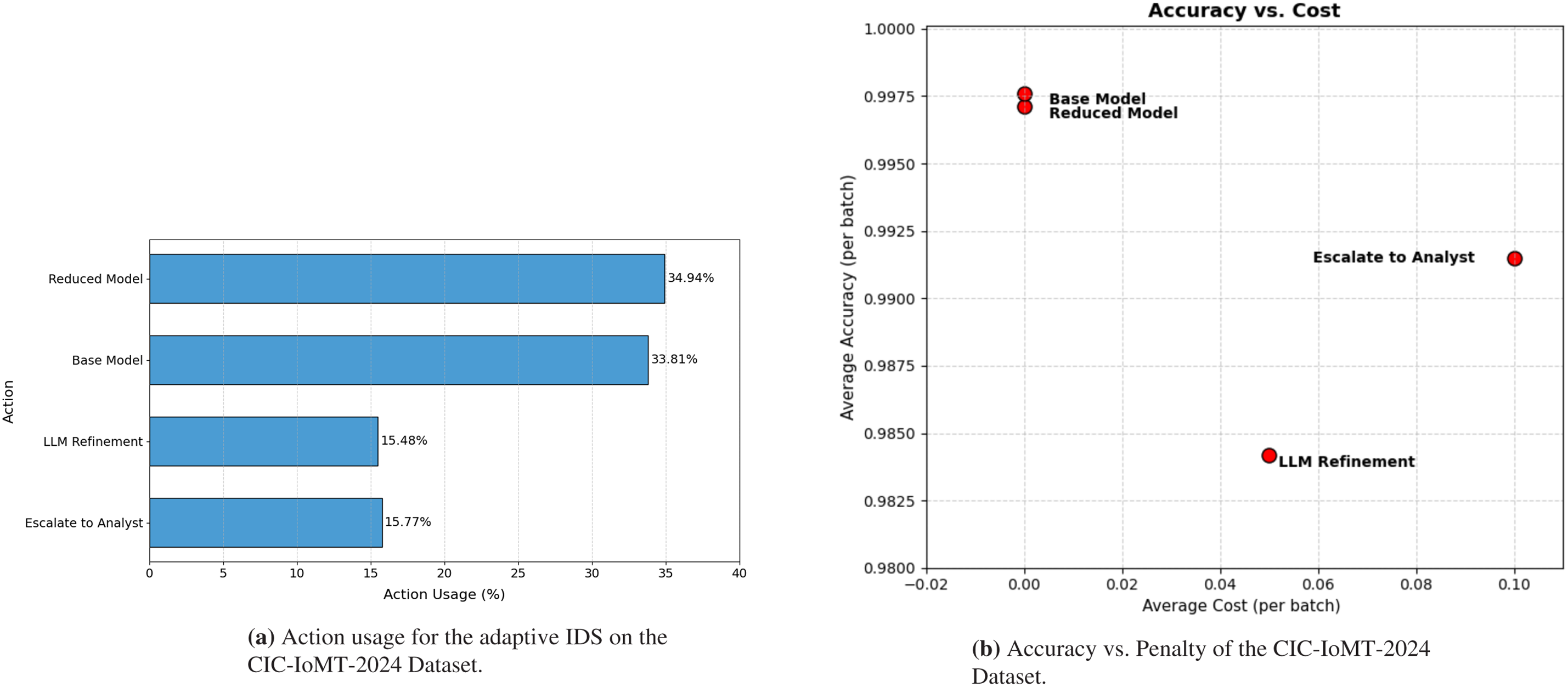
Figure 11: Adaptive IDS behavior on the CIC-IoMT-2024 dataset.
The framework was also evaluated on CIC-IoMT-2024 dataset using 5-fold cross-validation, and the averaged per-action results as shown in Table 6. The Reduced Model and Base Model actions provide the strongest overall balance, reaching accuracies of 0.9971 and 0.9976 with weighted F1-scores of 0.9984 and 0.9987, zero penalty, and small latency of about 0.105 to 0.109 ms.
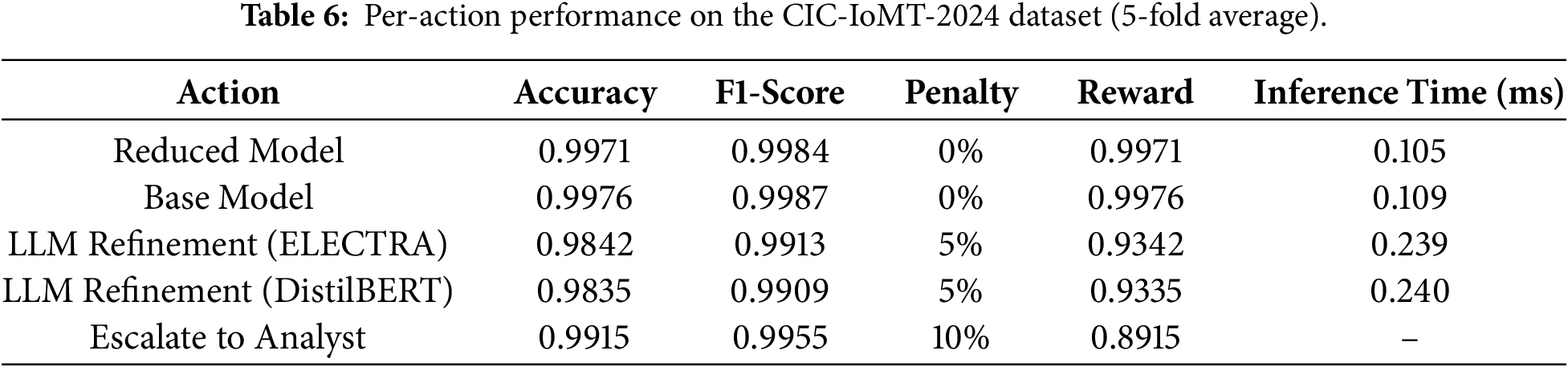
The LLM Refinement action achieves accuracies of 0.9842 with ELECTRA and 0.9835 with DistilBERT, with corresponding weighted F1-scores of 0.9909 and 0.9909. Both models deliver comparable accuracy, and the five percent penalty reduces the rewards to 0.9342 and 0.9335. Latency increases slightly due to the refinement step, reaching roughly 0.239 to 0.240 ms per sample. The Escalate to Analyst action attains 0.9915 accuracy and 0.8999 F1-score but carries the highest ten percent penalty.
The relationship between accuracy and action penalty on the CIC IoMT 2024 dataset is shown in Fig. 11b. The Reduced Model and Base Model actions appear at the zero penalty region with accuracies of 0.9971 and 0.9976. They deliver the strongest efficiency to accuracy value and remain the dominant choices for most traffic. The LLM Refinement action carries a five percent penalty and achieves an accuracy of about 0.984. This reduction is expected because the action is triggered only for high-uncertainty samples, which are naturally more difficult to classify. The Escalate to Analyst action appears at the ten percent penalty level and reaches an accuracy of about 0.991. While not the highest, it provides the most reliable option for the hardest cases because it represents human verification.
To further validate the findings of our research, we compare the classification accuracy and F1-score of the proposed framework with existing intrusion detection approaches, as summarized in Table 7. Unlike prior studies that report a single static model, the proposed framework is adaptive and operates through multiple inference paths. Depending on prediction uncertainty and computational constraints, the controller dynamically selects between lightweight (Reduced Model), full feature (Base Model), refinement, or escalation strategies. Therefore, Table 7 reports the performance of the proposed framework under its two primary zero-penalty inference paths (Reduced and Base Models), which represent the dominant operating modes during deployment.
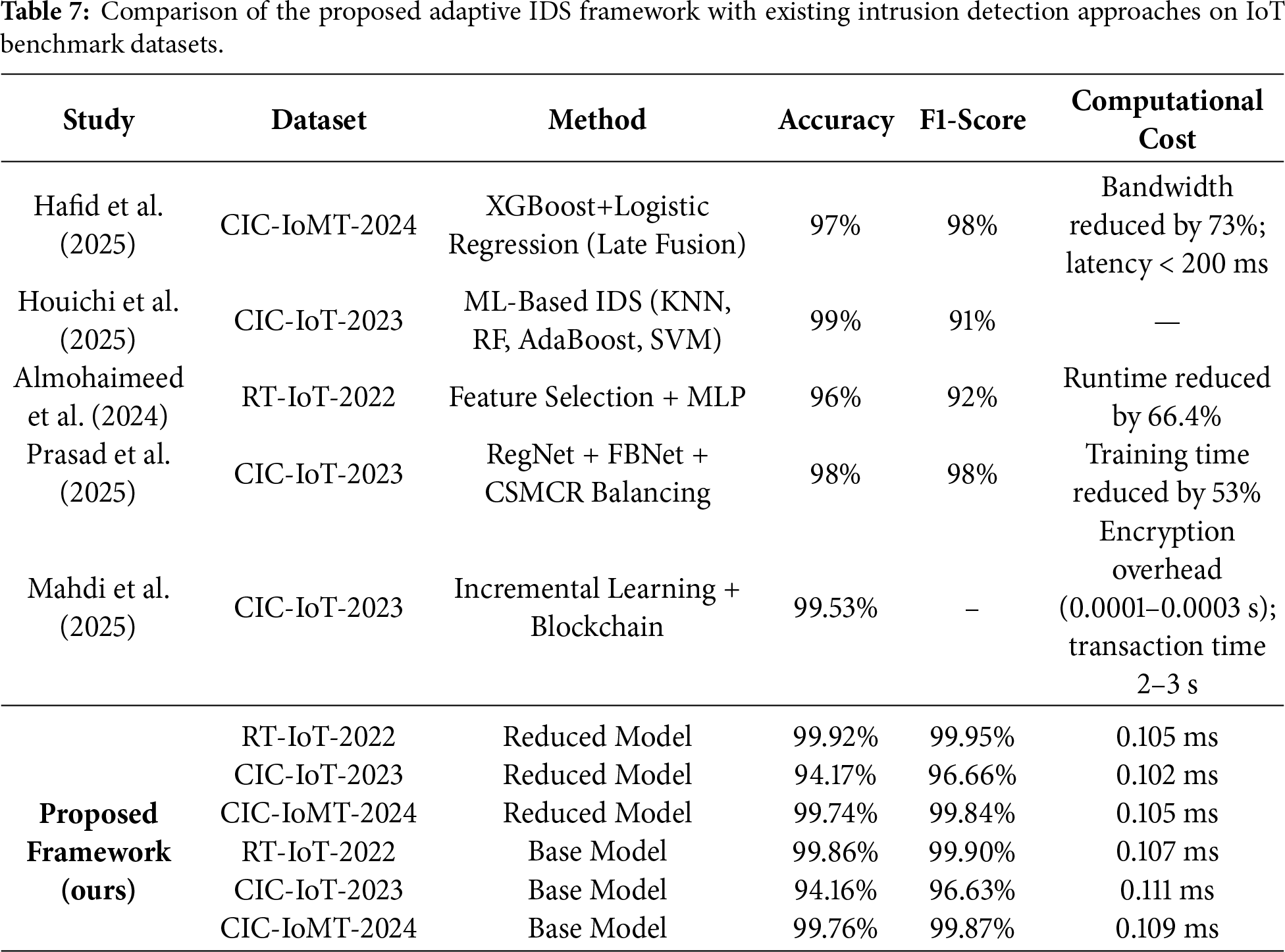
Hafid et al. [35] reported strong performance on CIC-IoMT-2024 using a late-fusion XGBoost and Logistic Regression model, achieving 97% accuracy and 98% F1-score. While both their approach and the proposed framework incorporate adaptivity, their interpretability relies on SHAP values and their evaluation follows a static cost-performance analysis. Their method reduces bandwidth usage by 73% with detection latency below 200 ms, whereas our framework achieves substantially lower inference time in the sub-millisecond range.
Houichi et al. [32] reported 99% accuracy and a lower F1-score of 91% on CIC-IoT-2023 using traditional ML classifiers. However, their evaluation was limited to a single dataset and lacked adaptive decision control, limiting generalizability.
Prasad et al. [27] achieved 98% accuracy and a 98% F1-score on CIC-IoT-2023 using a DL model with cosine-similarity–based balancing. Their balancing method mitigated the inherent class imbalance of the dataset. In addition, their deep-learning pipeline followed a static inference process with no adaptive or cost-aware control. In contrast, the proposed adaptive framework maintains consistently strong performance across three benchmark datasets (RT-IoT-2022, CIC-IoT-2023, CIC-IoMT-2024) and introduces a LinUCB-based decision layer that dynamically balances accuracy and penalty under varying network conditions. They reported a 53% reduction in training time, whereas our framework delivers fast inference with an average cost near 0.1 ms per sample.
Almohaimeed and Albalwy [24] applied multiple feature selection methods to RT-IoT-2022 followed by an MLP classifier, achieving 96% accuracy and a 92% F1-score. While effective at reducing dimensionality, their approach does not incorporate adaptive or cost-aware decision logic. Our framework surpasses these results, achieving up to 99.92% accuracy and 99.95% F1-score on RT-IoT-2022 using the Reduced Model. Their method reduced runtime by 66.4%, whereas our framework additionally achieves sub-millisecond inference with higher predictive performance.
Finally, Mahdi et al. [31] used the CIC-IoT-2023 dataset, which is inherently imbalanced, with attack traffic dominating normal flows. The authors did not apply any explicit data-balancing method, instead relying on the incremental learning process to adapt to changing distributions. Consequently, the reported 99.53% accuracy may be influenced by class imbalance, as no F1-score or weighted metrics were provided. Their system introduces blockchain-related overhead (0.0001 s–0.0003 s per operation and 2–3 s per transaction), whereas the proposed IDS maintains inference latency near 0.1 ms.
In conclusion, we proposed an adaptive intrusion detection framework designed for IoT environments. This asymmetrical nature of IoT systems involves limited computational resources, high feature dimensionality, and prediction uncertainty. The proposed framework has the ability to intelligently balance detection accuracy and computational cost. This is accomplished by applying MI as a feature selection model, which effectively reduces the dimensionality of the data and keeps only the most informative features while eliminating redundancy. The adaptive decision dynamically selects between multiple inference paths, which ensures that additional computation is used only when uncertainty is high. Performance evaluation on the RT-IoT-2022, CIC-IoT-2023, and CIC-IoMT-2024 datasets indicates that the framework achieves F1-scores of 99.92%, 96.66%, and 99.84%, respectively, with an average inference time of approximately 0.105 ms per sample. A limitation of this work is that it focuses on binary intrusion classification. This choice was made to clearly study the balance between detection accuracy and computational cost. In future work, the framework will be extended to multiclass intrusion detection to support more detailed attack classification. In addition, future studies will evaluate the framework in real IoT environments and improve the adaptive controller by considering additional factors such as energy consumption, network latency, and device diversity.
Acknowledgement: Not applicable.
Funding Statement: This project was funded by the Deanship of Scientific Research (DSR) at King Abdulaziz University, Jeddah, Saudi Arabia under grant no. (IPP: 753-611-2025). The authors, therefore, acknowledge with thanks DSR for technical and financial support.
Author Contributions: Conceptualization, Abdulaziz A. Alsulami, Badraddin Alturki and Ahmad J. Tayeb; methodology, Abdulaziz A. Alsulami and Rayan A. Alsemmeari; software, Abdulaziz A. Alsulami; validation, Abdulaziz A. Alsulami, Rayan A. Alsemmeari and Ahmad J. Tayeb; formal analysis, Ahmad J. Tayeb; investigation, Badraddin Alturki; resources, Abdulaziz A. Alsulami; data curation, Abdulaziz A. Alsulami; writing—original draft preparation, Abdulaziz A. Alsulami, Badraddin Alturki and Ahmad J. Tayeb; writing—review and editing, Rayan A. Alsemmeari, Raed Alsini and Badraddin Alturki; visualization, Badraddin Alturki; supervision, Abdulaziz A. Alsulami; project administration, Badraddin Alturki, Ahmad J. Tayeb and Raed Alsini; funding acquisition, Abdulaziz A. Alsulami. All authors reviewed and approved the final version of the manuscript.
Availability of Data and Materials: The benchmark datasets used in this study (RT-IoT2022, CIC-IoT2023, and CIC-IoMT2024) are publicly available from their respective sources.
Ethics Approval: This study does not involve human participants, animal subjects, or the use of personal or sensitive data. Therefore, ethical approval was not required.
Conflicts of Interest: The authors declare no conflicts of interest.
References
1. Sadeghi-Niaraki A. Internet of Thing (IoT) review of review: bibliometric overview since its foundation. Future Gener Comput Syst. 2023;143(5):361–77. doi:10.1016/j.future.2023.01.016. [Google Scholar] [CrossRef]
2. Ahmetoglu S, Che Cob Z, Ali N. A systematic review of Internet of Things adoption in organizations: taxonomy, benefits, challenges and critical factors. Appl Sci. 2022;12(9):4117. doi:10.3390/app12094117. [Google Scholar] [CrossRef]
3. Jouhari M, Saeed N, Alouini MS, Amhoud EM. A survey on scalable LoRaWAN for massive IoT: recent advances, potentials, and challenges. IEEE Commun Surv Tutor. 2023;25(3):1841–76. doi:10.1109/comst.2023.3274934. [Google Scholar] [CrossRef]
4. Vailshery LS. Number of IoT connections worldwide 2022–2034. 2025 [cited 2025 Oct 10]. Available from: https://www.statista.com/statistics/1183457/iot-connected-devices-worldwide/. [Google Scholar]
5. Vailshery LS. IoT global annual revenue 2020–2034. 2025 [cited 2025 Oct 10]. Available from: https://www.statista.com/statistics/1194709/iot-revenue-worldwide/. [Google Scholar]
6. Li J, Othman MS, Chen H, Yusuf LM. Optimizing IoT intrusion detection system: feature selection versus feature extraction in machine learning. J Big Data. 2024;11(1):36. doi:10.1186/s40537-024-00892-y. [Google Scholar] [CrossRef]
7. Merlino V, Allegra D. Energy-based approach for attack detection in IoT devices: a survey. Internet Things. 2024;27(4):101306. doi:10.1016/j.iot.2024.101306. [Google Scholar] [CrossRef]
8. Altulaihan E, Almaiah MA, Aljughaiman A. Anomaly detection IDS for detecting DoS attacks in IoT networks based on machine learning algorithms. Sensors. 2024;24(2):713. doi:10.3390/s24020713. [Google Scholar] [PubMed] [CrossRef]
9. Hossain MA. Deep Q-learning intrusion detection system (DQ-IDSa novel reinforcement learning approach for adaptive and self-learning cybersecurity. ICT Express. 2025;11(5):875–80. doi:10.1016/j.icte.2025.05.007. [Google Scholar] [CrossRef]
10. Hossain MA, Islam MS. A novel feature selection-driven ensemble learning approach for accurate botnet attack detection. Alex Eng J. 2025;118(13):261–77. doi:10.1016/j.aej.2025.01.042. [Google Scholar] [CrossRef]
11. Bakhsh SA, Khan MA, Ahmed F, Alshehri MS, Ali H, Ahmad J. Enhancing IoT network security through deep learning-powered intrusion detection system. Internet Things. 2023;24(10):100936. doi:10.1016/j.iot.2023.100936. [Google Scholar] [CrossRef]
12. Orman A. Cyberattack detection systems in industrial Internet of Things (IIoT) networks in big data environments. Appl Sci. 2025;15(6):3121. doi:10.3390/app15063121. [Google Scholar] [CrossRef]
13. Salayma M. Risk and threat mitigation techniques in Internet of Things (IoT) environments: a survey. Front Internet Things. 2024;2:1306018. doi:10.3389/friot.2023.1306018. [Google Scholar] [CrossRef]
14. Zhukabayeva T, Zholshiyeva L, Karabayev N, Khan S, Alnazzawi N. Cybersecurity solutions for industrial Internet of Things—edge computing integration: challenges, threats, and future directions. Sensors. 2025;25(1):213. doi:10.3390/s25010213. [Google Scholar] [PubMed] [CrossRef]
15. Wakili A, Bakkali S. Privacy-preserving security of IoT networks: a comparative analysis of methods and applications. Cyber Secur Appl. 2025;3(4):100084. doi:10.1016/j.csa.2025.100084. [Google Scholar] [CrossRef]
16. Khayat M, Barka E, Serhani MA, Sallabi F, Shuaib K, Khater HM. Reinforcement learning with deep features: a dynamic approach for intrusion detection in IoT networks. IEEE Access. 2025;13:92319–37. doi:10.1109/access.2025.3569312. [Google Scholar] [CrossRef]
17. Chiba Z, Abghour N, Moussaid K, Lifandali O, Kinta R. A deep study of novel intrusion detection systems and intrusion prevention systems for Internet of Things networks. Procedia Comput Sci. 2022;210(15):94–103. doi:10.1016/j.procs.2022.10.124. [Google Scholar] [CrossRef]
18. Mallidi SKR, Ramisetty RR. Advancements in training and deployment strategies for AI-based intrusion detection systems in IoT: a systematic literature review. Discov Internet Things. 2025;5(1):8. doi:10.1007/s43926-025-00099-4. [Google Scholar] [CrossRef]
19. Usama Tanveer M, Munir K, Amjad M, Ali Jafar Zaidi S, Bermak A, Rehman AU. Ensemble-guard IoT: a lightweight ensemble model for real-time attack detection on imbalanced dataset. IEEE Access. 2024;12:168938–52. doi:10.1109/access.2024.3495708. [Google Scholar] [CrossRef]
20. Musthafa MB, Huda S, Kodera Y, Ali MA, Araki S, Mwaura J, et al. Optimizing IoT intrusion detection using balanced class distribution, feature selection, and ensemble machine learning techniques. Sensors. 2024;24(13):4293. doi:10.3390/s24134293. [Google Scholar] [PubMed] [CrossRef]
21. Shafin SS, Karmakar G, Mareels I, Balasubramanian V, Kolluri RR. Sensor self-declaration of numeric data reliability in Internet of Things. IEEE Trans Reliab. 2025;74(2):2751–65. doi:10.1109/tr.2024.3416967. [Google Scholar] [CrossRef]
22. Chen X, Wang P, Yang Y, Liu M. Resource-constraint deep forest-based intrusion detection method in Internet of Things for consumer electronic. IEEE Trans Consum Electron. 2024;70(2):4976–87. doi:10.1109/tce.2024.3373126. [Google Scholar] [CrossRef]
23. Simioni JA, Viegas EK, Santin AO, de Matos E. An energy-efficient intrusion detection offloading based on DNN for edge computing. IEEE Internet Things J. 2025;12(12):20326–42. doi:10.1109/jiot.2025.3544060. [Google Scholar] [CrossRef]
24. Almohaimeed M, Albalwy F. Enhancing IoT network security using feature selection for intrusion detection systems. Appl Sci. 2024;14(24):11966. doi:10.3390/app142411966. [Google Scholar] [CrossRef]
25. Alturki B, Alsulami AA. Semi-supervised learning with entropy filtering for intrusion detection in asymmetrical IoT systems. Symmetry. 2025;17(6):973. doi:10.3390/sym17060973. [Google Scholar] [CrossRef]
26. Albalwy F, Almohaimeed M. Advancing artificial intelligence of things security: integrating feature selection and deep learning for real-time intrusion detection. Systems. 2025;13(4):231. doi:10.3390/systems13040231. [Google Scholar] [CrossRef]
27. Prasad A, Mohammad Alenazy W, Ahmad N, Ali G, Abdallah HA, Ahmad S. Optimizing IoT intrusion detection with cosine similarity based dataset balancing and hybrid deep learning. Sci Rep. 2025;15(1):30939. doi:10.1038/s41598-025-15631-3. [Google Scholar] [PubMed] [CrossRef]
28. Katsura Y, Endo A, Arai I, Fujikawa K. Efficient IDS for IoT networks using host-based data aggregation and multi-entropy analysis. IEEE Access. 2025;13(21):125406–19. doi:10.1109/access.2025.3589057. [Google Scholar] [CrossRef]
29. Vishwakarma M, Kesswani N. StaEn-IDS: an explainable stacking ensemble deep neural network-based intrusion detection system for IoT. IEEE Access. 2025;13:109713–28. doi:10.1109/access.2025.3582391. [Google Scholar] [CrossRef]
30. Ullah F, Turab A, Ullah S, Cacciagrano D, Zhao Y. Enhanced network intrusion detection system for Internet of Things security using multimodal big data representation with transfer learning and game theory. Sensors. 2024;24(13):4152. doi:10.3390/s24134152. [Google Scholar] [PubMed] [CrossRef]
31. Mahdi ZS, Zaki RM, Alzubaidi L. A secure and adaptive framework for enhancing intrusion detection in IoT networks using incremental learning and blockchain. Secur Priv. 2025;8(4):e70071. doi:10.1002/spy2.70071. [Google Scholar] [CrossRef]
32. Houichi M, Jaidi F, Bouhoula A. Enhancing smart city security: an intrusion detection system using machine learning methods with the UNB CIC IoT 2023 dataset. IET Smart Cities. 2025;7(1):e70014. doi:10.1049/smc2.70014. [Google Scholar] [CrossRef]
33. Mahdi ZS, Zaki RM, Alzubaidi L. Advanced hybrid techniques for cyberattack detection and defense in IoT networks. Secur Priv. 2025;8(2):e471. doi:10.1002/spy2.471. [Google Scholar] [CrossRef]
34. Doménech J, León O, Siddiqui MS, Pegueroles J. Evaluating and enhancing intrusion detection systems in IoMT: the importance of domain-specific datasets. Internet Things. 2025;32(1):101631. doi:10.1016/j.iot.2025.101631. [Google Scholar] [CrossRef]
35. Hafid A, Rahouti M, Aledhari M. Optimizing intrusion detection in IoMT networks through interpretable and cost-aware machine learning. Mathematics. 2025;13(10):1574. doi:10.3390/math13101574. [Google Scholar] [CrossRef]
36. Mezina A, Nurmi J, Ometov A. Novel hybrid UNet++ and LSTM model for enhanced attack detection and classification in IoMT traffic. IEEE Access. 2025;13(1):57589–603. doi:10.1109/access.2025.3553966. [Google Scholar] [CrossRef]
37. Haq MIU, Mahmood K, Li Q, Das AK, Shetty S, Hussain M. Efficiently learning an encoder that classifies token replacements and masked permuted network-based BIGRU attention classifier for enhancing sentiment classification of scientific text. IEEE Access. 2024;12(3):190240–54. doi:10.1109/access.2024.3516946. [Google Scholar] [CrossRef]
38. Regler B, Scheffler M, Ghiringhelli LM. TCMI: a non-parametric mutual-dependence estimator for multivariate continuous distributions. Data Min Knowl Discov. 2022;36(5):1815–64. doi:10.1007/s10618-022-00847-y. [Google Scholar] [CrossRef]
39. Su Y, Xiong D, Wan Y, Shi C, Zeng Q. LinFuzz: program-sensitive seed scheduling greybox fuzzing based on LinUCB algorithm. IEEE Access. 2024;12(10):74843–60. doi:10.1109/access.2024.3404918. [Google Scholar] [CrossRef]
40. Sharmila B, Nagapadma R. Quantized autoencoder (QAE) intrusion detection system for anomaly detection in resource-constrained IoT devices using RT-IoT2022 dataset. Cybersecurity. 2023;6(1):41. doi:10.1186/s42400-023-00178-5. [Google Scholar] [CrossRef]
41. Neto ECP, Dadkhah S, Ferreira R, Zohourian A, Lu R, Ghorbani AA. CICIoT2023: a real-time dataset and benchmark for large-scale attacks in IoT environment. Sensors. 2023;23(13):5941. doi:10.3390/s23135941. [Google Scholar] [PubMed] [CrossRef]
42. Dadkhah S, Neto ECP, Ferreira R, Molokwu RC, Sadeghi S, Ghorbani AA. CICIoMT2024: a benchmark dataset for multi-protocol security assessment in IoMT. Internet Things. 2024;28:101351. [Google Scholar]
Cite This Article
 Copyright © 2026 The Author(s). Published by Tech Science Press.
This work is licensed under a Creative Commons Attribution 4.0 International License , which permits unrestricted use, distribution, and reproduction in any medium, provided the original work is properly cited.
 Downloads
 Citation Tools
