
 Login
Login Register
 Submit a Paper
 Propose a Special lssue
 Open Access
ARTICLE
A Secure Blockchain-Enabled SDN-Based Edge Computing Framework for IoT Healthcare Systems
1 School of Computer Science and Engineering, Galgotias University, Greater Noida, Uttar Pradesh, India
2 Information Systems and Security, College of IT, United Arab Emirates University, Al Ain, United Arab Emirates
3 EIAS Data Science and Blockchain Lab, College of Computer and Information Sciences, Prince Sultan University, Riyadh, Saudi Arabia
* Corresponding Authors: Vikas Tyagi. Email: ; Arvind Prasad. Email:
Computers, Materials & Continua 2026, 89(2), 57 https://doi.org/10.32604/cmc.2026.085763
Received 18 May 2026; Accepted 29 June 2026; Issue published 15 September 2026
 View Full Text
 Download PDF
Abstract
Healthcare systems based on the Internet of Things (IoT) are widely used in patient monitoring, telemedicine, emergency care, and hospital-at-home services. However, existing IoT healthcare networks still face major challenges related to security, trust management, network control, and real-time emergency data handling. Centralized trust mechanisms and repeated cloud-based verification may increase delay and reduce reliability in critical healthcare scenarios. Moreover, suspicious medical devices must be quickly isolated, while sensitive patient data and emergency traffic must be protected and prioritized. To address these issues, this work proposes a blockchain-enabled, software-defined networking (SDN)-based edge computing framework for IoT healthcare systems. The proposed architecture integrates blockchain for secure and distributed trust management, edge computing for low-latency processing, and an Open Network Operating System (ONOS)-based SDN control plane for emergency-aware flow management, dynamic traffic engineering, and policy-based medical traffic segmentation. The framework is evaluated against a recent blockchain-edge-cloud-SDN IoT baseline. The results show that the proposed framework reduces average jitter by 15.05%, energy consumption by 6.10%, and delay by 14.16%, while improving packet delivery ratio by 6.85% and throughput by 9.85%. These results indicate that the proposed approach can provide more reliable, efficient, and secure communication for connected hospitals, intensive care unit (ICU) monitoring, ambulance telemetry, and home-based chronic care environments.Keywords
The Internet of Things (IoT) has rapidly changed the way modern healthcare services are delivered. Technologies such as remote patient monitoring, connected bedside equipment, wearable devices, telemedicine platforms, emergency telemetry, and hospital-at-home systems are now becoming an essential part of smart healthcare. In practice, these environments involve a wide range of interconnected cyber-physical devices, including ECG sensors, glucose monitors, infusion pumps, pulse oximeters, smart beds, ambulance communication units, and clinician-side applications. While these devices significantly improve the quality, efficiency, and responsiveness of care, they also enlarge the attack surface of the healthcare ecosystem [1,2].
Securing healthcare IoT systems is more challenging than securing generic IoT deployments [3]. First, healthcare data are highly sensitive and subject to strict privacy and regulatory requirements. Second, access decisions in healthcare are rarely generic; they depend on patient context, clinical responsibility, user role, and treatment workflow. Third, healthcare traffic by nature is heterogeneous; as life-critical flows, such as those generated by alarms in ICUs, telemetry from ambulances, or other emergency messages, need to be prioritized far above routine administrative communication flows. Classical centralized approaches to identity authentication and static access control cannot cope with these needs; they often create single points of failure, entail cloud dependency with associated delays, and offer poor options for quick containment of potentially hostile devices while not affecting the operation of the healthcare facility.
It is precisely the technology trio of blockchain, edge computing, and software-defined networking (SDN) that can help solve these issues. Blockchain offers decentralized trust, a history of transactions that is immutable, and smart contracts that allow auditing and enforcing access control rules. What edge computing can offer in this combination is closer-to-device validation and decision making, thus reducing latency and ensuring continuity. As for SDN, it is capable of dynamic priority setting, segmentation, and applying policies to the traffic flowing through it. This research follows up on the line of blockchain combined with fog computing to establish device identity and prior research considering blockchain, edge/cloud computing, and SDN in IoT applications [4].
The main drive behind this research is the reliance on the use of networked devices for the provision of continuous monitoring, emergencies, telemedicine, and home-based health services. While the integration of such devices in the healthcare network improves the performance and real-time decision-making ability, it introduces significant risks to the security and management of the healthcare network, which include centralization of trust, repetitive authentication latency, static access behavior, and poor isolation of infected medical devices [5]. This issue becomes more pressing within healthcare since it is paramount that communication remains reliable, sensitive data stays confidential, and emergency traffic receives priority during communication. Therefore, the need to design a communication system that supports distributed trust, fast access validation, and flexible policy control has become increasingly evident. Based on this need, the current study suggests a blockchain-enabled SDN edge computing architecture for secure and auditable communications in IoT healthcare networks.
The main contributions of this work are summarized below:
• A healthcare-specific blockchain-enabled SDN-edge architecture is developed for connected hospitals, ICU monitoring, ambulance telemetry, wearable sensing, and home-based care. The architecture integrates the device plane, edge intelligence plane, blockchain trust plane, and ONOS-based SDN control plane to support trusted access, local validation, and programmable traffic enforcement.
• A formal access-control and forwarding model is presented to represent user–device–patient authorization, secure access delay, device trust, role compatibility, and emergency-priority forwarding in healthcare IoT communication.
• The permissioned blockchain component is refined as a smart-contract-based trust layer for registration, patient–device binding, role-policy mapping, token issuance, token revocation, and immutable audit logging. The design also explains consensus assumptions and smart contract complexity.
• The ONOS controller is employed as a healthcare-aware policy engine that converts validated trust decisions into enforceable network actions, including allow, restrict, prioritize, deny, and isolate rules for normal, emergency, and suspicious traffic.
• An end-to-end workflow and pseudo-code are provided to connect edge caching, blockchain validation, token handling, ONOS rule installation, and revocation/reconfiguration. The comparative evaluation further reports the expected gains against a blockchain–edge-cloud–SDN IoT baseline.
The remainder of this work is arranged in the following sections. Where, Section 2 presents the relevant literature. Section 3 presents the system model with its assumptions. Section 4 formulates the secure access problem mathematically by defining authorization, delay, optimization objectives, and operational constraints. Section 5 describes the proposed framework in detail, including the analytical architecture, operational workflow, pseudo-code representation, and ONOS-based policy realization. Section 6 presents the comparative performance evaluation and experimental analysis with respect to the baseline framework. Section 7 provides the discussion and limitations, and Section 8 presents the concluding remarks.
Access control and authentication systems based on blockchain technology have gained significant interest in the field of Internet of Things (IoT) due to their ability to minimize reliance on centralized storage of credentials as well as provide secure logging of all security events. Christidis and Devetsikiotis [1] highlighted the critical role of blockchain technology and smart contracts for trust establishment within IoT networks, whereas Novo [2] focused on using blockchain for scalability issues related to IoT access control systems. Overall, the presented references suggest that blockchain technology offers promising opportunities not only for secure logging purposes but also for access control implementation. Lightweight blockchain-assisted authentication has also been explored in fog-supported and distributed service settings [6]. The thesis that motivates the present work followed this direction by using blockchain smart contracts and fog nodes for decentralized authentication and event logging.
Healthcare-focused fog and edge architectures have been proposed to support low-latency care delivery. Azimi et al. [7] presented hierarchical fog-assisted healthcare computing, and Rahmani et al. [8] described smart e-health gateways for healthcare IoT at the edge. More recent surveys indicate that combining blockchain with healthcare IoT can improve auditability, transparency, and trust while edge/fog layers improve response time and local processing efficiency [9–11]. SDN has also been widely studied for IoT security because of its ability to separate control and data planes and dynamically enforce policies. Kalkan and Zeadally [12] discussed IoT security with SDN, while Sharma et al. [13] proposed DistBlockNet to couple blockchain and SDN in IoT networks. More recent works have employed blockchain-SDN combinations for DDoS mitigation and orchestration in edge-cloud environments [14,15].
Recently, there have been a number of studies on the synergistic effect of utilizing blockchain, SDN, and edge/fog computing for enhancing cybersecurity in distributed IoT ecosystems. In particular, Sebbar et al. [16] suggested a blockchain-based secure architecture of SDN for multi-edge computing applications within an industrial IoT scenario, where the key emphasis was on protection of industrial services against cybersecurity threats while maintaining system scalability in the case of multi-edge deployments. The study is particularly interesting, since it proved that integrating blockchain-trusted decision-making and SDN-based network control can enhance the overall resiliency and coordination of IoT edge networks. At the same time, the proposed architecture focuses only on an industrial IoT use case, and its implementation does not cover healthcare-oriented aspects like patient-device role relations, traffic priority of emergency communications, and context-awareness for access control.
Another study by Lakhlef et al. [17] reviewed the current state of blockchain-enhanced SDN solutions for IoT and discussed a general potential of using these technologies together to enhance programmability, distributed management, and overall trust in IoT systems. It should be acknowledged that the study makes a significant strategic contribution, emphasizing the growing importance of blockchain-based management of IoT systems and their heterogeneity. Nevertheless, it remains primarily a strategic and discussion-oriented study rather than a healthcare-specific implementation framework. Domain-specific contributions include those made by Kilani et al. [18], which proposed an architecture that provides for a secure multi-edge computing solution for industrial IoT, leveraging blockchain and SDN. While similar to the contributions discussed above in terms of combining decentralization and programmable network management in order to ensure greater protection, the architecture focuses specifically on the needs of industrial IoT, failing to account for specific requirements such as ensuring constant medical service availability, strictly adhered-to role-based access policies, and delay-restricted routing of critical telemetry information.
The paper written by Kaur et al. [19] brought even more relevance to the discussion since it proposed a security framework specifically for healthcare fog computing, leveraging zero trust, blockchain, and SDN. As evidenced by the authors’ focus on the specifics of medical data and its need for continuous authentication and anomaly detection, as well as the fact that fog-assisted healthcare systems require timely and seamless execution of tasks, the research provides valuable insights into the use of blockchain and SDN in a fog environment. Nevertheless, the authors focused on zero-trust fog security and task scheduling rather than on an actual healthcare IoT access control system using ONOS.
Another closely related contribution is the BLEDGE-SDN framework by Paliwal et al. [20], which integrates blockchain and edge-cloud-enabled SDN to secure networks and IoT devices. This study is relevant because it shows how distributed trust and edge-cloud coordination can be used to strengthen network and device security in cyber-physical settings. Yet, like most general-purpose IoT security frameworks, it focuses on securing networked IoT devices at a broad level and does not explicitly model healthcare-specific communication semantics, emergency service prioritization, or ONOS-guided medical traffic control. These limitations across the existing literature motivate the need for the present work, which brings together blockchain-based trust, edge-assisted validation, and healthcare-aware SDN enforcement in a single integrated framework.
Recent studies also show that blockchain is increasingly being combined with artificial intelligence (AI), digital twins, and device-level trust modeling to support trustworthy data orchestration in smart interconnected ecosystems. AI-assisted trust scoring can help identify anomalous devices and suspicious access behavior, while digital-twin-based representations can mirror physical IoT devices and support predictive validation before enforcing network changes. In healthcare IoT, these ideas are useful because access decisions should not depend only on static credentials; they should also consider device behavior, patient context, service criticality, and the reliability of sensed data. Therefore, the present work positions blockchain as the auditable trust layer, edge computing as the local validation layer, and ONOS-based SDN as the enforcement layer for translating trust decisions into network policies.
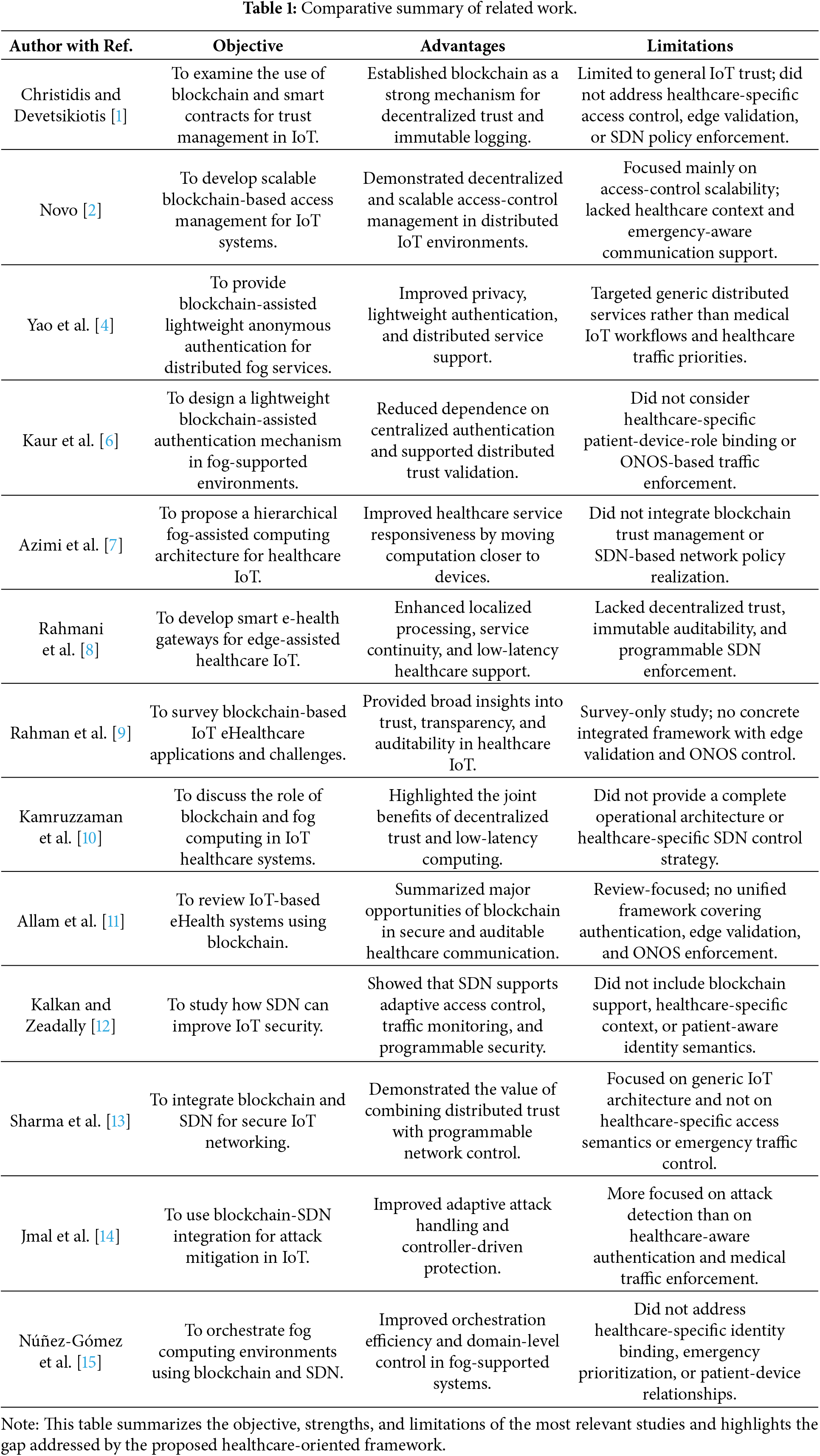
Another similar baseline for this research can be Medhane et al.’s paper [21] where blockchain, edge cloud, and SDN technologies were combined to enhance security and privacy in the next generation of IoT. According to their research, packet delivery ratio, throughput, and delay have been observed to perform better when blockchain, edge cloud, and SDN technologies are utilized collectively as compared to being isolated from each other. However, once more, the scope of the research remains confined to the general IoT security and privacy issue. The role of the device, identity context, and emergency traffic management using ONOS are some of the issues that cannot be addressed by this study. Table 1 provides an overview of the most relevant papers analyzed in this study based on their goals, advantages, and disadvantages. From this analysis, it can be seen that although there were many attempts to investigate each of the components mentioned above individually, there was no research that considered all three of them together in a single framework.
Digital twin technology can significantly strengthen a secure blockchain-enabled SDN-based edge computing framework for IoT healthcare systems by creating virtual representations of patients, medical devices, and healthcare processes for real-time monitoring, prediction, and decision-making. Recent studies highlight that digital twins, when integrated with blockchain, AI, and secure networking, can improve trust, data integrity, privacy, and system resilience.
3 System Model and Assumptions
This section provides the entities in the proposed architecture as follows:
• Healthcare Authority (HA): Trust anchor in charge of the onboard process for hospitals, clinical staff, patients, and approved devices
• Clinical Users: Clinicians such as doctors, nurses, technicians, hospital administration, and emergency responders.
• Patients: Individuals who are in association with healthcare devices and workflows.
• IoT Medical Devices: Wearable sensors, bedside patient monitors, ICU alarm systems, infusion devices, glucometers, pulse oximeters, ambulance telemetry units, and smart home-care healthcare nodes.
• Edge Gateways: ICU, ward, ambulance, and home-care gateways for local validation and contextual service continuity.
• Blockchain Layer: permissioned smart contracts storing user, patient, device, and policy metadata.
• ONOS SDN Layer: controller cluster that translates access decisions into dynamic healthcare-aware network policies.
• Cloud Services: long-term EHR storage, analytics, compliance records, and forensic processing.
We assume that devices are resource constrained, edge gateways are semi-trusted institutional components, and ONOS operates inside the healthcare trust domain. The blockchain stores only metadata, hashes, and audit evidence, not full medical records. The framework further assumes that all participating hospitals and edge gateways belong to a permissioned healthcare consortium, where each institution can operate endorsed blockchain peers and ONOS instances under a controlled trust boundary.
Let
To begin with, it is necessary to define whether a particular access request should be permitted or denied. Since access in the proposed framework depends on the requesting user, the target device, and the patient context, an authorization indicator is introduced. This binary indicator is expressed in Eq. (1).
In Eq. (1), the value of
Once the authorization state is defined, the next step will involve calculating the total access latency that is required to ensure the security of access establishment. In an SDN-edge system with blockchain, latency in secure access establishment does not come from one factor alone; rather, it comes from several steps. Thus, the total access latency is given by Eq. (2).
As represented in Eq. (2), the total delay consists of four major components:
Once the authorization and delay terms are defined, the overall optimization objective can be formulated. The proposed framework is not limited to reducing latency alone; it must also control security risk and controller overhead. Hence, a weighted multi-objective minimization function is introduced in Eq. (3).
As evident from Eq. (3), this scheme optimizes the system by minimizing three major parameters in a simultaneous manner: the secure-access time
To make Eq. (3) verifiable, the risk and controller-overhead terms are modeled as normalized quantities in the range
where
where
In order to make sure that the optimization process is practical enough, a certain set of constraints needs to be considered. These constraints would ensure that only genuine, authorized, and legitimate communications enter the healthcare network. The first constraint is presented in Eq. (6).
The condition of Eq. (6) guarantees that only the requests which fulfill the authorization function can be deemed feasible. In case an access attempt fails to meet this criterion, it will be denied during the trust-validation phase.
Apart from authorization, another constraint for the device participating in the communication process is its minimal level of trust. It is necessary due to the fact that even a registered device may turn into something questionable after some time.
According to Eq. (7), trustworthiness of device
The subsequent condition is concerned with role-based access compatibility. Access rights of different users are not the same within healthcare settings; they vary according to the clinical role of the user and the relation of the medical device to the particular task. Eq. (8) models such a relation.
The Eq. (8) dictates that the role allocation for user
The framework must finally explicitly ensure that emergency-aware traffic prioritization is supported. In intelligent healthcare, any emergency traffic (ICU alerts, ambulance data, etc.) must always take precedence over other types of traffic. This necessity is formally stated in Eq. (9).
According to Eq. (9), once a flow
In summary, the above mathematical programming formulation has incorporated the main objective of our framework, which is to minimize the secure access delay while ensuring proper interaction between healthcare users and medical IoT devices.
5 Proposed Framework Architecture, Workflow, and Policy Realization
This section presents the complete architecture, operational workflow, algorithmic logic, smart contract design, and ONOS-based policy realization of the proposed blockchain-enabled SDN-edge healthcare framework. The architecture, workflow, algorithm, and ONOS policies are all explained together rather than individually, since all these components work together to guarantee the security of communication in healthcare. In essence, this proposed framework is aimed at three major objectives, which are: access control by blockchain, latency reduction by edge gateways, and traffic enforcement by ONOS SDN.
Analytically speaking, this proposed framework works across four interconnected planes, which include device, edge intelligence, blockchain trust plane, and SDN control plane. All these planes combined serve to authenticate and govern the operation of healthcare devices using context-aware and healthcare aware forwarding policies. In other words, the proposed framework is not limited to authentication of devices; it encompasses trust in the entire network infrastructure.
The proposed framework consists of four functional layers, each contributing a distinct role in secure healthcare service delivery. The overall interaction among clinical users, edge gateways, permissioned blockchain, ONOS controller, SDN switch fabric, IoT medical devices, and cloud/EHR analytics is illustrated in Fig. 1.
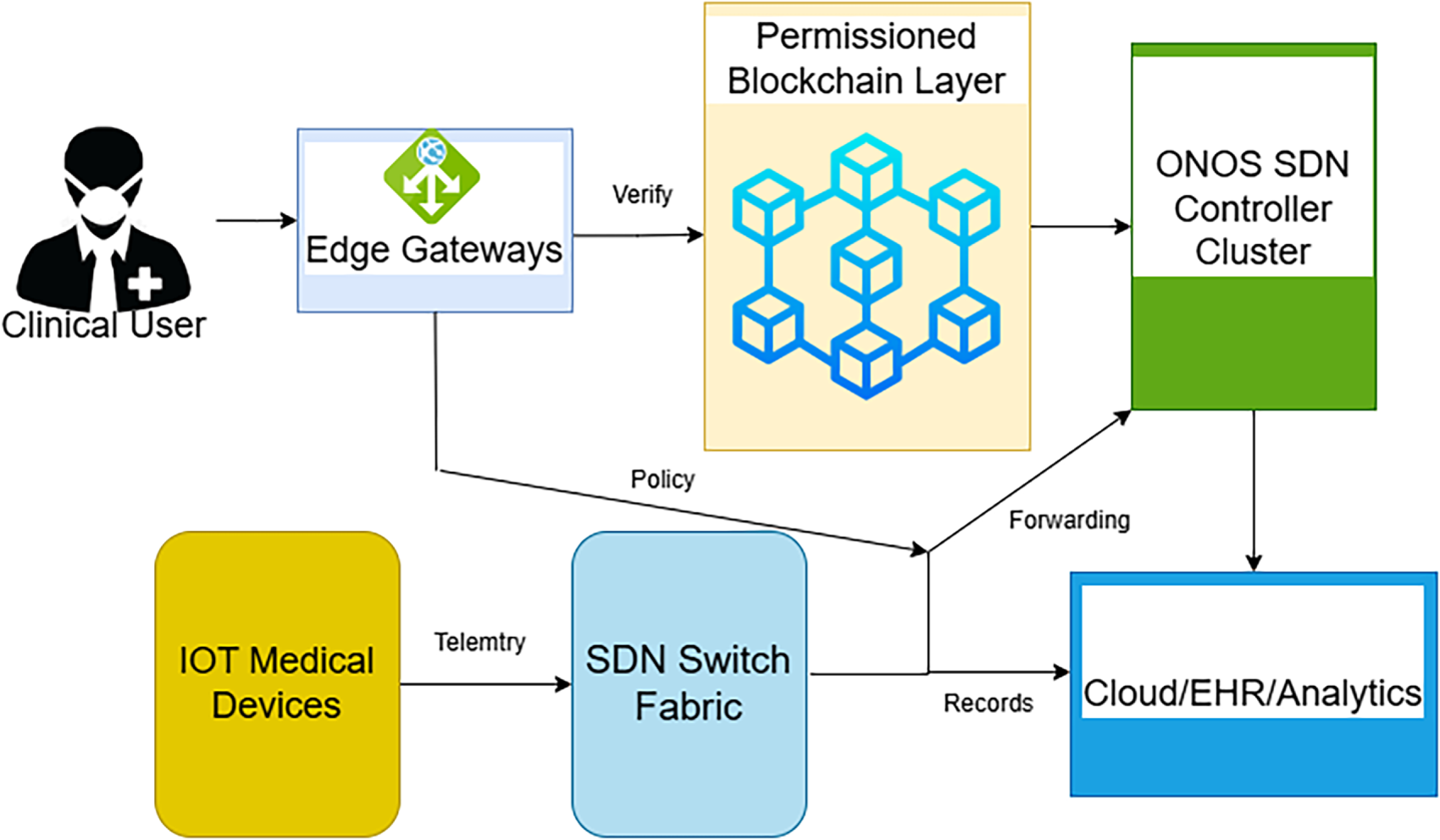
Figure 1: Proposed architecture of blockchain-enabled SDN-edge healthcare framework.
The device plane includes wearable sensors, patient monitors, infusion pumps, ambulances’ telemetry systems, smart beds, home-monitoring devices, and various interconnected devices used in healthcare settings. The devices produce physiological telemetry, device state data, and service requests. Additionally, certain devices can receive commands that are authorized by healthcare professionals.
From an analytical point of view, the device plane acts as the source of generated data and services consumer in the network. Given the resource limitations of most of medical Internet of Things devices, they are unable to perform repeated authentication and policy assessment.
Edge nodes include ward-edge, ICU-edge, ambulance-edge, and home-gateway nodes. The above gateways ensure localized processing, persistent session management, validation of tokens, and admission based on the context. Rather than sending all repeated communications to the cloud and blockchain, the edge nodes take advantage of session validity and call blockchain services as needed.
Analytically speaking, the edge-assisted approach helps reduce delays in validation and minimize control-plane traffic. We may represent the gains of edge-based validation as
In Eq. (10),
Blockchain trust plane is designed as the permission-based smart contract layer, which handles user registration, patient registration, device registration, patient-device binding, mapping clinician roles, issuing tokens, revoking tokens, and audit logging in an immutable manner.
Blockchain layer is analyzed as the state-maintenance component. As every approved or denied access attempt can be recorded in the audit logs, the system will acquire the auditability property and will be resistant to any alterations. If
Each element
5.1.4 Smart Contract Design and AdapT-Oriented Policy Adaptation
The blockchain layer is designed as a permissioned healthcare consortium blockchain rather than a public blockchain. In an implementation-oriented deployment, a Hyperledger Fabric-style platform may be used because it supports authenticated membership, private channels, endorsement policies, and modular consensus. The participating hospitals, edge gateways, and healthcare authority operate as permissioned peers. The ordering service may use Raft consensus for crash-fault-tolerant institutional deployments, while PBFT-style consensus can be adopted when Byzantine fault tolerance is required. This permissioned setting avoids expensive public-chain mining and therefore supports lower validation latency for healthcare access requests.
The smart contract design follows a modular and AdapT-inspired structure in which authentication, decision, audit, policy, and token-management responsibilities are separated. The AdapT package supports reusable smart-contract implementation for processing transactions of congruous types, which is suitable for healthcare IoT scenarios where access, registration, trust update, and audit events follow logically grouped transaction flows. Similarly, the smart contract design pattern for logically coherent transaction types helps organize contract functions into well-defined responsibility groups, thereby improving clarity, reusability, and verification of policy-driven blockchain operations. Therefore, the proposed contract layer adopts this principle to separate healthcare access-control logic from device binding, token handling, trust scoring, and immutable event logging. The main contract functions are:
Control plane operations of the SDN architecture are managed through ONOS, which maps access policies to traffic behavior, such as allowing, restricting, prioritizing, denying, or isolating. ONOS obtains the results of admission policies from the edge-blockchain architecture and implements them in the form of forwarding intents and flow rule updates.
In terms of analytics, ONOS represents the enforcement intelligence of the proposed architecture. While blockchain decides whether an interaction needs trust, ONOS decides how trusted or non-trusted traffic should be treated. Let
Eq. (12) indicates that each flow is mapped to one out of five categories of policies. The policy space concept is crucial as it enables the incorporation of trust decisions with real-world networking behavior.
5.2 Analytical Workflow of the Proposed Framework
The operational workflow of the framework can be understood as a sequence of six interconnected stages. The authentication and policy workflow shown in Fig. 2 summarizes how a request is checked at the edge, validated through the smart contract, and translated into ONOS policy action.
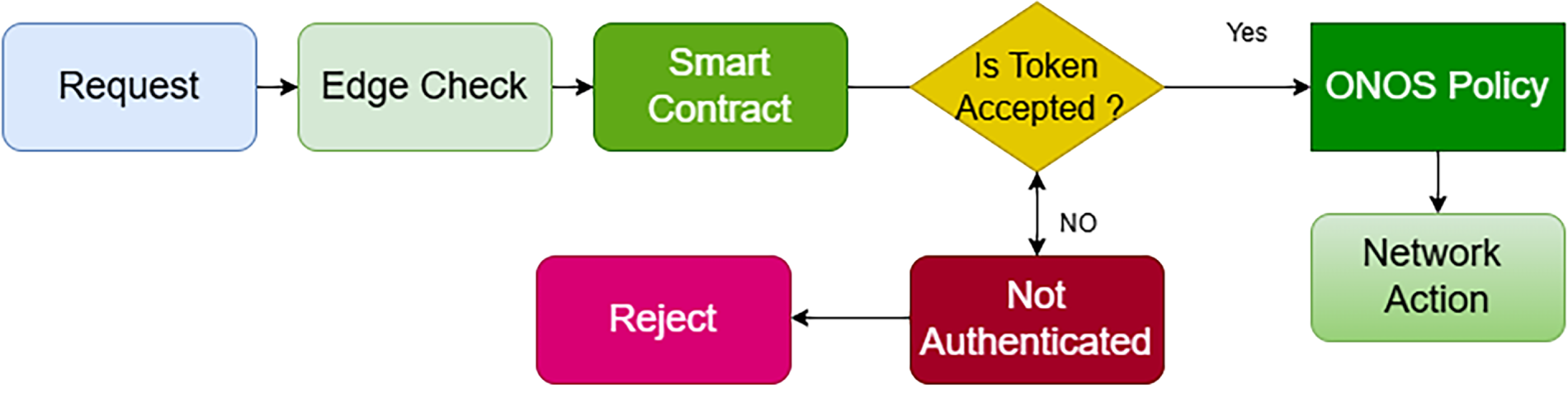
Figure 2: Healthcare authentication and policy workflow.
First, clinicians, patients, and devices are registered within the permissioned blockchain-based framework. Such registration results in trusted metadata like roles of the user, ownership of the device, and relationship between patient and device.
The significance of this step for analysis is the formation of trusted state space prior to interaction. Otherwise, there will be no grounds for verification at the following steps.
5.2.2 Stage II: Edge Attachment
Next, medical devices are linked to the appropriate edge gateway depending on the care context (ICU, hospital ward, ambulance, and home-care). This is done so that the requests can be processed in the proper contextual environment.
We define the device-edge association function using Eq. (13).
Eq. (13) maps device
5.2.3 Stage III: Access Request
When a clinician or patient attempts to access a device or medical data stream, the request is first sent to the nearest edge gateway. This reduces delay and avoids unnecessary long-path communication.
The request itself can be represented as Eq. (14).
here, Eq. (14) shows that each request is characterized by the user identity
5.2.4 Stage IV: Blockchain Validation
In case the query is not served by an active session on the edge cache, the query is sent to the blockchain-based smart contract. Once verified, the smart contract returns the appropriate token.
The validity criterion of the session can be given by Eq. (15).
Based on Eq. (15), a token will be valid in a situation where the time difference between the current time
5.2.5 Stage V: ONOS Policy Enforcement
After trust validation, the edge node sends the decision to ONOS. ONOS installs the appropriate network behavior based on the access context. This ensures that successful authentication is immediately reflected in the forwarding layer.
To analytically capture this decision flow, the policy-installation condition may be expressed as Eq. (16).
Eq. (16) states that a flow rule is installed only when the request is authorized and the associated token is valid. This links trust-plane logic to data-plane action in a formally consistent manner.
5.2.6 Stage VI: Revocation and Reconfiguration
Whenever a token expires, a clinician role changes, a device changes context, or suspicious behavior is detected, the previously installed forwarding rules are withdrawn and the blockchain state is updated. This makes the framework adaptive rather than static.
The revocation trigger can be modeled through Eq. (17).
Eq. (17) ensures that flows are withdrawn either when the token becomes invalid or when the device is flagged as anomalous. This dynamic revocation mechanism is essential for healthcare safety and security.
The operational logic of the framework is summarized in Algorithm 1. The algorithm combines blockchain validation, edge caching, and ONOS-based traffic enforcement into a single coordinated procedure.
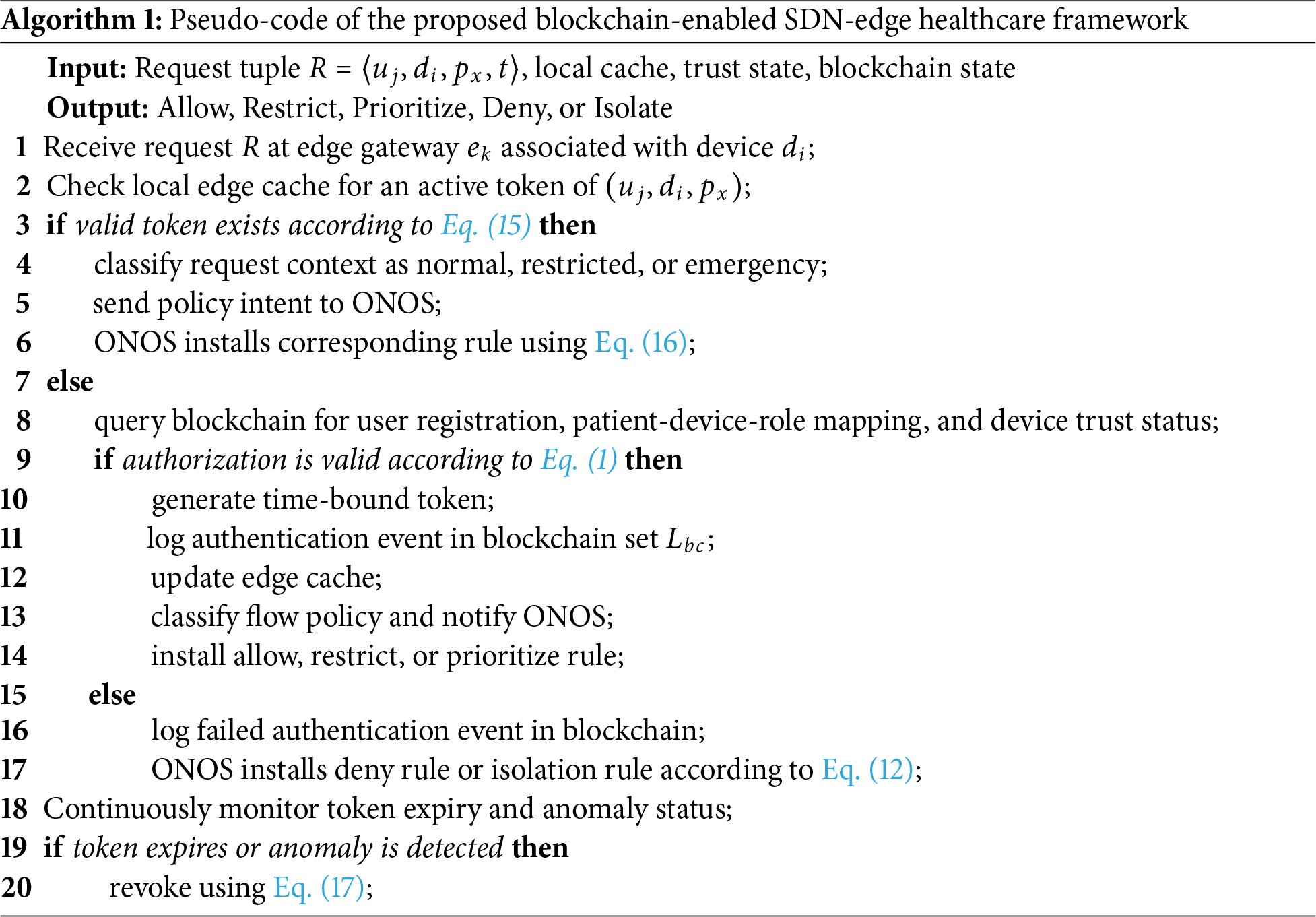
The pseudo-code illustrates how the proposed framework integrates edge-side locality, blockchain-based trust validation, and ONOS policy enforcement into one coordinated access-control process.
5.3 ONOS-Based Policy Realization
The ONOS controller [22] acts as the policy engine of the proposed framework. It receives validated decisions from the edge-blockchain subsystem and translates them into enforceable forwarding behavior. In healthcare environments, such policy realization must be fine-grained because not all traffic should be handled identically.
The framework maintains four main policy categories:
• Normal clinical access: authenticated monitoring or control within the permitted scope.
• Restricted access: read-only or bounded interaction where full actuation privilege is not allowed.
• Emergency access: ICU alarms, cardiac alerts, ambulance telemetry, and other life-critical flows requiring high priority.
• Suspicious-device isolation: communication associated with failed validation or anomalous device behavior.
The first policy rule captures standard flow installation for legitimate communication. Since both authorization and trust are necessary, the installation condition is defined in Eq. (18).
Eq. (18) ensures that normal traffic is admitted only if the user-device-patient tuple is authorized and the target device satisfies the minimum trust threshold
The second rule is related to emergency-priority handling. Since emergency healthcare traffic must receive preferential treatment, the prioritization condition is expressed in Eq. (19).
As shown in Eq. (19), any flow marked as emergency traffic is elevated to a high-priority treatment class. This enables low-delay forwarding for critical-care communication.
The third rule models restricted interaction. Some users may be allowed to observe a device but not modify its operational state. Therefore, the restriction condition is represented in Eq. (20).
Eq. (20) prevents a user from obtaining full actuation rights when the assigned role does not belong to the permitted actuation set of device
Finally, suspicious devices must be rapidly isolated to protect the rest of the healthcare network. This condition is modeled by Eq. (21).
Eq. (21) ensures that anomalous devices are immediately quarantined by the controller, thereby preventing unauthorized spread or disruption while preserving the continuity of surrounding medical services.
5.4 Analytical Insight of the Complete Framework
From an analysis point of view, it can be seen that the efficiency of the proposed approach stems from the combination of the four planes. The Device plane produces requests for services, the Edge plane reduces redundant time delays in verification, the Blockchain plane facilitates decentralization of trust and auditability, while the SDN plane enables adaptive traffic control [23,24]. Consequently, there is a healthcare-oriented communication system, which, in addition to authentication and validation, enables network traffic management depending on trust and roles.
Therefore, the proposed approach improves the traditional approaches for authentication since it combines identity validation, context awareness, and network enforcement mechanisms into one system. Fig. 3 illustrates how ONOS converts validated clinical access, emergency-critical flows, and suspicious-device events into different policy actions.
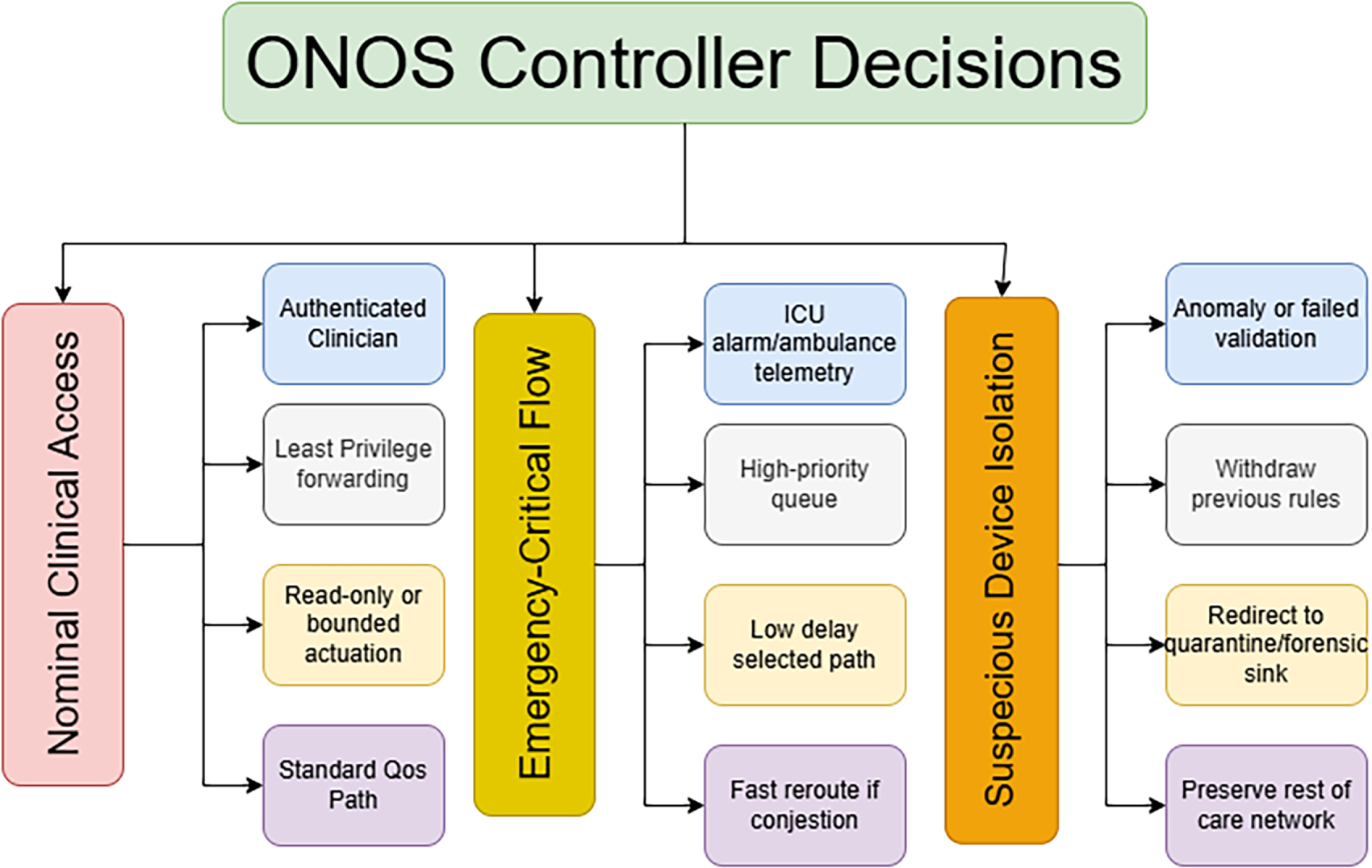
Figure 3: ONOS policy orchestration for normal, emergency-critical, and suspicious healthcare traffic.
6 Performance Evaluation and Experimental Analysis
To maintain comparability with the uploaded baseline blockchain–edge-cloud–SDN IoT study, the present section follows the same roaming-node scaling pattern of 20, 40, 60, 80, and 100 nodes. The performance discussion is now organized metric-wise so that the behavior of the proposed healthcare framework can be interpreted more clearly against the baseline framework [21]. In addition, the percentage improvement of the proposed approach is reported for each metric in order to highlight the gain achieved through blockchain-supported patient-device-role binding, edge-assisted session reuse, and ONOS-based emergency-aware traffic handling.
For lower-is-better metrics such as jitter, average energy consumption, and delay, the percentage improvement is computed with respect to the baseline as
Similarly, for higher-is-better metrics such as packet delivery ratio and throughput, the percentage improvement is computed as
The comparative evaluation follows the baseline work’s node-varying pattern and is structured as an emulation-oriented analytical setup. The assumed network includes one ONOS controller cluster, an OpenFlow-enabled SDN switch fabric, multiple edge gateways representing ICU, ward, ambulance, and home-care scenarios, and 20–100 roaming IoT medical devices. The emulated traffic consists of routine monitoring packets, restricted clinical requests, and emergency telemetry flows. Emergency traffic is injected by marking selected ICU alarm and ambulance telemetry flows with the emergency flag
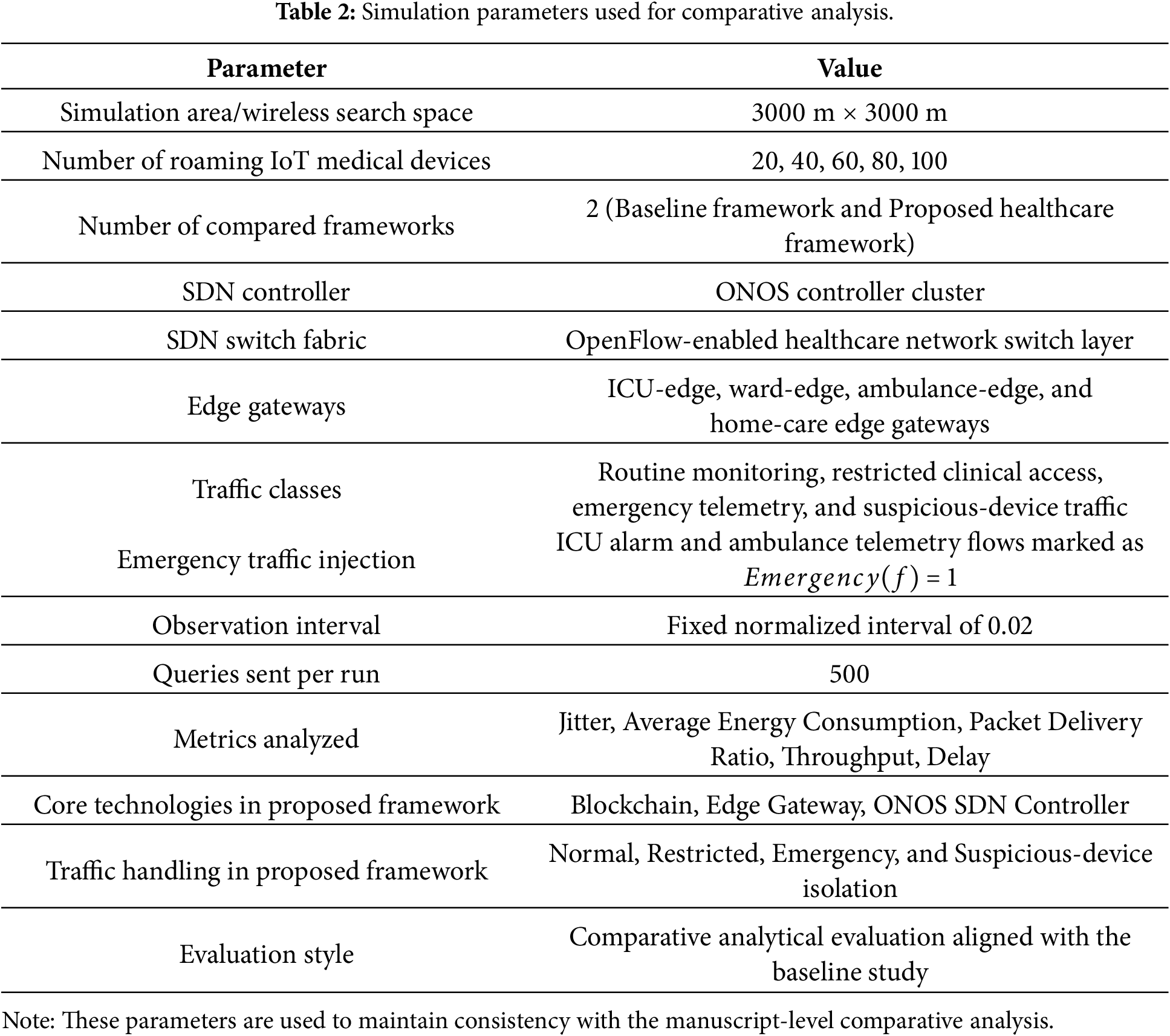
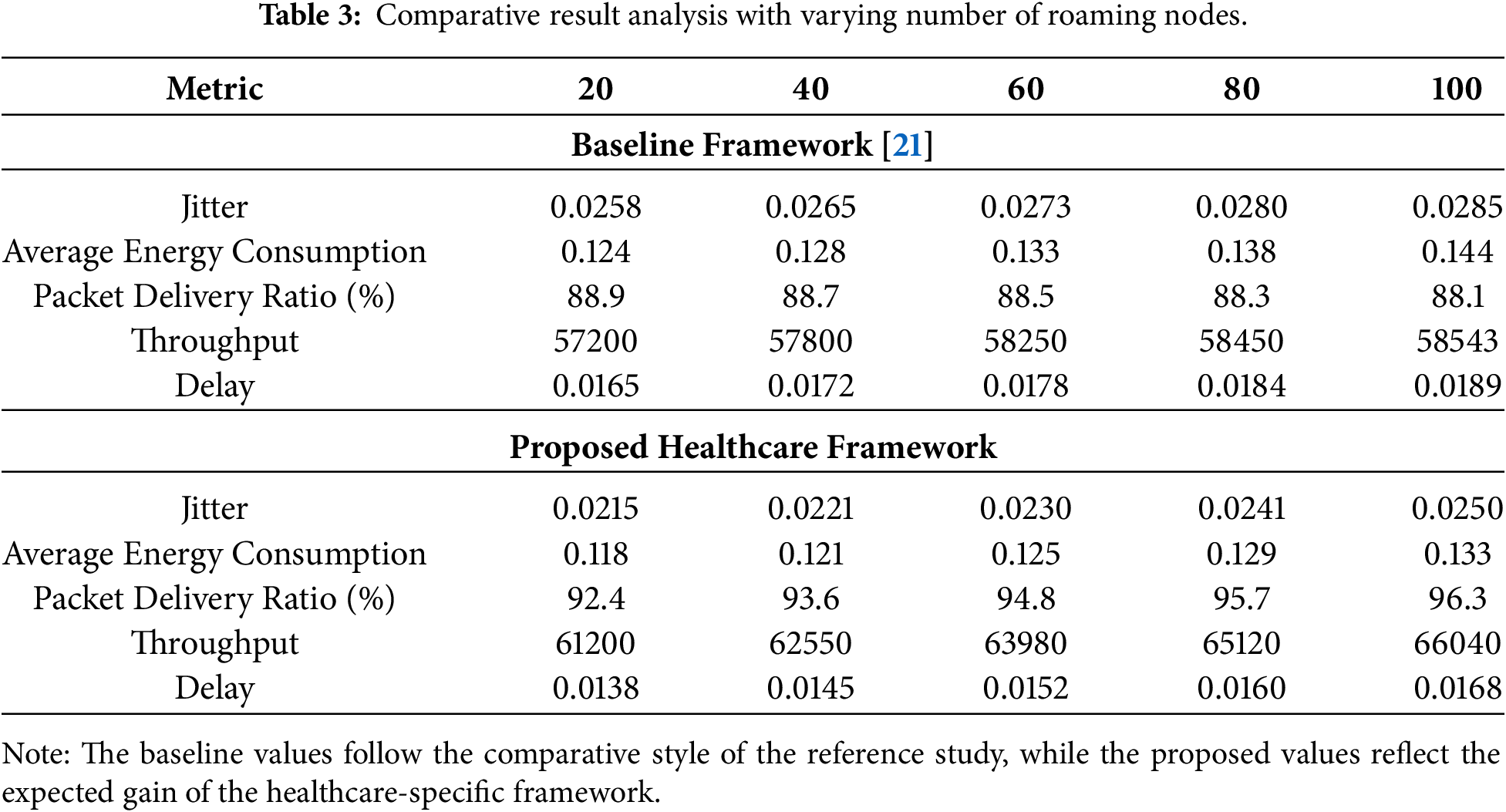
Table 3 presents the comparative result analysis for both the baseline and the proposed healthcare framework under varying roaming-node densities.
Jitter reflects the variation in packet arrival time and is an important indicator of communication stability, especially for healthcare telemetry where abrupt fluctuation may affect monitoring reliability. As shown in Table 3 and Fig. 4a, The proposed healthcare system has maintained lower jitter than the baseline healthcare system framework for any number of roaming nodes. This suggests that the use of edge-based authentication and the adaptive path handling by the ONOS has minimized the instabilities associated with delivering medical data.
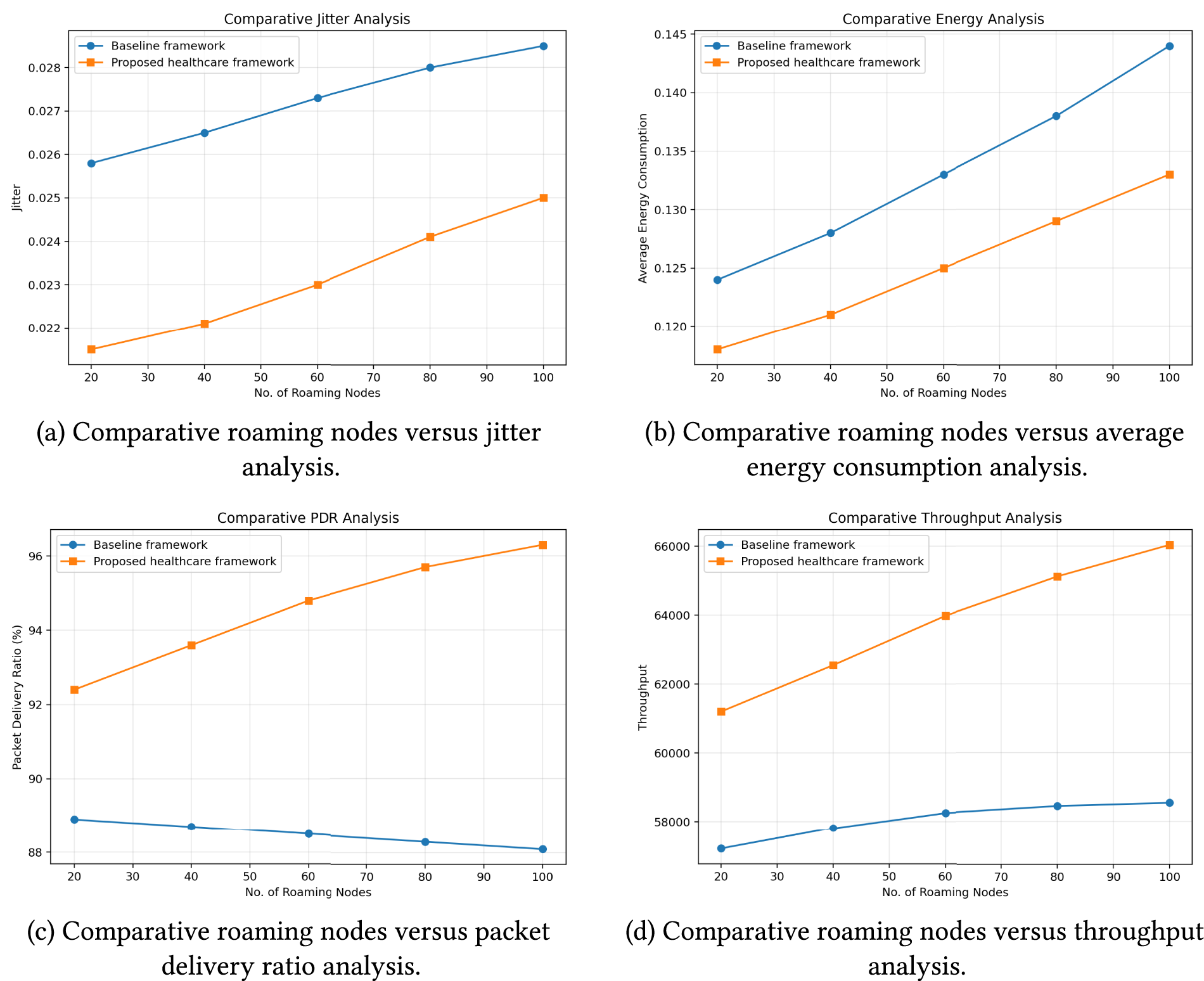
Figure 4: Comparative roaming nodes vs. jitter, average energy consumption, packet delivery ratio, and throughput analysis.
On average, the proposed system has provided a reduction in jitter by 15.05% as compared to the baseline system. At the maximum node density of 100 roaming nodes, there has been a decrease in jitter from 0.0285 to 0.0250, representing an approximate 12.28% reduction compared to the baseline healthcare system framework, as shown in Table 3.
6.4 Average Energy Consumption Analysis
The mean value of energy usage is an essential indicator in IoT healthcare scenarios because most medical instruments and other edge side components have to work under a limited budget of energy resources. Even though better access control and the application of dynamic enforcement policies tend to generate more computations, the suggested model mitigates excessive overhead through leveraging edge cached sessions and minimizing unnecessary transactions on blockchain technology.
From Table 3 and Fig. 4b, it can be seen that the suggested framework requires lower energy usage compared to the conventional model for all roaming node densities. In general, there is a difference of around 6.10%, but when there are 100 nodes, the energy level drops from 0.144 to 0.133, resulting in nearly 7.64% better performance.
6.5 Packet Delivery Ratio Analysis
The Packet Delivery Ratio (PDR) reflects the reliability of packet delivery, which is especially crucial in medical settings because the loss of telemetry or control packets can have an impact on the patients’ well-being. The greater the Packet Delivery Ratio is, the better the chances are that the medical information is successfully delivered to its destination.
As shown in Table 3 and Fig. 4c, our framework achieves significantly higher Packet Delivery Ratio for every setting of roaming nodes compared to the baseline framework. The average increase in PDR is 6.85%, while at 100 roaming nodes the difference is even greater: 96.3% vs. 88.1%.
Throughput is the quantity of the delivered packets in the communication system during the concerned period of observation. Higher throughput implies better usage of the resources present in the network infrastructure to provide efficient medical telemetry services and traffic flow in IoT-based healthcare applications.
From the results given in Table 3 and Fig. 4d, it can be observed that the healthcare framework under consideration provides higher throughput compared to the existing framework in all cases of different nodes’ presence. It is found that the average percentage increase in throughput is about 9.85%, whereas when 100 nodes are considered, the throughput increases from 58543 to 66040 with an increase of around 12.81%.
Delay is one of the most important criteria in healthcare IoT since delay in packet transfer will have a direct impact on monitoring systems and emergency services. The proposed approach seeks to minimize delay by using edge node-based validation together with ONOS-based emergency priority treatment without going through repetitive validation using a long path again and again.
According to Table 3 and Fig. 5, the delay associated with the proposed healthcare IoT framework is always less than the one in the baseline healthcare IoT framework regardless of the number of nodes. In other words, the proposed framework yields an approximately 14.16% delay reduction on average. Specifically, with 100 roaming nodes, the delay reduces from 0.0189 to 0.0168, representing approximately a 11.11% decrease.
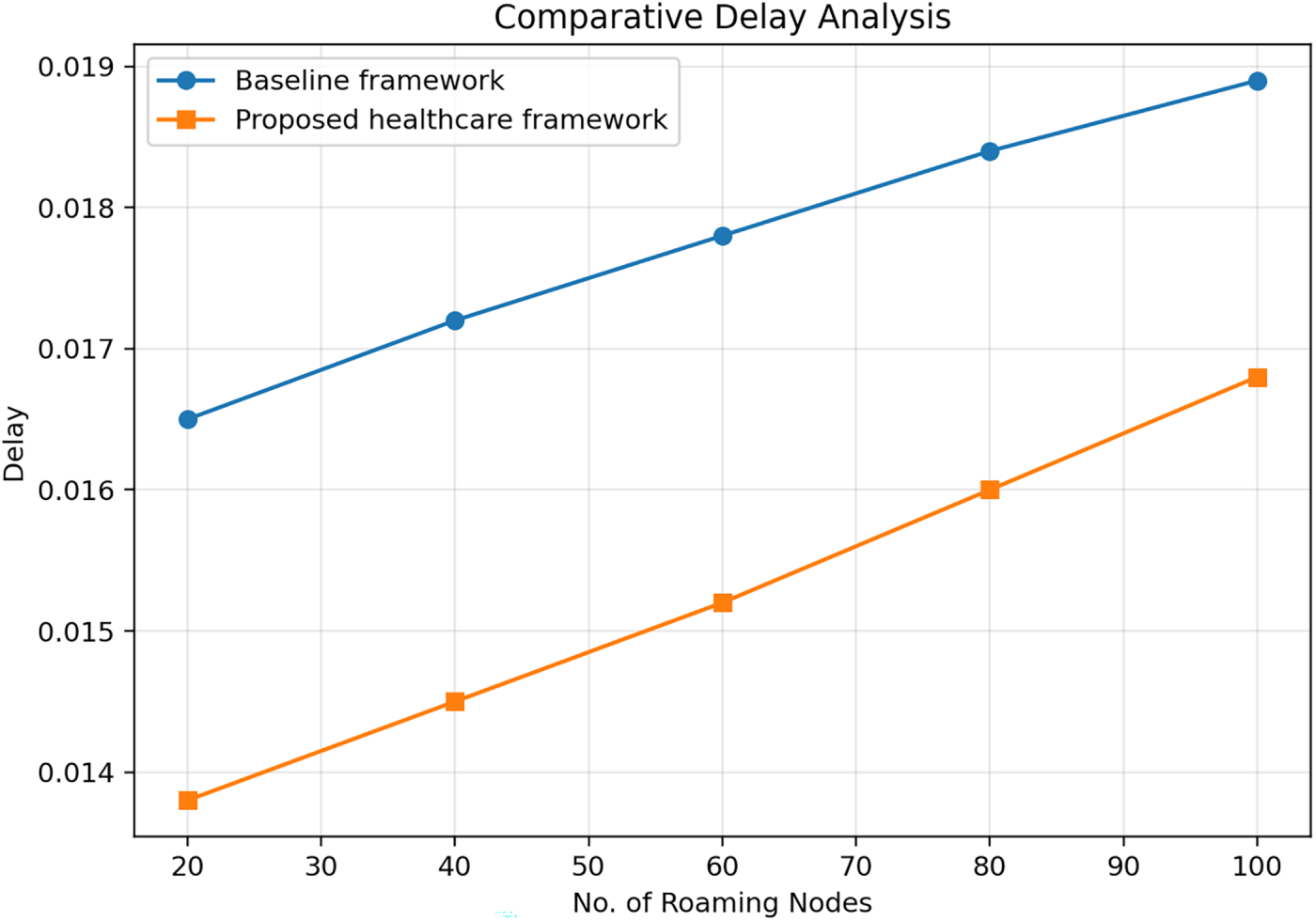
Figure 5: Comparative roaming nodes vs. delay analysis.
6.8 Overall Performance Discussion
In summary, from the above comparison, it can be seen that the healthcare system architecture based on SDN with blockchain technology is superior to the IoT-based security architecture with regards to all roaming-node densities considered. It helps lower the jitter levels, energy consumption, and delay, along with enhancing the packet delivery ratio and throughput. This has been largely accomplished by leveraging healthcare-aware authentication, session reuse at the edge, and adaptive network slicing with ONOS for effective priority and traffic isolation.
The proposed framework offers several advantages for healthcare IoT environments. First, the permissioned blockchain layer improves trust management by recording registration, authorization, token issuance, revocation, and failed access attempts in an auditable ledger. Second, edge gateways reduce repeated blockchain interaction by validating active sessions locally, which is useful for latency-sensitive medical telemetry. Third, ONOS-based SDN enforcement converts trust outcomes into real network behavior, including normal access, restricted access, emergency prioritization, denial, and suspicious-device isolation. These features make the framework suitable for connected hospitals, ICU monitoring, ambulance telemetry, and home-care services where both security and timely communication are required.
The framework also has some limitations. The present evaluation is comparative and analytical, and the reported values are aligned with a baseline blockchain–edge-cloud–SDN IoT study rather than being obtained from a full hospital-grade ONOS–blockchain testbed. The proposed design has not yet been validated using real heterogeneous medical devices, real electronic health record workloads, hospital mobility patterns, controller failover events, or regulatory compliance testing. The additional overhead of smart contract endorsement, ordering, and commit operations may also vary depending on the selected blockchain platform and consensus mechanism. Future work will therefore focus on implementing the architecture in a Mininet/ONOS and Hyperledger Fabric-based prototype, evaluating smart contract execution costs, testing emergency traffic under congestion, validating controller clustering/failover behavior, and integrating privacy-preserving healthcare compliance mechanisms.
The current work has introduced a safe blockchain-aided SDN-based edge computing framework for IoT healthcare systems. In addition to the general concept of blockchain-enabled edge authentication, the suggested solution implements healthcare-oriented semantics of identity management, patient-device association roles, and ONOS-based enforcement of dynamic traffic rules. Besides the discussion on system modeling and formulation of the optimization problem in mathematics, the work introduces an analytical architecture of the model, the flow of operation in details, pseudocode representation, ONOS-based traffic policies, and a comparative analysis with regard to a baseline blockchain-edge-cloud-SDN IoT framework. It has been demonstrated via comparison that the healthcare-oriented design outperforms its baseline alternative in terms of all selected performance metrics irrespective of node density. In particular, the performance of the suggested design has yielded better results for average jitter by 15.05%, average energy consumption by 6.10%, average packet delivery ratio by 6.85%, average throughput by 9.85%, and average delay by 14.16%.
The discussion and limitations of the proposed framework have been presented separately in Section 7. Future work will focus on prototype implementation, real healthcare workload validation, smart contract cost analysis, ONOS controller failover testing, and privacy-preserving compliance integration.
Acknowledgement: The authors would like to acknowledge Prince Sultan University and EIAS Lab for their valuable support. Further, the authors would like to acknowledge Prince Sultan University for paying the Article Processing Charges (APC) of this publication.
Funding Statement: The authors received support from Prince Sultan University for paying the Article Processing Charges (APC) of this publication.
Author Contributions: Conceptualization: Vikas Tyagi, and Arvind Prasad; methodology: Vikas Tyagi, Mrinmoy Kayal, and Arvind Prasad; formal analysis: Gauhar Ali, Sajid Shah, and Muhammad Asim; writing—original draft preparation: Vikas Tyagi, and Mrinmoy Kayal; writing—review and editing: Arvind Prasad, Gauhar Ali, Sajid Shah, and Muhammad Asim. All authors reviewed and approved the final version of the manuscript.
Availability of Data and Materials: The data used in this study are comparative analytical values derived from the baseline-style evaluation described in the manuscript. No real patient data or private healthcare records were used.
Ethics Approval: Not applicable. This study does not involve human participants, animal subjects, or real patient medical records.
Conflicts of Interest: The authors declare no conflicts of interest.
References
1. Christidis K, Devetsikiotis M. Blockchains and smart contracts for the Internet of Things. IEEE Access. 2016;4:2292–303. doi:10.1109/ACCESS.2016.2566339. [Google Scholar] [CrossRef]
2. Novo O. Blockchain meets IoT: an architecture for scalable access management in IoT. IEEE Internet Things J. 2018;5(2):1184–95. doi:10.1109/JIOT.2018.2812239. [Google Scholar] [CrossRef]
3. Malik A, Tyagi V, Singh S, Kumar R, Wu H, Gill SS. Optimizing secure data transmission in 6G-enabled IoMT using blockchain integration. IEEE Trans Consum Electron. 2025;71(2):4534–43. doi:10.1109/TCE.2024.3510812. [Google Scholar] [CrossRef]
4. Yao Y, Chang X, Misic J, Misic VB, Li L. BLA: blockchain-assisted lightweight anonymous authentication for distributed vehicular fog services. IEEE Internet Things J. 2019;6(2):3775–84. doi:10.1109/JIOT.2018.2877734. [Google Scholar] [CrossRef]
5. Prasad A, Mohammad Alenazy W, Ahmad N, Ali G, Abdallah HA, Ahmad S. Optimizing IoT intrusion detection with cosine similarity based dataset balancing and hybrid deep learning. Sci Rep. 2025;15(1):30939. doi:10.1038/s41598-025-15631-3. [Google Scholar] [CrossRef]
6. Kaur K, Garg S, Kaddoum G, Gagnon F, Ahmed SH. Blockchain-based lightweight authentication mechanism for vehicular fog infrastructure. In: Proceedings of the IEEE International Conference on Communications Workshops; 2019 May 20–24; Shanghai, China. p. 1–6. doi:10.1109/ICCW.2019.8757184. [Google Scholar] [CrossRef]
7. Azimi I, Anzanpour A, Rahmani AM, Pahikkala T, Levorato M, Liljeberg P, et al. HiCH: hierarchical fog-assisted computing architecture for healthcare IoT. ACM Trans Embedded Comput Syst. 2017;16(5s):174. doi:10.1145/3126501. [Google Scholar] [CrossRef]
8. Rahmani AM, Liljeberg P, Jantsch A, Tenhunen H, Gluhak A, Westerlund T, et al. Exploiting smart e-health gateways at the edge of healthcare Internet-of-Things: a fog computing approach. Future Gener Comput Syst. 2018;78(7):641–58. doi:10.1016/j.future.2017.02.014. [Google Scholar] [CrossRef]
9. Rahman MS, Hossain MS, Islam MS, Alrajeh NA, Muhammad G. A survey of blockchain-based IoT eHealthcare: applications, research issues, and challenges. IEEE Access. 2022;10:122990–3020. doi:10.1109/ACCESS.2022.3226739. [Google Scholar] [CrossRef]
10. Kamruzzaman MM, Rahman S, Hossain MS, Alrajeh NA. Blockchain and fog computing in IoT-driven healthcare systems. Diagnostics. 2022;12(2):440. doi:10.3390/diagnostics12020440. [Google Scholar] [CrossRef]
11. Allam AH, Elmesalawy MM, Riad AM, Attiya G. IoT-based eHealth using blockchain technology: a survey. Cluster Comput. 2024;27(6):1–28. doi:10.1007/s10586-024-04357-y. [Google Scholar] [CrossRef]
12. Kalkan K, Zeadally S. Securing Internet of Things with software defined networking. IEEE Commun Mag. 2018;56(9):186–92. doi:10.1109/MCOM.2017.1700463. [Google Scholar] [CrossRef]
13. Sharma PK, Singh S, Jeong YS, Park JH. DistBlockNet: a distributed blockchains-based secure SDN architecture for IoT networks. IEEE Commun Mag. 2017;55(9):78–85. doi:10.1109/MCOM.2017.1700041. [Google Scholar] [CrossRef]
14. Jmal R, Trabelsi H, Fourati LC. Distributed blockchain-SDN secure IoT system based on artificial neural network to mitigate DDoS attacks. Appl Sci. 2023;13(8):4953. doi:10.3390/app13084953. [Google Scholar] [CrossRef]
15. Núñez-Gómez C, Carrión C, Caminero B, Delicado FM. S-HIDRA: a blockchain and SDN domain-based architecture to orchestrate fog computing environments. Comput Netw. 2023;224(14):109512. doi:10.1016/j.comnet.2022.109512. [Google Scholar] [CrossRef]
16. Sebbar A, Cherqi O, Bensalah F. Blockchain-SDN-based secure architecture for multi-edge computing in industrial IoT. In: Vaishnavi V, Rajasekar R, Moganapriya C, Sathish Kumar P, editors. Blockchain technology for the engineering and service sectors. Hoboken, NJ, USA: Wiley; 2025. p. 87–105. doi:10.1002/9781394238033.ch3. [Google Scholar] [CrossRef]
17. Lakhlef H, Lerner T, Kebir A, Atia NE, Du X, Ingardin V. Blockchain-enabled SDN solutions for IoT: advancements, discussions, and strategic insights. In: Proceedings of the 2024 IEEE Symposium on Computers and Communications (ISCC); 2024 Jun 26–29; Paris, France. Piscataway, NJ, USA: IEEE; 2024. p. 1–6. doi:10.1109/ISCC61673.2024.10733649. [Google Scholar] [CrossRef]
18. Kilani J, Youssef B, Faycal B. Secure architecture for multi-edge computing in industrial IoT based on blockchain and SDN. In: Baddi Y, Maleh Y, Alsmadi I, Lahby M, editors. Generative AI for cybersecurity and privacy. Boca Raton, FL, USA: CRC Press; 2025. p. 153–68. doi:10.1201/9781003597476-11. [Google Scholar] [CrossRef]
19. Kaur N, Mittal A, Lilhore UK, Sarita S, Surjeet D, Kashif S, et al. Securing fog computing in healthcare with a zero-trust approach and blockchain. EURASIP J Wirel Commun Netw. 2025;2025:5. doi:10.1186/s13638-025-02431-6. [Google Scholar] [CrossRef]
20. Paliwal G, Shrimal VM, Garg A, Wadhwa M. Deploying blockchain and edge-cloud-enabled SDN (BLEDGE-SDN) framework for securing network and IoT devices. In: Paliwal G, Shrimal VM, Garg A, Wadhwa M, editors. Smart cyber physical systems. ICSCPS 2024. Smart innovation, systems and technologies. Singapore, Singapore: Springer; 2025. p. 173–89. doi:10.1007/978-981-96-2182-8_14. [Google Scholar] [CrossRef]
21. Medhane DV, Sangaiah AK, Hossain MS, Muhammad G, Wang J. Blockchain-enabled distributed security framework for next-generation IoT: an edge cloud and software-defined network-integrated approach. IEEE Internet Things J. 2020;7(7):6143–9. doi:10.1109/JIOT.2020.2977196. [Google Scholar] [CrossRef]
22. Open Networking Foundation. Open network operating system (ONOS) SDN controller [Internet]. [cited 2026 Apr 21]. Available from: https://opennetworking.org/onos/. [Google Scholar]
23. Ansari JA, Ishak MK, Ammar K. Combined architecture of destination sequence distance vector (DSDV) routing with software defined networking (SDN) and blockchain in cyber-physical systems. Comput Mater Contin. 2025;82(2):2311–30. doi:10.32604/cmc.2025.057848. [Google Scholar] [CrossRef]
24. Alharbi M, Haseeb K, Humayun M. AI-driven SDN and blockchain-based routing framework for scalable and trustworthy AIoT networks. Comput Model Eng Sci. 2025;145(2):2601–16. doi:10.32604/cmes.2025.073039. [Google Scholar] [CrossRef]
Cite This Article
 Copyright © 2026 The Author(s). Published by Tech Science Press.
This work is licensed under a Creative Commons Attribution 4.0 International License , which permits unrestricted use, distribution, and reproduction in any medium, provided the original work is properly cited.
 Downloads
 Citation Tools
