
 Login
Login Register
 Submit a Paper
 Propose a Special lssue
 Open Access
ARTICLE
Cylinder XOR-Cascade: Lightweight Image Encryption Using Autoencoder-Based Representation
1 Department of Cybersecurity, King Hussein School of Computing Sciences, Princess Sumaya University for Technology (PSUT), Amman, Jordan
2 Department of Computer Science, Faculty of Information Technology, Middle East University (MEU), Amman, Jordan
3 Department of Computer Science, King Hussein School of Computing Sciences, Princess Sumaya University for Technology (PSUT), Amman, Jordan
* Corresponding Author: Saleem Alsaraireh. Email:
(This article belongs to the Special Issue: Applied Cryptography and Privacy-Enhancing Technologies for Secure Digital Infrastructures)
Computers, Materials & Continua 2026, 89(2), 78 https://doi.org/10.32604/cmc.2026.085806
Received 19 May 2026; Accepted 25 June 2026; Issue published 15 September 2026
 View Full Text
 Download PDF
Abstract
The rapid growth of the Internet of Things (IoT) and edge computing has increased the demand for secure and lightweight image encryption suitable for resource-constrained environments. This paper proposes a hybrid framework combining a residual-based pretrained autoencoder with a novel Cylinder XOR-Cascade (CXC) encryption scheme. The autoencoder compresses images into a compact latent representation while a residual branch preserves fine spatial details for accurate reconstruction. Both representations are encrypted using CXC, a two-pass column-wise stream cipher that enhances confusion and diffusion through sequential SHA3-256-based chaining and a cylinder-like feedback mechanism. Experiments on the USC-SIPI dataset demonstrate strong statistical security: Number of Pixels Change Rate (NPCR) 99.5%, Unified Average Changing Intensity (UACI) 33.5%, and entropy 7.5. The full pipeline processes images in 280 ms on GPU and 928 ms on CPU, with the cryptographic stage requiring only 25 ms. For noisy channels, integrating Reed–Solomon forward error correction restores Structural Similarity Index Measure (SSIM) 0.85 under Gaussian noise (), making the framework suitable for edge-assisted IoT and real-time visual transmission across both reliable and noisy channel conditions.Keywords
The rapid growth of Internet of Things (IoT) systems, Unmanned Aerial Vehicles (UAVs), and cloud-based visual communication platforms has significantly increased the demand for secure and efficient image transmission. Images often contain sensitive information whose exposure during transmission or storage can lead to severe privacy breaches, making robust encryption essential for ensuring confidentiality and integrity of visual data. Traditional algorithms such as AES and RSA provide strong security but are computationally expensive and unsuitable for resource-constrained environments, motivating the development of lightweight encryption schemes that balance security with efficiency. Chaos-based and XOR-based methods have been widely explored for their simplicity and high-speed performance [1], while deep learning approaches have gained significant attention in image encryption. Autoencoders, in particular, demonstrate strong capability in learning compact latent representations suitable for dimensionality reduction before encryption [2]. Hybrid approaches integrating deep learning with classical cryptographic primitives have demonstrated strong resistance against statistical and differential attacks while maintaining high reconstruction quality [3], with lightweight XOR-based cascade diffusion mechanisms further adopted for their effectiveness in destroying pixel correlations [4]. Despite these advances, methods relying on complex neural networks increase computational overhead, while those depending solely on chaotic systems fail to exploit learned feature representations, motivating a hybrid framework that combines deep learning with lightweight cryptographic operations. To address these challenges, this paper proposes CXC, a lightweight image encryption framework integrating a residual-based autoencoder with a XOR-based cascade encryption scheme. The autoencoder compresses the input image into a compact latent representation while preserving key visual features, and the encryption stage applies a cylinder-inspired XOR cascade to ensure strong confusion and diffusion, providing robust resistance against statistical and differential attacks.
Main Contributions—The key contributions of this research are:
• A novel CXC image encryption scheme is proposed, achieving strong diffusion with low computational and memory overhead.
• Images are standardized to
• A residual autoencoder-based reconstruction model is developed to accurately recover original images, improving robustness against noise and partial data loss.
• By operating on compressed latent representations, the framework achieves faster encryption and decryption compared to pixel-domain methods, making it highly efficient for resource-constrained IoT environments.
The remainder of the paper is organized as follows. Section 2 covers preliminary concepts including IoT constraints, autoencoders, and image encryption techniques. Section 3 reviews related work on encryption methods and latent-space image encryption. Section 4 presents the proposed framework, including the autoencoder architecture and CXC encryption scheme. Section 5 details the experimental setup, dataset, and analyses covering computational performance, statistical security, and differential attacks. Section 6 compares the proposed method against existing works. Section 7 concludes the paper.
IoT systems are characterized by limited computational resources, restricted memory, and low energy availability [5,6], posing significant challenges for secure image processing and transmission. Applications such as healthcare monitoring, UAV surveillance, and smart environments demand real-time secure transmission, where unsecured communication channels introduce significant security risks that motivate the development of lightweight encryption solutions [7]. However, conventional encryption approaches incur high computational overhead, making lightweight solutions essential for resource-constrained IoT systems. Autoencoders are neural networks designed for unsupervised learning of compact data representations [8], consisting of an encoder that compresses the input into a lower-dimensional latent space and a decoder that reconstructs the original data. By capturing the most relevant input features, autoencoders enable dimensionality reduction while preserving structural information, making them useful for compression, feature extraction, denoising, and anomaly detection [9], though some information loss during reconstruction is inevitable. Image encryption protects visual data from unauthorized access during storage and transmission [10], addressing the unique properties of images such as high redundancy and strong pixel correlation [11]. Encryption transforms the original image into an unintelligible form, recovered only upon authorized decryption, though balancing security strength with computational efficiency remains a key challenge in resource-constrained environments.
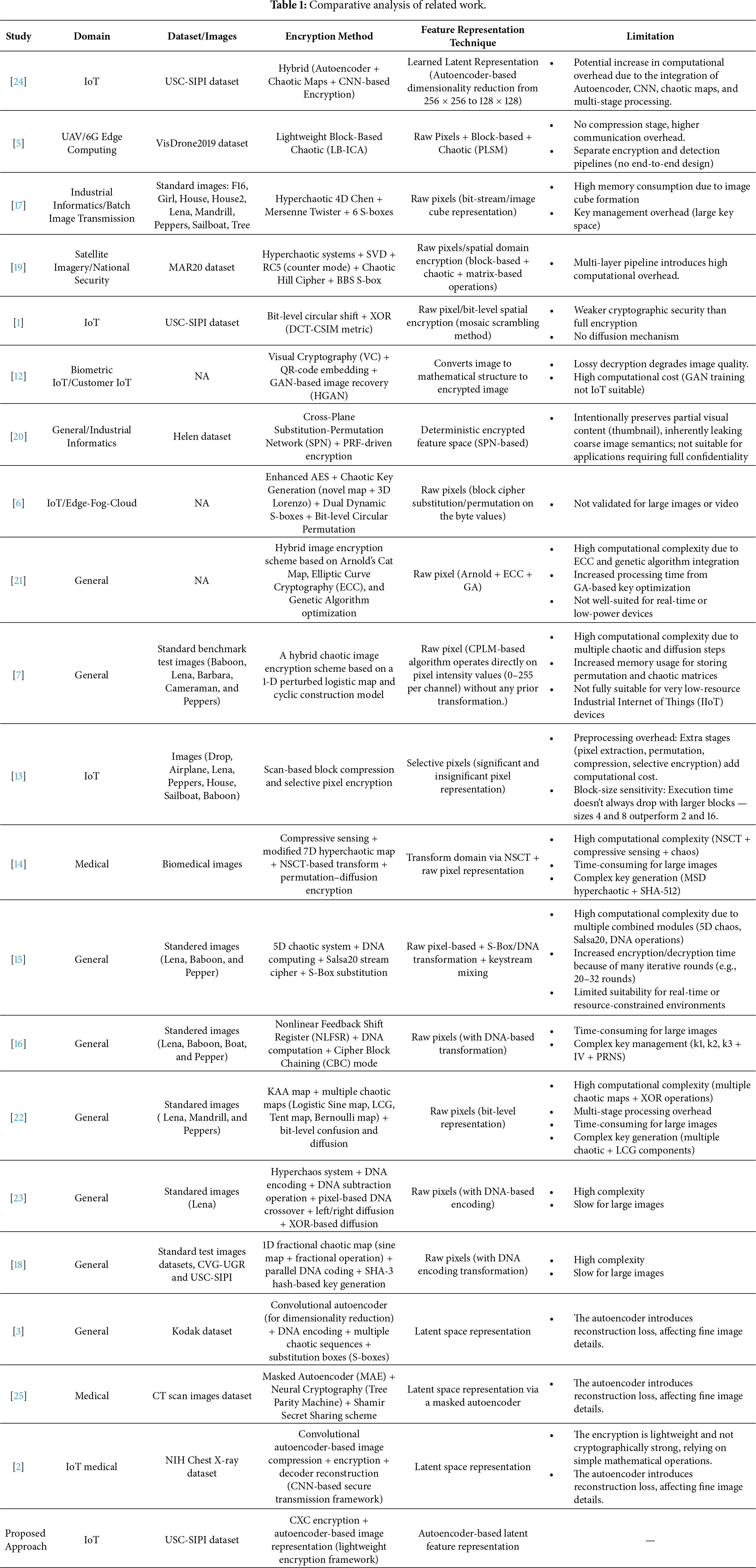
This section reviews image encryption studies published between 2022 and 2026, summarized in Table 1. The literature is categorized into four groups: Lightweight and IoT-Friendly Encryption, High-Speed and High-Throughput Encryption, Advanced and Security-Focused Encryption, and AI-Driven and Learning-Based Encryption.
3.1 Lightweight and IoT-Friendly Encryption
In [5], the SED-UAV framework integrates a Lightweight, Block-based, and Improved Chaotic Image Encryption Algorithm (LB-ICA) with YOLO-LFP object detection for UAVs in 6G edge environments, achieving a key space exceeding
3.2 High-Speed and High-Throughput Encryption
In [17], the Multiple-Image Encryption Algorithm (MIEA) encrypts image batches simultaneously by combining images into a cube, applying a 4D hyperchaotic Chen system for key generation, and using six novel S-boxes across all RGB channels. It achieves 96.4 Mbps encryption rate, key space of
3.3 Advanced and Security-Focused Encryption
In [19], a multi-layer scheme for sensitive applications such as satellite imagery integrates hyperchaotic systems, SVD, RC5, a chaos-based Hill cipher, and a BBS-based S-box, merging images into an augmented structure to resist traffic analysis, though the multiple cryptographic components introduce high complexity that limits real-time use. In [1], a recoverable image-mosaic technique achieves perceptual security using small-sized keys and a DCT-based similarity metric without full encryption, improving key management but offering weaker protection against sophisticated attacks. Similarly, ref. [20] proposes a Thumbnail-Preserving Encryption (TPE) scheme retaining partial visual semantics via cross-plane substitution and permutation, though the preserved visual information risks leakage in high-security contexts. For stronger cryptographic guarantees, ref. [21] combines chaotic maps, ECC, and genetic algorithms, achieving entropy of 7.99, near-zero correlation, and a key space of
3.4 AI-Driven and Learning-Based Encryption
In [3], a color image encryption scheme combines a convolutional autoencoder with DNA encoding and chaotic systems, compressing images from
While the above studies report strong performance using metrics such as PSNR, NPCR, UACI, and RMSE, they are evaluated under high-resource assumptions and do not fully reflect real IoT constraints. These metrics alone are insufficient for IoT feasibility assessment, where memory, energy, latency, and communication overhead are critical. In particular, the convolutional autoencoder-based methods in [3,24] incur high computational and memory costs due to large model sizes and multi-stage pipelines (compression, chaotic maps, DNA encoding, and diffusion), making them unsuitable for constrained IoT devices. Similarly, ref. [25] relies on multi-party cryptographic synchronization, introducing communication overhead that is inefficient for low-bandwidth IoT networks. Although [2] considers an edge setting, it still highlights sensitivity to model design, reinforcing the need for lightweight architectures. Overall, there remains a gap between strong cryptographic performance and practical IoT feasibility, motivating resource-aware encryption design.
Table 1 summarizes existing image encryption methods and reveals several critical gaps: reliance on raw pixel-domain encryption causing high computational and communication overhead; reconstruction loss in autoencoder-based approaches; excessive complexity from chaotic systems and multi-stage operations that limits IoT suitability; key management and memory overhead from parallel chaotic processing; limited cross-platform scalability in lightweight techniques; and predominantly simulation-based evaluations lacking real-world energy and latency measurements. These gaps collectively motivate a latent-feature-based encryption approach combining geometric transformations and block-level processing as a computationally efficient alternative with strong privacy guarantees for real-world IoT deployment. To address these limitations, this work proposes a lightweight image encryption framework built on a CXC mechanism tailored for resource-constrained IoT environments. A residual autoencoder preprocesses the image, preserving quality with minimal reconstruction loss by capturing global semantic structure in the latent space while an external residual branch retains fine-grained spatial details (edges, textures) lost during compression. CXC encryption is then applied independently to both the latent representation and residual features, with the decoder reconstructing the image at high perceptual fidelity (SSIM
The overall architecture of the proposed framework is illustrated in Fig. 1. The system integrates a residual-based pretrained autoencoder with a lightweight encryption mechanism to securely compress, encrypt, and reconstruct images, targeting high-quality (near-lossless) reconstruction while protecting intermediate representations during transmission or storage. The input is a fixed-size RGB or grayscale image of
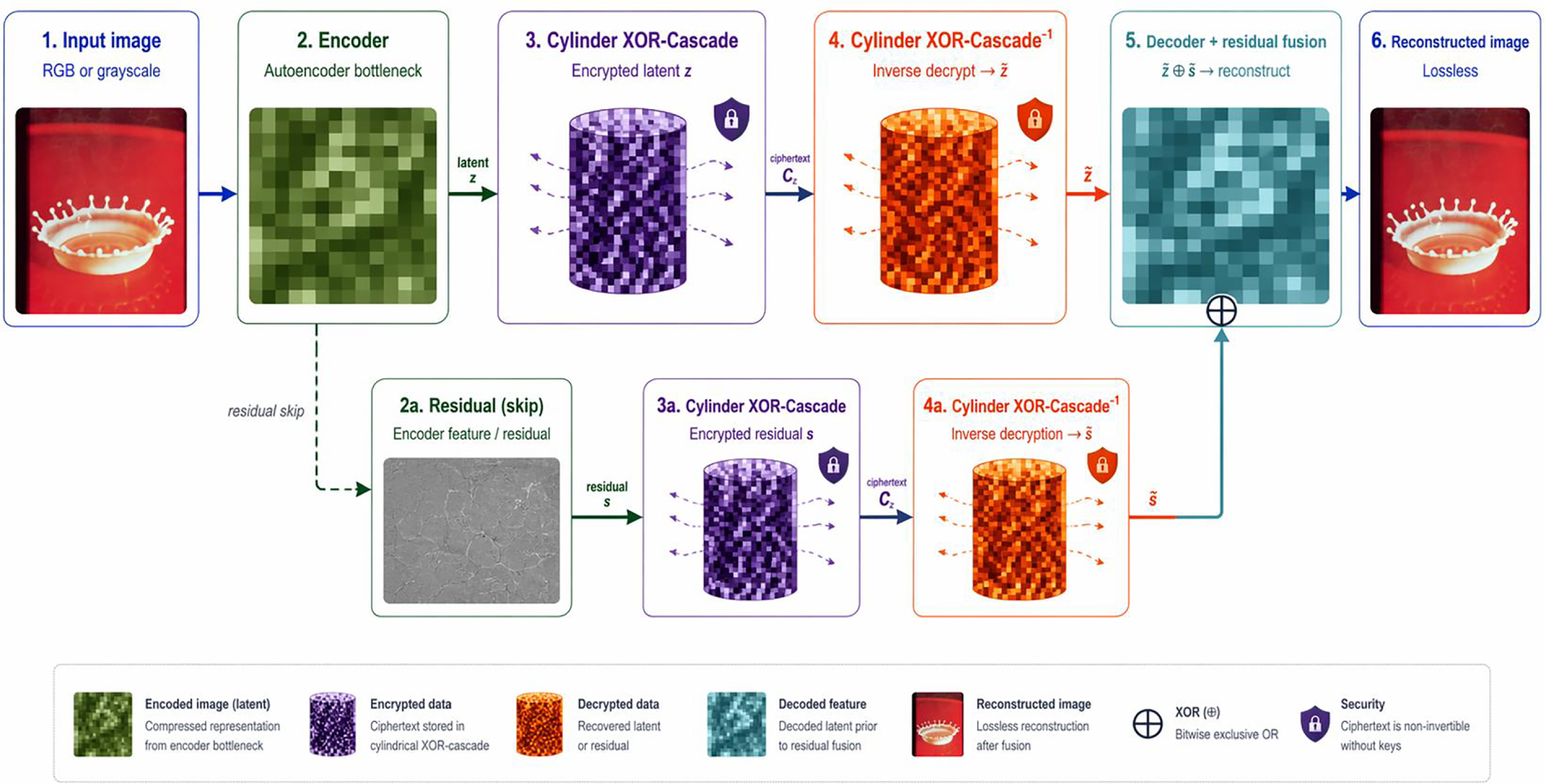
Figure 1: Methodology process flow.
The proposed framework employs a pretrained lightweight Variational Autoencoder (LightVAE) [26] as the core feature extractor, adapted for single-image processing due to its strong compression capability and low computational overhead. The autoencoder is used strictly for compression and feature representation, while cryptographic security is exclusively provided by the CXC encryption stage. Its encoder employs depthwise-separable convolutions and a shallow bottleneck (

To isolate the contribution of each architectural component, three configurations are evaluated on the USC-SIPI dataset under noise-free conditions: (A) the full proposed pipeline (LightVAE + residual + CXC); (B) LightVAE without the residual branch (latent-only reconstruction); and (C) a standard CNN autoencoder with residual branch. Table 4 reports reconstruction quality and computational cost. Removing the residual branch (B) causes a 4.3 dB PSNR drop and 0.08 SSIM degradation, confirming that the residual stream is essential for recovering high-frequency details lost during latent compression. Replacing LightVAE with CNN-AE (C) reduces latency but degrades reconstruction quality by 1.7 dB PSNR, validating LightVAE as the optimal backbone. The CXC encryption stage is identical across all configurations and does not affect reconstruction quality, as XOR is information-preserving.

4.3 Proposed Encryption Method
The proposed encryption scheme, CXC, is a lightweight two-pass XOR-based column-wise stream cipher with sequential inter-column dependency, operating directly on pixel intensities by partitioning the image into fixed-width vertical columns across two sequential passes.
Keystream Generation: A deterministic pseudo-random keystream is generated using SHA3-256 in counter mode. Given a concatenated seed
Column Segmentation: Given an input image
Fig. 2 presents the step-by-step encryption process of the proposed CXC scheme, where two sequential passes are performed from left to right.
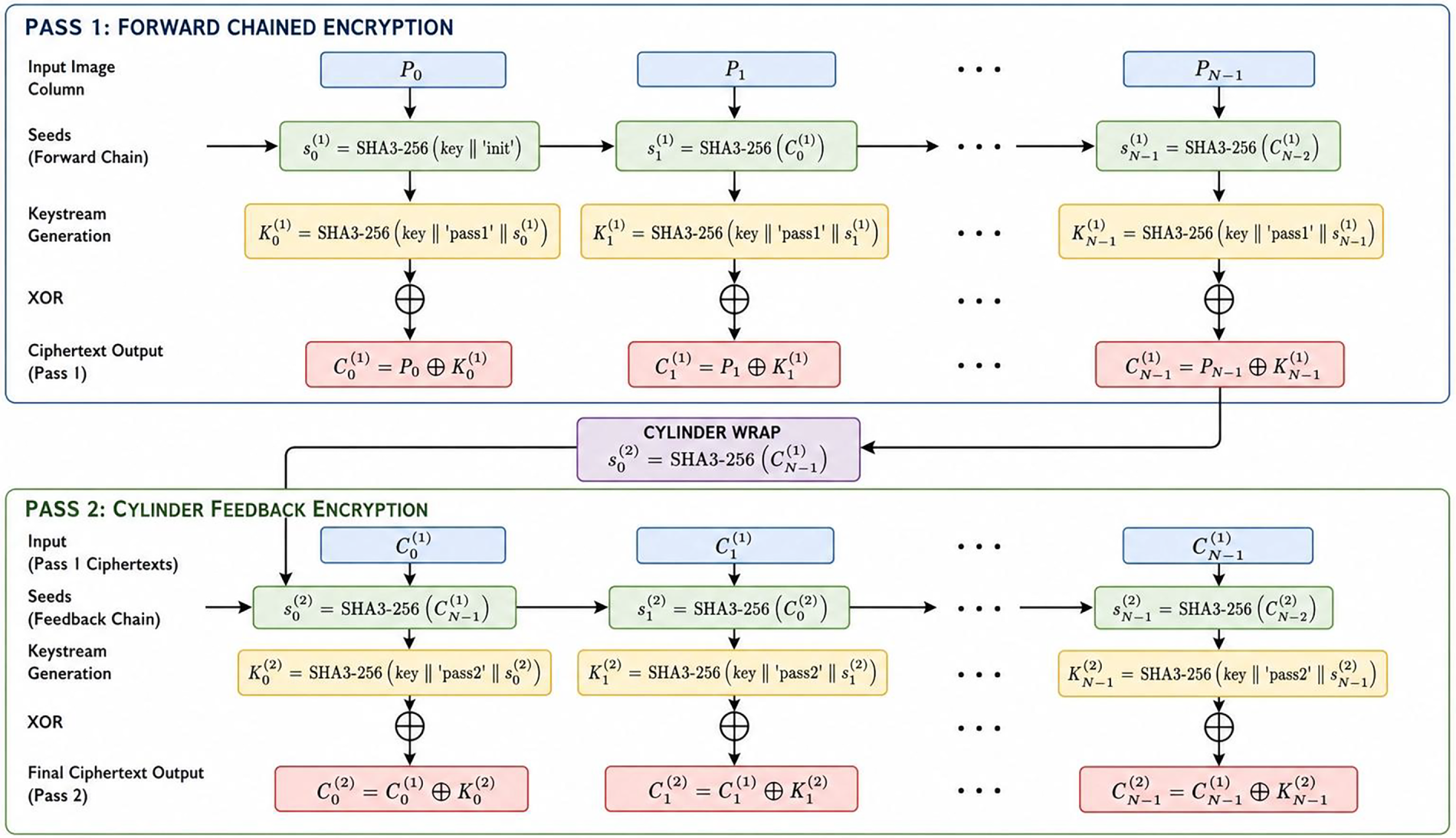
Figure 2: Detailed encryption workflow of the proposed CXC scheme.
Pass 1: Forward Chained Encryption: The initial chaining seed is defined as:
For each column
Pass 2: Cylinder Feedback Encryption: The second pass introduces global diffusion via a cylinder-like seed feedback mechanism. The initial seed is derived from the last ciphertext column of Pass 1 as defined in Eq. (6) while the seed update, keystream generation, and ciphertext formation are defined in Eqs. (7)–(9).
This represents a single wrap-around dependency at the seed level only. For each column
The final ciphertext is given by the set
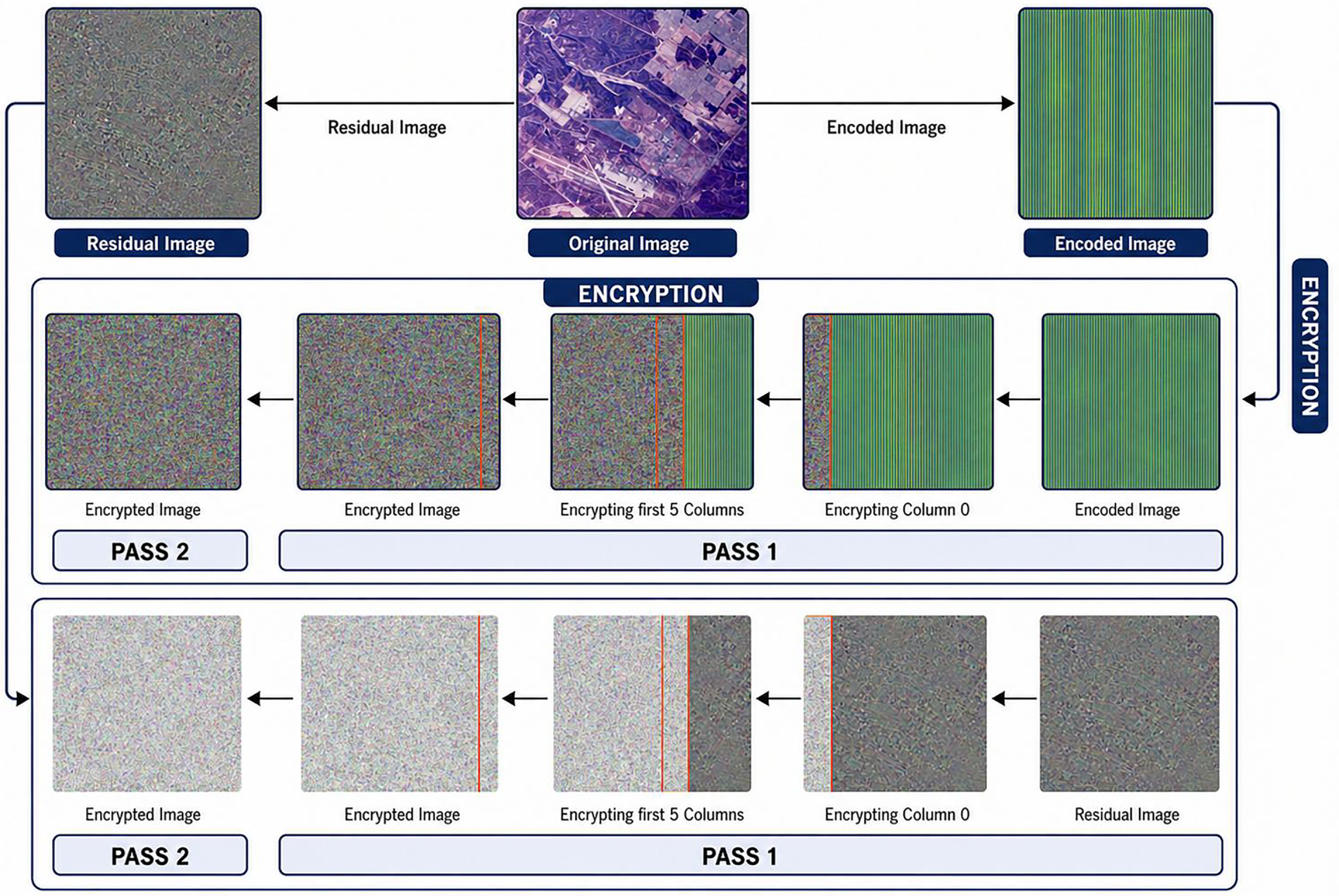
Figure 3: Encrypting image using the encoder–residual and CXC encryption.
Decryption reverses both encryption passes in reverse order using the same deterministic keystream generation mechanism. During encryption, per-column seeds are generated and stored for both Pass 1 and Pass 2 to ensure deterministic keystream reconstruction during the decryption process. Fig. 4 presents the step-by-step decryption process of the proposed CXC scheme. The detailed operations of Inverse Pass 2 and Inverse Pass 1 are given in Eqs. (10) and (11), respectively.
• Inverse Pass 2 (right
• Inverse Pass 1 (right
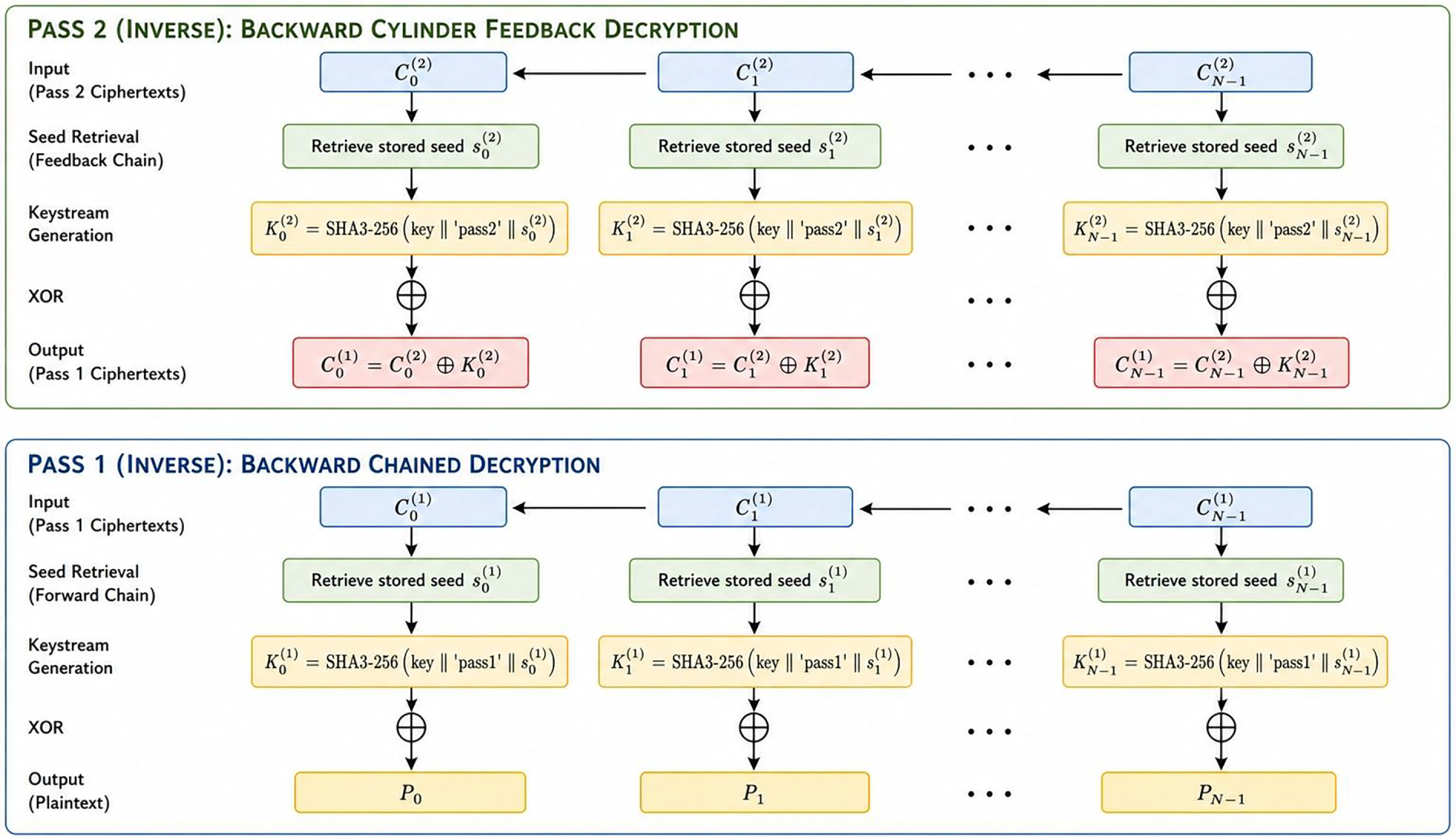
Figure 4: Detailed decryption workflow of the proposed CXC scheme.
Since XOR is involutive
Fig. 5 illustrates the step-by-step decryption process of the image of class aerials.
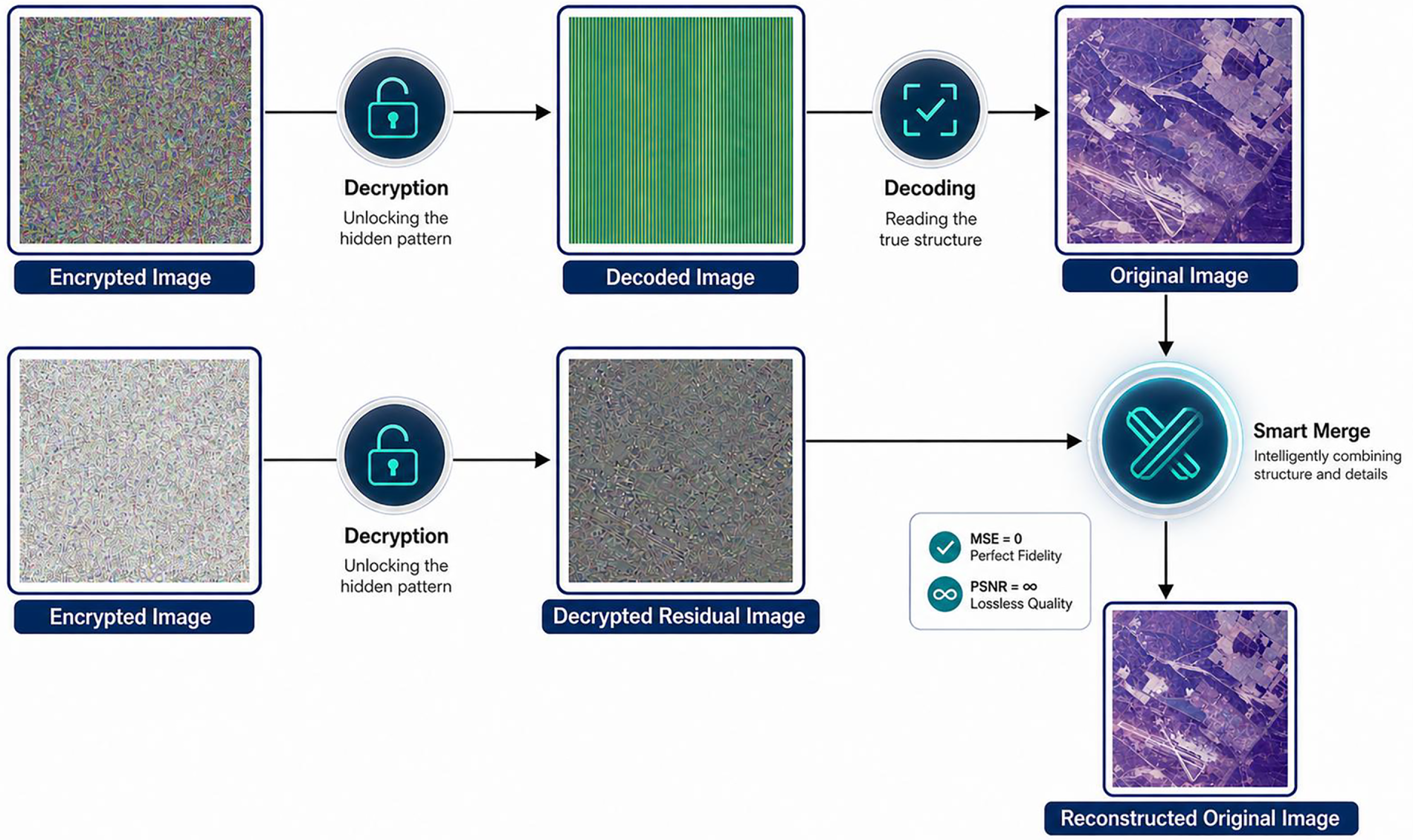
Figure 5: Reconstructed image using encoder–residual and CXC decryption process.
4.3.4 Key Management and Session Nonce
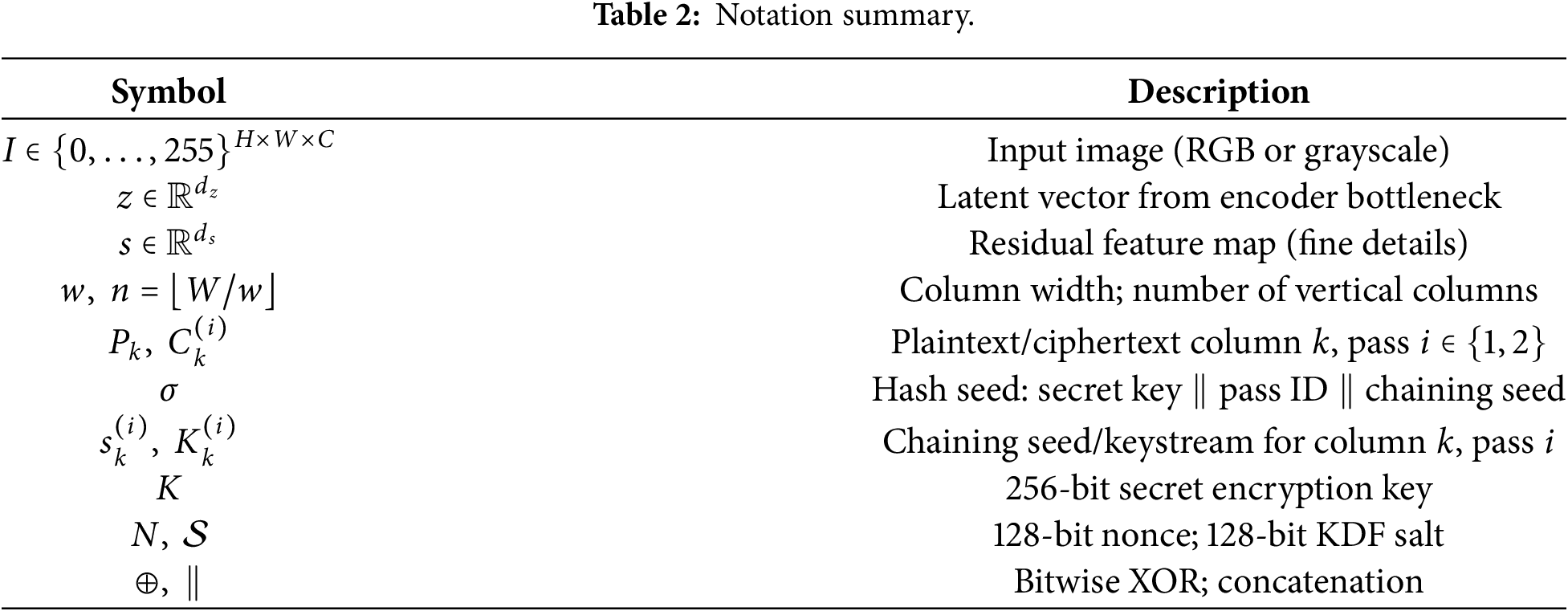
Raw passwords are never used directly as encryption keys. Instead, a 256-bit key
Each session uses a fresh 128-bit nonce
The nonce
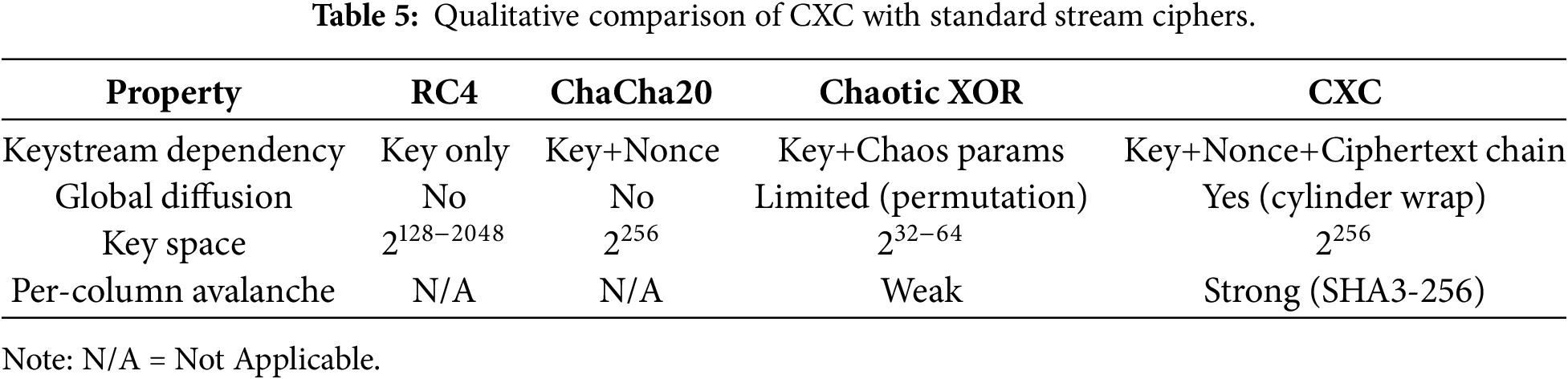
4.3.5 Comparison with Conventional Stream Ciphers
Table 5 contrasts CXC with widely adopted stream ciphers. Unlike RC4 or ChaCha20, which generate keystream independently of plaintext, CXC employs a ciphertext-dependent chaining mechanism. This creates a non-linear diffusion path: a single-bit plaintext change alters the entire seed chain via the cylinder wrap-around, a property not present in simple counter-mode or LFSR-based designs. The per-column SHA3-256 derivation also provides a 256-bit security level and inherent avalanche, whereas lightweight chaotic ciphers often rely on 32-bit or 64-bit state variables vulnerable to statistical reconstruction.
The experiments were conducted using Google Colab with Python 3.12.13. The implementation was executed on a T4 GPU for accelerated computation. The framework was developed using Python-based deep learning libraries, including PyTorch and HuggingFace Transformers (version 5.7.0). The residual feature
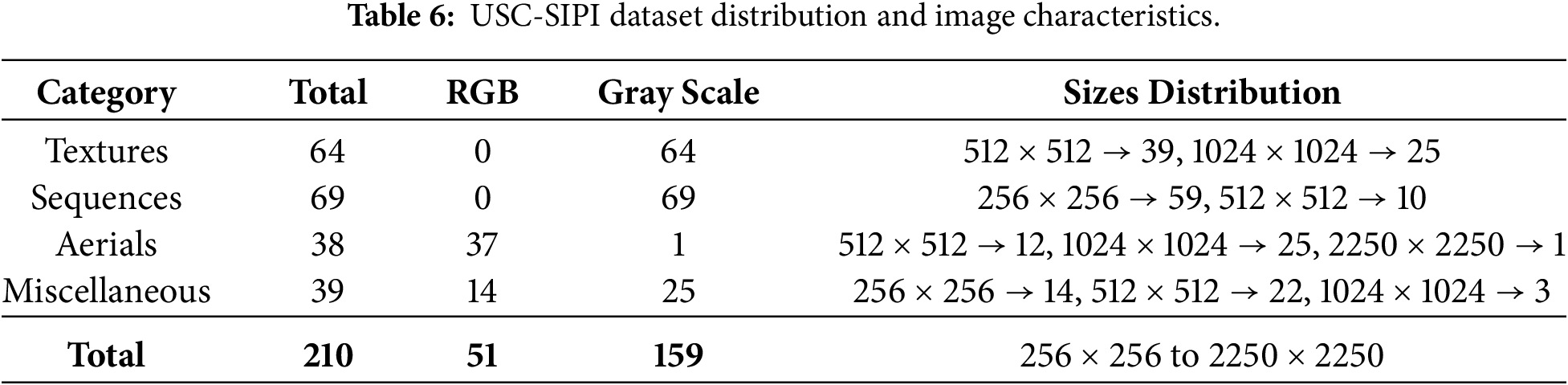
The experiments were conducted using the USC-SIPI dataset [27], a standard benchmark in image processing containing four categories: Textures, Aerials, Miscellaneous (e.g., Mandrill and Peppers), and Sequences (e.g., moving objects and dynamic scenes), totalling 210 images (38 Aerial, 39 Miscellaneous, 69 Sequence, and 64 Texture). Detailed characteristics are presented in Table 6. The original TIFF images span resolutions from
5.3 Security Model and Heuristic Cryptanalysis
The security of the CXC scheme is analyzed under three standard adversarial models:
• Ciphertext-Only Attack (COA): The adversary
• Known-Plaintext Attack (KPA):
• Chosen-Plaintext Attack (CPA):
SHA3-256 is modeled as a random oracle
5.3.2 Keystream One-Wayness (Lemma 1)
Given any ciphertext column
5.3.3 Propagation under CPA (Lemma 2)
Let
The above analysis provides heuristic evidence of resistance against KPA and CPA through strong diffusion and keystream irreversibility, but does not constitute a formal IND-CPA security proof. CXC should therefore be regarded as a lightweight, empirically validated scheme for latent-space image protection rather than a general-purpose or standards-grade encryption primitive.
5.4.1 Computational Time Analysis
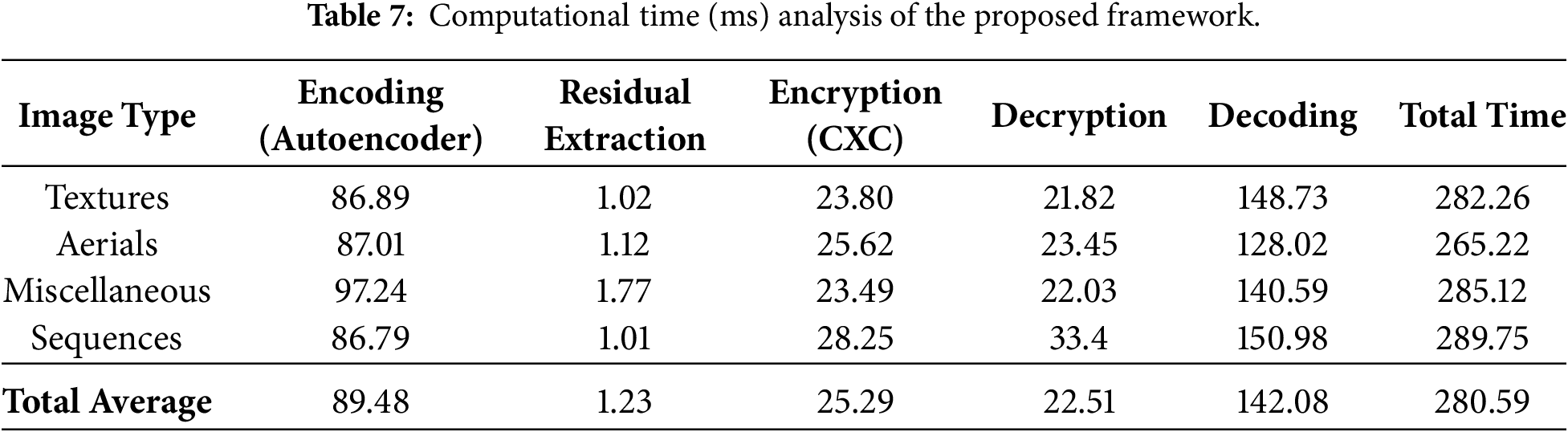
To evaluate computational efficiency, one image from each dataset class (Textures, Aerials, Miscellaneous, and Sequences) was tested after resizing to
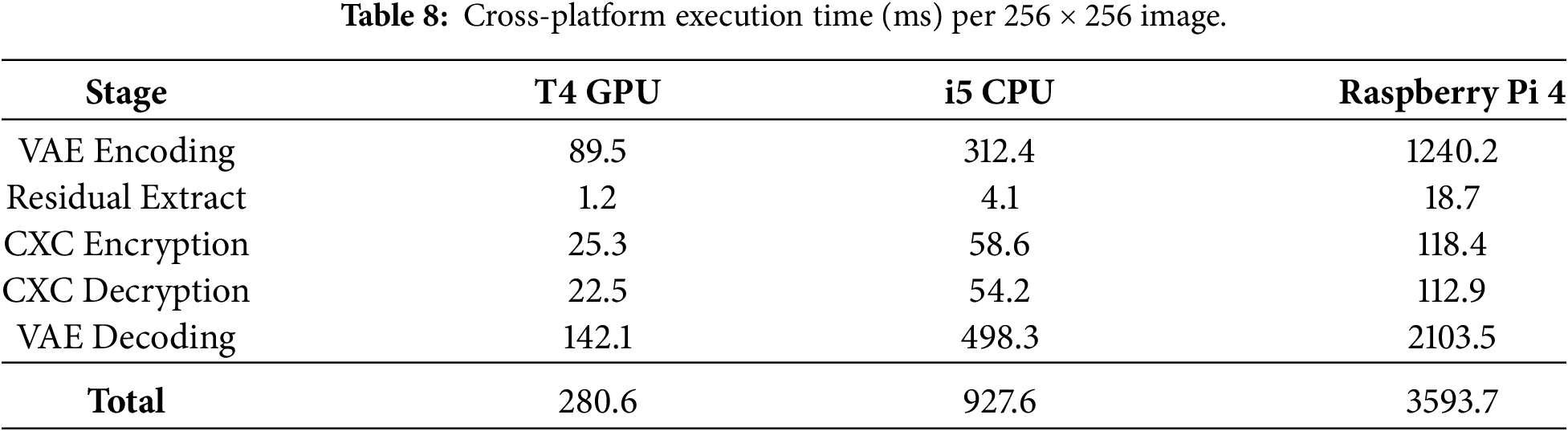
To assess feasibility on true edge hardware, the paper evaluates the full pipeline on three platforms: (1) NVIDIA T4 GPU (Google Colab), (2) Intel Core i5-10400 CPU @ 2.9 GHz, and (3) Raspberry Pi 4 (ARM Cortex-A72, 1.5 GHz, 4 GB RAM). Table 8 reports the results. While the VAE dominates latency across all platforms, the CXC encryption remains lightweight (
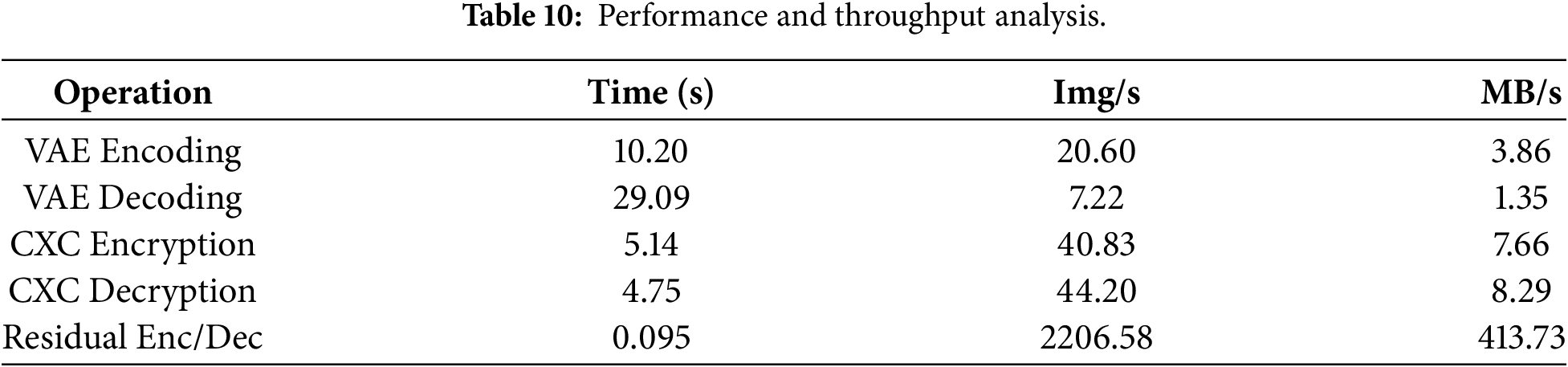
The proposed CXC scheme operates on images of size
Table 9 summarizes the dataset used in the experiments: 210 images with a total size of 39.38 MB, sufficient to evaluate computational performance under realistic conditions. Table 10 presents throughput analysis across all major pipeline stages. VAE encoding and decoding are the most computationally expensive stages, achieving 20.60 and 7.22 images/sec respectively, due to deep neural network operations. The proposed CXC encryption and decryption achieves significantly higher throughput at 40.83 and 44.20 images/sec, confirming that lightweight hashing and XOR operations introduce minimal overhead. Residual computation achieves the highest throughput at 2206.58 images/sec, as it involves only a pixel-wise difference without neural network inference or cryptographic transformation, resulting in negligible overhead relative to other pipeline components.

Histogram analysis evaluates pixel intensity distributions to assess the removal of statistical patterns across four image categories: aerial (Fig. 6), miscellaneous (Fig. 7), sequence (Fig. 8), and texture (Fig. 9). Original images exhibit highly non-uniform histograms reflecting strong spatial correlations, whereas encrypted images show a nearly uniform distribution across all intensity levels, confirming effective confusion and diffusion with improved resistance to statistical attacks.
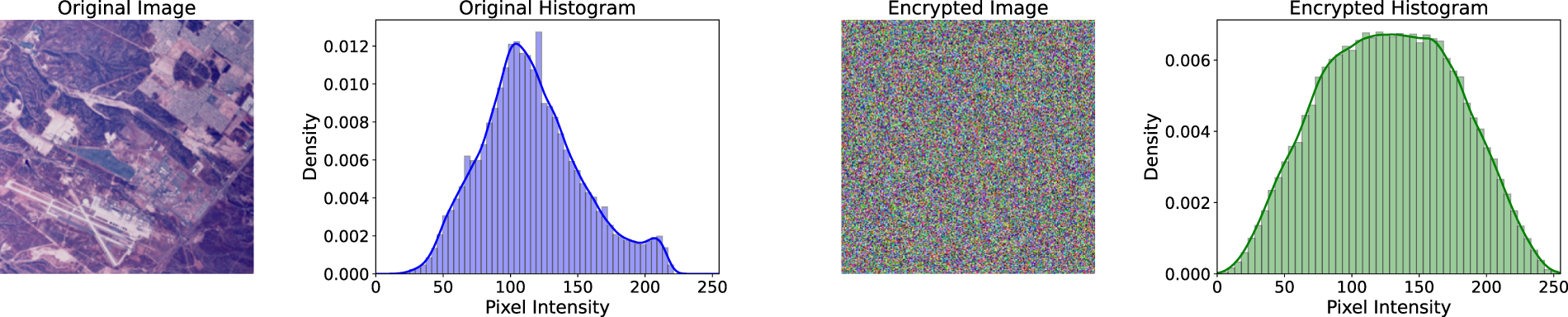
Figure 6: Comparison of histograms for original and encrypted aerial images.
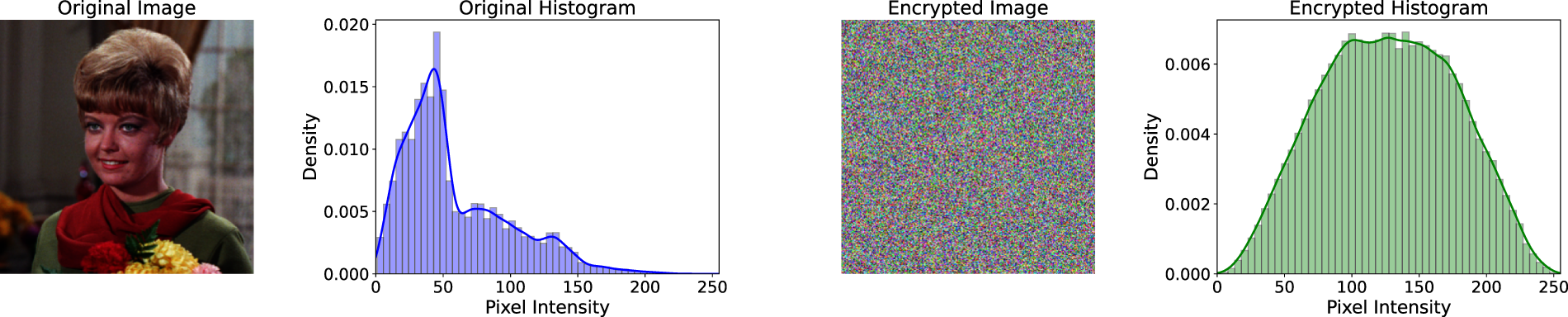
Figure 7: Comparison of histograms for original and encrypted miscellaneous image.
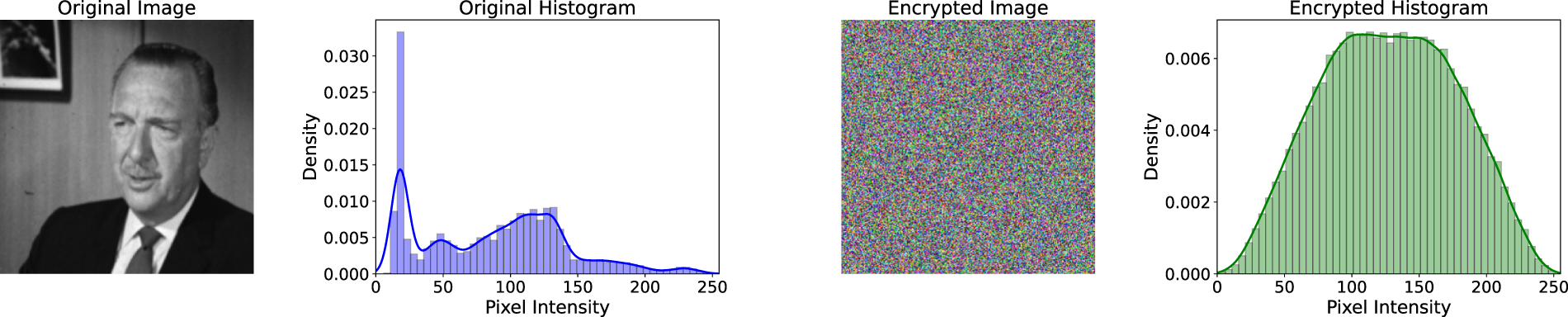
Figure 8: Comparison of histograms for original and encrypted sequence image.
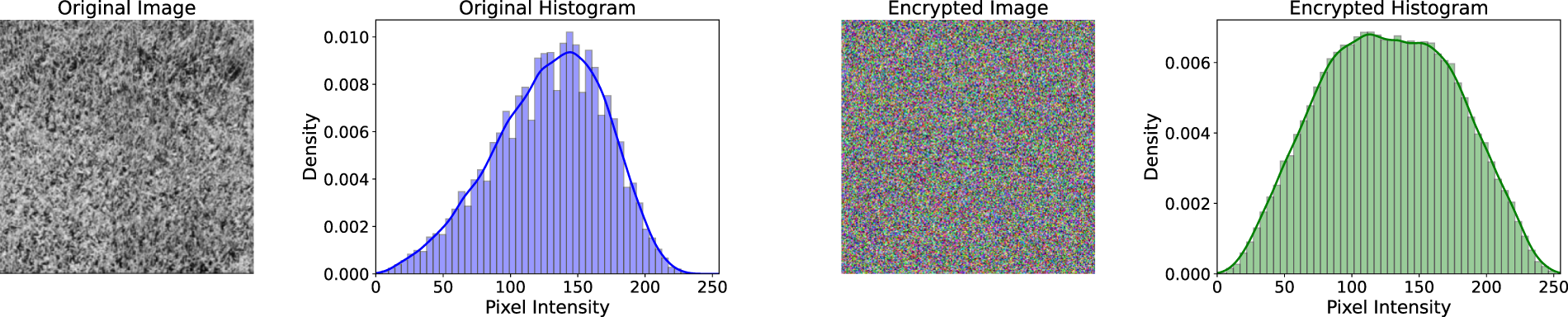
Figure 9: Comparison of histograms for original and encrypted texture image.
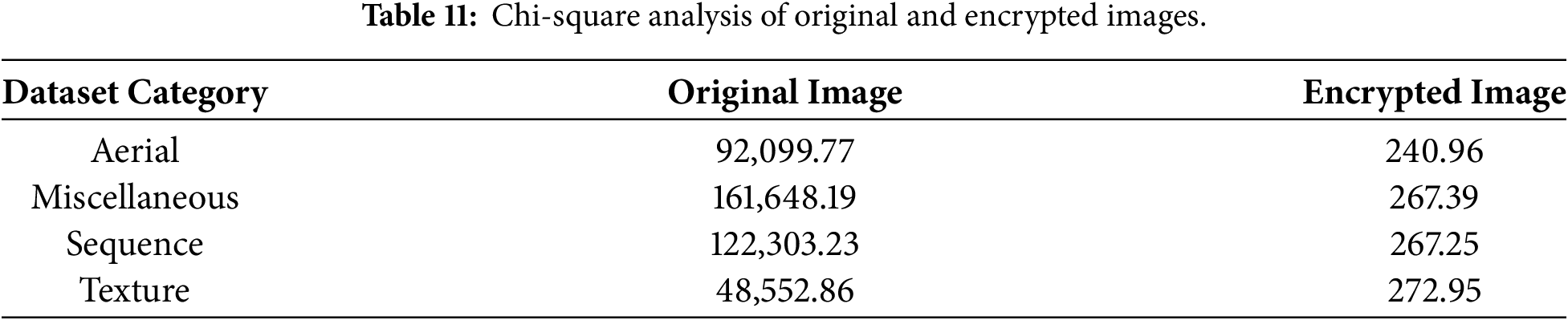
The Chi-square test evaluates the uniformity of pixel intensity distribution, measuring how far the observed distribution deviates from an ideal uniform distribution. A lower Chi-square value in encrypted images indicates a more random-like distribution, desirable for resisting statistical attacks. As illustrated in Table 11, asignificant reduction is observed across all tested datasets: the Aerial dataset drops from 92,099.77 to 240.96, Miscellaneous from 161,648.19 to 267.39, Sequence from 122,303.23 to 267.25, and Texture from 48,552.86 to 272.95. These consistent reductions confirm that the proposed CXC scheme effectively randomizes pixel distributions, eliminating identifiable structural patterns and significantly enhancing statistical security.
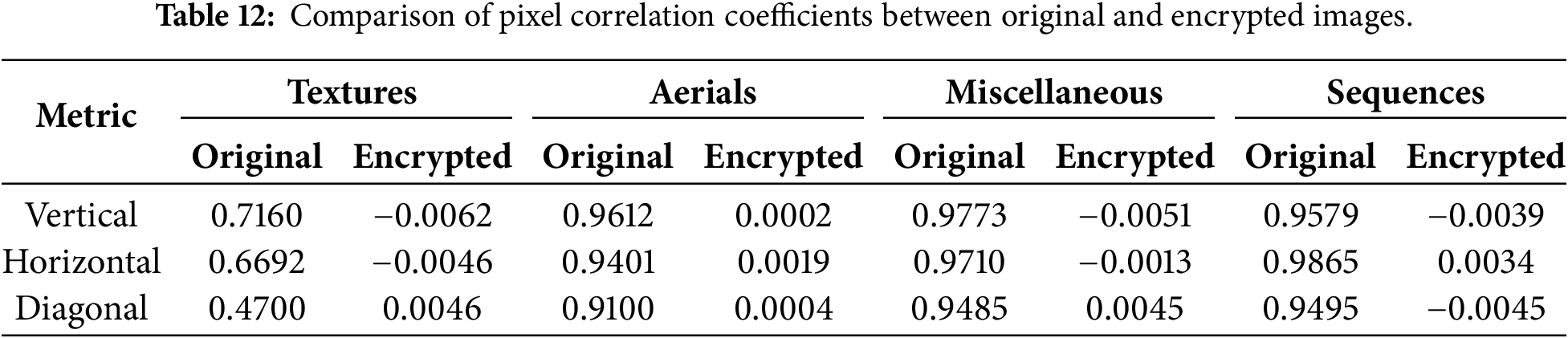
Correlation coefficients between adjacent pixels (horizontal, vertical, and diagonal) are computed for all image categories. As shown in Table 12, original images exhibit high correlation (0.4700–0.9865) due to strong spatial redundancy, while encrypted images produce near-zero values (
5.6 Differential Attack Analysis
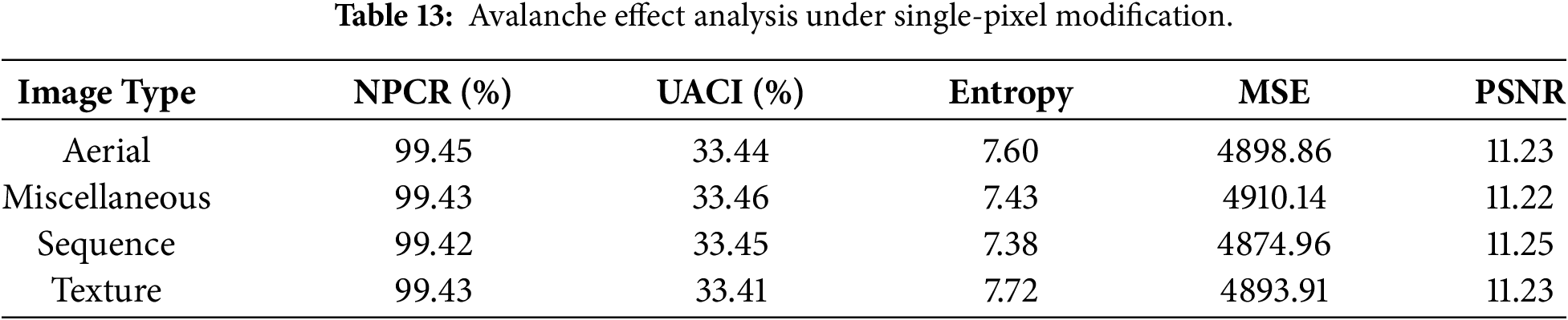
The avalanche effect measures encryption sensitivity to a one-bit plaintext change under the same secret key. Here, a single pixel value is modified while all other pixels remain unchanged; a strong cipher should produce significant, unpredictable ciphertext changes. Table 13 reports NPCR, UACI, Entropy, MSE, and PSNR results for different test images under this single-pixel modification scenario. The obtained NPCR values consistently exceed 99.4%, confirming that more than 99% of ciphertext pixels change upon a single-pixel plaintext modification, demonstrating strong diffusion and high resistance to differential attacks. UACI values are close to the ideal 33%, indicating that intensity variation between ciphertexts is statistically close to random behavior. Entropy values above 7.3 approach the theoretical maximum of 8 for 8-bit images, reflecting a high degree of randomness in the encrypted outputs. Finally, high MSE and low PSNR values (around 11 dB) confirm significant divergence between encrypted images, collectively demonstrating that the proposed CXC scheme exhibits strong avalanche characteristics with robust resistance against statistical and differential attacks.
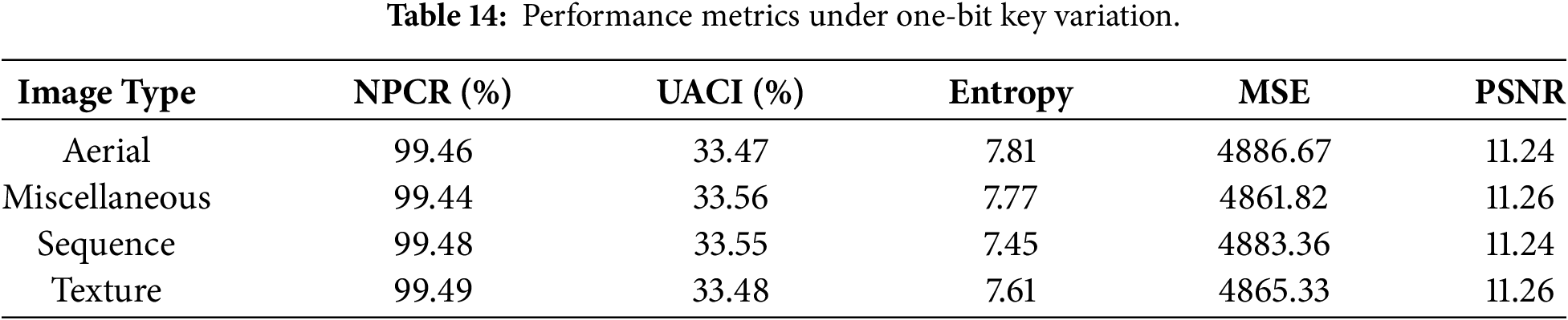
Key sensitivity evaluates encryption responsiveness to a minimal key change under the same plaintext image. Here, a one-bit modification is introduced in the encryption key, and the same image is encrypted using both the original and modified keys. Table 14 reports NPCR, UACI, Entropy, MSE, and PSNR results under this one-bit key variation scenario. NPCR values consistently exceed 99.4%, confirming that more than 99% of ciphertext pixels change upon a one-bit key modification. UACI values close to the ideal 33% confirm significant intensity variation across ciphertext images. Entropy values above 7.4 approach the theoretical maximum of 8 for 8-bit images, reflecting high randomness in ciphertexts generated under different keys. Finally, high MSE and low PSNR (
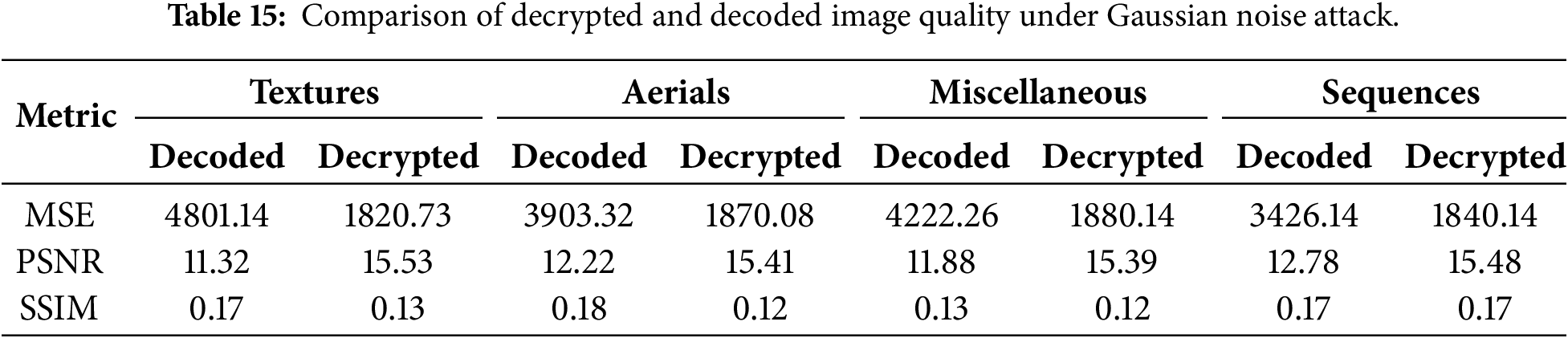
To evaluate robustness against channel disturbances, a Gaussian noise attack with standard deviation
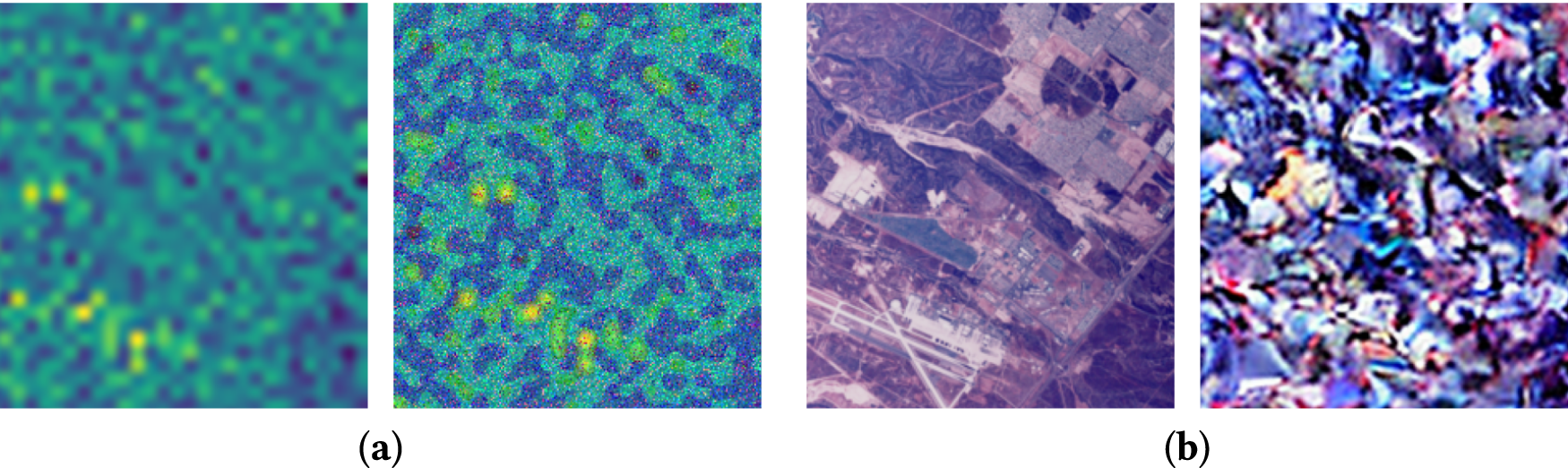
Figure 10: Visual comparison of the proposed framework under normal and Gaussian noise attack conditions. (a) Decrypted image under normal (left) and noise attack (right) conditions. (b) Comparison between original (Left) and noisy reconstructed image (right) after attack.
5.6.4 Channel Coding Mitigation
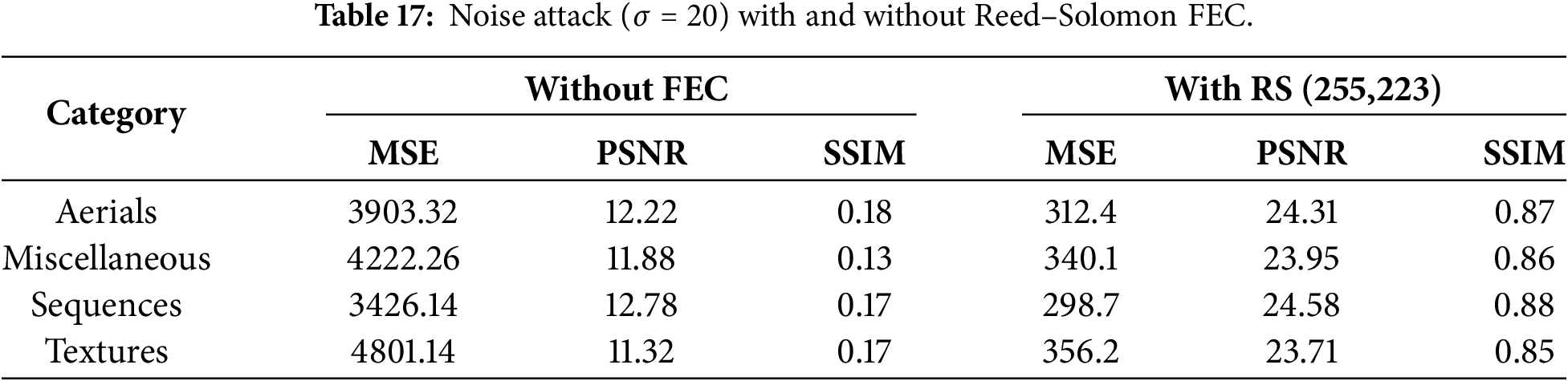
To mitigate the degradation observed under Gaussian noise (
5.6.5 Security Analysis Against Known-Plaintext and Chosen-Plaintext Attacks
The CXC encryption employs a deterministic keystream in which each column’s keystream depends on the secret key, a unique nonce, and a chaining seed derived from previous ciphertext columns, providing confidentiality under ciphertext-only assumptions. We analyze two active attack scenarios:
• KPA: If an adversary obtains a plaintext–ciphertext pair
• CPA: Resistance to CPA is ensured by the sequential dependency across columns. A single-bit modification in plaintext column
5.6.6 Key Space and Brute-Force Resistance
The security of the CXC scheme is primarily determined by the entropy of the 256-bit secret key and the nonlinear transformation induced by SHA3-256. The initial seed defined in Eq. (17) ensures strong key sensitivity, where a one-bit change in
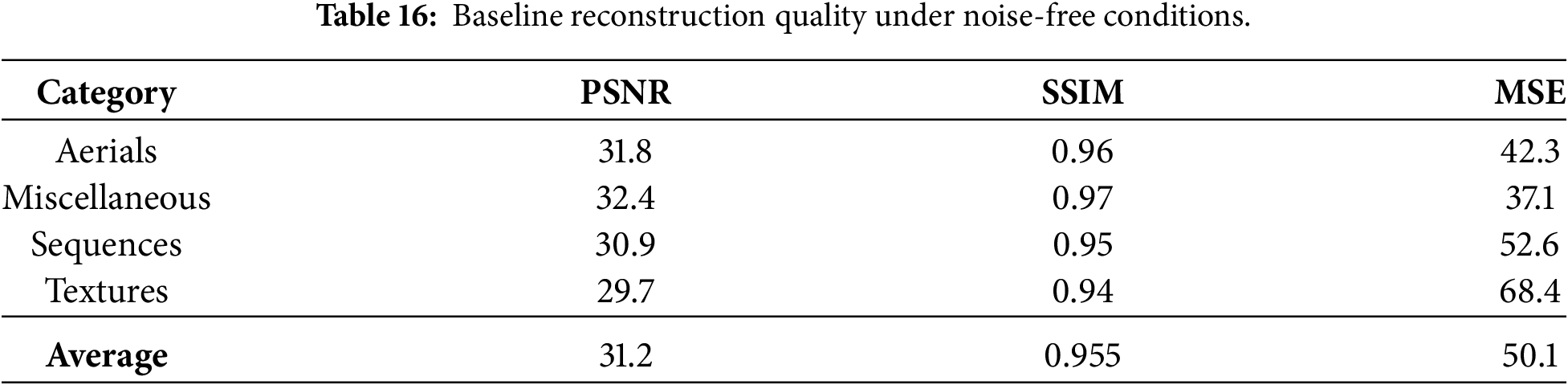
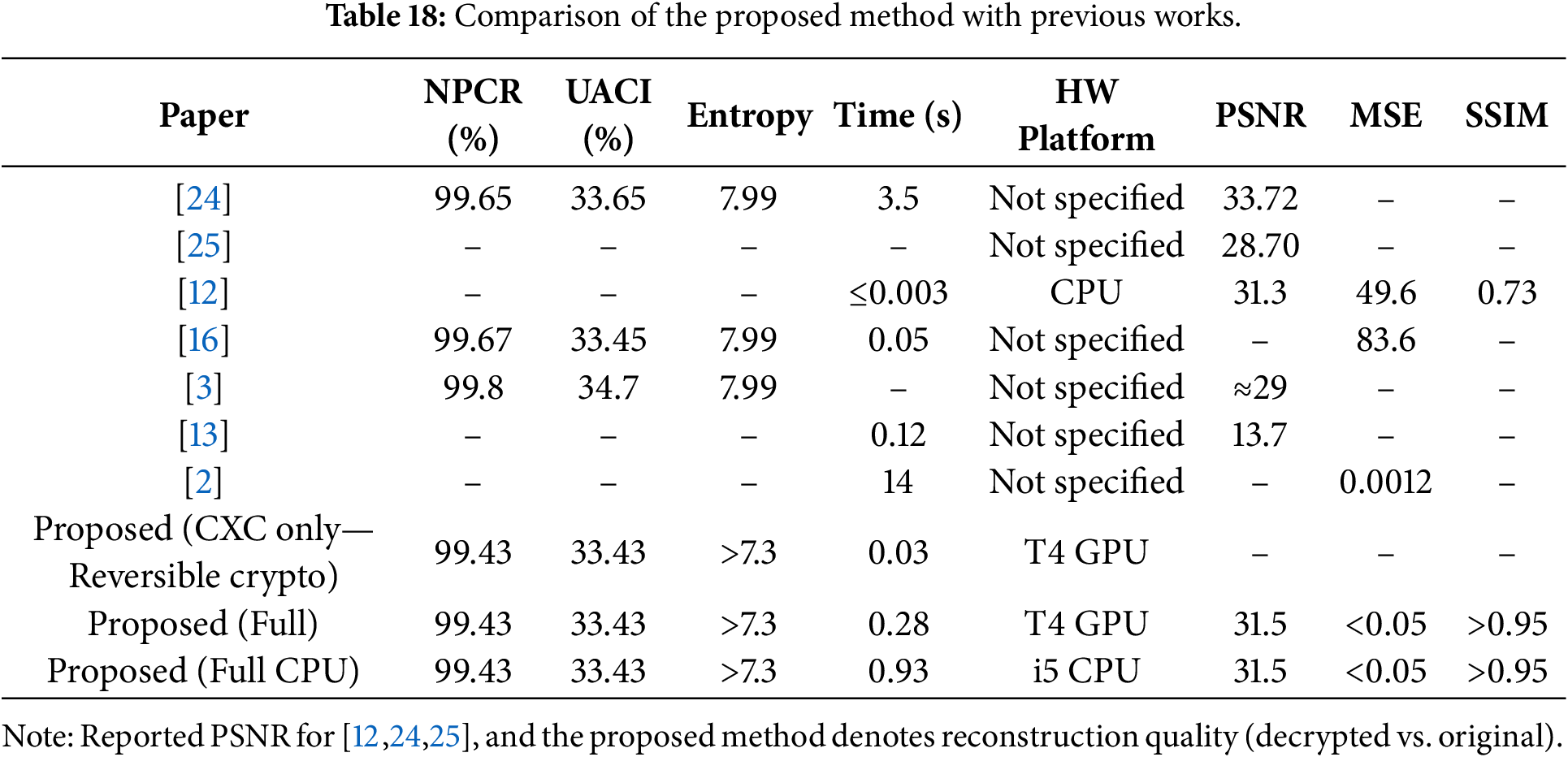
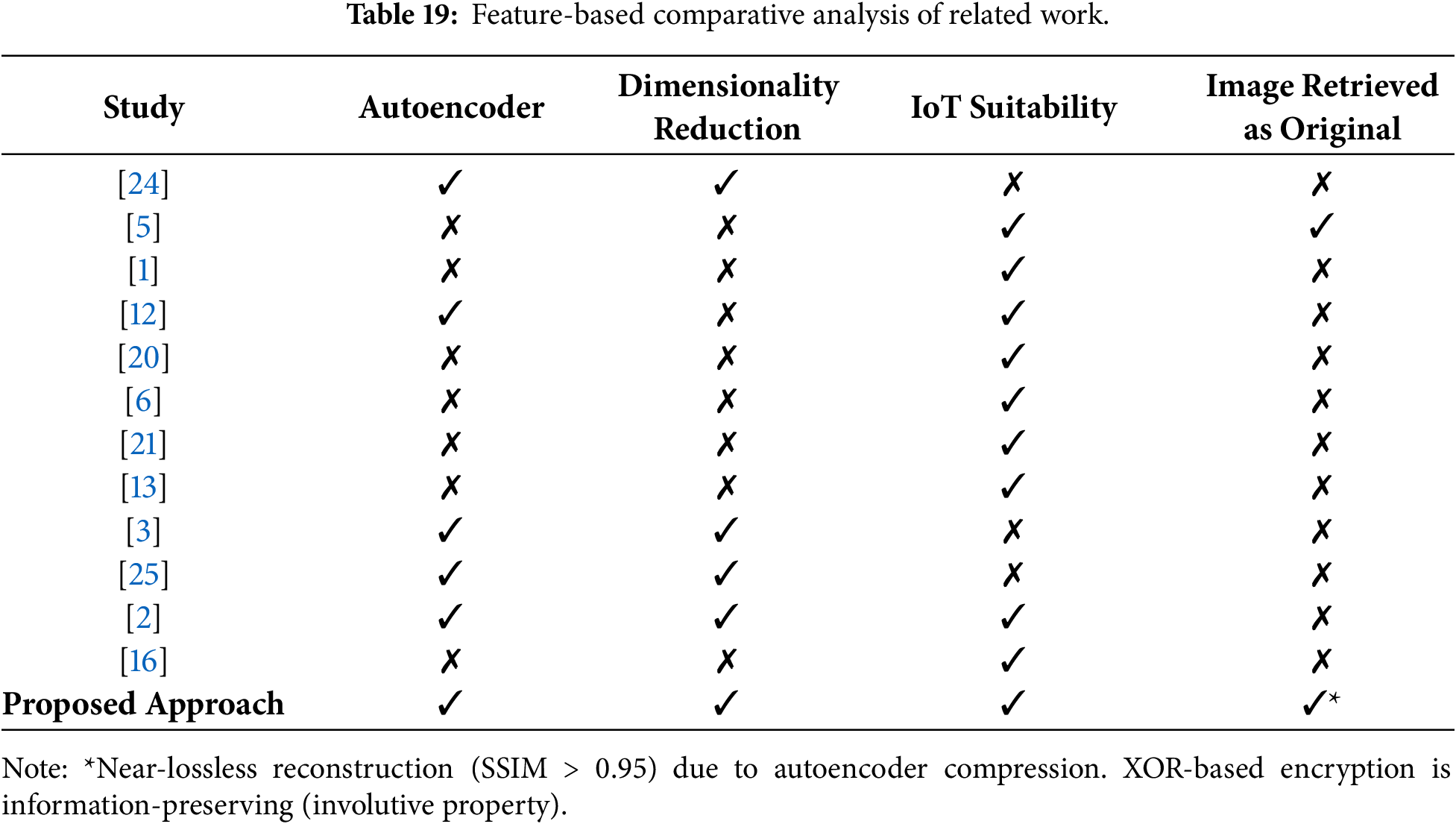
Tables 18 and 19 highlight the effectiveness of the proposed framework in achieving a balanced trade-off between security, reconstruction quality, and computational efficiency. From a security perspective, the proposed method achieves NPCR and UACI values of 99.43% and 33.43%, respectively, which are comparable to those reported by state-of-the-art image encryption schemes, indicating strong resistance against differential attacks. The entropy value exceeding 7.3 further demonstrates a high degree of randomness in the encrypted images. In terms of reconstruction quality, the proposed framework achieves a PSNR of 31.5 dB, an MSE below 0.05, and an SSIM greater than 0.95. These results indicate that the decrypted images preserve structural information and visual fidelity with minimal distortion. Compared with existing autoencoder-based approaches, the proposed method provides competitive reconstruction performance while simultaneously maintaining strong encryption characteristics. It should be noted that some studies report PSNR values computed between plaintext and ciphertext images, whereas the proposed framework evaluates reconstruction quality between the original and decrypted images. Therefore, direct numerical comparison of PSNR values across all studies may not always be meaningful. Unlike conventional pixel-level encryption methods, the proposed framework employs autoencoder-based dimensionality reduction prior to encryption, reducing transmission bandwidth and computational requirements. The average end-to-end processing time is 0.28 s per image, including VAE encoding, residual extraction, CXC encryption/decryption, and decoding, while the CXC stage alone requires only 0.03 s. Although certain schemes report lower encryption times (e.g., 0.003 s in [12]), these methods do not include feature extraction, latent-space processing, or image reconstruction. Compared with other autoencoder-based image protection approaches [2,3,24,25], the proposed framework offers competitive execution time while uniquely combining reversible XOR-based encryption with high-fidelity reconstruction through residual compensation. Several limitations should be acknowledged. The framework is sensitive to channel noise: Gaussian noise (
For practical IoT deployment, a realistic edge-assisted architecture is assumed. In this setting, the resource-constrained sensor node (e.g., ARM Cortex-M4) executes only the lightweight CXC encryption stage, which requires approximately 120 ms on a Raspberry Pi 4, while computationally intensive VAE encoding and decoding operations are offloaded to an edge gateway or embedded AI accelerator (e.g., Google Coral TPU or Intel NCS2). This architecture enables the framework to balance security, reconstruction quality, and computational efficiency within resource-constrained IoT environments. Future work will investigate INT8 quantization and VAE knowledge distillation to enable fully standalone deployment on microcontroller-class devices.
This paper presents a lightweight and secure image encryption framework integrating a pretrained residual autoencoder with the proposed CXC scheme for efficient image transmission in edge-assisted IoT environments. The CXC scheme operates in two phases: a SHA3-256-based forward chained pass encrypts latent and residual representations via reversible XOR operations, followed by a cylinder-like feedback pass that enforces inter-column dependency for enhanced global diffusion and heuristic resistance against differential and statistical attacks. Experimental results on the USC-SIPI dataset confirm strong security properties (NPCR
Acknowledgement: The authors sincerely acknowledge Princess Sumaya University for Technology for supporting the steps of this research.
Funding Statement: The authors received no specific funding for this research.
Author Contributions: The authors confirm contributions to the paper as follows: Conceptualization: Rania Al-Ali and Mustafa Al-Fayoumi; methodology: Rania Al-Ali and Mustafa Al-Fayoumi; software: Saleem Alsaraireh; validation: Saleem Alsaraireh and Rania Al-Ali; formal analysis: Saleem Alsaraireh and Rania Al-Ali; investigation: Rania Al-Ali; data curation: Saleem Alsaraireh; writing—original draft preparation: Rania Al-Ali; writing—review and editing: Mustafa Al-Fayoumi, Rania Al-Ali, and Saleem Alsaraireh; supervision: Mustafa Al-Fayoumi. All authors reviewed and approved the final version of the manuscript.
Availability of Data and Materials: The database used in this study is available from the corresponding author upon reasonable request.
Ethics Approval: Ethics Statement: This study did not involve the recruitment of human participants or the collection of personal data. All human images used in the experiments were obtained from the publicly available USC-SIPI Image Database, which is a widely used benchmark dataset for image processing research. The images were used solely for algorithm evaluation in accordance with the dataset’s terms of use. Therefore, institutional ethics approval and informed consent were not required for this study.
Conflicts of Interest: The authors declare no conflicts of interest.
References
1. Yung C, Huang SCH, Wu HC, Li CH. Novel secure and robust recoverable cryptographic mosaic technique. IEEE Trans Multimed. 2025;27:7137–51. doi:10.1109/tmm.2025.3590922. [Google Scholar] [CrossRef]
2. El-Kafrawy P, Aboghazalah M, Ahmed AM, Torkey H, El-Sayed A. An efficient encryption and compression of sensed IoT medical images using auto-encoder. Comput Model Eng Sci. 2023;134(2):909–26. doi:10.32604/cmes.2022.021713. [Google Scholar] [CrossRef]
3. Ahmed F, Rehman MU, Ahmad J, Khan MS, Boulila W, Srivastava G, et al. A DNA based colour image encryption scheme using a convolutional autoencoder. ACM Trans Multimed Comput Commun Appl. 2023;19(3s):1–21. doi:10.1145/3570165. [Google Scholar] [CrossRef]
4. Chai X, Zheng X, Gan Z, Han D, Chen Y. An image encryption algorithm based on chaotic system and compressive sensing. Signal Process. 2018;148(9):124–44. doi:10.1016/j.sigpro.2018.02.007. [Google Scholar] [CrossRef]
5. Li J, Sun L, Lin C, Wang X, Wang Z, He Q, et al. SED-UAV: a synergistic framework of lightweight chaotic encryption and multi-scale feature detection for secure UAV applications. IEEE Internet Things J. 2025;13(5):8050–63. doi:10.1109/jiot.2025.3607318. [Google Scholar] [CrossRef]
6. Ali AH, Gbashi EK, Alaskar H, Hussain AJ. A lightweight image encryption algorithm based on secure key generation. IEEE Access. 2024;12(1):95871–83. doi:10.1109/access.2024.3414334. [Google Scholar] [CrossRef]
7. Alawida M. A novel image encryption algorithm based on cyclic chaotic map in industrial IoT environments. IEEE Trans Ind Inform. 2024;20(8):10530–41. doi:10.1109/tii.2024.3395631. [Google Scholar] [CrossRef]
8. Hinton GE, Salakhutdinov RR. Reducing the dimensionality of data with neural networks. Science. 2006;313(5786):504–7. doi:10.1126/science.1127647. [Google Scholar] [CrossRef]
9. Goodfellow I. Deep learning. Cambridge, MA, USA: MIT Press; 2016. [Google Scholar]
10. Stallings W. Cryptography and network security: principles and practice. 7th ed. London, UK: Pearson; 2017. [Google Scholar]
11. Acharya T, Ray AK. Image processing: principles and applications. Hoboken, NJ, USA: Wiley; 2009. [Google Scholar]
12. Zhang D, Shafiq M, Srivastava G, Gadekallu TR, Wang L, Gu Z. STBCIoT: securing the transmission of biometric images in customer IoT. IEEE Internet Things J. 2024;11(9):16279–88. doi:10.1109/jiot.2024.3351988. [Google Scholar] [CrossRef]
13. Hedayati R, Mostafavi S. A lightweight image encryption algorithm for secure communications in multimedia Internet of Things. Wireless Pers Commun. 2022;123(2):1121–43. doi:10.1007/s11277-021-09173-w. [Google Scholar] [CrossRef]
14. Kaur M, AlZubi AA, Singh D, Kumar V, Lee HN. Lightweight biomedical image encryption approach. IEEE Access. 2023;11:74048–57. doi:10.1109/access.2023.3294570. [Google Scholar] [CrossRef]
15. Mohammed RA, Khodher MAA, Alabaichi A. A novel lightweight image encryption scheme. Comput Mater Contin. 2023;75(1):2137–53. doi:10.32604/cmc.2023.036861. [Google Scholar] [CrossRef]
16. Kumari P, Mondal B. Lightweight image encryption algorithm using NLFSR and CBC mode. J Supercomput. 2023;79(17):19452–72. doi:10.1007/s11227-023-05415-9. [Google Scholar] [CrossRef]
17. Alexan W, Hosny K, Gabr M. A new fast multiple color image encryption algorithm. Clust Comput. 2025;28(5):325. [Google Scholar]
18. Zhu S, Deng X, Zhang W, Zhu C. Image encryption scheme based on newly designed chaotic map and parallel DNA coding. Mathematics. 2023;11(1):231. doi:10.3390/math11010231. [Google Scholar] [CrossRef]
19. Alexan W, Youssef M, Hussein HH, Ahmed KK, Hosny KM, Fathy A, et al. A new multiple image encryption algorithm using hyperchaotic systems, SVD, and modified RC5. Sci Rep. 2025;15(1):9775. [Google Scholar]
20. Zhang Y, Zhao R, Zhang Y, Yi S, Lan R. Visually semantics-aware color image encryption based on cross-plane substitution and permutation. IEEE Trans Ind Inform. 2024;20(8):10576–86. doi:10.1109/tii.2024.3395646. [Google Scholar] [CrossRef]
21. Kumar S, Sharma D. A chaotic based image encryption scheme using elliptic curve cryptography and genetic algorithm. Artif Intell Rev. 2024;57(4):87. [Google Scholar]
22. Alexan W, Elkandoz M, Mashaly M, Azab E, Aboshousha A. Color image encryption through chaos and KAA map. IEEE Access. 2023;11:11541–54. doi:10.1109/access.2023.3242311. [Google Scholar] [CrossRef]
23. Li L. Image encryption algorithm based on hyperchaos and DNA coding. IET Image Process. 2024;18(3):627–49. doi:10.1049/ipr2.12974. [Google Scholar] [CrossRef]
24. Manikandan S, Linkkesh A, Sreenivasan S, Thanikaiselvan V, Subashanthini S, Amirtharajan R. Autoencoder-based image encryption using hybrid scrambling, diffusion, and dimensionality reduction. Results Eng. 2026;29(1):108977. doi:10.1016/j.rineng.2026.108977. [Google Scholar] [CrossRef]
25. Kumar K, Tanwar S, Kumar S. MANC: a masked autoencoder neural cryptography based encryption scheme for CT scan images. MethodsX. 2024;12:102738. doi:10.1016/j.mex.2024.102738. [Google Scholar] [CrossRef]
26. LightX2V Team. LightVAE: efficient video autoencoder (VAE) model collection. Hugging Face; 2025 [cited 2026 Apr 8]. Available from: https://huggingface.co/LightX2V. [Google Scholar]
27. Signal and Image Processing Institute (SIPIUniversity of Southern California. USC-SIPI image database; 2026 [cited 2026 Apr 3]. Available from: https://sipi.usc.edu/database/. [Google Scholar]
Cite This Article
 Copyright © 2026 The Author(s). Published by Tech Science Press.
This work is licensed under a Creative Commons Attribution 4.0 International License , which permits unrestricted use, distribution, and reproduction in any medium, provided the original work is properly cited.
 Downloads
 Citation Tools
