
 Login
Login Register
 Submit a Paper
 Propose a Special lssue
 Open Access
ARTICLE
Age-Energy Tradeoff in Vehicular MEC: Sensing, Transmission, and Computation Co-Optimization
1 College of Artificial Intelligence and Computer Science, Northwest Normal University, No. 967 Anning East Road, Anning District, Lanzhou, China
2 School of Information Science and Engineering, Lanzhou University, No. 222, Tianshui South Road, Chengguan District, Lanzhou, China
* Corresponding Author: Mangang Xie. Email:
Computers, Materials & Continua 2026, 89(2), 43 https://doi.org/10.32604/cmc.2026.086401
Received 29 May 2026; Accepted 30 July 2026; Issue published 15 September 2026
 View Full Text
 Download PDF
Abstract
Peak age of information (PAoI) and energy consumption (EC) are conflicting yet critical metrics in mobile edge computing (MEC)-assisted vehicular networks. Most existing studies overlook the joint effects of sensing, transmission, and computation. The main contributions of this work are threefold. First, we derive novel analytical expressions for the average PAoI and average EC under all three strategies, explicitly accounting for the energy and delay costs across the entire data processing chain. Second, we demonstrate that the partial computation offloading strategy is superior, effectively balancing the low latency of local processing with the high power of edge computing. Third, we formulate a weighted optimization problem to navigate the PAoI-EC tradeoff and identify an optimal offloading ratio that dynamically adapts to specific freshness and efficiency requirements. Numerical results demonstrate that jointly optimizing the offloading ratio, edge computing capability, and transmission power significantly improves performance. Our findings offer practical guidelines for designing timely and energy-efficient vehicular telematics systems.Keywords
With the iterative development of communication technologies and processor chip capabilities in recent years, innovative enabling technologies have emerged, accompanied by the proliferation of novel Internet of Things (IoT) applications, such as precision agriculture, remote medical therapy, and smart transportation systems [1–3]. Without exception, most of these applications have huge amounts of data and information to be processed, and these tasks are usually compute-intensive and latency-sensitive, requiring fast transmission rates and powerful processing capabilities to support [4]. Recent mobile edge computing (MEC) studies further emphasize that task offloading decisions should jointly consider timeliness, scalability, and energy costs, especially when multiple users compete for limited edge resources [5]. Vehicular and industrial IoT terminals suffer limited local computing and storage capacity, which leads to excessive latency for heavy sensing tasks; MEC deploys roadside edge servers to compensate for insufficient on-board hardware. Consequently, executing sensing data updates in both a timely and energy-efficient manner remains a paramount challenge.
In vehicular networks, dynamically changing road conditions and real-time vehicle status updates impose stringent temporal constraints on information processing. Maintaining data freshness is critical, as higher freshness enables vehicles to respond swiftly and accurately [6]. Conversely, outdated information may impair decision-making and escalate safety risks. While traditional metrics like throughput and latency are widely studied, they fail to adequately quantify information freshness. To address this limitation, the concept of Age of Information (AoI) has been introduced [7], defined as the time elapsed since the generation of the latest received data update from the destination’s perspective. Additionally, energy consumption (EC) remains a pivotal concern in IoT systems. Balancing EC reduction with AoI optimization in vehicular networks constitutes a key research objective.
A large amount of literature has been published in the last few years to study the AoI from different perspectives [8,9]. Peak age of information (PAoI), which is related to AoI, can likewise assess the freshness of information. Literature [10,11] has also done research on it. More recent studies have extended freshness-oriented scheduling to vehicular edge computing-assisted IoT systems and AoI optimization under unknown or delayed AoI observations [12,13]. And the freshness of data is also very important in connected vehicle systems, literature [14] investigated AoI-based vehicular control systems to reduce the communication traffic and improve the freshness of data at the same time. Literature [15] proposed a joint optimization approach for vehicular node update rates and in-vehicle device activation probabilities to minimize average PAoI. A hybrid coding scheme was investigated ... aiming to optimize both AoI and energy efficiency in vehicular communication [16]. Literature [17] further integrated unmanned aerial vehicle (UAV)-assisted relays with reconfigurable intelligent surfaces (RIS) under AoI and EC constraints to enhance decision-making in autonomous driving scenarios. In addition, UAV-assisted and digital-twin-enabled Vehicular Edge Computing (VEC) architectures have recently been investigated for AoI-aware offloading and model migration, confirming that information freshness is tightly coupled with mobility and edge resource dynamics [18,19]. Additionally, the work [20] developed a multi-agent scheduling framework for in-vehicle networks to minimize AoI under strict power and bandwidth limitations.
To enable intelligent driving functionalities, modern vehicles are equipped with extensive sensor arrays for real-time road condition monitoring [21,22]. These sensors continuously generate high-volume data streams, necessitating rapid computational processing to support timely system decisions. For example, Ref. [23] investigated MEC-assisted smart driving to improve the safety of autonomous driving networks, and Ref. [24] proposed a data offloading method for vehicular networks under the MEC architecture. Recent VEC offloading studies further consider intelligent offloading balance and reliability-aware task selection, highlighting the effects of dynamic topology, service reliability, and edge cooperation on latency-sensitive computation [25,26]. Literature [27] developed a non-orthogonal multiple access (NOMA)-assisted MEC analytical framework to characterize in-vehicle terminal mobility and evaluate its impact on task offloading, while literature [28] introduced a resource allocation algorithm for MEC-enabled uplink multiuser networks to minimize the weighted sum of latency and energy consumption. Additionally, MEC demonstrates significant potential in enhancing data freshness: literature [29] explored AoI optimization in UAV-assisted MEC systems through asynchronous offloading, and literature [30] examined distributed task offloading with resource allocation strategies. Some papers also consider PAoI, e.g., the papers [31,32] analyzed the PAoI optimization problem based on preemptive and non-preemptive offloading strategies in MEC systems. Furthermore, MEC exhibits notable energy efficiency advantages. Literature [33] designed a hybrid NOMA-based UAV-MEC network to reduce energy consumption for data-intensive time-critical devices, whereas literature [34] devised an iterative optimization method to minimize EC in cognitive radio-supported MEC systems without compromising quality of service requirements.
Based on the above facts, this paper investigates the MEC system that combines the vehicle sensors, the vehicle’s own local processor and the edge processor, and analyzes the average PAoI and EC of this system. In this system, the vehicle sensors sense and send computationally intensive packets to the vehicle’s local or edge processors, and the packets follow a first-come-first-served (FCFS) policy in the computation and transmission queues, and their computation and transmission times follow an exponential distribution [35]. The main contributions of this paper are summarized as follows.
• We establish a full-chain analytical model for MEC-assisted vehicular telematics, where time-sensitive updates are generated by vehicle sensors and are then processed through local computation, edge computation, or partial computation offloading. Unlike existing AoI-aware MEC studies that mainly focus on transmission/offloading decisions, the proposed model jointly captures sensing-induced packet generation, wireless transmission, queueing delay, local/edge computation, and the corresponding energy costs.
• We derive average PAoI and average EC expressions for the three computation strategies, which take into account sensing as well as transmission and computation energy consumption. We also analyze the impact of offloading ratio, edge processor computation power, and transmission power on them.
• Given the inherent tradeoff between minimizing average PAoI and reducing EC, we propose an age-energy weighted objective function and optimize the offloading ratio to balance these two metrics.
The structure of this paper is outlined as follows. Section 2 presents the MEC-based vehicular telematics framework and defines key performance metrics. Section 3 formulates analytical expressions for average PAoI and EC, followed by numerical evaluations in Section 4. Finally, Section 5 concludes the paper with major findings.
2 System Framework and Performance Metric
As illustrated in Fig. 1, the proposed MEC-enabled vehicular telematics system integrates sensing, transmission, and computational processes. The set of user vehicles is denoted as
• Local computation: The sensors deployed on the vehicle generate packets of data, which are then all queued up in the vehicle’s own processor’s compute queue for sequential computation.
• Partial computation: Each packet generated by the vehicle sensors is sequentially processed by both the local processor and the edge server via task workload partitioning. Specifically, the local processor first executes a fraction
• Edge computation: The packets generated by the sensors on the vehicle are not computed by the vehicle’s own processor, but are all sent sequentially through the transmission queue to the edge processor’s computation queue to be computed sequentially.
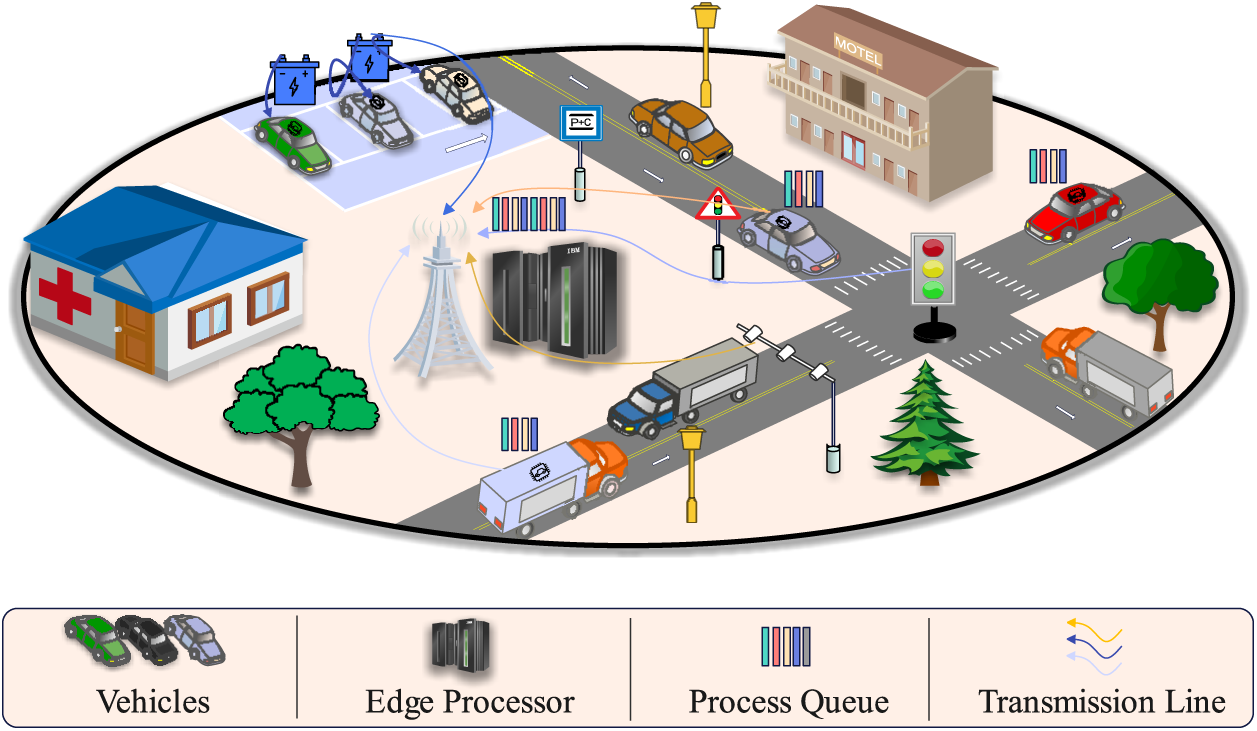
Figure 1: Synchronized transmission of perception and command data in automotive communication networks.
When partial computation offloading is adopted, tasks proceed through a three-stage processing pipeline consisting of local execution, wireless transmission, and edge execution. Within each stage, packets are served in the order of their arrival based on the FCFS principle. For the two extreme boundaries, the local computation scheme (
The proposed task allocation model includes two limiting scenarios. In the first scenario, all computation requests are completed by the onboard processor without transmitting any packets to the edge infrastructure, resulting in an offloading ratio of
This study employs two performance metrics: average PAoI and average EC. We first define AoI as follows. Fig. 2 illustrates the temporal evolution of AoI, where the instantaneous AoI at the destination node at moment
where
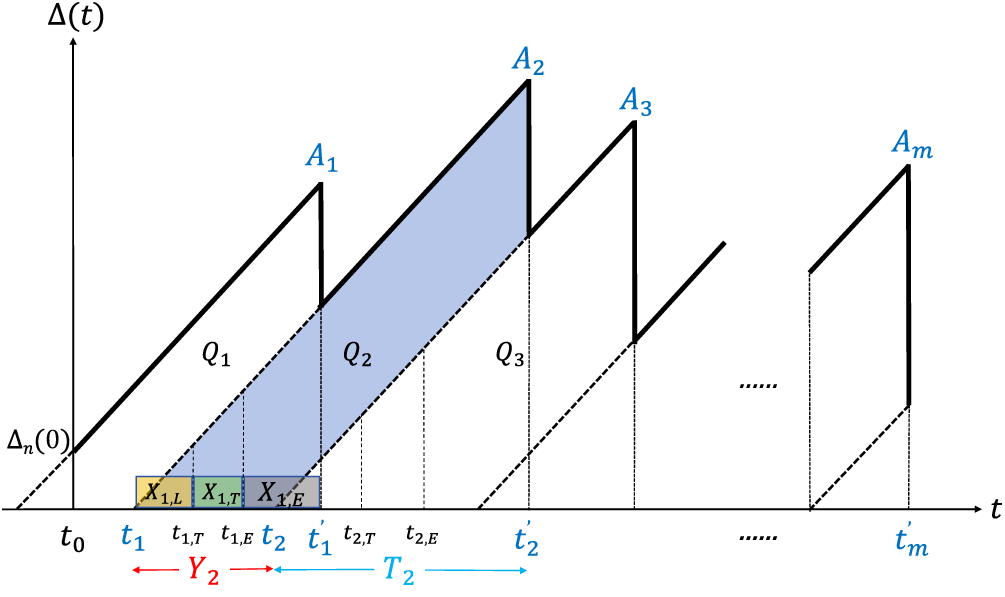
Figure 2: Example of the evolution of AoI for the vehicular networks based on MEC.
Let
where
The processing delay
where
The PAoI value is denoted by
Here,
Secondly, EC is another important performance metric in vehicular telematics-based MEC systems. The average EC expression for the system is
where
3 Average PAoI and EC Analysis
In this section, we aim to develop a generalized formula for calculating the average PAoI and average EC in the vehicular telematics based on MEC systems under consideration. Our objective is to comprehensively analyze both the average PAoI and EC, ensuring that our analysis applies broadly without compromising on generality.
We use
The service rate
The transmission queue service rate
where
where
Since the sensor generates packets according to the Poisson process at a rate of
Let
Then,
We denote
By substituting (13) into (12), the total processing delay
Since the process of generating packets by sensor sensing is uncorrelated with packet transmission and computation, substituting (14) into (10) and utilizing the fact that the packet computation times
Notice that PAoI tends to infinity when any one or more of
Then find the average PAoI. Based on the above derivation, the average PAoI under the partial computation offloading scheme is calculated as
Lemma 1. For a Poisson process
where
Applying (17), the PMF for the packet count in the edge server queue during
thus, we obtain the expression for
Similarly, we compute
We then substitute (19)–(21) into (16) to obtain a closed expression for the average PAoI under the partial computation offloading scheme with an offloading ratio of
where
We denote
where
Denote
Denote
We denote
where
In some of the partial computation offloading strategy we have considered, the total EC of the MEC-assisted vehicular telematics system includes the energy consumed for computation at the vehicle’s local processor, the energy consumed for packet transmission to the edge processor, and the energy consumed for computation at the edge processor, denoted as
We then substitute (23), (25) and (26) into (27) to obtain a closed expression for the average EC under the partial computation offloading scheme with an offloading ratio of
In vehicular MEC systems, information freshness conflicts with energy consumption. Autonomous driving and real-time traffic control require low-latency sensing data processing with limited power budgets, which motivates our joint optimization design. To address these dual requirements, we aim to optimize key control parameters, including the offloading ratio
where
where
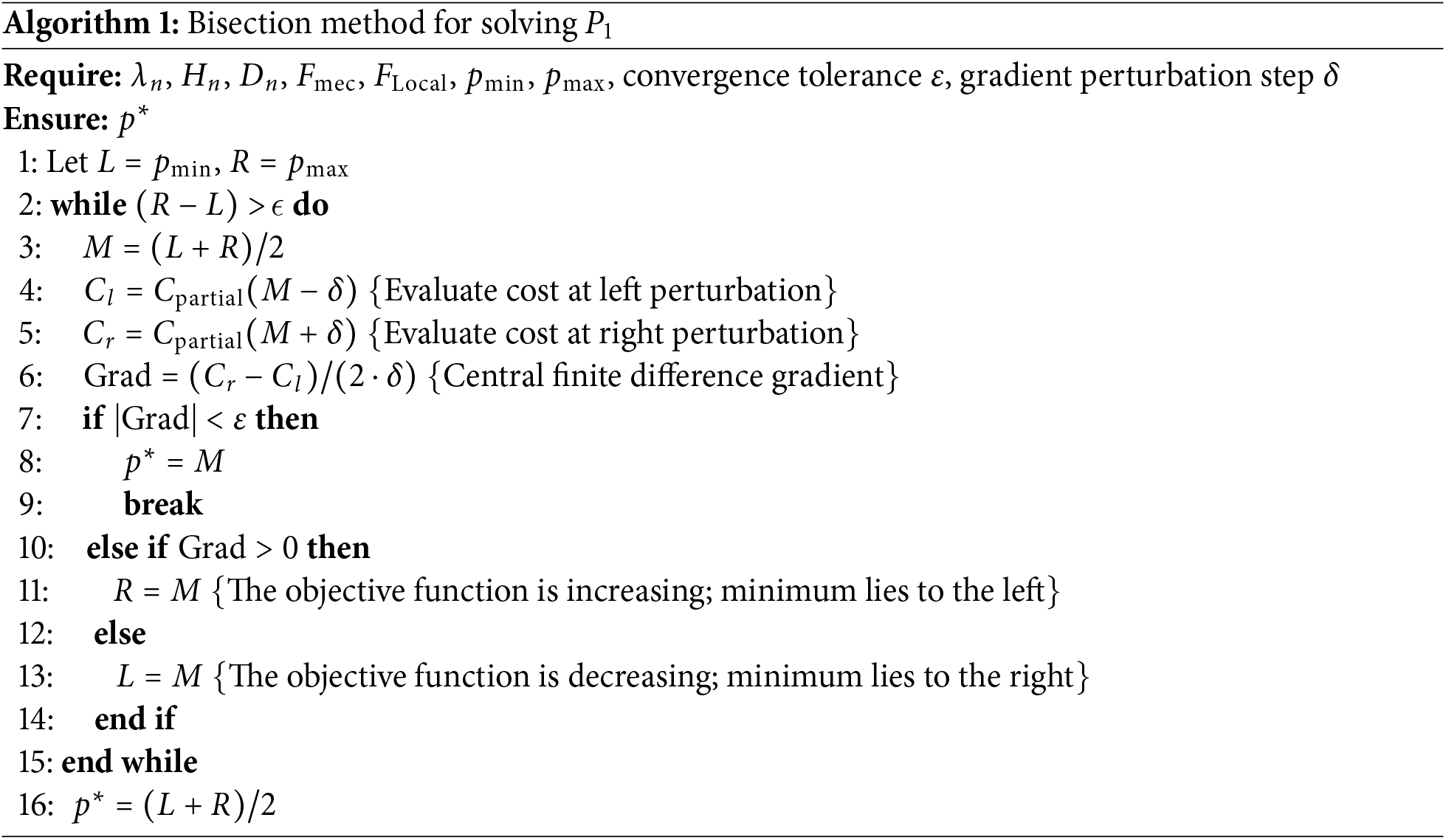
Since the weighted cost under the partial computation offloading strategy exhibits a unimodal trend with respect to the offloading ratio in the considered parameter region, the optimal offloading ratio can be efficiently searched by a bisection-based method. Compared with the exhaustive search, the proposed algorithm significantly reduces the number of candidate evaluations while achieving nearly the same weighted cost.
To solve
Based on the mathematical analysis and theoretical derivations in Section 3, this section presents numerical results under various strategies, along with a comparison with Monte Carlo simulation experiments, where all vehicles are assumed to have the same update generation rate

To validate the analytical expressions, we further conduct a discrete-event Monte Carlo simulation. In each simulation run, packet arrivals are generated according to a Poisson process, and the transmission, local computation, and edge computation times are independently generated according to exponential distributions with the corresponding service rates. Packets are served following the FCFS discipline in each queue. The average PAoI and EC are obtained by averaging over a sufficiently large number of delivered packets after removing the initial transient period. The simulated results are then compared with the analytical results derived in Section 3. This comparison is presented not only for the main performance curves in Figs. 3–6, but also for the weighted cost vs.
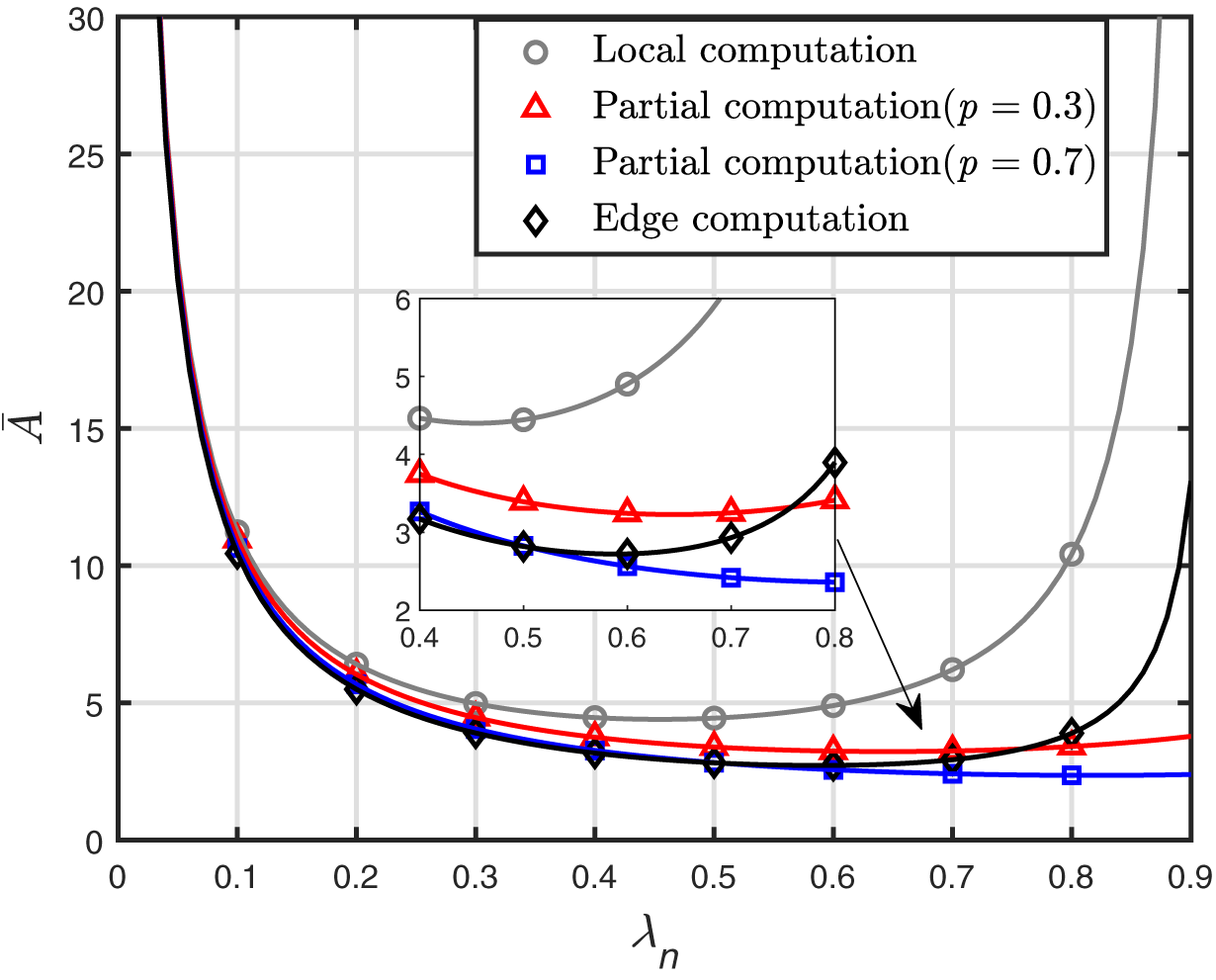
Figure 3: Average PAoI on the update generation rate
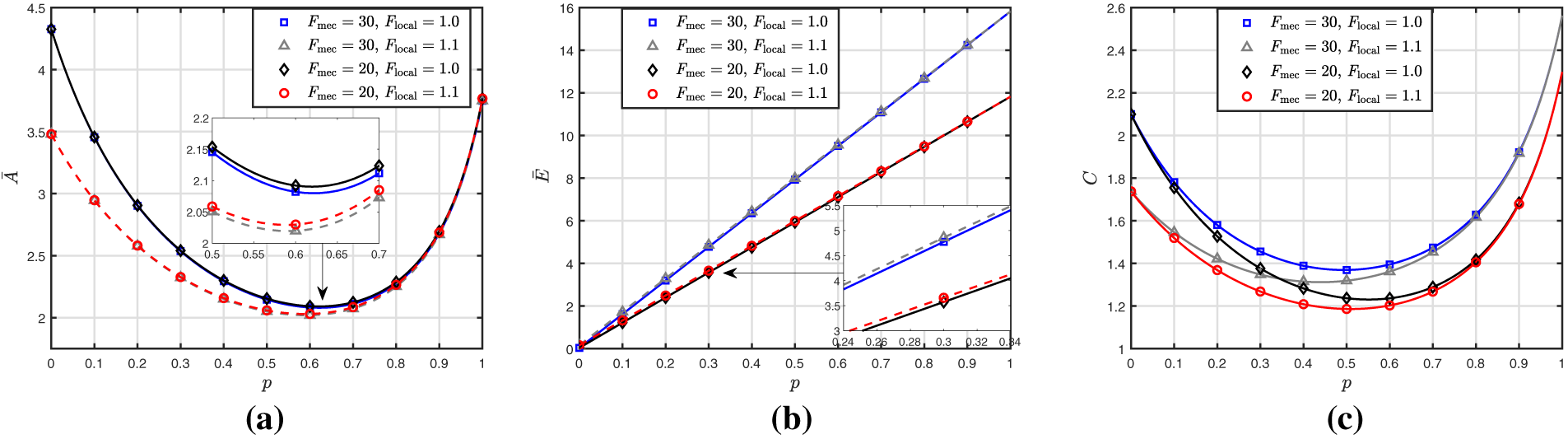
Figure 4: Offloading ratio
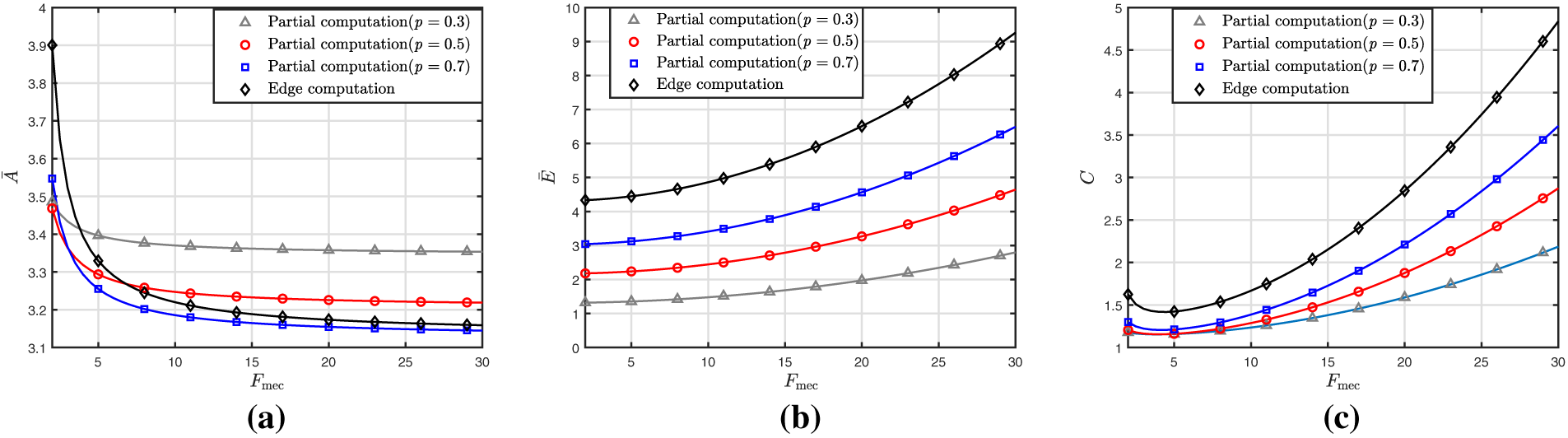
Figure 5: Edge processor computing power
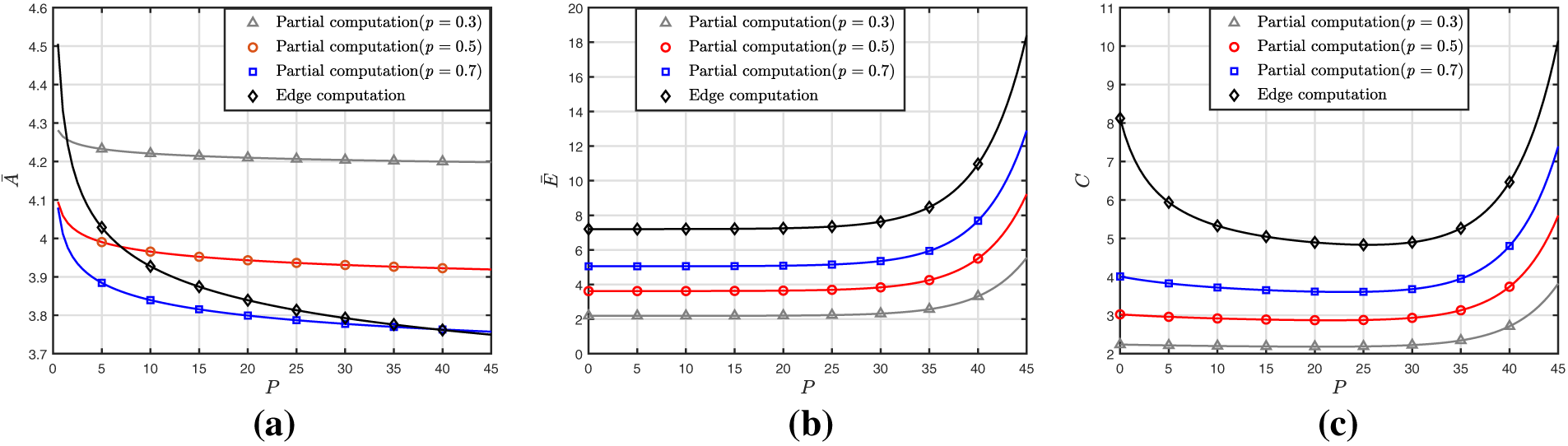
Figure 6: Transmission power
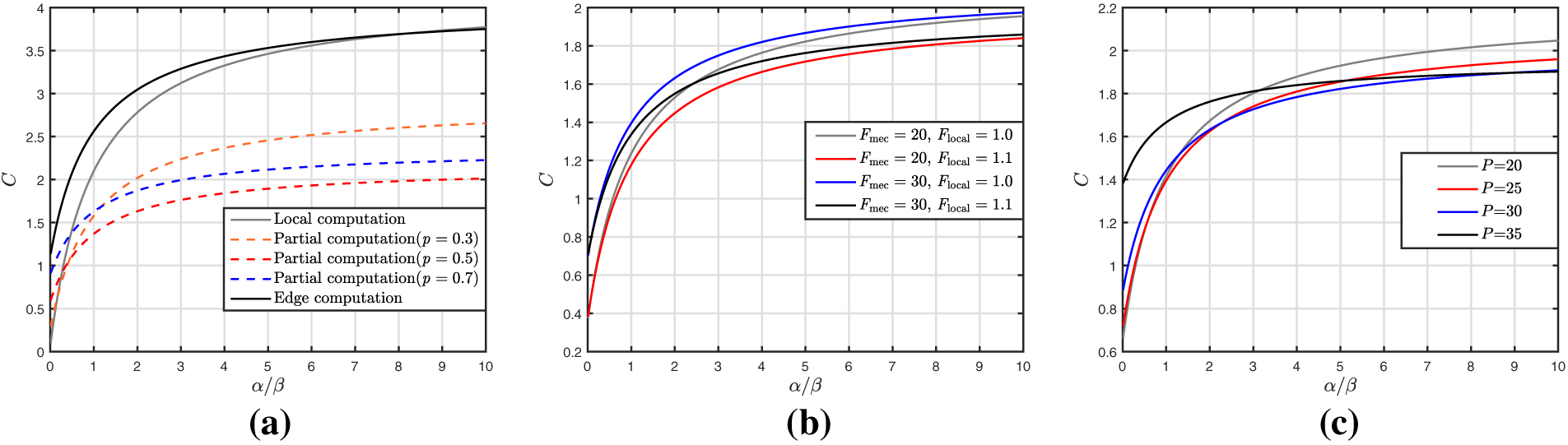
Figure 7: Weighted sum
Fig. 3 shows that the partial computation offloading strategy achieves the lowest average PAoI across all
In order to investigate the effect of the offloading ratio on the system, Fig. 4 shows the relationship between the average PAoI, average EC and the weighted sum of the average AoI and EC vs. the offloading ratio
The edge processor computational power has an equally important impact on the system, and since the edge processor is not involved in data processing in the local computation strategy, the strategy is not considered in this part. Fig. 5 illustrates the edge processor computational power vs. average PAoI, average EC, weighted sum
System transmission power is also a key metric, and Fig. 6 plots the relationship of average PAoI, average EC, weighted sum
As a complement to the above study, Fig. 7 plots the weighted cost
It has been found through previous studies that some of the computational strategies achieve better performance, and for different
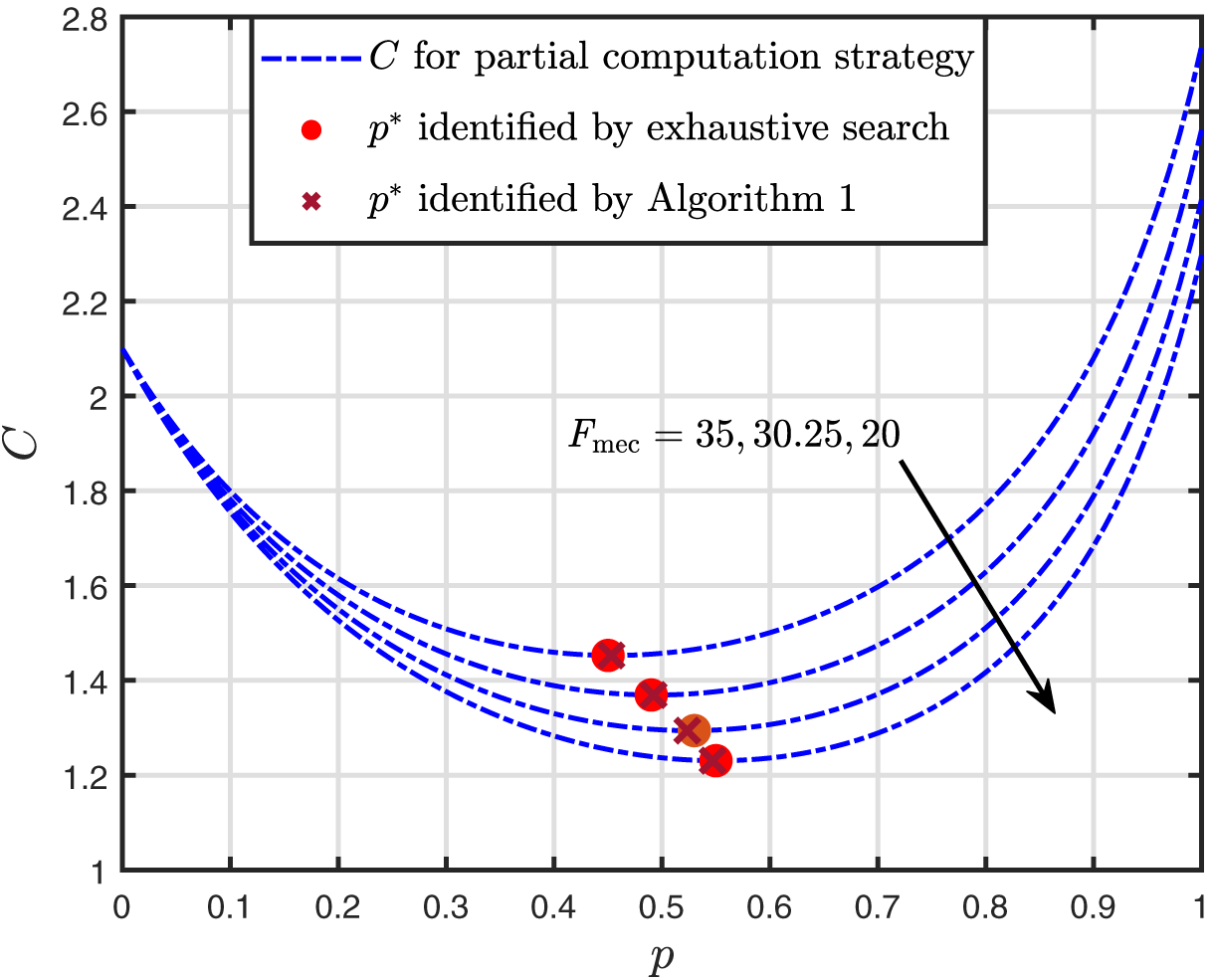
Figure 8: Optimal
As shown in Fig. 9, the proposed adaptive workload partitioning scheme outperforms all four benchmark algorithms under all packet arrival intensities: The traditional delay-energy MEC only optimizes local-edge computation delay without joint transmission queue constraints and end-to-end sensing PAoI modeling, leading to persistently higher weighted cost compared with our joint optimization framework. The PAoI-only minimization strategy blindly offloads most tasks to edge servers to reduce PAoI, which introduces excessive transmission energy consumption and keeps its cost above the proposed scheme. The deep Q-network (DQN) reinforcement learning offloading suffers inherent flow-dependent training bias and cannot provide closed-form global optimal partitioning solutions. The static fixed ratio p = 0.5 heuristic lacks dynamic adjustment capacity for time-varying arrival intensity, resulting in a stable performance gap with our analytical optimal strategy.
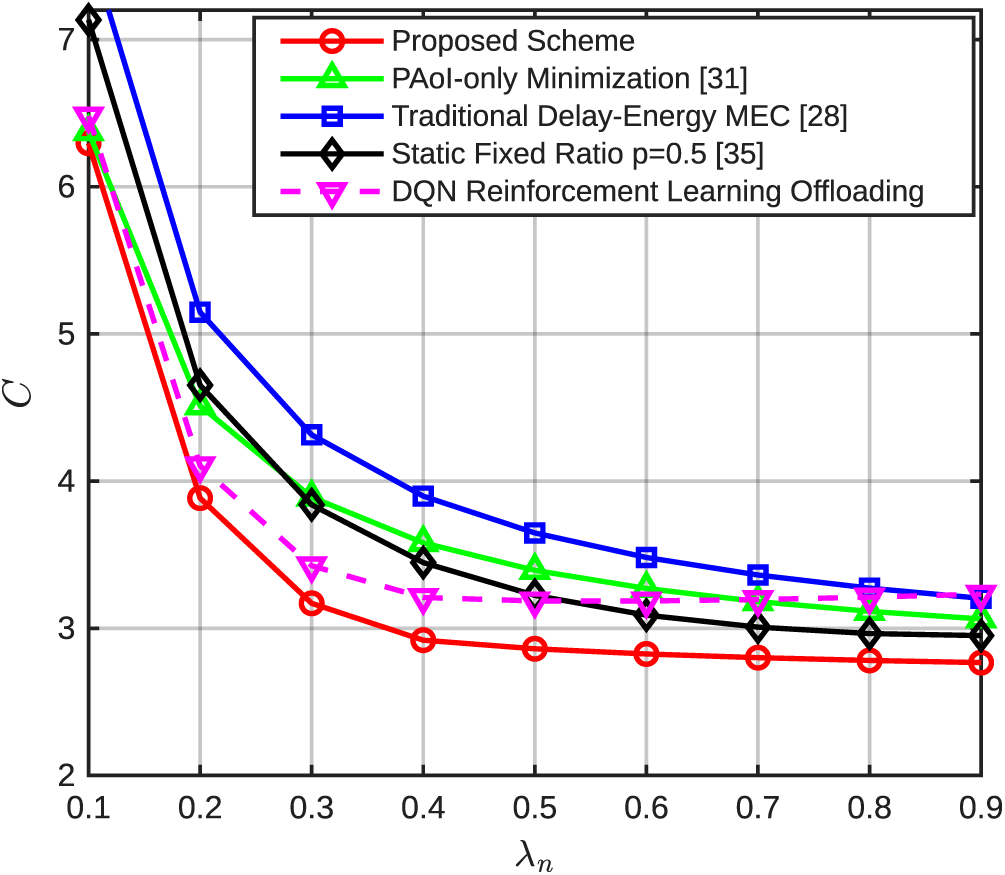
Figure 9: Weighted cost
The experimental results highlight that the average PAoI and EC of various computation strategies are contingent on the offloading ratio, and an optimal ratio can invariably be identified to achieve a balance between these metrics. Furthermore, the selection of computational capabilities and transmission power in edge processors plays a pivotal role in optimizing age and energy efficiency within MEC-assisted vehicular telematics systems.
This paper has investigated the critical tradeoff between information freshness and energy consumption in MEC-assisted vehicular networks. Our main contributions are threefold. First, we developed a novel analytical framework that jointly models the sensing, transmission, and computation processes, deriving closed-form expressions for the average PAoI and EC under local, edge, and partial computation offloading strategies. Second, we demonstrated that the partial computation offloading strategy is superior, effectively balancing the low latency of local processing with the high power of edge computing to achieve a better PAoI-EC tradeoff. Third, we formulated a weighted optimization problem, identifying that an optimal offloading ratio exists and that system performance can be finely tuned via the edge processor’s computing power and transmission power. In summary, this paper provides theoretical closed-form derivations and a lightweight optimization method to build low-latency, energy-efficient vehicular MEC systems.
Acknowledgement: None.
Funding Statement: This work was supported in part by the National Natural Science Foundation of China under Grants 62501483.
Author Contributions: Hui Zhang: conceptualization, methodology, software, validation, formal analysis. Mangang Xie: conceptualization, methodology, supervision, formal analysis, writing—review & editing. Baozhen An: conceptualization, methodology, software, validation, writing—original draft, writing—review & editing. Jing Wei: validation, writing—review & editing. All authors reviewed and approved the final version of the manuscript.
Availability of Data and Materials: All simulation parameters and theoretical formulas in this manuscript can reproduce the numerical results.
Ethics Approval: Not applicable, no human/animal subjects involved.
Conflicts of Interest: The authors declare no conflicts of interest.
References
1. Abdelfattah IS, Abd El-Malek AH, Zakariya AY, Rabia SI. Minimizing age of information and energy consumption in a computation-intensive status update system. In: Proceedings of the 2025 IEEE Wireless Communications and Networking Conference (WCNC); 2025 Mar 24–27; Milan, Italy. [Google Scholar]
2. Wang W, Zhu X. Reliable multidimensional resource scheduling for heterogeneous computing networks via coded distributed computing and hypergraph neural networks. IEEE Internet Things J. 2025;12(22):48242–61. doi:10.1109/JIOT.2025.3604217. [Google Scholar] [CrossRef]
3. Mohapatra H. Task offloading and edge computing in IoT—gaps, challenges and future directions. Comput Mater Contin. 2026;87(3):8. doi:10.32604/cmc.2026.076726. [Google Scholar] [CrossRef]
4. Muhammad A, Sorkhoh I, Samir M, Ebrahimi D, Assi C. Minimizing age of information in multiaccess-edge-computing-assisted IoT networks. IEEE Internet Things J. 2021;9(15):13052–66. doi:10.1109/JIOT.2021.3139044. [Google Scholar] [CrossRef]
5. Aggarwal S, uzZaman MA, Bastopcu M, Ulukus S, Basar T. Distributed offloading in multi-access edge computing systems: a mean-field perspective. IEEE Trans Mob Comput. 2026;25(6):7592–610. doi:10.1109/TMC.2025.3642928. [Google Scholar] [CrossRef]
6. Ji B, Zhang X, Mumtaz S, Han C, Li C, Wen H. Survey on the internet of vehicles: network architectures and applications. IEEE Commun Stand Mag. 2020;4(1):34–41. doi:10.1109/MCOMSTD.001.1900053. [Google Scholar] [CrossRef]
7. Xie M, Gong J, Jia X, Wang Q, Ma X. Age and energy analysis for L-th best relay enabled cooperative status update systems with short packet communications. IEEE Trans Veh Technol. 2023;72(10):6294–308. doi:10.1109/TVT.2022.3233406. [Google Scholar] [CrossRef]
8. Hosseini SS, Azmi P, Mokari N. Minimizing average age of information in reliable covert communication on time-varying channels. IEEE Trans Veh Technol. 2024;73(1):651–9. doi:10.1109/TVT.2023.3303674. [Google Scholar] [CrossRef]
9. Song C, Xie M, Lu G, Zhang S, Jia X. Adaptive power partitioning and frame length optimization for AoI minimization in frame slotted ALOHA-assisted NOMA networks. J King Saud Univ Comput Inf Sci. 2026;38:359. doi:10.1007/s44443-026-00764-w. [Google Scholar] [CrossRef]
10. Xie M, Wei J, Jia X, Wang H, Wang Q. Collaborative trajectory and resource optimization for AoI minimization in multi-UAV networks. IEEE Trans Commun. 2026;74:9327–42. doi:10.1109/TCOMM.2026.3698849. [Google Scholar] [CrossRef]
11. Hui ETZ, Madhukumar AS. Mean peak age of information analysis of energy-aware computation offloading in IIoT networks. In: Proceedings of the 2024 IEEE 99th Vehicular Technology Conference (VTC-Spring); 2024 Jun 24–27; Singapore, Singapore. p. 1–6. doi:10.1109/VTC2024-Spring62846.2024.10683346. [Google Scholar] [CrossRef]
12. Xie X, Zhong T, Wang H. Scheduling for maximizing the information freshness in vehicular edge computing-assisted IoT systems. IEEE Trans Intell Transp Syst. 2025;26(3):4140–51. doi:10.1109/TITS.2024.3514099. [Google Scholar] [CrossRef]
13. Zhao Z, Kadota I. Optimizing age of information without knowing the age of information. In: Proceedings of the IEEE INFOCOM 2025—IEEE Conference on Computer Communications; 2025 May 19–22; London, UK. p. 1–10. doi:10.1109/INFOCOM55648.2025.11044597. [Google Scholar] [CrossRef]
14. Onozuka Y, Imae A, Sakaue Y, Tamaki S, Taguchi K, Narikawa S, et al. AoI-based communication traffic reduction for networked railway vehicle control. In: Proceedings of the 2024 IEEE International Conference on Industrial Technology (ICIT); 2024 Mar 25–27; Bristol, UK. p. 1–6. doi:10.1109/ICIT58233.2024.10541007. [Google Scholar] [CrossRef]
15. Li Z, Xiang L, Ge X. Age of information modeling and optimization for fast information dissemination in vehicular social networks. IEEE Trans Veh Technol. 2022;71(5):5445–59. doi:10.1109/TVT.2022.3154766. [Google Scholar] [CrossRef]
16. Xie M, An B, Jia X, Zhou M, Lu J. Simultaneous update of sensing and control data using free-ride codes in vehicular networks: an age and energy perspective. Comput Netw. 2024;252:110667. doi:10.1016/j.comnet.2024.110667. [Google Scholar] [CrossRef]
17. Qi W, Yang C, Song Q, Guan Y, Guo L, Jamalipour A. Minimizing age of information for hybrid UAV-RIS-assisted vehicular networks. IEEE Internet Things J. 2024;11(10):17886–95. doi:10.1109/JIOT.2024.3359666. [Google Scholar] [CrossRef]
18. Goudarzi S, Soleymani SA, Anisi MH, Jindal A, Xiao P. Optimizing UAV-assisted vehicular edge computing with age of information: a SAC-based solution. IEEE Internet Things J. 2025;12(5):4555–69. doi:10.1109/JIOT.2025.3529836. [Google Scholar] [CrossRef]
19. Chen X, Bi Y, Xing H, Zheng D, Marina MK. Model migration in digital twin-empowered vehicular edge computing with AoI-aware decentralized bilevel learning. IEEE Trans Mob Comput. 2026;25(3):3953–68. doi:10.1109/TMC.2025.3621052. [Google Scholar] [CrossRef]
20. Wang J, Cao T, Wang X, Zhang M, Guan J. Resource scheduling in vehicular networks with age of information and channel awareness. In: Proceedings of the 2022 IEEE/CIC International Conference on Communications in China (ICCC); 2022 Aug 11–13; Foshan, China. p. 344–9. doi:10.1109/ICCC55456.2022.9880785. [Google Scholar] [CrossRef]
21. Qiu B, Wang Y, Xiao H, Zhang Z. Deep reinforcement learning-based adaptive computation offloading and power allocation in vehicular edge computing networks. IEEE Trans Intell Transp Syst. 2024;25(10):13339–49. doi:10.1109/TITS.2024.3391831. [Google Scholar] [CrossRef]
22. Sorkhoh I, Assi C, Ebrahimi D, Sharafeddine S. Optimizing information freshness for MEC-enabled cooperative autonomous driving. IEEE Trans Intell Transp Syst. 2022;23(8):13127–40. doi:10.1109/TITS.2021.3119961. [Google Scholar] [CrossRef]
23. Zhang X, Yang B, Yu Z, Cao X, Alexandropoulos GC, Zhang Y, et al. Reconfigurable intelligent computational surfaces for MEC-assisted autonomous driving networks: design optimization and analysis. IEEE Trans Intell Transp Syst. 2025;26(1):1286–303. doi:10.1109/TITS.2024.3486555. [Google Scholar] [CrossRef]
24. Huang CM, Chiang MS, Dao DT, Su WL, Xu S, Zhou H. V2V data offloading for cellular network based on the software defined network (SDN) inside mobile edge computing (MEC) architecture. IEEE Access. 2018;6:17741–55. doi:10.1109/ACCESS.2018.2820679. [Google Scholar] [CrossRef]
25. Wu Y, Fang X, Min G, Chen H, Luo C. Intelligent offloading balance for vehicular edge computing and networks. IEEE Trans Intell Transp Syst. 2025;26(5):5792–803. doi:10.1109/TITS.2025.3549493. [Google Scholar] [CrossRef]
26. Ma L, An Y, Liu S, Xiao Y, Wu N, Li Y. PRITO: performance-reputation integrated task offloading for reliable vehicular edge computing. IEEE Trans Mob Comput. 2026;25(6):7716–34. [Google Scholar]
27. Li L, Fan P. Latency and task loss probability for NOMA assisted MEC in mobility-aware vehicular networks. IEEE Trans Veh Technol. 2023;72(5):6891–5. doi:10.1109/TVT.2022.3233195. [Google Scholar] [CrossRef]
28. Zhang H, Liu X, Xu Y, Li D, Yuen C, Xue Q. Partial offloading and resource allocation for MEC-assisted vehicular networks. IEEE Trans Veh Technol. 2023;73(1):1276–88. doi:10.1109/TVT.2023.3306939. [Google Scholar] [CrossRef]
29. Qin X, Li Y, Ma N, Zhang Y, Han K, Meng L, et al. Timeliness-oriented asynchronous task offloading in UAV-edge-computing systems. IEEE Trans Netw Sci Eng. 2024;11(1):900–12. doi:10.1109/tnse.2023.3310055. [Google Scholar] [CrossRef]
30. Kim M, Jang J, Choi Y, Yang HJ. Distributed task offloading and resource allocation for latency minimization in mobile edge computing networks. IEEE Trans Mob Comput. 2024;23(12):15149–66. doi:10.1109/TMC.2024.3440124. [Google Scholar] [CrossRef]
31. Zhu J, Gong J. Optimizing peak age of information in MEC systems: computing preemption and non-preemption. IEEE/ACM Trans Netw. 2024;32(4):3285–300. doi:10.1109/TNET.2024.3384706. [Google Scholar] [CrossRef]
32. Jiang Y, Liu J, Humar I, Chen M, AlQahtani SA, Hossain MS. Age of information based computation offloading and transmission scheduling in mobile-edge-computing-enabled IoT networks. IEEE Internet Things J. 2023;10(22):19782–94. doi:10.1109/JIOT.2023.3283287. [Google Scholar] [CrossRef]
33. Kota NR, Naidu K. Minimizing energy consumption in H-NOMA based UAV-assisted MEC network. IEEE Commun Lett. 2023;27(9):2536–40. doi:10.1109/LCOMM.2023.3300467. [Google Scholar] [CrossRef]
34. Elnaim AA, Babeker A, Barakat M, Gaid ASA, Saeed MM, Ahmed ZE, et al. Energy consumption for cognitive radio network enabled multi-access edge computing. In: Proceedings of the 2023 3rd International Conference on Emerging Smart Technologies (eSmarTA); 2023 Oct 10–11; Taiz, Yemen. p. 1–5. doi:10.1109/eSmarTA59349.2023.10293270. [Google Scholar] [CrossRef]
35. Yu R, Liu Y, Lan X, Chen Q. Optimal offloading percentage for fresh status updates in mobile edge computing networks. In: Proceedings of the 2022 7th International Conference on Computer and Communication Systems (ICCCS); 2022 Apr 22–25; Wuhan, China. p. 524–9. doi:10.1109/ICCCS55155.2022.9845977. [Google Scholar] [CrossRef]
36. Yates RD, Kaul SK. The age of information: real-time status updating by multiple sources. IEEE Trans Inf Theory. 2019;65(3):1807–27. doi:10.1109/TIT.2018.2871079. [Google Scholar] [CrossRef]
37. Sthapit S, Thompson J, Robertson NM, Hopgood JR. Computational load balancing on the edge in absence of cloud and fog. IEEE Trans Mob Comput. 2019;18(7):1499–512. doi:10.1109/TMC.2018.2863301. [Google Scholar] [CrossRef]
38. Tang Z, Sun Z, Yang N, Zhou X. Age of information of multi-user mobile-edge computing systems. IEEE Open J Commun Soc. 2023;4:1600–14. doi:10.1109/OJCOMS.2023.3294942. [Google Scholar] [CrossRef]
Cite This Article
 Copyright © 2026 The Author(s). Published by Tech Science Press.
This work is licensed under a Creative Commons Attribution 4.0 International License , which permits unrestricted use, distribution, and reproduction in any medium, provided the original work is properly cited.
 Downloads
 Citation Tools
