
 Login
Login Register
 Submit a Paper
 Propose a Special lssue
 Open Access
ARTICLE
Structure-Informed Machine Learning for Multi-Property Prediction of NBT-Based Lead-Free Piezoceramics
1 School of Architecture and Civil Engineering, Xinyang Normal University, Xinyang, China
2 School of Materials Science and Engineering, Henan University of Science and Technology, Luoyang, China
3 Centre for Industrial Mechanics, Institute of Mechanical and Electrical Engineering, University of Southern Denmark, Sønderborg, Denmark
* Corresponding Author: Pei Li. Email:
Computers, Materials & Continua 2026, 89(2), 16 https://doi.org/10.32604/cmc.2026.086403
Received 29 May 2026; Accepted 05 August 2026; Issue published 15 September 2026
 View Full Text
 Download PDF
Abstract
NBT-based lead-free piezoceramics are promising alternatives to Pb-containing materials, yet their functional properties arise from complex and coupled composition–processing–structure–property relationships. Here, we develop a structure-informed machine learning framework to predict and interpret the piezoelectric coefficient d33, depolarization temperature Td, and relative dielectric permittivity εr. A database of 214 records from 34 publications was compiled, including 204 records for model development and 10 records for independent literature validation. The correlation analysis involved 38 variables, including 35 candidate input descriptors and three target properties. After Pearson correlation-based redundancy filtering, 30 nonredundant input descriptors were retained for model development. To incorporate physically meaningful structural information, structural feature variables were introduced to describe phase-boundary characteristics, local lattice distortion, and effective phase state, thereby improving the interpretability of composition/processing–property relationships. ExtraTreesRegressor (ETR), deep neural networks (DNNs), and residual network (ResNet)-style multilayer perceptrons (MLPs) were evaluated using random five-fold cross-validation, while Bayesian neural networks (BNNs) were used for uncertainty quantification and SHAP analysis was used to identify influential descriptors. Under random five-fold cross-validation, the best-performing models achieved R2 values of 0.79, 0.89, and 0.90 for d33, Td, and εr, respectively, suggesting that structural descriptors provide informative physical features for property prediction. SHAP results further highlighted the important role of processing-related descriptors, particularly calcination parameters, in tuning dielectric responses. This framework provides a physically interpretable and uncertainty-aware strategy for candidate screening and optimization of high-performance NBT-based lead-free piezoceramics.Keywords
Supplementary Material
Supplementary Material FilePiezoelectric ceramics enable efficient electromechanical energy conversion and have been widely used in sensors, actuators, transducers, microelectronic devices, and related applications. In recent years, machine-learning-based methods have been increasingly applied to the property prediction and uncertainty quantification of lead-free piezoelectric ceramics [1–3]. Conventional lead-based piezoelectric ceramics represented by Pb(Zr,Ti)O3 (PZT) have long dominated this field owing to their outstanding piezoelectric response and thermal stability. However, the environmental pollution and potential health hazards associated with lead oxide volatilization during processing and long-term service severely limit their sustainable development. Therefore, the development of high-performance lead-free piezoelectric ceramics has become an important research direction [4–6].
Among the various lead-free piezoelectric candidates, Bi0.5Na0.5TiO3(NBT)-based ceramics, namely NBT-based ceramics, have attracted considerable attention owing to their strong ferroelectricity, relatively high Curie temperature, and tunable phase structures [7,8]. By forming solid solutions with end members such as BaTiO3 and SrTiO3, NBT-based ceramics can exhibit diverse structural states, including rhombohedral-like, tetragonal-like, pseudocubic, nonergodic relaxor (NER), and mixed phase-boundary states. Such phase-structure evolution has a pronounced influence on their piezoelectric, dielectric, and electric-field-induced strain responses [8,9]. In particular, near morphotropic phase boundaries (MPBs) or relaxor phase boundaries, enhanced structural instability facilitates polarization rotation, domain-wall motion, and electric-field-induced phase transitions, thereby improving the electromechanical response [10,11]. However, the macroscopic properties of NBT-based ceramics are not governed by a single factor, but are strongly coupled with composition, ionic-radius mismatch, A-/B-site disorder, processing conditions, phase-structure state, microstructural characteristics, and poling conditions. Therefore, conventional trial-and-error optimization is inefficient in revealing such complex nonlinear composition–processing–structure–property relationships [12].
In recent years, the integration of machine learning (ML) and materials informatics has provided a new paradigm for property prediction, candidate screening, and structure–property relationship analysis in complex functional materials [13,14]. Compared with conventional empirical models, ML can help extract nonlinear correlations among composition, processing, structure, and properties from experimental data, and has shown potential in crystal-structure prediction, perovskite stability assessment, ferroelectric materials design, and piezoelectric property prediction [15–17]. For NBT-based ceramics, compositional information alone is insufficient to fully describe the origin of their functional properties. Incorporating physically relevant descriptors, such as ionic-radius statistics, tolerance factor, configurational entropy, processing parameters, phase-structure labels, and poling conditions, is expected to provide a more comprehensive representation of the coupled composition–processing–structure–property relationships in these systems [18–21].
In our recent study [1–3], a physics-informed and uncertainty-aware machine-learning framework was developed for KNN- and NBT-based lead-free piezoceramics, integrating deterministic neural-network models [22–25], Bayesian uncertainty quantification, and Shapley additive explanations (SHAP)-based interpretation for interpretable d33 prediction [26–29]. Building on this methodological foundation, the present work further incorporates ExtraTreesRegressor (ETR) as a robust ensemble baseline, which can improve prediction stability by randomizing both feature selection and split thresholds and is therefore well suited for heterogeneous literature-derived materials datasets [30].
More importantly, this study extends the previous framework to NBT-based lead-free piezoceramics by developing a structure-informed machine-learning strategy. The novelty lies in expanding single-property d33 prediction to the simultaneous interpretation of d33, Td, and εr, while incorporating phase class, MPB characteristics, lattice distortion, stability-related factors, and configurational entropy as informative structural descriptors for describing composition/processing–property relationships. This framework provides a physically interpretable way to incorporate structural information into property prediction and to support the analysis of composition/processing–structure–property relationships.
2 Feature Selection and Data Preprocessing
NBT-based ceramics are representative lead-free piezoelectric materials with an ABO3-type perovskite structure. Their macroscopic electrical and electromechanical properties are synergistically governed by multiple structural factors, including A-site chemical disorder, B-site cation off-centering, [BO6] oxygen-octahedral distortion, and phase-structure evolution. As illustrated in Fig. 1a, A-site cations such as Bi3+/Na+, B-site Ti4+ and its substituent ions, together with O2− anions, constitute the fundamental perovskite crystal framework of NBT-based systems. A-site substitution mainly modulates lattice stability by tuning ionic-radius mismatch, the tolerance factor, and the degree of configurational disorder. In contrast, B-site substitution directly affects oxygen-octahedral distortion, local polarization instability, and the off-centering behavior of B-site cations.
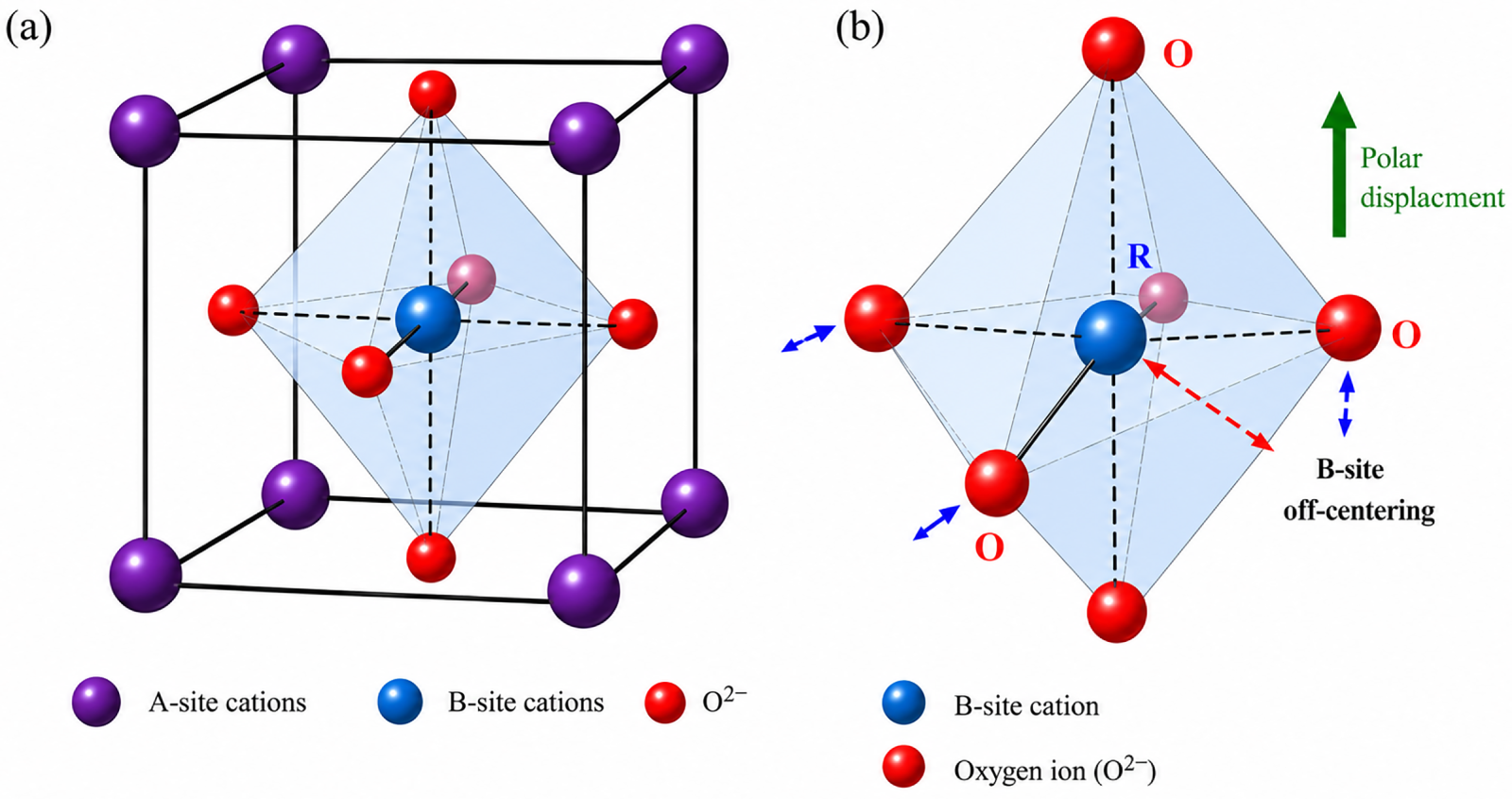
Figure 1: Schematic illustration of the NBT-based perovskite structure. (a) ABO3-type perovskite framework and (b) [BO6] oxygen octahedron with B-site off-centering and octahedral distortion.
As shown in Fig. 1b, the displacement of B-site cations from the center of the oxygen octahedron, the tilting and elongation of oxygen octahedra, and the switching of local dipoles are key structural origins of the piezoelectric response in NBT-based ceramics. Therefore, based on the structural characteristics of NBT-based perovskites, constructing multi-source physics-informed descriptors that integrate chemical composition, processing parameters, structural features, and poling conditions provides a critical foundation for property prediction, mechanism interpretation, and composition design.
A total of 214 experimental records were collected from 34 publications. Among them, 204 records from 33 publications were used for model development, while 10 records from one additional publication were reserved for independent literature validation. The data acquisition mainly covered composition, processing parameters, phase-structure information, poling conditions, and electrical properties. Numerical values were preferentially extracted from tables in the original publications. When values were available only from figures, data were digitized and cross-checked according to the axis scales and original figure annotations to minimize extraction errors. Repeated records with identical composition, processing conditions, and property values were removed, while records with the same nominal composition but different sintering, calcination, phase state, or poling conditions were retained as independent experimental entries.
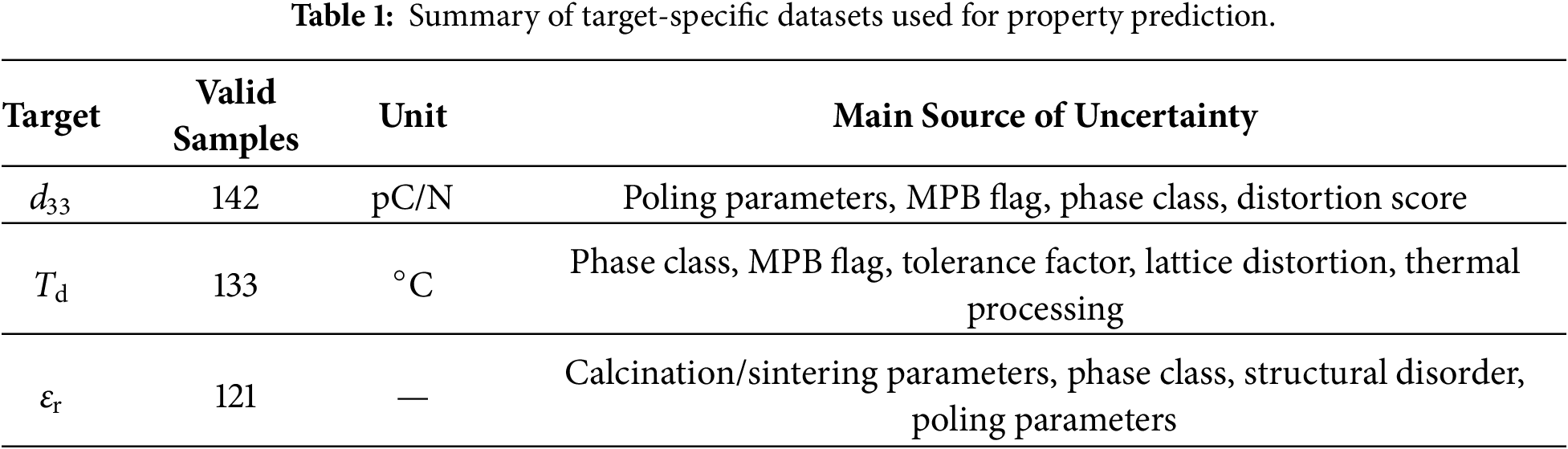
To improve reproducibility, all records were standardized in terms of composition representation, processing units, structural labels, poling conditions, and property units. The piezoelectric coefficient d33, depolarization temperature Td, and relative dielectric permittivity εr were selected as the target properties. Because not every publication reported all three target properties simultaneously, target-specific valid datasets were constructed. A sample was regarded as valid for a given target only when the target value and the required input descriptors were available after preprocessing. After target-specific filtering of the model-development dataset, 142, 133, and 121 valid samples were retained for d33, Td, εr, respectively, as summarized in Table 1. The full data acquisition strategy, reference sources, descriptor definitions, and target-specific filtering procedure are provided in Appendix A.
After data cleaning, unit standardization, missing-value processing, and outlier inspection, the statistical distributions of the three target properties are presented in Fig. 2. The constructed database incorporates information on A-site and B-site elemental compositions, ionic-radius-related parameters, lattice-stability factors, configurational entropy, calcination and sintering parameters, morphotropic phase boundary indicators, structural distortion degree, phase-structure categories, and poling conditions. These descriptors provide a physically meaningful representation of the complex nonlinear mapping relationships among compositional design, processing regulation, structural evolution, and functional properties in NBT-based ceramics.
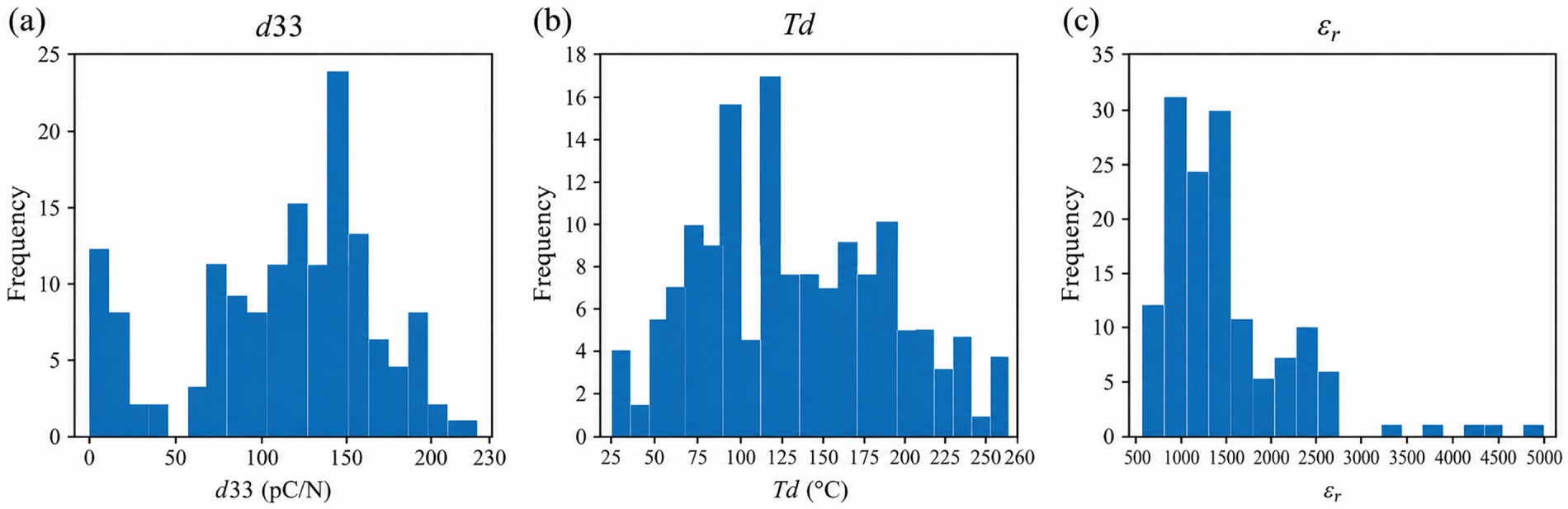
Figure 2: Statistical distributions of the target properties in the curated NBT-based lead-free piezoelectric ceramic dataset: (a) d33, (b) Td, and (c) εr.
On this basis, Extra Trees regression, DNNs, and ResNet-MLPs were employed to establish predictive models for d33, Td, and εr, respectively. Random five-fold cross-validation was used to evaluate the internal predictive performance of the models. Furthermore, BNNs were introduced for probabilistic prediction and uncertainty quantification, providing reliability-related information for model outputs. In parallel, SHAP-based interpretability analysis was performed to identify the key descriptors influencing the target properties and to analyze the contribution patterns of composition, processing, structure, and poling conditions to property evolution.
Overall, this study aims to establish a data-driven research framework that integrates literature data mining, physics-informed descriptor construction, machine learning prediction, uncertainty assessment, and interpretability analysis. The proposed framework provides useful insights and methodological guidance for property optimization, mechanism understanding, and composition design of NBT-based lead-free piezoelectric ceramics.
The broad and nonuniform distributions of the three target properties indicate the heterogeneous nature of literature-derived ceramic datasets and highlight the necessity of cross-validation, uncertainty quantification, and interpretable analysis.
As shown in Fig. 3, this study develops a two-stage structure-informed machine learning framework for NBT-based lead-free piezoceramics. Based on the 204-record model-development dataset, 35 candidate input descriptors were constructed from composition, processing, structural, and poling information to describe A-/B-site substitution, lattice distortion, phase evolution, and domain-orientation effects.
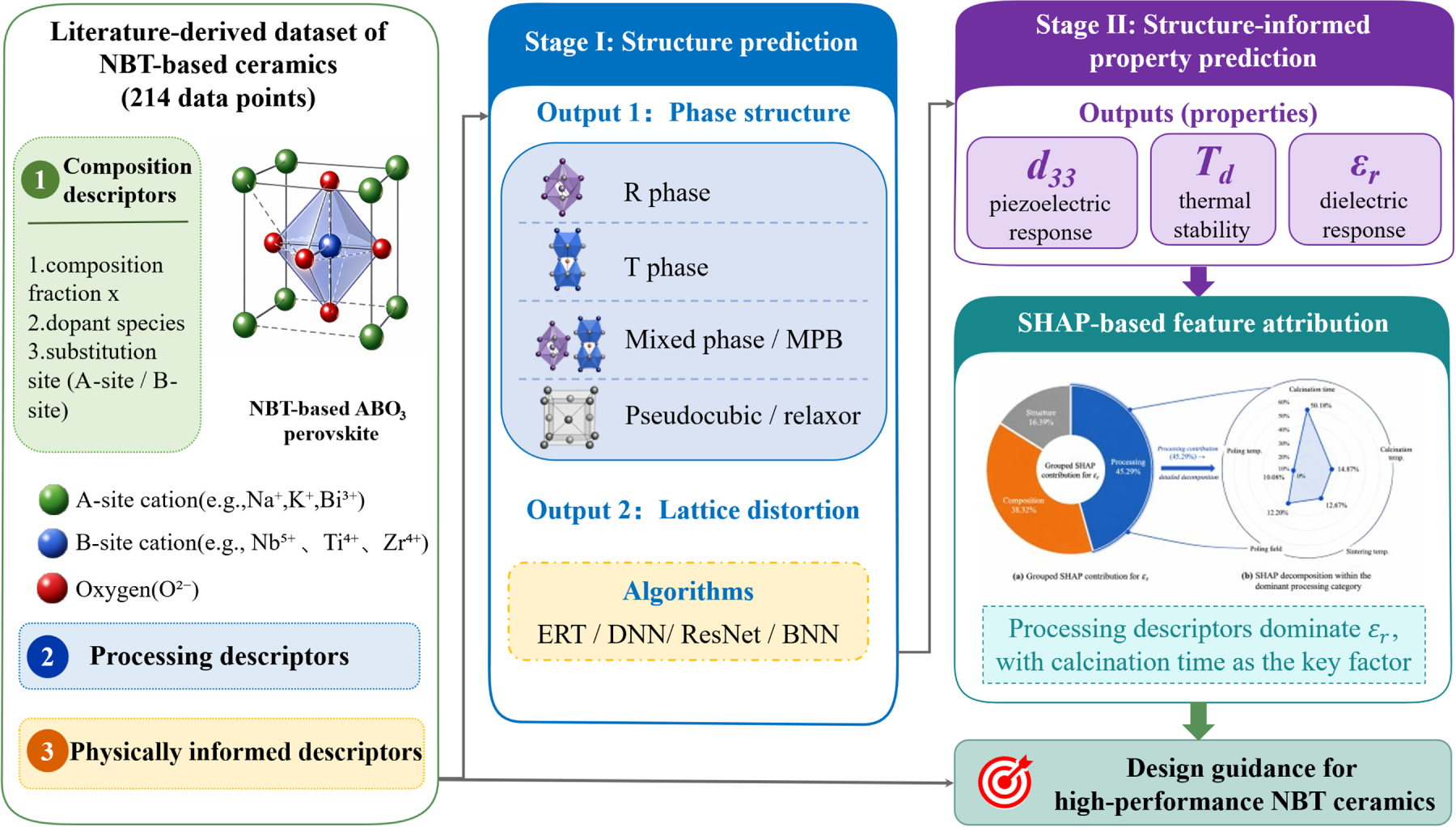
Figure 3: Schematic illustration of the proposed structure-informed machine-learning workflow for NBT-based lead-free piezoelectric ceramics.
To reduce feature redundancy and multicollinearity, pairwise Pearson correlation coefficients were calculated among the candidate input descriptors. Descriptor pairs with an absolute Pearson correlation coefficient greater than 0.95, i.e.,
and
From these groups, rB_mean, rA_mean, and B_site_entropy were retained as representative descriptors. Accordingly, Zr_B, rB_variance, octahedral_factor, tolerance_factor, and Ti_B were removed, leaving 30 nonredundant input descriptors for subsequent model training.
The framework consists of two component-level modules: Stage I predicts structure-related labels from composition, processing, and poling descriptors, whereas Stage II predicts functional properties using the structure-informed descriptor system. It should be clarified that Stage II uses curated/experimentally assigned structural labels rather than the structure-related labels predicted by Stage I. Therefore, Stage I and Stage II are evaluated as two component-level modules in this study, rather than as a fully cascaded end-to-end prediction pipeline. MPB_flag, distortion_score, and phase_class_model were selected as structure-related labels, representing phase-boundary characteristics, lattice distortion/local instability, and effective phase state, respectively. Detailed definitions and encoding rules for these structural labels are provided in the Abbreviations section. These labels provide physically meaningful structural information that can improve the interpretability of composition/processing–property relationships. Here, “structure-informed” indicates the use of structural descriptors as informative physical features rather than a formally verified statistical or causal mediation relationship.
Subsequently, the structure-informed descriptor system was used to predict d33, Td, and εr using ETR, DNN, and ResNet-style MLP models under random five-fold cross-validation. BNNs and SHAP analysis were further employed for uncertainty quantification and interpretability analysis. This framework supports interpretable property prediction, candidate screening, and optimization of NBT-based lead-free piezoceramics within a composition/processing–structure–property paradigm.
For clarity, Fig. 3 groups the detailed phase labels into four broad structural families, whereas the Stage-I classifier uses the complete phase-label set defined in the Abbreviations section.
2.2.1 Descriptor Preprocessing and SHAP-Based Interpretability Analysis
The general machine-learning procedures used in this work, including correlation-based descriptor filtering, cross-validation-based preprocessing, deterministic regression, Bayesian uncertainty quantification, and SHAP-based interpretation, follow the methodology described in our previous study on KNN-based lead-free piezoceramics [1]. Therefore, the present section does not repeat the general algorithmic details, but instead focuses on the NBT-specific extension of this framework. The key methodological extension is the use of MPB_flag, distortion_score, and phase_class_model as informative structural descriptors linking composition/processing variables with the target properties d33, Td, and εr.
2.2.2 Model Construction and Comparative Learning Strategy
In contrast to our previous work, which mainly compared different neural-network architectures for KNN-based piezoceramics [1], the present study emphasizes the comparison of different model families for structure-informed property prediction in NBT-based lead-free piezoceramics. Considering the limited sample size, heterogeneous literature sources, and strong nonlinear composition–processing–structure–property coupling, ETR, DNN, and ResNet-style MLP were selected as representative models with complementary learning capabilities.
ETR was first adopted as a robust ensemble tree-based baseline because of its noise tolerance, ability to handle nonlinear feature interactions, and suitability for small heterogeneous literature-derived datasets. In this study, DNN and ResNet-style MLP models were included as nonlinear comparative models rather than being assumed to be superior to simpler models. Their use was intended to examine whether neural-network architectures could capture higher-order composition–processing–structure–property relationships beyond the tree-based baseline. All models were trained and evaluated using the same target-specific datasets, preprocessing workflow, descriptor set, and random five-fold cross-validation protocol. The prediction tasks for d33, Td, and εr were conducted independently to avoid the unnecessary loss of valid samples caused by missing values in unrelated targets. This comparative strategy was used to assess the predictive utility of the structure-informed descriptor system across different models. Nevertheless, due to the limited sample sizes, potential overfitting cannot be fully excluded. Therefore, the models should be regarded as tools for trend prediction, mechanism interpretation, and candidate screening, rather than substitutes for experimental validation. The overall architectures of these models are illustrated in Fig. 4.
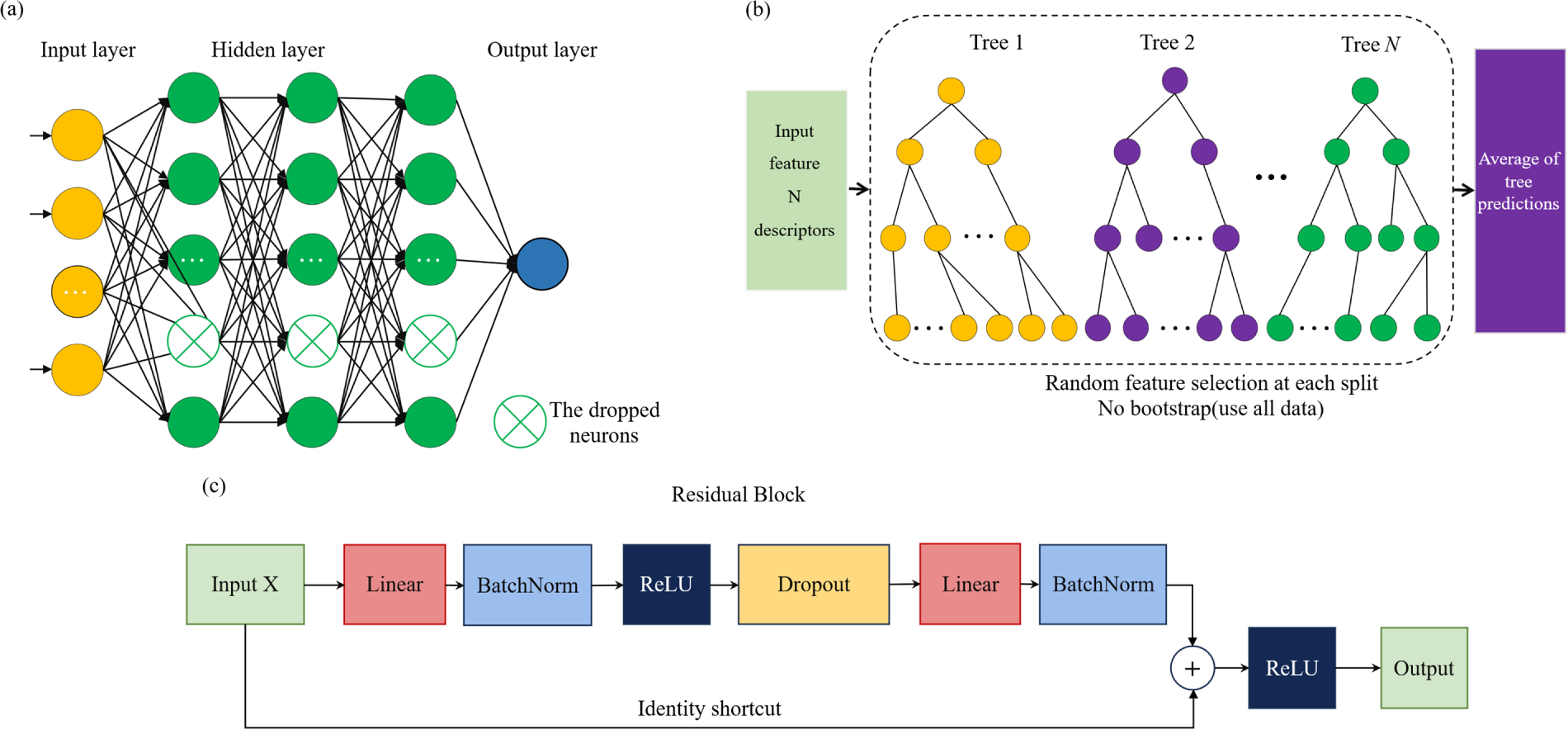
Figure 4: Schematic architectures of the three predictive models for NBT-based lead-free piezoceramics: (a) DNN, (b) ETR, and (c) ResNet-style MLP.
As shown in Fig. 4, ETR integrates multiple randomized decision trees, enabling effective handling of small sample sizes, high-dimensional descriptors, and nonlinear coupling relationships, while also providing feature-importance-based interpretability. The DNN relies on multilayer nonlinear transformations and exhibits strong capability for complex function approximation, making it suitable for capturing high-order correlations among composition, processing, structure, and poling conditions. Furthermore, ResNet introduces residual connections into the fully connected neural network architecture, which enhances information transmission and gradient propagation, thereby improving the stability of deep feature learning.
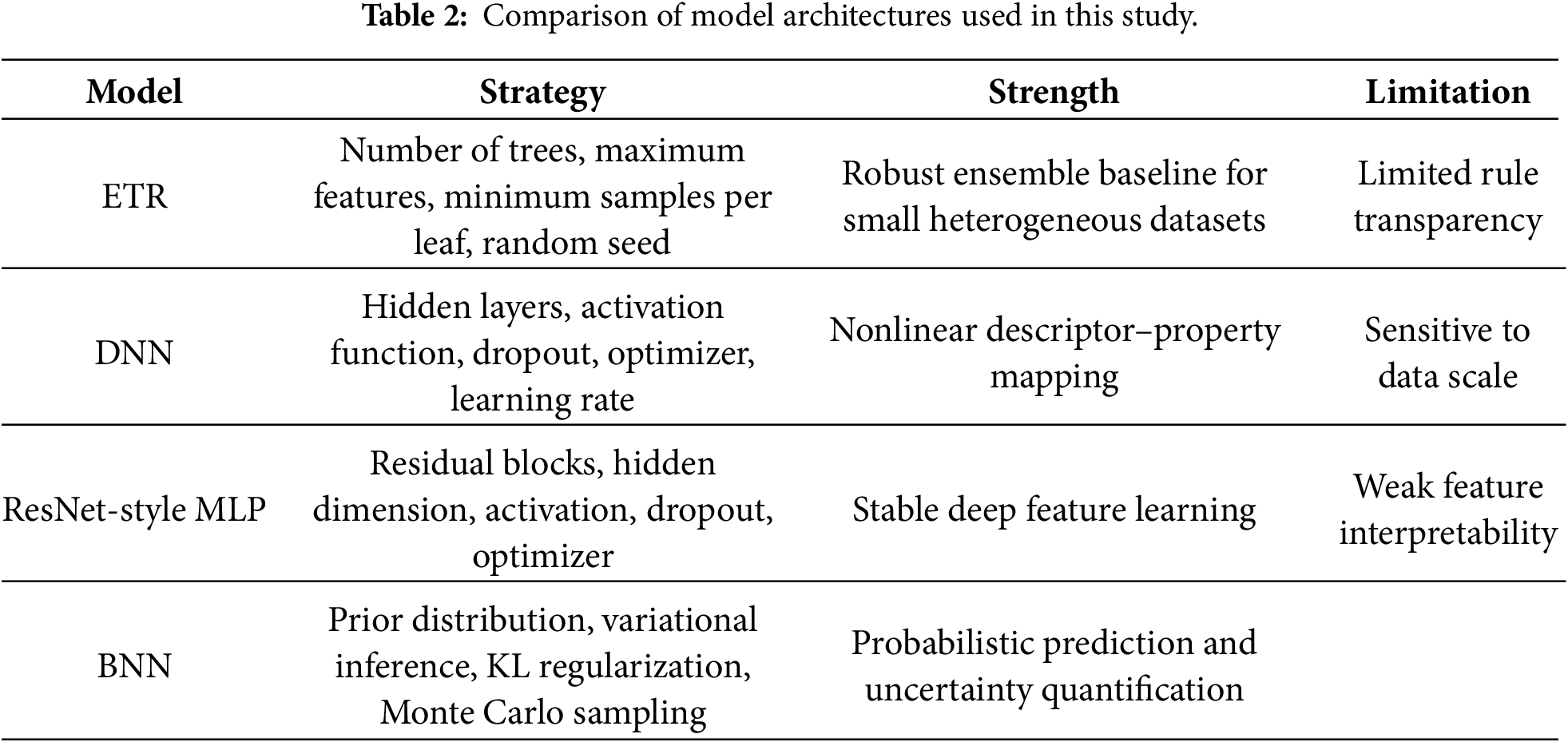
These three models represent ensemble tree-based learning, conventional deep neural networks, and residual deep neural networks, respectively. Their comparative use enables a systematic evaluation of differences in prediction accuracy, nonlinear modeling capability, and interpretability. The corresponding results are summarized in Table 2.
Bayesian neural networks were used following the uncertainty-aware modeling strategy reported in Ref. [1]. In this work, the purpose of BNN modeling was not to re-establish the probabilistic learning theory, but to evaluate the reliability of predictions for NBT-based ceramics with incomplete and heterogeneous literature data. Multiple stochastic forward passes were performed to estimate the predictive mean and uncertainty interval for d33, Td, and εr. The resulting uncertainty information was further used to identify low-confidence samples associated with sparse data regions, complex phase evolution, or insufficiently reported processing and poling conditions. The network architecture is shown in Fig. 5.
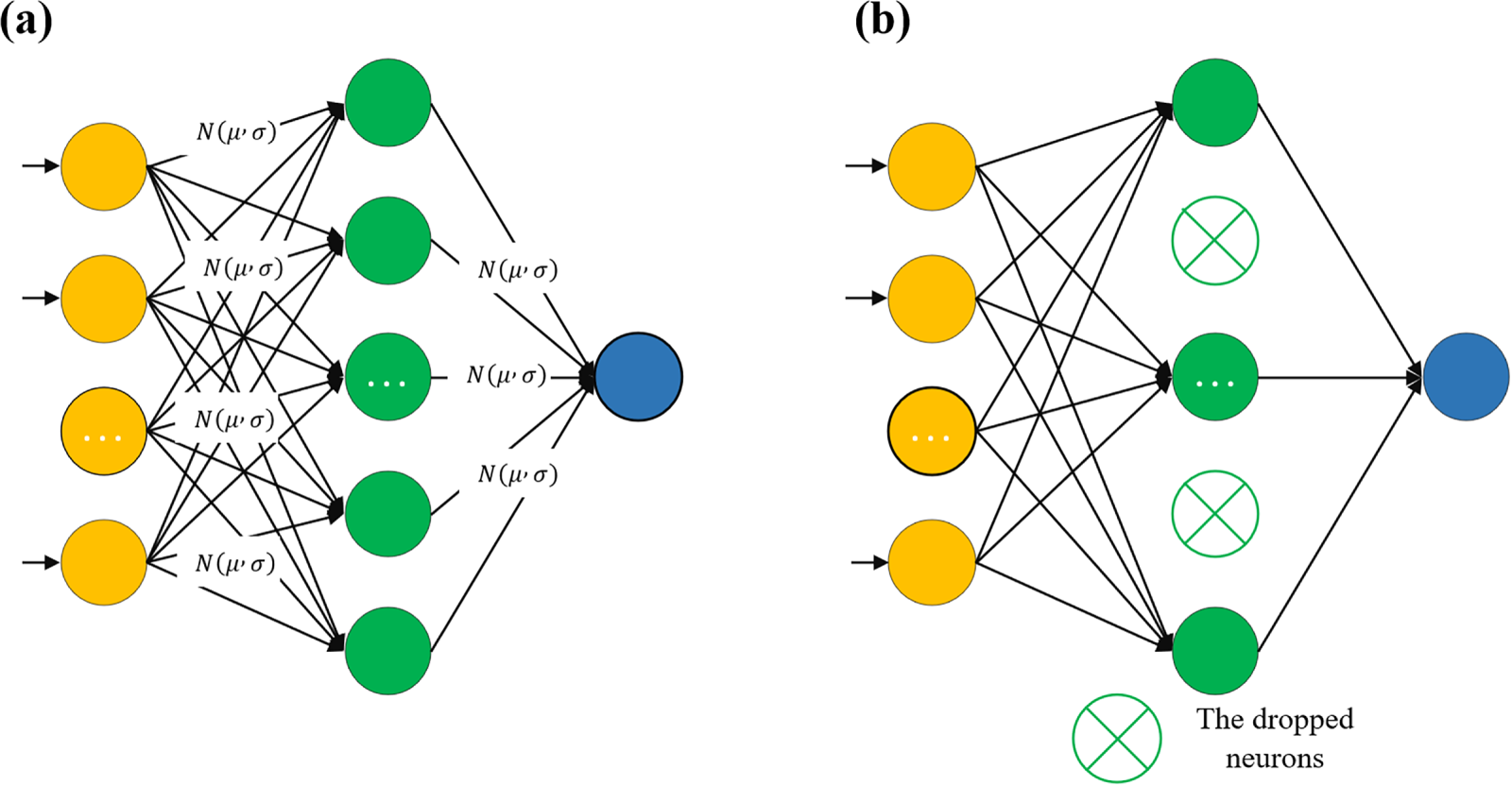
Figure 5: Schematic of two BNNs with (a) probabilistic weights and (b) probabilistic structure.
Detailed hyperparameter settings, model configurations, and key implementation details are summarized in Appendix B to ensure methodological transparency and reproducibility. The model performance was evaluated using five-fold cross-validation and uncertainty analysis, and the results should be interpreted cautiously due to the limited size and heterogeneity of the literature-derived datasets.
For uncertainty quantification, the standard deviation obtained from BNN Monte Carlo sampling was regarded as model-related epistemic uncertainty. Considering that the dataset was collected from literature, additional experimental/data uncertainty may arise from differences in synthesis, processing, poling, measurement protocols, and data extraction. Since repeated-measurement standard deviations were generally unavailable, this uncertainty was estimated from validation residuals. The total predictive uncertainty was calculated as:
where σmodel is the epistemic uncertainty estimated by BNN Monte Carlo sampling, and σdata is the validation-residual-estimated experimental/data uncertainty. The prediction intervals were then constructed as:
Prediction interval coverage probability (PICP) and expected calibration error (ECE) were further used to evaluate the calibration quality of the BNN uncertainty estimates. Calibration was evaluated at nominal coverage levels of 68.3%, 95.4%, and 99.7%, corresponding to the ±1σ, ±2σ, and ±3σ intervals, and ECE was calculated as the mean absolute difference between nominal and empirical coverage across these three levels. Coefficient of determination (R2): Measures the proportion of variance explained by the model:
Root-mean-square error (RMSE): Quantifies absolute prediction errors.
Let
3.1 Component-Level Evaluation of Structure-Related Label Prediction
Before final property prediction, Stage I was evaluated by predicting MPB_flag, distortion_score, and phase_class_model using composition, processing, and poling-related descriptors. The target structural label was excluded from the corresponding input set. After removing samples with missing values, 150 valid records were retained for this Stage-I evaluation. ETR-based classifiers were trained using random five-fold cross-validation to generate out-of-fold predictions for internal component-level evaluation.
As shown in Fig. 6, the out-of-fold predictions achieved accuracies of 0.873, 0.827, and 0.800 for MPB_flag, distortion_score, and phase_class_model, respectively, with a simultaneous prediction accuracy of 0.733. These results suggest that the selected descriptors contain useful information for estimating structure-related labels in NBT-based ceramics. The best performance was obtained for MPB_flag, suggesting that morphotropic or relaxor phase-boundary characteristics are more readily reflected by the composition- and processing-related descriptors than the other two structure-related labels.
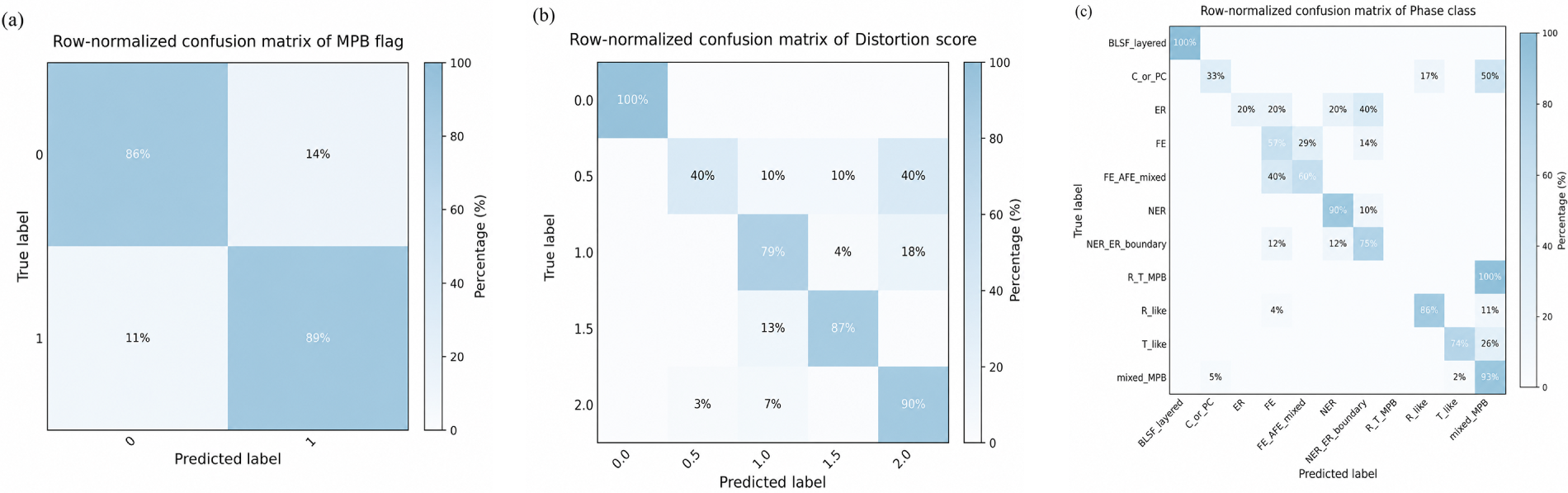
Figure 6: Row-normalized confusion matrices for the Stage-I component-level evaluation of structure-related label prediction in NBT-based lead-free piezoceramics. (a) MPB_flag (b) distortion_score (c) phase_class_model.
The distortion_score prediction shows moderate accuracy, reflecting its dependence on ionic-radius mismatch, tolerance-factor deviation, octahedral stability, configurational disorder, and thermal-processing history. By contrast, phase_class_model is more difficult to predict because of multiple phase categories and class imbalance. Here, ER and NER denote ergodic and nonergodic relaxor states, respectively; the complete phase abbreviations and fixed label encodings used in Fig. 6 are provided in the Abbreviations section. Thus, the Stage-I model is more suitable for identifying relatively dominant or well-represented structural categories than for distinguishing minority phase classes with limited training samples.
3.2 Component-Level Evaluation of Structure-Informed Property Prediction
To evaluate the Stage-II property-prediction module, ExtraTreesRegressor, DNN, and ResNet-style MLP were trained to predict d33, Td, and εr using the structure-informed descriptor system under random five-fold cross-validation. Identical data partitioning, preprocessing, feature encoding, and evaluation metrics were used for all models to ensure a fair comparison within this internal evaluation. The corresponding out-of-fold experimental-vs-predicted results are shown in Fig. 7, where Fig. 7(a1–a3), Fig. 7(b1–b3), and Fig. 7(c1–c3) correspond to ETR, DNN, and ResNet-style MLP, respectively.
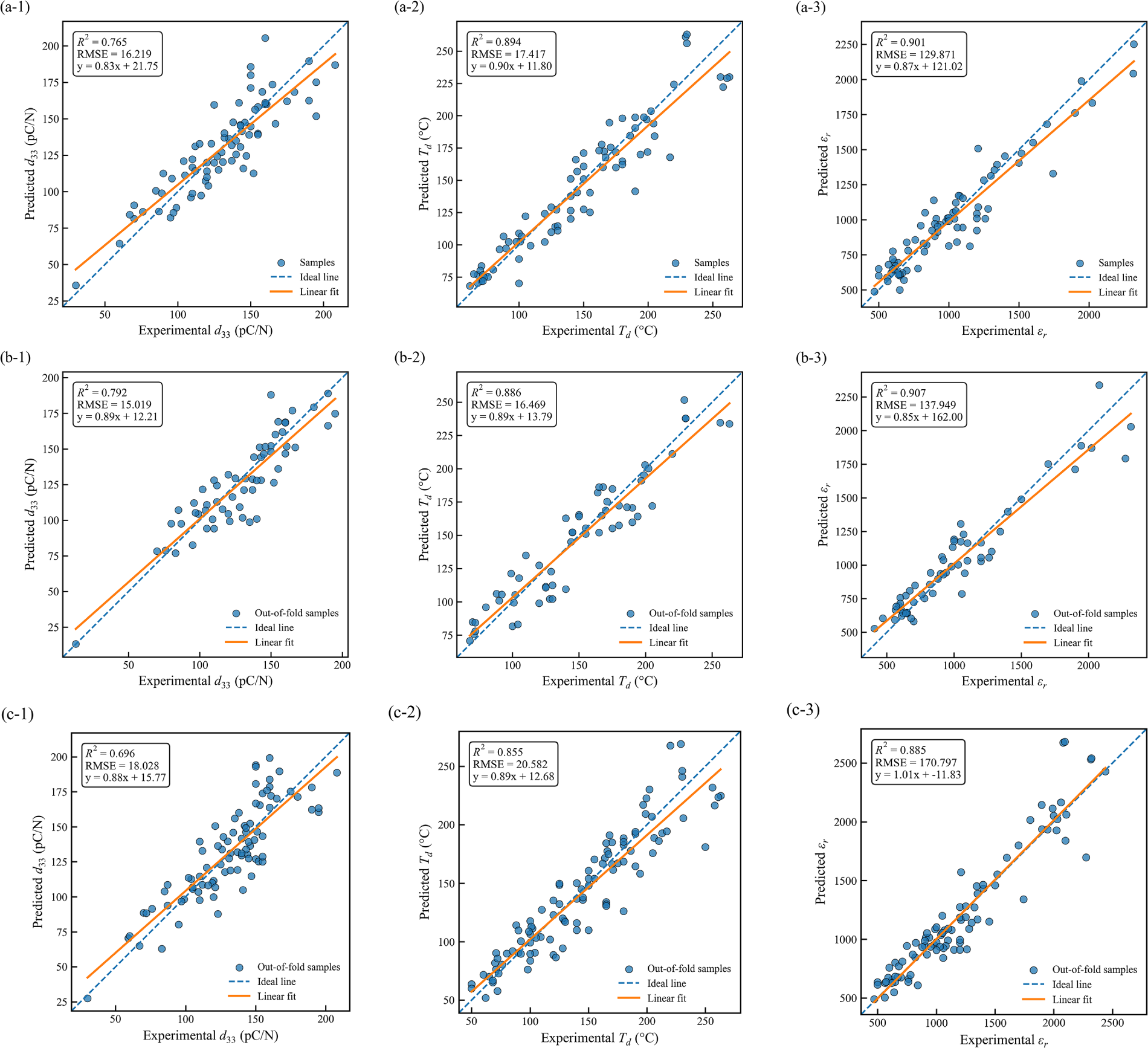
Figure 7: Experimental vs. predicted values of d33, Td, and εr obtained using five-fold cross-validation: (a1–a3) ETR, (b1–b3) DNN, and (c1–c3) ResNet-style MLP.
The out-of-fold predictions show clear positive correlations with experimental values, indicating that the descriptors capture key composition–processing–structure–property relationships in NBT-based lead-free piezoceramics. The scattered deviations from the parity line mainly reflect the heterogeneity of literature-derived data, including variations in raw materials, processing conditions, microstructure, poling, and measurement protocols. Thus, the models are intended for trend prediction and mechanism interpretation rather than as deterministic replacements for experimental validation.
Table 3 summarizes the best-performing model for each target based on the out-of-fold R2 and RMSE obtained from random five-fold cross-validation. The 10 records from one additional publication were excluded from model development and used exclusively for independent literature validation.
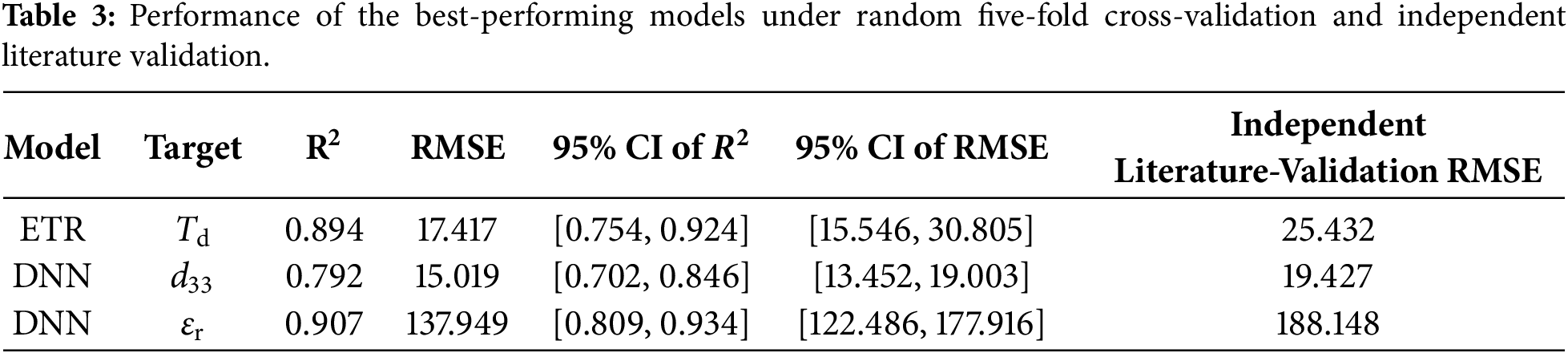
The prediction performance varies among the three target properties, which may be related to their different physical origins and data completeness. Td shows relatively stable prediction because it is strongly associated with phase stability, MPB characteristics, lattice distortion, tolerance factor, and thermal-processing history. In contrast, d33 is more difficult to predict due to its dependence on polarization rotation, domain-wall motion, phase-boundary instability, and poling-induced domain alignment. The prediction of εr is also challenging because it is sensitive to microstructure, defect chemistry, space-charge polarization, relative density, and measurement conditions that are often incompletely reported in literature-derived datasets.
From the model perspective, ETR provides a robust baseline for small heterogeneous datasets, DNN captures high-order nonlinear descriptor interactions, and ResNet-style MLP improves deep feature learning through residual connections. The target-dependent optimal models indicate that no single architecture is universally superior; instead, model suitability depends on the physical complexity and data characteristics of each property.
3.3 Uncertainty Analysis Using Bayesian Models
Deterministic models provide only point predictions and therefore cannot evaluate prediction confidence, which is a critical limitation for literature-derived ceramic datasets. In NBT-based lead-free piezoceramics, experimental uncertainty may arise from differences in composition design, calcination and sintering conditions, phase heterogeneity, poling procedures, and measurement protocols. Therefore, Bayesian neural networks were employed to further assess the reliability of model predictions.
In the BNN model, network weights are treated as probability distributions rather than fixed parameters. Multiple stochastic forward passes were performed to obtain the predictive mean and standard deviation, and the prediction intervals were expressed as ±1σ, ±2σ, and ±3σ. In this work, the ±3σ interval was used as the main confidence boundary to identify low-confidence predictions and potential extrapolation regions.
As shown in Fig. 8, the BNN-predicted mean values generally follow the experimental trends for d33, Td, and εr, indicating that the Bayesian model captures the major composition–processing–structure–property relationships while providing uncertainty information. Among the three target properties, Td exhibits relatively narrower uncertainty intervals, suggesting that depolarization behavior is mainly controlled by more stable structural factors, including phase stability, lattice distortion, MPB characteristics, and thermal-processing history. In contrast, d33 shows broader uncertainty because the piezoelectric response is strongly affected by polarization rotation, domain-wall motion, phase-boundary instability, and poling-induced domain alignment. The largest uncertainty is observed for εr, reflecting its high sensitivity to microstructure, defect chemistry, space-charge polarization, frequency dispersion, and measurement conditions that are often incompletely reported in literature-derived datasets.
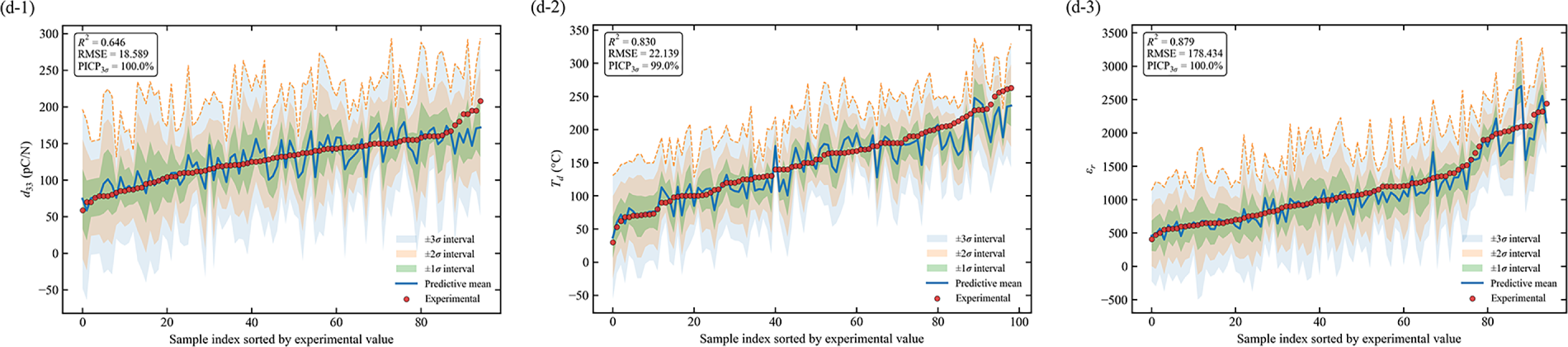
Figure 8: BNN-predicted uncertainty intervals for (d-1) d33, (d-2) Td, and (d-3) εr in NBT-based lead-free piezoceramics. The solid line represents the predictive mean, and the shaded regions denote the ±1σ, ±2σ, and ±3σ uncertainty intervals.
These results demonstrate that prediction uncertainty is closely related to the physical complexity and data completeness of each target property. Samples located near or outside the ±3σ boundary can be regarded as low-confidence predictions and should be treated with caution in subsequent experimental screening. Therefore, BNN-based uncertainty quantification provides not only predicted property values but also a reliability-aware criterion for evaluating candidate NBT-based lead-free piezoceramics.
Based on the calibration procedure described in Section 2.2.2, PICP and ECE were calculated to evaluate the reliability of the BNN uncertainty estimates. As shown in Table 4, the PICP3σ values are 100.0%, 99.0%, and 100.0% for d33, Td, and εr, respectively, indicating that the 3σ prediction intervals provide conservative coverage of the experimental observations. The ECE values are 6.1%, 3.2%, and 4.5%, respectively, suggesting acceptable calibration performance.

3.4 SHAP-Based Interpretation of Dielectric Permittivity Prediction
To interpret the prediction of relative dielectric permittivity εr, SHAP analysis was performed using the mean absolute SHAP values of the input descriptors. Because the εr model exhibited relatively high predictive accuracy and stable fitting performance, it was selected as a representative case for the main-text interpretability analysis. The corresponding SHAP results for d33 and Td are provided in Appendix B.3. The top-20 descriptors for εr were grouped into three physically meaningful categories: composition, processing, and structure, to clarify their relative contributions to the dielectric response.
As shown in Fig. 9a, processing-related descriptors contribute the most, accounting for 45.29% of the total SHAP weight, followed by composition-related descriptors with 38.32% and structure-related descriptors with 16.39%. This result indicates that εr in NBT-based lead-free piezoceramics is not determined solely by nominal composition, but is strongly affected by processing-induced structural evolution. Thermal processing and poling conditions can regulate phase formation, chemical homogeneity, defect concentration, grain growth, and domain configuration, thereby influencing dielectric polarization.
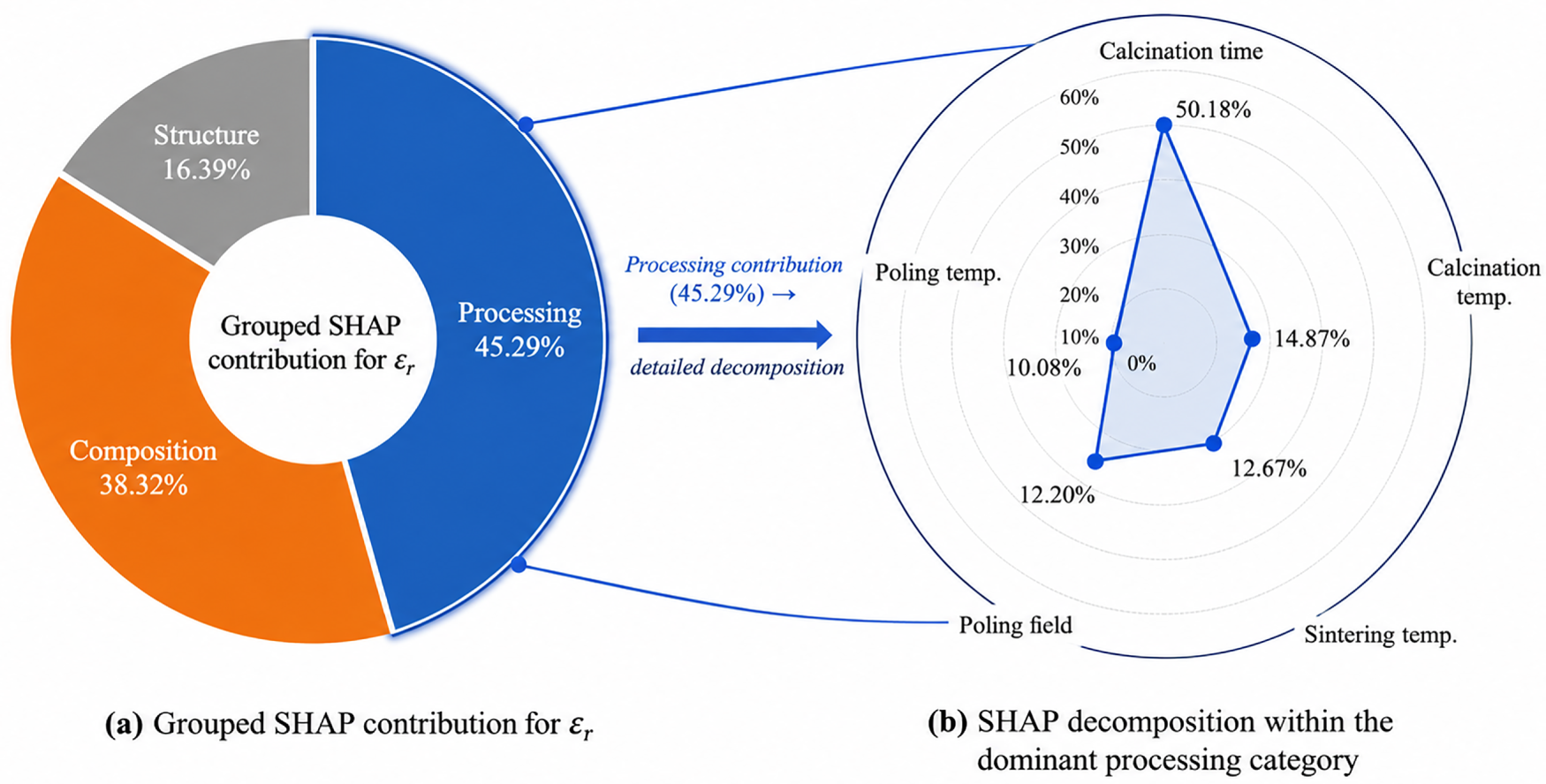
Figure 9: SHAP-based interpretation of εr prediction. (a) Grouped SHAP contributions of the top-20 descriptors. (b) Detailed decomposition of the dominant processing category.
Fig. 9b further decomposes the processing contribution into individual variables. Calcination time shows the largest contribution, accounting for 50.18% of the processing-related SHAP weight, followed by calcination temperature, sintering temperature, poling field, and poling temperature, with contributions of 14.87%, 12.67%, 12.20%, and 10.08%, respectively. These variables are closely related to reaction completeness, phase purity, densification, defect redistribution, and domain alignment.
The dominant role of calcination-related parameters is physically reasonable. Insufficient calcination may lead to incomplete solid-state reaction, residual secondary phases, local compositional fluctuation, and nonuniform defect distribution, whereas excessive thermal treatment may promote A-site volatilization and modify defect chemistry. These effects can alter space-charge polarization, local lattice distortion, and dielectric relaxation behavior. Therefore, optimizing εr in NBT-based ceramics requires coordinated control of composition, calcination/sintering conditions, structural evolution, and poling parameters.
Overall, the SHAP results provide a hierarchical interpretation of εr prediction and establish an interpretable link between machine-learning outputs and the processing–structure–property relationship in NBT-based lead-free piezoceramics.
In this work, a structure-informed machine learning framework was developed to predict and interpret the electrical properties of NBT-based lead-free piezoceramics. Model development used 204 records from 33 publications, while 10 records from one additional publication were reserved for independent literature validation. After Pearson correlation-based filtering using
Bayesian neural network analysis further provides uncertainty-aware predictions and identifies low-confidence regions associated with data sparsity, experimental heterogeneity, and property-specific physical complexity. SHAP analysis reveals that processing parameters, composition-related descriptors, MPB characteristics, lattice-stability factors, and A-site configurational disorder dominate property variation. In particular, calcination-related parameters strongly influence dielectric permittivity, emphasizing the critical role of thermal processing in phase formation, defect regulation, and polarization response.
Overall, this study suggests that structural descriptors can provide useful intermediate physical information for improving the interpretability of composition/processing–property relationships in NBT-based lead-free piezoceramics. Formal mediation analysis and systematic descriptor ablation remain subjects for future investigation. The proposed framework provides a physically interpretable and reliability-aware strategy for data-driven design and optimization of high-performance NBT-based lead-free piezoceramics.
Acknowledgement: The authors sincerely appreciate the valuable suggestions provided by all the teachers during the manuscript revision process.
Funding Statement: This research was funded by the Postgraduate Education Reform and Quality Improvement Project of Henan Province, grant numbers YJS2023JD52 and YJS2025GZZ48; the Zhumadian 2023 Major Science and Technology Special Project, grant number ZMDSZDZX2023002; and the Scientific Research Foundation of Graduate School of Xinyang Normal University, grant number 2025KYJJ116.
Author Contributions: The authors confirm contribution to the paper as follows: conceptualization, algorithm design, and writing—original draft preparation, Yalong Liang; methodological suggestions and validation assistance, Xiaohui Yuan; data collection and curation, Yuning Han; writing—review and editing, project administration, and visualization, Pei Li. All authors reviewed and approved the final version of the manuscript.
Availability of Data and Materials: The curated dataset used in this study is provided as the Supplementary Material file Data.xlsx. The file contains the data prior to model-specific preprocessing, including normalization, feature screening, and dataset splitting. The source code is not publicly available. To facilitate reproducibility, the preprocessing workflow, model architectures, hyperparameter-selection procedure, final model settings, and key implementation details are described in Sections 2.2.1 and 2.2.2 and Appendix B.
Ethics Approval: Not applicable. This study did not involve humans or animals.
Conflicts of Interest: Given his role as guest editor of this journal, Pei Li had no involvement in the peer review of this article and had no access to information regarding its peer review. Full responsibility for the editorial process for this article was delegated to another journal editor. The authors declare no conflicts of interest.
Supplementary Materials: The supplementary material is available online at https://www.techscience.com/doi/10.32604/cmc.2026.086403/s1.
Abbreviations
The following abbreviations, descriptors, and structural-label encoding rules are used in this manuscript:
| NBT | Sodium bismuth titanate, Bi0.5Na0.5TiO3 |
| MPB | Morphotropic phase boundary |
| ER | Ergodic relaxor |
| NER | Nonergodic relaxor |
| FE | Ferroelectric |
| AFE | Antiferroelectric |
| PC | Pseudocubic |
| BLSF | Bismuth-layer-structured ferroelectric |
| ETR | ExtraTreesRegressor |
| MLP | Multilayer perceptron |
| SHAP | Shapley additive explanations |
| PICP | Prediction interval coverage probability |
| ECE | Expected calibration error |
| MPIW | Mean prediction interval width |
| NMPIW | Normalized mean prediction interval width |
| C | Cubic |
| R | Rhombohedral |
| T | Tetragonal |
| Bi_A | Molar fraction of Bi at A-site |
| Na_A | Molar fraction of Na at A-site |
| Ba_A | Molar fraction of Ba at A-site |
| K_A | Molar fraction of K at A-site |
| Li_A | Molar fraction of Li at A-site |
| Sr_A | Molar fraction of Sr at A-site |
| La_A | Molar fraction of La at A-site |
| Y_A | Molar fraction of Y at A-site |
| Pr_A | Molar fraction of Pr at A-site |
| Gd_A | Molar fraction of Gd at A-site |
| Ho_A | Molar fraction of Ho at A-site |
| Yb_A | Molar fraction of Yb at A-site |
| Sm_A_or_additive | Molar fraction of Sm or additive at A-site |
| Ti_B | Molar fraction of Ti at B-site |
| Zr_B | Molar fraction of Zr at B-site |
| Nb_B | Molar fraction of Nb at B-site |
| Sb_B_or_additive | Molar fraction of Sb or additive at B-site |
| rA_mean | Average ionic radius of A-site ions (Å) |
| rA_variance | Variance of A-site ionic radius (Å2) |
| rB_mean | Average ionic radius of B-site ions (Å) |
| rB_variance | Variance of B-site ionic radius (Å2) |
| tolerance_factor | Goldschmidt tolerance factor |
| octahedral_factor | Octahedral factor (B-O geometry match) |
| A_site_entropy | Configurational entropy of A-site |
| B_site_entropy | Configurational entropy of B-site |
| calcination_temp_C | Calcination temperature (°C) |
| calcination_time_h | Calcination time (h) |
| sintering_temp_C | Sintering temperature (°C) |
| sintering_time_h | Sintering time (h) |
| MPB_flag | Binary MPB indicator: 0 = non-MPB; 1 = MPB |
| distortion_score | Ordinal distortion level: 0, 0.5, 1.0, 1.5, or 2.0 |
| phase_class_model | Phase classification (0 = BLSF_layered; 1 = C_or_PC; 2 = ER; 3 = FE; 4 = FE_AFE_mixed; 5 = NER; 6 = NER_ER_boundary; 7 = R_T_MPB; 8 = R_like; 9 = T_like; 10 = mixed_MPB) |
| poling_temp_C | Poling temperature (°C) |
| poling_time | Poling time (min or h) |
| poling_field_kVmm | Poling electric field (kV/mm) |
| d33 | Piezoelectric coefficient d33 (pC/N) |
| Td | Depolarization temperature Td (°C) |
| εr | Relative permittivity εr |
The initial data collection referred to References [3–12,31–50] in this manuscript, which constituted the primary literature pool. During subsequent data cleaning, data from references [39,46] that did not satisfy the final inclusion criteria for NBT-based ceramics were excluded from the final dataset. In addition, other relevant publications were also consulted but are not individually listed here. The main descriptors collected in this study are presented in the Abbreviations section. After Pearson correlation-based redundancy filtering, 30 nonredundant input descriptors were retained from the initial 35 candidate input descriptors. The Pearson correlation heatmap of the 38 variables, including 35 candidate input descriptors and three target properties, is shown in Fig. A1.
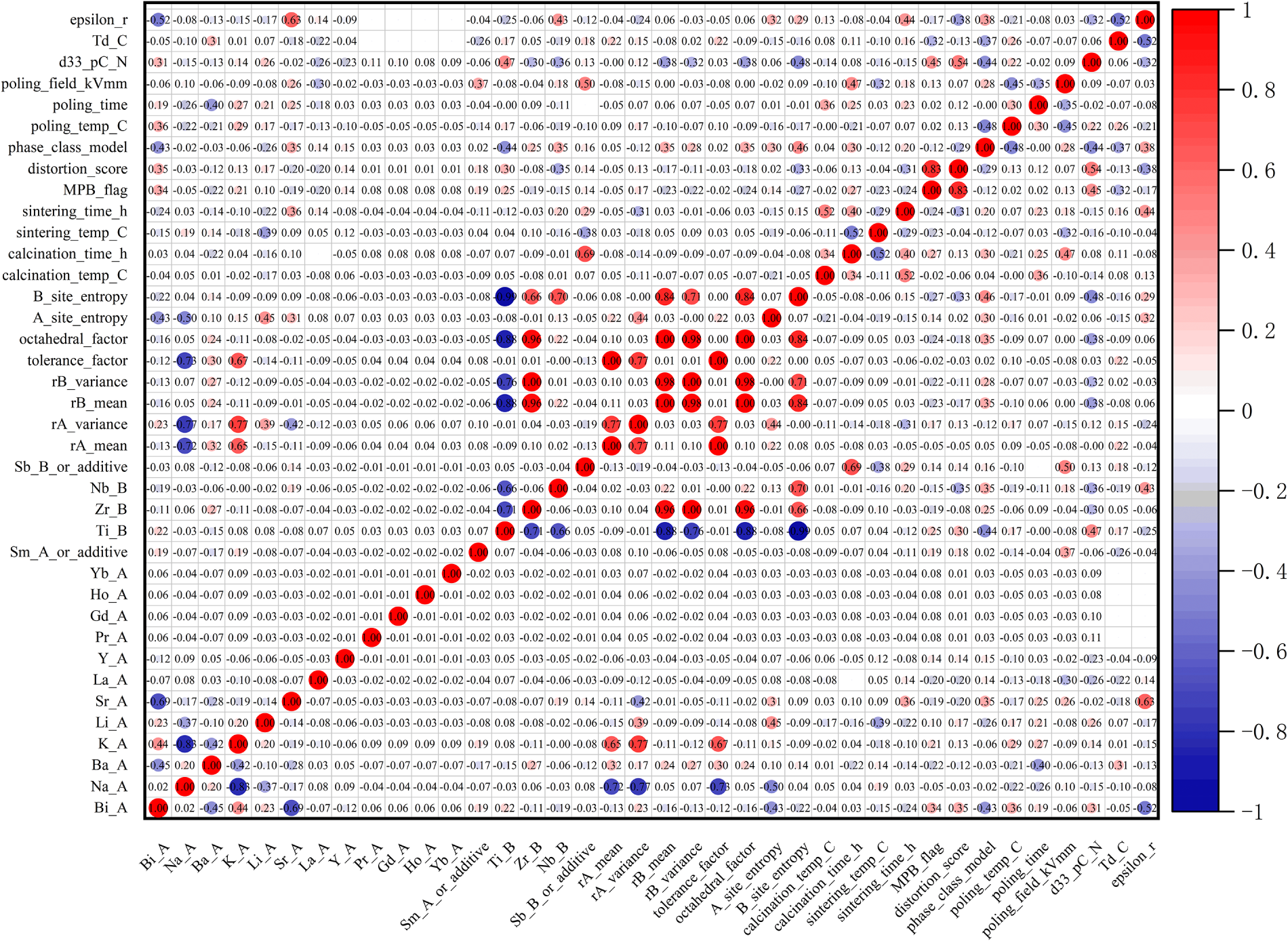
Figure A1: Pearson correlation heatmap of the 38 variables, including 35 candidate input descriptors and three target properties.
Appendix B.1
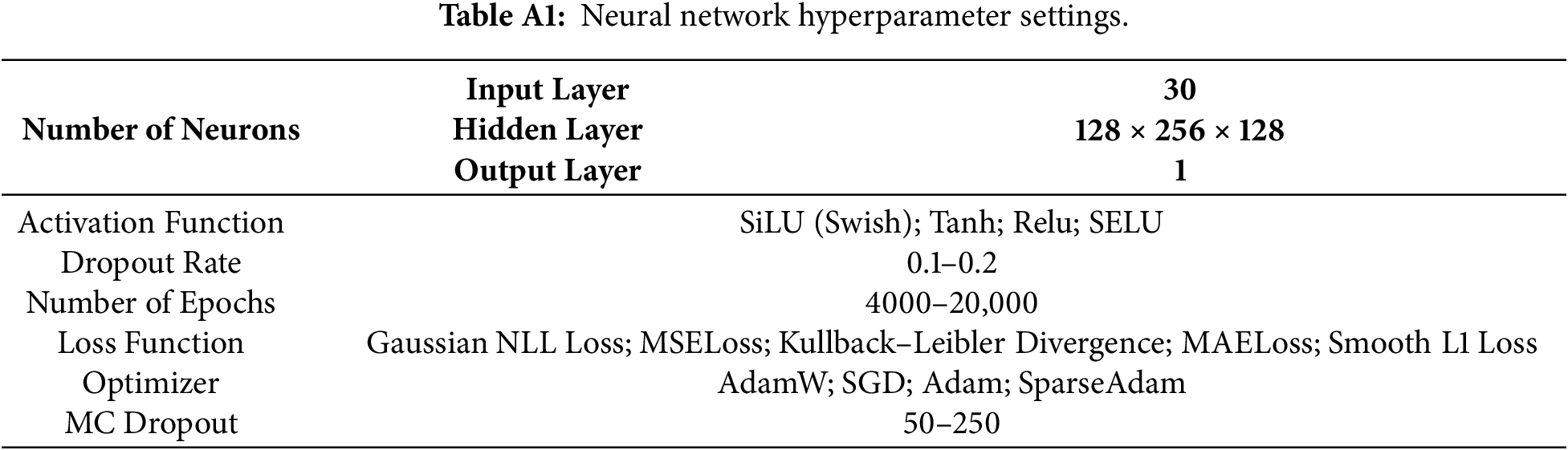
The final hyperparameter settings used in this study are summarized in Table A1. The input layer contained 30 neurons, corresponding to the 30 nonredundant descriptors retained after Pearson correlation-based filtering. The deterministic DNN and ResNet-style MLP models used MSELoss as the objective function, while the BNN used Gaussian negative log-likelihood loss with Kullback–Leibler divergence regularization for probabilistic learning. Hyperparameters were selected by grid search over predefined candidate ranges within the five-fold cross-validation framework. Bayesian optimization was not used in this study. To reduce training variability, the random seed was fixed at 42. For uncertainty estimation, 100 Monte Carlo stochastic forward passes were performed to calculate the predictive mean and uncertainty interval.
Appendix B.2
Fig. A2 presents the SHAP contribution analysis of the optimal model for d33 prediction. The results show that structure-related descriptors dominate the prediction, accounting for 65.94% of the total contribution. Among them, the mixed MPB phase, distortion score, ER phase, MPB flag, and NER phase are identified as the key contributing factors.
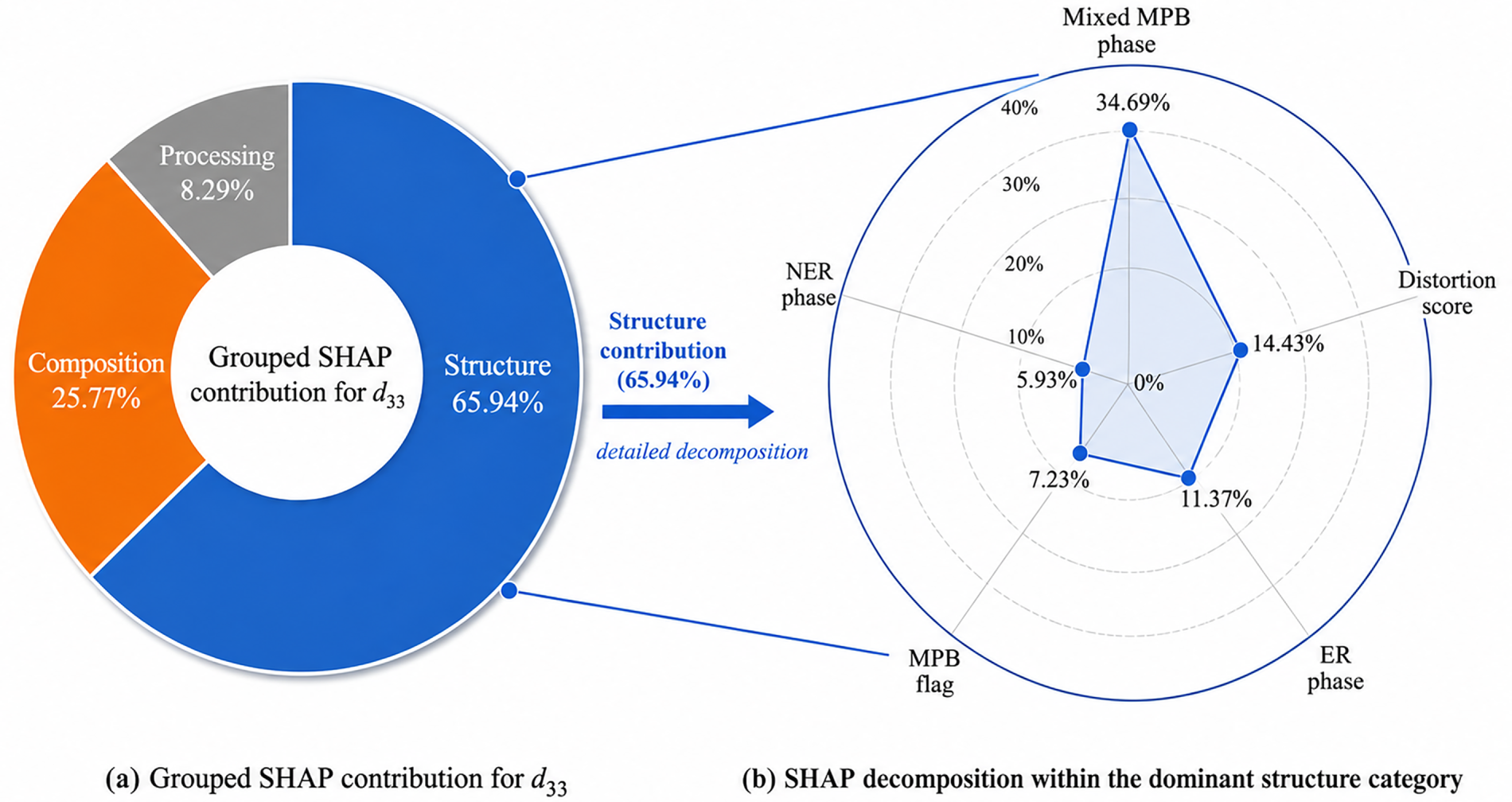
Figure A2: Grouped SHAP contribution and dominant structural-feature decomposition for d33 prediction.
Fig. A3 presents the SHAP contribution analysis of the optimal model for Td prediction. Composition descriptors exhibit the largest contribution, accounting for 42.15% of the total SHAP weight. The dominant contributors are mainly Na_A, Sm_A or additive, K_A, Bi_A, and Ba_A, indicating that A-site compositional regulation plays an important role in governing the depolarization behavior.
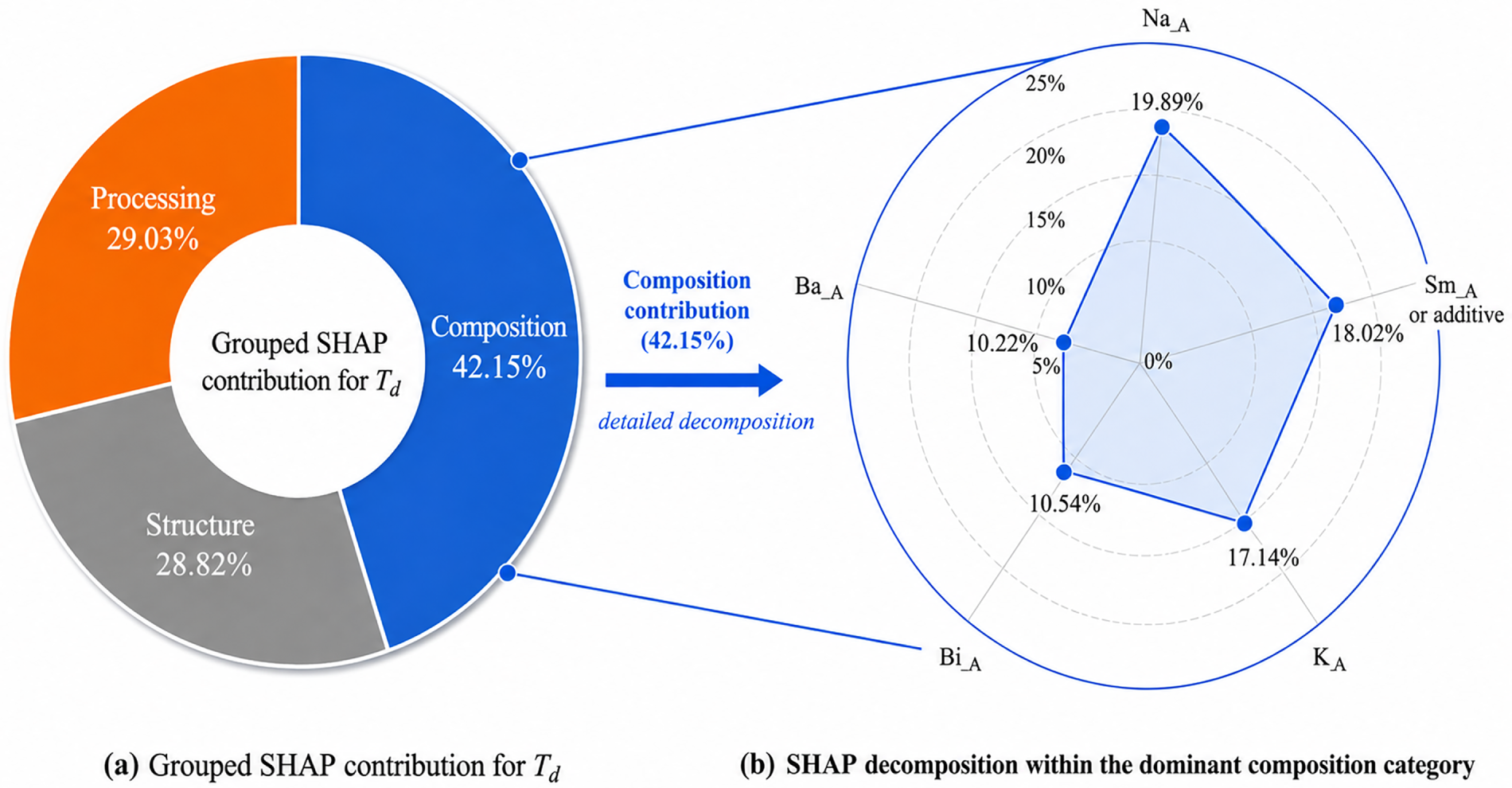
Figure A3: Grouped SHAP contribution and dominant compositional-feature decomposition for Td prediction.
References
1. Yuan X, Liang Y, Lu B, Zhao G, Li P. Interpretable machine learning with prediction uncertainty quantification for d33 in (K0.5Na0.5) NbO3-based lead-free piezoelectric ceramics. Materials. 2026;19(5):948. doi:10.3390/ma19050948. [Google Scholar] [CrossRef]
2. Wang S, Liang Y, Huang L, Li P. Cuckoo search-deep neural network hybrid model for uncertainty quantification and optimization of dielectric energy storage in Na1/2Bi1/2TiO3-based ceramic capacitors. Comput Mater Contin. 2025;85(2):2729–48. doi:10.32604/cmc.2025.068351. [Google Scholar] [CrossRef]
3. Zhang X, Liang Y, Wang J, Chen P, Li P. Prediction of piezoelectric properties of NBT-based ceramics based on deep neural networks. Sci Prog. 2025;108(3):1–26. doi:10.1177/00368504251359081. [Google Scholar] [PubMed] [CrossRef]
4. Xu C, Lin D, Kwok KW. Structure, electrical properties and depolarization temperature of (Bi0.5Na0.5)TiO3–BaTiO3 lead-free piezoelectric ceramics. Solid State Sci. 2008;10(7):934–40. doi:10.1016/j.solidstatesciences.2007.11.003. [Google Scholar] [CrossRef]
5. Chu BJ, Chen DR, Li GR, Yin QR. Electrical properties of Na1/2Bi1/2TiO3–BaTiO3 ceramics. J Eur Ceram Soc. 2002;22(13):2115–21. doi:10.1016/S0955-2219(02)00027-4. [Google Scholar] [CrossRef]
6. Swain S, Kumar Kar S, Kumar P. Dielectric, optical, piezoelectric and ferroelectric studies of NBT–BT ceramics near MPB. Ceram Int. 2015;41(9):10710–7. doi:10.1016/j.ceramint.2015.05.005. [Google Scholar] [CrossRef]
7. Lin D, Kwok KW, Chan HLW. Structure and electrical properties of Bi0.5Na0.5TiO3–BaTiO3–Bi0.5Li0.5TiO3 lead-free piezoelectric ceramics. Solid State Ion. 2008;178(37–38):1930–7. doi:10.1016/j.ssi.2007.12.096. [Google Scholar] [CrossRef]
8. Kanuru SR, Baskar K, Dhanasekaran R. Synthesis, structural, morphological and electrical properties of NBT–BT ceramics for piezoelectric applications. Ceram Int. 2016;42(5):6054–64. doi:10.1016/j.ceramint.2015.12.162. [Google Scholar] [CrossRef]
9. Liu G, Dong J, Zhang L, Yan Y, Jing R, Jin L. Phase evolution in (1–x)(Na0.5Bi0.5)TiO3-xSrTiO3 solid solutions: a study focusing on dielectric and ferroelectric characteristics. J Mater. 2020;6(4):677–91. doi:10.1016/j.jmat.2020.05.005. [Google Scholar] [CrossRef]
10. Lin D, Zheng Q, Xu C, Kwok KW. Structure, electrical properties and temperature characteristics of Bi0.5Na0.5TiO3–Bi0.5K0.5TiO3–Bi0.5Li0.5TiO3 lead-free piezoelectric ceramics. Appl Phys A. 2008;93(2):549–58. doi:10.1007/s00339-008-4667-z. [Google Scholar] [CrossRef]
11. Kantha P, Pisitpipathsin N. Effect of KNbO3 addition on diffuse phase transition and dielectric properties of Bi0.5Na0.5TiO3 ceramics. Integr Ferroelectr. 2018;187(1):129–37. doi:10.1080/10584587.2018.1444884. [Google Scholar] [CrossRef]
12. Chen P, Yuan B, Wang J, Zhang X, Chen Y, Cao F, et al. Enhanced piezoelectric response of Na0.5Bi0.5TiO3–BaTiO3 lead free ceramics by tuning the local polar heterogeneity. Mater Res Bull. 2025;184(4):113231. doi:10.1016/j.materresbull.2024.113231. [Google Scholar] [CrossRef]
13. Ramprasad R, Batra R, Pilania G, Mannodi-Kanakkithodi A, Kim C. Machine learning in materials informatics: recent applications and prospects. npj Comput Mater. 2017;3(1):54. doi:10.1038/s41524-017-0056-5. [Google Scholar] [CrossRef]
14. Li L, Xu K, Su R, Gu H, Ma P. AI as a catalyst for transforming scientific research: a perspective. AI Agent. 2025;1(1):8. doi:10.20517/aiagent.2025.08. [Google Scholar] [CrossRef]
15. Xie T, Grossman JC. Crystal graph convolutional neural networks for an accurate and interpretable prediction of material properties. Phys Rev Lett. 2018;120(14):145301. doi:10.1103/PhysRevLett.120.145301. [Google Scholar] [CrossRef]
16. Tao Q, Xu P, Li M, Lu W. Machine learning for perovskite materials design and discovery. npj Comput Mater. 2021;7(1):23. doi:10.1038/s41524-021-00495-8. [Google Scholar] [CrossRef]
17. Balachandran PV, Kowalski B, Sehirlioglu A, Lookman T. Experimental search for high-temperature ferroelectric perovskites guided by two-step machine learning. Nat Commun. 2018;9(1):1668. doi:10.1038/s41467-018-03821-9. [Google Scholar] [CrossRef]
18. Ma B, Wu X, Zhao C, Lin C, Gao M, Sa B, et al. An interpretable machine learning strategy for pursuing high piezoelectric coefficients in (K0.5Na0.5)NbO3-based ceramics. npj Comput Mater. 2023;9(1):229. doi:10.1038/s41524-023-01187-1. [Google Scholar] [CrossRef]
19. Ouyang R, Curtarolo S, Ahmetcik E, Scheffler M, Ghiringhelli LM. SISSO: a compressed-sensing method for identifying the best low-dimensional descriptor in an immensity of offered candidates. Phys Rev Mater. 2018;2(8):083802. doi:10.1103/physrevmaterials.2.083802. [Google Scholar] [CrossRef]
20. Li Q, Fu N, Omee SS, Hu J. MD-HIT: machine learning for material property prediction with dataset redundancy control. npj Comput Mater. 2024;10(1):245. doi:10.1038/s41524-024-01426-z. [Google Scholar] [CrossRef]
21. Zhang D, Jia X, Wang Y, Liu H, Wang Q, Jang SH, et al. Digital materials ecosystem: from databases to AI agents for autonomous discovery. Chem Sci. 2026;17(12):5782–804. doi:10.1039/d5sc09229a. [Google Scholar] [CrossRef]
22. Choudhary K, DeCost B, Chen C, Jain A, Tavazza F, Cohn R, et al. Recent advances and applications of deep learning methods in materials science. npj Comput Mater. 2022;8(1):59. doi:10.1038/s41524-022-00734-6. [Google Scholar] [CrossRef]
23. Merchant A, Batzner S, Schoenholz SS, Aykol M, Cheon G, Cubuk ED. Scaling deep learning for materials discovery. Nature. 2023;624(7990):80–5. doi:10.1038/s41586-023-06735-9. [Google Scholar] [CrossRef]
24. He K, Zhang X, Ren S, Sun J. Deep residual learning for image recognition. In: 2016 IEEE Conference on Computer Vision and Pattern Recognition (CVPR); 2016 Jun 27–30; Las Vegas, NV, USA. p. 770–8. doi:10.1109/cvpr.2016.90. [Google Scholar] [CrossRef]
25. Batra R, Song L, Ramprasad R. Emerging materials intelligence ecosystems propelled by machine learning. Nat Rev Mater. 2021;6(8):655–78. doi:10.1038/s41578-020-00255-y. [Google Scholar] [CrossRef]
26. Li L, Chang J, Vakanski A, Wang Y, Yao T, Xian M. Uncertainty quantification in multivariable regression for material property prediction with Bayesian neural networks. Sci Rep. 2024;14(1):10543. doi:10.1038/s41598-024-61189-x. [Google Scholar] [CrossRef]
27. Abdar M, Pourpanah F, Hussain S, Rezazadegan D, Liu L, Ghavamzadeh M, et al. A review of uncertainty quantification in deep learning: techniques, applications and challenges. Inf Fusion. 2021;76(1):243–97. doi:10.1016/j.inffus.2021.05.008. [Google Scholar] [CrossRef]
28. Lundberg SM, Erion G, Chen H, DeGrave A, Prutkin JM, Nair B, et al. From local explanations to global understanding with explainable AI for trees. Nat Mach Intell. 2020;2(1):56–67. doi:10.1038/s42256-019-0138-9. [Google Scholar] [CrossRef]
29. Zhong X, Gallagher B, Liu S, Kailkhura B, Hiszpanski A, Han TY. Explainable machine learning in materials science. npj Comput Mater. 2022;8(1):204. doi:10.1038/s41524-022-00884-7. [Google Scholar] [CrossRef]
30. Geurts P, Ernst D, Wehenkel L. Extremely randomized trees. Mach Learn. 2006;63(1):3–42. doi:10.1007/s10994-006-6226-1. [Google Scholar] [CrossRef]
31. Parija B, Badapanda T, Rout SK, Cavalcante LS, Panigrahi S, Longo E, et al. Morphotropic phase boundary and electrical properties of 1–x[Bi0.5Na0.5]TiO3–xBa[Zr0.25Ti0.75]O3 lead-free piezoelectric ceramics. Ceram Int. 2013;39(5):4877–86. doi:10.1016/j.ceramint.2012.11.080. [Google Scholar] [CrossRef]
32. Rahman JU, Hussain A, Maqbool A, Ryu GH, Song TK, Kim WJ, et al. Field induced strain response of lead-free BaZrO3-modified Bi0.5Na0.5TiO3–BaTiO3 ceramics. J Alloys Compd. 2014;593:97–102. doi:10.1016/j.jallcom.2014.01.031. [Google Scholar] [CrossRef]
33. Moosavi A, Bahrevar MA, Aghaei AR, Ramos P, Algueró M, Amorín H. High-field electromechanical response of Bi0.5Na0.5TiO3–Bi0.5K0.5TiO3 across its morphotropic phase boundary. J Phys D Appl Phys. 2014;47(5):055304. doi:10.1088/0022-3727/47/5/055304. [Google Scholar] [CrossRef]
34. Mesrar M, Elbasset A, Echatoui NS, Abdi F, Lamcharfi T. Microstructural and high-temperature dielectric, piezoelectric and complex impedance spectroscopic properties of K0.5Bi0.5TiO3 modified NBT-BT lead-free ferroelectric ceramics. Heliyon. 2023;9(4):e14761. doi:10.1016/j.heliyon.2023.e14761. [Google Scholar] [CrossRef]
35. Yang Z, Liu B, Wei L, Hou Y. Structure and electrical properties of (1−x)Bi0.5Na0.5TiO3–xBi0.5K0.5TiO3 ceramics near morphotropic phase boundary. Mater Res Bull. 2008;43(1):81–9. doi:10.1016/j.materresbull.2007.02.016. [Google Scholar] [CrossRef]
36. Zhang Y, Chu R, Xu Z, Hao J, Chen Q, Peng F, et al. Piezoelectric and dielectric properties of Sm2O3-doped 0.82Bi0.5Na0.5TiO3–0.18Bi0.5K0.5TiO3 ceramics. J Alloys Compd. 2010;502(2):341–5. doi:10.1016/j.jallcom.2010.03.241. [Google Scholar] [CrossRef]
37. Aamir M, Ali Khan S, Ahmed T, Hussain A, Lee S. Effect of ferroelectric phase evolution on dielectric and piezoelectric properties in yttrium-doped BNT-BT ceramics. Solid State Sci. 2023;139:107169. doi:10.1016/j.solidstatesciences.2023.107169. [Google Scholar] [CrossRef]
38. Tian Y, Liu C, Li S, Ye B, Zhao Z, Ji X, et al. Enhanced ferroelectric relaxation and mechanical properties of Sb2O3-modified BNT-based lead-free piezoelectric ceramics. Ceram Int. 2025;51(23):38381–9. doi:10.1016/j.ceramint.2025.06.071. [Google Scholar] [CrossRef]
39. Satha S, Ben Achour MA, Rguiti M, Lorgouilloux Y, Courtois C. Comprehensive study of Al-doped BaTiO3 ceramics: from doping optimization to electromechanical enhancement for piezoelectric applications. J Eur Ceram Soc. 2026;46(11):118330. doi:10.1016/j.jeurceramsoc.2026.118330. [Google Scholar] [CrossRef]
40. Deng A, Wu J. Effects of rare-earth dopants on phase structure and electrical properties of lead-free bismuth sodium titanate-based ceramics. J Mater. 2020;6(2):286–92. doi:10.1016/j.jmat.2020.03.005. [Google Scholar] [CrossRef]
41. Jarupoom P, Jaita P. Enhanced electrical and energy harvesting performances of lead-free BMT modified BNT piezoelectric ceramics. J Asian Ceram Soc. 2022;10(2):498–513. doi:10.1080/21870764.2022.2076362. [Google Scholar] [CrossRef]
42. Ma Z, Nie W, Sun M, Li P, Liu L, Wang B, et al. Li+ and Nb5+ codoped BNT-based ceramic with ultrahigh electrostrain under a moderate electric field. J Adv Ceram. 2026;15(6):9221309. doi:10.26599/jac.2026.9221309. [Google Scholar] [CrossRef]
43. Naeem F, Saleem M, Jabbar H, Tanvir G, Asif F, Baluch AH, et al. Enhanced ferroelectric and dielectric properties of niobium-doped lead-free piezoceramics. Materials. 2023;16(2):477. doi:10.3390/ma16020477. [Google Scholar] [CrossRef]
44. He H, Lu X, Li M, Wang Y, Li Z, Lu Z, et al. Thermal and compositional driven relaxor ferroelectric behaviours of lead-free Bi0.5Na0.5TiO3–SrTiO3 ceramics. J Mater Chem C. 2020;8(7):2411–8. doi:10.1039/c9tc04864b. [Google Scholar] [CrossRef]
45. Dong G, Wang L, Zhang Y, Yang N, Quan Y, Fei C, et al. Effect of Li+ doping on structural and electrical characteristics of BNBT-based ceramics. Ceram Int. 2025;51(26):51214–24. doi:10.1016/j.ceramint.2025.08.348. [Google Scholar] [CrossRef]
46. Chen Y, Zhang CC, Qin L, Jiang CB, Liu KH, Ma C, et al. Enhanced dielectric and piezoelectric properties in Na0.5Bi4.5Ti4O15 ceramics with Pr-doping. Ceram Int. 2018;44(15):18264–70. doi:10.1016/j.ceramint.2018.07.037. [Google Scholar] [CrossRef]
47. Prado A, Rubio-Marcos F, Ramajo L, Castro MS. Dielectric and ferroelectric properties evolution of (1−x)(Bi0.5Na0.5TiO3)–xK0.5Na0.5NbO3 piezoceramics. Bull Mater Sci. 2020;43(1):282. doi:10.1007/s12034-020-02246-9. [Google Scholar] [CrossRef]
48. Wang Z, Zhao J, Niu G, Ren W, Zhang N, Zheng K, et al. Giant strain responses and relaxor characteristics in lead-free (Bi0.5Na0.5)TiO3–BaZrO3 ferroelectric thin films. J Mater Chem C. 2022;10(19):7449–59. doi:10.1039/d1tc05197k. [Google Scholar] [CrossRef]
49. Ullah A, Ishfaq M, Won Ahn C, Ullah A, Ehsan Awan S, Won Kim I. Relaxor behavior and piezoelectric properties of Bi(Mg0.5Ti0.5)O3-modified Bi0.5Na0.5TiO3 lead-free ceramics. Ceram Int. 2015;41(9):10557–64. doi:10.1016/j.ceramint.2015.04.150. [Google Scholar] [CrossRef]
50. Luo H, Qi H, Sun S, Wang L, Ren Y, Liu H, et al. Structural origin for the high piezoelectric performance of (Na0.5Bi0.5)TiO3-BaTiO3-BiAlO3 lead-free ceramics. Acta Mater. 2021;218:117202. doi:10.1016/j.actamat.2021.117202. [Google Scholar] [CrossRef]
Cite This Article
 Copyright © 2026 The Author(s). Published by Tech Science Press.
This work is licensed under a Creative Commons Attribution 4.0 International License , which permits unrestricted use, distribution, and reproduction in any medium, provided the original work is properly cited.
 Downloads
 Citation Tools
