
 Login
Login Register
 Submit a Paper
 Propose a Special lssue
 Open Access
ARTICLE
Privacy-Preserving Edge Intelligence for Speaker Verification via Uncertainty-Aware Adaptive Feature Offloading
1 The School of Software Engineering, East China Normal University, Shanghai, China
2 The College of Electronic Engineering, National University of Defense Technology, Hefei, China
* Corresponding Authors: Yongfeng Zhang. Email: ; Jie Chen. Email:
(This article belongs to the Special Issue: Advanced Privacy Computing for Intelligent Distributed Networks and Systems)
Computers, Materials & Continua 2026, 89(2), 59 https://doi.org/10.32604/cmc.2026.088561
Received 06 July 2026; Accepted 18 August 2026; Issue published 15 September 2026
 View Full Text
 Download PDF
Abstract
Speaker verification on phones, wearables, and voice-enabled Internet-of-Things gateways must balance local privacy with reliable decisions under adverse audio. Existing privacy-preserving verification schemes generally protect a fixed representation, whereas edge-offloading policies usually adapt computation without attaching an explicit feature-disclosure budget; neither line alone coordinates trial uncertainty, communication state, and privacy expenditure. This paper presents privacy-preserving uncertainty-aware adaptive feature offloading (P-UAFO), an edge-intelligence framework that keeps raw audio local and transmits only clipped, projected, quantized, and Gaussian-perturbed intermediate features when their expected benefit justifies resource cost. Its online pipeline first estimates decision uncertainty and resource state, filters infeasible actions, selects local, low-tier, or high-tier processing, and fuses the returned score only when cloud evidence is sufficiently reliable. We establish a feature-level differential-privacy guarantee, an uncertainty threshold for offloading, a variance-optimal fusion rule, and a bounded-regret result under prediction error. The evaluation uses reproducible controlled events covering clean/noisy conditions, 0.4–12 Mb/s uplinks, 20–90 ms round-trip delay, and perturbed resource predictions. The results validate the controller logic and its practical ability to avoid unnecessary feature transmission; they do not constitute a public-corpus or mobile-device benchmark, which remains necessary before real-world deployment claims can be made.Keywords
Speaker verification determines whether enrollment and probe utterances belong to the same speaker. It supports mobile authentication, intelligent access control, call-center protection, and voice-enabled Internet-of-Things services. Classical factor-analysis systems and neural embeddings have improved discrimination substantially [1–3], but an edge endpoint must still manage short utterances, channel mismatch, limited energy, and variable connectivity.
Cloud assistance can improve difficult trials, whereas local-only inference avoids communication. A fixed split is often inefficient because it consumes network and privacy resources on easy inputs. Collaborative edge–cloud inference and recent offloading studies instead motivate an input- and state-dependent placement decision [4–7]. Privacy is equally central: intermediate features can retain identity-related structure, so avoiding waveform transfer alone does not establish a privacy guarantee [8]. A specific gap therefore remains: privacy-preserving speaker-verification work commonly assumes a predetermined representation or processing path, while context-aware offloading work optimizes latency and energy without a formal, action-dependent privacy budget. Existing approaches also seldom couple calibrated verification uncertainty with tier-specific disclosure and confidence-aware score fusion.
We propose privacy-preserving uncertainty-aware adaptive feature offloading (P-UAFO). The device keeps raw audio, acoustic representations, and full embeddings local. It sends a clipped, projected, quantized, and Gaussian-perturbed feature only when the predicted risk reduction outweighs latency, energy, and privacy expenditure. Self-supervised encoders provide strong local representations [9,10], while compact speaker models and speech hardware make an edge front end increasingly practical [11,12].
The principal scientific contributions are threefold. First, P-UAFO casts each verification request as a constrained three-action decision that jointly prices error risk, delay, edge energy, and feature-level privacy. Second, it introduces a protected tiered interface whose disclosure level is selected from calibrated uncertainty and current resource feasibility rather than from uncertainty alone. Third, it derives privacy, threshold, fusion, and prediction-error regret properties and evaluates the resulting controller against local-only, fixed-split, always-cloud, and uncertainty-only policies in a reproducible controlled study. At run time, the processing sequence is: local scoring and uncertainty estimation, resource prediction, feasibility screening, utility-based tier selection, protected packet construction when needed, and confidence-weighted score fusion. The framework is intended for deadline-constrained inference and is compatible with adaptive service placement mechanisms [13]; empirical claims about public-corpus accuracy and mobile deployment are deliberately excluded from the present scope.
2.1 Verification State and Uncertainty
For enrollment
where
The edge also estimates a calibrated uncertainty
from posterior ambiguity, score variance, and audio quality, where
For every action, a conditional predictor
2.2 Protected Feature Interface
Fig. 1 summarizes the architecture. The microphone signal, log-Mel representation, and full edge embedding remain inside the edge trust boundary. The cloud receives a protected packet and returns a refined score with a confidence proxy.
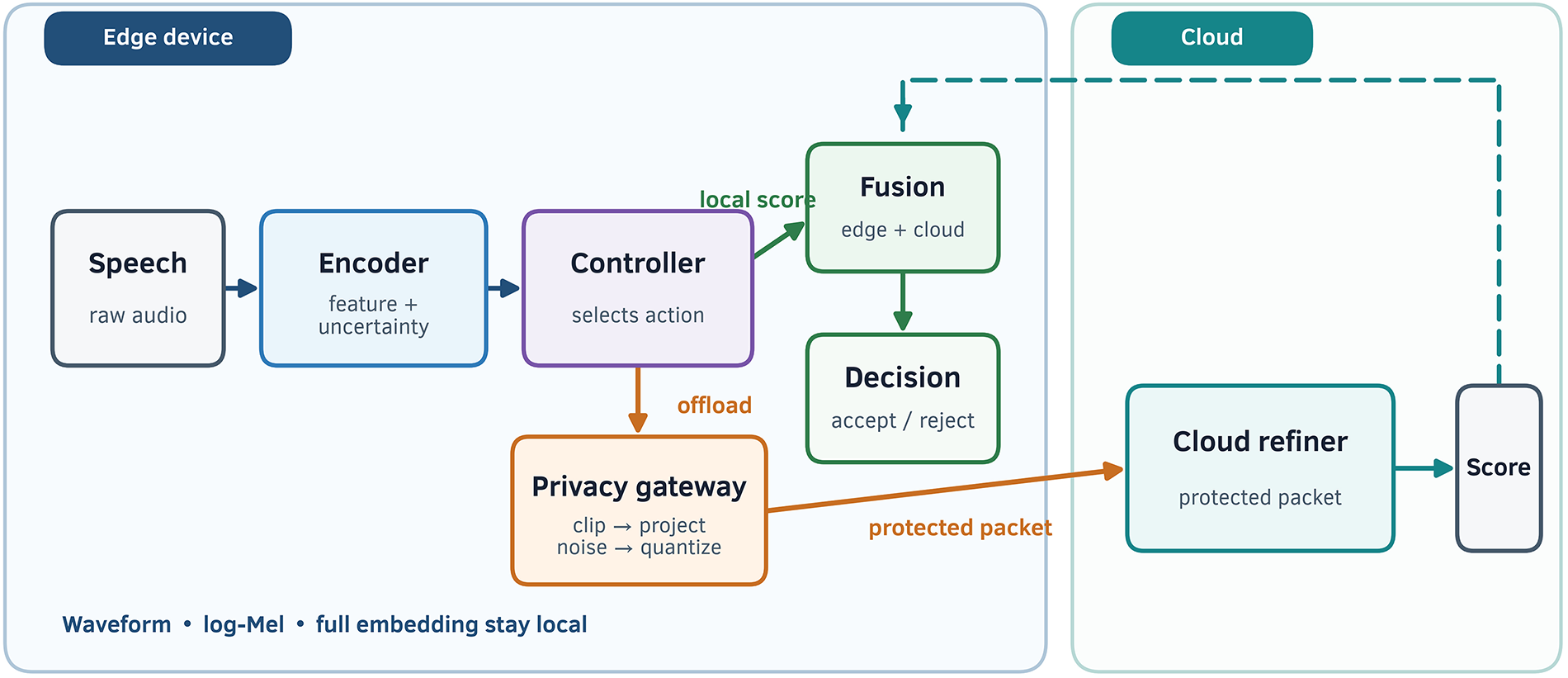
Figure 1: P-UAFO workflow. Raw speech and full embeddings remain at the edge; the cloud receives a protected feature packet only when offloading is selected.
For a feature
then forms a tier-dependent packet
Tier 1 uses fewer dimensions and bits than Tier 2. Projection and quantization reduce packet size; clipping and Gaussian noise provide the declared feature-level privacy mechanism. This follows the principle of constraining the representation exposed outside the device [16,17]. For target
Fig. 2 details the layered feature transformation. The guarantee is scoped to adjacent clipped features and does not replace authenticated transport, metadata minimization, or attack-based evaluation.
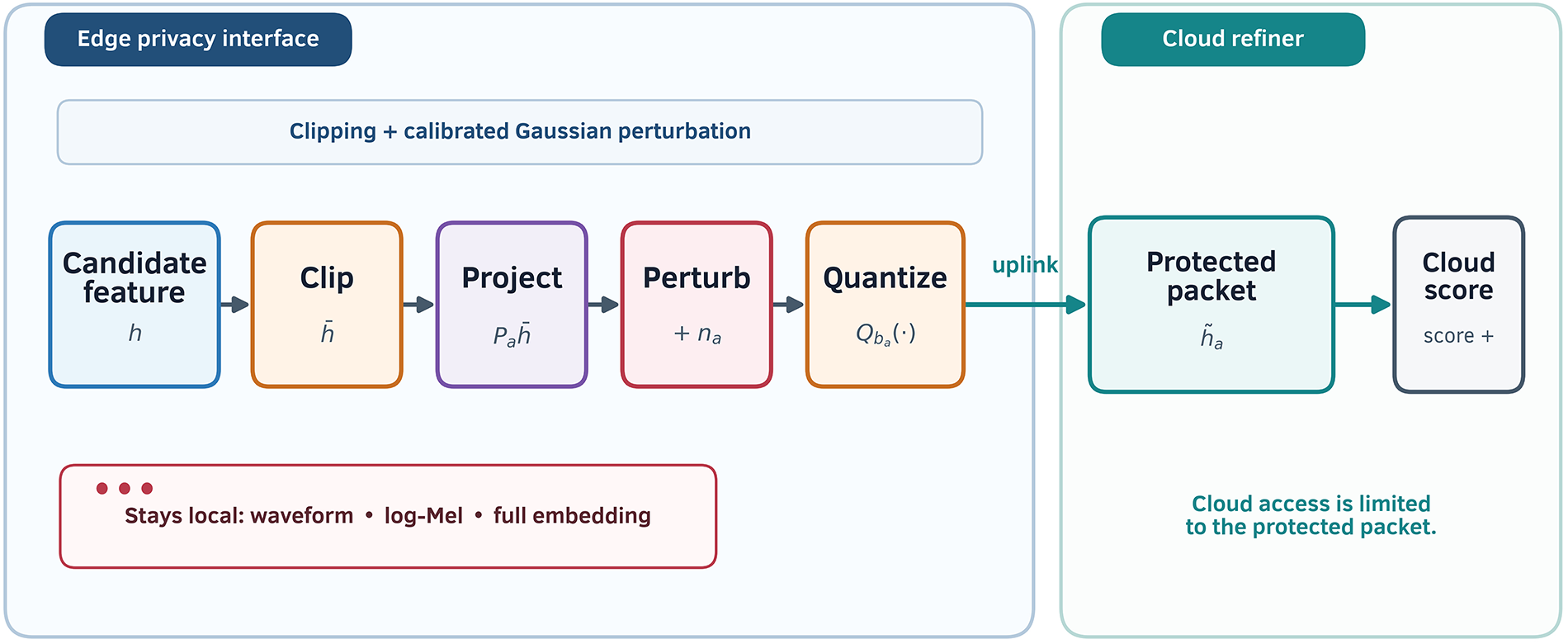
Figure 2: Layered privacy transformation before cloud refinement. Clipping and calibrated Gaussian perturbation provide the formal feature-level privacy control, while projection and quantization reduce packet dimensionality and communication load.
2.3 Resource-Aware Tier Selection
For action
The controller predicts risk
over feasible actions. Feasibility requires
The controller uses a small finite action set instead of optimizing a continuous split point. This makes projection validation, transmission accounting, and privacy-budget bookkeeping practical on constrained devices. The low-tier packet is intended for moderate uncertainty, while Tier 2 is selected only when its additional score value offsets the larger latency and feature expenditure.
Fig. 3 summarizes the uncertainty-aware inference tiers and the resource-aware feasibility gate used to select among local, Tier 1, and Tier 2 processing.
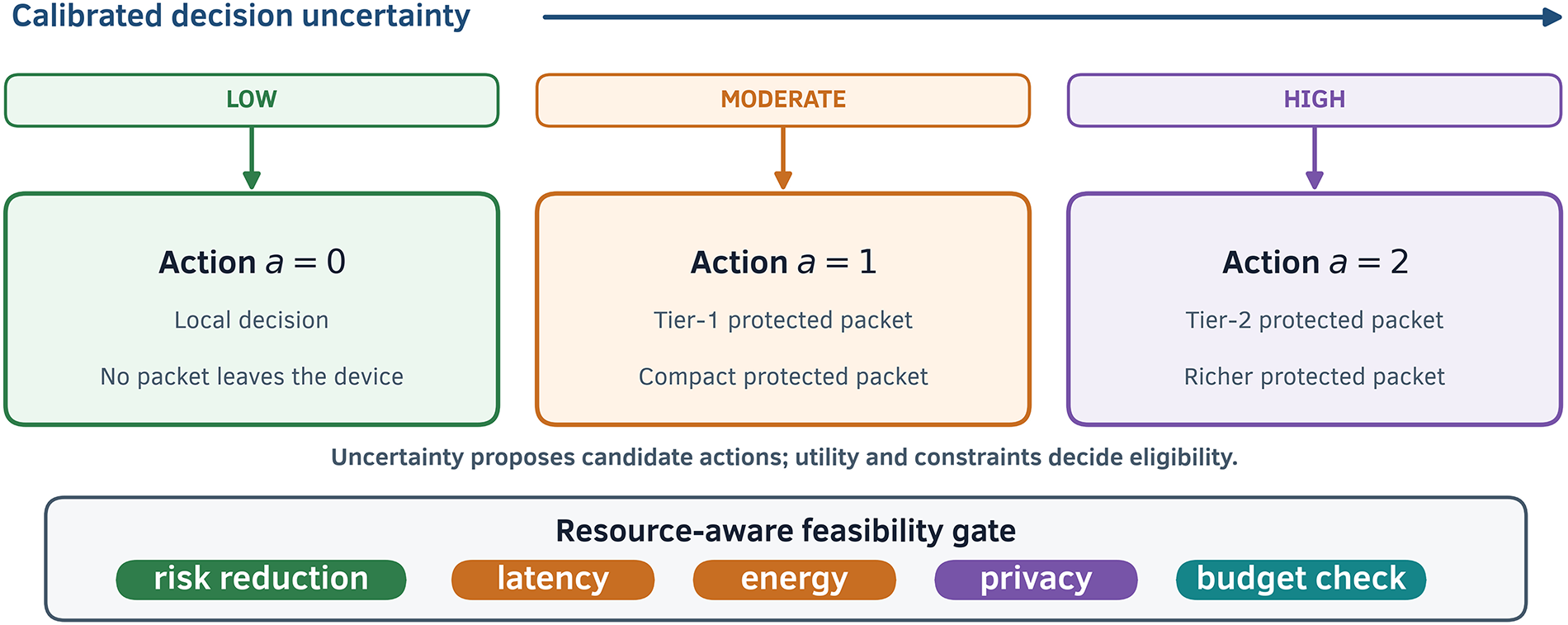
Figure 3: Uncertainty-aware inference tiers. Feasibility and utility jointly determine local, low-tier, or high-tier processing.
For offloaded trials, the final score is
or the inverse-variance weight derived below. The local score is therefore retained when the cloud estimate is not sufficiently reliable. The interface can be paired with efficient temporal and open-set speaker architectures without changing the controller logic [18,19].
3 Training and Online Procedure
The edge and cloud branches are trained for discriminative speaker verification. In addition to the backbone loss
The controller is fitted on held-out trials paired with resource states. It minimizes the predicted cost of the selected feasible action,
This separates encoder learning from policy fitting. Margin-based objectives and disentangled speaker representations help retain useful local discrimination while enabling cloud refinement [20,21].
To avoid optimistic resource predictions, the feasible set is
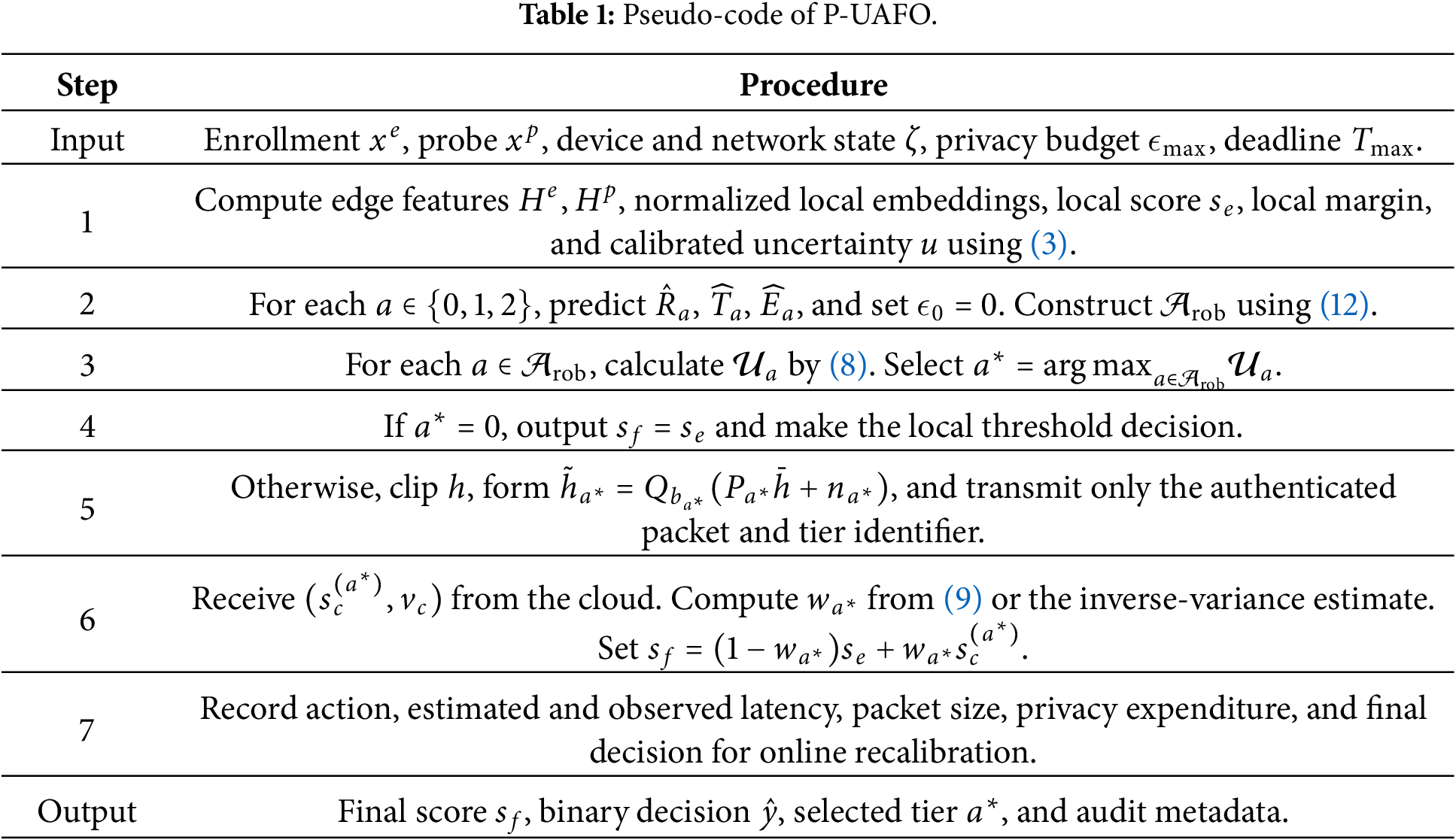
Online, the device computes local embeddings, score, and uncertainty; predicts each feasible action’s risk and resource cost; selects the highest-utility action; sends a protected packet only when offloading; fuses the returned score; and records aggregate audit statistics for recalibration. The finite three-action design simplifies packet validation and privacy accounting. Table 1 records the complete sequence.
3.1 Implementation Considerations
Let
The cloud is assumed to be a service component trusted for the declared refinement purpose, not an unrestricted recipient. It observes protected activations and minimal control metadata. A deployment should encrypt transport, prevent replay, rate-limit requests, avoid logging payloads, and maintain an explicit retention policy. These measures are complementary to the feature-level mechanism rather than substitutes for it.
To separate controller overhead from encoder and network delay, we also provide a reference host-side microbenchmark for the protected-feature operations. On an Intel Xeon Platinum 8573C CPU, the measured median times were 0.0022 ms for clipping, 0.0023/0.0038 ms for Tier 1/Tier 2 dense projection, 0.0043/0.0064 ms for projection plus Gaussian perturbation, 0.0072/0.0087 ms for quantization and serialization, and approximately 0.0005 ms for AES-GCM protection. The script performs 500 warm-up calls and 10,000 timed repetitions and reports both median and 95th percentile values. These numbers are implementation references only: they exclude edge encoder inference, radio transmission, and cloud processing and must not be interpreted as measurements on a phone, wearable, or embedded board.
Theorem 1 (Feature-level privacy): For
Proof: For adjacent clipped features
With the noise scale in (6), the Gaussian mechanism is
Proposition 1 (Offloading threshold): For local and one feasible offloaded action, let
Proof: The utility difference is
Fig. 4 visualizes the resulting utility regions under nominal resources. Changing bandwidth or the privacy weight shifts the corresponding threshold.
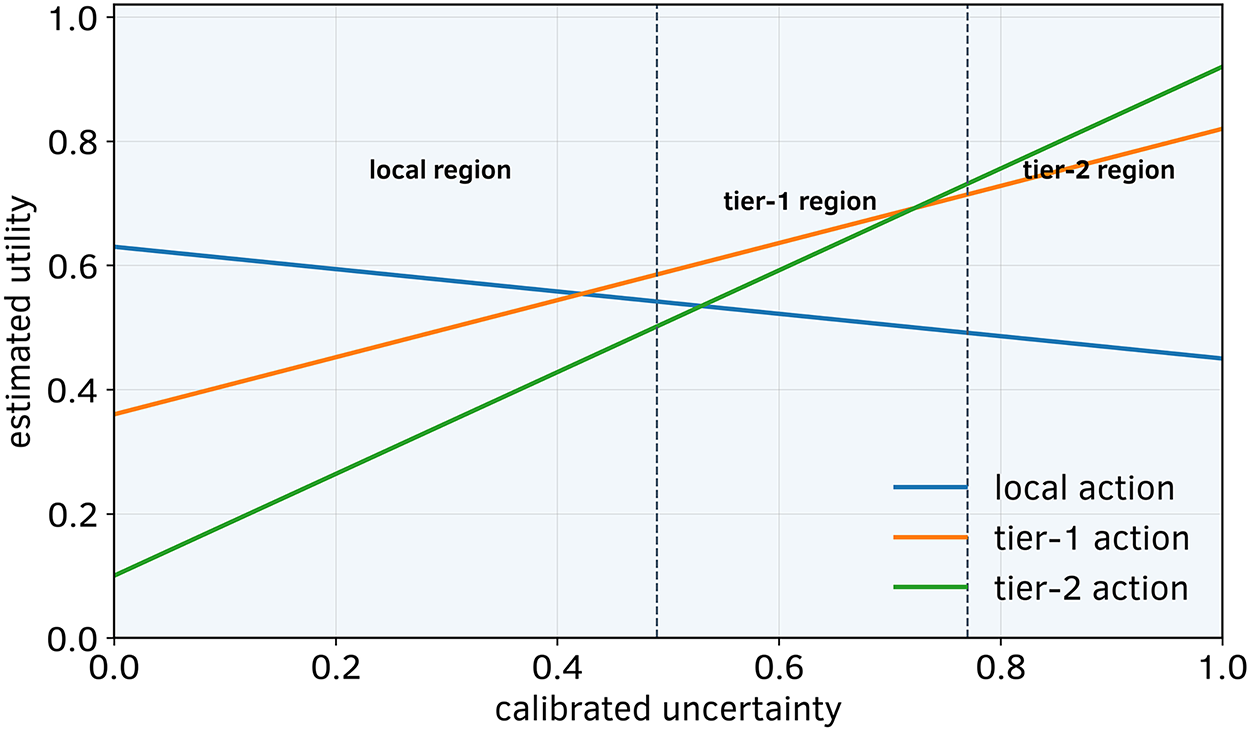
Figure 4: Controller utility regions under nominal resources.
Theorem 2 (Confidence-weighted fusion): Suppose calibrated margins satisfy
where
Proof: The fused variance proxy is
Its derivative is
Theorem 3 (Bounded selection regret): Let
Proof: Because
These results separate feature privacy, tier selection, score fusion, and imperfect resource prediction rather than treating them as one undifferentiated objective.
5 Controlled Simulation and Discussion
We use a reproducible Monte Carlo study to examine controller logic; it is not a corpus-based speaker-verification benchmark. One simulation event represents one enrollment–probe decision request. Its control environment contains an audio condition (clean or noisy), a bandwidth state, round-trip delay, edge-energy state, and cloud-load state. The action predictor observes noisy estimates of these variables rather than their realized values, which permits a controlled study of resource-prediction error. The simulation contains
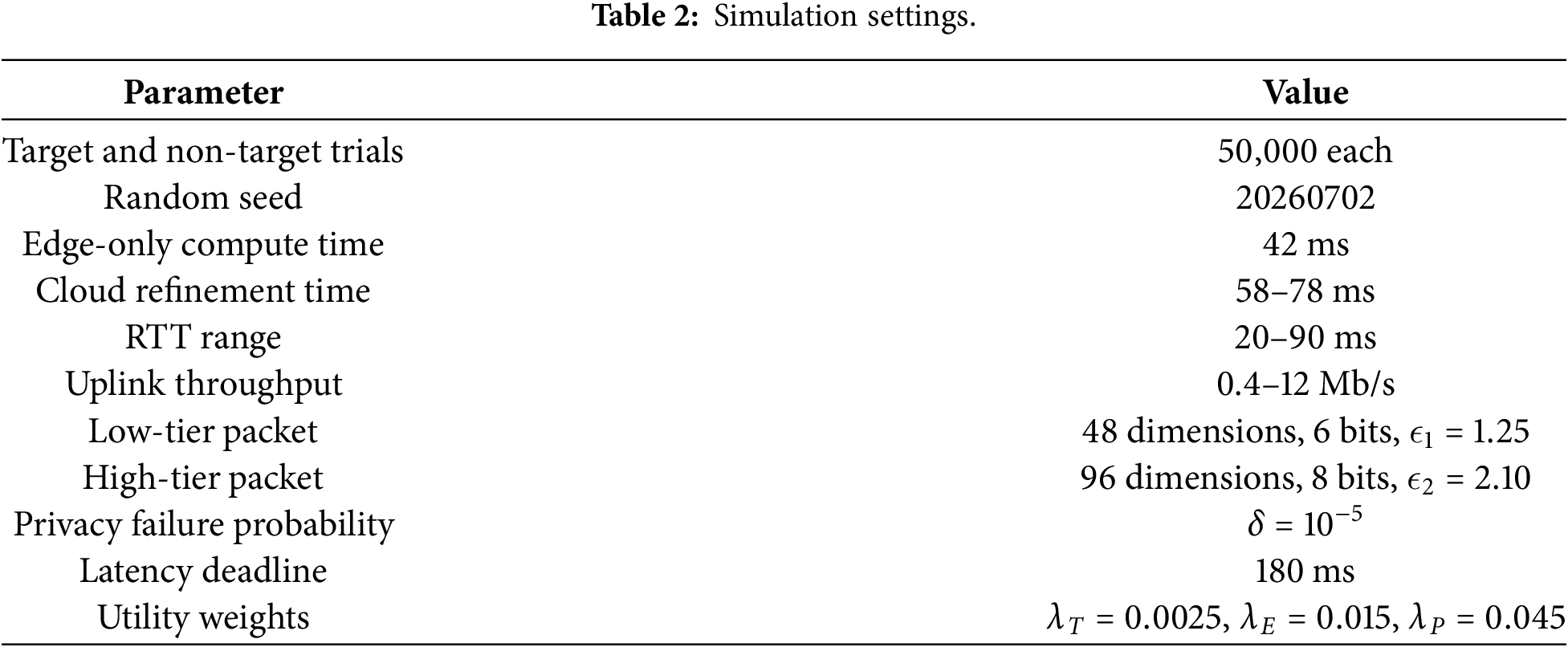
Table 3 compares nominal policies. Local-only never communicates; fixed split always sends the high-tier packet; always-cloud represents unconstrained remote processing; uncertainty-only ignores resource and privacy prices; and P-UAFO applies the full feasibility and utility rule. These aligned baselines support the quantitative comparison. Cross-paper numbers are not directly comparable because datasets, encoders, hardware, and threat models differ. Always-cloud gives the lowest synthetic EER but incurs the largest delay and privacy expenditure. Local-only avoids communication but has the weakest synthetic EER. P-UAFO selects the high tier only when its predicted benefit exceeds the added cost.
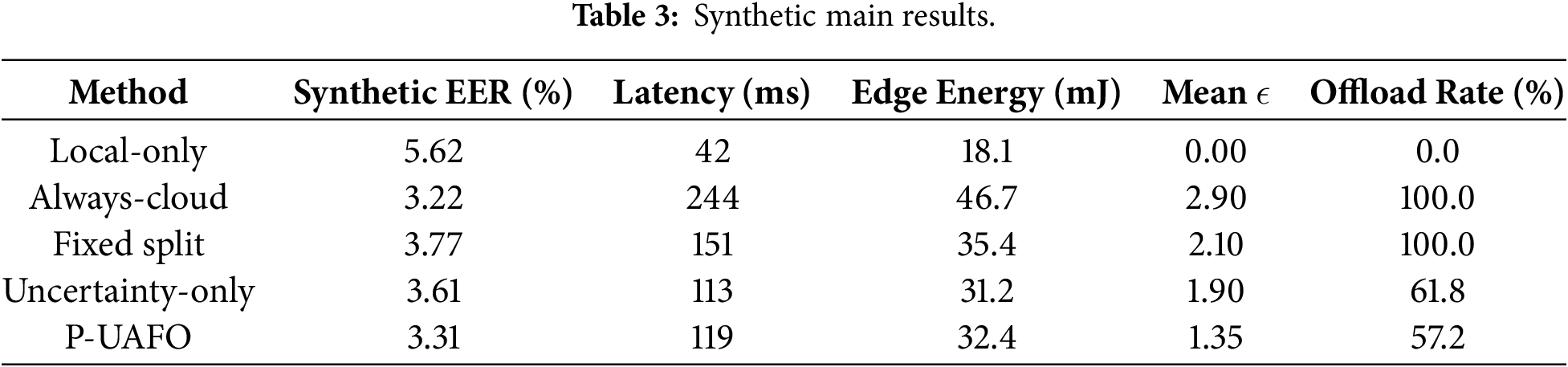
Relative to local-only, P-UAFO reduces synthetic EER by 2.31 percentage points. Relative to fixed split, it lowers mean privacy expenditure by 35.7% (
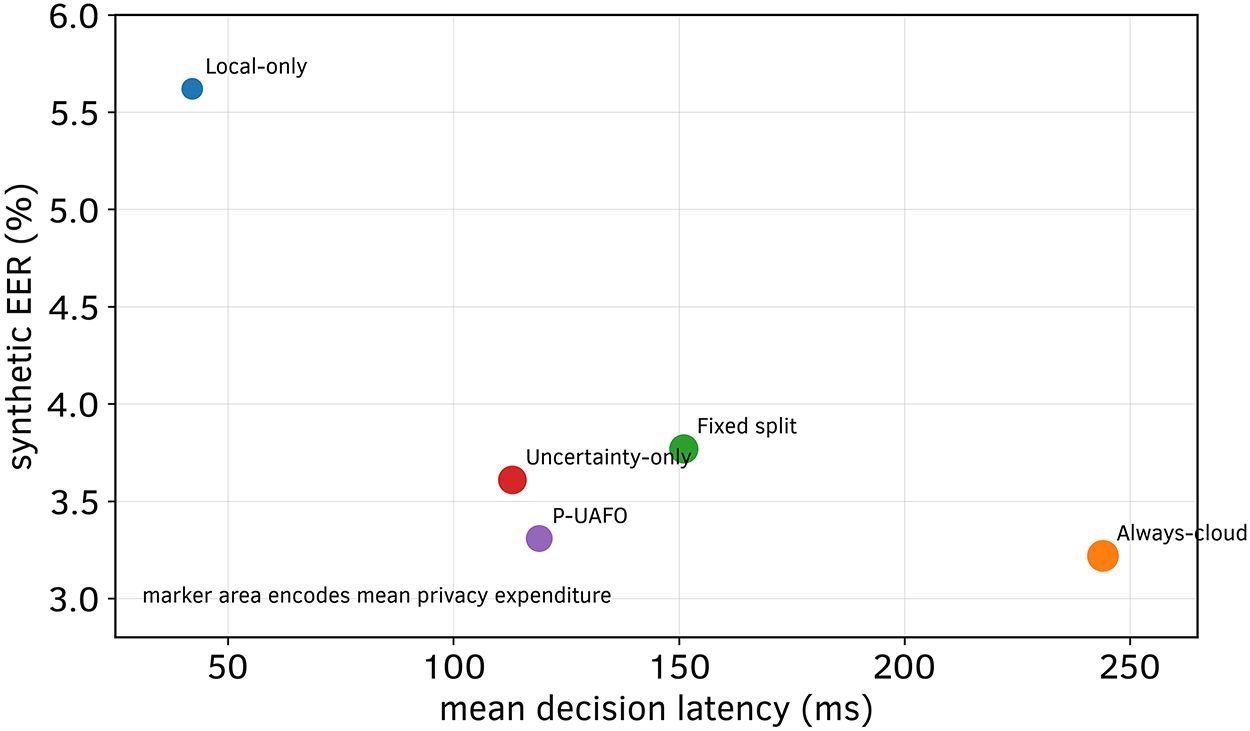
Figure 5: Synthetic accuracy–latency–privacy trade-off. Marker area encodes mean privacy expenditure.
The comparison is intentionally not framed as a claim that adaptive offloading surpasses unconstrained cloud inference on accuracy. Rather, it identifies a controllable operating point: services with a strict delay or exposure budget can accept a small numerical gap to all-cloud processing in exchange for selective transmission. Conversely, a privacy-sensitive application can penalize feature disclosure more strongly by increasing
Table 4 summarizes the component ablations.
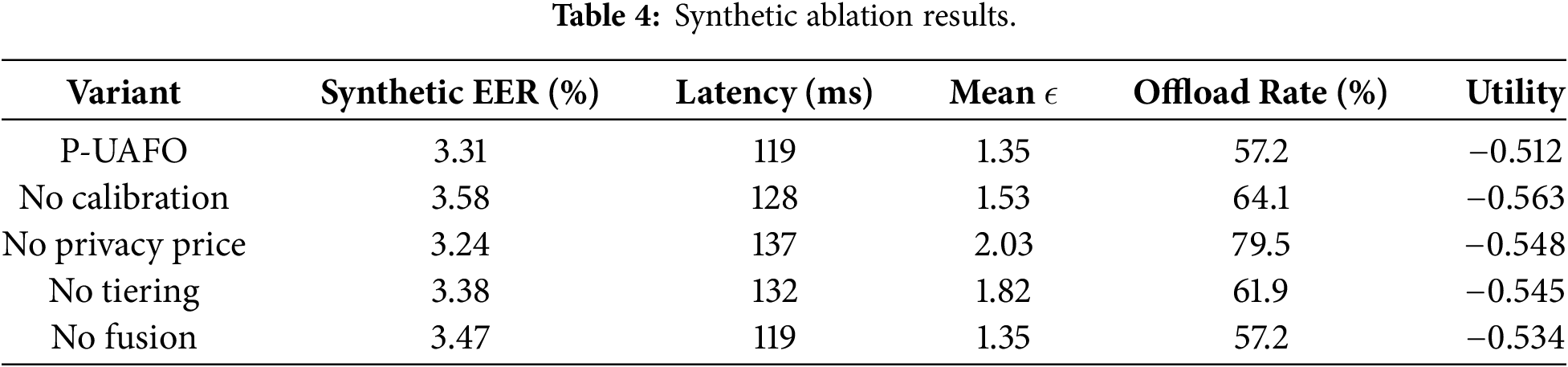
Ablations support the intended role of each component. Replacing calibrated uncertainty with an uncalibrated proxy increases synthetic EER from 3.31% to 3.58% and raises the offload rate from 57.2% to 64.1%. Removing the privacy price yields a slightly lower synthetic EER (3.24%) but increases mean
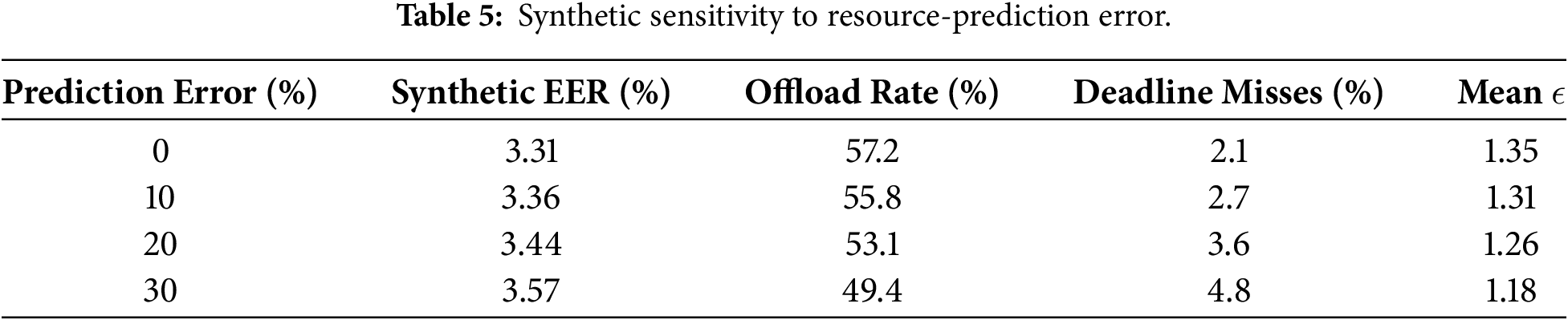
We further perturb the throughput, round-trip-delay, and cloud-load estimates before action selection. Table 5 shows that the robust feasibility margin gradually reduces offloading as mean absolute prediction error grows. The resulting synthetic EER degrades smoothly rather than abruptly, and the deadline-miss rate remains below 5% at 30% prediction error. This experiment addresses policy sensitivity to imperfect network-state collection; it does not substitute for traces from an operational network.
5.2 Bandwidth and Privacy Sensitivity
Fig. 6 evaluates the effect of uplink throughput. Cloud-assisted policies improve when bandwidth increases, but P-UAFO retains more trials locally or selects Tier 1 when the predicted response cannot meet the deadline. The local-only baseline is independent of communication but preserves its larger synthetic EER.
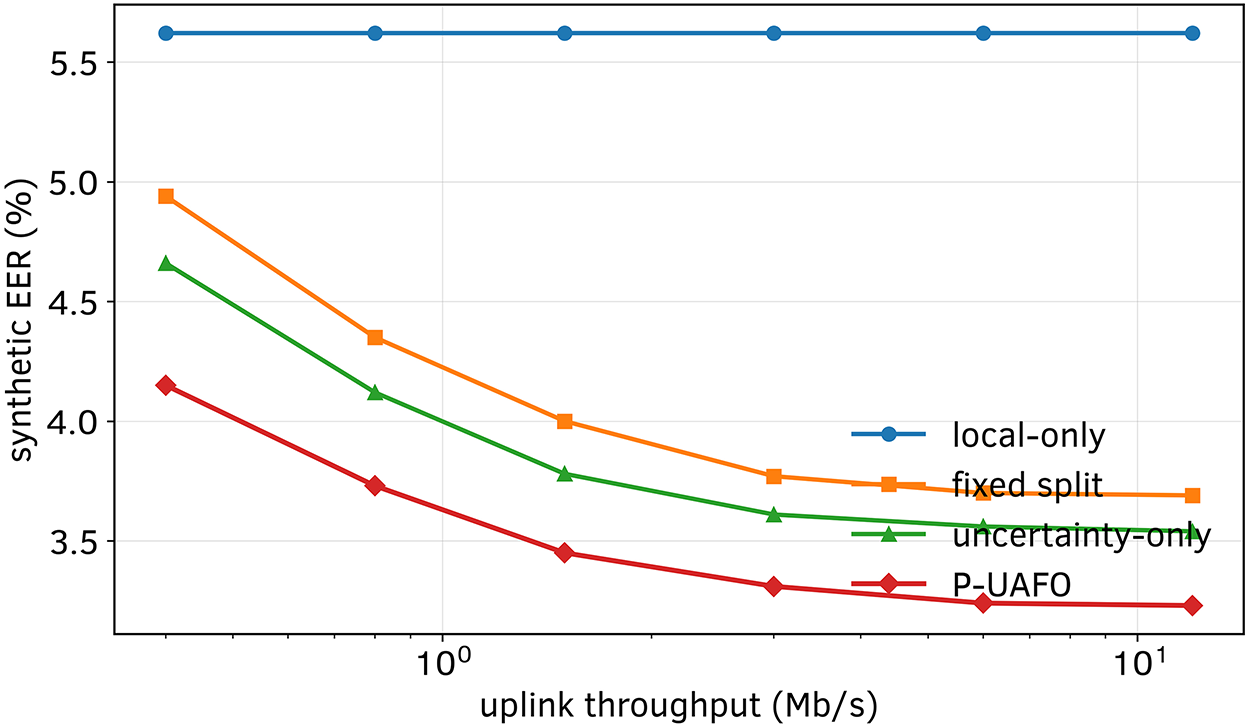
Figure 6: Synthetic accuracy under bandwidth variation.
Fig. 7 compares the mean feature-level privacy expenditure across clean/noisy and high/low bandwidth profiles. Fixed split uses the same rich packet regardless of context, whereas P-UAFO can reduce its average budget under constrained conditions while retaining the option of selected cloud refinement.
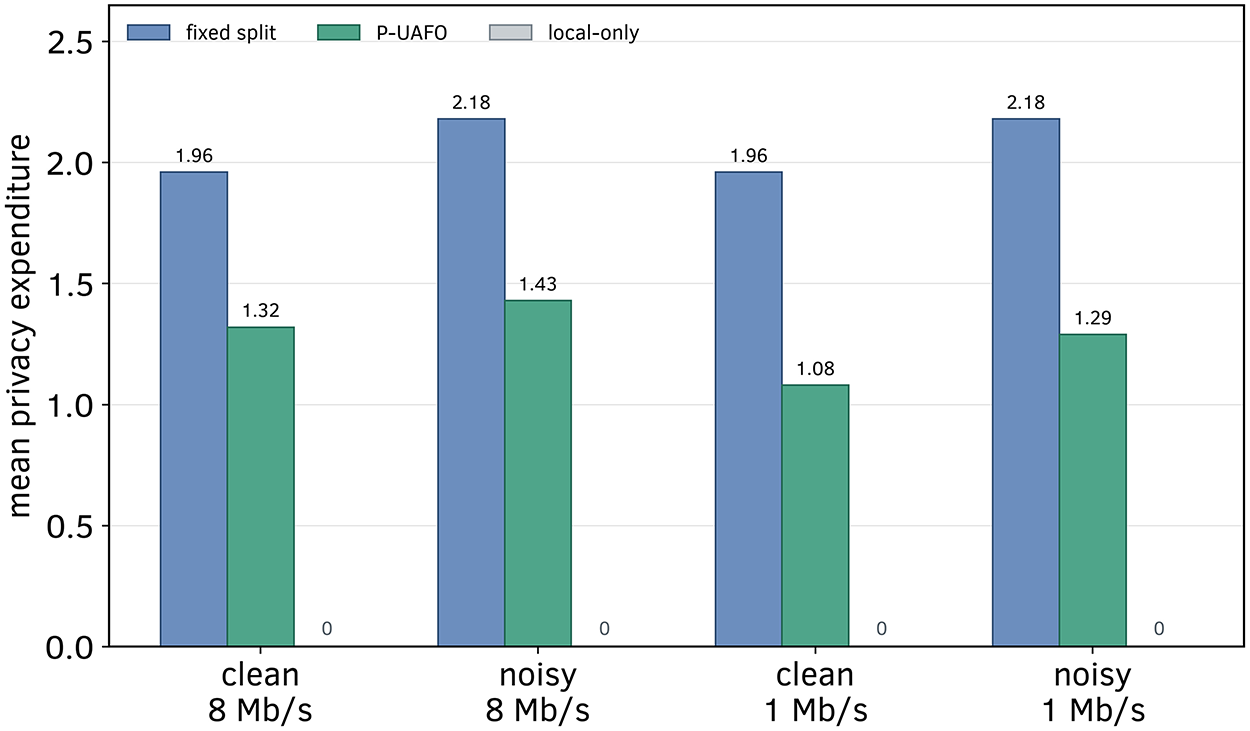
Figure 7: Colored comparison of mean privacy expenditure across operating profiles. The adaptive P-UAFO policy reduces feature-level privacy expenditure relative to fixed split while preserving the option of selective cloud refinement.
Table 6 gives the corresponding packet statistics. Noisy audio raises the Tier 2 rate because extra evidence has more predicted value; low bandwidth increases the use of local and Tier 1 actions. The inversion-difficulty indicator is a diagnostic of the synthetic feature model, not an empirical privacy-attack result.
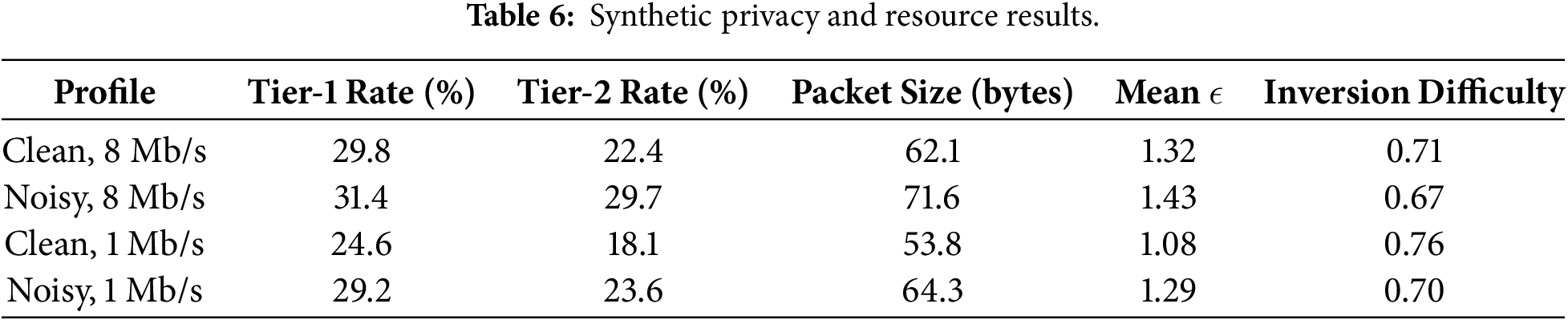
In the clean 1 Mb/s profile, P-UAFO uses Tier 2 on only 18.1% of trials and keeps the mean packet size at 53.8 bytes. Under noisy 1 Mb/s conditions, the Tier 2 rate increases to 23.6%, yet the mean privacy expenditure remains lower than that of a fixed high-tier split. This asymmetric response is desirable: difficult audio should not automatically trigger maximal disclosure, while a modest protected packet can still be justified when it materially reduces expected decision risk.
The current evidence is limited to generated score and resource events plus a reference host-side operation benchmark. It does not include speaker embeddings from a public corpus, short-utterance or cross-device trials, measurements on a phone or embedded board, or traces from a real wireless network. Consequently, the manuscript does not claim corpus-level accuracy, real-time operation, or demonstrated deployability. A full evaluation should report standard speaker-verification protocols, EER and minDCF, calibration error, device-specific energy and latency, network-state prediction error on measured traces, and attack-based privacy tests. It should also consider spoofing, over-the-air manipulation, calibration drift, and speech enhancement under noisy conditions [22–24].
Feature-level differential privacy does not by itself provide complete biometric-template protection. It must be combined with an application-specific threat model, secure transport, server governance, and lifecycle controls for device and cloud models. In addition, repeated authentications require cumulative privacy accounting rather than a one-shot budget. The next empirical stage will compare local-only, fixed low/high split, always-cloud, uncertainty-only, and P-UAFO under identical public-corpus trials and measured mobile/network traces. These limitations motivate a corpus- and hardware-based follow-up study rather than stronger claims from the present synthetic profiles.
P-UAFO keeps raw speech local and selectively offloads protected intermediate features when uncertainty, resource state, and privacy budget justify cloud computation. The approach combines calibrated risk prediction, tiered feature protection, resource-aware selection, and confidence-weighted fusion. Its formal properties and reproducible simulations show why selective assistance can balance accuracy, latency, and privacy more effectively than local-only or fixed-split inference.
The present contribution is a formally analyzed and reproducible control framework, not a completed deployment study. Future work will evaluate real corpora and device traces, report EER, minDCF, and calibration metrics under matched baselines, include reconstruction, linkage, membership, and voice-cloning-oriented attacks, and extend the controller to repeated multi-edge requests with online calibration and cumulative privacy accounting.
Acknowledgement: Not applicable.
Funding Statement: The authors received no specific funding for this study.
Author Contributions: The authors confirm contribution to the paper as follows: Conceptualization, Yongfeng Zhang and Jie Chen; methodology, Yongfeng Zhang; software, Yongfeng Zhang; validation, Yongfeng Zhang and Jie Chen; formal analysis, Yongfeng Zhang and Jie Chen; investigation, Yongfeng Zhang; resources, Yongfeng Zhang and Jie Chen; data curation, Yongfeng Zhang; writing—original draft preparation, Yongfeng Zhang; writing—review and editing, Yongfeng Zhang and Jie Chen; visualization, Yongfeng Zhang; supervision, Jie Chen; project administration, Jie Chen. All authors reviewed and approved the final version of the manuscript.
Availability of Data and Materials: Not applicable.
Ethics Approval: Not applicable.
Conflicts of Interest: Given his role as Youth Editorial Board Member of this journal, Jie Chen had no involvement in the peer review of this article and had no access to information regarding its peer review. Full responsibility for the editorial process for this article was delegated to another journal editor. The authors declare no conflicts of interest.
Nomenclature
| Symbol | Definition |
| Input utterance held locally at the edge device. | |
| Enrollment and probe utterances in one verification trial. | |
| Edge intermediate feature before privacy processing. | |
| Local and cloud-refined speaker embeddings. | |
| Local and cloud verification scores. | |
| Calibrated trial uncertainty in | |
| Inference action: | |
| Low-rank projection matrix for feature tier | |
| Protected feature packet transmitted for action | |
| Clipping radius of an edge feature. | |
| Standard deviation of Gaussian perturbation at tier | |
| Differential-privacy parameters of a transmitted packet. | |
| Predicted uplink throughput. | |
| Expected latency and edge energy under action | |
| Predicted verification risk under action | |
| Utility of action | |
| Cloud-score fusion weight. | |
| Signed verification margin. | |
| Weights for latency, energy, and privacy expenditure. | |
| Feasible action set after resource constraints. |
References
1. Dehak N, Kenny PJ, Dehak R, Dumouchel P, Ouellet P. Front-end factor analysis for speaker verification. IEEE Trans Audio Speech Lang Process. 2011;19(4):788–98. doi:10.1109/tasl.2010.2064307. [Google Scholar] [CrossRef]
2. Snyder D, Garcia-Romero D, Sell G, Povey D, Khudanpur S. X-vectors: robust DNN embeddings for speaker recognition. In: Proceedings of the 2018 IEEE International Conference on Acoustics, Speech and Signal Processing (ICASSP); 2018 Apr 15–20; Calgary, AB, USA. p. 5329–33. doi:10.1109/icassp.2018.8461375. [Google Scholar] [CrossRef]
3. Chung JS, Nagrani A, Zisserman A. VoxCeleb2: deep speaker recognition. In: Proceedings of the Interspeech 2018; 2018 Sep 2–6; Hyderabad, India. p. 1086–90. doi:10.21437/interspeech.2018-1929. [Google Scholar] [CrossRef]
4. Kang Y, Hauswald J, Gao C, Rovinski A, Mudge T, Mars J, et al. Neurosurgeon: collaborative intelligence between the cloud and mobile edge. In: Proceedings of the 22nd ACM International Conference on Architectural Support for Programming Languages and Operating Systems (ASPLOS’17); 2017 Apr 8–12; Xi’an, China. p. 615–29. doi:10.1145/3037697.3037698. [Google Scholar] [CrossRef]
5. Malik UM, Javed MA, Alvi AN, Alkhathami M. Reliable task offloading for 6G-based IoT applications. Comput Mater Contin. 2025;82(2):2255–74. doi:10.32604/cmc.2025.061254. [Google Scholar] [CrossRef]
6. Quasim MT, Nisa KU, Husain MS, Aadam AIA, Sheraz MW, Khan MZ. Intelligent management of resources for smart edge computing in 5G heterogeneous networks using blockchain and deep learning. Comput Mater Contin. 2025;84(1):1169–87. doi:10.32604/cmc.2025.062989. [Google Scholar] [CrossRef]
7. Mohapatra H. Task offloading and edge computing in IoT—gaps, challenges and future directions. Comput Mater Contin. 2026;87(3):1–10. doi:10.32604/cmc.2026.076726. [Google Scholar] [CrossRef]
8. Dwork C, McSherry F, Nissim K, Smith A. Calibrating noise to sensitivity in private data analysis. In: Theory of cryptography. Berlin/Heidelberg, Germany: Springer; 2006. p. 265–84. doi:10.1007/11681878_14. [Google Scholar] [CrossRef]
9. Hsu WN, Bolte B, Tsai YH, Lakhotia K, Salakhutdinov R, Mohamed A. HuBERT: self-supervised speech representation learning by masked prediction of hidden units. IEEE/ACM Trans Audio Speech Lang Process. 2021;29:3451–60. doi:10.1109/taslp.2021.3122291. [Google Scholar] [CrossRef]
10. Chen S, Wang C, Chen Z, Wu Y, Liu S, Chen Z, et al. WavLM: large-scale self-supervised pre-training for full stack speech processing. IEEE J Sel Top Signal Process. 2022;16(6):1505–18. [Google Scholar]
11. Liu B, Wang H, Qian Y. Towards lightweight speaker verification via adaptive neural network quantization. IEEE/ACM Trans Audio Speech Lang Process. 2024;32:3771–84. doi:10.1109/taslp.2024.3437237. [Google Scholar] [CrossRef]
12. Tan F, Yu WH, Lin J, Un KF, Martins RP, Mak PI. A 1.8% FAR, 2 ms decision latency, 1.73 nJ/decision keywords-spotting (KWS) chip incorporating transfer-computing speaker verification, hybrid-IF-domain computing and scalable 5T-SRAM. IEEE J Solid State Circuits. 2025;60(3):1103–12. doi:10.1109/jssc.2024.3440506. [Google Scholar] [CrossRef]
13. Huang W, Zhang Q, Liu T, Xu Y, Zhang D. Service function chain deployment algorithm based on multi-agent deep reinforcement learning. Comput Mater Contin. 2024;80(3):4875–93. doi:10.32604/cmc.2024.055622. [Google Scholar] [CrossRef]
14. Angelopoulos AN, Bates S. Conformal prediction: a gentle introduction. Found Trends Mach Learn. 2023;16(4):494–591. doi:10.1561/2200000101. [Google Scholar] [CrossRef]
15. Minderer M, Djolonga J, Romijnders R, Hubis F, Zhai X, Houlsby N, et al. Revisiting the calibration of modern neural networks. Adv Neural Inf Process Syst. 2021;34:15682–94. doi:10.48550/arxiv.2106.07998. [Google Scholar] [CrossRef]
16. Altaibek M, Zulkhazhav A, Yergesh B, Bekmanova G, Omarbekova A, Sharipbay A. Privacy-preserving speaker verification in end-to-end encrypted chats: a feasibility study. IEEE Access. 2025;13:217556–72. doi:10.1109/access.2025.3648046. [Google Scholar] [CrossRef]
17. Hu C, Hao Y, Zhang F, Luo X, Shen Y, Gao Y, et al. Privacy-preserving speaker verification via end-to-end secure representation learning. In: Proceedings of the Interspeech 2025; 2025 Aug 17–21. Rotterdam, The Netherlands. p. 1508–12. doi:10.21437/interspeech.2025-1096. [Google Scholar] [CrossRef]
18. Chen D, Zhou Y, Wang X, Xiang S, Liu X, Sang Y. Res2Former: integrating Res2Net and transformer for a highly efficient speaker verification system. Electronics. 2025;14(12):2489. doi:10.3390/electronics14122489. [Google Scholar] [CrossRef]
19. Chen Z, Wu S, Li X, Ai Z, Xu S. Open-set speaker identification through efficient few-shot tuning with speaker reciprocal points and unknown samples. IEEE Trans Audio, Speech Lang Process. 2025;33:3347–62. doi:10.1109/taslpro.2025.3587591. [Google Scholar] [CrossRef]
20. Li Z, Mak MW, Pilanci M, Meng H. Mutual information-enhanced contrastive learning with margin for maximal speaker separability. IEEE Trans Audio, Speech Lang Process. 2025;33:2961–72. doi:10.1109/taslpro.2025.3583485. [Google Scholar] [CrossRef]
21. Li Z, Mak MW, Chien JT, Pilanci M, Jin Z, Meng H. Disentangling speech representations learning with latent diffusion for speaker verification. IEEE Trans Audio, Speech Lang Process. 2025;33:3896–907. doi:10.1109/taslpro.2025.3610023. [Google Scholar] [CrossRef]
22. Han S, Ahn Y, Shin JW. Noise-robust speaker verification with attenuated speech restoration and consistency training. IEEE Trans Audio, Speech Lang Process. 2025;33:1987–97. doi:10.1109/taslpro.2025.3567758. [Google Scholar] [CrossRef]
23. Liu T, Truong DT, Kumar Das R, Aik Lee K, Li H. Nes2Net: a lightweight nested architecture for foundation model driven speech anti-spoofing. IEEE Trans Inform Forensic Secur. 2025;20:12005–18. doi:10.1109/tifs.2025.3626963. [Google Scholar] [CrossRef]
24. Wang L, Lei X, He H, Wang L, Shi J, Wu Z. Over-the-air adversarial attacks and detection for automatic speaker verification. IEEE Trans Audio Speech Lang Process. 2026;34(11):1272–85. doi:10.1109/taslpro.2026.3651121. [Google Scholar] [CrossRef]
Cite This Article
 Copyright © 2026 The Author(s). Published by Tech Science Press.
This work is licensed under a Creative Commons Attribution 4.0 International License , which permits unrestricted use, distribution, and reproduction in any medium, provided the original work is properly cited.
 Downloads
 Citation Tools
