
 Login
Login Register
 Submit a Paper
 Propose a Special lssue
 Open Access
ARTICLE

Work burnout and work-family conflict: The moderating role of emotional intelligence
1 College of Business and Accountancy, Angeles University Foundation, Angeles, 2009, Pampanga, Philippines
2 Department of Economics, The University of Sheffield, Sheffield, S10 2TN, UK
3 School of Economics and Management, Dezhou University, Dezhou, 253023, China
* Corresponding Author: Xingyuan Sun. Email:
Journal of Psychology in Africa 2025, 35(1), 107-115. https://doi.org/10.32604/jpa.2025.065762
Received 03 March 2024; Accepted 27 December 2024; Issue published 30 April 2025
 View Full Text
 Download PDF
Abstract
The study examines the relationship between emotional intelligence (EI), work-family conflict, and burnout among remote workers, a highly relevant issue in modern working dynamics. The sample included 557 remote workers (Males = 59.1%, Mage = 31.9, SD = 4.64) including different professions (Information technology, engineers, business and management, content writers and finance) in China. Data was gathered using a cross-sectional survey utilizing standardized tools, including the Work-Family Conflict Scale, Maslach Burnout Inventory, and Wong and Law Emotional Intelligence Scale. Structure equation modeling with slope checks on moderation effects was conducted. The findings indicated a significant inverse relationship between work-family conflict and all subdimensions of emotional intelligence, indicating that increased EI could alleviate issues related to work-family conflict in remote working environments. In addition, emotional intelligence and depersonalization, a component of burnout, were found to be inversely related in the study. These findings highlight the role of emotional intelligence on work-family conflict and burnout relationships. Our study findings provide a foundation for targeted interventions aimed at enhancing emotional intelligence, thereby reducing burnout in remote work settings and ultimately fostering the well-being and productivity of remote employees.Keywords
Remote working is also known as telecommuting, working from home or digital nomadism is a nontraditional office setting. It is becoming the new normal with the exponential advancements of technological development including instant communication, use of digital tools such as data exchange, team management and video conferencing platforms. Remote working has revised the traditional understanding of work environment, with more flexibility and autonomy in managing one’s time and working style. However, it risks encroaching on other life domains including family life. Greenhaus and Beutell (1985, p.77) define WFC as “a type of inter-role conflict characterized by some degree of incompatibility between the pressures of one’s professional and familial roles.” It is other drawbacks include issues such as procrastination tendencies, inadequate communication, and feelings of isolation (Šímová & Zychová, 2023; Wang et al., 2021b), risking work burnout. Few studies have examined the joint risks of work burnout and work family conflict affecting remote employees, hence this study.
Burnout is a multidimensional psychological illness caused by extended exposure to chronic workplace stressors, with three main dimensions: emotional exhaustion, depersonalization, and a reduced sense of personal success. The World Health Organization (WHO) defines burnout as a syndrome caused by unmanaged chronic workplace stress. The symptoms include energy depletion, mental detachment, and decreased professional effectiveness (Leiter & Maslach, 2024; Li-Sauerwine et al., 2020). Research has indicated a noticeable rise in burnout prevalence among occupations such as healthcare, construction workers, and teachers (Abdalla et al., 2023; Chen et al., 2023; Wu et al., 2018; Xu et al., 2023; Zheng et al., 2021). Remote workers are an at risk population from limited social interactions (Elshaiekh et al., 2018; Van Zoonen & Sivunen, 2022). Researchers have highlighted the need of empirical research to investigate the impact of burnout on WFC among remote working environments (Wang et al., 2021a; Zhang et al., 2021), and in non-western settings. In the China setting, Zhao and colleagues (Zhou et al., 2022) reported internet usage for work, but they did not specifically investigate the relationship between burnout and WFC with remote working. There is reason to believe that workers may be differently vulnerable by their emotional intelligence, although this remains unexplored.
According to Mayer et al., (2004), emotional intelligence is a collection of skills that includes the capacity to understand and manage one’s own emotions as well as those of others. It also includes the understanding and distinguishing of emotions. There is evidence to suggest that people with high emotional intelligence may be less vulnerable to work family conflict due to their self-management, social awareness, and relationship management Sergio et al., (2015). Similarly, Akintayo (2010) found that persons with emotional intelligence had the capacity to effectively handle conflicts between their professional and familial responsibilities. It is likely that self-regulation and self-efficacy capabilities have both mediating and moderating effects on WFC (Juniarly et al., 2019; Zainal et al., 2022).
Thus, there is need for studies on EI abilities in the relationship between WFC and burnout in the realm of remote work.
The primary objective of the study was to investigate the relationships between WFC and burnout and the role of EI in that relationship. Figure 1 presents the study’s conceptual framework.

Figure 1. Study conceptual framework
Based on our conceptual model, we formulated the following hypotheses for testing:
Hypothesis 1: Burnout is higher with work-family conflict.
Hypothesis 2: Burnout is lower with higher emotional intelligence.
Hypothesis 3: Work family-conflict is lower with higher emotional intelligence.
Hypothesis 4: Emotional intelligence moderates the relationship between work-family conflict and burnout for lower burnout with higher emotional intelligence.
This study utilized convenience of the 557 remote workers from the information technology, engineers, business and management, content writers and finance occupations. (see Table 1). The average age of the participants was 31.9 years (SD = 4.64 years). Most participants were male (59.1%), with 64.4% having a postgraduate degree or above. Professionally, the largest groups of participants worked in IT (30.7%) and content writing (21.5%). The majority of the participants (57.7%) work less than 40 h weekly. A significant proportion were married (61.9%).
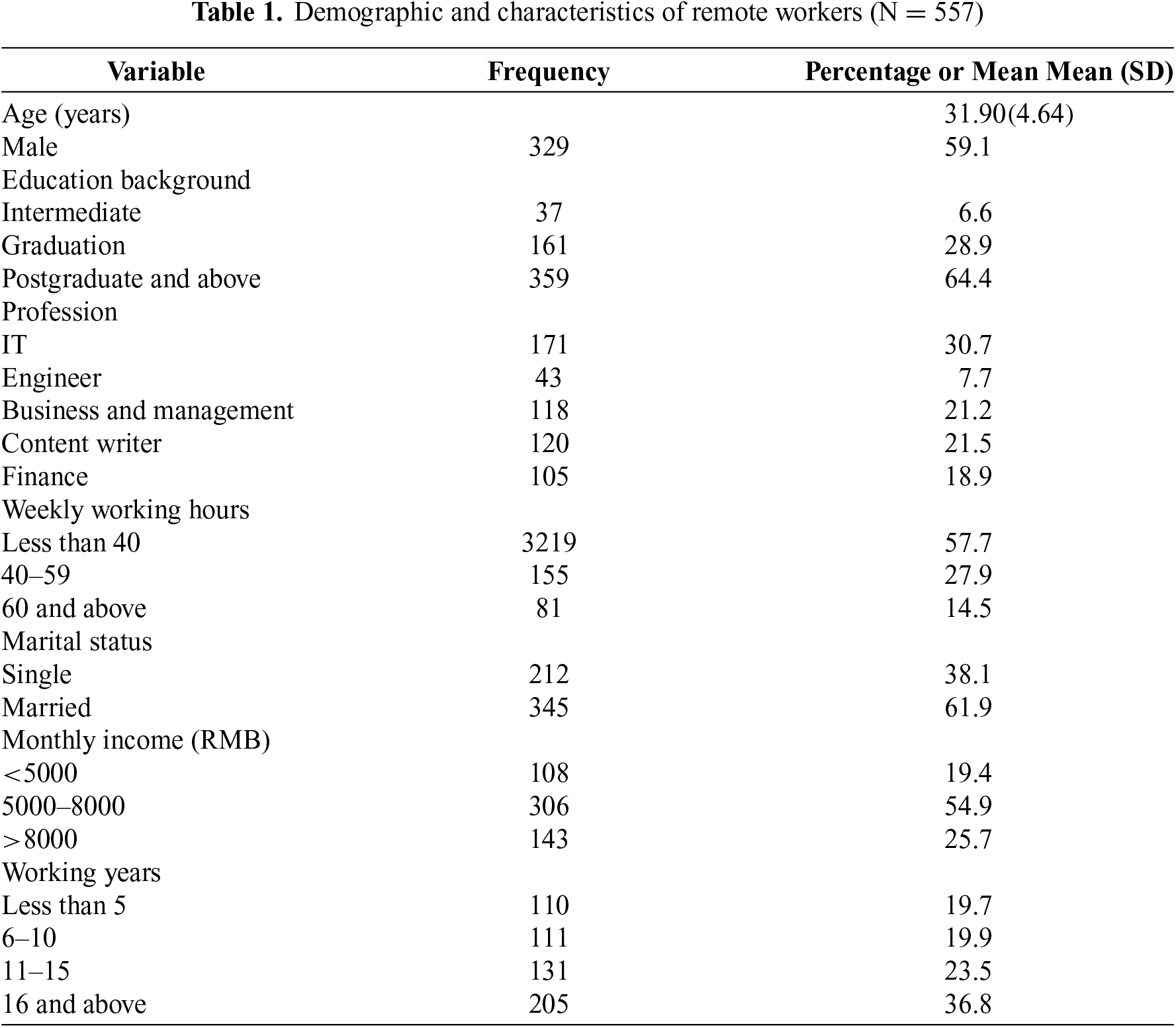
Participants self-reported their socio demographics of gender, age, education background, marital status, profession and weekly working duration. They completed the following standardized measures of burnout, work family conflict and emotional intelligence.
Work-Family Conflict Scale (WFC)
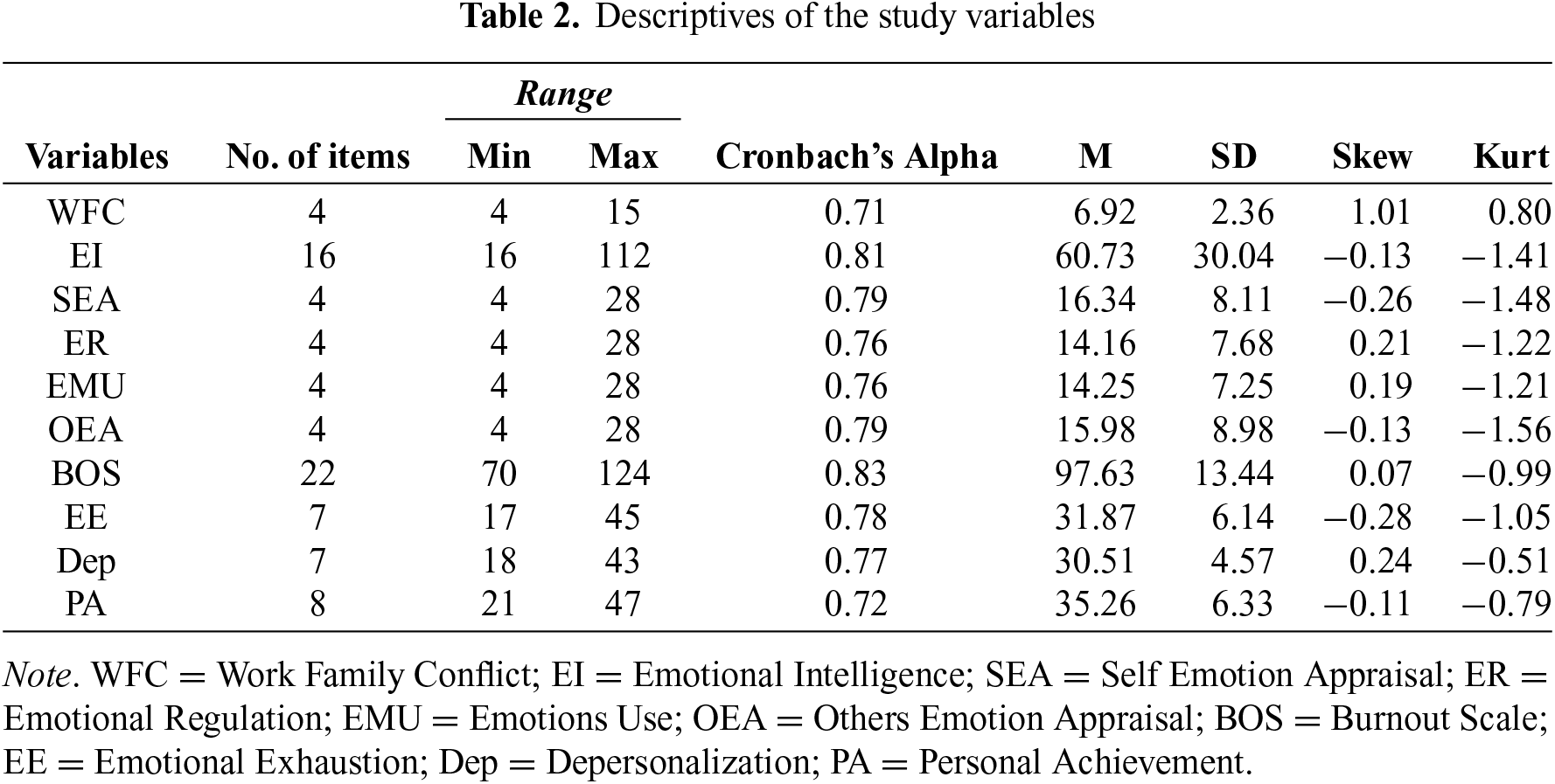
The Work-Family Conflict Scale (Breyer & Bluemke, 2016) consists of four items. The scale is constructed to assess two aspects of WFC: the negative impact of work on family life (items 1 and 2) and the negative impact of family life on work (items 3 and 4). Each item has a “Don’t know” option in addition to a 4-point rating scale with responses ranging from 1 (“several times a week”) to 4 (“never”). Higher values indicating greater conflict. The Chinese version of the scale has been shown to have a reliability coefficient of 0.74 (Tang et al., 2014; Zhang et al., 2013). Scores from the WFC yielded a reliability of 0.71 in the present study (see Table 2).
Maslach Burnout Inventory (MBI)
The Maslach Burnout Inventory (MBI; Maslach et al., 1997), comprises 22 items on three domains of burnout: emotional exhaustion, depersonalization, and personal achievement. The items are on a 7-point Likert scale, ranging from 0 (representing “never”) to 6 (representing “every day”). Higher scores higher levels of burnout. MBI scores yielded high levels of reliability in related studies (Wang et al., 2015a; Wu et al., 2018). Scores from the MBI subscales yielded reliability indices of emotional exhaustion (0.78), Depersonalization (0.77) and personal achievement (0.72) in the present study (see Table 2).
Wong and Law Emotional Intelligence Scale (WLEIS)
The Wong and Law Emotional Intelligence Scale (WLEIS; Law et al., 2004) comprises 16 items on four EI domains: self-emotions appraisal, others-emotion appraisal, emotional regulation, and use of emotions. Items are on a 7-point Likert scale, ranging from “Strongly Disagree” to “Strongly Agree.” Higher scores indicate better emotional intelligence. The reliability of scores for WLEIS subscales ranges from 0.76–0.79 in the present study (see Table 2).
The study was approved by Dezhou University. Participants provided written informed consent. They were informed of their right to withdraw from the study at any time without consequence being highlighted. Participants were also assured of confidentiality, and all responses were anonymized during data collection. Data was collected through secure, web-based platform to ensure privacy and security.
The data was analyzed with SPSS 26 and AMOS 23 (Corp, 2019). A sequence of linear regression analyses was performed to examine the moderation of EI on the relationship between burnout and WFC. Moreover, structure equation modeling (SEM) with moderation terms was utilized for estimating concurrent effects of several factors on a dependent variable (WFC). Subsequently, a simple slope analysis was performed to assess the moderating influence of the significant interaction factors (see Figure 3). The analytical methodology was based on the conceptual framework of the study (see Figure 1), guaranteeing that the interpretations of the results were both methodologically robust and contextually appropriate.
Tables 2 and 3 present the descriptive studies for the study variables.
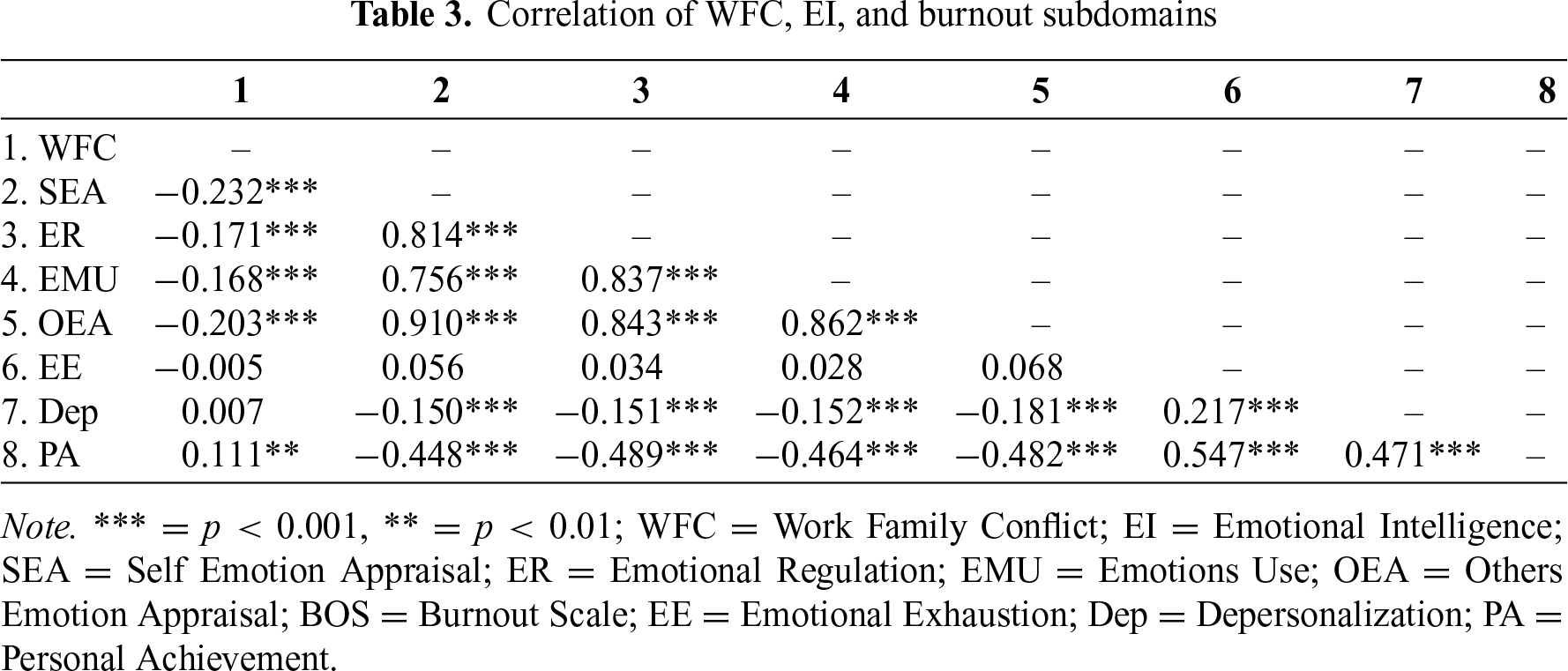
Pearson’s correlation analysis revealed significant negative relationships (p < 0.001) between WFC and all EI sub domains (see Table 4). Additionally, in relation to burnout domains, WFC showed significant positive association with reduced personal achievement. Furthermore, all EI subdomains were found negatively associated with both depersonalization and reduced personal achievement. It is noteworthy that as WFC increases, individuals experience a decrease in personal achievement. Additionally, individuals with improved emotional abilities also experience a decline in personal achievement. There was no significant correlation observed between emotional exhaustion and either WFC or EI.
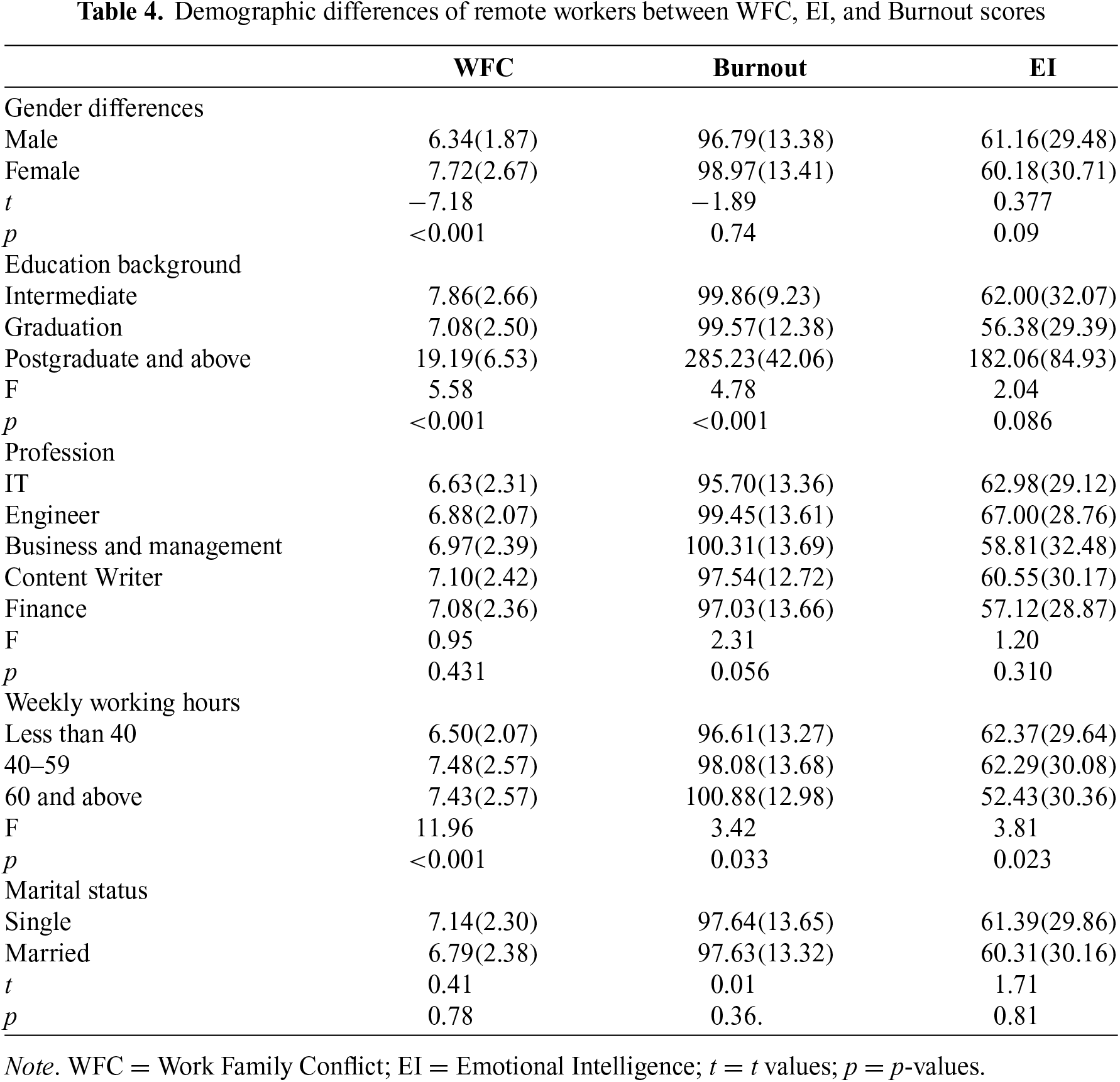
From Table 4 analysis, its apparent that gender differences are significant in WFC, with females reporting higher levels (M = 7.72) than males (M = 6.34) (p < 0.001). When considering educational background, significant differences are observed in WFC and burnout, particularly among those with a postgraduate level of education reporting much higher means, suggesting a relationship between higher education and increased perception of WFC and burnout. Professional background does not seem to significantly differentiate among WFC, EI, or burnout scores. For the rest, see Table 3.
The results of the multiple regression analysis (Table 5) indicate that among burnout domains, reduced personal achievement is the only significant predictor of WFC (B = 0.297, p = 0.009) (see Table 5). The standardized path coefficients for H1 supported a positive association between WFC and burnout (see Figure 2).
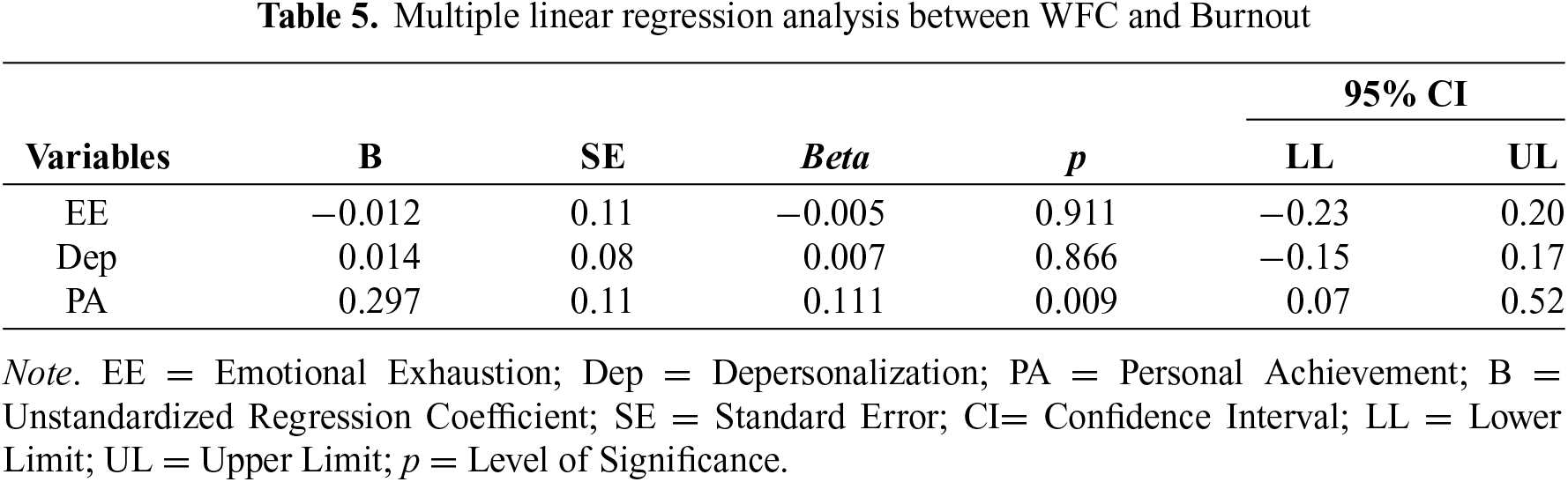

Figure 2. SEM model analysis
Emotional intelligence in burnout and WFC
All emotional intelligence skills significantly negatively predict WFC (see Tables 6 and 7). The beta values for others’ emotional appraisal and self-emotional appraisal were higher compared to other emotional intelligence skills. Individuals who possess a greater comprehension of their own emotions as well as the emotions of others tend to have less WFC. Consequently, these EI skills have a direct influence on both work and family life. In addition, the regression examination of EI and burnout did not reveal any statistically significant results.
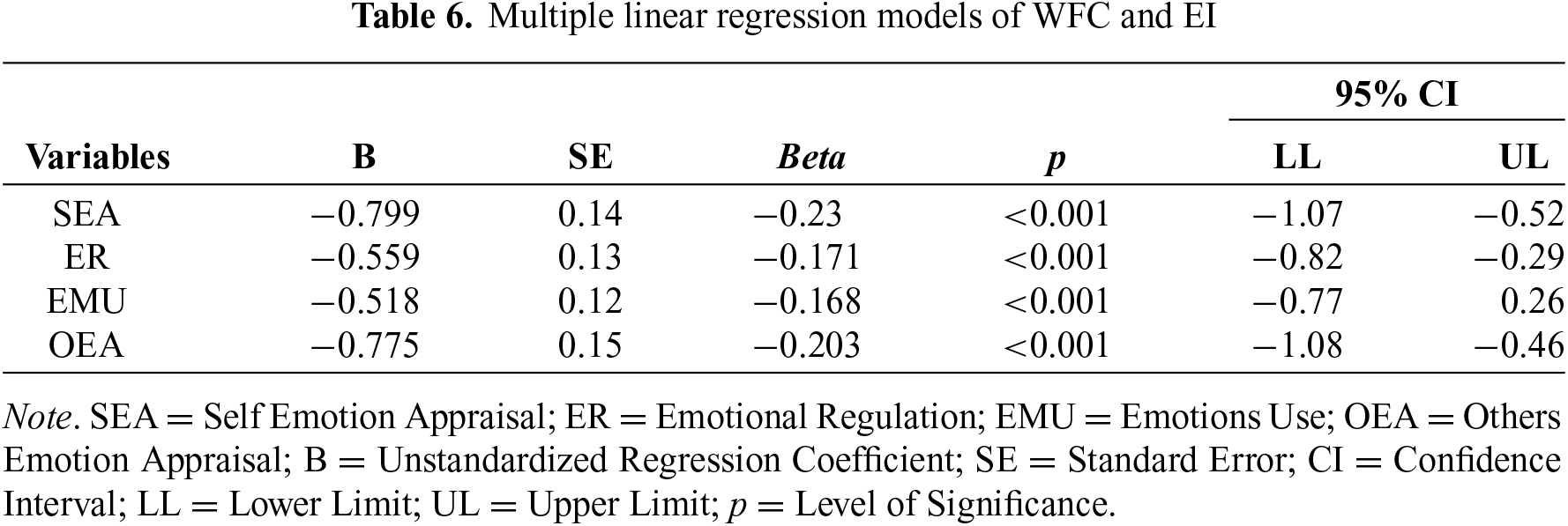
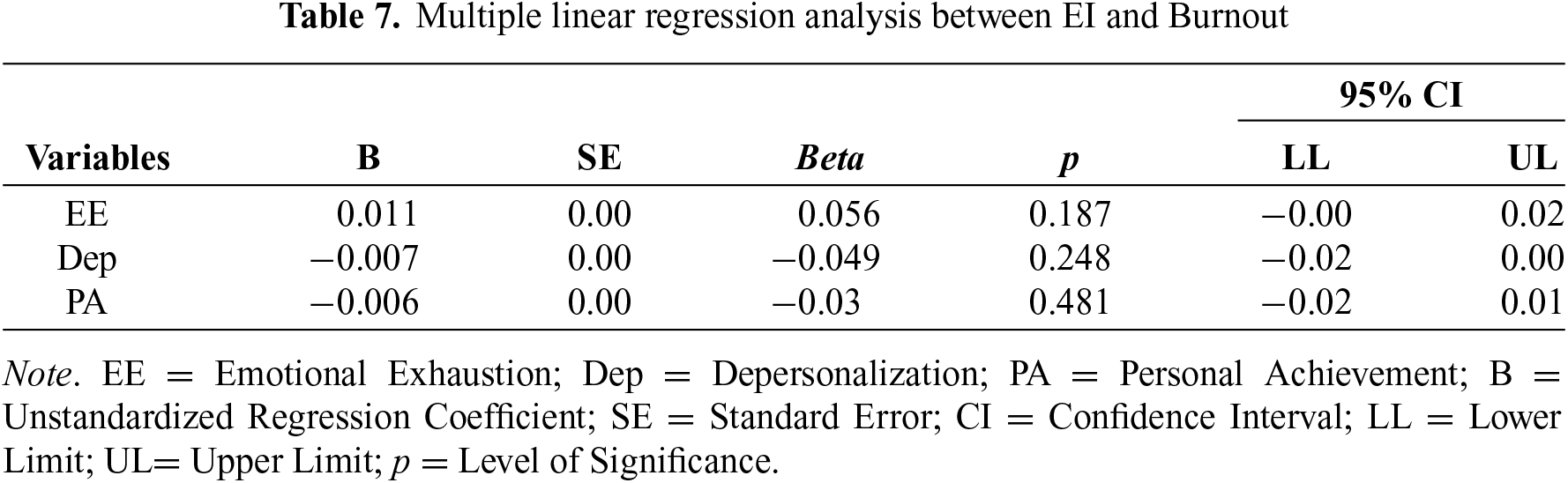
Based on the regression analysis results, which showed important links between WFC and all EI skills and reduced personal achievement and the lack of strong predictive association between EI and burnout elements, the research now proceeds to SEM. The hypothesized correlations utilizing SEM are depicted in Figure 2. In support of Hypothesis 2, the data show a strong negative association between EI and burnout. In addition, in support of Hypothesis 3, the linear regression model (see Table 6), indicates a strong negative association between WFC and all components of EI.
Table 8 reported a strong, negative interactive association with burnout (β = −0.12, p < 0.01), with regard the SEM analysis findings that confirm Hypothesis 4, indicating that the interaction between EI has a significant moderating influence on the relationship of WFC and burnout. The model fit indices supported the proposed model with acceptable values (see Table 8). It is important to note that the Chi-Square test is sensitive to sample size, which can sometimes lead to an inflated impression of mismatch (Jöreskog, 1969).
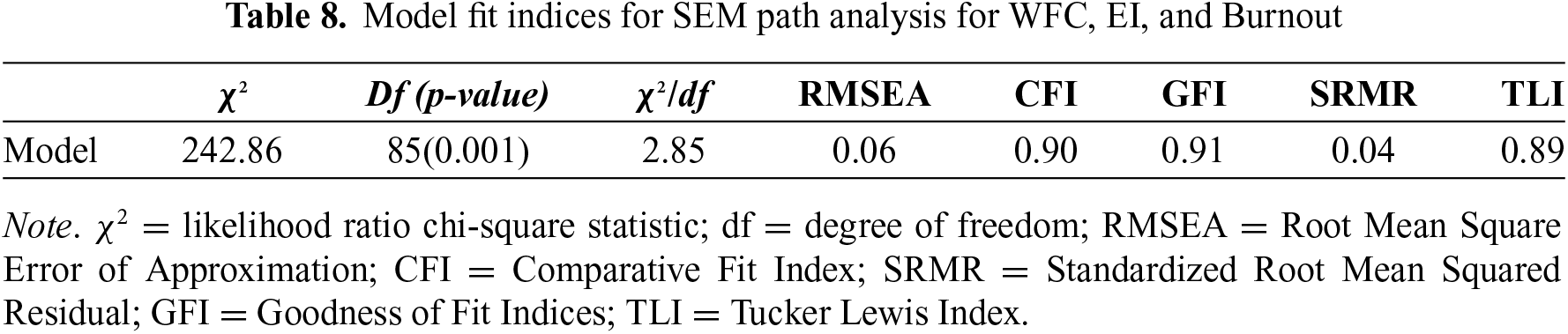
Figure 3 illustrates the moderating effects of high, medium, and low EI on the relationship between WFC and burnout. As WFC increases, burnout also increases across all levels of EI; however, the rate of this increase depends on the EI level. Individuals with high EI experience a less pronounced slope, indicating that higher levels of EI buffer the negative impact of WFC on burnout. Conversely, the slope is more pronounced for individuals with low EI, indicating a stronger relationship between WFC and burnout.

Figure 3. Moderating role of EI on the relationship between WFC and Burnout
Firstly, this study found a significant positive association between WFC and one component of burnout (i.e., reduced personal achievement). The findings align with existing literature. For example, previous studies have shown that WFC is linked to higher levels of burnout (Maslach et al., 2001) and that EI can mitigate the negative impact of work family stress (Mayer & Salovey, 1997). WFC as an important stress factor impacts work performance which may lead to impact other dimensions of burnout as well including emotional exhaustion and depersonalization (Abdelhafiz et al., 2020). However, it is also possible that reduced personal achievement could be a result of other factors such as lack of motivation or limited resources, rather than solely being caused by work-family conflict (Wang et al., 2015b).
Secondly, the study found a higher between WFC with lower EI skills. This finding may be explained by the fact that individuals having developed emotional skills may be better at managing work and life challenges resulting in reduced WFC (Akintayo, 2010). Previous studies have also reported on the protective role of EI among workers (Mayer & Salovey, 1997; Zeidner et al., 2004). This would be particularly true of professionals engaged in occupations requiring high emotional labor, such as customer service, caregiving, or social services, shown enhanced emotional competence (Chakravorty & Singh, 2020; Pekaar et al., 2017; Wang et al., 2015a).
In addition, numerous studies have repeatedly demonstrated that decreased personal achievement is linked to elevated levels of emotional exhaustion and depersonalization, which in turn contribute to burnout (Janssen et al., 1999; Sudha & Saxena, 2021; You et al., 2015). The association between work-related expectations and resources is quite apparent, and self-esteem acts as a moderator in this relationship.
These findings indicate that EI has a moderating role in the association between WFC and burnout. Finding that individuals with high EI have a less significant increase in burnout when faced with increasing WFC is consistent with the findings of Mustafa et al. (2016). Mustafa’s research has shown that EI has the ability to decrease the adverse effects of emotional strain on burnout. This comparison implies that comparable mechanisms may be involved in alleviating the impact of WFC on burnout among individuals who work remotely.
Moreover, the results indicate that those with lower EI experience a more significant increase in burnout when WFC becomes more intense. This correlation is generally attributed to challenges in regulating emotional reactions and efficiently balancing the demands of both work and family commitments. The increased conflict can also be attributed to the reduced ability of these individuals to regulate their emotions and adjust to new settings.
Implications for research and practice
The present study is one of the first to investigate the multifaceted relationship between burnout, WFC, and EI in the context of remote working in China. Moreover, the relationship between the many aspects of burnout and EI reveals complexity by inverse associations between depersonalization and subdimensions of EI, less well articulated by current burnout models (e.g., Maslach et al., 2001). Nonetheless, prioritizing the well-being of remote workers is important sustainable production. Organizations should consider working dynamics with remote working by adjusting on-site working hours since remote working is the new normal. When employer organizations reduce risks for WFC, they create safer stress remote workers, enhancing their productivity and achieving a harmonious work-life balance.
Related programs have the potential to decrease both burnout an WFC (Iacolino et al., 2023) Moreover, when organizations take regard of the association between emotional skills and work exhaustion, they create safer work environments (Kartono & Hilmiana, 2018).
Limitations and Future Directions
We have several limitations that suggest directions for further investigation. The study utilized self-report measures and these have potential social desirability bias. Moreover, the study employed a cross-sectional survey method, which restricts the capacity to determine causality. Further research using longitudinal methodology could provide a clearer understanding of the causal links between the study variables. The generalizability of the results is limited by their exclusive focus on remote workers. To increase the generalizability of the findings, future research should compare and incorporate both on-site and remote workers from a variety of professions. Additionally, the impact of work-family conflict on emotional exhaustion and depersonalization may vary depending on individual differences and coping mechanisms (Chakravorty & Singh, 2020). Further research is needed to explore the relationship between work-family conflict, burnout dimensions, and other potential contributing factors.
This study findings indicate the essential role of EI in remote workers work burnout and WFC experiences. Specifically, there are notable inverse relationships between the components of burnout and the subdimensions of EI, which emphasize the complex interaction between emotional elements and burnout. Importantly, those with high EI have a less noticeable increase in burnout, even when they encounter elevated levels of WFC. These results provide evidence that could inform the design of focused interventions that seek to improve quality of work life for with remote working, which is the new normal.
Acknowledgement: We would like to thank all the participants for their cooperation in this research.
Funding Statement: No funding was received for conducting this study.
Author Contributions: Data collection, analysis and interpretation of results, and draft manuscript preparation: Xinxin Chu; Study conception and design, and supervision: Xingyuan Sun. All authors reviewed the results and approved the final version of the manuscript.
Availability of Data and Materials: The data are available from the corresponding author on reasonable request.
Ethics Approval: This study did not involve clinical trials on humans or animals and was approved by Dezhou University. We certify that the study was performed in accordance with the Declaration of Helsinki and later amendments. Participants provided written informed consent. They were informed of their right to withdraw from the study at any time without consequence being highlighted. Participants were also assured of confidentiality, and all responses were anonymized during data collection. Data was collected through secure, web-based platform to ensure privacy and security.
Conflicts of Interest: The authors declare no conflicts of interest to report regarding the present study.
References
Abdalla, A., Li, X., & Yang, F. (2023). Stressors and job burnout of Chinese expatriate construction professionals. Engineering, Construction and Architectural Management, 32(2)705–731. https://doi.org/10.1108/ECAM-03-2023-0237 [Google Scholar] [CrossRef]
Abdelhafiz A. S., Ali A., Ziady H. H., Maaly A. M., Alorabi M. et al. (2020). Prevalence, associated factors, and consequences of Burnout among Egyptian physicians during COVID-19 pandemic. Frontiers in Public Health, 8, 281. https://doi.org/10.3389/fpubh.2020.590190 [Google Scholar] [CrossRef]
Akintayo, D. I. (2010). Influence of emotional intelligence on work-family role conflict management and reduction in withdrawal intentions of workers in private organizations. International Business & Economics Research Journal, 9(12). https://doi.org/10.19030/iber.v9i12.354 [Google Scholar] [CrossRef]
Breyer, B., & Bluemke, M. (2016). Work-family conflict scale (ISSP). In: ZIS-The collection items and scales for the social sciences. Mannheim: Social science open acess repository. https://doi.org/10.6102/ZIS243 [Google Scholar] [CrossRef]
Chakravorty, A., & Singh, P. (2020). Work/family interference and burnout among primary school teachers: The moderating role of emotional intelligence. DECISION, 47(3), 251–264. https://doi.org/10.1007/s40622-020-00249-3 [Google Scholar] [CrossRef]
Chen, S., Ntim, S. Y., Zhao, Y., & Qin, J. (2023). Characteristics and influencing factors of early childhood teachers’ work stress and burnout: A comparative study between China, Ghana, and Pakistan. Frontiers in Psychology, 14, 1115866. https://doi.org/10.3389/fpsyg.2023.1115866 [Google Scholar] [CrossRef]
Corp, I. (2019). IBM SPSS Statistics for Windows (Version 26.0), [Computer software]. UAS: IBM Corp. [Google Scholar]
Elshaiekh, N. E. M., Hassan, Y. A. A., & Abdallah, A. A. A. (2018). The impacts of remote working on workers performance. In: 2018 International Arab Conference on Information Technology (ACIT), (pp. 1–5Werdanye, Lebanon. https://doi.org/10.1109/ACIT.2018.8672704 [Google Scholar] [CrossRef]
Greenhaus, J. H., & Beutell, N. J. (1985). Sources of conflict between work and family roles. Academy of Management Review, 10(1), 76–88. https://doi.org/10.5465/amr.1985.4277352 [Google Scholar] [CrossRef]
Iacolino, C., Cervellione, B., Isgró, R., Lombardo, E. M. C., Ferracane, G. et al. (2023). The role of emotional intelligence and metacognition in teachers’ stress during pandemic remote working: A moderated mediation model. European Journal of Investigation in Health, Psychology and Education, 13(1), 81–95. https://doi.org/10.3390/ejihpe13010006 [Google Scholar] [CrossRef]
Janssen, P. P. M., Schaufelioe, W. B., & Houkes, I. (1999). Work-related and individual determinants of the three burnout dimensions. Work & Stress, 13(1), 74–86. https://doi.org/10.1080/026783799296200 [Google Scholar] [CrossRef]
Jöreskog, K. G. (1969). A general approach to confirmatory maximum likelihood factor analysis. Psychometrika, 34(2), 183–202. https://doi.org/10.1007/BF02289343 [Google Scholar] [CrossRef]
Juniarly, A., Purnamasari, A., Anggraini, D., & Andini, H. (2019). Emotional intelligence, subjective wellbeing, and work-family conflict among university lecturers. ANIMA Indonesian Psychological Journal, 33(4). https://doi.org/10.24123/aipj.v33i4.1798 [Google Scholar] [CrossRef]
Kartono, K., & Hilmiana, H. (2018). Job Burnout: A mediation between emotional intelligence and turnover intention. Jurnal Bisnis Dan Manajemen, 19(2109–121. https://doi.org/10.24198/jbm.v19i2.189 [Google Scholar] [CrossRef]
Law, K. S., Wong, C.-S., & Song, L. J. (2004). The construct and criterion validity of emotional intelligence and its potential utility for management studies. Journal of Applied Psychology, 89(3), 483–496. https://doi.org/10.1037/0021-9010.89.3.483 [Google Scholar] [CrossRef]
Leiter, M. P., & Maslach, C. (2024). Job burnout. In L. E. Tetrick, G. G. Fisher, M. T. Ford, & J. C. Quick (Eds.), Handbook of occupational health psychology, (3rd Ed., pp. 291–307). Washington, DC, USA: American Psychological Association. https://doi.org/10.1037/0000331-015 [Google Scholar] [CrossRef]
Li-Sauerwine, S., Rebillot, K., Melamed, M., Addo, N., & Lin, M. (2020). A 2-question summative score correlates with the Maslach Burnout inventory. Western Journal of Emergency Medicine: Integrating Emergency Care with Population Health, 21(3). https://doi.org/10.5811/westjem.2020.2.45139 [Google Scholar] [CrossRef]
Maslach, C., Jackson, S. E., & Leiter, M. P. (1997). Maslach burnout inventory. In Evaluating stress: A book of resources (3rd Ed., pp. 191–218). Lanham: Scarecrow Education. [Google Scholar]
Maslach, C., Schaufeli, W. B., & Leiter, M. P. (2001). Job burnout. Annual Review of Psychology, 52(1), 397–422. https://doi.org/10.1146/annurev.psych.52.1.397 [Google Scholar] [CrossRef]
Mayer, J. D., & Salovey, P. (1997). What is emotional intelligence?. In: Emotional development and emotional intelligence: Educational implications (pp. 3–34). New York: Basic Books. [Google Scholar]
Mayer, J. D., Salovey, P., & Caruso, D. R. (2004). TARGET ARTICLES: “emotional intelligence: theory, findings, and Implications”. Psychological Inquiry, 15(3), 197–215. https://doi.org/10.1207/s15327965pli1503_02 [Google Scholar] [CrossRef]
Mustafa M., Santos A., & Chern G. T. (2016). Emotional intelligence as a moderator in the emotional labour-burnout relationship: Evidence from Malaysian HR professionals. International Journal of Work Organisation and Emotion, 7(2), 143–164. https://doi.org/10.1504/IJWOE.2016.078091 [Google Scholar] [CrossRef]
Pekaar K. A., Van der Linden D., Bakker A. B., & Born M. P. (2017). Emotional intelligence and job performance: The role of enactment and focus on others’ emotions. Human Performance, 30(2–3), 135–153. https://doi.org/10.1080/08959285.2017.1332630 [Google Scholar] [CrossRef]
Sergio, R. P., Gonzales-Lim Ormita, L. A., Dungca, A. L., & Ocampo-Gonzales, J. (2015). Emotional intelligence, work/family conflict, and work values among customer service representatives: Basis for organizational support. Journal of Eastern European and Central Asian Research, 2(1). https://doi.org/10.15549/jeecar.v2i1.86 [Google Scholar] [CrossRef]
Šímová, T., & Zychová, K. (2023). Who and what is driving remote working research? A bibliometric study. Vision: the Journal of Business Perspective. https://doi.org/10.1177/09722629221139064 [Google Scholar] [CrossRef]
Sudha, K. S., & Saxena, M. (2021). Affective states and emotional exhaustion: Mediating role of depersonalisation and personal accomplishment. Asia-Pacific Journal of Management Research and Innovation, 17(3–4), 129–136. https://doi.org/10.1177/2319510X221135947 [Google Scholar] [CrossRef]
Tang, S., Siu, O., & Cheung, F. (2014). A study of work-family enrichment among Chinese employees: The mediating role between work support and job satisfaction. Applied Psychology: An International Review, 63(1130–150. https://doi.org/10.1111/j.1464-0597.2012.00519.x [Google Scholar] [CrossRef]
Van Zoonen, W., & Sivunen, A. E. (2022). The impact of remote work and mediated communication frequency on isolation and psychological distress. European Journal of Work and Organizational Psychology, 31(4), 610–621. https://doi.org/10.1080/1359432X.2021.2002299 [Google Scholar] [CrossRef]
Wang, X., Li, Z., Ouyang, Z., & Xu, Y. (2021a). The Achilles heel of technology: How does technostress affect university students’ wellbeing and technology-enhanced learning. International Journal of Environmental Research and Public Health, 18(23), 12322. https://doi.org/10.3390/ijerph182312322 [Google Scholar] [CrossRef]
Wang, B., Liu, Y., Qian, J., & Parker, S. K. (2021b). Achieving effective remote working during the COVID-19 pandemic: A work design perspective. Applied Psychology, 70(1), 16–59. https://doi.org/10.1111/apps.12290 [Google Scholar] [CrossRef]
Wang, S., Liu, Y., & Wang, L. (2015a). Nurse Burnout: Personal and environmental factors as predictors. International Journal of Nursing Practice, 21(178–86. https://doi.org/10.1111/ijn.12216 [Google Scholar] [CrossRef]
Wang, Y., Ramos, A., Wu, H., Liu, L., Yang, X. et al. (2015b). Relationship between occupational stress and burnout among Chinese teachers: A cross-sectional survey in Liaoning. China International Archives of Occupational and Environmental Health, 88(5), 589–597. https://doi.org/10.1007/s00420-014-0987-9 [Google Scholar] [CrossRef]
Wu, G., Wu, Y., Li, H., & Dan, C. (2018). Job Burnout, work-family conflict and project performance for construction professionals: The moderating role of organizational support. International Journal of Environmental Research and Public Health, 15(122869. https://doi.org/10.3390/ijerph15122869 [Google Scholar] [CrossRef]
Xu S., Ju D., Chen Y., Wu M., Wang L. et al. (2023). Analysis of the correlation between clinical nurses’ professional quality of life and family care and organizational support. Frontiers in Public Health, 11, 1108603. https://doi.org/10.3389/fpubh.2023.1108603 [Google Scholar] [CrossRef]
You, X., Huang, J., Wang, Y., & Bao, X. (2015). Relationships between individual-level factors and burnout: A meta-analysis of Chinese participants. Personality and Individual Differences, 74(3), 139–145. https://doi.org/10.1016/j.paid.2014.09.048 [Google Scholar] [CrossRef]
Zainal, N., Din, N., & Radhakrishnan, M. (2022). Effect of work- family conflict on employee’s psychological well-being: Role of emotional intelligence. Retrieved from: https://api.semanticscholar.org/CorpusID:252082843. [Google Scholar]
Zeidner, M., Matthews, G., & Roberts, R. D. (2004). Emotional intelligence in the workplace: A critical review. Applied Psychology, 53(3), 371–399. https://doi.org/10.1111/j.1464-0597.2004.00176.x [Google Scholar] [CrossRef]
Zhang, M., Foley, S., & Yang, B. (2013). Work-family conflict among Chinese married couples: Testing spillover and crossover effects. The International Journal of Human Resource Management, 24(17), 3213–3231. https://doi.org/10.1080/09585192.2013.763849 [Google Scholar] [CrossRef]
Zhang, C., Yu, M. C., & Marin, S. (2021). Exploring public sentiment on enforced remote work during COVID-19. Journal of Applied Psychology, 106(6), 797–810. https://doi.org/10.1037/apl0000933 [Google Scholar] [CrossRef]
Zheng, J., Gou, X., Li, H., Xia, N., & Wu, G. (2021). Linking work-family conflict and burnout from the emotional resource perspective for construction professionals. International Journal of Managing Projects in Business, 14(51093–1115. https://doi.org/10.1108/IJMPB-06-2020-0181 [Google Scholar] [CrossRef]
Zhou, D., Yang, S., & Li, X. (2022). Internet use and job satisfaction: Evidence from China. International Journal of Environmental Research and Public Health, 19(19), 12157. https://doi.org/10.3390/ijerph191912157 [Google Scholar] [CrossRef]
Cite This Article
 Copyright © 2025 The Author(s). Published by Tech Science Press.
This work is licensed under a Creative Commons Attribution 4.0 International License , which permits unrestricted use, distribution, and reproduction in any medium, provided the original work is properly cited.
 Downloads
 Citation Tools
