
 Login
Login Register
 Submit a Paper
 Propose a Special lssue
 Open Access
ARTICLE

Parental cognitive ability effects on children’s logical reasoning ability: The mediating role of academic expectation and the family environment
1 Department of Psychology, Hunan Normal University, Changsha, 410081, China
2 College of Education, Pingxiang University, Pingxiang, 337055, China
* Corresponding Author: Xuhuan Wang. Email:
Journal of Psychology in Africa 2025, 35(4), 497-503. https://doi.org/10.32604/jpa.2025.070069
Received 15 June 2024; Accepted 08 June 2025; Issue published 17 August 2025
 View Full Text
 Download PDF
Abstract
This study investigated the relationship between parental cognitive ability and child logical reasoning ability, and the role of academic expectation and family environment in that relationship. Based on the 2020 China Family Panel Studies (CFPS) data, 1491 children (girls ratio = 53.78%; average grade = 6.023 years, school grade standard deviation = 1.825 years). Results following multiple regression model (OLS) show that the higher the parental cognitive ability, the higher the children’s logical reasoning ability. Secondly, parental academic expectation serves as a mediator between their cognitive ability and children’s logical reasoning ability for higher logical reasoning by children. Third, a possible family environment acts as a mediator in the relationship between parents’ cognitive ability and children’s logical reasoning ability to be higher. We conclude from these findings that parents with high cognitive abilities can enhance their children’s logical reasoning skills not only by setting higher academic expectations, but also by cultivating a supportive family environment. These findings imply a need for intervention to improve family quality of life to enhance children’s thinking abilities to optimize their academic learning.Keywords
A child’s development is embedded within a complex system of relationships. Among the many relationships that influence a child’s growth, the most significant is the relationship between parents and child. The quality of early parent-child relationships has a profound impact on a child’s socio-emotional, cognitive, neurobiological, and overall health and well-being (Frosch et al., 2019). How parents function mentally would influence children’s academic success, and with implications for subsequent career attainment (Zhou et al., 2021). Socioeconomic status and home mathematics environment are closely related to children’s math achievement (Muñez et al., 2021). This effect could occur through modeling of logical reasoning to the children as a social earning process. Yet, these logical propositions have not been tested utilizing big data for definitive conclusions. This study utilized a large Chinese family and children data set to explore how parental cognitive ability effects on children’s logical reasoning ability through two mediating variables: academic expectation and family environment.
Social learning theory proposes that children learn social skills by observing and imitating their parental behavior. In addition, the theory of family socialization emphasizes the role of the family environment in children’s cognitive and emotional development, pointing out that a positive family education environment can significantly promote children’s cognitive development. For example, Mpofu found that social class affects children’s skill orientation (Mpofu, 1994).
Parental cognitive ability and children’s logical reasoning
Cognitive ability, particularly fluid intelligence assessed by matrix reasoning tasks, significantly predict offspring’s logical reasoning development (Anger & Heineck, 2009). Cognitive ability includes fluid intelligence (e.g., memory capacity) and crystallized intelligence (e.g., logical reasoning ability) (Peking University Social Science Survey Center, 2020). Good parenting requires one to know the concept of good parenting, the idea of parenting, the importance of parenting and children’s needs, the components of parenting, and the consequences of parenting (Lanjekar et al., 2022). Teaching methods are necessary to increase the critical thinking disposition and learning competence of students (Oh et al., 2021). Thus, the cognitive ability of parents may be due to the problem-solving methods and logicality demonstrated by parents in front of their children.
Logical reasoning in children’s cognitive development involves forming complete representations of their environment by “filling in” inaccessible information through ruling out known alternatives (Cheng & Kibbe, 2024). For instance, a study recorded the development trajectory of digital knowledge from preschool to primary school, and found that these trajectories significantly predicted children’s later math performance, further highlighting the importance of early cognitive development (Garon-Carrier et al., 2018). Importantly, a higher level of parental education is linked to increased participation in numeracy activities with their children, which positively influences the children’s mathematical skills (Zou et al., 2022). Moreover, the ability of children aged 4–7 years to use exclusion reasoning to track occluded objects is evidence of significant cognitive development, with maternal education being the strongest determining factor Gonz. Moreover, when parents encourage children to engage in strategic and reasoning activities, such as board games, they can significantly improve the children’s logical reasoning skills. In conclusion, parental cognitive ability may influence the development of children’s logical reasoning ability through either direct or indirect ways (Blanch, 2022).
Academic expectation of parents refer to expectations and beliefs regarding their children’s academic achievement, cognitive development, and educational goals (Zhao, 2023). A meta-analysis (Pinquart & Ebeling, 2019) assessed associations between parental educational expectation and child achievement and found that parental expectations predicted change in child achievement in overall achievement, mathematics, language and literacy. When parents communicate positive educational expectation to their children, such as checking homework and staying in contact with teachers (Pinquart & Ebeling, 2019), they influence future-oriented cognitive abilities in children (Zhan et al., 2023). In conclusion, parental academic expectation improve their logical reasoning ability by motivating their children to study harder.
Over the past three decades, a growing number of studies have provided empirical evidence that the home learning environment is an important predictor of differences in children’s academic achievement (Lehrl et al., 2020). Family is the first class of life, with the multiple dimensions of family atmosphere, parent-child interaction and family rules. For instance, as a family environment factor, insufficient parent-child interaction time is associated with lower levels of growth (Waters et al., 2023). Similarly, family learning activities, such as reading, playing, and drawing are correlated with children’s nonverbal reasoning scores and vocabulary scores (Hoyne & Egan, 2022), which underscores the potential role of the home-based learning environment. Also, the family’s digital communication capabilities are significantly related to children’s digital skill learning (Lee et al., 2023).
Parents unable to understand their children’s motivations and who use insults, ridicule, warnings, reminders, threats, and punishments may hamper child development. For instance, these loveless behaviors of parents can lead to children developing self-doubt in terms of emotions and behavior. However, while the family learning environment contributes to early childhood mathematics, no association was found between frequency calculation activities (Stefanie et al., 2021), which suggests a need for further study.
The present study explored parental cognitive ability effects on children’s logical reasoning ability by the double mediating roles of parental academic expectation and family environment in that relationship. Figure 1 presents the conceptual model. We tested the following hypotheses:
H1: Parental cognitive ability is associated with higher children’s logical reasoning ability.
H2: Parental academic expectation plays a mediating role in the relationship between parental cognitive ability and children’s logical reasoning ability for higher levels of children’s reasoning.
H2 (a): Parental cognitive ability is associated with parental academic expectation of children.
H2 (b): Parental academic expectation is associated with children’s logical reasoning ability.
H3: Family environment plays a mediating role in the relationship between parental cognitive ability and children’s logical reasoning ability.
H3 (a): Parental cognitive ability is associated with a pro-learning family environment.
H3 (b): Pro-learning family environment is associated with higher children’s logical reasoning ability.

Figure 1: Model assumptions
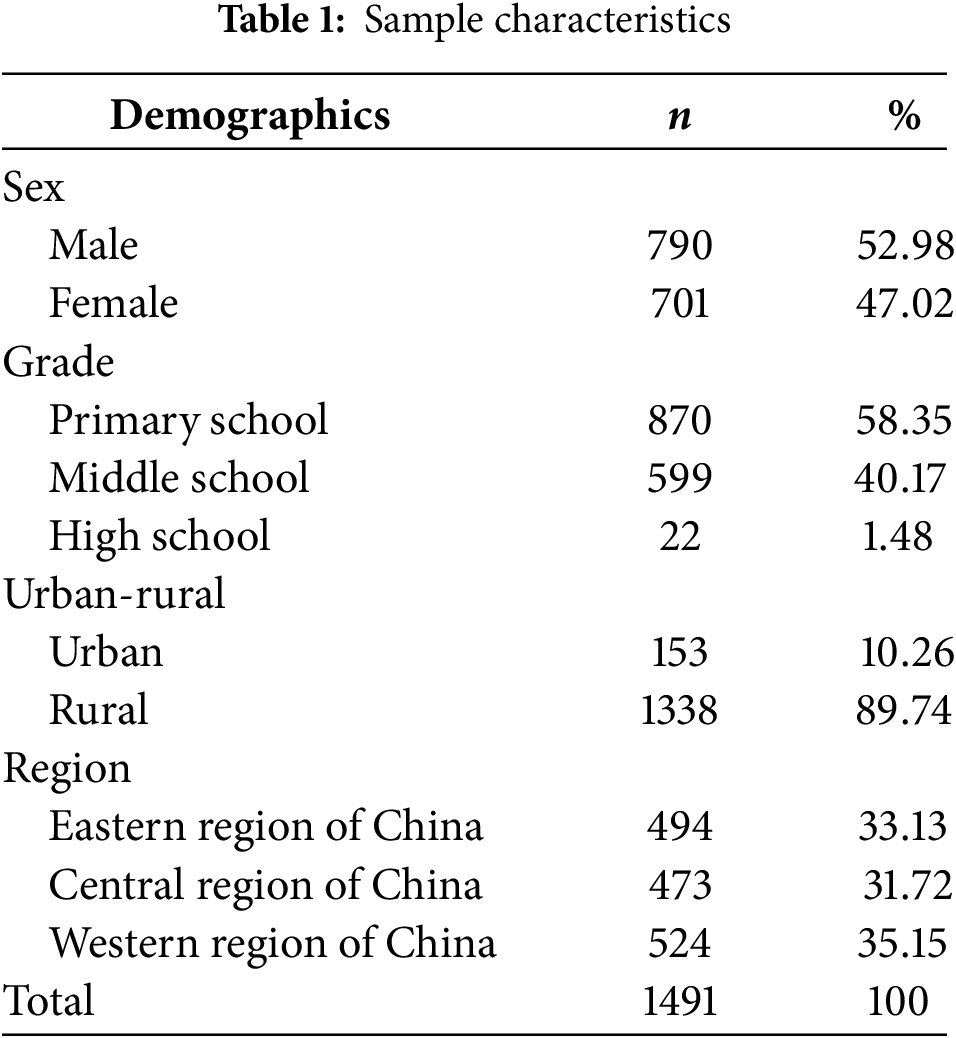
The data for this study’s results are the 2020 China Family Panel Studies (CFPS) The sample comprised of 1491 children (girls ratio = 53.78%; average grade = 6.023 years, school year standard deviation = 1.825 years). Table 1 reports the study sample demographics. By gender grouping, male (n = 790) comprised 52.98% of the sample. The number of students from the primary school grades was 870, accounting for 58.35%. Students from the western region (n = 524) accounted for 35.15% of the sample. Parents (n = 764) were part of the CFPS (females = 49.08%, mean age = 42 years, SD = 5.2 years).
Participants reported the sociodemographic information of the children, including gender, grade, household registration, and region of residence. The children completed a logical reasoning ability test (serial test items), and parents completed a cognitive ability test (serial test items, memory test items). The parents also answered questions about their academic expectations for their children. These measures and items were as follows.
Children’s logical reasoning ability was assessed using 15 questions on logical reasoning ability. Sample questions are “8, blank, 12, 14”, “18, 17, 15, blank, 8”. Please observe these numbers from left to right, then fill in the number that should be in the blank space. The questions were scored as 1 = correct, 0 = incorrect. The final score range is 0 to 15 points.
The parents responded to 25 questions on their cognitive ability. Sample questions include numerical sequences (e.g., “8, blank, 12, 14” and “18, 17, 15, blank, 8”, requiring pattern-based blank filling) and memory tests (e.g., recalling items like rice, river, doctor, clothes, egg, kitten, bowl, child, hand, book after a 2-min interval). Cognitive ability scores were calculated separately for fathers and mothers, with parental cognitive ability assessed as the average of both parents’ scores.
The responses were scored 1 (correct) or 0 (incorrect). The reliability of parent cognitive ability scores was 0.785.
The parent academic expectations measure comprised 1 item. Parents’ responses regarding their child’s current or next semester’s expected average score (out of 100 points) are used to measure the child’s anticipated academic performance.
The family environment measure asked 5 questions about how parents care about the children’s education, parents’ active communication and communication between parents and children. The items are scored from 1 (low) to 5 (high), respectively. The reliability of family environment scores was 0.794.
We controlled for Gender (1 male and 0 female), considering the potential effect of gender on logical reasoning ability, Grade level 0 years through 12 years (or high school), and geographical location (Urban = 1 and rural = 0).
The China Family Panel Studies (CFPS) database of 2020 is publicly available. The database samples are from 162 counties in 25 provinces/municipalities/autonomous regions. Since publicly available, there was no need for ethics approval to utilize these data for study.
Based on the above theoretical analysis of parental cognitive ability, academic expectation, family environment and children’s logical reasoning ability, this paper introduces the OLS model for the analysis. The basic regression model is constructed as follows:
To further investigate the indirect effects of parental cognitive ability, academic expectation, family environment and children’s logical reasoning ability, the mediation effect model was established as follows:
In the above expression, i represents different individuals, representing the collection of control variables, which is the intercept term, representing the random error term, representing the province fixed effect.
Descriptive statistics and correlation analysis
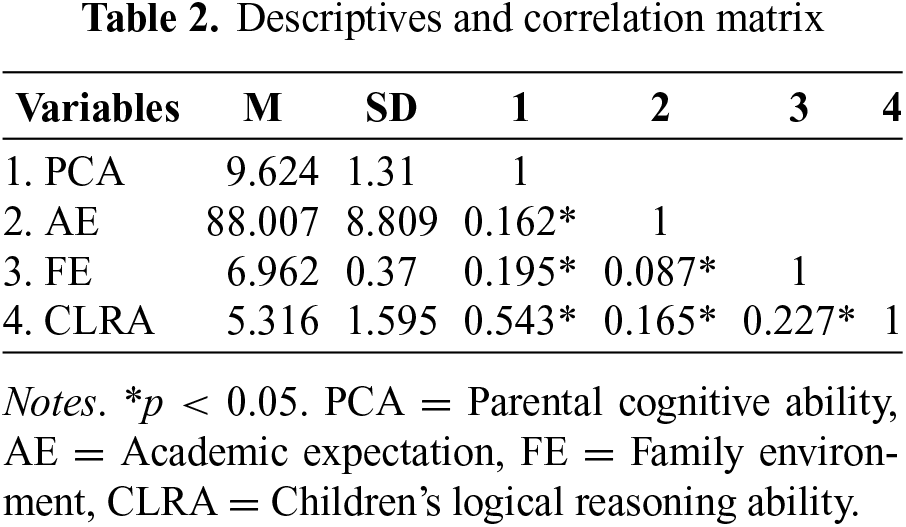
The correlation analysis of the four variables of parental cognitive ability, academic expectation, family environment and children’s logical reasoning ability found significant pairwise correlations among the four variables (Table 2).
Parental cognitive ability and children’s logical reasoning main effect
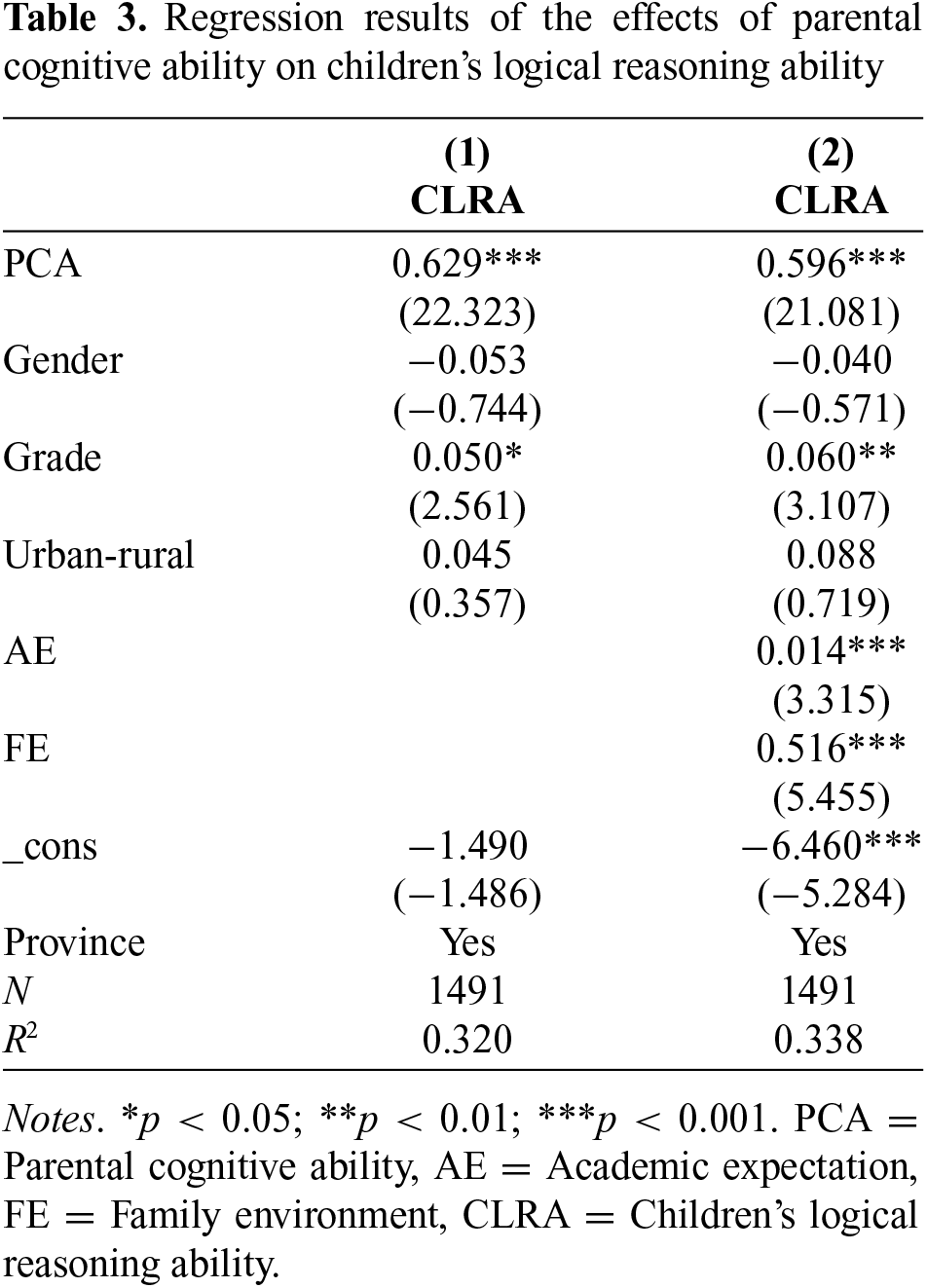
As in Table 3, parental cognitive ability had a positive impact on children’s logical ability, and which was not limited by gender and household registration, but grade was significantly positively correlated with children’s logical reasoning ability. From the regression results of the whole variable in column 2, the coefficient of parental cognitive ability score (PCA) was 0.596, and this coefficient was significant at 1‰; this indicates that parental cognitive ability score has a significant positive promotion effect on children’s logical reasoning ability, in support of Hypothesis 1.
Dual mediation of academic expectation and family environment
Among the mediation variables, the coefficient for academic expectation (AE) was 0.014 (p < 0.01) The coefficient of family environment (FE) was 0.516 (p < 0.01). These findings indicate a significant positive correlation between academic expectation and the logical reasoning ability of children (supporting Hypothesis 2(b)), and also for the family environment variable (supporting Hypothesis 3(b)).
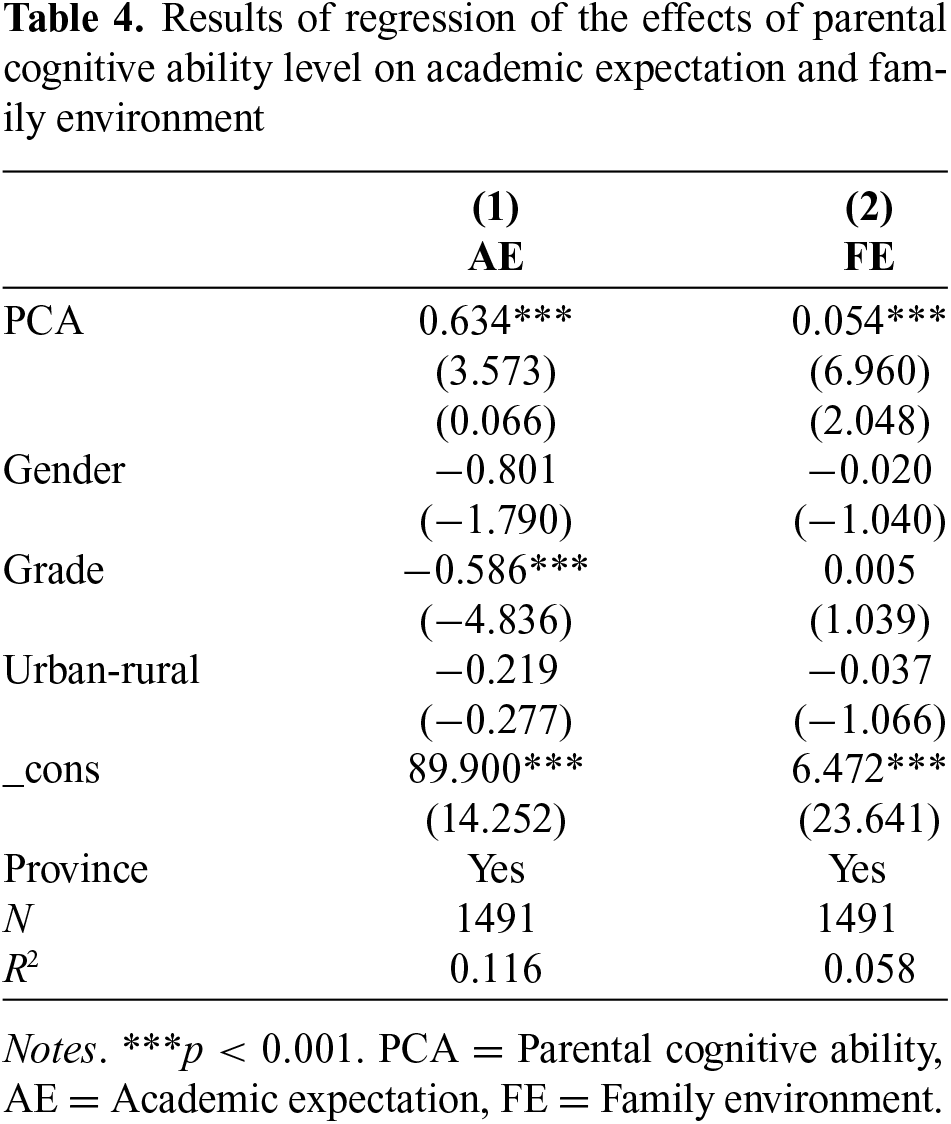
As in Table 4, the coefficient of parental cognitive ability (PCA) was 0.634 to suggest that parental cognitive ability can promote children’s logical reasoning ability by improving their academic expectation, supporting Hypothesis 2. Moreover, the coefficient of parental cognitive ability (PCA) is 0.054 (p < 0.01), suggesting that parental cognitive ability can promote children’s logical reasoning ability by improving the family environment, supporting Hypothesis 3.
Firstly, parental cognitive ability predicted children’s logical reasoning ability, which is consistent with social cognitive learning theory (Clermont et al., 2004), which emphasizes that children learn new cognitive and social interaction skills by observing and imitating their parental behaviors (see also Zhou et al., 2021; Barg & Klein, 2023; Garon-Carrier et al., 2018). In this study, particularly the logical thinking and problem-solving skills of parents played a key predictive role in the development of children’s logical reasoning ability. Parental cognitive ability significantly predicts children’s logical reasoning skills through two mechanisms: direct cognitive transmission (e.g., enhanced problem-solving modeling) and resource optimization (e.g., monetary and non-monetary investment in education) (Marks & O’Connell, 2023; Wang et al., 2023a, 2023b; Wang et al., 2021). This occurs because cognitively skilled parents not only demonstrate advanced reasoning patterns but also strategically allocate resources to maximize developmental outcomes. Helping children and their families at earlier stages of negative development may increase potential immediate benefits (Tømmerås et al., 2018).
Secondly, parental academic expectation serve as a mediator between their cognitive ability and children’s logical reasoning ability. According to socio-cognitive learning theory (Schunk, 2013), parental expectation can significantly motivate children’s learning behaviors and cognitive development (see also Carkoglu et al., 2023; Pinquart & Ebeling, 2019; Zhan et al., 2023; Yamamoto & Holloway, 2010). Parenting behaviors, including expectations, influence subsequent neurocognitive development during adolescence (Dandash et al., 2021), with academically-oriented behaviors like tutoring and homework supervision having the largest impact on students (Liu et al., 2019). The gap between expectations and children’s abilities may weaken effectiveness, necessitating dynamic adaptation to individual development (Herbert et al., 2023).
Thirdly, the family environment acts as a mediator in the relationship between parents’ cognitive ability and children’s logical reasoning ability. This suggests that positive aspects of the family environment, such as the harmony of the family atmosphere, the quality of parent-child interaction, and the initiative of communication are key factors influencing children’s logical reasoning ability (Lehrl et al., 2020; Hoyne & Egan, 2022). The significant impact of parents’ education level and occupation on children’s decision-making ability has been reported by previous studies (Gong et al., 2021; Gan & Bilige, 2019). This effect could be emotional involvement of parents in their children’s education (Gan & Bilige, 2019, Waters et al., 2023, Devine et al., 2016). Family interactions significantly change how children engage, play, and communicate from infancy onward (Istenič Starčič et al., 2023). Fathers’ reading books (picture books) significantly positively relates to children’s higher skills, singing and playing games outdoors correlates with better social-emotional children (Yue et al., 2024). Preliminary evidence also suggests this mediation involves maturation of connectivity between higher-order control networks (Pozzi et al., 2021).
Implications for research and practice
The results of this study have far-reaching implications for education, offering practical strategies for schools, parents, and policymakers to enhance children’s logical reasoning ability. Firstly, from the school education perspective, schools should value the critical role of parents’ cognitive levels in the development of children’s logical reasoning ability. By organizing parent workshops and school-family cooperation projects, schools can offer strategies and tools to assist parents in more effectively participating in their children’s learning journey (Lehrl et al., 2020; Zeng, 2024). Moreover, schools can encourage interactive games between parents and children to enhance the children’s thinking skills.
Secondly, on the home education front, parents should actively utilize available educational resources, such as reading educational books and engaging in educational activities, to improve their cognitive ability. As the first teachers of their children, parents should create a conducive learning environment at home, provide necessary learning materials, and maintain a quiet and tidy study space (Niklas et al., 2018). Encouraging children to study diligently to achieve excellent results is also essential.
Thirdly, from the social support perspective, there should be a commitment to providing educational resources and support, especially for low-income families, to help parents improve their cognitive ability (Miller & Eakin, 2011). Concurrently, policies should be established and implemented to eliminate the unequal impact of social factors like gender and household registration background on children’s educational opportunities, thereby promoting the development of logical reasoning skills in all children within an equitable environment.
Limitations and future directions
The cross-sectional design of this study limits the determination of causality. Future research should adopt a longitudinal design, incorporating multi-wave data to reveal the long-term dynamics among the study variables. The self-report measure used for this study has social desirability limitations, and needs to be backed by direct observational data in future studies. Also future studies should pay attention to children’s individual differences, such as self-efficacy and learning motivation, which significantly affect logical reasoning ability.
In conclusion, this study found parental cognitive ability has a significant positive influence on parental academic expectation, family environment, and on children’s logical reasoning ability. Also, parental academic expectation plays a mediating role in the relationship between parental cognitive ability and children’s logical reasoning ability. Family environment plays a mediating role in the relationship between parental cognitive ability and children’s logical reasoning ability.
This study’s findings suggest that the higher the cognitive level of parents, the stronger the logical reasoning ability of children. Moreover, parents’ cognitive ability can enhance children’s logical reasoning ability through academic expectation which also improves the family environment for school achievement. The family environment is positively correlated with children’s logical reasoning ability, and may enhance children’s logical reasoning ability by providing rich learning resources, positive parent-child interactions, and a supportive family atmosphere. The study’s findings emphasize the pivotal role of academic expectation and family environment as mediators between parents’ cognitive ability and children’s logical reasoning skills, suggesting that parents’ cognitive levels can significantly foster children’s cognitive development.
Acknowledgement: Not applicable.
Funding Statement: The study was supported by scientific research fund of Jiangxi Provincial Social Sciences “14th Five-Year Plan” (No. 23SH05).
Author Contributions: The authors confirm contribution to the paper as follows: study conception and design: Qing Wang, Xuhuan Wang; data collection: Qing Wang; analysis and interpretation of results: Qing Wang, Xuhuan Wang, Haiyan Xu; draft manuscript preparation: Qing Wang, Xuhuan Wang. All authors reviewed the results and approved the final version of the manuscript.
Availability of Data and Materials: The data for the results of this study can be obtained from the 2020 China Family Panel Studies (CFPS) according to reasonable requirements. https://cfpsdata.pku.edu.cn/#/home.
Ethics Approval: Not applicable.
Conflict of Interest: The authors declare no conflicts of interest to report regarding the present study.
References
Anger S., & Heineck G. (2009). Do smart parents raise smart children? The intergenerational transmission of cognitive abilities. Journal of Population Economics, 23(3), 1105–1132. https://doi.org/10.1007/s00148-009-0298-8 [Google Scholar] [CrossRef]
Barg, K., & Klein, M. (2023). Maternal occupation-specific skills and childrens cognitive development. Sociology. https://doi.org/10.31235/osf.io/m7uhw. [Google Scholar] [CrossRef]
Blanch, Á. (2022). Chess instruction improves cognitive abilities and academic performance: Real effects or wishful thinking? Educational Psychology Review, 34(3), 1371–1398. https://doi.org/10.1007/s10648-022-09670-9 [Google Scholar] [CrossRef]
Carkoglu, C., Eason, S. H., & Purpura, D. J. (2023). Building the parent and child math anxiety network model from empirical evidence. Child Development Perspectives, 17(3–4), 115–121. https://doi.org/10.1111/cdep.12484 [Google Scholar] [CrossRef]
Clermont, Y., Lavoie, M., & Bélanger, J. (2004). Transmission des savoirs, reproduction sociale et inégalités: une étude longitudinale auprès de jeunes Québécois. Presses de l'Université Laval. Retrived from: https://www.pulaval.com/produit/ [Google Scholar]
Cheng, C., & Kibbe, M. M. (2024). Children’s use of reasoning by exclusion to infer objects’ identities in working memory. Journal of Experimental Child Psychology, 237(5), 105765. https://doi.org/10.1016/j.jecp.2023.105765. [Google Scholar] [PubMed] [CrossRef]
Dandash O., Cherbuin N., Schwartz O., Allen N. B., & Whittle S. (2021). The long-term associations between parental behaviors, cognitive function and brain activation in adolescence. Scientific Reports, 11(1), 11120. https://doi.org/10.1038/s41598-021-90474-2. [Google Scholar] [PubMed] [CrossRef]
Devine, R. T., Bignardi, G., & Hughes, C. (2016). Executive function mediates the relations between parental behaviors and children’s early academic ability. Frontiers in Psychology, 7, 1012. https://doi.org/10.3389/fpsyg.2016.01902. [Google Scholar] [PubMed] [CrossRef]
Frosch, C. A., Schoppe-Sullivan, S. J., & Banion, D. D. (2019). Parenting and child development: A relational health perspective. American Journal of Lifestyle Medicine, 15(1), 45–59. https://doi.org/10.1177/1559827619849028. [Google Scholar] [PubMed] [CrossRef]
Gan, Y. B., & Bilige, S. (2019). Parental involvement in home-based education and children’s academic achievement in China. Social Behavior and Personality, 47(12), 1–15. https://doi.org/10.2224/sbp.8491 [Google Scholar] [CrossRef]
Garon-Carrier, G., Boivin, M., Lemelin, J-P., Kovas, Y., Parent, S. et al. (2018). Early developmental trajectories of number knowledge and math achievement from 4 to 10 years: Low-persistent profile and early-life predictors. Journal of School Psychology, 68(9), 84–98. https://doi.org/10.1016/j.jsp.2018.02.004. [Google Scholar] [PubMed] [CrossRef]
Gong, W. K., Rolls, E. T., Du, J. N., Feng, J. F., & Cheng, W. (2021). Brain structure is linked to the association between family environment and behavioral problems in children in the ABCD study. Nature Communications, 12(1), 3769. https://doi.org/10.1038/s41467-021-23994-0. [Google Scholar] [PubMed] [CrossRef]
Herbert, W. M., Reinhard, P., Jiesi, G., John, H., & Eyal, K. (2023). Too much of a good thing might be bad: The double-edged sword of parental aspirations and the adverse effects of aspiration-expectation gaps. Educational Psychology Review, 35(2), 174. https://doi.org/10.1007/s10648-023-09768-8 [Google Scholar] [CrossRef]
Hoyne, C., & Egan, S. (2022). ABCs and 123s: A large birth cohort study examining the role of the home learning environment in early cognitive development. Journal of Experimental Child Psychology, 221(1), 105424. https://doi.org/10.1016/j.jecp.2022.105424. [Google Scholar] [PubMed] [CrossRef]
Istenič Starčič, A., Rosanda, V., & Gačnik, M. (2023). Surveying parents of preschool children about digital and analogue play and parent-child interaction. Children, 10(2), 251. https://doi.org/10.3390/children10020251. [Google Scholar] [PubMed] [CrossRef]
Lanjekar, P. D., Joshi, S. H., Lanjekar, P. D., Wagh, V., & Wagh, V. (2022). The effect of parenting and the parent-child relationship on a child’s cognitive development: A literature review. Cureus, 14(10), e30574. https://doi.org/10.7759/cureus.30574. [Google Scholar] [PubMed] [CrossRef]
Lee, Y., Kim, H. K., & Joo, S. (2023). Latent profile analysis of digital communication ability and mediation on digital use among families with elementary school children. Korean Journal of Child Studies, 44(1), 1–13. https://doi.org/10.5723/kjcs.2023.44.1.1 [Google Scholar] [CrossRef]
Lehrl, S., Evangelou, M., & Sammons, P. (2020). The home learning environment and its role in shaping childrens educational development. School Effectiveness and School Improvement, 31(1), 1–6. https://doi.org/10.1080/09243453.2020.1693487 [Google Scholar] [CrossRef]
Liu Y., Hu T., Ge T., & Auden E. (2019). The relationship between home-based parental involvement, parental educational expectation and academic performance of middle school students in mainland China: A mediation analysis of cognitive ability. International Journal of Educational Research, 97(1), 139–153. https://doi.org/10.1016/j.ijer.2019.08.003 [Google Scholar] [CrossRef]
Marks, G. N., & O’Connell, M. (2023). The importance of parental ability for cognitive ability and student achievement: Implications for social stratification theory and practice. Research in Social Stratification and Mobility, 83, 100762. https://doi.org/10.1016/j.rssm.2023.100762 [Google Scholar] [CrossRef]
Miller S., & Eakin A. (2011). PROTOCOL: Home based child development interventions for pre-school children from socially disadvantaged families. Campbell Systematic Reviews, 7(1), 1–11. https://doi.org/10.1002/cl2.79 [Google Scholar] [CrossRef]
Mpofu, E. (1994). Children’s interpretive strategies for class inclusion tasks. British Journal of Educational Psychology, 64(1), 77–89. https://doi.org/10.1111/j.2044-8279.1994.tb01086.x [Google Scholar] [CrossRef]
Muñez, D., Bull, R., & Lee, K. (2021). Socioeconomic status, home mathematics environment and math achievement in kindergarten: A mediation analysis. Developmental Science, 24(6), e13135. https://doi.org/10.1111/desc.13135. [Google Scholar] [PubMed] [CrossRef]
Niklas, F., Cohrssen, C., & Tayler, C. (2018). Making a difference to children’s reasoning skills before school-entry: The contribution of the home learning environment. Contemporary Educational Psychology, 54(3), 79–88. https://doi.org/10.1016/j.cedpsych.2018.06.001 [Google Scholar] [CrossRef]
Oh H., Cho H., & Yim S. Y. (2021). Influence of perceived helicopter parenting, critical thinking disposition, cognitive ability, and learning motivation on learning behavior among nursing students. International Journal of Environmental Research and Public Health, 18(3), 1362. https://doi.org/10.3390/ijerph18031362. [Google Scholar] [PubMed] [CrossRef]
Peking University, & Institute of Social Science Survey. (2023). China Family Panel Studies (CFPS 2020). China Family Panel. Retrieved from: http://www.isss.pku.edu.cn/cfps [Google Scholar]
Pinquart, M., & Ebeling, M. (2019). Parental educational expectations and academic achievement in children and adolescents-a meta-analysis. Educational Psychology Review, 32(2), 463–480. https://doi.org/10.1007/s10648-019-09506-z [Google Scholar] [CrossRef]
Pozzi, E., Vijayakumar, N., Byrne, M. L., Bray, K. O., Seal, M. et al. (2021). Maternal parenting behavior and functional connectivity development in children: A longitudinal fMRI study. Developmental Cognitive Neuroscience, 48(1), 100946. https://doi.org/10.1016/j.dcn.2021.100946. [Google Scholar] [PubMed] [CrossRef]
Schunk, D. H. (2013). Social cognitive theory and self-regulated learning. In: Self-regulated learning and academic achievement (pp. 119–144New York, NY, USA: Routledge. https://doi.org/10.1007/978-1-4612-3618-4_4 [Google Scholar] [CrossRef]
Stefanie, V., Katsuhiko, M., Bert, R., & Fien, D. (2021). The role of the home learning environment on early cognitive and non-cognitive outcomes in math and reading. Frontiers in Education, 6(1), 1–14. https://doi.org/10.3389/feduc.2021.746296 [Google Scholar] [CrossRef]
Tømmerås T., Kjøbli J., & Forgatch M. (2018). Benefits of child behavior interventions for parent well-being. Family Relations, 67(5), 644–659. https://doi.org/10.1111/fare.12344 [Google Scholar] [CrossRef]
Wang, Y., Peng, C., & Cai, S. (2023a). Does parents’ cognitive ability affect household educational investment? Evidence from Chinese families with left behind children. PLoS One, 18(6), e0286987. https://doi.org/10.1371/journal.pone.0286987. [Google Scholar] [PubMed] [CrossRef]
Wang, Y. H., Song, T. T., Wang, W., & Li, Y. X. (2023b). Parental burnout and children’s reasoning ability: The mediating role of executive function. Chinese Journal of Clinical Psychology, 31(2), 467–470. https://doi.org/10.16128/j.cnki.1005-3611.2023.02.043 [Google Scholar] [CrossRef]
Wang, Y., Zhai, F. H., Gao, Q., & Wang, Y. X. (2021). Disparities in child cognitive skills by parental education in China: The roles of socio-demographics and parenting. International Journal of Educational Research, 110(1), 101875. https://doi.org/10.1016/j.ijer.2021.101875 [Google Scholar] [CrossRef]
Waters, K. A., Salinas-Miranda, A., & Kirby, R. S. (2023). The association between parent-child quality time and children’s flourishing level. Journal of Pediatric Nursing, 73(2), e187–e196. https://doi.org/10.1016/j.pedn.2023.09.008. [Google Scholar] [PubMed] [CrossRef]
Yamamoto, Y., & Holloway, S. D. (2010). Parental expectations and children’s academic performance in sociocultural context. Educational Psychology Review, 22(3), 189–214. https://doi.org/10.1007/s10648-010-9121-z [Google Scholar] [CrossRef]
Yue, A., Zhang, Y., Zhao, S., Liang, S., Ru, T. et al. (2024). The effect of paternal parenting behaviors and children development in western Rural China. Journal of Asian Economics, 92(4), 101736. https://doi.org/10.1016/j.asieco.2024.101736 [Google Scholar] [CrossRef]
Zeng, X. Y. (2024). Parents environmental knowledge and perception of young childrens nature connectedness: The serial mediating role of parents environmental concern and parent-child engagement. Journal of Psychology in Africa, 34(1), 13–15. https://doi.org/10.1080/14330237.2010.1080/14330237.2024.2311988 [Google Scholar] [CrossRef]
Zhan, Z., Li, Y., Mei, H., & Lyu, S. (2023). Key competencies acquired from STEM education: Gender-differentiated parental expectations. Humanities and Social Sciences Communications, 10(1), 464. https://doi.org/10.1057/s41599-023-01946-x [Google Scholar] [CrossRef]
Zhao, X. (2023). The impact of learning expectations on learning engagement of secondary vocational students: The mediating role of family intimacy. Advances in Social Sciences, 12(10), 73905. https://doi.org/10.12677/ASS.2023.1210795 [Google Scholar] [CrossRef]
Zhou, H., Aheto, D. L., Gao, Q. Y., & Chen, W. (2021). Mathematical calculation ability of primary school children: A comparative study between Ghana and China. Journal of Psychology in Africa, 31(3), 286–291. https://doi.org/10.1080/14330237.2021.1928924 [Google Scholar] [CrossRef]
Zou, X. Z., Zhang, X., & Ouyang, X. Z. (2022). The interplay between father-child and mother-child numeracy activities and preschool children’s mathematical skills. Contemporary Educational Psychology, 71(4), 102123. https://doi.org/10.1016/j.cedpsych.2022.102123 [Google Scholar] [CrossRef]
Cite This Article
 Copyright © 2025 The Author(s). Published by Tech Science Press.
This work is licensed under a Creative Commons Attribution 4.0 International License , which permits unrestricted use, distribution, and reproduction in any medium, provided the original work is properly cited.
 Downloads
 Citation Tools
