
 Login
Login Register
 Submit a Paper
 Propose a Special lssue
 Open Access
ARTICLE

School principal moral leadership and teachers’ voice behavior: Work role engagement and interpersonal perspectives mediation
1 School of Management, Jinan University, 601 West Huangpu Avenue, Guangzhou, 510632, China
2 School of Psychology, Henan University, Jinming Road, Kaifeng, 475004, China
* Corresponding Author: Minghui Wang. Email:
Journal of Psychology in Africa 2025, 35(5), 557-563. https://doi.org/10.32604/jpa.2025.068969
Received 03 August 2024; Accepted 03 July 2025; Issue published 24 October 2025
 View Full Text
 Download PDF
Abstract
This study investigated the role of work role engagement and interpersonal perspectives mediation in the relationship between school principal moral leadership and teachers’ voice behavior. A sample comprising 315 middle school teachers from a central province in China participated in the research (females = 73.3%). These teachers completed surveys on moral leadership, work engagement, trust in superiors, and voice behavior. The results of dual mediation modeling indicated evidence of an indirect effect of moral leadership on teachers’ voice behavior through work engagement. The results also indicated evidence of mediating effect of trust between moral leadership and teachers’ voice behavior. Our findings provide the evidence for moral leadership on teachers’ voice behavior in the Chinese educational context consistent with social exchange theory. To promote teacher voice behavior, in addition to increasing a leader’s level of moral leadership, it can also increase subordinates’ engagement to their work and trust in the leader.Keywords
The contemporary educational environment requires educators to openly share their ideas for better work outcomes to the mission of their schools (Zhang et al., 2021). This phenomenon is referred to as voice behavior. Voice behavior is expression of constructive feedback addressing concerns and propose potential solutions (Van Dyne & LePine, 1998; Wang et al., 2023) for higher work role engagement. Work role engagement refers to a positive and fulfilling mental state related to one’s professional responsibilities, characterized by vigor, absorption, and dedication (Schaufeli et al., 2002; Wu, et al., 2014). It is associated with trust as a psychological state where individuals are willing to be vulnerable with others, driven by positive expectations of their intentions and actions (Rousseau et al., 1998). However, in some work contexts, many teachers perceive the risks associated with speaking out as outweighing the benefits, leading them to prefer silence in the school environment (Detert & Burris, 2007; Hung, 2019; Jiang & Liu, 2008; Wang & Fwu, 2014). This would be the case in collectivist culture that places a high value on hierarchical authority, such as that of the school principal.
Moral leadership and voice behavior
Moral leadership refers to exemplifying organizational norms and propriety in their conduct and interactions (Brown et al., 2005; Ling, 1987; Zheng, et al., 2000). High moral leadership inspires ethical behavior in subordinates through dialogue, reinforcement, and decision-making (Brown et al., 2005; Huang & Wen, 2016; Treviño et al., 2000). It promotes positivity and significantly influences employees’ attitudes and actions (Sagnak, 2017; Yu, et al., 2017; Zhang, et al., 2018). In other words, moral leadership enhances subordinates’ perceptions of fairness, work satisfaction, and organizational commitment, while also fostering innovative performance (Han & Zhang, 2015; Jing & Bai, 2021; Zhong et al., 2019), as well as team work and self-regulation (Wang et al., 2019).
A substantial amount of research indicates a positive correlation between a school principal’s authentic leadership and teacher voice behavior. This effect may be explained by transformational qualities by which school leaders model to teachers how to carry out their work roles.
When organizational members trust their leaders, they are more adept at the generation of innovative solutions to improve work outcomes (Liu, et al., 2018; Wang, et al., 2020). As an ethical person, the moral leader focuses on being people-oriented in his interactions with subordinates, caring for, respecting and treating them well, and being able to be fair and impartial in his decision-making process.
Voice behavior promotes interpersonal communication to improve work or organizational conditions (Le Pine & Van Dyne, 1998). It encompasses two main types: promotive voice and prohibitive voice, both of which involve offering constructive opinions (Liang et al., 2012). Promotive voice refers to innovative ideas and solutions to problems in order to improve organizational effectiveness, while prohibitive voice points out harmful factors that exist or are potentially harmful within the organization in order to avoid organizational failure (Ward et al., 2016).
Work role engagement and interpersonal trust
Teachers with work engagement have a commitment to their organization and will seek opportunities to enhance current practices in with higher morale and motivation or dedication (Zhao and Zhai, 2018). Previous studies have further demonstrated that moral leadership robustly predicts subordinates’ work engagement (Chu & Fang, 2017; Zhong & Lu, 2014), by a mindset to propel organizational development or mitigate latent risks, with interpersonal trust.
In organizational settings, trust manifests in two main forms: vertical trust, which pertains to the relations between organizational members and leaders, and horizontal trust, which involves interactions among organizational peers. This study examines how the moral leadership exhibited by secondary school principals influence teachers’ voice behaviors, with a particular focus on the trust between organizational members and leaders.
According to the principle of reciprocity in social exchange theory (Treviño et al., 2003), in social interactions, interactions between individuals will be based on a basic exchange process where people will decide their own behavior based on the behavior of the other person. When subordinates feel that leaders treat them favorably, they feel obligated to reciprocate. As a pro-social behavior that can promote the development of the organization, voice behavior can also bring benefits to the leader, the agent of the organization. Consequently, they are inclined to proactively offer suggestions for the long-term development of the organization. Previous research has evidenced a positive association between leaders’ ethical conduct and employees’ voice, including both facilitative and inhibitory forms (Mao et al., 2020; Zhao & Mei, 2022).
Goal of the study. The aim is to examine how moral leadership among secondary school principals influence teachers’ voice behaviors with work engagement and interpersonal trust. Figure 1 illustrates the proposed model for our study hypotheses.
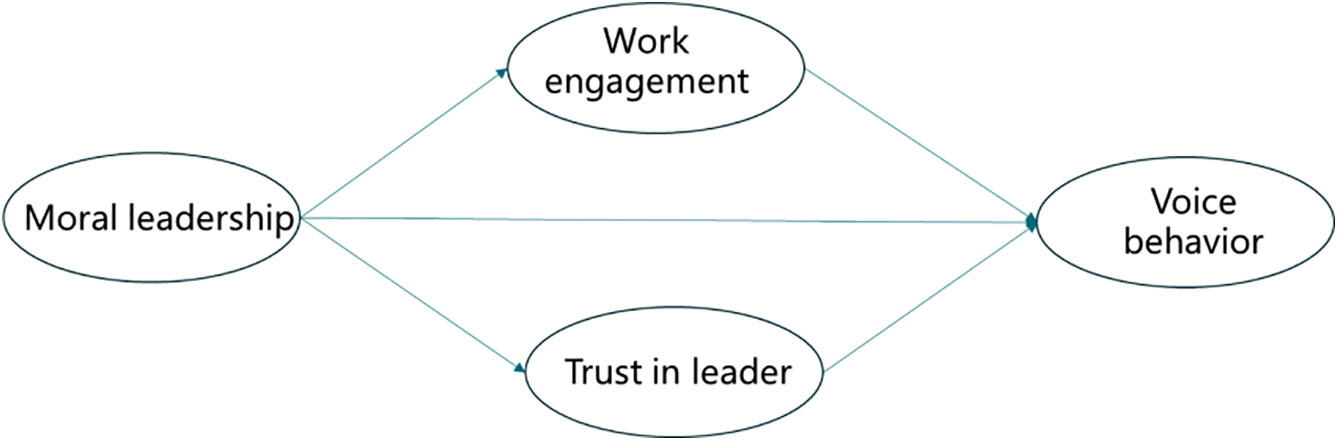
Figure 1: Hypothesized theoretical model
Hypothesis 1: Teachers’ moral leadership is positively associated with teachers’ voice behavior.
Hypothesis 2: Teachers’ work engagement mediates the positive association between secondary school principals’ moral leadership and teachers’ voice behaviors.
Hypothesis 3: Teachers’ trust in their superiors mediates the positive association between their moral leadership and teachers’ voice behaviors.
This study comprised 315 participants, of which 84 (26.7%) were male and 231 (73.3%) were female. Regarding education level, 7 respondents (2.2%) had a high school education or below, 258 respondents (81.9%) were undergraduates, and 50 respondents (15.9%) held master’s degrees or above. In terms of marital status, 270 respondents (85.7%) were married, and 45 respondents (14.3%) were unmarried. The age distribution was as follows: 60 respondents (19.05%) were aged 30 years or below, 136 respondents (43.17%) were aged 31 to 40, 77 respondents (24.44%) were aged 41 to 50, and 42 respondents (13.33%) were aged 51 and above. Regarding years of work experience, 127 respondents (40.32%) had 10 years or less, 104 respondents (33.02%) had 11 to 20 years, 64 respondents (20.32%) had 21 to 30 years, and 30 respondents (9.52%) had 31 years or more.
All scales in this study underwent back-translation procedures (Brislin, 1986). The items were translated into Chinese and then translated back into English. Two bilingual management scholars compared the English and Chinese versions for consistency and made adjustment as needed. Unless indicated otherwise, all measures used a 6-point Likert scale (1 = strongly disagree, 6 = strongly agree).
Moral leadership was assessed using a 6-item scale developed by Xu et al. (2014). An example item is “My supervisor refrains from exploiting me for personal gain”. The reliability of the moral leadership scale was satisfactory (Cronbach’s α = 0.891).
To assess employees’ work engagement, we utilized the Spanish short version of the Utrecht Work Engagement Scale (UWES–9; Schaufeli et al., 2006). This scale comprises nine items grouped into three dimensions, each consisting of three items: vigor (e.g., “At my work, I feel bursting with energy”), dedication (e.g., “My job inspires me”), and absorption (e.g., “I get carried away when I’m working”). The reliability coefficients for scores for the work engagement cale were satisfactory (Cronbach’s α = 0.872, 0.875 and 0.850, respectively).
Subordinates’ trust in their leader was assessed using a 3-item scale developed by Lambert and colleagues (2012). A sample item is, “My supervisor is trustworthy”. The reliability coefficients for the subordinate trust scale were satisfactory (Cronbach’s α = 0.902).
Promotive voice and prohibitive voice were each assessed using a 5-item scale developed by Liang et al. (2012). A sample item for promotive voice is, “This subordinate makes suggestions to improve the unit’s working procedure.” A sample item for prohibitive voice is, “This subordinate speaks up honestly about problems that might cause serious loss to the work unit, even when dissenting opinions exist”. The reliability coefficients for voice behavior scores were satisfactory (Cronbach’s α = 0.980 and 0.937, respectively).
The literature review suggests that gender, age, work experience, and educational level may have an impact on voice behavior. Therefore, this study considers these four demographic variables as control variables.
The studies involving human participants were reviewed and approved by the Ethics Committee of Henan Provincial Key Laboratory of Psychology and Behavior (No. 20230110020). All participants provided appropriate informed consent to participate in this study. We used the opportunity of secondary school principals attending the training course to randomly select participants in the provincial training course for principals as representatives, and asked the principals to send the link to the test questionnaire to the teachers in their schools to answer it, and used Wenjuanxing (https://www.wjx.cn/) to collect data.
SPSS 21.0 and Mplus 8.3 were used for data analysis. First, confirmatory factor analysis (CFA) was conducted using maximum likelihood estimation in Mplus 8.3 to assess discriminant validity among variables. Second, structural equation modeling (SEM) was employed to examine the mediating effects. This widely adopted approach allows for the estimation of both direct and indirect effects, with bootstrap confidence intervals (CIs) computed to address potential issues with statistical power stemming from non-normal sampling distributions of indirect effects (Hayes, 2013; MacKinnon et al., 2004). Bootstrapping with 5000 resamples was utilized to generate bias-corrected 95% CIs for the indirect effects.
Testing for common method bias
Due to the extensive length of the work engagement and voice behavior measures, we employed a partially disaggregated approach, known as parceling, to create indicators for latent variables, ensuring a favorable indicator-to-sample-size ratio. Previous studies have indicated that parcels yield more stable rotational results and greater reliability compared to individual items (Tang and Wen, 2020; Wu & Wen, 2011; Podsakoff et al., 2003). The resulting four-factor model demonstrated a satisfactory fit: χ2 = 220.966, df = 71, RMSEA = 0.082, SRMR = 0.034, CFI = 0.961, TLI = 0.951. Comparative analysis revealed that the four-factor model exhibited a significantly superior fit compared to alternative three- and one-factor models, confirming adequate discriminant validity. Additionally, these results suggest that common method bias may not be a significant concern (see Table 1).
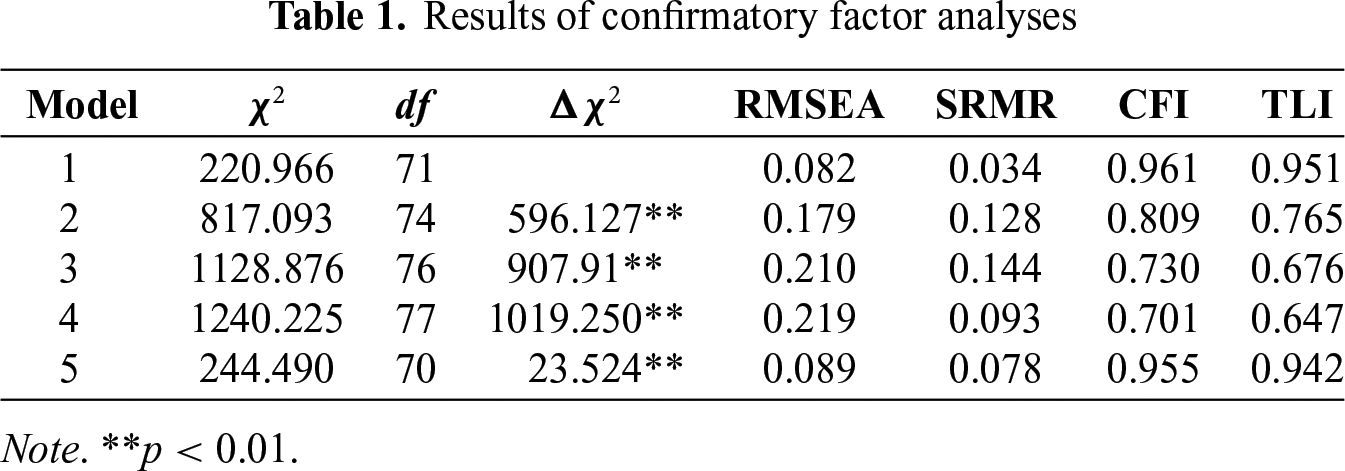
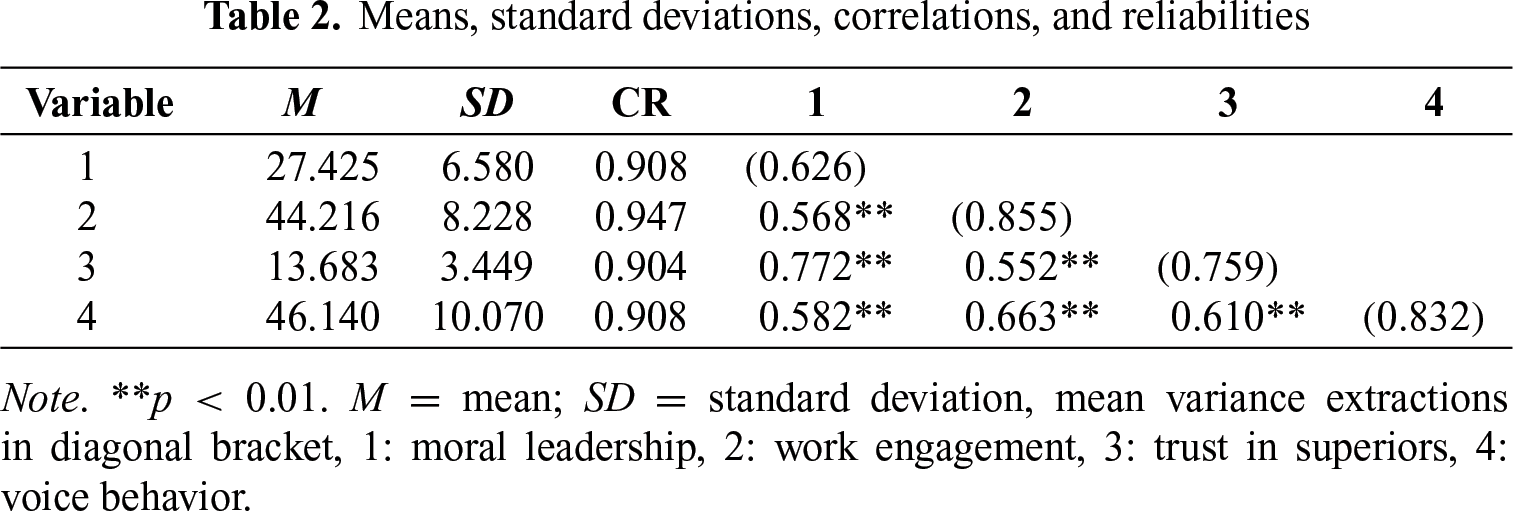
The result revealed that all indicators exhibited significant loadings on their respective factors. Subsequently, convergent validity and reliability were assessed using measures including the average variance extracted (AVE), composite reliability (CR), and Cronbach’s alpha (α). Convergent validity is established when the AVE values exceed 0.50 for each construct (Bagozzi & Yi, 1988; Fornell & Larcker, 1981). Reliability was evaluated with CR values exceeding the threshold of 0.60, indicating acceptability. Furthermore, Cronbach’s alpha (α) was employed to assess the internal consistency reliability of the observed variables in the model. According to Nunnally (1978), a coefficient α value of 0.70 or higher indicates satisfactory internal reliability.
Descriptive statistics and correlation analysis
Table 2 displays the descriptive statistics and correlation coefficients among the variables investigated in this study. The results reveal robust positive correlations between moral leadership and work engagement, trust in superiors, and voice behavior (r = 0.568, p < 0.01; r = 0.772, p < 0.01; r = 0.582, p < 0.01), underscoring the significance of these associations. Furthermore, work engagement exhibits significant positive correlations with trust in superiors and voice behavior (r = 0.552, p < 0.01; r = 0.663, p < 0.01). Similarly, trust in superiors demonstrates a significant positive correlation with voice behavior (r = 0.620, p < 0.01), highlighting its pivotal role in fostering voice behaviors among organizational members.
Following the mediation analysis framework proposed by Wen et al., we utilized structural equation modeling to examine the mediating roles of work engagement and trust in superiors in the relationship between moral leadership and teachers’ voice behaviors (Wen & Ye, 2014; Fang et al., 2014).
Moral leadership and voice behavior. Initially, we assessed the impact of moral leadership on teachers’ voice behavior, resulting in a well-fitting model supported by the following fit indices: χ2/df = 2.551, CFI = 0.959, TLI = 0.948, RMSEA = 0.070, and SRMR = 0.071 (Bentler, 1990; Hu & Bentler, 1999). The findings revealed a significant positive association between moral leadership and teachers’ voice behavior (b = 0.621, p < 0.001), thereby confirming Hypothesis 1.
Work role engagement and trust mediation
Subsequently, we examined the mediating effects of work engagement and trust in superiors, revealing a satisfactory model fit with χ2/df = 2.603, CFI = 0.950, TLI = 0.940, RMSEA = 0.071, and SRMR = 0.058, indicative of a robust model fit (Bentler, 1990; Hu & Bentler, 1999). The results, as illustrated in Figure 2, revealed that while moral leadership exhibited non-significant prediction of teacher voice behavior (b = 0.122, p > 0.05), work engagement emerged as a significant positive predictor (b = 0.445, p < 0.001), alongside trust in superiors (b = 0.281, p < 0.05), underscoring their roles in shaping teachers’ voice behaviors.
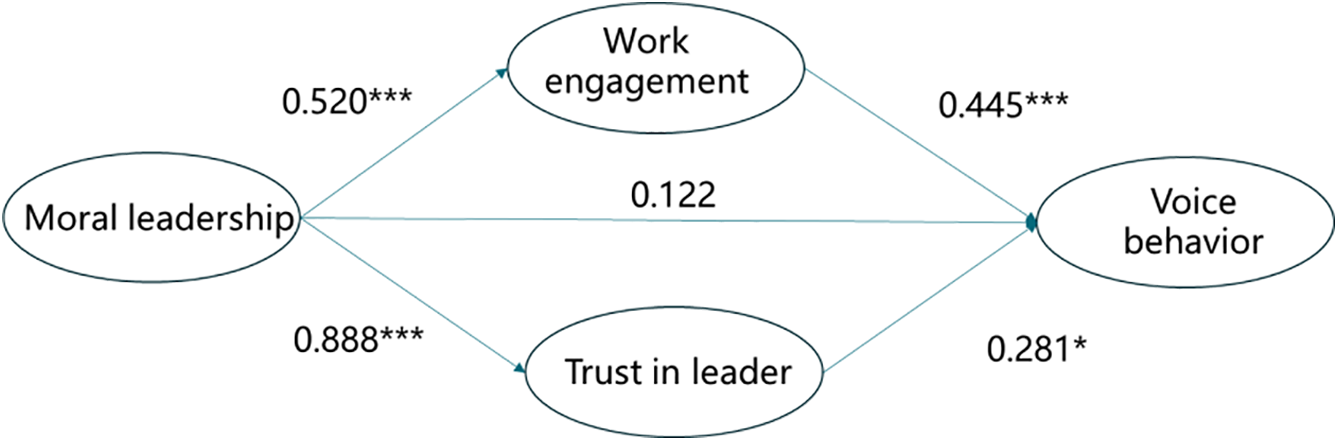
Figure 2: Path analysis results of the mediation model. Note: *p < 0.05; ***p < 0.001.
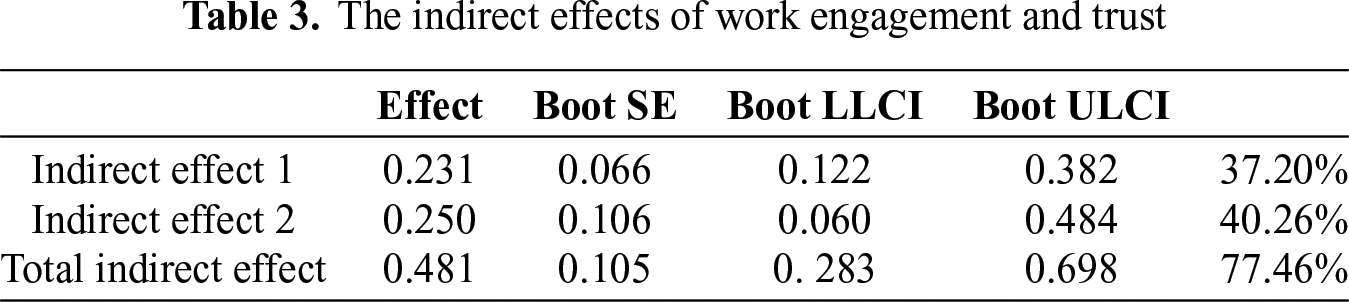
The outcomes of the mediation analysis unveiled a comprehensive mediating role of work engagement and trust in superiors between moral leadership and teacher voice behavior, exhibiting a total mediation effect of 0.481, representing 77.46% of the overall effect (with a direct effect of 0.122) (refer to Table 3). This mediation effect encompasses two distinct pathways: the mediating effect coefficient of work engagement between moral leadership and teachers’ voice behavior stands at 0.231, with the 95% confidence interval excluding 0, indicating its significance and thus validating hypothesis 2. Similarly, the mediating effect coefficient of trust in superiors between moral leadership and teachers’ voice behavior is calculated as 0.250, with the 95% confidence interval excluding 0, further affirming its significance and thereby supporting Hypothesis 3.
The study results suggest that when school leaders exemplify traits of moral leadership, educators are more motivated to contribute meaningful ideas and recommendations, consistent with earlier research findings (Shen & Mu, 2018; Teng & Cheng, 2019). Moral leadership inspires ethical behavior among organizational members. Based on the reciprocity principle of social exchange theory (Cropanzano et al., 2017), subordinates will do more behaviors that are beneficial to the leader in return for the care and respect for subordinates shown by the virtuous leader. Consequently, when teachers perceive moral leadership within the school, they internalize moral behaviors and are motivated to actively propose suggestions, thus fostering a culture of voice engagement to drive school development.
These findings indicate that teachers’ work engagement and trust in supervisors serve as mediators in the relationship between the moral leadership of school leaders and teachers’ voice behaviors. This indicates that moral leadership not only exerts a direct influence on teachers’ voice behaviors but also enhances these behaviors by fostering greater work engagement and trust in leaders, enriching teachers’ voice behaviors. This finding is consistent with a dual perspective by integrating both interpersonal dynamics and work-related factors.
Our findings affirm that ethical leadership shapes teachers’ voice behavior by influencing their trust in the leader and engagement in work. As an ethical person and ethical leader, the moral leader focuses on being people-oriented in his interactions with subordinates, has visible ethical actions and traits, is able to practice ethical standards, and is also able to be fair and just in decision-making (Treviño et al., 2003). According to the social exchange theory, moral leaders enable subordinates to a high degree of trust in the leader of the leader’s circle. The trust reduces perceived risks associated with voice behaviors, thereby stimulating proactive engagement in advocating for the organization’s sustainable development (Badru, et al., 2024; Faherty and Clinton, 2024). These characteristics enable subordinates to have a high level of work engagement, fostering innovative ideas to improve existing work practices or propose effective measures to mitigate potential losses.
Implications for education practice
Teams with a good leader-member exchange relationship usually show higher morale and motivation, so subordinates will be more energetic and committed to their work. Moreover, a good leader-member exchange relationship also enables subordinates and leaders to work together to achieve common goals, so subordinates will show higher concentration and dedicate themselves to achieving a better vision. This is partly because moral leadership involves the leader’s authorization of subordinates, who can get more resources from the leader (Khuntia & Suar, 2004).
The provision of ample resources energizes members, empowering them to actively contribute to organizational development through the submission of effective suggestions. When teachers perceive moral leadership from their leaders, they not only have resources to provide more suggestions but also trust their leaders. This trust reduces the perceived risks associated with their suggestions and encourages proactive participation in advancing the school.
Limitations of the study and future directions
It is important to acknowledge that all variables in this study were self-reported by teachers, which may introduce social desirability biases. Also, common reliance on self-assessment might introduce uncertainties and influence the study outcomes. To address these limitations, future research endeavors should utilize objective measures to help alleviate both social desirability and common method bias.
The study employed a convenience sample, which limits the generalizability of findings. Future research should utilize a probability sample for more dependable results. Additionally, the use of a cross-sectional design is a limitation to any causality claims. Future investigations could consider utilizing longitudinal or experimental designs for more definitive conclusions.
In the current study, moral leadership was associated with the teacher’s voice behavior. Work engagement and trust both play crucial roles as mediators of the relationship between moral leadership and teachers’ voice behavior. These findings align with the principle of reciprocity in social exchange theory, and have implications for how to inspire teacher voice behavior for work role engagement and organizational commitment.
Acknowledgement: Not applicable.
Funding Statement: This study was supported by the Key Project of Basic Research of Philosophy and Social Sciences in Henan Province (Grant: 2024-JCZD-28).
Author Contributions: The authors confirm contribution to the paper as follows: study conception and design: Qinglin Wang, Hang Zhang, Junzhe Zhao, Minghui Wang; data collection: Qinglin Wang, Hang Zhang, Junzhe Zhao, Wenfan Chao; analysis and interpretation of results: Qinglin Wang, Hang Zhang, Junzhe Zhao; draft manuscript preparation: Qinglin Wang. All authors reviewed the results and approved the final version of the manuscript.
Availability of Data and Materials: The data supporting the findings of this study are available from the corresponding author upon reasonable request.
Ethics Approval: The studies involving human participants were reviewed and approved by the Ethics Committee of Henan Provincial Key Laboratory of Psychology and Behavior (No. 20230110020). All participants provided appropriate informed consent to participate in this study.
Conflicts of Interest: The authors declare no conflicts of interest to report regarding the present study.
References
Badru, A. F., Karadas, G., Olugbade, O. A., & Hassanie, S. (2024). Can employees’ trust their supervisor? The role of high-performance work systems and stewardship climate on employee voice. Heliyon, 10(19), e37795. https://doi.org/10.1016/j.heliyon.2024.e37795. [Google Scholar] [PubMed] [CrossRef]
Bagozzi, R. P., & Yi, Y. (1988). On the evaluation of structural equation models. Journal of The Academy of Marketing Science, 16(1), 74–94. https://doi.org/10.1007/BF02723327 [Google Scholar] [CrossRef]
Bentler, P. M. (1990). Comparative fit indexes in structural models. Psychological Bulletin, 107(2), 238–246. https://doi.org/10.1037/0033-2909.107.2.238. [Google Scholar] [PubMed] [CrossRef]
Brislin, R. W. (1986). The wording and translation of research instruments. In: Lonner, W. J. & Berry, J. W. (Eds.Field methods in cross-cultural research (pp. 137–164). SAGE Publications. [Google Scholar]
Brown, M. E., Treviño, L. K., & Harrison, D. A. (2005). Ethical leadership: A social learning perspective for construct development and testing. Organizational Behavior and Human Decision Processes, 97(2), 117–134. https://doi.org/10.1016/j.obhdp.2005.03.002. [Google Scholar] [CrossRef]
Chu, H. L., & Fang, X. L. (2017). The influence of principal’s ethical leadership on teacher’s job commitment in primary and middle school: The moderating effect of work values. Journal of Educational Studies, 13(6), 60–68. [Google Scholar]
Cropanzano, R., Anthony, E. L., Daniels, S. R., & Hall, A. V. (2017). Social exchange theory: A critical review with theoretical remedies. Academy of Management Annals, 11(1), 479–516. https://doi.org/10.5465/annals.2015.0099 [Google Scholar] [CrossRef]
Detert, J. R., & Burris, E. R. (2007). Leadership behavior and employee voice: Is the door really open? Academy of Management Journal, 50(4), 869–884. https://doi.org/10.5465/amj.2007.26279183 [Google Scholar] [CrossRef]
Faherty, C. M., & Clinton, E. (2024). Speaking up to the boss: The effects of top management team members’ felt trust and perceived CEO trustworthiness on voice behavior in family firms. Journal of Management Studies, 62(4), 1747–1778. https://doi.org/10.1111/joms.13126 [Google Scholar] [CrossRef]
Fang, J., Wen, Z. L., Zhang, M. Q., & Sun, P. Z. (2014). The analyses of multiple mediation effects based on structural equation modeling. Journal of Psychological Science, 37(3), 735–741. [Google Scholar]
Fornell, C., & Larcker, D. F. (1981). Evaluating structural equation models with unobservable variables and measurement error. Journal of Marketing Research, 18, 39–50. https://doi.org/10.2307/3151312 [Google Scholar] [CrossRef]
Han, L. L., & Zhang, C. Y. (2015). Influence of ethical leadership on subordinates’ work attitude and behavior-based on the mediating effect of justice perception. Soft Science, 29(6), 86–89 125. [Google Scholar]
Hayes, A. F. (2013). Introduction to mediation, moderation, and conditional process analysis: a regression-based approach. New York, NY, USA: Guilford Press. [Google Scholar]
Hsieh, C. C., Gunawan, I., Li, H. C., & Liang, J. K. (2024). Teachers’ voice behavior—Principal leadership-driven or teacher self-driven? Evidence from Taiwan. Psychology in The Schools, 61(5), 2077–2099. https://doi.org/10.1002/pits.23152 [Google Scholar] [CrossRef]
Hu, L., & Bentler, P. M. (1999). Cutoff criteria for fit indexes in covariance structure analysis: Conventional criteria versus new alternatives. Structure Equation Modeling, 6(1), 1–55. https://doi.org/10.1080/10705519909540118 [Google Scholar] [CrossRef]
Huang, J., & Wen, S. X. (2016). The review of Chinese indigenous ethical leadership and future research directions. Human Resources Development of China, (3), 12–18. [Google Scholar]
Hung, C. Y. (2019). From silenced to vocal: Teacher unionists’ growing influence on educational development in Taiwan. International Journal of Educational Development, 71(3), 102124. https://doi.org/10.1016/j.ijedudev.2019.102124 [Google Scholar] [CrossRef]
Jiang, W., & Liu, J. (2008). A discussion on organization silence in primary school teachers. The Modern Education Journal, (2), 45–47. [Google Scholar]
Jing, Z. C., & Bai, W. (2021). Research on the relationship between ethical leadership and employee innovation performance. Journal of Xi’an University of Finance and Economics, 34(3), 119–128. [Google Scholar]
Khuntia, R., & Suar, D. (2004). A scale to assess ethical leadership of Indian private and public sector managers. Journal of Business Ethics, 49, 13–26. [Google Scholar]
Lambert, L. S., Tepper, B. J., Carr, J. C., Holt, D. T., & Barelka, A. J. (2012). Forgotten but not gone: An examination of fit between leader consideration and initiating structure needed and received. Journal of Applied Psychology, 97(5), 913–930. https://doi.org/10.1037/a0028970. [Google Scholar] [PubMed] [CrossRef]
Lanaj, K., Chang, C. H., & Johnson, R. E. (2012). Regulatory focus and work-related outcomes: A review and meta-analysis. Psychological Bulletin, 138(5), 998–1034. https://doi.org/10.1037/a0027723. [Google Scholar] [PubMed] [CrossRef]
LePine, J. A., & Van Dyne, L. (1998). Predicting voice behavior in work groups. Journal of Applied Psychology, 83(6), 853–868. https://doi.org/10.1037/0021-9010.83.6.853 [Google Scholar] [CrossRef]
Liang, J., Farh, C. I. C., & Farh, J. L. (2012). Psychological antecedents of promotive and prohibitive voice: A two-wave examination. Academy of Management Journal, 55(1), 71–92. https://doi.org/10.5465/amj.2010.0176 [Google Scholar] [CrossRef]
Ling, W. Q., Chen, L., & Wang, D. (1987). Construction of CPM scale for leadership behavior assessment. Acta Psychologica Sinica, 19(2), 199–207. [Google Scholar]
Liu, M., Yu, J. L., & Huang, Y. (2018). How does feeling trusted from supervisors promote employees’ voice behavior: The role of psychological safety, self-efficacy and power distance. Human Resources Development of China, 35(12), 18–27. [Google Scholar]
MacKinnon, D. P., Lockwood, C. M., & Williams, J. (2004). Confidence limits for the indirect effect: Distribution of the product and resampling methods. Multivariate Behavioral Research, 39(1), 99–128. https://doi.org/10.1207/s15327906mbr3901_4. [Google Scholar] [PubMed] [CrossRef]
Mao, C. G., Fan, J. B., & Liu, B. (2020). The three-way interaction effect of paternalistic leadership on employee voice behavior. Journal of Capital University of Economics and Business, 22(3), 102–112. [Google Scholar]
Nunnally, J. C. (1978). Psychometric theory. New York, NY, USA: McGraw Hill. [Google Scholar]
Podsakoff, P. M., MacKenzie, S. B., Lee, J. Y., & Podsakoff, N. P. (2003). Common method biases in behavioral research: A critical review of the literature and recommended remedies. Journal of Applied Psychology, 88(5), 879. https://doi.org/10.1037/0021-9010.88.5.879. [Google Scholar] [PubMed] [CrossRef]
Rousseau D. M., Sitkin S. B., Burt R. S., & Camerer C. (1998). Not so different after all: A cross-discipline view of trust. Academy of Management Review, 23(1), 393–404. https://doi.org/10.5465/amr.1998.926617 [Google Scholar] [CrossRef]
Sagnak, M. (2017). Ethical leadership and teachers’ voice behavior: The mediating roles of ethical culture and psychological safety. Educational Sciences: Theory and Practice, 17(4), 1101–1117. https://doi.org/10.24912/jm.v27i3.1448 [Google Scholar] [CrossRef]
Schaufeli, W. B., Bakker, A. B., & Salanova, M. (2006). The measurement of work engagement with a short questionnaire a cross-national study. Educational & Psychological Measurement, 66(4), 701–716. https://doi.org/10.1177/0013164405282471 [Google Scholar] [CrossRef]
Schaufeli, W. B., Salanova, M., González-romá, V., & Bakker, A. B. (2002). The measurement of engagement and burnout: A two sample confirmatory factor analytic approach. Journal of Happiness Studies, 3(1), 71–92. [Google Scholar]
Shen, X. Y., & Mu, G. B. (2018). The effect of paternalistic leadership on the voice behavior of employees: Mediated by organizational identification. Studies of Psychology and Behavior, 16(6), 841–846. [Google Scholar]
Tang, D. D., & Wen, Z. L. (2020). Statistical approaches for testing common method bias: Problems and suggestions. Journal of Psychological Science, 43(1), 215–223. [Google Scholar]
Teng, X. P., & Cheng, D. J. (2019). How can creative teams activate internal intellectual resources? The influence of leadership style and job characteristics on employee voice behavior. Modernization of Management, 39(4), 78–81. [Google Scholar]
Treviño, L. K., Brown, M., & Hartman, L. P. (2003). A qualitative investigation of perceived executive ethical leadership: Perceptions from inside and outside the executive suite. Human Relations, 56(1), 5–37. https://doi.org/10.1177/0018726703056001448 [Google Scholar] [CrossRef]
Treviño, L. K., Hartman, L. P., & Brown, M. (2000). Moral person and moral manager: How executives develop a reputation for ethical leadership. California Management Review, 42(4), 128–142. https://doi.org/10.2307/41166057 [Google Scholar] [CrossRef]
Van Dyne, L., & LePine, J. A. (1998). Helping and voice extra-role behaviors: Evidence of construct and predictive validity. Academy of Management Journal, 41(1), 108–119. https://doi.org/10.2307/256902 [Google Scholar] [CrossRef]
Wang, H. H., & Fwu, B. J. (2014). Once hired, seldom gone: The deliberation process of beginning teachers in Taiwan in deciding to stay in teaching. Teaching and Teacher Education, 37(10), 108–118. https://doi.org/10.1016/j.tate.2013.10.004 [Google Scholar] [CrossRef]
Wang, G., Li, J., Liu, H., & Zaggia, C. (2023). Transformational leadership and teachers’ voice behavior: A moderated mediation model of group voice climate and team psychological safety. Educational Management Administration & Leadership, 53(1), 102–122. https://doi.org/10.1177/17411432221143452 [Google Scholar] [CrossRef]
Wang, X. C., Li, J. H., Wu, Y. F., Zhang, D., & Liu, L. (2020). The influence of leader interpersonal emotional management on employee’s voice behavior: A moderated mediation model. Journal of Psychological Science, 43(1), 158–164. [Google Scholar]
Wang, Z. N., Liu, M. L., & Li, X. L. (2019). The influence of team reflexivity on employee innovative behavior——A multilevel moderated mediation model. Soft Science, 33(11), 64–68 74. [Google Scholar]
Ward, A. K., Ravlin, E. C., Klaas, B. S., Ployhart, R. E., & Buchan, N. R. (2016). When do high-context communicators speak up? Exploring contextual communication orientation and employee voice. Journal of Applied Psychology, 101(10), 1498–1511. https://doi.org/10.1037/apl0000144. [Google Scholar] [PubMed] [CrossRef]
Wen, Z. L., & Ye, B. J. (2014). Analyses of mediating effects: The development of methods and models. Advances in Psychological Science, 22(5), 731–745. https://doi.org/10.3724/SP.J.1042.2014.00731. [Google Scholar] [CrossRef]
Wu, D. Y., Gao, L. L., & Duan, J. Y. (2014). The mechanism of job engagement on voice behavior: The moderating effects of cognitive flexibility and power motive. Chinese Journal of Applied Psychology, 20(1), 67–75. [Google Scholar]
Wu, Y., & Wen, Z. L. (2011). Item parceling strategies in structural equation modeling. Advances in Psychological Science, 19(12), 1859–1867. [Google Scholar]
Xu, Y. N., Gu, X., & Jiang, W. (2014). The influence of moral leadership on subordinates' creativity and task performance: An empirical study based on LMX theory. Management Review, 26(2), 139–147. [Google Scholar]
Yu, G. L., Yao, J. M., & Zhang, L. G. (2017). A study on the relations among paternalistic leadership, employee trust and work performance. Journal of Northeast Normal University (Philosophy and Social Sciences), (2), 125–129. [Google Scholar]
Zhang, S., Bowers, A. J., & Mao, Y. (2021). Authentic leadership and teachers’ voice behavior: The mediating role of psychological empowerment and moderating role of interpersonal trust. Educational Management Administration & Leadership, 49(5), 768–785. https://doi.org/10.1177/1741143220915925 [Google Scholar] [CrossRef]
Zhang, S., Mao, Y. Q., & Yu, H. X. (2018). The effect of principals’ ethical leadership on teachers’ voice behavior: The mediating role of leader-member exchange. Teacher Education Research, 30(1), 49–55 71. [Google Scholar]
Zhao, S. S., & Mei, Y. Y. (2022). A study on the moderating differences of different paths of ego-depletion on the influence of moral leadership on employees’ moral voice. Chinese Journal of Management, 19(9), 1325–1335. [Google Scholar]
Zhao, L., & Zhai, X. Y. (2018). The influence of work autonomy on voice behavior: The roles of work engagement and proactive personality. Journal of University of Chinese Academy of Social Sciences, (6), 33–44. [Google Scholar]
Zheng, B. X., Zhou, L. F., & Fan, J. L. (2000). A triad model of paternalistic leadership: Constructs and measurement. Indigenous Psychological Research in Chinese Societies, 14, 3–64. [Google Scholar]
Zhong, D. G., & Lu, D. (2014). Impact of paternalistic leadership on employees job involvement ——Based on the mediating Role of Leader-Member Exchange. Journal of Xi’an Technological University, 34(1), 57–63. [Google Scholar]
Zhong, L. F., Meng, J., & Gao, L. (2019). Ethical leadership and employee creative performance: The mediating role of social exchange and the moderating role of power distance orientation. Journal of Management World, 35(5), 149–160. [Google Scholar]
Cite This Article
 Copyright © 2025 The Author(s). Published by Tech Science Press.
This work is licensed under a Creative Commons Attribution 4.0 International License , which permits unrestricted use, distribution, and reproduction in any medium, provided the original work is properly cited.
 Downloads
 Citation Tools
