
 Login
Login Register
 Submit a Paper
 Propose a Special lssue
 Open Access
ARTICLE
Leaders’ artificial intelligence symbolization behavior and enterprise digital transformation: Mediation by employees’ attitude towards digital transformation, and moderation of learning orientation
School of Business, Hunan University of Science and Technology, Xiangtan, 411201, China
* Corresponding Author: Yungui Guo. Email:
Journal of Psychology in Africa 2025, 35(6), 791-796. https://doi.org/10.32604/jpa.2025.067238
Received 28 April 2025; Accepted 03 October 2025; Issue published 30 December 2025
 View Full Text
 Download PDF
Abstract
This study examined the moderating role of employees’ learning orientation on the relationship between leaders’ artificial intelligence symbolization behavior (LAISB), employees’ attitude towards digital transformation (ATDT), and enterprise digital transformation. The sample consisted of 261 employees from five enterprises in China (female = 34.5%; primary industry includes the internet and transportation; mean age = 42.51 years, SD = 8.63 years; bachelor’s degree or above = 72.8%). The results of structural equation modeling and simple slope test indicated that LAISB predicted higher enterprise digital transformation, with ATDT partial mediation. Furthermore, employees’ learning orientation weakened the relationship between LAISB and ATDT, as well as the indirect effect of LAISB on enterprise digital transformation through ATDT. This study contributes to social cognitive theory and the digital transformation literature by integrating leaders behavior, employee attitudes, and individual differences into a coherent framework explaining digital transformation mechanisms. The findings imply that enterprises should prioritize leadership training in AI symbolism to facilitate successful digital transformation.Keywords
The rapid advancement of artificial intelligence (AI) technology is playing an increasingly vital role in driving the digital transformation of enterprises (Rana & Daultani, 2023). This has led to a growing tendency among organizational leaders to advocate for the adoption of AI in the workplace (Beier et al., 2024). Such leaders often demonstrate their acceptance and support for AI through concrete actions or symbolic gestures—a phenomenon referred to as leader artificial intelligence symbolization behavior (LAISB). Research suggests that LAISB can foster employees’ job crafting (He et al., 2023) and facilitate the adoption of digital transformation within organizations (Meske & Junglas, 2020). Learning orientation, defined as an intrinsic motivation to acquire new knowledge, develop competencies, and embrace challenges (VandeWalle, 1997), may serve as a key boundary condition influencing the effectiveness of LAISB—a relationship that remains underexplored. To address this research gap, the present study investigates the mediating role of employees’ attitudes toward digital transformation (ATDT) and the moderating effect of learning orientation in the relationship between LAISB and enterprise digital transformation.
LAISB and enterprise digital transformation
Leaders who exhibit AI symbolization behavior not only advocate for AI-driven changes at the organizational level but also actively guide employees through the adaptation process (He et al., 2023), thereby facilitating broader digital transformation. By visibly endorsing and modeling AI adoption, these leaders encourage employees to align with the organization’s digital transformation goals, which in turn promotes enterprise-wide digital change. Empirical evidence suggests that LAISB enhances employees’ readiness for change, stimulates job crafting (He et al., 2023; Hu et al., 2025), and bolsters perceived leadership effectiveness by strengthening employees’ evaluations of their leaders’ adaptability and change preparedness (Beier et al., 2024). Therefore, through a combination of strategic advocacy and symbolic role modeling, leaders who engage in AI symbolization behavior not only steer organizational digital transformation but also empower employees to participate proactively in the process, creating a reinforcing cycle that sustains successful digital transformation.
LAISB acts as a catalyst for change by motivating employees to adopt new AI tools and practices (Hu et al., 2025). It is plausible that such behavior fosters the development of a positive attitude toward digital transformation (ATDT) among employees, which in turn encourages proactive learning, collaboration, and support for digital initiatives (Mihajlovic et al., 2025). Given that employee buy-in is critical to the success of enterprise digital transformation (Schneider & Sting, 2020; Cetindamar Kozanoglu & Abedin, 2021), a favorable ATDT further stimulates active participation and cooperative engagement in transformation-related activities. Thus, by cultivating positive employee attitudes, LAISB indirectly facilitates enterprise digital transformation—enhancing both engagement levels and the effective implementation of digital strategies.
Learning orientation moderation
Learning orientation reflects an intrinsic drive to improve one’s abilities by acquiring new skills and mastering unfamiliar situations (Dweck, 1986; VandeWalle, 1997). Individuals with a strong learning orientation actively seek out challenges that foster personal growth (Ames & Archer, 1988). Beyond facilitating knowledge and skill acquisition (Kozlowski et al., 2001), learning orientation has been shown to moderate the relationship between transformational leadership and employee creativity (Jyoti & Dev, 2015). In the context of digital transformation, employees with a pronounced learning orientation are more inclined to proactively develop digital competencies and maintain a positive ATDT, even in the absence of AI-related symbolic behaviors from leaders. Conversely, those with a weaker learning orientation are more dependent on such leader cues to engage in digital skill development and cultivate a favorable ATDT.
Accordingly, learning orientation is expected to moderate the mediating role of ATDT in the relationship between LAISB and enterprise digital transformation. Specifically, the indirect effect of LAISB on digital transformation—via ATDT—is likely to be stronger when employees’ learning orientation is low, as these individuals rely more heavily on external symbolic cues to shape their attitudes and behaviors. In contrast, when learning orientation is high, the mediating effect of ATDT is expected to be weaker, since such employees are more intrinsically motivated and less influenced by leader symbolic actions in forming their attitudes toward digital transformation.
Social cognitive theory (Bandura, 1986) posits that individuals learn and adapt their behaviors by observing others. In organizational contexts, leaders often serve as key referents in this observational learning process (Bandura, 1997). Within the context of digital transformation, LAISB functions as a form of symbolic leadership that conveys the importance and value of AI technologies through visible actions, policies, and rhetoric. These behaviors act as environmental cues that shape employees’ cognitive and affective responses—particularly their ATDT. Grounded in social cognitive theory, employees observe and interpret leaders’ symbolic actions, which subsequently influence their own attitudes and readiness to support organizational change (Ng & Lucianetti, 2016). Moreover, employees’ learning orientation moderates this observational process. Individuals with a strong learning orientation may depend less on external leadership cues, thereby attenuating the influence of LAISB on ATDT. By integrating the mediating role of employees’ ATDT and the moderating effect of learning orientation, this study extends social cognitive theory into the realm of digital transformation, illustrating how leadership behaviors and individual differences interact to shape the adoption of organizational change.
The internet and transportation industry context
The internet and transportation industries are increasingly reliant on digital solutions to improve operational efficiency, enhance customer experience, and advance sustainability goals (Pang et al., 2024; Zuo et al., 2022). The internet sector, in particular, thrives on innovation, data-driven decision-making, and the rapid iteration of products and services. Similarly, the transportation industry is undergoing a profound digital shift, incorporating technologies such as big data analytics, artificial intelligence, and blockchain to optimize resource allocation, lower operational costs, and support environmental objectives (Jabbar et al., 2022; Kaffash et al., 2021). Notable applications include intelligent logistics systems, autonomous vehicles, and electronic documentation platforms—all of which contribute to greater service quality and operational agility.
Amid intense competition and ongoing pressure to innovate, companies in these sectors must continually adapt to technological advances and shifting market demands. Leaders play a central role in guiding enterprise digital transformation (Abbu et al., 2022; Cai et al., 2024), and their symbolic endorsement of AI technologies can substantially influence organizational momentum and employee attitudes toward digital change (He et al., 2023; Hu et al., 2025). Furthermore, employees in these dynamic environments are often expected to engage in continuous learning and upskilling to keep pace with evolving digital workflows. Thus, examining how leaders’ AI symbolization behavior interacts with employees’ learning orientation to shape attitudes toward digital transformation—and ultimately affect organizational outcomes—is both timely and relevant in this context.
This study examines the relationship between LAISB and enterprise digital transformation, with employees’ ATDT as a mediator and learning orientation as a moderator. The conceptual model of the study is presented in Figure 1. Based on this framework, the following hypotheses are proposed:
H1: LAISB is associated with higher enterprise digital transformation.
H2: Employees’ ATDT mediates the relationship between LAISB and enterprise digital transformation.
H3: Employees’ learning orientation weakens the relationship between LAISB and employees’ ATDT.
H4: Employees’ learning orientation weakens the mediating effect of their ATDT on the relationship between LAISB and enterprise digital transformation.
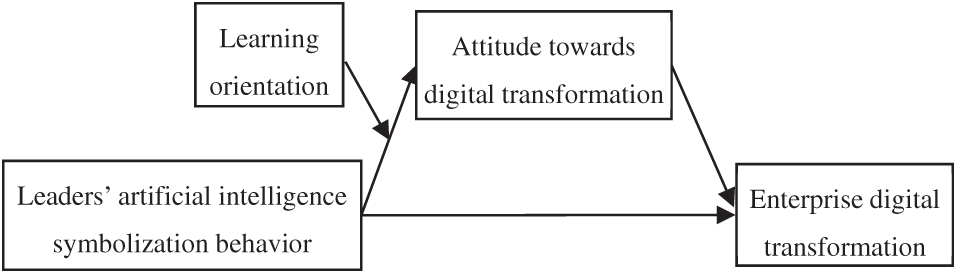
Figure 1: The conceptual model
A convenience sampling approach was employed, recruiting 261 employees from five companies in the internet and transportation industries. The sample comprised 34.5% females, with an average organizational tenure of 13.23 years (SD = 3.46). The average age of participants was 42.51 years (SD = 8.63). In terms of age distribution, 59 employees (22.6%) were under 35 years old, 97 (37.2%) were between 36 and 45 years old, and 105 (40.2%) were aged 46 or above. Regarding educational background, 71 employees (27.2%) held a college diploma or lower, 151 (57.9%) had a bachelor’s degree, and 39 (14.9%) possessed a master’s degree or higher.
Employees self-reported their demographic information and completed the following measures using a 5-point Likert-type agreement scales (1 = strongly disagree, 5 = strongly agree). We briefly describe each of the measures below.
Leaders’ AI symbolization behavior. We employed a unidimensional six-item Leaders’ AI Symbolization Behavior scale developed by He et al. (2023) to assess LAISB. An example item is: “My supervisor expresses his or her interest in AI to me.” The Cronbach’s alpha coefficient for this scale in our study was 0.974.
Attitude towards digital transformation. We utilized a unidimensional three-item Attitude Towards Digital Transformation scale developed by Venkatesh et al. (2003) to evaluate ATDT. An example item is: “A digitally transformed workplace would make my work more interesting.” The Cronbach’s alpha coefficient for this scale in our study was 0.948.
Enterprise digital transformation. We employed a unidimensional three-item Enterprise Digital Transformation scale developed by Rafferty and Griffin (2006) to assess enterprise digital transformation. The introductory prompt for the scale was: “The following questions will be about the impact that digitization has had on the company you are working in.” An example item is: “To what extent have you experienced changes to the values of your unit?” The Cronbach’s alpha coefficient for this scale in our study was 0.950.
Learning orientation. We utilized a five-item Learning Orientation subscale from the Work Domain Goal Orientation Scale introduced by VandeWalle (1997) to evaluate Learning Orientation. An example item is: “I often look for opportunities to develop new skills and knowledge.” The Cronbach’s alpha coefficient for this scale in our study was 0.940.
Control variables. To minimize potential confounding effects on the relationships among the study variables, we controlled for the employees’ gender, age, educational background, organizational tenure, and enterprise size while testing the hypotheses. We used these variables as dummy variables. Gender: 1 = men, 2 = women; Age: 1 = under 35, 2 = 36–45, 3 = 46 and older; Educational Background: 1 = college diploma or lower, 2 = bachelor’s degree, 3 = master’s degree; Organizational Tenure: 1 = less than 5 years, 2 = 6–10 years, 3 = 11–20 years, 4 = more than 21 years; Enterprise Size: 1 = fewer than 300 employees, 2 = 300–1000 employees, 3 = more than 1000 employees.
Participants consented to the study and were assured of the confidentiality and anonymity of the data they provided. They were also informed of their right to withdraw from the study at any time, guaranteeing that their involvement was completely voluntary.
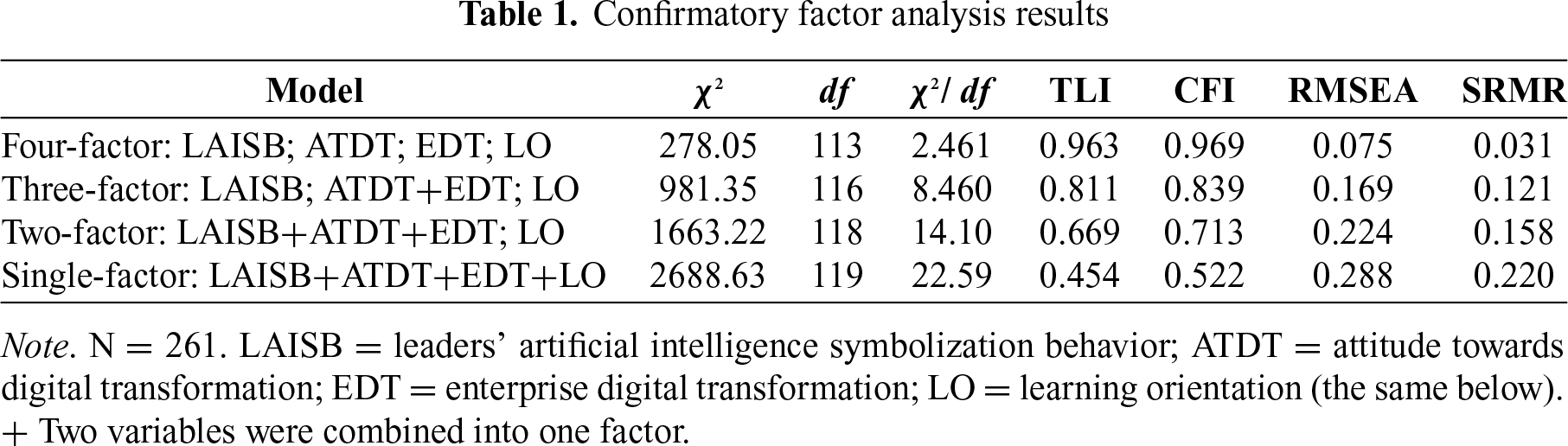
The data analyses were carried out using SPSS version 22.0 and MPLUS version 7.0. Initially, we performed a correlation analysis with SPSS 22.0 to set a foundational basis for the subsequent hypothesis testing. We performed confirmatory factor analysis using MPLUS version 7.0 to assess the discriminant validity of four variables, with the results presented in Table 1. As shown in Table 1, the four-factor model demonstrates a superior fit to the data compared to alternative models, achieving satisfactory fit indices (x2/df = 2.461, TLI = 0.963, CFI = 0.969, RMSEA = 0.075, SRMR = 0.031). Therefore, the discriminant validity of the four variables is confirmed to be strong. Additionally, the fit results for the single-factor model were notably poor, suggesting that common method bias in this study is not a significant concern. Next, structural equation modeling was conducted using MPLUS version 7.0 with a bootstrapping procedure of 5000 samples to assess the main and mediating effects. Lastly, a simple slope test was executed using MPLUS version 7.0 with a bootstrapping procedure of 5000 samples to evaluate the moderating and moderated mediating effects.
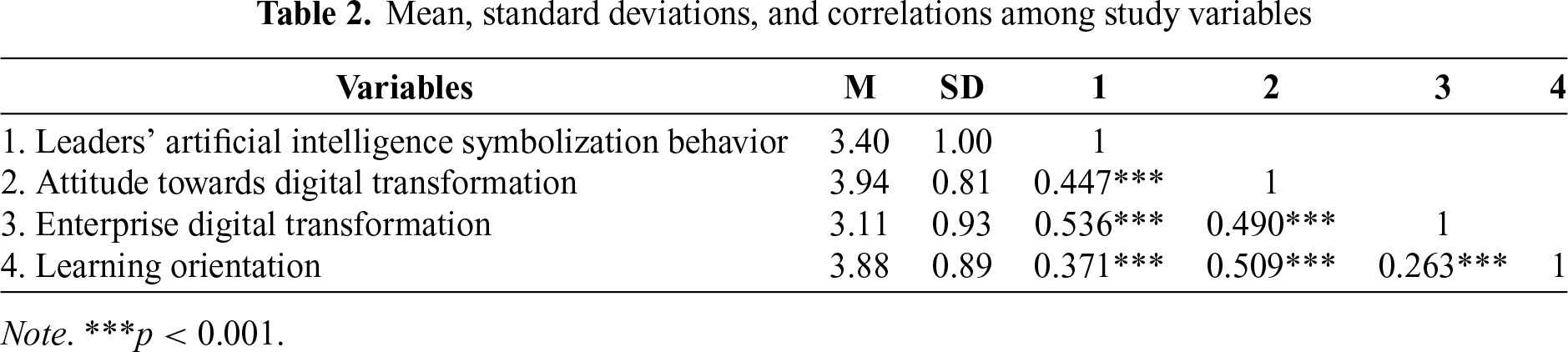
Descriptive statistics and correlation analysis
Table 2 presents the means, standard deviations, and correlations among the four variables. As anticipated, LAISB is positively correlated with both ATDT and enterprise digital transformation. ATDT also shows a positive correlation with enterprise digital transformation. These correlation results provide initial support for the study’s hypotheses.
LAISB effects on enterprise digital transformation
The findings from the structural equation modeling are illustrated in Figure 2 and detailed in Table 3. As indicated in Table 3, the direct effect of LAISB on enterprise digital transformation is significant, thereby supporting Hypothesis H1.
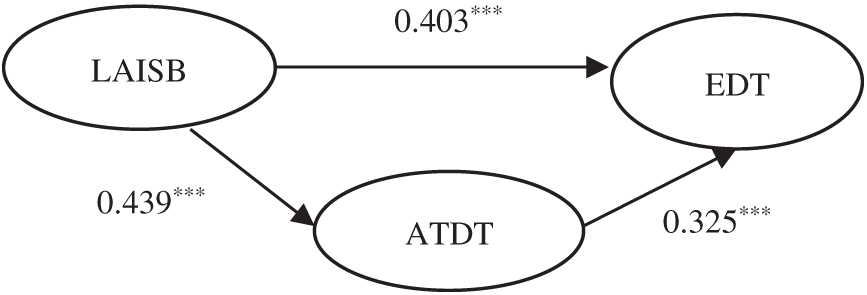
Figure 2: The path coefficients of mediation model. Note. ***p < 0.001. Standardized coefficients are reported.
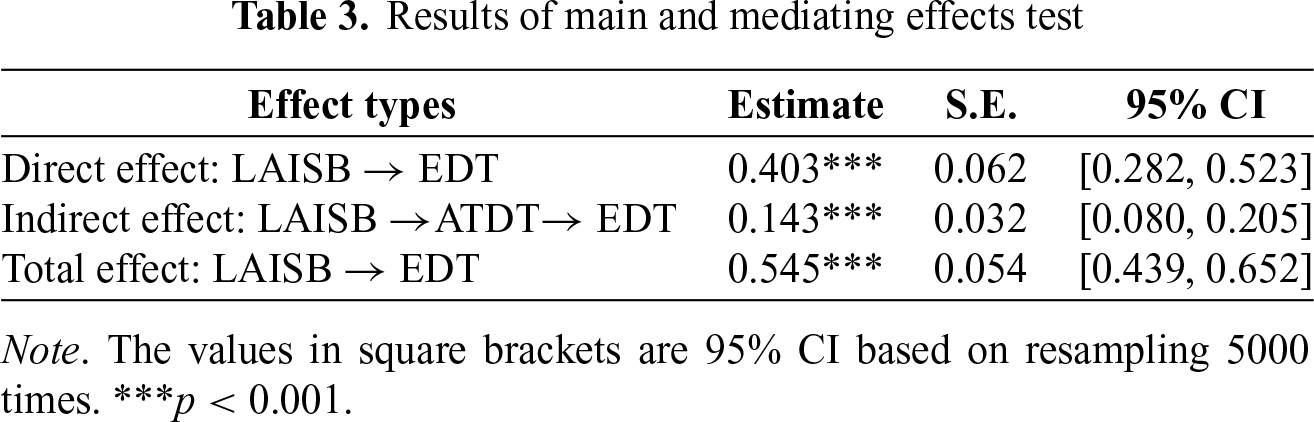
As indicated in Table 3, the indirect effect of LAISB on enterprise digital transformation through ATDT is significant, lending support to Hypothesis H2. Moreover, the goodness of fit for the proposed mediation model is favorable (x2/df = 2.618, CFI = 0.960, TLI = 0.951, RMSEA = 0.079, SRMR = 0.048), which further reinforce the validity of the findings discussed above.
Learning orientation moderation
The results of the simple slope test are presented in Table 4. As shown, for employees with a high learning orientation, the regression coefficient of LAISB on ATDT is 0.169 (p < 0.05). In contrast, for employees with a low learning orientation, the regression coefficient is 0.517 (p < 0.001), resulting in a slope difference of −0.348 (p < 0.001), thus supporting Hypothesis H3.
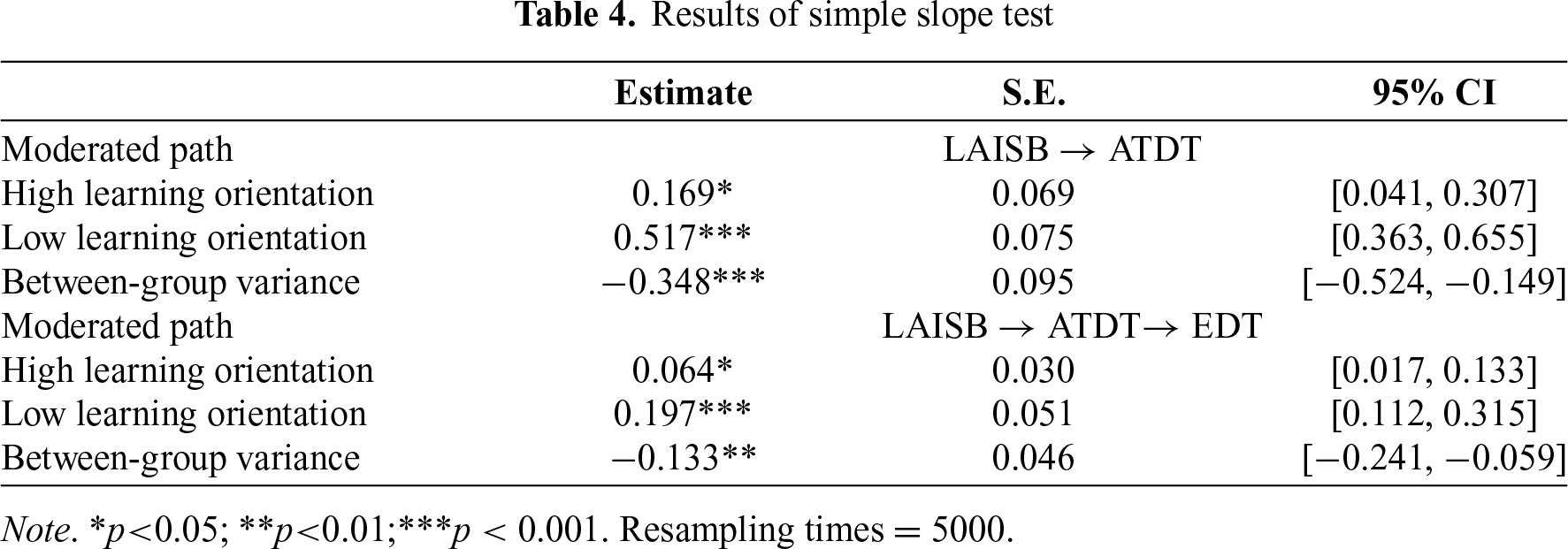
Additionally, for employees with a high learning orientation, the mediating effect of ATDT in the relationship between LAISB and enterprise digital transformation is 0.064 (p < 0.05). For those with a low learning orientation, this mediating effect is 0.197 (p < 0.001), with a slope difference of −0.133 (p < 0.01), which supports Hypothesis H4.
The findings of this study reveal that LAISB exerts a significant positive influence on enterprise digital transformation, with employees’ ATDT partially mediating this relationship. This result aligns with social cognitive theory (Bandura, 1986), which suggests that leaders’ visible endorsement of AI serves as a form of behavioral modeling. Through observational learning and enhanced self-efficacy, employees develop greater confidence and competence in adapting to technological changes (He et al., 2023; Trenerry et al., 2021). The observed partial mediation indicates that LAISB not only directly promotes digital transformation but also operates indirectly by fostering a more positive ATDT among employees. This mechanism is consistent with prior research highlighting the critical role of leadership in driving digital initiatives (Abbu et al., 2022; Cai et al., 2024) and building employee change readiness (He et al., 2023), particularly in digital contexts.
Furthermore, the results show that employees’ learning orientation weakens both the direct relationship between LAISB and ATDT and the indirect mediating effect of ATDT. This finding contrasts with earlier work by Jyoti and Dev (2015), which reported a positive moderating effect of learning orientation on the relationship between transformational leadership and employee creativity. A potential explanation for this discrepancy may lie in the autonomous learning tendencies of employees with high learning orientation, which may reduce their reliance on external leadership cues. Such employees exhibit strong intrinsic motivation and self-directed learning capabilities, often depending more on internal drive than on leader guidance. When leaders convey digital transformation signals through AI symbolic behaviors, these employees may have already formed stable cognitive frameworks through independent learning, thereby attenuating the influence of leadership behaviors on their ATDT.
Theoretical and practical implications
Theoretically, this study extends social cognitive theory to the AI-driven digital context by introducing LAISB as a novel environmental cue. It further examines how employee learning orientation moderates the core social cognitive mechanism of “environmental cue → cognition → behavior”. By uncovering this moderating effect, the research refines the boundary conditions of social cognitive theory and emphasizes the interaction between contextual and individual factors in shaping responses to digital transformation. Practically, the findings suggest that leaders should adopt differentiated leadership strategies. Specifically, they should enhance symbolic demonstration for employees with a weak learning orientation while focusing on empowerment for those with a strong learning orientation.
Limitations and future directions
While this study offers valuable insights, several limitations should be acknowledged. First, the cross-sectional design restricts our ability to draw causal inferences; conducting longitudinal studies could provide a deeper understanding of how LAISB and learning orientation interact over time. Second, the reliance on self-reported data may introduce common method bias; therefore, future research should consider incorporating objective metrics (e.g., artificial intelligence adoption rates) to enhance the robustness of the findings. Third, focusing on Chinese enterprises may limit the generalizability of the results; cross-cultural studies could investigate whether similar dynamics exist in Western contexts. This is especially relevant given China’s high power-distance culture, which may intensify the impact of LAISB, as employees in such contexts are more likely to support and emulate leadership initiatives. Comparative studies across cultures with different power-distance norms could help clarify the moderating role of cultural context.
This study contributes to the digital transformation literature by investigating the moderating role of employees’ learning orientation in the relationships among LAISB, ATDT, and enterprise digital transformation. The results demonstrate that LAISB serves as a positive predictor of enterprise digital transformation, with ATDT functioning as a partial mediator in this relationship. Importantly, employees’ learning orientation was found to be a significant boundary condition, attenuating both the direct effect of LAISB on ATDT and the indirect effect of LAISB on digital transformation via ATDT. These insights deepen our understanding of the complex interplay between leadership symbolic behavior and digital transformation within the Chinese organizational context.
Acknowledgement: The author thanks all employees for their participation in the anonymous survey.
Funding Statement: This work was supported by Hunan Provincial Natural Science Foundation of China (Grant No. 2023JJ30268).
Author Contributions: Study conception and design: Yungui Guo; Data collection: Xuan Fan; Analysis and interpretation of results: Yungui Guo, Xuan Fan; Draft manuscript preparation: Yungui Guo, Xuan Fan. All authors reviewed the results and approved the final version of the manuscript.
Availability of Data and Materials: The data that support the findings of this study are available from the corresponding author Yungui Guo, upon reasonable request.
Ethics Approval: Not applicable.
Conflicts of Interest: The authors declare no conflicts of interest to report regarding the present study.
References
Abbu, H., Mugge, P., Gudergan, G., Hoeborn, G., & Kwiatkowski, A. (2022). Measuring the human dimensions of digital leadership for successful digital transformation. Research Technology Management, 65(3), 39–49. https://doi.org/10.1080/08956308.2022.2048588 [Google Scholar] [CrossRef]
Ames, C., & Archer, J. (1988). Achievement goals in the classroom: Students’ learning strategies and motivation processes. Journal of Educational Psychology, 80(3), 260–267. https://doi.org/10.1037/0022-0663.80.3.260 [Google Scholar] [CrossRef]
Bandura, A. (1986). Social foundations of thought and action: A social cognitive theory. Upper Saddle River, NJ, USA: Prentice-Hall. [Google Scholar]
Bandura, A. (1997). Self-efficacy: The exercise of control. New York, NY, USA: Freeman. [Google Scholar]
Cai, Y., Luo, N., Xie, X., & Gong, Y. (2024). Chairman’s IT background and enterprise digital transformation: Evidence from China. Pacific-Basin Finance Journal, 83, 102220. https://doi.org/10.1016/j.pacfin.2023.102220 [Google Scholar] [CrossRef]
Cetindamar Kozanoglu, D., & Abedin, B. (2021). Understanding the role of employees in digital transformation: Conceptualization of digital literacy of employees as a multi-dimensional organizational affordance. Journal of Enterprise Information Management, 34(6), 1649–1672. https://doi.org/10.1108/JEIM-01-2020-0010 [Google Scholar] [CrossRef]
Dweck, C. S. (1986). Motivational processes affecting learning. American Psychologist, 41(10), 1040–1048. https://doi.org/10.1037/0003-066x.41.10.1040 [Google Scholar] [CrossRef]
He, G., Liu, P., Zheng, X., Zheng, L., Hewlin, P. F. et al. (2023). Being proactive in the age of AI: Exploring the effectiveness of leaders’ AI symbolization in stimulating employee job crafting. Management Decision, 61(10), 2896–2919. https://doi.org/10.1108/MD-10-2022-1390 [Google Scholar] [CrossRef]
Hong, B. E., Mao, J. H., Guo, Z. J., & Liu, Z. B. (2024). Leading with AI fashion: AI symbolization and leadership effectiveness. Foreign Economics and Management, 46(10), 121–134. https://doi.org/10.16538/j.cnki.fem.20240901.103 [Google Scholar] [CrossRef]
Hu, C., Mohi Ud Din, Q., & Tahir, A. (2025). Artificial intelligence symbolic leadership in small and medium-sized enterprises: Enhancing employee flexibility and technology adoption. Systems, 13(4), 216. https://doi.org/10.3390/systems13040216 [Google Scholar] [CrossRef]
Jabbar, R., Dhib, E., Said, A. B., Krichen, M., Fetais, N. et al. (2022). Blockchain technology for intelligent transportation systems: A systematic literature review. IEEE Access, 10, 20995–21031. https://doi.org/10.1109/ACCESS.2022.3149958 [Google Scholar] [CrossRef]
Jyoti, J., & Dev, M. (2015). The impact of transformational leadership on employee creativity: The role of learning orientation. Journal of Asia Business Studies, 9(1), 78–98. https://doi.org/10.1108/JABS-03-2014-0022 [Google Scholar] [CrossRef]
Kaffash, S., Nguyen, A. T., & Zhu, J. (2021). Big data algorithms and applications in intelligent transportation system: A review and bibliometric analysis. International Journal of Production Economics, 231, 107868. https://doi.org/10.1016/j.ijpe.2020.107868 [Google Scholar] [CrossRef]
Kozlowski, S. W. J., Gully, S. M., Brown, K. G., Salas, E., Smith, E. M. et al. (2001). Effects of training goals and goal orientation traits on multidimensional training outcomes and performance adaptability. Organizational Behavior and Human Decision Processes, 85(1), 1–31. https://doi.org/10.1006/obhd.2000.2930. [Google Scholar] [PubMed] [CrossRef]
Meske, C., & Junglas, I. A. (2020). Investigating the elicitation of employees’ support towards digital workplace transformation. Behaviour and Information Technology, 39(4), 1–17. https://doi.org/10.1080/0144929X.2020.1742382 [Google Scholar] [CrossRef]
Mihajlovic, I., Brkic, V. S., Perisic, M., Milosevic, I., & Arsic, S. (2025). Effects of employees’ attitudes towards digital transformation factors on smes’ sustainability and financial performance. Transformations in Business & Economics, 24(2), 242–266. https://research.ebsco.com/c/yec5vt/search/details/dhcdhb35dv?db=bth. [Google Scholar]
Ng, T. W. H., & Lucianetti, L. (2016). Within-individual increases in innovative behavior and creative, persuasion, and change self-efficacy over time: A social-cognitive theory perspective. Journal of Applied Psychology, 101(1), 14–34. https://doi.org/10.1037/apl0000029. [Google Scholar] [PubMed] [CrossRef]
Pang, Q., Cai, L., Wang, X., & Fang, M. (2024). Digital transformation as the fuel for sailing toward sustainable success: The roles of coordination mechanisms and social norms. Journal of Enterprise Information Management, 37(3), 1069–1096. https://doi.org/10.1108/JEIM-06-2023-0330 [Google Scholar] [CrossRef]
Rafferty, A. E., & Griffin, M. A. (2006). Perceptions of organizational change: A stress and coping perspective. Journal of Applied Psychology, 91(5), 1154–1162. https://doi.org/10.1037/0021-9010.91.5.1154. [Google Scholar] [PubMed] [CrossRef]
Rana, J., & Daultani, Y. (2023). Mapping the role and impact of artificial intelligence and machine learning applications in supply chain digital transformation: A bibliometric analysis. Operations Management Research, 16(4), 1641–1666. https://doi.org/10.1007/s12063-022-00335-y [Google Scholar] [CrossRef]
Schneider, P., & Sting, F. J. (2020). Employees’ perspectives on digitalization-induced change: Exploring frames of industry 4.0. Academy of Management Discoveries, 6(3), 406–435. https://doi.org/10.5465/amd.2019.0012 [Google Scholar] [CrossRef]
Trenerry, B., Chng, S., Wang, Y., Suhaila, Z. S., Lim, S. S. et al. (2021). Preparing workplaces for digital transformation: An integrative review and framework of multi-level factors. Frontiers in Psychology, 12, 620766. https://doi.org/10.3389/fpsyg.2021.620766. [Google Scholar] [PubMed] [CrossRef]
VandeWalle, D. (1997). Development and validation of a work domain goal orientation instrument. Educational and Psychological Measurement, 57(6), 995–1015. https://doi.org/10.1177/0013164497057006009 [Google Scholar] [CrossRef]
Venkatesh, V., Morris, M. G., Davis, G. B., & Davis, F. D. (2003). User acceptance of information technology: Toward a unified view. MIS Quarterly, 27(3), 425–478. https://doi.org/10.2307/30036540 [Google Scholar] [CrossRef]
Zuo, L., Li, H., Gao, H., & Zhu, M. (2022). The sustainable efficiency improvement of internet companies under the background of digital transformation. Sustainability, 14(9), 5600. https://doi.org/10.3390/su14095 [Google Scholar] [CrossRef]
Cite This Article
 Copyright © 2025 The Author(s). Published by Tech Science Press.
This work is licensed under a Creative Commons Attribution 4.0 International License , which permits unrestricted use, distribution, and reproduction in any medium, provided the original work is properly cited.
 Downloads
 Citation Tools
