
 Login
Login Register
 Submit a Paper
 Propose a Special lssue
 Open Access
ARTICLE
Childhood emotional abuse and adolescent depression: The mediating role of resilience and self-efficacy
1 College of Education, Fuyang Normal University, Fuyang, 236037, China
2 School of Educational Science, Anhui Normal University, Wuhu, 241000, China
3 Faculty of Education, Northeast Normal University, Changchun, 130024, China
* Corresponding Author: Hailong Wu. Email:
Journal of Psychology in Africa 2025, 35(6), 863-869. https://doi.org/10.32604/jpa.2025.073522
Received 11 November 2024; Accepted 02 September 2025; Issue published 30 December 2025
 View Full Text
 Download PDF
Abstract
We examined the direct relationship between childhood emotional abuse and depression in adolescents and the mediating roles of resilience and self-efficacy in that relationship. Using a cross-sectional study design, 636 Chinese adolescents (Girls = 48.6%, mean years of service = 15.8, SD = 1.9) completed the Childhood Trauma Questionnaire (CTQ), the Ego-Resiliency Scale (ERS), the General Self-Efficacy Scale (GSES), and the Patient Health Questionnaire-9 (PHQ-9). Mediation analysis revealed that childhood emotional abuse significantly predicted higher levels of depression. Moreover, resilience and self-efficacy were found to mediate this relationship both independently and sequentially. Specifically, resilience accounted for 7.48% of the mediation effect, while self-efficacy accounted for 5.89%, indicating that resilience played a relatively more prominent mediating role. The chain mediation effect involving both constructs was 2.41%. These findings enhanced the attachment theory understanding of the mechanism of childhood emotional abuse and depression. Prospective prevention and treatment of depression among adolescents should consider resilience and self-efficacy.Keywords
Childhood emotional abuse is a traumatizing experience and consists of a pattern of repetitive behaviors, including criticism, threats, shaming, blame, humiliation, and insults directed toward the child (Gu et al., 2020; Li et al., 2020). For instance, individuals with childhood emotional abuse face a lifetime risk of developing depression that is twice as high as that of those without such a history (Norman et al., 2012; Wright et al., 2009). While the connection between childhood emotional abuse and depression is well established, the psychological mechanisms underlying this relationship remain poorly understood (Schulz et al., 2017), especially in developing country contexts. Prospectively, resilience and self-effacy as individual resources may buffer the childhood emotional abuse and risk for depression (Hong et al., 2018). Resilience and self-efficacy would vary by cultural context of which less is known about these personal factors as assets for child development in the majority, non-western world.
Childhood emotional abuse and depression
Childhood emotional abuse is a significant precursor to depression. This type of abuse is associated with negative self-image, which is a risk for depression (Melamed et al., 2024). Additionally, childhood emotional abuse can hinder adolescents’ ability to effectively regulate their emotions. For instance, individuals who have experienced such abuse are more likely to use maladaptive emotional regulation strategies, such as inhibition or avoidance when dealing with negative feelings (Burns et al., 2010; Zhou & Zhen, 2022). These strategies not only fail to alleviate negative emotions but can also lead to an emotional buildup that triggers depressive symptoms.
From a physiological standpoint, childhood emotional abuse can disrupt adolescents’ stress response systems. For instance, prolonged exposure to high-stress levels can result in persistently elevated cortisol levels, which affect neurotransmitter balance and the functioning of the endocrine system (Duprey et al., 2021). Thus, emotional wellbeing disruption can heighten the physiological risk of developing depression.
Mediating role of resilience and self-efficacy
Resilience refers to an individual’s ability to maintain positive adaptation and normal functioning when experiencing major or severe adversity (Masten & Reed, 2002). Resilience in children can fortify them sense of hope and enabling them to to adapt and recover from emotional distress (Kaya et al., 2024). By contrast, lower levels of resilience are a risk for depression. As an example, adolescents with low psychological resilience are more likely to exhibit symptoms of depression (Poole et al., 2017). Thus, childhood emotional abuse increases the risk of depression by undermining resilience (Yang et al., 2022).
Self-efficacy refers to a person’s beliefs and judgments about their ability to perform specific behaviors (Bandura & Wessels, 1997). According to attachment theory, self-efficacy develops through the emotional interactions between primary caregivers and infants (Soffer et al., 2008). Insecure emotional bonding may be harmful to self-efficacy by negative self-perceptions or feelings of worthlessness, incapacity, and unworthiness of love (Bender & Ingram, 2018). Furthermore, self-efficacy is closely linked to depression; adolescents with low self-efficacy tend to exhibit more depressive symptoms (Cattelino et al., 2021; Muris, 2002).
According to attachment theory, secure attachment leads to better developmental outcomes, including the cultivation of resilience (Svanberg, 1998). Individuals with secure attachment relationships tend to have positive feelings about themselves and others. They feel comfortable with both intimacy and independence, believe in their ability to cope with adversity, and can effectively mobilize resources to actively respond to external pressures and seek support when needed. This ability to accurately understand oneself and others is considered a fundamental aspect of psychological resilience, allowing individuals to cope effectively with external challenges and pressures. Resilience plays a crucial role in the development of self-efficacy in adolescents (Sagone et al., 2020). According to the resilience model, highly resilient individuals possess traits such as engagement, adaptability, control, competence, and a sense of humour (Jaeh & Madihie, 2019). These characteristics empower them to overcome adversity and achieve significant success. By the attachment theory, adolescents who experience higher levels of childhood emotional abuse often show lower resilience, making them more susceptible to negative self-perceptions and resulting in fewer opportunities for positive experiences (Afifi & MacMillan, 2011). These propositions need testing in a developing country with collectivist culture orientation such as China.
China’s traditional parenting philosophy is significantly influenced by Confucianism, which emphasizes authoritarian discipline, prioritizes academic achievement, and values collective interests over personal emotions (Chao, 1994). Parents often believe they are acting in their child’s best interests, adopting a style of parenting referred to as “harsh love” or “controlling care.” This style is characterized by several key features (Chao, 2001). (1) High Criticism, Low Praise. To prevent children from becoming arrogant or complacent, parents frequently use criticism, blame, and comparisons with other, more accomplished children. Emotional affirmation and praise are deliberately minimized. This approach, sometimes termed “frustration education” can unintentionally lead to emotional abuse, including belittling or humiliating behavior. (2) Subtle Emotional Expression. In Chinese culture, direct or overt emotional expression, especially of positive feelings, is not encouraged. Parents often show their love through strict discipline and material support rather than through verbal affection or physical closeness. This lack of emotional expression can be perceived by children as “emotional neglect,” a key form of emotional abuse. (3) Result-Oriented Utilitarianism. The success of parenting is often equated solely with a child’s academic performance and future socioeconomic status. In this focus on outcomes, a child’s psychological needs, emotional well-being, and individual independence are frequently overlooked.
This traditional Chinese parenting philosophy can unintentionally lead to emotional abuse of children. However, many children facing adversity do not succumb to it as expected. Instead, they often grow into confident, capable, and compassionate individuals. Psychological resilience and self-efficacy are key factors in this development. In China’s collectivist cultural context, psychological resilience and self-efficacy have unique characteristics (Yu & Zhang, 2005). Resilience in this setting emphasizes relational resilience, meaning that an individual’s ability to bounce back comes not only from their personal strength but also from the quality of their social networks and relational bonds (Ma et al., 2008). It involves the capacity to adapt and endure hardships to maintain harmony in relationships. Similarly, self-efficacy in this cultural framework is better understood as “relational efficacy” or “role efficacy.” It reflects an individual’s competence in fulfilling their roles and responsibilities within social networks, rather than just achieving isolated personal goals (Zhou & Guo, 2006).
Therefore, it is crucial to examine how childhood emotional abuse influences depression through various psychological mechanisms, especially within the context of Chinese culture. This research will offer valuable insights into the effects of childhood emotional abuse on depression and its psychological implications in Chinese society.
This study investigated the effects of childhood emotional abuse on adolescent depression, with a particular focus on the roles of resilience and self-efficacy as mediating factors. The research aimed to answer the following questions:
(i) How does childhood emotional abuse relate to depression in adolescents?
(ii) What role do resilience and self-efficacy play in the relationship between childhood emotional abuse and adolescent depression?
The study employed a convenience sample of 636 adolescents from five middle schools in China (Girls = 48.6%, mean years of service = 15.8, SD = 1.9). In terms of school segments, there were 303 (47.6%) junior high school students and 333 (52.4%) senior high school students. In terms of place of origin, there were 287 (45.1%) rural students and 349 (54.9%) urban students.
Childhood trauma questionnaire (CTQ)
The Childhood Trauma Questionnaire (CTQ, Berstein & Fink, 1998; Zhao et al., 2004) consists of 28 items on five dimensions: emotional abuse (e.g., the item “Someone in my family has spoken harshly or insultingly to me”), physical abuse (e.g., the item “Someone in my family punished me with a belt, rope, wooden board, or other hard objects”), sexual abuse (e.g., the item “Someone tried to touch me in a sexual way or make me touch him”), emotional neglect (e.g., the item “The family members are very close” is reverse-scored), and physical neglect (e.g., the item “Parents who drink excessively or squander money to the point of being unable to care for their family”). The items are scored on a 5-point Likert scale, ranging from “never” to “always”. A higher score on the questionnaire signifies a greater degree of trauma. In the context of this study, the Cronbach’s alpha coefficient for scores from the emotional abuse subscale was 0.733.
This Ego-Resiliency Scale (ERS, Block & Kremen, 1996) consists of 14 items. Sample items include “When faced with a scare, I can quickly recover,” “I’ll get over my anger quickly,” etc. The items are scored on a 4-point Likert scale, ranging from “not at all adaptive” to “very adaptive”. A higher score on the scale signifies greater levels of resilience. In the context of this study, the Cronbach’s alpha coefficient for scores from the scale was 0.89.
General self-efficacy scale (GSES)
The General Self-Efficacy Scale (GSES, Schwarzer & Jerusalem, 1995; Zhang & Schwarzer, 1995) comprises 10 items. Sample items include “If I try my best, I can always solve the problem,” “If I put in the necessary effort, I’m sure I can solve most problems,” etc. The items are scored on a 4-point Likert scale, ranging from “not at all true” to “completely true”. A higher score on the scale signifies greater self-efficacy. In the context of this study, the Cronbach’s alpha coefficient for scores from the scale was 0.89.
Patient health questionnaire-9 (PHQ-9)
The Patient Health Questionnaire-9 (PHQ-9, Yeung et al., 2012; Wang et al., 2014) consists of nine items. Sample items include “I feel unmotivated or uninterested when doing things,” “I feel down, depressed, or hopeless,”, etc. The items are scored on a 4-point Likert scale, ranging from “not at all” to “almost every day”. Higher scores on this scale indicate a greater tendency toward depression. In this research, the Cronbach’s alpha coefficient for PHQ-9 scores was 0.82.
This study received approval from the Ethics Committee of the Faculty of Education at Fuyang Normal University (Ethics number: jyxy-2023-07-11-1). Participants provided their consent to participate, with the assurance that the data collected would be used solely for research purposes. The data was gathered online.
The statistical analysis was performed using version 27.0 of the Statistical Package for the Social Sciences (SPSS). Descriptive and correlational analyses were conducted to investigate the relationships among childhood emotional abuse, resilience, self-efficacy, and depression in adolescents. The PROCESS macro program, version 3.0, was employed to assess the individual mediating roles of resilience and self-efficacy in the relationship between childhood emotional abuse and depression, as well as the combined chain mediating role of both resilience and self-efficacy.
To assess the potential for standard method bias, we conducted the Harman one-factor test to see if this bias affected our research findings (Zhou & Long, 2004). The results showed that out of the 38 factors analyzed, five had eigenvalues greater than 1. The largest factor accounted for 24.6% of the variance, which is below the critical threshold of 40%. This indicates that there is no significant common method bias impacting the research data.
This study aimed to examine the mediating roles of resilience and self-efficacy in the relationship between childhood emotional abuse and depression in adolescents. To achieve this, we employed the bias-corrected percentile bootstrap method, using a resampling number of 5000. In this analysis, childhood emotional abuse was treated as the independent variable, while depression was considered the dependent variable. Resilience and self-efficacy served as the mediating variables. Data analysis for the mediating effects was conducted using Model 6 from the PROCESS 3.0 macro program (Hayes, 2013), with a confidence interval of 95%.
Descriptive statistics and correlational analysis
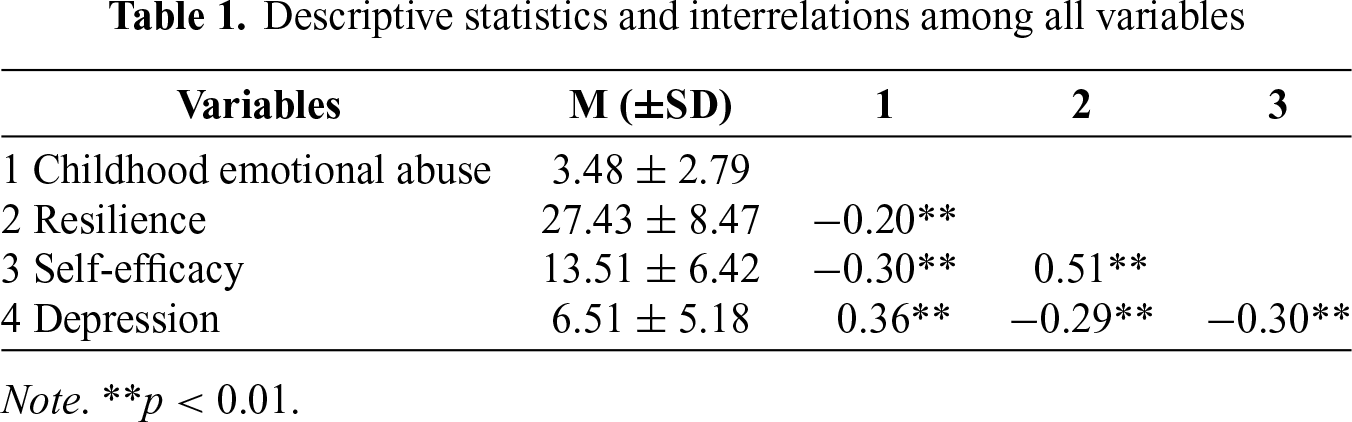
Table 1 presents the means, standard deviations, and correlation coefficients for childhood emotional abuse, resilience, self-efficacy, and depression. The results indicate that all the variables were significantly correlated with one another. Specifically, childhood emotional abuse had a significant negative correlation with both resilience (r = −0.20, p < 0.01) and self-efficacy (r = −0.30, p < 0.01), and a significant positive correlation with depression (r = 0.36, p < 0.01). Additionally, resilience was found to have a significant positive correlation with self-efficacy (r = 0.51, p < 0.01) and a significant negative correlation with depression (r = −0.29, p < 0.01). Furthermore, self-efficacy also showed a significant negative correlation with depression (r = −0.30, p < 0.01).
Childhood emotional abuse and depression
The results presented in Table 1 indicate a significant positive correlation between childhood emotional abuse and depression (r = 0.36, p < 0.01). Furthermore, as illustrated in Figure 1, regression analyses reveal that childhood emotional abuse is a significant positive predictor of depression (β = 0.630, p < 0.001). This finding suggests that higher levels of childhood emotional abuse in adolescents are associated with a substantial increase in depressive symptoms.
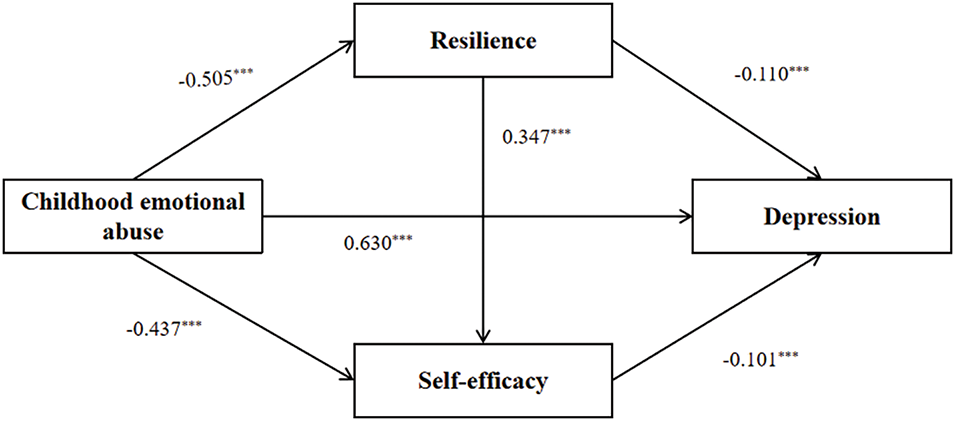
Figure 1: Diagram of the chain mediation model Note. ***p < 0.001.
Mediation model test of resilience and self-efficacy
As shown in Figure 1, the chained mediation regression analysis revealed that childhood emotional abuse significantly and negatively predicted resilience and self-efficacy (β = −0.505, p < 0.001; β = −0.437, p < 0.001), and resilience, in turn, significantly and positively predicted self-efficacy (β = 0.347, p < 0.001). When childhood emotional abuse, resilience, and self-efficacy were simultaneously included in the regression equation, childhood emotional abuse significantly and positively predicted depression (β = 0.630, p < 0.001), while both resilience and self-efficacy significantly and negatively predicted depression (β = −0.110, p < 0.001; β = −0.101, p < 0.001).
As shown in Table 2, the analysis of mediated effects revealed that both the total and direct effects of childhood emotional abuse on adolescent depression were statistically significant. The Bootstrap 95% confidence intervals for the indirect effects of resilience and self-efficacy did not include zero, indicating that these indirect effects were also significant. This finding suggests that resilience and self-efficacy partially mediate the relationship between childhood emotional abuse and depression. The direct effects accounted for 84.22% of the total effect. The mediating effect predicts depression through three pathways: Childhood Emotional Abuse → Resilience → Depression, with an indirect effect value of 0.056, constituting 7.48% of the total effect; Childhood Emotional Abuse → Self-Efficacy → Depression, with an indirect effect value of 0.044, accounting for 5.89% of the total effect; and Childhood Emotional Abuse → Resilience → Self-Efficacy → Depression, with an indirect effect value of 0.018, representing 2.41% of the total effect.

Higher levels of childhood emotional abuse in adolescents are associated with increased depression. This finding aligns with previous research (Christ et al., 2019; Li et al., 2022), indicating that childhood maltreatment is a significant risk factor for depression and is closely tied to depressive symptoms throughout an individual’s life. Notably, childhood emotional abuse, often viewed as a relatively “hidden” form of maltreatment, has a more severe impact on adolescent depression (Infurna et al., 2016). Experiencing emotional abuse during childhood can lead to long-lasting psychological issues, such as feelings of shame, humiliation, anger, and hopelessness (Harper & Arias, 2004; Courtney et al., 2008). These negative emotions can result in interpersonal difficulties, mood disorders, and a sense of helplessness, ultimately elevating the risk of developing depression.
This study examines the role of resilience in mediating the relationship between childhood emotional abuse and depression. Research indicates that adolescents who experience childhood emotional abuse are more likely to exhibit symptoms of depression (Shapero et al., 2014). However, not all adolescents who endure ongoing emotional abuse develop depression. Those who manage to maintain stable and healthy functioning despite early trauma often display high levels of resilience. This resilience encompasses characteristics such as self-efficacy, emotional and cognitive control under stress, adaptability, tolerance for negative emotions, and goal orientation (Wingo et al., 2010). Consequently, resilience serves as a protective factor against depression in adolescents who have faced childhood emotional abuse, helping to mitigate the negative effects of this abuse on depressive outcomes (Watters et al., 2023).
Furthermore, self-efficacy was found to mediate the relationship between childhood emotional abuse and depression. Adolescents who experience emotional abuse often develop negative self-perceptions, a reduced sense of personal control, and struggle to cope with external stressors or adverse events. Consequently, these adolescents may feel dependent on others to meet their needs; however, those individuals may not always fulfill those needs, leading to a decrease in self-efficacy (Deniz & Yıldırım Kurtuluş, 2023). Theories linking self-efficacy to depression suggest that beliefs about one’s capabilities can influence depressive symptoms (Bandura et al., 1999). Fear of facing difficulties or challenges, anxiety about failure, a belief that one cannot form satisfying and supportive relationships, and the perception of being unable to control thoughts about past events all increase the risk of depression in adolescents (Maddux & Meier, 1995).
This present study also found a sequential mediating effect on the relationship between childhood emotional abuse and depression. Emotional abuse during childhood can significantly diminish an adolescent’s resilience, making them more vulnerable to emotional dysregulation when faced with challenges (Schelble et al., 2010). As a result, these individuals often struggle with adaptability, exhibit a low tolerance for negative emotions, and possess weak willpower. With fewer experiences of successfully overcoming obstacles, they tend to develop a low sense of self-efficacy. This feeling of ineffectiveness can contribute to depressive symptoms such as worthlessness, disinterest in their surroundings, and a persistently low mood (Ying & Han, 2024).
Implications for research and practice
The present study has several important implications. Theoretically, it expands the research areas of resilience and self-efficacy for coping with emotional abuse in the Chinese context. This study goes beyond simply using the Chinese sample as a data source; it explores how parenting philosophies within the Chinese cultural context lead to specific forms of emotional abuse and influence the psychological mechanisms that underlie depression. This insight provides clear targets for developing culturally adapted prevention and intervention strategies.
Practically, by clarifying the mediating roles of resilience and self-efficacy in the relationship between childhood emotional abuse and depression, this study offers new insights for future intervention research on adolescent depression. Interventions for adolescent depression should focus on enhancing resilience and self-efficacy to alleviate depressive symptoms in adolescents. Moreover, the study findings provide a scientific basis for parenting in developing and collectivist cultures. In the process of child-rearing, parents should minimize the use of criticism, blame, and comparative language in their approach. Instead, they should focus on providing more encouragement and direct emotional expression. This approach fosters the development of resilience and self-efficacy, which can help reduce depressive symptoms during adolescence.
Limitations and future recommendations
The study has several limitations. Firstly, the convenience sample used does not allow for the generalization of the findings. Secondly, relying solely on survey data may introduce unknown social desirability bias. The lack of longitudinal tracking data prevents a clear determination of causal relationships and changes among variables. Lastly, while the chain mediation model provided valuable insights, there may be other significant factors or pathways that have yet to be identified.
Future research should employ a probabilistic sampling method and a longitudinal design to observe changes in adolescents over time, resulting in more definitive outcomes. Additionally, given the collectivist culture and family-centered traditions in China, culturally specific psychological factors may play a significant role in connecting childhood emotional abuse to depression. This connection goes beyond the influence of resilience and self-efficacy. For example, emotional abuse may increase the risk of depression by triggering feelings of intense shame, undermining one’s relational self-concept, creating psychological conflicts due to pressures related to filial duty, and leading to maladaptive coping strategies such as expressive suppression and rumination. Future research should explore these pathways that are deeply rooted in Chinese cultural context.
This study examined the impact of childhood emotional abuse on depression within the Chinese cultural context and investigated the roles of resilience and self-efficacy as mediating factors. The findings revealed that childhood emotional abuse can directly and indirectly affect the risk of depression through resilience and self-efficacy. These results enhance our understanding of resilience and self-efficacy as key mechanisms influencing the experience of depression in adolescents. The study offers valuable insights for preventing and treating depression by focusing on adolescents’ internal resources. By enhancing resilience and self-efficacy, it may be possible to reduce depression and promote better mental health among young people.
Acknowledgement: We sincerely appreciate all the adolescents who took part in this research.
Funding Statement: This research has been funded by Anhui Provincial Teaching Research Program (grant number: 2024jyxm0303).
Author Contributions: The authors confirm contribution to the paper as follows: study conception and design: Zhenhong Wang; data collection: Zhenhong Wang; analysis and interpretation of results: Zhenhong Wang, Hailong Wu; draft manuscript preparation: Zhenhong Wang, Hailong Wu. All authors reviewed the results and approved the final version of the manuscript.
Availability of Data and Materials: The authors confirm that the data supporting the findings of this study are available and will be provided by the corresponding author if required.
Ethics Approval: This study was approved by the Ethics Committee of the Faculty of Education at Fuyang Normal University (Ethics number: jyxy-2023-07-11-1). Participants provided their consent with the assurance that the data collected would be used solely for research purposes.
Conflicts of Interest: The authors declare no conflicts of interest to report regarding the present study.
References
Afifi, T. O., & MacMillan, H. L. (2011). Resilience following child maltreatment: A review of protective factors. The Canadian Journal of Psychiatry, 56(5), 266–272. https://doi.org/10.1177/070674371105600505. [Google Scholar] [PubMed] [CrossRef]
Bandura, A., Pastorelli, C., Barbaranelli, C., & Caprara, G. V. (1999). Self-efficacy pathways to childhood depression. Journal of Personality and Social Psychology, 76(2), 258–269. https://doi.org/10.1037//0022-3514.76.2.258. [Google Scholar] [PubMed] [CrossRef]
Bandura, A., & Wessels, S. (1997). Self-efficacy. Cambridge, UK: Cambridge University Press. [Google Scholar]
Bender, A., & Ingram, R. (2018). Connecting attachment style to resilience: Contributions of self-care and self-efficacy. Personality and Individual Differences, 130(2), 18–20. https://doi.org/10.1016/j.paid.2018.03.038 [Google Scholar] [CrossRef]
Berstein, D. P., & Fink, L. (1998). Childhood Trauma Questionnaire: A retrospective self-report manual. San Antonia, TX, USA: The Psychological Corporation. [Google Scholar]
Block, J., & Kremen, A. M. (1996). IQ and ego-resiliency: Conceptual and empirical connections and separateness. Journal of Personality and Social Psychology, 70(2), 349–361. https://doi.org/10.1037//0022-3514.70.2.349. [Google Scholar] [PubMed] [CrossRef]
Burns, E. E., Jackson, J. L., & Harding, H. G. (2010). Child maltreatment, emotion regulation, and posttraumatic stress: The impact of emotional abuse. Journal of Aggression, Maltreatment & Trauma, 19(8), 801–819. https://doi.org/10.1080/10926771.2010.522947 [Google Scholar] [CrossRef]
Cattelino, E., Chirumbolo, A., Baiocco, R., Calandri, E., & Morelli, M. (2021). School achievement and depressive symptoms in adolescence: The role of self-efficacy and peer relationships at school. Child Psychiatry & Human Development, 52(4), 571–578. https://doi.org/10.1007/s10578-020-01043-z. [Google Scholar] [PubMed] [CrossRef]
Chao, R. K. (1994). Beyond parental control and authoritarian parenting style: Understanding Chinese parenting through the cultural notion of training. Child Development, 65(4), 1111–1119. (In Chinese). https://doi.org/10.1111/j.1467-8624.1994.tb00806.x. [Google Scholar] [PubMed] [CrossRef]
Chao, R. K. (2001). Extending research on the consequences of parenting style for Chinese Americans and European Americans. Child Development, 72(6), 1832–1843. (In Chinese). https://doi.org/10.1111/1467-8624.00381. [Google Scholar] [PubMed] [CrossRef]
Christ, C., de Waal, M. M., Dekker, J. J. M., van Kuijk, I., van Schaik, D. J. F. et al. (2019). Linking childhood emotional abuse and depressive symptoms: The role of emotion dysregulation and interpersonal problems. PLoS One, 14(2), e0211882. https://doi.org/10.1371/journal.pone.0211882. [Google Scholar] [PubMed] [CrossRef]
Courtney, E. A., Kushwaha, M., & Johnson, J. G. (2008). Childhood emotional abuse and risk for hopelessness and depressive symptoms during adolescence. Journal of Emotional Abuse, 8(3), 281–298. https://doi.org/10.1080/10926790802262572 [Google Scholar] [CrossRef]
Deniz, M. E., & Yıldırım Kurtuluş, H. (2023). Self-efficacy, self-love, and fear of compassion mediate the effect of attachment styles on life satisfaction: A serial mediation analysis. Psychological Reports, 128(2), 457–482. https://doi.org/10.1177/00332941231156809. [Google Scholar] [PubMed] [CrossRef]
Duprey, E. B., Oshri, A., Liu, S., Kogan, S. M., & Caughy, M. O. B. (2021). Physiological stress response reactivity mediates the link between emotional abuse and youth internalizing problems. Child Psychiatry & Human Development, 52(3), 450–463. https://doi.org/10.1007/s10578-020-01033-1. [Google Scholar] [PubMed] [CrossRef]
Gu, H., Ma, P., & Xia, T. (2020). Childhood emotional abuse and adolescent nonsuicidal self-injury: The mediating role of identity confusion and moderating role of rumination. Child Abuse & Neglect, 106, 104474. https://doi.org/10.1016/j.chiabu.2020.104474. [Google Scholar] [PubMed] [CrossRef]
Harper, F. W., & Arias, I. (2004). The role of shame in predicting adult anger and depressive symptoms among victims of child psychological maltreatment. Journal of Family Violence, 19(6), 359–367. https://doi.org/10.1007/s10896-004-0681-x [Google Scholar] [CrossRef]
Hayes, A. F. (2013). Introduction to mediation, moderation, and conditional process analysis: A regression-based approach. New York, NY, USA: Guilford Press. [Google Scholar]
Hong F., Tarullo A. R., Mercurio A. E., Liu S., Cai Q., & Malley-Morrison K. (2018). Childhood maltreatment and perceived stress in young adults: The role of emotion regulation strategies, self-efficacy, and resilience. Child Abuse & Neglect, 86(2), 136–146. https://doi.org/10.1016/j.chiabu.2018.09.014. [Google Scholar] [PubMed] [CrossRef]
Infurna M. R., Reichl C., Parzer P., Schimmenti A., Bifulco A., & Kaess M. (2016). Associations between depression and specific childhood experiences of abuse and neglect: A meta-analysis. Journal of Affective Disorders, 190, 47–55. https://doi.org/10.1016/j.jad.2015.09.006. [Google Scholar] [PubMed] [CrossRef]
Jaeh, N. S., & Madihie, A. (2019). Self-efficacy and resilience among late adolescent. Journal of Counseling and Educational Technology, 2(1), 27–32. https://doi.org/10.32698/0411 [Google Scholar] [CrossRef]
Kaya, Z., Kale, K., Yağan, F., & Kaya, Ş. (2024). The mediating role of resilience in the relationship between childhood emotional abuse and emotional neglect and codependency. Children and Youth Services Review, 161(4), 107670. https://doi.org/10.1016/j.childyouth.2024.107670 [Google Scholar] [CrossRef]
Li, E. T., Luyten, P., & Midgley, N. (2020). Psychological mediators of the association between childhood emotional abuse and depression: A systematic review. Frontiers in Psychiatry, 11, 559213. https://doi.org/10.3389/fpsyt.2020.559213. [Google Scholar] [PubMed] [CrossRef]
Li, S., Zhao, F., & Yu, G. (2022). Childhood emotional abuse and depression among adolescents: Roles of deviant peer affiliation and gender. Journal of Interpersonal Violence, 37(1), 830–850. https://doi.org/10.1177/0886260520918586. [Google Scholar] [PubMed] [CrossRef]
Ma, W. N., Sang, B., & Hong, L. M. (2008). A review of psychological resilience and its operational mechanisms. Journal of East China Normal University, 26(1), 89–96. (In Chinese). https://doi.org/10.16382/j.cnki.1000-5560.2008.01.003 [Google Scholar] [CrossRef]
Maddux, J. E., & Meier, L. J. (1995). Self-efficacy and depression. Boston, MA, USA: Springer US. [Google Scholar]
Masten, A. S., & Reed, M. G. J. (2002). Resilience in development. Handbook of Positive Psychology, 74(2), 74–88. [Google Scholar]
Melamed, D. M., Botting, J., Lofthouse, K., Pass, L., & Meiser-Stedman, R. (2024). The relationship between negative self-concept, trauma, and maltreatment in children and adolescents: A meta-analysis. Clinical Child and Family Psychology Review, 27(1), 220–234. https://doi.org/10.1007/s10567-024-00472-9. [Google Scholar] [PubMed] [CrossRef]
Muris, P. (2002). Relationships between self-efficacy and symptoms of anxiety disorders and depression in a typical adolescent sample. Personality and Individual Differences, 32(2), 337–348. https://doi.org/10.1016/S0191-8869(01)00027-7 [Google Scholar] [CrossRef]
Norman, R. E., Byambaa, M., De, R., Butchart, A., Scott, J. et al. (2012). The long-term health consequences of child physical abuse, emotional abuse, and neglect: A systematic review and meta-analysis. PLoS Medicine, 9(11), e1001349. https://doi.org/10.1371/journal.pmed.1001349. [Google Scholar] [PubMed] [CrossRef]
Poole, J. C., Dobson, K. S., & Pusch, D. (2017). Childhood adversity and adult depression: The protective role of psychological resilience. Child Abuse & Neglect, 64(5), 89–100. https://doi.org/10.1016/j.chiabu.2016.12.012. [Google Scholar] [PubMed] [CrossRef]
Sagone, E., De Caroli, M. E., Falanga, R., & Indiana, M. L. (2020). Resilience and perceived self-efficacy in life skills from early to late adolescence. International Journal of Adolescence and Youth, 25(1), 882–890. https://doi.org/10.1080/02673843.2020.1771599 [Google Scholar] [CrossRef]
Schelble, J. L., Franks, B. A., & Miller, M. D. (2010). Emotion dysregulation and academic resilience in maltreated children. Boston, MA, USA: Springer US. [Google Scholar]
Schulz, P., Beblo, T., Ribbert, H., Kater, L., Spannhorst, S. et al. (2017). How is childhood emotional abuse related to major depression in adulthood? The role of personality and emotion acceptance. Child Abuse & Neglect, 72(26), 98–109. https://doi.org/10.1016/j.chiabu.2017.07.022. [Google Scholar] [PubMed] [CrossRef]
Schwarzer, R., & Jerusalem, M. (1995). Generalized self-efficacy scale. In: J. Weinman, S. Wright, M. Johnston (Eds.Measures in health psychology: A users portfolio. Causal and control beliefs. Windsor, UK: Nfer-Nelson. [Google Scholar]
Shapero, B. G., Black, S. K., Liu, R. T., Klugman, J., Bender, R. E. et al. (2014). Stressful life events and depression symptoms: The effect of childhood emotional abuse on stress reactivity. Journal of Clinical Psychology, 70(3), 209–223. https://doi.org/10.1002/jclp.22011. [Google Scholar] [CrossRef]
Soffer, N., Gilboa-Schechtman, E., & Shahar, G. (2008). The relationship of childhood emotional abuse and neglect to depressive vulnerability and low self-efficacy. International Journal of Cognitive Therapy, 1(2), 151–162. https://doi.org/10.1521/ijct.2008.1.2.151 [Google Scholar] [CrossRef]
Svanberg, P. O. (1998). Attachment, resilience and prevention. Journal of Mental Health, 7(6), 543–578. https://doi.org/10.1080/09638239817716 [Google Scholar] [CrossRef]
Wang, W., Bian, Q., Zhao, Y., Li, X., Wang, W. et al. (2014). Reliability and validity of the Chinese version of the Patient Health Questionnaire (PHQ-9) in the general population. General Hospital Psychiatry, 36(5), 539–544. https://doi.org/10.1016/j.genhosppsych.2014.05.021. [Google Scholar] [PubMed] [CrossRef]
Watters, E. R., Aloe, A. M., & Wojciak, A. S. (2023). Examining the associations between childhood trauma, resilience, and depression: A multivariate meta-analysis. Trauma, Violence, & Abuse, 24(1), 231–244. https://doi.org/10.1177/15248380211029397. [Google Scholar] [PubMed] [CrossRef]
Wingo, A. P., Wrenn, G., Pelletier, T., Gutman, A. R., Bradley, B. et al. (2010). Moderating effects of resilience on depression in individuals with a history of childhood abuse or trauma exposure. Journal of Affective Disorders, 126(3), 411–414. https://doi.org/10.1016/j.jad.2010.04.009. [Google Scholar] [PubMed] [CrossRef]
Wright, M. O. D., Crawford, E., & Del Castillo, D. (2009). Childhood emotional maltreatment and later psychological distress among college students: The mediating role of maladaptive schemas. Child Abuse & Neglect, 33(1), 59–68. https://doi.org/10.1016/j.chiabu.2008.12.007. [Google Scholar] [PubMed] [CrossRef]
Yang, Y., Ma, X., Kelifa, M. O., Li, X., Chen, Z. et al. (2022). The relationship between childhood abuse and depression among adolescents: The mediating role of school connectedness and psychological resilience. Child Abuse & Neglect, 131(4), 105760. https://doi.org/10.1016/j.chiabu.2022.105760. [Google Scholar] [PubMed] [CrossRef]
Yeung, A. S., Jing, Y., Brenneman, S. K., Chang, T. E., Baer, L. et al. (2012). Clinical outcomes in measurement-based treatment (cometA trial of depression monitoring and feedback to primary care physicians. Depression and Anxiety, 29(10), 865–873. https://doi.org/10.1002/da.21983. [Google Scholar] [PubMed] [CrossRef]
Ying, H., & Han, Y. (2024). How childhood psychological abuse affects adolescent cyberbullying: The chain mediating role of self-efficacy and resilience. PLoS One, 19, e0309959. https://doi.org/10.1371/journal.pone.0309959. [Google Scholar] [PubMed] [CrossRef]
Yu, X. N., & Zhang, J. X. (2005). Resilience: Psychological mechanisms for recovery and growth under stress. Advances in Psychological Science, 13(5), 658–665. (In Chinese). https://doi.org/10.3969/j.issn.1671-3710.2005.05.016 [Google Scholar] [CrossRef]
Zhang, J. X., & Schwarzer, R. (1995). Measuring optimistic self-beliefs: A Chinese adaptation of the general self-efficacy scale. Psychologia: An International Journal of Psychology in The Orient, 38, 174–181. [Google Scholar]
Zhao, X. F., Zhang, Y. L., & Li, L. F. (2004). Childhood abuse questionnaire survey of 435 children. Chinese Journal of Clinical Psychology, 4, 377–379. (In Chinese). https://doi.org/10.3969/j.issn.1005-3611.2004.04.019 [Google Scholar] [CrossRef]
Zhou, W. X., & Guo, G. P. (2006). Self-efficacy: Concepts, theories, and applications. Journal of Renmin University of China, 20(1), 91–97. (In Chinese). [Google Scholar]
Zhou, H., & Long, L. (2004). Statistical tests and control methods for common method bias. Advances in Psychological Science, 12(6), 942–950. (In Chinese). https://doi.org/10.3969/j.issn.1671-3710.2004.06.018 [Google Scholar] [CrossRef]
Zhou, X., & Zhen, R. (2022). How do physical and emotional abuse affect depression and problematic behaviors in adolescents? The roles of emotional regulation and anger. Child Abuse & Neglect, 129, 105641. https://doi.org/10.1016/j.chiabu.2022.1 [Google Scholar] [CrossRef]
Cite This Article
 Copyright © 2025 The Author(s). Published by Tech Science Press.
This work is licensed under a Creative Commons Attribution 4.0 International License , which permits unrestricted use, distribution, and reproduction in any medium, provided the original work is properly cited.
 Downloads
 Citation Tools
