
 Login
Login Register
 Submit a Paper
 Propose a Special lssue
 Open Access
ARTICLE

Home Mealtimes in Kenya and Zambia: Recognising culturally grounded practices that foster healthy eating behaviours
1 Institute of Health & Neurodevelopment, Aston University, Birmingham, UK
2 Centre for Multilingualism & Diversities Research, University of the Western Cape, Bellville, South Africa
3 Department of Psychology, University of Zambia, Lusaka, Zambia
4 School of Arts, University of KwaZulu-Natal, Private Bag X01, Scottsville, Pietermaritzburg, South Africa
5 School of Education & Human Resource Development, Kisii University, Kisii, Kenya
6 Department of Dynamic & Clinical Psychology & Health, Sapienza University of Rome, Rome, Italy
* Corresponding Author: Jeofrey Mtemeri. Email:
Journal of Psychology in Africa 2026, 36(1), 53-63. https://doi.org/10.32604/jpa.2026.069558
Received 26 June 2025; Accepted 05 January 2026; Issue published 26 February 2026
 View Full Text
 Download PDF
Abstract
Globally, mealtimes provide key insights into cultural and social values and practices. We examine mealtime environments and eating practices in two different African settings using quantitative observational and questionnaire data. Participating families (N = 80) were recruited from two rural locations in Zambia and Kenya. Results following descriptive analysis showed that meals are typically taken as a family in a sociable context, providing opportunities to nurture children’s positive behaviours. In both communities, mothers (71.25%) were most likely to be present and typically prepared meals and provided the food. We observed a few distractions being used during mealtimes, and children finished their food with little to no conflict. Plate sharing varied across the two sites and was more common in Zambia, where we also observed more traditional practices such as eating with hands (as opposed to cutlery) and sitting on mats on the ground (as opposed to seated on chairs or sofas). Overall, our findings suggest more similarities in the cultural and social values across the two African contexts despite slight differences in mealtime practices. In particular, positive mealtime behaviours (little food refusal, lack of conflict) were common across all contexts, regardless of the extent to which traditional practices (such as plate-sharing and sitting on the floor) were used. Findings align with Family Systems theory, which states that the family is understood best by conceptualizing it as a complex, dynamic, and changing collection of parts, subsystems, and family members.Keywords
The food we choose to eat, and the way mealtimes are conducted, are shaped by our cultural and social values. These values can influence mealtime environments and eating practices over and above socio-economic factors such as income and level of education (Johnstone & Longhurst, 2012; Rozin, 2007; Sproesser et al., 2022). From shaping food preferences and perceptions of which foods are healthy, cultural dynamics dictate what food is eaten, when it is eaten, and how it is prepared (Larson & Story, 2009; Evans et al., 2011; Ayala et al., 2008; Evans & Rodger, 2008; Mingay et al., 2021). The current study aimed to characterise mealtime experiences and explore parent and child feeding and eating behaviours, guided by the Family Systems theory (Herrera-Pastor et al., 2019), which states that the family is understood best by conceptualizing it as a complex, dynamic, and changing collection of parts, subsystems, and family members. One of the core principles of Family Systems Theory is the building and strengthening of informal support networks and the provision of supports and resources in a flexible, responsive, and individualised manner to meet the changing needs of families.
Parents and other caregivers are typically responsible for providing, preparing, and serving food in the family (Dahl et al., 2023; Studer-Perez, & Musher-Eizenman, 2022; McHale et al., 1995). They also create rules about food and encourage children to eat (Rhee, 2008), and their own eating behaviours and parenting practices further influence the development of children’s eating behaviours (Scaglioni et al., 2008). Mothers play a major role in these contexts, since they tend to spend significantly more time in direct interactions with their children compared to fathers (McHale et al., 1995). Caregivers not only encourage healthy eating but also act as role models and are key to the development of children’s eating behaviours. Indeed, eating meals as a family has been linked to improved dietary quality in children (Larson et al., 2007; Smith et al., 2019). Family mealtimes are often occasions for fostering togetherness, sharing personal experiences, and nurturing bonding amongst family members (Larson et al., 2006; Smith et al., 2019; Fischler, 2011; Tubbs et al., 2005).
However, as with many other aspects of everyday life, family mealtimes have been affected by social, cultural, and lifestyle changes, including the increasing availability of TVs, smartphones, and other media devices (Hiniker et al., 2016). Their presence and usage at mealtimes have been linked to greater distractions and reduced time spent conversing and communicating during mealtimes (Ferdous et al., 2017; Hiniker et al., 2016; Wenhold & Harrison, 2018; Feldman et al., 2007). In contrast, the absence of such distractions is believed to foster a more positive mealtime experience and promote stronger social bonds.
Mealtime environment and context
Across the world, eating behaviours are also influenced by the physical environment (Ball et al., 2006). In addition to geographical conditions which influence the types of food available, local infrastructures and family social and economic resources shape the type and quality of food purchased (Molina-García et al., 2017). For instance, the quality of foods available in the home is influenced by individual shopping behaviours, reliance on non-home sources for family meals, and food preparation methods (Kegler et al., 2014). While Latina mothers in the US indicated that food choices were often driven by economic factors (Evans et al., 2011), the same study also found that certain items, such as frozen pizza and noodles, were chosen for their convenience despite often being more expensive. This tension between economic constraints and the value of convenience is likely to be reflected in diverse global contexts, including rural Africa.
Despite our increasingly global food culture (Adzakor, 2024), local eating behaviours tend to endure because food has important psychological associations with family and community. Migrant communities, for example, often retain food practices from their home culture. A study carried out in the US with Somali migrant parents found that their current food choices and behaviours were strongly influenced by their childhood experiences (Trofholz et al., 2018), a finding supported in other work (e.g., Kelder et al., 1994). Although food habits are slow to change, a study in Nigeria indicated that, despite the comforting and reassuring nature of familiar traditional foods from childhood, significant changes in food supplies have led households in many African countries to change their diets over recent generations (Oluwole et al., 2022).
The sub-Saharan African context
Turning to African contexts, research on eating practices remains relatively sparse. However, available literature highlights the cultural importance of food and nutrition. The use of hands and fingers is known to be more pronounced in Africa and India (Hegde et al., 2018 Nov). Eating is a social act, and traditions around food reflect deep cultural and communal values (Osseo-Asare, 2005). Oniang’o et al. (2003) emphasized that African food habits are deeply embedded in cultural routines, and any nutrition-based intervention must take into account these entrenched traditions. Garcia-Navarro et al. (2022) further highlighted the distinct food traditions between regions such as Morocco and Senegal, underlining the diversity within African food culture. Additionally, Wooten (2022) discusses women’s alimentary agency in rural Mali, underscoring their pivotal role in sustaining social life through food-related work.
In many low- and middle-income countries (LMICs) such as Kenya and Zambia, families are increasingly facing the double burden of malnutrition where undernutrition and rising rates of overweight and obesity coexist within the same populations (Mukanu et al., 2023; Popkin et al., 2020). This shift is driven by a combination of persistent poverty, food insecurity, and the growing availability of low-cost, highly processed foods with limited nutritional value (Barth-Jaeggi et al., 2023; Mbogori et al., 2020). In Zambia, for example, traditional diets centred on staples like nshima and locally sourced vegetables and proteins are increasingly being replaced by cheaper processed alternatives, contributing to nutritional shifts that compromise health outcomes (Mukanu et al., 2022). Similarly, in urban Kenya, food insecurity remains widespread, with only 19.5% of Nairobi households reported to be food secure, largely due to reliance on inexpensive, nutrient-poor foods (Macharia et al., 2018).
While Kenya and Zambia are both LMICs, they represent diverse cultural and geographic contexts. Kenya, for instance, is home to a wide range of ethnic groups, each with its own food-related practices. Studies such as that by (Mutoro et al., 2020) have begun to explore the specific feeding behaviours of children in Nairobi’s low-income areas, highlighting both enduring traditional practices and new patterns shaped by shifting food environments. In contrast, Zambia’s Southern Province (where Kazungula is located) remains characterised by strong communal food customs that continue to endure despite gradual urban influences and economic changes (Kitsuki & Sakurai, 2023). Nonetheless, both countries are experiencing nutritional transitions with significant public health implications. In Zambia, for example, approximately 25% of adults are now classified as having overweight or obesity (Mukanu et al., 2022; Mukanu et al., 2023).
Vulnerable populations, particularly women and children, are disproportionately affected by these changes. In Kenya, rising obesity rates are observed alongside persistent undernutrition, particularly in arid and semi-arid regions and informal urban settlements (Codjia et al., 2022; Mbogori et al., 2020). Integrated interventions, such as the Maternal and Child Nutrition Programme (MCNP II), have been implemented to address these inequalities by targeting maternal nutrition and food security (Alvarez et al., 2021; Codjia et al., 2022). The COVID-19 pandemic further exacerbated these challenges: lockdowns disrupted supply chains, drove up food prices, and disproportionately affected low-income and female-headed households (Kunyanga et al., 2023; Tabe-Ojong et al., 2022). Taken together, these findings highlight the need for context-specific, culturally grounded strategies that account for geographic disparities, local food customs, and the socio-economic pressures that shape eating practices in Kenya, Zambia, and other LMICs.
The current study examines mealtime environments and eating practices in two African settings in order to characterise mealtime experiences in rural African contexts and provide insights into cultural and social values and practices. We address six research questions, to examine the extent to which the following physical, social and behavioural factors influence the character of mealtimes: (i) Infrastructure and technology access; (ii) Purchasing and preparation practices; (iii) Social makeup (main caregivers and people present during mealtimes); (iv) Physical makeup (seating arrangements, utensils used, and plate sharing); (v) The extent of Mealtime distractions (i.e., practices that distract from eating or having mealtime conversations); (vi) Mealtime behaviours (e.g., the extent to which caregivers encouraged children to eat, and the nature of interactions between people).
Design, participants, and setting
We use mixed methods to explore mealtimes through questionnaire-based interviews and video observations. These data were collected as part of a larger study investigating eating behaviour and language development in rural Zambia and Kenya (Zeidler et al., 2022). Families were recruited from rural areas in Laikipia County, Kenya, and Kazungula in Livingstone, Zambia’s Southern Province. Recruitment in both regions followed approvals by the responsible authorities and committees. In total, 80 families participated in the study: 40 from each location (see Table 1 for participant characteristics).
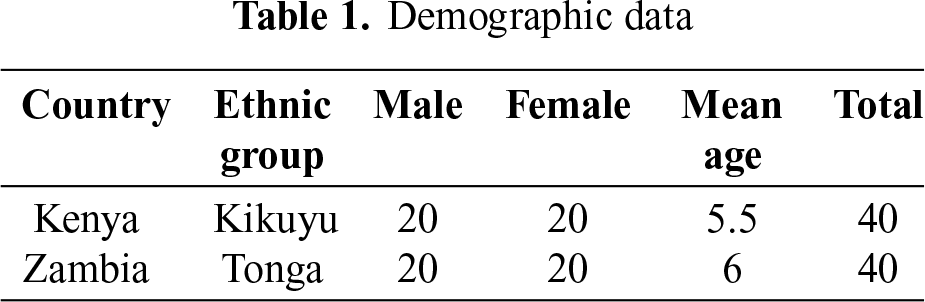
In Kenya, participants were drawn from rural communities with low socioeconomic status located near Nanyuki in Laikipia County. All children were preschoolers attending one of two local primary schools and were selected using purposive sampling. Although some of the children had mixed ethnic heritage, most were native speakers of Kikuyu. The Kikuyu represent the largest ethnic group in Kenya, numbering approximately 8.15 million people, or about 17% of the national population, according to the 2019 census Kenya National Bureau of Statistics, 2019 (http://www.knbs.or,ke). Historically, the Kikuyu have practiced small-scale agriculture, growing crops such as maize and beans and keeping livestock for their livelihood. Over time, increasing engagement in trade and wage work has led many Kikuyu to move into Kenya’s middle and upper socioeconomic classes, often accompanied by a decline in family size due to economic considerations. Nevertheless, children are typically raised in socially rich environments that include siblings, cousins, and peers of various ages. Preschool education generally begins around age four, followed by a transition to primary school after about two years. Outside of school, children frequently assist with household chores, care for younger siblings, and help look after domestic animals.
In Zambia, the study involved families with children aged between 4 and 8 years enrolled in Early Childhood Development and Education (ECDE) programs. A total of 40 families were selected across four different communities in Livingstone, Zambia, each representing distinct demographic and socio-economic settings. The sites were purposively selected to capture variation in income levels, access to education, and cultural practices, thereby ensuring diversity and representativeness of the sample. Within each community, families were chosen in collaboration with local ECDE teachers and community leaders to include both male- and female-headed households. This enabled the research team to explore how language use, child participation during mealtimes, and food allocation patterns varied across different household structures and economic conditions. The purposive sampling technique ensured that the data reflected a broad range of linguistic and social realities in rural Zambian households.
Data was collected through questionnaire-based interviews and video observations, as described below:
Questionnaires. We used a comprehensive sociodemographic questionnaire based on the Kenyan Demographics and Health Survey Tool (https://dhsprogram.com) to collect data about the home infrastructure, including access to water, the presence of home electricity, TV, radio, and mobile phones. To contextualize our observations, our survey also included questions about food-related activities (e.g., who purchases food, who cooks food in the home). Research assistants fluent in the local languages administered the questionnaires during personal visits and noted all answers.
Video observations. With the families’ permission, the research team observed three lunch-time meals wherever they would naturally happen. The first session served to familiarize participants with the presence of a camera and was not included in our analyses. The two subsequent sessions were scheduled for a weekday and a weekend day to capture a wider range of possible mealtime settings. On each recording day, local research assistants visited the families at home and set up the recording equipment in an unobtrusive place to avoid distractions (e.g., in a corner of the room). Recordings took place inside the house or in open spaces, depending on where participants would typically eat.
In the two settings (Kenya and Zambia), data were collected for a total of 80 mealtimes (40 families × 2 observations).
Coding
All mealtime conversations and behaviours were transcribed and coded by local assistants who were familiar with the relevant languages and cultural backgrounds. Based on (Mutoro et al., 2020) coding scheme for observations of low-income families in Nairobi, our research team worked with local teachers and assistants to develop a culture-sensitive coding scheme for our settings. Our coding scheme included more general items such as mealtime setup and seating arrangements (who eats with the child, are bowls shared), location of the child (e.g., sitting at table or on floor), and the presence of any distractions (e.g., radio, TV, animals) as well as specific mealtime behaviours. Behavioural codes included both children and caregivers, such as caregivers’ encouragement to eat (smiling, praising, chatting, singing), prompting to eat, negativity or use of force, and distraction. Child behaviours included interest in food, interactions with other children, child mood, distractibility, and any food refusal. In addition, the coding scheme also measured overall mealtime tone and child food intake from foods offered (more information on our behavioural coding scheme is available from Zeidler et al., (2022)).
Data collection was conducted using a combination of Sony video cameras and Zoom audio recorders. The video recordings captured mealtime interactions within families, allowing researchers to observe verbal and non-verbal communication, food distribution practices, and child engagement. The Zoom audio recorders were used to ensure high-quality sound capture, particularly where background noise could interfere with the video audio. These recordings were later transcribed and translated into English to facilitate further linguistic analysis. The credibility and reliability of the tools were ensured through pre-testing, including dummy recordings, to find the best camera positioning and participants’ comfort. Additionally, research assistants were trained to handle the equipment consistently, maintain confidentiality, and ensure the natural behaviour of participants during recording sessions. This careful calibration enhanced the dependability and validity of the data collected.
Ethical considerations and consent
The children in this study were participants in a broader research project examining how mealtime experiences influence children’s language development and nutritional outcomes in Kenya and Zambia (Zeidler et al., 2022). The study was approved by: the Research Ethics Committee of the University of the Eastern Africa Baraton No. UEAB/REC/11/07/2019, Aston University REC/REF #1547 and University of Zambia No. 2017-July-117, and a research license was granted by the Kenyan National Commission for Science, Technology, and Innovation (NACOSTI/P/21/14376). Given the personal nature of the study, establishing trust with participating families was essential. For this reason, data collection in Kenya and Zambia was conducted in villages where the research team had previously worked. Early Childhood Development and Education (ECDE) teachers from schools within the catchment areas contacted families with children aged between four and seven years and introduced them to the study’s overall purpose and procedures. Families that expressed interest were included in a preliminary participant pool, from which 40 households were randomly selected to join the project. A local research assistant then reached out to each of the selected families to explain the study methods in greater detail and to address any questions. Written information sheets were provided, and the assistant also read them out in the local language to ensure comprehension did not depend on participants’ literacy levels. If families agreed to take part, the assistant then scheduled convenient times for data collection. For each part of data collection, participants were provided with the relevant consent forms, which the assistants read out in the local language. All participating adults (including one parent or caregiver per child participant) consented by either providing initials or a fingerprint on the forms. The study was also explained to children, and what they would be asked to do, and they were then invited to give verbal assent to participate.
During each data collection session, families were observed in their natural home environments while sharing a meal. The process was designed to be as unobtrusive as possible to minimize participant discomfort or behavioural changes due to observation. Respect for privacy and cultural sensitivity were prioritized throughout the process. All recordings and transcripts were anonymized to protect participant identities, and participants were assured that the data would be used solely for research and educational purposes.
A separate descriptive analysis was conducted for each setting to examine mealtime infrastructure and facilities, food purchasing and preparation practices, social composition, physical arrangements, potential distractions, and mealtime behaviours. This approach provides a comprehensive overview of the variables and allows assessment of whether the research design is balanced and sufficiently robust (Shreffler & Huecker, 2023)
Each of our research questions is addressed below by examining the extent to which each of these six physical, social, and behavioural factors influences the character of mealtimes.
Infrastructure and technology access
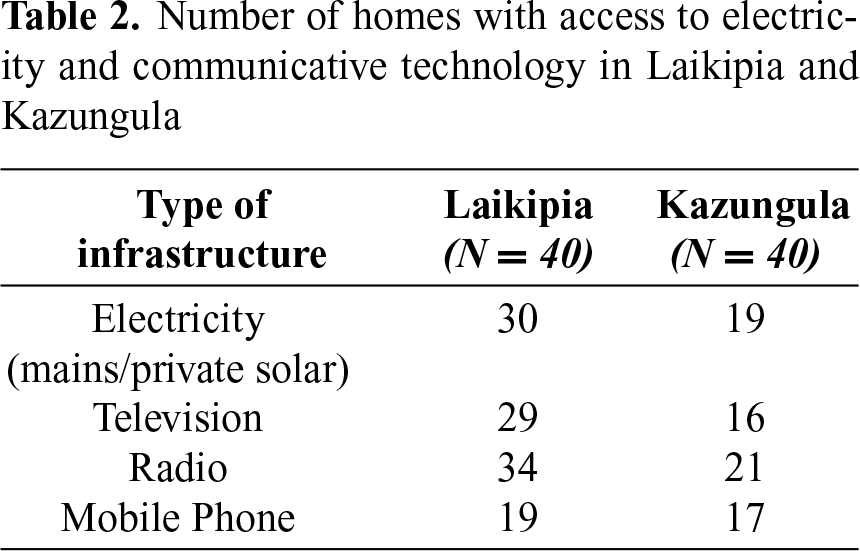
All families indicated they had access to drinking water via a communal bore hole. In Laikipia, more homes had access to electricity compared to homes in Kazungula, which is also reflected in the larger number of families owning a television or radio (see Table 2).
Purchasing and preparation practices
In Laikipia, the mother (13) was most commonly identified as the food provider, then fathers (11) and great grandmothers, grandmothers, and grandfathers (10). There were also occasions where food provision was described as a shared responsibility between caregivers (6).
In Kazungula, food provision was mostly associated with the father (21), then the mother (10), and great-grandmothers, grandmothers, and grandfathers (6). Food provision as shared responsibility was identified in 3 cases.
In both settings, mothers were predominantly responsible for preparing or cooking food (32 of 40 families in Laikipia and 24 of 40 families in Kazungula). Grandmothers were the second most common group to be responsible for food preparation (8 in Laikipia and 6 in Kazungula). Fathers were never listed as the person to prepare or cook food in either area, suggesting that this responsibility is not typically assigned to males. Food preparation or cooking as a shared responsibility among multiple female family members was seen in 9 instances in Kazungula but not observed at all in Laikipia.
Social makeup: main caregivers and people present during mealtimes
In both locations, mothers were most frequently described as the main caregiver (in 30 of 40 families in Laikipia, and 27 of 40 families in Kazungula), followed by grandmothers or great-grandmothers (8 families in Laikipia, and 7 families in Kazungula). Fathers were only identified as the main caregiver in 2 families in Laikipia and 4 families in Kazungula.
During mealtimes, between 1–6 people in Laikipia and 0–6 people in Kazungula were present alongside the target child during mealtimes. In both communities, the modal number of other people present during mealtimes was 2.
A total of 132 different children were present within the 80 recordings in Laikipia (2 recordings for each family), and 143 different children were present within the 80 recordings in Kazungula.
Apart from other children, adult females (including mothers, grandmothers, sisters, aunts, cousins, and neighbours) were the most common group to sit with the target child at mealtimes. Across 80 recordings per country, a total of 88 adult females sat with children in Laikipia and 51 sat with children in Kazungula. Comparatively, adult males (including fathers, grandfathers, brothers, cousins, uncles, and neighbours) were much less likely to sit with the target child, with only 8 cases observed in Laikipia and 23 in Kazungula.
Physical makeup: seating arrangements, utensils used, and plate sharing
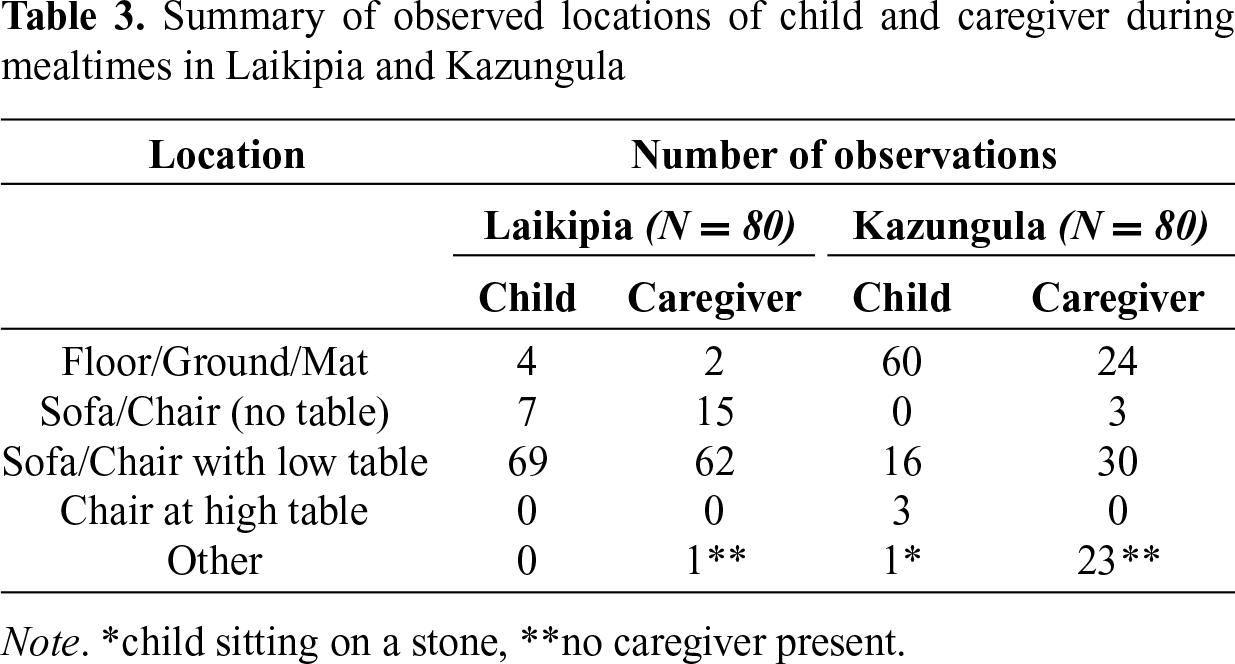
Table 3 shows that children and their caregivers in Laikipia were most likely to be seated on a sofa or chair with a low table during mealtimes. In Kazungula, children were more likely to sit on the floor, whilst caregivers were most likely to sit on a sofa or chair with a low table. In Kazungula, caregiver presence during mealtime observations was less frequent (see Table 3).
As indicated in Table 4 below, the most common utensil used in Laikipia was the spoon. In Kazungula, children were observed using their hands to eat meals. There were a few cases in Laikipia where children used a combination of spoon and hands, but there were no instances of combined utensil use observed in Kazungula.
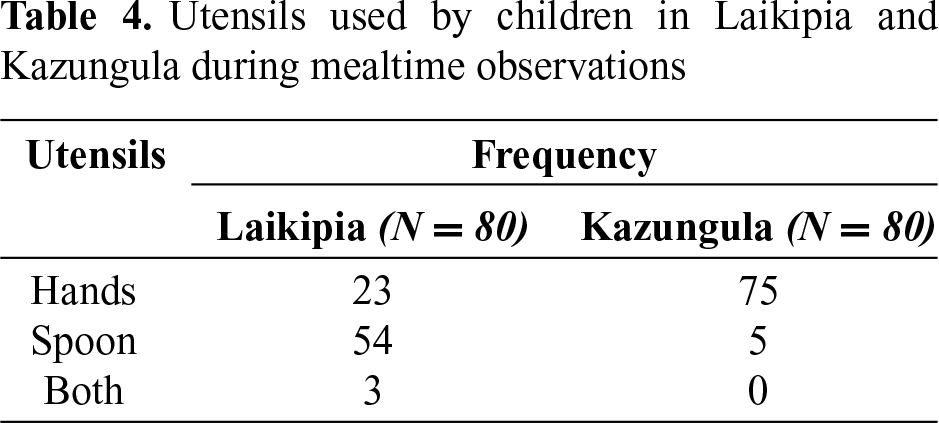
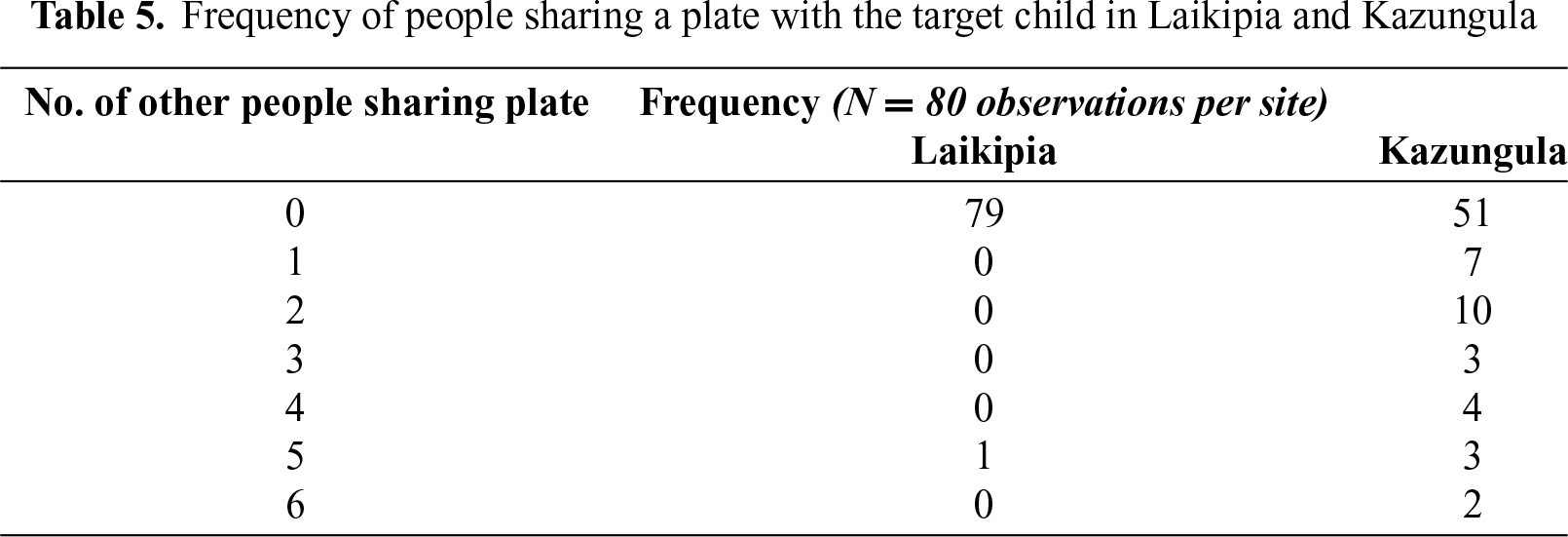
Plate sharing was rarely observed in Laikipia; plate sharing was observed a total of 29 times in Kazungula (Table 5).
In both communities, distractions during mealtimes were not frequent (occurring in approximately 1 in 4 mealtimes). Distractors were coded as: TV, radio, and other; and the most prevalent distractor in both communities was ‘other activities’, including playing, singing, dancing, mobile phone calls, reading, and animals passing by. These types of distractions were observed 15 times in Laikipia and 6 times in Kazungula. The most frequent example of ‘other activities’ in Laikipia was singing, and in Kazungula, it was playing football or listening to the radio. There were no instances of radios as a potential distraction in Laikipia. TVs were running on 5 occasions when children were eating in both Laikipia and Kazungula.
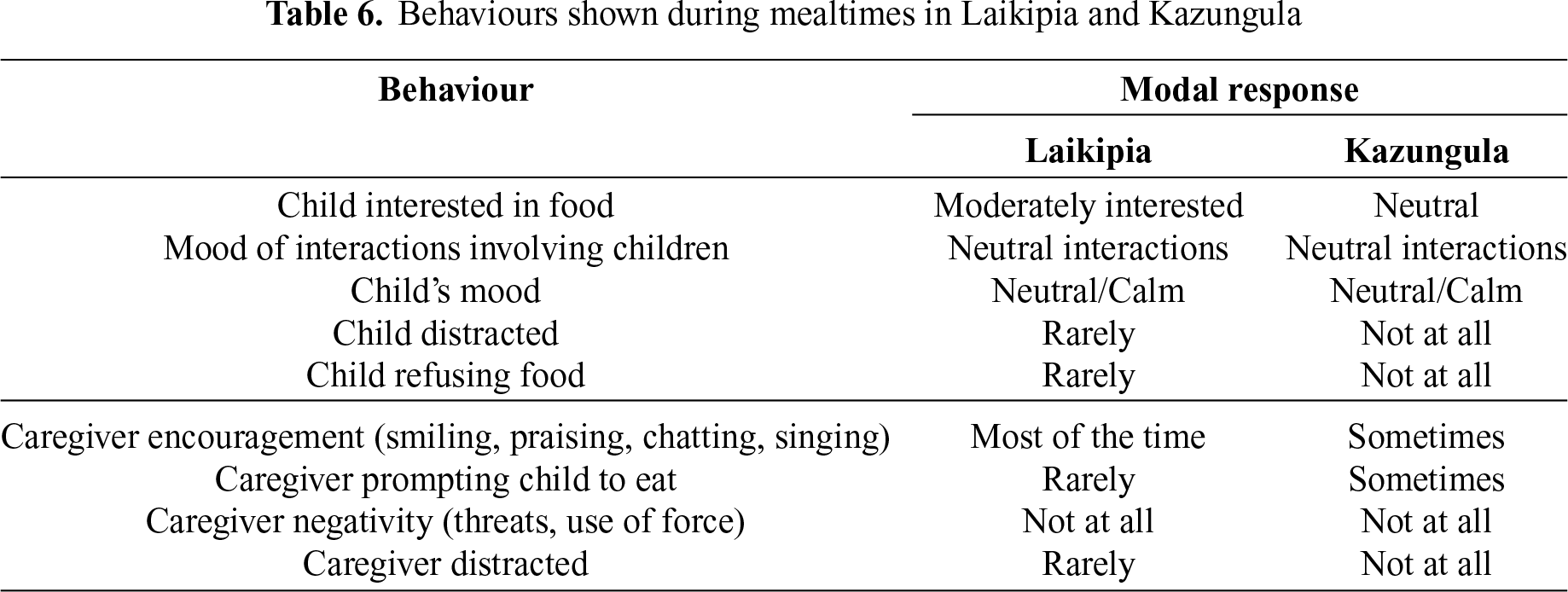
As shown in Table 6, interactions during mealtimes were generally neutral and calm in both locations, with children most often rarely or never being distracted or refusing food. Caregiver encouragement to eat was average to high across the two sites, and caregiver negativity and distraction were low (modal response = not at all). Rates of food refusal were very low in both communities, with only 4 children sometimes displaying any instances of food refusal.
The aim of the current study was to gain insight into the mealtime environment and behaviours of two rural African communities using questionnaire-based interviews and observations of mealtimes with children. In line with previous findings (Hatch & Posel, 2018), our data indicate that the mother was the main (but often not the only) caregiver in both communities. Previous research has underlined the unique role of females in preparing food (Wooten, 2022; McHale et al., 1995). In our study, many mothers in Laikipia were also responsible for providing it. In Kazungula, whilst the mother was most commonly in charge of preparing the food, it was the father who most commonly purchased the food. Interestingly, fathers and grandfathers were identified as the people who bought food for the children in both communities. However, they were never identified as preparing the food, which was typically done by mothers, grandmothers, and other female family members. These findings are consistent with the Family Systems theory, in which family cohesion and interconnectedness, with every member playing their role, are central to the healthy functionality of the family.
In both communities, adult females were also more often present during mealtimes compared to their male counterparts, and were more often responsible for providing, preparing, or supervising meals. In both locations, it was women who tended to have the leading role in shaping mealtime dynamics and fostering social connections at mealtimes. While this resonates with previous findings about cultural norms within our respective societies, our data also shows that gender roles are perhaps starting to change (Bray & Dawes, 2016). In Kazungula, fathers were in charge of providing (although not preparing) food, and in both settings, they sometimes assumed caregiving roles during meals.
Given the importance of family mealtimes as a protective barrier against obesity and a wide range of eating disorders in Western countries (Rhee, 2008; Fischler, 2011; Neumark-Sztainer et al., 2008), more research on local eating behaviours in Low-and Middle-Income Countries (LMIC) seems crucial to counter the recent surge in metabolic disorders (Ford et al., 2017; Noubiap et al., 2022). If findings from LMICs confirm that a higher frequency of family meals is related to eating more nutritious food (Larson & Story, 2009), this could provide an important starting point for future interventions. Whilst further research is needed to pinpoint the effects of family meals on children in rural African contexts, it is promising to see that family mealtimes are commonplace in these communities. In Kazungula, a larger proportion of adult caregivers were absent from mealtimes, and those who were present often sat in a different location from their child. While research from Western countries has underlined the important role of adult caregivers for modelling and shaping future dietary habits (Larson & Story, 2009) and influencing children’s recollections of meals and the food they were served (Trofholz et al., 2018), very little is known about their impact in Zambian and Kenyan communities. Given the frequent presence of older siblings and other relatives in children’s lives, future research should pay close attention to the role of other caregivers to understand how family mealtimes shape children’s eating behaviours in these communities.
Overall, our observations highlight striking similarities in mealtime behaviour across the two rural African communities. However, there were differences in some mealtime practices. For instance, children in Laikipia were most likely found sitting on a sofa or chair with a low table, and children in Kazungula were most likely sitting on the floor. While these differences could be explained by local temperatures, which make sitting on the floor less comfortable in Laikipia (with an annual average of 17°C, Laikipia is slightly cooler than Kazungula with an annual average of 22°C), they could also point to the impact of globalization. Along the same lines, children in Laikipia also preferred to use spoons or a combination of spoons and hands, whilst children in Kazungula preferred the use of their hands, and we found a striking difference in plate-sharing habits between the two communities. In Laikipia, there was only 1 instance of children sharing their plates. In contrast, 29 children from Kazungula (36%) were observed to share their plates or bowls, suggesting a more communal eating experience and emphasizing the importance of shared meals and social connections. Traditionally, using hands and sharing bowls was very common across Laikipia as well—and still is in several other communities (Osseo-Asare, 2005). Our observation might therefore indeed point to changes introduced during colonization and—more recently—the effects of globalization. Capturing these changes and mapping their effects would be another important area for future work.
Implications for research and practice
Despite these visible differences, most behaviours displayed by children and caregivers were strikingly similar across the two communities. Distractions during mealtimes were rare, and the television or radio were hardly ever diverting attention from food. This is a stark difference to the global North, and the US in particular, where over 60% of families and adolescents reported watching television during mealtimes (Feldman et al., 2007; Ferdous et al., 2017). Given that the presence of technology during mealtimes has been linked with poorer diet quality, obesity, and less family bonding (Feldman et al., 2007; Kegler et al., 2014; Ferdous et al., 2017; Wenhold & Harrison, 2018; Trofholz et al., 2018), the reported lack of media distractors in our communities is a positive finding, facilitating the development of social bonds and communication at mealtimes. Raising awareness of the benefits of mealtimes that focus on family interaction without technological distractions is important, so communities can work together to maintain these advantages as technology becomes more accessible in rural communities.
In both communities, mealtimes were characterized by high levels of parental encouragement and low levels of negativity (i.e., little to no threats/use of force), and the overall mood was generally neutral. Previous research has found that a negative atmosphere is predictive of fussy eating (Powell et al., 2017; Finnane et al., 2017), childhood obesity (Ramasubramanian et al., 2013), and consumption of calorically-dense foods (Renzaho et al., 2014). Positive mealtime experiences, on the other hand, seem to support the intake of nutritious food and less reliance on unhealthy weight control behaviours (Furness et al., 2023; Knobl et al., 2022). Similarly, supportive and responsive parenting behaviours during mealtimes have been linked to healthier child eating behaviours and social connections (Powell et al., 2011; Powell et al., 2017). Food refusal was a rare occurrence in both locations. Unlike their Western peers (Dovey et al., 2008), children in our communities rarely complained or refused to eat food they had been given. This was likely due to both Kenya and Zambia having many regions which are regularly experience food insecurity (Kitsuki & Sakurai, 2023; Korir et al., 2021). Ensuring that children eat whatever—and whenever—food is available is therefore much more important. Indeed, force-feeding has been reported to remain a common practice in many parts of sub-Saharan Africa (Mutoro et al., 2020), but was not observed at all in our study. Higher levels of food insecurity may explain why food refusal was rarely observed. These findings underscore the importance of recognising and supporting culturally grounded mealtime practices that foster healthy eating behaviours and positive developmental outcomes, especially in the context of shifting food environments.
Limitations and future research
Strengths of this study include the ability to capture mealtimes in their natural setting and the provision of rich, contextual data. We recruited a large sample size for an observational study, and this reduced the risk of bias from questionnaire studies. While the project was carried out in collaboration with local researchers, expectations typical of the Global North may have shaped the original coding schemes available to utilise from published work. To mitigate these effects, our team includes a majority of African academics familiar with the settings who worked closely with local research assistants who guided the development of our coding schemes and played a crucial role in interpreting our data.
Despite our best efforts to capture typical mealtimes, the presence of video cameras may have caused families to behave differently. We opted for lunchtime recordings in order to minimize our impact on families’ privacy and ensure the safety of our local assistants by avoiding nighttime travels. However, dinnertimes may yield much richer, and perhaps even entirely different, data. Methods that capture a variety of mealtimes throughout the day without compromising participants’ privacy or safety would be an important asset for future research and help to paint a more holistic picture of mealtimes in these communities.
Overall, this study highlights the important role of mealtimes in these African communities as an opportunity to bring the family together for a positive and sociable experience. We found that females, especially mothers, played a central role during the mealtime itself, and fathers’ main contribution was usually as the food provider. It was striking that there were very few distractions during mealtimes as compared to mealtimes in the Global North, where technology often shapes mealtime interactions and limits communication. It was notable that cultural practices differed between the communities, and less-traditional practices such as using cutlery or chairs were observed in the community closer to an urban centre. Nevertheless, these practices did not detract from the overall social nature of mealtime interactions, and children in both contexts ate and finished their food with very little conflict. As the availability of mass-produced foods extends beyond urban centres into rural communities, our characterisation of mealtimes in these two communities will form part of the vital groundwork needed for developing culturally-sensitive mitigations against the double-burden of malnutrition and obesity.
Acknowledgement: Grace Koteng, Danielle Matthews (authors on original grant and protocol paper), Funding: Economic and Social Research Council.
Funding Statement: The project was wholly funded by UKRI Global Challenges Research Fund through the Economic and Social Research Council (grant reference: ES/T004959/1), with additional partial support from the National Research Foundation of South Africa (grant CSUR230503101533)
Author Contributions: The authors confirm contribution to the paper as follows: Conceptualization, Claire Farrow, Megan Jarman, Haatembo Mooya, Laura Shapiro, Barnabas Simatende, Pamela Wadende and Henriette Zeidler; Methodology, Claire Farrow, Megan Jarman, Haatembo Mooya, Laura Shapiro, Barnabas Simatende, Pamela Wadende and Henriette Zeidler; Validation, Rehema Abiyo, Claire Farrow, Megan Jarman, Haatembo Mooya, Jeofrey Mtemeri, Hetal Patel, Laura Shapiro, Barnabas Simatende, Pamela Wadende and Henriette Zeidler; Analysis, Rehema Abiyo, Claire Farrow, Megan Jarman, Haatembo Mooya, Jeofrey Mtemeri, Hetal Patel, Laura Shapiro, Barnabas Simatende, Pamela Wadende and Henriette Zeidler; Investigation, Haatembo Mooya, Barnabas Simatende, Pamela Wadende and Henriette Zeidler; Resources, Claire Farrow, Megan Jarman, Haatembo Mooya, Laura Shapiro and Pamela Wadende; Data curation, Claire Farrow, Megan Jarman, Haatembo Mooya, Jeofrey Mtemeri, Hetal Patel, Laura Shapiro, Barnabas Simatende, Pamela Wadende and Henriette Zeidler; Writing—original draft preparation, Jeofrey Mtemeri and Hetal Patel; Writing—review and editing, Rehema Abiyo, Claire Farrow, Megan Jarman, Haatembo Mooya, Laura Shapiro, Barnabas Simatende, Pamela Wadende and Henriette Zeidler; Visualization, Jeofrey Mtemeri and Hetal Patel; Supervision and project administration, Claire Farrow, Haatembo Mooya, Laura Shapiro and Pamela Wadende; Funding acquisition, Claire Farrow, Megan Jarman, Haatembo Mooya, Laura Shapiro, Barnabas Simatende, Pamela Wadende and Henriette Zeidler. All authors reviewed and approved the final version of the manuscript.
Availability of Data and Material: Data supporting this study are included within the article.
Ethics Approval: All procedures performed in studies involving human participants were in accordance with the ethical standards of the institutional and/or national research committee. The study was approved by: the Research Ethics Committee of the University of the Eastern Africa Baraton No. UEAB/REC/11/07/2019, Aston University REC/REF #1547 and University of Zambia No. 2017-July-117, and a research license was granted by the Kenyan National Commission for Science, Technology, and Innovation (NACOSTI/P/21/14376).
Informed Consent: Informed consent was obtained from all participating individuals through their proxies (school heads and parents).
Conflicts of Interest: The authors declare no conflicts of interest.
References
Adzakor, W. K. (2024). Globalization of Africa; a review of culinary development and it’s economic trends in Ghana. Current Opinion, 4(2), 530–536. https://doi.org/10.52845/currentopinion.v4i2.256 [Google Scholar] [CrossRef]
Alvarez, G. G., Miller, J. D., Santoso, M. V., Wekesa, P., Owuor, P. M. et al. (2021). Prevalence and covariates of food insecurity across the first 1000 days among women of mixed HIV Status in Western Kenya: A longitudinal perspective. Food and Nutrition Bulletin, 42(3), 319–333. https://doi.org/10.1177/0379572121999024. [Google Scholar] [PubMed] [CrossRef]
Ayala, G. X., Baquero, B., & Klinger, S. (2008). A systematic review of the relationship between acculturation and diet among latinos in the United States: Implications for future research. Journal of The American Dietetic Association, 108, 1330–1344. https://doi.org/10.1016/j.jada.2008.05.009. [Google Scholar] [PubMed] [CrossRef]
Ball, K., Timperio, A. F., & Crawford, D. A. (2006). Understanding environmental influences on nutrition and physical activity behaviors: Where should we look and what should we count? International Journal of Behavioral Nutrition and Physical Activity, 3(1), 33. https://doi.org/10.1186/1479-5868-3-33. [Google Scholar] [PubMed] [CrossRef]
Barth-Jaeggi, T., Speich, C., Havugimana, C., Bayisenge, F., Kimenju, S. C. et al. (2023). Nutrition transition, double burden of malnutrition, and urbanization patterns in secondary cities of Bangladesh, Kenya and Rwanda. BMC Nutrition, 9(1), 125. https://doi.org/10.1186/s40795-023-00782-1. [Google Scholar] [PubMed] [CrossRef]
Bray, R., & Dawes, A. (2016). Parenting, family care and adolescence in East and Southern Africa: An evidence-focused literature review. In: Innocenti discussion paper No. 2016-02. Florence, Italy: UNICEF Office of Research-Innocenti. Retrieved from: https://childprotectionforum.org/wp-content/uploads/2017/02/IDP_2016_02.pdf. [Google Scholar]
Codjia, P., Kutondo, E., Kamudoni, P., Munga, J., & Ahluwalia, A. et al. (2022). Mid-term evaluation of maternal and child nutrition programme (MCNP II) in Kenya. BMC Public Health, 22(1):2191. https://doi.org/10.21203/rs.3.rs-1617786/v1 [Google Scholar] [CrossRef]
Dahl, A. A., Mayfield, M., Fernandez-Borunda, A., Butts, S. J., Melanie Grafals, M. et al. (2023). Dinner planning and preparation considerations of parents with children attending childcare. Appetite, (18), 1–10. https://doi.org/10.1016/j.appet.2022.106332. [Google Scholar] [PubMed] [CrossRef]
Dovey, T. M., Staples, P. A., Gibson, E. L., & Halford, J. C. (2008). Food neophobia and ‘picky/fussy’eating in children: A review. Appetite, 50(2–3), 181–193. https://doi.org/10.1016/j.appet.2007.09.009. [Google Scholar] [PubMed] [CrossRef]
Evans, J., & Rodger, R. (2008). Mealtimes and bedtimes: Windows to family routines and rituals. Journal of Occupational Science, 15(2), 98–104. https://doi.org/10.1080/14427591.2008.9686615 [Google Scholar] [CrossRef]
Evans, A., Seth, J. G., Smith, S., Harris, K. K., Loyo, J. et al. (2011). Parental feeding practices and concerns related to child underweight, picky eating, and using food to calm differ according to ethnicity/race, acculturation, and income. Maternal and Child Health Journal, 15, 899–909. https://doi.org/10.1007/s10995-009-0526-6. [Google Scholar] [PubMed] [CrossRef]
Feldman, S., Eisenberg, M. E., Neumark-Sztainer, D., & Story, M. (2007). Associations between watching TV during family meals and dietary intake among adolescents. Journal of Nutrition Education and Behavior, 39(5), 257–263. https://doi.org/10.1016/j.jneb.2007.04.181. [Google Scholar] [PubMed] [CrossRef]
Ferdous, H. S., Vetere, F., Davis, H., Ploderer, B., O’hara, K. et al. (2017). Celebratory technology to orchestrate the sharing of devices and stories during family mealtimes. In: Proceedings of the 2017 CHI Conference on Human Factors in Computing Systems (pp. 6960–6972), New York, NY, USA: ACM. https://doi.org/10.1145/3025453.3025492 [Google Scholar] [CrossRef]
Finnane, J. M., Jansen, E., Mallan, K. M., & Daniels, L. A. (2017). Mealtime structure and responsive feeding practices are associated with less food fussiness and more food enjoyment in children. Journal of Nutrition Education and Behavior, 49(1), 11–18. https://doi.org/10.1016/j.jneb.2016.08.007. [Google Scholar] [PubMed] [CrossRef]
Fischler, C. (2011). Commensality, society and culture. Social Science Information, 50(4), 528–548. https://doi.org/10.1177/0539018411413963 [Google Scholar] [CrossRef]
Ford, N. D., Patel, S. A., & Narayan, K. V. (2017). Obesity in low-and middle-income countries: Burden, drivers, and emerging challenges. Annual Review of Public Health, 38(1), 145–164. https://doi.org/10.1146/annurev-publhealth-031816-044604. [Google Scholar] [PubMed] [CrossRef]
Furness, K., Harris, M., Lassemillante, A., Keenan, S., Smith, N., et al. (2023). Patient mealtime experience: Capturing patient perceptions using a novel patient mealtime experience tool. Nutrients, 15(12), 2747. https://doi.org/10.3390/nu15122747. [Google Scholar] [PubMed] [CrossRef]
Garcia-Navarro, E. B., Caceres-Titos, M. J., & Arujo-Hernandes, M. (2022). Food as culture among African Women: Exploring the difference between North and South (Morocco-Senegal). Foods, 11(16), 2433. https://doi.org/10.3390/foods11162433. [Google Scholar] [PubMed] [CrossRef]
Hatch, M., & Posel, D. (2018). Who cares for children? A quantitative study of childcare in South Africa. Development Southern Africa, 35(2), 267–282. https://doi.org/10.1080/0376835X.2018.1452716 [Google Scholar] [CrossRef]
Hegde, S. V., Rao, S. K., Menezes, R. G., Kotian, S. M., & Shetty, S. (2018 Nov). Knowledge, attitude, and practice of yoga in medical students: Assessment of anthropometry and lifestyle factors. International Journal of Yoga Therapy, 28(1), 9–14. https://doi.org/10.17761/2018-00005r1. [Google Scholar] [PubMed] [CrossRef]
Herrera-Pastor, D., Forest, D., & Devaney, C. (2019). Understanding contemporary Family Support & conceptual frameworks. Social Work & Social Sciences Review, 21(2), 27–45. [Google Scholar]
Hiniker, A., Schoenebeck, S. Y., & Kientz, J. A. (2016). Not at the dinner fig: Parents’ and children’s perspectives on family technology rules. In: Proceedings of the 19th ACM Conference on Computer-Supported Cooperative Work & Social Computing, New York, NY, USA: ACM. [Google Scholar]
Johnstone, L., & Longhurst, R. (2012). Embodied geographies of food, belonging and hope multicultural Hamilton, Aotearoa New Zealand. Appetite, 43(2), 325–331. https://doi.org/10.1016/j.geoforum.2011.08.002 [Google Scholar] [CrossRef]
Kegler, M. C., Alcantara, I., Haardörfer, R., Gazmararian, J. A., Ballard, D. et al. (2014). The influence of home food environments on eating behaviors of overweight and obese women. Journal of Nutrition Education and Behavior, 46(3), 188–196. https://doi.org/10.1016/j.jneb.2014.01.001. [Google Scholar] [PubMed] [CrossRef]
Kelder, S. H., Perry, C. L., Klepp, K. I., & Lytle, L. A. (1994). Longitudinal tracking of adolescent smoking, physical activity, and food choice behaviours. American Journal of Public Health, 84(7), 1121–1126. https://doi.org/10.2105/ajph.84.7.1121. [Google Scholar] [PubMed] [CrossRef]
Kenya National Bureau of Statistics. Retrieved from: http://www.knbs.or,ke [Google Scholar]
Kitsuki, A., & Sakurai, T. (2023). Vulnerability to seasonal food insecurity as an exposure to risk: The case of the Southern Province of Zambia. Agriculture & Food Security, 12(1), 32. https://doi.org/10.1186/s40066-023-00442-4 [Google Scholar] [CrossRef]
Knobl, V., Dallacker, M., Hertwig, R., & Mata, J. (2022). Happy and healthy: How family mealtime routines relate to child nutritional health. Appetite, 171, 105939. https://doi.org/10.1016/j.appet.2022.105939. [Google Scholar] [PubMed] [CrossRef]
Korir, L., Rizov, M., Ruto, E., & Walsh, P. P. (2021). Household vulnerability to food insecurity and the regional food insecurity gap in Kenya. Sustainability, 13(16), 9022. https://doi.org/10.3390/su13169022 [Google Scholar] [CrossRef]
Kunyanga, C. N., Byskov, M. F., Hyams, K., Mburu, S., Werikhe, G. et al. (2023). Influence of COVID-19 pandemic on food market prices and food supply in urban markets in Nairobi, Kenya. Sustainability, 15(2), 1304. https://doi.org/10.3390/su15021304 [Google Scholar] [CrossRef]
Larson, R. W., Branscomb, K. R., & Wiley, A. R. (2006). Forms and functions of family mealtimes: Multidisciplinary perspectives. New Directions for Child and Adolescent Development, 111, 1–15. https://doi.org/10.1002/cd.152. [Google Scholar] [PubMed] [CrossRef]
Larson, N. I., Neumark-Sztainer, D., Hannan, P. J., & Story, M. (2007). Trends in adolescent fruit and vegetable consumption, 1999–2004. American Journal of Preventive Medicine, 32(2), 147–150. https://doi.org/10.1016/j.amepre.2006.10.011. [Google Scholar] [PubMed] [CrossRef]
Larson, N., & Story, M. (2009). A review of environmental influences on food choices. Annals of Behavioral Medicine, 38(1), 56–s73. https://doi.org/10.1007/s12160-009-9120-9. [Google Scholar] [PubMed] [CrossRef]
Macharia, T., Ochola, S., Mutua, M. K., & Kimani-Murage, E. (2018). Association between household food security and infant feeding practices in urban informal settlements in Nairobi, Kenya. Journal of Developmental Origins of Health and Disease, 9(1), 20–29. https://doi.org/10.1017/s2040174417001064. [Google Scholar] [PubMed] [CrossRef]
Mbogori, T., Kimmel, K., Zhang, M., Kandiah, J., & Wang, Y. (2020). Nutrition transition and double burden of malnutrition in Africa: A case study of four selected countries with different social economic development. Aims Public Health, 7(3), 425–439. https://doi.org/10.3934/publichealth.2020035. [Google Scholar] [PubMed] [CrossRef]
McHale, S. M., Crouter, A. C., McGuire, S. A., & Updegraff, K. A. (1995). Congruence between mothers’ and fathers’ differential treatment of siblings: Links with family relations and children’s well-being. Child Development, 66(1), 116–128. https://doi.org/10.1111/j.1467-8624.1995.tb00859.x. [Google Scholar] [PubMed] [CrossRef]
Mingay, E., Hart, M., Yoong, S., & Hure, A. (2021). Why we eat the way we do: A call to consider food culture in public health initiatives. International Journal of Environmental Research and Public Health, 18(22), 11967. https://doi.org/10.3390/ijerph182211967. [Google Scholar] [PubMed] [CrossRef]
Molina-García, J., Queralt, A., Adams, M. A., Conway, T. L., & Sallis, J. F. (2017). Neighborhood built environment and socio-economic status in relation to multiple health outcomes in adolescents. Preventive Medicine, 105(5), 88–94. https://doi.org/10.1016/j.ypmed.2017.08.026. [Google Scholar] [PubMed] [CrossRef]
Mukanu, M. M., Mchiza, Z. J., Delobelle, P., & Thow, A. M. (2023). Nutrition policy reforms to address the double burden of malnutrition in Zambia: A prospective policy analysis. Health Policy and Planning, 38(8), 895–906. https://doi.org/10.1093/heapol/czad053. [Google Scholar] [PubMed] [CrossRef]
Mukanu, M. M., Thow, A. M., Delobelle, P., & Mchiza, Z. J. (2022). School food environment in urban Zambia: A qualitative analysis of drivers of adolescent food choices and their policy implications. International Journal of Environmental Research and Public Health, 19(12), 7460. https://doi.org/10.3390/ijerph19127460. [Google Scholar] [PubMed] [CrossRef]
Mutoro, A. N., Garcia, A. L., Kimani-Murage, E. W., & Wright, C. M. (2020). Eating and feeding behaviours in children in low-income areas in Nairobi. Kenya Maternal & Child Nutrition, 16(4), e13023. https://doi.org/10.1111/mcn.13023. [Google Scholar] [PubMed] [CrossRef]
Neumark-Sztainer, D., Eisenberg, M. E., Fulkerson, J. A., Story, M., & Larson, N. I. (2008). Family meals and disordered eating in adolescents longitudinal findings from project EAT. Archives of Pediatrics & Adolescent Medicine, 162(1), 17–22. https://doi.org/10.1001/archpediatrics.2007.9. [Google Scholar] [PubMed] [CrossRef]
Noubiap, J. J., Nansseu, J. R., Lontchi-Yimagou, E., Nkeck, J. R., Nyaga, U. F. et al. (2022). Global, regional, and country estimates of metabolic syndrome burden in children and adolescents in 2020: A systematic review and modelling analysis. The Lancet Child & Adolescent Health, 6(3), 158–170. https://doi.org/10.1016/s2352-4642(21)00374-6. [Google Scholar] [PubMed] [CrossRef]
Oluwole, O., Ademuyiwa, O., Kosoko, B., & Elemo, G. (2022). Relationship among food intake, dietary habit and immunity among different age people in West African countries during the Covid-19 pandemic. Nutr Food Technol Open Access, 8(2), 1–12. https://doi.org/10.16966/2470-6086.179 [Google Scholar] [CrossRef]
Oniang’o, R. K., Mutuku, J. M., & Malaba, S. J. (2003). Contemporary African food habits and their nutritional and health implications. Asia Pacific Journal of Clinical Nutrition, 12(3), 331–336. [Google Scholar] [PubMed]
Osseo-Asare, F. (2005). Food culture in sub-Saharan Africa. London, UK: Bloomsbury Publishing. London Greenwood Press. [Google Scholar]
Popkin, B. M., Corvalán, C., & Grummer-Strawn, L. M. (2020). Dynamics of the double burden of malnutrition and the changing nutrition reality. The Lancet, 395(10217), 65–74. https://doi.org/10.1016/s0140-6736(19)32497-3. [Google Scholar] [PubMed] [CrossRef]
Powell F. C., Farrow C. V., & Meyer C. (2011). Food avoidance in children: The influence of maternal feeding practices and behaviours. Appetite, 57(3), 683–692. https://doi.org/10.1016/j.appet.2011.08.011. [Google Scholar] [PubMed] [CrossRef]
Powell F., Farrow C., Meyer C., & Haycraft E. (2017). The importance of mealtime structure for reducing child food fussiness. Maternal & Child Nutrition, 13(2), e12296. https://doi.org/10.1111/mcn.12296. [Google Scholar] [PubMed] [CrossRef]
Ramasubramanian, L., Lane, S., & Rahman, A. (2013). The association between maternal serious psychological distress and child obesity at 3 years: A cross-sectional analysis of the UK millennium cohort data. Child: Care, Health and Development, 39(1), 134–140. https://doi.org/10.1111/j.1365-2214.2011.01325.x. [Google Scholar] [CrossRef]
Renzaho, A. M. N., Dau, A., Cyril, S., & Ayala, G. X. (2014). The influence of family functioning on the consumption of unhealthy foods and beverages among 1- to 12-yold children in Victoria. Australia Nutrition, 30(9), 1028–1033. https://doi.org/10.1016/j.nut.2014.02.006. [Google Scholar] [PubMed] [CrossRef]
Rhee, K. (2008). Childhood overweight and the relationship between parent behaviors, parenting style, and family functioning. The ANNALS of The American Academy of Political and Social Science, 615(1), 11–37. https://doi.org/10.1177/0002716207308400 [Google Scholar] [CrossRef]
Rozin, P. (2007). Food and eating. In: S. Kitayama, D. Cohen (Eds.), Handbook of cultural psychology (pp. 391–416), New York, NY, USA: The Guilford Press. [Google Scholar]
Scaglioni, S., Salvioni, M., & Galimberti, C. (2008). Influence of parental attitudes in the development of children eating behaviour. British Journal of Nutrition, 99(S1), S22–S25. https://doi.org/10.1017/S0007114508892471. [Google Scholar] [PubMed] [CrossRef]
Shreffler, J., & Huecker, M. R. (2023). Exploratory data analysis: Frequencies, descriptive statistics, histogram and boxplots. Treasure Island, FL, USA: StatPearls Publishing. National Library of Medicine. [Google Scholar]
Smith S. L., Ramey E., Sisson S. B., Richardson S., & DeGrace B. W. (2019). The family meal model: Influences on family mealtime participation occupation. Participation and Health, 40(2), 138–146. https://doi.org/10.1177/1539449219876878. [Google Scholar] [PubMed] [CrossRef]
Sproesser, G., Ruby, M. B., Arbit, N., Akotia, C. S., dos Santos Alvarenga, M., et, al. (2022). Similar or different? Comparing food cultures with regard to traditional and modern eating across ten countries. Food Research International, 157(4), 111106. https://doi.org/10.1016/j.foodres.2022.111106. [Google Scholar] [PubMed] [CrossRef]
Studer-Perez, E. I., & Musher-Eizenman, D. (2022). Children’s influence on parents: The bidirectional relationship in family meal selection. Journal of Child and Family Studies, 30(10), 1–9. https://doi.org/10.1007/s10826-022-02520-w. [Google Scholar] [PubMed] [CrossRef]
Tabe-Ojong, M. P. Jr., Gebrekidan, B. H., Nshakira-Rukundo, E., Börner, J., & Heckelei, T. (2022). COVID-19 in rural Africa: Food access disruptions, food insecurity and coping strategies in Kenya, Namibia, and Tanzania. Agricultural Economics, 53(5), 719–738. https://doi.org/10.1111/agec.12709. [Google Scholar] [PubMed] [CrossRef]
Trofholz, A. C., Thao, M. S., Donley, M., Smith, M., Isaac, H. et al. (2018). Family meals then and now: A qualitative investigation of intergenerational transmission of family meal practices in a racially/ethnically diverse and immigrant population. Appetite, 121(4), 163–172. https://doi.org/10.1016/j.foodres.2022.111106. [Google Scholar] [CrossRef]
Tubbs, C. Y., Roy, K. M., & Burton, L. M. (2005). Family ties: Constructing family time in low-income families. Family Process, 44(1), 77–91. https://doi.org/10.1111/j.1545-5300.2005.00043.x. [Google Scholar] [PubMed] [CrossRef]
Wenhold, H., & Harrison, K. (2018). Television use and family mealtimes among a sample of US families with preschoolers. Journal of Children and Media, 12(1), 98–115. https://doi.org/10.1080/17482798.2017.1395751 [Google Scholar] [CrossRef]
Wooten, S. (2022). Cooking more than food. The social and cultural products of women’s alimentary agency in rural Mali. Anthropology of Food, 16. https://doi.org/10.4000/aof.13630 [Google Scholar] [CrossRef]
Zeidler, H., Farrow, C., Jarman, M., Koteng, G., Simatende, B. et al. (2022). The role of mealtimes in fostering language development and aligning home and school learning: Protocol for a multi-method study of preschool children in rural Kenya and Zambia. JMIR Research Protocols, 11(7), e36925. https://doi.org/10.2196/36925. [Google Scholar] [PubMed] [CrossRef]
Cite This Article
 Copyright © 2026 The Author(s). Published by Tech Science Press.
This work is licensed under a Creative Commons Attribution 4.0 International License , which permits unrestricted use, distribution, and reproduction in any medium, provided the original work is properly cited.
 Downloads
 Citation Tools
