
 Login
Login Register
 Submit a Paper
 Propose a Special lssue
 Open Access
ARTICLE

Inclusive leadership and authenticity at work among South African professionals of colour: The role of psychological safety and gender
1 Faculty of Commerce and Law, Eduvos, 8000, South Africa
2 IDOCAL, Universitat de València, Valencia, 46010, Spain
3 Facultad de Psicología, Universidad UNIACC, Providencia, 7501331, Chile
* Corresponding Author: Laura Lorente. Email:
Journal of Psychology in Africa 2026, 36(1), 89-95. https://doi.org/10.32604/jpa.2025.071560
Received 07 August 2025; Accepted 05 September 2025; Issue published 26 February 2026
 View Full Text
 Download PDF
Abstract
This study examined the relationship between inclusive leadership and authenticity at work in racial minority groups of South Africa, taking into account the mediating role of psychological safety and the moderator role of gender, in that relationship. The sample was composed of 94 employees predominantly working in the professional services sector from South Africa (41.5% females; mean age = 37.1), who self-identified as racial minority groups (coloured/black/Indian). Results indicate that inclusive leadership has no direct effect on authenticity at work; however, psychological safety fully mediates this relationship. Regarding the moderation effect of gender, results showed that males are more likely to diminish their self-alienation (a specific component of authenticity at work) when levels of psychological safety are higher. These results are consistent with Social Identity Theory, which posits that individuals derive part of their self-concept from their membership in social groups. In contexts where inclusive leadership fosters psychological safety, individuals (particularly men in traditionally male-dominated work environments) may feel a stronger sense of belonging and group identity, which in turn enhances their willingness to express their authentic selves and reduces self-alienation. Practical implications for companies include the need to improve leadership styles to foster more of an inclusive and psychologically safe culture, where minority groups can be authentic and flourish.Keywords
In the pursuit of workplace equity and belonging, authenticity has emerged as a critical lens through which to understand the experiences of marginalised employees. The extent to which individuals feel able to bring their whole selves to work—in the South African context, where race and identity remain deeply embedded in the fabric of organisational life, exploring authenticity becomes especially pertinent. Despite growing recognition of the importance of inclusive leadership and psychological safety in fostering authentic workplaces, there remains a scarcity of context-specific research exploring how these dynamics intersect for People of Color within South African organisations—highlighting the need for further exploration.
Authenticity at Work (AW) is a pivotal factor in dismantling the obstacles People of Color face within organisational settings (Cha et al., 2019; Roberts et al., 2014). This phenomenon refers to the extent to which a worker feels in touch with their true self while on the job (Van Den Bosch et al., 2018) and is associated with various beneficial outcomes, such as increased employee engagement and well-being (Sutton, 2020). AW comprises three components: self-alienation (the disconnect between one’s conscious awareness and actual experience), authentic living (acting in ways that align with one’s true feelings, beliefs, and thoughts), and accepting external influence (measuring the extent to which one feels pressured to conform to others’ expectations) (Van Den Bosch et al., 2018). According to Roberts et al. (2009), individuals from minority groups may display lower levels of authenticity at work due to a tendency to avoid conflict, assimilate, enhance their status, or protect their reputation. As a result, they may find it challenging to be authentic in the workplace (Korkmaz et al., 2022).
Moreover, in the South African context, understanding authenticity at work is crucial due to the country’s history of racial inequality and diverse society (Mokoena, 2020). South Africa’s democratic government classifies its diverse population of approximately 55.7 million people into four official racial groups: Black African (80.7%), Coloured (8.7%), White (8.1%), and Indian/Asian (2.5%) (Zigomo et al., 2024). In this context, the term “minorities” refers to historically segregated—namely Black, Coloured, and Indian South Africans (Zigomo et al., 2024). In this case, these minority groups are classified as People of Colour (POC)—whose identities have been shaped by South Africa’s legacy of apartheid and racial inequality. These minoritised individuals (POC), particularly those with undervalued identities, often find it difficult to express authenticity in the. For women alike, within these groups, the challenge of authenticity can be even greater due to gender stereotypes and organisational cultures that devalue certain identities. Particularly in this context, racial minority groups of which may experience considerable difficulty in resisting stereotypical assumptions and developing a positive, authentic experience within an organisational setting (Brink & Nel, 2015). Therefore, it is important to identify which variables could favour AW in these populations.
As research states, one of the components that could favour AW is leadership. Among leadership theories, Inclusive Leadership (IL) is an effective framework to study leadership in this context, as it encompasses leaders’ actions aimed at providing equal opportunities and fair treatment, encouraging integration and synergy among team members (Kanya & Johan, 2025). IL addresses fundamental needs for AW, such as belongingness, and implementation of diversity-related policies (Jolly & Lee, 2020; Korkmaz et al., 2022). Moreover, a recent work by Shore and Chung (2021) suggests that IL can prevent social exclusion and promote inclusion within work groups.
Therefore, we posit that with higher levels of IL, workers who belong to minority groups would feel that their work environment would align more with their core ‘authentic’ identity, increasing the sense of AW (Van Den Bosch et al., 2018). This subjective sense of AW is essential for maintaining self-coherence and indicating whether one is integrated and assimilated into the environment, particularly in the workplace (Schmader & Sedikides, 2018).
Moreover, leadership is not the only component that can promote AW. Research also states the relevance of Psychological Safety within teams (Artinger et al., 2025). Psychological safety refers to the shared belief among individuals regarding the safety of engaging in interpersonal risk-taking within the workplace (Edmondson, 1999). In psychologically safe environments, employees can freely and safely reduce the burdens of the stigmas that People of Color sometimes face (Zhao, 2020).
Fang et al. (2019) identified that IL significantly fosters PS by encouraging participation and considering diverse perspectives. Moreover, a systematic review by Newman et al. (2017) found that PS was the mechanism through which supportive environments (i.e., IL) transmitted effects to desirable outcomes (in this case, AW).
With this evidence, we also posit that PS would mediate the relationship between IL and AW. Social Exchange Theory (Ahmad et al., 2023) and Social Identity Theory (Ashforth et al., 2008) provide a framework for understanding the role of PS in the relationship between IL and AW. According to the Social Exchange Theory, the quality of interpersonal exchanges shapes relationships, and these exchanges generate psychological states such as trust and security (Mitterer & Mitterer, 2023). Also, Social Identity Theory further explains how PS mitigates the negative effects of social identity threats in diverse workplaces, where employees may feel threatened by negative stereotyping or People of Color (Alcover et al., 2020; Roberson & Kulik, 2007; Tear & Reader, 2022). By ensuring employees are free from apprehension associated with social identity threats, PS allows them to bring their full selves to work, facilitating authenticity (Metin et al., 2016; Tajfel & Turner, 2004).
Finally, it is important to acknowledge that these assumptions may hold differently between male and female workers. Scholars have reported inconclusive findings regarding gender in AW (Çelik, 2023; Lim, 2022). For example, Woods et al. (2024) and Kernis and Goldman (2010) reported no substantial differences in the factor structure or mean levels of AW across female and male participants. However, other research, such as that by Lopez and Rice (2006) and Rice (2023), revealed that women demonstrated significantly higher levels of self-reported AW than men. Therefore, we also explore the role of gender in the mediated relationship between IL, PS, and AW, hypothesizing that there are significant differences between male and female workers.
In sum, this study examines the relationship between IL and AW in a sample of employees self-identified as racial minority groups from South Africa, examining the mediating role of PS, and testing gender as a moderator the relationship between PS and AW. Figure 1 presents the conceptual model for the study hypotheses.
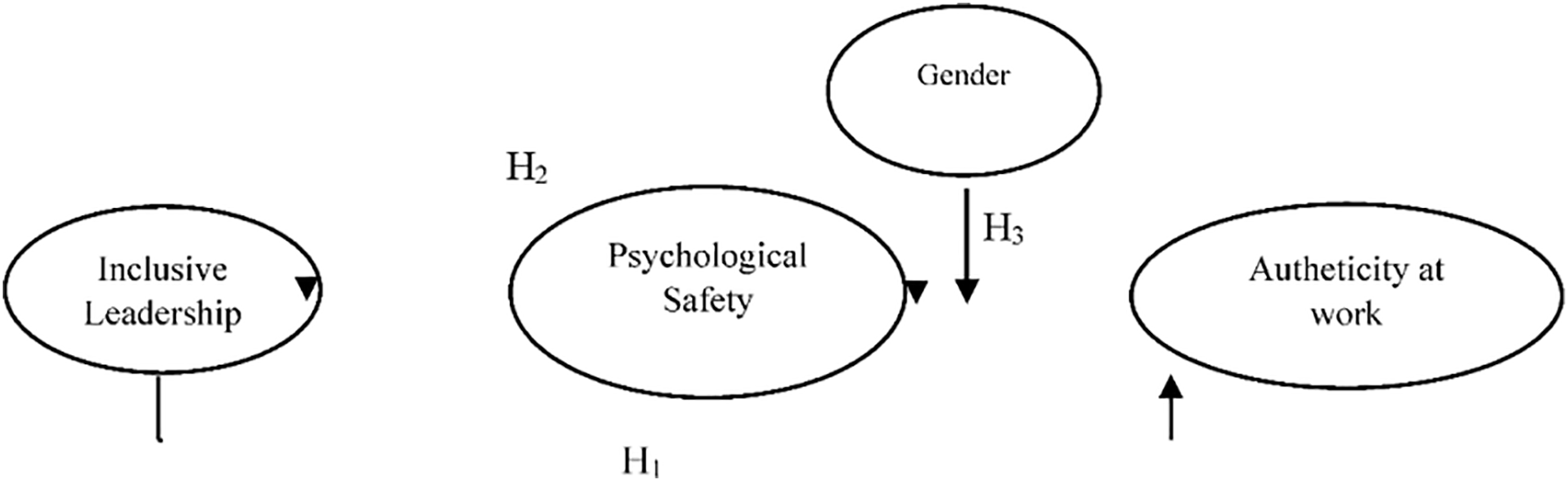
Figure 1: Hypothesized model
H1: Inclusive Leadership (IL) is associated with higher Authenticity at Work (AW).
H2: Psychological Safety (PS) mediates the relationship between IL and AW for higher AW.
H3: Gender moderates the relationship between PS and AW to be higher for males.
The sample comprised 94 employees (N = 94) from South Africa who self-identified as minority groups. Specifically, 70.2% identified as “Coloured”, 14.9% as “Black”, and 14.9% as “Indian”. The sample consisted of 41.5% females and 58.2% males, with ages ranging from 23–59 years old (M = 37.1, SD = 6.83).
Outcome Variable: Authenticity at Work (AW): AW was measured using the 12-item short version of the Authenticity at Work scale (Van den Bosch & Taris, 2013) composed by three factors: authentic living (α = 0.75), self-alienation (α = 0.83), and accepting external influence (α = 0.69). Sample items are: “At work, I behave in a manner that people expect me to behave” and “My daily behavior at work reflects the real me” Items are scored on a 7-point Likert scale (ranging from 1 = Does not describe me at all to 7 = Describes me very well).
Predictor Variable: Inclusive Leadership (IL): IL was assessed using the 13-item scale developed by Ashikali (2019). Sample items are: “(My leader) Encourages me to use colleagues’ diverse ethnic–cultural backgrounds for problem-solving” and “Makes sure I have the opportunity to be myself in the team”. Items are scored on a 5 point Likert scale (1 = Strongly disagree, 5 = Strongly agree). In the present study, the reliability coefficient for IL scores was α = 0.95.
Predictor Variable: Psychological Safety (PS): PS was measured using Edmondson (1999)’s 7-item scale. Sample items are: “It is safe to take a risk on this team” and “Members of this team are able to bring up problems and tough issues”. Items are scored on a 5-point Likert scale (1 = Strongly disagree to 5 = Strongly agree). The reliability coefficient for PS scores was α = 0.66 in the present study.
Moderator Variable: Gender: It was coded as a dichotomical variable, coded as 1 = female and 2 = male.
The University of Valencia ethics committee approved the study. Participants individually consented for study. They took the survey on an electronic Google Form.
Descriptive analysis and Pearson correlations were performed using IBM SPSS v.28 (2021). Mediated and moderated analyses were conducted using PROCESS for SPSS (Hayes, 2013) with 95% confidence intervals and 5000 bootstrap samples. Model 14 was used for each of the three AW components.
Descriptive and correlation analysis
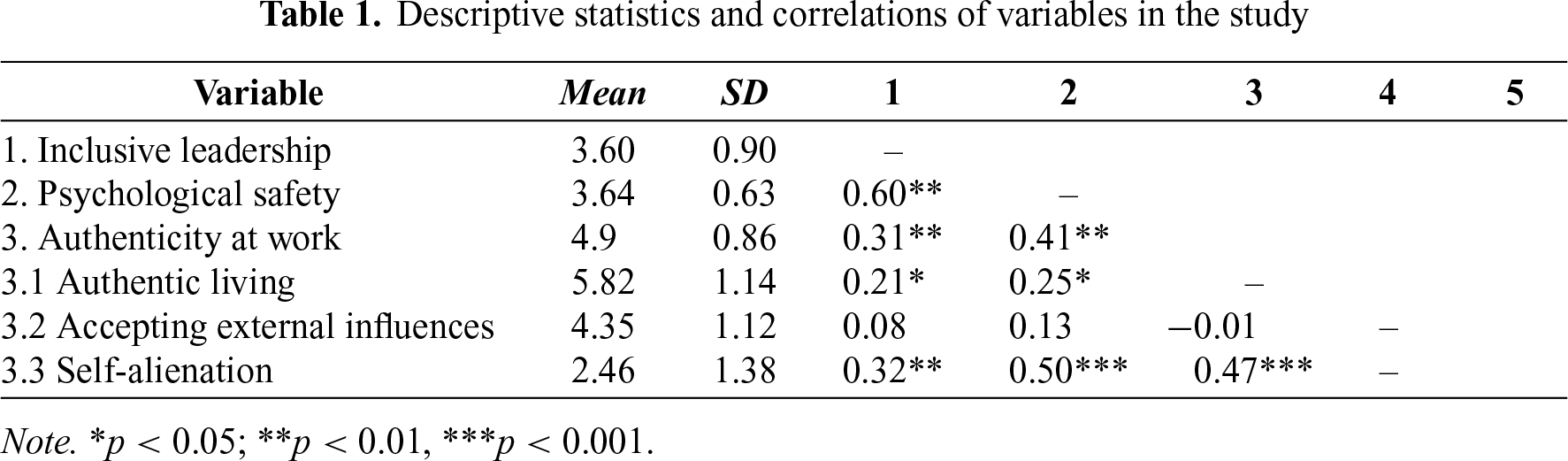
Table 1 presents the means and correlations among the variables studied. All variables were positively and significantly correlated, except for the accepting external influences subfactor of Inclusive Leadership (IL), Psychological Safety (PS), and Authenticity at Work (AW). Regarding AW subfactors, authentic living presented high scores, accepting external influences medium scores, and self-alienation low scores (see Table 1).
Inclusive leadership effects on authentic work experience.
The direct effect of IL on AW was not statistically significant (B = 0.05, SE = 0.11, t = 0.46, p = 0.64, 95% CI [−0.17, 0.28]) so H1 is rejected.
Psychological safety mediation
IL had a significant positive effect on PS (B = 0.43, SE = 0.06, t = 7.23, p < 0.001, 95% CI [0.31, 0.54]), as well as PS was a significant predictor of AW (B = 0.54, SE = 0.16, t = 3.33, p = 0.001, 95% CI [0.22, 0.86]). Therefore, PS fully mediated the relationship between IL and AW; thereby, H2 is supported.
When gender was introduced as a moderator, the mediation effect was no longer observed. IL significantly and positively predicted PS (β = 0.43, SE = 0.06, t = 7.23, p < 0.001, 95% CI [0.31, 0.54]), but the relationship between PS and AW was not statistically significant (β = 0.24, SE = 0.50, t = 0.48, p = 0.63, 95% CI [−0.76, 1.24]). Aso, the main effect of gender was also not statistically significant (β = −0.96, SE = 1.01, t(89) = −0.953, p = 0.34).
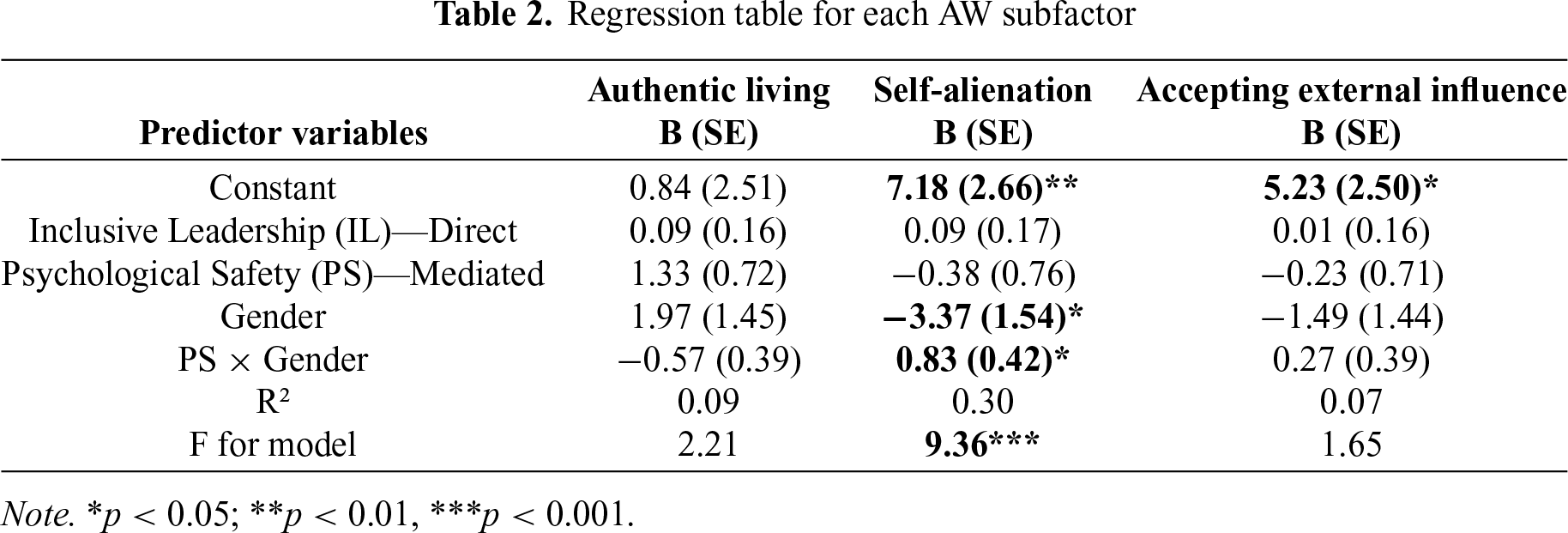
Therefore, the next step was to test the moderator role of gender with each specific AW sub-factor. As a result, ender did not moderate the relationship between PS and either Authentic Living or Accepting External Influence. However, gender significantly moderated the relationship between PS and Self-Alienation (β = 0.82, SE = 0.42, t(89) = 1.98, p = 0.05, 95% CI [0, 1.65]), indicating that the model behaved differently for males and females. Therefore, H3 is partially supported, showing that PS significantly mediated the relationship between IL and Self-Alienation for men, but not for women. Detailed regression coefficients are shown in Table 2.
The main goal of this study was to examine the relationship between IL and AW in a sample of employees self-identified as racial minority groups from South Africa, examining the mediating role of PS, and testing gender as a moderator in the relationship between PS and AW. Our investigation contributes to the growing body of research on inclusive workplace practices by situating these dynamics within the unique socio-historical and cultural context of South Africa, where issues of race, identity, in People of Color remain salient. Although previous studies have highlighted the value of inclusive leadership in promoting positive organisational outcomes (Randel et al., 2017) the findings of this study suggest a more complex relationship—particularly for minoritised individuals.
Regarding our hypotheses, the findings do not support a direct relationship between IL and, suggesting that an inclusive leader alone is insufficient to foster AW (H1 rejected). In this context, AW may require more than just an inclusive leader (Kanya & Johan, 2025) it could involve additional factors such as organisational culture, personal alignment with values, support systems, or positive team dynamics beyond leadership. Moreover, as stated by Remtulla et al. (2021) psychological safety, social support networks, and strong team cohesion play crucial roles in enabling individuals—especially those from stigmatized or minoritized identities—to express their full selves at work (Randel et al., 2017). Without these reinforcing factors, even the most inclusive leader may find it challenging to cultivate true authenticity among employees (Randel et al., 2017).
Regarding our second hypothesis, PS fully mediated the relationship between IL and AW (H2 accepted), highlighting the importance of a psychologically safe environment for minority groups to alleviate burdens and be authentic (Negara et al., 2023; Zhao, 2020). This supports the idea that when PS is present, Professionals of color are more likely to feel comfortable being authentic, sharing their unique perspectives and experiences without fear of backlash (Negara et al., 2023). When employees feel safe to speak up, they can highlight issues related to microaggressions, unfair treatment, or exclusionary practices (Negara et al., 2023). Consequently, there exists an opportunity for leaders to enhance authenticity by prioritising the development of PS.
Regarding our third hypothesis, although gender did not moderate the interaction between IL, PS and AE, it moderated the relationship between PS and Self-Alienation as a specific component of AW (H3 partially accepted), with men requiring higher levels of PS to bridge the gap between their “work” and “personal” selves. This suggests that men may face additional barriers in achieving AW, possibly due to societal norms and expectations (Ann et al., 2023; Quinn & Earnshaw, 2013). Hence, the findings support the Social Identity Theory, which suggests that individuals define themselves based on group memberships (Mitterer & Mitterer, 2023). For men, societal norms often emphasize traits like independence and assertiveness. This pressure can lead to a conflict between AW and conforming to masculine ideals, making them more vulnerable to self-alienation when PS is low. Conversely, Social Exchange Theory emphasizes the reciprocal nature of relationships (Alcover et al., 2020). Men are socialized to uphold certain norms, may perceive fewer rewards for authentic behavior, and fear social costs such as exclusion or judgment (Alsawalqa et al., 2021). Therefore, in environments lacking PS, men may feel more compelled to suppress their true selves compared to women, amplifying the link between low PS and Self-Alienation. Women, on the other hand, might face different social expectations, where relational and emotional authenticity could be more encouraged.
However, it is important to acknowledge that gender did not moderate the remaining two components of AW (Authentic Living and Accepting External Influence). Although the study found that gender significantly moderated the relationship between psychological safety and self-alienation, the final analysis indicated that gender did not significantly moderate the overall mediation model, nor any of the individual components of authenticity—namely, authentic living, accepting external influence. A possible explanation lies in the multidimensional nature of authenticity, where each component may respond differently to contextual and psychological variables (Woods et al., 2024).
In the context of people of color in South Africa, shared experiences of historical and systematic marginalisation may lead to more uniform experiences of authenticity-related challenges across genders. Research has shown that racial identity can exert a powerful influence on workplace experiences, sometimes overriding the effects of gender alone (Nkomo & Ngambi, 2009). Thus, in environments where racial dynamics are especially salient, gender may not strongly differentiate experiences of authenticity at work. This aligns with Social Identity Theory (Tajfel & Turner, 1979), which posits that individuals define themselves through multiple group memberships. In this case, racial identity as a person of color may have been the more salient social identity, leading to converging experiences among participants regardless of gender (Nkomo & Ngambi, 2009).
Implications for theory and practice
This study contributes to the growing body of evidence on the role of PS as a mechanism through which the effects of supportive environments were related to positive outcomes, such as engagement, creativity, or performance. It suggests the importance of psychologically safe environments to mitigate the effects of social identity threats (e.g., feeling marginalised because of one’s race or skin colour). When PS is present, together with supportive leadership, People of Color may feel less pressured to engage in behaviours that suppress parts of their identity.
The study also provides evidence on how gender influences the perception and expression of authenticity in the workplace. These findings have important implications for workplace leadership. Specifically, leaders should be trained to recognize how gendered and racialised experiences intersect to shape how authenticity is expressed in the workplace (Hwang, 2024). Leadership development programs should therefore move beyond generic inclusion training and focus on cultivating psychological safety (Edmondson & Lei, 2014), cultural competence (Chrobot-Mason & Aramovich, 2013), and identity-sensitive leadership practices (Roberts, 2005). This includes fostering team climates where vulnerability is not penalized, where multiple identity expressions are validated, and where leadership models do not unconsciously reward conformity to dominant norms (Shore et al., 2017). By creating such conditions, organisations can enable employees—particularly those from historically marginalised groups—to bring their whole selves to work, which has been linked to greater job satisfaction, well-being, and engagement (Chen et al., 2020). These efforts not only support individual flourishing but also contribute to building inclusive, innovative, and resilient organisations (Chen et al., 2020). Results highlight how men and women may experience and express authenticity differently, shaped by social norms, expectations, and organisational culture.
Taking into account the contributions of this study, organisations should provide training programs for leaders to enhance work environments where psychological safety is a priority for employees (especially workers from minority groups) to feel comfortable being themselves, which can lead to positive employee attitudes (Chen et al., 2014; May et al., 2004; Sutton, 2020).
Limitations and future studies
The cross-sectional design limits the ability to establish causality between variables. Future studies should employ longitudinal designs to provide more robust evidence of causal relationships over time. Additionally, factors such as organisational culture, leadership styles, and individual differences may influence AW and should be explored in future research using larger samples in other employment settings countries.
Also, the findings may vary in countries where racial and ethnic dynamics are constructed differently. Comparing these findings with other demographic groups in South Africa could provide deeper insights into whether the observed results are culturally specific or influenced by other external factors.
This study aimed to analyze the relationship between IL and AW in a sample of minority groups in South Africa, examining the mediating role of PS, and testing gender as a demographic factor that could modulate the relationship between PS and AW. The results suggest that a psychologically safe environment exerts a greater influence on AW than the mere presence of a supportive leadership style. Given South Africa’s gendered work participation, organisations can better support female employees in overcoming the lingering effects of systemic inequities, ultimately allowing them to bring their authentic selves to work and thrive professionally.
Acknowledgement: The authors would like to express sincere gratitude to Eduvos for their support in facilitating the publication of this article. Their commitment to advancing research and knowledge sharing is greatly appreciated.
Funding Statement: The authors received no specific funding for this study.
Author Contributions: The authors confirm contribu-tion to the paper as follows: Conceptualization, Waseemah Patel and Laura Lorente; methodology, Waseemah Patel; software, Waseemah Patel; validation, Waseemah Patel, Laura Lorente and Felipe Bravo-Duarte; formal analysis, Felipe Bravo-Duarte; investigation, Waseemah Patel; resources, Waseemah Patel; data curation, Waseemah Patel; writing—original draft preparation, Waseemah Patel; writing—review and editing, Laura Lorente; visualization, Waseemah Patel; supervision, Laura Lorente. All authors reviewed the results and approved the final version of the manuscript.
Availability of Data and Materials: The data that support the findings of this study are available from Waseemah Patel, upon reasonable request.
Ethics Approval: This study aligned with authors’ institutional standards and adhered to the ethical principles outlined in the Declaration of Helsinki, which guides ethical practices for research involving human participants across the European Union. The University of Valencia ethics committee approved the study.
Informed Consent: All participants individually consented for study.
Conflicts of Interest: The authors declare no conflicts of interest to report regarding the present study.
References
Ahmad, R., Nawaz, M. R., Ishaq, M. I., Khan, M. M., & Ashraf, H. A. (2023). Social exchange theory: Systematic review and future directions. Frontiers in Psychology, 13, 1015921. https://doi.org/10.3389/fpsyg.2022.1015921. [Google Scholar] [PubMed] [CrossRef]
Alcover, C., Rodríguez, F., Pastor, Y., Thomas, H., Rey, M., & Del Barrio, J. L. (2020). Group membership and social and personal identities as psychosocial coping resources to psychological consequences of the COVID-19 confinement. International Journal of Environmental Research and Public Health, 17(20), 7413. https://doi.org/10.3390/ijerph17207413. [Google Scholar] [PubMed] [CrossRef]
Alsawalqa, R. O., Alrawashdeh, M. N., & Hasan, S. (2021). Understanding the Man Box: The link between gender socialization and domestic violence in Jordan. Heliyon, 7(10), e08264. https://doi.org/10.1016/j.heliyon.2021.e08264. [Google Scholar] [PubMed] [CrossRef]
Ann, R., Beninsig, A., Calumpang, H., Olivia, M., Espedion, B., & De Luna, L. (2023). Authenticity at work and work engagement in teaching: A Multigroup analysis based on Gender. Journal of Applied Structural Equation Modelling, 7(1), 73–94. https://doi.org/10.47263/jasem.7(1)04. [Google Scholar] [CrossRef]
Artinger F. M., Marx-Fleck S., Junker N. M., Gigerenzer G., Artinger S., & van Dick R. (2025). Coping with uncertainty: The interaction of psychological safety and authentic leadership in their effects on defensive decision making. Journal of Business Research, 190(4), 115240. https://doi.org/10.1016/j.jbusres.2025.115240 [Google Scholar] [CrossRef]
Ashforth, B. E., Harrison, S. H., & Corley, K. G. (2008). Identification in organisations: An examination of four fundamental questions. Journal of Management, 34(3), 325–374. https://doi.org/10.1177/0149206308316059 [Google Scholar] [CrossRef]
Ashikali, T. (2019). Leading towards inclusiveness: developing a measurement instrument for inclusive leadership. Academy of Management Proceedings, 2019, 16444. https://doi.org/10.5465/ambpp.2019.16444abstract. [Google Scholar] [CrossRef]
Brink, L., & Nel, J. A. (2015). Exploring the meaning and origin of stereotypes amongst South African employees. SA Journal of Industrial Psychology, 41(1), 1–13. https://doi.org/10.4102/sajip.v41i1.1234 [Google Scholar] [CrossRef]
Çelik, A. K. (2023). Who is more authentic? A moderator effect of gender between flow experiences and authenticity at work. International Journal of Psychology and Educational Studies, 10(3), 733–743. https://doi.org/10.52380/ijpes.2023.10.3.1233 [Google Scholar] [CrossRef]
Cha S. E., Hewlin P. F., Roberts L. M., Buckman B. R., Leroy H., et al. (2019). Being your true self at work: Integrating the fragmented research on Authenticity at work in organisations. The Academy of Management Annals, 13(2), 633–671. https://doi.org/10.5465/annals.2016.0108 [Google Scholar] [CrossRef]
Chen, C., Liao, J., & Wen, P. (2014). Why does formal mentoring matter? The mediating role of psychological safety and the moderating role of power distance orientation in the Chinese context. International Journal of Human Resource Management, 25(8), 1112–1130. https://doi.org/10.1080/09585192.2013.816861 [Google Scholar] [CrossRef]
Chen, L., Luo, F., Zhu, X., Huang, X., & Liu, Y. (2020). Inclusive leadership promotes Challenge-Oriented organisational citizenship behaviour through the mediation of work engagement and moderation of organizational innovative atmosphere. Frontiers in Psychology, 11, 560594. https://doi.org/10.3389/fpsyg.2020.560594. [Google Scholar] [PubMed] [CrossRef]
Chrobot-Mason, D., & Aramovich, N. P. (2013). The psychological benefits of creating an affirming climate for workplace diversity. Group & Organization Management, 38(6), 659–689. https://doi.org/10.1177/1059601113509835 [Google Scholar] [CrossRef]
Edmondson, A. C. (1999). Psychological safety and Learning behaviour in Work Teams. Administrative Science Quarterly, 44(2), 350–383. https://doi.org/10.2307/2666999 [Google Scholar] [CrossRef]
Edmondson, A. C., & Lei, Z. (2014). Psychological safety: The history, renaissance, and future of an interpersonal construct. Annual Review of Organizational Psychology and Organizational Behavior, 1(1), 23–43. https://doi.org/10.1146/annurev-orgpsych-031413-091305 [Google Scholar] [CrossRef]
Fang, Y., Chen, J., Wang, M., & Chen, C. (2019). The impact of inclusive leadership on employees’ innovative behaviours: The mediation of psychological capital. Frontiers in Psychology, 10, 1803. https://doi.org/10.3389/fpsyg.2019.01803. [Google Scholar] [PubMed] [CrossRef]
Hayes, A. F. (2013). Introduction to mediation, moderation, and conditional process analysis: A regression-based approach, New York: Guilford Press. [Google Scholar]
Hwang, N. J. (2024). Exploring the intersectionality of gender and race in employment discrimination: Case studies from the corporate sector. International Journal of Science and Research Archive, 13(2), 4094–4104. https://doi.org/10.30574/ijsra.2024.13.2.2520 [Google Scholar] [CrossRef]
Jolly, P. M., & Lee, L. (2020). Silence is not golden: Motivating employee voice through inclusive leadership. Journal of Hospitality & Tourism Research, 45(6), 1092–1113. https://doi.org/10.1177/1096348020963699 [Google Scholar] [CrossRef]
Kanya, N., & Johan, A. (2025). Inclusive leadership and ethnic diversity: Enhancing team performance and reducing work delays. SA Journal of Human Resource Management, 23, 3006. https://doi.org/10.4102/sajhrm.v23i0.3006 [Google Scholar] [CrossRef]
Kernis, M. H., & Goldman, B. M. (2010). A multicomponent conceptualization of authenticity. In: Zanna, M. P. ed. Advances in Experimental Social Psychology, 42, 283–357. Academic Press. https://doi.org/10.1016/S0065-2601(10)42006-9 [Google Scholar] [CrossRef]
Korkmaz, A. V., Van Engen, M. L., Knappert, L., & Schalk, R. (2022). About and beyond leading uniqueness and belongingness: A systematic review of Inclusive leadership research. Human Resource Management Review, 32(4), 100894. https://doi.org/10.1016/j.hrmr.2022.100894 [Google Scholar] [CrossRef]
Lim, J. Y. (2022). Gender and psychological safety in virtual teams: The role of awareness types enabled by information technologies. Team Performance Management, 28(5/6), 351–366. https://doi.org/10.1108/tpm-01-2022-0006 [Google Scholar] [CrossRef]
Lopez, F. G., & Rice, K. G. (2006). Preliminary development and validation of a measure of relationship authenticity. Journal of Counseling Psychology, 53(3), 362–371. https://doi.org/10.1037/0022-0167.53.3.362 [Google Scholar] [CrossRef]
May, D. R., Gilson, R. L., & Harter, L. M. (2004). The psychological conditions ofmeaningfulness, safety and availability and the engagement of the human spirit at work. Journal of Occupational and Organizational Psychology, 77(1), 11–37. https://doi.org/10.1348/096317904322915892 [Google Scholar] [CrossRef]
Metin, U. B., Taris, T. W., Peeters, M. C. W., Van Beek, I., & Van Den Bosch, R. (2016). Authenticity at work-a job-demands resources perspective. Journal of Managerial Psychology, 31(2), 483–499. https://doi.org/10.1108/jmp-03-2014-0087 [Google Scholar] [CrossRef]
Mitterer, D. M., & Mitterer, H. E. (2023). The mediating effect of trust on psychological safety and job satisfaction. Journal of Behavioral and Applied Management, 23(1), 29–41. https://doi.org/10.21818/001c.73642 [Google Scholar] [CrossRef]
Mokoena, K. B. (2020). The subtleties of racism in the South African workplace. International Journal of Critical Diversity Studies, 3(1), 25–36. https://doi.org/10.13169/intecritdivestud.3.1.0025 [Google Scholar] [CrossRef]
Negara, A. I. S., Helmi, N. M. F., Wijaya, N. A. T., & Madistriyatno, N. H. (2023). How important psychological safety is in supporting strategic management to achieve success: A narrative literature review. Open Access Indonesia Journal of Social Sciences, 6(5), 1083–1091. https://doi.org/10.37275/oaijss.v6i5.175 [Google Scholar] [CrossRef]
Newman, A., Donohue, R., & Eva, N. (2017). Psychological safety: A systematic review of the literature. Human Resource Management Review, 27(3), 521–535. https://doi.org/10.1016/j.hrmr.2017.01.001 [Google Scholar] [CrossRef]
Nkomo, S. M., & Ngambi, H. (2009). African women in leadership: Current knowledge and a framework for future studies. International Journal of African Renaissance Studies-Multi-, Inter- and Transdisciplinarity, 4(1), 49–68. https://doi.org/10.1080/18186870903102014 [Google Scholar] [CrossRef]
Quinn, D. M., & Earnshaw, V. A. (2013). Concealable stigmatised identities and psychological well-being. Social and Personality Psychology Compass, 7(1), 40–51. https://doi.org/10.1111/spc3.12005. [Google Scholar] [PubMed] [CrossRef]
Randel A. E., Galvin B. M., Shore L. M., Ehrhart K. H., Chung B. G., Dean M. A., et al. (2017). Inclusive leadership: Realising positive outcomes through belongingness and being valued for uniqueness. Human Resource Management Review, 27(2), 190–203. https://doi.org/10.1016/j.hrmr.2017.07.002 [Google Scholar] [CrossRef]
Remtulla, R., Hagana, A., Houbby, N., Ruparell, K., Aojula, N., et al. (2021). Exploring the barriers and facilitators of psychological safety in primary care teams: A qualitative study. BMC Health Services Research, 21(1), 350. https://doi.org/10.1186/s12913-021-06232-7. [Google Scholar] [PubMed] [CrossRef]
Rice, k. G. (2023). Authenticity and gender differences in self-expression at work. Journal of Counseling Psychology. Advance online publication. https://doi.org/10.1037/cou0000670. [Google Scholar] [PubMed] [CrossRef]
Roberson, L., & Kulik, C. T. (2007). Stereotype threat at work. Academy of Management Perspectives, 21(2), 24–40. https://doi.org/10.5465/amp.2007.25356510 [Google Scholar] [CrossRef]
Roberts, L. M. (2005). Changing faces: Professional image construction in diverse organizational settings. Academy of Management Review, 30(4), 685–711. https://doi.org/10.5465/amr.2005.18378874 [Google Scholar] [CrossRef]
Roberts, L. M., Cha, S. E., Hewlin, P. F., & Settles, I. H. (2009). Bringing the inside out: Enhancing authenticity and positive identity in organizations. Academy of Management Review, 34(1), 150–168. https://doi.org/10.5465/amr.2009.35705508 [Google Scholar] [CrossRef]
Roberts, L. M., Cha, S. E., & Kim, S. S. (2014). Strategies for managing impressions of racial identity in the workplace. Cultural Diversity & Ethnic Minority Psychology, 20(4), 529–540. https://doi.org/10.1037/a0037238. [Google Scholar] [PubMed] [CrossRef]
Schmader, T., & Sedikides, C. (2018). State authenticity at work as fit to environment: The implications of social identity for fit, authenticity at work, and self-segregation. Personality and Social Psychology Review, 22(3), 228–259. https://doi.org/10.1177/1088868317734080. [Google Scholar] [PubMed] [CrossRef]
Shore, L. M., & Chung, B. G. (2021). Inclusive leadership: How leaders sustain or discourage work group inclusion. Group & Organization Management, 47(4), 723–754. https://doi.org/10.1177/1059601121999580 [Google Scholar] [CrossRef]
Shore, L. M., Cleveland, J. N., & Sanchez, D. T. (2017). Inclusive workplaces: A review and model. Human Resource Management Review, 28(2), 176–189. https://doi.org/10.1016/j.hrmr.2017.07.003 [Google Scholar] [CrossRef]
Sutton, A. (2020). Living the good life: A meta-analysis of authenticity, well-being and engagement. Personality and Individual Differences, 153(6), 109645. https://doi.org/10.1016/j.paid.2019.109645 [Google Scholar] [CrossRef]
Tajfel, H., & Turner, J. C. (1979). An integrative theory of intergroup conflict. In: Austin, W. G., & Worchel, S. eds. The social psychology of intergroup relations (pp. 33–47), Monterey, CA: Brooks/Cole. [Google Scholar]
Tajfel, H., & Turner, J. C. (2004). The social identity theory of intergroup behavior. In: Political psychology: Key readings (pp. 276–293), New York, NY, USA: Psychology Press. https://doi.org/10.4324/9780203505984-16 [Google Scholar] [CrossRef]
Tear, M. J., & Reader, T. W. (2022). Understanding safety culture and safety citizenship through the lens of social identity theory. Safety Science, 158, 105993. https://doi.org/10.1016/j.ssci.2022.105993 [Google Scholar] [CrossRef]
Van Den Bosch, R., & Taris, T. W. (2013). Authenticity at work: Development and validation of a measure. Journal of Occupational and Organizational Psychology, 86(2), 165–190. https://doi.org/10.1111/joop.12020 [Google Scholar] [CrossRef]
Van Den Bosch, R., Taris, T. W., Schaufeli, W. B., Peeters, M. C. W., & Reijseger, G. (2018). Authenticity at work: A matter of fit? The Journal of Psychology, 153(2), 247–266. https://doi.org/10.1080/00223980.2018.1516185. [Google Scholar] [PubMed] [CrossRef]
Woods A., Zajac S. A., Middleton E. D., Cavanaugh K. J., Hayes W. C., et al. (2024). Doing the work: The role of inclusive leadership in promoting psychological safety and openness to diversity through diversity, equity, and inclusion practices. Psychology of Leaders and Leadership, 27(1), 115–142. https://doi.org/10.1037/mgr0000158 [Google Scholar] [CrossRef]
Zhao, H. (2020). The impact of psychological safety on employee voice and authenticity. Frontiers in Psychology, 11, 570226. https://doi.org/10.3389/fpsyg.2020.570226 [Google Scholar] [CrossRef]
Zigomo, T., Kock, R. G., & Donald, F. M. (2024). Relational authenticity in workplace friendships. SA Journal of Human Resource Management, 22, 2288. https://doi.org/10.4102/sajhrm.v22i0.2288 [Google Scholar] [CrossRef]
Cite This Article
 Copyright © 2026 The Author(s). Published by Tech Science Press.
This work is licensed under a Creative Commons Attribution 4.0 International License , which permits unrestricted use, distribution, and reproduction in any medium, provided the original work is properly cited.
 Downloads
 Citation Tools
