
 Login
Login Register
 Submit a Paper
 Propose a Special lssue
 Open Access
ARTICLE

Memory-Fused Dual-Stream Fault Diagnosis Network Based on Transformer Vibration Signals
1 State Grid Shandong Electric Power Company Ultra High Voltage Company, Jinan, 250061, China
2 State Grid Shandong Electric Power Company, Jinan, 250061, China
3 School of Control Science and Engineering, Shandong University, Jinan, 250061, China
* Corresponding Author: Faye Zhang. Email:
Structural Durability & Health Monitoring 2025, 19(6), 1473-1487. https://doi.org/10.32604/sdhm.2025.069811
Received 01 July 2025; Accepted 04 September 2025; Issue published 17 November 2025
 View Full Text
 Download PDF
Abstract
As a core component of power systems, the operational status of transformers directly affects grid stability. To address the problem of “domain shift” in cross-domain fault diagnosis, this paper proposes a memory-enhanced dual-stream network (MemFuse-DSN). The method reconstructs the feature space by selecting and enhancing multi-source domain samples based on similarity metrics. An adaptive weighted dual-stream architecture is designed, integrating gradient reversal and orthogonality constraints to achieve efficient feature alignment. In addition, a novel dual dynamic memory module is introduced: the task memory bank is used to store high-confidence class prototype information, and adopts an exponential moving average (EMA) strategy to ensure the smooth evolution of prototypes over time; the domain memory bank is periodically updated and clusters potential noisy features, dynamically tracking domain shift trends, thereby optimizing the decoupled feature learning process. Experimental validation was conducted on a ±110 kV transformer vibration testing platform using typical fault types including winding looseness, core looseness, and compound faults. The results show that the proposed method achieves a fault diagnosis accuracy of 99.2%, providing a highly generalizable solution for the intelligent operation and maintenance of power equipment.Keywords
With the continuous rise in electricity demand in China placing greater challenges on the safe operation of the power grid, the operating condition of transformers—core components of power systems—has become increasingly critical to grid stability [1]. Transformer vibration signals can reflect internal mechanical conditions and insulation degradation in real time, serving as key parameters for condition monitoring. However, the application of vibration-based fault diagnosis technologies leveraging transfer learning remains limited [2–4]. On one hand, the deployment of sensors in high-voltage insulation environments presents significant barriers, making it difficult to acquire high-frequency sampling data comprehensively [5,6]. On the other hand, under strong multiphysics field coupling, vibration signals often suffer from feature attenuation, severely complicating the extraction of valid fault features under complex operating conditions [7,8]. Therefore, there is an urgent need to overcome the technical bottlenecks of cross-domain decoupling and robust feature extraction.
In recent years, although cross-domain transfer learning in the field of power transformers is still in its early stages, the theory has already developed into a systematic methodology in the area of rotating machinery bearing fault diagnosis [9]. For multi-source domain transfer scenarios, Xiao et al. [10] proposed a weighted adversarial partial domain adaptation method with a dual progressive strategy to align each source domain with the target domain, effectively addressing the issue of insufficient generalization of diagnostic models under varying operating conditions. Chen et al. [11] extended a partial domain adaptation network based on attention mechanisms to reduce the distribution discrepancy between source and target domains. Yang et al. [12] introduced a dynamic domain adaptation method with multiple encoders that effectively learned marginal features of different faults. Li et al. [13] constructed a hierarchical heterogeneous model ensemble to achieve integrated transfer learning for partial domains. Zhu et al. [14] improved fault diagnosis accuracy across mechanical domains through a multi-domain feature alignment and discriminative co-optimization mechanism. These core approaches provide a solid theoretical foundation and methodological paradigm for the innovative application of transfer learning in transformer vibration-based diagnosis [15]. However, the current research on multi-source partial domain adaptation (MSDA) for fault diagnosis faces two main challenges. First, conventional methods often adopt a unified distribution adaptation strategy, overlooking the heterogeneity among source domains [16]. This prevents the construction of a collaborative feature space and fails to fully extract shared diagnostic features across domains. Second, most existing algorithms assume full fault-mode coverage in the target domain, which contrasts sharply with real-world industrial scenarios where dynamic operational conditions lead to incomplete acquisition of certain fault samples. This mismatch results in a multi-source partial domain adaptation dilemma due to label space discrepancies between source and target domains [17,18]. The coupling of dynamically changing operating conditions with complex fault characteristics in industrial equipment imposes dual challenges on multi-source knowledge transfer: heterogeneity in feature space mapping and partial label space adaptation [19]. Therefore, it is imperative to focus on solving issues related to cross-domain collaborative representation and bias correction.
This paper proposes a Multi-source Reconstruction and Memory-Enhanced Dual-Stream Network tailored for power transformer fault diagnosis. The framework employs a gating mechanism to filter multi-source domain data, reconstructing high-quality source domains that facilitate more effective feature alignment. Built upon the dual-stream feature decoupling architecture of Domain-Adversarial Neural Networks (DANN), the memory-enhanced structure introduces a decoupled supervision mechanism with memory augmentation and enables real-time memory bank updates through backpropagation. The main contributions of this work are as follows:
1. A gating mechanism is proposed to perform feature selection between multi-source and target domains, enabling effective reconstruction of multi-source domain features.
2. The traditional dual-stream decoupled DANN architecture is enhanced with a memory-augmented decoupled supervision mechanism, allowing for dynamic updates of the memory bank.
3. The proposed network framework is experimentally validated on a 110 kV oil-immersed transformer test platform and compared with other methods to demonstrate its superiority.
The remainder of this paper is organized as follows. Section 2 introduces the principles of transformer mechanical vibration and the fundamentals of the dual-stream decoupled DANN. Section 3 describes the proposed cross-domain fault diagnosis method in detail. Section 4 presents the experimental results, and Section 5 concludes the paper.
The winding and core, as the core electromagnetic components of a transformer, generate characteristic vibrations under the influence of alternating electromagnetic fields. According to the Maxwell stress equation
In the context of cross-domain fault diagnosis based on vibration signals, traditional single-source domain diagnostic methods face significant limitations in complex industrial environments. Training data collected under a single operating condition cannot fully cover dynamic scenarios such as load fluctuations and speed variations in real-world production, resulting in poor model generalization [20,21]. To better preserve the characteristics of the source domain data, datasets under multiple operating conditions are selected as the source domains, while the target domain is designed to closely represent realistic industrial applications, where only a subset of fault labels from the source domain is available [22]. The mathematical formulation is as follows: let the source domain consist of data from K distinct operating conditions, denoted as
2.2 Dual-Stream Feature Disentanglement Domain Adversarial Neural Network
This method explicitly decouples the feature space to enhance cross-domain transfer performance [25,26]. The input sample x is processed through two independent feature extractors to obtain the private features
The orthogonality constraint between features is enforced using the Frobenius norm as follows:
This constraint enforces orthogonality between
Adversarial training is implemented via a Gradient Reversal Layer (GRL). During forward propagation, the domain discriminator D predicts the domain labels normally. However, during backpropagation, the gradient with respect to the shared feature
here,
To address the limitations of traditional multi-source domain diagnostic methods in cross-domain scenarios—such as feature distribution mismatch and inter-domain knowledge degradation—this study innovatively proposes a MemFuse-DSN for transformer fault diagnosis. This framework integrates a cross-domain feature alignment mechanism guided by a dynamic memory bank with a dual-stream adversarial interaction strategy, enabling efficient fusion of multi-source domain knowledge and enhancing the generalization capability of diagnostic models across different devices. As illustrated in Fig. 1, the network begins by applying block-wise preprocessing and a cross-domain similarity measurement module to the raw input data. A designed gated attention mechanism adaptively evaluates the relevance between source and target domain samples, driving the generation of a reconstructed multi-source feature map. These reconstructed features are then coupled with target domain data and fed into a dual-stream adversarial training module. Through a gradient-guided alignment mechanism provided by the dynamic memory bank, domain-invariant features are aligned effectively. Simultaneously, a negative feedback parameter optimization strategy is embedded to achieve online memory unit updates and closed-loop control of error convergence. Together, these components establish a highly efficient and robust cross-domain diagnostic pathway.
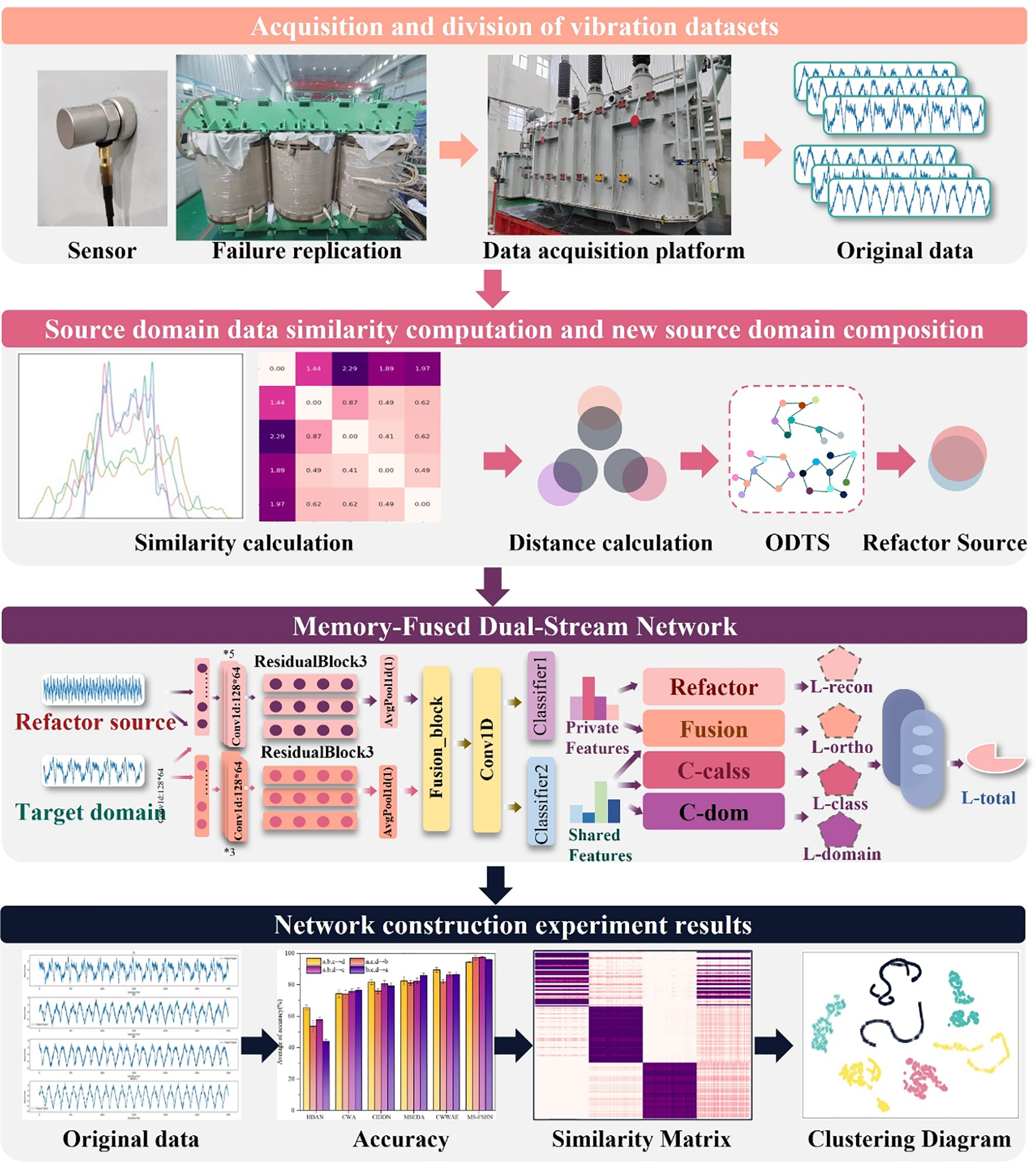
Figure 1: MemFuse-DSN framework
3.1 Multi-Source Domain Feature Reconstruction
Compared with single-source domain adaptation (SDA), multi-source domain adaptation (MSDA) can cover a broader range of operating condition features under the same fault type. As shown in Fig. 2a, the traditional single-source transfer learning paradigm conducts adversarial training between only one source domain and the target domain. In contrast, Fig. 2b illustrates the proposed multi-source domain sample reconstruction method, where multiple source domains compute similarity scores with the target domain individually, and inter-domain selection is performed via a gating unit.
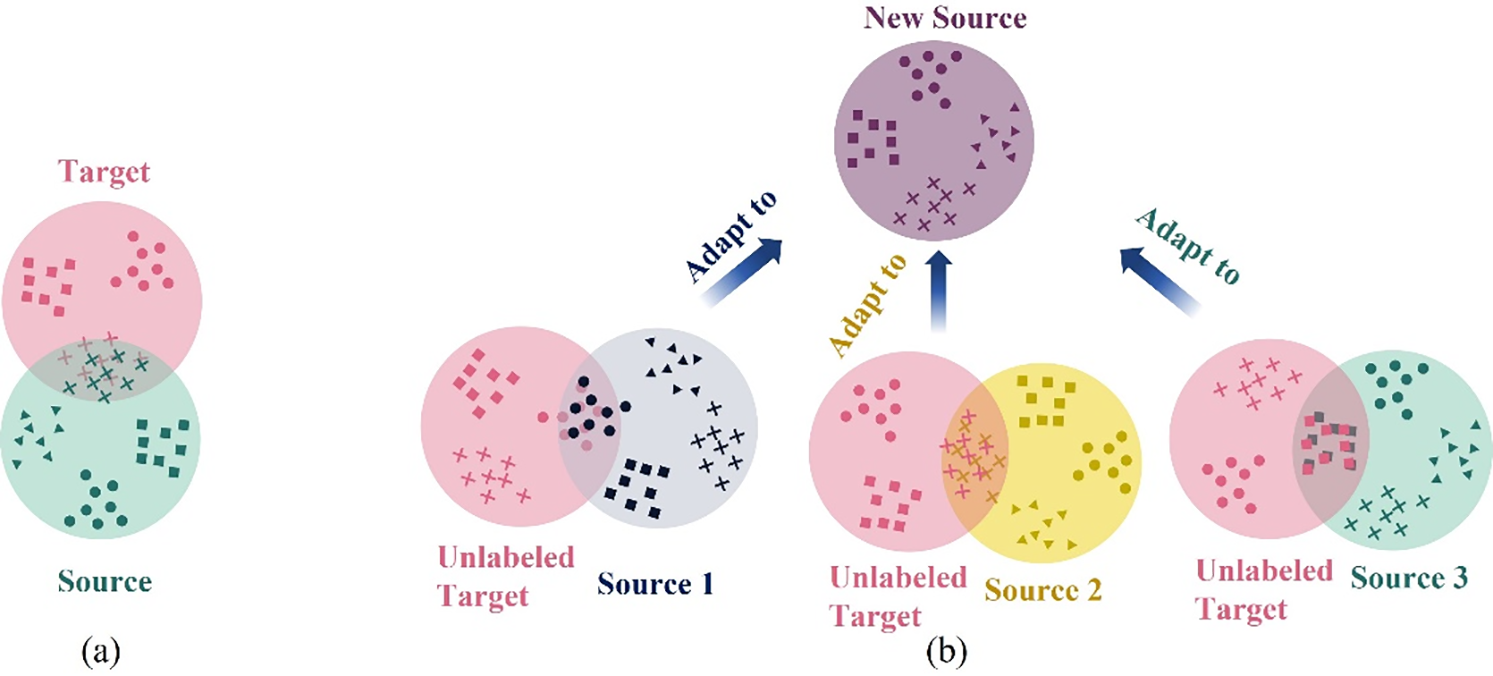
Figure 2: Comparison of single-source and multi-source domain feature alignment methods. (a) single-source domain; (b) multi-source domain
The similarity computation adopts an optimal transport-based sample matching strategy. The associated cost matrix is defined as:
The cost matrix is computed using the Mahalanobis distance as the metric, where i indexes the target domain samples and j represents source domain samples. Here,
here,
Calculate the similarity between a sample
where
Calculate the average similarity of each source domain class
where
Calculate the sample selection threshold for class
where
The calculation formula for the proportion correction factor based on
where
The final calculation formula for the threshold is:
where
On this basis, dynamic adaptation of source domain samples is carried out according to the actual sample size of the target domain—if the number of candidate samples is less than the size of the target domain, a similar number of high-value samples are supplemented from the source domain with the highest similarity ranking; if the number of candidate samples exceeds the requirement, samples at the top of the elastic threshold range in terms of transport probability are preferentially retained. This achieves precise capacity alignment of source domain data, maintaining the effectiveness of transfer learning while ensuring data quality.
This mechanism automatically selects the most relevant subset of source domain features based on the distribution of the target domain, thereby optimizing cross-domain transfer performance at the source level. Its technical advantages lie in the cross-comparison of multi-source feature spaces, which significantly improves the accuracy and efficiency of feature alignment during adversarial training. This is particularly beneficial in diagnostic scenarios where the target domain exhibits high variability in operating conditions. To address the challenges of multi-source partial domain adaptation, this paper proposes a multi-source sample reconstruction method, which effectively reduces the risk of negative transfer caused by distributional discrepancies between domains.
3.2 Memory-Fused Dual-Stream Feature-Decoupled DANN
This method reconstructs the decoupled learning paradigm through the collaborative mechanism of dual dynamic memory banks: the task memory bank is progressively updated using exponential moving average (EMA); only high-quality samples with transformer fault prediction confidence greater than 90% trigger feature fusion, thereby suppressing prototype drift under noise interference. The domain memory bank adopts periodic incremental clustering every 10 epochs, dynamically tracking noise distribution shift caused by gradual changes in gear oil temperature. The two memory banks evolve collaboratively: the task prototype smoothly transitions to the new operating condition feature space through EMA, while the noise clustering center is automatically recalibrated based on real-time data streams. This method transforms the fault mechanism into an iteratively evolving memory constraint, constructing a dual-stream closed-loop that is jointly driven by physical knowledge and data, providing a new intelligent paradigm for industrial diagnostic systems with more thorough decoupling and stronger robustness. Task feature alignment constraints are added to the traditional dual-stream DANN framework.
where
Feature separation constraints are applied to domain features.
where
The formula for updating
where
4 Experimental Results and Analysis
4.1 Experimental Platform Setup
To systematically verify the generalization performance and engineering applicability of the proposed framework, this study constructs a multi-state dataset based on typical mechanical fault modes of power transformers. The dataset covers four types of operating conditions: winding loose (WL), core loose (CL), compound fault (CF), and normal condition (NC). The experimental subject is a ±110 kV three-phase oil-immersed transformer from Shandong Taikai Electric Group, with a rated voltage of (110 ± 10%)/10.5 kV.
The fault simulation methods are illustrated in Fig. 3b: Type I faults are simulated by loosening bolts of the core clamp (core loose), and Type C faults are simulated by loosening bolts of the winding pressure plate (winding loose). Two bolts are loosened respectively to emulate these two fault types.
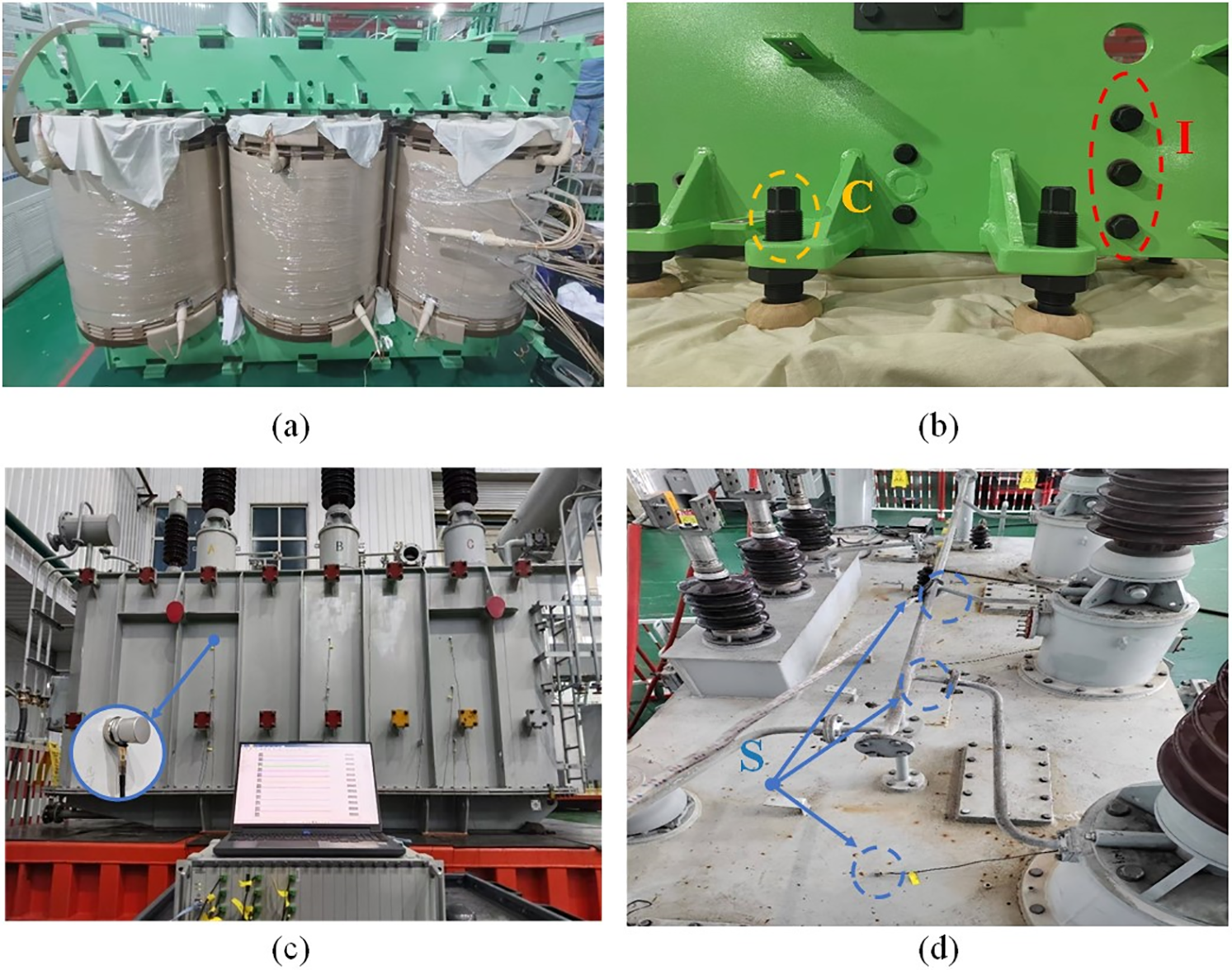
Figure 3: Entity transformer vibration signal collection platform construction; (a) Winding structure diagram; (b) Winding pressure plate screws and core clamping components; (c) Transformer tank wall sensor installation location; (d) Transformer top sensor installation location
In Fig. 3c, IEPE vibration acceleration sensors are used, with a sensitivity of 10 mV/g and a frequency range of 0.5–20 kHz. They are magnetically attached to the oil tank wall on the high-voltage side of the transformer. The sensor placement strategy is designed to cover the positions of the three-phase windings.
To monitor key axial vibrations, three sensors are installed on the top area of the oil tank directly above the three-phase high-voltage windings (positions referenced in Fig. 3d). These sensors are specifically used to capture the primary axial vibrations between the core and the windings. At the same time, to cover radial vibrations, nine sets of sensor combinations are installed along the symmetrical axis direction at positions corresponding to the three-phase windings and core columns on the front side of the transformer tank.
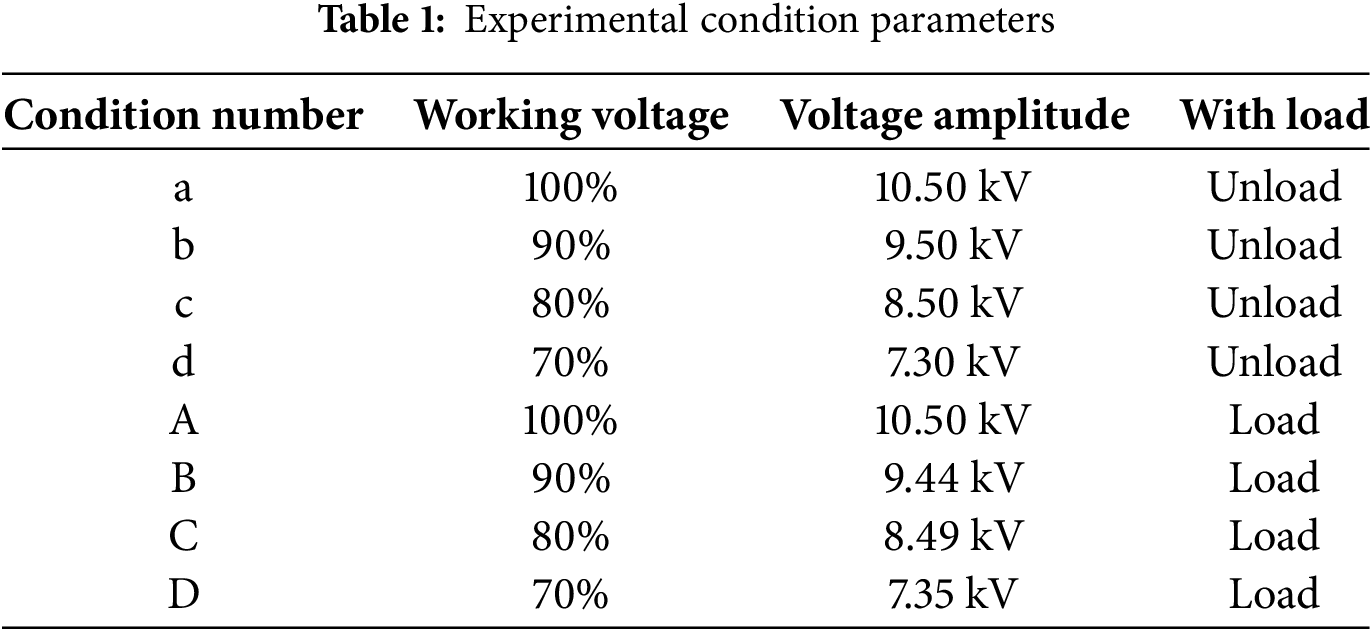
The experiments cover both loaded and no-load conditions, with data collected under a voltage gradient ranging from 70% to 100% of the rated voltage. For each operating condition, 600 samples are collected, each with a length of 1024 data points. The dataset is split into training and testing sets in a 7:3 ratio. Detailed experimental condition parameters are listed in Table 1.
This study constructs comparative experiments between single-source domain and multi-source domain transfer to verify the effectiveness of the proposed method. The single-source domain uses a composite source domain formed by merging three source domains, and compares with three methods: HDAN [29], CWA [30], and CIDDN [31]. The multi-source domain is compared with two methods: MSEDA [32] and CWWAE [33]. A unified configuration is adopted, including a CNN backbone network, batch size of 128, and 500 iterations. The evaluation metric is the optimal accuracy obtained through 10 independent tests. Target domain training data is strictly isolated, and t-SNE is used to visualize and verify feature distribution alignment.
Tests under no-load conditions are conducted based on the above experimental platform. All the aforementioned methods are evaluated on a system equipped with an AMD EPYC 7542 processor within a Python framework. Table 2 presents the task details when the target domain contains three types of fault classes.
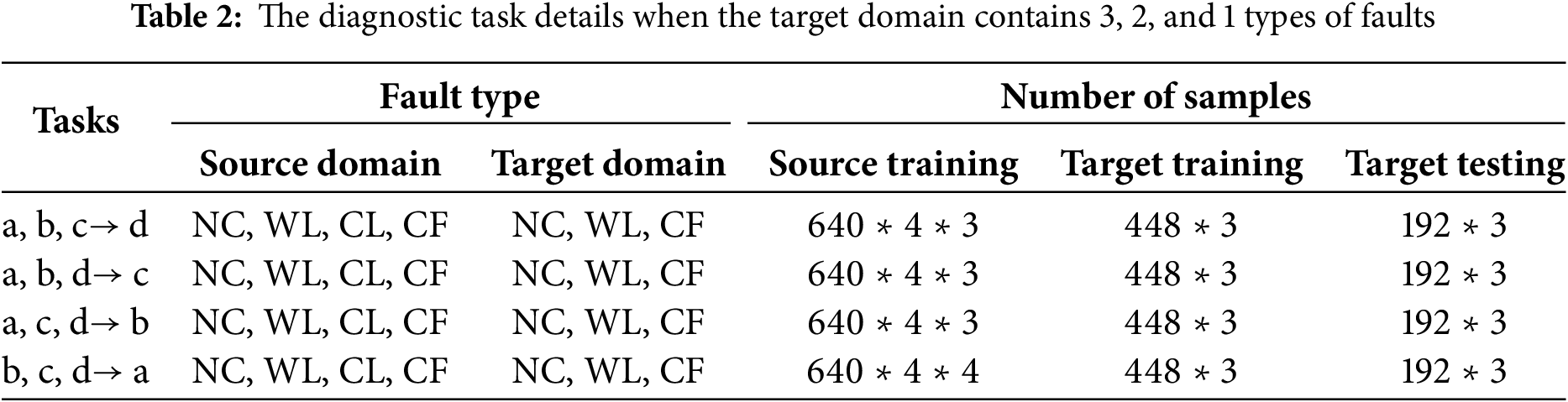
Fig. 4 shows the cross-domain diagnostic performance comparison when the number of fault categories in the target domain is k = 3. The proposed method demonstrates a significant advantage in domain adaptation capability. Quantitative analysis indicates that under complex industrial noise interference, the method achieves an average accuracy of 98.3% ± 2.2% over 50 cross-validation runs, representing a 11.47% improvement compared to the CIDDN method. This performance gain is mainly attributed to the dual-stream disentangled feature extraction architecture, which effectively enhances the representation of domain-invariant features.
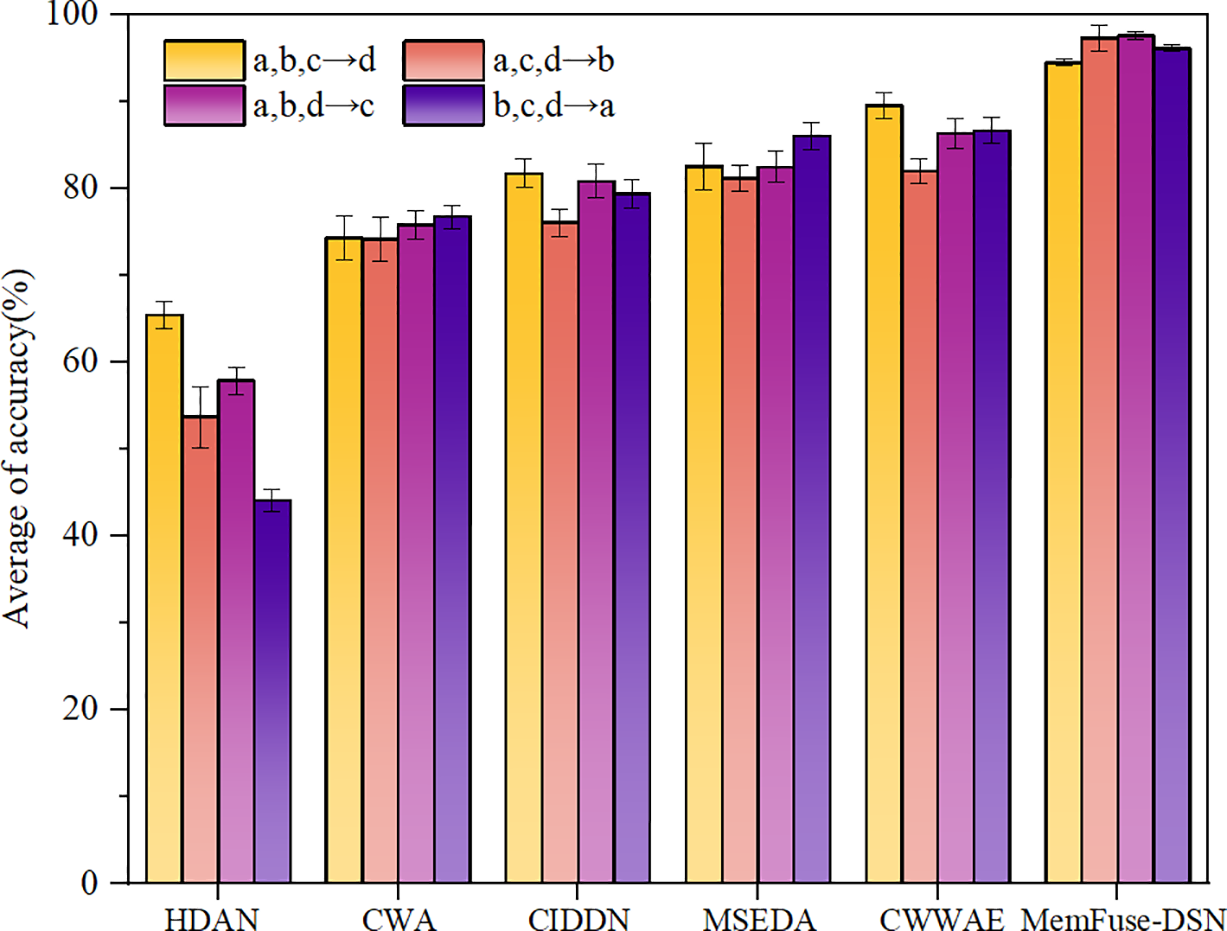
Figure 4: Accuracy comparison of different cross-domain tasks under no-load condition
As shown in Fig. 5, the sample-level similarity matrix analysis for task a, c, d → b indicates that the single-source domain method HDAN exhibits significant confusion patterns in cross-domain classification, where two fault categories are misclassified as a third, resulting in accuracy close to random guessing. The root cause lies in the lack of a private feature separation mechanism during multi-source feature alignment across domains, leading to false alignment. In contrast, the proposed method utilizes an orthogonal feature decoupling mechanism that significantly enhances inter-class discriminative boundaries within the cross-domain feature space, effectively improving classification performance.
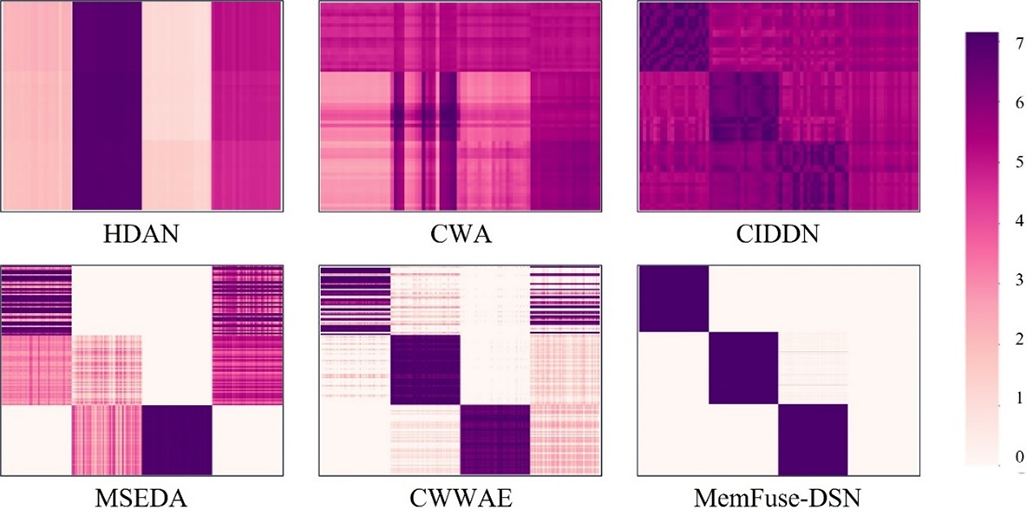
Figure 5: The sample-level similarity matrices of the learned features for different methods in tasks a, c, d→ b
For the task a, c, d → b, Fig. 6 presents the t-SNE visualization results. The improved feature distribution exhibits clear and well-separated clusters, achieving accurate cross-domain class distinction. In contrast, the comparative method CWWAE, while able to form some clustering, shows significant overlap between the source and target domains, resulting in insufficient domain separability. The proposed method not only constructs highly discriminative clusters but also effectively aligns the distributions between the source and target domains, demonstrating superior cross-domain adaptability.
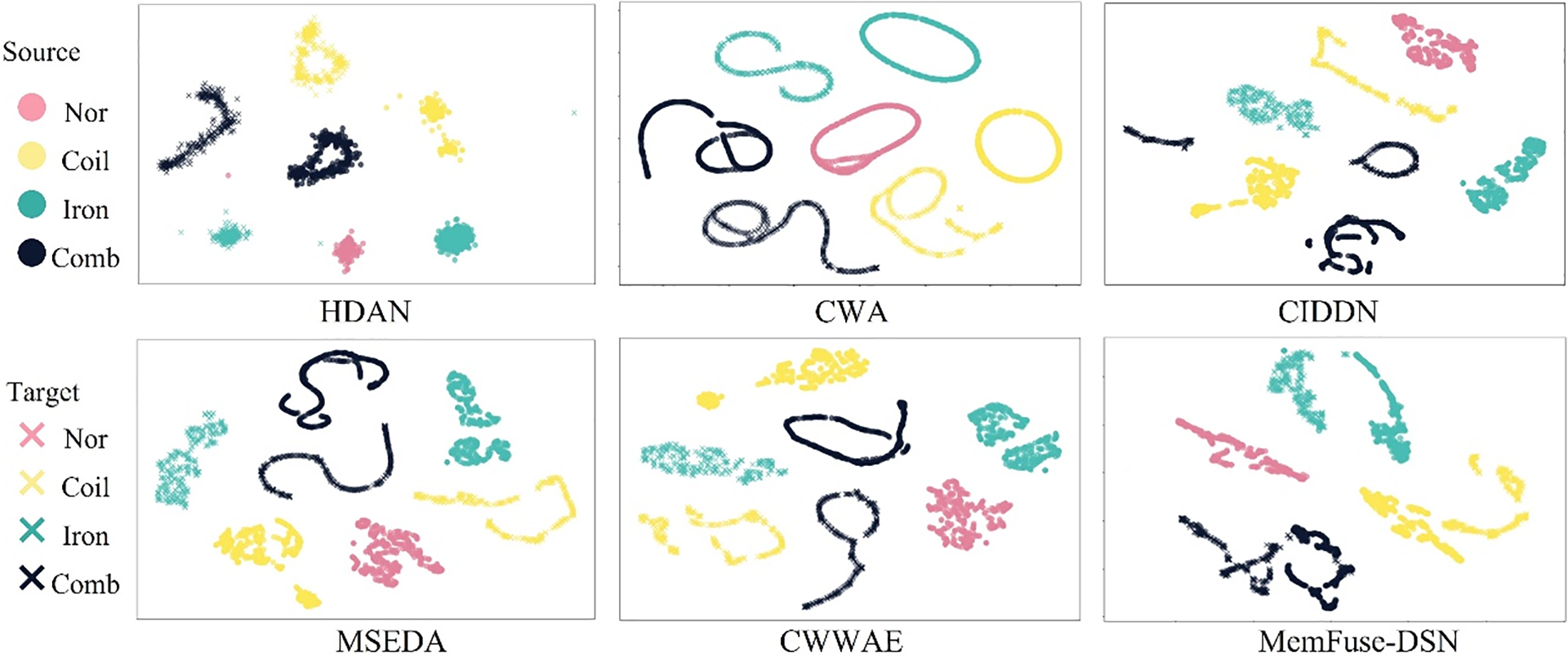
Figure 6: Sample clustering maps for tasks a, c, d → b for different methods
Table 3 provides a detailed description of the tasks when the target domain includes three fault categories.
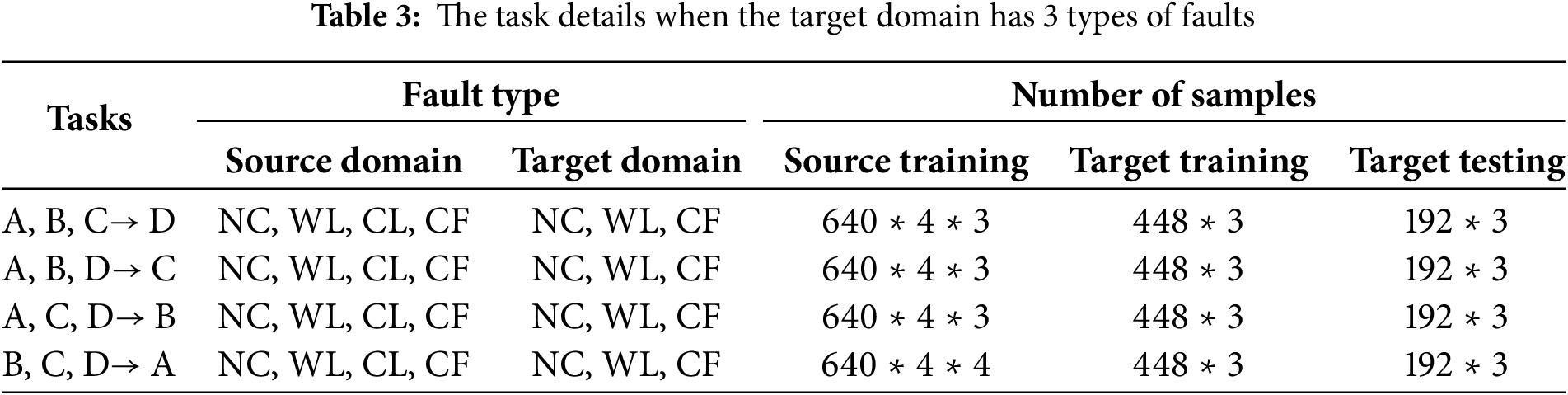
Fig. 7 presents the cross-domain diagnostic performance comparison when the number of fault categories in the target domain is k = 3. Compared to the no-load tests, all methods show a significant improvement in accuracy under load conditions, primarily due to the more regular vibration patterns exhibited by the signals during loading. However, the proposed method still maintains a clear advantage with notably lower error rates than other approaches. In the tasks B, C, D → A, the accuracy approaches 100%, demonstrating excellent performance and stability.
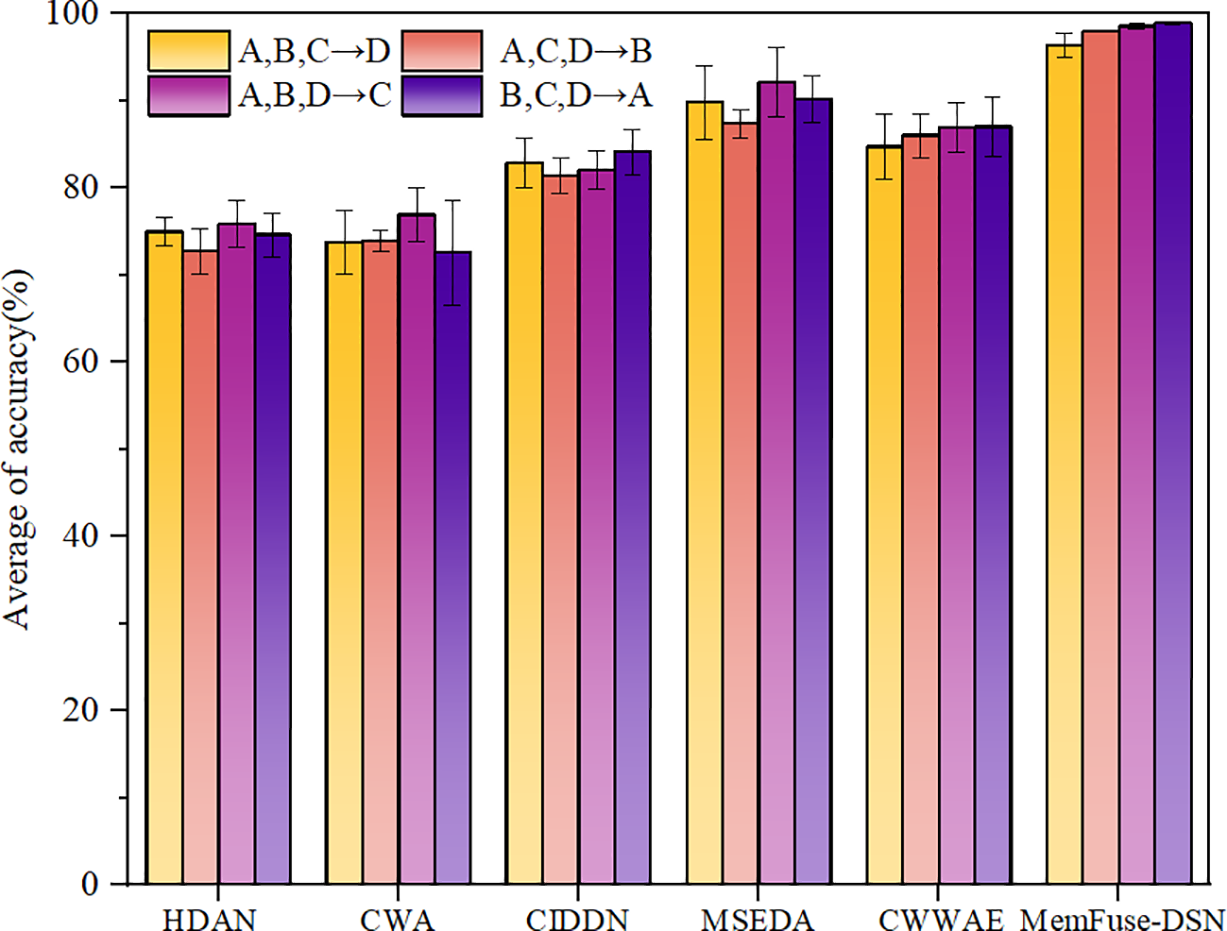
Figure 7: Comparison of accuracy for different cross-domain tasks under loaded conditions
Sample-level similarity matrices for various methods on the task A, C, D → B are presented in Fig. 8. The boundaries in the sample-level similarity matrix for the load data are noticeably clearer than those in the no-load experiments. This further confirms the advantage of the proposed method.
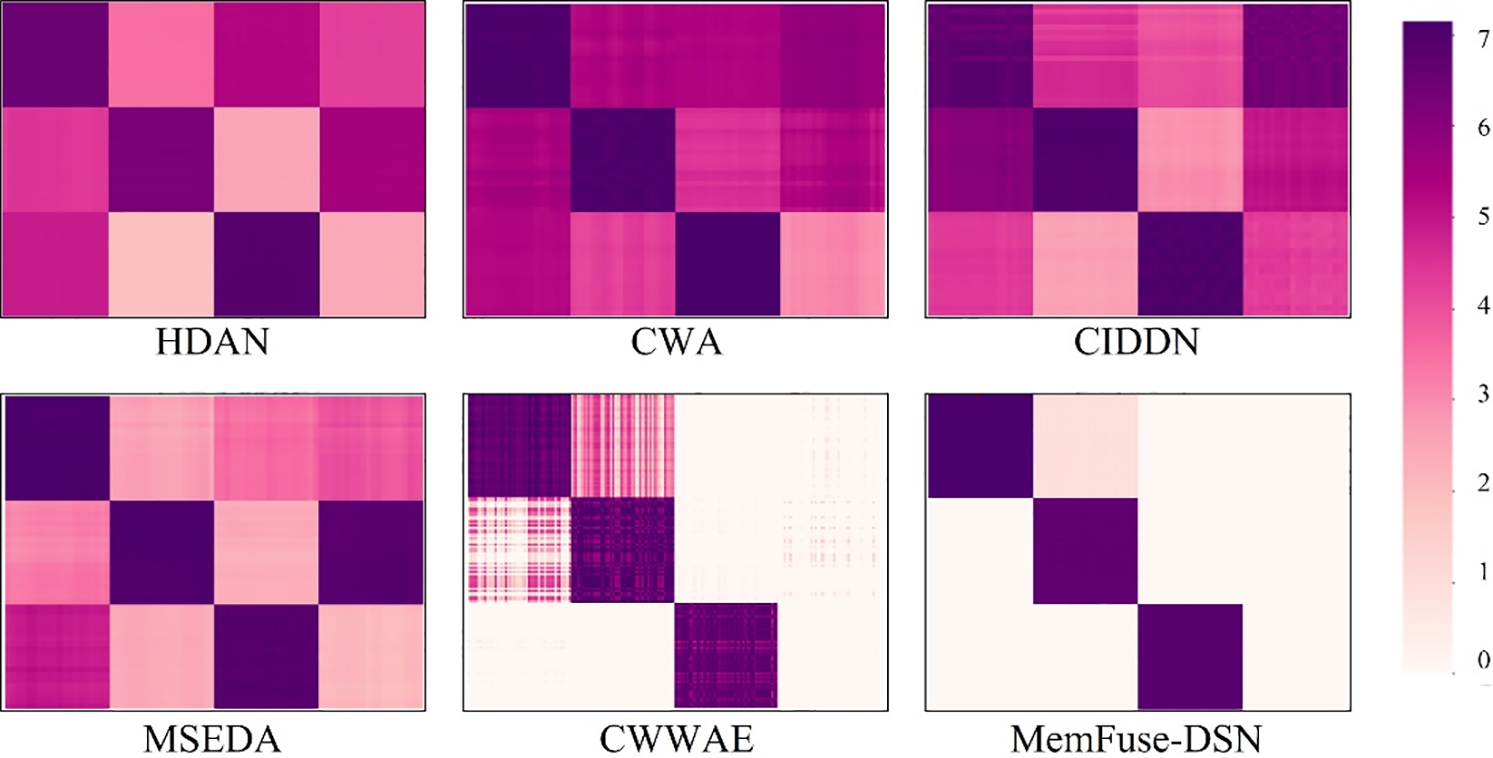
Figure 8: Sample-level similarity matrices of the learned features for different methods in tasks A, C, D → B
For the task A, C, D → B, the t-SNE visualization results are shown in Fig. 9. In the load test, most methods exhibit poor domain separability with noticeable overlap, whereas MS-FSHN maintains a clear and well-defined clustering performance.
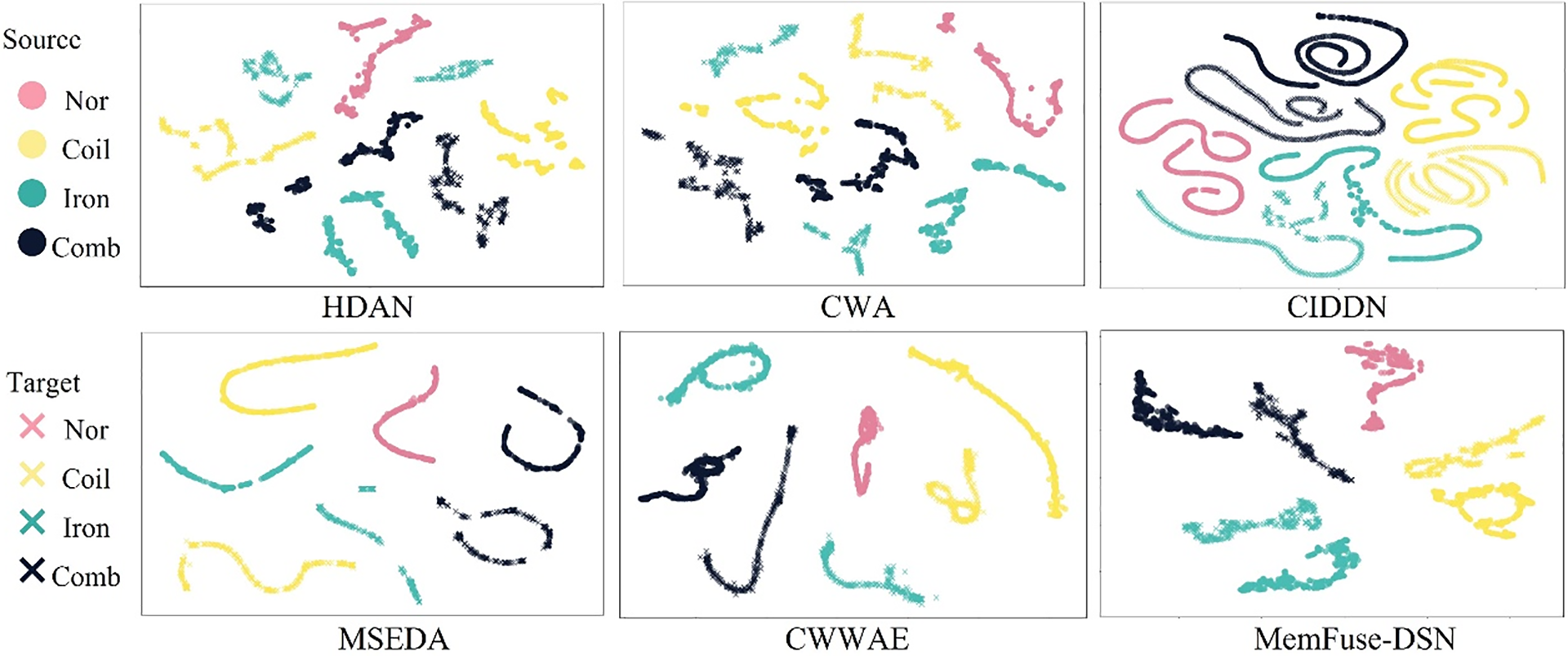
Figure 9: Sample clustering maps for tasks A, C, D→ B for different methods
This study addresses the challenges of multi-source open-set domain adaptation in cross-condition transfer diagnosis for power transformers by proposing a novel MemFuse-DSN framework. The architecture constructs domain-invariant feature topology based on differentiable gating and dynamic transport theory, and employs a historical state tracking optimization strategy to decouple multi-source domain adversarial training into a progressive feature fusion process, overcoming the limitations imposed by domain distribution discrepancies. A specially designed memory-guided dual-channel feature disentanglement network achieves stable mapping of discriminative features across domains and balanced adversarial gradients through online feature repository updates and dynamic class center calibration, effectively mitigating model oscillations caused by feature shifts. Although this method demonstrates accuracy advantages in multi-condition knowledge transfer, integrating equipment physical degradation mechanisms to build an open fault representation space for precise identification of potential unknown fault modes in the target domain remains a core bottleneck for advancing intelligent diagnostic engineering applications, warranting further in-depth research.
Acknowledgement: None.
Funding Statement: This work was supported by the State Grid Shandong Electric Power Company Project (Grant Number SGSDJX00BDJS2400388).
Author Contributions: The authors confirm contribution to the paper as follows: study conception and design: Mingxing Wu, Chengzhen Li, Xinyan Feng; data collection: Mingxing Wu, Chengzhen Li, Fei Chen; algorithm design: Mingxing Wu, Chengzhen Li, Yingchun Feng, Huihui Song; analysis and interpretation of results: Mingxing Wu, Chengzhen Li; draft manuscript preparation: Mingxing Wu, Chengzhen Li, Wenyu Wang, Faye Zhang. All authors reviewed the results and approved the final version of the manuscript.
Availability of Data and Materials: The authors confirm that the data supporting the findings of this study are available within the article.
Ethics Approval: Not applicable.
Conflicts of Interest: The authors declare no conflicts of interest to report regarding the present study.
References
1. Niu B, Wei Y, Yu Z, Wang Y. Acoustic signal augmentation for fault diagnosis of power transformers based on improved cycle generative adversarial networks. Expert Syst Appl. 2025;288(10):127997. doi:10.1016/j.eswa.2025.127997. [Google Scholar] [CrossRef]
2. Meng D, Wang H, Yang S, Lv Z, Hu Z, Wang Z. Fault analysis of wind power rolling bearing based on EMD feature extraction. Comput Model Eng Sci. 2022;130(1):543–58. doi:10.32604/cmes.2022.018123. [Google Scholar] [CrossRef]
3. Chen Y, Liang R, Ran W, Chen W. Gearbox fault diagnosis method based on deep learning multi-task framework. Int J Struct Integr. 2023;14(3):401–15. doi:10.1108/ijsi-11-2022-0134. [Google Scholar] [CrossRef]
4. Men Z, Hu C, Li YH, Bai X. A hybrid intelligent gearbox fault diagnosis method based on EWCEEMD and whale optimization algorithm-optimized SVM. Int J Struct Integr. 2023;14(2):322–36. doi:10.1108/ijsi-12-2022-0145. [Google Scholar] [CrossRef]
5. Liang B, Sun Z, Yang Z, Tao W, Huo C, Xiao S. Data augmentation and optimization method based on conditional generative adversarial network and convolutional neural network for transformer fault diagnosis. Measurement. 2025;254(D):117872. doi:10.1016/j.measurement.2025.117872. [Google Scholar] [CrossRef]
6. Siddique MF, Zaman W, Ullah N, Ullah S, Kim JM. Pipeline leak detection: leveraging acoustic emission signal processing and machine learning. In: Intelligent human computer interaction. Cham, Switzerland: Springer Nature Switzerland; 2025. p. 173–84. doi:10.1007/978-3-031-88705-5_14. [Google Scholar] [CrossRef]
7. Zhou Y, Liu Y, Wang N, Han X, Li J. Partial discharge ultrasonic signals pattern recognition in transformer using BSO-SVM based on microfiber coupler sensor. Measurement. 2022;201(7):111737. doi:10.1016/j.measurement.2022.111737. [Google Scholar] [CrossRef]
8. Zaman W, Siddique MF, Khan SU, Kim JM. A new dual-input CNN for multimodal fault classification using acoustic emission and vibration signals. Eng Fail Anal. 2025;179(2):109787. doi:10.1016/j.engfailanal.2025.109787. [Google Scholar] [CrossRef]
9. Yang B, Xu S, Lei Y, Lee CG, Stewart E, Roberts C. Multi-source transfer learning network to complement knowledge for intelligent diagnosis of machines with unseen faults. Mech Syst Signal Process. 2022;162:108095. doi:10.1016/j.ymssp.2021.108095. [Google Scholar] [CrossRef]
10. Xiao L, Chen Y, Wang M, Zhao H, Zhou Q. Multisource–multitarget partial domain adaptation for bearing fault diagnosis. IEEE Internet Things J. 2025;12(11):15897–910. doi:10.1109/JIOT.2025.3529953. [Google Scholar] [CrossRef]
11. Chen P, Zhao R, He T, Wei K, Yuan J. A novel bearing fault diagnosis method based joint attention adversarial domain adaptation. Reliab Eng Syst Saf. 2023;237:109345. doi:10.1016/j.ress.2023.109345. [Google Scholar] [CrossRef]
12. Yang S, Kong X, Wang Q, Li Z, Cheng H, Xu K. Deep multiple auto-encoder with attention mechanism network: a dynamic domain adaptation method for rotary machine fault diagnosis under different working conditions. Knowl Based Syst. 2022;249:108639. doi:10.1016/j.knosys.2022.108639. [Google Scholar] [CrossRef]
13. Li X, Jiang H, Xie M, Wang T, Wang R, Wu Z. A reinforcement ensemble deep transfer learning network for rolling bearing fault diagnosis with Multi-source domains. Adv Eng Inform. 2022;51(5):101480. doi:10.1016/j.aei.2021.101480. [Google Scholar] [CrossRef]
14. Zhu J, Chen N, Shen C. A new multiple source domain adaptation fault diagnosis method between different rotating machines. IEEE Trans Ind Inform. 2021;17(7):4788–97. doi:10.1109/TII.2020.3021406. [Google Scholar] [CrossRef]
15. Chen Z, Liao Y, Li J, Huang R, Xu L, Jin G, et al. A multi-source weighted deep transfer network for open-set fault diagnosis of rotary machinery. IEEE Trans Cybern. 2023;53(3):1982–93. doi:10.1109/TCYB.2022.3195355. [Google Scholar] [PubMed] [CrossRef]
16. Zhang G, Kong X, Wang Q, Du J, Xu K, Wang J, et al. Multi-source partial domain adaptation method based on pseudo-balanced target domain for fault diagnosis. Knowl Based Syst. 2024;284(7):111255. doi:10.1016/j.knosys.2023.111255. [Google Scholar] [CrossRef]
17. Zhang Y, Ren Z, Feng K, Yu K, Beer M, Liu Z. Universal source-free domain adaptation method for cross-domain fault diagnosis of machines. Mech Syst Signal Process. 2023;191(15):110159. doi:10.1016/j.ymssp.2023.110159. [Google Scholar] [CrossRef]
18. Zhang Y, Ji JC, Ren Z, Ni Q, Gu F, Feng K, et al. Digital twin-driven partial domain adaptation network for intelligent fault diagnosis of rolling bearing. Reliab Eng Syst Saf. 2023;234(7):109186. doi:10.1016/j.ress.2023.109186. [Google Scholar] [CrossRef]
19. Yu K, Wang X, Cheng Y, Feng K, Zhang Y, Xing B. Dual structural consistent partial domain adaptation network for intelligent machinery fault diagnosis. IEEE Trans Instrum Meas. 2024;73(11):3520413. doi:10.1109/TIM.2024.3396831. [Google Scholar] [CrossRef]
20. He B, Wang H, Che WW. Deep meta-domain-adversarial neural network for machinery fault diagnosis under multiple operating conditions. ISA Trans. 2025;161(9):36–47. doi:10.1016/j.isatra.2025.03.017. [Google Scholar] [PubMed] [CrossRef]
21. An Z, Yan Y, Jia S, Wang H, Zheng Y, Yang R. A dual-weight mechanism-based neural network for partial domain adaptation fault diagnosis of bearings under different working conditions. Meas Sci Technol. 2025;36(1):016173. doi:10.1088/1361-6501/ad950c. [Google Scholar] [CrossRef]
22. Hou Y, Mi J, Lu J, Wu P, Yang S, Huang B, et al. A deep transferable convolution neural network for unsupervised cross-domain diagnostics of rolling bearings in industrial Internet of Things. IEEE Internet Things J. 2025;12(11):17316–32. doi:10.1109/JIOT.2025.3536543. [Google Scholar] [CrossRef]
23. Liu M, Kari T, Yimamu A, Zhou Y, Ma X. MC-YOLOv8: a hybrid attention and adaptive convolution model for power equipment fault inspection. Signal Image Video Process. 2025;19(8):653. doi:10.1007/s11760-025-04275-5. [Google Scholar] [CrossRef]
24. Zeng L, Yin Q, Han W, Zhang H, Wang S. A two-stage joint distribution domain adaptation approach based on multi-source domain variable operation conditions fault diagnosis. J Vib Eng Technol. 2025;13(5):342. doi:10.1007/s42417-025-01912-8. [Google Scholar] [CrossRef]
25. Huang D, Su X, Yang J, Du S, Wang D, Ran Q. An improved dual-channel CNN-BILSTM fusion attention model for fault diagnosis of aero-engine bearings. Measurement. 2025;253(12):117761. doi:10.1016/j.measurement.2025.117761. [Google Scholar] [CrossRef]
26. Hu Y, Chang H, Wang H, Wu Q, Zhang C, Ren M, et al. Lightweight diagnosis of short-gap arcs in oil-paper insulation based on depthwise separable CNN. IEEE Trans Instrum Meas. 2025;74:3510111. doi:10.1109/TIM.2025.3542882. [Google Scholar] [CrossRef]
27. Zhang Y, Tang H, Ren Y. A three-stage cross-domain intelligent fault diagnosis method for multiple new faults. Meas Sci Technol. 2025;36(1):016166. doi:10.1088/1361-6501/ad903f. [Google Scholar] [CrossRef]
28. Shang Z, Wang S, Pan C, Wu C, Yao L. Partially domain-adaptive rolling bearing fault diagnosis based on joint weighting and metric optimization. Meas Sci Technol. 2025;36(5):056207. doi:10.1088/1361-6501/adce20. [Google Scholar] [CrossRef]
29. Han B, Zhang X, Wang J, An Z, Jia S, Zhang G. Hybrid distance-guided adversarial network for intelligent fault diagnosis under different working conditions. Measurement. 2021;176(7553):109197. doi:10.1016/j.measurement.2021.109197. [Google Scholar] [CrossRef]
30. Li X, Zhang W, Ma H, Luo Z, Li X. Partial transfer learning in machinery cross-domain fault diagnostics using class-weighted adversarial networks. Neural Netw. 2020;129(9):313–22. doi:10.1016/j.neunet.2020.06.014. [Google Scholar] [PubMed] [CrossRef]
31. Jiao J, Zhao M, Lin J, Ding C. Classifier inconsistency-based domain adaptation network for partial transfer intelligent diagnosis. IEEE Trans Ind Inform. 2020;16(9):5965–74. doi:10.1109/TII.2019.2956294. [Google Scholar] [CrossRef]
32. Yang S, Kong X, Wang Q, Li Z, Cheng H, Yu L. A multi-source ensemble domain adaptation method for rotary machine fault diagnosis. Measurement. 2021;186(1):110213. doi:10.1016/j.measurement.2021.110213. [Google Scholar] [CrossRef]
33. Zhao K, Jia F, Shao H. A novel conditional weighting transfer Wasserstein auto-encoder for rolling bearing fault diagnosis with multi-source domains. Knowl Based Syst. 2023;262(9):110203. doi:10.1016/j.knosys.2022.110203. [Google Scholar] [CrossRef]
Cite This Article
 Copyright © 2025 The Author(s). Published by Tech Science Press.
This work is licensed under a Creative Commons Attribution 4.0 International License , which permits unrestricted use, distribution, and reproduction in any medium, provided the original work is properly cited.
 Downloads
 Citation Tools
