
 Login
Login Register
 Submit a Paper
 Propose a Special lssue
 Open Access
REVIEW

Benefits of Artificial Intelligence for Achieving Durable and Sustainable Building Design
1 Department of Civil Engineering, Eastern Mediterranean University, Famagusta, 99628, Cyprus
2Departement of Architecture, University of Kurdistan Hewler, Erbil, 44001, Iraq
3 Department of Architecture, Eastern Mediterranean University, Famagusta, 99628, Cyprus
4 Department of Civil Engineering, Cyprus International University, Nicosia, 99628, North Cyprus via Mersin 10, Türkiye
5 Departement of Civil Engineering, İstanbul Kültür Üniversitesi, Istanbul, 34158, Türkiye
6 Research Institute of Sciences and Engineering, University of Sharjah, Sharjah, P.O. Box 27272, United Arab Emirates
7 Faculty of Civil Engineering, Damascus University, Damascus, Syria
* Corresponding Author: Ahed Habib. Email:
(This article belongs to the Special Issue: Resilient and Sustainable Infrastructure: Monitoring, Safety, and Durability)
Structural Durability & Health Monitoring 2025, 19(6), 1387-1410. https://doi.org/10.32604/sdhm.2025.069821
Received 01 July 2025; Accepted 16 September 2025; Issue published 17 November 2025
 View Full Text
 Download PDF
Abstract
Artificial intelligence (AI) is transforming the building and construction sector, enabling enhanced design strategies for achieving durable and sustainable structures. Traditional methods of design and construction often struggle to adequately predict building longevity, optimize material use, and maintain sustainability throughout a building’s lifecycle. AI technologies, including machine learning, deep learning, and digital twins, present advanced capabilities to overcome these limitations by providing precise predictive analytics, real-time monitoring, and proactive maintenance solutions. This study explores the benefits of integrating AI into building design and construction processes, highlighting key advantages such as improved durability, optimized resource efficiency, and heightened alignment with sustainability goals. As part of this study, the durability aspects are assessed through a strengths, weaknesses, opportunities, and threats analysis. In addition, a sustainability assessment is carried out, taking into account environmental, economic, and social factors, as well as alignment with the United Nations Sustainable Development Goals. Generally, AI-driven predictive models significantly enhance structural durability by forecasting material performance, corrosion risks, and building lifespans with high accuracy. Similarly, AI facilitates sustainable practices by optimizing energy consumption, integrating renewable energy systems efficiently, and significantly reducing carbon footprints. Despite these considerable benefits, implementing AI in the construction industry faces several challenges, including technological complexity, data management concerns, and industry readiness. Nonetheless, future directions emphasize continued development of user-friendly AI platforms, expanded industry collaboration, and rigorous exploration of AI’s transformative potential in sustainable and resilient architecture. Overall, AI is expected to redefine the built environment, delivering buildings that are durable and sustainably integrated within their ecological and social contexts.Keywords
Artificial intelligence (AI) is rapidly becoming integral in the construction industry, significantly influencing building design, construction practices, and maintenance protocols (Fig. 1). Traditional building methods often involve extensive manual processes and estimations that lead to inefficiencies, unnecessary costs, and compromised sustainability [1–6]. Recent developments in finite element modeling and AI enable precise degradation forecasting and lifecycle optimization via advanced monitoring and data-driven decision-making [7–11]. Numerous studies have addressed AI’s potential within construction, particularly regarding sustainability. For instance, Adewale et al. [12] systematically reviewed how AI methods streamline sustainable building life cycles. Similarly, Regona et al. [13] emphasized AI’s alignment with sustainable development goals, highlighting its role in energy efficiency and resource optimization. Kar et al. [14] discussed AI’s broad implications for sustainability, highlighting how predictive models contribute significantly to ecological goals. Specific AI applications have been explored, such as AI-enhanced construction materials [15–17], smart building management systems [18,19], and sustainable integration of renewable energy [20,21]. The integration of AI with 3D printing and IoT facilitates real-time quality control, material optimization, and automated system coordination, advancing the construction of eco-friendly residential buildings [13,22,23]. Furthermore, sophisticated AI-driven frameworks, such as digital twins and physics-informed neural networks, have shown potential in precise structural and thermal modeling, significantly contributing to sustainability and durability [24–27]. In this regard, recent vision-based pipelines extend this capability: deep learning-based 3D image reconstruction and damage mapping with neural radiance fields (Nerfacto) support dense façade and component capture for condition assessment, while 3D pixelwise damage mapping with a deep-attention, modified Nerfacto enables fine-grained crack and spall segmentation that can be synchronized with digital twin states [28,29]. Although the literature extensively covers sustainability, there has been a particular emphasis on AI’s ability to predict structural performance and durability aspects. Ji et al. [7] and Gouda Mohamed and Marzouk [30] illustrated AI’s role in lifecycle predictions and building condition assessments, respectively. Machine learning techniques, as discussed by Bhamare et al. [31] and Meshref et al. [32], are proven effective in thermal performance predictions and life-cycle cost analysis. Additional studies explored AI’s application in corrosion prediction [33–35], fatigue life estimation [36], and concrete durability [37,38]. The implementation of smart vision systems and automated inspections has also shown significant improvements in infrastructure monitoring, aiding in early detection of structural defects such as cracks [39–42]. Meanwhile, digital twin technologies provided by Zhai et al. [11] and Hu et al. [43] facilitated real-time structural health monitoring, highlighting a shift toward proactive maintenance strategies in construction management. Sustainability-specific research includes comprehensive analyses of energy-efficient buildings through AI-driven optimizations and management systems. Studies by Debrah et al. [44], Xiang et al. [45], and Li et al. [46] have assessed AI’s role in achieving net-zero emissions in construction, emphasizing its importance in sustainability evaluations. Furthermore, Mehmood et al. [47], Asif et al. [48], and Ogundiran et al. [49] reviewed AI’s applications in enhancing indoor environmental quality and energy efficiency, reinforcing AI’s positive influence in these domains. Integration of AI with building information modeling (BIM) for smarter city developments was explored by Li et al. [50], highlighting benefits in improved sustainability practices and urban planning efficiency. Despite extensive exploration, there remains a gap in the comprehensive understanding of AI’s practical implications, specifically for integrating durability and sustainability effectively in building design. Although studies have focused individually on durability or sustainability, few have thoroughly investigated the joint benefits and application potential of AI technologies in these interconnected areas. Particularly limited is the literature providing an overview and benefit assessments of AI’s combined effects on sustainable building practices and durability. Addressing this gap, this study aims to review and assess the dual potential of artificial intelligence comprehensively. The objective is to illustrate how AI technologies, from predictive analytics to smart monitoring systems, offer practical solutions that enhance both the sustainability and durability of building structures simultaneously. Furthermore, this research aims to clarify AI’s role within the broader context of achieving sustainable development goals and to propose strategies for overcoming existing implementation barriers. Within the study context, a durability aspects assessment through strengths, weaknesses, opportunities, and threats (SWOT) analysis is performed along with a sustainability assessment considering environmental, economic, and social aspects, as well as United Nations sustainability development goals alignment. By focusing on durability and sustainability collectively, this study’s novelty is represented by seeking to guide the construction industry toward more resilient, economically feasible, and environmentally responsible building practices. Accordingly, this study aims to contribute to both the state of the art and the state of the practice.
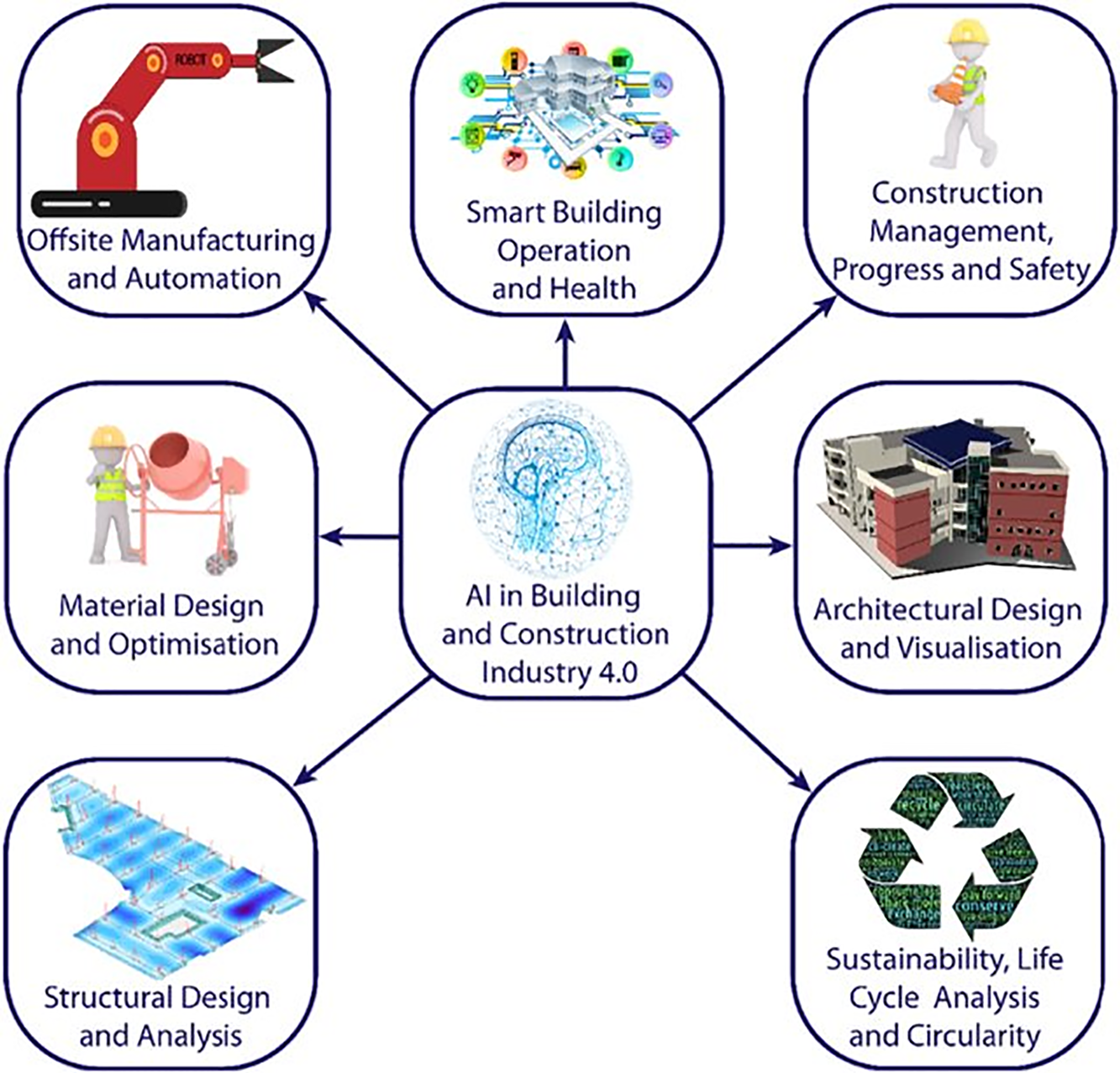
Figure 1: Various AI applications in the building and construction industry 4.0 (Adapted with permission from [8])
The bibliometric analysis carried out in this study highlights the directions taken by researchers focusing on artificial intelligence within the context of sustainable and durable building design. A total of 375 publications were identified through Scopus, selected based on the presence of the terms “artificial intelligence,” “building design,” and either “sustainability” or “durability” in their titles, abstracts, or keywords. The publication date range was left as default to cover all available sources, and hence it was not limited to any specific range. This filtering ensured that the dataset was comprehensive while remaining directly aligned with the research scope, thereby reducing the inclusion of studies where AI was applied in unrelated construction contexts such as general project management or cost estimation. The data was processed using VOSViewer software, which allowed for visual and statistical representation of patterns in the literature. Specifically, VOSViewer was employed to generate co-authorship maps, keyword co-occurrence networks, and citation analyses, enabling the identification of influential researchers, research clusters, and thematic trends. The visualization also revealed how different AI techniques, such as machine learning, neural networks, and optimization algorithms, are distributed across applications in energy-efficient design, material durability, and lifecycle assessment. The classification of publication types shows that journal articles form the majority, with 212 out of the total 375, followed by 119 conference papers, 35 book chapters, and 8 books, as seen in Fig. 2. This suggests that peer-reviewed journals are the primary venue for disseminating research in this area, though conference proceedings also play a significant role, likely due to the evolving and experimental nature of AI technologies in design applications.
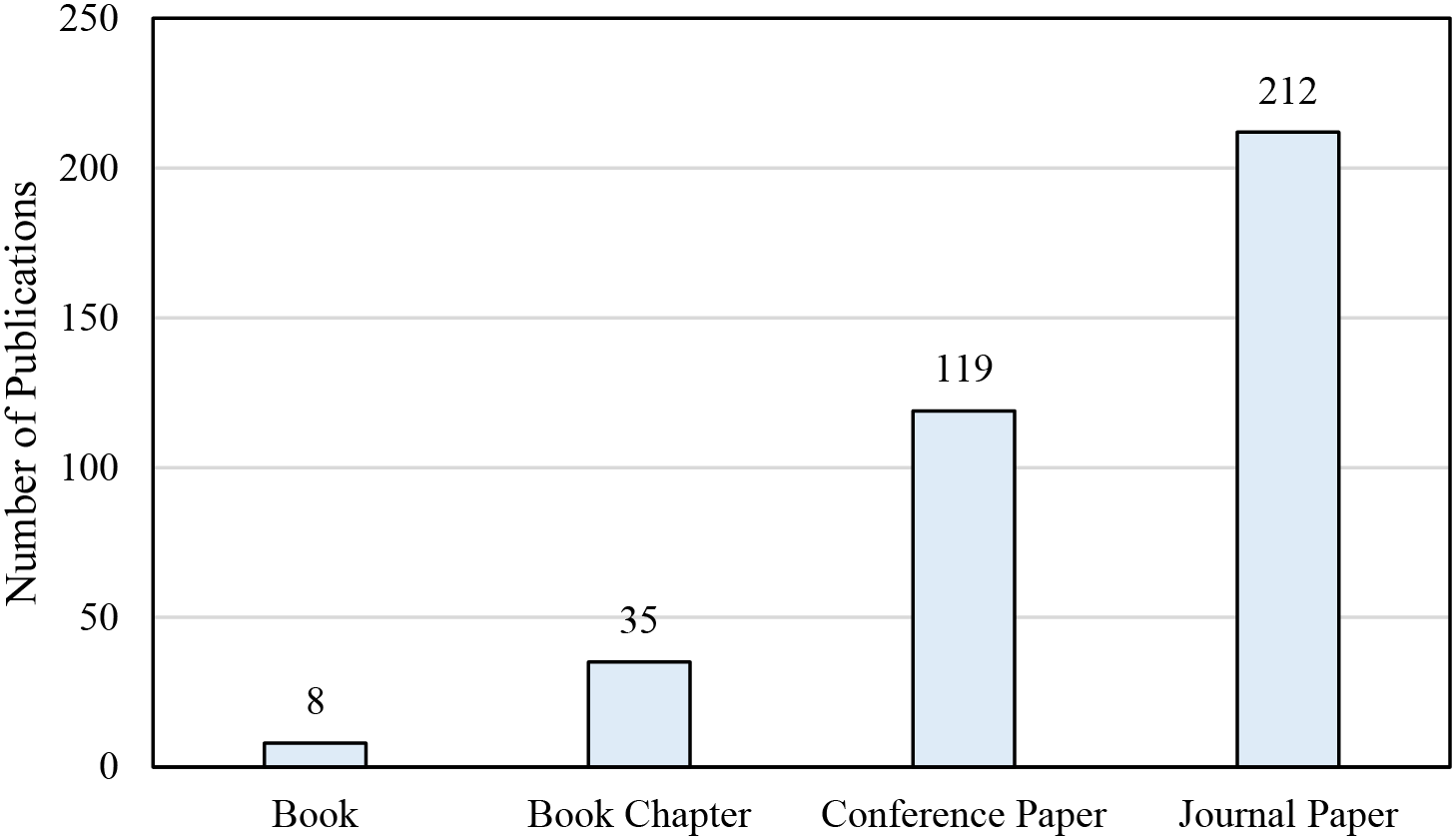
Figure 2: Types of journal articles and conference papers on AI applications for achieving sustainability and durability in building design
A review of publication trends over time, illustrated in Fig. 3, shows limited activity before 2015, with annual outputs generally below 10. A marked rise began around 2015 and gradually built-up momentum. The number of publications peaked in 2024 with 122 entries, while 2025 shows a high figure of 82, despite the year being incomplete. This pattern suggests that interest in the topic has expanded considerably in recent years, which may be linked to the increased accessibility of AI tools and heightened awareness of environmental and structural resilience in design practices.
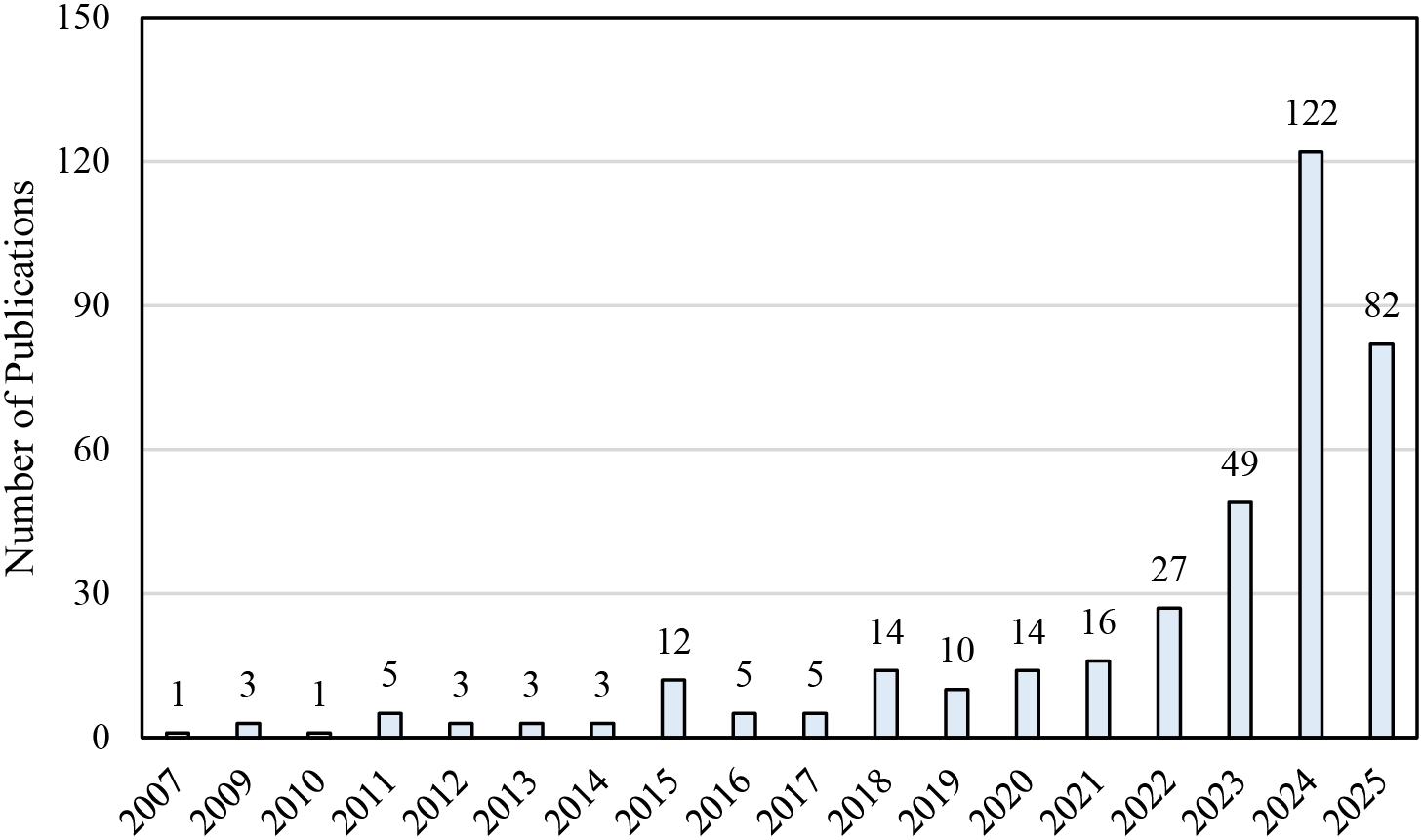
Figure 3: Number of yearly publications on AI applications for achieving sustainability and durability in building design
Keyword analysis further clarifies the focus of the published work. As shown in Fig. 4, terms such as “artificial intelligence,” “energy efficiency,” “machine learning,” “building information modeling,” and “optimization” frequently appear. These keywords reflect a concentration on computational methods used to improve energy use, structure performance, and decision-making processes in construction projects. Other recurring words, such as “smart city” and “project management,” indicate that the literature often situates these technologies within broader planning and operational frameworks. In terms of geographic contributions, the visual map in Fig. 5 shows active involvement from several countries, with the United Kingdom, United States, and China appearing as the most productive. Other countries such as Saudi Arabia, Germany, South Africa, Australia, and the United Arab Emirates are also represented, suggesting a global interest in adapting AI to local design and construction needs. This wide participation points to the broad appeal of AI in addressing building performance goals, though the volume of output still varies significantly by region. Overall, the bibliometric findings suggest a growing and increasingly organized field, with distinct patterns of research focus, steady growth in publication numbers, and a globally distributed base of contributors. These patterns signal not just an interest in applying AI in building design, but also a recognition of its potential to address long-standing concerns related to efficiency, durability, and environmental goals.
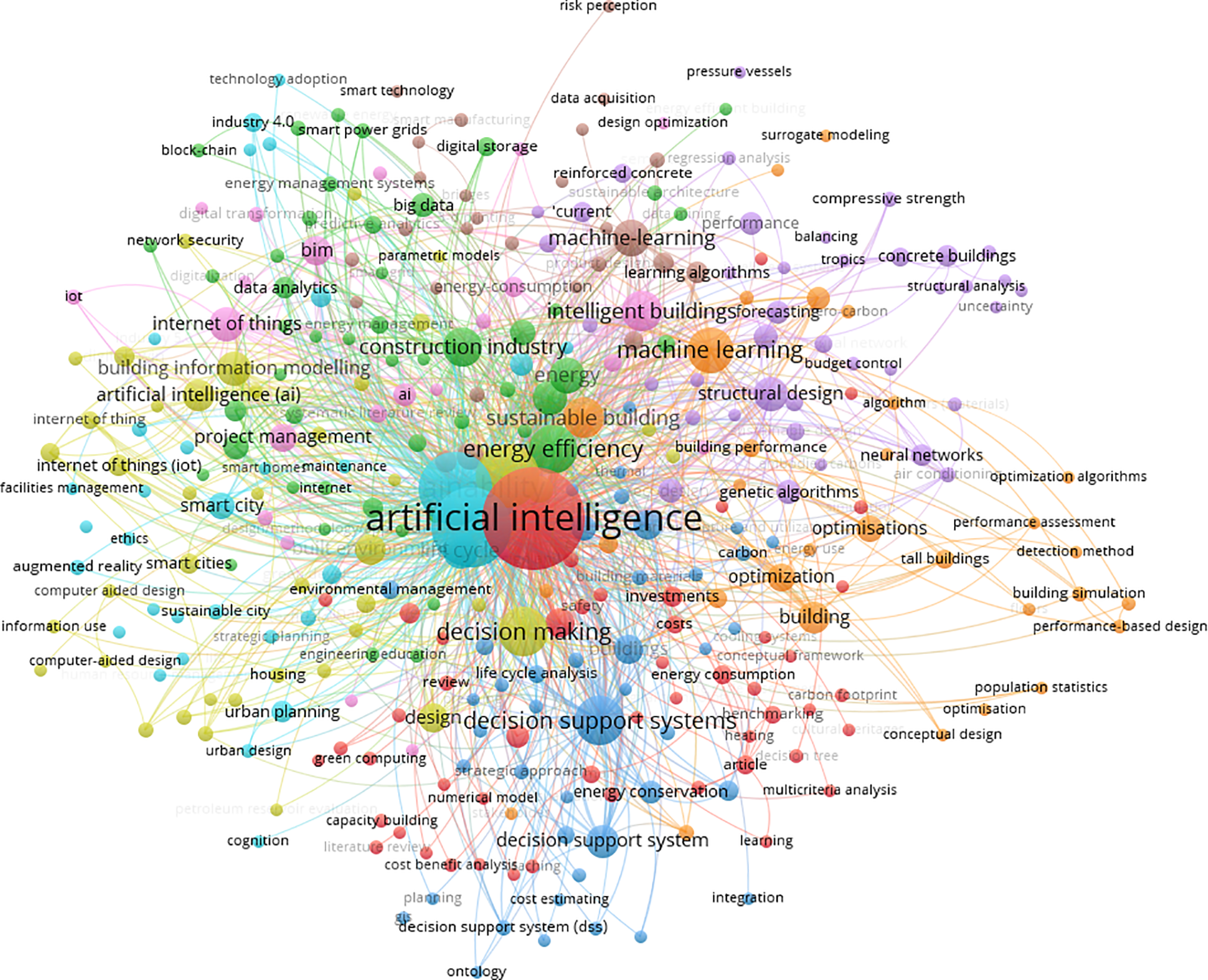
Figure 4: Co-occurrence of keywords in previous research on AI applications for achieving sustainability and durability in building design
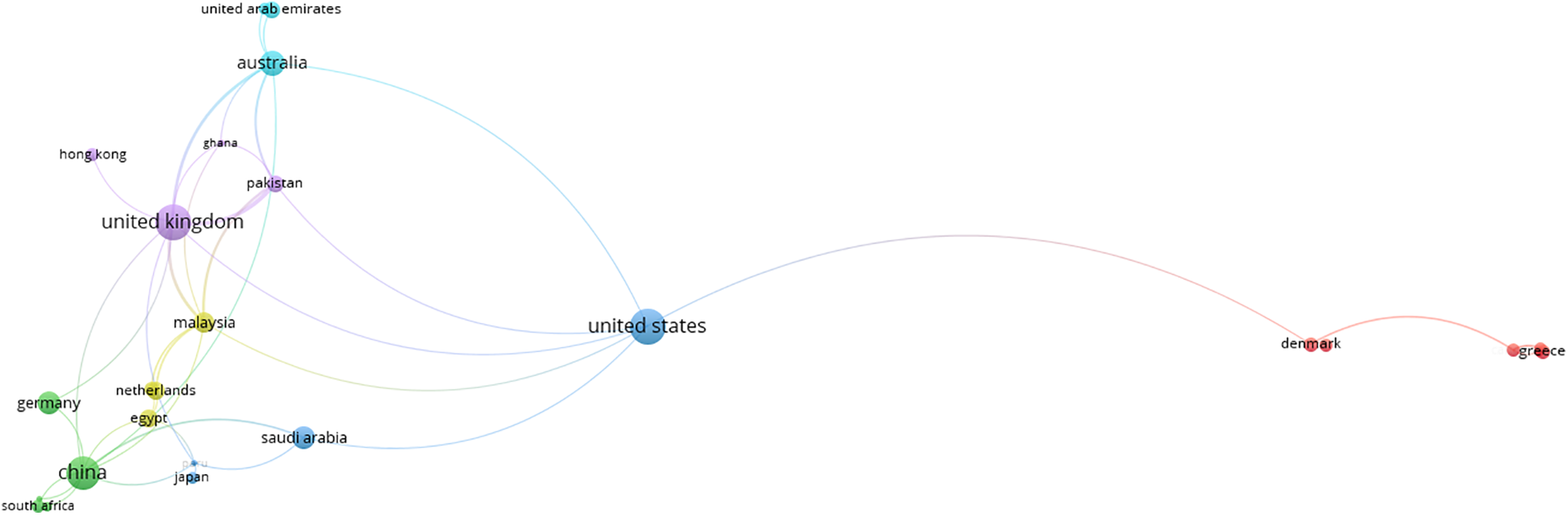
Figure 5: Most contributing countries to research on AI applications for achieving sustainability and durability in building design
3 AI Techniques for Durability
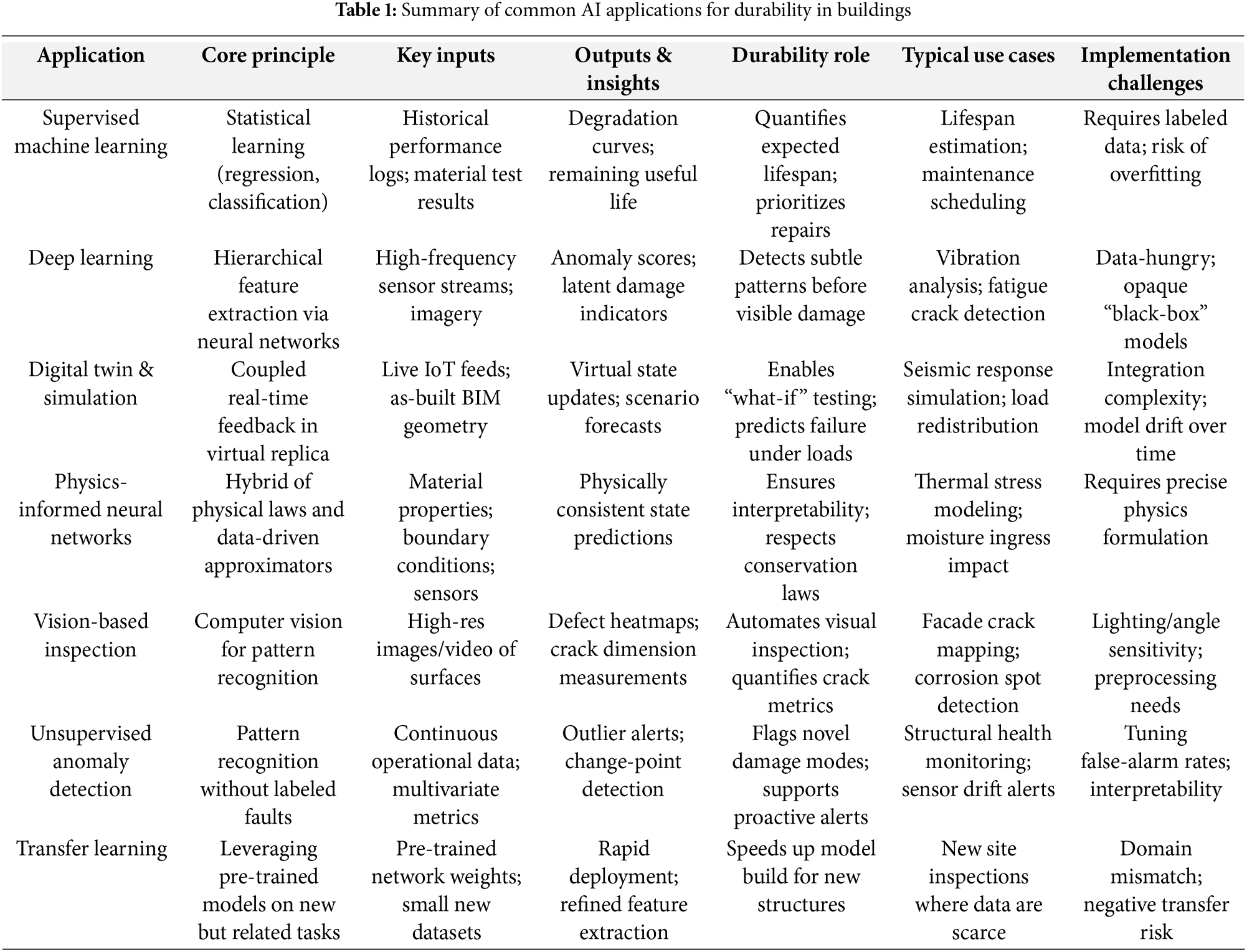
AI methods have become increasingly relevant in ensuring the durability of building structures, addressing long-standing challenges in accurately forecasting material performance and structural integrity [51–54]. Ji et al. [7] created predictive models for building lifespan assessment through advanced machine learning algorithms, considerably refining lifecycle management processes. Bhamare et al. [31] designed deep learning techniques predicting the thermal characteristics of buildings utilizing phase change materials, enhancing energy management and material durability. Gouda Mohamed and Marzouk [30] introduced artificial neural networks integrated with structural equations to evaluate building condition, providing precise and actionable condition assessments. Farrar and Worden [55] pioneered structural health monitoring methodologies utilizing machine learning, laying a foundational framework for subsequent durability assessments. Sun et al. [56] extensively reviewed machine learning methodologies applied to structural design and durability evaluation, highlighting their practical applications. Taffese and Espinosa-Leal [37] developed machine learning models specifically for chloride resistance prediction in concrete, directly influencing strategies for concrete durability enhancement. Aghabalaei Baghaei and Hadigheh [57] effectively utilized machine learning to assess the durability of FRP-to-concrete connections under moisture exposure, crucial for structural longevity. In green construction contexts, machine-learning models have enhanced project cost and schedule predictions, indirectly bolstering durability planning and sustainability by enabling more reliable lifecycle cost analyses [7,58]. Hafez et al. [38] devised a comprehensive machine learning system to forecast mechanical and durability properties of blended cement concrete, thus aiding robust construction practices. Meshref et al. [32] applied deep learning to lifecycle cost estimation, evaluating structural durability options in industrial buildings. Coelho et al. [33] systematically reviewed machine learning techniques for corrosion prediction, confirming their efficacy over conventional methods. Ossai [34] comparatively assessed machine learning approaches for corrosion risk management, validating their superior predictive accuracy. Hughes et al. [35] explored corrosion inhibitors using machine learning, significantly advancing predictive accuracy across different environments. Lunardi et al. [36] developed hybrid machine learning techniques predicting concrete fatigue under cyclic loads, critical for sustained structural performance. Baduge et al. [8] reviewed smart vision applications and highlighted that the potential of AI technologies for structural and construction material design, analysis, and optimization, significantly aiding timely maintenance strategies. Yeum and Dyke [39] introduced automated vision-based methods for detecting bridge cracks, improving inspection accuracy and timeliness. Jahanshahi and Masri [40] enhanced vision-based damage detection with three-dimensional scene reconstruction, ensuring precise assessments of structural conditions. Islam and Kim [41] developed convolutional neural networks for autonomous crack identification, enabling rapid evaluation of concrete structures. Rao et al. [42] implemented convolutional neural networks specifically for crack assessment in infrastructure, enhancing overall monitoring efficiency. Dang et al. [24] highlighted cloud-based digital twin technologies utilizing deep learning for continuous structural health monitoring. Zhai et al. [11] advanced digital twin frameworks quantifying seismic damage, improving response strategies for earthquake-prone structures. Hu et al. [43] designed intelligent BIM-integrated digital twin systems coupled with IoT sensors for enhanced real-time structural monitoring. Previously, physics-informed neural networks have demonstrated high fidelity in modeling building thermal dynamics, offering actionable insights for maintenance scheduling and durability enhancement [59,60]. Gokhale et al. [25] developed control-oriented PINN models, providing precise thermal modeling within buildings. Mai et al. [60] applied robust physics-informed neural networks to predict structural instability risks, substantially improving predictive accuracy compared to purely statistical methods. Chew et al. [61] reviewed physics-informed machine learning methods for urban infrastructure durability, confirming their high utility in managing structural resilience. Collectively, these studies underscore how AI-driven methods have reshaped durability research by introducing tools that enhance predictive precision and reliability. Their combined contributions reveal how machine learning, digital twins, and physics-informed models are not merely experimental but are becoming integral to evaluating material longevity, structural health, and lifecycle performance. Together, these advances establish AI as a cornerstone for building infrastructures that are not only more durable but also safer and better equipped to withstand future environmental and operational challenges. Table 1 summarizes the common AI applications for durability in buildings.
4 AI Techniques for Sustainability
In general, sustainability in buildings means the capacity of a building to deliver high-quality performance over its life while minimizing environmental burdens, maintaining economic feasibility, and supporting occupant health and social equity. In this regard, AI has gained significant attention as a tool for promoting sustainability within the built environment, addressing key challenges related to environmental impacts, energy efficiency, and resource optimization [62,63]. Debrah et al. [44] discussed the integration of AI in green building practices, illustrating various successful implementations in enhancing environmental outcomes. Xiang et al. [45] presented methodologies for evaluating sustainability in construction, demonstrating how AI significantly influences energy consumption optimization. Adio-Moses and Asaolu [64] examined AI applications for intelligent buildings, emphasizing its contribution to sustainable urban development. Bajwa et al. [18] systematically reviewed AI-driven smart management systems in buildings, highlighting their potential for improved energy efficiency and sustainability outcomes. Gilner et al. [65] focused on AI-driven optimization methods in sustainable building design, showing clear benefits in achieving better resource utilization. Elwy and Hagishima [66] reviewed surrogate models in AI-supported sustainable building designs, pointing to improvements in the optimization process and sustainability performance. Hanafi et al. [19] comprehensively surveyed AI methods for energy management in sustainable buildings, detailing significant advancements in energy use optimization. Adewale et al. [12] systematically reviewed AI applications in the lifecycle management of sustainable buildings, highlighting improvements in efficiency and environmental sustainability. Mehmood et al. [47] explored big data and AI-driven energy efficiency measures in buildings, emphasizing the positive impact on indoor environmental comfort. Asif et al. [48] discussed digital technologies’ roles in sustainable building management, addressing their effectiveness in energy conservation and resource optimization. Alijoyo [67] demonstrated the significance of deep learning techniques within industry 4.0 frameworks, enhancing sustainability through better energy management in smart buildings. Vattano [68] provided insights into smart building technologies and their role in promoting sustainable development through intelligent resource management. Ogundiran et al. [49] reviewed AI’s impact on improving energy efficiency and indoor environment quality, highlighting positive outcomes in sustainable building design. Li et al. [46] presented a comprehensive review on AI strategies toward achieving net-zero carbon emissions, showing significant contributions to sustainability goals. Prasad [69] discussed optimization strategies involving deep learning in smart building practices, highlighting significant improvements in sustainable outcomes. Li et al. [50] explored the relationship between AI and Building Information Modeling (BIM), illustrating advancements in smart cities and sustainable buildings. Farzaneh et al. [70] described how AI evolved in smart buildings, significantly influencing energy efficiency measures. Aguilar et al. [71] reviewed AI applications for energy self-management in smart buildings, providing evidence of improved sustainability performance. Dounis [72] investigated AI methodologies for energy conservation, highlighting their effectiveness in reducing energy consumption in buildings. Alnaser et al. [23] explored AI-powered digital twins and IoT applications, demonstrating their effectiveness in smart city sustainability initiatives. Tariq et al. [73] discussed complex AI models for enhancing energy sustainability in educational buildings, showing notable improvements in energy efficiency. Krausková and Pifko [74] examined AI applications in sustainable architecture, summarizing key technological developments and their impact. Ajayi et al. [75] highlighted AI’s capability in reducing building carbon emissions through predictive analytics, substantially contributing to sustainability. Al-Haddad et al. [76] focused on AI-enhanced aerodynamic façades, highlighting their potential in advancing sustainable architectural designs. Pasupuleti et al. [77] discussed AI’s role in navigating sustainable construction practices, highlighting practical implementations that enhance building sustainability. Ekici et al. [78] detailed AI methodologies for multi-zone optimization in high-rise buildings, significantly improving sustainability. Kazeem et al. [79] explored AI’s contributions to sustainable construction processes, focusing on improved efficiency and community benefits. Manmatharasan et al. [80] reviewed AI-driven design optimization for sustainable buildings, illustrating marked improvements in resource efficiency. Gilner et al. [81] discussed AI applications in sustainable building design, highlighting optimization techniques beneficial for environmental outcomes. Alotaibi [82] demonstrated the integration of AI and machine learning for enhancing energy efficiency in residential buildings, significantly contributing to sustainable construction practices. Saliu and Elezi [83] reviewed AI integration in architectural practice, emphasizing its significant role in sustainable design performance. Elmousalami et al. [84] examined automated AI frameworks in sustainable construction management, underscoring substantial improvements in project efficiency. Gadalla et al. [85] addressed the effective role of AI in sustainable architectural designs, presenting clear benefits in efficiency and sustainability outcomes. Dagadkar et al. [86] reviewed AI techniques in sustainable construction, detailing practical impacts and solutions contributing to sustainability objectives. Michalakopoulos et al. [26] presented physics-informed neural networks predicting building energy efficiency, highlighting improvements in sustainability management. Naeini et al. [27] discussed hybrid AI frameworks combining physics-informed neural networks and blockchain security, showing enhanced sustainability through optimized energy consumption. Collectively, these contributions illustrate AI’s extensive potential in promoting sustainability in the construction industry, demonstrating varied methodologies that effectively address ecological, economic, and social sustainability.
5 AI Potential Assessment for Achieving Building Durability and Sustainability
As mentioned before, AI presents a complex and increasingly central role in reshaping both durability and sustainability outcomes in building design. Although the architectural and construction industries have historically relied on standardized methodologies for structural design and maintenance, the entrance of AI has shifted the focus toward adaptive and data-driven solutions that account for change over time, environmental variability, and operational unpredictability.
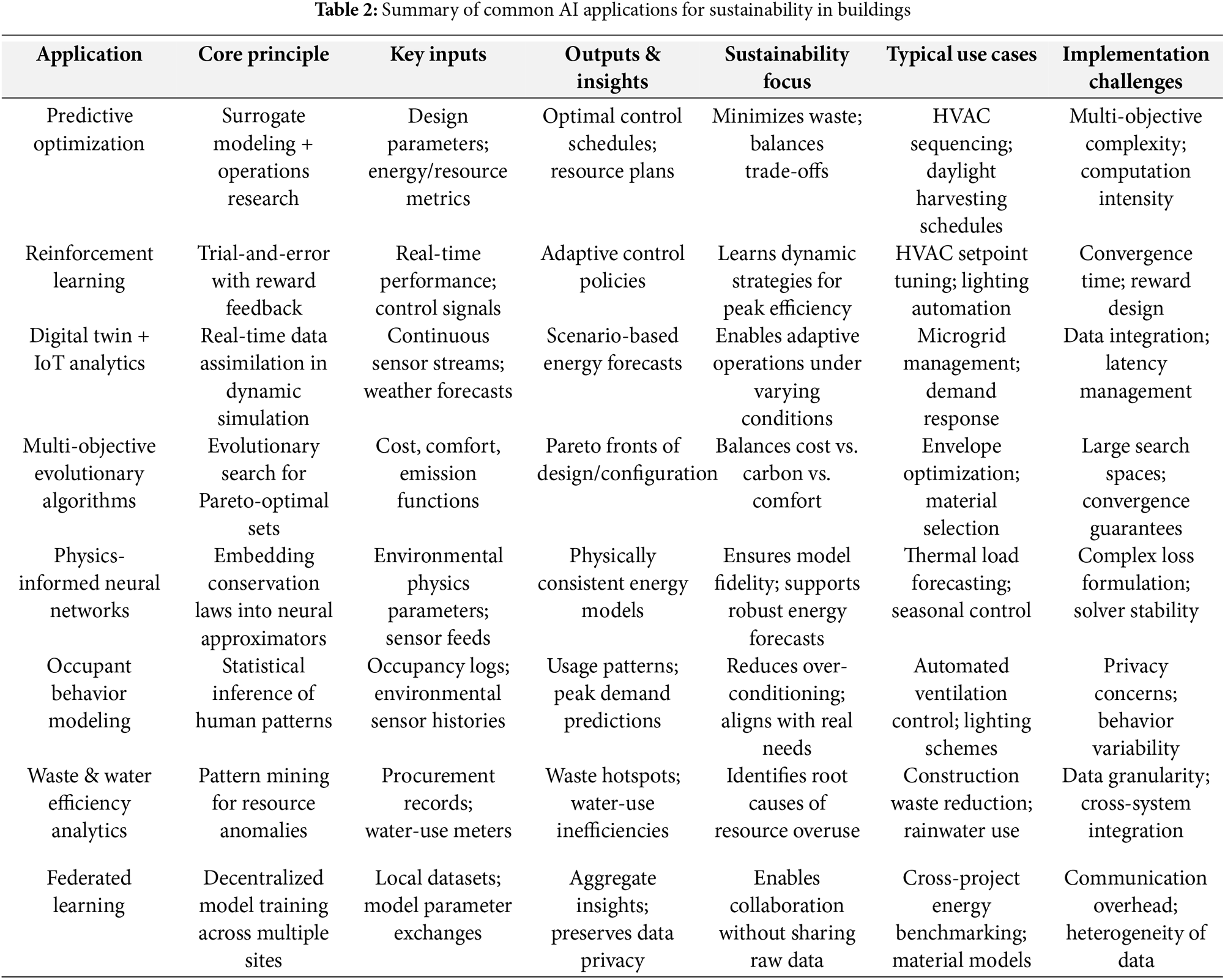
Evaluating AI within the durability context of buildings reveals several applications, Table 2, and strengths, weaknesses, opportunities, and threats (SWOT) analysis, Table 3. AI’s strength in predicting degradation is not just an incremental improvement over conventional monitoring; it represents a redefinition of how buildings can be maintained and evaluated. Machine learning models, when supplied with high-resolution historical and sensor data, are capable of forecasting deterioration at a level of precision that manual inspections often miss. Such forecasting allows for targeted interventions rather than reactive responses, which reduces long-term maintenance costs and prevents cascading failures. In systems where fatigue or cyclic loading plays a central role, such as in bridges or high-rise constructions, traditional lifetime estimations fall short due to their rigid reliance on linear deterioration models. The application of hybrid learning systems offers an alternative where models adjust continuously based on newly acquired performance data. This represents a decisive shift toward condition-based lifecycle modeling rather than assumption-based design, which, despite being embedded in many engineering codes, remains relatively inflexible. Despite these strengths, the application of AI in assessing durability remains constrained by several technical limitations.
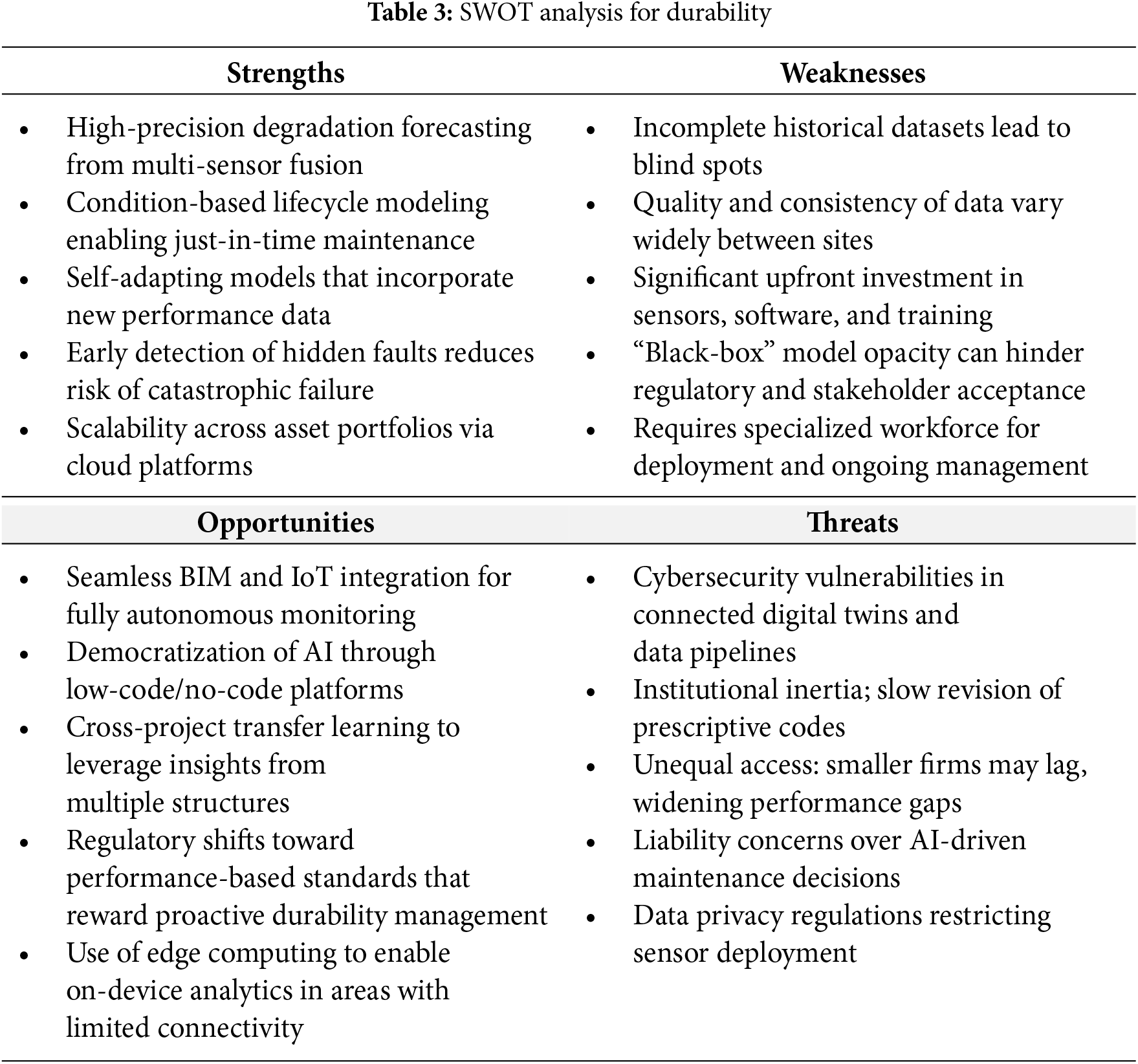
A recurring issue is the inconsistency and incompleteness of datasets. Structural health monitoring systems are often deployed after construction, meaning data from earlier stages are missing. This data scarcity introduces blind spots in the model’s understanding of early-stage material behavior and makes long-term predictions less reliable. Furthermore, the efficacy of deep learning models, particularly convolutional neural networks for defect detection, depends not only on data quantity but on data quality, which varies significantly across projects. Financial constraints further compound the problem. While large-scale infrastructure projects may justify the upfront investment in AI platforms and sensor systems, smaller-scale or budget-limited constructions often lack the resources to integrate these technologies. This imbalance may contribute to a widening gap in the longevity and performance of buildings based on economic context. The situation is not simply a matter of availability but of policy and institutional inertia. Many construction codes remain prescriptive rather than performance-based, delaying the adoption of adaptable AI-supported monitoring tools. The threat of cybersecurity breaches should not be considered an afterthought. AI-integrated digital twins rely heavily on continuous data exchange between on-site sensors and centralized databases. If not adequately protected, these systems become vulnerable points in the digital infrastructure of cities. Unlike physical failures that degrade gradually, digital intrusions can compromise systems instantaneously and without warning. Nevertheless, there are considerable opportunities. Integration with BIM and the IoT enables the formation of intelligent maintenance regimes where buildings effectively monitor themselves and initiate inspection or maintenance protocols as required. Such autonomy in infrastructure operation has the potential to shift responsibilities from manual inspections toward decision-making informed by real-time analytics, ultimately lowering operational inefficiencies.
AI’s relevance to environmental sustainability lies primarily in its capacity to reconfigure how energy and resources are allocated within the building lifecycle, Table 4. Contrary to design philosophies that depend on static models, AI systems can recalibrate building performance strategies based on external inputs, such as seasonal variability, energy pricing, and occupancy patterns. This dynamism allows for continuous adjustment and minimization of waste, which is particularly relevant in the context of energy-intensive operations like HVAC systems. Thermal modeling has traditionally relied on simplified simulations, often unable to handle irregularities in building usage or climate shifts. PINNs offer an alternative that fuses physical laws with machine learning structures, producing outcomes that are both interpretable and adaptive. These models adjust to discrepancies between predicted and actual performance, refining future projections and encouraging low-waste energy regimes. Material waste remains a neglected variable in environmental assessments, yet AI offers pathways for preemptive identification of inefficiencies in procurement and construction stages. For instance, AI-supported simulations can flag mismatches between structural requirements and material allocations, which helps prevent overuse, reduce waste, and keep construction output consistent with the intended design. At the operational phase, smart systems monitor deterioration and signal optimal points for intervention, reducing the need for full-scale replacements.
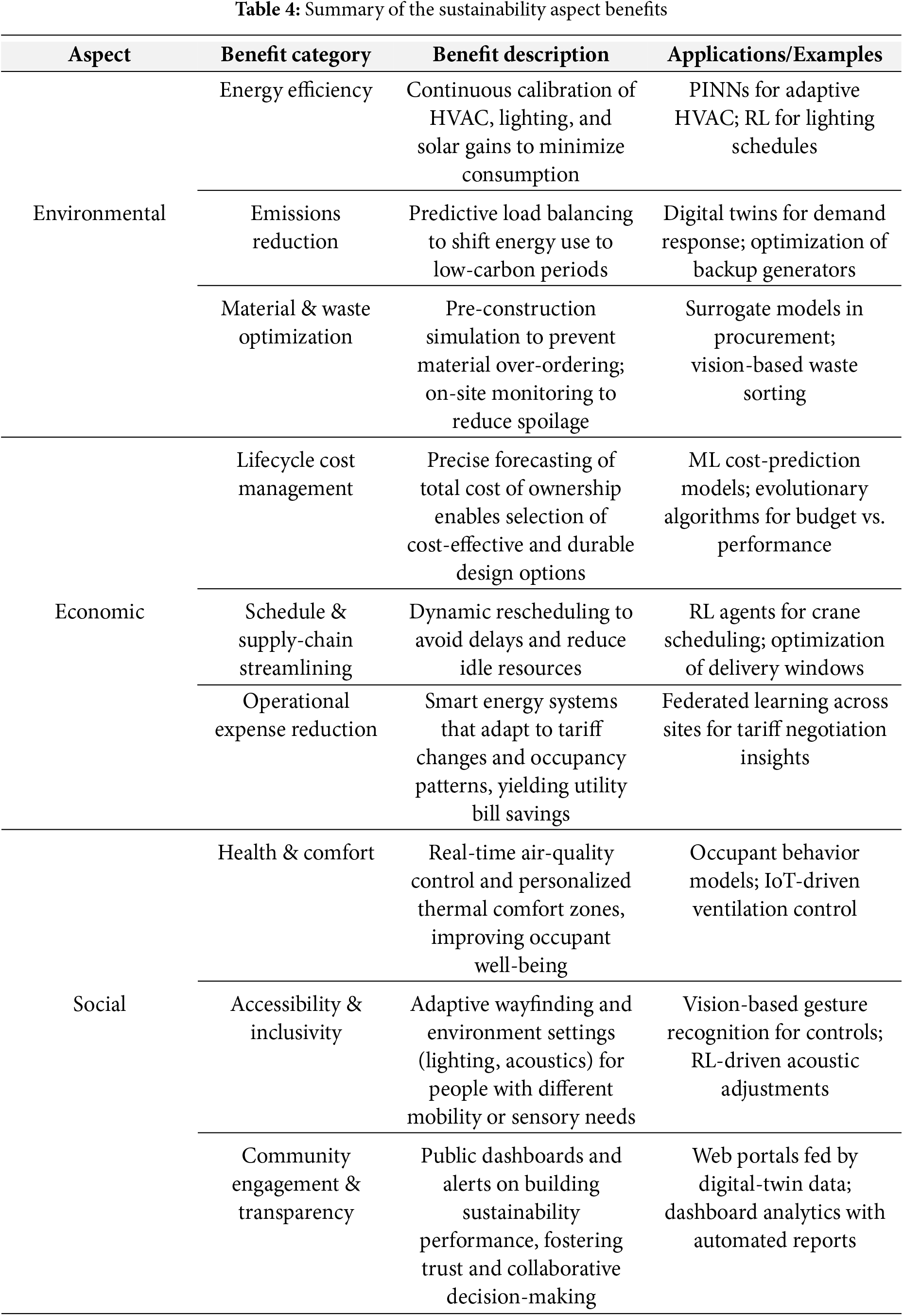
The assumption that sustainable architecture necessarily implies increased expenditure has been gradually overturned through AI’s intervention in project management and lifecycle cost modeling. It is demonstrated that AI-supported forecasts offer a more precise understanding of long-term costs associated with different structural configurations. This allows designers and contractors to make decisions that align with both budget constraints and environmental goals. In green construction, projects often suffer from delays due to the complexity of integrating novel materials or unfamiliar energy systems. AI applications streamline construction sequencing, resource scheduling, and supply chain coordination. The cost savings associated with delay reductions are substantial, and such economic efficiencies strengthen the case for integrating sustainability measures at the design stage rather than retrofitting them later. The economic benefits also extend into operational phases. Smart energy systems dynamically adjust building consumption patterns based on real-time variables. This realignment leads to significant reductions in utility costs. Over time, these savings often surpass the additional upfront costs associated with AI-enabled infrastructure.
AI systems influence more than the physical environment, they shape the social quality of life within and around buildings. Indoor environmental quality, especially in dense urban areas, has direct consequences on health and well-being. AI-powered ventilation and filtration systems can respond dynamically to pollutants or occupancy patterns, avoiding blanket ventilation that wastes energy or fails to address localized conditions. Equally important is the role of AI in improving accessibility and inclusivity. Adaptive systems that recognize patterns of use among different demographic groups can modify building operations to support the needs of elderly individuals, children, or persons with disabilities. Public engagement in the construction process has long suffered from lack of transparency, often resulting in mistrust or resistance. AI-integrated platforms enable real-time feedback mechanisms where stakeholders can assess sustainability indicators without relying on abstract technical reports.
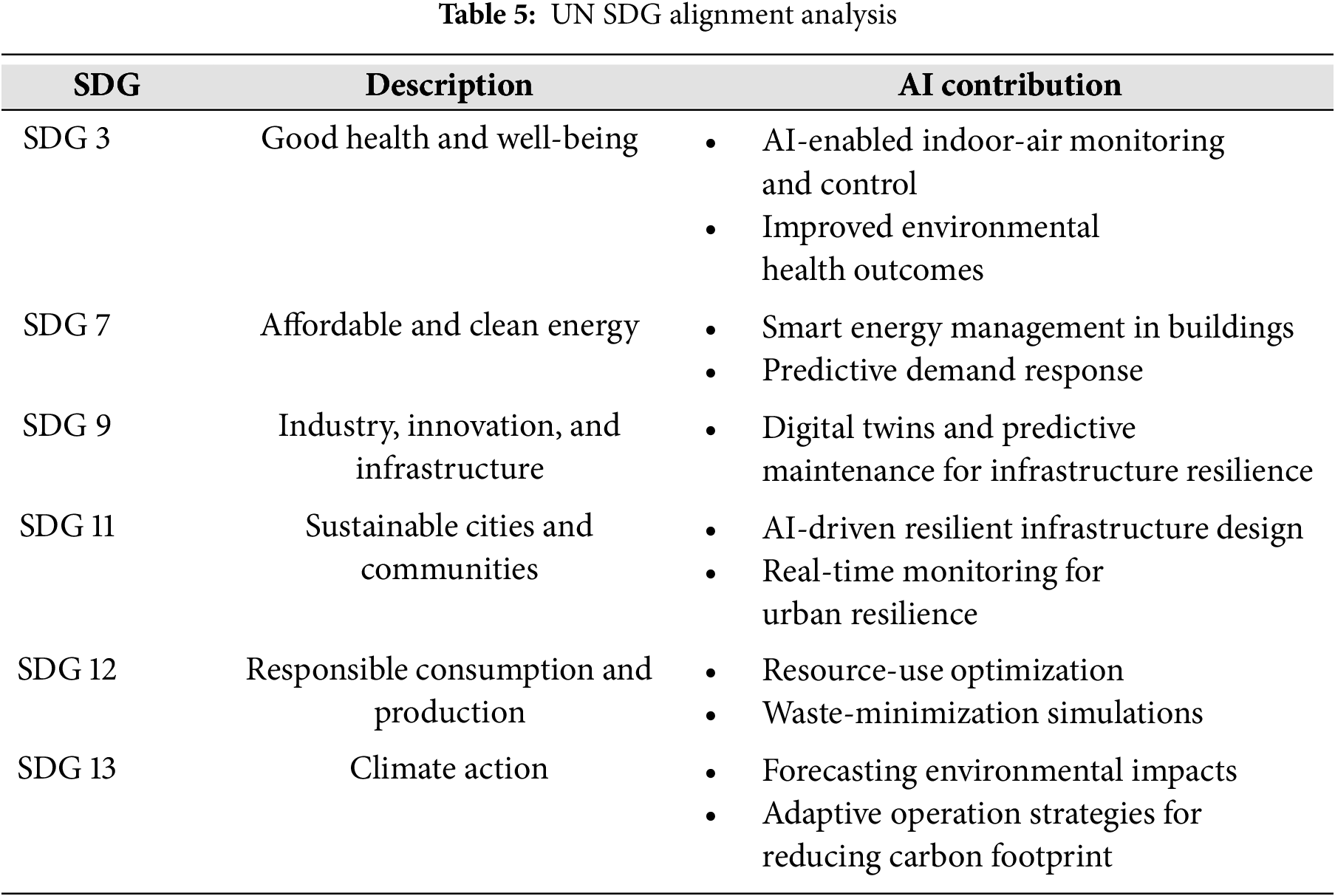
AI’s application in building design aligns closely with several United Nations SDGs, Table 5, notably SDG 11 on Sustainable Cities and Communities through promoting resilient infrastructure and sustainable urban development. AI-enhanced energy efficiency directly supports SDG 7 (Affordable and Clean Energy) by facilitating sustainable energy management in buildings. Moreover, predictive maintenance and improved material durability align with SDG 9 (Industry, Innovation, and Infrastructure), ensuring resilient and sustainable. Additionally, AI technologies significantly contribute to SDG 13 (Climate Action) by accurately predicting and mitigating environmental impacts from construction activities. The optimization of resource usage and waste management supported by AI addresses SDG 12 (Responsible Consumption and Production), ensuring more sustainable construction practices. Lastly, the deployment of intelligent, sustainable buildings supports SDG 3 (Good Health and Well-being), particularly through improved indoor air quality and overall environmental health. In conclusion, AI demonstrates considerable potential for enhancing building durability and promoting sustainability. By systematically addressing identified weaknesses and threats, the construction industry can effectively maximize the benefits and opportunities presented by AI technologies, thus supporting a sustainable and resilient built environment. This requires targeted strategies such as improving data quality and availability, reducing implementation costs, strengthening cybersecurity, and updating regulatory frameworks to accommodate performance-based approaches. When these challenges are managed, AI’s strengths in predictive maintenance, resource optimization, and digital-twin integration can be fully realized, enabling the sector to reduce waste, lower carbon emissions, and enhance the longevity and adaptability of buildings in line with global sustainability goals.
6 Challenges & Future Directions
Integrating AI within the building industry faces several practical challenges and obstacles. One key challenge arises from the significant initial investments required, making AI technologies inaccessible to smaller enterprises or firms operating under constrained budgets. Additionally, the construction industry traditionally relies on conventional methodologies, and resistance to adopting newer technologies like AI can significantly hinder their broader acceptance. Data management presents another substantial hurdle, as the efficacy of AI tools depends heavily on extensive, high-quality datasets, which can be difficult to obtain consistently. Data privacy concerns and cybersecurity threats also remain prominent, especially with increasing digitalization and network connectivity in construction processes, potentially deterring stakeholders from fully embracing AI solutions. Moreover, the complexity of AI systems necessitates a specialized workforce capable of managing and operating these advanced technologies. Currently, there exists a significant skill gap within the construction industry, limiting the effective deployment and management of sophisticated AI-driven solutions. Training personnel to operate these systems efficiently represents an ongoing, resource-intensive effort that companies must adequately prepare for. Despite these barriers, several promising avenues indicate strong potential for future AI integration within the construction sector. Continuous advancements in AI methodologies, particularly machine learning and digital twin technologies, show promise for overcoming many existing challenges by simplifying implementation processes and reducing the overall cost of adoption. Further research focusing on enhancing algorithm robustness, reducing data dependency, and improving user interfaces will likely aid in making these technologies accessible to a wider range of industry stakeholders. Regulatory frameworks supporting innovation and addressing data privacy and cybersecurity could significantly encourage broader acceptance of AI technologies within construction. Collaboration between academia, industry, and policymakers could streamline processes, enabling quicker adaptation and smoother integration into standard practices. Future directions could include expanding the application of AI into areas such as automated compliance checking, predictive urban planning, and adaptive reuse of existing structures, effectively managing resources and achieving sustainability goals more efficiently. Ongoing technological advancements will also likely result in more intuitive, user-friendly AI solutions, lowering the barrier to entry for smaller enterprises and facilitating broader industry uptake.
Artificial intelligence demonstrates significant potential to advance durability and sustainability within building design and construction. AI technologies contribute substantially to durability through predictive maintenance capabilities, enabling timely interventions that extend the lifecycle of structures. Moreover, AI applications facilitate optimized resource management, improved energy efficiency, and enhanced environmental outcomes, directly aligning with global sustainability objectives. Nevertheless, integrating AI within the construction sector faces challenges such as high initial costs, industry resistance to new technologies, data management complexities, and workforce skill gaps. Overcoming these barriers requires coordinated efforts among industry leaders, academic institutions, and policymakers, emphasizing targeted education, robust regulatory support, and ongoing technological innovation. Ultimately, continued advancements in AI technologies hold considerable promise for fostering a sustainable and resilient built environment, significantly benefiting both industry stakeholders and the broader community. Finally, this study is limited to assessing the role of artificial intelligence in achieving durability and sustainability in building design, without extending its scope to other emerging technologies, such as blockchain, that are also critical to the field.
Acknowledgement: Not applicable.
Funding Statement: The authors received no specific funding for this study.
Author Contributions: The authors confirm their contribution to the paper as follows: study conception and design: Abdullah Alariyan, Rawand A. Mohammed Amin, Ameen Mokhles Youns, Mahmoud Alhashash, Favzi Ghreivati, Ahed Habib, and Maan Habib; analysis and interpretation of results: Abdullah Alariyan, Rawand A. Mohammed Amin, Ameen Mokhles Youns, Mahmoud Alhashash, Favzi Ghreivati, Ahed Habib, and Maan Habib; draft manuscript preparation: Abdullah Alariyan, Rawand A. Mohammed Amin, Ameen Mokhles Youns, and Mahmoud Alhashash; manuscript review & editing: Favzi Ghreivati, Ahed Habib, and Maan Habib. All authors reviewed the results and approved the final version of the manuscript.
Availability of Data and Materials: The data supporting this study are available from the corresponding author on reasonable request.
Ethics Approval: Not applicable.
Conflicts of Interest: The authors declare no conflicts of interest to report regarding the present study.
References
1. Dobrescu LA. From traditional to smart building materials in architecture. IOP Conf Ser Mater Sci Eng. 2021;1203(3):032113. [Google Scholar]
2. Shadmand A, Arslan Selçuk S. Lessons from traditional architecture in energy efficient building design: the case of traditional Tabriz houses. Int J Environ Stud. 2022;79(2):245–64. doi:10.1080/00207233.2022.2033492. [Google Scholar] [CrossRef]
3. Xu G, Guo T, Li A, Zhang H, Wang K, Xu J, et al. Seismic resilience enhancement for building structures: a comprehensive review and outlook. Structures. 2024;59(2):105738. doi:10.1016/j.istruc.2023.105738. [Google Scholar] [CrossRef]
4. Habib A, Barakat S, Al-Toubat S, Junaid MT, Maalej M. Developing machine learning models for identifying the failure potential of fire-exposed FRP-strengthened concrete beams. Arab J Sci Eng. 2025;50(11):8475–90. doi:10.1007/s13369-024-09497-2. [Google Scholar] [CrossRef]
5. Mata R, Nuñez E, Forcellini D. Seismic resilience of composite moment frames buildings with slender built-up columns. J Build Eng. 2025;111(1):113532. doi:10.1016/j.jobe.2025.113532. [Google Scholar] [CrossRef]
6. Oz I, Abdel Raheem SE, Turan C. Mitigation measure using tuned mass dampers for torsional irregularity impact on seismic response of L-shaped RC structures with soil-structure interaction. Structures. 2025;79(22):109449. doi:10.1016/j.istruc.2025.109449. [Google Scholar] [CrossRef]
7. Ji S, Lee B, Yi MY. Building life-span prediction for life cycle assessment and life cycle cost using machine learning: a big data approach. Build Environ. 2021;205(1):108267. doi:10.1016/j.buildenv.2021.108267. [Google Scholar] [CrossRef]
8. Baduge SK, Thilakarathna S, Perera JS, Arashpour M, Sharafi P, Teodosio B, et al. Artificial intelligence and smart vision for building and construction 4.0: machine and deep learning methods and applications. Autom Constr. 2022;141:104440. doi:10.1016/j.autcon.2022.104440. [Google Scholar] [CrossRef]
9. Habib A, Yildirim U. Distribution of strong input energy in base-isolated structures with complex nonlinearity: a parametric assessment. Multidiscip Model Mater Struct. 2023;19(2):324–40. doi:10.1108/mmms-08-2022-0158. [Google Scholar] [CrossRef]
10. Habib A, Yildirim U. Influence of isolator properties and earthquake characteristics on the seismic behavior of RC structure equipped with quintuple friction pendulum bearings. Int J Str Stab Dyn. 2023;23(6):2350060. doi:10.1142/s0219455423500608. [Google Scholar] [CrossRef]
11. Zhai G, Xu Y, Spencer BF. Bidirectional graphics-based digital twin framework for quantifying seismic damage of structures using deep learning networks. Struct Health Monit. 2025;24(1):86–110. doi:10.1177/14759217241231299. [Google Scholar] [CrossRef]
12. Adewale BA, Ene VO, Ogunbayo BF, Aigbavboa CO. Application of artificial intelligence (AI) in sustainable building lifecycle; a systematic literature review. Buildings. 2024;14:2137. [Google Scholar]
13. Regona M, Yigitcanlar T, Hon C, Teo M. Artificial intelligence and sustainable development goals: systematic literature review of the construction industry. Sustain Cities Soc. 2024;108(10):105499. doi:10.1016/j.scs.2024.105499. [Google Scholar] [CrossRef]
14. Kar AK, Choudhary SK, Singh VK. How can artificial intelligence impact sustainability: a systematic literature review. J Clean Prod. 2022;376(1):134120. doi:10.1016/j.jclepro.2022.134120. [Google Scholar] [CrossRef]
15. Rane N, Choudhary S, Rane J. Enhancing sustainable construction materials through the integration of generative artificial intelligence, such as ChatGPT. Sustain Clean Build. 2024;1(1):98–122. [Google Scholar]
16. Adel H, Ghazaan MI, Korayem AH. Machine learning applications for developing sustainable construction materials. In: Artificial intelligence and data science in environmental sensing. Cambridge, MA, USA: Academic Press; 2022. p. 179–210. doi:10.1016/b978-0-323-90508-4.00002-2. [Google Scholar] [CrossRef]
17. Ali Khokhar S, Shah MU, Rehman F, Cheema HB, Usman M. Machine learning applications in the development of sustainable building materials to reduce carbon emission. In: Artificial intelligence applications for sustainable construction. Cambridge, UK: Woodhead Publishing; 2024. p. 93–121. doi:10.1016/b978-0-443-13191-2.00002-x. [Google Scholar] [CrossRef]
18. Bajwa A, Jahan F, Ahmed I, Siddiqui NA. A systematic literature review on AI-enabled smart building management systems for energy efficiency and sustainability. Am J Sch Res Innov. 2024;3(2):1–27. [Google Scholar]
19. Hanafi A, Moawed M, Abdellatif O. Advancing sustainable energy management: a comprehensive review of artificial intelligence techniques in building. Eng Res J Shoubra. 2024;53(2):26–46. doi:10.21608/erjsh.2023.226854.1196. [Google Scholar] [CrossRef]
20. Chen L, Hu Y, Wang R, Li X, Chen Z, Hua J, et al. Green building practices to integrate renewable energy in the construction sector: a review. Environ Chem Lett. 2024;22(2):751–84. doi:10.1007/s10311-023-01675-2. [Google Scholar] [CrossRef]
21. Al-Othman A, Tawalbeh M, Martis R, Dhou S, Orhan M, Qasim M, et al. Artificial intelligence and numerical models in hybrid renewable energy systems with fuel cells: advances and prospects. Energy Convers Manag. 2022;253(10):115154. doi:10.1016/j.enconman.2021.115154. [Google Scholar] [CrossRef]
22. Saad Alotaibi B, Ibrahim Shema A, Umar Ibrahim A, Awad Abuhussain M, Abdulmalik H, Aminu Dodo Y, et al. Assimilation of 3D printing, artificial intelligence (AI) and internet of things (IoT) for the construction of eco-friendly intelligent homes: an explorative review. Heliyon. 2024;10(17):e36846. doi:10.1016/j.heliyon.2024.e36846. [Google Scholar] [PubMed] [CrossRef]
23. Alnaser AA, Maxi M, Elmousalami H. AI-powered digital twins and internet of things for smart cities and sustainable building environment. Appl Sci. 2024;14(24):12056. doi:10.3390/app142412056. [Google Scholar] [CrossRef]
24. Dang HV, Tatipamula M, Nguyen HX. Cloud-based digital twinning for structural health monitoring using deep learning. IEEE Trans Ind Inform. 2022;18(6):3820–30. doi:10.1109/TII.2021.3115119. [Google Scholar] [CrossRef]
25. Gokhale G, Claessens B, Develder C. Physics informed neural networks for control oriented thermal modeling of buildings. Appl Energy. 2022;314:118852. doi:10.1016/j.apenergy.2022.118852. [Google Scholar] [CrossRef]
26. Michalakopoulos V, Pelekis S, Kormpakis G, Karakolis V, Mouzakitis S, Askounis D. Data-driven building energy efficiency prediction using physics-informed neural networks. In: 2024 IEEE Conference on Technologies for Sustainability (SusTech); 2024 Apr 14–17; Portland, OR, USA. p. 84–91. doi:10.1109/SusTech60925.2024.10553513. [Google Scholar] [CrossRef]
27. Naeini HK, Shomali R, Pishahang A, Hasanzadeh H, Mohammadi M, Asadi S, et al. PINN-DT: optimizing energy consumption in smart building using hybrid physics-informed neural networks and digital twin framework with blockchain security. arXiv:2503.00331. 2025. [Google Scholar]
28. Murtiyoso A, Grussenmeyer P. Initial assessment on the use of state-of-the-art nerf neural network 3D reconstruction for heritage documentation. Int Arch Photogramm Remote Sens Spatial Inf Sci. 2023;48:1113–8. doi:10.5194/isprs-archives-xlviii-m-2-2023-1113-2023. [Google Scholar] [CrossRef]
29. Kim G, Cha Y. 3D pixelwise damage mapping using a deep attention based modified Nerfacto. Autom Constr. 2024;168(2):105878. doi:10.1016/j.autcon.2024.105878. [Google Scholar] [CrossRef]
30. Gouda Mohamed A, Marzouk M. Building condition assessment using artificial neural network and structural equations. Expert Syst Appl. 2021;186(12):115743. doi:10.1016/j.eswa.2021.115743. [Google Scholar] [CrossRef]
31. Bhamare DK, Saikia P, Rathod MK, Rakshit D, Banerjee J. A machine learning and deep learning based approach to predict the thermal performance of phase change material integrated building envelope. Build Environ. 2021;199:107927. doi:10.1016/j.buildenv.2021.107927. [Google Scholar] [CrossRef]
32. Meshref A, El-Dash K, Basiouny M, El-Hadidi O. Implementation of a life cycle cost deep learning prediction model based on building structure alternatives for industrial buildings. Buildings. 2022;12(5):502. doi:10.3390/buildings12050502. [Google Scholar] [CrossRef]
33. Coelho LB, Zhang D, Van Ingelgem Y, Steckelmacher D, Nowé A, Terryn H. Reviewing machine learning of corrosion prediction in a data-oriented perspective. npj Mater Degrad. 2022;6(1):8. doi:10.1038/s41529-022-00218-4. [Google Scholar] [CrossRef]
34. Ossai CI. A data-driven machine learning approach for corrosion risk assessment—a comparative study. Big Data Cogn Comput. 2019;3(2):28. doi:10.3390/bdcc3020028. [Google Scholar] [CrossRef]
35. Hughes A, Winkler D, Carr J, Lee P, Yang Y, Laleh M, et al. Corrosion inhibition, inhibitor environments, and the role of machine learning. Corros Mater Degrad. 2022;3(4):672–93. doi:10.3390/cmd3040037. [Google Scholar] [CrossRef]
36. Lunardi LR, Cornélio PG, Prado LP, Nogueira CG, Felix EF. Hybrid machine learning model for predicting the fatigue life of plain concrete under cyclic compression. Buildings. 2025;15(10):1618. doi:10.3390/buildings15101618. [Google Scholar] [CrossRef]
37. Taffese WZ, Espinosa-Leal L. Prediction of chloride resistance level of concrete using machine learning for durability and service life assessment of building structures. J Build Eng. 2022;60:105146. doi:10.1016/j.jobe.2022.105146. [Google Scholar] [CrossRef]
38. Hafez H, Teirelbar A, Kurda R, Tošić N, de la Fuente A. Pre-bcc: a novel integrated machine learning framework for predicting mechanical and durability properties of blended cement concrete. Constr Build Mater. 2022;352(9):129019. doi:10.1016/j.conbuildmat.2022.129019. [Google Scholar] [CrossRef]
39. Yeum CM, Dyke SJ. Vision-based automated crack detection for bridge inspection. Comput Aided Civ Infrastruct Eng. 2015;30(10):759–70. doi:10.1111/mice.12141. [Google Scholar] [CrossRef]
40. Jahanshahi MR, Masri SF. Adaptive vision-based crack detection using 3D scene reconstruction for condition assessment of structures. Autom Constr. 2012;22(3):567–76. doi:10.1016/j.autcon.2011.11.018. [Google Scholar] [CrossRef]
41. Manjurul Islam MM, Kim JM. Vision-based autonomous crack detection of concrete structures using a fully convolutional encoder-decoder network. Sensors. 2019;19(19):4251. doi:10.3390/s19194251. [Google Scholar] [PubMed] [CrossRef]
42. Rao AS, Nguyen T, Palaniswami M, Ngo T. Vision-based automated crack detection using convolutional neural networks for condition assessment of infrastructure. Struct Health Monit. 2021;20(4):2124–42. doi:10.1177/1475921720965445. [Google Scholar] [CrossRef]
43. Hu X, Olgun G, Assaad RH. An intelligent BIM-enabled digital twin framework for real-time structural health monitoring using wireless IoT sensing, digital signal processing, and structural analysis. Expert Syst Appl. 2024;252(14):124204. doi:10.1016/j.eswa.2024.124204. [Google Scholar] [CrossRef]
44. Debrah C, Chan APC, Darko A. Artificial intelligence in green building. Autom Constr. 2022;137:104192. doi:10.1016/j.autcon.2022.104192. [Google Scholar] [CrossRef]
45. Xiang Y, Chen Y, Xu J, Chen Z. Research on sustainability evaluation of green building engineering based on artificial intelligence and energy consumption. Energy Rep. 2022;8(1):11378–91. doi:10.1016/j.egyr.2022.08.266. [Google Scholar] [CrossRef]
46. Li Y, Antwi-Afari MF, Anwer S, Mehmood I, Umer W, Mohandes SR, et al. Artificial intelligence in net-zero carbon emissions for sustainable building projects: a systematic literature and science mapping review. Buildings. 2024;14(9):2752. doi:10.3390/buildings14092752. [Google Scholar] [CrossRef]
47. Mehmood MU, Chun D, Zeeshan, Han H, Jeon G, Chen K, et al. A review of the applications of artificial intelligence and big data to buildings for energy-efficiency and a comfortable indoor living environment. Energy Build. 2019;202(1):109383. doi:10.1016/j.enbuild.2019.109383. [Google Scholar] [CrossRef]
48. Asif M, Naeem G, Khalid M. Digitalization for sustainable buildings: technologies, applications, potential, and challenges. J Clean Prod. 2024;450(1):141814. doi:10.1016/j.jclepro.2024.141814. [Google Scholar] [CrossRef]
49. Ogundiran J, Asadi E, Gameiro da Silva M. A systematic review on the use of AI for energy efficiency and indoor environmental quality in buildings. Sustainability. 2024;16(9):3627. doi:10.3390/su16093627. [Google Scholar] [CrossRef]
50. Li J, Liu Z, Han G, Demian P, Osmani M. The relationship between artificial intelligence (AI) and building information modeling (BIM) technologies for sustainable building in the context of smart cities. Sustainability. 2024;16(24):10848. doi:10.3390/su162410848. [Google Scholar] [CrossRef]
51. Habib A, Yildirim U. Simplified modeling of rubberized concrete properties using multivariable regression analysis. Mater Constr. 2022;72(347):e289. doi:10.3989/mc.2022.13621. [Google Scholar] [CrossRef]
52. Habib A, Yildirim U. Estimating mechanical and dynamic properties of rubberized concrete using machine learning techniques: a comprehensive study. Eng Comput. 2022;39(8):3129–78. doi:10.1108/ec-09-2021-0527. [Google Scholar] [CrossRef]
53. Shrif M, Al-Sadoon ZA, Barakat S, Habib A, Mostafa O. Optimizing gene expression programming to predict shear capacity in corrugated web steel beams. Civ Eng J. 2024;10(5):1370–85. doi:10.28991/cej-2024-010-05-02. [Google Scholar] [CrossRef]
54. Habib A, Yildirim U, Habib M. Applying kernel principal component analysis for enhanced multivariable regression modeling of rubberized concrete properties. Arab J Sci Eng. 2023;48(4):5383–96. doi:10.1007/s13369-022-07435-8. [Google Scholar] [CrossRef]
55. Farrar CR, Worden K. Structural health monitoring: a machine learning perspective. Hoboken, NJ, USA: John Wiley & Sons; 2012. doi:10.1002/9781118443118. [Google Scholar] [CrossRef]
56. Sun H, Burton HV, Huang H. Machine learning applications for building structural design and performance assessment: state-of-the-art review. J Build Eng. 2021;33(4):101816. doi:10.1016/j.jobe.2020.101816. [Google Scholar] [CrossRef]
57. Aghabalaei Baghaei K, Hadigheh SA. Durability assessment of FRP-to-concrete bonded connections under moisture condition using data-driven machine learning-based approaches. Compos Struct. 2021;20(3):114576. doi:10.1016/j.compstruct.2021.114576. [Google Scholar] [CrossRef]
58. Darko A, Glushakova I, Boateng EB, Chan APC. Using machine learning to improve cost and duration prediction accuracy in green building projects. J Constr Eng Manage. 2023;149(8):04023061. doi:10.1061/jcemd4.coeng-13101. [Google Scholar] [CrossRef]
59. Chen Y, Yang Q, Chen Z, Yan C, Zeng S, Dai M. Physics-informed neural networks for building thermal modeling and demand response control. Build Environ. 2023;234:110149. doi:10.1016/j.buildenv.2023.110149. [Google Scholar] [CrossRef]
60. Mai HT, Truong TT, Kang J, Mai DD, Lee J. A robust physics-informed neural network approach for predicting structural instability. Finite Elem Anal Des. 2023;216(1):103893. doi:10.1016/j.finel.2022.103893. [Google Scholar] [CrossRef]
61. Chew AWZ, He R, Zhang L. Physics informed machine learning (PIML) for design, management and resilience-development of urban infrastructures: a review. Arch Comput Meth Eng. 2025;32(1):399–439. doi:10.1007/s11831-024-10145-z. [Google Scholar] [CrossRef]
62. Habib A, Junaid MT, Dirar S, Barakat S, Al-Sadoon ZA. Machine learning-based estimation of reinforced concrete columns stiffness modifiers for improved accuracy in linear response history analysis. J Earthq Eng. 2025;29(1):130–55. doi:10.1080/13632469.2024.2409865. [Google Scholar] [CrossRef]
63. Habib A, Al Houri A, Junaid MT, Barakat S. A systematic and bibliometric review on physics-based neural networks applications as a solution for structural engineering partial differential equations. Structures. 2024;69(6):107361. doi:10.1016/j.istruc.2024.107361. [Google Scholar] [CrossRef]
64. Adio-Moses D, Asaolu OS. Artificial intelligence for sustainable development of intelligent buildings. In: Proceedings of the 9th CIDB Postgraduate Conference; 2016 Feb 2–4; Cape Town, South Africa. [Google Scholar]
65. Gilner E, Galuszka A, Grychowski T. Application of artificial intelligence in sustainable building design-optimisation methods. In: 2019 24th International Conference on Methods and Models in Automation and Robotics (MMAR); 2019 Aug 26–29; Międzyzdroje, Poland. p. 81–6. doi:10.1109/mmar.2019.8864698. [Google Scholar] [CrossRef]
66. Elwy I, Hagishima A. The artificial intelligence reformation of sustainable building design approach: a systematic review on building design optimization methods using surrogate models. Energy Build. 2024;323:114769. doi:10.1016/j.enbuild.2024.114769. [Google Scholar] [CrossRef]
67. Alijoyo FA. AI-powered deep learning for sustainable industry 4.0 and internet of things: enhancing energy management in smart buildings. Alex Eng J. 2024;104(22):409–22. doi:10.1016/j.aej.2024.07.110. [Google Scholar] [CrossRef]
68. Vattano S. Smart buildings for a sustainable development. J Econ World. 2014;2(6):310–24. [Google Scholar]
69. Prasad KR. Sustainable optimization for innovative practices of smart buildings with the AI based deep learning techniques. Res Updates Math Comput Sci. 2024;7:32–7. [Google Scholar]
70. Farzaneh H, Malehmirchegini L, Bejan A, Afolabi T, Mulumba A, Daka PP. Artificial intelligence evolution in smart buildings for energy efficiency. Appl Sci. 2021;11(2):763. doi:10.3390/app11020763. [Google Scholar] [CrossRef]
71. Aguilar J, Garces-Jimenez A, R-Moreno MD, García R. A systematic literature review on the use of artificial intelligence in energy self-management in smart buildings. Renew Sustain Energy Rev. 2021;151(6):111530. doi:10.1016/j.rser.2021.111530. [Google Scholar] [CrossRef]
72. Dounis AI. Artificial intelligence for energy conservation in buildings. Adv Build Energy Res. 2010;4(1):267–99. doi:10.3763/aber.2009.0408. [Google Scholar] [CrossRef]
73. Tariq R, Mohammed A, Alshibani A, Ramírez-Montoya MS. Complex artificial intelligence models for energy sustainability in educational buildings. Sci Rep. 2024;14(1):15020. doi:10.1038/s41598-024-65727-5. [Google Scholar] [PubMed] [CrossRef]
74. Krausková V, Pifko H. Use of artificial intelligence in the field of sustainable architecture: current knowledge. Archit Pap Fac Archit Des STU. 2021;26(1):20–9. doi:10.2478/alfa-2021-0004. [Google Scholar] [CrossRef]
75. Ajayi F, Ademola OM, Amuda KF, Alade B. AI-driven decarbonization of buildings: leveraging predictive analytics and automation for sustainable energy management. World J Adv Res Rev. 2024;24(1):61–79. doi:10.30574/wjarr.2024.24.1.2997. [Google Scholar] [CrossRef]
76. Al-Haddad LA, Kahachi HAH, Ur Rehman HZ, Al-Zubaidi AA, Al-Karkhi MI, Al-Oubaidi B. Advancing sustainability in buildings using an integrated aerodynamic façade: potential of artificial intelligence. Terra Joule J. 2025;1(1):1. doi:10.64071/3080-5724.1006. [Google Scholar] [CrossRef]
77. Pasupuleti R, Orekanti ER, Rao BNK. Building tomorrow: navigating sustainable construction with artificial intelligence. In: 2024 International Conference on Social and Sustainable Innovations in Technology and Engineering (SASI-ITE); 2024 Feb 23–25; Tadepalligudem, India. p. 125–30. doi:10.1109/SASI-ITE58663.2024.00029. [Google Scholar] [CrossRef]
78. Ekici B, Kazanasmaz ZT, Turrin M, Taşgetiren MF, Sariyildiz IS. Multi-zone optimisation of high-rise buildings using artificial intelligence for sustainable metropolises. Part 1: background, methodology, setup, and machine learning results. Sol Energy. 2021;224(2):373–89. doi:10.1016/j.solener.2021.05.083. [Google Scholar] [CrossRef]
79. Kazeem KO, Olawumi TO, Osunsanmi T. Roles of artificial intelligence and machine learning in enhancing construction processes and sustainable communities. Buildings. 2061 2023;13(8):2061. doi:10.3390/buildings13082061. [Google Scholar] [CrossRef]
80. Manmatharasan P, Bitsuamlak G, Grolinger K. AI-driven design optimization for sustainable buildings: a systematic review. Energy Build. 2025;332:115440. doi:10.1016/j.enbuild.2025.115440. [Google Scholar] [CrossRef]
81. Gilner E, Galuszka A, Grychowski T. Application of artificial intelligence methods in sustainable building design. In: International Conference on Computational Science and its Applications; 2019 Jul 1–4; Saint Petersburg, Russia. Cham, Switzerland: Springer International Publishing; 2019. p. 408–17. doi:10.1007/978-3-030-24289-3_30. [Google Scholar] [CrossRef]
82. Alotaibi BS. Advancing energy performance efficiency in residential buildings for sustainable design: integrating machine learning and optimized explainable AI (AIX). Int J Energy Res. 2024;2024(1):6130634. doi:10.1155/2024/6130634. [Google Scholar] [CrossRef]
83. Saliu N, Elezi K. The transformative integration of artificial intelligence in architectural practice: from generative design to sustainable building performance. Eur Chron. 2025;10(1):66–73. doi:10.59214/euch/1.2025.66. [Google Scholar] [CrossRef]
84. Elmousalami H, Maxy M, Hui FKP, Lu A. AI in automated sustainable construction engineering management. Autom Constr. 2025;175(16):106202. doi:10.1016/j.autcon.2025.106202. [Google Scholar] [CrossRef]
85. Gadalla A, Tracada E, Hamza O. The role of AI in driving effective sustainable architecture design. In: Innovative and intelligent digital technologies; towards an increased efficiency. Cham, Switzerland: Springer Nature; 2024. p. 451–60. doi:10.1007/978-3-031-71649-2_39. [Google Scholar] [CrossRef]
86. Dagadkar T, Dagadkar S, Barhate A, Tale A, Verma P, Dagadkar A. AI in sustainable construction: techniques, impacts and solutions. In: 2024 2nd DMIHER International Conference on Artificial Intelligence in Healthcare, Education and Industry (IDICAIEI); 2024 Nov 29–30; Wardha, India. p. 1–5. doi:10.1109/IDICAIEI61867.2024.10842895. [Google Scholar] [CrossRef]
Cite This Article
 Copyright © 2025 The Author(s). Published by Tech Science Press.
This work is licensed under a Creative Commons Attribution 4.0 International License , which permits unrestricted use, distribution, and reproduction in any medium, provided the original work is properly cited.
 Downloads
 Citation Tools
