
 Login
Login Register
 Submit a Paper
 Propose a Special lssue
 Open Access
REVIEW

Hybrid Fiber Engineered Cementitious Composites (HFECC): A Review
1 Guangxi Transportation Science and Technology Group Co., Ltd., Nanning, 530007, China
2 College of Engineering, Ocean University of China, Qingdao, 266400, China
3 School of Materials Science and Engineering, Hainan University, Haikou, 570228, China
* Corresponding Author: Dan Wang. Email:
(This article belongs to the Special Issue: Innovative and Sustainable Materials for Reinforced Concrete Structures)
Structural Durability & Health Monitoring 2026, 20(2), 15 https://doi.org/10.32604/sdhm.2025.072968
Received 08 September 2025; Accepted 29 October 2025; Issue published 31 March 2026
 View Full Text
 Download PDF
Abstract
Engineered Cementitious Composites (ECC) represent an advanced class of fiber-reinforced cement-based materials developed over the past three decades, characterized by remarkable tensile strain-hardening and multiple-cracking behavior. By incorporating hybrid fibers, Hybrid Fiber engineered cementitious composites (HFECC) can be tailored to meet specific engineering demands in terms of strength, deformation, dynamic mechanical performance, and cost-effectiveness. This paper provides a comprehensive review of the critical fiber volume theory, experimental investigations into quasi-static and dynamic mechanical properties, and the structural performance of HFECC. Furthermore, current research gaps and future directions for the development and application of HFECC are discussed, aiming to facilitate its broader engineering adoption. In addition, this review emphasizes the micromechanical design principles governing fiber–matrix interactions, highlighting how hybridization strategies optimize the synergy between different fiber types to balance ductility and strength. The practical implications of HFECC in seismic-resistant, impact-resistant, and repair applications are also analyzed. Through an integrated discussion of theoretical and experimental findings, this study seeks to provide a systematic understanding of HFECC behavior and promote its advancement toward sustainable and high-performance infrastructure applications.Keywords
Engineering cementitious composite (ECC) is a new type of fiber-reinforced cementitious composite that has developed in the past 30 years [1–4]. With a relatively low fiber dosage (generally no more than 2%), it significantly enhances the ductility and toughness of cementitious composites (with ultimate tensile strain reaching up to 4%) [5–8], and endows them with strain hardening and multi-crack opening properties similar to those of metallic materials [9], thereby greatly reducing crack width and significantly improving the durability of cementitious composites [10–13].
Studies have shown that when two or more types of fibers are mixed in cement-based composites, the phenomenon where hybrid fibers provide a superior enhancing effect on the composite compared to any single type of fiber is referred to as the fiber hybrid effect [14–17]. Similarly, in ECC—for instance, in steel-polyethylene (PE) shybrid fiber ECC—a higher content of steel fibers contributes to greater strength, while a higher dosage of PE fibers results in improved deformation capacity, i.e., enhanced strain hardening behavior. By adjusting the ratio between steel and PE fibers, it is feasible to efficiently tailor ECC to meet specific engineering requirements for both strength and deformation performance [18]. Consistent with the findings in reference [19], numerous recent studies have sought to use hybrid fibers to improve the static [20–23], dynamic mechanical properties, durability [24,25] and structural performances [26,27] as well as reduce production costs [28,29] of single-fiber ECC.
Despite the promising potential of HFECC, the existing research is relatively fragmented, and a systematic summary of its theoretical foundations, performance, and applications is still lacking. Therefore, the primary purpose of this review is to provide a comprehensive and systematic review of the current research progress on HFECC. The scope of this study encompasses the critical fiber volume theory, the quasi-static and dynamic mechanical properties, durability performance, and structural applications of various hybrid fiber systems. Ultimately, this review aims to identify current research gaps and outline future directions, thereby facilitating the targeted development and broader engineering adoption of HFECC.
2 Basic Properties of Fibers Used in HFECC
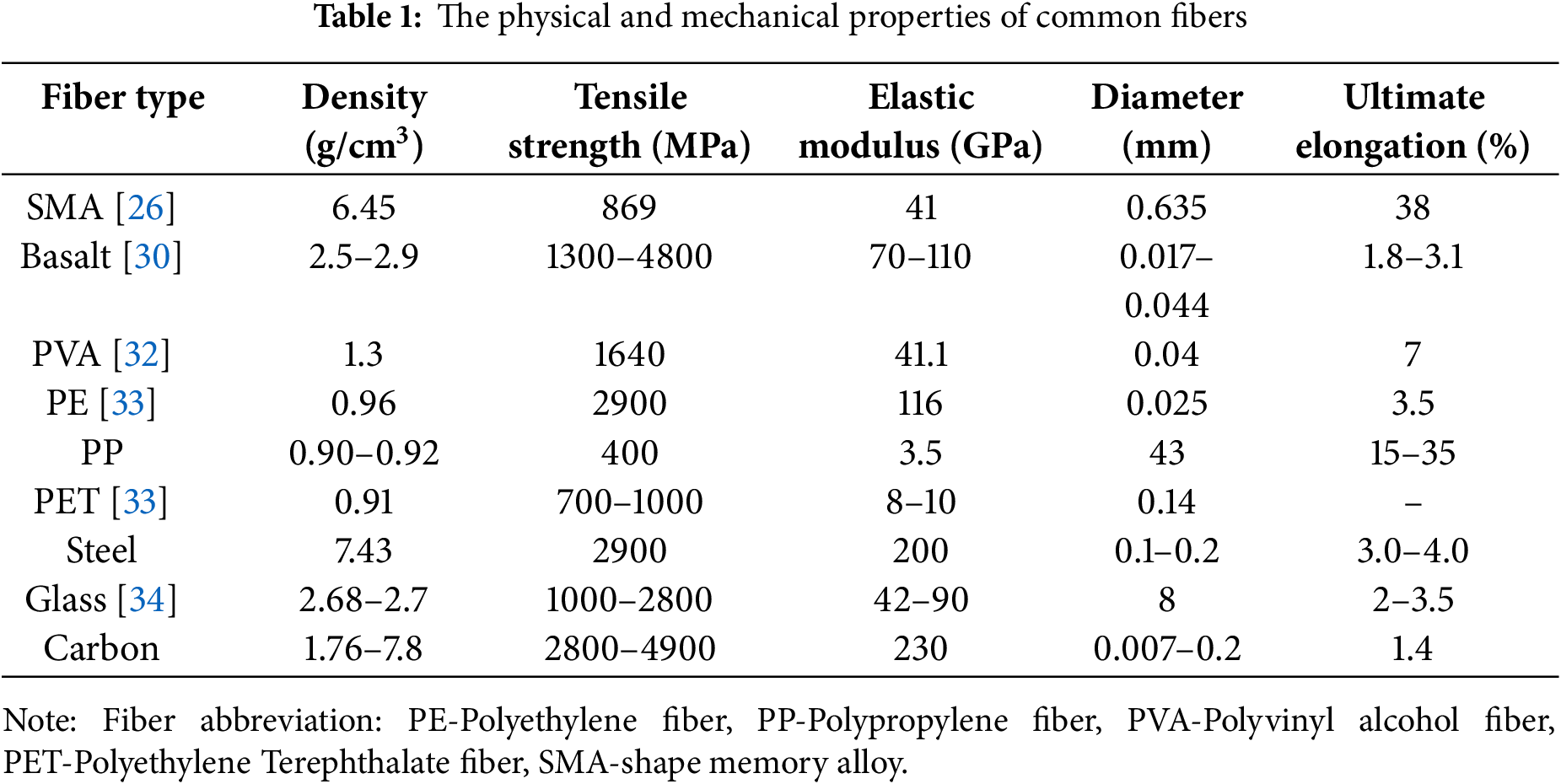
Reinforcement materials for ECC primarily include polymer fibers such as polyethylene (PE) fiber, polyvinyl alcohol (PVA) fiber, and polypropylene (PP) fiber. Other fibers, such as steel fiber, are often incorporated into the preparation of HFECC alongside PE and PVA fibers (fiber properties are summarized in Table 1). As shown, steel fibers generally exhibit higher elastic modulus and strength compared to most synthetic fibers [30,31]. Therefore, they are effective in enhancing the strength and elastic modulus of HFECC and are the most commonly used hybrid fiber in such composites.
3 Theoretical Research on Critical Fiber Volume Fraction
The critical fiber volume fraction in ECC refers to the minimum fiber content required for the composite to achieve direct tensile strain-hardening and multiple cracking behavior [35]. Theoretically determining this critical value allows the fiber dosage to be controlled at a relatively low level, thereby improving the workability of fresh ECC and reducing production costs. The concept and micromechanical design theory of ECC were initially proposed by Li [36], and most of the micromechanical design theories for HFECC have been developed based on this foundation. Li [36] established a cracking stress criterion for achieving multiple cracking in fiber-reinforced cementitious composites:
That is, the ultimate fiber-bridging capacity of the fiber-reinforced cementitious composite must exceed the first-cracking strength of the matrix. On this basis, Ahmed et al. proposed expressions for the ultimate bridging strength of hybrid fiber-reinforced cementitious composites and the first-cracking strength of the matrix:
By equating the ultimate fiber-bridging strength with the matrix’s first-cracking strength and fixing the content of one type of fiber, the critical fiber volume fraction of the other fiber can be determined—that is, the minimum fiber dosage required to achieve multiple cracking and strain hardening in hybrid fiber-reinforced cementitious composites. This theoretical analysis was validated using steel-PE HFECC as an example: as reported in reference, when the volume fraction of steel fiber was fixed at 1%, the critical volume fraction of PE fiber was approximately 0.8%. When the PE fiber content was less than 0.8%, multiple cracking and strain hardening effects were not significant; conversely, pronounced multiple cracking and strain hardening behavior were observed. This method primarily addresses binary hybrid fiber systems composed of fibers with differing deformation capacities—specifically, the combination of a high-modulus fiber (e.g., steel fiber) and a low-modulus fiber (e.g., PE fiber).
Eq. (5) expresses the critical fiber volume fraction [35]. This theory was initially developed to address multiple cracking in single-fiber reinforced ECC [9]. Later, when Fantilli et al. studied the hybridization of fibers with different sizes, they fixed the content of the smaller-sized fibers and treated them as part of the matrix. This approach allowed the theory to be applied to determine the critical fiber volume fraction of the larger-sized fibers.
In addition to the cracking stress criterion [36], Li et al. [37] also employed a reliability criterion to verify the steady-state multiple cracking behavior of nano-silica modified steel-PVA HFECC. The so-called reliability criterion ensures that after cracking under load, the crack surfaces in HFECC do not lead to overall failure due to fiber slip. To maintain stress equilibrium at the crack surface, the reliability index R for the fiber strength at the critical crack surface must be greater than or equal to the failure probability P. If the average crack spacing is x, the failure probability P of a single fiber at the critical crack surface and the reliability index R are given by:
Experimental results have also confirmed that steady-state multiple cracking and strain hardening in HFECC can only be achieved when both the cracking stress criterion and the reliability criterion are satisfied simultaneously. This approach can also be applied to calculate the critical fiber volume fraction.
4 Quasi-Static Mechanical Properties of HFECC with Various Fiber Combination Method
The quasi-static mechanical properties are the fundamental properties of concrete and also the most extensively studied property in HFECC research [23,38–40]. The framework of the research content of this chapter is shown in Fig. 1.
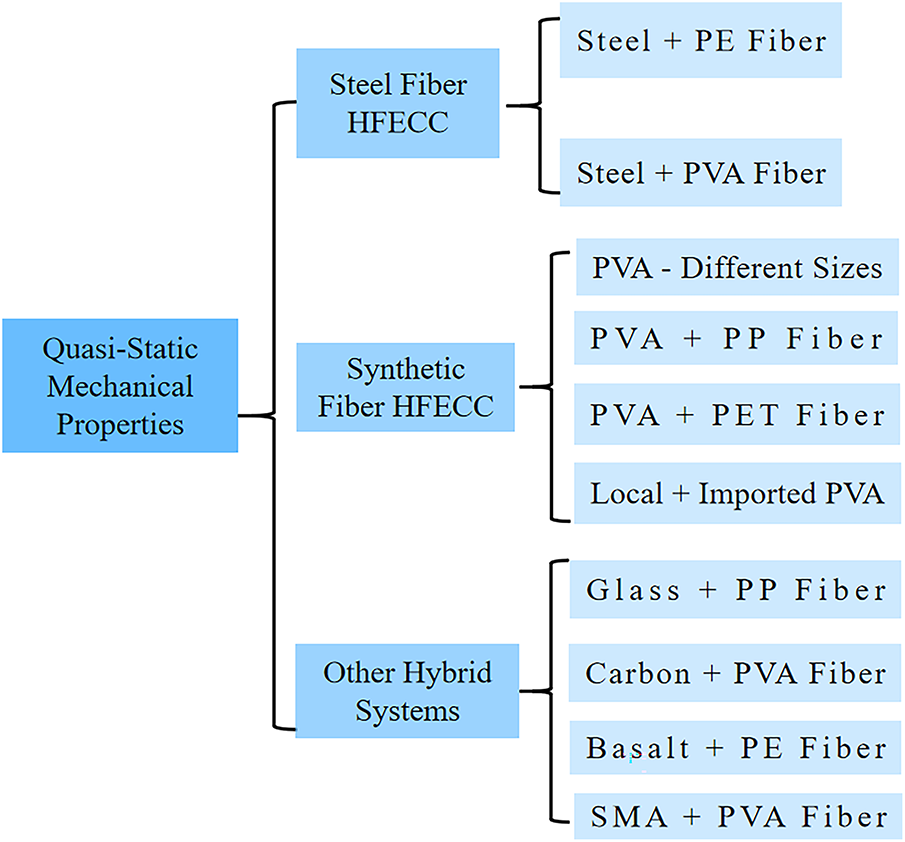
Figure 1: Framework of Section 4: Quasi-static mechanical properties of HFECC with various fiber combination method
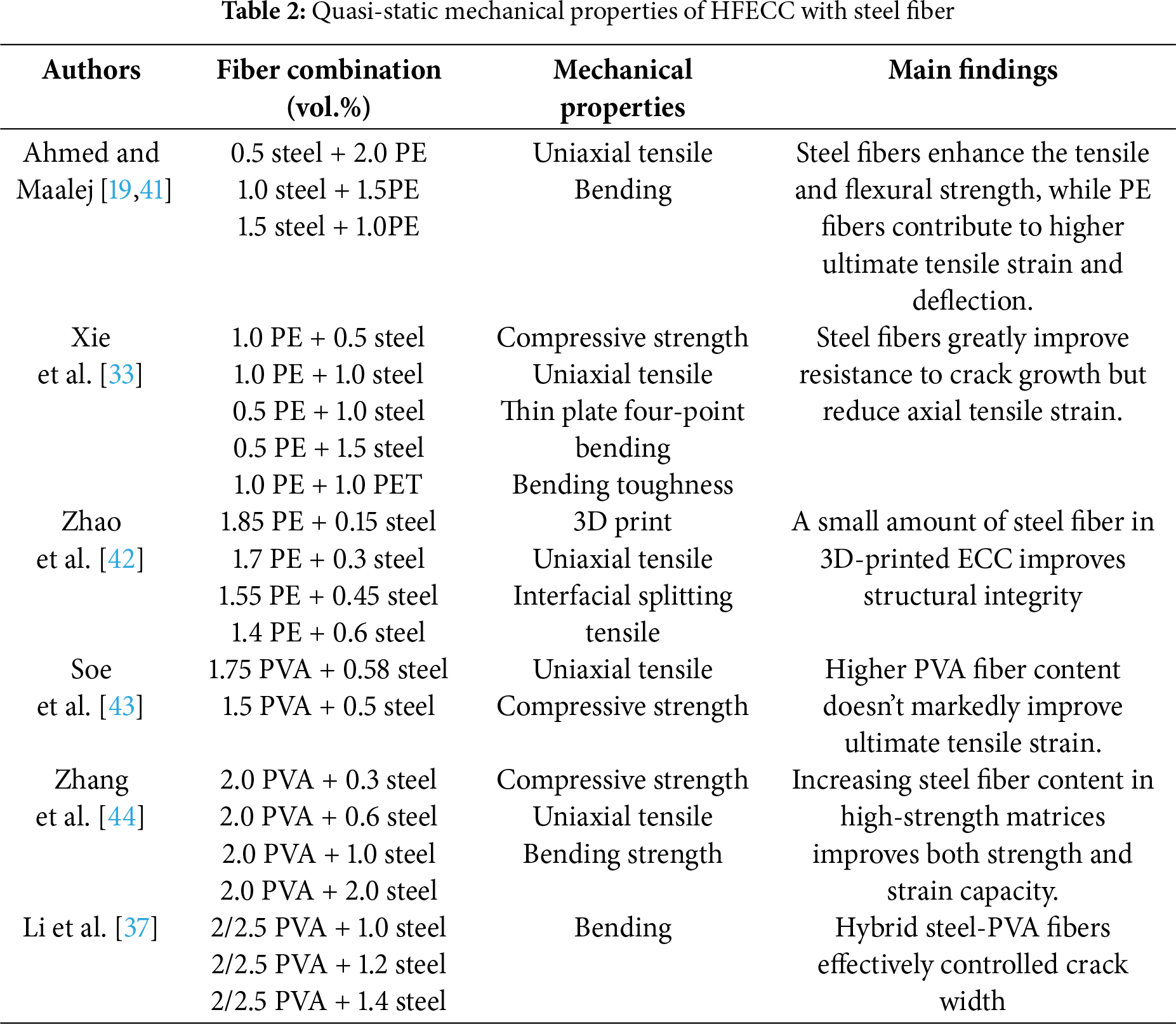
The relevant studies and main findings of HFECC with steel fiber are summarized in Table 2.
Steel fiber is the most widely used reinforcing material in cementitious composites, effectively enhancing the strength and shrinkage crack resistance of ECC [42]. Synthetic fibers, on the other hand, offer significant advantages such as low cost and reduced density. Consequently, considerable research has focused on steel-synthetic hybrid fiber ECC for producing high-strength, low-shrinkage materials.
Since relatively low volumes of PE fiber can achieve high ultimate tensile strain, early studies often utilized PE-based systems, leading to investigations into steel-PE HFECC. Ahmed and Maalej [19,41] examined the uniaxial tensile and flexural behaviors of steel-PE HFECC. Their results indicated that steel fibers enhance the tensile and flexural strength, while PE fibers contribute to higher ultimate tensile strain and deflection. Similarly, Xie et al. [33] found that steel fibers greatly improve resistance to crack growth but reduce the material's ability to dissipate energy and its axial tensile strain. When added in appropriate amounts, however, they provide superior crack control by limiting microcrack width, which enhances durability. Increasing the length of PE fibers (e.g., from 12 to 18 mm) and incorporating fly ash (at 50% cement replacement) were found to improve strain hardening and multi-cracking capacity. However, higher fine aggregate content was shown to degrade strain hardening performance.
Zhao et al. [42] developed 3D-printed steel-PE hybrid fiber ECC, which exhibited compressive strength exceeding 90 MPa and interfacial split tensile strength more than 50% higher than that of mono-PE fiber ECC. This improvement is largely attributed to the high stiffness of steel fibers, which tend to align during printing, enhancing crack-bridging efficiency. Thus, even a small amount of steel fiber in 3D-printed ECC significantly improves structural integrity—a crucial factor for printed concrete applications. It should be noted, however, that the uniaxial tensile strain capacity decreased by approximately 19% with the hybrid system. Therefore, the mix proportion of hybrid fibers must be carefully optimized according to specific engineering requirements.
Given that PVA fiber is more cost-effective than PE fiber (approximately one-eighth the price) and provides toughening effects adequate for most engineering applications, increasing attention has been directed toward steel-PVA HFECC. Ahmed et al. [41,45] investigated the flexural performance of steel-PVA HFECC. Under a constant total fiber volume of 2.5%, a mix with 1.5% PVA and 1% steel fibers exhibited the highest flexural strength and deformation capacity. While steel-PVA HFECC showed superior flexural strength compared to steel-PE systems, the latter demonstrated better post-peak load retention and deformation capability [41]. Soe et al. [43] studied the elastic modulus, flexural, and uniaxial tensile properties of steel-PVA HFECC using fiber volumes of 1.75% PVA with 0.58% steel and 1.5% PVA with 0.5% steel. Their findings indicated that increasing steel fiber content significantly enhances composite strength, whereas higher PVA fiber content does not markedly improve ultimate tensile strain. Some studies, however, reported limited strength improvement with steel fiber addition [30], highlighting the importance of compatibility between the matrix and fiber type.
In recent years, research has expanded to examine the behavior of steel-PVA HFECC with different matrix designs to achieve multifunctional composites and broaden application potential. Zhang et al. [44] studied the tensile and flexural properties of steel-PVA HFECC with a high-strength matrix. By incorporating mineral admixtures, a matrix strength of up to 108 MPa was achieved, resulting in a composite with a tensile strength of 8.1 MPa and an ultimate tensile strain of 0.5%. Their results confirmed that increasing steel fiber content in high-strength matrices improves both strength and strain capacity; however, to avoid significant degradation in tensile strain, the steel fiber content should be limited to around 1%. Additionally, steel fiber incorporation contributed to reduced crack width. Li et al. [37] investigated the mechanical properties of nano-silica modified steel-PVA HFECC. By adjusting superplasticizer dosage, the incorporation of nano-silica and hybrid fibers did not markedly reduce the workability of fresh mortar. Microstructural analysis revealed that although nano-silica increased overall porosity, it reduced pore size. Three-point bending tests showed that nano-silica enhanced strength without significantly compromising deformability, though it led to wider cracks. The hybrid steel-PVA fibers effectively controlled crack width, with the mix containing 2.5% PVA and 1.4% steel fibers exhibiting optimal flexural performance.
4.2 HFECC with Synthetic Fibers of Different Sizes and Properties
The relevant studies and main findings of HFECC with Synthetic Fibers of Different Sizes and Properties are summarized in Table 3.
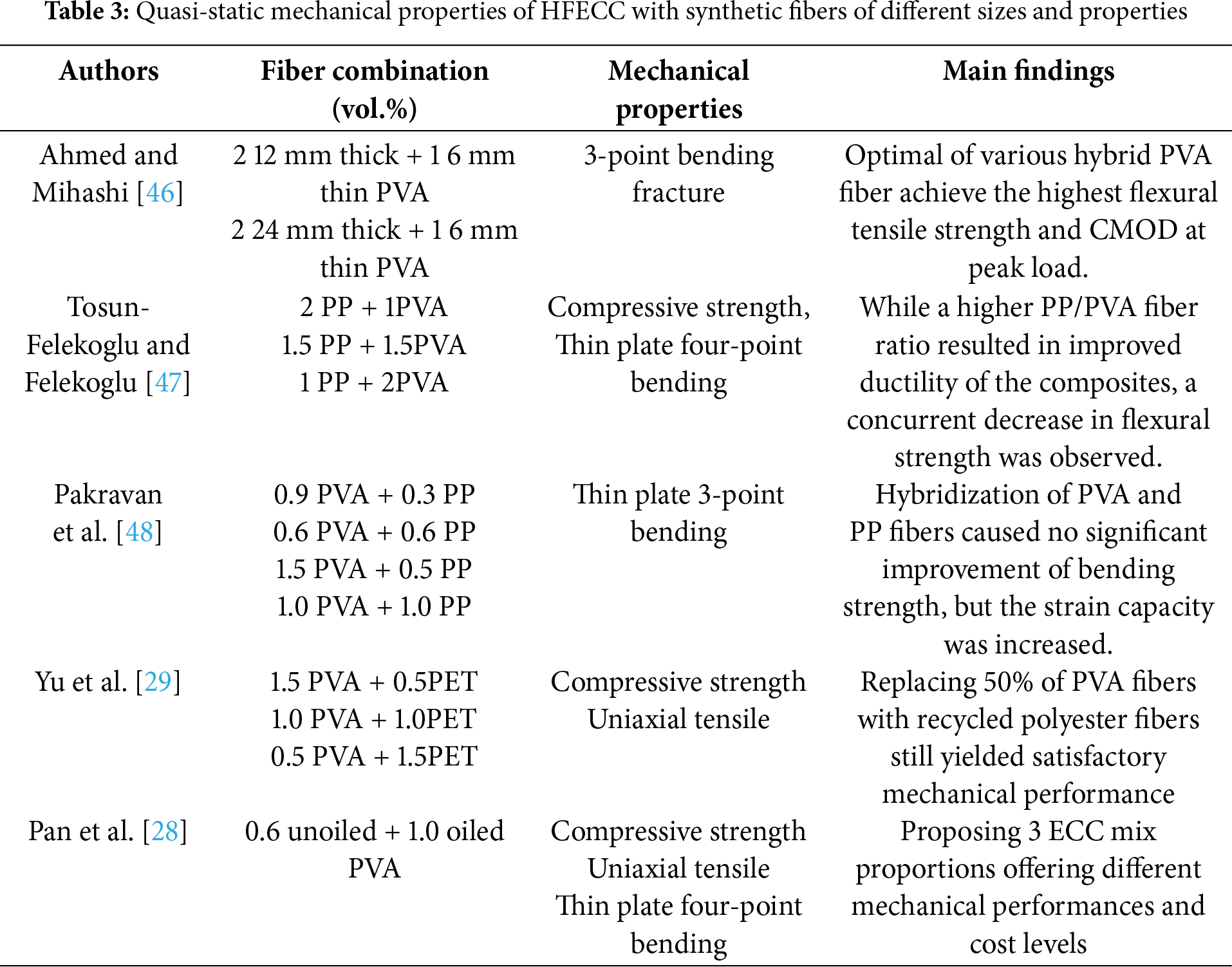
Ahmed and Mihashi [46] investigated the influence of hybrid PVA fibers with varying lengths and thicknesses on the flexural fracture behavior of ECC with normal fine aggregate and lightweight aggregate matrices. Their results demonstrated that mixes containing 2% 12 mm long/thick PVA fiber plus 1% 6 mm long/thin PVA fiber, and 2% 24 mm long/thick PVA fiber plus 1% 6 mm long/thin PVA fiber exhibited optimal mechanical performance, achieving the highest flexural tensile strength, the maximum crack mouth opening displacement (CMOD) at peak load, and superior multiple cracking capacity. The flexural strength of ECC with normal aggregate was higher than that of lightweight aggregate ECC, while fine lightweight aggregate further outperformed coarse lightweight aggregate. Tosun-Felekoglu and Felekoglu [47] and Pakravan et al. [48] separately studied the flexural behavior of PVA-polypropylene (PP) hybrid fiber ECC. Both studies concluded that the hybrid fiber system did not significantly enhance the flexural strength compared to mono-PVA fiber ECC but improved the composite’s ductility, particularly in post-peak deformation capacity. Additionally, Tosun-Felekoglu and Felekoglu [47] emphasized that the matrix plays a decisive role in the mechanical performance of ECC, indicating that compatibility between the hybrid fiber system and matrix properties is critical.
Although PVA fiber is the most widely used fiber in ECC, high-quality PVA fibers are produced by only a few manufacturers in Japan, resulting in high costs that hinder large-scale engineering application [28]. To address this, several researchers have explored combining high-grade PVA fibers with lower-cost alternatives to reduce production expenses. Yu et al. [29] examined the feasibility of using recycled polyester fibers to partially replace PVA fibers in waterproof ECC. Flexural and uniaxial tensile tests indicated that replacing 50% of PVA fibers with recycled polyester fibers still yielded satisfactory mechanical performance, confirming the viability of this approach.
Domestically produced PVA fibers in China typically have less effective oil-coating treatment, leading to excessively strong fiber-matrix bonding and relatively poor strain-hardening behavior. However, their production cost is lower—approximately one-fifth that of Japanese fibers. Pan et al. [28] studied the mechanical properties of ECC incorporating hybrid fibers made from low-cost Chinese PVA fibers and Japanese PVA fibers. Through experimental investigation, they proposed three ECC mix proportions offering different mechanical performances and cost levels, providing practical options for engineering applications based on specific requirements.
4.3 Other Hybrid Fiber System HFECC
The relevant studies and main findings of HFECC with Other Hybrid Fiber System are summarized in Table 4.
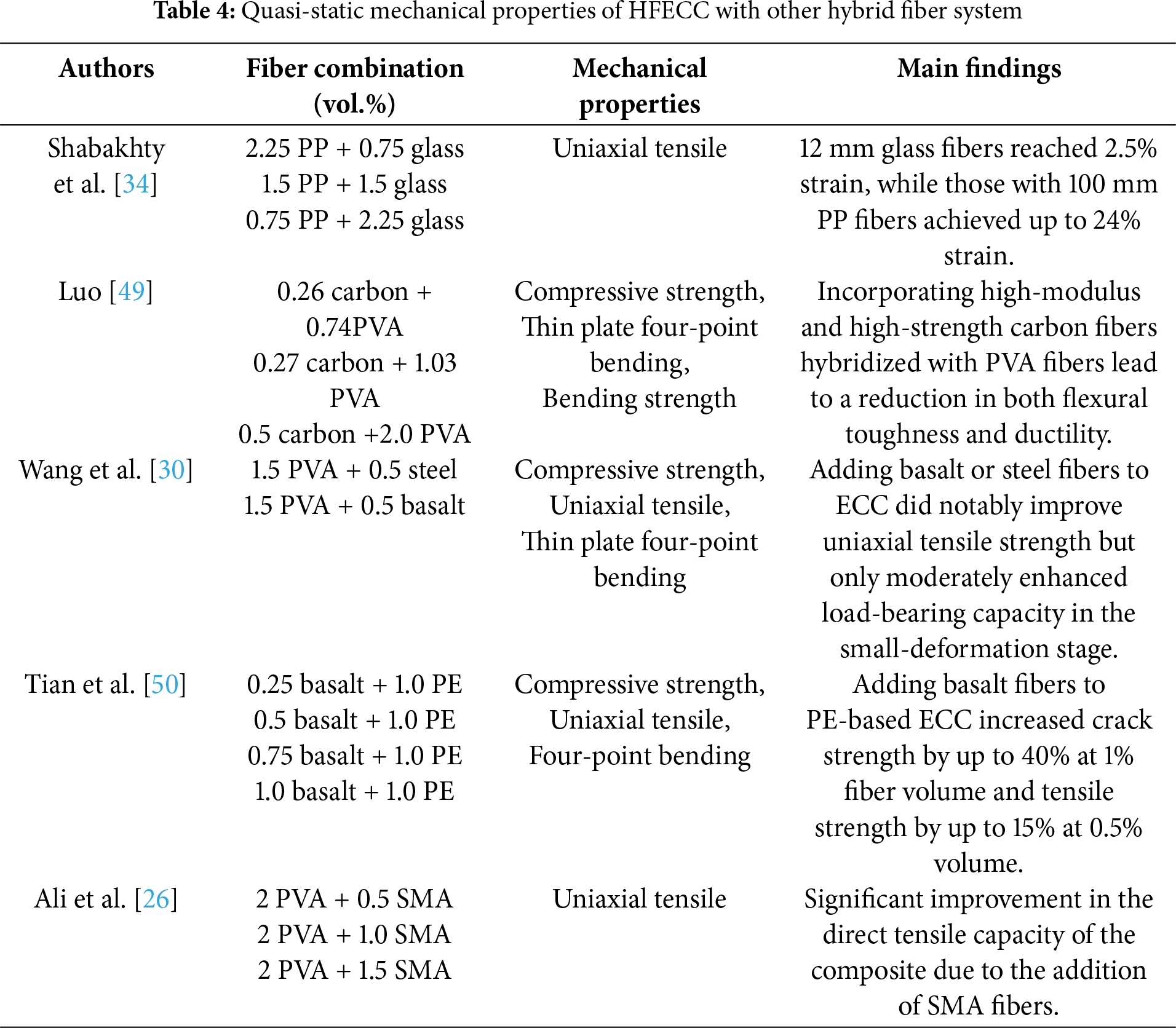
The addition of fibers is an effective method for reducing the brittleness of concrete. For decades, elastic fibers such as glass fibers have been incorporated to enhance strength; in recent years, the use of hyperelastic fibers like PP fiber has enabled significant strain-hardening behavior, leading to the development of ECC. While improving a single property such as strength is relatively straightforward, designing a multipurpose cementitious composite that balances both strength and deformation requires careful micromechanical design.
Shabakhty et al. [34] investigated cementitious composites reinforced with hybrid elastic/hyperelastic fibers (glass/PP) at volume ratios of 100/0, 75/25, 50/50, 25/75, and 0/100, and fiber lengths of 12, 25, 50, and 100 mm, under uniaxial tension. The results showed that PP fibers outperformed glass fibers in tensile strength, particularly as fiber length increased. Glass fiber composites exhibited an increase in tensile strength from 4.7 to 6.5 MPa when fiber length was increased from 12 to 100 mm, whereas PP fiber composites showed a more significant improvement from 3.7 to 11.3 MPa. In terms of strain capacity, mixes with 12 mm glass fibers reached 2.5% strain, while those with 100 mm PP fibers achieved up to 24% strain along with pronounced strain hardening.
In an attempt to develop ECC with high toughness and ductility at a low water-to-binder ratio of 0.25, Luo [49] incorporated high-modulus and high-strength carbon fibers hybridized with PVA fibers. However, test results indicated a reduction in both flexural toughness and ductility, with no significant change in strength. Similarly, Wang et al. [30] observed that adding basalt fibers or steel fibers to PVA-based ECC did notably improve uniaxial tensile strength but only moderately enhanced load-bearing capacity in the small-deformation stage. These additions considerably reduced the uniaxial tensile deformation capacity. It should be noted that the flexural deformation capacity was not significantly compromised with steel fiber incorporation. Conversely, the use of calcium sulfate allowed a reduction in PVA fiber content, lowering cost while maintaining deformation capacity and effectively increasing composite strength. Differing findings were reported by Tian et al. [50], who noted that adding basalt fibers to PE-based ECC increased crack strength by up to 40% at 1% fiber volume and tensile strength by up to 15% at 0.5% volume. However, when the basalt fiber content exceeded 0.5%, the ductility and multi-cracking capability of the hybrid system decreased, which is attributed to the differing reinforcement mechanisms of PE and basalt fibers under tension.
Ali et al. [26] incorporated shape memory alloy (SMA) fibers into a PVA fiber-reinforced ECC system and observed a significant improvement in the direct tensile capacity of the composite due to the addition of SMA fibers. Specimens containing 2% PVA and 1% SMA fibers exhibited the highest tensile capacity among all mixtures at the same testing age.
5 Dynamic Mechanical Properties of HFECC at Various Strain Rates
As an ultra-high toughness concrete material, the large deformation capacity of ECC enables it to better resist dynamic mechanical actions, particularly impact loading. Therefore, investigating the dynamic mechanical properties of HFECC is of great significance for its engineering applications in fields such as military protection [51]. The relevant studies and main findings of Dynamic Mechanical Properties of HFECC at various strain rates are summarized in Table 5. The framework of the research content of this chapter is shown in Fig. 2.
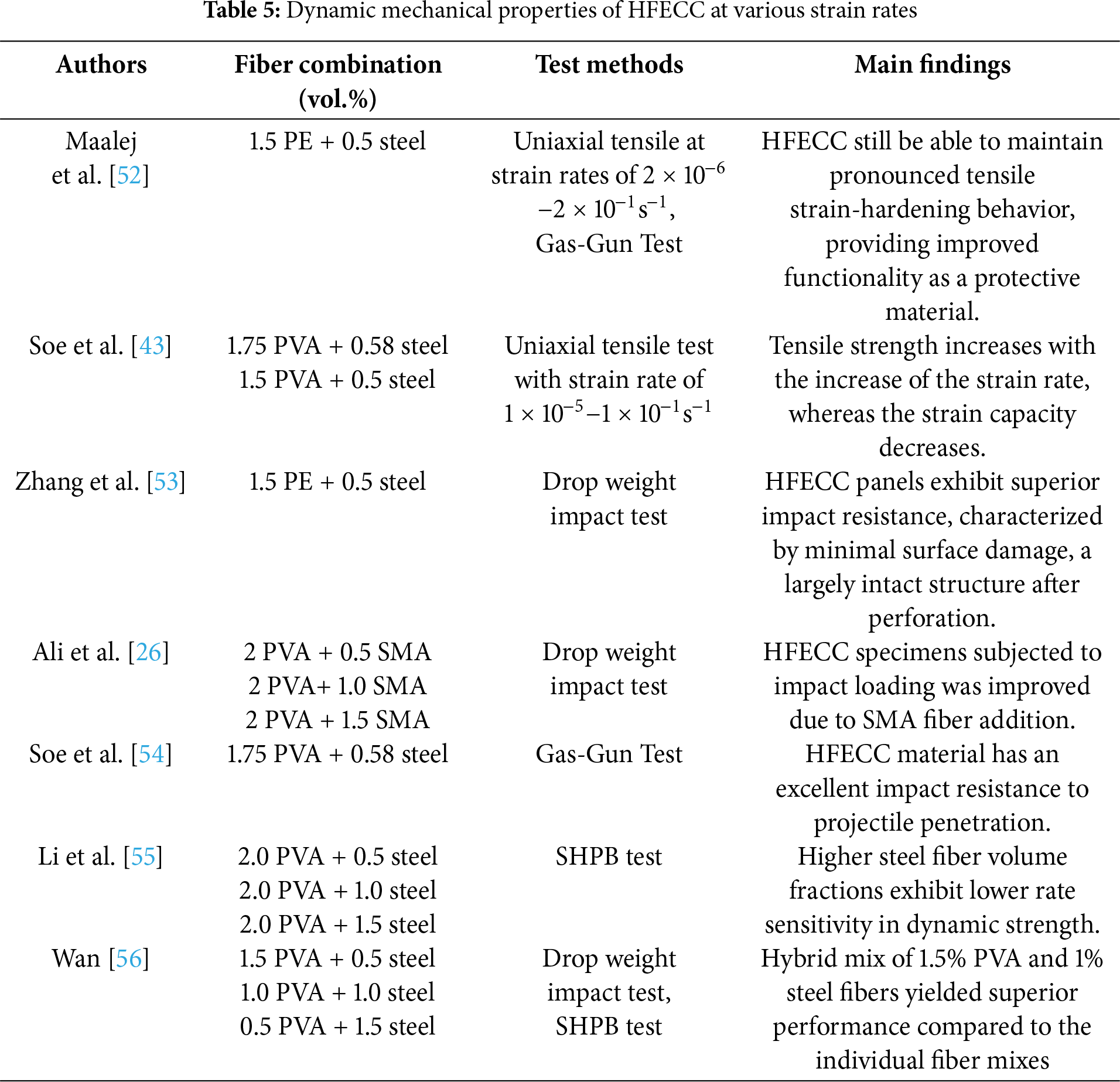
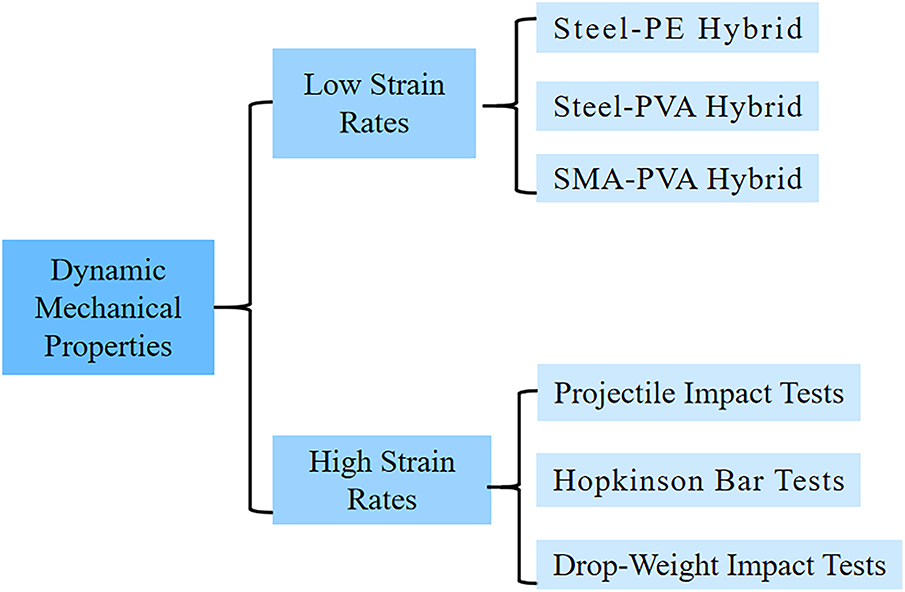
Figure 2: Framework of Section 5: Dynamic mechanical properties of HFECC at various strain rates
5.1 Dynamic Mechanical Properties at Low Strain Rates
ECC with different hybrid fiber systems exhibits notable differences under varying strain rate loadings. Specifically, Maalej et al. [52] and Soe et al. [43] studied the dynamic tensile behavior of steel-PE and steel-PVA hybrid fiber ECC, respectively, under different strain rates. The results indicated that steel-PE HFECC maintained good strain hardening and multiple cracking properties within the strain rate range of 2 × 10⁻⁶ to 0.2 s−1, showing no significant degradation compared to quasi-static loading. In contrast, steel-PVA HFECC demonstrated pronounced strain rate dependence: the first-crack strength and tensile strength increased with higher strain rates, while the deformation capacity decreased, accompanied by a reduction in strain hardening and multiple cracking capabilities. This distinct behavior may be attributed to differences in the bond properties between PVA or PE fibers and the matrix, warranting further investigation.
Zhang et al. [53] examined the effects of drop-weight impact on reinforced concrete, steel fiber-reinforced concrete, and steel-PE HFECC plates. The study confirmed that HFECC plates exhibited reduced damage extent, along with significantly improved ductility and energy dissipation capacity after repeated impacts. Ali et al. [26] reported in their drop-weight tests that the incorporation of SMA fibers enhanced the impact resistance of ECC. The mixture with 2% PVA and 1% SMA fibers showed the highest impact resistance among all specimens. However, exceeding this fiber volume led to issues such as fiber clustering, disrupted matrix continuity, increased porosity, and consequently reduced impact performance. Heat treatment activated the SMA fibers, introducing a local prestressing effect that further improved impact resistance, despite some damage caused to the PVA fibers during heating.
5.2 Dynamic Mechanical Properties at High Strain Rates
Similar conclusions were drawn by Maalej et al. [52] and Soe et al. [54] based on high-velocity projectile impact tests. HFECC significantly enhanced energy absorption and impact resistance through distributed multi-cracking mechanisms. Li et al. [55] investigated the influence of steel fibers on the impact compression performance of steel-PVA HFECC under different strain rates.
Wan [56] conducted low- and high-speed impact tests on steel-PVA hybrid fiber ECC and steel fiber ECC. Drop-weight impact tests demonstrated that steel-PVA HFECC beams exhibited significantly better flexural impact resistance than those with only PVA or steel fibers. However, high-speed impact tests using a Hopkinson bar indicated that steel fiber-reinforced cementitious composites outperformed those with only PVA or hybrid fibers in terms of impact resistance. Clearly, steel-PVA HFECC displays markedly different behaviors under low- and high-speed impacts. Overall, the incorporation of steel fibers enhances the impact resistance of ECC to varying degrees.
In summary, the impact resistance of hybrid fiber ECC is generally improved compared to single-fiber ECC. Hybrid systems such as steel-PVA/PE and SMA-PVA fibers exhibit significant positive synergistic effects. However, their performance varies noticeably under different strain rate conditions.
6 Durability of HFECC at Different Service Environments
The framework of the research content of this chapter is shown in Fig. 3.
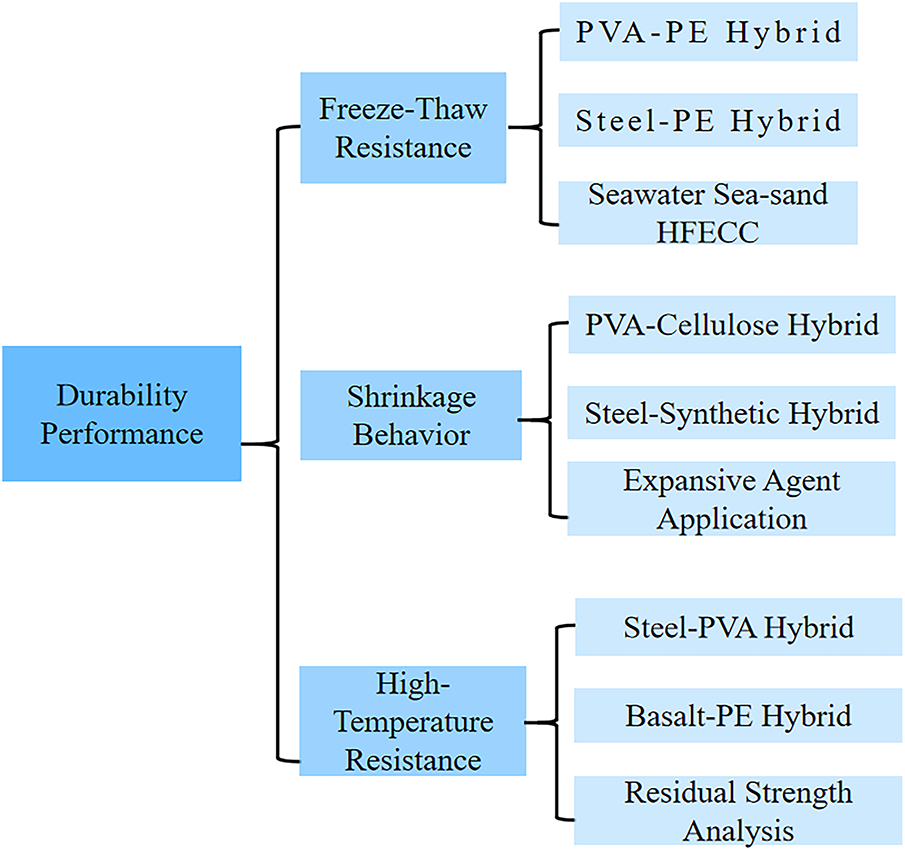
Figure 3: Framework of Section 6: Durability of HFECC at different service environments
6.1 Freeze-Thaw and Salt Resistance
For engineering structures in cold regions, the freeze-thaw resistance of concrete materials is critically important. Yun [57] investigated the mechanical properties of PVA-PE HFECC after 300 freeze-thaw cycles and found that the multiple-cracking characteristics tended to degrade after cyclic freezing and thawing. This phenomenon deserves attention from both researchers and engineers, particularly in cold climates. In contrast to conventional ECC, which often show reduced tensile ductility at subzero temperatures, steel-PE HFECC exhibited improved ductility under the same conditions [58]. This enhancement can be attributed to two main factors: the increased slip capacity of steel fibers, which dominate the hybrid system, and the reduced fracture toughness of the matrix. Together, these effects contribute to the improved tensile ductility of HFECC at low temperatures. Wen and Cao [31] developed seawater sea-sand HFECC using hybrid calcium carbonate whiskers, stainless steel fibers, and PVA fibers. Similar to conventional HFECC, the addition of stainless steel fibers increased the strength but reduced the deformation capacity. In contrast, calcium carbonate whiskers were found to improve both strength and deformability.
Adjusting the fiber ratio can also improve the volume shrinkage of ECC, reduce cracking, and enhance long-term durability. Deng and Xue [59] investigated the shrinkage resistance of HFECC incorporating Chinese PVA fiber PVA fibers blended with cellulose fibers. Test results indicated that, at a water-cement ratio of 0.40, the hybrid fiber system more effectively controlled shrinkage deformation compared to systems using only Chinese or Japanese PVA fibers alone. According to Huang et al. [60], PVA fiber addition postpones crack initiation in ECC. Specifically, the cracking age of ECC containing 2% PVA fibers reaches 28.2 days, which is later than that of ECC mixes with PP or PE fibers. While Cao et al. [61] demonstrated that steel fibers effectively restrict drying shrinkage, whereas PVA fibers and CaCO3 whiskers are more efficient against plastic shrinkage, respectively. Hence, a hybrid approach combining steel and synthetic fibers is recommended for comprehensive shrinkage control in ECC. Expansive agent can be used to further reduce the drying shrinkage of steel-PE HFECC [33].
6.3 High-Temperature Resistance
Due to their low melting points, synthetic fibers are susceptible to degradation at high temperatures, whereas steel and basalt fibers exhibit superior high-temperature resistance. Therefore, hybrid systems combining steel/basalt with synthetic fibers can provide HFECC with higher residual strength after fire exposure compared to composites reinforced solely with synthetic fibers. For example, Li et al. [62] studied the high-temperature performance of PVA-steel HFECC and observed that the compressive strength remained largely unchanged up to 400°C, while the flexural strength, toughness, and stiffness gradually degraded with increasing temperature. This is primarily due to the melting of PVA fibers, which diminishes their bridging capacity, whereas the high thermal resistance and stiffness of steel fibers help maintain higher compressive strength within a certain temperature range. Similarly, Xiong et al. [63] reported that basalt fibers effectively inhibited crack development in PE-basalt HFECC even after exposure to high temperatures. The incorporation of basalt fibers increased the residual compressive strength by 5.3% after exposure to 200°C, and improved the tensile strength by 16.6%, 17.1%, and 56.3% at 200°C, 400°C, and 600°C, respectively. Consistently, Rawat et al. [64] also confirmed that the addition of basalt fibers enhances the residual strength of HFECC after high-temperature exposure.
7 Structural Performance of HFECC
The framework of the research content of this chapter is shown in Fig. 4.
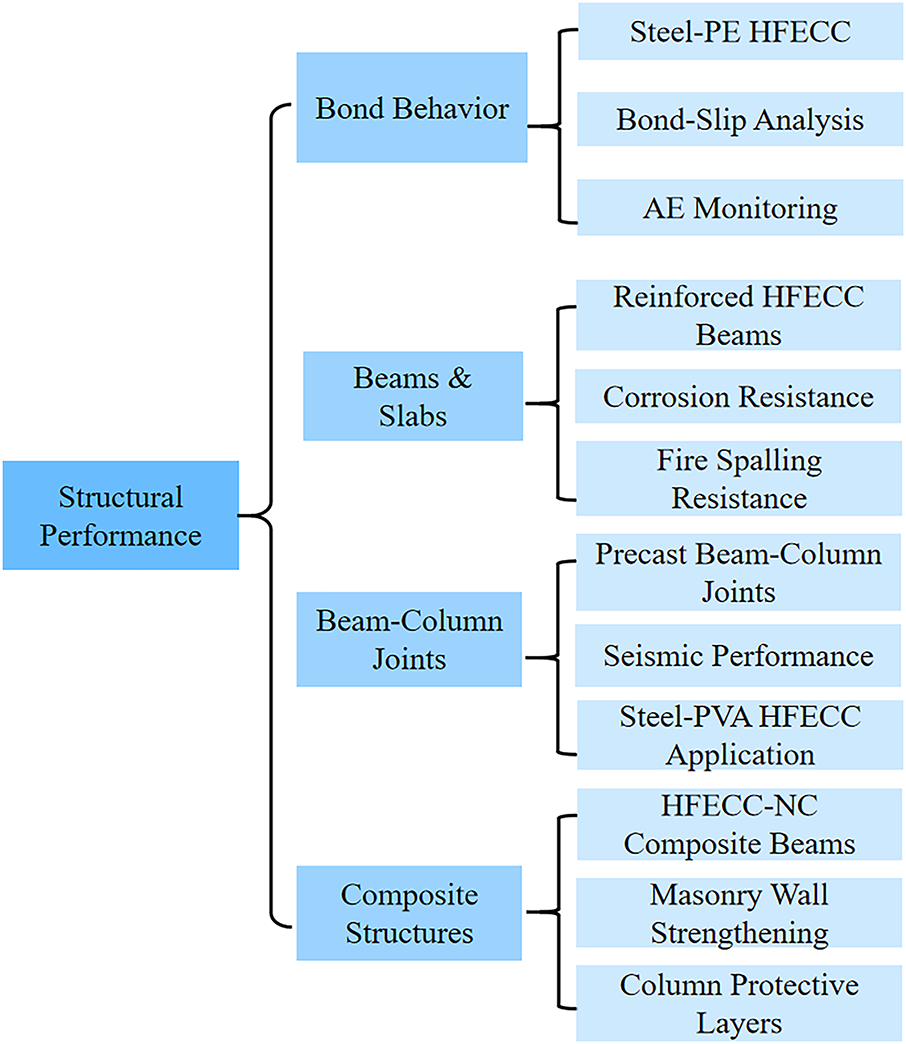
Figure 4: Framework of Section 7: Structural Performance of HFECC
7.1 Bond Behavior between Steel Reinforcement and HFECC
A strong bond between steel reinforcement and the concrete matrix is essential for composite action and full utilization of the reinforcement’s mechanical properties. Shan et al. [2] investigated the bond behavior between steel-PE HFECC and steel bars, revealing significantly superior interfacial bond performance compared to that of ordinary concrete. During pull-out tests, the acoustic emission historical index displayed more intense peak signals, indicating enhanced bond integrity. However, the difference in bond behavior between HFECC and single-fiber ECC remains unclear.
7.2 Performance of Reinforced HFECC Beams and Slabs
In reinforced concrete members, reinforcement corrosion is a primary cause of durability degradation and reduced service life. A key factor in determining the widespread use of HFECC in reinforced structures is its ability to mitigate corrosion. Mihashi et al. [65] studied the chloride corrosion resistance of steel-PE HFECC reinforced beams. Their findings demonstrated that the hybrid steel-PE fibers significantly reduced chloride-induced corrosion of the reinforcement. After a long-term exposure of 52 weeks, the corrosion resistance of the HFECC beams was markedly better than that of mortar and mono-PE fiber ECC beams.
For high-strength, high-density concrete, spalling during fire exposure can compromise structural integrity, leading to reduced load-bearing capacity or even complete failure. Thus, researchers have examined the anti-spalling performance of reinforced HFECC slabs. Rawat et al. [64] investigated the spalling resistance of both single and hybrid PE fiber-reinforced ECC under fire conditions. Replacing 12 mm, 0.75% PE fibers using basalt fiber did not improve the spalling resistance of HFECC panels. Enhanced performance was achieved with longer PE fibers (18 mm) or through the incorporation of PP fibers. A hybrid mixture containing 12 mm 0.3% PP, 1.25% PE, and 0.75% basalt fibers demonstrated the best spalling resistance. Further analysis suggested that fiber melting may not be the main mechanism for improving spalling resistance. Instead, fiber distribution and bonding within the matrix play a critical role in forming an effective network for dissipating vapor pressure.
7.3 Mechanical Performance of Beam-Column Joints
Given that the material cost of ECC is significantly higher than that of conventional concrete, its use is more advantageous in critical structural regions where enhanced toughness is required. For instance, in seismic design, the principle of “strong joints, weak members” is widely adopted, making ECC a potentially viable material for beam-column connections [56]. Precast concrete (PC) beam-column joints are critical components influencing the seismic performance of precast structures. Poor joint performance has led to the collapse of numerous PC buildings during past earthquakes. To address this, Ghayeb et al. [66] conducted a study on novel hybrid PC beam-column joints fabricated with HFECC containing 1.75% hybrid fibers (1% PVA and 0.75% hooked-end steel fibers). Quasi-static cyclic tests on three specimens—including one monolithic joint—revealed that the use of HFECC in the joint and adjacent beam regions prevented brittle failure due to the superior mechanical properties of ECC. The hybrid joints exhibited better seismic performance than the monolithic joint in terms of load-displacement capacity, ductility, strength, energy dissipation, and failure mode. The application of HFECC promoted ductile failure in the beam, thereby avoiding shear failure. Han et al. [67] further confirmed that ECC effectively suppresses the formation and propagation of shear cracks in beam-column joints, significantly improving load-carrying capacity, ductility, and energy dissipation. HFECC beam-column joints demonstrated better seismic performance both before and after peak loading compared to those with mono-PVA fiber ECC. Therefore, the use of steel-PVA HFECC in beam-column joints in high seismic risk regions represents a feasible design strategy.
7.4 Performance of Composite Structures
Wu et al. [68] investigated the mechanical behavior of HFECC-normal concrete (NC) composite beams. A comprehensive analysis was carried out to evaluate the effects of fiber type, reinforcement ratio, and steel fiber content on the flexural performance of the composite beams. The results indicated that the stiffness of composite beams with 1.7% PVA fibers increased by 14.7% compared to NC beams, while those with 1.7% PE fibers showed a 26.1% increase. The addition of steel fibers at volume fractions of 0.6% and 1.0% enhanced the flexural capacity of PVA-based composite beams by at least 8.1%.
In addition to enhancing the toughness of new structures, existing engineering structures often require strengthening and rehabilitation to improve mechanical performance and durability, thereby extending their service life. For example, Maalej et al. [69] presented experimental results from quasi-static and low-velocity impact tests on unreinforced masonry (URM) walls strengthened with ECC. Under quasi-static loading, the ECC retrofit system significantly enhanced the out-of-plane resistance of masonry walls. The strengthened specimens exhibited increases in ultimate load capacity and deflection capacity by factors of 6.5–22 and 4.2–15.9 in Test Series I and II, respectively. Incorporating a steel mesh within the ECC layer further increased the ultimate load-bearing capacity by 40%–68%, although it reduced deflection capacity by 17%–74% compared to ECC-only specimens. The tests also confirmed that ECC exhibits strain-hardening behavior and multiple micro-cracking in masonry strengthening applications. Unlike URM walls, which failed catastrophically upon initial impact, ECC-strengthened walls sustained repeated low-velocity impacts without sudden collapse. The use of ECC layers considerably reduced fragmentation under impact, thereby lowering the risk of injury from flying debris in blast or explosion scenarios. In summary, Maalej’s study demonstrates that ECC-based strengthening systems significantly improve the impact resistance of URM walls and prevent abrupt failure. These results suggest that ECC-retrofitted masonry can help mitigate damage in events such as blasts or explosions. Li et al. [61] showed that reinforced concrete columns with an HFECC protective layer could prevent spalling and mitigate cracking under high temperatures, effectively enhancing the residual load-bearing capacity of the columns after fire exposure.
8 Conclusions and Perspectives
This review has systematically examined the recent advances in Hybrid Fiber Engineered Cementitious Composites (HFECC), with emphasis on micromechanical design theories, mechanical performance under quasi-static and dynamic loading, durability, and structural applications. The following key conclusions can be drawn:
(1) The incorporation of hybrid fibers, particularly combining high-modulus (e.g., steel) with low-modulus polymeric fibers (e.g., PVA, PE), enables a more tunable mechanical performance compared to single-fiber ECC. Through micromechanical design, HFECC can achieve improved multi-cracking and strain-hardening behavior, allowing designers to balance strength, ductility, and cost according to engineering requirements.
(2) The critical fiber volume theory provides a fundamental basis for optimizing hybrid fiber proportions. Both strength-based and energy-based criteria must be satisfied to ensure robust strain-hardening. Hybrid fiber systems often exhibit synergistic effects, enhancing crack control and composite toughness beyond what is achievable using individual fibers.
(3) Under quasi-static loading, steel-PVA and steel-PE hybrid systems significantly improve flexural and tensile strength while retaining high deformation capacity. The incorporation of high-volume fly ash and nanomaterials such as nano-silica can further refine microstructure and interface properties, contributing to higher performance and better crack width control.
(4) HFECC exhibits pronounced strain-rate sensitivity. Under low to high strain-rate loading, hybrid fibers effectively improve impact and blast resistance. Steel-PE systems demonstrate better retention of ductility under dynamic tension compared to PVA-based hybrids. The combination of shape memory alloy fibers with PVA also shows promising improvements in energy dissipation under impact.
(5) Durability performance—especially under freeze-thaw cycles, high temperatures, and chloride exposure—requires further investigation. Initial studies indicate that hybrid fibers can mitigate spalling under elevated temperatures and reduce shrinkage cracking. However, long-term durability under combined mechanical and environmental loads remains inadequately studied.
(6) Structural applications—including reinforced beams, beam-column joints, and composite members—demonstrate that HFECC can enhance load capacity, energy dissipation, and damage tolerance. Its use in critical regions (e.g., joints in seismic designs) and in repair/strengthening applications shows significant potential for improving structural resilience.
(7) Despite these advantages, high material costs—mainly due to the dependence on high-performance imported PVA fibers—still hinder large-scale implementation. The development of low-cost domestic fibers and optimized hybrid combinations remains essential for broader adoption.
Despite promising progress, several challenges and research opportunities remain for HFECC:
(1) Cost Reduction and Localization: There is an urgent need to develop and promote cost-effective domestic fibers and hybrid combinations. Further research should explore the use of recycled and natural fibers in hybrid systems to reduce cost and environmental impact without compromising mechanical performance.
(2) Dynamic and High-Strain Rate Behavior: The underlying mechanisms governing rate-dependent behavior in different hybrid systems are not fully understood. Further experimental and numerical studies are needed to clarify fiber-matrix interactions under dynamic loads and to establish standardized impact-resistant design guidelines.
(3) Durability under Multi-Action Environments: Comprehensive studies are needed to evaluate HFECC performance under coupled conditions—such as mechanical loading plus freeze-thaw cycles, chloride attack, or carbonation—especially for structures in harsh environments.
(4) Full-Structural Application Validation: Most existing studies focus on material-level properties. More large-scale experiments and real-world demonstrations are necessary to validate the structural performance and economic feasibility of HFECC in beams, columns, joints, and composite systems.
(5) Multi-Scale Modeling and Design Integration: Advanced numerical models that link micro-mechanical behavior to structural response should be developed. Integration of machine learning for mix-proportion optimization and performance prediction could further accelerate the design of tailored HFECC.
(6) Standardization and Specification Development: The absence of standardized testing and design codes for HFECC limits its regulatory acceptance. Efforts should be made to establish unified material specifications and design guidelines to support practical engineering application.
In summary, HFECC offers significant potential for next-generation resilient infrastructure. With continued research focusing on performance optimization, sustainability, and real-world validation, HFECC is expected to play an increasing role in advanced construction and rehabilitation projects.
Acknowledgement: We extend our gratitude to Guangxi Transportation Technology Group and Ocean University of China for their funding and support of this article.
Funding Statement: This work was financed by Hainan provincial Science and Tecnology Special Fund (No. ZDY F2025GXJS196), Guangxi Transportation Science and Technology Achievement Promotion Project (GXJT-YFZX-2024-01-01): Intelligent Detection and Data Application R&D Center for Guangxi Transportation Industry.
Author Contributions: The authors confirm contribution to the paper as follows: Conceptualization and writing, Qi Feng; software, Funding, Dan Wang; methodology, Weijie Hu; validation, Wenhao Zhao; All authors reviewed the results and approved the final version of the manuscript.
Availability of Data and Materials: Data available on request from the authors. The data that support the findings of this study are available from the Corresponding Author, [Dan Wang], upon reasonable request.
Ethics Approval: This study did not involve human or animal subjects; therefore, ethical approval was not required.
Conflicts of Interest: The authors declare no conflicts of interest to report regarding the present study.
Notation List
| σcu | Ultimate Crosslinking Strength of Fibers in Fiber-Reinforced Cementitious Composites |
| σfc | Initial Tensile Strength of Matrix |
| g1 | Impact Factor of Fiber 1 |
| g2 | Impact Factor of Fiber 2 |
| σ01 | Ultimate crosslinking stress of fiber 1 |
| σ02 | Ultimate crosslinking stress of fiber 2 |
| δ1* | Anchorage length of Fiber 1 |
| δ2* | Anchorage length of Fiber 2 |
| Lf1 | Length of Fiber 1 |
| Ktip | Crack Tip Fracture Toughness |
| C | Crack size (half the crack length) |
| c1 | Crack size corresponding to δ1* |
| δa | Theoretical crack opening displacement |
| Vf, cr | Critical fiber content |
| Af | Fiber cross-sectional area |
| Pf | Fiber cross-sectional perimeter |
| kB | Fiber Bonding Coefficient |
| kC | Bonding coefficient of the matrix |
| Ec | Elastic modulus of the matrix |
| Es | Elastic modulus of fibers |
| Lf | Fiber length |
| X | Average crack spacing |
| δmax | Half the maximum crack width value |
| σfc | Initial Crack Strength of Matrix |
| σmax | Ultimate crosslink strength of fibers |
References
1. Huang B, Wu J, Yu J, Dai J, Leung CKY, Li VC. Seawater sea-sand engineered/strain-hardening cementitious composites (ECC/SHCCassessment and modeling of crack characteristics. Cement Concrete Res. 2021;140:106292. doi:10.1016/j.cemconres.2020.106292. [Google Scholar] [CrossRef]
2. Shan W, Liu J, Ding Y, Mao W, Jiao Y. Assessment of bond-slip behavior of hybrid fiber reinforced engineered cementitious composites (ECC) and deformed rebar via AE monitoring. Cem Concr Compos. 2021;118:103961. doi:10.1016/j.cemconcomp.2021.103961. [Google Scholar] [CrossRef]
3. Li L, Jin P, Zhang K, Yan C, Zhang N, Li Y, et al. Influence of freeze–thaw cycles on fracture behaviors of Nano-SiO2 modified high-strength high-ductility alkali-activated material. Theor Appl Fract Mec. 2025;135:104774. [Google Scholar]
4. Li L, Li X, Wang B, Tao J, Shi K. A review on interfacial bonding behavior between fiber and concrete. J Build Eng. 2025;1051:112455. doi:10.1016/j.jobe.2025.112455. [Google Scholar] [CrossRef]
5. Tian J, Xiaowei, Wang W, Hu S, Tan X, Du Y, et al. Experimental study and mechanics model of ECC-to-concrete bond interface under tensile loading. Compos Struct. 2022;285:115203. doi:10.1016/j.compstruct.2022.115203. [Google Scholar] [CrossRef]
6. Abdulkadir I, Mohammed BS, Liew MS, Wahab MMA. Modelling and multi-objective optimization of the fresh and mechanical properties of self-compacting high volume fly ash ECC (HVFA-ECC) using response surface methodology (RSM). Case Stud Constr Mat. 2021;14:e525. doi:10.1016/j.cscm.2021.e00525. [Google Scholar] [CrossRef]
7. Li L, Sun H, Zhang Y, Li Z. Dynamic evolution of crack fractal of polypropylene fiber reinforced geopolymer during flexural process. Eng Fract Mech. 2024;300(16):109992. doi:10.1016/j.engfracmech.2024.109992. [Google Scholar] [CrossRef]
8. Li H, Jin P, Yan C, Zhang N, Li L. Impact of polyethylene fiber and microsilica on fracture properties of high strength high toughness geopolymer concrete (HSHTGC). Dev Built Environ. 2024;18:100399. doi:10.1016/j.dibe.2024.100399. [Google Scholar] [CrossRef]
9. Fantilli AP, Mihashi H, Vallini P. Multiple cracking and strain hardening in fiber-reinforced concrete under uniaxial tension. Cement Concrete Res. 2009;39(12):1217–29. doi:10.1016/j.cemconres.2009.08.020. [Google Scholar] [CrossRef]
10. Mavani MB. Fresh/Mechanical/Durability properties and structural performance of enginnered cementitious composite [dissertation]. Toronto, ON, Canada: Ryerson University; 2012. [Google Scholar]
11. Li H, Li L, Zhang N, Feng Q. Hybrid effect of polyethylene fibre and nano-calcium carbonate on the flowability and strength of a geopolymer composite. Mag Concrete Res. 2024;76(4):188–200. doi:10.1680/jmacr.23.00090. [Google Scholar] [CrossRef]
12. Li L, Ma Z, Ming X. Multiscale ab-initio modeling and experiment of nano-CaCO3 and fiber synergy on toughening low-carbon geopolymer composites. Mater Design. 2023;233:112280. doi:10.1016/j.matdes.2023.112280. [Google Scholar] [CrossRef]
13. Li L, Tao J, Zhang Y, Sun H, Yuen K, You P. Crack fractal analysis of fractured polyethylene fiber reinforced alkali activated mortar under flexural load. Constr Build Mater. 2022;345:128428. doi:10.1016/j.conbuildmat.2022.128428. [Google Scholar] [CrossRef]
14. Li L, Xie C, Cao M, Zhou X, Li Z. Synergistic effect between CaCO3 whisker and steel-PVA fiber cocktail in cement-based material at elevated temperature. ASCE J Mater Civil Eng. 2022;34(2):4021415. doi:10.1061/(asce)mt.1943-5533.0004103. [Google Scholar] [CrossRef]
15. Zeng D, Cao M, Ming X. Characterization of mechanical behavior and mechanism of hybrid fiber reinforced cementitious composites after exposure to high temperatures. Mater Struct. 2021;54(1):26. [Google Scholar]
16. Maganti TR, Gopireddy HKR, Boddepalli KR. Enhanced flexural performance and crack control in hybrid fiber ECC-ACC beams. Ain Shams Eng J. 2025;16:103451. doi:10.1016/j.asej.2025.103451. [Google Scholar] [CrossRef]
17. Gao Z, Zhang P, Dai X, Zheng Y, Feng H. Assessment of bonding behavior of hybrid fiber alkali-activated concrete for tunnel lining concrete restoration. J Clean Prod. 2025;514(10):145803. doi:10.1016/j.jclepro.2025.145803. [Google Scholar] [CrossRef]
18. Ahmed SF, Maalej M, Paramasivam P. Analytical model for tensile strain hardening and multiple cracking behavior of hybrid fiber-engineered cementitious composites. ASCE J Mater Civil Eng. 2007;19(7):527–39. doi:10.1061/(asce)0899-1561(2007)19:7(527). [Google Scholar] [CrossRef]
19. Ahmed SFU, Maalej M. Tensile strain hardening behaviour of hybrid steel-polyethylene fibre reinforced cementitious composites. Constr Build Mater. 2009;23(1):96–106. doi:10.1016/j.conbuildmat.2008.01.009. [Google Scholar] [CrossRef]
20. Hao Z, Lu C, Dong B, Li VC. 3D crack recognition in Engineered Cementitious Composites (ECC) based on super-resolution reconstruction and semantic segmentation of X-ray Computed Microtomography. Compos Part B Eng. 2024;285:111730. doi:10.1016/j.compositesb.2024.111730. [Google Scholar] [CrossRef]
21. Lao J, Huang B, Fang Y, Xu L, Dai J, Shah SP. Strain-hardening alkali-activated fly ash/slag composites with ultra-high compressive strength and ultra-high tensile ductility. Cement Concrete Res. 2023;165:107075. doi:10.1016/j.cemconres.2022.107075. [Google Scholar] [CrossRef]
22. Öz HÖ, Güneş M, Yücel HE. Rheological and microstructural properties of FA+GGBFS-based engineered geopolymer composites (EGCs) capable of comparing with M45-ECC as mechanical performance. J Build Eng. 2023;65:105792. doi:10.1016/j.jobe.2022.105792. [Google Scholar] [CrossRef]
23. Li Y, Li J, Yang E, Guan X. Mechanism study of crack propagation in river sand Engineered Cementitious Composites (ECC). Cem Concr Compos. 2022;128:104434. doi:10.1016/j.cemconcomp.2022.104434. [Google Scholar] [CrossRef]
24. Gao S, Meng H, Zhu Y, Xie P. Impact of low temperature and NaCl attack on the fracture properties of engineered cementitious composites (ECC). J Build Eng. 2023;76:107114. doi:10.1016/j.jobe.2023.107114. [Google Scholar] [CrossRef]
25. Huo Y, Sun H, Chen Z, Yang Y. Mechanical properties and its reliability prediction of engineered /strain-hardening cementitious composites (ECC/SHCC) with different moisture contents at negative temperatures. Cem Concr Compos. 2022;134:104812. doi:10.1016/j.cemconcomp.2022.104812. [Google Scholar] [CrossRef]
26. Ali MAEM, Soliman AM, Nehdi ML. Hybrid-fiber reinforced engineered cementitious composite under tensile and impact loading. Mater Design. 2017;117:139–49. doi:10.1016/j.matdes.2016.12.047. [Google Scholar] [CrossRef]
27. Zhu H, Zhang D, Li VC. Centrifugally sprayed engineered cementitious composites: rheology, mechanics, and structural retrofit for concrete pipes. Cem Concr Compos. 2022;129:104473. doi:10.1016/j.cemconcomp.2022.104473. [Google Scholar] [CrossRef]
28. Pan Z, Wu C, Liu J, Wang W, Liu J. Study on mechanical properties of cost-effective polyvinyl alcohol engineered cementitious composites (PVA-ECC). Constr Build Mater. 2015;78:397–404. doi:10.1016/j.conbuildmat.2014.12.071. [Google Scholar] [CrossRef]
29. Yu J, Yao J, Lin X, Li H, Lam JYK, Leung CKY, et al. Tensile performance of sustainable Strain-Hardening Cementitious Composites with hybrid PVA and recycled PET fibers. Cem Concr Res. 2018;107(1):110–23. doi:10.1016/j.cemconres.2018.02.013. [Google Scholar] [CrossRef]
30. Wang Q, Yi Y, Ma G, Luo H. Hybrid effects of steel fibers, basalt fibers and calcium sulfate on mechanical performance of PVA-ECC containing high-volume fly ash. Cement Concrete Compos. 2019;97:357–68. doi:10.1016/j.cemconcomp.2019.01.009. [Google Scholar] [CrossRef]
31. Wen S, Cao M. Reinforcement effects on the tensile properties of seawater sea-sand engineered cementitious composites reinforced with multi-scale hybrid fibers. Structures. 2024;64:106579. doi:10.1016/j.istruc.2024.106579. [Google Scholar] [CrossRef]
32. Zhang S, He S, Ghiassi B, van Breugel K, Ye G. Interface bonding properties of polyvinyl alcohol (PVA) fiber in alkali-activated slag/fly ash. Cement Concrete Res. 2023;173:107308. doi:10.1016/j.cemconres.2023.107308. [Google Scholar] [CrossRef]
33. Xie W, Fang Y, Xu W, Li J, Xu F, He T, et al. Preparation and properties of lightweight, high-strength, and low-shrinkage ECC materials for new steel bridge deck composite pavement. Case Stud Constr Mat. 2025;23:e5200. doi:10.1016/j.cscm.2025.e05200. [Google Scholar] [CrossRef]
34. Shabakhty N, Karimi HR, Bakhtiary AY. Effect of short to long hybrid elastic/hyperelastic (Glass/PP) fibers on high-strength engineered cementitious composites (ECCalong with presenting a constitutive model. J Build Eng. 2024;89:109215. doi:10.1016/j.jobe.2024.109215. [Google Scholar] [CrossRef]
35. Fantilli AP, Mihashi H, Nishiwaki T. Tailoring hybrid strain-hardening cementitious composites. ACI Mater J. 2014;111(2):211–8. doi:10.14359/51686563. [Google Scholar] [CrossRef]
36. Li VC. Tailoring ECC for special attributes: a review. Int J Concr Struct M. 2012;6(3):135–44. doi:10.1007/s40069-012-0018-8. [Google Scholar] [CrossRef]
37. Li Q, Gao X, Xu S. Multiple effects of nano-SiO2 and hybrid fibers on properties of high toughness fiber reinforced cementitious composites with high-volume fly ash. Cement Concrete Compos. 2016;72:201–12. doi:10.1016/j.cemconcomp.2016.05.011. [Google Scholar] [CrossRef]
38. Malik UJ, Khokhar SA, Hammad M, Khushnood RA, Najam FA, Ali F, et al. ANN-based predictive mimicker for the constitutive model of engineered cementitious composites (ECC). Constr Build Mater. 2024;420:135530. doi:10.1016/j.conbuildmat.2024.135530. [Google Scholar] [CrossRef]
39. Zhu J, Weng K, Huang B, Xu L, Dai J. Ultra-high-strength engineered cementitious composites (UHS-ECC) panel reinforced with FRP bar/grid: development and flexural performance. Eng Struct. 2024;302:117193. doi:10.1016/j.engstruct.2023.117193. [Google Scholar] [CrossRef]
40. Li F, Wen T, Li J, Tang H, Chen Z, Wu H. Ultrasonic-detected damage and bending behavior of reinforced PP-ECC beams after coupled action of freeze-thaw cycles and constant flexural load. Case Stud Constr Mat. 2022;17:e1284. doi:10.1016/j.cscm.2022.e01284. [Google Scholar] [CrossRef]
41. Ahmed SFU, Maalej M, Paramasivam P. Flexural responses of hybrid steel-polyethylene fiber reinforced cement composites containing high volume fly ash. Constr Build Mater. 2007;21:1088–97. doi:10.1016/j.conbuildmat.2006.01.002. [Google Scholar] [CrossRef]
42. Zhao Y, Shen G, Zhu L, Ding Y, Guan X. Enhancing interfacial bonding and pore structure optimization in 3D-printed high-strength ECC with steel-PE hybrid fibers. Case Stud Constr Mat. 2025;23:e4934. doi:10.1016/j.cscm.2025.e04934. [Google Scholar] [CrossRef]
43. Soe KT, Zhang YX, Zhang LC. Material properties of a new hybrid fibre-reinforced engineered cementitious composite. Constr Build Mater. 2013;43:399–407. doi:10.1016/j.conbuildmat.2013.02.021. [Google Scholar] [CrossRef]
44. Zhang J, Wang Q, Wang Z. Properties of polyvinyl alcohol-steel hybrid fiber-reinforced composite with high-strength cement matrix. ASCE J Mater Civil Eng. 2017;29(7):4017026. doi:10.1061/(asce)mt.1943-5533.0001868. [Google Scholar] [CrossRef]
45. Ahmed SFU, Maalej M, Paramasivam P. Strain-hardening behaviour of hybrid fiber reinforced cement composites. J Ferrocement. 2003;33(3):172–82. [Google Scholar]
46. Ahmed SFU, Mihashi H. Strain hardening behavior of lightweight hybrid polyvinyl alcohol (PVA) fiber reinforced cement composites. Mater Struct. 2011;44(6):1179–91. doi:10.1617/s11527-010-9691-8. [Google Scholar] [CrossRef]
47. Tosun-Felekoglu K, Felekoglu B. Effects of fibre hybridization on multiple cracking potential of cement-based composites under flexural loading. Constr Build Mater. 2013;41:15–20. doi:10.1016/j.conbuildmat.2012.09.115. [Google Scholar] [CrossRef]
48. Pakravan HR, Latifi M, Jamshidi M. Ductility improvement of cementitious composites reinforced with polyvinyl alcohol-polypropylene hybrid fibers. J Ind Text. 2016;45(5):637–51. doi:10.1177/1528083714534712. [Google Scholar] [CrossRef]
49. Luo B. Research on green high-toughness fiber-reinforced cementitious composites. Harbin, China:Harbin Institute of Technology, 2008. [Google Scholar]
50. Tian G, Wang H, Ye B, Jiang W, Su Y, Miao Q, et al. The effect of adding basalt fiber on the workability and mechanical properties of PE-ECC. Constr Build Mater. 2025;493(11):143237. doi:10.1016/j.conbuildmat.2025.143237. [Google Scholar] [CrossRef]
51. Xu S, Chen B, Li Q, Zhou F, Yin X, Jiang X, et al. Experimental and numerical investigations on ultra-high toughness cementitious composite slabs subjected to close-in blast loadings. Cem Concr Compos. 2022;126:104339. doi:10.1016/j.cemconcomp.2021.104339. [Google Scholar] [CrossRef]
52. Maalej M, Quek ST, Zhang J. Behavior of hybrid-fiber engineered cementitious composites subjected to dynamic tensile loading and projectile impact. J Mater Civil Eng. 2005;17:143–52. doi:10.1061/(asce)0899-1561(2005)17:2(143). [Google Scholar] [CrossRef]
53. Zhang J, Maalej M, Quek ST. Performance of hybrid-fiber ECC Blast/Shelter panels subjected to drop weight impact. ASCE J Mater Civil Eng. 2007;19(10):855–63. doi:10.1061/(asce)0899-1561(2007)19:10(855). [Google Scholar] [CrossRef]
54. Soe KT, Zhang YX, Zhang LC. Impact resistance of hybrid-fiber engineered cementitious composite panels. Compos Struct. 2013;104:320–30. doi:10.1016/j.compstruct.2013.01.029. [Google Scholar] [CrossRef]
55. Li Q, Zhao X, Xu S, Gao X. Influence of steel fiber on dynamic compressive behavior of hybrid fiber ultra high toughness cementitious composites at different strain rates. Constr Build Mater. 2016;125:490–500. doi:10.1016/j.conbuildmat.2016.08.066. [Google Scholar] [CrossRef]
56. Wan S. Study on impact properties of steel-PVA hybrid fiber-reinforced cementitious composite materials. Harbin, China: Harbin Institute of Technology; 2016. [Google Scholar]
57. Yun H. Effect of accelerated freeze–thaw cycling on mechanical properties of hybrid PVA and PE fiber-reinforced strain-hardening cement-based composites (SHCCs). Compos Part B Eng. 2013;52:11–20. doi:10.1016/j.compositesb.2013.03.021. [Google Scholar] [CrossRef]
58. Huang B, Zhang Z, Xi H, Zhang T, Chen M, Wei J, et al. Strain-hardening ultra-high-performance concrete (SH-UHPC) with hybrid steel and polyethylene fibers: enhanced tensile ductility at subzero temperatures. Theor Appl Fract Mec. 2025;139:104987. [Google Scholar]
59. Deng Z, Xue H. Shrinkage deformation of high-toughness fiber-reinforced cementitious composites. J Univ Sci Technol Beijing. 2011;33(2):210–4. (In Chinese). [Google Scholar]
60. Huang W, Deng X, Li S, Zhang Z, He L, Liu F, et al. Investigation on the effect of fiber on the constrained shrinkage performance of engineering cementitious composite (ECC). Constr Build Mater. 2025;458:139612. doi:10.1016/j.conbuildmat.2024.139612. [Google Scholar] [CrossRef]
61. Cao M, Zhang C, Lv H. Mechanical response and shrinkage performance of cementitious composites with a new fiber hybridization. Constr Build Mater. 2014;57:45–52. doi:10.1016/j.conbuildmat.2014.01.088. [Google Scholar] [CrossRef]
62. Li Q, Gao X, Xu S, Peng Y, Fu Y. Microstructure and mechanical properties of high-toughness fiber-reinforced cementitious composites after exposure to elevated temperatures. ASCE J Mater Civil Eng. 2016;28(11):401613211. doi:10.1061/(asce)mt.1943-5533.0001647. [Google Scholar] [CrossRef]
63. Xiong Y, Lin L, Fang S, Yang Y. Mechanical properties of hybrid fibers engineered cementitious composites containing ceramic wastes exposed to elevated temperatures. Case Stud Constr Mat. 2025;22:e4657. doi:10.1016/j.cscm.2025.e04657. [Google Scholar] [CrossRef]
64. Rawat S, Zhang L, Zhang YX. Fire-induced spalling in hybrid polyethylene fiber-reinforced engineered cementitious composite panels. Eng Struct. 2025;338:120589. doi:10.1016/j.engstruct.2025.120589. [Google Scholar] [CrossRef]
65. Mihashi H, Ahmed SFU, Kobayakawa A. Corrosion of reinforcing steel in fiber reinforced cementitious composites. J Adv Concr Technol. 2011;9(2):159–67. doi:10.3151/jact.9.159. [Google Scholar] [CrossRef]
66. Ghayeb HH, Mo KH, Sulong NHR. The impact of using hybrid polyvinyl alcohol–steel fibre ECC on the seismic behaviour of precast beam–to–column joints. Structures. 2024;70:107849. doi:10.1016/j.istruc.2024.107849. [Google Scholar] [CrossRef]
67. Han J, Liu W, Cui M. Experimental study on seismic performance of PVA-steel hybrid fiber-reinforced cementitious composite beam-column joints. Acta Civilis Technica Sinica. 2018;51(11):32–40. (In Chinese). doi:10.1016/j.matdes.2015.07.164. [Google Scholar] [CrossRef]
68. Wu F, Zhao B, Cao J, Shen X, Wang Z, Lei H, et al. Experimental and theoretical investigations on flexural performance of hybrid fiber reinforced ECC-NC composite beams. Case Stud Constr Mat. 2024;20:e3178. doi:10.1016/j.cscm.2024.e03178. [Google Scholar] [CrossRef]
69. Maalej M, Lin VWJ, Nguyen MP, Quek ST. Engineered cementitious composites for effective strengthening of unreinforced masonry walls. Eng Struct. 2010;32(8):2432–9. doi:10.1016/j.engstruct.2010.04.017. [Google Scholar] [CrossRef]
Cite This Article
 Copyright © 2026 The Author(s). Published by Tech Science Press.
This work is licensed under a Creative Commons Attribution 4.0 International License , which permits unrestricted use, distribution, and reproduction in any medium, provided the original work is properly cited.
 Downloads
 Citation Tools
