
 Login
Login Register
 Submit a Paper
 Propose a Special lssue
 Open Access
ARTICLE
Data-Driven Digital Evidence Analysis for the Forensic Investigation of the Electric Vehicle Charging Infrastructure
1 System Security Research Center, Chonnam National University, Gwangju, 61186, Republic of Korea
2 Graduate School of DataScience, Chonnam National University, Gwangju, 61186, Republic of Korea
* Corresponding Author: Ieck-Chae Euom. Email:
(This article belongs to the Special Issue: Cutting-Edge Security and Privacy Solutions for Next-Generation Intelligent Mobile Internet Technologies and Applications)
Computer Modeling in Engineering & Sciences 2025, 143(3), 3795-3838. https://doi.org/10.32604/cmes.2025.066727
Received 16 April 2025; Accepted 13 June 2025; Issue published 30 June 2025
 View Full Text
 Download PDF
Abstract
The accelerated global adoption of electric vehicles (EVs) is driving significant expansion and increasing complexity within the EV charging infrastructure, consequently presenting novel and pressing cybersecurity challenges. While considerable effort has focused on preventative cybersecurity measures, a critical deficiency persists in structured methodologies for digital forensic analysis following security incidents, a gap exacerbated by system heterogeneity, distributed digital evidence, and inconsistent logging practices which hinder effective incident reconstruction and attribution. This paper addresses this critical need by proposing a novel, data-driven forensic framework tailored to the EV charging infrastructure, focusing on the systematic identification, classification, and correlation of diverse digital evidence across its physical, network, and application layers. Our methodology integrates open-source intelligence (OSINT) with advanced system modeling based on a three-layer cyber-physical system architecture to comprehensively map potential evidentiary sources. Key contributions include a comprehensive taxonomy of cybersecurity threats pertinent to EV charging ecosystems, detailed mappings between these threats and the resultant digital evidence to guide targeted investigations, the formulation of adaptable forensic investigation workflows for various incident scenarios, and a critical analysis of significant gaps in digital evidence availability within current EV charging systems, highlighting limitations in forensic readiness. The practical application and utility of this method are demonstrated through illustrative case studies involving both empirically-derived and virtual incident scenarios. The proposed data-driven approach is designed to significantly enhance digital forensic capabilities, support more effective incident response, strengthen compliance with emerging cybersecurity regulations, and ultimately contribute to bolstering the overall security, resilience, and trustworthiness of this increasingly vital critical infrastructure.Keywords
The global energy paradigm is undergoing a significant transformation, with a pronounced shift towards electrified transportation as a cornerstone of achieving a zero-carbon economy and enhancing the integration of renewable energy sources [1]. This transition is catalyzing the rapid expansion and increasing sophistication of the electric vehicle (EV) charging infrastructure. More than just power dispensers, these deployments are evolving into complex cyber-physical systems (CPS) that integrate diverse hardware components, a variety of communication protocols, and multiple software layers, establishing critical interfaces with national power grids, financial payment networks, and advanced vehicle management platforms [2]. The economic magnitude of this sector is substantial; the global EV charging market is projected for exponential expansion, which firmly underscores the strategic importance of these systems within critical national infrastructure paradigms. As this infrastructure matures, it not only facilitates the primary function of EV charging but also paves the way for advanced functionalities such as vehicle-to-grid (V2G) capabilities, which position EVs as distributed energy resources capable of bolstering grid stability and improving operational efficiency, particularly when harmonized with fluctuating renewable energy outputs.
However, the intricate interconnectivity inherent in the EV charging infrastructure, while enhancing functionality and user convenience, concurrently creates an expanding attack surface. The rapid expansion of charging networks, characterized by heterogeneous components and interconnected systems, presents an increasingly expansive attack surface vulnerable to sophisticated cyber threats [3]. This heightened risk environment is not merely theoretical; automotive cyber incidents and vulnerabilities are increasing annually, with high-profile attacks exploiting weaknesses in charging protocols, communication standards, and devices highlighting the diverse threat landscape [4]. Such security incidents can precipitate significant consequences, ranging from direct financial losses for both charging operators and end-users to the potential disruption of power grid stability, and, critically, an erosion of public trust in EV technology. In recognition of this escalating criticality and the potential systemic risks, regulatory frameworks are beginning to mature. A notable example is the European Union’s Network and Information Security (NIS) 2 Directive [5], which explicitly categorizes EV charging operators as essential entities. This directive mandates the implementation of comprehensive cybersecurity measures, encompassing robust risk management practices and formal incident response protocols. Such regulatory endeavors are largely driven by the mounting evidence of tangible cybersecurity risks within the EV charging ecosystem.
1.1 Motivation and Problem Statement
Despite the growing recognition of cybersecurity risks and the evolution of regulatory frameworks like the NIS 2 Directive, existing cybersecurity measures within the EV charging domain have predominantly emphasized prevention and vulnerability mitigation. Standards such as ISO 15118 and the Open Charge Point Protocol (OCPP) focus significantly on preventive security mechanisms like authentication and encryption. However, a critical gap persists concerning structured and standardized methods for performing digital forensic analysis after a security incident has occurred in these complex EV charging ecosystems. While regulations acknowledge the importance of securing this infrastructure, they often lack specific guidance on post-incident digital forensic procedures, leaving a void in standardized response capabilities.
This deficiency in post-incident analysis capabilities presents a significant problem. It severely hinders effective incident response, makes the reliable attribution of malicious activities exceptionally challenging, and complicates the processes for legal recourse or insurance claims following security breaches. The problem is further compounded by several inherent characteristics of the EV charging infrastructure. Forensic investigations frequently concentrate on the Electric Vehicle Charging Station (EVCS) as a primary target or point of compromise in security incidents. However, significant challenges impede such investigations. These challenges stem from the inherent heterogeneity of EVCS hardware, firmware, and the diverse range of EVs and Charging Station Management Systems (CSMSs) involved. Pertinent digital evidence related to a single incident is often distributed across multiple entities—the EVCS, the connected EV, and the backend CSMS—making evidence correlation and holistic incident reconstruction inherently difficult. These difficulties are frequently exacerbated by the technical intricacies of the governing communication protocols (e.g., ISO 15118 for EV-EVCS interactions and OCPP for EVCS-CSMS connections), potentially deficient or inconsistent logging mechanisms within these systems, and the practical challenges encountered in data acquisition, especially from proprietary EVCS components [6]. The often optional nature of crucial security logging features in prevailing standards also leads to inconsistent security postures and further hinders effective investigation across different vendor systems.
While significant efforts have focused on preventive cybersecurity in the EV charging infrastructure, comprehensive forensic investigation methods explicitly tailored to incidents involving EVCSs remain considerably underdeveloped. Framework profiles, such as NIST IR 8473, have been developed to enhance the cybersecurity of EV fast charging networks [7]. These profiles offer recommendations for forensic considerations, including logging, yet they often lack detailed digital evidence analysis methodologies suitable for the intricacies of EVCS incidents. The bulk of existing research on digital forensic methods has traditionally centered on conventional information technology systems, industrial control systems (ICS), or broader automotive systems. This focus leaves a notable gap concerning EVCSs, which uniquely integrate characteristics from multiple domains (automotive, power grid, payment systems), presenting distinct challenges for digital investigators [8,9].
Addressing this specificity, Girdhar et al. [10,11] highlighted that despite the existence of forensic frameworks for related areas like smart grids and automated vehicles, no established forensic investigation framework had been explicitly adapted to the nuances of EVCSs. In response, they proposed an incident analysis framework employing the “Who, What, When, Where, Why, and How” (5W1H) model, complemented by stochastic anomaly detection methods, to investigate cyberattacks and abnormal operations within EVCSs. This structured approach emphasizes systematic evidence collection and the chronological analysis of logs and system data, aiming to facilitate root cause identification and effective incident response.
Nonetheless, current methods, including those proposed, exhibit limitations in their practical application, largely due to the inherent complexities of the EV charging ecosystem. A significant issue is that studies have rarely explored comprehensive digital evidence identification across the various architectural layers (physical, network, application) of EVCSs in a holistic manner. While general recommendations for acquiring digital evidence from physical hardware, network communication logs, and application-level data exist, clearly defined digital evidence taxonomies or structured mappings between threats and evidence—designed explicitly for the EV charging infrastructure—remain largely absent [12,13]. Consequently, existing approaches often fall short in terms of ensuring adequate forensic readiness, enabling systematic digital evidence identification, and supporting effective incident response tailored to EVCSs. For instance, present forensic frameworks seldom incorporate comprehensive digital forensic readiness from the design and deployment phases of EVCSs, leaving these systems ill-equipped to generate and preserve the necessary digital evidence crucial for effective post-incident investigations. These gaps underscore the need for a more specialized and data-driven forensic framework.
1.3 Research Scope and Contributions
The scope of this research is to propose and evaluate a structured, data-driven framework for the analysis of digital evidence to support forensic investigations of security incidents within the Electric Vehicle Charging Infrastructure (EVCI). This study focuses on addressing the identified deficiencies in post-incident analysis by providing a systematic approach tailored to the EVCI’s specific operational and technical characteristics.
The primary contributions of this work are:
• Development of a Structured Digital Forensic Framework for EVCI: this paper introduces a structured, data-driven digital forensic framework designed for the EVCI environment. It considers the complexities arising from its diverse components and multi-stakeholder interactions.
• Systematic Identification and Classification of Digital Evidence: the framework outlines a methodology for systematically identifying and classifying forensically relevant digital evidence across the physical, network, and application layers of EVCSs. This process incorporates information from protocol specifications, relevant datasets, and Open-Source Intelligence (OSINT).
• Establishment of Threat-Evidence Mappings: the research proposes the development of structured mappings between identified cybersecurity threats common in the EVCI ecosystem and the corresponding digital evidence these threats are likely to generate. This aims to facilitate more targeted investigations.
• Formulation of Adaptable Forensic Investigation Workflows: adaptable forensic investigation workflows are presented, which include systematic system modeling, threat analysis, strategies for digital evidence acquisition, and considerations for evidentiary value assessment.
• Analysis of Digital Evidence Availability Gaps: the study identifies and analyzes existing gaps in the availability of crucial digital evidence within current EVCS implementations. This analysis aims to highlight limitations in forensic readiness and suggest areas for future improvements in logging standards and practices.
• Integration of OSINT into Forensic Processes: the framework emphasizes the integration of OSINT techniques throughout the forensic investigation process, including system modeling, data collection, and threat analysis, to supplement traditional data sources.
The remainder of this paper is organized as follows. Section 2 provides a detailed overview of the EV charging infrastructure, covering its core components, operational stakeholders, the layered network architecture crucial for understanding potential points of evidence, and a review of the prevalent cybersecurity threat landscape. Section 3 meticulously presents the proposed data-driven digital evidence analysis framework, detailing its systematic phases: system modeling, data collection strategies including OSINT integration, threat analysis methodologies, and specific techniques for digital evidence identification and assessment. Section 4 validates the practical applicability of the framework through comprehensive case studies, encompassing both empirically derived scenarios and diverse virtual incidents. Section 5 discusses the key findings from the case studies, evaluates the effectiveness of the proposed method, and critically examines the identified gaps in digital evidence availability. Finally, Section 6 concludes the paper by summarizing the main contributions and proposing avenues for future research in this rapidly evolving domain.
2.1 Overview of the Electric Vehicle Charging Ecosystem
The EV charging infrastructure represents a complex cyber-physical ecosystem comprising multiple interconnected components and stakeholders, as illustrated in Fig. 1. Users interact with this infrastructure by plugging their EVs into charging stations, initiating a sophisticated network of interactions that involve payment systems, charging management entities, and the broader electrical grid. These systems operate using various standards and protocols that facilitate vehicle authentication, automated billing processes, and real-time operational management.
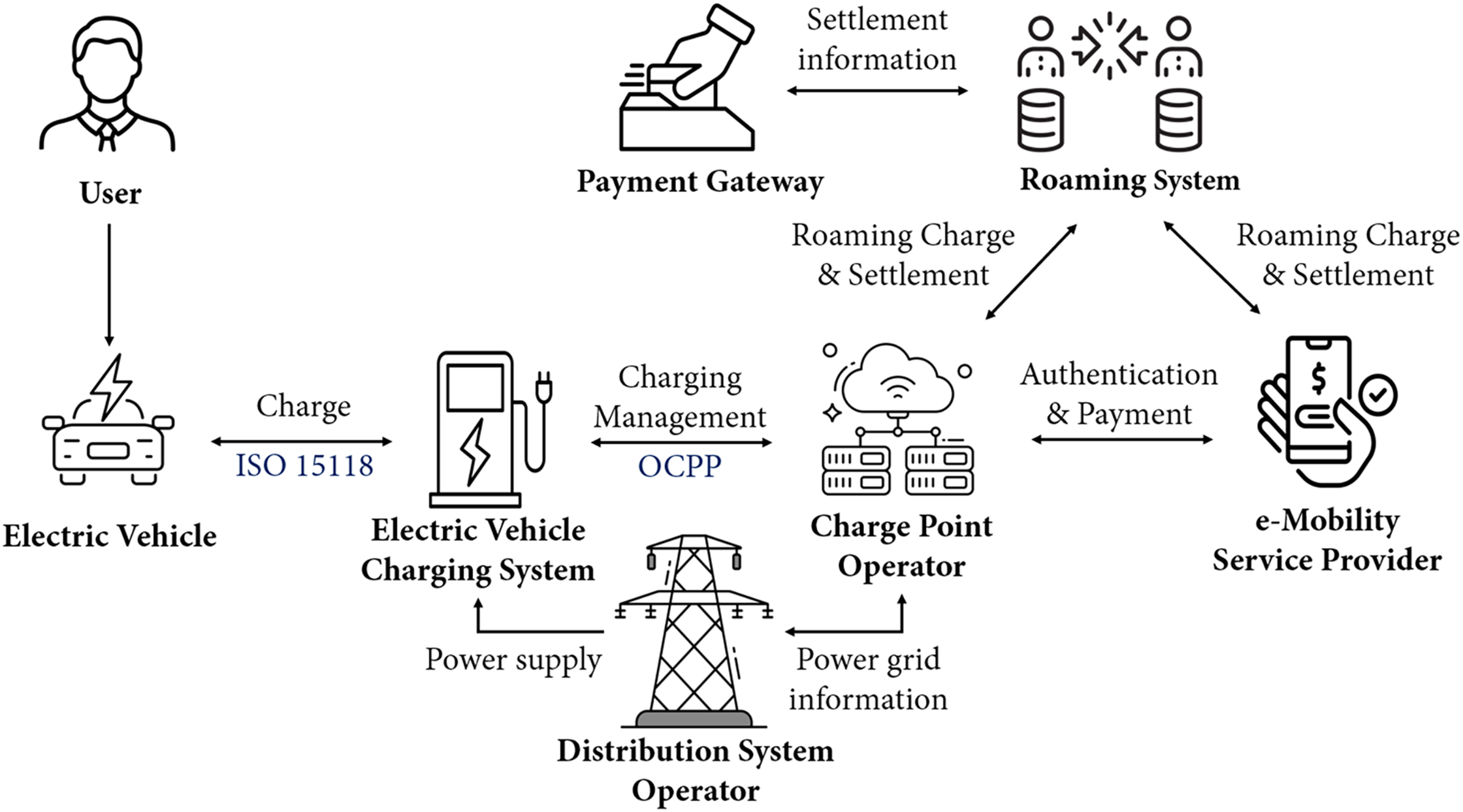
Figure 1: Overall electric vehicle charging ecosystem
• Users: primary stakeholders initiate charging sessions by physically connecting their EVs to EVCSs. Modern EVs incorporate technology, such as V2G, allowing them to function as energy consumers and providers, returning energy to the grid under certain conditions.
• Electric Vehicle Charging Stations: physical interfaces connect the electric grid and EVs, delivering electrical power through specialized charging terminals equipped with power supply systems and network communication equipment. Advanced EVCSs that are compliant with ISO 15118 support “Plug & Charge,” enabling automatic authentication and billing without user intervention, streamlining user experience but introducing cybersecurity considerations.
• Charge Point Operators (CPOs): entities manage EVCSs via backend management platforms. The CPOs handle charge session management, real-time operational data transmission, firmware updates, and remote command execution via OCPP. These operations produce significant datasets and logs for forensic investigations.
• Distribution System Operators (DSOs): these operators are responsible for managing electrical power distribution networks supporting EV charging infrastructures. The DSOs employ demand-response strategies for load balancing during peak usage periods and coordinate with V2G-enabled EVs to manage grid stability and energy distribution.
• E-Mobility Service Providers (e-MSPs): providers manage user authentication, transaction processing, and customer service. The e-MSPs facilitate a seamless user experience by offering platforms to locate charging stations, process payments, manage user accounts, and provide value-added services, such as loyalty programs and tariff discounts.
• Payment Gateways: systems securely process financial transactions initiated by users via e-MSP platforms. They integrate with EV roaming systems, enabling effective transaction management and cross-provider financial settlements.
• EV Roaming Systems: platforms enhance interoperability across diverse charging networks managed by CPOs. They handle automated authentication, payments, and transaction settlements among operators, significantly improving user convenience and operational efficiency.
This intricate interplay between numerous stakeholders and the extensive data interactions occurring across the ecosystem inherently underscores the necessity of developing and applying structured forensic methodologies. Such methodologies are essential to thoroughly investigate security incidents, attribute actions, and effectively mitigate the diverse cybersecurity risks present in this critical infrastructure.
2.2 Electric Vehicle Charging Network Architecture
The EV charging infrastructure comprises two main domains: the physical layer with hardware components, such as EVs, charging stations, and grid interfaces, and the cyber layer covering software systems and communication networks [14]. This architecture can be extended by referencing models from smart grids, cyber-physical systems, or Internet of Things (IoT) architectures [15–17]. In addition, Fig. 2 illustrates the cyber-physical system-based EV charging architecture in this study, highlighting the structured interactions and data exchanges between the physical hardware, network communications, and application software layers.
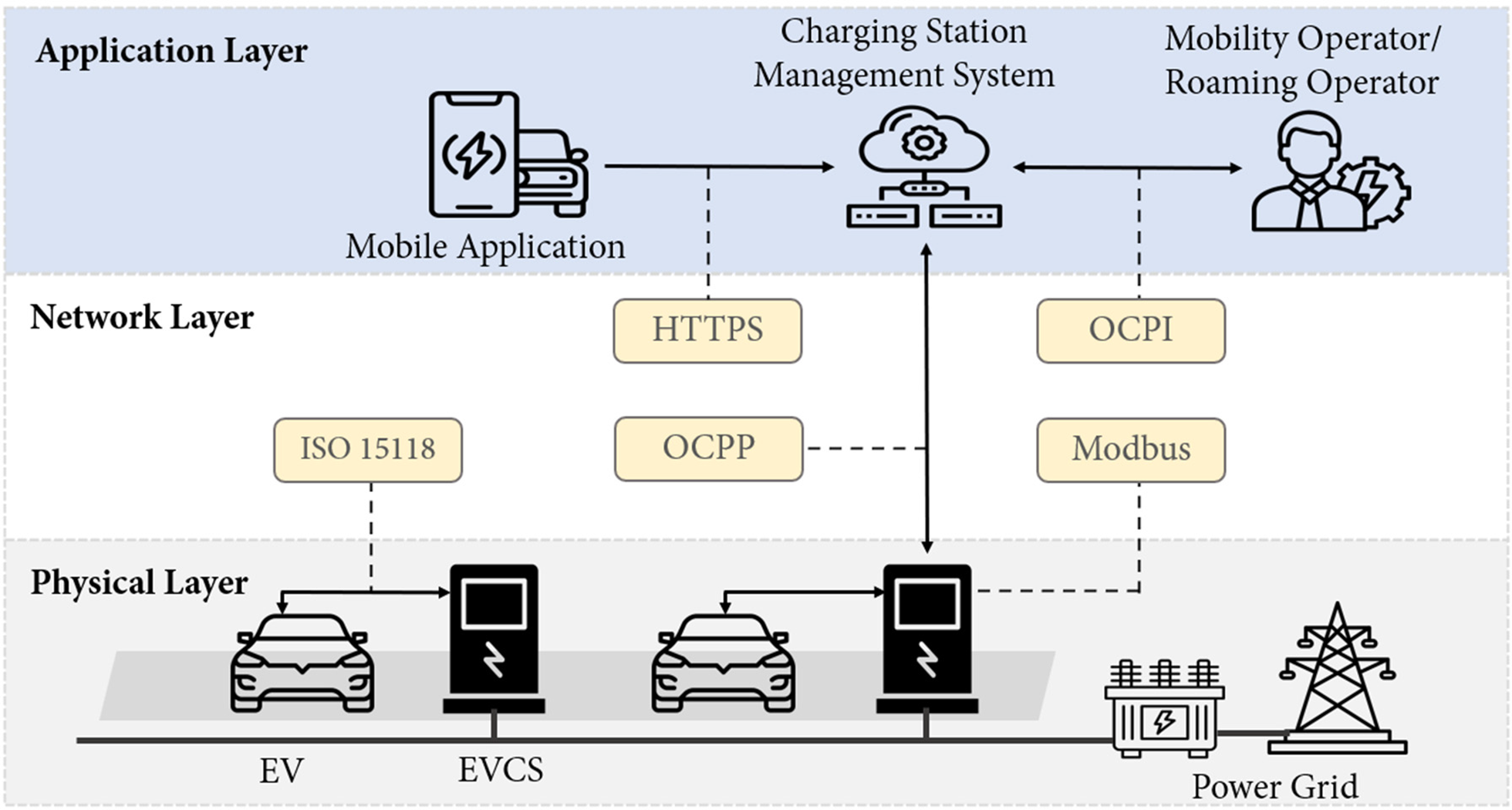
Figure 2: Electric vehicle charging infrastructure network architecture
The physical layer encompasses the hardware components and direct physical interactions involved in the charging process. This layer includes EVs, EVCSs, and the Power Grid. EVs connect to EVCSs via standardized physical connectors. EVCSs manage the physical power transfer and perform essential real-time monitoring of operational parameters for control and safety.
The network layer provides the communication infrastructure enabling data transfer between physical devices and application layer systems, as well as internally within complex devices like the EVCS. Key protocols facilitating these interactions include:
• ISO 15118: governs communication between the EV and the EVCS, enabling secure authentication, authorization, and charging parameter exchange.
• OCPP: manages communication between the EVCS and the CSMS for session management, status reporting, and remote commands.
• Hypertext Transfer Protocol Secure (HTTPS): secures data exchange between the user’s Mobile App and the CSMS.
• Open Charge Point Interface (OCPI): facilitates interoperability and data exchange between the CSMS and Mobility Operator or Roaming Operator platforms.
• Modbus: often employed internally within the EVCS for communication between different hardware modules (e.g., controllers), enabling detailed status monitoring and internal control functions.
The application layer comprises high-level software platforms and services managing overall system operations and user interactions. Key components shown at this layer are:
• Mobile Application: provides end-user interfaces to locate stations, initiate charging sessions, and manage accounts through interaction with the CSMS.
• CSMS: A central backend system managing EVCSs. Its functions include configuration, monitoring, session authorization, firmware updates, and aggregation of operational data received via OCPP.
• Mobility Operator/Roaming Operator: Entities providing services potentially across different charging networks. They interact with the CSMS via OCPI to handle aspects like user authentication, authorization for roaming, and billing data aggregation.
2.3 Cybersecurity Threat Analysis in the Electric Vehicle Charging Infrastructure
Cybersecurity threats to the EV charging infrastructure are diverse and can be effectively analyzed by categorizing them according to the three-layer architecture detailed in Section 2.2. Research has increasingly focused on specific threats at these distinct layers as the infrastructure’s complexity and criticality have grown.
At the physical layer, studies have explored a range of hardware and firmware vulnerabilities. These include risks associated with unauthorized firmware updates, direct physical tampering with charging equipment, the presence of hardware backdoors, and weaknesses in cryptographic practices implemented in charging hardware. Johnson et al. [18] examined such hardware-related risks, with a particular emphasis on vulnerabilities found in charger firmware and associated maintenance interfaces. Ronanki and Karneddi [19] contributed through case studies illustrating sabotage scenarios, such as modification and interference attacks targeting hardware operations, firmware integrity, and the overall operational stability of chargers. Furthermore, empirical studies on deployed infrastructure, like the work by Szakály et al. [20], have revealed practical challenges such as the widespread lack of transport layer security (TLS) encryption in some systems and potential weaknesses in key management and communication establishment processes, leaving systems vulnerable.
Research focusing on the network layer has become increasingly specific, concentrating on detailed analyses of communication protocols critical to EV charging operations, notably the OCPP and ISO 15118. Hu et al. [15] presented a survey identifying various protocol-specific vulnerabilities. These include man-in-the-middle (MITM) attacks, replay attacks, denial-of-service (DoS) threats, and side-channel attacks that exploit weak encryption or insecure implementations of these communication standards.
Concerning the application layer, recent studies have significantly focused on vulnerabilities within mobile applications and backend software systems. This includes extensive evaluations of insecure application programming interfaces (APIs), insufficient authentication methods, and compromised payment processing mechanisms. Concurrently, research by Sarieddine et al. [21] identifies mobile applications as a distinct and significant attack surface, revealing prevalent deficiencies in areas like vehicle ownership verification and authorization processes for critical operations, which could potentially facilitate the remote hijacking of charging sessions.
Table 1 provides a summary of critical cyberattacks identified across these three architectural layers of the EV charging infrastructure. It maps common attack vectors to the affected components, outlines their potential effects, and lists supporting literature.

3 Proposed Digital Evidence Analysis Method
To address the complexities inherent in investigating security incidents within the EVCI, this section introduces a systematic, multiphase method for the analysis of digital evidence. This method, which integrates OSINT as a cross-cutting element, provides a structured approach to decompose system intricacies, guide evidence collection, facilitate comprehensive analysis, and enable robust incident reconstruction. Fig. 3 outlines the core of this method, which consists of four foundational phases: (1) system modeling, (2) data collection, (3) threat analysis, and (4) digital evidence identification. The outputs of these phases converge into a final investigative synthesis. This structured progression is designed to allow investigators to systematically navigate the complexities of EV charging ecosystems, ensuring a thorough, evidence-based, and repeatable forensic process.
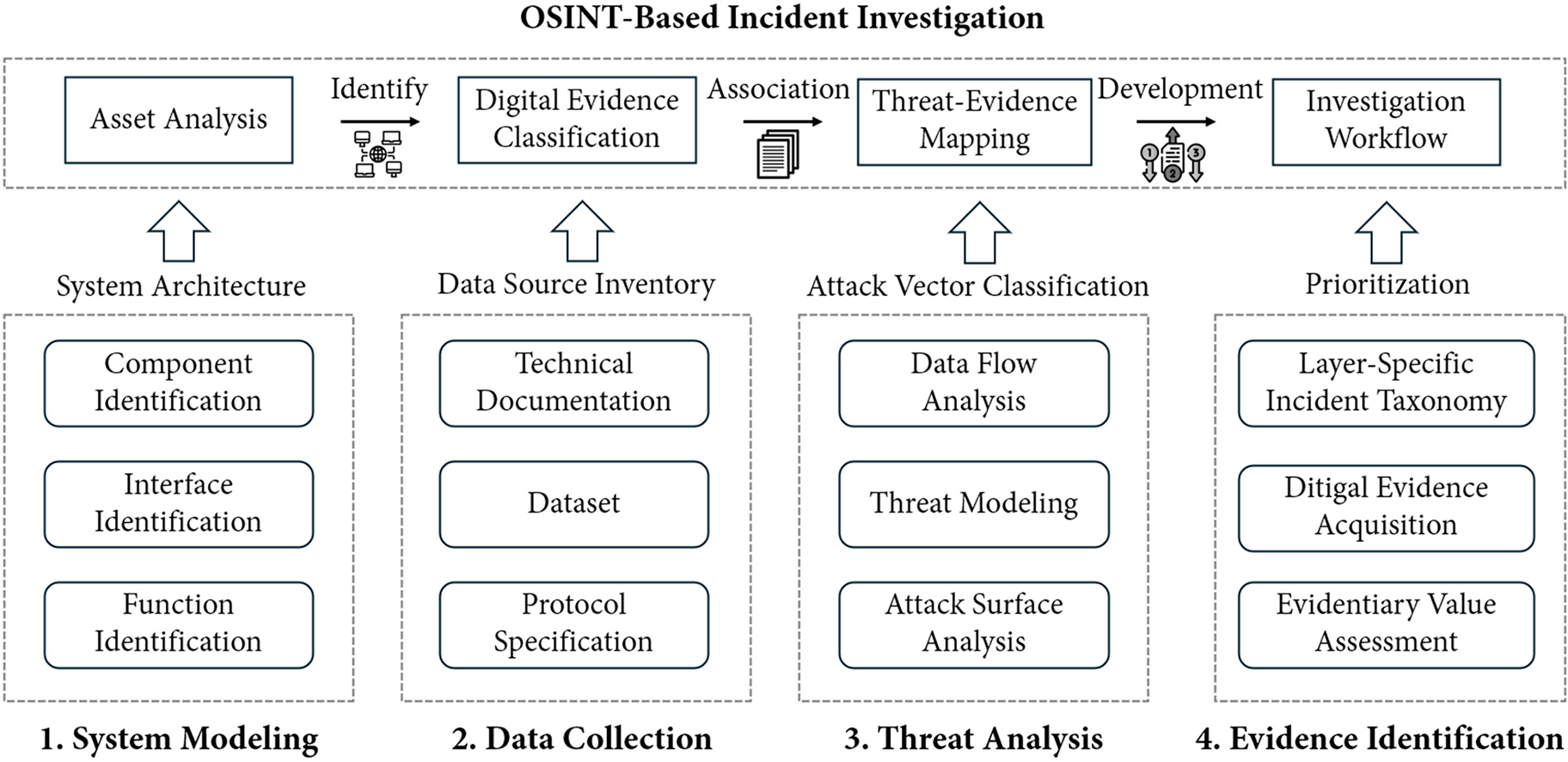
Figure 3: Digital evidence analysis method for the electric vehicle charging infrastructure
To further articulate the procedural logic of this method, Algorithm 1 is presented as a detailed illustration of a potential workflow. This algorithm systematically guides an investigation, commencing with the formal modeling of the target system and the identification of critical assets. Based on this model, it proceeds through structured data collection and threat analysis, which includes attack surface mapping and the correlation of threats with potential digital evidence. The core analytical phase then involves identifying, evaluating, and correlating relevant forensic digital evidence to reconstruct incident timelines and events. Ultimately, these results are synthesized into structured investigation findings. Algorithm 1 thus details an exemplary sequence of operations and the flow of information between the phases depicted in Fig. 3, offering a computationally grounded and repeatable procedure for conducting forensic investigations in this domain.

The subsequent subsections will detail the specific procedures, formalisms, and data utilized within each phase of this proposed method.
The system modeling phase establishes the structural foundation for the proposed forensic investigation framework. Its objective is to create a precise and manageable model of the target EV charging infrastructure, explicitly identifying components, interfaces, their functions, and critical data flows pertinent to post-incident analyses. This comprehensive architectural decomposition is crucial for navigating the complexities of distributed and often proprietary charging systems, enabling investigators to effectively target relevant data sources and potential points where digital evidence may be generated.
3.1.1 Component Identification
This initial step identifies all relevant hardware and software elements within the investigation’s scope. Formally, we define the set of components as
3.1.2 Interface Identification
The next step is to map the communication links and protocols that connect the identified components. The system’s interaction structure is formally modeled as a directed graph
This step involves documenting the critical operational functions performed by the identified components and interfaces, particularly those relevant to potential security incidents. A set of critical functions
The intended output of this system modeling phase is a formalized initial asset analysis. Based on the modeled graph
Following the system modeling phase, the data collection process focuses on systematically gathering diverse data sources essential for the subsequent data-driven analysis of potential digital evidence. This phase is guided by the formal system model (
The primary categories of data sources to be considered include technical documentation, compliance requirements, operational datasets, and specific communication protocol standards relevant to the interfaces (

This involves gathering specific documents describing the target system’s implementation, focusing on critical assets (
The Data Source Inventory (
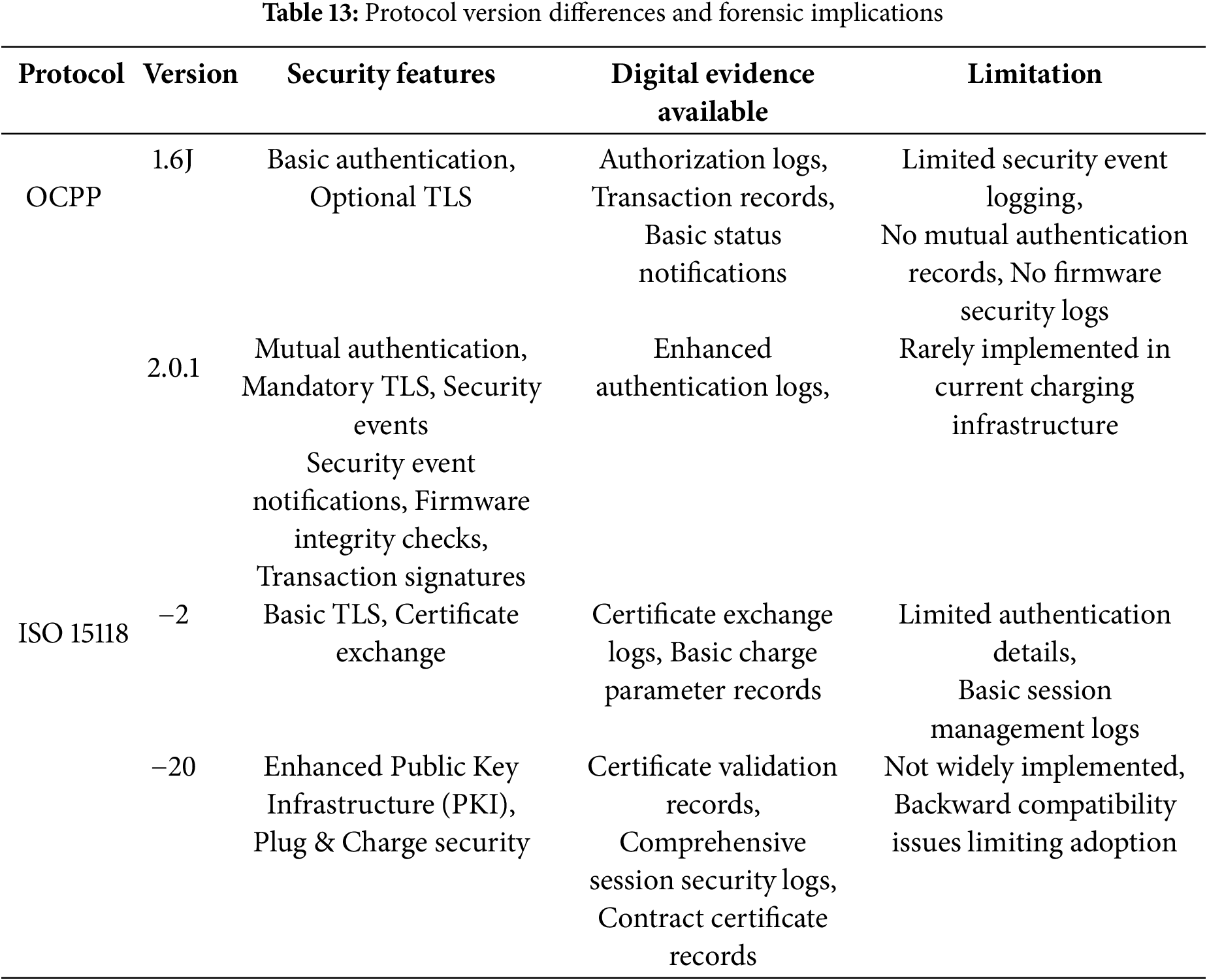
Precise technical specifications for communication protocols (
The threat analysis phase undertakes a systematic identification and evaluation of cyber threats pertinent to the EV charging infrastructure, as formally modeled by the system graph
This initial step scrutinizes the communication pathways and data exchanges between system components (
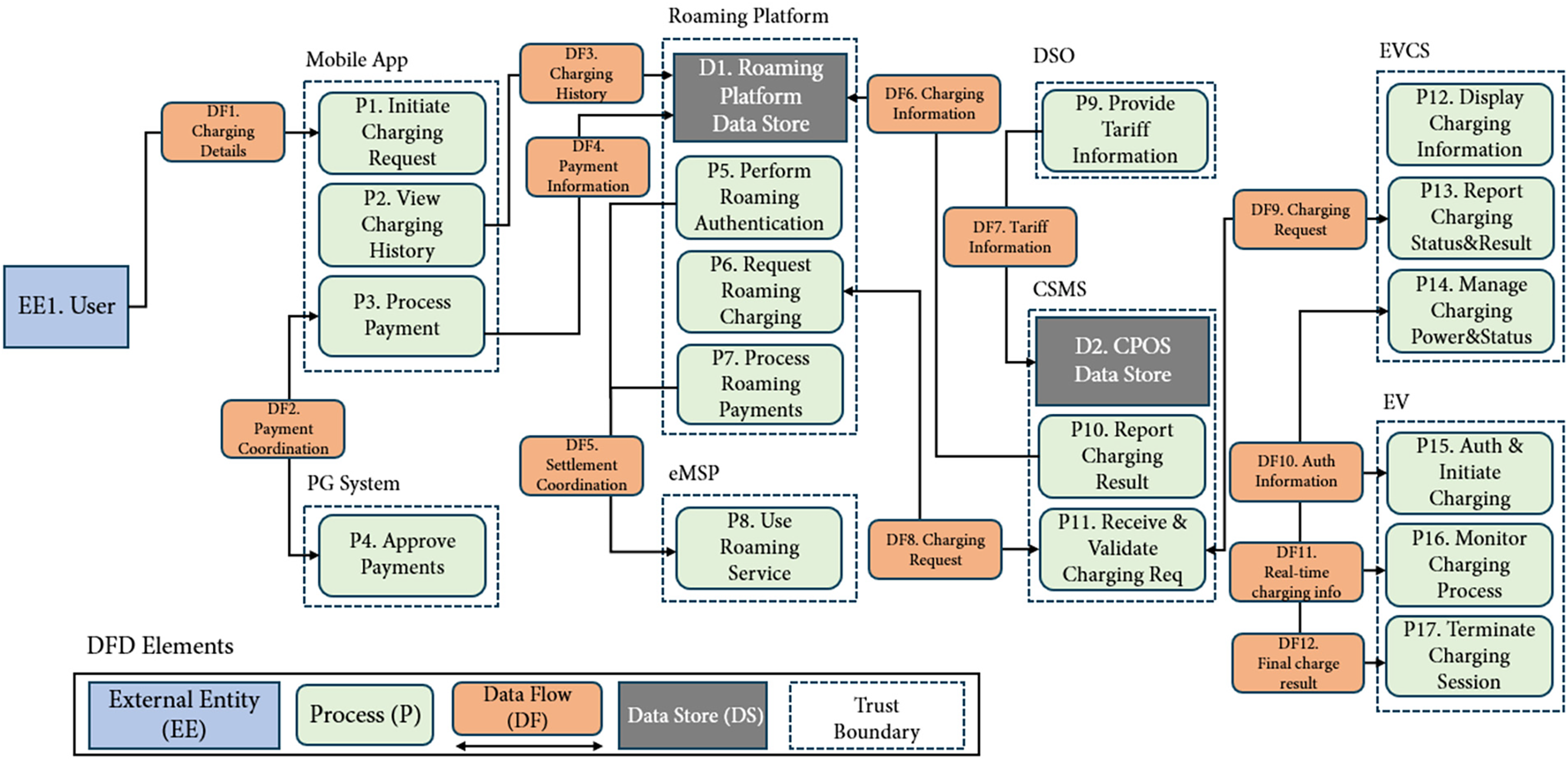
Figure 4: Data flow diagram of electric vehicle charging infrastructure
Threat modeling extends the insights from data flow analysis by applying established methodologies, such as STRIDE (Spoofing, Tampering, Repudiation, Information disclosure, Denial of Service, and Elevation of privilege), to categorize and identify potential threats relevant to the EVCI, possibly drawing from a predefined threat taxonomy [22,31]. This approach links identified data flows and system elements to potential threat vectors. For example, spoofing threats might compromise EV-to-EVCS authentication processes (potentially related to interfaces using piso15118), while tampering could alter metering data transmitted via OCPP. This structured analysis helps reveal how adversaries might exploit system weaknesses and results in the identification of a set of relevant threats for the investigation, guiding the subsequent search for associated forensic evidence.
The attack surface analysis synthesizes the findings from data flow analysis and the identified threats to provide a comprehensive mapping of the system’s attack surface. This involves identifying all interfaces and components in
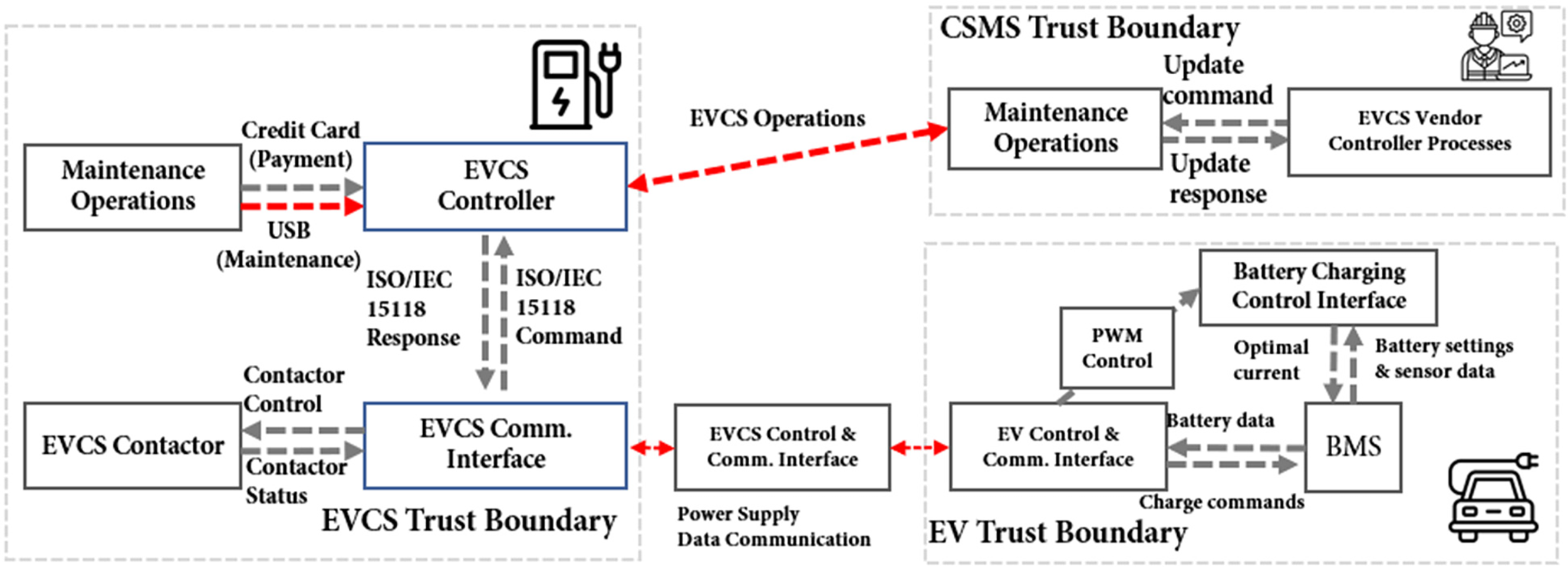
Figure 5: Identifying the attack surface in the EV charging infrastructure
3.4 Digital Evidence Identification
This final core phase of the proposed framework focuses on enumerating, acquiring, and evaluating digital evidence with forensic value. The process is critically guided by the Threat-Evidence Map generated in the preceding Threat Analysis phase (Section 3.3), which links identified threats to potential digital evidence. Utilizing
3.4.1 Layer-Specific Incident Taxonomy
To effectively utilize the
• Physical layer: physical layer incidents include hardware tampering, unauthorized physical access, or power grid disruptions. For instance, tampering with EVCS units (
• Network layer: network layer incidents encompass attacks on communication protocols (
• Application layer: application layer incidents involve breaches at the software level, such as unauthorized access to management systems (
This step details the process of identifying and acquiring specific digital evidence pertinent to the forensic investigation. Guided by the Layer-Specific Incident Taxonomy and the
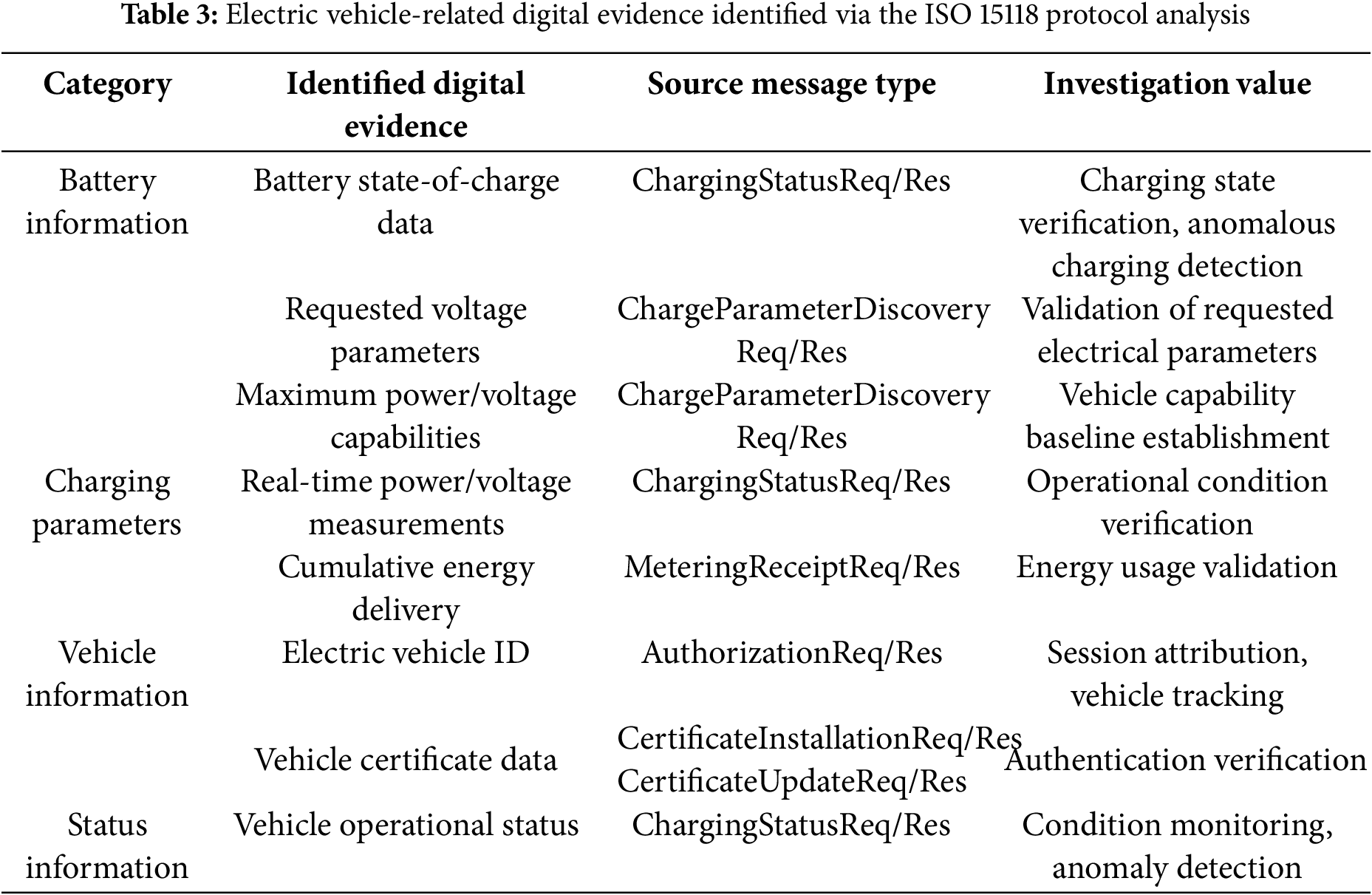


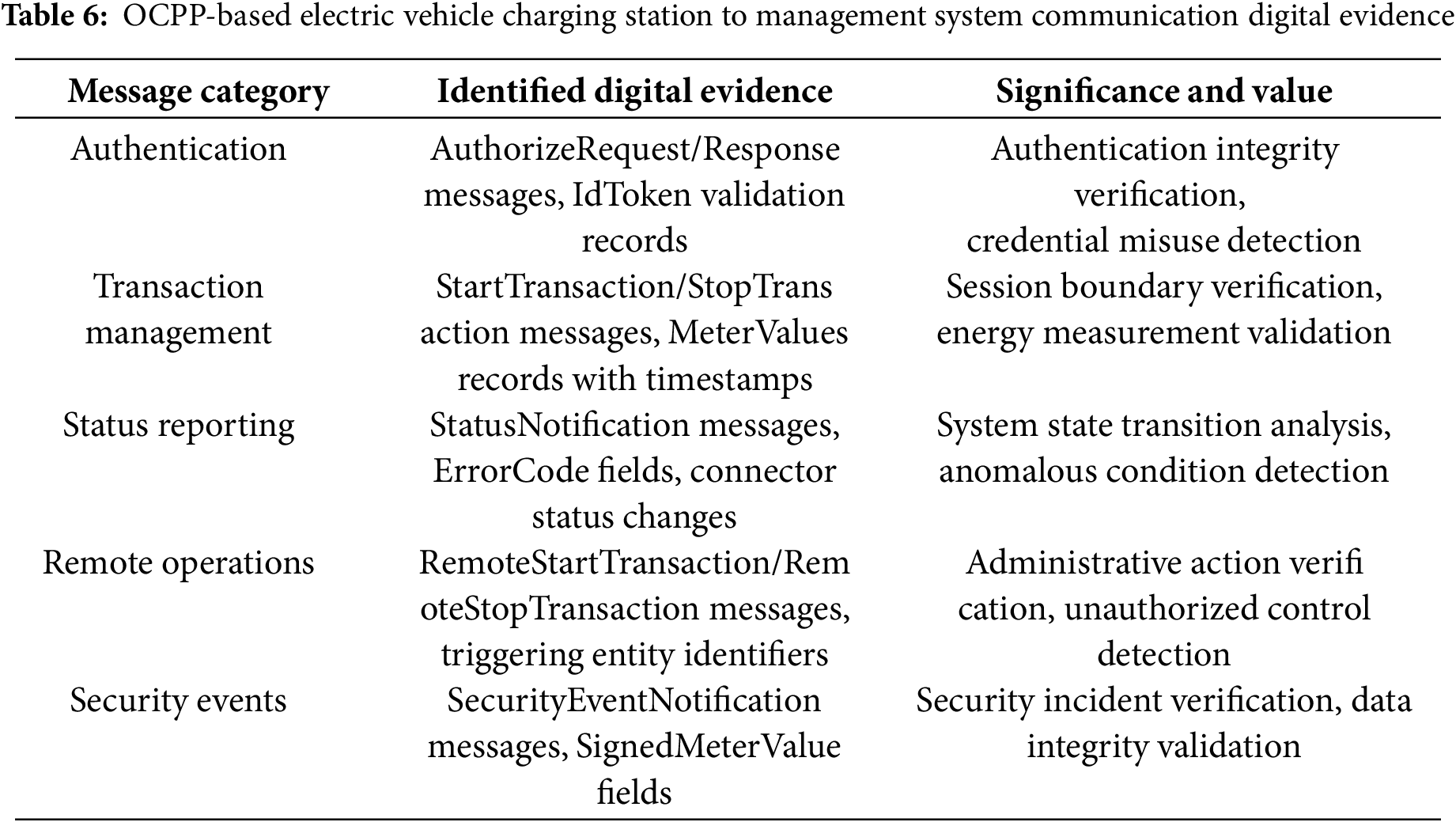

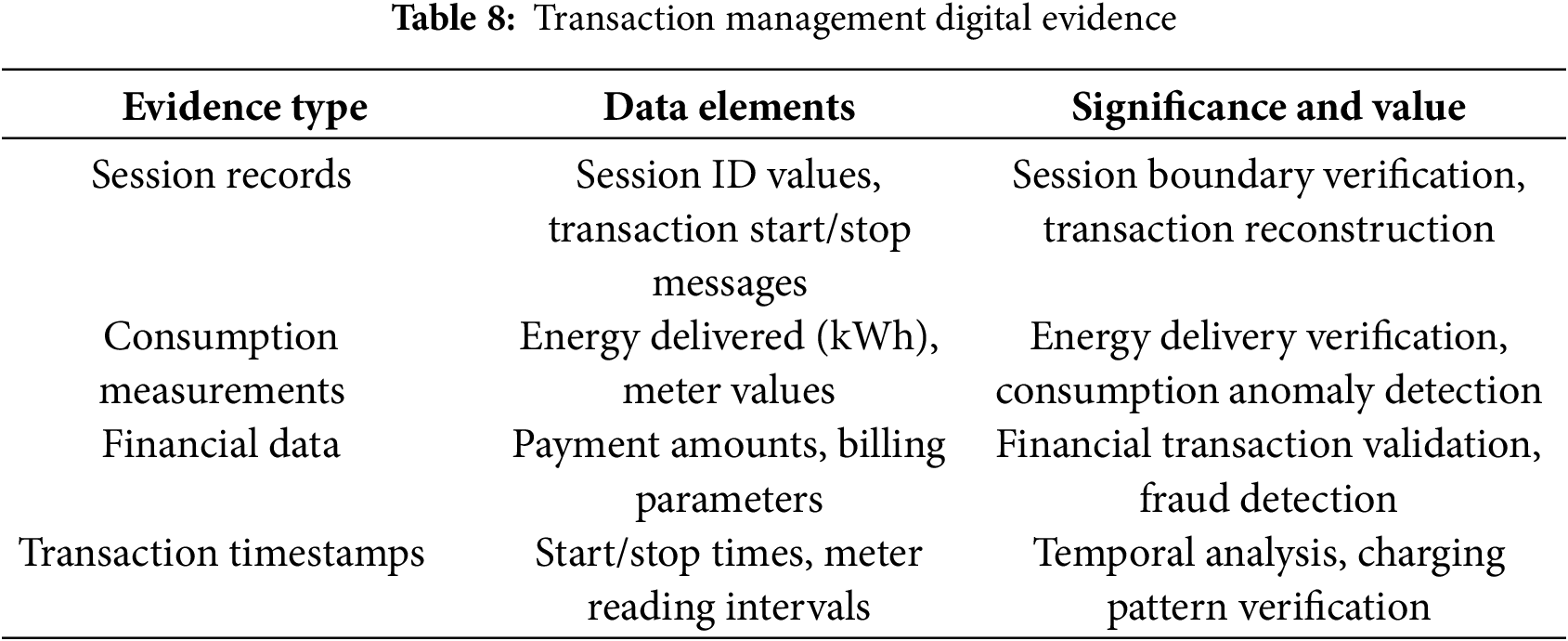

Physical layer digital evidence originates from hardware components (
• EV-related digital evidence: analysis of standards such as ISO 15118-2 reveals message types generating valuable digital evidence [49]. Message structures identified (e.g., from specific standard sections) yield digital evidence detailed in Table 3, representing critical evidence for physical layer incidents.
EVCS-related digital evidence: comparative analysis of multiple charging session datasets (examples referenced in Table 2 and detailed in Appendix A) enables the identification of common digital evidence generated across diverse charging systems (
Network layer digital evidence comprise data generated during communications between components over interfaces (
• EV-to-evcs communication digital evidence: analysis extends beyond the ISO 15118 message content (as referenced for physical digital evidence) to include network-level communication traces with significant forensic value, detailed in Table 5. These encompass physical connection signals, handshake parameters, security mechanism traces, and connection events.
• EVCS–CSMS communication digital evidence: the OCPP protocol governs standardized communication between
Application layer digital evidence encompass data generated by management systems (
• Authentication digital evidence: the OCPP generates several authentication-related digital evidence for forensic investigation as detailed in Table 7.
• Transaction management digital evidence: Table 8 shows consistent transaction-related digital evidence across implementations, vital for verifying session details and financial data.
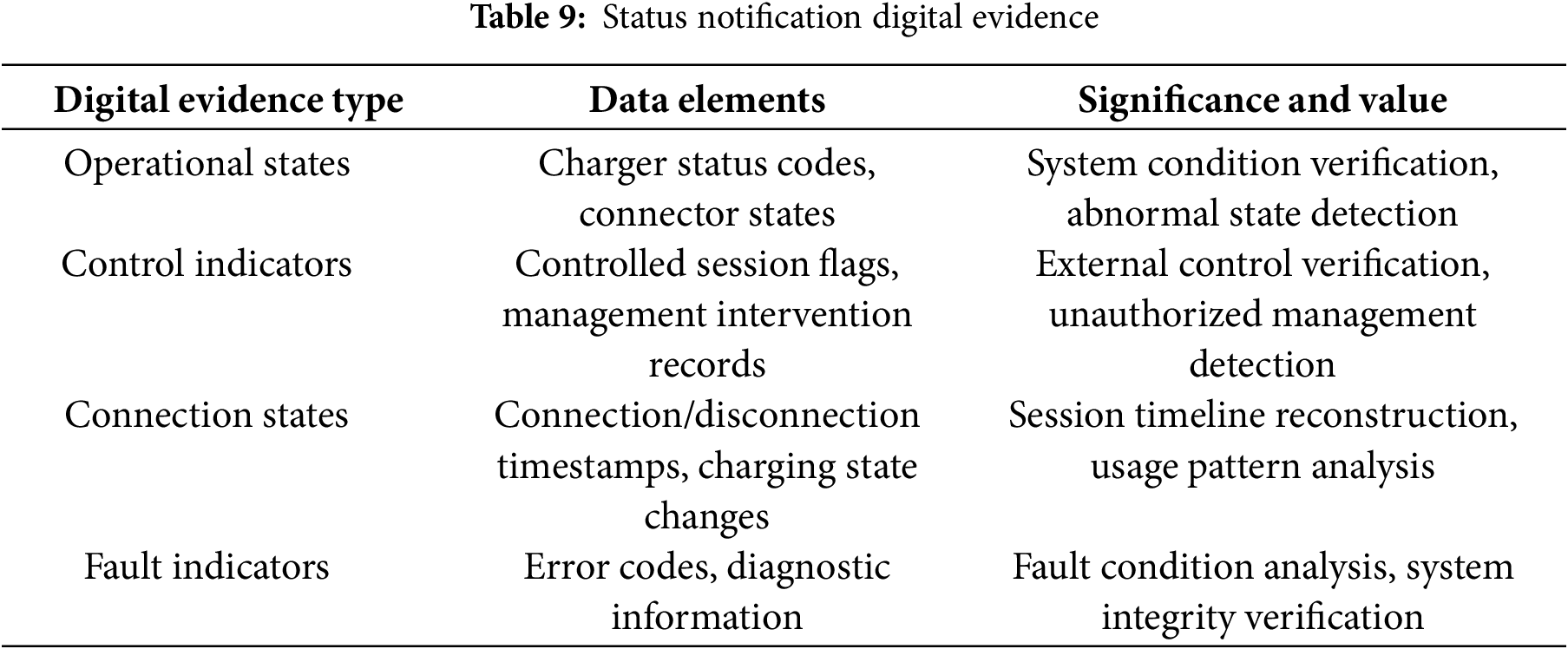
• Status notification digital evidence: critical evidence regarding system conditions, derived from OCPP status notifications, is presented in Table 9.
• System management digital evidence: management-level digital evidence documenting administrative actions via OCPP are outlined in Table 10.
The collection and categorization of these diverse digital evidence (
3.4.3 Evidentiary Value Assessment
Following the acquisition of potentially relevant digital evidence (
We define the Evidentiary Value
where
• Relevance (
• Reliability (
• Temporal Fidelity (
• Completeness (
A critical consideration for the practical application of Eq. (1) is the necessary development of specific, objective rubrics or detailed mathematical formulas to operationalize each scoring function
This section validates and demonstrates the practical applicability of the data-driven forensic method proposed in Section 3. The efficacy of the method is illustrated through its application to credible threat scenarios, some derived from empirical security research targeting EVCSs and others elaborated as representative virtual incident investigation scenarios. These case studies demonstrate the application of the structured forensic workflow. This workflow is conceptually guided by the phases outlined in Fig. 3 and the procedural logic illustrated in Algorithm 1, integrating system modeling, OSINT-informed data collection, threat analysis, digital evidence identification, conceptual evidentiary value assessment, and systematic investigation principles. The objective is to substantiate the method’s capacity to address complex forensic challenges within contemporary EV charging ecosystems, thereby aiming to enhance forensic readiness and response capabilities.
4.1 Digital Evidence Analysis Based on Demonstrated Threat Scenarios
This first case study focuses on the forensic investigation process for incidents corresponding to threat vectors whose viability and influence were empirically confirmed by the Electric Vehicle Secure Architecture Laboratory Demonstration (EV SALaD) project [27]. The significance of using these EV SALaD findings is their empirical validation. The project moved beyond theoretical vulnerabilities to demonstrate tangible attack consequences on real-world extremely fast charging systems. Therefore, the observable outcomes documented during these demonstrations represent high-fidelity examples of potential security incident manifestations.
Table 11 presents these empirically observed outcomes as potential incident scenarios that a forensic investigator might encounter. The descriptions focus on the observable results of the incident, facilitating the forensic task of determining the cause. This approach aligns with the initial investigation phase, where the primary information is often the manifestation of the problem itself.

4.1.1 System Modeling for Digital Evidence Analysis
Following the method outlined in Section 4.1 and the System Modeling procedure in Algorithm 1, we constructed a detailed system model relevant to the scenarios in Table 11. This involved identifying the key system components (

This model synthesizes the architectural representations in Figs. 1 and 2. Regarding the physical layer, relevant hardware components identified in Table 12 include the HMI display systems, power conversion modules, cooling management subsystems, and input contactors. The interface mapping identified critical communication pathways, such as the internal bus between the HMI display and the central controller (relevant to Scenarios 1–3) and interfaces controlling the power module and cooling system (relevant to Scenarios 4–7). The function identification process revealed that these components execute critical operations like power delivery control, thermal regulation, and safety monitoring, generating forensically significant data. The model also captures network layer interfaces like the EV-EVCS communication (using CCS/CHAdeMO) and the EVCS-CSMS communication (using OCPP), relevant to Scenarios 8–11.
4.1.2 Data Collection Application
This phase focused on gathering diverse data sources essential for the investigation. The collection was specifically targeted towards obtaining information related to the key system components and interfaces identified in the system model (Table 12). The primary goal was to compile a comprehensive Data Source Inventory (
The technical documentation analysis focused on specifications like ISO 15118 and OCPP, which define the communication structure pertinent to the interfaces listed in Table 12. These specifications supply detailed message formats, data fields, and parameter definitions crucial for interpreting communication digital evidence potentially present in the collected data.
The dataset analysis incorporated multiple datasets identified during data collection (examples referenced in Table 2 and detailed in Appendix A), including the Multifaceted Analysis of EV charging data, DESL-EPFL data, and DOE EV charging data. These datasets provided baseline behavioral patterns for charging operations related to the modeled components (EV, EVCS), enabling the identification of anomalous activities characteristic of the security incidents described in Table 11.
The examination of the protocol specifications (part of the
4.1.3 Threat Analysis Based on Incident Scenarios
The threat analysis procedure utilized the system model and the collected data sources and potential digital evidence from the previous phase as primary inputs, along with incident information (
The data flow analysis scrutinized communication pathways between the system components and across interfaces defined in Table 12. For Scenarios 1 to 3 involving HMI anomalies, we mapped the flow of display instructions from the EVCS Controller to the EVCS HMI, identifying potential interception points on the EVCS Internal Interface. For Scenarios 4 to 7 affecting power and thermal systems, we traced control signals between the EVCS Controller, Power Module, and Thermal Management system via internal interfaces, highlighting vulnerable points where malicious commands could be injected. For communication-related scenarios (8 to 11), we analyzed the bidirectional data flows over the EV-EVCS and EVCS-CSMS interfaces, identifying potential protocol vulnerabilities.
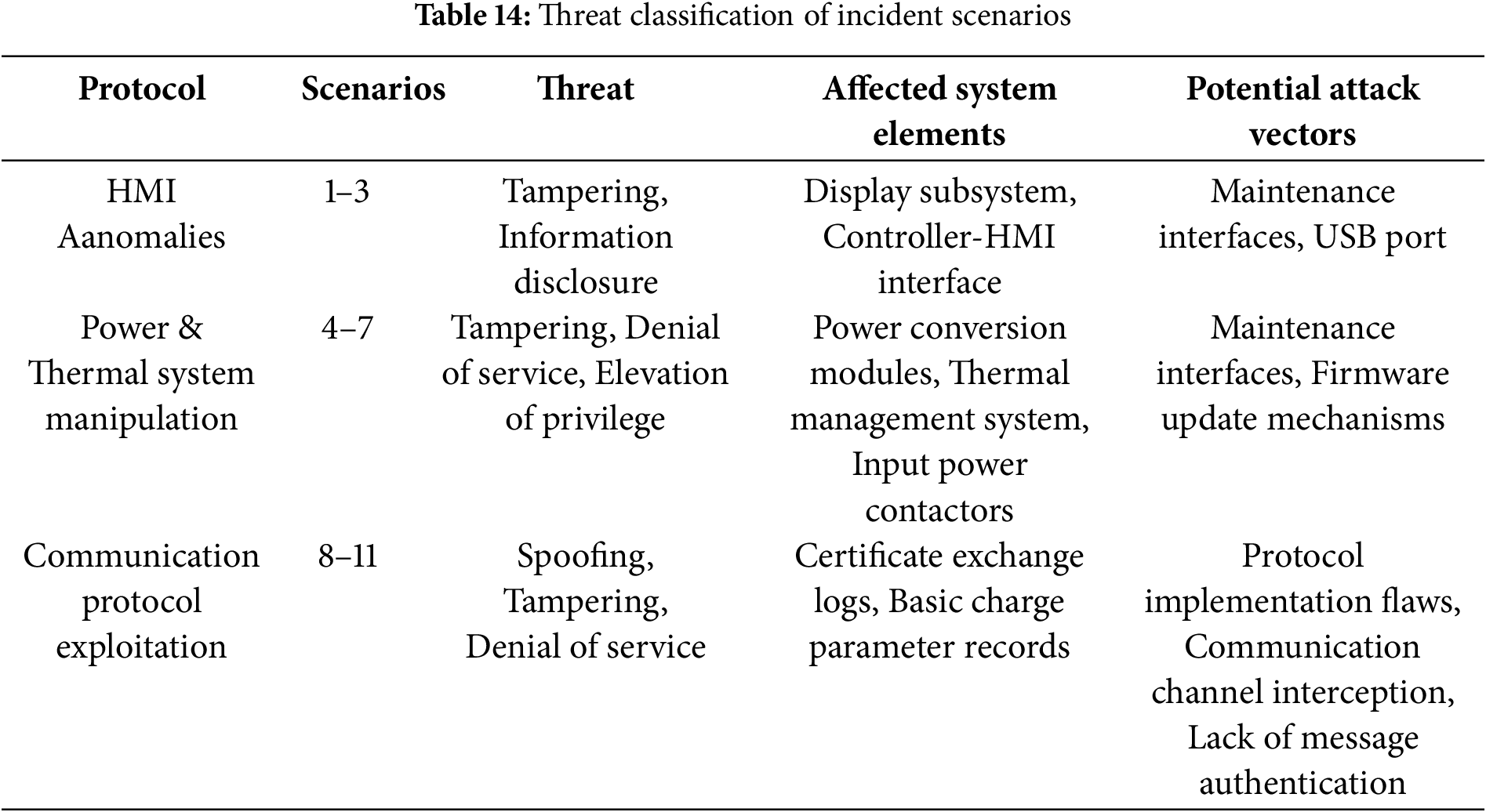
Threat modeling then classified each scenario according to its predominant threat category using the STRIDE framework (drawing from
The attack surface analysis integrated these findings to map the system’s overall
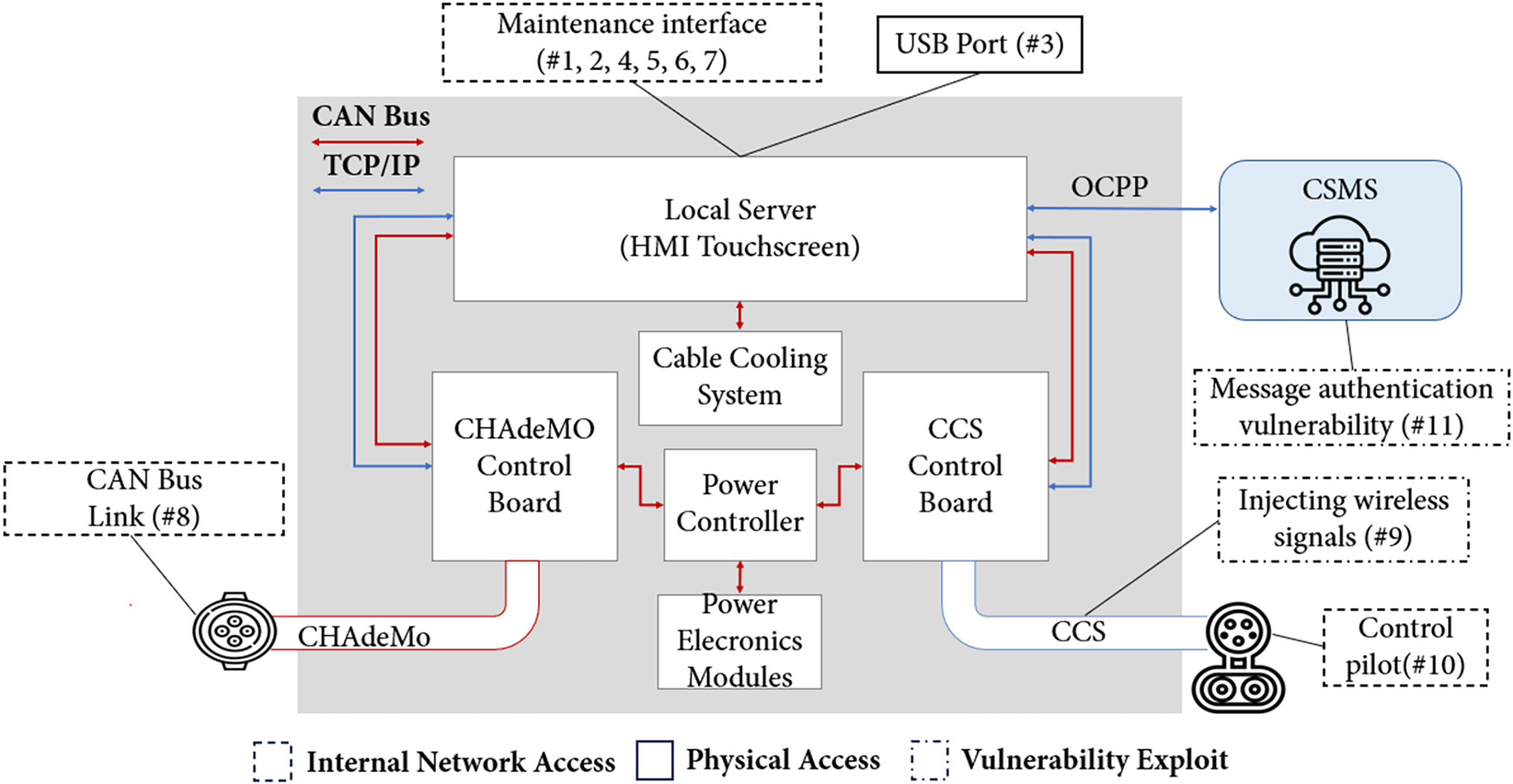
Figure 6: Attack surface identification for EV charging infrastructure incident scenarios
The key output of this phase, the
4.1.4 Layer-Specific Digital Evidence Identification
This procedure systematically processes potential evidence based on the findings from the preceding threat analysis phase. Key inputs for this procedure, as defined in Algorithm 1, include the
For HMI-related incidents (Scenarios 1 to 3), the Evidence Analysis procedure, guided by the relevant part of MTE, focused on identifying digital evidence from the EVCS Controller and HMI components (Table 12). Key
For power and thermal management incidents (Scenarios 4 to 7), the analysis targeted digital evidence related to the EVCS Power Module, Thermal Management system, and Input Contactor. Relevant digital evidence identified through the process included power module control signals, real-time power/voltage measurements (potentially derived from ISO 15118 messages exchanged over the EV-EVCS interface, if logged), thermal management system logs documenting cooling system behavior, state transition records, and internal network traffic captures (EVCS Internal Interface). However, our analysis, stemming from the difficulty in acquiring sufficient
For communication protocol incidents (Scenarios 8 to 11), the focus was on digital evidence generated during communications over the EV-EVCS and EVCS-CSMS interfaces. Significant
The analysis revealed substantive patterns in digital evidence availability and utility across these scenarios. Physical layer digital evidence provided the most direct evidence of system manipulation but were often inadequately logged in existing implementations. Network layer digital evidence offer the most consistent forensic value, particularly when protocol-level traffic is comprehensively captured. Application layer digital evidence vary significantly in forensic utility depending on implementation-specific logging practices, with substantial inconsistencies across charging networks. These patterns strongly highlight the need for improved standardization of forensic logging practices across the EV charging ecosystem to ensure sufficient high-value digital evidence (
4.2 Case Studies Based on Virtual Scenarios
This section extends the application of the forensic method proposed in Section 3 beyond the empirically derived scenarios presented in Section 4.1. We explore four hypothetical yet plausible incident scenarios in the EV charging infrastructure, each representing a distinct category of security threats with significant forensic implications. These scenarios were selected primarily to demonstrate the adaptability of our forensic method’s analytical logic and procedural flow across diverse investigative contexts that charging infrastructure operators and forensic analysts might encounter. It is important to note that these virtual scenarios, while designed for plausibility, are illustrative and serve to explore the method’s application under assumed data conditions; they do not represent empirical validation based on real-world incident data. The analytical checks and equations (Eqs. (3)–(6)) presented within these scenarios operate on conceptual data inputs. Table 15 provides an overview of the four virtual scenarios explored. Unlike the scenarios in Section 4.1, these virtual scenarios often represent complex, multi-stage security events, allowing for a broader exploration of the method’s potential application.
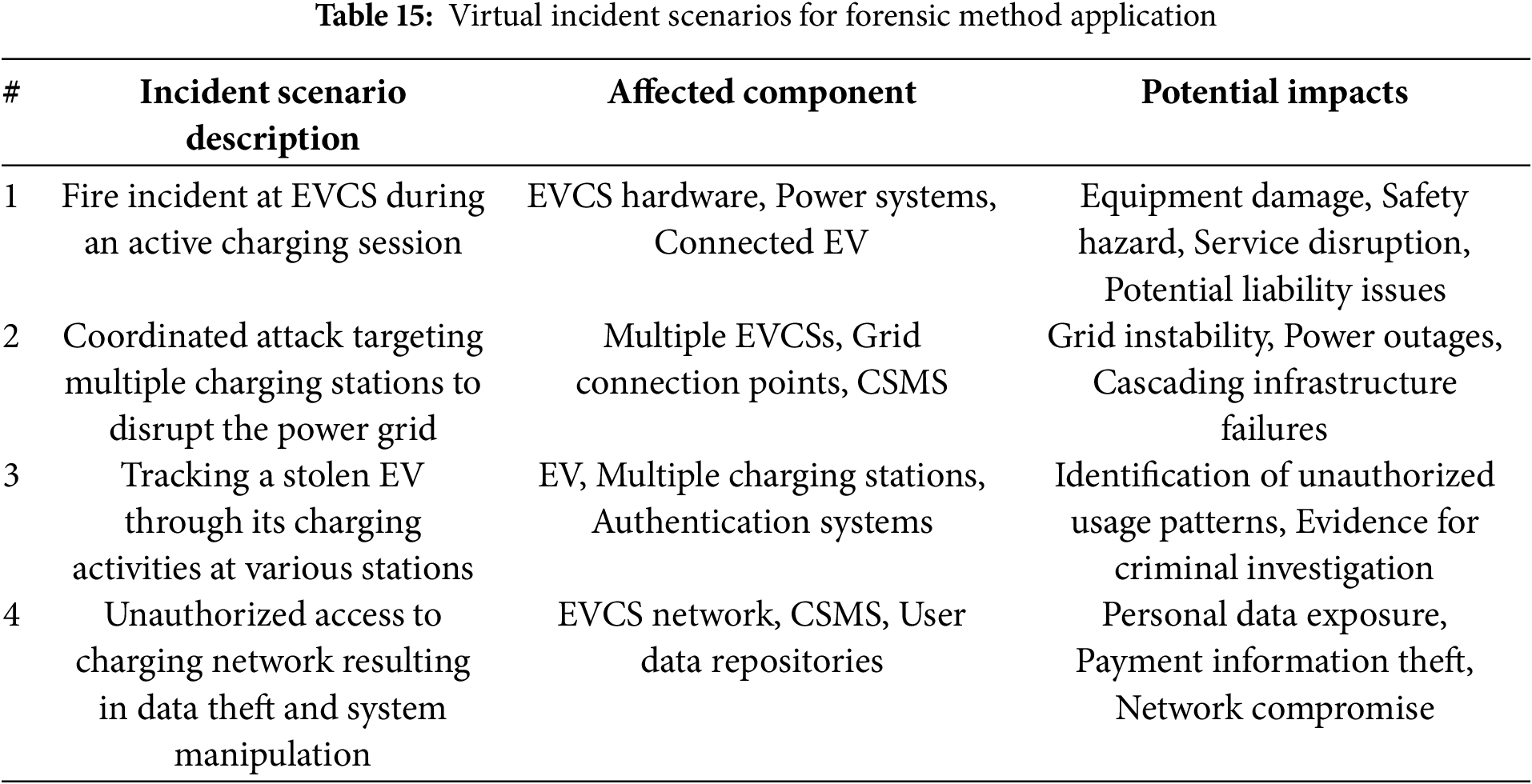
4.2.1 Investigation of an Electric Vehicle Charging Station Fire Scenario
This first virtual scenario involves a fire incident at an EVCS. The potential causes are varied, including EVCS malfunction, EV battery faults, user actions, or external environmental factors. Applying the structured forensic method proposed herein, the goal of the investigation is to determine the root cause. The process involves identifying and acquiring critical digital evidence, such as battery SoC information from the EV, EVCS data, and corresponding user authentication/payment data from the CSMS. The subsequent analysis phase examines these identified digital evidence for anomalies and correlations indicative of the fire’s origin. For example, scrutinizing power logs (
Further analysis would involve examining EVCS status codes and EV SoC data for electrical faults (overvoltage, overcurrent, overcharging), analyzing power logs for other abnormal requests or delivery patterns, reviewing available environmental sensor data (temperature, water ingress), and correlating CSMS data with the incident timeline to assess user actions. Finally, synthesizing the findings from the correlated evidence allows inferring the most probable cause.
4.2.2 Investigation of a Grid Attack Scenario via Charging Stations
This scenario considers a coordinated attack leveraging the EV charging infrastructure to disrupt the electrical grid. Guided by the proposed systematic method, the investigation aims to identify the attack vector, method, and involved entities. Critical digital evidence identified during the evidence analysis phase include EV SoC data, EVCS power logs, charger status codes, EVCS-CSMS communication logs (OCPP), session timing data, and CSMS logs (user authentication, network traffic, OS access).
The analysis phase focuses on detecting anomalies indicative of such a coordinated attack across multiple chargers. As an example of specific logic that could be applied, detecting potentially coordinated high charging demands might involve a check like the one defined in Eq. (4). In this equation,
Beyond such specific checks, the broader analysis involves scrutinizing power logs and status codes for abnormal grid feedback or simultaneous faults. Communication logs and session timing data are analyzed for patterns suggesting orchestrated commands or communication jamming. CSMS logs are assessed for evidence of unauthorized access or command injection targeting grid interaction parameters. Correlating suspicious network activity with authentication data helps identify compromised accounts or actors involved. Consolidating the evidence then confirms the nature and source of the attack.
4.2.3 Investigation Tracking a Stolen Electric Vehicle
This scenario involves tracking a stolen EV using charging station data. Following the defined forensic process, the investigation focuses on reconstructing the vehicle’s location and movement patterns. Essential digital evidence identified during the investigation include the stolen vehicle’s unique identifier (
The core of the analysis involves querying CSMS and EVCS logs using the (
In addition to path reconstruction, the SoC data recorded at the start and end of the identified sessions can help estimate the travel range and predict potential subsequent locations. Analysis of the requested power data might also help distinguish the stolen vehicle’s unique charging signature. Furthermore, user authentication information and network logs associated with these sessions can provide clues regarding the perpetrator’s methods or location. Integrating these digital findings with physical evidence (e.g., CCTV footage from charging sites) completes the investigation picture.
4.2.4 Investigation of Charging Station Hacking and the Data Breach Scenario
This scenario addresses a compromise of the charging network or CSMS for data exfiltration or manipulation. Following the proposed structured approach, the investigation aims to determine the intrusion vector, breach scope, data manipulation, and trace attacker activities. Relevant digital evidence identified during the analysis include potentially compromised data (EV IDs, SoC logs), charger/location info, OCPP logs, session times, and critical CSMS logs (authentication, network traffic, OS access, database audit, firewall).
The analysis phase focuses on identifying the breach point and potential data exfiltration pathways. For instance, network traffic logs (
In addition to network traffic analysis, CSMS access logs are examined for unauthorized access attempts or privilege escalation. OCPP communication logs are reviewed for signs of data tampering or unauthorized command injections directed at charging stations. Database audit logs are crucial for identifying any unauthorized record modification or deletion. Comparing potentially exfiltrated data with original system records helps determine the scope of the breach and any data manipulation. Correlating various logs allows reconstruction of the attacker’s actions, identifying compromised accounts or systems, and potentially tracing the attack origin. The final phase involves synthesizing the findings into a comprehensive report on the breach.
This section presents the key findings derived from the application and evaluation of the data-driven digital forensic method proposed in this research, which is designed for the complexities of the EV charging infrastructure. The application of this method, conceptually demonstrated through the case studies (Section 4), yielded insights into digital evidence identification, overall analysis capabilities, and, significantly, the critical limitations imposed by current data logging practices within EV charging systems. The following subsections will discuss these findings in detail, assess the effectiveness of the proposed forensic method, elaborate on identified implementation challenges and digital evidence gaps, and outline the limitations of this study along with directions for future work.
5.1 Findings and Effectiveness
The application of the proposed data-driven forensic method, as illustrated through the diverse case studies (Section 4), yielded significant insights into the utility of this structured approach and highlighted the current state of forensic readiness within the EV charging infrastructure. The systematic evaluation of scenarios based on both empirically demonstrated threats and representative virtual incidents confirmed the method’s capability to guide effective investigations, even while simultaneously identifying critical limitations inherent in existing EVCS implementations.
A key finding is that the structured approach, particularly the systematic digital evidence taxonomy developed in Section 3.4, is effective in directing investigators toward high-value evidence sources across all three architectural layers (physical, network, and application) of an EVCS. The method facilitates the identification and classification of diverse forensically relevant digital evidence, including, but not limited to, battery State of Charge data from EVs, operational status codes from charging stations, transaction records from management systems, and protocol-level communication data across various interfaces.
The case studies conceptually demonstrated the strengths of this method in:
• Guiding systematic evidence collection across organizational boundaries and diverse technical domains.
• Facilitating the correlation of digital evidence generated at various architectural layers through a structured and systematic analytical process.
• Supporting comprehensive timeline reconstruction even when evidence sources are distributed.
• Aiding investigators in differentiating between malicious activities and system malfunctions when sufficient digital evidence is available and analytical checks (such as those conceptualized in Eqs. (2)–(6)) can be effectively applied.
For instance, as notionally explored in the virtual fire incident investigation (Section 4.2.1), the method would guide the correlation of physical anomalies (e.g., abnormal charging rates potentially flagged by logic similar to Eq. (3)) with system logs (e.g., error codes) and communication records. Similarly, in the conceptual EV theft investigation (Section 4.2.3), the method’s approach would facilitate cross-network evidence correlation (as illustrated by Eq. (5)) to establish movement patterns. These examples underscore the method’s potential to improve the consistency and reliability of forensic investigations in this domain.
5.2 Implementation Challenges and Digital Evidence Gaps
Despite the potential strengths of the proposed forensic method, its practical application, as indicated by the analysis underlying the case studies (Section 4) and a review of current EV charging infrastructure characteristics, faces significant implementation challenges. These challenges primarily stem from critical gaps in the availability and consistency of digital evidence across existing EV charging systems. Such gaps can severely limit the depth, certainty, and efficiency of forensic investigations, regardless of the analytical method employed. Table 16 summarizes several critical digital evidence gaps that were identified as commonly present or likely in current EV charging systems. The table details these gaps across different architectural layers, outlines their potential adverse effects on forensic analyses, and indicates their typical implementation status.
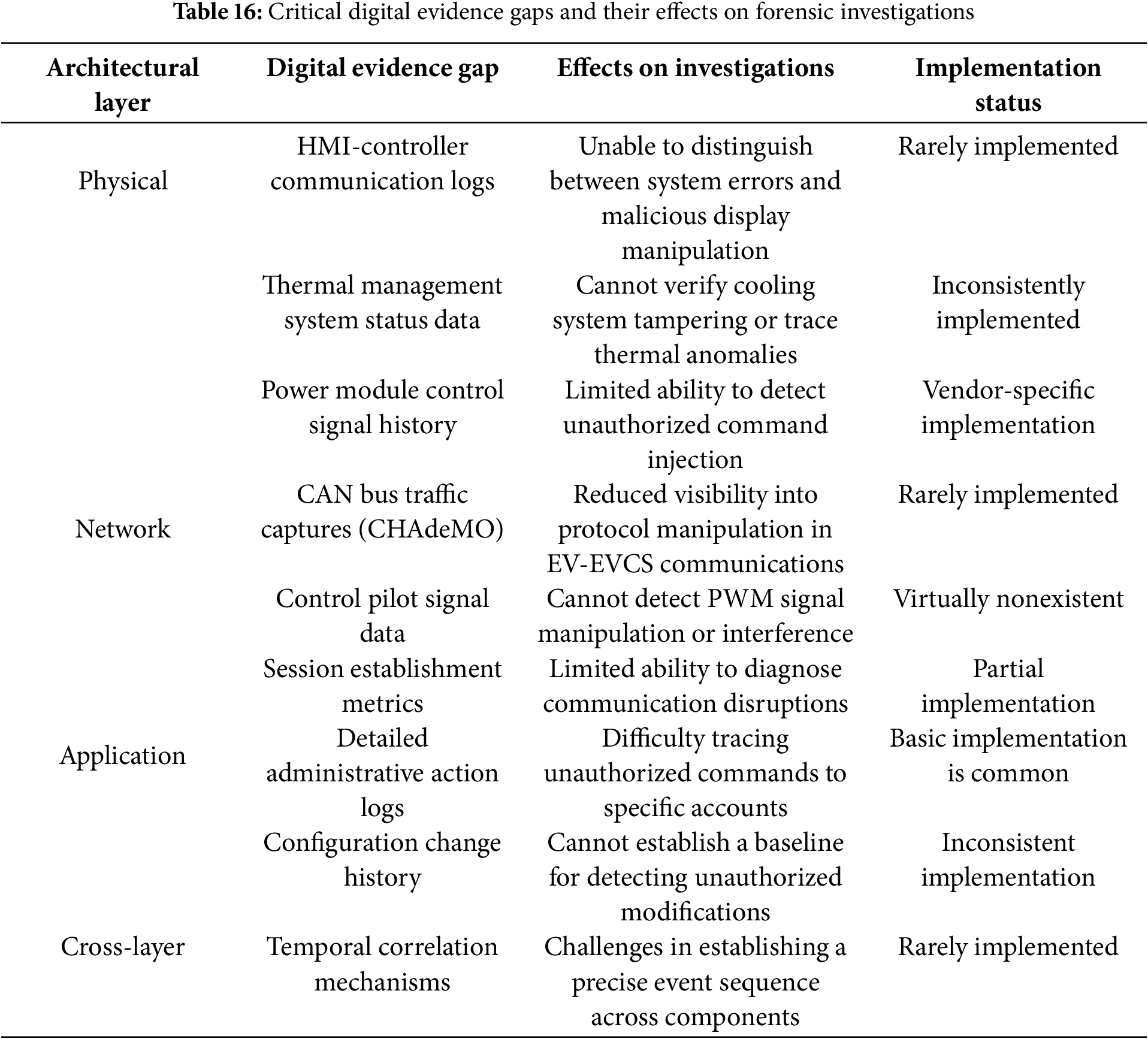
These identified digital evidence gaps significantly impede the ability to conduct comprehensive forensic investigations. For example:
• At the physical layer, the common absence of detailed HMI-controller communication logs (as noted in Table 16) makes it exceedingly difficult to definitively distinguish between genuine system errors and malicious display manipulation in incidents like Scenarios 1–3 (Table 11), even when conceptual analytical checks (e.g., similar to Eq. (2)) are considered. Similarly, insufficient logging of thermal management component states (e.g., cooling pump status, fan activation patterns, precise sensor readings) hinders conclusive determination regarding potential tampering versus hardware failure in thermal incidents (relevant to Scenarios 5 and 6, Table 11).
• Within the network layer, the limited availability of detailed CAN bus traffic captures for protocols like CHAdeMO hampers the investigation of potential protocol manipulation during EV-EVCS communications (related to Scenario 8, Table 11). Furthermore, the near-universal absence of detailed logging for CCS control pilot signal parameters (PWM signals, duty-cycle patterns) impedes the analysis of attacks targeting that specific physical/electrical signaling interface (relevant to Scenarios 9 and 10, Table 11).
• In the application layer, while basic administrative logs might be present, they often lack the granularity necessary to effectively trace unauthorized commands or configuration modifications back to specific accounts or to establish a reliable baseline for detecting unauthorized system alterations.
These examples, drawn from the analysis of potential incident scenarios and the recognized state of current logging practices, underscore systemic challenges in digital evidence availability within many contemporary EVCS implementations. Addressing these gaps is crucial for enhancing forensic readiness and the overall effectiveness of any investigative method. The implications of these gaps for the proposed method and potential avenues for future work, including strategies for dealing with incomplete data, are further discussed in Section 5.4.
5.3 Method Effectiveness Assessment
The application of the proposed data-driven forensic method, as illustrated through the case studies (Section 4), indicates notable improvements in the investigative process, particularly when contrasted with conventional ad hoc or less structured mainstream forensic practices. The method demonstrably enhances the structure, explicitness, and systematic nature of investigations. This structured approach provides investigators with a repeatable and logically organized process, which can be particularly beneficial in complex EVCI environments where mainstream techniques might rely more heavily on individual investigator experience or a disparate set of tools without a unifying analytical workflow. Key aspects of its effectiveness, offering advantages over less systematic approaches, include:
• Enhanced digital evidence management: the method promotes more complete identification and classification of potential digital evidence within the bounds of available data. Its systematic nature helps investigators to methodically consider evidence sources across different architectural layers, increasing the likelihood of uncovering relevant traces that might be missed in less structured approaches.
• Improved correlation and contextualization: by guiding a systematic approach to system modeling, data collection, and threat analysis, the method inherently supports more robust correlation of disparate digital evidence. This allows for better contextualization of individual pieces of evidence and aids in reconstructing a more coherent narrative of events.
• Systematic approach to complex environments: even when faced with challenges such as data gaps or novel attack patterns, the method’s methodical phases encourage a comprehensive survey of the system and potential threat vectors. This systematic process can help in forming more informed hypotheses, identifying what crucial evidence is missing and more clearly documenting the knowns and unknowns, leading to a more rigorous assessment of investigative certainty than purely intuitive methods.
Despite these enhancements to the investigative process itself, the ability to reach definitive forensic conclusions with high certainty is often influenced by factors external to the methodology. The pervasiveness of digital evidence gaps in current EVCS implementations remains a fundamental constraint on the ultimate conclusiveness of any investigation. Therefore, while the proposed method offers a robust and systematic approach to optimize the analysis of available information and improve the rigor of the investigation, its overall success in achieving definitive outcomes is significantly influenced by the availability, quality, and granularity of the digital evidence generated and preserved by the EVCS in question.
5.4 Limitations and Future Work
This study presents a structured method for digital forensic investigations in EVCI, yet several areas define its current boundaries and offer avenues for future research.
• Validation scope and real-world data: the method’s validation relied on case studies using specific empirically-derived scenarios and illustrative virtual incidents. Broader validation with diverse real-world incident data across various proprietary EVCS platforms is a key priority for future work to assess practical effectiveness and generalizability more comprehensively. Furthermore, such future work should include comparative studies or benchmarking of the proposed method against established mainstream forensic techniques using common datasets or controlled scenarios to provide practitioners with a clearer understanding of its relative performance, efficiency, and resource requirements.
• OSINT in proprietary contexts: the utility of OSINT can be reduced in highly proprietary EVCS environments with limited public technical data or encrypted communications. Future research could focus on advanced OSINT techniques or complementary data inference methods for such closed systems.
• Addressing novel attack vectors: the current method is primarily oriented towards known threat categories. Enhancing its capability to address entirely novel or zero-day attacks, potentially by integrating adaptive security mechanisms like ML-based anomaly detection, is an important area for future development.
• Managing digital evidence gaps: significant digital evidence gaps are common in current EVCSs. While this method aids in analyzing available evidence, future research should focus on robust algorithmic solutions for investigation with incomplete or sparse data, such as data imputation or probabilistic reasoning.
• Operationalizing evidentiary value assessment: the quantitative model for evidentiary value is conceptual, as its scoring functions require mathematical operationalization. Future work should develop and validate objective rubrics for these functions to enable practical, quantitative assessment.
• Standardization and automation: the development and adoption of standardized logging profiles for EVCSs are crucial for improving forensic readiness by addressing identified evidence gaps. Further research into automated techniques for large-scale digital evidence correlation and anomaly detection is also needed to enhance practical forensic capabilities.
The rapid global adoption of electric vehicles necessitates robust security measures and effective digital forensic capabilities to safeguard the expanding and increasingly complex EV charging infrastructure. Traditional forensic approaches often struggle within these heterogeneous cyber-physical systems, largely due to system diversity and inconsistent data logging practices. This paper addressed these challenges by proposing and evaluating a structured, data-driven method for the analysis of digital evidence specifically tailored to the EV charging domain.
The proposed method offers a systematic approach integrating system modeling, OSINT-informed data collection, threat analysis, and layered digital evidence identification. As illustrated through representative case studies, this approach enhances the structure and repeatability of the forensic process, aiding in the correlation of digital evidence and the reconstruction of incident timelines.
However, a critical challenge underscored by this research is the significant and pervasive gaps in the availability of crucial digital evidence within current EVCS implementations. These deficiencies—particularly concerning detailed internal system communications, low-level protocol interactions, and granular administrative logs—substantially hinder conclusive forensic analysis and can complicate the definitive differentiation of malicious attacks from system failures, even when a systematic method is applied.
This study provides a foundational method for advancing digital forensic capabilities within the EV charging infrastructure. While the proposed method offers a pathway toward more rigorous investigations, achieving comprehensive forensic readiness across the ecosystem requires concerted industry efforts and regulatory guidance to implement improved and standardized data logging practices. Addressing these identified digital evidence gaps is paramount for enabling the consistent and effective application of systematic analytical techniques, ensuring accountability, facilitating effective incident response, and ultimately bolstering the security and trustworthiness of this vital and rapidly growing critical infrastructure.
Acknowledgement: We would like to express our sincere gratitude to our colleagues at the System Security Research Center in Chonnam National University for their helpful discussions and support. Additionally, we would like to acknowledge the reviewers for their meticulous and constructive feedback, which helped improve the quality of our work.
Funding Statement: This work was supported by the National Research Foundation of Korea (NRF) grant funded by the Korea government (MSIT) (RS-2023-00242528, 50%) and supported by a grant from the Korea Electric Power Corporation (R24XO01-4, 50%) for basic research and development projects starting in 2024.
Author Contributions: The authors confirm contribution to the paper as follows: conceptualization, Dong-Hyuk Shin and Ieck-Chae Euom; methodology, Dong-Hyuk Shin; validation, Dong-Hyuk Shin, Jae-Jun Ha and Ieck-Chae Euom; investigation, Dong-Hyuk Shin; data curation, Dong-Hyuk Shin; resources, Jae-Jun Ha; writing—original draft, Dong-Hyuk Shin; writing—review & editing, Jae-Jun Ha and Ieck-Chae Euom; visualization, Dong-Hyuk Shin; supervision, Ieck-Chae Euom; project administration, Ieck-Chae Euom; funding acquisition, Ieck-Chae Euom. All authors reviewed the results and approved the final version of the manuscript.
Availability of Data and Materials: The data that support the findings of this study are available from the first and corresponding author upon reasonable request.
Ethics Approval: Not applicable.
Conflicts of Interest: The authors declare no conflicts of interest to report regarding the present study.
Appendix A Dataset Field Analysis for Digital Evidence Identification
This appendix provides a detailed analysis of the datasets employed during the data collection process (Section 3.2), documenting field specifications and their corresponding forensic significance.
Appendix A.1 Multifaceted Analysis of EV Charging Dataset
This dataset originates from the 2023 research publication “Multi-faceted Analysis of Electric Vehicle Charging Transactions” [42]. It contains 72,856 charging session records from 2337 EV users and 2119 charging stations, collected via OCPP with 30-s data transmission intervals.
Appendix A.2 DESL-EPFL Level 3 Electric Vehicle Charging Dataset
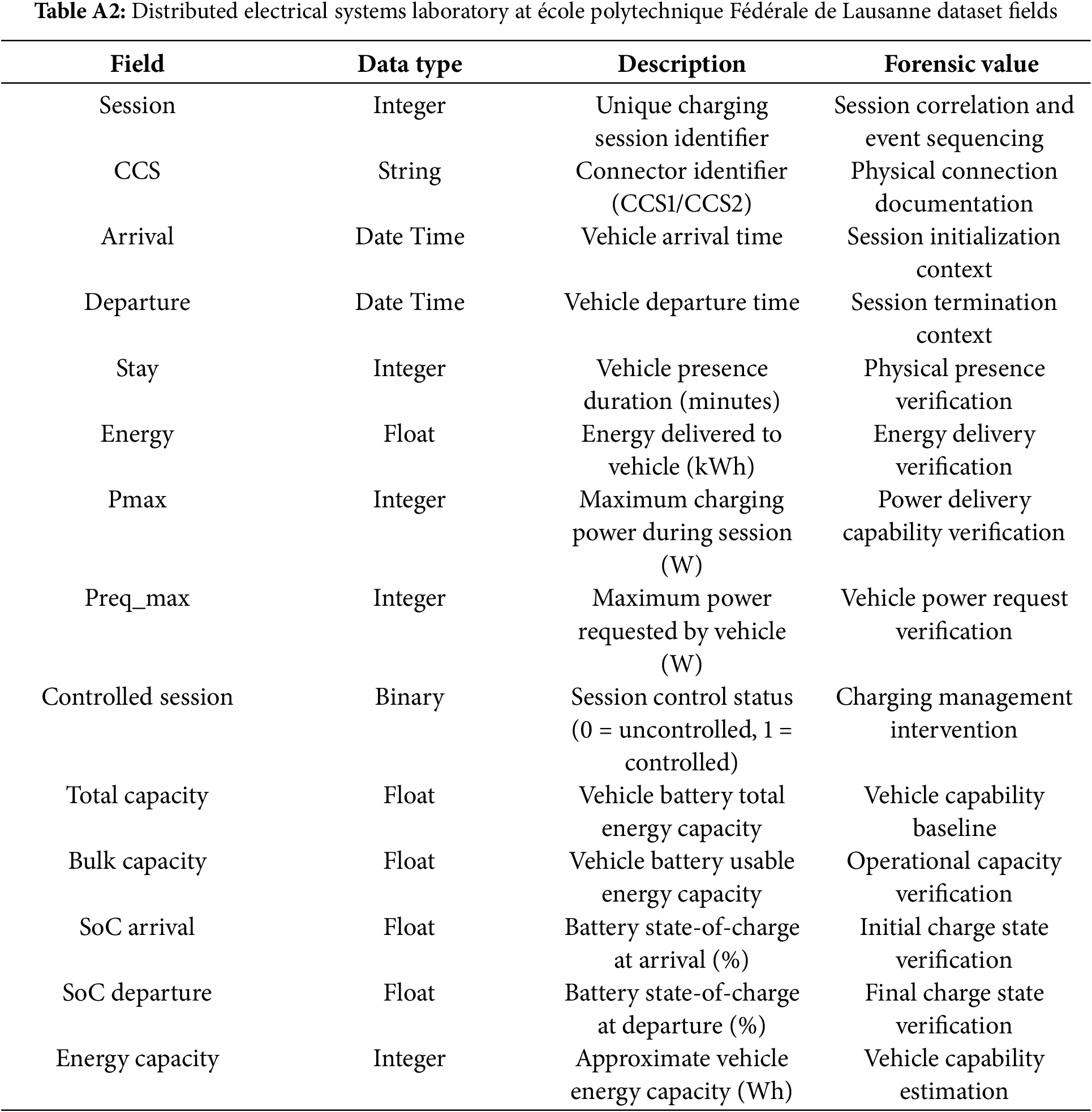
This dataset was published by the Distributed Electrical Systems Laboratory (DESL) at École Polytechnique Fédérale de Lausanne (EPFL) in 2022 [43]. It contains charging session data from DC fast-charging stations in southwestern Switzerland, collected from April 2022 to July 2023.
Appendix A.3 Department of Energy Electric Vehicle Charging Dataset
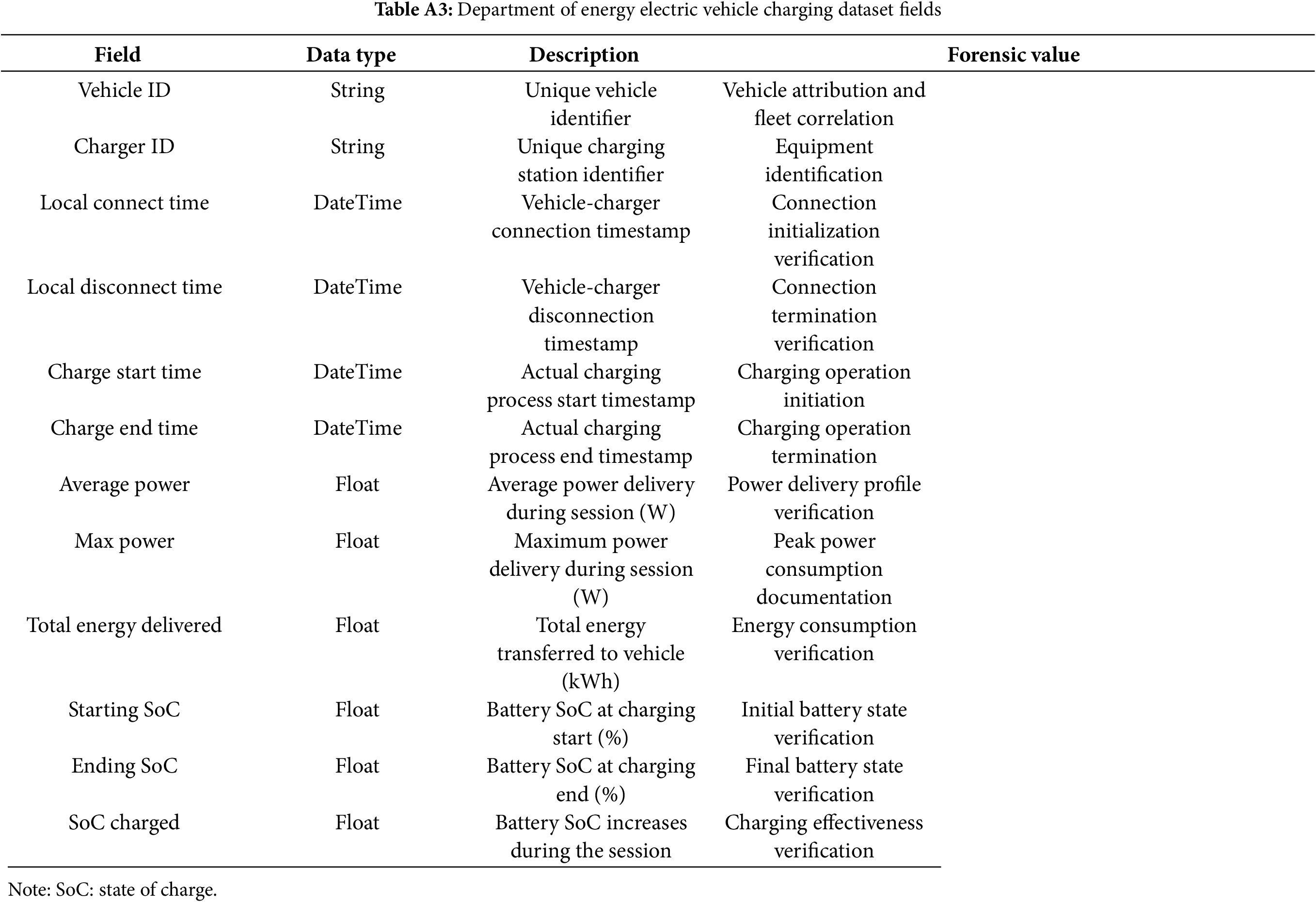
This dataset was released by the US Department of Energy’s Office of Scientific and Technical Information in 2024 [44]. It contains vehicle–charger interaction data collected by CALSTART from multiple vehicles and charging stations.
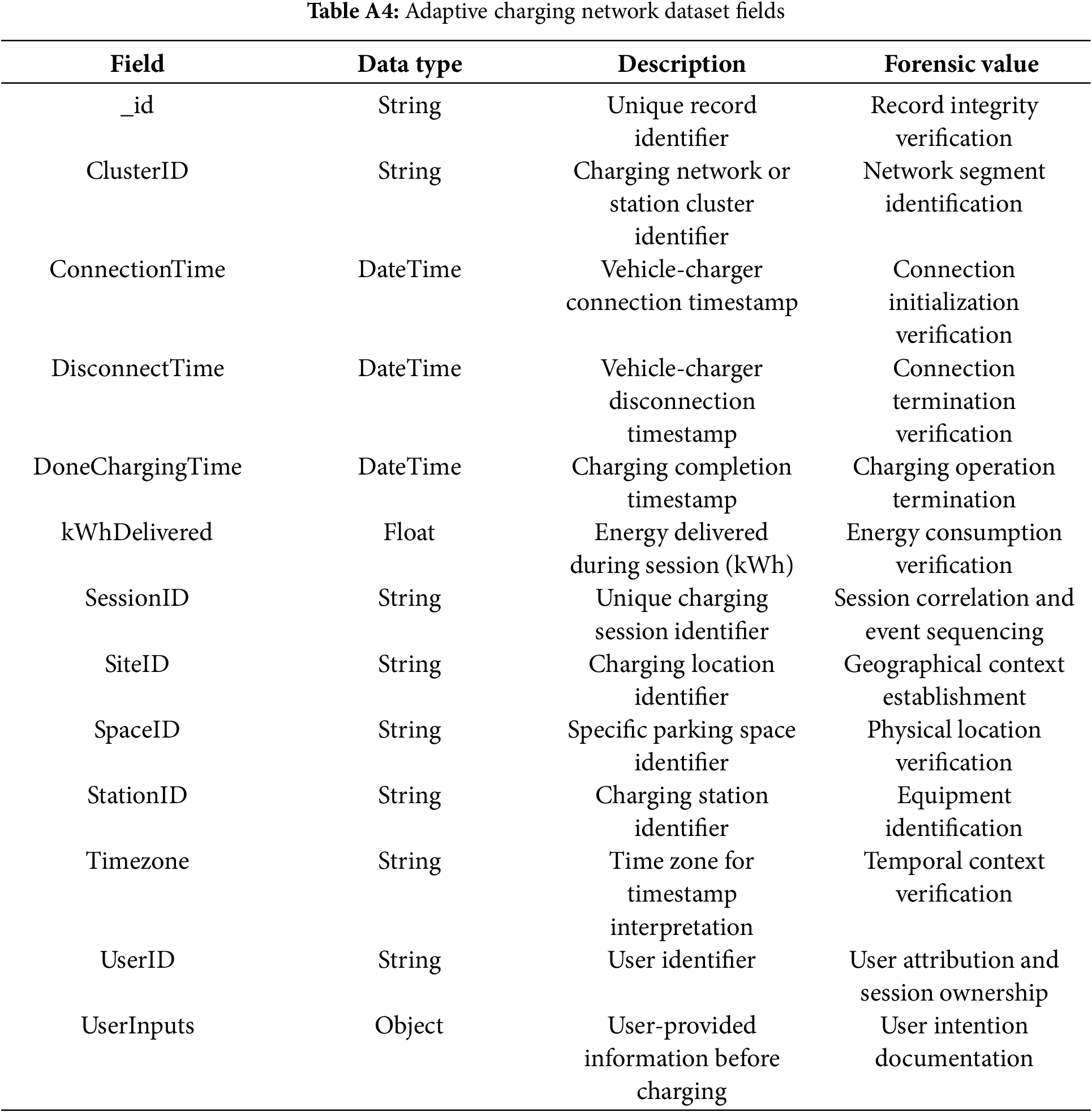
Appendix A.4 Adaptive Charging Network Data Electric Vehicle Dataset
This dataset was published by the California Institute of Technology in 2019 [47], collected from the Adaptive Charging Network (ACN) at Caltech and NASA’s Jet Propulsion Laboratory (JPL), providing charging data from 2018 onwards.
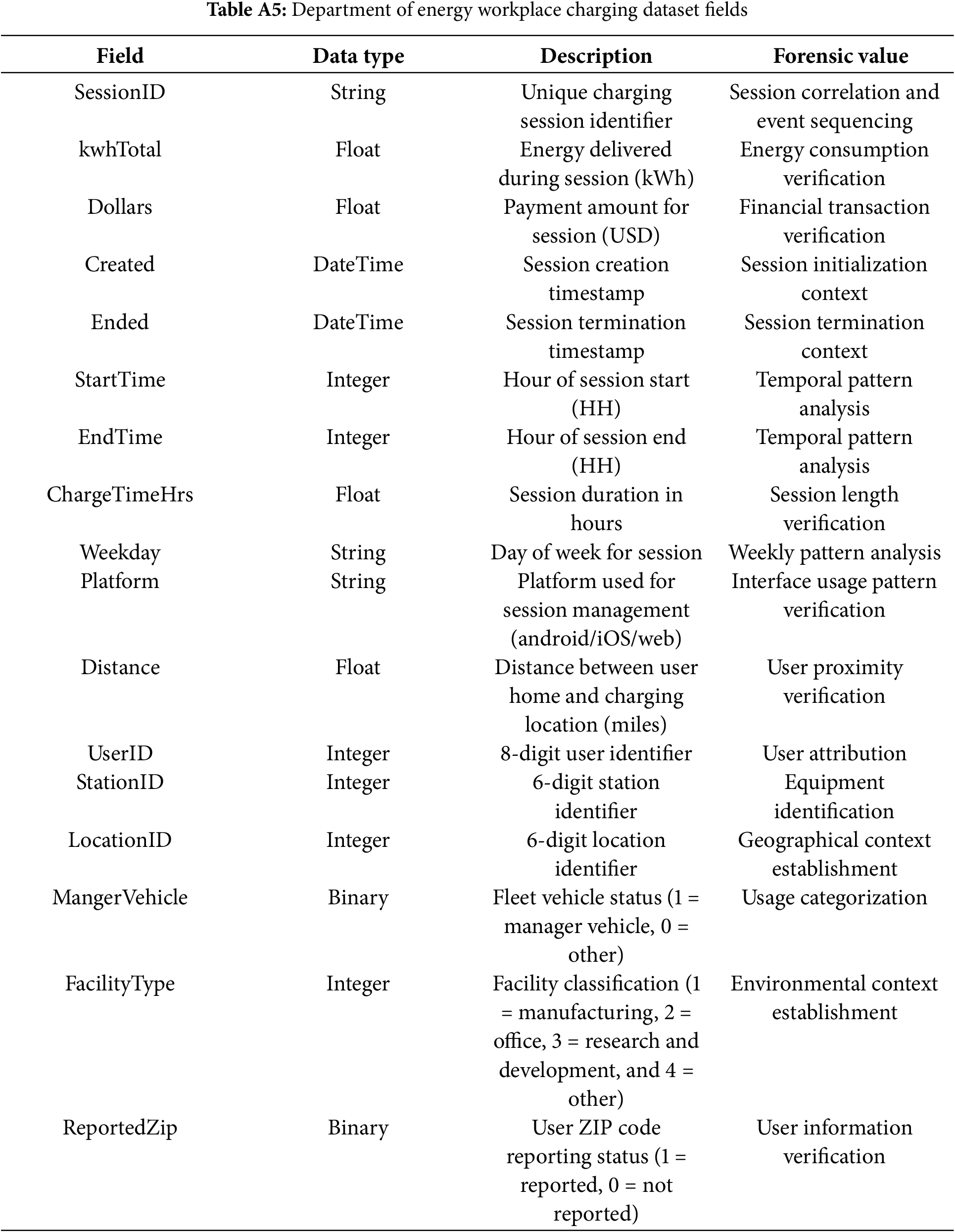
Appendix A.5 Departement of Energy Workplace Charging Dataset
This dataset, published on the Harvard Dataverse in 2019 [45,46], was collected by Georgia Tech’s Asensio Lab to analyze charging behavior and vehicle usage patterns in workplace environments. It comprises 3395 charging sessions from 85 EV drivers.

References
1. Rehman AU, Zia MF, Khalid H, Said Z, Muyeen SM. Wind and grid energy-based onshore beach charging station for electric vehicles: an integration infrastructure with techno economics, sustainable mobility, and environmental protection. Results Eng. 2025;26(2):105113. doi:10.1016/j.rineng.2025.105113. [Google Scholar] [CrossRef]
2. Khalid HM, Flitti F, Muyeen SM, Elmoursi MS, Sweidan TO, Yu X. Parameter estimation of vehicle batteries in V2G systems: an exogenous function-based approach. IEEE Trans Ind Electron. 2022;69(9):9535–46. doi:10.1109/TIE.2021.3112980. [Google Scholar] [CrossRef]
3. Dehrouyeh F, Yang L, Badrkhani Ajaei F, Shami A. On TinyML and cybersecurity: electric vehicle charging infrastructure use case. IEEE Access. 2024;12:108703–30. doi:10.1109/ACCESS.2024.3437192. [Google Scholar] [CrossRef]
4. Oberti F, Abrate F, Savino A, Parisi F, Carlo SD. Navigating the road to automotive cybersecurity compliance. In: Proceedings of the 2024 IEEE 30th International Symposium on On-Line Testing and Robust System Design (IOLTS); 2024 Jul 3–5; Rennes, France. Piscataway, NJ, USA: IEEE; 2024. p. 1–4. doi:10.1109/IOLTS60994.2024.10616052. [Google Scholar] [CrossRef]
5. European Union. Directive (EU). 2022/2555 of the European Parliament and of the Council of 14 December 2022 on measures for a high common level of cybersecurity across the Union, amending Regulation (EU) No 910/2014 and Directive (EU) 2018/1972, and repealing Directive (EU) 2016/1148 (NIS 2 Directive) (Text with EEA relevance). OJL. 2022;333:80–152. doi:10.4337/9781800372092.00013. [Google Scholar] [CrossRef]
6. Hamdare S, Kaiwartya O, Aljaidi M, Jugran M, Cao Y, Kumar S, et al. Cybersecurity risk analysis of electric vehicles charging stations. Sensors. 2023;23(15):6716. doi:10.3390/s23156716. [Google Scholar] [CrossRef]
7. McCarthy J, Grayson N, Brule J, Cottle T, Dinerman A, Dombrowski J, et al. Cybersecurity framework profile for electric vehicle extreme fast charging infrastructure. Gaithersburg, MD, USA: National Institute of Standards and Technology; 2023. [Google Scholar]
8. Mohamed N, Al-Jaroodi J, Jawhar I. Cyber-physical systems forensics: today and tomorrow. J Sens Actuator Netw. 2020;9(3):37. doi:10.3390/jsan9030037. [Google Scholar] [CrossRef]
9. Lutta P, Sedky M, Hassan M, Jayawickrama U, Bakhtiari Bastaki B. The complexity of internet of things forensics: a state-of-the-art review. Forensic Sci Int Digit Investig. 2021;38(1):301210. doi:10.1016/j.fsidi.2021.301210. [Google Scholar] [CrossRef]
10. Girdhar M, Hong J, You Y, Song TJ, Govindarasu M. Cyber-attack event analysis for EV charging stations. In: Proceedings of the 2023 IEEE Power & Energy Society General Meeting (PESGM); 2023 Jul 16–20; Orlando, FL, USA. Piscataway, NJ, USA: IEEE; 2023; p. 1–5. doi:10.1109/PESGM52003.2023.10252504. [Google Scholar] [CrossRef]
11. Girdhar M, You Y, Song TJ, Ghosh S, Hong J. Post-accident cyberattack event analysis for connected and automated vehicles. IEEE Access. 2022;10:83176–94. doi:10.1109/ACCESS.2022.3196346. [Google Scholar] [CrossRef]
12. Montasari R. A standardised data acquisition process model for digital forensic investigations. Int J Inf Comput Secur. 2017;9(3):229–49. doi:10.1504/IJICS.2017.085139. [Google Scholar] [CrossRef]
13. Shin DH, Han SJ, Kim YB, Euom IC. Research on digital forensics analyzing heterogeneous internet of things incident investigations. Appl Sci. 2024;14(3):1128. doi:10.3390/app14031128. [Google Scholar] [CrossRef]
14. Sarieddine K, Sayed MA, Assi C, Atallah R, Torabi S, Khoury J, et al. EV charging infrastructure discovery to contextualize its deployment security. IEEE Trans Netw Serv Manag. 2024;21(1):1287–301. doi:10.1109/TNSM.2023.3318406. [Google Scholar] [CrossRef]
15. Hu X, Jiang X, Zhang J, Wang S, Zhou M, Zhang B, et al. Electric vehicle charging network security: a survey. J Syst Archit. 2025;159(12):103337. doi:10.1016/j.sysarc.2025.103337. [Google Scholar] [CrossRef]
16. Ahmed MA, Guerrero L, Franco P. Network modeling and analysis of internet of electric vehicles architecture for monitoring charging station networks—a case study in Chile. Sustainability. 2024;16(14):5915. doi:10.3390/su16145915. [Google Scholar] [CrossRef]
17. Januário F, Cardoso A, Gil P. A distributed multi-agent framework for resilience enhancement in cyber-physical systems. IEEE Access. 2019;7:31342–57. doi:10.1109/ACCESS.2019.2903629. [Google Scholar] [CrossRef]
18. Johnson J, Berg T, Anderson B, Wright B. Review of electric vehicle charger cybersecurity vulnerabilities, potential impacts, and defenses. Energies. 2022;15(11):3931. doi:10.3390/en15113931. [Google Scholar] [CrossRef]
19. Ronanki D, Karneddi H. Electric vehicle charging infrastructure: review, cyber security considerations, potential impacts, countermeasures, and future trends. IEEE J Emerg Sel Top Power Electron. 2024;12(1):242–56. doi:10.1109/JESTPE.2023.3336997. [Google Scholar] [CrossRef]
20. Szakály M, Köhler S, Martinovic I. Current affairs: a measurement study of deployment and security trends in EV charging infrastructure. arXiv:2404.06635. 2024. [Google Scholar]
21. Sarieddine K, Sayed MA, Torabi S, Atallah R, Assi C. Investigating the security of EV charging mobile applications as an attack surface. ACM Trans Cyber-Phys Syst. 2023;7(4):1–28. doi:10.1145/3609508. [Google Scholar] [CrossRef]
22. Akshitha K, Subran S, Sankaran S, Sutraye P, Nishad AK. Threat modeling and attack simulation of charging infrastructures in electric vehicles. In: Proceedings of the International Conference on Computer Communication and Network Technology (ICCCNT); 2024 Jun 24–28; Kamand, India, Piscataway, NJ, USA: IEEE; 2024. p. 1–7. doi:10.1109/icccnt61001.2024.10725968. [Google Scholar] [CrossRef]
23. Brighente A, Conti M, Donadel D, Poovendran R, Turrin F, Zhou J. Electric vehicles security and privacy: challenges, solutions, and future needs. arXiv:2301.04587. 2023. [Google Scholar]
24. Nasr T, Torabi S, Bou-Harb E, Fachkha C, Assi C. ChargePrint: a framework for internet-scale discovery and security analysis of EV charging management systems, Feb 27-Mar 3. In: Proceedings of the 2023 Network and Distributed System Security Symposium (NDSS); 2023 Feb 27–Mar 3; San Diego, CA, USA. p. 1–17. doi:10.14722/ndss.2023.23084. [Google Scholar] [CrossRef]
25. Gupta K, Panigrahi BK, Joshi A, Paul K. Demonstration of denial of charging attack on electric vehicle charging infrastructure and its consequences. Int J Crit Infrastruct Prot. 2024;46(3):100693. doi:10.1016/j.ijcip.2024.100693. [Google Scholar] [CrossRef]
26. Acharya S, Khan HAU, Karri R, Dvorkin Y. MaDEVIoT: cyberattacks on EV charging can disrupt power grid operation. In: Proceedings of the 2024 IEEE Power & Energy Society Innovative Smart Grid Technologies Conference (ISGT); 2024 Feb 19–22; Washington, DC, USA. p. 1–5. [Google Scholar]
27. Rohde KW, Carlson BR, Crepeau MJ, Salinas SC, Guidry JM, McCarthy DD, et al. EV SALaD 2023 demonstration: best practices and mitigations for protecting EVSE infrastructure. Idaho Falls, ID, USA: Idaho National Laboratory (INL); 2024. [Google Scholar]
28. Aljohani T, Almutairi A. A comprehensive survey of cyberattacks on EVs: research domains, attacks, defensive mechanisms, and verification methods. Def Technol. 2024;42(10):31–58. doi:10.1016/j.dt.2024.06.009. [Google Scholar] [CrossRef]
29. Sarieddine K, Sayed MA, Torabi S, Atallah R, Assi C. Edge-based detection and localization of adversarial oscillatory load attacks orchestrated by compromised EV charging stations. Int J Electr Power Energy Syst. 2024;156(5):109735. doi:10.1016/j.ijepes.2023.109735. [Google Scholar] [CrossRef]
30. Köhler S, Baker R, Strohmeier M, Martinovic I. Brokenwire: wireless disruption of CCS electric vehicle charging. In: Proceedings of the 2023 Network and Distributed System Security Symposium (NDSS)2023 Feb 27–Mar 3; San Diego, CA, USA, p. 1–14. doi:10.14722/ndss.2023.23251. [Google Scholar] [CrossRef]
31. Johnson J, Anderson B, Wright B, Quiroz J, Berg T, Graves R, et al. Cybersecurity for electric vehicle charging infrastructure. Albuquerque, NM, USA: Sandia National Laboratories; 2022. [Google Scholar]
32. Costantino G, De Vincenzi M, Martinelli F, Matteucci I. Electric vehicle security and privacy: a comparative analysis of charging methods. In: Proceedings of the 2023 IEEE 97th Vehicular Technology Conference (VTC2023-Spring); 2023 Jun 20–23; Florence, Italy. Piscataway, NJ, USA: IEEE; 2023. p. 1–7. doi:10.1109/VTC2023-Spring57618.2023.10200030. [Google Scholar] [CrossRef]
33. El-Rewini Z, Sadatsharan K, Selvaraj DF, Plathottam SJ, Ranganathan P. Cybersecurity challenges in vehicular communications. Veh Commun. 2020;23:100214. doi:10.1016/j.vehcom.2019.100214. [Google Scholar] [CrossRef]
34. Elmo D, Fragkos G, Johnson J, Rohde K, Salinas S, Zhang J. Disrupting EV charging sessions and gaining remote code execution with DoS, MITM, and code injection exploits using OCPP 1.6. In: Proceedings of the 2023 Resilience Week (RWS); 2023 Nov 27–30; National Harbor, MD, USA. Piscataway, NJ, USA: IEEE; 2023. p. 1–8. doi:10.1109/RWS58133.2023.10284654. [Google Scholar] [CrossRef]
35. Garofalaki Z, Kosmanos D, Moschoyiannis S, Kallergis D, Douligeris C. Electric vehicle charging: a survey on the security issues and challenges of the open charge point protocol (OCPP). IEEE Commun Surv Tutor. 2022;24(3):1504–33. doi:10.1109/COMST.2022.3184448. [Google Scholar] [CrossRef]
36. Alcaraz C, Lopez J, Wolthusen S. OCPP protocol: security threats and challenges. IEEE Trans Smart Grid. 2017;8(5):2452–9. doi:10.1109/TSG.2017.2669647. [Google Scholar] [CrossRef]
37. Smart car chargers. Plug-n-play for hackers? [Internet]. 2021 [cited 2025 Jun 1]. Available from: https://www.pentestpartners.com/security-blog/smart-car-chargers-plug-n-play-for-hackers/. [Google Scholar]
38. Conti M, Donadel D, Poovendran R, Turrin F. EVExchange: a relay attack on electric vehicle charging system. In: Atluri V, Di Pietro R, Jensen CD, Meng W, editors. Computer security—ESORICS 2022. Cham, Switerland: Springer International Publishing; 2022. p. 488–508. doi:10.1007/978-3-031-17140-6_24. [Google Scholar] [CrossRef]
39. Guo S, Chen H, Rahman M, Qian X. DCA: delayed charging attack on the electric shared mobility system. IEEE Trans Intell Transp Syst. 2023;24(11):12793–805. doi:10.1109/TITS.2023.3287792. [Google Scholar] [CrossRef]
40. Aljohani T, Almutairi A. Modeling time-varying wide-scale distributed denial of service attacks on electric vehicle charging stations. Ain Shams Eng J. 2024;15(7):102860. doi:10.1016/j.asej.2024.102860. [Google Scholar] [CrossRef]
41. Nasr T, Torabi S, Bou-Harb E, Fachkha C, Assi C. Power jacking your station: in-depth security analysis of electric vehicle charging station management systems. Comput Secur. 2022;112(6):102511. doi:10.1016/j.cose.2021.102511. [Google Scholar] [CrossRef]
42. Antoniou C, Giannakopoulou K, Pelechrinis K, Zacharia A. A dataset for multi-faceted analysis of electric vehicle charging transactions. Sci Data. 2024;11(1):262. doi:10.1038/s41597-024-02942-9. [Google Scholar] [CrossRef]
43. Distributed Electrical Systems Laboratory (DESLÉcole Polytechnique Fédérale De Lausanne (EPFL). DESL-EPFL/Level-3-EV-charging-dataset [Internet]. 2024 [cited 2025 Jun 2]. Available from: https://github.com/DESL-EPFL/Level-3-EV-charging-dataset. [Google Scholar]
44. LeCroy C, Dobbelaere C. DOE EV data collection—charging data [Internet]. 2025 [cited 2025 Jun 2]. Available from: 10.15483/1989855. [Google Scholar] [CrossRef]
45. Asensio OI, Alvarez K, Dror A, Cammarata E, Perzanowski D. Electric vehicle charging stations in the workplace with high-resolution data from casual and habitual users. Sci Data [Internet]. 2021 [cited 2025 Jun 2]. Available from: https://www.nature.com/articles/s41597-021-00956-1. [Google Scholar]
46. Asensio OI, Alvarez K. asensio-lab/workplace-charging-experiment [Internet]. 2021 [cited 2025 Jun 2]. Available from: https://github.com/asensio-lab/workplace-charging-experiment. [Google Scholar]
47. Lee ZJ, Li T, Low SH. ACN-Data: analysis and applications of an open EV charging dataset. In: Proceedings of the Tenth ACM International Conference on Future Energy Systems; 2019 Jun 25-28; Phoenix, AZ, USA. New York, NY: ACM; 2019. p. 139–49. doi:10.1145/3307772.3328313. [Google Scholar] [CrossRef]
48. ISO 15118-3:2015. Road vehicles–vehicle-to-grid communication interface—part 3: physical and data link layer requirements. Geneva, Switzerland: ISO; 2015. [Google Scholar]
49. ISO 15118-2:2014. Road vehicles–vehicle-to-grid Communication interface–part 2: network and application protocol requirements. Geneva, Switzerland: ISO; 2014. [Google Scholar]
Cite This Article
 Copyright © 2025 The Author(s). Published by Tech Science Press.
This work is licensed under a Creative Commons Attribution 4.0 International License , which permits unrestricted use, distribution, and reproduction in any medium, provided the original work is properly cited.
 Downloads
 Citation Tools
