
 Login
Login Register
 Submit a Paper
 Propose a Special lssue
 Open Access
ARTICLE
Digital Twin-Driven Intelligent Routing for UAV-Assisted Smart Mobility and Disaster-Aware FANETs
1 Department of Computer Engineering & Technology, Guru Nanak Dev University, Amritsar, Punjab, India
2 Applied College of Mahail Aseer, King Khalid University, Muhayil Aseer, Saudi Arabia
3 Department of Electrical and Electronic Engineering, College of Engineering, University of Jeddah, Jeddah, Saudi Arabia
4 Chitkara University Institute of Engineering and Technology, Chitkara University, Rajpura, Punjab, India
5 School of Computing, Gachon University, Seongnam-si, Republic of Korea
* Corresponding Authors: Ateeq Ur Rehman. Email: ; Jaeyoung Choi. Email:
(This article belongs to the Special Issue: Digital Twin-Enabled Intelligent Transportation Systems: Computational Modeling, AI Integration, and Smart Mobility Applications)
Computer Modeling in Engineering & Sciences 2026, 148(3), 30 https://doi.org/10.32604/cmes.2026.086048
Received 23 May 2026; Accepted 10 August 2026; Issue published 28 September 2026
 View Full Text
 Download PDF
Abstract
Flying Ad Hoc Networks (FANETs) are emerging as a key enabler for intelligent transportation systems, smart aerial mobility, disaster response, surveillance, and environmental monitoring. However, their highly dynamic topology, rapid node mobility, intermittent connectivity, and limited energy resources pose major challenges for reliable routing. Existing routing protocols largely depend on instantaneous network information and lack predictive intelligence, leading to unstable links, increased overhead, and degraded performance in dynamic environments. To address these issues, this study proposes a Digital Twin-driven Trust-Aware PSO-based routing framework (DT-TAPSO) for UAV-assisted smart mobility and disaster-aware FANETs. The framework employs a lightweight Digital Twin-inspired predictive synchronization model to forecast future node positions, link quality, mobility patterns, and residual energy, enabling proactive, stability-aware routing decisions. An intelligent decision-making layer integrating fuzzy logic and trust evaluation is incorporated to handle uncertainty and assess node reliability. Additionally, a utility-driven cluster head selection mechanism based on predicted network conditions ensures stable clustering, supported by an adaptive re-clustering strategy to maintain network efficiency. Furthermore, Particle Swarm Optimization (PSO) with link-lifetime awareness is applied for optimal route selection. An edge-assisted disaster-aware communication model is also introduced to reduce latency and enhance responsiveness in mission-critical scenarios. The proposed DT-TAPSO framework is evaluated through simulations against benchmark protocols, including LEACH, HIROL, MCQOR, QLSR-LCN, and QLME. Results demonstrate that DT-TAPSO significantly improves packet delivery ratio, network lifetime, throughput, and energy efficiency, while reducing delay, routing overhead, and hop count. Overall, the framework enables predictive, reliable, and low-latency communication, supporting next-generation intelligent transportation and smart mobility systems.Keywords
Unmanned Aerial Vehicles (UAVs), or drones, have advanced significantly through advances in sensing, communication, and autonomous control technologies, enabling their use in applications such as surveillance, disaster management, and environmental monitoring [1]. The growing demand for cooperative aerial systems has led to multi-UAV networks that improve mission efficiency through collaboration. This evolution has led to Flying Ad Hoc Networks (FANETs), in which UAVs form self-organizing, infrastructure-less networks characterized by high mobility and rapidly changing topologies. FANETs enhance coverage and scalability, but their dynamic nature makes reliable communication and coordination challenging [2]. To address these challenges, aerial swarm and multi-UAV coordination systems have been explored to enable distributed control, formation management, and cooperative task execution among UAVs [3]. These systems rely on intelligent coordination to maintain performance in dynamic environments.
However, despite these advancements, UAV networks still face limitations in scalability, stability, and robustness in large-scale deployments, requiring more adaptive and intelligent networking solutions for reliable operation in complex scenarios [4]. In contrast, multi-UAV systems offer substantial advantages, including improved spatial coverage, cooperative task execution, enhanced reliability, and faster response times [5]. However, deploying multiple UAVs introduces significant challenges, particularly in terms of communication, coordination, and network management. Establishing reliable connectivity among UAVs without relying on fixed infrastructure remains a key concern, especially in dynamic, unpredictable environments [6].
To address these challenges, multi-UAV systems are often organized into FANETs, a specialized class of Mobile Ad Hoc Networks (MANETs) [7]. In FANETs, UAVs communicate in a decentralized manner, forming a self-organizing network that can adapt dynamically [8]. Unlike conventional MANETs and Vehicular Ad Hoc Networks (VANETs), FANETs are characterized by extremely high node mobility, three-dimensional movement patterns, rapidly changing topologies, and variable link quality [8]. These characteristics significantly complicate network operations, particularly in terms of link establishment, routing stability, and resource management [9,10]. Fig. 1 presents an overview of FANETs, illustrating their applications, characteristics, challenges, and routing approaches (reactive, proactive, and hybrid) in dynamic UAV environments.
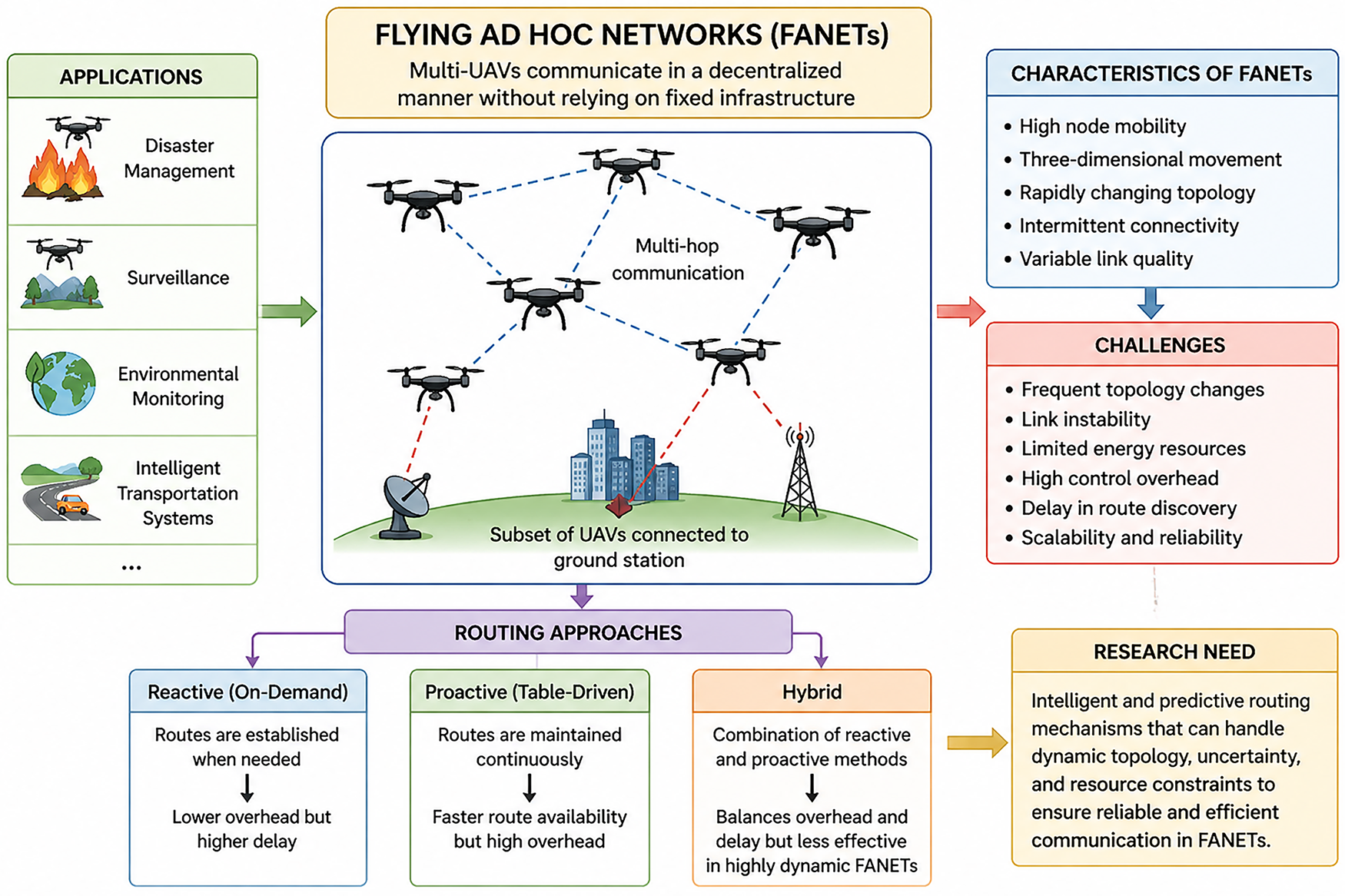
Figure 1: FANETS network overview.
In such environments, UAVs rely on multi-hop communication, in which only a subset of nodes maintains direct connectivity with ground control stations. In contrast, the remaining nodes communicate via intermediate UAVs [11]. This multi-hop architecture improves network reachability but introduces additional challenges related to route discovery, link reliability, and delay. Furthermore, factors such as limited onboard energy, dynamic environmental conditions, and intermittent connectivity further exacerbate the complexity of maintaining stable and efficient communication in FANETs [12].
The key contributions of this work are summarized as follows:
1. A lightweight Digital Twin-inspired predictive synchronization and routing framework is proposed to forecast future node states, link quality, and residual energy using predictive state estimation and feedback correction, thereby enabling proactive and stability-aware routing decisions in dynamic FANET environments.
2. A combined fuzzy logic and trust-based decision model is introduced to handle uncertainty and evaluate node reliability using multiple routing descriptors, including residual energy, mobility, link quality, and historical behaviour.
3. A utility-based cluster head selection mechanism is developed using predicted network parameters and a Digital Twin-inspired stability metric to ensure robust, energy-efficient, and stable cluster formation.
4. A multi-criteria adaptive re-clustering strategy is proposed that jointly considers residual energy, mobility, link quality, trust, connectivity, and predicted network states to maintain routing stability under highly dynamic UAV mobility.
5. Particle Swarm Optimization (PSO) is employed for multi-objective route optimization by incorporating predicted link lifetime to avoid unstable communication paths and improve routing efficiency.
6. An edge-assisted routing mechanism integrated with a priority-aware disaster routing cost function is proposed to reduce computational latency, minimize communication overhead, and support reliable data delivery in mission-critical FANET scenarios.
Although several hybrid FANET routing protocols incorporate optimization algorithms, machine learning, or trust management, they typically address only isolated routing objectives [13,14]. Most existing methods rely on instantaneous network information and therefore lack predictive awareness of future topology changes [15,16]. Moreover, they do not simultaneously integrate Digital Twin synchronization, uncertainty-aware fuzzy reasoning, adaptive clustering, trust evaluation, edge-assisted communication, and swarm-based routing optimization within a unified framework. To address these limitations, the proposed Digital Twin-driven Trust-Aware PSO-based routing framework (DT-TAPSO) combines these complementary components to enable proactive routing based on predicted node mobility, residual energy, and link quality. The fuzzy inference system effectively manages uncertainty in highly dynamic UAV environments, while PSO performs multi-objective route optimization using predicted network states. Consequently, the proposed framework enhances routing stability, energy efficiency, and communication reliability under disaster-aware FANET scenarios. Experimental results further demonstrate consistent improvements over representative benchmark protocols in terms of packet delivery ratio, network lifetime, throughput, routing overhead, energy consumption, and end-to-end delay, highlighting the effectiveness of the proposed integrated routing strategy.
The remainder of this paper is organized as follows. Section 2 presents the literature review, highlighting existing routing approaches and their limitations in FANET environments. Section 3 describes the proposed methodology, including the Digital Twin-based prediction model, the intelligent decision-making layer, the clustering strategy, and the routing optimization framework. Section 4 presents the experimental results and performance evaluation of the proposed DT-TAPSO framework and compares its performance with that of existing methods. Section 5 discusses the experimental findings and their implications. Section 6 concludes the work by summarizing the key findings and major contributions and outlines future research directions and potential enhancements to the proposed framework.
FANETs have attracted significant attention due to their applications in disaster management, surveillance, emergency response, and mission-critical communication. However, their highly dynamic topology, intermittent connectivity, frequent link failures, and limited onboard energy resources continue to pose significant challenges for reliable routing.
Existing FANET routing approaches can be broadly classified into clustering-based, cross-layer, optimization-based, machine learning-based, and trust-aware routing methods. Clustering-based approaches primarily improve network scalability and energy efficiency by organizing nodes into clusters. For example, Kgosienngwe and Zungeru [5] proposed a UAV-assisted mobile sink enhancement of the LEACH protocol to reduce communication distance and improve energy efficiency in Wireless Sensor Networks (WSNs). The protocol employs a UAV following a predefined circular trajectory to collect aggregated data from cluster heads while preserving the lightweight clustering mechanism of LEACH. Although the proposed UAV-assisted mobile sink significantly improves network stability, throughput, and energy efficiency, the protocol is fundamentally designed for stationary WSNs rather than highly dynamic FANET environments [6]. Consequently, it does not explicitly consider inter-UAV mobility, frequent topology changes, predictive routing, or trust-aware communication, which are essential requirements for FANET routing [7–9].
Cross-layer routing protocols improve communication performance by jointly considering information from multiple protocol layers. Liu et al. [7] proposed a cross-layer optimized OLSR protocol that enhances routing performance under interference-intensive environments, while position-aware OLSR variants [17] further improve route stability by incorporating UAV altitude, residual energy, and link quality into routing decisions [9,10]. Although these approaches improve routing reliability, they generally rely on instantaneous network conditions and lack mechanisms for predicting future topology evolution.
Optimization-based routing methods attempt to improve routing efficiency through intelligent search algorithms. Reddy and Sekhar [8] proposed a multi-criteria QoS routing strategy that jointly considers delay, energy consumption, and reliability, whereas Reddy and Anusha [9] introduced HIROL by combining intelligent optimization with adaptive topology management [10,11]. Federated deep reinforcement learning has also been investigated for UAV trajectory optimization [12,13]. Although these optimization methods improve routing performance, they typically optimize only selected routing objectives and often introduce additional computational complexity that may limit real-time deployment in highly dynamic FANETs [14].
Emerging communication technologies, including Reconfigurable Intelligent Surfaces (RIS) [14,15] and Rate-Splitting Multiple Access (RSMA) [16], have also demonstrated significant potential for improving wireless connectivity, spectrum utilization, and communication reliability in aerial networks. However, these technologies mainly address physical-layer communication enhancement rather than intelligent routing decision-making.
Machine learning-based routing [17–19] has emerged as an effective solution for adapting to dynamic network conditions. Al-Turjman [11] employed machine learning for UAV trajectory prediction, while Q-learning-based approaches [6,12,20] dynamically adapt routing decisions according to changing network conditions. These methods demonstrate improved adaptability; however, most depend heavily on training quality and computational resources, and generally do not integrate predictive network synchronization with routing optimization.
Trust-aware routing mechanisms improve routing reliability by identifying malicious or unreliable forwarding nodes. Representative approaches include fuzzy Petri-net-based trust-aware OLSR [21], which improves routing security by incorporating trust evaluation into route selection. Nevertheless, existing trust-aware methods primarily focus on secure forwarding and rarely integrate trust evaluation with predictive topology awareness, clustering strategies, and global route optimization.
Overall, the existing literature demonstrates that most routing protocols improve only individual aspects of FANET performance, such as energy efficiency, link stability, trust management, or routing optimization. Few studies integrate predictive Digital Twin synchronization, fuzzy trust evaluation, adaptive clustering, edge-assisted communication, and swarm intelligence within a unified routing framework. Furthermore, existing methods largely rely on instantaneous network information instead of proactively predicting future network conditions, thereby limiting routing stability under highly dynamic UAV mobility. These limitations motivate the proposed DT-TAPSO framework, which combines lightweight Digital Twin prediction, fuzzy trust-based decision-making, utility-based clustering, and PSO-based multi-objective routing optimization to achieve reliable and energy-efficient routing in disaster-aware FANETs.
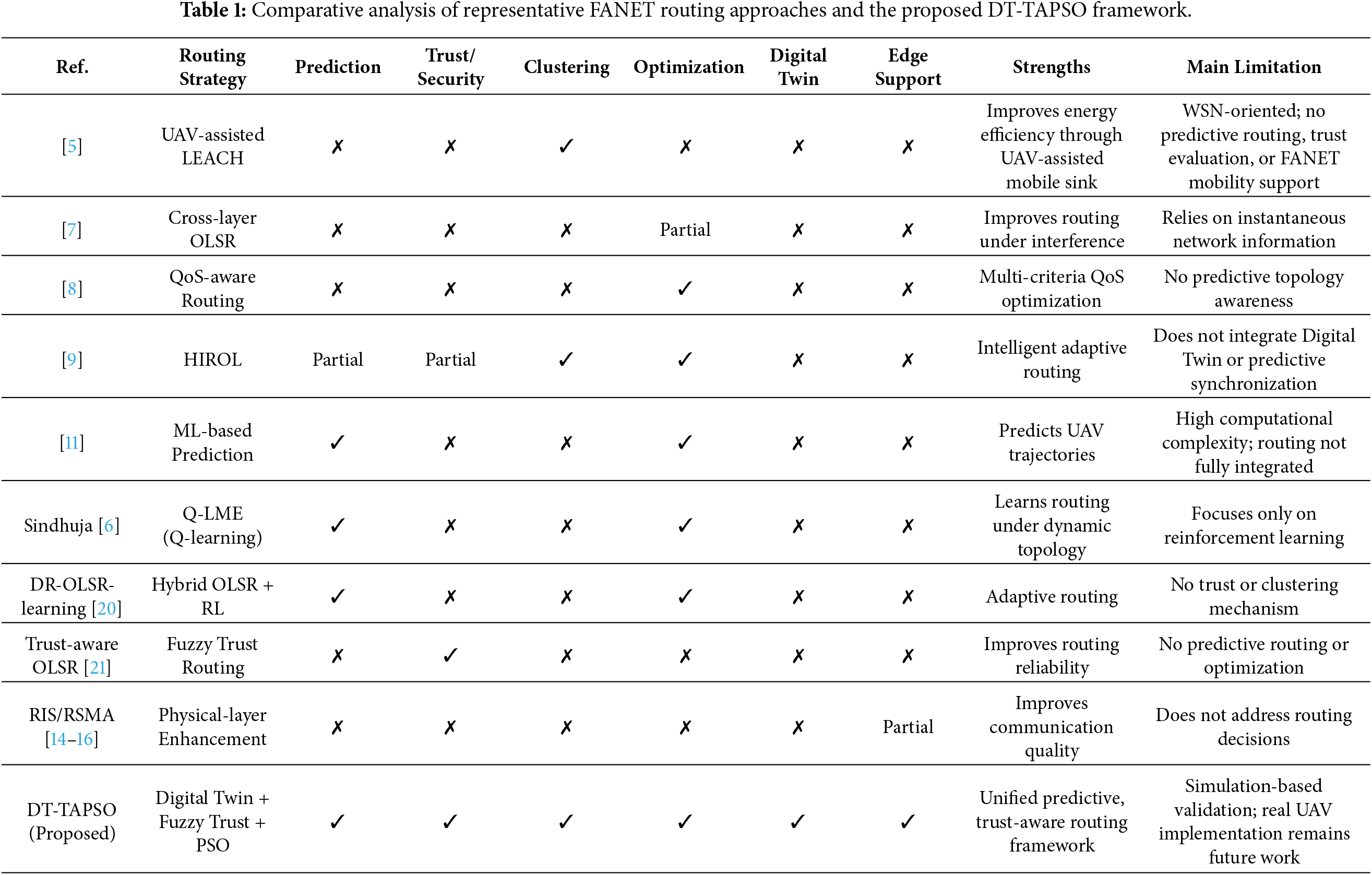
Table 1 demonstrates that existing FANET routing approaches primarily address individual challenges such as energy efficiency, topology adaptation, trust management, or routing optimization in isolation. Machine learning-based methods improve adaptability but often incur higher computational complexity, whereas trust-aware protocols enhance routing reliability without predicting future network conditions. Similarly, optimization-based methods generally optimize only selected routing objectives and rely on instantaneous topology information. Although recent studies have explored UAV-assisted communication and intelligent optimization, none simultaneously integrate lightweight Digital Twin synchronization, predictive topology estimation, fuzzy trust evaluation, adaptive clustering, edge-assisted communication, and PSO-based multi-objective routing within a unified framework. These observations motivate the proposed DT-TAPSO architecture, which combines these complementary components to achieve proactive, reliable, and energy-efficient routing in highly dynamic disaster-aware FANETs.
Research Gap and Scientific Novelty
Despite significant advances in FANET routing, several important research challenges remain unresolved. Existing routing protocols primarily address individual objectives, such as energy efficiency, mobility prediction, trust management, or routing optimization, rather than jointly optimizing multiple routing requirements. Most approaches rely on instantaneous network information and therefore lack predictive awareness of future topology evolution, limiting routing stability and communication reliability in highly dynamic UAV environments. Furthermore, current methods rarely integrate lightweight Digital Twin synchronization, uncertainty-aware trust evaluation, adaptive clustering, edge-assisted communication, and swarm intelligence within a unified routing framework.
Table 1 provides a critical comparison of representative FANET routing approaches and highlights their respective strengths and limitations. As shown, clustering-based methods primarily improve energy efficiency but lack predictive routing capabilities, optimization-based approaches enhance selected routing objectives while overlooking trust and topology prediction, and machine learning-based methods improve adaptability at the cost of increased computational complexity. Similarly, trust-aware routing protocols strengthen communication reliability but generally operate using instantaneous network information without predictive network synchronization. These limitations indicate that existing solutions address routing challenges independently rather than through an integrated predictive architecture.
Motivated by these observations, the proposed DT-TAPSO framework introduces a unified intelligent routing architecture that integrates lightweight Digital Twin synchronization, fuzzy trust-based decision-making, utility-based adaptive clustering, edge-assisted communication, and PSO-based multi-objective route optimization. By proactively predicting future network conditions and jointly optimizing routing stability, energy efficiency, trust, and communication reliability, DT-TAPSO provides a comprehensive solution for highly dynamic disaster-aware FANET environments while maintaining computational scalability suitable for practical deployment.
3 Proposed Methodology: Digital Twin–Driven Adaptive Clustered Routing in FANETs
The proposed framework introduces a Digital Twin–driven adaptive clustered routing mechanism for FANETs operating in dynamic disaster environments. Unlike conventional approaches that rely on instantaneous network states, the proposed method enables predictive and self-adaptive routing by integrating Lightweight Digital Twin modeling, intelligent decision-making, and optimization. As shown in Fig. 2, the proposed Architecture of the digital twin–driven adaptive clustered routing framework for disaster-aware FANETs. The model consists of network modeling, a predictive digital twin engine, an intelligent decision layer, a clustering layer, an optimization layer, and edge-assisted routing.
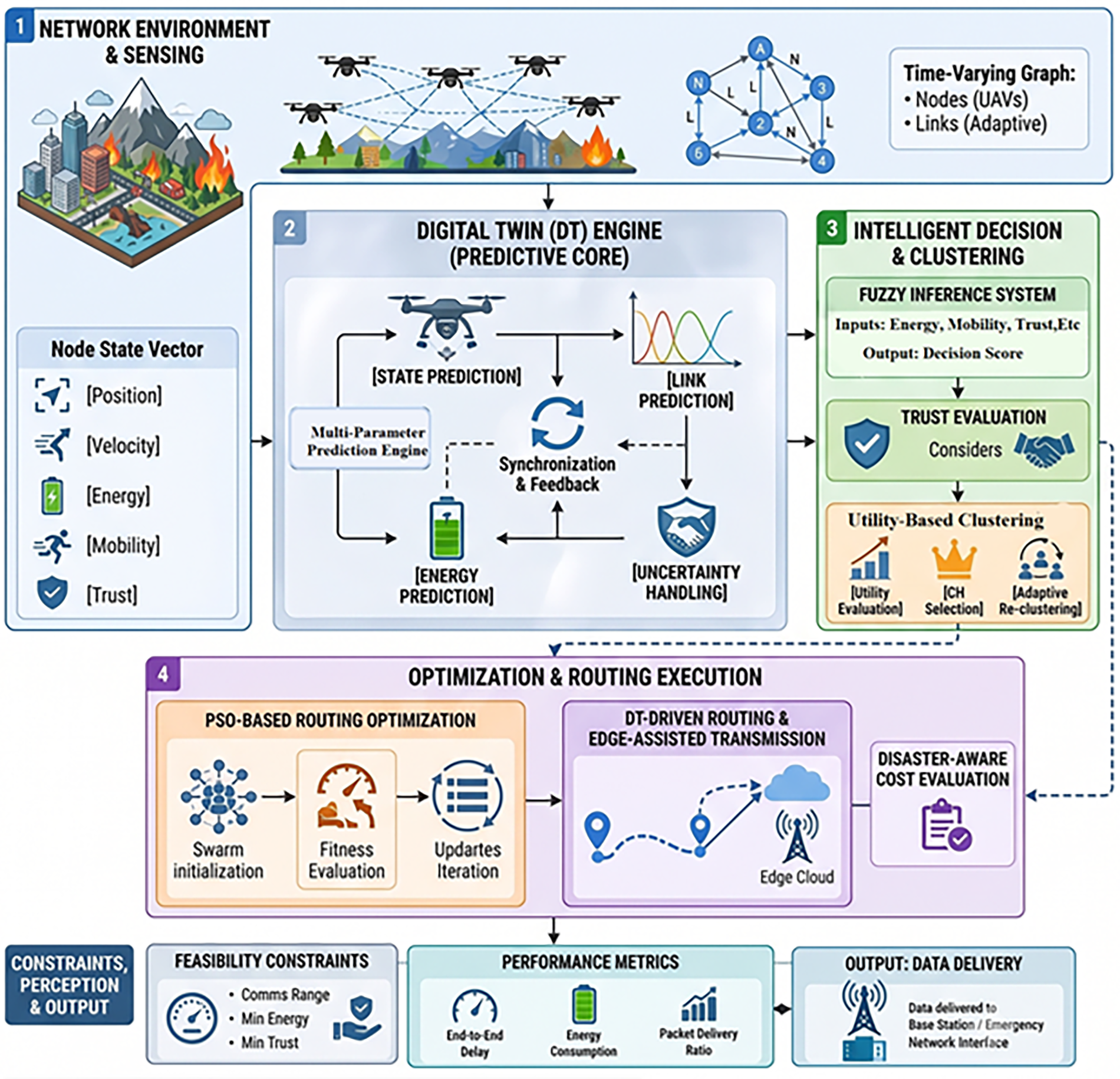
Figure 2: Proposed architecture.
The framework follows a multi-layer architecture that combines predictive modeling, intelligent evaluation, and optimization strategies. Initially, the FANET topology is represented as a dynamic graph capturing node mobility, energy, and connectivity characteristics. A Digital Twin-inspired prediction model is then employed to predict future node states, link quality, and network conditions. These predicted parameters are incorporated into an intelligent decision layer that integrates trust evaluation and fuzzy inference to assess node reliability. Based on this evaluation, a utility-driven cluster head selection mechanism is applied, followed by a stability-aware adaptive re-clustering strategy. Routing decisions are further optimized using PSO, incorporating predicted link lifetime and edge-assisted cost evaluation. Finally, a disaster-aware multi-objective cost function is used to determine the optimal routing path, ensuring reliable, energy-efficient, and resilient communication under highly dynamic conditions.
The FANET is modeled as a time-varying graph.
Each UAV node i is represented as:
This representation enables comprehensive modeling of node dynamics and supports predictive analysis using the Digital Twin-inspired framework.
The integration of multiple components in the proposed framework is motivated by the limitations of existing FANET routing approaches. Traditional methods fail to handle high mobility, dynamic topology changes, and uncertain link conditions effectively. The DT-inspired predictive model is employed to enable predictive awareness of future network states, addressing instability caused by rapid mobility. However, prediction alone is insufficient under uncertainty; therefore, a fuzzy logic and trust-based decision layer is incorporated to enhance reliability and robustness in node evaluation. Furthermore, clustering is introduced to improve scalability and reduce communication overhead, while utility-driven selection ensures optimal cluster-head selection. To handle dynamic route optimization, PSO is integrated to efficiently select paths in complex search spaces. Additionally, edge-assisted routing reduces computational burden and latency, particularly in disaster scenarios. Finally, a multi-objective cost function combines all these aspects to achieve a balanced trade-off between energy efficiency, reliability, and network stability. This integrated design ensures that each component complements the others, resulting in a robust and adaptive routing framework.
This section defines the fundamental network parameters used to characterize node behavior, connectivity, and link quality in the FANET. Each UAV node is represented in three-dimensional space, and inter-node distances and relative velocities are computed to capture mobility dynamics. Energy is normalized to reflect residual capacity, while mobility is expressed relative to the maximum velocity. Link quality is modeled using an exponential decay function that accounts for both distance and relative velocity, reflecting realistic wireless channel behavior. Neighbor relationships are defined based on communication range constraints, and node degree is computed to estimate local connectivity density. Additionally, link probability and connectivity indicators are introduced to represent the reliability and availability of communication links. The complete flow of the control and flow can be seen in Fig. 3.
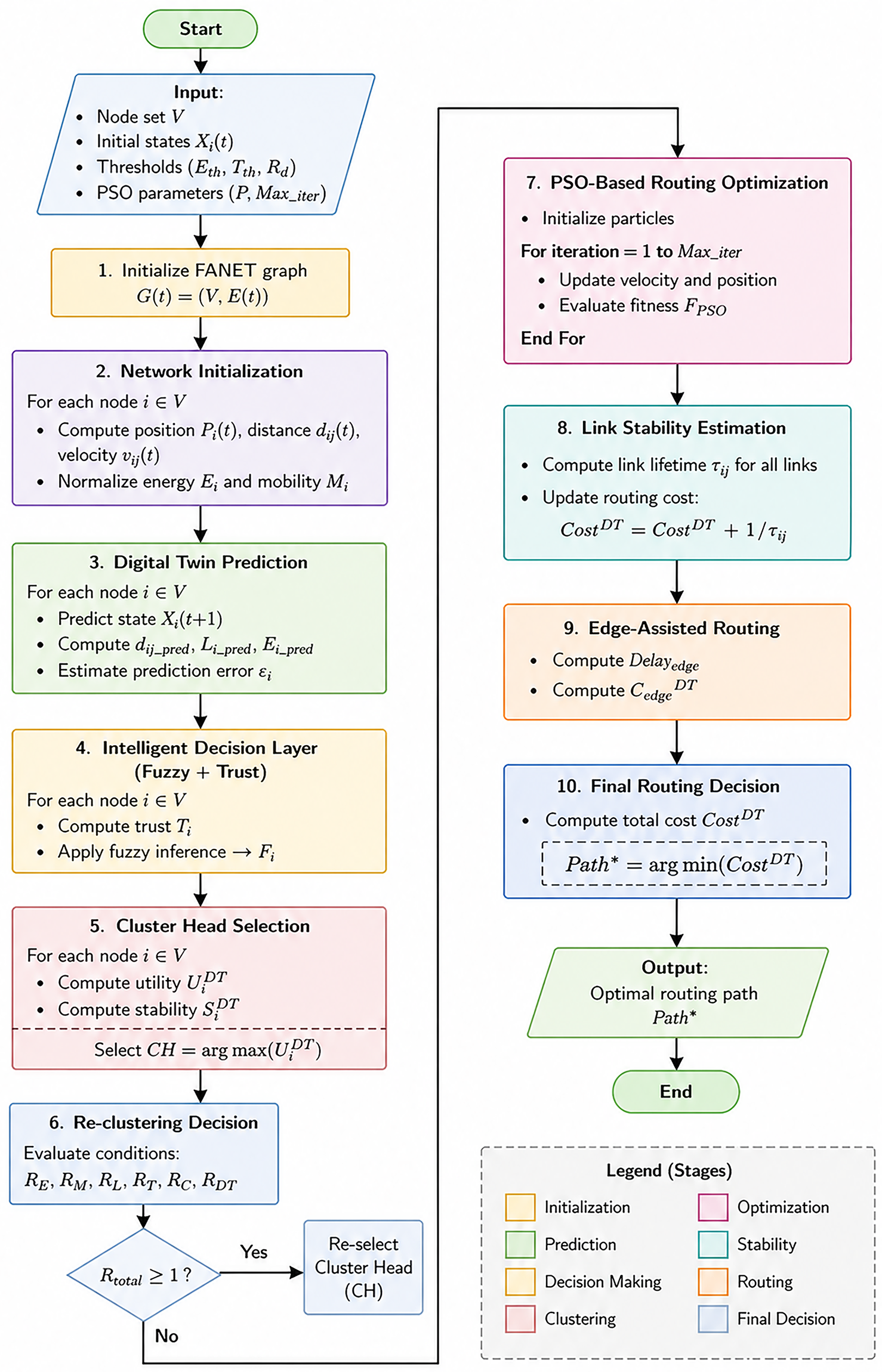
Figure 3: Flowchart of proposed framework.
This section defines the fundamental parameters used to model node behavior, connectivity, and link quality in the FANET. Each UAV node is represented in a three-dimensional space, and the distance between nodes is computed to determine connectivity. To capture the dynamic nature of UAV movement, relative velocity is also considered. In addition, node energy and mobility are normalized to enable consistent comparison across heterogeneous nodes.
The communication reliability between nodes is influenced by both distance and mobility. Therefore, link quality is modeled using an exponential decay function, while communication-range constraints define neighbor relationships.
Based on these parameters, the set of neighboring nodes is identified, and link reliability is further quantified using a probabilistic model. Additionally, node degree is computed to estimate local connectivity density.
Finally, a binary connectivity indicator is introduced to determine whether a direct communication link exists between nodes.
3.3 Digital Twin-Inspired Predictive Synchronization Mode
The proposed lightweight Digital Twin-inspired synchronization model predicts future UAV states using predictive mobility and network-state estimation, enabling proactive decision-making. Using motion-based state transition, the future position and network topology are estimated. This allows the computation of predicted inter-node distances, link quality, and residual energy. Unlike conventional approaches that rely on instantaneous values, the proposed model incorporates predicted parameters to enhance routing stability. Furthermore, prediction error is quantified to evaluate the accuracy of the DT-inspired predictivemodel, enabling uncertainty-aware decision-making in highly dynamic environments.
Unlike industrial Digital Twins that employ high-fidelity physics-based simulation or AI-driven predictive models, the proposed framework adopts a lightweight network-oriented Digital Twin specifically designed for real-time FANET routing. The Digital Twin maintains a synchronized virtual representation of UAV network states, including position, residual energy, mobility, and link quality, while employing computationally efficient kinematic prediction and synchronization feedback to proactively estimate future network conditions under strict latency and resource constraints.
The DT-inspired model estimates future UAV state nodes based on their current dynamics, enabling proactive, stability-aware decision-making. The state of each node is updated using its velocity over a small time interval, allowing estimation of future positions and network topology.
Where
Based on predicted node positions, the future link quality is estimated by accounting for both distance and relative mobility effects, while residual energy is updated based on consumption over time.
Fig. 3 illustrates the workflow of the proposed DT-TAPSO framework. The framework integrates network initialization, predictive DT-inspired modelling, fuzzy trust-based decision-making, cluster head selection, PSO-based routing optimization, link stability estimation, and final routing decision-making.
To account for prediction uncertainty, the error between the actual and predicted states is quantified, enabling robust decision-making in subsequent processes
To account for prediction uncertainty, the prediction error is quantified as the Euclidean distance between the real node state and the synchronized Digital Twin state. This error enables robust decision-making in subsequent routing processes.
Digital Twin Synchronization and Feedback
To maintain accuracy and adaptability, a feedback mechanism is integrated into the lightweight Digital Twin model after the kinematic prediction of the Digital Twin state
The Digital Twin state prediction is expressed as
Eq. (11) predicts the Digital Twin state
Where
The predicted Digital Twin state is then corrected using a gradient-based synchronization step
where
The gradient-based correction in Eq. (17) minimizes the prediction error computed in Eq. (15), thereby continuously synchronizing the Digital Twin with the physical FANET. This feedback mechanism improves prediction accuracy, maintains consistency between the virtual and physical network states, and enhances routing robustness under dynamic network conditions.
The synchronization mechanism periodically exchanges only lightweight UAV state information, including position, residual energy, mobility, and predicted link quality. Consequently, synchronization incurs minimal communication overhead while maintaining an accurate virtual representation of the physical FANET. Shorter synchronization intervals improve prediction accuracy and routing responsiveness but increase communication overhead, whereas longer intervals reduce overhead at the expense of prediction precision. Since only compact state information is exchanged, the proposed mechanism remains suitable for highly dynamic FANET environments.
3.4 Intelligent Decision Layer
An intelligent decision layer is introduced to evaluate node reliability using a hybrid approach combining trust modeling and fuzzy logic. The trust value is computed as a weighted combination of packet delivery performance, link quality, energy, and historical behavior. To handle uncertainty and dynamic variations, fuzzy inference is applied using energy, mobility, trust, and link quality as inputs. The final decision score is obtained through defuzzification, providing a robust metric for node evaluation under uncertain network conditions.
The trust value of each UAV node is computed by combining four routing descriptors, namely packet delivery performance, link quality, residual energy, and historical node behaviour. Higher trust values indicate more reliable forwarding nodes that are less likely to experience communication failures or malicious behaviour. The weighting coefficients
where
The hyper-parameter configuration adopted in DT-TAPSO was determined through empirical sensitivity analysis, in which individual parameters were varied systematically while keeping the remaining parameters fixed. The selected parameter values correspond to the configuration that provided the best overall trade-off among packet delivery ratio, network lifetime, routing overhead, throughput, and end-to-end delay. The tuning process was performed offline prior to the final simulations to ensure stable convergence and reproducible routing performance across different network densities. Although empirical sensitivity analysis provides an effective parameter configuration for the proposed framework, recent advances in deterministic hyper-parameter optimization, Bayesian optimization, and foundation model-assisted parameter tuning have demonstrated improved automation and reproducibility in complex optimization problems. These approaches represent promising directions for future enhancement of the proposed DT-TAPSO framework.
To effectively handle uncertainty caused by dynamic UAV mobility and fluctuating wireless conditions, a Mamdani-type fuzzy inference system is employed. Four input variables, namely residual energy, mobility, trust value, and link quality, are represented using three triangular linguistic membership functions (Low, Medium, and High). These variables are processed through a predefined fuzzy rule base to estimate the overall node suitability for routing decisions.
Representative fuzzy rules include:
• IF Energy is High AND Trust is High, THEN Node Suitability is High.
• IF Mobility is High AND Link Quality is Low, THEN Node Suitability is Low.
• IF Energy is Medium AND Trust is Medium, THEN Node Suitability is Medium.
• IF Link Quality is High AND Mobility is Low, THEN Node Suitability is High.
The aggregated fuzzy output is converted into a crisp node suitability score using the weighted-average (centroid) defuzzification method, which provides a continuous decision value for adaptive cluster-head selection and routing optimization.
where
3.5 Utility-Driven Cluster Head Selection
Cluster head (CH) selection is formulated as a utility maximization problem, where each node evaluates its suitability based on predicted network conditions. The utility function incorporates predicted energy, link quality, node degree, trust, and fuzzy score, while penalizing high mobility to ensure stable cluster formation.
To further enhance stability, a Digital Twin–based stability metric is introduced to quantify the future reliability of nodes by considering predicted link quality, mobility, and energy.
The stability metric is integrated into the utility function to refine the selection process:
Finally, the node with the highest utility value is selected as the cluster head, ensuring stable, energy-efficient clustering.
3.6 Adaptive Re-Clustering Decision Model
To maintain network stability under dynamic conditions, an adaptive re-clustering mechanism is proposed. Re-clustering is triggered based on multiple criteria, including energy depletion, mobility variation, link degradation, trust reduction, connectivity loss, and Digital Twin-based stability prediction. The mechanism continuously evaluates the suitability of the current cluster head using these network stability indicators. Re-clustering is initiated when any of the predefined trigger conditions is satisfied, indicating that the current cluster head no longer meets the required stability or reliability criteria.
The proposed adaptive re-clustering mechanism continuously evaluates the suitability of the current cluster head using multiple network stability indicators. These conditions evaluate whether the current cluster head can continue to maintain efficient communication.
Energy and mobility conditions ensure that nodes with insufficient energy or excessive movement are not retained as cluster heads.
Link quality and trust conditions are used to detect unreliable communication and degraded node behavior.
Connectivity and Digital Twin–based stability conditions are incorporated to capture both current and predicted network degradation.
Re-clustering is triggered when any of the above conditions are satisfied:
Following the re-clustering decision, a new cluster head is selected based on the updated utility values to ensure optimal network performance under changing conditions.
To avoid frequent and unnecessary re-clustering, a stability constraint is imposed by enforcing a minimum time interval between consecutive re-clustering operations.
This constraint reduces control overhead and ensures stable cluster formation over time.
The minimum time constraint acts as an additional condition for re-clustering. Specifically, re-clustering is executed only when both the trigger condition in Eq. (33) is satisfied and the minimum time interval in Eq. (35) has elapsed. Thus, the re-clustering decision follows the logical condition
If one or more trigger conditions are satisfied before the minimum re-clustering interval has elapsed, the re-clustering operation is deferred until the time constraint is satisfied. This strategy effectively balances routing responsiveness and control overhead while preserving cluster stability in dynamic FANET environments.
Particle Swarm Optimization (PSO) was selected as the routing optimization technique because it provides an effective balance between solution quality and computational efficiency in highly dynamic FANET environments. Compared with Genetic Algorithms (GA), PSO avoids computationally expensive crossover and mutation operations by updating particles using simple velocity and position equations, resulting in faster convergence and lower computational overhead. In contrast to Ant Colony Optimization (ACO), which relies on pheromone updates and often requires longer convergence times in rapidly changing network topologies, PSO can adapt more quickly to frequent topology variations. Moreover, PSO naturally supports multi-objective optimization by simultaneously considering routing metrics such as predicted link lifetime, residual energy, mobility, trust, and link quality. These characteristics make PSO particularly suitable for real-time, predictive routing in UAV-assisted FANETs, where rapid topology changes require fast and reliable routing decisions while maintaining computational scalability. Routing decisions are optimized using PSO, enabling efficient path selection in dynamic environments. The PSO algorithm iteratively updates candidate solutions based on local and global best positions. A multi-parameter fitness function is defined that incorporates distance, energy, mobility, trust, utility, and a fuzzy score. Additionally, predicted link lifetime is integrated into the routing cost to avoid unstable links, thereby improving route reliability.
A multi-parameter fitness function is defined to evaluate routing paths by considering distance, energy, mobility, trust, utility, and fuzzy decision scores.
To enhance route stability, the algorithm incorporates predicted link lifetimes, allowing it to avoid unstable links caused by high mobility.
The routing cost is updated by penalizing links with shorter predicted lifetimes, thereby favouring more stable communication paths.
To enhance computational efficiency and reduce latency, edge-assisted routing is incorporated into the framework. The total edge delay is modeled as the sum of the transmission and processing delays. An edge cost function is formulated by jointly considering the predicted transmission delay, predicted residual energy, and robust link quality, ensuring reliable edge-assisted offloading decisions. Furthermore, uncertainty-aware modeling is applied to account for prediction errors, thereby improving routing robustness under highly dynamic network conditions.
The total edge delay is modelled as the combination of transmission and processing delays:
An edge cost function is defined to evaluate the suitability of offloading decisions by incorporating delay, predicted energy, and robust link quality.
The edge cost function integrates the predicted transmission delay, predicted residual energy, and robust link quality to evaluate the suitability of edge-assisted routing decisions. The weighting coefficients α, β, and γ control the relative importance of delay, energy, and link reliability, respectively, enabling balanced routing decisions under dynamic FANET conditions.
A multi-objective optimization framework is adopted to balance multiple performance metrics, enabling the routing process to adapt to varying network conditions and application requirements. The overall fitness is computed as a weighted combination of individual objective functions, ensuring flexibility while maintaining weight normalization.
3.10 Disaster-Aware Routing Cost
To support mission-critical communication in disaster scenarios, a priority-based routing mechanism is introduced. Nodes closer to the target region are assigned a higher priority to ensure rapid data delivery. The routing cost function integrates predicted parameters, trust, utility, fuzzy score, link quality, and edge cost. The optimal routing path is selected by minimizing the overall cost, ensuring reliable, energy-efficient, and context-aware communication.
The routing cost function integrates multiple predicted parameters, including distance, energy, mobility, trust, utility, fuzzy score, link quality, and edge cost. This comprehensive formulation enables balanced decision-making under dynamic and uncertain conditions.
The optimal routing path is selected by minimizing the overall cost function, ensuring reliable, energy-efficient, and context-aware communication.
To emphasize the role of Digital Twin predictions, the routing decision is formulated as an optimization problem conditioned on predicted network states.
3.11 Feasibility Constraints (Decision Layer)
Feasibility constraints are defined to ensure valid and reliable communication. These include distance constraints for connectivity, minimum energy thresholds for node participation, and trust thresholds for secure routing decisions.
The performance of the proposed framework is evaluated using key network metrics, including end-to-end delay, total energy consumption, and packet delivery ratio (PDR). These metrics provide a comprehensive assessment of network efficiency, reliability, and sustainability.
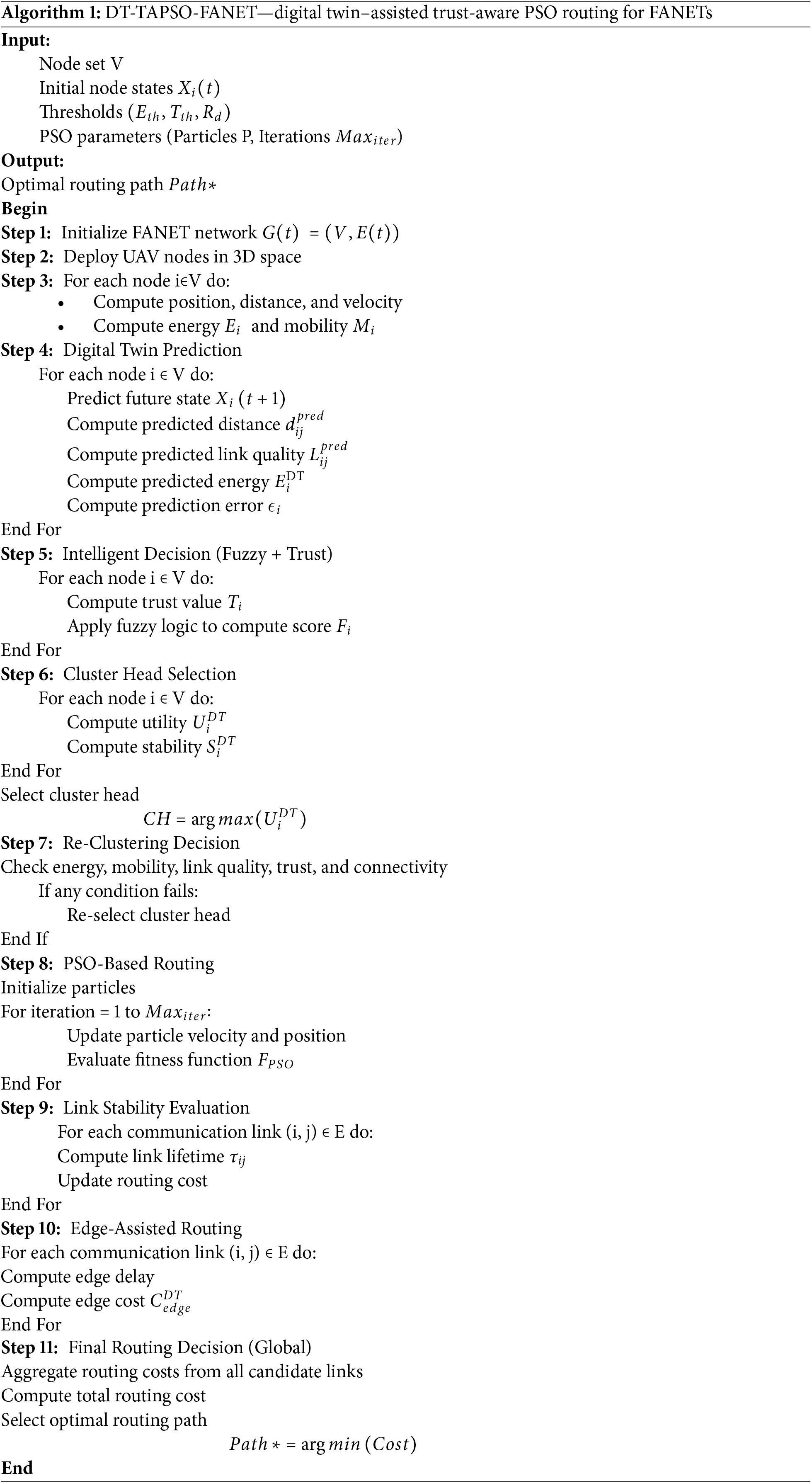
Algorithm 1 presents the proposed DT-TAPSO-FANET framework, which integrates digital-twin-based prediction, trust-aware fuzzy decision-making, and PSO-driven routing optimization to achieve energy-efficient, stable communication in FANET environments.
4.1 Implementation Details and Parameter Configuration
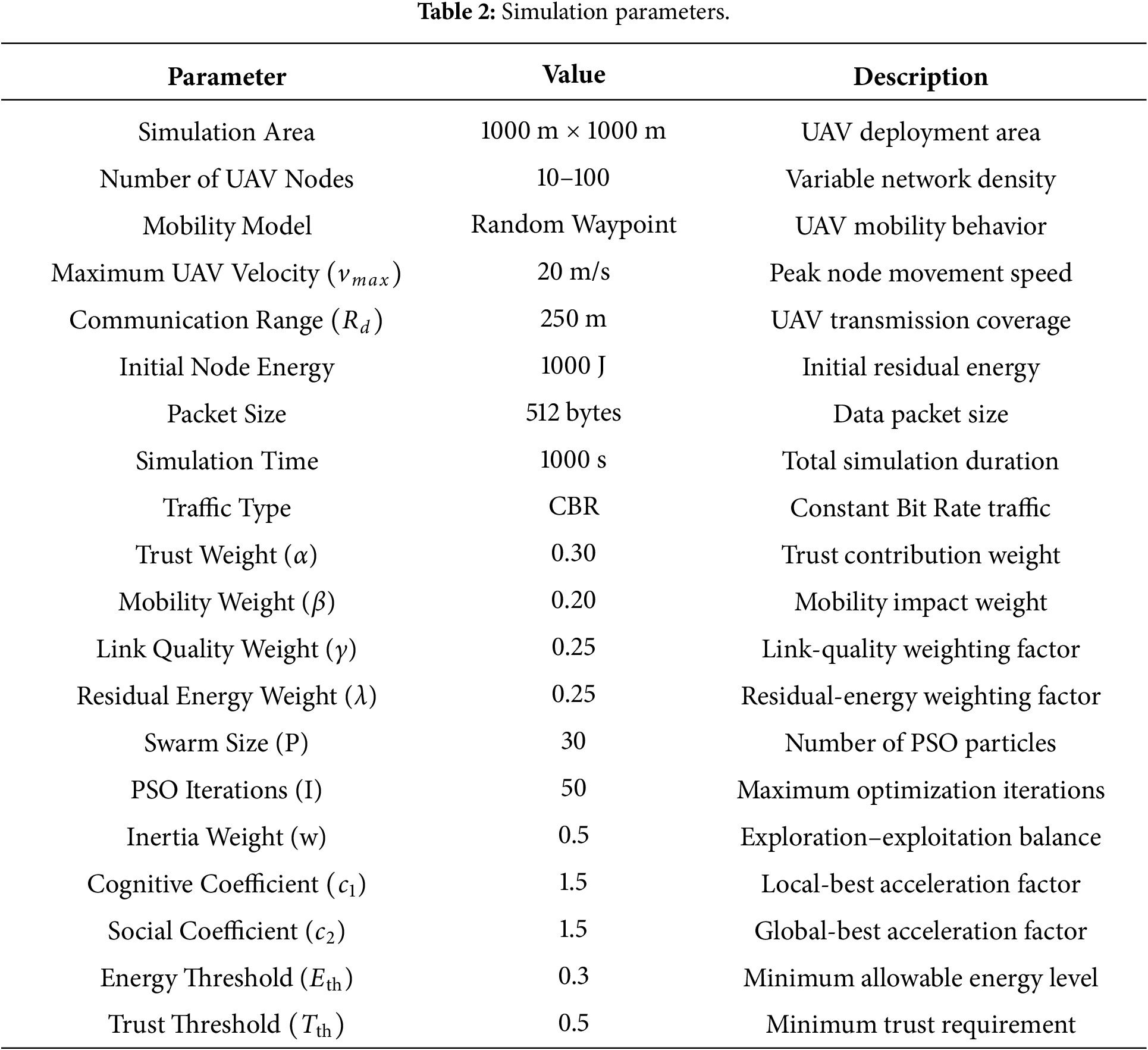
To enhance reproducibility, transparency, and experimental rigour, the implementation parameters of the proposed DT-TAPSO framework are explicitly defined in this subsection and also seen in Table 2. The parameter configuration was selected based on preliminary sensitivity experiments and commonly adopted settings in FANET optimization literature to ensure stable convergence and balanced routing performance under dynamic UAV network conditions. The performance of the proposed DT-TAPSO framework was evaluated using MATLAB simulations across UAV network sizes from 10 to 100 nodes. The simulation environment models highly dynamic FANET scenarios with varying node mobility, communication uncertainty, and energy constraints. The proposed DT-TAPSO routing framework was analyzed using several key performance metrics, including packet delivery ratio (PDR), network lifetime, throughput, routing overhead, energy consumption, and end-to-end delay. The LEACH-based benchmark adopted in this study corresponds to the UAV-assisted Enhanced LEACH protocol proposed in [5]. Unlike the original LEACH protocol, this enhanced variant introduces a UAV-assisted mobile sink to reduce communication distance and improve energy efficiency while preserving the lightweight clustering mechanism. However, the protocol remains fundamentally a WSN-oriented routing approach with stationary sensor nodes and was not specifically designed for highly dynamic FANET environments characterized by inter-UAV mobility and rapidly changing topologies. Therefore, it is included as a representative clustering-based benchmark, whereas the primary evaluation of DT-TAPSO is performed against dedicated FANET routing protocols, namely HIROL, MCQOR, QLSR-LCN, and QLME.
The proposed fuzzy inference engine uses four input descriptors: residual energy, mobility, trust value, and predicted link quality. Each input variable is represented using three triangular linguistic membership functions: Low, Medium, and High. Triangular membership functions were selected for their low computational complexity, reduced memory requirements, and efficient real-time implementation, making them suitable for highly dynamic FANET environments.
The fuzzy rule base is designed to capture nonlinear routing behavior under uncertain conditions in the UAV network. Representative fuzzy inference rules include:
• IF Energy is High AND Trust is High THEN Node Suitability is High.
• IF Mobility is High AND Link Quality is Low THEN Node Suitability is Low.
• IF Energy is Medium AND Trust is Medium THEN Node Suitability is Medium.
• IF Link Quality is High AND Mobility is Low THEN Route Stability is High.
The final node suitability score is computed using centroid-based defuzzification, which provides a continuous decision metric for adaptive routing, next-hop selection, and cluster-head election. The weighting coefficients utilised in the trust evaluation and routing-cost formulation were determined experimentally through iterative sensitivity analysis. Multiple parameter combinations were evaluated to identify stable configurations that jointly optimise packet delivery ratio, network lifetime, routing overhead, throughput, and end-to-end delay. The selected parameter values demonstrated consistent convergence behaviour and balanced routing performance across varying network densities and mobility conditions. Additionally, the PSO parameters were configured to maintain an effective balance between global exploration and local exploitation during route optimization. The selected swarm size and iteration count provide sufficient optimization capability while remaining computationally feasible for real-time FANET operations. The complete parameter specification significantly improves experimental reproducibility and facilitates future comparative evaluation of DT-TAPSO against emerging intelligent FANET routing approaches.
4.2 Statistical Reliability and Validation
To ensure the statistical reliability and reproducibility of the proposed DT-TAPSO framework, each simulation scenario was evaluated over 20 independent Monte Carlo simulation runs using different random network deployments and UAV mobility patterns. The reported performance metrics correspond to the average values obtained across all simulation runs. In addition, the standard deviation (Std Dev) and 95% confidence intervals (95% CI) were computed to assess the stability and consistency of the proposed framework under dynamic FANET conditions.
The confidence interval for each performance metric was calculated using:
where:
σ denotes the standard deviation
n indicates the number of independent simulation runs.
As shown in Table 3, the proposed DT-TAPSO framework exhibits stable and consistent performance across multiple simulation runs. The relatively low standard deviations and narrow 95% confidence intervals for all evaluated metrics indicate high reliability, robustness, and reproducibility under different random network deployments and UAV mobility conditions. These statistical results demonstrate that the proposed framework maintains consistent performance with minimal variability, thereby confirming the stability of the routing strategy. The comparative performance of DT-TAPSO against the benchmark routing protocols is presented in Figs. 4–10.
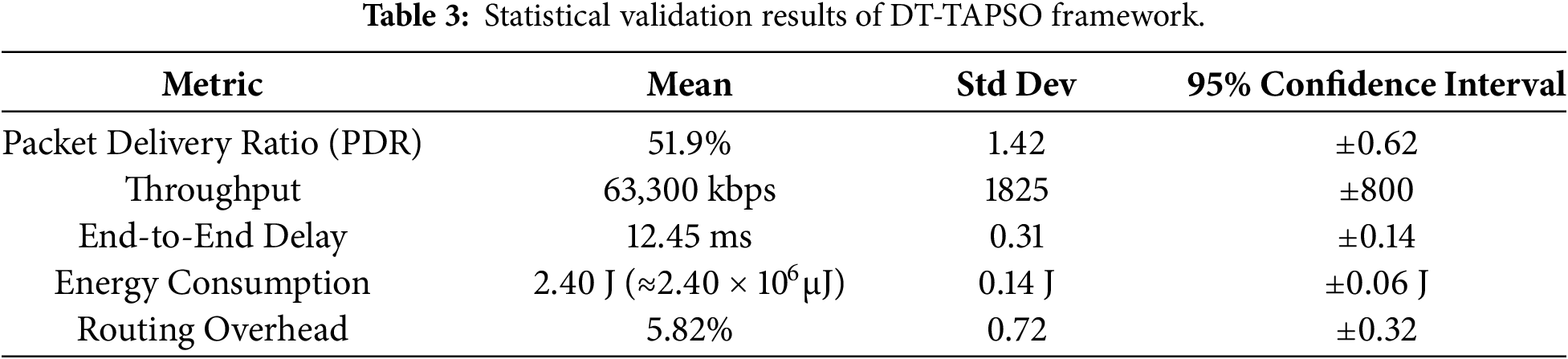
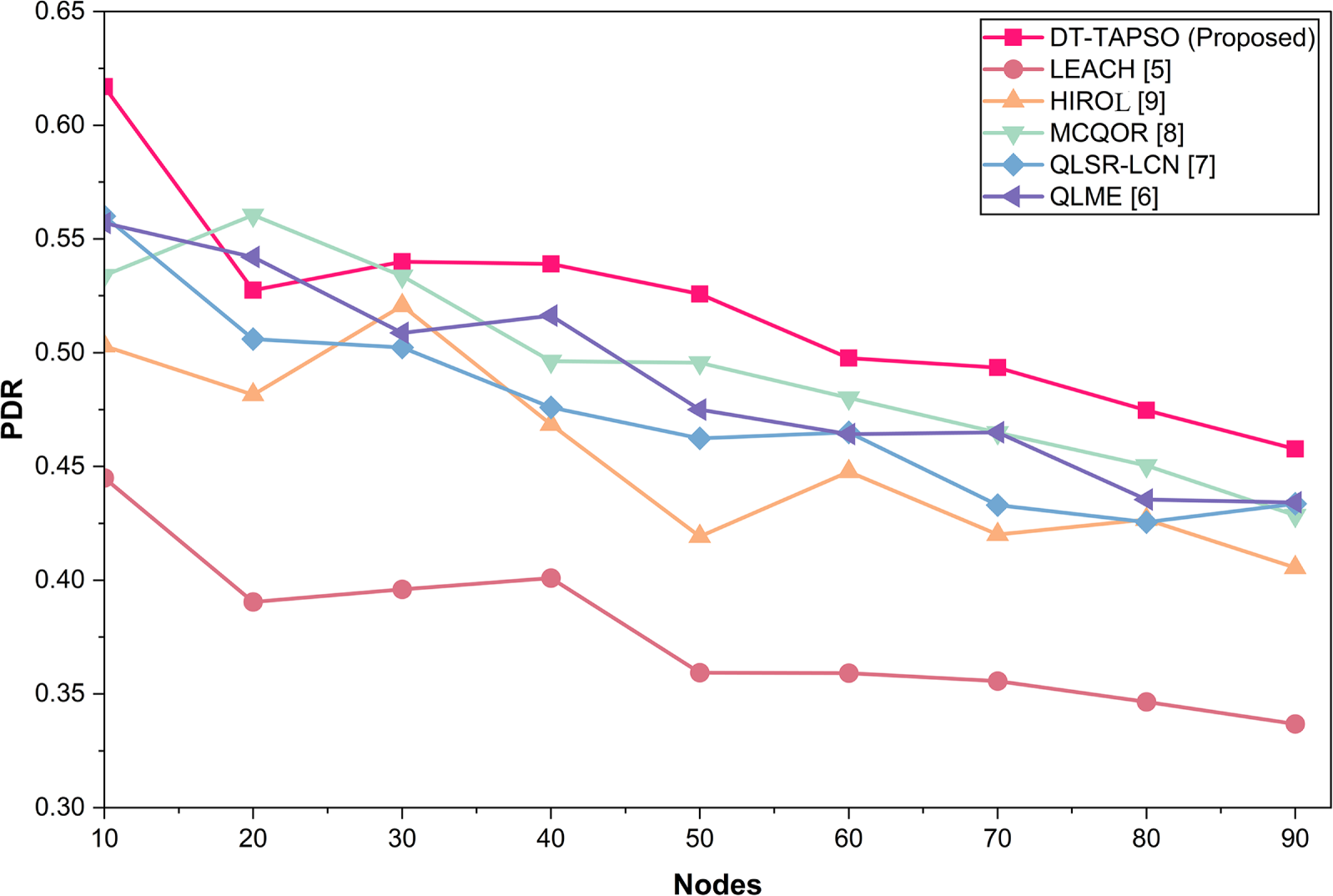
Figure 4: Packet delivery ratio (PDR) vs. number of nodes.
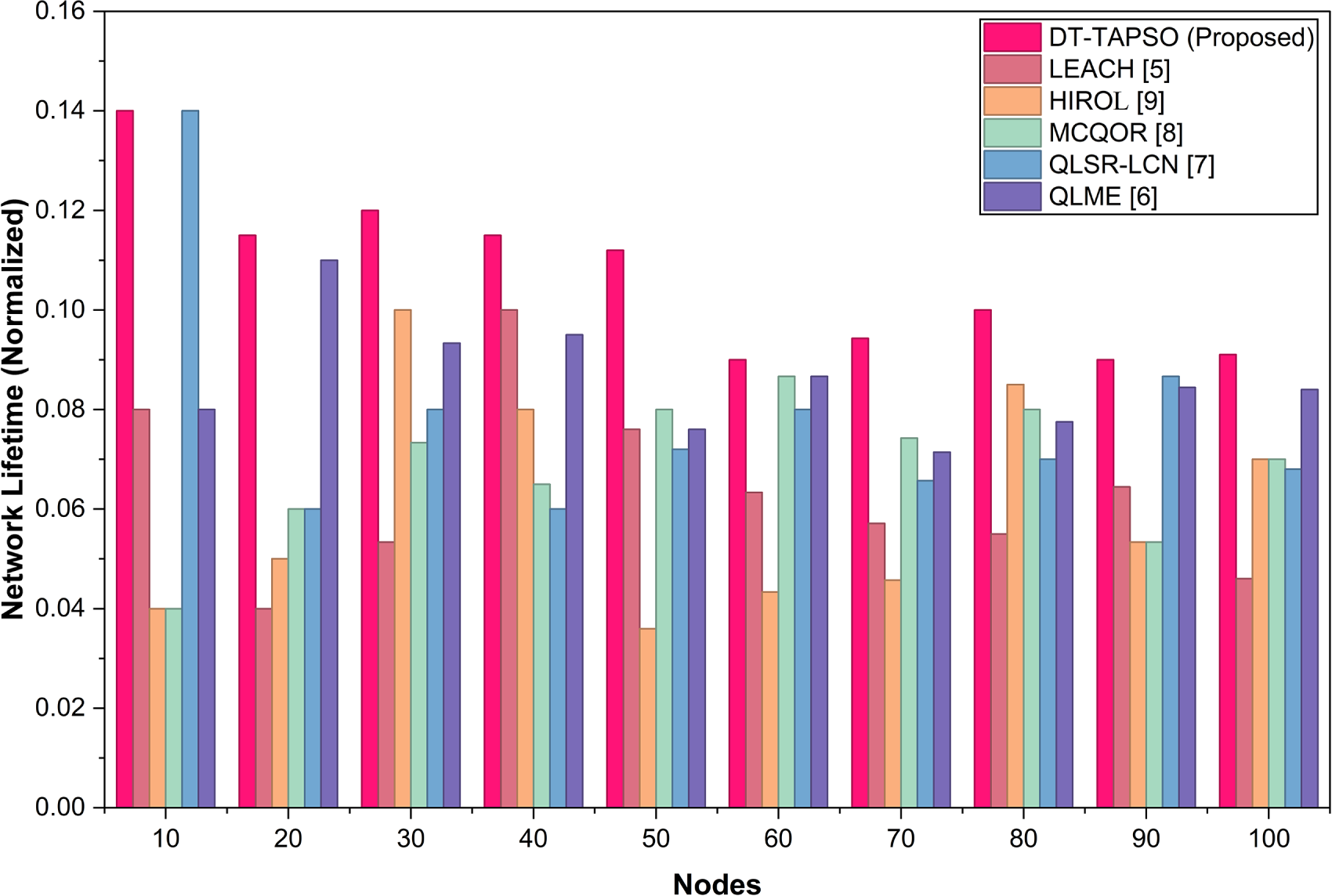
Figure 5: Network lifetime vs. number of nodes.
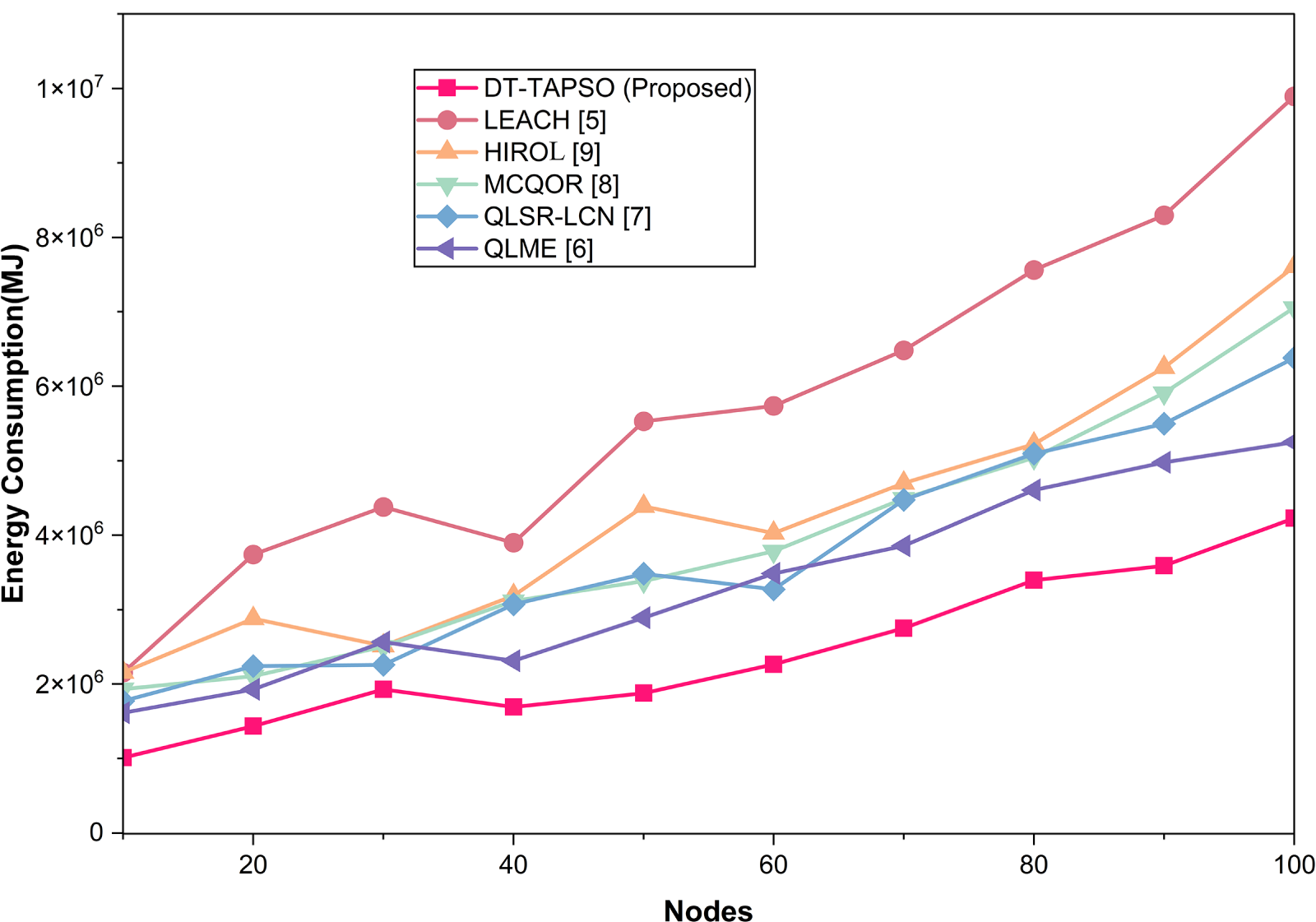
Figure 6: Energy consumption vs. number of nodes.
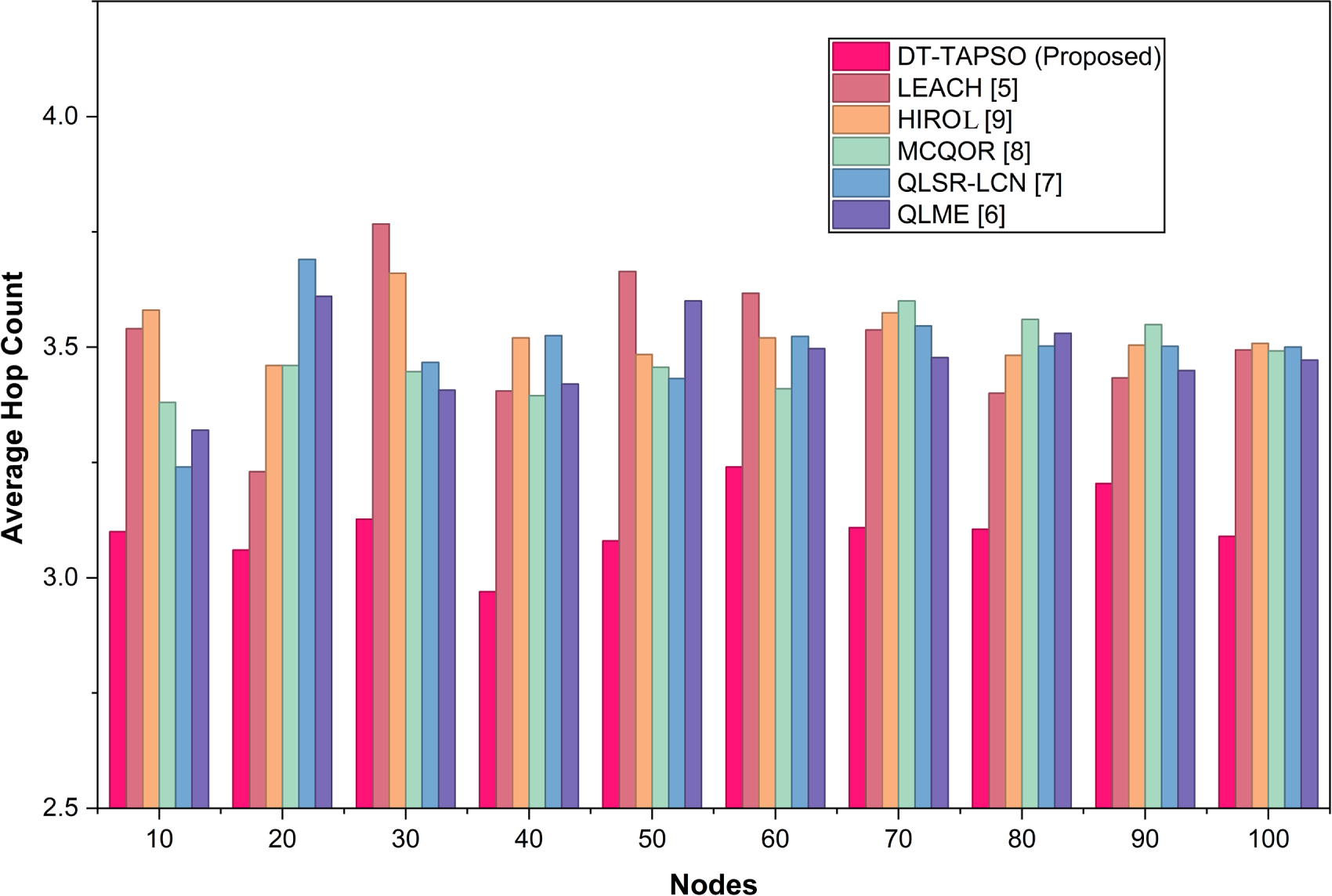
Figure 7: Average hop count vs. number of nodes.
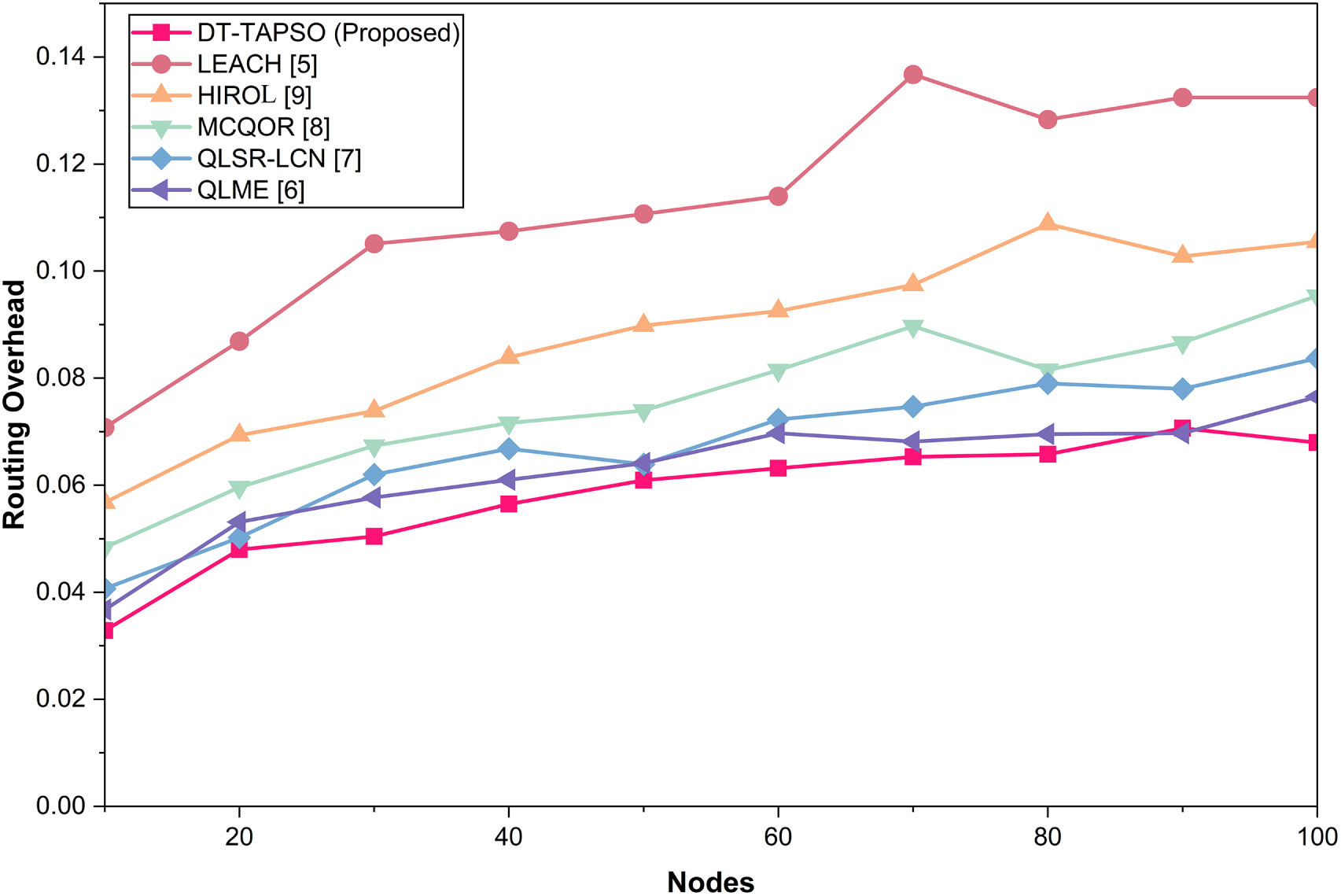
Figure 8: Routing overhead vs. number of nodes.
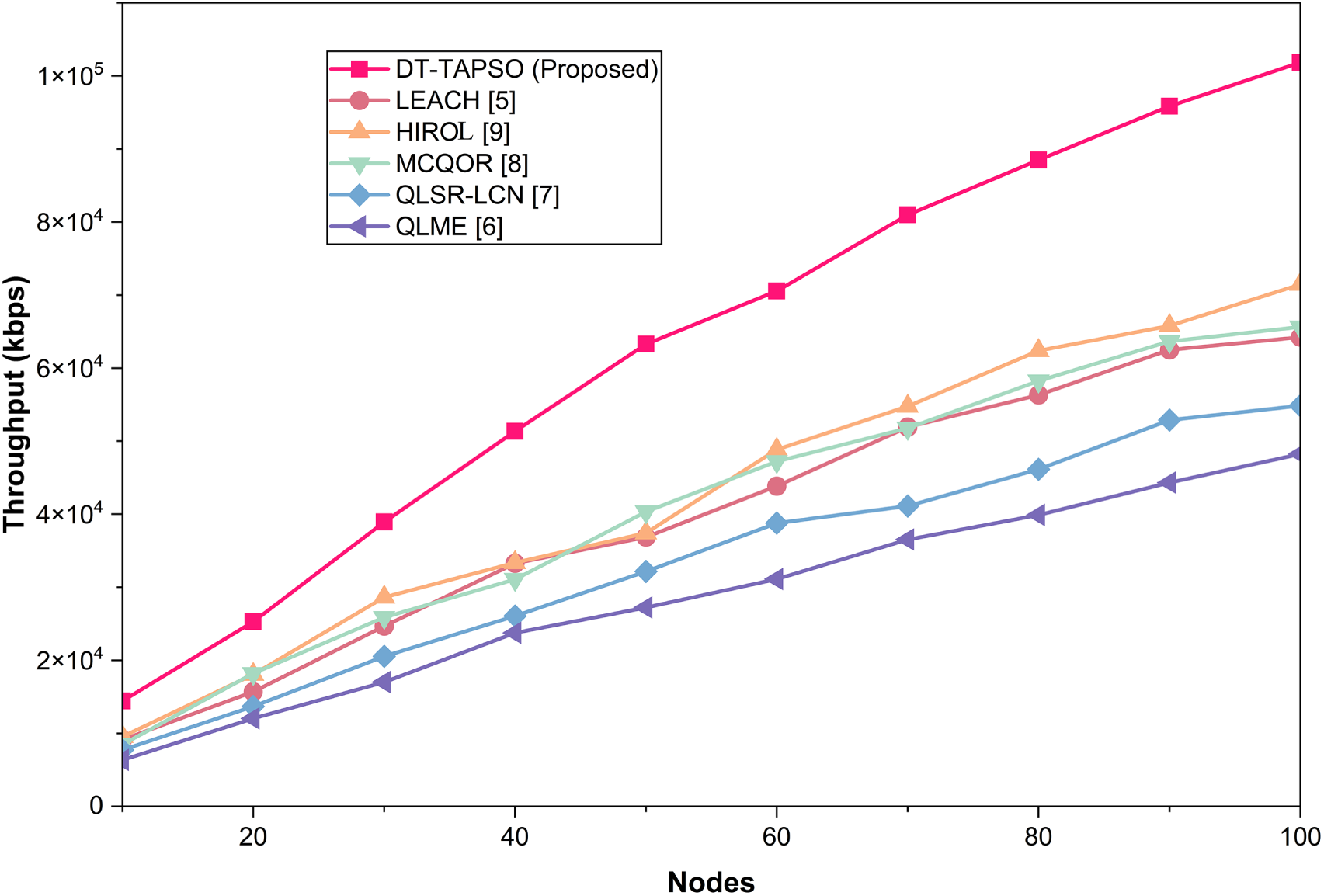
Figure 9: Throughput vs. number of nodes.
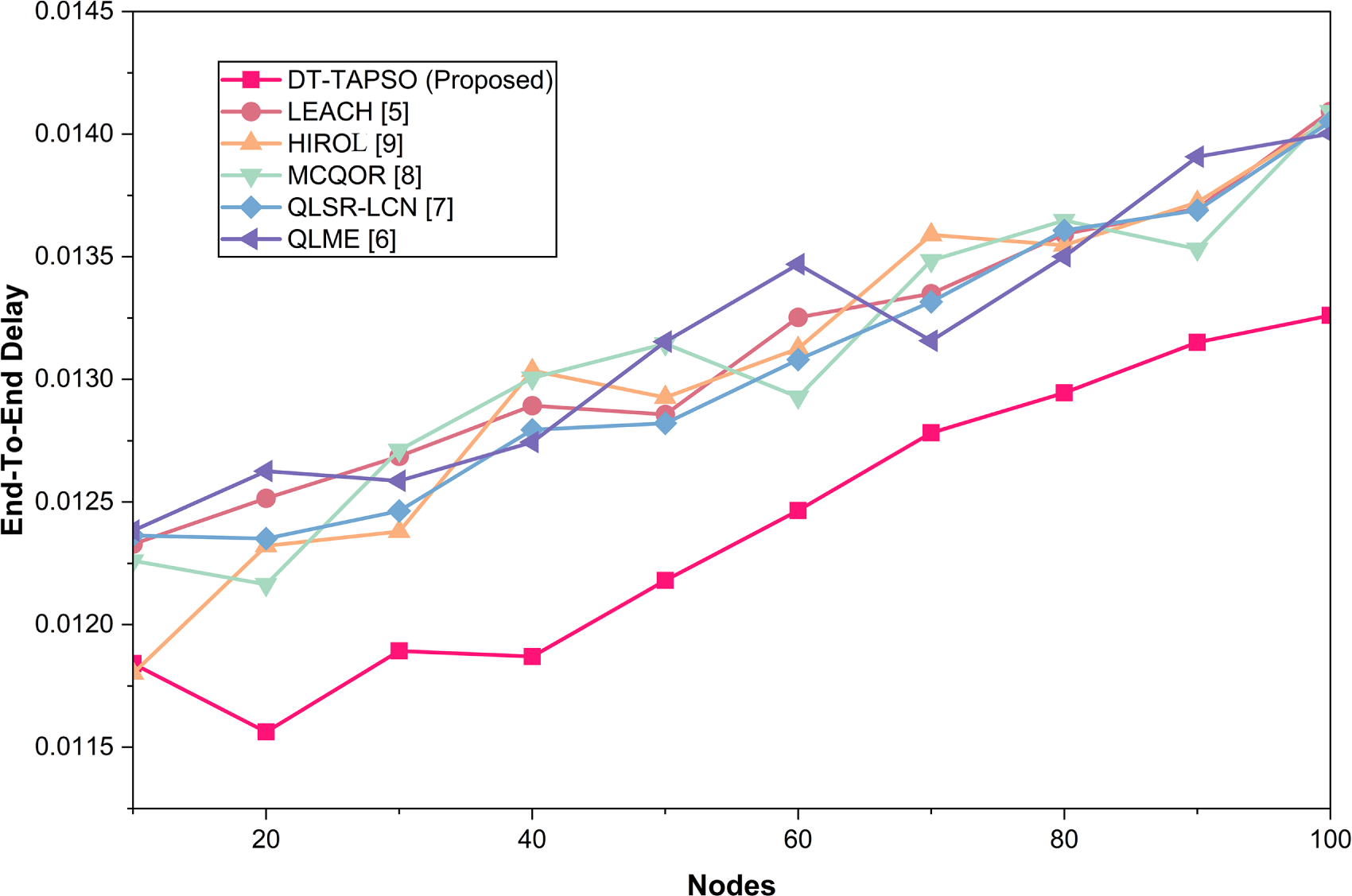
Figure 10: End-to-end delay vs. number of nodes.
Fig. 4 illustrates the variation in PDR with increasing node count. The proposed DT-TAPSO consistently achieves higher packet delivery than all baseline methods across different network densities. At lower node counts, the PDR of DT-TAPSO is significantly higher, indicating efficient packet forwarding under sparse conditions. As the number of nodes increases, a gradual decline in PDR is observed for all methods due to increased contention and dynamic topology changes; however, DT-TAPSO maintains a relatively stable performance. This behavior indicates that the proposed method effectively mitigates packet loss even in dense, highly dynamic scenarios, ensuring reliable communication.
Fig. 5 presents the comparison of network lifetime for different routing approaches. The proposed DT-TAPSO achieves the highest network lifetime across all node densities.
At lower node counts, the improvement is more pronounced, while at higher densities, DT-TAPSO maintains superior performance compared to other methods. This indicates that the proposed framework efficiently balances energy consumption among nodes and avoids premature node failures. The stability of lifetime across varying node sizes demonstrates the robustness of the proposed approach in dynamic FANET environments.
As shown in Fig. 6, energy consumption increases with the number of nodes for all routing protocols due to higher communication overhead and increased routing activity. However, DT-TAPSO consistently exhibits lower energy consumption compared to all baseline methods.
The gap widens at higher node densities, indicating that the proposed framework scales efficiently while maintaining energy efficiency. The reduced energy usage reflects the effectiveness of predictive routing and optimised cluster management in minimising unnecessary transmissions.
Fig. 7 shows the average hop count required for data transmission. The proposed DT-TAPSO maintains the lowest hop count across all scenarios, indicating that it selects more efficient routing paths.
While other methods show a gradual increase in hop count with network size, DT-TAPSO maintains relatively stable values. This suggests that the proposed method effectively reduces path length, thereby improving delay and energy performance.
Fig. 8 depicts the routing overhead generated by different protocols. DT-TAPSO produces the least overhead across all node densities. As the number of nodes increases, routing overhead rises for all methods due to frequent topology updates; however, the increase is minimal for DT-TAPSO. This indicates that the proposed framework efficiently manages control messages and reduces unnecessary re-routing, leading to a more stable network.
Fig. 9 illustrates the throughput performance of the compared methods. The proposed DT-TAPSO consistently achieves the highest throughput across all node densities. Throughput increases with the number of nodes due to improved connectivity; however, DT-TAPSO shows a steeper increase than other methods. This indicates that the proposed framework effectively utilises available network resources and minimises packet loss, resulting in higher data delivery rates.
Fig. 10 shows the end-to-end delay performance. The proposed DT-TAPSO achieves the lowest delay across all network sizes. While delay increases slightly with node density for all methods due to increased contention, DT-TAPSO maintains consistently lower values. This demonstrates that the proposed approach effectively reduces transmission latency by selecting stable and efficient routing paths. The results clearly demonstrate that DT-TAPSO outperforms existing routing protocols across all performance metrics. The proposed framework achieves higher reliability, improved energy efficiency, reduced routing overhead, and lower delay, making it highly suitable for disaster-aware FANET applications. The consistent performance across varying node densities highlights the approach’s scalability and robustness.
4.9 Computational Complexity Analysis
The computational complexity of the proposed DT-TAPSO framework is analyzed to evaluate its scalability, computational feasibility, and suitability for highly dynamic FANET environments. Since the framework integrates multiple functional modules, including Digital Twin prediction, fuzzy-trust evaluation, adaptive clustering, and PSO-based routing optimization, the total computational overhead depends on the combined complexity of these interconnected layers. The complexity analysis assumes that the number of fuzzy membership functions and inference rules remains constant throughout the routing process. Similarly, the PSO swarm size and maximum iteration count are predefined and remain unchanged during optimization. Therefore, the computational complexity is expressed as a function of the network size
4.9.1 Digital Twin Prediction Complexity
The Digital Twin prediction layer estimates future UAV states, including node position, residual energy, mobility, and link quality. Let N denote the total number of UAV nodes in the network. Since prediction and parameter updates are independently computed for each node during every simulation interval, the computational complexity of the prediction stage is
This linear complexity enables efficient predictive state estimation while maintaining scalability under moderate network densities.
4.9.2 Fuzzy-Trust Decision Layer Complexity
The intelligent decision layer computes trust values and fuzzy inference scores using multiple routing descriptors, including residual energy, mobility, link quality, and historical node behavior. Assuming a fixed fuzzy-rule base and constant membership-function evaluation cost, the fuzzy-trust computation scales linearly with the number of UAV nodes as
4.9.3 Cluster-Head Selection and Adaptive Re-Clustering Complexity
The utility-driven cluster-head selection mechanism evaluates utility scores based on predicted stability, trust values, mobility conditions, and neighborhood connectivity information. During adaptive re-clustering, nodes evaluate neighbouring UAVs to determine cluster stability and communication feasibility. Therefore, the worst-case complexity is
4.9.4 PSO-Based Routing Optimization Complexity
The routing optimization layer employs PSO to identify stable, energy-efficient communication paths. Let:
• P denotes the swarm population size,
• I represent the maximum number of PSO iterations,
• N indicates the number of UAV nodes.
During each optimization iteration, all particles evaluate their routing fitness and update their candidate solutions based on their local-best and global-best positions. Therefore, the computational complexity of the PSO routing stage is expressed as
Since PSO performs iterative global optimization across the routing search space, this module constitutes the dominant computational component of the DT-TAPSO framework.
4.9.5 Combined Computational Complexity
The total computational complexity of the proposed DT-TAPSO framework is obtained by combining the complexities of all major functional modules:
By simplifying the above expression, the overall computational complexity can be approximated as:
where the PSO optimization stage dominates the computational overhead in large-scale deployments, while clustering operations contribute significantly during topology adaptation and re-clustering.
4.9.6 Space Complexity Analysis
In addition to computational complexity, the memory overhead of the proposed DT-TAPSO framework is analysed to evaluate its storage feasibility in resource-constrained UAV environments. The Digital Twin layer maintains predicted node-state information, including mobility, energy, and link-quality parameters for all UAV nodes, requiring memory space of
Similarly, the fuzzy-trust module stores trust values, fuzzy parameters, and node-behaviour histories for each UAV node, resulting in space complexity of
The clustering layer maintains neighborhood connectivity and cluster membership information. In the worst case, where every node maintains connectivity information for all neighbouring UAVs, the storage requirement becomes
The PSO routing module stores particle positions, velocities, local-best solutions, and global-best routing paths. Considering P particles and N routing dimensions, the PSO memory requirement is expressed as
Therefore, the total space complexity of the DT-TAPSO framework is:
which simplifies to the equation below:
This indicates that neighbourhood management and clustering operations account for the majority of memory consumption in dense FANET deployments.
As shown in Table 4, the overall time complexity is dominated by the PSO-based routing optimization and adaptive clustering processes, whereas the space complexity is primarily influenced by neighborhood management and cluster maintenance in dense FANET deployments.
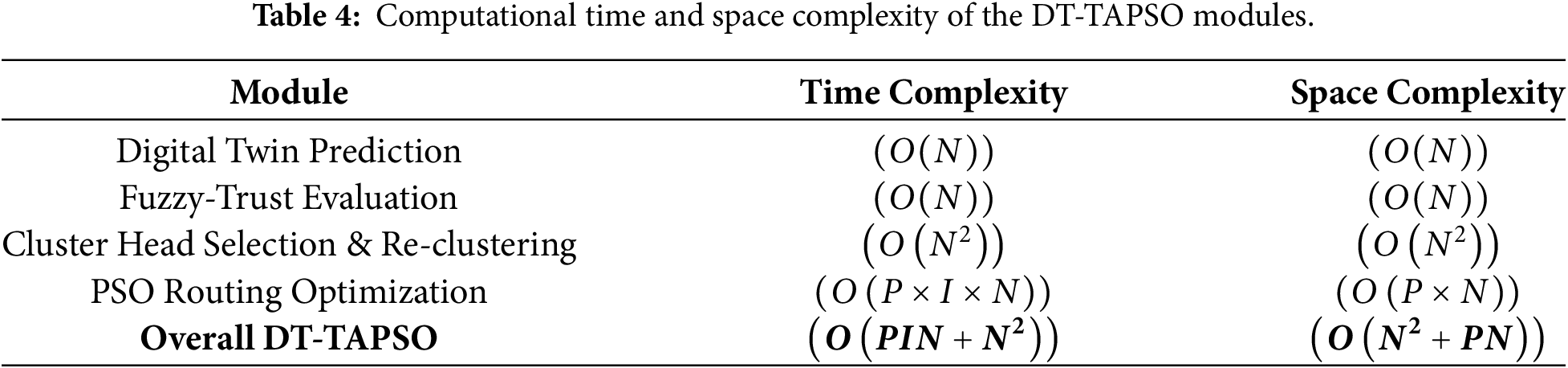
Although the proposed DT-TAPSO framework integrates multiple intelligent routing components, the computational runtime remains suitable for real-time FANET applications because each module performs lightweight operations. The Digital Twin prediction and fuzzy-trust evaluation execute linear-time computations with respect to the number of UAV nodes. The dominant runtime is introduced by the PSO optimization stage; however, the selected swarm size (30 particles) and maximum iteration count (50 iterations) maintain computational efficiency while providing stable convergence. Furthermore, route optimization is invoked only during route discovery or significant topology changes rather than continuously, thereby reducing the average computational burden. The edge-assisted architecture further decreases onboard processing latency by offloading computationally intensive routing decisions to nearby edge servers. Consequently, the proposed framework remains computationally feasible for medium- and large-scale UAV deployments.
4.9.8 Scalability and Practical Feasibility
Although the proposed DT-TAPSO framework introduces additional computational overhead compared with conventional routing protocols, several architectural features enhance its practical feasibility and scalability.
First, the Digital Twin-inspired prediction mechanism proactively estimates future node states and link conditions, thereby reducing route failures, retransmissions, and repeated route discovery operations. This predictive capability improves routing stability while lowering communication overhead.
Second, the adaptive clustering mechanism maintains stable cluster structures over extended communication intervals, reducing control message exchanges and topology management complexity in highly dynamic FANET environments.
Third, the edge-assisted routing layer offloads computationally intensive tasks to nearby edge nodes, decreasing onboard UAV processing requirements and improving real-time routing responsiveness. This distributed processing architecture enhances scalability while maintaining low communication latency.
Furthermore, the selected PSO configuration (
Overall, the complexity analysis demonstrates that DT-TAPSO achieves a favorable balance among computational cost, routing performance, and scalability, making it well-suited for dynamic and mission-critical FANET applications.
The superior performance of DT-TAPSO is attributed to the synergistic integration of Digital Twin prediction, fuzzy-trust decision-making, and PSO-based routing optimization. From a networking perspective, predictive topology awareness and adaptive clustering improve link stability while reducing routing overhead and packet loss. From an AI optimization perspective, fuzzy inference effectively handles uncertainty, whereas PSO performs global route optimization to achieve energy-efficient and reliable routing under highly dynamic FANET conditions.
Threats to Validity
The experimental validation of the proposed DT-TAPSO framework is primarily based on MATLAB simulations conducted under controlled network conditions. Although the simulation parameters were selected to reflect realistic UAV mobility, communication ranges, and network dynamics, simulation environments cannot fully capture practical factors such as wireless interference, environmental disturbances, hardware imperfections, GPS inaccuracies, and unpredictable flight behaviours encountered during real deployments.
Another potential threat to validity is the limited availability of standardized public benchmark datasets specifically designed for multi-UAV FANET routing. Existing public UAV datasets mainly focus on trajectory analysis, object detection, or aerial imaging, while datasets containing routing information, Digital Twin synchronization states, trust metrics, dynamic topology evolution, and multi-hop communication characteristics remain scarce. Consequently, simulation-based validation remains the predominant evaluation approach in FANET routing research.
In addition, although the proposed framework demonstrates good scalability under the evaluated network sizes, extremely dense UAV swarms may introduce additional synchronization overhead, computational complexity, and communication latency associated with Digital Twin updates, adaptive clustering, and PSO-based routing optimization. Furthermore, the current framework does not explicitly consider cyber-security threats such as spoofing attacks, false data injection, jamming, Digital Twin manipulation, or denial-of-service attacks, which may affect routing reliability in hostile environments. Finally, the framework was implemented in MATLAB for algorithmic validation rather than packet-level protocol simulation. Future work will therefore investigate implementation using ns-3, OMNeT++/INET, and real multi-UAV testbeds to further evaluate the framework under practical deployment conditions.
This paper proposed a lightweight Digital Twin-enabled Trust-Aware PSO-based routing framework (DT-TAPSO) for disaster-aware FANETs. The proposed framework integrates lightweight Digital Twin synchronization, predictive network state estimation, fuzzy trust-based decision-making, utility-based cluster-head selection, adaptive re-clustering, edge-assisted communication, and PSO-based multi-objective routing optimization to address the challenges of high UAV mobility, rapidly changing network topology, intermittent connectivity, and unstable wireless links. By proactively predicting future node states, residual energy, and link quality, DT-TAPSO enables stability-aware routing decisions that improve communication reliability under highly dynamic aerial networking conditions.
The lightweight Digital Twin synchronization mechanism continuously maintains consistency between the physical FANET and its virtual representation, enabling proactive route adaptation before significant topology degradation occurs. Furthermore, fuzzy trust evaluation enhances routing security by selecting reliable forwarding nodes, while adaptive clustering improves network stability and load balancing under dynamic UAV mobility. The integration of edge-assisted routing further reduces communication latency and computational overhead, thereby improving routing responsiveness in disaster-aware communication scenarios.
Extensive simulation results demonstrate that DT-TAPSO consistently outperforms representative routing protocols in terms of packet delivery ratio, network lifetime, energy efficiency, throughput, routing overhead, average hop count, and end-to-end delay. Overall, the proposed framework achieves an effective balance between routing reliability, scalability, energy efficiency, and communication stability, making it a promising solution for mission-critical FANET applications.
Despite these encouraging results, several limitations remain. First, the proposed framework has been validated primarily through MATLAB-based simulations rather than packet-level network simulators or real UAV deployments. Second, the implemented Digital Twin focuses on lightweight predictive synchronization rather than a fully coupled cyber-physical Digital Twin with continuous telemetry assimilation and AI-driven prediction. Third, the PSO-based optimization process may introduce additional computational overhead in ultra-dense UAV deployments, while the current implementation employs fixed fuzzy and optimization parameters that may not generalize optimally to heterogeneous network environments. Furthermore, the present study does not explicitly evaluate realistic wireless-channel impairments, sophisticated cyberattacks, heterogeneous UAV swarms, or large-scale real-world deployment scenarios.
Future research will address these limitations by extending the DT-TAPSO framework in several important directions. Machine learning and deep learning-based Digital Twin prediction models will be investigated to improve prediction accuracy under highly dynamic UAV mobility while maintaining computational efficiency. Adaptive parameter optimization techniques, including Bayesian optimization, reinforcement learning, and self-adaptive hyperparameter tuning, will be explored to automatically optimize PSO parameters, fuzzy membership functions, and trust coefficients according to changing network conditions. In addition, the proposed framework will be extended to heterogeneous UAV swarms with diverse communication, sensing, and energy capabilities. Future work will also investigate blockchain-assisted trust management, cyberattack-resilient routing, scalable edge-cloud Digital Twin orchestration, and cross-layer optimization to improve routing security, scalability, and communication reliability. Finally, packet-level implementation using established networking simulators such as ns-3 and OMNeT++/INET, followed by hardware-in-the-loop testing and real multi-UAV experimental validation integrated with 5G/6G communication technologies and Internet of Things (IoT) infrastructures, will be conducted to further demonstrate the practical applicability of the proposed DT-TAPSO framework for next-generation intelligent FANETs.
Acknowledgement: The authors extend their appreciation to the Deanship of Research and Graduate Studies at King Khalid University for funding this work through Large Research Project under grant number RGP2/47/47. Furthermore, this work was supported by the National Research Foundation of Korea (NRF) grant funded by the Korea government (MSIT) (RS-2026-25468525).
Funding Statement: The authors extend their appreciation to the Deanship of Research and Graduate Studies at King Khalid University for funding this work through Large Research Project under grant number RGP2/47/47. Furthermore, this work was supported by the National Research Foundation of Korea (NRF) grant funded by the Korea government (MSIT) (RS-2026-25468525).
Author Contributions: Jasmine Batra: Conceptualization; Data curation; Formal analysis; Methodology; Writing—original draft; Software; Writing, Reviewing and Editing. Kiranbir Kaur: Investigation; Methodology; Writing—original draft; Writing—review & editing. Fuad Ali Mohammed Al-Yarimi: Writing, Reviewing and Editing; Project administration; Investigation; Methodology. Abdulrahman Mohammed Alamoudi: Validation; Investigation; Writing—review & editing. Salil Bharany: Visualization; Validation; Writing—review & editing. Ateeq Ur Rehman: Writing—review & editing; Methodology; Conceptualization. Jaeyoung Choi: Writing—review & editing; Software; Resources; Methodology. All authors reviewed and approved the final version of the manuscript.
Availability of Data and Materials: The data that support the findings of this study are available from the Corresponding Author upon reasonable request.
Ethics Approval: Not applicable.
Conflicts of Interest: The authors declare no conflicts of interest.
Nomenclature
| Symbol | Meaning |
| (Xi(t)) | State vector of node i |
| (Xi(t + 1)) | Predicted node state |
| (Ei) | Residual energy |
| (Eipred) | Predicted residual energy |
| (dij) | Distance between nodes i and j |
| (dijpred) | Predicted inter–node distance |
| (Lij) | Link quality |
| (Lijpred) | Predicted link quality |
| (Ti) | Trust value |
| (Fi) | Fuzzy decision score |
| (UiDT) | DT–based utility value |
| (SiDT) | Digital Twin stability score |
| (CostDT) | DT–based routing cost |
| (Path*) | Optimal routing path |
| Abbreviation | Full Form |
| AI | Artificial Intelligence |
| CH | Cluster Head |
| CBR | Constant Bit Rate |
| DT | Digital Twin |
| DT-TAPSO | Digital Twin-Driven Trust-Aware Particle Swarm Optimization |
| E2E | End-to-End |
| FANET | Flying Ad Hoc Network |
| FL | Fuzzy Logic |
| FIS | Fuzzy Inference System |
| GPS | Global Positioning System |
| IoT | Internet of Things |
| LQ | Link Quality |
| MANET | Mobile Ad Hoc Network |
| MCQOR | Multi-Criteria QoS Optimization Routing |
| ML | Machine Learning |
| PDR | Packet Delivery Ratio |
| QoS | Quality of Service |
| QLME | Q-Learning-Based Mobility-Efficient Routing |
| QLSR-LCN | QoS Link-State Routing with Link Connectivity Network |
| RL | Reinforcement Learning |
| RIS | Reconfigurable Intelligent Surface |
| RSMA | Rate-Splitting Multiple Access |
| UAV | Unmanned Aerial Vehicle |
| WSN | Wireless Sensor Network |
| CHS | Cluster Head Selection |
| DTPE | Digital Twin Prediction Engine |
| DTSM | Digital Twin Synchronization Model |
| RCL | Re-Clustering Logic |
| RSSI | Received Signal Strength Indicator |
| SINR | Signal-to-Interference-plus-Noise Ratio |
| PSO | Particle Swarm Optimization |
| CPU | Central Processing Unit |
| CI | Confidence Interval |
| Std. Dev. | Standard Deviation |
| 3D | Three-Dimensional |
References
1. Gupta L, Jain R, Vaszkun G. Survey of important issues in UAV communication networks. IEEE Commun Surv Tutor. 2016;18(2):1123–52. doi:10.1109/COMST.2015.2495297. [Google Scholar] [CrossRef]
2. Masaracchia A, Li Y, Nguyen KK, Yin C, Khosravirad SR, Da Costa DB, et al. UAV-enabled ultra-reliable low-latency communications for 6G: a comprehensive survey. IEEE Access. 2021;9:137338–52. doi:10.1109/ACCESS.2021.3117902. [Google Scholar] [CrossRef]
3. Chung SJ, Paranjape AA, Dames P, Shen S, Kumar V. A survey on aerial swarm robotics. IEEE Trans Robot. 2018;34(4):837–55. doi:10.1109/tro.2018.2857475. [Google Scholar] [CrossRef]
4. Banafaa MK, Pepeoğlu Ö, Shayea I, Alhammadi A, Shamsan ZA, Razaz MA, et al. A comprehensive survey on 5G-and-beyond networks with UAVs: applications, emerging technologies, regulatory aspects, research trends and challenges. IEEE Access. 2024;12:7786–826. doi:10.1109/access.2023.3349208. [Google Scholar] [CrossRef]
5. Kgosienngwe TK, Zungeru AM. Energy-efficient UAV-assisted mobile sink LEACH protocol for precision agriculture wireless sensor networks. IET Wirel Sens Syst. 2026;16(1):e70032. doi:10.1049/wss2.70032. [Google Scholar] [CrossRef]
6. Sindhuja S. Q-LME: Q-learning-based local mutual exclusion algorithm for flying ad hoc networks. EURASIP J Wirel Commun Netw. 2025;2025(1):53. doi:10.1186/s13638-025-02484-7. [Google Scholar] [CrossRef]
7. Liu J, Gong P, Yang H, Li S, Gao X. Cross-layer optimized OLSR protocol for FANETs in interference-intensive environments. Drones. 2025;9(11):778. doi:10.3390/drones9110778. [Google Scholar] [CrossRef]
8. Reddy CNK, Sekhar KR. Routing with multi-criteria QoS for flying ad-hoc networks (FANETs). Int J Adv Comput Sci Appl. 2022;13(11):248–56. doi:10.14569/ijacsa.2022.0131128. [Google Scholar] [CrossRef]
9. Reddy CNK, Anusha M. Hybrid intelligent routing with optimized learning (HIROL) for adaptive routing topology management in FANETs. Int J Electr Electron Eng. 2024;11(11):30–43. doi:10.14445/23488379/ijeee-v11i11p104. [Google Scholar] [CrossRef]
10. Bekmezci İ, Sahingoz OK, Temel Ş. Flying ad-hoc networks (FANETsa survey. Ad Hoc Netw. 2013;11(3):1254–70. doi:10.1016/j.adhoc.2012.12.004. [Google Scholar] [CrossRef]
11. Al-Turjman F. A novel approach for drones positioning in mission critical applications. Trans Emerging Tel Tech. 2022;33(3):e3603. doi:10.1002/ett.3603. [Google Scholar] [CrossRef]
12. Cui Y, Zhang Q, Feng Z, Wei Z, Shi C, Yang H. Topology-aware resilient routing protocol for FANETs: an adaptive Q-learning approach. IEEE Internet Things J. 2022;9(19):18632–49. doi:10.1109/JIOT.2022.3162849. [Google Scholar] [CrossRef]
13. Guo K, Wu M, Li X, Lin Z, Tsiftsis TA. Joint trajectory and beamforming optimization for federated DRL-aided space-aerial-terrestrial relay networks with RIS and RSMA. IEEE Trans Wirel Commun. 2024;23(12):18456–71. doi:10.1109/TWC.2024.3468298. [Google Scholar] [CrossRef]
14. Liu R, Guo K, Li X, Dev K, Ali Khowaja S, Tsiftsis TA, et al. RIS-empowered satellite-aerial-terrestrial networks with PD-NOMA. IEEE Commun Surv Tutor. 2024;26(4):2258–89. doi:10.1109/COMST.2024.3393612. [Google Scholar] [CrossRef]
15. Sun Y, Lin Z, An K, Li D, Li C, Zhu Y, et al. Multi-functional RIS-assisted semantic anti-jamming communication and computing in integrated aerial-ground networks. IEEE J Sel Areas Commun. 2024;42(12):3597–617. doi:10.1109/JSAC.2024.3459028. [Google Scholar] [CrossRef]
16. Lin Z, Lin M, de Cola T, Wang JB, Zhu WP, Cheng J. Supporting IoT with rate-splitting multiple access in satellite and aerial-integrated networks. IEEE Internet Things J. 2021;8(14):11123–34. doi:10.1109/JIOT.2021.3051603. [Google Scholar] [CrossRef]
17. Gangopadhyay S, Jain VK. A position-based modified OLSR routing protocol for flying ad hoc networks. IEEE Trans Veh Technol. 2023;72(9):12087–98. doi:10.1109/TVT.2023.3265704. [Google Scholar] [CrossRef]
18. Song B, Yin J, Qiu X, Ke Y, Yu W, Xu L, et al. RSTrS: a reliable and stable data transmission scheme via OLSR and network coding in FANET. IEEE Sens J. 2025;25(3):5529–46. doi:10.1109/JSEN.2024.3511934. [Google Scholar] [CrossRef]
19. Wang X, Zhang P, Du Y, Qi M. Trust routing protocol based on cloud-based fuzzy Petri net and trust entropy for mobile ad hoc network. IEEE Access. 2020;8:47675–93. doi:10.1109/ACCESS.2020.2978143. [Google Scholar] [CrossRef]
20. Aliyu U, Takruri H, Hope M, Halilu AG. DS-OLSR–disaster scenario optimized link state routing protocol. In: Proceedings of the 2020 12th International Symposium on Communication Systems, Networks and Digital Signal Processing (CSNDSP); 2020 Jul 20–22; Porto, Portugal. p. 1–6. doi:10.1109/csndsp49049.2020.9249639. [Google Scholar] [CrossRef]
21. Akermi W, Alyaoui N, Guiloufi AB, Chabir K. Hybrid routing in VANETs using OLSR and Q-learning for enhanced performance. In: Proceedings of the 2025 IEEE 22nd International Multi-Conference on Systems, Signals & Devices (SSD); 2025 Feb 17–20; Monastir, Tunisia. p. 885–90. doi:10.1109/SSD64182.2025.10989956. [Google Scholar] [CrossRef]
Cite This Article
 Copyright © 2026 The Author(s). Published by Tech Science Press.
This work is licensed under a Creative Commons Attribution 4.0 International License , which permits unrestricted use, distribution, and reproduction in any medium, provided the original work is properly cited.
 Downloads
 Citation Tools
