Submission Deadline: 31 January 2027 View: 1066 Submit to Special Issue
Dr. Mohamed Shehata
Email: mohamed.shehata@midway.edu
Affiliation: Computer Science Program, Midway University, Midway, United States
Research Interests: medical imaging, computer vision, pattern recognition, big data, machine and deep learning, computer-aided diagnostic systems, artificial intelligence in medicine
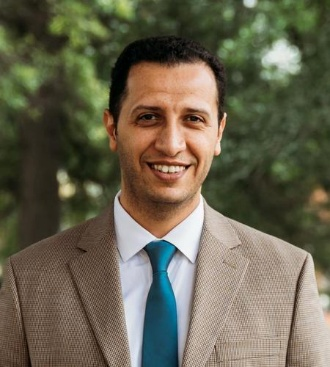
Prof. Dr. Mostafa Elhosseini
Email: melhosseini@mans.edu.eg
Affiliation: Computers and Control Systems Engineering, Faculty of Engineering, Mansoura University, Mansoura, Egypt
Research Interests: artificial intelligence (AI), machine learning, deep learning, robotics, metaheuristics, computer-assisted diagnosis systems, computer vision, bioinspired optimization algorithms, smart systems engineering

Prof. Dr. Mahmoud Badawy
Email: engbadawy@mans.edu.eg
Affiliation: 1. Department of Computer Science and Informatics, Applied College, Taibah University, Al Madinah Al Munawwarah, Medina, Saudi Arabia
2. Computers and Control Systems Engineering Department, Faculty of Engineering, Mansoura University, Mansoura, Egypt
Research Interests: Radiomics, artificial intelligence, deep learning, machine learning, BigData, cancer imaging, diagnosis, medical image analysis, precision oncology, AI in healthcare

Dr. Mohammed Qaraad
Email: qaraa001@umn.edu
Affiliation: The Hormel Institute, University of Minnesota, Austin, USA
Research Interests: machine learning, deep learning, bioinformatics, optimization, feature selection

The exponential growth of urban populations and the mounting pressure on global transportation networks have created an urgent demand for smarter, more resilient mobility solutions. Digital Twin (DT) technology — the creation of high-fidelity, real-time virtual replicas of physical transportation systems — has emerged as one of the most transformative paradigms for addressing these challenges. When integrated with Artificial Intelligence (AI), machine learning, and advanced computational modeling, digital twins unlock unprecedented capabilities in traffic prediction, infrastructure health monitoring, autonomous vehicle simulation, and dynamic route optimization.
This proposed special issue invites original research and review articles at the intersection of digital twin frameworks and Intelligent Transportation Systems (ITS), with an emphasis on novel computational methods, AI-driven models, and engineering solutions that are directly applicable to real-world smart mobility deployments. The scope spans autonomous and connected vehicles, smart road infrastructure, multimodal transit systems, urban air mobility, and sustainable electric vehicle networks.
By assembling cutting-edge work from researchers in computational engineering, AI, robotics, and transportation science, this collection aims to serve as an authoritative reference for academics, engineers, and policymakers navigating the rapidly evolving landscape of intelligent mobility — while directly complementing CMES's established strengths in computational simulation and AI-driven engineering applications.
This special issue solicits contributions addressing cutting-edge computational methods, AI frameworks, and engineering solutions in DT-ITS. Topics of interest include, but are not limited to:
Topics of Interest
• Digital twin architectures and real-time simulation for road networks, rail systems, and multimodal transport
• AI and machine learning models for traffic flow prediction, congestion detection, and demand forecasting
• Physics-informed neural networks (PINNs) and data-driven surrogate models for vehicle dynamics and infrastructure behavior
• Autonomous and connected vehicle (CAV) simulation using digital twin frameworks
• Federated learning and edge computing for distributed ITS data processing and privacy preservation
• Smart infrastructure monitoring: bridges, tunnels, and road surface digital twins with IoT sensor fusion
• Optimization algorithms for dynamic routing, signal control, and fleet management
• Cyber-physical security and resilience in connected transportation digital twins
• Integration of drone and UAV systems in transportation monitoring via digital twin platforms
• Sustainable and energy-efficient mobility: computational models for electric vehicle networks and charging infrastructure
• Human-centric modeling: pedestrian behavior, crowd simulation, and accessibility in smart urban environments
• Case studies and real-world deployments of DT-ITS in smart cities globally


 Login
Login Register
 Submit a Paper
 Propose a Special lssue