
 Login
Login Register
 Submit a Paper
 Propose a Special lssue
 Open Access
ARTICLE

The Impacts of a Teaching Personal and Social Responsibility Intervention on Social and Emotional Competence in Physical Education: A Quasi-Experimental Study
1 College of Education for the Future, Beijing Normal University at Zhuhai, Zhuhai, 519087, China
2 School of General Education, Beijing Normal University-Hong Kong Baptist University United International College, Zhuhai, 519087, China
3 Faculty of Psychology, Beijing Normal University, Beijing, 100875, China
4 Faculty of Education, Beijing Normal University, Beijing, 100875, China
5 Faculty of Preschool Education, Beijing Institute of Education, Beijing, 100120, China
6 Mental Health Center, Hebei University of Economics and Business, Shijiazhuang, 050061, China
* Corresponding Author: Yaqing Mao. Email:
(This article belongs to the Special Issue: Active Living, Active Minds: Promoting Mental Health through Physical Activity)
International Journal of Mental Health Promotion 2025, 27(2), 161-177. https://doi.org/10.32604/ijmhp.2025.059090
Received 27 September 2024; Accepted 16 January 2025; Issue published 03 March 2025
 View Full Text
 Download PDF
Abstract
Background: The Teaching Personal and Social Responsibility (TPSR) model in physical education (PE) has been shown to promote Social and emotional competence (SEC). However, the underlying mechanisms through which TPSR enhances SEC, particularly in university students within the Chinese context, remain unclear. This study aims to explore the effects of TPSR and the mediating roles of self-efficacy and grit in improving SEC. Methods: 71 Chinese university students were in the TPSR group, and 39 in the Traditional Teaching Model (TTM) control group, assessed before and after a 14-week intervention. The Adapted Social and Emotional Competence Scale (ASECS), General Self-Efficacy Scale (GSES), and Short Grit Scale (SGS) were used for measurement. A mixed-design ANOVA assessed TPSR’s effects, with post-hoc t-tests for pre-post differences and mediation analysis for underlying mechanisms. Results: The mixed-design ANOVA revealed a significant interaction between time and intervention on SEC. The TPSR group showed significant improvement from pre-test to post-test (t (70) = −2.63, p = 0.011, Cohen’s d = −0.31), whereas the TTM control group did not (t (38) = 1.40, p = 0.170, Cohen’s d = 0.22). The TPSR group also showed a significant increase in self-efficacy (t (70) = −3.67, p < 0.001, Cohen’s d = −0.44), while no change was observed in the TTM group (t (38) = 0.62, p = 0.540, Cohen’s d = 0.10). No significant effects were found for grit (F = 0.342, p = 0.560). Mediation analysis confirmed that self-efficacy significantly mediated the effects of the TPSR intervention on SEC (95% CI: 0.0277 to 0.2897). Conclusion: The TPSR intervention led to significant improvements in university students’ SEC and self-efficacy, with no significant changes observed in grit. Self-efficacy served as a mediator in the relationship between the intervention and SEC.Keywords
Social and emotional competence (SEC) encompasses a set of core abilities crucial for individual adaptation and social development [1]. Among college students, research has consistently demonstrated that high levels of SEC can positively influence both interpersonal relationships and mental well-being [2,3]. Consequently, identifying effective interventions to enhance SEC is of paramount importance, as it contributes to overall life satisfaction. Senior researchers such as Shu et al. [3] and Mu et al. [4] have recognized the significance of physical education (PE) as a pivotal domain for fostering SEC among university students. Within the context of PE, the Teaching Personal and Social Responsibility (TPSR) paradigm is notable for its focus on enhancing students’ SEC [5–7]. This model also facilitates the transfer of SEC to other areas of life, including academic and social environments [8]. Moreover, the TPSR model aligns with China’s educational policy of “cultivating moral character and social responsibility” (Lide Shuren), which emphasizes the cultivation of moral character and social responsibility. By enhancing students’ SEC, TPSR supports the development of responsible, morally conscious individuals, directly contributing to the goals of this policy. Despite these advancements, cross-cultural research on SEC within PE, particularly in the Chinese context, remains limited and warrants further exploration.
1.1 Effects of TPSR Intervention on SEC
The TPSR model, developed by Hellison D, is a pedagogical approach designed to promote personal and social responsibility through physical activities. It aims to foster self-regulation, empathy, and positive social interactions, which are essential for social and emotional growth [9,10]. According to Social Learning Theory [11], which posits that individuals learn behaviors through observation, imitation, and reinforcement, the TPSR model applies this theory by encouraging students to observe prosocial behaviors from teachers and peers, thereby promoting SEC. Additionally, through reinforcement and self-regulation, TPSR helps students manage emotions and make responsible decisions, which are key aspects of SEC. A systematic review and meta-analysis have provided robust support for the positive effects of TPSR on social and emotional learning (SEL) outcomes in PE, demonstrating significant improvements in students’ self-efficacy, confidence, emotional intelligence, social skills and prosocial behavior [12]. Moreover, the TPSR model emphasizes personal responsibility, self-management, social responsibility, and respect for others, creating a supportive and structured environment for students. This approach aligns with established methods for cultivating SEC, promoting self-awareness, interpersonal skills, and responsible decision-making. Research conducted by Gordon et al. has shown that the goal structure of the TPSR model is not only highly consistent with the SEC framework proposed by the Collaborative for Academic, Social, and Emotional Learning (CASEL) in the United States but it also results in positive SEL outcomes [6]. This finding aligns with other literature highlighting the congruence between TPSR objectives and SEC dimensions [13,14]. In practice-based contexts, an empirical study implementing a 16-week TPSR program across three different school types found that the program significantly enhanced students’ emotional intelligence [15].
Previous research underscores the effectiveness of the TPSR model in enhancing SEC. However, the mechanisms driving these outcomes remain insufficiently understood. Elucidating these mechanisms is crucial for the development of more targeted and efficacious interventions aimed at enhancing SEC.
Existing literature has identified several key factors that support the development of SEC, with self-efficacy emerging as one of the most prominent. Bandura defines self-efficacy as the core belief in one’s capacity to accomplish specific tasks, which influences cognitive, behavioral and emotional aspects of human behavior [16]. This concept suggests that individuals with strong self-efficacy are more likely to have confidence in their ability to effectively apply SEC, such as empathy, interpersonal skills, and emotional self-regulation. For instance, research by Mu et al. has shown that self-efficacy significantly contributes to college students’ ability to regulate their emotions [4]. Individuals with greater confidence in their emotional management skills often perform better in emotional regulation, a critical aspect of SEC that emphasizes the importance of emotional awareness and control. Moreover, one study indicates that higher self-efficacy is associated with better management of social anxiety and reduced mobile phone addiction, potentially leading to enhanced overall social and emotional functioning [17]. Additionally, self-efficacy has a strong influence on university students’ social responsibility by boosting their confidence in engaging in socially responsible actions, thereby confirming its impact on the social dimension of SEC [18]. Practically, interventions such as psychodrama have been shown to enhance participants’ self-efficacy, leading to improved SEC and a reduction in problem behaviors [19]. Based on this literature, self-efficacy is likely a crucial element in enhancing SEC.
1.2.2 Effects of TPSR Intervention on Self-Efficacy
Significant progress has been made in improving self-efficacy outcomes following TPSR interventions across diverse settings. These improvements are often attributed to TPSR strategies, such as ensuring a fair environment, encouraging and praising small successes, and providing direct and specific feedback, which favor the development of self-efficacy [20,21]. In practical applications, research has found that the TPSR integrated sports education model significantly enhances the responsibility and self-efficacy of university students, as evidenced by a 15-week experimental study [22]. Furthermore, athletes who undergo TPSR interventions demonstrate marked improvements in self-efficacy and prosocial behaviors compared to those in control groups [23]. Additionally, longitudinal studies by Alcalá et al. [24] and Valero-Valenzuela et al. [25] provide further evidence that TPSR interventions in PE significantly enhance students’ self-efficacy. Comprehensive reviews also highlight the role of TPSR interventions in fostering positive developmental outcomes by enhancing responsibility behaviors and self-efficacy [26]. These findings suggest that the TPSR model effectively bolsters participants’ self-efficacy by creating a supportive and positive learning environment, enabling individuals to feel more confident and capable when facing challenges.
Grit, another potential indicator of SEC, is characterized by Duckworth et al. [27] as a combination of passion and perseverance toward achieving long-term goals. Hill et al. [28] propose a model of conscientiousness that emphasizes investment and accumulation, suggesting that traits like grit can accumulate beneficial resources through sustained social and emotional efforts, thereby enhancing SEC proficiency. This model positions grit as integral to the development of core SEC attributes, including adaptability and self-discipline, underscoring its critical role in cultivating SEC. Empirical studies by Datu et al. [29], Disabato et al. [30], and Vainio et al. [31] support the positive effects of grit on aspects of academic engagement and well-being, while further research links grit to essential SEC components, such as resilience and self-regulation [32–34]. Given perseverance as a key indicator of grit, Bowman et al. [35], Credé et al. [36], and Disabato et al. [30] have found that perseverance of effort is closely associated with optimal psychological states, which are integral to SEC. These psychological states foster resilience, emotional regulation, and interpersonal effectiveness, all of which are key components of SEC. In summary, grit plays a crucial role in fostering perseverance, resilience, and self-regulation, which are essential for achieving long-term success and well-being, and may enhance SEC.
1.3.2 Effects of TPSR Intervention on Grit
Sports fields have long been recognized as effective venues for cultivating students’ grit, offering opportunities for students to overcome challenges, persist in difficult tasks and develop resilience. The TPSR model comprises several key responsibility levels, one of which is “Effort”. This level involves trying hard, focusing on improvement, and persisting through difficult tasks, closely aligning with the persistence emphasized by grit. Hwang and Nam suggest that enhancing grit includes cognitive approaches encouraging self-reflection and a growth mindset, behavioral strategies that emphasize deliberate practice and responsible engagement, and emotional strategies focused on emotional awareness and resilience-building [37]. These strategies closely align with the TPSR model’s teaching approaches, which aim to develop personal and social skills through reflection, responsibility, and emotional management.
Traditionally, grit has been viewed as a fixed personal trait. However, recent research in brain development, neuroscience, and psychological resources suggests that grit may be teachable and malleable throughout life [37]. Evidence indicates that the TPSR model significantly fosters perseverance, which is a key dimension of grit. This is demonstrated by increased effort and determination observed among participants [38]. Additionally, a pilot study in Norway successfully enhanced grit through a targeted intervention [39]. This intervention emphasized reflection and deliberate practice methods similar to those used in TPSR, indirectly suggesting that TPSR could enhance students’ grit.
Self-efficacy may serve as a foundation for developing grit. Schmidt et al. [40] reinforce this notion by positing that self-efficacy is not merely an outcome but a prerequisite for grit. This perspective aligns with the seminal investigations of Duckworth et al. [27], which suggest that passion and perseverance in pursuing long-term goals are moderated by an individual’s self-assessment of their competences. Within the framework of Social Cognitive Theory, Bandura [11] asserts that self-efficacy is a fundamental factor influencing behavioral outcomes, representing a person’s conviction in their capacity to execute a given task. Bandura [16] further clarified that self-efficacy can either mobilize or impede effort; individuals with high self-efficacy are more likely to increase their efforts in challenging situations, resulting in performance successes. In the educational context, Shao [41] found a positive relationship between self-efficacy and grit, particularly in classroom management. Students with higher self-efficacy exhibited increased confidence, patience, and persistence when confronted with complex challenges. Moreover, Sturman et al. [42] showed a positive relationship between students’ belief in their ability to control their behaviors and emotions, and their levels of grit. In conclusion, self-efficacy is a crucial component that supports the development of grit by enhancing confidence and persistence in challenging situations.
To the best of our knowledge, no research has directly examined the roles of self-efficacy and grit in SEC interventions within the field of PE, despite burgeoning evidence suggesting their potential to augment SEC outcomes [34,43]. This study posits that TPSR interventions may sequentially enhance self-efficacy, which in turn fosters grit—both factors being essential for the development of SEC. Therefore, based on the existing literature, the following hypotheses are proposed for this study:
H1. The TPSR intervention will improve participants’ SEC.
H2. Improvements in self-efficacy will mediate the enhancement in SEC brought about by the TPSR intervention.
H3. Improvements in grit will mediate the enhancement in SEC brought about by the TPSR intervention.
H4. A chain mediation of improvements in self-efficacy and grit will mediate the enhancement in SEC resulting from the TPSR intervention.
The study was conducted by a single instructor who underwent four days of formal TPSR training. The training covered core TPSR principles, practical implementation strategies, and methods for assessing students’ personal and social responsibility. The instructor also had two years of experience in applying the TPSR curriculum with university students and conducting related teaching research. In this study, participants were selected using convenience sampling based on accessibility. The selected classes came from different academic disciplines within the university, ensuring diversity in terms of gender, age, and academic background. The instructor provided an overview of the study’s objectives, detailed the TPSR curriculum, and described the data to be collected. All questionnaires were distributed and collected by professionally trained researchers to avoid operational errors or data loss. Participants were required to complete relevant questionnaires before and after the 14-week TPSR intervention. Strict inclusion criteria were applied to ensure sample representativeness: (1) attend at least 90% of the classes, (2) complete all pre- and post-intervention questionnaires, (3) accurately complete all scales in the provided booklet, and (4) adhere to the guidelines for completing the questionnaires.
This study was approved by the Research Ethic Committee of Beijing Normal University-Hong Kong Baptist University United International College (Ref. No. REC-2024-23). All participants signed the informed consent in this study. Ethical considerations included ensuring confidentiality and voluntary participation, with participants free to withdraw from the study at any time without consequence. All data were anonymized to protect participant privacy. To further ensure fairness between the intervention and control groups, participants in the control group will be given priority access to the SEC intervention following the study. Psychological support resources were also made available to mitigate any potential risks.
The participants in this study were students from a Sino-foreign cooperative university in southern China, where tuition fees are relatively high. As a result, most of the students come from families with relatively higher economic status. Using G*Power (version 3.1.9.7), an a priori power analysis was conducted with the following parameters: an anticipated effect size of 0.2, a statistical power of 0.8, an alpha level of 0.05, two groups, and two repeated measurements, assuming a correlation of 0.5 between measures. The analysis suggested a minimum sample size of 52 participants to achieve a statistical power of 0.81. As this study was conducted in a teaching environment, randomization was applied at the class level rather than the individual level to maintain the integrity of the educational setting. In this study, the sample consisted of 155 students from five classes, as shown in Fig. 1, 90.5% of the students in the intervention group and 86.7% of those in the control group completed the pre-test. During the study, 5.3% of the intervention group and 5.0% of the control group withdrew. The post-test completion rates were 85.3% for the intervention group and 81.7% for the control group. After applying the eligibility criteria, the final analytical sample included 71 participants in the intervention group and 39 participants in the control group, resulting in retention rates of 74.7% and 65.0%, respectively.
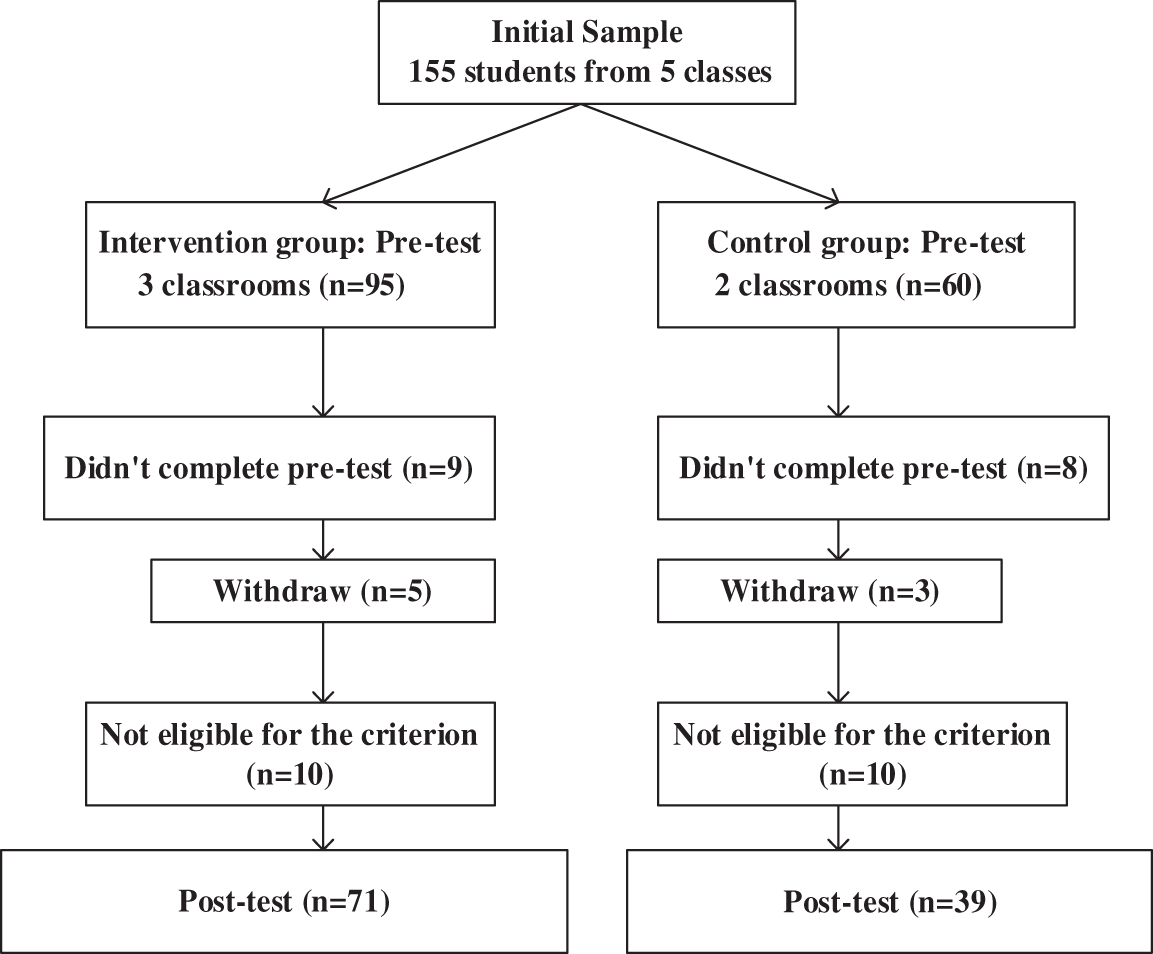
Figure 1: Number of participants at different time points
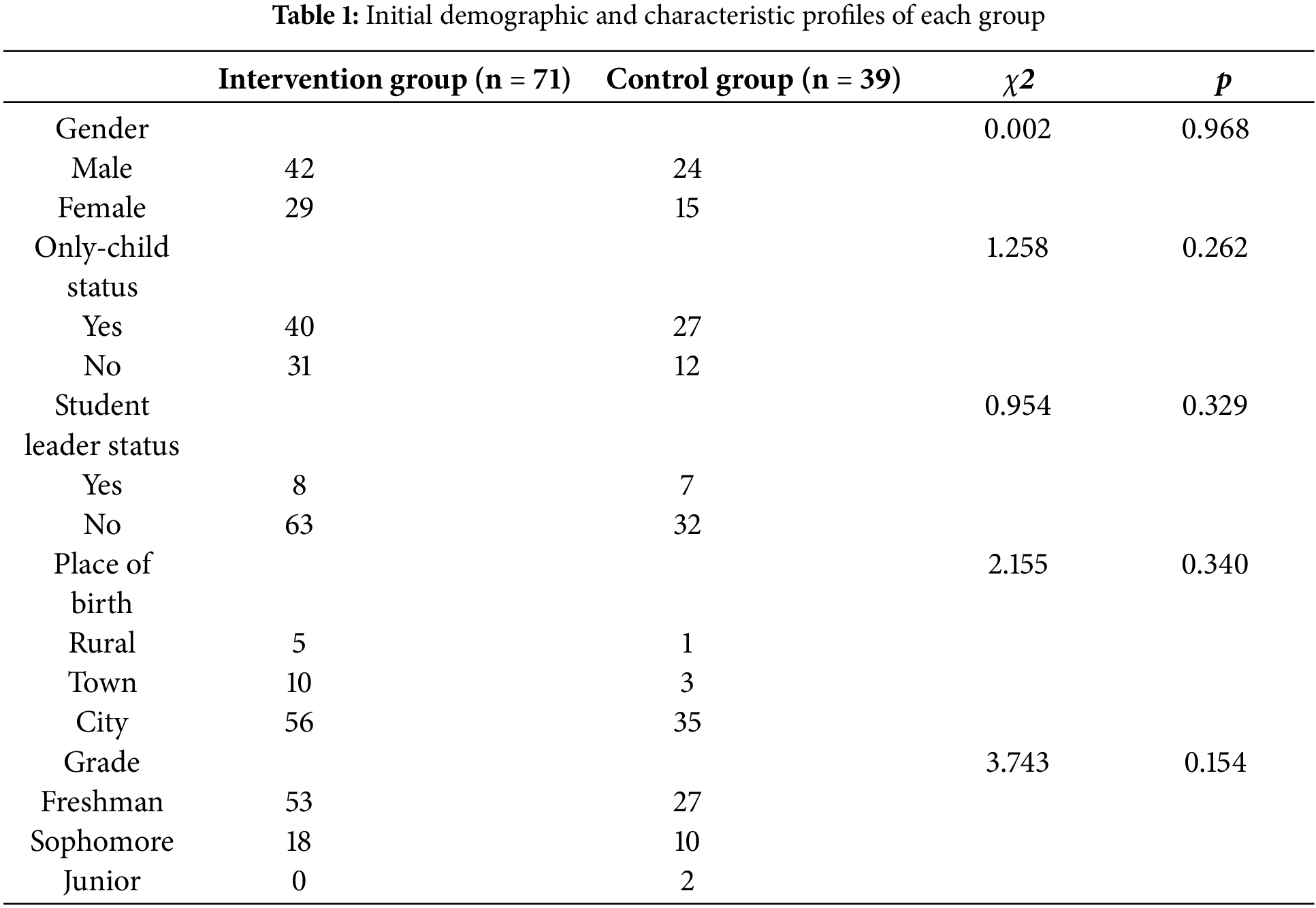
All participants self-identified as Han ethnicity through a demographic questionnaire. Additional information about the two groups, as well as the results of the chi-square test for binary variables (post-test), are provided in Table 1. The two groups were comparable in terms of sociodemographic characteristics, including gender, only-child status, student leadership status, place of birth, and grade level.
2.3.1 Adapted Social and Emotional Competence Scale (ASECS)
This study utilized the ASECS developed by Li for college students, initially created through a collaboration between China’s Ministry of Education and the UNICEF SEL initiative. The adapted version utilizes a 5-point Likert scale ranging from 1 (“not at all”) to 5 (“completely”) and comprised of 25 items, reduced from the original 32 items. These items are organized into six domains that reflect cognition and management skills across three areas: the individual (self), interpersonal (others), and the group (collective). Representative items from Li’s adaptation include “I aspire to be respected by others”, “I am capable of clearing up confusions with friends by communicating”, and “I can work in concert with peers in group projects”. In this study, the ASECS demonstrated high internal reliability, with an overall Cronbach’s α of 0.96 and Cronbach’s α values for the dimensions ranging from 0.71 to 0.89.
2.3.2 General Self-Efficacy Scale (GSES)
GSES [44] was utilized to measure self-efficacy in this study. This scale consists of ten items, each rated on a four-point Likert scale from 1 (“Strongly disagree”) to 4 (“Strongly agree”). An example item from the scale is “I can handle whatever comes my way”. The GSES was translated and adapted into Chinese by Zhang and Schwarzer [45], ensuring its clarity and cultural relevance in diverse settings. The reliability of the scale in this study was confirmed, with a Cronbach’s α of 0.86.
SGS, originally developed by Duckworth et al. [46], was used to assess grit. The Chinese adaptation of this scale has been translated and validated for use among Mandarin-speaking adolescents [47]. The current study utilized 8 items from the Chinese version of the scale, which assesses two dimensions: perseverance of effort and consistency of interests. Responses were recorded using a Likert-type metric ranging from 1 (“strongly inconsistent”) to 5 (“strongly consistent”). Sample items include “I complete what I have started” and “I sometimes set a goal but later decide to pursue a different one”. The scale exhibited high internal consistency in this study, with an overall Cronbach’s α of 0.85 and scores of 0.72 for perseverance of effort and 0.80 for consistency of interests.
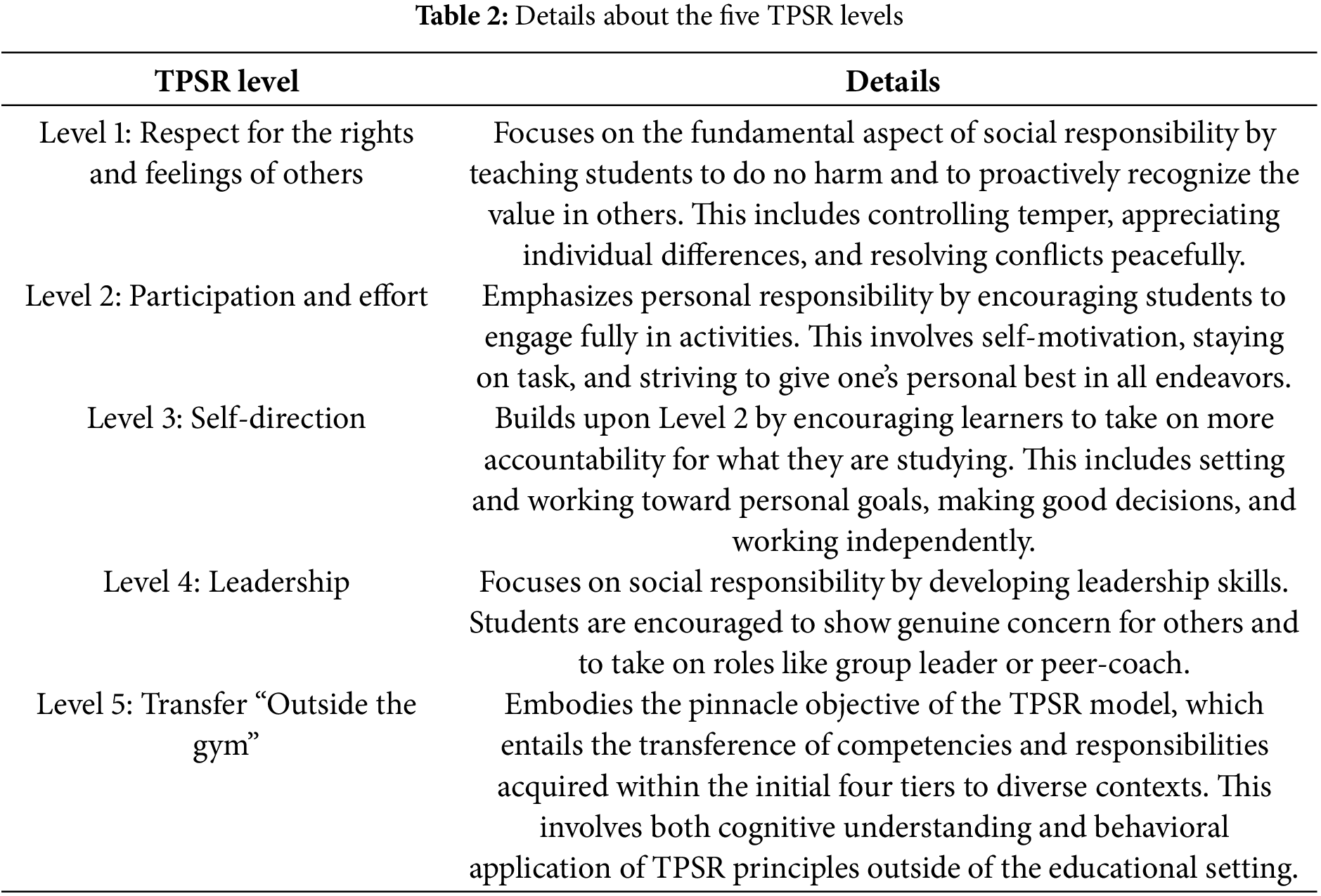
The intervention was based on Hellison’s TPSR model [10], was implemented over a period of 14 weeks during basketball classes. The TPSR sessions were conducted twice a week, with each session lasting 50 min. The TPSR model aims to develop two facets of responsibility: personal responsibility, which focuses on individual behavior, and social responsibility, which emphasizes interpersonal interactions. The model is structured into five levels of responsibility, each with specific objectives, as detailed in Table 2. The daily program format adhered to Hellison’s foundational principles and consisted of five key components: Relational Time, where the teacher engaged with students to build relationships; Awareness Talks, to outline the session’s personal and social objectives; a Physical Activity Plan, which integrated the TPSR levels into each task; a Group Meeting, for discussing the day’s objectives; and Self-Reflection Time, for individual and group assessment of responsibility levels. Additional strategies, such as the “Accordion Principle” for adjusting activity duration and “Negotiation” for addressing specific situations, were also employed, as recommended by Hellison [10].
Ensuring the verification of intervention implementation is crucial for maintaining consistency between the instructor’s guidance and the standards of Model-Based Practice. Within the TPSR model, this validation aligns educational practices with the model’s principles, thereby linking student outcomes to the authentic application of the TPSR model. Hastie et al. [48] underscore the importance of validating practices through the use of checklists and observation. Thus, to evaluate adherence to the TPSR model during the application phase, the present study employed the TPSR Implementation Checklist developed by Wright et al. [49]. This checklist includes four principal questions aimed at assessing the essential elements of TPSR implementation fidelity. Observations were conducted by two experienced PE instructors, each with over eight years of teaching experience, over the course of two lessons for the experimental cohort. The checklist’s first question addresses the objectives covered in the lesson, followed by an inquiry regarding the presence of the five specific components in the lesson structure. The third question involves selecting from nine instructional methods suggested by Wright et al. [50] to enhance the quality of TPSR pedagogy. The final question describes nine specific student behaviors that directly reflect the responsibilities associated with TPSR. To quantify the fidelity of implementation, this study calculated the average proportions of key features observed, following the recommendations of Goodyear [51]. The analysis yielded a mean percentage of 85%, indicating an acceptable level of implementation fidelity for the TPSR model.
In accordance with the definition provided by Tannehill et al. [52], the Traditional Teaching Model (TTM) was employed as the instructional framework for the control group. This model is characterized by a general approach to PE, with the curriculum organized around traditional pedagogical features. Each instructional session comprised an initial warm-up phase, followed by instruction in motor skills and game strategies. Teams were randomly formed to engage in small-sided games for group competitions.
All statistical analyses were performed using SPSS software (version 28.0; IBM Corp., Armonk, NY, USA), with the significance level set at p < 0.05. The Shapiro-Wilk test assessed the normality of data distributions, and Levene’s test verified the homogeneity of variances, confirming that Analysis of Variance (ANOVA) assumptions were met. Independent samples t-tests compared baseline differences between the TPSR intervention and TTM control groups. Harman’s single-factor test was applied to evaluate potential common method bias, and exploratory factor analysis assessed the underlying data structure. Pearson correlation analyses examined interrelationships among variables. For the intervention effect analysis, all variables were analyzed at both the total score and subdimension levels to capture overall changes and specific impacts. A two-way ANOVA with Time (within-subjects factor) and Group (between-subjects factor) was conducted, with post hoc t-tests exploring significant interactions and assessing group-specific changes over time. To explore potential mediating effects, all variables were analyzed as total scores, consistent with previous literature supporting their overall mediating roles. The Preacher et al. [53] framework was used, and mediation effects were deemed significant if the 95% confidence intervals (95% CIs) did not include zero. Missing data were addressed using multiple imputations. A sensitivity analysis was also conducted, and the results indicated no significant impact on the study’s findings.
Table 3 displays all the scores employed in the analyses. Initial comparisons between the groups revealed no significant differences at the pre-test stage, except for the “social and emotional ‘others’ related dimension” variable, where the control group scored higher in “Other-Cognition” and “Other-Management” than the TPSR intervention group. Further analyses did not indicate any statistically significant differences in SEC, self-efficacy and grit between male and female participants within the TPSR intervention group, both at the pre-test (SEC: t (69) = −0.53, p = 0.601; self-efficacy: t (69) = 1.00, p = 0.320; and grit: t (69) = −0.60, p = 0.550) and post-test (SEC: t (69) = −1.28, p = 0.205; self-efficacy: t (69) = 0.81, p = 0.423; and grit: t (69) = −1.03, p = 0.307). No adverse or unintended effects of the intervention were reported in any group. To evaluate the presence of common method biases, Harman’s single-factor test [54] was conducted. An exploratory factor analysis incorporating all variables under investigation (groups, SEC, self-efficacy, and grit) yielded an unrelated factor solution, from which the number of factors accounting for variance in the variables was determined. The analysis identified eight distinct factors, with no single factor accounting for a predominant portion of the covariance among the measures, thus suggesting that common method biases are unlikely to compromise the validity of the subsequent analyses conducted in this study.
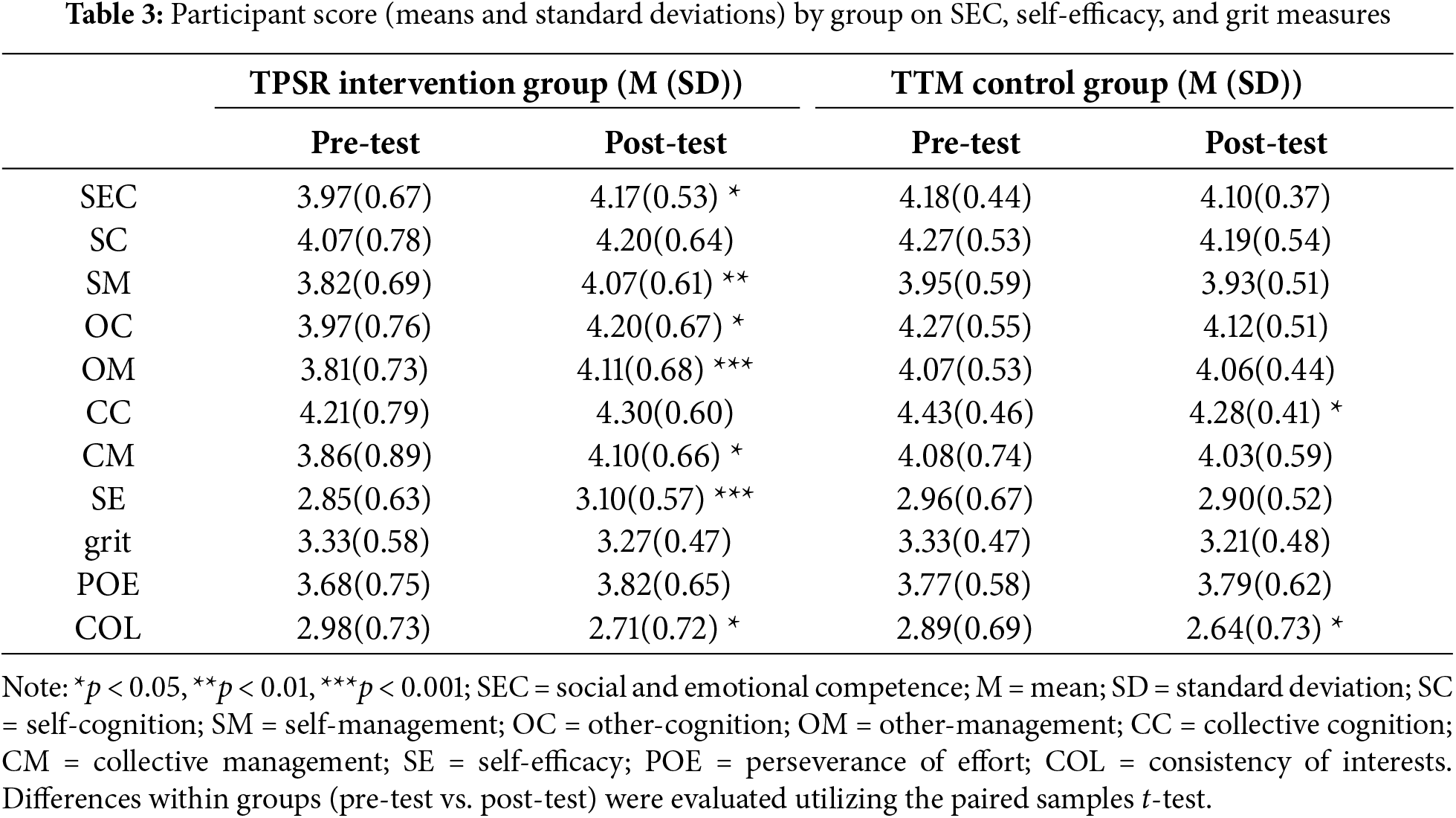
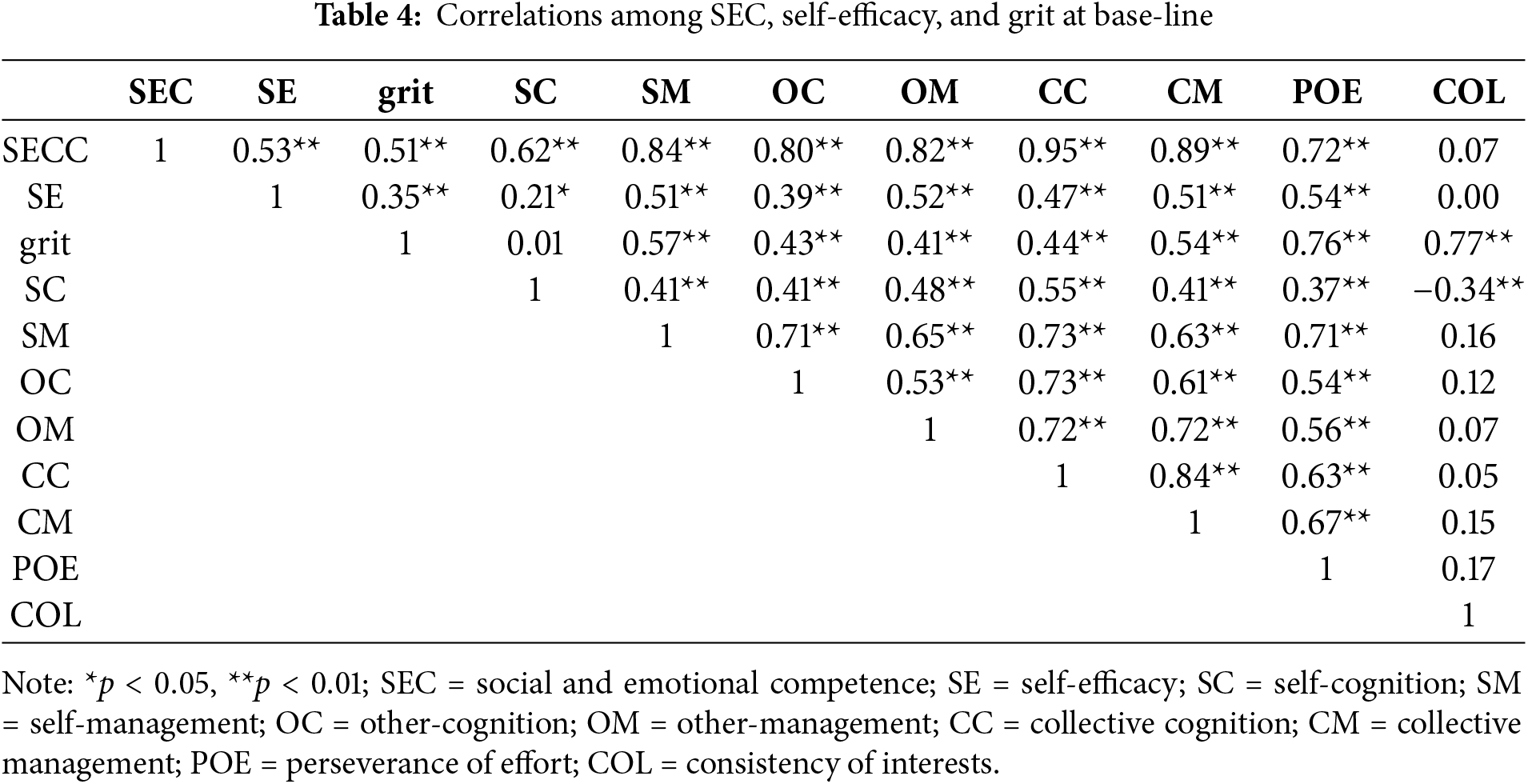
Table 4 presents the correlation results obtained at the pre-test phase. The data indicate a positive correlation between SEC and both self-efficacy and grit. Furthermore, a positive correlation is observed between self-efficacy and grit.
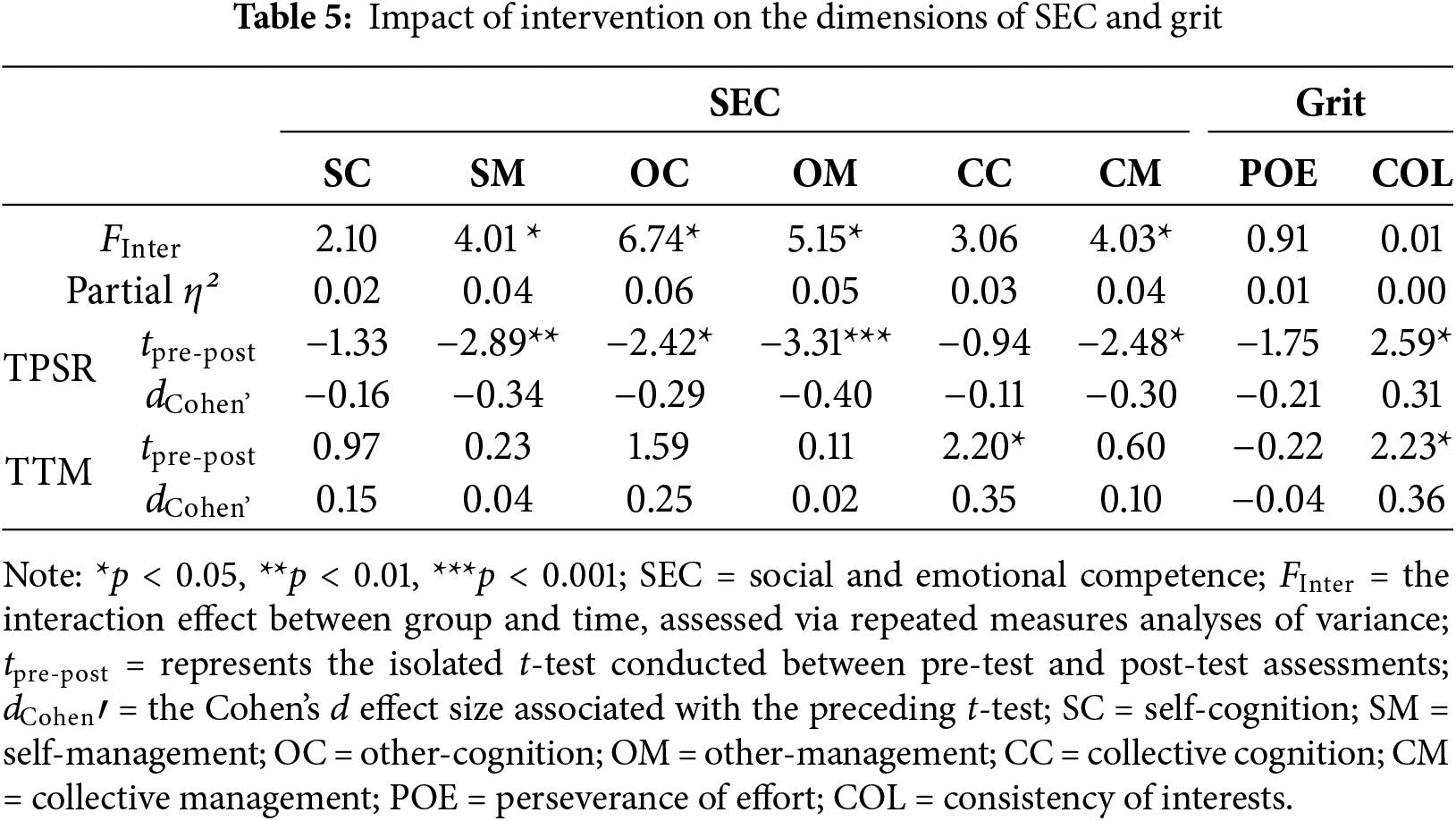
A mixed-design ANOVA with a 2 (TPSR intervention vs. TTM control) × 2 (pre-test vs. post-test) factorial design was conducted to analyze SEC, where time was considered a within-subjects variable and group was treated as a between-subjects variable. This analysis revealed a significant interaction effect between time and intervention, F (1108) = 6.28, p = 0.014, with a partial eta squared (η2) value of 0.06. Based on Cohen’s guidelines [55], the effect size in our study is classified as moderate, which aligns with the standard for partial eta squared (η2). Given this significant interaction, separate t-tests were performed for each group to further explore the differences. For the TPSR intervention group, a significant increase in SEC scores was observed from pre-test to post-test, t (70) = −2.63, p = 0.011, with an effect size measured by Cohen’s d of −0.31. Conversely, the TTM control group did not show any statistically significant change in SEC scores from pre-test to post-test, t (38) = 1.40, p = 0.170, with a Cohen’s d of 0.22. The progression of SEC over time is depicted in Fig. 2, and detailed outcomes for each dimension are provided in Table 5.
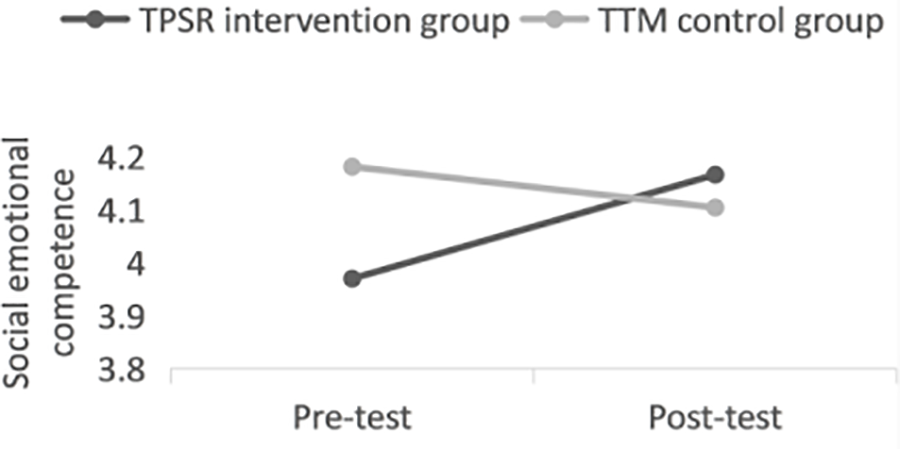
Figure 2: Change in SEC over time
A mixed-design ANOVA with a 2 (TPSR intervention vs. TTM control) × 2 (pre-test vs. post-test) framework was performed on the average self-efficacy scores. Within this analysis, time was considered a within-subjects variable, while group was treated as a between-subjects variable. The findings demonstrated a significant interaction effect between time and the intervention, F (1, 108) = 7.16, p = 0.009, with a partial eta squared (η2) value of 0.06, indicating a moderate effect size according to Cohen’s [55]. Based on this significant interaction, separate t-tests were conducted for each group to examine the differences in detail. For the TPSR intervention group, a significant increase in self-efficacy scores from pre-test to post-test was observed, t (70) = −3.67, p < 0.001, with a Cohen’s d of −0.44. On the other hand, the TTM control group exhibited no statistically significant difference in self-efficacy scores from pre-test to post-test, t (38) = 0.62, p = 0.540, with a Cohen’s d of 0.10.
A mixed-design ANOVA with a 2 (TPSR intervention vs. TTM control) × 2 (pre-test vs. post-test) framework was executed to evaluate the average scores of grit. In this analysis, time was considered a within-subjects variable, and group was treated as a between-subjects variable. The analysis did not reveal a significant interaction between time and intervention, F (1, 108) = 0.342, p = 0.560, with a partial eta squared (η2) value of 0.003. Similarly, no significant effect was found for the time factor alone, F (1, 108) = 3.180, p = 0.077, with a partial eta squared (η2) of 0.029. Additionally, the group factor analysis revealed no significant effect, F (1, 108) = 0.075, p = 0.785, with a partial eta squared (η2) of 0.001. Detailed outcomes for each dimension are presented in Table 5.
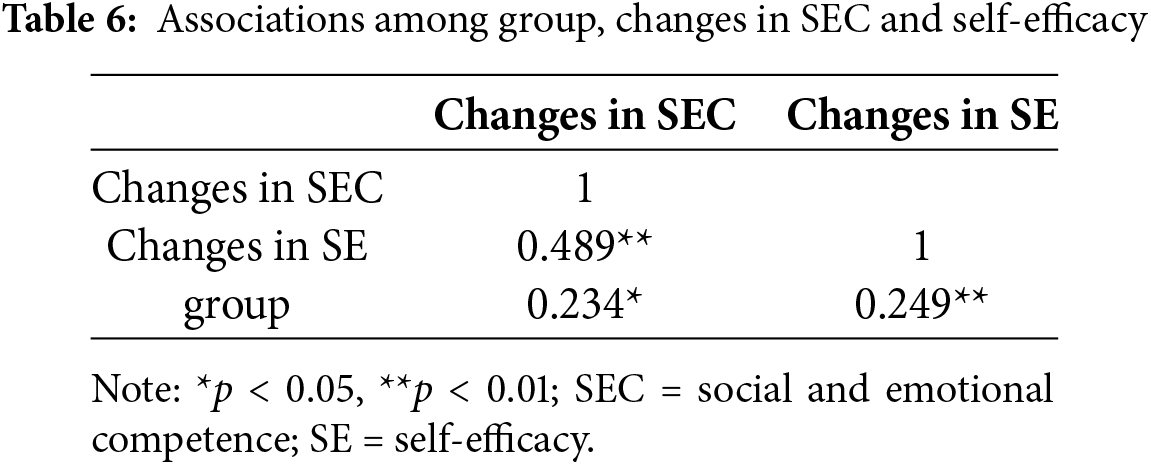
Given that grit did not show significant improvements in the TPSR intervention experiment, this study focused solely on examining the potential mediating effects of self-efficacy on the relationship between group assignment (intervention vs. control group) and changes in SEC from pre-test to post-test. Initially, the study explored the correlations among changes in these variables, with the findings presented in Table 6. The results indicated that changes in SEC were significantly correlated with changes in self-efficacy. Based on these preliminary findings, a mediation analysis was conducted to assess the extent to which changes in self-efficacy mediated the association between group assignment and alterations in SEC.
Utilizing 5000 bootstrap samples, as recommended by Preacher and Hayes [53], a bootstrapping analysis was conducted to assess the indirect pathway. This analysis examined changes in self-efficacy as a mediator, indicating that the true indirect effect fell within the bootstrapped 95% CI, ranging from 0.0277 to 0.2897. The exclusion of zero from this interval indicates that the indirect effect is statistically significant. The mediation model can be seen in Fig. 3.
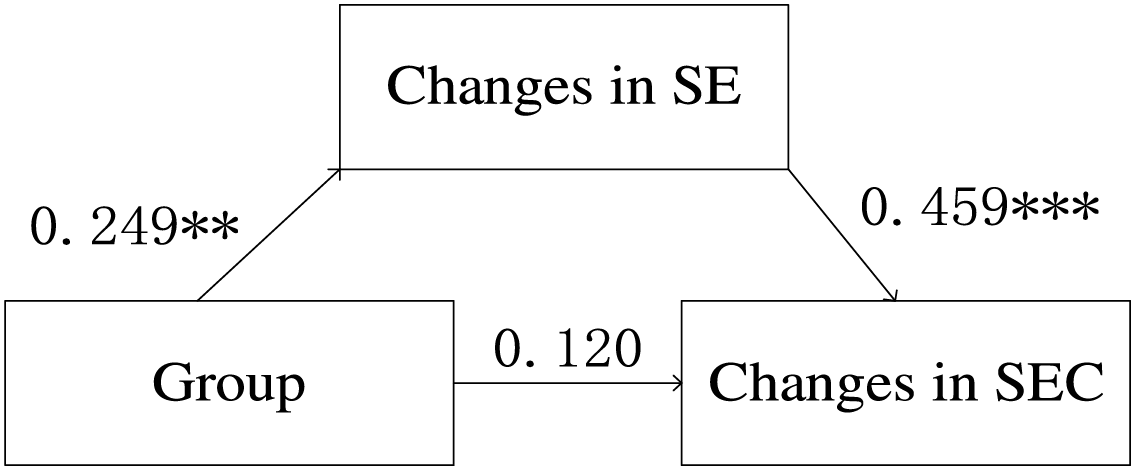
Figure 3: Mediation model of self-efficacy in the relationship between group assignment and SEC. **p < 0.01, ***p < 0.001
This study investigated the effectiveness of the TPSR in enhancing individuals’ SEC, self-efficacy and grit. Furthermore, the study explored the mediating role of improvements in self-efficacy and grit on the enhancement of SEC through TPSR intervention.
The results revealed a significant improvement in participants’ SEC following the TPSR intervention in the context of Eastern cultures, aligning with existing literature on the positive effects of TPSR on emotional and social outcomes [10,12]. In the context of China’s educational policies, particularly the emphasis on moral education and social responsibility, TPSR offers a valuable framework for fostering these core competencies. By aligning with the national goal of cultivating responsible and morally-conscious individuals, the TPSR model can play an essential role in improving students’ SEC within China’s educational system. Educators can utilize these findings to develop practical strategies for fostering students’ social and emotional growth through PE and to guide future applications across various contexts. Nevertheless, the power distance between teachers and students may affect teaching methods [56]. We found that the relatively large power distance in Chinese culture may make it difficult for teachers and students to adapt to the discussions in the Group Meeting during the implementation of TPSR, which could potentially affect the effect size of the SEC intervention. In addition, significant gains were observed in all dimensions of SEC within the intervention group, except for Self-Cognition and Collective Cognition. The lack of improvement in these dimensions might be attributed to a “ceiling effect”, as the baseline scores for these variables were relatively high. In the Chinese cultural context, where collective values and self-awareness are deeply ingrained, individuals often exhibit high initial scores in these areas. This cultural predisposition might contribute to the high initial scores, thus diminishing the incremental benefit typically observed with TPSR strategies.
Furthermore, the findings of this study indicate that the TPSR intervention significantly enhances participants’ self-efficacy, aligning with previous research that highlights the positive impact of the TPSR model’s on self-efficacy outcomes in various settings [22,26]. The positive outcomes can largely be attributed to key TPSR strategies. The “Providing choices and voices” strategy enhances self-efficacy by granting students decision-making agency, supported by Patall et al.'s finding that providing choices enhances intrinsic motivation and self-efficacy [57]. The “Opportunities for success” strategy builds confidence by offering tangible success experiences, reinforcing motivation and persistence [58]. Finally, the “Promoting leadership roles” strategy fosters responsibility and self-assessment, aligning with Komives et al.‘s research on the role of leadership in enhancing self-efficacy [59]. These strategies collectively created an empowering environment that significantly increased self-efficacy in the intervention group.
Conversely, the study found that students’ levels of grit did not demonstrate significant improvement. This finding suggests that the TPSR model may have a limited impact on grit, or it may indicate that a longer intervention period is necessary to observe changes in this area. Although TPSR interventions and strategies for enhancing grit, as proposed by Hwang et al. [37], share many overlapping elements, each approach has a unique focus and methodology. TPSR primarily emphasizes the development of SEC through sports and a sense of responsibility, whereas the strategies by Hwang and Nam may focus on individual perseverance and motivation. Combining both approaches might offer a more comprehensive framework for enhancing grit. Furthermore, external factors may have influenced the results; participants could have experienced varying levels of support and challenges outside the intervention, which could have impacted their grit development. Additionally, the measurement tools used to assess grit might not have been sensitive enough to detect subtle changes during the intervention period. These findings suggest a need to reassess the intervention design and measurement methods.
Another key contribution of this study lies in the identification of the mediating role of self-efficacy in enhancing SEC. Although prior studies have emphasized the predictive role of self-efficacy on SEC [4]. The potential for enhancing SEC through improvements in self-efficacy remains unclear. This study suggests that TPSR interventions can effectively increase individual self-efficacy, which in turn contributes to the enhancement of SEC. Self-efficacy, as an important psychological asset, significantly enhances SEC by bolstering individuals’ emotional regulation and interpersonal management skills, leading to higher levels of life satisfaction [60]. Individuals with high self-efficacy are more likely to engage confidently in social situations [18] and approach emotional challenges with resilience [17]. This confidence encourages individuals to take initiative, actively collaborate with others, and seek solutions to social and emotional problems, thereby promoting their social and emotional growth.
Several limitations of this study warrant discussion. First, the unequal sample sizes between groups and pre-test differences in the ‘Social and Emotional Others-Related Dimension’ may have compromised the statistical power and validity of the findings. Future studies should strive for balanced group sizes and implement rigorous randomization procedures. Second, our findings rely on self-reported data, which are inherently susceptible to subjective biases. To address this, future research should adopt objective measures to improve the validity and reliability of findings. Additionally, the lack of blinding strategies may have introduced experimenter bias, further highlighting the need for blinding methods to enhance scientific rigor. Third, the study focused solely on short-term effects, leaving the long-term impacts of the TPSR model on SEC unknown. Follow-up assessments are needed to explore whether these benefits are sustained over time. Fourth, while our study focused on examining the mechanisms, it did not explore intervention effects across specific groups. Future research should analyze group-specific effects to provide a more detailed understanding of the TPSR model’s impact. Lastly, this study did not focus on skill development, potentially overlooking the benefits of TTM for enhancing technical skills. Future research should combine TTM’s emphasis on skill development with TPSR’s focus on responsibility and personal growth to provide a more balanced and comprehensive approach.
In summary, the findings of this study have important implications for SEC interventions. Firstly, TPSR effectively enhances university students’ SEC, which is crucial for their personal growth and mental health. It also provides valuable insights for PE teachers aiming to improve students’ SEC. Secondly, given the multitude of models that can be combined with TPSR to improve SEC, understanding the effective components is crucial. Our data suggest that focusing on self-efficacy could serve as a fruitful avenue for enhancing SEC, thereby offering practical guidance for TPSR practitioners. Lastly, our research highlights the importance of cultural and contextual adaptation of TPSR to ensure its effectiveness among Chinese university students, which holds significant implications for their mental health.
Acknowledgement: We sincerely appreciate the respondents for taking the time to participate in the survey.
Funding Statement: This research was funded by the 2023 Scientific Research Platforms and Projects of Guangdong Provincial Education Department, Grant Number 2023WQNCX079.
Author Contributions: Conceptualization, Weidong Li; framework design, Yaqing Mao; methodology, Weidong Li and Yiyun Wang; data curation, Wanying Zhang; writing—original draft preparation, Wanying Zhang and Mingwei Li; writing—review and editing, Zh Yeng Chong, Huaxia Xiong and Wei Xu; supervision, Huaxia Xiong; project administration, Weidong Li. All authors reviewed the results and approved the final version of the manuscript.
Availability of Data and Materials: The data will be provided upon request to the corresponding author.
Ethics Approval: This study was approved by the Research Ethic Committee of Beijing Normal University-Hong Kong Baptist University United International College (Ref. No. REC-2024-23). All participants signed the informed consent in this study.
Conflicts of Interest: The authors declare no conflicts of interest to report regarding the present study.
References
1. Osher D, Kidron Y, Brackett M, Dymnicki A, Jones S, Weissberg RP. Advancing the science and practice of social and emotional learning: looking back and moving forward. Rev Res Educ. 2016;40(1):644–81. doi:10.3102/0091732X16673595. [Google Scholar] [CrossRef]
2. Liu Y, Feng Q, Tong Y. Physical exercise and college students’ mental health: chain mediating effects of social-emotional competency and peer relationships. Soc Behav Pers. 2024;52(7):1–11. doi:10.2224/sbp.13159. [Google Scholar] [CrossRef]
3. Shu J, Chen Z, Zhong B, Ding Z, Tang S, Sun Z, et al. The relationship between physical activity and college students’ perceived social support: the mediating role of social-emotional competence and its gender differences. J Community Appl Soc Psychol. 2024;34(4):e2835. doi:10.1002/casp.2835. [Google Scholar] [CrossRef]
4. Mu FZ, Liu J, Lou H, Zhu WD, Wang ZC, Li B. How breaking a sweat affects mood: the mediating role of self-efficacy between physical exercise and emotion regulation ability. PLoS One. 2024;19(6):e0303694. doi:10.1371/journal.pone.0303694. [Google Scholar] [PubMed] [CrossRef]
5. Wright PM, Richards KAR. Teaching social and emotional learning in physical education. Burlington, MA, USA: Jones & Bartlett Learning; 2021. [Google Scholar]
6. Gordon B, Jacobs JM, Wright PM. Social and emotional learning through a teaching personal and social responsibility based after-school program for disengaged middle-school boys. J Teach Phys Educ. 2016;35(4):358–69. doi:10.1123/jtpe.2016-0106. [Google Scholar] [CrossRef]
7. Simonton K, Shiver V, Gray A, Juarez K, Simonton A. Targeting social-emotional learning and activity attitudes during after-school programming post COVID-19 restrictions. J Youth Dev. 2024;19(1):46–56. doi:10.34068/JYD.19.01.05. [Google Scholar] [CrossRef]
8. Gordon B, Doyle S. Teaching personal and social responsibility and transfer of learning: opportunities and challenges for teachers and coaches. J Teach Phys Educ. 2015;34(1):152–61. doi:10.1123/jtpe.2013-0184. [Google Scholar] [CrossRef]
9. Shen Y, Ross S, Dyson B. Social and emotional learning for underserved children through a sports-based youth development program grounded in teaching personal and social responsibility. Phys Educ Sport Pedagogy. 2024;29(1):115–26. doi:10.1080/17408989.2022.2039614. [Google Scholar] [CrossRef]
10. Hellison D. Teaching personal and social responsibility through physical activity. Champaign, IL, USA: Human Kinetics; 2011. [Google Scholar]
11. Bandura A. Social foundations of thought and action: a social cognitive theory. J Appl Psychol. 1986;12(1):169. [Google Scholar]
12. Aygun Y, Boke H, Yagin FH, Tufekci S, Murathan T, Gencay E, et al. Emotional and social outcomes of the teaching personal and social responsibility model in physical education: a systematic review and meta-analysis. Children. 2024;11(4):459. doi:10.3390/children11040459. [Google Scholar] [PubMed] [CrossRef]
13. Jacobs J, Wright P. Social and emotional learning policies and physical education. Strategies. 2014;27(6):42–4. doi:10.1080/08924562.2014.960292. [Google Scholar] [CrossRef]
14. Wright PM, Li W, Ding S, Pickering M. Integrating a personal and social responsibility program into a wellness course for urban high school students: assessing implementation and educational outcomes. Sport Educ Soc. 2010;15(3):277–98. doi:10.1080/13573322.2010.493309. [Google Scholar] [CrossRef]
15. Arikan N. Effect of personal and social responsibility-based social-emotional learning program on emotional intelligence. J Educ Learn. 2020;9(2):148. doi:10.5539/jel.v9n2p148. [Google Scholar] [CrossRef]
16. Bandura A. Self-efficacy: the exercise of control. J Cogn Psychother. 1997;13(2):158–66. doi:10.1891/0889-8391.13.2.158. [Google Scholar] [CrossRef]
17. Xiao Z, Huang J. The relation between college students’ social anxiety and mobile phone addiction: the mediating role of regulatory emotional self-efficacy and subjective well-being. Front Psychol. 2022;13:861527. doi:10.3389/fpsyg.2022.861527. [Google Scholar] [PubMed] [CrossRef]
18. Shen Q, Li Y. The influence of parenting style on college students’ social responsibility: the mediating role of self-efficacy. Chin J Clin Psychol. 2020;28(5):1042–6. [Google Scholar]
19. Gotseva-Balgaranova K. Relations between self-efficacy and social-emotional competence. Z Psychodrama Soziometriee. 2023;22(2):259–75. doi:10.1007/s11620-023-00753-5. [Google Scholar] [CrossRef]
20. Margolis H, McCabe PP. Improving self-efficacy and motivation: what to do, what to say. Interv Sch Clin. 2006;41(4):218–27. [Google Scholar]
21. Marhani, Bundu P, Saman A, Ashar. Effect of Teaching Personal and Social Responsibility (TPSR) and Teaching Games for Understanding (TGfU) models with self-efficacy on learning outcomes of physical education, sports, and health. Asian J Educ Soc Stud. 2023;46(4):45–56. doi:10.9734/ajess/2023/v46i41009. [Google Scholar] [CrossRef]
22. Wei C, Su R, Hsu M. Effects of TPSR integrated sport education model on football lesson students’ responsibility and exercise self-efficacy. Rev Cercet Interv Soc. 2020;71:126–36. doi:10.33788/rcis.71.8. [Google Scholar] [CrossRef]
23. Carreres-Ponsoda F, Escarti A, Jimenez-Olmedo JM, Cortell-Tormo JM. Effects of a teaching personal and social responsibility model intervention in competitive youth sport. Front Psychol. 2021;12:624018. doi:10.3389/fpsyg.2021.624018. [Google Scholar] [PubMed] [CrossRef]
24. Alcalá DH, Río JF, Calvo GG, Pueyo ÁP. Comparing effects of a TPSR training program on prospective physical education teachers’ social goals, discipline and autonomy strategies in Spain, Chile and Costa Rica. Phys Educ Sport Pedagogy. 2019;24(3):220–32. doi:10.1080/17408989.2018.1561837. [Google Scholar] [CrossRef]
25. Valero-Valenzuela A, López G, Moreno-Murcia JA, Manzano-Sánchez D. From students’ personal and social responsibility to autonomy in physical education classes. Sustainability. 2019;11(23):6589. doi:10.3390/su11236589. [Google Scholar] [CrossRef]
26. Caballero P, Noguera MÁ, Escarti A. Analysis of teaching personal and social responsibility model-based programmes applied in USA and Spain. J Hum Sport Exerc. 2013;8(2):427–41. doi:10.4100/jhse.2012.82.10. [Google Scholar] [CrossRef]
27. Duckworth AL, Peterson C, Matthews MD, Kelly DR. Grit: perseverance and passion for long-term goals. J Pers Soc Psychol. 2007;92(6):1087–101. doi:10.1037/0022-3514.92.6.1087. [Google Scholar] [PubMed] [CrossRef]
28. Hill PL, Jackson JJ. The invest-and-accrue model of conscientiousness. Rev Gen Psychol. 2016;20(2):141–54. doi:10.1037/gpr0000065. [Google Scholar] [CrossRef]
29. Datu JAD, Valdez JPM, King RB. Perseverance counts but consistency does not! Validating the short grit scale in a collectivist setting. Curr Psychol. 2016;35(1):121–30. doi:10.1007/s12144-015-9374-2. [Google Scholar] [CrossRef]
30. Disabato DJ, Goodman FR, Kashdan TB. Is grit relevant to well-being and strengths? Evidence across the globe for separating perseverance of effort and consistency of interests. J Pers. 2019;87(2):194–211. doi:10.1111/jopy.12382. [Google Scholar] [PubMed] [CrossRef]
31. Vainio MM, Daukantaitė D. Grit and different aspects of well-being: direct and indirect relationships via sense of coherence and authenticity. J Happiness Stud. 2016;17(5):2119–47. doi:10.1007/s10902-015-9688-7. [Google Scholar] [CrossRef]
32. Wang L. The role of students’ self-regulated learning, grit, and resilience in second language learning. Front Psychol. 2021;12:800488. doi:10.3389/fpsyg.2021.800488. [Google Scholar] [PubMed] [CrossRef]
33. Zhang C, Mao L, Li N, Gu X. Chinese EFL students’ social-emotional competence, grit, and academic engagement. Front Psychol. 2022;13:914759. doi:10.3389/fpsyg.2022.914759. [Google Scholar] [PubMed] [CrossRef]
34. Datu JAD, Restubog SLD. The emotional pay-off of staying gritty: linking grit with social-emotional learning and emotional well-being. Br J Guid Couns. 2020;48(5):697–708. doi:10.1080/03069885.2020.1758922. [Google Scholar] [CrossRef]
35. Bowman NA, Hill PL, Denson N, Bronkema R. Keep on truckin’ or stay the course? Exploring grit dimensions as differential predictors of educational achievement, satisfaction, and intentions. Soc Psychol Personal Sci. 2015;6(6):639–45. doi:10.1177/1948550615574300. [Google Scholar] [CrossRef]
36. Credé M, Tynan MC, Harms PD. Much ado about grit: a meta-analytic synthesis of the grit literature. J Pers Soc Psychol. 2017;113(3):492–511. doi:10.1037/pspp0000102. [Google Scholar] [PubMed] [CrossRef]
37. Hwang M-H, Nam JK. Enhancing grit: possibility and intervention strategies. In: van Zyl LE, Olckers C, van der Vaart L, editors. Multidisciplinary perspectives on grit: contemporary theories, assessments, applications and critiques. Cham: Springer International Publishing; 2021. p. 77–93. [Google Scholar]
38. Wright PM, White K, Gaebler-Spira D. Exploring the relevance of the personal and social responsibility model in adapted physical activity: a collective case study. J Teach Phys Educ. 2004;23(1):71–87. doi:10.1123/jtpe.23.1.71. [Google Scholar] [CrossRef]
39. Sigmundsson H, Hauge H. I can intervention to increase grit and self-efficacy: a pilot study. Brain Sci. 2023;14(1):33. doi:10.3390/brainsci14010033. [Google Scholar] [PubMed] [CrossRef]
40. Schmidt FTC, Fleckenstein J, Retelsdorf J, Eskreis-Winkler L, Möller J. Measuring grit: a German validation and a domain-specific approach to grit. Eur J Psychol Assess. 2019;35(3):436–47. doi:10.1027/1015-5759/a000407. [Google Scholar] [CrossRef]
41. Shao G. A model of teacher enthusiasm, teacher self-efficacy, grit, and teacher well-being among English as a foreign language teachers. Front Psychol. 2023;14:1169824. doi:10.3389/fpsyg.2023.1169824. [Google Scholar] [PubMed] [CrossRef]
42. Sturman ED, Zappala-Piemme K. Development of the grit scale for children and adults and its relation to student efficacy, test anxiety, and academic performance. Learn Individ Differ. 2017;59(5):1–10. doi:10.1016/j.lindif.2017.08.004. [Google Scholar] [CrossRef]
43. Goodman DA. Social-emotional beliefs and competencies of high school teachers in a high need district: relationship with teacher self-efficacy [doctoral dissertation]. Glassboro, NJ, USA: Rowan University; 2022. [Google Scholar]
44. Schwarzer R, Jerusalem M. Generalized self-efficacy scale. In: Weinman J, Wright S, Johnston M, editors. Measures in health psychology: a user’s portfolio: causal and control beliefs. Windsor, UK: NFER-NELSON; 1995. p. 35–7. [Google Scholar]
45. Zhang J, Schwarzer R. Measuring optimistic self-beliefs: a Chinese adaptation of the general self-efficacy scale. Psychologia. 1995;38:174–81. [Google Scholar]
46. Duckworth AL, Quinn PD. Development and validation of the short grit scale (Grit-S). J Pers Assess. 2009;91(2):166–74. doi:10.1080/00223890802634290. [Google Scholar] [PubMed] [CrossRef]
47. Li J, Zhao Y, Kong F, Du S, Yang S, Wang S. Psychometric assessment of the short grit scale among Chinese adolescents. J Psychoeduc Assess. 2018;36(3):291–6. doi:10.1177/0734282916674858. [Google Scholar] [CrossRef]
48. Hastie P, Casey A. Fidelity in models-based practice research in sport pedagogy: a guide for future investigations. J Teach Phys Educ. 2014;33(3):422–31. doi:10.1123/jtpe.2013-0141. [Google Scholar] [CrossRef]
49. Wright PM, Walsh D. Teaching personal and social responsibility. In: Li W, Wang X, Ward P, Sutherland S, editors. Curricular models of physical education. Beijing, China: Higher Education Publisher; 2018. [Google Scholar]
50. Wright PM, Craig MW. Tool for assessing responsibility-based education (TAREinstrument development, content validity, and inter-rater reliability. Meas Phys Educ Exerc Sci. 2011;15(3):204–19. doi:10.1080/1091367X.2011.590084. [Google Scholar] [CrossRef]
51. Goodyear V. Sustained professional development on cooperative learning: impact on six teachers’ practices and students’ learning. Res Q Exerc Sport. 2016;88(1):83–94. doi:10.1080/02701367.2016.1263381. [Google Scholar] [PubMed] [CrossRef]
52. Tannehill D, Lund J. Building a quality physical education program. In: Lund J, Tannehill D, editors. Standards-based physical education curriculum development. Sudbury, MA, USA: Jones and Bartlett; 2005. p. 17–45. [Google Scholar]
53. Preacher KJ, Hayes AF. SPSS and SAS procedures for estimating indirect effects in simple mediation models. Bxehav Res Methods. 2004;36(4):717–31. doi:10.3758/BF03206553. [Google Scholar] [PubMed] [CrossRef]
54. Podsakoff PM, MacKenzie SB, Lee JY, Podsakoff NP. Common method biases in behavioral research: a critical review of the literature and recommended remedies. J Appl Psychol. 2003;88(5):879–903. doi:10.1037/0021-9010.88.5.879. [Google Scholar] [PubMed] [CrossRef]
55. Cohen J. Statistical power analysis for the behavioral sciences. 2nd ed. New York, NY, USA: Routledge; 1988. [Google Scholar]
56. Hofstede G. Dimensionalizing cultures: the Hofstede model in context. Online Read Psychol Cult. 2011;2(1):1–25. doi:10.9707/2307-0919.1014. [Google Scholar] [CrossRef]
57. Patall EA, Cooper H, Robinson JC. The effects of choice on intrinsic motivation and related outcomes: a meta-analysis of research findings. Psychol Bull. 2008;134(2):270–300. doi:10.1037/0033-2909.134.2.270. [Google Scholar] [PubMed] [CrossRef]
58. Artino ARJr. Academic self-efficacy: from educational theory to instructional practice. Perspect Med Educ. 2012;1(2):76–85. doi:10.1007/S40037-012-0012-5. [Google Scholar] [PubMed] [CrossRef]
59. Komives S, Owen J, Longerbeam S, Mainella F, Osteen L. Developing a leadership identity: a grounded theory. J Coll Stud Dev. 2005;46(6):563–611. doi:10.1353/csd.2005.0061. [Google Scholar] [CrossRef]
60. Caprara GV, Steca P. Self-efficacy beliefs as determinants of prosocial behavior conducive to life satisfaction across ages. J Soc Clin Psychol. 2005;24(2):191–217. doi:10.1521/jscp.24.2.191.62271. [Google Scholar] [CrossRef]
Cite This Article
 Copyright © 2025 The Author(s). Published by Tech Science Press.
This work is licensed under a Creative Commons Attribution 4.0 International License , which permits unrestricted use, distribution, and reproduction in any medium, provided the original work is properly cited.
 Downloads
 Citation Tools
