
 Login
Login Register
 Submit a Paper
 Propose a Special lssue
 Open Access
ARTICLE

How Work Affects the Mental Health of Postdocs?—An Analysis Based on Nature’s 2020 Global Postdoc Survey Data
1 Institute of Education, Tsinghua University, Beijing, 100084, China
2 Department of Education, University of Oxford, Oxford, OX2 6PY, UK
3 Ontario Institute for Studies in Education, University of Toronto, Toronto, ON M5S 1V6, Canada
* Corresponding Author: Chuanyi Wang. Email:
International Journal of Mental Health Promotion 2025, 27(4), 421-449. https://doi.org/10.32604/ijmhp.2025.060930
Received 12 November 2024; Accepted 05 March 2025; Issue published 30 April 2025
 View Full Text
 Download PDF
Abstract
Background: The postdoctoral workforce has been expanding worldwide, playing a vital role in scientific progress, innovation, and knowledge dissemination. Nevertheless, their mental health is also increasingly a global concern, exacerbated by challenges such as intense competition, growing responsibilities, and pressure to publish. Purpose: Research on work characteristics is essential for guiding policy and interventions, offering valuable insights into the factors that affect postdoctoral researchers’ mental health. Hence, this study aims to examine the impact of work characteristics on postdocs’ mental health and explore the underlying mechanisms drawing on the Job Demands-Resources (JD-R) model. Methods: Using data from Nature’s 2020 Global Postdoc Survey, this study examines how work-related factors influence mental health through regression analysis and percentile bootstrap methods, and eight hypotheses are proposed. Results: Working hours, overtime frequency, and job insecurity negatively predicted postdocs’ work-life balance satisfaction and directly increased the likelihood of mental health problems. Mentor support, job autonomy, and rewards enhanced work-life balance satisfaction and directly decreased the possibility of mental health problems. All six job characteristics indirectly influenced postdocs’ mental health through work-life balance satisfaction. Working hours had a stronger negative impact on work-life balance satisfaction for female postdocs, while job insecurity had a stronger negative impact on male postdocs’ work-life balance satisfaction. However, no significant gender differences were found in the impact of overtime frequency on work-life balance satisfaction. Conclusion: Job demands (working hours, overtime frequency, and job insecurity) significantly increased postdocs’ mental health problems whereas job resources (mentor support, job autonomy, and rewards) mitigated these problems. All these impacts were mediated through work-life balance satisfaction. Gender differences were evident regarding the relationship between job demands (working hours and job insecurity) and work-life balance satisfaction. These findings provide a basis for future research on the broader causal relationships between work characteristics and postdocs’ mental health, as well as studies examining variations across countries, cultures, and disciplines. This study also offers actionable recommendations for institutions, funding agencies, and mentors to foster better working conditions to improve postdocs’ well-being.Keywords
In recent years, the number of postdocs worldwide has been continuously expanding, and they play a crucial role in scientific research, technological innovation, and knowledge dissemination [1,2]. In the United States, the number of postdocs in the field of science increased by 150% between 2000 and 2012 [3]. Similarly, in China, the number of postdocs recruited rose from 12,500 in 2012 to 32,000 in 2022, a 156% increase over ten years [4].
As the number of postdoctoral researchers grows, so do the challenges they face, such as intense competition for limited academic positions, increased job responsibilities, and the constant pressure to publish. These factors often result in heightened stress, burnout, and mental health struggles. According to research by Bakker et al., burnout among postdocs is closely tied to their mental health and overall well-being [5]. Morin et al. further highlight that postdocs frequently deal with demanding publication expectations, which can intensify feelings of inadequacy and stress [6]. Additionally, women and minorities encounter unique challenges, such as balancing work and personal life during pregnancy. These groups often face limited support and mentorship, which can adversely affect their mental health and career progress [7,8].
Addressing mental health problems in postdocs is essential as it directly impacts research productivity and the long-term stability of the academic workforce. Studies reveal that elevated job stress among postdocs is linked to a higher likelihood of leaving academia [9]. Moreover, a significant number of postdocs report enduring mental health problems, including anxiety and depression, which can undermine their productivity and engagement in research [10].
From a broader perspective, the mental health challenges faced by postdoctoral researchers are increasingly becoming a global concern. For instance, a 2016 survey of Canadian postdocs revealed that approximately 75% reported experiencing mental health problems [9]. Similarly, a 2019 survey of Dutch postdocs found that around 40% of postdocs reported severe mental health problems [11]. Nature’s 2020 Global Postdoc Survey further highlighted this crisis, with nearly half (49%) of respondents seeking help for depression or anxiety related to work [12], and 51% considering leaving academia due to mental health challenges [13]. Alarmingly, many postdocs lack access to adequate mental health counseling services at their institutions [14]. Only 18% of respondents agreed with the statement, “The mental health and well-being services at my university are tailored and appropriately adjusted to meet the needs of postdocs” [12]. This lack of support may be a contributing factor to the worsening mental health crisis among postdocs.
Research has also examined the factors that influence postdocs’ mental health, identifying elements such as identity development (e.g., balancing roles as a scientist and a parent), lack of control over future personal and professional opportunities, long working hours, stress, conflicts between work and personal life, and the level of support from mentors and colleagues [7,11,12,15]. Most of these factors are directly linked to work environments. From a policy perspective, addressing work-related characteristics holds greater potential for improving postdocs’ mental health. Unlike relatively fixed traits like personality or gender, work-related factors are more amenable to change through policy interventions, making them a valuable focus for stakeholders.
Research findings on work characteristics are crucial for informing policy and practical interventions, as they provide valuable insights into the factors influencing postdoctoral researchers’ mental health. While existing studies have explored this topic from the perspective of work characteristics, they exhibit notable limitations. First, most quantitative empirical research has focused narrowly on one or two work characteristics, lacking a comprehensive analysis that integrates multiple work-related factors within a cohesive theoretical framework. Second, many studies fail to delve deeply into the mechanisms by which work characteristics influence mental health outcomes for postdocs.
To address these gaps, this study employs the Job Demands-Resources (JD-R) model as a robust analytical framework to systematically examine the impact of a wide range of work characteristics on postdocs’ mental health and to explore the mechanisms underlying these effects. This approach aims to provide a more holistic understanding and actionable insights for improving the well-being of postdocs.
2 Theoretical Framework and Research Hypotheses
2.1 The Job Demands-Resources Model and Its Application in Academic Professions
The Job Demands-Resources (JD-R) model was first proposed in 2001 [16]. It has incorporated two categories of job characteristics and processes. Job demands refer to sustained physical or psychological efforts that are associated with physiological and psychological costs, such as excessive workload, conflicts with others, and job insecurity. Job resources lead to the motivational process that stimulates positive psychological states such as work engagement [17], and potentially play a buffering role in the stressors related to high demands [18].
The JD-R model has been widely applied to analyzing disparate work environments [17] for its flexibility and broad taxonomy of job characteristics and their outcomes—such as employee satisfaction, work engagement, stress, and mental health problems—across various professions such as rural ambulance service volunteers [19], nurses [20], cruise ship workers [21], paid NGO employees [22], and airline ground staff [23]. A growing body of empirical research has employed the JD-R model to examine how the demands and resources in academia influence employees’ well-being amid globalization, expansion of the postdoctoral workforce [24], increasing managerializm and precarity of casual researchers [25].
The systematic review by Naidoo-Chetty et al. [26]and the broader literature [27–29] on the application of the JD-R model in academic professions over the past decade identified the major job characteristics of academia as follows: (1) Job demands in academia are categorized into quantitative demands (such as sustained high workload), qualitative demands (such as lack of psychological safety), and organizational demands (such as conflicts with colleagues). (2) Job resources for academia are categorized by organizational resources, such as job autonomy, leadership support, colleague support, social support, rewards, teaching resources, and personal resources. Organizational resources are far more diverse than personal resources. (3) Job demands exert a significant negative impact on work engagement, job satisfaction, and innovative work behavior in teaching staff, while also increasing the severity of work-family conflict, emotional exhaustion, and psychological distress. Job resources have a significant positive impact on job satisfaction, work engagement, innovative work behavior, and trust in leaders while having a significant negative impact on work-family-life conflict, work-personal conflict, emotional exhaustion, and mental illness.
However, extant studies are limited to categorizing resources and demands based on small-scale investigations on university faculties. Postdoctoral researchers, despite representing an increasingly important segment of academic staff, remain a neglected group in research. Their well-being, increasingly affected by the performative pressures and career precarity of the casual workforce, remains largely under-studied. This warrants further research into the particular impacts of shifting academic working environments on postdocs’ mental health.
2.2 The Impact of Academic Job Characteristics on Postdocs’ Mental Health Problems
Emotional exhaustion, mental illness, psychological distress, and other mental health indicators are significant outcome variables of job characteristics in academic professions. Job demands have an exacerbating effect on mental health problems among academic staff, while job resources can alleviate these problems to some extent. Compared to other academic staff, postdocs have unique characteristics [30].
Job demands, three factors in particular—working hours, overtime frequency, and job insecurity—are notably linked to mental health problems such as fatigue, anxiety, increased stress, and work-life conflict. Prolonged working hours and overtime among postdocs are empirically evidenced by studies conducted in Australia [31].
Furthermore, postdocs face significant job insecurity that negatively affects mental health. Due to the growing number of postdocs and limited academic positions [32], most postdocs are on fixed-term contracts and find it challenging to address career precarity and attain tenured positions [33]. Postdoctoral salaries are relatively low, with weekly earnings only marginally exceeding the minimum wage in some U.S. cities [34]. A December 2022 survey by the US National Postdoctoral Association found that nearly all postdocs reported that low pay negatively impacted their personal and professional lives [35]. Based on extant literature and empirical evidence, Hypothesis 1 (H1) is proposed:
H1: Job demands are positively correlated with postdocs’ mental health problems.
H1a: Working hours, H1b: Overtime frequency, H1c: Job insecurity is positively correlated with postdocs’ mental health problems.
Job resources such as mentor support, job autonomy, and rewards are empirically identified as important factors for reducing postdocs’ mental health problems. Mentor support alleviates postdocs’ mental health problems, for instance, by raising awareness for mental issues and supporting the pursuit of professional assistance [11]. Job autonomy is often highlighted as a distinctive advantage of working in academia compared to other professions [36] and a key reason doctoral students prefer academia over industry [37]. The comparatively high job autonomy in academia may reduces mental health problems by enhancing self-efficacy and work-life balance satisfaction [38]. Rewards, as organizational recognition of achievements, have persuasive social characteristics and serve as a source of self-efficacy [39], a positive psychological force [40] that helps individuals persist when facing mental challenges [41]. Accordingly, organizational rewards may enhance postdocs’ self-efficacy, reducing the likelihood of mental health problems. Therefore, Hypothesis 2 (H2) is proposed:
H2: Job resources are negatively correlated with postdocs’ mental health problems.
H2a: Mentor support, H2b: Job autonomy, H2c: Rewards are negatively correlated with postdocs’ mental health problems.
2.3 The Mediating Role of Work-Life Balance Satisfaction
Work-life balance refers to an individual perception of how work and non-work roles align with personal values, goals, and desires [42]. While the impact of job characteristics on work-life balance satisfaction has been empirically tested, research remains limited to case studies in specific contexts. For example, a study of university faculty in Pakistan found that job demands negatively affected work-family balance satisfaction directly and indirectly through work-family conflict and work-family facilitation. Job resources positively impacted work-family balance satisfaction through mediating variables like work-family conflict, work-family facilitation, and psychological capital [43]. Therefore, Hypotheses 3 (H3) and 4 (H4) are proposed:
H3: Job demands are negatively correlated with postdocs’ work-life balance satisfaction.
H3a: Working hours, H3b: Overtime frequency, H3c: Job insecurity is negatively correlated with postdocs’ work-life balance satisfaction.
H4: Job resources are positively correlated with postdocs’ work-life balance satisfaction.
H4a: Mentor support, H4b: Job autonomy, H4c: Rewards are positively correlated with postdocs’ work-life balance satisfaction.
Notably, empirical evidence suggests that insufficient work-life balance leads to mental health problems in academia [44]. An analysis of millennial scholars in Turkey found that work-life balance significantly positively affected mental health during the COVID-19 pandemic when remote work became the norm [45]. Other studies also evidenced the positive association between work-life balance and mental health in academia [46], while work-life conflict significantly increased anxiety levels [15]. Based on this, Hypothesis 5 (H5) is proposed:
H5: Postdocs’ work-life balance satisfaction is negatively correlated with their mental health problems.
Despite the identification of work-life balance’s importance for academic well-being, evidence of work-life balance satisfaction as a mediator in the relationship between job characteristics and postdocs’ mental health problems remains scarce. Based on research hypotheses H1–H5, Hypotheses 6 (H6) and 7 (H7) are proposed:
H6: Postdocs’ work-life balance satisfaction mediates the effect of job demands on postdocs’ mental health problems.
Postdocs’ work-life balance satisfaction mediates the effect of H6a: Working hours, H6b: Overtime frequency, and H6c: Job insecurity on postdocs’ mental health problems.
H7: Postdocs’ work-life balance satisfaction mediates the effect of job resources on postdocs’ mental health problems.
Postdocs’ work-life balance satisfaction mediates the effect of H7a: Mentor support, H7b: Job autonomy, and H7c: Rewards on postdocs’ mental health problems.
2.4 The Moderating Role of Gender
Previous studies have indicated gender differences in work-life balance satisfaction across various disciplines and contexts with varying levels of gender egalitarianism. Female academics generally report lower work-life balance satisfaction for reasons such as low job security, heavy workload, as well as disproportionate care and household responsibilities [47–50]. However, scant attention has been given to the moderating role of gender in the relationship between job demands and postdocs’ work-life balance satisfaction, which will be analyzed in this study drawing on Social-role Theory, Role Theories, the Resource Drain Model, and the Conservation of Resources Theory.
According to Social-role Theory, expectations for men and women differ [51], with men generally expected to assume the role of breadwinner and women being the homemaker [52]. Societal expectations of gender roles influence individual behaviors through various biopsychosocial processes [53]. Due to gender role differences, men and women typically spend more time and energy on work and household, respectively. Role Theories suggest that the resources (time, energy, or attention) an individual can allocate to various roles are limited [54]. The Resource Drain Model further posits that using resources in one life domain (e.g., work) reduces the availability of the same resources in another domain (e.g., family) [55]. Hence, women tend to be more resource-constrained in work than men.
According to the Conservation of Resources Theory, individuals and organizations with fewer resources are more vulnerable to resource loss and less capable of gaining resources [56]. Compared to male postdocs, the negative impact of time loss due to long working hours and overtime on work-life balance satisfaction may be more prominent among female postdocs. Similarly, money is another resource [57]. Since men, as the bread-earners, are generally expected to improve familial economic status, financial loss due to job insecurity (e.g., pay cuts, unemployment) may exert a stronger negative impact on work-life balance satisfaction among male postdocs. Based on this, Hypothesis 8 (H8) is proposed:
H8: Gender moderates the relationship between job demands and postdocs’ work-life balance satisfaction.
Gender moderates the relationship between H8a: Working hours, H8b: Overtime frequency, and H8c: Job insecurity and postdocs’ work-life balance satisfaction. Specifically, H8a: Working hours and H8b: Overtime frequency has a stronger negative impact on work-life balance satisfaction among female postdocs; H8c: Job insecurity has a stronger negative impact on work-life balance satisfaction among male postdocs.
Based on the above eight research hypotheses, a research framework diagram is drawn (Fig. 1).
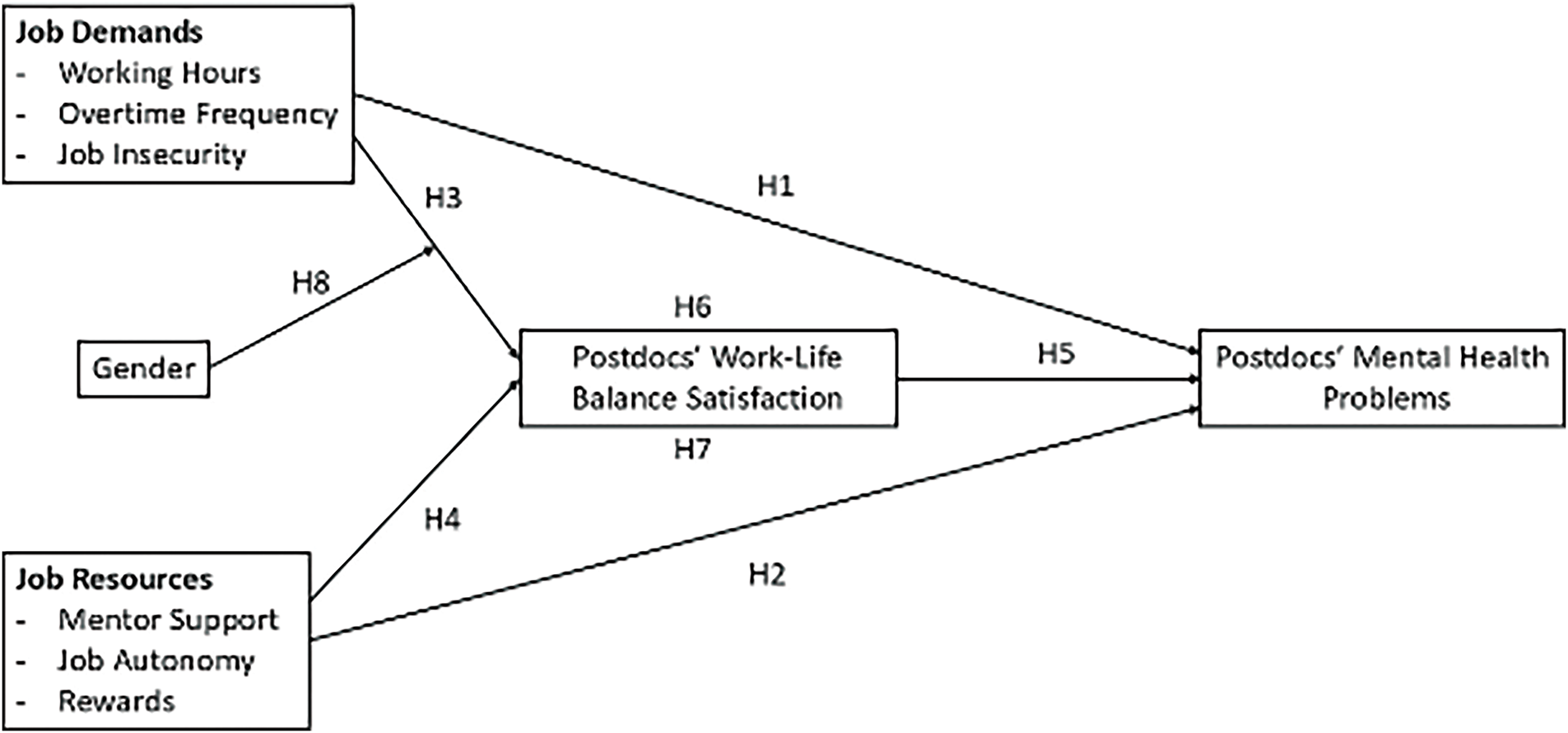
Figure 1: Theoretical framework. Source: prepared by the authors
The data for this study is drawn from Nature’s 2020 Global Postdoc Survey, the first global survey conducted by Nature specifically targeting postdocs. The survey took place online from mid-June to the end of July 2020, with questionnaires available in multiple languages, including English, Chinese, Spanish, French, and Portuguese. It covered a wide range of topics relevant to this study, such as demographic characteristics, job characteristics, job satisfaction, salary, mental health, and career prospects of postdocs. A total of 7670 postdocs from over 90 countries participated, spanning six continents: Asia (including the Middle East), Oceania, Africa, Europe, North or Central America, and South America. The broad geographical representation of the survey sample means that the findings are largely reflective of the global postdoc community. It is important to note that the data used in this study is cross-sectional, which restricts the ability to draw causal inferences. Therefore, the findings in this study represent correlations rather than causation.
Since there are significant differences in job characteristics between part-time and full-time postdocs, as well as between postdocs working outside academia (e.g., government departments and non-profit organizations) and those working in academia, this study focuses only on the 6656 full-time postdocs working in academia. Among these, approximately 483 samples have missing values for at least one variable, accounting for 7.26% of the total. If nominal variables are treated as single variables, without considering their transformation into multiple dummy variables during data analysis, the model employed in this study includes a total of 18 variables. The percentage of missing values in each variable, as well as in the entire dataset, is illustrated in Fig. 2, which arranges the variables according to their missingness ratio. There is a total of 549 missing data points in the dataset, accounting for 0.5% of the data. The variable with the highest percentage of missing values is “mental health problems”, at 2%. In contrast, no missing values are observed in these variables: discipline, current residence, domestic postdoc, Ph.D. and postdoc in different countries, same institution for Ph.D. and postdoc, working hours, and overtime frequency.
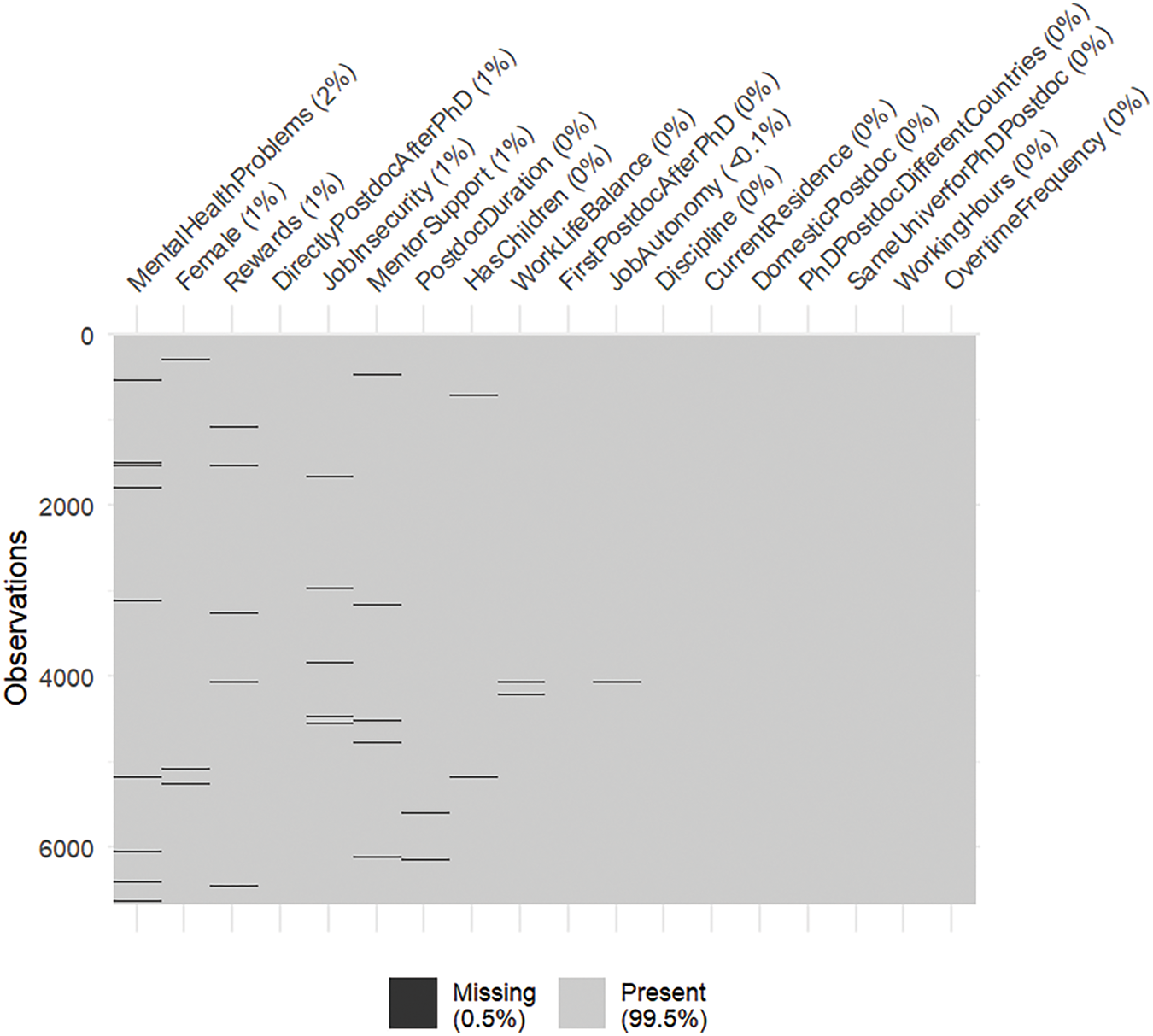
Figure 2: Percentage of missing data across variables (Arranged by missingness ratio)
There are three primary mechanisms of data missingness [58]: The first is missing at random (MAR), which assumes that the probability of missing data depends on the observed data but is independent of the unobserved data. The second mechanism is missing completely at random (MCAR), which assumes that the probability of missing data is independent of both the observed and unobserved data, making it a stricter assumption compared to MAR. Lastly, when the missing data mechanism is influenced by unobserved data, it is referred to as missing not at random (MNAR), which represents the third type of mechanism.
Parameter estimates derived from the listwise deletion method are unbiased only when the missing data mechanism satisfies the MCAR assumption [59]. From the specific definitions of missing data mechanisms, it is evident that MAR cannot be directly tested, while MCAR can be evaluated [58]. This study employs the ‘mcartest’ command in STATA 17.0 to perform Little’s chi-squared test for the MCAR assumption. The test results reject the null hypothesis, indicating that the missing data in this study do not satisfy the MCAR assumption [58]. Therefore, two methods for handling missing data were employed: the first is the listwise deletion method, which directly removes samples with missing values in variables. The second approach applies imputation methods to address missing values. In this study, the primary analyses were conducted using the listwise deletion method, and the results were presented in the first few parts of the Section 4. The imputation methods served as a robustness check, and the results were displayed in the robustness check part of the Section 4.
The final valid sample size obtained using the listwise deletion method was 6173. Among these samples, the highest proportion of postdocs resided in Europe (44.7%), followed by North or Central America (40.7%). The proportions for the other four continents, in descending order, were Asia (7.2%), Oceania (3.9%), South America (2.5%), and Africa (0.9%). In terms of gender, 52.1% of the postdocs were female, and 47.9% were male. Additionally, 13.1% of the postdocs had children. Regarding the discipline of work content, 53.3% of the postdocs were engaged in work related to biomedical and clinical sciences. Furthermore, 86.6% of the samples started postdoctoral work immediately after obtaining their Ph.D., and 15.9% were currently in their first postdoctoral position after completing their Ph.D.
3.2 Variable Description and Descriptive Statistics
The independent variables in this study refer to job characteristics, which include job demands and job resources. The former is measured by three variables: working hours, overtime frequency, and job insecurity. The latter includes three variables: mentor support, job autonomy, and rewards. The dependent variable in this study is the mental health problems of postdocs. If a postdoc has mental health problems, it is coded as 1; otherwise, it is coded as 0.
The mediating variable in this study is the postdoc’s work-life balance satisfaction, derived from the question, “How satisfied are you with the following aspects of your current postdoctoral work?” One aspect is “work-life balance,” with responses ranging from very dissatisfied to very satisfied, scored from 1 to 7. Gender is used as the moderating variable in this study, with females coded as 1 and males as 0.
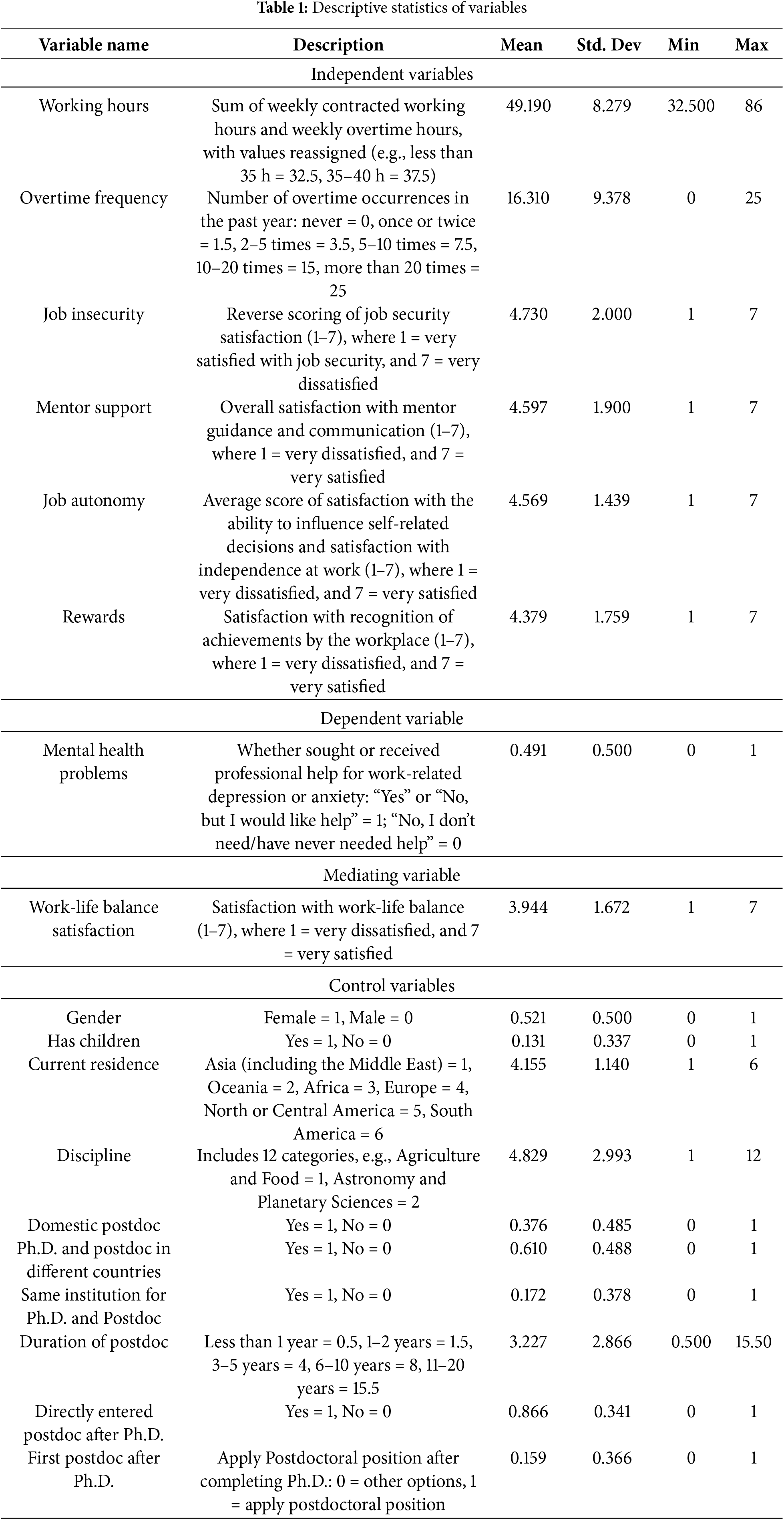
Based on the findings of existing relevant studies [7,60,61], control variables include demographic characteristics of postdocs and variables related to their work background. Demographic variables include gender (which is a moderating variable in the moderating effect analysis) and current parenthood status. Work background variables include current residence, discipline of work content, whether the postdoc work is done domestically, whether the institution awarding the Ph.D. and the postdoctoral employer are in different countries/regions, whether the postdoctoral employer and the institution where the Ph.D. was completed are the same, duration of postdoctoral work, whether the postdoc started immediately after Ph.D. completion, and whether currently in the first postdoctoral position after completing the Ph.D. Table 1 provides a detailed introduction to the operational definitions and descriptive statistics of the above variables based on data obtained using the listwise deletion method.
3.3 Analysis Strategies of Listwise Deletion Method
When handling missing data using the listwise deletion method, this study primarily uses STATA 17.0 and SPSS 26.0 for data analysis. STATA 17.0 is used for descriptive statistics, correlation analysis, and regression analysis, while SPSS 26.0 and its PROCESS 4.0 macro are employed to test mediating and moderating effects.
First, a multiple linear regression model is used to test Hypotheses H3 and H4, and a logit regression model is applied to test Hypotheses H1, H2, and H5. Second, the mediating effect (Hypotheses H6 and H7) is tested mainly using the percentile bootstrap method, which effectively addresses the non-normal sampling distribution problem in mediating effect estimation [62]. The analysis of the mediating effect is conducted using Model 4 in the PROCESS 4.0 macro developed by Hayes [63], with 5000 bootstrap samples and a 95% confidence interval (CI).
Finally, testing for the moderating effect involves two steps: first, testing whether a moderating effect exists; if the moderating effect is confirmed, the second step involves examining the effect size at different values of the moderating variable. The moderating effects are primarily tested by including interaction terms of relevant variables in the logit regression model and by using Model 7 in the PROCESS 4.0 macro developed by Hayes [63], with the number of bootstrap samples and CI settings consistent with those used in Model 4.
3.4 Selection of Imputation Methods and Corresponding Analysis Strategies
Multiple imputation (MI) and full information maximum likelihood (FIML) are two of the most widely used approaches for handling missing data [64]. Compared to the listwise deletion method, the use of FIML or MI to address missing data reduces bias in parameter estimates while retaining the full sample to maximize statistical power and the generalizability of results [59]. Therefore, this study employs both imputation methods to conduct a robustness check.
Since multiple imputations make no assumption about the missing-data mechanism [65], this study adopts multiple imputations to address the issue of missing data before testing Hypotheses H1 to H5. Specifically, the misstable command in STATA 17.0 is first used to report the missing-value patterns. The results indicate that the missing-value patterns of the data in this study are arbitrary rather than monotone. A multivariate imputation approach capable of handling arbitrary missing-value patterns is multivariate imputation using chained equations (MICE) [66]. Therefore, this study employs the MICE method to test Hypotheses H1 to H5.
Multivariate imputation includes three steps [65]: (1) the imputation step, in which M imputations (completed datasets) are generated; (2) the completed-data analysis step, in which the desired analysis is performed separately on each imputed dataset, serving as the primary analysis conducted after imputing missing data; and (3) the pooling step, which combines the results obtained from the M separate completed data analyses into a single multiple-imputation result. Rubin proposed straightforward formulas to pool parameter estimates and standard errors [67]. The second and third steps, namely the completed-data analysis and pooling steps, can also be combined and thought of as the “analysis step” [65]. The above data processing and analysis were carried out using STATA 17.0, which automatically combines the results from the second step to produce the output for the third step. Table 6 reports the pooling parameter estimates and standard errors generated by STATA, rather than manually calculated combined results.
This study specifies the number of imputations as 20, based on the following considerations: (1) Using 20 imputations aligns with the rule of thumb related to the Largest FMI. The Largest FMI reports the highest FMI across all coefficient estimates caused by nonresponse. This value indicates whether the specified number of imputations is sufficient for the analysis. A rule of thumb is that the number of imputations should be at least 100 times the Largest FMI [65]. For the six models in this study, the Largest FMI is 0.0638, and its 100 times value is 6.38, making 20 imputations greater than the threshold suggested by the rule of thumb. (2) Using 20 imputations is consistent with practices commonly adopted in existing studies. A review of the literature that summarizes the recommended number of imputations and the factors to consider when selecting the number of imputations suggests using at least 20 imputations to reduce the sampling error introduced by imputations [65]. (3) If significant results are obtained with 20 imputations, it can be inferred that using more imputations will also yield significant results. Prior research suggests that all else being equal, increasing the number of imputations leads to more powerful significance tests compared to analyses conducted with fewer imputations [68].
As the bootstrap procedures currently preferred by methodologists are not well-suited for multiple imputations, this approach is often considered less flexible for mediation analyses [69]. Accordingly, this study follows the approach recommended by Cheung SF and Cheung S-H [70], first applying FIML to impute missing data, and then testing mediating effect (Hypotheses H6 and H7) and moderating effect (Hypothesis H8) based on the imputed dataset. Data analysis in this part was conducted using R software (version 4.4.2). Missing data were handled with FIML implemented through sem() in the ‘lavaan’ package. The process of testing mediating and moderating effects consisted of two stages. The first stage was model fitting which used sem() in the ‘lavaan’ package to perform parameter estimation and model fitting. In the second stage, the output created in Stage 1 was used to compute and test the mediating and moderating effect via the manymome package. Percentile confidence intervals of the mediating and moderating effect were constructed using nonparametric bootstrapping with 4986 bootstrap samples, with the CI set at 95%. The ‘manymome’ package was also used to construct the bootstrap confidence intervals and to plot moderating effect graphs.
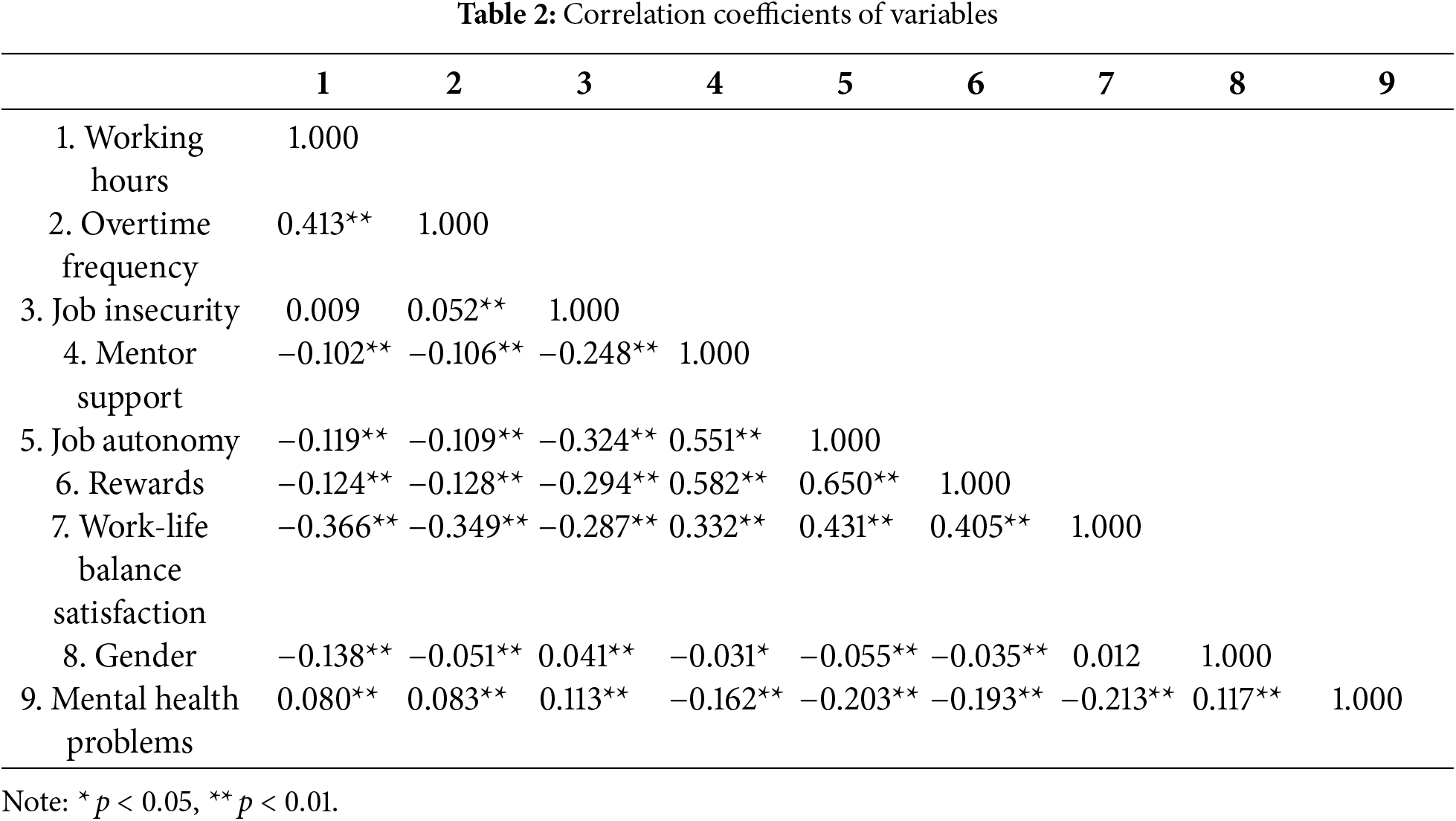
Table 2 presents the correlation coefficients for the variables, all aligning with the expected results. Specifically, the three job demand variables—working hours, overtime frequency, and job insecurity—show negative correlations with postdocs’ work-life balance satisfaction and positive correlations with their mental health problems. Conversely, the three job resource variables—mentor support, job autonomy, and rewards—are positively correlated with work-life balance satisfaction and negatively correlated with mental health problems among postdocs. Moreover, there is a negative correlation between work-life balance satisfaction and mental health problems in postdocs.
4.2.1 The Impact of Academic Job Characteristics on Postdocs’ Mental Health Problems
Models 1–3 (M1–M3) in Table 3 are mainly used to test Hypotheses H1–H5. In Model M1, the dependent variable is postdocs’ work-life balance satisfaction, while in Models M2 and M3, the dependent variable is postdocs’ mental health problems.
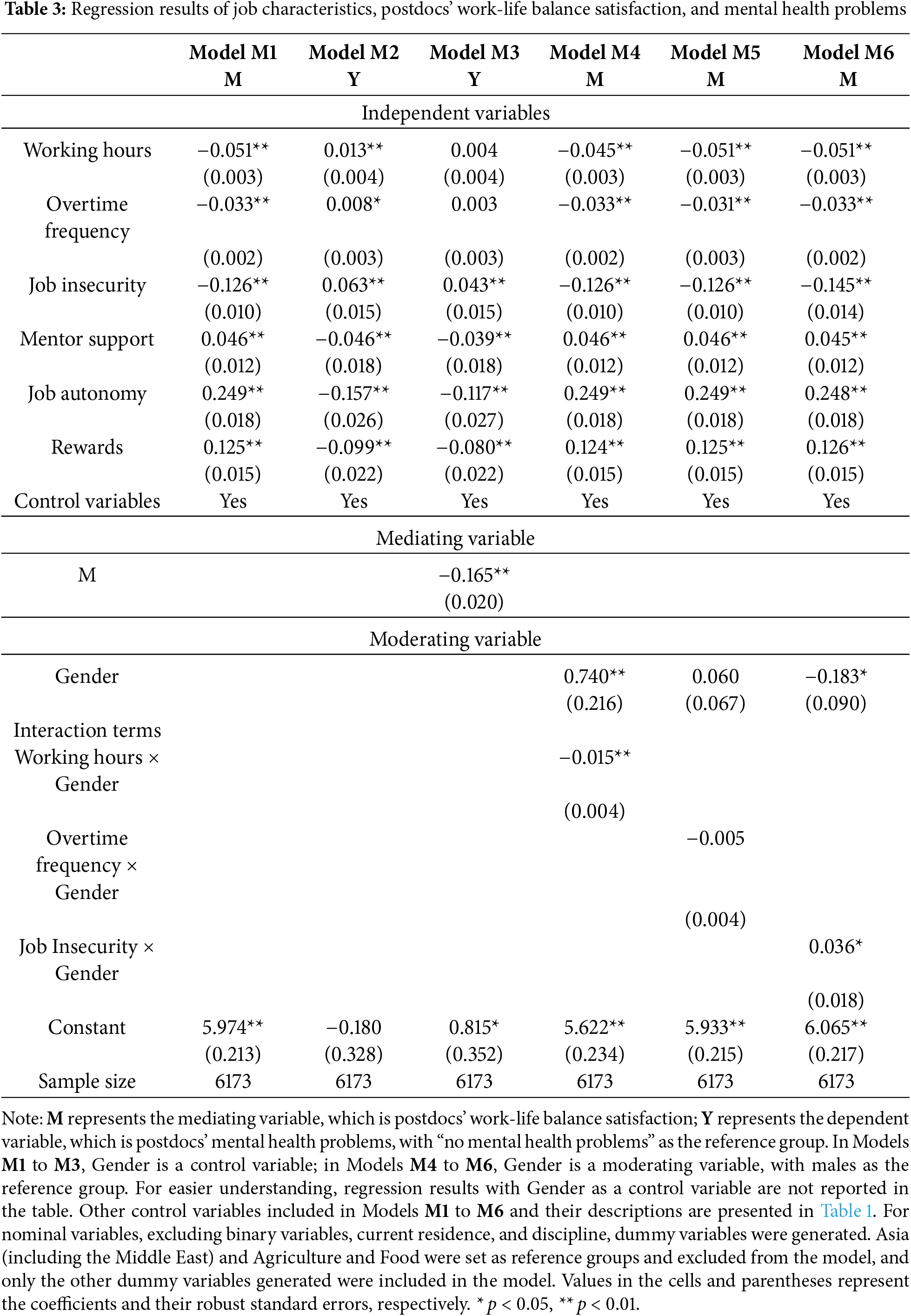
According to Model M1, the three job demand variables (working hours, overtime frequency, and job insecurity) significantly negatively predict postdocs’ work-life balance satisfaction, supporting Hypothesis H3. In contrast, the three job resource variables (mentor support, job autonomy, and rewards) significantly enhance postdocs’ work-life balance satisfaction, confirming Hypothesis H4.
From the results of Model M2, working hours, overtime frequency, and job insecurity significantly increase the likelihood of postdocs experiencing mental health problems. In contrast, mentor support, job autonomy, and rewards significantly reduce the likelihood of postdocs having mental health problems, indicating that Hypotheses H1 and H2 are supported. Model M3 adds the mediating variable, postdocs’ work-life balance satisfaction, to Model M1, and the regression coefficient of this variable is significantly negative, indicating that work-life balance satisfaction reduces the likelihood of mental health problems, thereby supporting Hypothesis H5.
4.2.2 The Mediating Role of Work-Life Balance Satisfaction
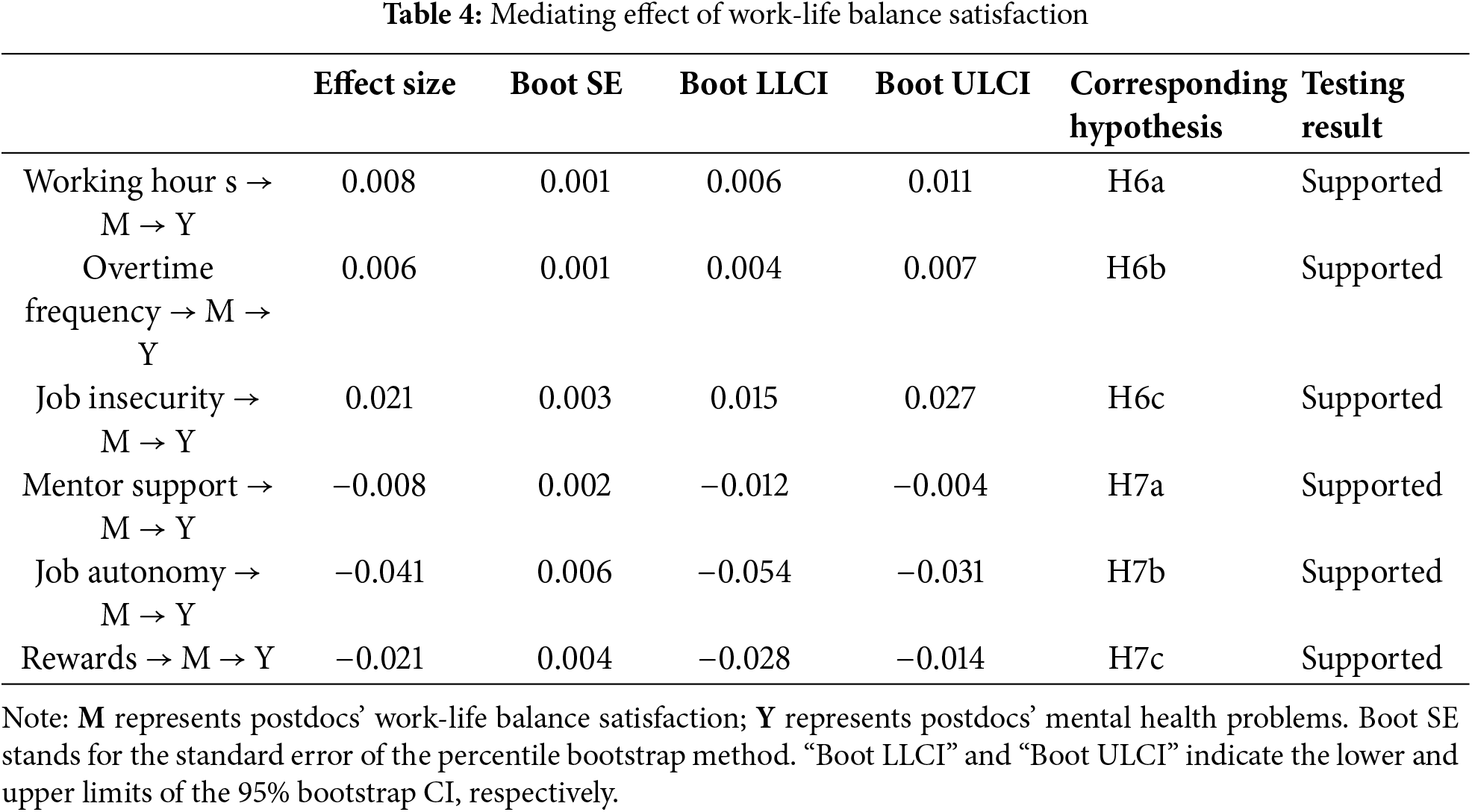
As mentioned earlier, this study uses the percentile bootstrap method to test whether postdocs’ work-life balance satisfaction mediates the effect of job characteristics on postdocs’ mental health problems. If the CI obtained by the percentile bootstrap method does not include 0, it indicates a significant mediating effect. According to the mediating effect test results in Table 4, the CIs for all six job characteristic variables do not include 0, indicating that work-life balance satisfaction mediates the effect of job characteristics on postdocs’ mental health problems. Thus, Hypotheses H6 and H7 are supported.
4.2.3 The Moderating Role of Gender
This study primarily examines the moderating effect of gender on the relationship between the three job demand variables and postdocs’ work-life balance satisfaction (Hypothesis H8). The analysis first tests whether the effects of the three job demand variables on postdocs’ work-life balance satisfaction are moderated by gender. This can be tested by examining the significance of the coefficients of the interaction terms between each job demand variable and gender. The test results are shown in Models M4 to M6 of Table 3. In Model M5, the interaction term between overtime frequency and gender is not significant, thereby rejecting Hypothesis H8b.
In contrast, the coefficients of the interaction terms in Models M4 and M6 are statistically significant, indicating that the effects of working hours and job insecurity on postdocs’ work-life balance satisfaction are moderated by gender, suggesting that Hypotheses H8a and H8c may hold. However, since the coefficients of the interaction terms between job demands and the moderating variable (gender) only test whether the effects of job demand on work-life balance satisfaction differ between genders, they do not indicate whether the effects are stronger for female or male postdocs. Therefore, further testing of Hypotheses H8a and H8c is needed.
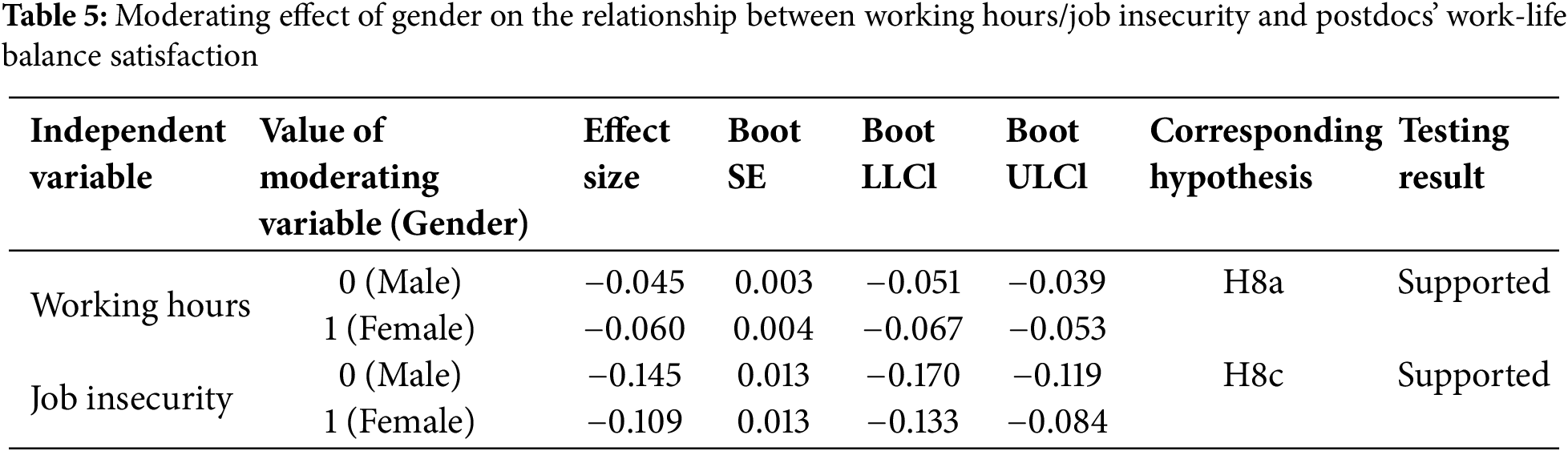
The analysis then examines the effects of working hours and job insecurity on work-life balance satisfaction under different values of the moderating variable (male or female postdocs). According to Table 5, regarding working hours, the effect size for male postdocs is −0.045 (SE = 0.003, CI = [−0.051, −0.039]), and for female postdocs, the effect size is −0.060 (SE = 0.004, CI = [−0.067, −0.053]). Key findings include: (1) The confidence intervals for both effect sizes do not include 0, indicating that working hours have a significant negative effect on work-life balance satisfaction for both female and male postdocs. (2) The absolute value of the effect size is higher for female postdocs than for male postdocs, suggesting that working hours have a stronger negative impact on work-life balance satisfaction for female postdocs compared to male postdocs. Combined with the results from the first step, this confirms Hypothesis H8a. Similarly, regarding job insecurity, the negative impact on work-life balance satisfaction is stronger for male postdocs than female postdocs, supporting Hypothesis H8c.
To better illustrate the moderating effect of gender on the relationship between working hours, job insecurity, and postdocs’ work-life balance satisfaction, moderating effect plots were generated (see Figs. 3 and 4). In Fig. 3, the dashed line and solid line represent the impact of working hours on work-life balance satisfaction for female (gender = 1) and male (gender = 0) postdocs, respectively. The absolute slope of the dashed line is noticeably steeper than that of the solid line, suggesting that working hours have a stronger negative effect on work-life balance satisfaction for female postdocs compared to male postdocs. The interpretation of Fig. 4 follows the same pattern as Fig. 3, so it will not be elaborated further.
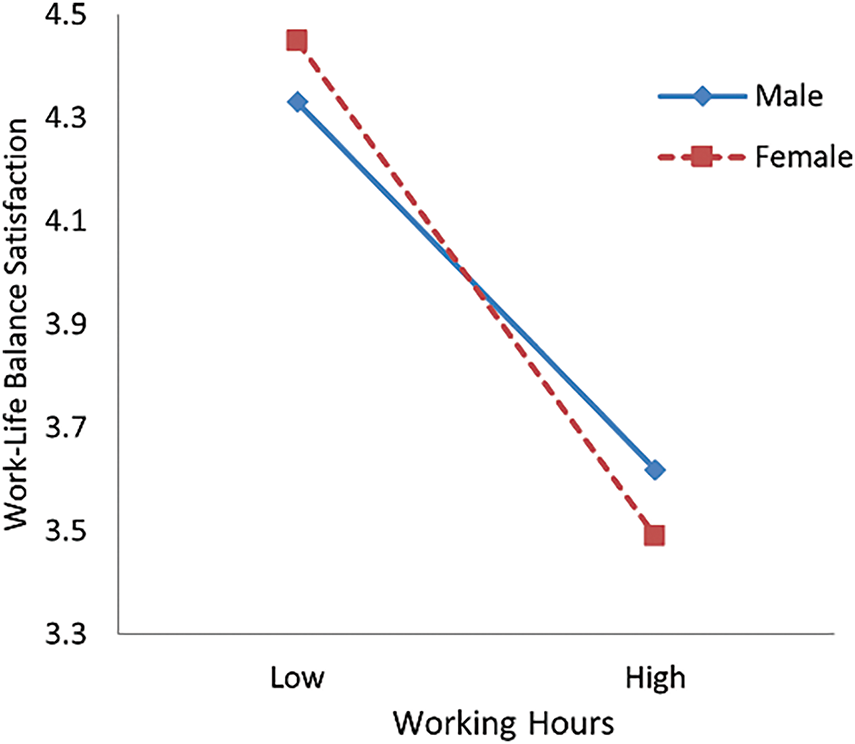
Figure 3: Moderating effect of gender on the relationship between working hours and postdocs’ work-life balance satisfaction
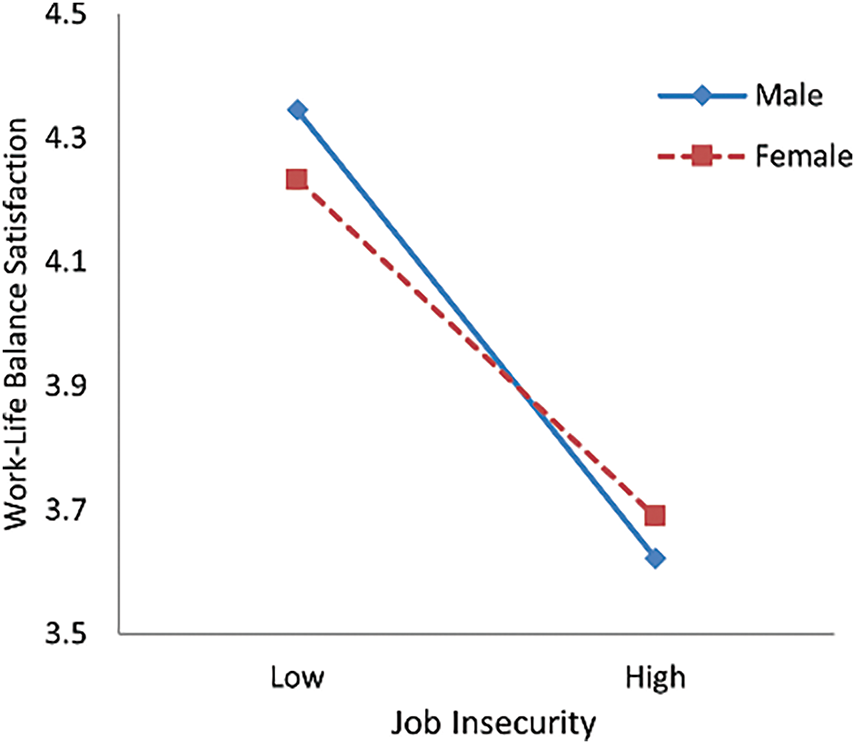
Figure 4: Moderating effect of gender on the relationship between job insecurity and postdocs’ work-life balance satisfaction
Next, this study re-tested all the aforementioned hypotheses using imputation methods.
Results of the imputation methods were presented in Tables 6–8, as well as in Figs. 5 and 6. The results obtained through imputation methods were basically consistent with those derived from the listwise deletion method, indicating a certain level of robustness of this study’s findings. However, it is important to note that the cross-sectional data may contain omitted variables, and thus the findings reflect correlations rather than causations.
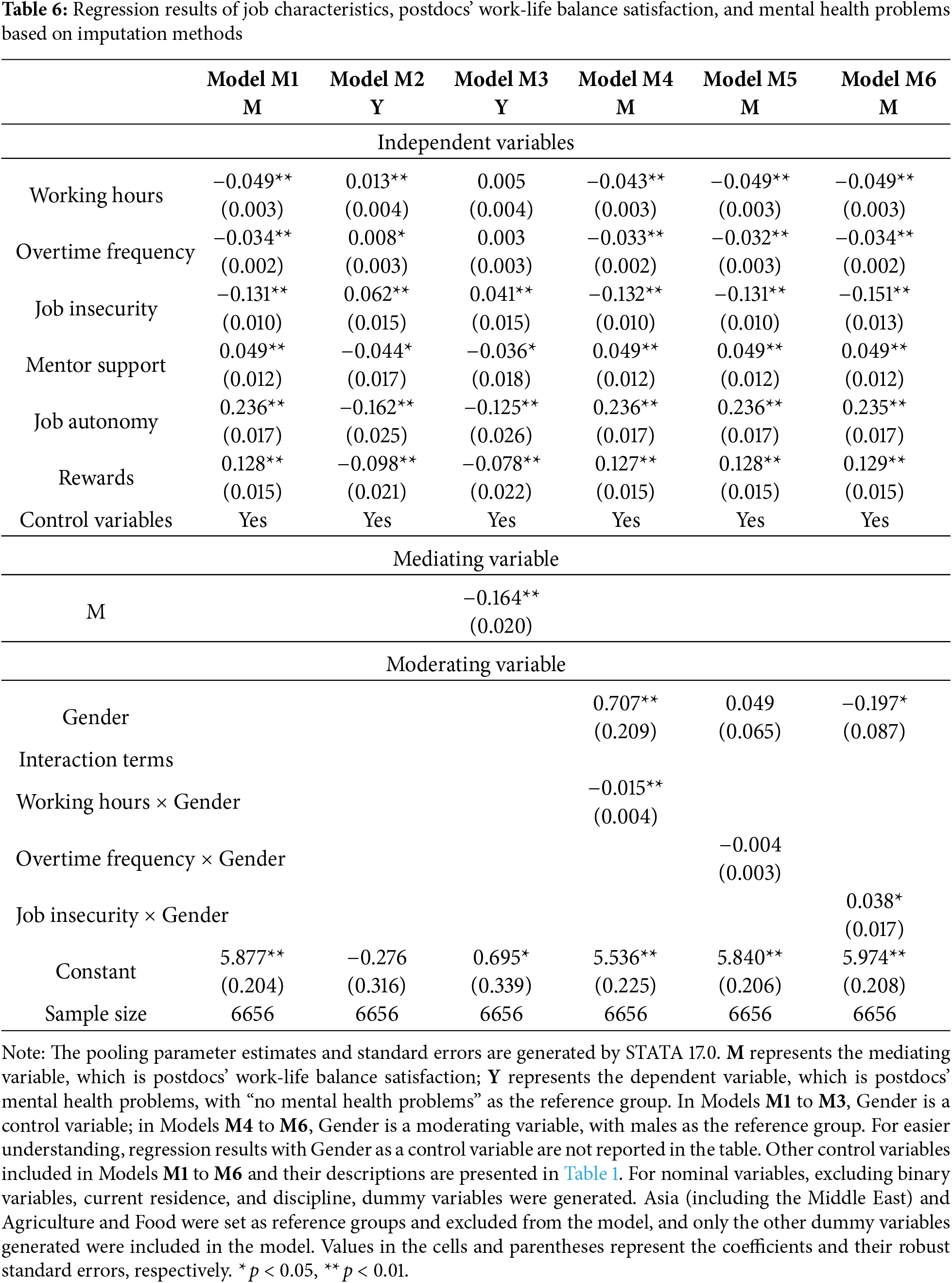
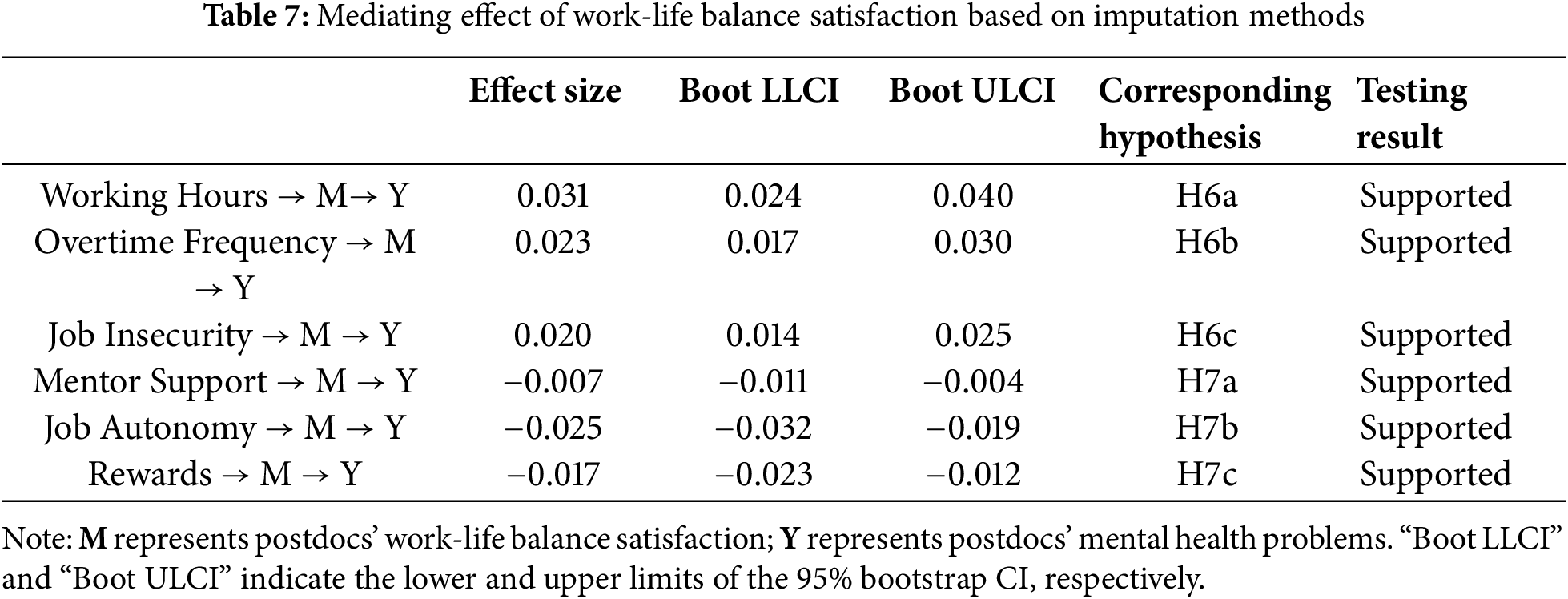
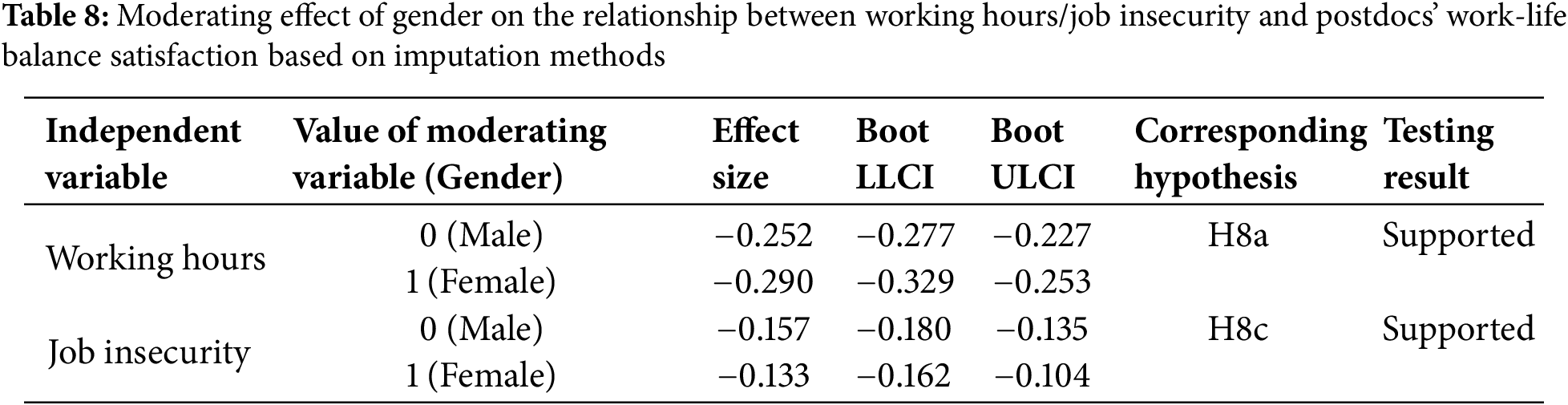
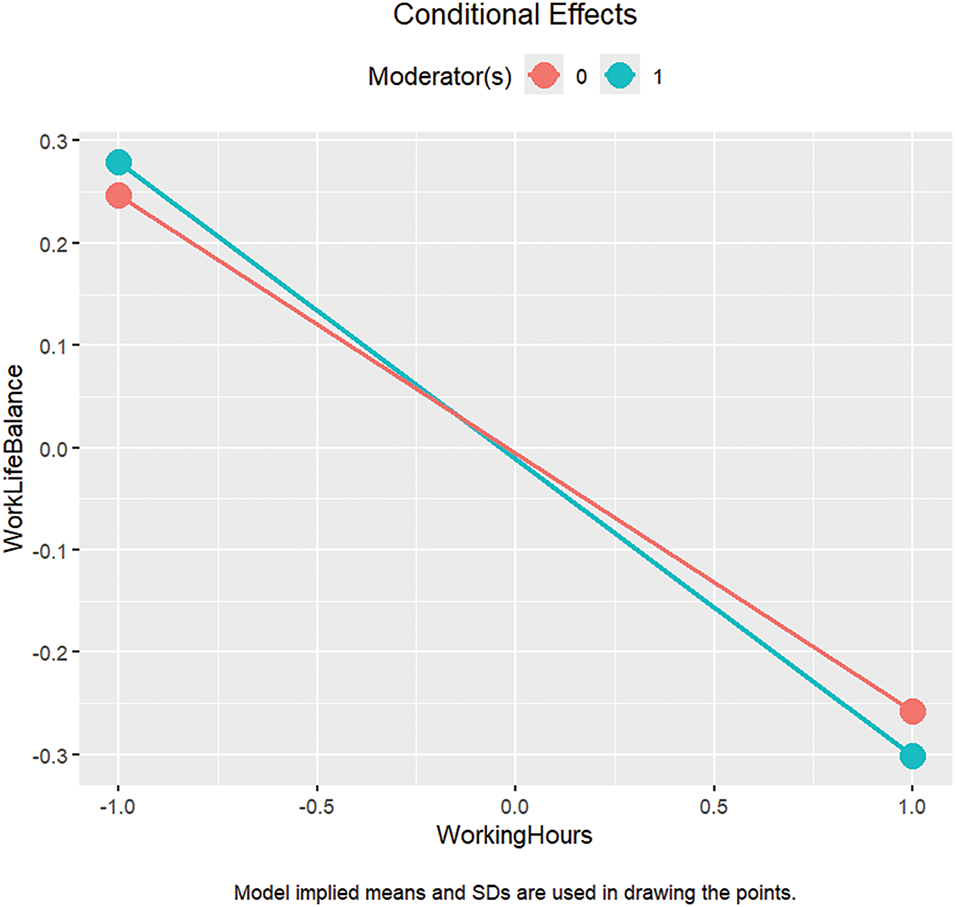
Figure 5: Moderating effect of gender on the relationship between working hours and postdocs’ work-life balance satisfaction based on imputation methods. Note: Moderator(s) represent Gender, where 1 indicates female and 0 indicates male. WorkLifeBalance refers to work-life balance satisfaction, and WorkingHours refers to working hours
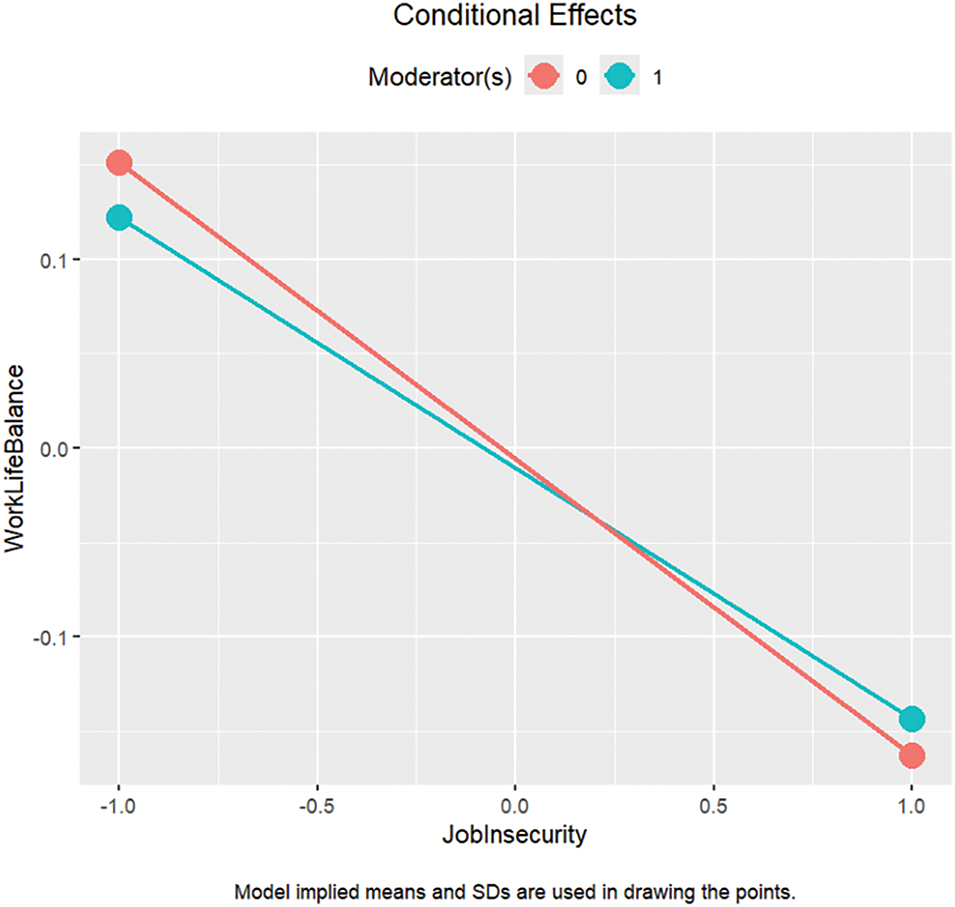
Figure 6: Moderating effect of gender on the relationship between job insecurity and postdocs’ work-life balance satisfaction based on imputation methods. Note: Moderator(s) represent Gender, where 1 indicates female and 0 indicates male. WorkLifeBalance refers to work-life balance satisfaction, and JobInsecurity refers to job insecurity
Based on the JD-R model, this study utilized data from Nature’s 2020 Global Postdoc Survey to test eight research hypotheses regarding the relationships between postdocs’ mental health problems, job characteristics, work-life balance satisfaction, and gender.
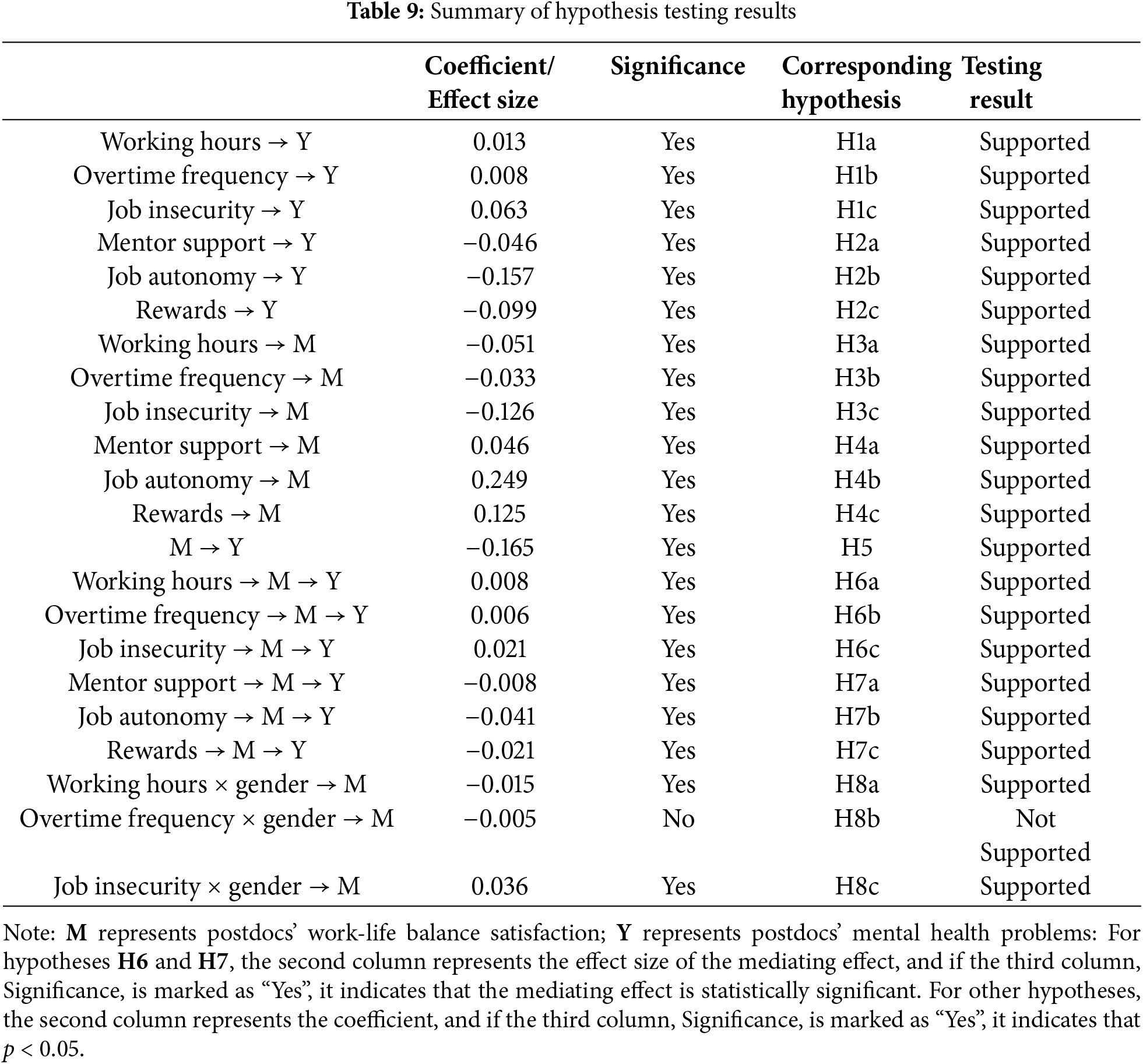
All hypotheses were supported by empirical results except for Hypothesis H8b. Specifically, the three job demand variables—working hours, overtime frequency, and job insecurity—negatively predicted postdocs’ work-life balance satisfaction (H3) and directly increased the likelihood of mental health problems (H1). Conversely, the three job resource variables—mentor support, job autonomy, and rewards—enhanced postdocs’ work-life balance satisfaction (H4) and directly decreased the likelihood of mental health problems (H2). Work-life balance satisfaction among postdocs was found to reduce the probability of experiencing mental health problems (H5). Furthermore, all six job characteristic variables indirectly influenced postdocs’ mental health problems through work-life balance satisfaction (H6 and H7). Working hours had a stronger negative impact on work-life balance satisfaction for female postdocs (H8a), while job insecurity had a stronger negative impact on male postdocs’ work-life balance satisfaction (H8c). However, Hypothesis H8b was not supported, as there was no significant difference in the impact of overtime frequency on work-life balance satisfaction between genders. Table 9 summarizes the results of hypothesis testing.
The timing of data collection in this study was at the peak of lockdowns amid the COVID-19 pandemic. The findings of this study were consistent with those of other research based on data collected during the pandemic. The COVID-19 pandemic further exacerbated mental health problems among postdocs, with work identified as a main stressor [6]. Additionally, our research found that mentor support decreased the likelihood of mental health problems. Other research found that, during the COVID-19 pandemic, supportive principal investigators (PIs) were praised for their role in alleviating the stress experienced by postdocs [6]. In terms of gender differences, the COVID-19 pandemic may further explain the stronger negative impact of working hours on female postdocs’ work-life balance satisfaction than on their male counterparts found by this research. During the pandemic, school and daycare closures [71] placed a greater extra childcare burden on female postdocs compared to their male counterparts. Relevant research supports this explanation. The survey conducted by the PostdocNet in 2022 revealed that female postdocs spent significantly more time in childcare than male postdocs [72]. Research on U.S. postdocs indicated similar findings [6]. These gender differences suggest that working hours might have a stronger negative effect on the work-life balance satisfaction of female postdocs.
Regarding job demands, working hours, overtime frequency, and job insecurity directly increased the likelihood of mental health problems among postdocs, which was consistent with the findings of extant studies [11,12]. According to the JD-R model, compared to employees, postdocs are cheaper labor within universities [73], often bearing heavy workloads, facing last-minute appointments, and receiving low wages [74]. Furthermore, postdocs have poor career prospects and high job insecurity [75]. The Conservation of Resources theory suggests that stress arises when significant effort is exerted without gaining key resources [56]. For postdocs, key resources include commensurate income and tenure positions. However, in the competitive academic labor market, most postdocs, despite long working hours and frequent overtime, cannot secure these resources, leading to substantial stress that can affect their mental health.
In terms of job resources, mentor support directly reduces the likelihood of mental health problems among postdocs. Previous studies found that mentor support enhances postdocs’ mental health [11] and that postdocs with faculty mentors have significantly lower levels of anxiety and work-life conflict compared to those without mentors [15], which supports the result of our research. This might be because most postdocs are at stages of starting families and having children, requiring them to assume new roles, such as employees, spouses, and parents. Without external support, postdocs lacking work-life experience may struggle to quickly adapt to these diversified roles. Thus, mentors’ sharing of experiences and support in work, life, and emotions is crucial for postdocs to adapt to new roles, reduce work-life conflict, and improve mental health. However, not every postdoc has a mentor; a survey found that only 79% of STEM postdocs have a faculty mentor [15], and 9% of postdocs at the University of Western Australia do not have a supervisor [76]. This lack of mentors may further exacerbate mental health problems among postdocs.
Job autonomy directly reduces the chances of mental health problems among postdocs. On the one hand, this can be explained from the perspective of work-life balance, as elaborated in the Section 2. On the other hand, this can also be understood through the lens of person-job fit. Research has shown that doctoral students who strongly value the freedom to choose their research projects are more likely to pursue careers in academia rather than industry [37]. Postdoc positions also belong to academic professions, making it reasonable to assume that postdocs also value autonomy in their work. According to the person-job fit theory, postdocs with greater job autonomy experience a better alignment between their preferences and job characteristics [77]. Studies have demonstrated that a better person-job fit is associated with lower rates of depression and other mental health problems [78,79]. Thus, job autonomy likely improves person-job fit for postdocs, reducing the risk of mental health problems.
Rewards also reduce the likelihood of mental health problems among postdocs. This finding aligns with previous studies showing that rewards positively correlate with work engagement, job satisfaction, and mental health among university faculty [80]. According to the theory of self-efficacy, recognition from significant others is a crucial source of self-efficacy [39]. For postdocs, their work institutions act as significant others, and recognition of their achievements from these institutions can enhance their self-efficacy, further improving their mental health.
Regarding the mechanisms of influence, the three job demand variables and the three job resource variables indirectly affect postdocs’ mental health through work-life balance satisfaction. The mediating effect of work-life balance satisfaction is supported by existing empirical research that also analyzes the relationship among job characteristics, life balance, and postdocs’ mental health [81]. We can also explain this finding from a theoretical perspective. The Resource Drain Model posits that excessive resource consumption in the work domain depletes the resources available in the life domain [55]. Postdoc jobs often involve long working hours, frequent overtime, and high job insecurity, leading to work-life conflict and reduced work-life balance satisfaction. If postdocs’ satisfaction remains low, they are more likely to experience mental health problems. In contrast, other academic job characteristics, such as mentor support, job autonomy, and rewards, serve as job resources that help postdocs arrange work time and location flexibly, choose research topics of interest, and collaborate with mentors on career development plans, thereby reducing work-life conflict and enhancing work recognition and employability [82], ultimately improving work-life balance satisfaction.
In terms of group differences, working hours have a stronger negative impact on work-life balance satisfaction for female postdocs, while job insecurity has a stronger effect on male postdocs. This can be understood through the perspectives of Social Role Theory, Role Theory, the Resource Drain Model, and the Conservation of Resources Theory: female postdocs, who are more likely to assume homemaker roles, experience greater negative effects from long working hours on their work-life balance satisfaction. In contrast, male postdocs, who often fulfill the breadwinner role, are more adversely impacted by job insecurity. The COVID-19 pandemic may have further intensified the negative impact of working hours on female postdocs’ work-life balance satisfaction, as explained in detail in the third paragraph of the Section 5.
Unlike the heterogeneous effects of working hours and job insecurity, there is no significant gender difference in the impact of overtime frequency on work-life balance satisfaction among postdocs. A possible reason is that overtime frequency may reflect the frequency of handling urgent tasks rather than an increase in total working hours. For instance, if postdocs frequently work overtime but for short durations, and they can offset this by resting during workdays, their total working hours may be similar to those of non-overtime postdocs. In such cases, the time-based conflict caused by overtime [83] might not be severe, resulting in a relatively minor impact on female postdocs who need more family time.
Based on these findings, improving postdocs’ mental health and well-being, and enhancing their role in promoting technological advancement and socioeconomic development requires joint efforts from institutions, funding agencies, and mentors. Relevant recommendations include:
5.1.1 Increase the Provision of Job Resources
Institutions should ensure that each postdoc has a mentor and design policies to incentivize mentors to support postdocs’ development. For example, Indiana University Bloomington’s College of Arts and Sciences includes postdoc supervision as a criterion in promotion and tenure decisions [84]. To increase job autonomy, funding agencies and employers can offer more funding opportunities for postdocs to explore their research ideas [85]. Enhance the role of postdoc consortia in improving postdocs’ career development prospects and promoting their mental health. Postdoc consortia is one of the collaborative models of postdoctoral scholarship that can provide “excellent training opportunities, while simultaneously creating more inclusive, financially stable, and family-friendly opportunities at this critical career stage.” In practice, the Modelscapes Consortium is a successful example, which was funded by a $6 million Established Program to Stimulate Competitive Research RII Track 2 grant from the National Science Foundation. Therefore, funding agencies can establish postdoc consortia grant programs while institutions can further foster the infrastructures necessary to support postdoc consortia [86]. Additionally, institutions should leverage rewards to alleviate mental health problems, such as offering sabbaticals and supporting international academic exchanges based on postdoctoral achievements. Funding agencies can establish a more diversified evaluation system and incentive mechanism specifically for postdocs. A notable initiative was proposed by Dutch public knowledge institutions and research funders, which advocates for a recognition and rewards system for academics and research that prioritizes quality, content, and creativity over the number of publications [87]. Providing systematic and diverse career support, such as teaching enhancement programs [88,89] and opportunities to connect with various postdoc-recruiting departments [11], can improve postdocs’ employment competitiveness. Moreover, considering gender differences, institutions should offer targeted mental health services, including workshops on role adaptation, work-life balance, and parenting strategies for female postdocs.
Employers should promote a work-life balance culture and avoid pressure-induced extended working hours. A study found that postdocs are influenced by an organizational culture where the pervasive workaholic mindset in the U.S. compelled individuals to consistently work overtime, fostering an expectation of extended hours in the lab [7].
5.2 Limitations and Future Studies
While this study provides insights into the relationship between job characteristics and postdocs’ mental health using data from Nature’s 2020 Global Postdoc Survey, there are several limitations. First, the cross-sectional data may contain omitted variables, so findings reflect correlations, not causations. Future research could use longitudinal data to better explore causal relationships. Second, the use of self-reported measures might have introduced potential biases in the following aspects: (1) Social Desirability Biases. Social desirability can be considered as the result of two factors: self-deception and other-deception [90]. (2) Common Method Bias. Correlations between variables measured using the same method, such as the self-report survey in this study, may be inflated due to the effects of common method variance [91]. From this perspective, if common method bias is severe in this study, the research hypotheses supported by the results might not actually hold true. However, this issue is unlikely to be substantial, as common method bias appears to be widespread. Research has shown that in many social sciences, such as applied psychology and organizational behavior, about 31% to 98% of published research employs designs that are vulnerable to common method bias [92]. (3) Participants from different cultural backgrounds may interpret subjective items differently [93]. Compared to individuals from European cultural backgrounds, those from East Asian cultural backgrounds tend to exhibit a more ambivalent and moderate response style on questionnaires [61]. For instance, when responding to a 7-point Likert scale, students in Japan and China were more likely to choose the midpoint on the scale compared to students in the U.S. and Canada. By comparison, U.S. respondents were more inclined to select extreme values than the other three groups. The difference in response styles between North Americans and East Asians aligns with the distinction often drawn between individualist and collectivist cultures [94]. Based on these findings, some variables constructed using survey data in this study, such as the presence of mental health problems, satisfaction level with job insecurity, mentor support, and work-life balance, may exhibit similar cultural differences. Postdocs from East Asian cultural backgrounds may be more likely to report an absence of mental health problems (as postdocs from collectivist cultures may be more influenced by social desirability biases) and to choose midpoints when reporting satisfaction levels. In contrast, postdocs from North American cultural backgrounds may be more inclined to honestly report mental health problems and select extreme values of satisfaction level. These cultural differences could potentially lead to estimation bias. Therefore, when interpreting the findings of this study, these factors should be taken into account. To address such biases, numerous solutions have been proposed in prior research [90,92,93]. Future studies could take potential biases introduced by self-reported measures into consideration during the research design phase. For example, employing mixed methods, collecting longitudinal data, conducting randomized experiments, and combining bias prevention and detection methods. Third, this study only examined the mediating role of work-life balance satisfaction in the impact of job characteristics on mental health problems. Other factors, such as burnout or psychological empowerment, might also mediate this relationship, as suggested by the JD-R model and related research [25,95]. Further research could explore these mechanisms in depth. Finally, this study only investigated gender differences in the relationship between job characteristics and work-life balance satisfaction. Future research could explore variations across countries, cultural backgrounds, and disciplines.
This study found that job-demand factors, namely working hours, overtime frequency, and job insecurity significantly predicted the likelihood of increasing mental health problems, while mentor support, job autonomy and rewards as job resources mitigated these problems. All these job characteristic variables indirectly influenced postdocs’ mental health problems through work-life balance satisfaction, with gender moderating the relationship between job demands and postdocs’ work-life balance satisfaction. Specifically, working hours revealed a stronger negative impact on work-life balance satisfaction for female postdocs, while job insecurity had a stronger negative impact on male postdocs’ work-life balance satisfaction. However, no significant difference was found in the impact of overtime frequency on work-life balance satisfaction between genders, which warrants further research. Future research will benefit from going beyond snapshot self-reported data and examining the broader causal relationships between work characteristics and postdocs’ mental health and their mechanisms (e.g., the mediating role of burnout, work engagement, person-job fit), as well as variations across countries, cultural contexts, and disciplines.
Acknowledgement: We acknowledge all participants involved in this research.
Funding Statement: The authors received no specific funding for this study.
Author Contributions: Li Yang: methodology, writing—original draft, writing—review & editing. Wanlin Cai: writing—original draft, writing—review & editing. Wenke Wang: writing—original draft, writing—review & editing. Chuanyi Wang: conceptualization, project administration, writing—review & editing. All authors reviewed the results and approved the final version of the manuscript.
Availability of Data and Materials: The raw data for this article is sourced from the website: https://figshare.com/articles/dataset/2020_Nature_Postdoc_survey_-_COVID-19_insights/12906257 (accessed on 1 January 2025). The data supporting the reported results are available from the corresponding author upon reasonable request.
Ethics Approval: This study does not involve intervention and it is low risk. Therefore, the ethics approval is not applicable. The informed consents were obtained from the participants.
Conflicts of Interest: The authors declare no conflicts of interest to report regarding the present study.
References
1. Engels T, Hasgall A, Peneoasu A, Hanenberg P. Postdoctoral researchers at European universities: profiles, roles and institutional support structures. Geneva, Switzerland: European University Association; 2024. p. 1–24. [Google Scholar]
2. Ålund M, Emery N, Jarrett BJM, MacLeod KJ, McCreery HF, Mamoozadeh N, et al. Academic ecosystems must evolve to support a sustainable postdoc workforce. Nat Ecol Evol. 2020;4(6):777–81. doi:10.1038/s41559-020-1178-6. [Google Scholar] [PubMed] [CrossRef]
3. Powell K. The future of the postdoc. Nature. 2015;520(7546):144–7. doi:10.1038/520144a. [Google Scholar] [PubMed] [CrossRef]
4. China Postdoctoral Science Foundation. A comprehensive review of the development of postdoctoral affairs since the eighteenth national congress of the communist party of China. [cited 2024 Oct 5]. (In Chinese). Available from: https://www.chinapostdoctor.org.cn/article?inid=e95678aa-6e96-494f-ba25-96881022a1c7&catname=%E5%B7%A5%E4%BD%9C%E5%8A%A8%E6%80%81&yname=%E5%8D%9A%E5%A3%AB%E5%90%8E%E5%9F%BA%E9%87%91%E4%BC%9A&catid=b298d072-f97f-41e4-8848-b468e7fd207a. [Google Scholar]
5. Bakker AB, Demerouti E, Sanz-Vergel AI. Burnout and work engagement: the JD-R approach. Annu Rev Organ Psychol Organ Behav. 2014;1(1):389–411. doi:10.1146/annurev-orgpsych-031413-091235. [Google Scholar] [CrossRef]
6. Morin A, Helling BA, Krishnan S, Risner LE, Walker ND, Schwartz NB. Surveying the experience of postdocs in the United States before and during the COVID-19 pandemic. eLife. 2022;11:e75705. doi:10.7554/eLife.75705. [Google Scholar] [PubMed] [CrossRef]
7. Ysseldyk R, Greenaway KH, Hassinger E, Zutrauen S, Lintz J, Bhatia MP, et al. A leak in the academic pipeline: identity and health among postdoctoral women. Front Psychol. 2019;10:1297. doi:10.3389/fpsyg.2019.01297. [Google Scholar] [PubMed] [CrossRef]
8. Staniscuaski F, Kmetzsch L, Soletti RC, Reichert F, Zandonà E, Ludwig ZMC, et al. Gender, race and parenthood impact academic productivity during the COVID-19 pandemic: from survey to action. Front Psychol. 2021;12:663252. doi:10.3389/fpsyg.2021.663252. [Google Scholar] [PubMed] [CrossRef]
9. Van Benthem K, Nadim Adi M, Corkery CT, Inoue J, Jadavji NM. The changing postdoc and key predictors of satisfaction with professional training. Stud Graduate Postdr Educ. 2020;11(1):123–42. doi:10.1108/SGPE-06-2019-0055. [Google Scholar] [CrossRef]
10. Zhang Y, Duan X. Job demands, job resources and postdoctoral job satisfaction: an empirical study based on the data from 2020 Nature global postdoctoral survey. PLoS One. 2023;18(11):e0293653. doi:10.1371/journal.pone.0293653. [Google Scholar] [PubMed] [CrossRef]
11. van der Weijden I, Teelken C. Precarious careers: postdoctoral researchers and wellbeing at work. Stud High Educ. 2023;48(10):1595–607. doi:10.1080/03075079.2023.2253833. [Google Scholar] [CrossRef]
12. Woolston C. Postdocs under pressure: ‘can I even do this any more?’. Nature. 2020;587(7835):689–92. doi:10.1038/d41586-020-03235-y. [Google Scholar] [PubMed] [CrossRef]
13. Nature Editorial. Postdocs in crisis: science cannot risk losing the next generation. Nature. 2020;585(7824):160. doi:10.1038/d41586-020-02541-9. [Google Scholar] [PubMed] [CrossRef]
14. Smaglik P. Stress management. Nature. 2006;439(7076):629. doi:10.1038/nj7076-629a. [Google Scholar] [PubMed] [CrossRef]
15. Pitt RN, Taskin Alp Y, Shell IA. The mental health consequences of work-life and life-work conflicts for STEM postdoctoral trainees. Front Psychol. 2021;12:750490. doi:10.3389/fpsyg.2021.750490. [Google Scholar] [PubMed] [CrossRef]
16. Bakker AB, Demerouti E. Job demands-resources theory: taking stock and looking forward. J Occup Health Psychol. 2017;22(3):273–85. doi:10.1037/ocp0000056. [Google Scholar] [PubMed] [CrossRef]
17. Bauer GF, Hämmig O. Bridging occupational, organizational and public health: a transdisciplinary approach [Internet]. Dordrecht, The Netherlands: Springer; 2014. [Google Scholar]
18. Schaufeli WB. Applying the job demands-resources model. Organ Dyn. 2017;46(2):120–32. doi:10.1016/j.orgdyn.2017.04.008. [Google Scholar] [CrossRef]
19. Lewig KA, Xanthopoulou D, Bakker AB, Dollard MF, Metzer JC. Burnout and connectedness among Australian volunteers: a test of the job demands-resources model. J Vocat Behav. 2007;71(3):429–45. doi:10.1016/j.jvb.2007.07.003. [Google Scholar] [CrossRef]
20. Lu CQ, Siu OL, Chen WQ, Wang HJ. Family mastery enhances work engagement in Chinese nurses: a cross-lagged analysis. J Vocat Behav. 2011;78(1):100–9. doi:10.1016/j.jvb.2010.07.005. [Google Scholar] [PubMed] [CrossRef]
21. Radic A, Arjona-Fuentes JM, Ariza-Montes A, Han H, Law R. Job demands-job resources (JD-R) model, work engagement, and well-being of cruise ship employees. Int J Hosp Manag. 2020;88(17):102518. doi:10.1016/j.ijhm.2020.102518. [Google Scholar] [CrossRef]
22. Mer A, Virdi AS, Sengupta S. Unleashing the antecedents and consequences of work engagement in NGOs through the lens of JD-R model: empirical evidence from India. VOLUNTAS: Int J Volunt Nonprofit Organ. 2023;34(4):721–33. doi:10.1007/s11266-022-00503-5. [Google Scholar] [CrossRef]
23. Hwang PC, Han MC. Does psychological capital make employees more fit to smile? The moderating role of customer-caused stressors in view of JD-R theory. Int J Hosp Manag. 2019;77(2):396–404. doi:10.1016/j.ijhm.2018.08.003. [Google Scholar] [CrossRef]
24. Andalib MA, Ghaffarzadegan N, Larson RC. The postdoc queue: a labour force in waiting. Syst Res. 2018;35(6):675–86. doi:10.1002/sres.2510. [Google Scholar] [CrossRef]
25. Huang Y, Wang C. Surviving and thriving in “accelerating” academia: toward a job demands-resources model of faculty well-being. Asia Pac Educ Rev. 2022;36(3):541. doi:10.1007/s12564-022-09769-2. [Google Scholar] [CrossRef]
26. Naidoo-Chetty M, Plessis MD. Systematic review of the job demands and resources of academic staff within higher education institutions. Int J High Educ. 2020;10(3):268. doi:10.5430/ijhe.v10n3p268. [Google Scholar] [CrossRef]
27. Liu BN, Sun BH. The influence of leader mindfulness on emotional exhaustion of university teachers: the mediating role of work-to-personal conflict and the moderating role of university teacher mindfulness. J Educ Stud. 2022;18(6):117–33 (In Chinese). doi:10.14082/j.cnki.1673-1298.2022.06.010. [Google Scholar] [CrossRef]
28. Dixit A, Upadhyay Y. Role of JD-R model in upticking innovative work behaviour among higher education faculty. RAUSP Manag J. 2021;56(2):156–69. doi:10.1108/RAUSP-03-2020-0060. [Google Scholar] [CrossRef]
29. Horoub I, Zargar P. Empowering leadership and job satisfaction of academic staff in Palestinian universities: implications of leader-member exchange and trust in leader. Front Psychol. 2022;13:1065545. doi:10.3389/fpsyg.2022.1065545. [Google Scholar] [PubMed] [CrossRef]
30. Herschberg C, Benschop Y, van den Brink M. Precarious postdocs: a comparative study on recruitment and selection of early-career researchers. Scand J Manag. 2018;34(4):303–10. doi:10.1016/j.scaman.2018.10.001. [Google Scholar] [CrossRef]
31. Hardy MC, Carter A, Bowden N. What do postdocs need to succeed? A survey of current standing and future directions for Australian researchers. Palgrave Commun. 2016;2(1):16093. doi:10.1057/palcomms.2016.93. [Google Scholar] [CrossRef]
32. Organisation for Economic Co-operation and Development. Reducing the precarity of academic research careers. Paris, France: OECD; 2021. 68 p. [Google Scholar]
33. Hendrix S. Should I become a professor? Success rate 3%. [cited 2024 Jan 1]. Available from: https://smartsciencecareer.com/become-a-professor/. [Google Scholar]
34. Demerouti E, Bakker AB, Nachreiner F, Schaufeli WB. The job demands-resources model of burnout. J Appl Psychol. 2001;86(3):499–512. doi:10.1037/0021-9010.86.3.499. [Google Scholar] [CrossRef]
35. Udesky L. Postdoc survey confirms widespread dissatisfaction among US researchers. [cited 2024 Jan 1]. Available from: https://www.nature.com/articles/d41586-023-00332-6. [Google Scholar]
36. Roach M, Sauermann H. The declining interest in an academic career. PLoS One. 2017;12(9):e0184130. doi:10.1371/journal.pone.0184130. [Google Scholar] [PubMed] [CrossRef]
37. Roach M, Sauermann H. A taste for science? PhD scientists’ academic orientation and self-selection into research careers in industry. Res Policy. 2010;39(3):422–34. doi:10.1016/j.respol.2010.01.004. [Google Scholar] [CrossRef]
38. Badri SKZ, Panatik SA. The roles of job autonomy and self-efficacy to improve academics’ work-life balance. Asian Acad Manag J. 2020;25(2):85–108. doi:10.21315/aamj2020.25.2.4. [Google Scholar] [CrossRef]
39. Bandura A. Self-efficacy: the exercise of control. New York, NY, USA: W.H. Freeman; 1997. [Google Scholar]
40. Luthans F, Norman SM, Avolio BJ, Avey JB. The mediating role of psychological capital in the supportive organizational climate—employee performance relationship. J Organ Behavior. 2008;29(2):219–38. doi:10.1002/job.507. [Google Scholar] [CrossRef]
41. Lent RW, Brown SD. Social cognitive model of career self-management: toward a unifying view of adaptive career behavior across the life span. J Couns Psychol. 2013;60(4):557–68. doi:10.1037/a0033446. [Google Scholar] [PubMed] [CrossRef]
42. Haar JM, Sune A, Russo M, Ollier-Malaterre A. A cross-national study on the antecedents of work-life balance from the fit and balance perspective. Soc Indic Res. 2019;142(1):261–82. doi:10.1007/s11205-018-1875-6. [Google Scholar] [CrossRef]
43. Sarwar F, Panatik SA, Sukor MSM, Rusbadrol N. A job demand-resource model of satisfaction with work-family balance among academic faculty: mediating roles of psychological capital, work-to-family conflict, and enrichment. Sage Open. 2021;11(2):21582440211006142. doi:10.1177/21582440211006142. [Google Scholar] [CrossRef]
44. Lau RWK, Pretorius L. Intrapersonal wellbeing and the academic mental health crisis. In: Pretorius L, Macaulay L, Cahusac de Caux B, editors. Wellbeing in doctoral education: insights and guidance from the student experience [Internet]. Singapore: Springer Singapore Pte. Limited; 2019. p. 37–45. [Google Scholar]
45. Yüceol N, Urfa AM, Sarp P, Binici CM. The impact of work-life balance on mental well-being of remote working generation Y academicians due to the Covid-19 pandemic in Turkey. Marmara Üniversitesi İktisadi Ve İdari Bilim Derg. 2021;43(2):266–84. doi:10.14780/muiibd.1052073. [Google Scholar] [CrossRef]
46. Badri SKZ. Affective well-being in the higher education sector: connecting work-life balance with mental health, job satisfaction and turnover intention issues inside the academia setting. Int J Happiness Dev. 2019;5(3):225. doi:10.1504/IJHD.2019.103382. [Google Scholar] [CrossRef]
47. Ip EJ, Lindfelt TA, Tran AL, Do AP, Barnett MJ. Differences in career satisfaction, work-life balance, and stress by gender in a national survey of pharmacy faculty. J Pharm Pract. 2020;33(4):415–9. doi:10.1177/0897190018815042. [Google Scholar] [PubMed] [CrossRef]
48. Baptiste D, Fecher AM, Dolejs SC, Yoder J, Maximillian Schmidt C, Couch ME, et al. Gender differences in academic surgery, work-life balance, and satisfaction. J Surg Res. 2017;218:99–107. doi:10.1016/j.jss.2017.05.075. [Google Scholar] [PubMed] [CrossRef]
49. Dorenkamp I, Süß S. Work-life conflict among young academics: antecedents and gender effects. Eur J High Educ. 2017;7(4):402–23. doi:10.1080/21568235.2017.1304824. [Google Scholar] [CrossRef]
50. Rosa R. The trouble with ‘work-life balance’ in neoliberal academia: a systematic and critical review. J Gend Stud. 2022;31(1):55–73. doi:10.1080/09589236.2021.1933926. [Google Scholar] [CrossRef]
51. Eagly AH, Wood W. Explaining sex differences in social behavior: a meta-analytic perspective. Pers Soc Psychol Bull. 1991;17(3):306–15. doi:10.1177/0146167291173011. [Google Scholar] [CrossRef]
52. Clark SC. Work/family border theory: a new theory of work/family balance. Hum Relat. 2000;53(6):747–70. doi:10.1177/0018726700536001. [Google Scholar] [CrossRef]
53. Eagly AH, Wood W. Social role theory. In: Van Lange PAM, Kruglanski AW, Higgins ET, editors. Handbook of theories of social psychology. Los Angeles, CA, USA: SAGE; 2012. p. 458–76. [Google Scholar]
54. Powell GN, Greenhaus JH. Sex, gender, and the work-to-family interface: exploring negative and positive interdependencies. Acad Manag J. 2010;53(3):513–34. doi:10.5465/amj.2010.51468647. [Google Scholar] [CrossRef]
55. Frone MR. Work-family balance. In: Quick JCE, Tetrick LE, editors. Handbook of occupational health psychology. Washington, DC, USA: American Psychological Association; 2003. p. 143–62. [Google Scholar]
56. Hobfoll SE, Halbesleben J, Neveu JP, Westman M. Conservation of resources in the organizational context: the reality of resources and their consequences. Annu Rev Organ Psychol Organ Behav. 2018;5(1):103–28. doi:10.1146/annurev-orgpsych-032117-104640. [Google Scholar] [CrossRef]
57. Hobfoll SE. Conservation of resources: a new attempt at conceptualizing stress. Am Psychol. 1989;44(3):513–24. doi:10.1037/0003-066X.44.3.513. [Google Scholar] [PubMed] [CrossRef]
58. Li C. Little’s test of missing completely at random. Stata J. 2013;13(4):795–809. doi:10.1177/1536867X1301300407. [Google Scholar] [CrossRef]
59. Schoemann AM, Moore EWG, Yagiz G. How and why to follow best practices for testing mediation models with missing data. Int J Psychol. 2025;60(1):e13257. doi:10.1002/ijop.13257. [Google Scholar] [PubMed] [CrossRef]
60. Park DS. The invisible university is COVID-19 positive. Trends Genet. 2020;36(8):543–4. doi:10.1016/j.tig.2020.05.010. [Google Scholar] [PubMed] [CrossRef]
61. Hamamura T, Heine SJ, Paulhus DL. Cultural differences in response styles: the role of dialectical thinking. Pers Individ Differ. 2008;44(4):932–42. doi:10.1016/j.paid.2007.10.034. [Google Scholar] [CrossRef]
62. Xie Q, Xia N, Yang G. Do family affairs matter? Work-family conflict and safety behavior of construction workers. J Manage Eng. 2022;38(1):04021074. doi:10.1061/(ASCE)ME.1943-5479.0000977. [Google Scholar] [CrossRef]
63. Hayes AF. Introduction to mediation, moderation, and conditional process analysis: a regression-based approach. 3rd ed. New York, NY, USA: The Guilford Press; 2022. [Google Scholar]
64. Graham JW, Olchowski AE, Gilreath TD. How many imputations are really needed? Some practical clarifications of multiple imputation theory. Prev Sci. 2007;8(3):206–13. doi:10.1007/s11121-007-0070-9. [Google Scholar] [PubMed] [CrossRef]
65. StataCorp. Stata 18 multiple-imputation reference manual. [cited 2025 Jan 1]. Available from: https://www.stata.com/manuals/mi.pdf. [Google Scholar]
66. van Buuren S, Boshuizen HC, Knook DL. Multiple imputation of missing blood pressure covariates in survival analysis. Stat Med. 1999;18(6):681–94. doi:10.1002/(ISSN)1097-0258. [Google Scholar] [CrossRef]
67. Rubin D. Multiple imputation for nonresponse in surveys. 1st ed. New York, NY, USA: John Wiley & Sons, Inc.; 1987. [Google Scholar]
68. Enders CK. Applied missing data analysis. New York, NY, USA: Guilford Publications; 2010. [Google Scholar]
69. Enders CK, Fairchild AJ, MacKinnon DP. A Bayesian approach for estimating mediation effects with missing data. Multivariate Behav Res. 2013;48(3):340–69. doi:10.1080/00273171.2013.784862. [Google Scholar] [PubMed] [CrossRef]
70. Cheung SF, Cheung SH. Manymome: an R package for computing the indirect effects, conditional effects, and conditional indirect effects, standardized or unstandardized, and their bootstrap confidence intervals, in many (though not all) models. Behav Res Meth. 2024;56(5):4862–82. doi:10.3758/s13428-023-02224-z. [Google Scholar] [PubMed] [CrossRef]
71. National Academies of Sciences, Engineering, and Medicine. The impact of COVID-19 on the careers of women in academic sciences, engineering, and medicine (2021). [cited 2025 Jan 1]. Available from: https://nap.nationalacademies.org/catalog/26061/the-impact-of-covid-19-on-the-careers-of-women-in-academic-sciences-engineering-and-medicine. [Google Scholar]
72. Russell NJ, Schaare HL, Bellón Lara B, Dang Y, Feldmeier-Krause A, Meemken MT, et al. Max planck postdocnet survey report 2022. [cited 2025 Jan 1]. Available from: https://pure.mpg.de/pubman/faces/ViewItemOverviewPage.jsp?itemId=item_3507886. [Google Scholar]
73. Kerr P. Career development or career delay? Postdoctoral fellowships and the de-professionalizing of academic work in South African universities. Br J Sociol Educ. 2022;43(4):550–65. doi:10.1080/01425692.2022.2045902. [Google Scholar] [CrossRef]
74. Skakni I, del Carmen Calatrava Moreno M, Seuba MC, McAlpine L. Hanging tough: post-PhD researchers dealing with career uncertainty. High Educ Res Dev. 2019;38(7):1489–503. doi:10.1080/07294360.2019.1657806. [Google Scholar] [CrossRef]
75. van der Weijden I, Teelken C, de Boer M, Drost M. Career satisfaction of postdoctoral researchers in relation to their expectations for the future. High Educ. 2016;72(1):25–40. doi:10.1007/s10734-015-9936-0. [Google Scholar] [CrossRef]
76. Scaffidi AK, Berman JE. A positive postdoctoral experience is related to quality supervision and career mentoring, collaborations, networking and a nurturing research environment. High Educ. 2011;62(6):685–98. doi:10.1007/s10734-011-9407-1. [Google Scholar] [CrossRef]
77. Edwards JR. Person—job fit: a conceptual integration, literature review, and methodological critique. In: Cooper CL, Robertson IT, editors. International review of industrial and organizational psychology.Chichester, UK: Wiley; 1991. Vol. 6, p. 283–357. [Google Scholar]
78. Hussenoeder FS, Conrad I, Riedel-Heller SG, Rodriguez FS. Mental demands at the workplace-are information load, time control, and exploration associated with depressiveness? J Occup Environ Med. 2020;62(5):383–7. doi:10.1097/JOM.0000000000001833. [Google Scholar] [PubMed] [CrossRef]
79. Jiang S, Liu Z, Nayilan H, Du R, Wang L. Examining the mediator of emotional exhaustion and the moderator of work support in the association between person-job fit and mental health: evidence from a nationally representative sample of social workers in China. Br J Soc Work. 2023;53(8):3882–902. doi:10.1093/bjsw/bcad148. [Google Scholar] [CrossRef]
80. Converso D, Sottimano I, Molinengo G, Loera B. The unbearable lightness of the academic work: the positive and negative sides of heavy work investment in a sample of Italian university professors and researchers. Sustainability. 2019;11(8):2439. doi:10.3390/su11082439. [Google Scholar] [CrossRef]
81. Lo BK, Park IY, Choung D, McTernan M, Sibley E, Davison KK. Examining the associations between mental health, life balance, work-method autonomy, and perceived boundary control among postdoctoral fellows. Front Psychol. 2024;15:1416724. doi:10.3389/fpsyg.2024.1416724. [Google Scholar] [PubMed] [CrossRef]
82. Davis G. Improving the postdoctoral experience: an empirical approach. In: Freeman RB, Goroff DL, editors. Science and engineering careers in the United States: an analysis of markets and employment. Chicago, IL, USA: University of Chicago Press; 2009. p. 99–127. [Google Scholar]
83. Greenhaus JH, Beutell NJ. Sources of conflict between work and family roles. Acad Manag Rev. 1985;10(1):76. doi:10.2307/258214. [Google Scholar] [CrossRef]
84. Indiana University Bloomington. College promotion and tenure procedures and department guidelines. [cited 2024 Jan 1]. Available from: https://intranet.college.indiana.edu/cpc-committee/college-policies/policies/tenure-and-promotion/promotion-and-tenure-procedures-and-department-guidelines.html. [Google Scholar]
85. Krull S, Silva AA, Afanasyeva D, Christensen S, Agostinho M. Time for change in research careers: are we as research organizations doing everything we can for postdocs? EMBO Rep. 2022;23(2):e54260. doi:10.15252/embr.202154260. [Google Scholar] [PubMed] [CrossRef]
86. Lowman HE, DeSiervo M, Hall ROJr, Jahner JP, Jimoh SO, Laughlin DC, et al. Collaborative consortia can boost postdoctoral workforce development. Proc Natl Acad Sci U S A. 2024;121(28):e2401812121. doi:10.1073/pnas.2401812121. [Google Scholar] [PubMed] [CrossRef]
87. VSNU, NFU, KNAW, ZonMw. Room for everyone’s talent: towards a new balance in the recognition and rewards of academics. [cited 2025 Jan 1]. Available from: recognitionrewards.nl/wp-content/uploads/2020/12/position-paper-room-for-everyones-talent.pdf. [Google Scholar]
88. Derting TL, Ebert-May D, Henkel TP, Maher JM, Arnold B, Passmore HA. Assessing faculty professional development in STEM higher education: sustainability of outcomes. Sci Adv. 2016;2(3):e1501422. doi:10.1126/sciadv.1501422. [Google Scholar] [PubMed] [CrossRef]
89. Price RM, Self CJ, Young WC, Klein ER, Al-Noori S, Ma EY, et al. Brief training and intensive mentoring guide postdoctoral scholars to student-centered instruction. CBE Life Sci Educ. 2021;20(4):ar64. doi:10.1187/cbe.21-03-0083. [Google Scholar] [PubMed] [CrossRef]
90. Nederhof AJ. Methods of coping with social desirability bias: a review. Euro J Social Psych. 1985;15(3):263–80. doi:10.1002/ejsp.2420150303. [Google Scholar] [CrossRef]
91. Spector PE. Method variance in organizational research. Organ Res Meth. 2006;9(2):221–32. doi:10.1177/1094428105284955. [Google Scholar] [CrossRef]
92. Podsakoff PM, Podsakoff NP, Williams LJ, Huang C, Yang J. Common method bias: it’s bad, it’s complex, it’s widespread, and it’s not easy to fix. Annu Rev Organ Psychol Organ Behav. 2024;11(1):17–61. doi:10.1146/annurev-orgpsych-110721-040030. [Google Scholar] [CrossRef]
93. Angel R, Thoits P. The impact of culture on the cognitive structure of illness. Cult Med Psychiatry. 1987;11(4):465–94. doi:10.1007/BF00048494. [Google Scholar] [PubMed] [CrossRef]
94. Chen C, Lee S, Stevenson HW. Response style and cross-cultural comparisons of rating scales among East Asian and North American students. Psychol Sci. 1995;6(3):170–5. doi:10.1111/j.1467-9280.1995.tb00327.x. [Google Scholar] [CrossRef]
95. Baka L. The effects of job demands on mental and physical health in the group of police officers. Testing the mediating role of job burnout. Stud Psychol. 2015;57(4):285–99. doi:10.21909/sp.2015.03.700. [Google Scholar] [CrossRef]
Cite This Article
 Copyright © 2025 The Author(s). Published by Tech Science Press.
This work is licensed under a Creative Commons Attribution 4.0 International License , which permits unrestricted use, distribution, and reproduction in any medium, provided the original work is properly cited.
 Downloads
 Citation Tools
