
 Login
Login Register
 Submit a Paper
 Propose a Special lssue
 Open Access
ARTICLE

When Parents Worry: How Parental Educational Anxiety Impacts Adolescent Academic Success through Depression, Self-Efficacy, and Social Media
1 School of Chinese Language and Literature, Liaoning Normal University, Dalian, 116029, China
2 College of Psychology, Liaoning Normal University, Dalian, 116029, China
3 Faculty of Education, East China Normal University, Shanghai, 200062, China
4 Faculty of Education, University of Macau, Macau, 100084, China
* Corresponding Authors: Wencan Li. Email: ; Xin Lin. Email:
(This article belongs to the Special Issue: Mattering in the Digital Era: Exploring Its Role in Internet Use Patterns and Mental Health Outcomes)
International Journal of Mental Health Promotion 2025, 27(4), 517-540. https://doi.org/10.32604/ijmhp.2025.062739
Received 26 December 2024; Accepted 06 March 2025; Issue published 30 April 2025
 View Full Text
 Download PDF
Abstract
Background: Despite increasing attention to parental educational anxiety in China’s educational system, the underlying mechanisms through which this anxiety affects adolescent academic performance remain unclear. This study aims to investigate how parental educational anxiety influences academic outcomes through depression and self-efficacy while considering the role of problematic social media use in today’s digital age. Methods: Data analysis was conducted using stratified random cluster sampling techniques. Participants for this study were recruited from middle and high schools in China. The sample comprised 2579 traditional two-parent families, each consisting of a pair of parents and one child. The commencement of data collection occurred in March 2024. A range of analytical techniques was employed to examine the relationship between parental education anxiety and student academic performance, including bivariate correlations, path analysis, mediation analysis, and moderation analysis. Results: The study findings revealed that parental educational anxiety negatively predicted student academic performance (β = −0.510, t = −35.011, p < 0.001). Furthermore, a significant and negative relationship was identified between student depression and self-efficacy (β = −0.179, t = −8.336, p < 0.001), which was chain-mediated. Additionally, problematic social media use moderated the relationship between parental educational anxiety and student academic performance (p < 0.001), with stronger negative effects at higher levels of social media use. Conclusion: This study demonstrates that parental educational anxiety has both direct and indirect negative associations with student academic performance through complex psychological pathways. The findings reveal a sequential mediation mechanism where parental educational anxiety first influences student depression, which in turn affects self-efficacy, ultimately impacting academic performance. The strength of these relationships is notably moderated by problematic social media use, with higher levels of social media engagement amplifying the negative association between parental educational anxiety and academic outcomes. These findings illuminate the complex interplay between family dynamics, student mental health, and educational achievement in the contemporary digital age.Keywords
Parental involvement in children’s education has long been regarded as a critical factor influencing academic success [1,2]. However, as educational competitiveness intensifies, a new phenomenon—parental educational anxiety—has emerged, reflecting the growing pressure parents face regarding their children’s academic performance [3]. This anxiety, characterized by excessive worry and stress about academic outcomes, has sparked growing interest among researchers due to its potential adverse effects on adolescents’ educational outcomes and psychological well-being [4].
The “China Parent Education Anxiety Index Report” indicated that in 2018, 68% of Chinese parents experienced anxiety regarding their children’s education, resulting in an overall anxiety index of 67 [5]. Additionally, data from the “Family Education Blue Book: Report on China’s Family Nurturing Environment” highlights that 80% of parents in China feel anxious about their children’s academic performance [6]. These statistics highlight the widespread educational anxiety among Chinese parents and its significant impact on the family environment.
The swift advancement of society has provided parents with more resources to support their children, but it has also led to increased social competition and higher parental expectations for their children’s success [7,8]. In China, where educational competitiveness is pronounced, the quality of education received at the junior school level plays a critical role in determining a student’s prospects for admission into prestigious high schools and, subsequently, top-tier universities [9]. This trajectory contributes to the genesis of educational anxiety as children transition into junior high school [10]. Consequently, managing high parental expectations and uncertainty of educational outcomes have emerged as prevalent challenges for Chinese parents [11,12].
Despite growing recognition of parental educational anxiety’s significance, several critical gaps remain in our understanding of its impact on adolescent academic performance. First, while previous studies have documented correlations between parental anxiety and student achievement [4], the underlying psychological mechanisms through which this relationship operates remain inadequately explored. Second, although depression and self-efficacy have been independently linked to academic performance [13,14], their potential mediating roles in the relationship between parental educational anxiety and academic outcomes have not been systematically investigated.
Furthermore, in today’s digital age, adolescents’ increasing engagement with social media adds another layer of complexity to this relationship. Recent research, such as the study by Sarman et al., found that problematic social media use can significantly impact both psychological well-being and academic performance. Specifically, their correlational structural equation modeling study revealed a significant relationship between smartphone addiction, loneliness, and depression in adolescents [15]. Additionally, other recent studies have also highlighted the negative consequences of excessive social media use on adolescents’ mental health and academic outcomes [16]. However, little is known about how problematic social media use interacts with parental educational anxiety to influence adolescents’ academic success. Understanding this interaction is particularly relevant in the digital age, where social media is an integral part of adolescents’ daily lives.
This study seeks to address existing research gaps by proposing and empirically testing a comprehensive theoretical framework that incorporates psychological mediators (depression and self-efficacy) and environmental moderators (problematic social media use) to explain the connection between parental educational anxiety and adolescent academic performance.
2.1 Parental Educational Anxiety and Student Academic Performance
Parental educational anxiety refers to the apprehensions and concerns that parents have about their children’s academic trajectories and prospective educational performance [4]. This concept arises from a complex mix of parental aspirations, societal expectations, and the competitive nature of contemporary educational environments [17]. Self-determination theory provides a framework for understanding how parental educational anxiety can significantly disrupt a child’s psychological development and academic performance. According to Ryan et al., optimal growth and functioning in individuals hinge on the fulfillment of three critical psychological needs [18]: autonomy, competence, and relatedness. In the realm of education, however, excessive parental involvement or control, driven by educational anxiety, can severely compromise these needs. For instance, overbearing parental behaviors may erode a child’s autonomy, a condition An et al. associate with diminished intrinsic motivation, which is essential for deep learning and sustained academic engagement [19]. Furthermore, heightened parental anxiety often results in unrealistic expectations, undermining a child’s sense of competence. This misalignment can instill a fear of failure, curtailing academic risk-taking and stifling innovation, as outlined by Shi et al. [20]. Additionally, the critical need for relatedness can be threatened when children perceive their parents’ anxiety as a sign of dissatisfaction, potentially leading to emotional withdrawal and disrupted family support, which is vital for academic resilience [21]. In sum, parental educational anxiety is likely to have a negative impact on student academic performance.
Exacerbating these challenges, empirical findings suggest that parental educational anxiety is directly and indirectly linked to increased academic burnout among students. Cadenas et al. identify a direct correlation between oppressive educational concerns and academic outcomes [22], a connection reinforced by Wu et al. [4], who demonstrated that parental educational anxiety not only contributes directly to academic burnout but also indirectly through increased parental burnout. This dual pathway illustrates the complex, multifaceted impact of educational anxiety, highlighting the importance of addressing these psychological and familial dynamics in educational research and interventions. Our first hypothesis (H1) is that parental educational anxiety in the home environment may within the domestic environment may impede students’ successful academic performance.
Depression is a common and serious self-efficacy condition that negatively affects how a person feels, thinks, and handles daily activities [23]. It is characterized by persistent feelings of sadness, loss, or anger that interfere with a person’s ability to function at work, school, or in their personal life. For example, a recent study by Farmakopoulou et al. found that depression in adolescents was associated with significant impairments in academic, social, and family functioning [24]. According to the Stress Process Model, parental educational anxiety constitutes a significant source of stress for students [11,25]. This anxiety often stems from parents’ high expectations, academic pressure, and concerns about their children’s educational outcomes [26,27]. When students perceive or experience this anxiety, it can lead to increased stress levels, adversely affecting their depression [28]. In this framework, depression serves as a mediating variable that explains how the initial stressor (parental educational anxiety) translates into negative academic outcomes [29,30]. The presence of depression can impede students’ ability to concentrate, process information, and engage in academic tasks effectively [31]. Consequently, students experiencing depression are likely to decrease their academic performance [28]. This decline can further exacerbate parental anxiety, creating a cyclical pattern of stress and poor academic performance [14].
Moreover, empirical research has consistently demonstrated a connection between depressive symptoms in students and lower academic achievement [14,32]. For example, a study conducted during the COVID-19 pandemic found that depression, along with anxiety, significantly impacted the academic performance of college students, highlighting how self-efficacy challenges can interfere with educational outcomes [33].
In examining the intricate dynamics among parental educational anxiety, depression, and student academic performance, it is reasonable to hypothesize (H2) that depression may act as a mediating factor in the linkage between parental educational anxiety and student academic performance.
2.3 Self-Efficacy as a Mediator
Self-efficacy is defined as an individual’s confidence in their capacity to successfully navigate particular situations or achieve a specific goal [34]. It influences how people approach goals, tasks, and challenges, impacting their choices, effort, persistence, and resilience [35]. Higher self-efficacy generally correlates with a greater willingness to take on challenging tasks and an increased likelihood of success, as it affects how individuals think, behave, and feel [36].
Social Cognitive Theory provides a robust theoretical framework for examining how self-efficacy may serve as a mediating factor in the relationship between parental educational anxiety and student academic performance. On the one hand, parental anxiety can have a significant impact on children’s beliefs in their academic abilities. When parental anxiety manifests as over-control, excessive criticism, or unrealistic expectations, it may undermine children’s beliefs in their abilities to succeed academically [37]. Conversely, if parental anxiety is managed in a way that encourages autonomy and resilience, it could reinforce children’s self-efficacy by promoting adaptive coping strategies and a growth mindset [38].
Moreover, empirical evidence further reinforces the impact of self-efficacy on educational outcomes. High levels of self-efficacy motivate students to undertake challenging tasks and persist in the face of difficulties, significantly enhancing their academic performance [39–41]. This relationship is underscored by findings that self-efficacy not only directly influences academic achievement but also shapes students’ motivational processes through expectancy-value beliefs, which encompass their value assessments of educational topics and their success expectations [42–44].
These studies highlight how parental attitudes toward education can significantly affect key educational outcomes, including the development of self-efficacy. In sum, self-efficacy might function as a mediating element in the nexus between parental educational anxiety and student academic performance (Hypothesis H3).
2.4 The Chain Mediating Role of Depression and Self-Efficacy
According to Attribution Theory, the types of attributions that students make when confronting academic or personal failures play a significant role in shaping their beliefs about their abilities [45]. When individuals experience depression, they may be more likely to make negative attributions for their failures, attributing them to internal, stable, and global factors—perceiving themselves as inherently incapable (internal), believing that this incapacity will persist (stable), and viewing it as affecting all facets of their lives (global)—they are predisposed to feelings of helplessness and depression [46,47]. These negative attributions can contribute to feelings of helplessness, hopelessness, and worthlessness, which are common in depression. This cycle of negative attributions and depression can lead to a decline in self-efficacy [48,49].
The relationship between depression and self-efficacy has been extensively studied, with numerous empirical investigations highlighting a significant negative correlation between these two constructs [50,51]. Lazić et al. conducted a multicultural validation study of the General Self-Efficacy Scale and found that higher levels of depression were associated with lower self-efficacy across diverse populations [52]. Cattelino et al. indicated that depressive symptoms were inversely related to social self-efficacy, suggesting that students experiencing higher levels of depression are likely to have lower confidence in their social and academic capabilities [53]. Wang et al. explored this relationship in a sample of normal adolescents, demonstrating that symptoms of depression were significantly associated with reduced self-efficacy [54]. This study underscores the pervasive impact of depression on young individuals’ belief in their ability to cope with academic and social challenges.
Building on the previous discussion, it can be inferred that parental educational anxiety is associated with depression, which in turn links to self-efficacy, ultimately influencing student academic performance. Therefore, our fourth hypothesis (H4) posits that parental educational anxiety may exert an indirect impact on student academic performance through a sequentially mediated mechanism encompassing depression and self-efficacy factors.
2.5 Problematic Social Media Use as a Moderator
Problematic social media use refers to students’ excessive engagement with social media platforms, which significantly interferes with important life functions, including their academic performance [55]. This maladaptive behavior is marked by compulsive usage, an inordinate amount of time spent on social media, and an overwhelming preoccupation with digital interactions [56].
The Stress Process Model delineates how stressors in an individual’s life, moderated by coping mechanisms and social supports, can influence psychological outcomes [57]. Parental educational anxiety can be seen as a primary stressor that negatively impacts student academic performance [14]. Problematic social media use, in this theoretical framework, acts as a moderating factor. It may either serve as a maladaptive coping mechanism that heightens stress by consuming time and mental resources or as a form of social support that mitigates stress through connection with peers [58,59]. Thus, it is likely that problematic social media use acts as a moderating factor between parental educational anxiety and student academic performance.
This dual potential makes understanding the specific role of social media critical. It may either exacerbate students’ academic pressures by taking up time and mental energy or alleviate them through supportive interactions online. Understanding the role of social media in either exacerbating or alleviating academic pressures can help educators and mental health professionals tailor strategies to support students effectively [60]. In light of these findings, our fifth hypothesis (H5) suggests that problematic social media use could serve as a moderator in the relationship between parental educational anxiety and student academic performance.
Despite some research on parental educational anxiety and student academic performance, the underlying mechanisms linking these variables remain unclear. This study addresses this gap by testing an integrated theoretical framework that combines four established theories to explain how parental educational anxiety relates to academic outcomes.
The framework synthesizes Self-Determination Theory (SDT), Social Cognitive Theory (SCT), Attribution Theory, and the Stress Process Model. While SDT explains how parental anxiety may affect students’ basic psychological needs, SCT illuminates the role of self-efficacy in mediating external influences and performance. Attribution Theory connects emotional distress to self-efficacy beliefs, while the Stress Process Model contextualizes these relationships within the broader landscape of social media use.
This integration enables the examination of both emotional and cognitive pathways through depression and self-efficacy as sequential mediators while also considering how problematic social media use may moderate these relationships. The framework provides a comprehensive approach to understanding how parental educational anxiety is associated with student academic performance in today’s digital environment.
Drawing upon the comprehensive theoretical integration outlined above, this investigation advances five key hypotheses (H1–H5) that address the central research aims. The proposed relationships among variables are visually represented in the conceptual model presented in Fig. 1.
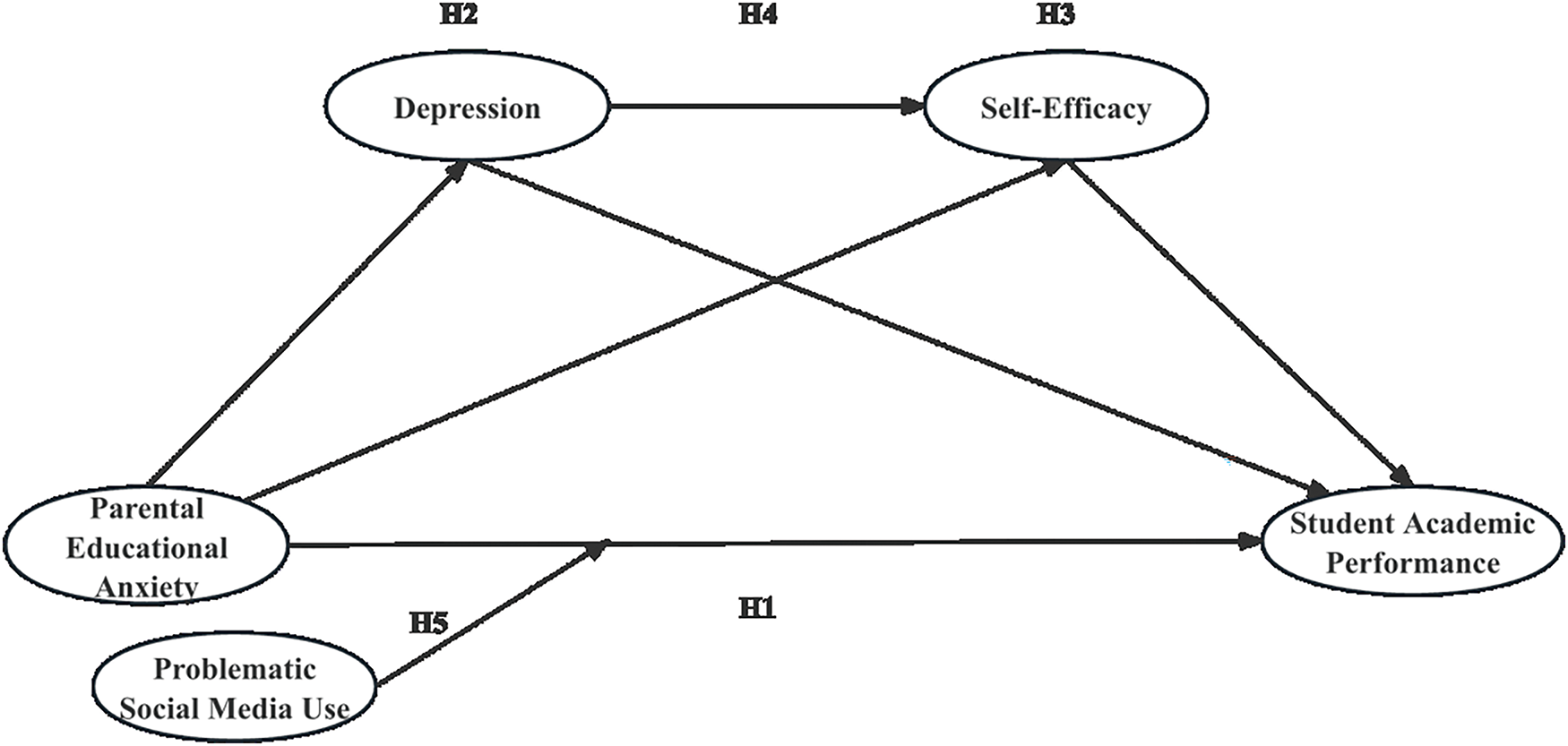
Figure 1: Research hypothesis model
Hypothesis 1 (H1): Parental educational anxiety is negatively associated with student academic performance.
Hypothesis 2 (H2): Depression mediates the relationship between parental educational anxiety and student academic performance.
Hypothesis 3 (H3): Self-efficacy mediates the relationship between parental educational anxiety and student academic performance.
Hypothesis 4 (H4): Depression and self-efficacy serve as sequential mediators in the link between parental educational anxiety and student academic performance.
Hypothesis 5 (H5): Problematic social media use moderates the relationship between parental educational anxiety and student academic performance.
The study sample comprised 2579 traditional two-parent families, each consisting of parents and their children. The study sample was drawn from three middle schools and three high schools located in Liaoning, Shandong, and Jiangxi provinces, representing economically and geographically diverse regions of China. These provinces were selected to ensure variation in urban and rural educational environments, as well as in the socioeconomic backgrounds of students. Schools were chosen through stratified random cluster sampling to ensure a representative distribution of participants across different academic and social settings. The selected schools varied in academic competitiveness and resource availability. Some were high-performing key schools, which are well-funded institutions with rigorous academic programs and a high proportion of students advancing to top-tier universities. Others were non-key schools, which cater to students from diverse academic backgrounds and have fewer competitive admissions. Additionally, the availability of funding and extracurricular resources varies by school type, with urban schools generally receiving better funding and offering more extracurricular activities compared to rural schools. The curriculum structure in these schools is predominantly exam-oriented, with a strong emphasis on standardized testing and university entrance exams, such as the Gaokao (National College Entrance Examination). Schools regularly conduct semester-end assessments, and students’ academic performance is often ranked within their grades. These rankings serve as a key metric for evaluating student achievement, influencing parental expectations, and, in turn, contributing to parental educational anxiety. To ensure diversity in educational exposure, the sample included students from both public and private institutions, as well as those from varying socioeconomic backgrounds. This broad inclusion enhances the study’s generalizability by capturing the heterogeneity of the Chinese educational system and the varying degrees of academic pressure students experience.
The study’s field research phase commenced in March 2024 after securing institutional approval and establishing research protocols with cooperating educational institutions. Prior to data gathering, the research team obtained comprehensive written consent documentation from all student participants and their legal guardians in accordance with ethical research guidelines. Notably, the consent forms were designed to preserve participant anonymity and confidentiality, as they did not require names or signatures. Participation was voluntary, with assurances given to participants regarding their right to withdraw at any time without consequences.
To ensure the validity of the data, both student and parent questionnaires were distributed and completed independently. A matching process was implemented to link student responses with their corresponding parent responses. Each student and parent pair was assigned a unique identification code, ensuring that the matching could occur without compromising the anonymity of the participants. The completed questionnaires were sealed in separate envelopes by trained research assistants. All participants signed the informed consent form for this study. Students filled out their questionnaires independently, using pencil and paper, during school hours under the supervision of trained research assistants. Parents completed their questionnaires in a separate location on the same day. Research assistants immediately processed the returned questionnaires, matching parent-student pairs using the assigned identification codes. Only those student-parent pairs whose responses were successfully matched and whose questionnaires were fully completed (i.e., with no missing pages or no more than three unanswered questions) were included in the final analysis. Questionnaires with missing data beyond the allowed threshold were deemed invalid and excluded from the study. For questionnaires with missing data within the allowed threshold (no more than three unanswered questions), we employed multiple imputations to handle the missing responses. This method was selected as it allows for a more accurate estimation of missing values by generating several plausible data sets and averaging the results across them, which reduces potential bias and preserves the statistical power of the analysis. Additionally, cases with missing data on key variables were excluded via listwise deletion, ensuring that only complete cases were included for those specific analyses where imputation was not applicable. This approach maintained the robustness of the dataset and minimized bias in key results.
After screening, 126 incomplete questionnaires were excluded, resulting in 2579 valid responses and a response rate of 95.34%. Subsequent data cleaning was performed to identify multivariate outliers and irregularities using Mahalanobis distances, skewness, and kurtosis values. The cleaned dataset was confirmed to be symmetrically and normally distributed, ensuring its suitability for further analysis. The age of students ranged from 13 to 18 years, with an average age of 15.55 (SD = 1.669). The sample had an almost equal distribution by gender, with 50.6% (n = 1306) males and 49.4% (n = 1273) females. Moreover, 58.1% (n = 1499) of the students were from rural settings, whereas 41.9% (n = 1080) were from urban backgrounds. The research received approval from the Research Ethics Committee of Liaoning Normal University (IRB number: LSDJYXB2024013).
3.2.1 Student Academic Performance
In the Chinese education system, it is common for both junior and senior high schools to conduct semester-end final exams [61]. The schools involved in this study, including middle schools and high schools, consistently organize final examinations at the end of each semester. Furthermore, these schools maintain and distribute records of students’ rankings based on their performance in these exams, allowing students to assess their academic performance. To evaluate academic achievement, students were queried about their rankings in the most recent semester’s final examination relative to the survey timeline. The collected responses were then classified into three categories: above-average, average, and below-average, with ‘average’ denoting the median rank across school and grade levels [62]. The cutoff points for the categories were as follows: ‘below-average’ included scores up to the 20.8th percentile, ‘average’ ranged from the 20.8th to the 72.9th percentile, and ‘above-average’ included scores above the 72.9th percentile. The categories ‘above-average,’ ‘average,’ and ‘below-average’ were respectively assigned the values of 3, 2, and 1. Previous research has affirmed the reliability and validity of this evaluative method [63].
3.2.2 Parental Educational Anxiety
Parental educational anxiety was assessed using the Parental Anxiety about Children’s Education Questionnaire by Cheng [64]. This measurement technique has been validated and deemed reliable in previous studies involving Chinese students [4]. The questionnaire comprises three distinct domains: achievement anxiety, ability anxiety, and health anxiety, each represented by four questions, making a total of 12 items. For example, one survey item is, “The thought of my child potentially not getting into a good school causes me distress and makes me feel anxious.” Responses were recorded on a 5-point Likert scale, where one signifies “never” and five indicates “always.” For parental educational anxiety, confirmatory factor analysis (CFA) results showed a good model fit with three dimensions (χ2/df = 2.870, comparative fit index [CFI] = 0.962, Tucker-Lewis index [TLI] = 0.951, root mean square error of approximation [RMSEA] = 0.048, standardized root mean square residual [SRMR] = 0.037). All factor loadings were significant (p < 0.001), ranging from 0.742 to 0.893, supporting the construct validity of the three-factor structure (achievement anxiety, ability anxiety, and health anxiety). A composite index was derived by computing the mean value of participant responses to all scale items, whereby elevated scores signified more intense manifestations of parental educational anxiety. Cronbach’s alpha for this sample was 0.918.
The Radloff Center for Epidemiological Studies Depression Scale was employed for this study [65]. The scale primarily measures depressive affect, emphasizing the emotional aspects of depression while minimizing somatic symptom evaluation [66], and it remains a widely utilized tool in both contemporary research and clinical practice, with established reliability and validity in various populations, including Chinese students [67]. This 20-item instrument includes statements such as “I feel that my life is a failure,” with items 4, 8, 12, and 16 requiring reverse scoring, exemplified by the item “I feel that there is hope for the future.” Responses were gauged using a 4-point Likert scale to determine the frequency of specified feelings or situations over the preceding week: 0 for “not or virtually not (less than 1 day),” 1 for “occasionally or some of the time (1–2 days),” 2 for “periodically or about half the time (3–4 days),” and 3 for “most or all of the time (5–7 days).” A total score of 15 or below suggests the absence of depressive symptoms (assigned a value of 1), scores ranging from 16 to 19 indicate potential depressive symptoms (assigned a value of 2), and scores of 20 or above confirm the presence of depressive symptoms (assigned a value of 3). The CFA for depression demonstrated excellent model fit indices (χ2/df = 2.930, CFI = 0.957, TLI = 0.948, RMSEA = 0.051, SRMR = 0.039). All item standardized factor loadings were significant (p < 0.001), ranging from 0.713 to 0.865, which supports the unidimensionality of the scale. Additionally, the scale exhibited a Cronbach’s alpha of 0.952 in this study.
The Chinese version of the General Self-Efficacy Scale (GSES), originally developed by Schwarzer et al. was employed in this study [68]. This method of measurement has been previously validated and confirmed as reliable among Chinese students [67]. The instrument consists of 10 items, for example, “I can face difficulties calmly because I can trust my ability to deal with problems.” Responses were rated using a 4-point Likert scale, ranging from 1 (“not at all true”) to 4 (“completely true”), where higher values indicated higher levels of self-efficacy. The overall score was derived by averaging the responses to all items, with higher scores reflecting greater self-efficacy. The CFA results indicated good model fit (χ2/df = 2.760, CFI = 0.968, TLI = 0.959, RMSEA = 0.045, SRMR = 0.035). The standardized factor loadings were all significant (p < 0.001) and ranged from 0.768 to 0.891, supporting the unidimensional structure of the GSES. The scale demonstrated robust reliability and validity, with a Cronbach’s alpha of 0.920 in the current study.
3.2.5 Problematic Social Media Use
The assessment of problematic social media engagement patterns was conducted using Hawi and Samaha’s Social Media Addiction Questionnaire [69], an instrument that has demonstrated strong validity and reliability metrics when administered to adolescent populations in Chinese cultural contexts [70]. The tool consists of an 8-item self-report scale, including statements like “the thought of not being able to access social media makes me feel distressed.” Participants responded on a 7-point Likert scale, where one denotes ‘strongly disagree’ and seven indicates ‘strongly agree,’ with higher scores reflecting greater levels of problematic use. The CFA for problematic social media use showed satisfactory fit indices (χ2/df = 2.820, CFI = 0.971, TLI = 0.963, RMSEA = 0.047, SRMR = 0.036). All factor loadings were significant (p < 0.001) and ranged from 0.781 to 0.902, confirming the unidimensional structure of the scale. The questionnaire exhibited exceptional internal consistency, with a Cronbach’s alpha of 0.975.
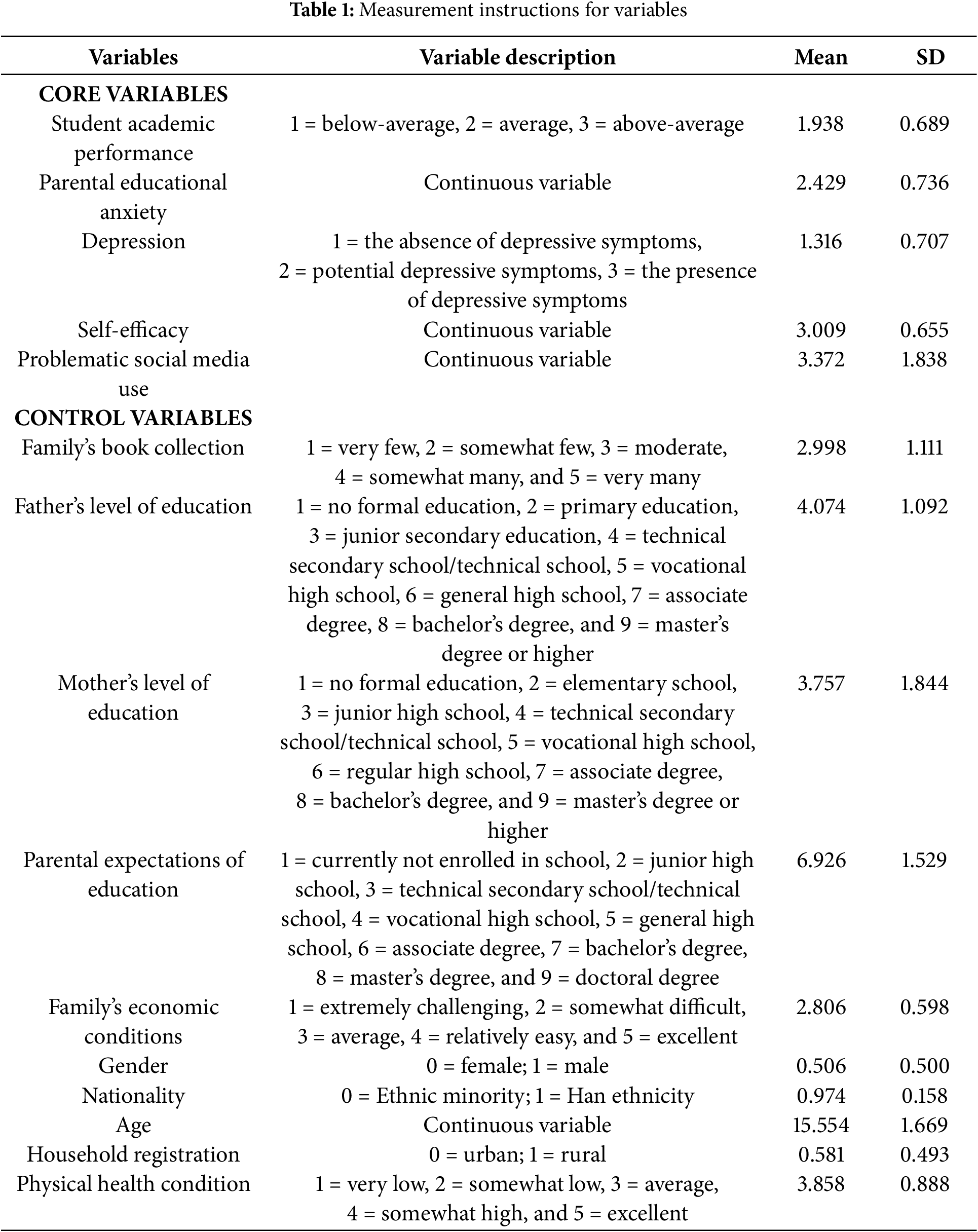
Drawing from established literature [3,4,71], we employed a comprehensive categorization framework for control variables, encompassing both familial and individual characteristics to account for potential confounding effects on the primary relationships under investigation. The complete operational definitions and measurement specifications for all control variables are detailed in Table 1.
To guarantee the accuracy, reliability, and cultural relevance of the translated questionnaires, a comprehensive multi-step translation and validation process was implemented. Initially, two independent bilingual experts, proficient in both English and Chinese and specializing in educational psychology, translated the original English questionnaires into Chinese. This step ensured linguistic accuracy while maintaining conceptual equivalence within the Chinese educational context. Next, a back-translation was conducted by two additional bilingual experts who had no prior exposure to the original questionnaires. This process identified any semantic discrepancies between the original and back-translated versions, which were resolved through a consensus discussion among translators and researchers. Following this, an expert panel consisting of educational psychologists and linguists reviewed the translated versions, assessing conceptual alignment, clarity, and cultural relevance. Necessary refinements were made to ensure that each item accurately captured the intended constructs. To further validate the translated measures, a pilot test was carried out with 60 high school and middle school students from China, who provided feedback on item comprehension, clarity, and relevance. Cognitive interviewing techniques were also employed to confirm that respondents interpreted the items as intended. Based on the feedback, minor wording adjustments were made to enhance readability.
Data analysis for this study was carried out using SPSS Version 23.0 and MPLUS Version 8.3. The first step involved testing for common method bias using Harman’s single-factor test, a procedure designed to detect potential biases that might arise from using the same method to collect data across multiple variables. This test helps ensure the validity of the data by verifying that the observed relationships between variables were not unduly influenced by such biases. Following this, descriptive statistics were calculated to provide an overview of the central tendencies and variability within the dataset, offering a preliminary understanding of the distribution of the key variables. Bivariate correlations were then computed to assess the strength and direction of the relationships between the primary variables of interest. This helped to establish whether any linear relationships existed that warranted further investigation through more complex modeling techniques. The next step in the analysis involved applying structural equation modeling (SEM) to evaluate a proposed chain mediation model. In this model, parental educational anxiety was hypothesized to influence student academic performance indirectly through the mediating roles of depression and self-efficacy. SEM allowed for the testing of complex relationships between multiple variables, and it also provided the opportunity to assess the fit of the model to the observed data. The model was considered to show significant mediation if the 95% confidence interval (CI) for the indirect effects did not include zero. This approach ensures that the mediation effect is statistically significant and not due to random chance. To further confirm the robustness of the mediation results, bootstrapping with 5000 samples was utilized to determine the significance of the indirect effects. Bootstrapping is a resampling technique that allows for more accurate estimation of the confidence intervals and is particularly useful when dealing with complex models and non-normally distributed data. Finally, to investigate the potential moderating effects, moderated regression analysis was conducted using the PROCESS 4.0 macro in SPSS. This analysis examined how the relationships between parental educational anxiety and student academic performance might vary across different levels of the moderating variable. Covariates that could potentially influence the results were included in the analysis to ensure that the findings were not confounded by other factors.
To evaluate potential common method variance, an exploratory factor analysis applying Harman’s one-factor criterion was conducted [72]. The exploratory factor analysis identified 10 factors, each with eigenvalues greater than 1. The first factor accounted for 29.820% of the total variance, which was below the commonly cited 40% threshold that would indicate significant common method bias. Therefore, these findings imply that common method bias is improbable, enabling the analysis to proceed without any issues related to this factor.
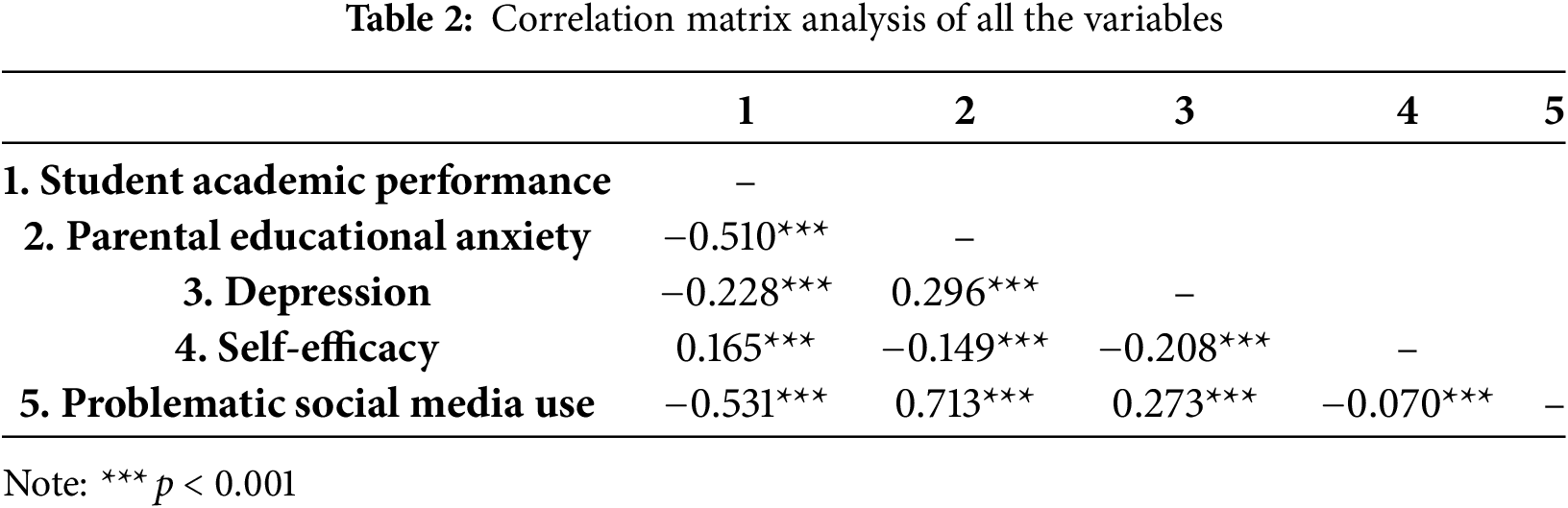
4.2 Correlation Analysis of Variables
Table 2 reports the Pearson correlation coefficients for the key variables, revealing significant relationships among them. Student academic performance was negatively correlated with parental educational anxiety (r = −0.510, p < 0.001), depression (r = −0.228, p < 0.001), and problematic social media use (r = −0.531, p < 0.001), while positively correlated with self-efficacy (r = 0.165, p < 0.001). Parental educational anxiety showed positive correlations with both depression (r = 0.296, p < 0.001) and problematic social media use (r = 0.713, p < 0.001) and a negative relationship with self-efficacy (r = −0.149, p < 0.001). Depression was negatively correlated with self-efficacy (r = −0.208, p < 0.001) and positively correlated with problematic social media use (r = 0.273, p < 0.001), while self-efficacy exhibited a negative correlation with problematic social media use (r = −0.070, p < 0.001).
The measurement model exhibited strong fit indices according to the CFA: χ2/df = 2.340, CFI = 0.962, TLI = 0.954, RMSEA = 0.048, and SRMR = 0.043. Based on these results, a chain mediation model was tested, which included three indirect effects: (1) depression as a mediator between parental educational anxiety and student academic performance, (2) self-efficacy as a mediator in the relationship between parental educational anxiety and student academic performance, and (3) the sequential mediation of depression and self-efficacy through which parental educational anxiety indirectly impacted student academic performance (Fig. 2).
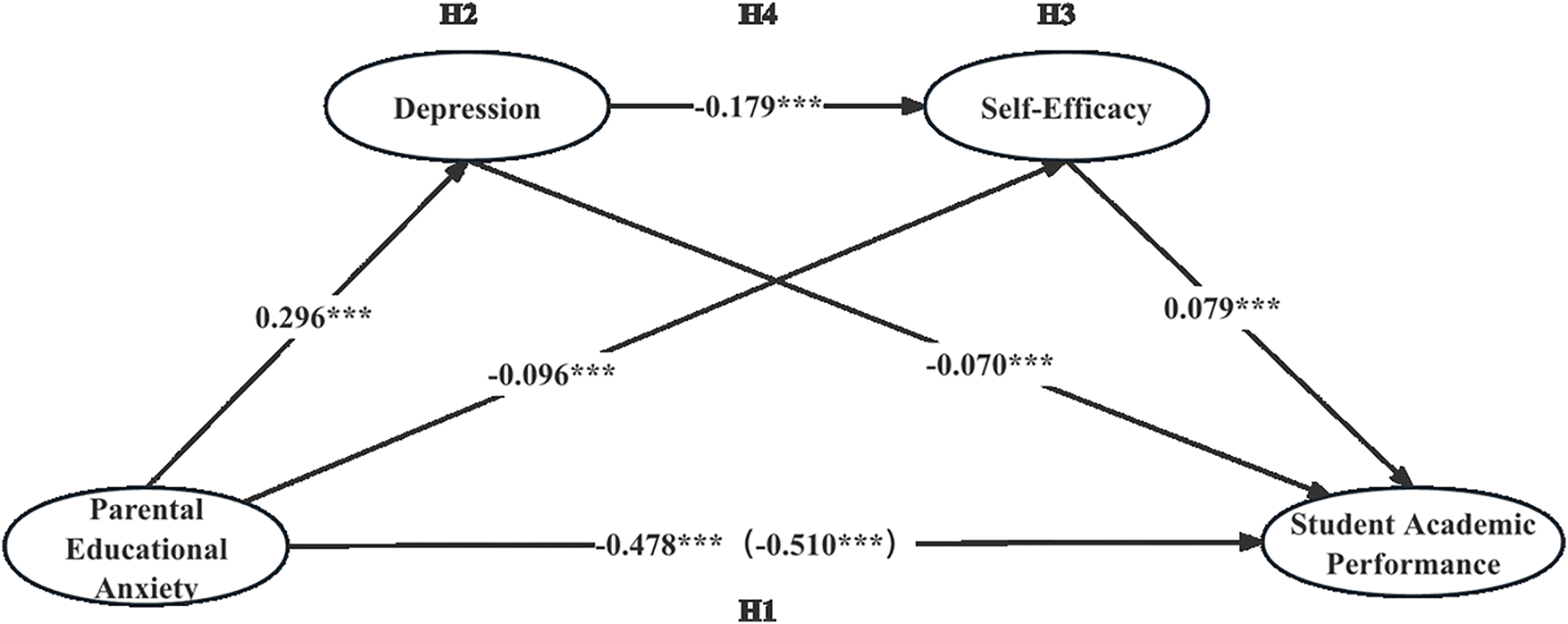
Figure 2: The mediating roles of depression and self-efficacy between parental educational anxiety and academic performance. Note: *** p < 0.001
The findings revealed a significant negative relationship between parental educational anxiety and student academic performance (β = −0.510, t = −35.011, p < 0.001). After accounting for confounding factors, parental educational anxiety was still significantly and negatively associated with student academic performance (β = −0.478, t = −28.015, p < 0.001). A notable positive association was found between parental educational anxiety and depression (β = 0.296, t = 13.580, p < 0.001), with depression negatively correlated with student academic performance (β = −0.070, t = −4.447, p < 0.001). Parental educational anxiety was also significantly negatively linked to self-efficacy (β = −0.096, t = −4.800, p < 0.001), while self-efficacy was positively associated with student academic performance (β = 0.079, t = 4.307, p < 0.001). Finally, depression was strongly negatively correlated with self-efficacy (β = −0.179, t = −8.336, p < 0.001).
As detailed in Table 3, the total effect of parental educational anxiety on student academic performance was 90.511 (SE = 0.016, 95% CI [−0.540, −0.479], p < 0.001), with a direct effect of −0.478 (SE = 0.017, 95% CI [−0.511, −0.444], p < 0.001), both of which were statistically significant. The indirect effect through depression was −0.021 (SE = 0.005, 95% CI [−0.032, −0.012], p < 0.001), accounting for 4.110% of the total effect. The path from parental educational anxiety to self-efficacy and then to student academic performance yielded an indirect effect of −0.008 (SE = 0.002, 95% CI [−0.013, −0.004], p < 0.001), contributing 1.566% to the total effect. Additionally, the combined pathway involving depression and self-efficacy showed an indirect effect of −0.004 (SE = 0.001, 95% CI [−0.007, −0.002], p < 0.001), representing 0.783% of the total effect. The statistical significance of all three indirect effects was confirmed, as the 95% Bootstrap confidence intervals excluded zero, indicating that depression and self-efficacy significantly mediate the relationship between parental educational anxiety and student academic performance.
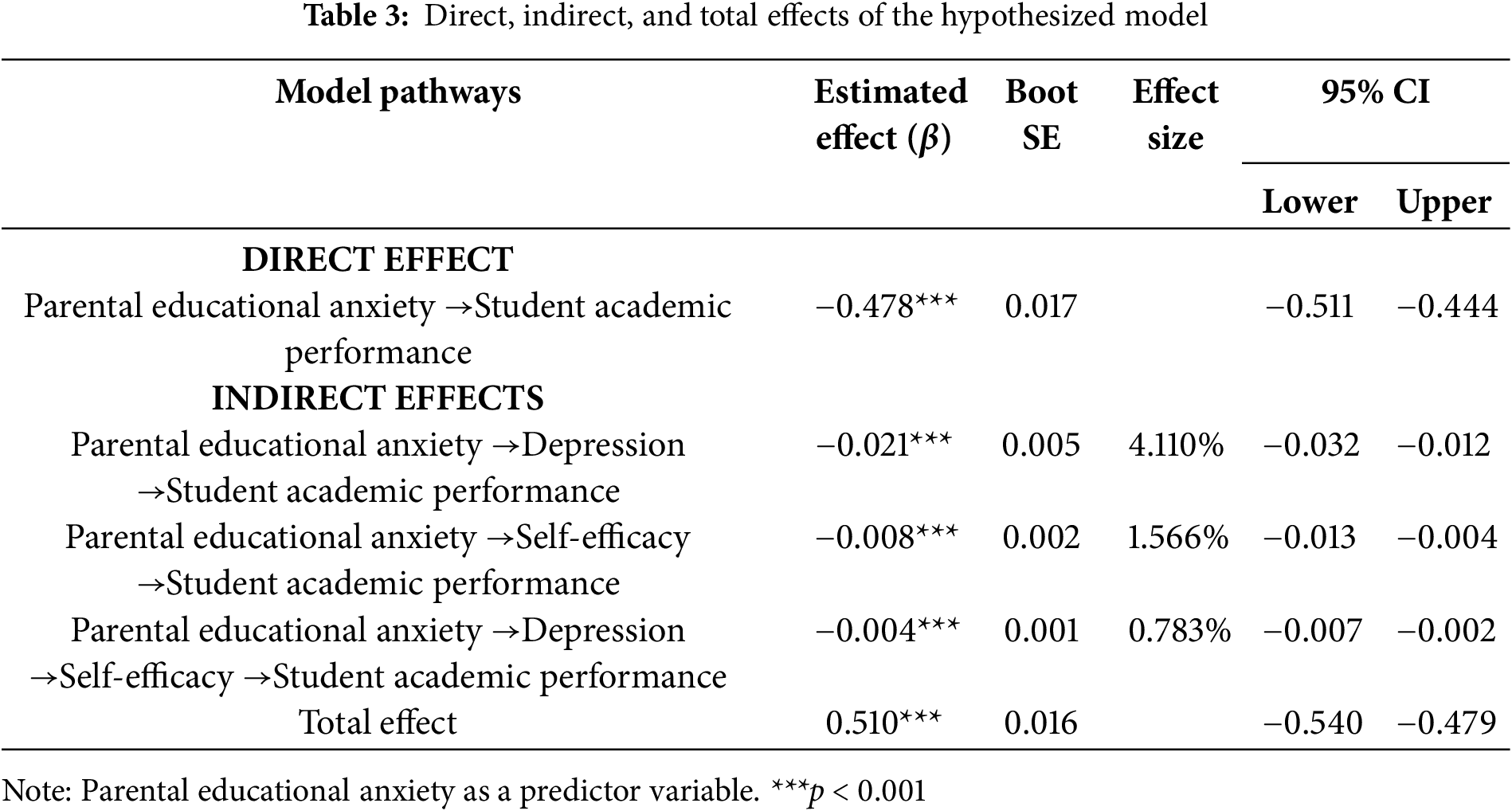
Table 4 presents the findings on the moderating effect of problematic social media use in the relationship between parental educational anxiety and student academic performance. The moderation analysis revealed that the overall model was statistically significant (F(13, 2565) = 103.42, p < 0.001) and explained 34.4% of the variance in student academic performance (R2 = 0.344). The analysis controlled for various demographic and family characteristics. The main effect of parental educational anxiety (β = −0.195, SE = 0.026, t = −7.50, p < 0.001) and problematic social media use (β = −0.111, SE = 0.009, t = −12.33, p < 0.001) were both significant. The interaction term between parental educational anxiety and problematic social media use was significant (β = −0.074, SE = 0.008, t = 99.25, 95% CI [−0.090, −0.058], p < 0.001), indicating that problematic social media use significantly moderated the relationship between parental educational anxiety and student academic performance.
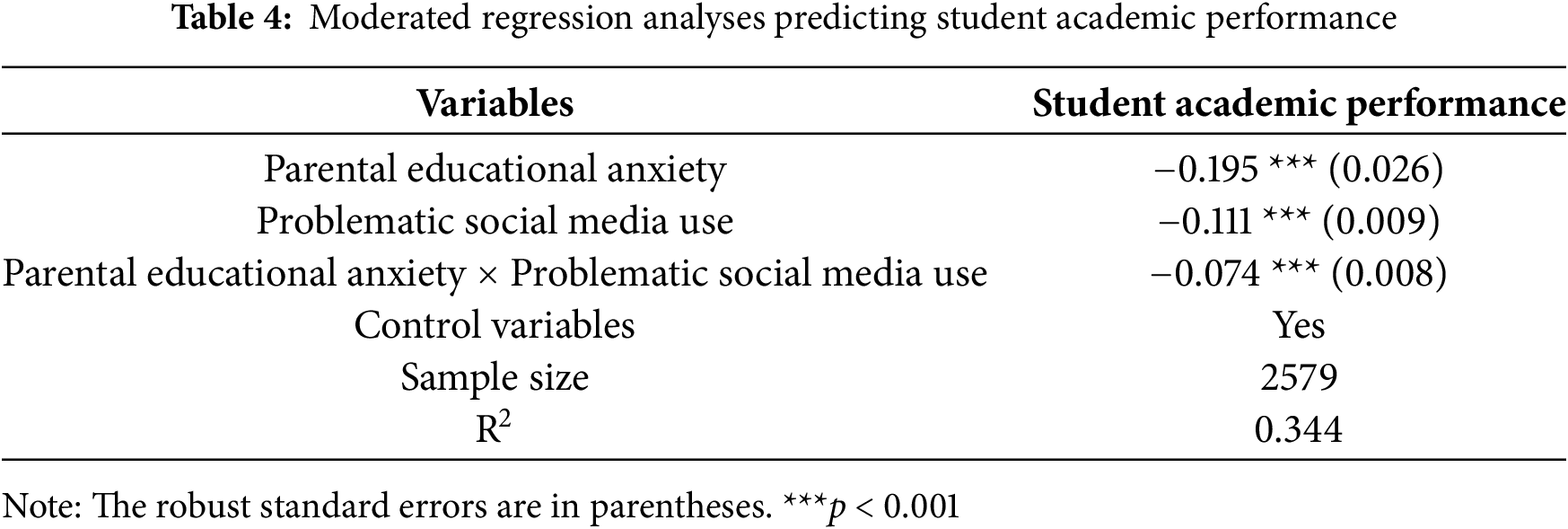
Fig. 3 illustrates the analysis of the simple slope examining the association between parental educational anxiety and student academic performance at different levels of problematic social media use. At high levels of problematic social media use (+1 SD = 5.210), parental educational anxiety showed a stronger negative association with student academic performance (β = −0.331, t = −15.42, 95% CI [−0.372, −0.290], p < 0.001). In contrast, at low levels (−1 SD = 1.534), the association was significantly weaker (β = −0.060, t = −2.83, 95% CI [−0.101, −0.019], p < 0.05). The difference between these slopes was statistically significant (Δβ = 0.271, t = −9.25, p < 0.001), suggesting that problematic social media use may intensify the relationship between parental educational anxiety and student academic performance.
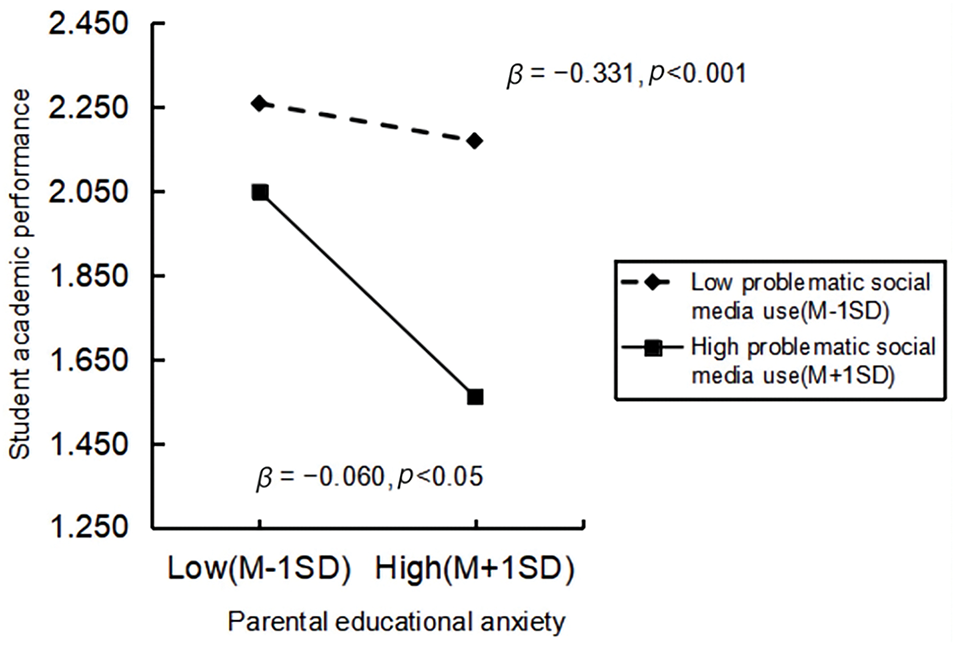
Figure 3: Analysis of simple slopes investigating the moderating influence of problematic social media use
5.1 Parental Educational Anxiety Negatively Predicts Student Academic Performance
The findings of this study compellingly support Hypothesis H1, which posits that parental educational anxiety negatively predicts the academic performance of students. As parental educational anxiety escalates, we observed a corresponding decrease in student academic performance. These findings align with prior research by Ali et al., who reported a similar adverse effect of parental pressure on student achievement in various educational settings [73]. Furthermore, this relationship highlights the complex interplay between home environment factors and student achievement, corroborating a substantial body of literature that underscores the profound impact of parental attitudes and behaviors in shaping children’s educational outcomes [74].
Moreover, this study advances our understanding by delineating how parental educational anxiety specifically impacts academic performance, as opposed to the broader psychological effects previously documented. The specific focus on educational anxiety is crucial because it highlights a direct link that is often overshadowed by general parental involvement or support studies, which emphasize the positive aspects of parental involvement [75].
In sum, this study affirms that parental educational anxiety has a detrimental effect on student academic performance. This not only enriches the academic discourse on parental influence but also emphasizes the multifaceted role that parents have in influencing educational outcomes.
5.2 The Mediating Effect of Depression and Self-Efficacy between Parental Educational Anxiety and Student Academic Performance
The results of this investigation robustly substantiate Hypothesis H2, asserting that depression mediates the relationship between parental educational anxiety and student academic performance. This study delineates the pivotal role of depression as not merely a symptom of psychological distress but as a crucial intermediary that explicates the complex mechanisms by which home-induced stressors translate into academic challenges.
Intriguingly, the mediating effect of depression identified in this study provides a compelling explanation for the varied impacts of parental educational anxiety observed among different student demographics [4]. This aligns with the work of Chen et al., who highlighted that students’ resilience to parental pressure could be significantly modulated by their mental health status [76]. The current study enriches this perspective by pinpointing depression as a specific factor that potentially heightens vulnerability to educational pressures. Combined with previous findings that proactive mental health strategies could reverse the negative trajectory of academic performance among stressed students [77], it becomes evident that addressing student depression in educational settings is crucial.
This investigation yields two significant contributions to the field: it empirically establishes depression’s mediating role in the relationship between parental educational anxiety and academic outcomes while simultaneously deepening scholarly understanding of how psychological well-being interfaces with educational attainment. The findings illuminate the complex pathways through which mental health factors shape academic trajectories in the context of family-based educational stress.
Our findings supported the third hypothesis (H3), suggesting that self-efficacy functions as a mediator in the relationship between parental educational anxiety and student academic performance. Specifically, higher levels of self-efficacy can mitigate the adverse effects of parental educational anxiety by empowering students with the belief in their capacity to overcome academic challenges. The importance of self-efficacy lies in its role in strengthening students’ resilience against educational adversities, thereby promoting higher academic achievements [39]. Our results align with and extend the findings of previous studies that students’ self-beliefs about their capabilities significantly influenced their academic achievements, mediating the effects of their parents’ aspirations [78].
Our research findings indicate a more nuanced relationship between parental anxiety and student outcomes, highlighting the transformative role of self-efficacy in turning parental anxiety into a source of motivation rather than a barrier. Although parental anxiety typically correlates with lower student achievements, strong self-efficacy beliefs can significantly change this pattern. This observation aligns with the results of Xu et al., who also found that self-efficacy can mediate the effects of stress related to socioeconomic factors [79]. This underscores the importance of fostering self-efficacy in educational settings to buffer the negative impacts of parental stress. The complexity of this interplay between familial pressures and individual competencies in shaping academic performance is further emphasized. These findings suggest that interventions aimed at increasing student self-efficacy may be particularly beneficial in environments where parental educational anxiety is prevalent. Future research should delve deeper into the dynamics of this mediation in different educational systems and cultural contexts to determine the extent to which these mechanisms are universal.
This study substantiates Hypothesis 4 (H4), revealing a nuanced chain mediation involving depression and self-efficacy in the pathway from parental educational anxiety to student academic performance. This complex interplay underscores a sequential process where parental anxiety triggers depressive symptoms in students, which subsequently impacts their self-efficacy, ultimately leading to changes in academic performance. Previous research revealed a crucial link between parental educational anxiety and depressive symptoms, indicating that depression plays a significant role in mediating the impact of parental pressures on students’ psychological well-being [80]. As students experience emotional distress due to parental expectations, their self-efficacy diminishes, aligning with theories that view depression as undermining personal belief in one’s abilities [81]. This shift from emotional distress to reduced self-efficacy is key, as it elucidates how depression, as an outcome of parental anxiety, further influences academic performance through its impact on students’ belief in themselves.
Our study builds on existing research by integrating depression and self-efficacy within a coherent framework, offering a more comprehensive understanding of how students cope with parental educational pressures. By emphasizing the interconnectedness of depressive states and self-belief, our findings challenge traditional views and highlight the importance of addressing both emotional and cognitive aspects in educational support strategies. This nuanced approach contrasts with previous studies that treated these factors independently [82], advocating for a more holistic approach that considers the interplay between emotional well-being and academic performance.
5.3 The Moderating Effect of Problematic Social Media Use between Parental Educational Anxiety and Student Academic Performance
The findings of this study provide support for the fifth hypothesis (H5), suggesting that problematic social media use may amplify the negative association between parental educational anxiety and students’ academic performance. Our findings highlight a significant interaction between digital behaviors and family dynamics, shedding light on the complexities of factors influencing academic success. Our results indicate that problematic social media use amplifies the detrimental effects of parental educational anxiety on students. Students who engage excessively in problematic social media behaviors experienced more pronounced negative effects of parental educational anxiety on their academic performance. This may be attributed to the exposure to comparative and evaluative content on social media, heightening students’ own anxieties and stress levels.
This finding underscores the importance of considering the combined effects of social media use and family-related stressors on student outcomes, shedding light on the complex dynamics influencing academic success. This finding is a novel contribution to the existing literature, which has traditionally examined these factors in isolation. Previous research has established a correlation between parental educational anxiety and poorer academic performance [83], as well as a link between problematic social media use and decreased academic achievement resulting from decreased study time and increased distractions [84]. Our study reveals the cumulative effects of these variables, offering a comprehensive perspective on the intersection of external stressors and personal habits in influencing student outcomes.
We contend that the combination of problematic social media use and high parental educational anxiety notably intensifies disruptions to students’ academic concentration and dedication. Additionally, future investigations should employ a multi-dimensional approach to examine these interactions across different developmental stages and educational systems. Furthermore, incorporating qualitative methods could provide deeper insights into the personal experiences and perceptions of students dealing with both parental educational anxiety and problematic social media use, offering a richer contextual understanding of the findings.
5.4 Theoretical Contribution and Implications for the Practice
This study makes significant contributions to the existing literature on parental educational anxiety and student academic performance in several important ways. First, it provides empirical evidence supporting the negative association between parental educational anxiety and student academic performance, extending prior findings through a comprehensive mediation and moderation model. By identifying key psychological mediators, the study reveals how depression and self-efficacy sequentially correspond to academic outcomes, offering a more nuanced understanding of these relationships. Second, the research advances theoretical understanding by integrating Self-Determination Theory, Social Cognitive Theory, Attribution Theory, and the Stress Process Model into a novel framework that captures both traditional psychological factors and contemporary digital influences. This integration provides a multidimensional perspective on the pathways through which parental anxiety relates to student academic difficulties. Third, by examining these relationships within the Chinese educational context, where academic achievement is particularly emphasized, the study offers valuable insights into how these dynamics manifest in a culture with distinct educational pressures. Furthermore, the identification of problematic social media use as a potential moderator broadens the discussion on digital influences in adolescent education, illuminating how modern digital behaviors may correspond to the relationship between parental stress and academic outcomes.
Beyond theoretical contributions, this study has important practical implications for educators, policymakers, and parents. First, interventions targeting parental educational anxiety should be prioritized. Given the significant impact that parental anxiety has on student performance, schools, and community programs should implement targeted workshops or counseling services for parents. These interventions should aim to reduce unrealistic academic expectations and foster a supportive environment. Educating parents on the psychological effects of academic pressure and providing strategies for managing their stress could enhance the emotional well-being of both parents and students.
Second, schools should integrate mental health support into their educational framework. The findings suggest that depression and self-efficacy play a crucial role in academic outcomes. Therefore, proactive mental health initiatives, such as counseling services, peer support groups, and stress management workshops, should be embedded in the school environment. Providing students with tools to enhance their self-efficacy and manage academic stress could significantly improve their overall academic performance and mental well-being.
Third, addressing the role of problematic social media use is critical. The study highlights social media’s potential to both exacerbate and mitigate academic stress. Schools and mental health professionals should collaborate to develop digital literacy programs that educate students on managing their online behavior in a way that promotes healthy academic engagement. Workshops that guide students on setting boundaries with social media and fostering constructive online interactions can help mitigate the negative impacts of excessive social media use.
Finally, fostering collaborative efforts between schools and parents is essential. Schools should encourage regular communication between teachers and parents regarding students’ academic progress and well-being. This collaborative approach would help create a more integrated support system for students, addressing both academic and emotional needs. By involving parents in the educational process and providing them with the necessary resources to support their children, schools can play a pivotal role in mitigating the negative effects of parental anxiety on student performance.
5.5 Limitations and Suggestions
This study has several limitations that should be considered. First, the dataset was collected exclusively from three provinces in China (Liaoning, Shandong, and Jiangxi), which limits the generalizability of the findings to a broader population. The educational systems, economic conditions, and cultural expectations in these provinces may not fully represent those of the entire country. To improve external validity, future research should aim to collect data from a nationally representative sample encompassing diverse geographical regions, urban and rural populations, and various socioeconomic backgrounds. Expanding the sample would not only provide a more comprehensive understanding of national trends but also enable the examination of regional differences in how parental educational anxiety influences adolescent outcomes.
Second, the study employed a cross-sectional design, capturing data at a single point in time. This approach does not allow for the examination of causal relationships or developmental changes over time. Parental educational anxiety and its impact on adolescent behavior and academic performance may fluctuate due to changes in family circumstances, educational pressures, and personal development. To address this limitation, future studies should employ longitudinal designs, tracking participants across different developmental stages to assess the long-term effects and causal mechanisms of parental educational anxiety. This would help determine whether parental anxiety precedes and directly influences adolescent behavior or whether there are bidirectional influences between parents and children over time.
Third, this study relied on self-reported data, which may introduce bias due to subjective perceptions, social desirability effects, or recall inaccuracies. Measures such as academic performance and family economic status could be influenced by students’ personal interpretations rather than objective conditions. To enhance data reliability, future research should incorporate multi-informant approaches, gathering perspectives from parents, teachers, and peers, as well as using objective academic records to cross-validate self-reported findings. A combination of self-reported and external evaluations would reduce bias and provide a more balanced understanding of the studied relationships.
Fourth, although the self-reported academic performance measure is commonly used in similar research, further validation studies are necessary to confirm its robustness in this specific context. Future research could explore additional validation methods, such as comparing self-reports with objective measures, including academic grades or teacher assessments.
Additionally, the study did not fully account for potential cultural biases in the measurement scales used. Since these instruments were originally developed in Western contexts, certain constructs may carry different cultural connotations in a Chinese setting. To improve measurement validity, future research should focus on cross-cultural validation of these scales, adapting or developing culturally sensitive instruments that better capture the unique characteristics of parental educational anxiety in different sociocultural contexts.
Finally, this research domain would be enriched through the implementation of targeted qualitative methodologies. Specifically, conducting in-depth individual interviews would allow researchers to capture the nuanced personal narratives of parents and adolescents, while carefully structured focus group discussions could illuminate shared experiences and collective meanings within educational communities. These qualitative approaches would be particularly valuable in uncovering how deeply embedded cultural traditions, familial belief systems, and broader societal pressures converge to influence parental educational concerns and their subsequent impact on adolescent development. The integration of such qualitative insights with quantitative findings through a mixed-methods research design would yield a more textured and contextually grounded understanding of this complex educational phenomenon, particularly within distinct cultural settings.
This study explored the complex relationship between parental educational anxiety and adolescent academic performance, with a particular focus on the mediating roles of depression and self-efficacy. The results demonstrated that parental educational anxiety is negatively associated with students’ academic performance, with depression and self-efficacy potentially playing intermediary roles in this relationship. This chain of associations highlights the complex ways in which parental expectations and anxieties may be internalized by students, influencing their academic outcomes.
The findings also highlighted the potential moderating role of problematic social media use, which may amplify the negative association between parental educational anxiety and student performance. This interaction suggests that higher levels of parental anxiety when coupled with excessive social media use, could be linked to greater academic disengagement and lower performance.
In practical terms, these results point to the need for interventions targeting both parental education and student mental health. Schools and educational policymakers should consider developing programs that reduce parental anxiety by promoting supportive rather than coercive involvement in education. Additionally, mental health support aimed at alleviating depression and fostering self-efficacy could help buffer the negative impacts of parental anxiety on students. Moreover, strategies to manage and moderate social media use among adolescents may also be beneficial in enhancing their academic focus and well-being.
This research contributes to the growing body of literature by elucidating the pathways through which parental anxiety influences student outcomes, offering a nuanced perspective on the emotional and psychological factors at play. Future studies could expand on these findings by exploring the role of cultural and regional differences in shaping these relationships, as well as examining the long-term effects of parental anxiety on student development.
Acknowledgement: We sincerely appreciate the insightful feedback and recommendations from the reviewers and editorial team, which significantly enhanced the quality of this manuscript. Our heartfelt thanks also go to the anonymous participants who contributed to this research; their input was essential to the successful completion of the study.
Funding Statement: This research received support from the Liaoning Provincial Social Science Fund for Youth Projects (Grant ID: L24CSH003).
Author Contributions: Study conception and design: Haohan Zhao, Xingchen Zhu, Xin Lin; Data collection: Haohan Zhao, Wencan Li; Analysis and interpretation of results: Xingchen Zhu, Wencan Li; Draft manuscript preparation: Haohan Zhao, Xingchen Zhu, Wencan Li, Xin Lin. All authors reviewed the results and approved the final version of the manuscript.
Availability of Data and Materials: During the data collection process, participants were assured that their information would be kept confidential and that access to the data would be restricted to the research team only. As stated in the consent forms, the datasets generated and analyzed in this study cannot be made publicly available.
Ethics Approval: The research received approval from the Research Ethics Committee of Liaoning Normal University (IRB number: LSDJYXB2024013). All study procedures were conducted in accordance with the Ethical Standards of the Institutional Research Committee and the 1964 Helsinki Declaration and its later amendments.
Informed Consent: Prior to data collection, comprehensive written informed consent was obtained from all student participants and their legal guardians in accordance with research ethics guidelines. The consent forms detailed the study’s purpose, procedures, potential risks and benefits, voluntary nature of participation, and confidentiality measures. To protect participant privacy, the consent documentation was designed to preserve anonymity by not requiring names or signatures. Participants were explicitly informed of their right to withdraw from the study at any time without consequences. For paired data collection involving both students and parents, separate consent forms were provided, and both parties were required to agree to participate.
Conflicts of Interest: The authors declare no conflicts of interest to report regarding the present study.
References
1. Peng S, Li H, Xu L, Chen J, Cai S. Burden or empowerment? A double-edged sword model of the efficacy of parental involvement in the academic performance of chinese adolescents. Curr Psychol. 2024;43(4):3786–97. doi:10.1007/s12144-023-04589-y. [Google Scholar] [PubMed] [CrossRef]
2. Wilder S. Effects of parental involvement on academic achievement: a meta-synthesis. In: Mapping the field. London: Routledge; 2023. p. 137–57. [Google Scholar]
3. Liu Q, Hong X, Wang M. Parental educational anxiety during children’s transition to primary school in China. Int J Environ Res Public Health. 2022;19(23):15479. doi:10.3390/ijerph192315479. [Google Scholar] [PubMed] [CrossRef]
4. Wu K, Wang F, Wang W, Li Y. Parents’ education anxiety and children’s academic burnout: the role of parental burnout and family function. Front Psychol. 2022;12:764824. doi:10.3389/fpsyg.2021.764824. [Google Scholar] [PubMed] [CrossRef]
5. Zhike Educatio, Sina Education. Report on Chinese parents’ educational anxiety: parents’ comprehensive anxiety index reaches 67 points; 2018. (In Chinese). [cited 2025 Mar 5]. Available from: http://edu.sina.com.cn/zxx/2018-09-16/doc-ifxeuwwr4952738.shtml. [Google Scholar]
6. Ma GC, Zhang LXeditors. Family education bluebook: Report on China’s family nurturing environment. Beijing: China Translation & Publishing House Co., Ltd.; 2024. (In Chinese) [Google Scholar]
7. Burger K, Mortimer JT. Socioeconomic origin, future expectations, and educational achievement: a longitudinal three-generation study of the persistence of family advantage. Dev Psychol. 2021;57(9):1540. doi:10.1037/dev0001238. [Google Scholar] [PubMed] [CrossRef]
8. Ren P, Zhao Z. Parental recognition of double reduction policy, family economic status and educational anxiety: exploring the mediating influence of educational technology substitutive resource. Econ Manag Inform. 2024;3(1):1–12. doi:10.58195/emi.v3i1.145. [Google Scholar] [CrossRef]
9. Zhu X. Chinese-style off-campus education: research on the popularity of after-school training institutions. Int J Learn Teach. 2020;6(4):247–51. doi:10.18178/ijlt.6.4.247-251. [Google Scholar] [CrossRef]
10. Yin X, Zhang H, Chen M. The influence of parents’ education anxiety on children’s learning anxiety: the mediating role of parenting style and the moderating effect of extracurricular tutoring. Front Psychol. 2024;15:1380363. doi:10.3389/fpsyg.2024.1380363. [Google Scholar] [PubMed] [CrossRef]
11. Xu T, Zuo F, Zheng K. Parental educational expectations, academic pressure, and adolescent mental health: an empirical study based on CEPS survey data. Int J Mental Health Promot. 2024;26(2):93–103. doi:10.32604/ijmhp.2023.043226. [Google Scholar] [CrossRef]
12. Zhang M, Hu Y, Hu Y. The influences of socioeconomic status on parental educational expectations: mediating and moderating effects. Sustainability. 2023;15(16):12308. doi:10.3390/su151612308. [Google Scholar] [CrossRef]
13. Kim MH, Karr JE. Examining associations between intelligence mindset, mental health symptom severity, and academic self-efficacy and performance. Curr Psychol. 2024;43(2):1519–32. doi:10.1007/s12144-023-04399-2. [Google Scholar] [PubMed] [CrossRef]
14. Deng Y, Cherian J, Khan NUN, Kumari K, Sial MS, Comite U, et al. Family and academic stress and their impact on students’ depression level and academic performance. Front Psychiatry. 2022;13:869337. doi:10.3389/fpsyt.2022.869337. [Google Scholar] [PubMed] [CrossRef]
15. Sarman A, Çiftci N. Relationship between smartphone addiction, loneliness, and depression in adolescents: a correlational structural equation modeling study. J Pediatr Nurs. 2024;76(3):150–9. doi:10.1016/j.pedn.2024.02.019. [Google Scholar] [PubMed] [CrossRef]
16. Whelan E, Islam AN, Brooks S. Applying the SOBC paradigm to explain how social media overload affects academic performance. Comput Educ. 2020;143(7465):103692. doi:10.1016/j.compedu.2019.103692. [Google Scholar] [CrossRef]
17. Buchmann M, Grütter J, Zuffianò A. Parental educational aspirations and children’s academic self-concept: disentangling state and trait components on their dynamic interplay. Child Dev. 2022;93(1):7–24. doi:10.1111/cdev.13645. [Google Scholar] [PubMed] [CrossRef]
18. Ryan RM, Deci EL. Facilitating and hindering motivation, learning, and well-being in schools: research and observations from self-determination theory. In: Wentzel KR, Miele DB, editors. Handbook of motivation at school. New York: Routledge; 2021. p. 96–119. [Google Scholar]
19. An F, Xi L, Yu J. The relationship between technology acceptance and self-regulated learning: the mediation roles of intrinsic motivation and learning engagement. Educ Inf Technol. 2024;29(3):2605–23. doi:10.1007/s10639-023-11959-3. [Google Scholar] [PubMed] [CrossRef]
20. Shi D, Wang Y, Jin R, Chu L. Associations between challenging parenting behavior and creative tendencies of children: the chain mediating roles of positive emotion and creative self-efficacy. Front Psychol. 2024;15:1255773. doi:10.3389/fpsyg.2024.1255773. [Google Scholar] [PubMed] [CrossRef]
21. Zhang Y, Hu Y, Yang M. The relationship between family communication and family resilience in Chinese parents of depressed adolescents: a serial multiple mediation of social support and psychological resilience. BMC Psychol. 2024;12(1):33. doi:10.1186/s40359-023-01514-7. [Google Scholar] [PubMed] [CrossRef]
22. Cadenas GA, Liu L, Li KM, Beachy S. Promoting critical consciousness, academic performance, and persistence among graduate students experiencing class-based oppression. J Divers High Educ. 2022;15(1):26. doi:10.1037/dhe0000250. [Google Scholar] [CrossRef]
23. Ali M, Dhirani M, Fawad F. Impact of depression on academic performance. Bullet Multidis Stu. 2024;1(1):34–45. doi:10.48112/bms.v1i1.760. [Google Scholar] [CrossRef]
24. Farmakopoulou I, Lekka M, Gkintoni E. Clinical symptomatology of anxiety and family function in adolescents—the self-esteem mediator. Children. 2024;11(3):338. doi:10.3390/children11030338. [Google Scholar] [PubMed] [CrossRef]
25. Liu C, She X, Lan L, Wang H, Wang M, Abbey C, et al. Parenting stress and adolescent academic burnout: the chain mediating role of mental health symptoms and positive psychological traits. Curr Psychol. 2024;43(8):7643–54. doi:10.1007/s12144-023-04961-y. [Google Scholar] [CrossRef]
26. Lu H, Nie P, Sousa-Poza A. The effect of parental educational expectations on adolescent subjective well-being and the moderating role of perceived academic pressure: longitudinal evidence for China. Child Indicat Res. 2021;14(1):117–37. doi:10.1007/s12187-020-09750-8. [Google Scholar] [CrossRef]
27. Chen Y, Chiu SWK, Zhu J, So WWM. Maintaining secondary school students’ STEM career aspirations: the role of perceived parental expectations, self-efficacy, and cultural capital. Int J Sci Educ. 2022;44(3):434–62. doi:10.1080/09500693.2022.2032463. [Google Scholar] [CrossRef]
28. Radwan E, Radwan A, Radwan W, Pandey D. Prevalence of depression, anxiety and stress during the COVID-19 pandemic: a cross-sectional study among Palestinian students (10–18 years). BMC Psychol. 2021;9(1):1–12. doi:10.1186/s40359-021-00688-2. [Google Scholar] [PubMed] [CrossRef]
29. Wickersham A, Sugg HV, Epstein S, Stewart R, Ford T, Downs J. Systematic review and meta-analysis: the association between child and adolescent depression and later educational attainment. J Am Acad Child Adolesc Psychiatry. 2021;60(1):105–18. doi:10.1016/j.jaac.2020.10.008. [Google Scholar] [PubMed] [CrossRef]
30. Zhang C, Shi L, Tian T, Zhou Z, Peng X, Shen Y, et al. Associations between academic stress and depressive symptoms mediated by anxiety symptoms and hopelessness among Chinese college students. Psychol Res Behav Manag. 2022;15:547–56. doi:10.2147/PRBM.S353778. [Google Scholar] [PubMed] [CrossRef]
31. Ren Y, Zhang S, Huang C, Zhang J, Jiang T, Fang Y. Perceived parental rearing styles and depression in Chinese adolescents: the mediating role of self-compassion. Front Psychiatry. 2024;15:1417355. doi:10.3389/fpsyt.2024.1417355. [Google Scholar] [PubMed] [CrossRef]
32. Wagner F, Wagner RG, Kolanisi U, Makuapane LP, Masango M, Gómez-Olivé FX. The relationship between depression symptoms and academic performance among first-year undergraduate students at a South African university: a cross-sectional study. BMC Public Health. 2022;22(1):2067. doi:10.1186/s12889-022-14517-7. [Google Scholar] [PubMed] [CrossRef]
33. Barbosa-Camacho FJ, Romero-Limón OM, Ibarrola-Peña JC, Almanza-Mena YL, Pintor-Belmontes KJ, Sánchez-López VA, et al. Depression, anxiety, and academic performance in COVID-19: a cross-sectional study. BMC Psychiatry. 2022;22(1):443. doi:10.1186/s12888-022-04062-3. [Google Scholar] [PubMed] [CrossRef]
34. Shkëmbi F, Treska V. A review of the link beetween self-efficacy, motivation and academic performance in students. Eur J Soc Sci Educ Res. 2023;10(1s):23–31. [Google Scholar]
35. Etherton K, Steele-Johnson D, Salvano K, Kovacs N. Resilience effects on student performance and well-being: the role of self-efficacy, self-set goals, and anxiety. J Gen Psychol. 2022;149(3):279–98. doi:10.1080/00221309.2020.1835800. [Google Scholar] [PubMed] [CrossRef]
36. Nuutila K, Tapola A, Tuominen H, Molnár G, Niemivirta M. Mutual relationships between the levels of and changes in interest, self-efficacy, and perceived difficulty during task engagement. Learn Individ Differ. 2021;92(4):102090. doi:10.1016/j.lindif.2021.102090. [Google Scholar] [CrossRef]
37. Hu H, Li L, Ye Y. The impact of parental educational expectations and parental education on adolescent academics. J Psychol Behav Stu. 2024;4(1):62–7. doi:10.32996/jpbs.2024.4.1.7. [Google Scholar] [CrossRef]
38. Zhang W, Yu G, Fu W, Li R. Parental psychological control and children’s prosocial behavior: the mediating role of social anxiety and the moderating role of socioeconomic status. Int J Environ Res Public Health. 2022;19(18):11691. doi:10.3390/ijerph191811691. [Google Scholar] [PubMed] [CrossRef]
39. Albulescu I, Labar AV, Manea AD, Stan C. The mediating role of anxiety between parenting styles and academic performance among primary school students in the context of sustainable education. Sustainability. 2023;15(2):1539. doi:10.3390/su15021539. [Google Scholar] [CrossRef]
40. Yang D, Chen P, Wang K, Li Z, Zhang C, Huang R. Parental involvement and student engagement: a review of the literature. Sustainability. 2023;15(7):5859. doi:10.3390/su15075859. [Google Scholar] [CrossRef]
41. Zheng B, Chang C, Lin CH, Zhang Y. Self-efficacy, academic motivation, and self-regulation: how do they predict academic achievement for medical students? Med Sci Educ. 2021;31(1):125–30. doi:10.1007/s40670-020-01143-4. [Google Scholar] [PubMed] [CrossRef]
42. Hunsu NJ, Olaogun OP, Oje AV, Carnell PH, Morkos B. Investigating students’ motivational goals and self-efficacy and task beliefs in relationship to course attendance and prior knowledge in an undergraduate statics course. J Eng Edu. 2023;112(1):108–24. doi:10.1002/jee.20500. [Google Scholar] [CrossRef]
43. Teng LS. Individual differences in self-regulated learning: exploring the nexus of motivational beliefs, self-efficacy, and SRL strategies in EFL writing. Lang Teach Res. 2024;28(2):366–88. doi:10.1177/13621688211006881. [Google Scholar] [CrossRef]
44. Bai B, Wang J. The role of growth mindset, self-efficacy and intrinsic value in self-regulated learning and English language learning achievements. Lang Teach Res. 2023;27(1):207–28. doi:10.1177/1362168820933190. [Google Scholar] [CrossRef]
45. Urhahne D, Wijnia L. Theories of motivation in education: an integrative framework. Educ Psychol Rev. 2023;35(2):45. doi:10.1007/s10648-023-09767-9. [Google Scholar] [CrossRef]
46. Ruan QN, Shen GH, Yang JS, Yan WJ. The interplay of self-acceptance, social comparison and attributional style in adolescent mental health: cross-sectional study. BJPsych Open. 2023;9(6):e202. doi:10.1192/bjo.2023.594. [Google Scholar] [PubMed] [CrossRef]
47. Arnaldo I, Corcoran AW, Friston KJ, Ramstead MJ. Stress and its sequelae: an active inference account of the etiological pathway from allostatic overload to depression. Neurosci Biobehav Rev. 2022;135(1708):104590. doi:10.1016/j.neubiorev.2022.104590. [Google Scholar] [PubMed] [CrossRef]
48. Schlechter P, Hellmann JH, Morina N. Self-discrepancy, depression, anxiety, and psychological well-being: the role of affective style and self-efficacy. Cognit Therapy Res. 2022;46(6):1075–86. doi:10.1007/s10608-022-10314-z. [Google Scholar] [CrossRef]
49. Ross T, Ma X, Doty JL. Mediating effect of social self-efficacy and self-blame on the longitudinal relationship between perceived parent-child trust and youth mental health. J Early Adolesc. 2024;44(8):961–90. doi:10.1177/02724316231215784. [Google Scholar] [CrossRef]
50. Sharma PK, Kumra R. Relationship between mindfulness, depression, anxiety and stress: mediating role of self-efficacy. Pers Individ Differ. 2022;186(9):111363. doi:10.1016/j.paid.2021.111363. [Google Scholar] [CrossRef]
51. Aslan I, Polat H. Investigating social media addiction and impact of social media addiction, loneliness, depression, life satisfaction and problem-solving skills on academic self-efficacy and academic success among university students. Front Public Health. 2024;12:1359691. doi:10.3389/fpubh.2024.1359691. [Google Scholar] [PubMed] [CrossRef]
52. Lazić M, Jovanović V, Gavrilov-Jerković V. The general self-efficacy scale: new evidence of structural validity, measurement invariance, and predictive properties in relationship to subjective well-being in Serbian samples. Curr Psychol. 2021;40(2):699–710. doi:10.1007/s12144-018-9992-6. [Google Scholar] [CrossRef]
53. Cattelino E, Chirumbolo A, Baiocco R, Calandri E, Morelli M. School achievement and depressive symptoms in adolescence: the role of self-efficacy and peer relationships at school. Child Psychiatry Hum Dev. 2021;52(4):571–8. doi:10.1007/s10578-020-01043-z. [Google Scholar] [PubMed] [CrossRef]
54. Wang DF, Zhou YN, Liu YH, Hao YZ, Zhang JH, Liu TQ, et al. Social support and depressive symptoms: exploring stigma and self-efficacy in a moderated mediation model. BMC Psychiatry. 2022;22(1):117. doi:10.1186/s12888-022-03740-6. [Google Scholar] [PubMed] [CrossRef]
55. Kumar Swain R, Pati AK. Use of social networking sites (SNSs) and its repercussions on sleep quality, psychosocial behavior, academic performance and circadian rhythm of humans—a brief review. Biol Rhythm Res. 2021;52(8):1139–78. doi:10.1080/09291016.2019.1620487. [Google Scholar] [CrossRef]
56. Harren N, Walburg V, Chabrol H. Studying social media burnout and problematic social media use: the implication of perfectionism and metacognitions. Comput Hum Behav Rep. 2021;4(2):100117. doi:10.1016/j.chbr.2021.100117. [Google Scholar] [CrossRef]
57. Li P, Yang J, Zhou Z, Zhao Z, Liu T. The influence of college students’ academic stressors on mental health during COVID-19: the mediating effect of social support, social well-being, and self-identity. Front Public Health. 2022;10:917581. doi:10.3389/fpubh.2022.917581. [Google Scholar] [PubMed] [CrossRef]
58. Jiang Y. Problematic social media usage and anxiety among university students during the COVID-19 pandemic: the mediating role of psychological capital and the moderating role of academic burnout. Front Psychol. 2021;12:612007. doi:10.3389/fpsyg.2021.612007. [Google Scholar] [PubMed] [CrossRef]
59. Marciano L, Ostroumova M, Schulz PJ, Camerini AL. Digital media use and adolescents’ mental health during the COVID-19 pandemic: a systematic review and meta-analysis. Front Public Health. 2022;9:793868. doi:10.3389/fpubh.2021.793868. [Google Scholar] [PubMed] [CrossRef]
60. Eden AL, Johnson BK, Reinecke L, Grady SM. Media for coping during COVID-19 social distancing: stress, anxiety, and psychological well-being. Front Psychol. 2020;11:577639. doi:10.3389/fpsyg.2020.577639. [Google Scholar] [PubMed] [CrossRef]
61. Tu R. Assessment of mathematics education in China. J Math Edu. 2023;2(1):115–20. [Google Scholar]
62. Guo L, Shi G, Du X, Wang W, Guo Y, Lu C. Associations of emotional and behavioral problems with Internet use among Chinese young adults: the role of academic performance. J Affect Disord. 2021;287:214–21. doi:10.1016/j.jad.2021.03.050. [Google Scholar] [PubMed] [CrossRef]
63. Jiang Y, Guo L, Lai W, Li Y, Sun X, Zhao H, et al. Association of emotional and behavioral problems with sleep disturbance among Chinese adolescents: the moderation effect of academic performance. J Affect Disord. 2023;330:94–100. doi:10.1016/j.jad.2023.02.136. [Google Scholar] [PubMed] [CrossRef]
64. Cheng F. Study on the generation, effect and mechanism of parental anxiety about children’s education [master’s dissertation]. China: Wuhan University; 2019. [Google Scholar]
65. Radloff LS. The CES-D scale: a self-report depression scale for research in the general population. Appl Psychol Meas. 1977;1(3):385–401. doi:10.1177/014662167700100306. [Google Scholar] [CrossRef]
66. Löwe B, Levenson J, Depping M, Hüsing P, Kohlmann S, Lehmann M, et al. Somatic symptom disorder: a scoping review on the empirical evidence of a new diagnosis. Psychol Med. 2022;52(4):632–48. doi:10.1017/S0033291721004177. [Google Scholar] [PubMed] [CrossRef]
67. Lin Y, Jia G, Zhao Z, Li M, Cao G. The association between family adaptability and adolescent depression: the chain mediating role of social support and self-efficacy. Front Psychol. 2024;15:1308804. doi:10.3389/fpsyg.2024.1308804. [Google Scholar] [PubMed] [CrossRef]
68. Schwarzer R, Bäßler J, Kwiatek P, Schröder K, Zhang JX. The assessment of optimistic self-beliefs: comparison of the German, Spanish, and Chinese versions of the general self-efficacy scale. Appl Psychol. 1997;46(1):69–88. doi:10.1111/j.1464-0597.1997.tb01096.x. [Google Scholar] [CrossRef]
69. Hawi NS, Samaha M. The relations among social media addiction, self-esteem, and life satisfaction in university students. Soc Sci Comput Rev. 2017;35(5):576–86. doi:10.1177/0894439316660340. [Google Scholar] [CrossRef]
70. Shen Y, Zhang S, Xin T. Extrinsic academic motivation and social media fatigue: fear of missing out and problematic social media use as mediators. Curr Psychol. 2020;41(10):7125–31. doi:10.1007/s12144-020-01219-9. [Google Scholar] [CrossRef]
71. Chen G, Oubibi M, Liang A, Zhou Y. Parents’ educational anxiety under the double reduction policy based on the family and students’ personal factors. Psychol Res Behav Manag. 2022;15:2067–82. doi:10.2147/PRBM.S370339. [Google Scholar] [PubMed] [CrossRef]
72. Zhou H, Long L. A statistical test and control method for common method bias. Adv Psychol Sci. 2004;12(6):942–50. (In Chinese) [Google Scholar]
73. Ali N, Shah M, Ullah A. Marks in English and parental pressure at school level in Mardan. Pakistan Pak Soc Sci Rev. 2021;5(10):718–31. doi:10.35484/pssr.2021(5-I)54. [Google Scholar] [CrossRef]
74. Liu X, Zhao L, Su YS. Impact of parents’ attitudes on learning ineffectiveness: the mediating role of parental self-efficacy. Int J Environ Res Public Health. 2022;19(1):615. doi:10.3390/ijerph19010615. [Google Scholar] [PubMed] [CrossRef]
75. Liu K. Middle school students’ mental unwellness and academic performance in China: the effects of parental involvement. PLoS One. 2023;18(11):e0294172. doi:10.1371/journal.pone.0294172. [Google Scholar] [PubMed] [CrossRef]
76. Chen J, Huang J, Zhao W, Du F, Cheng G. The influence of parental educational involvement on social anxiety among Chinese middle school students: the mediating role of psychological Suzhi and the moderating role of family socioeconomic status. Curr Psychol. 2021;42(5):3860–9. doi:10.1007/s12144-021-01752-1. [Google Scholar] [CrossRef]
77. Kurtovic A, Vrdoljak G, Hirnstein M. Contribution to family, friends, school, and community is associated with fewer depression symptoms in adolescents-mediated by self-regulation and academic performance. Front Psychol. 2021;11:615249. doi:10.3389/fpsyg.2020.615249. [Google Scholar] [PubMed] [CrossRef]
78. Li T, Wang J. Parents’ expectation, self-expectation, and test anxiety among primary school students in China: a moderated mediation model. Curr Psychol. 2024;43(38):30359–65. doi:10.1007/s12144-024-06527-y. [Google Scholar] [CrossRef]
79. Xu X, Xia M, Pang W. Family socioeconomic status and Chinese high school students’ test anxiety: serial mediating role of parental psychological control, learning resources, and student academic self-efficacy. Scand J Psychol. 2021;62(5):689–98. doi:10.1111/sjop.12750. [Google Scholar] [PubMed] [CrossRef]
80. Zheng G, Zhang Q. The association between academic stress and test anxiety in college students: the mediating role of regulatory emotional self-efficacy and the moderating role of parental expectations. Front Psychol. 2023;14:1008679. doi:10.3389/fpsyg.2023.1008679. [Google Scholar] [PubMed] [CrossRef]
81. Holzer J, Korlat S, Pelikan E, Schober B, Spiel C, Lüftenegger M. The role of parental self-efficacy regarding parental support for early adolescents’ coping, self-regulated learning, learning self-efficacy and positive emotions. J Early Adolesc. 2024;44(2):171–97. doi:10.1177/02724316231162306. [Google Scholar] [CrossRef]
82. Li J, Yang D, Hu Z. Wuhan college students’ self-directed learning and academic performance: chain-mediating roles of optimism and mental health. Front Psychol. 2022;12:757496. doi:10.3389/fpsyg.2021.757496. [Google Scholar] [PubMed] [CrossRef]
83. Prasad S, Souabni SA, Anugwom G, Aneni K, Anand A, Urhi A, et al. Anxiety and depression amongst youth as adverse effects of using social media: a review. Ann Med Surg. 2023;85(8):3974–81. doi:10.1097/MS9.0000000000001066. [Google Scholar] [PubMed] [CrossRef]
84. Kokoç M. The mediating role of attention control in the link between multitasking with social media and academic performances among adolescents. Scand J Psychol. 2021;62(4):493–501. doi:10.1111/sjop.12731. [Google Scholar] [PubMed] [CrossRef]
Cite This Article
 Copyright © 2025 The Author(s). Published by Tech Science Press.
This work is licensed under a Creative Commons Attribution 4.0 International License , which permits unrestricted use, distribution, and reproduction in any medium, provided the original work is properly cited.
 Downloads
 Citation Tools
