
 Login
Login Register
 Submit a Paper
 Propose a Special lssue
 Open Access
ARTICLE

The Relationship between Parental Phubbing and Problem Behaviors in Preschool Children
1 State Key Laboratory of Cognitive Science and Mental Health, Institute of Psychology, Chinese Academy of Sciences, Beijing, 100101, China
2 Department of Psychology, University of Chinese Academy of Sciences, Beijing, 100049, China
* Corresponding Author: Mei Zhao. Email:
(This article belongs to the Special Issue: Understanding Various Addictive Behaviors in the Digital Era: Types, Prevalence, Predictors, Mechanisms, and Health Consequences)
International Journal of Mental Health Promotion 2025, 27(5), 607-623. https://doi.org/10.32604/ijmhp.2025.062796
Received 27 December 2024; Accepted 17 April 2025; Issue published 05 June 2025
 View Full Text
 Download PDF
Abstract
Objectives: With the widespread adoption of smartphones, parental phubbing behaviors have become increasingly prevalent, potentially affecting preschool children’s development. Current research primarily focuses on adolescent populations, while the mechanisms through which parental phubbing and authoritarian parenting style influence preschool children’s behavioral problems within the Chinese cultural context remain to be explored. Our investigation seeks to examine the factors contributing to behavioral difficulties among children of preschool age and provide theoretical guidance for prevention. Methods: In our research, we utilized a convenience sampling approach to collect data from parents whose children (n = 612) were between 3 and 7 years of age. The questionnaire distribution was facilitated via the Wenjuanxing online survey platform. Research instruments included the Parental Phubbing Scale, Parent-Child Relationship Scale, Authoritarian Parenting Style Scale, and Conners Child Behavior Rating Scale. For analytical procedures, we employed SPSS 24.0 to generate descriptive statistics and correlation analysis. Chain mediation effects were examined via Process macro, while significance assessment of the mediating effects relied on the Bootstrap method for constructing 95% confidence intervals. Results: A statistically significant positive association was observed between parental phubbing and behavioral problems exhibited by children (r = 0.251, p < 0.001). Parental phubbing exhibited a significant direct effect on children’s behavioral problems (β = 0.088, p < 0.001). Analysis of sequential mediation demonstrated that authoritarian parenting style together with parent-child conflict functioned as significant intermediary variables in the relationship between parental phubbing and children’s problem behaviors (β = 0.163, p < 0.001), with these indirect pathways constituting 64.94% of the total effect. Conclusion: Parental phubbing significantly contributes to behavioral problems in preschool children. Parents should monitor their media use, improve their parenting approach, and enhance parent-child relationships to reduce behavioral problems in preschool children.Keywords
As society continues to develop, children’s healthy development has become a core issue in family education and social concern [1]. The preschool years serve as a pivotal timeframe for children’s physiological and psychological development, as well as behavioral foundation establishment, with significant implications for their lifelong developmental outcomes [2]. Family, as children’s initial environment for growth, is closely linked to their development. The Law of the People’s Republic of China on Family Education Promotion enacted in 2022 emphasizes that parents need to provide reasonable guidance in moral cultivation and behavioral habits to promote the comprehensive healthy growth of minors [3]. Parents, regarded to be the first teachers to children, have behaviors that are critical to the formation of the habits of children. With the rapid advancement of information technology and the popularization of mobile smart devices, smartphones have deeply integrated into people’s daily lives, including those of parents. As documented in the 55th Statistical Report on Internet Development issued by the China Internet Network Information Center (CNNIC), China’s internet user population surpassed 1.108 billion by December 2024, with the internet penetration rate escalating to 78.6%. In this era of digital transformation, mobile devices have emerged as essential instruments for social connectivity, occupational functions, and educational advancement [4]. While bringing convenience, this transformation has also given rise to the phenomenon of “phubbing,” particularly parental phubbing, which has become a notable family education issue. Parental phubbing is defined as the behavior of parents utilizing phones in front of their children without interacting with them [4]. This behavior significantly increases the incidence of children’s problem behaviors, likely triggering both internalization problems (such as anxiety and depression) as well as externalization problems (such as aggressive behavior) [5]. Previous research has demonstrated that parental excessive reliance on electronic devices exerts multidimensional adverse effects on children’s psychophysiological development. These detrimental impacts are primarily manifested in three aspects: the suppression of children’s autonomous development, increased vulnerability to depressive symptomatology, and the formation of technological dependency patterns among offspring [6,7]. The escalating prevalence of phubbing behavior demonstrates significant negative correlations with developmental outcomes in children [8,9]. Parental phubbing may induce children to develop dependency patterns in mobile device use [10,11]. Research indicates that parents of preschool-aged children exhibit higher frequencies of device-induced interference behavior patterns [12]. Hence, the mechanisms through which widespread electronic media usage influences the psychological well-being of preschool-aged children have emerged as a focal point of academic discourse.
Parental phubbing, emerging as a novel stressor in the context of widespread smart device adoption, manifests as a negative parenting behavior. It is characterized by excessive attention to smartphones or other multimedia mobile devices during interactions with their children [13]. According to the displacement hypothesis, when parents are absorbed in mobile devices, their attention resources are occupied by phones, thus reducing interaction and care for their children. This imbalance in attention allocation may eventually evolve into negative parenting styles, such as responding to children with indifference or punishment [14]. Research indicates that parental excessive mobile device use significantly impairs parent-child interaction quality, manifesting primarily in delayed responsiveness to children’s social bids, diminished emotional engagement during interactions, and an increased tendency toward harsh disciplinary approaches [15–17]. Prolonged parental immersion in digital devices may cultivate perceptions of emotional neglect and rejection in offspring, potentially fostering the development of insecure attachment patterns. These maladaptive attachment formations have been consistently linked to elevated rejection sensitivity in subsequent social interactions [18]. According to Parental Acceptance-Rejection Theory [19], caregivers’ device-focused behavior constitutes a form of rejection or neglect that may induce perceived exclusion in individuals. Research findings indicate a substantial positive association between caregivers’ technology-induced inattention and offspring’s rejection sensitivity [20]. According to previous research, there exists a significant perceptual disparity between parents and children regarding negative parenting behaviors associated with device use, with children reporting higher frequencies than parents acknowledge. This perceptual discrepancy undermines the efficacy of parent-child interactions and subsequently leads to degradation in parent-child relational cohesion [21]. Therefore, parental phubbing is additionally recognized as a detrimental element that adversely affects child developmental outcomes, triggering a series of negative parenting behaviors. Research by Wilcox and Varela shows that Asian parents, compared to Western parents, are more inclined to adopt authoritarian parenting styles [22,23]. Authoritarian parenting refers to controlling children’s behavior to meet parental expectations and using strict methods to restrict children’s behavior. In Chinese families, parents act with “children’s best interests” in mind, however, excessive protection and intervention may significantly impact children’s self-awareness development. Additionally, prior studies have established a notable positive correlation between parental phubbing and authoritarian approaches to child-rearing [24]. Authoritarian parenting may negatively affect preschool children’s executive functioning [25]. Empirical evidence indicates that when children attempt to redirect parental attention from digital devices, researchers have documented a shift toward more authoritarian parenting styles [26]. If preschool children live in such an educational environment for extended periods, their physical and psychological development may be negatively impacted, with effects gradually manifesting as they grow.
Moreover, parental phubbing is identified as a hazardous element that impairs the connection between parents and their children [27]. Recurrent phubbing incidents may generate sensations of emotional neglect in children during interactions with their parents, thereby weakening emotional connections between parent and child. Since children often cannot clearly express their feelings verbally, they have a higher tendency to manifest dissatisfaction through problematic behaviors [28]. Frequent parental phubbing behavior significantly undermines the essential emotional interactions required for building secure parent-child bonds [29]. Children often escalate into a series of problematic behaviors, such as screaming and crying, in their attempts to gain parental attention [9]. Research indicates that maternal primary caregivers frequently utilize electronic devices as a predominant strategy for managing parental time allocation and alleviating psychological distress associated with childrearing duties [30]. Empirical research has revealed that maternal behavioral patterns are internalized by preschool-aged children and manifested in their daily social interactions. These children may acquire such interaction patterns, which subsequently contribute to the development of insecure attachment patterns [8]. According to Attachment Theory, this digital device-induced emotional detachment not only compromises the secure attachment foundation necessary for children’s psychological development but also leads to increased parent-child conflict. Impaired parent-child relationships serve as a significant risk factor fostering the development of problematic behaviors in children [31]. Thus, the dynamics between parent and child emerge as a vital element potentially shaping the developmental trajectory of children’s behavior. From a developmental and sociological perspective, family functions as the primary socialization context where different dimensions of parenting shape parent-child relationships. Specific parenting practices and dimensions (such as psychological control, behavioral control, and monitoring) can be viewed as significant factors affecting parent-child relational quality across diverse domains and contextual settings [32]. Parenting styles demonstrate significant correlations with parent-child conflicts. Authoritarian parenting, characterized not only by a lack of emotional support for children but also potentially detrimental to children’s psychological development, can lead to strained parent-child relationships [33]. When confronted with parent-child conflicts, caregivers may experience negative emotions, prompting them to seek psychological comfort in digital spaces. This coping mechanism can subsequently lead to increased dependency on mobile devices [34]. In the context of preschool children, it has been documented that increases in phubbing weaken the negative correlation between parents’ psychological flexibility and parent-child conflict [35]. Parental phubbing is also a contributing factor to children’s increased tendency towards digital game addiction, as well as a factor that reduces their social skills [36]. A recent study conducted in the United Kingdom demonstrated that parental phubbing significantly influences children’s withdrawal from social activities. Additionally, the research found that parent-child conflicts and negative emotions serve as independent mediators in the relationship between parental behaviors and young children’s social withdrawal tendencies [27]. However, how parental phubbing affects kids’ behavioral issues in Asian culture, especially Chinese culture, is not fully understood. In this case, this research’s purpose is to deeply examine how parental phubbing affects kids’ behavioral issues, explore the mediating mechanisms of authoritarian parenting style and parent-child conflict, provide a theoretical foundation for related research, and propose suggestions for future development in this field. Given the fact that authoritarian parenting style is more common in parents with Asian cultural backgrounds, our findings may offer effective strategies for parents to minimize children’s risk of developing behavioral problems.
This research utilized a convenience sampling method, targeting parents of kids in the preschool period (3–7 years old), with data collection conducted through the “Wenjuanxing” platform between June and August 2023. Among the 612 valid questionnaires, participants were primarily from Guangdong, Hunan, Shandong, and Beijing provinces/municipalities in China. The sample consisted of 417 participants from urban areas, 140 from towns, and 55 from rural areas. Inclusion criteria for participants were: parents of kids in the preschool period (3–7 years old) where “seven years old” refers to children who have passed the 6th birthday but not yet the 7th birthday and do not pass the age requirement for entrance to elementary school. Informed consent was required for participation, and all participants volunteered willingly. Exclusion criteria included: pattern responses; contradictory information within responses; and extremely short response times. This study was approved by the Ethics Committee of the Institute of Psychology, Chinese Academy of Sciences, and adheres to ethical principles (Approval No. H23128), and informed consent was obtained from all participants.
2.2.1 General Information Assessment Questionnaire
The questionnaire was self-developed after literature review [37], including sections for both children and parents. The children’s section covered gender, age, only-child status, primary caregiver, and co-residence with parents. The parents’ section included age, highest family education level, and family structure. The highest family education level was calculated according to the methodology from International Standard Classification of Education (ISCED) 2011 [38], categorized into: illiterate or minimal literacy, primary school, junior high school, regular/vocational high school, secondary vocational/normal school, junior college, bachelor’s degree, and graduate degree. Family structure was classified as: nuclear family (parents living with children), skipped-generation family (grandparents living with children), extended family (grandparents, parents, and children living together), single-parent family (widowed or divorced), and remarried/restructured family.
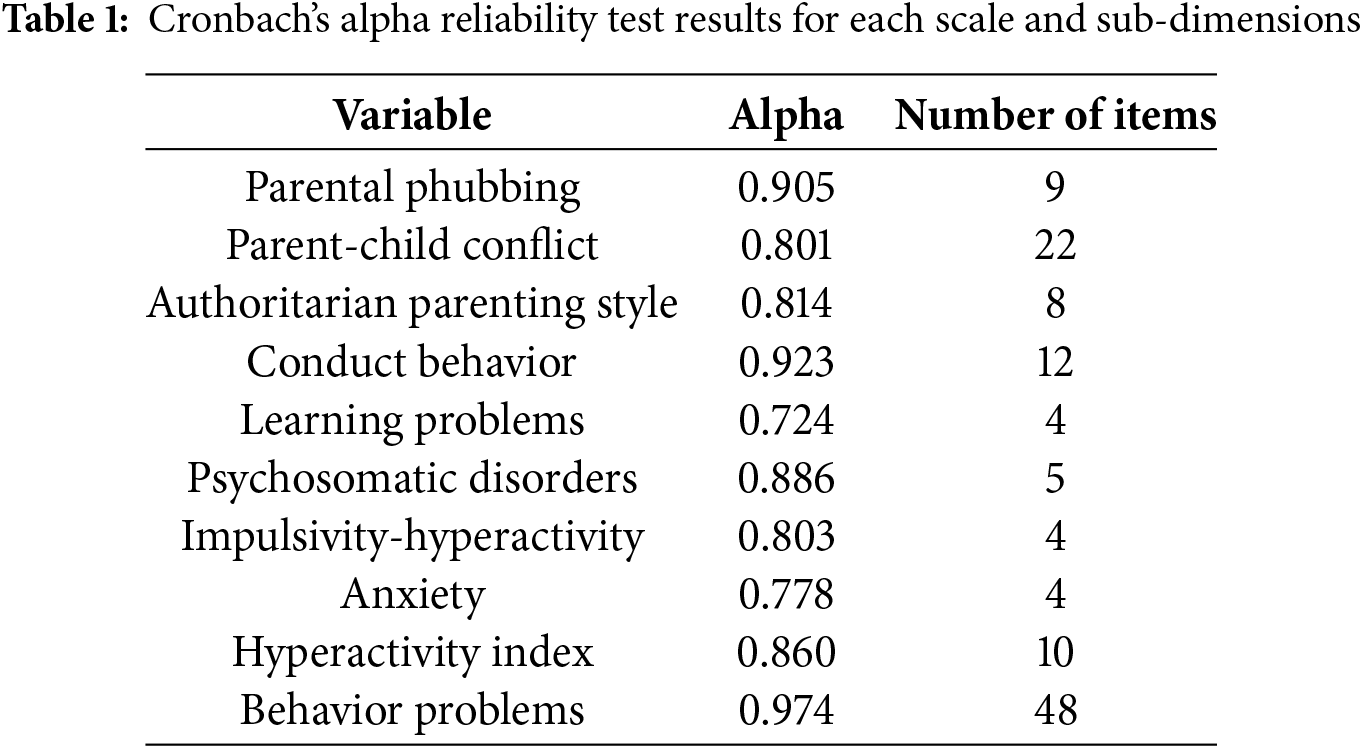
This study used the Parental Phubbing Scale, which was developed by Roberts and revised by Ding et al. [39], completed by preschool children’s parents. Previous studies have demonstrated that this scale exhibits good reliability and validity among Chinese kids [40]. The scale contains 9 items rated on a 5-point Likert scale (1 = “completely disagree” to 5 = “completely agree”). Higher scores indicate more frequent parental phubbing behavior. The Cronbach’s Alpha for this scale in the current study was 0.905. Confirmatory factor analysis (CFA) of the Parental Phubbing scale suggested that the model fit the data well: Chi-square divided by degrees of freedom (χ2/df) = 3.993, goodness-of-fit index (GFI) = 0.963, comparative fit index (CFI) = 0.976, Tucker-Lewis index (TLI) = 0.965, root mean square error of approximation (RMSEA) = 0.07. See Table 1.
2.2.3 Parent-Child Relationship Scale
In this research, we adopted the Parent-Child Relationship Scale that was specifically modified and validated for application within the Chinese cultural context by Zhang et al. for Chinese context [41]. Earlier research has confirmed that this scale exhibits good reliability and validity among Chinese kids [35]. The scale includes two dimensions: intimacy (10 items) and conflict (12 items). The scale provides a total score reflecting overall parent-child interaction quality. In this study, after reverse-scoring the intimacy dimension and adding it to the conflict dimension score, a total parent-child relationship score was calculated. Higher scores indicate poorer parent-child relationships and higher conflict levels. The Cronbach’s Alpha for this scale was 0.801. See Table 1.
2.2.4 Conners Child Behavior Rating Scale
The study used the revised Child Behavior Rating Scale [42], comprising six dimensions: conduct problems, learning problems, psychosomatic problems, impulsivity-hyperactivity problems, anxiety problems, and hyperactivity index. Items were scored on a 0–3 scale, with higher scores indicating more severe behavioral problems. The scale’s Cronbach’s Alpha was 0.974. See Table 1.
2.2.5 Authoritarian Parenting Style Scale
Our research utilized the authoritarian parenting subscale from the Parenting Style Scale developed by Yang et al. [43]. The authoritarian parenting subscale contains 8 questions rated on a 5-point Likert scale, with higher scores indicating more pronounced authoritarian parenting. The Cronbach’s Alpha for the authoritarian parenting subscale in this study was 0.814. See Table 1.
The quantitative analysis was conducted through SPSS 24.0 software package, which was employed for data entry, preliminary screening procedures, organizational structuring, and comprehensive statistical computations. The analytical approach encompassed both descriptive statistical methods and examinations of correlational relationships between variables. When investigating variations between demographic cohorts, we employed independent-sample t-tests to evaluate potential differences between two groups (such as child gender, only-child status) in the four main variables, while for comparisons involving three or more categorical groupings, one-way analysis of variance (ANOVA) techniques were implemented to detect significant variations (such as highest family education level, family structure). The bootstrap method was utilized to further test the mediating effects. Bootstrap is a non-parametric resampling technique that enables hypothesis testing and effect estimation without assuming any distribution or sampling of variables. If the 95% confidence interval (CI) of the indirect effect does not encompass 0, then the mediating effect is considered significant. Additionally, we utilized Harman’s one-way ANOVA to assess common method biases.
By conducting a non-rotated principal component factor analysis on all questionnaire items and utilizing Harman’s one-way ANOVA to assess common method biases, the analysis uncovered 13 factors with eigenvalues exceeding 1. Notably, the first factor contributed 31.29% of the total variance, falling below the critical threshold of 40%. This suggests that common method bias is not a significant concern in this survey [44].
3.2 Demographic Characteristics
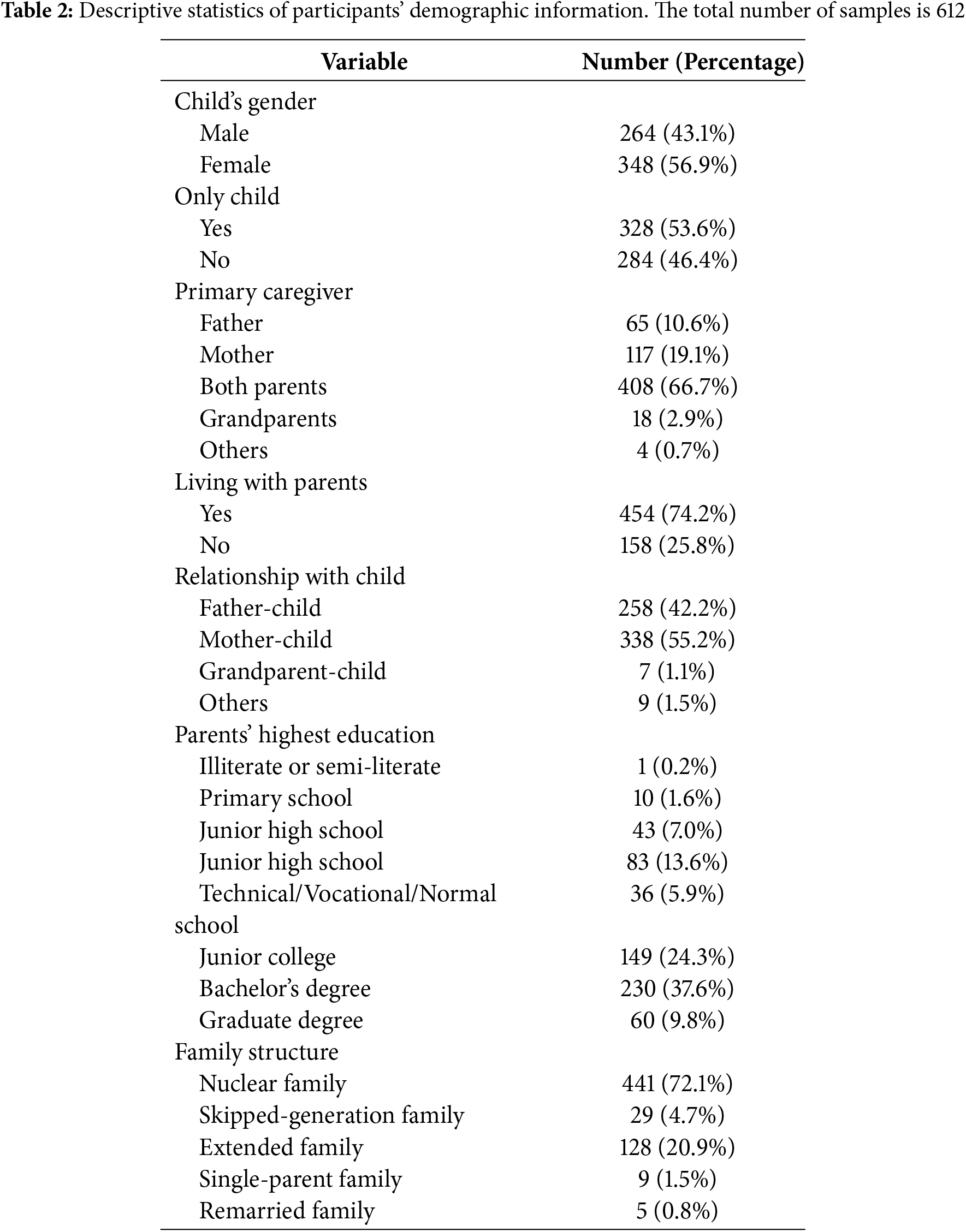
All surveys within this investigation were submitted without personal identification. Upon completion of data collection, we obtained 751 questionnaires. After implementing exclusion criteria to eliminate non-compliant responses, 612 questionnaires were retained for subsequent analysis, corresponding to an effective response rate of 81.49%. Inclusion criteria for participants were: parents of kids in the preschool period (3–7 years old) where “seven years old” refers to children who have passed the 6th birthday but not yet the 7th birthday and do not pass the age requirement for entrance to elementary school. All participants volunteered willingly. Exclusion criteria included: pattern responses; contradictory information within responses; and extremely short response times. Prior to data collection, written informed consent was obtained from all individuals participating in this investigation. See Table 2 for details.
3.3 Demographic Difference Analysis
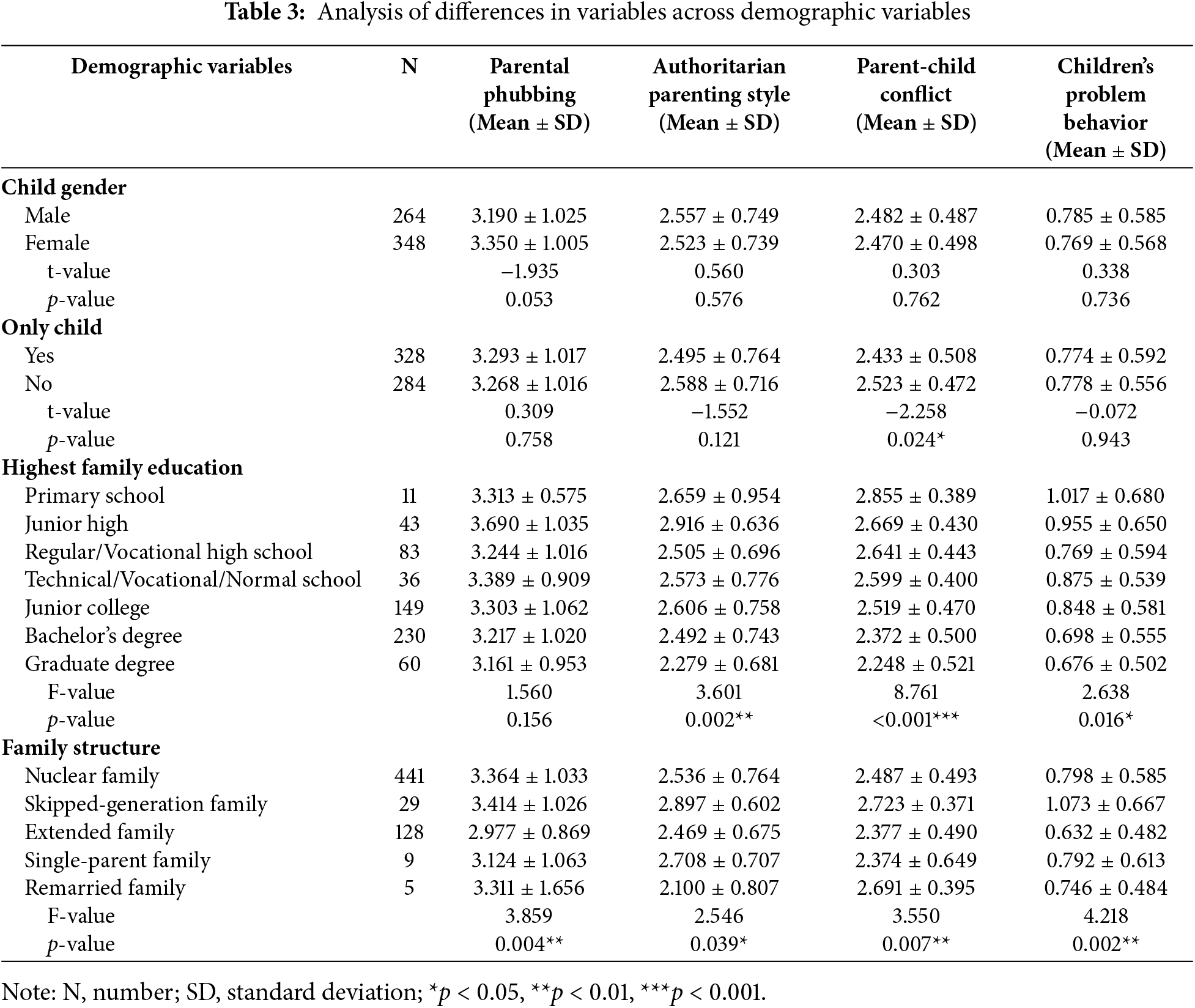
Group differences in the four principal variables were investigated utilizing independent-sample t-tests and one-way ANOVA, evaluating demographic factors such as child gender, only-child status, highest educational attainment within families, and household composition. Results revealed that regarding child gender, no significant differences were detected in parental phubbing behavior, authoritarian parenting style, parent-child conflict, or preschool children’s problem behavior. Regarding only-child status, there was a significant difference in parent-child conflict (t = −2.258, p < 0.05), with non-only child families showing higher parent-child conflict scores than only-child families, while no significant differences were found in parental phubbing behavior, authoritarian parenting style, and preschool children’s problem behavior. In terms of the highest family education level, significant differences were found in authoritarian parenting style (F (6, 605) = 3.601, p < 0.05), parent-child conflict (F (6, 605) = 8.761, p < 0.05), and preschool children’s problem behavior (F (6, 605) = 2.638, p < 0.05), while no significant difference was found in parental phubbing behavior. Regarding family structure, significant differences were found in all variables: parental phubbing behavior (F (4, 607) = 3.859, p < 0.05), authoritarian parenting style (F (4, 607) = 2.546, p < 0.05), parent-child conflict (F (4, 607) = 3.550, p < 0.05), and preschool children’s problem behavior (F (4, 607) = 4.218, p < 0.05). The results were shown in Table 3.
3.4 Descriptive Statistics and Correlation Analysis
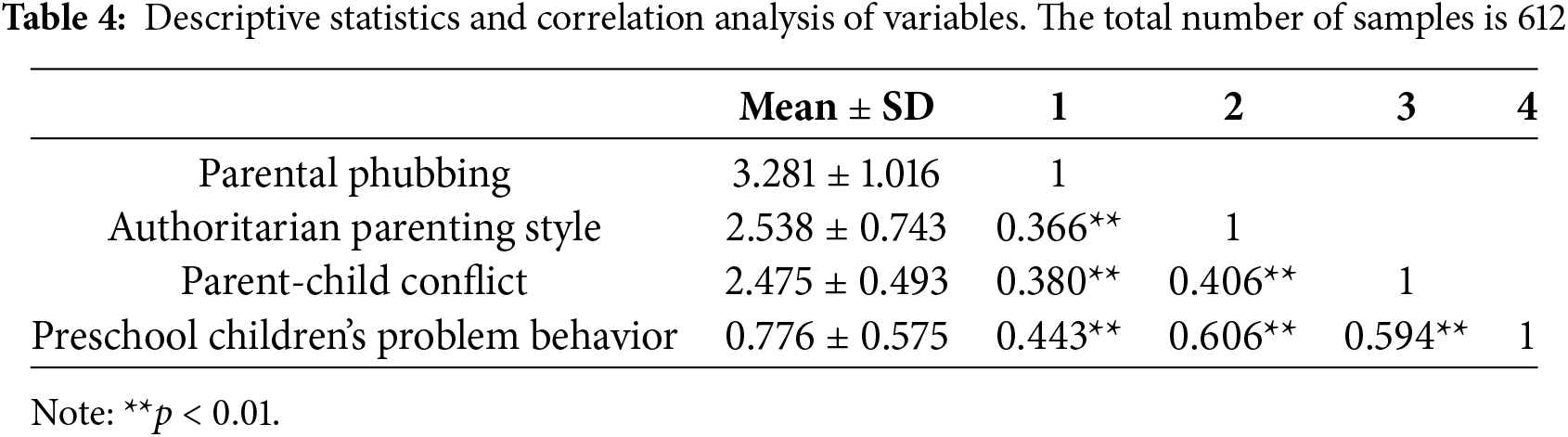
The findings from descriptive statistics and correlation analysis demonstrate significant positive associations among all variable pairs: parental phubbing behavior, authoritarian parenting style, parent-child conflict, and children’s problem behavior. Table 4 displays the means, standard deviations, and correlation coefficients among these four investigated variables. Parental phubbing behavior exhibited a significant positive association with authoritarian parenting style (r = 0.366, p < 0.01), parent-child conflict (r = 0.380, p < 0.01), and preschool children’s problem behavior (r = 0.443, p < 0.01). Authoritarian parenting style showed significant positive correlations with parent-child conflict (r = 0.406, p < 0.01) and preschool children’s problem behavior (r = 0.606, p < 0.01). Parent-child conflict demonstrated a significant positive relationship with preschool children’s problem behavior (r = 0.594, p < 0.01). These significant correlations among all four variables suggest that further analysis is warranted. See Table 4 for details.
3.5 Testing the Mediating Effects of Authoritarian Parenting Style and Parent-Child Conflict between Parental Phubbing and Preschool Children’s Problem Behavior
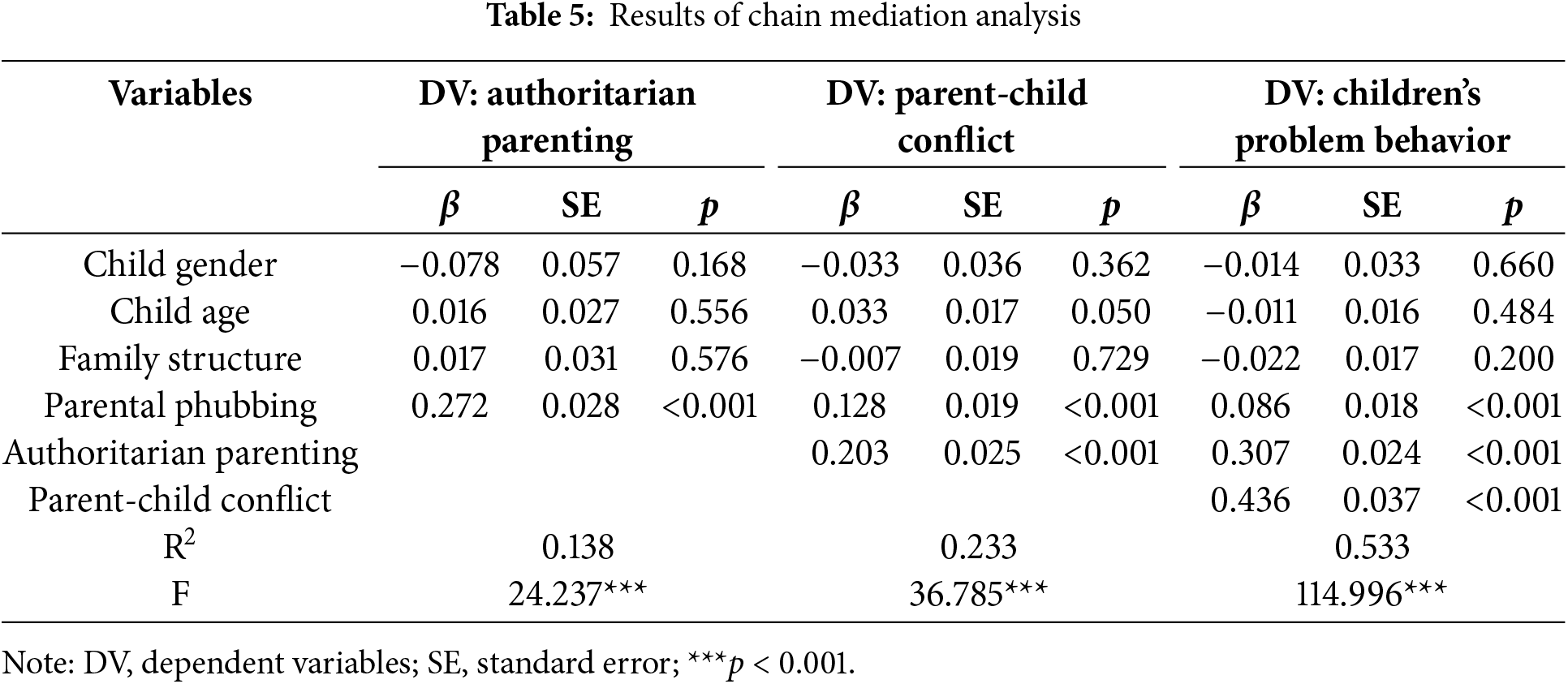
Findings from regression analyses reveal that parental phubbing exerts a significant positive direct effect on preschool children’s problem behavior (β = 0.086, p < 0.001), indicating that higher levels of parental phubbing are associated with more behavioral problems in preschool children. Parental phubbing positively influences both authoritarian parenting style (β = 0.272, p < 0.001) and parent-child conflict (β = 0.128, p < 0.001), suggesting that the higher level of parental phubbing behaviors, the more likely parents are to adopt authoritarian parenting practices and experience more conflicts with their children. Authoritarian parenting style significantly affects parent-child conflict (β = 0.203, p < 0.001), demonstrating that more authoritarian parenting is linked to increased parent-child conflicts. Both authoritarian parenting style (β = 0.307, p < 0.001) and parent-child conflict (β = 0.436, p < 0.001) significantly influence preschool children’s problem behavior, with parent-child conflict showing a stronger predictive effect on children’s behavioral problems. See Table 5.
3.6 Mediating Effects of Authoritarian Parenting Style and Parent-Child Conflict between Parental Phubbing and Preschool Children’s Problem Behavior
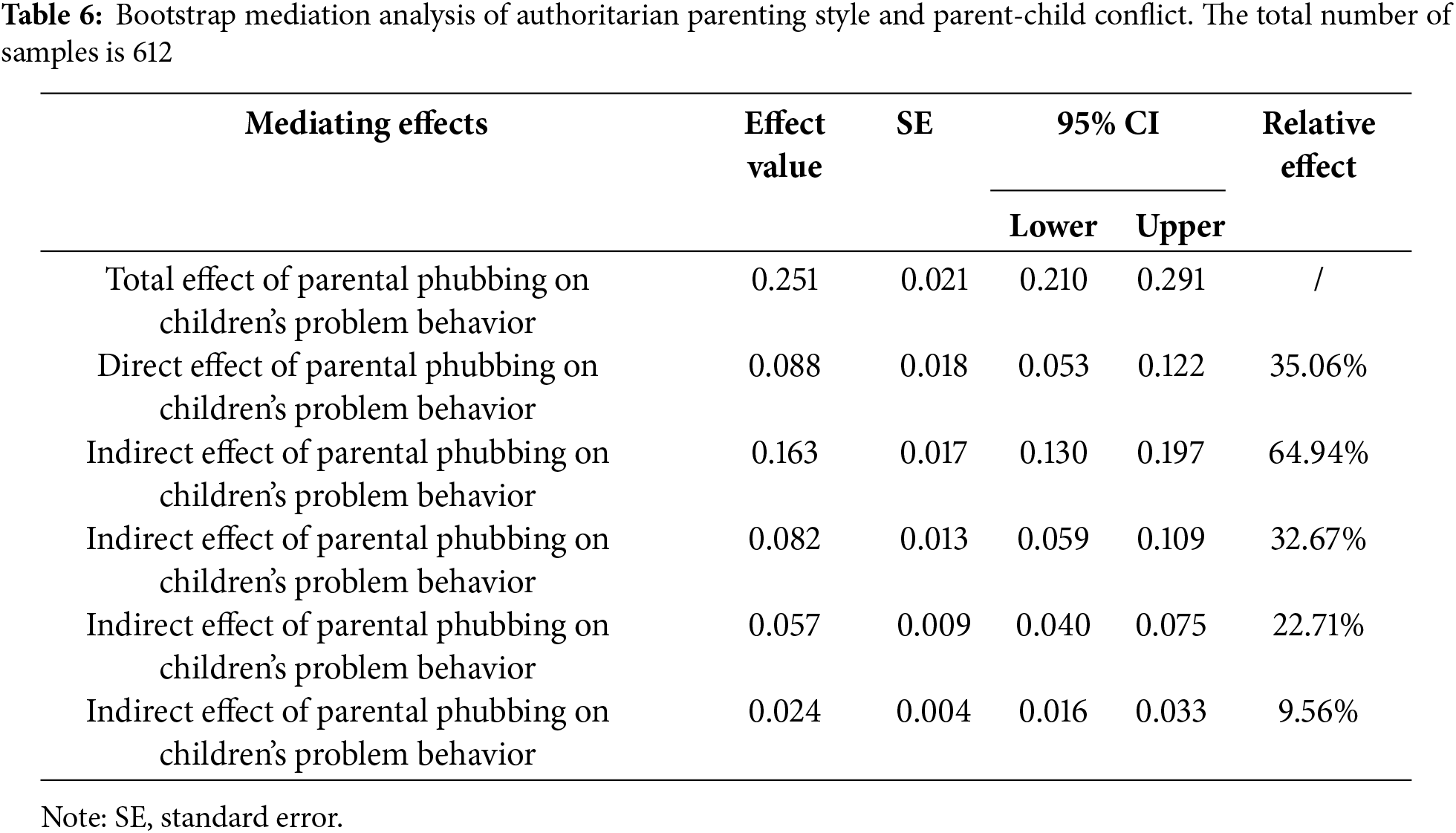
To examine the mediational pathway linking parental phubbing with preschool children’s problem behavior, we employed Model 6 within the Process macro to construct a sequential mediation analysis. This analytical framework positioned parental phubbing as the predictor variable, preschool children’s problem behavior as the outcome variable, and established authoritarian parenting style and parent-child conflict as successive mediating variables in the causal chain. The path coefficients were shown in Fig. 1. The overall regression model was significant, R2 = 0.531, F = 229.515, p < 0.001. Using Bootstrap sampling method to further test the mediating effects, the results showed that the indirect effect of the path through authoritarian parenting style as mediator was 0.082, with 95% CI [0.059, 0.109], not containing 0, indicating significant indirect effect; the indirect effect of the path through parent-child conflict as mediator was 0.057, with 95% CI [0.040, 0.075], not containing 0, indicating significant indirect effect; the indirect effect of the path through both authoritarian parenting style and parent-child conflict as mediators was 0.024, with 95% CI [0.016, 0.033], not containing 0, indicating significant indirect effect. These results suggest that authoritarian parenting style and parent-child conflict both independently and sequentially mediate the relationship between parental phubbing and preschool children’s problem behavior. See Table 6.
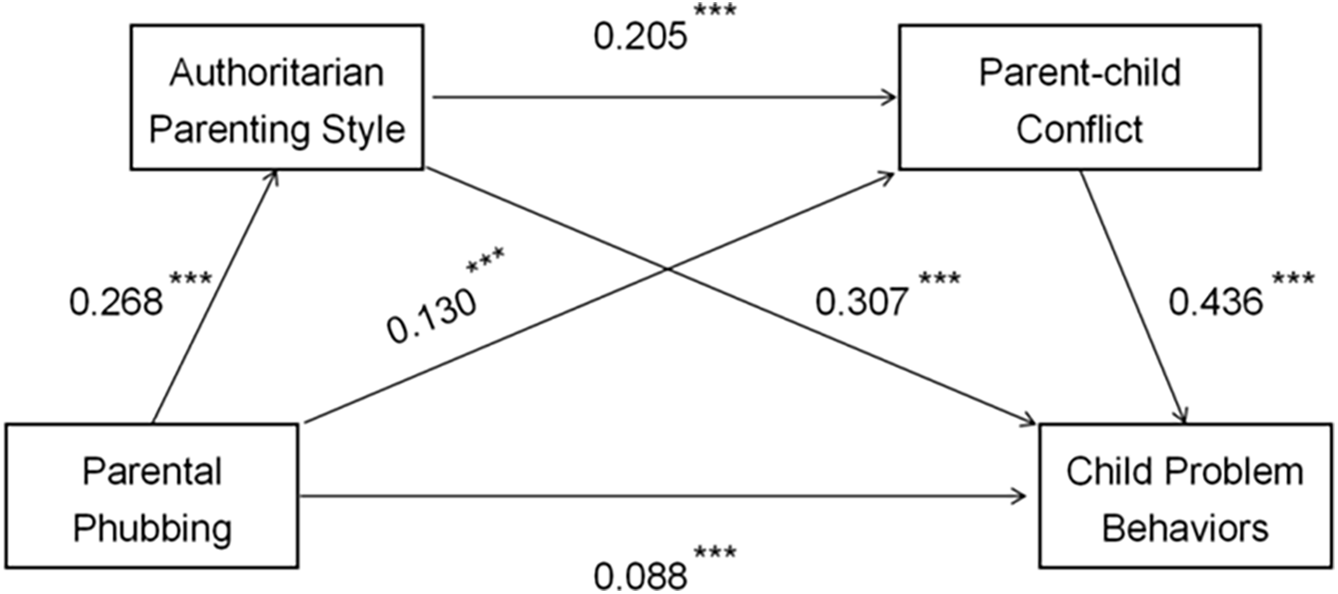
Figure 1: Chain mediation model of authoritarian parenting style and parent-child conflict. ***p < 0.001
4.1 Relationship between Parental Phubbing and Preschool Children’s Problem Behavior
This study revealed that parental phubbing significantly predicts problem behaviors in preschool children, which is consistent with Zu et al.’s findings [12]. Parental phubbing has many negative impacts—besides affecting family atmosphere and marital relationships, it also negatively impacts children’s mental health. Research shows that during co-parenting, fathers’ phubbing significantly reduces coordination and synchronicity in family interactions, sending a signal that phones are more important than family interaction! This also leads to mothers’ lower co-parenting efficacy, resulting in more phone-related conflicts [45]. Parents bear major responsibilities in maintaining family livelihood and need to take on roles beyond parenting, such as career and social roles. Concerned about missing important work messages, parents still need to pay attention to their phones after work, which further aggravates the imbalance between work, career, and family [46]. This shows that with the advent of the multimedia era, traditional family interaction patterns have been gradually replaced by electronic devices. The phenomenon of parental “phubbing” has emerged as an increasingly prevalent conduct within family settings, with its effects on children’s behavioral development deserving significant attention. A higher extent of phubbing often leads to overlooking important information expressed by children and demands that they rephrase or respond to situations, leading to children gradually losing their willingness to express themselves and preferring to play alone. In addition, the increased frequency of parental phubbing is associated with intensified feelings of neglect, abandonment, and isolation in children, which may contribute to the development of internalizing behavioral problems [12]. Another possible reason is that children may have poor emotional regulation abilities. When confronted with their parents’ phubbing behavior, they might exhibit their dissatisfactory feelings through problematic behaviors, in order to draw the attention of their parents.
4.2 Chain Mediating Effects of Authoritarian Parenting Style and Parent-Child Conflict
This study further demonstrated the chain mediating effects of authoritarian parenting style and parent-child conflict between parental phubbing and preschool kids’ problematic behaviors. This finding not only aligns with previous research results [15,47] but also provides more comprehensive theoretical support through the integration of the context-process-outcome model. As a risk factor in the family environment, parental phubbing not only negatively impacts marital relationship satisfaction but also exacerbates relationship conflicts and fosters the formation of poor family parenting styles [48]. Parental phubbing positively correlates with negative parenting styles [49]. This study further substantiates that parental phubbing impacts preschool children’s problematic behaviors both directly and indirectly, with the chain mediation pathway through authoritarian parenting style and parent-child conflict constituting the primary mechanism of influence. Specifically, phubbing reflects parents’ distraction of attention and emotional neglect towards children, creating an unfavorable family environment for child development. This environment not only leads parents to adopt more controlling and punitive authoritarian parenting styles but also deteriorates parent-child relationship quality, ultimately resulting in children’s problem behavior. Additionally, the context-process-outcome model supports the chain mediating effects of authoritarian parenting style and parent-child conflict. It has been reported that authoritative parenting methods encourage the formation of positive and close relationships between parents and kids. The establishment of these close parent-child bonds enables young children in their preschool years to develop perceptions of parental acceptance and affection, thereby enhancing their security feeling in terms of emotion, leading to less problematic behavior in preschool kids [50]. Authoritative parenting style typically means the willingness to listen to their kids’ feelings and demands, while offering a safe environment for them to explore their emotional world, which aids preschool children in developing a status of emotional security, which, in turn, fosters their willingness of positive engagement in society [51]. Authoritarian parenting, characterized by enforcing rigid regulations upon children, restricting their ability to voice personal viewpoints, demonstrating high levels of demandingness paired with minimal responsiveness [52]. In this study, parental phubbing, as a distal context, not only represents a neglectful family environment but also negatively affects children’s behavioral development through its impact on family interaction patterns (authoritarian parenting and parent-child conflict). This chain clearly reveals the potential mechanism of the family environment’s influence on preschool children’s problem behavior.
Parents serve as essential influencers during the preschool stage. The preschool developmental period constitutes a pivotal stage for children’s cognitive advancement, and their understanding of the world mainly relies on observing and imitating parents’ behavior. However, as smartphones gradually replace traditional parent-child interaction methods, parents’ experiences in child-rearing show increasingly negative trends [53]. When parents spend time with their children while being overly engaged with their phones, it appears to be companionship but is actually “ineffective accompaniment” [54]. Research shows that when children try to shift their parents’ attention from smart devices, they often fail and may face harsher responses from parents [26]. Moreover, in the case that parents feel stressed from phone use, they exhibit an increased propensity to implement adverse disciplinary approaches, including punitive measures and attributions of fault, while using less patient guidance and positive interaction [55]. Therefore, phubbing parents tend to present more negative parenting behaviors and fewer positive ones.
In summary, our findings demonstrate that elevated frequencies of parental phubbing correlate with increased adoption of authoritarian child-rearing approaches, which in turn aggravates parent-child conflict, creates tense parent-child relationships, and ultimately induces preschool children’s problem behavior. The present investigation not only reveals the intrinsic relationship between parental phubbing and preschool kids’ behavior but also provides a theoretical basis and practical direction for interventions. Meanwhile, family education workers should guide parents to increase awareness of “phubbing” behavior, alert parents, and inspire “phubbing” parents to reasonably regulate smartphone use and optimize family education methods, thereby reducing preschool children’s behavioral problems and promoting children’s psychological health.
This non-longitudinal analysis examining the linkages between parental phubbing and preschool kids’ problematic behaviors cannot find causal relationships between variables, resulting in certain limitations in conclusions. Owing to the constraints of our cross-sectional methodology, our observations were limited to associative patterns at a singular temporal juncture, thus impeding definitive conclusions regarding the causal directionality between parental phubbing and children’s problem behaviors. Therefore, future longitudinal studies are particularly crucial to establish temporal precedence and better understand the causal mechanisms underlying these relationships, including tracking children’s interpersonal relationships, academic performance, and other developmental outcomes to understand dynamic trends; Secondly, it merits emphasis that the current research endeavor was carried out within the Chinese sociocultural contex, which has its unique cultural and social context. While our findings provide valuable insights into the relationship between parental phubbing and children’s problem behaviors in the Chinese context, the generalizability of these results to other cultural or socio-economic settings may be limited. It remains essential to conduct subsequent investigations that span diverse cultural environments to validate whether these empirical outcomes persist beyond Chinese boundaries and to elucidate potential culturally-specific moderating factors that may shape these associative patterns; Thirdly, another limitation of this study lies in its reliance on self-reported data, which may be subject to recall bias and social desirability bias, particularly when parents report their own phubbing behaviors. Future studies would benefit from incorporating multiple methods of data collection, such as direct behavioral observations, multi-informant reports (e.g., from teachers or other caregivers), and possibly technological measures of phone usage, to provide more objective and comprehensive assessments of parental phubbing and children’s behaviors. Concurrently, parent-child conflict and authoritarian parenting practices serve as sequential mediating elements within the theoretical framework, establishing a chain-mediation mechanism that illuminates the pathways between the focal constructs under investigation. However, there are a few other factors related to the influence of parenting style such as socioeconomic status, mental status and etc., in preschool children, and currently, only limited exploration can be conducted. In the future, more factors will be incorporated to clarify the relevant influencing mechanisms. In addition, this study combined fathers’ and mothers’ phubbing behaviors; Subsequent empirical work needs to establish distinctions between paternal and maternal digital distraction patterns to more precisely delineate their differential influences on developmental trajectories in offspring. It has been reported that digital interference behaviors exhibited by mothers correlates with with higher levels of problematic multimedia use in preschool children [56]. However, examining the different impacts of paternal vs. maternal digital interference needs to be combined with a role analysis of the major caretaker for the kid. For instance, in a family where the mother is the major caretaker for the kid or a family where the father is the major caretaker for the kid, the impact of mother phubbing or father phubbing will be definitely different. Therefore, more analysis is needed to be conducted to fully understand the influence of phubbing on the behavioral issues of preschool kids.
4.4 Theoretical Implications and Practical Implications
This investigation addresses a significant research gap in domestic and international literature by examining the interplay between parental smartphone addiction, authoritative child-rearing practices, parent-child tensions, and behavioral concerns among preschoolers. Previous studies have predominantly explored phone-related behaviors in romantic partnerships, professional settings, and educational contexts—specifically focusing on teenagers and college populations—while largely overlooking families with preschool children. Our findings enhance understanding of these emerging psychological constructs and broaden perspectives concerning the nexus of caregiver digital engagement and preschool children’s development, offering valuable insights for promoting children’s mental well-being through a family-oriented framework.
Our research indicates that parents are often unaware of their excessive mobile phone use and its consequences. Our findings provide empirical evidence for reducing parental phone use and its deleterious consequences for developmental trajectories during early childhood. This not only helps mitigate adverse consequences for developmental progression on preschool children’s development but also offers empirical support for preventing and improving behavioral problems in preschool children. We propose several feasible strategies for parents and practitioners: establishing phone-free times (such as parent-child playtime and mealtimes) and zones (such as study desks and bedrooms); practicing mindful phone usage, such as turning off non-essential notifications during family time and keeping phones out of sight during parent-child activities; and having family educators help parents develop various offline engagement activities like shared reading and outdoor activities. These interventions aim to improve parent-child interactions and promote healthier kids’ development through reduced parental phone use.
This study discovered the sequential mediating role of authoritarian parenting style and parent-child conflict between parental phubbing and preschool children’s problem behavior. This chain mediation effect illuminates an important phenomenon: as digital technology plays an increasingly crucial role in everyday life, how families adapt to this change becomes a common challenge. Parental phubbing, as a new family behavior in the digital era, profoundly impacts preschool children’s development by affecting family interaction patterns and parent-child relationships. Therefore, society should strengthen support and guidance for parent education, help parents establish correct parenting concepts, improve their parenting skills, let children feel parental love and support, and avoid problem behaviors arising from lack of parental attention, thereby promoting healthy family relationships and children’s comprehensive development. This study enriches existing research to some extent, exploring the association between parental phubbing and preschool kids’ behavioral issues. Preschool age is an important stage for personality and habit formation, and parents’ every word and action significantly impact preschool children. Parents need to pay attention to and reflect on their own phubbing behavior and exercise appropriate control.
Acknowledgement: We extend our gratitude to all individuals who participated in this study and the collaborators who assisted with participant recruitment.
Funding Statement: The authors received no specific funding for this study.
Author Contributions: Conceptualization and study design: Qiulan Gu and Mei Zhao; data collection: Qiulan Gu; data analysis: Qiulan Gu; writing—original draft preparation: Qiulan Gu; writing—review and editing: Mei Zhao. All authors reviewed the results and approved the final version of the manuscript.
Availability of Data and Materials: The data is available on request from the corresponding author.
Ethics Approval: This study was approved by the Ethics Committee of the Institute of Psychology, Chinese Academy of Sciences, and adheres to ethical principles (Approval No. H23128).
Informed Consent: Informed consent was obtained from all participants.
Conflicts of Interest: The authors declare no conflicts of interest to report regarding the present study.
References
1. Moulin F, Bailhache M, Monnier M, Thierry X, Vandentorren S, Côté SM, et al. Longitudinal impact of psychosocial status on children’s mental health in the context of COVID-19 pandemic restrictions. Eur Child Adolesc Psychiatry. 2023;32(6):1073–82. doi:10.1007/s00787-022-02010-w. [Google Scholar] [PubMed] [CrossRef]
2. Yoon S, Maguire-Jack K, Ploss A, Benavidez JL, Chang Y. Contextual factors of child behavioral health across developmental stages. Dev Psychopathol. 2024;36(2):660–73. doi:10.1017/S0954579422001481. [Google Scholar] [PubMed] [CrossRef]
3. Ye S, Tan D. Analysis of the current situation and influencing factors of behavioural problems in preschool children. Mod Prim Second Educ. 2015;31(4):93–100 (In Chinese). doi:10.16165/j.cnki.22-1096/g4.2015.04.025. [Google Scholar] [CrossRef]
4. Jiang QY, Wang XC, Liu B, Wang PC, Lei L. The impact of parental phubbing on the psychological development of children and adolescents. Psychol Dev Educ. 2021;37(1):137–45 (In Chinese). doi:10.16187/j.cnki.issn1001-4918.2021.01.17. [Google Scholar] [CrossRef]
5. Zhang J, Dong C, Jiang Y, Zhang Q, Li H, Li Y. Parental phubbing and child social-emotional adjustment: a meta-analysis of studies conducted in China. Psychol Res Behav Manag. 2023;16:4267–85. doi:10.2147/PRBM.S417718. [Google Scholar] [PubMed] [CrossRef]
6. Glickman EA, Choi KW, Lussier AA, Smith BJ, Dunn EC. Childhood emotional neglect and adolescent depression: assessing the protective role of peer social support in a longitudinal birth cohort. Front Psychiatry. 2021;12:681176. doi:10.3389/fpsyt.2021.681176. [Google Scholar] [PubMed] [CrossRef]
7. Zhang X, Gao F, Kang Z, Zhou H, Zhang J, Li J, et al. Perceived academic stress and depression: the mediation role of mobile phone addiction and sleep quality. Front Public Health. 2022;10:760387. doi:10.3389/fpubh.2022.760387. [Google Scholar] [PubMed] [CrossRef]
8. Lv H, Ye W, Chen S, Zhang H, Wang R. The effect of mother phubbing on young children’s emotional and behavioral problems: a moderated mediation model of mother-child attachment and parenting stress. Int J Environ Res Public Health. 2022;19(24):16911. doi:10.3390/ijerph192416911. [Google Scholar] [PubMed] [CrossRef]
9. Wang X, Qiao Y, Li W, Lei L. Parental phubbing and children’s social withdrawal and aggression: a moderated mediation model of parenting behaviors and parents’ gender. J Interpers Violence. 2022;37(21–22):NP19395–419. doi:10.1177/08862605211042807. [Google Scholar] [PubMed] [CrossRef]
10. Alheneidi H, AlSumait L, AlSumait D, Smith AP. Loneliness and problematic Internet use during COVID-19 lock-down. Behav Sci. 2021;11(1):5. doi:10.3390/bs11010005. [Google Scholar] [PubMed] [CrossRef]
11. Wang X, Qiao Y, Wang S. Parental phubbing, problematic smartphone use, and adolescents’ learning burnout: a cross-lagged panel analysis. J Affect Disord. 2023;320(5):442–9. doi:10.1016/j.jad.2022.09.163. [Google Scholar] [PubMed] [CrossRef]
12. Zu J, Yang W, Zhou T, Teng W, Dan F. The influence of parents’ s martphone addiction-related behaviors on young children’s problem behaviors: a moderated mediation model. J-SECE. 2022;6:34–48 (In Chinese). doi:10.3969/j.issn.1007-8169.2022.06.006. [Google Scholar] [CrossRef]
13. Xie X, Xie J. Parental phubbing accelerates depression in late childhood and adolescence: a two-path model. J Adolesc. 2020;78(1):43–52. doi:10.1016/j.adolescence.2019.12.004. [Google Scholar] [PubMed] [CrossRef]
14. Valkenburg PM, Peter J. Online communication and adolescent well-being: testing the stimulation versus the displacement hypothesis. J Comput Mediat Comm. 2007;12(4):1169–82. doi:10.1111/j.1083-6101.2007.00368.x. [Google Scholar] [CrossRef]
15. Lemish D, Elias N, Floegel D. “Look at me!” Parental use of mobile phones at the playground. Mob Media Commun. 2020;8(2):170–87. doi:10.1177/2050157919846916. [Google Scholar] [CrossRef]
16. Rothstein TM. The presence of smartphones and their impact on the quality of parent-child interactions [master’s thesis]. Long Beach, CA, USA: California State University; 2018 [cited 2025 Jan 1]. Available from: https://scholarworks.calstate.edu/downloads/d217qq202. [Google Scholar]
17. Palsson C. That Smarts!: smartphones and child injuries [master’s thesis]. New Haven, CT, USA: Yale University; 2014 [cited 2025 Jan 1]. Available from: https://citeseerx.ist.psu.edu/document?repid=rep1&type=pdf&doi=3c11291c64570e73e9fb7c1b94c0d5d206a513be. [Google Scholar]
18. Pietromonaco PR, Beck LA. Attachment processes in adult romantic relationships. In: Mikulincer M, Shaver PR, Simpson JA, Dovidio JF, editors. APA handbook of personality and social psychology. Vol. 3. Interpersonal relations. Washington, DC, USA: American Psychological Association; 2015. p. 33–64. doi: 10.1037/14344-002. [Google Scholar] [CrossRef]
19. Rohner RP, Lansford JE. Deep structure of the human affectional system: introduction to interpersonal acceptance-rejection theory. J Fam Theo Revie. 2017;9(4):426–40. doi:10.1111/jftr.12219. [Google Scholar] [CrossRef]
20. Yang LL. The Effect of parental phubbing on loneliness in junior middle school students: the mediating role of rejection sensitivity [master’s thesis]. Lanzhou, China: Northwest Normal University; 2023 [cited 2025 Jan 1]. (In Chinese). Available from: https://d.wanfangdata.com.cn/thesis/ChhUaGVzaXNOZXdTMjAyNDA5MjAxNTE3MjUSCUQwMzMxMzMyNBoId2VxbTQ0dTc%3D. [Google Scholar]
21. Hiniker A, Schoenebeck SY, Kientz JA. Not at the dinner table: parents’ and children’s perspectives on family technology rules. In: Proceedings of the 19th ACM Conference on Computer-Supported Cooperative Work & Social Computing; 2016 Feb 27–Mar 2; San Francisco, CA, USA. p. 1376–89. [Google Scholar]
22. Varela RE, Vernberg EM, Sanchez-Sosa JJ, Riveros A, Mitchell M, Mashunkashey J. Parenting style of Mexican, Mexican American, and Caucasian-non-hispanic families: social context and cultural influences. J Fam Psychol. 2004;18(4):651–7. doi:10.1037/0893-3200.18.4.651. [Google Scholar] [PubMed] [CrossRef]
23. Wilcox WB. Conservative Protestant childrearing: authoritarian or authoritative? Am Sociol Rev. 1998;63(6):796. doi:10.2307/2657502. [Google Scholar] [CrossRef]
24. Li J, Jiang Y, Xiao B, Wang J, Zhang Q, Zhang W, et al. Validation of a revised parental phubbing scale for parents of young children in China. Early Child Dev Care. 2024;194(2):167–82. doi:10.1080/03004430.2023.2283693. [Google Scholar] [CrossRef]
25. Fay-Stammbach T, Hawes DJ, Meredith P. Parenting influences on executive function in early childhood: a review. Child Dev Perspect. 2014;8(4):258–64. doi:10.1111/cdep.12095. [Google Scholar] [CrossRef]
26. Radesky JS, Kistin CJ, Zuckerman B, Nitzberg K, Gross J, Kaplan-Sanoff M, et al. Patterns of mobile device use by caregivers and children during meals in fast food restaurants. Pediatrics. 2014;133(4):e843–9. doi:10.1542/peds.2013-3703. [Google Scholar] [PubMed] [CrossRef]
27. Zhang P, Wang X. The impact of parental phubbing on social withdrawal in preschool children: the serial mediating roles of parent-child conflict and negative emotions. BMC Psychol. 2025;13(1):36. doi:10.1186/s40359-025-02363-2. [Google Scholar] [PubMed] [CrossRef]
28. Wolfers LN, Kitzmann S, Sauer S, Sommer N. Phone use while parenting: an observational study to assess the association of maternal sensitivity and smartphone use in a playground setting. Comput Hum Behav. 2020;102(2):31–8. doi:10.1016/j.chb.2019.08.013. [Google Scholar] [CrossRef]
29. Shen X, Xie X, Wu S. Do adolescents addict to Internet games after being phubbed by parents? The roles of maladaptive cognition and self-esteem. Curr Psychol. 2023;42(3):2255–67. doi:10.1007/s12144-022-03255-z. [Google Scholar] [CrossRef]
30. Oduor E, Neustaedter C, Odom W, Tang A, Moallem N, Tory M, et al. The frustrations and benefits of mobile device usage in the home when co-present with family members. In: Proceedings of the 2016 ACM Conference on Designing Interactive Systems; 2016 Jun 4–8; Brisbane, QLD, Australia. p. 1315–27. doi:10.1145/2901790.2901809. [Google Scholar] [CrossRef]
31. Ainsworth MDS. The bowlby-Ainsworth attachment theory. Behav Brain Sci. 1978;1(3):436–8. doi:10.1017/S0140525X00075828. [Google Scholar] [CrossRef]
32. Smetana JG. Current research on parenting styles, dimensions, and beliefs. Curr Opin Psychol. 2017;15:19–25. doi:10.1016/j.copsyc.2017.02.012. [Google Scholar] [PubMed] [CrossRef]
33. Roşca GM, Iuga IA, David OA. Inside-out mechanisms of parental practices and children’s externalizing problems: the role of authoritarian parenting style, parental irrational beliefs, emotion regulation, and distress. Curr Psychol. 2024;43(4):3292–306. doi:10.1007/s12144-023-04539-8. [Google Scholar] [CrossRef]
34. Ding Q, Luo XY, Huang L, Zhang YX. Interparental conflict affects adolescent mobile phone addiction: based on the spillover hypothesis and emotional security theory. Chin J Clin Psychol. 2022;30(3):653–7 (In Chinese). doi:10.16128/j.cnki.1005-3611.2022.03.031. [Google Scholar] [CrossRef]
35. Wang J, Liu RD, Lin J. The effect of parental psychological flexibility on children’s behavioral problems: a moderated mediation model. Child Adolesc Psychiatry Ment Health. 2025;19(1):8. doi:10.1186/s13034-025-00863-y. [Google Scholar] [PubMed] [CrossRef]
36. Gavcar EG, Buber A, Senol H. The association of parental phubbing behavior with digital game use in preschool children. Bull Menninger Clin. 2024;88(4):336–59. doi:10.1521/bumc.2024.88.4.336. [Google Scholar] [PubMed] [CrossRef]
37. Xie X, Chen W, Zhu X, He D. Parents’ phubbing increases Adolescents’ Mobile phone addiction: roles of parent-child attachment, deviant peers, and gender. Child Youth Serv Rev. 2019;105(1):104426. doi:10.1016/j.childyouth.2019.104426. [Google Scholar] [CrossRef]
38. ISCED. International standard classification of education [Internet]. Montreal, QC, Canada: UNESCO Institute for Statistics; 2011 [cited 2025 Mar 21]. Available from: http://uis.unesco.org/sites/default/files/documents/international-standard-classification-of-education-isced-2011-en.pdf. [Google Scholar]
39. Ding Q, Kong LL, Zhang YX, Zhou ZK, Hu W. Parents phubbing and mobile phone addiction in junior high school students: a cross-lagged analysis. Chin J Clin Psychol. 2018;26(5):952–5. (In Chinese). doi:10.16128/j.cnki.1005-3611.2018.05.025. [Google Scholar] [CrossRef]
40. Ding Q, Dong S, Zhang Y. Does parental phubbing aggravates adolescent sleep quality problems? Front Psychol. 2023;14:1094488. doi:10.3389/fpsyg.2023.1094488. [Google Scholar] [PubMed] [CrossRef]
41. Zhang X, Chen HC, Zhang GF. Children’s relationships with mothers and teachers: linkages to problem behavior in their first preschool years. Acta Psychol Sin. 2008;40(4):418–26 (In Chinese). doi:10.3724/SP.J.1041.2008.00418. [Google Scholar] [CrossRef]
42. Goyette CH, Conners CK, Ulrich RF. Normative data on revised conners parent and teacher rating scales. J Abnorm Child Psychol. 1978;6(2):221–36. doi:10.1007/BF00919127. [Google Scholar] [PubMed] [CrossRef]
43. Yang LZ, Yang CQ. Relation betveen the temperament of preschool chidren andthe cultural model of mother. Psychol Sci. 1998;21(1):43–6,56 (In Chinese). doi:10.16719/j.cnki.1671-6981.1998.01.011. [Google Scholar] [CrossRef]
44. Podsakoff PM, MacKenzie SB, Lee JY, Podsakoff NP. Common method biases in behavioral research: a critical review of the literature and recommended remedies. J Appl Psychol. 2003;88(5):879–903. doi:10.1037/0021-9010.88.5.879. [Google Scholar] [PubMed] [CrossRef]
45. McDaniel BT, Coyne SM. Technoference: the interference of technology in couple relationships and implications for women’s personal and relational well-being. Psychol Pop Media. 2016;5(1):85–98. doi:10.1037/ppm0000065. [Google Scholar] [CrossRef]
46. Harmon E, Mazmanian M. Stories of the smartphone in everyday discourse: conflict, tension & instability. In: Proceedings of the SIGCHI Conference on Human Factors in Computing Systems; 2014 Apr 26–May 1; Toronto, ONT, Canada. p. 1051–60. doi:10.1145/2470654.2466134. [Google Scholar] [CrossRef]
47. Dykstra VW, Willoughby T, Evans AD. A longitudinal examination of the relation between lie-telling, secrecy, parent-child relationship quality, and depressive symptoms in late-childhood and adolescence. J Youth Adolesc. 2020;49(2):438–48. doi:10.1007/s10964-019-01183-z. [Google Scholar] [PubMed] [CrossRef]
48. Shen XY. Longitudinal associations between parental phubbing, and adolescent core self-evaluation: the mediating role of basic psychological need satisfaction [master’s thesis]. Chang Chun, China: Northeast Normal University; 2022. (In Chinese). doi:10.27011/d.cnki.gdbsu.2022.001521. [Google Scholar] [CrossRef]
49. McDaniel BT. Parent distraction with phones, reasons for use, and impacts on parenting and child outcomes: a review of the emerging research. Hum Behav Emerg Tech. 2019;1(2):72–80. doi:10.1002/hbe2.139. [Google Scholar] [CrossRef]
50. Shi D, Xu Y, Chu L. The association between parents phubbing and prosocial behavior among Chinese preschool children: a moderated mediation model. Front Psychol. 2024;15:1338055. doi:10.3389/fpsyg.2024.1338055. [Google Scholar] [PubMed] [CrossRef]
51. Mortazavizadeh Z, Göllner L, Forstmeier S. Emotional competence, attachment, and parenting styles in children and parents. Psicol Reflex Crit. 2022;35(1):6. doi:10.1186/s41155-022-00208-0. [Google Scholar] [PubMed] [CrossRef]
52. Bukhori B, Nuriyyatiningrum NAH, Zikrinawati K, Liem A, Wahib A, Darmu’in. Determinant factors of cyberbullying behaviour among Indonesian adolescents. Int J Adolesc Youth. 2024;29(1):2295442. doi:10.1080/02673843.2023.2295442. [Google Scholar] [CrossRef]
53. Kushlev K. Digitally connected, socially disconnected: can smartphones compromise the benefits of interacting with others? [dissertation]. Vancouver, BC, Canada: University of British Columbia; 2015. [cited 2025 Mar 21]. Available from: https://open.library.ubc.ca/soa/cIRcle/collections/ubctheses/24/items/1.0166492. [Google Scholar]
54. McDaniel BT, Radesky JS. Technoference: parent distraction with technology and associations with child behavior problems. Child Dev. 2018;89(1):100–9. doi:10.1111/cdev.12822. [Google Scholar] [PubMed] [CrossRef]
55. Radesky JS, Kistin C, Eisenberg S, Gross J, Block G, Zuckerman B, et al. Parent perspectives on their mobile technology use: the excitement and exhaustion of parenting while connected. J Dev Behav Pediatr. 2016;37(9):694–701. doi:10.1097/DBP.0000000000000357. [Google Scholar] [PubMed] [CrossRef]
56. Li X, Fu Y, Weng W, Liu M, Li Y. Maternal phubbing and problematic media use in preschoolers: the independent and interactive moderating role of children’s negative affectivity and effortful control. Psychol Res Behav Manag. 2024;17:3083–100. doi:10.2147/PRBM.S471208. [Google Scholar] [PubMed] [CrossRef]
Cite This Article
 Copyright © 2025 The Author(s). Published by Tech Science Press.
This work is licensed under a Creative Commons Attribution 4.0 International License , which permits unrestricted use, distribution, and reproduction in any medium, provided the original work is properly cited.
 Downloads
 Citation Tools
