
 Login
Login Register
 Submit a Paper
 Propose a Special lssue
 Open Access
ARTICLE

The Curvilinear Relationship between Maternal-Parenting Stress and Adolescent Internalizing-Problems: Family Socioeconomic-Status and Adolescent Gender’s Moderating Roles
1 School of Psychology, Capital Normal University, Beijing, 100048, China
2 College of Elementary Education, Capital Normal University, Beijing, 100048, China
* Corresponding Authors: Yuhua Li. Email: ; Shufen Xing. Email:
(This article belongs to the Special Issue: Family Risk Factors and Child & Adolescent Mental Health: Perspectives from the Chinese Cultural Context)
International Journal of Mental Health Promotion 2026, 28(3), 2 https://doi.org/10.32604/ijmhp.2026.074010
Received 30 September 2025; Accepted 02 December 2025; Issue published 31 March 2026
 View Full Text
 Download PDF
Abstract
Background: The growing parenting stress among Chinese mothers in recent years raises concerns about its impact on adolescent internalizing problems. The purpose of this study was to examine the curvilinear relationship between maternal parenting stress and internalizing problems in adolescents, and further explore the moderating effects of family socioeconomic status (SES) and adolescent gender. Methods: Data were collected from 405 mothers and adolescents (203 boys, Meanage = 12.23) across five cities (Beijing, Hebei, Shanxi, Shenzhen, and Shandong) in China, who completed self-report measures of maternal parenting stress and internalizing problems. Descriptive statistics and multiple regression analyses were conducted using SPSS 27.0. Results: Multiple regression analyses indicated that the association between maternal parenting stress2 and adolescents’ internalizing problems was moderated by the interaction between gender and SES (b = −0.03, p < 0.01). Specifically, a significant U-shaped relationship was observed among high-SES boys (b = 0.12, t = 3.89, p < 0.001), with internalizing problems peaking at both low and high levels of maternal parenting stress, whereas the moderating effect of SES was not significant among girls. Conclusion: The study highlights that moderate maternal parenting stress is associated with lower internalizing problems among adolescents, particularly among high-SES boys, indicating that interventions should consider the optimal balance of parental stress and account for family socioeconomic and adolescent gender differences.Keywords
Parenting stress, which is highly prevalent and influenced by sociocultural factors unique to the Chinese context, refers to the stress experienced by parents while fulfilling their parental roles during parent–child interactions [1]. One prominent illustration is the phenomenon of educational involution, whereby parents, under strong sociocultural and competitive pressures, escalate their investment of time, energy, and financial resources to an irrational and excessive extent [2]. Recent data indicate that more than half of Chinese mothers face economic challenges in raising their children, whereas over 90% report difficulties arising from the substantial time and energy demands of childrearing [3]. Within such a context, maternal parenting stress not only impairs parental mental health but also adversely affects children’s mental well-being. Maternal parenting stress may be particularly pronounced during adolescence, a developmental period characterized by increased demands arising from the child, the mother, and the dynamics of the parent–child relationship [4]. Given the high prevalence of internalizing problems during adolescence [5] and their well-established links to depression and suicidal behaviors [6], it is crucial to examine factors that contribute to their development. Therefore, the current study aimed to examine the association between maternal parenting stress and adolescents’ internalizing problems in China.
To date, a growing body of studies has consistently shown that maternal parenting stress exerts a significant impact on adolescents’ internalizing problems [7,8]. The Family Stress Model posits that contextual stressors increase parental psychological distress, which disrupts parenting practices and, in turn, compromises adolescents’ socioemotional adjustment [9]. Within this framework, chronic maternal parenting stress undermines mothers’ emotion regulation capacities and reduces parental sensitivity. These disruptions impair the quality of parent–child interactions and increase conflict, thereby heightening adolescents’ risk of developing internalizing problems. Accumulating empirical evidence supports this process, showing that maternal parenting stress is closely linked to adolescents’ internalizing problems [10,11,12]. Cross-sectional studies have shown that maternal parenting stress is significantly associated with children’s anxiety and depressive symptoms [13]. Longitudinal research further demonstrates that stable trajectories of elevated maternal parenting stress predict increased levels of adolescent internalizing problems over time [14]. Within China’s sociocultural context—where education-related pressures heighten parental stress through the mechanisms of educational involution—the theoretical and practical significance of examining maternal parenting stress in relation to adolescents’ internalizing problems is especially pronounced.
Despite consistent evidence linking maternal parenting stress to adolescent internalizing problems, prior studies have largely assumed a linear association—where increases in stress correspond to proportional increases in problems. However, parental neglect and insufficient academic guidance can exert detrimental effects on children’s developmental outcomes, particularly within highly competitive educational contexts [15,16]. For example, children and adolescents from families with limited parental educational involvement tend to show poorer mental health outcomes [15]. In addition, empirical studies have revealed non-linear associations between parental behaviors and the developmental outcomes of children and adolescents [17,18]. For instance, interparental conflict exhibits a curvilinear relationship with children’s emotional and mental health outcomes, with the strongest associations observed at moderate levels of conflict intensity [17]. However, the possibility of a curvilinear association has not been fully explored, suggesting that moderate levels of stress may be function more adaptively than either very low or very high levels. The Steeling Model [19] provides a theoretical foundation for this U-shaped hypothesis, proposing that low-to-moderate exposure to stressors can foster resilience and more adaptive developmental outcomes, while excessive stress undermines adjustment. Empirical support for this pattern remains limited, to date, only one study by Arbel et al. has demonstrated a U-shaped relationship, showing that adolescents exposed to either very low or very high maternal parenting stress reported more internalizing problems, whereas those experiencing moderate maternal stress exhibited fewer internalizing problems [20]. This evidence aligns with the Steeling Model and highlights the importance of considering both linear and curvilinear associations to better understand how maternal parenting stress contributes to the development of adolescents’ internalizing problems.
Beyond direct associations, limited attention has been paid to potential moderators that may influence the extent to which maternal parenting stress affects adolescent internalizing problems. The Updated Process Model of Parenting [21] emphasizes that parenting effects are contingent upon broader contextual factors such as socioeconomic status (SES). Within this framework, lower SES is expected to intensify the association between stressors and impaired parenting, thereby amplifying negative developmental outcomes in children. Empirical evidence supports this proposition. Paulussen-Hoogeboom et al.’s meta-analysis found that negative maternal parenting had stronger detrimental effects on child development in low-SES families, whereas these associations were substantially weaker in high-SES families [22]. Similarly, Ouyang found that the positive impact of authoritative parenting on children’s just-world beliefs was more pronounced in high-SES families, whereas the negative effects of authoritarian parenting were stronger in low-SES families [23]. These findings highlight SES as a critical moderator through which maternal parenting stress may differentially shape adolescents’ internalizing problems.
In addition to SES, gender has been identified as an important moderator in family stress dynamics. According to the Gendered Family Process Model, parental behaviors and child gender interact to influence socioemotional development, with children often adopting behaviors consistent with gender-role expectations [24]. Although direct evidence on gender differences in the stress–internalizing link is limited, related research points to gender-specific vulnerabilities. For example, adolescent girls tend to show greater susceptibility to stress-related depressive symptoms than boys [25]. Arbel et al. further examined the moderating role of gender in the curvilinear association between maternal parenting stress and adolescent internalizing problems, however, no significant gender differences were observed [20]. Nevertheless, this theoretical framework underscores that gender-specific processes remain a plausible pathway through which parenting stress may exert differential effects.
Integrating these perspectives, this study extends prior research by examining both linear and curvilinear associations between maternal parenting stress and adolescent internalizing problems, and by testing SES and gender as potential moderators. Based on the Steeling Model, the Updated Process Model of Parenting, and the Gendered Family Process Model, we hypothesized that:
Hypothesis 1: Maternal parenting stress would show a curvilinear association with adolescent internalizing problems.
Hypothesis 2: The association would be moderated by family SES and adolescent gender. No specific directional hypotheses were formulated for their moderating roles.
2.1 Participants and Procedures
We recruited 460 students and their mothers using a cluster sampling method, collaborating with teachers from various classes in public primary and junior high schools across five provinces in China (Beijing, Hebei, Shanxi, Shandong, and Shenzhen) during November 2021. An additional 55 participants were excluded due to incomplete questionnaires, resulting in a final sample of 405 parent-adolescent dyads for analysis. Among the 405 participants, 393 (97.04%) provided complete data, while 12 (2.96%) had partial missing responses. For all other study variables, the proportion of missing values was below 4%. Little’s MCAR test indicated that the data were not missing completely at random, χ2(1808) = 2165.33, p < 0.001. In line with standard practice in developmental and psychological research, we therefore assumed that the data were missing at random (MAR). Missing data were handled using multiple imputation (MI) in SPSS 27.0 (IBM Corp., Armonk, NY, USA) with fully conditional specification (FCS, also known as chained equations). Following multiple imputation, the final analytic sample included 405 adolescents—203 boys (Meanage = 12.23, SD = 1.28, range = 11–14) and 202 girls (Meanage = 12.44, SD = 1.37, range = 11–14). Approximately 60.00% of the children were reported to have no siblings. The median monthly income of fathers ranged from 6000 RMB to 10,000 RMB, whereas mothers’ median income ranged from 4500 RMB (approximately USD 625–835) to 6000 RMB (approximately USD 835–1390). With respect to educational attainment, 59.80% of fathers and 60.50% of mothers had completed junior college or below, 29.30% and 25.90% had a college or university education, and 10.90% and 13.60% had completed at least some postgraduate education.
The study design and data collection procedures were approved by the Psychological Ethics Committee of Capital Normal University (CNU-20211202). Written informed consent was obtained from both parents and adolescents prior to participation. Adolescents were informed that their participation was voluntary and that their responses would remain confidential and would not be shared with parents or teachers. Student questionnaires were administered in classrooms by trained psychology graduate students, with instructions emphasizing independent completion. Parental questionnaires were distributed to parents via students and returned in sealed envelopes via students within one week to ensure privacy. All data were anonymized before analysis. Participants with more than 30% missing data were excluded, and the remaining missing data (<4%) were handled using multiple imputation. Data analyses were conducted in SPSS 27.0, adhering to standard procedures for transparency and reproducibility.
2.2.1 Demographic Information Form
The demographic information form was used to collect basic background data to describe the sample characteristics and provide covariates for subsequent analysis. The form included participants’ basic information (e.g., age, gender, and marital status), family information (e.g., family income, parental education level, family structure, number of siblings), and educational background. In this study, objective socioeconomic status (SES) was operationalized using parental education levels and total monthly household income, as reported by the mother. Following the composite SES index method, father’s education, mother’s education, and total household monthly income were used as indicators [26]. A principal component analysis extracted a single factor with an eigenvalue greater than 1, accounting for 80.89% of the variance. Based on the factor loadings of each indicator and the variance explained, the SES score was computed using the following formula: SES = (0.93 × father’s education + 0.919 × mother’s education + 0.842 × total household monthly income)/0.8089.
2.2.2 Maternal Parenting Stress
The Chinese revised version of the “Parenting Stress Index-Short Form” (PSI-SF) was used to assess maternal parenting stress [27]. This scale consists of 36 items (e.g., “Certain behaviors exhibited by my child cause me considerable frustration”), rated on a 5-point Likert scale ranging from 1 (“strongly disagree”) to 5 (“strongly agree”), with higher scores indicating greater levels of perceived parenting stress. The Cronbach’s α in this study was 0.91.
2.2.3 Adolescent Internalizing Problems
Adolescents reported their internalizing problems over the past 6 months using the Child Behavior Checklist [28], which can assess behavioral and emotional problems among children and adolescents aged 6 to 18. The internalizing problems subscale includes three dimensions: anxiety/depression, somatic complaints, and withdrawn behavior, comprising 23 items (e.g., “I feel or complain that no one likes me”). Each item was rated on a 3-point scale ranging from 0 (never) to 2 (always), higher score indicating higher level of internalizing problems. The Cronbach’s α in this study was 0.91.
Given that the data were collected through self-report questionnaires, Harman’s single-factor test was conducted to assess the potential influence of common method bias [29]. The first unrotated factor accounted for 17.47% of the variance, well below 40%, suggesting that common method variance was not a major concern. Subsequently, descriptive statistics and bivariate correlations were calculated for all study variables. Meanwhile, independent samples t-tests were also conducted to examine the group differences in maternal parenting stress and internalizing problems by only-child status and gender. To test the hypothesized curvilinear association between maternal parenting stress and adolescents’ internalizing problems, multiple regression analyses were performed in SPSS 27.0. Both linear and quadratic terms of maternal parenting stress were entered into the models. All continuous predictors were standardized prior to analysis, and regression assumptions (i.e., multicollinearity, normality, and homoscedasticity of residuals) were inspected and met. We then tested moderation effects using Hayes’ PROCESS macro (Version 4.3, Model 3). All variables were standardized before computing interaction terms. To further probe gender differences, we examined the three-way interaction among maternal parenting stress (linear and quadratic terms), family socioeconomic status, and adolescent gender. Given that this three-way interaction was statistically significant, follow-up analyses were performed separately for boys and girls to examine the differential moderating role of family SES across gender groups [30,31].
The correlations and descriptive statistics for all variables are presented in Table 1. Maternal parenting stress was positively correlated with grade and was significantly correlated with internalizing problems in adolescents. Independent sample t-test indicated only-child and non–only-child groups did not differ significantly in maternal parenting stress or internalizing problems; Therefore, grade and only-child status were included as control variables in subsequent analyses. A significant gender difference in internalizing problems was found, t(403) = −2.66, p < 0.01, with girls reporting higher levels than boys.
Table 1: Descriptive and correlation analysis for the main variables (n = 405).
| Variables | 1 | 2 | 3 | 4 | 5 | 6 |
|---|---|---|---|---|---|---|
| 1. Gender# | ||||||
| 2. Grade# | 0.09 | |||||
| 3. One-child status# | 0.15** | 0.12* | ||||
| 4. Family SES# | −0.04 | −0.37** | −0.35** | |||
| 5. MPS# | 0.07 | 0.66** | 0.11* | −0.35** | ||
| 6. IP# | 0.13* | 0.13** | 0.11* | 0.10 | 0.10* | |
| Mean | 18.78 | 2.36 | 0.44 | |||
| SD | 5.84 | 0.46 | 0.38 |
3.2 Hierarchical Regression for Internalizing Problems
Maternal parenting stress, family socioeconomic status, and gender were standardized prior to analysis. Standardization reduces non-essential multicollinearity in polynomial regression and facilitates the interpretation of interaction and quadratic effects [32]. A hierarchical multiple regression analysis was conducted in four steps. In Step 1, adolescents’ grade and only-child status were entered as control variables. In Step 2, the linear terms of maternal parenting stress, SES, and the quadratic term of maternal parenting stress were entered to test the curvilinear effect. Variance inflation factors (VIFs) indicated no issues of multicollinearity concerns (all < 2.50). In Step 3, the two-way interaction terms (maternal parenting stress × SES; maternal parenting stress2 × SES) were added. In Step 4, the three-way interaction term (maternal parenting stress × SES × gender; maternal parenting stress2 × SES × gender) was entered (see Table A1 of Appendix A).
The quadratic term of maternal parenting stress significantly predicted internalizing problems in adolescents (b = 0.07, p < 0.001). The positive coefficient indicated a U-shaped pattern, such that very low and very high levels of maternal stress were associated with greater internalizing problems. Moreover, the three-way interaction was significant (b = −0.03, p < 0.01) Subsequent analyses conducted separately by gender revealed that for girls, the quadratic effect remained significant across SES levels (b = 0.07, p < 0.05), but SES did not exert a significant moderating effect, implying that girls may be generally sensitive to maternal stress regardless of socioeconomic context (see Table 2). The inflection point of the curve was x = −0.45 (range data = 2.18, see Fig. 1A), which falls within the valid range of maternal parenting stress scores ([1, 3.52]).
Table 2: Regression analysis and test of moderating effects in family socioeconomic status.
| Step | Predictors | Boys (n = 203) | Girls (n = 202) | ||||||||
|---|---|---|---|---|---|---|---|---|---|---|---|
| b | SE | β | R2 | ΔR2 | b | SE | β | R2 | ΔR2 | ||
| Step 1 | Grade | −0.04 | 0.04 | −0.11 | 0.02 | 0.02 | −0.02 | 0.04 | −0.04 | 0.02 | 0.02 |
| One-child status | 0.02 | 0.03 | 0.05 | 0.03 | 0.03 | 0.08 | |||||
| Step 2 | SES | −0.04 | 0.03 | −0.12 | 0.04 | 0.02 | 0.01 | 0.04 | 0.03 | 0.07 | 0.05* |
| MPS | −0.09* | 0.04 | −0.27 | 0.04 | 0.05 | 0.11 | |||||
| MPS2 | 0.09*** | 0.02 | 0.32 | 0.07* | 0.03 | 0.24 | |||||
| Step 3 | MPS × SES | 0.08* | 0.03 | 0.20 | 0.12 | 0.09*** | 0.02 | 0.05 | 0.04 | 0.08 | 0.01 |
| MPS2 × SES | 0.07*** | 0.02 | 0.31 | −0.03 | 0.02 | −0.12 | |||||
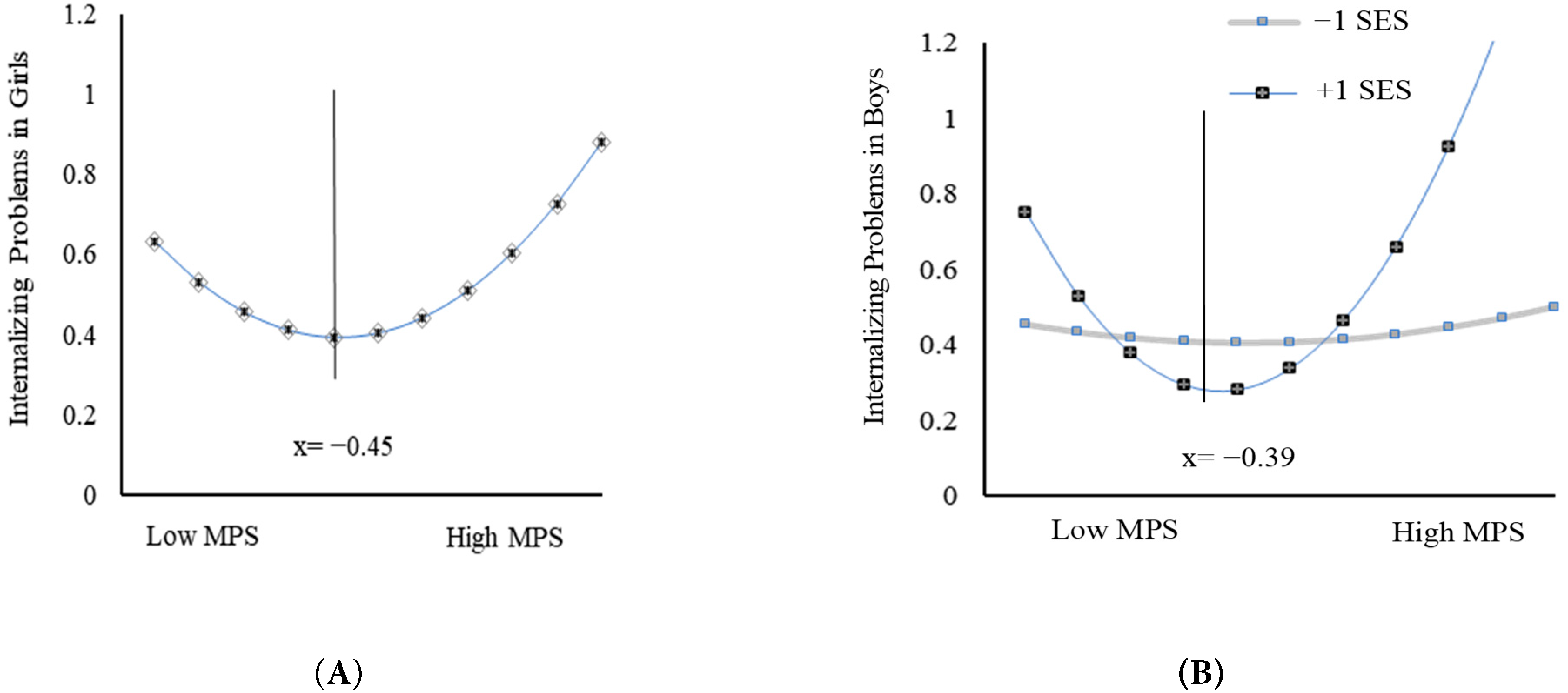
Figure 1: Maternal parenting stress and internalizing problems. (A) in girls; (B) in boys. Abbreviations: SES, socioeconomic status; MPS, maternal parenting stress.
For boys, a significant interaction was observed between the quadratic term of maternal parenting stress and family socioeconomic status (b = 0.07, p < 0.001). Simple slope analyses were conducted at one standard deviation above and below the mean of SES. Among boys from high-SES families, the quadratic term of maternal parenting stress significantly predicted internalizing problems (b = 0.12, t = 3.89, p < 0.001), with the positive quadratic coefficient indicating a U-shaped association. The inflection point of the curve was x = −0.39 (range data = 2.15, see Fig. 1B), which falls within the valid range of maternal parenting stress scores ([1.31, 3.42]). In contrast, among boys from low–SES families, the quadratic term was not a significant predictor of internalizing problems (b = 0.01, t = 0.49, p > 0.05), indicating that the curvilinear association did not emerge under conditions of lower socioeconomic status.
To the best of our knowledge, this study provides a novel examination of both linear and curvilinear associations between maternal parenting stress and internalizing problems in adolescents within the context of contemporary Chinese culture, and further explores the moderating role of adolescent gender and family socioeconomic status in this relationship. The findings revealed that this association between maternal parenting stress and internalizing problems in adolescents was curvilinear, consistent with the Steeling Model, and that both adolescent gender and family socioeconomic status moderated this relationship.
In the current study, a noteworthy aspect of the findings was that the curvilinear relationship between maternal parenting stress and internalizing problems emerged for girls, and for boys in high-SES families, partially supporting Hypothesis 1. Specifically, maternal parenting stress was negatively associated with adolescents’ internalizing problems at low to moderate levels, with internalizing symptoms being lowest at moderate stress. However, as maternal parenting stress increased from moderate to high levels, it significantly positively predicted adolescents’ internalizing problems. Consistent with the Steeling Model [19], moderate levels of maternal parenting stress may expose adolescents to manageable challenges that promote coping skills and psychological resilience, thereby lowering the risk of internalizing problems. Conversely, very low levels of stress may signal parental disengagement or a lack of appropriate demands, which adolescents may interpret as insufficient guidance or concern, increasing their vulnerability to internalizing problems [20]. At the other end of the continuum, excessive maternal parenting stress may erode maternal warmth and support, intensify negative emotional dynamics in mother–child interactions, and ultimately heighten adolescents’ internalizing problems [33]. As hypothesized, this study provides robust evidence for the curvilinear relationship between maternal parenting stress and adolescent internalizing problems within the contemporary Chinese cultural context.
The study revealed a notable gender difference in in the extent to which family socioeconomic status moderated the association between maternal parenting stress and adolescents’ internalizing problems, consistent with Hypothesis 2. The current study found that maternal parenting stress exhibited a U-shaped association with girls’ internalizing problems across SES levels. According to gender socialization theory, girls are typically socialized to be more emotionally expressive and attuned to interpersonal cues [34], making them more sensitive to maternal emotional states and family stress regardless of socioeconomic conditions. Moreover, even at very low levels of maternal parenting stress, girls may still exhibit emotional distress or internalizing problems. Prior work has found that girls show significant internalizing symptoms even under minimal emotional maltreatment, including neglect [35]. Girls might become vulnerable to ineffective coping, heightened anxiety, and feelings of despair when maternal parenting stress exceeds moderate levels [36].
Furthermore, the results showed that the moderating effect of socioeconomic status emerged t only for boys. In contrast to boys from high-SES families, those from low-SES families did not show a significant U-shaped pattern. According to the Family Stress Theory, economic hardship experienced by parents can disrupt family functioning, which may reduce the extent to which variations in maternal parenting stress translate into differential internalizing outcomes for boys [37]. Boys in low-SES families are often exposed to multiple co-occurring risks, such as interparental conflict and limited educational resources [38,39]. Within such contexts, they may be more likely to adopt maladaptive coping strategies—particularly externalizing behaviors—in response to maternal parenting stress [40,41]. Gender socialization processes further contribute to this pattern, as boys are often encouraged to minimize emotional expression and are more likely to cope with stress through externalizing pathways [42,43]. According to the family investment model, high-SES families have greater access to external resources and contextual advantages [44], which in turn provide children with a stronger foundation for developing coping skills and psychological resilience [45]. The unique curvilinear influence of maternal parenting stress revealed both its resilience-promoting and risk-enhancing roles. From low to moderate maternal parenting stress, adolescents in high-SES families may benefit from ample resources and supportive environments that help cultivate coping capacities and resilience, thereby reducing the risk of internalizing problems [19,20]. However, when maternal parenting stress exceeds a manageable level—often due to the combined demands of maintaining high-quality parent–child interactions and balancing work responsibilities—maternal emotional warmth and sensitivity tend to diminish. Consequently, adolescents may struggle to regulate their emotions effectively, increasing their vulnerability to internalizing symptoms [46,47].
It is important to acknowledge several limitations of this study. First, the absence of fathers’ reports of parenting stress limits our understanding of how paternal stress contributes to overall family stress dynamics and adolescents’ adjustment. For example, Thériault et al. found that higher paternal parenting stress predicted more child behavior problems when maternal stress was low or average, underscoring the importance of including both parents in future work [48]. Secondly, because the present study relied on cross-sectional data, the directionality of the association between maternal parenting stress and adolescents’ internalizing problems remains uncertain. longitudinal evidence had shown that children’s internalizing symptoms during late childhood (ages 9–12) predicted higher levels of parenting stress over time [49], highlighting the need for prospective designs to clarify bidirectional pathways. Thirdly, although grade and only-child status were included as control variables in this study, other potentially important covariates—such as adolescents’ health status and family structure—may also influence parenting stress and internalizing outcomes. Previous studies have shown that children with physical difficulties, single parenting, and a larger number of children in the household tend to experience higher levels of parenting stress [50,51]. Finally, the generalizability of the findings to rural or lower-SES populations may be limited Future research should explore these dynamics in more diverse socioeconomic and cultural contexts to enhance the external validity of the findings.
Taken together, this study makes three important contributions. First, it provides novel evidence within a contemporary Chinese cultural context that the association between maternal parenting stress and adolescent internalizing problems follows a U-shaped pattern, offering cross-cultural support for the Steeling Model and highlighting the potential developmental benefits of moderate stress. Second, the findings reveal distinct roles of socioeconomic status and gender, demonstrating that the curvilinear effect applied to girls across SES levels, whereas it emerged for boys only in high-SES families. This nuance enriches our understanding of how family and individual characteristics jointly shape developmental outcomes. Third, the results advance an innovative perspective that maternal parenting stress is not uniformly detrimental; rather, moderate stress may simultaneously represent both a potential risk and a resilience-building resource, depending on contextual and individual conditions. Collectively, these insights deepen theoretical explanations of stress–adaptation processes and suggest that interventions should focus not only on reducing excessive stress but also on fostering adaptive coping within manageable levels of parenting stress to promote adolescent well-being.
Acknowledgement:
Funding Statement: This study was supported by the National Natural Science Foundation of China (32171069).
Author Contributions: Methodology, Xiaoting Hou, Jingjing Zhao and Yuxin Shi; validation, Xiaoting Hou; writing—original draft preparation, Xiaoting Hou; writing—review and editing, Xiaoting Hou and Shufen Xing; supervision, Yuhua Li; funding acquisition, Shufen Xing. All authors reviewed and approved the final version of the manuscript.
Availability of Data and Materials: The data that support the findings of this study are available from the Corresponding Author [Yuhua Li, Shufen Xing] upon reasonable request.
Ethics Approval: This study was performed in line with the principles of the Declaration of Helsinki. Approval was granted by the Psychological Ethics Committee of Capital Normal University (CNU-20211202). Written informed consent was obtained from both parents and adolescents prior to participation.
Conflicts of Interest: The authors declare no conflicts of interest.
Table A1: Main effects, linear and quadratic interactive effects (n = 405).
| Step | Predictors | b | SE | β | R2 | ΔR2 |
|---|---|---|---|---|---|---|
| Step 1 | Grade | −0.05 | 0.06 | −0.06 | 0.03 | 0.03** |
| One-child | 0.06 | 0.04 | 0.07 | |||
| Step 2 | SES | −0.01 | 0.02 | −0.03 | 0.06 | 0.03** |
| MPS | 0.07 | 0.03 | 0.18 | |||
| MPS2 | 0.07*** | 0.02 | 0.27 | |||
| Step 3 | MPS × SES | 0.06 | 0.03 | 0.13 | 0.07 | 0.01 |
| MPS2 × SES | 0.02 | 0.02 | 0.10 | |||
| Step 4 | MPS × SES × gender | −0.04 | 0.02 | −0.08 | 0.11 | 0.04*** |
| MPS2 × SES × gender | −0.03** | 0.01 | −0.16 |
References
1. Abidin RR . The determinants of parenting behavior. J Clin Child Psychol. 1992; 21: 407– 12. doi:10.1207/s15374424jccp2104_12. [Google Scholar] [CrossRef]
2. Huang CY , Costeines J , Kaufman JS , Ayala C . Parenting stress, social support, and depression for ethnic minority adolescent mothers: impact on child development. J Child Fam Stud. 2012; 23( 2): 255– 62. doi:10.1007/s10826-013-9807-1. [Google Scholar] [CrossRef]
3. Li S . Research on parenting dilemmas in the Yangtze River delta urban agglomeration and their impact on fertility intentions. Youth Explor. 2021;( 03): 88– 98. (In Chinese). doi:10.13583/j.cnki.issn1004-3780.2021.03.008. [Google Scholar] [CrossRef]
4. Putnick DL , Bornstein MH , Hendricks C , Painter KM , Suwalsky JT , Collins WA . Stability, continuity, and similarity of parenting stress in European American mothers and fathers across their child’s transition to adolescence. Parent Sci Pract. 2010; 10: 60– 77. doi:10.1080/15295190903014638. [Google Scholar] [CrossRef]
5. McGrath JJ , AlHamzawi A , Alonso J , Altwaijri Y , Andrade LH , Bromet EJ , et al. Age of onset and cumulative risk of mental disorders: a cross-national analysis of population surveys from 29 countries. Lancet Psychiatry. 2023; 10: 668– 81. doi:10.1016/S2215-0366(23)00193-1. [Google Scholar] [CrossRef]
6. Geneviève MV , Voronin I , Isabelle OM . Polygenic predictions of internalizing problems and suicidal behaviors in youth. Eur Neuropsychopharmacol. 2023; 75: S36. doi:10.1016/j.euroneuro.2023.08.074. [Google Scholar] [CrossRef]
7. Christina MR , Rodriguez CM . Association between independent reports of maternal parenting stress and children’s internalizing symptomatology. J Child Fam Stud. 2011; 20( 5): 631– 9. doi:10.1007/s10826-010-9438-8. [Google Scholar] [CrossRef]
8. Fu Z , Li Y , Yu R , Guo R , Gao L , Zhao S . Relationship between parenting stress and behavioral and emotional problems in preschool children: a mediation effect analysis. World J Psychiatry. 2025; 15( 1): 100068. doi:10.5498/wjp.v15.i1.100068. [Google Scholar] [CrossRef]
9. Masarik AS , Conger RD . Stress and child development: a review of the family stress model. Annu Rev Psychol. 2017; 68( 1): 351– 78. [Google Scholar]
10. Galbally M , Watson SJ , Lewis AJ , Van IJzendoorn MH . Parenting stress, maternal depression and child mental health in a Melbourne cohort before and during the COVID-19 pandemic. J Paediatr Child Health. 2022; 58( 11): 2051– 7. doi:10.1111/jpc.16155. [Google Scholar] [CrossRef]
11. Parker JJ , Garfield CF , Simon CD , Bendelow A , Heffernan ME , Davis MM , et al. Teleworking, parenting stress, and the health of mothers and fathers. JAMA Netw Open. 2023; 6( 11): 41844. doi:10.1001/jamanetworkopen.2023.41844. [Google Scholar] [CrossRef]
12. Almeida ML , Garon CG , Cinar E , Frizzo GB , Fitzpatrick C . Prospective associations between child screen time and parenting stress and later inattention symptoms in preschoolers during the COVID-19 pandemic. Front Psychol. 2023; 14: 1053146. doi:10.3389/fpsyg.2023.1053146. [Google Scholar] [CrossRef]
13. Kwon JY . The relationship between parenting stress, parental intelligence and child behavior problems in a study of Korean preschool mothers. Early Child Dev Care. 2007; 177( 5): 449– 60. doi:10.1080/03004430600852916. [Google Scholar] [CrossRef]
14. Tang F , Tracy M , Radigan M , Vásquez E . Trajectories of maternal parenting stress and adolescent behavioral symptoms in unmarried families: the role of family immigration status. J Affect Disord. 2024; 367: 297– 306. doi:10.1016/j.jad.2024.08.197. [Google Scholar] [CrossRef]
15. Liu Y , Song Y , Wu Y , Lu H , Gao Y , Tang J , et al. Association between parental educational involvement and adolescent depressive symptoms: a systematic review and meta-analysis. BMC Psychology. 2024; 12( 1): 538. doi:10.1186/s40359-024-02039-3. [Google Scholar] [CrossRef]
16. Tan M , Mao P . Type and dose-response effect of adverse childhood experiences in predicting depression: a systematic review and meta-analysis. Child Abuse Neglect. 2023; 139: 106091. doi:10.1016/j.chiabu.2023.106091. [Google Scholar] [CrossRef]
17. Davies PT , Thompson MJ , Hentges RF , Parry LQ , Sturge-Apple ML . Interparental conflict as a quadratic predictor of children’s reactivity to interparental conflict and school adjustment: steeling effects or risk saturation? Child Dev. 2022; 93( 2): 594– 611. doi:10.1111/cdev.13720. [Google Scholar] [CrossRef]
18. Liu Y , Chen J . The curvilinear relationship between paternal and maternal psychological control and adolescents’ risk-taking behavior: the moderating effect of adolescents self-esteem. Psychol Dev Educ. 2019; 35( 4): 401– 10. (In Chinese). doi:10.16187/j.cnki.issn1001-4918.2019.04.03. [Google Scholar] [CrossRef]
19. Repetti RL , Robles TF . Nontoxic family stress: potential benefits and underlying biology. Fam Relat. 2016; 65: 163– 75. doi:10.1111/fare.12180. [Google Scholar] [CrossRef]
20. Arbel R , Margolin G , O’Connor SG , Mason TB , Leventhal AM , Dunton GF . The curvilinear effect of mothers’ parenting stress and attunement on children’s internalizing symptoms: a six-wave study of mother–youth dyads across the transition to adolescence. Dev Psychol. 2022; 56( 7): 1316– 30. doi:10.1037/dev0000932. [Google Scholar] [CrossRef]
21. Taraban L , Shaw DS . Parenting in context: revisiting Belsky’s classic process of parenting model in early childhood. Dev Rev. 2018; 48: 55– 81. doi:10.1016/j.dr.2018.03.006. [Google Scholar] [CrossRef]
22. Paulussen-Hoogeboom MC , Stams GJM , Hermanns JMA , Peetsma TD . Child negative emotionality and parenting from infancy to preschool: a meta-analytic review. Dev Psychol. 2007; 43( 2): 438– 53. doi:10.1037/0012-1649.43.2.438. [Google Scholar] [CrossRef]
23. Ouyang Y , Ding D , Xu X . Problem behaviors of adolescents: the role of family socioeconomic status, parental educational expectations, and adolescents’ confidence in the future. Int J Environ Res Public Health. 2022; 19( 23): 15442. doi:10.3390/ijerph192315442. [Google Scholar] [CrossRef]
24. Endendijk JJ , Groeneveld MG , Mesman J . The gendered family process model: an integrative framework of gender in the family. Arch Sex Behav. 2018; 47( 4): 877– 904. doi:10.1007/s10508-018-1185-8. [Google Scholar] [CrossRef]
25. Hankin BL , Mermelstein R , Roesch L . Sex differences in adolescent depression: stress exposure and reactivity models. Child Dev. 2007; 78( 1): 279– 95. doi:10.1111/j.1467-8624.2007.00997.x. [Google Scholar] [CrossRef]
26. Ren C . Measurement methodology on social economic status index of student. J Educ Stud. 2010; 6( 5): 77– 82. (In Chinese). doi:10.14082/j.cnki.1673-1298.2010.05.010. [Google Scholar] [CrossRef]
27. Abidin RR . Parenting stress index manual. 3rd ed. Odessa, Ukraine: Psychological Assessment Resources; 1995. [Google Scholar]
28. Achenbach TM . Manual for the child behavior checklist: 418 and 1991 profile. Burlington, VT, USA: Department of Psychiatry, University of Vermont; 1991. [Google Scholar]
29. Tang D , Wen Z . Statistical approaches for testing common method bias: problems and suggestions. J Psychol Sci. 2020; 43( 1): 215– 23. (In Chinese). doi:10.16719/j.cnki.1671-6981.2020130. [Google Scholar] [CrossRef]
30. Cohen J . Applied multiple regression/correlation analysis for the behavioral sciences. 3rd ed. Mahwah, NJ, USA: L. Erlbaum Associates; 2003. [Google Scholar]
31. MacKinnon DP . Introduction to statistical mediation analysis. New York, NY, USA: Routledge; 2008. doi:10.4324/9780203809556-1. [Google Scholar] [CrossRef]
32. Haans RFJ , Pieters C , He Z . Thinking about U: theorizing and testing U and inverted U–shaped relationships in strategy research. Strateg Manag J. 2016; 37( 7): 1177– 95. doi:10.1002/smj.2399. [Google Scholar] [CrossRef]
33. Liu L , Wang M . Parenting stress and children’s problem behavior in China: the mediating role of parental psychological aggression. J Fam Psychol. 2015; 29( 1): 20. doi:10.1037/fam0000047. [Google Scholar] [CrossRef]
34. Keresteš G , Rezo I , Ajduković M . Links between attachment to parents and internalizing problems in adolescence: the mediating role of adolescents’ personality. Curr Psychol. 2019; 42( 19): 15925– 35. doi:10.1007/s12144-019-00210-3. [Google Scholar] [CrossRef]
35. Hagborg JM , Tidefors I , Fahlke C . Gender differences in the association between emotional maltreatment with mental, emotional, and behavioral problems in Swedish adolescents. Child Abuse Neglect. 2017; 67: 249– 59. doi:10.1016/j.chiabu.2017.02.033. [Google Scholar] [CrossRef]
36. Hagger MS . Conservation of resources theory and the ‘strength’ model of self-control: conceptual overlap and commonalities. Stress Health. 2015; 31: 89– 94. doi:10.1002/smi.2639. [Google Scholar] [CrossRef]
37. Conger RD , Conger KJ , Elder GH , Lorenz FO , Simons RL , Whitbeck LB . A family process model of economic hardship and adjustment of early adolescent boys. Child Dev. 1992; 63( 3): 526. doi:10.2307/1131344. [Google Scholar] [CrossRef]
38. Barnhart S , Garcia AR , Karcher NR . Adolescent mental health and family economic hardships: the roles of adverse childhood experiences and family conflict. J Youth Adolesc. 2022; 51: 2294– 311. doi:10.1007/s10964-022-01671-9. [Google Scholar] [CrossRef]
39. Peverill M , Dirks MA , Narvaja T , Herts KL , Comer JS , McLaughlin KA . Socioeconomic status and child psychopathology in the United States: a meta-analysis of population-based studies. Clin Psychol Rev. 2021; 83: 101933. doi:10.1016/j.cpr.2020.101933. [Google Scholar] [CrossRef]
40. Cook L , Yan J , Butler K . Maternal parenting stress and child externalizing behaviors. J Child Psychol Psychiatry. 2024; 65( 4): 564– 76. doi:10.1016/j.appdev.2024.101673. [Google Scholar] [CrossRef]
41. Nong Y , Zhu P , Li X , Chai PP , Zhai TM , Zhang YH . Socioeconomic status and behavioral problems in children: the mediating effect of social relations in mainland China. Multidiscip Digit Publ Inst. 2022; 2( 4): 466– 78. doi:10.3390/adolescents2040037. [Google Scholar] [CrossRef]
42. Chaplin TM , Aldao A . Gender differences in emotion expression in children: a meta-analytic review. Psychol Bull. 2013; 139( 4): 735– 65. doi:10.1037/a0030737. [Google Scholar] [CrossRef]
43. Chaplin TM . Gender and emotion expression: a developmental contextual perspective. Emot Rev. 2015; 7( 1): 14– 21. doi:10.1177/1754073914544408. [Google Scholar] [CrossRef]
44. Mistry RS , Biesanz JC , Chien N , Howes C , Benner AD . Socioeconomic status, parental investments, and the cognitive and behavioral outcomes of low-income children from immigrant and native households. Early Child Res Q. 2008; 23( 2): 193– 212. doi:10.1016/j.ecresq.2008.01.002. [Google Scholar] [CrossRef]
45. Conger RD , Donnellan MB . An interactionist perspective on the socioeconomic context of human development. Annu Rev Psychol. 2007; 58( 1): 175– 99. doi:10.1146/annurev.psych.58.110405.085551. [Google Scholar] [CrossRef]
46. Luthar SS , Cicchetti D , Becker B . The construct of resilience: a critical evaluation and guidelines for future work. Child Dev. 2000; 71: 543– 62. doi:10.1111/1467-8624.00164. [Google Scholar] [CrossRef]
47. Rutter M . Resilience as a dynamic concept. Dev Psychopathol. 2012; 24: 335– 44. doi:10.1017/S0954579412000028. [Google Scholar] [CrossRef]
48. Thériault RL , Bernier A , Deneault AA . Maternal and paternal parenting stress: direct and interactive associations with child externalizing and internalizing behavior problems. Early Child Res Q. 2025; 71: 114– 22. doi:10.1016/j.ecresq.2024.12.006. [Google Scholar] [CrossRef]
49. Vierhaus M , Lohaus A , Schmitz AK , Schoppmeier M . Relationships between maternal parenting stress and reports on children’s internalizing and externalizing problems: a cross-lagged structural equation model. J Educ Dev Psychol. 2013; 3( 1): 39. doi:10.5539/jedp.v3n1p39. [Google Scholar] [CrossRef]
50. Louie AD , Cromer LD , Berry JO . Assessing parenting stress: review of the use and interpretation of the parental stress scale. Fam J. 2017; 25: 359– 67. doi:10.1177/1066480717731347. [Google Scholar] [CrossRef]
51. Pinquart M . Parenting stress in caregivers of children with chronic physical condition—a meta-analysis. Stress Health. 2018; 34: 197– 207. doi:10.1002/smi.2780. [Google Scholar] [CrossRef]
Cite This Article
 Copyright © 2026 The Author(s). Published by Tech Science Press.
This work is licensed under a Creative Commons Attribution 4.0 International License , which permits unrestricted use, distribution, and reproduction in any medium, provided the original work is properly cited.
 Downloads
 Citation Tools
