
 Login
Login Register
 Submit a Paper
 Propose a Special lssue
 Open Access
ARTICLE

Association between Positive Solitude and Psychological Adaptation of International Students in China: The Intermediary Roles of Authenticity and Loneliness
1 School of English, Jilin International Studies University, Changchun, 130117, China
2 School of Foreign Languages, Hunan Normal University, Changsha, 410081, China
3 International Education School, Shenyang University of Chemical Technology, Shenyang, 110142, China
4 Department of Psychology, Shaoxing University, Shaoxing, 312000, China
* Corresponding Author: Zhiguang Fan. Email:
International Journal of Mental Health Promotion 2026, 28(3), 11 https://doi.org/10.32604/ijmhp.2025.074801
Received 18 October 2025; Accepted 08 December 2025; Issue published 31 March 2026
 View Full Text
 Download PDF
Abstract
Objective: International students frequently face psychological adaptation difficulties while studying and living abroad. As an effective psychological resource, positive solitude has been identified as a potential factor for improving psychological well-being, but the underlying mechanism linking the two has not been fully explored. The current study aims to explore the relationship between positive solitude and psychological adaptation of international students, with particular emphasis on the intermediary roles of authenticity and loneliness. Methods: A total of 529 international tertiary students (Mage = 23.76, SD = 5.08; 60.68% male) were surveyed using the Positive Solitude Scale (PSS), Authenticity Scale (AS), 6-item UCLA Loneliness Scale (ULS-6), and Brief Psychological Adaptation Scale (BPAS). SPSS27.0 was used for descriptive statistical analysis and Pearson correlation analysis. PROCESS macro (Model 6) was employed to test a serial mediation model, in which authenticity and loneliness function as intermediary variables between positive solitude and psychological adaptation. Results: The correlation analysis indicated significant associations among positive solitude, authenticity, loneliness, and psychological adaptation (r = −0.544~0.511). Positive solitude was directly and positively related to psychological adaptation (β = 0.132, t = 3.609, p < 0.001) and indirectly related to psychological adaptation through two pathways: a single mediation via authenticity (indirect effect = 0.089) and a serial mediation through authenticity and loneliness (indirect effect = 0.062). Loneliness did not serve as a significant mediator (indirect effect = –0.015, 95% CI [–0.049, 0.019]). The total indirect effect was 0.136. Conclusions: Interventions targeting international students’ capacity for experiencing positive solitude and authenticity can help to reduce loneliness and increase psychological adaptation. The findings derived from this study are conducive to understanding the relationship between positive solitude and psychological adaptation, as well as its underlying mechanisms. In addition, the study offers a new perspective for educational management and psychological counseling services for international students.Keywords
Globalization has not only facilitated the unprecedented circulation of information and capital, but has also led to a massive flow of people studying abroad in search of high-quality educational resources. According to the UNESCO Institute for Statistics, up to 2023, there had been more than seven million inbound international students [1]. As an important sojourner group, international students experience difficulties in the host country, such as language barriers, reduced social support, and culture shock [2,3,4]. These barriers could lead to psychological distress among international students, affecting their academic engagement and academic performance in the host country [5]. Hence, the psychological adaptation of international students has attracted increasing attention from scholars. Psychological adaptation refers to an individual’s subjective experiences in a new cultural environment, including positive and negative emotional states [6]. Psychological adaptation demonstrates the process by which individuals consciously adjust their mental state and behavior in the face of environmental changes to better engage in academic studies and daily life activities [7].
As an effective psychological resource, positive solitude is conducive to promoting cultural adjustment and mental health among children and adolescents [8,9]. International students are frequently in a state of aloneness due to reduced emotional support, sociocultural discomfort, and academic pressure [10,11]. Notably, the motivation for solitude can be self-determined or non-self-determined [12]. Self-determined solitude is an effective resource that aids international students in reducing negative emotions and improve adaptation [13]. As a special form of self-determined solitude, positive solitude can foster individuals’ inner strength and hence improve mental health [14,15]. Therefore, improving the positive solitude ability of international students can help them better adapt to the solitary environment, resulting in greater psychological adaptation.
Therefore, this study attempts to explore the relationship between positive solitude and psychological adaptation of international students, and analyze its underlying mechanism.
1.1 Relationship between Positive Solitude and Psychological Adaptation
Positive solitude refers to individuals’ choice to engage in meaningful and enjoyable activities or experiences at a time or place of their own choosing, without significant interactions with others [16]. Engaging in solitary activities after interpersonal engagements may elicit positive affective responses [17], aid in self-recovery and emotional regulation, and reduce stress [18]. As expounded in the Self-determination theory, among the three interior psychological needs that enhance intrinsic motivation and mental health [19], autonomy is a psychological state of self-management and self-regulation, which can promote individuals to act according to their personal interests. On the one hand, when individuals choose to be alone, they are able to detach themselves from external social pressures and have greater autonomy over personal values and interests [20]. The stronger this intrinsic motivation, the more likely it is for individuals to meet their psychological needs, therefore leading to a positive impact on mental health [12]. On the other hand, solitude does not always bring positive mental health; for example, for adolescents with low sociability, solitude is associated with adverse psychosocial adjustment [21]. Unchosen solitary activities were connected with the negative momentary feelings, and the engagement of such activities was related to reduced life meaning and satisfaction [22].
Another psychological need is relatedness, which refers to individuals’ needs to feel connected, get accepted and to establish meaningful bonds with others [23]. Despite the concern that solitude may seem to threaten the satisfaction of relatedness, when solitude is chosen out of people’s personal choice and driven by autonomous motivation, the abundant personal time and space provide psychological rejuvenation and emotion regulation [24]. Adams et al.’s study showed that relatedness-deficiency in solitude did not lead to loneliness, but that people who were relatedness-deficient in social interactions felt lonely [25]. Longitudinal research further supports that enhancing intrapersonal emotion regulation skills alleviates psychological distress [26]. Thus, individuals with strong emotion regulation abilities may possess a greater capacity to engage with solitude positively despite the loss of relatedness. Additionally, the latest studies have shown that social interactions with non-close others exhibited an autonomy-relatedness tradeoff, while only with romantic partners uniquely fulfilled both autonomy and relatedness needs [27]. Therefore, feelings of relatedness may play a relatively minor role in shaping international students’ experience and satisfaction with solitude. Meanwhile, developing the ability to be comfortable in solitude may serve as a protective factor, helping to maintain a sense of social connectedness even when overall social interactions decline in number.
According to socioemotional selectivity theory, when facing challenging environments, individuals might adopt an adaptive mechanism known as “selection” and become more selective in the decision of social engagements [28]. In this case, being around people is no better than spending restorative and quality time alone and becoming more autonomous of their own life decisions. Meanwhile, unsatisfactory interactions with peers might worsen well-being [29]. Similarly, international students may experience the same dynamic. When faced with the loss of familiar environment and social circles, the international students might also face a similar choice; thus, relatedness is not necessarily a primary concern for them. Furthermore, in Confucian culture, relatedness is grounded in reciprocal and morally guided relationships. Instead of emphasizing individual autonomy, Confucian relatedness centers on fulfilling one’s obligations within a network of interdependent social roles [30]. In this case, positive solitude will not be taken as divergence from social bonds, but rather an imperative process for balancing inner peace [31] and thus better fulfilling social roles subsequently. Prior research also found that solitude did not necessarily lead to loneliness, as long as it was voluntary and individuals felt a sense of connection with the culture they lived in [32].
Previous studies have found that the main factors associated with international students’ psychological adaptation include social factors, academic factors, cultural factors, institutional factors, and individual factors [33,34]. Individual factors encompass cognitive dimensions (e.g., cross-cultural competence), motivation to study abroad, personality traits, and non-intellectual factors such as resilience [35]. Among them, as an important self-regulation ability, positive solitude has a positive correlation with an individual’s psychological well-being [36]. Although no scholars have directly studied the relationship between positive solitude and the psychological adaptation of international students, studies on non-international students provide abundant empirical evidence to reveal the relationship between the two. For instance, Rodriguez et al. found that if people had a positive attitude toward being alone, they would feel better after being alone [37]. This implies that international students who experience positive solitude may show a higher level of psychological adaptation. A longitudinal study by Hu et al. [38] found that adolescents’ preference for being alone can reduce their depression levels. Additionally, Weinstein et al. [39] studied the impact of solitude on adult mental health through the day reconstruction method (DRM) and found that alone time and voluntary choices can work together on mental health. When solitude is a voluntary choice, its negative impact on mental health is significantly diminished. Soysal et al. [40] found that solitude preferences contributed to increased life satisfaction. It is, therefore, speculated that positive solitude may help international students relieve the pressure of cultural adjustment in a pleasant way, improve their ability to cope with cultural conflicts, promote self-recovery and emotional regulation, and strengthen their ability to adapt psychologically.
1.2 Intermediary Role of Authenticity
Authenticity refers to the unobstructed control of the individual’s authentic and core self in daily life; it consists of four aspects: self-awareness, unbiased processing, authentic behavior, and relational orientation [41]. Self-determination theory posits that the satisfaction of an individual’s basic psychological needs, the monitoring of autonomous behavior, the pursuit of goals, and the stimulation of interests can help individuals build a meaningful and authentic life [23]. When people identify their internal motivations and make decisions based on these motivations, this may lead to a sense of self-authenticity [42]. The level of satisfaction of basic psychological needs is the premise and foundation of individual self-improvement [43]. It is thus speculated that when international students independently carry out meaningful solitary activities, such activities can act as catalysts, which stimulate the satisfaction of individual psychological needs, thereby enhancing the real experience and stabilizing the understanding of their true selves.
At present, no direct evidence has been found for the relationship between positive solitude and authenticity; notwithstanding, the relationship between mindfulness, meditation, positive solitude, and authenticity reveals a link between these variables [44,45]. Bachman et al. [46] found that mindfulness significantly increased levels of positive solitude. Samangooei et al. [24] also found that mindful behaviors performed in natural environments are an important part of positive solitude, enhancing an individual’s ability to think reflectively. At the same time, mindfulness improves individual authenticity, enhances individuals’ immediate, non-judgmental awareness of internal and external stimuli, and enhances self-knowledge [47]. In addition, Smith et al.’s finding suggested that positive solitude was likely to predict individual growth and psychological abundance, and improve the satisfaction of individual psychological needs [28]. Paterson et al.’s study revealed that positive solitude freed participants from performative social burdens, fostering mindfulness and introspection that aligned inward beliefs with outward behaviors, enhancing authenticity and psychological well-being [48]. The findings of Peng et al. demonstrated that trait mindfulness enhanced positive affective experiences during solitude, which overlapped with the component of authenticity: awareness of one’s inner states [49]. In addition, Smith et al.’s study expounded on how autonomous choice of solitude predicts psychological abundance, and the satisfaction of individual psychological needs [50]. Since the satisfaction of psychological needs helps individuals discover their true selves, it is thus hypothesized in this study that positive solitude promotes individuals to carry out meaningful and independent life experiences, so that real life is more in line with real values and psychological needs.
Evidence from prior studies has shown that authenticity can improve individuals’ mental health [51]. When basic psychological needs are met, individuals are more likely to accept and freely express their inner states (values, emotions, and desires), cultivate positive emotions, and improve subjective well-being [52]. For example, Kim et al. [53] found that authenticity was significantly positively related to psychological well-being among sport referees. Individuals with high authenticity exhibited higher self-acceptance and self-motivation [54]. In addition, Rathi et al. [55] have found that in both individualistic and collectivist cultures, as individual authenticity increased, their life satisfaction and mental health levels got higher, and their emotional expression was more diverse. In addition, in the workplace relationships, the authenticity of subordinates could also promote the satisfaction of psychological needs and improve the degree of self-realization [56]. Therefore, positive solitude is hypothesized to be directly related to psychological adaptation or indirectly related to psychological adaptation through the role of authenticity.
1.3 Intermediary Role of Loneliness
While loneliness can take its toll on the life and mental health of different ages and groups, it is particularly severe among the population of international students [57]. International students not only face the pressure of cultural integration and academic pressure, but also lack social networks and support systems. It is therefore difficult for them to establish meaningful interpersonal relationships, in turn leading to higher levels of loneliness [11]. Loneliness refers to an unpleasant emotional experience caused by the lack of quantity or quality of interpersonal relationships experienced by individuals in social interactions [58]. The impact of solitude on mental health is multifaceted, encompassing both positive and negative effects. On one hand, routine solitude is often associated with loneliness and passive behavior. Wang et al. demonstrated that solitary tendencies are more closely associated with early adolescent maladjustment than later in life [59]. Ooi et al. further revealed that children’s preference for solitary play correlated with antisocial behavior, indirectly linked to peer exclusion and antisocial conduct [60].
On the other hand, unlike loneliness, solitude shows an inherent desire to be by oneself and thus is a more positive experience [61]. Adolescents who are comfortable with solitude may demonstrate better adaptability due to the impact of solitude on personality and identity formation. Larson et al. noted that solitude served as a crucial strategic retreat for adolescents in social interactions, and the comfort derived from solitude could reduce depression levels in adults while enhancing life satisfaction [62,63]. Dimitrijević and Buchholz pointed out that solitude was voluntary, sought after, and often positive, whereas loneliness was involuntary and aversive [64,65]. Taylor also pointed out that loneliness could be seen as an experience of “ego-separation”, and people with low levels of self-separation were less likely to feel lonely and even enjoyed being alone [66]. As explained above, positive solitude is an individual’s autonomous choice, which can promote individuals to carry out activities that interest them, and improve self-examination and self-regulation [67]. It can thusly be inferred that individuals with the ability to experience positive solitude tend to self-regulate and reduce loneliness even when social relationships are not satisfying.
Prior studies have indicated that loneliness can diminish one’s sense of meaning in life and is more likely to induce psychological distress compared to individuals with harmonious interpersonal relationships [68]. If loneliness persists for a long time, it can adversely affect people’s physical and mental health, such as anxiety, stress, and depression [69]. For example, a longitudinal study by Romero-Moreno et al. [70] found that loneliness was an important predictor of depressive symptoms two years later in severe COVID-19 survivors, affecting even more than baseline mood states. Additionally, international students with high loneliness tend to exhibit lower levels of acculturation and sense of belonging, reduced degrees of well-being, and less satisfactory academic performance [71].
1.4 Serial Mediation of Authenticity and Loneliness
Currently, there is a paucity of research that reveals the relationship between authenticity and loneliness [72]. Reich et al. pointed out that authenticity could reduce the psychological stress of individuals during the cross-cultural transition and alleviate the negative impact of loneliness on depressive symptoms and anxiety [73]. In addition, the higher the degree of authenticity of the individual, the more open-minded they were to accept real emotions, and they enjoyed solitude more naturally rather than anxiously seeking social contact [74]. Conversely, this contradiction in self-perception and motivation is likely to lead to greater loneliness in individuals when their true thoughts and needs do not align with external societal expectations [75]. Bryan’s study indicated that individuals with higher authenticity were more likely to understand and accept what they are currently experiencing when facing difficulties, leading to reduced emotional stress and physical health issues [74]. For international students, facing the transformation of social roles, relationships, and identities, they experience huge psychological pressure, and individuals with a higher level of authenticity may show better psychological adaptation.
In summary, based on self-determination theory, this study constructs a serial mediation model (see Fig. 1) to examine the relationship between positive solitude and psychological adaptation of international students and its mechanism. This study might foster a better understanding of the function of positive solitude and provide practical reference for international student administrators.
Hypothesis 1: There is a positive correlation between positive solitude and psychological adaptation of international students.
Hypothesis 2: Positive solitude is positively associated with international students’ psychological adaptation through the mediating factor of authenticity.
Hypothesis 3: Loneliness serves as a connecting pathway linking positive solitude and psychological adaptation.
Hypothesis 4: Authenticity and loneliness jointly play intermediary roles between positive solitude and psychological adaptation.
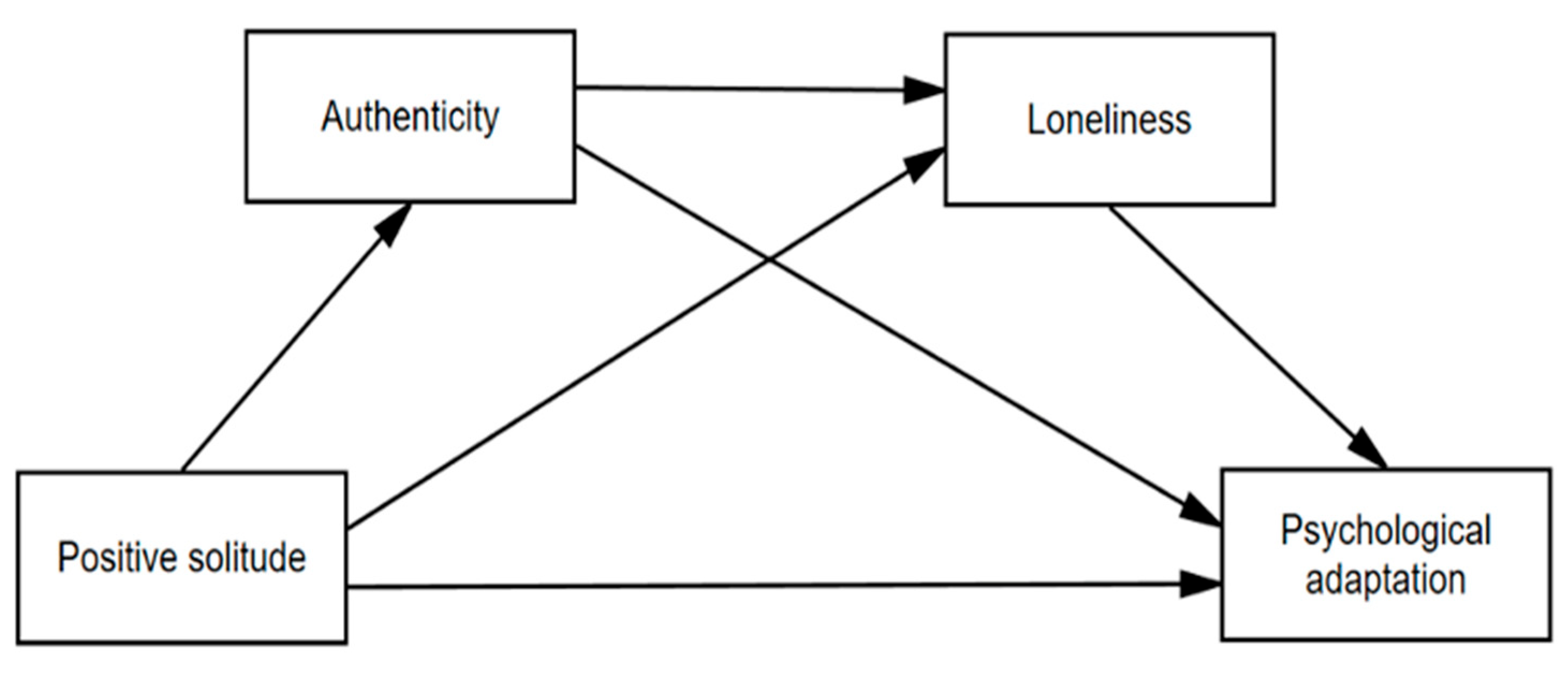
Figure 1: Theoretical model diagram.
2.1 Study Design and Participants
The present study is a cross-sectional survey conducted in China. Online questionnaires were used to survey international tertiary students of eight universities. The researchers communicated with the international education administrative departments and fully explained the research objectives, methods, and possible positive impacts on schools and students. After obtaining official consent and support, these departments were entrusted to send invitations containing links to electronic questionnaires directly to the international student groups through social software, and students voluntarily participated in answering them. The inclusion criteria of participants were as follows: (1) age greater than or equal to 18 years; (2) voluntary participation and commitment to answer truthfully; and (3) currently studying in China as international students. And the following criteria were used to exclude participants: (1) unable to communicate normally in English; (2) participated in similar surveys within 3 months; and (3) failed to finish all questions in the survey. Prior to the start of the survey, the online questionnaire shall present a consent form. Participants were instructed to confirm and read the consent particulars, and then press the consent box to signify their voluntary engagement. Only upon completion of this step may they proceed to the next page. This process ensures that academic research adheres to ethical standards and respects the autonomy of participants.
To determine the required sample size for detecting the indirect effects in our serial mediation model, we conducted a Monte Carlo power analysis using Monte Carlo Power Analysis for Indirect Effects tool [76] (https://schoemanna.shinyapps.io/mc_power_med/, accessed on 07 December 2025). We specified a two-mediator serial mediation mode and entered the expected standardized path coefficients based on prior theoretical assumptions and empirical findings. We used 2000 replications and 5000 Monte Carlo draws per replication. Sample size search was conducted from N = 50 to N = 2000 in increments of 50. Target power was set at 0.80. The Monte Carlo simulation suggested that a minimum sample size of N = 350 is required to achieve 0.80 power for detecting all three indirect effects.
The actual cumulative number of valid copies of the questionnaire was 529. Among them, 321 were males, accounting for 60.68%; 208 were women, accounting for 39.32%. The sample is strongly concentrated in Asia (about two-thirds of the total), followed by Africa (around one-quarter). Europe, North America, Oceania, and South America together make up a small proportion. At the national level, Mongolia contributes about 12% of the total sample, Pakistan nearly 10%, and Vietnam around 6%. Tanzania accounts for roughly 4% of the sample, while Russia contributes about 3%. The participants were between the ages of 18~43 years old, with an average age of 23.76 ± 5.08. The largest cluster of the sample was aged between 18–27 (81.3%). This survey, developed in accordance with the principles of the Declaration of Helsinki, was approved by the Ethics Committee of Jilin International Studies University (Approval No. JY202105005). Informed consent was obtained from all subjects involved in the study.
2.2.1 Positive Solitude Scale (PSS)
The Positive Solitude Scale [61] was used to assess individuals’ inclination toward solitude. The scale has been validated to demonstrate great reliability and validity [77]. The scale is a unidimensional structure with 9 items scored on a Likert 5-point scale (1 = never, 2 = rarely, 3 = sometimes, 4 = often, 5 = always). Example items include “When I find time for myself, I succeed better at making future plans.” and “I like carving out time to enjoy being by myself in a pleasant place/environment.” The total score of the scale is the sum of the scores of all items combined, and a higher score would imply a more positive attitude towards being alone. In the current study, the scale showed good reliability, with a Cronbach’s α coefficient of 0.862.
The Authenticity Scale was used to measure individuals’ level of authenticity. This scale has been validated in different populations with good reliability and validity [78,79]. The scale encompasses a total of 12 items, including three dimensions, of which two constructs are reverse scores. Using the Likert-7 scale, respondents were asked to choose from “strongly disagree” to “strongly agree”. Exemplary items include “I believe that being myself and doing what I want are better than being popular among others” and “I don’t know my true inner thoughts.” The score of all items included is the total score, and a higher number would mean a higher level of the individual’s authenticity. In this study, the scale had a Cronbach α coefficient of 0.802.
2.2.3 Brief Psychological Adaptation Scale (BPAS)
The Brief Psychological Adaptation Scale was used to measure an individual’s mental health in a cross-cultural environment. The scale is a unidimensional scale with a total of eight items, of which six items are reverse questions [6]. The scale uses a 7-point Likert format, and respondents were asked to choose from “never” to “always”. Example items include “Coming to China makes me feel excited” and “I’m nervous about how to behave in certain situations”. As in the scales above, the final score is the aggregation of all relevant items, and a high total score would mean a high level of the individual’s psychological adaptation. In this study, the scale had a Cronbach α coefficient of 0.821.
2.2.4 6-Item UCLA Loneliness Scale (ULS-6)
The 6-item UCLA Loneliness Scale (ULS-6) [80] was adopted to measure the level of loneliness. The scale is unidimensional with six items, and one item is a reverse question. The scale is scored on a 4-point Likert format, and respondents were asked to choose from “never”, “seldom”, “sometimes” and “often”. One example item is “I often feel a lack of companionship.” A higher total score means a higher degree of loneliness. In the study, the scale had a Cronbach α coefficient of 0.774.
In this study, data were analyzed using SPSS 27.0 and PROCESS v4.0 (IBM Corp., Armonk, NY, USA). Harman’s single-factor test [81] was used to test for common method biases (CMB) among different variables. First, descriptive statistical analysis methods were used to calculate the frequency and proportion of demographic features. The correlation between positive solitude, authenticity, loneliness, and psychological adaptation was calculated by Pearson’s correlation analysis. All data were standardized before performing the mediation analysis. Second, the serial mediation model was tested using Model 6 of the PROCESS macro. In hypothesis testing, positive solitude is used as the independent variable, psychological adaptation as the dependent variable, and authenticity and loneliness as the mediating variables. Based on previous studies, age, gender, length of residence, Chinese proficiency, and the degree type were chosen as control variables. Among them, gender (female students as the reference) and degree type (5 dumb variables, doctorate students as the reference group) were dummy coded. The Bootstrap method was used to repeat the sampling 5000 times to verify whether each indirect path was significant. If the 95% confidence interval does not contain zero, the mediation path is considered valid. This study used p < 0.05 as the criterion for a statistically significant difference. The absolute value of skewness less than 3 and kurtosis less than 10 are the criteria for judging normality [82].
All variables were subjected to exploratory factor analysis, and unrotated factor analysis results were examined. The results showed that the maximum variance explained by a single factor was 23.46% (<40%) and eight factors with eigenvalues greater than 1 were extracted in the unrotated solution, which preliminarily indicates that the common method bias did not account for the majority of the variance among the variables. In order to verify whether multicollinearity constitutes a significant problem, the variance expansion coefficient (VIF) and tolerance values of the study model were tested. Results showed that the VIF value of all variables was less than 10, and the tolerance value was greater than 0.10 [83], indicating that the multicollinearity problem in the study was not serious.
The results of the normality test of the variables in this study showed that the skewness coefficient (−0.073~0.273) was in the range of −3 to +3, and the kurtosis coefficient (−0.295~−0.611) was in the range of −10 to +10, indicating that the data met the assumption of normality. The mean and standard deviation of the sample’s positive solitude, authenticity, loneliness, and psychological adaptation are shown in Table 1. The results of Pearson correlation analysis (see Table 1) showed that positive solitude was positively correlated with authenticity and psychological adaptation (r = 0.304–0.354, p < 0.01), and negatively correlated with loneliness (r = −0.148, p < 0.01). Loneliness was negatively correlated with authenticity and psychological adaptation (r = −0.480~−0.544, p < 0.01), and authenticity was positively correlated with psychological adaptation (r = 0.511, p < 0.01).
Table 1: Correlations among variables (n = 529).
| Variables | 1 | 2 | 3 | 4 | 5 | 6 | 7 | 8 | 9 |
|---|---|---|---|---|---|---|---|---|---|
| 1. Sex | - | ||||||||
| 2. Age | −0.064 | - | |||||||
| 3. Length of residence | −0.064 | 0.301** | - | ||||||
| 4. Chinese Proficiency | −0.029 | 0.012 | 0.220** | - | |||||
| 5. Degree type | 0.106* | 0.628** | 0.385** | 0.058 | - | ||||
| 6. PSS | 0.079 | 0.086* | 0.021 | 0.116** | 0.138** | - | |||
| 7. AS | −0.003 | 0.163** | 0.098* | 0.140** | 0.117** | 0.354** | - | ||
| 8. ULS-6 | −0.062 | −0.130** | −0.091* | −0.143** | −0.177** | −0.148** | −0.480** | - | |
| 9. BPAS | −0.028 | 0.145** | 0.070 | 0.211** | 0.138** | 0.304** | 0.511** | −0.544** | - |
3.3 Testing for the Serial Mediation Model
The results of the serial mediation model analysis (see Fig. 2 and Table 2) showed that the total effect value of positive solitude on the psychological adaptation of international students was 0.268 when no mediating variables were added, and the path coefficient was significant (β = 0.268, t = 6.443, p < 0.001). After adding the mediating variables, it was found that positive solitude had a significant predictive effect on authenticity (β = 0.340, t = 8.282, p < 0.001) and psychological adaptation (β = 0.132, t = 3.609, p < 0.001), but not on loneliness (β = 0.039, t = 0.941, p = 0.347). In addition, authenticity had a significantly negative predictive role on loneliness (β = −0.469, t = −11.322, p < 0.001) and a significant positive correlation with psychological adaptation (β = 0.263, t = 6.402, p < 0.001). At the same time, loneliness had a significant negative predictive role on psychological adaptation (β = −0.386, t = −9.900, p < 0.001).
The significance of the indirect path from positive solitude to psychological adaptation was tested using the bootstrap method with 5000 resamples. The results showed (See Table 3) that positive solitude was indirectly associated with psychological adaptation through three pathways, of which the 95% confidence interval of the two paths did not contain zero, and the 95% confidence interval of one path (positive solitude-loneliness-psychological adaptation) contains zero. The total effect of positive solitude on psychological adaptation in the international students was 0.268, and the indirect effect value was 0.132, accounting for 49.25% of the total effect. Since the introduced control variables could only explain a very small proportion of the dependent variable (DV variance), the corresponding standardized regression coefficients (β values) were not reported in the study for conciseness.
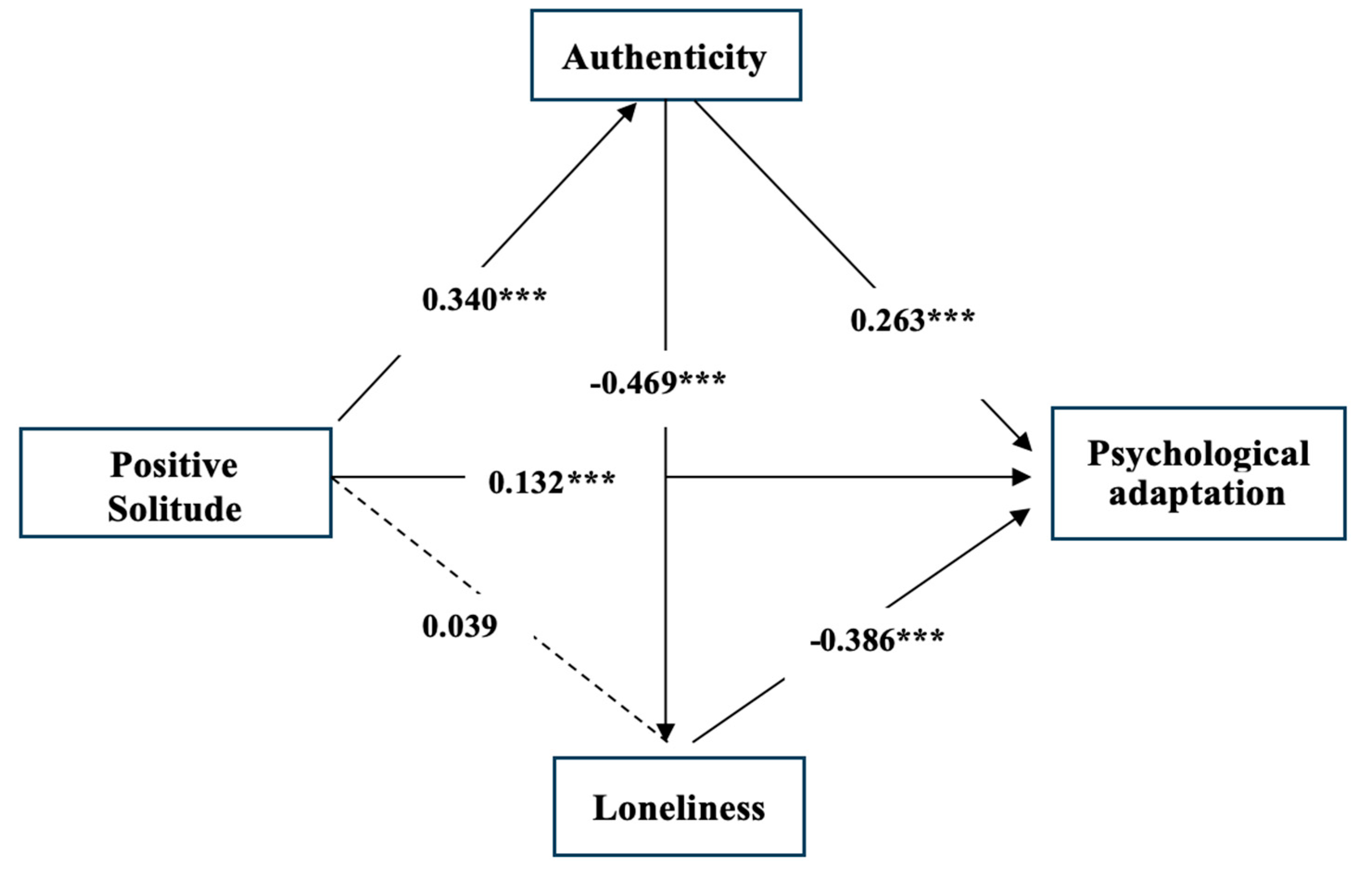
Figure 2: Serial mediation model diagram. ***p < 0.001.
Table 2: Analysis results of the serial mediation model (n = 529).
| Predictors | BPAS | AS | ULS-6 | BPAS | ||||
|---|---|---|---|---|---|---|---|---|
| β | t | β | t | β | t | β | t | |
| PSS | 0.268 | 6.443*** | 0.340 | 8.282*** | 0.039 | 0.941 | 0.132 | 3.609*** |
| AS | - | - | - | - | −0.469 | −11.322*** | 0.263 | 6.402 *** |
| ULS-6 | - | - | - | - | - | - | −0.386 | −9.900*** |
| Age | 0.020 | 1.594 | 0.044 | 3.566*** | −0.002 | 0.000 | −0.038 | |
| Sex (female as reference) | - | - | - | - | - | - | - | - |
| Male | 0.034 | 0.388 | −0.045 | −0.520 | 0.049 | 0.599 | 0.073 | 1.006 |
| Length of Residence | −0.019 | −0.633 | 0.023 | 0.782 | 0.004 | 0.139 | −0.028 | −1.121 |
| Chinese Proficiency | 0.124 | 4.299*** | 0.060 | 2.093* | −0.053 | −1.969* | 0.077 | 3.21*** |
| Study Type (doctorate as reference) | - | - | - | - | - | - | - | - |
| Exchange Student | −0.167 | −0.648 | 0.351 | 1.381 | 0.049 | 0.203 | −0.304 | −1.427 |
| Preppy Student | −0.199 | −0.897 | 0.390 | 1.781 | 0.229 | 1.105 | −0.284 | −1.542 |
| Undergraduate | −0.089 | −0.434 | 0.447 | 2.202* | 0.011 | 0.059 | −0.283 | −1.661 |
| Postgraduate | −0.15 | −0.827 | 0.167 | 0.929 | 0.005 | 0.032 | −0.222 | −1.479 |
| Others | −0.143 | −0.578 | 0.358 | 1.465 | −0.276 | −1.199 | −0.409 | −1.995* |
| R2 | 0.141 | 0.164 | 0.257 | 0.417 | ||||
| F | 8.497 | 10.130 | 16.252 | 30.719 | ||||
Table 3: Bootstrap results for the mediation analysis (n = 529).
| Path | Value | SE | 95% CI | |
|---|---|---|---|---|
| Lower Limit | Upper Limit | |||
| Total effect | 0.268 | 0.042 | 0.187 | 0.350 |
| Direct effect | 0.132 | 0.037 | 0.060 | 0.204 |
| Indirect effect | 0.136 | 0.027 | 0.083 | 0.189 |
| Positive solitude → Authenticity → Psychological adaptation | 0.089 | 0.018 | 0.058 | 0.126 |
| Positive solitude → Loneliness →Psychological adaptation | −0.015 | 0.017 | −0.049 | 0.019 |
| Positive solitude→ Authenticity → Loneliness → Psychological adaptation | 0.062 | 0.012 | 0.041 | 0.086 |
Previous studies have shown that international students generally face psychological distress when studying abroad [84,85]. Psychological maladjustment among international students may lead to negative consequences such as dropouts, delayed graduation, and difficulties in cultural integration [86,87]. In order to explore the contributive factors of psychological adaptation of international students, this study conducted a survey on 529 international students in China, and a serial mediation model was constructed with positive solitude as the independent variable and authenticity and loneliness as the mediating variables. It was found that positive solitude was directly positively associated with psychological adaptation (Hypothesis 1) and indirectly associated with psychological adaptation (Hypothesis 2 and Hypothesis 4) through the mediating factor of authenticity and the serial mediating factors of authenticity and loneliness. However, positive solitude did not show significant negative correlation with loneliness (Hypothesis 3). The results obtained would lead to a better understanding of the factors and internal mechanisms related to the psychological adaptation of international students.
Additionally, this study revealed the relationship between positive solitude and authenticity. At the same time, it also further verifies and enriches the self-determination theory and enriches the theoretical framework of psychological adaptation. Positive solitude can enhance an individual’s understanding and acceptance of their true self, reduce loneliness, and enhance psychological adaptability. When international students actively choose and pursue goals that meet their basic psychological needs in a cross-cultural environment, they are likely to produce more positive psychological adaptation. This finding is consistent with the core idea of the Self-concordance model (SCM) model [88]. In other words, when an individual’s goals are consistent with their internal needs system, the perception of the individual’s true self can be deepened, and ultimately, the level of psychological adaptation can be improved [89]. Meanwhile, this finding is also in line with Bayram’s finding that strong autonomous belief enhances predictive power for authenticity [90]. Specifically, the positive solitude behavior is essentially a moderating strategy based on autonomy. By constructing a focused self-space, individuals can authentically engage in self-activity in a stress-free environment. This behavior pattern promotes the improvement of self-regulation and the effective achievement of personal goals.
The study further illustrated the high positive correlation between authenticity and psychological adaptation. This finding is converges with Puchalska-Wasyl’s finding [91] that highly authentic people engage more in beneficial identity dialogues, which is positively associated with well-being. Thus, higher authenticity eliminates the negative effects of maladaptation. In this respect, positive solitude takes on a similar role as internal reflection are prevalent in solitary activities [92]. Boyraz’s study also revealed that participants with a tendency to engage in self-reflection reported higher levels of authenticity [93]. That is, higher authenticity can improve people’s psychological well-being in the Eastern culture context, which echoes with Sutton’s meta research [94] that underscores authenticity’s positive implications for individual well-being in the Western culture context. Further study is advised to focus on peers’ authenticity on individuals’ authenticity as recent study of relational dynamics, such as leader-employee authenticity, reveal that peers’ authenticity may also influence people’s well-being [95].
Furthermore, the hypothesis of the chain moderating effect of authenticity and loneliness is proven. This finding further enriches our understanding of the positive role of authenticity in relieving loneliness. This is in accordance with prior studies, though scarce [74,75]. As Xu’s study showed, when taking loneliness into account, authenticity becomes especially relevant because the experience of “being true to oneself” is deeply embedded in social contexts. Loneliness is a product of objective isolation and the restriction of emotional expression can impair psychological adaptation [96]. Similarly, Clements’ study showed that authenticity functions as both a marker and a mediator of social connectedness [97]. When individuals openly express their identity, they are more likely to experience meaningful social ties and less likely to suffer from loneliness. This study corroborates recent findings that when true internal needs were enhanced, individuals are better equipped to initiate social interactions, and thus reducing loneliness [98,99].
However, this study found that positive solitude was not significantly negatively related to loneliness among international students, which means that Hypothesis 3 was not verified. One of the reasons might be the complex relationship between solitary behavior and loneliness. Previous studies have found that during solitude, individuals’ high arousal emotional state decreases and loneliness increases [100]. Larson et al. [62] found that although appropriate solitude can help individual mental health, excessive alone time in adults and the elderly actually is prone to maladjustment. Similarly, international students tend to experience more external pressures due to the different cultural environment, such as interpersonal communication, social environment, and academic burden. Multifaceted stress and unmet social needs may be part of the reasons why positive solitude behavior does not significantly reduce loneliness.
At the same time, this study did not investigate in depth the motivation of international students to be alone and the association of solitude motivation with loneliness. If the solitary behavior of international students is not a voluntary decision, but a choice that must be made due to the objective environment, that is, non-self-determined motivations for solitude (NSDS), it is highly likely then to yield the opposite result. Previous studies have also pointed out that NSDS does not significantly improve an individual’s mental health [80]. Similarly, Yuan et al.’s study also proved that different types of motivation for solitude may have different effects on people’s well-being [101]. In line with this, White et al. [102] found that although younger adults tend to experience increased pleasure in social activities as they spend more time alone, those individuals who actively seek solitude by avoiding perceived stress or unpleasant social situations do not. Therefore, it is understandable that positive solitude was not significantly negatively related to loneliness.
Additionally, the unmet physical environmental conditions of positive solitude are likely to be another cause. Prior studies have found that the experience of the natural environment is also crucial for experiencing positive solitude. A good connection to nature can enhance the effects of individuals’ alone time on rest, self-recovery, stress relief, and introspection, making it easier for individuals to switch between solitude and social interactions, promoting a sense of balance [24]. However, international students may find it difficult to enjoy the pleasure of being alone in an unfamiliar cultural and natural environment if the environmental conditions of solitude are not fully met. Nevertheless, both the proposed influences of NSDS and the physical environment remain speculative. Empirical research is needed to substantiate these assumptions. Moreover, given the potential role of motivation in the relationship between positive solitude and psychological adaptation, future studies are advised to include measures of solitude motivation.
At the theoretical level, this study is conducive to better revealing the mechanism of the association between positive solitude and the psychological adaptation of international students. First, previous studies have explored the positive and negative effects of solitude, and this study further enriches the understanding of positive solitude. Specifically, positive solitude reflects individual autonomy and can promote individual psychological regulation. This can be verified from studies related to adolescent solitude by Hu et al. [38] and Chen et al.’s studies [9]. In addition, appropriate alone time is positively correlated with quality of life and promotes reflectivity, consistent with previous research on the meaning of positive solitude [16,39,80]. In other words, individuals with the ability to actively spend time alone can alleviate the psychological distress caused by loneliness and exhibit a more positive mindset in special situations (such as COVID-19) [103].
Second, this study is an important supplement to the research participants of positive solitude. Previous studies have focused more on the effects of solitude on the psychology and behavior of older adults, adolescents, adults, or refugees [104,105]. Although previous studies on negative psychological problems, such as loneliness among international students, have been extensively carried out [10,106], there is still a gap in the research on the positive solitude experience, especially the correlation between positive solitude and psychological adaptation. The results of this study can serve as novel theoretical reference and empirical evidence for the study of positive psychology.
This study offers valuable practical insight for the prevention and intervention of psychological adaptation problems in international students, especially for international student management and mental health researchers. First, prior studies have shown that positive solitude, as an important self-regulation ability, can be intervened in and changed [46]. To take full advantage of the solitary time, individuals need to possess specific capabilities, including successful negotiation of early attachment processes, advanced reasoning skills, and reflective thinking skills [107]. Therefore, university administrators can consider conducting preliminary research to understand the development of international students’ corresponding capabilities and then take relevant intervention measures. In addition, when the level of positive solitude increases, international students can have more free time and the means to engage in behaviors that are physically and mentally healthy, hence more conducive to their psychological adaptation. By creating corresponding conditions and environments, the administrators can improve the level of positive solitude of international students, which in turn could improve the psychological adaptability.
Second, it is recommended to pay attention to the level of authenticity of international students and take specific measures to help them gain authenticity and thus improve psychological adaptation. For example, Yan et al. [108] proposed the design of authentic experience recall tasks, guiding participants to recall specific events where their actions align with their inner desires and experience authenticity. This method can effectively enhance the authenticity of individuals and increase the sense of meaning in life. In addition, the life-crafting intervention proposed by Schippers et al. [109] can also help individuals to discover their true self-worth and meaning. Additionally, through value exploration, intrinsic interest development, social contribution, coherent self-narratives, and consistent goal pursuit, this model fosters the alignment of personal values with behavior. Thus, clarity and commitment to self-directed goals can be enhanced, thereby promoting greater subjective well-being and authenticity. In addition, mindfulness training and self-compassion writing also contribute to authenticity [47].
Third, given that loneliness can disrupt psychological adaptation, institutions need to pay special attention to international students with high levels of loneliness. Cross-cultural exchange activities are encouraged to promote the psychological adaptation level. It is also advisable to consider adopting “integrated interventions”, “self-help”, and “peer support” methods to alleviate loneliness [110]. Second, it’s imperative to provide extensive social support. Initiatives and relevant supporting policies can be made to encourage international students to join hometown associations and student clubs through the school platform, or participate in online hometown cultural day activities to find cultural identity and emotional support. In addition, strengthening community cooperation and encouraging international students to participate in volunteer activities can expand their social circle and reduce loneliness [111]. Positive psychological interventions (e.g., reflection activities, gratitude letters, strengths identification) can also enhance international students’ well-being [112].
5 Limitations and Future Directions
However, this paper also has the following limitations: First, this study does not adopt a strict random sampling method, and the insufficient representativeness of the test subjects reduces the generalizability of the conclusions of this study. Most of the respondents are international students from universities in Northeastern China, and they may have significant aggregation in some regions. The majority of international students are from Asian countries, and the number of students from European and American countries is relatively small. Therefore, in future research, the applicability of the current study to international students in these regions can be further analyzed. Second, the study did not take into account the influence of international students’ family background, communication skills, attachment styles, and other potential factors on their psychological adaptation, as well as the relationship between cultural adaptation and psychological adaptation. In future studies, the potential role of these factors can be further examined. Third, given that the study employed a self-report method within a cross-sectional framework, causal relationships could not be firmly established. While experimental studies, longitudinal studies, or qualitative approaches would offer more robust evidence regarding the mechanisms connecting positive solitude, authenticity, loneliness, and psychological adaptation, these methods were beyond the scope of the current project, given the limited funding and practical constraints. Future research is encouraged to incorporate these designs to provide more robust evidence for the study.
This study found that positive solitude is significantly positively associated with the psychological adaptation of international students. Authenticity plays a mediating role in the relationship between positive solitude and psychological adaptation, and authenticity and loneliness play a serial mediating role in the relationship between positive solitude and psychological adaptation. In the context of the significant increase in the number of international students worldwide, this study is helpful to better understand the underlying mechanism of positive solitude on psychological adaptation, improve the psychological adaptation level of international students, and provide valuable insights for the psychological health education of international students.
Acknowledgement:
Funding Statement: This study is supported by the 2024 Zhejiang Provincial Women’s Federation & Women’s Studies Association Research Project (202450).
Author Contributions: Conceptualization of the research was undertaken by Hong Zou and Zhiguang Fan. Methodology and data curation were conducted by Hong Zou and Hanwei Wu. Hong Zou and Haidi Wu performed the investigation. Ningyao Yu provided the necessary resources. The original draft was written by Hong Zou. Hanwei Wu and Zhiguang Fan contributed to the review and revision of the manuscript. All authors reviewed the results and approved the final version of the manuscript.
Availability of Data and Materials: The data that support the findings of this study are available from the Corresponding Author, Zhiguang Fan, upon reasonable request.
Ethics Approval: This survey, developed in accordance with the principles of the Declaration of Helsinki, was approved by the Ethics Committee of Jilin International Studies University (No. JY202105005). Informed consent was obtained from all subjects involved in the study.
Conflicts of Interest: The authors declare no conflicts of interest to report regarding the present study.
Abbreviations
| PSS | Positive solitude scale |
| AS | Authenticity scale |
| ULS-6 | 6-Item UCLA loneliness scale |
| BPAS | Brief psychological adaptation scale |
References
1. UNESCO . Total Inbound Internationally Mobile Students [Internet]. Paris, France: UNESCO; 2025 [cited 2025 Dec 7]. Available from: https://databrowser.uis.unesco.org/view#indicatorPaths=UIS-EducationOPRI%3A0%3A26637&geoMode=regions&geoUnits=&years=2023%2C2023&browsePath=EDUCATION%2FUIS-EducationOPRI%2Fint-stud&timeMode=range&view=bar&chartMode=single&tableIndicatorId=26638&chartHighlightSeries=&chartHighlightEnabled=true&chartIndicatorId=26637. [Google Scholar]
2. Luo M , Ikram AH , Zhang X , Peng F , Zhao J , Deng H . Role of attachment style, acculturation orientation, and social support in the acculturation of international students in China. Int J Intercult Relat. 2024; 103: 102087. doi:10.1016/j.ijintrel.2024.102087. [Google Scholar] [CrossRef]
3. Asal MGR , Atta MHR , El-Ashry AM , Hendy A , Kheder MEA , Mohamed AZ , et al. International nursing students' culture shock and academic engagement: the moderating role of resilience. Nurse Educ Today. 2025; 145: 106499. doi:10.1016/j.nedt.2024.106499. [Google Scholar] [CrossRef]
4. Ünsal E , Yalcinkaya T , Dönmez A , Yucel SC . “A different country, a different language, a different culture…” Educational experiences of international nursing students studying in Turkey: a qualitative study. Nurse Educ Pract. 2024; 77: 103950. doi:10.1016/j.nepr.2024.103950. [Google Scholar] [CrossRef]
5. Rana M , Bhasin J , Mushtaq S . Measurement of cultural intelligence and its impact on psychological adaptation of international students in India. Vision. 2020; 24( 4): 452– 9. doi:10.1177/0972262920939789. [Google Scholar] [CrossRef]
6. Demes KA , Geeraert N . Measures matter: scales for adaptation, cultural distance, and acculturation orientation revisited. J Cross Cult Psychol. 2014; 45( 1): 91– 109. doi:10.1177/0022022113487590. [Google Scholar] [CrossRef]
7. Fu LT . Research on the influence and mechanism of filial piety on the psychological adjustment of college students [ dissertation]. Changchun, China: Changchun University of Traditional Chinese Medicine; 2024. (In Chinese). [Google Scholar]
8. Thomas V , Balzer Carr B , Azmitia M , Whittaker S . Alone and online: understanding the relationships between social media, solitude, and psychological adjustment. Psychol Pop Medium. 2021; 10( 2): 201– 11. doi:10.1037/ppm0000287. [Google Scholar] [CrossRef]
9. Chen X , Zhou J , Li D , Liu J , Cui L . Affinity for solitude in Chinese children and adolescents: relations with social, school, and psychological adjustment. Dev Psychol. 2024; 60( 5): 954– 65. doi:10.1037/dev0001699. [Google Scholar] [CrossRef]
10. Bilecen B , Diekmann I , Faist T . The puzzle of loneliness: a sociostructural and transnational analysis of International Chinese Students' networks in Germany. Int Migr. 2025; 63( 2): e13298. doi:10.1111/imig.13298. [Google Scholar] [CrossRef]
11. Bilecen B , Diekmann I , Faist T . Loneliness among Chinese international and local students in Germany: the role of student status, gender, and emotional support. Eur J High Educ. 2024; 14( 3): 470– 88. doi:10.1080/21568235.2023.2215992. [Google Scholar] [CrossRef]
12. Thomas V , Azmitia M . Motivation matters: development and validation of the motivation for solitude scale—short form (MSS-SF). J Adolesc. 2019; 70: 33– 42. doi:10.1016/j.adolescence.2018.11.004. [Google Scholar] [CrossRef]
13. Zheng K , Johnson S , Jarvis R , Victor C , Barreto M , Qualter P , et al. The experience of loneliness among international students participating in the BBC Loneliness Experiment: thematic analysis of qualitative survey data. Curr Res Behav Sci. 2023; 4: 100113. doi:10.1016/j.crbeha.2023.100113. [Google Scholar] [CrossRef]
14. Ost-Mor S , Segel-Karpas D , Palgi Y , Yaira HR , Mayan S , Ben-Ezra M , et al. Let there be light: the moderating role of positive solitude in the relationship between loneliness and depressive symptoms. Int Psychogeriatr. 2024; 36( 8): 689– 93. doi:10.1017/S1041610223000698. [Google Scholar] [CrossRef]
15. Shiovitz-Ezra S , Rozen R . Alone but not lonely: the concept of positive solitude. Int Psychogeriatr. 2024; 36( 8): 621– 4. doi:10.1017/S1041610223004416. [Google Scholar] [CrossRef]
16. Ost Mor S , Palgi Y , Segel-Karpas D . The definition and categories of positive solitude: older and younger adults' perspectives on spending time by themselves. Int J Aging Hum Dev. 2021; 93( 4): 943– 62. doi:10.1177/0091415020957379. [Google Scholar] [CrossRef]
17. Hipson WE , Kiritchenko S , Mohammad SM , Coplan RJ . Examining the language of solitude versus loneliness in tweets. J Soc Pers Relatio. 2021; 38( 5): 1596– 610. doi:10.1177/0265407521998460. [Google Scholar] [CrossRef]
18. Yu Z , Ye B , Hu Y , Yang Q . Latent profile analysis of positive solitude during the recurrent outbreak of COVID-19. Front Public Health. 2022; 10: 872128. doi:10.3389/fpubh.2022.872128. [Google Scholar] [CrossRef]
19. Ryan RM , Deci EL . Self-determination theory and the facilitation of intrinsic motivation, social development, and well-being. Am Psychol. 2000; 55( 1): 68– 78. doi:10.1037//0003-066x.55.1.68. [Google Scholar] [CrossRef]
20. Deshbandhu A , Swatantra . Mitigating loneliness and remediating solitude: pandemic narratives from the Global South. Inf Commun Soc. 2025; 28( 14): 2600– 18. doi:10.1080/1369118X.2025.2467344. [Google Scholar] [CrossRef]
21. Borg ME , Willoughby T . When is solitude maladaptive for adolescents? A comprehensive study of sociability and characteristics of solitude. J Youth Adolesc. 2023; 52( 12): 2647– 60. doi:10.1007/s10964-023-01856-w. [Google Scholar] [CrossRef]
22. Tse DCK , Lay JC , Nakamura J . Autonomy matters: experiential and individual differences in chosen and unchosen solitary activities from three experience sampling studies. Soc Psychol Pers Sci. 2022; 13( 5): 946– 56. doi:10.1177/19485506211048066. [Google Scholar] [CrossRef]
23. Ryan RM . The Oxford handbook of self-determination theory. Oxford, UK: Oxford University Press; 2023. [Google Scholar]
24. Samangooei M , Saull R , Weinstein N . Access to nature fosters well-being in solitude. Sustainability. 2023; 15( 6): 5482. doi:10.3390/su15065482. [Google Scholar] [CrossRef]
25. Adams M , Weinstein N . Need satisfaction in daily well-being: both social and solitude contexts contribute to well-being. Br J Soc Psychol. 2024; 63( 4): 1986– 2010. doi:10.1111/bjso.12769. [Google Scholar] [CrossRef]
26. Akkuş K , Peker M , Gökdağ C . The roles of interpersonal and intrapersonal emotion regulation on psychological distress: a longitudinal panel study. J Clin Psychol. 2025; 81( 4): 199– 208. doi:10.1002/jclp.23762. [Google Scholar] [CrossRef]
27. Hoan E , MacDonald G , Sun J . With or without you? People feel less autonomous during social interactions, except with close others. Pers Soc Psychol Bull. 2025: 1461672251378784. doi:10.1177/01461672251378784. [Google Scholar] [CrossRef]
28. Smith JL , Thomas V , Azmitia M . Happy alone? Motivational profiles of solitude and well-being among senior living residents. Int J Aging Hum Dev. 2023; 96( 3): 312– 34. doi:10.1177/00914150221112283. [Google Scholar] [CrossRef]
29. Ma J . Solitude is good? Positive solitude, peer interaction, and psychosocial adjustment in later childhood. J Happiness Stud. 2025; 26( 5): 74. doi:10.1007/s10902-025-00908-1. [Google Scholar] [CrossRef]
30. Tian K . Confucian interpersonal relationships and family ethics and its contemporary value. Trans/Form/Ação. 2025; 48( 3): e025009. doi:10.1590/0101-3173.2025.v48.n3.e025009. [Google Scholar] [CrossRef]
31. Weinstein N , Nguyen TV , Hansen H . What time alone offers: narratives of solitude from adolescence to older adulthood. Front Psychol. 2021; 12: 714518. doi:10.3389/fpsyg.2021.714518. [Google Scholar] [CrossRef]
32. Lay JC , Fung HH , Jiang D , Lau CH , Mahmood A , Graf P , et al. Solitude in context: on the role of culture, immigration, and acculturation in the experience of time to oneself. Int J Psychol. 2020; 55( 4): 562– 71. doi:10.1002/ijop.12641. [Google Scholar] [CrossRef]
33. Valenti GD , Faraci P . Acculturation and adjustment among international college students: the moderating role of perceived second language proficiency. J Am Coll Health. 2025; 73( 8): 3060– 8. doi:10.1080/07448481.2024.2361310. [Google Scholar] [CrossRef]
34. Rana M , Choudhary P , Ryhal PC . How the relationship of cultural intelligence and social connectedness fosters psychological well-being among international students in northern India? Millenn Asia. 2024: 09763996241277244. doi:10.1177/09763996241277244. [Google Scholar] [CrossRef]
35. Kim SR , Zalaquett CP . Mediation effect of resilience between stressors and psychological wellbeing of Asian international students. Int J Adv Couns. 2025; 47( 2): 294– 309. doi:10.1007/s10447-024-09587-8. [Google Scholar] [CrossRef]
36. Fan Z , Cai H , Shi X , Yu N , Chen L . The positive solitude scale (PS): psychometric properties among Chinese older. BMC Public Health. 2024; 24( 1): 2162. doi:10.1186/s12889-024-19237-8. [Google Scholar] [CrossRef]
37. Rodriguez M , Schertz KE , Kross E . How people think about being alone shapes their experience of loneliness. Nat Commun. 2025; 16( 1): 1594. doi:10.1038/s41467-025-56764-3. [Google Scholar] [CrossRef]
38. Hu N , Xu G , Chen X , Yuan M , Liu J , Coplan RJ , et al. A parallel latent growth model of affinity for solitude and depressive symptoms among Chinese early adolescents. J Youth Adolesc. 2022; 51( 5): 904– 14. doi:10.1007/s10964-022-01595-4. [Google Scholar] [CrossRef]
39. Weinstein N , Vuorre M , Adams M , Nguyen TV . Balance between solitude and socializing: everyday solitude time both benefits and harms well-being. Sci Rep. 2023; 13( 1): 21160. doi:10.1038/s41598-023-44507-7. [Google Scholar] [CrossRef]
40. Soysal FSÖ , Bakalım O . Relationship between preference for solitude and life satisfaction: the mediating role of mindfulness. Br J Guid Couns. 2024; 52( 2): 243– 57. doi:10.1080/03069885.2021.1977239. [Google Scholar] [CrossRef]
41. Kernis MH , Goldman BM . A multicomponent conceptualization of authenticity: theory and research. In: Advances in experimental social psychology. Amsterdam, The Netherlands: Elsevier; 2006. p. 283– 357. doi:10.1016/s0065-2601(06)38006-9. [Google Scholar] [CrossRef]
42. Napier AD , Slemp GR , Vella-Brodrick DA . Life crafting and self-determination: an intervention to help emerging adults create an authentic and meaningful life. Emerg Adulthood. 2024; 12( 4): 629– 47. doi:10.1177/21676968241252196. [Google Scholar] [CrossRef]
43. Deci EL , Ryan RM . The “what” and “why” of goal pursuits: human needs and the self-determination of behavior. Psychol Inq. 2000; 11( 4): 227– 68. doi:10.1207/S15327965PLI1104_01. [Google Scholar] [CrossRef]
44. Matthews LK . Authenticity, releasement, and mindfulness. J Humanist Psychol. 2025; 65( 2): 389– 408. doi:10.1177/00221678231218030. [Google Scholar] [CrossRef]
45. Pinazo D , Agost MR , Arahuete L , Agut S , Monfort-Escrig C , Martinez-Valenzuela AC . Trait mindfulness moderates the effect of loneliness on depressive state: a comparative study of older and younger adults. Behav Psychol. 2025; 33( 2): 45971. doi:10.31083/bp45971. [Google Scholar] [CrossRef]
46. Bachman N , Palgi Y , Bodner E . Emotion regulation through music and mindfulness are associated with positive solitude differently at the second half of life. Int J Behav Dev. 2022; 46( 6): 520– 7. doi:10.1177/01650254221131304. [Google Scholar] [CrossRef]
47. Kay AA , Young T . Distanced from others, connected to self: online mindfulness training fosters psychological well-being by cultivating authenticity. Acad Manag Learn Educ. 2022; 21( 2): 261– 81. doi:10.5465/amle.2020.0316. [Google Scholar] [CrossRef]
48. Paterson J , Park MS . “It’s allowed me to be a lot Kinder to myself”: exploration of the self-transformative properties of solitude during COVID-19 lockdowns. J Humanist Psychol. 2023: 00221678231157796. doi:10.1177/00221678231157796. [Google Scholar] [CrossRef]
49. Peng X , Jiang D , Tse DCK , Ho YW , Lay J . Momentary solitude and affective experiences: the moderating role of trait mindfulness. Appl Psychol Health Well Being. 2025; 17( 3): e70052. doi:10.1111/aphw.70052. [Google Scholar] [CrossRef]
50. Smith JL , Thomas V , Azmitia M . Self-determination buffers the association between negative motivations for solitude and maladjustment among older adults. Pers Individ Differ. 2023; 202: 111992. doi:10.1016/j.paid.2022.111992. [Google Scholar] [CrossRef]
51. Galinha IC , Balbino IF , Devezas MÂ , Trigo BR . Authenticity is associated with psychological and subjective well-being: convergence between the self-report and informant’s report. J Humanist Couns. 2023; 62( 2): 77– 96. doi:10.1002/johc.12173. [Google Scholar] [CrossRef]
52. Thomaes S , Sedikides C , van den Bos N , Hutteman R , Reijntjes A . Happy to be “me?” authenticity, psychological need satisfaction, and subjective well-being in adolescence. Child Dev. 2017; 88( 4): 1045– 56. doi:10.1111/cdev.12867. [Google Scholar] [CrossRef]
53. Kim M , Kim HS , Simmond A , Warner S . Strengthening referees’ psychological well-being through engagement and authenticity. Sport Manag Rev. 2022; 25( 2): 254– 74. doi:10.1080/14413523.2021.1930952. [Google Scholar] [CrossRef]
54. Xu X , Fan Y , Wu Y , Zhou S . Authenticity mediates the relationship between risk perception of COVID-19 and subjective well-being: a daily diary study. Sustainability. 2022; 14( 20): 13304. doi:10.3390/su142013304. [Google Scholar] [CrossRef]
55. Rathi N , Lee K . Does it pay to be authentic? Implications of authenticity for life satisfaction and psychological well-being in a collectivist culture. J Happiness Stud. 2021; 22( 1): 147– 61. doi:10.1007/s10902-020-00223-x. [Google Scholar] [CrossRef]
56. Schoofs LK , Maunz LA , Glaser J . Multi-level effects of authentic leadership on self-actualization at work–the mediating roles of authentic followership and basic psychological need satisfaction. Curr Psychol. 2024; 43( 16): 14494– 505. doi:10.1007/s12144-023-05480-6. [Google Scholar] [CrossRef]
57. Pedrero-Pérez E , Haro-León A , Sevilla-Martínez J , Díaz-Zubiaur E . Loneliness: association with mental health in a population-based study. Behav Psychol. 2023; 30( 3): 463– 78. doi:10.51668/bp.8323302n. [Google Scholar] [CrossRef]
58. Perlman D , Peplau LA . Toward a social psychology of loneliness. Pers Relatsh. 1981; 3: 31– 56. [Google Scholar]
59. Wang JM , Rubin KH , Laursen B , Booth-LaForce C , Rose-Krasnor L . Preference-for-solitude and adjustment difficulties in early and late adolescence. J Clin Child Adolesc Psychol. 2013; 42( 6): 834– 42. doi:10.1080/15374416.2013.794700. [Google Scholar] [CrossRef]
60. Ooi LL , Baldwin D , Coplan RJ , Rose-Krasnor L . Young children’s preference for solitary play: implications for socio-emotional and school adjustment. Br J Dev Psychol. 2018; 36( 3): 501– 7. doi:10.1111/bjdp.12236. [Google Scholar] [CrossRef]
61. Palgi Y , Segel-Karpas D , Ost Mor S , Hoffman Y , Shrira A , Bodner E . Positive solitude scale: theoretical background, development and validation. J Happiness Stud. 2021; 22( 8): 3357– 84. doi:10.1007/s10902-021-00367-4. [Google Scholar] [CrossRef]
62. Larson R , Lee M . The capacity to be alone as a stress buffer. J Soc Psychol. 1996; 136( 1): 5– 16. doi:10.1080/00224545.1996.9923024. [Google Scholar] [CrossRef]
63. Larson RW . The emergence of solitude as a constructive domain of experience in early adolescence. Child Dev. 1997; 68( 1): 80– 93. [Google Scholar]
64. Dimitrijević A . Historical roots of solitude and private self (with continual reference to Shakespeare). In: Dimitri-jević A , Buchholz MB , editors. From the abyss of loneliness to the bliss of solitude. London, UK: Karnac Books; 2022. p. 57– 68. doi:10.2307/jj.23338263.10. [Google Scholar] [CrossRef]
65. Buchholz MB . Lone wolves’ loneliness—about a special variant of terrorism. In: Buchholz MB , Dimitrijević A , editors. From the abyss of loneliness to the bliss of solitude. London, UK: Karnac Books; 2022. p. 31– 56. doi:10.2307/jj.23338263.9. [Google Scholar] [CrossRef]
66. Taylor S . Solitude without loneliness: understanding loneliness in terms of psychological separation. J Humanist Psychol. 2024: 00221678241266983. doi:10.1177/00221678241266983. [Google Scholar] [CrossRef]
67. Palgi Y , Hayun Y , Greenblatt-Kimron L . The relation between loneliness or positive solitude with posttraumatic symptoms of holocaust survivors. GeroPsych. 2021; 34( 4): 169– 77. doi:10.1024/1662-9647/a000258. [Google Scholar] [CrossRef]
68. van Tilburg TG . Social, emotional, and existential loneliness: a test of the multidimensional concept. Gerontologist. 2021; 61( 7): e335– 44. doi:10.1093/geront/gnaa082. [Google Scholar] [CrossRef]
69. Wawera AS , McCamley A . Loneliness among international students in the UK. J Furth High Educ. 2020; 44( 9): 1262– 74. doi:10.1080/0309877X.2019.1673326. [Google Scholar] [CrossRef]
70. Romero-Moreno R , Casillas Viera Y , Vara-García C , Martín González L , del Carmen de la Mata Apresa M , Alonso-Fernández M , et al. Loneliness, social relationships and family communication: the impact on the mental health of severe COVID-19 survivors in the long term. Behav Psychol. 2025; 33( 2): 46149. doi:10.31083/bp46149. [Google Scholar] [CrossRef]
71. Maharaj R , Ndwiga D , Chutiyami M . Mental health and wellbeing of international students in Australia: a systematic review. J Ment Health. 2025; 34( 4): 431– 49. doi:10.1080/09638237.2024.2390393. [Google Scholar] [CrossRef]
72. Rivera GN , Christy AG , Kim J , Vess M , Hicks JA , Schlegel RJ . Understanding the relationship between perceived authenticity and well-being. Rev Gen Psychol. 2019; 23( 1): 113– 26. doi:10.1037/gpr0000161. [Google Scholar] [CrossRef]
73. Reich WA , Harber KD , Siegel HI . Self-structure and well-being in life transitions. Self Identity. 2008; 7( 2): 129– 50. doi:10.1080/15298860601119940. [Google Scholar] [CrossRef]
74. Bryan JL , Baker ZG , Tou RY . Prevent the blue, be true to you: authenticity buffers the negative impact of loneliness on alcohol-related problems, physical symptoms, and depressive and anxiety symptoms. J Health Psychol. 2017; 22( 5): 605– 16. doi:10.1177/1359105315609090. [Google Scholar] [CrossRef]
75. Borawski D . Authenticity and rumination mediate the relationship between loneliness and well-being. Curr Psychol. 2021; 40( 9): 4663– 72. doi:10.1007/s12144-019-00412-9. [Google Scholar] [CrossRef]
76. Schoemann AM , Boulton AJ , Short SD . Determining power and sample size for simple and complex mediation models. Soc Psychol Pers Sci. 2017; 8( 4): 379– 86. doi:10.1177/1948550617715068. [Google Scholar] [CrossRef]
77. Pezzi M , Musetti A , Caricati L , Palgi Y , Corsano P . Italian validation of the positive solitude scale. J Hum Behav Soc Environ. 2025; 35( 5): 823– 36. doi:10.1080/10911359.2024.2346557. [Google Scholar] [CrossRef]
78. Moerken D , Cooper M . The authenticity scale as an outcome measure for psychotherapy: a psychometric evaluation. J Humanist Psychol. 2023: 00221678231159152. doi:10.1177/00221678231159152. [Google Scholar] [CrossRef]
79. Coscioni V , Pereira Teixeira MA , Paixão MP . Authenticity scale: validity and reliability evidence in a sample from Brazil and Portugal. An Psicol. 2024; 40( 1): 150– 62. doi:10.6018/analesps.553051. [Google Scholar] [CrossRef]
80. Zhou T , Liao L , Nguyen TT , Li D , Liu J . Solitude profiles and psychological adjustment in Chinese late adolescence: a person-centered research. Front Psychiatry. 2023; 14: 1173441. doi:10.3389/fpsyt.2023.1173441. [Google Scholar] [CrossRef]
81. Podsakoff PM , MacKenzie SB , Lee JY , Podsakoff NP . Common method biases in behavioral research: a critical review of the literature and recommended remedies. J Appl Psychol. 2003; 88( 5): 879– 903. doi:10.1037/0021-9010.88.5.879. [Google Scholar] [CrossRef]
82. Kline RB . Principles and practice of structural equation modeling. 4th ed. New York, NY, USA: The Guilford Press; 2010. [Google Scholar]
83. Cohen J . Applied multiple regression/correlation analysis for the behavioral sciences. London, UK: Routledge; 2013. doi:10.4324/9780203774441. [Google Scholar] [CrossRef]
84. Corney T , du Plessis K , Woods B , Lou C , Dewhurst A , Mawren D . If you are feeling alone and you are not feeling safe, it impacts everything: a mixed-methods exploration of international students’ accommodation, subjective wellbeing and mental health help-seeking. BMC Public Health. 2024; 24( 1): 1262. doi:10.1186/s12889-024-18691-8. [Google Scholar] [CrossRef]
85. Yu Q , Brunsting NC , Smart J , Bingham WP . Language proficiency, second language educational experience, and psychological well-being among international students at U.S. universities. Res High Educ. 2024; 66( 1): 3. doi:10.1007/s11162-024-09821-7. [Google Scholar] [CrossRef]
86. Tasmagambetova A , Shkutina L , Mirza N , Garkusha K . Implementation of ICT in the educational process of psychological and sociocultural adaptation international students in the Kazakh higher education system. Curr Psychol. 2024; 43( 14): 12568– 78. doi:10.1007/s12144-023-05369-4. [Google Scholar] [CrossRef]
87. Soufi Amlashi R , Majzoobi M , Forstmeier S . The relationship between acculturative stress and psychological outcomes in international students: a systematic review and meta-analysis. Front Psychol. 2024; 15: 1403807. doi:10.3389/fpsyg.2024.1403807. [Google Scholar] [CrossRef]
88. Sheldon KM , Elliot AJ . Goal striving, need satisfaction, and longitudinal well-being: the self-concordance model. J Pers Soc Psychol. 1999; 76( 3): 482– 97. doi:10.1037//0022-3514.76.3.482. [Google Scholar] [CrossRef]
89. Wan P , Wen T , Zhang Y , Gao H , Wang J . Goal self-concordance model: what have we learned and where are we going. Int J Ment Health Promot. 2021; 23( 2): 201– 19. doi:10.32604/ijmhp.2021.015759. [Google Scholar] [CrossRef]
90. Bayram Y . From ‘Know thyself!’ to ‘Be your true self’: free will belief as a mediator in the relationship between internal state awareness, appearance consciousness, style consciousness, and social anxiety with authenticity. Curr Psychol. 2025; 44( 6): 4791– 805. doi:10.1007/s12144-025-07521-8. [Google Scholar] [CrossRef]
91. Puchalska-Wasyl MM . Internal dialogues and authenticity: how do they predict well-being? J Constr Psychol. 2022; 35( 4): 1328– 46. doi:10.1080/10720537.2021.1983739. [Google Scholar] [CrossRef]
92. Lay JC , Pauly T , Graf P , Biesanz JC , Hoppmann CA . By myself and liking it? Predictors of distinct types of solitude experiences in daily life. J Pers. 2019; 87( 3): 633– 47. doi:10.1111/jopy.12421. [Google Scholar] [CrossRef]
93. Boyraz G , Kuhl ML . Self-focused attention, authenticity, and well-being. Pers Individ Differ. 2015; 87: 70– 5. doi:10.1016/j.paid.2015.07.029. [Google Scholar] [CrossRef]
94. Sutton A . Living the good life: a meta-analysis of authenticity, well-being and engagement. Pers Individ Differ. 2020; 153: 109645. doi:10.1016/j.paid.2019.109645. [Google Scholar] [CrossRef]
95. Xie D , Yang Y . When does authenticity benefit employee well-being: a relational framework of authenticity at work. Adm Sci. 2025; 15( 11): 449. doi:10.3390/admsci15110449. [Google Scholar] [CrossRef]
96. Xu Y , Zhang GQ , Tsai W . Longitudinal associations between expressive suppression and psychological health: the moderating role of authenticity and the ambivalence over emotion expression. J Couns Psychol. 2025: 0000834. doi:10.1037/cou0000834. [Google Scholar] [CrossRef]
97. Clements ZA , Dotson CP , Rostosky SS . “I feel complete … and I can breathe easy”: transgender and nonbinary people’s experiences of authenticity. Psychol Sex Orientat Gend Divers. 2025: 0000866. doi:10.1037/sgd0000866. [Google Scholar] [CrossRef]
98. Yang Y , Sedikides C , Wang Y , Cai H . Nature nurtures authenticity: mechanisms and consequences. J Pers Soc Psychol. 2024; 126( 1): 79– 104. doi:10.1037/pspi0000432. [Google Scholar] [CrossRef]
99. Crisp P . Relationships, stability, and authenticity: how being yourself is the key to community sport coaching and youth work. J Community Appl Soc Psychol. 2024; 34( 3): e2805. doi:10.1002/casp.2805. [Google Scholar] [CrossRef]
100. Lay JC , Pauly T , Graf P , Mahmood A , Hoppmann CA . Choosing solitude: age differences in situ ational and affective correlates of solitude-seeking in midlife and older adulthood. J Gerontol B Psychol Sci Soc Sci. 2020; 75( 3): 483– 93. doi:10.1093/geronb/gby044. [Google Scholar] [CrossRef]
101. Yuan J , Grühn D . Preference and motivations for solitude in established adulthood: antecedents, consequences, and adulthood phase differences. J Adult Dev. 2023; 30( 1): 64– 77. doi:10.1007/s10804-022-09415-6. [Google Scholar] [CrossRef]
102. White HI , Bowker JC , Adams RE , Coplan RJ . Solitude and affect during emerging adulthood: when, and for whom, spending time alone is related to positive and negative affect during social interactions. Int J Behav Dev. 2022; 46( 6): 490– 9. doi:10.1177/01650254221133296. [Google Scholar] [CrossRef]
103. Susan Chang S , Gordon F . Exploring loneliness, social support and adaptability of international students in Canada during COVID-19. Open J Trauma. 2024; 8( 1): 28– 40. doi:10.17352/ojt.000047. [Google Scholar] [CrossRef]
104. Kale A . Enjoying time alone: exploring solitude as a positive space for refugee wellbeing. J Refug Stud. 2024; 37( 1): 1– 24. doi:10.1093/jrs/fead054. [Google Scholar] [CrossRef]
105. Nguyen TT , Weinstein N , Ryan RM . Who enjoys solitude? Autonomous functioning (but not introversion) predicts self-determined motivation (but not preference) for solitude. PLoS One. 2022; 17( 5): e0267185. doi:10.1371/journal.pone.0267185. [Google Scholar] [CrossRef]
106. Morris A , Mitchell E , Wilson S , Ramia G , Hastings C . Loneliness within the home among international students in the private rental sector in Sydney and Melbourne. Urban Policy Res. 2022; 40( 1): 67– 81. doi:10.1080/08111146.2021.2005017. [Google Scholar] [CrossRef]
107. Long CR , Averill JR . Solitude: an exploration of benefits of being alone. J Theory Soc Behav. 2003; 33( 1): 21– 44. doi:10.1111/1468-5914.00204. [Google Scholar] [CrossRef]
108. Yan S , Tang W . The influence of state authenticity on the sense of meaning in life of middle school students: evidence from a daily diary investigation and an authenticity enhancement experiment. Behav Sci. 2024; 14( 7): 550. doi:10.3390/bs14070550. [Google Scholar] [CrossRef]
109. Schippers MC , Ziegler N . Life crafting as a way to find purpose and meaning in life. Front Psychol. 2019; 10: 2778. doi:10.3389/fpsyg.2019.02778. [Google Scholar] [CrossRef]
110. Cipolletta S , Tedoldi I , Tomaino SCM . A blended group intervention to promote social connectedness and wellbeing among international university students: an exploratory study. Front Psychol. 2024; 15: 1497544. doi:10.3389/fpsyg.2024.1497544. [Google Scholar] [CrossRef]
111. Ivanova P , Sun Y , Li W , Bista K . International students’ loneliness and social engagement: narratives from the United States and Japan. Jis. 2025; 15( 4): 1– 20. doi:10.32674/y6hw0n78. [Google Scholar] [CrossRef]
112. Hsieh CJ , Watson S . Fostering well-being and belonging among international graduate students: a positive psychology approach. Jis. 2025; 15( 5): 1– 18. doi:10.32674/4gzmgn64. [Google Scholar] [CrossRef]
Cite This Article
 Copyright © 2026 The Author(s). Published by Tech Science Press.
This work is licensed under a Creative Commons Attribution 4.0 International License , which permits unrestricted use, distribution, and reproduction in any medium, provided the original work is properly cited.
 Downloads
 Citation Tools
