
 Login
Login Register
 Submit a Paper
 Propose a Special lssue
 Open Access
ARTICLE

Somatization and Eating Problems in Adolescents in Residential Care: The Influence of Relational Trauma, Attachment, Gender, and Personal Resources
1 Department of Developmental and Educational Psychology, Faculty of Psychology and Speech Therapy, Universitat de València, València, Spain
2 Department of Basic Psychology, Faculty of Psychology and Speech Therapy, Universitat de València, València, Spain
3 Department of Developmental Psychology and Education, Faculty of Health Sciences, Catholic University of Uruguay, Montevideo, Uruguay
* Corresponding Author: Laura Lacomba-Trejo. Email:
(This article belongs to the Special Issue: Child and Adolescent Mental Health: Risk and Protective Factors, Assessment, Interventions and Lifespan Outcomes)
International Journal of Mental Health Promotion 2026, 28(3), 3 https://doi.org/10.32604/ijmhp.2026.077053
Received 01 December 2025; Accepted 02 March 2026; Issue published 31 March 2026
 View Full Text
 Download PDF
Abstract
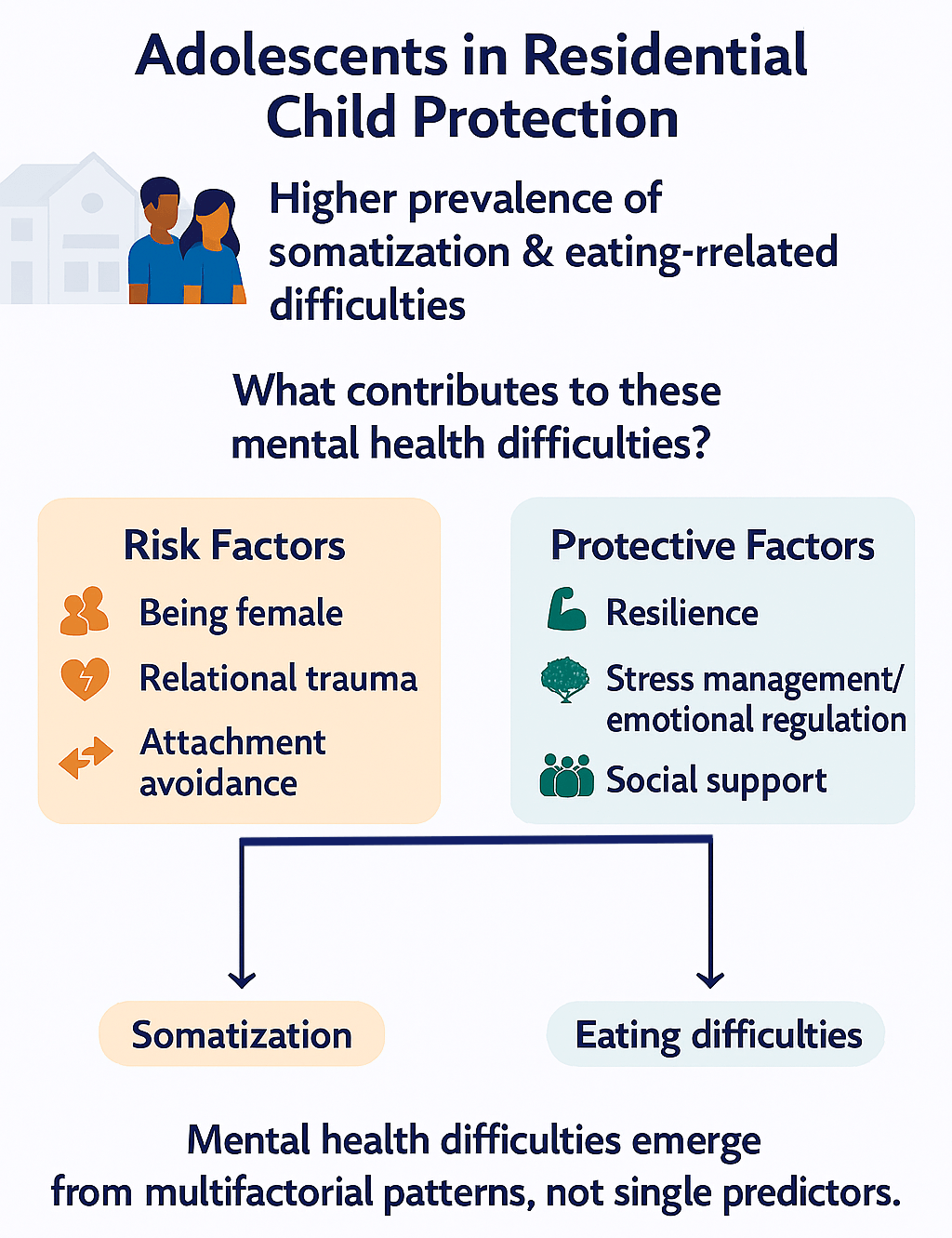
Backgrounds: Somatization and eating-related problems in adolescents living in residential care may be shaped by the interplay of risk and protective factors, including gender, relational trauma, attachment patterns, emotional intelligence, and perceived social support. This study examined how gender, relational trauma, attachment dimensions, resilience, and emotional intelligence contribute to the presence of somatic and eating difficulties in this population. Methods: The sample included 46 adolescents (63% female; ages 12–17, Mean = 14.85, Standard Deviation (SD) = 1.49) residing in child protection institutions in Uruguay. Participants completed self-report measures assessing childhood relational trauma (CaMir), attachment dimensions (anxiety and avoidance), resilience, emotional intelligence (adaptability and stress management), social support (MOS), and psychosocial adjustment (SENA subscales of somatization and eating problems). Using a fuzzy-set Qualitative Comparative Analysis (fsQCA) approach, distinct configurations of risk and protective factors associated with elevated levels of somatization and eating problems were identified. Results: Relational trauma and attachment anxiety showed moderate associations with both somatization and eating problems (r = 0.52–0.57, p < 0.01), whereas stress management was negatively associated with both outcomes (r = −0.37 to −0.47, p < 0.05). FsQCA revealed multiple configurations of risk and protective factors explaining 81–90% of cases, with solution consistencies ranging from 0.83 to 0.87. Results suggest that relational trauma and attachment anxiety are key risk conditions, whereas resilience, emotional regulation, and perceived social support function as protective factors. Conclusions: Findings highlight the importance of considering multifactorial patterns of vulnerability and protection rather than single predictors and underscore the need for tailored interventions that strengthen resilience and emotional skills while addressing the impact of early relational trauma.Graphic Abstract
Keywords
Adolescence represents a critical developmental period marked by profound biological, psychological, and social transformations. It is a stage of both growth and vulnerability, during which major capacities for autonomy, identity, and emotional regulation emerge, but also one in which the risk for the onset of psychological disorders increases [1,2]. Within this developmental context, understanding how adverse relational experiences and protective resources interact to shape adolescents’ mental health becomes particularly relevant.
This developmental tension becomes particularly salient among adolescents in the child protection system, where placement outside the family of origin often reflects histories of adversity and trauma. Children and adolescents in protection systems may live under different modalities of alternative care, such as foster care, kinship care, or residential care. Beyond individual trauma, residential care itself constitutes a distinct developmental context characterized by organizational practices, caregiving structures, and institutional cultures that shape adolescents’ psychosocial adjustment [3]. In light of this complexity, the present study seeks to better understand the factors associated with adolescents’ mental health outcomes in residential care settings.
Regarding residential care in Uruguay, several modalities exist, including general residential centers and specialized residential centers, which are characterized by the admission and care of children and adolescents who require specific treatment. Globally, recent estimates indicate that around 10 million children live in out-of-home care arrangements, with approximately one third residing in residential or institutional settings [3,4,5]. In Uruguay, the national child protection system, coordinated by the Instituto del Niño y Adolescente del Uruguay (INAU), combines family-based and residential alternatives. However, current official data on the exact number of children and adolescents living in residential care remains limited. Reports from UNICEF [4] and INAU [6] suggest that several thousand minors are under state protection, with a significant proportion placed in residential homes. According to INAU [6], in the Uruguayan child protection system, some 6726 minors are in residential care, representing 62.3% of all children and adolescents in the protection system. Of these, 2938 are in non-specialized residential care, with a slightly higher number of females (51.3%, n = 1507) than males (48.7%, n = 1431), and of this subgroup, 1324 (45.1%) are adolescents.
1.1 Residential Care: Relational Trauma, Attachment, and Psychological Health
Adolescents in residential care represent one of the most vulnerable subgroups due to their histories of adversity, relational disruptions, and exposure to multiple stressors, with experiences of maltreatment being nearly universal [6,7].
Empirical evidence shows that childhood interpersonal trauma–including physical, emotional, and sexual abuse, as well as neglect–is strongly associated with an increased risk of diverse psychological difficulties [7]. Among adolescents in residential care, exposure to at least one form of maltreatment is almost universal, often involving multiple co-occurring adversities [8]. Relational trauma, resulting from repeated experiences of harm or neglect within attachment relationships, profoundly disrupts developmental trajectories. Beyond overt violence, the absence of consistent caregiving and emotional attunement undermines a child’s sense of safety and belonging [9]. Such experiences are linked to enduring impairments in emotion regulation, identity, and interpersonal trust, as well as dysregulated stress reactivity that heightens vulnerability to emotional, behavioral, and psychosomatic problems during adolescence [10,11]. The developmental consequences of relational trauma can be conceptualized through attachment theory, which posits that early caregiving experiences shape internal working models that guide emotional regulation and interpersonal behavior.
According to attachment theory [12], early caregiving experiences shape internal working models that guide expectations and behaviors in later relationships. When caregivers are inconsistent, abusive, or neglectful, children are more likely to develop attachment insecurities—patterns of anxiety or avoidance that persist into adolescence and adulthood [13]. These strategies arise as adaptive responses to relational danger: avoidance minimizes dependence on unreliable caregivers, whereas anxiety heightens vigilance to potential rejection [14,15]. Over time, they generalize to other relationships, influencing emotional regulation, cognition, and somatic functioning [13,16,17].
Accumulating evidence suggests that attachment insecurity mediates the link between early trauma and diverse psychosomatic and behavioral outcomes, including somatization, anxiety, depression, and disordered eating [18]. Attachment anxiety reflects fear of abandonment and excessive concern about closeness, while avoidance involves discomfort with intimacy and emotional dependence. Both dimensions have been associated with dysregulated emotion, somatic complaints, and maladaptive coping [13]. Specifically, anxious attachment has been linked to heightened physiological reactivity and increased somatic symptom reporting [15,19], whereas avoidance relates to emotional suppression and reduced help-seeking [20]. Among trauma-exposed adolescents, these insecure patterns may intensify somatization and disordered eating as alternative forms of emotional regulation [21,22].
Although a broad range of emotional, behavioral, and cognitive dysregulation problems has been documented among traumatized adolescents in care [6,23,24,25], specific conditions, such as somatization and eating-related difficulties, have received comparatively less attention. Somatization refers to the manifestation of psychological distress through physical symptoms that lack a medical explanation [26]. In adolescence, somatic complaints such as headaches, stomachaches, or fatigue can represent both an expression of emotional suffering and a maladaptive regulatory mechanism [27,28]. From a developmental perspective, somatic symptoms may act as a nonverbal communication channel in youth with limited emotional awareness or restricted access to supportive relationships [28,29]. In contexts of chronic stress and attachment insecurity, these symptoms can become entrenched coping patterns, reflecting both physiological hyperarousal and difficulties in affect regulation [29,30].
1.2 Adolescents in Care: Somatic Complaints and Eating-Related Problems
Epidemiological data show that around 10–15% of adolescents in community samples present recurrent or impairing somatic complaints [29,31], and approximately 3% meet diagnostic criteria for somatoform disorders [32]. Among adolescents in alternative care or with histories of maltreatment, prevalence rates appear substantially higher—ranging from 25% to 40%, depending on exposure severity and institutional context [33]. Gender differences have also been observed, with girls typically reporting higher rates and greater intensity of somatic complaints than boys, possibly due to socialization patterns and a greater tendency toward internalizing distress [34]. These findings suggest that somatization in residential youth may serve both as a marker of unprocessed relational trauma and as a coping response shaped by disrupted attachment and insufficient emotional support systems [35,36,37].
Eating-related problems range from mild disturbances in attitudes and behaviors to clinically significant disorders [35]. These difficulties often reflect psychological distress and impaired emotion regulation among adolescents in care [35,38]. Childhood interpersonal trauma—including abuse and neglect—is strongly associated with the development of eating disorders [38,39,40]. Emotional abuse is related to body dissatisfaction and low self-esteem, while sexual abuse further increases vulnerability to disordered eating and weight-control behaviors [38,41].
Recent meta-analyses estimate that disordered eating behaviors affect about 22% of adolescents worldwide, with clinical eating disorders occurring in 1–6% of youth aged 11–19 years and rising particularly among girls [42,43,44]. Within residential care, the prevalence of these behaviors appears higher, reflecting the cumulative effects of trauma, disrupted attachment, and emotion dysregulation [33,45]. In these contexts, food and body control may serve compensatory functions to regain a sense of stability or agency [35,38]. Gender differences are notable: girls report more body dissatisfaction and dieting than boys, linked to sociocultural pressures and emotional socialization patterns [39,46]. Such disparities may be amplified in residential settings, where relational instability and limited psychological support reinforce maladaptive eating as an emotion regulation strategy [45]. Taken together, these findings highlight the elevated emotional vulnerability of adolescents in residential care, not only in relation to eating and somatic problems but also to broader mental health difficulties. Consequently, adolescents in these contexts exhibit a substantially higher prevalence of mental disorders (48.6%) compared with their peers in the general population [33,47,48].
1.3 Residential Care: Protective Factors Related to Mental Health
Despite exposure to adversity, not all adolescents in care develop psychological problems. Individual protective factors such as resilience, emotional competence, and perceived social support play key roles in mitigating the effects of trauma. Resilience refers to the capacity to adapt positively despite significant adversity [49]. It has been conceptualized within ecological and developmental frameworks that emphasize the dynamic interaction between individual assets and environmental resources [49,50]. Among adolescents, resilience is associated with assets (individual features) that may offer protection when facing adversity, such as better emotion regulation, problem-solving skills, and interpersonal competence [50,51,52,53]. Resilient adolescents show greater flexibility in stress appraisal, lower physiological reactivity to threat, and a higher likelihood of developing secure relational expectations even after early trauma [49,54].
Similarly, emotional competence—particularly adaptability and stress management—contributes to effective coping and psychological adjustment [55]. This construct is grounded in socioemotional theories of intelligence [56,57,58], which view emotional skills as essential for recognizing, expressing, and regulating emotions in oneself and others. Higher levels of emotional competence are linked to fewer psychosomatic complaints and healthier eating behaviors [59]. Emotionally competent youth are more capable of identifying internal states, regulating negative affect, and seeking interpersonal support, which reduces the likelihood of externalizing distress through somatic symptoms or maladaptive eating patterns [60].
Perceived social support represents another critical protective factor. Theories of social integration and stress buffering emphasize that emotional, informational, and instrumental support from others can mitigate the negative impact of stress and promote emotional well-being [61,62,63]. Supportive relationships with peers, caregivers, or professionals can buffer the effects of stress and enhance emotional well-being [63]. However, adolescents in residential care often experience disruptions in significant relationships, limiting the availability of consistent social support [64]. In the absence of stable caregivers, institutional staff and peer relationships may partially compensate but rarely replicate the emotional security of attachment-based bonds [65].
Despite the recognized vulnerability of adolescents in residential care, few studies have examined somatization and eating problems within this population. Research has predominantly emphasized internalizing (e.g., anxiety, depression) and externalizing (e.g., aggression, delinquency) difficulties, leaving these somatic and behavioral dimensions comparatively underexplored [37,45]. Moreover, most existing studies have analyzed risk factors in isolation, overlooking the complex interplay among trauma, attachment, and personal resources. Recent theoretical perspectives advocate for configurational approaches that identify patterns of interacting risk and protective factors rather than focusing on single predictors [49,66]. Further research using standardized instruments and designs that enable causal inference and the examination of moderating mechanisms remains needed [37,48,67].
At the same time, there is a notable lack of empirical research on adolescents in residential care within Latin America, particularly in Uruguay [4,6,68]. While European and North American studies have established robust associations between early maltreatment, attachment insecurity, and psychosomatic functioning [69], comparable evidence from the Southern Cone remains scarce. Regional challenges—such as limited access to standardized instruments, a shortage of longitudinal designs, and variability in child protection policies—continue to hinder cross-cultural generalization.
Taken together, the present study is grounded in an attachment-informed, trauma-focused developmental framework integrated within a risk–protective perspective. Within this model, relational trauma is conceptualized as a primary vulnerability condition that disrupts internal working models and shapes maladaptive patterns of emotion regulation [11]. Attachment insecurity functions as an organizing psychological mechanism linking early relational adversity to somatic and eating-related symptomatology [12]. At the same time, resilience, emotional competence, and perceived social support are conceptualized as context-dependent protective resources whose buffering effects depend on the broader relational environment [49,56,61]. Because these processes are unlikely to operate independently and may combine in multiple, equifinal ways, a configurational analytic approach is theoretically warranted. Thus, the use of fuzzy-set Qualitative Comparative Analysis (fsQCA) is consistent with the underlying framework, which assumes conjunctural causation and the interaction of risk and protective conditions in shaping adolescent psychosocial outcomes.
Increasing attention to child protection and mental health in this context is essential for understanding how relational trauma, attachment, resilience, and emotional competence interact in shaping somatic and eating difficulties. This knowledge is fundamental for developing culturally sensitive interventions, preventive strategies, and policies that promote a sustainable, life-course approach to adolescent well-being. Expanding research across diverse cultural and institutional settings not only strengthens the global evidence base on trauma and resilience but also challenges Western-centric paradigms of attachment and adaptation, fostering more context-sensitive understandings of recovery and growth.
Against this background, the present study aims to examine configurational patterns of risk and protective factors—considering gender differences—associated with somatization and eating problems among adolescents living in residential care settings in Uruguay. Specifically, the study seeks to:
- 1.Analyze how relational trauma, attachment insecurity, and gender interact in predicting somatization and disordered eating within this population. Based on previous evidence, it is hypothesized that both relational trauma and attachment insecurity operate as risk factors for higher levels of somatization and disordered eating. Moreover, female gender is expected to function as an additional risk factor, whereas male gender will act as a protective factor (Hypothesis 1).
- 2.Assess the protective role of resilience, emotional competence (particularly stress management), and perceived social support in mitigating these difficulties across genders. Therefore, the hypothesis is that there will be a negative relationship between greater resilience, greater stress management capacity, and higher levels of social support, and a lower presence of somatization problems and eating disorders (Hypothesis 2).
- 3.Identify distinct combinations of risk and protective conditions–including gender–associated with high and low levels of somatization and eating problems using fsQCA. It is hypothesized that different configurations of risk and protective factors–including gender–will be linked to varying levels of somatic and eating-related symptomatology. Specifically, combinations involving female gender, relational trauma, and low protective resources are expected to predict higher symptom levels, whereas configurations including male gender and stronger protective factors are expected to predict lower symptom levels (Hypothesis 3).
A total of 46 adolescents (mean age = 14.85, SD = 1.49; range = 12–17) in non-specialized residential care in Uruguay participated in the study. All participants were Uruguayan nationals; 63% identified as female and 37% as male.
Somatization and eating behavior problems were measured with the Sistema de Evaluación de Niños y Adolescentes (Assessment System for Children and Adolescents; SENA; [70], specifically the adolescent self-report version (ages 12–18). This instrument allows for the computation of multiple scale indices. In the current study, the following subscales were analyzed: Somatization and Eating Behavior Problems. The SENA self-report version shows adequate psychometric properties in Spanish-speaking populations (α = 0.75) [71].
Relational trauma was evaluated using the CaMir Questionnaire [72,73], adapted into Spanish by [74]. The abbreviated version comprises 32 items covering seven dimensions; for the present study, only the Childhood Relational Trauma factor was used. This 5-item scale assesses adverse relational experiences with attachment figures (e.g., unavailability, violence, threats) and has been linked to disorganized attachment. The Spanish version demonstrates good internal consistency (α = 0.80) [74].
Attachment was assessed using the Cuestionario de Apego Adulto–Revisado (Adult Attachment Questionnaire–Revised; CAA-R) [75]. This self-report instrument evaluates adult attachment through 35 items rated on a 6-point Likert scale (1 = completely disagree, 6 = completely agree). It comprises four dimensions: low self-esteem, need for approval, and fear of rejection; hostile conflict resolution, resentment, and possessiveness; expression of feelings and comfort with relationships; and emotional self-sufficiency and discomfort with intimacy. For the purposes of the present study, only the first and fourth dimensions were used. The first subscale—low self-esteem, need for approval, and fear of rejection—was interpreted as reflecting anxious attachment, whereas the fourth—emotional self-sufficiency and discomfort with intimacy—was interpreted as reflecting avoidant attachment. These labels are used throughout the manuscript to facilitate theoretical integration with previous attachment research. Internal consistency was satisfactory for both dimensions (α = 0.86 for Anxiety, α = 0.85 for Avoidance [75]). This instrument has also been used with adolescents in different studies [76,77], obtaining satisfactory results with a Cronbach’s alpha on the questionnaire scales between 0.68 and 0.86.
Stress management was assessed using the Spanish adaptation of the EQ-i [78], based on Bar-On’s Emotional Quotient Inventory [57]. The tool includes 28 items scored on a 5-point Likert scale (1 = never, 5 = always) and yields four dimensions: Intrapersonal, Interpersonal, Adaptability, and Stress Management, along with a global score. For this study, the Stress Management subscale was employed. Reported internal consistencies range between 0.70 and 0.78 [78].
Resilience was assessed using the Abbreviated Version of the Connor-Davidson Resilience Scale (CD-RISC; [79,80]. This instrument consists of 10 items rated on a 5-point Likert scale ranging from 0 (not true at all) to 4 (true nearly all the time), with higher scores indicating greater perceived resilience. The Spanish version has demonstrated good internal consistency (α = 0.85) [80].
Social support was assessed using the Medical Outcomes Study Social Support Survey (MOS-SSS) [81]. The questionnaire comprises 20 items: the first explores structural support (i.e., number of close friends and relatives), and the remaining 19 cover four functional dimensions (Emotional/Informational Support, Tangible Support, Affectionate Support, and Positive Social Interaction) rated on a 5-point Likert scale (1 = never, 5 = always). For this study, the total score was used as a global indicator of perceived social support. The instrument has shown excellent internal consistency (α = 0.97) [82].
The study was conducted within the Uruguayan child protection system, coordinated by the Instituto del Niño y Adolescente del Uruguay (INAU). Placement in residential care occurred following judicial or administrative protection measures, including situations of immediate protection, court-ordered separation from the family due to serious risk or rights violations, persistent family risk or lack of adequate caregiving conditions, referrals from health services when safe family return was not possible after medical discharge, protection measures applied by INAU due to the absence of a protective family environment, and re-entry into the protection system following the re-emergence of risk. Data were collected exclusively in non-specialized 24-h residential care centers, in which children and adolescents live full-time under the care of socio-educational and technical teams. These centers were operated by INAU and by Aldeas Infantiles SOS Uruguay, an international non-governmental organization collaborating with the national protection system. In the case of Aldeas Infantiles SOS Uruguay, residential care is organized in small group homes located within a shared residential compound. The study was carried out in a total of six residential centers across four departments of Uruguay. Recruitment was facilitated by the directors of each residential center, who informed eligible adolescents about the study. Inclusion criteria included being within the target age range and having sufficient cognitive and communicative abilities to complete self-report questionnaires. Participation was voluntary, and no incentives were offered.
The study obtained ethical approval from the University of Valencia (2023-MAG-2735572), as well as authorization from the participating child protection institutions, including Aldeas Infantiles SOS (Uruguay) and INAU, which facilitated access to the sample. Informed consent was provided by the legal guardians, and adolescents participated voluntarily without compensation. Both guardians and participants were informed of the study’s objectives, and confidentiality was ensured by assigning each participant a randomly generated four-digit code.
Data collection took place individually in the residential centers. Adolescents completed standardized self-report questionnaires administered by a trained researcher, who aided when necessary. After participation, the researcher at F-TK, a clinical psychologist, provided adolescents with information about eating disorders and available support resources. The same information was shared with the residential care professionals involved in data collection. These professionals were psychologists and social workers familiar with the adolescents’ life histories and daily functioning. Participants were allowed to take breaks and ask for clarification during questionnaire completion, and the administration time was kept within a manageable range. Although participant burden was not formally assessed, no participant withdrew due to fatigue or distress. The same procedure was followed for all participants to ensure consistency.
Descriptive analyses, comparisons of means, effect size calculations, and correlations of the study variables were performed using SPSS v.28 (IBM Corporation, Armonk, NY, USA). fsQCA was employed to identify the main configurations of conditions associated with the presence of somatization and eating problems. Missing data were excluded, and all variables were recalibrated between 0 and 1. For continuous measures, automatic recalibration was applied in the fsQCA software (fsQCA 3.0; University of California, Irvine, CA, USA), setting three thresholds: 0% (low level or fully out of the set), 50% (crossover point, neither fully in nor out), and 90% (high level or fully in the set) [83].
Specifically, automatic recalibration was used for the following variables: social support (MOS total score), emotional intelligence (Stress Management subscale of the EQ-i), resilience, and the relational trauma subscale from the CaMir. The analysis proceeded in two stages. First, a test of necessary conditions was performed for the presence of high somatization and eating problems. A condition was considered necessary when its consistency was ≥0.90 [66,84]. Second, analyses of sufficient conditions were conducted for both high and low levels of each dependent variable. In QCA, sufficiency indicates that the condition or configuration can produce the outcome, though it may not be present in every case. Models were regarded as informative when overall consistency reached approximately 0.75 or higher [85].
Sufficiency analysis yields three possible solutions: complex, parsimonious, and intermediate. The results reported here are based on the intermediate solution, with core conditions identified when they also appear in the parsimonious solution. According to [86], core conditions are visually distinguished (⚫.◯), while peripheral conditions are represented with smaller markers (●.○). Finally, the QCA models allowed for the estimation of coverage, reflecting the proportion of cases explained by each configuration, and consistency, representing the overall fit of the model [66,85].
Although the sample size was relatively small, the analytical strategy was selected to ensure methodological adequacy. FsQCA is well-suited for small and medium samples, as it focuses on configurational relationships and equifinal pathways rather than on large-sample statistical inference [86].
Descriptive statistics for the study variables are presented in Table 1. Overall, participants reported moderate levels of somatization and eating problems. Regarding psychosocial resources, resilience and perceived social support were generally high, whereas stress management appeared comparatively lower. In terms of attachment, both anxiety and avoidance showed moderate scores, and indicators of relational trauma were present across the sample.
Table 1: Descriptive statistics for study variables.
| Variable | Mean | SD | Min | Max | P10 | P50 | P90 |
|---|---|---|---|---|---|---|---|
| Somatization | 54.02 | 13.53 | 34 | 96 | 38.0 | 55.0 | 71.8 |
| Eating problems | 53.60 | 12.36 | 39 | 89 | 40.0 | 51.5 | 71.7 |
| Relational trauma | 17.40 | 5.24 | 7 | 25 | 9.0 | 17.0 | 25.0 |
| Attachment anxiety | 36.87 | 13.49 | 11 | 64 | 20.0 | 36.0 | 59.4 |
| Attachment avoidance | 28.76 | 8.48 | 11 | 51 | 17.0 | 29.0 | 40.4 |
| Stress management | 23.24 | 8.97 | 8 | 40 | 12.0 | 22.5 | 36.0 |
| Resilience | 26.61 | 6.48 | 19 | 37 | 19.0 | 28.0 | 33.3 |
| Social support | 74.37 | 15.47 | 40 | 95 | 51.6 | 78.5 | 95.0 |
Independent-samples t tests were conducted to examine gender differences across the study variables (Table 2). No statistically significant differences were found between girls and boys in somatization, eating problems, relational trauma, attachment anxiety, stress management, resilience, or social support (all p > 0.05). Effect sizes were generally trivial to small (d ranging from −0.25 to 0.24), except for attachment avoidance (d = −0.48), which approached a medium effect size, indicating a tendency for girls to report slightly higher avoidance than boys.
Table 2: Group means, standard deviations, and independent-samples t tests by gender.
| Variable | Women Mean (SD) | Men Mean (SD) | t | df | p | Cohen’s d |
|---|---|---|---|---|---|---|
| Somatization | 55.14 (11.95) | 51.79 (16.51) | −0.75 | 40 | 0.455 | −0.25 |
| Eating problems | 52.61 (9.63) | 55.57 (16.01) | 0.73 | 40 | 0.470 | 0.24 |
| Relational trauma | 17.58 (5.90) | 17.06 (6.01) | −0.32 | 43 | 0.752 | −0.10 |
| Attachment anxiety | 37.90 (13.84) | 35.65 (14.85) | −0.45 | 43 | 0.652 | −0.14 |
| Attachment avoidance | 30.29 (8.63) | 26.24 (10.56) | −1.58 | 43 | 0.122 | −0.48 |
| Stress management | 23.62 (9.85) | 22.59 (6.95) | −0.33 | 43 | 0.711 | −0.11 |
| Resilience | 26.97 (7.04) | 26.00 (7.96) | −0.46 | 44 | 0.631 | −0.15 |
| Social support | 74.03 (16.09) | 74.94 (14.81) | −0.19 | 44 | 0.847 | −0.06 |
Bivariate correlations among the study variables are presented in Table 3. Somatization showed positive associations with eating problems, relational trauma, attachment anxiety, and attachment avoidance, as well as a negative association with stress management. Eating problems were positively related to relational trauma and attachment anxiety and negatively related to stress management. Attachment anxiety was strongly associated with attachment avoidance, whereas no significant associations were observed for resilience or social support.
Table 3: Correlational analyses of the main variables under study.
| Variable | 1 | 2 | 3 | 4 | 5 | 6 | 7 | 8 |
|---|---|---|---|---|---|---|---|---|
| Somatization | - | |||||||
| Eating problems | 0.53** | - | ||||||
| Relational trauma | 0.52** | 0.37* | - | |||||
| Attachment anxiety | 0.55** | 0.57** | 0.40* | - | ||||
| Attachment avoidance | 0.40* | 0.31 | 0.26 | 0.62** | - | |||
| Stress management | −0.37* | −0.47** | −0.27 | −0.39* | −0.30* | - | ||
| Resilience | −0.08 | 0.05 | 0.12 | 0.07 | 0.04 | 0.04 | - | |
| Social support | −0.11 | −0.02 | −0.03 | −0.10 | −0.03 | 0.18 | 0.24 | - |
3.4 Fuzzy-Set Qualitative Comparative Analysis (fsQCA)
Descriptive analyses and calibration procedures were conducted for the fsQCA, focusing on high levels of somatization and eating problems (Table 4). None of the individual conditions reached the consistency threshold (≥0.90) required to be considered necessary for predicting these outcomes [66].
Table 4: Consistency and coverage for the necessary conditions of somatization and eating problems.
| High Somatization | Low Somatization | High Eating Problems | Low Eating Problems | |||||
|---|---|---|---|---|---|---|---|---|
| Condition | Cons. | Cov. | Cons. | Cov. | Cons. | Cov. | Cons. | Cov. |
| Women | 0.72 | 0.49 | 0.64 | 0.51 | 0.67 | 0.48 | 0.68 | 0.52 |
| Men | 0.28 | 0.40 | 0.36 | 0.60 | 0.33 | 0.49 | 0.32 | 0.51 |
| Relational Trauma | 0.83 | 0.72 | 0.53 | 0.53 | 0.76 | 0.69 | 0.60 | 0.58 |
| No Relational Trauma | 0.46 | 0.45 | 0.72 | 0.84 | 0.53 | 0.55 | 0.68 | 0.75 |
| Anxiety | 0.77 | 0.73 | 0.48 | 0.54 | 0.81 | 0.81 | 0.47 | 0.50 |
| No Anxiety | 0.51 | 0.46 | 0.76 | 0.79 | 0.50 | 0.47 | 0.82 | 0.82 |
| Avoidance | 0.73 | 0.68 | 0.51 | 0.56 | 0.70 | 0.69 | 0.52 | 0.54 |
| No Avoidance | 0.52 | 0.48 | 0.71 | 0.76 | 0.53 | 0.51 | 0.70 | 0.71 |
| Stress Management | 0.53 | 0.48 | 0.70 | 0.74 | 0.50 | 0.47 | 0.75 | 0.75 |
| No Stress Management | 0.71 | 0.67 | 0.50 | 0.56 | 0.74 | 0.74 | 0.47 | 0.5 |
| Resilience | 0.62 | 0.57 | 0.61 | 0.66 | 0.62 | 0.59 | 0.63 | 0.65 |
| No Resilience | 0.63 | 0.58 | 0.60 | 0.65 | 0.64 | 0.62 | 0.60 | 0.63 |
| Social Support | 0.63 | 0.59 | 0.66 | 0.72 | 0.65 | 0.64 | 0.61 | 0.64 |
| No Social Support | 0.70 | 0.64 | 0.62 | 0.66 | 0.63 | 0.61 | 0.65 | 0.66 |
Table 5 presents the sufficiency analyses for high and low levels of somatic and eating symptoms. For high somatization, five pathways explained 81% of the cases. The first configuration, covering 50% of the cases, combined the presence of relational trauma, the absence of stress management, and the presence of resilience. The second configuration, accounting for 34%, included female gender, relational trauma, absence of resilience, and absence of social support. The third configuration, explaining 21%, involved female gender, attachment avoidance, absence of stress management, and the joint absence of resilience and social support.
Regarding low somatization, nine pathways explained 88% of the cases. The first, covering 57% of the sample, was defined by the joint absence of relational trauma and attachment anxiety. The second, explaining 51%, combined the absence of relational trauma with the presence of social support. The third pathway, accounting for 33%, consisted of the absence of relational trauma, attachment avoidance, and the presence of both stress management and resilience.
For high eating problems, six pathways explained 90% of the cases. The first, covering 62% of the sample, combined attachment anxiety with the absence of stress management. The second, accounting for 48%, included attachment anxiety, attachment avoidance, and the absence of resilience. The third, covering 39% of the cases, reflected the combination of female gender, attachment anxiety, and the absence of social support.
Finally, for low eating problems, eleven pathways explained 79% of the cases. The first pathway, accounting for 38%, involved the absence of relational trauma and attachment anxiety, together with the presence of stress management and social support. The second, explaining 32%, combined the absence of relational trauma and attachment avoidance with the presence of stress management and resilience. The third pathway, covering 30%, included female gender, the absence of attachment anxiety and avoidance, and the presence of social support.
Table 5: Sufficiency analyses for somatization and eating problems.
| Frequency Cutoff: 1 | High Levels of Somatization | Low Levels of Somatization | High Levels of Eating Problems | Low Levels of Eating Problems | ||||||||
|---|---|---|---|---|---|---|---|---|---|---|---|---|
| Consistency Cutoff: 0.81 | Consistency Cutoff: 0.80 | Consistency Cutoff: 0.79 | Consistency Cutoff: 0.81 | |||||||||
| 1 | 2 | 3 | 1 | 2 | 3 | 1 | 2 | 3 | 1 | 2 | 3 | |
| Women | ⚫ | ● | ● | ● | ||||||||
| Relational trauma | ⚫ | ⚫ | ◯ | ○ | ○ | ◯ | ○ | |||||
| Attachment anxiety | ⚫ | ● | ● | ◯ | ○ | |||||||
| Attachment avoidance | ● | ◯ | ○ | ● | ● | ○ | ||||||
| Stress management | ◯ | ○ | ● | ◯ | ⚫ | ● | ||||||
| Resilience | ⚫ | ◯ | ○ | ● | ○ | |||||||
| Social support | ◯ | ○ | ● | ○ | ⚫ | ● | ● | |||||
| Raw coverage | 0.50 | 0.34 | 0.21 | 0.57 | 0.51 | 0.33 | 0.62 | 0.48 | 0.39 | 0.38 | 0.32 | 0.30 |
| Unique coverage | 0.24 | 0.11 | 0.01 | 0.02 | 0.04 | 0.01 | 0.10 | 0.05 | 0.03 | 0.01 | 0.02 | 0.07 |
| Consistency | 0.90 | 0.88 | 0.85 | 0.85 | 0.92 | 0.97 | 0.88 | 0.92 | 0.78 | 0.96 | 0.90 | 0.88 |
| Overall solutions coverage | 0.81 | 0.88 | 0.90 | 0.79 | ||||||||
| Overall solutions consistency | 0.87 | 0.83 | 0.83 | 0.83 | ||||||||
According to the QCA models, none of these factors alone predict the presence of somatic complaints or eating disorders, but they do indicate which factors can explain a greater number of cases for a high or low presence of the psychological problems analyzed. In this sense, the sufficiency analyses allow us to identify a combination of factors whose presence is manifested in a greater number of cases, such as the experience of having suffered relational trauma and poorer stress management for high somatization and attachment anxiety, and poorer stress management for high levels of eating problems. On the other hand, the absence of relational trauma and lower scores on attachment anxiety are present in a higher number of cases with low levels of somatization and eating problems.
The main objective of this study was to identify which combinations of protective and risk factors are associated with the presence or absence of somatization and eating problems among adolescents in residential care. Within research focused on the psychological health of youth in protection systems, few studies have applied nonlinear predictive methods such as Qualitative Comparative Analysis (QCA) to explore the diverse constellations of variables that may contribute to these difficulties. Even less common are studies involving adolescents in residential protection, who represent a highly vulnerable group whose development is often shaped by histories of trauma, neglect, and relational instability. These adolescents may experience alterations in socioemotional development linked to repeated exposure to adverse experiences, which can affect attachment formation and emotion regulation capacities, thus warranting specific investigation.
The results largely confirmed the proposed hypotheses (H1, H2, and H3), with some nuances. These findings are consistent with previous studies showing that girls are more likely to express psychological distress through internalizing and psychosomatic pathways. However, this pattern should not be interpreted as evidence of inherent vulnerability. Gender differences in symptom expression are shaped by socialization processes that tend to promote emotional attunement and relational sensitivity in girls while discouraging the open expression of anger, defiance, or externalized distress [28,46]. Within institutional environments such as residential care—where relational instability, surveillance, and power asymmetries may already constrain autonomy—these gendered norms may further narrow the range of acceptable emotional expression.
From a feminist and structural perspective, this configuration can also be understood in relation to broader relational and social inequalities. Gendered expectations regarding caregiving, compliance, emotional responsibility, and bodily regulation may intensify the internalization of stress among girls, particularly in contexts marked by prior trauma and limited protective resources. In this sense, somatization and disordered eating may function not only as individual symptoms but also as embodied responses to unequal social and relational conditions. The body may become a primary site through which distress is communicated, managed, or negotiated when verbal expression feels unsafe, ineffective, or socially discouraged. Accordingly, the presence of female gender within several high-symptom configurations should be interpreted not as a standalone risk factor but as a structural condition that interacts with relational trauma and reduced psychosocial resources. This interpretation reinforces the need to integrate gender-sensitive and trauma-informed perspectives when assessing and intervening with adolescents in residential care settings.
One configuration revealed that, even in the presence of high resilience, the coexistence of relational trauma and poor stress management was associated with high somatization. This finding highlights the complexity of psychological adjustment: resilience may buffer the impact of general stress, but when trauma is relational and regulation mechanisms are impaired, its protective function may be insufficient. Another configuration identified avoidant attachment as a risk factor, consistent with attachment theory [12,13]. Avoidant patterns—marked by emotional distancing and discomfort with closeness—can lead to suppression of affective states and disconnection from emotional experiences, which may instead manifest somatically. Among adolescents with histories of inconsistent or neglectful caregiving, such defensive strategies can become entrenched and maladaptive [25].
Regarding eating-related problems, the main configurations were characterized by anxious attachment, often combined with low stress management, avoidant attachment, low resilience, female gender, or low social support. These results align with previous evidence linking attachment anxiety to disordered eating through mechanisms of emotional dysregulation, self-criticism, and body dissatisfaction [87]. In this sense, food and body control may function as compensatory strategies to regain a sense of safety or control in the aftermath of relational trauma. The heightened vulnerability among girls may further reflect sociocultural pressures surrounding body image and the internalization of relational approval as a source of self-worth [88].
Configurations associated with low levels of somatization and eating problems consistently shared the absence of relational trauma, underscoring its central role as a risk factor. When relational trauma was absent, combinations involving low attachment anxiety, adequate stress management, higher resilience, and perceived social support were associated with better adjustment. From a trauma-informed perspective, the lack of early relational trauma may indicate greater integration between emotional and bodily states, reducing the likelihood of dissociative processes through which unprocessed affect is expressed somatically [89,90]. In contrast, exposure to repeated attachment disruptions can impair the capacity for mentalization and emotional coherence, leading to difficulties in symbolizing distress and increasing the expression of somatic and behavioral symptoms. The present findings are also consistent with the Adverse Childhood Experiences (ACEs) model [48,91], in which the accumulation of relational adversities predicts poorer physiological and psychological regulation. From a neurobiological standpoint, chronic relational stress may lead to allostatic load and altered HPA axis functioning [30,92], producing hyperarousal or somatic numbing as maladaptive coping mechanisms. The absence of such trauma, therefore, may represent a fundamental protective condition that enables other resources—resilience, emotional competence, and social support—to exert their buffering effects.
Finally, the findings highlight the methodological relevance of employing configurational approaches. Traditional linear analyses, such as correlations or mean comparisons, did not fully capture the complexity of these interactions. Although relational trauma, low stress management, and insecure attachment were linearly associated with symptoms, variables such as resilience and social support did not show significant direct effects. Similarly, gender did not emerge as significant in group comparisons, despite moderate effect sizes suggesting higher attachment anxiety among girls. These inconsistencies illustrate the advantage of nonlinear approaches such as fsQCA, which allow the identification of equifinal and conjunctural causation—that is, different pathways leading to similar outcomes [86]. Such methods better reflect the multifaceted nature of adaptation and psychopathology in adolescents exposed to complex adversity.
Although the findings of this study contribute to a deeper understanding of the combined risk and protective factors associated with the mental health of adolescents in residential care, several limitations must be acknowledged. First, the relatively small sample size limits statistical generalizability, although fsQCA is appropriate for small samples [86], the limited number of cases requires that the identified configurations be interpreted as explanatory patterns rather than generalizable predictive models, highlighting the need for replication in larger and more diverse samples. The low participation rate is largely attributable to structural and ethical factors inherent to research with adolescents in residential care. Participation was entirely voluntary and subject to multiple layers of authorization, including institutional approval and guardian consent, which inevitably reduced the pool of eligible participants. In addition, frequent placement changes, variability in adolescents’ availability, and the need to minimize assessment burden in residential settings further constrained participation. Moreover, the convenience sampling procedure and the specific characteristics of the Uruguayan residential care system constrain the extent to which the results can be extrapolated to other populations or cultural contexts. In addition, the unequal gender distribution of the sample, with a higher representation of girls, may have influenced the observed patterns of risk and protective factors, particularly given documented gender differences in the expression of internalizing symptoms such as somatic complaints and eating-related problems [39,46]. However, such constraints are common in research involving institutionalized youth due to the inherent challenges in accessing these vulnerable groups.
Second, data were based exclusively on adolescent self-reports, which may be influenced by social desirability, underreporting, or limited introspective capacity. Future studies should incorporate multiple informants, such as caregivers or professionals, and multi-method assessments, including observational or experimental tasks, to capture emotional and behavioral functioning more comprehensively. Additionally, the study did not control for the presence of physical health conditions, which may confound somatization scores by conflating medically explained and unexplained symptoms. Subsequent research should include objective health measures or medical records to address this potential overlap.
Regarding the assessment of relational trauma, the CaMir questionnaire includes retrospective items referring to early attachment experiences and relational adversity. Consequently, self-report bias due to retrospective recall cannot be ruled out. Nevertheless, prior research indicates that retrospective instruments assessing attachment and early adversity demonstrate acceptable reliability and validity, even in at-risk populations [74,93]. A further limitation concerns the assessment of attachment using the CAA-R [75], which was originally developed for adult populations. Although previous studies have successfully used this instrument with adolescents and reported adequate psychometric properties in adolescent samples [76,77], the absence of a fully published validation at the time of data collection warrants caution. Future research should seek to replicate these findings using attachment measures specifically designed or fully validated for adolescent populations. Although the administration was conducted individually and with support when needed, the use of multiple questionnaires may have entailed a degree of cognitive or emotional burden, which was not formally assessed and should be considered when interpreting the findings.
Related to this, although attachment theory provides a useful framework for understanding relational trauma, its application within child protection contexts has been widely debated. Critics have highlighted the risk of pathologizing adaptive survival strategies and the limitations of applying dyadic, Western-based models of caregiving to institutional and culturally diverse settings. In residential care, attachment-related behaviors may reflect context-dependent adaptations rather than stable dispositional deficits. Therefore, attachment insecurity in this study is conceptualized not as an inherent deficit, but as a relational strategy shaped by environmental instability.
Another limitation concerns the restricted range of psychosocial variables included in the present design. Future studies should integrate additional indicators such as emotion dysregulation, dissociation, mentalization, and perceived discrimination, which could provide a more comprehensive understanding of the mechanisms linking trauma with somatic and eating-related difficulties. It would also be important to include adolescents with diverse gender identities and sexual orientations, as this study only involved cisgender participants. Trans and gender-diverse adolescents face higher rates of family rejection, social stigma, and institutional violence, all of which may exacerbate trauma exposure and its psychological sequelae [94,95].
Adopting an intersectional approach [96] in future research would allow for a more nuanced understanding of how gender, class, ethnicity, sexual orientation, and disability intersect to shape vulnerability and resilience. Considering these intersecting axes of inequality is essential to avoid homogenizing adolescents in care as a uniform “at-risk” group. Instead, it encourages researchers to examine how structurally embedded inequalities differentially shape access to resources, exposure to trauma, institutional responses, and coping opportunities. Such an approach would facilitate the identification of subgroup-specific patterns of risk and protection, thereby improving the cultural sensitivity, contextual validity, and equity orientation of assessment and intervention strategies.
Finally, the cross-sectional design precludes causal inference. Future studies should employ longitudinal approaches to examine the developmental trajectories of relational trauma, attachment, resilience, and emotional competence over time. Expanding the scope to include adolescents under alternative protective arrangements (e.g., foster care, kinship care, and adoption) would enable comparative analyses across caregiving contexts. Moreover, incorporating biopsychosocial measures—such as physiological stress markers or trauma-informed interviews—would deepen understanding of the mechanisms linking early adversity, emotion regulation, and somatic symptomatology. Such an approach would strengthen the evidence base for designing prevention and intervention protocols that address both risk and protective factors in an integrated, inclusive, and culturally sensitive manner.
The findings of this study indicate that assessment and intervention in residential care settings should be explicitly guided by the joint evaluation of relational trauma, attachment insecurity, emotion regulation capacities, and social support, rather than by isolated risk indicators. The configurational patterns identified show that factors such as female gender, relational trauma, poor stress management, and low perceived social support are relevant only in combination, while protective resources such as resilience do not function as universal buffers but depend on the broader relational context. These results have direct implications for how psychosocial risk and protection are assessed and addressed in practice.
Because somatization and eating-related problems emerge from specific combinations of relational trauma, attachment insecurity, emotion regulation difficulties, and limited social support, professional practice should move beyond single-factor screening models and adopt comprehensive, multidimensional assessment frameworks. These findings hold significant implications for prevention, intervention, and professional practice in residential childcare. Interventions targeting adolescents within protection systems should place the subjective experience of trauma at the center of care, recognizing that healing requires not only symptom reduction but also the restoration of trust, emotional safety, and relational continuity. Programs should actively prevent retraumatization by promoting stable, consistent, and emotionally attuned caregiving relationships that function as corrective relational experiences for rebuilding internal models of security.
From a preventive and promotive perspective, it is essential to design interventions that foster secure and caring relational bonds both within and beyond institutional environments. Establishing predictable, nurturing, and respectful relationships can serve as a protective buffer against the long-term effects of relational trauma, supporting emotion regulation, self-concept, and resilience. Prevention strategies should also include the early identification of trauma-related symptoms, systematic staff training in trauma-informed care, and the creation of safe relational spaces where adolescents can express emotions without fear of rejection or punishment. In this context, it is also essential to acknowledge the emotional and organizational demands placed on residential care staff. Professionals working in 24-h residential settings are frequently exposed to secondary traumatic stress, high relational demands, and structural constraints that may limit their capacity to provide consistent and emotionally attuned care. Institutional support through supervision, reflective spaces, and manageable workloads is therefore critical to sustaining trauma-informed practices and preventing staff burnout.
The results point to the need to implement comprehensive mental health assessments for adolescents in the child protection system, enabling a holistic approach to their psychological needs. This is particularly evident when considering the simultaneous presence of multiple risk factors—such as relational trauma, insecure attachment, gender, and poor stress management—together with psychosocial resources including resilience, emotional regulation capacities, and perceived social support, which are less frequently assessed in routine clinical evaluations.
From a methodological perspective, these findings highlight the limitations of traditional linear approaches, which tend to examine risk and protective factors in isolation and often fail to capture the contingent and context-dependent role of protective resources. In contrast, the configurational approach adopted in this study allows for the identification of distinct combinations of risk and protective conditions associated with high and low levels of somatization and eating-related problems, providing a more nuanced and clinically informative framework for assessment and intervention planning.
At a broader level, child protection policies should adopt frameworks that promote relational health as a public good. This includes measures that strengthen continuity of care, supervision, and reflective practice among residential staff, while fostering community-based networks that support adolescents’ transitions to adulthood. Promoting relational resilience—the capacity to repair and sustain caring connections—should constitute a central goal in both preventive and intervention programs.
Considering the life history of the adolescents who participated in the study, the presence of relational trauma is a risk factor that shapes subsequent development trajectories. Relational trauma is related to the way children bond with their parents in early childhood, hence the need to implement preventive interventions that promote secure attachment bonds. These interventions can be carried out even before birth, including information sessions at health centers on how to properly care for and treat newborns.
The results also invite reflection from a gender-sensitive and feminist perspective. Female adolescents in this study exhibited a higher likelihood of somatization and eating-related difficulties, which should not be understood solely as biological or individual vulnerabilities but as manifestations of broader gendered social dynamics. Girls and young women are disproportionately exposed to interpersonal and systemic forms of trauma, both within families (e.g., neglect, sexual abuse, emotional violence) and in social contexts marked by gender inequality and violence [4,97]. These cumulative experiences may reinforce relational hypervigilance, self-blame, and body-centered expressions of distress—mechanisms that are often socially learned and normalized within patriarchal cultures.
From a feminist standpoint, the greater prevalence of somatic and eating-related problems among girls may reflect the embodiment of gendered oppression: when emotional expression, autonomy, or anger are discouraged, distress tends to be internalized and expressed through the body. This interpretation aligns with feminist approaches to embodiment, which conceptualize the body as a site of both vulnerability and resistance [98,99]. In this view, symptoms such as somatization or disordered eating can be understood as relational and political responses to chronic invalidation, invisibility, and powerlessness.
Accordingly, prevention and intervention efforts should explicitly address the gendered dimensions of trauma, ensuring that programs acknowledge how socialization processes, cultural norms, and exposure to violence interact to shape emotional development and coping strategies. Promoting gender equity, empowerment, and relational safety is therefore not peripheral but central to fostering mental health and well-being during adolescence. In practical terms, a holistic approach within residential care settings entails moving beyond symptom-focused screening models toward multidimensional assessment protocols, trauma-informed relational practices, and coordinated intervention plans that simultaneously target regulatory skills, relational stability, and environmental support structures. This perspective acknowledges that psychological difficulties in adolescents in care are rarely attributable to single causes but instead emerge from intersecting vulnerabilities and contextual constraints.
In conclusion, this study underscores the detrimental impact of relational trauma and insecure attachment on adolescents’ mental health, particularly in relation to somatization and eating-related difficulties. Using a fuzzy-set Qualitative Comparative Analysis (fsQCA) approach, the findings demonstrate that these outcomes do not stem from isolated risk factors, but rather from specific configurational patterns combining relational, emotional, and contextual conditions, thereby highlighting the multifactorial and non-linear nature of psychosocial adaptation among adolescents in residential care.
The consistent role of relational trauma as a key differentiator between high- and low-symptom profiles across both somatization and eating-related problems reinforces its central importance in understanding psychosomatic and behavioral manifestations of distress within institutional settings. In addition, factors such as female gender, poor stress management, and low perceived social support emerged as recurrent conditions within high-symptom configurations, pointing to shared pathways of vulnerability across outcomes. Conversely, the protective effects of resilience, emotional competence, and perceived social support were shown to be context-dependent rather than universally buffering, emphasizing the need to strengthen individual and relational resources while acknowledging that their protective function may be limited when relational trauma and emotional regulation difficulties are present.
Taken together, these findings call for trauma-informed, attachment-sensitive, and institutionally grounded interventions that move beyond symptom-focused models. Rather than targeting single risk or protective factors in isolation, interventions should address the interplay of relational trauma, attachment processes, emotion regulation capacities, and social resources within residential care contexts. From an institutional perspective, fostering emotionally attuned caregiving environments, supporting residential care staff, and promoting continuity and relational stability should be regarded as central components of mental health promotion in child protection systems. In contexts such as Uruguay and other under-researched regions, this approach may contribute to more sustainable developmental trajectories and improved long-term well-being for adolescents in residential care.
Acknowledgement:
Funding Statement: The authors received no specific funding for this study.
Author Contributions: The authors confirm contribution to the paper as follows: conceptualization, Laura Lacomba-Trejo; study design, Francisco González-Sala; methodology, Laura Lacomba-Trejo; data collection, Francisco González-Sala and Florencia Talmón-Knuser; data curation, Francisco González-Sala; formal analysis, Laura Lacomba-Trejo; writing—original draft preparation, Laura Lacomba-Trejo, Francisco González-Sala and Sandra Simó; writing—review and editing, Laura Lacomba-Trejo, Francisco González-Sala, Sandra Simó and Florencia Talmón-Knuser; supervision, Laura Lacomba-Trejo; project administration, Laura Lacomba-Trejo and Francisco González-Sala. All authors reviewed and approved the final version of the manuscript.
Availability of Data and Materials: The data that support the findings of this study are available from the Corresponding Author, Laura Lacomba-Trejo, upon reasonable request.
Ethics Approval: The study involved human participants and was conducted in accordance with the Declaration of Helsinki. Ethical approval was obtained from the Ethics Committee of the Universitat de València (reference: 2023-MAG-2735572). Informed consent was provided by the legal guardians, and adolescents participated voluntarily without compensation.
Conflicts of Interest: The authors declare no conflicts of interest.
References
1. Patton GC , Sawyer SM , Santelli JS , Ross DA , Afifi R , Allen NB , et al. Our future: a Lancet commission on adolescent health and wellbeing. Lancet. 2016; 387( 10036): 2423– 78. doi:10.1016/S0140-6736(16)00579-1. [Google Scholar] [CrossRef]
2. Sawyer SM , Azzopardi PS , Wickremarathne D , Patton GC . The age of adolescence. Lancet Child Adolesc Health. 2018; 2( 3): 223– 8. doi:10.1016/S2352-4642(18)30022-1. [Google Scholar] [CrossRef]
3. Whittaker JK , Holmes L , Fernandez del Valle J , James S . Revitalizing residential care for children and youth: cross-national trends and challenges. Oxford, UK: Oxford University Press; 2023. doi:10.1093/oso/9780197644300.001.0001. [Google Scholar] [CrossRef]
4. UNICEF . Number of children in residential care in Europe nearly three times the global average. [cited 2026 Jan 1]. Available from: https://www.unicef.org/eca/press-releases/number-children-residential-care-europe-nearly-three-times-global-average. [Google Scholar]
5. Delap E , Gilham G , Clulow S , Mutama B . How to support kinship care: lessons learnt across the world. Institutionalised Child Explor Beyond. 2024; 11( 2): 224– 31. doi:10.1177/23493003241259530. [Google Scholar] [CrossRef]
6. INAU (Instituto del Niño y Adolescente Uruguay) . Informe anual sobre el sistema de protección y cuidados alternativos. Montevideo, Uruguay: INAU; 2024. [Google Scholar]
7. Westlake MF , Hillman S , Kerr-Davis A , Viziteu A , Silver M , Dykiert D . A systematic review and meta-analysis of the type and prevalence of mental health disorders and symptoms among children living in residential care. Dev Child Welf. 2023; 5( 4): 223– 46. doi:10.1177/25161032231202256. [Google Scholar] [CrossRef]
8. Baldwin JR , Coleman O , Francis ER , Danese A . Prospective and retrospective measures of child maltreatment and their association with psychopathology: a systematic review and meta-analysis. JAMA Psychiatry. 2024; 81( 8): 769– 81. doi:10.1001/jamapsychiatry.2024.0818. [Google Scholar] [CrossRef]
9. Pfluger V , Rohner SL , Eising CM , Maercker A , Thoma MV . Associations between complex trauma exposure in childhood/adolescence and psychopathology in older age: the role of stress coping and coping self-perception. J Child Adolesc Trauma. 2021; 15( 3): 539– 51. doi:10.1007/s40653-021-00419-0. [Google Scholar] [CrossRef]
10. McCrory E , Foulkes L , Viding E . Social thinning and stress generation after childhood maltreatment: a neurocognitive social transactional model of psychiatric vulnerability. Lancet Psychiatry. 2022; 9( 10): 828– 37. doi:10.1016/S2215-0366(22)00202-4. [Google Scholar] [CrossRef]
11. Teicher MH , Gordon JB , Nemeroff CB . Recognizing the importance of childhood maltreatment as a critical factor in psychiatric diagnoses, treatment, research, prevention, and education. Mol Psychiatry. 2022; 27( 3): 1331– 8. doi:10.1038/s41380-021-01367-9. [Google Scholar] [CrossRef]
12. Bowlby J . A secure base: parent-child attachment and healty human development. New York, NY, USA: Basic Book; 1988. [Google Scholar]
13. Mikulincer M , Shaver PR . Attachment orientations and emotion regulation. Curr Opin Psychol. 2019; 25: 6– 10. doi:10.1016/j.copsyc.2018.02.006. [Google Scholar] [CrossRef]
14. Main M . Cross-cultural studies of attachment organization: recent studies, changing methodologies, and the concept of conditional strategies. Hum Dev. 1990; 33( 1): 48– 61. doi:10.1159/000276502. [Google Scholar] [CrossRef]
15. Cassidy J , Berlin LJ . The insecure/ambivalent pattern of attachment: theory and research. Child Dev. 1994; 65( 4): 971– 91. doi:10.2307/1131298. [Google Scholar] [CrossRef]
16. Cook A , Spinazzola J , Ford J , Lanktree C , Blaustein M , Cloitre M , et al. Complex trauma in children and adolescents. Psychiatr Ann. 2005; 35( 5): 390– 8. doi:10.3928/00485713-20050501-05. [Google Scholar] [CrossRef]
17. Jones R , Everson-Hock ES , Papaioannou D , Guillaume L , Goyder E , Chilcott J , et al. Factors associated with outcomes for looked-after children and young people: a correlates review of the literature. Child Care Health Dev. 2011; 37( 5): 613– 22. doi:10.1111/j.1365-2214.2011.01226.x. [Google Scholar] [CrossRef]
18. Karatzias T , Jowett S , Begley A , Deas S . Early maladaptive schemas in adult survivors of interpersonal trauma: foundations for a cognitive theory of psychopathology. Eur J Psychotraumatol. 2016; 7: 30713. doi:10.3402/ejpt.v7.30713. [Google Scholar] [CrossRef]
19. Meredith P , Ownsworth T , Strong J . A review of the evidence linking adult attachment theory and chronic pain: presenting a conceptual model. Clin Psychol Rev. 2008; 28( 3): 407– 29. doi:10.1016/j.cpr.2007.07.009. [Google Scholar] [CrossRef]
20. Mallinckrodt B . Attachment, social competencies, social support, and interpersonal process in psychotherapy. Psychother Res. 2000; 10( 3): 239– 66. doi:10.1093/ptr/10.3.239. [Google Scholar] [CrossRef]
21. Bautista A , Venta A . Attachment security and somatization: the mediating role of emotion dysregulation in a sample of Latinx young adults. J Affect Disord. 2024; 351: 165– 71. doi:10.1016/j.jad.2024.01.235. [Google Scholar] [CrossRef]
22. Renzi A , Lionetti F , Bruni O , Parisi P , Galli F . Somatization in children and adolescents with headache: the role of attachment to parents. Curr Psychol. 2024; 43( 16): 14358– 66. doi:10.1007/s12144-023-05466-4. [Google Scholar] [CrossRef]
23. Landsverk JA , Burns BJ , Stambaugh LF , Reutz JAR . Psychosocial interventions for children and adolescents in foster care: review of research literature. Child Welfare. 2009; 88( 1): 49– 69. [Google Scholar]
24. Kliethermes M , Schacht M , Drewry K . Complex trauma. Child Adolesc Psychiatr Clin N Am. 2014; 23( 2): 339– 61. doi:10.1016/j.chc.2013.12.009. [Google Scholar] [CrossRef]
25. Dugal C , Bigras N , Godbout N , Bélanger C . Childhood interpersonal trauma and its repercussions in adulthood: an analysis of psychological and interpersonal sequelae. In: A multidimensional approach to post-traumatic stress disorder—from theory to practice. London, UK: IntechOpen; 2016. doi:10.5772/64476. [Google Scholar] [CrossRef]
26. American Psychiatric Association . Diagnostic and statistical manual of mental disorders. Washington, DC, USA: American Psychiatric Association Publishing; 2022. doi:10.1176/appi.books.9780890425787. [Google Scholar] [CrossRef]
27. Greenman PS , Renzi A , Monaco S , Luciani F , Di Trani M . How does trauma make you sick? The role of attachment in explaining somatic symptoms of survivors of childhood trauma. Healthcare. 2024; 12( 2): 203. doi:10.3390/healthcare12020203. [Google Scholar] [CrossRef]
28. Rieffe C , Oosterveld P , Terwogt MM . An alexithymia questionnaire for children: factorial and concurrent validation results. Pers Individ Differ. 2006; 40( 1): 123– 33. doi:10.1016/j.paid.2005.05.013. [Google Scholar] [CrossRef]
29. Campo JV . Annual research review: functional somatic symptoms and associated anxiety and depression—developmental psychopathology in pediatric practice. J Child Psychol Psychiatry. 2012; 53( 5): 575– 92. doi:10.1111/j.1469-7610.2012.02535.x. [Google Scholar] [CrossRef]
30. McEwen BS . Allostasis and the epigenetics of brain and body health over the life course: the brain on stress. JAMA Psychiatry. 2017; 74( 6): 551– 2. doi:10.1001/jamapsychiatry.2017.0270. [Google Scholar] [CrossRef]
31. Hoftun GB , Romundstad PR , Rygg M . Factors associated with adolescent chronic non-specific pain, chronic multisite pain, and chronic pain with high disability: the Young-HUNT Study 2008. J Pain. 2012; 13( 9): 874– 83. doi:10.1016/j.jpain.2012.06.001. [Google Scholar] [CrossRef]
32. Vesterling C , Schütz-Wilke J , Bäker N , Bolz T , Eilts J , Koglin U , et al. Epidemiology of somatoform symptoms and disorders in childhood and adolescence: a systematic review and meta-analysis. Health Soc Care Community. 2023; 2023( 1): 6242678. doi:10.1155/2023/6242678. [Google Scholar] [CrossRef]
33. Bronsard G , Lançon C , Loundou A , Auquier P , Rufo M , Siméoni MC . Prevalence rate of DSM mental disorders among adolescents living in residential group homes of the French child welfare system. Child Youth Serv Rev. 2011; 33( 10): 1886– 90. doi:10.1016/j.childyouth.2011.05.014. [Google Scholar] [CrossRef]
34. Górriz Plumed AB , Prado-Gascó VJ , Villanueva Badenes L , González Barrón R . Psychometric properties of the somatic complaints scale in Spanish children and adults. Psicothema. 2015; 27( 3): 269– 76. doi:10.7334/psicothema2015.8. [Google Scholar] [CrossRef]
35. Norrish A , Cox R , Simpson A , Bergmeier H , Bruce L , Savaglio M , et al. Understanding problematic eating in out-of-home care: the role of attachment and emotion regulation. Appetite. 2019; 135: 33– 42. doi:10.1016/j.appet.2018.12.027. [Google Scholar] [CrossRef]
36. Baldwin JR , Caspi A , Meehan AJ , Ambler A , Arseneault L , Fisher HL , et al. Population vs. individual prediction of poor health from results of adverse childhood experiences screening. JAMA Pediatr. 2021; 175( 4): 385– 93. doi:10.1001/jamapediatrics.2020.5602. [Google Scholar] [CrossRef]
37. Baldwin JR , Wang B , Karwatowska L , Schoeler T , Tsaligopoulou A , Munafò MR , et al. Childhood maltreatment and mental health problems: a systematic review and meta-analysis of quasi-experimental studies. Am J Psychiatry. 2023; 180( 2): 117– 26. doi:10.1176/appi.ajp.20220174. [Google Scholar] [CrossRef]
38. Brewerton TD . Stress, trauma, and adversity as risk factors in the development of eating disorders. Wiley Handb Eat Disord. 2015; 1979: 445– 60. doi:10.1002/9781118574089.ch34. [Google Scholar] [CrossRef]
39. Salcuni S , Parolin L , Collin A . Attachment research and eating disorder: a measurement perspective—literature review. Pol Forum Psychol. 2017; 22( 3): 478– 504. doi:10.14656/PFP20170308. [Google Scholar] [CrossRef]
40. Copeland WE , Wolke D , Shanahan L , Costello EJ . Adult functional outcomes of common childhood psychiatric problems: a prospective, longitudinal study. JAMA Psychiatry. 2015; 72( 9): 892– 9. doi:10.1001/jamapsychiatry.2015.0730. [Google Scholar] [CrossRef]
41. Mitchell KS , Mazzeo SE . Mediators of the association between abuse and disordered eating in undergraduate men. Eat Behav. 2005; 6( 4): 318– 27. doi:10.1016/j.eatbeh.2005.03.004. [Google Scholar] [CrossRef]
42. López-Gil JF , García-Hermoso A , Smith L , Firth J , Trott M , Mesas AE , et al. Global proportion of disordered eating in children and adolescents: a systematic review and meta-analysis. JAMA Pediatr. 2023; 177( 4): 363– 72. doi:10.1001/jamapediatrics.2022.5848. [Google Scholar] [CrossRef]
43. Solmi M , Radua J , Olivola M , Croce E , Soardo L , Salazar de Pablo G , et al. Age at onset of mental disorders worldwide: large-scale meta-analysis of 192 epidemiological studies. Mol Psychiatry. 2022; 27( 1): 281– 95. doi:10.1038/s41380-021-01161-7. [Google Scholar] [CrossRef]
44. Galmiche M , Déchelotte P , Lambert G , Tavolacci MP . Prevalence of eating disorders over the 2000–2018 period: a systematic literature review. Am J Clin Nutr. 2019; 109( 5): 1402– 13. doi:10.1093/ajcn/nqy342. [Google Scholar] [CrossRef]
45. McGuire R , Halligan SL , Schweizer S , Leung JT , Hiller RM . Cognitive and affective control for adolescents in care versus their peers: implications for mental health. Child Adolesc Psychiatry Ment Health. 2023; 17( 1): 128. doi:10.1186/s13034-023-00668-x. [Google Scholar] [CrossRef]
46. Nolen-Hoeksema S . Emotion regulation and psychopathology: the role of gender. Annu Rev Clin Psychol. 2012; 8: 161– 87. doi:10.1146/annurev-clinpsy-032511-143109. [Google Scholar] [CrossRef]
47. Engler AD , Sarpong KO , Van Horne BS , Greeley CS , Keefe RJ . A systematic review of mental health disorders of children in foster care. Trauma Violence Abuse. 2022; 23( 1): 255– 64. doi:10.1177/1524838020941197. [Google Scholar] [CrossRef]
48. Hughes K , Bellis MA , Hardcastle KA , Sethi D , Butchart A , Mikton C , et al. The effect of multiple adverse childhood experiences on health: a systematic review and meta-analysis. Lancet Public Health. 2017; 2( 8): e356– 66. doi:10.1016/S2468-2667(17)30118-4. [Google Scholar] [CrossRef]
49. Masten AS . Global perspectives on resilience in children and youth. Child Dev. 2014; 85( 1): 6– 20. doi:10.1111/cdev.12205. [Google Scholar] [CrossRef]
50. Fergus S , Zimmerman MA . Adolescent resilience: a framework for understanding healthy development in the face of risk. Annu Rev Public Health. 2005; 26: 399– 419. doi:10.1146/annurev.publhealth.26.021304.144357. [Google Scholar] [CrossRef]
51. Blaustein M , Kinniburgh KM . Treating traumatic stress in children and adolescents: how to foster resilience through attachment, self-regulation, and competency. New York, NY, USA: The Guilford Press; 2019. [Google Scholar]
52. Jones JD , Cassidy J , Shaver PR . Parents’ self-reported attachment styles: a review of links with parenting behaviors, emotions, and cognitions. Pers Soc Psychol Rev. 2015; 19( 1): 44– 76. doi:10.1177/1088868314541858. [Google Scholar] [CrossRef]
53. Lou Y , Taylor EP , Di Folco S . Resilience and resilience factors in children in residential care: a systematic review. Child Youth Serv Rev. 2018; 89: 83– 92. doi:10.1016/j.childyouth.2018.04.010. [Google Scholar] [CrossRef]
54. Luthar SS , Cicchetti D , Becker B . The construct of resilience: a critical evaluation and guidelines for future work. Child Dev. 2000; 71( 3): 543– 62. doi:10.1111/1467-8624.00164. [Google Scholar] [CrossRef]
55. Bailey B , Tabone J , Smith B , Monnin J , Hixon B , Williams K , et al. State of the evidence of attachment regulation and competency framework and adaptions: a rapid scoping review. J Child Adolesc Trauma. 2023; 17( 2): 571– 83. doi:10.1007/s40653-023-00575-5. [Google Scholar] [CrossRef]
56. Bar-On R . The emotional intelligence inventory (EQ-i) technical manual. Toronto, ON, Canada: Multi-Health Systems; 1997. [Google Scholar]
57. Bar-On RE , Parker JD . The handbook of emotional intelligence: theory, development, assessment, and application at home, school, and in the workplace. San Francisco, CA, USA: Jossey-Bass/Wiley; 2000. [Google Scholar]
58. Saarni C . A skill-based model of emotional competence: a developmental perspective. Washington, DC, USA: ERIC; 1999. p. 1– 18. [Google Scholar]
59. Extremera N , Fernández-Berrocal P . Emotional intelligence as predictor of mental, social, and physical health in university students. Span J Psychol. 2006; 9( 1): 45– 51. doi:10.1017/s1138741600005965. [Google Scholar] [CrossRef]
60. Saarni C . The development of emotional competence. New York, NY, USA: Guilford Press; 1999. [Google Scholar]
61. Cohen S , Wills TA . Stress, social support, and the buffering hypothesis. Psychol Bull. 1985; 98( 2): 310– 57. doi:10.1037/0033-2909.98.2.310. [Google Scholar] [CrossRef]
62. Thoits PA . Mechanisms linking social ties and support to physical and mental health. J Health Soc Behav. 2011; 52( 2): 145– 61. doi:10.1177/0022146510395592. [Google Scholar] [CrossRef]
63. Chu PS , Saucier DA , Hafner E . Meta-analysis of the relationships between social support and well-being in children and adolescents. J Soc Clin Psychol. 2010; 29( 6): 624– 45. doi:10.1521/jscp.2010.29.6.624. [Google Scholar] [CrossRef]
64. Hart D , La Valle I , Holmes L . The place of residential care in the English child welfare system. London, UK: Department for Education; 2015. [Google Scholar]
65. Bakermans-Kranenburg MJ , Steele H , Zeanah CH , Muhamedrahimov RJ , Vorria P , Dobrova-Krol NA , et al. Attachment and emotional development in institutional care: characteristics and catch-up. Monogr Soc Res Child Dev. 2011; 76( 4): 62– 91. doi:10.1111/j.1540-5834.2011.00628.x. [Google Scholar] [CrossRef]
66. Ragin CC . The comparative method: moving beyond qualitative and quantitative strategies, with a new introduction. Oakland, CA, USA: University of California Press; 2014. doi:10.1525/9780520957350. [Google Scholar] [CrossRef]
67. Zhai R , Yang S , Zhang L . Does parent-child attachment play a role in the relationship between childhood maltreatment and depression? Evidence from a longitudinal study. Child Abuse Neglect. 2025; 169( Pt 1): 107643. doi:10.1016/j.chiabu.2025.107643. [Google Scholar] [CrossRef]
68. Leclère C , Viaux S , Avril M , Achard C , Chetouani M , Missonnier S , et al. Why synchrony matters during mother-child interactions: a systematic review. PLoS One. 2014; 9( 12): e113571. doi:10.1371/journal.pone.0113571. [Google Scholar] [CrossRef]
69. Lin HC , Yang Y , Elliott L , Green E . Individual differences in attachment anxiety shape the association between adverse childhood experiences and adult somatic symptoms. Child Abuse Negl. 2020; 101: 104325. doi:10.1016/j.chiabu.2019.104325. [Google Scholar] [CrossRef]
70. Fernandez-Pinto I , Santamaria P , Sanchez-Sanchez F , Carrasco M , Del Barrio V . SENA_sistema de evaluación de niños y adolescentes. Manual de aplicación, corrección e interpretación. Madrid, Spain: TEA Ediciones; 2015. [Google Scholar]
71. Flores J , Caqueo-Urízar A , Ramírez C . Psychometric properties of the self-report versions of the sistema de evaluación de niños y adolescentes (SENA) in a sample of Chile. Rev Iberoam de Diagnóstico y Evaluación. 2022; 64( 3): 171– 84. doi:10.21865/ridep64.3.13. [Google Scholar] [CrossRef]
72. Faure N , Habersaat S , Nessi J , Forcada-Guex M , Pierrehumbert B , Ansermet F , et al. Validation d’une nouvelle grille de codage de la régulation émotionnelle avec le laboratory temperament assessment battery (Lab-TAB). Devenir. 2013; 25( 1): 27– 48. doi:10.3917/dev.131.0027. [Google Scholar] [CrossRef]
73. Pierrehumbert B . Les modeles de relations. Developpement d’un autoquestionnaire d’attachement pour adultes. Psychiatr Enfant. 1996; 39( 1): 161– 206. [Google Scholar]
74. Balluerka N , Lacasa F , Gorostiaga A , Muela A , Pierrehumbert B . Versión reducida del cuestionario CaMir (CamiR-R) para la evaluación del apego. Psicothema. 2011; 23( 3): 486– 94. [Google Scholar]
75. Melero R , Cantero MJ . Validation of the adult attachment questionnaire-revised (CAA-r). Span J Psychiatry Ment Health. 2024; 17( 2): 81– 7. doi:10.1016/j.rpsm.2021.09.003. [Google Scholar] [CrossRef]
76. Rodríguez Rodríguez JC , Rodríguez Góngora J , Rodríguez Rodríguez JA . Perfiles de apego adulto y características de personalidad en adolescentes. ACADEMO Rev De Investig En Cienc Sociales Y Humanidades. 2021; 8( 2): 147– 58. doi:10.30545/academo.2021.jul-dic.4. [Google Scholar] [CrossRef]
77. Muñoz M , Díaz H , Rubén A . Exploración psicológica de madres adolescentes con parejas mayores que ellas. Investig Y Pensam Crítico. 2015; 3( 2): 20– 31. doi:10.37387/ipc.v3i2.48. [Google Scholar] [CrossRef]
78. Zafra EL , Martos MP , Martos PB . EQI-VERSIÓN CORTA (EQI-C). Adaptación y validación al español del EQ-i en universitarios. Boletín De Psicol. 2014; 110: 21– 36. [Google Scholar]
79. Connor KM , Davidson JRT . Development of a new resilience scale: the connor-davidson resilience scale (CD-RISC). Depress Anxiety. 2003; 18( 2): 76– 82. doi:10.1002/da.10113. [Google Scholar] [CrossRef]
80. Notario-Pacheco B , Solera-Martínez M , Serrano-Parra MD , Bartolomé-Gutiérrez R , García-Campayo J , Martínez-Vizcaíno V . Reliability and validity of the Spanish version of the 10-item connor-davidson resilience scale (10-item CD-RISC) in young adults. Health Qual Life Outcomes. 2011; 9: 63. doi:10.1186/1477-7525-9-63. [Google Scholar] [CrossRef]
81. Sherbourne CD , Stewart AL . The MOS social support survey. Soc Sci Med. 1991; 32( 6): 705– 14. doi:10.1016/0277-9536(91)90150-b. [Google Scholar] [CrossRef]
82. Pérez-Villalobos C , Briede-Westermeyer JC , Schilling-Norman MJ , Contreras-Espinoza S . Multidimensional scale of perceived social support: evidence of validity and reliability in a Chilean adaptation for older adults. BMC Geriatr. 2021; 21( 1): 461. doi:10.1186/s12877-021-02404-6. [Google Scholar] [CrossRef]
83. Woodside AG . Moving beyond multiple regression analysis to algorithms: calling for adoption of a paradigm shift from symmetric to asymmetric thinking in data analysis and crafting theory. J Bus Res. 2013; 66( 4): 463– 72. doi:10.1016/j.jbusres.2012.12.021. [Google Scholar] [CrossRef]
84. Ragin CC . Redesigning social inquiry: fuzzy sets and beyond. Chicago, IL, USA: University of Chicago Press; 2008. doi:10.7208/chicago/9780226702797.001.0001. [Google Scholar] [CrossRef]
85. Eng S , Woodside AG . Configural analysis of the drinking man: fuzzy-set qualitative comparative analyses. Addict Behav. 2012; 37( 4): 541– 3. doi:10.1016/j.addbeh.2011.11.034. [Google Scholar] [CrossRef]
86. Pappas IO , Woodside AG . Fuzzy-set qualitative comparative analysis (fsQCA): guidelines for research practice in information systems and marketing. Int J Inf Manag. 2021; 58: 102310. doi:10.1016/j.ijinfomgt.2021.102310. [Google Scholar] [CrossRef]
87. Zhou R , Zhang L , Liu Z , Cao B . Emotion regulation difficulties and disordered eating in adolescents and young adults: a meta-analysis. J Eat Disord. 2025; 13( 1): 25. doi:10.1186/s40337-025-01197-y. [Google Scholar] [CrossRef]
88. Stanić S , Žuro D . Appearance culture and disordered eating behaviour as a means of shaping the ideal body in adolescents. Školski Vjesn Časopis Za Pedagog Teor I Praksu. 2025; 74( 1): 239– 62. doi:10.38003/sv.74.1.11. [Google Scholar] [CrossRef]
89. van der Kolk B . The body keeps the score: brain, mind, and body in the healing of trauma. New York, NY, USA: Viking Press; 2014. [Google Scholar]
90. Allen JG , Fonagy P , Bateman AW . Mentalizing in clinical practice. Washington, DC, USA: American Psychiatric Association Publishing; 2008. doi:10.1176/appi.books.9781615370887. [Google Scholar] [CrossRef]
91. Felitti VJ , Anda RF , Nordenberg D , Williamson DF , Spitz AM , Edwards V , et al. Relationship of childhood abuse and household dysfunction to many of the leading causes of death in adults: the adverse childhood experiences (ACE) study. Am J Prev Med. 1998; 14( 4): 245– 58. doi:10.1016/s0749-3797(98)00017-8. [Google Scholar] [CrossRef]
92. Schore AN . The science of the art of psychotherapy. New York, NY, USA: Norton & Co.; 2012. [Google Scholar]
93. Hardt J , Rutter M . Validity of adult retrospective reports of adverse childhood experiences: review of the evidence. J Child Psychol Psychiatry. 2004; 45( 2): 260– 73. doi:10.1111/j.1469-7610.2004.00218.x. [Google Scholar] [CrossRef]
94. Durwood L , McLaughlin KA , Olson KR . Mental health and self-worth in socially transitioned transgender youth. J Am Acad Child Adolesc Psychiatry. 2017; 56( 2): 116– 23.e2. doi:10.1016/j.jaac.2016.10.016. [Google Scholar] [CrossRef]
95. Turban JL , King D , Kobe J , Reisner SL , Keuroghlian AS . Access to gender-affirming hormones during adolescence and mental health outcomes among transgender adults. PLoS One. 2022; 17( 1): e0261039. doi:10.1371/journal.pone.0261039. [Google Scholar] [CrossRef]
96. Crenshaw K . Demarginalizing the intersection of race and sex: a black feminist critique of antidiscrimination doctrine, feminist theory and antiracist politics. London, UK: Routledge; 1997. doi:10.1093/oso/9780198782063.003.0016. [Google Scholar] [CrossRef]
97. World Health Organization (WHO) . Violence Against Children. [cited 2026 Jan 1]. Available from: https://www.who.int/news-room/fact-sheets/detail/violence-against-children. [Google Scholar]
98. Bordo S . Unbearable weight. Berkeley, CA, USA: University of California Press; 1993. [Google Scholar]
99. Butler JP . The psychic life of power: theories in subjection. Stanford, CA, USA: Stanford University Press; 1997. doi:10.1515/9781503616295. [Google Scholar] [CrossRef]
Cite This Article
 Copyright © 2026 The Author(s). Published by Tech Science Press.
This work is licensed under a Creative Commons Attribution 4.0 International License , which permits unrestricted use, distribution, and reproduction in any medium, provided the original work is properly cited.
 Downloads
 Citation Tools
