Guest Editor(s)
Prof. Dr. Wei-Ting Lin
Email: wtlin@niu.edu.tw
Affiliation: Department of Civil Enginerring, National Ilan University, Yilan City Yilan County, 260, Taiwan
Homepage:
Research Interests: cementless blended materials, chemistry and microscopic analysis, geopolymer

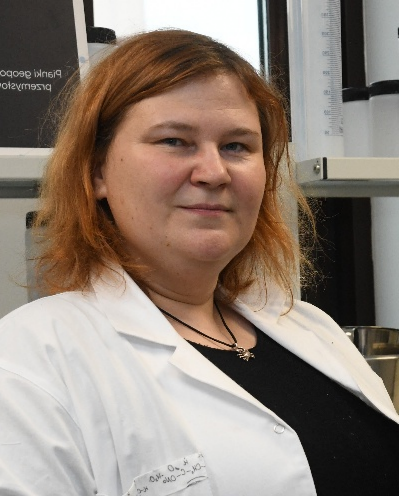
Prof. Dr. Kinga Korniejenko
Email: kinga.korniejenko@pk.edu.pl
Affiliation: Department of Materials Engineering, Cracow University of Technology, Cracow, 31- 155, Poland
Homepage:
Research Interests: geopolymer, geopolymer composites, 3D printing for concrete and geopolymers, recycling; circular economy
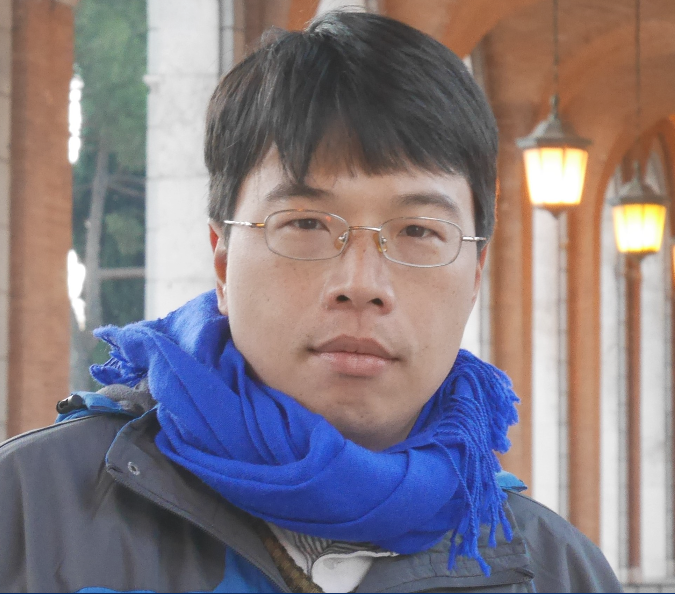
Assoc. Prof. Dr. Chung-Hao Wu
Email: civil343@gmail.com
Affiliation: Department of Civil Enginerring, National Chung Hsing University, Taichung City, 40227, Taiwan
Homepage:
Research Interests: self-healing concrete, recycled aggregate, fire Engineering
Summary
Achieving deep decarbonization in the construction sector requires going beyond conventional Portland cement and even beyond low-clinker cements. While alkali-activated and geopolymer systems have attracted significant attention, their reliance on alkaline activators presents challenges related to cost, safety, durability under certain exposure conditions, and standardization.
In parallel, a new generation of cementless blended materials, which are binder systems that do not contain traditional Portland cement and do not utilize added alkali activators, has emerged. These systems rely on the intrinsic reactivity of industrial by-products, natural pozzolans, calcined clays, reactive magnesia, calcium sulfate phases, and self-activated driven hardening mechanisms. They offer promising pathways to drastically reduce CO₂ emissions while valorizing abundant waste and secondary resources.
Despite growing interest, the scientific understanding, processing routes, and performance characterization of such binders are still fragmented. There is a need to consolidate knowledge on formulation principles, reaction mechanisms, microstructure development, durability, and scale-up into concrete, mortars, and prefabricated elements.
This Special Issue aims to provide an international platform for fundamental research, technological innovation, and industrial case studies on cementless blended materials without alkali activators, aligning with ZKG International's focus on alternative binders, sustainability, binder chemistry, processing technologies, and applications in cement, lime, and gypsum-based materials.
This Special Issue aims to:
· Define and classify cementless blended materials that harden without Portland cement and without external alkali activation, clarifying terminology and system boundaries.
· Recent advances in the formulation of such binders, based on industrial by-products, natural and calcined minerals, and novel reaction routes (hydration, carbonation, self-activation, and pozzolanic reactions, among others).
· Elucidate reaction mechanisms and microstructure development, and relate them to rheology, mechanical performance, and durability.
· Showcase processing and manufacturing strategies for producing and curing cementless blended binders at lab, pilot, and industrial scales.
· Demonstrate practical applications in concrete, mortars, plasters, and prefabricated elements, including performance in real structures and repair/rehabilitation.
· Applications of 3D Printing Technology.
· Evaluate environmental and economic performance, including life-cycle assessment (LCA), resource efficiency, and circularity.
· Encourage the use of modeling and predictive approaches to support mix design, performance prediction, and service-life assessment of these innovative materials.
The Special Issue welcomes contributions in the form of original research, reviews, and industrial case studies. Topics of interest include, but are not limited to:
1. Novel Activation Strategies:
· Mechanical Activation: Utilizing prolonged or high-energy milling to enhance the reactivity of slags, fly ash, and natural pozzolans without chemical additives.
· Thermal Activation: Optimization of calcination processes for clays and industrial by-products to maximize reactivity in neutral environments.
· Mineral Activation: Using sulfates (e.g., gypsum, anhydrite), carbonates, or oxides (e.g., MgO) as mild activators for slag/pozzolan systems.
2. Alternative Raw Materials:
· Valorization of industrial wastes (steel slag, phosphorus slag, red mud) in clinker-free systems.
· Utilization of biological additives or bio-mineralization techniques to induce hardening.
· Hybrid binder systems combining multiple SCMs (Supplementary Cementitious Materials) to achieve self-activation through synergistic chemistry.
3. Microstructure and Durability:
· Hydration product characterization (C-S-H, C-A-S-H, ettringite formation) in near-neutral pH environments.
· Long-term durability performance: resistance to carbonation, sulfate attack, and freeze-thaw cycles in the absence of high alkalinity.
· Porosity evolution and transport properties.
4. Manufacturing and Applications:
· Rheology and workability control of activator-free cementless mixes (admixture compatibility).
· Scalability of production: transitioning from lab-scale synthesis to industrial mixing.
· Life Cycle Assessment (LCA) comparisons between OPC, Geopolymers, and Alkali-Free Cementless Binders.
· 3D printing applications.
Keywords
Cementless blended binders; Clinker-free, alkali-free systems; Sustainable cementitious materials; Waste valorization; Low-carbon construction; Industrial waste valorization; Microstructure and durability of alternative binders

 Login
Login Register
 Submit a Paper
 Propose a Special lssue