Guest Editor(s)
Prof. Dr. Hao Wu
Email: wuhao@bnbm.com.cn
Affiliation: 1. CNBM Innovation Science & Technology Research Institute Co., Ltd., Beijing, China
2. Beijing New Building Materials Public Limited Company, Beijing, China
Research Interests: gypsum-based materials, resource utilization of industrial by-product solid waste, low-carbon green building materials, intelligent manufacturing of building materials, R&D and achievement transformation of cementitious materials technology
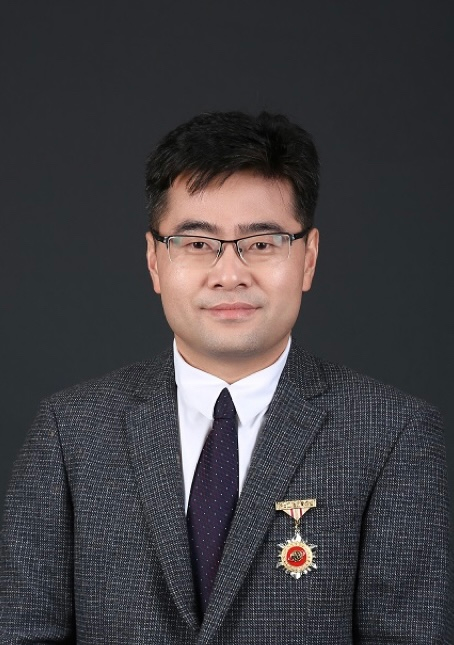
Dr. Junqi Zhao
Email: zhaojunqi@bnbm.com.cn
Affiliation: 1. CNBM Innovation Science & Technology Research Institute Co., Ltd., Beijing, China
2. Beijing New Building Materials Public Limited Company,
Beijing,
China
Research Interests: gypsum-based composite material, functional composite building material, aerogel thermal insulation building material

Prof. Dr. Ying Su
Email: cbmasuying@163.com
Affiliation: School of Civil Engineering, Architecture and Environment, Hubei University of Technology, Wuhan, China
Homepage:
Research Interests: new functional building materials, engineering protection and repair, resource utilization of solid waste

Prof. Dr. Jun Ren
Email: renjunking@aliyun.com
Affiliation: School of Architecture and Planning, Yunnan University; Yunnan University, Kunming, China
Research Interests: basic research and engineering practice of low-carbon green building materials and functionalization, resource utilization of solid waste, intelligent protection and repair of materials

Summary
The global gypsum industry generates several hundred million tonnes of solid wastes annually, including flue gas desulfurization gypsum, phosphogypsum, titanium gypsum, and fluorogypsum. Phosphogypsum alone exceeds 230 million tonnes per year, with accumulated stockpiles surpassing 6 billion tonnes. However, the high-value utilization rate of these wastes is even below 15%. The vast accumulation of these wastes poses severe environmental challenges, necessitating a paradigm shift from simple disposal toward high-value functionalization and advanced material design. Recent breakthroughs in phase transformation control, crystal morphology engineering, surface modification, and composite fabrication have opened unprecedented opportunities for transforming gypsum wastes into advanced functional materials, such as high-strength α-hemihydrate gypsum, anhydrite II, gypsum whiskers, waterproof and reinforced building products, fire-resistant panels, thermal insulation boards, and acoustic materials. The integration of AI-assisted mix design and performance prediction has further accelerated the development of next-generation gypsum-based functional materials. This Special Issue aims to provide a cutting-edge platform for research on the high-value functionalization of gypsum-based solid wastes, publishing full-chain findings from fundamental chemistry and materials science to process innovation and product development, and contributing to the circular economy and carbon neutrality goals of the construction materials sector.
Suggested themes include, but are not limited to:
- High-value products: α-hemihydrate gypsum, anhydrite II, and gypsum whiskers
- Functional modification: waterproofing enhancement, composite modification, and product fabrication
- Gypsum-based functional building materials: fire resistance, thermal insulation, and acoustic performance
- Phase transformation control and crystal morphology engineering
- Surface modification and interface strengthening mechanisms
- Gypsum-based composites with enhanced mechanical and functional properties
- AI-assisted mix design and performance prediction
- Advanced characterization techniques for gypsum-based functional materials
Keywords
gypsum-based solid wastes, high-value functionalization, material design, α-hemihydrate gypsum, anhydrite II, gypsum whiskers, waterproof modification, functional building materials, phase transformation control, AI-assisted design

 Login
Login Register
 Submit a Paper
 Propose a Special lssue