Guest Editor(s)
Prof. Dr. Jiayuan Ye
Email: yejiayuan@cbma.com.cn
Affiliation: Institute of Cement Science and New Building Materials, China Building Materials Academy, Beijing, China
Homepage:
Research Interests: alkali activated materials
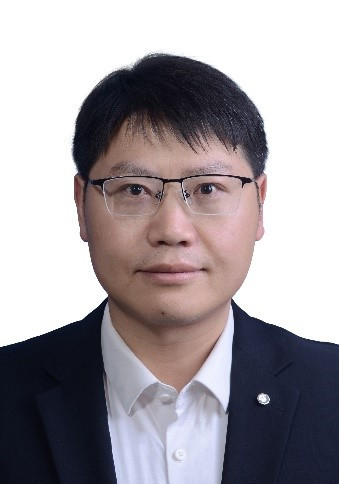
Dr. Shaoliang Chen
Email: chenshaoliang@cbma.com.cn
Affiliation: Institute of Cement Science and New Building Materials, China Building Materials Academy, Beijing, China
Homepage:
Research Interests: red mud utilization

Summary
Cement manufacturing accounts for approximately 8% of global anthropogenic CO2 emissions, making low-carbon transformation of cementitious binders a core priority for global construction decarbonization. Supplementary cementitious materials (SCMs) are the most technically mature, cost-effective route to cut clinker dosage and embodied carbon, covering traditional industrial by-products (slag, fly ash, silica fume) and emerging novel precursors (calcined clays, red mud, mine tailings, construction demolition fines, biomass ash). While SCM-blended low-carbon binders have been widely applied worldwide, critical bottlenecks remain: unstable precursor reactivity, early-age strength deficiency, shrinkage and durability risks, inconsistent industry standards, and insufficient industrial scaling data for new waste-based SCMs.
This Special Issue aims to gather cutting-edge fundamental research, characterization advances, performance optimization, full-scale engineering demonstrations and circular economy evaluation on SCMs and multi-type low-carbon cementitious systems. We welcome original articles, review papers and industrial case studies to bridge lab-scale mechanism research and practical low-carbon construction applications, and provide systematic references for global cement decarbonization.
Suggested research themes are listed as follows.
1. Resource Development and Activation of Novel Supplementary Cementitious Materials (SCMs)
• Conventional SCMs: ground granulated blast-furnace slag, coal fly ash, silica fume, and limestone calcined at controlled temperatures
• Emerging Waste-Derived SCMs: thermally activated clays (e.g., kaolinitic clay), bauxite residue (red mud), steelmaking slag, coal gangue, mining tailings, biomass-derived ash, and micro-powder from recycled concrete
• Composite Activation Strategies: integrated mechanical grinding, thermal treatment (e.g., calcination), and targeted chemical modification to enhance reactivity of low-reactivity aluminosilicate precursors
2. Hydration Mechanisms and Multiscale Microstructural Evolution in SCM-Blended Low-Carbon Binders
• Kinetics of pozzolanic and latent hydraulic reactions; nucleation, growth, and phase evolution of C–S–H and other gel phases; dynamic pore structure refinement during hydration
• Interfacial Transition Zone (ITZ) Engineering: microstructural densification and chemical optimization of the cement–aggregate interface under high SCM replacement (>50 wt%)
• Advanced Multiscale Characterization: in situ synchrotron X-ray diffraction/tomography, high-resolution scanning/transmission electron microscopy (SEM/TEM), and nuclear magnetic resonance (NMR) spectroscopy
3. Macroscopic Performance Tailoring of Low-Carbon Cementitious Composites
• Rheological behavior, setting kinetics, early-age autogenous and drying shrinkage, and crack mitigation strategies
• Compressive and tensile strength development, modulus evolution, and long-term load-bearing capacity under elevated SCM substitution levels
• Functionalized Composites: fiber-reinforced (steel/polymer/basalt), lightweight (expanded clay/foamed matrix), and ultra-high-performance (UHPC-grade) low-carbon concretes
4. Long-Term Durability and Degradation Mechanisms in Complex Service Environments
• Resistance to carbonation-induced pH reduction, chloride ion ingress, sulfate-induced expansive reactions, and freeze–thaw cycling under saturated conditions
• Enhanced fire resistance and suppression of alkali–silica reaction (ASR) through SCM-mediated alkali sequestration and pore refinement
• Coupled-Degradation Modeling: physics-informed predictive frameworks integrating multi-stressor aging (e.g., CO2–Cl-–moisture synergy) and service-life estimation based on degradation thresholds
5. Next-Generation Low-Carbon Binder Systems Integrating SCMs
• Commercially viable formulations: LC³ (limestone-calcined clay cement), belite-rich (C₂S-dominant) low-clinker cements, and calcium sulfoaluminate–SCM hybrid binders
• Low-alkali, one-part alkali-activated materials utilizing solid waste-derived SCMs (e.g., red mud–slag–fly ash blends) without external alkaline activators
• Carbon-Capturing Binders: CO₂ mineralization-integrated cements enabling permanent carbon storage via accelerated carbonation of reactive CaO/MgO phases
6. Circular Economy Integration, Life-Cycle Assessment, and Industrial Deployment
• Comprehensive cradle-to-gate LCA: quantification of embodied carbon, cumulative energy demand, and ecotoxicity impacts across material sourcing, processing, and transport
• SCM Supply Chain Resilience: regional raw material mapping, logistical optimization, and techno-economic feasibility assessment for localized SCM valorization
• Standardization Roadmap: harmonized testing protocols, industrial-scale production line retrofitting, and full-scale field validation (e.g., pilot infrastructure projects)
7. Digital and Intelligent Design of Low-Carbon Cementitious Materials
• Data-Driven Mixture Optimization: supervised and semi-supervised machine learning models trained on multi-source experimental datasets for predicting workability, strength, and durability of multi-SCM systems
• Multiphysics Numerical Simulation: coupled modeling of hydration kinetics, ionic transport, microcrack propagation, and damage accumulation across hierarchical length scales
• Additive Manufacturing Enablers: formulation and process optimization of high-SCM-content mortars for extrusion-based 3D printing, including printability, interlayer bonding, and early-age structural stability
Keywords
low-carbon cement, supplementary cementitious materials, alkali-activated materials, LC3, hydration mechanism, durability

 Login
Login Register
 Submit a Paper
 Propose a Special lssue