Guest Editor(s)
Dr. Qiao Wang
Email: qwang@ibac.rwth-aachen.de
Affiliation: Institute of Building Materials Research, RWTH Aachen University, Aachen, Germany
Homepage:
Research Interests: low-carbon cements, sulfate resistance, carbonation, long-term performance, microstructural characterizations, thermodynamic modeling
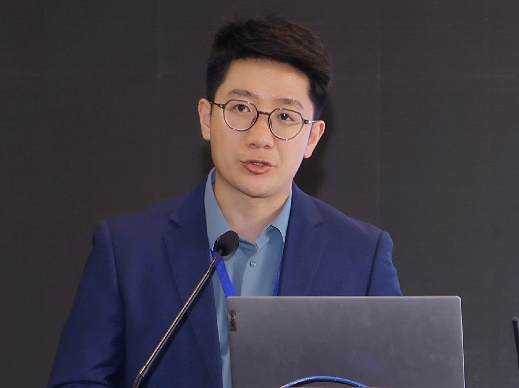
Dr. Jinfeng Sun
Email: 500026@ycit.edu.cn
Affiliation: College of Materials Science and Engineering, Yancheng Institute of Technology, Yancheng, China
Homepage:
Research Interests: low-carbon cement, supplementary cementitious materials (scms), mix design, utilization of CO2 and solid wastes, hydration

Asst. Prof. Sivakumar Ramanathan
Email: sivakumar.ramanathan@miami.edu
Affiliation: Department of Mechanical and Aerospace Engineering, University of Miami, Coral Gables, United States
Homepage: https://people.miami.edu/profile/9338729709f8043c2ee7a269b1f7a9b5
Research Interests: supplementary cementitious materials (scms), concrete durability, cement chemistry, carbon materials

Summary
As the new and low-carbon cement binders develops further, existing methods initially designed mainly for Portland cement become inapplicable. There is a lack of the appropriate test methods or standards to characterize them meaningfully and reasonably. In particular, the lab tests are either very time-consuming or not representative of field conditions in most concrete durability aspects, such as carbonation and sulfate resistance. These tests consider very harsh environments, such as high CO2 concentrations, high sulfate concentrations and unrealistic temperature, which are not necessarily true of field concretes. To achieve the sustainability of low-carbon concrete in the near future, long-term performance and appropriate durability tests, are usually overlooked, are key for this purpose. This issue aims for shaping some unconventional test methods that focus on concrete durability and contribute to the development of potential test methods that can be used to either better characterize the performance or understand the new degradation mechanisms due to the significant changes in the physiochemical properties, phase assemblages, and microstructures of binders.
The suggested themes are the following approaches but not limited to:
· Using cement pastes for the tests
· Natural carbonation and non-accelerated carbonation
· Synergy between carbonation and hydration
· Non-accelerated sulfate degradation with realistic sulfate concentrations and w/b ratios
· Characterizing the degradation profiles using single-sided proton NMR
· Field concretes
· Long-term performance and phase stability, etc.
Keywords
low-carbon concrete, unconventional test methods, long-term performance, sulfate resistance, carbonation, sustainability

 Login
Login Register
 Submit a Paper
 Propose a Special lssue