
 Login
Login Register
 Submit a Paper
 Propose a Special lssue
 Open Access
ARTICLE

Data Aggregation Point Placement and Subnetwork Optimization for Smart Grids
1 Fujian Provincial Key Laboratory of Big Data Mining and Applications, College of Computer Science and Mathematics, Fujian University of Technology, Fuzhou, 350118, China
2 Department of Computer Science and Information Engineering, National Yunlin University of Science and Technology, Yunlin, 640301, Taiwan
* Corresponding Author: Chao-Yang Lee. Email:
(This article belongs to the Special Issue: Heuristic Algorithms for Optimizing Network Technologies: Innovations and Applications)
Computers, Materials & Continua 2025, 83(1), 407-434. https://doi.org/10.32604/cmc.2025.061694
Received 30 November 2024; Accepted 17 February 2025; Issue published 26 March 2025
 View Full Text
 Download PDF
Abstract
To transmit customer power data collected by smart meters (SMs) to utility companies, data must first be transmitted to the corresponding data aggregation point (DAP) of the SM. The number of DAPs installed and the installation location greatly impact the whole network. For the traditional DAP placement algorithm, the number of DAPs must be set in advance, but determining the best number of DAPs is difficult, which undoubtedly reduces the overall performance of the network. Moreover, the excessive gap between the loads of different DAPs is also an important factor affecting the quality of the network. To address the above problems, this paper proposes a DAP placement algorithm, APSSA, based on the improved affinity propagation (AP) algorithm and sparrow search (SSA) algorithm, which can select the appropriate number of DAPs to be installed and the corresponding installation locations according to the number of SMs and their distribution locations in different environments. The algorithm adds an allocation mechanism to optimize the subnetwork in the SSA. APSSA is evaluated under three different areas and compared with other DAP placement algorithms. The experimental results validated that the method in this paper can reduce the network cost, shorten the average transmission distance, and reduce the load gap.Keywords
The growing development of communication technology provides power grids with the means to effectively control and monitor power information [1]. A smart grid is the transformation of a power grid from a traditional electromechanical control system to an electronic control network [2]. Smart grids are based on an integrated, fast bidirectional communication network. Through the application of advanced sensing and measuring technologies, control means, and decision-making system technologies, they realize the goals of economic, high-efficiency, and environmental friendliness in the use of power grids [3].
An infrastructure that allows for bidirectional communication is called an advanced metering infrastructure (AMI) and is considered an essential component of smart grids. It consists of a smart meter (SM) installed at a customer’s end, a metering data management system located in the utility company, and a communication system connecting both, constituting a complete network processing system for measuring, collecting, processing, and utilizing customers’ electricity consumption information [4]. AMI employs a stationary bidirectional communication network that reads the SM several times a day and transmits meter information, including fault alarms, to the data control center in near real-time [5,6].
AMI consists of three main categories: home area network (HAN), neighborhood area network (NAN), and wide area network (WAN). HAN is the network within a user’s home or premises, which includes SM and other smart devices that collect power information from the users. NAN serves as an intermediate network between HAN and WAN. In NAN, data collected from HAN devices are transmitted to WAN for further processing and analysis. WAN is responsible for connecting multiple WANs and further transmitting the collected user power data to the control center or data management system. To enable communication within these networks, various technologies are commonly used. ZigBee, WiFi, Bluetooth, power line communication, and 5G are among the preferred technologies for AMI networks [7,8]. A visual representation of the AMI network framework is shown in Fig. 1.

Figure 1: AMI network framework diagram
NAN is an important part of a smart grid communication network. It usually consists of an SM and a data aggregation point (DAP). DAP collects power information from different SMs and forwards it to the WAN gateway. Wireless communication is recommended for NAN because of its low cost, ability to connect a large number of devices, and ease of deployment [9–11]. In NAN, the location of DAPs and the number of installations significantly impact the quality of communication between DAPs and SMs. First, the position of the DAP affects the transmission distance between the DAP and SM, thereby influencing the power consumption and transmission rate of NAN. Second, the number of DAPs affects the operational costs of NAN; therefore, an appropriate number of DAPs must be selected while ensuring sufficient network coverage [12]. Finally, each DAP has its maximum load; thus, if too many SMs are connected to a DAP, it not only overloads the DAP but also causes a delay in transmitting data from the DAP to the control center [13].
However, the problems in selecting the number of DAPs to be installed in the NAN and the location of the installations (the DAP placement problem) have not been well explored. In this paper, we investigate the placement of DAPs in NANs with different numbers of SMs (urban, suburban, and rural) to determine the appropriate number of DAPs to reduce the operational cost of a NAN, select appropriate locations for DAP placement to minimize the average transmission distance between SMs and DAPs, and optimize subnetworks to minimize the gap in the number of loads between different DAPs. The simulated experimental results demonstrate that our proposed affinity propagation (AP) algorithm and sparrow search (SSA) (APSSA) algorithm can select the appropriate number of DAPs to reduce the network cost of NANs, shorten the average transmission distance between SMs and DAPs, and reduce the load gap of DAPs.
The main contributions of this paper are as follows:
(1) This study improves the AP algorithm so that it can arrive at an optimal number of DAP installations and installation locations on the basis of the number and distribution of SMs in different environments without the need to preset the number of DAP installations while reducing the average transmission distance.
(2) In this paper, we consider optimizing different subnetworks as a set covering problem (SCP) and establish corresponding coverage matrices to better solve the subnetwork optimization problem to reduce the load gap between different DAPs.
(3) Based on the initial DAP and its corresponding subnetwork, the SSA algorithm is used to optimize the subnetwork. An allocation mechanism is added to the SSA algorithm to allocate SM-optimized subnetworks to reduce the load gap and form the final subnetwork.
(4) The APSSA algorithm is comprehensively evaluated considering three different NAN regions.
The rest of the paper is organized as follows: Section 2 discusses related work. Section 3 describes the network model and the network cost model. In Section 4, the APSSA algorithm proposed in this paper is described in detail. The performance of the APSSA algorithm in simulation experiments is described in detail in Section 5. Section 6 concludes the paper and presents our future research directions.
The number and placement of DAPs in a network play a vital role in wireless communication between SMs and DAPs [14]. In this regard, Li et al. [15] introduced an effective approximation algorithm to handle smart grid communication optimization tasks, which can handle complex DAP planning tasks and help reduce the costs of smart grid communication systems. Meanwhile, Gallardo et al. [16] proposed a DAP optimization framework based on residential grid AMI using K-medoids to select the optimal placement of DAPs. Their experimental results demonstrated that their method could reduce the average and maximum distance of communication between SMs and DAPs to some extent. In another study, Kong [13] argued that in a smart grid, the communication network and the power network are interdependent; thus, the DAP placement problem cannot be considered as a communication network problem only. Kong [17] further argued that in a smart grid where power is supplied to DAPs by a transformer, the failure of the transformer results in the loss of power to the corresponding connected DAPs and the loss of monitoring function, which in turn results in the failure of the network cascade. Therefore, the DAP placement problem must also fully consider how an SM can communicate normally with the data control center after a failure of the transformer or DAP in a network.
The continuous development of Internet of Things (IoT) technologies provides new opportunities and motivation for different smart grid applications, such as AMI and electric vehicles [18–20]. The development of artificial intelligence IoT [21,22] has accelerated this process. In this respect, Gallardo et al. [23] proposed an IoT-based AMI architecture that consists of three layers: a sensing layer, a communication network layer, and an application layer. Meanwhile, Khan et al. [24] proposed a quality of service (QoS)-based machine learning framework for AMI to better design efficient smart grid architectures. This proposed framework consisted of three components: a three-tier hierarchical architecture for AMI, a hierarchical clustering approach based on machine learning, and a scheduling technique based on application item prioritization. However, integrating these technologies has also introduced new security challenges, particularly the vulnerability of machine learning-based smart grid applications (MLsgAPPs) to malicious attacks. Zhang et al. [25] provided a comprehensive review of recent advances in attack strategies and defense mechanisms for MLsgAPP security, marking a significant contribution as the first overview in this domain. This study extends the discussion by systematically reviewing and comparing existing research on adversarial attacks in MLsgAPP across power generation, transmission, distribution, and consumption scenarios, while also examining countermeasures. Additionally, it analyzes potential vulnerabilities in smart grid applications powered by large language models (e.g., ChatGPT). Literature [26] investigated data security risks in ML-based smart grids, focusing on adversarial manipulations of critical input systems that could mislead system operators and trigger cascading failures, such as major power outages. To address this issue, this study proposes a physics-constrained robustness evaluation framework based on the tree ensemble (TE) model, ensuring that adversarial samples not only deceive human intuition but also comply with physical laws and bypass the power system’s error-checking mechanisms. By employing formal modeling and variable transformation, an effective robustness assessment method is introduced and validated through simulations.
Artificial intelligence techniques can be applied to meet QoS requirements when determining the placement of selected DAPs for a communication network structure, especially in some urban areas with a high density of meter coverage. In particular, clustering methods [27] are useful for solving this optimization problem [28]. Hassan et al. [29] evaluated and compared three clustering algorithms, namely, K-means, self-organizing map, and fuzzy c-means, for the DAP placement problem in terms of the multihop shortest path distance, cluster size, and computational complexity. Their simulation results showed that allocation methods based on the K-means and self-organizing map had similar performances, whereas that based on fuzzy c-means had a longer maximum multihop shortest path distance and higher complexity. Molokomme et al. [30] proposed a NAN layout scheme based on an unsupervised K-means clustering algorithm and a silhouette index method.
Other previous studies [31,32] presented a new idea of selecting SMs to work as DAPs directly in the NAN. They concluded that shortening the transmission distance path between SMs and DAPs is an important initiative to reduce the energy and time cost of a network in a smart grid communication network environment. Thus, they categorized the DAP placement problem as solving the shortest distance path problem and proposed the algorithms and using a multihop communication model to reduce the number of DAPs. Table 1 shows the brief summary of the major related works.

In smart grids, large amounts of data must be processed and exchanged. The availability of smart grids requires meeting time delays for different operations and data transmission [33]. The shortest transmission path is one of the commonly used approaches in various DAP placement problems as it provides an effective way to reduce the consumption of network energy and the time taken to transmit data. In DAP placement problems, the number of DAPs and their location selection is a very critical issue. In current research, most clustering algorithms with an initial predetermined number of DAPs are used for the location selection of DAPs. However, determining how many DAPs are optimal is difficult, especially for such a large network as a smart grid. Moreover, the number of SMs connected by DAPs is not considered, which may easily lead to a large gap between the number of SMs connected by different DAPs in the network, which is not conducive to the distribution of energy and the guarantee of communication quality of the smart grid. Therefore, in this paper, we focus on automatically selecting the appropriate number of SMs as DAPs from all the SMs in the NAN without presetting the number of DAPs, thereby reducing the network costs, minimizing the average transmission distance between SMs and DAPs, and balancing the load volume gap between different DAPs.
3 System Modeling and Problem Formulation
In this study, SM and DAP are connected using wireless communication. SM can send the data directly to the DAP or it can also be used as a relay for forwarding the data from other SMs to the DAP, as shown in Fig. 2.

Figure 2: NAN model
There are N smart meters
If
The whole network is connected, which means that any two different SMs can directly or indirectly, through a limited number of relay SMs, communicate with each other. In this paper, the DAP placement task is to select a certain number of SMs from the NAN as DAPs and assign other SMs to these DAPs, dividing the whole NAN into different subnetworks. Each subnetwork has only one DAP, and these DAPs collect the data collected by the SMs within their own subnetwork to be forwarded to the WAN after further processing. The DAP can be denoted as:
where
To better measure the load gap of different DAPs, we use the population standard deviation to measure the load gap of different subnetworks in the whole network, denoted as follows:
In this equation, L is the load gap and
The total cost of the network can be categorized into three parts: DAP installation and maintenance cost
Although SMs are selected from the network as DAPs, ordinary SMs cannot process large amounts of data. Thus, to meet the network needs, a device that can process large amounts of data has to be installed as a DAP at the location of the original SM. The cost of installing and maintaining a DAP is A. Then,
where
The main objective of this paper is to select the best SM as a DAP among the SMs distributed in the NAN and to divide the NAN into various subnetworks to shorten the average transmission distance between the SMs and their belonging DAPs, reduce the load gap of each DAP, and reduce the cost of the network. The DAP placement problem is formulated as:
The constraints are as follows:
Constraint (15) denotes that all SMs are covered by the subnetwork. Constraint (16) denotes that there is no duplicate coverage of SMs between different subnetworks; that is,each SM can only be assigned to a single subnetwork. Constraint (17) denotes that SMs within each subnetwork can be transmitted either directly or through a limited number of relay meters, and that the entire subnetwork is a connected network. Constraint (18) indicates that the placement of the DAP is the location of the original SM, not a newly added location in the network.
4 The Proposed APSSA Algorithm
4.1 Selection of the Number and Location of DAPs to Form Initial Subnetworks
In APSSA the number of DAPs and their positions are selected to form an initial subnetwork based on the number of SMs and distribution positions using the improved AP clustering algorithm.
Traditional clustering algorithms such as K-means and K-medoids require a predefined number of cluster centers based on data characteristics, and their results are highly sensitive to the initial cluster values. To address these limitations, Frey and Dueck proposed the affinity propagation (AP) clustering algorithm in 2007. Compared with traditional methods, AP clustering offers greater adaptability and stability. The core idea of AP clustering is to establish a similarity matrix between data points and iteratively transfer information to determine the optimal data clusters. The AP clustering algorithm relies on three types of information: similarity, responsibility, and availability. During execution, the algorithm uses similarity information to guide clustering, while responsibility and availability information are iteratively updated to refine the clustering process, ultimately selecting the optimal clustering result.
This study enhances the AP clustering algorithm for wireless neighborhood area network (NAN) scenarios, enabling the adaptive determination of data aggregation points (DAPs) and their optimal placement based on smart meter (SM) quantity and distribution. The improved algorithm aims to minimize network interference and reduce the average transmission distance between SMs and their assigned DAPs.
To reduce the average transmission distance between SM and DAP, the similarity is calculated using the negative value of the shortest transmission distance
where the average distance
The similarity
After determining the similarity

Figure 3: The information of responsibility and availability
To avoid data oscillations during the iteration process, damping coefficients are set to update the values of responsibility and availability, as shown in Eqs. (24) and (25):
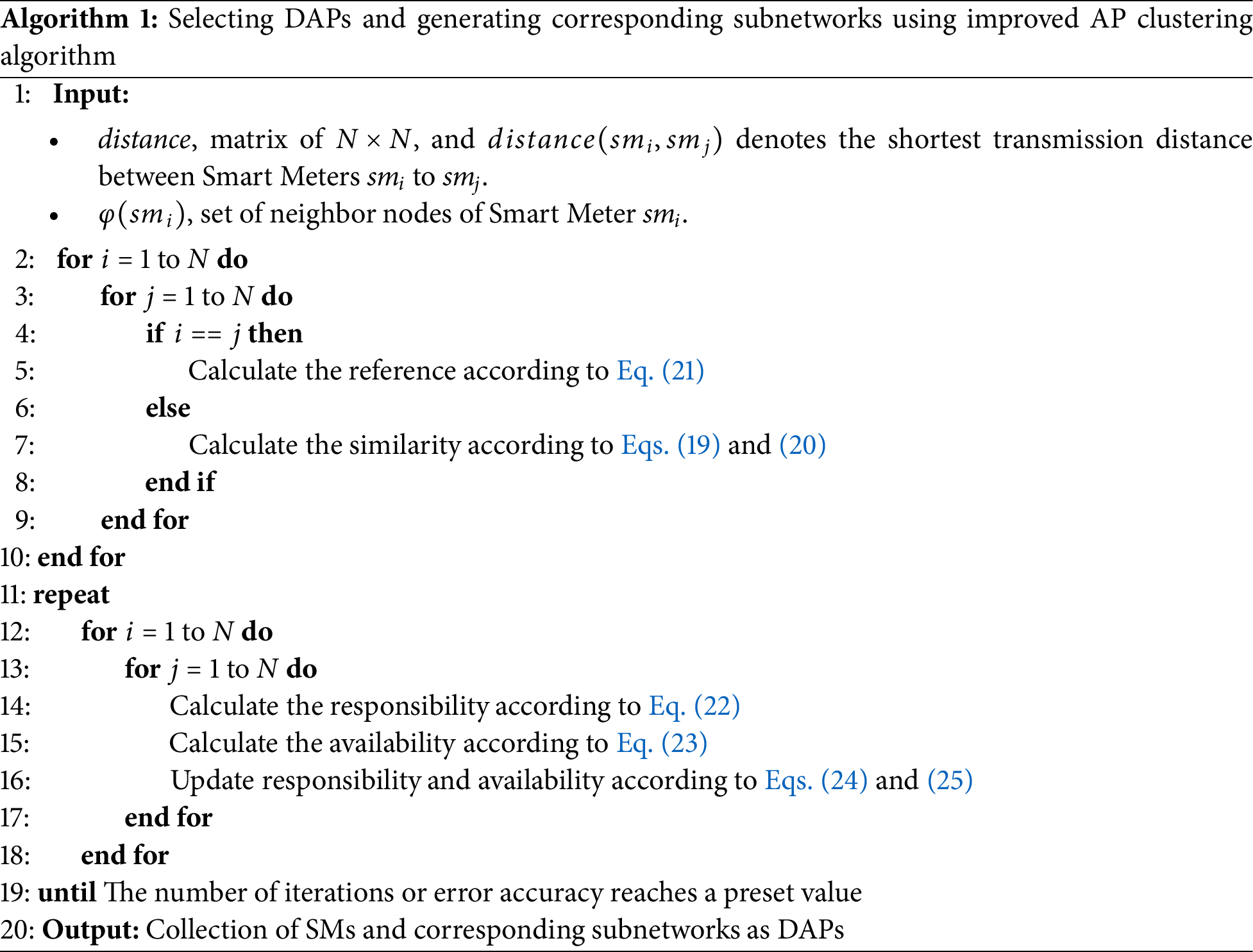
4.2 Optimization of Subnetworks Based on SSA Algorithm
In this section, the previously generated subnetworks are optimized to minimize the load gap among different DAPs. This study introduces the set coverage problem (SCP) models subnetwork optimization as an SCP problem. A distance threshold (
In the general SCP problem, assume that there is a set X consisting of

Figure 4: Coverage matrix based on Smart Meter location
SCP has been proved to be an NP-hard problem. Therefore, in practice, some approximation algorithms, such as greedy algorithms or metaheuristic algorithms, are often used to find an approximate optimal solution [35,36].
Step 1: In the initial subnetwork generated by the AP algorithm, the load gap between different DAPs is very large to allow SM to be assigned to other DAPs to reduce the load gap between different DAPs, to optimize the subnetwork and effectively reduce the average transmission distance. We set the distance threshold
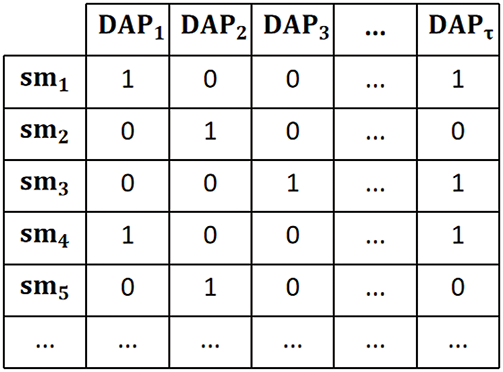
Figure 5: Constituent coverage matrix
Step 2: Initialize the population. The initial population is generated randomly by randomly selecting
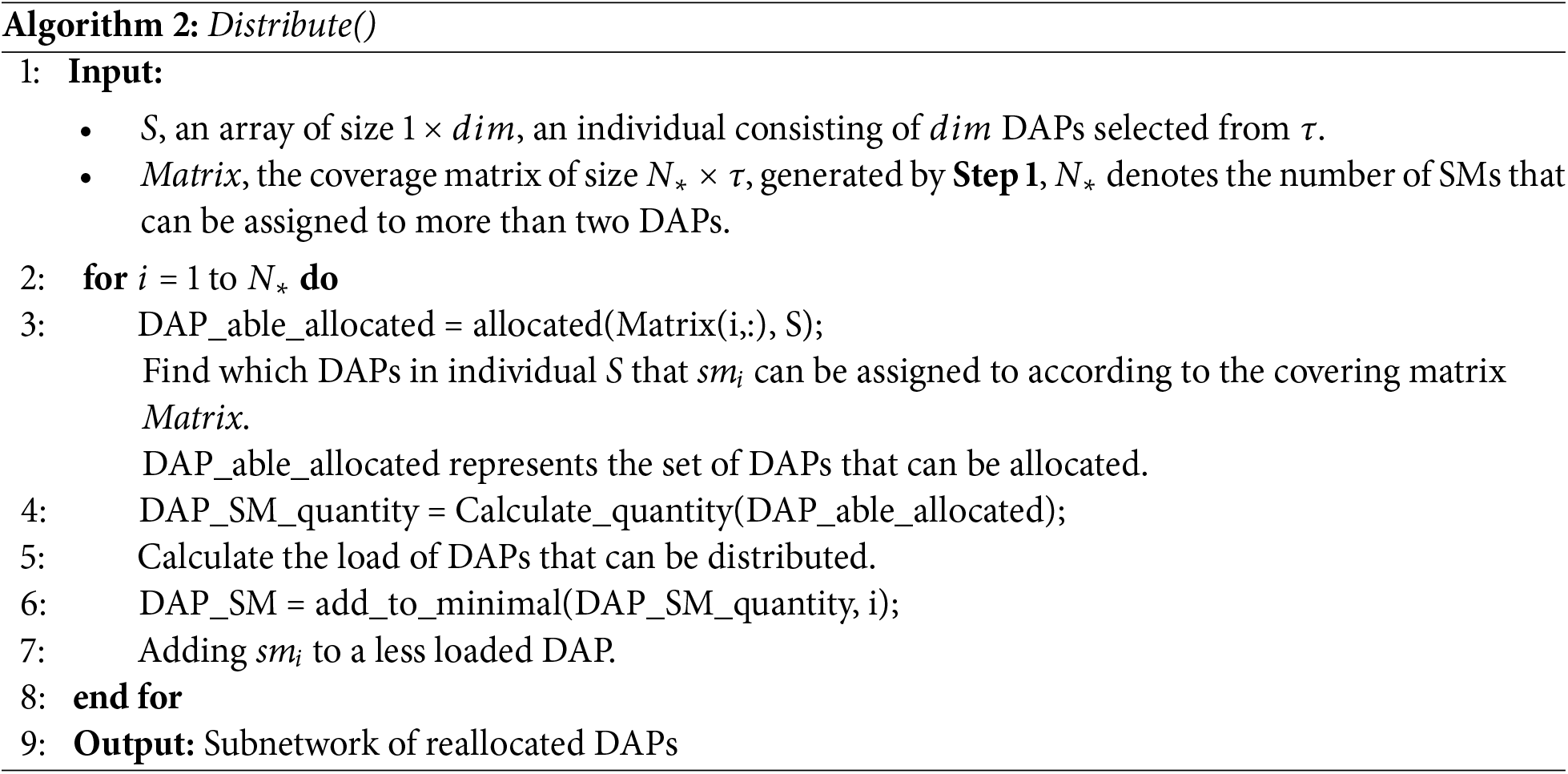
Step 3: Calculate the fitness value of each individual in the population species, as shown in Eq. (27):
Step 4: Update the position of the explorer. Calculate the fitness value of each individual in the population according to Step 3, and sort the population according to the fitness value. The top
where
Step 5: Update the location of the followers. In the population, all except explorers are followers. As shown in Eq. (29):
where
Step 6: Update the location of individuals aware of the danger. We randomly selected
where
Step 7: Judge whether the stopping condition is satisfied; if so, output the optimal sparrow individual position and the corresponding fitness value; otherwise, return to Step 4.
The detailed flowchart of APSSA is shown in Fig. 6.
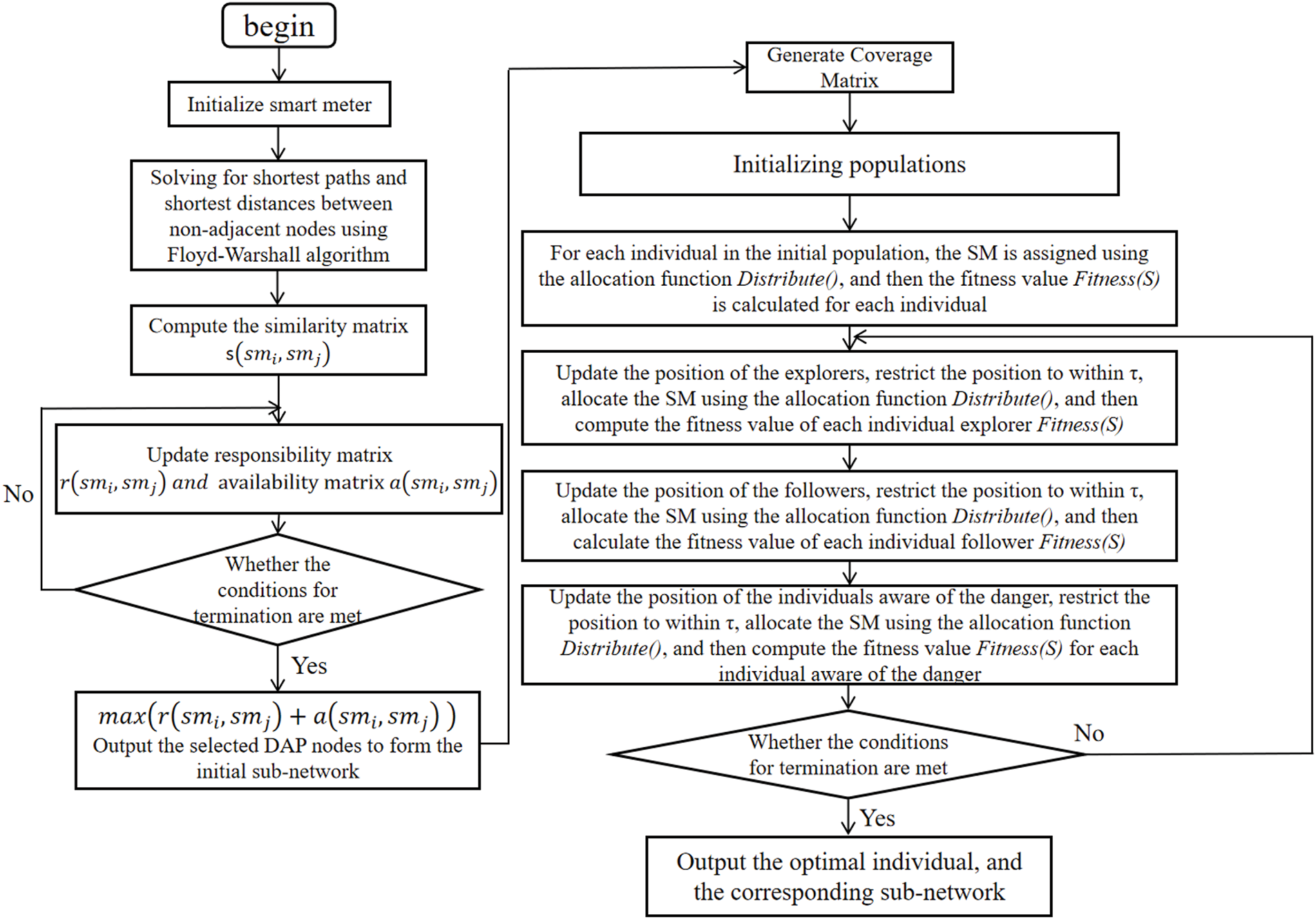
Figure 6: Algorithm flowchart
Experiments were conducted by deploying varying numbers of SMs in urban, suburban, and rural environments within a

In the simulation process, we evaluated the proposed APSSA algorithm using different values of the reference degree coefficient
5.1 Analysis of the Reference Degree Coefficient
The impact of different reference degree coefficients (
Fig. 7 illustrates the network costs associated with different
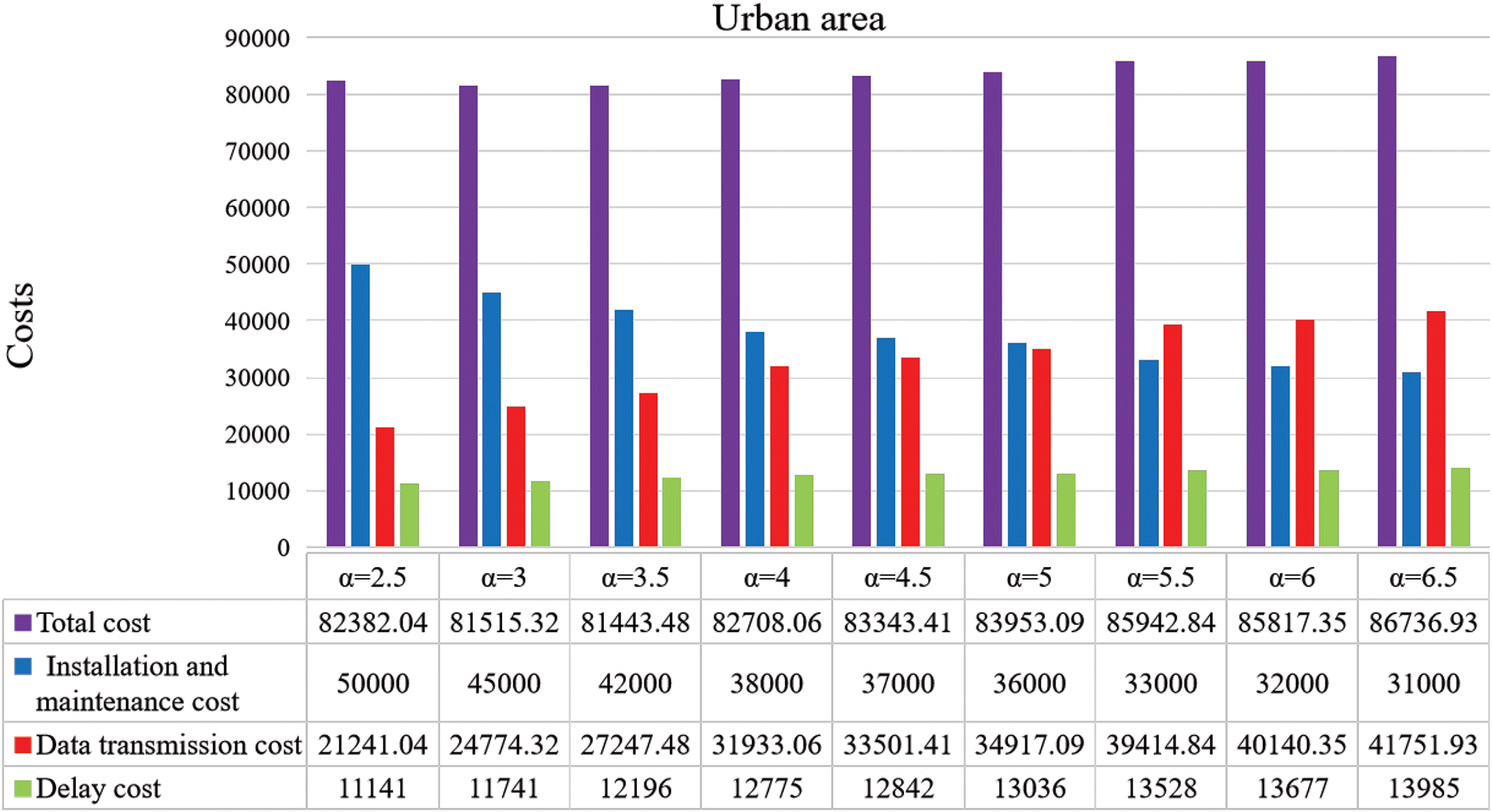
Figure 7: Urban network costs
The trend of network costs in suburban areas with different
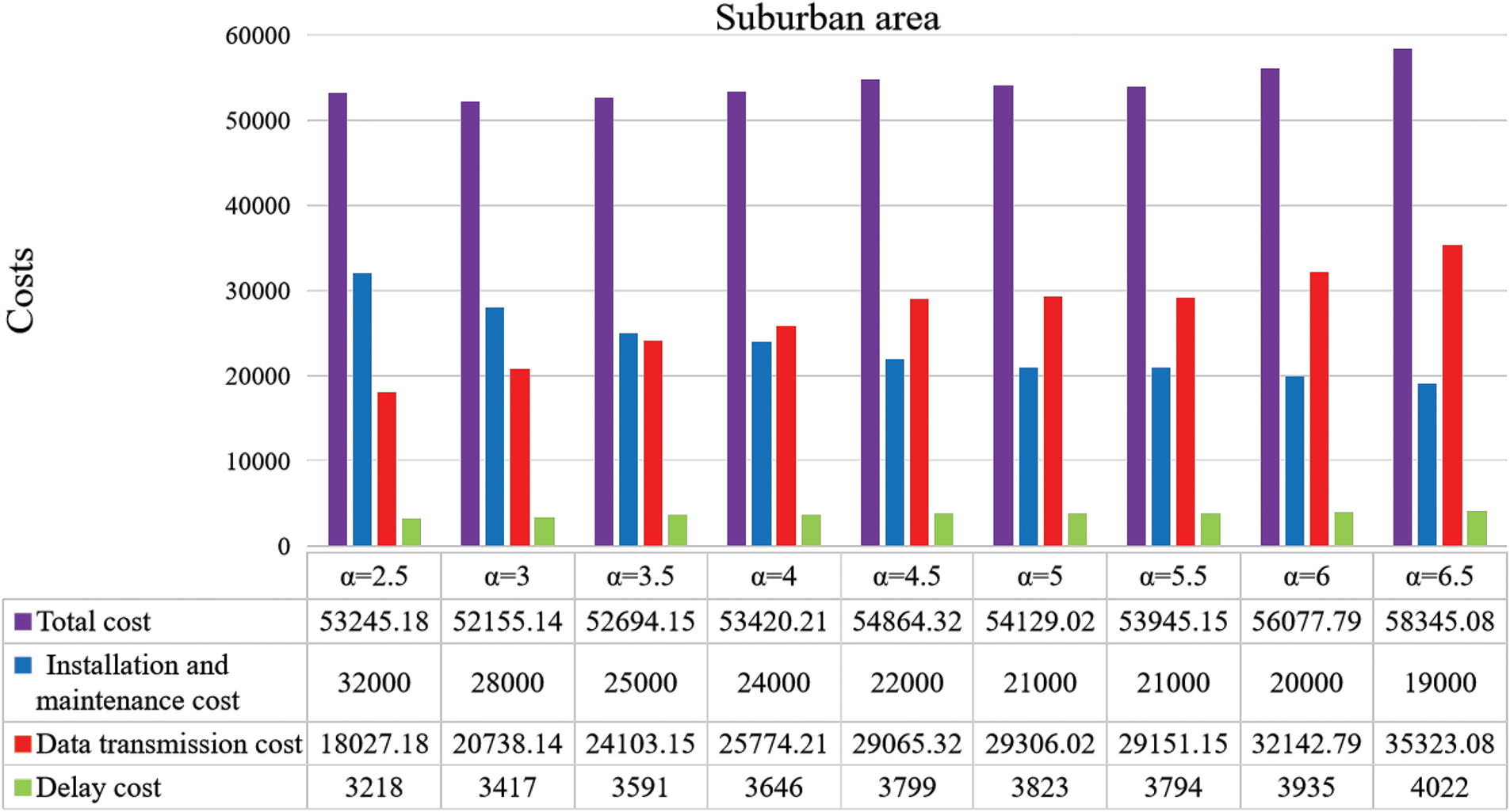
Figure 8: Suburban network costs
The network costs in rural areas for different values of
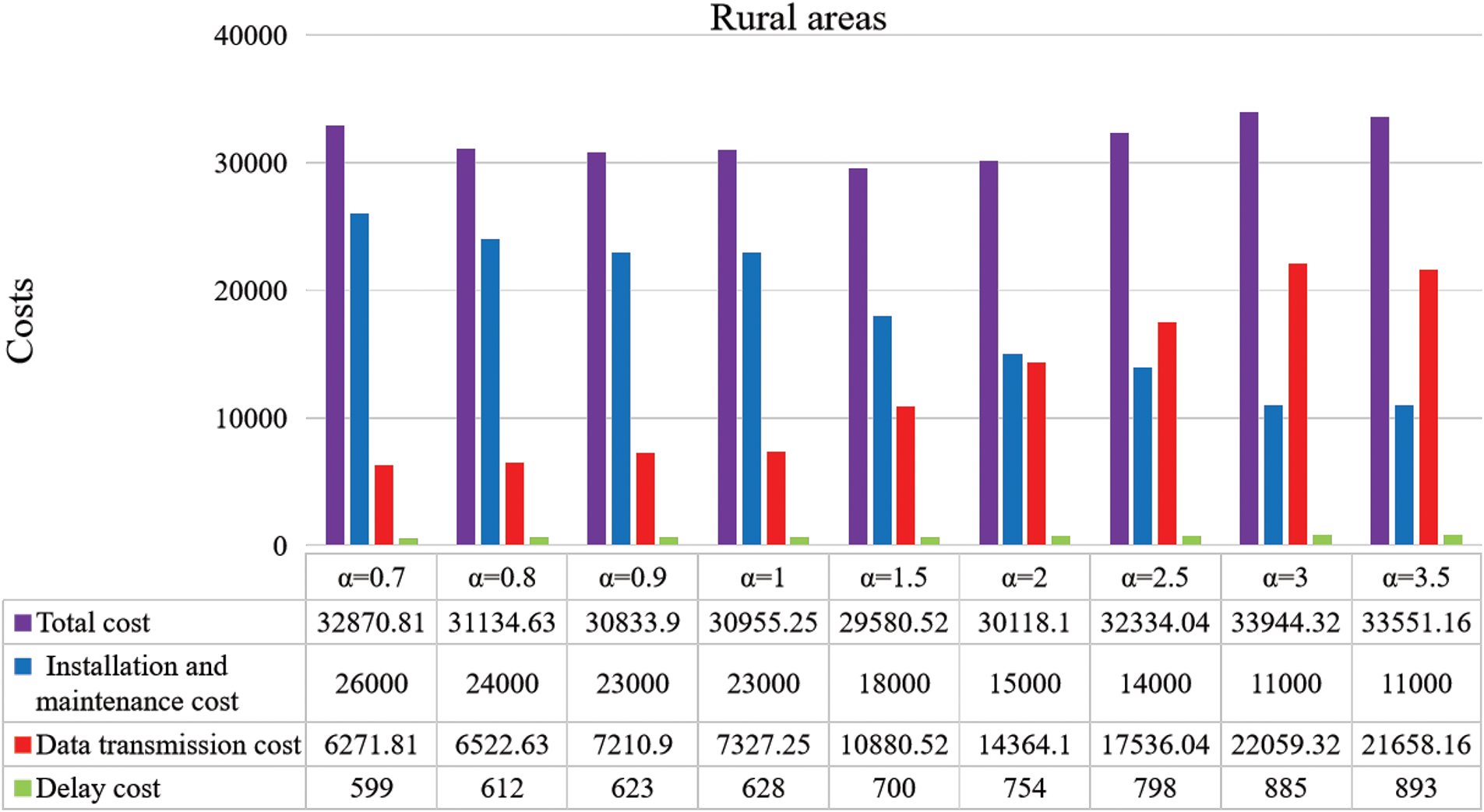
Figure 9: Rural network costs
The number of SMs distributed is a key factor influencing

5.2 Analysis of the Distance Threshold
To study the impact of the distance threshold
As shown in Fig. 10, in the urban area, when the value of

Figure 10: Comparison of different
In urban areas, when
The effects of different
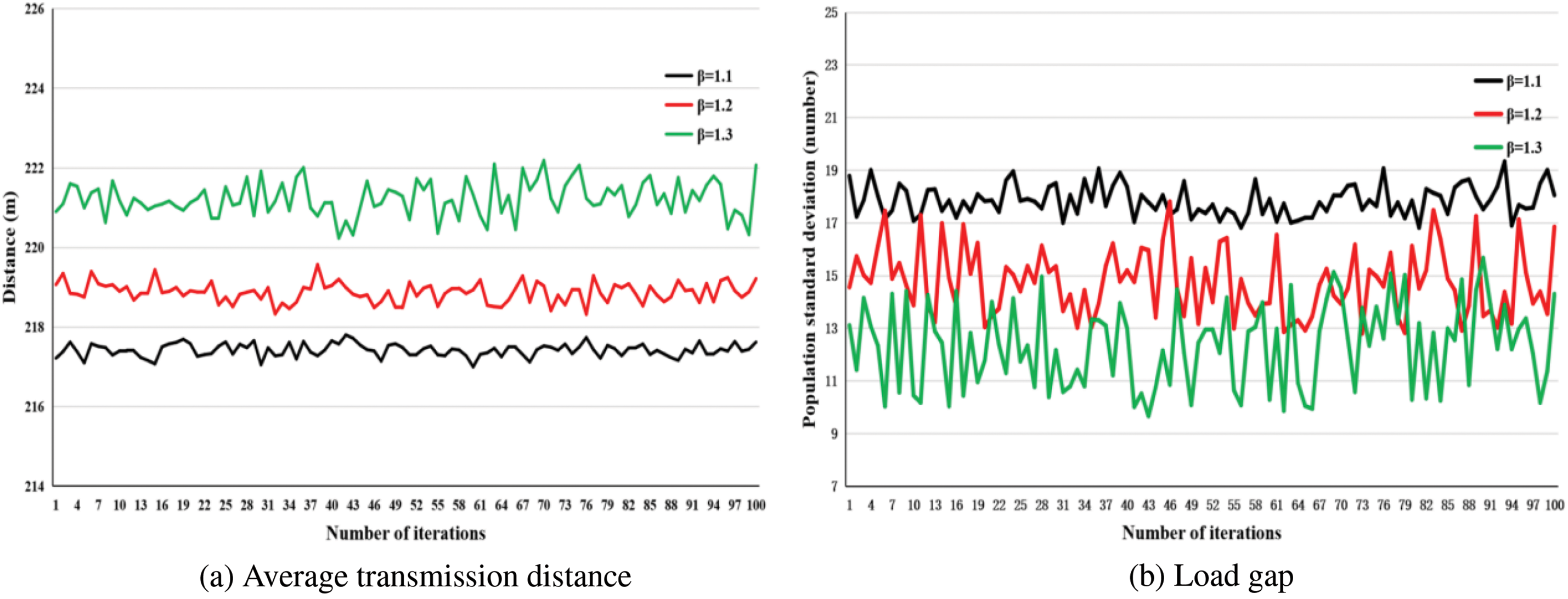
Figure 11: Comparison of different
Similarly, the influence of different

Figure 12: Comparison of different
The transmission distance is a key factor influencing

5.3 Comparison of Average Transmission Distance and Load Gap
In this subsection, the average transmission distance and DAP load gap of the proposed APSSA algorithm are compared with the K-medoids and
As shown in Fig. 13, the three DAP placement algorithms generate distinct DAP placements and subnetworks in urban areas. Fig. 13a shows the proposed APSSA algorithm, Fig. 13b illustrates the
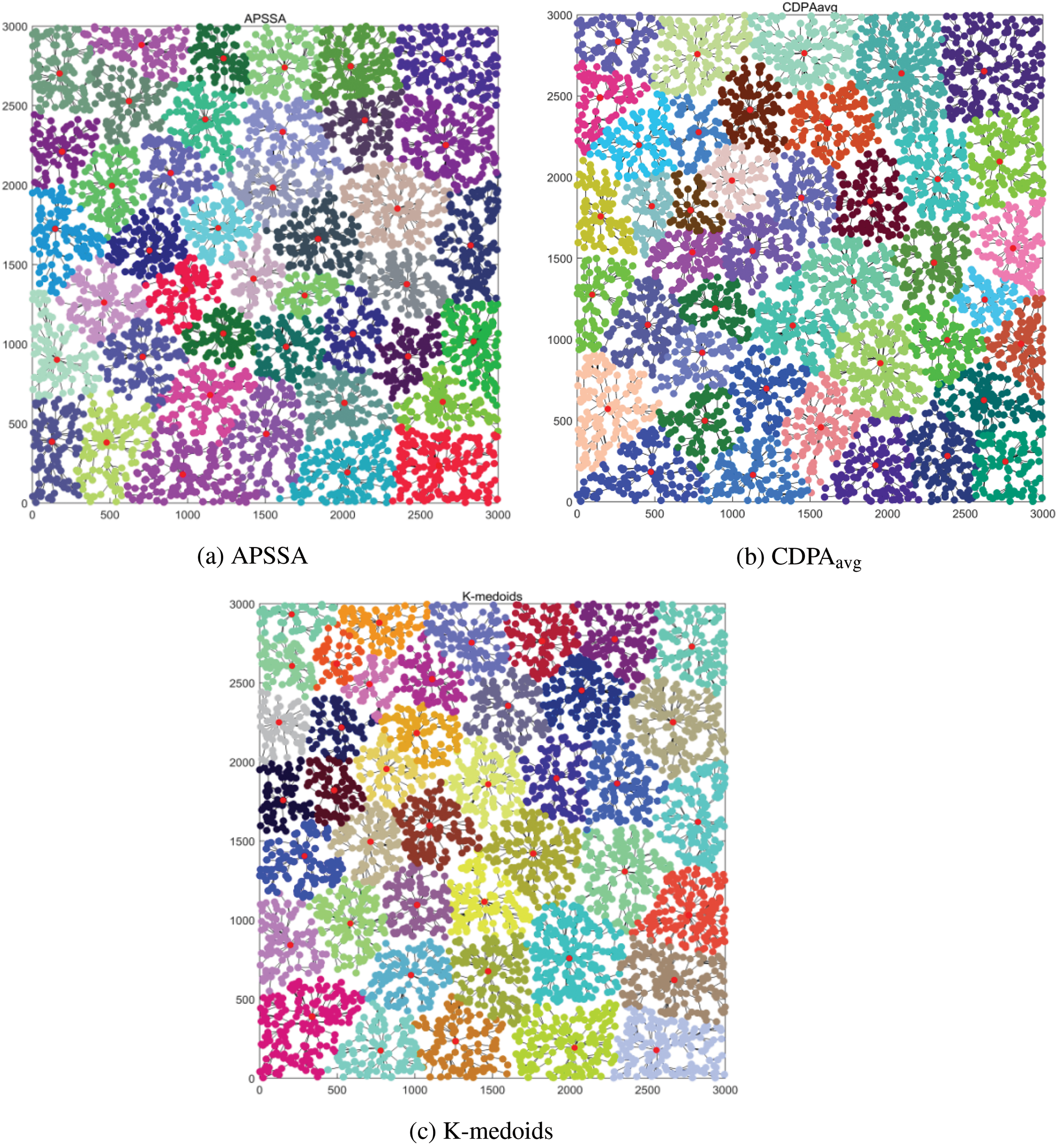
Figure 13: Demonstration of the three algorithmic realizations of DAP placement and the corresponding subnetwork—Urban: (a) Demonstration of the APSSA in urban; (b) Demonstration of the
Fig. 14 shows the placements of DAPs selected by the three algorithms in the suburban area and the corresponding subnetworks formed by the different DAPs. In this scenario, 2000 SMs are distributed over the same area as in the urban area, but the SM density is lower. In addition, the suburban area has fewer DAPs than the urban area. Comparing Figs. 14 and 13, DAPs in suburban areas cover larger regions than those in urban areas, leading to an increase in the average transmission distance from SMs to DAPs and a decrease in the SM coverage density per DAP per unit area.
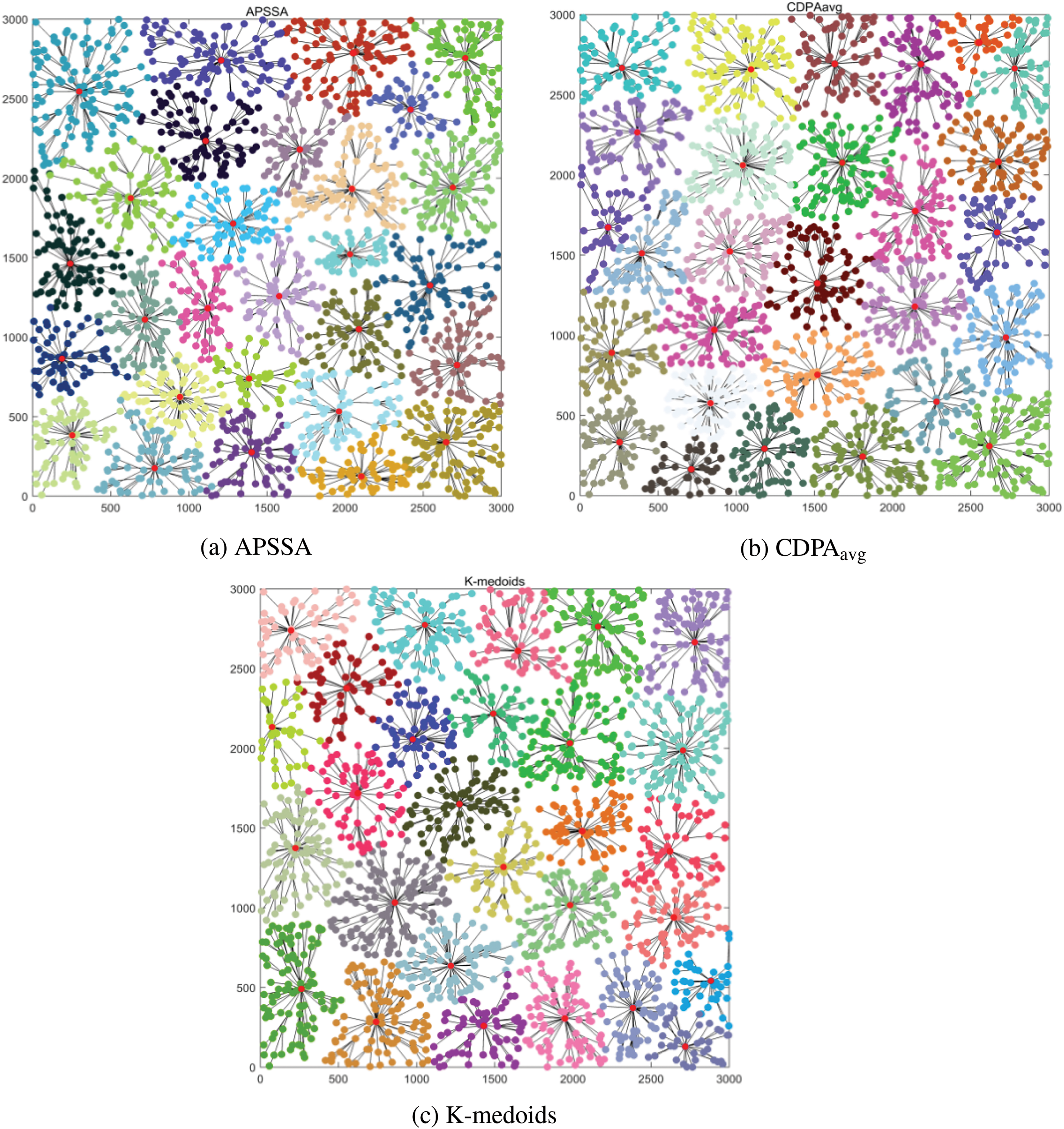
Figure 14: Demonstration of the three algorithmic realizations of DAP placement and the corresponding subnetwork—Suburban: (a) Demonstration of the APSSA in suburban; (b) Demonstration of the
Fig. 15 presents the selected DAP placements and corresponding subnetworks for the three algorithms in rural areas. Compared with urban and suburban areas, SMs in rural areas are less densely distributed, the distance between SMs is larger, and the network contains communication links with longer transmission paths.
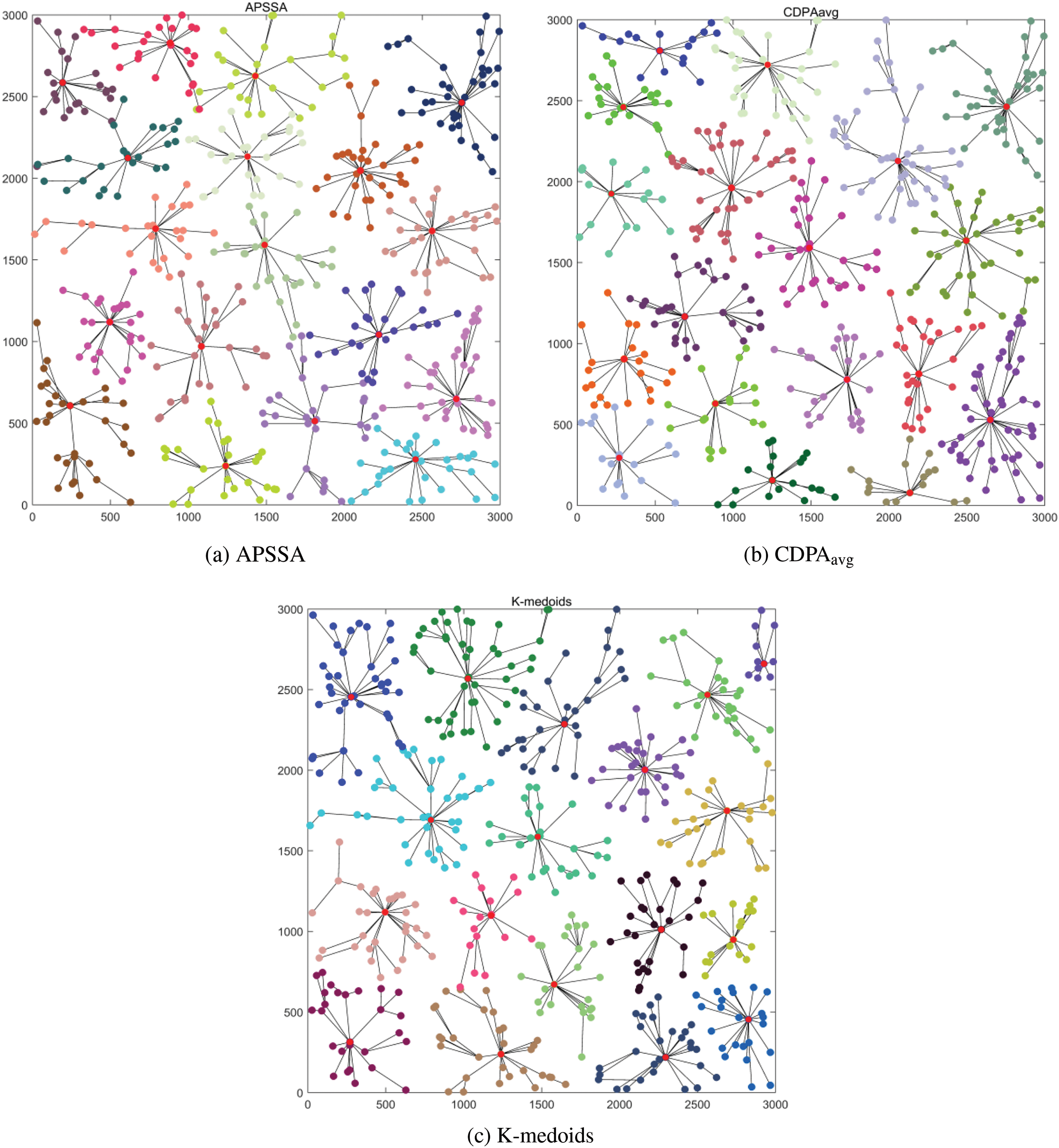
Figure 15: Demonstration of the three algorithmic realizations of DAP placement and the corresponding subnetwork—Rural: (a) Demonstration of the APSSA in ruarl; (b) Demonstration of the
To reflect the real performance of the three algorithms, we executed each of them 100 times under each region and plotted the obtained results as cumulative distribution function (CDF) plots, as shown in Figs. 16–18. In this case, the reference degree coefficient
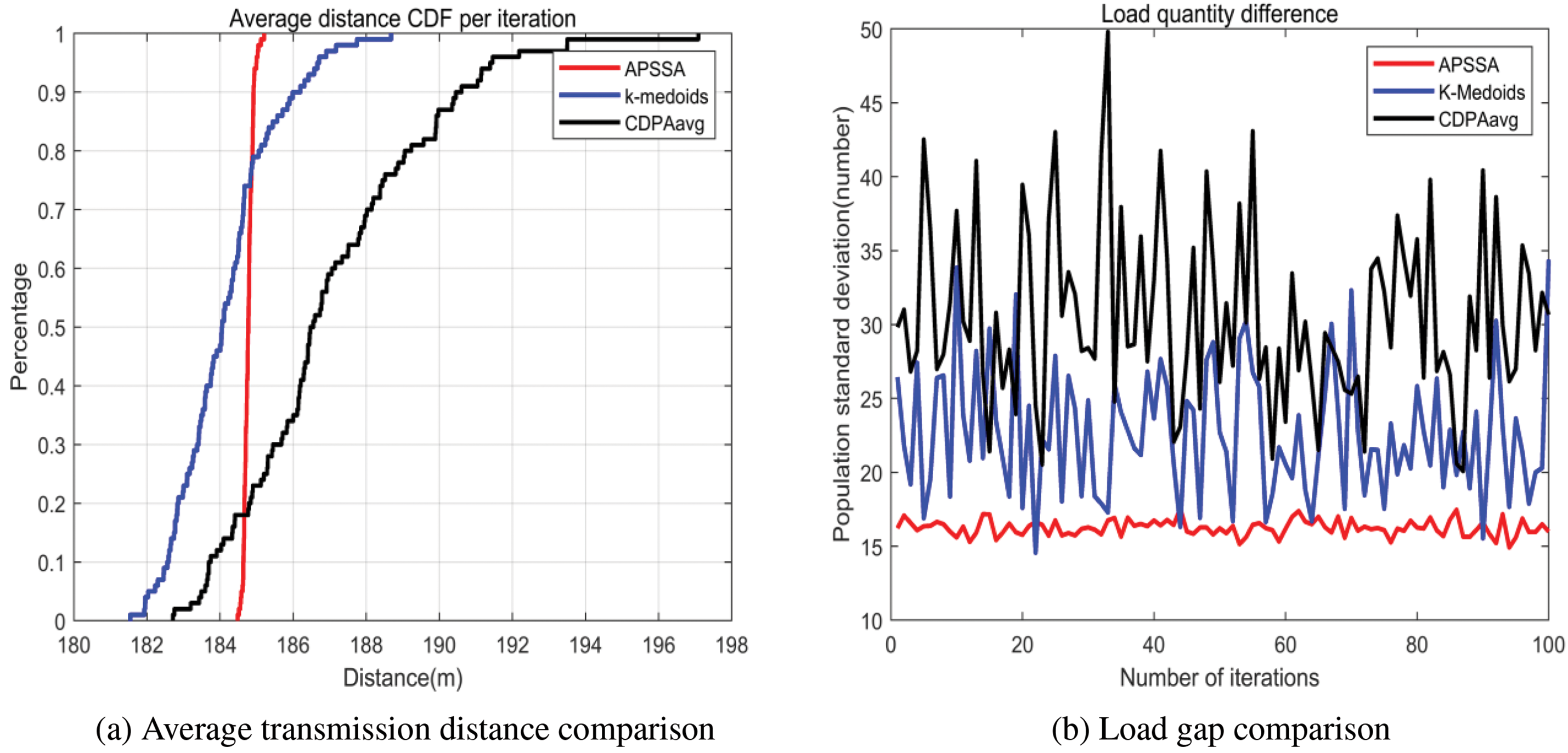
Figure 16: Comparison of average transmission distance and DAP load gap—Urban: (a) Average transmission distance comparison in urban; (b) Load gap comparison in urban
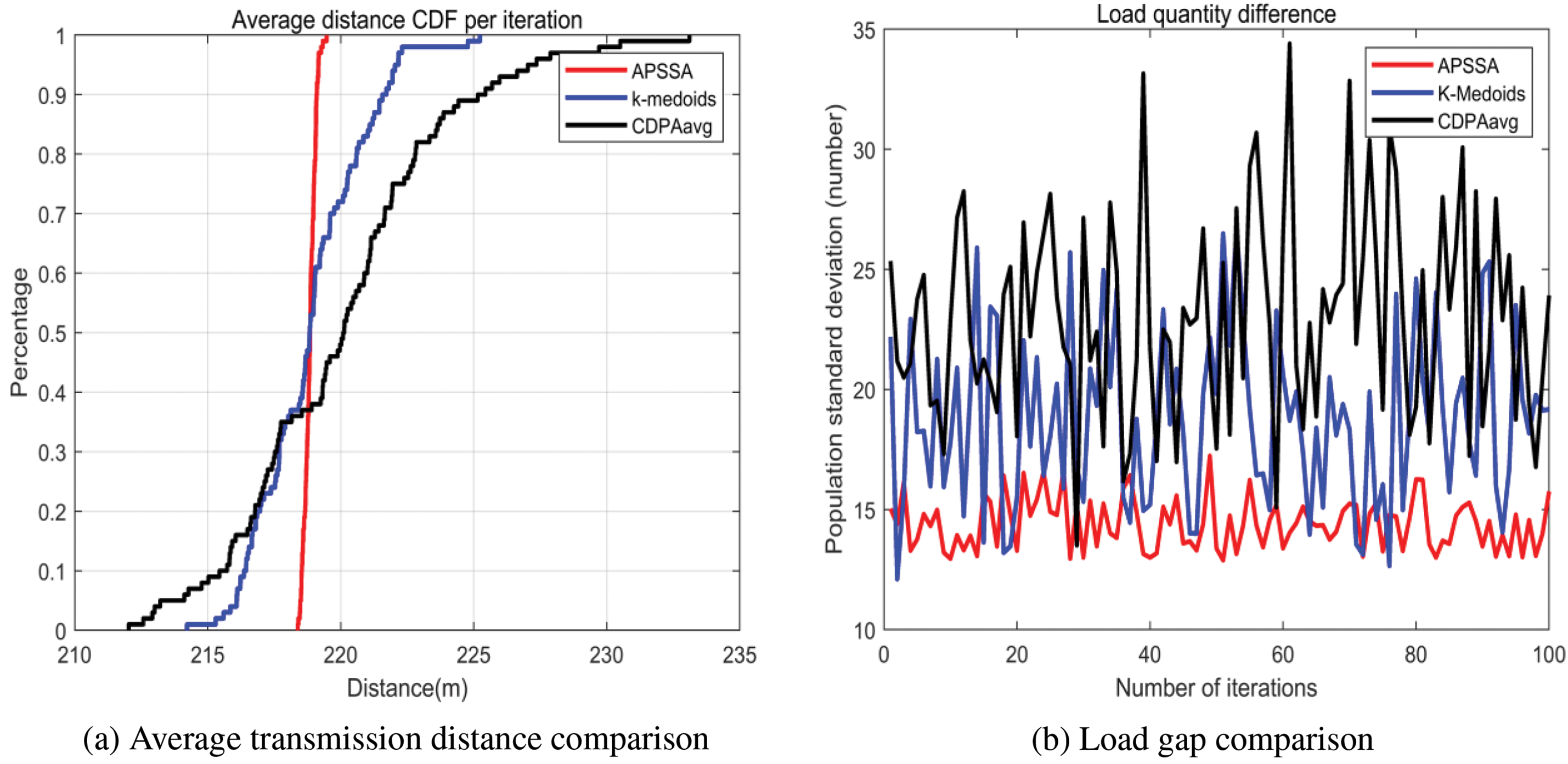
Figure 17: Comparison of average transmission distance and DAP load gap—Suburban: (a) Average transmission distance comparison in suburban; (b) Load gap comparison in suburban
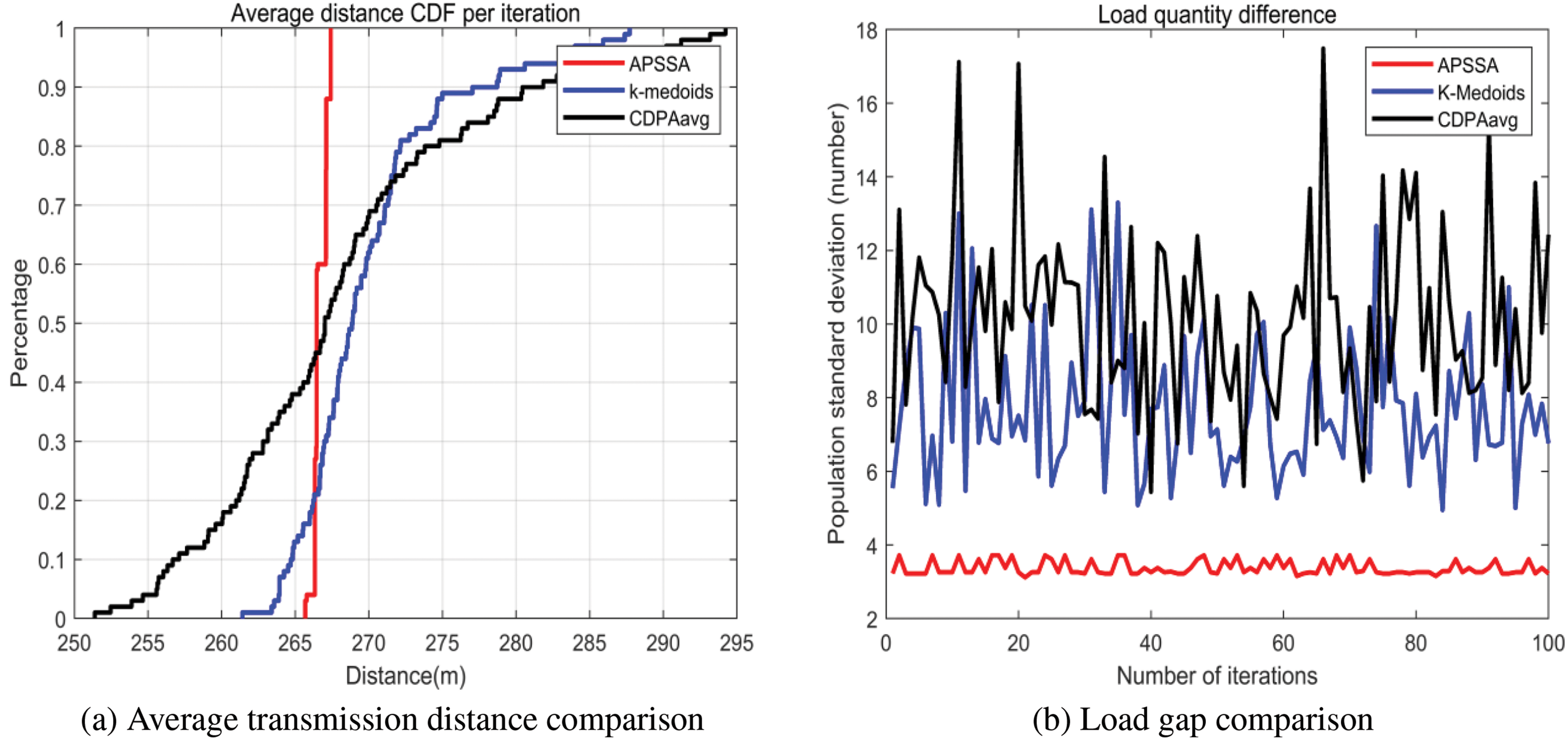
Figure 18: Comparison of average transmission distance and DAP load gap—Rural: (a) Average transmission distance comparison in rural; (b) Load gap comparison in rural
Fig. 16a depicts the plot of the CDF of the average transmission distance achieved by APSSA, K-medoids, and
The experimental results for the suburban area, shown in Fig. 17, indicate that the APSSA algorithm outperforms
In rural areas, as shown in Fig. 18, APSSA outperforms
5.4 Analysis of the APSSA Algorithm
Time and space complexities are critical factors in algorithm design and selection. The time complexity directly influences the algorithm’s execution speed and determines its efficiency in handling large-scale data. In addition, space complexity pertains to the algorithm’s memory consumption, which affects its scalability and stability. In the smart grid DAP placement problem, selecting an optimal algorithm requires balancing these complexities based on problem-specific characteristics.
During NAN operation, the placement and number of installed DAPs installed considerably influence communication performance. First, DAPs’ placement directly influences the transmission distances between DAPs and SMs, thereby affecting the energy consumption and network transmission rates. Second, the number of installed DAPs determines the operational cost of NAN, which requires an optimal balance between cost efficiency and adequate network coverage. Finally, each DAP has a maximum load capacity that limits the number of SMs it can support. If a DAP exceeds its capacity, it may experience overload, leading to increased power transmission delays and hindering real-time monitoring and control of the SM information transmitted by the control center, thereby affects the normal operation of the power system. To comprehensively and efficiently address these challenges, we improved two well-performing DAP placement algorithms and developed the APSSA algorithm, optimizing placement strategies while ensuring improved network performance.
The time complexity of APSSA is
6 Conclusion and Future Directions
The number and location of DAPs affect the cost and quality of building NAN communication networks, and the DAP placement problem is more tightly constrained because of the different locations of SMs in different NANs. In this paper, we focused on the number and placement of DAPs in a NAN, aiming to minimize the average transmission distance between SMs and their DAPs while reducing the gap in the number of loads between different DAPs in the network. We described the objective functions of reducing the network cost, minimizing the average transmission distance, and reducing the gap in the number of loads in a NAN and proposed the APSSA algorithm based on the AP and SSA algorithms to solve the DAP placement problem. First, we improved the AP clustering algorithm, which enabled the APSSA algorithm to automatically select the appropriate number and location of DAPs based on the number and location of SMs to reduce the average distance. Second, we added an allocation mechanism in the SSA algorithm to optimize the subnetwork for balancing the loads of different DAPs and reducing the gap in the number of loads. In this paper, three different regions were selected to evaluate the APSSA algorithm and compare it with two other DAP placement algorithms. The experimental results demonstrated that our proposed APSSA algorithm can effectively shorten the average transmission distance, reduce the load gap, and outperform the other two DAP placement algorithms.
In the future, in addition to shortening the average transmission distance between DAPs and SMs and reducing the load gap, other objectives may include robustness and energy consumption. Actual DAP placement requires multiobjective optimization, which requires trade-offs between these objectives based on practical needs. When a DAP fails, it leads to a disconnection between the subnetwork where this DAP is located and the main network. This problem stimulates the research on the resilience and reliability of the AMI network for the failure of DAPs and SMs. Further experiments will validate APSSA in three large residential areas near Fujian University of Technology, each containing over ten buildings with 20–30 floors and multiple households per floor. These real-world scenarios will further assess APSSA’s effectiveness in large-scale deployments.
Acknowledgement: Thanks are extended to the editors and reviewers.
Funding Statement: This work was partially supported by the Fujian University of Technology under Grant GY-Z20016, GY-Z18183, and GY-Z19005, and partially supported by the National Science and Technology Council under Grant NSTC 113-2221-E-224-056-.
Author Contributions: Tien-Wen Sung: Conceptualization, Resources, Writing—Review & Editing, Supervision, Project Administration, Funding Acquisition. Wei Li: Conceptualization, Methodology, Software, Validation, Formal Analysis, Resources, Writing—Original Draft, Writing—Review & Editing. Yuzhen Chen: Software, Resources, Supervision. Chao-Yang Lee: Formal Analysis, Resources, Data Curation. Qingjun Fang: Formal Analysis, Data Curation, Supervision. All authors reviewed the results and approved the final version of the manuscript.
Availability of Data and Materials: Not applicable.
Ethics Approval: Not applicable.
Conflicts of Interest: The authors declare no conflicts of interest to report regarding the present study.
Nomenclature
| DAP | Data Aggregation Point |
| SSA | Sparrow Search Algorithm |
| WAN | Wide Area Network |
| HAN | Home Area Network |
| NAN | Neighborhood Area Network |
| IoT | Internet of Things |
| SM | Smart Meter |
References
1. Dileep G. A survey on smart grid technologies and applications. Renew Energy. 2019;146(1):2589–625. doi:10.1016/j.renene.2019.08.092. [Google Scholar] [CrossRef]
2. Omitaomu OA, Niu H. Artificial intelligence techniques in smart grid: a survey. Smart Cities. 2021;4(2):548–68. doi:10.3390/smartcities4020029. [Google Scholar] [CrossRef]
3. Sung TW, Xu Y, Hu X, Lee CY, Fang Q. Optimizing data aggregation point location with grid-based model for smart grids. J Intell Fuzzy Syst. 2022;42(4):3189–201. doi:10.3233/JIFS-210881. [Google Scholar] [CrossRef]
4. Ghosal A, Conti M. Key management systems for smart grid advanced metering infrastructure: a survey. IEEE Commun Surv Tutor. 2019;21(3):2831–48. doi:10.1109/COMST.2019.2907650. [Google Scholar] [CrossRef]
5. Wang Y, Chen Q, Hong T, Kang C. Review of smart meter data analytics: applications, methodologies, and challenges. IEEE Trans Smart Grid. 2018;10(3):3125–48. doi:10.1109/TSG.2018.2818167. [Google Scholar] [CrossRef]
6. Al-Salaymeh A, AlTwassi S, AlBeek R, Hassouneh K, Athamneh D, Alkiswani NE, et al. Smart meters rollout in Jordan: opportunities, business models, challenges, and recommendations. Int J Energy Econ Policy. 2022;12(4):394–408. doi:10.32479/ijeep.13008. [Google Scholar] [CrossRef]
7. Hsu HC, Zhuang SR, Huang YF. Cost-effective data aggregation method for smart grid. Electronics. 2021;10(23):2911. doi:10.3390/electronics10232911. [Google Scholar] [CrossRef]
8. Devidas AR, Ramesh MV. Cost optimal hybrid communication model for smart distribution grid. IEEE Trans Smart Grid. 2022;13(6):4931–42. doi:10.1109/TSG.2022.3185740. [Google Scholar] [CrossRef]
9. Renfov JRR, Pellenz ME, Santin AM. Insights on the resilience and capacity of AMI wireless networks. In: Proceedings of the IEEE Symposium on Computers and Communication (ISCC); Messina, Italy; 2016. p. 610–5. [Google Scholar]
10. Astudillo León JP, Duenas Santos CL, Mezher AM, Cárdenas Barrera J, Meng J, Castillo Guerra E. Exploring the potential, limitations, and future directions of wireless technologies in smart grid networks: a comparative analysis. Comput Netw. 2023;235(6):109956. doi:10.1016/j.comnet.2023.109956. [Google Scholar] [CrossRef]
11. Serper EZ, Altun-Kayhan A. Coverage and connectivity based lifetime maximization with topology update for WSN in smart grid applications. Comput Netw. 2022;209(2):108940. doi:10.1016/j.comnet.2022.108940. [Google Scholar] [CrossRef]
12. Aalamifar F, Shirazi GN, Noori MM. Cost-efficient data aggregation point placement for advanced metering infrastructure. In: Proceedings of the IEEE International Conference on Smart Grid Communications (SmartGridComm); Venice, Italy; 2014. p. 344–9. [Google Scholar]
13. Kong PY. Cost efficient data aggregation point placement with interdependent communication and power networks in smart grid. IEEE Trans Smart Grid. 2017;10(1):74–83. doi:10.1109/TSG.2017.2731988. [Google Scholar] [CrossRef]
14. Hassan A, Pu L, Luo Y. Data aggregation point placement in energy harvesting powered smart meter networks. In: Proceedings of the 11th International Conference on Modelling, Identification and Control (ICMIC2019); Tianjin, China; 2019. p. 831–41. [Google Scholar]
15. Li Y, Wang T, Wang S. Cost-efficient approximation algorithm for aggregation points planning in smart grid communications. Wireless Netw. 2020;26(1):521–30. doi:10.1007/s11276-019-02152-x. [Google Scholar] [CrossRef]
16. Gallardo JL, Ahmed MA, Jara N. Clustering algorithm-based network planning for advanced metering infrastructure in smart grid. IEEE Access. 2021;9:48992–9006. doi:10.1109/ACCESS.2021.3068752. [Google Scholar] [CrossRef]
17. Kong PY. Optimal configuration of interdependence between communication network and power grid. IEEE Trans Ind Informat. 2019;15(4):4504–065. doi:10.1109/TII.2019.2893132. [Google Scholar] [CrossRef]
18. Ghasempour A. Internet of things in smart grid: architecture, applications, services, technologies, and challenges. Inventions. 2019;4(1):22. doi:10.3390/inventions4010022. [Google Scholar] [CrossRef]
19. Meloni A, Pegoraro PA, Atzori L, Benign A, Sulis S. Cloud-based IoT solution for state estimation in smart grids: exploiting virtualization and edge-intelligence technologies. Comput Netw. 2018;130(15):156–65. doi:10.1016/j.comnet.2017.10.008. [Google Scholar] [CrossRef]
20. Sardar MAS, Hasi S, Sultan MN, Rabbi MDF. Intrusion detection in electric vehicles using machine learning with model explainability. J Inf Hiding Multim Signal Process. 2023;14(3):81–9. [Google Scholar]
21. Sung TW, Tsai PW, Gaber T, Lee CY. Artificial Intelligence of Things (AIoT) technologies and applications. Wirel Commun Mob Comput. 2021;2021:1–2. [Google Scholar]
22. Sung TW, Lee CY, Gaber T, Nassar H. Innovative artificial intelligence-based internet of things for smart cities and smart homes. Wirel Commun Mob Comput. 2023;2021:1–3. [Google Scholar]
23. Gallardo JL, Ahmed MA, Jara N. LoRa IoT-based architecture for advanced metering infrastructure in residential smart grid. IEEE Access. 2021;9:124295–312. doi:10.1109/ACCESS.2021.3110873. [Google Scholar] [CrossRef]
24. Khan A, Umar A, Munir A, Shirazi S, Khan M, Adnan M, et al. A QoS-aware machine learning-based framework for AMI applications in smart grids. Energies. 2021;14(23):8171. doi:10.3390/en14238171. [Google Scholar] [CrossRef]
25. Zhang Z, Liu M, Sun M, Deng R, Cheng P, Niyato D, et al. Vulnerability of machine learning approaches applied in IoT-based smart grid: a review. IEEE Internet Things J. 2024;11(11):18951–75. doi:10.1109/JIOT.2024.3349381. [Google Scholar] [CrossRef]
26. Zhang Z, Yang Z, Yau DKY, Tian Y, Ma J. Data security of machine learning applied in low-carbon smart grid: a formal model for the physics-constrained robustness. Appl Energy. 2023;347(1):121405. doi:10.1016/j.apenergy.2023.121405. [Google Scholar] [CrossRef]
27. Xu J, Lou H, Wang Z, Lu ZM. X-strip Y-band location clustering algorithm for network topology inference. J Inf Hiding Multim Signal Process. 2021;12(4):175–85. [Google Scholar]
28. Vrbsky L, da Silva MS, Cardoso DL, Frances CRL. Clustering techniques for data network planning in Smart Grids. In: Proceedings of the IEEE 14th International Conference on Networking, Sensing and Control (ICNSC); Calabria, Italy; 2017. p. 7–12. [Google Scholar]
29. Hassan A, Zhao Y, Pu L, Wang G, Sun H, Winter RM. Evaluation of clustering algorithms for DAP placement in wireless smart meter network. In: Proceedings of the International Conference on Modelling, Identification and Control (ICMIC); 2017; Kunming, China. p. 1085–90. doi:10.1109/ICMIC.2017.8321618. [Google Scholar] [CrossRef]
30. Molokomme DN, Chabalala CS, Bokoro PN. Enhancement of advanced metering infrastructure performance using unsupervised K-means clustering algorithm. Energies. 2021;14(9):2732. doi:10.3390/en14092732. [Google Scholar] [CrossRef]
31. Wang G, Zhao Y, Huang J, Winter RM. On the data aggregation point placement in smart meter networks. In: Proceedings of the International Conference on Computer Communication and Networks (ICCCN); Vancouver, BC, Canada; 2017. p. 1–6. doi:10.1109/ICCCN.2017.8038499. [Google Scholar] [CrossRef]
32. Wang G, Zhao Y, Ying Y, Huang J, Winter RM. Data aggregation point placement problem in neighborhood area networks of smart grid. Mob Netw Appl. 2018;23(4):696–708. doi:10.1007/s11036-018-1002-6. [Google Scholar] [CrossRef]
33. Bennett C, Wicker SB. Decreased time delay and security enhancement recommendations for AMI smart meter networks. In: Proceedings of the Innovative Smart Grid Technologies (ISGT); Gaithersburg, MD, USA; 2010. p. 1–6. [Google Scholar]
34. Lang A, Wang Y, Feng C, Stai E, Hug G. Data aggregation point placement for smart meters in the smart grid. IEEE Trans Smart Grid. 2021;13(1):541–54. doi:10.1109/TSG.2021.3119904. [Google Scholar] [CrossRef]
35. Luo C, Xing W, Cai S, Hu C. NuSC: an effective local search algorithm for solving the set covering problem. IEEE Trans Cybern. 2024;54(3):1403–16. doi:10.1109/TCYB.2022.3199147. [Google Scholar] [PubMed] [CrossRef]
36. Rolim G, Passos D, Albuquerque C, MOSKOU. A heuristic for data aggregator positioning in smart grids. IEEE Trans Smart Grid. 2017;9(6):6206–13. doi:10.1109/TSG.2017.2706962. [Google Scholar] [CrossRef]
Cite This Article
 Copyright © 2025 The Author(s). Published by Tech Science Press.
This work is licensed under a Creative Commons Attribution 4.0 International License , which permits unrestricted use, distribution, and reproduction in any medium, provided the original work is properly cited.
 Downloads
 Citation Tools
