
 Login
Login Register
 Submit a Paper
 Propose a Special lssue
 Open Access
ARTICLE
Distributed Computing-Based Optimal Route Finding Algorithm for Trusted Devices in the Internet of Things
1 Department of Information Systems, College of Computer and Information Sciences, Princess Nourah bint Abdulrahman University, Riyadh, 11671, Saudi Arabia
2 Department of Computer Science, Abdul Wali Khan University, Mardan, 23200, Pakistan
3 Department of Cybersecurity, College of Computer, Qassim University, Buraydah, 52571, Saudi Arabia
4 Department of Computer Engineering, College of Computer, Qassim University, Buraydah, 52571, Saudi Arabia
* Corresponding Author: Rahim Khan. Email:
(This article belongs to the Special Issue: Distributed Computing with Applications to IoT and BlockChain)
Computers, Materials & Continua 2025, 84(1), 957-973. https://doi.org/10.32604/cmc.2025.064102
Received 05 February 2025; Accepted 28 March 2025; Issue published 09 June 2025
 View Full Text
 Download PDF
Abstract
The Internet of Things (IoT) is a smart infrastructure where devices share captured data with the respective server or edge modules. However, secure and reliable communication is among the challenging tasks in these networks, as shared channels are used to transmit packets. In this paper, a decision tree is integrated with other metrics to form a secure distributed communication strategy for IoT. Initially, every device works collaboratively to form a distributed network. In this model, if a device is deployed outside the coverage area of the nearest server, it communicates indirectly through the neighboring devices. For this purpose, every device collects data from the respective neighboring devices, such as hop count, average packet transmission delay, criticality factor, link reliability, and RSSI value, etc. These parameters are used to find an optimal route from the source to the destination. Secondly, the proposed approach has enabled devices to learn from the environment and adjust the optimal route-finding formula accordingly. Moreover, these devices and server modules must ensure that every packet is transmitted securely, which is possible only if it is encrypted with an encryption algorithm. For this purpose, a decision tree-enabled device-to-server authentication algorithm is presented where every device and server must take part in the offline phase. Simulation results have verified that the proposed distributed communication approach has the potential to ensure the integrity and confidentiality of data during transmission. Moreover, the proposed approach has outperformed the existing approaches in terms of communication cost, processing overhead, end-to-end delay, packet loss ratio, and throughput. Finally, the proposed approach is adoptable in different networking infrastructures.Keywords
The Internet of Things (IoT) refers to the smart infrastructures where devices with embedded sensors collaborate to form a network. IoT facilitates reliable communication and data sharing among distributed modules, i.e., devices and servers. For this purpose, a secure communication methodology is used to ensure the timely transmission of packets over a shared and insecure communication medium [1]. For this purpose, two general methodologies, i.e., direct or hop-based transmissions, were reported in the literature. The selection criteria of these approaches have a direct proportionality ratio to the application requirements of IoTs. The direct communication of member devices with the intended server module is possible only if deployed within the server module’s coverage area [2]. This scenario is possible only if the traffic strategy is engineered and the registration process of vehicles is applicable [3]. However, engineering deployment is not always realistic [4,5]. Therefore, multi-hop-based communication methodologies are adopted to ensure reliable packet transmission from the source to the respective server module via a relay device.
In multi-hop communication, every device, i.e., the source module, finds an optimal path before initiating the actual transmission process. For this purpose, different methodologies have been reported in the literature. Initially, the shortest path-based communication methodologies were reported, and every device had to transmit packets via that path in general and IoT in particular. The idea is to mimic the behaviors of human beings adopted in traffic [6]. However, a common issue with the shortest-path-enabled approach is the rapid consumption of the available power by the device deployed on it, as it has the highest probability that multiple devices will use this path for communication, just as the shortest path has more traffic than longer paths. To address this issue, optimal path-enabled methodologies have been reported where sensors or devices forward captured data via reliable paths. However, these techniques have the same problems as multiple devices or sensors, where devices will likely share the same optimal path [7]. Therefore, multi-path-based communication approaches were developed to address the common path issue. In these methodologies, every device or sensor holds valuable information about neighboring modules, such as residual energy, hop count, criticality factor, and number of dependent modules in IoT. These methodologies have resolved the core issue, which is linked with both shortest and optimal-path-based approaches. In these approaches, the traffic generated by the source modules is uniformly distributed across multiple available paths in IoT. An optimized multiple-path oriented routing and node deployment methodology has been introduced to enhance the availability of the underlined network [8]. However, this model is limited to smart city application areas. A decision-tree-enabled distributed traffic management system is presented to ensure the challenging problem of route flopping [9]. However, packet pin-pong is a common issue with this scheme as the hop-count value of the devices is not utilized in the classification. Likewise, a random forest and particle swarm optimization-based classification scheme was presented by Lavate et al. [10]. Likewise, a hybrid classification approach is based on Cuckoo Search and PSO along with three classifiers: Multi-Layer Perceptron, AdaBoost, and Random Forest [11]. However, this model doesn’t fit the resource-constrained IoT devices due to its highest complexity. A convolution neural networks-based intrusion detection model was presented to resolve various issues associated with existing federated learning-enabled approaches, i.e., transmission of model parameters and leakage of private data. However, hard-labeled strategies and voting mechanisms are questionable for secure IoT [12]. Additionally, existing communication methodologies have limitations such as the longest transmission delay and packet loss ratio, but are also vulnerable to numerous intruder attacks in an active IoT networking infrastructure.
In this paper, a reliable multi-hop-enabled communication mechanism is developed to resolve the aforementioned issues with the existing algorithms or methodologies, especially those designed for IoT. The proposed methodology is based on the realistic assumption that every device should be well-informed about neighboring devices, especially those operating in its coverage area. To do so, devices gather valuable information about neighboring devices’ distance, criticality factors, link reliability, neighboring devices, delay factors, etc. Every source module uses these metrics to find an optimal path toward the respective server or relay device. The main contributions of the paper are given below:
1. A machine learning-enabled device-to-device and device-to-server authentication algorithm.
2. A reliable communication methodology in which the source and destination devices or servers shouldn’t be operated in the direct coverage domain of the respective transceiver’s module.
3. Packets are transmitted in encrypted form to ensure data confidentiality and privacy in the active IoT.
4. A trustworthy communication infrastructure that is particularly designed for the IoT.
The remaining paper is arranged as follows.
In the subsequent section, i.e., the literature review, a summary of the existing communication methodologies, specifically those developed for the IoT, is presented. In the next section, a detailed description of the proposed methodology is presented, such as how devices are enabled to be informed about their surroundings and find an optimal path. Verification of various claims is carried out through extensive simulations, which are presented in the performance evaluation section of the paper. Finally, the concluding remarks are given.
In the literature, various approaches have been developed to ensure reliable communication among active devices in IoT. A detailed summary of the most relevant approaches is presented here.
Collaborative communication approaches were designed and implemented to ensure reliable transmission of data among the integrated and sensing-enabled devices. In this approach, a relay device serves as a mediator between another device and the server module if and only if the late device doesn’t have direct communication capacity with the nearest server. These devices not only transmit their data but also forward packets to the neighboring devices. A hybrid communication module that is based on the trust model and multiple path packet forwarding was presented to develop trusted communication sessions between interested devices [13]. Likewise, a task offloading methodology, preferably in a distributed manner, was presented for computationally expensive tasks to ensure a balanced trade-off between processing and consumed energy overheads [14]. Moreover, deep learning-based methodologies were developed to ensure a balance between processing and energy cost [15]. For this purpose, authors have assumed that the IoT infrastructure had a random flow of traffic and a dynamic networking environment. However, the compatibility of deep learning-based algorithms is questionable. In addition, a sophisticated communication and task-offloading methodology was presented in [16] to make sure that optimization of processing resources, channel allocation for reliable communication, and task scheduling was carried out with the minimum possible value of delay metrics. Kalman filter-oriented algorithm was presented in [17] to find the approximate position of the device. This approach had the flexibility to be adopted in different applications with minimum possible tracking beam overhead, a common issue linked with the earlier approaches. This approach is safe against various intruder attacks as it has to rely on the existing security models. Traffic or route awareness plays a significant role in the IoT. Therefore, communication approaches with embedded authentication and privacy were reported [18,19]. This scheme has enabled a service-aware communication infrastructure for the devices along with additional flexibility, that is, an on-demand task scheduling policy. Similarly, the genetic algorithm-based algorithm was presented to resolve premature and convergence issues [20]. Likewise, collaborative fusion-enabled methodologies were presented to reduce the overall communication overhead and congestion across different available paths in the IoT, but security and device trustworthiness are among the challenges linked with it. An ISCC-enabled fusion methodology was presented in [21], where every device must send data in a refined form, i.e., aggregated with the minimum possible duplicate and missing values. A secure and lightweight packet transmission methodology was introduced by Ibraheem et al. [22], where a symmatric key and elliptic curve were combined to form a hybrid authentication model for IoT. However, complexity is among the core challenges with this approach.
A federated learning and Green computing-enabled optimal route selection scheme was introduced by Khatua et al. [23], where a genetic algorithm was integrated with the route selection process to find the optimal one. Optimal routes are computed by the concerned server and local server module and are shared with the device, preferably within the defined time bond. However, the implementation of a two-tier approach for servers and the sharing of information are the challenges associated with it. Likewise, a server and reinforcement-learning-aware route prediction mechanism was developed to ensure that every device should have sufficient knowledge about the operating area [24]. Likewise, a block-chain and AODV based security schemes have been presented [25,26]. Similarly, references [27,28] have introduced secure approaches for 6G and internet of Vehicles. These models have a high susceptibility ratio to attacks launched by the potential intruder modules. However, a common issue with the existing approaches is that optimal routes are computed either by server or server module, which is not realistic in the dynamic IoT environment. Thus, a reliable optimal route optimization scheme should be developed where route computation is carried out by the concerned device.
3 Proposed Secured Communication Approach for the Internet of Things
The proposed secured communication model is designed for the Internet of Things, where devices and servers are trained through a sophisticated AI-enabled process. The proposed scheme ensures reliable communication between interested parties, i.e., devices and server modules, and is safe against intruder attacks in the IoT. The proposed communication approach is adaptable to both networking infrastructures, that is, (i) homogeneous, where multiple-hop communication strategies are used, and (ii) heterogeneous, where both direct and multi-hop communications are applicable. Apart from reliable communication, the proposed scheme has been secured through a lightweight authentication approach, i.e., device to server. A detailed description of these techniques is given below.
3.1 Proposed Communication Approach for IoT
Generally, in resource-constrained networking infrastructures such as the Internet of Things and Artificial Intelligence-enabled Internet of Things, embedded devices operate on roads to capture real-time information about the underlined phenomenon, process and share it with the centralized module, i.e., server module, either directly or through the neighboring devices. However, in scenarios where these devices are allowed to join randomly, ensuring that every device is running within the coverage area of the particular server module is tough. Therefore, a multi-hop communication methodology is used where packets are forwarded through the optimal neighboring devices, which are based on various parameters, i.e., residual energy
Initially, the respective server module generates a simplified message with an embedded data field of hop and broadcasts it. It is received by those devices operating in the coverage area of the server module’s transceiver using the Eqs. (1) and (2), respectively.
Function is used to capture IDs of all neighboring devices, especially those deployed in the coverage area of the transceiver.
If the neighborhood discovery process is successful, then devices are bound to share valuable information about other crucial parameters such as success ratio, transmission time
Once every device
Initially, neighboring devices were classified into two classes, i.e., (i) potential relaying devices, which could be used as an intermediate device for the transmission of packets, and (ii) neighbor only, a device that has a higher hop count value than the source device. In the decision tree, entropy is the information necessary to define the similarity of the data values in a data set, as described in the Eq. (6) given below.
The data set used in the proposed set has a relatively higher entropy value, i.e., those values are approximately equally divided. In addition to entropy, the Gini Index is used to describe the homogeneity of data values, and a parameter with a slightly higher value could be used as the root node or basic classifier in the decision tree. The Gini index of parameters is computed using the Eq. (7).
where
In the proposed setup, RSSI has a slightly higher value of the Gini Index along with allocated weightage, i.e., 30%, and is used as a root node in the decision tree where neighboring devices are classified as potential routers, i.e., can forward packets of neighboring devices in addition to its own, or not. For this purpose, a threshold value of the RSSI value is defined, and only those devices with maximum values are among the potential candidates for packet forwarding, subject to other parameters in the IoT. Secondly, RSSI serves as the root node of the decision tree. Secondly, hop count has a higher value in the Gini Index than other parameters except RSSI and is used in the decision tree where neighboring devices are classified as potential routers, i.e., can forward packets of neighboring devices or not. For this purpose, hop count values of the neighboring devices are fed to the internal node, i.e., level-1, in the decision tree. A device with a hop count value less than or equal to the hop count value of the source is then added to the class where potential routing devices are stored. Otherwise, it is classified as an ordinary neighboring device and avoids being used as a relay device.
The third parameter, which has a greater value than the remaining parameters, is the residual energy, i.e.,
where current, minimum, and maximum values are represented by X,
where
An algorithm for the proposed machine learning-enabled communication infrastructure has been presented below. The complexity of the proposed algorithm is O(2n+m), where n and m represent the complete set of devices and servers, respectively.
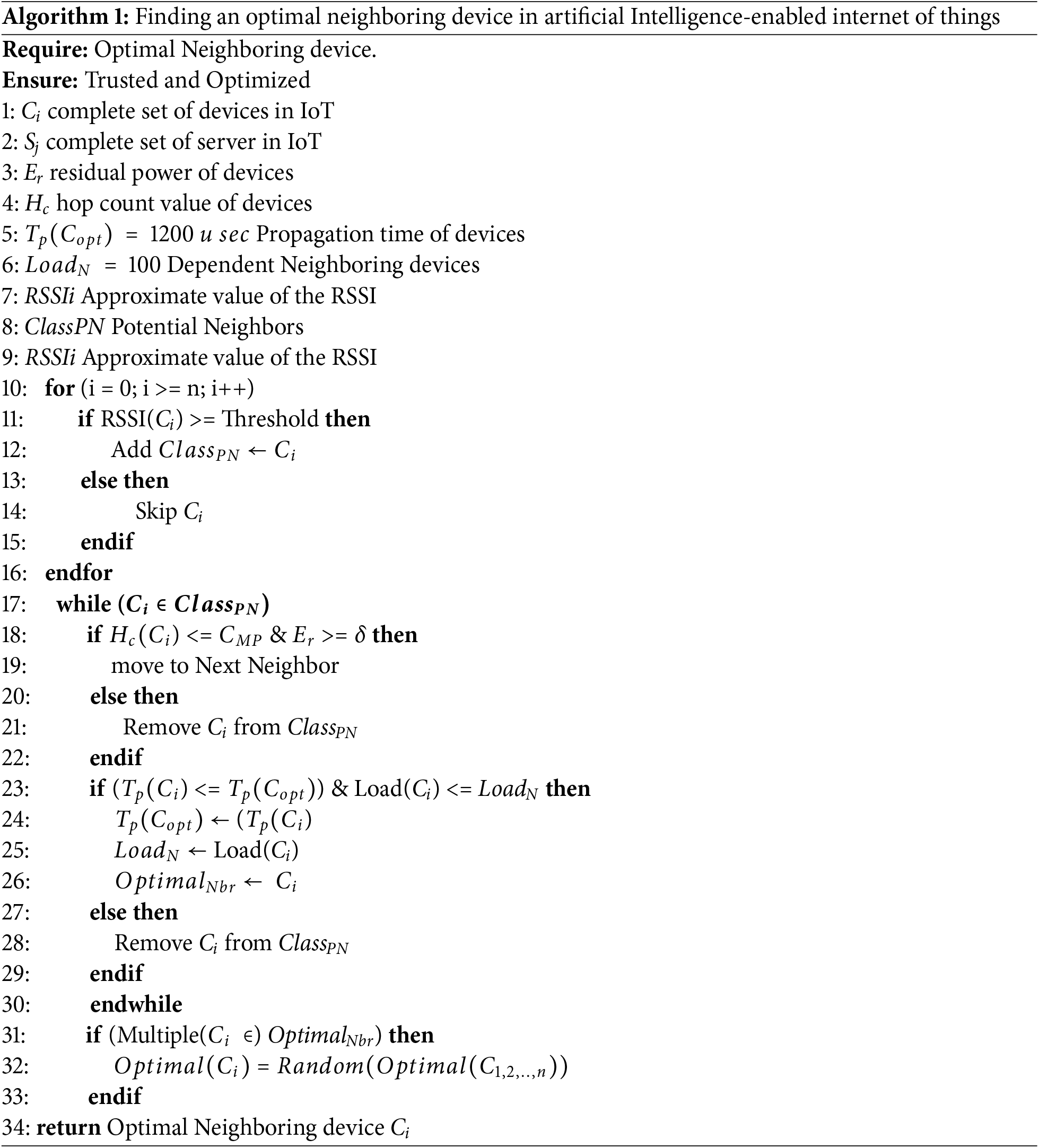
Initially, devices are passed through the training phase, where data values related to both scenarios, optimal and non-optimal, are present, i.e., the IoT traffic data set [29], which has 10,000 records for various smart devices. For this purpose, the data set was divided into training and testing data values. (i) The training data set consists of 5000 records with the aforementioned parameter values. (ii) The testing data set consists of 5000 records. Moreover, a 5-fold cross-validation mechanism makes the result consistent and realistic. A random search-enabled hyperparameter-tuning methodology was used where required. It is important to note that missing values were also present in the data set, which were refined before the proposed solution’s training phase. To realize this, a simplified refinement scheme, preferably a well-known state-of-the-art existing approach with a high accuracy and precision ratio, has been utilized. As soon as the data set is refined, the training process of the devices with the proposed decision-tree-enabled algorithm, given above Algorithm 1, is carried out. Every device is trained to ensure that it can handle both scenarios, i.e., the one where an optimal neighbor is identified and situations where two or more optimal neighbors are identified. Two or more neighboring devices may have similar optimal values, i.e., for example, 0.5, then the question is which of these is selected as a relaying device. A randomized selection procedure is used to handle this situation, as shown in the Eq. (10).
where
After the successful completion of the training phase, the proposed model was thoroughly tested through a tested data set, i.e., both from benchmark and real-time that were generated during the simulation setup of the proposed scheme. During the testing phase, we investigated various scenarios, such as (i) if a device falls within the coverage area, then it shouldn’t execute the proposed algorithm as it doesn’t need to find an optimal neighbor, (ii) devices with multiple optimal neighbors, (iii) devices with two or more devices with the same RSSI values, etc. The proposed decision tree-enabled communication approach has performed exceptionally well in almost every possible scenario that was carried out during the test phase.
3.2 Proposed Light-Weight Authentication Scheme for the Decision Tree-Enabled Internet of Things
Generally, communication activity, i.e., device-to-device or device-to-server, is carried out through a shared and non-secure transmission medium. Therefore, every packet is transmitted in the encrypted form where both source and destination modules have a unique secret key, i.e.,
1. Read information, but it doesn’t affect the original message contents.
2. Make use of the information and update the original message, i.e., affects the system.
Therefore, authentication schemes should be pruned against both attacks in the realistic environment of IoT. A strong encryption mechanism should be adopted to convert plain text into equivalent cipher text. However, the authenticity of the source module should be checked before initiating actual communication sessions. Therefore, the authenticity of both parties, i.e., source and destination module, is carried out before transmission of the actual data, which is captured by legitimate devices. Thus, if a device, i.e., source or destination, has the expected security level, i.e., the device on the other side is trusted, then it can trigger the communication process; otherwise, abort it. For this purpose, a simplified authentication scheme is presented in this section to ensure that only trusted devices can communicate.
In addition to other parameters, every device must share its MAC address with the neighboring devices. Every device stores the MAC address of the neighbors, which is used to ensure the authenticity of the requesting module. In addition to the MAC address, time stamp information is collected. That is the approximate time required for a packet to be received from the dependent neighboring device, any device that isn’t within the coverage area of the respective server module. These two parameters are used to ensure the legitimacy of the requesting dependent device. Moreover, the learning model, which generates weights from the respective MAC addresses, is shared in the hop count discovery phase. Therefore, instead of appending the actual MAC address to the packet header, its corresponding weight, which is computed through a sophisticated machine-learning-based model, is appended. This mechanism is not only involved in improving the security of the model, but it is equally important in separating legitimate and adversary modules.
Thus, if a packet is received from the dependent device, the relay device should check its legitimacy by looking at the weights appended to the packet. Every device has MAC addresses and weights of the respective dependent or neighboring devices. Therefore, this weight is compared with stored weights and MAC address. If a match is encountered, the requesting device is assumed to have cleared the initial security or authenticity check, as depicted in the Eq. (11).

4 Results and Evaluations of the Proposed Decision Tree-Enabled Methodology
Generally, a newly developed methodology should be supported by a detailed and thorough evaluation, particularly through well-known performance metrics and comparisons with existing state-of-the-art approaches. To do this, experimental or simulation results, whichever is applicable and feasible, should be presented in the working domain of IoT. Therefore, the proposed decision-tree-enabled authentication and communication methodology is implemented in NS-3, an open-source software for resource-limited networks. Initially, an IoT network was developed where device and server modules were deployed per the general deployment strategies available in the literature. The transmission range,
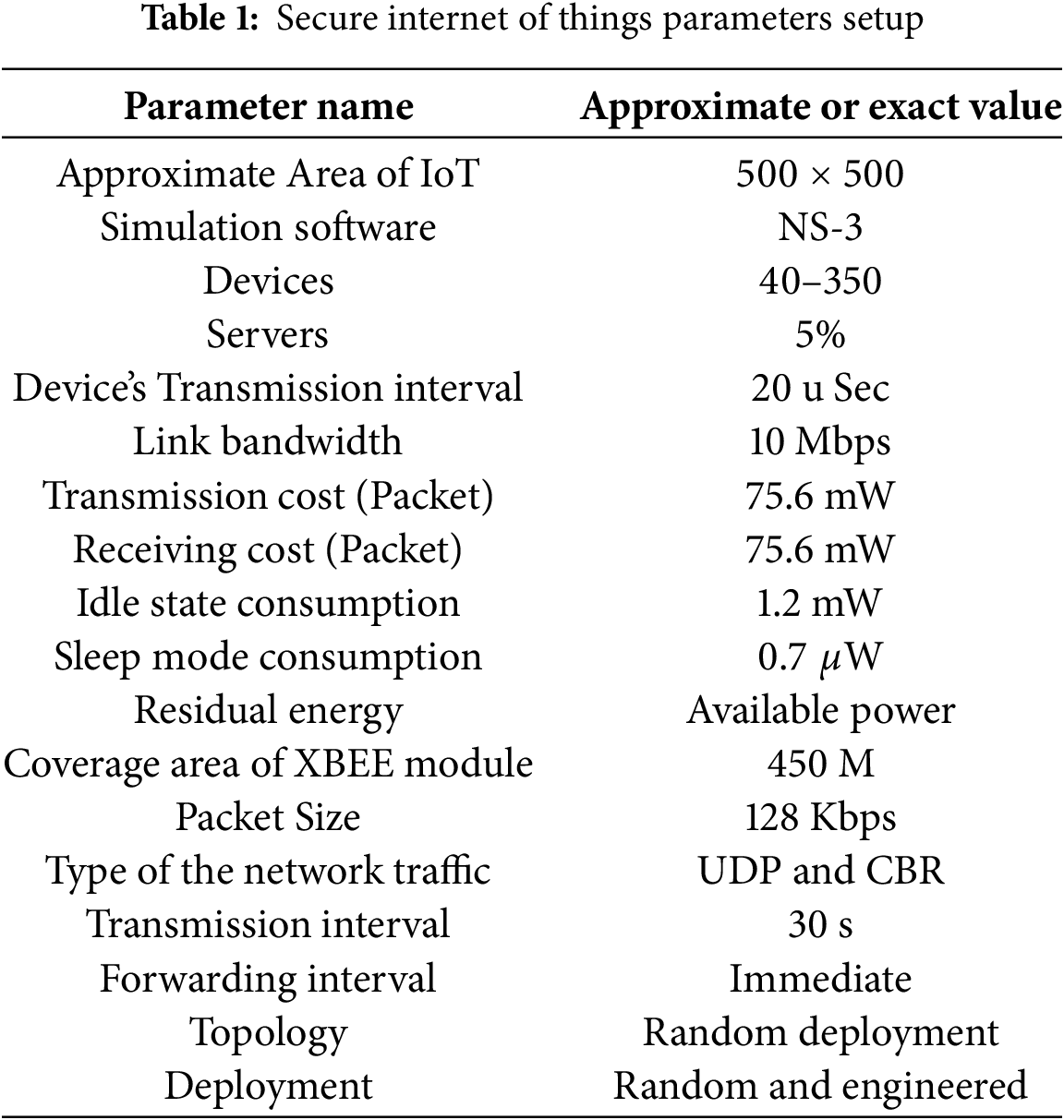
4.1 Average Power Consumption of Devices in the Proposed Secured Communication Approach
In networking infrastructures where resources are limited, i.e., the Internet of Things and Wireless Sensor Networks, etc., effective usage of the available power source is crucial to ensure that devices are active for the maximum duration. Secondly, efficient utilization of the available power source is required to keep the networking infrastructure active for the maximum possible duration. The device’s power consumption is computed using the Eq. (13).
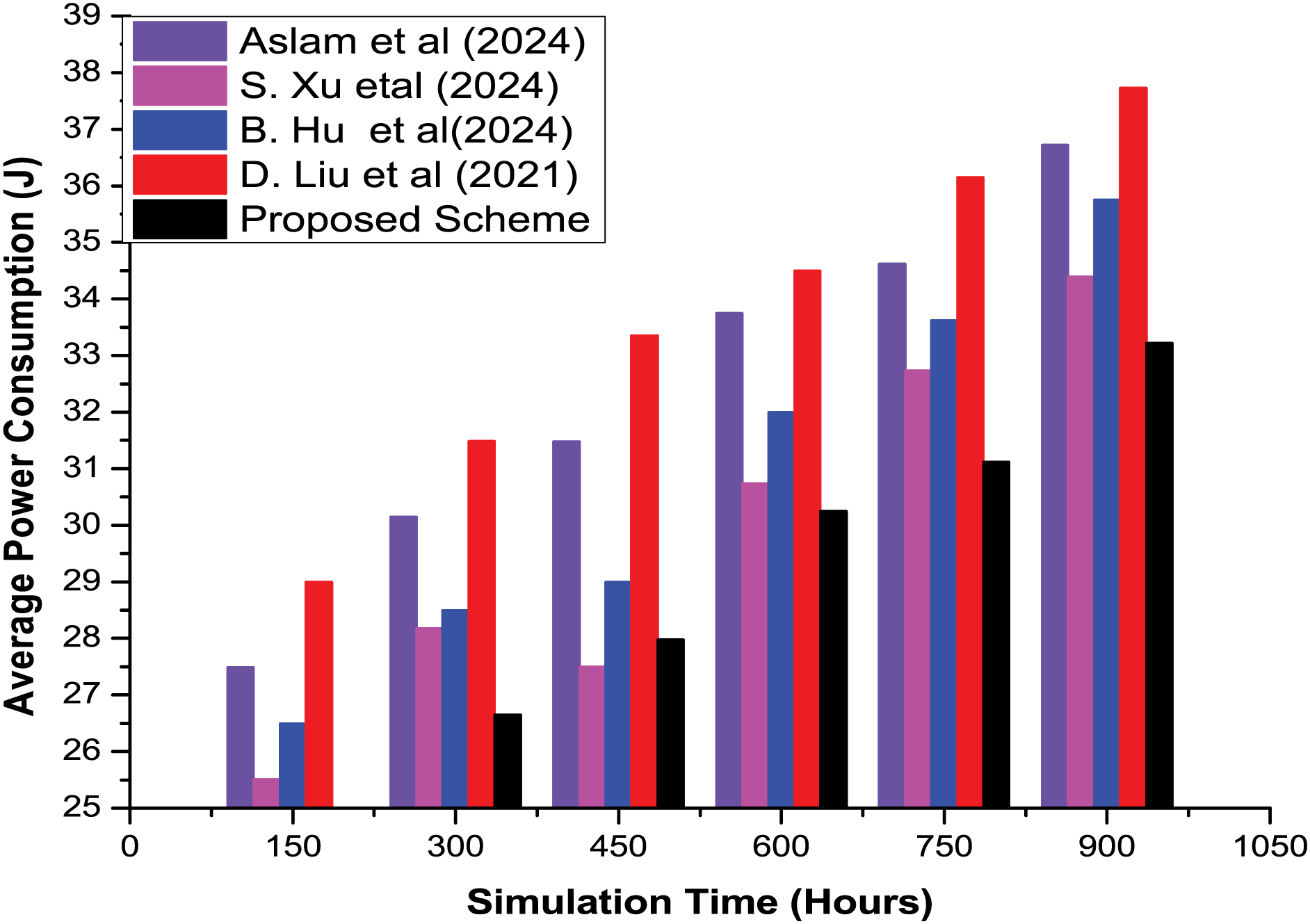
Figure 1: Average power consumption ratio of devices in the proposed secured communication infrastructure [4,5,7,9]
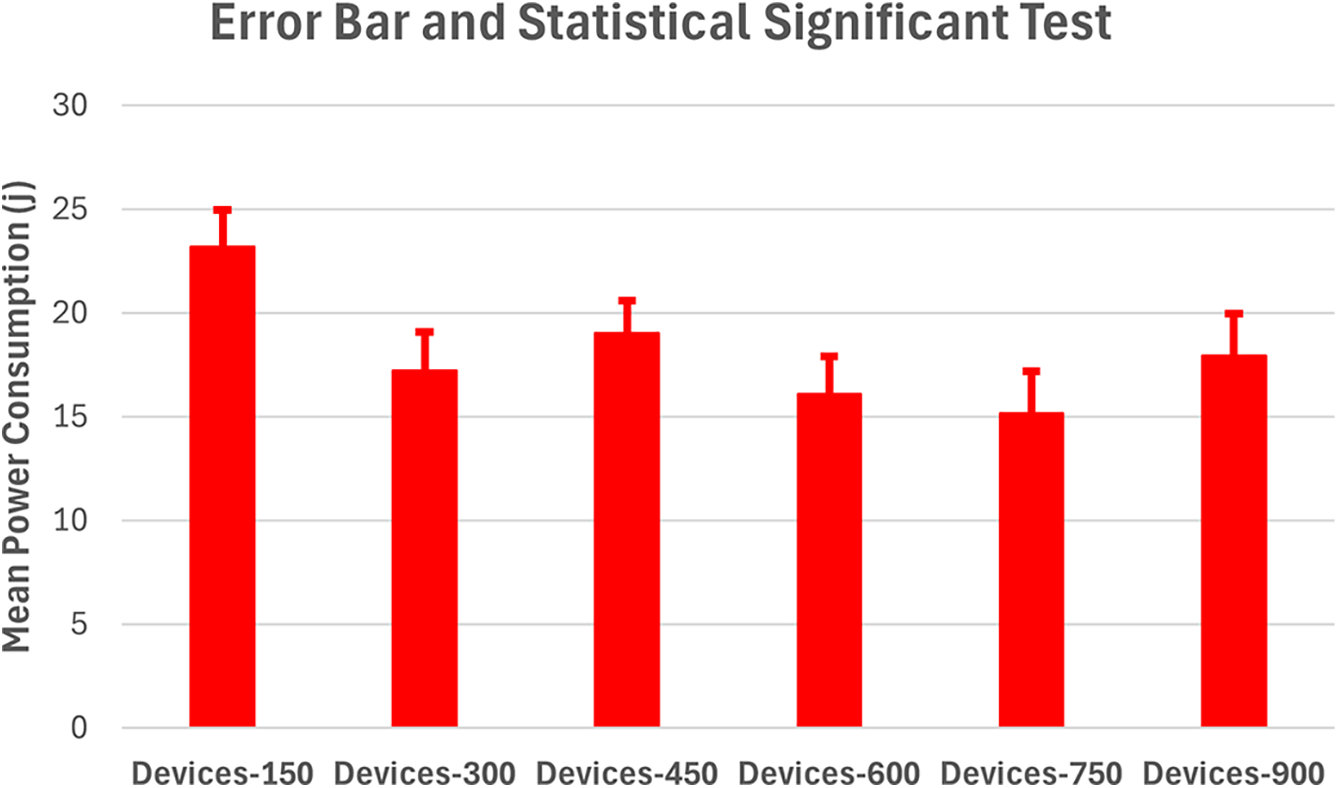
Figure 2: Statistical significance in terms of average power consumption
4.2 End-to-End Delay of the Proposed Secured Communication Approach
End-to-end delay is another important metric to measure the superiority of the newly proposed scheme, especially from the communication perspective, over existing approaches for the underlined networking infrastructure. This parameter directly correlates with the overall processing and packet transmission overheads; thus, a communication approach with minimal overhead is preferred. Therefore, a comparative analysis of the proposed and existing approaches is shown in Fig. 3, which indicates the exceptional performance of the former scheme over the latter one. This minimal cost overhead is possible due to the selection process, which is based on a proper assessment and requirement-oriented parameters incorporated into the hybrid formula. Secondly, the proposed scheme has ensured the minimum possible end-to-end delay is achieved while maintaining maximum security against well-known intruder attacks.
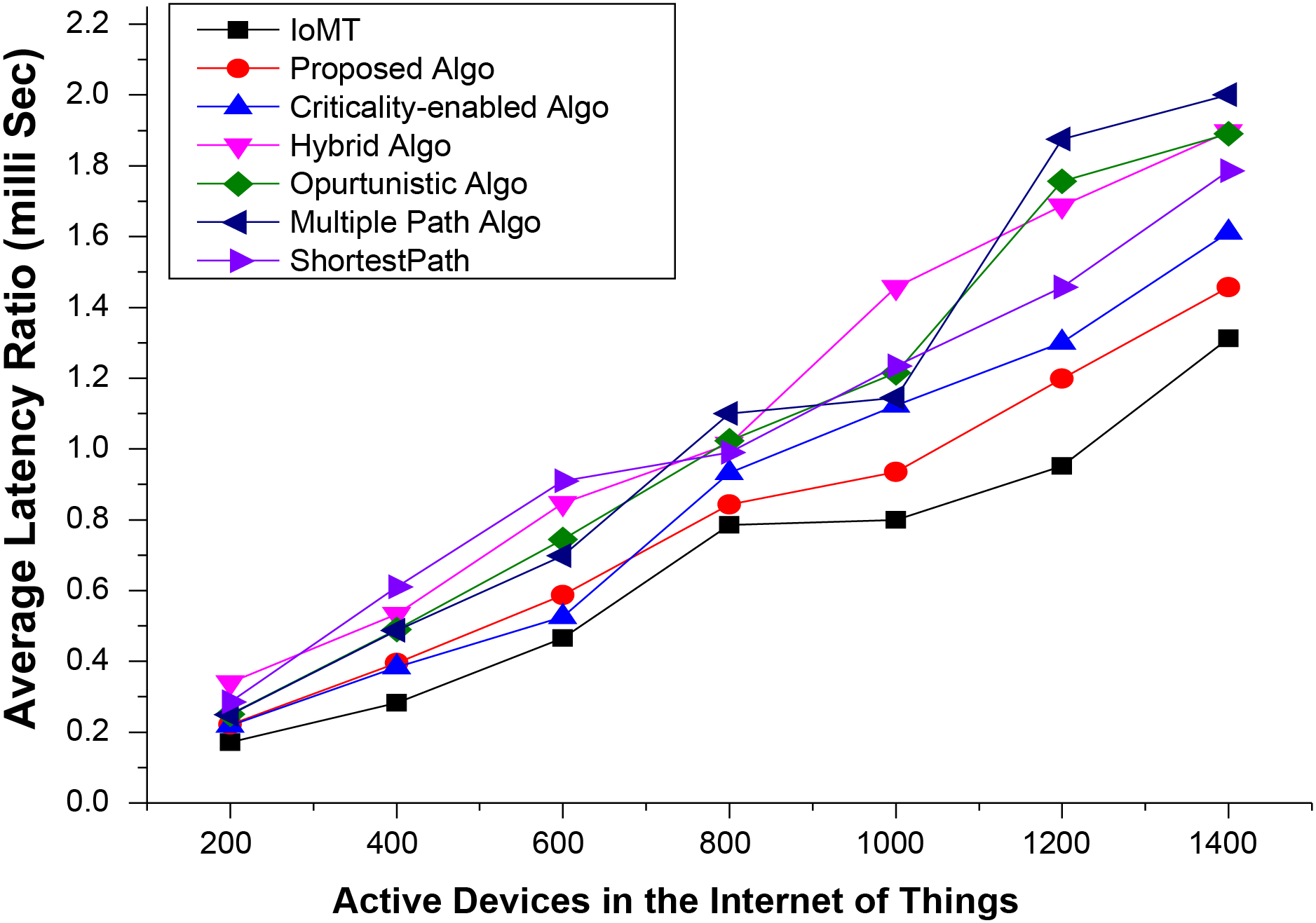
Figure 3: Average end-to-end delay ratio of devices in the proposed secured communication infrastructure for IoT
4.3 Average Packet Loss Ratio of the Proposed Secured Communication Approach
In addition to end-to-end delay metrics, the proposed and existing approaches are thoroughly investigated using other performance evaluation metrics, that is, the average ratio of successfully delivered packets. Generally, the packet loss ratio is increased due to the maximum likelihood of packet collision, channel interference, and deployment of devices in an area that is not accessible directly. The proposed approach has a higher APDR ratio than existing approaches, as shown in Fig. 4 by reducing the collision ratio through a time slice-oriented approach where every device should communicate only in the allocated time stamp. Secondly, devices are deployed where every device should communicate directly with the nearest server or through a neighboring relay device.
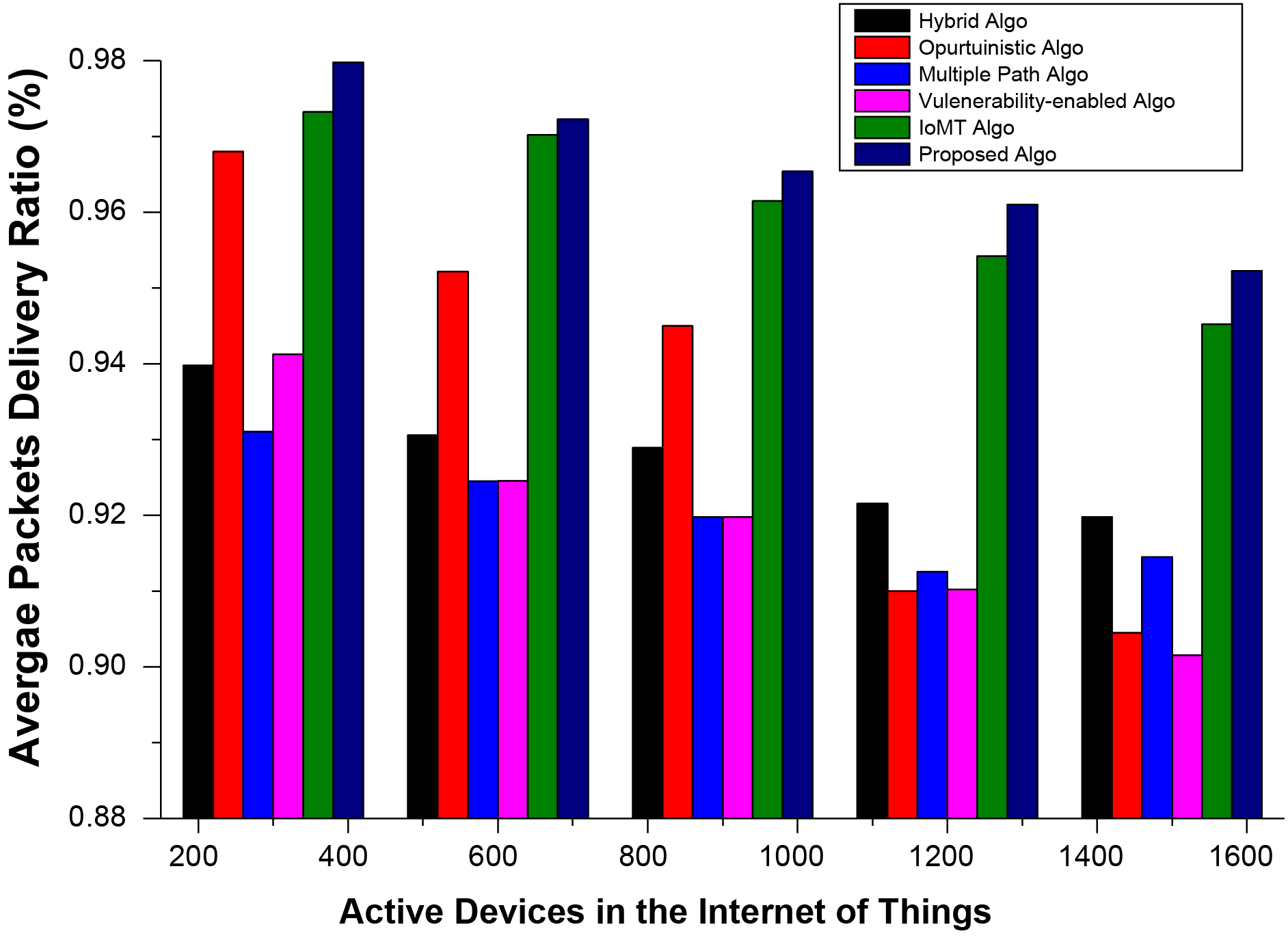
Figure 4: Average packet loss ratio of devices in the proposed secured communication infrastructure for IoT
4.4 Approximate Processing Cost of Devices in the Proposed Secured Communication Approach
Processing cost overhead is not only associated with the communication approaches but is also affected by a device-level authentication implementation or security scheme. This overhead is directly correlated to the number of operations required to be completed to verify the authenticity of the requesting module. Fig. 5 presents a detailed graphical comparison of the proposed and existing approaches, which shows the exceptional performance of the former approach over the latter ones in the realistic environment of IoT. The processing overhead of the proposed scheme is minimal as it relies on the minimal set of parameters required to verify the authenticity of the requesting module.
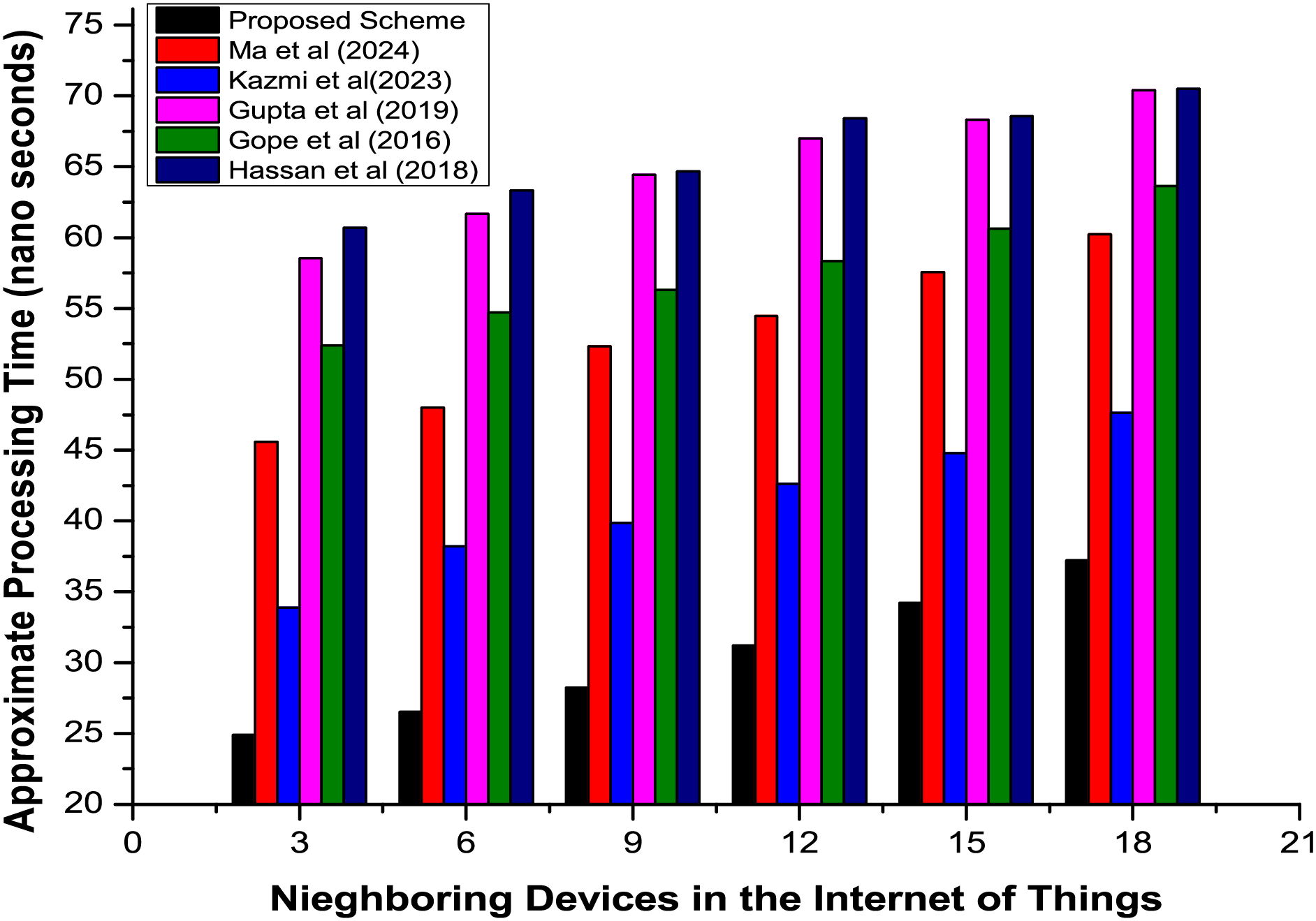
Figure 5: Average processing time overhead of devices in the proposed secured communication infrastructure for IoT [19,20,25–27]
4.5 Approximate Communication Cost of Devices in the Proposed Secured Communication Approach
Communication cost overhead is the number of bits transmitted to ensure mutual authentication of both devices and server modules. A detailed comparison of the proposed authentication and existing approaches is depicted in Fig. 6, which shows that the former scheme has outperformed the latter approaches, especially in communication overhead. Moreover, the proposed approach has achieved this without compromising the overall security of devices.
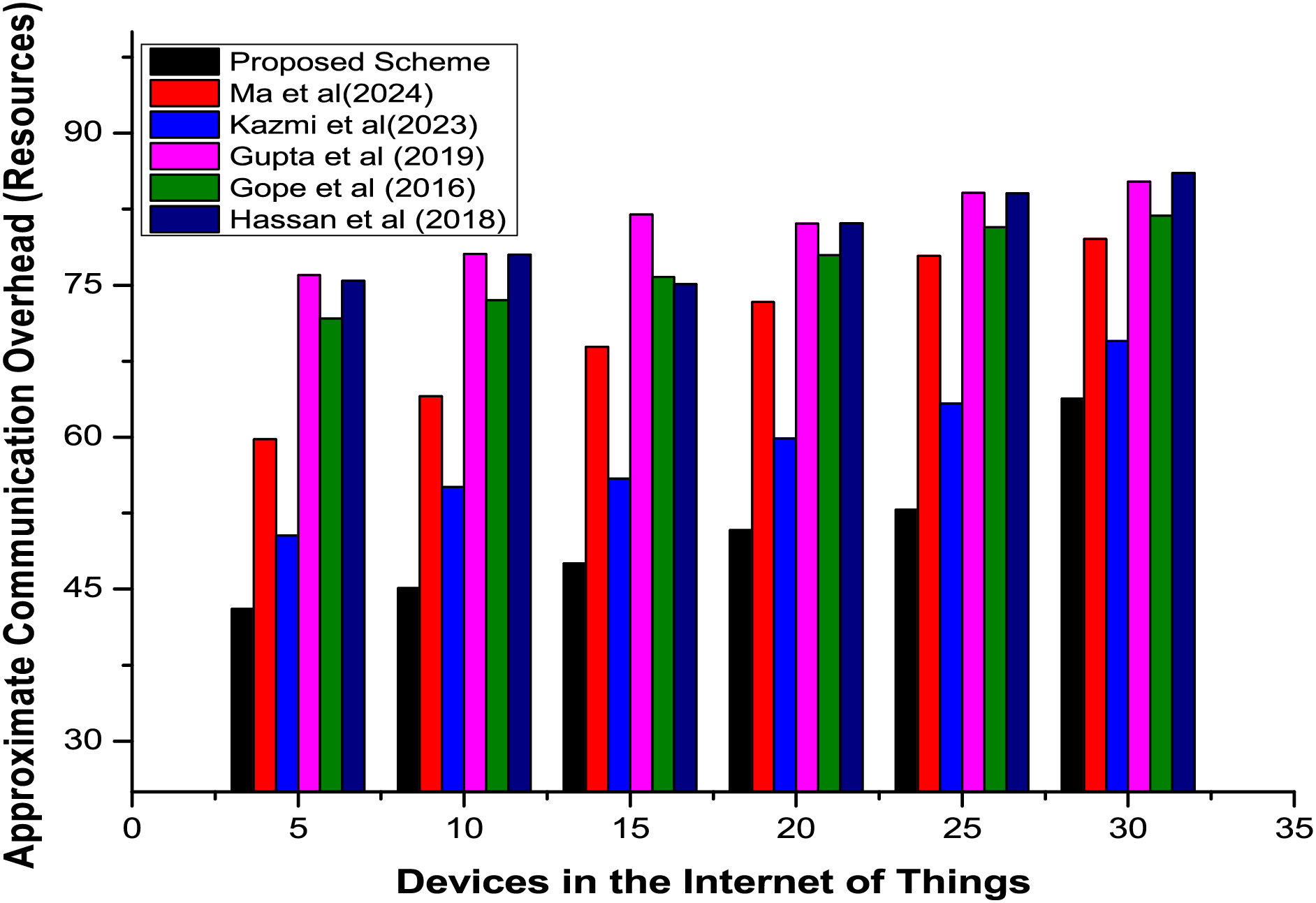
Figure 6: Average communication cost overhead ratio of devices in the proposed secured communication infrastructure for IoT [19,20,25–27]
The proposed authentication scheme has tight security measures, which make it safe against various intruder attacks, device and server impersonation, reply, denial of services, etc.
1. The proposed algorithm guarantees the safety of the devices from an intruder module trying to deceive a legitimate module, i.e., device and server, by pretending to be a legitimate and trustworthy module. Every message passes through a rigorous and complicated encryption process, which makes it hard for the adversary to extract valuable information.
2. The proposed algorithm is safe against eavesdropping attacks as every packet is encrypted with a secret key.
3. Likewise, it is safe against perfect forward & backward secrecy attacks as intruder modules cannot convert the cipher text into plain text in a defined time interval.
4. Denial of Services (DoS) attacks are among the core challenges linked with the authentication schemes, especially those designed for the IoT. The proposed approach has the necessary measures against the DoS attack. The encryption algorithm is strong and beyond the operational capabilities of the resource constraint devices to decipher an intercepted message. Secondly, if an intruder module tries to bombard the server through a dummy packet, these are easily identified as every encrypted message has a unique pattern.
Technological advances in sensors and actuators led to a collaborative networking infrastructure of devices and servers where devices share collected data with the intended server module. In this network, devices coordinate with each other to establish a smart and collision-free traffic environment. For this purpose, every module, i.e., device or server, communicates via a reliable transmission channel and shares valuable information about the traffic conditions on the various available routes. However, direct communication with the nearest server module is not always possible. Therefore, an alternate communication strategy is adopted where certain devices, particularly those running in the servers’ coverage area, mediate between the source device and the intended server. For this purpose, a neighborhood knowledge-based communication approach was presented in this paper that enables devices operating in the out-of-range area to share their information with the intended server module. In this approach, devices must share data such as distance, RSSI value, link reliability, dependent devices, etc. Moreover, a secure key-based security algorithm was integrated to ensure a reliable transmission of packets. Simulation results concluded that the proposed multi-path-based communication approach could be an ideal methodology for IoT where distance among servers is kept at a maximum level. The proposed scheme has achieved maximum throughput with the minimum possible average transmission delay in the IoT.
Acknowledgement: This research work is supported by the Princess Nourah bint Abdulrahman University Riyadh, Saudi Arabia, through Project number (PNURSP2025R235).
Funding Statement: Princess Nourah bint Abdulrahman University Researchers Supporting Project number (PNURSP2025R235), Princess Nourah bint Abdulrahman University, Riyadh, Saudi Arabia.
Author Contributions: The authors confirm contribution to the paper as follows: Study conception and design: Amal Al-Rasheed and Rahim Khan; data collection: Amal Al-Rasheed, Rahim Khan and Fahad Alturise; analysis and interpretation of results: Amal Al-Rasheed, Rahim Khan, Salem Alkhalaf; draft manuscript preparation: Amal Al-Rasheed, Rahim Khan, Salem Alkhalaf and Fahad Alturise. All authors reviewed the results and approved the final version of the manuscript.
Availability of Data and Materials: This article does not involve data availability.
Ethics Approval: Not applicable.
Conflicts of Interest: The authors declare no conflicts of interest to report regarding the present study.
References
1. Al-Ani AK, Ul Arfeen Laghari S, Manoharan H, Selvarajan S, Uddin M. Improved transportation model with internet of things using artificial intelligence algorithm. Comput Mater Contin. 2023;76(2):2261–79. doi:10.32604/cmc.2023.038534. [Google Scholar] [CrossRef]
2. Dargaoui S, Azrour M, El Allaoui A, Guezzaz A, Alabdulatif A, Alnajim A. Internet of things authentication protocols: comparative study. Comput Mater Contin. 2024;79(1):65–91. doi:10.32604/cmc.2024.047625. [Google Scholar] [CrossRef]
3. He Y, Ma L, Cui J, Yan Z, Xing G, Wang S, et al. Automatch: leveraging traffic camera to improve perception and localization of autonomous vehicles. In: Proceedings of the 20th ACM Conference on Embedded Networked Sensor Systems. Boston, USA; 2022. p. 16–30. [Google Scholar]
4. Hu B, Bi Y, Wu K, Fu R, Huang Z. A lightweight path validation scheme in software-defined networks. In: IEEE INFOCOM 2024—IEEE Conference on Computer Communications; 2024 May 20–23; Vancouver, BC, Canada: IEEE; 2024. p. 731–40. [Google Scholar]
5. Xu S, Zhao Y, Huang L, Qiao C. Routing and photon source provisioning in quantum key distribution networks. In: IEEE INFOCOM 2024—IEEE Conference on Computer Communications. Vancouver, BC, Canada: IEEE; 2024. p. 1411–20. [Google Scholar]
6. Nadimi-Shahraki MH, Zamani H, Varzaneh ZA, Sadiq AS, Mirjalili S. A systematic review of applying grey wolf optimizer, its variants, and its developments in different Internet of Things applications. Int Things. 2024;26:101135. doi:10.1016/j.iot.2024.101135. [Google Scholar] [CrossRef]
7. Aslam N, Wang H, Aslam MF, Aamir M, Hadi MU. Intelligent wireless charging path optimization for critical nodes in internet of things-integrated renewable sensor networks. Sensors. 2024;24(22):7294. doi:10.3390/s24227294. [Google Scholar] [PubMed] [CrossRef]
8. Zhang W, Geng H. Improving network availability through optimized multipath routing and incremental deployment strategies. Comput Mater Contin. 2024;80(1):427–48. doi:10.32604/cmc.2024.051871. [Google Scholar] [CrossRef]
9. Liu D, Xu X, Liu M, Liu Y. Dynamic traffic classification algorithm and simulation of energy Internet of things based on machine learning. Neural Comput Applicat. 2021;33(9):3967–76. doi:10.1007/s00521-020-05457-7. [Google Scholar] [CrossRef]
10. Lavate SH, Srivastava P. A hybrid feature selection approach based on random forest and particle swarm optimization for IoT network traffic analysis. Int J Electr Electro Res. 2023;11(2):568–74. doi:10.37391/ijeer.110244. [Google Scholar] [CrossRef]
11. Gheni HQ, Oleiwi WK, Al-Barmani Z, Alabdali MA. Optimizing feature selection for intrusion detection: a hybrid approach using cuckoo search and particle swarm optimization. Int J Safety Secur Eng. 2024;14(6):1907–12. doi:10.18280/ijsse.140624. [Google Scholar] [CrossRef]
12. Zhao R, Wang Y, Xue Z, Ohtsuki T, Adebisi B, Gui G. Semisupervised federated-learning-based intrusion detection method for Internet of Things. IEEE Int Things J. 2022;10(10):8645–57. doi:10.1109/JIOT.2022.3175918. [Google Scholar] [CrossRef]
13. Hammi B, Zeadally S, Labiod H, Khatoun R, Begriche Y, Khoukhi L. A secure multipath reactive protocol for routing in IoT and HANETs. Ad Hoc Netw. 2020;103(15):102118. doi:10.1016/j.adhoc.2020.102118. [Google Scholar] [CrossRef]
14. Raza S, Wang S, Ahmed M, Anwar MR, Mirza MA, Khan WU. Task offloading and resource allocation for IoV using 5G NR-V2X communication. IEEE Int Things J. 2021;9(13):10397–410. doi:10.1109/JIOT.2021.3121796. [Google Scholar] [CrossRef]
15. Huang J, Wan J, Lv B, Ye Q, Chen Y. Joint computation offloading and resource allocation for edge-cloud collaboration in internet of vehicles via deep reinforcement learning. IEEE Syst J. 2023;17(2):2500–11. doi:10.1109/JSYST.2023.3249217. [Google Scholar] [CrossRef]
16. Fan W, Su Y, Liu J, Li S, Huang W, Wu F, et al. Joint task offloading and resource allocation for vehicular edge computing based on V2I and V2V modes. IEEE Transact Intell Transport Syst. 2023;24(4):4277–92. doi:10.1109/TITS.2022.3230430. [Google Scholar] [CrossRef]
17. Du Z, Liu F, Yuan W, Masouros C, Zhang Z, Xia S, et al. Integrated sensing and communications for V2I networks: dynamic predictive beamforming for extended vehicle targets. IEEE Transact Wirel Communicat. 2022;22(6):3612–27. doi:10.1109/TWC.2022.3219890. [Google Scholar] [CrossRef]
18. Xu S, Sun J, Cao H, Gao Y, He Z, Wu C. Shield-U: safeguarding traffic sign recognition against perturbation attacks. In: 2024 IEEE 23rd International Conference on Trust, Security and Privacy in Computing and Communications (TrustCom). Sanya, China: IEEE; 2024. p. 2453–61. [Google Scholar]
19. Gope P, Hwang T. Lightweight and energy-efficient mutual authentication and key agreement scheme with user anonymity for secure communication in global mobility networks. IEEE Syst J. 2015;10(4):1370–9. doi:10.1109/JSYST.2015.2416396. [Google Scholar] [CrossRef]
20. Gupta D, Kumar R. An improved genetic based routing protocol for VANETs. In: 2014 5th International Conference-Confluence the Next Generation Information Technology Summit (Confluence). Noida, India: IEEE; 2014. p. 347–53. [Google Scholar]
21. Zhao J, Ren R, Zou D, Zhang Q, Xu W. IoV-oriented integrated sensing, computation, and communication: system design and resource allocation. IEEE Trans Vehicular Technol. 2024;73(11):16283–94. doi:10.1109/TVT.2024.3422270. [Google Scholar] [CrossRef]
22. Al-Hejri I, Azzedin F, Almuhammadi S, Syed NF. Enabling efficient data transmission in wireless sensor networks-based IoT applications. Comput Mater Contin. 2024;79(3):4197–218. doi:10.32604/cmc.2024.047117. [Google Scholar] [CrossRef]
23. Khatua S, Mukherjee A, De D. FedGen: federated learning-based green edge computing for optimal route selection using genetic algorithm in internet of vehicular things. Veh Commun. 2024;12(2):100812. doi:10.1016/j.vehcom.2024.100812. [Google Scholar] [CrossRef]
24. Park JH, Yang Q, Yoo SJ. RHRA-DRL: RSU-assisted hybrid road-aware routing using distributed reinforcement learning in internet of vehicles. IEEE Access. 2024;12(10):25385–96. doi:10.1109/ACCESS.2024.3366280. [Google Scholar] [CrossRef]
25. Ma Z, Jiang J, Wei H, Wang B, Luo W, Luo H, et al. A blockchain-based secure distributed authentication scheme for internet of vehicles. IEEE Access. 2024;12(7):81471–82. doi:10.1109/ACCESS.2024.3409361. [Google Scholar] [CrossRef]
26. Hasan MR, Zhao Y, Luo Y, Wang G, Winter RM. An effective AODV-based flooding detection and prevention for smart meter network. Procedia Comput Sci. 2018;129(4):454–60. doi:10.1016/j.procs.2018.03.024. [Google Scholar] [CrossRef]
27. Kazmi SHA, Hassan R, Qamar F, Nisar K, Ibrahim AAA. Security concepts in emerging 6G communication: threats, countermeasures, authentication techniques and research directions. Symmetry. 2023;15(6):1147. doi:10.3390/sym15061147. [Google Scholar] [CrossRef]
28. Amanlou S, Hasan MK, Bakar KAA. Lightweight and secure authentication scheme for IoT network based on publish-subscribe fog computing model. Comput Netw. 2021;199:108465. doi:10.1016/j.comnet.2021.108465. [Google Scholar] [CrossRef]
29. 118E277 T. IoT traffic generation patterns dataset; 2021. [cited 2025 Mar 27]. Available from: https://www.kaggle.com/tubitak1001118e277/iot-traffic-generation-patterns. [Google Scholar]
Cite This Article
 Copyright © 2025 The Author(s). Published by Tech Science Press.
This work is licensed under a Creative Commons Attribution 4.0 International License , which permits unrestricted use, distribution, and reproduction in any medium, provided the original work is properly cited.
 Downloads
 Citation Tools
