
 Login
Login Register
 Submit a Paper
 Propose a Special lssue
 Open Access
ARTICLE
Semantic Secure Communication Based on the Joint Source-Channel Coding
1 Department of Computer Science, The University of Hong Kong, Hong Kong, 999077, China
2 College of Cyber Security, Jinan University, Guangzhou, 511436, China
3 School of Economics, Jinan University, Guangzhou, 510632, China
4 School of Computer Science and Engineering, The University of New South Wales, Kensington, Sydney, NSW 2052, Australia
5 College of Information Science and Technology, Jinan University, Guangzhou, 511436, China
* Corresponding Author: Peiya Li. Email:
# These authors contributed equally to this work
Computers, Materials & Continua 2025, 84(2), 2865-2882. https://doi.org/10.32604/cmc.2025.065362
Received 10 March 2025; Accepted 09 May 2025; Issue published 03 July 2025
 View Full Text
 Download PDF
Abstract
Semantic secure communication is an emerging field that combines the principles of source-channel coding with the need for secure data transmission. It is of great significance in modern communications to protect the confidentiality and privacy of sensitive information and prevent information leaks and malicious attacks. This paper presents a novel approach to semantic secure communication through the utilization of joint source-channel coding, which is based on the design of an automated joint source-channel coding algorithm and an encryption and decryption algorithm based on semantic security. The traditional and state-of-the-art joint source-channel coding algorithms are selected as two baselines for different comparison purposes. Experimental results demonstrate that our proposed algorithm outperforms the first baseline algorithm, the traditional source-channel coding, by 61.21% in efficiency under identical channel conditions (). In security, our proposed method can resist 2 more types of attacks compared to the two baselines, exhibiting nearly no increases in time consumption and error rate compared to the state-of-the-art joint source-channel coding algorithm while the secure semantic communication is supported.Keywords
Semantic secure communication is an emerging field that combines the principles of source-channel coding with the need for secure data transmission [1]. Traditional communication systems focus on accurately transmitting bits over noisy channels, while emantic secure communication aims to identify and transmit the most valuable information efficiently, considering human perceptual loss and machine task accuracy as the distortion metrics [2]. This paradigm shift is driven by the fusion of information and communication technology (ICT) advances and artificial intelligence (AI) innovations [3]. Semantic secure communication can resist some common attacks including cryptanalysis [4,5], eavesdropping [6], image verification code bypassing [7,8], and man-in-the-middle attacks [9,10]. There is also evidence on using semantic secure communications to protect privacy [11]. How to retain the advantages of both has become a scientific problem that continues to be solved. Thus, it is necessary to do some research on semantic secure communication.
Semantic secure communication refers to a framework that ensures both the efficient transmission of task-critical information (semantic level) and robust protection against eavesdropping or adversarial tampering. Unlike traditional semantic communication, which focuses on compressing contextual meaning, our approach integrates cryptographic guarantees (e.g., indistinguishability under chosen plaintext attacks) to safeguard semantic features during transmission. One approach to achieving semantic secure communication is through joint source-channel coding (JSCC), which integrates the design of source and channel processing [12]. JSCC has been extensively studied in the field of information theory and coding theory, but conventional JSCC schemes have limitations in handling complex sources and optimizing for human perception or machine tasks directly. However, recent advancements in deep learning models have shown promise in optimizing JSCC for specific end-to-end transmission objectives [13]. For example, deep JSCC approaches have been successful in wireless image transmission, surpassing traditional separation-based source compression combined with channel coding methods [14]. These deep JSCC models optimize the trade-off between reconstruction quality and channel bandwidth cost, which is crucial for high-resolution media transmission, especially in air traffic communication [15] and high-speed trains [16]. Nonlinear transform source-channel coding (NTSCC) has been proposed to achieve content-aware variable-length JSCC by introducing an entropy model on semantic latent representations [17].
While existing end-to-end transmission approaches have shown success in optimizing the trade-off over source datasets and wireless channel responses, they might not be optimal for every test instance for security concerns. In AI, this could be due to limited model capacity and imperfect optimization, especially when the testing data distribution or channel response is different from the training stage. To address this challenge, a new online learning approach [18] has been explored, optimizing network parameters or semantic representations during the model inference stage based on the current target source data and wireless channel domain [19]. In data compression and encryption, handling these two processes in tandem might result in inefficiencies. To solve this problem in digital signal processing, compression-combined digital image encryption [20] has been presented. In data sharing, sending all data has been changed to sending necessary data only [21], which greatly increases the security.
Inspired by insights from traditional source compression codes and the improvement ideas mentioned above, this paper aims to solve the following problems.
• To design an automated JSCC algorithm with adaptive modulation (BPSK/QPSK/16QAM) based on packet length.
• To propose a semantically secure encryption scheme (RIAC) resistant to ciphertext attacks.
• To validate the framework’s efficiency (transmission time) and security (attack resistance) under real-world channel conditions.
In this paper, we proposes a domain adaptive joint source-channel coding architecture for semantic secure communication [22]. The proposed method incorporates online learning to overfit the instant source data sample and channel state information, enhancing the end-to-end communication system’s performance. The system introduces an additional model stream to update the JSCC decoder and synthesis transform parameters at the receiver, considering the costs of sending model updates [23]. The overall system design is formulated as an optimization problem, aiming to minimize the tripartite trade-off among data stream bandwidth cost, model stream bandwidth cost, and end-to-end distortion [24]. For a better description, several contributions of this paper are listed below.
• We design an automated joint source-channel coding algorithm.
• We designed an encryption and decryption algorithm based on semantic security.
• We designed a secure communication solution based on the designed joint source-channel coding algorithm.
The remaining sections of this paper are organized as follows. Section 2 is the related work, which proposes some recent research related to semantic secure communication based on joint source-channel coding. Section 3 is the proposed method. In this section, the secure communication solution based on the designed joint source-channel coding algorithm will be stated in detail. Section 4 is the syntax and security models, in which we analyze the security of our proposed method theoretically. Section 5 is the experiment, which states how our proposed methods are superior to state-of-the-art methods in performance. Section 6 is the conclusion, which gives an overall review of this paper and provides the conclusion. The future work is also proposed in this section.
This section introduces concepts about channel transmission and points out the security issues in communication and the limitations of existing methods. This section introduces concepts about channel transmission and points out the security issues in communication and the limitations of existing methods. Both the joint methodology and the importance of applying semantic secure communication in the joint coding are stressed.
The general process of channel transmission is “original text
In the encoding operation, traditional communication systems usually encode the source first and then the channel [27]. This separate encoding method can effectively reduce the error rate during data transmission, but there are certain limitations in data transmission efficiency. Fig. 1 shows the complete procedures of sending and receiving in communication, which uses the traditional source-channel coding. In source-channel joint coding, source coding and channel coding operations are performed simultaneously. Joint coding can reduce the amount of data transmitted and the bandwidth required for transmission as much as possible while ensuring transmission reliability when improving the transmission efficiency and reliability of the communication system. Source channel joint coding usually uses some efficient coding algorithms, such as Turbo codes [28], LDPC codes [29] and FEC codes [30], which are widely used in wireless communications [31–33], satellite communications [34,35], digital television [36,37], and other fields. Fig. 2 shows the complete procedures of sending and receiving in communication using the joint source-channel coding that improves from the traditional one, using joint source-channel coding and joint source-channel decoding.
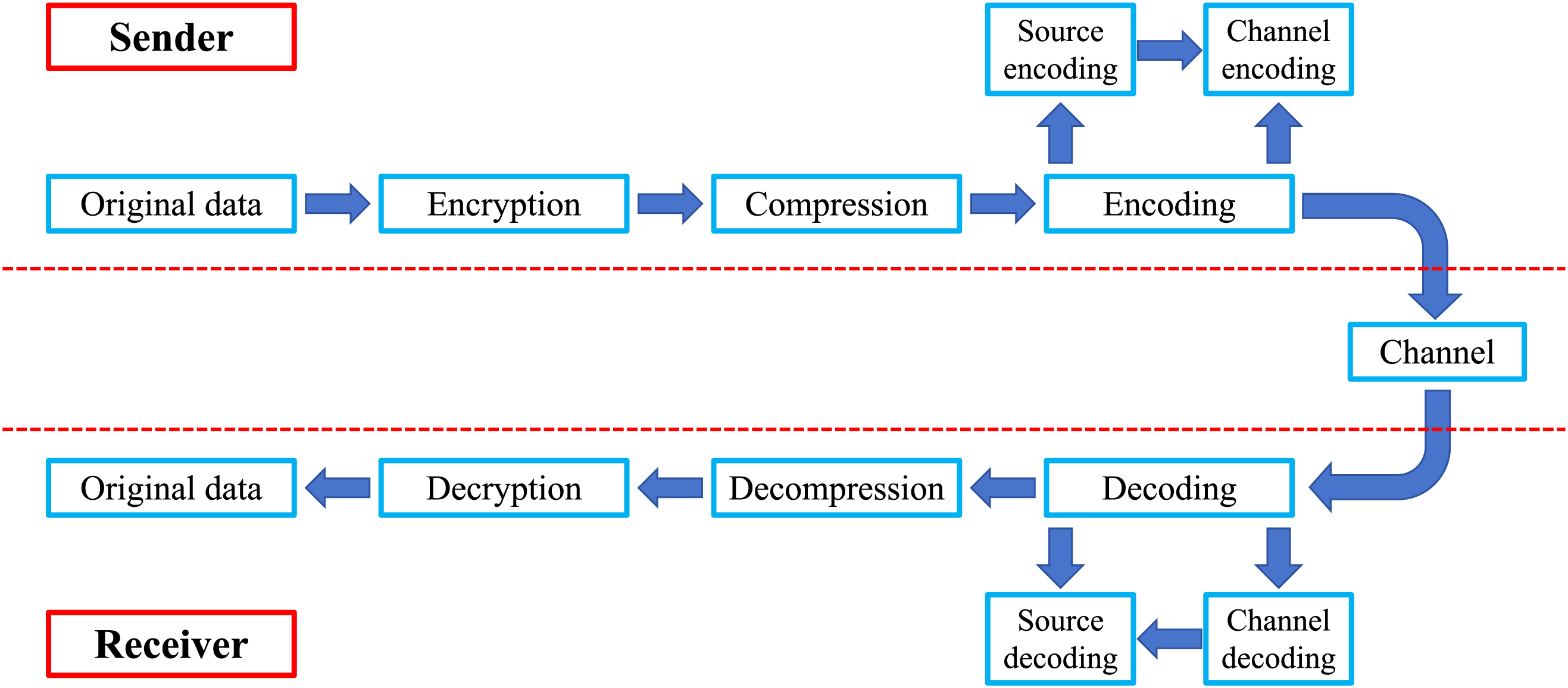
Figure 1: The complete procedures of sending and receiving in communication using the traditional channel-source coding. Channel type: AWGN with SNR 0–20 dB. Adaptive modulations: BPSK/QPSK/16QAM
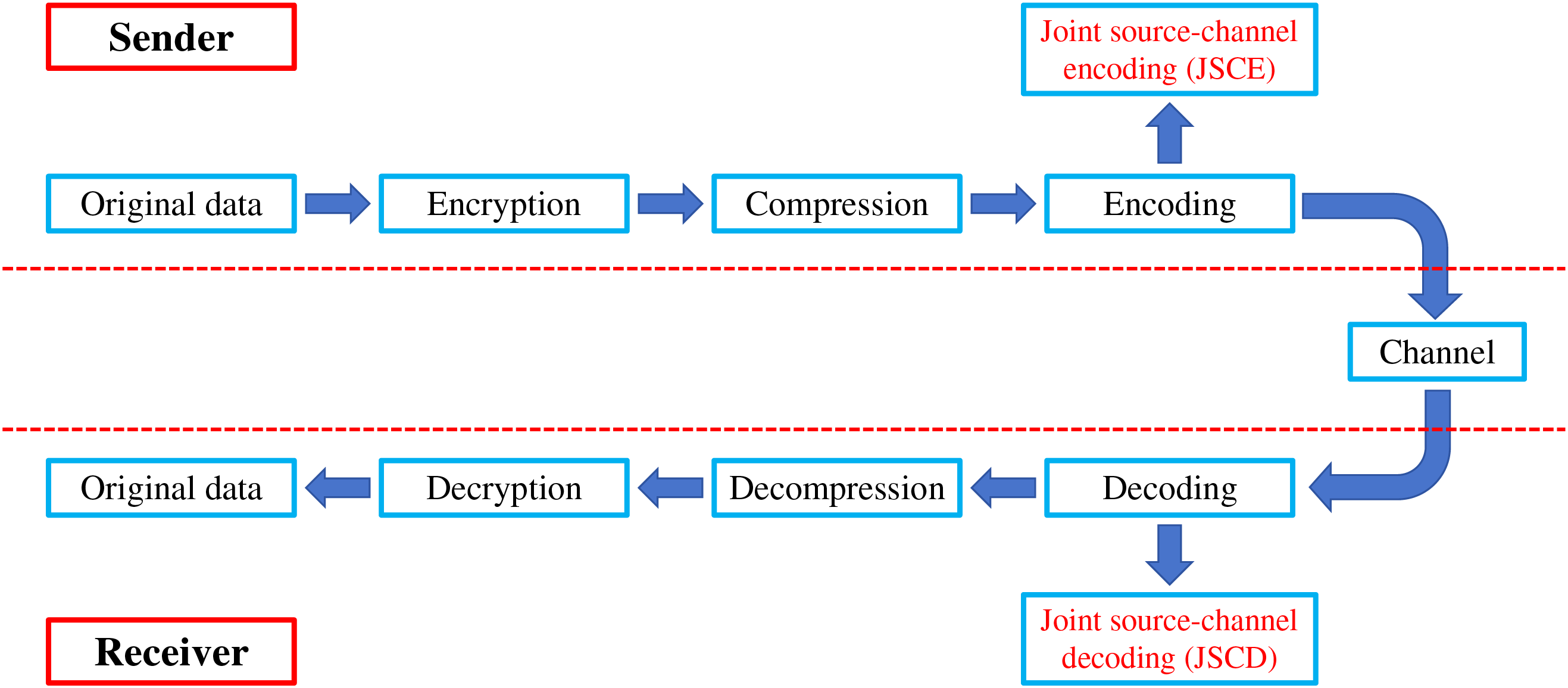
Figure 2: The complete procedures of sending and receiving in communication using the joint channel-source coding that improves from the traditional one. Channel type: AWGN with SNR 0–20 dB. Adaptive modulations: BPSK/QPSK/16QAM
Traditional channel transmission algorithms can often only guarantee data confidentiality, but cannot guarantee data integrity and availability. Semantic secure communication based on joint source-channel coding can solve this problem well, and it can provide a higher level of security, including data confidentiality, integrity, and availability. Although artificial intelligence-assisted communication has been proposed, the uncertainty and unexplainability of AI are still difficult to handle with rigorous mathematical proofs [38] in secure communication processes since AI algorithms are seldom exact algorithms.
This section introduces the automated joint source-channel coding algorithm we proposed. Then, a novel encryption and decryption algorithm based on semantic security is described. Finally, the secure communication solution based on the designed joint source-channel coding algorithm is stated in detail.
3.1 Automated Joint Source-Channel Coding Algorithm
If the source information entropy is not greater than the channel capacity, separate channel coding and source coding can be found to complete error-free transmission of information [39]. Although this theory can achieve the best results for both channel coding and source coding, when each is optimal, the information transmission performance of the entire communication system is not necessarily optimal.
The purpose of source encoding is to remove redundant information within the source and improve effectiveness. Channel coding requires adding check bits to the original bit sequence to implement error detection and correction functions, thereby improving the authenticity of the bit sequence transmitted on a noisy channel.
From a design perspective, source compression and channel coding are opposites. If designed separately, it would be difficult to compromise. The joint design of source compression and channel coding can enable the communication system to achieve end-to-end optimal performance. Jointly optimizing compression and encryption can also avoid cascaded inefficiencies.
We use Huffman coding to encode the source. Huffman coding is a variable-length prefix encoding technique that assigns shorter codes to more frequently occurring symbols and longer codes to less frequently occurring symbols. This technology effectively eliminates redundancy in the source and improves transmission efficiency.
The automatic joint source-channel coding algorithm is automatically reflected in automatically selecting a matching channel coding algorithm for encoding according to the packet length. For channel coding, our proposed automatic joint source-channel coding algorithm will automatically select one of the three channel coding algorithms: Binary Phase Shift Keying (BPSK) [40], Quadrature Phase Shift Keying (QPSK) [41], or Quadrature Amplitude Modulation (16QAM) [42] for the channel encoding. BPSK modulates a digital signal into two different phase states, each phase state representing a binary bit. QPSK (Quadrature Phase Shift Keying) modulates digital signals into four different phase states, each phase state represents two binary bits. 16QAM (Quadrature Amplitude Modulation) modulates digital signals into 16 different states, each state represents four binary bits.
When choosing a modulation method, the packet length needs to be considered. Packet length refers to the number of bits represented by each symbol. For longer packet lengths, such as data transmission of multiple bits, 16QAM can provide higher data transmission rates and spectral efficiency because it can represent more bits of information. For shorter packet lengths, such as single-bit data transmission, BPSK, and QPSK are more suitable because they have lower complexity and lower bit error rates. Since QPSK and 16QAM have restrictions on the length of the packet when the packet length does not meet QPSK and 16QAM, the automatic joint source channel coding uses BPSK for channel coding by default. Otherwise, the channel coding algorithm corresponding to the packet length is used for channel coding.
The automatic joint source-channel coding algorithm selects different modulation methods according to different packet lengths, which makes the algorithm perform better than the original joint source channel. On the one hand, the data transmission rate and spectral efficiency can be improved by choosing an appropriate modulation method. Using 16QAM to transmit multiple bits of data can transmit more information under the same bandwidth and improve the data throughput of the system. On the other hand, selecting the modulation method according to the packet length simplifies the system design and reduces the complexity. For short packet lengths, using BPSK or QPSK can simplify the demodulation and detection process and reduce the calculation and processing volume of the system. The bit error rate is also an important indicator to measure the modulation method. Automatically selecting the appropriate modulation method according to different packet lengths can reduce the bit error rate. Different modulation methods have different anti-noise properties. By selecting an appropriate modulation method, the system’s tolerance to noise and interference can be improved, and the reliability of data transmission can be improved.
3.2 Encryption and Decryption Algorithm Based on Semantic Security
The Randomized Iterative Affine Cipher (RIAC) [43] is built on the classical affine cipher, where a linear transformation and a mode operation are used to encrypt and decrypt the plaintext [44]. Affine cipher is a simple and ancient encryption technique that has been used for centuries. In an affine cipher, each letter of the plaintext is replaced by a letter from the alphabet using a mathematical function.
The encryption process involves two key components: a multiplicative key (
Different from the traditional affine cipher algorithm, the RIAC incorporates additional layers of security and randomness. Building upon the principles of the affine cipher, RIAC introduces multiple rounds of iteration and randomization to enhance encryption. It utilizes a set of randomly generated keys and applies affine transformations iteratively, increasing the complexity and security of the encryption process. By introducing randomness and multiple iterations, RIAC provides a higher level of resistance against frequency analysis attacks and other cryptographic attacks. It offers a stronger level of security compared to the traditional affine cipher, making it suitable for applications that require higher encryption strength.
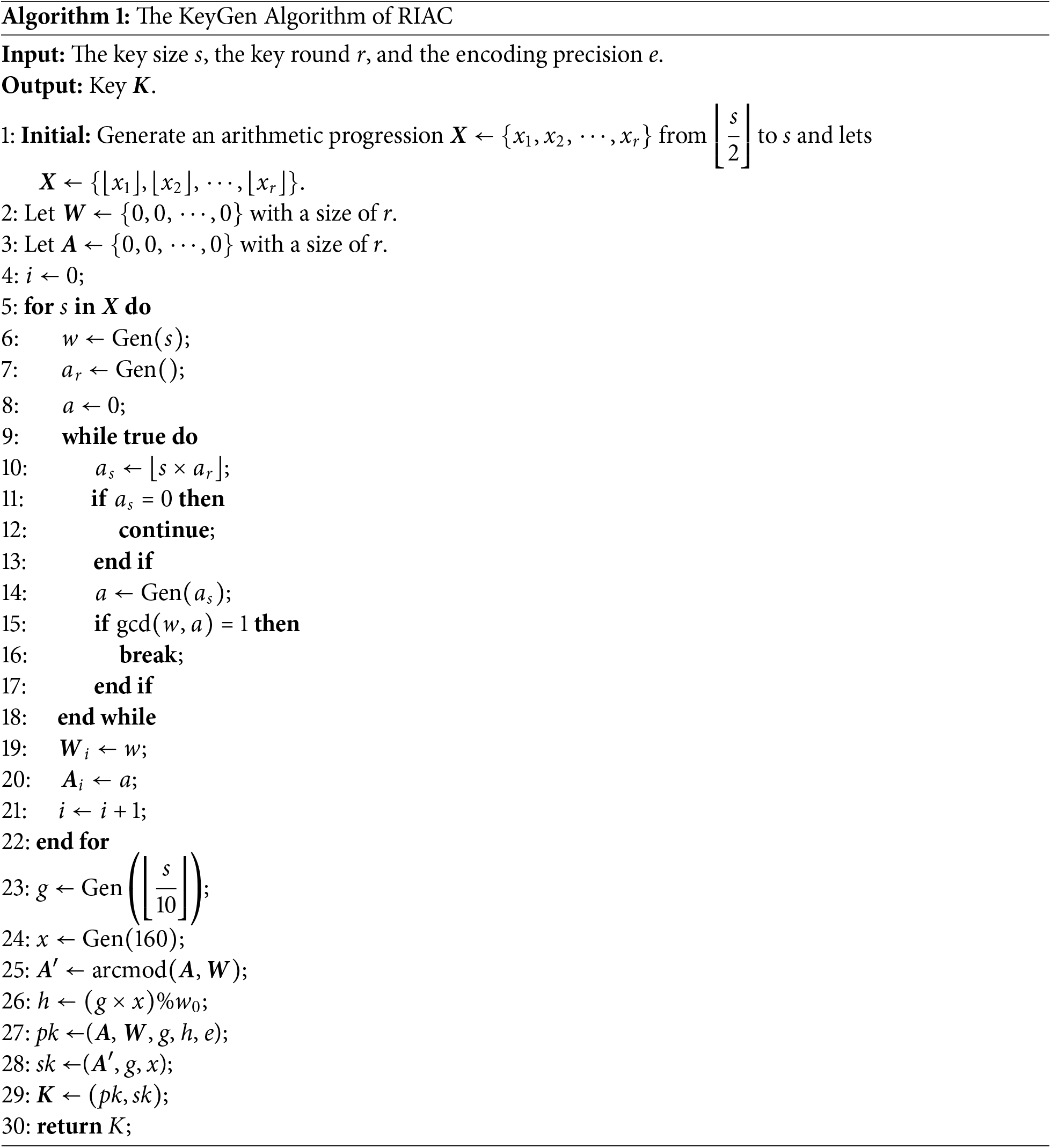
Algorithm 1 describes the key generation algorithm of the random iterative affine cipher (RIAC), where
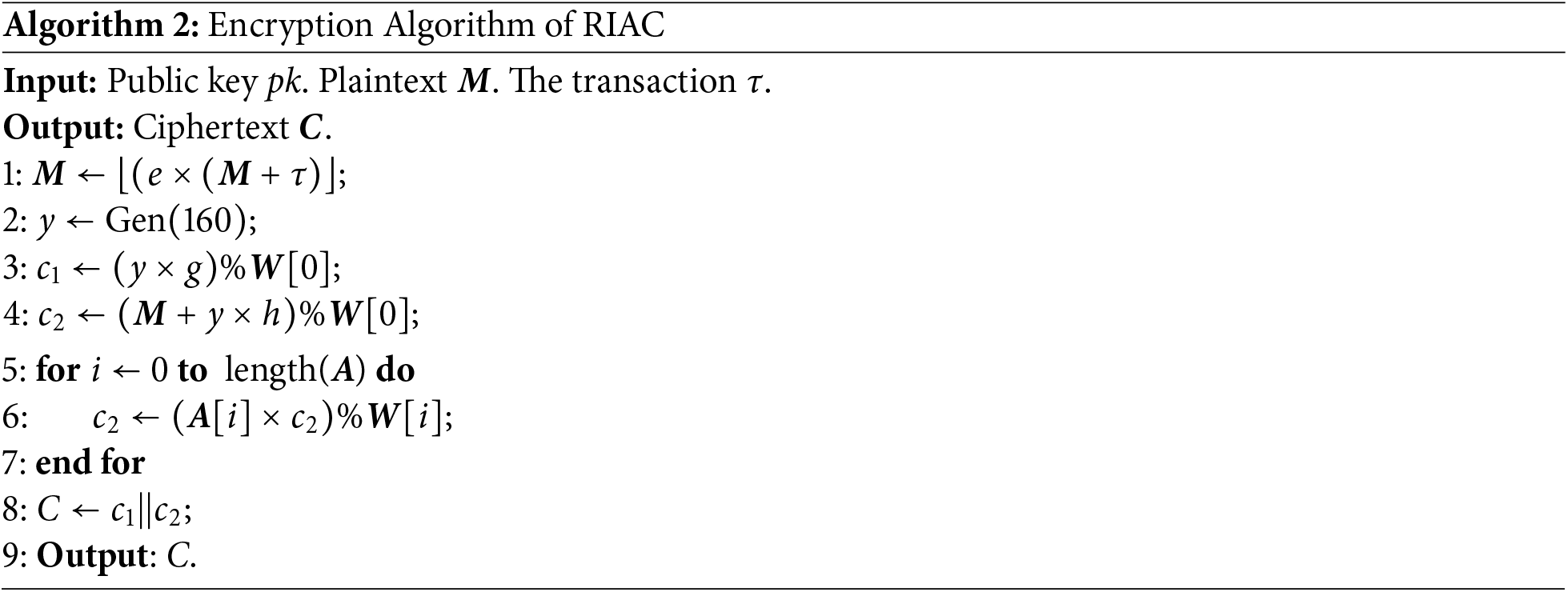
The encryption steps are as follows. Encode the plaintext through
Algorithm 2 describes the encryption algorithm of the random iterative affine cipher (RIAC), where
Algorithm 3 describes the decryption algorithm of random iteration affine cipher (RIAC), where
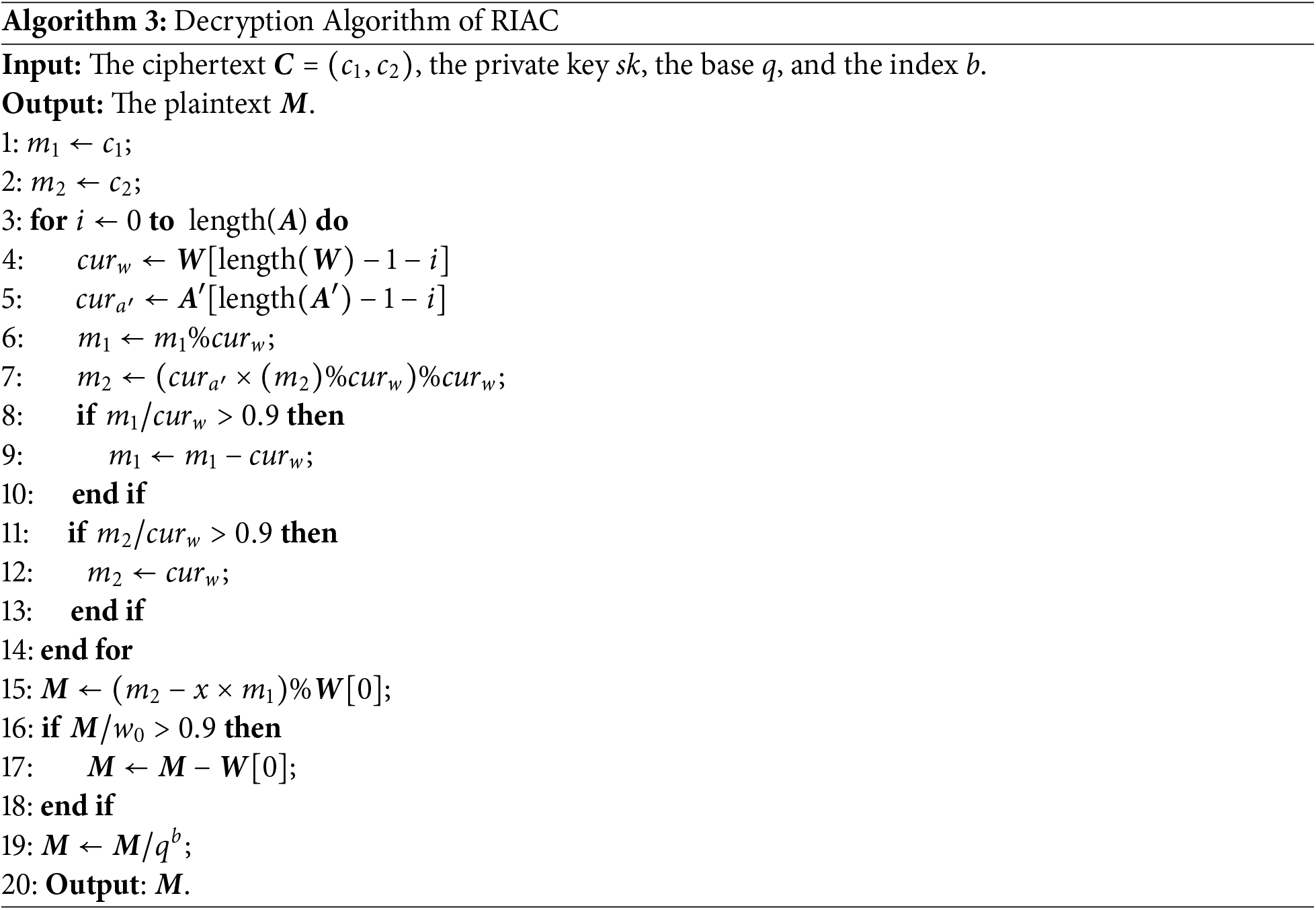
Both RIAC encryption and RIAC decryption algorithms have a time complexity of O(
3.3 A Novel Secure Communication Solution
Based on the proposed Automated joint source-channel coding algorithm and encryption and decryption algorithm based on semantic security, this paper proposes a novel secure communication solution. Fig. 3 shows the procedures of the novel secure communication solution we proposed, applying the automated joint source-channel coding algorithm and the cryptography algorithms based on semantic security.
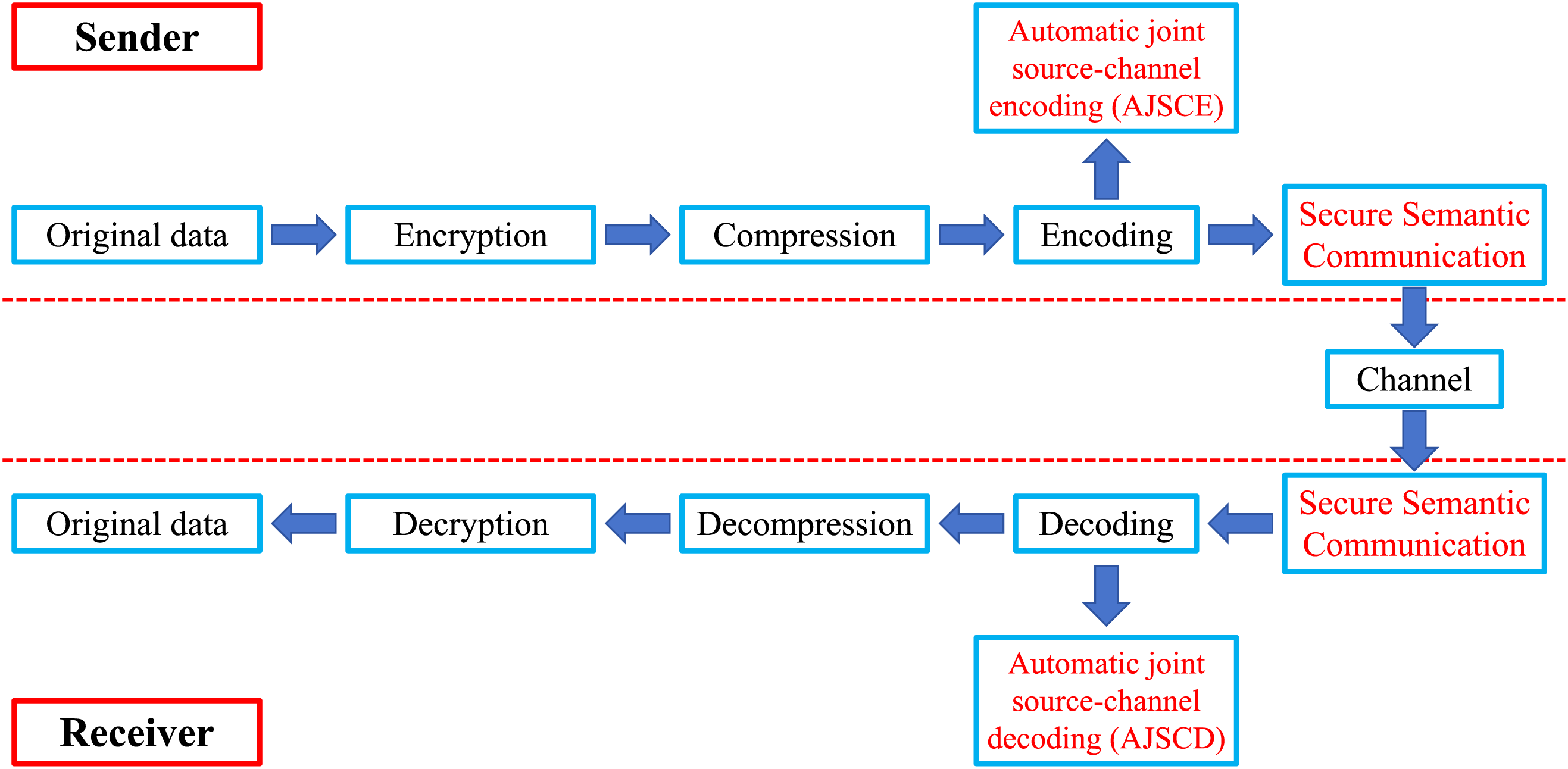
Figure 3: The complete procedures of sending and receiving in communication with secure semantic communication supported using the solution we proposed
During the channel transmission process, the original text
This section focuses on using mathematics to prove the security of our proposed method. Different models are presented for in-depth analysis.
The security of the RIAC algorithm is based on two mathematical problems, the modular inversion problem and the discrete logarithm problem.
Modular Inversion Problem. Given a modulus
In this algorithm, the selected parameters
Discrete Logarithm Problem. Given a large prime number
In this algorithm, the parameters
These two mathematical problems are widely considered to be difficult, i.e., no efficient algorithm can solve them in polynomial time given current computing power.
4.2 Proof of the Difficulty of the Modular Inversion Problem
Suppose there is a polynomial-time algorithm (i.e., one that can be solved in polynomial time) to solve the modular inversion problem. We will show that this leads to the existence of polynomial-time algorithms for the integer factorization problem, which is considered a difficult problem.
Suppose we have a number N and we want to factor it into the product of two prime numbers
Now let’s assume that we have a polynomial time algorithm to solve the modular inversion problem. We can use this algorithm to find a number a such that
In this way we can find the factors of N in polynomial time, thus solving the integer factorization problem. Therefore, if the modular inversion problem is easy to solve, then the integer factorization problem will also be easy to solve, which contradicts the difficulty of the integer factorization problem.
Therefore, we can conclude that the modular inversion problem is difficult.
4.3 Security Models of IND-CCA2
If the DLP problem on group
Setup: The challenger
Phase 1: Adversary
Challenge:
Phase 2: Adversary
Guess: Ultimately,
If for any of the above polynomial time adversary
Proof: Suppose there is an adversary
Setup: The algorithm
Phase 1: Adversary
Challenge: When the adversary
Phase 2: Adversary
Guess: Ultimately,
If there is an adversary that can crack the RIAC algorithm
This section first presents the experimental environments for better reimplementation. Subsequently, the experiments presenting the detailed test instances and performance metrics will be described. Eventually, this section provides the experimental results and discusses the related phenomena. We set up two baselines. The first baseline is the traditional coding method, which performs two encoding procedures in series. The second baseline is the state-of-the-art joint source-channel coding, which is mainly used to show that our proposed method increases security while almost losing no efficiency. Since we optimized the second baseline model using Huffman coding and object-oriented programming, we also compared the two baseline models.
The experiment is accomplished on 11th Gen Intel(R) Core(TM) i7-11800H CPU 2.30 GHz 8 cores, NVIDIA GeForce RTX 3060 Laptop GPU, 24 GB RAM, 512 GB SSD, and 1024 GB HDD under Windows 10 Pro 22H2 x64. The operating system is on the SSD. The codes and the datasets are on the HDD. All the codes are in Python programming language and run by Python 3.6.8. Please note that since the running time of the program will vary depending on the state of the machine each time it is measured and the resources owned by the program are different on different machines, the time-consuming values of each run will basically be different but the trends and the speed ratios in each run should be consistent with those in this paper.
All test instances are randomly generated, which are non-single strings with a length of no less than
In order to evaluate the new method we proposed fairly, we quantify it through two evaluation metrics, time consumption and symbol error rate.
In order to test the time consumption of the three algorithms, for each group of data to be transferred,
The error rate and the bit error rate refer to the same concept, which is the rate of errors occurring during data transmission. The error rate represents the proportion of incorrect bits in the transmitted data, while the bit error rate represents the average number of incorrect bits in the transmitted data. Let’s represent the variables as follows.
• Error rate:
• Bit error rate:
• Number of incorrectly decoded bits:
• Total number of transmitted bits:
The mathematical formula to represent the relationship between error rate and bit error rate can be shown as
Fig. 4 shows the overall comparison of time consumption between the two baselines and our proposed method. Table 1 presents the time consumption of the traditional source-channel coding and the joint source-channel coding. The average time consumption for the traditional source-channel coding is
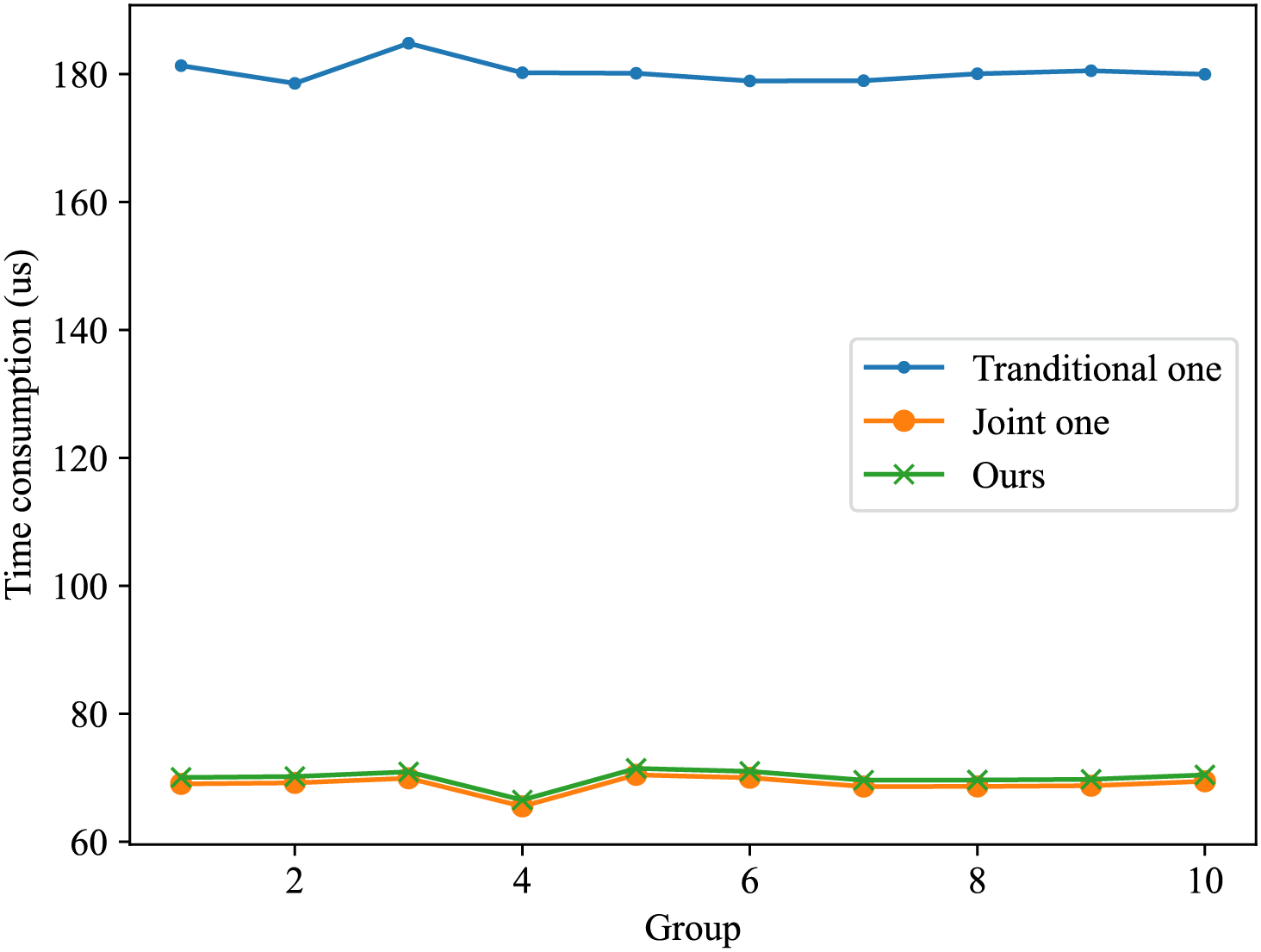
Figure 4: The time consumption of the three methods
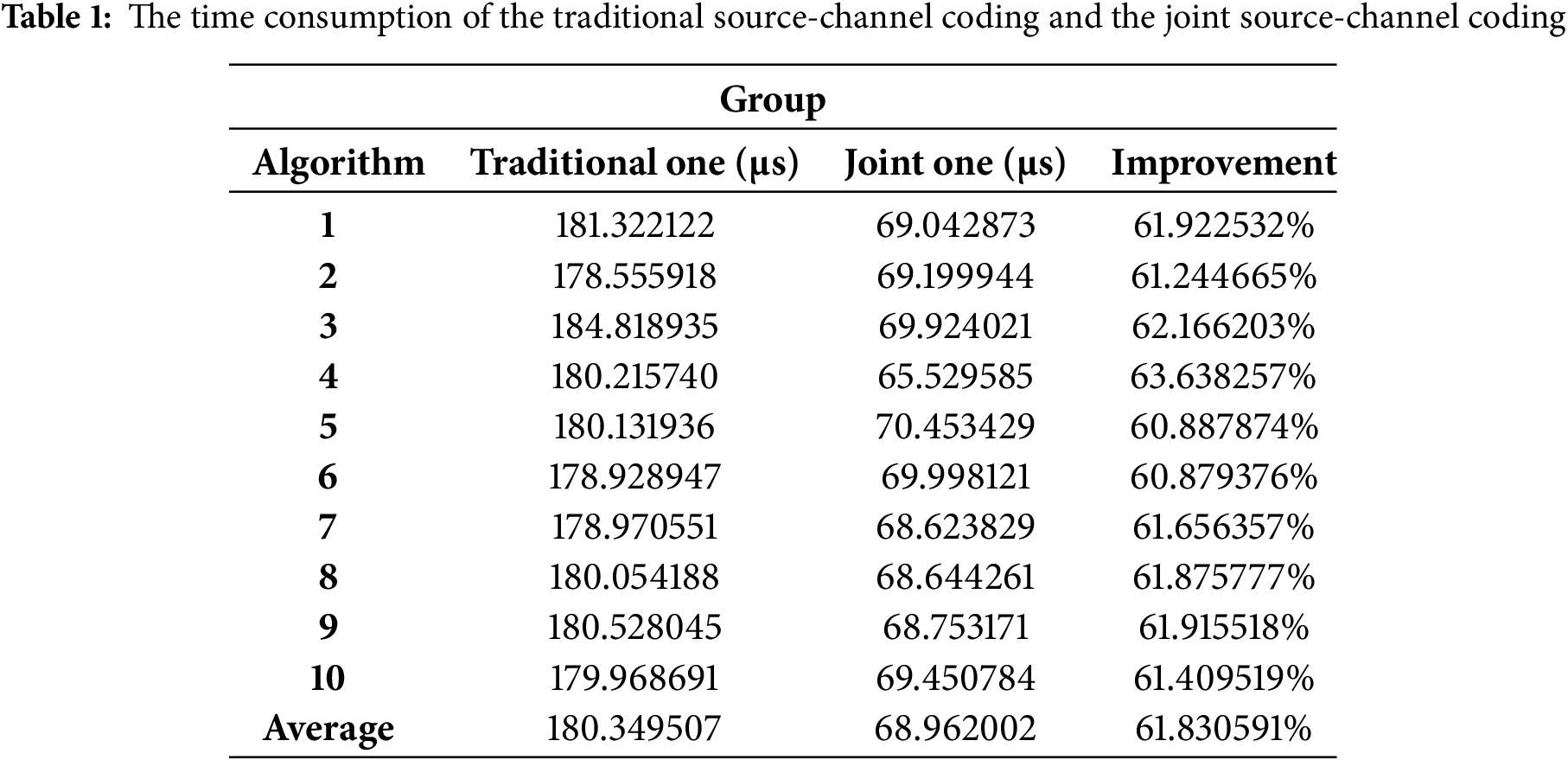
Table 2 shows the time consumption of the traditional source-channel coding and our proposed algorithm. The average time consumption for the traditional source-channel coding is
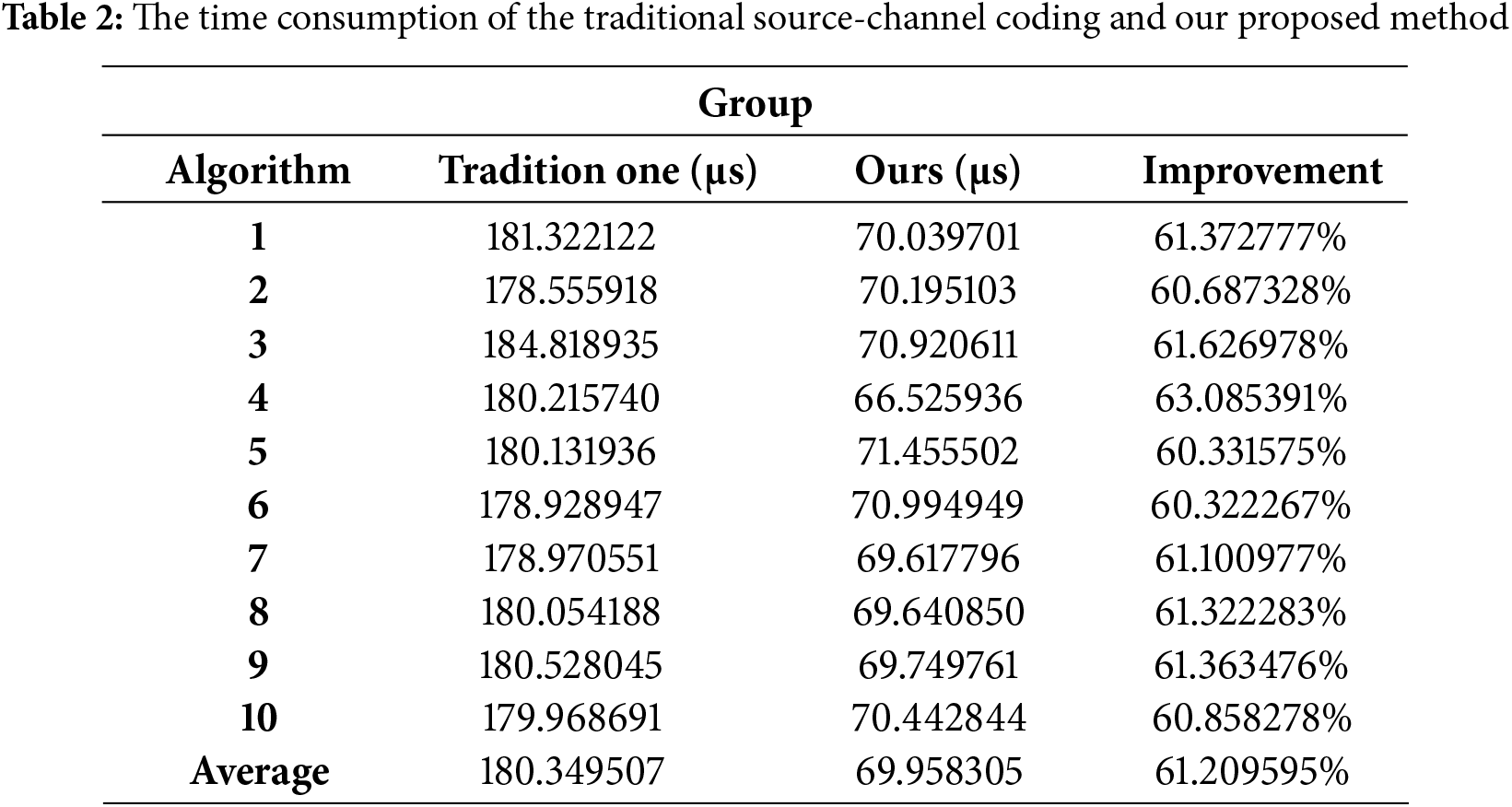
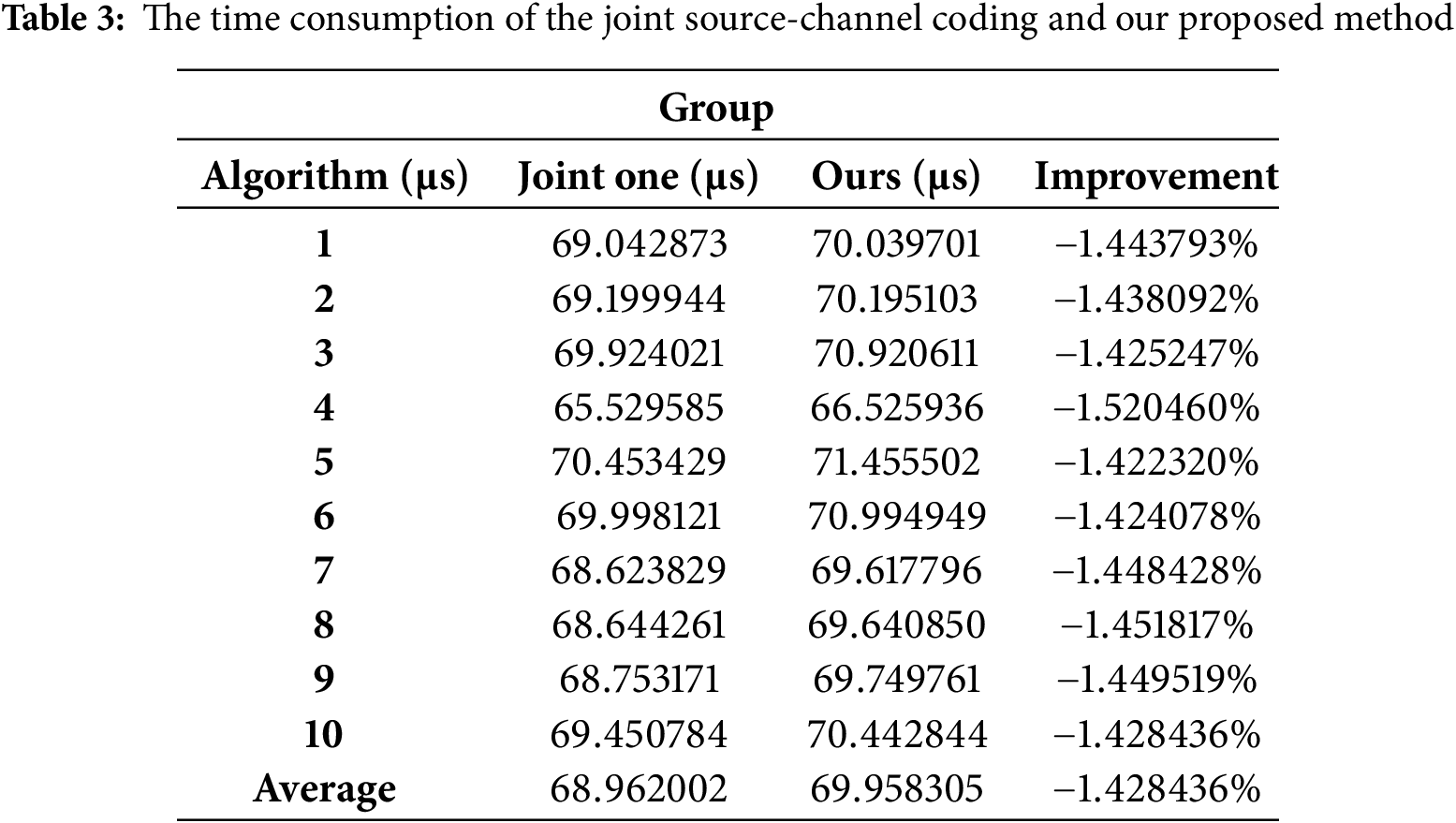
Table 3 shows the time consumption of the joint source-channel coding and our proposed algorithm. The average time consumption for the joint source-channel coding is
As a matter of fact, efficiency and security are usually conflicts. While security requires more checks and filters, efficiency just requires codes to be run as fast as possible. For example, in Python programming language, programmers usually use the “isinstance” function to check whether the input parameters are of correct types in functions, which will slow down the running efficiency but make the codes more secure. In the C/C++ programming language, programmers usually use “if (nullptr != pointer)” to examine whether a pointer is valid, which will slow down the running efficiency but avoid potential vulnerabilities. In this work, we integrate semantically secure communication into a state-of-the-art joint source-channel coding (JSCC) framework, resulting in an automated JSCC system with semantic security guarantees. Therefore, our primary objective should be to first ensure semantic security, followed by rigorous performance optimization. When we just slightly lower the efficiency to implement a semantic secure communication, it should be a success. This is like adjusting the architecture of a large language model (LLM) and then it achieves a challenging task with training time extending one minute from the original several days.
Based on the similar computation method and the evaluation metric of the error rate, the average value of the error rate of the
In conclusion, compared to the traditional source-channel coding, our proposed method is much more efficient in terms of time consumption. Our proposed method has a slightly higher time consumption and lower error rate compared to the joint source-channel coding. With the secure semantic communication supported, our proposed approach barely impacts the performance of joint source-channel coding. Consequently, on the one hand, our proposed method is better than the traditional source-channel coding. On the other hand, our proposed method can support secure semantic communication with little impact on the performance of the state-of-the-art joint source-channel coding.
This paper proposes a secure communication solution based on a designed joint source-channel coding algorithm and an automated joint source-channel coding algorithm. The automated joint source-channel coding distinguishes itself by selecting different modulation methods according to different packet lengths, which makes the algorithm perform better than the original joint source-channel coding. The time consumption of traditional source-channel coding, joint source-channel coding, and our proposed algorithm is tested respectively, showing that our proposed method is 61.21% faster than the first baseline method, the traditional source-channel coding. While implementing the secure semantic communication techniques, our proposed method is only 1.42% slower than the second baseline, the state-of-the-art joint source-channel coding, exhibiting nearly no increases in time consumption compared to it. Moreover, with secure semantic communication supported, there is no obvious impact on the error rate in our proposed method. Compared with the two baselines, our proposed algorithm outperforms the two algorithms in security by resisting 2 more types of attacks. In conclusion, our proposed method demonstrates superior performance compared to traditional source-channel coding approaches. Furthermore, it effectively supports secure semantic communication while maintaining minimal impact on the performance of state-of-the-art joint source-channel coding systems. These findings underscore the robustness and versatility of our approach in advancing secure and efficient communication frameworks. This framework is deployable in IoT networks for secure medical data transmission and military communications where semantic security is critical.
Our work also has some limitations. The automated joint source-channel coding algorithm can be further expanded. Providing more source coding methods and channel coding methods to choose from and improving coding efficiency can be two major future research directions. How to design the best automated joint coding algorithm by combining multiple procedures including encryption and compression deserves in-depth research. In the future, we will try to solve these issues. In addition, the proposed framework relies on accurate channel state information (CSI). For large payloads (>10 MB), the computational load is higher than AES.
Acknowledgement: Thanks to Donghong Cai, from College of Cyber Security, Jinan University, for providing fundamental knowledge of secure computer communication. Thanks to the editors for the warm invitation. Thanks to the anonymous reviewers for their insightful comments, which improved the quality of this paper.
Funding Statement: This work was supported in part by the National Key R&D Program of China under Grant 2022YFB3103500, in part by the National Natural Science Foundation of China under Grant 62302195.
Author Contributions: Yifeng Lin designed this study, investigated the state-of-the-art joint source-channel coding schemes, and wrote the first version of the manuscript. Yuer Yang conducted the experimental schemes, implemented the experiments, and gathered the experimental results. Jianxiang Xie edited the LaTeX, polished English expressions, and formatted the manuscript. Tong Ji arranged the figures, tables, and algorithms in this manuscript. Peiya Li supervised this study, revised the first version of the manuscript, and provided funding. All authors reviewed the results and approved the final version of the manuscript.
Availability of Data and Materials: For the codes and datasets used in the experiments in this manuscript, please visit https://github.com/yiyistudy/SSC-JSCC (accessed on 08 April 2025).
Ethics Approval: Not applicable.
Conflicts of Interest: The authors declare no conflicts of interest to report regarding the present study.
References
1. Tung TY, Gündüz D. Deep joint source-channel and encryption coding: secure semantic communications. In: ICC 2023—IEEE International Conference on Communications; 2023 May 28–Jun 1; Rome, Italy; 2023. p. 5620–5. [Google Scholar]
2. Dai J, Zhang P, Niu K, Wang S, Si Z, Qin X. Communication beyond transmitting bits: semantics-guided source and channel coding. IEEE Wirel Commun. 2022;30(4):170–7. doi:10.1109/mwc.017.2100705. [Google Scholar] [CrossRef]
3. Shao Z, Wu Q, Fan P, Cheng N, Chen W, Wang J, et al. Semantic-aware spectrum sharing in internet of vehicles based on deep reinforcement learning. IEEE Internet Things J. 2024;11(23):38521–36. doi:10.1109/jiot.2024.3448538. [Google Scholar] [CrossRef]
4. Benkouider K, Sambas A, Sulaiman IM, Mamat M, Kottakkaran S. Secure communication scheme based on a new hyperchaotic system. Comput Mater Contin. 2022;73:1019–35. doi:10.32604/cmc.2022.025836. [Google Scholar] [CrossRef]
5. Guo S, Wang Y, Zhang N, Su Z, Luan TH, Tian Z, et al. A survey on semantic communication networks: architecture, security, and privacy. IEEE Commun Surv Tutor. 2024; early access. [Google Scholar]
6. Won D, Woraphonbenjakul G, Wondmagegn AB, Tran AT, Lee D, Lakew DS, et al. Resource management, security, and privacy issues in semantic communications: a survey. IEEE Commun Surv Tutor. 2024; early access. [Google Scholar]
7. Ding W, Luo Y, Lin Y, Yang Y, Lian S. VeriBypasser: an automatic image verification code recognition system based on CNN. Comput Commun. 2024;217(24):246–58. doi:10.1016/j.comcom.2023.12.022. [Google Scholar] [CrossRef]
8. Ji T, Luo Y, Lin Y, Yang Y, Zheng Q, Lian S, et al. ImageVeriBypasser: an image verification code recognition approach based on Convolutional Neural Network. Expert Syst. 2024;41(10):e13658. doi:10.1111/exsy.13658. [Google Scholar] [CrossRef]
9. Ba L, Guan J, Jiang J. Semantic-based defense mechanism for AI model networks using rich semantic identifier mapping. Comput Electr Eng. 2025;122(8):109977. doi:10.1016/j.compeleceng.2024.109977. [Google Scholar] [CrossRef]
10. Mohamed N, Ahmed AA. AI in combatting man-in-the-middle attacks: a comprehensive review. In: 2024 15th International Conference on Computing Communication and Networking Technologies (ICCCNT); 2024; Kamand, India. p. 1–6. [Google Scholar]
11. Han K, Jia X, Lin Y, Yoshinaga T, Li Y, Wu J. Entropy-bottleneck-based privacy protection mechanism for semantic communication. Comput Mater Contin. 2025;83(2):2971–88. doi:10.32604/cmc.2025.061563. [Google Scholar] [CrossRef]
12. Dommel J, Utkovski Z, Simeone O, Stańczak S. Joint source-channel coding for semantics-aware grant-free radio access in IoT fog networks. IEEE Signal Proces Lett. 2021;28:728–32. doi:10.1109/lsp.2021.3072278. [Google Scholar] [CrossRef]
13. Erdemir E, Tung TY, Dragotti PL, Gündüz D. Generative joint source-channel coding for semantic image transmission. IEEE J Sel Areas Commun. 2023;41(8):2645–57. doi:10.1109/jsac.2023.3288243. [Google Scholar] [CrossRef]
14. Jiang P, Wen CK, Jin S, Li GY. Deep source-channel coding for sentence semantic transmission with HARQ. IEEE Transact Communicat. 2022;70(8):5225–40. doi:10.1109/tcomm.2022.3180997. [Google Scholar] [CrossRef]
15. Ge S, Ren J, Shi Y, Zhang Y, Yang S, Yang J. Audio-text multimodal speech recognition via dual-tower architecture for mandarin air traffic control communications. Comput Mater Contin. 2024;78(3):3215–45. doi:10.32604/cmc.2023.046746. [Google Scholar] [CrossRef]
16. Han D, Qi H, Wang S, Hou D, Wang C. Adaptive stepsize forward-backward pursuit and acoustic emission-based health state assessment of high-speed train bearings. Struct Health Monit. 2024;24(12):1. doi:10.1177/14759217241271036. [Google Scholar] [CrossRef]
17. Dai J, Wang S, Tan K, Si Z, Qin X, Niu K, et al. Nonlinear transform source-channel coding for semantic communications. IEEE J Select Areas Communicat. 2022;40(8):2300–16. doi:10.1109/jsac.2022.3180802. [Google Scholar] [CrossRef]
18. Fang Z, Hu S, Wang J, Deng Y, Chen X, Fang Y. Prioritized information bottleneck theoretic framework with distributed online learning for edge video analytics. IEEE Trans Netw. 2025. doi:10.1109/globecom52923.2024.10900993. [Google Scholar] [CrossRef]
19. Dai J, Wang S, Yang K, Tan K, Qin X, Si Z, et al. Toward adaptive semantic communications: efficient data transmission via online learned nonlinear transform source-channel coding. IEEE J Sel Areas Commun. 2023;41(8):2609–27. doi:10.1109/jsac.2023.3288246. [Google Scholar] [CrossRef]
20. Lin Y, Yang Y, Li P. Development and future of compression-combined digital image encryption: a literature review. Digit Signal Process. 2024;158(2):104908. doi:10.1016/j.dsp.2024.104908. [Google Scholar] [CrossRef]
21. Wang X, Lin Y, Yang Y, Xu H, Luo Z. A secure physical health test data sharing scheme based on token distribution and programmable blockchains. Comput Commun. 2023;209(2):444–54. doi:10.1016/j.comcom.2023.06.019. [Google Scholar] [CrossRef]
22. Zhong X, Sham C-W, Ma SL, Chou H-F, Mostaani A, Vu TX, et al. Joint source-channel coding system for 6G communication: design, prototype and future directions. arXiv:2310.01024. 2023. [Google Scholar]
23. Liu S, Gao Z, Chen G, Su Y, Peng L. Transformer-based joint source channel coding for textual semantic communication. In: 2023 IEEE/CIC International Conference on Communications in China (ICCC); 2023 Aug 10–12; Dalian, China. p. 1–6. [Google Scholar]
24. Lu K, Zhou Q, Li R, Zhao Z, Chen X, Wu J, et al. Rethinking modern communication from semantic coding to semantic communication. IEEE Wirel Commun. 2022;30(1):158–64. doi:10.1109/mwc.013.2100642. [Google Scholar] [CrossRef]
25. Zheng Z, Peng T. A scheme of steganography and transmission based on AMR-WB fixed codebook. In: 2022 IEEE 8th International Conference on Computer and Communications (ICCC); 2022 Dec 9–12; Chengdu, China. p. 972–6. [Google Scholar]
26. Jyothi VE, Prasad B, Mojjada RK. Analysis of cryptography encryption for network security. In: IOP conference series: materials science and engineering. Vol. 981. Bristol, UK: IOP Publishing; 2020. [Google Scholar]
27. Gastpar M, Vetterli M. Source-channel communication in sensor networks. In: Information processing in sensor networks. Cham, Switzerland: Springer; 2003. p. 162–77 doi:10.1007/3-540-36978-3_11. [Google Scholar] [CrossRef]
28. Divsalar D, Pollara F. On the design of turbo codes. In: The telecommunications and data acquisition progress report 42-123. Washington, DC, USA: NASA; 1995. [Google Scholar]
29. Liva G, Song S, Lan L, Zhang Y, Lin S, Ryan WE. Design of LDPC codes: a survey and new results. J Commun Soft Syst. 2006;2(3):191–211. doi:10.24138/jcomss.v2i3.283. [Google Scholar] [CrossRef]
30. Tzimpragos G, Kachris C, Djordjevic IB, Cvijetic M, Soudris D, Tomkos I. A survey on FEC codes for 100 G and beyond optical networks. IEEE Communicat Surv Tutor. 2014;18(1):209–21. doi:10.1109/COMST.2014.2361754. [Google Scholar] [CrossRef]
31. Pfletschinger S, Mourad A, Lopez E, Declercq D, Bacci G. Performance evaluation of non-binary LDPC codes on wireless channels. In: Proceedings of ICT Mobile Summit; 2009 Jun 10–12; Santander, Spain. p. 1–8. [Google Scholar]
32. Arora K, Singh J, Randhawa YS. A survey on channel coding techniques for 5G wireless networks. Telecommun Syst. 2020;73(4):637–63. doi:10.1007/s11235-019-00630-3. [Google Scholar] [CrossRef]
33. Fei Z, Yuan J, Huang Q. Error control codes for next-generation communication systems: opportunities and challenges. Wirel Commun Mob Comput. 2018;2018(1):2643205. doi:10.1155/2018/2643205. [Google Scholar] [CrossRef]
34. Barbulescu SA. Turbo codes on satellite communications. In: Turbo code applications: a journey from a paper to realization. Cham, Switzerland: Springer; 2005. p. 257–99. [Google Scholar]
35. Wang P, Yin L, Lu J. Design of check-hybrid LDPC codes for data communications over helicopter-satellite channels. In: 2017 IEEE 86th Vehicular Technology Conference (VTC-Fall); 2017 Sep 24–27; Toronto, ON, Canada. p. 1–5. [Google Scholar]
36. Valenti MC, Cheng S, Seshadri RI. Turbo and LDPC codes for digital video broadcasting. In: Turbo code applications. Dordrecht, The Netherland: Springer; 2005. p. 301–19. doi: 10.1007/1-4020-3685-x_12. [Google Scholar] [CrossRef]
37. Michael L, Kan M, Muhammad N, Asjadi H, Fay L. Latest trends in worldwide digital terrestrial broadcasting and application to the next generation broadcast television physical layer. In: ATSC Symposium on Next Generation Broadcast Television; 2010; Rancho Mirage, CA, USA. [Google Scholar]
38. Wang Z, Tabassum M. A holistic secure communication mechanism using a multilayered cryptographic protocol to enhanced security. Comput Mater Contin. 2024;78(3):4417–52. doi:10.32604/cmc.2024.046797. [Google Scholar] [CrossRef]
39. Cover TM, Thomas JA. Channel capacity. In: Elements of information theory. Hoboken, NJ, USA: John Wiley & Sons, Inc.; 1991. p. 191–205. [Google Scholar]
40. Sacher WD, Green WM, Gill DM, Assefa S, Barwicz T, Khater M, et al. Binary phase-shift keying by coupling modulation of microrings. Optics Express. 2014;22(17):20252–9. doi:10.1364/oe.22.020252. [Google Scholar] [PubMed] [CrossRef]
41. Saha D, Birdsall TG. Quadrature-quadrature phase-shift keying. IEEE Transact Commun. 1989;37(5):437–48. doi:10.1109/26.24595. [Google Scholar] [CrossRef]
42. El-Nahal F. Coherent 16 quadrature amplitude modulation (16 QAM) optical communication systems. Photonics Lett Poland. 2018;10(2):57–9. doi:10.4302/plp.v10i2.809. [Google Scholar] [CrossRef]
43. Yao H, Wang J, Dai P, Bo L, Chen Y. An efficient and robust system for vertically federated random forest. arXiv:2201.10761. 2022. [Google Scholar]
44. Kazemi M, Naraghi H, Golshan HM. On the affine ciphers in cryptography. In: Informatics Engineering and Information Science: International Conference, ICIEIS 2011; 2011 Nov 12–14; Kuala Lumpur, Malaysia. p. 185–99. [Google Scholar]
Cite This Article
 Copyright © 2025 The Author(s). Published by Tech Science Press.
This work is licensed under a Creative Commons Attribution 4.0 International License , which permits unrestricted use, distribution, and reproduction in any medium, provided the original work is properly cited.
 Downloads
 Citation Tools
