
 Login
Login Register
 Submit a Paper
 Propose a Special lssue
 Open Access
ARTICLE
Unleashing the Potential of Metaverse in Social IoV: An Authentication Protocol Based on Blockchain
1 School of Artificial Intelligence, Nanjing University of Information Science & Technology, Nanjing, 210044, China
2 Jiangsu Provincial Key Laboratory of Culture and Tourism for Research on the Application Technology of Metaverse Cultural Tourism Scenarios (Nanjing University of Information Science and Technology), Nanjing, 210044, China
3 College of Computer Science and Engineering, Shandong University of Science and Technology, Qingdao, 266590, China
4 Department of Mathematics, Chaudhary Charan Singh University, Meerut, 250004, India
* Corresponding Author: Chien-Ming Chen. Email:
Computers, Materials & Continua 2025, 84(2), 3175-3192. https://doi.org/10.32604/cmc.2025.065717
Received 20 March 2025; Accepted 09 May 2025; Issue published 03 July 2025
 View Full Text
 Download PDF
Abstract
As a model for the next generation of the Internet, the metaverse—a fully immersive, hyper-temporal virtual shared space—is transitioning from imagination to reality. At present, the metaverse has been widely applied in a variety of fields, including education, social entertainment, Internet of vehicles (IoV), healthcare, and virtual tours. In IoVs, researchers primarily focus on using the metaverse to improve the traffic safety of vehicles, while paying limited attention to passengers’ social needs. At the same time, Social Internet of Vehicles (SIoV) introduces the concept of social networks in IoV to provide better resources and services for users. However, the problem of single interaction between SIoV and users has become increasingly prominent. In this paper, we first introduce a SIoV environment combined with the metaverse. In this environment, we adopt blockchain as the platform of the metaverse to provide a decentralized environment. Concerning passengers’ social data may contain sensitive/private information, we then design an authentication and key agreement protocol called MSIoV-AKA to protect the communications. Through formal security verifications in the real-or-random (ROR) model and using the AVISPA (Automated Validation of Internet Security Protocols and Applications) tool, we firmly verify the security of the protocol. Finally, detailed comparisons are made between our protocol and robust protocols/schemes in terms of computational cost and communication cost. In addition, we implement the MSIoV-AKA protocol in the Ethereum test network and Hyperledger Sawtooth to show the practicality.Keywords
With the progressive development of the Internet of Things (IoT) [1] and Artificial Intelligence (AI) [2,3], Metaverse technology [4], hailed as the next generation of the internet, is rapidly on the rise. The metaverse is a digital world with immersive experiences that integrates virtual and real worlds to a high degree. Constructed upon technologies like Extended Reality (XR), 5G, Artificial Intelligence (AI), and data processing [5], the metaverse is capable of offering users 3D immersive and personalized experiences. In addition, blockchain is one of the key technologies of the metaverse [6–8]. Blockchain technology not only furnishes substantial computational resources for the metaverse but also enables users to transition seamlessly among different virtual worlds. Given the decentralization of blockchain, it effectively circumvents the single-point-of-failure issue. Consequently, blockchain technology assumes a crucial role within the metaverse. Users enter the metaverse via immersive devices and create virtual avatars. Through these avatars, users can communicate in real-time and interact with residents of other virtual worlds, experiencing a sense of presence in virtual reality. Additionally, metaverse offers a variety of virtual experiences and activities, such as virtual socializing, virtual business, and virtual tourism, allowing users to enjoy diverse entertainment and social interactions in the virtual world.
The Internet of Vehicles (IoV) [9–11] connects vehicles, road infrastructure, and IoT to facilitate information exchange and data sharing between vehicles and infrastructures. In IoV, vehicles upload driving information to obtain corresponding services, such as collision warnings, traffic congestion alerts, and personalized navigation. However, despite the improvements IoV brings to traffic safety and efficiency, it lacks social interaction among users.
To address this issue, many researchers have proposed Social Internet of Vehicles (SIoV) [12,13] to enhance social interaction among users. The Social Internet of Vehicles (SIoV) incorporates the concepts of IoV and Social Networks, thereby enabling the perception of associations among various entities, including people, vehicles, and roads. Within the SIoV frameworks, users can establish social relationships with others during their travels, forming a social network in the context of IoV. Consequently, SIoV can provide various social services for passengers, such as opportunities for working, studying, playing games, or watching videos together with fellow passengers in the vehicle. However, with the explosive growth of the scale of the SIoV networks, the problems of privacy leakage, data sharing, insufficient computing and storage capabilities have become increasingly prominent [14–16]. For this reason, many researchers have adopted blockchain technology to address these problems. The decentralized technology of blockchain can avoid a single point of failure and reduce the risk of data leakage. Additionally, the consensus mechanism of blockchain can motivate nodes to contribute computing and storage resources. Therefore, blockchain has become a crucial technology in the development of SIoV [17–19].
Although SIoV improves the social experience of users to a certain extent, it is still insufficient in the face of a large number of users’ social demands. In recent years, many researchers [20,21] have proposed to use the metaverse to improve the functionalities of IoV. However, few researchers have focused on how to ensure the security of the social and entertainment needs of passengers. To address these issues, we propose a SIoV architecture in a metaverse environment. This architecture utilizes blockchain as the underlying platform for the metaverse. Blockchain can provide computational power for the metaverse and store transaction data generated within the metaverse. On the other hand, blockchain can establish a comprehensive economic system that connects the virtual world with the real world. In Fig. 1, we present the diagram of SIoV within the metaverse environment. When vehicles in the SIoV connect to the metaverse, passengers in the vehicles can enter the metaverse by wearing immersive devices. The social data generated by passengers is transmitted to Road Side Units (RSUs) via On-Board Units (OBUs), which then forward the data to metaverse companies. These companies provide services to passengers through servers deployed on blockchain or cloud infrastructure. Compared to traditional SIoV, the SIoV in the metaverse offers passengers more diverse and realistic social interactions.
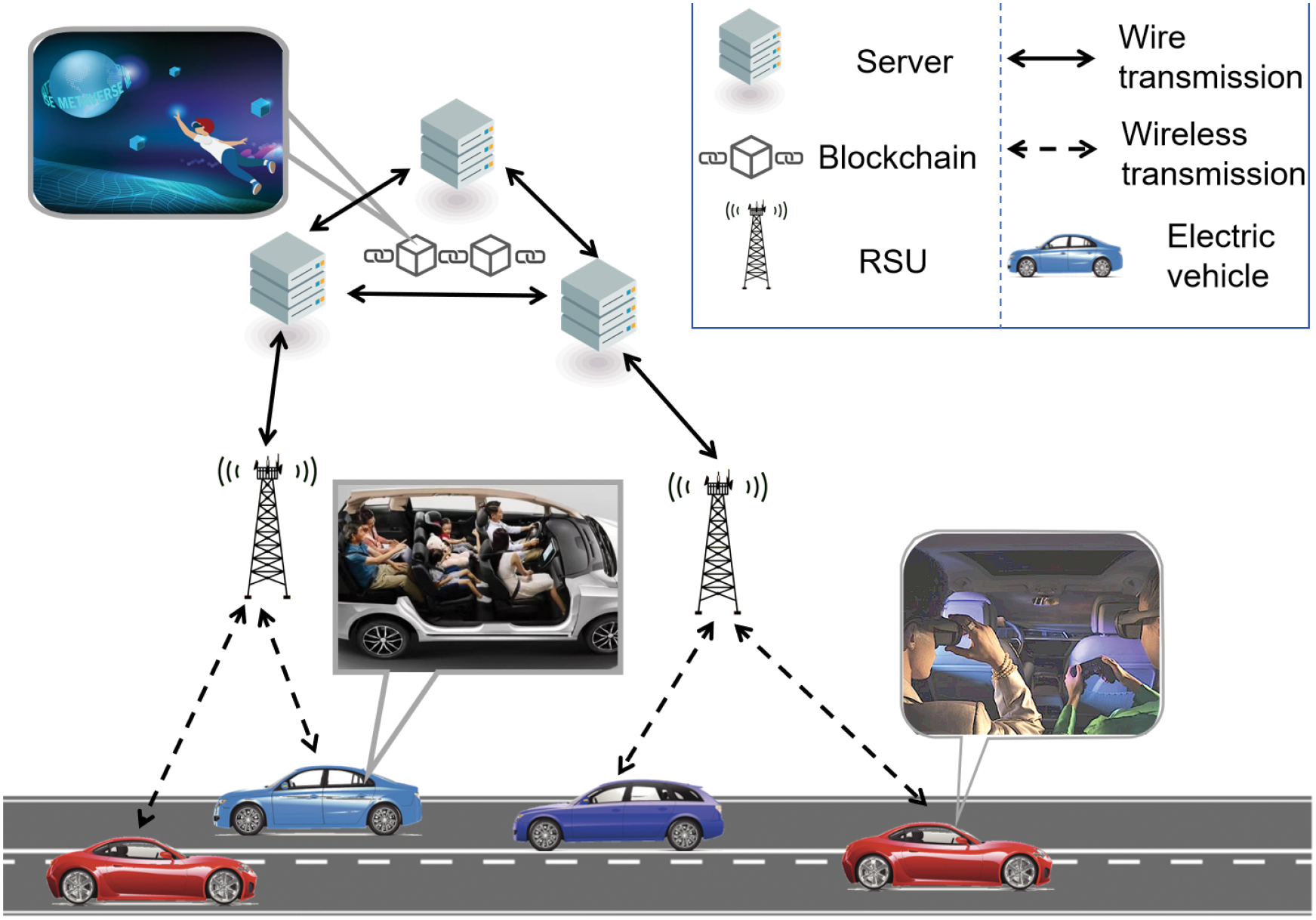
Figure 1: An integrated environment combining SIoV with metaverse
However, when the metaverse satisfies the social needs of users, it also faces many network security threats. Since the vehicle and RSU are situated in public, communication between vehicles, RSUs, and metaverse service companies occurs over public channels. Consequently, attackers might fabricate or alter communication information and endeavor to initiate a variety of security attacks directed at passengers. Through these security vulnerabilities, attackers can obtain the private information of targeted passengers and potentially use it to gain access to the metaverse and deceiving other users. To tackle the aforementioned issues, leveraging the SIoV architecture within the metaverse environment, we further put forward an authentication and key agreement protocol, namely MSIoV-AKA. The contributions and summary of this paper are as follows:
1. We propose a novel SIoV architecture in a metaverse environment, enriching the social entertainment experience for passengers beyond the traditional SIoV framework. Compared to traditional SIoV, the SIoV in the metaverse offers passengers more diverse and realistic social interactions.
2. In consideration of passenger privacy and security within the metaverse SIoV architecture, we design the MSIoV-AKA protocol using Shamir’s Secret Sharing [22].
3. To verify the security of the MSIoV-AKA protocol, we make the formal analysis in the Real-or-Random (ROR) model and the AVISPA tool.
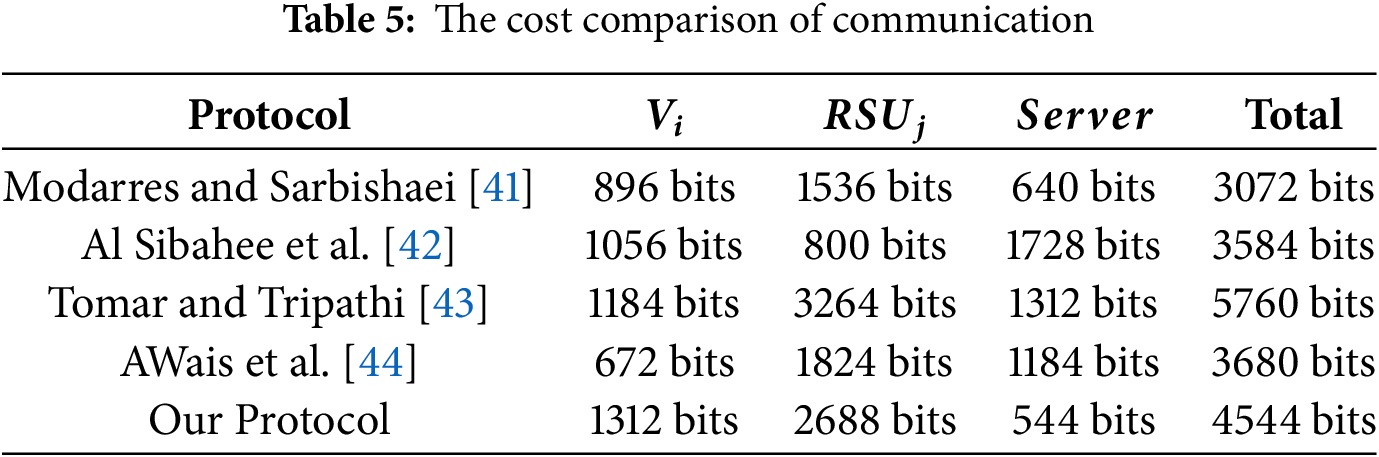
4. To comprehensively evaluate the performance of the MSIoV-AKA protocol, we first conducted a comparative analysis with several existing protocols in terms of computation and communication costs. The results demonstrate that our protocol significantly reduces computation overhead, while the communication cost remains at a comparable level.
5. We also tested the protocol on Hyperledger Sawtooth and Ethereum. In Sawtooth, with 30 blocks and varying node numbers, we measured computation time and latency. On Ethereum, we recorded the Gas cost of each protocol phase to verify practical feasibility.
The subsequent sections of this paper are structured in a logical sequence as follows: Section 2 is related work. Section 3 delves into the attacker model and the goals of our protocol. Section 4 presents our proposed protocol. Section 5 provides a comprehensive security analysis of the protocol, evaluating its robustness against potential threats. Section 6 shows the comparisons of the performance between different protocols. Finally, Section 7 offers a concise conclusion.
In recent years, researchers have proposed many secure schemes to protect the privacy and security in IoV and SIoV. In the year 2017, Mohit et al. [23] presented a vehicle authentication protocol that was based on wireless sensor networks. They confidently claimed that this protocol had the ability to resist impersonation attacks and stolen smart card attacks, thereby offering a certain level of security. However, the research landscape evolved, and in 2018, Yu et al. [24] made a significant discovery. They found that the previously proposed protocol was, in fact, not resistant to impersonation attacks, thus revealing a potential vulnerability. In light of this finding, Yu et al. took proactive steps to address this weakness and proposed an enhanced AKA protocol. They emphasized that this new protocol achieved mutual authentication and anonymity. In 2020, Sadri and Rajabzadeh Asaar [25] further investigated and found that the protocol proposed by Yu et al. was not resistant to sensor capture attacks and impersonation attacks. Consequently, Sadri et al. proposed a new IoV authentication protocol, with the claim that it could provide more comprehensive security features, thus contributing to the advancement of secure vehicle authentication systems. In 2021, Jiang et al. [26] proposed an anonymous authentication mechanism and a blockchain-based data sharing scheme. Jiang et al. claimed that the scheme can protect user anonymity and unlinkability. In 2024, Esfahani et al. [27] introduced an AKA protocol aimed at connecting IoT devices in SIoV, a crucial step towards improving the reliability and security of communication among diverse IoT-enabled entities in the social vehicular context. This protocol overcomes the high computational cost issue of existing solutions through group authentication.
Since the term “metaverse” made its debut in the novel Snow Crash, the emergence of virtual world platforms has been on a steady rise. At the same time, the security of the virtual world environment has been discussed in some research. In 2016, O’Brolchain et al. [28] pointed out that users communicate through public channels and servers, which leads to significant threats to user privacy in virtual spaces. In 2018, Falchuk et al. [29] classified privacy into several types, including personal information privacy, behavioral privacy, and communication privacy. In response to the possible privacy violations in the social metaverse, Falchuk et al. proposed by creating a confusing effect. Through the confusing effect, the attacker’s knowledge of the user’s avatar activities, location, properties, interests and other information can be reduced. In 2020, De Guzman et al. [30] offered a comprehensive elucidation of the security and privacy requirements when users interact with virtual objects, laying the groundwork for subsequent research in this area. In 2022, Ryu et al. [31] proposed a mutual authentication scheme based on elliptic curve cryptography (ECC). This scheme not only provides secure communication between users and servers but also demonstrates resilience against offline dictionary guessing attacks, impersonation attacks, and man-in-the-middle attacks, thereby enhancing the security of user-server interactions. In the same year, Zhang et al. [32] further proposed a low-latency AKA protocol specifically tailored for metaverse-based EIoT power trading systems, addressing the unique requirements of this emerging application domain. In 2023, Yang et al. [33] introduced a biometric-based dual-factor authentication protocol incorporating chameleon signatures. This protocol represents a notable advancement as it ensures the verifiability of both virtual and physical identities of virtual characters, effectively safeguarding the integrity of the metaverse environment. Yang et al. claimed that it can successfully resist impersonation attacks and replay attacks. Also in 2023, Thakur et al. [34] proposed a certificateless encryption framework for metaverse identity verification. By leveraging ECC and fuzzy extractors to achieve mutual authentication between users. Thakur et al. claimed that it can resist replay attacks and impersonation attacks, further enhancing the security posture of the metaverse. In 2024, Gupta et al. [35] utilized convolutional neural networks to propose a lightweight encryption protocol to protect the metaverse. The protocol can provide secure mutual authentication between users and metaverse infrastructure.
3 System Model and Attacker Model
Our model involves three entities: vehicle
1. Vehicle (
2. Passenger (
3. Road side Unit (
4. Server (
5. Blockchain (BC): The metaverse service company deploys the metaverse on the
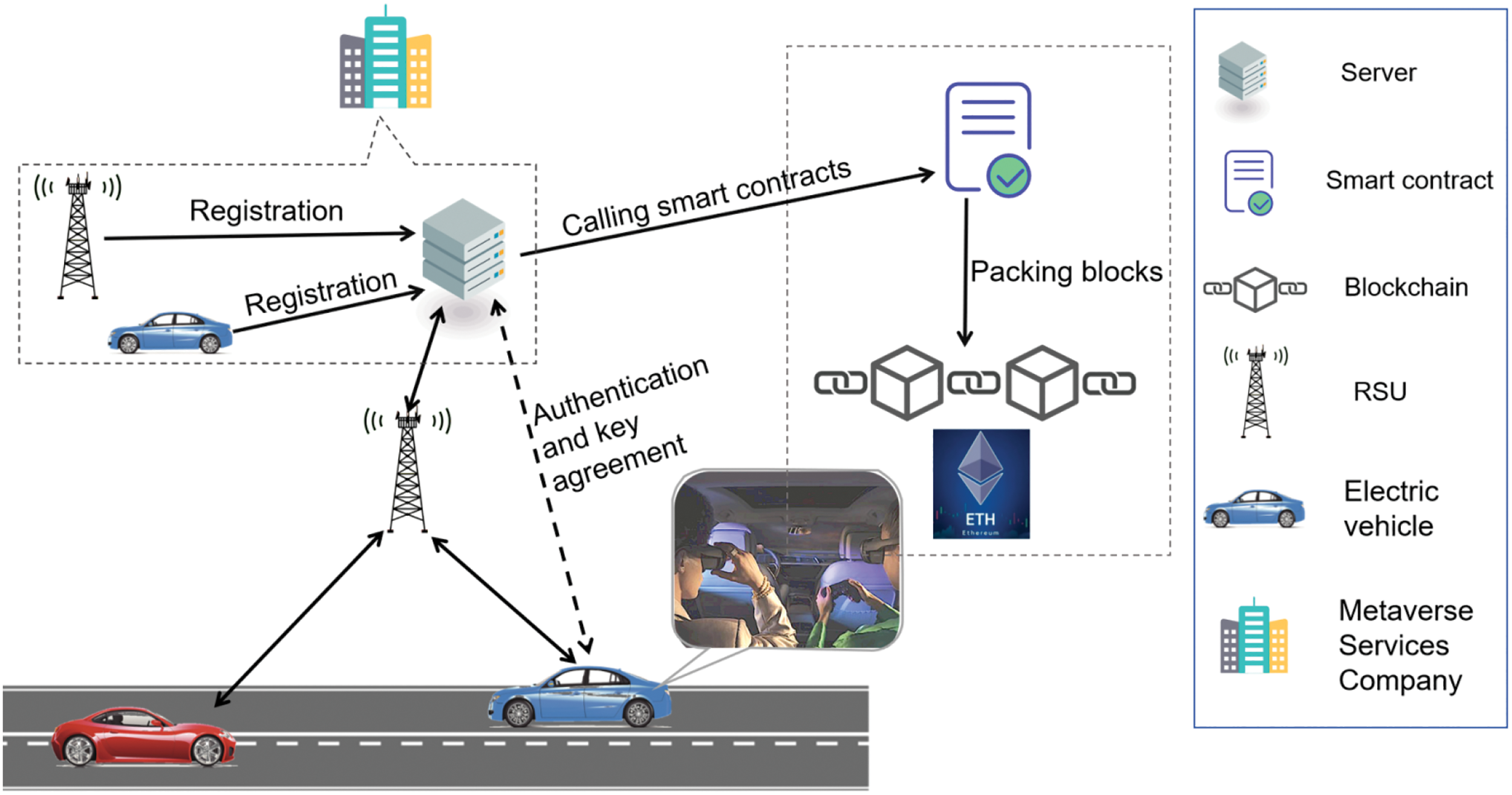
Figure 2: System model of SIoV with metaverse
According to the roles and functionalities of the entities mentioned above, the process of our system model is as follows. When passengers in a vehicle wish to use metaverse services, both the vehicle and the passengers should register with the server. After registration, passengers can log into the metaverse through immersive devices in the vehicle. Subsequently, the server integrated with blockchain technology in the metaverse service company will authenticate the passengers’ identities and establish a session key. Through the session key, passengers can securely communicate with the server and invite passengers in the same vehicle to socialize in the metaverse, such as playing games.
In this paper, we base on the Dolev-Yao (DY) model [36] and the Canetti-Krawczyk (CK) model [37] to define the capabilities of the attacker (
(1)
(2)
(3)
(4)
(5)
(6)
(7) Because passengers in the same private vehicle are usually family members or friends, passengers trust each other. Therefore, we assume that there is no malicious attacker among the passengers in the vehicle. In other words,
(8) For (2), (3), and (4),
4 The Proposed MSIoV-AKA Protocol
In this section, we propose an authentication and key agreement protocol, specifically designated as MSIoV-AKA. This protocol is systematically divided into four sequential phases: the pre-deployment phase, the registration phase, the login and authentication phase, and the passenger dynamic adding phase. In Table 1, we offer a comprehensive explanation of the notation utilized in the MSIoV-AKA protocol.

At this stage, the main task is to initialize some parameters for the communication entities. Firstly, vehicles and RSUs have a unique identifier set at the factory. In our protocol, the identifier is used as the device’s ID. The ID of vehicles and RSUs are denoted as
Before passengers want to use metaverse social services in a vehicle
(1) First, the passenger
(2) When
where the constant term
(3) After
(1)
(2) When
(3) After receiving the message,
4.3 Login and Authentication Phase
During the journey, passengers (
(1) Firstly, the
(2) After
(3) When
(4)
(5) When

Figure 3: Login and authentication phase
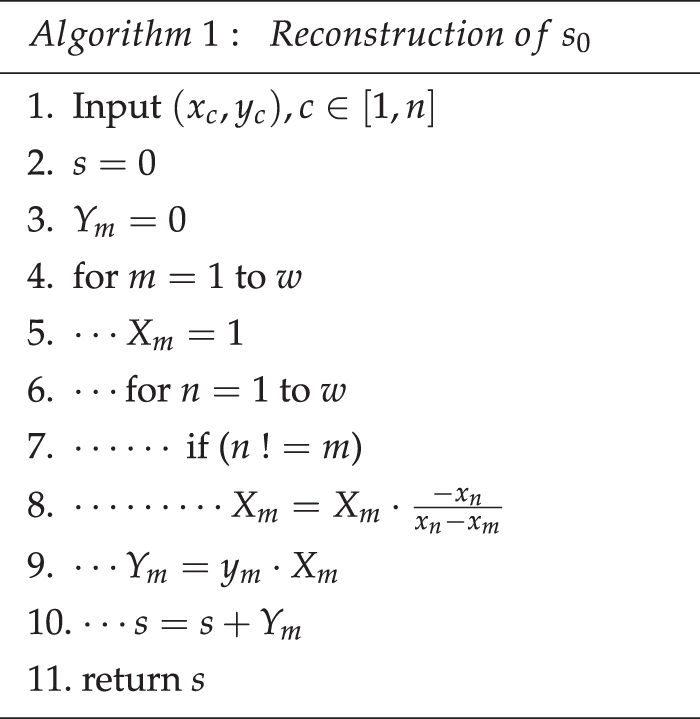
Figure 4:
4.4 Passenger Dynamic Adding Phase
If a new passenger also wants to use the metaverse service, the passenger needs to perform the dynamic addition phase. Compared to the vehicle registration phase, the dynamic passenger addition phase allows for fast passenger registration.
(1) The new passenger
(2) When
(3) After
To ensure the security of passenger credentials in long-term operation scenarios and to meet the compliance requirements for password rotation, the MSIoV-AKA protocol introduces a password update phase. This phase is triggered only after a successful login-authentication session between the passenger
Let the old and new passwords be denoted as
(1)
(2)
(3)
(4) Finally,
In this section, we perform a comprehensive formal security analysis of the MSIoV-AKA protocol. By employing different games, we calculated the probability of an attacker (
Our protocol consists of three entities, namely
1.
2.
3.
4.
5.
Theorem 1: Under the ROR model, the probability that
We define four games:
Finally,
According to
Finally, we can obtain
5.2 Formal Security Verification Using AVISPA
AVISPA is a commonly used validation tool. It uses the on-the-fly model checker (OFMC) and the constraint logic-based attack searcher (CL-AtSe) to verify the security of the MSIoV-AKA protocol. In Fig. 5, we show the simulation results from OFMC and CL-AtSe. In the OFMC analysis, when the node depth is 12, it took 6.07 s to access 2704 nodes. For CL-AtSe, the translation time was 0.09 s. Both results show that the proposed protocol is secure.
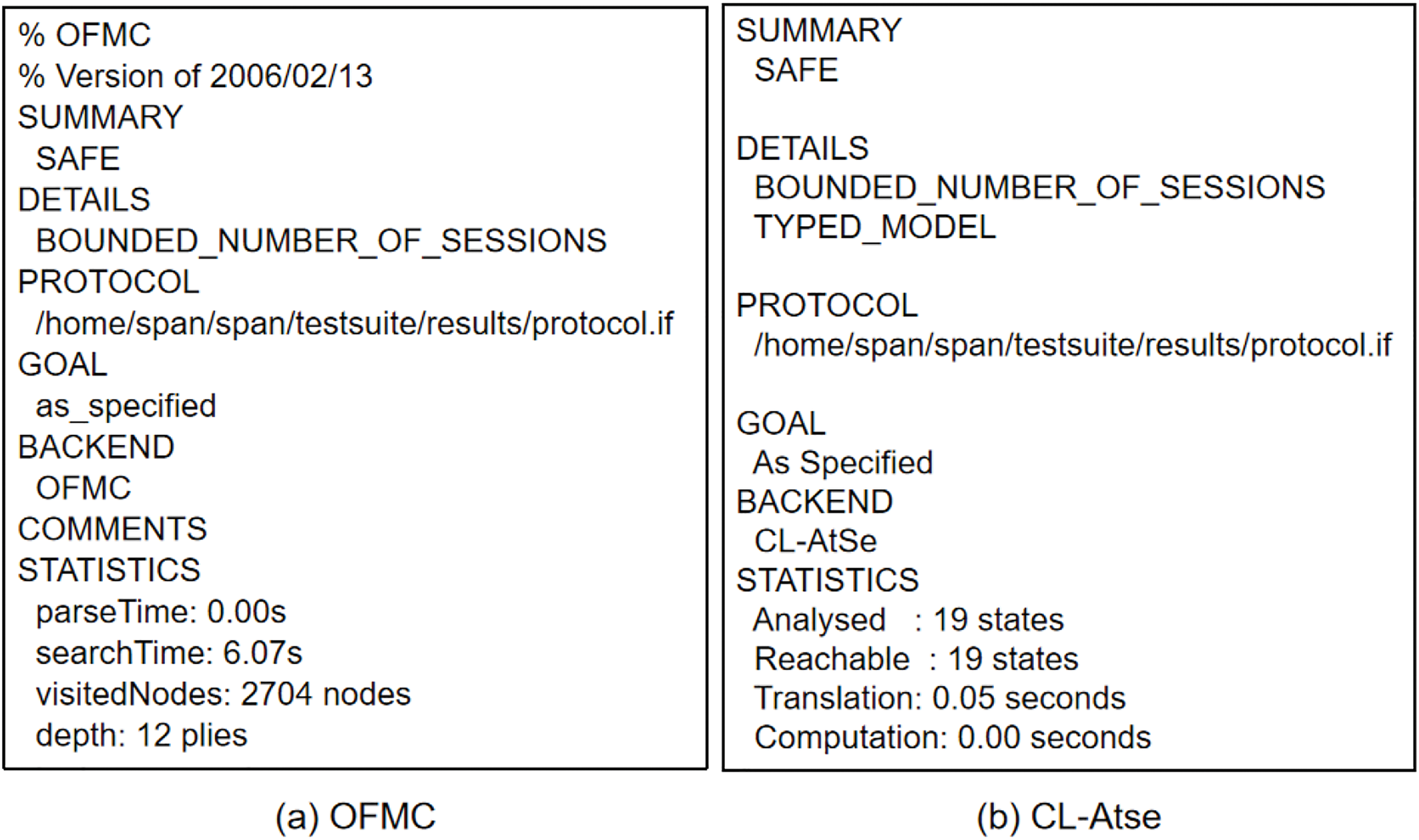
Figure 5: The verification results using OFMC and CL-AtSe
6 Performance Comparisons and Simulations
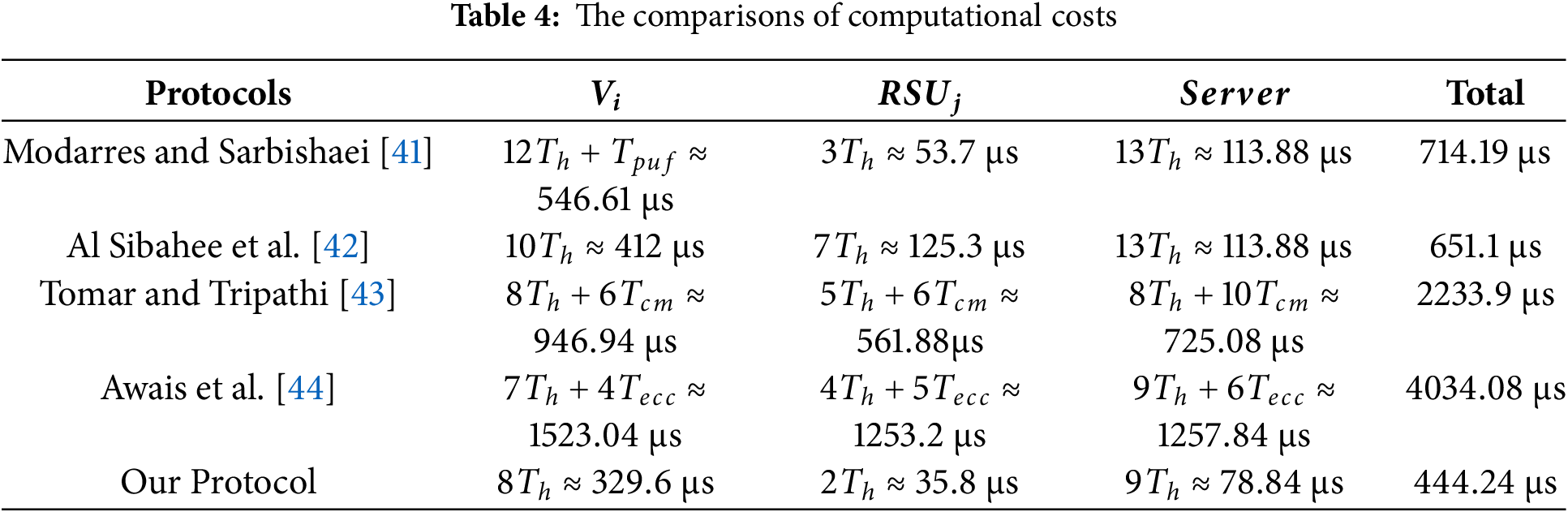
In this section, we conduct a comparative analysis between our proposed protocol and four representative robust protocols/schemes [41–44]. The comparison primarily focuses on two key metrics: computational cost and communication cost, aiming to comprehensively evaluate the efficiency of our protocol. Furthermore, we deploy smart contracts on both Ethereum and Hyperledger platforms to assess their runtime performance and validate the practical feasibility of the proposed scheme.
6.1 The Comparisons of Computational Costs and Communication Costs
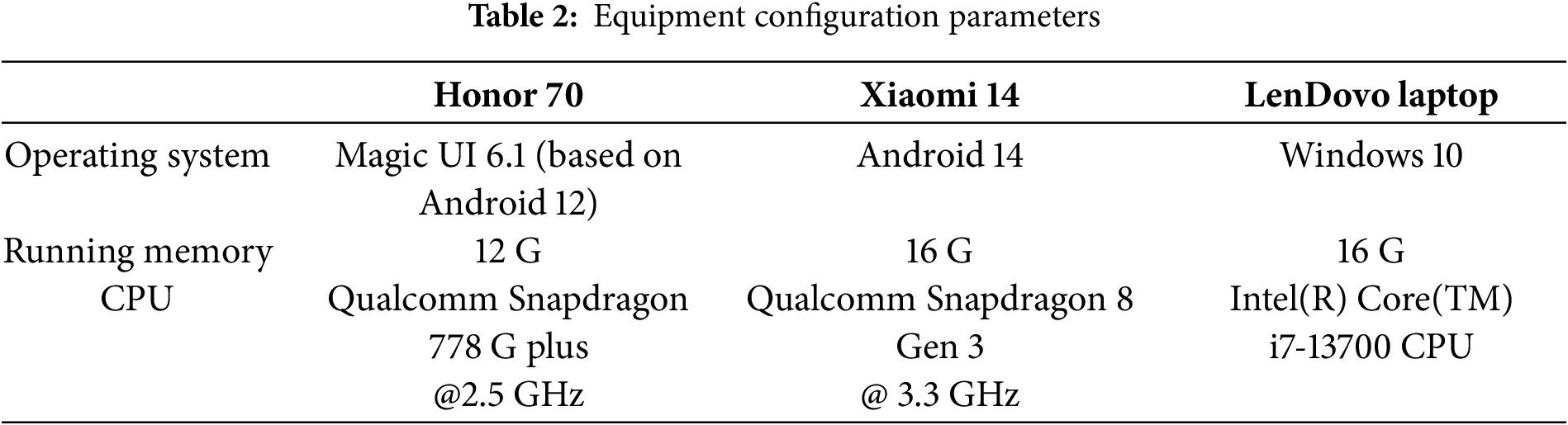
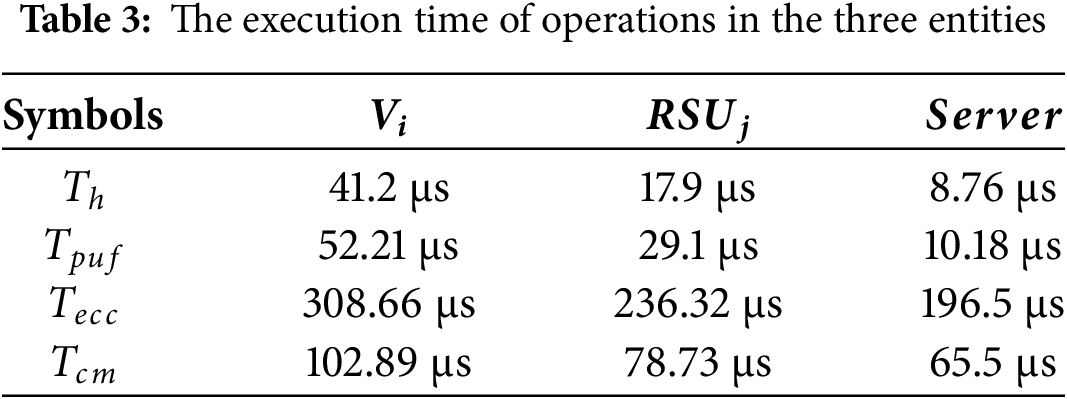
In this subsection, we use three different devices to simulate the entities summarized in Table 2. The Honor 70 phone is used to act as the OBU of the vehicle, the Xiaomi 14 phone plays the role of the RSU, and a Lenovo computer is used to simulate the server. In Table 3, we show the computational costs of the used operations. Here,
According to [45], we define the length of identity, password, PUF challenge value, hash value, random number, timestamp and point in ECC as 128, 128, 128, 256, 256, 32, 160 bits, respectively. In the following, we show the communication cost of our protocol as an example. In our protocol, the transmitted messages are
6.2 Feasibility Analysis of Blockchain
To validate the feasibility of our protocol, we executed our protocol on Ethereum and Hyperledger.
6.2.1 Ethereum-Based Implementation
In order to figure out the gas cost, we put the smart contract of our protocol on the Ethereum Test Network called Sepolia. The configurations of our implementation are as follows: Development environment: Remix, Language: Solidity, Compiler: 0.8.25+commit.b61c2a91, Ethereum wallet: MetaMask 11.14.0, Test network: Sepolia. First, we connected Remix and Sepolia using the MetaMask plugin in Google Chrome. Then, we use them to deploy and invoke our smart contract.
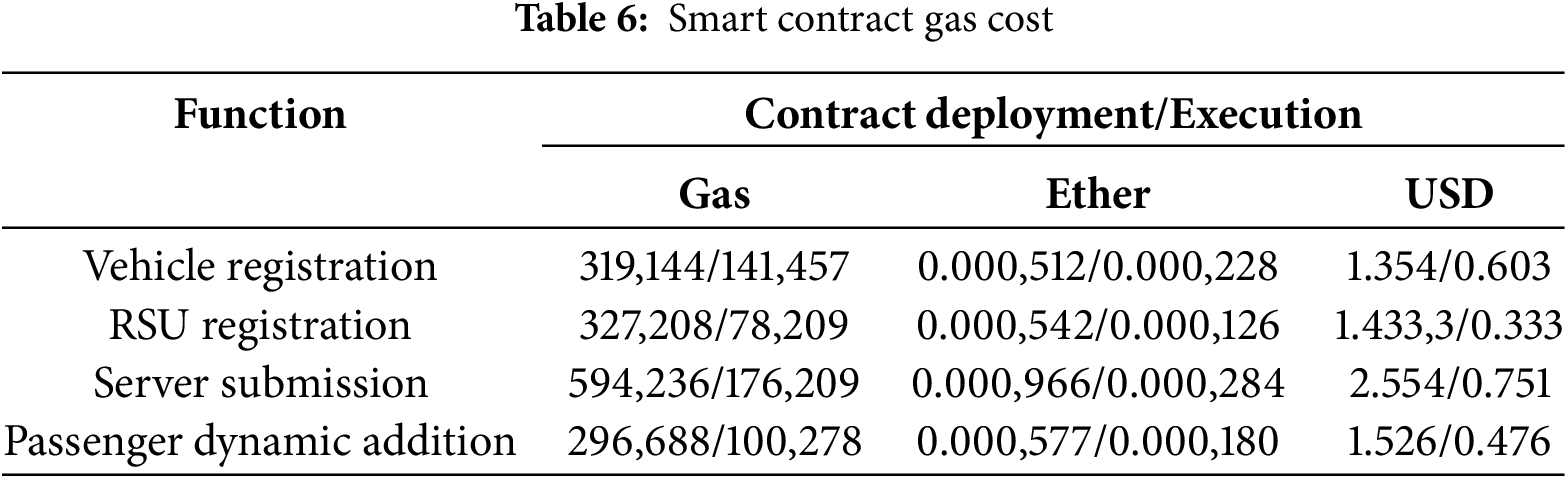
In Fig. 6, we show the Sepolia testnet transaction details. Fig. 6a–d represents the invocation results of the contract of vehicle registration, the contract of RSU registration, the contract of server submission, and the contract of passenger dynamic addition, respectively. Based on the exchange rate on 18 August 2024, we consider 1 Ether = 2644.279 USD. In Table 6, we show the cost of deployment and invocation for the four contracts. The results indicate that the cost of deployment is the highest; however, it only needs to be executed once. Although the contract needs to be invoked multiple times, the cost of invoking is low. Therefore, the gas cost of our protocol is acceptable in practical applications.
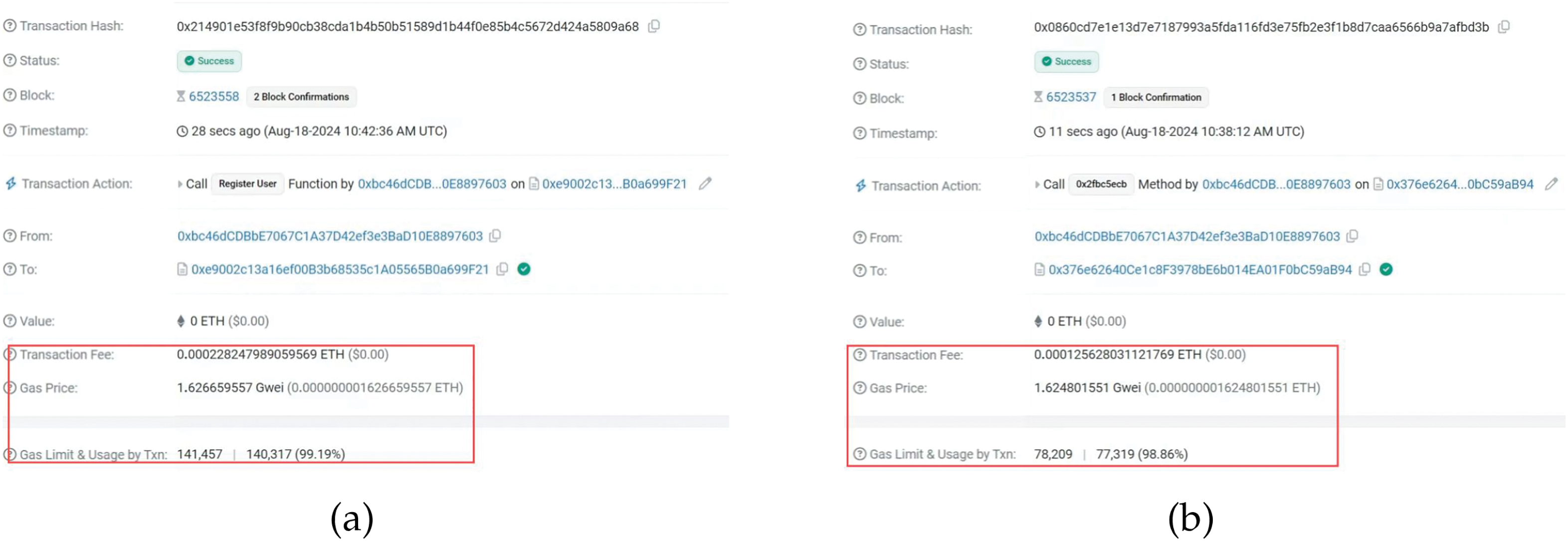
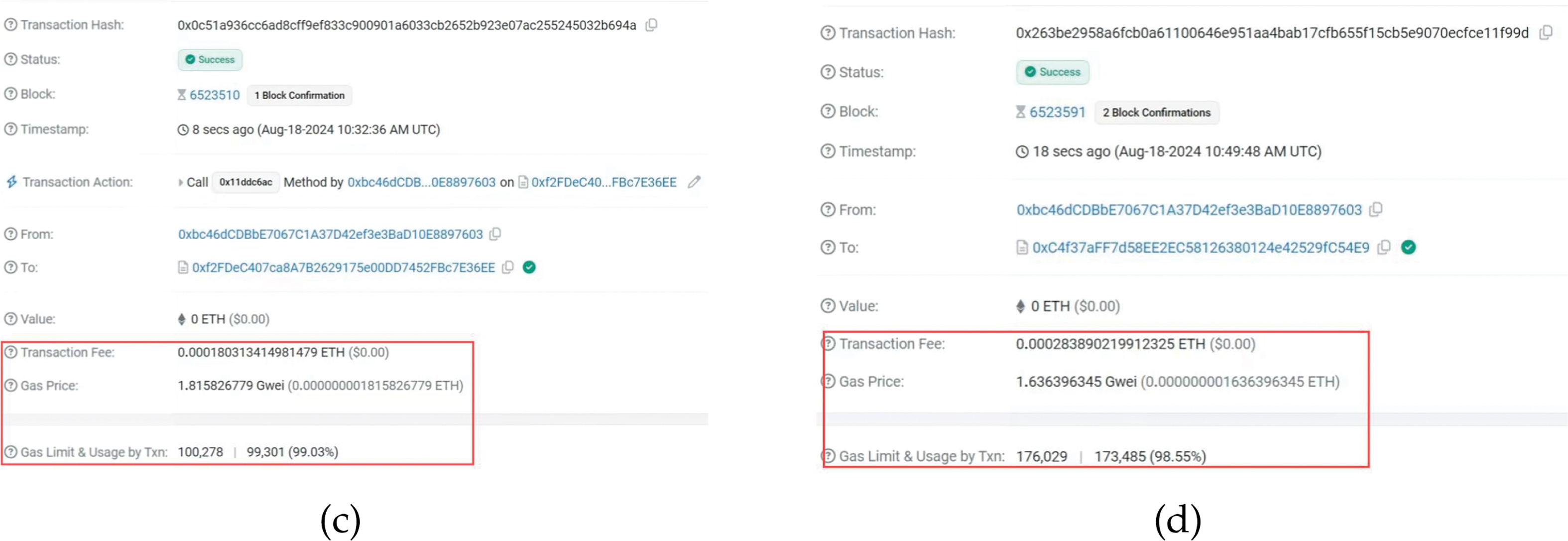
Figure 6: Sepolia testnet transaction details
6.2.2 Hyperledger-Based Implementation
In order to conduct a comprehensive analysis of the time cost associated with packing and uploading blocks, we carry out experiments on the Hyperledger Sawtooth blockchain platform. Our experimental configurations and environments are described as follows: Operating system: Ubuntu 20.04.6 LTS, CPU: 11th Gen Inter(R) Core(TM) i9-11900 @ 2.50 GHz, RAM: 16G, Platform: Hyperledger Sawtooth, Development Environment: Pycharm 2023.3.5 (Community edition), Programming Language: python, Consensus Algorithm: Practical Byzantine Fault Tolerance (PBFT). Specifically, we used Docker 26.2.4 to create 10 containers to simulate blockchain nodes. Each node has an intkey transaction processor, a REST API service, a transaction processor, a validation server, and a PBFT engine. In addition, we pair the nodes to form a peers network. Through PBFT, each node can confirm transactions and reach consensus. Finally, the nodes package the transactions into blocks and upload them to the blockchain.
Here, we evaluate the performance of MSIoV-AKA protocol in three cases. Case 1 is shown in Fig. 7a. We assume that there are 30 blocks to be packed and uploaded. We compared the time consumed for packaging and uploading blocks containing different numbers of transactions. Case 2 is shown in Fig. 7b. We assume that each block contains 150 transactions. We compared the time consumed for packaging and uploading different numbers of blocks. Fig. 7c shows that the left vertical represents the cumulative latency for processing 30 blocks under different numbers of nodes, illustrated by the bar chart. The right vertical axis shows the average latency per block, depicted as a line chart.
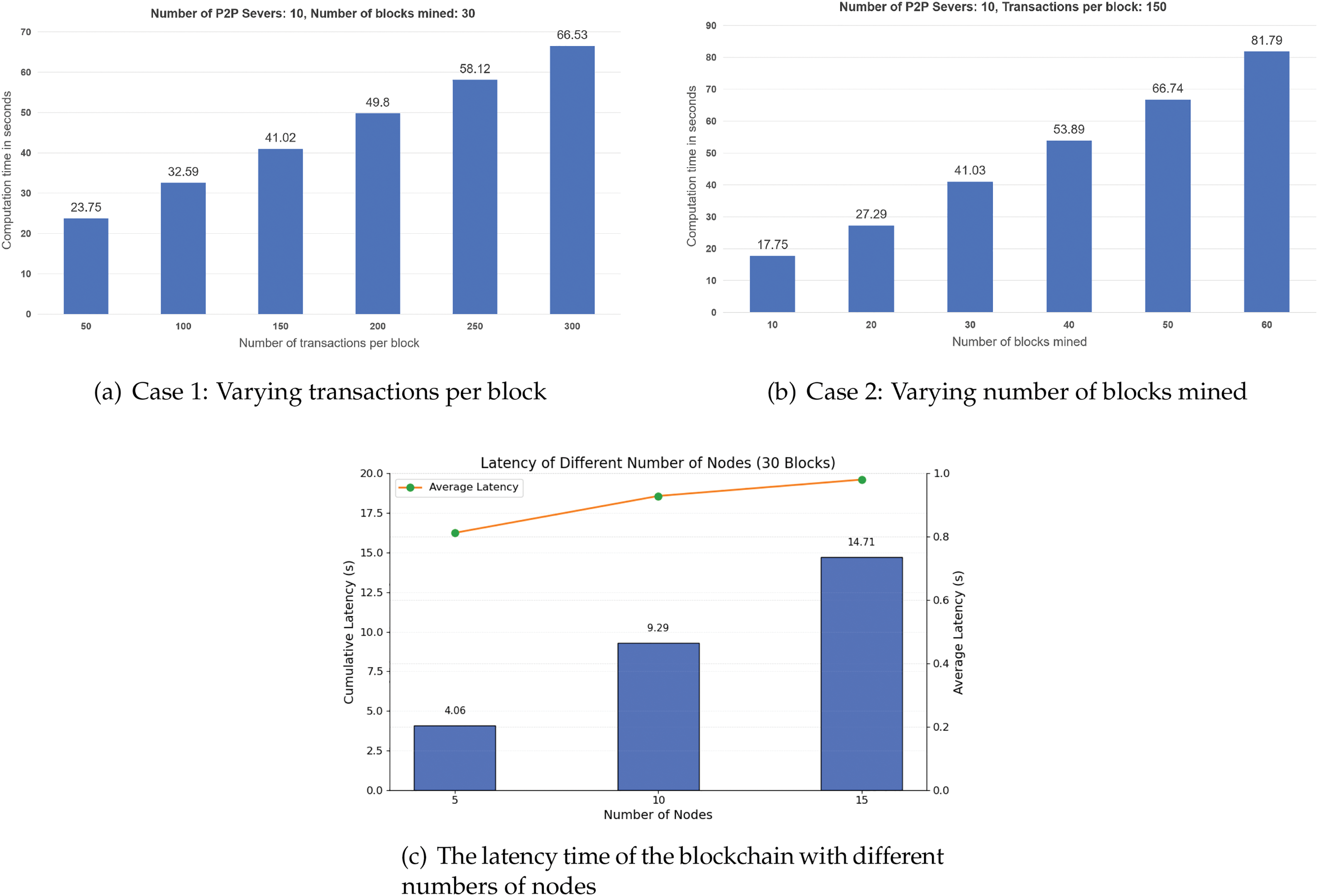
Figure 7: Hyperledger-based blockchain simulation results
In this paper, we have introduced a novel “SIoV combined with Metaverse” environment and have defined the system model and attacker model. Based on this environment, an authentication and key agreement protocol using blockchain called MSIoV-AKA is proposed. The formal security analysis in the RoR model and the AVISPA tool are used to verify the security of MSIoV-AKA. Finally, the theoretical comparisons of computational/communication costs and the feasibility analysis of blockchain provide evidence that our MSIoV-AKA is suitable in practice.
Acknowledgement: Not applicable.
Funding Statement: This work was supported by the Startup Foundation for Introducing Talent of Nanjing University of Information Science and Technology and Natural Science Foundation of Shandong Province, China (Grant no. ZR202111230202).
Author Contributions: The authors confirm contribution to the paper as follows: Conceptualization, Tsu-Yang Wu and Chien-Ming Chen; methodology, Tsu-Yang Wu and Haozhi Wu; validation, Maoxin Tang; formal analysis, Haozhi Wu and Maoxin Tang; investigation, Saru Kumari and Chien-Ming Chen; data curation, Saru Kumari and Chien-Ming Chen; writing—original draft preparation, Tsu-Yang Wu, Haozhi Wu, Maoxin Tang, Saru Kumari, and Chien-Ming Chen; writing—review and editing, Tsu-Yang Wu, Haozhi Wu, Maoxin Tang, Saru Kumari, and Chien-Ming Chen. All authors reviewed the results and approved the final version of the manuscript.
Availability of Data and Materials: The data are contained within the article.
Ethics Approval: Not applicable.
Conflicts of Interest: The authors declare no conflicts of interest to report regarding the present study.
References
1. Wu TY, Wu H, Kumari S, Chen CM. An enhanced three-factor based authentication and key agreement protocol using PUF in IoMT. Peer Peer Netw Appl. 2025;18(2):83. doi:10.1007/s12083-024-01839-z. [Google Scholar] [CrossRef]
2. Li Y, Chen C, Zhang Y, Liu W, Lyu L, Zheng X, et al. Ultrare: enhancing receraser for recommendation unlearning via error decomposition. Adv Neural Inform Process Syst. 2023;36:12611–25. [Google Scholar]
3. Xue X, Mei Y, Zhao B, Zhang M. Adaptive similarity feature construction for ontology matching via multi-layer hybrid genetic programming. IEEE Trans Evol Comput. 2025;1. doi:10.1109/tevc.2025.3547578. [Google Scholar] [CrossRef]
4. Dong S, Liu M, Abbas K. The metaverse review: exploring the boundless ream of digital reality. Comput Mater Contin. 2024;81(3):3451–98. doi:10.32604/cmc.2024.055575. [Google Scholar] [CrossRef]
5. Chen C, ZhangY, LiY, WangJ, QiL, XuX, et al. Post-training attribute unlearning in recommender systems. ACM Transact Informat Syst. 2024;43(1):1–28. doi:10.1145/3701987. [Google Scholar] [CrossRef]
6. Huynh-The T, Gadekallu TR, Wang W, Yenduri G, Ranaweera P, Pham QV, et al. Blockchain for the metaverse: a review. Fut Generat Comput Syst. 2023;143(9):401–19. doi:10.1016/j.future.2023.02.008. [Google Scholar] [CrossRef]
7. Nguyen CT, Hoang DT, Nguyen DN, Xiao Y, Niyato D, Dutkiewicz E. Metashard: a novel sharding blockchain platform for metaverse applications. IEEE Transact Mobile Comput. 2023;23(5):4348–61. doi:10.1109/tmc.2023.3290955. [Google Scholar] [CrossRef]
8. Rafique W, Qadir J. Internet of everything meets the metaverse: bridging physical and virtual worlds with blockchain. Comput Sci Rev. 2024;54(4):100678. doi:10.1016/j.cosrev.2024.100678. [Google Scholar] [CrossRef]
9. Wang H, Zhang F, Shen Z, Liu P, Liu K. Blockchain-based IVPPA scheme for pseudonym privacy protection in internet of vehicles. J Network Intell. 2024;9(2):1260–77. [Google Scholar]
10. Su H, Dong S, Zhang T. A hybrid blockchain-based privacy-preserving authentication scheme for vehicular Ad Hoc networks. IEEE Transact Vehic Technol. 2024;73(11):17059–72. doi:10.1109/tvt.2024.3424786. [Google Scholar] [CrossRef]
11. Lu X, fang D. Remote vehicle exhaust detection based on integrated deep learning models for environmental monitoring. J Netw Intellig. 2025;10(1):527–40. [Google Scholar]
12. Silva R, Iqbal R. Ethical implications of social internet of vehicles systems. IEEE Int Things J. 2018;6(1):517–31. doi:10.1109/jiot.2018.2841969. [Google Scholar] [CrossRef]
13. Campolo C, Molinaro A, Iera A. A reference framework for social-enhanced Vehicle-to-Everything communications in 5G scenarios. Comput Netw. 2018;143(6):140–52. doi:10.1016/j.comnet.2018.07.010. [Google Scholar] [CrossRef]
14. Chen Y, Zhou T, Zhou J, Cao Z, Dong X, Choo KKR. SAVE: efficient privacy-preserving location-based service bundle authentication in self-organizing vehicular social networks. IEEE Transact Intellig Transport Syst. 2021;23(8):11752–66. doi:10.1109/tits.2021.3106783. [Google Scholar] [CrossRef]
15. Li Y, Tao X, Zhang X, Xu J, Wang Y, Xia W. A DAG-Based reputation mechanism for preventing peer disclosure in SIoV. IEEE Int Things J. 2022;9(23):24095–106. doi:10.1109/jiot.2022.3189108. [Google Scholar] [CrossRef]
16. Mohanty SK, Tripathy S. SIoVChain: time-lock contract based privacy-preserving data sharing in SIoV. IEEE Transact Intellig Transport Syst. 2022;23(12):24071–82. doi:10.1109/tits.2022.3192566. [Google Scholar] [CrossRef]
17. Javaid U, Sikdar B. A secure and scalable framework for blockchain based edge computation offloading in social internet of vehicles. IEEE Transact Vehic Technol. 2021;70(5):4022–36. doi:10.1109/tvt.2021.3060002. [Google Scholar] [CrossRef]
18. Zhang L, Zhang Y, Wu Q, Mu Y, Rezaeibagha F. A secure and efficient decentralized access control scheme based on blockchain for vehicular social networks. IEEE Int Things J. 2022;9(18):17938–52. doi:10.1109/jiot.2022.3161047. [Google Scholar] [CrossRef]
19. Xia Z, Man J, Gu K, Li X, Huang L. Conditional data-sharing privacy-preserving scheme in blockchain-based social internet of vehicles. IEEE Transact Sustain Comput. 2025;10(2):378–95. doi:10.1109/tsusc.2024.3452228. [Google Scholar] [CrossRef]
20. Liu L, Feng J, Wu C, Chen C, Pei Q. Reputation management for consensus mechanism in vehicular edge metaverse. IEEE J Select Areas Communicat. 2023;42(4):919–32. doi:10.1109/jsac.2023.3345382. [Google Scholar] [CrossRef]
21. Kang J, Luo X, Nie J, Wu T, Zhou H, Wang Y, et al. Blockchain-based pseudonym management for vehicle twin migrations in vehicular edge metaverse. IEEE Int Things J. 2024;11(21):34254–69. doi:10.1109/jiot.2024.3404559. [Google Scholar] [CrossRef]
22. Bansal G, Sikdar B. Achieving secure and reliable UAV authentication: a shamir’s secret sharing based approach. IEEE Transact Netw Sci Eng. 2024;11(4):3598–610. doi:10.1109/tnse.2024.3381599. [Google Scholar] [CrossRef]
23. Mohit P, Amin R, Biswas G. Design of authentication protocol for wireless sensor network-based smart vehicular system. Vehicular Communicat. 2017;9(1):64–71. doi:10.1016/j.vehcom.2017.02.006. [Google Scholar] [CrossRef]
24. Yu S, Lee J, Lee K, Park K, Park Y. Secure authentication protocol for wireless sensor networks in vehicular communications. Sensors. 2018;18(10):3191. doi:10.3390/s18103191. [Google Scholar] [PubMed] [CrossRef]
25. Sadri MJ, Rajabzadeh Asaar M. A lightweight anonymous two-factor authentication protocol for wireless sensor networks in Internet of Vehicles. Int J Commun Syst. 2020;33(14):e4511. doi:10.1002/dac.4511. [Google Scholar] [CrossRef]
26. Jiang Y, Shen X, Zheng S. An effective data sharing scheme based on blockchain in vehicular social networks. Electronics. 2021;10(2):114. doi:10.3390/electronics10020114. [Google Scholar] [CrossRef]
27. Esfahani A, Decouchant J, Völp M, Mumtaz S, Konstantin Igorevich K. SI-AKAV: secure integrated authentication and key agreement for cellular-connected IoT devices in vehicular social networks. Trans Emerg Telecomm Technol. 2024;35(4):e4279. doi:10.1002/ett.4279. [Google Scholar] [CrossRef]
28. O’Brolcháin F, Jacquemard T, Monaghan D, O’Connor N, Novitzky P, Gordijn B. The convergence of virtual reality and social networks: threats to privacy and autonomy. Sci Eng Ethics. 2016;22(1):1–29. doi:10.1007/s11948-014-9621-1. [Google Scholar] [PubMed] [CrossRef]
29. Falchuk B, Loeb S, Neff R. The social metaverse: battle for privacy. IEEE Technol Soc Magaz. 2018;37(2):52–61. doi:10.1109/mts.2018.2826060. [Google Scholar] [CrossRef]
30. De Guzman JA, Thilakarathna K, Seneviratne A. Security and privacy approaches in mixed reality: a literature survey. ACM Comput Surv. 2019;52(6):1–37. doi:10.1145/3359626. [Google Scholar] [CrossRef]
31. Ryu J, Son S, Lee J, Park Y, Park Y. Design of secure mutual authentication scheme for metaverse environments using blockchain. IEEE Access. 2022;10(1):98944–58. doi:10.1109/access.2022.3206457. [Google Scholar] [CrossRef]
32. Zhang X, Huang X, Yin H, Huang J, Chai S, Xing B, et al. LLAKEP: a low-latency authentication and key exchange protocol for energy internet of things in the metaverse era. Mathematics. 2022;10(14):2545. doi:10.3390/math10142545. [Google Scholar] [CrossRef]
33. Yang K, Zhang Z, Youliang T, Ma J. A secure authentication framework to guarantee the traceability of avatars in metaverse. IEEE Transact Inform Foren Secur. 2023;18:3817–32 doi: 10.1109/tifs.2023.3288689. [Google Scholar] [CrossRef]
34. Thakur G, Kumar P, Chen CM, Vasilakos AV, Anchana, Prajapat S. A robust privacy-preserving ECC-based three-factor authentication scheme for metaverse environment. Comput Communicat. 2023;211(9):271–85. doi:10.1016/j.comcom.2023.09.020. [Google Scholar] [CrossRef]
35. Gupta BB, Gaurav A, Arya V. Fuzzy logic and biometric-based lightweight cryptographic authentication for metaverse security. Appl Soft Comput. 2024;164(1):111973. doi:10.1016/j.asoc.2024.111973. [Google Scholar] [CrossRef]
36. Dolev D, Yao A. On the security of public key protocols. IEEE Transact Inform Theory. 1983;29(2):198–208. doi:10.1109/tit.1983.1056650. [Google Scholar] [CrossRef]
37. Canetti R, Krawczyk H. Analysis of key-exchange protocols and their use for building secure channels. In: International Conference on the Theory and Applications of Cryptographic Techniques. Berlin/Heidelberge: Springer; 2001. p. 453–74. [Google Scholar]
38. Zhang Y, Li B, Wu J, Liu B, Chen R, Chang J. Efficient and privacy-preserving blockchain-based multifactor device authentication protocol for cross-domain IIoT. IEEE Int Things J. 2022;9(22):22501–15. doi:10.1109/jiot.2022.3176192. [Google Scholar] [CrossRef]
39. Chen CM, Xiong Z, Wu TY, Kumari S, Alenazi MJF. Protecting virtual economies: a blockchain-based anti-phishing authentication protocol for metaverse applications. IEEE Internet Things J. 2025;1. doi:10.1109/jiot.2025.3554788. [Google Scholar] [CrossRef]
40. Wang D, Cheng H, Wang P, Huang X, Jian G. Zipf’s law in passwords. IEEE Transact Inform Foren Secur. 2017;12(11):2776–91. doi:10.1109/tifs.2017.2721359. [Google Scholar] [CrossRef]
41. Modarres AMA, Sarbishaei G. An improved lightweight two-factor authentication protocol for IoT applications. IEEE Transact Indus Inform. 2022;19(5):6588–98. doi:10.1109/tii.2022.3201971. [Google Scholar] [CrossRef]
42. Al Sibahee MA, Nyangaresi VO, Abduljabbar ZA, Luo C, Zhang J, Ma J. Two-factor privacy preserving protocol for efficient authentication in internet of vehicles networks. IEEE Int Things J. 2023;11(8):14253–66. doi:10.1109/jiot.2023.3340259. [Google Scholar] [CrossRef]
43. Tomar A, Tripathi S. A chebyshev polynomial-based authentication scheme using blockchain technology for fog-based vehicular network. IEEE Transact Mobile Comput. 2024;23(10):9075–89. doi:10.1109/tmc.2024.3357599. [Google Scholar] [CrossRef]
44. Awais SM, Yucheng W, Mahmood K, Badar HMS, Kharel R, Das AK. Provably secure fog-based authentication protocol for VANETs. Comput Netw. 2024;246(1):110391. doi:10.1016/j.comnet.2024.110391. [Google Scholar] [CrossRef]
45. Rafique F, Obaidat MS, Mahmood K, Ayub MF, Ferzund J, Chaudhry SA. An efficient and provably secure certificateless protocol for industrial Internet of Things. IEEE Transact Indus Inform. 2022;18(11):8039–46. doi:10.1109/tii.2022.3156629. [Google Scholar] [CrossRef]
Cite This Article
 Copyright © 2025 The Author(s). Published by Tech Science Press.
This work is licensed under a Creative Commons Attribution 4.0 International License , which permits unrestricted use, distribution, and reproduction in any medium, provided the original work is properly cited.
 Downloads
 Citation Tools
