
 Login
Login Register
 Submit a Paper
 Propose a Special lssue
 Open Access
ARTICLE

A Hybrid Framework Integrating Deterministic Clustering, Neural Networks, and Energy-Aware Routing for Enhanced Efficiency and Longevity in Wireless Sensor Network
1 School of Engineering, Xi’an International University, Xi’an, 710077, China
2 Department of Electrical and Computer Engineering, International Islamic University, Islamabad, 44000, Pakistan
* Corresponding Author: Muhammad Salman Qamar. Email:
Computers, Materials & Continua 2025, 84(3), 5463-5485. https://doi.org/10.32604/cmc.2025.064442
Received 16 February 2025; Accepted 04 June 2025; Issue published 30 July 2025
 View Full Text
 Download PDF
Abstract
Wireless Sensor Networks (WSNs) have emerged as crucial tools for real-time environmental monitoring through distributed sensor nodes (SNs). However, the operational lifespan of WSNs is significantly constrained by the limited energy resources of SNs. Current energy efficiency strategies, such as clustering, multi-hop routing, and data aggregation, face challenges, including uneven energy depletion, high computational demands, and suboptimal cluster head (CH) selection. To address these limitations, this paper proposes a hybrid methodology that optimizes energy consumption (EC) while maintaining network performance. The proposed approach integrates the Low Energy Adaptive Clustering Hierarchy with Deterministic (LEACH-D) protocol using an Artificial Neural Network (ANN) and Bayesian Regularization Algorithm (BRA). LEACH-D improves upon conventional LEACH by ensuring more uniform energy usage across SNs, mitigating inefficiencies from random CH selection. The ANN further enhances CH selection and routing processes, effectively reducing data transmission overhead and idle listening. Simulation results reveal that the LEACH-D-ANN model significantly reduces EC and extends the network’s lifespan compared to existing protocols. This framework offers a promising solution to the energy efficiency challenges in WSNs, paving the way for more sustainable and reliable network deployments.Keywords
Wireless Sensor Networks (WSNs) are integral in a wide array of applications, ranging from small-scale implementations in healthcare and residential monitoring to large-scale deployments in environmental surveillance, education, and military operations, as discussed in [1]. By using distributed Sensor Nodes (SNs), WSNs facilitate real-time data collection, measurement, and observation explained in [2]. These networks are particularly valued for their cost-effectiveness and ability to handle large volumes of data in dynamic environments [3]. An Energy-Aware Low-Latency Routing Data-Driven Model in Mobile Edge Computing (EALLR) was proposed in [4]. This model introduced an edge node that can perform computation and data processing close to the data source, thereby reducing latency and bandwidth consumption, optimizing data transmission paths, and ensuring that messages reach the target nodes quickly and efficiently but it still has complexity issue. The authors in [5] introduced a Heterogeneous Attribute Reconstruction and Representation (HARR) learning paradigm to model arbitrary attribute relationships for cluster analysis. Meanwhile, Zhang et al. in [6] proposed Belief Shift Clustering (BSC), an evidential extension of mean shift clustering, leveraging belief functions. BSC classifies objects as noise, precise, or imprecise via belief shifts and employs credal redistribution for imprecise objects. However, BSC suffers from the uniform effect, necessitating dynamic meta-cluster reassignment. Liu et al. in [7] analyzed critical density (CD) for coverage in Camera Sensor Networks (CSNs) with heterogeneous sensors and irregular obstacles. They formulated occlusion K-coverage and derived the expected sensing region, yet their CD estimation remained approximate for desired K-coverage ratios due to border effects and occlusion dynamics.
Despite their versatility, WSNs face significant challenges, particularly related to limited bandwidth, memory, and energy resources. These constraints hinder the ability of SNs to efficiently transmit and store data [8,9]. As a result, enhancing the network lifetime and minimizing Energy Consumption (EC) are crucial objectives for improving WSN performance, especially in expansive network setups where recharging node batteries becomes a logistical challenge as mentioned in [10]. These limitations often lead to network issues such as high energy depletion, increased latency, and even system failures due to node exhaustion, radio interference, and high noise levels.
This study addresses key aspects such as CH selection mechanisms, energy efficiency, computational complexity, scalability, and routing optimization. LEACH [11] and HEED [12] adopt probabilistic CH selection, yielding moderate energy efficiency but differing in computational complexity, low in LEACH and high in HEED, while both lacking routing optimization. El-Sayed et al.’s DEEC in [13] employs an energy driven CH selection strategy, enhancing energy efficiency at the cost of increased computational overhead. PSO-based clustering [14] leverages metaheuristic techniques, achieving superior energy efficiency yet incurring substantial computational costs and exhibiting limited scalability. In contrast, LEACH-D employs deterministic CH selection, ensuring high energy efficiency while maintaining minimal computational complexity. Furthermore, it exhibits enhanced scalability and incorporates an ANN-based hybrid approach for optimized routing, making it a compelling choice for energy-efficient, large-scale WSN deployments.
Given the limitations of existing algorithms, there is a need for a more balanced and scalable energy optimization approach that combines low-complexity clustering, adaptive ANN capabilities, and efficient EC management to maintain network connectivity and extend the network lifespan. Traditional routing protocols, such as LEACH, offer effective energy efficiency improvements but may not fully leverage modern computational techniques like ML and artificial intelligence for intelligent decision-making and optimization. To address these challenges, this paper proposes a hybrid approach that combines the LEACH-D (Low Energy Adaptive Clustering Hierarchy with Deterministic Cluster Head Selection) protocol with an ANN trained using the Bayesian Regularization Algorithm (BRA). LEACH-D, an enhanced version of the original LEACH, introduces a deterministic selection process for CHs to ensure more uniform EC across SNs. Furthermore, the integration of an ANN refines CH selection and routing decisions, minimizing data transmission overhead and idle listening, thereby optimizing overall network performance. This approach not only improves energy efficiency but also extends the network lifespan, offering a promising solution for WSNs facing energy constraints and operational challenges in large-scale deployments.
The key contributions of this research are as follows:
1. A novel hybrid model is proposed, integrating the LEACH-D protocol with an ANN. This hybrid approach leverages the deterministic CH selection process of LEACH-D and the adaptive decision-making capabilities of ANN to optimize both routing and clustering in WSNs. The model overcomes the limitations of traditional methods, including uneven energy distribution and suboptimal CH selection, significantly improving EC efficiency.
2. The LEACH-D protocol is enhanced to minimize End-to-End Delay (D) and EC in the network. By introducing efficient clustering techniques, LEACH-D ensures uniform energy distribution among SNs. ANN further refines the CH selection and routing decisions, reducing idle listening and minimizing transmission overhead, which leads to improved network performance and increased operational lifetime.
3. Extensive simulations and performance comparisons with existing protocols were conducted to validate the proposed hybrid model. The results demonstrate a significant reduction in EC and D while enhancing network longevity.
When compared to traditional energy-efficient algorithms, the proposed hybrid model demonstrates superior throughput, reduced EC, and an extended network lifespan. These improvements contribute to the overall sustainability and reliability of WSNs, making the model a promising solution for large-scale deployments in real-time applications.
To provide a comprehensive understanding of how our approach compares to existing methodologies, Section 2 reviews related works on energy-efficient clustering, ML-based optimizations, and routing strategies for WSNs.
Efficient energy utilization and network longevity are critical considerations in WSN design. Numerous studies have focused on enhancing the performance of SNs in WSNs. For example, an improved ACO-based routing method, considering transmission distance, direction, and the role of ants in the search process, was proposed in [10,15]. However, this approach is less effective for large-scale networks. Another routing strategy, which integrates type-2 fuzzy logic with an ACO algorithm, is discussed in [16], but it adds considerable complexity due to the extensive parameter tuning required in both techniques. Type-2 fuzzy systems require additional computational resources for handling uncertainties in the input variables, as they involve complex membership functions and processing of numerous fuzzy rules. Combined with ACO, which performs iterative searches over the solution space using a population of “ants”, this method incurs significant overhead, especially in large-scale WSNs where processing resources are limited. Power management remains crucial for energy preservation in SNs, with regular adjustments being common practice. Han et al. in [17] introduced an adaptive duty cycling algorithm to optimize power usage by considering data rates and traffic patterns, though it may cause delays in data transmission due to the consumption of additional processing power and memory.
Data aggregation techniques reduce redundancy by combining sensor data at intermediate nodes before transmission to the base station (BS). Yet, aggregator nodes often experience accelerated energy depletion, leading to uneven energy distribution and potential network partitioning. To address this, researchers in [18] introduced a dynamic data aggregation method that adjusts to network conditions, thereby optimizing energy usage and minimizing data transmission. In [19], Hussein et al. introduced a compression-based approach using wavelet transformation to reduce data size in WSNs, thereby lowering EC, though this method adds computational complexity.
Machine Learning (ML) and Artificial Intelligence (AI) have also shown promise in WSN energy optimization. The study in [20] explored energy-efficient CH rotation and energy-balanced unequal clustering, using gradient methods to optimize CH distribution. However, frequent CH rotations may induce delays from route re-establishment, while unequal clustering complicates topology formation. Ding et al. in [21] proposed an ML-based routing system that dynamically adjusts paths based on historical node energy data. Similarly, Choi et al. in [22] developed AI algorithms to intelligently control transmission power and duty cycles, maximizing energy efficiency. Topology and routing protocols play a pivotal role. A distributed topology control approach [23] dynamically adjusts transmission power in response to network changes, reducing EC. A hybrid LEACH-ACO protocol [24] improves energy efficiency but introduces integration complexity and compatibility challenges. Lin et al. [25] applied social welfare theory to balance energy during CH selection, though scalability and social dynamics pose challenges. Authors in [26] enhance the cluster-to-normal ratio protocol by integrating data transmission networks to enable hopping and mitigate node depletion, addressing energy gaps. However, its reliance on gateway nodes near the base station limits scalability and lacks rigorous evaluation. Similarly, in another study [27], LEACH-LoRaWAN hybridization improves IoT energy efficiency but overlooks computational complexity trade-offs. Meanwhile, Ref. [28] proposed a fuzzy SCH selection method using energy, BS proximity, node density, and communication quality via range-free localization. While innovative, its static fuzzy rules lack adaptability to dynamic network environments. Collectively, these studies advance WSN longevity but suffer from narrow evaluation scopes, insufficient generalizability, or unaddressed real-world constraints like mobility and scalability.
ANN applications in WSN energy optimization are categorized by trained node types. Some systems transmit raw data to a gateway-connected workstation for off-network processing, simplifying deployment, as discussed in [29]. Alternatively, a centralized BS simplifies setup by handling data processing, while CHs are trained for efficient data aggregation, reorganizing the transmission of ANN results to the BS.
Researchers have utilized ANNs to classify farm animal behaviors such as strolling, grazing, lying down, and standing. Accelerometers attached to SNs on the animals’ necks collect data, which is transmitted to the BS and then relayed to a workstation for ANN-based classification. This system supports real-time animal behavior monitoring, enabling early illness detection and enhancing farm productivity. However, the frequent data sampling generates a high volume of packets, leading to significant energy overhead on the SNs. Additionally, when animals exhibit group behaviors, the resulting exponential traffic at relay nodes further escalates EC, as presented in [30].
In another study, researchers suggested in [31], a WSN integrated with an ANN was used for early forest fire detection, utilizing environmental data such as temperature, light, and smoke and analyzed by a pre-trained ANN at the BS. To mitigate data ambiguity and associated risks, the authors opted against data aggregation techniques. The system achieved an accuracy rate exceeding 93% in identifying fire incidents within 20 s and accurately determined the fire’s growth direction. However, twenty sec detection time, affected by the noisy data from SNs, poses issues. While improving sensor accuracy could shorten detection times, it would also increase EC.
To improve both responsiveness and energy efficiency in forest fire detection, a clustered WSN structure was proposed in [32]. This system employs in-network processing techniques, as detailed in [33,34], to forecast fire outbreaks. SNs collect environmental data, such as wind speed, temperature, smoke, and humidity, which is transmitted to their CHs. The CHs then use ANNs to compute a weather index from this data. This index is relayed to a manager node via the BS, enabling real-time assessment of forest fire risk and emergency reporting. The in-network processing approach minimizes communication overhead and conserves energy but requires specialized CHs to manage increased data traffic and execute complex ANN computations.
In [35], authors proposed two methods: Reduced k-means with ANN (RkM-ANN) and Delay Bound Reduced k-means with ANN (DBRkM-ANN). RkM-ANN reduces latency by optimizing Mobile Sink (MS) paths using Rendezvous Points (RPs), while DBRkM-ANN designs paths with delay constraints to meet specified delay limits. Both approaches utilize a weight function and k-means clustering for RP selection, improving network efficiency and coverage. Yet, these methods can impose computational overhead due to clustering processes and delay-bound calculations, which could limit their practical efficiency in WSNs requiring immediate responses and minimal processing delays.
Existing methods reduce WSN energy use but often introduce complexity, overhead, or trade-offs between efficiency and responsiveness. In contrast, our hybrid model integrates deterministic clustering with adaptive ML to optimize CH selection and routing, addressing these challenges in large-scale deployments.
3 Suggested Energy Consumption and Delay Model
WSNs consist of SNs, communication modules, power sources, and application-specific components that enable data collection and transmission, particularly in remote environments. However, WSNs face significant challenges, including high EC and latency, which hinder their performance and efficiency [36,37]. The development innovative methodologies s therefore essential to accurately evaluate and address these EC and delay factors, ultimately improving network reliability and long-term sustainability.
3.1 Development of Wireless EC Model for WSN
EC management in WSNs is a critical challenge, especially with the increasing number of devices and sensors leading to a significant rise in EC. Poor energy management of nodes can result in higher maintenance costs and increased system latency, both of which have substantial financial implications. To mitigate this issue, it is essential to deploy energy-efficient devices, optimize network topologies for reduced energy usage, and implement advanced energy management protocols. Integrating wireless EC models can improve energy management by accurately estimating EC across different transmission methods. A wireless EC model for evaluating SNs EC is discussed in [38], identifying three primary energy-consuming activities: data processing, interaction, and communication, with the latter being the most energy-intensive. The EC for transmitting l-bits of data over a distance d is calculated using the following formula.
where
In this context, amplification energy in the free space model is denoted as
Thus, the formula for calculating the total EC of CHs and MCHs per transmission round is given as:
here,
3.2 Development of Delay Model for WSN
WSNs face several critical challenges, including network congestion, data overload, and suboptimal data management, which collectively contribute to increased latency in both data transmission and processing. To mitigate these delays, optimizing network architecture, integrating edge computing, reducing data volume, and employing efficient transmission algorithms are crucial. These strategies enhance WSN performance, especially in remote areas. A delay model as formulated in [39] is utilized to assess transmission performance, outlining the timing for SN activities such as cluster formation, data transmission, and processing. EC per round T(r) is calculated using the following equation:
4 Analysis of Cluster Based LEACH-D Algorithm Approach
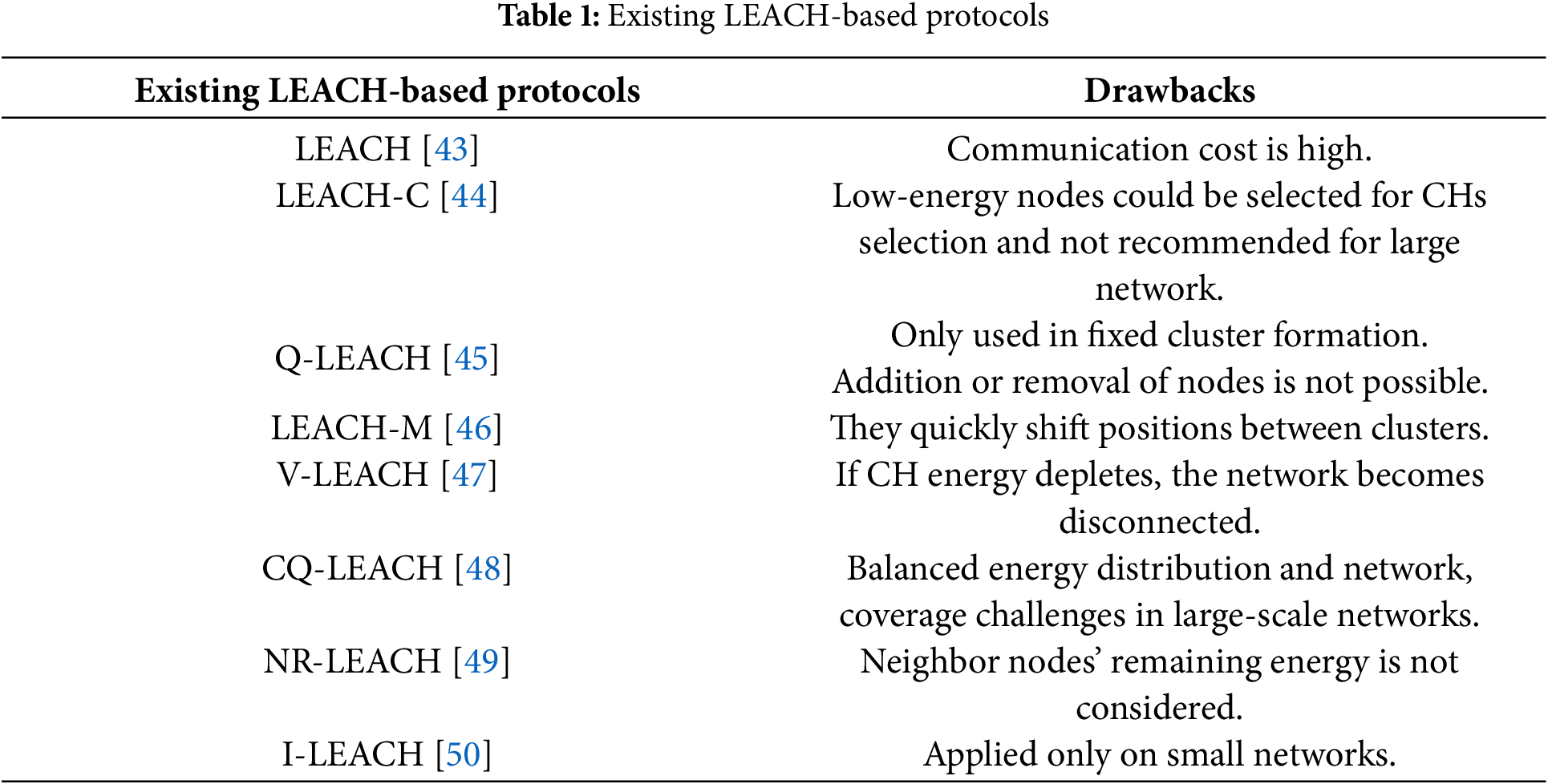
In [42], the authors introduced a clustering algorithm to improve WSN performance and reduce sensor EC. The approach involves organizing SNs into clusters, with each cluster managed by a CH that intermediates between the nodes and the BS. CHs aggregate data from neighboring nodes and transmit it to the BS, reducing the direct communication load on individual nodes and thus minimizing EC and transmission latency. Table 1 summarizes selected LEACH-based protocols that represent the broader class of hierarchical clustering approaches in WSNs. The listed protocols were chosen based on their foundational role in the evolution of LEACH variants, and relevance to the problem of energy-efficient CH selection. It highlights critical drawbacks, such as poor scalability, static clustering limitations, and lack of energy-aware decision-making that motivated the development of our proposed hybrid LEACH-D model.
The selection of LEACH-D as the foundation for our proposed hybrid model is justified by its distinct advantages in energy efficiency, scalability, deterministic clustering, and computational simplicity. Table 2 summarizes some of the advantages of LEACH-D protocol, we compare it with other commonly used clustering protocols for motivation.
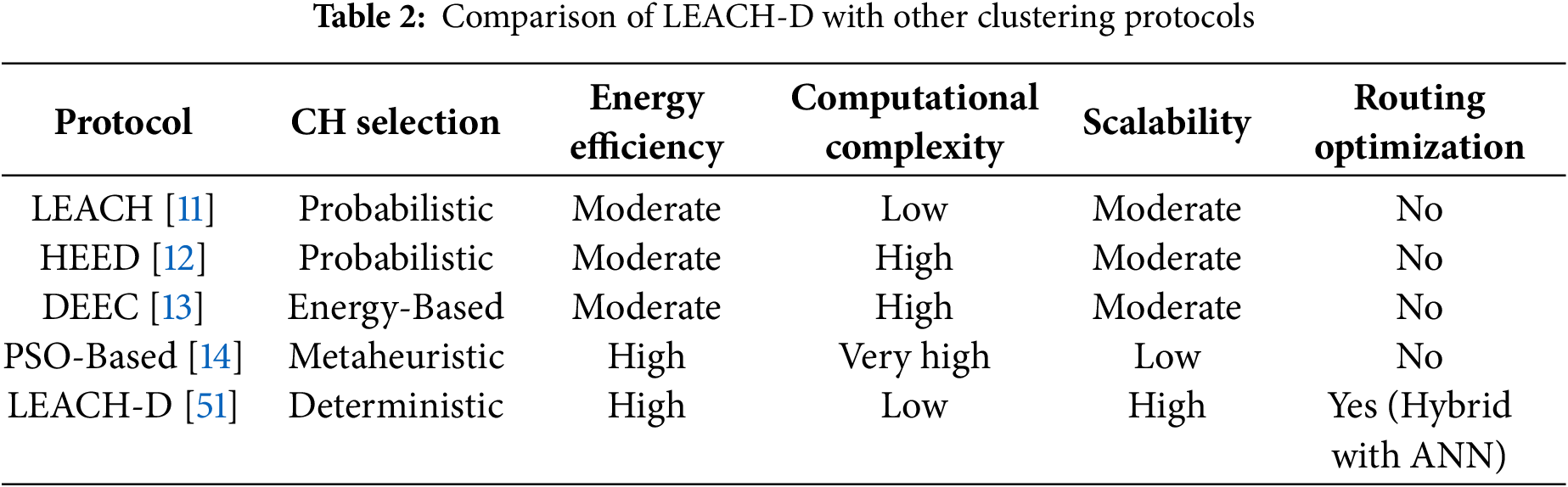
This comparison demonstrates that LEACH-D strikes the best balance between energy efficiency, low complexity, and scalability, making it the optimal choice for real-time, energy-constrained WSN applications.
4.1 Development Clustering and Data Transmission Process for WSN
This paper presents LEACH-D, an enhanced version of the original LEACH protocol. Unlike its predecessor, which failed to consider optimal CH positioning, resulting in premature energy depletion of CHs located far from the BS, LEACH-D introduces an additional CH clustering phase. This secondary phase, executed after initial CH selection, designates certain CHs as relay nodes to optimize data aggregation and transmission between CHs.
Initially, LEACH-D employs the same selection formula as the traditional LEACH algorithm, expressed as:
In the next rounds, LEACH-D applies the following selection formula
In this network framework, “
In subsequent rounds, threshold estimation decreases the probability of selecting a node with lesser residual energy as CH by considering the ratio
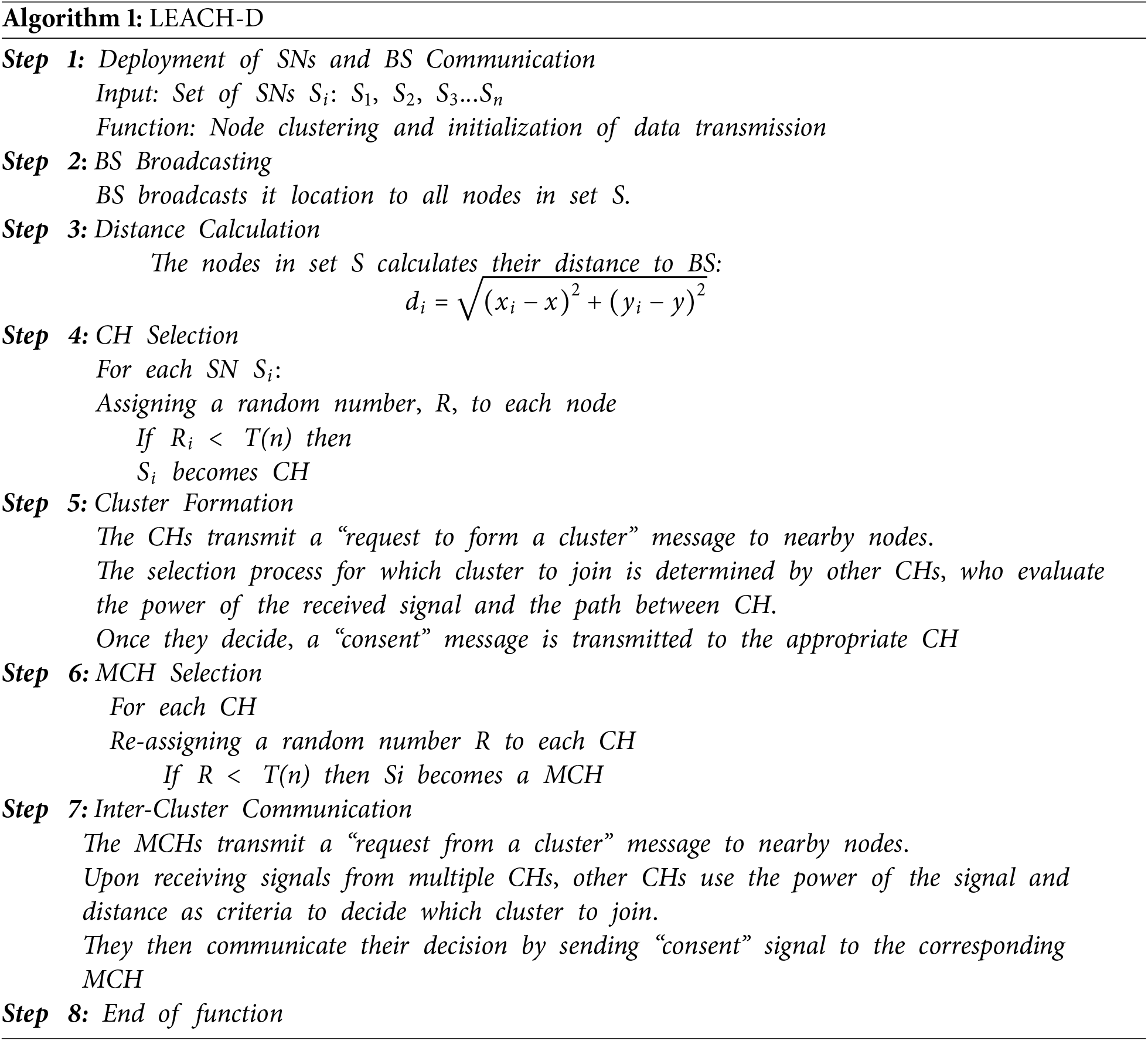
During the initial clustering phase of the sensor network, each node is randomly assigned a value between 0 and 1. Nodes with values below the threshold P(n) are designated as CHs. These CHs manage data aggregation within their clusters and broadcast “cluster formation request” messages, detailing their location and energy levels. Regular nodes select a CH based on signal power and proximity, and then send a “consent” message to the chosen CH, including their ID, position, and remaining energy.
In subsequent rounds, CHs are randomly reassigned, and those with values below the threshold P(n) are designated as MCHs. MCHs initiate cluster formation by broadcasting “cluster formation request” messages to gather data from all CHs. Further CHs evaluate signal strength and path to create connections, sending a “consent” message to the selected MCH to finalize the cluster. Nodes receiving multiple requests choose the cluster with the highest remaining energy. Algorithm 1 explains the pseudo code for LEACH-D clustering methodology. The algorithm begins with deploying a set of SNs and a BS. The BS broadcasts its location, allowing each SN to calculate its distance to the BS using Euclidean distance. In the first phase, nodes self-select as CHs based on a threshold function T(n). In the second phase, MCHs are chosen among the CHs based on a new random assignment and threshold evaluation. The function concludes once the clustering and MCH assignments are finalized, establishing an efficient dual-level cluster structure.
4.1.2 Data Transmission Process
In this phase, MCHs generate and distribute TDMA schedules and distribute TDMA schedules to their associated CHs. Data transmission follows these schedules, where MCHs communicate with the BS, CHs communicate aggregated data to MCHs, and SNs gather and send environmental data to their respective CHs. Fig. 1 illustrates this three-stage communication process.
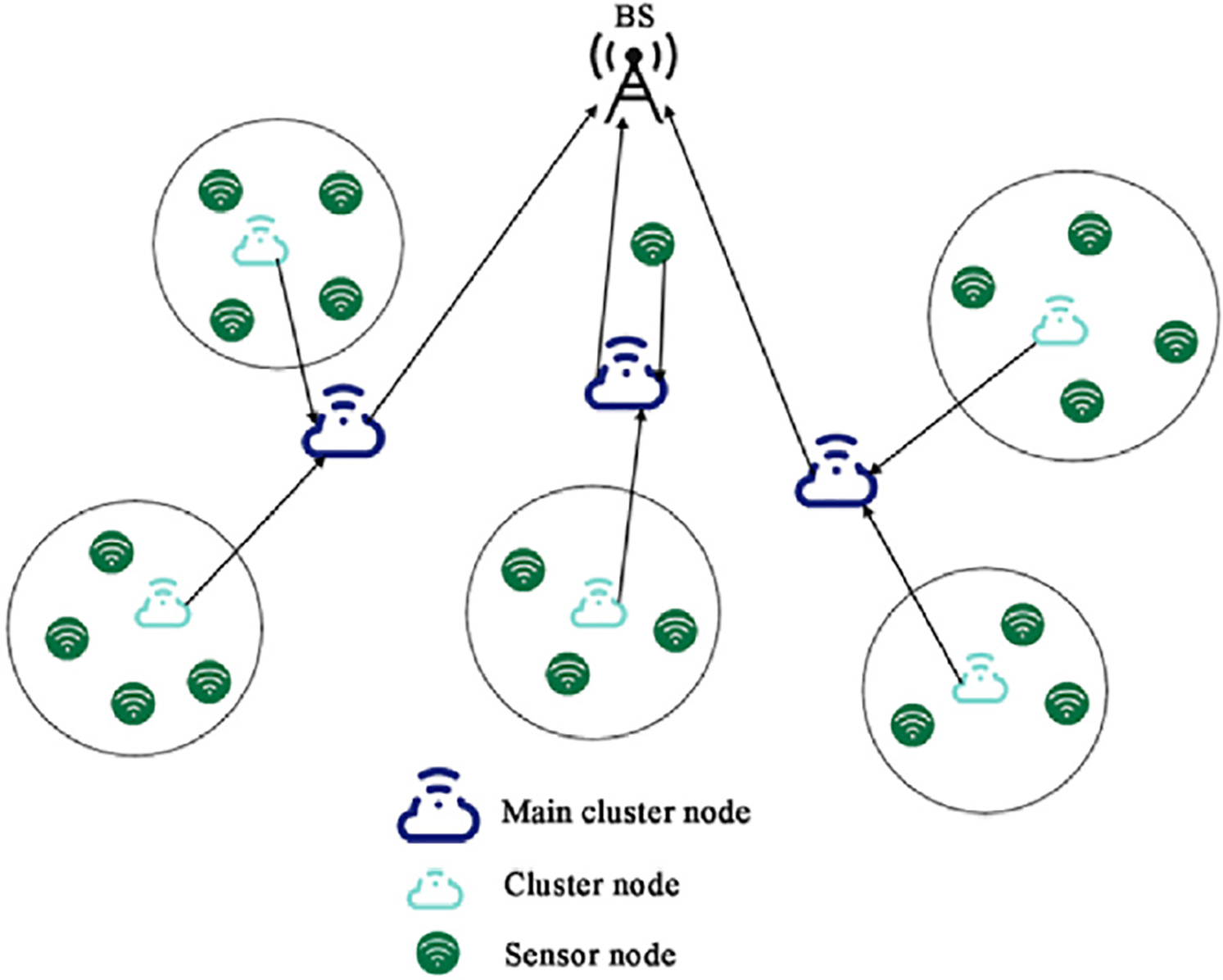
Figure 1: Architecture of LEACH-D model [40]
During cluster formation, nodes that fail to receive any “request to form cluster” message within their transmission range initiate a recovery mechanism by broadcasting an “assistance request” signal. This action classifies them as Lonely Nodes (LNs). Upon receiving this signal, neighboring standard SNs respond with messages containing their node ID, remaining energy, cluster head ID, and location. The LNs then evaluate these responses and send a “consent” message to the SNs that is both closest and has the highest remaining energy. This iterative process ensures that all LNs are successfully integrated into clusters. By doing so, the approach promotes an equitable distribution of EC across network SNs, effectively reducing overall EC and preventing premature depletion of nodes, particularly those located at a greater distance from the BS as mentioned in [52].
4.2 Suggested Artificial Neural Network Model
ANN represent a specialized subfield of ML within the broader domain of AI. Inspired by the neural networks observed in the human brain, ANNs are computer systems in which “neurons” process and transmit data to nodes in a network. ANNs are used in many different fields, such as data processing, decision-making, and energy prediction [53]. ANNs comprise of interconnected layers of neurons, each neuron processing inputs and generating outputs via weighted connections and activation functions. Predictions stem from patterns and correlations learned through trained data. Supervised and unsupervised are two major learning paradigms within ANNs.
In this study, a supervised ANN learning architecture [54] is employed within WSNs trained using Bayesian Regularization algorithm as shown in Fig. 2. A hundred WSNs, each housing a hundred SNs forming clusters, are investigated. Within each cluster, the CH node with the highest energy level collates and forwards data to the BS. The ANN parameters used in this research are learning rate, number of hidden layers, and neuron count per layer were selected based on their effectiveness in capturing the complexity of the WSN environment. The ANN architecture deployed is a single-layer feed forward neural network, featuring an input layer, a hidden layer, and an output layer in each cluster.
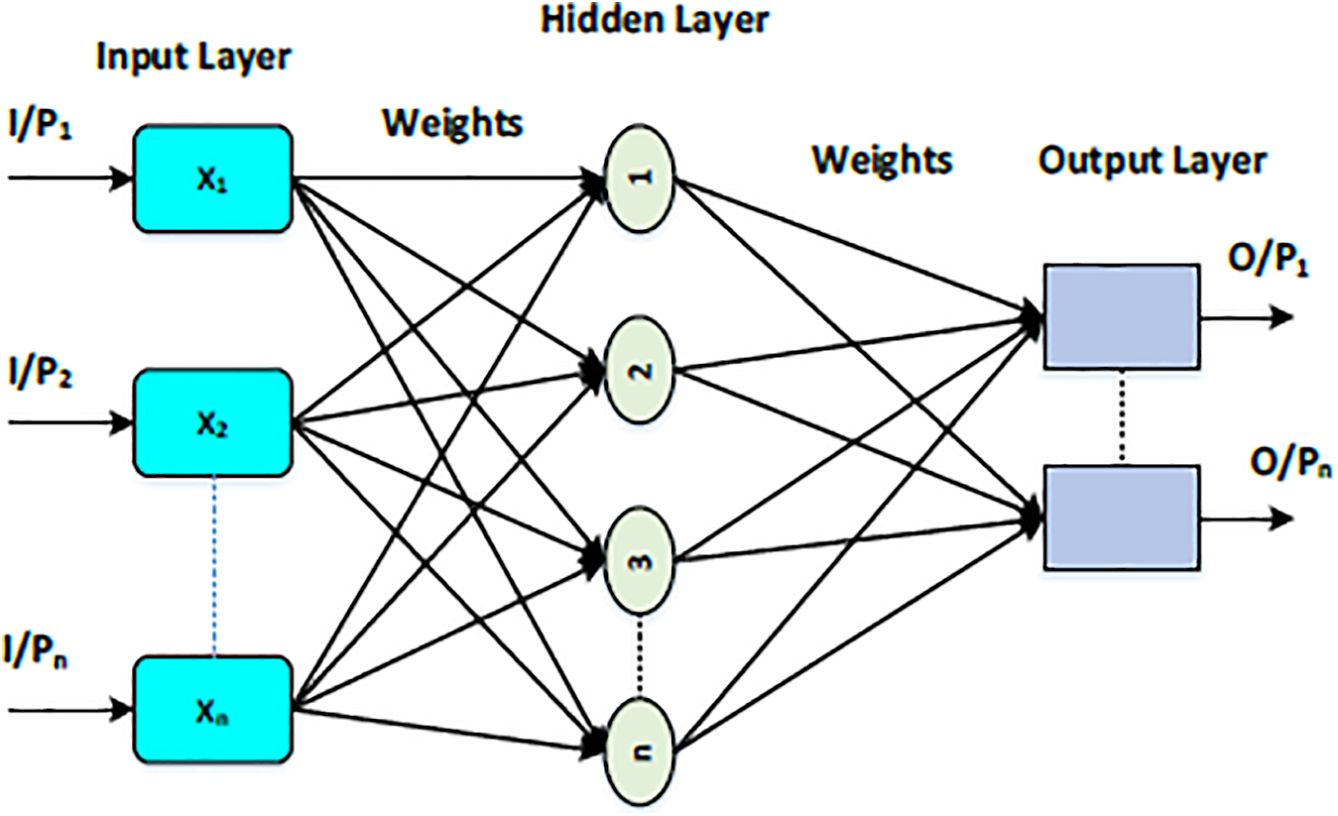
Figure 2: Supervised learning ANN architecture
The input layer of the network consists of n neurons, each corresponding to a specific feature, with the output of the
where
With “k” neurons (for “k” targets), it processes hidden-layer outputs via weights
where
Forward propagation in a neural network computes outputs sequentially from the input layer through hidden layers to the output layer. During training, the actual output is equated to the expected output (
The neuron activation in the ANN is computed using the Swish activation function
where z indicates the weighted sum of inputs to the neuron.
The non-monotonic nature of the swish function improves the representation of input data and facilitates learning through weights.
In our proposed model, we have specifically designed the ANN architecture for optimizing EC and selecting CHs in WSNs. This customization ensures that the neural network is optimized for addressing the unique challenges inherent in WSNs, such as stringent energy limitations and dynamic network conditions. The proposed hybrid LEACH-D-ANN model enables the ANN to dynamically influence routing decisions and cluster head placements, resulting in enhanced energy efficiency and more robust network performance.
The model incorporates an adaptive learning mechanism, wherein the ANN continuously learns from and updates its predictions based on real-time network data. This capability allows the network to effectively adapt to changes in node energy levels, mobility patterns, and other dynamic factors. Unlike conventional ANN applications focused on classification or clustering, our model utilizes the ANN as a predictive tool for energy management. By accurately forecasting EC and optimizing node behavior, the proposed approach expressively increases the operational lifetime of the network. To overcome the EC caused by ANN, we have used load balancing and data aggregation.
In load balancing, we have distributed ANN computations across multiple nodes to prevent any single node from being overburdened, thus extending the overall network lifetime. We have preprocess and aggregate data at the sensor level before feeding it into the ANN by using data aggregation, which can reduce the number of required computations.
During first stage, a 100 m × 100 m distributed node network area is created, as shown in Fig. 3. The number of nodes is varied randomly between 0 and 100, resulting in diverse node proximities. To manage both condensed and remote nodes, head nodes are established within clusters. Clustering methods facilitate the management of numerous nodes. Algorithm 2 details the ANN based energy optimization model and Algorithm 3 explains the ANN based Energy Calculation and Optimization.
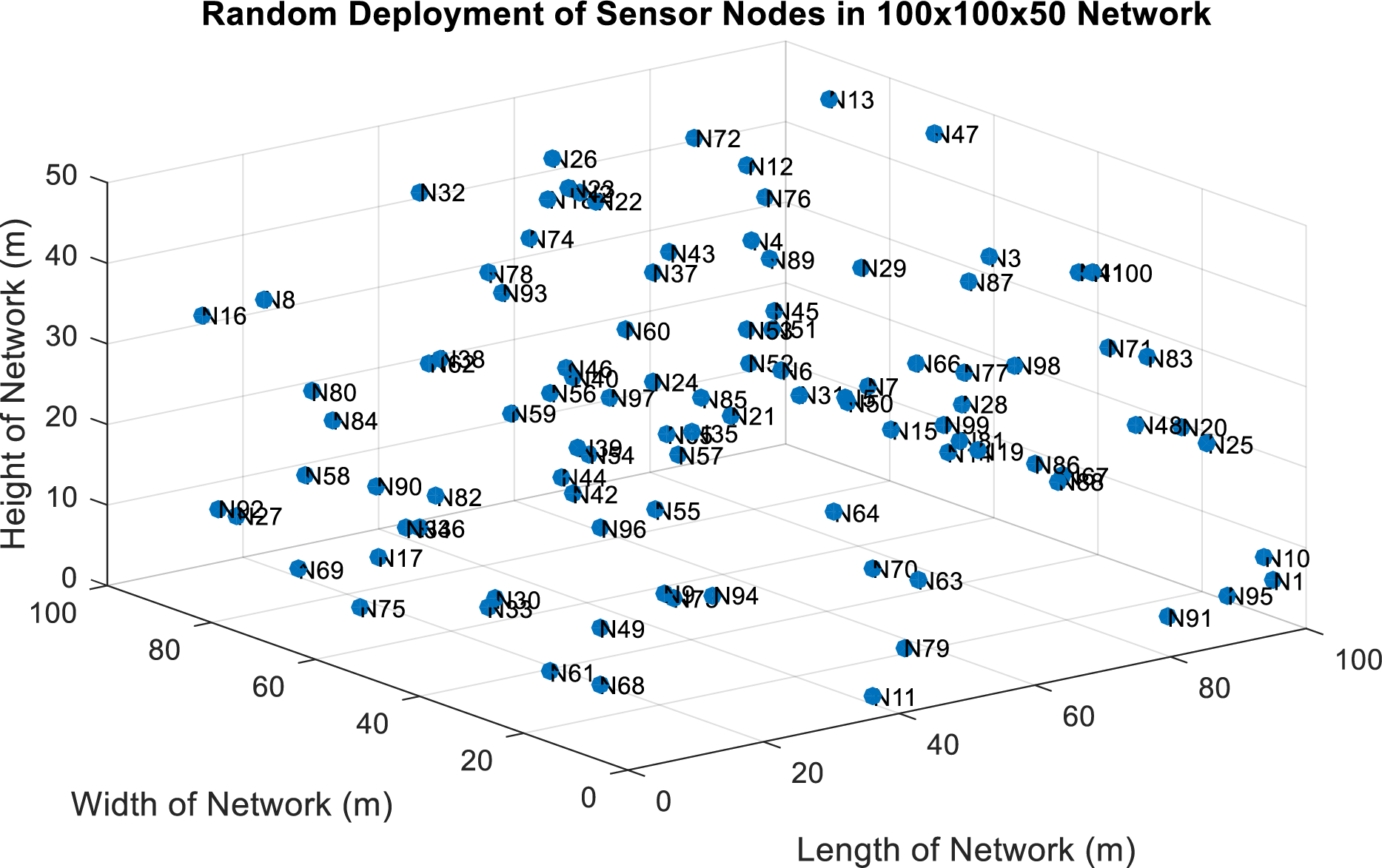
Figure 3: Random deployment of SNs in the network
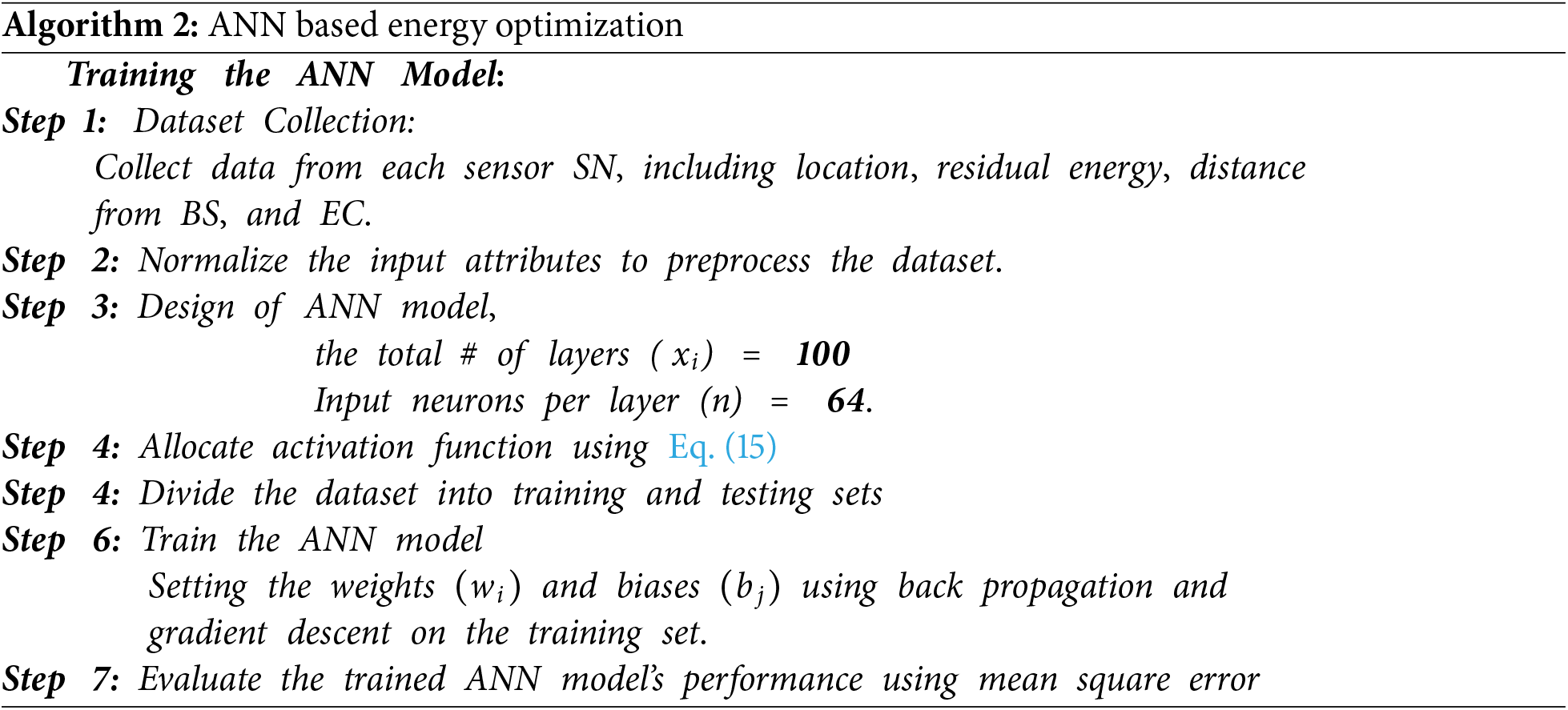
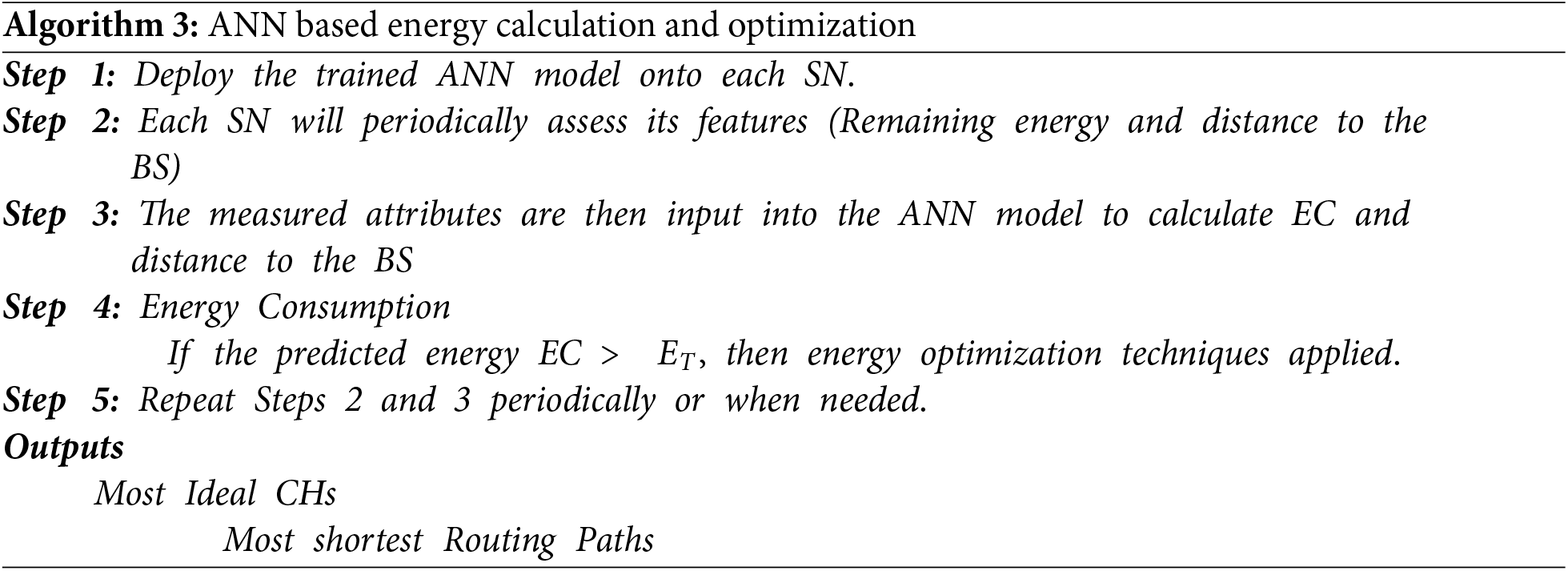
This study employs the LEACH clustering algorithm to organize nodes into clusters, with CHs selected based on residual energy and proximity metrics. Each CH connects directly to the BS, which is positioned at the network’s centroid. The LEACH-D protocol facilitates route establishment between source and destination nodes, with data transmission occurring from source nodes to CHs, and then to the BS for final delivery. Nodes exhibiting energy depletion or failure, which cause latency or packet loss, are detected. To mitigate these inefficiencies, an ANN is implemented, trained using EC and delay parameters. Nodes exceeding predefined EC and delay thresholds are identified as non-functional, and adjacent nodes are then reassigned as relays and incorporated into the transmission path. Fig. 4 illustrates the ANN architecture and its mean squared error (MSE) performance.
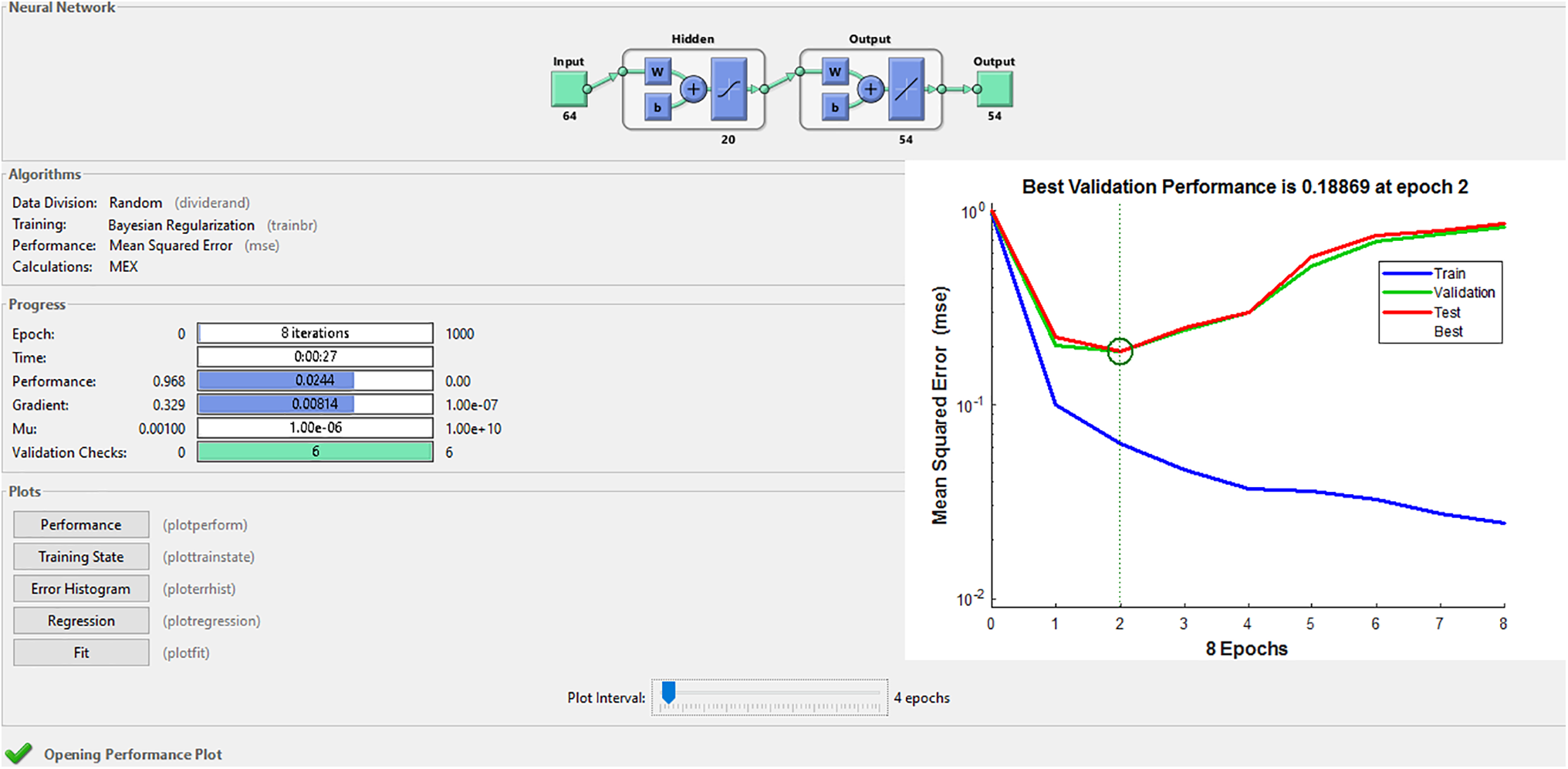
Figure 4: Trained ANN structure
The proposed model integrates Algorithms 2 and 3 within the core LEACH-D framework. In the initial phase, LEACH-D is employed to perform baseline clustering, leveraging its strength in reducing energy consumption through dynamic clustering and distributed control. In the optimization phase, ANN model is applied to refine the selection of CHs by learning from network behavior patterns. The ANN uses input parameters such as residual energy, node density, and distance to the BS to make adaptive and intelligent CH selection decisions.
Additionally, a feedback loop is implemented to continuously update the ANN model using real-time performance metrics, including energy distribution and packet delivery rate. This dynamic learning mechanism ensures that the CH selection process evolves based on changing network conditions, leading to improved energy efficiency and network lifetime.
The rationale for selecting these algorithms lies in their complementary strengths: LEACH-D provides a reliable and energy-efficient clustering foundation, while ANN enhances decision-making through its ability to model complex, nonlinear relationships among network parameters. This hybrid integration enables the system to adapt intelligently and maintain optimal performance in dynamic WSN environments.
The hyperparameter values used in this study for the neural network are a learning rate of 0.001, 200 epochs, and a batch size of 32. These values were selected through an extensive grid search and k-fold cross-validation approach to optimize performance. The value of k-fold cross-validation in this research is k = 5, where the dataset was divided into five subsets The learning rate of 0.001 was chosen to balance convergence speed and stability. The number of epochs was set to 200 based on the convergence behavior of the loss function, as training beyond this point showed diminishing returns. The batch size was selected as a trade-off between computational efficiency and generalization.
These parameters were finalized after multiple experimental runs to ensure optimal model generalization and performance for energy-efficient CH selection and transmission optimization in the WSN environment.
The trained model utilizes 64 neurons for routing, with attributes such as energy and delay fed into the input layer. The hidden layer comprises 20 neurons, optimizing performance. The output layer, consisting of 54 neurons, identifies and excludes 10 failed nodes out of 64, thereby conserving node energy and enhancing network lifetime.
Additionally, the computational complexity of the proposed model is analyzed using Big-O notation to assess scalability. The deterministic CH selection mechanism evaluates all SNs based on predefined criteria, resulting in a complexity of O(N). The ANN-based energy optimization comprises two phases: training and inference. The training phase, involving forward propagation through multiple layers, has a complexity of O(N.L.E), where “L” is the number of layers and “E” represents the number of training epochs. However, since training occurs offline, it does not impact real-time performance. The inference phase, which periodically evaluates EC and distance parameters, has a complexity of O(N.L). The hybrid routing mechanism optimizes data transmission paths among CHs based on ANN predictions, leading to a complexity of O(M), where M denotes the number of CHs (M ≪ N). Thus, the overall run-time complexity is O(N + M + N.L), ensuring computational efficiency and scalability. Given that ANN inference is significantly faster than training, the proposed model maintains low complexity while optimizing energy efficiency, making it well-suited for large-scale WSN deployments.
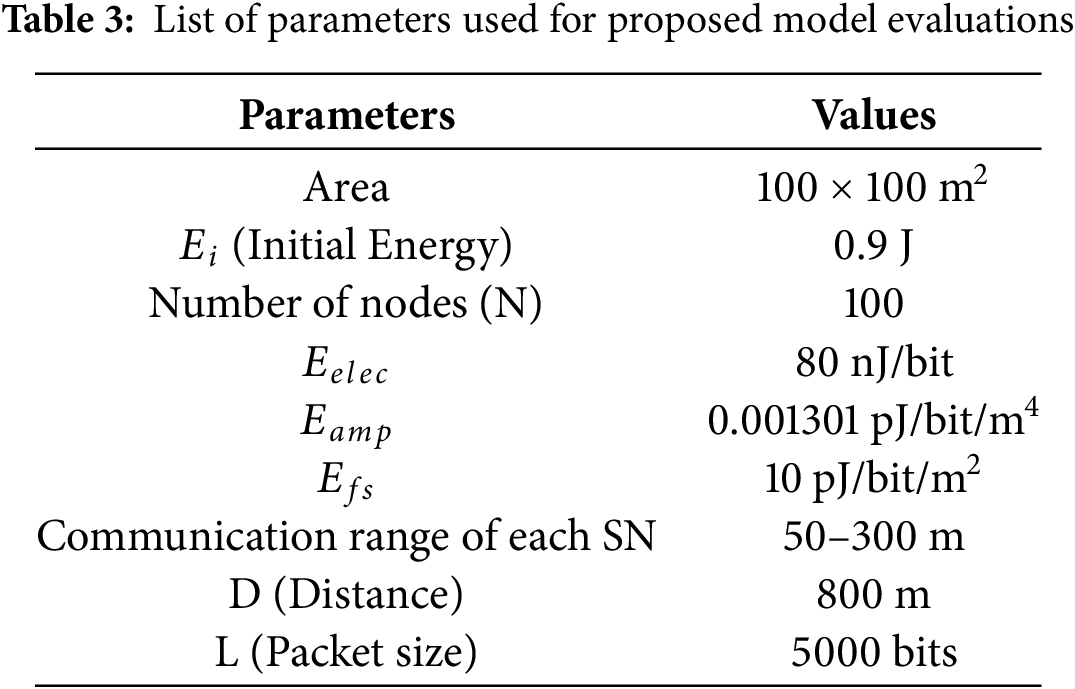
This study simulates a network topology comprising 100 static nodes deployed within a 100 m × 100 m area, with performance evaluated across 1000 independent iterations. The key innovation of this research involves the application of LEACH-D-ANN model for CH selection, which employs ML algorithms to enhance traditional LEACH methodology. The ANN training encompasses CH selection, node location, distance to the BS, optimal paths between SNs, and residual energy. Results indicate that the suggested hybrid LEACH-D-ANN model outperforms existing approaches significantly. The energy-efficient routing method was implemented using MATLAB 2023, selected for its capabilities in mathematical computation and data analysis. The simulation parameters in Table 3 have been carefully selected, defining the network configuration, energy model, and communication dynamics. The selected area specifies the deployment region for the WSN, ensuring a controlled simulation environment. Each SN is initialized with 0.9 J of energy to evaluate network longevity. The total number of nodes (N = 100) influences cluster formation and data transmission efficiency. EC parameters include
The EC in WSN is determined by the energy expended by nodes during communication and data processing activities. For this study, we adopted the EC model proposed in [38]. Our analysis reveals that while network EC increased with progress, the rate of increase was mitigated by applying the hybrid LEACH-D-ANN strategy. The dynamic adjustment of node transmission power, combined with ML-based EC, enhanced efficiency. Consequently, EC was lower compared to the traditional LEACH approach reported in previous studies. Fig. 5 illustrates the graphical analysis of network size vs. energy consumption, comparing LEACH, LEACH-D, LE-KCR [56], DCK-LEACH [57] and the suggested LEACH-D-ANN methodology.
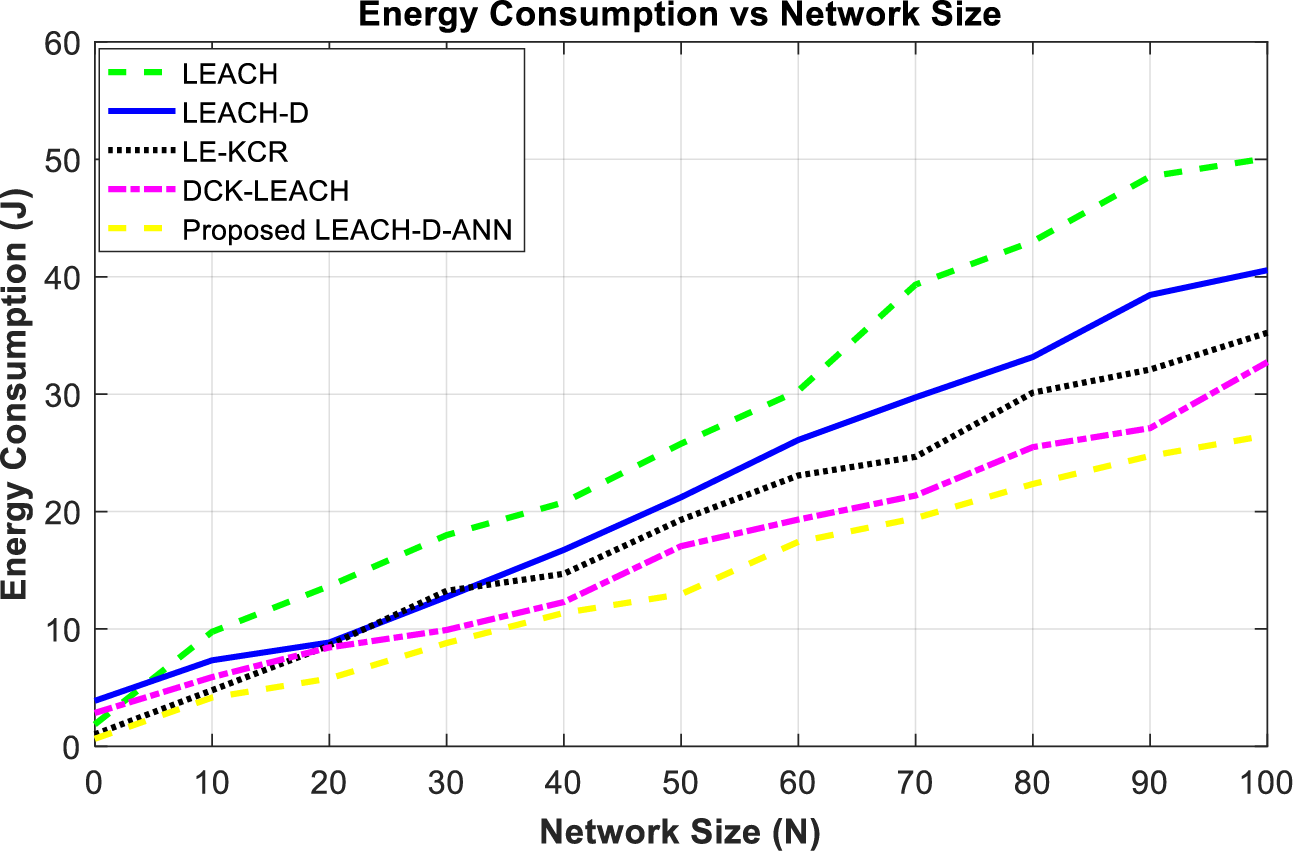
Figure 5: Analysis of energy consumption vs. network size
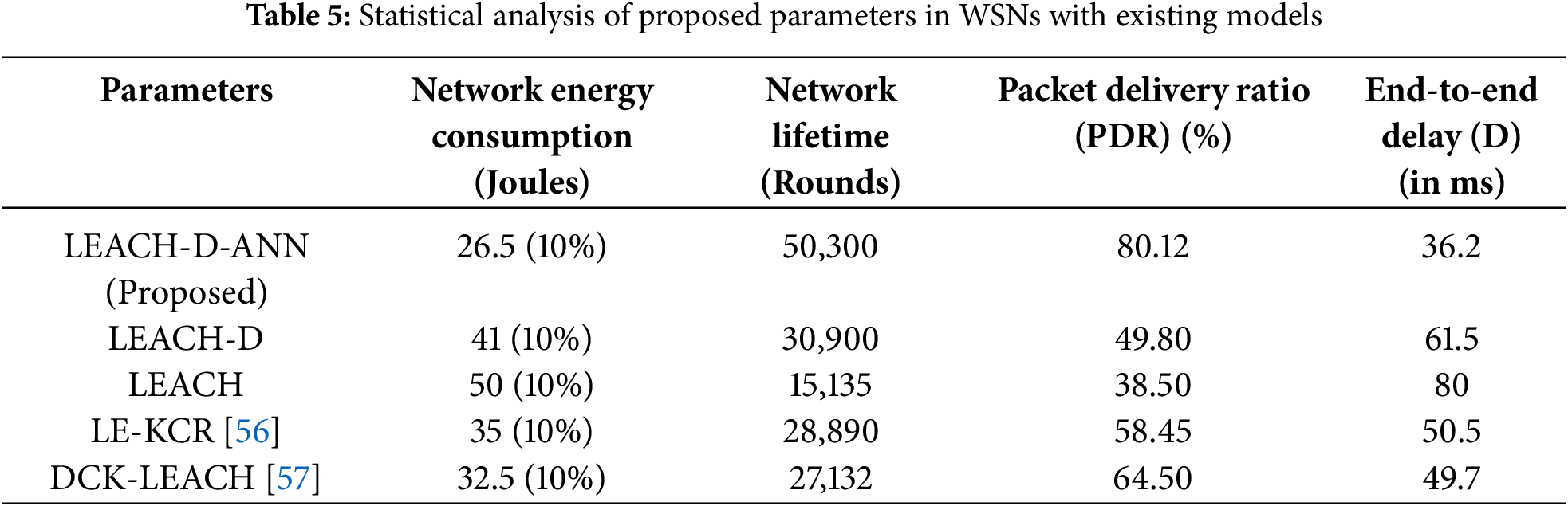
Network lifetime is calculated as the time until the first node runs out of energy. In our study, we compute the network lifetime based on the EC per node. The proposed hybrid LEACH-D-ANN model is estimated against standard WSN algorithms. Results indicate that the proposed model achieved 50,300 rounds, significantly surpassing traditional LEACH (15,135 rounds), LEACH-D (30,900 rounds), LE-KCR [56] (28,890 rounds), and DCK-LEACH [57] (27,132 rounds) over a 100-node network. Consequently, the network lifetime improves with an increasing number of nodes, as illustrated in Fig. 6.
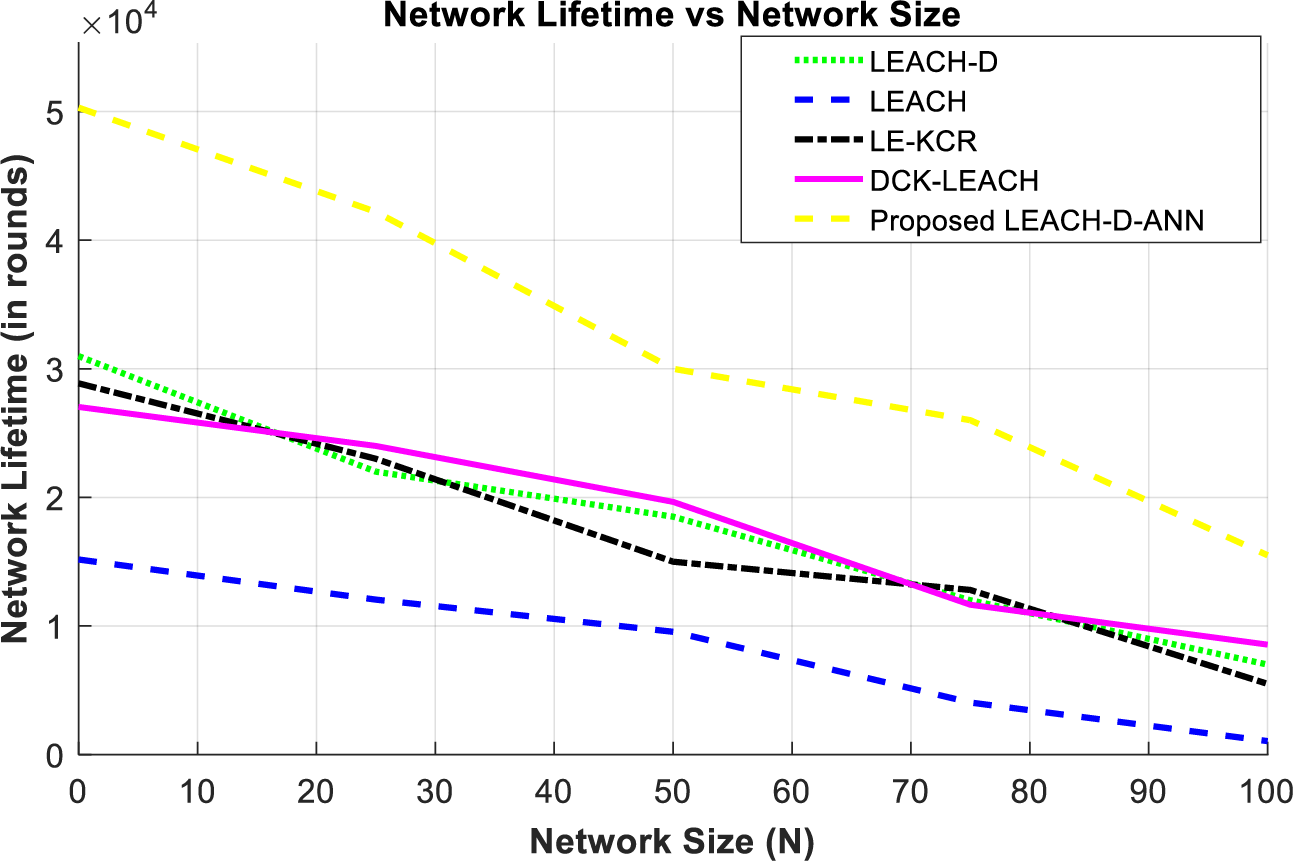
Figure 6: Analysis of network size vs. network lifetime
The PDR signifies the proportion of efficaciously transmitted and received data packets within a network, relative to the total number of transmitted packets. It was shown to be greater with the hybrid technique than with the conventional approaches. By adapting routing choices in real time to changing energy availability, channel characteristics, and network state, the ML-based optimization system increased the PDR and strengthened WSN’s reliability. Fig. 7 represents the Graphical analysis of Network Size vs PDR. The results show the improvement of the proposed algorithm.
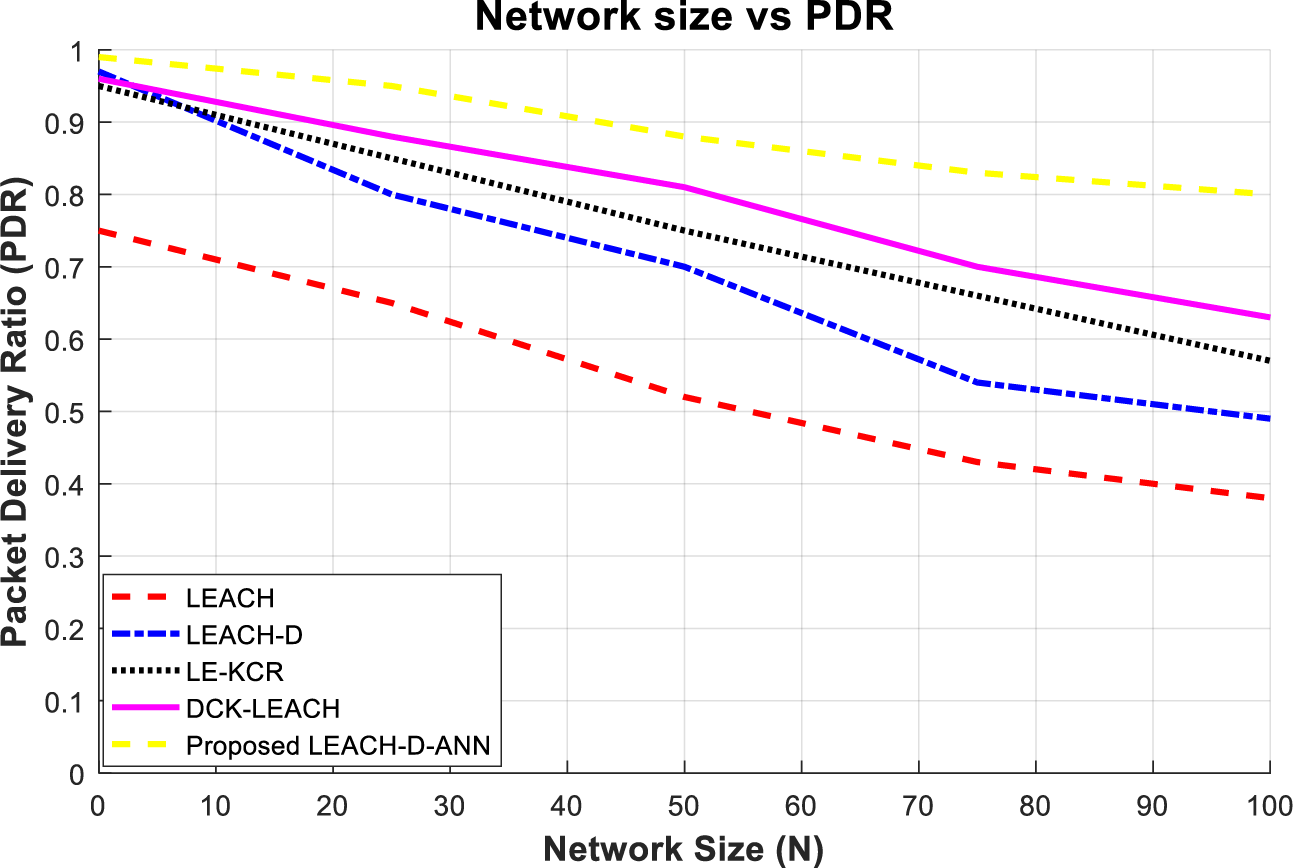
Figure 7: Analysis of network size vs PDR
D refers to the time taken for a packet to travel from the source node to the destination (BS) node. As network node density increases, D generally rises across all algorithms. The proposed hybrid method demonstrates reduced End-to-End latency compared to existing algorithms. This approach minimizes packet delay and enhances data transmission efficiency by optimizing routing decisions and reducing power consumption. Fig. 8 illustrates the graphical analysis of D in WSNs.
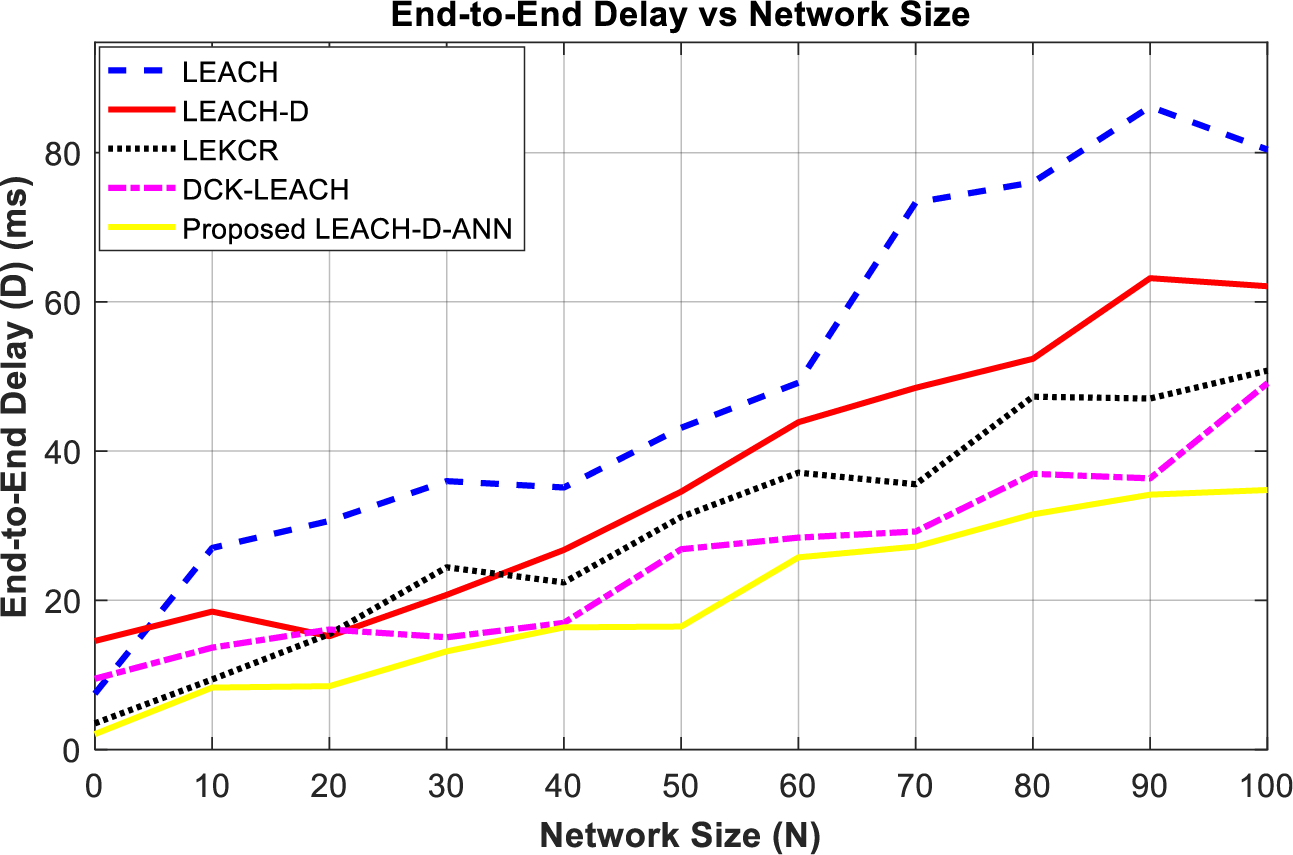
Figure 8: Analysis of end-to-end delay vs. network size
The Communication Cost is the total energy consumed by all nodes for transmitting and receiving data, normalized by the total number of packets successfully delivered to the BS. Fig. 9 illustrates the total communication cost of the network across several approaches. This comparative analysis highlights that the proposed model achieves the lowest communication cost among the evaluated protocols, demonstrating superior efficiency and performance.
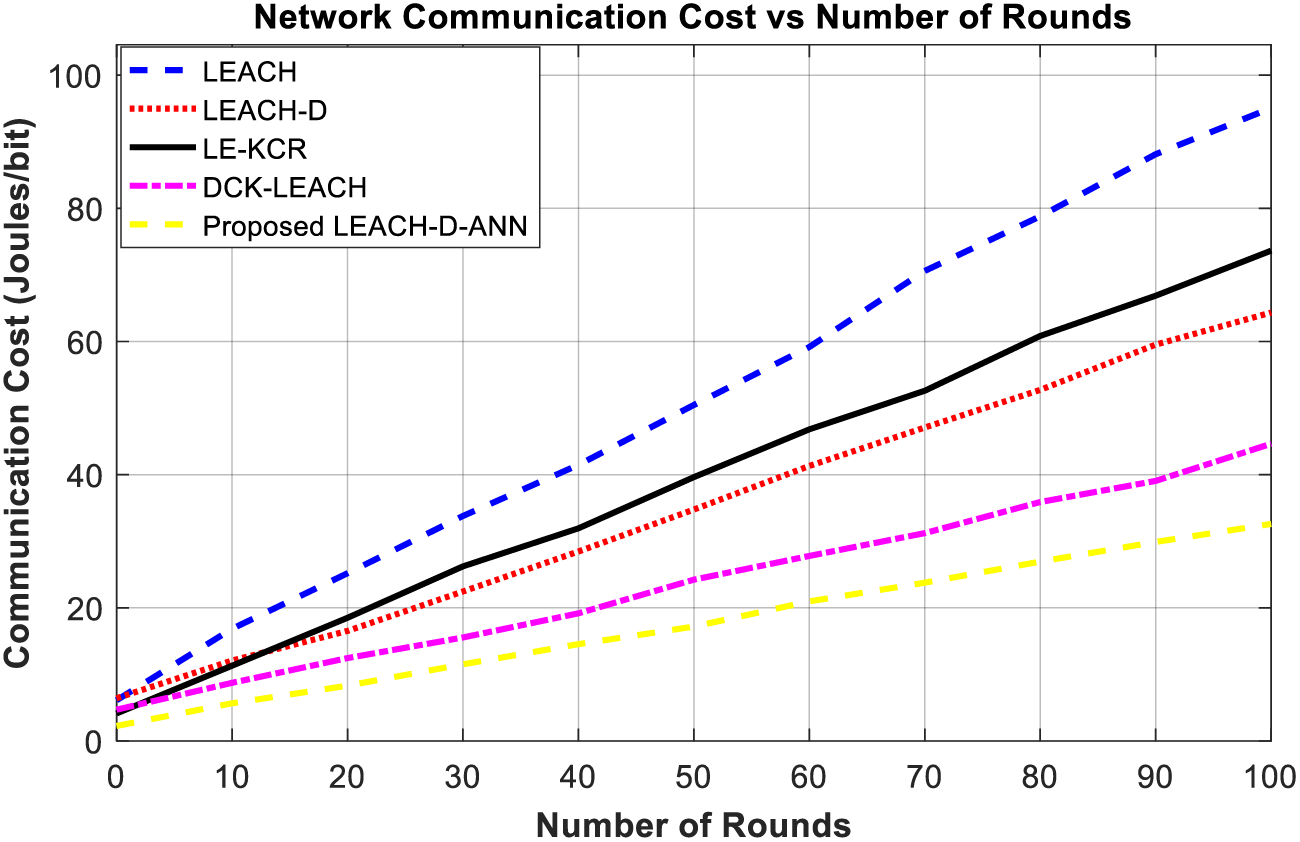
Figure 9: Analysis of network communication cost
Fig. 10 shows the time complexity analysis of the proposed model across various approaches, illustrating that the proposed model demonstrates the most efficient time complexity compared to other protocols.
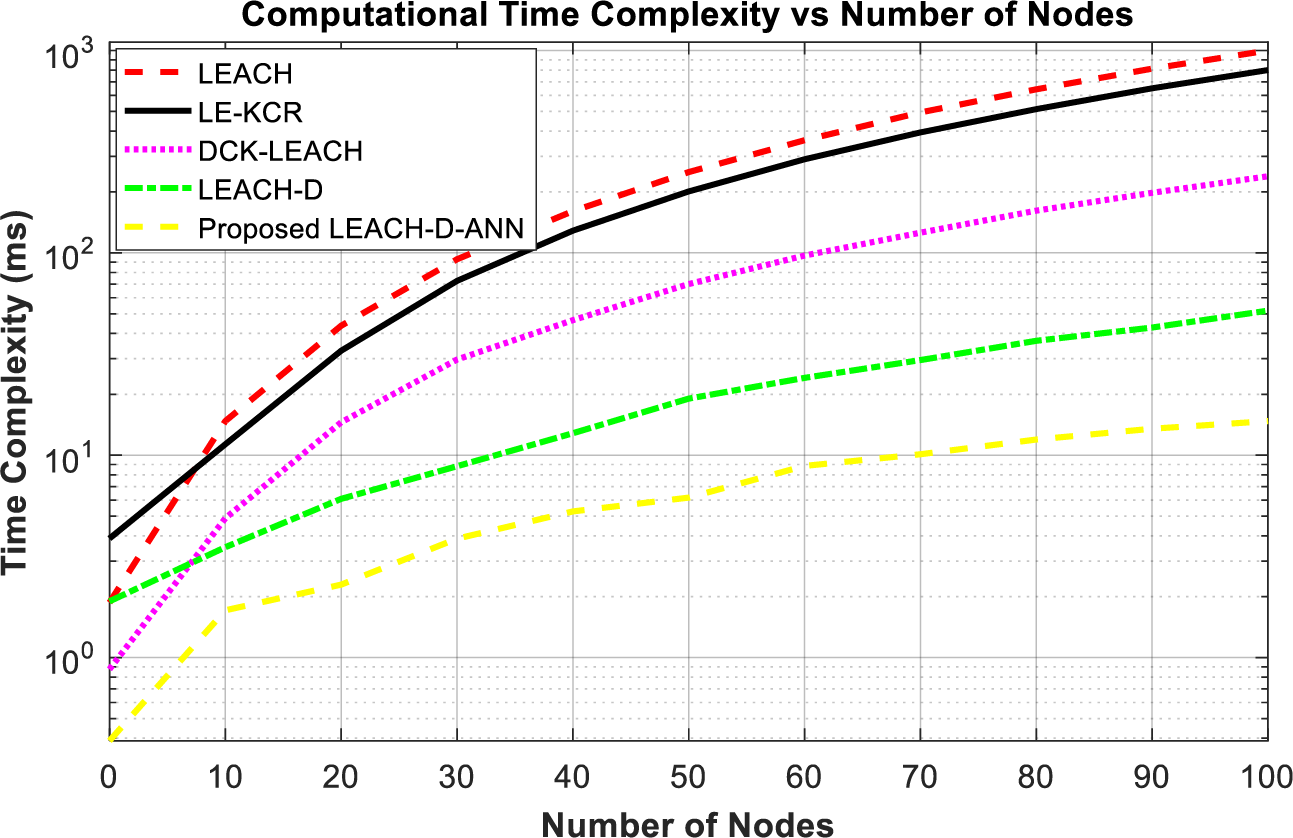
Figure 10: Analysis of time complexity of vs. number of nodes
Analysis of variance (ANOVA) [58] is a statistical method used to assess whether there are significant differences among two or more group means. The test result is represented by the F-statistic. Here, we establish a null hypothesis “
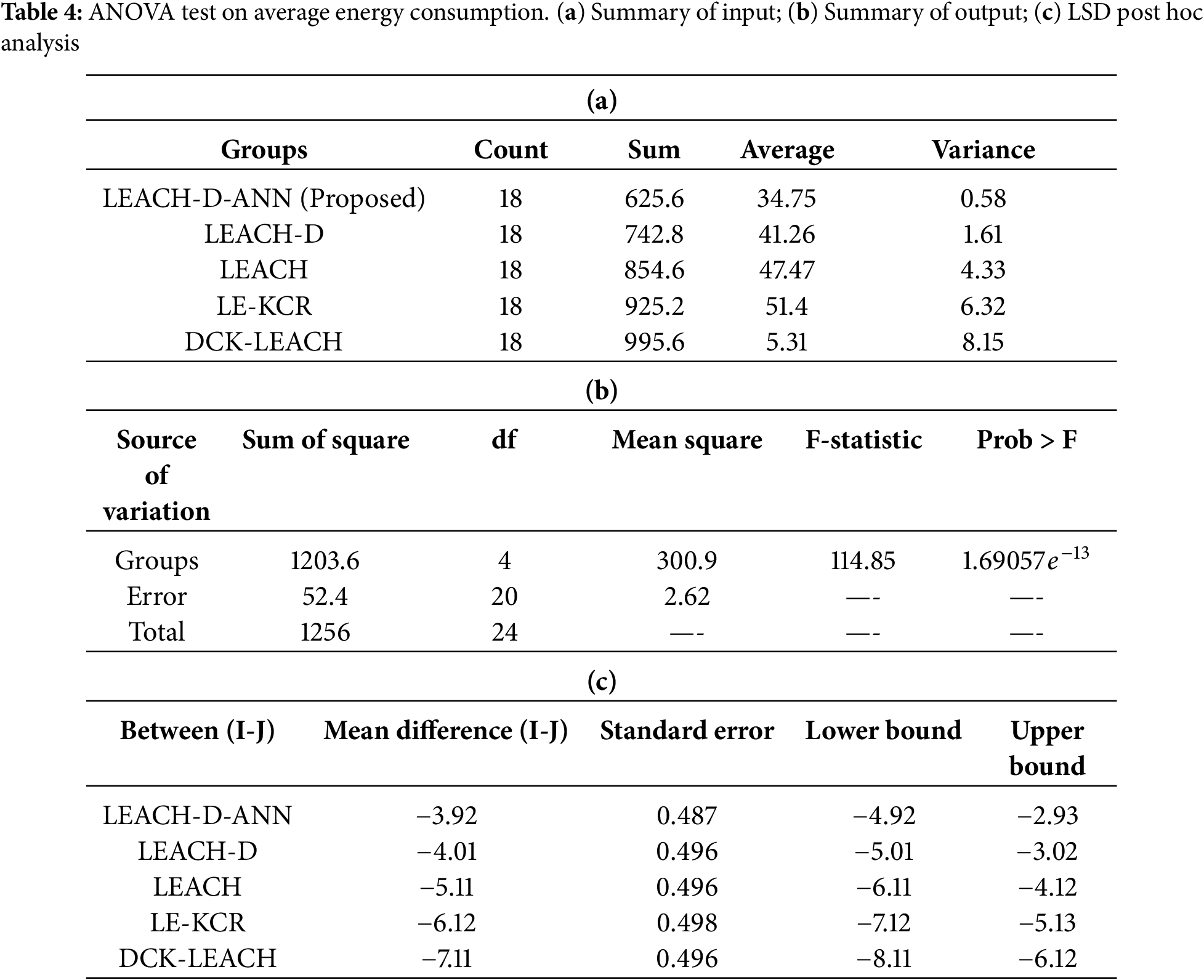
In ANOVA, if the calculated F-statistic surpasses the critical F-value, the null hypothesis is rejected. Here, the F-statistic exceeded the critical value (F > F-critical), leading to null hypothesis rejection, suggesting significant differences among the five algorithms’ means. This is further supported by a p-value significantly smaller than the significance level (α = 0.07), confirming that the differences in the EC means are statistically significant. However, this result does not specify which algorithm performs best.
To address this, a Least Significant Difference (LSD) post hoc test was conducted, computing a 96.5% Confidence Interval (CI) for mean differences; excluding zero indicates statistical significance. The results of the LSD analysis, presented in Table 4c, show that the CI for the mean differences does not include zero, indicating that the proposed algorithm’s average EC is significantly lower than those of LEACH, LEACH-D, LE-KCR, and DCK-LEACH.
Discussion
In this study, we introduced a hybrid approach that combines the LEACH-D protocol with ML technique called ANN to enhance the lifetime and energy efficiency of WSNs. Our findings, assessed across key metrics, show improvements over traditional protocols. The detailed numerical analyses of suggested parameters in WSN with existing methods are compared in Table 5.
This study presents an energy-efficient optimization framework to enhance WSN longevity by improving resource management and extending operational durations. Through systematic simulations, the proposed LEACH-D-ANN model demonstrates effectiveness in dynamically rotating and assigning CHs to balance energy consumption (EC) across SNs. By integrating the LEACH-D protocol with an ANN, the hybrid approach optimizes CH selection, placement, and data aggregation while minimizing idle listening. The model’s effectiveness is quantitatively validated through extensive simulations showing superior performance in energy management, network lifespan extension, and data throughput improvement, with statistical significance confirmed via ANOVA and LSD post hoc analysis. These findings establish a foundation for developing more sophisticated WSN optimization techniques, suggesting promising future directions including the integration of deep learning or reinforcement learning for adaptive energy management in dynamic environments, as well as scalability studies for heterogeneous networks. This research contributes to the advancement of energy-autonomous WSN systems for next-generation IoT applications.
Acknowledgement: The authors would like to thank the anonymous reviewers for their valuable comments.
Funding Statement: The authors received no specific funding for this study.
Author Contributions: The authors confirm contribution to the paper as follows: study conception and design: Muhammad Salman Qamar; data collection: Muhammad Fahad Munir; analysis and interpretation of results: Muhammad Salman Qamar; draft manuscript preparation: Muhammad Salman Qamar. All authors reviewed the results and approved the final version of the manuscript.
Availability of Data and Materials: Not applicable.
Ethics Approval: Not applicable.
Conflicts of Interest: The authors declare no conflicts of interest to report regarding the present study.
References
1. Al Aghbari Z, Khedr AM, Osamy W, Arif I, Agrawal DP. Routing in wireless sensor networks using optimization techniques: a survey. Wirel Pers Commun. 2020;111(4):2407–34. doi:10.1007/s11277-019-06993-9. [Google Scholar] [CrossRef]
2. Almuzaini KK, Joshi S, Ojo S, Aggarwal M, Suman P, Pareek PK, et al. Optimization of the operational state’s routing for mobile wireless sensor networks. Wirel Netw. 2024;30(6):5247–61. doi:10.1007/s11276-023-03246-3. [Google Scholar] [CrossRef]
3. Balamurugan A, Janakiraman S, Priya MD, Malar ACJ. Hybrid Marine predators optimization and improved particle swarm optimization-based optimal cluster routing in wireless sensor networks (WSNs). China Commun. 2022;19(6):219–47. doi:10.23919/jcc.2022.06.017. [Google Scholar] [CrossRef]
4. Zhang X, Hou D, Xiong Z, Liu Y, Wang S, Li Y. EALLR: energy-aware low-latency routing data driven model in mobile edge computing. IEEE Trans Consum Electron. 2024. doi:10.1109/TCE.2024.3507158. [Google Scholar] [CrossRef]
5. Zhang Y, Zhao M, Chen Y, Lu Y, Cheung Y-M. Learning unified distance metric for heterogeneous attribute data clustering. Expert Syst Appl. 2025;273(1):126738. doi:10.1016/j.eswa.2025.126738. [Google Scholar] [CrossRef]
6. Zhang Z-W, Liu Z-G, Martin A, Zhou K. BSC: belief shift clustering. IEEE Trans Syst Man Cybern Syst. 2022;53(3):1748–60. doi:10.1109/tsmc.2022.3205365. [Google Scholar] [CrossRef]
7. Liu Z, Jiang G, Jia W, Wang T, Wu Y. Critical density for K-coverage under border effects in camera sensor networks with irregular obstacles existence. IEEE Internet Things J. 2023;11(4):6426–37 doi:10.1109/jiot.2023.3311466. [Google Scholar] [CrossRef]
8. Sahoo BM, Pandey HM, Amgoth T. GAPSO-H: a hybrid approach towards optimizing the cluster based routing in wireless sensor network. Swarm Evol Comput. 2021;60:100772 doi:10.1016/j.swevo.2020.100772. [Google Scholar] [CrossRef]
9. Prasad VK, Periyasamy S. International journal of distributed sensor networks energy optimization-based clustering protocols in wireless sensor networks and internet of things-survey. Int J Distrib Sens Netw. 2023;2023(1):1362417. doi:10.1155/2023/1362417. [Google Scholar] [CrossRef]
10. Nayyar A, Singh R. IEEMARP—a novel energy efficient multipath routing protocol based on ant Colony optimization (ACO) for dynamic sensor networks. Multimed Tools Appl. 2020;79(47):35221–52. doi:10.1007/s11042-019-7627-z. [Google Scholar] [CrossRef]
11. Daanoune I, Abdennaceur B, Ballouk A. A comprehensive survey on LEACH-based clustering routing protocols in Wireless Sensor Networks. Ad Hoc Netw. 2021;114(2):102409. doi:10.1016/j.adhoc.2020.102409. [Google Scholar] [CrossRef]
12. Boudhiafi W, Ezzedine Teditors, editors . Optimization of multi-level HEED protocol in wireless sensor networks. In: Proceedings of the Applied Informatics: Fourth International Conference, ICAI 2021; 2021 Oct 28–30; Buenos Aires, Argentina. doi:10.1007/978-3-030-89654-6_29. [Google Scholar] [CrossRef]
13. El-Sayed HH, Hashem ZM. Comparison of the new version of DEEC protocol to extend WSN lifetime. EURASIP J Wirel Commun Netw. 2023;2023(1):56. doi:10.1186/s13638-023-02265-0. [Google Scholar] [CrossRef]
14. Subramani S, Selvi M. Multi-objective PSO based feature selection for intrusion detection in IoT based wireless sensor networks. Optik. 2023;273(1):170419. doi:10.1016/j.ijleo.2022.170419. [Google Scholar] [CrossRef]
15. Qamar MS, Tu S, Ali F, Armghan A, Munir MF, Alenezi F, et al. Improvement of traveling salesman problem solution using hybrid algorithm based on best-worst ant system and particle swarm optimization. Appl Sci. 2021;11(11):4780. doi:10.3390/app11114780. [Google Scholar] [CrossRef]
16. Alla VK, Mallikarjuna Meditors, editors . Routing protocol based on bacterial foraging optimization and type-2 fuzzy logic for wireless sensor networks. In: Proceedings of the 2020 11th International Conference on Computing, Communication and Networking Technologies (ICCCNT); 2020 Jul 1–3; Kharagpur, India. doi:10.1109/icccnt49239.2020.9225436. [Google Scholar] [CrossRef]
17. Han G, Dong Y, Guo H, Shu L, Wu D. Cross-layer optimized routing in wireless sensor networks with duty cycle and energy harvesting. Wirel Commun Mob Comput. 2015;15(16):1957–81. doi:10.1002/wcm.2468. [Google Scholar] [CrossRef]
18. Chéour R, Jmal MW, Khriji S, El Houssaini D, Trigona C, Abid M. Towards hybrid energy-efficient power management in wireless sensor networks. Sensors. 2022;22(1):301. doi:10.3390/s22010301. [Google Scholar] [PubMed] [CrossRef]
19. Hussein AM, Idrees AK, Couturier R. A distributed prediction–compression-based mechanism for energy saving in IoT networks. J Supercomput. 2023;79(15):16963–99. doi:10.1007/s11227-023-05317-w. [Google Scholar] [CrossRef]
20. Zhao C, Wu Q, Lin D, Zhang Z, Zhang Y, Kong L, et al. An energy-balanced unequal clustering approach for circular wireless sensor networks. Ad Hoc Netw. 2022;132(4):102872. doi:10.1016/j.adhoc.2022.102872. [Google Scholar] [CrossRef]
21. Ding Q, Zhu R, Liu H, Ma M. An overview of machine learning-based energy-efficient routing algorithms in wireless sensor networks. Electronics. 2021;10(13):1539. doi:10.3390/electronics10131539. [Google Scholar] [CrossRef]
22. Choi S-H, Yoo S-J. Recurrent neural network-based optimal sensing duty cycle control method for wireless sensor networks. IEEE Access. 2021;9:133215–28. doi:10.1109/access.2021.3113298. [Google Scholar] [CrossRef]
23. Chen B, Yao N, Liu W, Liu J, Li X, Hao X. Distributed topology control algorithm based on load balancing evaluation model in wireless sensor networks. Wirel Pers Commun. 2019;109(12):2607–25. doi:10.3724/sp.j.1001.2009.03414. [Google Scholar] [CrossRef]
24. Liang H, Yang S, Li L, Gao J. Research on routing optimization of WSNs based on improved LEACH protocol. EURASIP J Wirel Commun Netw. 2019;2019(1):1–12. doi:10.1186/s13638-019-1509-y. [Google Scholar] [CrossRef]
25. Lin D, Gao L, Min W. A social welfare theory-based energy-efficient cluster head election scheme for WSNs. IEEE Syst J. 2020;15(3):4492–502. doi:10.1109/jsyst.2020.3010868. [Google Scholar] [CrossRef]
26. Martey AS. Improving and implementing a cluster head to normal ratio protocol with artificial intelligence to increase the lifetime of wireless sensor networks [master’s thesis]. Johannesburg, South Africa: University Of Johannesburg; 2023. [Google Scholar]
27. Umare KB, Babu S, Aruna K, Rao BN, Sheikh FA. Energy-efficient communication protocols for wireless IoT networks. Front Health Inform. 2024;13(4):382. [Google Scholar]
28. Rai AK, Daniel A. FEEC: fuzzy based energy efficient clustering protocol for WSN. Int J Syst Assur Eng Manag. 2023;14(1):297–307. doi:10.1007/s13198-022-01796-x. [Google Scholar] [CrossRef]
29. Aliyu F, Umar S, Al-Duwaish Heditors, editors. A survey of applications of artificial neural networks in wireless sensor networks. In: Proceedings of the 2019 8th International Conference on Modeling Simulation and Applied Optimization (ICMSAO); 2019 Apr 15–17; Manama, Bahrain. [Google Scholar]
30. Nadimi ES, Jørgensen RN, Blanes-Vidal V, Christensen S. Monitoring and classifying animal behavior using ZigBee-based mobile ad hoc wireless sensor networks and artificial neural networks. Comput Electron Agric. 2012;82:44–54. doi:10.1016/j.compag.2011.12.008. [Google Scholar] [CrossRef]
31. Soliman H, Sudan K, Mishra A. A smart forest-fire early detection sensory system: another approach of utilizing wireless sensor and neural networks. In: Proceedings of the SENSORS, 2010 IEEE; 2010 Nov 1–4; Waikoloa, HI, USA. [Google Scholar]
32. Yu L, Wang N, Meng X. Real-time forest fire detection with wireless sensor networks. In: 2005 International Conference on Wireless Communications, Networking and Mobile Computing; 2005 Sep 26; Wuhan, China. [Google Scholar]
33. Singh VK, Kumar M. In-network data processing in wireless sensor networks using compressed sensing. Int J Sens Netw. 2018;26(3):174–89. doi:10.1504/ijsnet.2018.090141. [Google Scholar] [CrossRef]
34. Kim K-W, Min S-G, Han Y-H. In-network data processing in software-defined iot with a programmable data plane. Mob Inf Syst. 2018;2018(1):8618267. doi:10.1155/2018/8618267. [Google Scholar] [CrossRef]
35. Qamar MS, ulHaq I, Daraz A, Alamri AM, AlQahtani SA, FahadMunir M. A novel approach to energy optimization: efficient path selection in wireless sensor networks with hybrid ANN. Comput Mater Contin. 2024;79(2):2945. doi:10.32604/cmc.2024.050168. [Google Scholar] [CrossRef]
36. Malik PK, Sharma R, Singh R, Gehlot A, Satapathy SC, Alnumay WS, et al. Industrial Internet of Things and its applications in industry 4.0: state of the art. Comput Commun. 2021;166:125–39. doi:10.1016/j.comcom.2020.11.016. [Google Scholar] [CrossRef]
37. Atlam HF, Alenezi A, Alharthi A, Walters RJ, Wills GB. Integration of cloud computing with internet of things: challenges and open issues. In: Proceedings of the 2017 IEEE International Conference on Internet of Things (iThings) and IEEE Green Computing and Communications (GreenCom) and IEEE Cyber, Physical and Social Computing (CPSCom) and IEEE Smart Data (SmartData); 2017 Jun 21–23; Exeter, UK. [Google Scholar]
38. Kaur G, Chanak P, Bhattacharya M. Energy-efficient intelligent routing scheme for IoT-enabled WSNs. IEEE Internet Things J. 2021;8(14):11440–9. doi:10.1109/jiot.2021.3051768. [Google Scholar] [CrossRef]
39. Althoubi A, Alshahrani R, Peyravi H. Delay analysis in IoT sensor networks. Sensors. 2021;21(11):3876. doi:10.3390/s21113876. [Google Scholar] [PubMed] [CrossRef]
40. Liu D, Liang C, Mo H, Chen X, Kong D, Chen P. LEACH-D: a low-energy, low-delay data transmission method for industrial internet of things wireless sensors. Internet Things Cyber-Phys Syst. 2024;4:129–37. doi:10.1016/j.iotcps.2023.10.001. [Google Scholar] [CrossRef]
41. Verma S, Zeadally S, Kaur S, Sharma AK. Intelligent and secure clustering in wireless sensor network (WSN)-based intelligent transportation systems. IEEE Trans Intell Transp Syst. 2021;23(8):13473–81. doi:10.1109/tits.2021.3124730. [Google Scholar] [CrossRef]
42. Heinzelman WR, Chandrakasan A, Balakrishnan H. Energy-efficient communication protocol for wireless microsensor networks. In: Proceedings of the 33rd Annual Hawaii International Conference on System Sciences; 2000 Jan 7; Maui, HI, USA. [Google Scholar]
43. Gnanambigai J, Rengarajan DN, Anbukkarasi K. Leach and its descendant protocols: a survey. Int J Commun Comput Technol. 2012;1(3):15–21. [Google Scholar]
44. Hani RMB, Ijjeh AA. A survey on LEACH-based energy aware protocols for wireless sensor networks. J Commun. 2013;8(3):192–206. doi:10.12720/jcm.8.3.192-206. [Google Scholar] [CrossRef]
45. Behera TM, Mohapatra SK, Samal UC, Khan MS. Hybrid heterogeneous routing scheme for improved network performance in WSNs for animal tracking. Internet Things. 2019;6(3):100047. doi:10.1016/j.iot.2019.03.001. [Google Scholar] [CrossRef]
46. Thiagarajan R. Energy consumption and network connectivity based on Novel-LEACH-POS protocol networks. Comput Commun. 2020;149(1):90–8. doi:10.1016/j.comcom.2019.10.006. [Google Scholar] [CrossRef]
47. Tyagi S, Kumar N. A systematic review on clustering and routing techniques based upon LEACH protocol for wireless sensor networks. J Netw Comput Appl. 2013;36(2):623–45. doi:10.1016/j.jnca.2012.12.001. [Google Scholar] [CrossRef]
48. Wang J, Zhang X, Xie JY, Mi ZK. A distance-based clustering routing protocol in wireless sensor networks. In: Proceedings of the 2010 IEEE 12th International Conference on Communication Technology; 2010 Nov 11–14; Nanjing, China. [Google Scholar]
49. Al-Baz A, El-Sayed A. A new algorithm for cluster head selection in LEACH protocol for wireless sensor networks. Int J Commun Syst. 2018;31(1):e3407. doi:10.1002/dac.3407. [Google Scholar] [CrossRef]
50. Beiranvand Z, Patooghy A, Fazeli M. I-LEACH: an efficient routing algorithm to improve performance & to reduce energy consumption in Wireless Sensor Networks. In: Proceedings of the 5th Conference on Information and Knowledge Technology; 2013 May 28–30; Shiraz, Iran. [Google Scholar]
51. Qamar MS, ul Haq I, Munir MF, Roslee MB, Awan AA, Waseem A. Enhancing energy efficiency in WSNs with hybrid LEACH-D and ANN. In: Proceedings of the 2024 Multimedia University Engineering Conference (MECON); 2024 Jul 23–25; Cyberjaya, Malaysia. [Google Scholar]
52. Behera TM, Mohapatra SK, Samal UC, Khan MS, Daneshmand M, Gandomi AH. Residual energy-based cluster-head selection in WSNs for IoT application. IEEE Internet Things J. 2019;6(3):5132–9. doi:10.1109/JIOT.2019.2897119. [Google Scholar] [CrossRef]
53. Walczak S. Artificial neural networks. In: Khosrow-Pour DBA, Mehdi M, editors. Advanced methodologies and technologies in artificial intelligence, computer simulation, and human-computer interaction. Hershey, PA, USA: IGI Global; 2019. p. 40–53. doi:10.4018/978-1-5225-7368-5.ch004. [Google Scholar] [CrossRef]
54. Zou J, Han Y, So S-S. Overview of artificial neural networks. Methods Mol Biol. 2009;458:14–22. [Google Scholar]
55. Nguyen TG, So-In C, Ha D-B. Secrecy performance analysis of energy harvesting wireless sensor networks with a friendly jammer. IEEE Access. 2017;5:25196–206. doi:10.1109/access.2017.2768443. [Google Scholar] [CrossRef]
56. Li L, Qiu Y, Xu Jeditors, editors. A K-means clustered routing algorithm with location and energy awareness for underwater wireless sensor networks. Photonics. 2022;9(5):282. doi:10.3390/photonics9050282. [Google Scholar] [CrossRef]
57. Wu M, Li Z, Chen J, Min Q, Lu T. A dual cluster-head energy-efficient routing algorithm based on canopy optimization and K-means for WSN. Sensors. 2022;22(24):9731. doi:10.3390/s22249731. [Google Scholar] [PubMed] [CrossRef]
58. Moodie PF, Johnson DE. Applied regression and ANOVA using SAS. New York, NY, USA: Chapman and Hall/CRC; 2022. [Google Scholar]
Cite This Article
 Copyright © 2025 The Author(s). Published by Tech Science Press.
This work is licensed under a Creative Commons Attribution 4.0 International License , which permits unrestricted use, distribution, and reproduction in any medium, provided the original work is properly cited.
 Downloads
 Citation Tools
