
 Login
Login Register
 Submit a Paper
 Propose a Special lssue
 Open Access
REVIEW

Toward Robust Deepfake Defense: A Review of Deepfake Detection and Prevention Techniques in Images
1 Faculty of Computer Studies, Arab Open University, P.O. Box 8490, Riyadh, 11681, Saudi Arabia
2 Department of Computer Science, College of Computer and Information Sciences, Imam Mohammad Ibn Saud Islamic University (IMSIU), P.O. Box 5701, Riyadh, 11432, Saudi Arabia
* Corresponding Author: Mohammad Alkhatib. Email:
Computers, Materials & Continua 2026, 86(2), 1-34. https://doi.org/10.32604/cmc.2025.070010
Received 05 July 2025; Accepted 14 October 2025; Issue published 09 December 2025
 View Full Text
 Download PDF
Abstract
Deepfake is a sort of fake media made by advanced AI methods like Generative Adversarial Networks (GANs). Deepfake technology has many useful uses in education and entertainment, but it also raises a lot of ethical, social, and security issues, such as identity theft, the dissemination of false information, and privacy violations. This study seeks to provide a comprehensive analysis of several methods for identifying and circumventing Deepfakes, with a particular focus on image-based Deepfakes. There are three main types of detection methods: classical, machine learning (ML) and deep learning (DL)-based, and hybrid methods. There are three main types of preventative methods: technical, legal, and moral. The study investigates the effectiveness of several detection approaches, such as convolutional neural networks (CNNs), frequency domain analysis, and hybrid CNN-LSTM models, focusing on the respective advantages and disadvantages of each method. We also look at new technologies like Explainable Artificial Intelligence (XAI) and blockchain-based frameworks. The essay looks at the use of algorithmic protocols, watermarking, and blockchain-based content verification as possible ways to stop certain things from happening. Recent advancements, including adversarial training and anti-Deepfake data generation, are essential because of their potential to alleviate rising concerns. This review shows that there are major problems, such as the difficulty of improving the capabilities of existing systems, the high running expenses, and the risk of being attacked by enemies. It stresses the importance of working together across fields, including academia, business, and government, to create robust, scalable, and ethical solutions. The main goals of future work should be to create lightweight, real-time detection systems, connect them to large language models (LLMs), and put in place worldwide regulatory frameworks. This essay argues for a complete and varied plan to keep digital information real and build confidence in a time when media is driven by artificial intelligence. It uses both technical and non-technical means.Keywords
The emergence of artificial intelligence (AI) technology, particularly deep learning (DL), over the past decade has revolutionized numerous sectors by enabling computer systems to autonomously learn and make judgments with minimal human intervention. Utilizing extensive computational power and large datasets, deep learning employs techniques such as multilayer neural networks to identify patterns, excelling in tasks like image recognition and audio generation. Deepfake technology has become feasible due to rapid advancements in deep learning and the development of novel generative AI models. These models have paved the way for creating technologies capable of producing highly convincing counterfeit media, including videos, audio, and images [1].
The term “Deepfake” is derived from “deep learning”, the method used to generate the content, and “fake”, indicating that the generated content is not authentic. Deepfake technology primarily uses DL techniques, particularly Generative Adversarial Networks (GANs), to create realistic but fake media content. This requires substantial computational resources and vast datasets for effective implementation [2]. The first notable use of Deepfake technology occurred in 2017 when deep learning algorithms were employed to fabricate celebrity media. Since then, the prevalence of Deepfake content has surged due to the availability of user-friendly tools that make the technology accessible to the general public. Fig. 1 illustrates the evolution and enhancement of Deepfake technology over time, highlighting significant milestones from the inception of generative AI models to the widespread application of Deepfake technologies. While Deepfake technology offers numerous beneficial applications, such as creating realistic simulations for industries and producing effective educational content, it also presents significant risks. These include the potential to infringe on individual privacy, cause reputational harm, breach intellectual property rights, and disseminate false or misleading information [3].
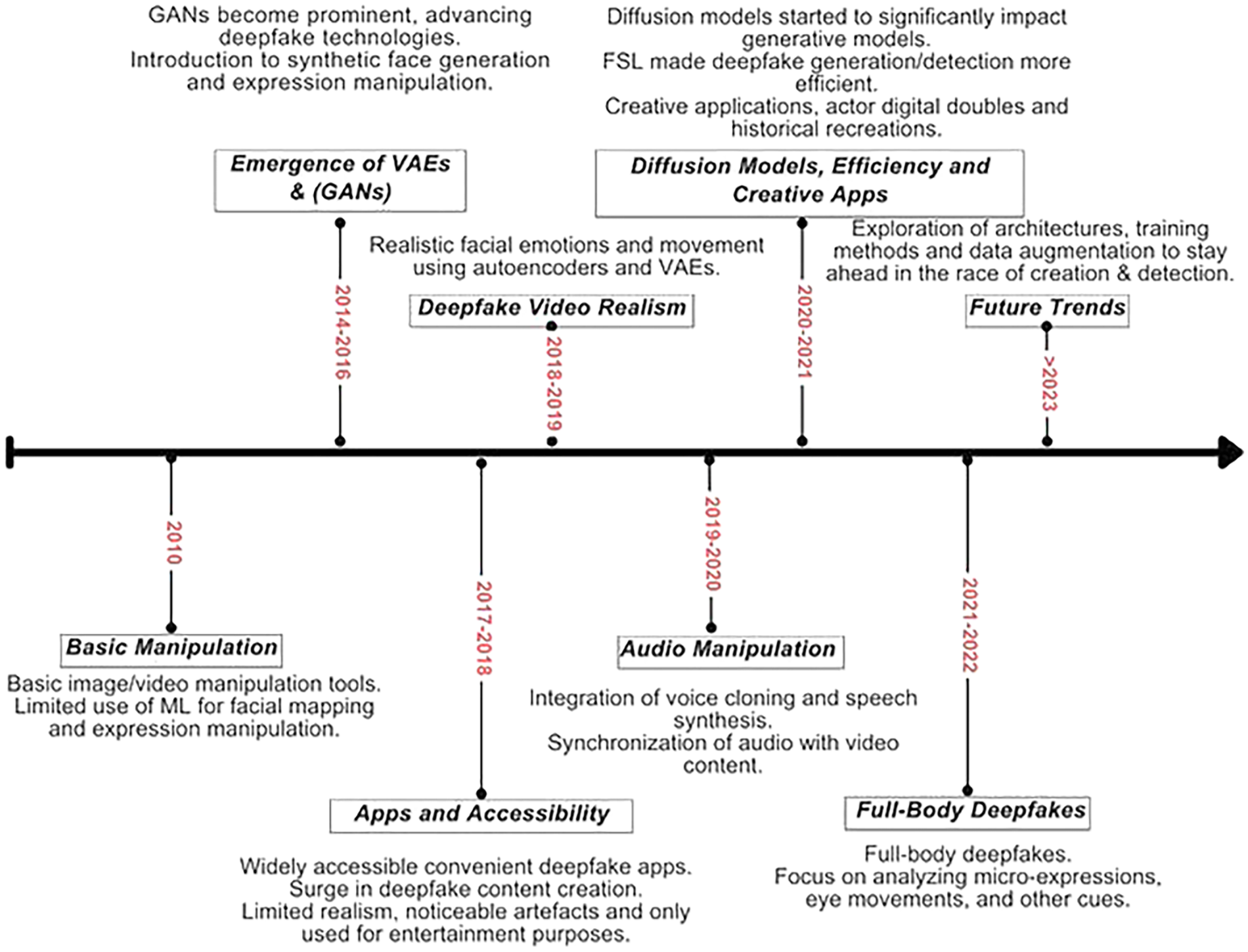
Figure 1: The timeline of evolution and advancements in Deepfake technology [4]
The growing use of Deepfake technology has necessitated robust countermeasures to mitigate its risks across various domains, including cybersecurity, journalism, law enforcement, and entertainment. In cybersecurity, Deepfakes have been exploited for sophisticated phishing attacks, where adversaries generate synthetic audio to mimic an authorized individual’s voice, tricking victims into financial fraud. These attacks can disrupt financial transactions and compromise organizational business continuity [5]. In journalism and media, Deepfakes threaten the credibility of news outlets by spreading fake or misleading information. For example, manipulated videos of public figures spreading false narratives can erode trust in news organizations and create obstacles for political processes [6]. Law enforcement agencies also face unique challenges with Deepfake technology, as it can be used for identity theft and defamation. Fake media can inflict severe psychological harm and reputational damage on victims [7].
The entertainment industry is similarly vulnerable, as Deepfake technology can be misused to create unauthorized videos or audio that mimic actors’ behaviors without their consent, raising ethical and legal concerns. Given these hazards, it is imperative to develop methods to mitigate or eliminate the risks associated with Deepfake technology in various domains. Deepfake technology continues to evolve, posing significant challenges to security, privacy, and trust in digital content. It can be weaponized to harm individuals, alter perceptions, and disseminate false information by fabricating compromising or misleading scenarios [8]. For instance, Deepfakes have been used in political campaigns to undermine opponents or in criminal activities to impersonate victims. Addressing the risks associated with Deepfake technology is essential for maintaining the integrity of digital media, protecting individual reputations, and preserving trust in visual evidence [9]. As Deepfake techniques become increasingly sophisticated, the need for robust detection and prevention methods grows. Countermeasures not only mitigate risks but also promote the ethical application of AI in communication and media [10].
Countermeasures for Deepfake can be categorized into two primary approaches: detection methods and preventive strategies. Detection methods aim to identify altered media, such as videos, audio, or images, using Deepfake techniques. Conversely, preventive strategies focus on inhibiting the creation or dissemination of Deepfake content, thereby preventing its misuse across various domains. Deepfake technology poses significant ethical, societal, and security challenges that demand immediate attention. Altering photographs to create fraudulent content raises ethical issues related to consent, authenticity, and the misuse of technology. This is especially concerning when Deepfake technology is used to create sexual or defamatory content without the consent of the individuals involved. Deepfakes can undermine trust in visual media, spread misinformation, erode democratic institutions, and exacerbate societal divisions [11]. They can also facilitate malicious activities such as identity theft, fraud, and espionage, posing severe security risks for individuals and organizations alike. These threats underscore the importance of robust detection mechanisms and ethical guidelines to mitigate the adverse impacts of Deepfake technology [12].
This paper examines all research conducted on methods for detecting and preventing deepfake images. The review carefully identifies all relevant studies, ensuring comprehensive coverage while minimizing the risk of bias or missing important study findings. This review helps researchers understand contemporary research on detecting and preventing deepfake images. Furthermore, this analysis and review aim to evaluate the effectiveness of current prevention and detection techniques in images and identify their limitations. Ultimately, the current review seeks to identify current research trends, gaps, and challenges, paving the way for future research in the field of deepfake prevention and detection.
This paper is structured as follows: Section 1 presents the background of deep fake technologies, their inception, and the significance of establishing effective detection and prevention methods. It also underscores the ethical, cultural, and security ramifications of Deepfake. Section 2 offers a comprehensive analysis of diverse deep fake detection methodologies, classified into traditional techniques, machine learning and deep learning approaches, and novel detection strategies. A comparative examination of various methodologies is also provided. Section 3 examines techniques for preventing Deepfake, encompassing both technical methods, such content authentication, watermarking, and algorithmic protocols, and non-technical strategies, such as awareness campaigns, legislation, and regulations. Section 4 analyzes the constraints and difficulties of detection and preventive techniques and highlights corresponding research deficiencies. Section 5 delineates prospective research avenues for enhancing detection and preventive methodologies, underscoring the importance of interdisciplinary collaboration and innovation. Section 6 finishes the report by encapsulating the principal findings and issuing a call to action for international collaboration and additional research in this domain.
2 Deepfake Detection and Prevention Methods
This section introduces the main concepts related to deepfake detection and prevention methods, allowing the reader to become familiar with those significant concepts. It also highlights the key approaches for deepfake detection and prevention as found in literature.
2.1 Deepfake Detection Methods
The objective of deepfake detection systems is to identify media that has been fabricated or altered utilising deepfake methodologies. They are termed reactive as they occur subsequent to the creation and dissemination of Deepfake content. A Deepfake detection method or tool may analyse questionable media and identify it as altered due to anomalous patterns or inconsistencies.
Deepfake detection methods can be categorized into three key categories: (1) detection methods based on AI models [13], (2) detection methods that utilize artifact analysis and heuristic rules [14], and eventually the hybrid approach that combines both AI models and heuristic rules to achieve more accurate detection of Deepfake content [15]. Fig. 2 presents various methods for detecting deepfakes. These can be categorised into three fundamental groups: traditional procedures, artificial intelligence (AI) based methods, and hybrid approaches that integrate the most effective elements of both AI models and traditional methodologies.
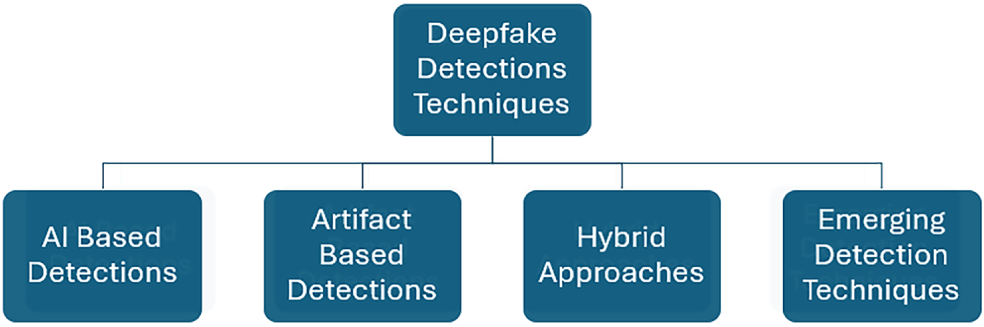
Figure 2: Classification of deepfake detection methods
Every technique for detecting Deepfakes possesses distinct advantages and disadvantages. These detection methods frequently struggle to keep pace with rapidly advancing Deepfake algorithms and also encounter issues with false positives and negatives in their detection systems. This review examines the primary detection methods, evaluating their efficacy and limitations. The objective is to identify deficiencies and issues within the research in this domain.
2.2 Deepfake Prevention Methods
Deepfake prevention is proactive in nature because it happens before or during the creation or spread of Deepfake. The prevention methods focus on making Deepfake creation or distribution more difficult or infeasible. To achieve this, the Deepfake prevention employs technical, legal, and ethical strategies.
The technical Deepfake prevention methods can be categorized into technical and non-technical methods. Technical prevention methods refer to prevention approaches that use certain technologies or algorithms, including: (1) Prevention methods that rely on algorithmic approaches and protocols, and (2) Prevention methods that use Blockchain technology to verify the origin and integrity of digital content. On the other hand, non-technical methods refer to awareness, policies, and regulations. Fig. 3 illustrates the categorization of various methods for countering Deepfake technology.
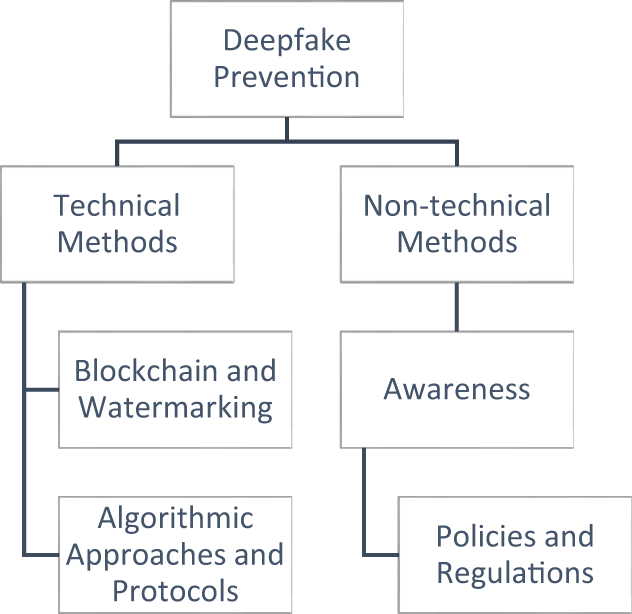
Figure 3: Classification of deepfake prevention methods
Regulatory and awareness of ethics and best practices, together with technical methodologies, are crucial in preventing the misuse of Deepfake technology across several domains.
Governments worldwide are formulating legislation to prevent the misuse and proliferation of Deepfake technology. Additionally, dedicated organizations are formulating guidelines to encourage AI developers to adhere to ethical norms aimed at preventing the creation and dissemination of Deepfake technology [16].
However, there are issues with the methods employed to combat Deepfakes. Certain preventative measures, for instance, require restricting access to biometric data for digital media, potentially complicating its beneficial utilization. Achieving an optimal equilibrium between privacy and security in these preventive strategies is challenging.
The current review explores the latest advances, and research works related to Deepfake prevention methods and evaluates their effectiveness. The goal is to identify existing research gaps and challenges while paving the way for future investigations and research in this field.
2.3 Comparison with Related Works
This paper distinguishes itself from prior studies and existing reviews by addressing critical gaps in the literature on Deepfake detection and prevention techniques, particularly for image-based Deepfakes. While previous works provide valuable insights into Deepfake detection, most reviews focus narrowly on specific aspects, such as video-based detection methods or technical solutions, without integrating detection and prevention strategies into a unified framework. Below, we discuss how our study differs from and complements related works:
Sharma et al. [17] provide a systematic literature review on Deepfake detection techniques, focusing primarily on various datasets and algorithmic performance metrics in the context of image, video, and audio-based Deepfakes. However, their work does not emphasize prevention strategies or propose a cohesive framework combining detection and prevention. In contrast, our paper uniquely integrates detection and prevention strategies for image-based Deepfakes into a single, holistic framework, offering a balanced perspective on both reactive and proactive measures.
2.3.2 Focus on Image-Based Deepfakes
Existing reviews, such as those by Alrashoud [18], Tolosana et al. [16] and Mirsky et al. [3], primarily focus on Deepfake detection in videos or audio. These studies highlight the technical challenges associated with temporal inconsistencies and audio-visual synchronization but do not delve into image-specific challenges. Our work fills this void by concentrating on image-based Deepfakes, exploring their unique characteristics, and proposing tailored approaches for detection and prevention.
2.3.3 Integration of Detection and Prevention Strategies
Unlike previous reviews that either focus solely on detection (e.g., Sharma et al. [17]), this paper integrates both into a cohesive framework. By categorizing detection methods into traditional, machine learning-based, and hybrid approaches, and prevention strategies into technical, legal, and ethical measures, we provide a comprehensive overview that emphasizes their interplay and mutual reinforcement.
2.3.4 Addressing Emerging Technologies and Challenges
Recent advancements, such as Explainable AI (XAI), adversarial training, and blockchain-based frameworks, are briefly mentioned in related works but are not explored in depth. This paper provides a detailed discussion of these emerging technologies, highlighting their potential to enhance detection accuracy, improve transparency, and mitigate vulnerabilities to adversarial attacks. Additionally, we critically analyze the computational challenges and scalability issues associated with these methods, offering insights into future research directions.
This study employs the Preferred Reporting Items for Systematic Reviews and Meta-Analyses (PRISMA) methodology to ensure a rigorous and transparent approach to the systematic review of deepfake detection and prevention techniques in images. PRISMA was selected due to its ability to enhance the reproducibility and comprehensiveness of systematic reviews. The methodology involves four key phases: identification, screening, eligibility, and inclusion. Below is a detailed explanation of each phase, complemented by a PRISMA flowchart.
The identification phase involved a comprehensive search of peer-reviewed literature, conference proceedings, and technical reports relevant to deepfake detection and prevention in images. Multiple academic databases, including IEEE Xplore, SpringerLink, ACM, Scopus, and Google Scholar, were searched to ensure broad coverage of the topic. The following search terms and Boolean operators were used:
• “Deepfake Detection”
• “Deepfake Prevention”
• “Generative Adversarial Networks (GANs)”
• “Image Manipulation”
• “AI Ethics in Deepfakes”
• “Deepfake Prevention” AND “Blockchain”
• “Deepfake Prevention” AND “Algorithm” AND “Protocol”
• “Deepfake Prevention” AND “Policies” AND “Regulation” AND “Awareness”
The search was limited to publications between 2020 and 2025 to capture the most recent advances in the field. Additional references were identified through citation tracking and manual searches of relevant journals and conference proceedings.
All identified records were exported to a reference management tool (Mendeley) to remove duplicates. The initial screening was conducted based on the title and abstract to exclude irrelevant studies. Articles were retained if they met the inclusion criteria, which were defined as follows:
• Focus on deepfake detection or prevention techniques specifically for images.
• Inclusion of experimental results, frameworks, or theoretical approaches.
• Published in peer-reviewed journals, conferences, or technical reports.
Studies were excluded if they:
• Focused solely on deepfake techniques for audio or video without addressing images.
• Were non-English publications.
• Were editorials, opinion pieces, or lacked sufficient experimental evidence.
The full texts of the remaining studies were retrieved and assessed for eligibility against more detailed criteria:
• Relevance to technical methods (e.g., blockchain-based prevention, AI-based detection) or non-technical approaches (e.g., ethical guidelines, awareness campaigns).
• Use of datasets such as FaceForensics++, DFDC, or Celeb-DF for evaluation.
• Discussion of limitations, challenges, or future directions in deepfake detection/prevention.
• Two reviewers independently evaluated each study to ensure consistency, and disagreements were resolved through discussion or consultation with a third reviewer.
The final set of studies included in the review were those that met all criteria and contributed significantly to the understanding of deepfake detection and prevention. A total of 130 studies was included in the systematic review. These studies were analyzed and categorized into detection techniques (traditional, machine learning-based, and emerging methods) and prevention strategies (technical, legal, and ethical approaches).
The PRISMA methodology ensures that this review is systematic, transparent, and replicable. It minimizes the risk of bias and enhances the credibility of the findings, making it particularly valuable for an emerging field like deepfake detection and prevention. Fig. 4 shows the PRISMA flowchart summarizing this methodology.
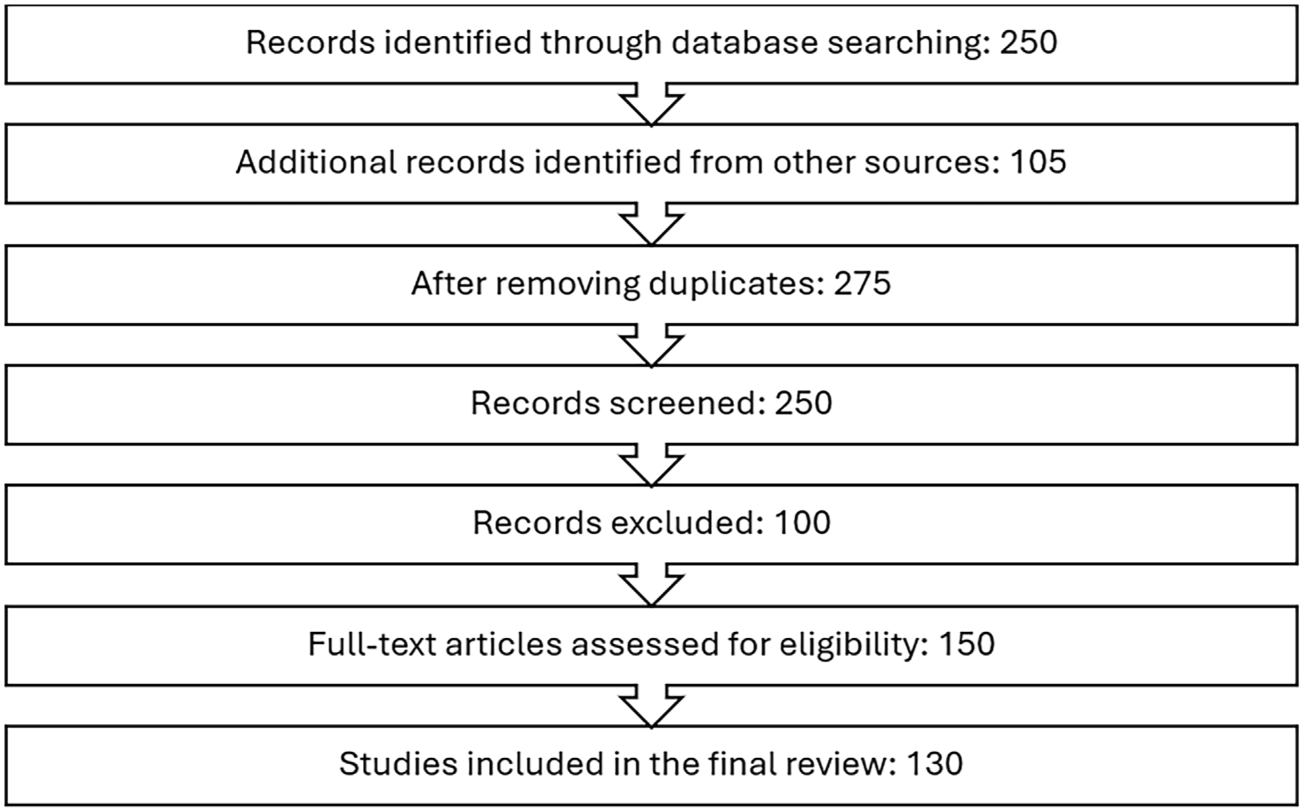
Figure 4: PRISMA flowchart
To enhance the quality and clarity of this manuscript, artificial intelligence (AI) tools were employed during the writing process. Specifically, AI-assisted tools were used for language polishing, structural refinement, and grammar correction. These tools ensured the manuscript adhered to academic language standards, improved sentence coherence, and minimized grammatical errors. However, the conceptualization, research, analysis, and conclusions presented in this work remain entirely the intellectual contributions of the authors.
4 Deepfake Detection Techniques
This section explores both traditional and advanced deepfake detection methods in detail. It examines the primary techniques utilized in past studies and highlights the advantages and limitations of these various approaches. This aims to shed light on the current research gaps in this field and to suggest potential directions and trends for future research.
Typically, conventional techniques for detecting image-based Deepfakes focus on identifying artefacts and discrepancies that arise during image manipulation. These approaches are categorised into three primary groups: Techniques Based on Image Forensics, Signal Processing, and Handcrafted Features. Each group examines distinct sections of pictures to identify indications of modification. Fig. 5 illustrates the primary categories of conventional techniques for identifying deepfake images and their respective focal points.
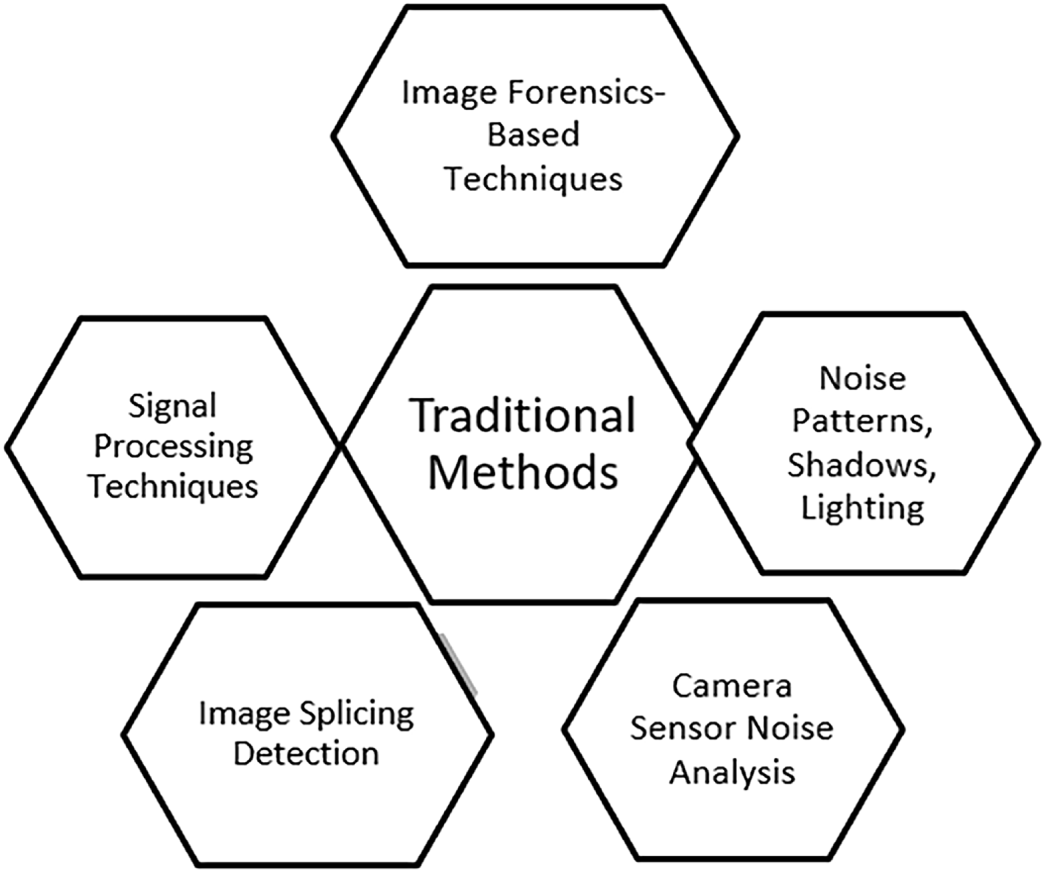
Figure 5: Traditional methods for image deepfake detection
4.1.1 Image Forensics-Based Techniques
Image forensics techniques are crucial for detecting Deepfake images, since they analyse various aspects and artefacts that may indicate alterations to the image. These methods often analyse the statistical characteristics of images, such as discrepancies in noise patterns, lighting, and shadows, which may indicate variations between the original and altered content. For instance, researchers have developed methods to detect manipulated images by analysing the distinct noise patterns produced by various cameras [19]. Additionally, techniques such as analysing variations in illumination and geometric features have been employed to detect image splicing and other forms of deception [20]. Recent advancements in deep learning have significantly enhanced these traditional methods, enabling more intricate analyses and improving the accuracy of Deepfake detection [21,22]. As the technology behind Deepfake advances, the necessity for robust visual forensics solutions to safeguard the authenticity of digital content increases.
4.1.2 Signal Processing-Based Techniques
Identifying Deepfake images necessitates the utilisation of signal processing techniques. These strategies examine signals and patterns indicative of alterations. These methods often employ various algorithms to extract information from photos. Examples include frequency domain analysis, wavelet transforms, and temporal signal processing. Researchers have employed wavelet transformers to identify issues in the frequency components of photos. These issues may reveal inconsistencies introduced throughout the Deepfake production process [23]. Additionally, methodologies such as empirical mode decomposition and spectral analysis have been employed to facilitate the detection of minor artefacts sometimes overlooked by traditional techniques. The integration of machine learning with signal processing techniques has significantly enhanced detection capabilities, enabling the identification of intricate patterns in Deepfake images [24]. Deepfake technology is continuously improving; therefore, it remains crucial to develop robust signal processing methods to ensure the authenticity of visual content.
4.1.3 Handcrafted Feature-Based Methods
Handcrafted feature-based approaches are crucial for detecting Deepfake images, as they rely on identifying unique, manually designed traits that indicate image alteration. These approaches typically identify distinctive features of human faces, such as the blinking of the eyes, facial symmetry, and variations in texture. These are elements that Deepfake algorithms struggle to replicate accurately. Local Binary Patterns (LBP) and Histogram of Orientated Gradients (HOG) are two prevalent techniques that utilise texture and shape information to differentiate between authentic and counterfeit images [25]. Recent studies have shown that integrating handcrafted features with machine learning classifiers significantly enhances detection accuracy. These traits provide critical information that automated systems may overlook [26,27]. Furthermore, academics have investigated the integration of artisanal techniques with deep learning approaches. They discovered that these hybrid models can leverage the optimal aspects of both methodologies to enhance their efficacy in detecting Deepfake [28,29]. As Deepfake technology evolves, it is essential to enhance handcrafted feature-based approaches to ensure their continued efficacy.
4.2 Machine and Deep Learning-Based Approaches
Deep learning algorithms are now indispensable for detecting Deepfakes, as they can autonomously analyse intricate patterns and subtle alterations in altered media. These methodologies employ sophisticated architectures, encompassing supervised learning models, unsupervised learning techniques, and Convolutional Neural Networks (CNNs), to enhance detection accuracy and reliability. Fig. 6 illustrates the primary components of deep learning-based Deepfake detection and delineates the distinct methodologies employed by supervised learning, unsupervised learning, and CNN-based approaches.
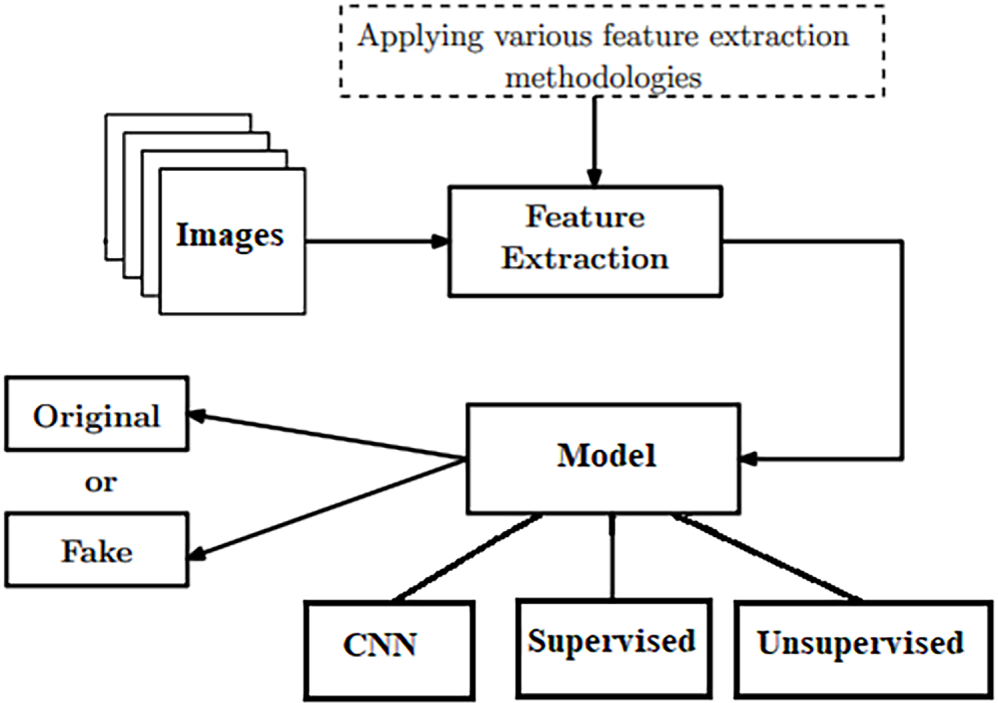
Figure 6: Deep learning methods for image deepfake detection
4.2.1 Supervised Learning-Based Methods
Methods based on supervised learning for detecting Deepfakes in images have attracted considerable interest because they can utilise labelled datasets to train effective classifiers. These approaches generally consist of training models on a varied collection of authentic and altered images, enabling the algorithms to acquire distinguishing characteristics that can proficiently differentiate between real and counterfeit content. Recent advancements indicate that Convolutional Neural Networks (CNNs) demonstrate notable effectiveness in this field, as they possess the capability to automatically extract intricate features from images, eliminating the necessity for manual feature engineering [30]. For example, investigations have shown that CNN architectures, including ResNet and VGG, can attain elevated accuracy levels in identifying Deepfake by recognising subtle artefacts frequently found in altered images [31]. Furthermore, the incorporation of hyperparameter optimisation techniques has significantly improved the performance of these models, allowing for better generalisation to previously unseen data [32]. With the ongoing evolution of Deepfake generation techniques, the advancement of sophisticated supervised learning methods is essential for preserving the integrity of digital media.
4.2.2 Unsupervised Learning-Based Methods
Methods based on unsupervised learning for detecting Deepfakes in images have surfaced as a promising strategy, especially because they can pinpoint anomalies without relying on labelled datasets. These approaches typically emphasise understanding the fundamental distribution of authentic images and identifying anomalies that could suggest alterations. For example, methods like autoencoders have been utilised to reconstruct input images, enabling the model to emphasise differences between the original and reconstructed images, which may indicate Deepfake content [33]. Furthermore, recent investigations have examined the application of clustering algorithms to categorise similar images and detect outliers that could signify Deepfake [34]. An alternative innovative approach utilises generative adversarial networks (GANs) in a semi-supervised framework, wherein the discriminator is trained to differentiate between authentic and synthetic images based on acquired features, thereby improving the model’s capacity to identify subtle alterations [35]. With the ongoing advancements in Deepfake technology, the importance of unsupervised learning methods is growing significantly for the creation of resilient detection systems capable of adapting to emerging forms of manipulation.
4.2.3 Convolutional Neural Network (CNN)-Based Methods
Methods based on Convolutional Neural Networks (CNNs) have emerged as fundamental in identifying Deepfake images, owing to their capacity to autonomously learn and extract pertinent features from extensive datasets. The techniques utilise the hierarchical organisation of CNNs to effectively capture both low-level and high-level features, essential for detecting subtle artefacts that could suggest manipulation. Recent studies have shown the effectiveness of various CNN architectures, including ResNet, Inception, and DenseNet, in achieving high accuracy rates in Deepfake detection tasks. A study indicated that a CNN integrated with a vision transformer reached an accuracy of 97% on the FaceForensics++ dataset, highlighting the capabilities of these models in differentiating between authentic and fabricated images [36]. Furthermore, the exploration of ensemble methods has been undertaken, wherein multiple CNN models are integrated to enhance detection performance by capitalising on the strengths of each architecture [37]. The ability of CNNs to adjust to various forms of input data, combined with their potential for transfer learning, significantly boosts their relevance in the fast-changing realm of Deepfake technology [38]. With the advancement of Deepfake generation techniques, it is crucial to persist in refining and innovating CNN-based methods for effective detection.
Hybrid methods for Deepfake detection in images have gained traction as experts seek to combine the strengths of various machine learning architectures to enhance detection accuracy and robustness. These methods generally combine Convolutional Neural Networks (CNNs) with alternative models, including transformers or recurrent neural networks (RNNs), to utilise both spatial and temporal characteristics. A recent study introduced a hybrid transformer network that employs two distinct CNNs, XceptionNet and EfficientNet-B4, as feature extractors. These are subsequently integrated with a transformer architecture to facilitate the learning of joint feature representations. This model exhibited strong performance on benchmark datasets such as FaceForensics++ and DFDC, while also utilising innovative image augmentations to enhance detection abilities and mitigate overfitting. A significant method integrates CNNs with Long Short-Term Memory (LSTM) networks, enabling the model to grasp temporal dynamics in video Deepfake, which improves its capacity to identify inconsistencies across frames [39]. The implementation of these hybrid methods enhances detection accuracy while offering a deeper insight into the intricate characteristics linked to Deepfake images, indicating a promising avenue for future exploration in this area [40]. Fig. 7 presents a hybrid detection model that integrates Convolutional Neural Networks (CNNs) with Long Short-Term Memory (LSTM) networks. This integration utilises the advantages of both spatial and temporal feature extraction to improve the identification of Deepfake images and videos.
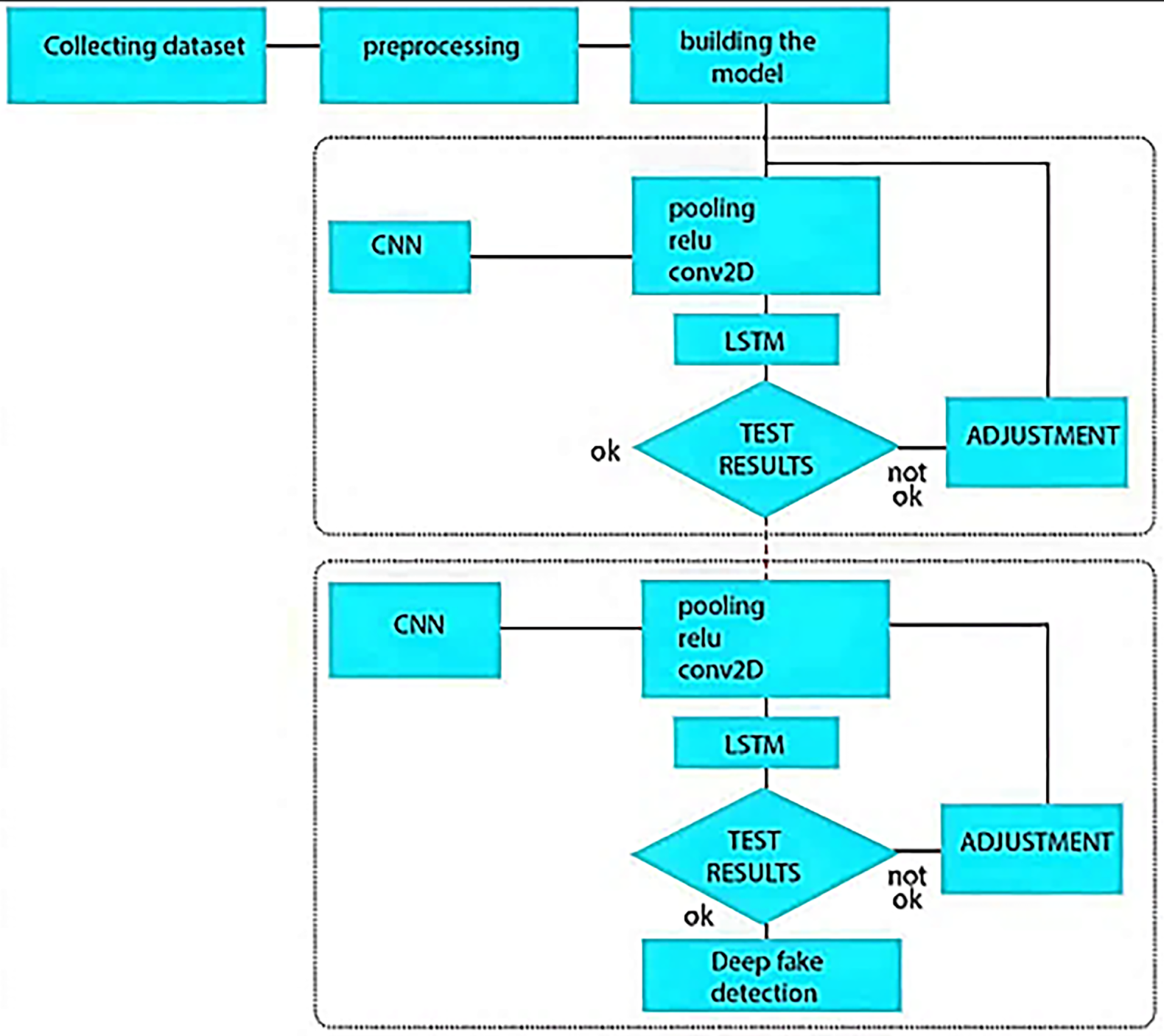
Figure 7: A Hybrid CNN-LSTM model for deepfake detection [39]
4.4 Emerging Detection Techniques
This section discusses recent advances in deepfake detection methods. It provides critecal review for research studies that utilized emerging deepfake detection techniques, such as the frequency domain analysis, the explainable AI techniques, and the adverserial detection techniques.
4.4.1 Frequency Domain Analysis
Frequency domain analysis methods have garnered considerable interest in the field of Deepfake detection because they can reveal subtle artefacts often introduced during the image generation process. The methods employed involve techniques like the Fast Fourier Transform (FFT), which facilitates the transformation of images from the spatial domain to the frequency domain, thereby enabling the detection of discrepancies that might remain hidden in the original image. Recent studies have shown that Deepfake images frequently display unique frequency characteristics, including particular spectral peaks and troughs, which can be utilised for detection purposes [41]. A comparative study demonstrated the effectiveness of analysing high-frequency components to identify subtle anomalies in GAN-generated images, which are usually less noticeable in the spatial domain [8]. Furthermore, the implementation of frequency-aware models, like FreqNet, has demonstrated potential in improving the generalisability of Deepfake detectors by concentrating on high-frequency information and acquiring source-agnostic features [42]. Overall, frequency domain analysis offers a strong framework for detecting Deepfake, allowing for the identification of manipulations that conventional methods might miss.
4.4.2 Explainable AI (XAI) Techniques
Techniques for explainable AI are progressively being incorporated into methods for detecting Deepfakes, aiming to improve the interpretability and transparency of the predictions made by models. The techniques focus on delivering a transparent understanding of the decision-making processes inherent in deep learning models. This transparency is essential for fostering trust among users and stakeholders, particularly in sensitive fields like journalism and law enforcement. Recent studies have utilised various XAI methods, including Local Interpretable Model-Agnostic Explanations (LIME) and SHapley Additive exPlanations (SHAP), to clarify the features that play a role in classifying images as real or fake [43]. For example, LIME has been employed to emphasise particular areas in an image that impacted the model’s decision, enabling users to grasp the reasoning behind the classification [44]. Fig. 8 illustrates the use of Explainable Artificial Intelligence (XAI) in the detection of Deepfakes. The XAI approach emphasises important decision-making characteristics, facilitating interpretability and transparency in the identification of manipulated media content. Furthermore, investigations have delved into the application of network dissection techniques to examine the internal representations acquired by CNNs, offering valuable insights into the responses of different layers of the network to various features linked to Deepfake images [45]. Incorporating XAI techniques enhances detection accuracy while also promoting a deeper understanding of the underlying mechanisms, thus meeting the essential demand for explainability in AI systems [46].
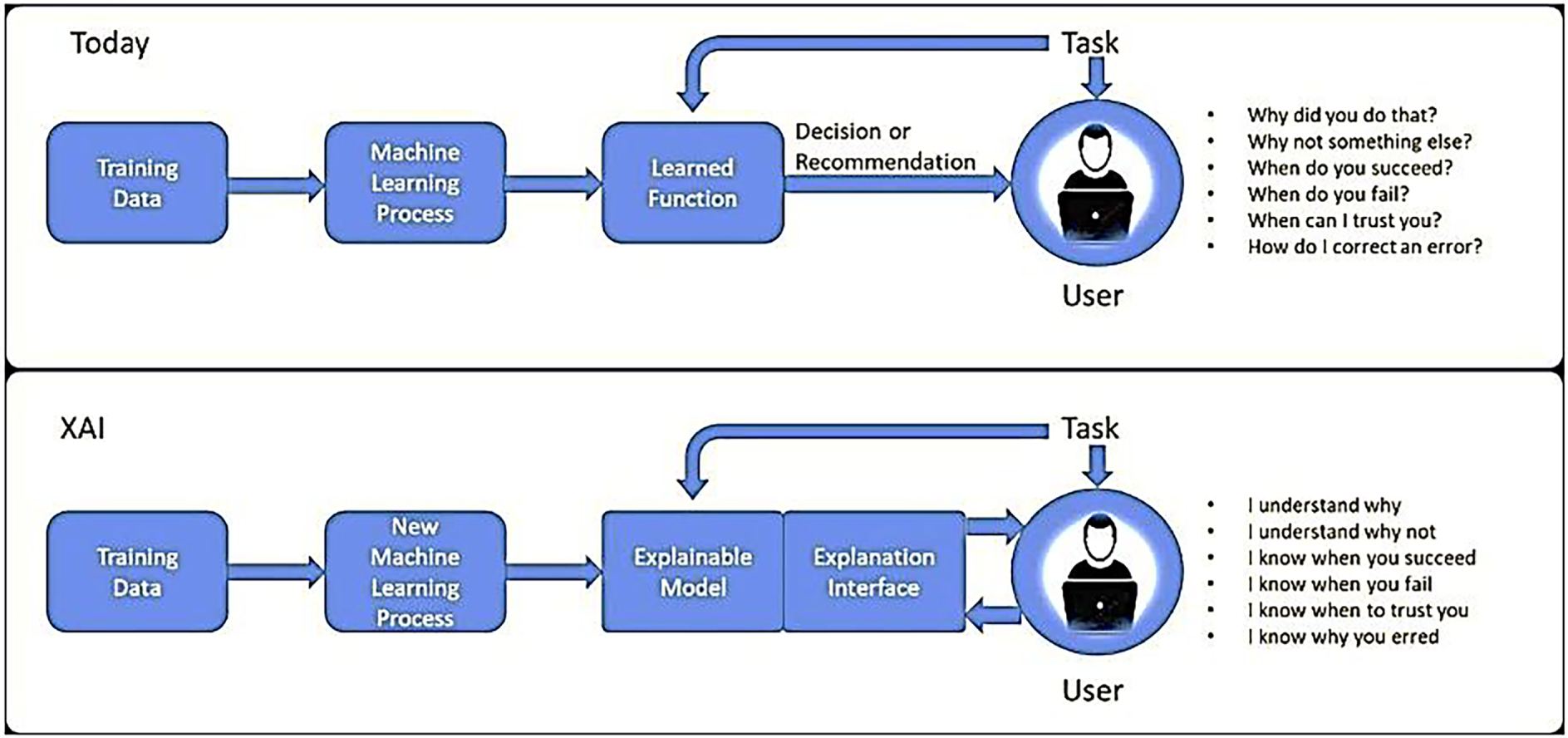
Figure 8: Explainable artificial intelligence (XAI) approach [44]
4.4.3 Adversarial Detection Methods
Adversarial detection methods have become a vital focus in combating Deepfake images, especially as these synthetic media continue to evolve in complexity. The methods concentrate on recognising and addressing adversarial attacks intended to mislead Deepfake detection systems through subtle modifications of input images. Recent studies have underscored the susceptibility of Deepfake detectors to adversarial manipulations, which can greatly undermine their reliability [47]. An innovative approach involves integrating eXplainable Artificial Intelligence (XAI) techniques, which offer interpretability maps that assist in identifying the decision-making factors within AI models. By leveraging these insights, individuals have developed adversarial detectors that enhance the robustness of existing Deepfake detection systems without altering their performance [48]. Moreover, techniques involving adversarial training, which involve training models on both clean and adversarial examples, have demonstrated potential in enhancing the robustness of Deepfake detectors against a range of adversarial attacks [49]. This dual emphasis on detection and defence highlights the necessity of crafting thorough strategies to protect against the continuously changing realm of Deepfake technologies.
In this section, the strengths and weaknesses of various Deepfake detection approaches, the performance metrics used for evaluation, and the datasets commonly utilized are critically analyzed to provide a comprehensive understanding of the current state of research. Table 1 summarizes the key strengths and weaknesses of the detection methods, highlighting their advantages and limitations in tackling Deepfake challenges.
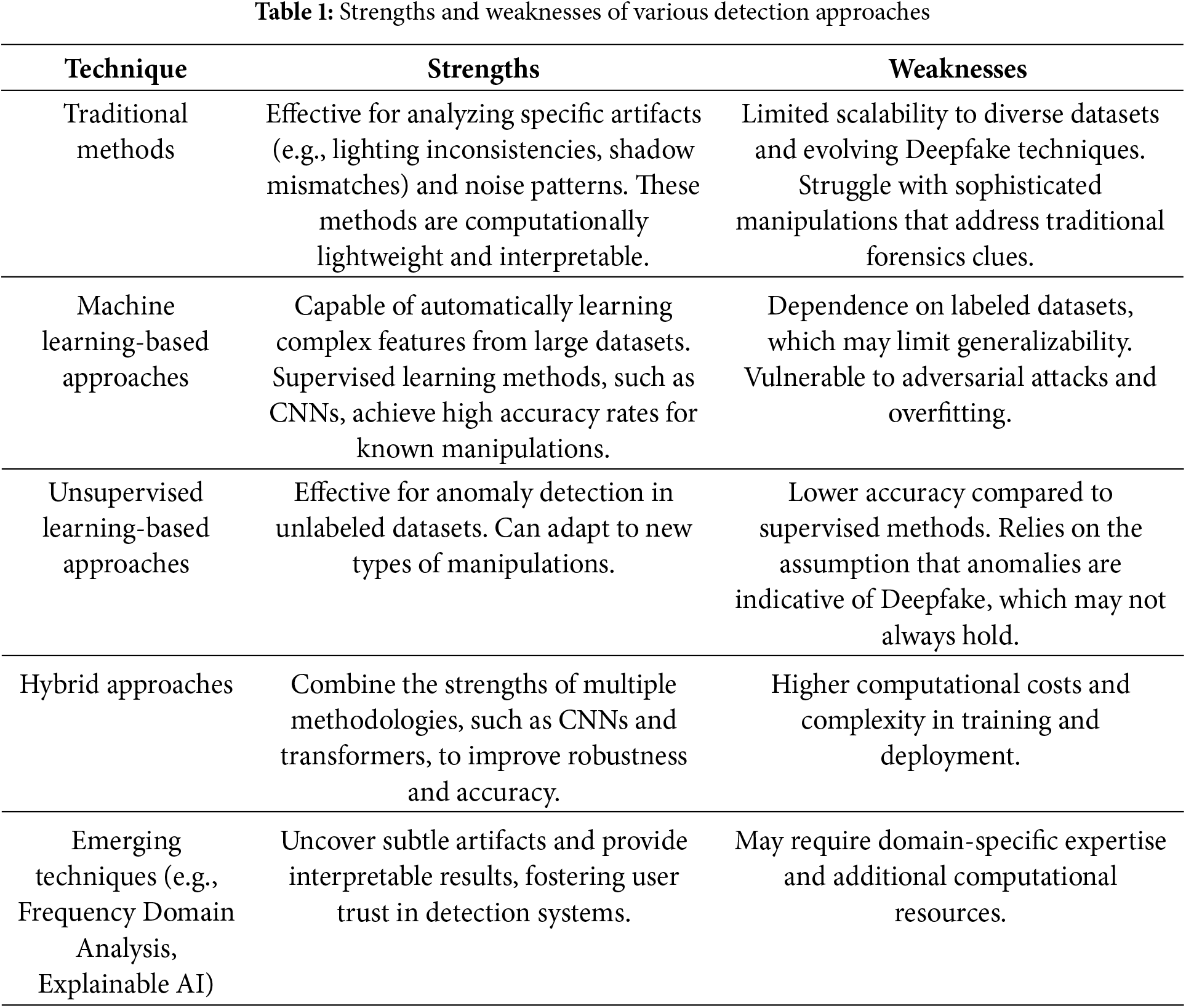
Meanwhile, Table 2 provides a comparison of the detection methods with detailed metrics like accuracy, computational cost, used dataset, and robustness against adversarial attacks.

5 Deepfake Prevention Techniques
This section discusses major techniques for preventing Deepfake. These techniques can be categorized based on the technology or approach used into content authentication and watermarking, algorithmic approaches, and prevention strategies based on awareness, policies, and regulations.
5.1 Blockchain and Watermarking
This approach for Deepfake prevention relies on the use of watermarking and content authentication technologies such as Blockchain. Several attempts based on these techniques have been documented in previous research studies to resist the spread of Deepfake content.
In [50], authors proposed a system for preventing the distribution of Deepfake video news using watermarking and Blockchain. The proposed system utilizes Digimarc audio and image watermarking technologies to create watermarks required to verify the integrity of the content. Additionally, the system employs Ethereum Blockchain to store the metadata of news videos and hence facilitates the forensic analysis of media content when necessary. Due to the storage limitations of the block-chain, the proposed system is supported by the InterPlanetary File System (IPFS) technology to store the original video news and its metadata. The proposed system demonstrates significant potential to detect and prevent the dissemination of Deepfake content, facilitate the forensic analysis, and prevent the copy attacks. However, the system is considered costly due to its reliance on Blockchain and IPFS technologies. Moreover, these technologies might not be accessible for a large segment of the population in many countries, which reduces the effectiveness of the system. Additionally, the performance of the system may suffer from low throughput and scalability challenges inherited from Ethereum Blockchain. Authors of [51] highlighted the importance of utilizing security features of Blockchain, such as immutability and decentralization, to combat Deepfake.
The features of Blockchain can facilitate provenance tracking, enhance data integrity, and provide public access to verifiable information. However, due the evolving threats of Deepfake and their sever impacts on different sectors, the study emphasized on the need to develop a comprehensive framework that utilizes smart contracts to automate verification processes and enforce polices in respect to content usage. Researchers in [52] presented a hybrid hardware-software approach to combat the growing threat of Deepfake. The proposed approach leverages unique physical properties of camera flash memory to generate a distinct ID for each image, which is then embedded in a cryptographically sealed manifest and published on a secure distributed ledger. By utilizing the security features of Blockchain the images can be authenticated and hence proactively mitigate the spread of Deepfake. Moreover, the research study used convolutional neural networks to improve Deepfake detection. Another research utilized Blockchain technology to create a trust index model aimed at preventing the spread of fake news on social media. The proposed model represents another effort to combat the problem of the spread of Deepfake by leveraging block-chain technology [53]. Another research presented in [54] developed a method to detect face videos via extracting frequency domain and spatial domain features. Blockchain technology was employed to enhance the generalization ability of the detection model and establish a shared and renewable environment for real data and content regulation. In [55], researchers introduced a proposal for combating the spread of misinformation on the web by leveraging Blockchain and AI technologies. In [56], authors presented a prototype implementation using the Hyperledger Fabric blockchain to prevent fake news. The proposed implementation uses an entropy-based incentive mechanism to diminish the negative effect of malicious behaviors on the fake news prevention system. The study in [57] introduced a decentralized application using Blockchain and smart contracts to check the authenticity and provenance of the vehicle accident footage and prevent the spread of Deepfake manipulated content. Another decentralized mechanism to detect Deepfake attacks and prevent the spread of Deepfake video recordings was proposed in [58]. The research in [59] presented a survey for various techniques that can be adopted to mitigate the risk of Deepfake. Blockchain technology was recommended as an effective preventive countermeasure. A research project that integrated Blockchain and deep learning algorithms to combat Deepfake was proposed in [60]. The deep learning algorithms are used to identify Deepfake content while Blockchain is utilized to provide authenticated and immutable video records. It has been found that integrating Blockchain and deep learning can offer more effective solutions to mitigate the threats of Deepfake. In [61], authors discussed various techniques to avoid the spread of Deepfake and its negative impacts in the healthcare domain using Blockchain technology. Another research leveraging deep learning (DL) and Blockchain was proposed by [62]. Researchers concluded that the accuracy of DL model can be improved via utilizing the security features of Blockchain. Another research attempt leveraging DL models and Blockchain was reported in [63]. Blockchain is used to develop a secure system to trace media content, where Convolutional Neural Network, and hash algorithms are employed to preserve the integrity of the content and ensure better protection. Researchers in [64] used Algorand Blockchain Consensus Mechanism to detect Deepfake in financial transactions. The proposed Blockchain-based solution aims to avoid the threats of users’ identity theft and the spread of Deepfake. A blockchain-based application to check the authenticity of the Vehicle accident footage and mitigate the threats of Deepfake was proposed in [65]. Authors explored the potential of Blockchain technology as a solution to mitigate the spread of fake news and offer the ability to authenticate and trace the content. They concluded that Blockchain technology holds promise in this area due to its powerful security features [66]. A Blockchain-based Deepfake Verification Framework was developed to offer real time detection of manipulated data in electoral contexts and hence improve the fairness and authenticity [67]. A novel method that leverages Blockchain and collaborative learning techniques to limit the proliferation of Deepfake was presented in [68]. The study employed Blockchain and federated learning (FL) to preserve the confidentiality of data sources and address challenges related to data integrity and authenticity. The pro-posed Blockchain-based FL method with DL technique is shown in Fig. 9.
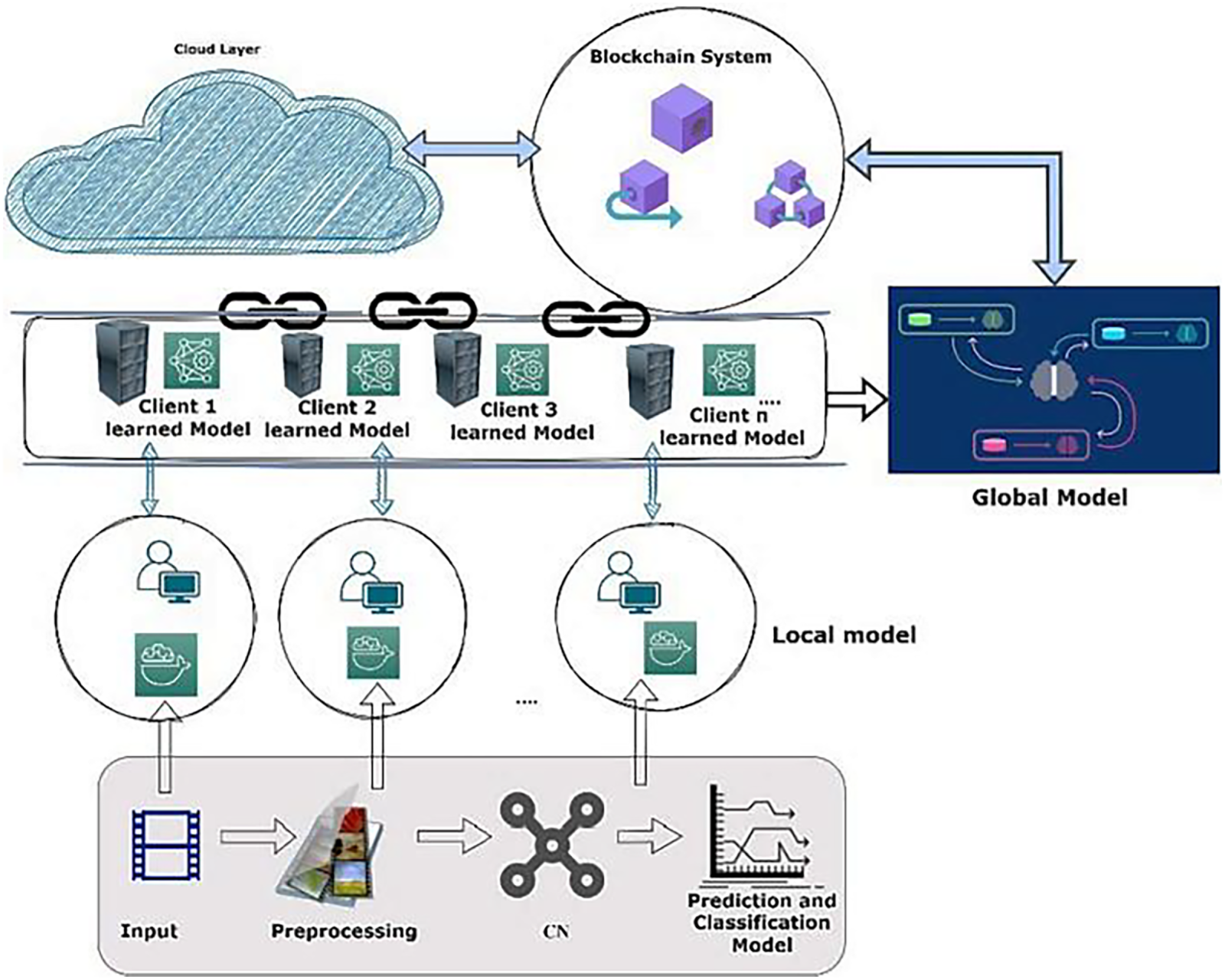
Figure 9: Blockchain-based FL method with DL technique [68]
A study in [69] introduced a proactive approach to limit the spread of Deepfake by leveraging Blockchain and DL techniques. In particular, the research used the Dense Neural Networks (DNN) to prevent identity impersonation attacks and utilized Blockchain and Smart Contracts technologies to tackle the Deepfake challenge by verifying digital media’s history. Researchers explored the potential of Blockchain to secure data generated by the Deepfake service providers and hence avoid the abuse of Deepfake technology. In [70], authors introduced a Deepfake task management algorithm (DD-TMA) based on Blockchain and edge computing technologies. This research employed Blockchain technology to create a decentralized, immutable storage platform, which helps maintain the integrity of data and tasks performed by Deepfake models and reduce the risks associated with traditional centralized storage solutions. Another study recommended using comprehensive cybersecurity architecture to limit the impacts of Deepfake technology. The study suggests utilizing cutting-edge detection algorithms, and Blockchain technologies to develop effective proactive solution for the Deepfake challenge [71]. Another research suggested to integrate Blockchain with AI models mitigate the risk of Deepfake was published in [72]. The research introduced a Blockchain-Augmented AI framework that utilizes security features of Blockchain to enhance the reliability of the detection process of AI models. Experimental results indicated that the proposed framework significantly enhances the accuracy of Deepfake detection. Researchers investigated integrating Blockchain with advanced hashing algorithms to enhance authenticity and trust, thereby helping to mitigate threats posed by Deepfake technology [73]. A model based on Blockchain and Steganalysis technologies to offer real time Deepfake detection and prevention was proposed in [74]. Experiments showed that the model can efficiently distinguish genuine content from Deepfake. Blockchain was also employed by [75] to trace back media content and original from manipulated images and videos. The Blockchain was also suggested by [76] as an effective Deepfake detection method after a thorough analysis of relevant studies. Another study published in [77] introduced a Blockchain-enabled deep recurrent neural network model. The proposed model leverages Blockchain and DL to combat the threats of clickbait scams in social networks. In recent research [78], authors proposed a framework that employs Convolutional Neural Networks (CNNs) and Blockchain to combat the threats of Deepfake technology. The proposed framework utilizes IPFS to solve the limited storage capacity of Blockchain. Smart contracts were also utilized to store social media content and AI verification results. The model improved the reliability and transparency of online media. Another Blockchain-based framework for enhanced Deepfake detection was proposed in [79]. The framework utilizes Blockchain and multimodal analysis techniques to enhance the detection of manipulated media content
It should be mentioned that Blockchain technology was proposed to preserve integrity and offer better authentication and transparency in variety of contexts such as financial transactions [80], education [81], healthcare [82], and identity management [83].
5.2 Algorithmic Approaches and Protocols
Many research studies investigated leveraging various algorithms and protocols for Deepfake prevention. A challenge and response protocol to enable proactive real time detection of Deepfake were presented in [84]. The proposed protocol involves a simple challenge that can be performed easily by a human, while posing significant difficulties for Deepfake models to generate due technical and theoretical limitations of Deepfake technologies. As a result, the proposed approach is effective in preventing real-time Deepfake calls on smartphones. However, since the proposed approach relies on predefined sets of challenges, it may be susceptible to bypassing as Deepfake technologies continue to advance, especially if an attacker has large enough datasets. Moreover, although the proposed protocol is effective in preventing real-time video and audio calls, its effectiveness in avoiding the spread of fabricated Deepfake content is not investigated. A novel approach based on steganography techniques to prevent Deepfake videos was proposed in [85]. The proposed approach leverages the Generative Adversarial Networks (GANs) to develop effective solution that can combat sophisticated and continuously evolving Deepfake technologies. The proposed solution also involved embedding hidden watermarks in video frames to create a layer of security against Deepfake manipulations. Another research that utilized GANs to prevent Deepfake was presented in [86]. The study developed methods that can effectively confuse the Deepfake generation process. One notable limitation of the proposed method is the dependency on specific configurations of adversarial attacks, which may not generalize across all potential use cases or image manipulation technologies. Also, the study did not consider dynamic or real time manipulation settings which may limit the effectiveness of the presented approach. In [87], authors introduced the concept of “scapegoat image” to address privacy concerns associated with Deepfake. The proposed method provides a balance between maintaining user recognition and ensuring that the original identity is well-protected against Deepfake manipulations, making it a significant advancement in terms of user’s privacy protection. Other studies employed digital signature algorithms to prevent the distribution of Deepfake content. In [11], authors proposed a framework based on elliptic curve cryptography (ECC) digital signature. The framework leverages ECC digital signature to enhance the authenticity and integrity of digital content. Moreover, it emphasizes the integration of crypto-graphic algorithms with societal awareness to mitigate the proliferation of Deepfake content. Another Deepfake prevention mechanism to mitigate the threat of face-swapping was introduced in [88]. The proposed mechanism utilizes targeted perturbations of latent vectors within generative algorithms to disrupt visual quality while minimizing reconstruction loss. Experimental results showed that this approach can effectively introduces inconsistencies in Deepfake videos, making them more detectable, and hence contribute to preventing the spread of images manipulated using Deepfake techniques. Authors of [89] explored the implications and user responses to adversarial noise designed to counter the generation of Deepfake. In particular, the study focused on examining the satisfaction level of users in social media platforms regarding the noise produced by noise-adding technologies to enhance their content security. The study’s findings revealed a significant gap in awareness regarding privacy risks associated with Deepfake among native users in influencers in social media, emphasizing the need for a more effective strategy to enhance awareness about this issue. The study published in [90] described how parties from various domains evaluate the detection capabilities. The study concluded that analyzing data from multi-stakeholder input can better inform the detection process decisions and policies. In [91], researchers presented a method to mitigate threats relevant to Mixed Reality and improve data integrity. They also advocated utilizing machine learning algorithms in this field. Another study introduces a Deepfake disruption algorithm called “Deepfake Disrupter” [92]. The algorithm trains a perturbation generator and adds the generated human imperceptible perturbations to the original images. Experimental results showed that the proposed algorithm improves the F1-score and accuracy of various Deepfake detectors. In [93], researchers recommended to develop reliable, explainable, and generalizable attribution methods to hold malicious users accountable for any actions that led to the spread of manipulated information or violating the intellectual property. Researchers introduced a method to avoid the spread of Deepfake content by employing motion magnification as a pre-processing step to amplify temporal inconsistencies common in forged videos. They also introduced a classification algorithm that utilizes the preprocessing step to enhance accuracy and help in classifying forged videos [94]. A method, called D-CAPTCHA, for preventing fake calls was proposed in [95]. The method relies on generating content that exceeds the capabilities of Deepfake models and hence hinders the creation of Deepfake content and helps real time detection. An overview of the proposed method is presented in Fig. 10. Another research employed DL algorithms to improve the efficiency of identifying fake audio [96]. The proposed method uses Melted frequency cepstral coefficients (MFCCs) to extract the most useful information from the sound. Experimental results showed that the proposed method can enhance the accuracy of Deepfake identification. In [97], researchers proposed a computationally efficient DL algorithm to detect low-quality fake content. The proposed algorithm enables the fast identification of images and videos on social media, helping to mitigate the spread of fake content. Another method, supported by DL algorithms, to prevent the distribution of Deepfake content was proposed in [98]. The method employs remote Photoplethysmography (rPPG) and Convolutional Neural Network to detect Deepfake content and identify its source. By doing so, the proposed method aids in locating the perpetrator, enabling appropriate actions to be taken. A custom Deepfake text model based on ML algorithms was proposed in [99]. The model enables to determine if a text is associated with a certain author, which contributes in combatting Deepfake at the text level.
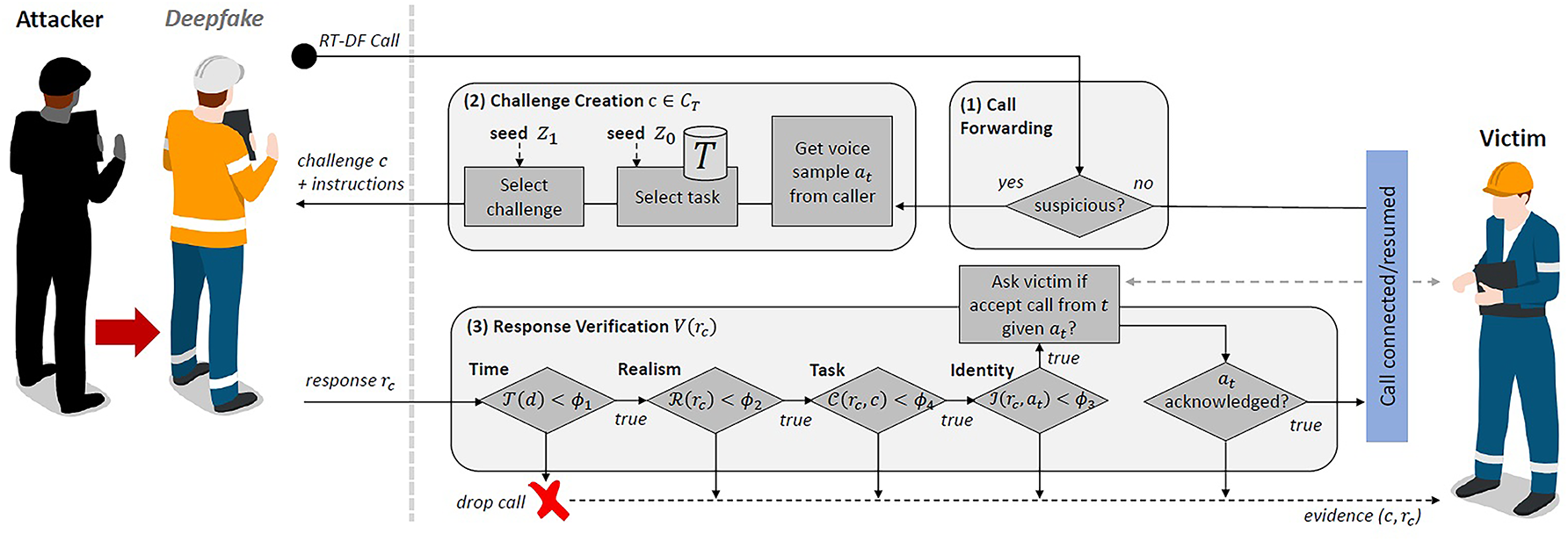
Figure 10: An overview of D-CAPTCHA method for detecting fake calls [95]
5.3 Awareness, Policies, and Regulations
Enormous research studies emphasized on the necessity of adopting effective awareness, policies, and regulations in protecting from Deepfake and their impacts. In [100], authors highlighted the various harms related to Deepfake, including the spread of non-consensual pornography, misinformation, violation of privacy, and threats to national security. The study proposed policy recommendations that focus on establishing accountability and imposing restrictions across the entire supply chain of Deepfake, starting from the AI model developer to the service providers. This may contribute in preventing the misuse of AI technologies. The ethical considerations surrounding Deepfake technology development were explored in [101]. Researchers conducted interviews with professional Deepfake developers to collect data regarding awareness and gaps in ethical practices among specialists in AI development. The study revealed that there is a limited awareness about the ethical implications of AI technologies, including consent, and the societal negative impacts of Deepfake-related crimes. Recent research studies raised the importance of developing robust regulations to mitigate risks associated with Deepfake while fostering innovation [102]. The research results highlighted the need to develop comprehensive and robust legal measures aimed at controlling the use of Deepfake technology and avoids its catastrophic consequences on economy, and public trust. Moreover, the study emphasizes the pressing need for international collaboration to address the challenges posed by Deepfake. Authors of [103] investigated the legal and ethical implications of Deepfake pornography content generated using AI models. They analyzed the policies and law enforcement for a case study in Indonesia. The results of the study found a significant gap in legal protections for victims of Deepfake AI misuse. Another case study of India explored the multifaceted legal implications arising from the emergence of Deepfake technology [104]. The research results indicated that while the currently applied Acts and policies provide some level of recourse, there is an urgent need for targeted legislation that encompasses the unique and severe threats posed by Deepfake technology. Thus, the research recommends multi-stakeholder collaborations to improve privacy protection and raise public awareness about the implications of Deepfake technology. The study published in [105] investigated the pros and cons of Deepfake technology. Researchers highlighted both the potential benefits and the significant risks posed by this technology. They recommended to enhance identity verification, public awareness, strengthening legal frameworks, and advancing technological innovations aimed at detecting and preventing Deepfake contents. Recent research emphasized that current policies and regulations are insufficient to prevent the creation of Deepfake [106]. The authors recommended incorporating mandatory safeguards against Deepfake into regulatory frameworks and developing AI tools that follow ‘safety by design’ principles. This proactive approach has the potential to mitigate the risk of Deepfake technology. In a recent study [107], researchers conducted a comprehensive analysis of the multifaced impacts of Deepfake technology across various domains. The study presented evidence-based recommendations to stakeholders, and policymakers to mitigate the risks associated with Deepfake. In [108], researchers assessed the public attitude regarding Deepfake technology. The study concluded that there is a need for more robust penalties and regulations to mitigate the harms associated with the spread of Deepfake content. Researchers in [109] provided an overview of the global journalistic discussions of Deepfake application. Also, they presented insights about AI content regulations and ethics. The research study published in [110] presented analysis of criminal law in terms of its ability to keep pace with the evolving risk of Deepfake technology. The study concluded that there is a pressing need for more effective multifaceted responses to Deepfake abuse. Another study proposed amendments to the electoral regulations in Australia in order to mitigate the threats posed by Deepfake to elections [111]. In [112], researchers evaluated the regulatory regimes in terms of their ability to address potential harm associated with Deepfake and proposed improvement to the privacy and data protection regime. Another research discussed the impact of manipulating personal data using Deepfake technology on cyberterrorism, political and legal resilience in Indonesia. The research found that existing regulations need to be enhanced to address the negative consequences associated with the misuse of Deepfake technology [113]. The article published in [114] provided an overview about the main algorithm models of Deepfake technology and highlighted the associated risks and legal regulation. In [115], researchers discussed the weaknesses of policies and regulations and advocated for mor effective strategy to combat Deepfake. Researchers in [116] suggested to incorporate AI Deepfake education into legal training. This aims to enhance the skills of legal professionals and assist them to address challenges posed by Deepfake technology.
Another study proposed improvement to the AI Act to better address the unique characteristics of Deepfake technology. This initiative is part of a broader effort to create more effective laws and regulations that can mitigate the negative impacts of Deepfake [117]. In the study presented in [118], researchers examined the legal issues surrounding the protection of individuals and society. They also investigated some legitimate or useful applications of Deepfake technology. The authors concluded that there is a considerable gap in current laws and regulations, and they advocate for increased research efforts to develop a more effective approach to mitigate the impact of Deepfake technology. The study published in [119] explored the methods used by well-known news organizations to tackle the challenge of Deepfake. It indicated that organizations focus on training journalists to detect fake news. Moreover, research projects that aim to improve media forensics tools represent another important measure to mitigate the spread of fake news.
5.4 Integration of Multiple Prevention Strategies
A number of research studies called for adopting a multifaceted strategy to counter the evolving Deepfake techniques and associated threats in different domains [120–127]. In [120], researchers investigated the implications of Deepfake on journalism and related parties. The study found that current reactive technical solutions are insufficient to combat Deepfake and mitigate their effects, which may lead to severe consequences across various sectors. This indicates that there is an urgent need to develop a multi-layered and more effective approach that involves both technical and non-technical countermeasures to address the risks associated with Deepfake technology. The negative impacts of Deepfake technology and the current technical and non-technical countermeasures were discussed in [121]. The major impacts are Privacy and Consent Violations, Misinformation, and losing Reputation and Trust. The article advocates for a comprehensive multi-faceted approach that combines education, technology, and legal countermeasures to effectively limit the negative impacts associated with Deepfake. Another research article highlighted the need for a collaborative approach involving the key players, including technology firms, regulatory bodies, and academic institutions to enhance the defense against threats caused by unethical use of Deepfake technology. The need for a multi-faceted approach involving technical methods and legal frameworks to counter Deepfake is further supported by another study [122], which highlighted both the beneficial applications of Deepfake technology and the substantial risks it poses to individuals and society. In [123], researchers recommended mitigating the threats associated with Deepfake technology by using several strategies, including implementing basic security practices, raising awareness about deep fakes, and employing robust cybersecurity measures. This approach was also adopted by [124,125], which found that although technical solutions can lessen the risks posed by Deepfake technology, a comprehensive strategy involving legislation, education, and collaborative innovation is essential for successfully navigating the difficulties posed by Deepfake technology. One more study explored the implications and user responses to adversarial noise designed to prevent the generation of Deepfake [126]. The study employed concepts from different fields, including technology, psychology, and social media to provide better understanding of how users interact with Deepfake prevention tools. Moreover, the study found that there is a concerning gap in awareness about Deepfake-associated privacy risks among digital natives and influencers. Another research explored the multifaceted legal and ethical considerations of Deepfake technology. The study involved a comprehensive analysis for the perspective of experts in various fields related to Deepfake technology. The findings emphasized the necessity for a collaborative approach that includes both technical and non-technical measures to effectively combat the challenges posed by Deepfake content [127]. Researchers in [128] explored the efficiency of various methods for Deepfake prevention and detection. They concluded that there is a need for a multifaceted approach involving both technical and non-technical methods to develop effective solution that can mitigate the threats of Deepfake technology. Furthermore, the approach of integrating collaborative and multiple prevention strategies, including technical and non-technical countermeasures, to create effective solution for Deepfake challenges was advocated by various recently published research articles [129–131].
6 Limitations and Open Research Questions
This section discusses the main limitations of Deepfake detection and prevention techniques based on the research articles explored in this review.
6.1 Limitations of Deepfake Detection Techniques
The main limitations of Deepfake detection can be summarized as follows:
Generalization Across Datasets: Many detection techniques struggle to generalize across datasets due to biases in training data and the diversity of Deepfake generation methods. For example, models trained on specific datasets often fail to detect Deepfakes generated using unseen manipulation techniques or datasets. As highlighted by Edwards et al. [132], the lack of a standardized benchmark dataset exacerbates this issue, leading to inconsistencies in detection performance across real-world scenarios.
Vulnerability to Adversarial Manipulations: Detection systems are vulnerable to adversarial manipulations, which can bypass detection algorithms by introducing subtle perturbations that are imperceptible to humans but degrade the model’s accuracy. Studies by Dhesi et al. [133] demonstrate that adversarial attacks can significantly reduce the reliability of detection systems, posing a critical challenge to their robustness.
Rapid Advancements in Deepfake Generation Technologies: The rapid advancements in Deepfake generation technologies have outpaced the development of detection systems, reducing their effectiveness over time. For instance, GAN-based methods (Goodfellow et al. [2]) have evolved to produce highly realistic Deepfakes that are increasingly difficult to detect, as discussed in Babaei et al. [134].
High Rates of False Positives and Negatives: High rates of false positives and negatives impact the reliability of detection systems, particularly in high-stakes applications like journalism and law enforcement. Cases documented by Kalodanis et al. [135] highlight how unreliable detection outputs can erode trust in these systems, especially when used as evidence in legal or journalistic contexts.
Computational Requirements of Advanced Techniques: Advanced detection methods, such as hybrid approaches or those using the frequency domain, require substantial computational resources. This limitation hinders accessibility for researchers and practitioners with limited computational infrastructure. For example, Kaur et al. [4] emphasize that while frequency-based techniques improve accuracy, they also demand specialized hardware, which limits their adoption.
6.2 Limitations of Deepfake Prevention Techniques
Based on the research databases reviewed in this review, there is generally a lack of research focusing on the development of Deepfake prevention solutions. This is concerning given the potentially catastrophic effects of the malicious use of this technology on vital sectors. Some proposed solutions to combat the spread of fake content produced by Deepfake tools leverage Blockchain technology and watermarking. While this approach effectively authenticates media content and helps reduce the dissemination of manipulated material, it is often regarded as expensive and inaccessible to a large segment of users. For example, Blockchain should be supported by IPFS to enable the storing of original content, which is considered costly. This limitation hinders its effectiveness in preventing the spread of Deepfake, particularly among ordinary users on social media and other platforms. Additionally, Blockchain-based solutions suffer challenges related to scalability and storage capacity. Moreover, they do not provide real-time prevention from Deepfake.
Furthermore, Deepfake prevention techniques that rely on algorithmic approaches and protocols may by unable to provide enough protection against the continuously evolving Deepfake methods. The effectiveness of some of these techniques in curbing the distribution of Deepfake has also not been thoroughly investigated.
Eventually, non-technical preventive measures, such as raising awareness, implementing policies, and enforcing regulations, are insufficient to address the severe damage caused by the spread of Deepfake. Those measures must be complemented by technical solutions to be enforced and effective. Recent studies have called for adopting a multi-faceted approach that integrates multiple prevention strategies to provide robust and effective protection against the spread of Deepfake and mitigate their catastrophic effects.
The following discussion provides recommendations for potential future research directions for both Deepfake detection and prevention strategies.
7.1 Future Research Directions for Deepfake Detection
The dynamic and evolving nature of Deepfake technology necessitates innovative and adaptive detection mechanisms. Future research in Deepfake detection should not only address current challenges but also anticipate future threats. Below are expanded and strengthened recommendations for future research directions:
(1) Development of Self-Evolving Detection Systems
Future detection systems should leverage continuous learning frameworks that autonomously adapt to emerging Deepfake generation techniques. This can be achieved through the integration of reinforcement learning and meta-learning paradigms, enabling systems to anticipate and respond to novel manipulation strategies in real-time. For instance, adaptive models could monitor evolving GAN architectures and retrain themselves dynamically based on new datasets [43].
(2) Explainable AI (XAI) for Enhanced Transparency
The integration of Explainable AI (XAI) into detection systems is vital for fostering trust and usability, especially in critical domains like journalism, law enforcement, and legal proceedings. Future research should focus on developing XAI methods that offer intuitive visualizations of decision-making processes, helping stakeholders understand why specific content is flagged as manipulated. Techniques such as saliency maps, attention mechanisms, and interpretable feature extraction should be emphasized [45].
(3) Adversarial Robustness and Defense Mechanisms
Strengthening detection mechanisms against adversarial manipulations is a pressing challenge. Future studies should explore the application of adversarial training, defensive distillation, and noise injection techniques to ensure robustness. Additionally, developing adversarially resilient feature extraction methods that can detect subtle perturbations without relying on labeled datasets is a promising direction [50].
(4) Lightweight and Energy-Efficient Algorithms
Resource-intensive detection models currently limit their deployment in real-world applications, particularly on edge devices and mobile platforms. Future research should prioritize the development of lightweight, energy-efficient algorithms capable of operating in constrained environments. Techniques such as model pruning, quantization, and knowledge distillation should be explored to optimize detection systems for real-time applications [25].
(5) Integration with Multimodal Detection Frameworks
Deepfake detection can benefit from multimodal analysis techniques that combine visual, audio, and biometric data. Future research should focus on developing cross-modal fusion techniques to improve accuracy and reliability, especially in cases where manipulations affect multiple modalities (e.g., lip-syncing in videos). Advanced multimodal architectures, such as transformers, should be studied to enhance feature integration [80].
(6) Creation of Comprehensive Benchmark Datasets
Current datasets often lack diversity in terms of cultural, demographic, and technical contexts, which limits the generalizability of detection models. Future research should prioritize the creation of large-scale, diverse datasets that include a variety of Deepfake manipulations, geographic regions, and demographic groups. Such datasets should also incorporate metadata and environmental variables, enabling models to account for contextual factors during detection [17].
(7) Real-Time Live Stream Detection
Detecting Deepfakes in live video streams remains a significant challenge due to latency and computational constraints. Future work should focus on developing real-time detection systems optimized for streaming platforms. Techniques such as temporal consistency analysis, real-time frequency domain analysis, and parallel processing architectures can enhance performance in live environments [95].
(8) Integration with Blockchain Technology for Provenance Tracking
Blockchain-based provenance tracking solutions can complement detection mechanisms by ensuring the authenticity of media content. Future research should investigate the integration of detection algorithms with blockchain frameworks to provide tamper-proof records of media creation and modification. This approach can enhance the accountability and traceability of digital content [79].
(9) Focus on Ethical and Societal Implications
Beyond technical advancements, future research should address the ethical and societal implications of Deepfake detection. Studies should explore ways to minimize biases in detection systems, ensure fairness across demographic groups, and mitigate unintended consequences, such as false accusations or privacy violations. Collaboration with ethicists and policymakers is crucial to establish guidelines for responsible AI deployment [100].
(10) Collaborative Detection Frameworks
A decentralized and collaborative approach to Deepfake detection could improve scalability and resilience. Future research should explore federated learning frameworks that enable multiple organizations (e.g., social media platforms, law enforcement agencies) to collaboratively train detection models on shared data while preserving privacy and security [69].
(11) Detection of Next-Generation Deepfakes
As Deepfake generation techniques evolve, new forms of manipulation (e.g., 3D-based Deepfakes, holographic Deepfakes, and synthetic avatars) are likely to emerge. Future research should proactively investigate detection methods for these next-generation threats, leveraging advancements in 3D imaging, spatiotemporal analysis, and neural rendering detection [37].
(12) Global Standardization and Benchmarking Efforts
To facilitate consistent advancements in Deepfake detection, future research should contribute to global standardization efforts by developing universally accepted benchmarks, metrics, and evaluation protocols. Establishing open-source platforms for sharing detection models and results can also accelerate progress and foster collaboration [17].
By pursuing these directions, the research community can develop robust, scalable, and ethical solutions to counter the ever-evolving threats posed by Deepfake technologies. These efforts will not only enhance detection capabilities but also restore trust in the integrity of digital media.
7.2 Future Research Directions for Deepfake Prevention
According to the systematic review conducted in this research, there is a lack of a comprehensive, defense-in-depth framework that integrates technical measures, policy initiatives, and human-centered strategies. On the technical side, promising avenues for exploration include the following:
(1) Adaptive watermarking and invisible fingerprinting that can endure various transformations types, such as compression, cropping, and re-encoding [85].
(2) Cryptographic provenance algorithms and technologies, which include digital signature algorithms or content attestation technologies like blockchain to track content lineage and ensure integrity and authentication [79].
(3) Adversarial hardening and robustness techniques, which are simple, but could be effective to withstand efforts by generators to bypass deepfake detection operations [50].
Moreover, research studies showed that the field requires standardized benchmarks, data collection procedures, and evaluation criteria, particularly to assess generalization across different deepfake generators, cross-dataset robustness, timing constraints, and resistance to adversarial attacks [17]. Experimental results of recent studies have shown that many deepfake detection techniques perform poorly when facing deepfakes produced by novel model architectures. Beyond technical measures, effective deepfake prevention also relies on governance, compliance, policies, and regulations [107]. Future research works should examine legal requirements for content provenance, regulatory frameworks for platform-level screening, and coordinated takedown policies. A rigorous collaboration among concerned parties as well as the integration of authentication and integrity algorithms with regulatory measures can help close loopholes exploited by malicious actors.
Additionally, user education and awareness should be adopted as a foundational element of mitigation strategies—especially for vulnerable populations. Surveys conducted in prior research revealed significant knowledge gaps in detecting manipulated media content, which increases risk [129].
Finally, this study emphasized the need for sustained collaboration among key stakeholders, including spanning academia, industry, civil society, platform providers, and regulators. Such collaboration is crucial for continuously refining defensive strategies and ensuring compliance with professional and ethical standards [119]. This research encourages to organize joint initiatives to promote shared data repositories, adversarial red-team competitions, global standards for content provenance, and cross-jurisdictional enforcement policies. Through these integrative and the integration of both technical and non-technical countermeasures, the individuals and community will be better prepared to tackle the evolving threats posed by the spread of deepfakes.
The proliferation of Deepfake technology has presented unprecedented challenges across various domains, necessitating a unified and robust approach to detect and prevent manipulated media. This study provides a significant contribution by integrating Deepfake detection and prevention into a comprehensive framework. Unlike prior studies that focus on either detection or prevention, this research introduces a novel classification method that categorizes detection techniques into traditional, machine learning and deep learning-based, and hybrid approaches, while organizing prevention strategies into technical, legal, and ethical measures. This dual focus offers a holistic perspective on countering Deepfake.
Detection methods have significantly advanced, with traditional techniques such as image forensics and signal processing providing lightweight solutions, though they struggle with the sophistication of modern Deepfake generation. Advanced machine learning and deep learning approaches, including supervised, unsupervised, and hybrid models, leverage architectures like CNNs, transformers, and autoencoders to detect subtle manipulations. Despite their potential, challenges like limited generalizability, adversarial vulnerabilities, and high computational costs persist. Emerging techniques, such as Explainable AI (XAI) and frequency domain analysis, offer promising avenues to enhance both detection capabilities and interpretability.
On the prevention front, technical solutions like Blockchain-based authentication, watermarking, and adversarial noise demonstrate the ability to proactively address Deepfake creation and dissemination. However, issues related to scalability, cost, and accessibility hinder their widespread adoption. Complementary non-technical strategies, including awareness campaigns, ethical norms, and legislative measures, foster accountability and responsible use of AI. The study emphasizes that integrating detection and prevention strategies is essential to address the evolving and multifaceted threats posed by Deepfake.
This research highlights critical gaps, such as the need for scalable, real time solutions, and emphasizes the importance of interdisciplinary collaboration among academia, industry, and policymakers. By combining technical and non-technical measures, the study advocates for a balanced, multifaceted approach that leverages hybrid solutions to mitigate risks while fostering trust in digital media. Looking forward, the development of adaptive, explainable, and resource-efficient detection and prevention systems, coupled with international cooperation, will be pivotal to safeguarding digital integrity and addressing the societal risks posed by Deepfake technologies.
Additionally, future studies might look into integrating various technologies that enhance one another’s advantages, such as blockchain, smart contracts, digital signatures, and watermarking. This might result in more effective solutions for deepfake prevention. Furthermore, the development of a comprehensive framework that involves both technological and non-technical countermeasures could result in more holistic strategy for reducing the threats posed by deepfake in various domains.
Acknowledgement: The authors extend their appreciation to the Arab Open University for funding this research work. Additionally, the authors acknowledge the use of AI-assisted tools for language polishing and structural adjustments, which contributed to improving the overall readability and clarity of this manuscript. The intellectual content, ideas, and findings of this research remain the sole contributions of the authors. This manuscript was prepared with the assistance of AI tools for improving language quality, grammar, and structure. The use of AI was limited to these aspects, and no AI tools were used for data analysis, conceptual development, or interpretation of results.
Funding Statement: This research was funded by the Arab Open University, Riyadh, Saudi Arabia.
Author Contributions: Conceptualization, Ahmed Abdel-Wahab and Mohammad Alkhatib; methodology, Ahmed Abdel-Wahab; validation, Mohammad Alkhatib and Ahmed Abdel-Wahab; formal analysis, Ahmed Abdel-Wahab and Mohammad Alkhatib; investigation, Ahmed Abdel-Wahab; resources, Ahmed Abdel-Wahab and Mohammad Alkhatib; data curation, Ahmed Abdel-Wahab; writing—original draft preparation, Ahmed Abdel-Wahab and Mohammad Alkhatib; writing—review and editing, Ahmed Abdel-Wahab and Mohammad Alkhatib; visualization, Ahmed Abdel-Wahab and Mohammad Alkhatib; supervision, Ahmed Abdel-Wahab; project administration, Ahmed Abdel-Wahab and Mohammad Alkhatib; funding acquisition, Ahmed Abdel-Wahab and Mohammad Alkhatib. All authors reviewed the results and approved the final version of manuscript.
Availability of Data and Materials: Not applicable.
Ethics Approval: Not applicable.
Conflicts of Interest: The authors declare no conflicts of interest to report regarding the present study.
References
1. LeCun Y, Bengio Y, Hinton G. Deep learning. Nature. 2015;521(7553):436–44. doi:10.1038/nature14539. [Google Scholar] [PubMed] [CrossRef]
2. Goodfellow IJ, Pouget-Abadie J, Mirza M, Xu B, Warde-Farley D, Ozair S, et al. Generative adversarial nets. Adv Neural Inf Process Syst. 2014;27:1–9. doi:10.1145/3422622. [Google Scholar] [CrossRef]
3. Mirsky Y, Lee W. The creation and detection of deepfakes: a survey. ACM Comput Surv. 2021;54(1):1–41. doi:10.1145/3425780. [Google Scholar] [CrossRef]
4. Kaur A, Noori Hoshyar A, Saikrishna V, Firmin S, Xia F. Deepfake video detection: challenges and opportunities. Artif Intell Rev. 2024;57(6):159. doi:10.1007/s10462-024-10810-6. [Google Scholar] [CrossRef]
5. Kietzmann J, Lee LW, McCarthy IP, Kietzmann TC. Deepfakes: trick or treat? Bus Horiz. 2020;63(2):135–46. doi:10.1016/j.bushor.2019.11.006. [Google Scholar] [CrossRef]
6. Chesney R, Citron D. Deepfake and the new disinformation war: the coming age of post-truth geopolitics. Foreign Aff. 2019;98:147. [Google Scholar]
7. Korshunov P, Marcel S. Deepfakes: a new threat to face recognition? Assessment and detection. arXiv:1812.08685. 2018. [Google Scholar]
8. Mustak M, Salminen J, Mäntymäki M, Rahman A, Dwivedi YK. Deepfakes: deceptions, mitigations, and opportunities. J Bus Res. 2023;154:113368. doi:10.1016/j.jbusres.2022.113368. [Google Scholar] [CrossRef]
9. Shahzad HF, Rustam F, Flores ES, Luís Vidal Mazón J, de la Torre Diez I, Ashraf I. A review of image processing techniques for deepfakes. Sensors. 2022;22(12):4556. doi:10.3390/s22124556. [Google Scholar] [PubMed] [CrossRef]
10. Khalil HA, Maged SA. Deepfakes creation and detection using deep learning. In: Proceedings of the 2021 International Mobile, Intelligent, and Ubiquitous Computing Conference (MIUCC); 2021 May 26–27; Cairo, Egypt. Piscataway, NJ, USA: IEEE; 2021. p. 1–4. doi:10.1109/miucc52538.2021.9447642. [Google Scholar] [CrossRef]
11. Wazid M, Mishra AK, Mohd N, Das AK. A secure deepfake mitigation framework: architecture, issues, challenges, and societal impact. Cyber Secur Appl. 2024;2:100040. doi:10.1016/j.csa.2024.100040. [Google Scholar] [CrossRef]
12. Ahmad J, Salman W, Amin M, Ali Z, Shokat S. A survey on enhanced approaches for cyber security challenges based on deep fake technology in computing networks. Spectr Eng Sci. 2024;2(4):133–49. [Google Scholar]
13. Sandotra N, Arora B. A comprehensive evaluation of feature-based AI techniques for deepfake detection. Neural Comput Appl. 2024;36(8):3859–87. doi:10.1007/s00521-023-09288-0. [Google Scholar] [CrossRef]
14. Gao J, Micheletto M, Orrù G, Concas S, Feng X, Marcialis GL, et al. Texture and artifact decomposition for improving generalization in deep-learning-based deepfake detection. Eng Appl Artif Intell. 2024;133:108450. doi:10.1016/j.engappai.2024.108450. [Google Scholar] [CrossRef]
15. Ghiurău D, Popescu DE. Distinguishing reality from AI: approaches for detecting synthetic content. Computers. 2025;14(1):1. doi:10.3390/computers14010001. [Google Scholar] [CrossRef]
16. Tolosana R, Vera-Rodriguez R, Fierrez J, Morales A, Ortega-Garcia J. Deepfakes and beyond: a survey of face manipulation and fake detection. Inf Fusion. 2020;64:131–48. doi:10.1016/j.inffus.2020.06.014. [Google Scholar] [CrossRef]
17. Sharma VK, Garg R, Caudron Q. A systematic literature review on deepfake detection techniques. Multimed Tools Appl. 2025;84(20):22187–229. doi:10.1007/s11042-024-19906-1. [Google Scholar] [CrossRef]
18. Alrashoud M. Deepfake video detection methods, approaches, and challenges. Alex Eng J. 2025;125:265–77. doi:10.1016/j.aej.2025.04.007. [Google Scholar] [CrossRef]
19. Zhu X, Qian Y, Zhao X, Sun B, Sun Y. A deep learning approach to patch-based image inpainting forensics. Signal Process Image Commun. 2018;67:90–9. doi:10.1016/j.image.2018.05.015. [Google Scholar] [CrossRef]
20. Lai Z, Li J, Wang C, Wu J, Jiang D. LIDeepDet: deepfake detection via image decomposition and advanced lighting information analysis. Electronics. 2024;13(22):4466. doi:10.3390/electronics13224466. [Google Scholar] [CrossRef]
21. Raza A, Munir K, Almutairi M. A novel deep learning approach for deepfake image detection. Appl Sci. 2022;12(19):9820. doi:10.3390/app12199820. [Google Scholar] [CrossRef]
22. Hsu CC, Zhuang YX, Lee CY. Deep fake image detection based on pairwise learning. Appl Sci. 2020;10(1):370. doi:10.3390/app10010370. [Google Scholar] [CrossRef]
23. Cao J, Deng J, Yin X, Yan S, Li Z. WPCA: wavelet packets with channel attention for detecting face manipulation. In: Proceedings of the 2023 15th International Conference on Machine Learning and Computing; 2023 Feb 17–20; Zhuhai, China. New York, NY, USA: ACM; 2023. p. 284–9. doi:10.1145/3587716.3587763. [Google Scholar] [CrossRef]
24. Ni Y, Zeng W, Xia P, Yang GS, Tan R. A deepfake detection algorithm based on Fourier transform of biological signal. Comput Mater Contin. 2024;79(3):5295–312. doi:10.32604/cmc.2024.049911. [Google Scholar] [CrossRef]
25. Yasir SM, Kim H. Lightweight deepfake detection based on multi-feature fusion. Appl Sci. 2025;15(4):1954. doi:10.3390/app15041954. [Google Scholar] [CrossRef]
26. Tsalera E, Papadakis A, Samarakou M, Voyiatzis I. Feature extraction with handcrafted methods and convolutional neural networks for facial emotion recognition. Appl Sci. 2022;12(17):8455. doi:10.3390/app12178455. [Google Scholar] [CrossRef]
27. Cui S, Luo Y, Tseng HH, Ten Haken RK, El Naqa I. Combining handcrafted features with latent variables in machine learning for prediction of radiation-induced lung damage. Med Phys. 2019;46(5):2497–511. doi:10.1002/mp.13497. [Google Scholar] [PubMed] [CrossRef]
28. Lee S, Tariq S, Shin Y, Woo SS. Detecting handcrafted facial image manipulations and GAN-generated facial images using Shallow-FakeFaceNet. Appl Soft Comput. 2021;105:107256. doi:10.1016/j.asoc.2021.107256. [Google Scholar] [CrossRef]
29. Megahed A, Han Q, Fadl S. Exposing deepfake using fusion of deep-learned and hand-crafted features. Multimed Tools Appl. 2024;83(9):26797–817. doi:10.1007/s11042-023-16329-2. [Google Scholar] [CrossRef]
30. Rafique R, Gantassi R, Amin R, Frnda J, Mustapha A, Alshehri AH. Deep fake detection and classification using error-level analysis and deep learning. Sci Rep. 2023;13(1):7422. doi:10.1038/s41598-023-34629-3. [Google Scholar] [PubMed] [CrossRef]
31. Chang X, Wu J, Yang T, Feng G. Deepfake face image detection based on improved VGG convolutional neural network. In: Proceedings of the 2020 39th Chinese Control Conference (CCC); 2020 Jul 27–29; Shenyang, China. Piscataway, NJ, USA: IEEE; 2020. p. 7252–6. [Google Scholar]
32. Badale A, Castelino L, Darekar C, Gomes J. Deep fake detection using neural networks. In: Proceedings of the 15th IEEE International Conference on Advanced Video and Signal Based Surveillance (AVSS); 2018 Nov 27–30; Auckland, New Zealand. [Google Scholar]
33. Zhang L, Qiao T, Xu M, Zheng N, Xie S. Unsupervised learning-based framework for deepfake video detection. IEEE Trans Multimed. 2023;25:4785–99. doi:10.1109/TMM.2022.3182509. [Google Scholar] [CrossRef]
34. Gupta G, Raja K, Gupta M, Jan T, Whiteside ST, Prasad M. A comprehensive review of deepfake detection using advanced machine learning and fusion methods. Electronics. 2024;13(1):95. doi:10.3390/electronics13010095. [Google Scholar] [CrossRef]
35. John J, Sherif BV. Comparative analysis on different deepfake detection methods and semi supervised GAN architecture for deepfake detection. In: 2022 Sixth International Conference on I-SMAC (IoT in Social, Mobile, Analytics and Cloud) (I-SMAC); 2022 Nov 10–12; Dharan, Nepal. Piscataway, NJ, USA: IEEE; 2022. p. 516–21. doi:10.1109/I-SMAC55078.2022.9987265. [Google Scholar] [CrossRef]
36. Soudy AH, Sayed O, Tag-Elser H, Ragab R, Mohsen S, Mostafa T, et al. Deepfake detection using convolutional vision transformers and convolutional neural networks. Neural Comput Appl. 2024;36(31):19759–75. doi:10.1007/s00521-024-10181-7. [Google Scholar] [CrossRef]
37. Croitoru FA, Hiji AI, Hondru V, Ristea NC, Irofti P, Popescu M, et al. Deepfake media generation and detection in the generative AI era: a survey and outlook. arXiv:2411.19537. 2024. [Google Scholar]
38. Abir WH, Khanam FR, Alam KN, Hadjouni M, Elmannai H, Bourouis S, et al. Detecting deepfake images using deep learning techniques and explainable AI methods. Intell Autom Soft Comput. 2023;35(2):2151–69. doi:10.32604/iasc.2023.029653. [Google Scholar] [CrossRef]
39. Al-Dulaimi OAHH, Kurnaz S. A hybrid CNN-LSTM approach for precision deepfake image detection based on transfer learning. Electronics. 2024;13(9):1662. doi:10.3390/electronics13091662. [Google Scholar] [CrossRef]
40. Anan K, Bhattacharjee A, Intesher A, Islam K, Assaeem Fuad A, Saha U, et al. Hybrid deepfake image detection: a comprehensive dataset-driven approach integrating convolutional and attention mechanisms with frequency domain features. arXiv:2502.10682. 2025. [Google Scholar]
41. Kosarkar U, Sarkarkar G, Gedam S. Revealing and classification of deepfakes video’s images using a customize convolution neural network model. Procedia Comput Sci. 2023;218:2636–52. doi:10.1016/j.procs.2023.01.237. [Google Scholar] [CrossRef]
42. Tan C, Zhao Y, Wei S, Gu G, Liu P, Wei Y. Frequency-aware deepfake detection: improving generalizability through frequency space domain learning. Proc AAAI Conf Artif Intell. 2024;38(5):5052–60. doi:10.1609/aaai.v38i5.28310. [Google Scholar] [CrossRef]
43. Yan J, Li Z, He Z, Fu Z. Generalizable deepfake detection via effective local-global feature extraction. arXiv:2501.15253. 2025. [Google Scholar]
44. Shi C, Chen L, Wang C, Zhou X, Qin Z. Review of image forensic techniques based on deep learning. Mathematics. 2023;11(14):3134. [Google Scholar]
45. Mansoor N, Iliev AI. Explainable AI for deepfake detection. Appl Sci. 2025;15(2):725. doi:10.3390/app15020725. [Google Scholar] [CrossRef]
46. Khalifa AH, Zaher NA, Abdallah AS, Fakhr MW. Convolutional neural network based on diverse Gabor filters for deepfake recognition. IEEE Access. 2022;10:22678–86. doi:10.1109/ACCESS.2022.3152029. [Google Scholar] [CrossRef]
47. Venkateswarulu S, Srinagesh A. DeepExplain: enhancing deepfake detection through transparent and explainable AI model. Informatica. 2024;48(8):103–10. doi:10.31449/inf.v48i8.5792. [Google Scholar] [CrossRef]
48. Pinhasov B, Lapid R, Ohayon R, Sipper M, Aperstein Y. XAI-based detection of adversarial attacks on deepfake detectors. arXiv:2403.02955. 2024. [Google Scholar]
49. Abdullah SM, Cheruvu A, Kanchi S, Chung T, Gao P, Jadliwala M, et al. An analysis of recent advances in deepfake image detection in an evolving threat landscape. In: Proceedings of the 2024 IEEE Symposium on Security and Privacy (SP); 2024 May 19–23; San Francisco, CA, USA. p. 91–109. doi:10.1109/SP54263.2024.00194. [Google Scholar] [CrossRef]
50. Stanciu DC, Ionescu B. Improving generalization in deepfake detection via augmentation with recurrent adversarial attacks. In: Proceedings of the 3rd ACM International Workshop on Multimedia AI against Disinformation; 2024 Jun 10–14; Phuket, Thailand. New York, NY, USA: ACM; 2024. p. 46–54. doi:10.1145/3643491.3660291. [Google Scholar] [CrossRef]
51. Alattar A, Sharma R, Scriven J. A system for mitigating the problem of deepfake news videos using watermarking. Electron Imaging. 2020;32(4):1–10. doi:10.2352/issn.2470-1173.2020.4.mwsf-117. [Google Scholar] [CrossRef]
52. Rashid MM, Lee SH, Kwon KR. Blockchain technology for combating deepfake and protect video/image integrity. J Korea Multimed Soc. 2021;24(8):1044–58. [Google Scholar]
53. Hasan K, Karimian N, Tehranipoor S. Combating deepfakes: a novel hybrid hardware-software approach. In: Proceedings of the 2024 Silicon Valley Cybersecurity Conference (SVCC); 2024 Jun 17–19; Seoul, Republic of Korea. Piscataway, NJ, USA: IEEE; 2024. p. 1–2. doi:10.1109/svcc61185.2024.10637357. [Google Scholar] [CrossRef]
54. Jing TW, Murugesan RK. Protecting data privacy and prevent fake news and deepfakes in social media via blockchain technology. In: Advances in cyber security. Singapore: Springer Singapore; 2021. p. 674–84. doi:10.1007/978-981-33-6835-4_44. [Google Scholar] [CrossRef]
55. Mao D, Zhao S, Hao Z. A shared updatable method of content regulation for deepfake videos based on blockchain. Appl Intell. 2022;52(13):15557–74. doi:10.1007/s10489-021-03156-x. [Google Scholar] [CrossRef]
56. Seneviratne O. Blockchain for social good: combating misinformation on the web with AI and blockchain. In: Proceedings of the 14th ACM Web Science Conference 2022; 2022 Jun 26–29; Barcelona, Spain. New York, NY, USA: ACM; 2022. p. 435–42. doi:10.1145/3501247.3539016. [Google Scholar] [CrossRef]
57. Chen CC, Du Y, Peter R, Golab W. An implementation of fake news prevention by blockchain and entropy-based incentive mechanism. Soc Netw Anal Min. 2022;12(1):114. doi:10.1007/s13278-022-00941-5. [Google Scholar] [CrossRef]
58. Parlak M, Altunel NF, Akkaş UA, Arici ET. Tamper-proof evidence via blockchain for autonomous vehicle accident monitoring. In: Proceedings of the 2022 IEEE 1st Global Emerging Technology Blockchain Forum: Blockchain & Beyond (iGETblockchain); 2022 Nov 7–11; Irvine, CA, USA. Piscataway, NJ, USA: IEEE; 2022. p. 1–6. doi:10.1109/iGETblockchain56591.2022.10087067. [Google Scholar] [CrossRef]
59. Nagothu D, Xu R, Chen Y, Blasch E, Aved A. DeFakePro: decentralized deepfake attacks detection using ENF authentication. IT Prof. 2022;24(5):46–52. doi:10.1109/MITP.2022.3172653. [Google Scholar] [CrossRef]
60. Ali A, Jadoon YK, Farid Z, Ahmad M, Abidi N, Alzoubi HM, et al. The threat of deep fake technology to trusted identity management. In: Proceedings of the 2022 International Conference on Cyber Resilience (ICCR); 2022 Oct 6–7; Dubai, United Arab Emirates. Piscataway, NJ, USA: IEEE; 2022. p. 1–5. doi:10.1109/ICCR56254.2022.9995978. [Google Scholar] [CrossRef]
61. Koli RY. Deepfake detection system by integrating deep learning and blockchain technology [master’s thesis]. Dublin, Ireland: National College of Ireland; 2023. [Google Scholar]
62. Chandrappa K, Shankar KK. Combating deep fakes by the power of artificial intelligence and block chain in healthcare applications. In: Unleashing the potentials of blockchain technology for healthcare industries. San Diego, CA, USA: Academic Press; 2023. p. 253–71. [Google Scholar]
63. Choi N, Kim H. DDS: deepfake detection system through collective intelligence and deep-learning model in blockchain environment. Appl Sci. 2023;13(4):2122. doi:10.3390/app13042122. [Google Scholar] [CrossRef]
64. Costales JA, Shiromani S, Devaraj M. The impact of blockchain technology to protect image and video integrity from identity theft using deepfake analyzer. In: Proceedings of the 2023 International Conference on Innovative Data Communication Technologies and Application (ICIDCA); 2023 Mar 14–16; Uttarakhand, India. Piscataway, NJ, USA: IEEE; 2023. p. 730–3. doi:10.1109/ICIDCA56705.2023.10099668. [Google Scholar] [CrossRef]
65. Anitha S, Anitha N, Ashok N, Daranya T, Nandhini B, Chandrasekaran V. Detection of deepfakes in financial transactions using algorand blockchain consensus mechanism. In: Proceedings of International Conference on Network Security and Blockchain Technology; 2023 Mar 24–26; Midnapore, India. Singapore: Springer Nature Singapore; 2023. p. 173–83. doi:10.1007/978-981-99-4433-0_15. [Google Scholar] [CrossRef]
66. Parlak M. Blockchain-based immutable evidence and decentralized loss adjustment for autonomous vehicle accidents in insurance. arXiv:2303.18130. 2023. [Google Scholar]
67. Mohammadi M. Exploring the potential of the Blockchain technology in reducing the effect of fake news [master’s thesis]. Helsinki, Finland: Arcada University of Applied Sciences; 2023. [Google Scholar]
68. Islam MBE, Haseeb M, Batool H, Ahtasham N, Muhammad Z. AI threats to politics, elections, and democracy: a blockchain-based deepfake authenticity verification framework. Blockchains. 2024;2(4):458–81. doi:10.3390/blockchains2040020. [Google Scholar] [CrossRef]
69. Heidari A, Navimipour NJ, Dag H, Talebi S, Unal M. A novel blockchain-based deepfake detection method using federated and deep learning models. Cogn Comput. 2024;16(3):1073–91. doi:10.1007/s12559-024-10255-7. [Google Scholar] [CrossRef]
70. Lokhande M, Raut P, Gawali K, Ahirrao M, Bhande A. Artificial intelligence for detecting cyber attacks in deepfake & identity theft. In: Proceedings of the 2024 8th International Conference on Computing, Communication, Control and Automation (ICCUBEA); 2024 Aug 23–24; Pune, India. Piscataway, NJ, USA: IEEE; 2024. p. 1–6. doi:10.1109/ICCUBEA61740.2024.10774771. [Google Scholar] [CrossRef]
71. Yang Y, Idris NB, Yu D, Liu C, Wu H. Decentralized deepfake task management algorithm based on blockchain and edge computing. IEEE Access. 2024;12:86456–69. doi:10.1109/ACCESS.2024.3416458. [Google Scholar] [CrossRef]
72. Kumar R, Khan SA, Alharbe N, Khan RA. Code of silence: cyber security strategies for combating deepfake disinformation. Comput Fraud Secur. 2024;2024(4). doi:10.12968/s1361-3723(24)70013-x. [Google Scholar] [CrossRef]
73. Priya M, Murugesan J, Bhuvaneswari P, Rubigha M, Lalithambikai S, Mohanraj B. Preserving visual authenticity: block chain-augmented AI frameworks for advanced digital deception recognition and mitigation. In: Proceedings of the 2024 5th International Conference on Smart Electronics and Communication (ICOSEC); 2024 Sep 18–20; Trichy, India. Piscataway, NJ, USA: IEEE; 2024. p. 707–13. doi:10.1109/ICOSEC61587.2024.10722740. [Google Scholar] [CrossRef]
74. Gopalakrishnan T, Ghanimi HMA, Alam T, Sreekanth K, Purushothaman KE, Sengan S, et al. Leveraging blockchain technology to combat deception, deepfake, and counterfeit system. J Discrete Math Sci Cryptogr. 2024;27(7):2143–54. doi:10.47974/jdmsc-2087. [Google Scholar] [CrossRef]
75. Rana MS, Solaiman M, Gudla C, Sohan MF. Deepfakes—reality under threat?. In: Proceedings of the 2024 IEEE 14th Annual Computing and Communication Workshop and Conference (CCWC); 2024 Jan 8–10; Las Vegas, NV, USA. Piscataway, NJ, USA: IEEE; 2024. p. 0721–7. doi:10.1109/ccwc60891.2024.10427659. [Google Scholar] [CrossRef]
76. Patil U, Chouragade PM. Blockchain based approach for tackling deepfake videos. Int J Sci Res Comput Sci Eng Inf Technol. 2021;7(5):342–7. doi:10.32628/cseit217372. [Google Scholar] [CrossRef]
77. Patil U, Chouragade PM. Deepfake video authentication based on blockchain. In: Proceedings of the 2021 Second International Conference on Electronics and Sustainable Communication Systems (ICESC); 2021 Aug 4–6; Coimbatore, India. Piscataway, NJ, USA: IEEE; 2021. p. 1110–3. doi:10.1109/icesc51422.2021.9532725. [Google Scholar] [CrossRef]
78. Razaque A, Alotaibi B, Alotaibi M, Amsaad F, Manasov A, Hariri S, et al. Blockchain-enabled deep recurrent neural network model for clickbait detection. IEEE Access. 2021;10:3144–63. doi:10.1109/ACCESS.2021.3137078. [Google Scholar] [CrossRef]
79. Jain A, Gaur A, Gupta G, Mishra S, Johari R, Vidyarthi DP. Securing digital integrity: proposed comprehensive framework for deepfake detection and blockchain validation. In: Proceedings of International Conference on Cognitive Computing and Cyber Physical Systems; 2024 Apr 4–6; Bhimavaram, India. Singapore: Springer Nature Singapore; 2024. p. 579–89. doi:10.1007/978-981-97-7371-8_45. [Google Scholar] [CrossRef]
80. Patil S, Bhat A, Jain N, Javalkar V. Navigating deepfakes with data science: a multi-modal analysis and blockchain-based detection framework. In: Proceedings of the 2025 International Conference on Pervasive Computational Technologies (ICPCT); 2025 Feb 8–9; Greater Noida, India. Piscataway, NJ USA: IEEE; 2025. p. 772–7. doi:10.1109/ICPCT64145.2025.10940229. [Google Scholar] [CrossRef]
81. Balogun ED, Ogunsola KO, Samuel A. A risk intelligence framework for detecting and preventing financial fraud in digital marketplaces. Iconic Res Eng J. 2021;4(8):134–49. [Google Scholar]
82. Alkhatib M, Albalawi T, Saeed F. Blockchain-based quality assurance system for academic programs. Appl Sci. 2024;14(11):4868. doi:10.3390/app14114868. [Google Scholar] [CrossRef]
83. Haleem A, Javaid M, Singh RP, Suman R, Rab S. Blockchain technology applications in healthcare: an overview. Int J Intell Netw. 2021;2:130–9. doi:10.1016/j.ijin.2021.09.005. [Google Scholar] [CrossRef]
84. Alanzi H, Alkhatib M. Towards improving privacy and security of identity management systems using blockchain technology: a systematic review. Appl Sci. 2022;12(23):12415. doi:10.3390/app122312415. [Google Scholar] [CrossRef]
85. Wang R, Juefei-Xu F, Luo M, Liu Y, Wang L. FakeTagger: robust safeguards against deepfake dissemination via provenance tracking. In: Proceedings of the 29th ACM International Conference on Multimedia; 2021 Oct 20–24; Virtual. New York, NY, USA: ACM; 2021. p. 3546–55. doi:10.1145/3474085.3475518. [Google Scholar] [CrossRef]
86. Noreen I, Muneer MS, Gillani S. Deepfake attack prevention using steganography GANs. PeerJ Comput Sci. 2022;8:e1125. doi:10.7717/peerj-cs.1125. [Google Scholar] [PubMed] [CrossRef]
87. Ruiz N, Bargal SA, Sclaroff S. Disrupting deepfakes: adversarial attacks against conditional image translation networks and facial manipulation systems. In: Proceedings of the Computer Vision—ECCV, 2020 Workshops; 2020 Aug 23–28; Glasgow, UK. Berlin/Heidelberg, Germany: Springer International Publishing; 2020. p. 236–51. doi:10.1007/978-3-030-66823-5_14. [Google Scholar] [CrossRef]
88. Kato G, Fukuhara Y, Isogawa M, Tsunashima H, Kataoka H, Morishima S. Scapegoat generation for privacy protection from deepfake. In: Proceedings of the 2023 IEEE International Conference on Image Processing (ICIP); 2023 Oct 8–11; Kuala Lumpur, Malaysia. Piscataway, NJ, USA: IEEE; 2023. p. 3364–8. doi:10.1109/icip49359.2023.10221904. [Google Scholar] [CrossRef]
89. Awodiji TO, Owoyemi J. Advanced detection and mitigation techniques for deepfake video: leveraging AI to safeguard visual media integrity in cybersecurity. Int Adv Res J Sci Eng Technol. 2024;11(9):76–95. [Google Scholar]
90. Leibowicz CR, McGregor S, Ovadya A. The deepfake detection dilemma: a multistakeholder exploration of adversarial dynamics in synthetic media. In: Proceedings of the 2021 AAAI/ACM Conference on AI, Ethics, and Society; 2021 May 19–21; Virtual. New York, NY, USA: ACM; 2021. p. 736–44. doi:10.1145/3461702.3462584. [Google Scholar] [CrossRef]
91. Kilger F, Kabil A, Tippmann V, Klinker G, Pahl MO. Detecting and preventing faked mixed reality. In: Proceedings of the 2021 IEEE 4th International Conference on Multimedia Information Processing and Retrieval (MIPR); 2021 Sep 8–10; Tokyo, Japan. Piscataway, NJ, USA: IEEE; 2021. p. 399–405. doi:10.1109/mipr51284.2021.00074. [Google Scholar] [CrossRef]
92. Wang X, Huang J, Ma S, Nepal S, Xu C. Deepfake disrupter: the detector of deepfake is my friend. In: 2022 IEEE/CVF Conference on Computer Vision and Pattern Recognition (CVPR); 2022 Jun 18–24; New Orleans, LA, USA. Piscataway, NJ, USA: IEEE; 2022. p. 14920–9. doi:10.1109/CVPR52688.2022.01450. [Google Scholar] [CrossRef]
93. Khoo B, Phan RC, Lim CH. Deepfake attribution: on the source identification of artificially generated images. Wiley Interdiscip Rev Data Min Knowl Discov. 2022;12(3):e1438. doi:10.1002/widm.1438. [Google Scholar] [CrossRef]
94. Mehra A, Agarwal A, Vatsa M, Singh R. Motion magnified 3-d residual-in-dense network for deepfake detection. IEEE Trans Biom Behav Identity Sci. 2022;5(1):39–52. doi:10.1109/TBIOM.2022.3201887. [Google Scholar] [CrossRef]
95. Yasur L, Frankovits G, Grabovski FM, Mirsky Y. Deepfake captcha: a method for preventing fake calls. In: Proceedings of the 2023 ACM Asia Conference on Computer and Communications Security; 2023 Jul 10–14; Melbourne, VIC, Australia. New York, NY, USA: ACM; 2023. p. 608–22. doi:10.1145/3579856.3595801. [Google Scholar] [CrossRef]
96. Altalahin I, AlZu’bi S, Alqudah A, Mughaid A. Unmasking the truth: a deep learning approach to detecting deepfake audio through MFCC features. In: Proceedings of the 2023 International Conference on Information Technology (ICIT); 2023 Aug 9–10; Amman, Jordan. Piscataway, NJ, USA: IEEE; 2023. p. 511–8. doi:10.1109/ICIT58056.2023.10226172. [Google Scholar] [CrossRef]
97. Chhabra S, Thakral K, Mittal S, Vatsa M, Singh R. Low-quality deepfake detection via unseen artifacts. IEEE Trans Artif Intell. 2024;5(4):1573–85. doi:10.1109/TAI.2023.3299894. [Google Scholar] [CrossRef]
98. Hooda A, Kumar M. Combatting disinformation and deepfake: interdisciplinary insights and global strategies. In: Proceedings of the TENCON 2024—2024 IEEE Region 10 Conference (TENCON); 2024 Dec 1–4; Singapore. Piscataway, NJ, USA: IEEE; 2025. p. 1729–32. doi:10.1109/TENCON61640.2024.10902954. [Google Scholar] [CrossRef]
99. Rosca CM, Stancu A, Iovanovici EM. The new paradigm of deepfake detection at the text level. Appl Sci. 2025;15(5):2560. doi:10.3390/app15052560. [Google Scholar] [CrossRef]
100. Miotti A, Wasil A. Combatting deepfakes: policies to address national security threats and rights violations. arXiv:2402.09581. 2024. [Google Scholar]
101. Pawelec M. Decent deepfakes? Professional deepfake developers’ ethical considerations and their governance potential. AI Ethics. 2025;5(3):2641–66. doi:10.1007/s43681-024-00542-2. [Google Scholar] [CrossRef]
102. Fabuyi J, Olaniyi OO, Olateju O, Aideyan NT, Selesi-Aina O, Olaniyi FG. Deepfake regulations and their impact on content creation in the entertainment industry. Arch Curr Res Int. 2024;24(12):52–74. doi:10.9734/acri/2024/v24i12997. [Google Scholar] [CrossRef]
103. Putra GP, Multazam MT. Law enforcement against deepfake porn AI: penegakan hukum terhadap deepfake porn AI. 2024. doi:10.21070/ups.4378. [Google Scholar] [CrossRef]
104. Mahashreshty Vishweshwar S. Implications of deepfake technology on individual privacy and security [master’s thesis]. St. Cloud, MN, USA: St. Cloud State University; 2023. [Google Scholar]
105. Lingyun Y. Regulations on detecting, punishing, preventing deepfake technologies based forgery. Cent Asian J Acad Res. 2024;2(5):62–6. [Google Scholar]
106. Kira B. When non-consensual intimate deepfakes go viral: the insufficiency of the UK online safety act. Comput Law Secur Rev. 2024;54:106024. doi:10.1016/j.clsr.2024.106024. [Google Scholar] [CrossRef]
107. Alanazi S, Asif S, Caird-daley A, Moulitsas I. Unmasking deepfakes: a multidisciplinary examination of social impacts and regulatory responses. Hum Intell Syst Integr. 2025;20:1–23. doi:10.1007/s42454-025-00060-4. [Google Scholar] [CrossRef]
108. Whyte C. Deepfake news: aI-enabled disinformation as a multi-level public policy challenge. J Cyber Policy. 2020;5(2):199–217. doi:10.1080/23738871.2020.1797135. [Google Scholar] [CrossRef]
109. Yadlin-Segal A, Oppenheim Y. Whose dystopia is it anyway? Deepfakes and social media regulation. Convergence. 2021;27(1):36–51. doi:10.1177/1354856520923963. [Google Scholar] [CrossRef]
110. Flynn A, Clough J, Cooke T. Disrupting and preventing deepfake abuse: exploring criminal law responses to AI-facilitated abuse. In: The palgrave handbook of gendered violence and technology. Berlin/Heidelberg, Germany: Springer International Publishing; 2021. p. 583–603. doi:10.1007/978-3-030-83734-1_29. [Google Scholar] [CrossRef]
111. Ray A. Disinformation, deepfakes and democracies: the need for legislative reform. Univ New South Wales Law J. 2021;44(3):983–1013. doi:10.53637/dels2700. [Google Scholar] [CrossRef]
112. van der Sloot B, Wagensveld Y. Deepfakes: regulatory challenges for the synthetic society. Comput Law Secur Rev. 2022;46:105716. doi:10.1016/j.clsr.2022.105716. [Google Scholar] [CrossRef]
113. Purwadi A, Serfiyani CY, Serfiyani CR. Legal landscape on national cybersecurity capacity in combating cyberterrorism using deep fake technology in Indonesia. Int J Cyber Criminol. 2022;16(1):123–40. [Google Scholar]
114. Liu M, Zhang X. Deepfake technology and current legal status of it. In: Proceedings of the 2022 3rd International Conference on Artificial Intelligence and Education (IC-ICAIE 2022); 2022 Jun 24–26; Chengdu, China. Dordrecht, The Netherlands: Atlantis Press. p. 1308–14. [Google Scholar]
115. Staab LC. Making sense of deepfake: epistemic harms and the EU policy response [master’s thesis]. Enschede, The Netherlands: University of Twente; 2023. [Google Scholar]
116. Esezoobo SO, Braimoh JJ. Integrating legal, ethical, and technological strategies to mitigate AI deepfake risks through strategic communication. Int J Sci Res Manag. 2023;11(8):914–24. doi:10.18535/ijsrm/v11i08.ec02. [Google Scholar] [CrossRef]
117. Łabuz M. Regulating deep fakes in the artificial intelligence act. Appl Cybersecur Internet Gov. 2023;2(1):1–42. doi:10.60097/acig/162856. [Google Scholar] [CrossRef]
118. Busacca A, Monaca MA. Deepfake: creation, purpose, risks. In: Innovations and economic and social changes due to artificial intelligence: the state of the art. Cham, Switzerland: Springer Nature Switzerland; 2023. p. 55–68. doi:10.1007/978-3-031-33461-0_6. [Google Scholar] [CrossRef]
119. Vizoso Á, Vaz-Álvarez M, López-García X. Fighting deepfakes: media and Internet giants’ converging and diverging strategies against hi-tech misinformation. Media Commun. 2021;9(1):291–300. doi:10.17645/mac.v9i1.3494. [Google Scholar] [CrossRef]
120. Temir E. Deepfake: new era in the age of disinformation & end of reliable journalism. Selçuk İletişim. 2020;13(2):1009–24. [Google Scholar]
121. Gonzales NH, Lobian AL, Hengky FM, Andhika MR, Achmad S, Sutoyo R. Deepfake technology: negative impacts, mitigation methods, and preventive algorithms. In: Proceedings of the 2023 IEEE 8th International Conference on Recent Advances and Innovations in Engineering (ICRAIE); 2023 Dec 2–3; Kuala Lumpur, Malaysia. Piscataway, NJ, USA: IEEE; 2024. p. 1–5. doi:10.1109/ICRAIE59459.2023.10468370. [Google Scholar] [CrossRef]
122. Seng LK, Mamat N, Abas H, Wan Ali WNH. AI integrity solutions for deepfake identification and prevention. Open Int J Inform. 2024;12(1):35–46. doi:10.11113/oiji2024.12n1.297. [Google Scholar] [CrossRef]
123. Ghediri K. Countering the negative impacts of deepfake technology: approaches for effective combat. Int J Econ Perspect. 2024;18(12):2871–90. [Google Scholar]
124. Taha MA, Khudhair WM, Khudhur AM, Mahmood OA, Hammadi YI, Al-husseinawi RSA, et al. Emerging threat of deep fake: how to identify and prevent it. In: Proceedings of the 6th International Conference on Future Networks & Distributed Systems; 2022 Dec 15; Tashkent, Uzbekistan. New York, NY, USA: ACM; 2022. p. 645–51. doi:10.1145/3584202.3584300. [Google Scholar] [CrossRef]
125. Buo SA. The emerging threats of deepfake attacks and countermeasures. arXiv:2012.07989. 2020. [Google Scholar]
126. Wang S. How will users respond to the adversarial noise that prevents the generation of deepfake? In: Proceedings of the 23rd Biennial Conference of the International Telecommunications Society (ITS); 2021 Jun 21–23; Gothenburg, Sweden. [Google Scholar]
127. Tuysuz MK, Kılıç A. Analyzing the legal and ethical considerations of deepfake technology. Interdiscip Stud Soc Law Polit. 2023;2(2):4–10. doi:10.61838/kman.isslp.2.2.2. [Google Scholar] [CrossRef]
128. Romero-Moreno F. Deepfake fraud detection: safeguarding trust in generative AI 2025. [cited 2025 Jan 1]. Available from: https://papers.ssrn.com/sol3/papers.cfm?abstract_id=5031627. [Google Scholar]
129. Alexander S. Deepfake cyberbullying: the psychological toll on students and institutional challenges of AI-driven harassment. Clear House A J Educ Strateg Issues Ideas. 2025;98(2):36–50. doi:10.1080/00098655.2025.2488777. [Google Scholar] [CrossRef]
130. Pedersen KT, Pepke L, Stærmose T, Papaioannou M, Choudhary G, Dragoni N. Deepfake-driven social engineering: threats, detection techniques, and defensive strategies in corporate environments. J Cybersecur Priv. 2025;5(2):18. doi:10.3390/jcp5020018. [Google Scholar] [CrossRef]
131. Mi X, Zhang B. Digital communication strategies for coping with deepfake content distribution. In: Proceedings of the 2025 Communication Strategies in Digital Society Seminar (ComSDS); 2025 Apr 9; Saint Petersburg, Russian Federation. Piscataway, NJ, USA: IEEE; 2025. p. 82–6. doi:10.1109/ComSDS65569.2025.10971333. [Google Scholar] [CrossRef]
132. Edwards P, Nebel JC, Greenhill D, Liang X. A review of deepfake techniques: architecture, detection and datasets. IEEE Access. 2024;12(1):154718–42. doi:10.1109/ACCESS.2024.3477257. [Google Scholar] [CrossRef]
133. Dhesi S, Fontes L, Machado P, Ihianle IK, Tash FF, Adama DA. Mitigating adversarial attacks in deepfake detection: an exploration of perturbation and AI techniques. arXiv:2302.11704. 2023. [Google Scholar]
134. Babaei R, Cheng S, Duan R, Zhao S. Generative artificial intelligence and the evolving challenge of deepfake detection: a systematic analysis. J Sens Actuator Netw. 2025;14(1):17. doi:10.3390/jsan14010017. [Google Scholar] [CrossRef]
135. Kalodanis K, Rizomiliotis P, Feretzakis G, Papapavlou C, Anagnostopoulos D. High-risk AI systems—lie detection application. Future Internet. 2025;17(1):26. doi:10.3390/fi17010026. [Google Scholar] [CrossRef]
Cite This Article
 Copyright © 2026 The Author(s). Published by Tech Science Press.
This work is licensed under a Creative Commons Attribution 4.0 International License , which permits unrestricted use, distribution, and reproduction in any medium, provided the original work is properly cited.
 Downloads
 Citation Tools
