
 Login
Login Register
 Submit a Paper
 Propose a Special lssue
 Open Access
ARTICLE
IG-3D: Integrated-Gradients 3D Optimization for Private Transformer Inference
1 Henan Key Laboratory of Information Security, Zhengzhou, 450004, China
2 Cryptographic Engineering School, Information Engineering University, Zhengzhou, 450004, China
* Corresponding Author: Jingwen Wang. Email:
Computers, Materials & Continua 2026, 87(2), 49 https://doi.org/10.32604/cmc.2026.073657
Received 23 September 2025; Accepted 22 December 2025; Issue published 12 March 2026
 View Full Text
 Download PDF
Abstract
Transformer models face significant computational challenges in private inference (PI). Existing optimization methods often rely on isolated techniques, neglecting joint structural and operational improvements. We propose IG-3D, a unified framework that integrates structured compression and operator approximation through accurate importance assessment. Our approach first evaluates attention head importance using Integrated Gradients (IG), offering greater stability and theoretical soundness than gradient-based methods. We then apply a three-dimensional optimization: (1) structurally pruning redundant attention heads; (2) replacing Softmax with adaptive polynomial approximation to avoid exponential computations; (3) implementing layer-wise GELU substitution to accommodate different layer characteristics. A joint threshold mechanism coordinates compression across dimensions under accuracy constraints. Experimental results on the GLUE benchmark show that our method achieves an average 2.9Keywords
In recent years, large-scale Transformer-based models have achieved breakthrough results in fields such as natural language processing (NLP) [1] and computer vision (CV) [2]. From BERT to the GPT series, these models exhibit strong performance across diverse tasks. The growing use of cloud services has made outsourcing inference increasingly common, improving efficiency but also introducing privacy risks: sensitive data may be exposed, and model parameters are vulnerable to theft [3].
Private inference using fully homomorphic encryption (FHE) [4] or secure multi-party computation (MPC) [5] provides formal security guarantees, but incurs substantial computational and communication overhead—especially for non-linear operators like Softmax and GELU, which are orders of magnitude more expensive in encrypted form. Existing PI solutions can increase latency by over 60
To mitigate this, research has pursued two paths: protocol-level optimizations (e.g., improved ciphertext packing and matrix multiplication in THOR [7] and SecFormer [8]) that mainly benefit linear layers; and model-level strategies such as operator substitution (e.g., polynomial approximations in THE-X [9] and MPCFormer [10]) or attention-head pruning [11]. However, these often rely on heuristics, ignore component-wise importance, or introduce accuracy loss due to uniform approximation.
We propose a unified framework based on Integrated Gradients to address these limitations. Our approach offers theoretical grounding and numerical stability in attributing importance to attention heads. We introduce a coordinated three-dimensional strategy—pruning redundant heads (structure), approximating Softmax with polynomials (operator), and replacing GELU with ReLU per layer (activation)—all governed by a joint threshold mechanism to control accuracy loss. On the GLUE benchmark, IG-3D achieves an average 2.9
• An Integrated Gradients–based attention-head importance evaluation method with stable and theoretically grounded attribution.
• A unified three-dimensional collaborative optimization framework, integrating pruning, approximation, and replacement into a holistic lightweighting strategy.
• Extensive experiments validating superior efficiency–accuracy trade-offs compared to existing methods.
The remainder of this paper is organized as follows: Section 2 reviews the relevant background and related work. Section 3 details the Integrated Gradients-based importance evaluation method and elaborates on the unified three-dimensional optimization strategy. Section 4 presents the experimental results and analysis. Finally, Section 5 concludes the paper and outlines future work.
2.1 Transformer Architecture and Computational Bottlenecks
The Transformer architecture, powered by its self-attention mechanism, has fundamentally reshaped the research paradigm in NLP [12]. Encoder models such as BERT [13] are composed of multiple stacked layers, each containing two primary sublayers: multi-head self-attention (MHSA) and a feed-forward network (FFN). The MHSA mechanism generates query (Q), key (K), and value (V) vectors via linear projections, and its central operation is the scaled dot-product attention:
where the Softmax function constitutes the first nonlinear computational bottleneck.
The FFN typically adopts the Gaussian Error Linear Unit (GELU) as its activation function. Its approximate form involves complex high-order polynomials and special functions, forming the second major nonlinear bottleneck:
In plaintext environments, these operations are computationally efficient. However, in privacy-preserving contexts such as FHE or MPC, nonlinear functions incur extremely high costs. The evaluation of exponentials, reciprocals, and high-degree polynomials requires sophisticated cryptographic protocols and a large number of communication rounds, making them the dominant performance bottlenecks in the entire inference pipeline [6,13].
2.2 Optimization Techniques in Private Inference Protocols
To mitigate the aforementioned overheads, researchers have extensively explored optimizations at the cryptographic protocol level. These works primarily focus on executing linear and nonlinear computations more efficiently under ciphertext or secret-sharing settings. In the fully homomorphic encryption (FHE) domain, the main research emphasis lies in ciphertext packing and linear algebra computation. Iron [14] introduces an innovative packing strategy that encodes multiple matrix rows into a single ciphertext, significantly reducing the computational and communication overhead of linear layers. THOR [7] leverages vectorized matrix multiplication and batch processing to greatly reduce the number of key-switching operations. Primer [15] proposes a “tokens-first” packing scheme, minimizing homomorphic rotation operations and further optimizing Transformer inference latency. The BOLT framework [16] enables matrix multiplication within Transformers using the leveled FHE scheme BFV, employing column packing for ciphertext matrices and diagonal packing for plaintext matrices. These techniques substantially improve the efficiency of linear operations but provide only limited benefits for nonlinear computations. In the secure multi-party computation (MPC) domain, research has focused on designing specialized protocols that reduce interaction rounds and communication volume. SecureTLM [17] develops hybrid secret-sharing protocols for Softmax, GELU, and LayerNorm, improving efficiency of nonlinear functions. SecFormer [8] strategically decomposes computations across parties to reduce the communication cost associated with matrix factorization and recomposition. BumbleBee [18] introduces oblivious linear transformation (OLT) and dynamic compression strategies to effectively balance computation and communication. Other hybrid approaches combine CKKS-based homomorphic encryption with MPC [19] to break conventional hierarchical limitations and provide more efficient frameworks for private Transformer inference. Despite these advances, protocol-level optimizations remain fundamentally bound by cryptographic frameworks. They do not alter the inherent inefficiency of the model computation graph itself, leaving the high cost of nonlinear operations as the central unresolved challenge.
2.3 Model Optimization Techniques for Plaintext and Ciphertext
Another line of research focuses on directly optimizing the model to produce a “cryptography-friendly” architecture that reduces computational costs at the source. These approaches can be broadly classified into general acceleration methods for plaintext inference and specialized optimizations for ciphertext settings.
For plaintext inference, model compression techniques offer valuable insights. Attention-head pruning, for instance, has been shown to effectively reduce Transformer complexity. Michel et al. [11] demonstrated that many attention heads are redundant and can be removed without significant performance loss. Voita et al. [20] introduced a gradient-based importance scoring mechanism for head pruning. Nevertheless, while pruning reduces attention load, it does not alleviate computational costs in feed-forward networks [21]. Recent methods like automatic channel pruning aim to preserve more informative heads by merging similar channels [22]. Nonlinear operator approximation is another common strategy, particularly in edge computing, where GELU is replaced with ReLU or piecewise linear functions, and Softmax is approximated via polynomials [23,24]. However, these techniques often rely on heuristic importance measures lacking theoretical rigor, and are designed for plaintext settings without considering encrypted computation.
For ciphertext inference, methods such as THE-X [9] replace all non-polynomial functions with low-degree polynomials to maintain FHE compatibility. Zhang et al. [25] introduce CipherPrune, a method that integrates encrypted token pruning with low-degree polynomial approximations, designed specifically for private Transformer inference; this approach improves both computational efficiency and reduces communication costs while preserving model privacy. Similarly, MPCFormer [10] designs quadratic approximations tailored for MPC. Ghazvinian et al. [26] develop MOFHEI, a model optimization framework tailored for homomorphic encryption, which significantly reduces computational overhead in private inference by pruning blocks and optimizing model structures for HE compatibility. Despite their utility, most existing ciphertext-inference methods still exhibit two major limitations: (1) they often rely on uniform approximation strategies that ignore component-specific importance, which can lead to accuracy loss; and (2) they are not fully integrated with fine-grained structural compression techniques (e.g., attention-head or FFN pruning), leaving room for more holistic optimization of the entire Transformer computation graph.
In this section, we first specify the private inference threat model and security guarantees under which IG-3D is designed, and then present the method details: an Integrated Gradients–based attention-head importance evaluation scheme and a three-dimensional collaborative optimization framework.
3.1 Threat Model and Security Guarantees
We consider a standard private inference setting in which a model owner and a data owner rely on cryptographic protocols such as fully homomorphic encryption or secure multi-party computation to protect model parameters and user inputs [4,5]. The goal is to obtain model predictions on private data without revealing the plaintext model or inputs to any single party.
Unless otherwise stated, we assume semi-honest (honest-but-curious) adversaries: corrupted parties follow the prescribed protocol but may try to infer additional information from their local view, following common assumptions in recent PI systems for Transformer models [7–10,14–19]. In MPC-style deployments, we assume that a small subset of computing servers can be corrupted but do not collude (e.g., one corrupted server in typical three-party protocols), as in prior work on secure Transformer inference with MPC [8,10,17,19]. In FHE-style deployments, the evaluator does not possess the decryption key, which is held by the client or a separate key holder, as in FHE-based PI systems [4,7,9,15]. Network-level side channels (e.g., traffic analysis or denial-of-service) and micro-architectural attacks (e.g., cache timing, speculative execution) are out of scope and are assumed to be mitigated by standard system-level defenses, consistent with the threat models of prior PI frameworks [7–10,14,16–18].
3.1.2 Security Guarantees of the Underlying PI Framework
We target state-of-the-art PI frameworks for Transformer models such as THE-X [9], MPCFormer [10], IRON [14], Primer [15], BumbleBee [18], Bolt [16], SecureTLM [17], SecFormer [8], THOR [7], and the hybrid CKKS+MPC design of Xu et al. [19]. These systems combine linear layers over encrypted or secret-shared values with secure evaluation of non-linear operations, and provide provable security against semi-honest adversaries at a prescribed security level (typically 128-bit), in the standard simulation-based sense: intuitively, the adversary’s view (ciphertexts, secret shares, and protocol transcripts) can be simulated given only the prescribed leakage (e.g., tensor dimensions and the public model architecture) and does not reveal additional information about private inputs or model parameters [4,5].
In our experiments, we instantiate this abstract PI framework using CrypTen [27], a PyTorch-based secure multi-party computation library that implements two-party additive secret sharing. CrypTen follows the above semi-honest adversary model and provides 128-bit security by operating over a 64-bit ring with standard cryptographic primitives. All tensor operations in PI are executed as CrypTen secure protocols between two non-colluding parties connected over a reliable network channel. The model owner and data owner each hold additive shares of the inputs and model parameters; no single party ever observes the plaintext values during the protocol. This instantiation is representative of MPC-style PI backends and fits within the generic framework described above.
3.1.3 Effect of IG-3D on Security
Our proposed IG-3D framework (Fig. 1) is a model-level optimization that rewires the computation graph of the Transformer but does not change the cryptographic backend, the number or roles of parties, or the key management procedures. Specifically, attention-head pruning modifies only which heads are evaluated, similar in spirit to structural optimizations explored in prior PI systems; PolySoftmax replaces Softmax with polynomial approximations that are executed by the same secure arithmetic circuits as other polynomial operations; and GELU
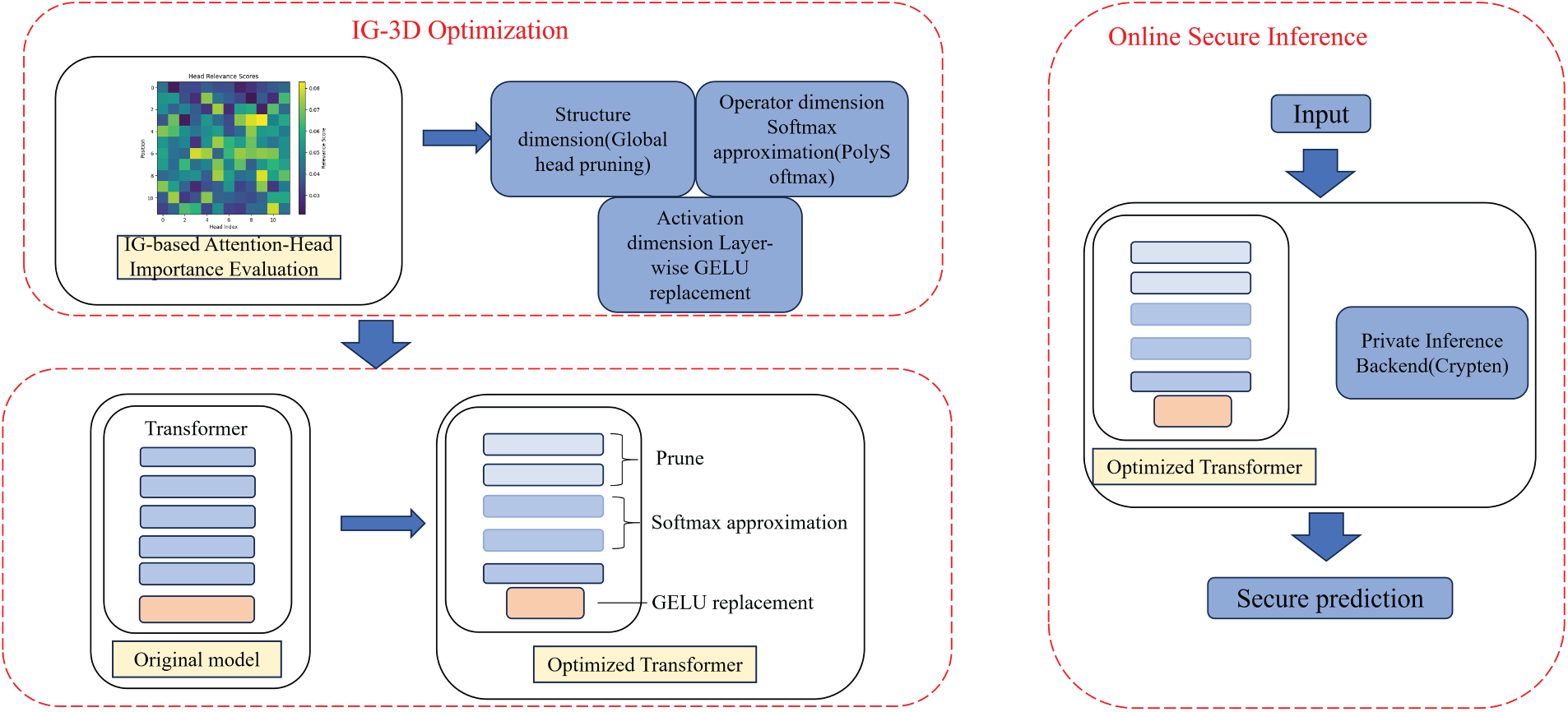
Figure 1: Overall workflow of IG-3D optimization and online secure inference. The left dashed box (IG-3D Optimization) depicts the offline pipeline: IG-based attention-head importance evaluation followed by three-dimensional optimizations in the structure (global head pruning), operator (Softmax approximation via PolySoftmax), and activation (layer-wise GELU replacement) dimensions, yielding an optimized Transformer. The right dashed box (Online Secure Inference) shows how the optimized Transformer is deployed inside a generic MPC/FHE-based private inference backend (instantiated as CrypTen in our experiments) to process encrypted or secret-shared inputs and produce secure predictions
3.2 Integrated Gradients-Based Attention Head Importance Evaluation
3.2.1 Problem Analysis and Methodological Motivation
In modern Transformer models, attention heads often contain substantial redundancy. While multi-head attention captures diverse features, many heads contribute minimally to final outputs. To improve efficiency, particularly under resource constraints, identifying and removing redundant attention heads requires precise evaluation mechanisms.
Existing methods for evaluating attention-head importance can be grouped into three main categories, each with notable drawbacks.
Weight-norm methods assess importance by computing norms of attention weight matrices [29]:
where
Gradient-sensitivity methods use first-order gradients of loss with respect to attention outputs [31]:
where
Attention-weight analysis uses attention score entropy as importance indicator [32]:
This method ignores the complex nonlinear mapping between attention weights and final predictions.
3.2.2 Attribution Computation for Attention Heads via Integrated Gradients
Integrated Gradients [33] is an attribution method that addresses limitations of traditional gradient-based techniques. Let the Transformer model be
where
We adopt a zero-attention baseline
Consequently,
Let
where
We aggregate attributions into a scalar score using the Frobenius norm:
For an evaluation dataset
This produces a global ranking across all attention heads, directly quantifying each head’s contribution to predictions. Compared with norm- or gradient-based heuristics, IG attribution more accurately captures true impact, enabling more reliable pruning and optimization decisions.
3.2.3 Computational Cost and Stability of Integrated Gradients
Although vanilla Integrated Gradients (IG) requires
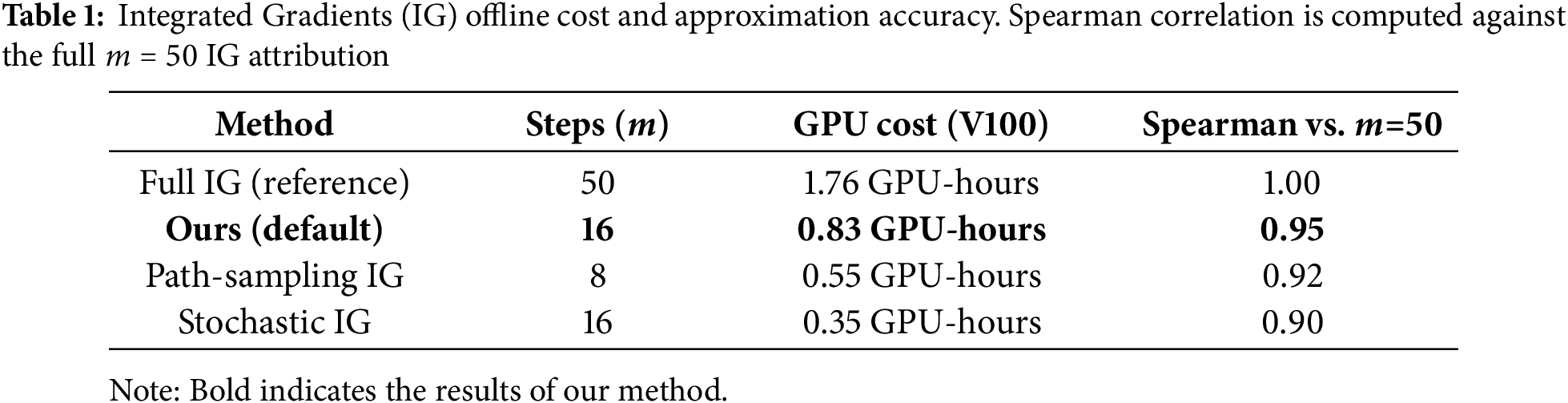
These findings show that IG-3D remains stable even under significantly reduced integration steps. All experiments in this paper adopt the
3.3 Three-Dimensional Unified Collaborative Optimization
3.3.1 Overall Framework of the 3D Optimization Strategy
Our optimization strategy applies differentiated optimizations based on the heterogeneous importance and optimization potential of model components, achieving precise cost reduction with minimal accuracy loss through three dimensions. In the structure dimension, we identify and prune redundant attention heads using Integrated Gradients importance scores to reduce parameters and computational cost. In the operator dimension, we replace Softmax with adaptive low-order polynomial approximations to reduce exponentiation costs in cryptographic settings. In the activation dimension, we design layer-wise GELU replacement that selects appropriate activation functions for different layer roles, trading activation complexity for efficiency while preserving necessary expressive capacity. Formally, given the original Transformer
where
3.3.2 Structure Dimension: Importance-Score Based Attention-Head Pruning
Using the attention-head importance scores
where
where
where
3.3.3 Operator Dimension: Differentiated Softmax Approximation
The dominant cost of the Softmax operator in private inference stems from the exponential function, which is particularly expensive in FHE and MPC settings. We propose an importance-aware, differentiated approximation strategy: keep exact Softmax for important heads while applying polynomial approximations for less important heads.
Using a truncated Taylor expansion, we construct polynomial approximations to the exponential. Given an input vector
and then approximate the exponential by its truncated Taylor series
For computational efficiency we adopt a quadratic approximation (
Guided by attention-head importance scores, we define a differentiated policy:
where
To justify the choice of using a quadratic expansion in Eq. (19), we analyze how the polynomial degree affects both the approximation of the exponential function and the resulting softmax probabilities. Let the clipped logit range be
Standard perturbation analysis of the softmax operator shows that probability deviations scale proportionally to
We empirically validate this analysis using BERT-base fine-tuned on MNLI. For polynomial degrees
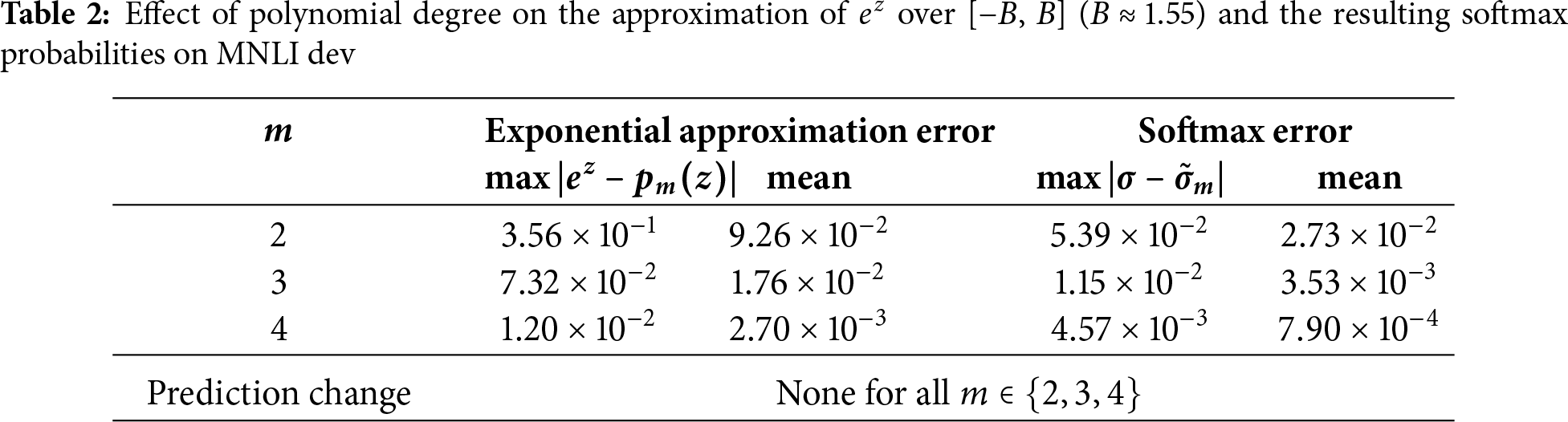
In addition to its numerical stability, the quadratic approximation also offers a practical advantage: its evaluation requires only a small number of fused multiply-add operations, making it substantially cheaper than cubic or quartic polynomials on modern hardware. Since
3.3.4 Activation Dimension: Layer-Wise GELU Replacement Strategy
Considering the high polynomial cost of GELU in encrypted inference and the functional heterogeneity across network layers, we propose a layer-wise progressive replacement mechanism:
where the mixing coefficient increases with layer depth in the middle region:
This design is motivated by observations on layer-wise functionality: shallow layers (
3.3.5 Joint-Threshold Optimization Mechanism
To coordinate the three optimization dimensions and avoid conflicting decisions, we design a joint-threshold optimization mechanism that formulates a constrained multi-objective search over threshold parameters to maximize inference speedup under user-specified accuracy constraints.
Let the threshold vector be
where the objective
We employ a serialized heuristic decomposition following the priority order structure
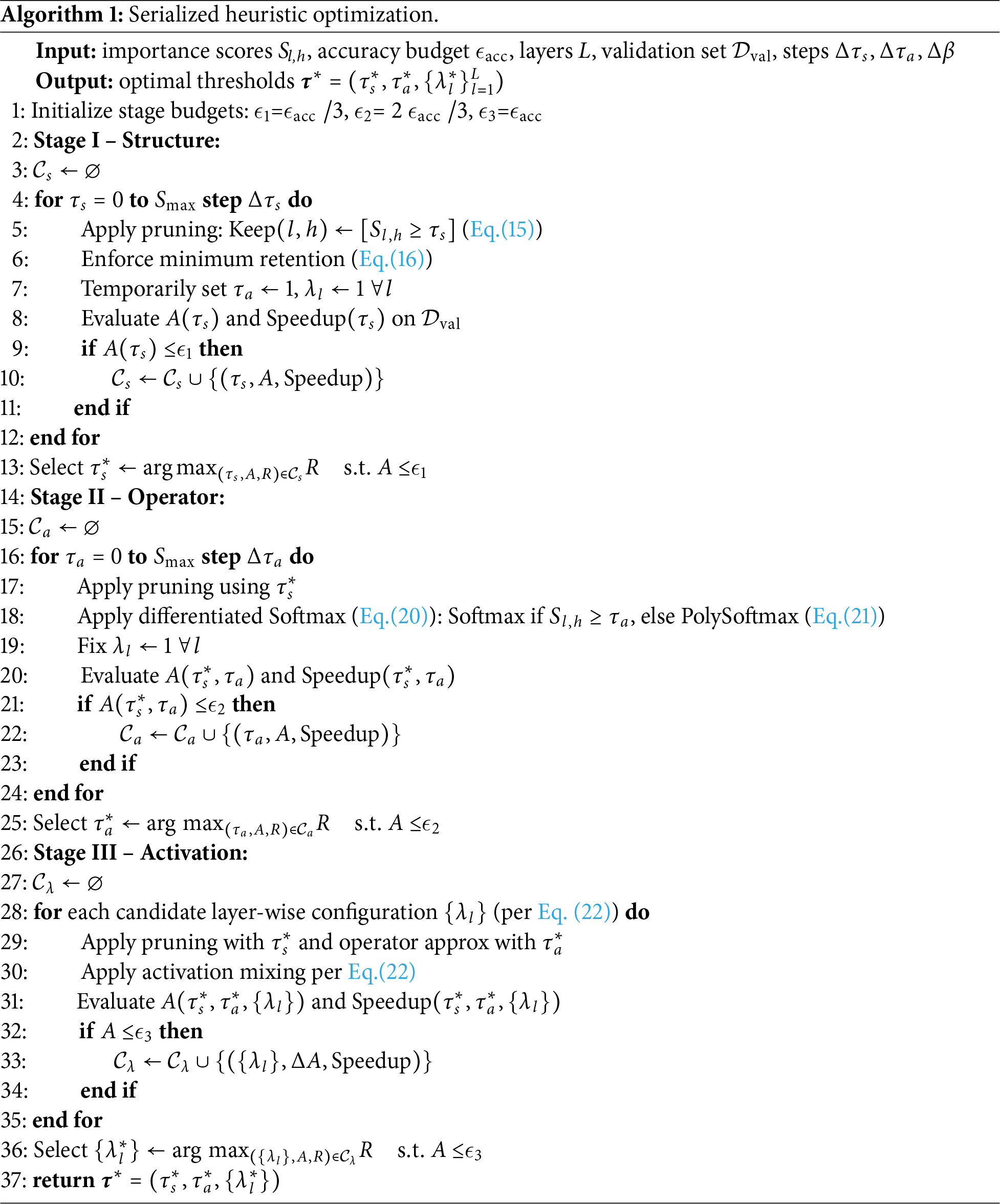
A brute-force joint grid search over
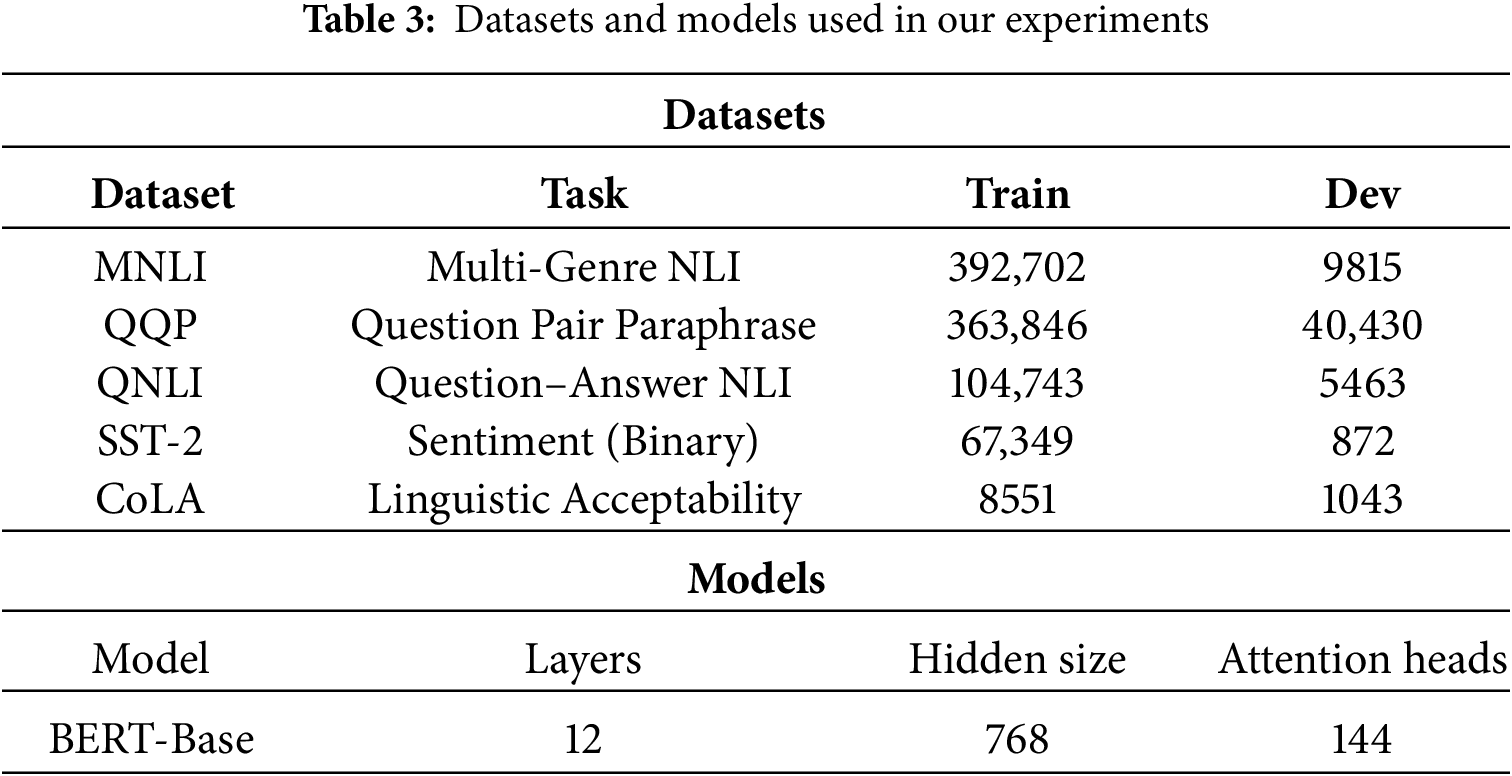
We evaluate IG-3D on five GLUE benchmark tasks: natural language inference, question paraphrasing, sentiment analysis, and linguistic acceptability. We adopt BERT-Base as model backbones, initialized from pretrained checkpoints. Dataset statistics and model configurations are in Table 3.
We adopt multi-dimensional evaluation metrics: accuracy metrics (Accuracy, F1-score, Matthews Correlation Coefficient for CoLA), efficiency metrics (inference latency, communication cost, computational complexity in FLOPs), and optimization metrics (speedup ratio, accuracy retention). Experiments use 2 NVIDIA V100 GPUs (32 GB each), 2 Intel Xeon Gold 6248R CPUs (3.0 GHz), 512 GB DDR4 RAM, and 10 Gbps Ethernet. Software includes PyTorch 1.12.0, HuggingFace Transformers 4.21.0, CUDA 11.3, and Python 3.8.10. Key hyperparameters are integration steps
For private inference experiments, we run both the baseline and IG-3D–optimized models inside CrypTen’s two-party MPC backend. The two parties are placed on the two V100 machines connected via the 10 Gbps Ethernet link. All reported latency numbers correspond to end-to-end secure inference time per batch as measured by CrypTen, and the communication cost metric is the total amount of data transferred between parties during a forward pass, obtained from CrypTen’s runtime statistics. We do not apply additional numerical quantization or ciphertext packing beyond CrypTen’s default fixed-point representation, so the observed trends mainly reflect the effect of IG-3D on activation sizes and nonlinear operation counts rather than backend-specific packing optimizations.
4.2 Experimental Results and Analysis
4.2.1 Performance of IG-3D across Datasets
We evaluate the proposed IG-3D framework against the standard BERT-Base baseline on selected GLUE tasks. Table 4 reports detailed results per task, where the baseline denotes the standard BERT-Base model fine-tuned on each dataset.
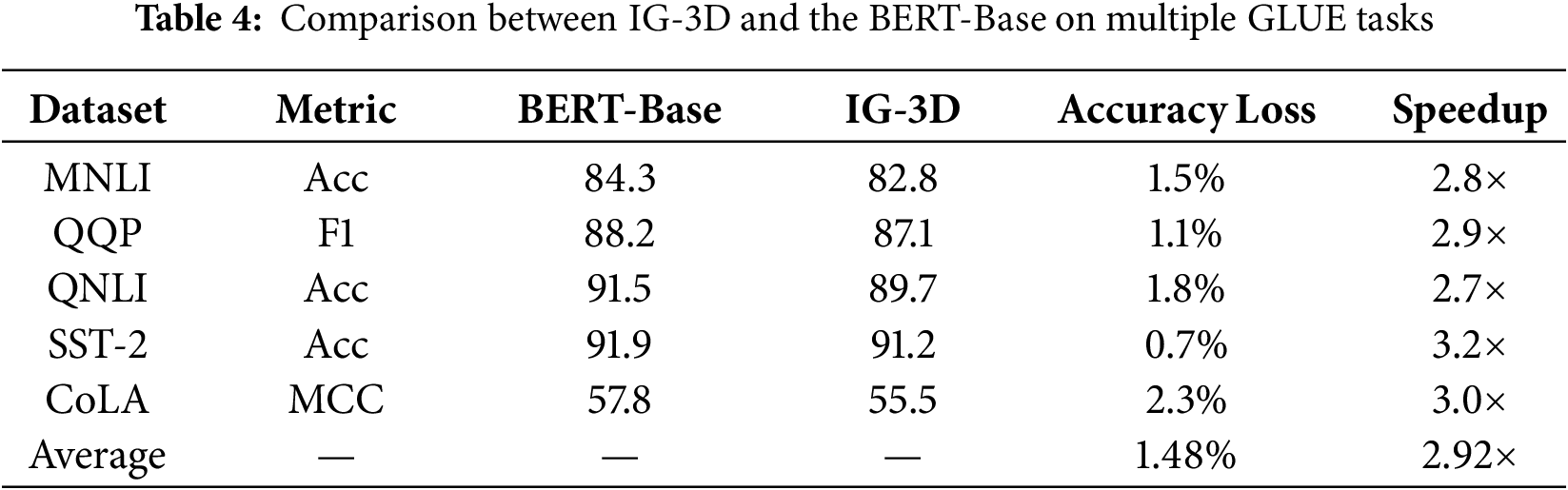
As shown in Table 4, IG-3D achieves significant efficiency improvements with minimal performance loss. Across all evaluated tasks, IG-3D delivers an average 2.9
4.2.2 Detailed Comparison with Representative Methods
To validate the effectiveness of the proposed Integrated-Gradients three-dimensional optimization framework (IG-3D) for secure Transformer inference, we compare it against three representative baselines adapted to the BERT backbone to ensure a fair comparison. PriViT [15] was originally designed for Vision Transformers and employs selective Taylor expansions for private inference; we adapt its approximation strategy for BERT-based text tasks. MPCFormer [10] designs quadratic approximations for GELU and Softmax with knowledge distillation for MPC settings. Traditional Pruning ranks attention heads by gradient sensitivity and removes low-ranked heads.
Fig. 2 shows the aggregated performance of these methods on the MNLI task. IG-3D achieves a
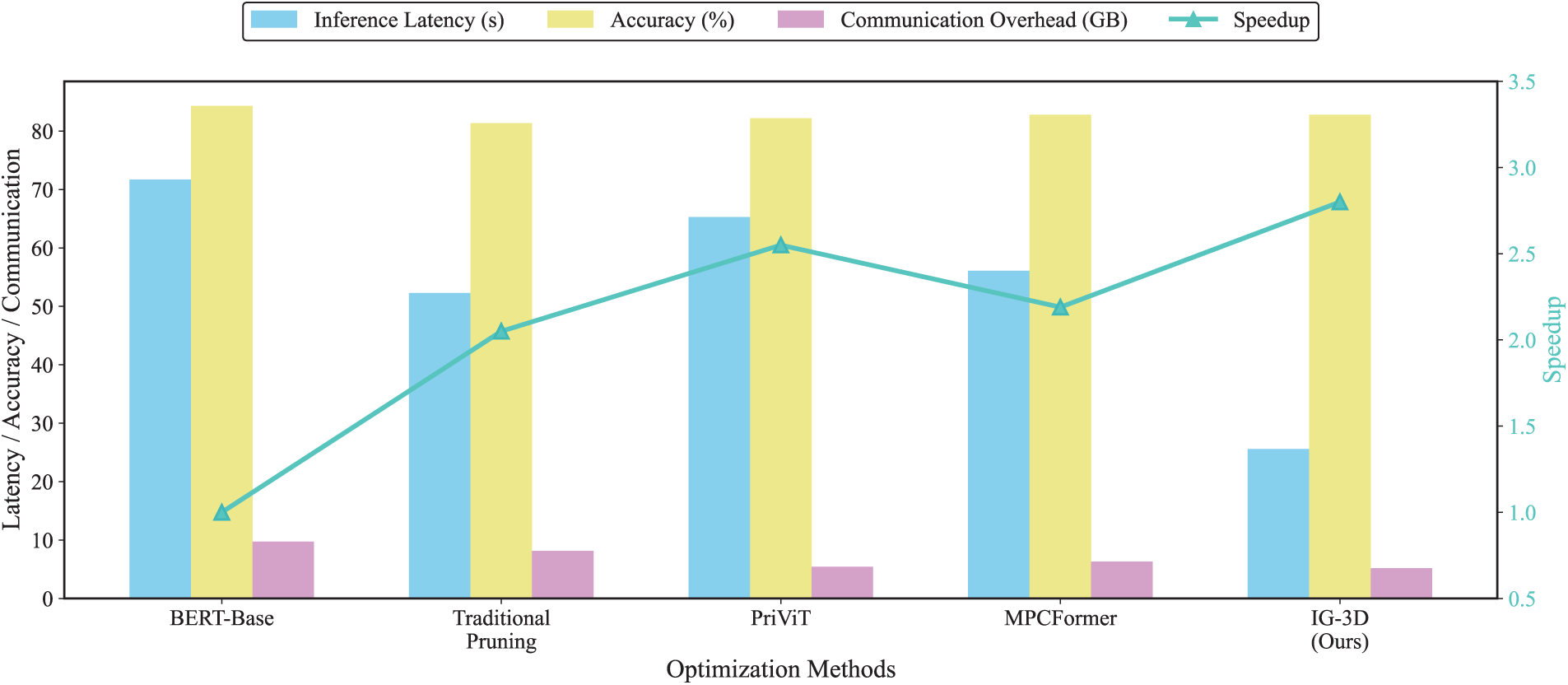
Figure 2: Integrated gradient-based transformer secure inference optimization multi-dimensional performance comparison
4.2.3 Performance across Model Scales
To validate the generality of IG-3D, we conduct additional experiments on a larger backbone (BERT-Large) and compare results with the BERT-Base configuration. As shown in Table 5, IG-3D consistently improves efficiency across model scales on MNLI. In terms of accuracy, IG-3D incurs only 1.5% and 2.6% absolute loss on BERT-Base and BERT-Large, respectively, while achieving 2.8
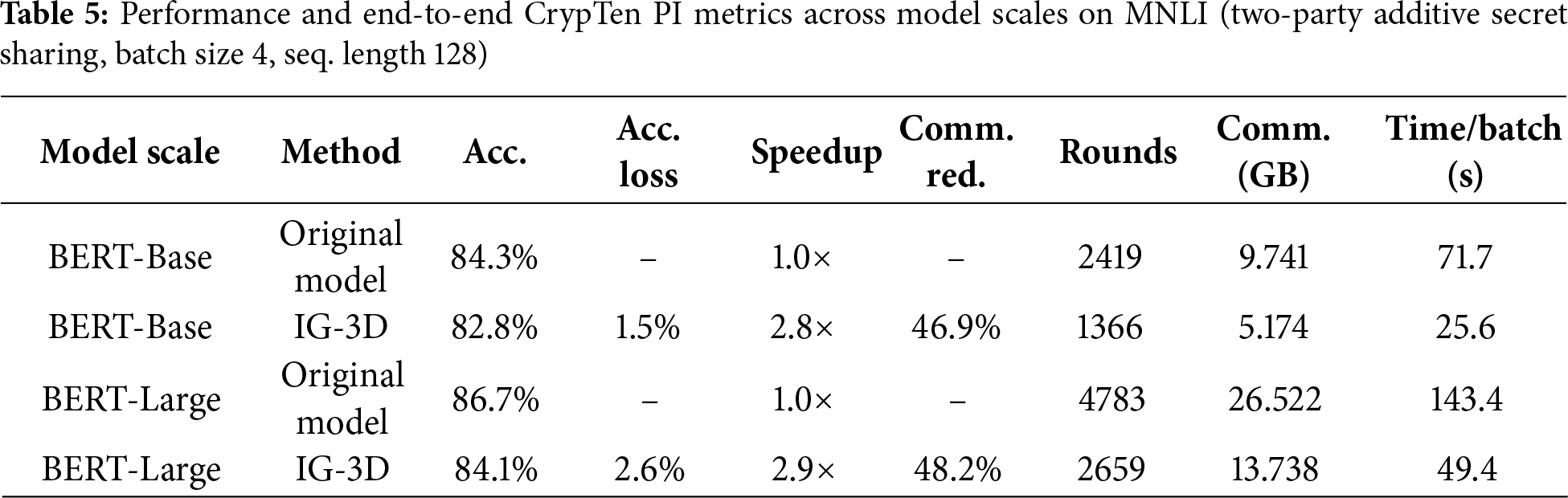
In addition, Table 5 reports the end-to-end CrypTen PI metrics under the same two-party additive secret-sharing backend and hardware configuration as described in Section 4.1. For BERT-Base, the original model requires 2419 communication rounds and transfers 9.741 GB of data per batch, resulting in 71.7 s wall-clock latency, whereas IG-3D reduces these to 1366 rounds, 5.174 GB, and 25.6 s, respectively. For BERT-Large, the original model requires 4783 rounds and 26.522 GB with 372.4 s latency, while IG-3D reduces this to 2659 rounds, 13.738 GB, and 49.4 s. These concrete CrypTen measurements confirm that IG-3D’s model-level optimizations lead to significant end-to-end PI efficiency gains on a representative MPC stack.
4.3.1 Validity of the Integrated Gradients Evaluation Method
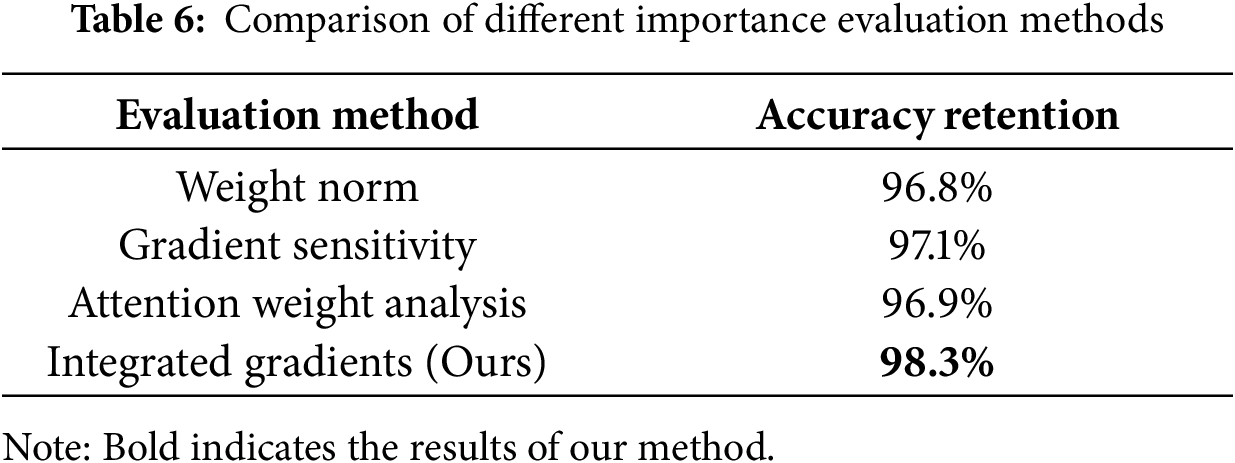
To validate the Integrated Gradients method’s advantage over conventional importance-evaluation techniques, we compared pruning outcomes of several importance metrics at 40% pruning rate. Results in Table 6 show that Integrated Gradients achieves the highest post-pruning accuracy retention, demonstrating clear advantage in identifying redundant attention heads. This corroborates the theoretical analysis in Section 3: by integrating along input paths and smoothing noise, Integrated Gradients provides more accurate and stable importance estimates.
4.3.2 Contribution Analysis of Different Optimization Dimensions
To quantify the contribution of each dimension in the 3D optimization strategy, we conducted a stepwise ablation. Table 7 reports performance on the MNLI task under different combinations.
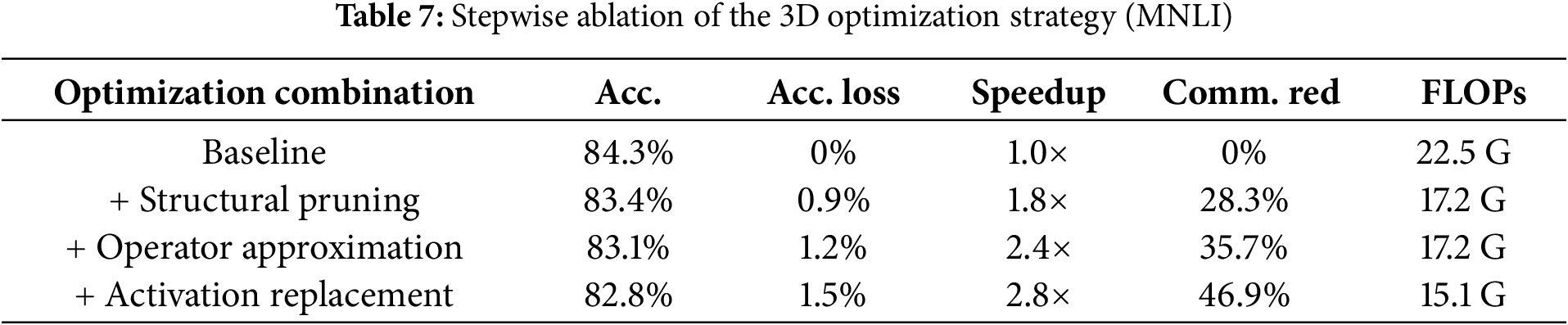
The ablation results reveal a clear complementary effect among the three optimization dimensions. Structural pruning provides the first-stage improvement, yielding a large parameter reduction and an initial
We next analyze the sensitivity of IG-3D to its key hyperparameters. Fig. 3a shows the effect of the pruning threshold
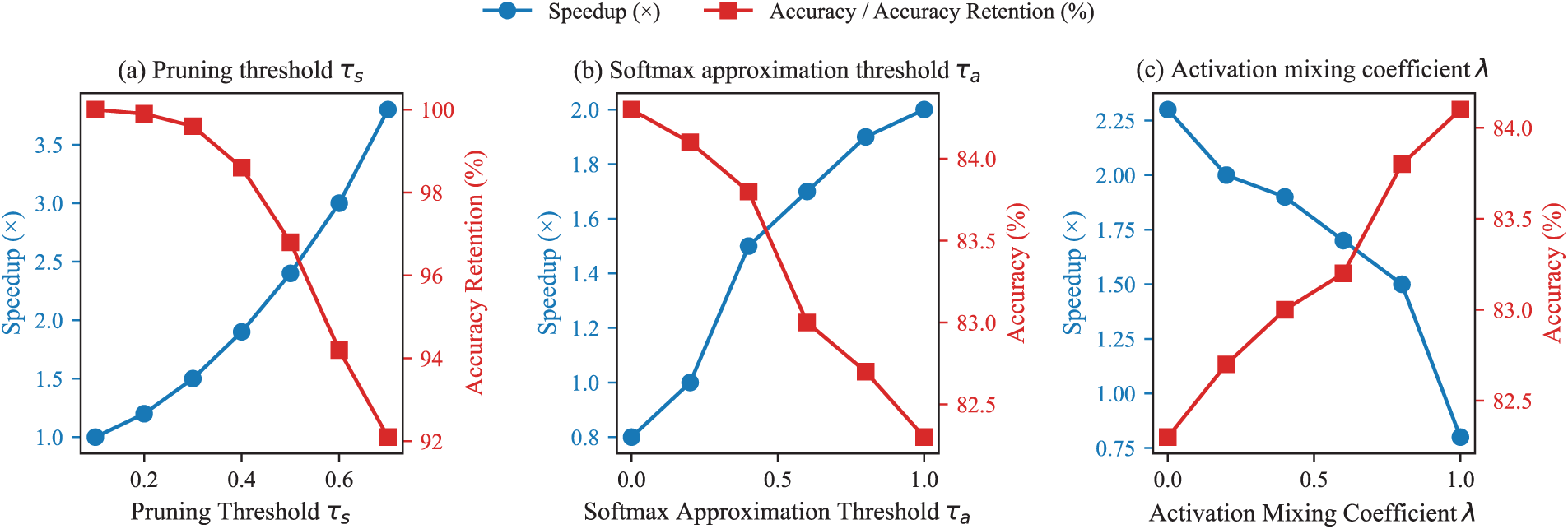
Figure 3: Sensitivity of IG-3D performance to key hyperparameters
This paper addresses the high computational cost of Transformer models in private inference scenarios and proposes IG-3D, a unified optimization framework. IG-3D builds a precise attention-head importance estimation mechanism based on Integrated Gradients attribution and implements a coordinated “structure-operator-activation” optimization across attention and feed-forward components to achieve end-to-end model lightweighting. Experimental results on standard benchmarks show that IG-3D attains an average 2.9
An important direction for future work is to extend IG-3D to generative models such as GPT-2 and T5, whose autoregressive structures introduce different communication and nonlinearity bottlenecks in private inference (PI) settings. Another promising direction is to evaluate IG-3D under various cryptographic backends and measure energy consumption and latency in full end-to-end PI pipelines. These systems-level evaluations are beyond the scope of our current model-level focus but represent key next steps toward practical deployment. In addition, developing adaptive or task-aware optimization policies may further improve cross-task generalization and robustness. Finally, we plan to systematically evaluate IG-3D under distributional shifts, including out-of-domain and robustness benchmarks, to assess whether the efficiency–accuracy trade-offs observed on GLUE carry over to shifted data distributions in privacy-preserving settings.
In summary, IG-3D offers a theoretically grounded and practically effective solution for accelerating private Transformer inference, substantially improving efficiency under privacy constraints and helping pave the way for broader adoption of privacy-preserving NLP.
Acknowledgement: The authors declare no specific support to acknowledge in this section.
Funding Statement: The authors received no specific funding for this study.
Author Contributions: The authors confirm contribution to the paper as follows: Conceptualization, Lei Sun; methodology, Lei Sun and Jingwen Wang; software, Jingwen Wang; validation, Jingwen Wang, Peng Hu and Xiuqing Mao; formal analysis, Cuiyun Hu; investigation, Cuiyun Hu; resources, Cuiyun Hu; data curation, Jingwen Wang; writing—original draft preparation, Jingwen Wang; writing—review and editing, Zhihong Wang; visualization, Peng Hu; supervision, Cuiyun Hu; project administration, Peng Hu. All authors reviewed the results and approved the final version of the manuscript.
Availability of Data and Materials: Data available on request from the authors.
Ethics Approval: Not applicable.
Conflicts of Interest: The authors declare no conflicts of interest to report regarding the present study.
References
1. Xue J, Zheng M, Hua T, Shen Y, Liu Y, Bölöni L, et al. Trojllm: a black-box trojan prompt attack on large language models. Adv Neural Inf Process Syst. 2023;36:65665–77. [Google Scholar]
2. Zheng M, Lou Q, Jiang L. Trojvit: trojan insertion in vision transformers. In: Proceedings of the IEEE/CVF conference on computer vision and pattern recognition. Piscataway, NJ, USA: IEEE; 2023. p. 4025–34. [Google Scholar]
3. Iqbal U, Kohno T, Roesner F. LLM platform security: applying a systematic evaluation framework to OpenAI’s ChatGPT plugins. In: Proceedings of the AAAI/ACM conference on AI, ethics, and society. New York, NY, USA: ACM; 2024. p. 611–23. [Google Scholar]
4. Fan J, Vercauteren F. Somewhat practical fully homomorphic encryption. IACR Cryptology ePrint Archive; 2012. Report No.: 2012/144. [Google Scholar]
5. Goldreich O. Secure multi-party computation. Manus Prelim Vers. 1998;78(110):1–108. [Google Scholar]
6. Gilad-Bachrach R, Dowlin N, Laine K, Lauter K, Naehrig M, Wernsing J. Cryptonets: applying neural networks to encrypted data with high throughput and accuracy. In: International conference on machine learning. London, UK: PMLR; 2016. p. 201–10. [Google Scholar]
7. Moon J, Yoo D, Jiang X, Kim M. THOR: secure transformer inference with homomorphic encryption. IACR Cryptology ePrint Archive; 2024. Report No.: 2024/1881. [Google Scholar]
8. Luo J, Zhang Y, Zhang Z, Zhang J, Mu X, Wang H, et al. Secformer: fast and accurate privacy-preserving inference for transformer models via SMPC. In: Findings of the association for computational linguistics ACL 2024. Wierden, The Netherlands: ACL; 2024. p. 13333–48. [Google Scholar]
9. Chen T, Bao H, Huang S, Dong L, Jiao B, Jiang D, et al. The-x: privacy-preserving transformer inference with homomorphic encryption. arXiv:2206.00216. 2022. [Google Scholar]
10. Li D, Wang H, Shao R, Guo H, Xing E, Zhang H. MPCformer: fast, performant and private transformer inference with MPC. In: The Eleventh International Conference on Learning Representations [Internet]. OpenReview.net (Online); 2023 [cited 2025 Dec 20]. Available from: https://openreview.net/forum?id=CWmvjOEhgH-. [Google Scholar]
11. Michel P, Levy O, Neubig G. Are sixteen heads really better than one? In: Advances in neural information processing systems (NeurIPS). Red Hook, NY, USA: Curran Associates, Inc.; 2019. p. 14014–24. [Google Scholar]
12. Vaswani A, Shazeer N, Parmar N, Uszkoreit J, Jones L, Gomez AN, et al. Attention is all you need. In: Advances in neural information processing systems (NeurIPS). Red Hook, NY, USA: Curran Associates, Inc.; 2017. p. 5998–6008. [Google Scholar]
13. Devlin J, Chang MW, Lee K, Toutanova K. Bert: pre-training of deep bidirectional transformers for language understanding. In: Proceedings of the 2019 conference of the North American chapter of the association for computational linguistics: human language technologies. Wierden, The Netherlands: ACL; 2019. p. 4171–86. [Google Scholar]
14. Hao M, Li H, Chen H, Xing P, Xu G, Zhang T. Iron: private inference on transformers. In: NIPS’22: proceedings of the 36th international conference on neural information processing syste. Red Hook, NY, USA: Curran Associates Inc; 2022. p. 15718–31. [Google Scholar]
15. Zheng M, Lou Q, Jiang L. Primer: fast private transformer inference on encrypted data. In: 2023 60th ACM/IEEE design automation conference (DAC). Piscataway, NJ, USA: IEEE; 2023. p. 1–6. [Google Scholar]
16. Pang Q, Zhu J, Möllering H, Zheng W, Schneider T. Bolt: privacy-preserving, accurate and efficient inference for transformers. In: 2024 IEEE symposiumon security and privacy (SP). Piscataway, NJ, USA: IEEE; 2024. p. 4753–71. [Google Scholar]
17. Chen Y, Meng X, Shi Z, Ning Z, Lin J. SecureTLM: private inference for transformer-based large model with MPC. Inf Sci. 2024;667(2):120429. doi:10.1016/j.ins.2024.120429. [Google Scholar] [CrossRef]
18. Lu W, Huang Z, Gu Z, Li J, Liu J, Hong C, et al. Bumblebee: secure two-party inference framework for large transformers. IACR Cryptology ePrint Archive; 2023. Report No.: 2023/1678. [Google Scholar]
19. Xu T, Lu Lu, W J, Chen Y, Lin C, Wang R, et al. Breaking the layer barrier: remodeling private transformer inference with hybrid {CKKS} and {MPC}. In: 34th USENIX security symposium (USENIX Security 25). Berkeley, CA, USA: USENIX Association; 2025. p. 2653–72. [Google Scholar]
20. Voita E, Talbot D, Moiseev F, Sennrich R, Titov I. Analyzing multi-head self-attention: specialized heads do the heavy lifting, the rest can be pruned. arXiv:1905.09418. 2019. [Google Scholar]
21. Shim K, Choi I, Sung W, Choi J. Layer-wise pruning of transformer attention heads for efficient language modeling. In: 2021 18th international SoC design conference (ISOCC). Piscataway, NJ, USA: IEEE; 2021. p. 357–8. [Google Scholar]
22. Lee E, Hwang Y. Automatic channel pruning for multi-head attention. arXiv:2405.20867. 2024. [Google Scholar]
23. Hendrycks D, Gimpel K. Gaussian error linear units (gelus). arXiv:1606.08415. 2016. [Google Scholar]
24. Elfwing S, Uchibe E, Doya K. Sigmoid-weighted linear units for neural network function approximation in reinforcement learning. Neural Netw. 2018;107(3):3–11. doi:10.1016/j.neunet.2017.12.012. [Google Scholar] [PubMed] [CrossRef]
25. Zhang Y, Xue J, Zheng M, Xie M, Zhang M, Jiang L, et al. Cipherprune: efficient and scalable private transformer inference. arXiv:2502.16782. 2025. [Google Scholar]
26. Ghazvinian P, Podschwadt R, Panzade P, Rafiei MH, Takabi D. MOFHEI: model optimizing framework for fast and efficient homomorphically encrypted neural network inference. In: 2024 IEEE 6th international conference on trust, privacy and security in intelligent systems, and applications (TPS-ISA). Piscataway, NJ, USA: IEEE; 2024. p. 233–44. [Google Scholar]
27. Knott B, Venkataraman S, Hannun A, Sengupta S, Ibrahim M, van der Maaten L. Crypten: secure multi-party computation meets machine learning. Adv Neural Inf Process Syst. 2021;34:4961–73. [Google Scholar]
28. Dathathri R, Saarikivi O, Chen H, Laine K, Lauter K, Maleki S, et al. CHET: an optimizing compiler for fully-homomorphic neural-network inferencing. In: Proceedings of the 40th ACM SIGPLAN conference on programming language design and implementation. New York, NY, USA: ACM; 2019. p. 142–56. [Google Scholar]
29. Salimans T, Kingma DP. Weight normalization: a simple reparameterization to accelerate training of deep neural networks. In: NIPS’16: proceedings of the 30th international conference on neural information processing systems. Red Hook, NY, USA: Curran Associates Inc; 2016. p. 901–9. [Google Scholar]
30. Kobayashi G, Kuribayashi T, Yokoi S, Inui K. Attention is not only a weight: analyzing transformers with vector norms. arXiv:2004.10102. 2020. [Google Scholar]
31. Simonyan K, Vedaldi A, Zisserman A. Deep inside convolutional networks: visualising image classification models and saliency maps. arXiv:1312.6034. 2013. [Google Scholar]
32. Clark K, Khandelwal U, Levy O, Manning CD. What does bert look at? An analysis of bert’s attention. arXiv:1906.04341. 2019. [Google Scholar]
33. Sundararajan M, Taly A, Yan Q. Axiomatic attribution for deep networks. In: International conference on machine learning. London, UK: PMLR; 2017. p. 3319–28. [Google Scholar]
Cite This Article
 Copyright © 2026 The Author(s). Published by Tech Science Press.
This work is licensed under a Creative Commons Attribution 4.0 International License , which permits unrestricted use, distribution, and reproduction in any medium, provided the original work is properly cited.
 Downloads
 Citation Tools
