
 Login
Login Register
 Submit a Paper
 Propose a Special lssue
 Open Access
ARTICLE

Adversarial Attack Defense in Graph Neural Networks via Multiview Learning and Attention-Guided Topology Filtering
State Key Laboratory of Public Big Data, College of Computer Science and Technology, Guizhou University, Guiyang, China
* Corresponding Author: Xianghong Tang. Email:
(This article belongs to the Special Issue: Artificial Intelligence Methods and Techniques to Cybersecurity)
Computers, Materials & Continua 2026, 87(3), 59 https://doi.org/10.32604/cmc.2026.076126
Received 14 November 2025; Accepted 09 February 2026; Issue published 09 April 2026
 View Full Text
 Download PDF
Abstract
Graph neural networks (GNNs) have demonstrated impressive capabilities in processing graph-structured data, yet their vulnerability to adversarial perturbations poses serious challenges to real-world applications. Existing defense methods often fail to handle diverse types of attacks and adapt to dynamic adversarial strategies because they typically rely on static defense mechanisms or focus narrowly on a single robustness dimension. To address these limitations, we propose an adversarial attention-based robustness strategy (AARS), which is a unified framework designed to enhance the robustness of GNNs against structural and feature perturbations. AARS operates in two stages: the first stage employs adversarial training with joint optimization to improve the resilience of the model to malicious attacks and stabilize its decision boundaries; the second stage incorporates an attention mechanism to identify critical structural dependencies and guides a topology filtering module that dynamically suppresses adversarial edges while preserving essential graph semantics. Extensive experiments on benchmark datasets for node classification demonstrate that AARS significantly outperforms existing baselines in terms of classification accuracy under various attack scenarios, thereby effectively improving the robustness of GNNs in static and dynamic adversarial settings.Keywords
Owing to its strong expressive power in modeling complex relational structures, graph-structured data has become increasingly important in applications such as social network analysis [1], biomedical sciences [2], and recommendation systems [3]. Unlike traditional structured data, graph-structured data feature complex topological relationships that capture higher-order dependencies among entities [4]. To effectively model these structures, graph neural networks (GNNs) have emerged as the preferred approach [5]. GNNs, which rely on a message-passing mechanism, iteratively gather neighborhood information to create node representations [6] and exhibit significant advantages in node classification tasks [7]. However, research indicates that GNNs are highly vulnerable to adversarial perturbations because attackers can significantly impair their classification performance by making small modifications to the graph structure or features, such as edge insertion/deletion or feature manipulation [8–11]. This weakness creates serious risks in security-critical areas such as medical diagnostics and financial risk management, where model reliability is essential. Therefore, improving the adversarial robustness of GNNs is crucial for ensuring dependable decision-making amid adversarial threats, and is vital for broadening their trustworthy use in real-world, high-stakes applications.
Various defense techniques have been studied to reduce the vulnerability of GNNs to adversarial attacks. Preprocessing-based methods focus on cleaning the input graph by removing suspicious edges or nodes, such as GCN-Jaccard [12], which eliminates edges with low node similarity, and GCNSVD [13], which performs low-rank approximation to decrease noise from perturbations. Graph structure learning (GSL) [14] methods dynamically refine the graph structure during training to enhance robustness, as exemplified by Pro-GNN [15], DefenseVGAE [16], and IDGL [17], which reconstruct cleaner or more resilient graph structures. Another approach modifies message passing mechanisms to reduce the adversarial influence propagation, including RGCN [18], which uses variance-aware attention; PA-GNN [19], which incorporates adversarial training and attention; and GNNGuard [20], which employs similarity-based attention with layer-wise memory. However, these methods typically rely on soft attention weighting, where all neighbors participate in message passing with varying importance scores, leaving the effective neighborhood size unconstrained and possibly worsening oversmoothing in multilayer propagation. Despite these advances, current defenses have clear limitations. Preprocessing methods depend on static assumptions and struggle with dynamic attacks. GSL approaches may increase graph connectivity or propagate messages over overly large neighborhoods, often leading to over-smoothing of representations and structural biases. Moreover, message-passing modifications are usually localized and inadequate for addressing diverse, adaptive attack strategies. These issues emphasize the need for more flexible and generalizable defense strategies to maintain robust GNN performance in complex adversarial environments.
To address these challenges, this study introduces an adversarial attention-based robustness strategy (AARS), a robust graph learning framework that uses adversarial training and a dynamic sparse attention mechanism (DSAM). AARS effectively reduces adversarial perturbations and simultaneously learns resilient graph structures through multiview adversarial training and adaptive topology refinement. Specifically, the framework addresses existing limitations in two main ways. First, it creates multiview adversarial samples to simulate various attack scenarios, helping the model learn perturbation-invariant representations during training. Second, it uses a DSAM with hard top-K neighbor selection based on node feature similarity, explicitly controlling the neighborhood size during message passing to prevent adversarial propagation and reduce over-smoothing. This dual approach maintains the balance between local smoothness and global structural integrity.
Our contributions can be summarized as follows.
• We develop a multiview adversarial training method that simulates various attack patterns, enabling the model to learn representations that are invariant to perturbations and thereby effectively improve its robustness against dynamic and evolving attacks.
• We present a DSAM that adaptively detects meaningful node connections based on feature similarity, reducing the spread of adversarial noise while preserving meaningful graph structures.
• Extensive experimental results demonstrate that AARS consistently enhances graph robustness and considerably improves the performance of GNNs on node classification tasks across various adversarial scenarios.
Evolution of Adversarial Attacks on GNNs. GNNs, which depend on neighborhood structures and node features for message passing, have notable vulnerabilities in adversarial settings. Research indicates that even small changes to graph structure or features can significantly impair model performance. Structural attacks such as FGA [21] mislead the aggregation process by adding or removing critical edges. Feature attacks such as NIPA [22] induce misclassification by changing node attributes. Additionally, distributed attacks (e.g., Disttack) [23] and global attacks (e.g., Metattack) [24] reveal the transmissibility of perturbations and their sensitivity to the training distribution [25]. As graph data become more dynamic, static attack assumptions can no longer fully address the complexity of how structures evolve and interact with disturbances in real-world situations. This study focuses on the vulnerability of GNNs when facing adversarial conditions, with the goal of enhancing model robustness and adaptability amid both structural changes and adversarial interference.
Advancements in GNN Defense Strategies. In response to the continuous evolution of attack techniques, defense strategies for GNNs have advanced from simple adversarial training to more sophisticated multimodal robustness optimization. Early methods [26,27] adapted adversarial paradigms from the image domain by introducing PGD-based structural perturbations for max-min robust optimization. However, these approaches often exhibited pseudo-robustness in transductive learning settings. To overcome these limitations, later studies proposed architectural improvements and regularization strategies [28] such as degree-based dynamic regularization, latent space perturbation generation, and smooth adversarial training, which strengthened the robustness of the model against both structural and feature perturbations while offering improved theoretical interpretability. To better balance the simulation of diverse attacks while maintaining structural semantics, we introduce a robust graph structure learning framework that combines adversarial training with attention mechanisms.
GNN Defense in Industrial IoT. GNNs have been increasingly applied to industrial IoT (IIoT) systems for tasks such as fault diagnosis, anomaly detection, and industrial network monitoring [29]. In such environments, attackers often operate in a black-box manner owing to limited system access, heterogeneous devices, and strict security constraints, making gradient-based adversarial attacks and defenses less practical. Recent studies have highlighted that robustness against data corruption and topology perturbations is critical in IIoT scenarios [30]. Therefore, defense strategies that do not rely on explicit gradient-based inner maximization, but instead enhance robustness under stochastic or distributional perturbations, are specifically appealing for industrial applications. Although our method is not specifically designed for IIoT systems, its randomized and gradient-free perturbation mechanism aligns well with threat models commonly encountered in IIoT environments.
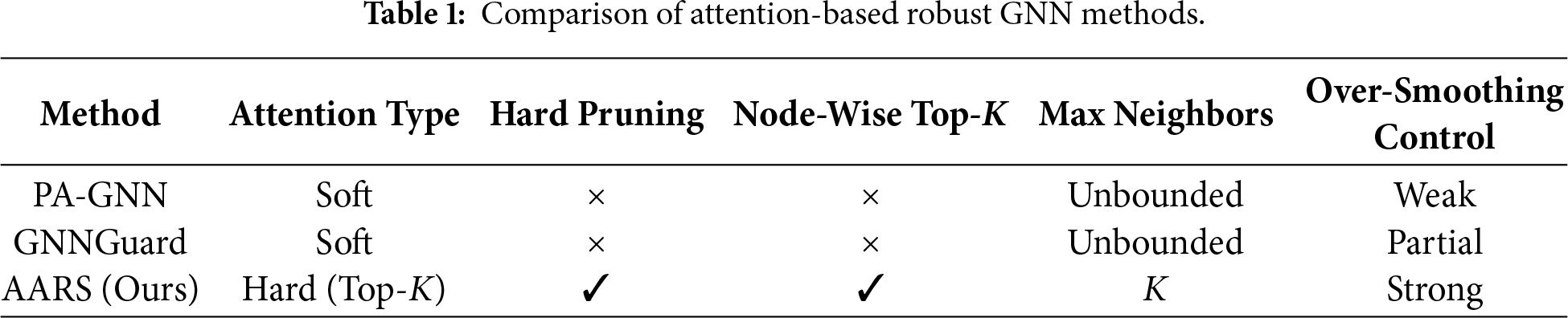
Attention-Based Robust GNNs. Recent robust GNN defenses use attention mechanisms to reduce adversarial effects by reweighting neighborhood contributions during message passing. PA-GNN combines adversarial training with attention to minimize the impact of unreliable neighbors, whereas GNNGuard uses similarity-based attention and layer-wise memory to block suspicious edges. However, these methods depend on soft attention mechanisms, where all neighbors continue to contribute to the aggregation with different weights. As attention scores are normalized and repeatedly applied across layers, node representations become more similar, leading to excessive feature mixing and over-smoothing [31], specifically under adversarial perturbations. By contrast, AARS uses a DSAM that applies hard Top-K neighbor selection for each node based on edge-level similarity. Specifically, attention scores are calculated through node embedding similarity, and for each node, only the Top-K neighbors with the highest attention scores are retained, whereas all other edges are explicitly masked and do not influence message aggregation. This nodewise hard sparsification enforces a maximum limit on the receptive field at each layer, effectively preventing uncontrolled feature diffusion and reducing over-smoothing. Furthermore, by removing low-similarity edges, the proposed mechanism reduces adversarial connections and minimizes the spread of adversarial gradients during training. A systematic comparison between representative attention-based robust GNN methods is presented in Table 1.
Let
To ensure the consistent propagation of information across the graph, we introduce a normalized propagation matrix
where
GNNs follow an iterative message-passing approach, where node representations are gradually updated by collecting information from neighboring nodes. Let
Here,
In this study, we introduced a simplified version of this formulation and do not explicitly include the residual or multihop aggregation terms in the final model. Instead, robustness is improved through stochastic perturbations applied to intermediate node embeddings during training, as formally described in Eq. (6) and examined via ablation studies in Section 4.5. Nonlinear activation function
3.1 Adversarial Attacks on GNNs
Adversarial attacks introduce subtle perturbations to data and cause GNNs to perform incorrect classifications, thereby revealing their potential security vulnerabilities. Based on the attack target, adversarial attacks can be categorized as follows: node-level attacks, which modify node features or local structures; edge-level attacks, which change edge connections; and graph-level attacks, which disrupt the overall structure and features of a graph.
From an attacker’s knowledge-level perspective, adversarial attacks can be categorized into different types. White-box attacks assume that an attacker has full knowledge of the model, including its parameters and architecture. Conversely, black-box attacks restrict attackers to accessing only the model’s inputs and outputs. Gray-box attacks lie between these two extremes, with the attacker having only partial knowledge of the model [32]. Additionally, adversarial attacks can be classified based on when they occur: evasion attacks occur during testing and attempt to deceive a pretrained model, whereas poisoning attacks occur during training, where malicious changes to the training data affect the learning process of the model [33].
Various attack methods are currently available. Gradient-based attacks, such as FGSM and PGD, manipulate perturbations along a gradient to deceive the model. Optimization-based attacks such as genetic algorithms and particle swarm optimization seek the most effective perturbation strategies. GAN-based attacks use a generator to learn deceptive perturbations that interfere with the model’s predictions. Attacks targeting hierarchical graph pooling models combine surrogate and target models to improve attack effectiveness. However, existing attack methods face several challenges. Most methods depend heavily on the gradient information, making them less effective in black-box scenarios. Additionally, specific perturbation strategies are overly obvious, making them easier to detect and defend against. By contrast, our proposed defense method improves the focus of the model on key structures and features, helping it better distinguish between normal and perturbed data, ultimately enhancing its overall robustness.
In adversarial attack scenarios, attackers manipulate edge structures to build attack graphs, causing a significant decline in GNN classification performance [34]. A strong graph that can withstand attacks and maintain an accurate classification is essential for improving the stability of GNNs and boosting node classification reliability.
Given a healthy graph G, node features X, and known partial node label information Y, we aim to develop a graph enhancement approach that creates a more robust graph by boosting the stability of its structure. This process seeks to decrease the vulnerability of the graph in adversarial conditions, thereby enhancing GNN decision-making in hostile environments. This strategy involves dynamically identifying and reinforcing important connections in the graph while repairing potential vulnerable edges. The semantic relationships within the graph are maintained and the known labels Y guide the topological optimization process. This leads to an improved model performance, enabling it to better infer unlabeled nodes. To accomplish this, we propose the AARS, a robust graph learning framework that combines adversarial training and attention mechanisms, as shown in Fig. 1. AARS creates adversarial samples by perturbing both the node features and edge structures. The perturbed samples are combined with the original graph to form multiview representations. A sparse attention mechanism is then used to identify and retain meaningful connections, ultimately reconstructing a more robust graph structure.
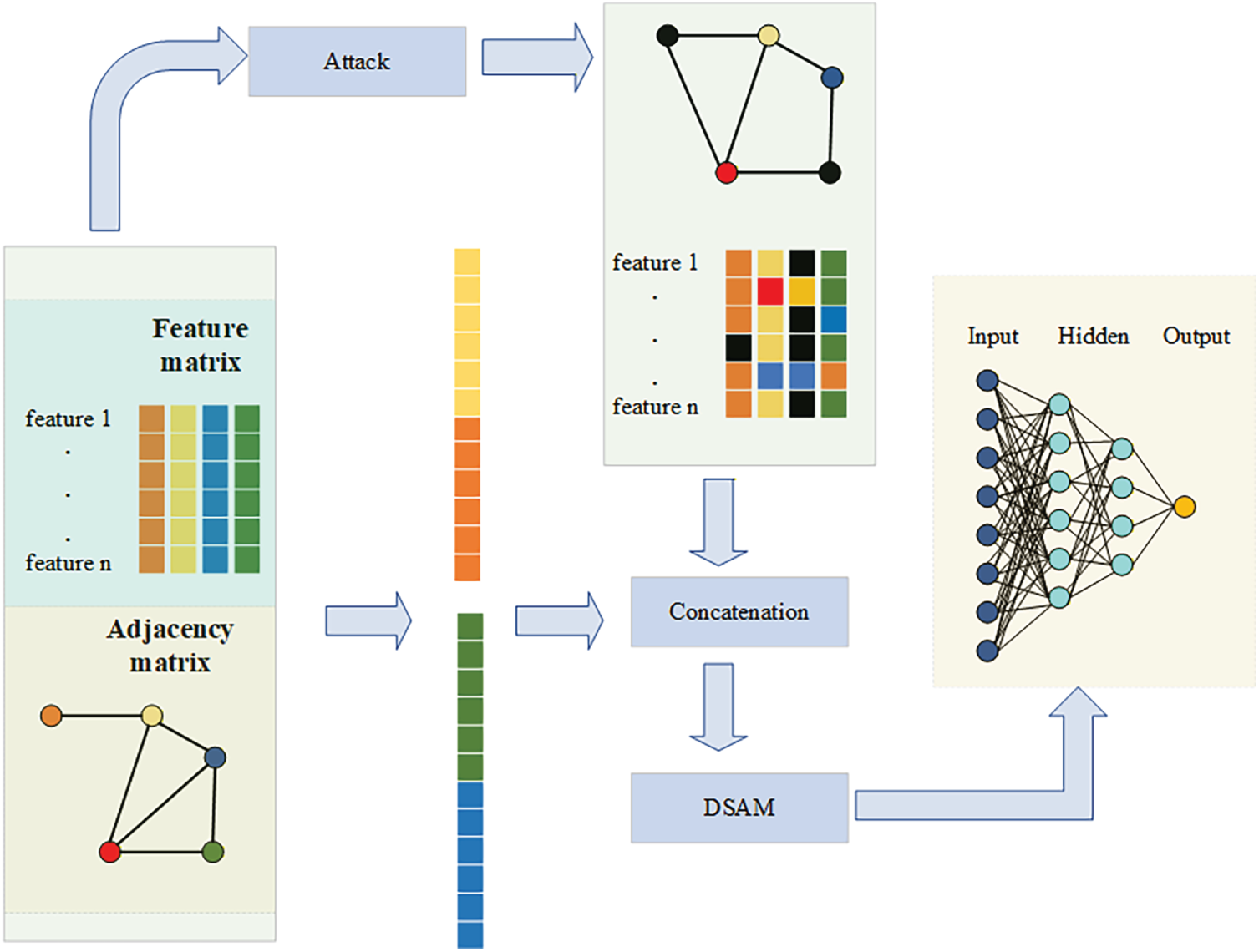
Figure 1: The framework of our proposed AARS is outlined as follows: we first perturb the features and structure of the original graph to generate adversarial examples, which are then concatenated with the original data to form a combined input. This input is fed into a GNN, where an attention-gated mechanism and a dynamic edge selection module are incorporated into the forward pass. Finally, the model jointly optimizes both the standard and adversarial components losses.
AARS combines adversarial training with attention mechanisms to strengthen the graph structure, thereby significantly improving GNN node classification performance in adversarial environments. The next section explains how AARS enhances graph stability and effectively filters out perturbed edges, further exploring its robustness against complex attack scenarios.
3.3 Multiview Adversarial Training Framework
We use Disttack’s attack mechanism in reverse for defense, combining multiview adversarial sample creation with gradient synchronization robustness constraints to develop an adaptive, resilient training framework suitable for distributed environments. This approach aims to enhance the adversarial robustness of distributed GNNs, allowing them to effectively withstand disruptions in the structural and feature spaces, thereby improving the stability and generalization of the model in real-world applications.
During each training iteration, we add random perturbations to the 1-hop subgraph
Difference from PGD-Based Adversarial Training. It is important to clarify that the proposed randomized adversarial training differs fundamentally from standard PGD-based adversarial training. PGD-based methods explicitly solve an inner maximization problem via gradient-based optimization to generate worst-case adversarial perturbations tailored to the current model. In contrast, the proposed approach does not perform a gradient-based adversarial optimization, nor does it seek worst-case perturbations. Instead, both structural and feature perturbations are generated through randomized, budget-constrained operations that are independent of model gradients. The model is trained to minimize the expected task loss over stochastic perturbations, effectively encouraging robustness under a distribution of perturbations rather than optimizing against a single worst-case direction. This design avoids the computational overhead and potential training instability associated with iterative adversarial optimization, while still providing diverse perturbation signals that improve robustness against random structural and feature corruptions.
Here,
To ensure diversity among adversarial samples, we use a randomized perturbation strategy to generate
Remark (Perturbation Notation and Scope). In Eq. (4),
Explanation of Perturbation Design. Eq. (3) provides a conceptual definition of adversarial sample generation, where adversarial subgraphs are created through randomized modifications of the graph structure and node features. Eqs. (4)–(6) specify concrete examples under different data assumptions: Eq. (4) defines structure-level perturbations through probabilistic edge flipping, whereas Eqs. (5) and (6) describe the feature-level perturbations for the binary- and continuous-feature datasets, respectively. These formulations are mutually exclusive and are chosen based on dataset characteristics. In practice, Eqs. (4) and (5) operate on the input adjacency and feature matrices, whereas Eq. (6) injects Gaussian noise into intermediate node embeddings during message passing. All perturbations are randomly generated instead of being gradient-based, functioning as adversarial data augmentation to enhance robustness.
Discussion on Attack Choice and Perturbation Rate. The perturbations defined in Eqs. (4)–(6) are used only during the training phase for adversarial data augmentation rather than as substitutes for strong benchmark attacks.
In contrast to the randomized perturbation strategy adopted in our training framework, gradient-based or optimization-driven attacks such as PGD or Metattack are specifically designed to construct the worst-case perturbations for a given model; however, they are computationally expensive and highly model-dependent. In contrast, our randomized, budget-constrained perturbation strategy enables the efficient generation of diverse adversarial samples without overfitting the model to a specific attack pattern. Where
Here,
To avoid excessive modifications that could significantly alter the original graph, we control the perturbation scale by applying rate-based budget constraints separately to the graph structure and node features. Specifically, the numbers of perturbed edges and perturbed feature entries are bounded as
where
Here,
To examine the effect of
This method implicitly preserves the original data distribution, enabling adversarial samples to enhance the robustness of the model without significantly deviating from the original dataset, thereby ensuring training stability. To fully utilize the adversarial samples, we combine the original data G with the adversarial samples G′ to create a multiview input
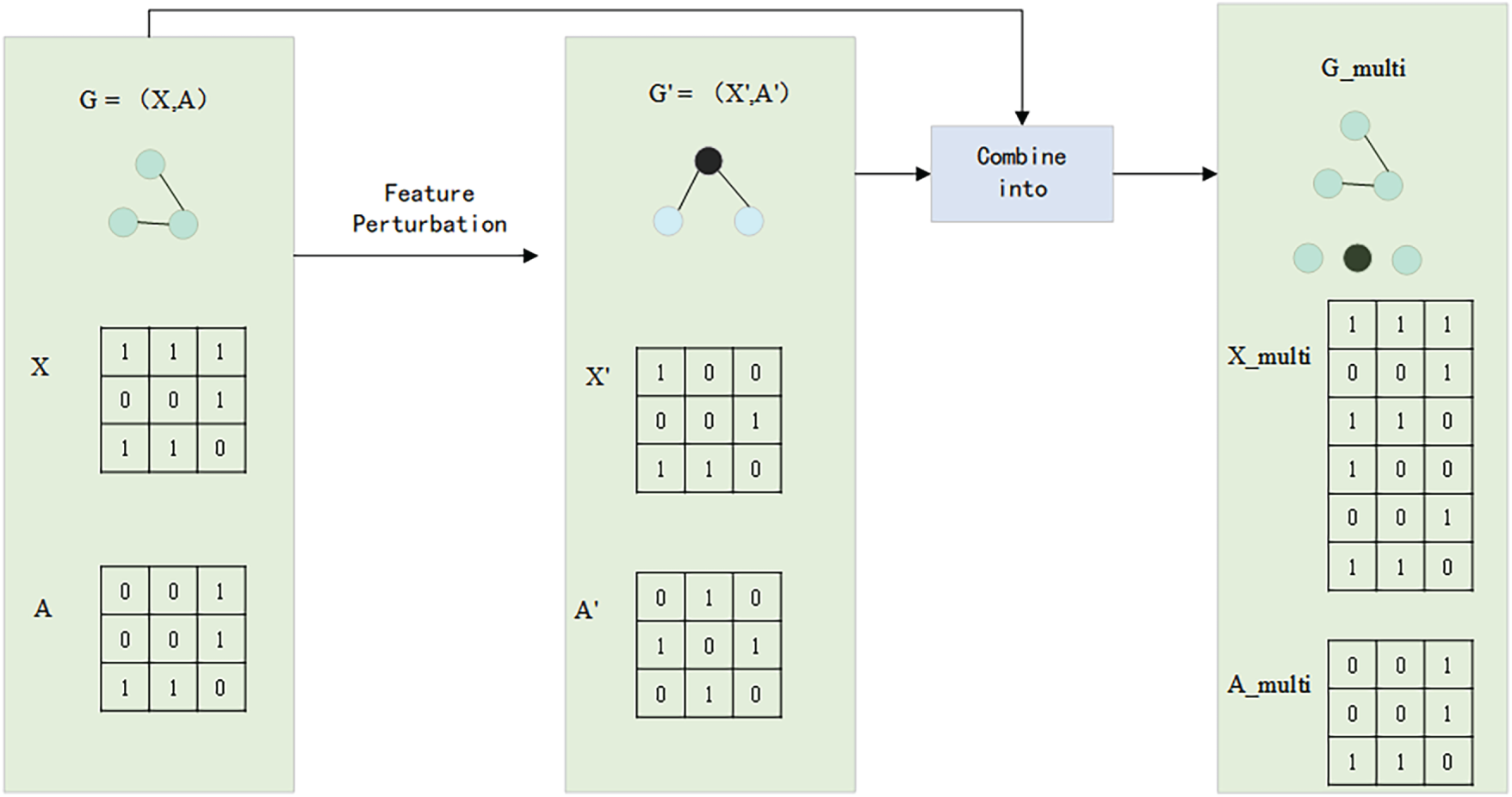
Figure 2: Multiview adversarial sample generation process.
This figure shows how multiview input
To create the multiview input, node feature matrices X and X′ are combined along the feature dimension, resulting in
During training, the model processes both the original graph data and perturbed adversarial samples simultaneously, learning more resilient feature representations through gradient updates.
To balance task-specific optimization with improved adversarial robustness, we design a hybrid loss function defined as follows:
Here,
where:
•
• G and G′ represent the original graph and its adversarially perturbed counterpart, respectively.
3.4 Dynamic Sparse Attention Mechanism
We propose a dynamic sparsification attention mechanism that reduces computational redundancy and suppresses adversarial noise propagation using a Top-K [35] selection strategy. In this mechanism, we dynamically choose the Top-K most important edges based on node feature similarity, retaining only the most representative neighbor connections to lower the impact of low-weight, noisy edges [36]. Specifically, we begin by calculating the attention score for each edge, which is defined as the dot product of the node features.
The overall process of computing the attention scores and performing Top-K selection is illustrated in Fig. 3.
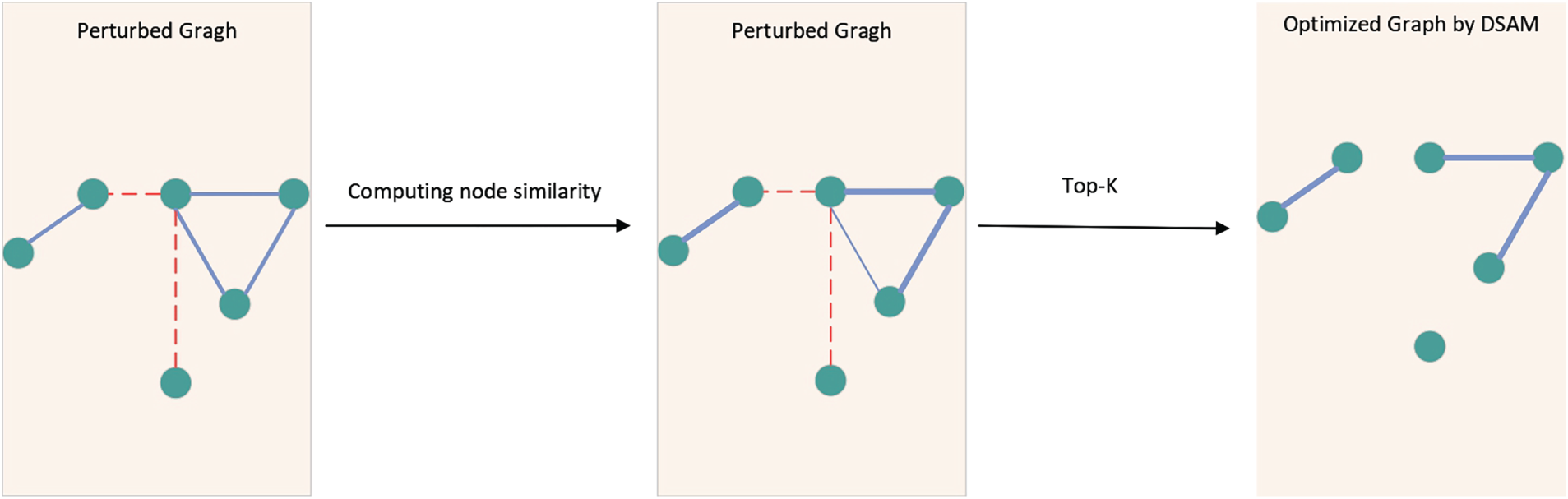
Figure 3: Dynamic sparse attention mechanism.
This figure shows how DSAM works. Starting with a perturbed graph that includes both real (blue solid lines) and adversarial (red dashed lines) edges, the model first calculates the node similarity to produce attention scores for each edge. Edge thickness indicates the strength of the score, with thicker lines indicating higher attention scores. Using these scores, a Top-K selection process maintains the most representative and semantically meaningful neighbors while removing low scores or adversarial edges. The resulting optimized sparse graph maintains important structural information and effectively reduces the spread of noisy perturbations, thereby enhancing message passing robustness.
Where
Thus, the message aggregation process can be simplified as follows:
This mechanism reduces the computational complexity of attention from
Furthermore, this mechanism complements multiview adversarial training; during training, it enhances generalization against perturbations, and during inference, it filters out adversarial edges, further boosting model robustness. The dynamic sparsification can be formally described as a constraint.
Here, K is a tunable hyperparameter for sparsification that controls the size of the local neighborhood during message passing. Smaller values of K enforce stronger sparsification, which suppresses potentially adversarial edges, whereas larger values maintain more structural information but increase sensitivity to perturbations. To validate the effectiveness of Top-K sparsification, we conduct additional experiments on GPU memory usage and runtime efficiency, which are reported in Section 4.6, the peak GPU memory usage and average per-epoch runtime of AARS and representative robust GNN baselines on Cora and PubMed. AARS consistently uses less memory and runs faster, demonstrating practical efficiency improvements beyond mere asymptotic complexity reduction. Additionally, the method remains stable across a reasonable range of K and its performance is not significantly affected by the specific choice of this parameter (see Section 4.5 for a detailed analysis).
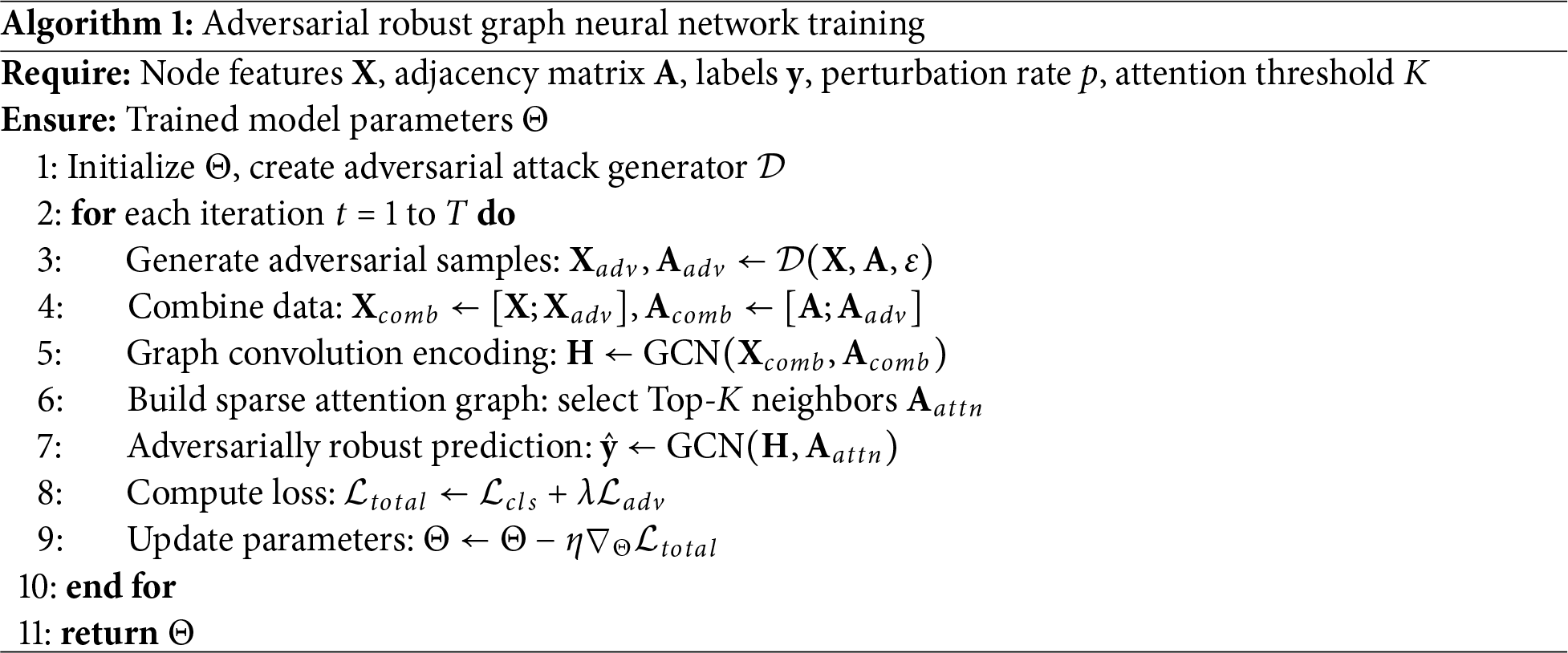
In Algorithm 1, adversarial samples
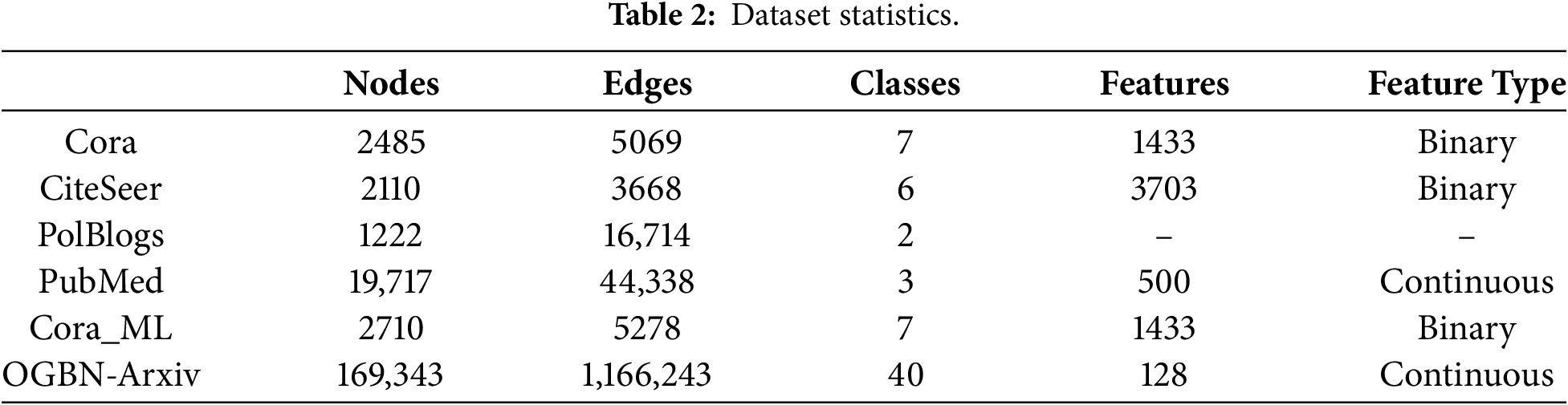
Our experiments were conducted on six popular graph datasets, including the citation networks Cora, CiteSeer, PubMed, the blog and citation network PolBlogs, as well as the extended datasets Cora_ML and the large-scale OGB dataset OGBN-Arxiv, as summarized in Table 2. Notably, the PolBlogs dataset does not include node feature information. For all experiments, we used the Adam optimizer with an initial learning rate of 0.01. Each model was trained for 200 epochs with a hidden layer size of 16. To minimize the effects of random initialization, each experiment was repeated ten times. The nodes were divided as follows: 10% for training, 10% for validation, and 80% for testing. The inclusion of Cora_ML and OGBN-Arxiv enables us to evaluate our method on both mid-sized and large-scale graphs, offering a more comprehensive assessment of the performance and robustness across different graph sizes and feature types.
4.2 Implementation Details of AARS
We use the Adam optimizer (learning rate 0.01, weight decay 5e–4) to jointly optimize all model parameters, with adaptive Gaussian noise added after the first GCN layer to improve the robustness against perturbations. During training, the adversarial adjacency matrices produced by the attack methods are combined with the original data for joint optimization. Additionally, structural pruning based on feature similarity is performed to maintain important neighbor connections. The model is trained for 200 epochs with dropout (rate of 0.5), L2 regularization (5e–4), and ReLU activation after the first layer. Experiments are run on a system with an NVIDIA A100 Tensor Core GPU, an AMD EPYC 7742 CPU (2.25 GHz), and 1 TB of RAM. For robustness optimization in semi-supervised adversarial settings, we calculate node feature similarity using the Jaccard index on the Cora, CiteSeer, and PolBlogs datasets, and cosine similarity on the PubMed dataset. Different similarity metrics are used for various datasets to match node features, ensuring that the structural optimization step can accurately evaluate node similarity and enhance the model’s robustness under adversarial attacks. Edge weight selection is improved through feature inner product calculations to enable dynamic structural optimization.
4.3 Comparative Analysis with State-of-the-Art Methods
We evaluate multiple GNN defense methods using the GCN model under different attack budgets (
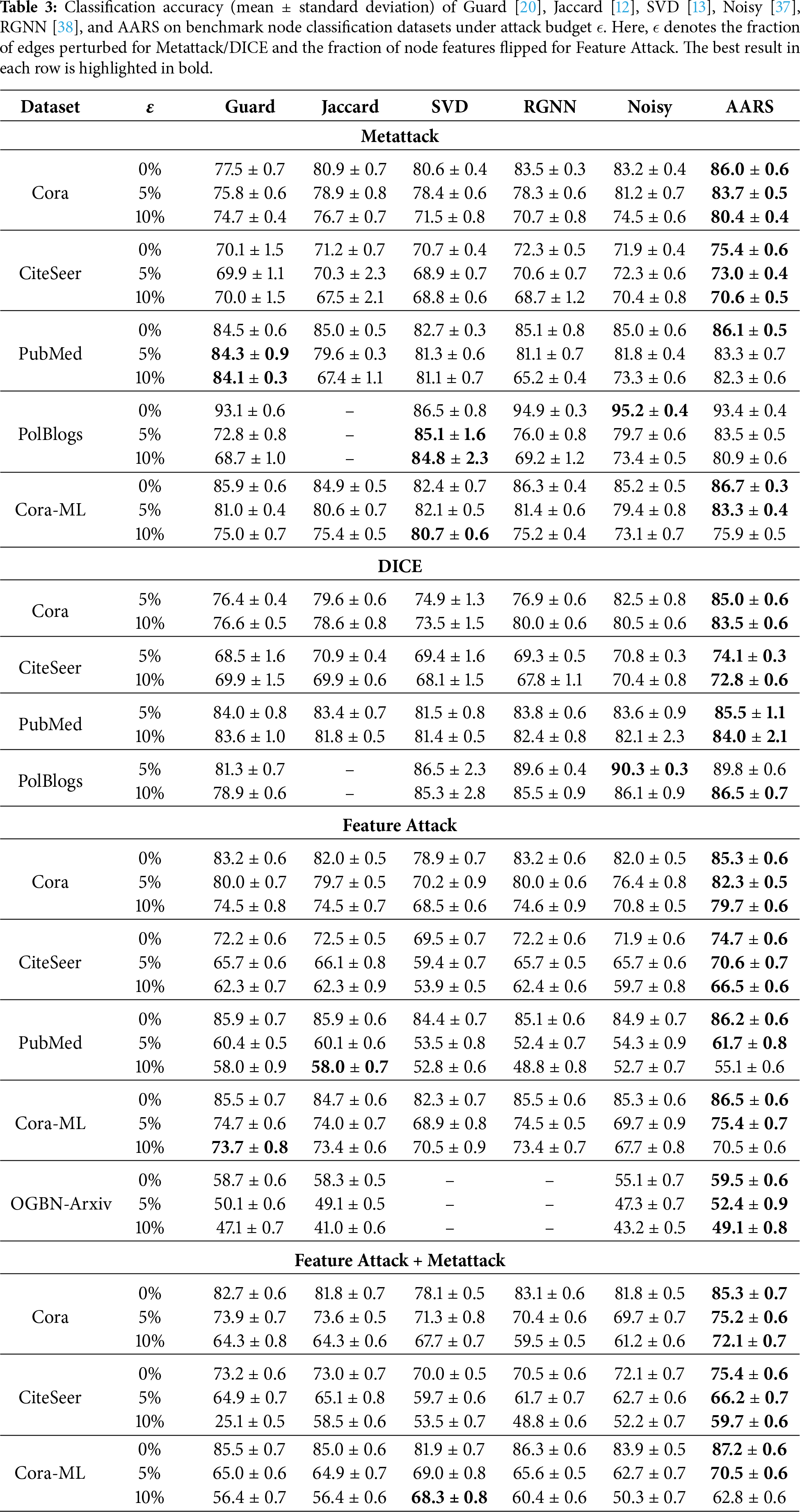
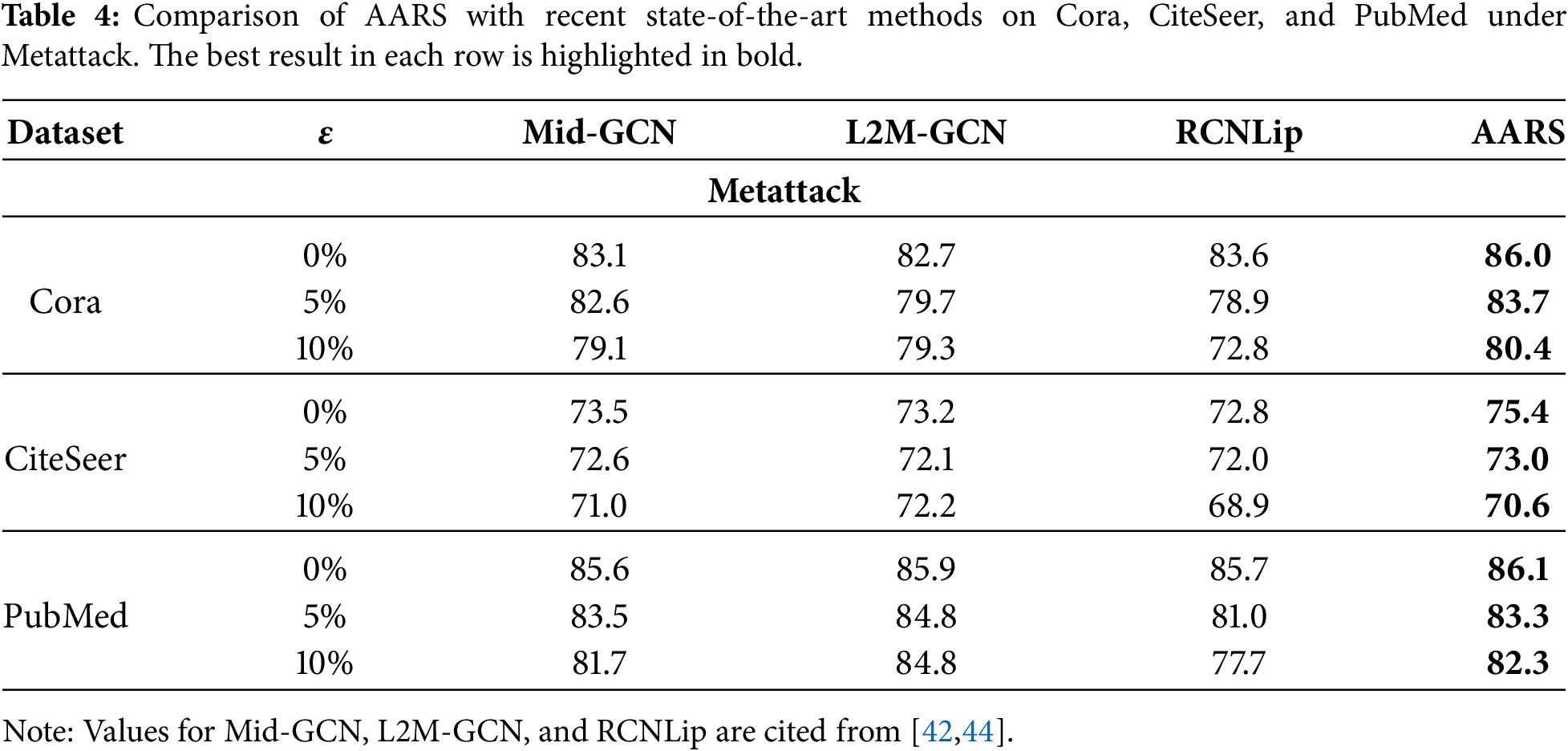
AARS consistently outperforms or is highly competitive across all datasets and perturbation levels. On Cora, it achieves 86.0% accuracy without perturbation and maintains strong performance under 5% and 10% perturbations (83.7% and 80.4%, respectively), surpassing Guard (75.8%, 74.7%) and RGNN (78.3%, 70.7%). On CiteSeer, AARS leads under 0% and 5% perturbations (75.4%, 73.0%) and remains competitive at 10% (70.6% vs. 70.0% by Guard). For PubMed, although Guard slightly outperforms AARS at 5% and 10% perturbations, AARS still surpasses Jaccard and RGNN, demonstrating good generalization. On PolBlogs, AARS achieves 83.5% at 5% perturbation, outperforming RGNN by more than seven points, and remains competitive at 10%. On Cora-ML, AARS achieves the best performance under 0% and 5% perturbations (86.7%, 83.3%), slightly trailing SVD at 10% (75.9% vs. 80.7%), indicating robust adaptability to varying graph structures.
Under DICE attacks, AARS also demonstrates superior performance. On Cora, it achieves 85.0% and 83.5% under 5% and 10% perturbations, respectively, outperforming Guard (76.4%, 76.6%) and SVD (74.9%, 73.5%). On CiteSeer, AARS maintains leading accuracy (74.1%, 72.8%), whereas on PubMed, it achieves the highest results (85.5%, 84.0%), even under feature-level perturbations. On PolBlogs, AARS reaches 86.5% at 10% perturbation, slightly surpassing noisy (86.1%) and RGNN (85.5%).
AARS exhibits significant robustness against feature perturbations. On Cora, it achieves 85.3% at 0% and maintains 82.3% and 79.7% under 5% and 10% feature flips, respectively, consistently outperforming other baselines. On CiteSeer, AARS achieves the best results at all perturbation levels (74.7%, 70.6%, 66.5%), whereas on PubMed, it reaches 86.2% at 0% and 61.7% at 5% perturbation, outperforming all other defenses. On Cora-ML, AARS maintains leading performance at 0% and 5% perturbations, and slightly trails SVD at 10% (70.5% vs. 73.7%). On the large-scale OGBN-Arxiv dataset, AARS achieves the highest accuracy under all perturbation levels (59.5%, 52.4%, and 49.1%), demonstrating scalability and robustness on large graphs.
When feature attacks are combined with Metattack, AARS still shows strong resilience. On Cora, it achieves 85.3% at 0% and maintains 75.2% and 72.1% under 5% and 10% combined perturbations, respectively, outperforming all baselines. On CiteSeer and Cora-ML, AARS similarly leads under most perturbation levels, showing its effectiveness in defending against both structural- and feature-level attacks simultaneously.
Overall, AARS demonstrates strong robustness against Metattack, DICE, Feature Attack, and their combinations, highlighting its generalization capability and practical value. In contrast, existing baselines have limitations: Guard handles local similarity but struggles under global perturbations; Jaccard and SVD rely on fixed edge pruning or low-rank approximations and may discard true edges; RGNN focuses only on local smoothness; and Noisy provides nontargeted noise injection with limited protection against structured or distributed attacks. A portion of the comparison results was obtained from [37], and the experiments are reproduced using the original parameter settings to ensure fairness and credibility.
To illustrate robustness under increasing attack budgets, Fig. 4 shows F1 and AUC [39,40] on Cora and CiteSeer. Baselines degrade noticeably, specifically under combined attacks, whereas AARS consistently maintains a high performance, complementing Table 3.
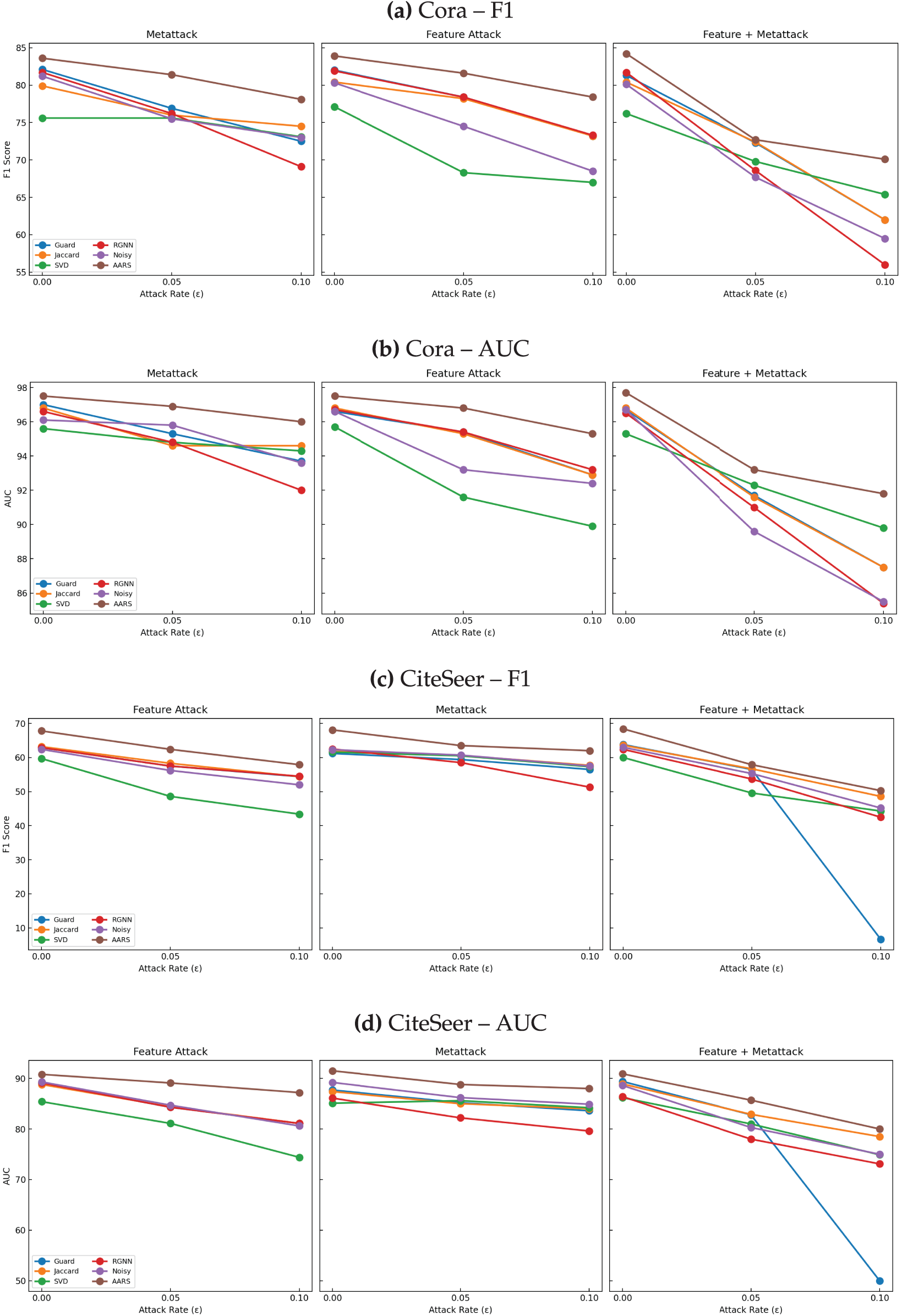
Figure 4: Performance trends of different defense methods under various structural attack scenarios. X-axis: attack budget
To further validate the effectiveness of AARS, we compare it with recent state-of-the-art GNN defense methods, including Mid-GCN [41], L2M-GCN [42], and RCNLip [43], on Cora, CiteSeer, and PubMed. As shown in Table 4, AARS consistently achieves the best or highly competitive performance across different attack budgets, demonstrating its superiority even against the latest adversarial defense techniques.
4.4 Analyses for Adversarial Training with Varying Perturbation Rates
To examine how the strength of adversarial perturbations affects model performance, we perform a series of experiments by adjusting the perturbation rate during adversarial training. Fig. 5 shows the test accuracy of the AARS model at different perturbation rates from 0.0 to 1.0. Importantly, the highest test accuracy is achieved at a perturbation rate of 0.1, surpassing 80.4%. This finding underscores that selecting the correct perturbation magnitude is essential for balancing robustness and generalization.
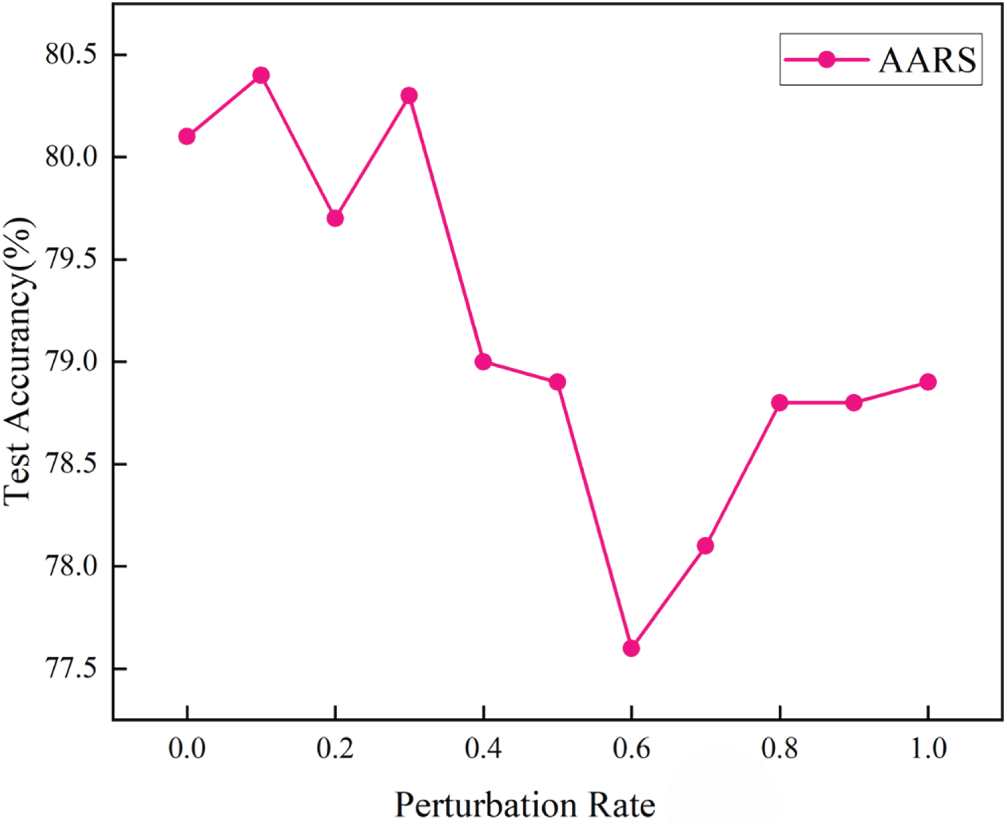
Figure 5: Test accuracy of AARS under different perturbation rates.
When the perturbation rate is too low (e.g., 0.0 or 0.05), the adversarial examples created during training are not sufficiently challenging. Consequently, the model tends to overfit clean training data and does not learn representations resistant to even mild adversarial noise. Conversely, when the perturbation rate becomes too high (e.g., 0.6 or above), the excessive perturbations significantly distort the original graph structure or node features, impairing the ability of the model to maintain semantic relationships and generalize to clean data. This causes a noticeable decline in the test accuracy, specifically at the 0.6 perturbation level.
The better performance at the 0.1 setting indicates that a moderate perturbation rate offers an optimal adversarial signal. This creates meaningful changes that help the model develop more robust representations while retaining the core features of the input graph. This highlights the importance of carefully adjusting the perturbation rates in adversarial training because both extremely little and much perturbation can harm the model’s performance.
To assess the effectiveness of each key module in AARS, we performed ablation experiments on the Cora dataset under Metattack (a targeted attack), comparing the robustness of the model across the different module configurations. The results are summarized in Table 5.
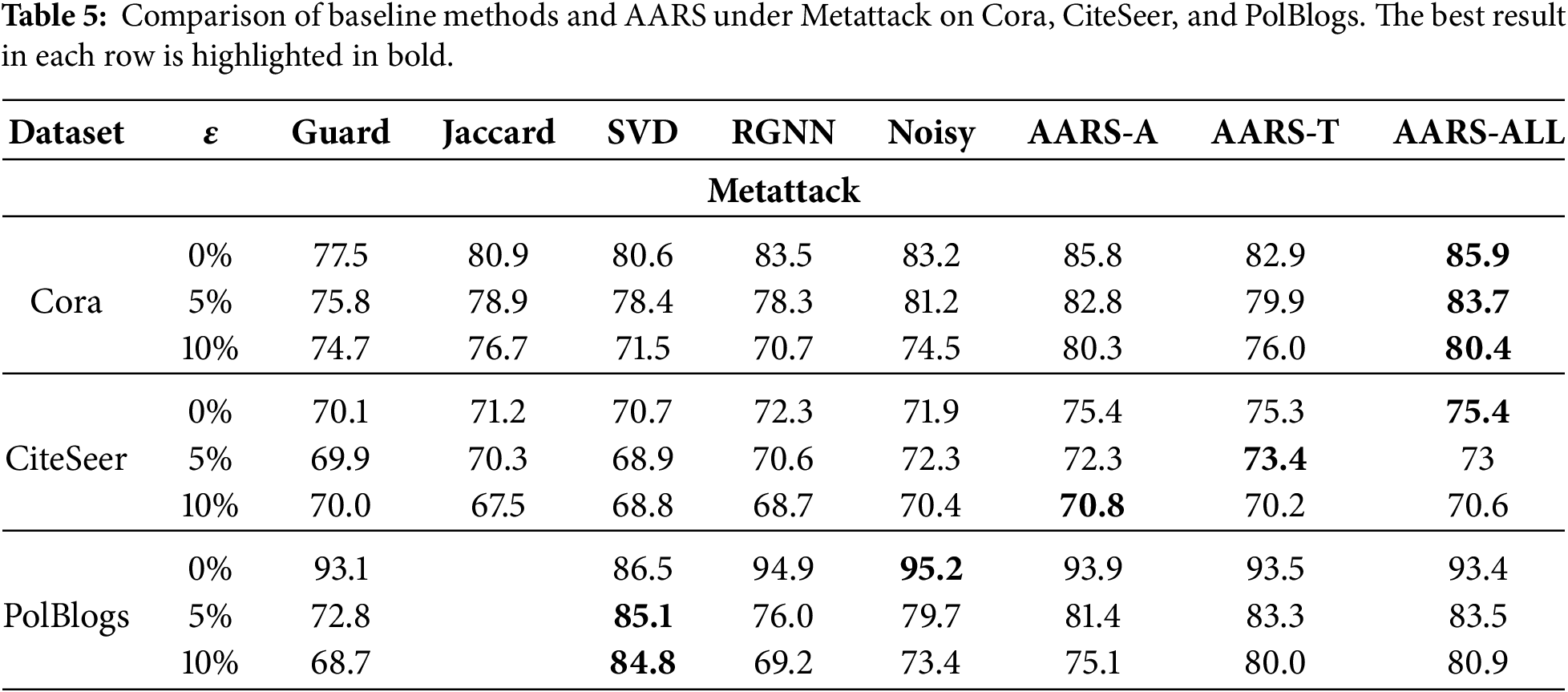
Specifically, AARS-A refers to a model that uses adversarial training alone without the attention mechanism; AARS-T includes the attention mechanism but excludes adversarial training; and AARS-ALL represents the full model, combining both adversarial training and the attention mechanism. As shown in Table 5, the AARS-ALL model consistently achieves the best performance across all attack budgets, with accuracies of 85.9%, 83.7%, and 80.4%, significantly outperforming both the ablated versions and other baseline methods.
Compared to the others, AARS-T, which omits adversarial training, shows significant performance swings, with accuracy declining to 76.0% under a 10% perturbation level, highlighting the crucial role of adversarial training in maintaining model stability. However, AARS-A, which only removes the attention mechanism, experiences a decrease in accuracy to 80.3% at the same 10% attack level, indicating that the attention mechanism is also vital for improving model robustness.
Therefore, the superior performance of AARS is owing to the combined boost from both the attention mechanism and adversarial training—neither can be left out. The full model remains strong even during severe attacks, demonstrating its high adaptability and usefulness in real-world graph-disruption cases.
Building on the analysis of perturbation rates, we examined how the key hyperparameters of AARS—
Varying
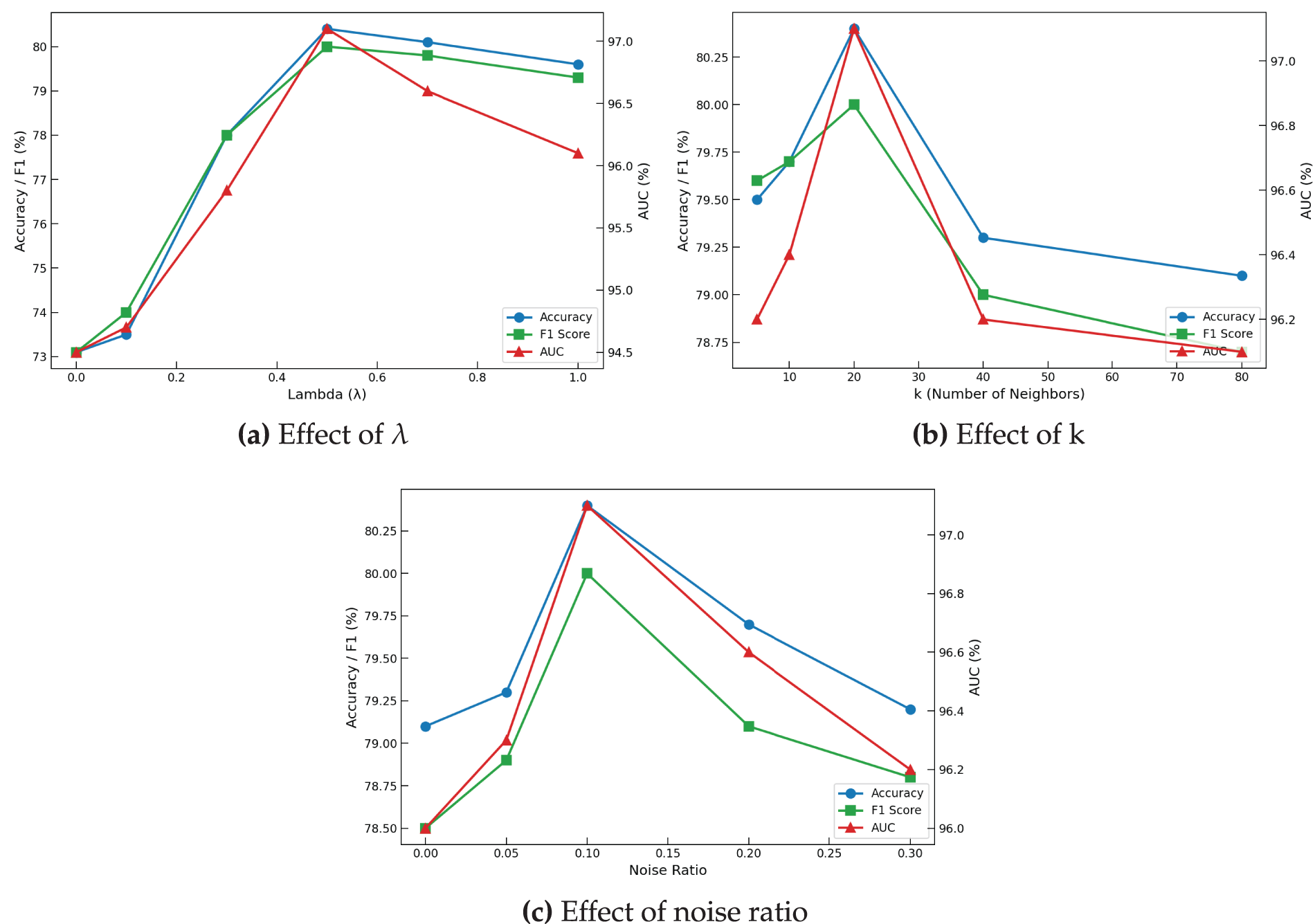
Figure 6: Hyperparameter and noise sensitivity analysis of AARS on Cora.
Increasing the number of neighbors
Finally, testing different feature noise ratios from 0 to 0.3 (Fig. 6c) shows stable performance under low noise (0–0.1) and gradual decreases beyond 0.1, with peak values similar to
Overall, these results indicate that AARS maintains high robustness and controls the sensitivity to hyperparameters under adversarial attacks.
4.6 Efficiency and Runtime Analysis
To evaluate the practical efficiency of AARS, we measured both the peak GPU memory usage and inference runtime on the Cora and PubMed datasets. The results are summarized in Table 6, compared against several baseline methods, including NoisyGCN, RGCN, GCN-Jaccard, GCN-SVD, and GNNGuard.
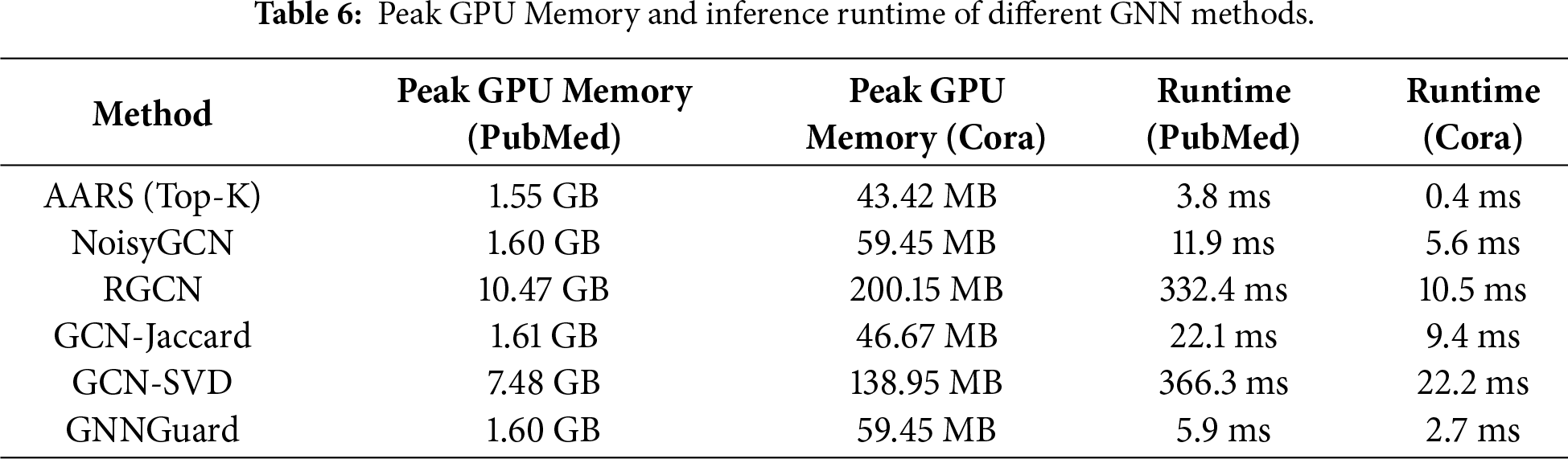
As shown in the table, AARS (Top-K) significantly reduces memory consumption compared to methods with full adjacency computations such as RGCN and GCN-SVD. For example, on PubMed, AARS requires 1.55 GB of GPU memory, whereas RGCN consumes 10.47 GB and GCN-SVD 7.48 GB. Similar trends are observed on Cora, demonstrating the practical effect of reducing computational complexity from
In terms of inference runtime, AARS is also highly efficient. On PubMed, AARS takes only 3.8 ms per forward pass, compared to 332.4 ms for RGCN and 366.3 ms for GCN-SVD. On Cora, the runtime is reduced to 0.4 ms, showing that our Top-K strategy achieves substantial speedups without sacrificing performance.
Overall, these results confirm that AARS not only maintains strong robustness under adversarial attacks, but also offers considerable practical efficiency in terms of both memory usage and inference speed, effectively addressing the theoretical complexity reduction in real-world scenarios.
Although AARS shows notable defensive benefits against attacks such as Metattack and DICE on datasets such as Cora and CiteSeer, it still faces important challenges related to robustness and scalability. AARS uses a sparse attention mechanism based on feature similarity (see Algorithm 1) to dynamically filter neighbors and reduce adversarial edge propagation. However, in cases where the graph structure is heavily degraded or node features are significantly altered, noise can easily distort the feature space, leading to biased attention weights. This causes adversarial connections to be mistakenly maintained or strengthened. While the sparse attention mechanism decreases the per-layer computational complexity from
To address these issues, future studies could restrict the attention-filtering range to
AARS combines multiview adversarial training with a dynamic sparse attention mechanism to boost the robustness of GNNs. The framework creates multiview inputs from both the original graph and adversarial examples. It uses a Top-K attention selection strategy to dynamically reduce the influence of perturbed edges while retaining critical topological information, thereby improving the performance against adversarial attacks. A dual loss function jointly enhances the local smoothness and global structural integrity. Experiments indicate that the combined optimization of adversarial training and the attention mechanism effectively balances local and global information, maintaining high classification accuracy even with a high attack budget.
Acknowledgement: Not applicable.
Funding Statement: This work was supported by the Guizhou Provincial Key Technology R&D Program under Grant (QKHZC(2022)YB074) and Guizhou University Science and Technology Group [2024]07.
Author Contributions: The authors confirm contribution to the paper as follows: conceptualization, methodology, validation, formal analysis, investigation, original draft preparation, and visualization: Cheng Yang; review and editing of the manuscript: Xianghong Tang, Jianguang Lu, Chaobin Wang; supervision and funding acquisition: Xianghong Tang. All authors reviewed and approved the final version of the manuscript.
Availability of Data and Materials: The data that support the findings of this study are available from the corresponding author, Xianghong Tang, upon reasonable request.
Ethics Approval: Not applicable.
Conflicts of Interest: The authors declare no conflicts of interest.
References
1. Hu X, Chen H, Chen H, Liu S, Li X, Zhang S, et al. Cost-sensitive GNN-based imbalanced learning for mobile social network fraud detection. IEEE Trans Comput Soc Syst. 2023;11(2):2675–90. doi:10.1109/tcss.2023.3302651. [Google Scholar] [CrossRef]
2. Liu T, Wang Y, Ying R, Zhao H. Muse-GNN: learning unified gene representation from multimodal biological graph data. Adv Neu Inform Process Syst. 2023;36:24661–77. [Google Scholar]
3. Zhang X, Gan M. Hi-GNN: hierarchical interactive graph neural networks for auxiliary information-enhanced recommendation. Knowl Inform Syst. 2024;66(1):115–45. doi:10.1007/s10115-023-01949-9. [Google Scholar] [CrossRef]
4. Besta M, Scheidl F, Gianinazzi L, Kwasniewski G, Klaiman S, Müller J, et al. Demystifying higher-order graph neural networks. IEEE Trans Pattern Anal Mach Intell. 2026;48(3):2544–65. doi:10.1109/tpami.2025.3637114. [Google Scholar] [PubMed] [CrossRef]
5. Sinha A, Vennam S, Sharma C, Kumaraguru P. Higher order structures for graph explanations. In: Proceedings of the AAAI Conference on Artificial Intelligence. Vol. 39. Palo Alto, CA, USA: AAAI Press; 2025. p. 20514–21. [Google Scholar]
6. Li L, Yang W, Bai S, Ma Z. KNN-GNN: a powerful graph neural network enhanced by aggregating K-nearest neighbors in common subspace. Expert Syst Appl. 2024;253:124217. [Google Scholar]
7. Xiao S, Wang S, Dai Y, Guo W. Graph neural networks in node classification: survey and evaluation. Mach Vision Appl. 2022;33(1):4. doi:10.1007/s00138-021-01251-0. [Google Scholar] [CrossRef]
8. Dai H, Li H, Tian T, Huang X, Wang L, Zhu J, et al. Adversarial attack on graph structured data. In: International Conference on Machine Learning. London, UK: PMLR; 2018. p. 1115–24. [Google Scholar]
9. Zügner D, Akbarnejad A, Günnemann S. Adversarial attacks on neural networks for graph data. In: Proceedings of the 24th ACM SIGKDD International Conference on Knowledge Discovery & Data Mining. New York, NY, USA: ACM; 2018. p. 2847–56. [Google Scholar]
10. Sun L, Dou Y, Yang C, Zhang K, Wang J, Yu PS, et al. Adversarial attack and defense on graph data: a survey. IEEE Trans Knowl Data Eng. 2022;35(8):7693–711. doi:10.1109/tkde.2022.3201243. [Google Scholar] [CrossRef]
11. Günnemann S. Graph neural networks: adversarial robustness. In: Graph neural networks: foundations, frontiers, and applications. Singapore: Springer; 2022. p. 149–76. [Google Scholar]
12. Wu H, Wang C, Tyshetskiy Y, Docherty A, Lu K, Zhu L. Adversarial examples for graph data: deep insights into attack and defense. In: Proceedings of the Twenty-Eighth International Joint Conference on Artificial Intelligence, IJCAI-19; 2019 Aug 10–16; Macao, China. p. 4816–23. [Google Scholar]
13. Entezari N, Al-Sayouri SA, Darvishzadeh A, Papalexakis EE. All you need is low (rank) defending against adversarial attacks on graphs. In: Proceedings of the 13th International Conference on Web Search and Data Mining; 2020 Jan 20–24; Online. p. 169–77. [Google Scholar]
14. Zhu Y, Xu W, Zhang J, Liu Q, Wu S, Wang L. Deep graph structure learning for robust representations: a survey. arXiv:2103.03036. 2021. [Google Scholar]
15. Jin W, Ma Y, Liu X, Tang X, Wang S, Tang J. Graph structure learning for robust graph neural networks. In: Proceedings of the 26th ACM SIGKDD International Conference on Knowledge Discovery & Data Mining. New York, NY, USA: ACM; 2020. p. 66–74. [Google Scholar]
16. Zhang A, Ma J. Defensevgae: defending against adversarial attacks on graph data via a variational graph autoencoder. In: International Conference on Intelligent Computing. Cham, Switzerland: Springer; 2024. p. 313–24. [Google Scholar]
17. Chen Y, Wu L, Zaki M. Iterative deep graph learning for graph neural networks: better and robust node embeddings. Adv Neural Inform Process Syst. 2020;33:19314–26. [Google Scholar]
18. Zhu D, Zhang Z, Cui P, Zhu W. Robust graph convolutional networks against adversarial attacks. In: Proceedings of the 25th ACM SIGKDD International Conference on Knowledge Discovery & Data Mining. New York, NY, USA: ACM; 2019. p. 1399–407. [Google Scholar]
19. Tang X, Li Y, Sun Y, Yao H, Mitra P, Wang S. Transferring robustness for graph neural network against poisoning attacks. In: Proceedings of the 13th International Conference on Web Search and Data Mining; 2020 Jan 20–24; Online. p. 600–8. [Google Scholar]
20. Zhang X, Zitnik M. Gnnguard: defending graph neural networks against adversarial attacks. Adv Neural Inform Process Syst. 2020;33:9263–75. doi:10.1109/icdmw58026.2022.00096. [Google Scholar] [CrossRef]
21. Chen J, Wu Y, Xu X, Chen Y, Zheng H, Xuan Q. Fast gradient attack on network embedding. arXiv:1809.02797. 2018. [Google Scholar]
22. Sun Y, Wang S, Tang X, Hsieh TY, Honavar V. Adversarial attacks on graph neural networks via node injections: a hierarchical reinforcement learning approach. In: Proceedings of the Web Conference 2020; 2020 Apr 20–24; Online. p. 673–83. [Google Scholar]
23. Zhang Y, Liu X, Wu M, Yan W, Yan M, Ye X, et al. Disttack: graph adversarial attacks toward distributed GNN training. In: European Conference on Parallel Processing. Cham, Switzerland: Springer; 2024. p. 302–16. [Google Scholar]
24. Zügner D, Borchert O, Akbarnejad A, Günnemann S. Adversarial attacks on graph neural networks: perturbations and their patterns. ACM Trans Know Disc Data (TKDD). 2020;14(5):1–31. doi:10.1145/3394520. [Google Scholar] [CrossRef]
25. Dai E, Zhao T, Zhu H, Xu J, Guo Z, Liu H, et al. A comprehensive survey on trustworthy graph neural networks: privacy, robustness, fairness, and explainability. Mach Intell Res. 2024;21(6):1011–61. [Google Scholar]
26. Xu K, Hu W, Leskovec J, Jegelka S. How powerful are graph neural networks? arXiv:1810.00826. 2019. [Google Scholar]
27. Xu K, Chen H, Liu S, Chen PY, Weng TW, Hong M, et al. Topology attack and defense for graph neural networks: an optimization perspective. In: Proceedings of the 28th International Joint Conference on Artificial Intelligence. Palo Alto, CA, USA: AAAI Press; 2019. p. 3961–7. [Google Scholar]
28. Gosch L, Sturm D, Geisler S, Günnemann S. Revisiting robustness in graph machine learning. arXiv:2305.00851. 2023. [Google Scholar]
29. Dong G, Tang M, Wang Z, Gao J, Guo S, Cai L, et al. Graph neural networks in IoT: a survey. ACM Trans Sens Netw. 2023;19(2):1–50. doi:10.1145/3565973. [Google Scholar] [CrossRef]
30. Kong X, Song Z, Ye X, Jiao J, Qi H, Liu X. GRID: graph-based robust intrusion detection solution for industrial IoT networks. IEEE Inter Things J. 2025;12(14):26646–59. [Google Scholar]
31. Giraldo JH, Skianis K, Bouwmans T, Malliaros FD. On the trade-off between over-smoothing and over-squashing in deep graph neural networks. In: Proceedings of the 32nd ACM International Conference on Information and Knowledge Management. New York, NY, USA: ACM; 2023. p. 566–76. [Google Scholar]
32. Zhang C, Zhou L, Xu X, Wu J, Liu Z. Adversarial attacks of vision tasks in the past 10 years: a survey. ACM Comput Surv. 2025;58(2):1–42. doi:10.1145/3743126. [Google Scholar] [CrossRef]
33. Zhai Z, Li P, Feng S. State of the art on adversarial attacks and defenses in graphs. Neural Comput Appl. 2023;35(26):18851–72. doi:10.1007/s00521-023-08839-9. [Google Scholar] [CrossRef]
34. Zhang J, Hong Y, Cheng D, Zhang L, Zhao Q. Defending adversarial attacks in Graph Neural Networks via tensor enhancement. Pattern Recognit. 2025;158:110954. doi:10.1016/j.patcog.2024.110954. [Google Scholar] [CrossRef]
35. Wang G, Ying R, Huang J, Leskovec J. Multi-hop attention graph neural networks. In: Proceedings of the Thirtieth International Joint Conference on Artificial Intelligence, IJCAI-21; 2021 Aug 19–26; Online. p. 3089–96. [Google Scholar]
36. Gu Y, Sun H, Wang Y, Shi H. Improve robustness of graph neural networks: multi-hop neighbors meet homophily-based truncation defense. In: 2023 International Joint Conference on Neural Networks (IJCNN). Piscataway, NJ, USA: IEEE; 2023. p. 1–8. [Google Scholar]
37. Ennadir S, Abbahaddou Y, Lutzeyer JF, Vazirgiannis M, Boström H. A simple and yet fairly effective defense for graph neural networks. In: Proceedings of the AAAI Conference on Artificial Intelligence. Vol. 38. Palo Alto, CA, USA: AAAI Press; 2024. p. 21063–71. [Google Scholar]
38. Geisler S, Schmidt T, Şirin H, Zügner D, Bojchevski A, Günnemann S. Robustness of graph neural networks at scale. Adv Neural Inform Process Syst. 2021;34:7637–49. doi:10.52202/079017-1554. [Google Scholar] [CrossRef]
39. Fofanah AJ, Chen D, Wen L, Zhang S. Addressing imbalance in graph datasets: introducing gate-GNN with graph ensemble weight attention and transfer learning for enhanced node classification. Expert Syst Appl. 2024;255:124602. doi:10.1016/j.eswa.2024.124602. [Google Scholar] [CrossRef]
40. Fofanah AJ, Leigh AO. EATSA-GNN: edge-aware and two-stage attention for enhancing graph neural networks based on teacher–student mechanisms for graph node classification. Neurocomputing. 2025;612:128686. doi:10.1016/j.neucom.2024.128686. [Google Scholar] [CrossRef]
41. Huang J, Du L, Chen X, Fu Q, Han S, Zhang D. Robust mid-pass filtering graph convolutional networks. In: Proceedings of the ACM Web Conference 2023; New York, NY, USA: ACM; 2023. p. 328–38. [Google Scholar]
42. Chen H, Zhou X, Zhang J, Wang H. L2M-GCN: a new framework for learning robust GCN against structural attacks. Neurocomputing. 2025;636:129962. doi:10.1016/j.neucom.2025.129962. [Google Scholar] [CrossRef]
43. Jia Y, Zou D, Wang H, Jin H. Enhancing node-level adversarial defenses by Lipschitz regularization of graph neural networks. In: Proceedings of the 29th ACM SIGKDD Conference on Knowledge Discovery and Data Mining. New York, NY, USA: ACM; 2023. p. 951–63. [Google Scholar]
44. Zhou C, Peng Y, Huang W, Miao X, Cao Y, Wang X, et al. A dynamic ensemble learning model for robust Graph Neural Networks. Neural Netw. 2025;191(2):107810. doi:10.1016/j.neunet.2025.107810. [Google Scholar] [PubMed] [CrossRef]
Cite This Article
 Copyright © 2026 The Author(s). Published by Tech Science Press.
This work is licensed under a Creative Commons Attribution 4.0 International License , which permits unrestricted use, distribution, and reproduction in any medium, provided the original work is properly cited.
 Downloads
 Citation Tools
