
 Login
Login Register
 Submit a Paper
 Propose a Special lssue
 Open Access
REVIEW
Harvesting Tomorrow: Empowering Smart Agriculture through Digital Twin Technology
1 Faculty of Information Technology and Electrical Engineering, University of Oulu, Oulu, Finland
2 Construct Innovate and MaREI Centre for Energy, Ryan Institute, School of Engineering, University of Galway, Galway, Ireland
3 Department of IT, Faculty of Management Studies and Commerce, University of Sri Jayewardenepura, Nugegoda, Sri Lanka
4 Department of Engineering Technology, Fakulti Teknologi Dan Kejuruteraan Elektronik Dan Komputer (FTKEK), Universiti Teknikal Malaysia Melaka (UTeM), Melaka, Malaysia
5 General Education and Foundation Program, Faculty of Resilience, Rabdan Academy, 65 Al Inshirah Street, Abu Dhabi, United Arab Emirates
* Corresponding Authors: Navod Neranjan Thilakarathne. Email: ; Jamil Abedalrahim Jamil Alsayaydeh. Email:
Computers, Materials & Continua 2026, 89(2), 3 https://doi.org/10.32604/cmc.2026.082189
Received 12 March 2026; Accepted 01 June 2026; Issue published 15 September 2026
 View Full Text
 Download PDF
Abstract
With the growing world population and demand for agricultural goods, agriculture requires innovative technologies that make the best use of resource, reduce waste, and increase productivity. So, smart agriculture, which involves the use of innovative digital technologies to enhance the quality and quantity of harvests, has come into play, superseding traditional agriculture. In recent years, the concept of the digital twin has intertwined with smart agriculture to enable precise control of entire farms, facilitating virtual replications. Overall, the digital twin enables continuous monitoring of real-time conditions in the field, providing valuable insights into crop health, resource utilization, and environmental factors, making it the next revolution in smart agriculture. The integration of digital twin-enabled precision control mechanisms allows for immediate responses to changing conditions and optimizes agricultural processes. Digital twins are still new to smart agriculture, but their use is growing quickly because of the benefits they offer. Motivated by synthesizing the latest knowledge on how digital twins can be utilized to precisely manage agricultural tasks, this study presents a comprehensive review of digital twins in smart agriculture. It discusses the digital twin ecosystem in smart agriculture, provides a taxonomy of the latest services, provides a conceptual architectural framework for autonomous agricultural digital twin, and highlights the latest challenges in the domain and countermeasures to overcome them. Nonetheless, anticipated future directions are also highlighted, paving the way for future research.Keywords
The development of Information and Communication Technologies (ICT) is increased in the early 21st century has significantly influenced various industries, including the agriculture, healthcare, and manufacturing sectors [1]. Evolution of ICT has allowed these industries to enter a new period of efficiency and societal benefit, with the agricultural sector benefiting the most from this digital transformation. Progress in smart agriculture, has been made possible by advanced ICT technologies like the Internet of Things (IoT), Artificial Intelligence (AI), cloud computing, and robotics have revolutionised the agricultural landscape, offering intelligence and automated services into agricultural processes [1–3].
One of the most promising developments in this domain is the concept of Digital Twin (DT), a vital technological approach which is capable of offering a multitude of promising services. Leveraging viewing in real time, predictive analytics, and precise control, the digital twin enhances traditional agricultural practices, marking a significant advancement in the agricultural evolution [4–7].
Smart agriculture, which includes DT, has come about as a way to deal with the agricultural industry’s increasing challenges and necessities. Currently, as the worldwide population is steadily growing, expected to reach around 10 billion by 2050 [1,2], there is heightened pressure on the agricultural sector to increase food production. The latest data from the Food and Agriculture Organisation has highlighted the urgent need to increase agricultural food production to feed the ever-growing world population. This scenario is further complicated by the scarcity of resources, climate and environmental changes, and labour shortage, emphasising the need for technology-driven and data-driven agricultural solutions to optimise resource utilisation and, subsequently, achieve sustainable and high-quality harvests [8–10].
A physical object, process, system, or even an entire ecosystem can be virtually replicated or simulated using the Digital Twin, which is based on IoT technology [1]. By serving as a link between the real and virtual worlds, this model offers a real-time, data-driven representation that mirrors the behaviour, characteristics, and functionality of its physical counterpart [9–11]. The term “Digital Twin” was originally coined by Dr Michael Grieves, a senior researcher at NASA, in early 2002, describing it as a virtual replica of a physical asset [1]. Initially utilised by NASA in the early 2000s to track and evaluate complicated performance of the system, such as spacecraft and satellites [1], DT technology has since found applications across multiple domains, including manufacturing, healthcare, and urban planning. In the manufacturing sector, DT has enabled the optimisation of production processes, predictive maintenance, and efficient resource allocation [1,2], whilst in the healthcare sector, it has been used to support personalised patient care, medical research, and clinical decision-making [1,2]. The urban planning sector has utilised the DT to facilitate smart city development, infrastructure management, and traffic optimisation [3].
In agriculture, DT technology has enabled the development of virtual representations of entire farms, crops, livestock, and irrigation systems, which are monitored, simulated, and optimised across various aspects of agricultural operations using real-time data [11–15]. Digital twins are well aligned with the principles of smart agriculture, which place a high emphasis on gathering data in real time from many sources, including sensors, drones, satellites, and weather stations. Data collected can be fed into a DT representation by providing high-quality real-time information, empowering farmers to make data-driven choices and optimise their operations [16–20]. This integration of real-time data, combined with predictive analytics and remote monitoring, enables farmers to optimise their operations, productivity and sustainability through data-driven decision-making [21,22].
Although still in its early stages infancy, Digital twin (DT) technology’s use in smart agriculture is rapidly gaining traction ground due to its significant potential and increasing interest in driving agricultural transformation [22–24]. With continued advancements, ongoing research, and stronger industry collaboration, DT technology is expected to mature and achieve wider adoption be adopted on a larger scale in the coming years.
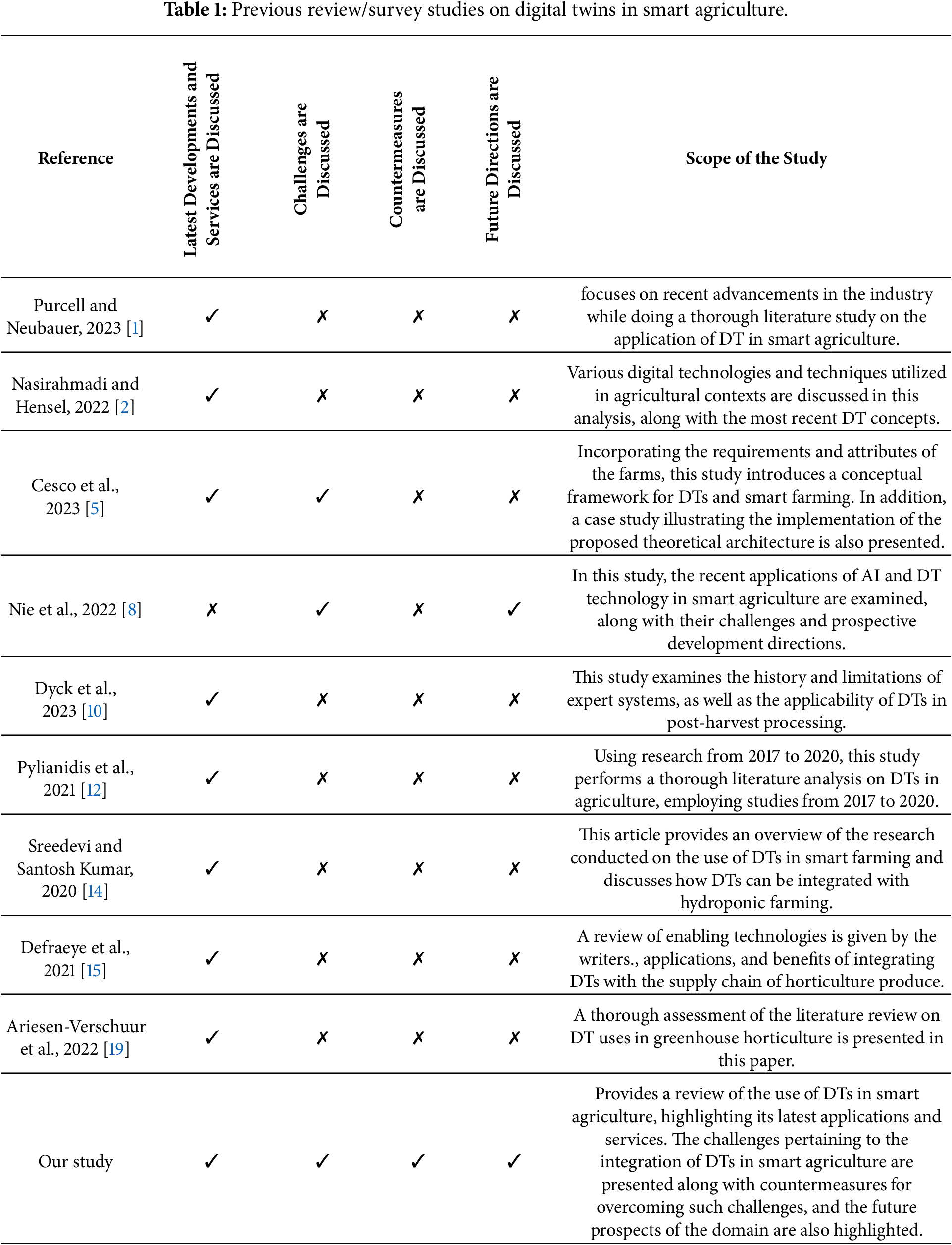
Despite the existence of several review studies in this domain area, as summarised in Table 1, most lack a comprehensive perspective that encompasses the DT ecosystem, emerging services, and the associated challenges in smart agriculture. To address fill this gap, this study gives a holistic evaluation of the smart agricultural DT ecosystem, including its services, key challenges, corresponding countermeasures, and future research directions.
The study’s main contributions in this context are as follows.
1. Gives a comprehensive review of digital twins and their applications in smart agriculture, highlighting the ecosystem, key benefits, and presenting a taxonomy of the latest services.
2. Proposes a conceptual architectural framework for an autonomous agricultural digital twin, outlining its key components.
3. Identifies the main obstacles related to the integration of digital twins in smart agriculture and discusses corresponding countermeasures to address them.
4. Summarises the state-of-the-art literature, categorising existing studies according to the proposed taxonomies.
The methodology adopted in the study involves a keyword-based search for research and review publications in many scientific databases, such as Web of Science, Scopus, IEEE Xplore, Science Direct, and Google Scholar, is the methodology used in this work. The keywords utilized for the search were “Digital Twins” or “Digital Replicas,” were used in conjunction with one of the following terms: “Farming”, “Agriculture”, “Precision Agriculture”, “Smart Agriculture”, “Smart Farming” and “Precision Farming”. Studies that discussed farming or agriculture but had nothing to do with digital twining technology were excluded. The remaining studies were used to choose the final research for review after being assessed according to their applicability, significant contributions, and suggested remedies.
Table 1 summarises the previous review/survey studies done within the framework of the DT in smart agriculture to highlight key aspects and the scope of the study to differentiate our work from theirs. Purcell and Neubauer [1] provide a comprehensive review focusing on recent developments in the field. Nasirahmadi and Hensel [2] discuss various digital technologies and digital twin concepts applied in agriculture. Cesco et al. [5] propose a theoretical structure for digital twins in smart farming and include a case study. Nie et al. [8] examine the applications of AI and digital twins along with associated challenges and future directions. Dyck et al. [10] focus on the applicability of digital twins in post-harvest processing. Pylianidis et al. [12] present a literature review covering studies between 2017 and 2020. Sreedevi and Santosh Kumar [14] review digital twin applications in smart farming, particularly in hydroponics. Defraeye et al. [15] analyze Digital twin applications and enabling technologies and applications of digital twins in horticulture supply chains are examined by Defraeye et al. [15]. Ariesen-Verschuur et al. [19] conduct a systematic review focusing on greenhouse horticulture. According to the studies highlighted in Table 1, it is clear that the latest reviews/surveys lack focus on the latest services and developments in the domain, challenges and countermeasures to overcome like that challenges and anticipated future directions, where in our review, we cover all these aspects by discussing the DT ecosystem in smart agriculture, providing a taxonomy of the latest services, a conceptual architectural framework for autonomous agricultural digital twin, and highlighting the latest challenges in the domain and countermeasures to overcome them.
The remainder of the study is organised in the following way. Following the introduction, section two gives an overview of the DT concept. The application of DTs in smart agriculture, along with the latest applications and services, are highlighted in section three. The fourth section presents a conceptual architectural framework for an autonomous agricultural digital twin. The next section highlights the challenges and countermeasures, and future prospects pertaining to the DT in smart agriculture are highlighted in section six. Finally, the study ends with the findings that were drawn from it.
The primary goal of this section is to offer brief insights into the DT concept, demonstrate how virtual representations of physical entities are created in DT, and explain the ecosystem of agricultural DT.
Engineers in the aerospace and military sectors initially employed the “Digital Twin” idea in the 1960s and 1970s to model and test complex systems [1]. The emergence of Product Lifecycle Management (PLM) systems in the late 1990s and early 2000s laid the groundwork for comprehensive product data management across different stages of a product’s lifecycle. These systems were later integrated into DT technology [20–22], arising from the necessity of a product management system capable of encompassing every detail about the product across stages of lifecycle and being accessible to all users. Consequently, the concept of a digital replica of the physical product was conceived to house all relevant data required for the design, production, and maintenance phases [19,22–24].
Although the term “Digital Twin” began to be used informally in 2010, it only gained widespread adoption as sensor technology, data analytics, and IoT developments [24–26] enabled the creation of increasingly complex virtual representations of real-world physical entities [26,27]. These advancements enhanced the capabilities of systems, improving processes such as product design, manufacturing, operation, and maintenance better at doing things like designing, making, running, and fixing products [20–23]. Today, DTs have gained widespread adoption across various industries, with of PLM innovations in AI, Virtual Reality (VR), and Augmented Reality (AR) poised to further expand their utility.
A DT is essentially a synchronized, real-time virtual replica of a process, environment, or product. It represents a novel approach to digitalization via high-fidelity modelling and simulation [22–24]. It has been well-adopted in many areas, with but not limited to manufacturing, agriculture, healthcare, and smart cities, with varying levels of progression [28–30]. According to Michael Grieves, a foundational figure in DT technology, a complete DT framework must consist of at least a physical space, a digital space, and continuous data exchange between these two realms, facilitating real-time updates and interactions [1,8,9]. Despite some variations in definition, with some sources emphasizing its role as a bridge between the physical and digital worlds [20,21], and others describing it as a simulated virtual model of a physical asset [22,23], where all definitions align with the core principles of DTs.
Emerging predominantly from Product Lifecycle Management literature, the concept of DT heavily relies on the IoT as the physical part of the DT. In this setup, there is a virtual equivalent for every physical object that contains detailed information about its properties, origin, ownership, and sensory data [12,19]. As IoT-based systems continue to evolve, these virtual models become foundational elements of intelligent systems, offering sophisticated management features include monitoring, prediction, and optimization [31–34]. Although these systems embody the essence of DTs, they are not always explicitly recognized as such, partly due to the novelty of the concept and its integration into existing technologies. Therefore, DTs can be seen as a natural evolution of smart IoT-based systems. Fig. 1 illustrates the operational mechanism of DTs in smart systems, highlighting how sensors play a crucial role in collecting data from the physical environment and transmitting it to the DT model, thereby enabling real-time monitoring and analysis. The DT then interacts with the physical system through actuators, allowing it to influence and control physical processes. Furthermore, the DT supports key functionalities such as monitoring, control, optimization, and autonomy, which enhance decision-making and overall system performance within the broader operational context.
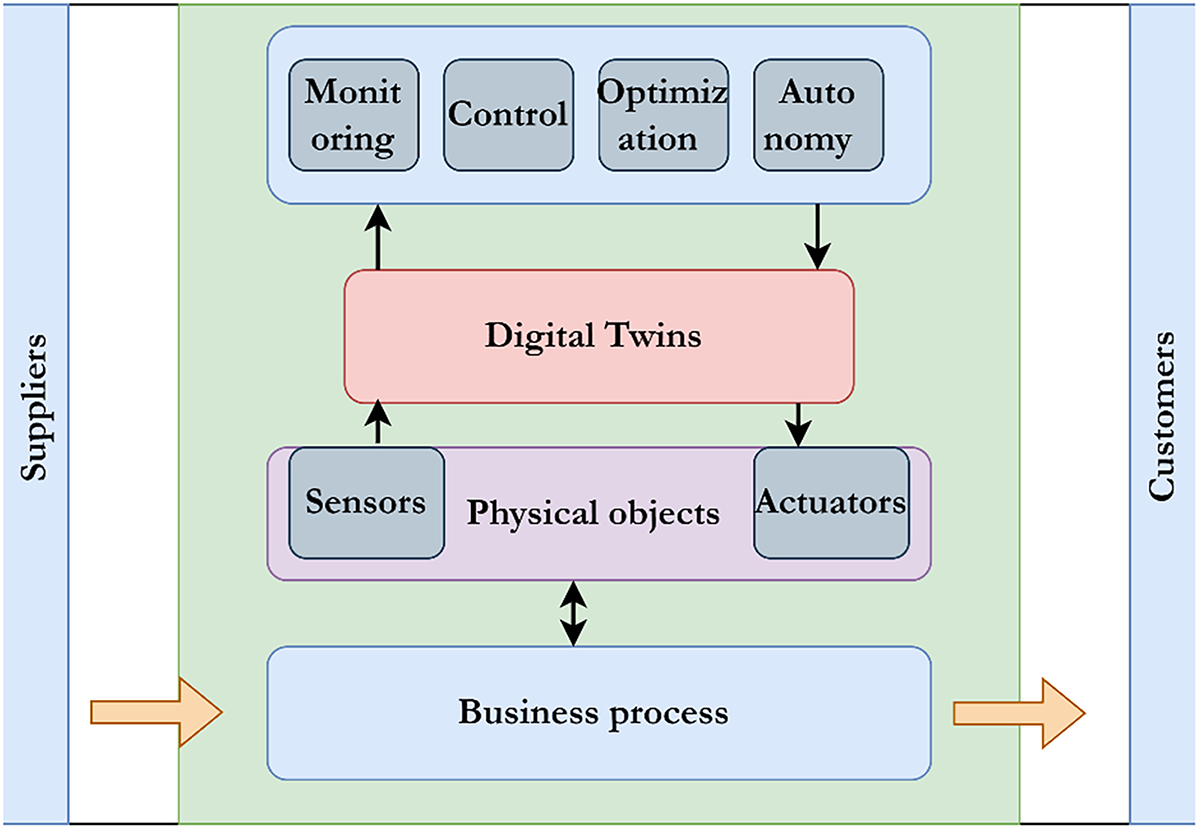
Figure 1: The workflow of the digital twin in smart systems.
In general, a DT is the making and testing of a real object, process, or system on an information platform. This platform creates a digital simulation that changes physical objects based on the feedback it gets by using AI and software analysis along with physical feedback data [26,27]. In a perfect world, DT would be able to learn on its own from different sources of feedback data and give an accurate picture of the current state of physical objects in the digital world almost in real time [25–27].
The utility of DT extends beyond merely monitoring the condition of physical objects on an information platform; it also enables the manipulation of components within these physical objects through a predefined interface. This process involves the translation of data obtained from the physical system, the modification of the digital system’s state, and the transmission of feedback from the virtual system to the physical environment [28–30]. As illustrated in Fig. 2, this interaction is facilitated through a continuous feedback loop between the physical and virtual spaces, where sensor data is used to create a real-time representation of the physical system within the digital twin [32–34]. The virtual model supports functionalities such as modeling, forecasting, monitoring, and behavior representation, which inform decision-making processes. These decisions are then executed through actuators to make necessary adjustments to modify the physical system as needed, ensuring dynamic and synchronized operation between the two domains.
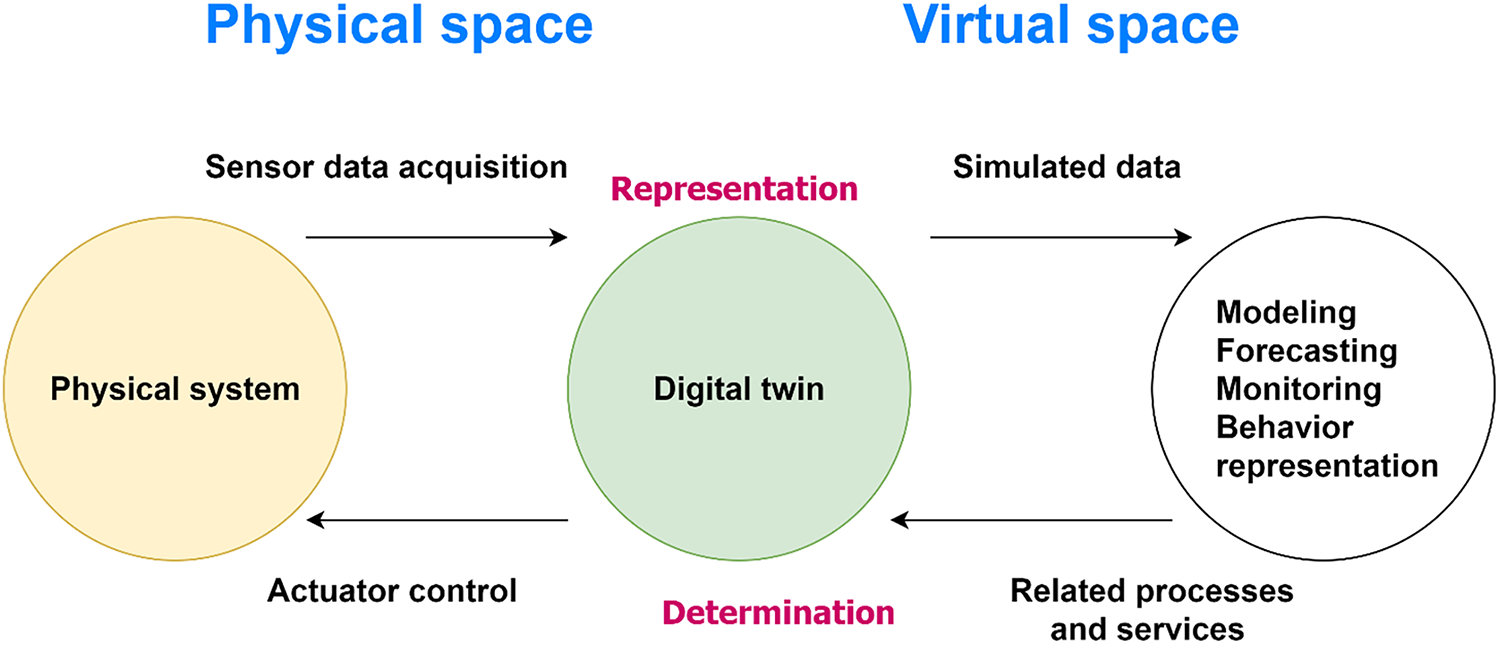
Figure 2: Data interaction between the physical system and its digital counterpart in a digital twin.
Moreover, DTs are not limited to representing current states of the physical systems; they can also recreate past states and simulate or forecast future scenarios. This capability removes many fundamental constraints, such as the need for physical proximity to the work or field location, thereby overcoming limitations related to place, time, and human observations [35–38].
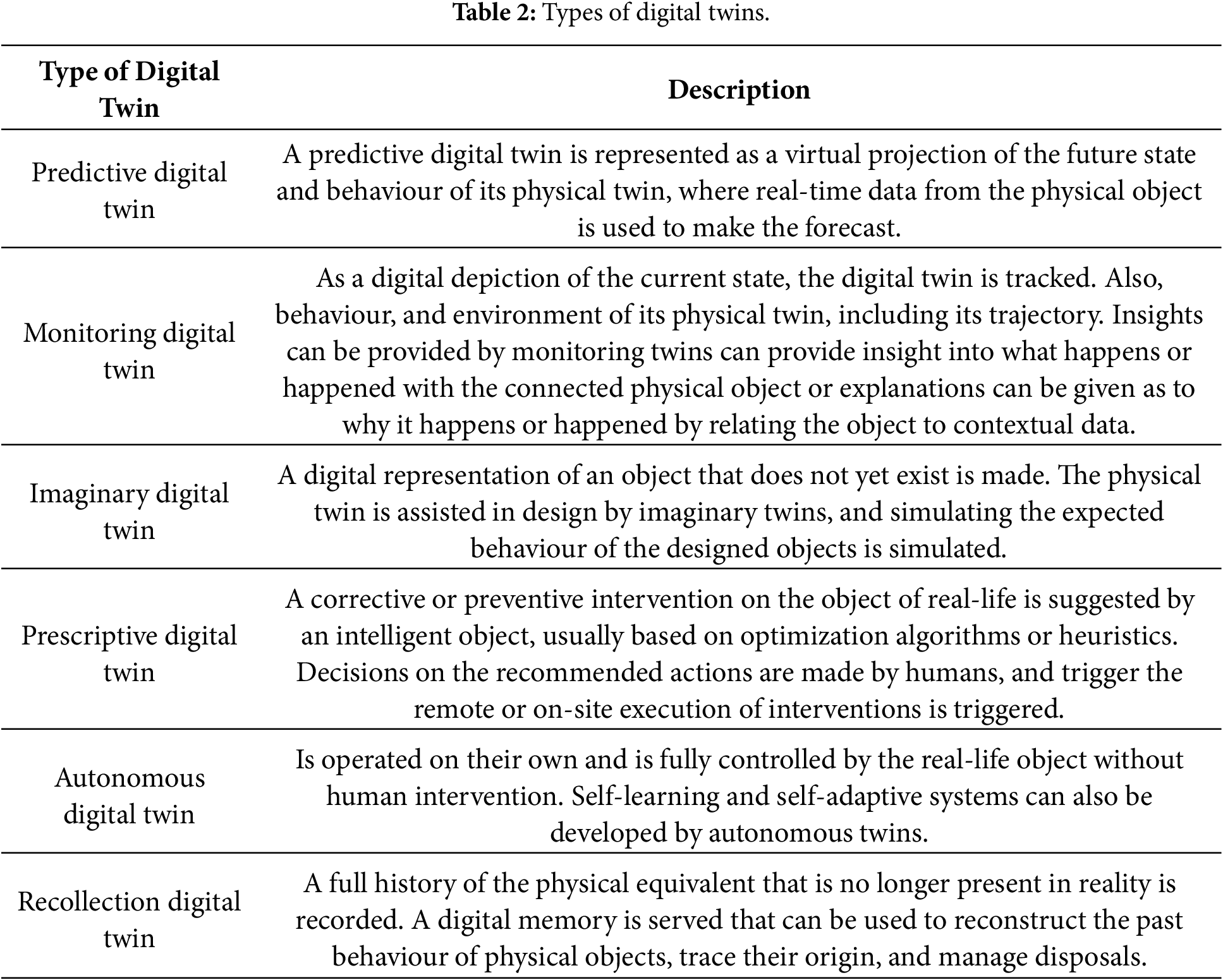
Based on the role in the Product Life Cycle and the supported capabilities of smart systems [1,12,19,39–42], different types of DTs can be identified as depicted in Table 2. Predictive digital twins focus on forecasting future states using real-time data, while monitoring digital twins represent the current condition and behaviour of physical systems. Imaginary digital twins are used during the design phase to simulate objects that do not yet exist. Prescriptive digital twins provide recommendations for corrective or preventive actions, whereas autonomous digital twins can operate independently with minimal or no human intervention. Additionally, recollection digital twins serve as historical records, capturing past states and behaviours of physical entities for analysis and traceability.
The Generic Digital Twin Architecture
As per studies [1,8], the generic DT architecture has three primary components: “physical space,” “virtual space,” and “connections between these spaces.” Within this context, physical space encompasses tangible resources such as physical assets, sensors, and actuators [43–45]. Virtual space, on the other hand, comprises complex simulation models that incorporate multiple physical phenomena, scales, and probabilities [46–49]. Data exchange and drive commands between these two realms are made easier by the connection between the physical and virtual environments. Fig. 3 depicts the generic DT architecture in smart agriculture.
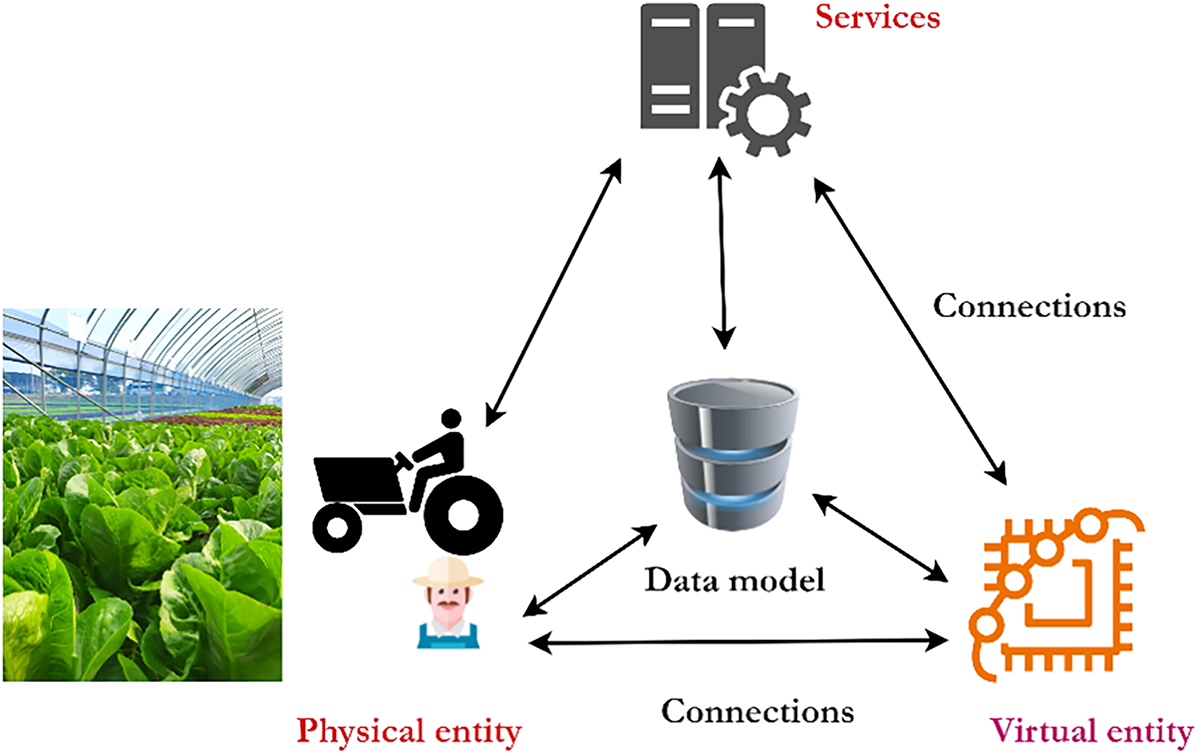
Figure 3: The generic digital twin architecture in smart agriculture.
According to the generic DT architecture in smart agriculture, the physical entity represents the physical smart agricultural assets, while the virtual entity represents the simulation models of these physical components, and the state related to these entities is maintained within the data model. The data model acts as a central component for storing, processing, and managing real-time information collected from the physical environment. All entities and the data model are continuously interconnected through seamless data exchange, enabling dynamic interaction between the physical and virtual domains. This integration supports the delivery of various services, such as monitoring, analysis, and decision-making, for relevant stakeholders, including farmers and government authorities [50–54].
With given the increasing demand for digital twins (DTs) and the integration in corporation of various applications, DT architectures have evolved beyond the generic model to support enhanced functionalities and services. Ellahi et al. [24] proposed a six-layer DT architecture that includes components such as the IoT gateway, local data layer, cloud integration, and simulation/emulation layers. Similarly, Alam and El Saddik [13] developed a DT architecture for cloud-based Cyber-Physical Systems (CPSs), describing DTs as an advanced extension of IoT-enabled CPSs that integrate computational algorithms with physical processes. Verdouw et al. [27] introduced an IoT-enabled DT architecture consisting of eight layers, including the device layer, communication layer, IoT service layer, digital twin management layer, IoT process management layer, security layer, management layer, and application layer. In contrast, Ariesen-Verschuur et al. [19] highlighted similarities between DT and IoT reference architectures, proposing a four-layer structure comprising the device, network, integration, and application layers.
Despite the diversity in architectural designs, these approaches share a common foundation, where the core DT architecture is centered around three fundamental components: the physical space, the virtual space, and the connections between them. Even though various architectural designs have been proposed, the fundamental DT ecosystem comprises three components: hardware, software, and enabling technologies that work together to create and support DT systems [55–58]. In terms of the hardware components, the components needed for creating a DT depend on the specific application and physical system that is being replicated [59,60]. The common types of hardware components needed for designing DT includes sensors to collect data from the physical environment (e.g., temperature sensors, humidity sensors, pressure sensors, etc.), actuators (utilized to operate physical devices based on the DT’s simulations. e.g., actuators can be used to adjust the air temperature inside greenhouse based on the DT’s analysis), microcontrollers (used to process data from sensors and actuators and can be programmed to communicate with the cloud and execute commands based on the DT’s simulation), networking modules like Wi-Fi, Bluetooth, or cellular modules for connecting IoT devices to the Internet and cloud services, edge computing devices (used to process data locally before sending it to the cloud which can reduce latency and bandwidth requirements), cloud services (used to store and analyse data collected from the physical environment where they can also host the DT simulation and provide interfaces for interacting with it) and power supplies for power the IoT devices.
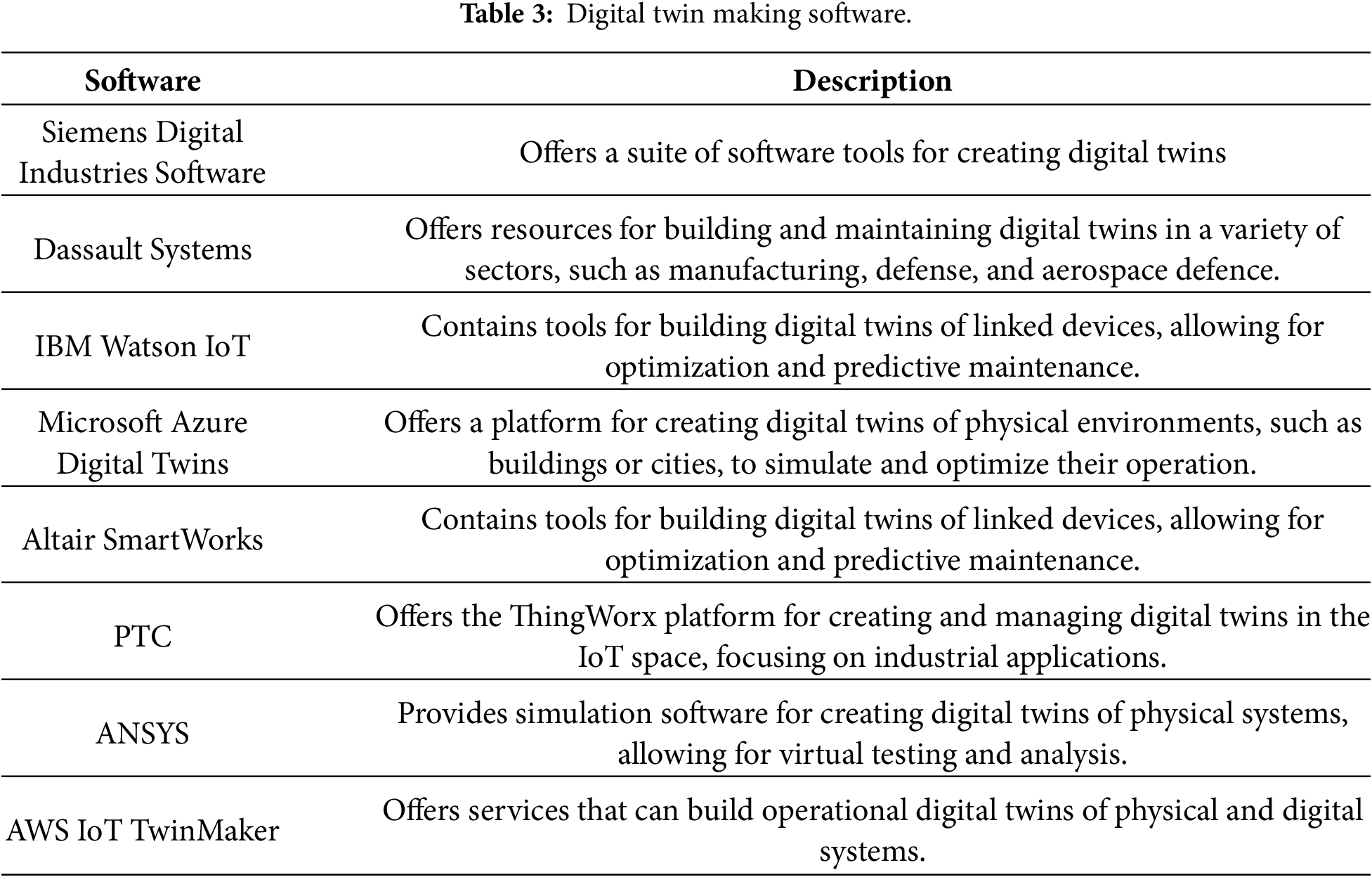
In terms of the software components, they encompass software for designing virtual models and simulations (they are created using sophisticated modelling and simulation software that can accurately replicate the physical characteristics and behaviours of the entity, which also acts as the heart of DT) and software for visualization (enables users to intervene with the digital twin through graphical interfaces). The commonly used DT making software is depicted in Table 3 [60,61].
On the other hand, enabling technologies for DT’s encompass communication protocols (e.g., MQTT, OPC UA, HTTP) for efficient and safe transmission of data between physical devices and the digital model, security technologies for ensuring data integrity and confidentiality, and safeguarding against unauthorized access, interoperability standards for facilitating seamless integration across various devices, software, and platforms, enhancing flexibility and scalability within the DT ecosystem. The application of DT in smart agriculture is covered in the next part after a brief introduction to the DT concept and ecology of agricultural DTs.
3 Digital Twin in Smart Agriculture
With the current global demand for feeding worldwide billions of people, there has been a rise in integrating advanced ICT technologies, like IoT, AI, and cloud computing, towards fulfilling the demand for global agricultural food production [10–13]. As such, agriculture has made significant progress in digitalization, transitioning towards smart agriculture [3–5]. The introduction of agricultural DTs aims to seamlessly integrate the physical components of agricultural production with digital cyberspace. Agricultural DTs primarily focus on capturing the elements of the agricultural production process (physical entities) and emphasize the digitization of agricultural knowledge derived from various production models, system rules, and data collections [7,8].
Fig. 4 showcases the processes of a typical agricultural DT. This model is continuously refined and updated through the feedback loop created by the interaction between the real-world data collected and the corresponding updates to the DT model [1,8], ensuring that the virtual representation remains accurate and effective. In this system, sensors play a crucial role by linking DT to agricultural entities, continuously supplying data about environmental conditions crucial for farming operations. The agricultural DT allows for a real-time, precise digital representation of typical farm elements, including livestock, irrigation, and crops, within a virtual environment. This capability enables the system to simulate, monitor, diagnose, predict, and manage agricultural operations efficiently [59]. By leveraging these functionalities, DTs are revolutionizing agricultural management, including financial analysis and strategy development. They provide farmers with detailed financial insights, aiding them in making informed decisions regarding farm operations, investments, and resource management [62–64]. Moreover, by identifying profitable opportunities and highlighting cost-effective practices, DTs equip farmers with the tools to maximize their profit potential, bringing in a new era of strategic planning and agricultural finance accuracy.
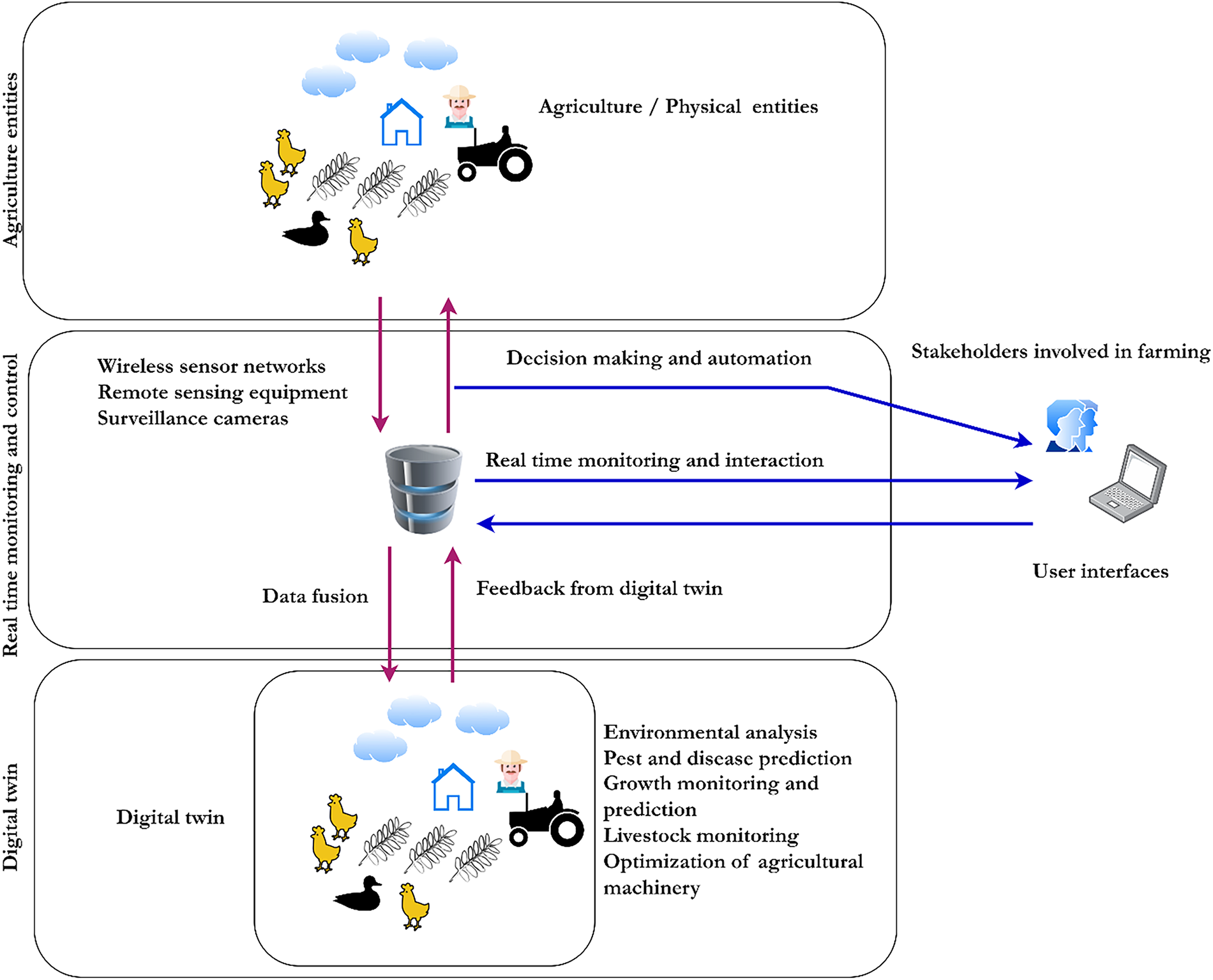
Figure 4: Processes of a typical agricultural digital twin.
Agricultural DTs provide a multitude of applications designed to enhance agricultural practices, which include:
1. Crop Monitoring and Management.
DTs leverage IoT sensors to monitor and manage crop health and growth in real-time. These sensors gather data on soil moisture, temperature, humidity, and nutrient levels, which are then integrated into the DT system. This system not only creates a virtual representation of the crops but also synthesizes insights into their condition, enabling farmers to optimize irrigation, fertilization, and pest control strategies [1–4,65]. Additionally, DTs integrate various data sources, including satellite imagery and weather data, to create a detailed model of the entire agricultural field with high precision [11–14]. This allows for targeted applications of resources, including fertilizers, pesticides, and water, thereby reducing waste and environmental impact while optimizing crop growth [66–69].
2. Livestock Management.
In livestock farming, DTs create virtual representations of animals and their environment. IoT sensors collect data on animal behaviour, health indicators, and environmental conditions [45,46,48], which the DT system analyses to monitor animal welfare, detect disease outbreaks, optimize feeding schedules, and manage livestock facilities. This results in improved animal health, reduced mortality rates, and more efficient resource utilization [49–51].
3. Supply Chain Optimization.
DTs optimize the agricultural supply chain from farm to market by creating virtual representations of the entire supply chain, including production, processing, and distribution stages. These models provide real-time visibility and facilitate decision-making [37], streamlining logistics, improving inventory management, reducing food waste, and ensuring product quality and traceability.
4. Controlled Environment Agriculture.
In greenhouse and controlled environment agriculture, sensor data on temperature, humidity, lighting, and CO2 levels is integrated by DTs to simulate and control environmental conditions, optimizing plant growth. [54,55]. This application enhances crop quality, reduces energy consumption, and enables year-round production [70,71].
5. Farm Equipment Optimization
DTs are also employed to optimize the performance and maintenance of farm equipment and machinery [2,51]. By creating virtual representations of machinery and monitoring their usage and performance data, DTs facilitate predictive maintenance, reducing downtime and optimizing operational efficiency. This application extends the lifespan of their farming equipment, reduces costs, and improves productivity.
The interdependence of the services provided by agricultural DTs and their facilitated applications drives the continuous advancement of farming capabilities. This cycle of innovation, guided by the evolving needs of farmers, permits making decisions based on data and promotes more sustainable agricultural practices. The state-of-the-art services offered by agricultural DTs can be broadly categorized into four main domains, as illustrated in Fig. 5: crop production and management, livestock monitoring and management, post-harvesting and supply chain management, and controlled environment agriculture and urban farming. These interconnected service areas highlight the wide-ranging applications of DTs across the agricultural lifecycle. The subsequent subsections provide a brief discussion of each of these service domains.
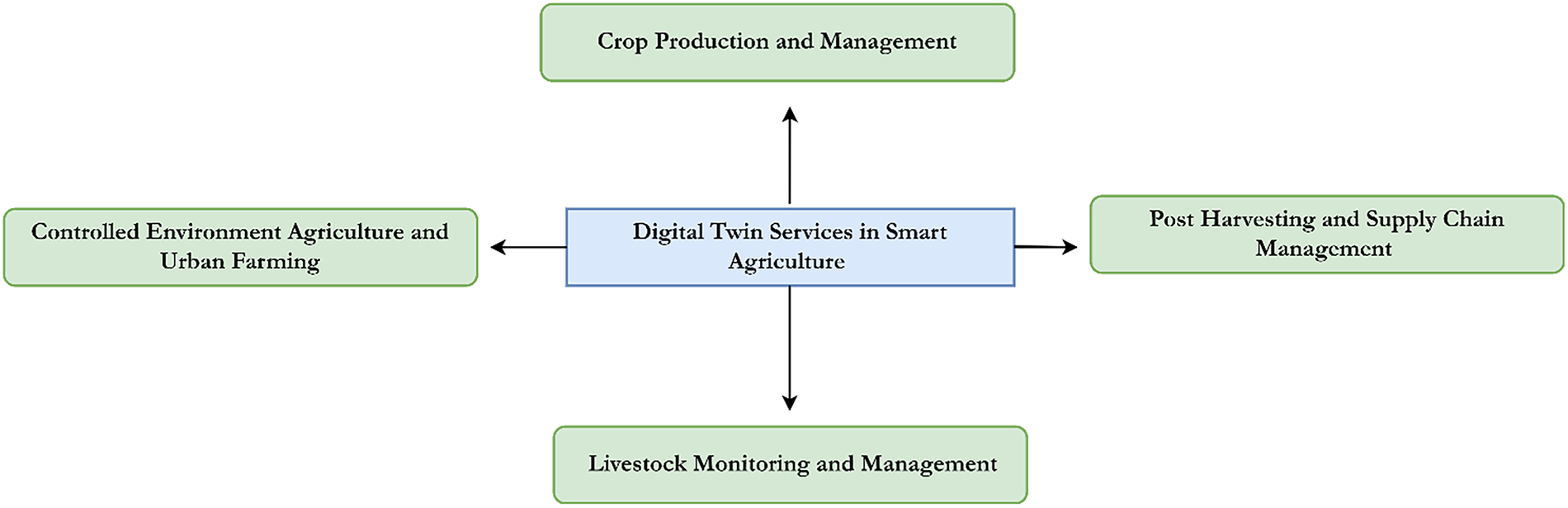
Figure 5: Digital twin services in smart agriculture.
3.1 Digital Twin in Crop Production and Management
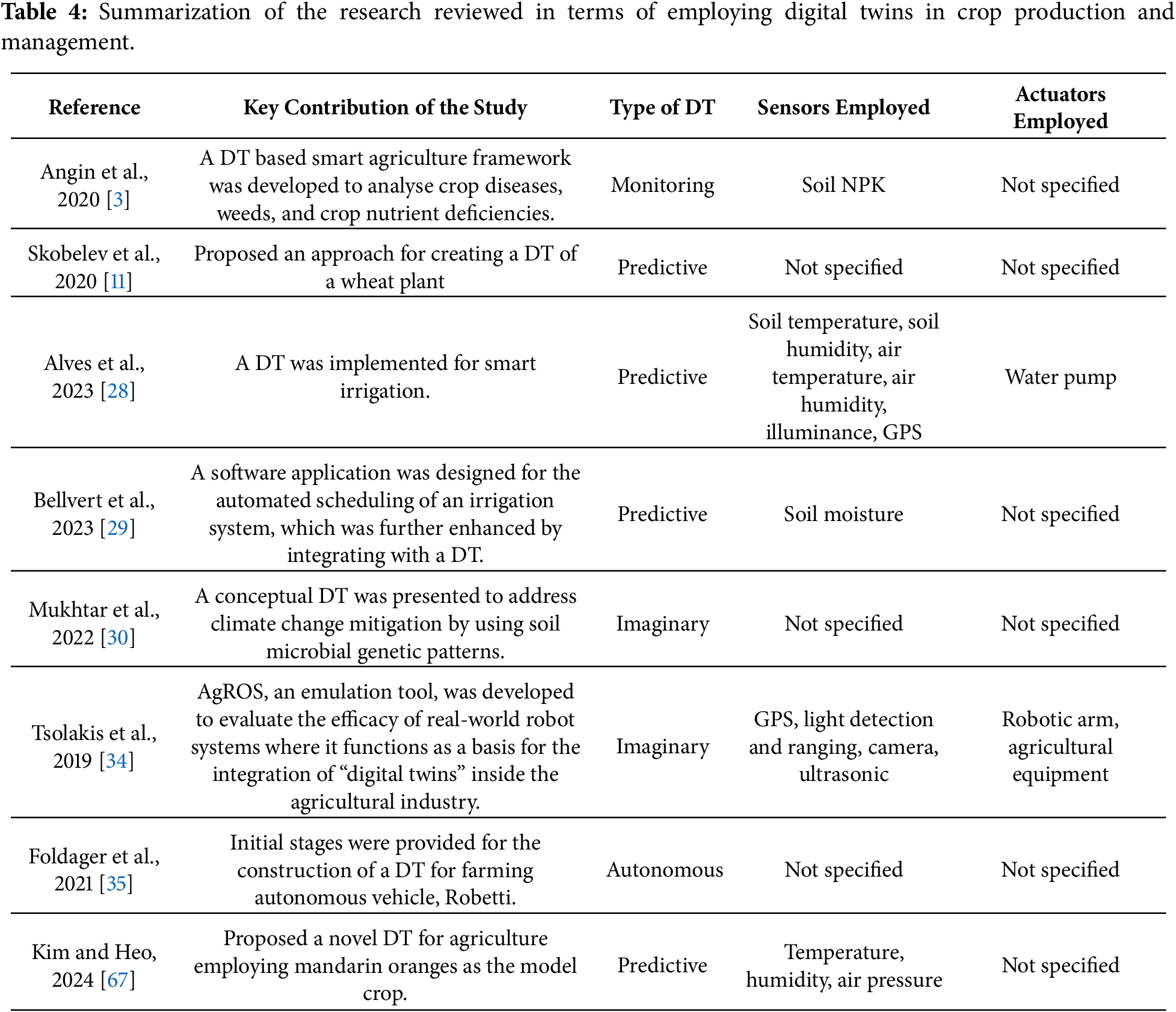
Technology of DT technology is transforming crop production and management by enabling data-driven optimization of agricultural practices. Key applications include crop growth monitoring, disease detection, yield prediction, soil quality analysis, irrigation optimization, and machinery management [26,27]. Several studies have demonstrated the effectiveness of DTs across these domains. For instance, Angin et al. [3] proposed AgriLoRa, a low-cost DT-based framework integrating wireless sensor networks and computer vision models (MobileNet and U-Net) to detect crop diseases, nutrient deficiencies, and weeds. Their approach highlights the feasibility of cost-effective DT deployment, particularly for resource-constrained environments. Similarly, Skobelev et al. [11] developed a conceptual DT for wheat cultivation using multi-agent systems and knowledge bases, enabling growth stage tracking and yield prediction based on environmental and expert inputs.
In the context of irrigation management, Alves et al. [28] and Bellvert et al. [29] demonstrated how showed that DTs can significantly greatly improve water efficiency when it comes to managing irrigation. Alves et al. combined used IoT platforms with and simulation tools together to generate make daily irrigation recommendations, while suggestions. Bellvert et al. integrated used remote sensing data for automated to automate irrigation scheduling in vineyards. These approaches emphasize methods stress the practical real-world benefits of DTs in reducing lowering resource consumption use while maintaining crop health keeping crops healthy.
More advanced applications extend to environmental sustainability and system-level optimization. Mukhtar et al. [30] introduced a conceptual DT of the soil microbiome to simulate microbial interactions and predict greenhouse gas emissions, highlighting the potential of DTs in climate change mitigation. Tsolakis et al. [34] developed AgROS, an emulation tool for evaluating agricultural robotics, enabling farmers to test and optimize robotic operations in a simulated environment. Likewise, Foldager et al. [35] presented a DT for autonomous farming vehicles, supporting virtual testing and development to improve operational efficiency.
At a finer granularity, Kim and Heo [67] demonstrated the potential of DTs for micro-precision agriculture by predicting fruit quality at the individual plant level using environmental variables and machine learning models. Their results indicate that DTs can enable highly personalized agricultural interventions, improving both productivity and quality.
From a comparative perspective standpoint, these studies differ in terms of implementation complexity, cost, and technological advancement. Low-cost frameworks like AgriLoRa [3] emphasize accessibility, focus on making things easy to use, while approaches that use simulation-driven and AI-integrated approaches [28,29,67] offer higher accuracy and predictive capabilities are more accurate and can make predictions, but they need more advanced infrastructure and computational resources. Similarly, conceptual computing power. Conceptual models [11,30] provide valuable offer significant insights into system behaviour but may lack immediate not be immediately ready for real-world deployment readiness implementation when compared to applied solutions.
Overall, the reviewed studies demonstrate that DT-based approaches can significantly enhance agricultural efficiency, resource optimization, and decision-making. However, trade-offs exist between cost, scalability, implementation complexity, and accuracy, which must be carefully considered when deploying DT solutions in real-world agricultural settings. Table 4 summarizes these studies, providing a structured comparison of their key characteristics.
3.2 Digital Twin for Post-Harvesting and Supply Chain Management
The post-harvesting phase spans from the completion of harvesting to the delivery of products to end consumers. It includes critical processes such as cooling, drying, storage, transportation, and marketing. Optimising these stages is essential to minimise food losses and waste, where the integration of digital technologies can play a significant role [39,41]. As highlighted by Dyck et al. [10], technologies like IoT platforms, artificial intelligence, big data analytics, and digital twins (DTs) can enhance post-harvesting operations and food security by improving the management of environmental conditions, product quality, handling practices, and transportation efficiency.
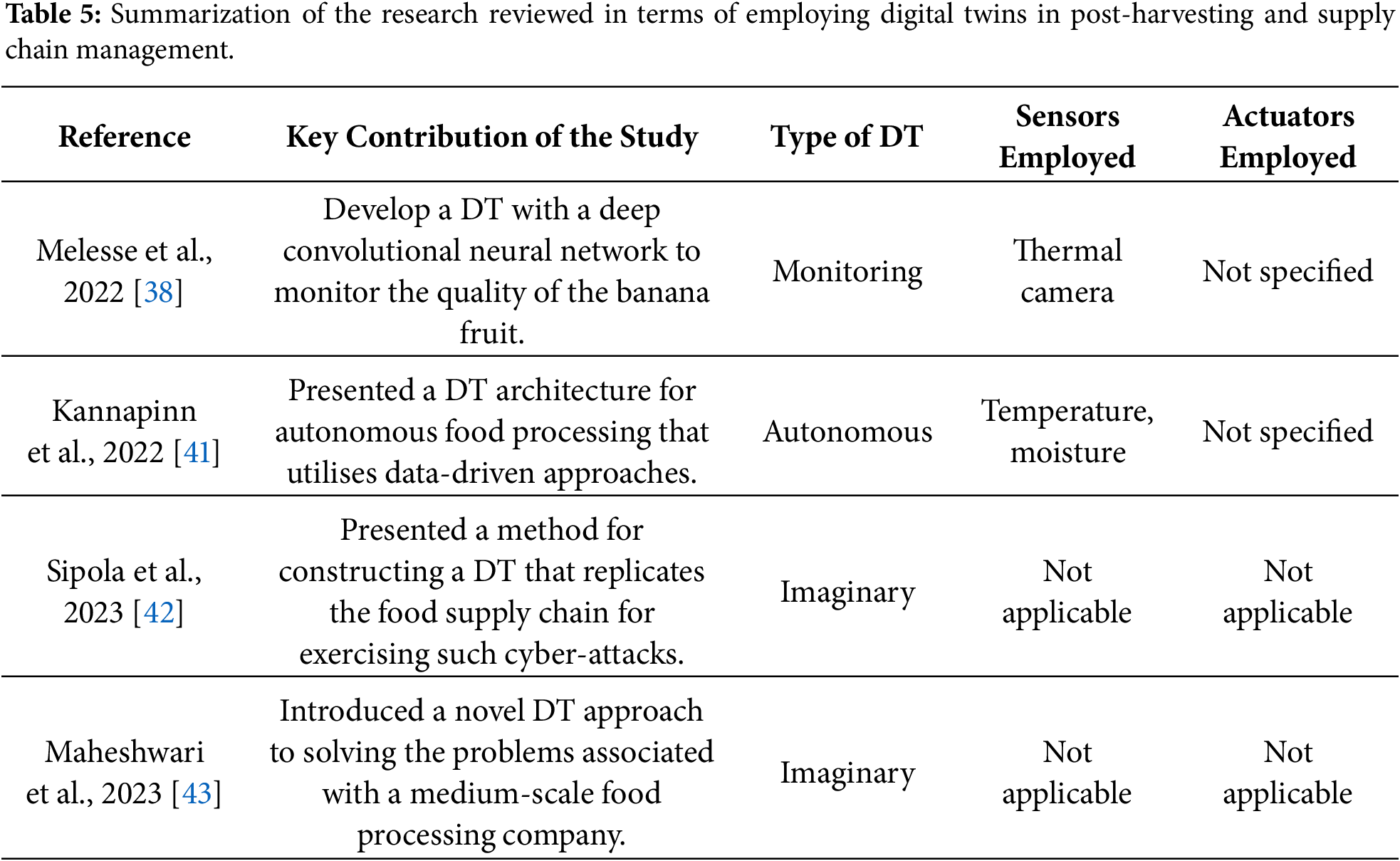
Several DT-based approaches have been proposed to address challenges in post-harvesting and supply chain management. For instance, Melesse et al. [38] developed a machine learning-enabled DT for monitoring fruit quality during storage, using thermal imaging and deep convolutional neural networks. Their approach achieved high accuracy (99%), demonstrating the effectiveness of DTs in quality assessment and spoilage detection. Similarly, Kannapinn et al. [41] presented a DT framework for autonomous thermal food processing, emphasising systematic DT implementation through physical-to-virtual mapping and process modelling, highlighting its applicability in industrial food processing environments.
Beyond quality monitoring and processing, DTs have also been explored for system-level analysis and risk management. Sipola et al. [42] proposed a DT-based simulation of the food supply chain to model cyber-attack scenarios, utilizing Node.js services and the RGCE platform. This work highlights the importance of DTs in enhancing cybersecurity preparedness and resilience in increasingly digitized agricultural ecosystems. In parallel, Maheshwari et al. [43] introduced a DT-driven framework for optimizing food supply chains, integrating real-time data and industrial symbiosis concepts to improve production planning, reduce lead times, minimize waste, and enhance resource utilization.
From a comparative perspective, these studies demonstrate varying levels of maturity and application focus. Machine learning-driven DTs [38] provide high accuracy in quality monitoring but may require advanced sensing infrastructure and computational resources. Industrial and process-oriented DT frameworks [41,43] offer broader system optimization benefits but involve higher implementation complexity and integration challenges. Meanwhile, simulation-based approaches [42] focus on system resilience and security, highlighting emerging application areas beyond traditional operational optimization.
Overall, DT applications in post-harvesting and supply chain management show strong potential to improve efficiency, reduce losses, and enhance decision-making. However, trade-offs exist in terms of implementation cost, system complexity, scalability, and data requirements. Addressing these factors is crucial for the successful adoption of DT solutions in real-world agricultural supply chains. Table 5 summarizes the reviewed studies, providing a structured comparison of their key characteristics and application domains.
3.3 Digital Twin in Livestock Monitoring and Management
DTs have emerged as a transformative tool in animal husbandry, enabling farmers and ranchers to monitor, evaluate, and optimize livestock productivity and well-being. By creating virtual replicas of individual animals or entire herds, DT technology provides detailed insights into animal health, behaviour, and environmental interactions. This facilitatesIn livestock farming operations, Overall this promotes data-driven decision-making, efficient resource utilization, and increased sustainability in livestock farming operations [49,52].
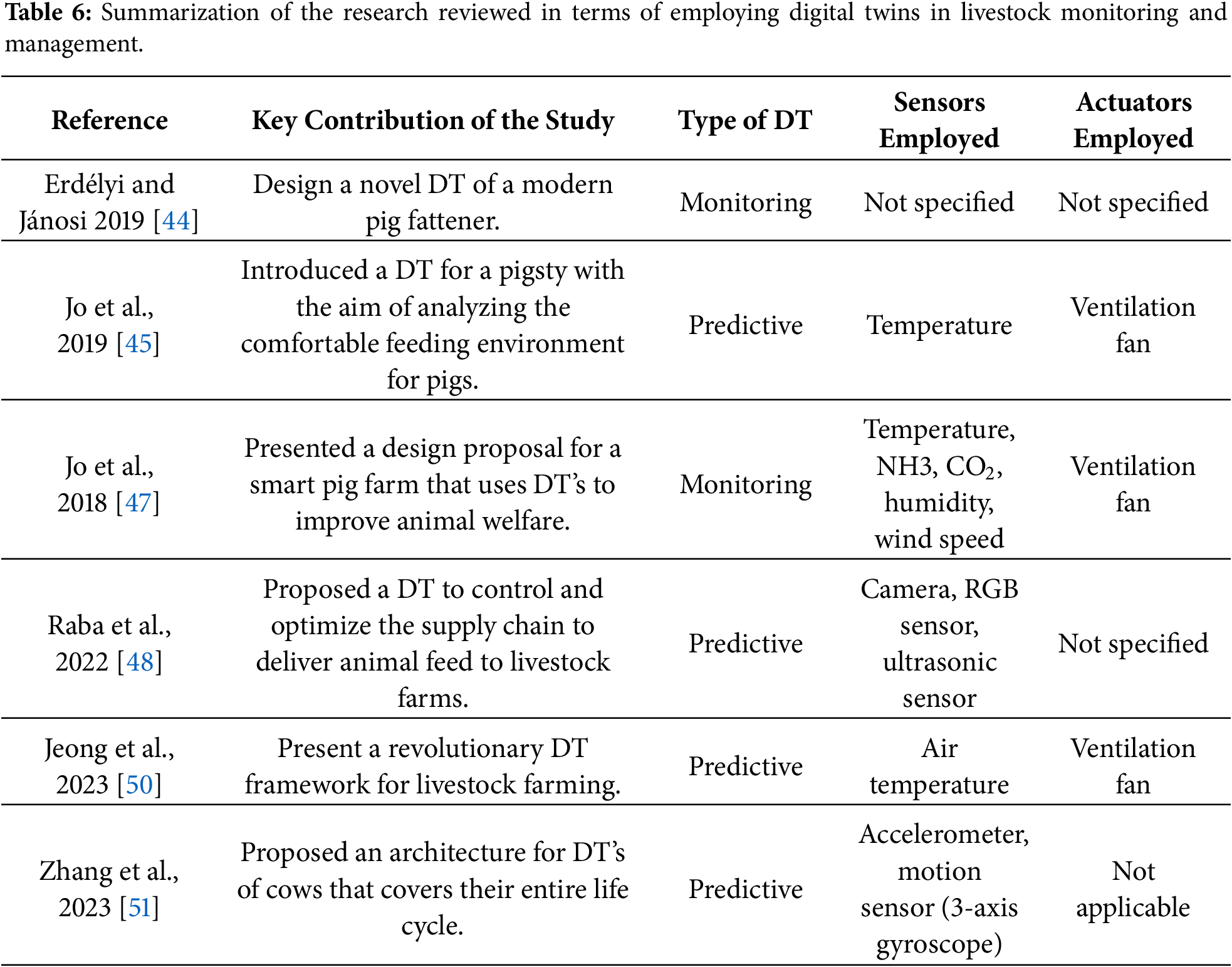
Several studies have explored DT applications across different aspects of livestock management. Erdélyi and Jánosi [44] proposed a conceptual DT model for pig farming that simulates feed consumption, weight gain, and growth stages. While this approach demonstrates the feasibility of DT-based livestock modelling, it remains at a prototype level and lacks real-world deployment. In contrast, Jo et al. [45] developed a DT for pigsty environments with a focus on energy planning, where simulation results were used to evaluate ventilation strategies and estimate energy consumption. Similarly, Jo et al. [47] extended this work by suggesting a smart pig farm DT that incorporates environmental parameters such as like temperature, CO2, humidity, and dust levels to facilitate real-time decision-making for maintaining optimal living conditions for pigs.
Beyond environmental monitoring, DTs have also been applied to operational optimization. Raba et al. [48] introduced a DT-based system for optimizing livestock feed supply chains by combining sensor data with simulation-heuristic techniques, resulting in improved delivery efficiency and inventory management. Jeong et al. [50] further demonstrated the effectiveness of DTs in livestock housing by optimizing HVAC systems in pig houses, achieving notable improvements in energy efficiency compared to conventional approaches.
At the individual animal level, Zhang et al. [51] proposed a comprehensive DT architecture for dairy cows using indoor positioning systems and Inertial Measurement Unit (IMU) sensors to track movement and behaviour. Their approach incorporated machine learning techniques, where Long Short-Term Memory (LSTM) models achieved over 90% accuracy in identifying feeding behaviour, highlighting the potential of DTs for precise behavioural monitoring and health assessment.
From a comparative perspective, these studies vary in terms of implementation maturity, scope, and technological requirements. Conceptual models [44] provide foundational insights but lack deployment readiness, whereas simulation-based approaches [45,50] demonstrate practical benefits such as energy optimization but may require dedicated infrastructure. Data-driven DT systems integrating IoT and machine learning [47,51] offer higher accuracy and real-time monitoring capabilities, albeit with increased computational and data management demands. Additionally, system-level DT applications [48] extend beyond individual farms to supply chain optimization, illustrating the broader applicability of DTs in livestock ecosystems.
Overall, DT-based livestock solutions show strong potential to enhance animal welfare, improve operational efficiency, and support sustainable farming practices. However, challenges related to implementation cost, scalability, data integration, and real-world deployment remain key considerations for widespread adoption. Table 6 summarizes the reviewed studies, providing a structured comparison of their key characteristics and application domains.
3.4 Digital Twin in Controlled Environment Agriculture and Urban Farming
Controlled Environment Agriculture (CEA) has undergone significant transformation in recent years due to the integration of advanced digital technologies. Among these, DT technology has emerged as a powerful enabler for optimizing agricultural operations within controlled environments [7,58]. By creating virtual replicas of physical agricultural systems, DTs provide real-time, data-driven representations of growth conditions, enabling precise by building virtual duplicates of actual agricultural systems. This allows for accurate monitoring, simulation, and control. This capability significantly enhances crop productivity in CEA systems, this feature greatly improves crop output, resource efficiency, and sustainability in CEA systems.
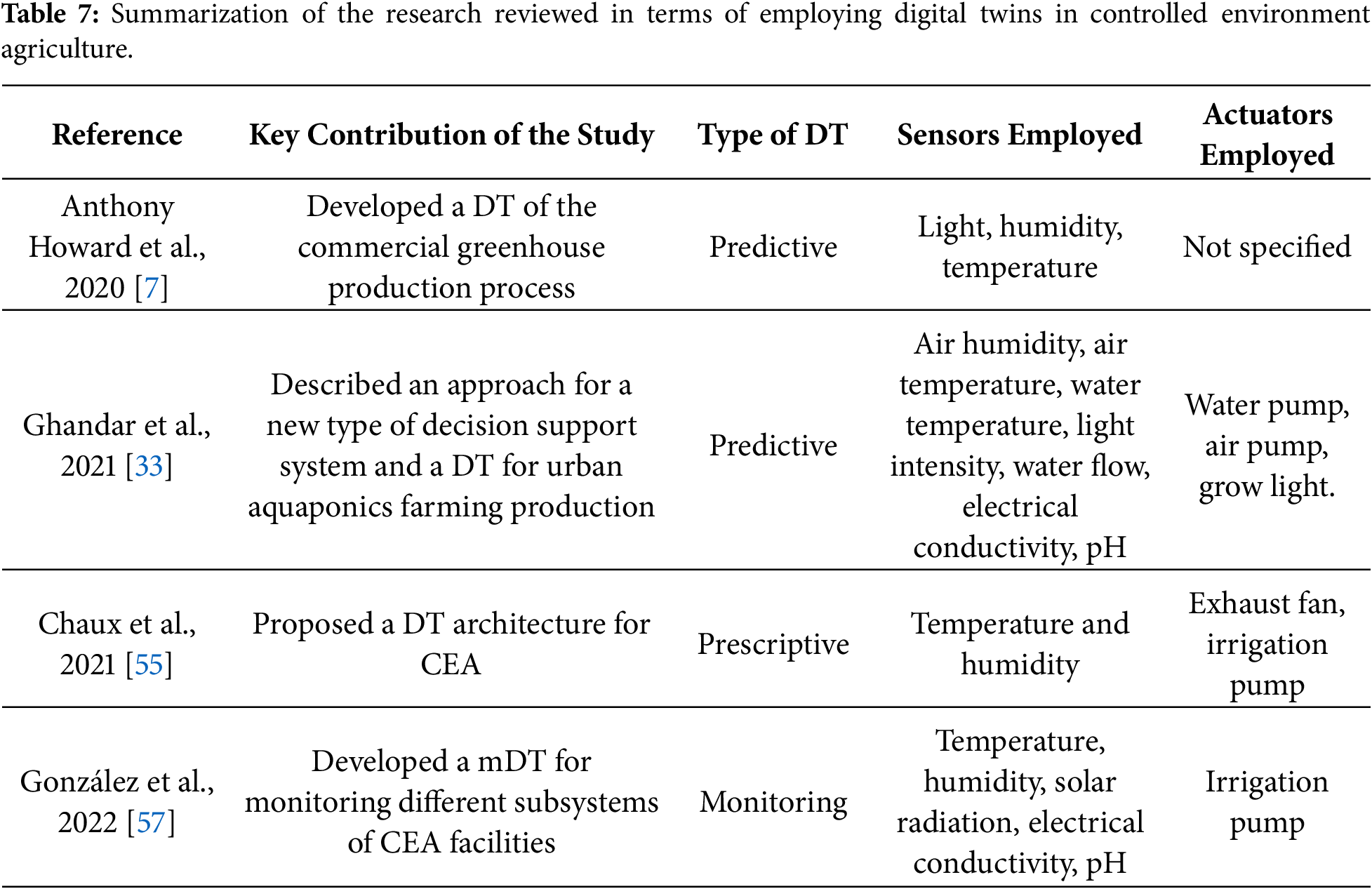
Several studies have demonstrated the application of DTs in CEA environments. Anthony Haword et al. [7] developed a DT for commercial greenhouse production by integrating IoT and big data technologies. Their model leverages historical and real-time data from sensors and external sources to predict future greenhouse states, enabling proactive decision-making. Similarly, Ghandar et al. [33] proposed a DT-enabled decision support system for urban aquaponics farming, incorporating machine learning techniques to optimize production. Their approach highlights the scalability of DTs from individual systems to larger urban agriculture ecosystems, supporting collaborative and data-driven farming practices.
Chaux et al. [55] introduced a DT architecture specifically designed for CEA, focusing on optimizing crop productivity through climate control and crop management strategies. Their simulation-driven approach enables precise regulation of methodology makes it possible to precisely control microclimatic conditions, such as temperature and humidity, which factors that are critical for essential to plant growth., like humidity and temperature. The effectiveness of this architecture was validated in a prototype greenhouse, demonstrating reliable system communication and control. In contrast, González et al. [57] developed a monitoring digital twin (mDT) aimed at observing and analysing multiple subsystems within CEA facilities. Their approach emphasizes real-time monitoring and data visualization, providing insights into system performance and operational conditions.
From a comparative perspective, these studies differ in their focus, implementation level, and technological complexity. Predictive and simulation-driven DTs [7,55] offer advanced forecasting and optimization capabilities but require sophisticated modelling tools and infrastructure. Data-driven decision support systems [33] integrate machine learning to enhance adaptability and scalability, although they introduce higher computational and data management requirements. Monitoring-focused DTs [57] provide simpler and more practical implementations, enabling real-time system observation with lower complexity but limited predictive functionality.
Overall, DT applications in CEA demonstrate strong potential to enhance productivity, resource efficiency, and operational control. However, trade-offs exist between implementation complexity, scalability, and functional capabilities. Addressing these challenges is essential for enabling wider adoption of DT technologies in controlled agricultural environments. Table 7 summarizes the reviewed studies, providing a structured comparison of their key features and application focus.
3.5 Types of Agricultural Digital Twins
In smart agriculture, DT models are being increasingly used to improve efficiency, productivity, and sustainability, as mentioned above. These DT models can encompass various aspects of farming and agricultural operations, and they can be categorised according to their main functionality, which is further described in Table 8.
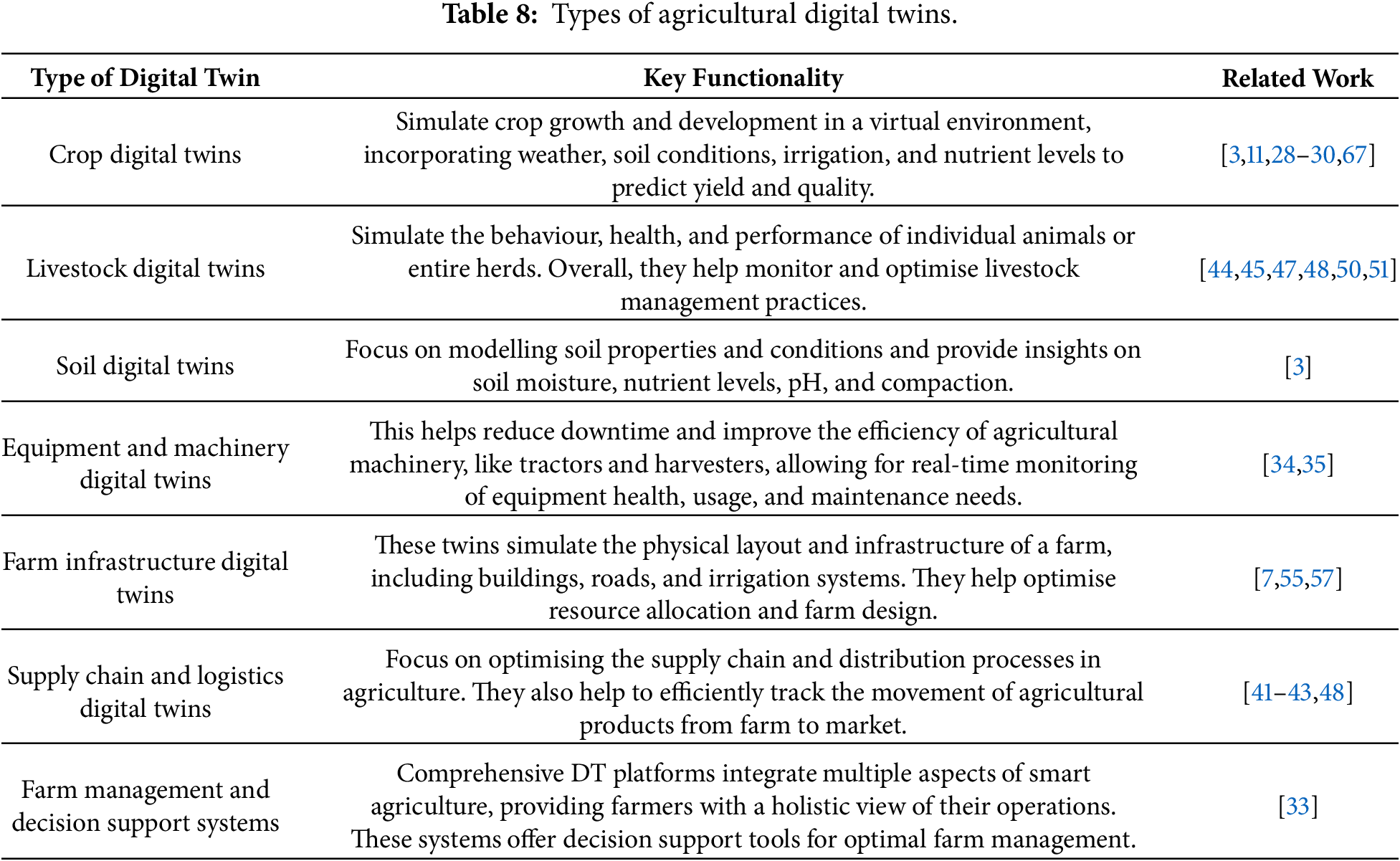
The choice of DT models in smart agriculture depends on the specific goals and requirements of the farm, the availability and quality of data sources, and the existing technological infrastructure. All influence the selection of DT models in smart agriculture. From a comparative perspective, simpler and domain-specific DTs, such as soil or crop digital twins, are generally easier to implement and require lower computational resources, whereas integrated systems such as farm management and supply chain DTs involve higher complexity but provide broader, system-level insights. Additionally, while predictive and AI-driven DT models offer higher accuracy and proactive decision-making capabilities, they often demand advanced sensing infrastructure and data processing capabilities compared to monitoring-based DTs. By selecting appropriate DT models based on these factors, farmers can make more informed decisions, enhance productivity, reduce resource waste, and contribute to more sustainable agricultural practices.
4 Conceptual Architectural Framework for an Autonomous Digital Twin
After giving a quick summary of the DT idea and its uses in agriculture, this section presents a conceptual architectural framework for an agricultural digital twin with its components to provide a better understanding of how agricultural digital twins work. The conceptual architectural framework for developing an autonomous digital twin is presented in Fig. 6. It is composed of four layers: the physical layer, data integration and fusion layer, data analytics layer, and data visualization, monitoring, and interaction layer.
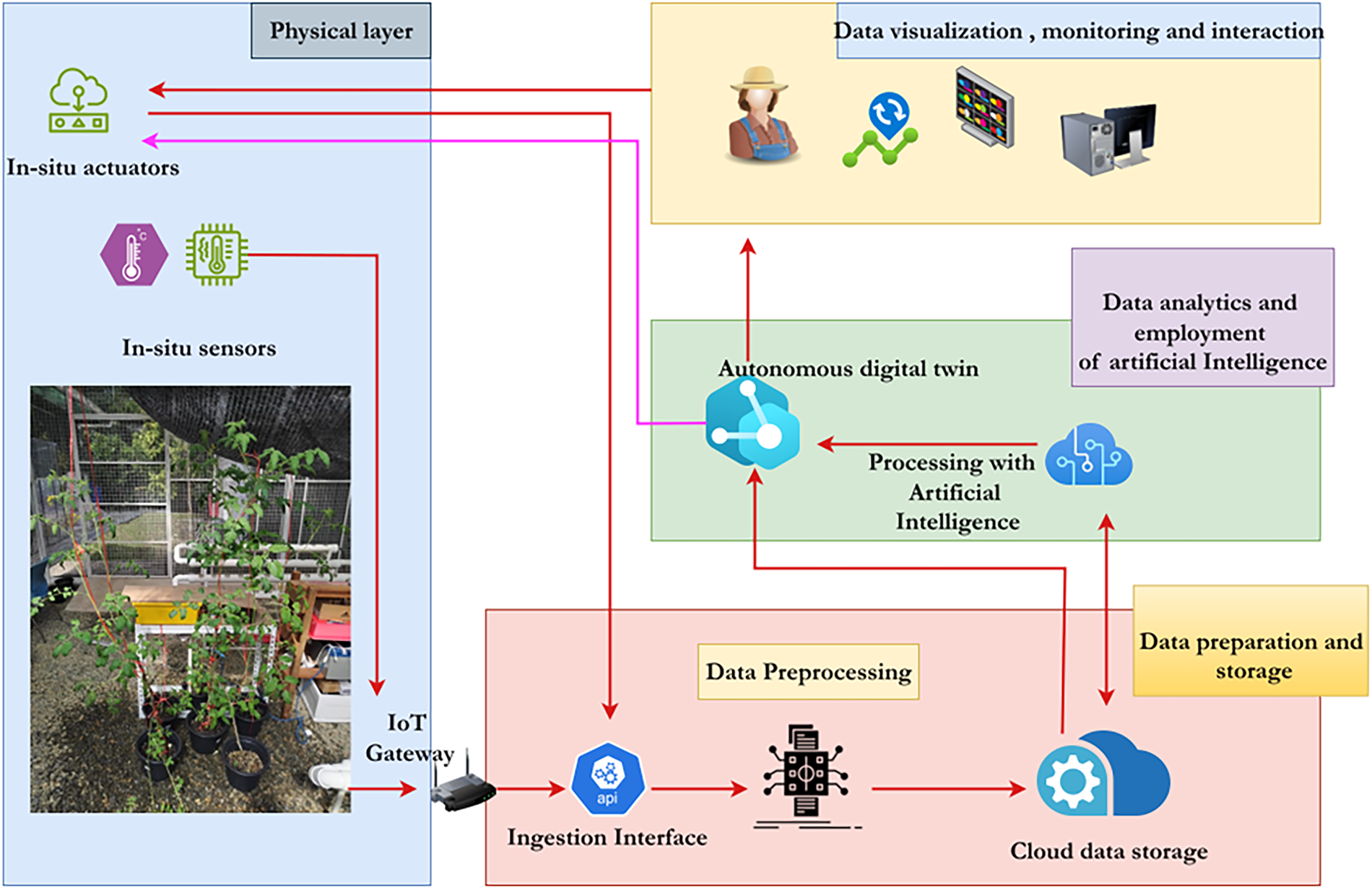
Figure 6: A conceptual architectural framework for developing an autonomous digital twin.
The physical layer comprises agricultural entities deployed in the field, including sensors and actuators responsible for real-time data acquisition and execution of control actions. Key in-situ sensors include soil nutrient sensors (N, P, K), temperature and humidity sensors, soil pH sensors, and capacitive rain sensors, which monitor environmental conditions affecting crop growth [56]. Actuators such as relay modules, ventilation fans, irrigation pumps, and grow lights are used to regulate these conditions based on decisions generated by the DT.
These devices are typically interconnected through wireless communication technologies like Wi-Fi, Bluetooth, and LoRaWAN, depending on coverage requirements and energy constraints. Data collected from sensors is transmitted through an IoT gateway, which serves acts as an intermediate bridge between edge devices and cloud infrastructure., transmitting data gathered from sensors. The gateway enables local preprocessing and buffering, which is particularly important in agricultural environments with intermittent connectivity.
From a system perspective, this layer forms the foundation of a closed-loop control mechanism, where real-time environmental data is continuously captured and transmitted to the DT, while control signals generated by the DT are sent back to actuators. This enables both automated and remote operation, enhancing flexibility and responsiveness in farm management.
4.2 Data Integration and Fusion
The data integration and fusion layer transforms raw sensor data into structured and usable information for downstream analytics. This layer consists of two main stages: data acquisition and data preprocessing. During acquisition, heterogeneous data streams from sensors, gateways, and external sources (e.g., weather APIs) are collected through standardized interfaces such as RESTful APIs or MQTT brokers.
The preprocessing stage ensures data quality and consistency through several operations:
• Outlier removal, to eliminate anomalous readings caused by sensor noise or faults
• Missing data handling, using interpolation or statistical imputation techniques
• Feature engineering, to derive meaningful variables for predictive analysis
Data is then stored in cloud-based distributed storage systems, which provide scalability, fault tolerance, and accessibility. In practice, edge-cloud architectures are often employed, where preliminary processing occurs at the gateway (edge) to reduce latency and bandwidth usage, while long-term storage and advanced processing are handled in the cloud. This layer plays a critical role is played by this layer in ensuring reliable data flow and synchronization between physical and virtual entities, directly impacting with direct impact on the accuracy and efficacy of DT-driven decision-making.
In the data analytics layer, processed data is analysed using advanced artificial intelligence (AI) and machine learning techniques to extract actionable insights. These techniques include predictive modelling, anomaly detection, and pattern recognition, which enable the system to forecast future conditions, detect abnormalities, and identify correlations between environmental and operational factors.
The autonomous digital twin operates at the core of this layer, continuously updating its virtual representation based on incoming data. It employs a decision-making pipeline consisting of: (i) state estimation, (ii) predictive modeling, (iii) optimization, and (iv) decision generation.
From a technical perspective, this process can be implemented using models like regression algorithms, neural networks, or reinforcement learning approaches, depending on the application requirements. The combination of real-time data with AI models enables the DT to function as a self-adaptive system, capable of learning from historical and live data to improve its performance over time.
However, the effectiveness of this layer depends on the availability of high-quality data and computational resources, highlighting trade-offs between model accuracy, system complexity, and deployment cost. This layer highlights trade-offs between model accuracy, system complexity, and deployment cost, and its efficacy is dependent on the availability of high-quality data and computational resources.
4.4 Data Visualisation, Monitoring, and Interaction
The final layer focuses on delivering actionable insights and facilitating interaction between stakeholders and the digital twin system. It provides user interfaces, dashboards, and visualization tools that enable farmers and decision-makers to monitor system performance, interpret analytical outputs, and effectively manage agricultural operations.
This layer supports both automated and human-in-the-loop decision-making. For instance, the system can automatically adjust irrigation or ventilation based on predefined rules or AI-driven recommendations, while also allowing manual intervention when required.
Advanced visualization technologies, such as Augmented Reality (AR), Virtual Reality (VR), and haptic interfaces, can further enhance user interaction. AR enables real-time overlay of data onto physical environments, while VR supports immersive simulation of agricultural scenarios. These technologies improve situational awareness and facilitate more intuitive decision-making.
From a system integration perspective, this layer closes the feedback loop by translating analytical outputs into actionable insights and control commands, ensuring continuous interaction between the physical and virtual environments.
4.5 Implementation Considerations and Practical Deployment
While the proposed architectural framework provides a conceptual foundation, its real-world implementation requires careful consideration of technology stacks, communication protocols, and system integration mechanisms. In practical deployments, the physical layer typically relies on IoT hardware platforms such as Arduino, Raspberry Pi, or industrial-grade microcontrollers, integrated with sensors and actuators. Communication between devices and the cloud can be achieved using lightweight protocols such as MQTT or HTTP, which are well-suited for environments with limited bandwidth and intermittent connectivity.
The data integration layer can be implemented using cloud platforms such as AWS IoT, Microsoft Azure Digital Twins, or Google Cloud IoT, which support scalable data ingestion, storage, and processing. Edge computing frameworks are often incorporated to preprocess data locally, reducing latency and ensuring system reliability in rural agricultural environments. For the analytics layer, machine learning frameworks such as TensorFlow, PyTorch, or AutoML can be used to enable predictive modeling and decision-making. Visualization and interaction can be facilitated through web dashboards or mobile applications, enabling real-time monitoring and control. Integration standards such as RESTful API play a critical role in ensuring interoperability between heterogeneous devices and systems. Data synchronization between physical and virtual entities is typically achieved through continuous streaming pipelines, enabling near real-time updates of the digital twin model.
5 Challenges and Countermeasures
Implementing DT technology in agriculture shows enormous potential, but various challenges and limitations must be overcome for wider adoption. As with new technology, implementing DTs incurs costs and complexities, particularly given the substantial resources needed for development and the complex nature of physical twins. Moreover, the development of DT requires expertise from various technical backgrounds, posing a significant challenge in a multifaceted field like agriculture. Substantial upfront infrastructure costs also create financial barriers for smaller farmers and agricultural businesses. Chaux et al. [55] and Silva et al. [65] stated that although DT has the potential to yield numerous advantages, their current implementation in agriculture faces numerous obstacles, such as a lack of necessary equipment and expertise to establish and maintain these virtual representations, limited internet connectivity in rural or remote areas, the initial financial investment required to implement this technology, unpredictable nature of agriculture concerns over data privacy and possible lack of technical expertise among some agricultural producers, along with constantly shifting weather patterns, soil conditions, and pest threats. Even though they stated that these limitations are currently slowing down the integration of DTs into the core of agricultural practices, no further discussion is provided. The key challenges that may hinder the growth of DT include,
1. The Need for Technological Infrastructure
One of the major challenges that hinder the adoption of DT is the inadequate technological infrastructure, particularly in rural and remote farming regions, as stable internet connection, data storage facilities, and computing power are a must for DT to function properly. Indeed, many agricultural areas lack robust Internet connectivity, making it difficult to transmit real-time data from remote locations. Often, these facilities are inadequate or unreliable in rural or remote farming regions.
2. Security and privacy
Cyberattacks and unauthorised access to sensitive agricultural data pose a significant threat that must be addressed. To gain the trust of farmers and comply with legislation, DT systems must provide robust data protection, providing both privacy and security. The increasing use of DTs in agriculture presents new cybersecurity threats due to the widespread adoption of IoT devices and cloud-based data storage. Clear agreements and procedures are required to address data ownership and the rights to access or use it. Managing, storing, and analysing the massive data volumes produced by DTs requires highly developed systems and a high level of specialisation. Farmers and agricultural businesses might lack the necessary information and resources to address this challenge. Additionally, farmers may not possess any knowledge about cyber security practices, which may be detrimental to the entire smart agricultural ecosystem.
3. Interoperability
Ensuring seamless interaction and collaboration between various DT systems and agricultural machinery is crucial. Lack of standardization can lead to compatibility issues, and the process of integrating DT technology with the agricultural practices and systems that are already in place might be difficult (e.g., integrating agricultural machinery with virtual systems in agriculture is simpler than with natural elements like animals or land) [70,71]. Thus, it is necessary to strike a delicate balance between the use of modern technical solutions and the use of traditional farming methods, which can be challenging to do, particularly in regions where agricultural practices are strongly ingrained.
4. Environmental impact
Implementing sensor networks and other technologies in agriculture has environmental impacts, including e-waste generation and increased energy use. Therefore, incorporating environmentally responsible practices is crucial. While the goal of DTs is to improve sustainability, the technology itself should also be sustainable. This includes addressing concerns about the environmental impact of both producing and disposing of the numerous IoT devices that make up the majority of a physical twin, as well as their operational energy usage [71].
5. Scalability
Scaling DT systems across large farms or entire supply chains can be challenging. Attempting to manage the increasing volume of data and processing demands can strain existing infrastructure. Expanding DT technology from small-scale pilot projects to full-fledged commercial applications can be difficult. Beyond scalability, technology needs to adapt to diverse agricultural practices, varying crop types, and environmental conditions.
6. Skill and knowledge gap
Farmers and other relevant stakeholders engaged in farming training might be necessary to effectively use DT systems and interpret the data they generate, where bridging this knowledge gap is crucial for successful adoption. To efficiently use and maintain DT technologies, farmers and agricultural workers need significant training and skill development. This includes learning how to analyse the information and make informed decisions based on the insights drawn from the DT [9,19].
7. Adoption hurdles
Convincing farmers to adopt DT technology can be difficult since some farmers may be averse to change or may not be aware of the potential benefits of the technology. On the other hand, there is a tendency toward excessive reliance on technology, which can diminish the knowledge and skills associated with traditional farming [19,71]. Thus, keeping a balance in which human judgment and skill are supplemented by technology rather than being replaced by it is an important goal to strive for.
8. Regulatory and ethical considerations
Clear regulations around data privacy, environmental impact, and ethical technology use are critical for the successful adoption of DTs in agriculture. Without defined laws and guidelines, widespread acceptance can be hindered. One key example is DT integration in livestock farming, which always raises ethical concerns. Thus, while these technologies hold promise, responsible use is crucial to avoid harming animals or destabilizing the industry [71]. This means carefully considering ethical issues like data privacy, animal welfare, and the impact of automation on farm workers throughout development and implementation. Therefore, a framework that encourages innovation while addressing concerns like data ownership and ethical technology use is essential for the wider adoption of DT in agriculture.
To effectively address these challenges, governments, technology providers, academic institutions, and the farming community must work together proactively. A collaborative effort among stakeholders can result in the establishment of an ecosystem that facilitates the successful incorporation of DTs in agricultural practices. This will pave the way for farming methods that are more effective, environmentally friendly, and productive. The government and private sector can collaborate to improve the underlying technological infrastructure in rural areas and provide subsidies for technological upgrades. To overcome the high initial upfront costs associated, governments and institutions of finance could give subsidies or low-interest loans for adopting such advanced agricultural technologies.
The integration and the implementation of DT should be a gradual process that respects and incorporates existing farming practices. Pilot programs can be a valuable tool in this approach, allowing farmers to experiment with the technology on a smaller scale and in a familiar context. This helps them gain confidence in the technology and understand its potential benefits before making a larger commitment. Additionally, pilot programs can provide valuable feedback that can be used to refine the technology and ensure that it meets the specific needs of farmers. This collaborative approach can help to overcome resistance to change and encourage the widespread adoption of DTs in the agricultural sector. Also, workshops and training programs must be organised to equip farmers with the necessary knowledge and skills to effectively utilise the DT technology in a secure way. It is also of the utmost importance to provide farmers with training in data management and analysis programs. In addition, the development of software and tools that are user-friendly and simplify the interpretation of data can assist farmers in making greater use of DT technology.
Investing in robust cybersecurity measures is crucial to secure sensitive agricultural data. This comprises implementing secure data storage solutions, conducting regular security audits, and educating users on best practices. Furthermore, governments need to establish clear rules and policies governing the use of DT technology in agriculture. These regulations should address concerns such as data ownership, privacy, and ethical use of technology.
Developing adaptable and scalable DT systems is crucial to accommodate diverse agricultural operations. This requires creating modular solutions that can be tailored to specific farming needs. Scalability and adaptability empower farmers to adjust the technology to their unique conditions, moving away from a one-size-fits-all approach. This not only leads to increased overall yield but also facilitates more efficient resource utilization. However, over-reliance on virtual models for managing physical systems in agriculture, like crops, could lead to neglecting their real-world needs. This is particularly critical when dealing with living organisms, where improper care, like herbicide application, can cause irreversible damage to the crops. Furthermore, promoting the development of environmentally friendly technologies, such as energy-efficient devices and ethical e-waste disposal practices, can help mitigate the environmental impact of DTs in agriculture. It’s essential to acknowledge and respect the knowledge accumulated through traditional agricultural practices when implementing any technological solutions [62]. In essence, technology in farming should be viewed as a complementary instrument that enhances human expertise rather than a replacement.
6 The Future of Digital Twins in Agriculture
Digital twinning is one of the most talked-about emerging technologies, transforming entire industries by fusing the physical and virtual realms to discover actions and insights that generate enormous business value. In agriculture, there is a significant surge in demand for DT solutions; by 2027, it is anticipated that the worldwide DT market will surpass $73.5 billion [66–68]. Català-Roman et al. [64] stated that with the rise of the new era of digital agriculture, “Agriculture 6.0” builds on the foundation of “Agriculture 5.0” by integrating DTs to further strengthen the connection between agriculture and society. Looking forward, the potential of agricultural DT extends well beyond their current applications. One future direction involves the integration of DTs with AI. AI algorithms could enhance DTs by analyzing data to identify patterns and predict future outcomes with even greater accuracy. This would allow farmers to proactively adjust conditions, preventing issues before they arise and optimizing growth throughout the entire lifecycle. Furthermore, there is potential for DTs to be interconnected across individual farms and even entire regions, creating a network of collaborative learning similar to the concept of federated learning. By sharing data and insights, farmers could benefit from collective experiences, leading to standardized best practices and, ultimately, a more efficient and sustainable agricultural sector.
Another exciting future direction for DTs lies in their convergence with AR, VR and Mixed Reality (MR) technologies. This would create immersive experiences where 3D models of physical objects are projected as holograms or explored through headsets. Furthermore, advancements in haptic technology could simulate the sense of touch within these immersive environments, while robotics could enable physical interaction with the real world on behalf of a DT. This integration of AR/VR/MR, haptics, and robotics holds immense potential to transform how we utilize DTs, creating entirely new possibilities for communication, collaboration, and real-world manipulation.
Additionally, researchers are exploring the potential of integrating DTs with robotics and automation systems such as Unmanned Aerial vehicles. This would allow for automated decision-making and real-time adjustments to factors like irrigation and fertilization, further reducing human intervention and enhancing efficiency. In conclusion, the future of agricultural digital twins is brimming with transformative possibilities. With ongoing advancements in AI, networking, AR, VR, MR, haptic technology, robotics and automation, these virtual replicas are poised to revolutionize the agricultural industry. They promise to enhance efficiency, sustainability, and productivity, leading to a more secure and robust global food supply chain.
Digital twin technology’s function in smart agriculture represents a significant shift from traditional farming practices toward data-driven, intelligent, and automated systems. By integrating sensing technologies, cloud computing, and artificial intelligence, DTs enable the creation of dynamic virtual representations of agricultural environments, supporting real-time monitoring, predictive analytics, and adaptive decision-making. This study provides a comprehensive and analytical review of DT applications in agriculture by introducing a structured taxonomy of DT services across key domains, including crop production, livestock management, post-harvesting, and controlled environment agriculture. In addition, a conceptual architectural framework for autonomous agricultural DT systems has been proposed, along with a comparative analysis of existing approaches, highlighting trade-offs in terms of complexity, scalability, cost, and performance. Despite the promising capabilities of DT technology, several limitations remain. Most existing solutions are still at the prototype or pilot stage, with limited large-scale deployment. Key challenges include high implementation costs, data integration complexity, lack of interoperability standards, and unreliable connectivity in rural environments. Furthermore, a trade-off exists between system accuracy and implementation complexity, which may hinder adoption, particularly among small-scale farmers. From an economic perspective, the feasibility of DT deployment depends on balancing infrastructure and operational costs against benefits such as increased yield, reduced resource consumption, and improved efficiency. Future research should focus on developing scalable and cost-effective DT architectures, improving interoperability through standardized protocols, and validating DT systems in real-world agricultural settings. Additionally, the integration of edge computing, AI-driven automation, and robust communication technologies will be critical for enabling reliable and autonomous DT operations. It should also be acknowledged that this review does not provide quantitative comparative metrics across the surveyed studies. This limitation stems from the early-stage maturity of DT technologies in agriculture, where heterogeneous implementation approaches, differing evaluation criteria, and inconsistent reporting standards across studies preclude meaningful direct numerical comparisons. As the field matures and standardized benchmarking frameworks emerge, future reviews will be better positioned to conduct such quantitative analyses. Overall, DT technology holds significant potential to transform agriculture significantly by enhancing productivity, increasing resilience, and sustainability. However, its successful adoption will depend on addressing technical, economic, and infrastructural challenges through continued research and practical implementation efforts.
Acknowledgement: The authors express their gratitude to the Centre for Research and Innovation Management (CRIM) at Universiti Teknikal Malaysia Melaka (UTeM) for their valuable support in this research.
Funding Statement: Not applicable.
Author Contributions: The authors confirm their contributions to this paper as follows: Navod Neranjan Thilakarathne led the study, contributing to conceptualization, methodology, formal analysis, framework development, and original draft preparation, as well as review and editing of the manuscript. Madhuka Priyashan Wedisinhage Don contributed to literature review, and manuscript preparation. Sharmi Malisha Dilshani contributed to validation, visualization, and manuscript editing. Jamil Abedalrahim Jamil Alsayaydeh contributed to project administration, and critical revision of the manuscript. Mohd Faizal Bin Yusof and Rostam Affendi Bin Hamzah contributed to validation and manuscript review. All authors reviewed and approved the final version of the manuscript.
Availability of Data and Materials: Not applicable.
Ethic Approval: Not applicable.
Conflicts of Interest: The authors declare no conflicts of interest.
References
1. Purcell W, Neubauer T. Digital twins in agriculture: a state-of-the-art review. Smart Agric Technol. 2023;3(1):100094. doi:10.1016/j.atech.2022.100094. [Google Scholar] [CrossRef]
2. Nasirahmadi A, Hensel O. Toward the next generation of digitalization in agriculture based on digital twin paradigm. Sensors. 2022;22(2):498. doi:10.3390/s22020498. [Google Scholar] [CrossRef]
3. Angin P, Anisi MH, Göksel F, Gürsoy C, Büyükgülcü A. AgriLoRa: a digital twin framework for smart agriculture. J Wirel Mob Netw Ubiquitous Comput Dependable Appl. 2020;11(4):77–96. doi:10.22667/JOWUA.2020.12.31.077. [Google Scholar] [CrossRef]
4. Kumar Kasera R, Gour S, Acharjee T. A comprehensive survey on IoT and AI based applications in different pre-harvest, during-harvest and post-harvest activities of smart agriculture. Comput Electron Agric. 2024;216(3):108522. doi:10.1016/j.compag.2023.108522. [Google Scholar] [CrossRef]
5. Cesco S, Sambo P, Borin M, Basso B, Orzes G, Mazzetto F. Smart agriculture and digital twins: applications and challenges in a vision of sustainability. Eur J Agron. 2023;146(5):126809. doi:10.1016/j.eja.2023.126809. [Google Scholar] [CrossRef]
6. Elijah O, Rahim SKA, Emmanuel AA, Salihu YO, Usman ZG, Jimoh AM. Enabling smart agriculture in Nigeria: application of digital-twin technology. In: 2021 1st International Conference on Multidisciplinary Engineering and Applied Science (ICMEAS); 2021 July 15–16; Abuja, Nigeria. p. 1–6. doi:10.1109/icmeas52683.2021.9692351. [Google Scholar] [CrossRef]
7. Anthony Howard D, Ma Z, Mazanti Aaslyng J, Norregaard Jorgensen B. Data architecture for digital twin of commercial greenhouse production. In: 2020 RIVF International Conference on Computing and Communication Technologies (RIVF); 2020 Oct 14–15; Ho Chi Minh, Vietnam. p. 1–7. doi:10.1109/rivf48685.2020.9140726. [Google Scholar] [CrossRef]
8. Nie J, Wang Y, Li Y, Chao X. Artificial intelligence and digital twins in sustainable agriculture and forestry: a survey. Turk J Agric For. 2022;46(5):642–61. doi:10.55730/1300-011x.3033. [Google Scholar] [CrossRef]
9. Zake M, Majore G. Application of multi-perspective modelling approach for building digital twin in smart agriculture. In: 2022 63rd International Scientific Conference on Information Technology and Management Science of Riga Technical University (ITMS); 2022 Oct 6–7; Riga, Latvia. p. 1–7. doi:10.1109/ITMS56974.2022.9937142. [Google Scholar] [CrossRef]
10. Dyck G, Hawley E, Hildebrand K, Paliwal J. Digital twins: a novel traceability concept for post-harvest handling. Smart Agric Technol. 2023;3(7369):100079. doi:10.1016/j.atech.2022.100079. [Google Scholar] [CrossRef]
11. Skobelev P, Laryukhin V, Simonova E, Goryanin O, Yalovenko V, Yalovenko O. Multi-agent approach for developing a digital twin of wheat. In: 2020 IEEE International Conference on Smart Computing (SMARTCOMP); 2020 Sep 14–17; Bologna, Italy. p. 268–73. doi:10.1109/smartcomp50058.2020.00062. [Google Scholar] [CrossRef]
12. Pylianidis C, Osinga S, Athanasiadis IN. Introducing digital twins to agriculture. Comput Electron Agric. 2021;184(4):105942. doi:10.1016/j.compag.2020.105942. [Google Scholar] [CrossRef]
13. Alam KM, El Saddik A. C2PS: a digital twin architecture reference model for the cloud-based cyber-physical systems. IEEE Access. 2017;5:2050–62. doi:10.1109/ACCESS.2017.2657006. [Google Scholar] [PubMed] [CrossRef]
14. Sreedevi TR, Santosh Kumar MB. Digital twin in smart farming: a categorical literature review and exploring possibilities in hydroponics. In: 2020 Advanced Computing and Communication Technologies for High Performance Applications (ACCTHPA); 2020 July 2–4; Cochin, India. p. 120–4. doi:10.1109/accthpa49271.2020.9213235. [Google Scholar] [CrossRef]
15. Defraeye T, Shrivastava C, Berry T, Verboven P, Onwude D, Schudel S, et al. Digital twins are coming: will we need them in supply chains of fresh horticultural produce? Trends Food Sci Technol. 2021;109(1):245–58. doi:10.1016/j.tifs.2021.01.025. [Google Scholar] [CrossRef]
16. Verdouw C, Kruize JW. Digital twins in farm management: illustrations from the FIWARE accelerators SmartAgriFood and Fractals. In: Proceedings of the 7th Asian-Australasian Conference on Precision Agriculture Digital; 2017 Oct 16–19; Hamilton, New Zealand. doi:10.5281/zenodo.893662. [Google Scholar] [CrossRef]
17. Alves RG, Souza G, Maia RF, Tran ALH, Kamienski C, Soininen JP, et al. A digital twin for smart farming. In: Proceedings of the 2019 IEEE Global Humanitarian Technology Conference (GHTC); 2019 Oct 17–20; Seattle, WA, USA. doi:10.1109/GHTC46095.2019.9033075. [Google Scholar] [CrossRef]
18. Maurya S, Verma R, Singh KD, Singh PD, Master A, Thapliyal N. Revolutionizing urban horticulture and agriculture with networked intelligence: a blockchain-based framework for smart farming and crop management. In: 2023 International Conference on Smart Devices (ICSD); 2024 May 2–3; Dehradun, India. p. 1–5. doi:10.1109/ICSD60021.2024.10751328. [Google Scholar] [CrossRef]
19. Ariesen-Verschuur N, Verdouw C, Tekinerdogan B. Digital twins in greenhouse horticulture: a review. Comput Electron Agric. 2022;199(15):107183. doi:10.1016/j.compag.2022.107183. [Google Scholar] [CrossRef]
20. Karothia R, Chattopadhyay MK. Developing a digital twin framework and smart sensors gateway for monitoring soil and environmental conditions to detect anomalies and to predict crop health. Digit Twin. 2026:2644045. doi:10.1080/27525783.2026.2644045. [Google Scholar] [CrossRef]
21. Sihare M, Khule S, Arora R, Dixit N, Dubey G, Sharma YK. Cultivating the future of agriculture where digital twin meets artificial intelligence. In: Transforming industries, empowering societies. Amsterdam, The Netherlands: Elsevier; 2026. p. 137–48. doi:10.1016/b978-0-443-32878-7.00020-1. [Google Scholar] [CrossRef]
22. Edirisinghe E, Wu G, Maggo D, Cheng CT, Pang TY, Rahman A, et al. A digital twin-enabled framework for agrivoltaic system design, simulation, monitoring and control. Machines. 2026;14(3):254. doi:10.3390/machines14030254. [Google Scholar] [CrossRef]
23. Rahu MA, Memon N, Aurangzaib M, Oad U. Integrating new frontier digital twins technology in smart agriculture revolution. Int J Agric Innov Cut Edge Res. 2026;4(2):1–13. [Google Scholar]
24. Ellahi RM, Ali M, Ali Shah SA, Qureshi MA, Gulzar S, Wood LC, et al. Harnessing digital twins: transforming livestock supply chain management: a comprehensive review. Cogent Food Agric. 2026;12(1):2611196. doi:10.1080/23311932.2025.2611196. [Google Scholar] [CrossRef]
25. Yin H, Cao Y, Marelli B, Zeng X, Mason AJ, Cao C. Soil sensors and plant wearables for smart and precision agriculture. Adv Mater. 2021;33(20):2007764. doi:10.1002/adma.202007764. [Google Scholar] [CrossRef]
26. Searle R, McBratney A, Grundy M, Kidd D, Malone B, Arrouays D, et al. Digital soil mapping and assessment for Australia and beyond: a propitious future. Geoderma Reg. 2021;24(2):e00359. doi:10.1016/j.geodrs.2021.e00359. [Google Scholar] [CrossRef]
27. Verdouw C, Tekinerdogan B, Beulens A, Wolfert S. Digital twins in smart farming. Agric Syst. 2021;189(15):103046. doi:10.1016/j.agsy.2020.103046. [Google Scholar] [CrossRef]
28. Alves RG, Maia RF, Lima F. Development of a digital twin for smart farming: irrigation management system for water saving. J Clean Prod. 2023;388(6):135920. doi:10.1016/j.jclepro.2023.135920. [Google Scholar] [CrossRef]
29. Bellvert J, Pelechá A, Pamies-Sans M, Virgili J, Torres M, Casadesús J. Assimilation of sentinel-2 biophysical variables into a digital twin for the automated irrigation scheduling of a vineyard. Water. 2023;15(14):2506. doi:10.3390/w15142506. [Google Scholar] [CrossRef]
30. Mukhtar H, Wunderlich RF, Lin YP. Digital twins of the soil microbiome for climate mitigation. Environments. 2022;9(3):34. doi:10.3390/environments9030034. [Google Scholar] [CrossRef]
31. CEMA—European Agricultural Machinery—Digital Farming: what does it really mean? [Internet]. [cited 2026 Jan 1]. Available from: https://www.cema-agri.org/position-papers/254-digital-farming-what-does-it-. [Google Scholar]
32. Shoji K, Schudel S, Shrivastava C, Onwude D, Defraeye T. Optimizing the postharvest supply chain of imported fresh produce with physics-based digital twins. J Food Eng. 2022;329(6):111077. doi:10.1016/j.jfoodeng.2022.111077. [Google Scholar] [CrossRef]
33. Ghandar A, Ahmed A, Zulfiqar S, Hua Z, Hanai M, Theodoropoulos G. A decision support system for urban agriculture using digital twin: a case study with aquaponics. IEEE Access. 2021;9:35691–708. doi:10.1109/ACCESS.2021.3061722. [Google Scholar] [CrossRef]
34. Tsolakis N, Bechtsis D, Bochtis D. AgROS: a robot operating system based emulation tool for agricultural robotics. Agronomy. 2019;9(7):403. doi:10.3390/agronomy9070403. [Google Scholar] [CrossRef]
35. Foldager FF, Thule C, Balling O, Larsen P. Towards a digital twin—modelling an agricultural vehicle. In: Leveraging applications of formal methods, verification and validation: tools and trends. Cham, Switzerland: Springer International Publishing; 2021. p. 109–23. doi:10.1007/978-3-030-83723-5_8. [Google Scholar] [CrossRef]
36. Talasila P, Crăciunean DC, Bogdan-Constantin P, Larsen PG, Zamfirescu C, Scovill A. Comparison between the HUBCAP and DIGITBrain platforms for model-based design and evaluation of digital twins. In: Software Engineering and Formal Methods. SEFM 2021 Collocated Workshops. Cham, Switzerland: Springer International Publishing; 2022. p. 238–44. doi:10.1007/978-3-031-12429-7_17. [Google Scholar] [CrossRef]
37. Schmidt D, Butturi MA, Sellitto MA. Opportunities of digital transformation in post-harvest activities: a single case study of an engineering solutions provider. AgriEngineering. 2023;5(3):1226–42. doi:10.3390/agriengineering5030078. [Google Scholar] [CrossRef]
38. Melesse TY, Bollo M, Di Pasquale V, Centro F, Riemma S. Machine learning-based digital twin for monitoring fruit quality evolution. Procedia Comput Sci. 2022;200:13–20. doi:10.1016/j.procs.2022.01.200. [Google Scholar] [CrossRef]
39. Koulouris A, Misailidis N, Petrides D. Applications of process and digital twin models for production simulation and scheduling in the manufacturing of food ingredients and products. Food Bioprod Process. 2021;126(4):317–33. doi:10.1016/j.fbp.2021.01.016. [Google Scholar] [CrossRef]
40. Alakuş DO, Türkoğlu İ. Smart agriculture, precision agriculture, digital twins in agriculture: similarities and differences. In: 2024 Innovations in Intelligent Systems and Applications Conference (ASYU); 2024 Oct 16–18; Ankara, Turkiye. p. 1–5. doi:10.1109/ASYU62119.2024.10757158. [Google Scholar] [CrossRef]
41. Kannapinn M, Pham MK, Schäfer M. Physics-based digital twins for autonomous thermal food processing: efficient, non-intrusive reduced-order modeling. Innov Food Sci Emerg Technol. 2022;81:103143. doi:10.1016/j.ifset.2022.103143. [Google Scholar] [CrossRef]
42. Sipola T, Kokkonen T, Puura M, Riuttanen KE, Pitkäniemi K, Juutilainen E, et al. Digital twin of food supply chain for cyber exercises. Appl Sci. 2023;13(12):7138. doi:10.3390/app13127138. [Google Scholar] [CrossRef]
43. Maheshwari P, Kamble S, Belhadi A, Venkatesh M, Abedin MZ. Digital twin-driven real-time planning, monitoring, and controlling in food supply chains. Technol Forecast Soc Change. 2023;195(3):122799. doi:10.1016/j.techfore.2023.122799. [Google Scholar] [CrossRef]
44. Erdélyi V, Jánosi L. Digital twin and shadow in smart pork fetteners. Int J Eng Manag Sci. 2019;4(1):515–20. doi:10.21791/ijems.2019.1.63. [Google Scholar] [CrossRef]
45. Jo SK, Park DH, Park H, Kwak Y, Kim SH. Energy planning of pigsty using digital twin. In: 2019 International Conference on Information and Communication Technology Convergence (ICTC); 2019 Oct 16–18; Jeju, Republic of Korea. p. 723–5. doi:10.1109/ICTC46691.2019.8940032. [Google Scholar] [CrossRef]
46. Kumar P, Kumar G, Kaur N. Digital twin implementation in agriculture: strategies leveraging AI and IoT. In: Digital twin technology for sustainable agriculture. Singapore: Springer Nature; 2026. p. 373–92. doi:10.1007/978-981-95-5915-2_20. [Google Scholar] [CrossRef]
47. Jo SK, Park DH, Park H, Kim SH. Smart livestock farms using digital twin: feasibility study. In: 2018 International Conference on Information and Communication Technology Convergence (ICTC); 2018 Oct 17–19; Jeju, Republic of Korea. p. 1461–3. doi:10.1109/ICTC.2018.8539516. [Google Scholar] [CrossRef]
48. Raba D, Tordecilla RD, Copado P, Juan AA, Mount D. A digital twin for decision making on livestock feeding. Inf J Appl Anal. 2022;52(3):267–82. doi:10.1287/inte.2021.1110. [Google Scholar] [CrossRef]
49. Arti G, Mohan Y, Kumar S. Digital twin applications in agriculture: emerging prospects and opportunities. In: Digital twin technology for sustainable agriculture. Singapore: Springer Nature; 2026. p. 233–52. doi:10.1007/978-981-95-5915-2_13. [Google Scholar] [CrossRef]
50. Jeong DY, Jo SK, Lee IB, Shin H, Kim JG. Digital twin application: making a virtual pig house toward digital livestock farming. IEEE Access. 2023;11:121592–602. doi:10.1109/ACCESS.2023.3313618. [Google Scholar] [CrossRef]
51. Zhang Y, Zhang Y, Gao M, Dai B, Kou S, Wang X, et al. Digital twin perception and modeling method for feeding behavior of dairy cows. Comput Electron Agric. 2023;214(4):108181. doi:10.1016/j.compag.2023.108181. [Google Scholar] [CrossRef]
52. Neethirajan S, Kemp B. Digital twins in livestock farming. Animals. 2021;11(4):1008. doi:10.3390/ani11041008. [Google Scholar] [CrossRef]
53. Petrov P, Atanasova T. Digital twins with application of AR and VR in livestock instructions. Probl Eng Cybern Robot. 2021;77:39–50. doi:10.7546/pecr.77.21.05. [Google Scholar] [CrossRef]
54. Fuller A, Fan Z, Day C, Barlow C. Digital twin: enabling technologies, challenges and open research. IEEE Access. 2020;8:108952–71. doi:10.1109/ACCESS.2020.2998358. [Google Scholar] [CrossRef]
55. Chaux JD, Sanchez-Londono D, Barbieri G. A digital twin architecture to optimize productivity within controlled environment agriculture. Appl Sci. 2021;11(19):8875. doi:10.3390/app11198875. [Google Scholar] [CrossRef]
56. A digital twin architecture to support decision-making in controlled environment agriculture [Internet]. [cited 2026 Jan 1]. Available from: https://repositorio.uniandes.edu.co/entities/publication/47c1d98a-f2b1-4348-b3c0-7e26e2630e31. [Google Scholar]
57. González JP, Sanchez-Londoño D, Barbieri G. A monitoring digital twin for services of controlled environment agriculture. IFAC-PapersOnLine. 2022;55(19):85–90. doi:10.1016/j.ifacol.2022.09.188. [Google Scholar] [CrossRef]
58. Monteiro J, Barata J, Veloso M, Veloso L, Nunes J. A scalable digital twin for vertical farming. J Ambient Intell Humaniz Comput. 2023;14(10):13981–96. doi:10.1007/s12652-022-04106-2. [Google Scholar] [CrossRef]
59. Zhang Z, Zhu Z, Gao G, Qu D, Zhong J, Jia D, et al. Design and research of digital twin system for multi-environmental variable mapping in plant factory. Comput Electron Agric. 2023;213:108243. doi:10.1016/j.compag.2023.108243. [Google Scholar] [CrossRef]
60. Digital Twin Simulation-Based Software|Ansys [Internet]. [cited 2026 Jan 1]. Available from: https://www.ansys.com/products/digital-twin. [Google Scholar]
61. Top 7 Digital Twin Software in 2024—Neuroject [Internet]. [cited 2026 Jan 1]. Available from: https://neuroject.com/digital-twin-software/. [Google Scholar]
62. Symeonaki E, Maraveas C, Arvanitis KG. Recent advances in digital twins for agriculture 5.0: applications and open issues in livestock production systems. Appl Sci. 2024;14(2):686. doi:10.3390/app14020686. [Google Scholar] [CrossRef]
63. Digital Twins in Agriculture: Time Machine into Farm’s Life—Intellias [Internet]. [cited 2026 Jan 1]. Available from: https://intellias.com/digital-twins-in-agriculture/. [Google Scholar]
64. Catala-Roman P, Navarro EA, Segura-Garcia J, Garcia-Pineda M. Harnessing digital twins for agriculture 5.0: a comparative analysis of 3D point cloud tools. Appl Sci. 2024;14(5):1709. doi:10.3390/app14051709. [Google Scholar] [CrossRef]
65. Silva L, Rodríguez-Sedano F, Baptista P, Coelho JP. The digital twin paradigm applied to soil quality assessment: a systematic literature review. Sensors. 2023;23(2):1007. doi:10.3390/s23021007. [Google Scholar] [CrossRef]
66. Slob N, Hurst W. Digital twins and industry 4.0 technologies for agricultural greenhouses. Smart Cities. 2022;5(3):1179–92. doi:10.3390/smartcities5030059. [Google Scholar] [CrossRef]
67. Kim S, Heo S. An agricultural digital twin for mandarins demonstrates the potential for individualized agriculture. Nat Commun. 2024;15(1):1561. doi:10.1038/s41467-024-45725-x. [Google Scholar] [CrossRef]
68. Thapa A, Horanont T. Digital twins in farming with the implementation of agricultural technologies. In: Applied geography and geoinformatics for sustainable development. Cham: Springer International Publishing; 2022. p. 121–32. doi:10.1007/978-3-031-16217-6_9. [Google Scholar] [CrossRef]
69. Peladarinos N, Piromalis D, Cheimaras V, Tserepas E, Munteanu RA, Papageorgas P. Enhancing smart agriculture by implementing digital twins: a comprehensive review. Sensors. 2023;23(16):7128. doi:10.3390/s23167128. [Google Scholar] [CrossRef]
70. Klerkx L, Jakku E, Labarthe P. A review of social science on digital agriculture, smart farming and agriculture 4.0: new contributions and a future research agenda. NJAS Wageningen J Life Sci. 2019;90–91(1):1–16. doi:10.1016/j.njas.2019.100315. [Google Scholar] [CrossRef]
71. Javaid M, Haleem A, Singh RP, Suman R. Enhancing smart farming through the applications of agriculture 4.0 technologies. Int J Intell Netw. 2022;3(2):150–64. doi:10.1016/j.ijin.2022.09.004. [Google Scholar] [CrossRef]
Cite This Article
 Copyright © 2026 The Author(s). Published by Tech Science Press.
This work is licensed under a Creative Commons Attribution 4.0 International License , which permits unrestricted use, distribution, and reproduction in any medium, provided the original work is properly cited.
 Downloads
 Citation Tools
