
 Login
Login Register
 Submit a Paper
 Propose a Special lssue
 Open Access
ARTICLE
CASH: Confidence-Calibrated Deep Feature Crossing for Classification-Aware Heterogeneous Task Scheduling
1 School of Optical-Electrical and Computer Engineering, University of Shanghai for Science and Technology, Shanghai, China
2 School of Artificial Intelligence, Shenyang Normal University, Shenyang, China
3 Department of Computer Sciences, University of Wisconsin–Madison, 1210 W Dayton Street, Madison, WI, USA
4 Zhejiang Engineering Research Center of Interventional Medicine Engineering and Biotechnology, The Fifth Affiliated Hospital of Wenzhou Medical University, Lishui, China
* Corresponding Author: Xing Hu. Email:
Computers, Materials & Continua 2026, 89(2), 29 https://doi.org/10.32604/cmc.2026.086441
Received 30 May 2026; Accepted 22 July 2026; Issue published 15 September 2026
 View Full Text
 Download PDF
Abstract
Heterogeneous clusters now carry most artificial-intelligence, scientific-computing, cloud, and edge-assisted workloads, yet scheduling them well remains difficult: workload semantics, hardware capability, queue state, and energy behavior are tightly coupled. Existing schedulers, whether heuristic, learning-based, or built on reinforcement learning, tend to rely on coarse resource requests, overlook the compatibility between task types and node classes, or carry a heavy training and deployment cost. This paper presents Classification-Aware Scheduling for Heterogeneous clusters (CASH), a confidence-calibrated, classification-aware scheduling framework that integrates workload profiling, deep feature crossing, gradient-boosted boundary modeling, and risk-aware heterogeneous resource mapping. CASH constructs a multi-view workload representation from resource requests, submission context, queue attributes, and historical user behavior. A Deep & Cross Network captures bounded-degree high-order feature interactions; an eXtreme Gradient Boosting (XGBoost) branch models the sharp decision boundaries typical of tabular scheduling logs. A validation-calibrated, confidence-aware fusion rule combines the two branches into task-type probabilities with attached uncertainty estimates. The scheduler then performs class-constrained candidate selection and chooses execution nodes by minimizing a composite score over predicted execution time, energy, load imbalance, semantic mismatch, and prediction uncertainty. In trace-driven simulations on Massachusetts Institute of Technology (MIT) Supercloud logs, CASH improves resource matching, response time, makespan, and energy consumption over representative baselines while keeping load balance competitive. The results indicate that an explicit, calibrated link between workload semantics and hardware capability is a practical basis for efficient and interpretable cluster scheduling.Keywords
The rapid growth of artificial intelligence (AI), cloud services, high-performance computing (HPC), and edge-assisted applications has reshaped how computing clusters are built. Modern infrastructures combine graphics processing units (GPUs), high-frequency central processing units (CPUs), standard batch-processing nodes, and isolation-oriented nodes with different performance, energy, and reliability profiles. Large-scale systems such as Borg and Kubernetes have demonstrated the importance of cluster-level resource management in production environments [1,2], while heterogeneity-aware schedulers such as Paragon and Gavel further show that performance depends strongly on matching workloads with suitable hardware classes [3,4]. A scheduler in such a system is no longer a queue allocator. It has to infer what a task actually is, judge which hardware class can serve it, and make online allocation decisions under shifting load and energy constraints.
Three gaps remain in prior scheduling work. First, many scheduling policies mainly exploit explicit resource requests such as CPU cores, memory, and GPU count, whereas the latent semantics of a task, e.g., whether it is AI-intensive, CPU-intensive, lightweight, or abnormal, receive little modeling attention. Second, deep-learning schedulers capture nonlinear dependencies but usually flatten structured log fields into dense vectors and thus underuse explicit high-order feature crosses; tree-based models handle tabular thresholds well but are less expressive for complex interactions. Third, reinforcement-learning schedulers, represented by DeepRM and Decima [5,6], can optimize sequential decisions, but their training cost, sensitivity to simulation fidelity, and deployment complexity can stand in the way of practical adoption.
This paper revisits heterogeneous task scheduling from a workload-semantic perspective. The central hypothesis is simple: identify the semantic class of each workload first, then map the predicted class to a compatible node pool. To implement this idea, we propose Classification-Aware Scheduling for Heterogeneous clusters (CASH), a classification-aware heterogeneous scheduler based on confidence-calibrated deep feature crossing and ensemble learning, which explicitly separates two coupled problems: (i) robust workload-type inference from heterogeneous scheduling logs, and (ii) risk-aware allocation among candidate nodes that match the predicted class. Because CASH consumes only standard scheduling logs and node-state statistics, it stays modular and interpretable and can be attached to existing cluster-management pipelines without intrusive changes.
Fig. 1 illustrates the problem this design targets. A semantics-blind scheduler may send heavy tasks to weak nodes, or lightweight tasks to scarce accelerators, and pay for it in resource mismatch, tail latency, wasted energy, and load hotspots. CASH instead infers workload semantics first and performs confidence-aware resource mapping afterward.
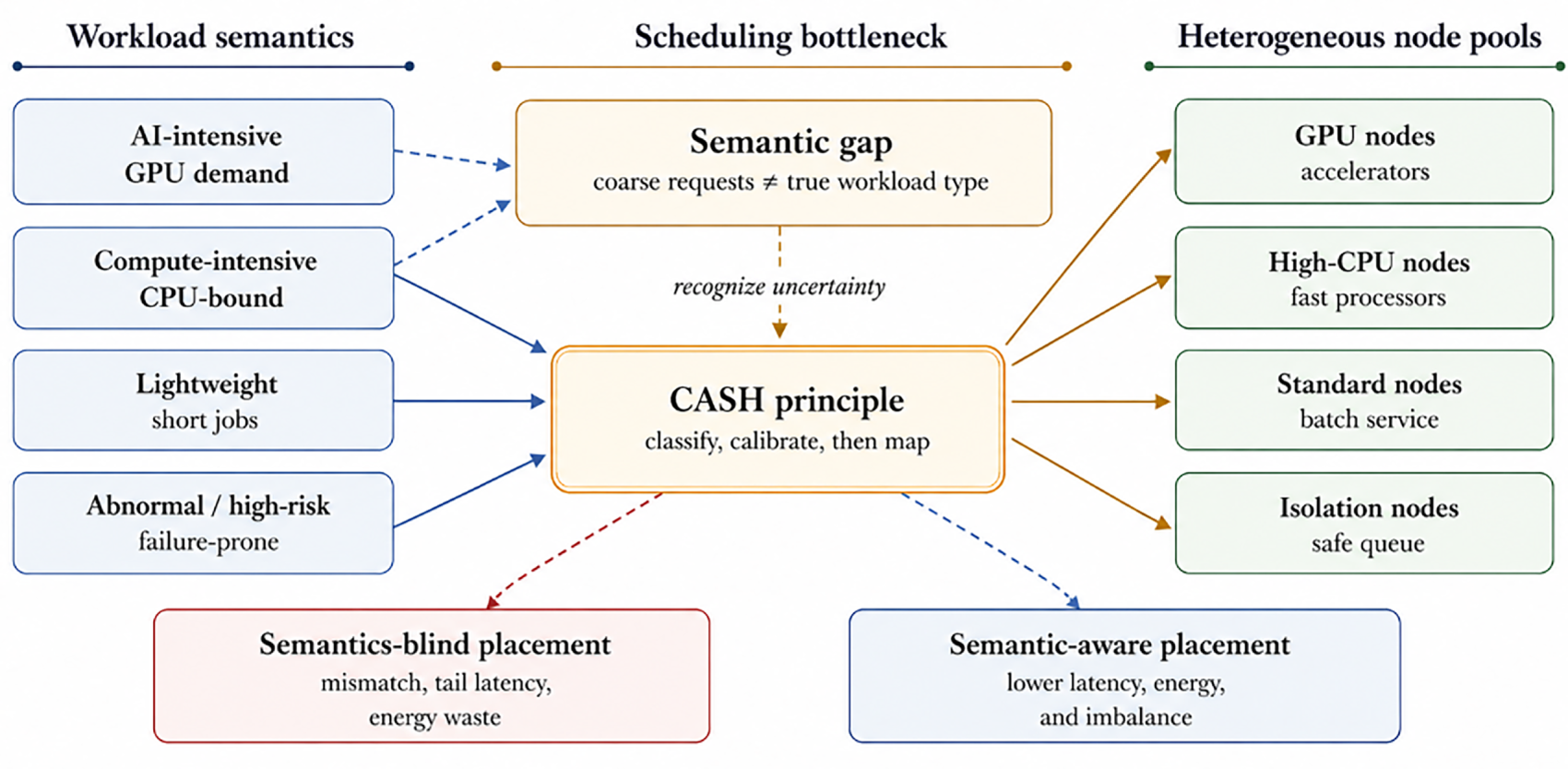
Figure 1: Motivation for classification-aware heterogeneous task scheduling: bridging latent workload semantics and heterogeneous hardware capability under latency, energy, load-balance, and uncertainty considerations.
The main contributions are summarized as follows.
(1) A classification-aware scheduling formulation. Heterogeneous scheduling is formulated as a constrained multi-objective optimization jointly considering latency, makespan, energy, load imbalance, and semantic task-node compatibility.
(2) A deep-shallow workload classifier. A dual-branch predictor combines a Deep & Cross Network (DCN) for explicit high-order feature interaction learning with eXtreme Gradient Boosting (XGBoost) for structured boundary discrimination, improving robustness on mixed numerical and categorical scheduling logs.
(3) A confidence-calibrated fusion and allocation strategy. Simple probability averaging is extended with validation-calibrated reliability and prediction uncertainty, and a risk-aware node scoring function is introduced for online resource mapping.
(4) A reproducible trace-driven evaluation protocol. Based on Massachusetts Institute of Technology (MIT) Supercloud logs, a heterogeneous-cluster simulation pipeline evaluates CASH against heuristic, learning-based, sequence-prediction, and cloud-edge baselines across resource matching, latency, makespan, energy, and load balance.
2.1 Cluster Scheduling and Heterogeneity-Aware Resource Management
Production cluster schedulers aim to improve utilization while satisfying application-level requirements. Early and influential systems established different scheduler architectures, including two-level resource sharing in Mesos [7], shared-state parallel scheduling in Omega [8], large-scale production management in Borg [1], and container-oriented orchestration summarized through Borg, Omega, and Kubernetes [2]. Resource fairness and placement quality have been studied through dominant-resource fairness [9] and fast centralized flow-based optimization in Firmament [10]; taken together, these systems show that scalable scheduling has to balance policy modularity, placement latency, fairness, and utilization at the same time.
Heterogeneous and multi-resource clusters further require workload-aware placement decisions. Tetris improves cluster efficiency by packing tasks according to multi-resource requirements [11], and Graphene addresses jobs with both dependency structures and heterogeneous resource demands [12]. Paragon and Quasar demonstrate that platform heterogeneity and interference can be exploited to improve quality of service (QoS) and utilization in datacenters [3,13]. Gavel generalizes heterogeneity-aware scheduling for deep-learning workloads through effective throughput [4], and FRESH provides fault-tolerant real-time scheduling on heterogeneous multiprocessor platforms through a semi-partitioned technique with backup copies and selective processor sleep states [14]. CASH sits in the same line of work but differs in the signal it exploits and in how that signal reaches the allocation objective. Semantic- and QoS-aware schedulers such as Paragon and Quasar characterize interference or QoS sensitivity implicitly, as an internal ranking heuristic, whereas CASH makes the workload-type signal explicit as a calibrated, uncertainty-annotated class label that enters the constrained objective directly, gates the candidate pool through a compatibility threshold, and modulates the risk-aware node score through its predictive uncertainty. The contribution is therefore less the dual-branch classifier itself than the coupling of a calibrated semantic class, together with its uncertainty, to a multi-objective allocation rule that stays interpretable and deploys as a plug-in module.
2.2 Learning-Based and Deep-Learning Cluster Scheduling
Machine learning has been introduced into cluster scheduling to overcome the limitations of manually designed heuristics. Classical studies established that CPU and cluster scheduling should be optimized jointly with power consumption [15,16], and recent surveys show that energy-aware cloud and edge-cloud scheduling remains challenging under heterogeneous objectives [17,18]. DeepRM formulates resource management as a deep reinforcement-learning problem [5], Decima learns scheduling policies for directed-acyclic-graph (DAG)-structured data-processing jobs [6], and hybrid optimization has been used for multi-objective heterogeneous cloud scheduling [19]. Recent studies further explore deep neural network (DNN)-based energy-efficient cloud-edge collaboration [20] and meta-reinforcement-learning load balancing [21], while heterogeneity-aware cluster schedulers such as Sia [22] and Hops [23] adapt job placement to heterogeneous accelerator pools through goodput modeling and fine-grained hardware sensing.
Deep-learning (DL) clusters introduce additional constraints, including GPU locality, gang scheduling, unknown training duration, and resource-performance coupling. Optimus dynamically models resource-performance relationships for deep-learning jobs [24]; Gandiva uses introspective scheduling to exploit domain-specific properties of DL training [25]; Tiresias designs GPU scheduling policies for distributed DL jobs without accurate completion-time information [26]; and Pollux co-optimizes per-job goodput and cluster-wide scheduling decisions [27]. More recently, GPARS predicts job duration with graph attention networks to allocate suitable GPU types in heterogeneous clusters [28], AISAW adaptively mitigates runtime interference for deep-learning training on distributed heterogeneous systems [29], and multi-resource interleaving with deep reinforcement learning improves task placement in cloud-edge systems [30]; surveys catalogue the design space of learning-based scheduling in GPU datacenters [31]. CASH targets a broader heterogeneous-task setting than these systems and instead builds a supervised, calibration-aware semantic-classification layer that slots in ahead of conventional scheduling or ranking modules.
2.3 Feature Crossing, Tree-Based Boundary Modeling, and Calibration
Scheduling logs are mixed-type tabular data with numerical resource requests, categorical queue fields, temporal features, and user-history statistics. Wide & Deep learning demonstrates the value of combining memorization through cross-product features with neural generalization [32], while DeepFM and AutoInt show that low-order, high-order, and attention-based feature interactions can be learned automatically from sparse or mixed fields [33,34]. DCN efficiently learns bounded-degree feature interactions without exhaustive manual feature engineering [35], and DCN-V2 improves its expressiveness for web-scale learning-to-rank systems [36]; this line of work motivates the explicit feature crossing that CASH applies to scheduling-log representation.
Tree-based boosting methods are also well suited to structured scheduling records. XGBoost is a scalable regularized tree-boosting framework based on second-order optimization [37], and LightGBM improves gradient-boosted decision trees through gradient-based sampling and feature bundling [38]. CASH combines these complementary families: DCN captures cross-field interactions such as partition
Consider a heterogeneous cluster with
At a scheduling epoch, the pending task set is
3.2 Task-Type Semantics and Matching Matrix
Let the latent task class be
3.3 Decision Variables and Constraints
Let
where
3.4 Execution Time, Energy, and Load-Balance Models
The predicted execution time of task
where
The total energy is estimated by active and idle power terms,
where
The models in Eqs. (4)–(6) are deliberately parameterized rather than measured:
3.5 Multi-Objective Scheduling Objective
The scheduling objective is formulated as
subject to Eqs. (1)–(3). The hat over each metric denotes min-max normalization within a scheduling batch, and
Remark 1 (online tractability and the greedy surrogate). Problem (7) is a constrained multi-objective assignment problem over the binary matrix
CASH contains four stages: workload profiling, dual-branch class prediction, confidence-calibrated probability fusion, and risk-aware node selection; Fig. 2 illustrates the workflow. The classifier provides both a task class and a confidence estimate, which the scheduler uses to restrict the search space and rank candidate nodes with respect to latency, energy, load, compatibility, and uncertainty.
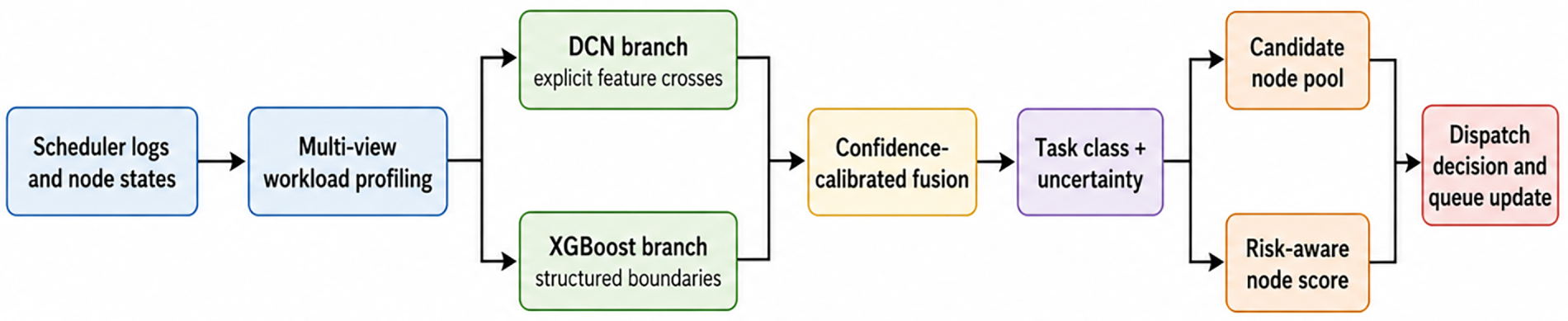
Figure 2: Overview of the CASH framework: the scheduling layer receives confidence and uncertainty rather than hard labels alone.
4.2 Workload Profiling and Feature Engineering
Continuous fields, such as CPU count, memory demand, requested runtime, and GPU demand, often exhibit heavy-tailed distributions, so we apply logarithmic smoothing followed by training-set standardization,
4.3 DCN Branch for Explicit Feature Interaction
The DCN branch contains a cross network and a deep network. Given input
This residual form increases interaction order layer by layer while keeping the parameter count controlled. In parallel, the deep branch is
4.4 XGBoost Branch for Structured Decision Boundaries
The XGBoost branch models tabular thresholds and interactions through additive regression trees,
4.5 Confidence-Calibrated Probability Fusion
A fixed fusion coefficient is easy to implement but may be unstable under distribution shift. CASH therefore uses validation-calibrated reliability and entropy-based confidence. For model
where
The predicted class and uncertainty are
4.6 Risk-Aware Candidate Node Selection
For task
The selected node is
4.7 Algorithmic Procedure and Complexity
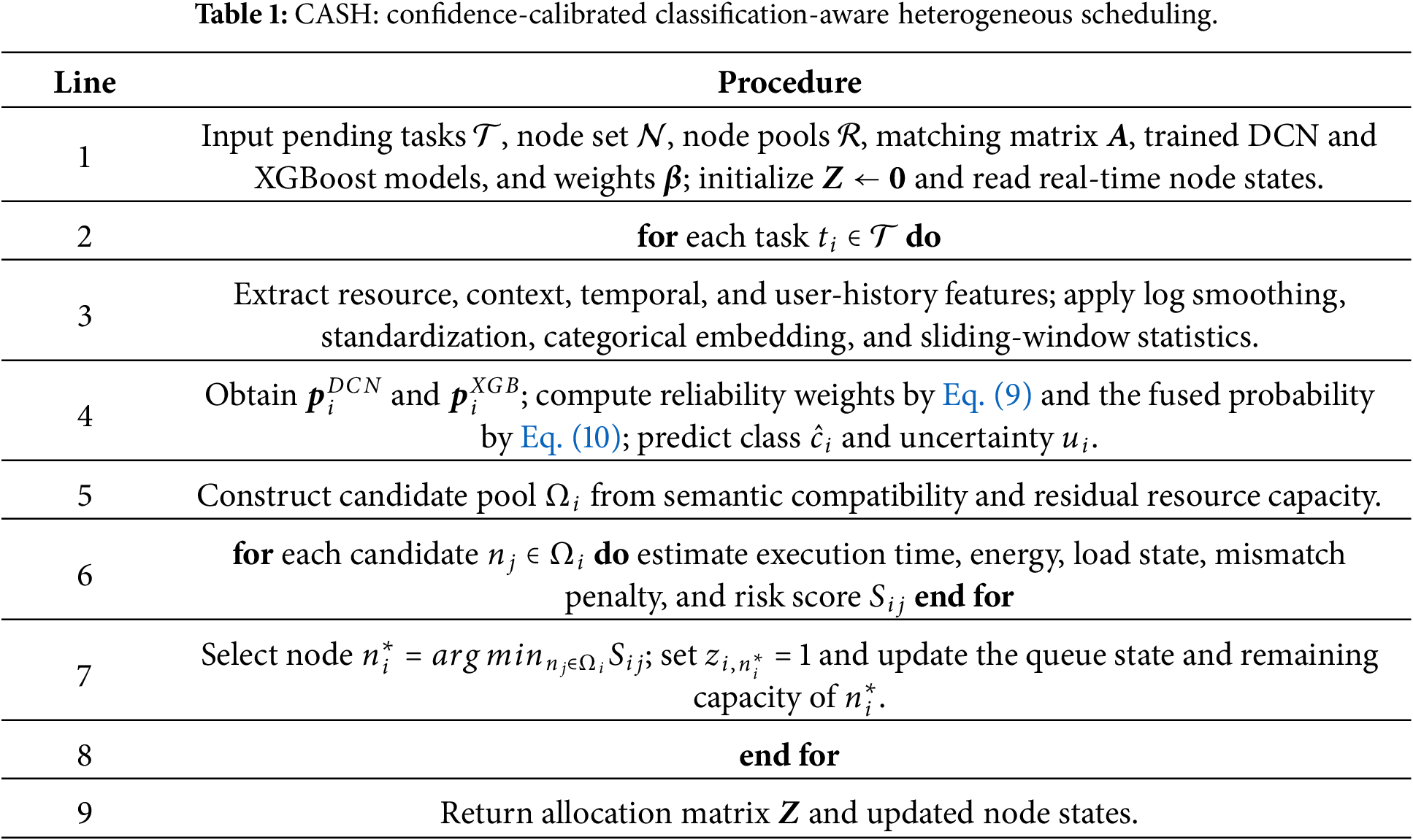
The end-to-end scheduling procedure of CASH is summarized in Table 1: for each pending task, the dual-branch classifier produces a fused, calibrated class distribution, and the scheduler restricts the candidate pool by semantic compatibility and residual capacity before selecting the node with the smallest risk-aware score.
For each task, DCN inference costs
5.1 Dataset and Trace-Driven Simulation
The experiments are based on the MIT Supercloud dataset, which provides anonymized scheduler logs, CPU and GPU time-series data, and node-monitoring data for studying large-scale HPC and datacenter operations [45]. The original logs are cleaned by removing invalid records, normalizing inconsistent states, filtering fields with excessive missingness, and constructing task samples from scheduling events. The simulation is trace-driven rather than an online production deployment: arrivals, resource requests, and task states are replayed from real logs, while heterogeneous node pools and energy parameters are configured to evaluate policies under controlled conditions.
Task labels are constructed from fields such as JobName, Partition, resource requests, and State, yielding four categories: AI-intensive, compute-intensive, lightweight, and abnormal. To reduce label leakage, fields that directly encode final outcomes are excluded from the feature set when they would not be available at scheduling time.
5.2 Experimental Platform and Implementation
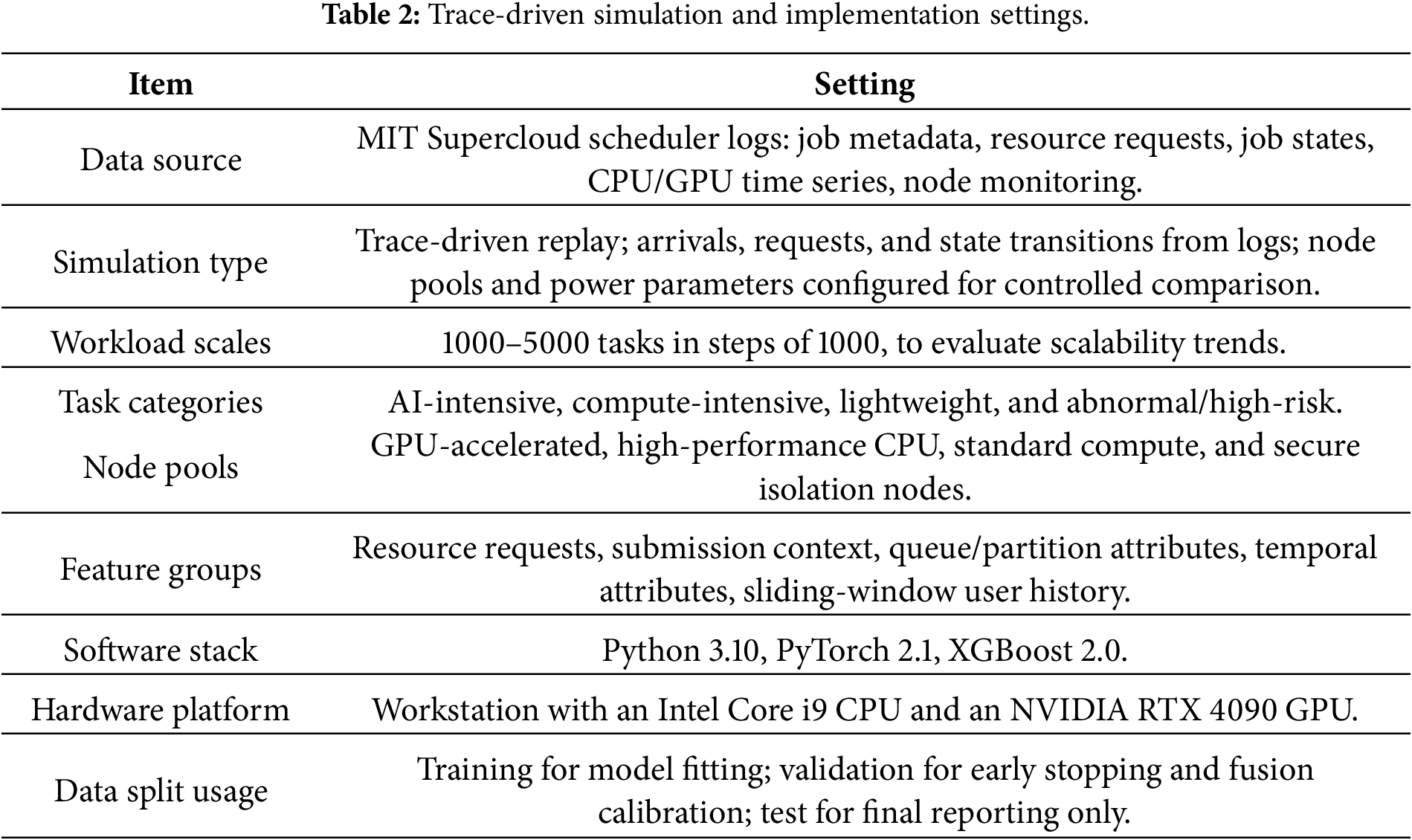
The implementation uses Python 3.10, PyTorch 2.1, and XGBoost 2.0, running on a workstation with an Intel Core i9 processor and an NVIDIA RTX 4090 GPU. Continuous features are standardized using training-set statistics only; categorical embeddings are learned jointly with the DCN branch; the validation set is used for hyperparameter selection, fusion calibration, and early stopping; and the test set is used only for final reporting. The full trace-driven simulation and implementation settings are summarized in Table 2.
To support statistical claims, and unless stated otherwise, every reported metric is the mean over
Five baselines are considered: Random, which assigns tasks to feasible nodes uniformly at random; TSSAC, a reinforcement-learning baseline representing policy-learning methods; CECF, a cloud-edge collaboration baseline emphasizing energy-aware workload allocation; LSTM, a long short-term memory (LSTM) sequence-prediction baseline using temporal workload patterns; and Meta-RHDC, a metaheuristic/reinforcement-learning hybrid baseline for dynamic load balancing. These baselines cover heuristic randomization, sequential prediction, reinforcement learning, cloud-edge collaboration, and hybrid optimization, and are aligned with recent cloud-edge collaboration, heterogeneity-aware cluster scheduling, and metaheuristic load-balancing studies [20–23].
The evaluation includes five metrics: resource matching accuracy, the proportion of tasks assigned to semantically compatible node pools (higher is better); average response time, the average completion delay including estimated waiting and execution time; makespan, the maximum completion time across all nodes; total energy consumption, active plus idle energy estimated by node-level power parameters; and load standard deviation, the dispersion of normalized workloads across nodes (for the latter four, lower is better). In the normalized comparison, latency, energy, and error rate are also reported relative to the random baseline (lower is better) for cross-metric comparison.
5.5 Ablation, Sensitivity, Robustness, Calibration, and Overhead Protocol
Beyond the cross-method comparison, the evaluation includes five families of controlled experiments that cover component contribution, design sensitivity, robustness to classifier failure, confidence quality, and online cost. All experiments reuse the trace-driven pipeline and the settings of Table 2; only the studied factor is varied.
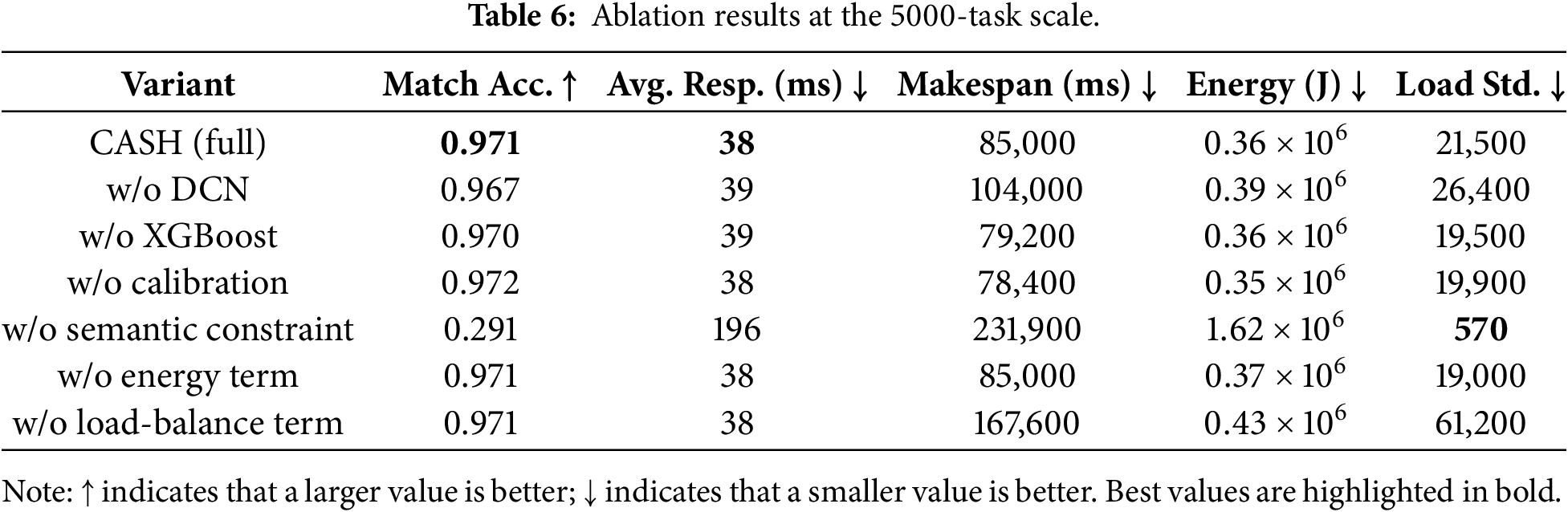
(P1) Component ablation. Each core component is removed in turn while all other settings are held fixed: the DCN branch (explicit high-order feature crossing), the XGBoost branch (structured boundary modeling), the confidence-calibrated fusion, the semantic candidate constraint, and the energy and load-balance terms of the node score. The resulting scheduling metrics are reported in Section 6.5.
(P2) Hyperparameter sensitivity. The compatibility threshold
(P3) Robustness to classification failure. Because the scheduler consumes predicted classes, we stress-test it under three degradations: (i) synthetic label noise injected into the classifier output at controlled rates; (ii) concept drift, realized by shifting the test-stream class mix away from the training proportions; and (iii) unseen applications, realized by holding out selected job families so that their per-application history features fall back to the global prior. Both classification and downstream scheduling quality are reported (Section 6.7).
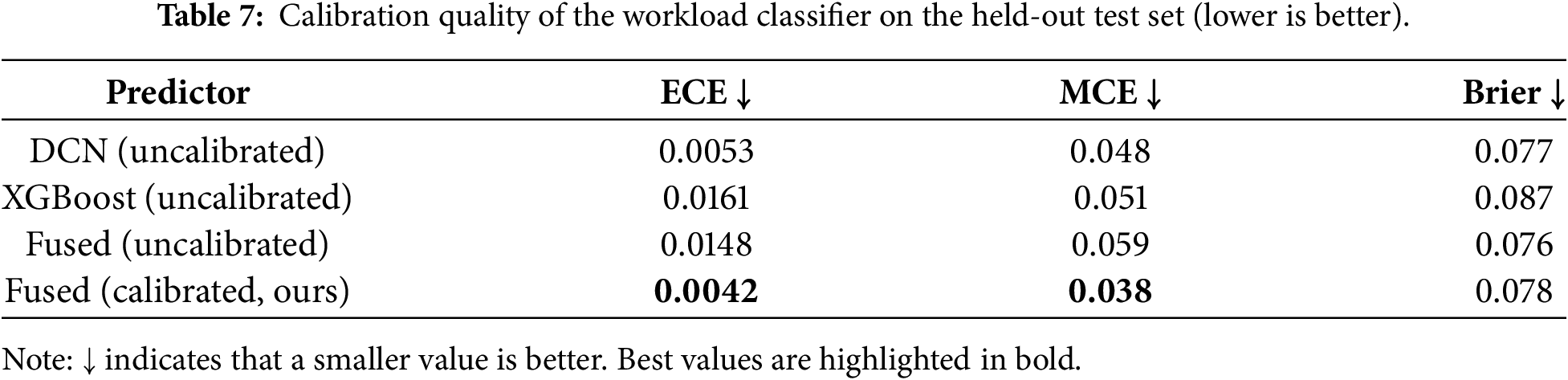
(P4) Confidence calibration. The fused confidence is evaluated with the expected calibration error (ECE), maximum calibration error (MCE), and multiclass Brier score on the held-out test set, with reliability diagrams before and after validation calibration (Section 6.6).
(P5) Scheduling overhead. We profile the wall-clock cost of each decision stage, the total per-task decision latency, and the sustained scheduling throughput on the platform of Table 2 (Section 6.9).
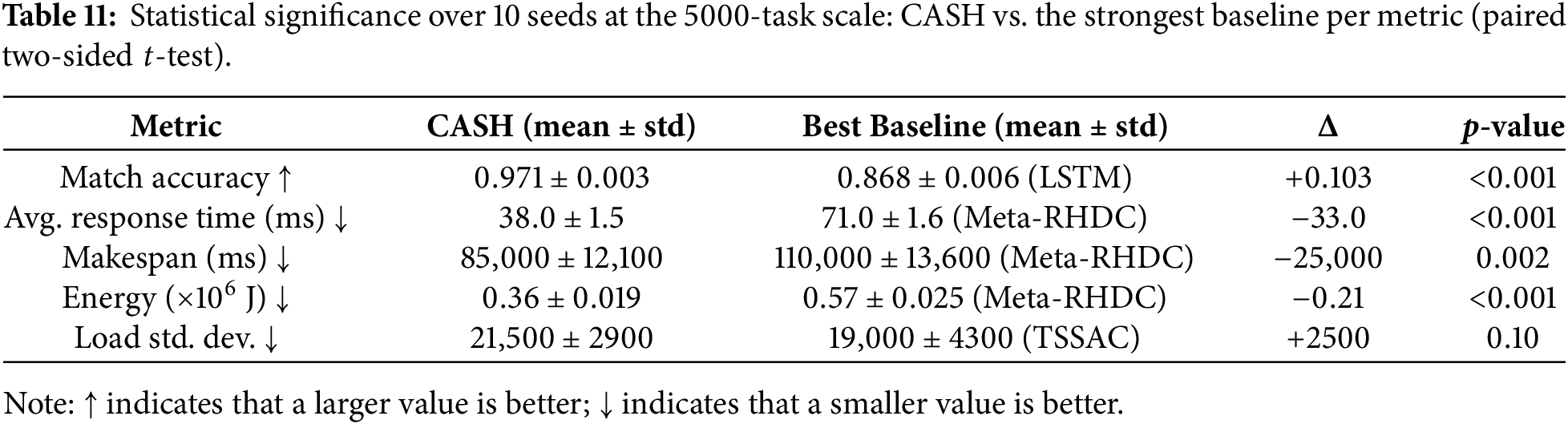
In addition, statistical significance is assessed by repeating every configuration over multiple seeds and applying a paired test between CASH and the strongest baseline (Section 6.10).
6.1 Resource Matching Accuracy
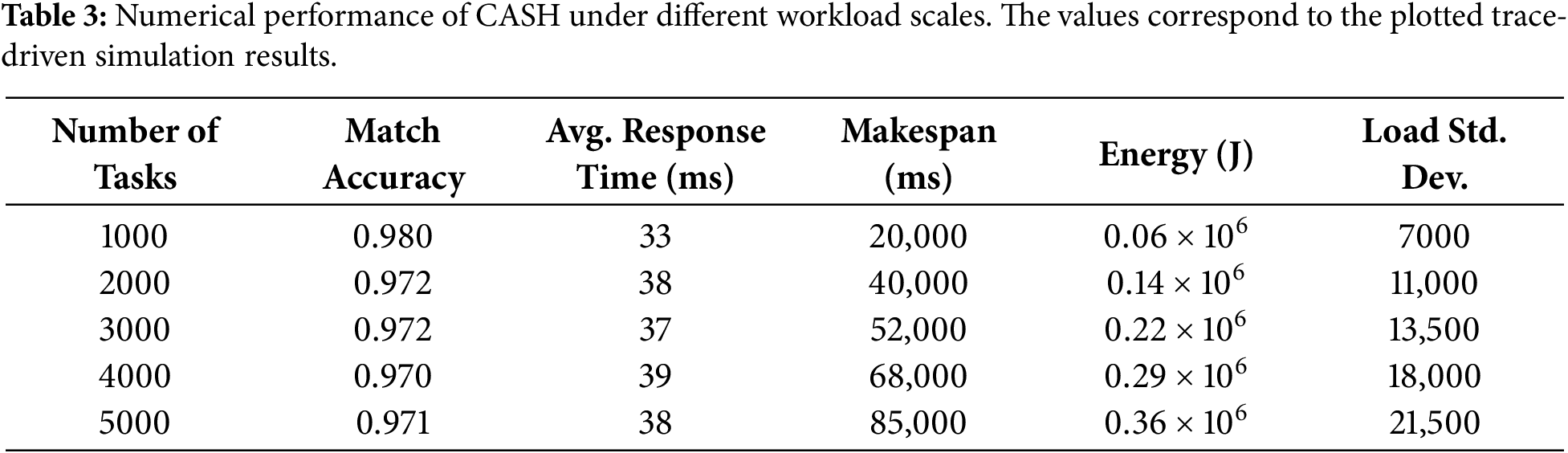
Fig. 3a compares resource matching accuracy under different task scales: CASH holds the highest and most stable accuracy as the number of tasks grows, which supports the underlying assumption: a classifier that combines explicit feature crossing with structured boundary learning gives the mapper a more reliable semantic signal than any single-route policy. The wide margin over random allocation further shows that feasibility checking alone is no substitute for semantic compatibility. Table 3 reports the corresponding numerical values of all five metrics across the tested workload scales.
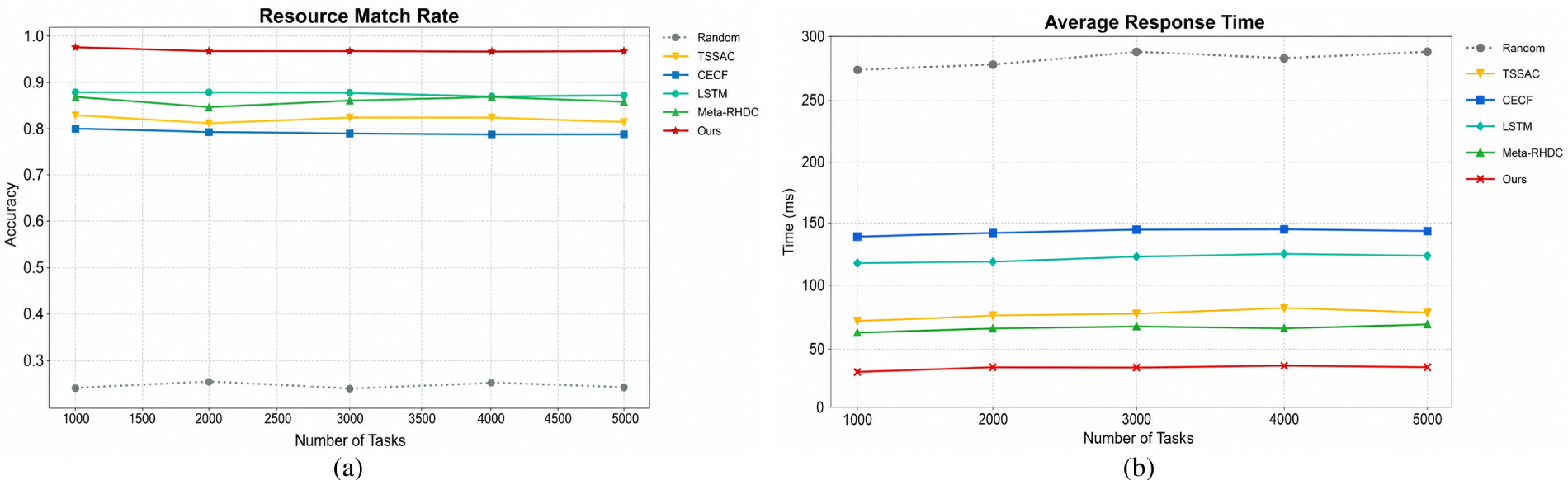
Figure 3: Comparison of scheduling quality among all methods under different numbers of tasks. (a) Resource matching accuracy; (b) average response time.
6.2 Average Response Time and Makespan
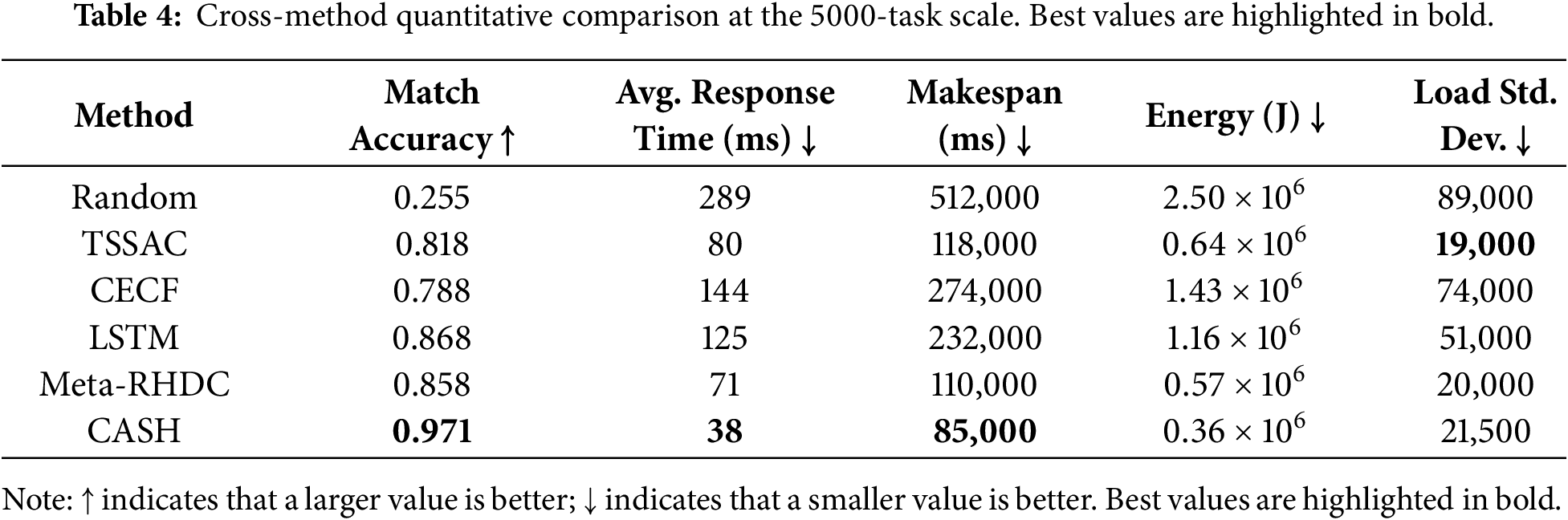
Fig. 3b shows that CASH delivers the lowest average response time across all tested loads. Two mechanisms account for this: class-aware candidate selection keeps demanding tasks off underpowered nodes, and the online node score reflects current queue load, which cuts avoidable waiting. Fig. 4a further shows that CASH shortens the longest completion time as well, so the gains come from mitigating tail accumulation rather than from shifting the mean alone. Table 4 lists the full cross-method comparison at the largest, 5000-task scale, where CASH attains the best matching accuracy, response time, makespan, and energy among all methods.
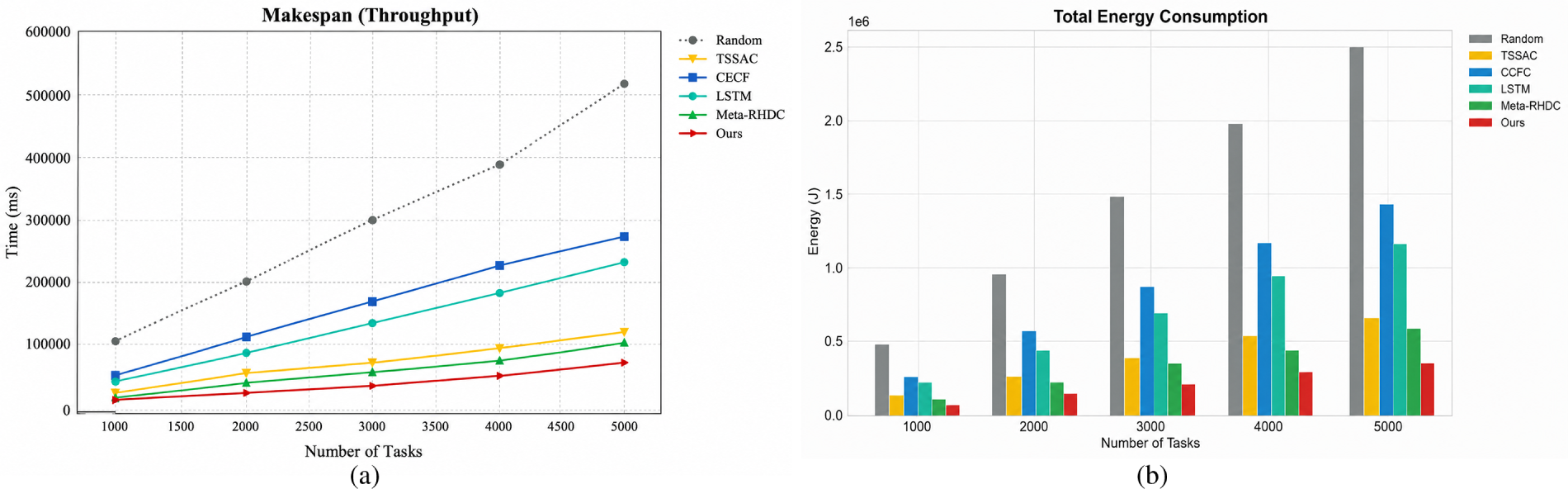
Figure 4: Scalability of completion-time and energy metrics among all methods under different numbers of tasks. (a) Makespan; (b) total energy consumption.
6.3 Energy Consumption and Load Balance
Energy-aware scheduling does not mean always picking the most energy-efficient node: an accelerator wastes energy when tied up by lightweight tasks, and a CPU node stretches out AI-intensive jobs. As Fig. 4b shows, CASH lowers total energy consumption by matching tasks to capable nodes and keeping high-power nodes from being occupied to little effect. Fig. 5a shows that CASH avoids the severe imbalance observed in random, CECF, and LSTM scheduling, although a single-objective load-balancing heuristic can reach a slightly smaller load standard deviation at the largest scale. The trade-off is expected: CASH optimizes semantic matching, latency, energy, and balance jointly rather than driving down load variance in isolation.
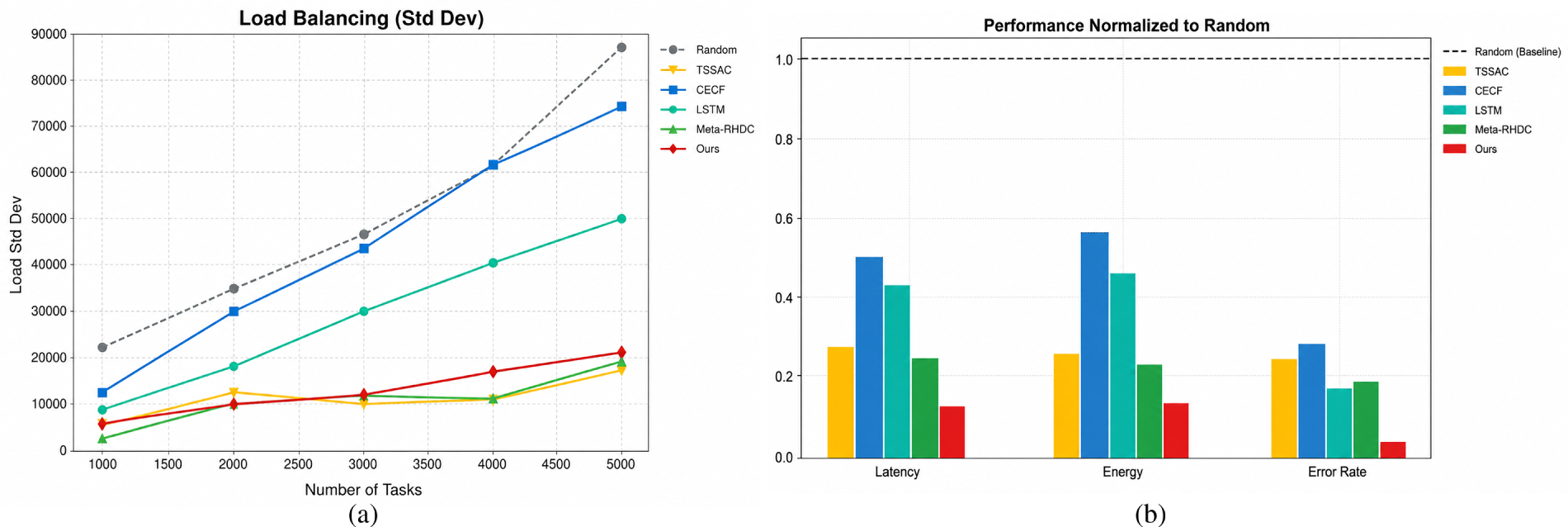
Figure 5: Load-balance and normalized performance comparison among all methods under different numbers of tasks, where lower values indicate better performance. (a) Load standard deviation of each method; (b) latency, energy, and error-rate ratios normalized to the random baseline.
6.4 Normalized Multi-Metric Comparison
Fig. 5b normalizes latency, energy, and error rate relative to the random baseline. CASH attains the lowest values on all three indicators, so the improvement is not confined to any single metric. The distinction is practical: pushing down latency alone tends to raise energy consumption and vice versa, whereas the composite score settles on a workable compromise among the objectives. The underlying normalized ratios for all methods are listed in Table 5.
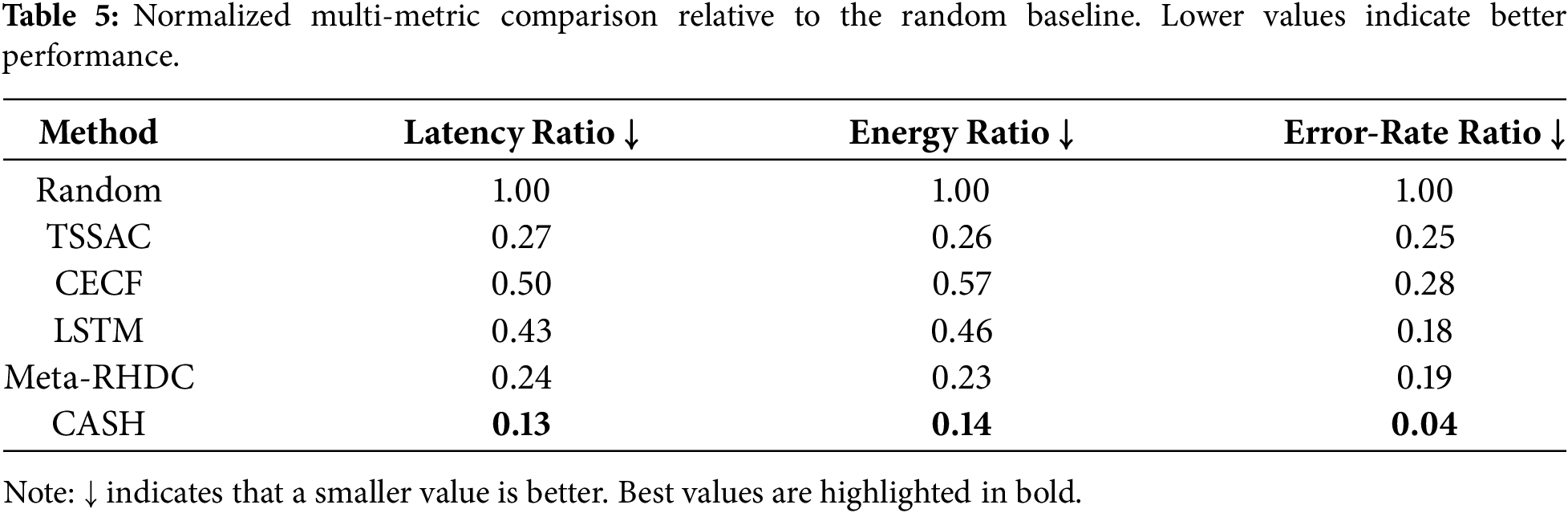
Table 6 reports the effect of removing each core component at the 5000-task scale, following protocol (P1). The class-constrained candidate selection dominates: without it, matching accuracy collapses from
6.6 Confidence Calibration Quality
Because the scheduler consumes predicted probabilities and uncertainty, calibration matters as much as discrimination. Table 7 reports, under protocol (P4), the ECE, MCE, and multiclass Brier score of the individual branches and of the fused predictor, before and after validation calibration (temperature scaling fitted on the validation set,
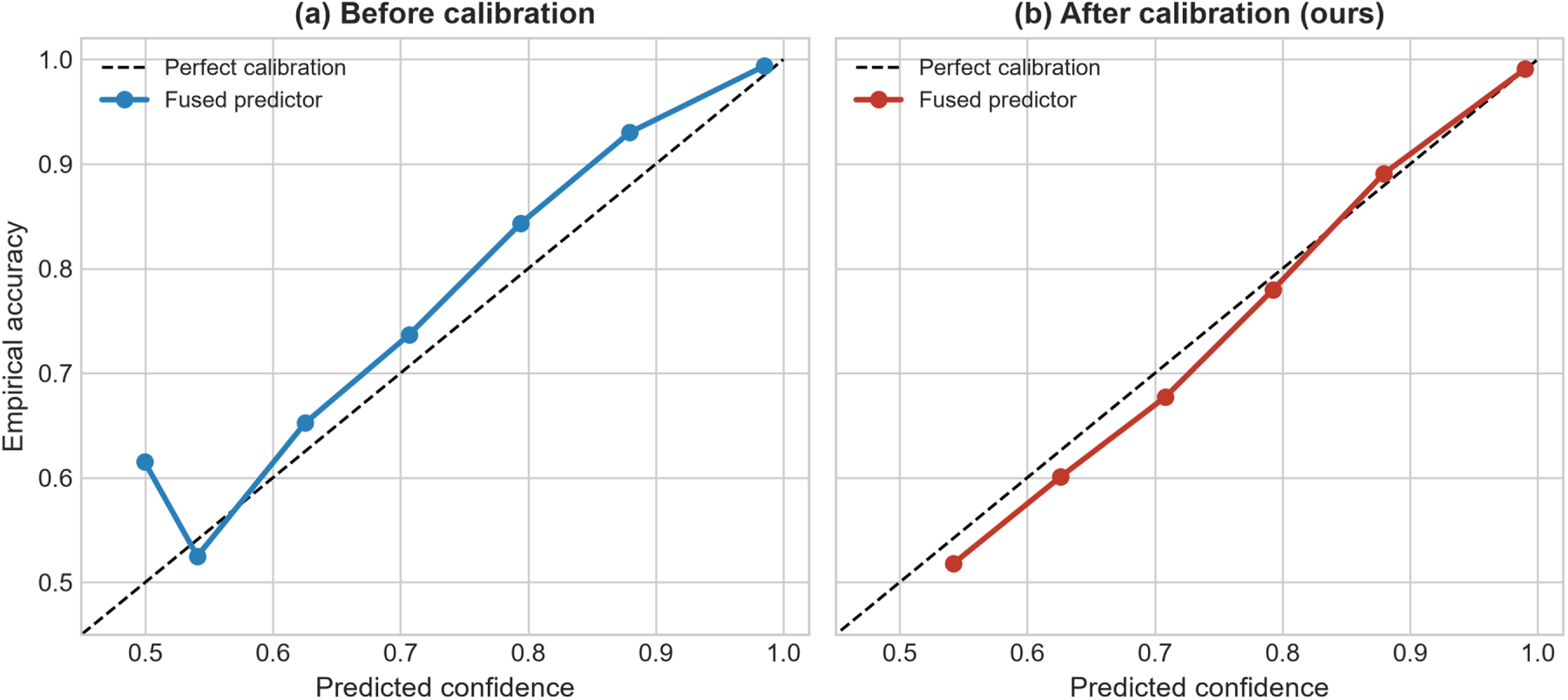
Figure 6: Reliability diagrams of the fused CASH predictor on the held-out test set, where calibration moves the confidence curve toward the
6.7 Robustness to Label Noise, Concept Drift, and Unseen Applications
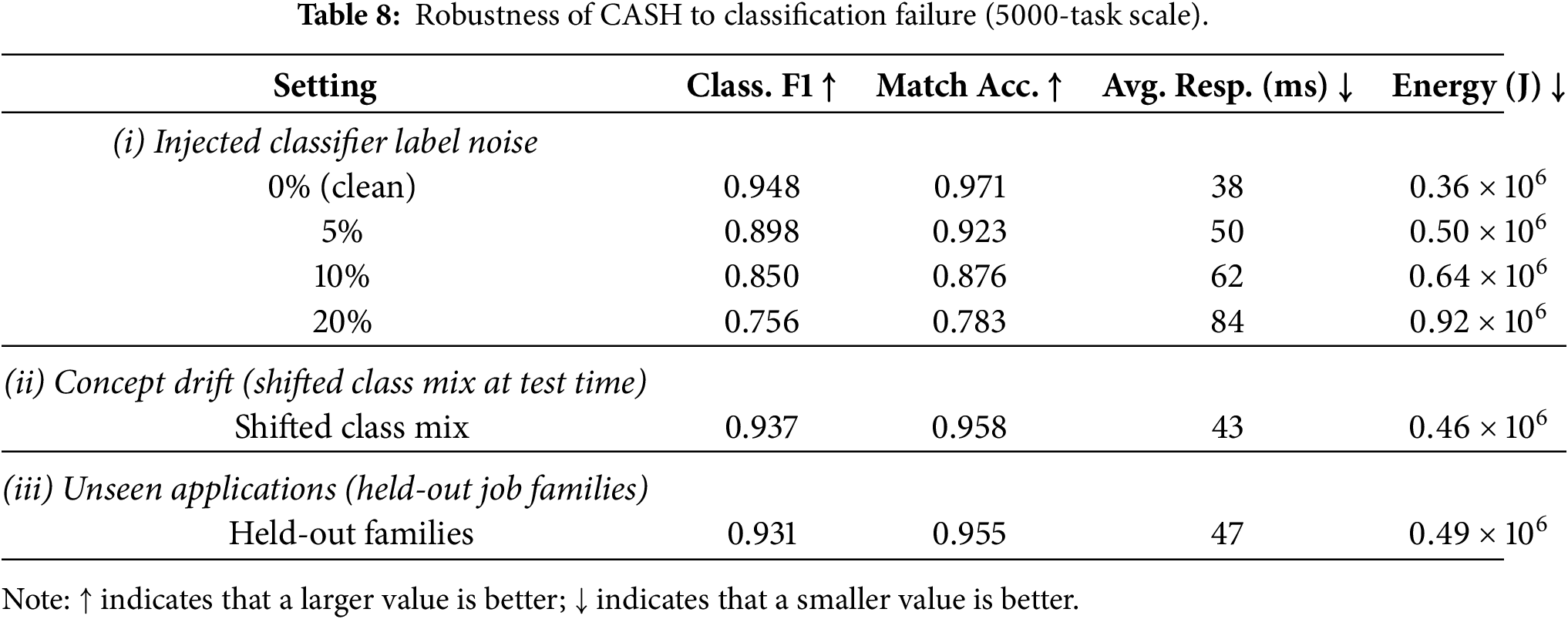
CASH is driven by predicted classes, so what happens end to end when the upstream classifier fails is a central question. Table 8 reports classification and scheduling quality under injected label noise, concept drift, and held-out unseen job families (protocol P3). Degradation turns out to be gradual:
6.8 Hyperparameter Sensitivity
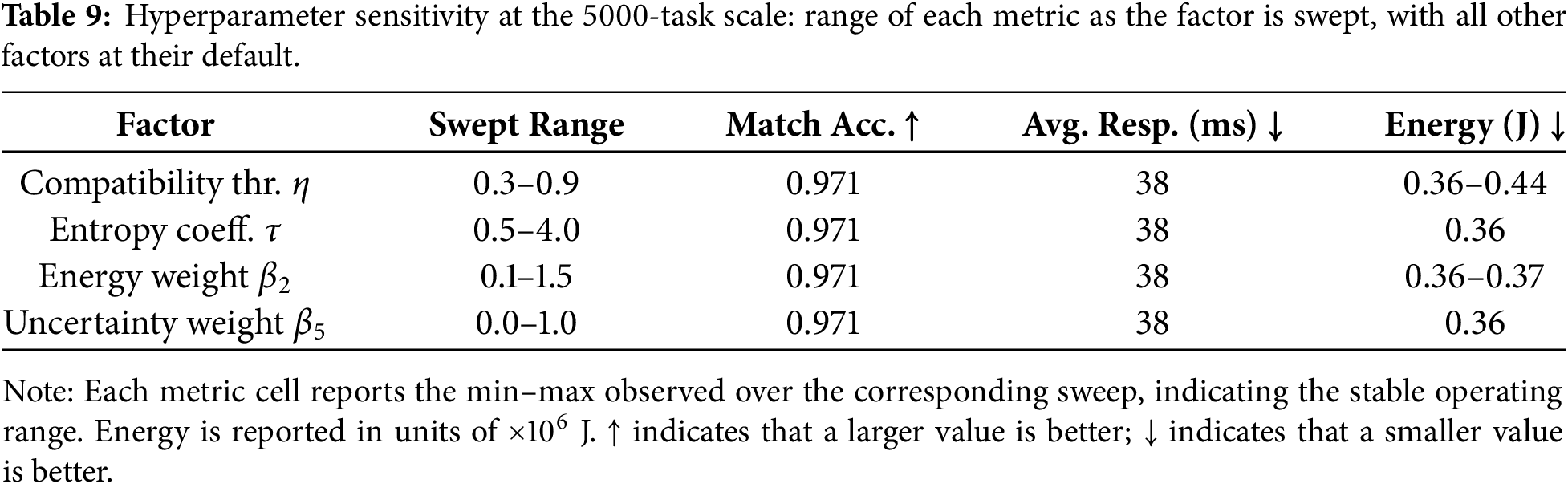
For protocol (P2), Table 9 sweeps the compatibility threshold
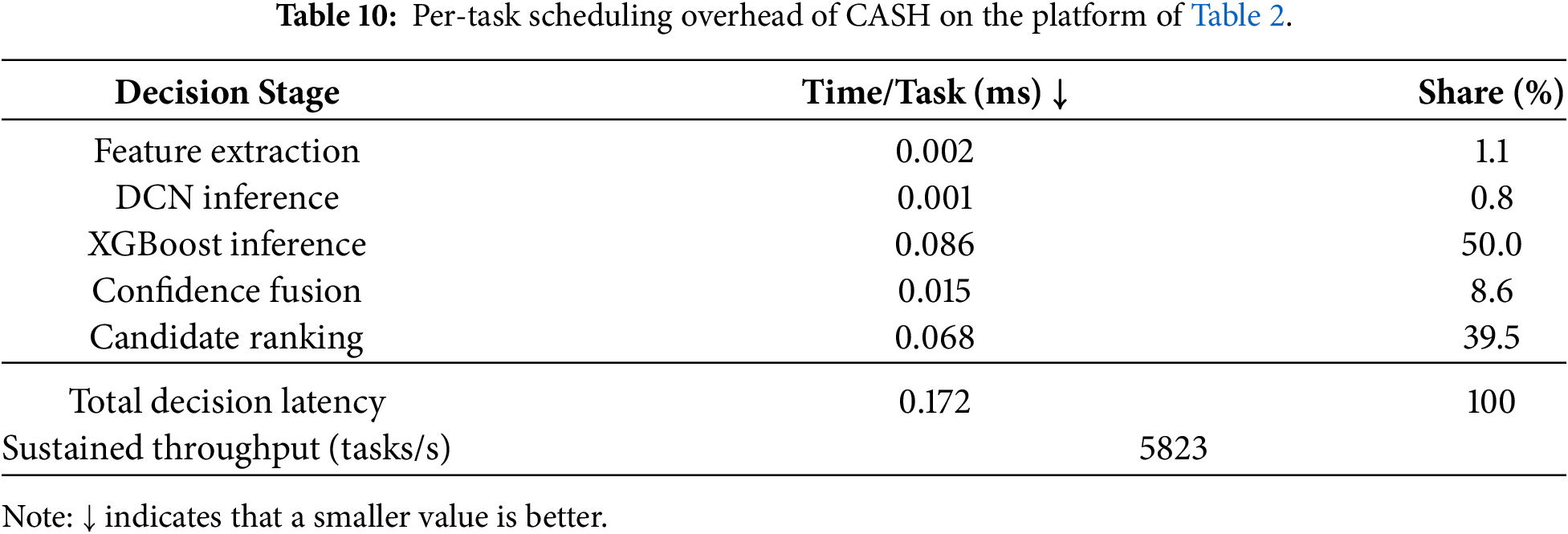
Under protocol (P5), Table 10 profiles the per-task cost of every decision stage and the sustained throughput on the platform of Table 2. The total decision cost is about
To rule out random variation as the source of the reported gains, every configuration is repeated over
6.11 Interpretability and Deployment Discussion
Each CASH decision decomposes into a predicted class, a confidence value, a candidate pool, and a node-level score, which makes it easier to audit than an end-to-end reinforcement-learning policy; XGBoost feature importance identifies influential threshold features, while DCN cross terms reveal high-order interactions among resource request, partition, and user history. In deployment, CASH serves as a plug-in ranking module: the production scheduler provides pending tasks and node states, CASH returns ranked candidate nodes, and the existing scheduler performs final admission, reservation, or dispatch.
Several threats bound what the current evidence can support. First, and most important, the evaluation is a trace-driven simulation, not an online production deployment, so factors that only appear in a live cluster (preemption overhead, data locality, network contention, and container initialization latency) are not captured; the absolute metrics should be read as controlled comparisons. Because CASH is a plug-in ranking module for an existing dispatcher, the relative ordering of methods is expected to be more robust to these factors than the absolute values, and validating this on a real cluster is the primary item of future work. Second, the execution-time and energy models are parameterized (per-class effective speed and per-node average power), not measured, abstracting away DVFS and co-location interference; the resulting bias underestimates both the variability of node speed and the energy cost of contended nodes, and applies to all compared policies. Third, task labels derived from scheduling logs contain noise, particularly for the abnormal class whose semantics are more ambiguous than AI- or CPU-intensive tasks; Section 6.7 quantifies the sensitivity of scheduling quality to this noise. Fourth, the present formulation targets independent tasks and does not model DAG workflow dependencies; CASH can in principle serve as the per-task placement layer inside a DAG-aware scheduler such as Decima or Graphene [6,12], but the interaction between class-aware placement and dependency-aware ordering is left to future work. None of these limitations overturns the observed trends, but together they delimit the claims the evidence can carry.
This paper proposed CASH, a confidence-calibrated classification-aware scheduling framework for heterogeneous computing environments. CASH builds multi-view workload profiles from scheduling logs, combines DCN and XGBoost to infer workload semantics, calibrates prediction confidence, and maps tasks to heterogeneous nodes through a risk-aware scoring function. In trace-driven simulations on MIT Supercloud logs, CASH improves resource matching accuracy, response time, makespan, and energy consumption over representative baselines and keeps load balance competitive under high load. The evidence argues for treating workload semantics as a first-class scheduling signal rather than as an after-the-fact explanation of allocation results.
Future work will focus on validating CASH in an online cluster, modeling task dependencies and data locality, integrating real-time power measurements, and extending the classifier to continual learning for evolving workload distributions.
Acknowledgement: Not applicable.
Funding Statement: This research was funded by MIIT High-Quality Development Special Project, grant number (TC240A9ED-56); Academician Workstation Program of Yunnan Province (202405AF140013); Shanghai Agricultural Technology Innovation Project (2024-02-08-00-12-F00032).
Author Contributions: The authors confirm contribution to the paper as follows: study conception and design: Chuanlin Jian, Xing Hu; conceptualization of the classification framework and experimental design: Samaneh Beheshti Kashi; methodology and model implementation: Chuanlin Jian, Xiangcheng Liu; data collection and preprocessing: Yuanchen Sun; experiments and validation: Xiangcheng Liu, Xuming Huang; evaluation, analysis, and interpretation of results: Chuanlin Jian, Yuanchen Sun, Xuming Huang, Samaneh Beheshti Kashi; visualization: Yuanchen Sun; draft manuscript preparation: Chuanlin Jian, Xiangcheng Liu; supervision, funding acquisition, and manuscript review and editing: Xing Hu. Samaneh Beheshti Kashi holds a PhD in Engineering Sciences (Dr.-Ing.) from the Department of Mathematics and Computer Science (Department 3), University of Bremen, Germany, and contributed her expertise in machine-learning-based classification and experimental evaluation to this work. All authors reviewed and approved the final version of the manuscript.
Availability of Data and Materials: The experiments are based on publicly available MIT Supercloud logs and a trace-driven simulation environment. The processed features, simulation scripts, and parameter files are available from the corresponding author upon reasonable request, subject to the policies of the journal and the authors’ institutions.
Ethics Approval: Not applicable. This study did not involve human participants, human data, animal subjects, or clinical materials.
Conflicts of Interest: The authors declare no conflicts of interest.
References
1. Verma A, Pedrosa L, Korupolu M, Oppenheimer D, Tune E, Wilkes J. Large-scale cluster management at google with borg. In: Proceedings of the Tenth European Conference on Computer Systems; 2015 Apr 21–24; Bordeaux, France. p. 1–7. doi:10.1145/2741948.2741964. [Google Scholar] [CrossRef]
2. Burns B, Grant B, Oppenheimer D, Brewer E, Wilkes J. Borg, Omega, and Kubernetes. Commun ACM. 2016;59(5):50–7. doi:10.1145/2890784. [Google Scholar] [CrossRef]
3. Delimitrou C, Paragon KC. Paragon: QoS-aware scheduling for heterogeneous datacenters. In: Proceedings of the Eighteenth International Conference on Architectural Support for Programming Languages and Operating Systems; 2013 Mar 16–20; Houston, TX, USA. p. 77–88. doi:10.1145/2451116.2451125. [Google Scholar] [CrossRef]
4. Narayanan D, Santhanam K, Kazhamiaka F, Phanishayee A, Zaharia M. Heterogeneity-aware cluster scheduling policies for deep learning workloads. In: Proceedings of the 14th USENIX Conference on Operating Systems Design and Implementation; 2020 Nov 4–6; Virtual Event. [Google Scholar]
5. Mao H, Alizadeh M, Menache I, Kandula S. Resource management with deep reinforcement learning. In: Proceedings of the 15th ACM Workshop on Hot Topics in Networks; 2016 Nov 9–10; Atlanta GA USA. p. 50–6. doi:10.1145/3005745.3005750. [Google Scholar] [CrossRef]
6. Mao H, Schwarzkopf M, Venkatakrishnan SB, Meng Z, Alizadeh M. Learning scheduling algorithms for data processing clusters. In: Proceedings of the ACM Special Interest Group on Data Communication; 2019 Aug 19–23; Beijing, China. p. 270–88. doi:10.1145/3341302.3342080. [Google Scholar] [CrossRef]
7. Hindman B, Konwinski A, Zaharia M, Ghodsi A, Joseph AD, Katz R, et al. Mesos: a platform for fine-grained resource sharing in the data center. In: Proceedings of the 8th USENIX Conference on Networked Systems Design and Implementation; 2011 Mar 30–Apr 1; Boston, MA, USA. p. 295–308. [Google Scholar]
8. Schwarzkopf M, Konwinski A, Abd-El-Malek M, Wilkes J. Omega: flexible, scalable schedulers for large compute clusters. In: Proceedings of the 8th ACM European Conference on Computer Systems; 2013 Apr 15–17; Prague, Czech Republic. p. 351–64. doi:10.1145/2465351.2465386. [Google Scholar] [CrossRef]
9. Ghodsi A, Zaharia M, Hindman B, Konwinski A, Shenker S, Stoica I. Dominant resource fairness: fair allocation of multiple resource types. In: Proceedings of the 8th USENIX Conference on Networked Systems Design and Implementation; 2011 Mar 30–Apr 1; Boston, MA, USA. p. 323–36. [Google Scholar]
10. Gog I, Schwarzkopf M, Gleave A, Watson RNM, Hand S. Firmament: fast, centralized cluster scheduling at scale. In: Proceedings of the 12th USENIX Conference on Operating Systems Design and Implementation; 2016 Nov 2–4; Savannah GA USA. p. 99–115. [Google Scholar]
11. Grandl R, Ananthanarayanan G, Kandula S, Rao S, Akella A. Multi-resource packing for cluster schedulers. In: Proceedings of the 2014 ACM Conference on SIGCOMM; 2014 Aug 17–22; Chicago, IL, USA. p. 455–66. doi:10.1145/2619239.2626334. [Google Scholar] [CrossRef]
12. Grandl R, Kandula S, Rao S, Akella A, Kulkarni J. GRAPHENE: packing and dependency-aware scheduling for data-parallel clusters. In: Proceedings of the 12th USENIX Conference on Operating Systems Design and Implementation; 2016 Nov 2–4; Savannah, GA, USA. p. 81–97. [Google Scholar]
13. Delimitrou C, Kozyrakis C. Quasar: resource-efficient and QoS-aware cluster management. In: Proceedings of the 19th International Conference on Architectural Support for Programming Languages and Operating Systems; 2014 Mar 1–5; Salt Lake City, UT, USA. p. 127–44. doi:10.1145/2541940.2541941. [Google Scholar] [CrossRef]
14. Moulik S, Sharma Y. FRESH: fault-tolerant Real-time scheduler for heterogeneous multiprocessor platforms. Future Gener Comput Syst. 2024;161(5):214–25. doi:10.1016/j.future.2024.07.008. [Google Scholar] [CrossRef]
15. Yao F, Demers A, Shenker S. A scheduling model for reduced CPU energy. In: Proceedings of IEEE 36th Annual Foundations of Computer Science; 1995 Oct 23–25; Milwaukee, WI, USA. p. 374–82. doi:10.1109/SFCS.1995.492493. [Google Scholar] [CrossRef]
16. Weiser M, Welch B, Demers A, Shenker S. Scheduling for reduced CPU energy. In: Proceedings of the First USENIX Symposium on Operating Systems Design and Implementation (OSDI); 1994 Nov 14–17; Monterey, CA, USA. p. 13–23. [Google Scholar]
17. Ghafari R, Kabutarkhani FH, Mansouri N. Task scheduling algorithms for energy optimization in cloud environment: a comprehensive review. Clust Comput. 2022;25(2):1035–93. doi:10.1007/s10586-021-03512-z. [Google Scholar] [CrossRef]
18. Sahoo SK, Mishra SK. A survey on task scheduling in edge-cloud. SN Comput Sci. 2025;6(3):217. doi:10.1007/s42979-025-03757-0. [Google Scholar] [CrossRef]
19. Behera I, Sobhanayak S. Task scheduling optimization in heterogeneous cloud computing environments: a hybrid GA-GWO approach. J Parallel Distrib Comput. 2024;183:104766. doi:10.1016/j.jpdc.2023.104766. [Google Scholar] [CrossRef]
20. Lu Y, Liu L, Panneerselvam J, Gu J, Garraghan P, Min G. CECF: a DNN-based energy-efficient cloud-edge collaboration framework for intelligent workload scheduling in 6G-enabled transportation systems. IEEE Trans Intell Transp Syst. 2025;26(10):17889–900. doi:10.1109/TITS.2025.3549472. [Google Scholar] [CrossRef]
21. Krishna MSR, Khasim Vali D. Meta-RHDC: meta reinforcement learning driven hybrid lyrebird falcon optimization for dynamic load balancing in cloud computing. IEEE Access. 2025;13:36550–74. doi:10.1109/ACCESS.2025.3544775. [Google Scholar] [CrossRef]
22. Jayaram Subramanya S, Arfeen D, Lin S, Qiao A, Jia Z, Ganger GR. Sia: heterogeneity-aware, goodput-optimized ML-cluster scheduling. In: Proceedings of the 29th Symposium on Operating Systems Principles; 2023 Oct 23–26; Koblenz, Germany. p. 642–57. doi:10.1145/3600006.3613175. [Google Scholar] [CrossRef]
23. Wang Q, Wang F, Zheng X. Hops: fine-grained heterogeneous sensing, efficient and fair Deep Learning cluster scheduling system. In: Proceedings of the 2024 ACM Symposium on Cloud Computing; 2024 Nov 20–22; Redmond, WA, USA. p. 1–17. doi:10.1145/3698038.3698515. [Google Scholar] [CrossRef]
24. Peng Y, Bao Y, Chen Y, Wu C, Guo C. Optimus: an efficient dynamic resource scheduler for deep learning clusters. In: Proceedings of the Thirteenth EuroSys Conference; 2018 Apr 23–26; Porto, Portugal. p. 1–14. doi:10.1145/3190508.3190517. [Google Scholar] [CrossRef]
25. Xiao W, Bhardwaj R, Ramjee R, Sivathanu M, Kwatra N, Han Z, et al. Gandiva: introspective cluster scheduling for deep learning. In: Proceedings of the 13th USENIX conference on Operating Systems Design and Implementation; 2018 Oct 8–10; Carlsbad, CA, USA. p. 595–610. [Google Scholar]
26. Gu J, Chowdhury M, Shin KG, Zhu Y, Jeon M, Qian J, et al. Tiresias: a GPU cluster manager for distributed deep learning. In: Proceedings of the 16th USENIX Conference on Networked Systems Design and Implementation; 2019 Feb 26–28; Boston, MA, USA. p. 485–500. [Google Scholar]
27. Qiao A, Choe SK, Subramanya SJ, Neiswanger W, Ho Q, Zhang H, et al. Pollux: co-adaptive cluster scheduling for goodput-optimized deep learning. In: Proceedings of the 15th USENIX Symposium on Operating Systems Design and Implementation; 2021 Jul 14–16; Virtual. [Google Scholar]
28. Wang S, Chen S, Shi Y. GPARS: graph predictive algorithm for efficient resource scheduling in heterogeneous GPU clusters. Future Gener Comput Syst. 2024;152(1):127–37. doi:10.1016/j.future.2023.10.022. [Google Scholar] [CrossRef]
29. Bi Y, Xi Y, Jing C. AISAW: an adaptive interference-aware scheduling algorithm for acceleration of deep learning workloads training on distributed heterogeneous systems. Future Gener Comput Syst. 2025;166(2):107642. doi:10.1016/j.future.2024.107642. [Google Scholar] [CrossRef]
30. Pei X, Sun P, Hu Y, Li D, Tian L, Li Z. Multi-resource interleaving for task scheduling in cloud-edge system by deep reinforcement learning. Future Gener Comput Syst. 2024;160(5):522–36. doi:10.1016/j.future.2024.06.033. [Google Scholar] [CrossRef]
31. Ye Z, Gao W, Hu Q, Sun P, Wang X, Luo Y, et al. Deep learning workload scheduling in GPU datacenters: a survey. ACM Comput Surv. 2024;56(6):1–38. doi:10.1145/3638757. [Google Scholar] [CrossRef]
32. Cheng HT, Koc L, Harmsen J, Shaked T, Chandra T, Aradhye H, et al. Wide & deep learning for recommender systems. In: Proceedings of the 1st Workshop on Deep Learning for Recommender Systems; 2016 Sep 15; Boston, MA, USA. p. 7–10. doi:10.1145/2988450.2988454. [Google Scholar] [CrossRef]
33. Guo H, Tang R, Ye Y, Li Z, He X. DeepFM: a factorization-machine based neural network for CTR prediction. In: Proceedings of the Twenty-Sixth International Joint Conference on Artificial Intelligence; 2017 Aug 19–26; Melbourne, Australia. p. 1725–31. doi:10.24963/ijcai.2017/239. [Google Scholar] [CrossRef]
34. Song W, Shi C, Xiao Z, Duan Z, Xu Y, Zhang M, et al. AutoInt: automatic feature interaction learning via self-attentive neural networks. In: Proceedings of the 28th ACM International Conference on Information and Knowledge Management; 2019 Nov 3–7; Beijing, China. p. 1161–70. doi:10.1145/3357384.3357925. [Google Scholar] [CrossRef]
35. Wang R, Fu B, Fu G, Wang M. Deep & cross network for ad click predictions. In: Proceedings of the ADKDD'17; 2017 Aug 14; Halifax, NS, Canada. p. 1–7. doi:10.1145/3124749.3124754. [Google Scholar] [CrossRef]
36. Wang R, Shivanna R, Cheng D, Jain S, Lin D, Hong L, et al. DCN V2: improved deep & cross network and practical lessons for web-scale learning to rank systems. In: Proceedings of the Web Conference 2021 Apr 19–23; Ljubljana, Slovenia; 2021. p. 1785–97. doi:10.1145/3442381.3450078. [Google Scholar] [CrossRef]
37. Chen T, Guestrin C. XGBoost: a scalable tree boosting system. In: Proceedings of the 22nd ACM SIGKDD International Conference on Knowledge Discovery and Data Mining; 2016 Aug 13–17; San Francisco, CA, USA. p. 785–94. doi:10.1145/2939672.2939785. [Google Scholar] [CrossRef]
38. Ke G, Meng Q, Finley T, Wang T, Chen W, Ma W, et al. LightGBM: a highly efficient gradient boosting decision tree. In: Proceedings of the 31st International Conference on Neural Information Processing Systems; 2017 Dec 4–9; Long Beach, CA, USA. p. 3149–57. [Google Scholar]
39. Zadrozny B, Elkan C. Transforming classifier scores into accurate multiclass probability estimates. In: Proceedings of the Eighth ACM SIGKDD International Conference on Knowledge Discovery and Data Mining; 2002 Jul 23–26; Edmonton, AB, Canada. p. 694–9. doi:10.1145/775047.775151. [Google Scholar] [CrossRef]
40. Niculescu-Mizil A, Caruana R. Predicting good probabilities with supervised learning. In: Proceedings of the 22nd International Conference on Machine Learning; 2005 Aug 7–11; Bonn, Germany. p. 625–32. doi:10.1145/1102351.1102430. [Google Scholar] [CrossRef]
41. Guo C, Pleiss G, Sun Y, Weinberger KQ. On calibration of modern neural networks. In: Proceedings of the 34th International Conference on Machine Learning; 2017 Aug 6–11; Sydney, NSW, Australia. p. 1321–30. [Google Scholar]
42. Wang C. Calibration in deep learning: a survey of the state-of-the-art. arXiv:2308.01222. 2023. [Google Scholar]
43. Li J, Jiang W, He Y, Yang Q, Gao A, Ha Y, et al. FiDRL: flexible invocation-based deep reinforcement learning for DVFS scheduling in embedded systems. IEEE Trans Comput. 2025;74(1):71–85. doi:10.1109/TC.2024.3465933. [Google Scholar] [CrossRef]
44. Yang W, Zhao M, Li J, Zhang X. Energy-efficient DAG scheduling with DVFS for cloud data centers. J Supercomput. 2024;80(10):14799–823. doi:10.1007/s11227-024-06035-7. [Google Scholar] [CrossRef]
45. Samsi S, Weiss ML, Bestor D, Li B, Jones M, Reuther A, et al. The MIT supercloud dataset. arXiv:2108.02037. 2021. [Google Scholar]
Cite This Article
 Copyright © 2026 The Author(s). Published by Tech Science Press.
This work is licensed under a Creative Commons Attribution 4.0 International License , which permits unrestricted use, distribution, and reproduction in any medium, provided the original work is properly cited.
 Downloads
 Citation Tools
