
 Login
Login Register
 Submit a Paper
 Propose a Special lssue
 Open Access
REVIEW

Wheel Flow Instabilities and Drag Control in Automotive Aerodynamics: A Comprehensive Review
1 School of Automotive and Traffic Engineering, Jiangsu University, Zhenjiang, China
2 Kenda Rubber (China) Co., Suzhou, China
* Corresponding Author: Haichao Zhou. Email:
Fluid Dynamics & Materials Processing 2026, 22(3), 1 https://doi.org/10.32604/fdmp.2026.075610
Received 04 November 2025; Accepted 25 February 2026; Issue published 31 March 2026
 View Full Text
 Download PDF
Abstract
This review addresses four key themes in automotive aerodynamics: flow instability in the wheel region, the aerodynamic characteristics of rims, the aerodynamic behavior of tires, and drag reduction strategies based on flow control around the wheels. The wheel region, comprising the tire, rim, and adjacent aerodynamic components, typically represents the major source of vehicle drag owing to the inherently complex flow generated by wheel rotation, tread geometry, and rim design, which gives rise to flow separation, vortex shedding, and turbulence. Drawing on a broad body of experimental and numerical research, this review elucidates the mechanisms governing such dynamics, and considers drag mitigation techniques, including biomimetic surface treatments and multi-element flow control concepts. Particular emphasis is placed on enclosed-spoke rims, rim-edge enclosures, and non-smooth tire microstructures, which have consistently demonstrated notable drag reduction potential. The review further identifies critical shortcomings in current research, most notably the lack of quantitative analyses of aerodynamic energy losses and the absence of integrated optimization strategies that jointly address tire, rim, and fender design.Keywords
Against the backdrop of the continued surge in global automobile ownership, energy efficiency, environmental protection, and safety have undeniably emerged as the core themes driving the development of automotive technologies [1,2,3,4]. Amid increasingly severe environmental challenges and resource constraints, improving vehicle energy efficiency has become particularly critical [5,6]. Research reports clearly indicate that road transport has become one of the primary sources of greenhouse gas emissions at this stage, with passenger vehicles accounting for most tailpipe emissions [7] as shown in Fig. 1.
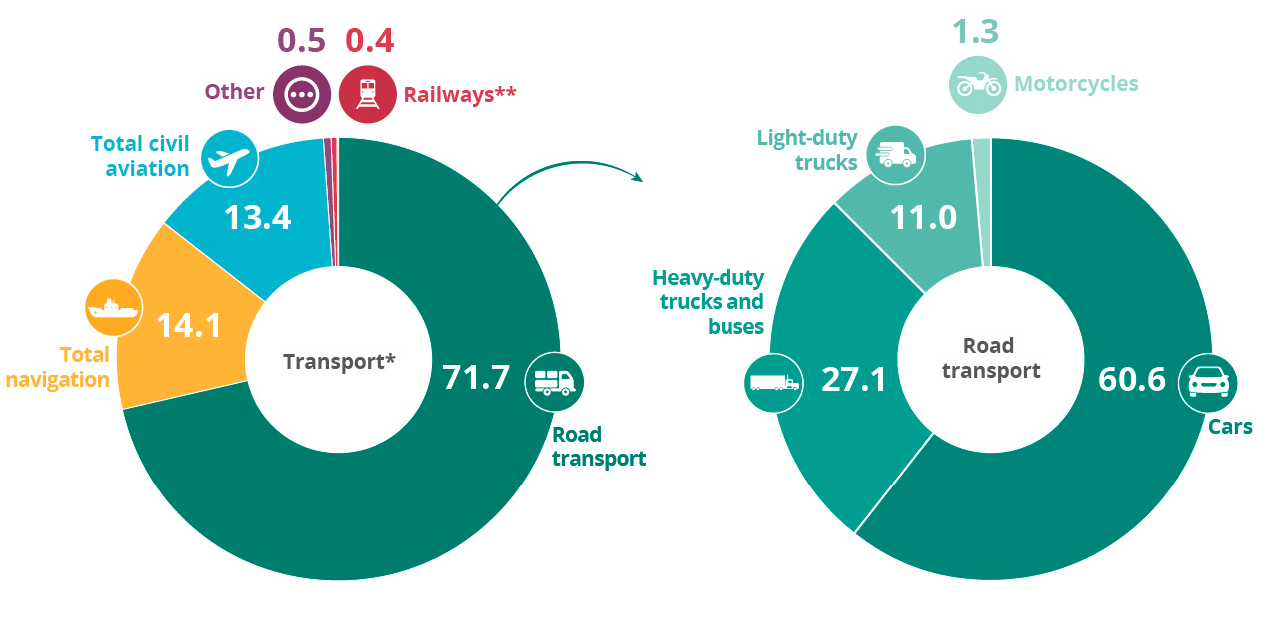
Figure 1: Greenhouse gas emissions from transport in the EU. Reproduced from [8] European Environment Agency (2022), licensed under CC-BY.
The unstable flow around a car body is the primary cause of aerodynamic drag, however, due to the flow around the car body presents instability characteristics, and this can lead to the generation of aerodynamic drag during vehicle operation is a critical factor affecting energy consumption [9,10]. Its magnitude is proportional to the square of the vehicle speed, which means that the energy required to overcome drag increases dramatically at higher speeds. Research indicates that a 10% reduction in a vehicle’s aerodynamic drag coefficient can lead to a notable 3% improvement in the driving range of electric vehicles (EVs). More strikingly, under typical highway cruising conditions at 100 km/h, aerodynamic drag accounts for approximately 13% of total energy consumption in internal combustion engine vehicles (ICEVs), while for EVs, this proportion soars to a remarkable 59% [11,12,13,14]. This underscores that reducing aerodynamic drag provides significantly greater benefits in extending EV range compared to improving fuel economy in conventional vehicles. Therefore, conducting in-depth research on low-drag vehicle technologies and innovating design methodologies carries profound strategic significance [15,16,17,18,19]. The industry’s shift from the new European driving cycle (NEDC) to the worldwide harmonized light vehicles test procedure (WLTP), adopted by China, the U.S., Japan, and other countries, demonstrates growing recognition of aerodynamics’ impact on real-world performance. The WLTP’s increased high-speed conditions better reflect actual drag effects. Automotive aerodynamics has thus become crucial. Investigating component-level drag and advancing optimization methods are now core approaches for improving vehicle efficiency. This is vital for both traditional and EVs and represents a key solution for sustainable development and ecological progress.
Current research on automotive aerodynamic drag reduction primarily focuses on optimizing components such as body spoilers, underbody attachments, and side mirrors. However, further exploration of drag reduction potential faces significant bottlenecks. For instance, extreme aerodynamic shaping may compromise ride comfort. Particularly critical is the aerodynamic challenge posed by wheels: when airflow passes over exposed wheels, geometric obstructions trigger flow stagnation, separation, and jet phenomena [20,21,22]. The flow stagnation occurs when the incoming airflow encounters the frontal section of the wheel (the windward surfaces of the tire and rim). The abrupt geometric obstruction causes a sharp decrease in flow velocity, forming a stagnation zone and resulting in flow stagnation. The flow separation occurs when the airflow moves along the tire surface and rim edges. Under the influence of an adverse pressure gradient (pressure increasing along the flow direction), the boundary layer gradually thickens and detaches from the solid surface, forming separated flow. The flow jet refers to a high-speed, concentrated stream of airflow formed due to pressure differentials or velocity variations under specific geometric constraints. Combined with unsteady energy injection from wheel rotation, this creates highly turbulent flow structures and substantial energy losses in the wheel region. Empirical studies confirm that wheel aerodynamic drag can account for up to 30% of total vehicle drag [23,24]. Tesla achieved a 10% improvement in overall energy efficiency and 3% extended range through targeted aerodynamic wheel optimizations. Further revelations from German FKFS wind tunnel testing demonstrate that variations in tire tread patterns can alter surrounding flow fields, causing up to the fluctuation in total vehicle drag [25]. It illustrates the aerodynamic drag distribution of two types of tread pattern tires. Notably, wheels exhibit distinct aerodynamic characteristics independent of the vehicle body [26]. Moreover, wheel-region flow dynamics directly impact: Aerodynamic lift generation, brake system performance, and Hub motor thermal management [27,28,29,30]. Therefore, achieving effective wheel drag reduction necessitates precise analysis of airflow patterns and three-dimensional flow structures, it is a fundamental prerequisite for enhancing overall vehicle aerodynamics.
The aerodynamic drag generated by the wheels is not only related to the flow field characteristics around the wheel region, but also directly associated with the tire and rim design. This paper reviews the domestic and international research status primarily from four aspects: Flow instability in the wheel region (Section 2), aerodynamic characteristics of the rim (Section 3), aerodynamic characteristics of the tire (Section 4), and drag reduction methods through flow control in the wheel area (Section 5).
2 Flow Instability in the Wheel Region
Drag reduction remains a critical objective for ground vehicles, largely due to the indirect effects induced by wheels [31,32,33], and there is a noticeable unstable flow around the front wheel, as shown in Fig. 2, and this will impact overall aerodynamic performance by altering the surrounding flow field [34,35,36]. To improve simulation accuracy, Diasinos et al. [37] investigated the effects of common modeling assumptions on the flow field. These included geometric fidelity in hub regions, ground representation, contact patch modeling, and the influence of rotation on separation. Zhou et al. [38] constructed a full-vehicle model with integrated wheels based on the Ahmed body. By conducting side-wind tunnel tests under multiple yaw angle conditions, they investigated the evolution of vehicle aerodynamic characteristics and validated numerical simulation accuracy. Their numerical methods accurately reproduced key flow features around the isolated wheel, such as arch-shaped vortices in the tire wake, flow separation, and ground-tire jetting. Collectively, these studies provide a solid foundation for further research on wheel aerodynamics. Rotating wheels and their surrounding flow fields significantly influence the vehicle’s overall flow field and aerodynamic performance, as evidenced by the differences in wake flow fields around the car body with and without wheels [39]. Consequently, research on wheel aerodynamics’ impact on vehicle aerodynamics should prioritize wheel-vehicle interactions.
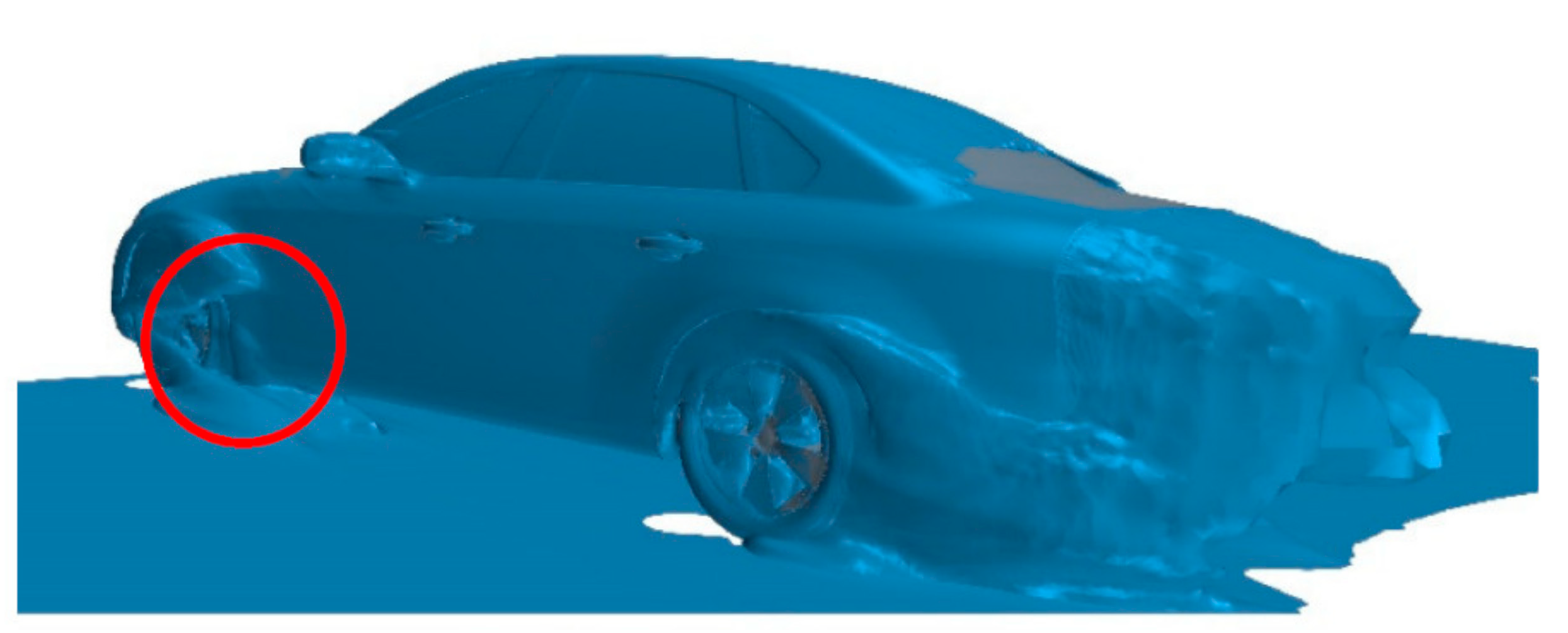
Figure 2: Iso-surface of CTP = 0 [32].
Due to the ground clearance of the vehicle body, the tire outer contour significantly affects the airflow around the wheel. Additionally, the flow disturbances which are caused by components such as the fender and the open structure of the rim, lead to various flow separation and vortex phenomena in the vehicle body and wheel region [40,41]. As a result, the aerodynamic drag generated in the wheel region accounts for 25%–30% of the total vehicle drag, the results show that the flow fields around the different wheels. The front wheel generates stronger pillar vortices due to its higher relative rotational speed, while the rear wheel typically exhibits weaker vorticity as it rotates more closely in sync with the vehicle’s forward speed. It reveals the vortex phenomena induced by airflow disturbance, which comprise: the counter-rotating vortex pair generated at the tire shoulder, the shear vortex formed at the wheel rim opening, and the wake vortex behind the wheel. Johnson et al. [42] conducted a quantitative analysis of tire and rim effects on wheel aerodynamic drag using a quarter-car model. Their study revealed that the tire sidewall and shoulder influence aerodynamic drag in the wheel region. This occurs as they alter the flow field characteristics around the contact patch. Huminic et al. [43] investigated the effects of wheels and underbody diffusers on aerodynamic drag. Their findings indicate that increasing the diffuser angle amplifies vortex formation in the wheel wake region. It subsequently modifies the rear wake structure and ultimately leads to increased aerodynamic drag. The tread pattern exerts a shearing effect on the flow field around rotating wheels. Due to irregular deformation of tread patterns, numerical simulation of rotating wheels often encounters convergence difficulties. To address this challenge, Wang et al. [44] employed a multiple reference frame (MRF) approach combined with surface roughness treatment for longitudinal groove tires. Their method successfully achieved consistency with measured aerodynamic drag data for complex tread pattern tires. However, determining the appropriate surface roughness value required multiple iterative attempts. Yang et al. [45] conducted a study using smooth tires as the research subject, employing the MRF method. Their research demonstrated that varying wheel ventilation ratios significantly influence low-speed turbulent flow within the wheel cavity, consequently altering the wheel wake and ultimately affecting the vehicle’s drag coefficient. Wang et al. [46] systematically analyzed the influence of wheels on vehicle flow field characteristics. Their findings highlight that the front wheel region exhibits the most significant impact on the overall vehicle flow field. Bastian et al. [47] demonstrated through wind tunnel testing that tread pattern configurations significantly influence flow separation along the tire sidewall and the vortex structures in the vehicle wake. Consequently, Cho et al. [48] investigated the aerodynamic characteristics of wheel layouts, specifically dual and tandem axle configurations. Their results revealed that drag increases with axle spread. As the spread widens, the rear wheels move out of the front wheel’s slipstream, causing a sharp drag increase, while the front wheels’ drag remains constant across all spreads. Yu et al. [49] systematically investigated the aerodynamic effects of wheel width variations. Their study quantifies that a 5% reduction in wheel width yields a corresponding 2% decrease in total vehicle drag coefficient. An increase in offset distance reduced drag by approximately 4.30%, whereas increased axle spread increased drag by 4.62%. To improve the airflow characteristics around wheel and reduce aerodynamic drag, some measures of decreasing the wheel opening area are used to suppress flow separation and improve the flow uniformity, but how does the wheel opening area influence the vehicle lateral stability? Focus on this topic, Yi et al. [50] using the wind tunnel test to study the effects of the tire width, automatic grille shutter and the front wheel deflectors on drag coefficient, and the results are useful tools for investigating wheel regional aerodynamic in vehicle design. Josefsson et al. [51] investigates the effect of altering the tyre profile in the transition region between the tyre and the rim by adding a so-called rim protector, and the results show that the rim protector can influence the flow around the front and side of the wheel, and this will change the wake pressure acted on the rear of vehicle. The drag increase with the wide rim protector was explained by larger outer contact patch and rim vortices at the front wheel. The front wheel wake was also larger and more outwash dominated, reducing the shielding of the rear wheel. To have a clearer understanding of the flow characteristics around wheels and inside wheel houses, Semeraro et al. [52] studied the effect of tire deformation and vehicle ride height on the aerodynamics of passenger cars using CFD simulations, and pointed out that tire deformation consistently has a bigger effect on drag than vehicle ride height changes, and even small tire deformation levels can significantly affect the aerodynamic drag, however, the front wheels typically have a larger share of the total drag, but are less sensitive both to ride height changes and increasing deformation levels. Besides, when the outside flow passes through the wheel region, the vehicle fender is the first contacting component, after then, the airflow moves into the wheelhouse and contact with the rim, therefore, the shape of the vehicle fender has also influenced the aerodynamic drag of the passenger car [53,54]. Zhou et al. [55] conducted the works on the aerodynamic shape optimization of car fender using the FFD method and adaptive simulated annealing (ASA) algorithm; in comparison with the original design, the optimized fender can reduce flow separation and decrease the flow impact, the flow stability has been effectively improved.
To clarify the summary of studies on wheel-region flow instability, it is summarized and presented in Table 1.
Table 1: Summary of studies on wheel-region flow instability.
| ID | Research | Findings |
|---|---|---|
| Zhou et al. [38] | Study aerodynamics under crosswinds and validate simulation accuracy. | Simulations accurately captured key wheel flow features like wake vortices and ground jetting. |
| Johnson et al. [42] | Quantitatively analyze tire and rim effects on wheel drag. | The tire sidewall and shoulder influence drag by altering the flow field around the contact patch. |
| Huminic et al. [43] | Investigate effects of wheels and underbody diffusers on drag. | A larger diffuser angle amplifies vortex formation in the wheel wake, modifying the rear wake and increasing drag. |
| Wang et al. [44] | Address convergence in simulating rotating wheels with tread patterns. | An MRF method with surface roughness treatment achieved consistency with measured drag data for complex treads. |
| Yang et al. [45] | Study the effect of wheel ventilation ratio using smooth tires and MRF. | Ventilation ratio significantly influences low-speed flow in the wheel cavity, altering the wake and affecting vehicle drag. |
| Wang et al. [46] | Systematically analyze the influence of wheels on the vehicle flow field. | The front wheel region has the most significant impact on the overall vehicle flow field. |
| Bastian et al. [47] | Investigate the influence of tread pattern configurations. | Tread pattern configurations significantly influence flow separation along the sidewall and vortex structures in the wake. |
| Cho et al. [48] | Investigate aerodynamic characteristics of dual and tandem axle layouts. | Drag increases with axle spread; rear wheels move out of the front’s slipstream, causing a sharp drag increase. |
| Yu et al. [49] | Systematically investigate the aerodynamic effects of wheel width variations. | A 5% reduction in wheel width yielded a 2% decrease in total vehicle drag. Increased offset reduced drag by approximately 4.3%; increased axle spread increased drag by 4.62%. |
| Yi et al. [50] | Effects of tire width, active grille shutter & front wheel deflectors on drag coefficient. | Provides practical methods/tools for wheel-region aerodynamic design. |
| Josefsson et al. [51] | Effect of adding a rim protector on the tire-rim transition profile. | Alters front-wheel flow, increases drag, and reduces rear-wheel shielding. |
| Semeraro et al. [52] | Effect of tire deformation & vehicle ride height on car aerodynamics. | Tire deformation affects drag more than ride height; front wheels are less sensitive. |
| Zhou et al. [55] | Aerodynamic shape optimization of fender using FFD & adaptive simulated annealing. | Optimized shape reduces flow separation and improves stability. |
3 Aerodynamic Characteristics of the Rim
The aerodynamic shear effect generated by rotating wheel spokes represents the primary mechanism responsible for flow disturbance and vortex formation in the wheel wake region [56,57,58,59]. Gleason et al. [60] and Lounsberry et al. [61] demonstrated that wheel spoke configurations significantly affect flow separation characteristics and wake field patterns in the wheel region. Their research revealed that these aerodynamic modifications alter the tire-edge vortex system, consequently influencing the wheel’s overall drag coefficient. From a fundamental fluid dynamics perspective, vortices serve as the “tendons” governing fluid motion. The formation of coherent vortex structures inherently involves substantial energy dissipation. Therefore, effective vortex control strategies present a crucial pathway for enhancing aerodynamic efficiency in wheel design. To mitigate fluid vortices in the wheel region, two effective aerodynamic treatments were implemented. One is complete wheel housing enclosure and the other is fully enclosed spoke designs. These solutions effectively suppress flow separation, reduce wheel aerodynamic drag, and consequently improve overall vehicle aerodynamic performance [62]. However, the wheel enclosure approach not only adversely affects brake system cooling performance but also compromises vehicle crosswind stability. To address these challenges, Brandt et al. [63] established a linear correlation between wheel spoke porosity ratio and the vehicle’s overall drag coefficient. Guzman et al. [64] demonstrated that, for equivalent coverage areas, aerodynamic drag reduction proves more effective when implementing rim-edge enclosures compared to central wheel coverage. Based on this concept, the BMW iX3 is equipped with low-drag wheels, which reduces the overall vehicle drag by 5%, lowers power consumption by 2%, and increases the range by 10 km. Zhou et al. [65,66] conducted a comparative analysis of the impact of different spoke opening ratios on the aerodynamic drag coefficient, and explained the mechanism of aerodynamic drag changes from aspects such as the distribution of the vehicle body boundary layer, the velocity distribution in the wheel area, and the distribution of tail streamlines, and also using optimization method improve wheel rim design to improve the aerodynamics of an Ahmed body. Hirose et al. [67] and Bhardwaj et al. [68] analyzed the impact of structural parameters such as rim geometry, opening ratio, and number of openings on the flow field in the wheel region. Su et al. [69] explored the mechanism by which spoke offset distance and different curvatures affect automotive aerodynamic drag. Landström et al. [70] demonstrated that aerodynamically optimized spoke contours with smooth transitional geometries can effectively mitigate the shear-induced jet vortex formation in the wheel wake region. This design approach results in a measurable reduction of wheel aerodynamic drag, thereby enhancing overall vehicle aerodynamic performance. Link et al. [71] proposed that fan-shaped spoke designs could accelerate airflow around the wheel region, thereby reducing energy dissipation and decreasing aerodynamic drag. However, Bolzon et al. [72] counter this finding, demonstrating through experimental validation that fan-type spokes actually increase wheel drag under both static and rotating conditions. This apparent contradiction highlights the nuanced aerodynamic impact of wheel design, which is highly sensitive to specific test conditions and geometric parameters. The discrepancy may stem from several key factors: (1) Speed regime: The beneficial flow-accelerating effect noted by Link et al [71]. may dominate only within a specific speed range, beyond which flow separation induced by the spokes becomes detrimental. (2) Rim geometry integration: The interaction between the spoke profile and the specific rim’s inner and outer contours can drastically alter the local flow field, turning a potentially beneficial design into a flow disruptor. (3) Tread pattern interaction: The compounded effect of tread grooves and rotating spokes creates a complex unsteady flow; the net drag outcome likely depends on the specific phase relationship between these features. (4) Reynolds number effects: The aerodynamic performance of intricate spoke shapes is known to exhibit strong Reynolds number dependency, meaning results from scaled experiments or different operational speeds may not directly translate. This analysis underscores that a universally optimal wheel design does not exist; rather, aerodynamic performance must be evaluated within the complete system context, including its operating envelope.
The aerodynamic influence of wheels on a vehicle is systemic rather than isolated. As demonstrated in the above, wheel wakes significantly alter the overall wake structure of the vehicle, primarily through three coupled mechanisms: First, the vortical structures and momentum deficit generated by the wheels interact with the vehicle’s boundary layer and its own wake, creating a synergistic effect that may either amplify or counteract the total pressure drag. Second, rotating wheels and their cavity structures modify the flow velocity and pressure gradient in the underbody region, directly affecting the development of the trailing wake and underbody drag. Finally, the unsteady wakes from the rear wheels, in particular, are entrained into the vehicle’s base area, impeding pressure recovery and contributing significantly to the low-pressure zone at the base. Thus, wheel drag acts as a key modulator of the vehicle’s aerodynamic system, exerting its influence through complex interactions with the body, underbody, and base flows. This makes wheel design an indispensable aspect of achieving holistic aerodynamic optimization.
To clarify the mentioned research of aerodynamic characteristics of the rim, it is summarized and presented in Table 2.
Table 2: The mentioned research of aerodynamic characteristics of the rim.
| ID | Research | Findings |
|---|---|---|
| Gleason et al. [60] & Lounsberry et al. [61] | Investigate the effect of wheel spoke configurations. | Spoke designs significantly affect flow separation and wake patterns, altering the tire-edge vortex system and the wheel’s drag coefficient. |
| Brandt et al. [63] | Establish a relationship between spoke porosity and drag. | A linear correlation exists between wheel spoke porosity ratio and the vehicle’s overall drag coefficient. |
| Guzman et al. [64] | Compare effectiveness of rim-edge vs. central wheel enclosures. | For equal coverage, rim-edge enclosures are more effective at reducing aerodynamic drag than central coverage. |
| Zhou et al. [65] | Analyze impact of spoke opening ratio on drag. | Explained the drag change mechanism via body boundary layer distribution, wheel area velocity, and tail streamline distribution. |
| Hirose et al. [67] & Bhardwaj et al. [68] | Analyze impact of rim geometry, opening ratio, and number of openings. | Studied how these structural parameters affect the flow field in the wheel region. |
| Su et al. [69] | Explore how spoke offset and curvature affect drag. | Investigated the mechanism by which spoke offset distance and different curvatures influence aerodynamic drag. |
| Landström et al. [70] | Demonstrate the effect of aerodynamically optimized spokes. | Spokes with smooth transitional geometries mitigate shear-induced jet vortex formation, reducing wheel drag. |
| Link et al. [71] | Propose fan-shaped spoke design. | Suggested that fan-shaped spokes accelerate airflow around the wheel, reducing energy dissipation and drag. |
| Bolzon et al. [72] | Experimentally validate the effect of fan-type spokes. | showing fan-type spokes increase wheel drag in both static and rotating conditions. |
4 Aerodynamic Characteristics of Tires
Due to the time-consuming and resource-intensive nature of wind tunnel testing, as well as its limited ability to capture fine-scale flow features, numerical modeling methods have gained increasing popularity, driven by advances in computing power and computational fluid dynamics (CFD). Lew et al. [73] used an embedded boundary method to analyze the flow field around rotating tires, revealing that tread patterns account for approximately 20% of the wheel’s aerodynamic drag. They also demonstrated that deformation of a loaded tire significantly alters the vortex structures in the wheel region. Wittmeier et al. [74] investigated the impact of shoulder contour design on the aerodynamic characteristics of tires, and found that variations in shoulder curvatures lead to significant changes in the vehicle’s drag coefficient. Blacha et al. [75] performed wind tunnel tests on an Audi Q5 and reported that a smoothly contoured sidewall reduces flow separation, thereby lowering the overall aerodynamic drag coefficient of the vehicle. Hobeika et al. [76] proposed that lateral tread patterns on the tire enhance shear forces in the airflow, which intensifies vortex formation and increases aerodynamic drag on the wheel. Zhou et al. [77] conducted wind tunnel tests on three treaded tires to examine their surface pressure distributions. They compared the effects of different turbulence models on the flow field and further analyzed how tread geometry influences the vortex structures around the tires. Lee et al. [78] used numerical simulations to investigate the effects of tire width, shoulder curvature, and other parameters on the vehicle’s aerodynamic drag coefficient. They found that different design parameters could either increase or decrease the drag coefficient. Rajaratnam et al. [79] investigated the aerodynamic effects of closed-spoke rotating wheels on the Ahmed body model. Their results indicated that, compared to the stationary case, wheel rotation induced flow disturbances around and beneath the body, leading to increased drag, as shown in Fig. 3. Chen et al. [80] investigated the influence of tire shoulder radius and Reynolds number on the aerodynamics of an isolated rotating wheel in contact with a moving ground. Four shoulder radii and six Reynolds numbers were examined. The results demonstrated that increasing the shoulder radius significantly reduced both drag and lift, notably due to improved flow attachment and a consequent reduction in wake size. Furthermore, larger shoulder radii delayed the formation of the upper counter-rotating vortex pair and weakened the strength of the “jetting” flow ahead of the contact patch.
Kuraishi et al. [81,82] put forward a new simulation method, which have enabled high-fidelity computational analysis of tire aerodynamics with near-actual tire geometry, road contact, tire deformation, and aerodynamic influence of the car body, and the flow field around the complex tread grooves is analyzed, and it is found that the discontinuous pattern grooves can results in flow separation in the contact zone and the vortex shedding around the tire sidewall. Burgbacher et al. [83] using the real vehicle conduct the effects of tire geometry and deformation on the flow features, and pointed out that to generate the most accurate flow predictions possible using CFD, the tire geometry and tire deformation should be mapped as best as possible in CFD. Rath et al. [84] studies the impact that specific tire attributes have on the overall aerodynamic drag on the vehicle through a systematic sensitivity study, and the drag contribution of different parameters of the tire is presented, and the sensitivity analysis of the tire–vehicle assembly model performed gives a better insight into the modeling and simulation for vehicle aerodynamic research for future tire model optimization. Zhou et al. [85] studied the effects of the three types of tread pattern on the tire aerodynamics using wind tunnel test and simulation, and with the help of the difference of flow field among these three patterns, the results shows that the angle of tire lateral groove has great effect on the flow field characteristics. The effects of the two rim configurations and three tyres on the flow around a full-scale crossover SUV were studied using wind tunnel test by Josefsson et al. [86], and the results show that the main features of the flow were identified for three sets of tyres with distinct shoulder profiles and sidewall geometry, and a tire combining the narrow sidewall with a narrow tread can help improve flow stability and reduce drag.
Electric vehicle is one of the mainstream trends in the automotive industry’s development, and without the ICE fuel consumption, the aerodynamic drag is one of the most important factors for the range of EVs, thus the aerodynamic features about the electric vehicles became a hot spot in the aerodynamic configuration design of vehicles [87,88,89,90]. Chao et al. [91] using the test and simulation methods to study the influence of four different production tires combined with two rim designs on the vehicle’s aerodynamic performance based on an electric SUV, and the results show that the difference in drag coefficient between tires reaches up to 0.015.
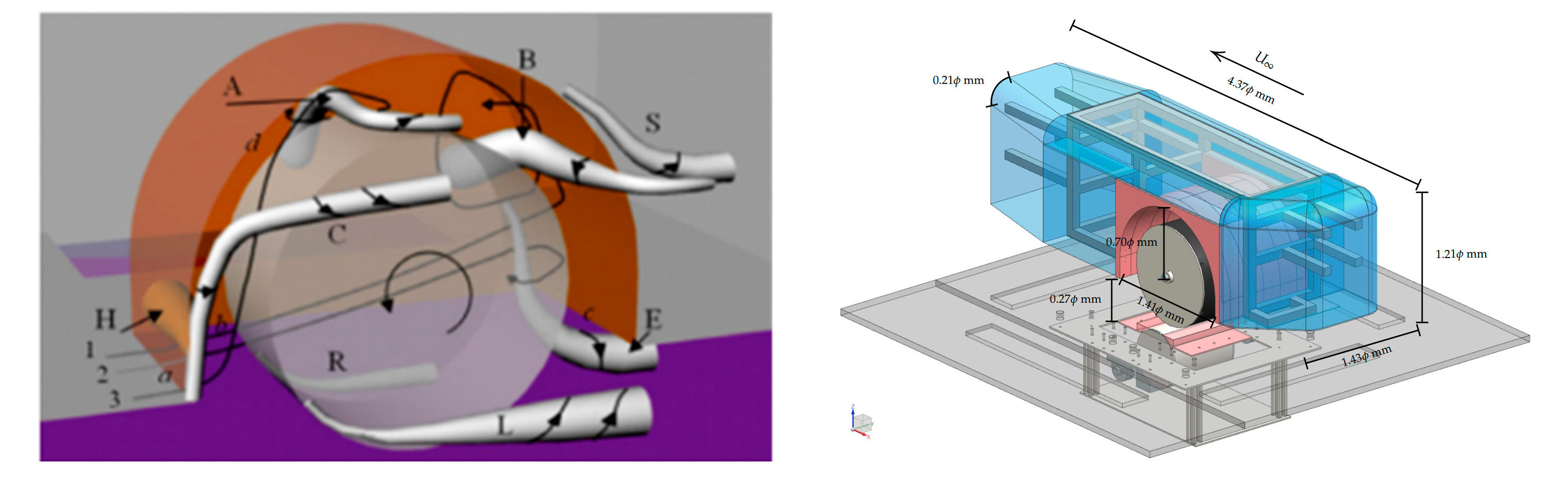
Figure 3: Simplified vortex structure around the wheel [79].
To clarify the mentioned research of aerodynamic characteristics of the tires, it is summarized and presented in Table 3.
Table 3: The mentioned research of aerodynamic characteristics of the tires.
| ID | Research | Findings |
|---|---|---|
| Lew et al. [73] | Analyze flow around rotating tires. | Tread patterns cause proximately 20% of wheel drag; Load-induced deformation significantly alters wheel vortex structures. |
| Wittmeiert et al. [74] | Investigate tire shoulder contour design. | Variations in shoulder curvature significantly change the vehicle’s drag coefficient. |
| Blacha et al. [75] | Wind tunnel tests on an Audi Q5. | A contoured sidewall reduces flow separation, lowering overall vehicle drag. |
| Hobeika et al. [76] | Investigate the influence of lateral tread patterns. | Lateral tread grooves enhance shear, intensifying vortices and increasing wheel drag. |
| Zhou et al. [77] | Study pressure distribution on treaded tires. | Compared turbulence models; analyzed how tread geometry influences tire vortex structures. |
| Lee et al. [78] | Study effects of tire width & shoulder curvature. | Different design parameters can either increase or decrease the drag coefficient. |
| Rajaratnam et al. [79] | Study aerodynamic effects of rotating wheels on an Ahmed body. | Rotation induces flow disturbances around and under the body, increasing drag. |
| Chen et al. [80] | Investigate shoulder radius & Reynolds number effects on an isolated wheel. | Larger shoulder radius reduced drag by improving flow attachment and reducing wake size. |
| Kuraishi et al. [81,82] | Effect of different tread patterns (including rain grooves) and rim designs on aerodynamics. | Rain grooves typically reduce drag; the effect of lateral grooves depends on the rim configuration. |
| Burgbacher et al. [83] | Influence of tire geometry and deformation on flow features | For accurate CFD predictions, tire geometry and deformation should be mapped as precisely as possible. |
| Rath et al. [84] | Sensitivity analysis of tire attributes on overall vehicle aerodynamic drag. | Quantified the drag contribution of different tire parameters, providing insights for future tire model optimization. |
| Zhou et al. [85] | Effect of three tread patterns on tire aerodynamics. | The angle of the lateral grooves has a significant effect on the flow field characteristics. |
| Josefsson et al. [86] | Effect of two rims and three tires on the flow around a full-scale SUV. | A tire combining a narrow sidewall with a narrow tread improves flow stability and reduces drag. |
| Chao et al. [91] | Effect of four production tires and two rims on the aerodynamics of an electric SUV. | The maximum difference in drag coefficient between tires reached 0.015. |
5 Drag Reduction Strategies in the Wheel Region
Fang et al. [92] reported that enclosing the wheel structure can reduce the aerodynamic drag coefficient of a single wheel by up to 5 counts. Fu et al. [93] explored the effects of spoke perforation ratio and arrangement on the aerodynamic performance of both the wheel and the vehicle. They found that, under a constant perforation ratio, increasing the number of perforations contributes to improved aerodynamic characteristics. Gu et al. [94] varied both the number and ratio of spoke perforations and found that, when the area of each hole remains constant, increasing the number of perforations initially increases, then decreases, the drag coefficients of the front wheel and the entire vehicle.
Flow separation along the outer contour of the wheel alters the surrounding flow structures and wake dynamics, thereby affecting the aerodynamic characteristics of both the wheel and the entire vehicle. Xu et al. [95] investigated the influence of wheel width on the surrounding flow field and found that increasing wheel width leads to a corresponding increase in the aerodynamic drag coefficient. Yang et al. [96] conducted a comprehensive analysis of the flow field around isolated wheels of varying widths. The results show that a 5% reduction in wheel width yields an approximately 9.2% decrease in aerodynamic drag. Zhang et al. [97] achieved a 14.5% reduction in the wheel’s aerodynamic drag coefficient by optimizing the design parameters of the outer wheel contour. Rohit [98] proposed an innovative wheel design featuring a fan and partial enclosure. Numerical analysis showed that channeling airflow through the spokes toward the brake disc not only improves aerodynamic performance but also enhances brake cooling efficiency. Moreover, the improvement of overall vehicle aerodynamics through optimization of wheel and rim aerodynamic features has gained increasing recognition and attention within the automotive industry. The drag reduction mechanism of bionic non-smooth surfaces has inspired its application in the aerodynamic configuration design of vehicles [99,100], Huang et al. [101] studied the effects of bionic groove structures applied to wheel spokes on the aerodynamics of a car model, and three types of designed grooves are presented, and the forward grooves exhibited the strongest drag reduction effect, and the positive correlation between the flow stability of the wheel region and the aerodynamic drag coefficient of the entire vehicle was put forward.
To clarify the mentioned research of drag reduction strategies in the wheel region, it is summarized and presented in Table 4.
Table 4: The mentioned research of drag reduction strategies in the wheel region.
| ID | Research | Findings |
|---|---|---|
| Fang et al. [92] | Investigate drag reduction through wheel enclosure. | Enclosing the wheel structure can reduce the aerodynamic drag coefficient of a single wheel. |
| Fu et al. [93] | Explore effects of spoke perforation ratio and arrangement. | Under a constant perforation ratio, increasing the number of perforations improves aerodynamic performance. |
| Gu et al. [94] | Study the effect of number and ratio of spoke perforations. | With constant hole area, increasing the number of perforations first increases then decreases drag coefficients. |
| Xu et al. [95] | Investigate influence of wheel width on surrounding flow field. | Increasing wheel width leads to an increase in the aerodynamic drag coefficient. |
| Yang et al. [96] | Analyze flow field around isolated wheels of varying widths. | A 5% reduction in wheel width yields an approximately 9.2% decrease in aerodynamic drag. |
| Zhang et al. [97] | Optimize design parameters of the outer wheel contour. | Achieved a 14.5% reduction in the wheel’s aerodynamic drag coefficient through contour optimization. |
| Rohit et al. [98] | Propose an innovative wheel design with fan and partial enclosure. | Channeling airflow through spokes improves aerodynamic performance and enhances brake cooling efficiency. |
| Huang et al. [101] | Effects of bionic groove in wheel spokes on the Aerodynamics of a Car Model. | The bionic groove parameters including number, angle and depth influence the drag, and the drag relationship between wheel and whole car is also provided. |
The framework of established in Fig. 4 provides a foundation for clarifying the complex relationships within this field. However, this framework also reveals several critical questions that require in-depth exploration, which constitute the main directions for future research.
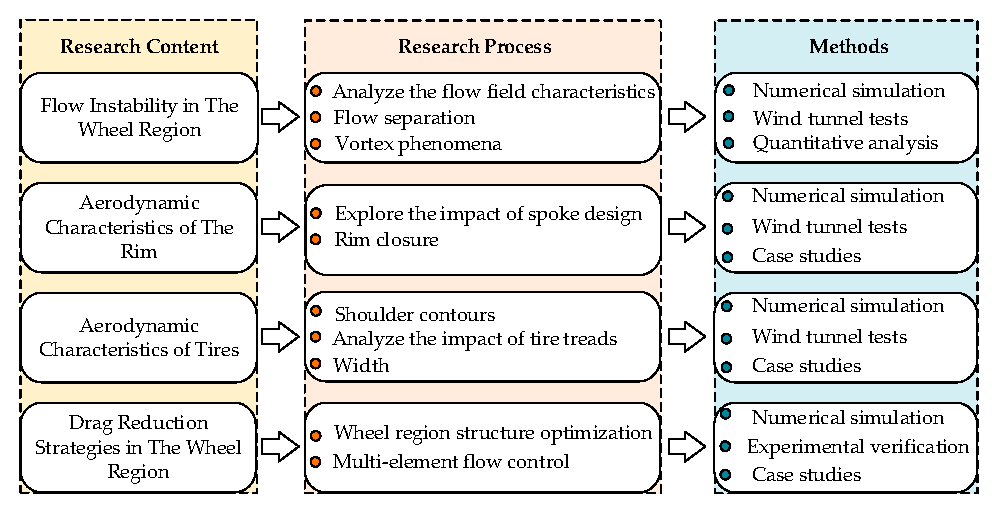
Figure 4: The framework of primary research.
Aerodynamic noise is also one of the key indicators for evaluating vehicle comfort. Existing research has primarily focused on the flow drag around the rotating wheel region. However, flow instabilities can also lead to the generation of aerodynamic noise, which has a direct impact on the vehicle’s NVH (noise, vibration, and harshness) performance. Future studies could therefore focus on optimizing the configuration of related components and developing flow control methods for the wheel region that take both aerodynamic noise and drag into account. This integrated approach would maximize the goal of automotive drag reduction.
The aerodynamic design of tires and rims in the wheel area directly affects the volume and pattern of airflow entering the wheel cavity, which in turn influences the cooling performance of the brake discs. Therefore, researching the influence mechanisms of different design elements (e.g., tires, rims) on the flow disturbances and temperature distribution within the wheel cavity is crucial. Building on this understanding to develop strategies that use flow control to simultaneously achieve drag reduction and cooling in the wheel region can provide theoretical and methodological guidance for innovation in automotive aerodynamic design.
While this review focuses on aerodynamic mechanisms and drag-reduction strategies, translating these findings into viable vehicle components requires moving beyond isolated performance metrics. Therefore, future research must proactively integrate practical engineering constraints into the design optimization cycle. Key efforts should be directed toward conducting systematic trade-off analyses that balance aerodynamic gains against factors such as manufacturability, material limitations, and structural strength under dynamic loads. Specifically, future research could focus on the synergistic optimization of tires, rims, and fenders as an integrated aerodynamic assembly. This includes developing AI-driven topology optimization frameworks to generate novel wheel architectures centered on efficiency, as well as multi-objective design strategies that simultaneously address drag, NVH, and cooling requirements. Furthermore, the creation of open parametric geometry databases is essential to standardize CFD validation and accelerate community-wide benchmarking. These directions aim to bridge fundamental research with engineering implementation, fostering a more systematic and actionable approach to wheel-region drag reduction.
Current research and engineering practices in wheel-region aerodynamics remain reliant on isolated or simplified wheel models, which do not fully capture real-world conditions. Although tires are known to significantly affect aerodynamic resistance, the specific mechanisms by which their profiles alter local airflow are still not well understood. Further investigation is needed to clarify vortex formation, development, and corresponding flow control strategies in this region. Additionally, most current drag-reduction methods focus on modifying individual components rather than adopting an integrated approach that considers the combined aerodynamic effects of tires, rims, and fenders. The absence of such holistic research hinders the development of effective drag-reduction technologies for next-generation low-drag vehicles. The following critical issues demand resolution:
- (1)Rotating wheels not only affect the flow field in the wheel region but also influence the vehicle’s external flow field. However, current analyses of the aerodynamic characteristics of both the wheel region and the full vehicle primarily focus on flow field differences, using qualitative approaches to explain how flow variations impact aerodynamic drag. Quantitative evaluation methods for flow energy loss in the rotating wheel region remain undeveloped, hindering the effective guidance of aerodynamic drag reduction strategies based on understanding wheel-region flow patterns.
- (2)As components in direct contact with airflow, the aerodynamic profiles of tires and rims play critical roles in guiding and diverting airflow within the wheel region. While existing research has emphasized analyzing wheel structure effects on isolated wheels, the relationship between flow instabilities in rotating wheel regions and vehicle aerodynamic drag remains unclear. This limits innovation in low-drag wheel design and results in a lack of targeted aerodynamic drag reduction methods for tires or rims.
- (3)Current studies on flow field influences and control methods predominantly address single elements, such as air dams or grille shutters. However, these approaches are primarily investigated at the full-vehicle level and fail to systematically develop targeted drag reduction strategies for the aerodynamic profiles of individual components within the wheel region based on the flow characteristics of rotating wheels. Consequently, vehicle shape design faces certain bottlenecks. Therefore, addressing multi-element flow control with considering tires, wheels, body fenders, and other components can provide crucial support for innovation in low-drag vehicle design methods and technologies.
- (4)However, traditional numerical simulations and experimental methods face inherent limitations including high computational costs and constrained exploratory dimensions when addressing transient vortex evolution, quantitative energy loss assessment. There is an urgent need to introduce deep learning technology. This entails developing physics-informed intelligent surrogate models to achieve real-time flow feature extraction and precise energy dissipation quantification, while establishing a generative design-reinforcement learning co-optimization framework. Such integration will pioneer a data-driven, high-efficiency drag reduction approach, thereby providing systematic solutions for wheel-region aerodynamic mechanism research and low-drag vehicle design.
Acknowledgement:
Funding Statement: This research was funded by the National Natural Science Foundation of China, grant numbers 52072156, 52272366; and the Postdoctoral Foundation of China, grant number 2020M682269.
Author Contributions: The authors confirm contribution to the paper as follows: Conceptualization, Heming Xu and Haichao Zhou; software, Heming Xu and Wei Zhang; formal analysis, Heming Xu; investigation, Wenxuan He and Lin Bo; resources, Haichao Zhou and Wei Zhang; data curation, Wenxuan He and Lin Bo; writing—original draft preparation, Heming Xu and Haichao Zhou; writing—review and editing, Heming Xu; supervision, Wei Zhang; project administration, Haichao Zhou; funding acquisition, Haichao Zhou. All authors reviewed and approved the final version of the manuscript.
Availability of Data and Materials: Not applicable.
Ethics Approval: Not applicable.
Conflicts of Interest: The authors declare no conflicts of interest.
References
1. Ergashev D . CFD and experimental testing in vehicle aerodynamics. Int J Artif Intell. 2025; 1( 4): 801– 6. [Google Scholar]
2. Yu K , Lee S . Numerical study on the influence of cooling-fin geometry on the aero-thermal behavior of a rotating tire. Energies. 2025; 18( 12): 3133. doi:10.3390/en18123133. [Google Scholar] [CrossRef]
3. Karoliya NM . Aerodynamic load analysis on recreational vehicles: implications for safety, efficiency, and design optimization. J Eng Comput Sci. 2025; 4( 6): 97– 110. [Google Scholar]
4. Kheirkhah M , Roohi E , Pasandidehfard M . Improving the aerodynamics of a fastback car body using a spoiler. Sci Rep. 2025; 15( 1): 17756. doi:10.1038/s41598-025-02080-1. [Google Scholar] [CrossRef]
5. Liu Z , Xie X , Li X . A coupling optimisation strategy for improving flow stability and aerodynamic performances of turbocharger centrifugal compressors. Int J Automot Technol. 2025; 26( 3): 813– 27. doi:10.1007/s12239-024-00185-6. [Google Scholar] [CrossRef]
6. Puliti M , Galluzzi R , Tessari F , Amati N , Tonoli A . Energy efficient design of regenerative shock absorbers for automotive suspensions: a multi-objective optimization framework. Appl Energy. 2024; 358: 122542. doi:10.1016/j.apenergy.2023.122542. [Google Scholar] [CrossRef]
7. Ekman P . Important factors for accurate scale-resolving simulations of automotive aerodynamics. Linköping, Sweden: Linköping University Electronic Press; 2020. doi:10.3384/diss.diva-164926. [Google Scholar] [CrossRef]
8. European Environment Agency . Infographic: Greenhouse gas emissions from transport in the EU [Internet]. [cited 2026 Jan 1]. Available from: https://www.eea.europa.eu/en/analysis/publications/eea-signals-2022-staying-on-course-for-a-sustainable-europe/high-time-to-shift-gear-in-transport-sector/infographic-greenhouse-gas-emissions-from-transport-in-the-eu?activeTab=570bee2d-1316-48cf-adde-4b640f92119b. [Google Scholar]
9. Tran J , Fukami K , Inada K , Umehara D , Ono Y , Ogawa K , et al. Aerodynamics-guided machine learning for design optimization of electric vehicles. Commun Eng. 2024; 3( 1): 174. doi:10.1038/s44172-024-00322-0. [Google Scholar] [CrossRef]
10. Mukut ANMMI , Abedin MZ . Review on aerodynamic drag reduction of vehicles. Int J Eng Mater Manuf. 2019; 4( 1): 1– 14. doi:10.26776/ijemm.04.01.2019.01. [Google Scholar] [CrossRef]
11. Schell A , Cotoni V . Prediction of interior noise in a sedan due to exterior flow. SAE Int J Passeng Cars-Mech Syst. 2015; 8: 1090– 6. doi:10.4271/2015-01-2331. [Google Scholar] [CrossRef]
12. Kawamata H , Kuroda S , Tanaka S , Oshima M . Improvement of practical electric consumption by drag reducing under cross wind. Warrendale, PA, USA: SAE Technical Paper; 2016. Report No.: 2016-01-1626. doi:10.4271/2016-01-1626. [Google Scholar] [CrossRef]
13. Alam F , Watkins S , Jin Y , Hu X . Passenger car aerodynamic drag, thermal cooling: a perspective for energy saving and improving environment. Energies. 2025; 18( 24): 6433. doi:10.3390/en18246433. [Google Scholar] [CrossRef]
14. Hucho W , Sovran G . Aerodynamics of road vehicles. Annu Rev Fluid Mech. 1993; 25: 485– 537. doi:10.1146/annurev.fl.25.010193.002413. [Google Scholar] [CrossRef]
15. Deng Z , Zhao Y , Gao W , Yi Q , Wang B . Integrated stability control of active aerodynamics and active rear-wheel steering for high-speed vehicle. Proc Inst Mech Eng Part D J Automob Eng. 2025; 239( 9): 4214– 31. doi:10.1177/09544070241264850. [Google Scholar] [CrossRef]
16. Liao G , Xue M , Yue L , Yang H , Guo P , Hu X , et al. Passive drag reduction optimization for complex commercial vehicle models. J Appl Fluid Mech. 2025; 18: 1639– 51. doi:10.47176/jafm.18.6.2983. [Google Scholar] [CrossRef]
17. Fırat E . Aerodynamic drag improvements on a simplified heavy vehicle using three-sided plain and notched base flaps. J Appl Fluid Mech. 2023; 16: 1467– 82. doi:10.47176/jafm.16.07.1748. [Google Scholar] [CrossRef]
18. Anna Rejniak A , Gatto A . On the drag reduction of road vehicles with trailing edge-integrated lobed mixers. Proc Inst Mech Eng Part D J Automob Eng. 2022; 236( 7): 1515– 45. doi:10.1177/09544070211039697. [Google Scholar] [CrossRef]
19. Pirozzoli S , Orlandi P , Bernardini M . The fluid dynamics of rolling wheels at low Reynolds number. J Fluid Mech. 2012; 706: 496– 533. doi:10.1017/jfm.2012.273. [Google Scholar] [CrossRef]
20. Kuraishi T , Yamasaki S , Takizawa K , Tezduyar TE , Xu Z , Kaneko R . Space–time isogeometric analysis of car and tire aerodynamics with road contact and tire deformation and rotation. Comput Mech. 2022; 70( 1): 49– 72. doi:10.1007/s00466-022-02155-0. [Google Scholar] [CrossRef]
21. Zhou X , Liu X , Xu T , Hu X , Pan Y , Leng J . Numerical investigation and comparison of the aerodynamic characteristics of non-pneumatic tire and pneumatic tire. J Wind Eng Ind Aerodyn. 2024; 250: 105766. doi:10.1016/j.jweia.2024.105766. [Google Scholar] [CrossRef]
22. Lin MT , Papadopoulos P . Race car aerodynamics simulation and transmitted tire reaction forces. Int J Automot Eng. 2022; 13( 4): 169– 76. doi:10.20485/jsaeijae.13.4_169. [Google Scholar] [CrossRef]
23. Mercker E , Breuer N , Berneburg H , Emmelmann HJ . On the aerodynamic interference due to the rolling wheels of passenger cars. SAE Trans. 1991; 100: 460– 76. doi:10.4271/910311. [Google Scholar] [CrossRef]
24. Wickern G , Zwicker K , Pfadenhauer M . Rotating wheels—their impact on wind tunnel test techniques and on vehicle drag results. SAE Tech Pap Ser. 1997; 1: 970133. doi:10.4271/970133. [Google Scholar] [CrossRef]
25. Wittmeier F , Widdecke N , Wiedemann J , Lindener N , Armbruster R . Tyre development from an aerodynamic perspective. ATZ Worldw. 2013; 115( 2): 42– 8. doi:10.1007/s38311-013-0022-x. [Google Scholar] [CrossRef]
26. He J , Yang T , Chi Y , Zhang P . Impacts of tires on aerodynamic performance of a Formula Student electric vehicle: A high-resolution three-dimensional Reynolds-averaged Navier–Stokes study. AIP Adv. 2025; 15( 12): 125012. doi:10.1063/5.0301131. [Google Scholar] [CrossRef]
27. Tang P , Li H , Issaka Z , Chen C . Impact forces on the drive spoon of a large cannon irrigation sprinkler: simple theory, CFD numerical simulation and validation. Biosyst Eng. 2017; 159: 1– 9. doi:10.1016/j.biosystemseng.2017.04.005. [Google Scholar] [CrossRef]
28. Ji B , Huang J , Lu X , Wu Y , Liu J . An improved approach for reducing the dimensionality of wing aerodynamic optimization considering longitudinal stability. Aerospace. 2024; 11( 1): 80. doi:10.3390/aerospace11010080. [Google Scholar] [CrossRef]
29. Nakata A , Okamoto S , Morikawa Y , Nakashima T . Effects of detailed tire geometry and wheel rotation on the aerodynamic performance of deflectors. Int J Automot Eng. 2023; 14( 4): 84– 91. doi:10.20485/jsaeijae.14.4_84. [Google Scholar] [CrossRef]
30. Wang D , Zhang S , Zhang S , Wang Y . Analysis and multi-objective optimization design of wheel based on aerodynamic performance. Adv Mech Eng. 2019; 11( 5): 1687814019849733. doi:10.1177/1687814019849733. [Google Scholar] [CrossRef]
31. Zhang F , Wang W , Luo Q , Zhu Z , Zhang R , Tang L , et al. Aerodynamic development of the BYD SEAL–Part 1: potential optimization based on predecessor. Proc Inst Mech Eng Part D J Automob Eng. 2025; 239( 14): 7133– 46. doi:10.1177/09544070241309130. [Google Scholar] [CrossRef]
32. Wang W , Zhang F , Luo Q , Zhu Z , Zhang R , Liu H . Aerodynamic development of the BYD SEAL–part 2: overview. Proc Inst Mech Eng Part D J Automob Eng. 2025; 239( 10–11): 4881– 92. doi:10.1177/09544070241272911. [Google Scholar] [CrossRef]
33. Yu X , Jia Q , Yang Z . Comprehensive study of the aerodynamic influence of ground and wheel states on the notchback DrivAer. Energies. 2022; 15( 3): 1124. doi:10.3390/en15031124. [Google Scholar] [CrossRef]
34. Cerutti JJ , Cafiero G , Iuso G . Aerodynamic drag reduction by means of platooning configurations of light commercial vehicles: a flow field analysis. Int J Heat Fluid Flow. 2021; 90: 108823. doi:10.1016/j.ijheatfluidflow.2021.108823. [Google Scholar] [CrossRef]
35. Mariaprakasam RDR , Mat S , Samin PM , Othman N , Wahid MA , Said M . Review on flow controls for vehicles aerodynamic drag reduction. J Adv Res Fluid Mech Therm Sci. 2023; 101( 1): 11– 36. doi:10.37934/arfmts.101.1.1136. [Google Scholar] [CrossRef]
36. McManus J , Zhang X . A computational study of the flow around an isolated wheel in contact with the ground. J Fluids Eng. 2006; 128( 3): 520– 30. doi:10.1115/1.2175158. [Google Scholar] [CrossRef]
37. Diasinos S , Barber TJ , Doig G . The effects of simplifications on isolated wheel aerodynamics. J Wind Eng Ind Aerodyn. 2015; 146: 90– 101. doi:10.1016/j.jweia.2015.08.004. [Google Scholar] [CrossRef]
38. Zhou H , Huang T , Zhang W , Zhang Y , Li T . Aerodynamic and flow behaviors of Ahmed model mounted with wheel under crosswinds using the orthogonal test design. Phys Fluids. 2025; 37( 3): 034127. doi:10.1063/5.0255712. [Google Scholar] [CrossRef]
39. Bao D , Borée J , Sicot C , Roebroeck C . Salient features of wheel-vehicle aerodynamic interactions: consequences for drag. J Wind Eng Ind Aerodyn. 2023; 236: 105366. doi:10.1016/j.jweia.2023.105366. [Google Scholar] [CrossRef]
40. Wäschle A . The influence of rotating wheels on vehicle aerodynamics-numerical and experimental investigations. In: Proceedings of the SAE World Congress & Exhibition; 2007 Apr 16–19; Detroit, MI, USA. doi:10.4271/2007-01-0107. [Google Scholar] [CrossRef]
41. Nakamura Y , Nakashima T , Hiraoka T , Shimizu K , Nouzawa T , Doi Y , et al. Identification of the vortex around a vehicle by considering the pressure minimum. J Vis. 2020; 23( 5): 793– 804. doi:10.1007/s12650-020-00665-8. [Google Scholar] [CrossRef]
42. Johnson D . A qualitative and quantitative aerodynamic study of a rotating wheel inside a simplified vehicle body and wheel liner cavity. In: Proceedings of the WCX SAE World Congress Experience; 2019 Apr 9–11; Detroit, MI, USA. doi:10.4271/2019-01-0658. [Google Scholar] [CrossRef]
43. Huminic A , Huminic G . Aerodynamic study of a generic car model with wheels and underbody diffuser. Int J Automot Technol. 2017; 18( 3): 397– 404. doi:10.1007/s12239-017-0040-6. [Google Scholar] [CrossRef]
44. Wang FL , Yin ZS , Yan S , Zhan J , Friz H , Li B , et al. Validation of aerodynamic simulation and wind tunnel test of the new Buick Excelle GT. SAE Int J Passeng Cars-Mech Syst. 2017; 10: 195– 202. doi:10.4271/2017-01-1512. [Google Scholar] [CrossRef]
45. Yang ZG , Ren J , Xia C , Li YS . Active drag reduction of a square-back Ahmed body with wheels based on steady blowing. J Tongji Univ Nat Sci. 2021; 49( S1): 39– 47. (In Chinese). [Google Scholar]
46. Wang Y , Sicot C , Borée J , Grandemange M . Experimental study of wheel-vehicle aerodynamic interactions. J Wind Eng Ind Aerodyn. 2020; 198: 104062. doi:10.1016/j.jweia.2019.104062. [Google Scholar] [CrossRef]
47. Schnepf B , Schütz T , Indinger T . Further investigations on the flow around a rotating, isolated wheel with detailed tread pattern. SAE Int J Passeng Cars Mech Syst. 2015; 8( 1): 261– 74. doi:10.4271/2015-01-1554. [Google Scholar] [CrossRef]
48. Cho S , Lee S . Aerodynamic performance analysis on various wheel configurations of commercial vehicle. Microsyst Technol. 2025; 31( 5): 1147– 59. doi:10.1007/s00542-024-05669-0. [Google Scholar] [CrossRef]
49. Yu XY , Jia Q , Yang ZG . Effect of wheel housing filling ratio on aerodynamic characteristics of Sedan. J Tongji Univ Nat Sci. 2018; 46( 11): 1550– 5. (In Chinese). [Google Scholar]
50. Yi H , Zeng Y , Wan L , Huang S , Sun R , Huang T . Experimental and numerical investigation on wheel regional aerodynamics in an electric vehicle. J Phys Conf Ser. 2024; 2820: 012109. doi:10.1088/1742-6596/2820/1/012109. [Google Scholar] [CrossRef]
51. Josefsson E , Semeraro FF , Urquhart M , Sebben S . Investigation of tyre rim protectors on the aerodynamics of a passenger vehicle. Exp Fluids. 2024; 65( 5): 61. doi:10.1007/s00348-024-03805-0. [Google Scholar] [CrossRef]
52. Semeraro FF , Schito P . Numerical investigation of the influence of tire deformation and vehicle ride height on the aerodynamics of passenger cars. Fluids. 2022; 7( 2): 47. doi:10.3390/fluids7020047. [Google Scholar] [CrossRef]
53. Nishiwaki D , Uchiyama H . A study on unsteady aerodynamic characteristics acting on front fenders of motorcycles during steering motion. SAE Int J Adv Curr Pract Mobil. 2022; 5: 284– 91. doi:10.4271/2022-01-0897. [Google Scholar] [CrossRef]
54. Wang R . Study on aerodynamic optimisation of medium-duty trucks: drag control and fuel efficiency improvement. In: Proceedings of the 2025 2nd International Conference on Electrical Engineering and Intelligent Control (EEIC 2025); 2025 Feb 21–22; Nainital, India. [Google Scholar]
55. Zhou HC , Jiao DQ , Wang QY , Chen QY , Xin L , Wang GL . Aerodynamic shape optimization of passenger car fender based on the FFD method. Proc Inst Mech Eng Part D J Automob Eng. 2025; 239( 2–3): 722– 35. doi:10.1177/09544070231210037. [Google Scholar] [CrossRef]
56. Li H , Jiang Y , Xu M , Li Y , Chen C . Effect on hydraulic performance of low-pressure sprinkler by an intermittent water dispersion device. Trans ASABE. 2016; 59: 521– 32. doi:10.13031/trans.59.11412. [Google Scholar] [CrossRef]
57. Qin Y , Wang L , Li YH . Coupled vibration characteristics of a rotating composite thin-walled beam subjected to aerodynamic force in hygrothermal environment. Int J Mech Sci. 2018; 140: 260– 70. doi:10.1016/j.ijmecsci.2018.03.002. [Google Scholar] [CrossRef]
58. Kasaei A , Yang W , Wang Z , Yan J . Advancements and applications of rim-driven fans in aerial vehicles: a comprehensive review. Appl Sci. 2023; 13( 22): 12502. doi:10.3390/app132212502. [Google Scholar] [CrossRef]
59. Bao D , Borée J , Sicot C , Roebroeck C . Front–rear wheel interactions for a model vehicle: consequence for drag. Exp Fluids. 2024; 66( 1): 13. doi:10.1007/s00348-024-03950-6. [Google Scholar] [CrossRef]
60. Gleason ME , Duncan B , Walter J , Guzman A , Cho YC . Comparison of computational simulation of automotive spinning wheel flow field with full width moving belt wind tunnel results. SAE Int J Passeng Cars Mech Syst. 2015; 8( 1): 275– 93. doi:10.4271/2015-01-1556. [Google Scholar] [CrossRef]
61. Lounsberry TH , Gleason ME , Kandasamy S , Sbeih K , Mann R , Duncan BD . The effects of detailed tire geometry on automobile aerodynamics—a CFD correlation study in static conditions. SAE Int J Passeng Cars Mech Syst. 2009; 2( 1): 849– 60. doi:10.4271/2009-01-0777. [Google Scholar] [CrossRef]
62. Hobeika T , Sebben S . CFD investigation on wheel rotation modelling. J Wind Eng Ind Aerodyn. 2018; 174: 241– 51. doi:10.1016/j.jweia.2018.01.005. [Google Scholar] [CrossRef]
63. Brandt A , Berg H , Bolzon M , Josefsson L . The effects of wheel design on the aerodynamic drag of passenger vehicles. SAE Int J Adv Curr Prac Mobility. 2019; 1( 3): 1279– 99. doi:10.4271/2019-01-0662. [Google Scholar] [CrossRef]
64. Guzman A , Cho YC , Tripp J , Srinivasan K . Further analyses on prediction of automotive spinning wheel flowfield with full width moving belt wind tunnel results. SAE Int J Passeng Cars Mech Syst. 2017; 10( 2): 600– 18. doi:10.4271/2017-01-1519. [Google Scholar] [CrossRef]
65. Zhou H , Qin R , Wang G , Xin L , Wang Q , Zheng Z . Comparative analysis of the aerodynamic behavior on Ahmed body mounted with different wheel configurations. Proc Inst Mech Eng Part D J Automob Eng. 2024; 238( 1): 128– 46. doi:10.1177/09544070221121877. [Google Scholar] [CrossRef]
66. Zhai H , Jiao D , Zhou H . Parametric optimization of wheel spoke structure for drag reduction of an Ahmed body. Comput Model Eng Sci. 2024; 139( 1): 955– 75. doi:10.32604/cmes.2023.043322. [Google Scholar] [CrossRef]
67. Hirose K , Kawamata H , Oshima M . Aerodynamic sensitivity analysis of wheel shape factors. SAE Int J Adv Curr Prac Mobility. 2019; 1( 3): 1300– 10. doi:10.4271/2019-01-0667. [Google Scholar] [CrossRef]
68. Bhardwaj A . A CFD investigation of aerodynamic effects of wheel center geometry on brake cooling. Warrendale, PA, USA: SAE Technical Paper; 2017. doi:10.4271/2017-01-1537. [Google Scholar] [CrossRef]
69. Su C , Han Y , Zhang YC , Miao ZH . Influence performance with wheel spoke design parameters of vehicle aerodynamic. J Jilin Univ Eng Technol Ed. 2021; 51( 1): 107– 13. (In Chinese). doi:10.13229/j.cnki.jdxbgxb20190960. [Google Scholar] [CrossRef]
70. Landström C , Walker T , Christoffersen L , Löfdahl L . Influences of different front and rear wheel designs on aerodynamic drag of a Sedan type passenger car. In: Proceedings of the WCX SAE World Congress Experience; 2011 Apr 12–14; Detroit, MI, USA. doi:10.4271/2011-01-0165. [Google Scholar] [CrossRef]
71. Link A , Widdecke N , Wittmeier F , Wiedemann J . Measurement of the aerodynamic ventilation drag of passenger car wheels. ATZ Worldw. 2016; 118( 10): 38– 43. doi:10.1007/s38311-016-0100-y. [Google Scholar] [CrossRef]
72. Bolzon MDP , Sebben S , Broniewicz A . Effects of wheel configuration on the flow field and the drag coefficient of a passenger vehicle. Int J Automot Technol. 2019; 20( 4): 763– 77. doi:10.1007/s12239-019-0072-1. [Google Scholar] [CrossRef]
73. Lew C , Gopalaswamy N , Shock R , Duncan B , Hoch J . Aerodynamic simulation of a standalone rotating treaded tire. Warrendale, PA, USA: SAE Technical Paper; 2017. Report No.: 2017-01-1551. doi:10.4271/2017-01-1551. [Google Scholar] [CrossRef]
74. Wittmeier F , Kuthada T , Widdecke N , Wiedemann J . Model scale based process for the development of aerodynamic tire characteristics. Warrendale, PA, USA: SAE Technical Paper; 2014. Report No.: 2014-01-0585. doi:10.4271/2014-01-0585. [Google Scholar] [CrossRef]
75. Blacha T , Islam M . The aerodynamic development of the new audi Q5. SAE Int J Passeng Cars Mech Syst. 2017; 10( 2): 638– 48. doi:10.4271/2017-01-1522. [Google Scholar] [CrossRef]
76. Hobeika T , Sebben S . Tyre pattern features and their effects on passenger vehicle drag. SAE Int J Passeng Cars Mech Syst. 2018; 11( 5): 401– 13. doi:10.4271/2018-01-0710. [Google Scholar] [CrossRef]
77. Zhou H , Li H , Chen Q , Zhang L . Evaluation of shear stress transport, large eddy simulation and detached eddy simulation for the flow around a statically loaded tire. Symmetry. 2021; 13( 8): 1319. doi:10.3390/sym13081319. [Google Scholar] [CrossRef]
78. Lee J , Park S , Kim M , Kim Y , Oh B . Vehicle aerodynamic drag for tire shape parameters using numerical analysis. Int J Automot Technol. 2022; 23( 2): 335– 44. doi:10.1007/s12239-022-0031-0. [Google Scholar] [CrossRef]
79. Rajaratnam E , Walker D . Investigation of wheelhouse flow interaction and the influence of lateral wheel displacement. Energies. 2019; 12( 17): 3340. doi:10.3390/en12173340. [Google Scholar] [CrossRef]
80. Chen ZS , Ting DSK . The impact of tire shoulder radius on the aerodynamics of a rotating isolated wheel. J Fluids Eng. 2025; 147( 10): 101206. doi:10.1115/1.4068849. [Google Scholar] [CrossRef]
81. Kuraishi T , Terahara T , Takizawa K , Tezduyar TE . Computational flow analysis with boundary layer and contact representation: I. Tire aerodynamics with road contact. J Mech. 2022; 38: 77– 87. doi:10.1093/jom/ufac009. [Google Scholar] [CrossRef]
82. Kuraishi T , Xu Z , Takizawa K , Tezduyar TE , Kakegami T . Space–time isogeometric analysis of tire aerodynamics with complex tread pattern, road contact, and tire deformation. Comput Mech. 2025; 75( 2): 575– 91. doi:10.1007/s00466-024-02520-1. [Google Scholar] [CrossRef]
83. Burgbacher J , Kuthada T , Wittmeier F , Wagner A . Numerical simulation of vehicle aerodynamics including deformed tire geometries. ATZ Worldw. 2023; 125( 11): 62– 7. doi:10.1007/s38311-023-1558-z. [Google Scholar] [CrossRef]
84. Rath S , Untaroiu A . Effects of tire attributes on the aerodynamic performance of a generic car–tire assembly. J Fluids Eng. 2025; 147: 011205. doi:10.1115/1.4066192. [Google Scholar] [CrossRef]
85. Zhou H , Jiang Z , Wang G , Zhang S . Aerodynamic characteristics of isolated loaded tires with different tread patterns: experiment and simulation. Chin J Mech Eng. 2021; 34( 1): 6. doi:10.1186/s10033-020-00528-1. [Google Scholar] [CrossRef]
86. Josefsson E , Sebben S , Urquhart M . Characterisation of the flow around passenger vehicle wheels with varying tyre profiles. Int J Heat Fluid Flow. 2023; 103: 109191. doi:10.1016/j.ijheatfluidflow.2023.109191. [Google Scholar] [CrossRef]
87. Ebrahim H , Dominy R , Martin N . Aerodynamics of electric cars in platoon SAGE publications. Proc Inst Mech Eng Part D J Automob Eng. 2021; 235: 1396– 408. doi:10.1177/0954407020965028. [Google Scholar] [CrossRef]
88. Kamal MNF , Ishak IA , Darlis N , Maji DSB , Sukiman SL , Rashid RA , et al. A review of aerodynamics influence on various car model geometry through CFD techniques. J Adv Res Fluid Mech Therm Sci. 2021; 88( 1): 109– 25. doi:10.37934/arfmts.88.1.109125. [Google Scholar] [CrossRef]
89. Shams Taleghani A , Torabi F . Editorial: recent developments in aerodynamics. Front Mech Eng. 2025; 10: 1537383. doi:10.3389/fmech.2024.1537383. [Google Scholar] [CrossRef]
90. Faraj J , Harika E , Ramadan M , Ali S , Harambat F , Khaled M . Effect of underhood architecture on aerodynamic drag—suggestion of new concepts for fuel consumption reduction. Int J Automot Technol. 2020; 21( 3): 633– 40. doi:10.1007/s12239-020-0060-5. [Google Scholar] [CrossRef]
91. Ren C , Fan M . Experimental and numerical investigation on the influence of different detailed and deformed tires on the aerodynamics of electric vehicles. Proc Inst Mech Eng Part D J Automob Eng. 2025; 239( 4): 1122– 41. doi:10.1177/09544070231219293. [Google Scholar] [CrossRef]
92. Fang J , Wang FL . A study on CFD simulation and wind tunnel test on aerodynamic effects of wheel rotation and drag reduction optimization. Automot Eng. 2019; 41: 1006– 12. (In Chinese). [Google Scholar]
93. Fu LM , Hu XJ , Zhang SC . Numerical simulation of influence of holes in wheel spokes on automotive external flow-field. Trans Chin Soc Agric Mach. 2006; 37( 1): 8– 11. (In Chinese). [Google Scholar]
94. Gu ZQ , Lin XH , Li WP , Wang YP , Yuan ZQ . Effect of the shape of wheel spokes on vehicle aerodynamic performance. Sci Technol Rev. 2011; 29( 6): 57– 61. (In Chinese). [Google Scholar]
95. Xu QL , Kang N . The study of CFD for modeling the flow around an isolated wheel. Mech Eng. 2006; 28: 15– 8. (In Chinese). [Google Scholar]
96. Yang ZG , Sha X , Jia Q . Influence of wheel width on vehicle aerodynamic drag. J Tongji Univ Nat Sci. 2014; 42: 1682– 732. [Google Scholar]
97. Zhang L , Zhou H , Wang G , Li H , Wang Q . Investigation of effects of tire contour on aerodynamic characteristics and its optimization. Proc Inst Mech Eng Part D J Automob Eng. 2022; 236( 12): 2756– 72. doi:10.1177/09544070211058664. [Google Scholar] [CrossRef]
98. Jadhav R . Design and optimization of wheels for better aerodynamics and cooling of brakes. Int J Res Appl Sci Eng Technol. 2022; 10( 12): 418– 40. doi:10.22214/ijraset.2022.39853. [Google Scholar] [CrossRef]
99. Gao W , Wei M , Huang S . Optimization of aerodynamic drag reduction for vehicles with non-smooth surfaces and research on aerodynamic characteristics under crosswind. Proc Inst Mech Eng Part D J Automob Eng. 2024; 238( 9): 2504– 22. doi:10.1177/09544070231173471. [Google Scholar] [CrossRef]
100. Wang G , Wang L , Zhu K , Jian Y , Bo L . Multi-coupled biomimetics for tire noise reduction. Proc Inst Mech Eng Part D J Automob Eng. 2024; 238( 9): 2639– 49. doi:10.1177/09544070231173184. [Google Scholar] [CrossRef]
101. Huang TH , Zhou HC , Yang J , Zhang W , Chen QY . Study and evaluation of the effects of bionic groove structures applied to wheel spokes on the aerodynamics of a car model. J Appl Fluid Mech. 2025; 18: 1652– 68. doi:10.47176/jafm.18.6.3000. [Google Scholar] [CrossRef]
Cite This Article
 Copyright © 2026 The Author(s). Published by Tech Science Press.
This work is licensed under a Creative Commons Attribution 4.0 International License , which permits unrestricted use, distribution, and reproduction in any medium, provided the original work is properly cited.
 Downloads
 Citation Tools
